



The best balayage highlights for brunette hair don’t shout. They move.
When the placement is right, the brown base still does most of the heavy lifting. The lighter pieces just slip through the mid-lengths, catch on the wave, and make the whole cut feel deeper, shinier, and a little more alive. On brunette hair, that difference is everything. A caramel ribbon can look rich and soft in one light, then turn brassy by the second shampoo if the toner was wrong. A cool beige or mushroom tone can do the opposite: clean, modern, and quietly expensive-looking without ever pushing the hair into full blonde territory.
That’s why brunette balayage lives or dies by undertone and placement. Too much lift, and you get orange ends and a hard grow-out. Too little, and the light pieces disappear the moment you leave the salon chair. The good versions leave the brunette in charge — deep at the root, glossy through the body, and softly lighter where the hair bends or the face opens up.
These 35 ideas range from whisper-soft to high-contrast, from warm caramel to smoky taupe, from barely-there babylights to money-piece brightness that changes the whole cut. Some are built for curls, some for blunt bobs, some for long waves that need a little sunlight in them. The first choice is the one that changes everything: warm, cool, or somewhere in between.
Why These Balayage Ideas Work So Well on Brunettes
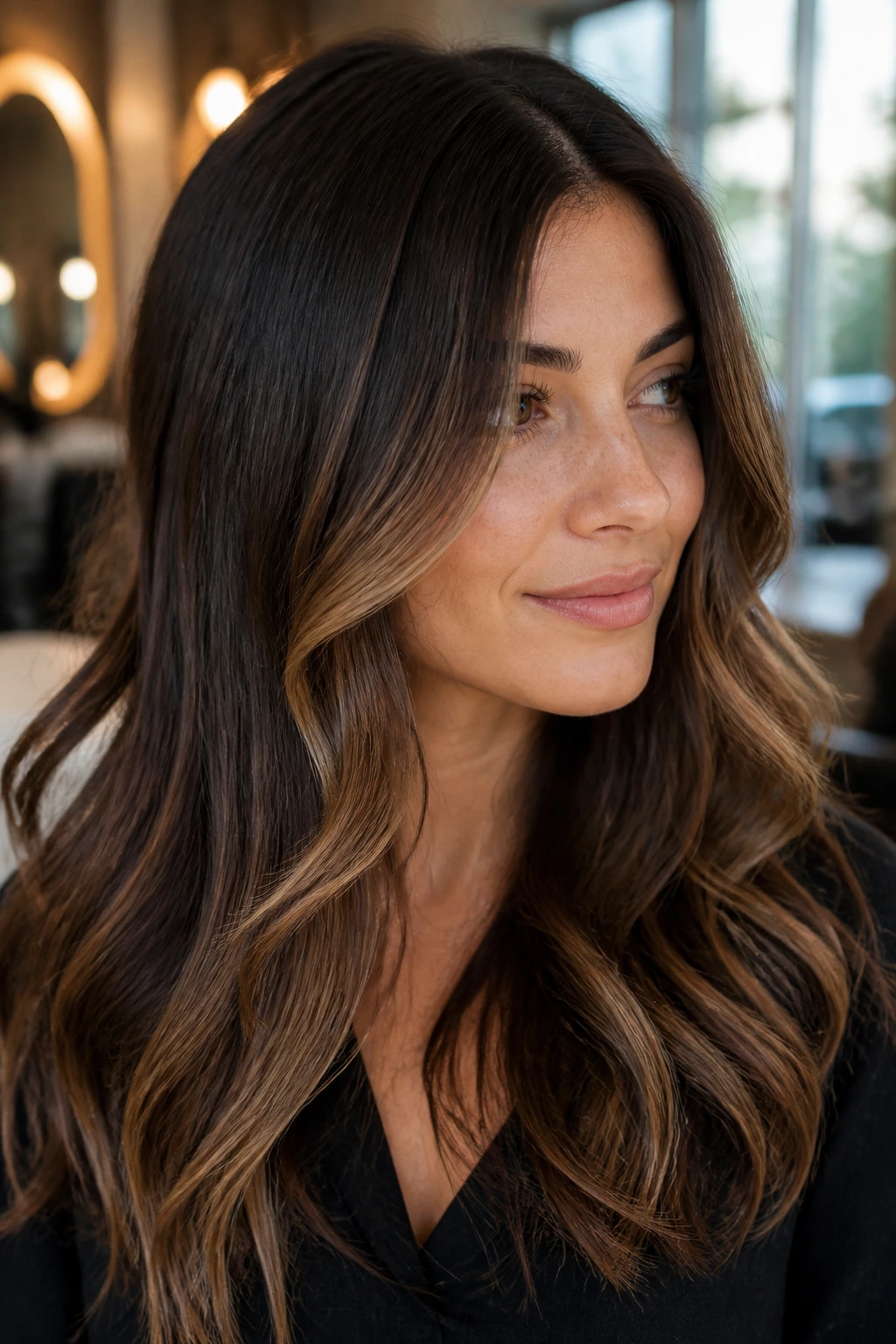
-
Soft grow-out: Hand-painted placement keeps the root line blurred, so the brunette base can grow without that obvious stripe foils sometimes leave behind.
-
Tone control: Honey, caramel, beige, ash, bronze, and mushroom all behave differently on brown hair; choosing the right family keeps the color from looking orange, muddy, or flat.
-
Face-framing lift: A few brighter pieces around the temples and cheekbones can wake up the whole face without turning the rest of the head into a blonde project.
-
Texture-friendly color: Waves and curls show ribbons better than pin-straight hair, which is why these looks are built to move.
-
Room for subtle or bold: The same brunette base can handle a barely-there babylight or a strong money piece, depending on how much contrast you want to live with.
-
Less maintenance than full highlights: Because the root is left deeper, most of these styles stretch farther between appointments than all-over lightening.
1. Honey Ribbon Balayage
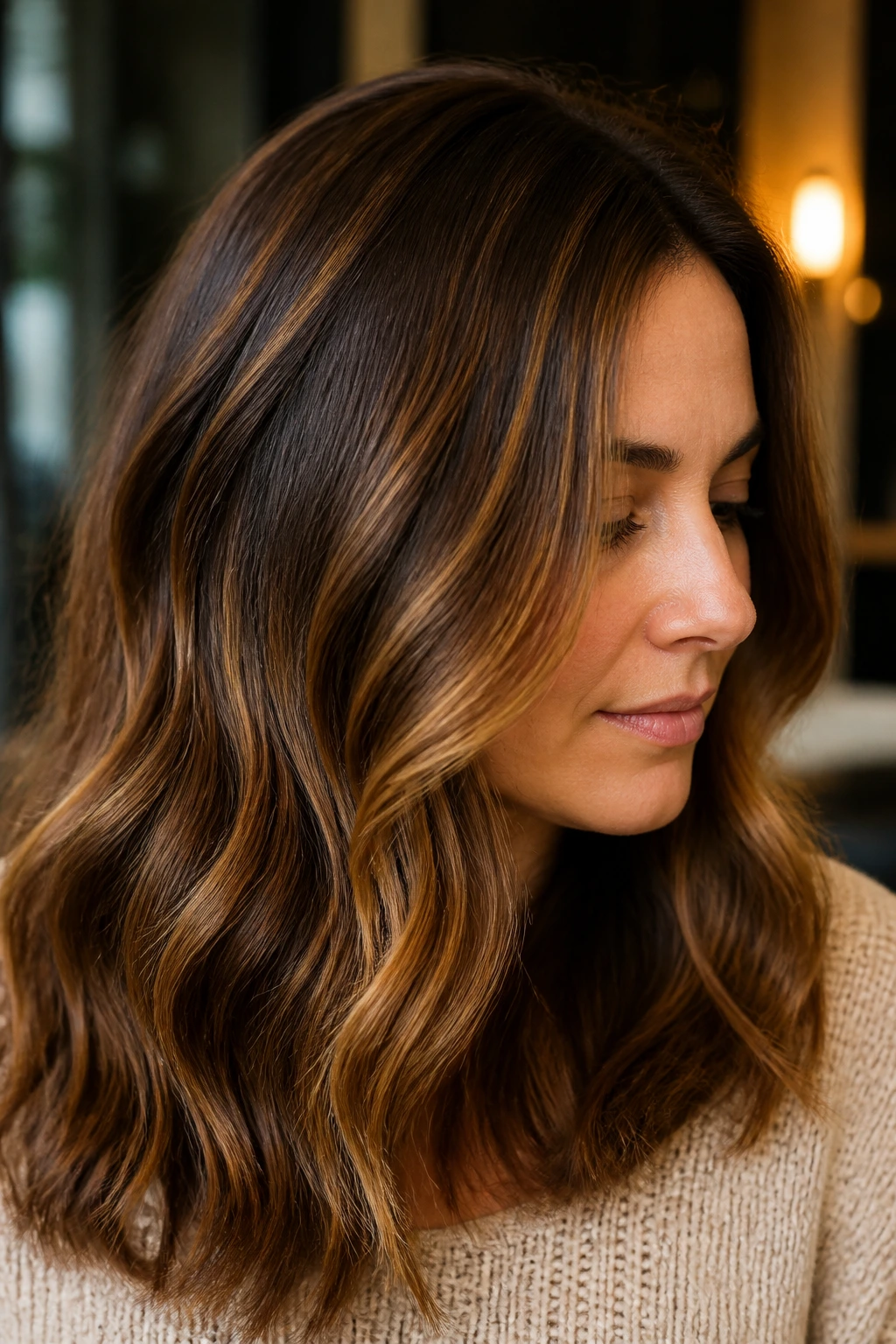
Honey ribbon balayage works because the warmth sits just a shade or two lighter than the brunette base. That keeps the hair looking lit from within instead of striped. On loose waves, the honey pieces flicker around the face and top layer in a way that makes the whole cut feel softer.
Why It Reads Soft
The brightest pieces should start below the cheekbone, then fade out through the ends. Ask for thin, hand-painted strokes and a root shadow that stays deep enough to keep the grow-out clean.
- Best on medium brunettes with warm or neutral undertones.
- Looks strongest on layered cuts and curled ends.
- Keep the toner beige-gold, not yellow.
Best move: ask for the front pieces one half-step brighter than the rest so the eyes get a lift without bleaching the whole head.
2. Caramel Melt Ends
Caramel melt ends are the move when you want brunette balayage that looks deliberate rather than busy. The caramel starts around the mid-lengths and softens toward the ends, so the eye reads one gradual fade instead of separate highlighted stripes. That’s why this look holds up on blunt lobs and long layers alike.
The key is restraint. If the ends are pushed too pale, the whole style tips into copper or gold after a few washes; if they stay in the caramel family, the lightness reads creamy and calm. I like this look most on medium to deep brunettes who wear their hair down often, because the bottom half of the cut gets the most movement and the color has room to show.
3. Mocha Money Piece Balayage
Want brightness without repainting the whole head?
This is the cleanest answer. A mocha base keeps the body of the hair deep, while a brighter money piece around the face gives the lift people notice first. The contrast is front-loaded, which means the style looks intentional even when the rest of the balayage stays subtle.
How to Ask for It
Ask for two to four face-framing ribbons, starting near the temple and cheekbone, plus a soft glaze through the rest of the hair. If your part changes a lot, make sure the colorist blends the brightness far enough back on both sides so one side does not look heavier than the other.
4. Chestnut Bronde Sweep
This is the shade I reach for when brunette hair needs air, not drama. Chestnut at the base keeps the color grounded; bronde ribbons through the crown and mid-lengths break up the weight and make the hair catch light when it moves.
A good chestnut bronde sweep should look better in motion than under a ring light. That means the lightest pieces are scattered, not stacked, and the toner stays beige-gold instead of icy. If your hair is thick, the sweep can start a little higher on the head, because dense hair hides some of the lightness and needs it to be seen.
- Keep the root shadow close to chestnut, not medium blonde.
- Add a few brighter pieces near the part so the top does not look flat.
- Works well on shoulder-length cuts and long layers.
5. Cinnamon Spice Balayage
Cinnamon spice balayage sits in that warm zone between copper and caramel, and that’s why it reads so lively on brunette bases. The red-brown note stops the hair from looking beige or washed out, which is a common problem when dark brown hair is lifted without enough tone.
I like it on wavy hair because the bends keep the cinnamon pieces from blending into one flat veil. On straight hair, you need a little more contrast — a slightly deeper base and brighter mid-length ribbons — or the shade can disappear.
If your skin has golden or peach undertones, this is one of the easier warm brunettes to wear. The color should glow, not shout. That difference matters.
6. Mushroom Brown Balayage
Unlike caramel balayage, mushroom brown lives in the cool, earthy lane. Think taupe, smoke, beige, and a little gray-brown depth through the mid-lengths. On a brunette base, that cooler tone does a neat trick: it softens the orange that warm lightening can leave behind.
This is the one I’d suggest if you hate gold in your hair. It looks especially good on ash brown bases, blunt cuts, and anyone who wears black, charcoal, or cream a lot because the tone plays well with those colors. Ask for the lightness to stay muted and the toner to lean neutral-cool, not silver-platinum.
7. Espresso with Beige Highlights
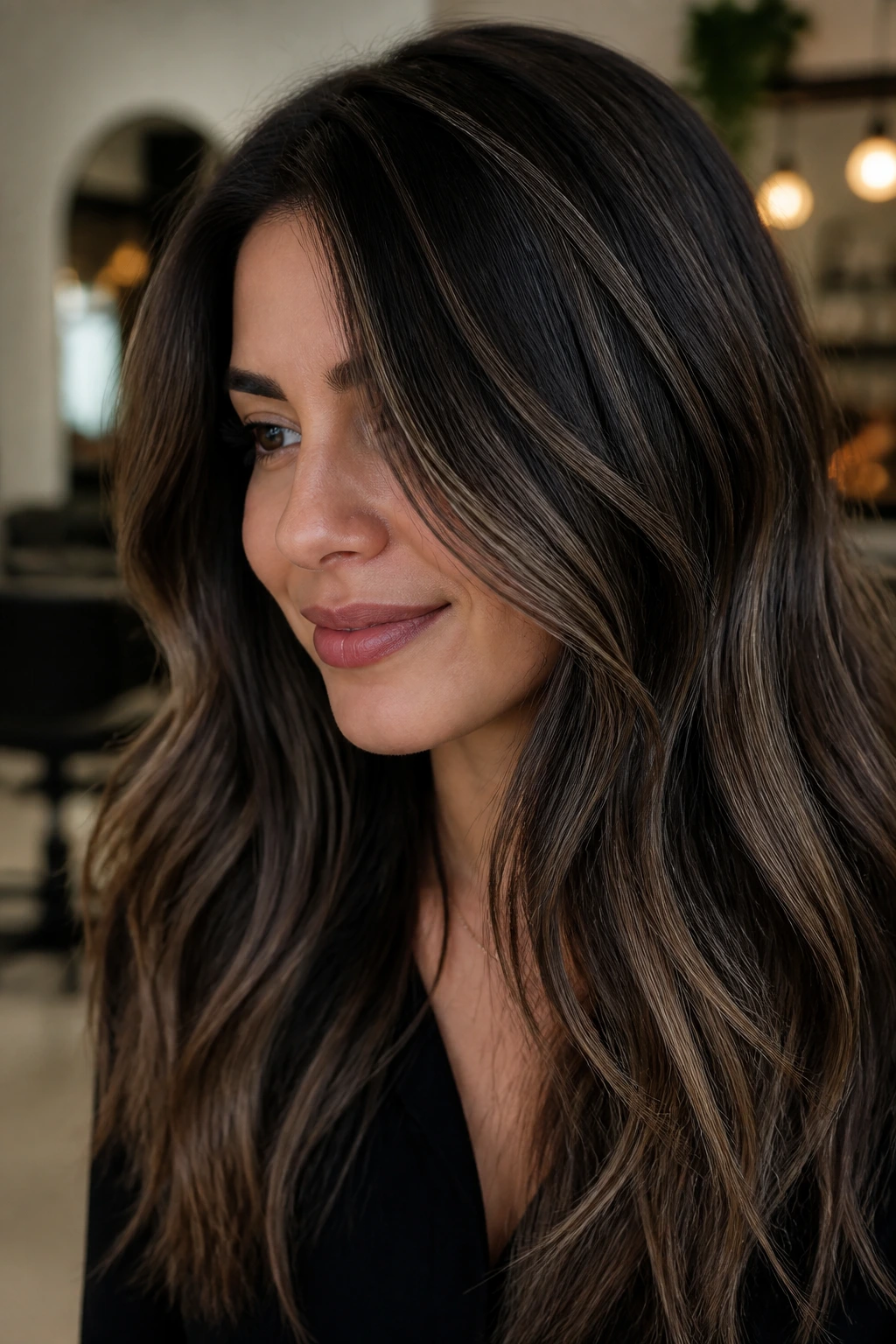
Espresso with beige highlights is for people who want contrast without giving up depth. The espresso base stays nearly black-brown, while the beige pieces are thin enough to look woven into the hair instead of pasted on top. It’s sharp, but not loud.
What Keeps It Chic
The highlights need to be fine and placed with space between them. If they get too chunky, the look turns stripy fast, especially on straight hair. On a layered cut, keep the brightest strands close to the front and around the crown so the depth stays visible through the back.
- Best for darker brunettes who want visible lightness.
- Looks strongest on sleek blowouts and soft bends.
- Beige toner beats gold here every time.
8. Golden Walnut Ribboning
Golden walnut ribboning feels like brunette hair that spent an hour in late-afternoon light. The base stays walnut-rich, while thin golden ribbons weave through the mid-lengths and top layers. It’s warmer than mushroom, softer than copper, and easier to wear than high-blonde balayage.
This one does well on thick hair because the ribbons can be scattered more generously without crowding the whole head. A few pieces near the part and around the face are enough to keep the color alive; the rest can stay deeper so the hair doesn’t lose its natural weight. If you wear loose waves, the look becomes even more obvious.
9. Copper-Kissed Brunette Balayage
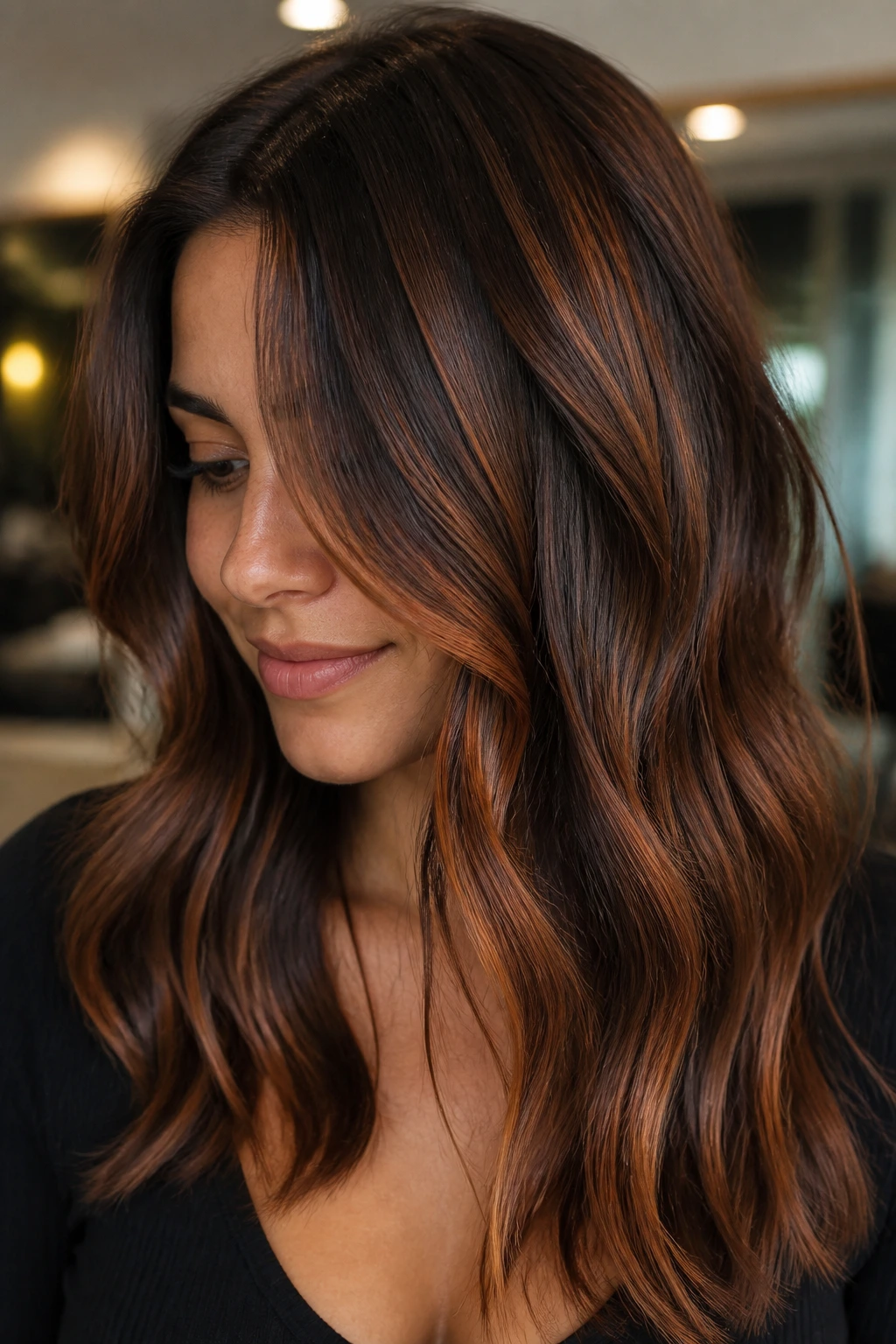
Copper-kissed balayage is not a red-head conversion. It’s a brunette that has been warmed up just enough to feel richer. The copper sits on the surface of the brown, so the hair looks alive in daylight and darker indoors.
That surface warmth is the trick. Too much copper and the whole head starts reading orange; too little and the tone disappears after a few washes. If your base already has red pigment, ask your colorist to keep the copper low and the brunette depth visible at the root and crown.
10. Ash Brown Smoke Lights
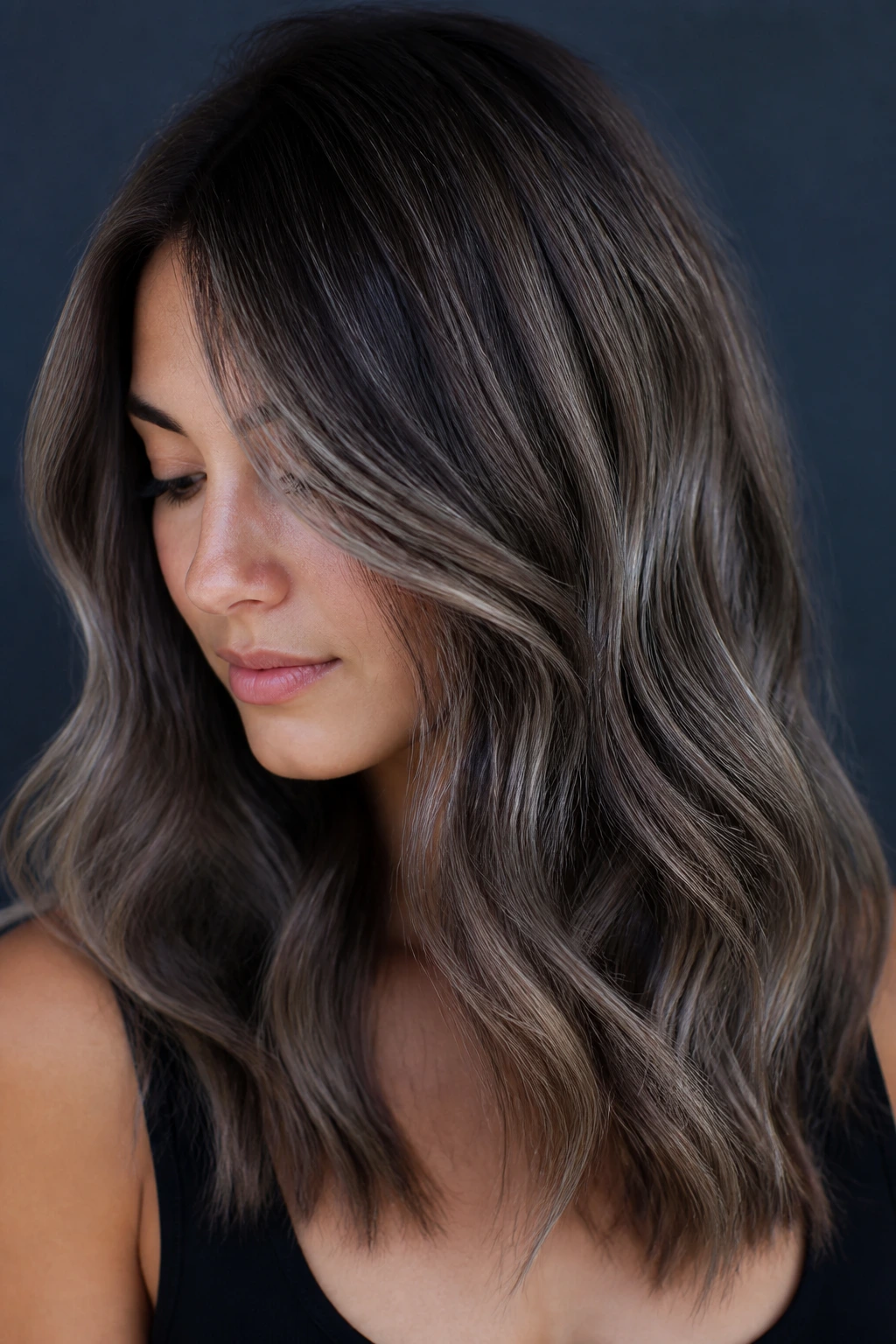
Ash brown smoke lights are the antidote to overly warm balayage. The ribbons are cool, gray-brown, and smoky, so they sit quietly against the brunette base and clean up brass without making the hair look flat.
This is a strong choice for cooler skin tones or anyone who wears a lot of navy, gray, and black. It also works well on straight hair because the tone itself does a lot of the visual work. Just know the upkeep is a little fussier: smoky tones fade faster than caramel, so a gloss matters.
11. Butterscotch Money Piece
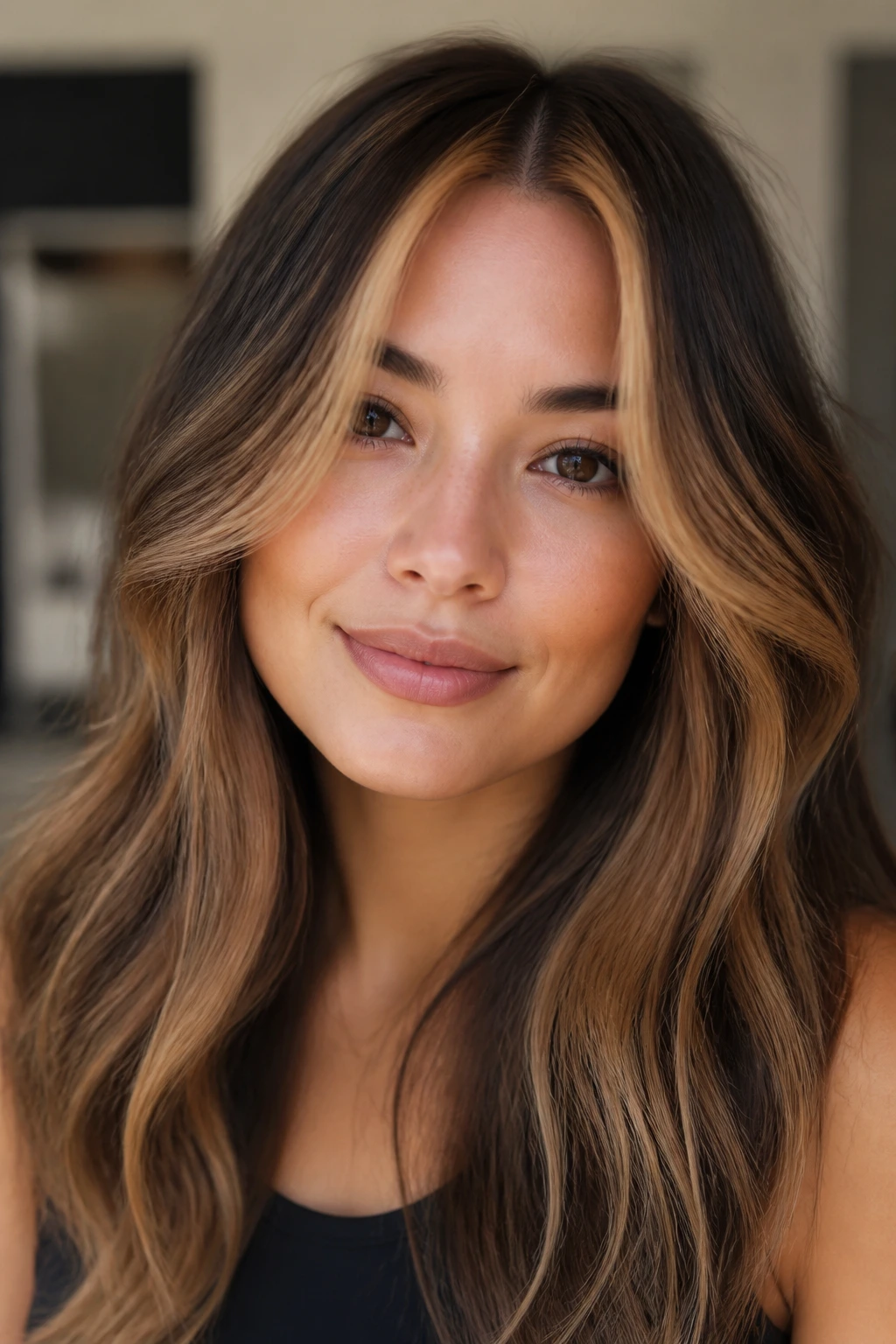
Butterscotch money piece balayage is what happens when you want the front of the hair to do the talking. The face-framing pieces are brighter, warmer, and a little sweeter than plain caramel, while the rest of the brunette stays grounded.
The effect is especially good on ponytails and half-up styles, where the front pieces stay visible even if the back is tucked away. Ask for the brightness to stop before the hairline gets chunky. A soft blend at the temples keeps it from looking like a stripe.
- Best on medium brunettes.
- Works well with side parts.
- Needs a beige-gold toner to keep the butterscotch tone creamy.
12. Mushroom Bronde Lob
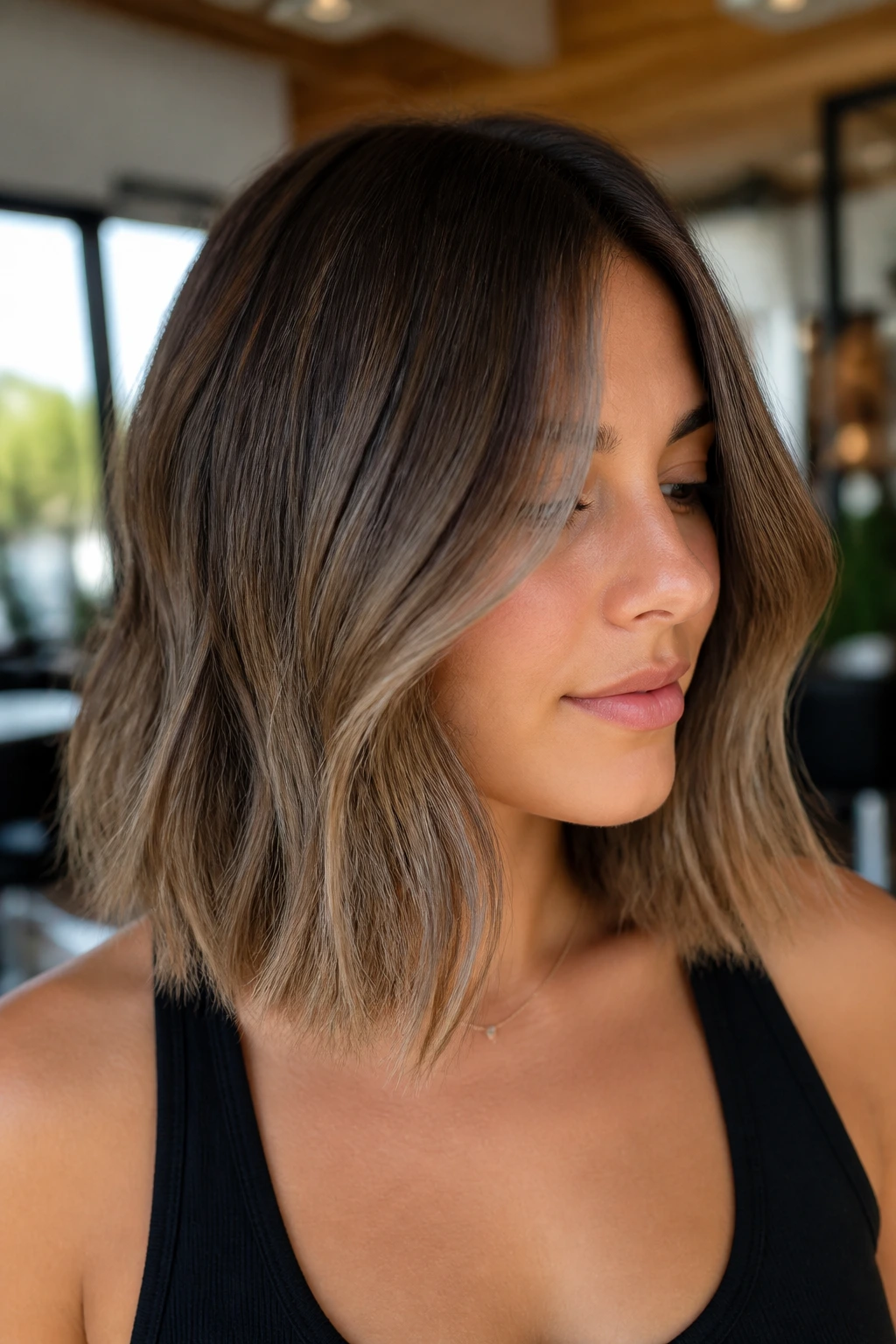
A mushroom bronde lob is the haircut-color combo that makes narrow shoulder-length hair look fuller. The cool brunette base gets threaded with low-contrast bronde pieces, mostly through the top layer and ends, so the lob keeps its shape instead of turning into one flat block.
This is one of the easier balayage looks to wear if you hate high maintenance. The grow-out stays soft because the root is never pushed too light, and the mid-lengths carry enough tone that the hair doesn’t need constant glossing. On a lob, that matters. A lot.
13. Cocoa and Champagne Dimensions
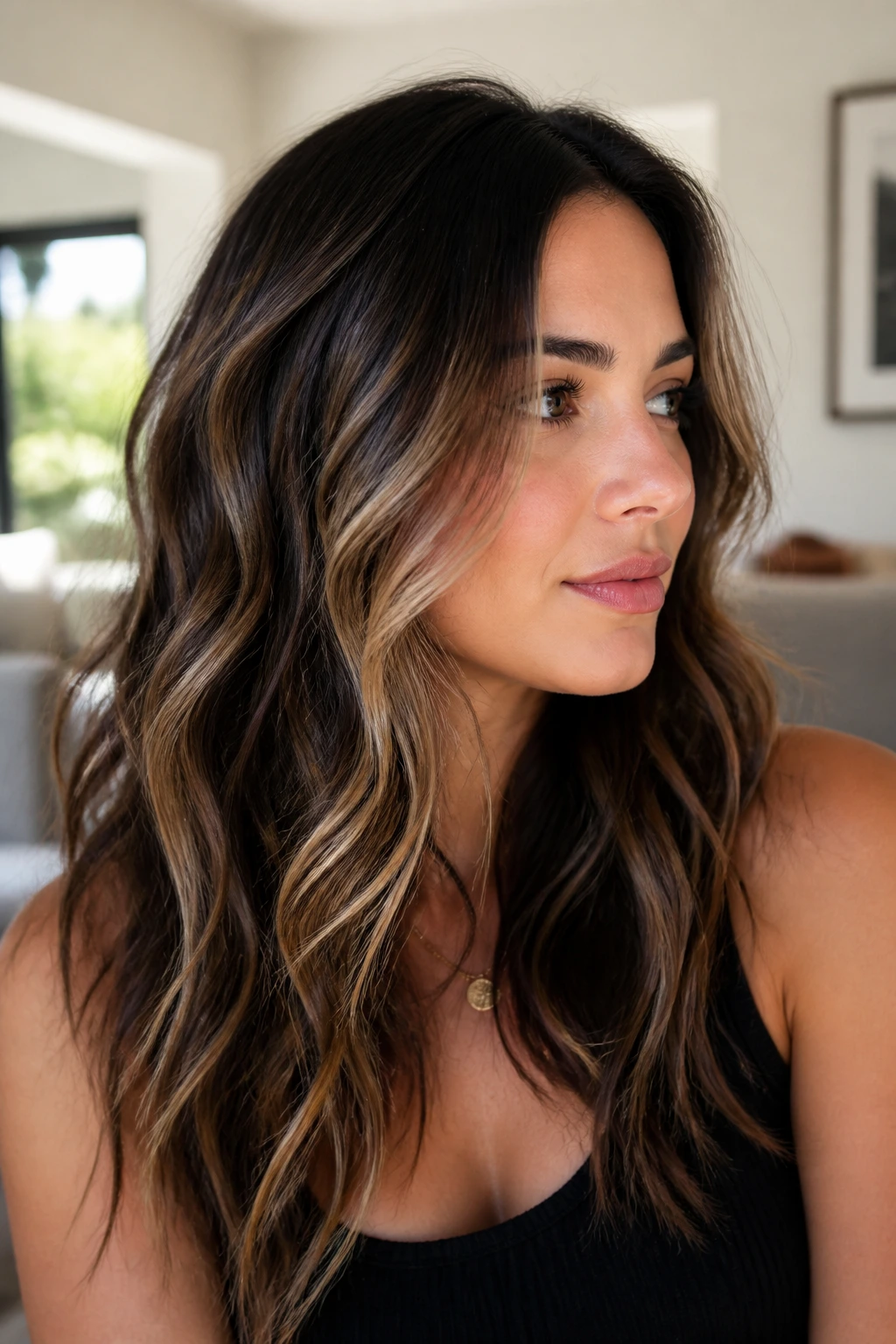
Cocoa and champagne sounds like a brunch order, but it works beautifully on brunette hair. The cocoa base keeps the color deep and plush, while the champagne ribbons add a pale, slightly beige brightness that shows through the waves.
Why It Works on Curly and Wavy Hair
The contrast is strongest where the hair bends, so curls and beach waves make the champagne pieces pop without needing heavy saturation. Keep the light pieces thin near the crown and a touch brighter around the front. That keeps the dimension from turning into a halo of light at the ends.
14. Chestnut with Soft Beige Contour
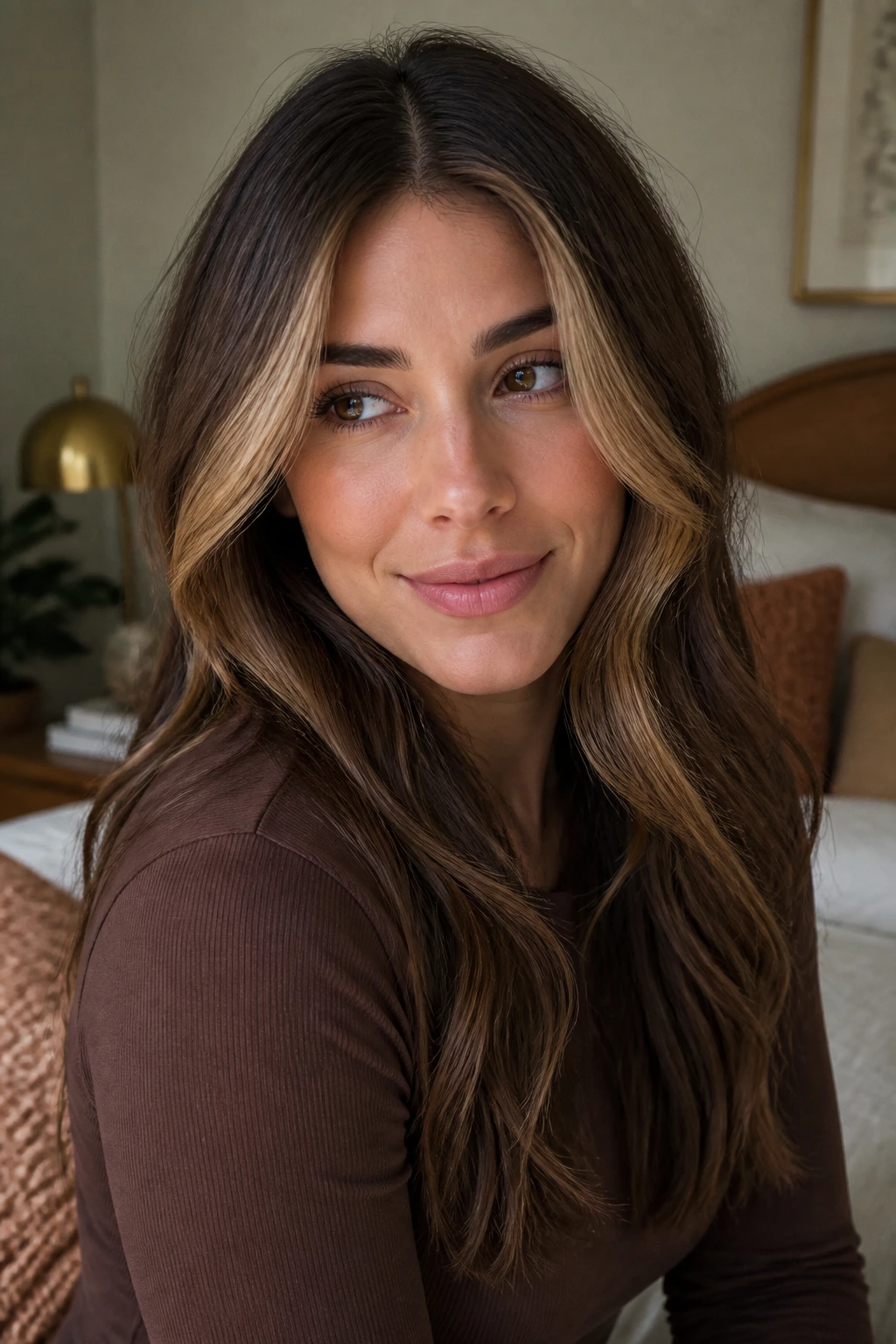
This is the quiet one. Chestnut with beige contouring uses light pieces around the face, temples, and jawline, then leaves the rest of the brunette hair deeper. The result is a softer face frame rather than a fully highlighted head.
It’s a smart choice if you want to brighten your features but still keep the brunette identity intact. The beige pieces should be one or two levels lighter than the base, not dramatically blonde. That small difference is what keeps the color looking polished instead of obvious.
15. Tortoiseshell Brunette Balayage
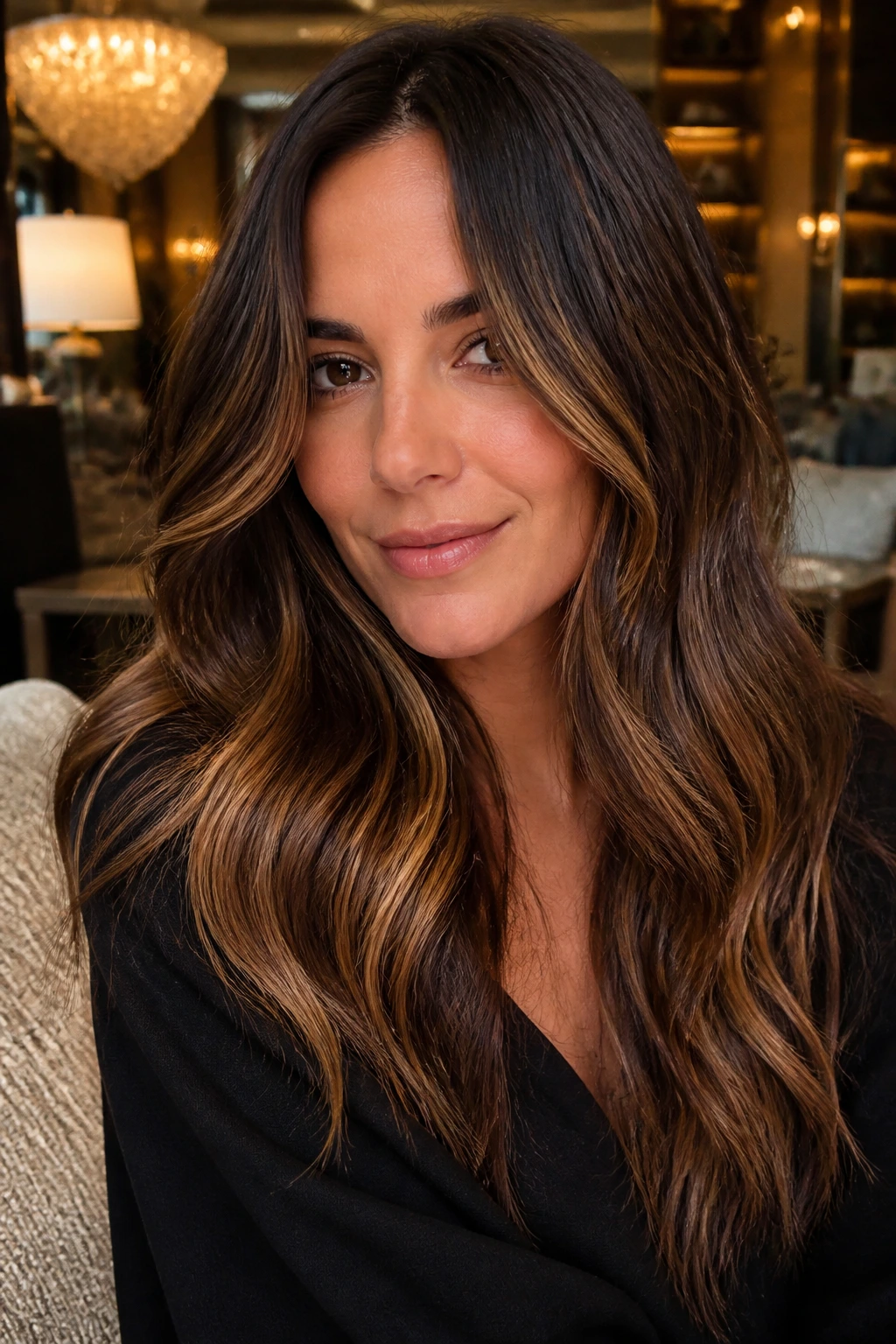
Tortoiseshell balayage is a mix of chocolate, caramel, toffee, and a whisper of gold. The color works because no single tone dominates; the strands move between warm and deep, so the hair looks textured even when it’s not styled.
This is one of my favorites for long hair because the blend has room to breathe. A tortoiseshell look on a short crop can get busy fast, but on layered lengths it feels expensive in the old-fashioned sense — not shiny for the sake of shiny, just full of depth. Ask for a mix of ribbon widths, from thin face-framing pieces to broader mid-length strokes.
16. Rose Gold on Warm Brunettes
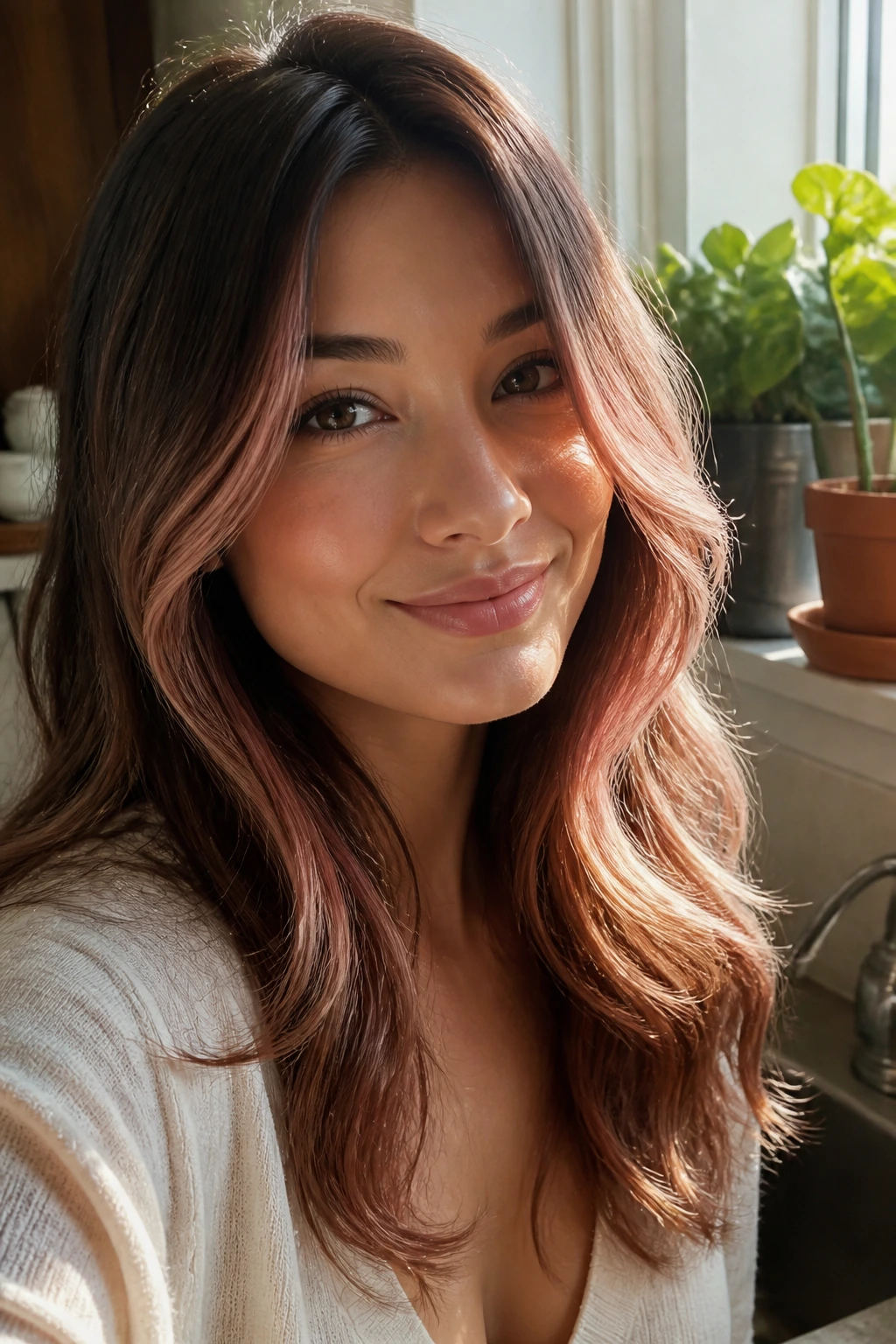
Rose gold on brunette hair is more restrained than people expect. You don’t want pink hair; you want a warm brown base with a soft rosy glaze over the lightened pieces. The result sits somewhere between copper and beige, which keeps it wearable.
This works best on warm brunettes who already have some gold in their hair. If the base is too cool, the rose can turn muddy. The trick is keeping the rose tone mostly on the ends and face frame, then glossing the rest of the hair with a neutral brunette glaze so the color stays balanced.
17. Cool Taupe Balayage
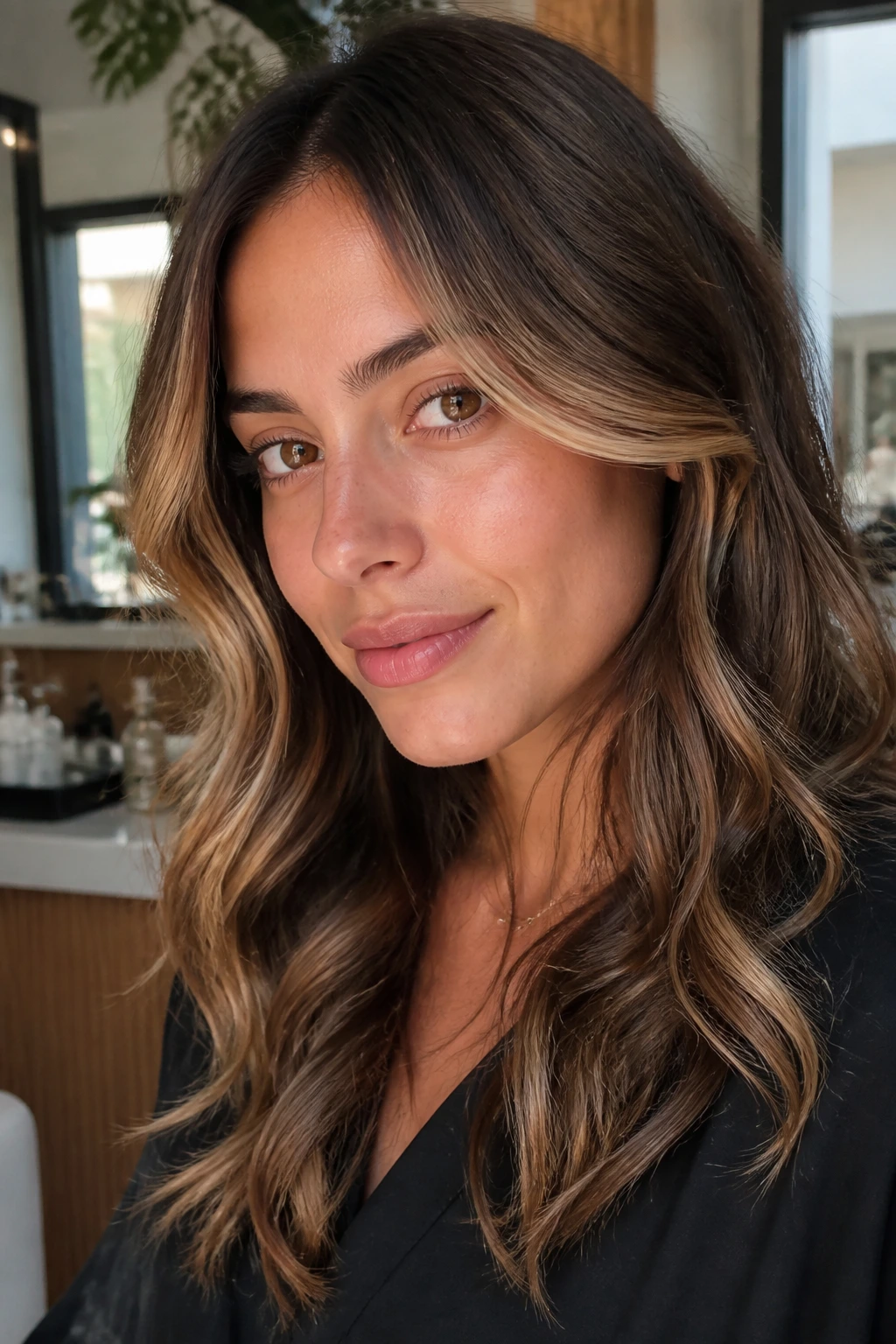
Cool taupe balayage is one of the cleanest brunette refreshes around. It takes the warmth down a notch, smooths the color line, and leaves the hair looking soft instead of sugary. If mushroom brown feels too smoky and ash brown feels too gray, taupe is the middle ground.
It’s a strong pick for medium brunettes who want something low-contrast and modern. The tone should look beige in daylight and slightly smoky indoors. That little shift keeps the hair from going flat. Straight styles show it best; curls make it even softer.
18. Sunlit Almond Ends
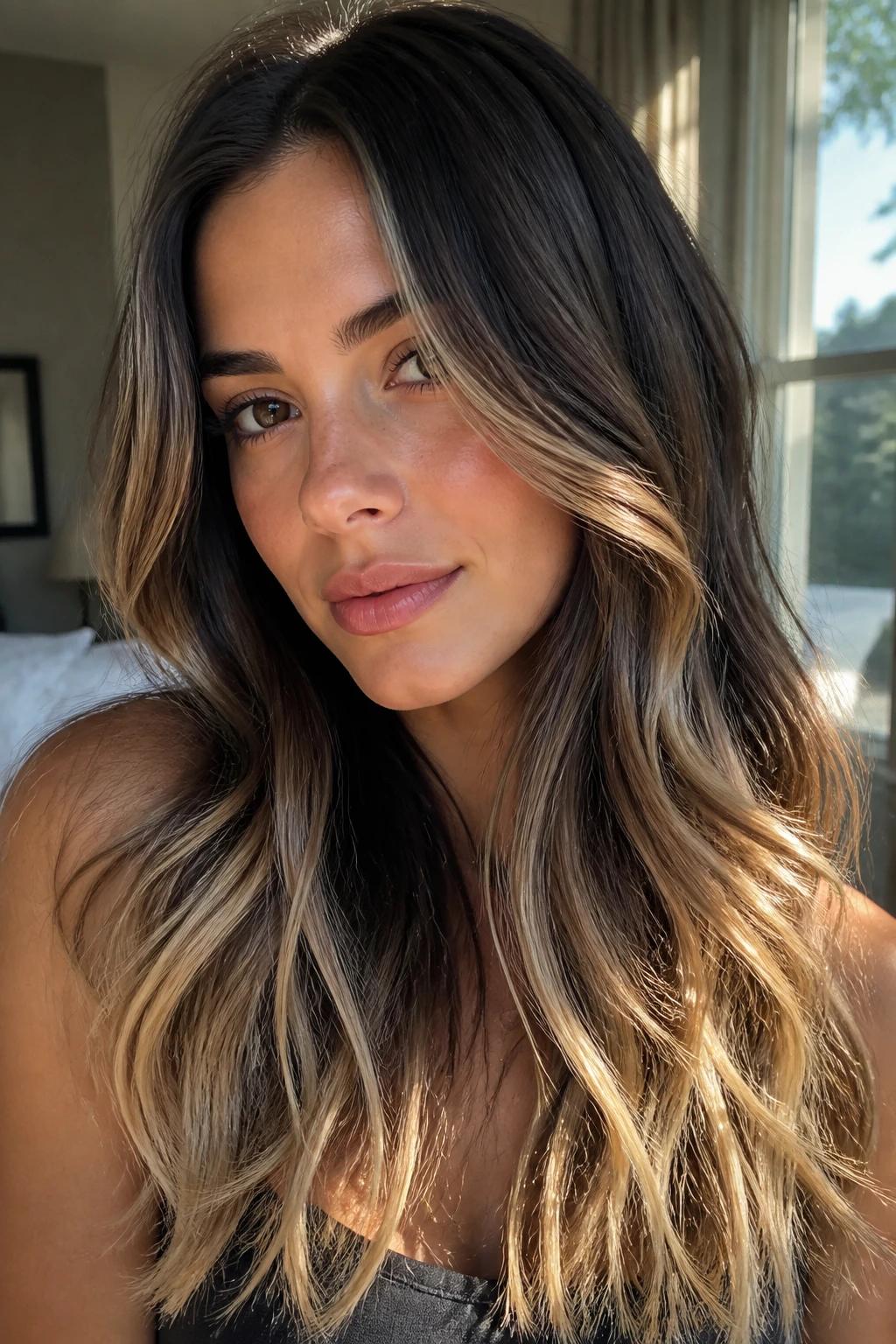
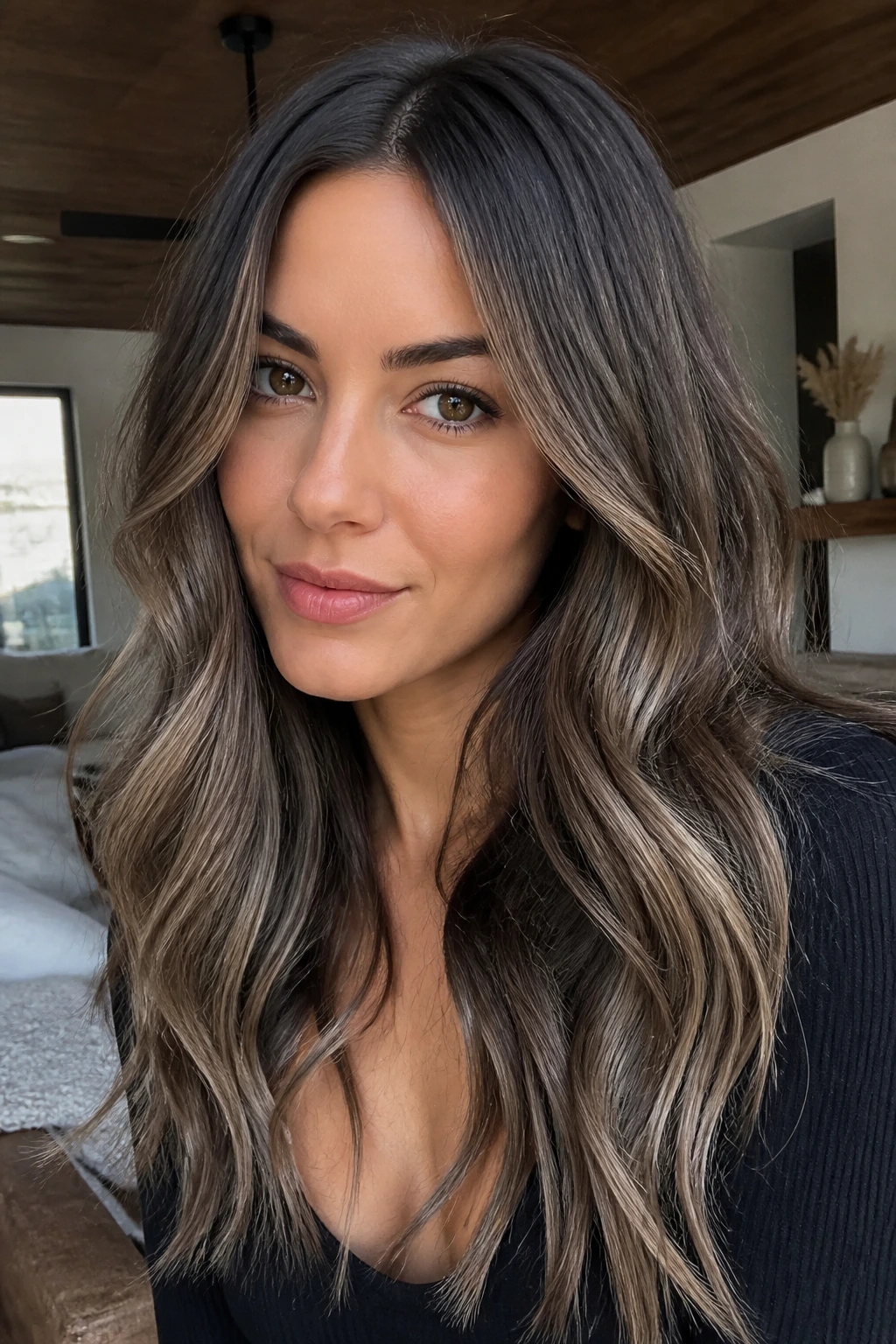
Sunlit almond ends are for brunettes who want lightness without obvious highlighting. The lift happens mostly from the mid-lengths down, then finishes in almond-beige ends that stay warmer than platinum and softer than gold.
The look is best when the ends still feel like hair, not fabric. If the lightening goes too far, the ends can look dry and thin, especially on fine hair. Keep the lift controlled, and use a gloss that leans creamy rather than yellow. That gives the whole cut a smoother finish.
19. Maple Syrup Balayage
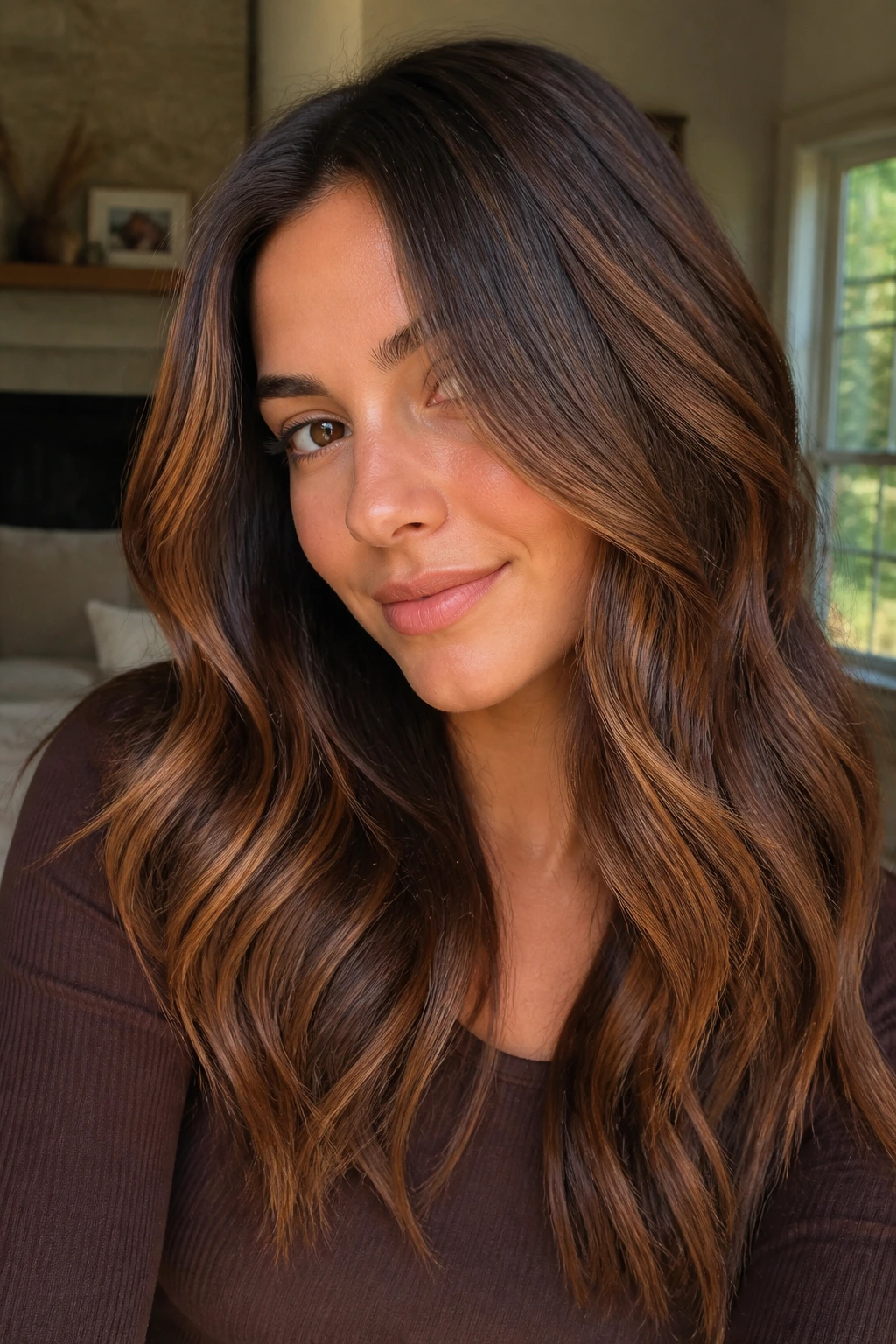
Maple syrup balayage sits closer to amber than caramel, which gives brunette hair a deeper warmth. It’s a good choice if your base feels dull and you want more glow than contrast. The tone has a brown-gold richness that looks especially nice in waves.
I like this on medium brunettes with neutral or warm skin because it brings out color in the face without washing anything out. Keep the ribbons thin near the top and a little broader through the ends. That keeps the maple tone from disappearing under the brown base.
20. Smoky Brunette with Vanilla Ribbons
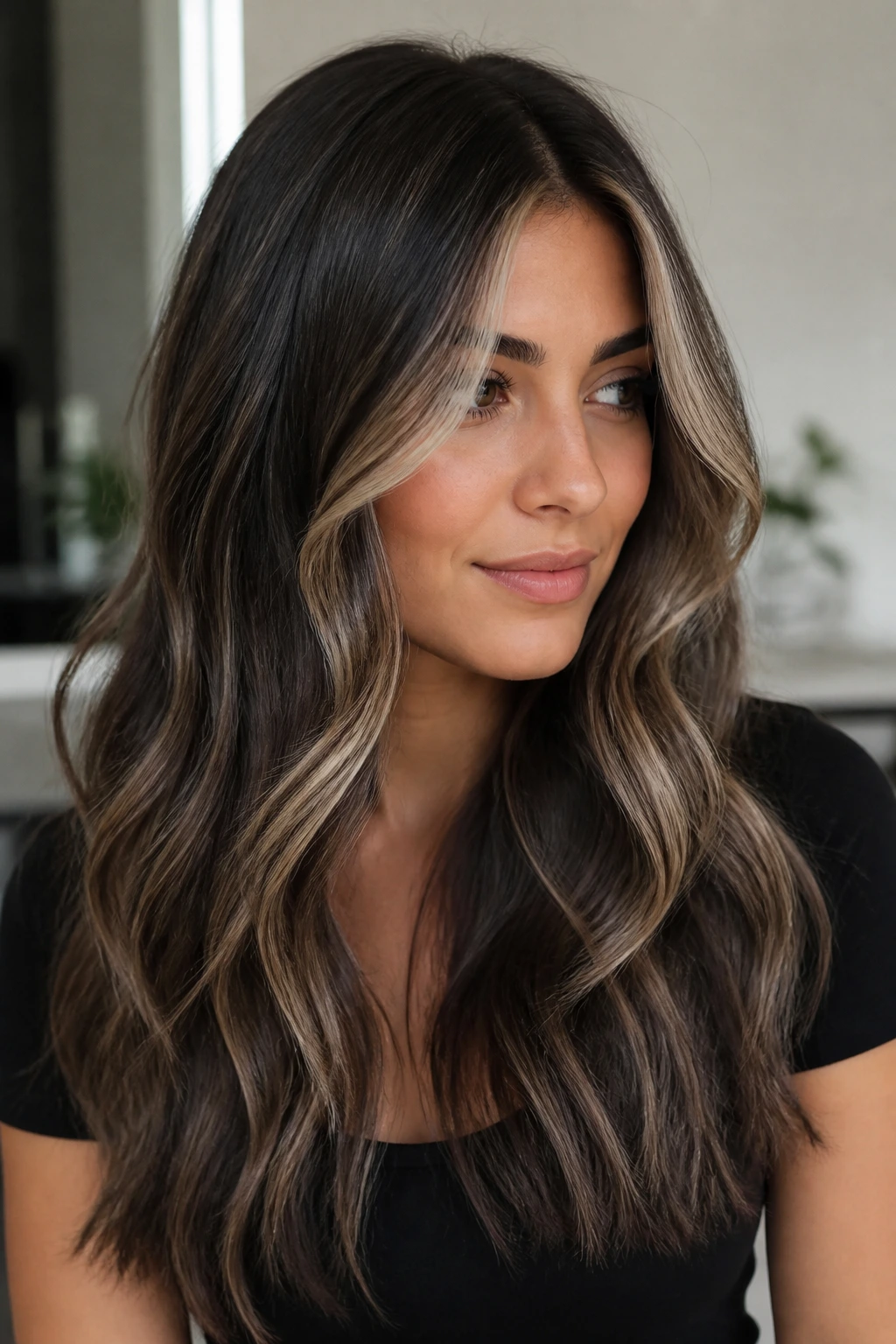
Smoky brunette with vanilla ribbons is all about contrast control. The base stays deep and cool, while a few soft vanilla pieces lighten the front and top layer just enough to catch the eye.
The vanilla needs to stay creamy, not lemony. That’s the part people get wrong. If the light pieces go too yellow, the whole style looks older and more brassy than it should. A soft toner and a decent gloss keep the ribbons clean, especially if you style with heat.
21. Bronze Glow Balayage
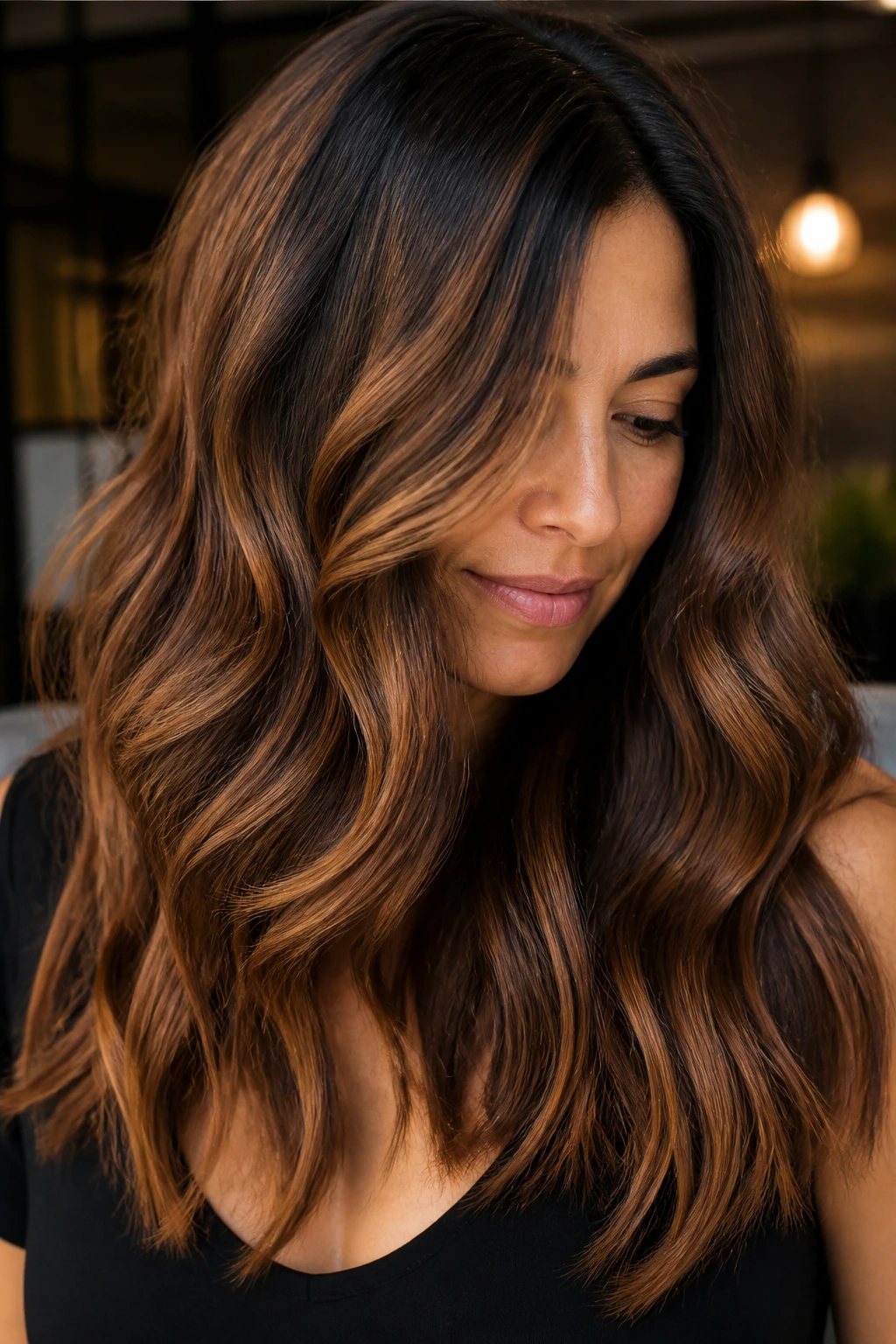
Bronze glow balayage is richer than honey and less red than copper. That makes it a sweet spot for brunettes who want warmth that still feels grown-up. The bronze pieces reflect light in a smooth way, which works especially well on thick hair.
This is a strong choice when you want shine more than obvious contrast. The base should stay dark enough to frame the bronze, or the whole look loses punch. On straight hair, bronze can read almost metallic; on waves, it becomes softer and more dimensional.
22. Mahogany-to-Caramel Melt
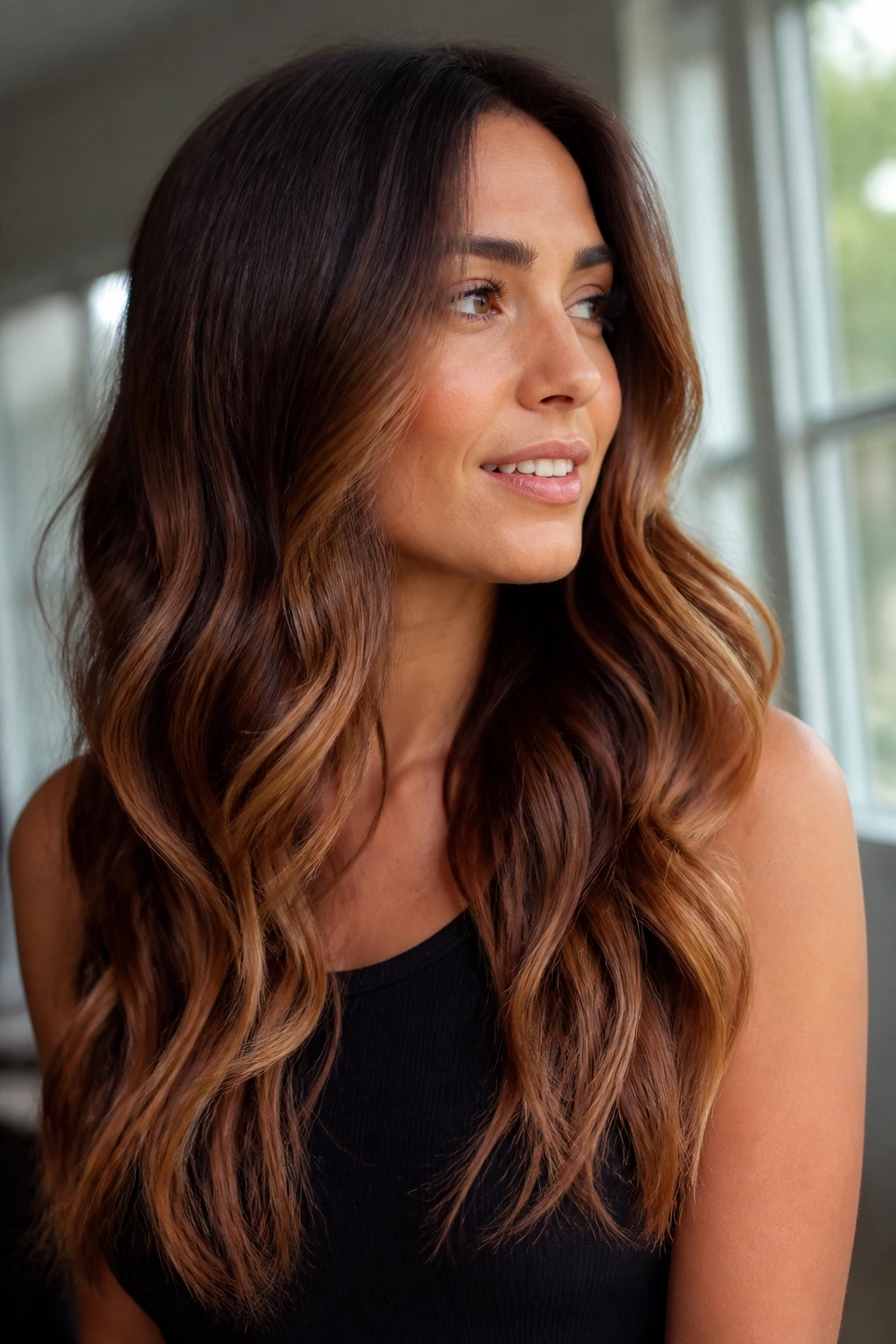
Can red-brown and caramel live together on one head of hair? Absolutely, if the transition is slow enough. Mahogany near the root and crown gives the brunette depth, while caramel takes over through the mid-lengths and ends. The whole thing reads like a melt, not a split dye.
That gradual shift is what keeps the style wearable. If the caramel starts too high, the hair can get loud fast. If the mahogany stays too dark through the whole length, the lighter pieces vanish. The best versions leave a clear but soft path between the two tones.
23. Subtle Sable Balayage
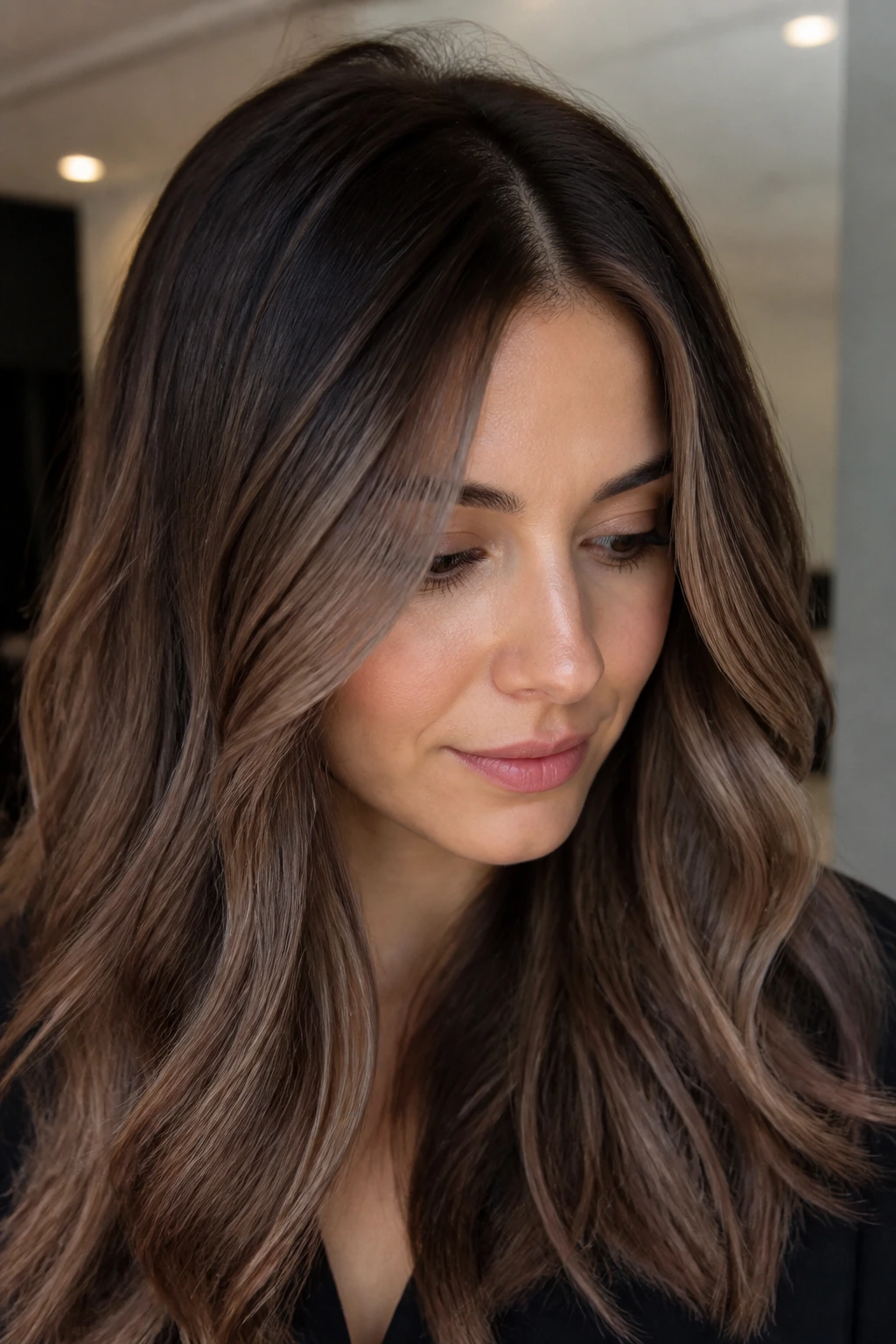
Subtle sable balayage is the one I’d hand to someone who says, “I want something, but not much.” The lightening is tiny. Just enough to break up a solid brunette block and make the hair move when it catches sun.
This is the easiest style for first-timers because the grow-out stays forgiving and the risk of brass is lower than with paler blonde pieces. It looks best when the colorist uses a few babylight-sized strands around the part and face, then keeps the rest nearly invisible. If the goal is expensive-looking brown, this is a strong route.
24. Bronzed Curly Balayage
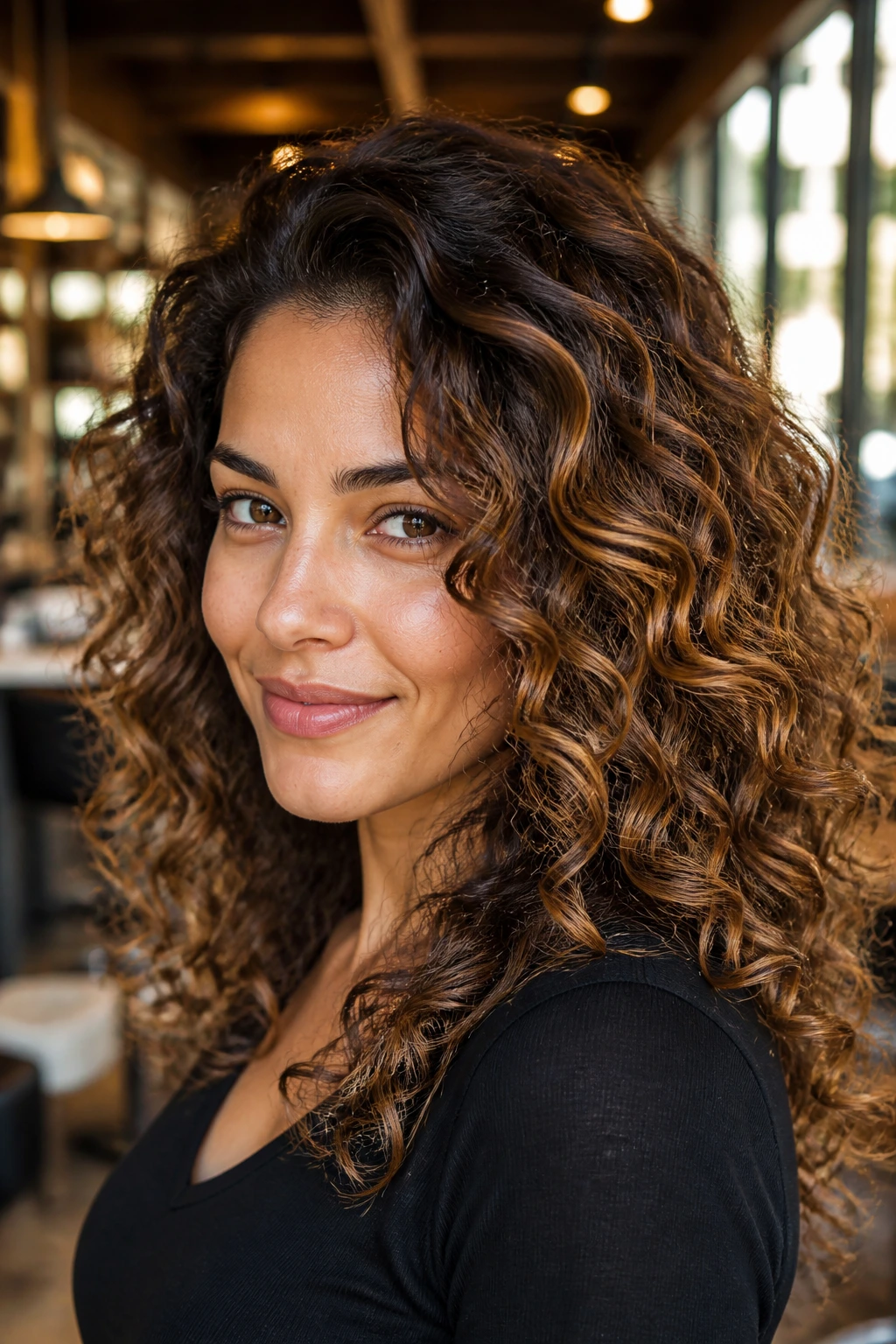
Curly hair needs its own placement, and bronzed balayage respects that. The light pieces should sit on the outer surface and the top of each curl clump, not buried inside the coil where nobody will see them. That’s what gives curls depth instead of stripes.
The bronze tone works because it lights up the curl pattern without making the ends look frosted. Ask for larger painted sections than you would on straight hair, since curls shrink and swallow detail. When the curls dry, the bronze should sit in the curve, not fight it.
- Best for medium to tight curls.
- Works with layered cuts better than one-length shapes.
- Keep the toner warm-neutral so the bronze stays rich.
25. Honeyed Babylights on Brunette Layers
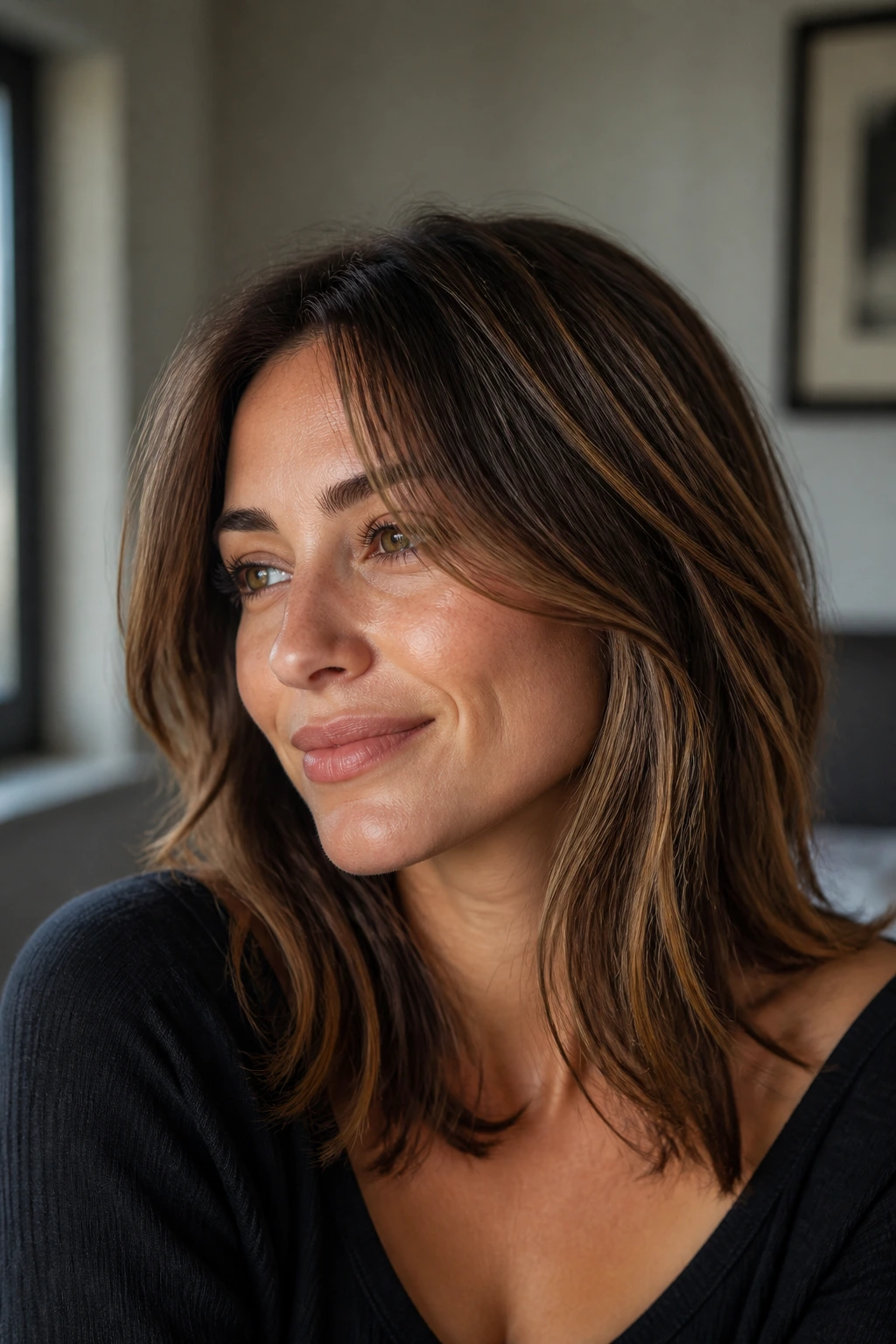
Honeyed babylights are tiny, fine highlights that look almost like natural sun exposure. On brunette layers, they keep the cut from going heavy while still preserving the brown base that makes the hair feel full.
Why the Tiny Strands Matter
Babylights are subtle enough to blend into the haircut, which is the whole point. They work well for fine hair because they add shimmer without obvious stripes. If you want the lightness to read more on the move than from across the room, this is the route.
26. Dimensional Brunette Bob Balayage
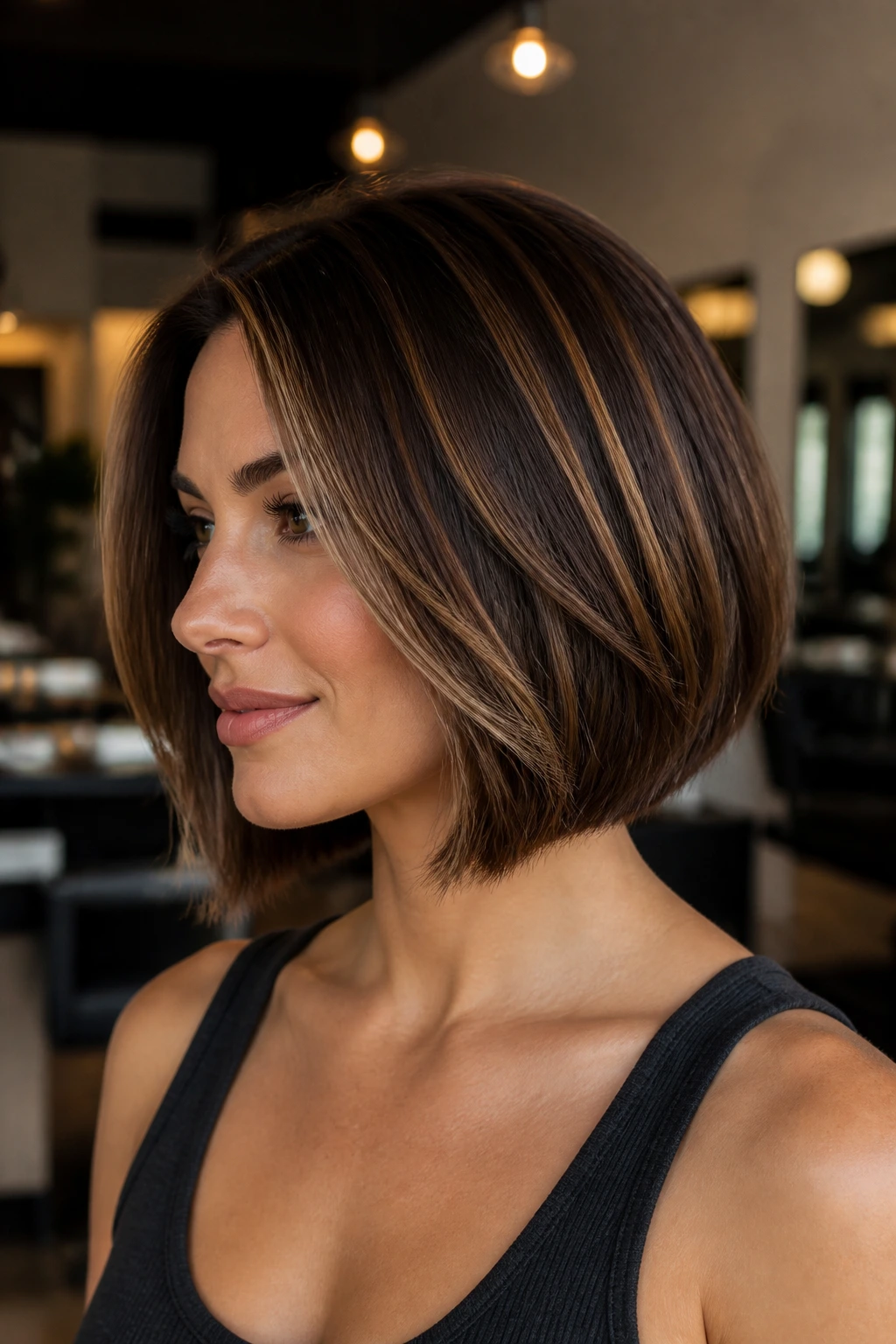
A bob with balayage can go flat fast if the placement is lazy. Dimensional bob balayage fixes that by putting brighter pieces around the face, a few through the top layer, and softer depth underneath. The cut ends up looking thicker, not thinner.
The bob is actually a good place for balayage because the shape is clean enough to show contrast. Just don’t push the ends too light; on shorter hair, the lighter pieces stack visually and can make the cut look choppy. A beige-brown blend keeps the shape sharp.
27. Walnut Smoke with Face Framing
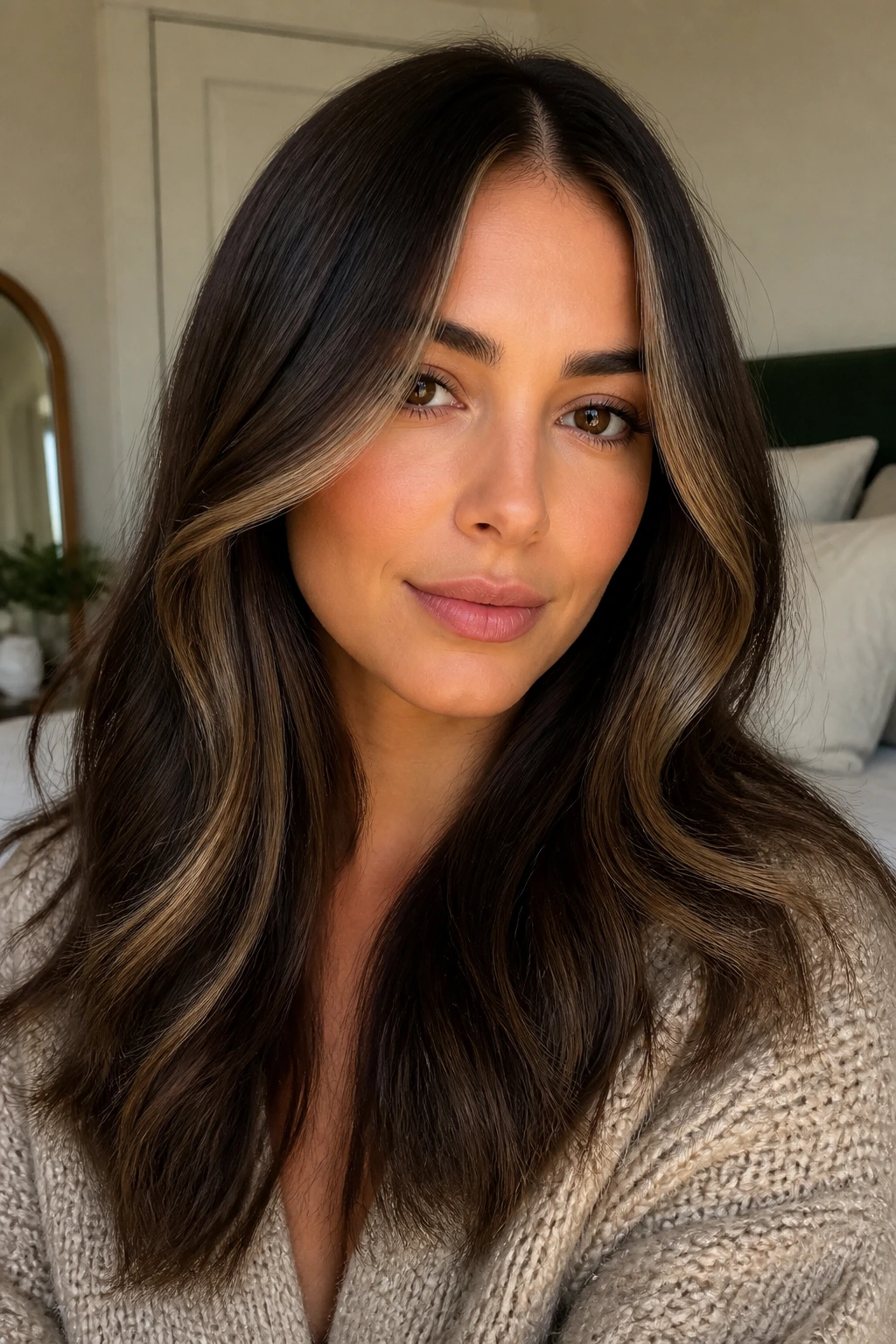
Walnut smoke with face framing is a pretty useful middle road. The walnut base stays deep and rich, while the smoky face-framing pieces lift the eyes and soften the edges of the haircut. It’s especially good if you wear glasses or have a square or angular face shape.
The face-framing pieces should start around the cheekbone and drop a little lighter toward the collarbone. That line helps elongate the face and keeps the brightness where it does the most work. The rest of the hair can stay nearly untouched, which keeps the style low-drama.
28. Auburn Whisper Balayage
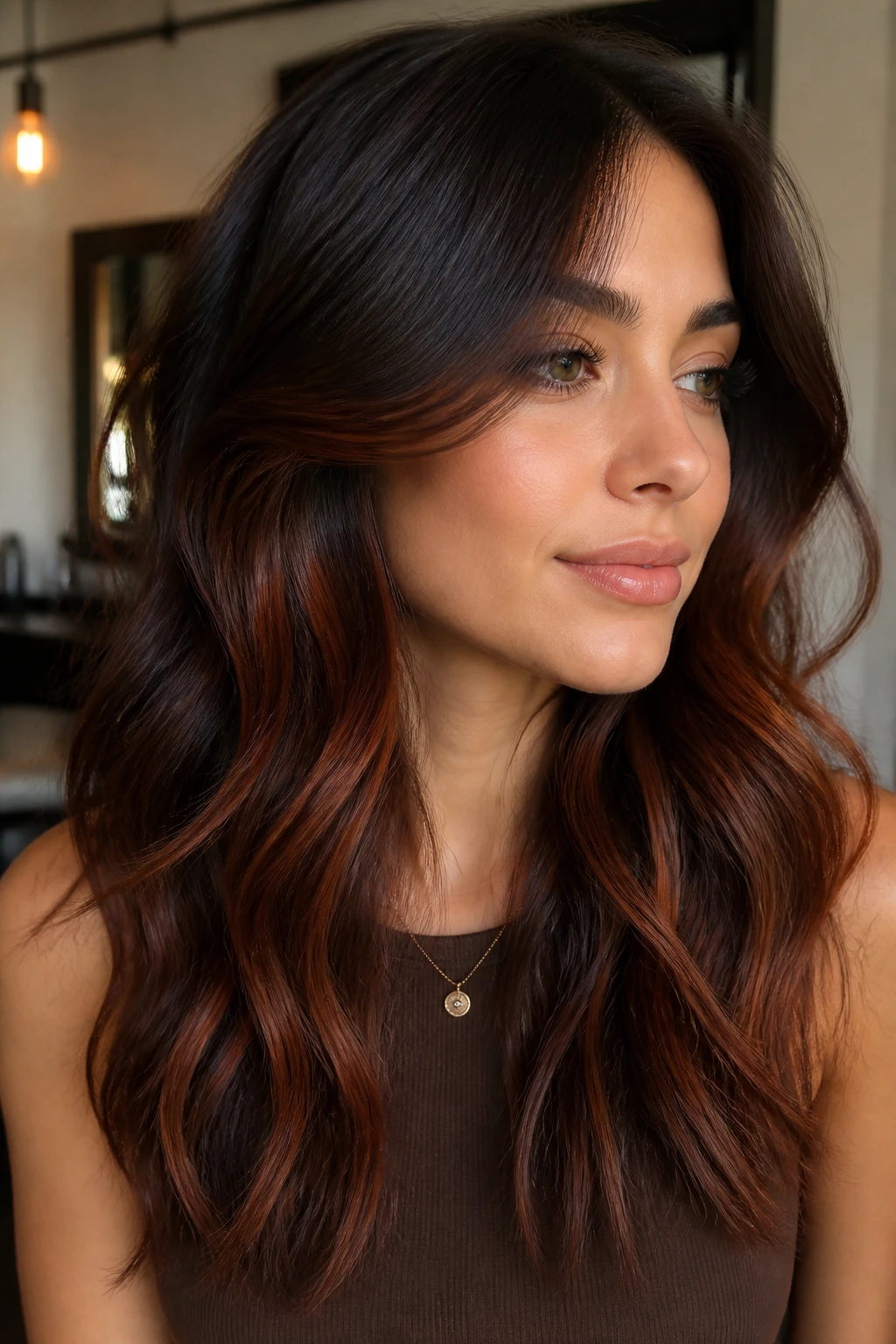
Auburn whisper balayage is the subtle red version for brunettes who are not ready for a full copper moment. The auburn sits beneath the brown, not on top of it, so the hair shifts in the light without screaming “red.”
It’s a good fit for deeper brunettes with warm skin tones. The tone fades toward cinnamon after a few washes, which is part of the charm, but the color needs a gloss if you want the auburn to stay visible. Keep the pieces fine and concentrated through the mid-lengths.
29. Beige Blonde Peekaboo Balayage
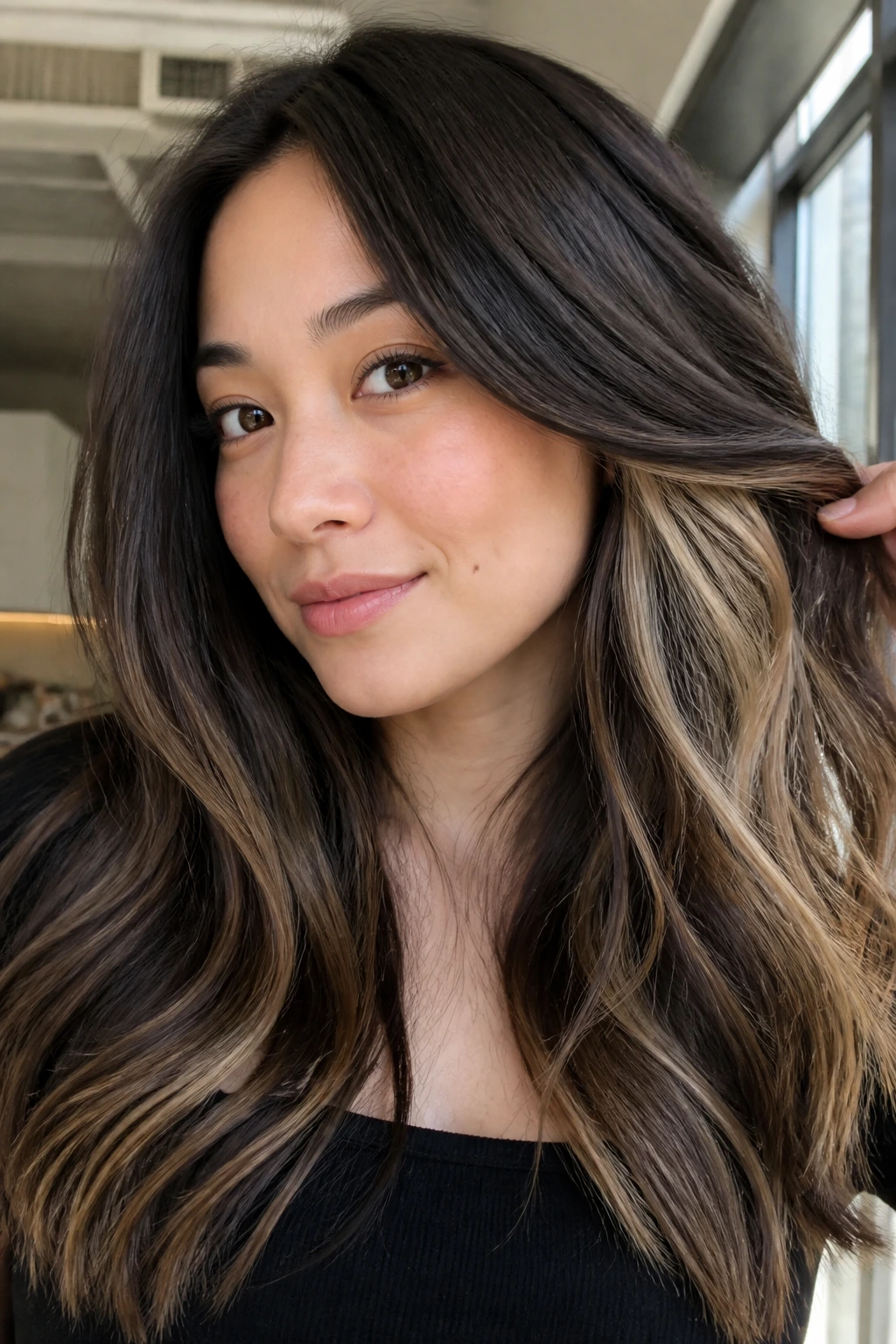
Peekaboo balayage is where the lighter pieces hide under the top layer and flash out only when the hair moves. On brunette hair, that gives you beige-blonde brightness without committing every surface strand to the lightest shade.
This is the right call if you want some surprise when you tuck your hair behind your ear or twist it into a claw clip. It also works well for more conservative workplaces because the brightness can stay hidden under the darker overlay. The trick is keeping the top layer deep enough to cover the lighter pieces when needed.
30. Rooted Bronde with Soft Ends
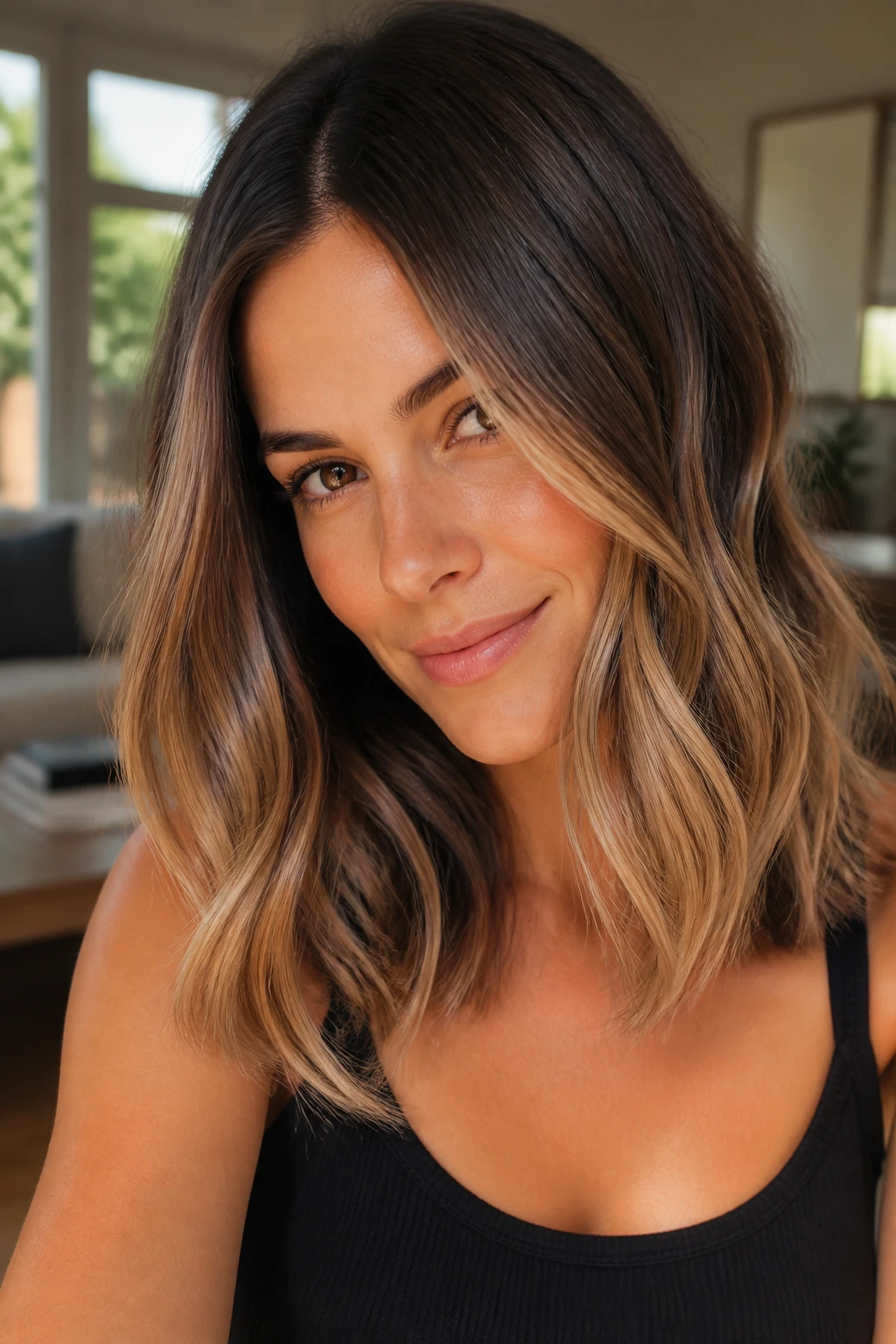
Rooted bronde with soft ends is the safest bet on this entire list, and I mean that in a good way. The deeper root shadow means the grow-out stays clean, while the bronde ends add enough brightness to make the style feel fresh.
This look is useful if you do not want to sit in a salon chair every six weeks. Keep the root slightly deeper than the mid-lengths, then let the ends soften into a beige-bronde tone. It reads modern because the color never looks frozen in place. The whole thing still moves.
31. Cinnamon Mocha Balayage on Long Waves
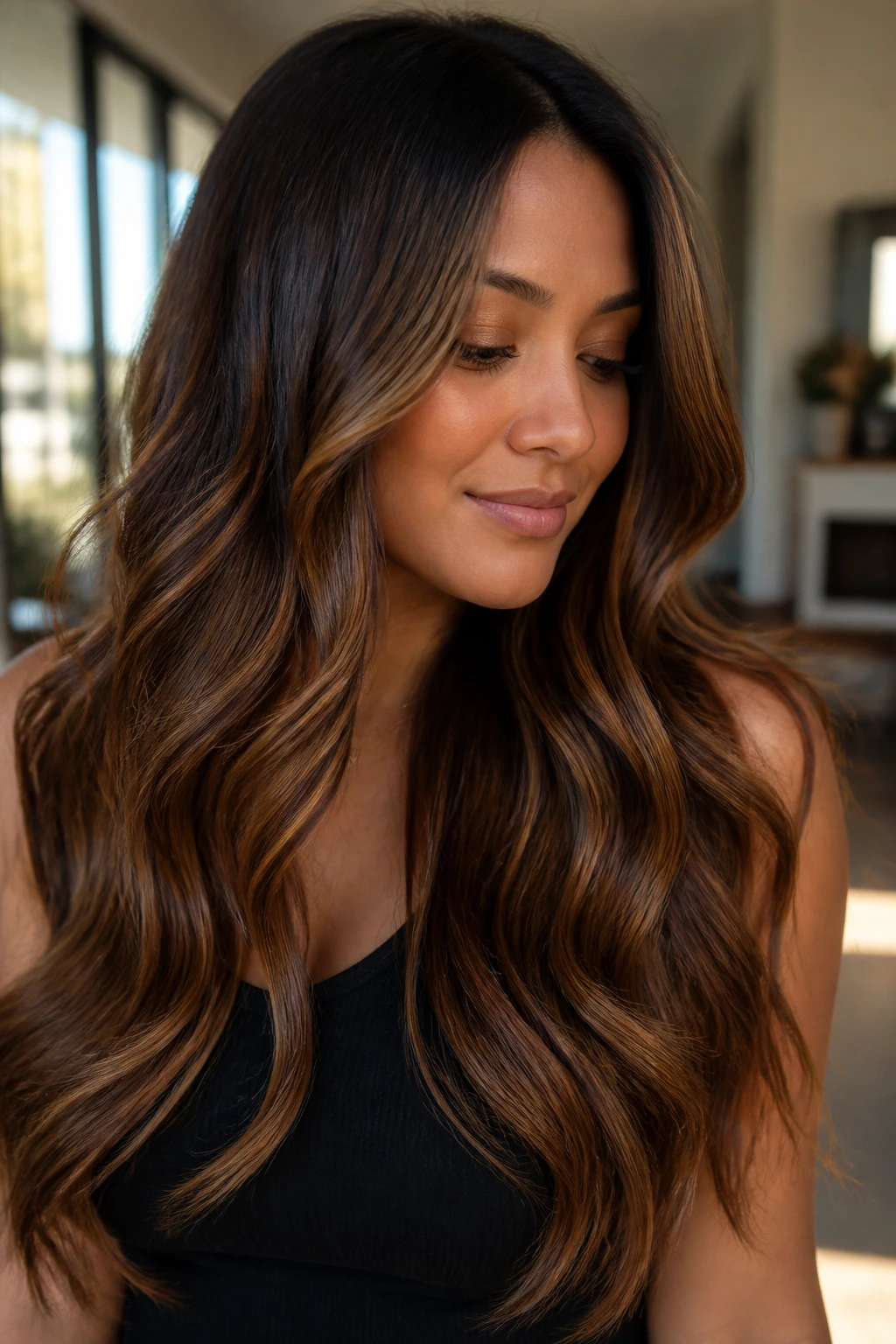
Long waves give cinnamon mocha balayage room to tell the full story. The mocha base adds depth, the cinnamon ribbons bring warmth, and the wave pattern separates the tones so they don’t collapse into one color block.
This is one of the better choices for thick hair because the extra length can carry more tone without losing shape. On a 1.25-inch iron, bend the mid-lengths and leave the ends a touch straighter. That makes the cinnamon pieces look soft instead of curled into little hooks.
32. Silver-Soft Ash Balayage for Dark Brunettes
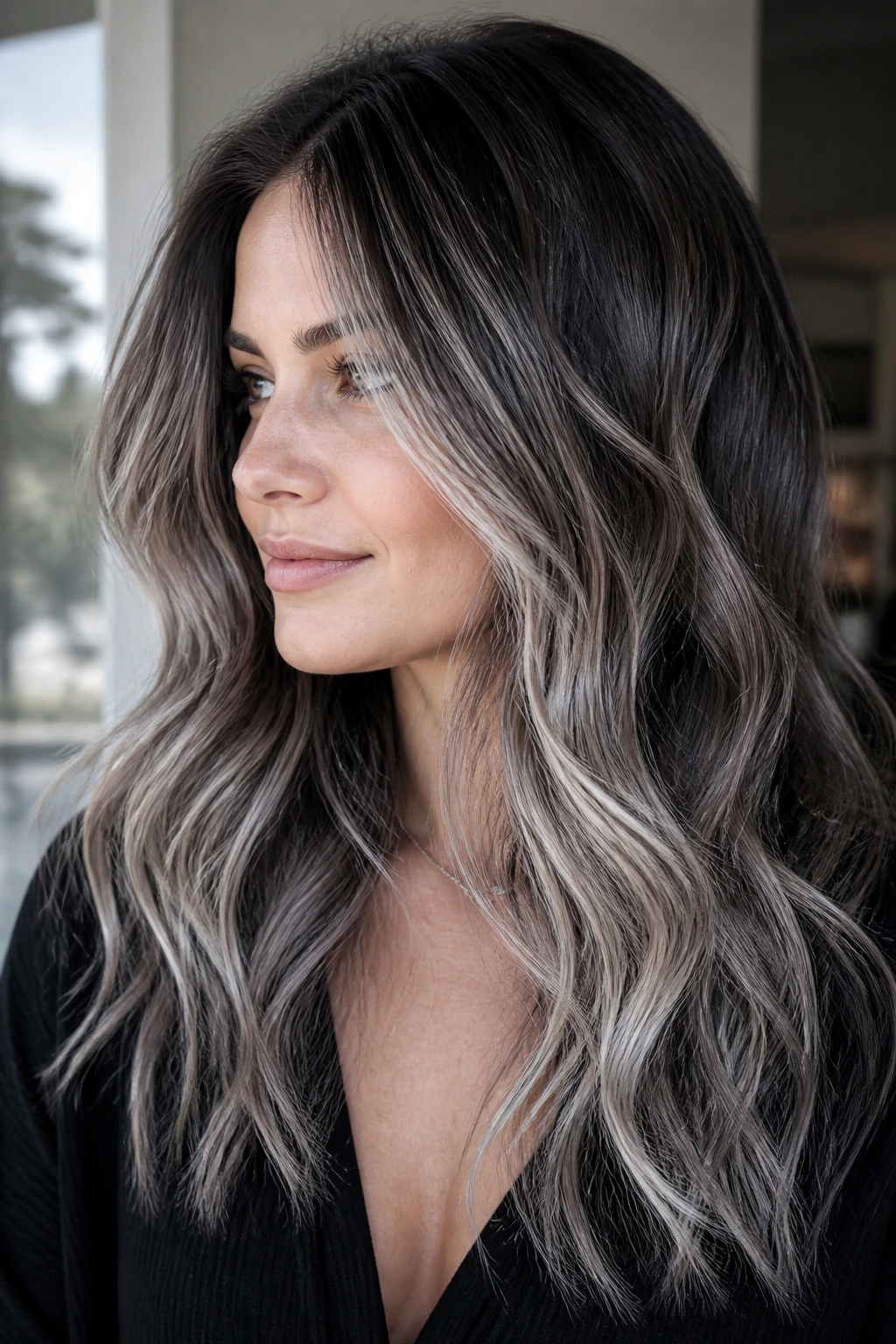
Silver-soft ash balayage is for darker brunettes who want edge without going full fashion color. The light pieces should sit in that pale ash-brown range, almost silver in some light and smoky beige in others.
The upkeep is the trade-off. Ash and silver tones drift fast if you use hot tools, hard water, or heavy oils. Still, when the toner is fresh, the effect is sharp in a way warm balayage never quite is. It’s especially good on sleek cuts and cool-toned skin.
33. Gilded Brunette Balayage for Glossy Waves
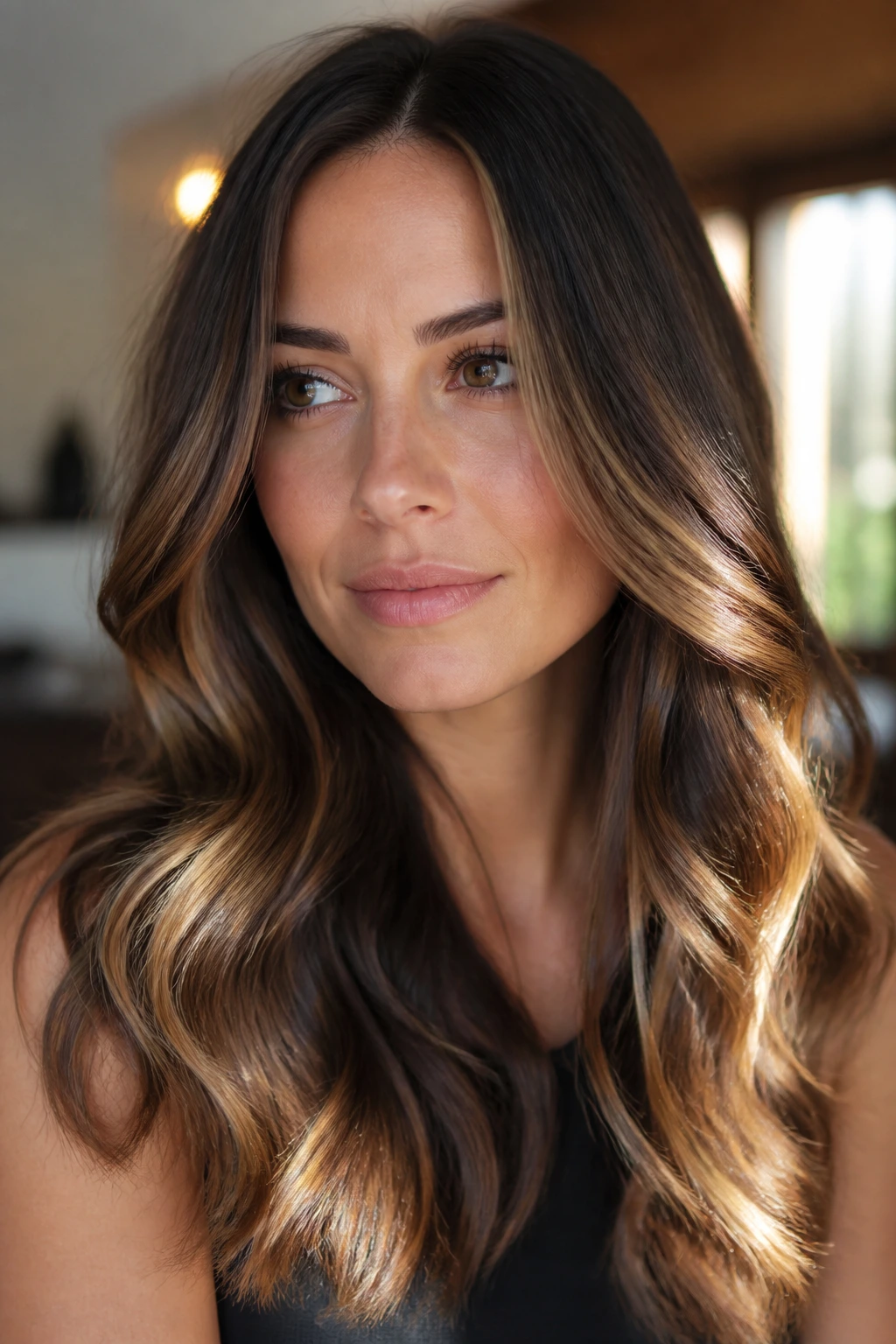
Gilded brunette balayage is less about lightness and more about shine. The ribbons are golden, but not pale; the whole look depends on reflection. Think polished brunette with a warm edge.
This works best on healthy, medium-to-thick hair that can hold a smooth wave. If the hair is dry and frayed at the ends, the gilded effect falls apart. A gloss or glaze helps here more than another round of lightening, which is why this style feels richer than a standard highlight job.
34. Espresso, Caramel, and Copper Blend
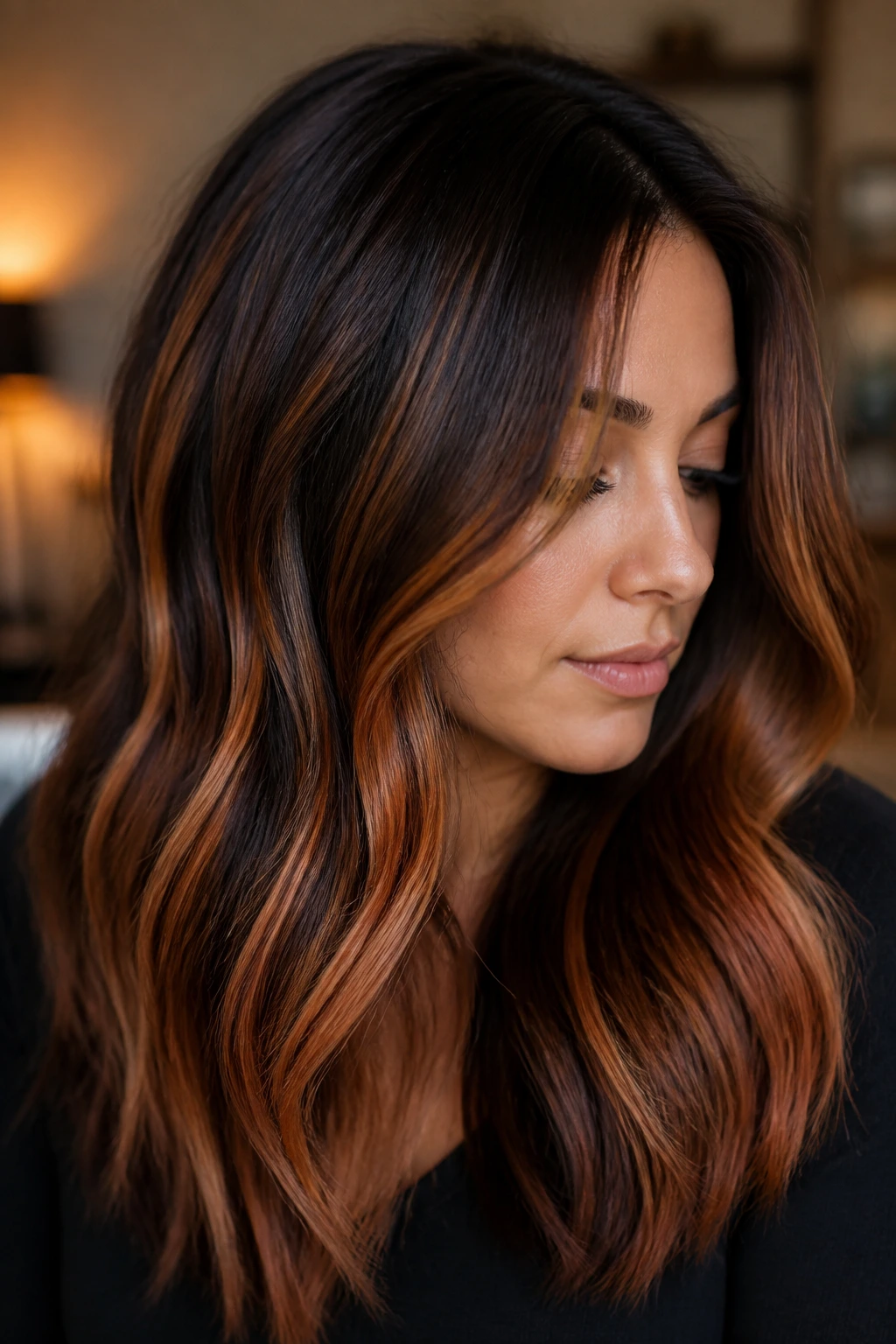
A three-tone blend can look messy fast, but when it’s done right, it’s the most natural-looking version of brunette balayage on the list. Espresso keeps the root deep, caramel adds softness, and copper drops in just enough warmth to keep the whole head from feeling one-note.
The trick is deciding which tone is the lead singer. If caramel and copper fight for attention, the hair starts looking busy. Keep one tone dominant — usually caramel — and let the others act like accents. That’s how you get dimension without chaos.
35. Soft Summer Brunette Balayage
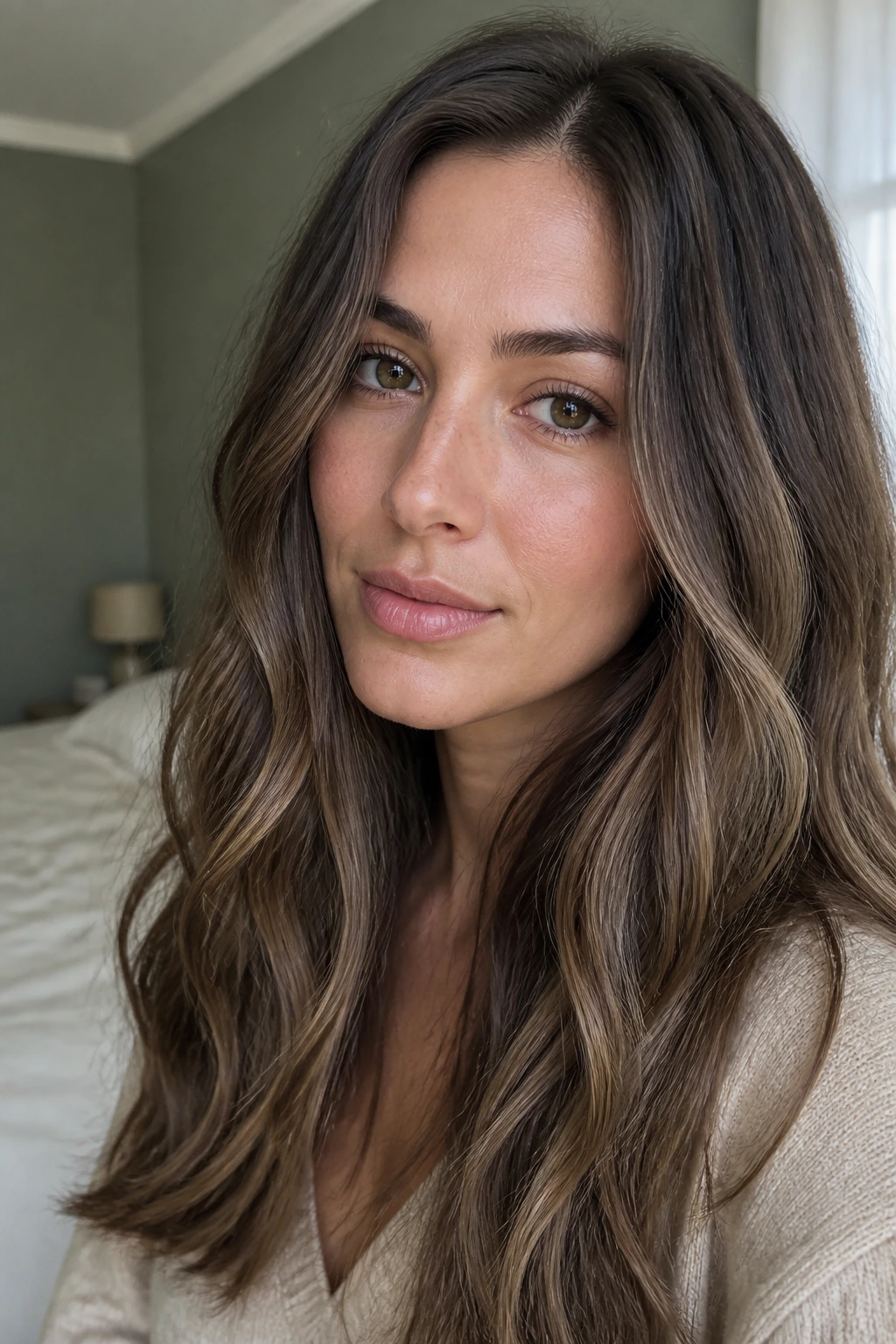
Soft summer brunette balayage is the quietest version of all. The lightness stays neutral, the ribbons stay fine, and the whole effect feels like your brunette hair got better lighting and better sleep. No drama. Just depth.
It’s the look I’d point to if someone wanted brunette balayage that ages well between appointments. The root shadow stays visible, the mids get a little air, and the ends never tip into a hard blonde. If you like understated hair that still has movement, this is the one to bookmark.
Why Balayage Placement Matters on Brunette Hair
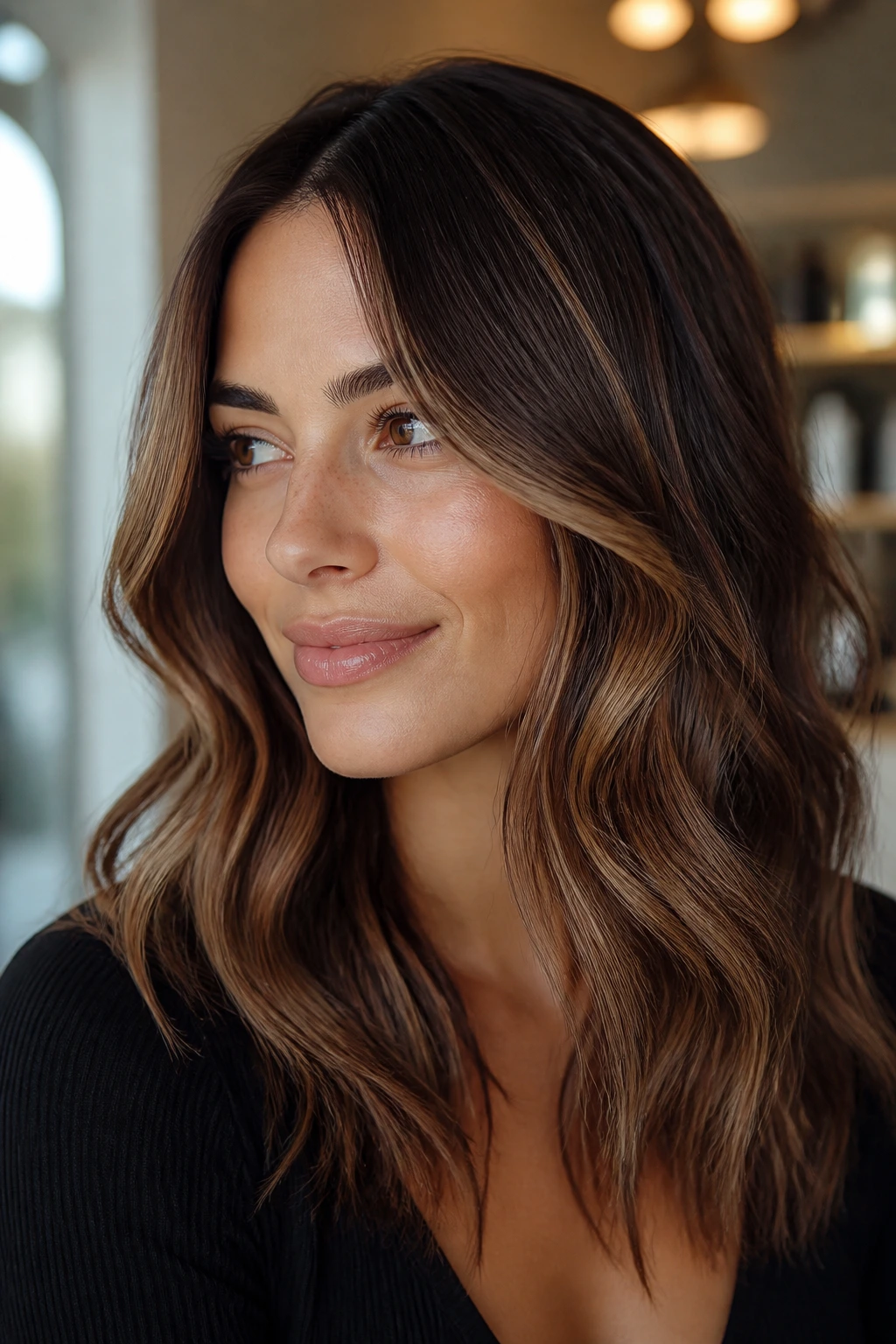
Brunette hair gives you room to play, but it also punishes sloppy placement fast. The reason balayage works so well here is simple: the darker base acts like a frame. A few hand-painted ribbons can show movement without erasing the brown underneath, and that makes the finish look softer than traditional all-over highlights.
The other reason is undertone. Brown hair usually lifts through orange and gold before it gets pale, so the tone family you choose matters as much as the lift itself. A caramel ribbon needs a different toner than a mushroom one. A copper-kissed piece behaves differently than a cool taupe strand. If the colorist ignores that stage, you get brassy ends, no matter how pretty the placement looked in the bowl.
Root Shadow Does the Heavy Lifting
That darker root is not lazy color work. It’s what keeps brunette balayage from looking stripy after a few washes. The shadow gives the eye somewhere to rest, and it lets the lighter pieces grow out without forming a hard line across the crown.
Texture Changes Everything
Waves, curls, and layered cuts show balayage differently. A style that looks soft and subtle when straight can suddenly look more dimensional once the hair bends. That’s why the same highlight pattern needs different spacing on straight hair versus curly hair — more space for curls, finer ribbons for smooth textures.
Essential Tools and Products for the Look
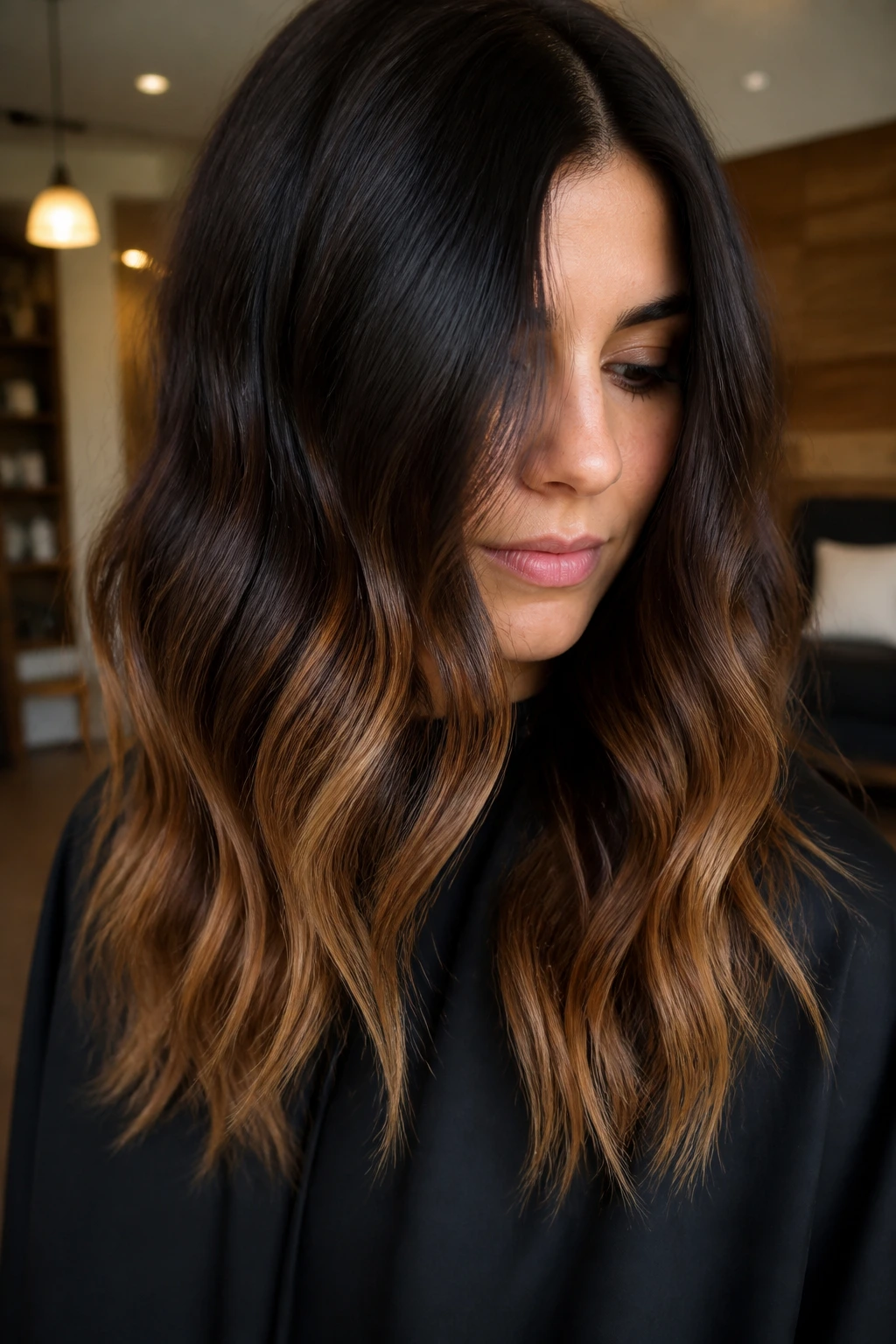
- Daylight reference photos: Bring 2 or 3 photos taken in natural light so your colorist can see the tone accurately.
- Color-safe shampoo: A sulfate-free shampoo helps keep toner from slipping out too quickly.
- Blue shampoo: Useful for brunette balayage that drifts orange or copper after a few washes.
- Purple shampoo or mask: Better for beige-blonde or ash pieces that start to yellow.
- Hydrating hair mask: Lighter ends dry faster, and a weekly mask keeps them smoother.
- Heat protectant spray: Use it before blow-drying, curling, or flat-ironing.
- Wide-barrel iron or blowout brush: Shows the ribbons better than tight curls or random bends.
- Satin pillowcase: Reduces frizz and helps the ends stay smoother overnight.
- Wide-tooth comb or detangling brush: Safer on fragile lightened sections than a stiff brush.
Smart Shade-Picking Tips for Brunettes
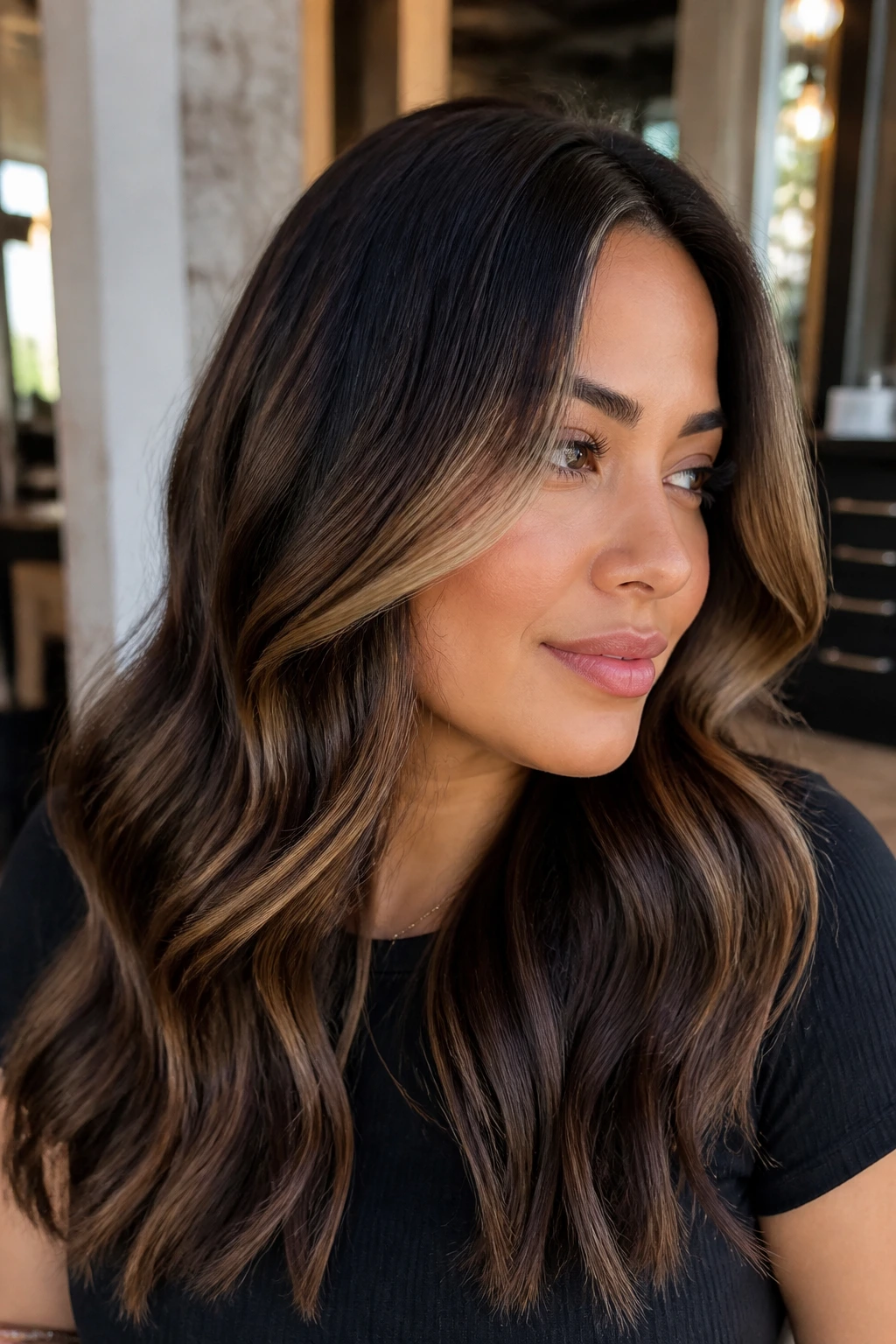
The fastest way to get brunette balayage wrong is to pick a shade that fights the base. Warm brunettes usually look best with honey, caramel, bronze, maple, and cinnamon notes. Cool brunettes tend to hold mushroom, taupe, ash, and sable better because those tones do a cleaner job of smoothing out brass.
Warm, Cool, Neutral
Warm brown hair already carries gold or red pigment, so adding more warmth can either look rich or go orange fast. That’s why warm balayage works best when the highlight is still one step darker and one step softer than a true blonde. On the other hand, if your skin leans pink or your hair naturally pulls red, a cool beige or taupe ribbon often looks cleaner.
How Much Lift Feels Right
If you want low maintenance, keep the light pieces within about two levels of your base color and concentrate them around the face and top layer. If you want more contrast, let the front pieces go brighter and keep the back section deeper. That split gives you dimension without forcing the whole head to carry the same amount of upkeep.
What to Say at the Chair
“I want ribbons, not stripes.”
“I want the root to stay deep.”
“I want the brightest pieces around the face and through the top layer.”
“I don’t want the ends to turn orange.”
Those four lines tell a colorist more than a long speech about inspiration ever will.
How to Style Balayage So the Ribbons Show
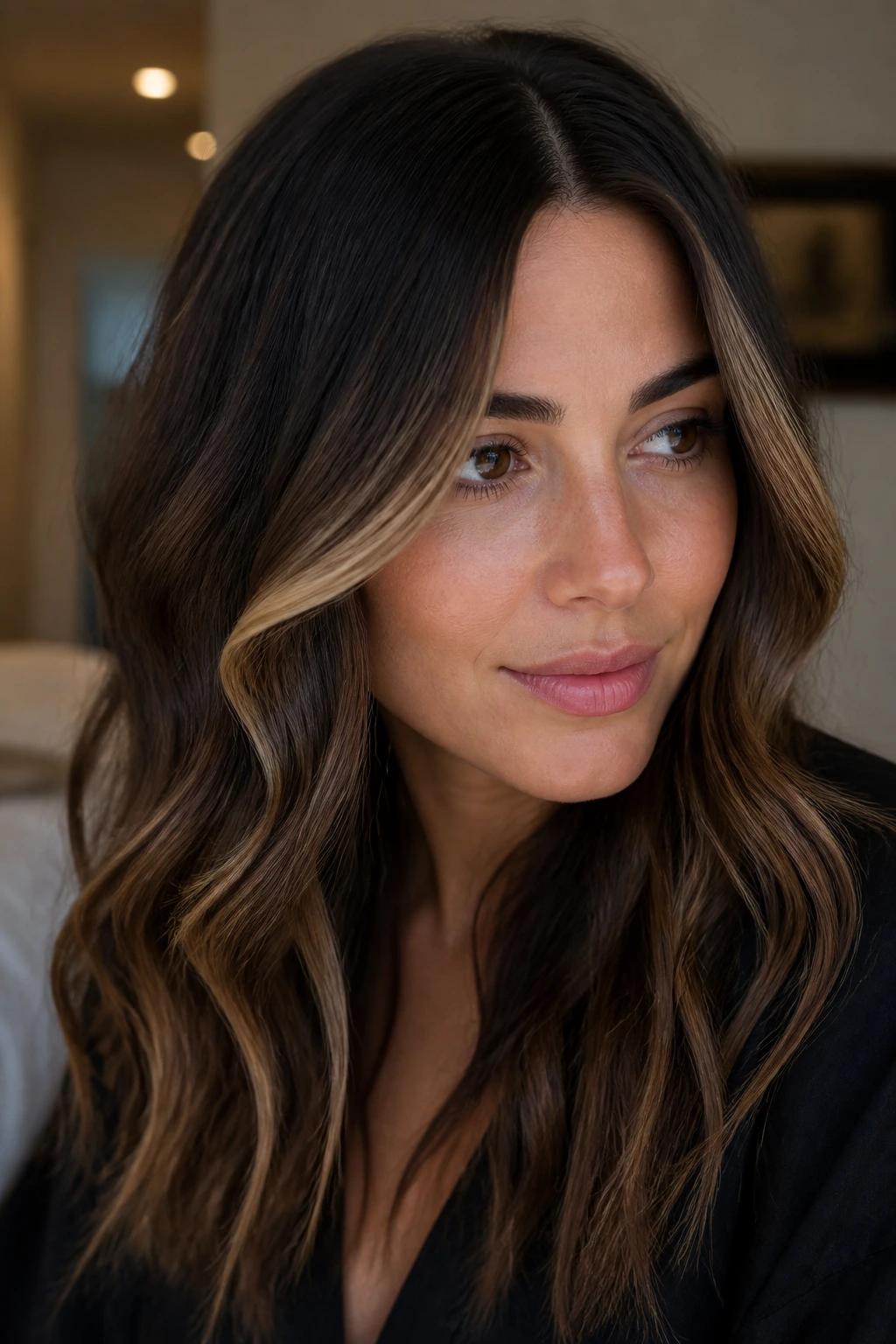
Parting: A middle part emphasizes face-framing brightness, while a soft side part can make the darker root look thicker and the lighter pieces more scattered.
Texture: Loose bends are the easiest way to show balayage on brunette hair. A 1.25-inch iron or a round brush blowout usually gives the color enough curve to separate the ribbons without turning them into tight curls.
Cuts: Long layers, curtain bangs, butterfly cuts, and blunt lobs all give balayage a better surface to sit on than one-length hair. The lighter pieces need movement to make sense.
Finish: Keep oils and serums mostly on the mid-lengths and ends. If you put too much product near the crown, the hair can look darker than it really is, and the lighter strands disappear.
Updos and ponytails: Face-framing pieces and peekaboo ribbons show beautifully in a low ponytail or claw-clip twist. If you wear your hair up often, ask for brightness near the temples and crown, not just the bottom half.
Extra Shine and Tone Boosters
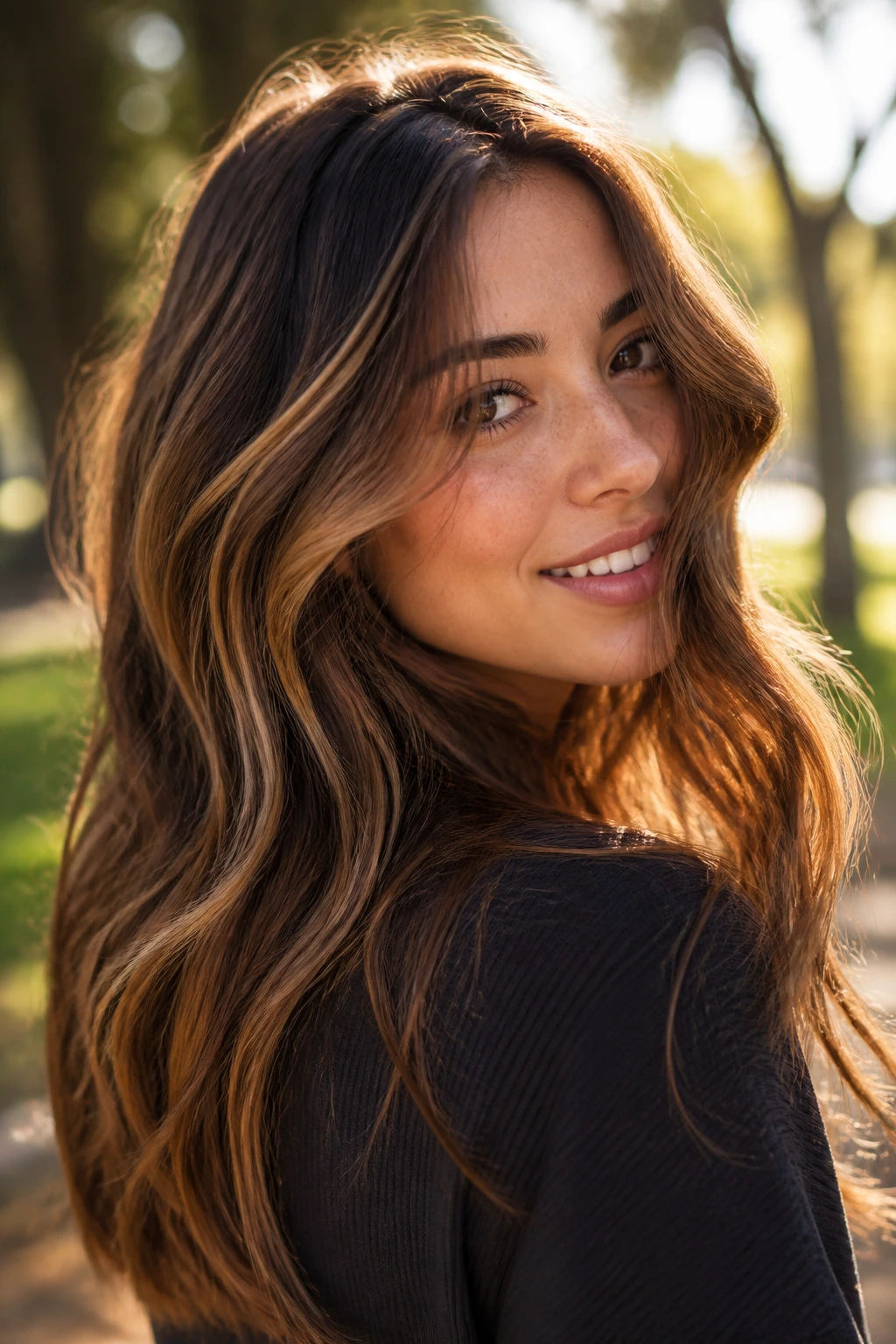
Gloss Boost: A clear or beige gloss every 6 to 8 weeks keeps brunette balayage looking fresh, especially if the light pieces started out warm or cool and need a little correction.
Brightness Boost: If the hair feels too quiet, ask for two or four brighter face-frame pieces instead of more lightness everywhere. That change gives the cut a lift without turning maintenance into a chore.
Depth Boost: Thick hair often looks better with a few lowlights or a deeper shadow at the crown. The darker pieces add weight back into the shape and keep the lighter ribbons from disappearing.
Texture Boost: On curls, the highlight should live on the outer curve of the curl clump. On straight hair, the ribbon should cross the surface in longer, softer strokes so it reads like movement instead of a line.
Make-It-Yours: If you want the lowest-maintenance version, keep the brightest pieces below the part line and near the front. The back can stay deeper and still look intentional.
Keep the Dimension Fresh Between Visits
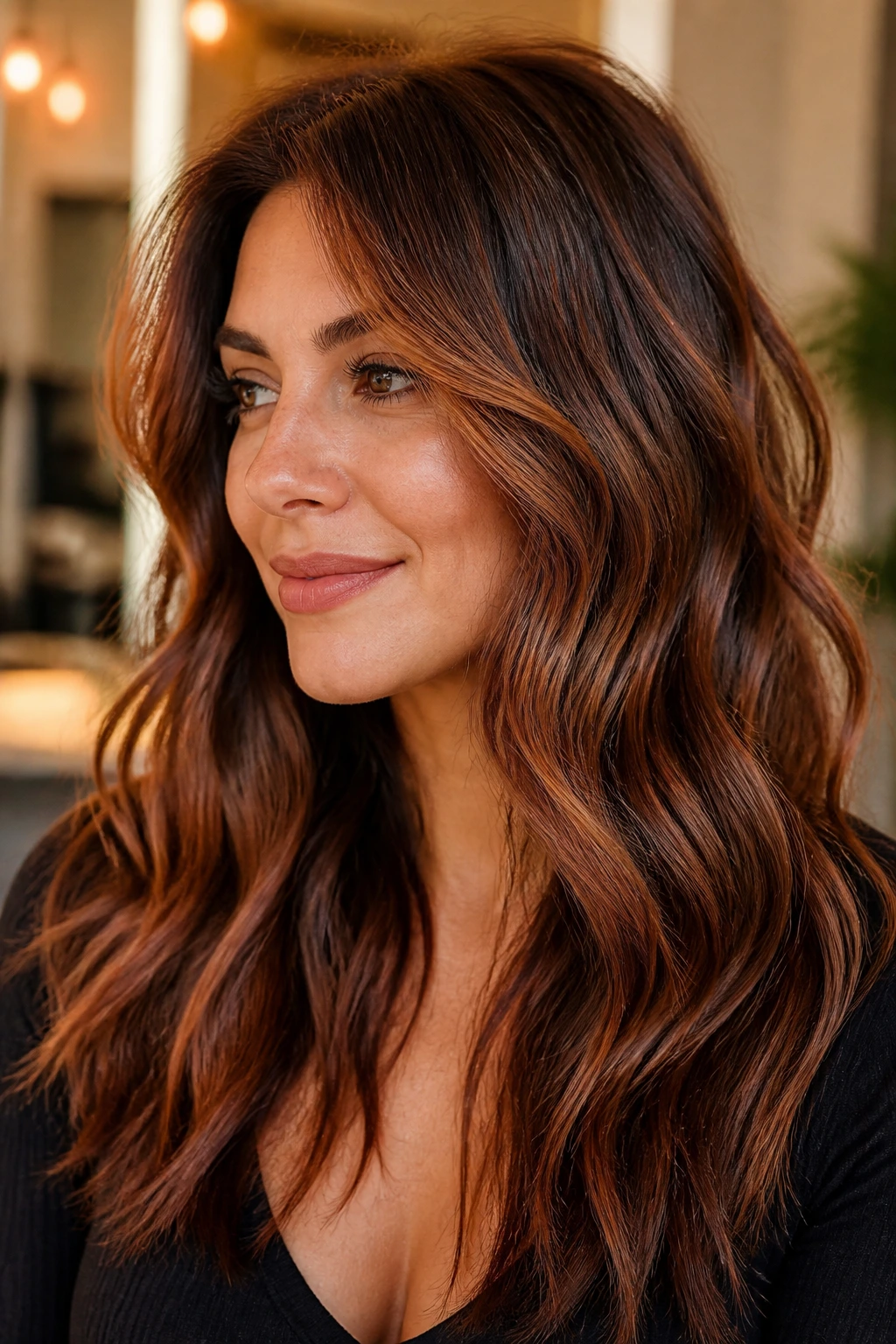
Right after a gloss or toner appointment, give the color a little breathing room. If your stylist asks you to wait before washing, follow that advice. The first wash can strip tone faster than people expect, especially from warm caramel and ash shades.
After that, a simple rhythm works best. Shampoo two or three times a week with lukewarm water, not hot water. Hot water opens the cuticle and lets the lighter pieces fade faster, which is a headache nobody needs.
Once a week, use a hydrating mask for 5 to 10 minutes. If your hair is coarse or dry at the ends, leave it on closer to 15 minutes and rinse well. For orange-prone brunettes, blue shampoo once every 7 to 10 days usually does the cleanup work without dulling the color. For beige or ash balayage, purple shampoo can help, but use it sparingly — overdoing it makes the hair look chalky.
Heat styling needs a reset too. Use protectant every single time, and keep hot tools below 375°F if the lightened ends start feeling rough. A subtle balayage can stretch 8 to 12 weeks before a refresh; a bright money piece or paler beige tone may want a gloss around the 6-week mark.
Variations and Adaptations to Try
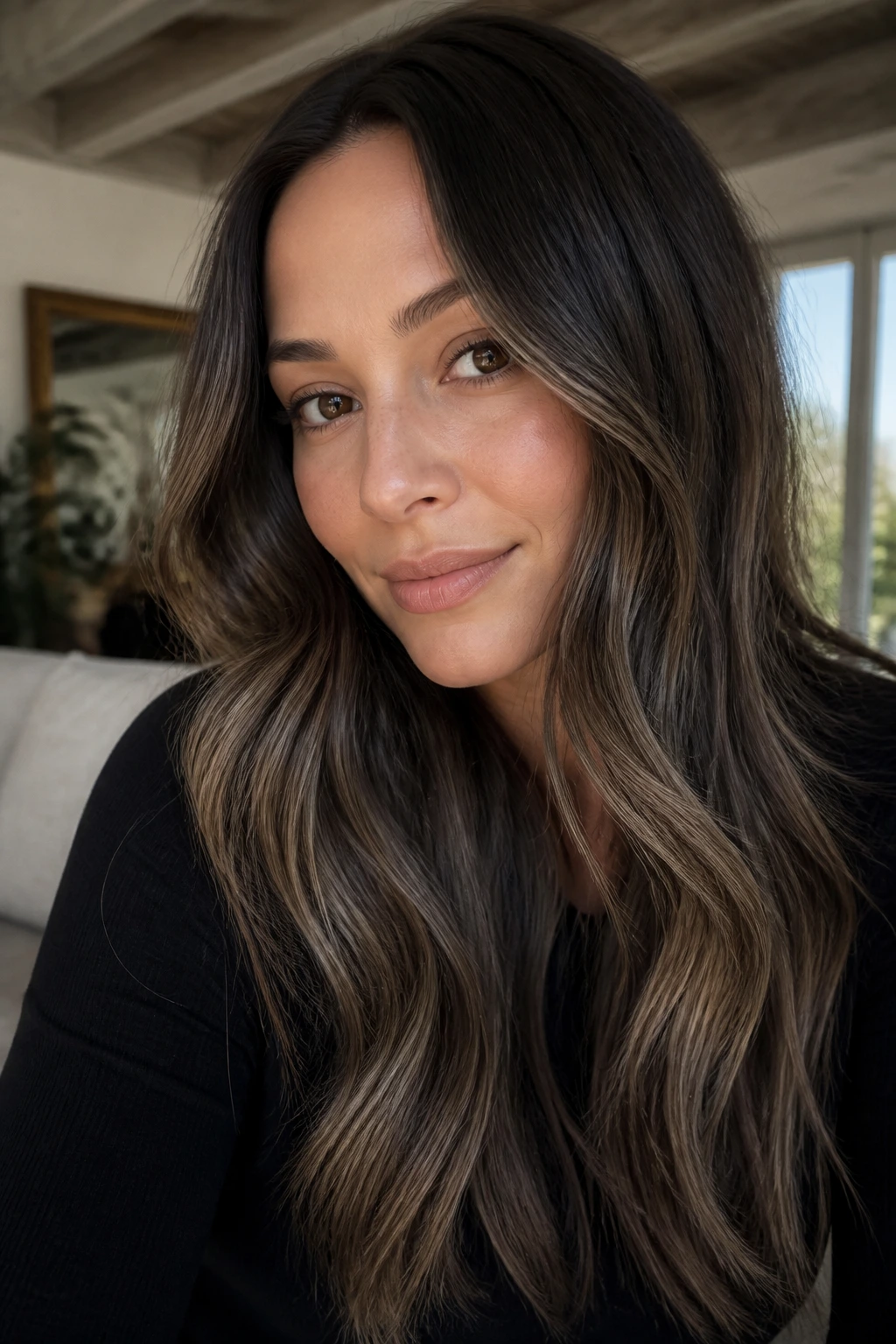
Warmth Dial-Up: If the base feels dull, ask for honey, bronze, or maple tones in the ribbons. That small change brings the brunette forward without adding obvious blonde.
Cool Tone Reset: If your hair pulls orange, shift the color family toward mushroom, taupe, or ash. The cooler toner helps clean the warmth out before it has a chance to go brassy.
Low-Commitment Grow-Out: Keep the root shadow deeper and limit the brightest pieces to the face frame and top layer. That version works if you want the look to last longer between salon visits.
Curly-Halo Placement: On curly and coily textures, place the lightest pieces on the outer halo and on the top of the curl clump. The curl needs room to expand before the color really shows.
Gray-Blend Brunette: If gray is part of the picture, mix beige, taupe, and soft silver-brown ribbons instead of covering every gray strand. The result looks less like a cover-up and more like dimension.
Bold Front Piece: If you want a stronger statement, keep the back close to the base and brighten only the money piece and temple sections. It’s the fastest way to change the mood of the whole cut.
Common Mistakes to Avoid
Going too light too fast: Dark brunette hair can lift through orange before it reaches a clean blonde. If the lightener is pushed hard in one visit, the ends often feel rough and the tone looks brassy. A slower lift with a good gloss is safer.
Skipping toner: Raw lightener is not the finished look. Without toner, beige can turn yellow and caramel can turn orange. A demi gloss or toner gives the ribbons their real shade.
Putting all the brightness at the ends: That makes the hair look bottom-heavy and can make long hair seem thinner at the crown. Keep some brightness around the face and through the top layer so the eye travels upward.
Ignoring undertone: Warm highlights on warm brunette hair can be beautiful, but they can also tip too gold too quickly. Cool brunettes usually need taupe, mushroom, or ash to keep the result balanced.
Styling it flat every time: Balayage is built to move. If the hair is ironed pin-straight with heavy oil, half the dimension disappears. A bend at the mid-lengths usually shows the color better.
Using the wrong shampoo: Purple shampoo on warm caramel can dull it. Blue shampoo on already-cool mushroom hair can make it look muddy. Match the shampoo to the problem, not to a habit.
Frequently Asked Questions
How much lighter should brunette balayage go?
Usually one to three levels lighter than the base is enough for a soft, wearable result. If you go much lighter on a dark brunette, the color often needs more maintenance and a better toner plan.
Is balayage better than foil highlights for brunette hair?
Balayage gives a softer grow-out because the root stays deeper and the light pieces are painted by hand. Foils can go brighter and more even, but they usually need a more obvious refresh line.
Will balayage turn orange on brown hair?
It can if the lift is too aggressive or the toner is skipped. Brunette hair reveals red and orange pigment as it lightens, so the shade family and aftercare matter just as much as the painting technique.
Can balayage cover gray hair?
It can blend gray well, but it usually won’t cover it the same way a permanent single-process color would. If you want gray to disappear completely, ask for a different service; if you want it softened and woven in, balayage can do that nicely.
Does balayage work on curly hair?
Yes, and it can look especially good on curls because the highlights move with the curl pattern. The placement has to sit on the outside of the curl clump, though, or the color gets hidden inside the coil.
How often does brunette balayage need maintenance?
A subtle brunette balayage can often go 8 to 12 weeks before a refresh. Brighter money pieces, beige-blonde ribbons, or cool ash tones usually need glossing sooner, sometimes around 6 weeks.
What should I tell my colorist if I want something low-maintenance?
Say you want a deep root shadow, soft ribbons, and no hard line at the scalp. It also helps to say how often you actually want to come back, because maintenance tolerance changes the whole placement plan.
Can balayage be done on box-dyed brunette hair?
Sometimes, but the color history matters a lot. Box dye can react unpredictably under lightener, so the safest move is to tell the colorist exactly what’s been on your hair and let them decide whether a strand test or a slower lift is needed.
Soft Grow-Out, Strong Dimension
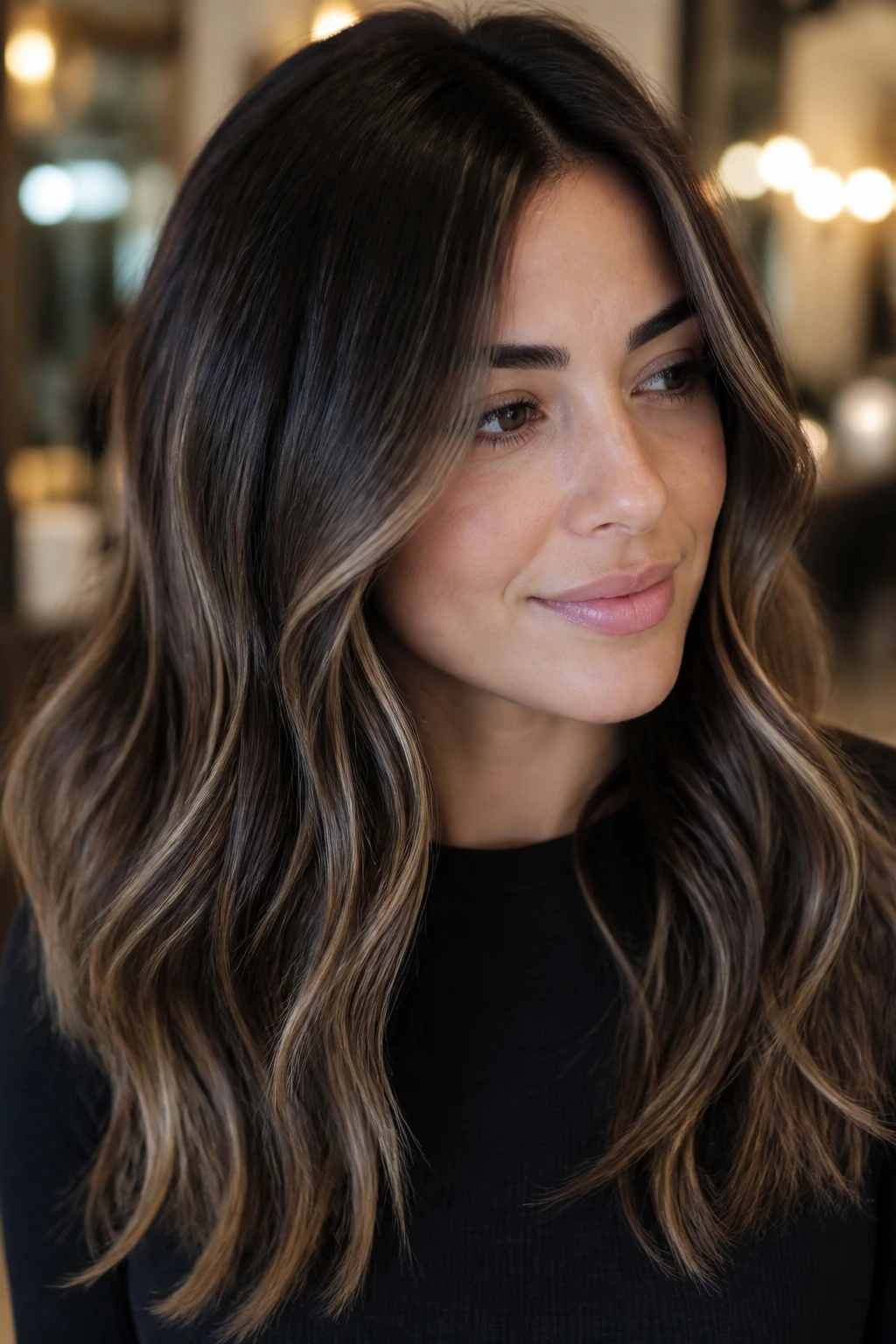
Brunette balayage works because it respects the brown base instead of fighting it. The good looks in this list all do the same thing in different ways: they keep depth at the root, choose a light tone with a reason behind it, and place the brightness where the haircut can actually use it.
That’s why some versions feel soft and expensive, while others feel sharp and cool or warm and sunlit. The color family matters, but placement matters just as much. If the highlights live only where the hair is already thin or faded, the whole effect falls apart. Put them where the hair moves, and the style starts doing the work for you.
If you’re choosing one place to start, pick the tone family first — honey, caramel, mushroom, ash, bronze, or copper — then decide how bold you want the face frame to be. That one choice will steer the whole result better than any buzzword ever could.
