



Thick hair doesn’t ruin a pixie cut. Bad shaping does.
That’s the part people miss when they sit in the chair with a dense mop that seems to have its own weather system. Short thick hair can look crisp, airy, and sharp as a cheekbone line — or it can puff at the sides, stack up at the crown, and grow into a triangle before the week is out. The difference lives in the perimeter, the nape, and the way the interior is cut. A good pixie cut for short thick hair doesn’t fight density. It redirects it.
I’ve always thought thick hair makes the best pixies, provided the stylist understands bulk removal without turning the whole head into frizz. Feathering, undercutting, point-cutting, and smart tapering matter more here than sheer bravery with the scissors. If the top is too short and the sides are left heavy, you get a mushroom. If the nape is cleaned up and the crown is left with a little lift, you get shape. Real shape. The kind that holds after a humid commute, a rough towel dry, and one too many times sleeping on your left side.
The 23 looks below lean into that truth. Some are soft and feathered. Some are blunt and bold. Some keep length on top so the hair can bend instead of bulking out. All of them make thick hair work harder for the cut, not against it.
Why These Pixie Cuts Stand Out on Thick Hair
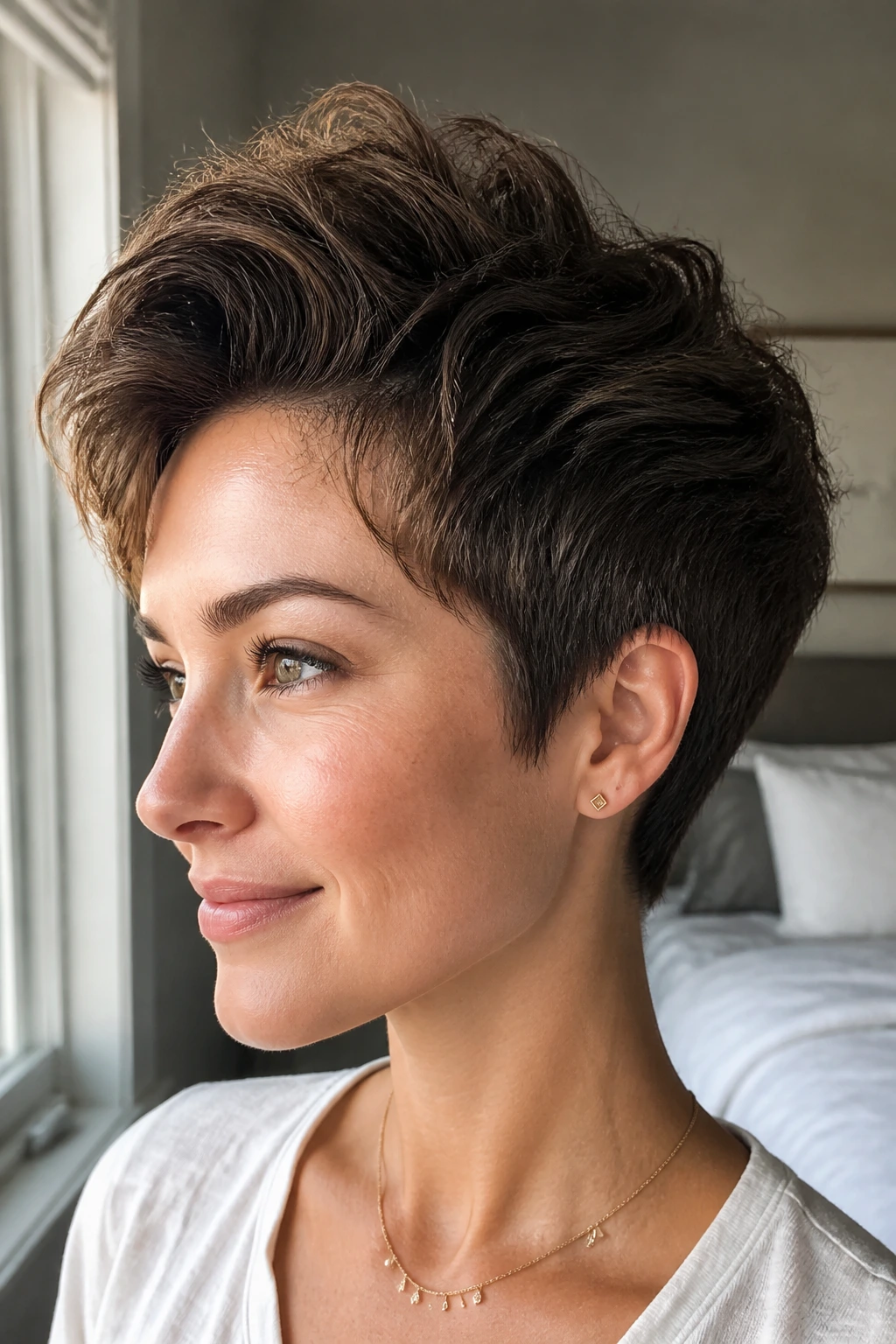
- Bulk becomes structure: Dense hair gives a pixie real body, so a clean outline at the nape and around the ears looks intentional instead of flimsy.
- Texture has something to hold: Thick strands keep a piecey finish better than fine hair, which means pomade, cream, and mousse can actually show up on the head.
- The cut grows out with more grace: When the bottom is tapered and the top has a little room, the shape stays tidy longer between trims.
- Styling time stays short: A smart pixie can go from towel-dried to finished in about 5 to 10 minutes if the shape is right.
- You can choose your mood: Same thick hair, different effect — sleek, shaggy, edgy, soft, or almost boyish — depending on where the weight is removed.
1. Feathered Crown Pixie
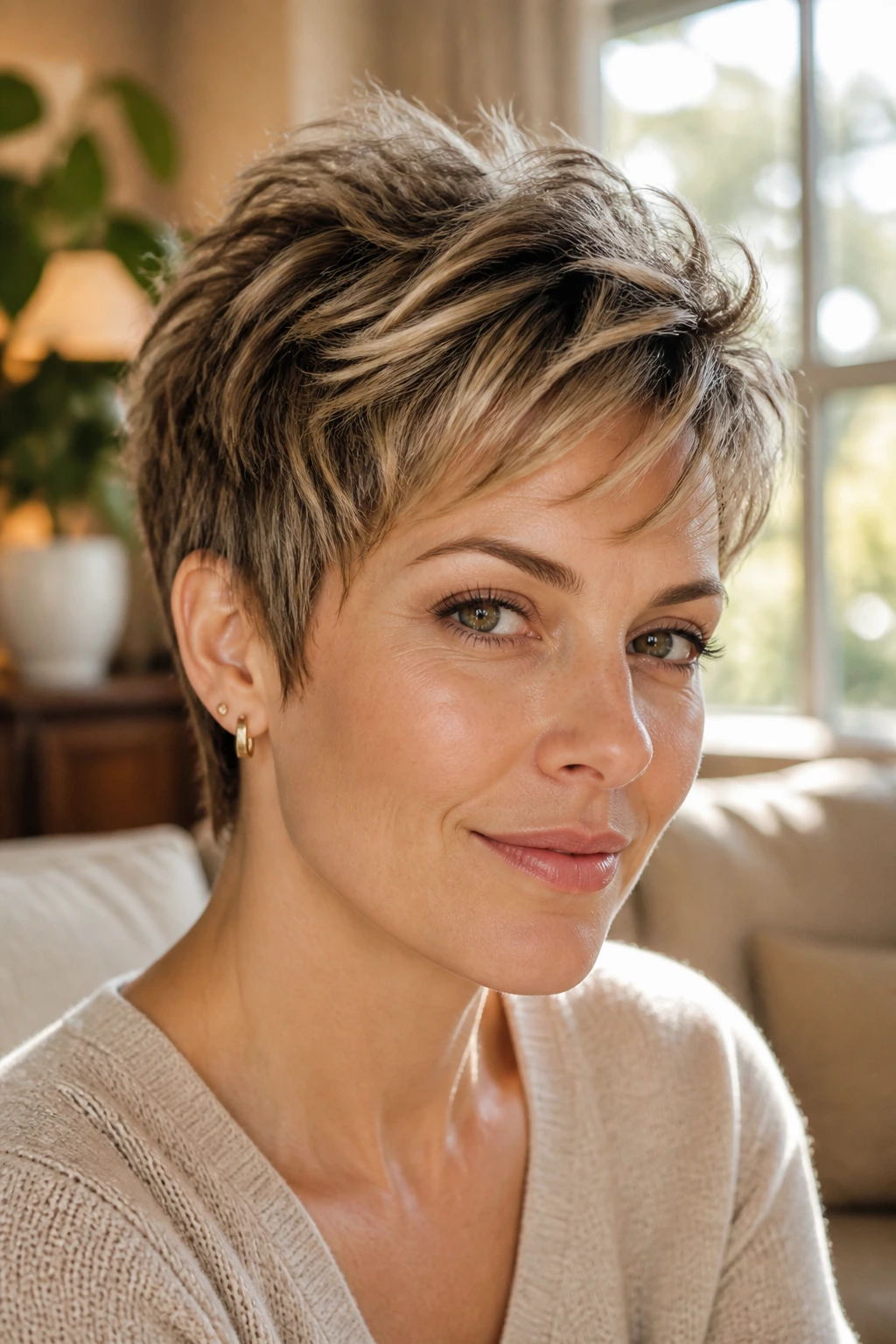
Feathering is the old reliable move for thick hair, and it still earns its keep because it breaks up a heavy crown before the shape can balloon. The top moves instead of sitting like a cap. That matters when your hair has enough density to stand on its own after a quick blow-dry.
Ask for soft, feathery layering through the crown and temples, with the sides kept close enough to show the head shape. Point-cut ends help here more than blunt lines. If the cut is done well, the top lifts without looking teased, and the whole style feels lighter around the scalp.
This is the pixie I’d hand to someone who wants softness first. It’s neat, but not severe. A pea-sized dab of cream on damp hair is usually enough to separate the top pieces and keep the feathering visible.
2. Tapered Nape Pixie
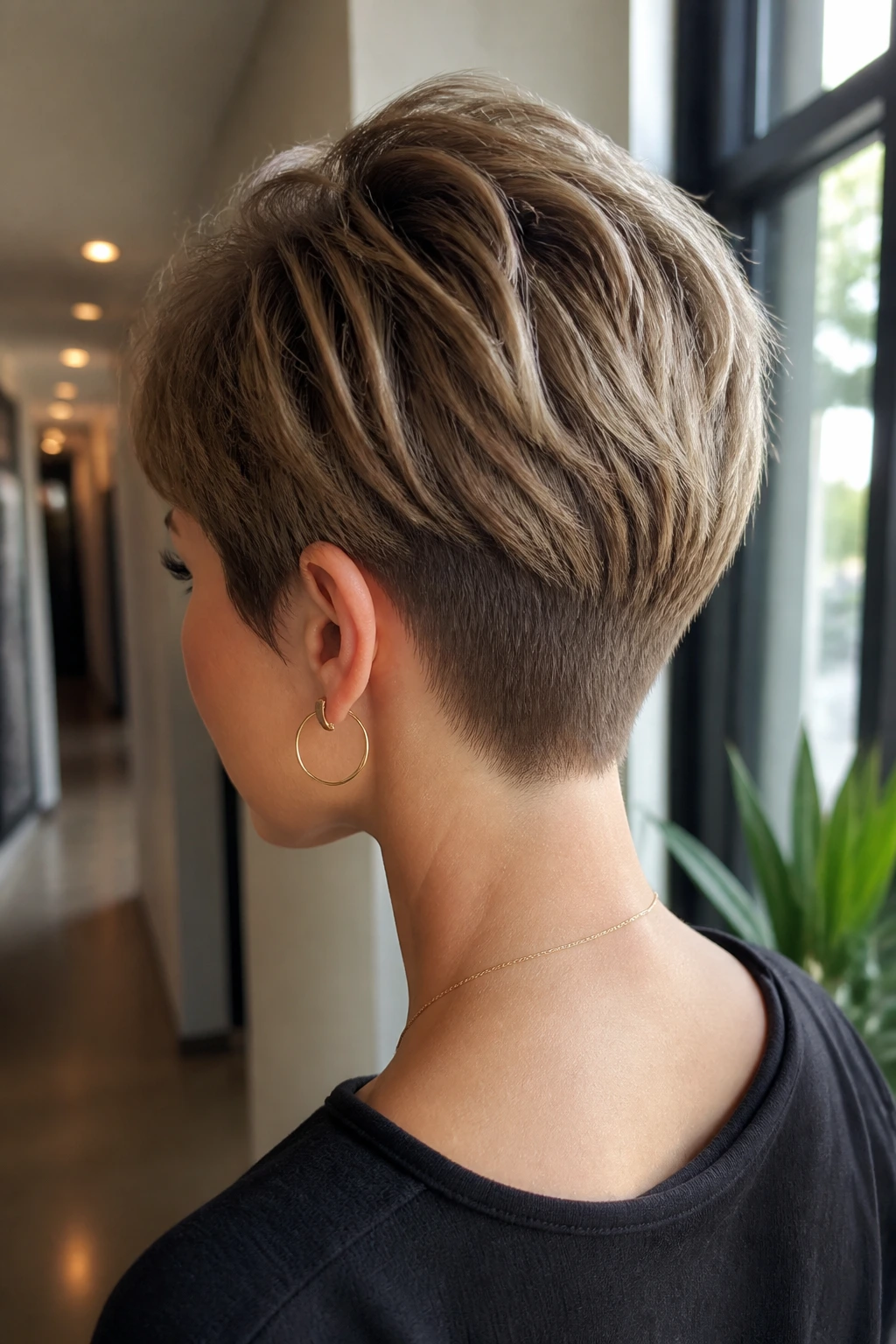
A tapered nape changes everything. Seriously. Thick hair can look bulky at the back even when the front seems fine, and the neckline is usually where that bulk gives itself away first.
This cut keeps the nape short and close, then lets the top sit a little longer so the profile doesn’t flatten out. The clean taper makes the neck look longer and the overall shape look more finished. It also grows out better than a blunt back, which is a small mercy if your hair grows fast.
I like this cut for anyone who wears collars, blazers, or high necklines. The contrast between the crisp nape and the longer top makes those clothes look cleaner too. Use a small round brush or your fingers to push the top forward or slightly to the side; don’t overwork the back. That’s the whole point.
3. Choppy Piecey Pixie
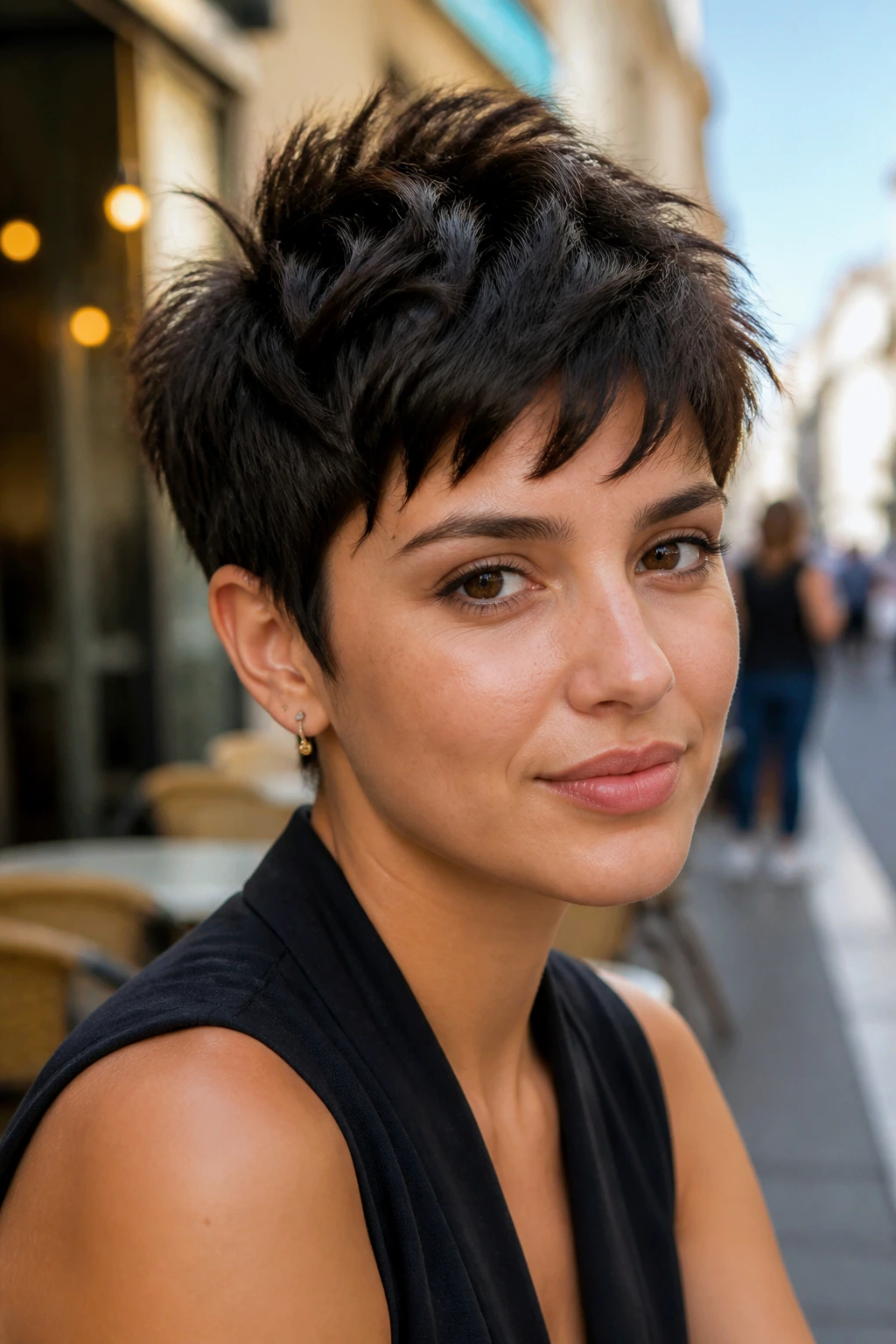
Why does a choppy pixie look sharper on thick hair than on fine hair? Because density gives every sliced edge some actual weight.
A piecey cut depends on separation. Thick hair can hold those separated sections without collapsing by lunchtime. Instead of one solid block, you get chunks, bends, and little broken-up ends that show the texture. The trick is to ask for piecey layers, not shredded ones. There’s a difference, and your ends will tell on the stylist if the wrong tool gets overused.
What Makes It Work
- The top is cut with movement in mind, not uniformity.
- The sides stay tighter so the texture doesn’t spread outward.
- A matte paste or dry texture spray keeps the pieces visible.
- It looks best a little imperfect. Too polished and it loses the point.
This is the pixie for someone who wants edge without a harsh line. It has energy. A little grit. A little controlled mess.
4. Side-Swept Fringe Pixie
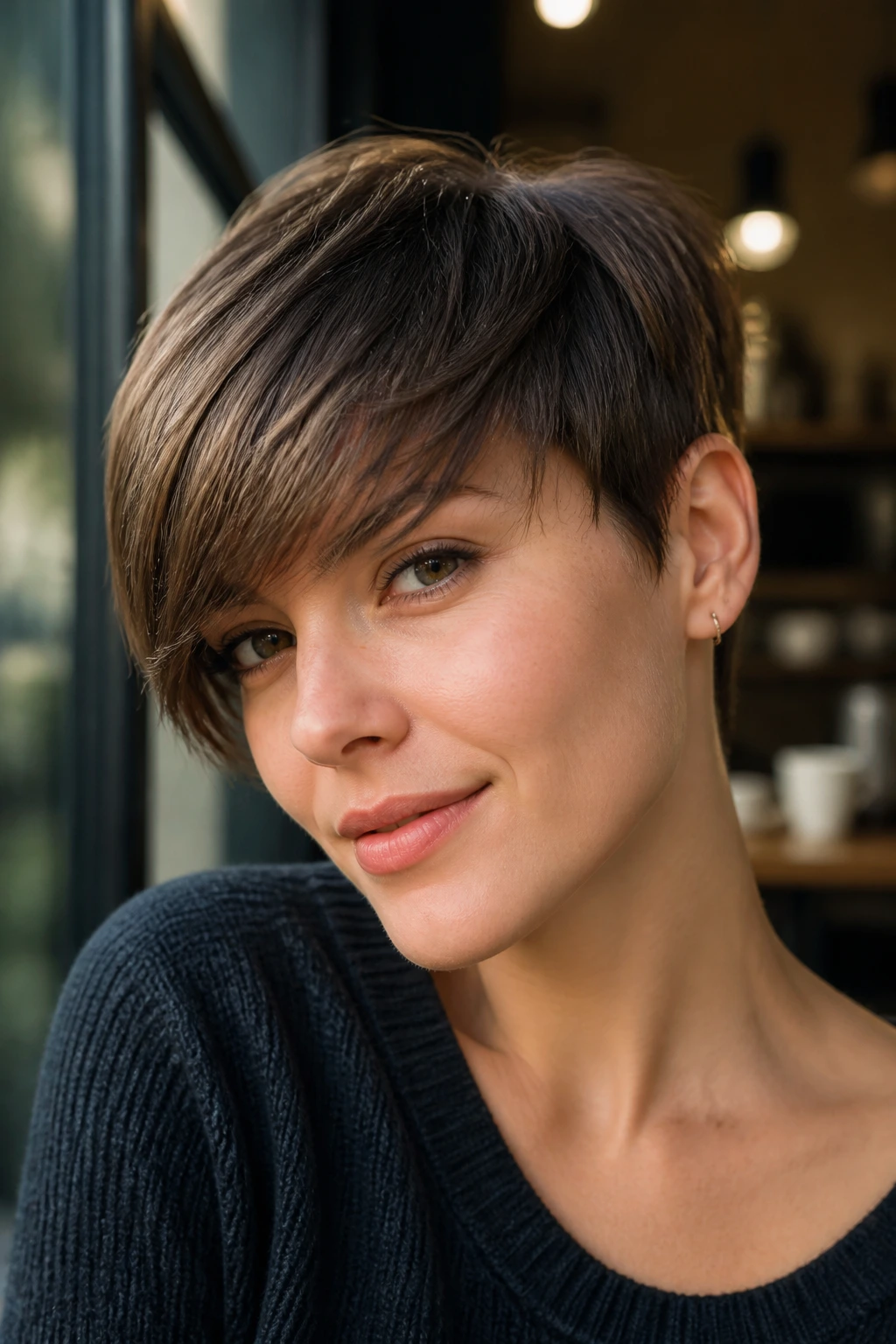
A side-swept fringe changes the whole mood of a pixie in one move. It can soften a strong forehead, hide a stubborn cowlick, and take some of the seriousness out of thick hair that wants to sit upright.
The fringe should be cut longer than you think at first. Thick hair bounces. A lot. If the bang is cut to your final desired length while wet, it may spring up two-thirds of an inch or more once it dries. That bounce matters. Ask for the fringe to land just past the brow bone so it can be refined later.
This shape works especially well when the rest of the cut is tidy. The sweep across the face gives the eye somewhere to go, and the density gives the fringe a plush, full look instead of a wispy one. Blow it across with a small brush, then let it fall. Don’t chase perfection. A little bend keeps it modern.
5. Long-Top, Short-Sides Pixie
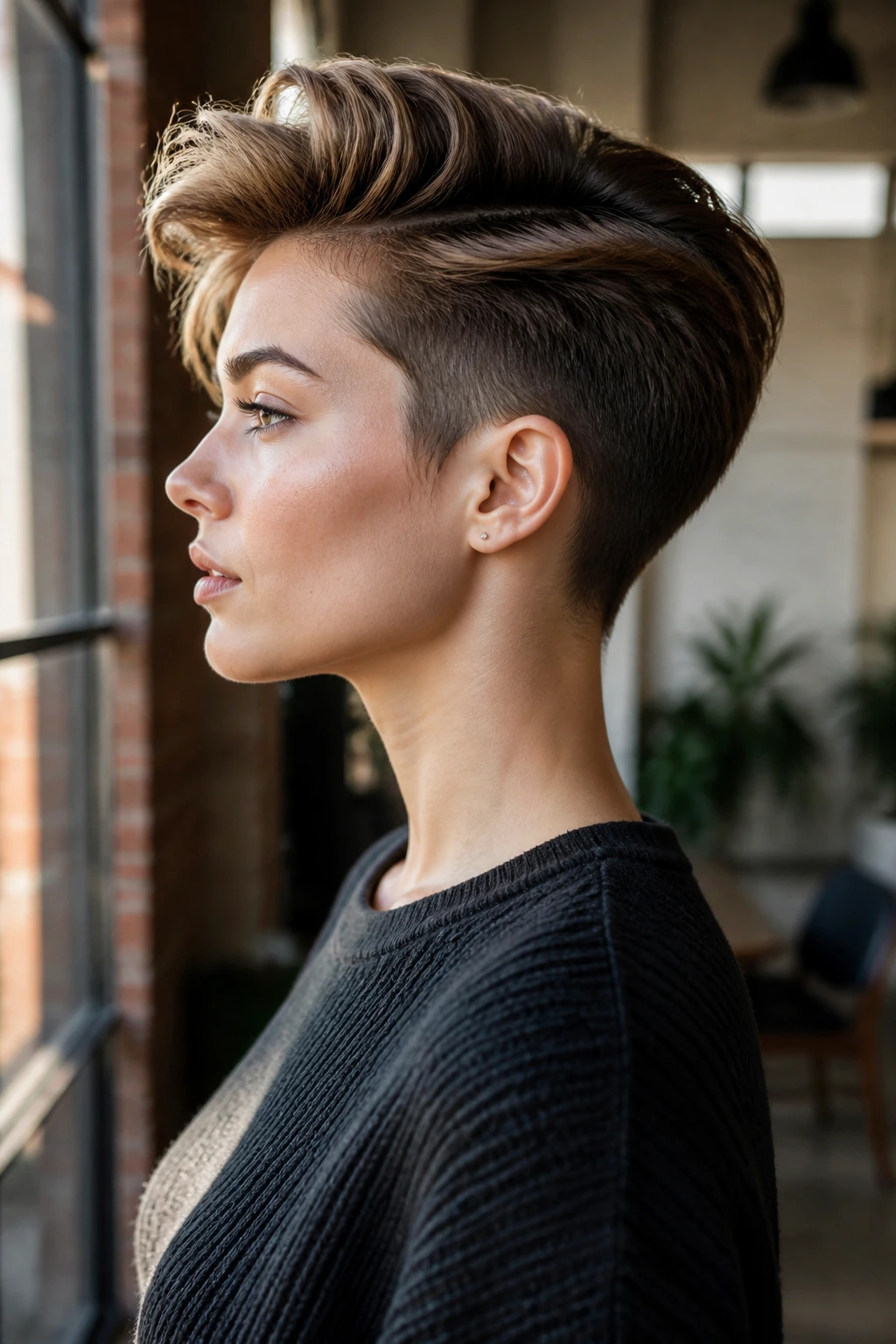
Long on top, short on the sides — simple formula, strong result. Thick hair loves contrast because contrast keeps the cut from becoming one solid shape with no air in it.
The top here usually sits between 2½ and 4 inches, depending on your hair texture and how dramatic you want the style to read. The sides are cropped close enough to remove bulk, but not so tight that the whole thing turns severe. That balance is what keeps this cut wearable day to day.
If your hair has a natural tendency to rise at the roots, this is a smart lane. The extra length on top gives you options: side part, small quiff, forward sweep, or a softer sweep back. It’s one of the few short cuts that can look polished in the morning and slightly rebellious by lunch.
6. Hidden Undercut Pixie
Hidden undercuts are the quiet fix for thick hair that keeps trying to grow sideways. The top looks like a normal pixie. Underneath, though, a section at the nape or behind the ears has been clipped or shaved away to remove the bulk you can’t see from the front.
That hidden weight removal is a gift. It makes the top sit better, cuts down on puffiness, and keeps the ears from disappearing under a shelf of hair. If your hair is very dense, this move can change the whole shape without making the cut look too aggressive.
This is also a useful choice if you want the option to tuck the top behind the ear without the sides becoming helmet-like. You get cleaner lines and less daily fight with the brush. A little warning, though: the grow-out at the undercut will need attention before the top does.
7. Curly Halo Pixie
Curly thick hair needs a pixie cut that respects the curl pattern instead of chopping it into a ball. If the hair bends, coils, or springs, the best result usually comes from cutting it dry or mostly dry, so the stylist can see where the curl lands.
The halo shape keeps length around the top and sides just enough for the curls to form a soft frame. The nape stays neat, but the curl is allowed to do some of the styling work. That means less time trying to flatten the hair into obedience. Good luck with that, by the way. Curly thick hair rarely signs that contract.
What to Ask For
- Dry or diffused cutting so the curl pattern is visible.
- Gentle internal shaping, not aggressive thinning.
- A nape that stays close so the back doesn’t mushroom.
- A curl cream or lightweight gel to keep the ringlets separated.
This cut is best when you want fullness with some bounce, not a stiff, sculpted shell.
8. Wavy Tousled Pixie
Wavy hair can look effortless in a pixie, but only if the layers are placed where the bend already lives. Cut it wrong and the wave puffs at the sides. Cut it right and you get a little movement that feels casual, not sloppy.
This version keeps the top soft and the edges lightly textured. It’s not a curl cut, not a slick crop, and not a shag pretending to be something else. The wave gets room to curve, especially around the temple and crown. That’s the useful part.
A mousse or light styling foam is usually enough here. Work it through damp hair, then pinch a few top sections as they dry. If you blow-dry, use low heat and a vent brush. The goal is shape with air in it. Dense hair always wants to pack itself together; this cut asks it to loosen up a little.
9. Asymmetrical Pixie
Asymmetry does one very handy job on thick hair: it makes the cut look intentional from the first glance. One side sits a little longer, the part line shifts, and the whole style feels more architectural.
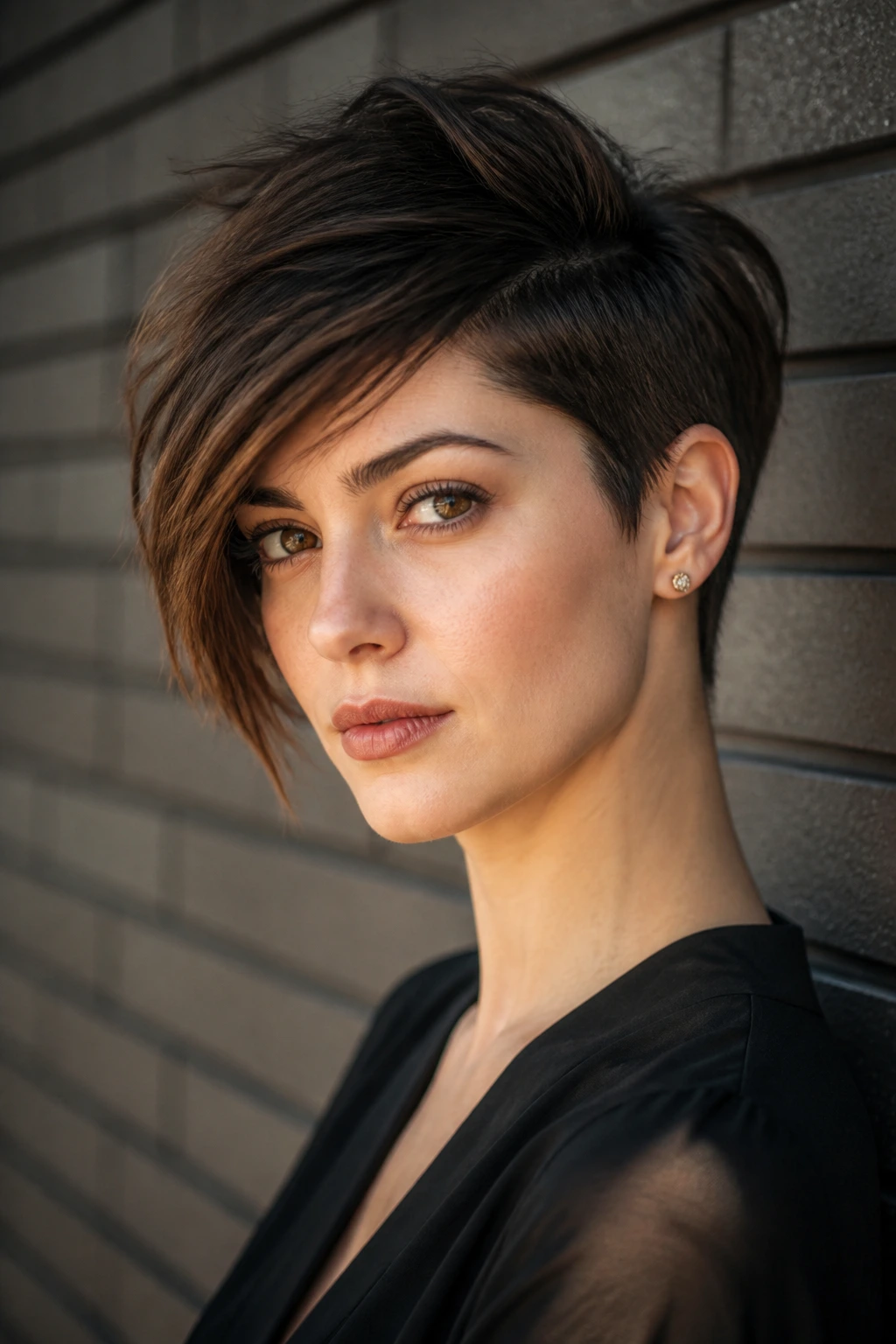
That slanted line can slim the face, soften a strong jaw, or just give dense hair a place to go. Thick strands love a diagonal because they can fall into it instead of pushing outward on both sides equally. It’s a smart fix for hair that tends to grow wide.
This cut looks especially good when the longer side is tucked behind the ear and the shorter side hugs the face. The contrast is the point. Keep the finish either sleek or piecey, but don’t leave it halfway. Asymmetry needs conviction or it starts to look accidental.
10. Micro-Fringe Pixie
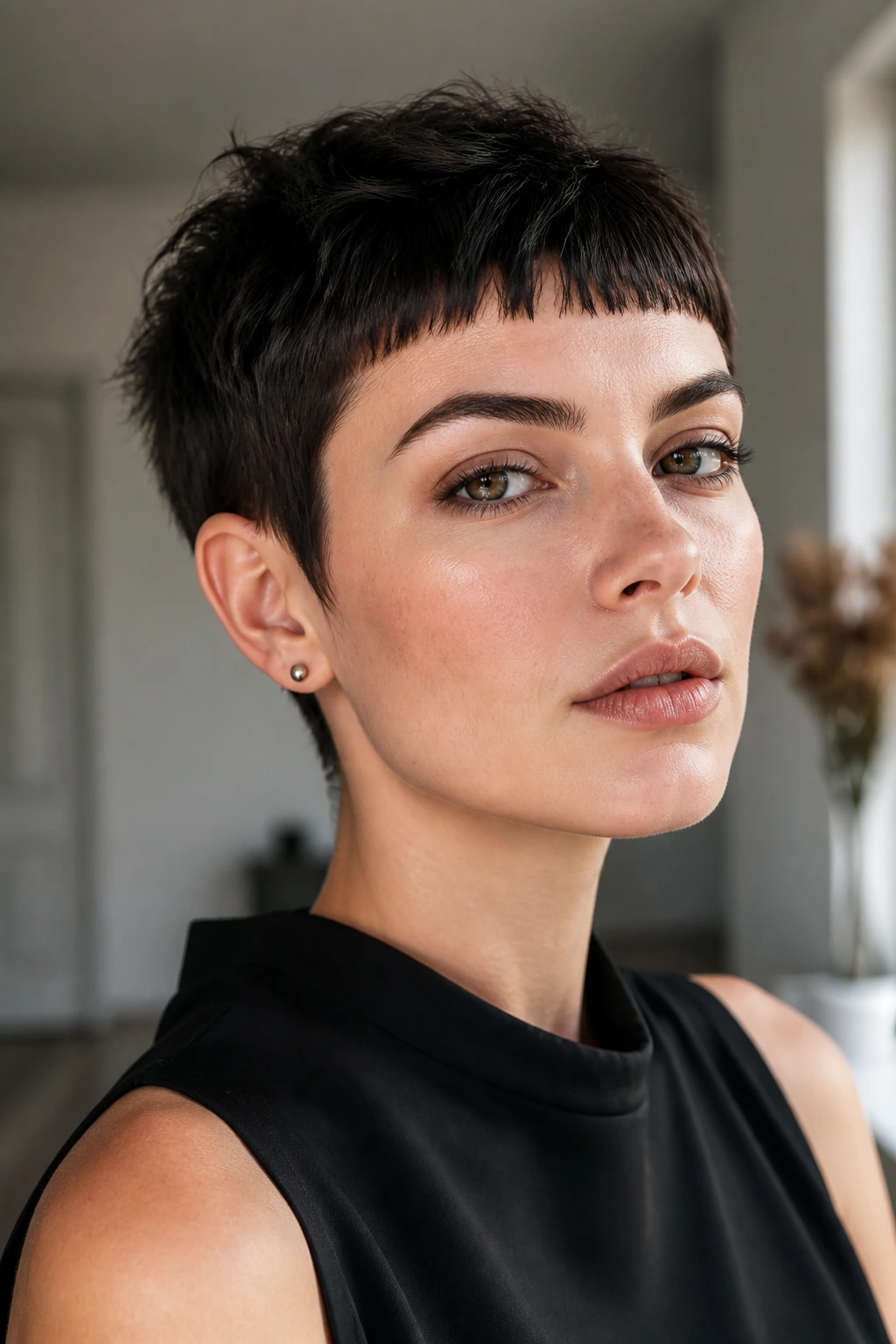
Micro fringe is a bold move, and thick hair can handle it better than you might think. The reason is simple: dense hair gives the short bang enough weight to hold a clean line instead of floating into a wispy mess.
The rest of the cut should stay close and tidy so the bang becomes the focus. If the top is too fluffy, the micro fringe can look disconnected. Ask for a short fringe that sits above the brows, with the sides tapered and the crown lightly textured. That keeps the look sharp instead of costume-y.
This one is for people who like a little attitude with their haircut. It reads crisp. It also reads fast. Once it grows half an inch, the whole mood changes, so be ready for touch-ups if you want the line to stay exact.
11. Sleek Sculpted Pixie
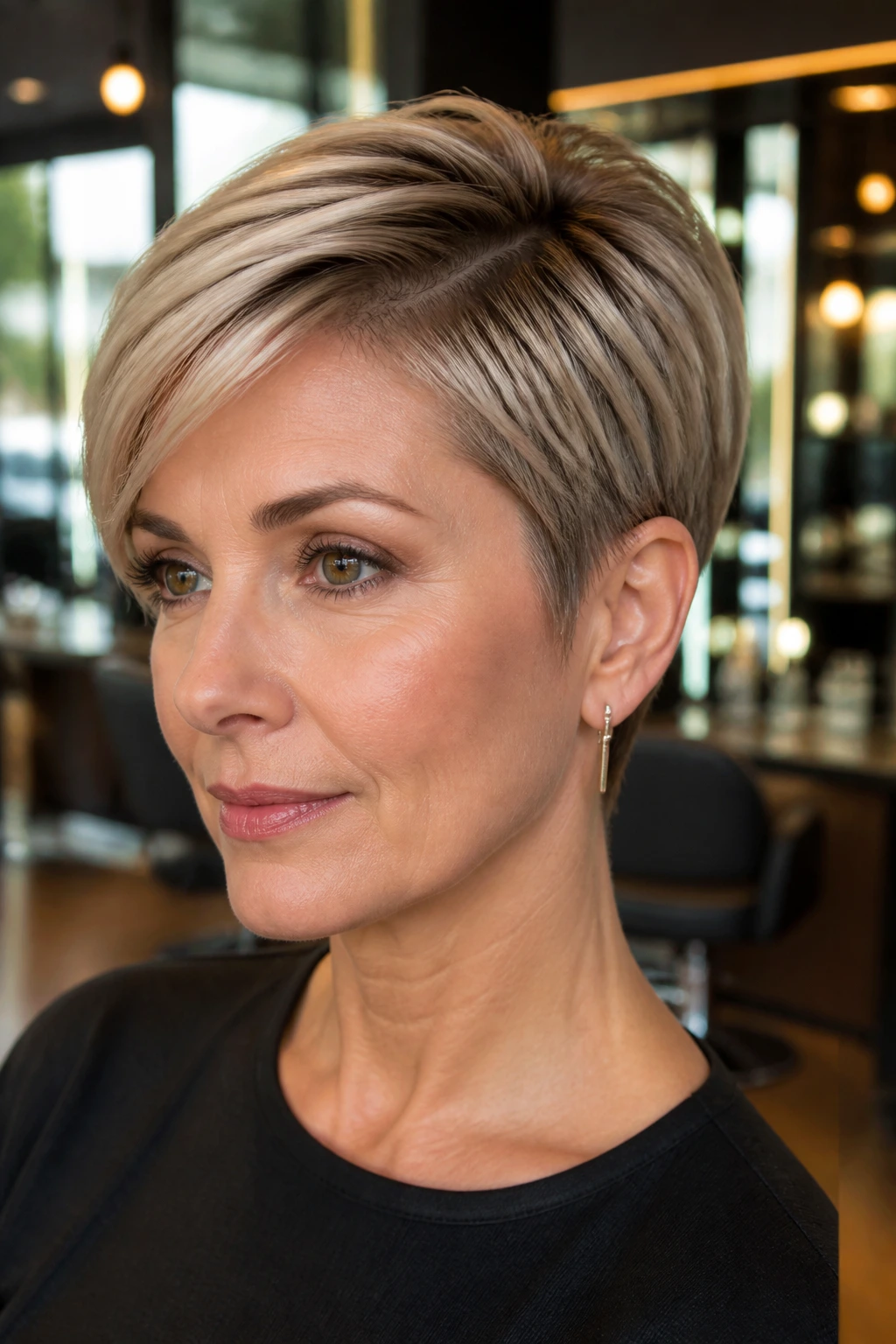
Sleek doesn’t mean flat, and thick hair is often the best material for a polished pixie because it has enough body to stay shaped. The trick is to remove bulk underneath while keeping the top smooth and controlled.
This cut works with a side part, a little shine cream, and a brush that can coax the hair into place without puffing the roots. A fine-tooth comb can help with direction, but too much combing breaks the finish. Keep the strands aligned, not overhandled.
I like this look when the haircut needs to do the talking. Sharp neckline. Clean temples. Smooth crown. It’s the kind of pixie that looks expensive without trying to look rich, which is a better quality anyway. The shine should be soft, not greasy.
12. Shaggy Pixie
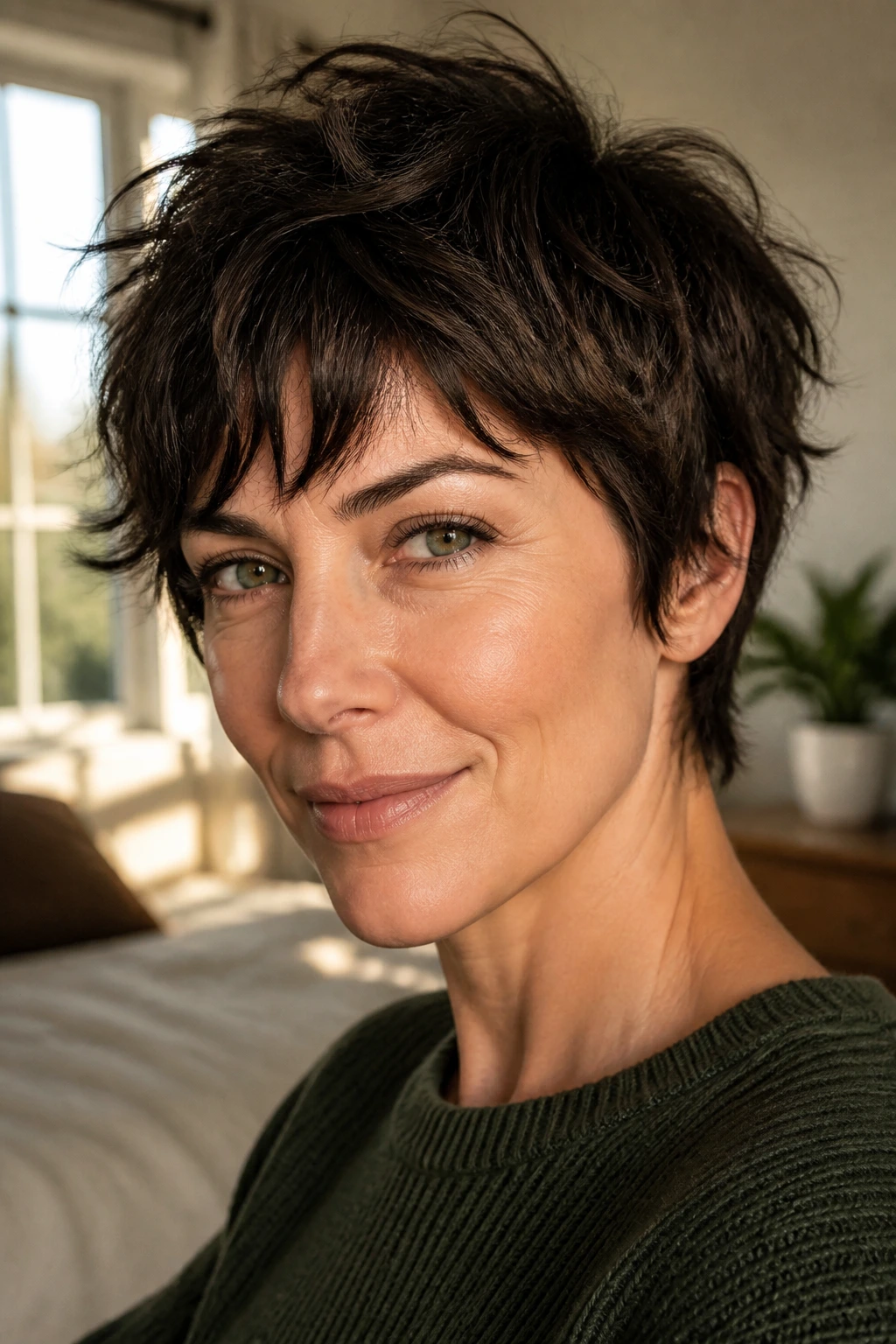
A shaggy pixie gives thick hair somewhere to go. Instead of one clean outline, you get uneven layers, broken texture, and a little air around the head so the cut doesn’t feel heavy.
This is one of the friendliest options for hair that puffs when it’s cut too blunt. The shaggy shape cuts into the density without making the whole style feel choppy in a bad way. The ends should look worn-in, not chewed up. That distinction matters more than people think.
Use a small amount of styling cream on damp hair and let it dry with some natural movement. If you want more separation, add a texture spray at the roots and pinch the ends once the hair is dry. The result should feel relaxed, not neglected. There’s a difference, and the mirror knows it.
13. Faux-Hawk Pixie
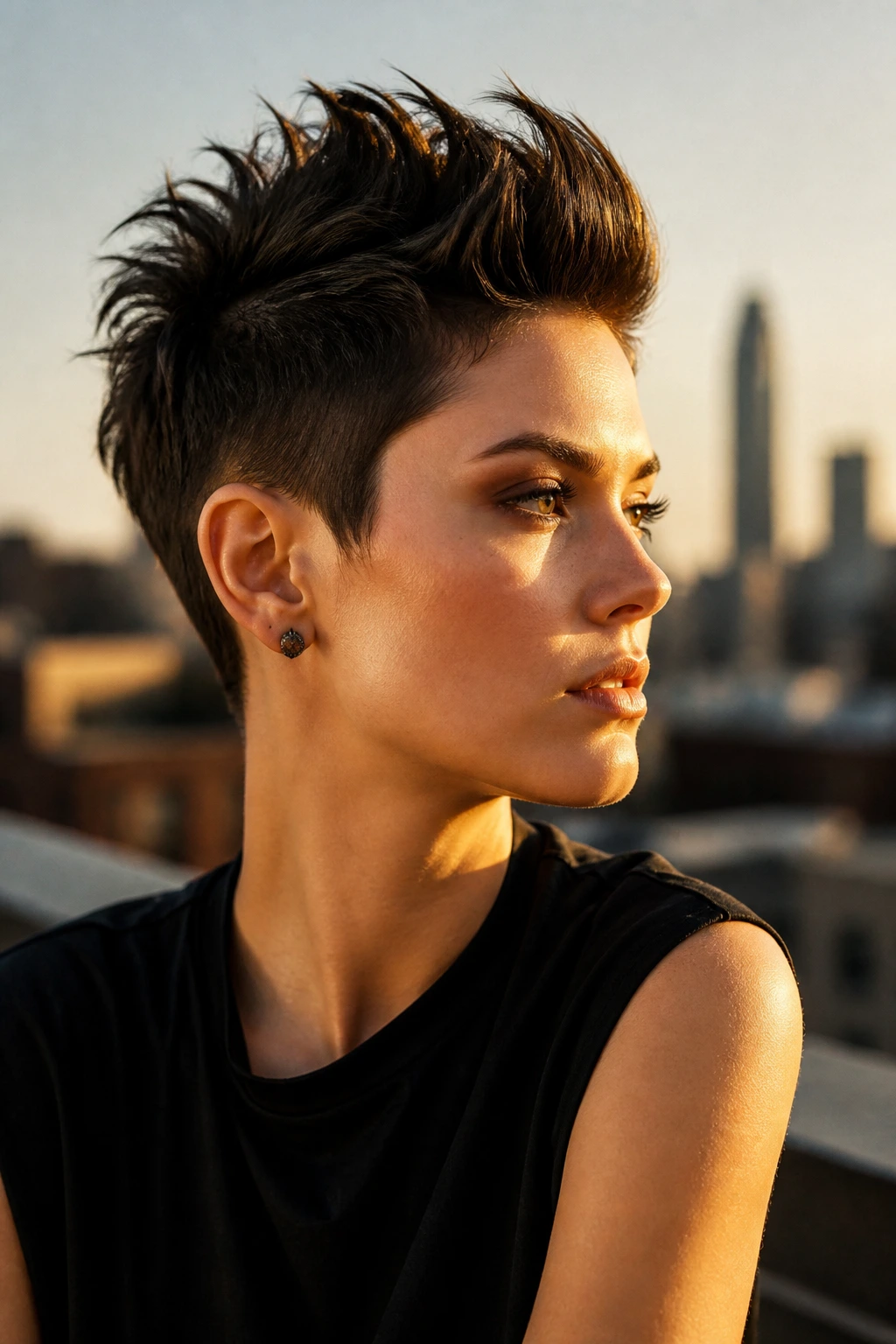
A faux-hawk pixie is what happens when you let density work as height instead of width. The sides are close. The center ridge is longer. The whole cut moves upward, which is handy when thick hair tends to spread out.
This shape looks strong on short thick hair because the volume is concentrated where it matters. You get drama without a lot of length. It also photographs well from the side, though that’s not the reason to choose it. The real appeal is how little effort it takes once the cut is set.
Use a root-lifting product on damp hair, then rough-dry the top upward with your fingers or a vent brush. A tiny bit of paste at the ends will sharpen the ridge. Don’t over-smooth it. The style loses its point when everything lies too flat.
14. Soft Rounded Pixie
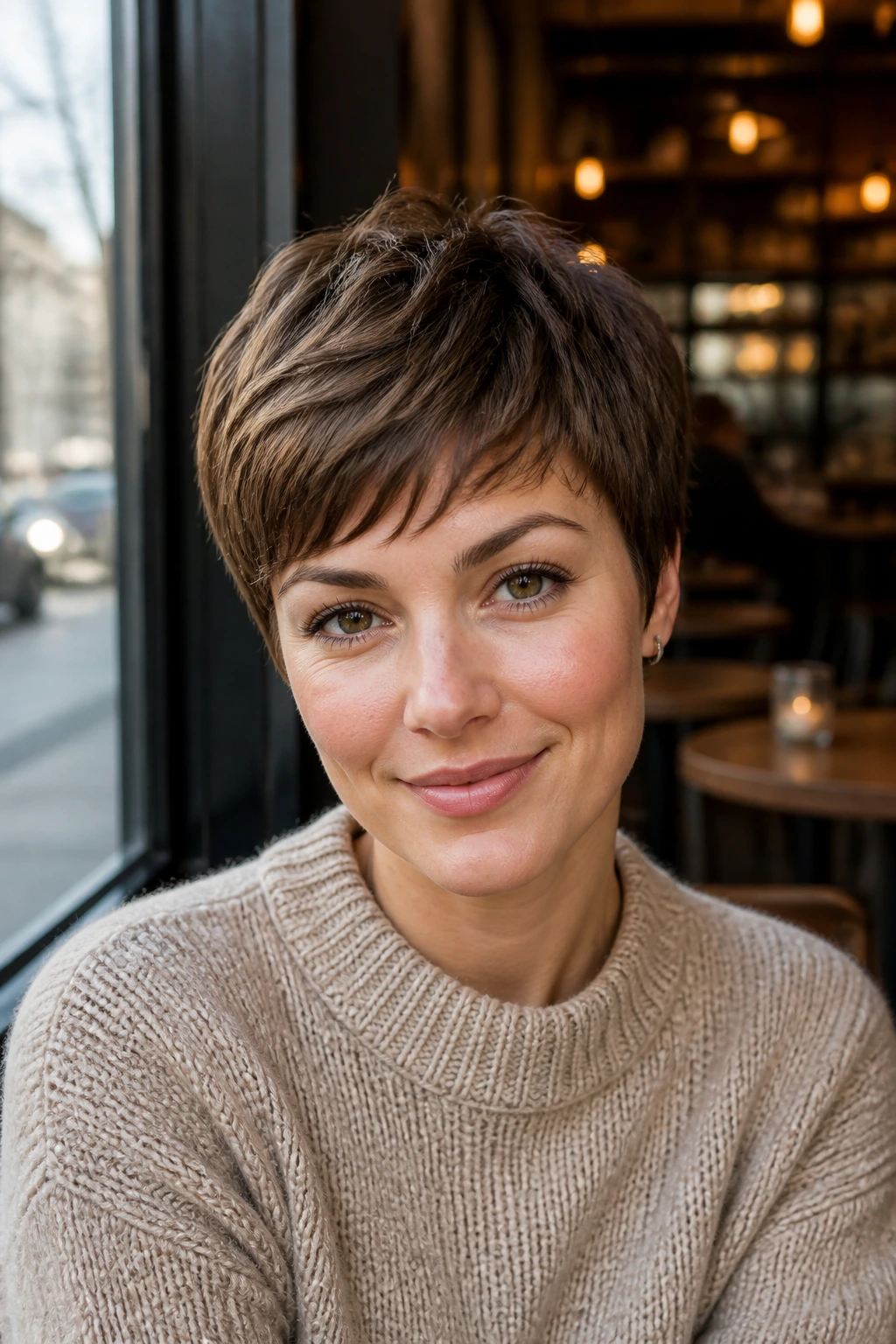
Soft, rounded silhouettes are underrated for thick hair. A lot of people chase sharp edges and forget that a curved shape can make density look calm instead of bulky.
This cut keeps the outline close to the head, especially around the back, with enough fullness at the crown to avoid the dreaded flattened helmet. The sides should taper into the shape rather than stick out from it. It’s a gentle version of a pixie, and gentle does not mean boring.
Why the Round Shape Helps
The curve controls width. That’s the whole game.
If your hair naturally flares after washing, a rounded pixie keeps the edges tucked in while still leaving room for movement on top. Use a blow dryer with a nozzle and direct the hair downward at the sides, then lift only the crown. That little split between control and softness is what makes this cut sing.
15. Razor-Cut Pixie
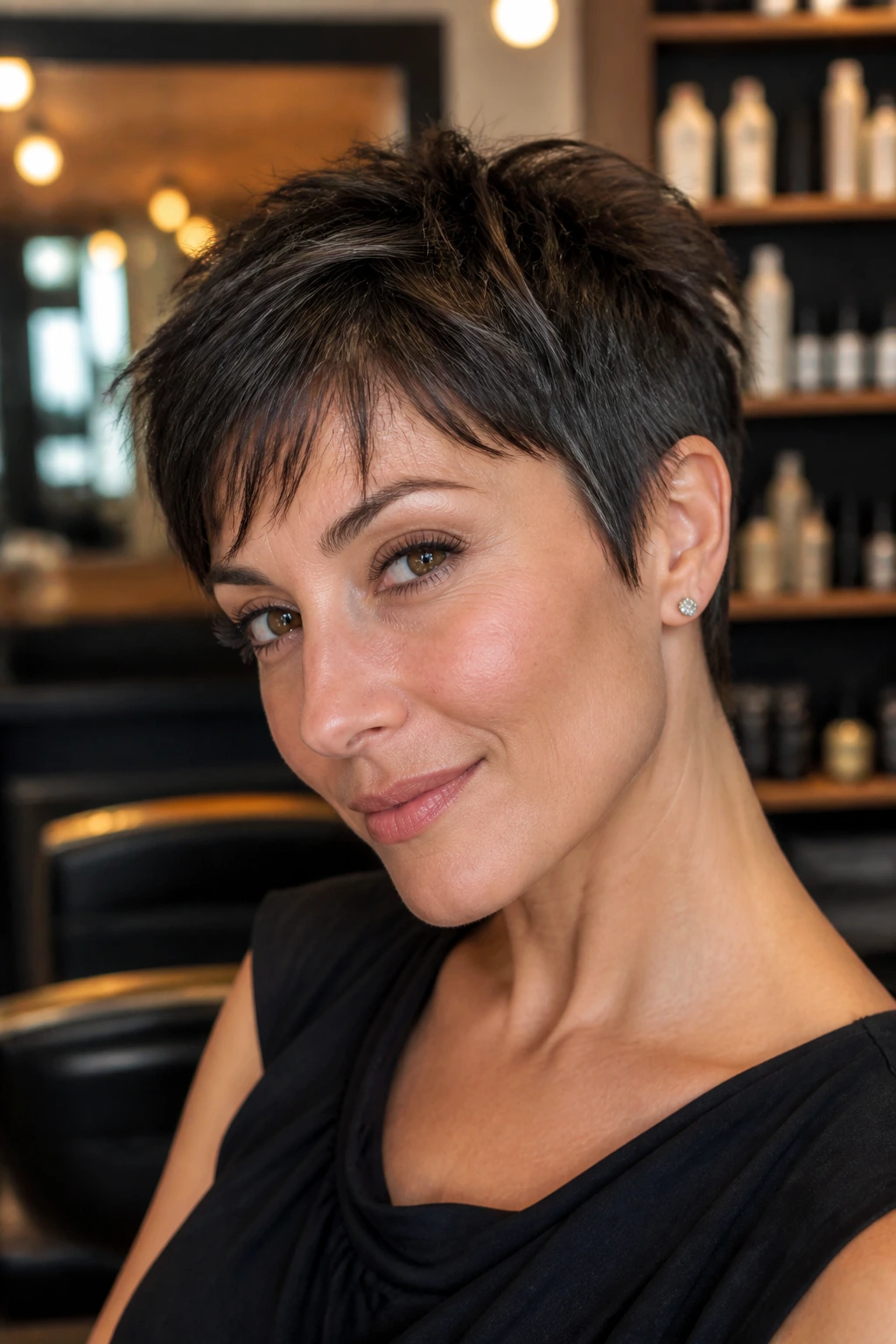
Razor cutting can make thick hair feel lighter, but it needs a careful hand. Used well, it softens the perimeter and gives the ends a little slip. Used badly, it frays the hair and turns the outline fuzzy before you even leave the salon.
This style works best on medium-to-coarse thick hair that can handle a bit of edge. The cut should feel airy, not shredded. A razor can help the top lie closer and keep the sides from getting too boxy, especially if the hair has a stubborn tendency to puff.
Be honest with your stylist if your hair frizzes easily. That matters. Some thick textures behave beautifully with razor work; others want scissors and point cutting instead. The cut should look soft at the edges, not damaged. That’s the line.
16. French Pixie
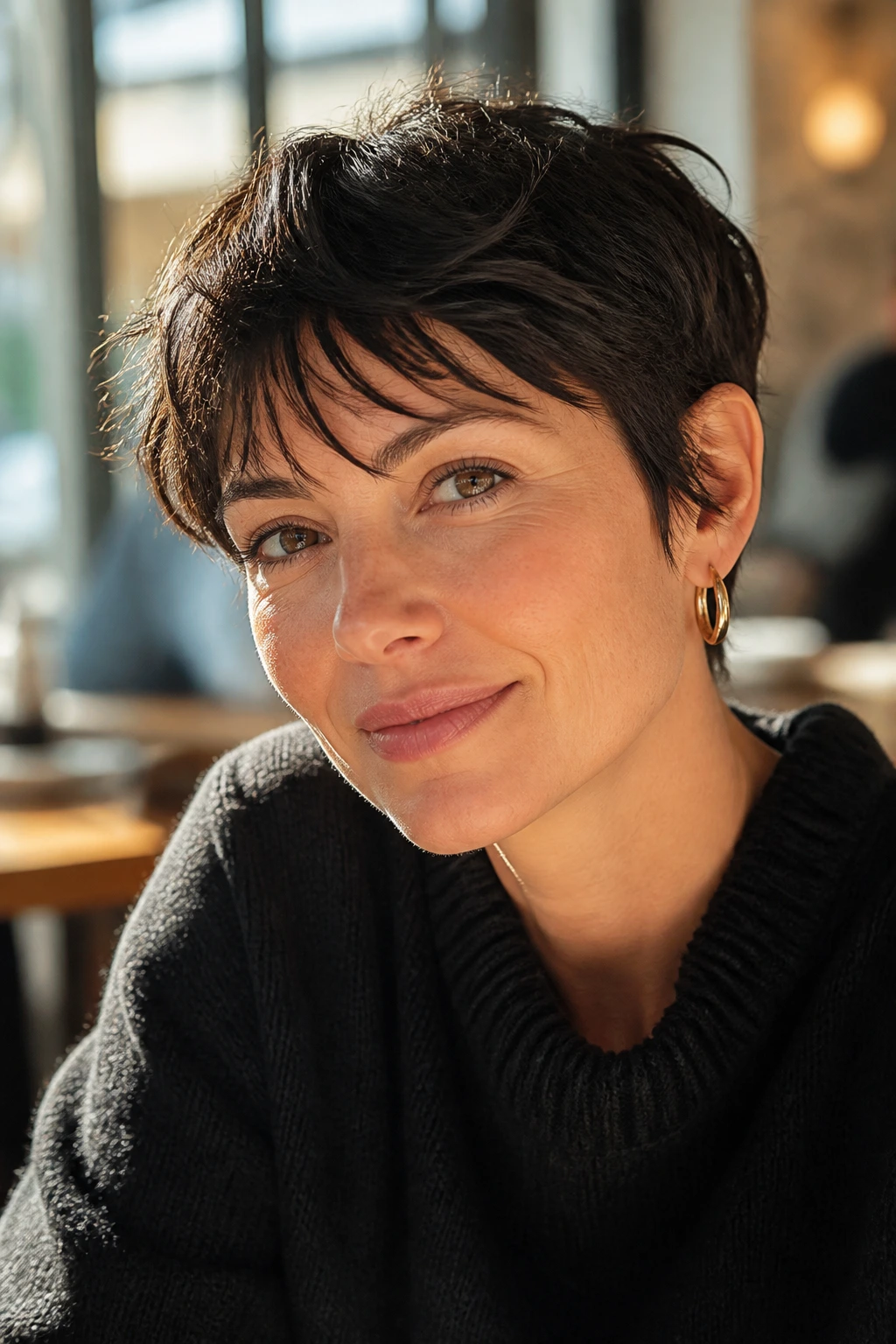
The French pixie leans relaxed, which is useful when your hair already has enough body on its own. It usually keeps a little length in the fringe or around the temple, then lets the rest fall in a slightly undone shape.
This is not a stiff salon helmet. Thank goodness. The charm lives in the ease of it: a piece tucked behind the ear, a fringe that doesn’t need perfect symmetry, a neckline that stays neat without shouting for attention. Thick hair gives the style enough fullness to look intentional even when it’s a bit tousled.
A touch of styling cream and a quick finger dry is often enough. If the goal is to look polished in a shirt and jeans kind of way, this cut does the job without making you babysit it.
17. Bixie Hybrid
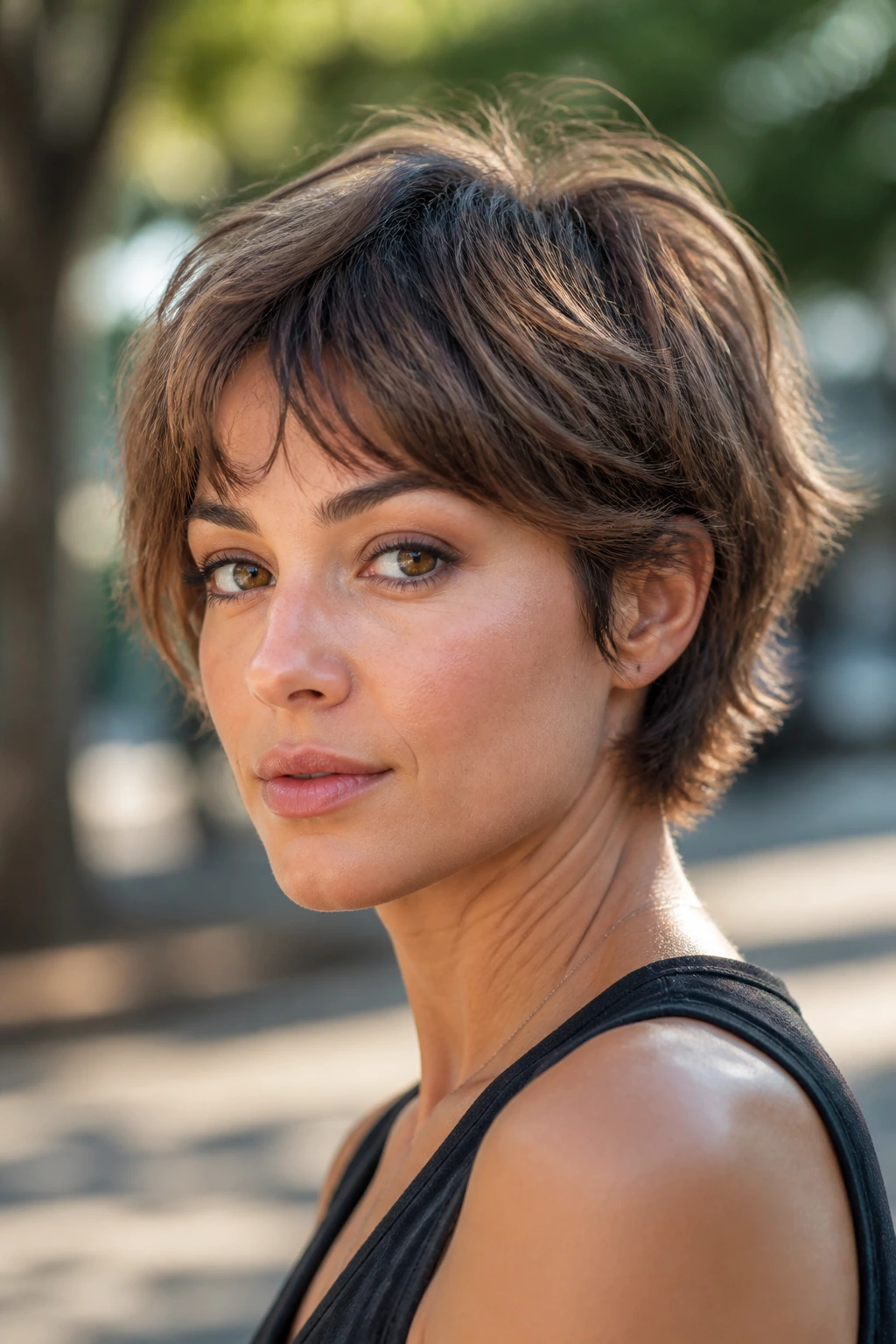
A bixie is the safe landing spot between a bob and a pixie, and that makes it useful for thick hair that wants a shorter shape but not a full crop. You keep a little more length around the ears and nape, which can ease the transition if you’re not ready to go very short.
The benefit here is control. Thick hair can feel easier when there’s just enough length to tuck, sweep, or reshape with a brush. The bixie also gives the stylist more room to remove weight without exposing too much scalp or creating a hard edge too high on the head.
I like this shape for people who want movement but hate the feeling of being overexposed after a haircut. It reads softer than a true pixie, yet shorter and cleaner than a bob. That middle ground has saved more than one haircut decision.
18. Pompadour Pixie
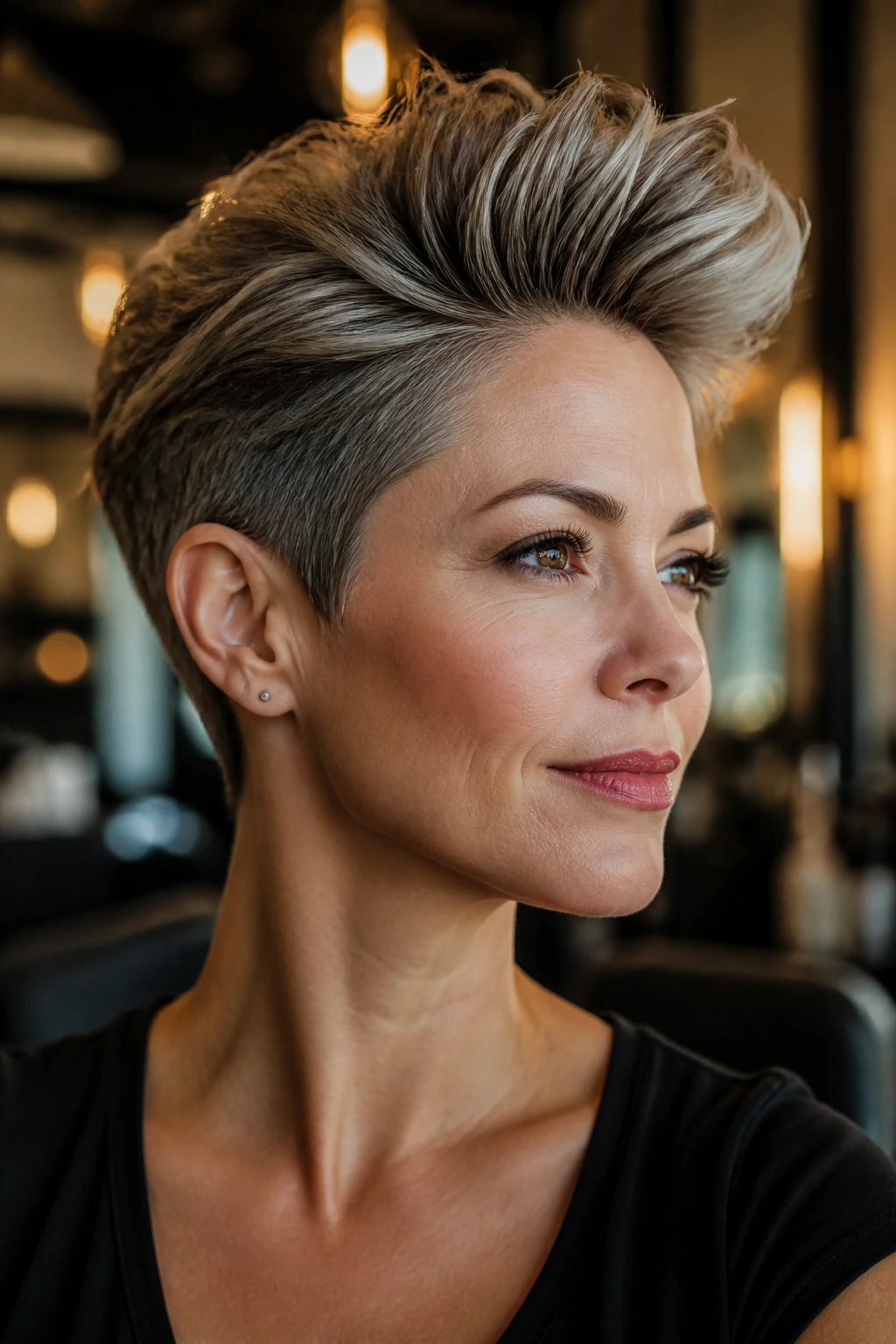
Pompadour volume needs a certain amount of hair to look right, and thick strands supply it without much trouble. The front lifts, the sides stay sleek, and the silhouette gets a little drama right where the face can use it.
This cut is strongest when the crown is left with enough length to build height and the sides are cut close enough to keep the shape from widening. It’s a good choice if you like your hair to have attitude in the morning. A dry texture spray at the roots helps, but the real work happens in the cut itself.
Use a round brush or your fingers to push the front up and back, then set it with a light hairspray. Do not drown it in product. Pompadour hair should still move when you turn your head.
19. Ear-Tucked Pixie With Long Sideburns
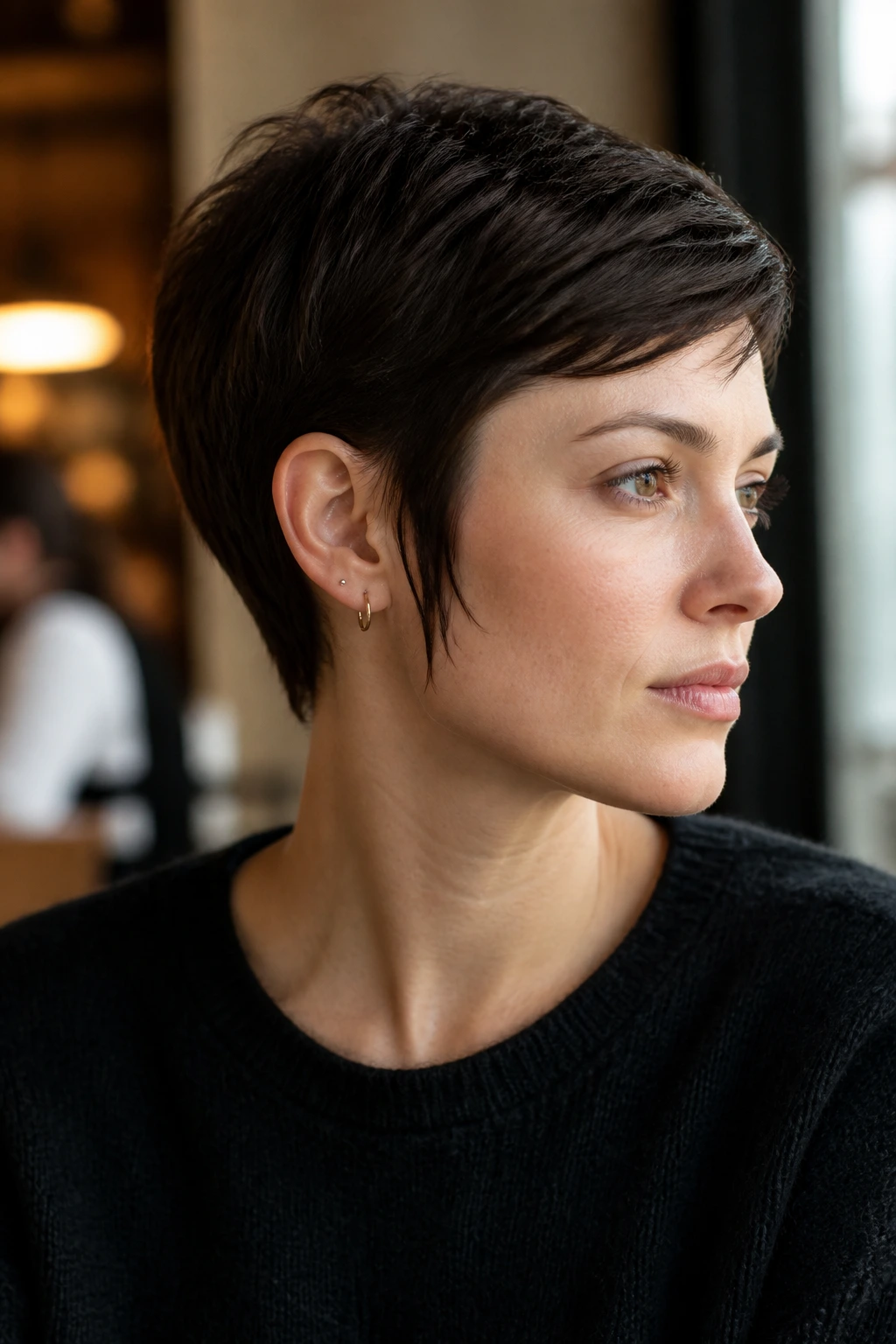
Long sideburns and ear-skimming pieces can make a pixie feel less severe. That matters if you love short hair but don’t want every angle of your face exposed at once.
Thick hair does this style well because the density gives those longer bits some presence. They don’t look stringy. They frame the jaw, skim the cheek, and can be tucked behind the ear when you want a cleaner profile. The contrast between the close crop and the longer sideburn is what gives the cut character.
Keep the Sideburns on Purpose
If they’re too short, the whole style can feel harsh. If they’re left a little longer, they soften the cut and make it easier to grow out later. I’d choose this shape for someone who wears earrings or glasses and wants the haircut to work with them, not around them. It’s a small detail that changes the whole read.
20. Disconnected Pixie
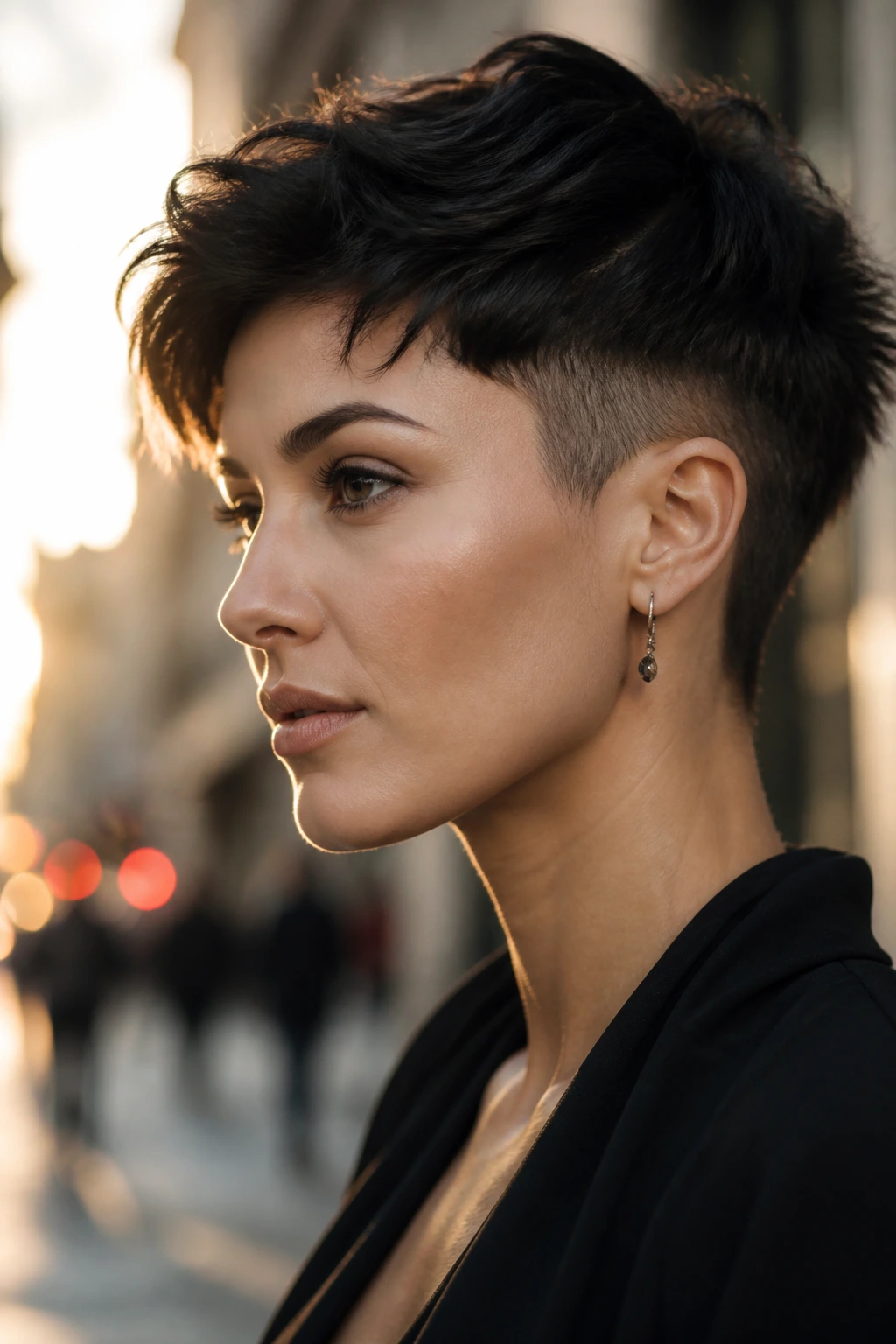
Disconnected cuts are the ones that say you meant to do this. The top and sides don’t blend gently; they step away from each other on purpose.
That strong separation can look very clean on thick hair because it removes bulk where it matters and leaves length where you want movement. The sides stay cropped, sometimes very short, while the top keeps enough length to sweep, spike, or fall forward. It’s crisp. It’s direct. It doesn’t apologize.
This style works best when the contrast is obvious. If the lengths are too close together, the whole thing loses its point. Thick hair helps here because the top can hold a distinct shape while the sides stay controlled. Use a paste or light wax and keep the finish defined.
21. Layered Crop Pixie
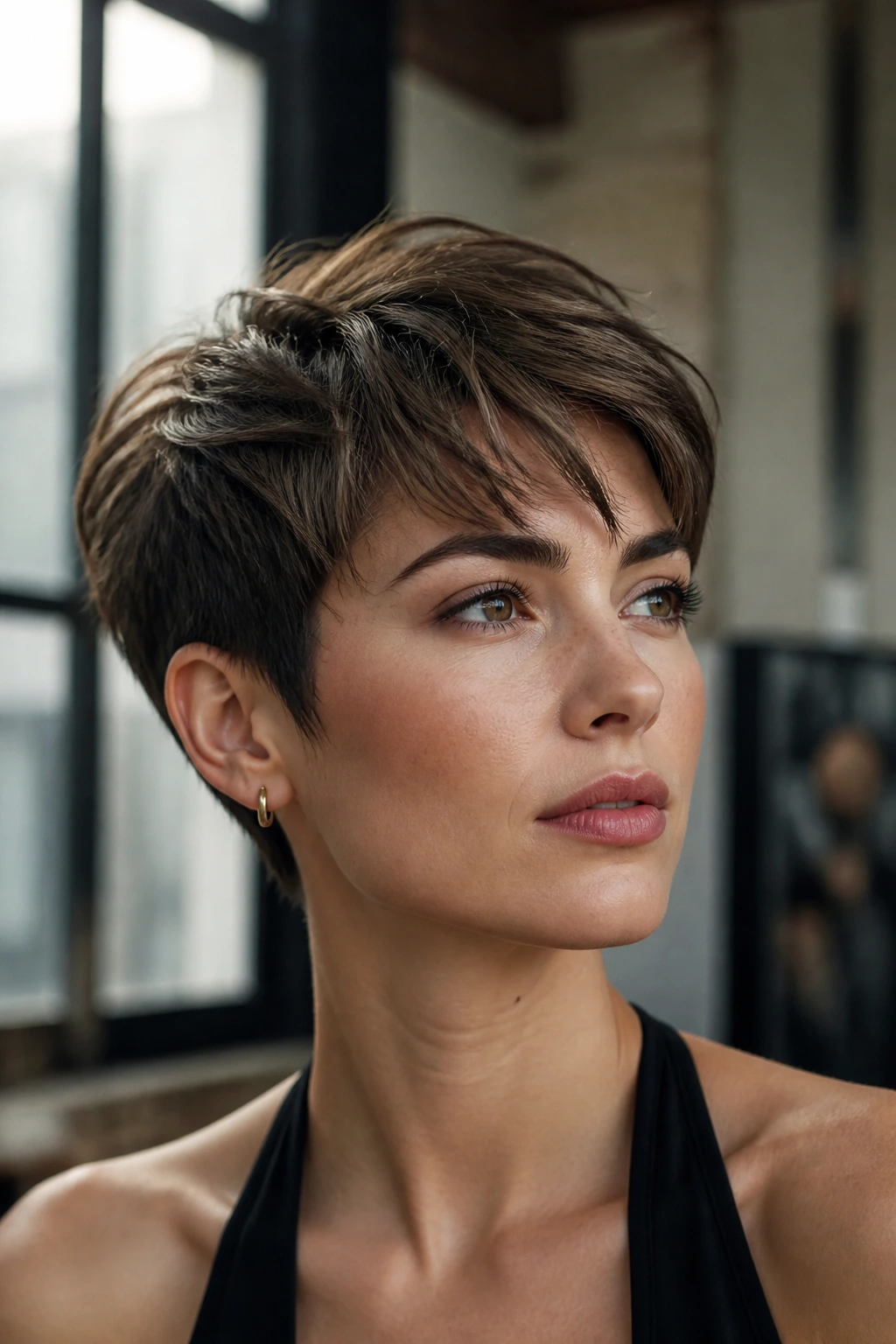
A layered crop keeps the bulk moving in more than one direction. That’s the useful bit. Thick hair can look heavy when every strand follows the same route, so the layered crop breaks the mass into smaller sections that behave better.
This cut sits somewhere between a pixie and a cropped shag. The crown gets lift, the sides get a bit of internal shaping, and the top stays soft enough to be styled forward or to the side. It’s a practical choice if you want texture without the sharp edges of an undercut or the drama of a faux-hawk.
It also grows out in a decent way. The shape doesn’t collapse all at once. That matters when you’re trying to squeeze a few extra weeks between trims.
22. Grown-Out Pixie
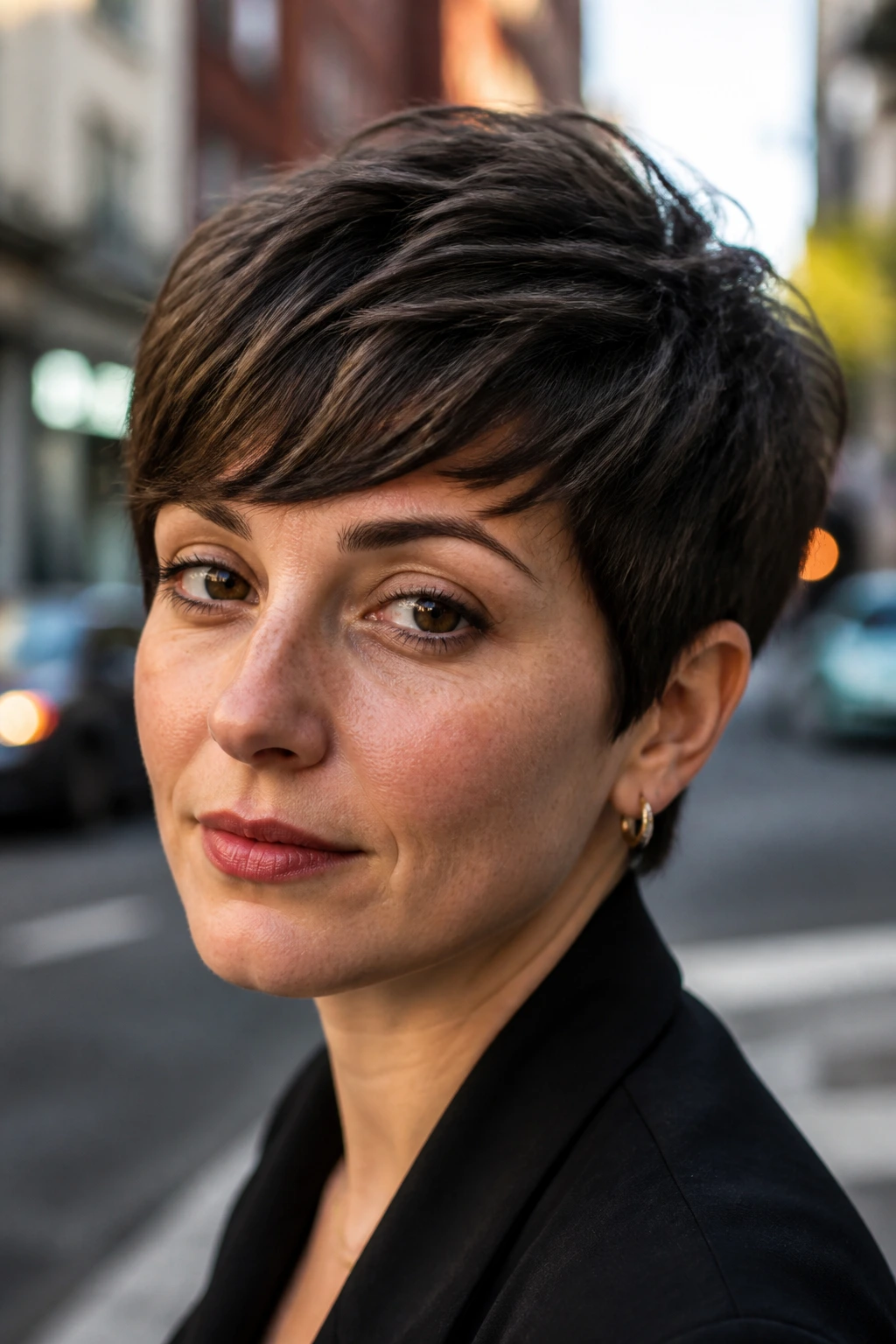
A grown-out pixie should look intentional, not like an appointment got canceled. That’s a real skill, because thick hair can go from chic to shaggy in a hurry if the shape loses its outline.
This version keeps more length around the crown, ears, and fringe, but the edges still need tapering so the cut doesn’t swell outward. Think of it as a softer pixie with room to breathe. It works especially well if you’re moving toward a bob but don’t want the awkward half-stage to feel messy.
A side part, a loose bend, and a bit of separation at the ends are enough to make this shape feel styled. It’s not the most dramatic pixie in the bunch. It might be the most forgiving.
23. Classic Close Pixie
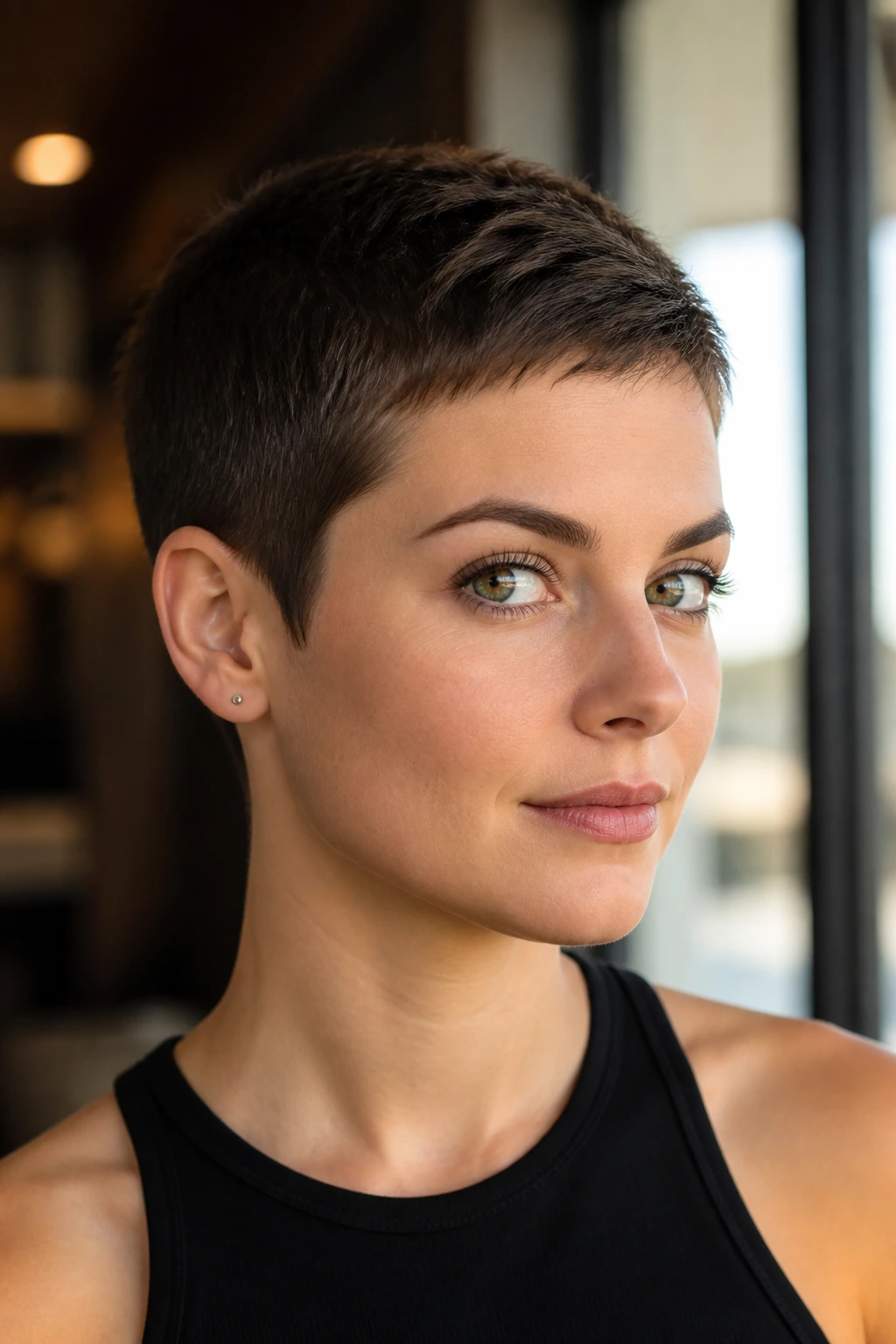
The classic close pixie still earns its keep when the cut is tailored to dense hair instead of hacked down all at once. Short all over, a little longer on top, tapered through the nape — that’s the core of it.
What makes it work on thick hair is the balance of short and soft. The hair sits close enough to look neat, but the top keeps enough movement to avoid the hard, shell-like effect you get from a blunt cut. It’s clean. It’s fast. It doesn’t need a lot of product to make sense.
If you want a low-fuss haircut that can be washed, finger-styled, and left alone, this is the one. It’s not flashy. It’s just smart.
How These Pixie Shapes Keep Thick Hair in Check
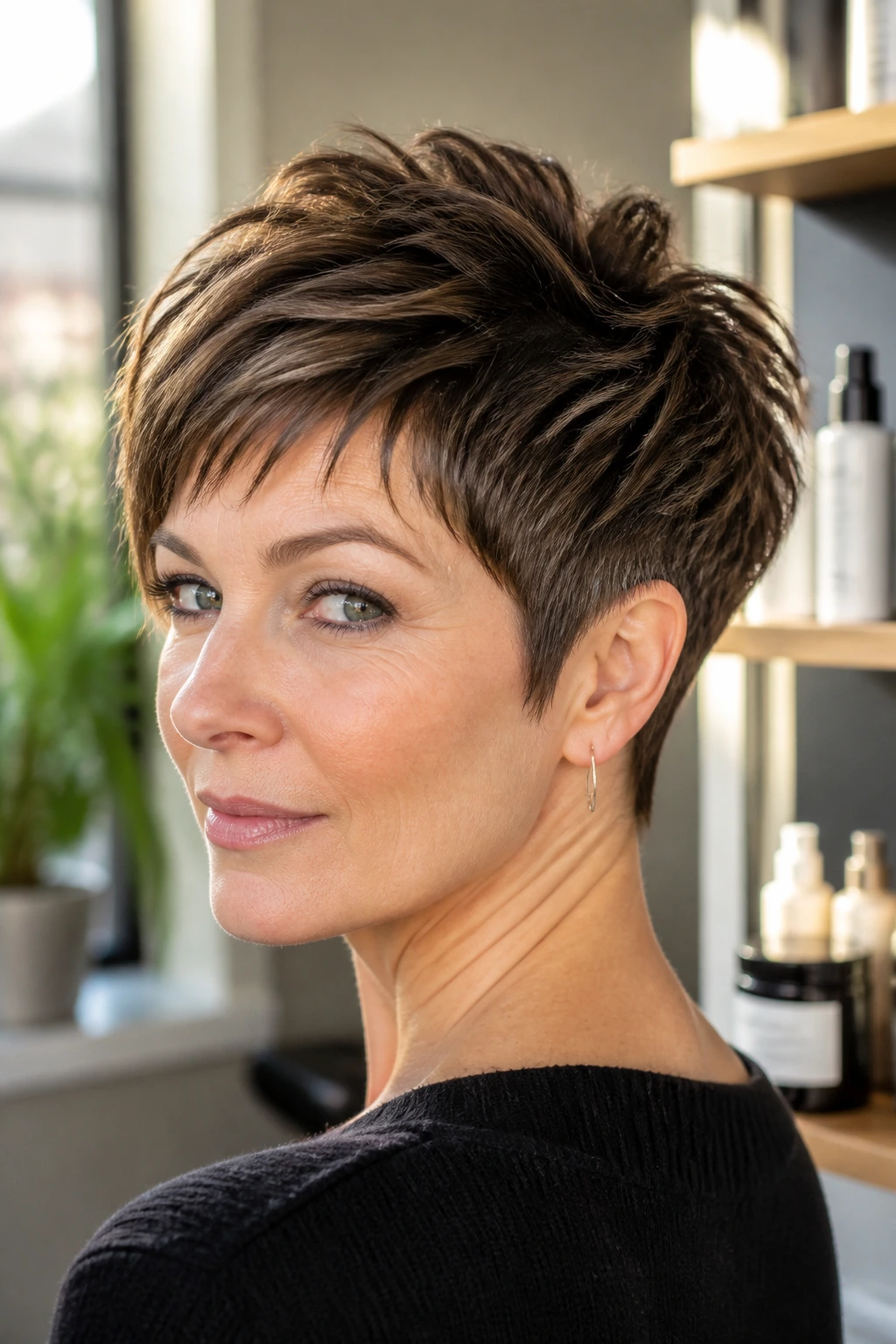
Thick hair brings weight, and weight is the whole puzzle with a pixie. If the shape is wrong, the cut expands at the sides and collapses at the top. If the shape is right, the density becomes lift, body, and clean lines that don’t need a ton of coaxing.
The best pixie cuts for thick hair usually share the same trick: they remove bulk where the head needs to stay close, then leave just enough length where the style needs movement. That usually means a tapered nape, softened temples, and a top that is not chopped so short it has no place to go. A little height at the crown matters. So does a perimeter that doesn’t fight the neck.
One more thing. Thick hair often looks best when the stylist shapes it with the growth pattern in mind, not against it. Cowlicks at the front, a ridge at the crown, a heavy whorl near the nape — all of that should inform the cut. Ignore it and the hair will announce the mistake every morning.
How to Brief Your Stylist Before the First Snip
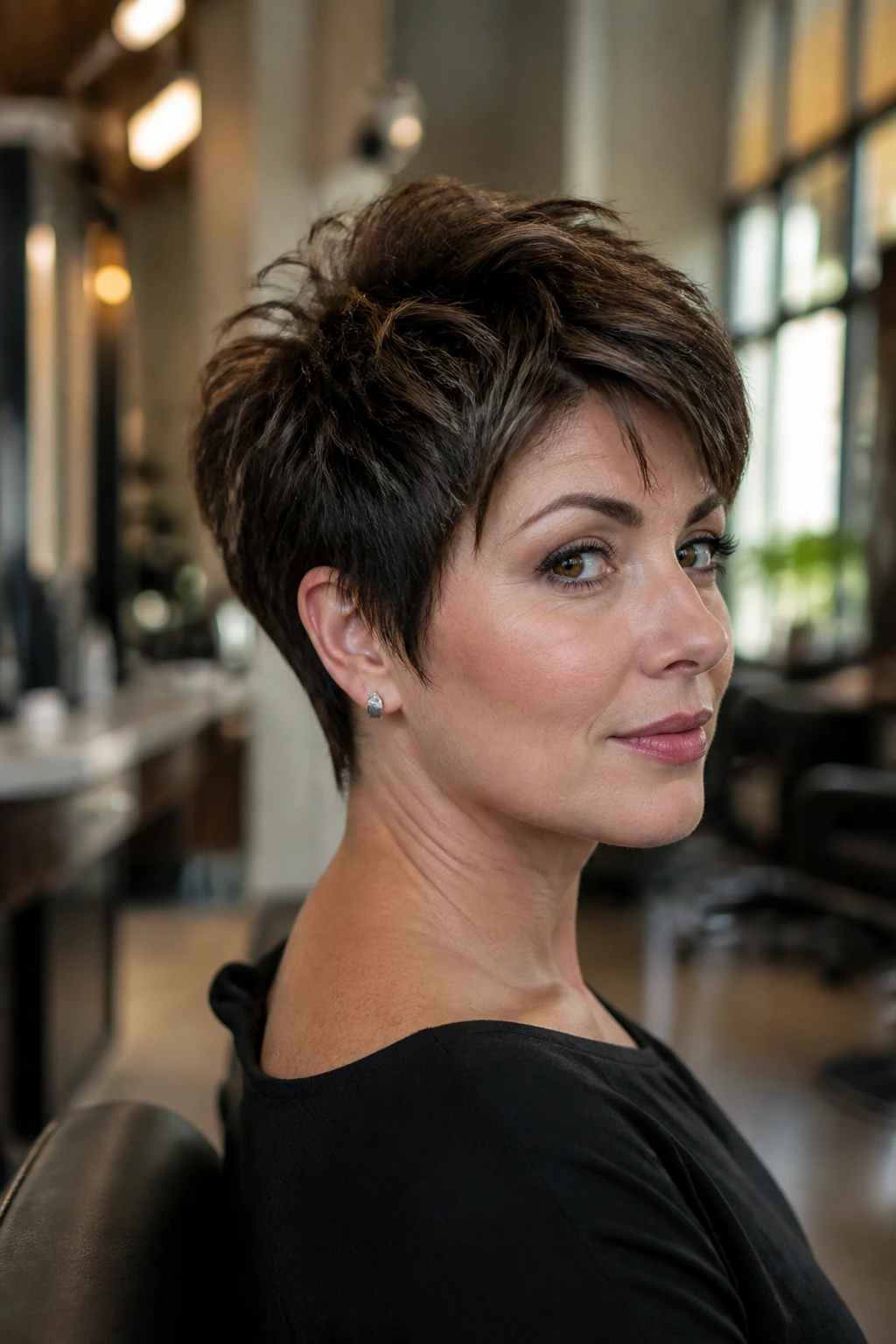
Bring photos, yes, but bring the right kind of photos. Show at least one view from the front, one from the side, and one from the back. A front-only picture hides the two places thick hair usually misbehaves: the nape and the area above the ears.
Use plain language when you talk through the cut. Say you want the bulk removed where the hair puffs, but you want enough length on top to keep the style from looking flat. If you know your hair has a cowlick, point it out before the cape goes on. That one sentence can save a bad bang decision.
A few useful phrases help more than vague inspiration words:
- “Keep the nape tight.”
- “Leave length on top so it doesn’t stand up.”
- “Soften the perimeter, but don’t thin the whole head.”
- “I want texture, not frizz.”
The last line matters more than people think. Aggressive texturizing on thick hair can make the ends fuzzy and the shape dry. Internal layering and point cutting usually do the job better. If the stylist reaches for thinning shears, ask where and why. Good cutting has a reason. Lazy cutting has a shortcut.
Styling Moves That Keep the Shape Light
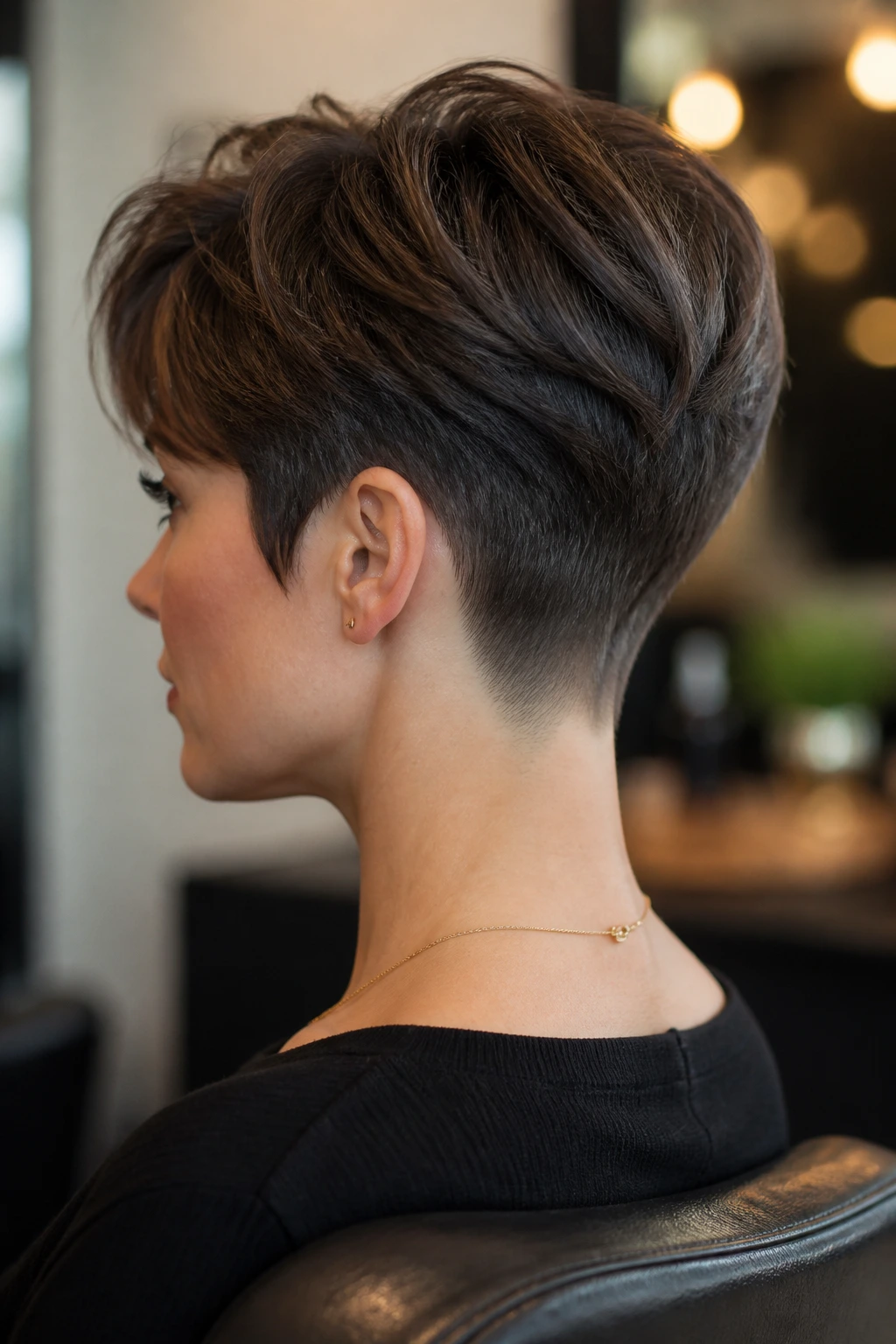
The fastest pixie routine is usually the one that starts with damp hair and ends before the mirror gets a chance to judge you. Thick hair does not need a salon-level blowout every day. It needs direction.
Air-Dry Texture: Work a small amount of mousse or light cream through towel-dried hair, then shape the top with your fingers and leave the sides alone. If the cut is good, the hair will fall into its own pattern as it dries. Touching it too much early on often creates the puffiness you were trying to avoid.
Blow-Dry Lift: Use a dryer with a nozzle and a small brush, lifting only the crown and directing the sides down and in. A cool shot at the end helps the shape set. That cool blast matters more than people admit; it takes the hair from “still moving” to “staying put.”
Sleek Finish: On day two or for a dressed-up look, use a pea-sized amount of shine cream or pomade on the palms, then smooth the top and fringe. Keep the product off the roots unless you want the hair to collapse. Thick hair can take more product than fine hair, but it doesn’t need much.
Quick Refresh: If the shape falls asleep overnight, mist the top with water, rework the fringe with your fingers, and hit the crown with a 30-second blow-dry. That usually wakes the cut back up without starting from zero.
What Usually Goes Wrong With Thick-Hair Pixies
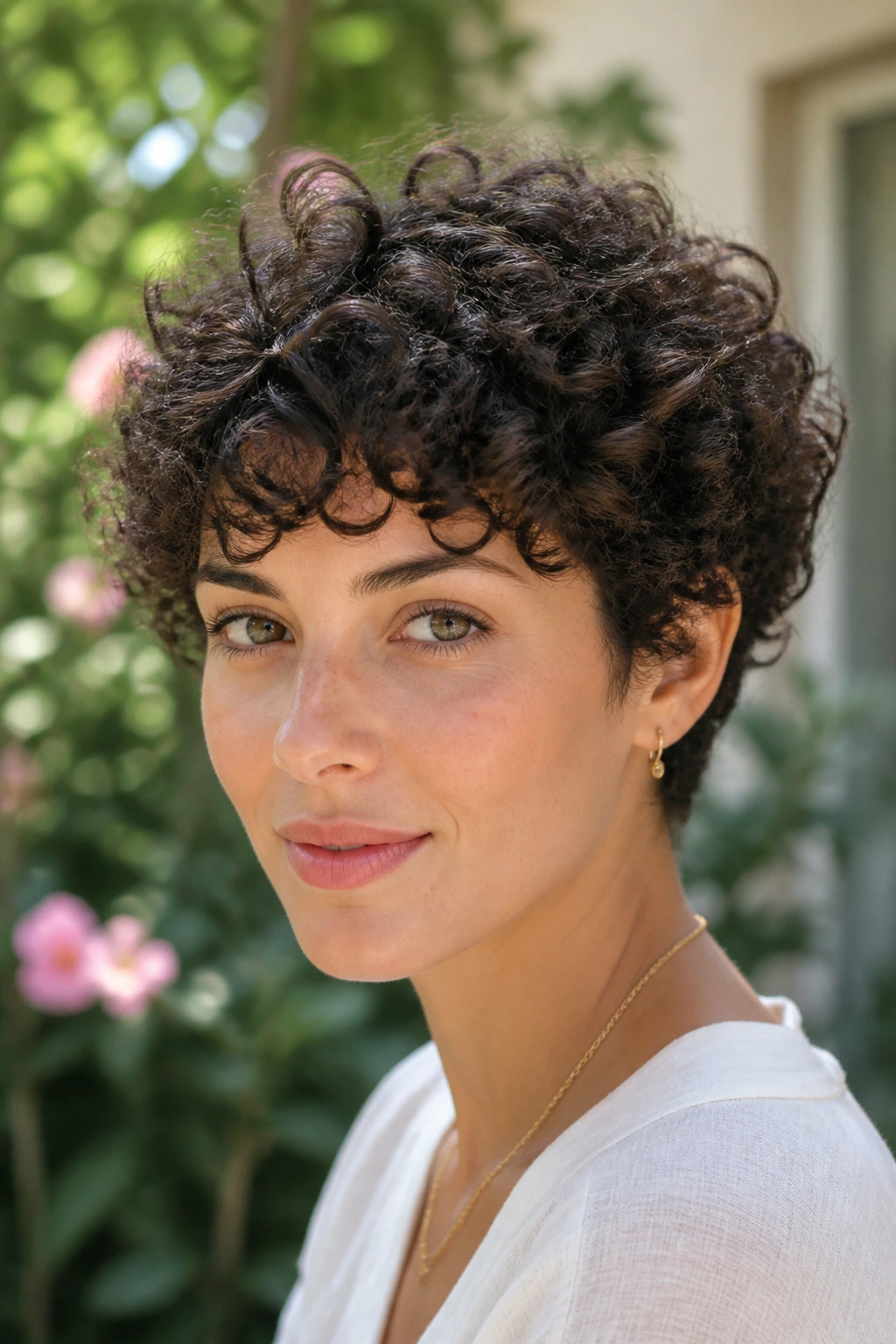
The most common mistake is leaving too much weight at the nape and around the ears. The cut looks fine on day one, then starts flaring out after one shampoo. The fix is a cleaner taper and more honest bulk removal below the crown.
Another one: cutting the fringe too short while the hair is wet. Thick hair bounces. A lot. If the bang lands exactly where you want it before drying, it often ends up too high by the time it’s finished. Leave room for shrinkage and refine later.
Over-thinning is a big problem too. Hair that is already coarse or springy can look frayed after too much texturizing. You want internal weight removal, not shredded ends. If the haircut feels fluffy in an unplanned way, that’s usually the warning sign.
Heavy cream can also ruin the shape. Thick hair can handle paste, mousse, and light wax, but rich lotions and oils may collapse the crown and separate the top into greasy-looking strands. Use less than you think. Then stop.
Finally, some people ignore the grow-out plan. Pixies need upkeep, especially on dense hair. If you do not want a trim every few weeks, ask for a longer version at the start. That’s not indecision. That’s strategy.
Ways to Adapt the Cut to Your Texture and Mood
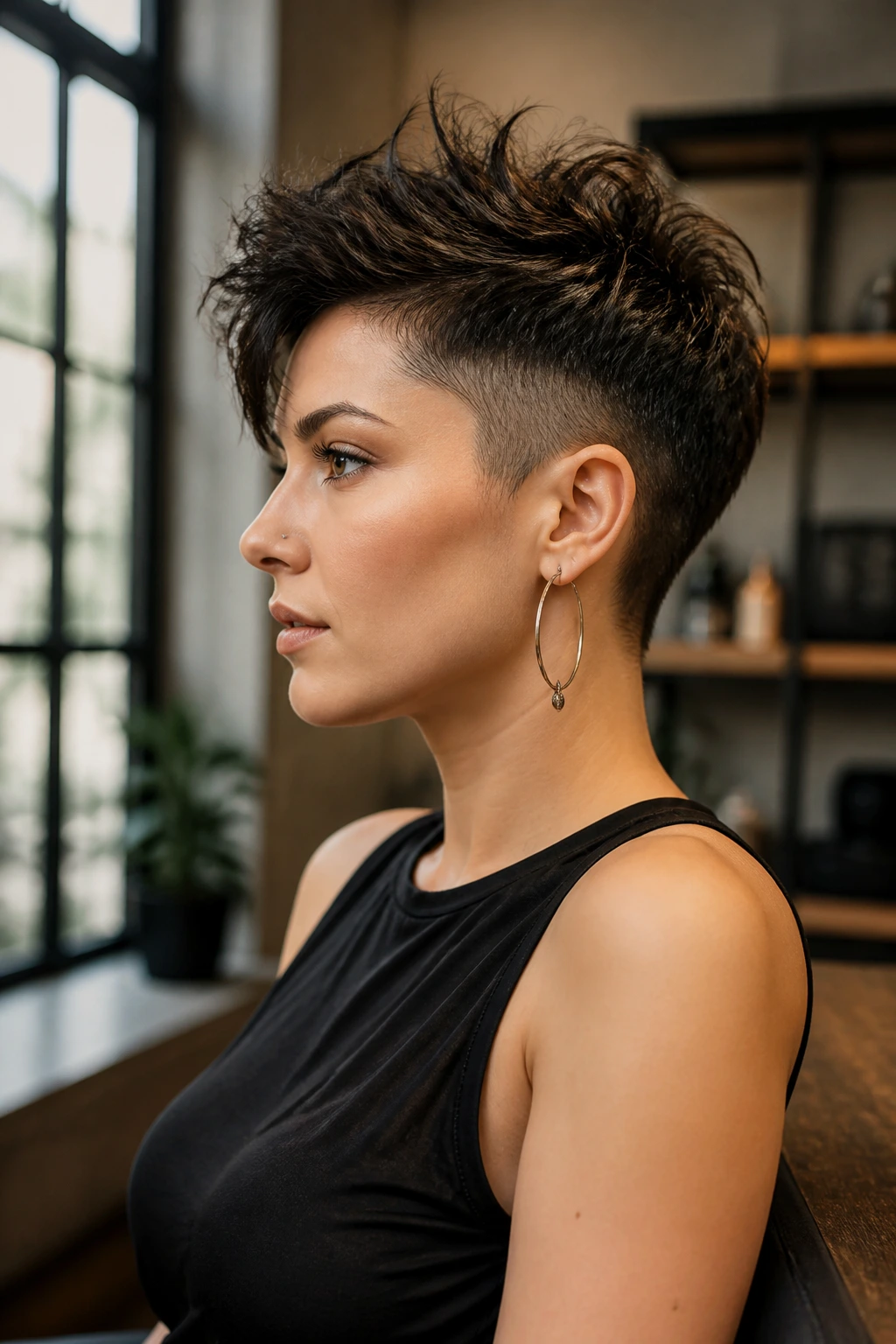
The Airy Curl Version: If your thick hair bends naturally, keep the top longer and let the curl form around the head instead of flattening it. This softens the silhouette and avoids the mushroom shape.
The Sleek Office Version: Ask for a clean side part, a tight nape, and enough length on top to tuck behind one ear. It reads tidy, but not stiff.
The Bold Undercut Version: If you want less bulk and more edge, take the undercut higher and leave the top longer. That contrast gives you shape and makes styling fast.
The Soft Grow-Out Version: Keep the temple pieces and fringe longer so the cut can move toward a bixie or short bob later. This is the choice for people who hate abrupt transitions.
The Matte Weekend Version: Leave the layers choppy and finish with texture spray or a dry paste. It’s a small product shift, but it changes the whole attitude of the cut.
Tools and Products Worth Having Nearby
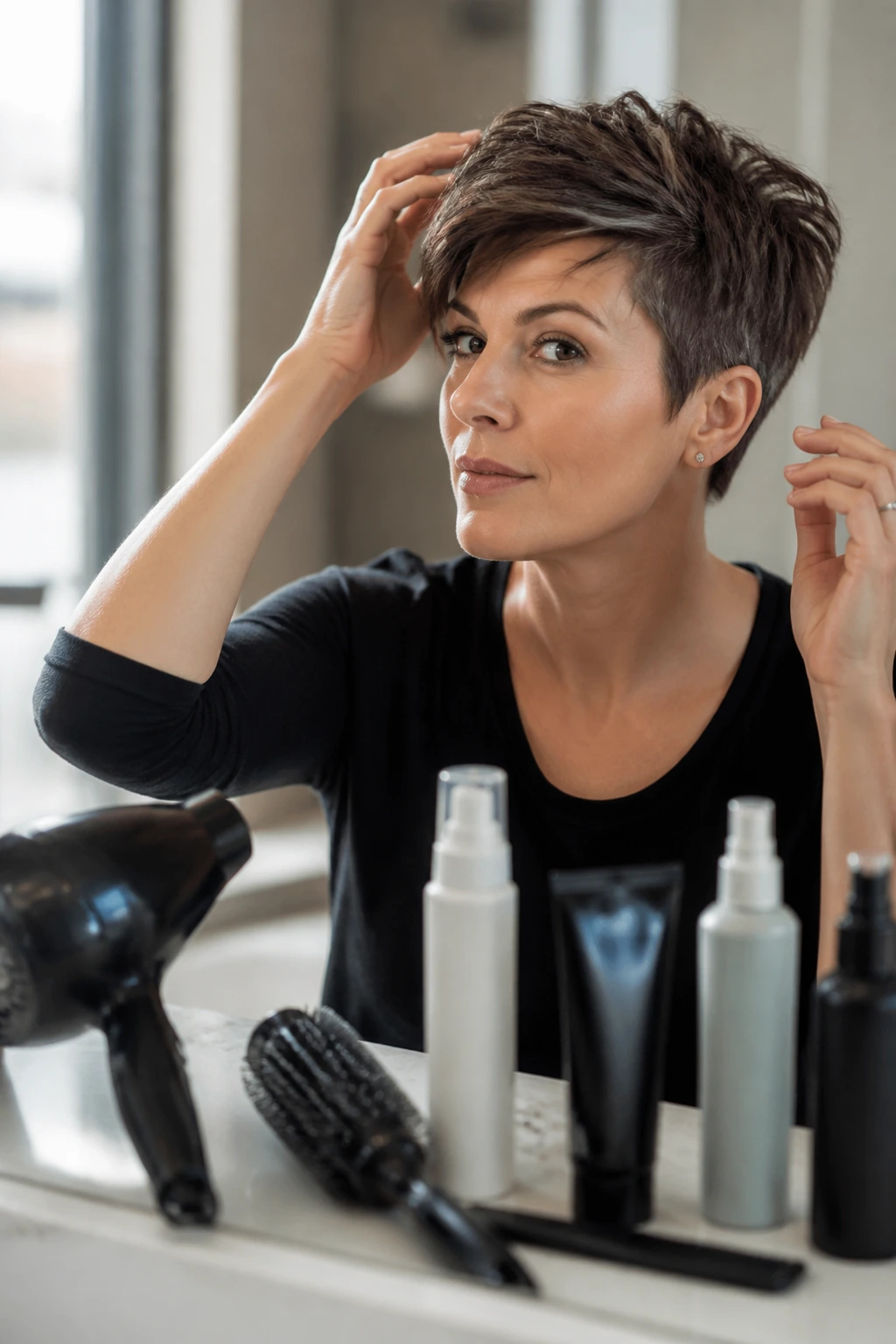
- Blow dryer with a nozzle attachment: Directs thick hair instead of blasting it every which way.
- Small round brush or vent brush: Helps lift the crown and smooth the sides without adding too much volume.
- Light mousse or styling foam: Best for air-dried texture and soft lift.
- Matte paste or light wax: Gives piecey separation without making the hair limp.
- Heat protectant spray: Worth using if you blow-dry or flat-iron often.
- Texturizing spray: Good for day-two shape and extra grit on choppy cuts.
- Fine-tooth comb: Useful for sleeker styles and parting the fringe.
- Handheld mirror: Handy for checking the nape and back after styling.
- Optional diffuser: Helpful if your thick hair has wave or curl and you want softer shape.
Keeping the Shape Sharp Between Appointments
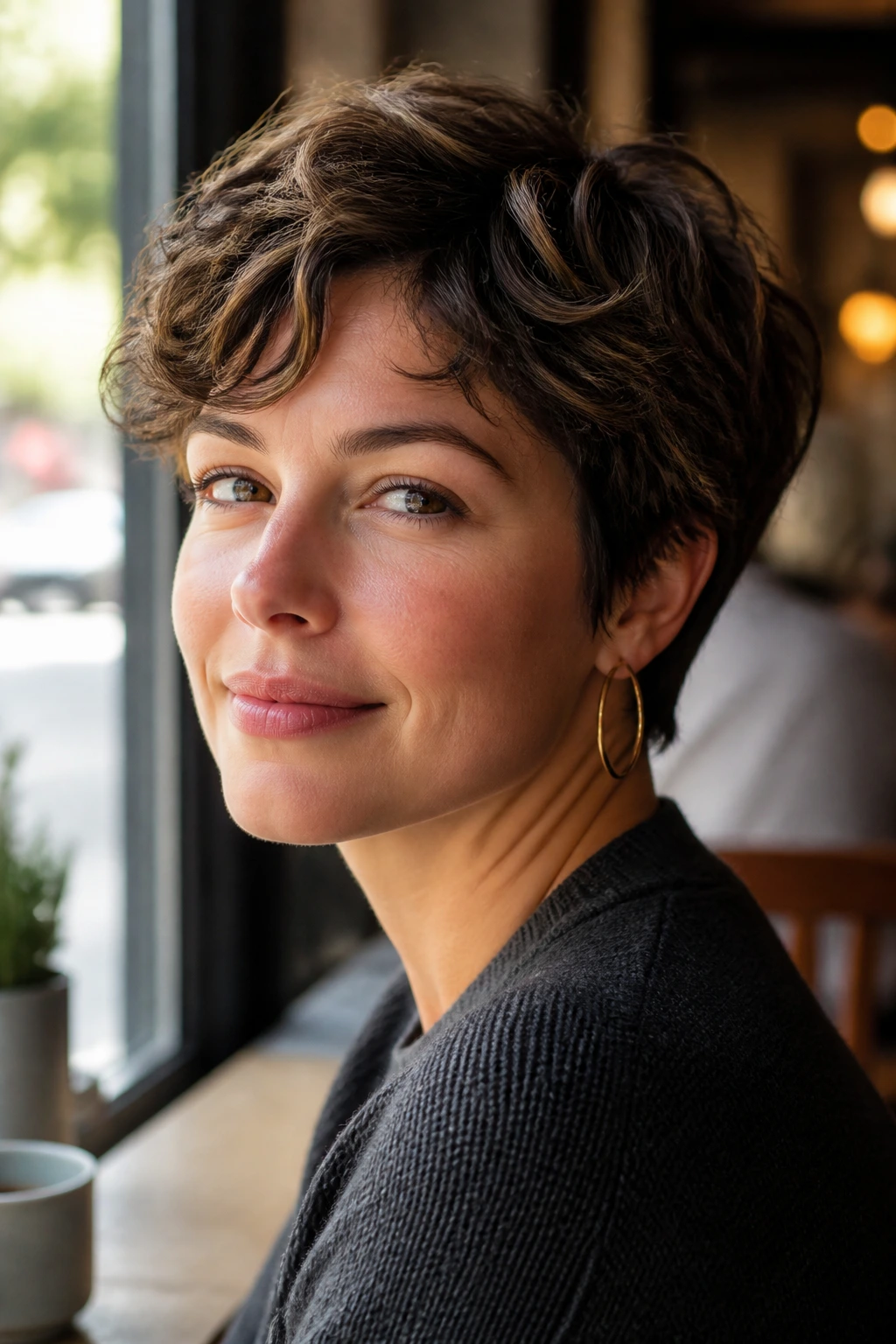
Thick hair grows with confidence, which is another way of saying it can overtake a pixie if you ignore it for too long. The nape usually starts showing first. Then the sides widen. After that, the fringe loses its intention and starts hanging into the eyes at the least convenient moments.
A trim every 4 to 6 weeks keeps most pixies in line. If your hair grows fast at the neckline, you may want the nape cleaned up closer to the 3-week mark even if the full cut can wait. Fringe and temple pieces often need attention before the rest of the style does.
At home, wash as often as your scalp asks for it, then use just enough product to give the hair shape. Too much cream makes thick hair heavy. Too little leaves it bulky and dry. The middle is where the good hair lives.
Sleep matters too. A satin pillowcase or bonnet won’t save a bad cut, but it can cut down on rough edges and keep the crown from getting flattened into a weird half-mohawk on one side. If the shape starts slipping, dampen the hair lightly in the morning instead of piling on more product. Water first. Product second. That order saves a lot of bad hair days.
If you’re growing the cut out, ask for soft edges instead of hard stops. That way the pixie can move into a bixie or short bob without feeling like a compromise.
Frequently Asked Questions
Will a pixie cut make thick hair look poofy?
It can, if the weight is left in the wrong places. A good pixie removes bulk through the nape, temples, and interior layers so the hair sits close instead of flaring out.
What pixie cut is best if my thick hair is straight?
A tapered nape, long-top pixie or a sleek sculpted shape usually works well. Straight thick hair benefits from clean lines and enough top length to stop the cut from standing straight up.
Can thick curly hair be cut into a pixie without frizz?
Yes, but the cut should respect the curl pattern. Dry cutting or diffused cutting helps the stylist see where the curls land, and gentle shaping usually works better than aggressive thinning.
How often do I need a trim?
Most thick-hair pixies need a shape-up every 4 to 6 weeks. If your nape grows fast or your fringe sits right on your eyes, shorter intervals make the cut easier to live with.
Should I ask for thinning shears?
Only with caution. Thinning shears can help in specific spots, but overuse can leave coarse thick hair frayed and puffy. Internal layering and point cutting often give a cleaner result.
What if my cowlick makes the front stick up?
Build the cut around it instead of trying to fight it flat. A little more length in the fringe and a smart drying direction usually keep the cowlick from taking over.
Is a pixie hard to grow out?
It’s manageable if the original cut has soft edges. A longer fringe and some length at the temples make the transition to a bixie or short bob much less awkward.
Do side-swept bangs or micro bangs work better on thick hair?
Side-swept bangs are easier to live with and usually more forgiving. Micro bangs can look striking on thick hair, but they need more upkeep and a more precise cut.
A Short Cut With Real Shape
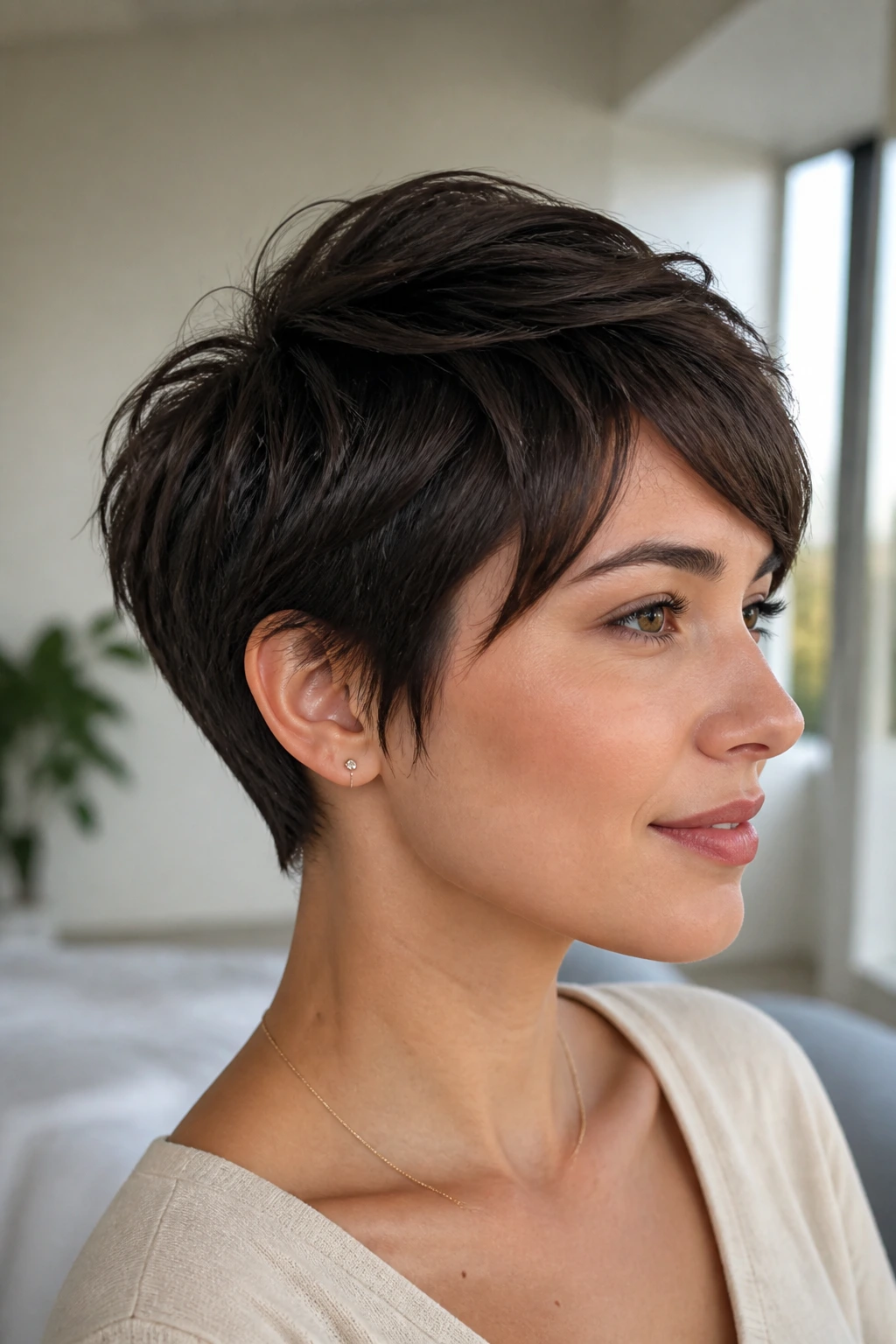
A pixie on thick hair should feel deliberate the moment you leave the chair. If it doesn’t, the problem is almost always shape, not density. The right crop lets the hair sit close at the nape, move at the crown, and keep enough softness around the face to avoid that boxed-in look nobody asked for.
That’s why these 23 versions matter. They don’t treat thick hair like a problem to solve once and forget. They use the bulk, the body, and the natural lift to build something cleaner, sharper, and easier to live with.
Bring photos. Mention the cowlicks. Ask about the nape. Then let the cut do what thick hair does best: hold a line and keep it.
