



A good red hair color does something blunt and a little theatrical on long waves: it moves. Not in a shy, barely-there way either. A copper ribbon catches the bend of a wave, a cherry tone darkens in the trough, and a glossy auburn suddenly looks three shades richer when your hair swings over one shoulder.
That’s why red hair looks for long wavy hair have such an edge over the same shades on a blunt, straight cut. The length gives the color room to breathe, and the wave pattern breaks up the pigment so it never sits there like a flat helmet. Even a quiet cinnamon glaze can read expensive in motion. Even a loud ruby can feel wearable if the placement is smart.
I’ve always thought red is the most temperamental hair color people casually underestimate. It can go copper, auburn, mahogany, cherry, merlot, orange, brick, plum — and each one tells a different story on the same head of hair. Long waves make those shifts visible in a way that’s half the fun and half the challenge, which is exactly why the right shade matters so much.
Why These Red Waves Earn Their Spot
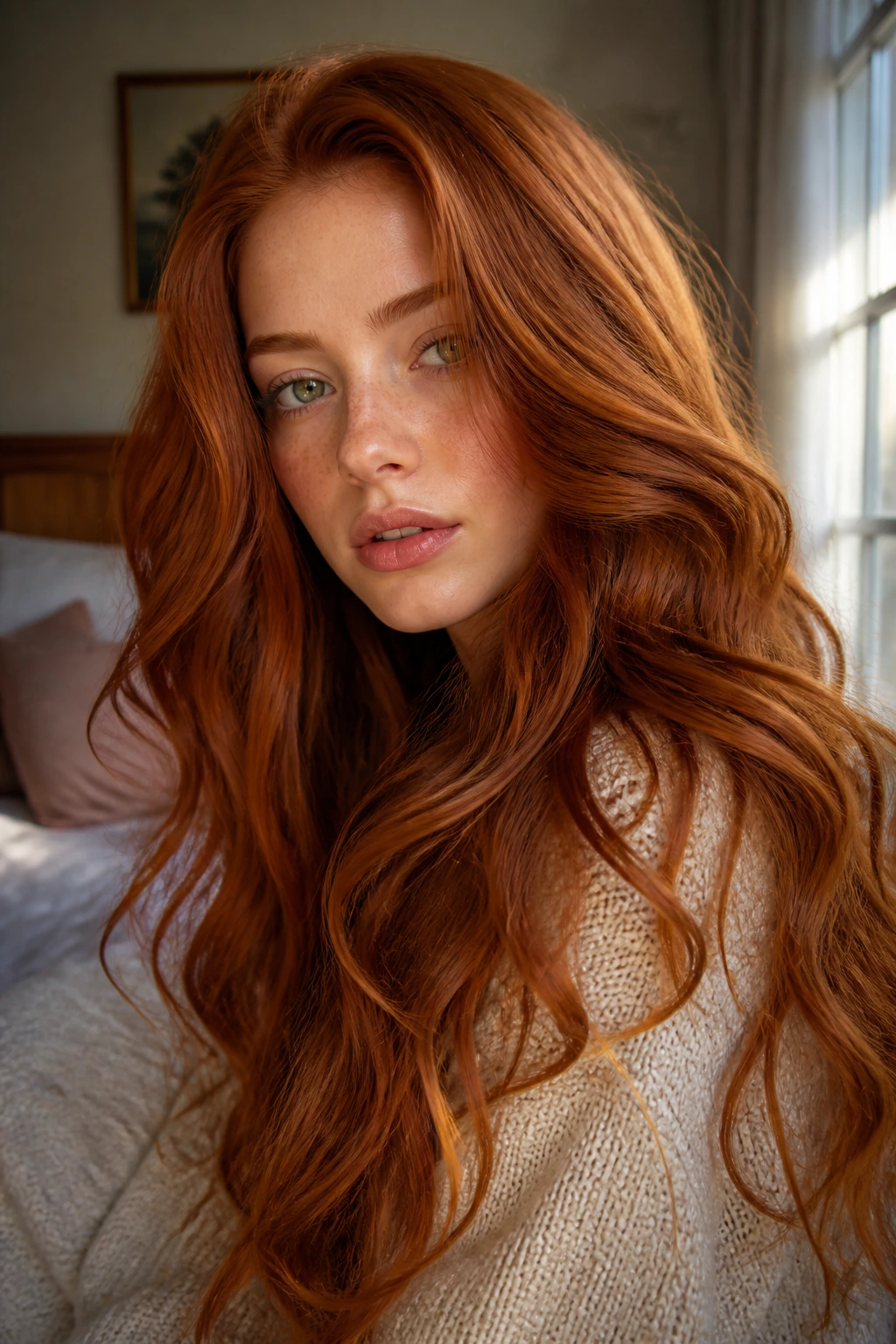
- The movement does the work: Long waves turn one flat red into layered ribbons of tone, so even a subtle balayage looks deliberate instead of plain.
- There’s a red for every maintenance limit: Some looks lean glossy and low-effort, while others are louder and need more touch-ups, so you can pick based on reality, not wishful thinking.
- Placement matters as much as color: Face frames, money pieces, lowlights, and root smudges change how the red reads far more than people expect.
- They flatter more than one base color: Brunettes, dark blondes, and even deep natural bases can all wear red well if the undertone is chosen with some care.
- The range is wider than “copper or burgundy”: You’ll see soft strawberry, burnt copper, mulled wine, cherry cola, and deep mahogany, which keeps the whole collection from feeling repetitive.
- They photograph differently in every light: Daylight, warm indoor bulbs, and soft overcast light each pull a different note from red, and long waves make that shift visible instead of muddy.
Why Red and Long Waves Have a Built-In Advantage
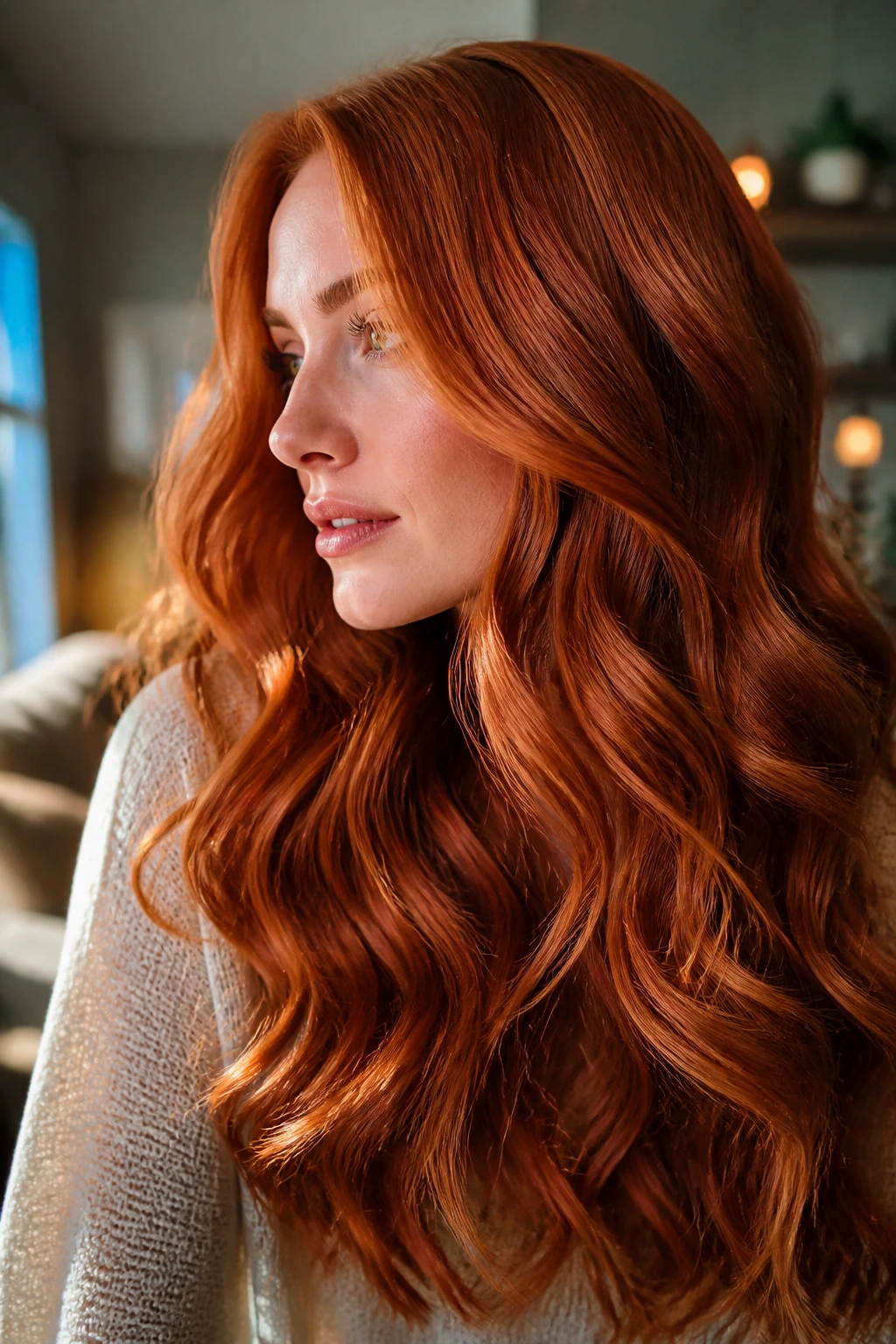
Red hair on long wavy hair is one of those combinations that looks more complicated than it really is. The wave pattern creates tiny planes of light and shadow, which gives red pigment a place to land in pieces. That matters because red can flatten fast if it’s packed onto hair that doesn’t move much. On waves, though, the color gets broken up for you.
There’s another reason this combo works. Red tones tend to show warmth, depth, and shine before they show length. A long straight sheet of hair can make even a beautiful auburn seem too uniform. Waves fix that problem. They make the mids and ends behave like separate surfaces, so a root shadow, a gloss, or a highlight band can all read in the same style without fighting each other.
I also like red on long waves because it makes maintenance choices easier to see. If the ends are too light, you’ll notice it. If the root is too harsh, you’ll see that too. That sounds unforgiving, but it’s useful. The texture gives you honest feedback. And once you know what the color is doing, you can decide whether you want soft copper ribbons, dark wine depth, or a full scarlet sweep with a little drama in it.
1. Soft Copper Ribbon Balayage
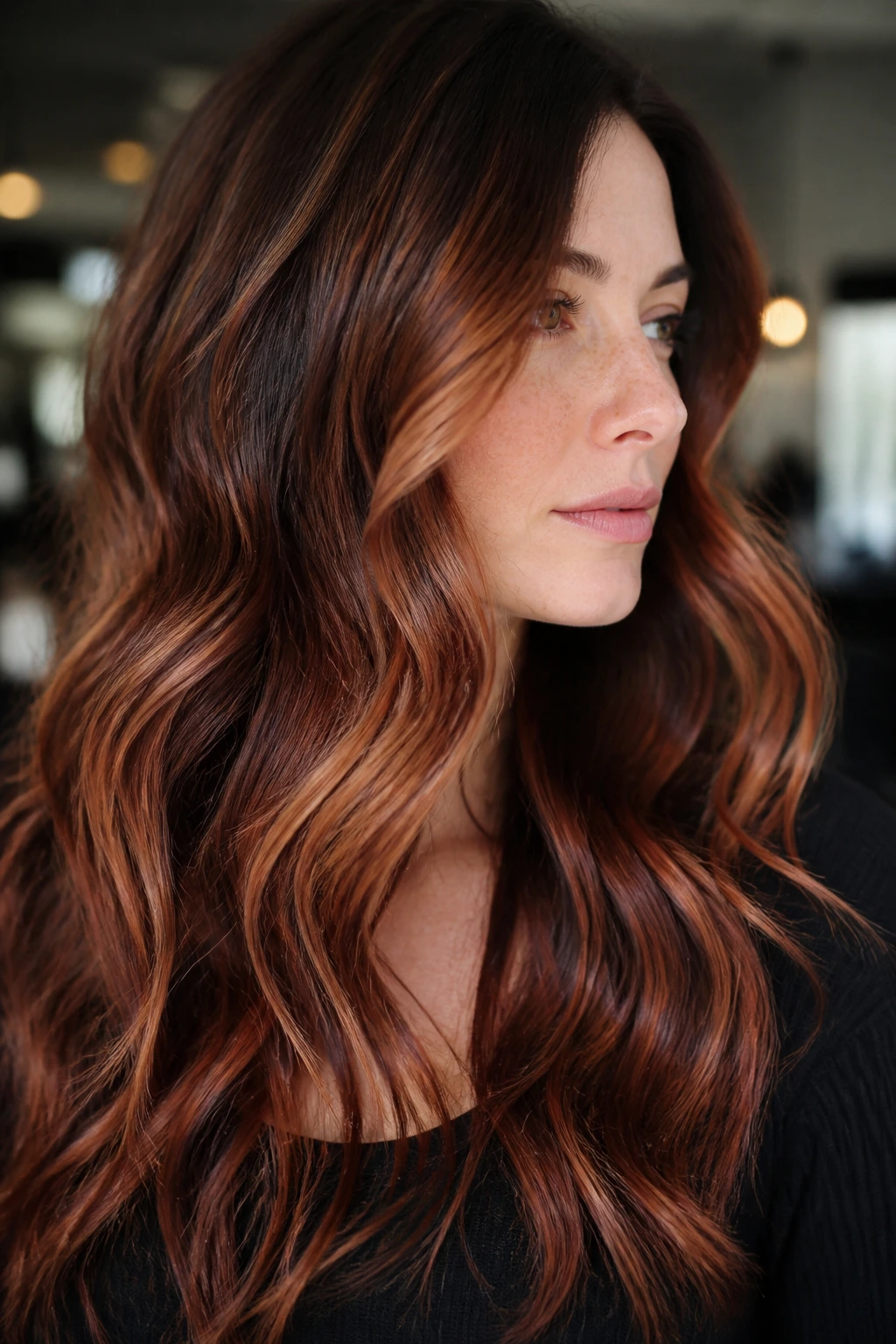
A soft copper ribbon balayage is the easiest way to flirt with red without tipping into full commitment. It keeps the base near your natural brunette or dark blonde level and lets copper live in slender painted pieces through the mids and ends. On long waves, those ribbons show up every time the hair bends, which is exactly why this look has so much movement.
Why It Works on Waves
The loose placement prevents the color from reading blocky. You get a warm flash here, a brighter curve there, and the overall result feels airy instead of heavy. It’s especially good if you want red to look sunlit rather than fiery.
- Best base: level 5 to 7 brunette or dark blonde
- Undertone: warm copper, not orange-gold
- Maintenance: gloss refresh every 6 to 8 weeks
- Styling note: loose 1-inch bends show the ribbons best
Pro tip: keep the face frame a half-shade lighter than the back. It wakes up the color without making the whole head look striped.
2. Cinnamon Auburn Melt
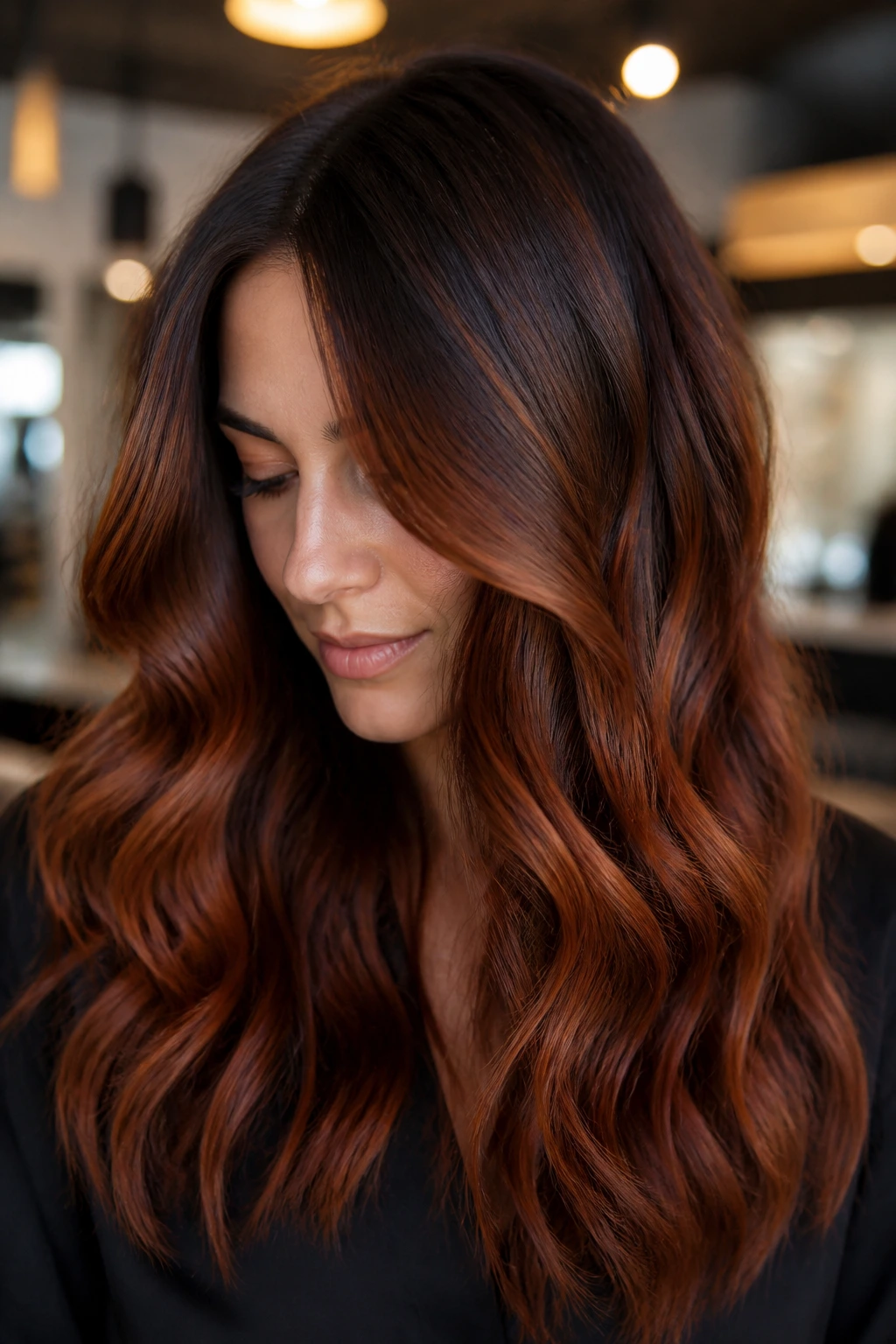
A cinnamon auburn melt is the shade I’d hand to someone who wants red that looks expensive without shouting. The root area stays deeper, usually a soft brunette or espresso brown, and the color gradually warms into cinnamon and auburn through the lengths. On long wavy hair, that melt is doing two jobs at once: it softens grow-out and gives the waves a slow, pretty shift from dark to warm.
This look sits in that useful middle ground where it’s red enough to feel intentional but brown enough to play nice in everyday light. It’s also one of the most forgiving reds if your hair has a little natural depth. A colorist can build it with a demi-permanent gloss or a low-lift formula, which keeps the finish shiny rather than overprocessed.
I like this shade on thick waves in particular. The density of the hair gives the auburn room to settle, and the cinnamon tone keeps the ends from disappearing into the same brown mass. You still see the curve of the wave, which matters more than people realize.
3. Cherry Cola Waves
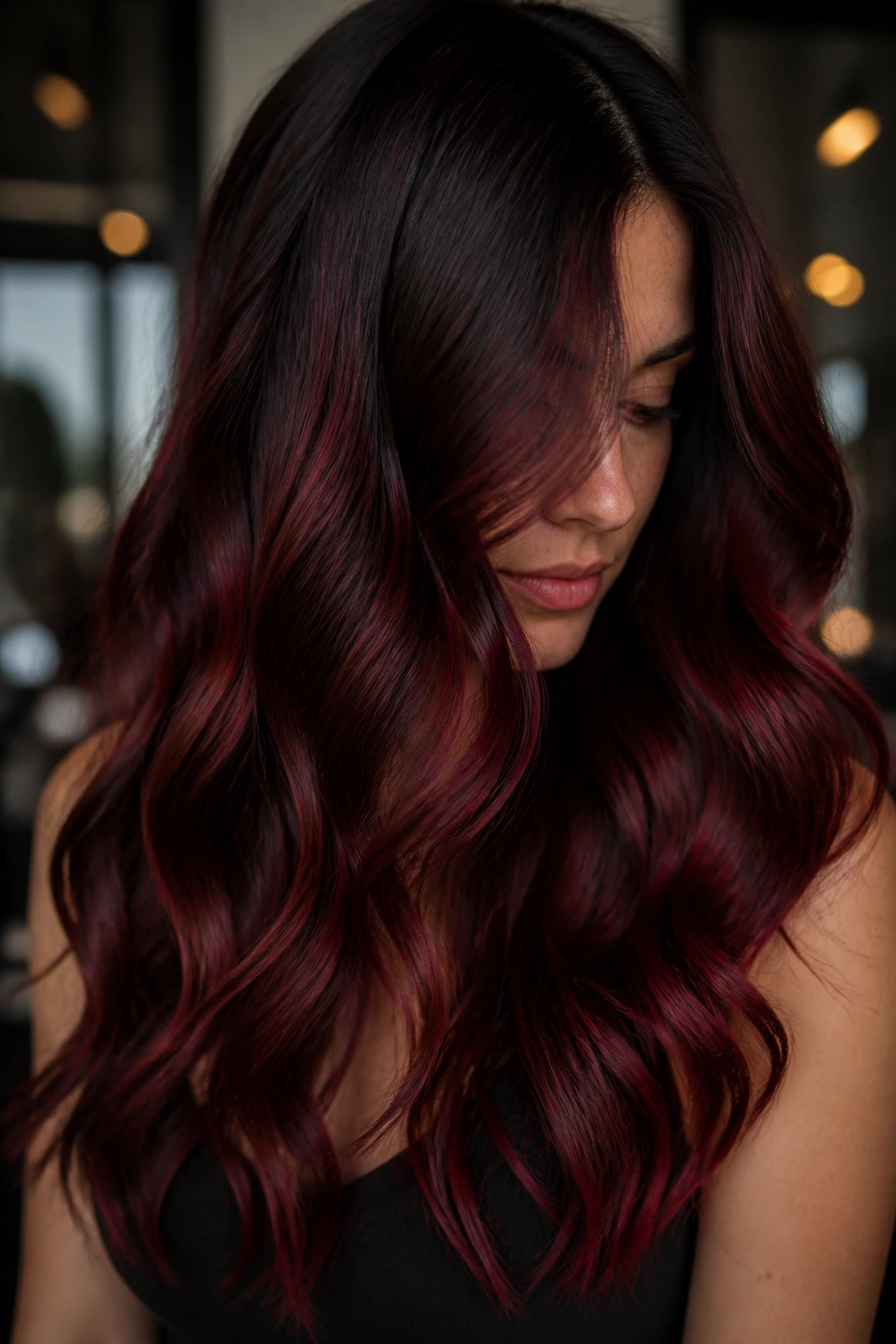
Cherry cola waves are for someone who likes their red with a dark edge. Think brunette depth with a cherry-burgundy sheen layered over it, the way dark soda flashes red under direct light. It’s not loud in the usual sense, but it has a slick, moody finish that long waves wear especially well.
What Makes It Different
The cherry tone is folded into a deeper base, so the red doesn’t have to carry the entire look alone. That makes it easier to maintain and a lot less likely to fade into a flat orange note. On waves, the contrast between the dark base and the red overlay is what gives the color its lift.
How to Style It
- Use a shine spray or lightweight serum on the mid-lengths.
- Bend the waves with a 1.25-inch iron so the color flashes in broad panels, not tiny crimps.
- Skip heavy texturizing powder; it can dull the wine-like finish.
Best for: medium to deep bases that want red without lifting all the way into copper.
4. Strawberry Copper Face Frame
This one is a little flirtier, and I mean that in the best way. Strawberry copper face-framing pieces brighten the front of long wavy hair while leaving the rest of the length softer and less saturated. The result is a red look that opens up the face first and lets the rest of the hair follow.
The shade itself sits between copper and strawberry blonde, which makes it feel lighter and fresher than a classic auburn. If your hair is already on the lighter side, the front pieces can be done with a brighter toner or gloss so they don’t disappear into the base. On deeper brunettes, the same placement works, but the contrast needs a little more lift.
I like this look because it doesn’t waste color in places nobody sees. The face frame is where the eye goes first. Put the prettiest red there and keep the rest of the hair softer, and the waves will do the rest without making the whole style feel busy.
5. Mahogany Money Piece
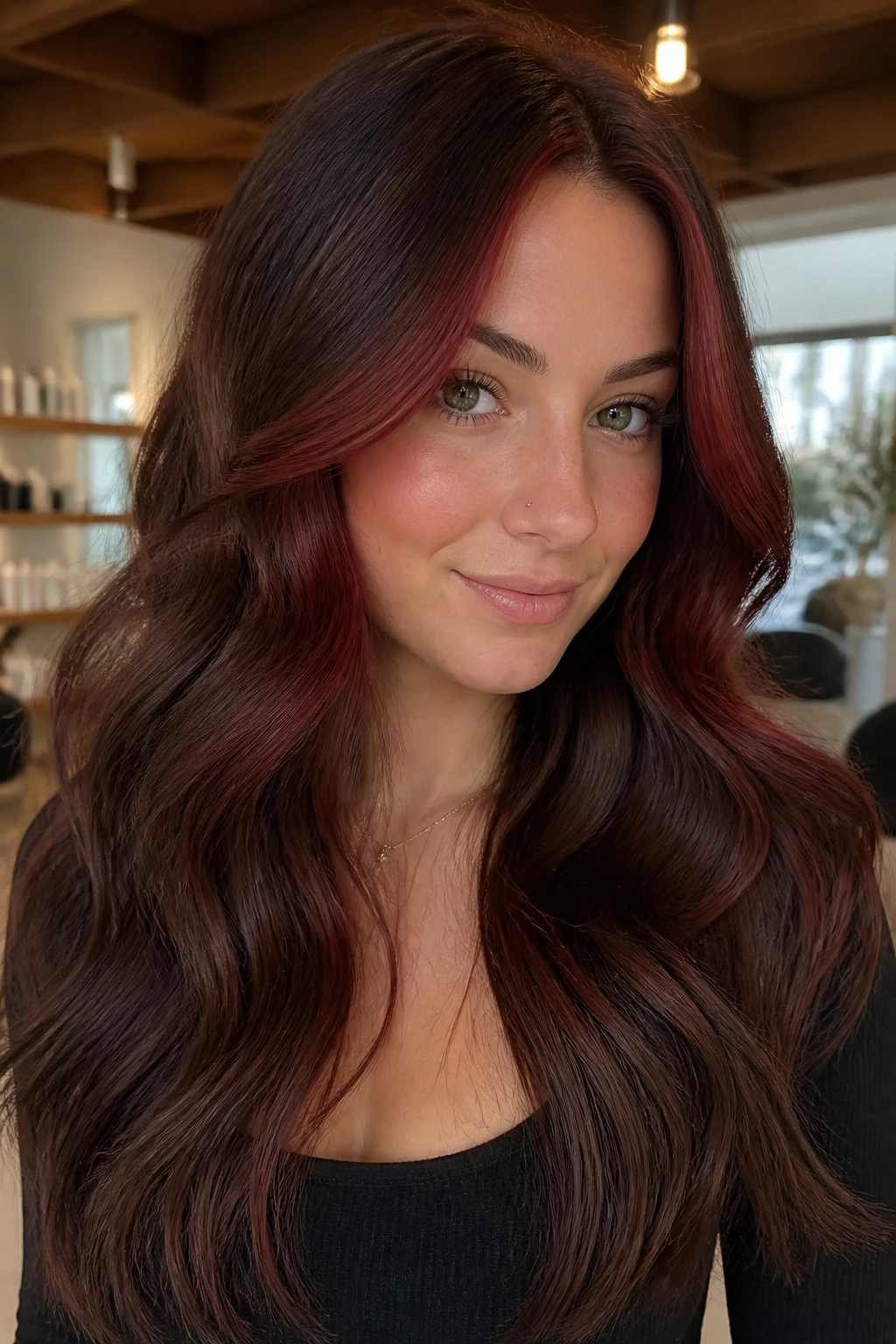
A mahogany money piece is what happens when you want red to feel rich instead of sunny. The face frame is kept deeper and cooler, somewhere between brunette, wine, and mahogany, while the rest of the length can stay close to your natural color or move a shade warmer. That contrast gives long waves some real structure.
I prefer this on people who like strong outlines around the face. The darker red piece acts almost like shadow makeup for the hairline, which can make the cheekbones and eyes pop without going bright. It’s also one of the more polished ways to wear red on a long cut because the color doesn’t have to travel everywhere to make an impact.
On waves, the finish matters a lot. A mahogany money piece looks best when the hair is smooth enough to show the red, but not so brushed out that the wave pattern disappears. The middle ground is where it lives.
6. Ginger Root Smudge
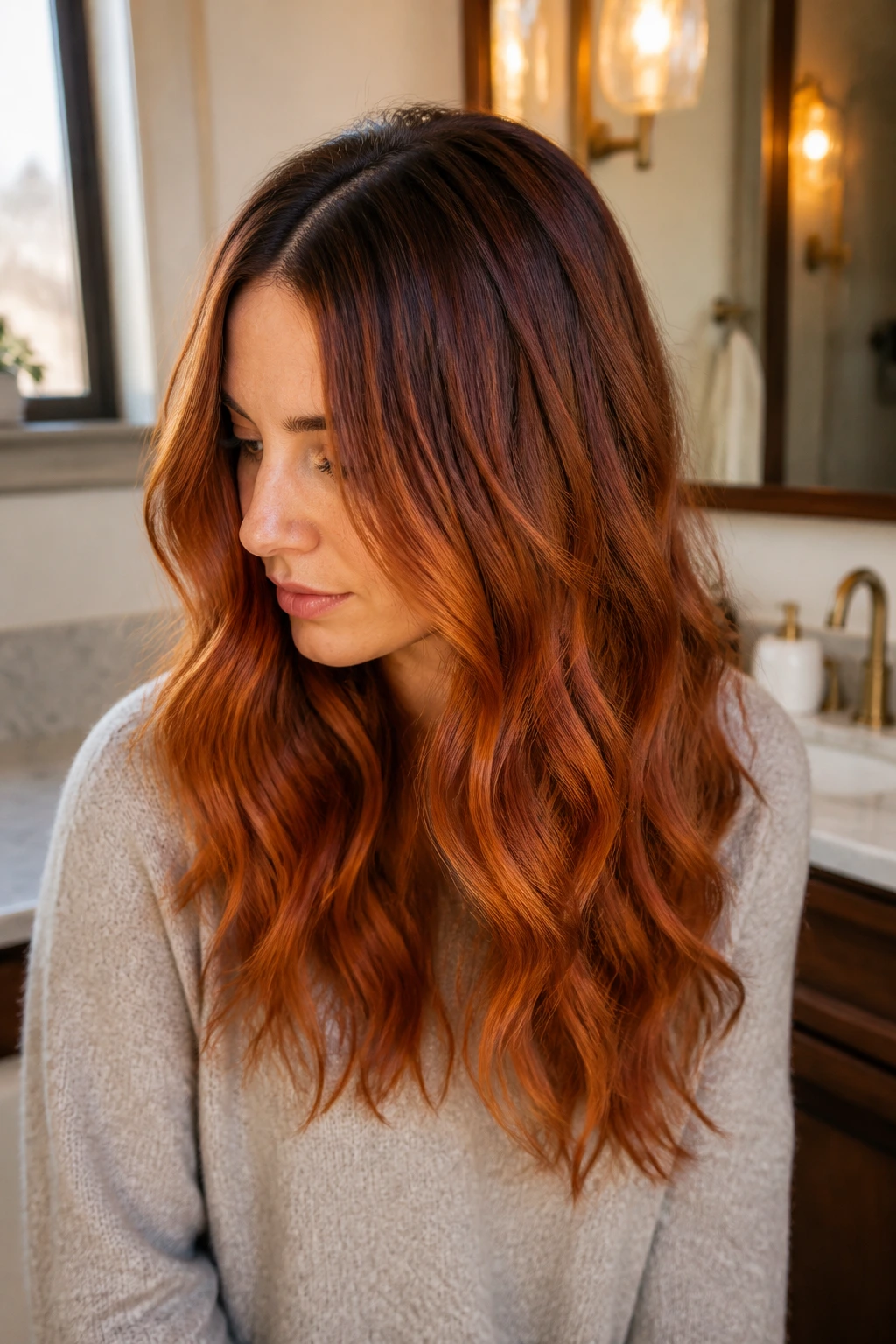
Ginger root smudge is the low-maintenance red I keep coming back to for people who want warmth without a hard line of regrowth. The root stays shadowed, usually in a soft brunette or deep blonde tone, and the red builds into ginger through the mids and ends. Because the root is intentionally darker, the grow-out looks soft rather than obvious.
That root smudge matters on long wavy hair more than on shorter cuts. Length gives you enough space for the transition to breathe. You can go from dark at the scalp to bright ginger through the wave pattern without the eye ever feeling trapped in one harsh band of color.
This is a practical red, and I mean that as praise. It works if you’re busy, if you like heat styling but not constant salon visits, or if your hair tends to pull warm anyway. The color feels lived-in from the start, which is a useful place to be.
7. Ruby Peekaboo Panels
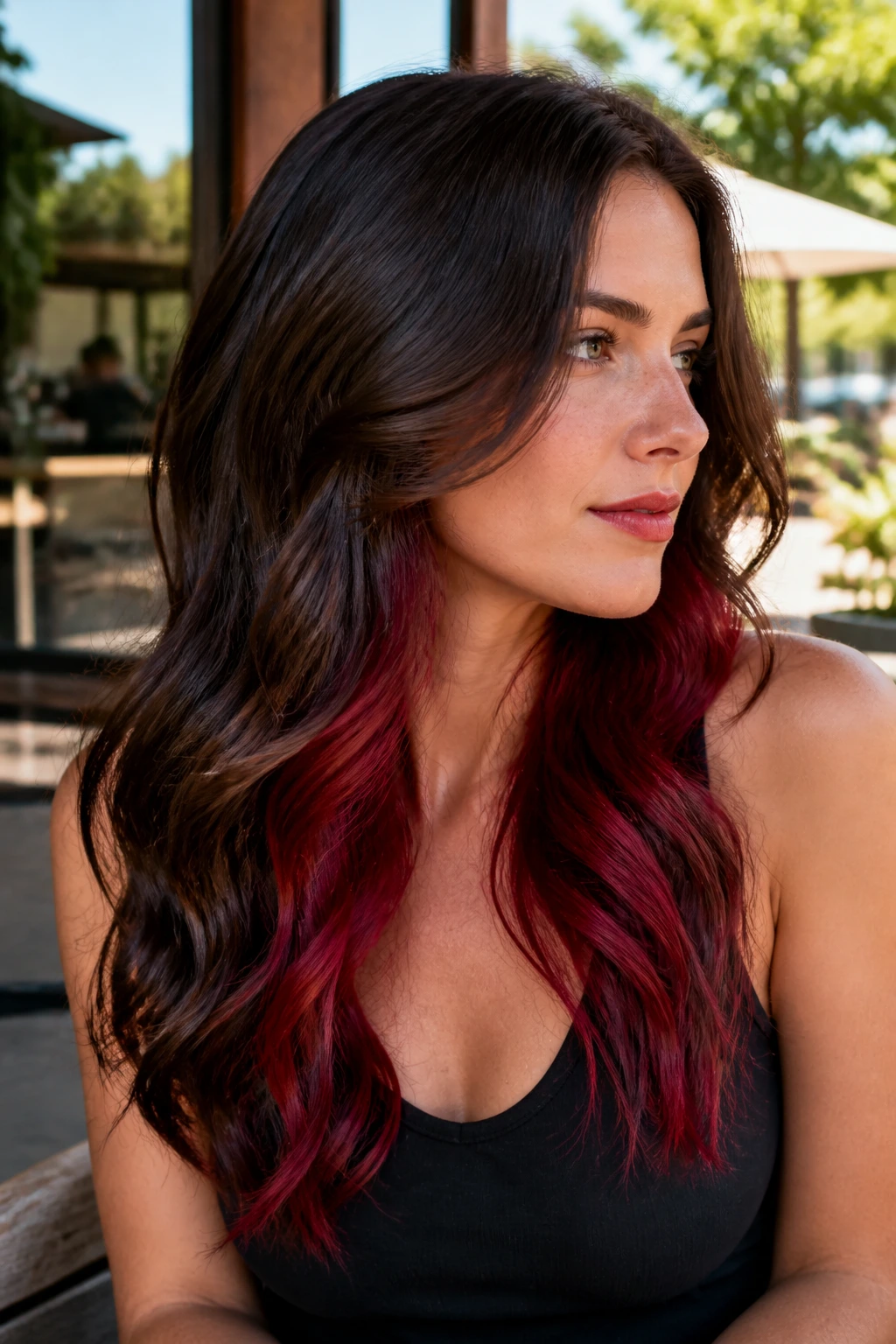
Ruby peekaboo panels are the playful pick of the bunch. The red lives underneath the top layer of hair, so you only see it when the waves shift, the hair is tucked behind the ear, or the wind catches the ends. On long wavy hair, that hidden placement turns every movement into a small reveal.
What makes this work is the contrast between restraint and surprise. The top layer stays closer to your natural base, so the look doesn’t dominate your whole head. Then a vivid ruby panel appears underneath and suddenly the color has a pulse. It’s a good option if you like bold red but need to keep things calm in a work setting or want something less obvious from every angle.
A stylist will usually place these panels where the wave pattern naturally opens — through the crown bend, under the side sections, or in the lower back layers. That way the red shows up in motion instead of only when the hair is straightened.
8. Firelight Copper Balayage
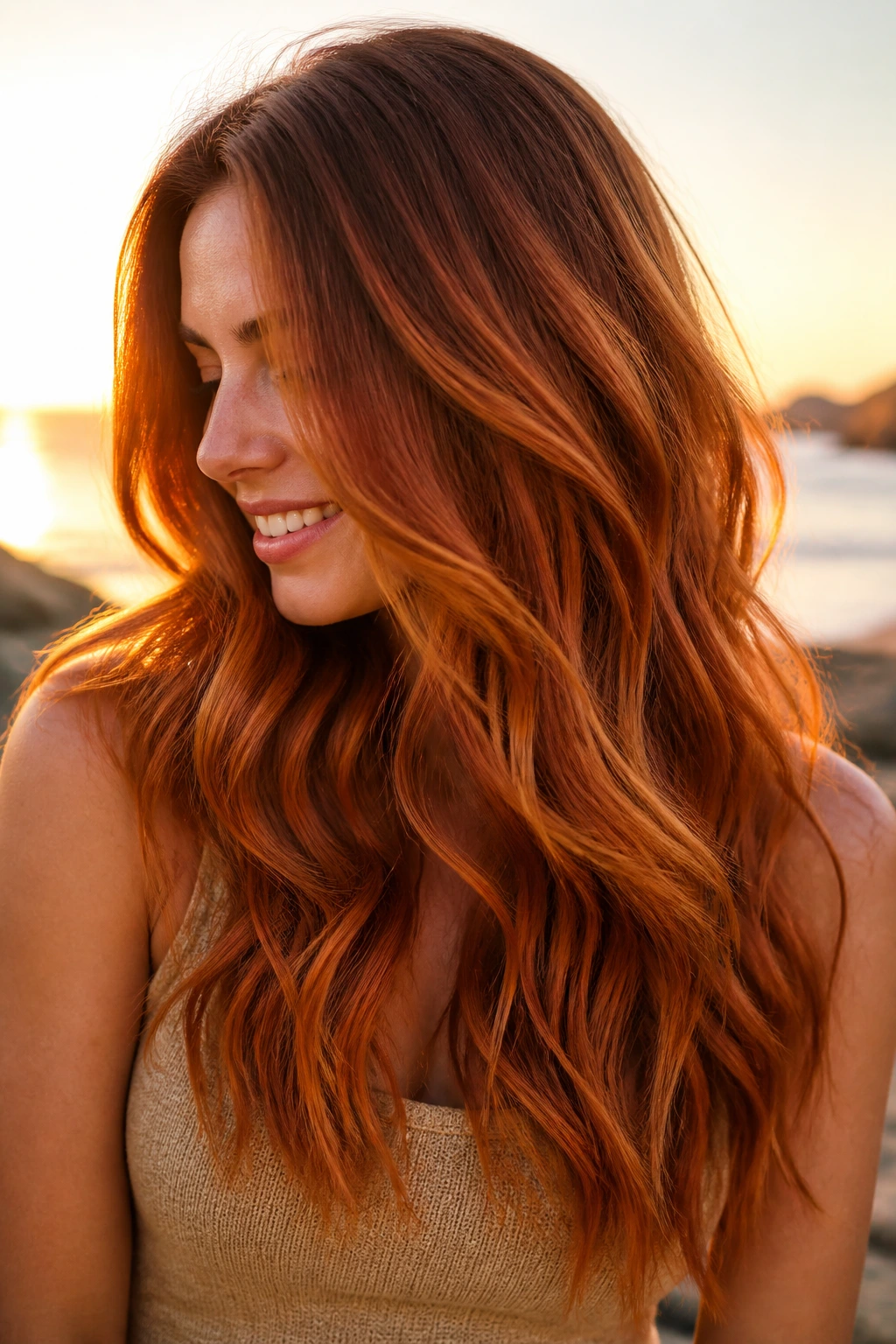
Firelight copper balayage is brighter and hotter than the soft ribbon version, and that’s the point. The copper pieces are painted more assertively, often with a bit more lift through the mids so the color reads as glowing rather than merely warm. On long waves, the brighter copper lands on the high points of each bend, which gives the style a lively, reflective finish.
If the earlier copper look is a whisper, this one is a sentence with confidence. It suits warm brunettes, golden dark blondes, and anyone who wants the red family but doesn’t want it to sink into burgundy. The trick is keeping the ends healthy. Bright copper shows damage faster than darker red, so the cut and conditioning matter.
I’d wear this with loose styling, not tight curls. Loose movement lets the balayage sit in larger bands, and larger bands are what make copper look full instead of streaky. That matters. A cramped curl pattern can break the color into too many bits.
9. Rusted Copper Sombre
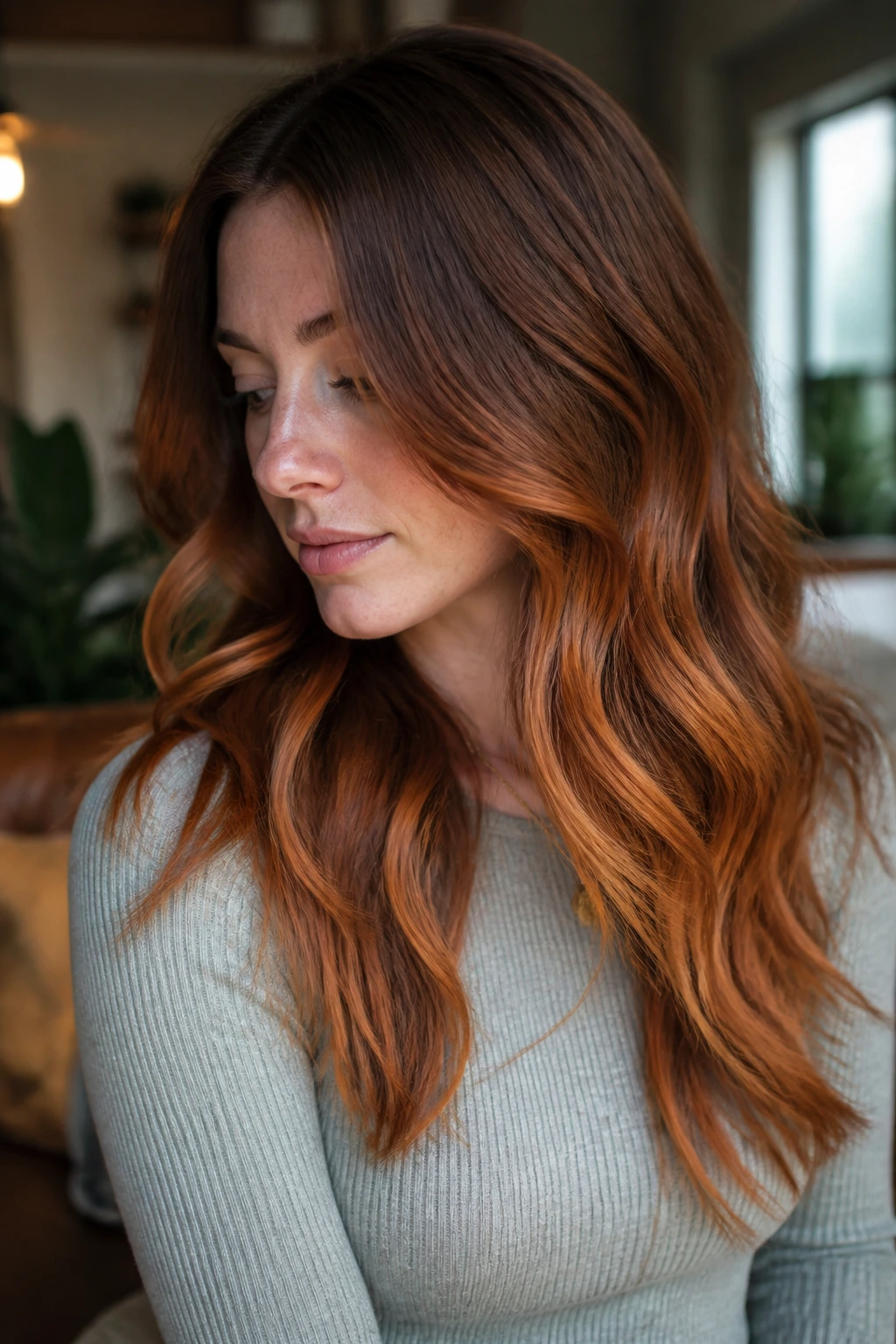
Rusted copper sombre sits on the quieter end of the red spectrum. The root is deeper, the transition is gradual, and the ends lean into a muted copper-orange that feels earthy rather than flashy. It’s one of those shades that looks like it belongs on long waves because the wave pattern keeps the muted tones from getting lost.
Unlike a high-contrast balayage, this one depends on softness. The root-to-end transition is gentle enough that the color feels like it grew there, which is useful if you want red but don’t want to look freshly colored every two weeks. The sombre approach also works well on thicker hair because it avoids the harsh slices that can make dense waves feel heavy.
If your style leans more denim, leather, cream, and brown than bright fashion colors, rusted copper is a very easy red to wear. It’s not loud. It doesn’t need to be.
10. Mulled Wine Gloss
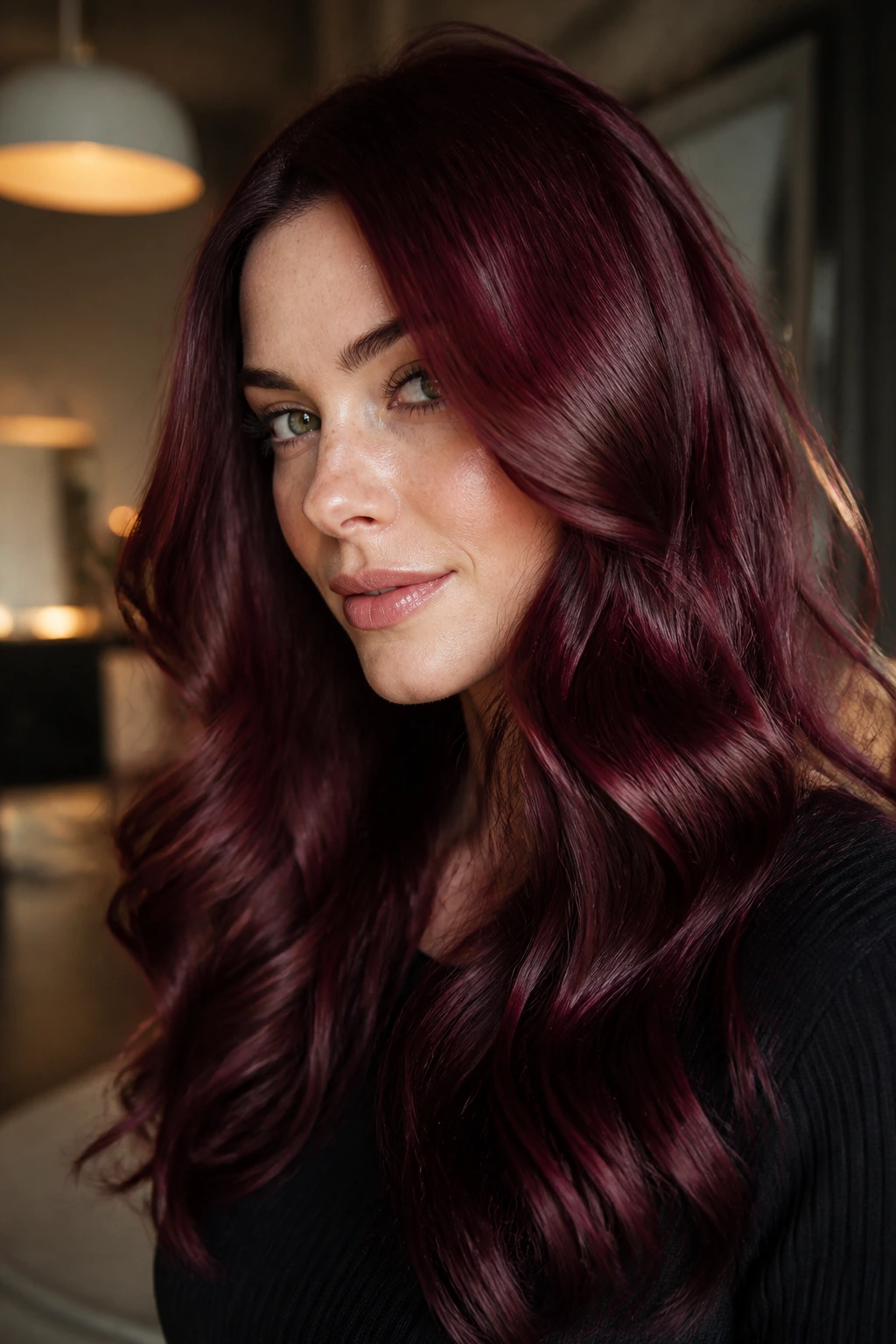
Mulled wine gloss is the dark, polished red I reach for when someone wants depth first and brightness second. The color sits in that plum-red zone where burgundy meets wine, and the gloss finish keeps it reflective instead of muddy. On long wavy hair, that shine is what makes the shade come alive.
Is it subtle? Not really. But it’s not screaming either. The trick is that it changes in different light. Indoors, it can look almost like a rich brunette with a red cast. Outside, the wine tone shows up more clearly along each wave ridge. That shift is half the appeal.
Best way to wear it
Keep the styling smooth around the crown and let the waves start lower down. The contrast between the glossy top and the flowing mids makes the red look more expensive than a full head of flat color ever could.
Good fit for: deep brunettes who want red without lightening too aggressively.
11. Scarlet Ombre Ends
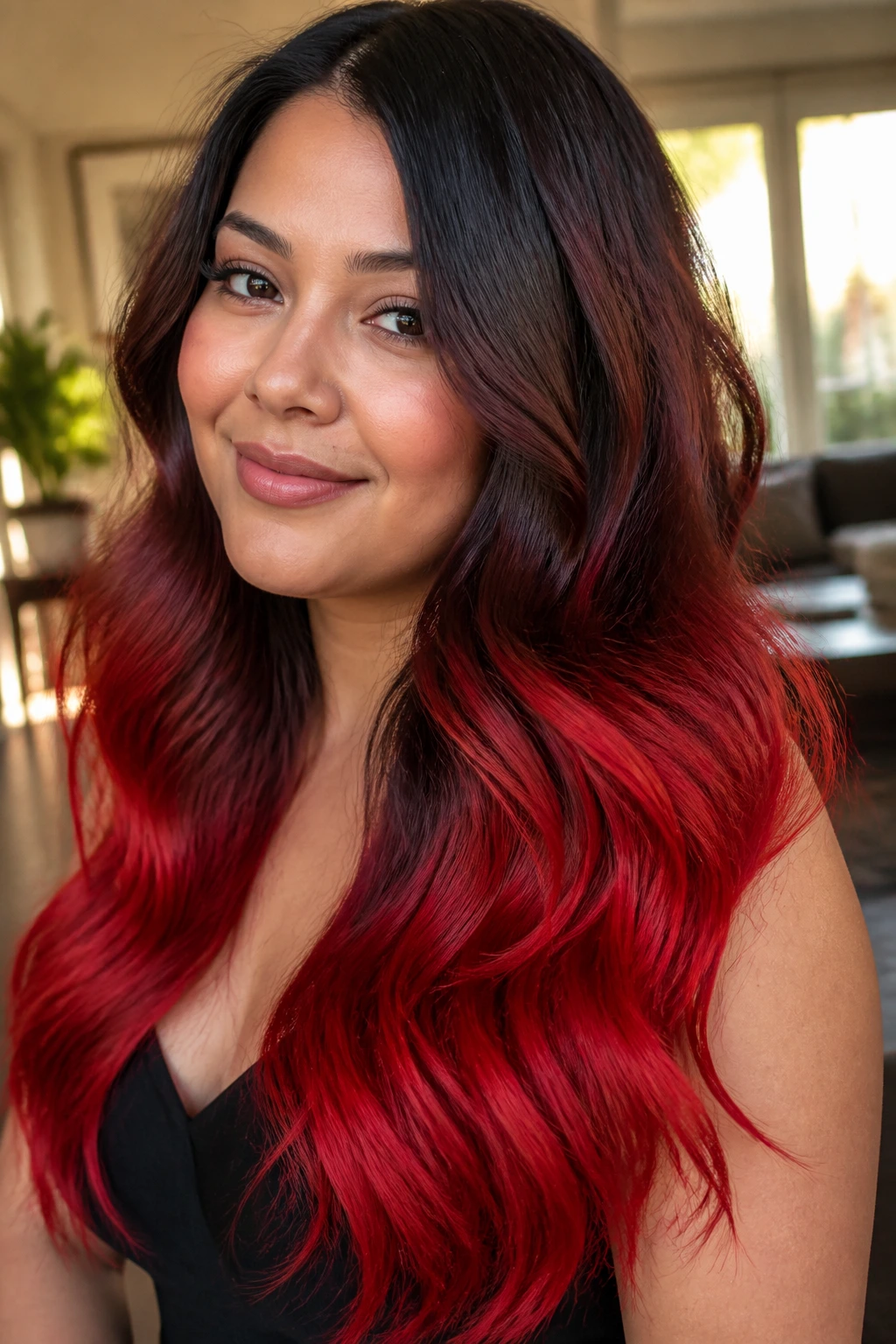
Scarlet ombre ends are for someone who wants a punch at the bottom of the hair instead of all over. The roots stay dark, the mids stay softer, and the ends move into a saturated scarlet that gives long waves a bright finish without forcing the whole style to commit to vivid red.
There’s a practical reason this works so well on long hair. The length gives the ombre enough room to transition before it reaches the ends, so the color doesn’t feel chopped into bands. Waves help even more. Every bend makes the shift from deep root to red tip feel smoother, and the moving ends catch light in a way straight hair rarely does.
I’d call this a statement look with a built-in escape hatch. If you love color but want to keep the scalp area more natural, this is one of the cleanest ways to do it. The downside is obvious: the ends carry the most pigment and usually the most fade, so you need a plan for glossing.
12. Saffron Auburn Layers
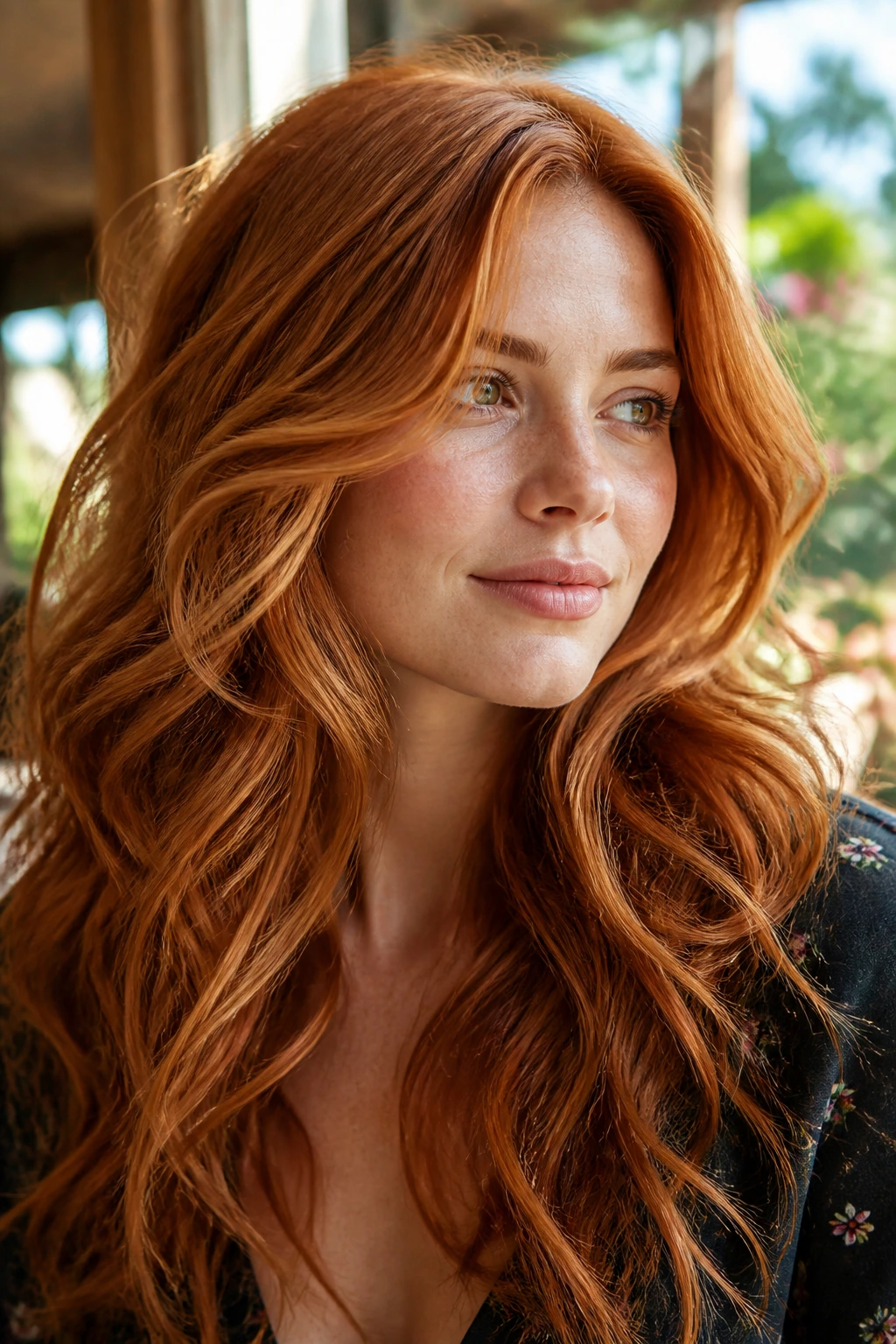
Saffron auburn layers bring gold into the red family without tipping into yellow. The shade is warm, sunny, and a little spicy, which makes it gorgeous on layered long waves. Each layer gets a slightly different read of the color, so the haircut itself becomes part of the color story.
This is one of those shades that makes sense on hair with movement. A blunt cut can swallow the subtle shifts, but layered waves lift the saffron warmth and let it sit on the surface where it belongs. If your natural base is medium brown or dark blonde, the color can be built as a warm gloss or as soft painted pieces through the lengths.
I like saffron auburn for people who find classic copper too orange and burgundy too dark. It lives between those poles. The result feels brighter than brunette, softer than neon copper, and less serious than wine red.
13. Rose Gold Red Tint
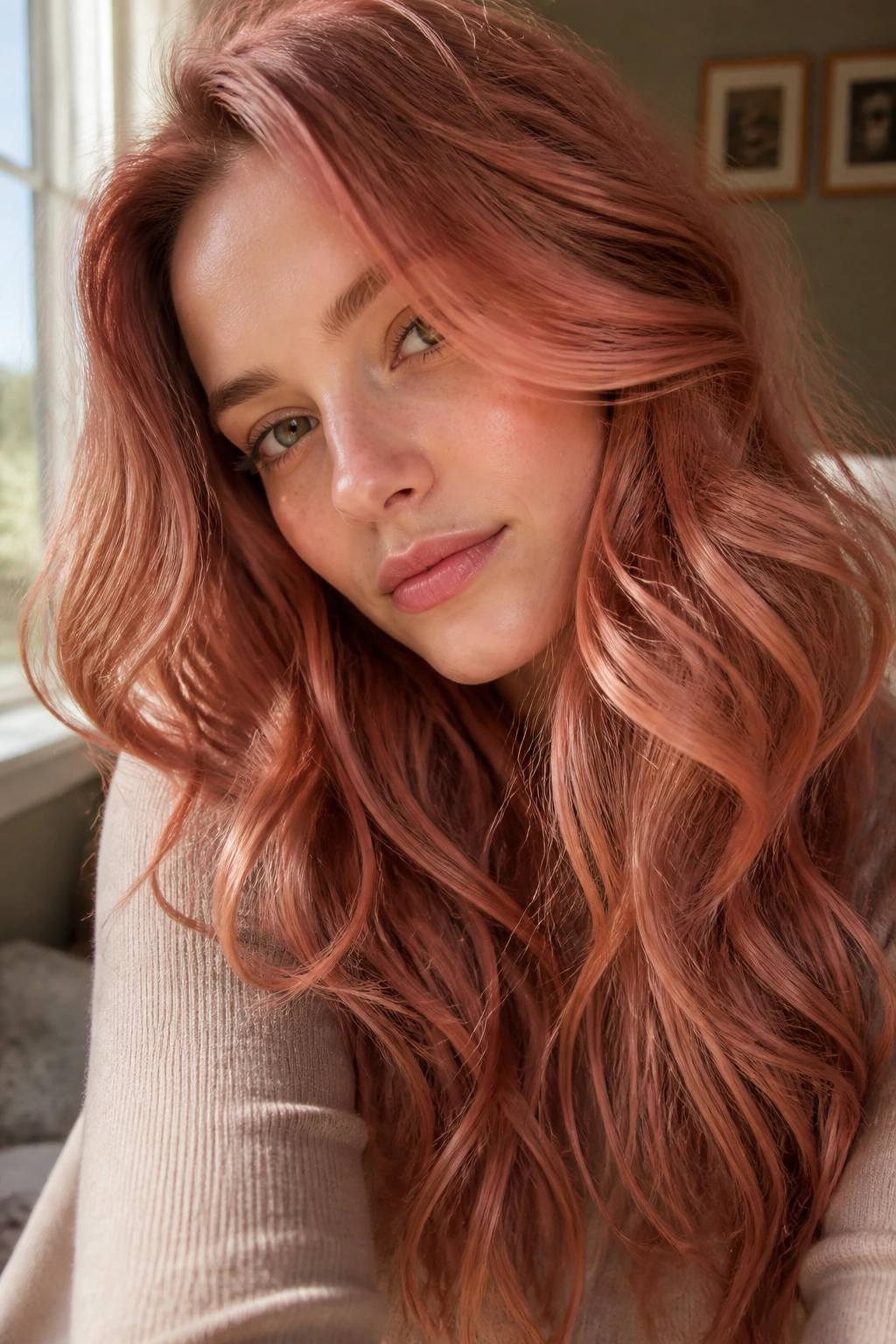
Rose gold red tint is the gentlest red in the lineup, and that restraint is part of the charm. It leans pink-copper rather than orange or burgundy, which gives long waves a soft metallic cast. On lighter bases, it can look airy and luminous. On deeper bases, it reads more as a tinted glaze than a full color change.
This shade depends on shine. Without shine, rose gold can look dusty or washed out. With the right gloss and a healthy wave pattern, it catches the light in a way that feels airy instead of sugary. That’s why I prefer it on long hair with a little natural texture. The bends keep the color from disappearing.
If you want red but you’re nervous about how bold red can be, this is a smart place to start. It’s one of the few red options that can look delicate rather than dramatic, and not many hair colors manage that.
14. Cranberry Lowlights
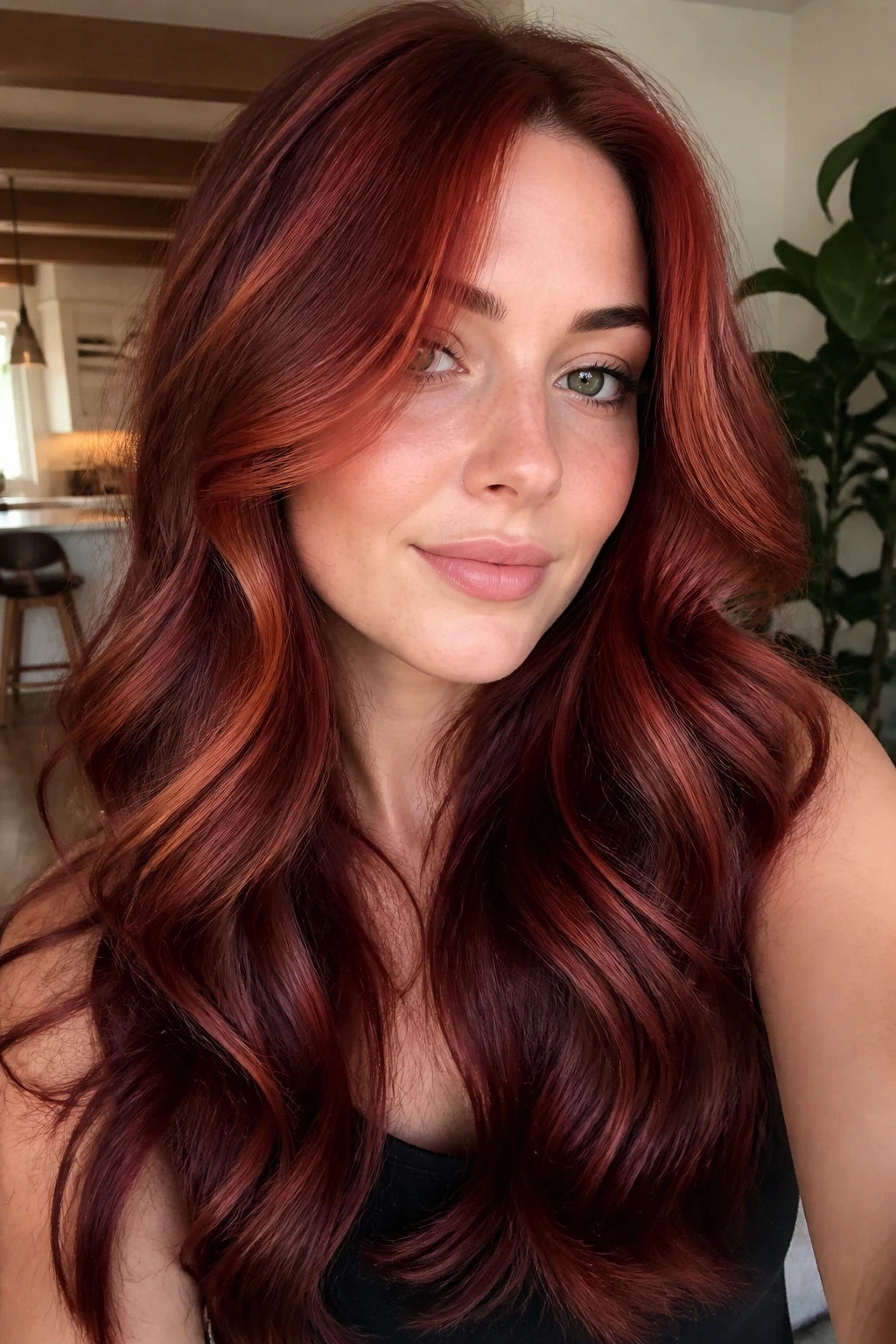
Cranberry lowlights work from the opposite direction of a highlight-heavy red. Instead of lightening, you deepen the hair with wine-toned sections that sit under or between lighter pieces. On long wavy hair, lowlights make the waves look thicker, because the darker red adds shadow where the hair bends.
This is especially useful if your hair is too light to hold red without looking flat. Cranberry lowlights add body to the color story without making the entire head darker. They also pair well with blonde or caramel bases that need a little anchor. Without that anchor, red on long waves can get too airy and lose shape.
I love this look on layered cuts because the lowlights can be placed to follow the movement of the haircut. The result feels built into the hair, not painted over it.
15. Burnt Copper Foilayage
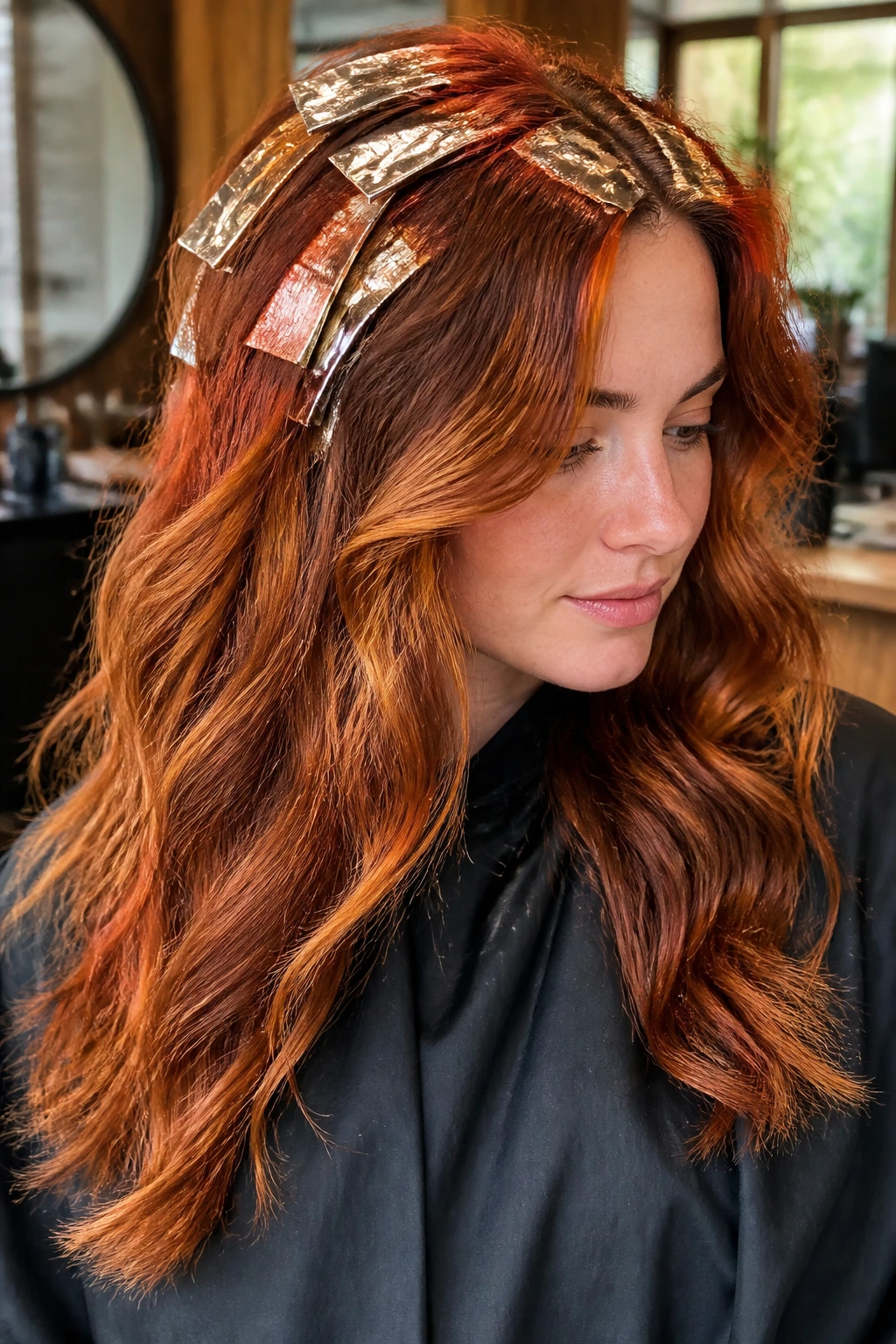
Burnt copper foilayage is the brighter, punchier cousin of a soft balayage. Foils allow more lift and more controlled saturation, so the copper comes through with extra clarity. On long waves, that means the lighter pieces can sit on top of the bend and look almost molten when the light hits them.
This look is not shy. It works best when you want your red to be visible from across the room but still wear some softness at the root. The foil placement keeps brightness concentrated where it matters, and the long wave pattern stops it from looking too striped. That mix is what makes foilayage useful for reds; you get lift without losing dimension.
If you have naturally dark hair and want copper that shows up instead of muting into brown, this is one of the more reliable options. It does ask more from maintenance, though. Bright copper fades fast if you wash it hard or skip heat protection.
16. Blackberry Red Dimension
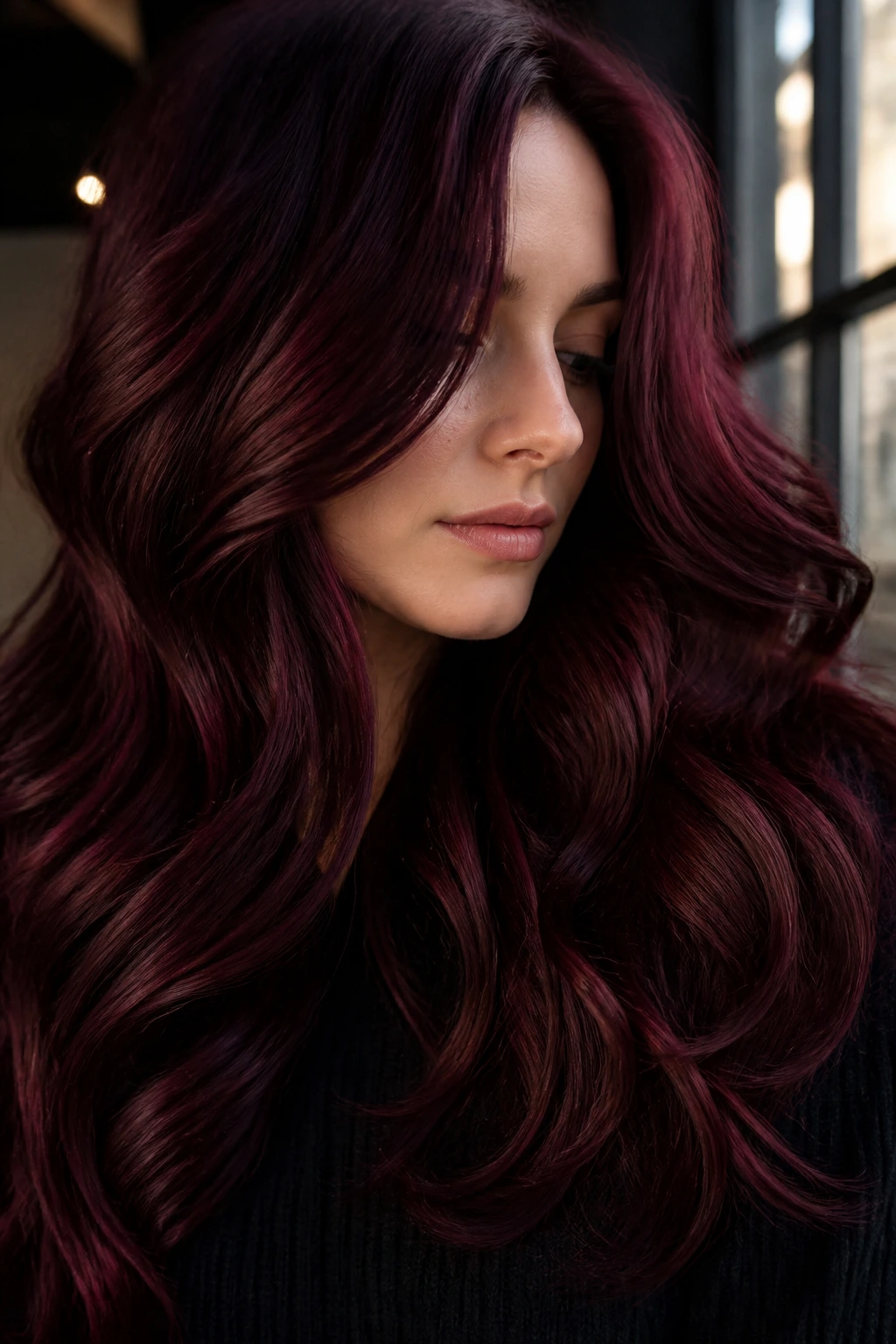
Blackberry red dimension lives at the deep end of the red palette, where black cherry and berry tones mingle with brunette depth. It’s a moody color, and long waves are a good home for it because the bends keep the darker pigment from looking like one solid block.
This shade is especially good if you want red that feels cool or neutral rather than fiery. The berry undertone gives the hair a little edge, and the darkness keeps it sophisticated enough for everyday wear. On medium to thick hair, the depth can make the waves look fuller because the color creates a visual weight through the mids and ends.
The best part is that it wears well with shine. A glossy finish makes the blackberry note show up; a matte finish can swallow it. So if you pick this color, keep the conditioning mask close.
17. Chestnut-Red Sombre
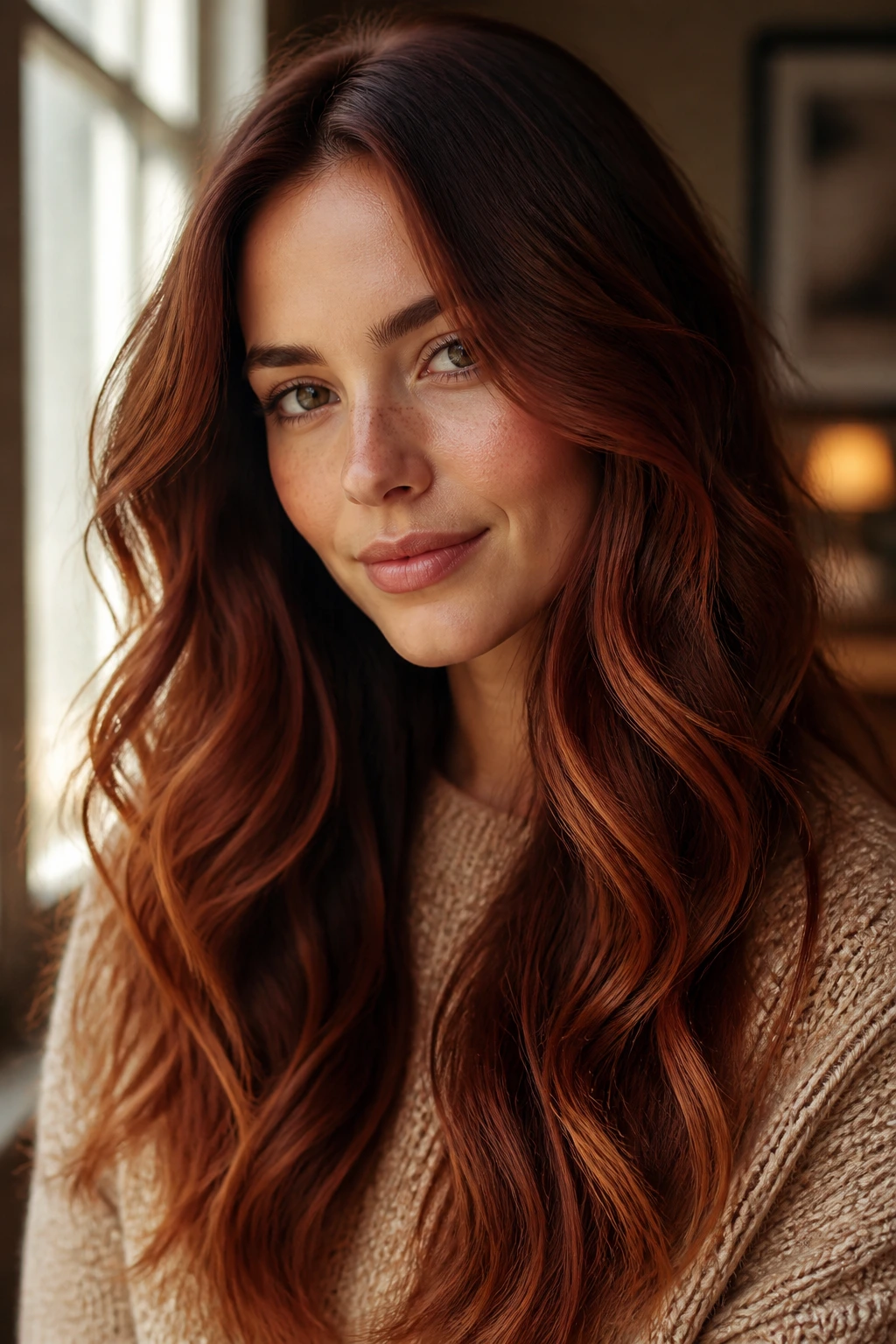
Chestnut-red sombre is the naturalist’s answer to red hair. The base stays in the chestnut family, and the red is woven in softly enough that the color looks like a richer version of your own hair rather than a dramatic change. On long wavy hair, that restraint pays off. You still see movement, but you’re not dealing with a hard color boundary.
This is a good choice if you want something wearable for everyday life and still want the warmth red brings. It’s also one of the easier shades to grow out gracefully, since the root can remain close to your natural color. That matters on long hair, where root lines can travel farther before the appointment is even on your mind.
Chestnut-red sombre is one of my favorites for people who say they “don’t do red” and then end up liking it anyway. It’s red, but politely.
18. Spiced Copper Waves
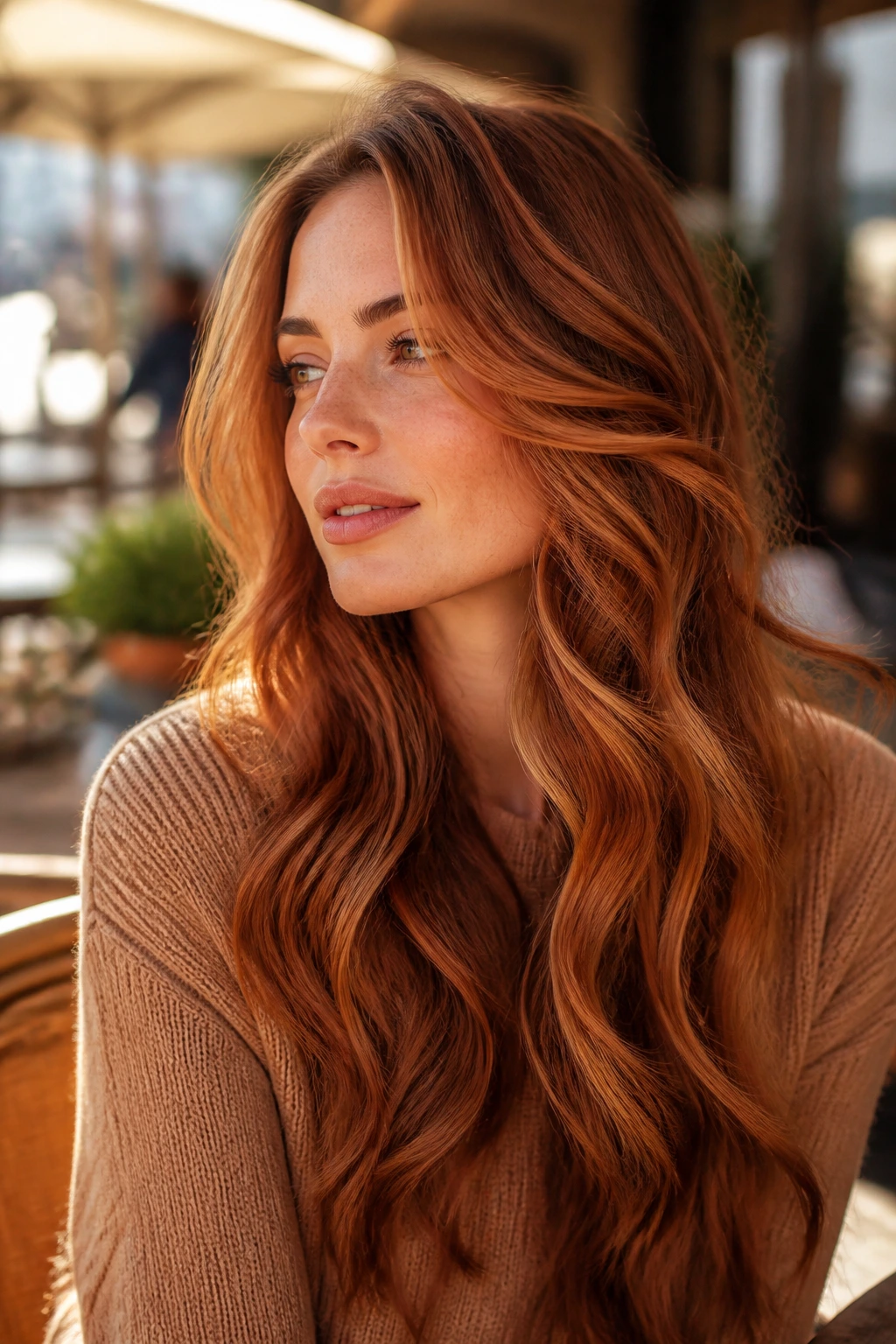
Spiced copper waves sit in the sweet spot between fiery copper and softer auburn. The color feels warm, slightly golden, and textured enough to keep long waves from reading flat. I like this shade because it has enough brightness to wake up the face, but enough brown in it to stay grounded.
The long-wave cut matters here. The wave pattern breaks the color into little reflections, so the spice note shows up as movement instead of a block of orange. If your hair has layers, even better. The shorter pieces around the face and crown will catch the copper first, which keeps the whole style from looking one-note.
This is a good “daily red” if you want warmth with some glow. It’s more active than chestnut, less intense than scarlet, and easier to live with than pure fire-orange copper.
19. Merlot Velvet Waves
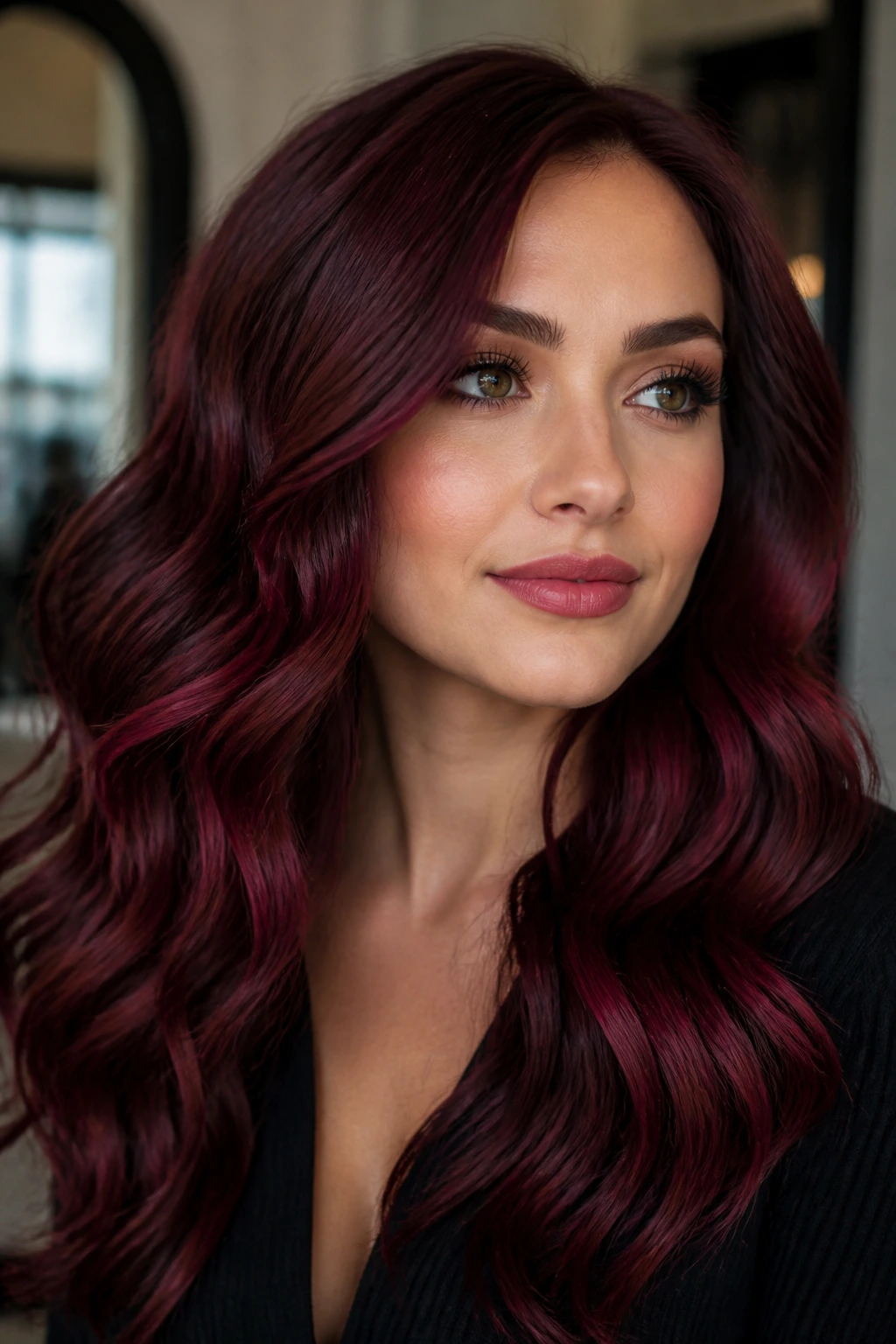
Merlot velvet waves are dark, lush, and a little dramatic in the best way. The color leans wine-red with a velvety depth that shows up especially well on long waves because the motion keeps the shade from reading flat. At rest, it can look almost like a rich brunette. In movement, the red comes forward.
I like this look for people who want elegance without softness becoming boring. The merlot tone has enough pigment to stand on its own, and the velvet finish — meaning shine, not actual matte velvet, obviously — keeps the waves plush. It pairs well with thick hair and long layers because both give the color space to breathe.
If your natural base is already deep, this can be one of the easiest ways to wear red without bleaching much, if at all. The color is doing the heavy lifting.
Why Red Hair Loves Long Waves
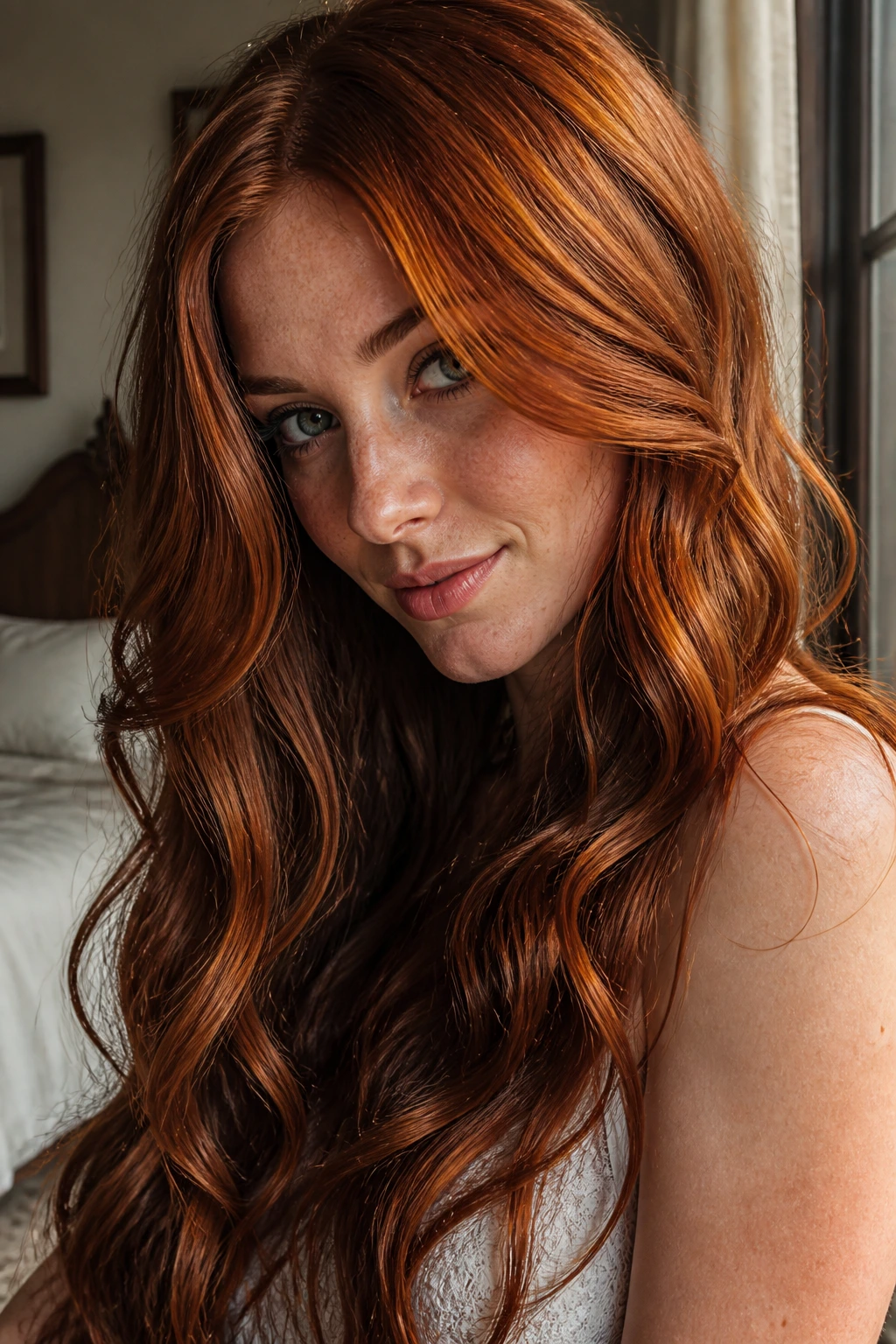
Long waves are one of the few haircuts that make red color look more dimensional without asking for a hundred different tones. The bend in the hair acts like a tiny light source. One ridge catches the copper. The next ridge hides it. Then the whole thing moves and changes again. That’s why reds that would feel loud on a blunt straight cut can feel polished here.
The other piece is grow-out. Long wavy hair gives a colorist room to place shadow where it belongs. A root smudge can live at the top. Lighter ends can hang lower. Face-framing pieces can sit where your eyes actually go. Red isn’t forgiving when the placement is sloppy, and waves make sloppy placement obvious fast.
This is also where glosses earn their keep. Red pigment fades with washing, sun, and heat, and a gloss or toner can restore the shine without forcing you into a full recolor. That’s not a trendy trick. It’s just the practical way to keep red from turning dusty.
Essential Tools and Products for These Looks
- Color-safe shampoo: Choose a sulfate-free formula that cleans without stripping the red pigment out of the cuticle.
- Moisturizing conditioner: Red shades show dryness fast on long waves, so a rich conditioner helps the mids and ends stay smooth.
- Heat protectant spray: Use it before blow-drying or curling; red tones lose their shine quickly when hot tools are used bare-handed.
- Color-depositing mask or conditioner: A copper, auburn, burgundy, or red-leaning mask can stretch the life of your color between salon visits.
- Wide-tooth comb: Better than a brush on damp hair because it keeps the waves intact and avoids roughing up the color.
- Microfiber towel or soft T-shirt: Cuts down on friction, which matters more than people think once the hair is tinted red.
- Tint brush and mixing bowl: Useful if you’re doing a gloss, root touch-up, or at-home color refresh.
- Sectioning clips: Helpful for placing face frames, peekaboo panels, or balayage pieces evenly.
- Shine spray or lightweight serum: Red looks better when the surface reflects light cleanly instead of looking dry.
- Shower filter, if your water is hard: Hard water can leave copper and auburn looking muddy after repeated washes.
How to Choose the Right Red for Your Base
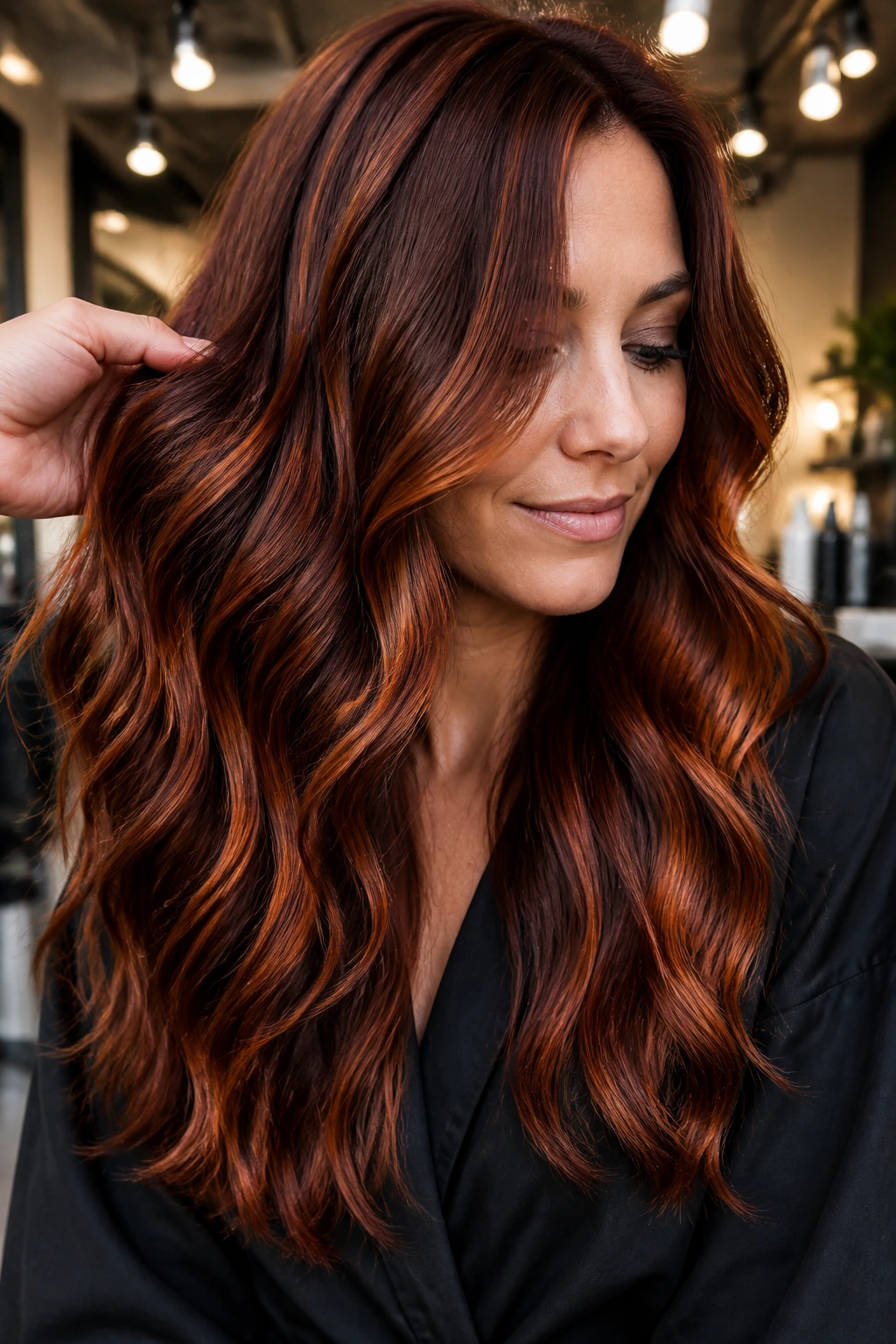
Picking red shade by shade is easier when you stop thinking in “bright” and “dark” and start thinking in undertones. Warm bases usually take copper, ginger, and saffron beautifully because the red sits on top of the warmth instead of fighting it. Cool or neutral bases tend to like cherry cola, merlot, mahogany, and blackberry reds, where the pigment carries a little blue or plum with it.
Your natural level matters too. Level 6 and 7 brunettes can often wear auburn, cinnamon, and soft copper without a huge lift. If your hair is deeper, the red usually needs either a stronger lightening step or a darker wine-based formula that shows up without pushing the pigment too orange. Lighter blondes have the most flexibility, but they also show fade the fastest, which is a tradeoff worth knowing before anyone mixes a bowl.
The cleanest salon conversation is the honest one. Bring two or three photos of the same tone in similar lighting. Say whether you want a gloss, a balayage, a full all-over shade, or a partial face frame. And if your ends are porous or have been lightened before, say that out loud. Porous ends grab red fast. Sometimes too fast.
How to Wear These Shades
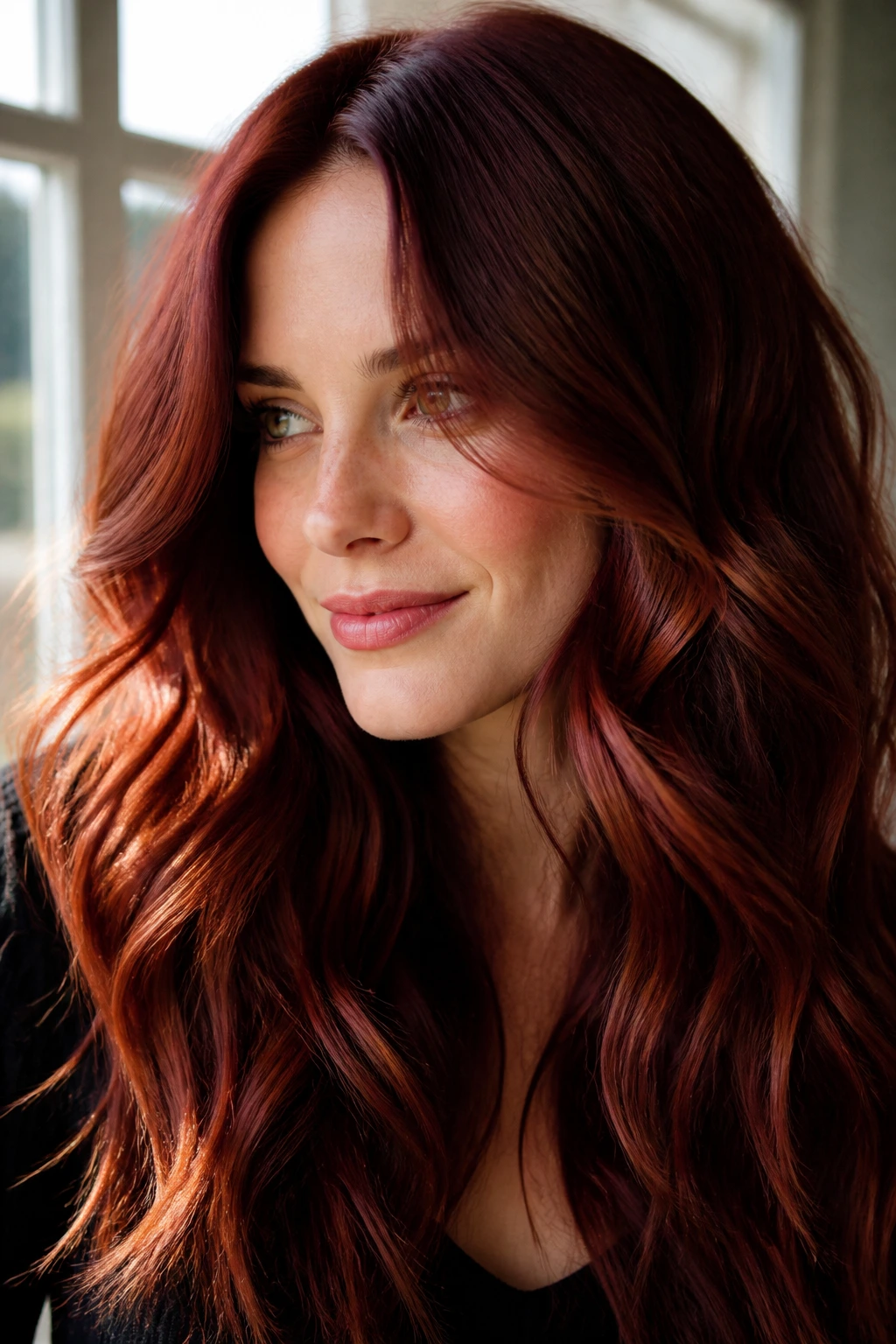
Presentation: Loose waves, not tight curls, are the sweet spot for red hair color because they let the pigment show in bigger, softer panels. A center part sharpens wine tones, while a deep side part gives copper and auburn more face-framing lift.
Accompaniments: Warm red shades look especially good with peach blush, terracotta lipstick, cream knits, and gold jewelry. Cooler reds — cherry, merlot, blackberry — lean nicely with berry lips, black, charcoal, silver, and clean white shirts.
Intensity: If you want the color to stay low-key, keep the red concentrated through the mids and ends and let the root stay closer to your base. If you want impact, ask for brighter pieces around the face and crown so the color shows up the second your hair moves.
Best Setting: Daylight shows the most detail, but a glossy red can look polished indoors too if the finish is smooth and the ends are conditioned. Matte, frizzy red is where even a good color starts looking tired.
Extra Polish and Personal Touches
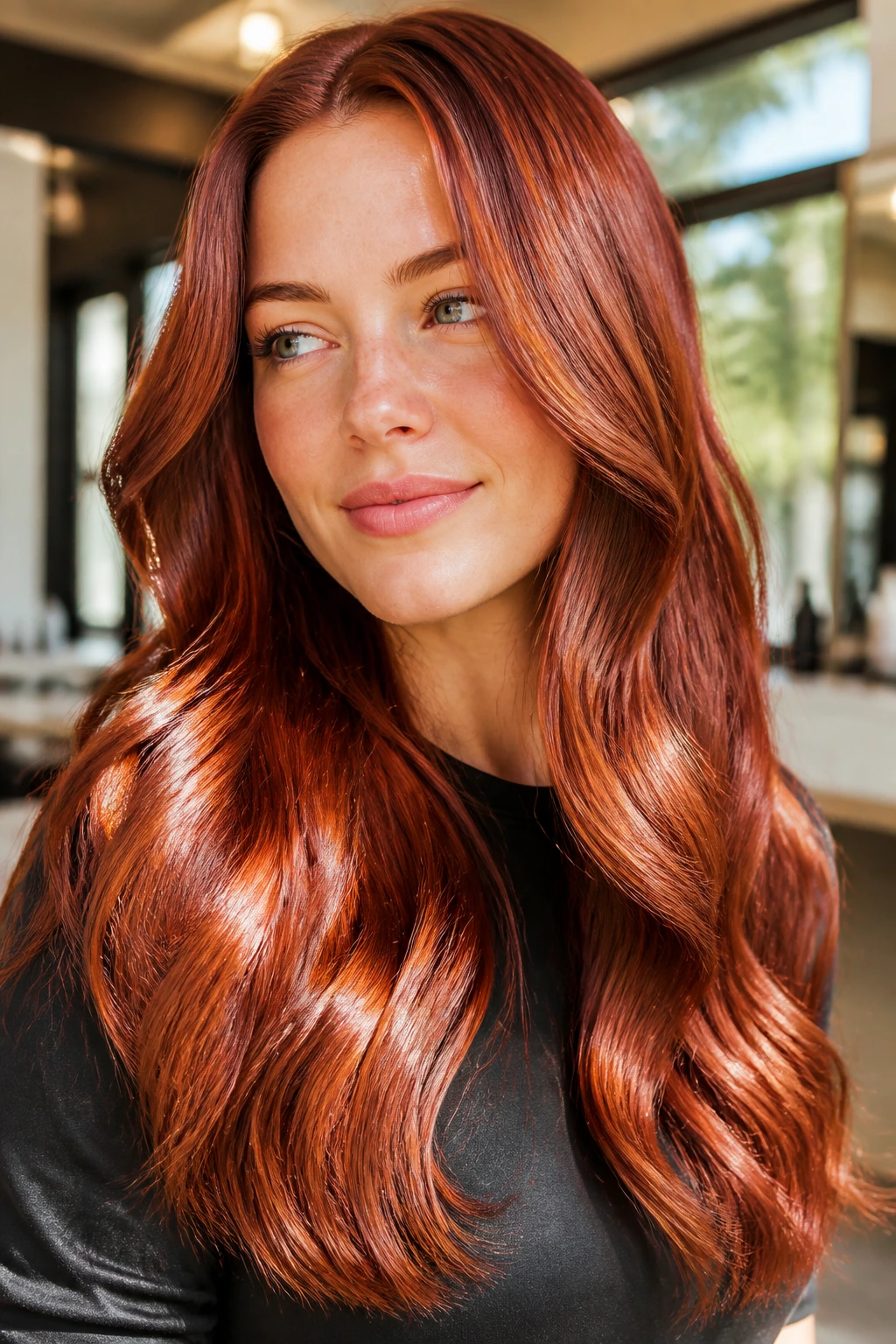
Gloss Boost: A clear or red-toned gloss every 4 to 6 weeks keeps auburn, copper, and merlot shades looking wet and fresh instead of chalky. It’s one of the cheapest ways to keep red from going flat between full color services.
Customization: If your face tends to get washed out by deep reds, lighten the front two sections a half-step and keep the rest richer. If your hair feels too bright, add lowlights in chestnut or mahogany rather than darkening everything. That keeps the shape of the color intact.
Serving Suggestions: Yes, I’m borrowing the label, and no, I’m not sorry — think of this as the finishing touch. A few soft bends around the face, a touch of serum on the ends, and a side tuck behind one ear can make the red read cleaner than another round of heat styling ever will.
Make-It-Yours: For a low-maintenance version, ask for a shadow root and a demi-permanent gloss. For a more dramatic version, use brighter copper at the front and keep the back deeper. For a cooler finish, lean burgundy or berry; for a warmer finish, lean copper, ginger, or saffron.
Common Mistakes to Avoid
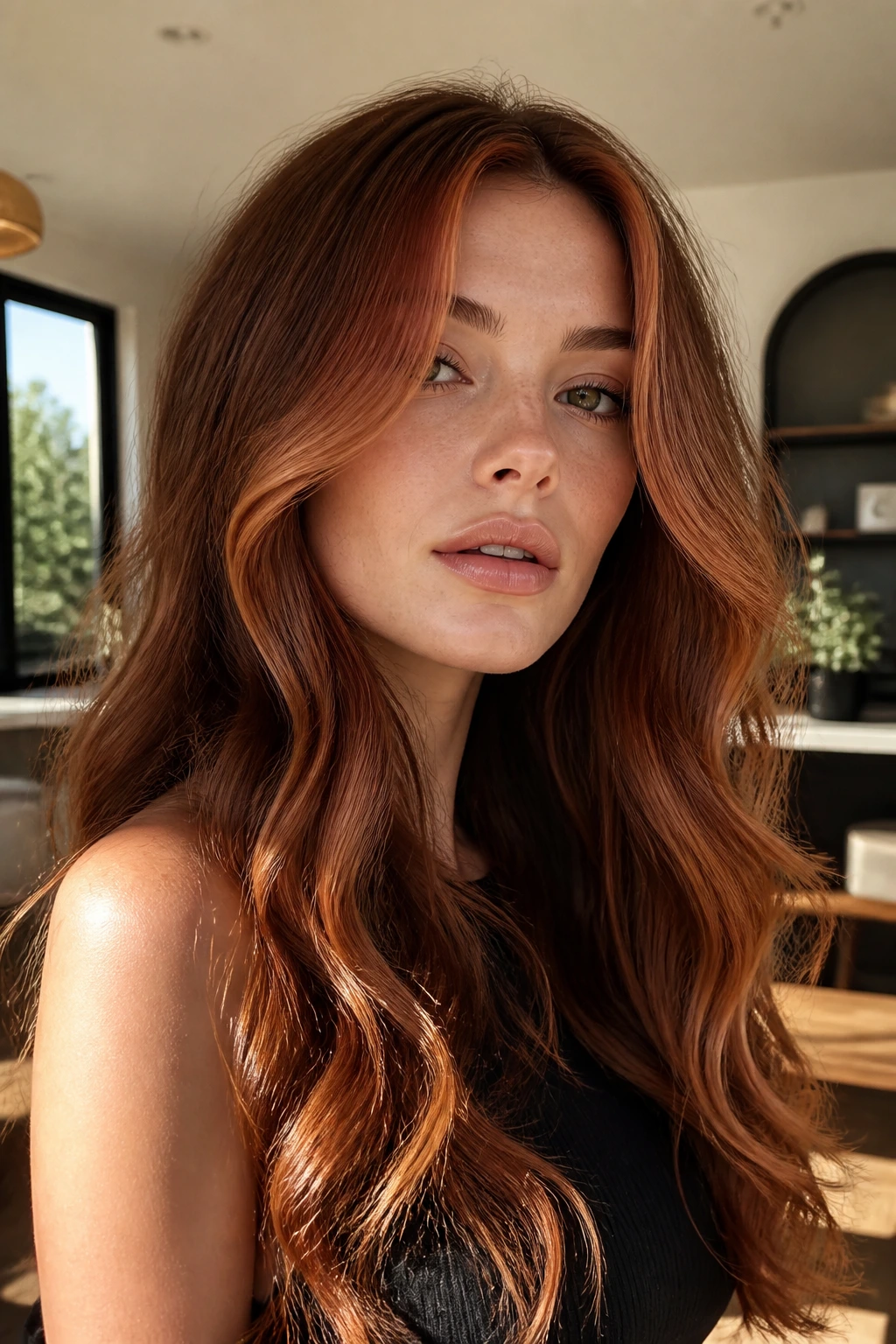
- Choosing the wrong red family for your undertone: Copper on a cool base can feel loud in the wrong way, while berry on a warm base can look muddy. The fix is simple: match warm with warm, cool with cool, and keep the root deeper if you’re unsure.
- Going too bright on damaged ends: Porous ends soak up red fast, then fade unevenly and can turn dull or blotchy. A colorist may need to fill the ends first or keep the brightest tone away from the driest pieces.
- Treating red like a wash-and-go color: Frequent shampooing, hot water, and skipping conditioner strip the pigment and flatten the shine. Use cooler water, wash less often, and treat the mids and ends like they matter — because they do.
- Overusing purple shampoo: Purple shampoo is for blonde brass, not for most red tones. On copper and auburn, it can mute the warmth and make the hair look tired.
- Ignoring the haircut: Heavy, one-length ends can make red look like one solid slab. Long layers give the color air and let the different tones show up in motion.
- Using too much heat: High heat makes the color fade faster and roughs up the cuticle, which is where red loses its shine first. A protectant and a lower iron setting do more than most people expect.
Variations and Alternate Approaches
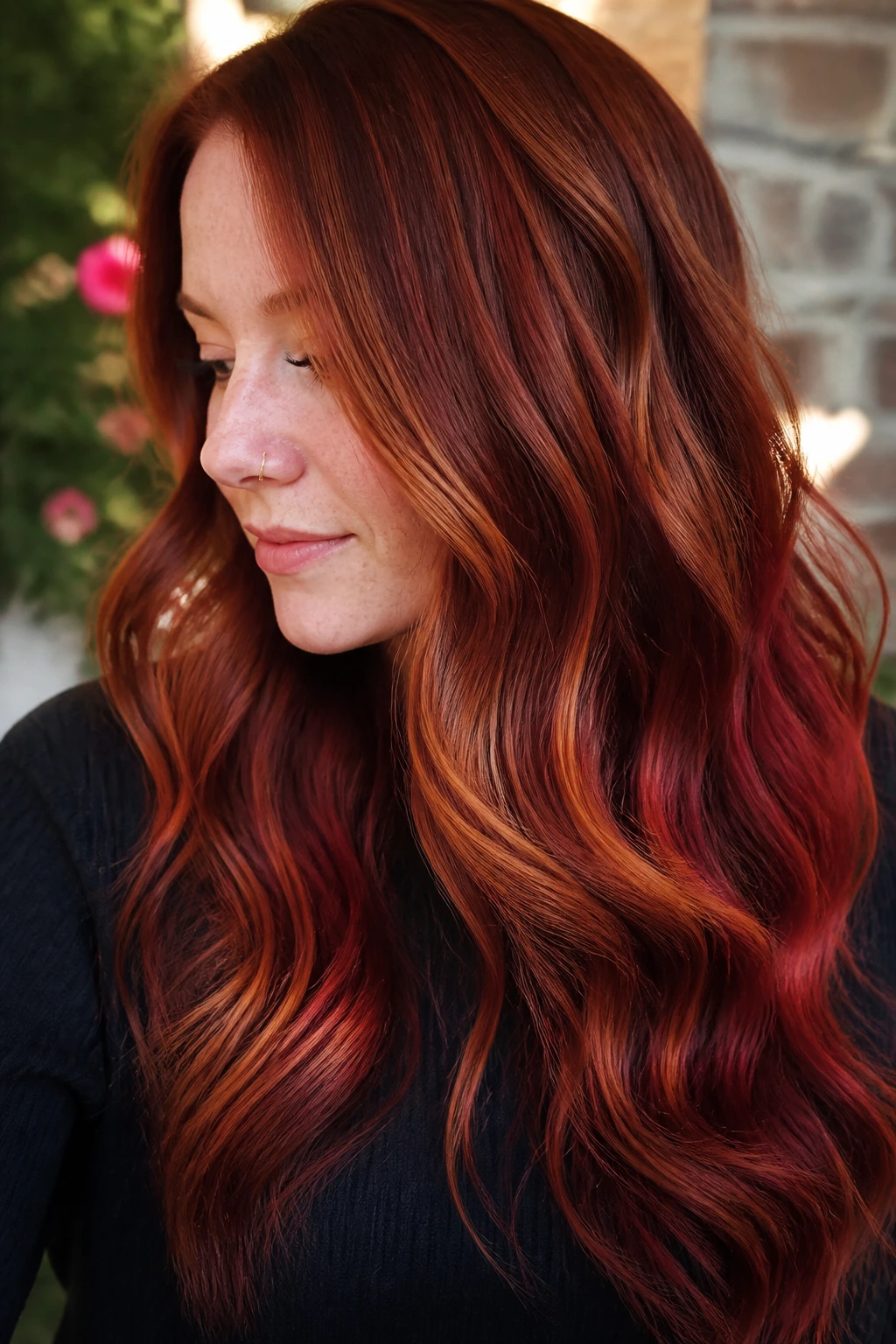
Soft Gloss Red: If you want almost no commitment, ask for a translucent red gloss over your natural base. It adds a warm cast and shine without creating a hard line of regrowth.
Money-Piece Red: Keep most of the hair close to your base and brighten only the front sections. This works well if you want the red to frame the face and show up in photos without changing the whole head.
Shadow-Root Copper: Use a deeper root for softness, then let the copper brighten through the mids and ends. It’s the cleanest way to make copper wearable on long hair that grows fast.
Berry-Black Brunette: If you love dark hair but want a red note, lean blackberry, merlot, or cherry cola instead of orange-based red. The color stays richer longer and usually asks for less upkeep.
Full Vivid Scarlet: When you want a stronger result, push the red saturation through the lengths and keep the ends healthy with gloss and mask treatments. This is the least subtle option, and it needs the most maintenance, but long waves carry it better than most cuts.
Make the Red Last Without Babying It Forever
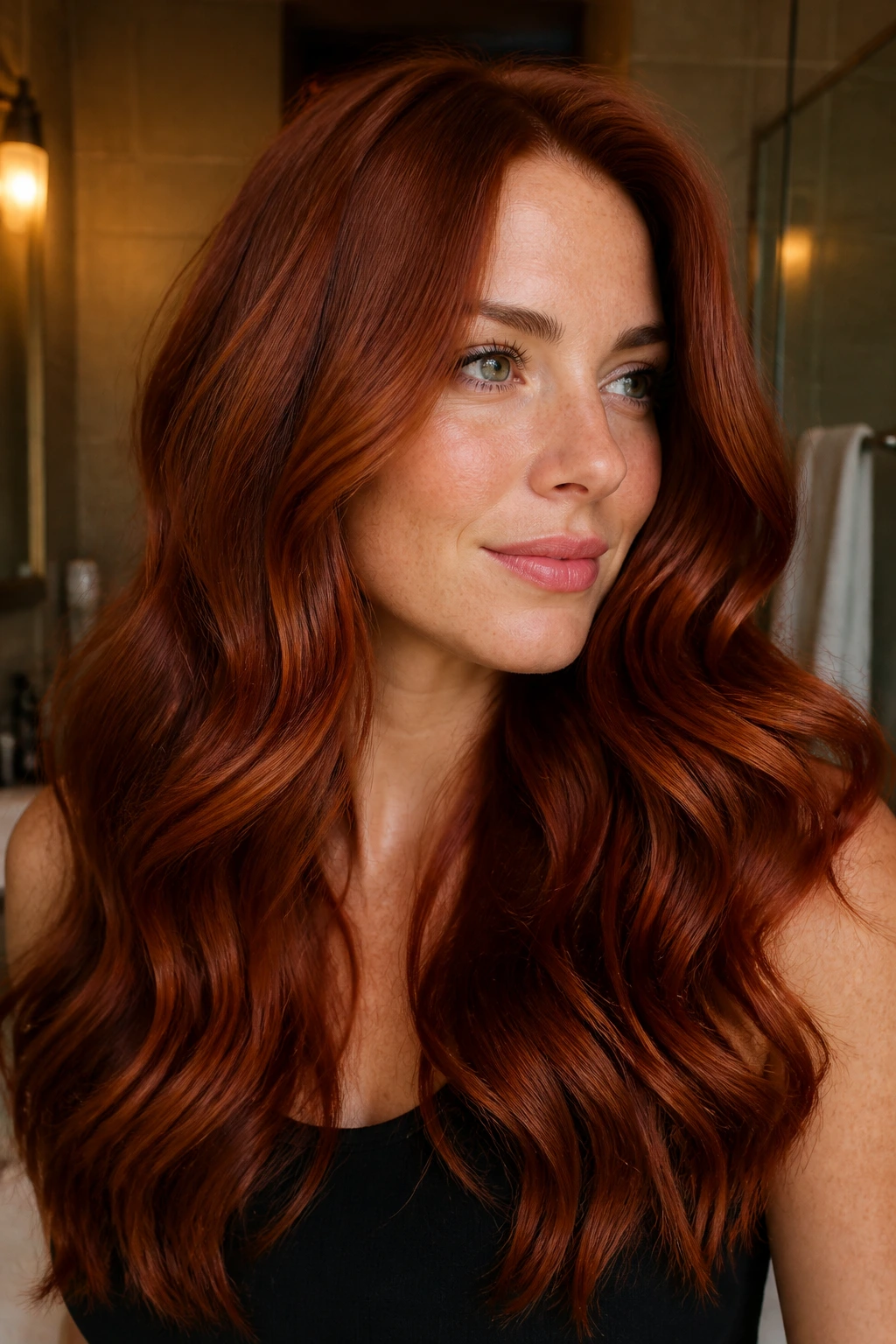
Red color rewards a little discipline. Not obsession. A color-safe shampoo, cooler rinse water, and fewer wash days can stretch the shine enough that the color doesn’t feel like it disappears overnight. If your hair is highlighted, a weekly mask helps the waves stay smooth so the red doesn’t get eaten by frizz.
For most of these looks, a gloss every 4 to 8 weeks keeps the tone alive. Bright copper and scarlet need the tighter end of that range. Deep merlot, mahogany, and cherry cola can usually stretch longer because the shade has more depth to begin with. Root touch-ups depend on placement: a full red or vivid copper often wants attention every 6 to 8 weeks, while sombre and shadow-root looks can go longer.
Heat and water are the two places people lose the battle. High heat opens the cuticle and roughs up shine, while hard water leaves mineral buildup that makes red look muddy. If your tap water is rough, a chelating shampoo once every couple of weeks can help. Not glamorous. Very useful.
Frequently Asked Questions
What red shade works best on long wavy hair?
The easiest reds to wear are soft copper, cinnamon auburn, cherry cola, and chestnut-red blends. They move with the wave pattern and don’t depend on constant bright light to look good.
Can you get red hair without bleaching it first?
Yes, if your hair is already medium brown or lighter and you choose a shade that sits close to your base. Deep berry, mahogany, and cherry tones often show up well without heavy lightening. Bright copper or scarlet usually needs some lift if you want it to read clearly.
Which red looks the most natural?
Chestnut-red sombre and cinnamon auburn melt are the most believable on most people. They give warmth and depth without looking like a costume color.
Does red fade faster on wavy hair?
The texture itself doesn’t cause fast fading, but long wavy hair often gets more heat styling and more visible mid-length dryness, which can make fade show sooner. A gloss, a mask, and cooler water help more than people expect.
What if the red turns too orange?
Ask for a toner or gloss with a deeper copper, auburn, or berry base to pull back the orange note. Orange usually means the formula was too warm for the base or the hair lifted too far without enough depth added back in.
How often do these red looks need touch-ups?
Bright copper, scarlet, and ruby styles often need refreshes every 6 to 8 weeks. Softer sombre, merlot, and chestnut-red looks can usually stretch to 8 to 12 weeks if you keep them glossy.
Can these styles work on curly hair too?
Absolutely, but the placement may need to be more deliberate because curls show color in tighter clusters than waves do. Long wavy hair gives a smoother ribbon effect, while curls can make the red look even richer in small pockets.
Should I choose balayage or an all-over red color?
Choose balayage if you want softer grow-out and more movement. Choose all-over color if you want the red to feel uniform and saturated from root to tip. Long waves can wear both; the difference is really about how much upkeep you want.
The Shade You Keep Reaching For
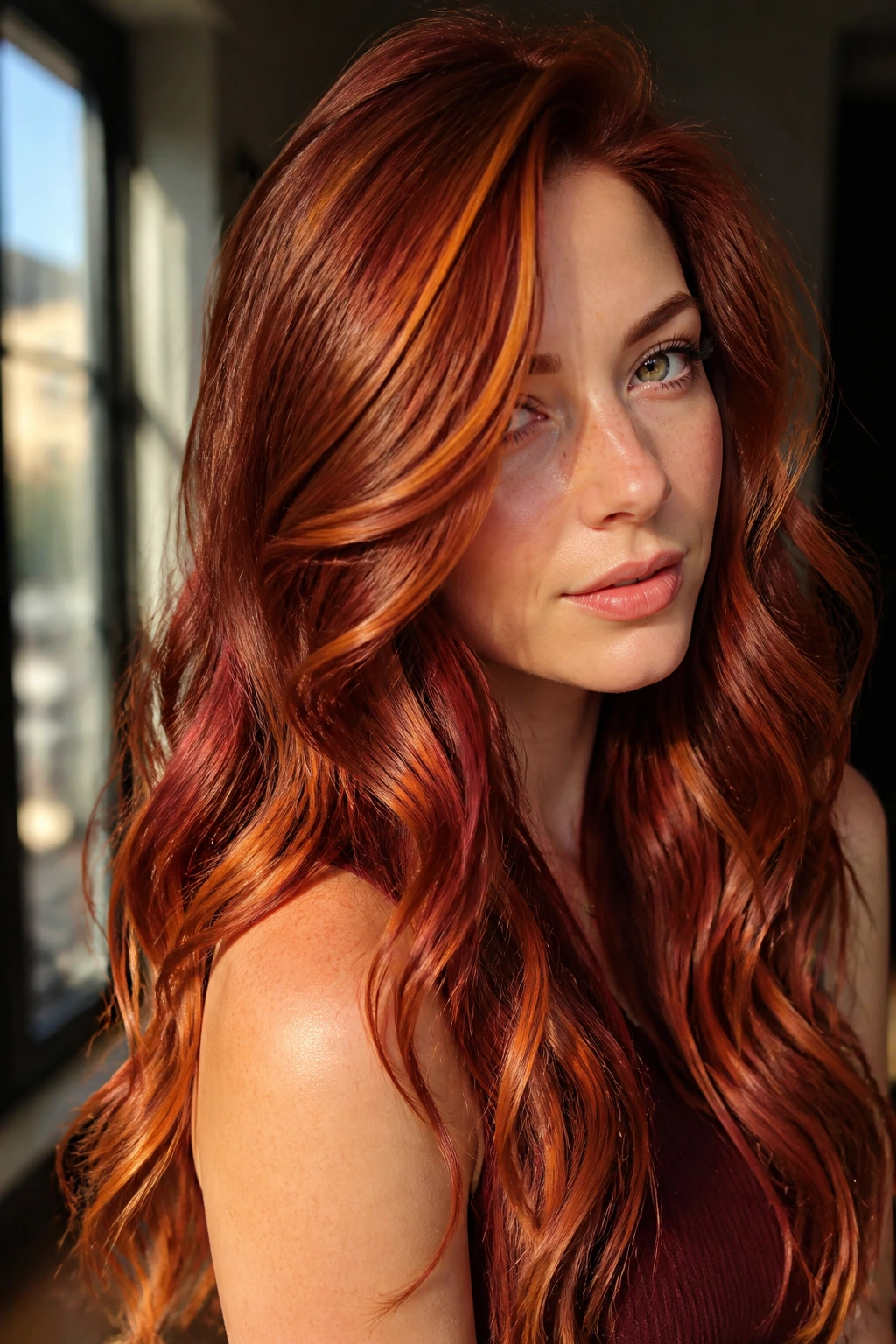
Red on long wavy hair works because it has room to move, and that changes everything. A soft copper ribbon can look refined, a merlot gloss can feel moody, and a vivid scarlet ombre can hit hard without looking clumsy. The cut gives the color shape before you even touch the curling iron.
What I like most about this lineup is the range. Not every red asks for the same level of commitment, and not every red has to shout. Some of the best versions are the ones that whisper first, then flare up when the light catches the bend in a wave.
Pick the version that matches your base, your upkeep habits, and the way you actually wear your hair. Then let the waves do their job. That’s usually where the best red shows up.
