



A bad cut on type 3A curls shows up fast. The crown goes flat, the ends puff out, and the whole shape starts behaving like it belongs to a different head of hair. A good cut does the opposite: the curl pattern looks organized, the perimeter feels deliberate, and the whole shape moves instead of swelling.
Type 3A curls sit in a tricky spot. They’re loose enough to show every line of a haircut, but springy enough to surprise you after a wash. That means a blunt trim can look polished for about ten minutes and then turn into a shelf. It also means the right layering can make the curls look twice as alive without chopping away all the length you fought to keep.
I’m partial to cuts that respect the curl’s own architecture. No wrestling, no over-thinning, no strange triangle that only looks good from one angle. The best curly haircuts for type 3A curls keep a little weight where it helps, release bulk where it builds up, and give the face something worth noticing when the front pieces dry into soft loops.
Why These Cuts Earn Their Keep on 3A Curls
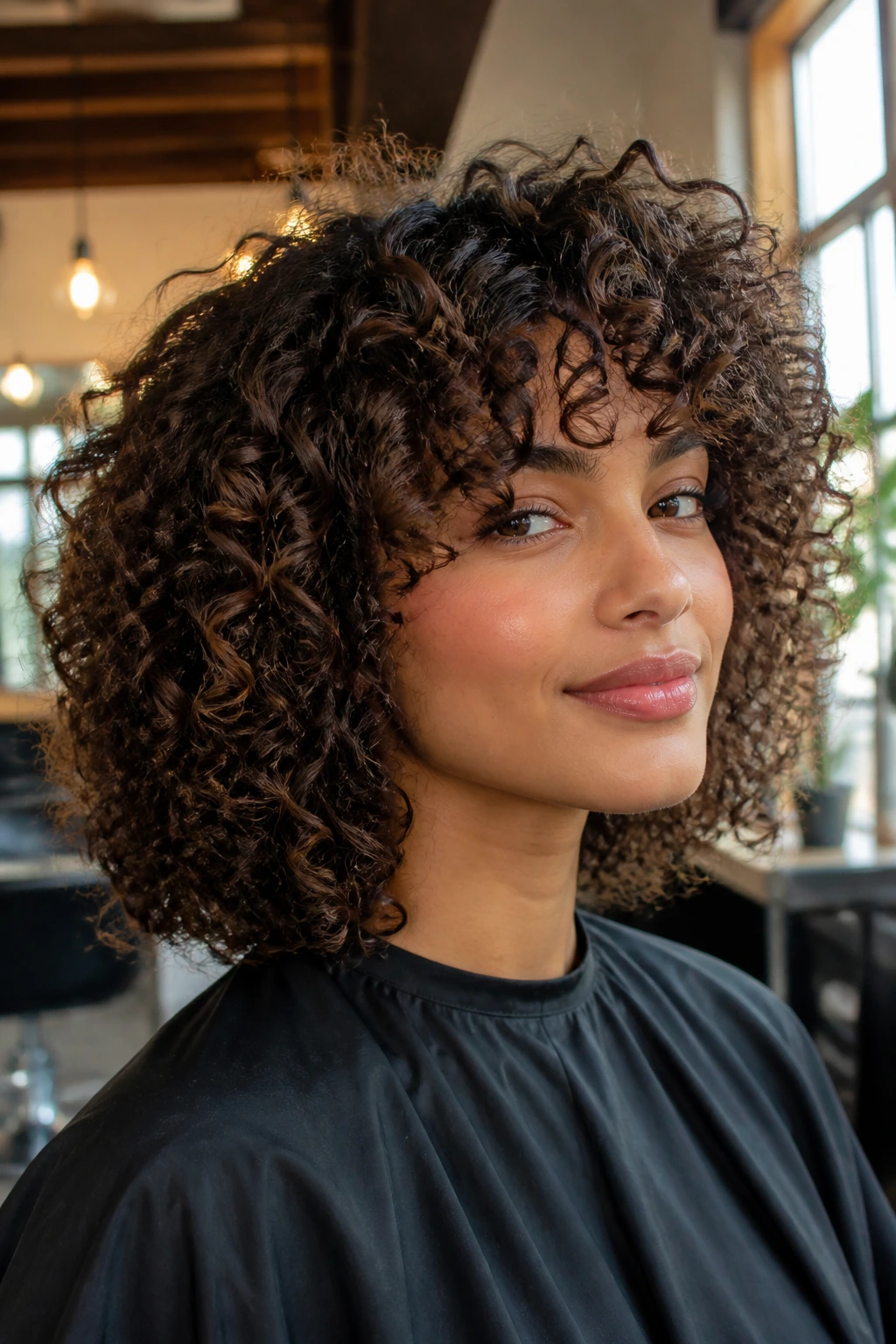
- Shrinkage-friendly shape: 3A curls often spring up more than people expect, so these cuts are chosen to look balanced both wet and dry.
- Crown lift without helmet hair: the right layers stop the top from collapsing while the bottom grows wide.
- Better face framing: cheekbone- and jaw-length pieces land in the right place once the curl tightens, which is half the battle with loose ringlets.
- Less halo frizz: rounded, layered silhouettes keep the outer edge from exploding outward the minute humidity shows up.
- Stylist clarity: each cut below is easy to describe in a salon chair, which matters more than most people admit.
- Shape that lasts: these cuts still look intentional when you’re three days past wash day and the curl clumps have started to separate.
1. Rounded Long Layers
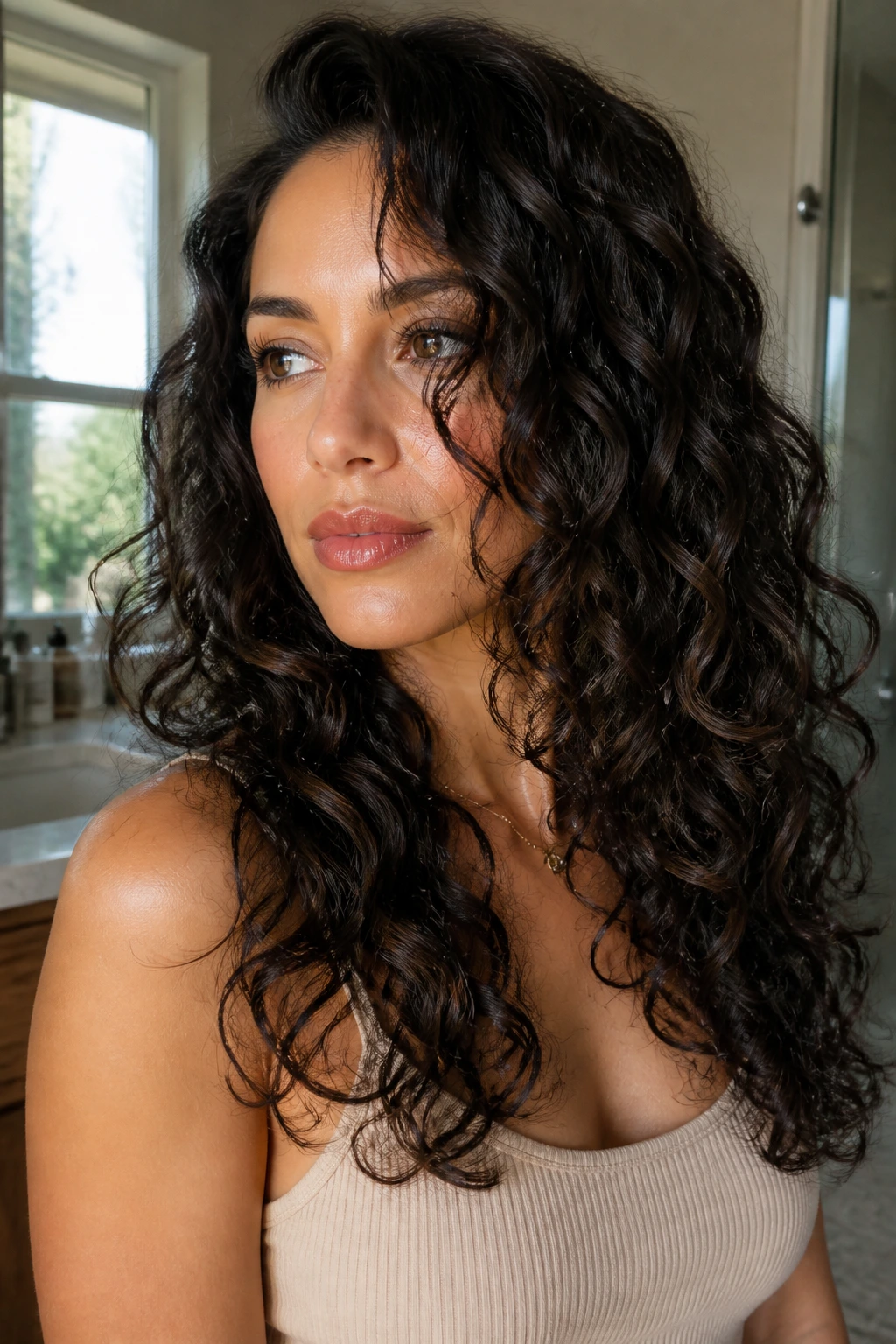
This is the haircut I reach for when someone wants to keep the length but stop the ends from hanging there like wet rope. Rounded long layers give 3A curls a softer outline, with the shortest pieces usually starting somewhere between the chin and collarbone and the longest ones skimming the back. Dry, the shape feels airy. Wet, it looks almost too tame. That’s fine. The curl pattern wakes it up.
Ask for a rounded silhouette, not a choppy staircase. The goal is to remove enough weight so the curls lift, but not so much that every clump swings loose and separate. On 3A hair, that difference matters. Too many short layers and you get frizz at the crown; too few and the whole cut drags downward.
What to ask for
- Long internal layers that keep the outer line soft
- A rounded hem, not a blunt shelf
- Face-framing pieces that start below the cheekbone if you wear your curls up a lot
2. Curly Shag with Soft Fringe
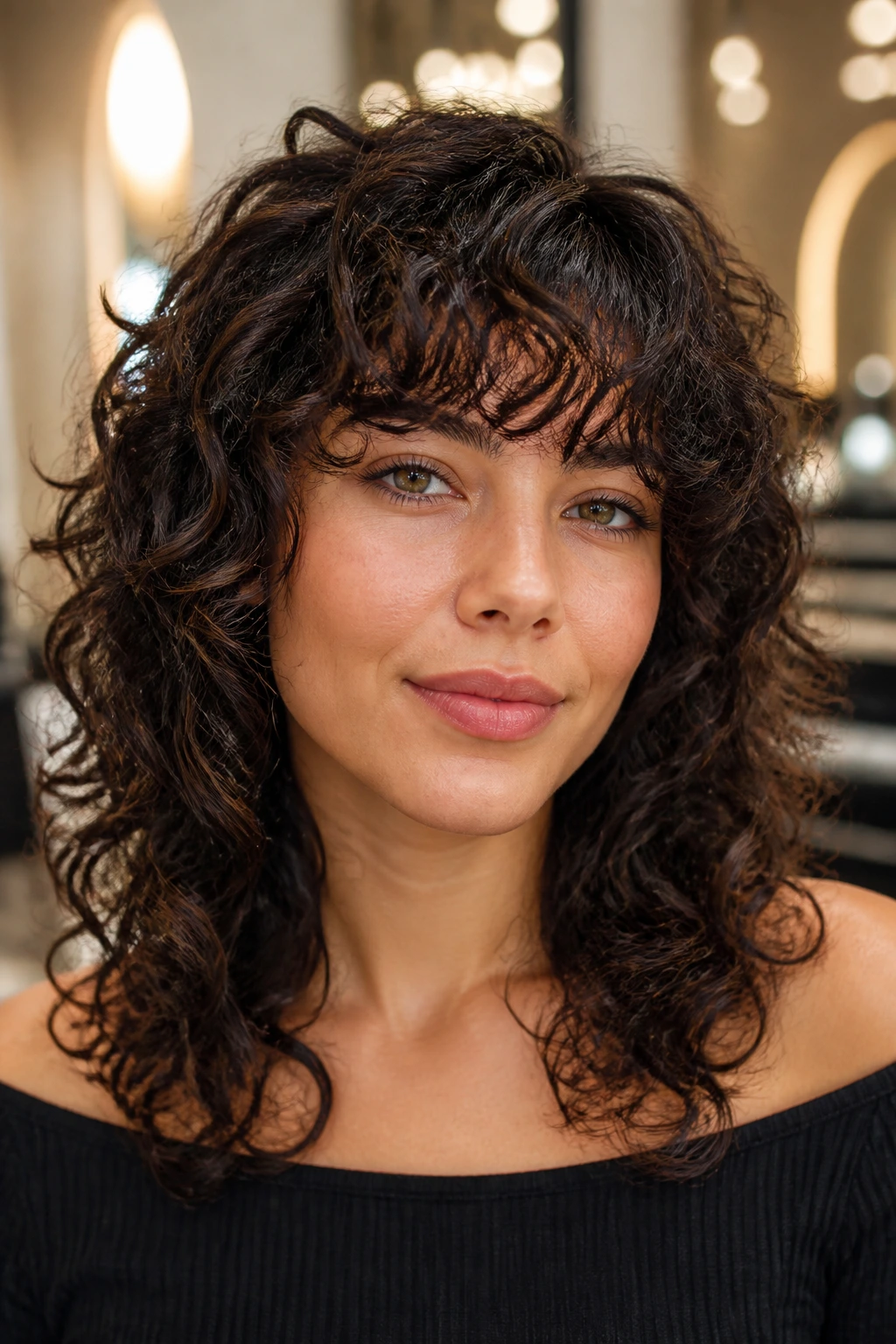
A shag on 3A curls works because the curl pattern already wants texture. You’re not inventing movement here. You’re just not getting in its way. The soft fringe is the part people worry about, and fair enough—bangs can go weird fast—but on loose curls, an eyebrow-skimming fringe can land in that sweet spot where it looks a little French and a little messy in the best way.
The trick is softness. No severe chop line. No heavy curtain of bangs that sits on the forehead like a wet towel. The fringe should break into little springy pieces, and the layers through the sides should connect to it so the haircut feels one-piece, not tacked on.
Why it works
- Keeps the top from flattening
- Gives fine 3A curls some visible lift
- Makes air-drying look intentional instead of accidental
3. Collarbone Lob with Hidden Weight Removal
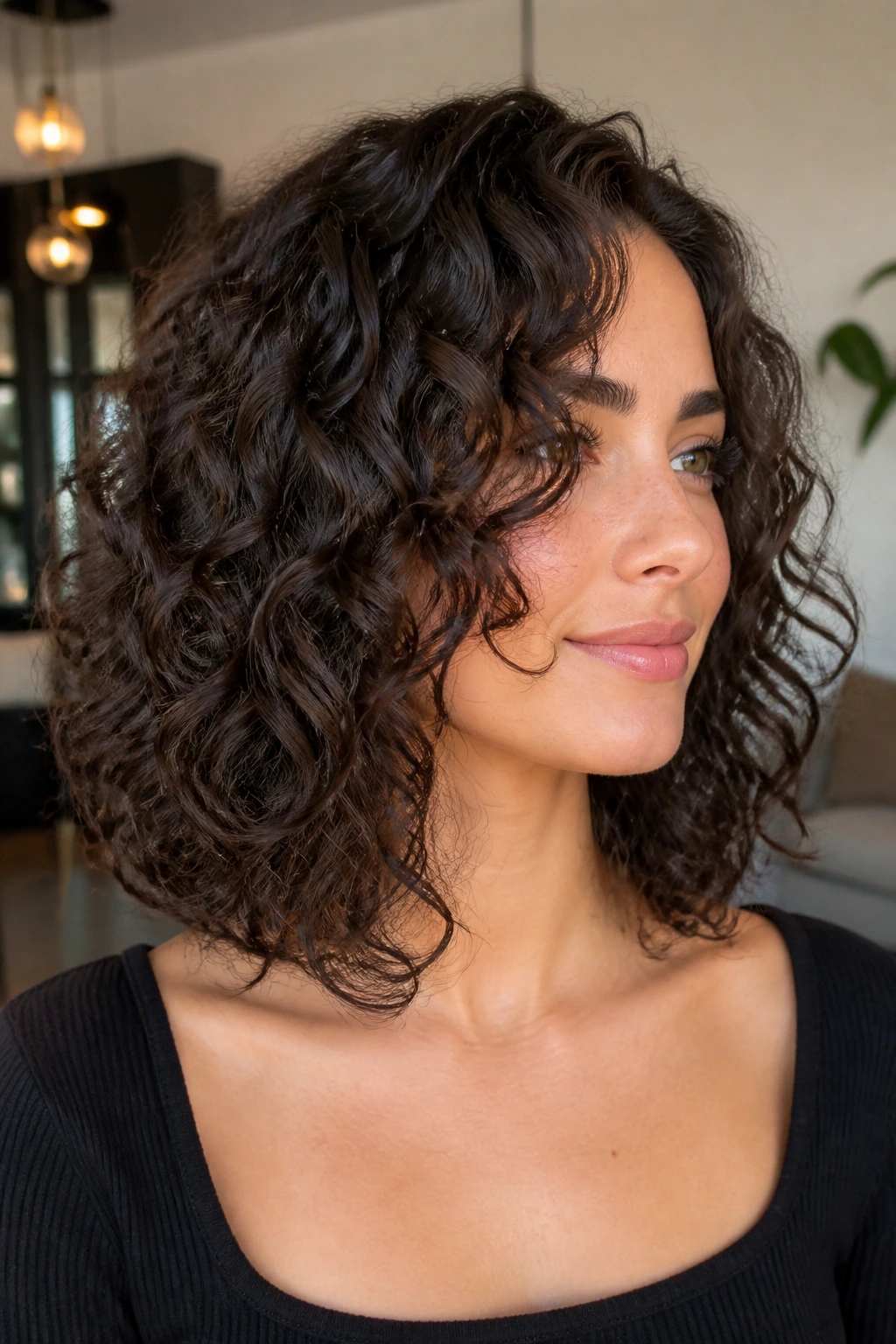
A collarbone lob is one of those cuts that looks plain on paper and expensive in real life. The perimeter lands right around the collarbone, which is long enough to feel grown-out but short enough to keep the curl pattern from sagging. Hidden weight removal underneath keeps the inside from ballooning while the surface stays smooth.
This is a strong choice if you like wearing your hair down more than up. It’s also forgiving when you don’t style every single piece. The lob gives the curls room to cluster, and the hidden layers stop the underneath from pushing the rest of the cut into a triangle.
Best for
- Medium-density 3A curls
- Anyone who wants length around the front without constant maintenance
- People who diffuse for five to ten minutes and call it a day
4. Butterfly Cut for Length Keepers
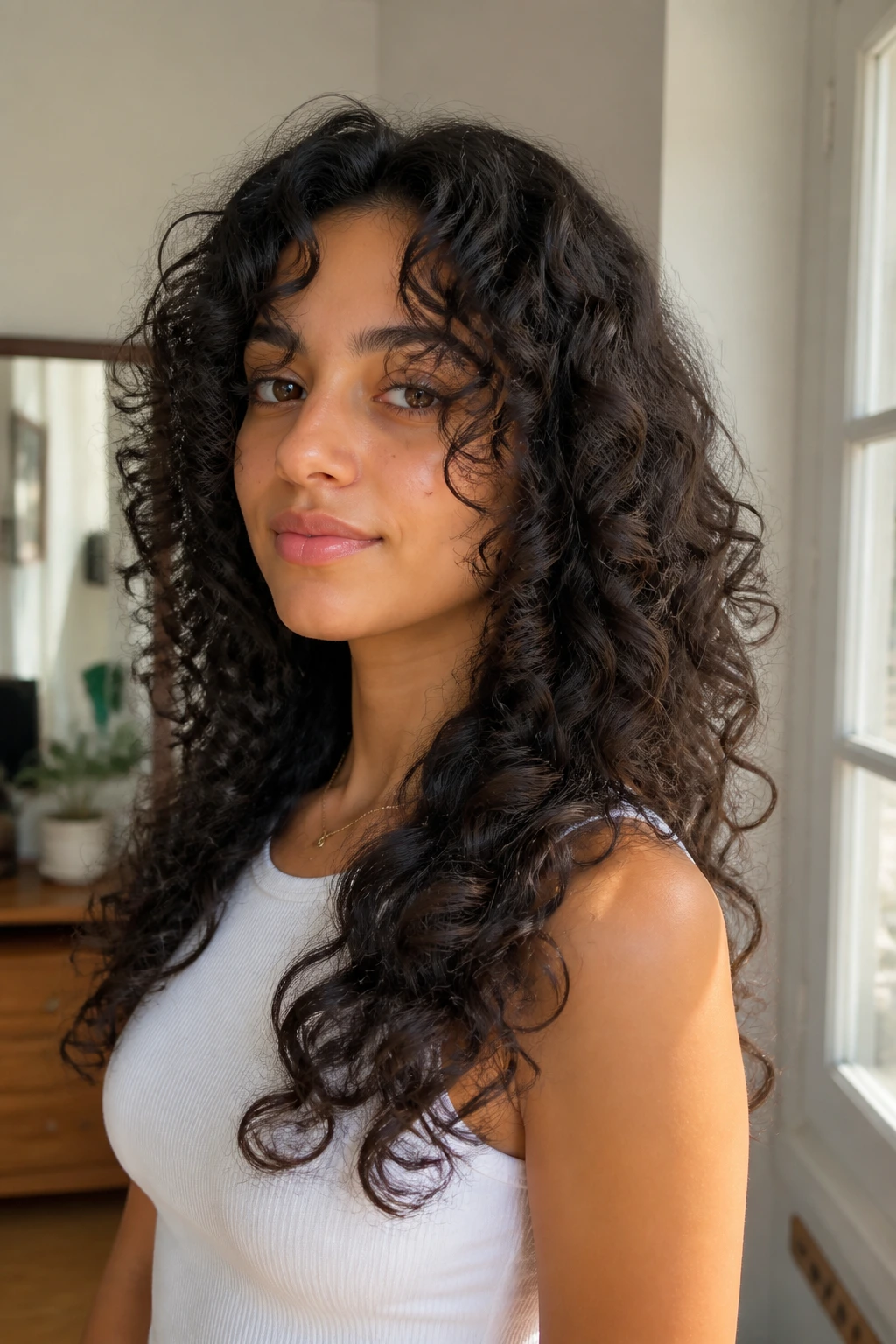
The butterfly cut can be a little dramatic, and I mean that as a compliment. It keeps the longer back intact while carving out shorter face-framing layers that dry into a soft cascade. On 3A curls, that means you get the illusion of shorter hair around the face without giving up the length you like swinging over your shoulders.
It works because 3A curls are loose enough to show the layering, but not so tight that the difference between the short front and long back disappears. The result looks especially good when the front pieces hit around the cheekbone and then curl up to the jaw. That movement is the whole point.
How to wear it
Wear it with a middle part if you want the layers to fan out evenly. Push it off-center if you want the front pieces to fall across one side and make the whole cut feel a little softer.
5. Soft U-Shape Cut
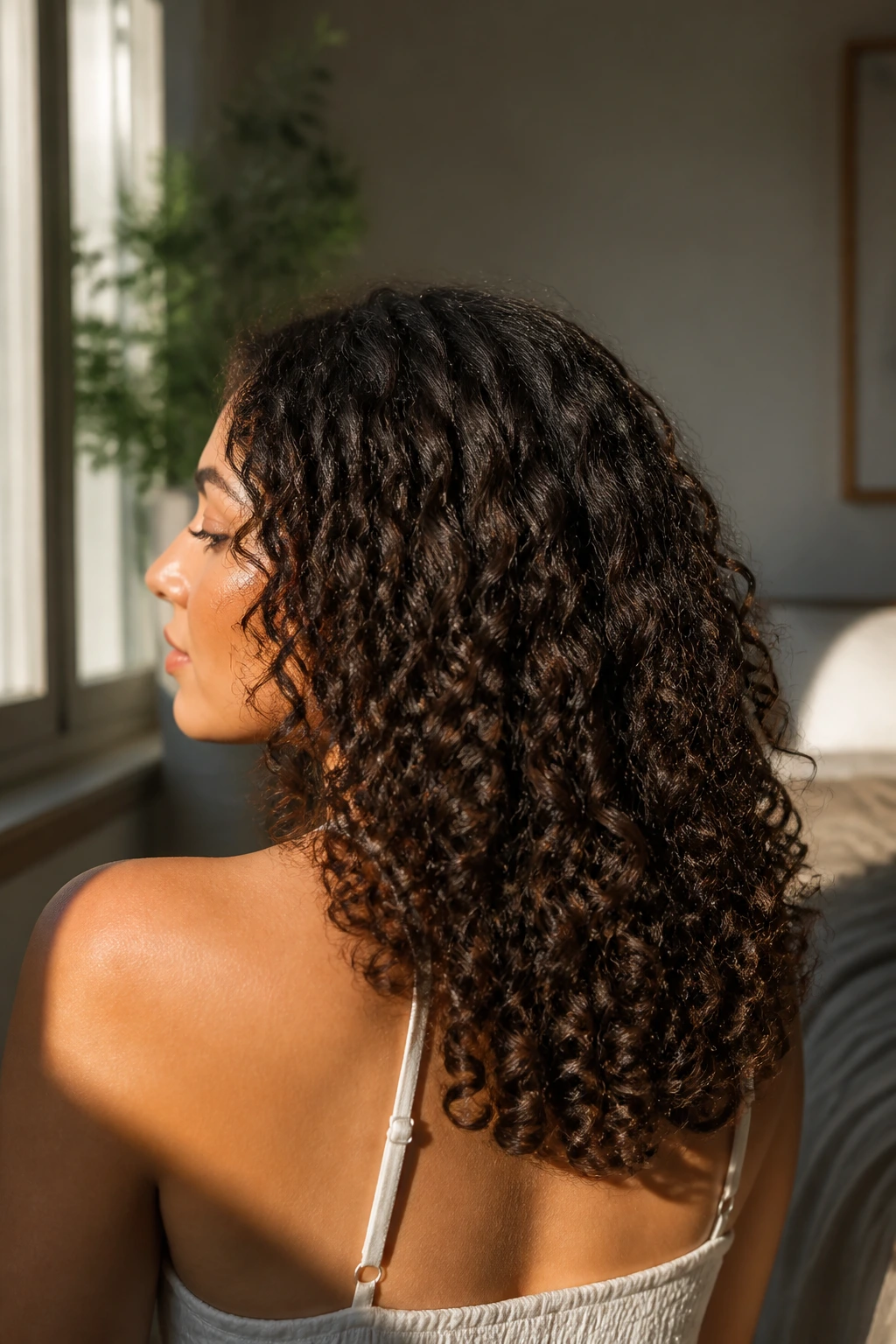
A U-shape cut is the quiet one in the room. Nothing flashy. No aggressive angle. Just a gentle curve at the back that lets the hair look full without turning the bottom into a hard line. On 3A curls, that soft U gives the curls a place to fall naturally, and it’s one of the best shapes if you want the back to look polished even when the top gets a little wild.
This cut is especially good for people who hate seeing their ends look thin after a few months. A U-shape keeps the perimeter from feeling abrupt. It’s also kinder than a V-shape if your curls are fine and need a bit more visual density at the bottom.
6. Jaw-Length Curly Bob
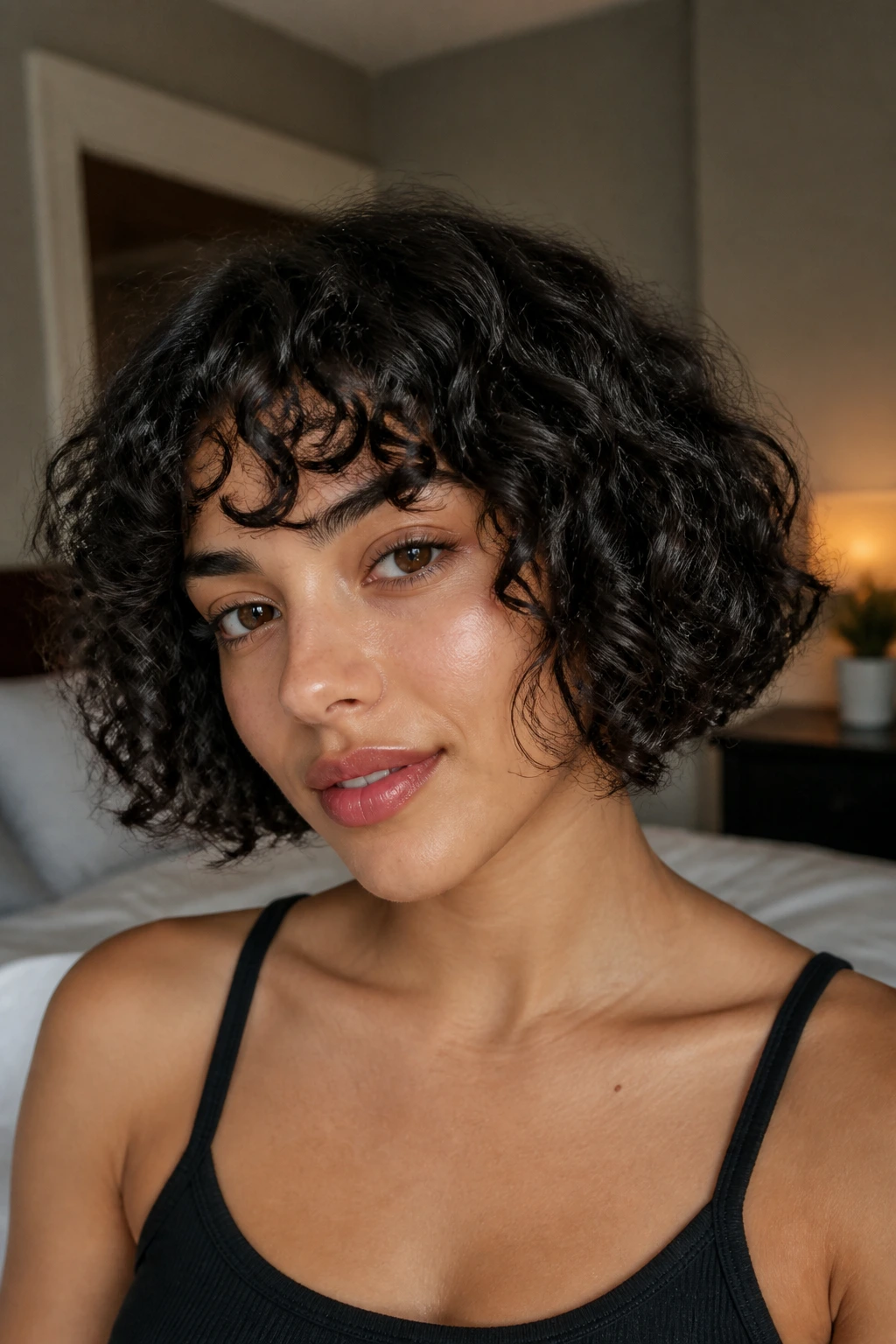
A jaw-length curly bob is a bold cut, but not a reckless one. If the curls are healthy and springy, this length gives them room to bounce instead of droop. The cut lands near the jaw, which means the curl pattern has enough space to show off without dragging the face down.
The mistake people make with this bob is cutting it like straight hair and then being surprised when the curls jump up. Don’t do that. A good curly bob gets checked dry, with the curl pattern in its natural state, so the final line lands where it should. When it’s right, it frames the jaw in a way that feels sharp without being severe.
What makes it different
- The shape has presence, even with minimal styling
- Works best when the curls are cut curl by curl
- Looks best if the ends are kept soft rather than razor-thin
7. Wolf Cut with a Lifted Crown
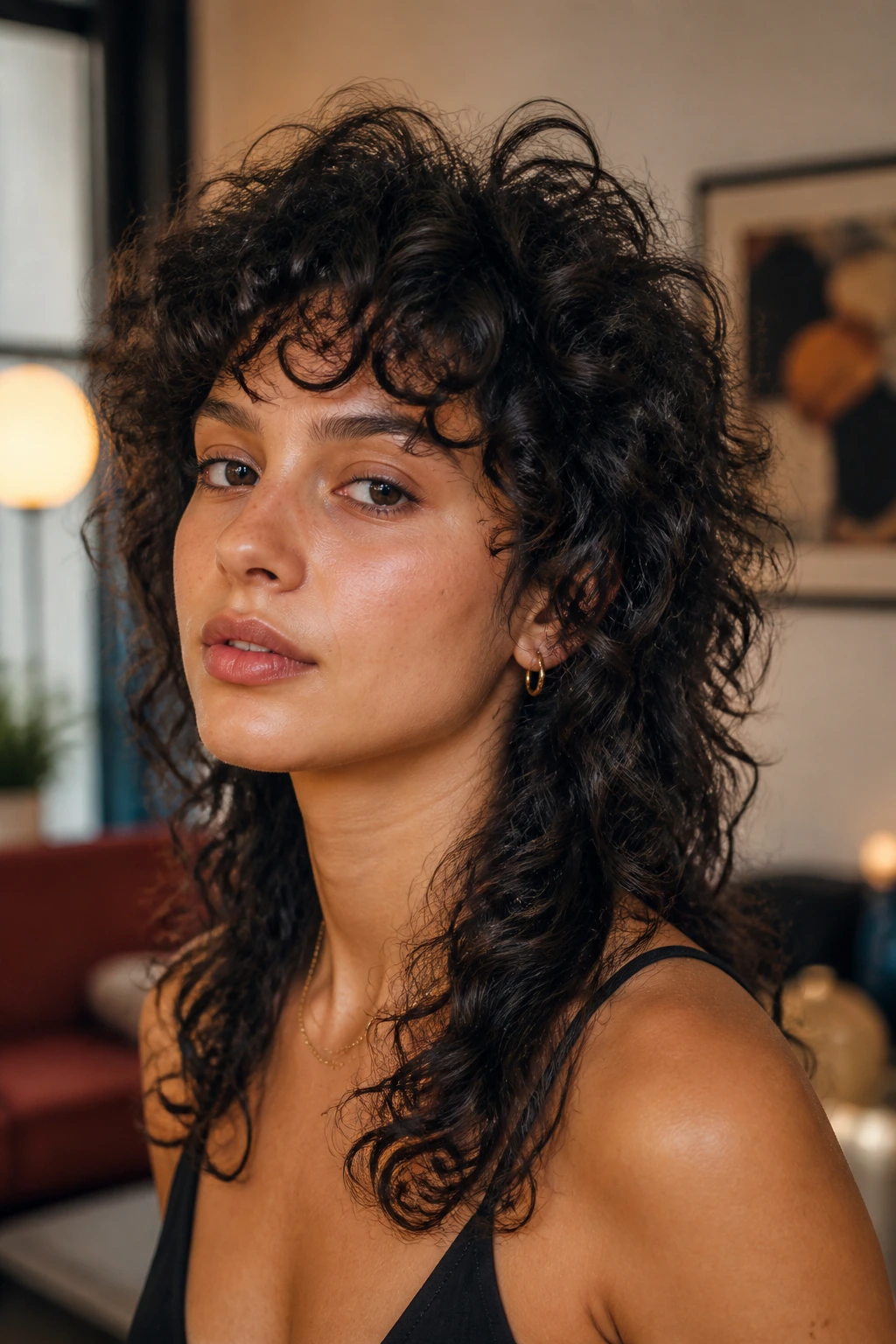
The wolf cut on 3A curls is for someone who wants edge without the full commitment of a mullet. You get shorter layers near the crown, longer pieces below, and a slightly shaggy outline that can look fantastic on loose curls when it’s cut with restraint. The lift at the top is the important part. Without it, 3A curls often sit flat at the crown and widen near the shoulders.
A good wolf cut should look a little wild, not unfinished. That means the top pieces are short enough to create height, but the lower layers still hold enough weight to avoid a puffball effect. If your hair is fine, ask the stylist to keep the layering softer. If it’s dense, the wolf cut can take more internal removal.
8. Curtain Bangs with Long Cascades
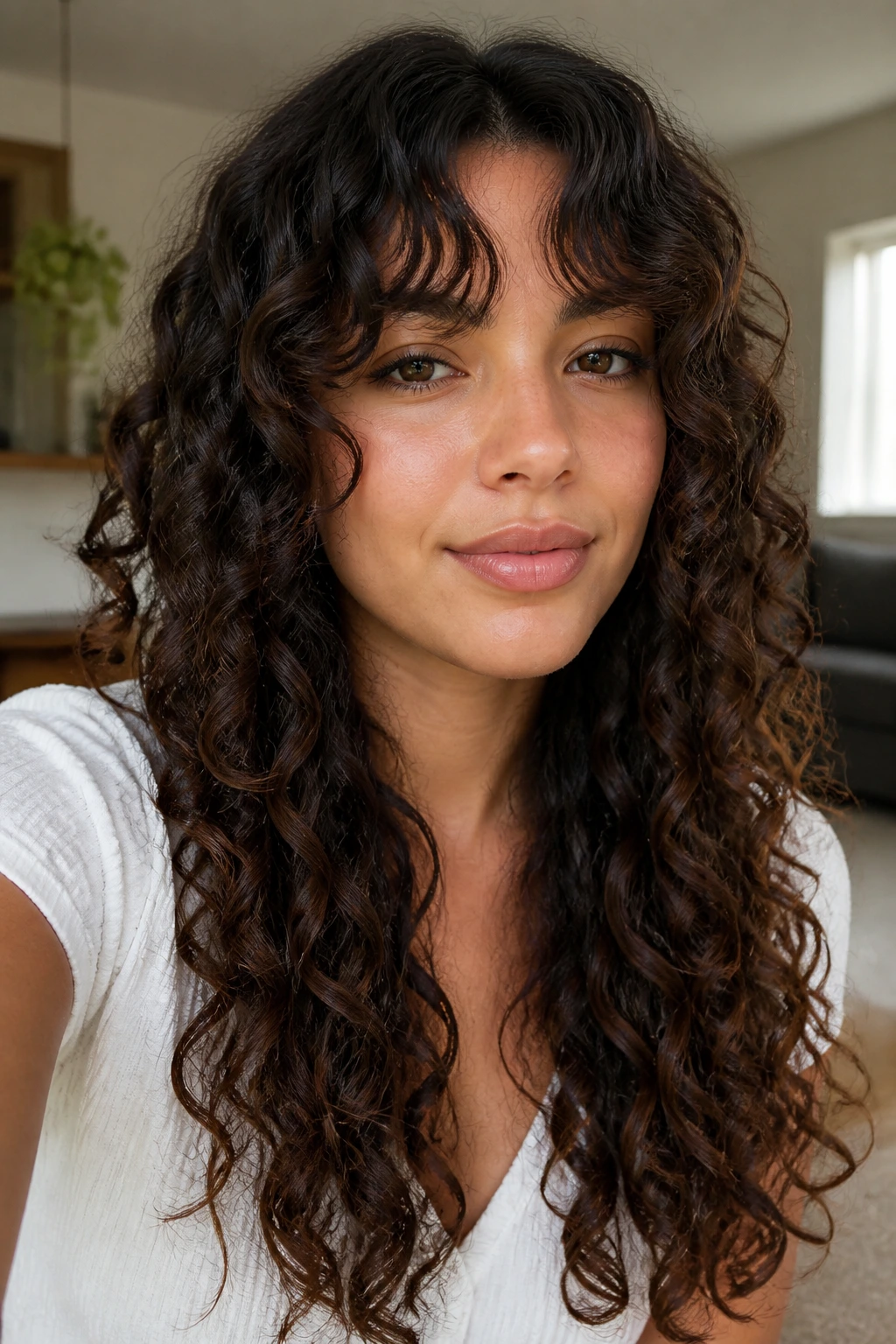
Curtain bangs are popular for a reason: they give you face framing without trapping you in a strict fringe. On 3A curls, they split open naturally and fall into soft pieces that move from the center part outward. The longer side layers keep the bangs connected to the rest of the cut, which matters. Separate bangs on curly hair can look pasted on.
This is a smart move if you want to change the feel of your haircut without going short. The front gets more personality, the rest of the length stays intact, and the whole shape reads softer around the eyes and cheekbones. Just make sure the bangs are cut with shrinkage in mind. A curl that looks cheekbone length when wet can hit the eyebrows once it dries.
9. Deep Side-Part Layers
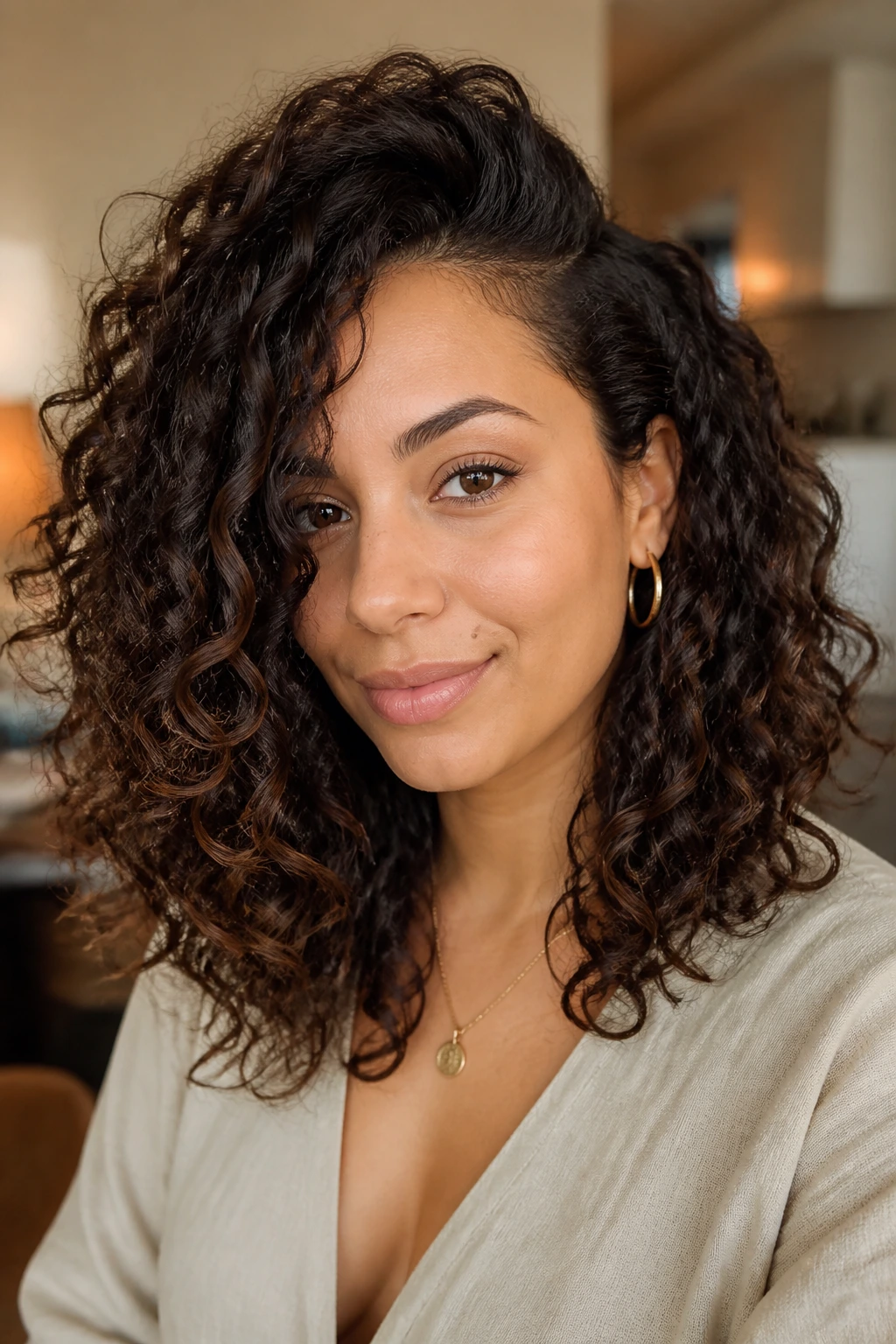
A deep side part can rescue 3A curls that insist on going flat at the crown. Shift the part, and the hair gets instant lift on one side while the longer side drapes into a soft, face-framing shape. The haircut itself can stay fairly simple—shoulder length, collarbone length, even longer—but the parting changes the whole mood.
This works especially well if one side of your hair tends to lie flatter than the other. It also gives you more room to play with volume without asking the curls to do anything unnatural. I like this cut for anyone who wants a little drama without bangs. You get the effect of shape, but not the maintenance of a fringe.
Quick note
If your hair line naturally favors one side, don’t fight it. Build the cut around it.
10. Curly Pixie with Longer Top
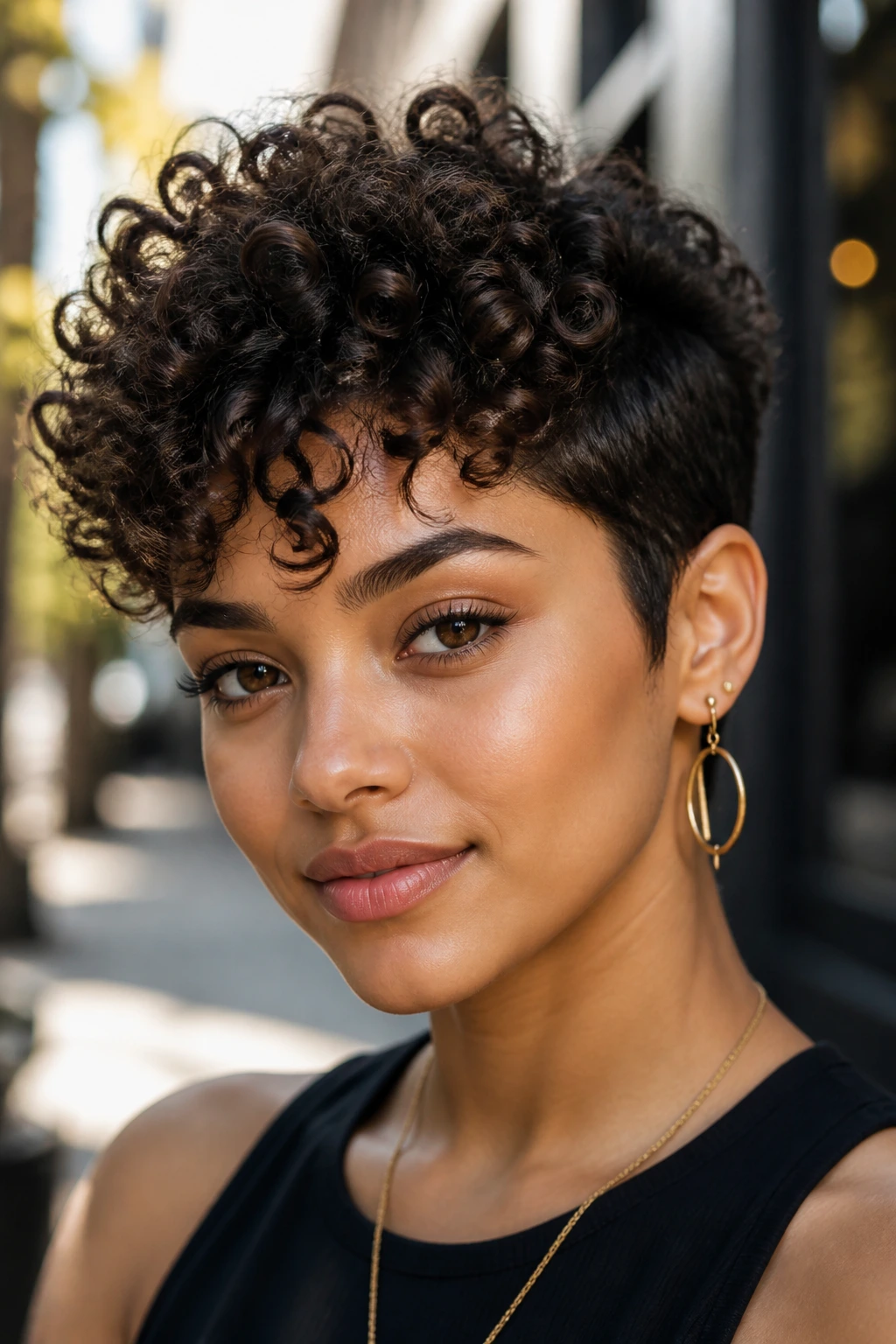
A curly pixie is not a timid haircut. It puts the curl pattern front and center, which means the top has to stay long enough to show the bend and short enough to keep the sides clean. For 3A curls, the sweet spot is often a little longer than people expect. Too short, and the curls stick up like little springs with no direction. Too long, and the shape loses the point.
This cut works best on someone who likes seeing texture and doesn’t mind regular trims. The payoff is strong: easy washing, fast drying, and a shape that can look sharp with almost no styling if the top is cut well. If you wear glasses, even better. The combination can be excellent.
11. Bixie with a Tapered Nape
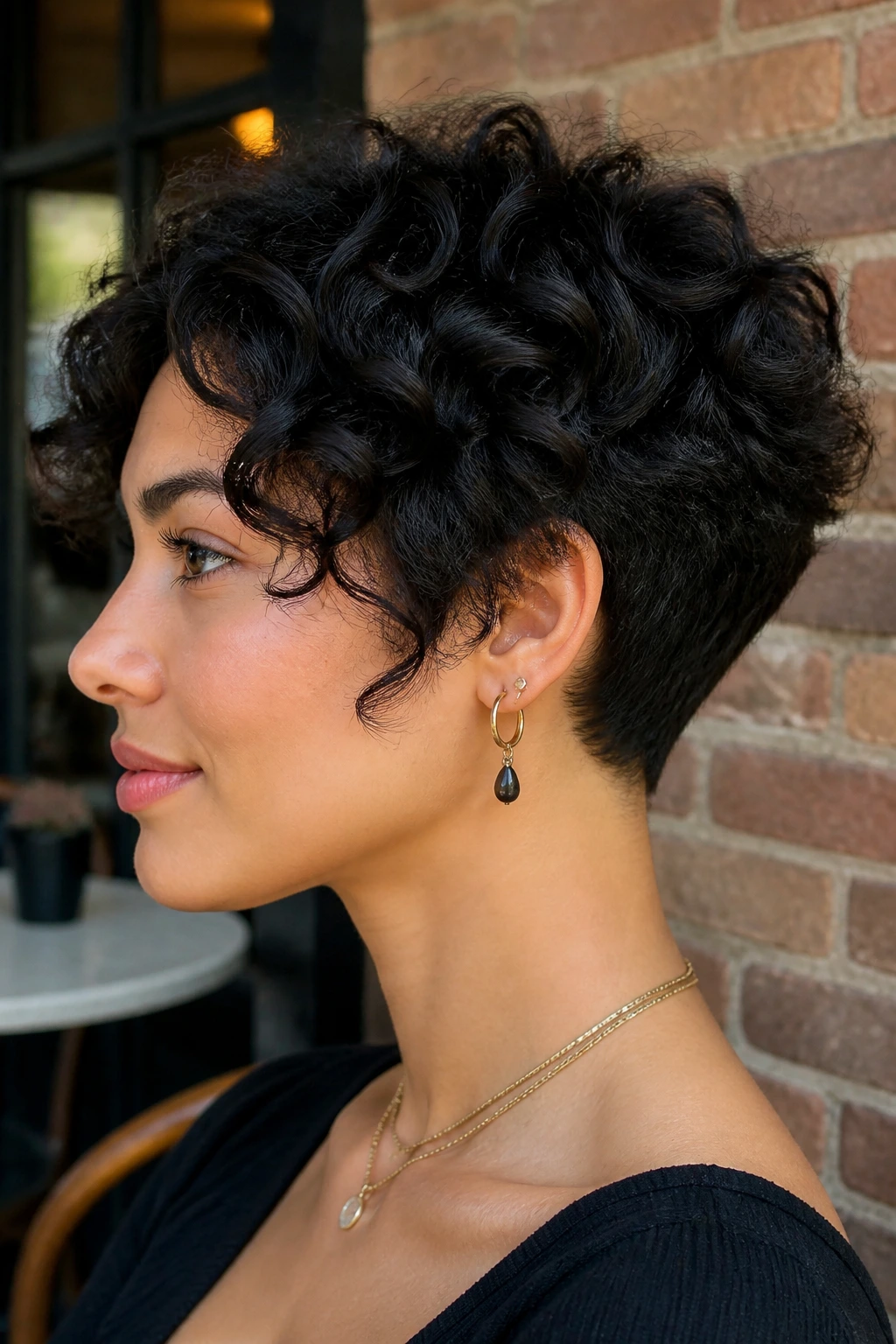
The bixie lives between a bob and a pixie, which is why it can be so flattering on 3A curls. You keep enough length on top and around the face to show curl definition, while the nape gets tapered so the back doesn’t feel bulky. The result is tidy without looking stiff.
This is a good cut when you want short hair but not the full crop. It’s also one of the more forgiving short shapes for curl pattern changes. If one section dries a little looser than another, the overall silhouette still holds. The tapered nape keeps the back from puffing out, which is the main thing I’d watch for on loose curls.
12. V-Cut for Length and Swing
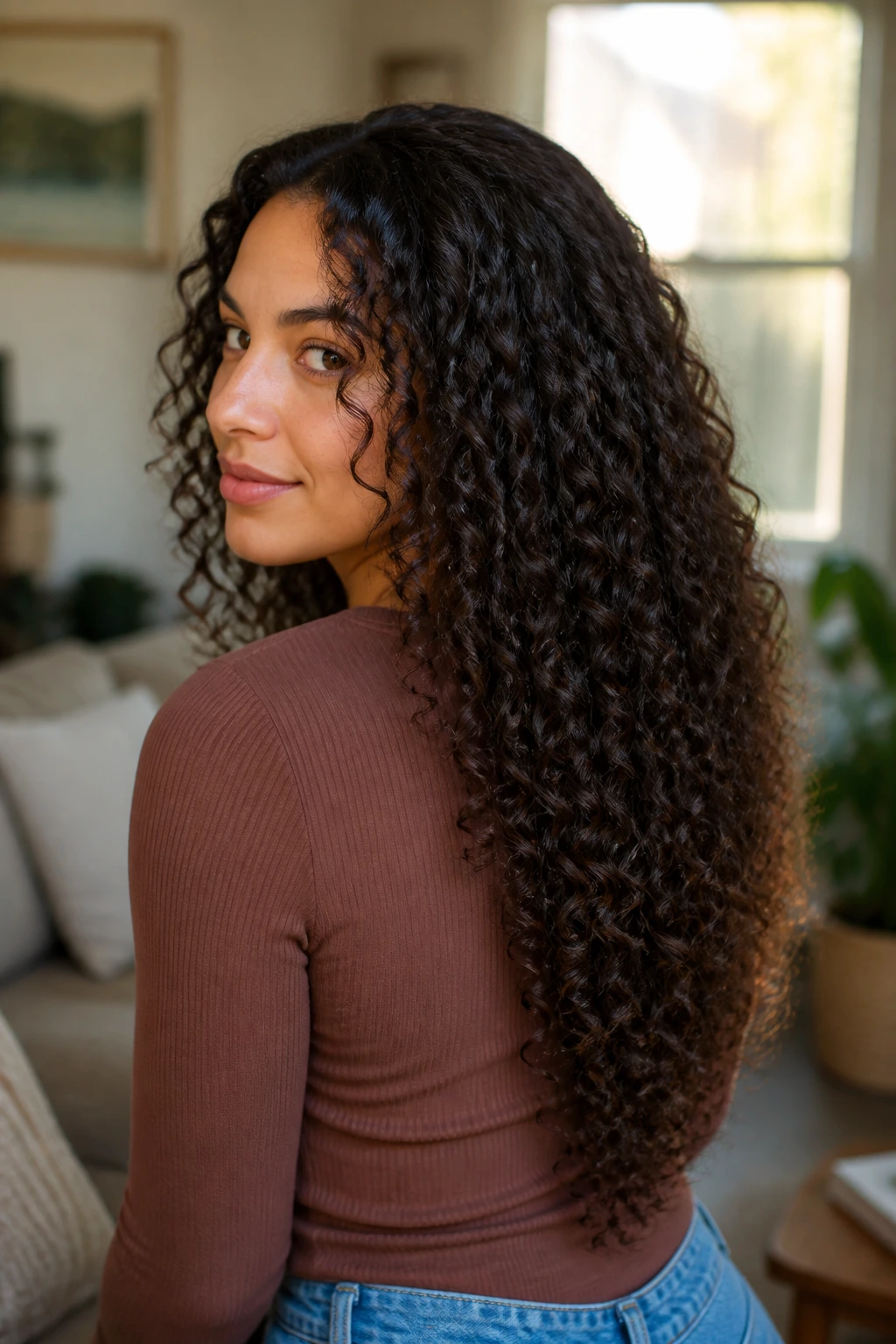
The V-cut is for people who want long hair with a little movement at the bottom. The longest point hangs in the middle of the back, while the sides taper up just enough to create that pointed outline. On 3A curls, it adds swing to the ends and keeps the length from looking like one heavy curtain.
It’s not the best choice for very fine hair that needs more density at the bottom. But if your curls are thick enough to hold a shape, the V gives a nice visual line without cutting away all the length. I like it on hair that’s air-dried often, because the shape still reads clearly even when the roots are a little sleepy.
13. Graduated Bob with a Stacked Back
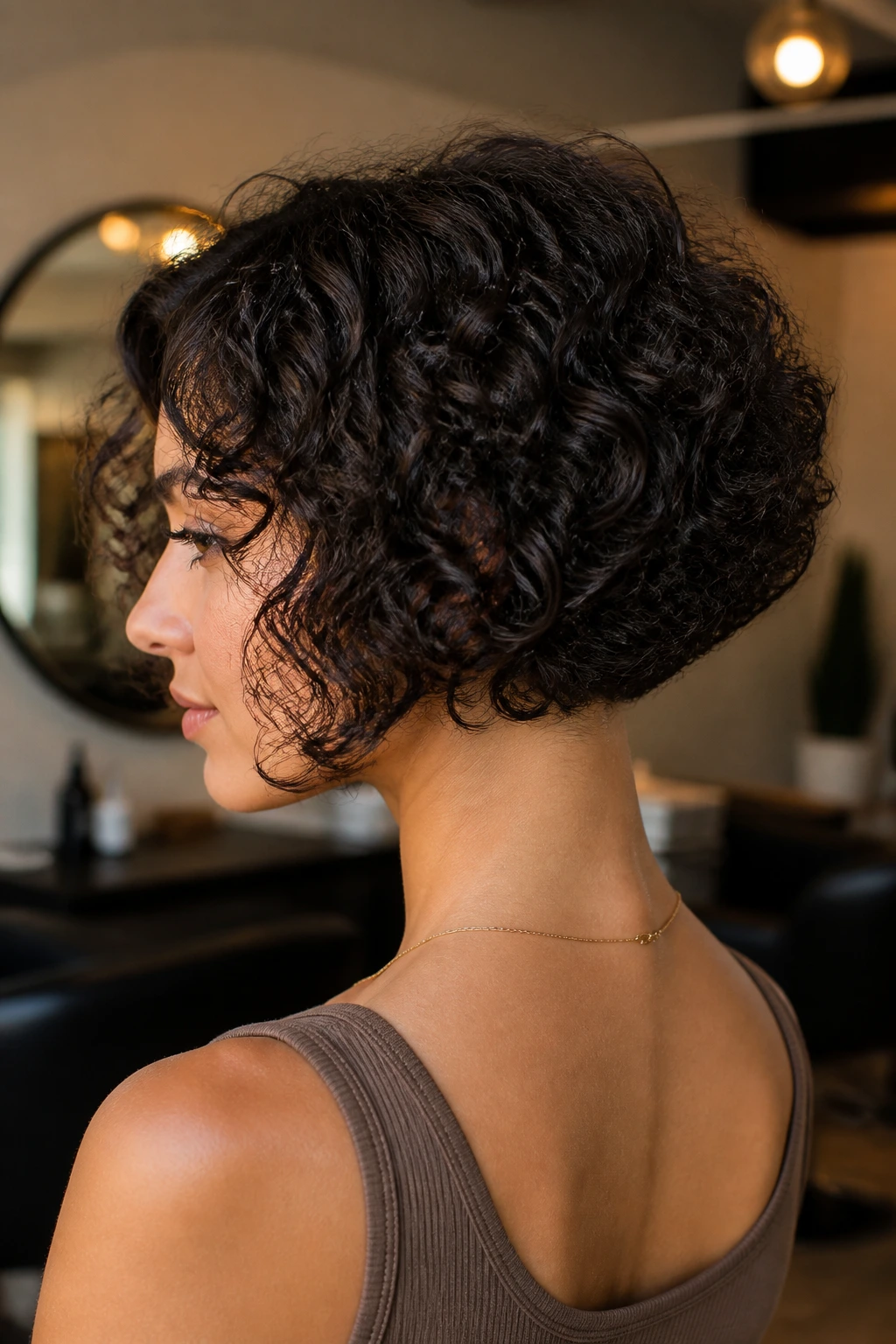
A graduated bob is a bit more architectural than a soft curly bob. The back sits a little shorter and more stacked, which gives the nape lift and helps 3A curls avoid that undercut-not-quite triangle shape. The front stays longer, so you still get curl movement around the jaw and cheeks.
This is one of the better cuts for dense 3A hair that tends to sit heavy at the back of the head. The stacked shape removes that weight in a way that looks intentional. If your hair is fine, though, ask for a gentler graduation. Too much stacking and the back can look sparse once the curls dry.
Best for
- Dense hair with lots of body
- People who want a bob with structure
- Anyone who hates the back flipping outward in odd ways
14. Curl-by-Curl Deva Cut
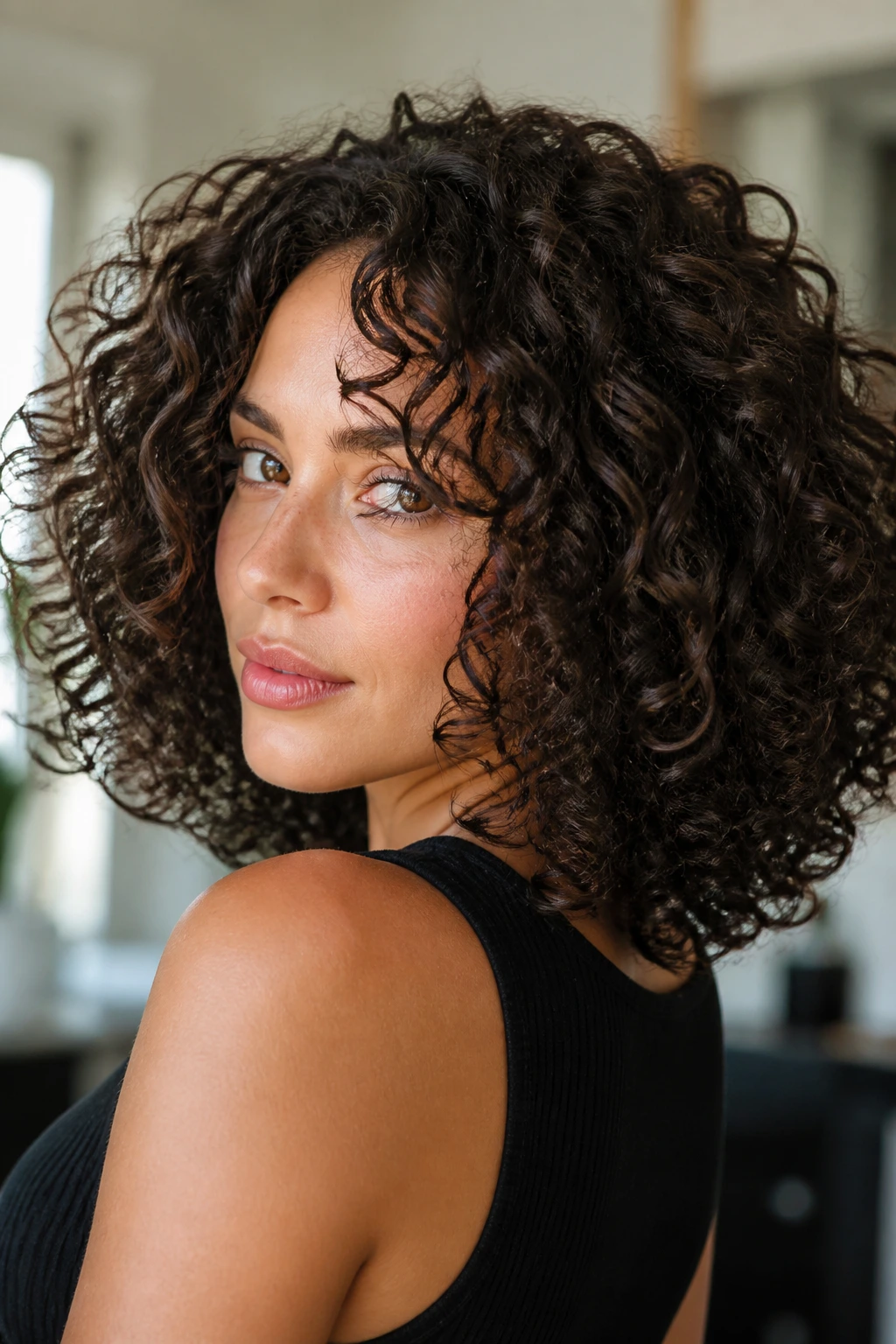
The Deva cut isn’t one silhouette so much as a method, and that’s why it belongs here. Each curl is shaped in its natural state, usually dry, so the stylist can see where one spring stops and the next begins. On 3A curls, that precision is useful because the pattern can look smooth one minute and uneven the next if it’s cut too straight across.
This is the cut for people who care more about curl behavior than haircut fashion names. You’re paying for precision. The result can be a rounded, layered, shaggy, or shoulder-length shape, but the real benefit is that the cut respects how your hair actually falls when it’s dry. If you’ve had too many “it looked fine wet” disasters, this is the fix.
15. Asymmetrical Lob
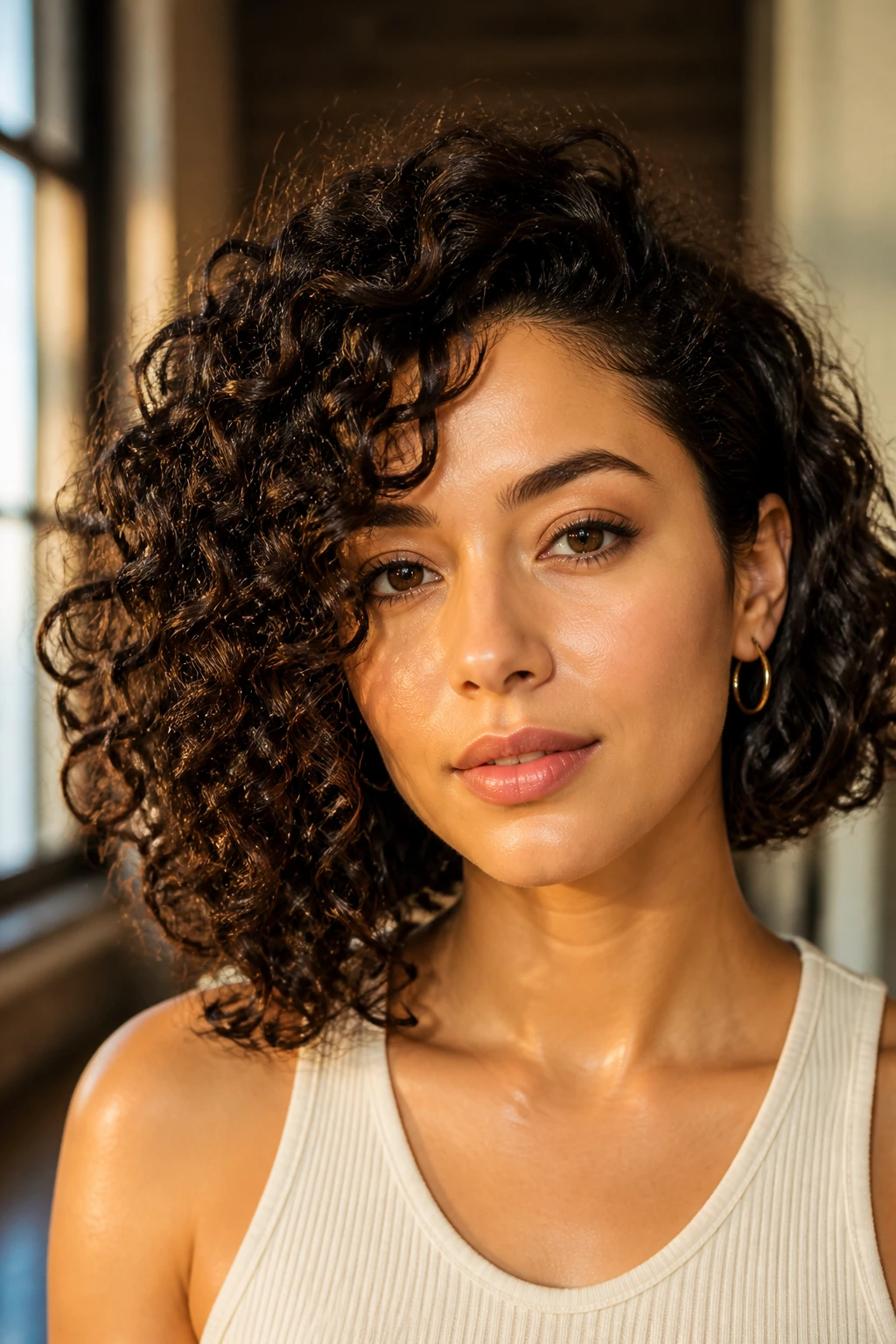
An asymmetrical lob does one simple thing well: it keeps the eye moving. One side is slightly longer than the other, which gives 3A curls a built-in style line even when you don’t do much to them. Because the curl pattern adds texture on top of the shape, the asymmetry doesn’t need to be dramatic to work.
This is a nice choice if you want something modern without looking like you’re trying too hard. It also flatters curls that have a stubborn side or a cowlick at the front, since the uneven line can balance that out instead of fighting it. Keep the difference subtle. Half an inch to an inch is often enough.
16. Halo Layers Around the Crown
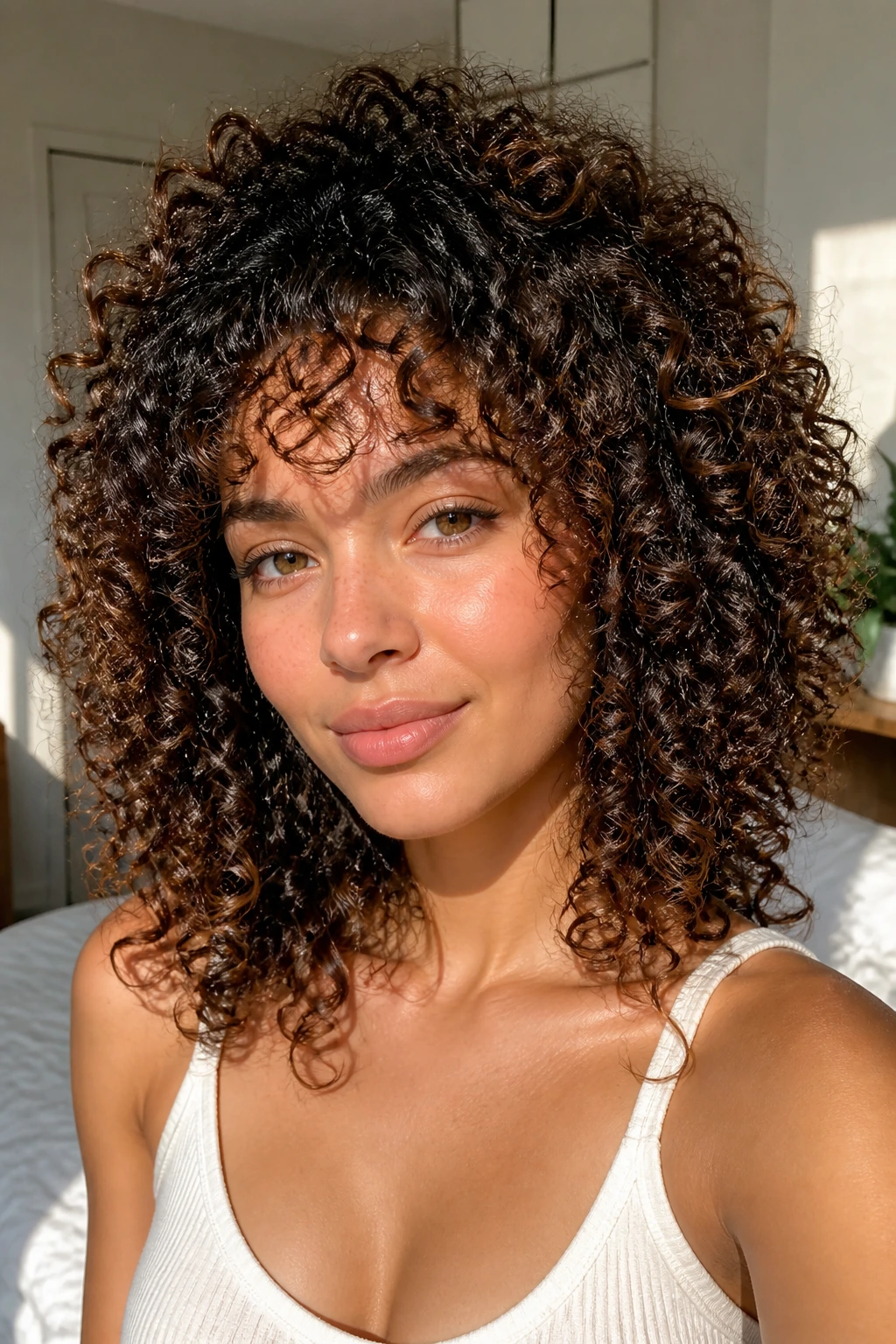
Halo layers are exactly what they sound like: a ring of shorter pieces around the crown that helps lift the top without stripping the length below. On 3A curls, this can keep the top from lying flat while the lower curls keep their weight and swing. It’s one of my favorite moves for someone who complains that all the volume lives at the bottom.
The key is restraint. You want lift, not a chopped-up mushroom. A skilled stylist will place those shorter pieces where the hair naturally collapses, usually around the top and upper sides, then leave enough weight at the perimeter to keep the cut clean. It’s a subtle shape, but it changes everything in profile.
17. Mid-Back Cut with Internal Weight Removal
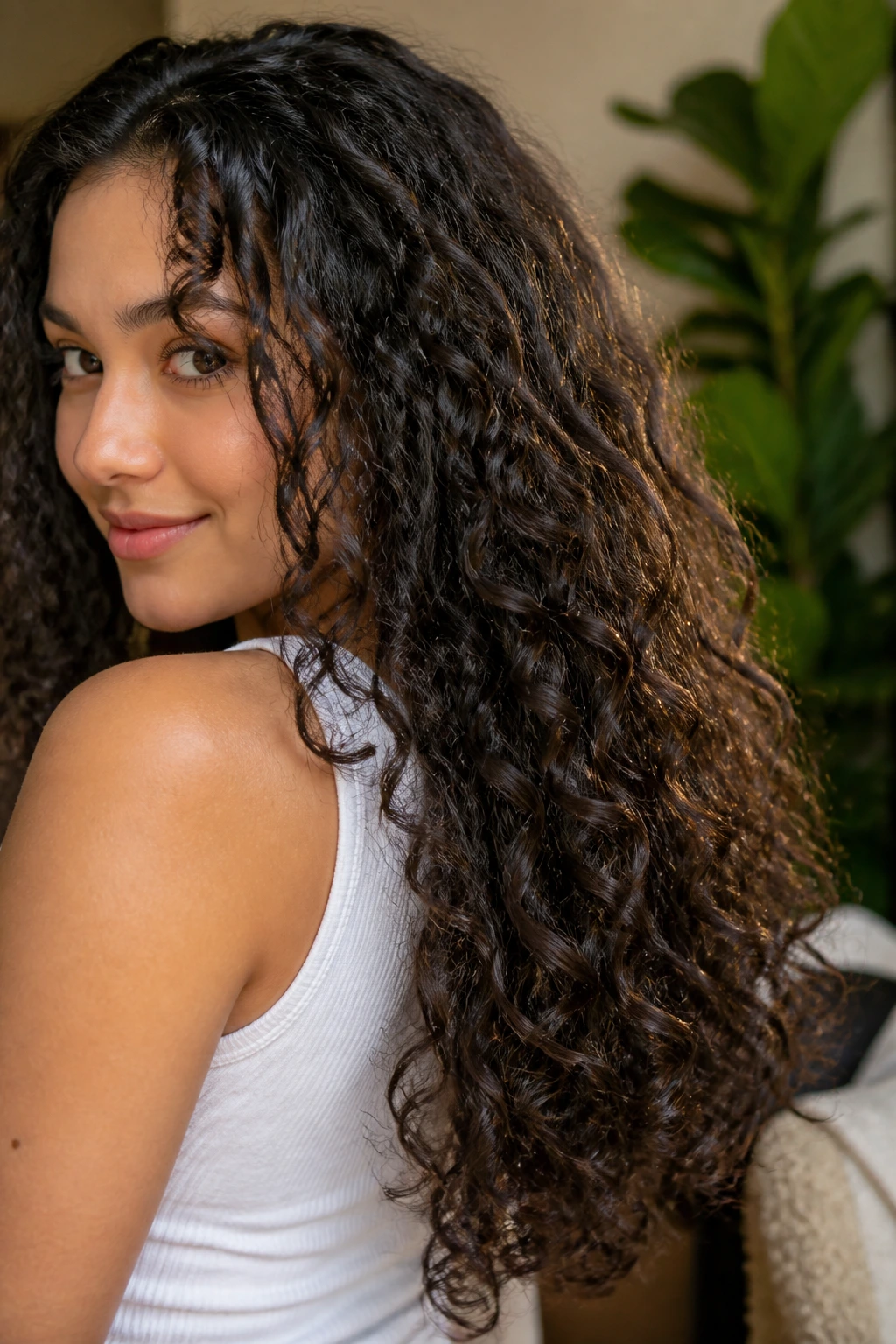
Long 3A curls can get heavy in a hurry. Internal weight removal helps without making the outside look thinned out, and that’s why this cut works so well for people who want serious length. The shape stays long—mid-back or thereabouts—but the inside loses enough bulk to let the curls spring instead of drag.
This cut matters most if your curls bunch up at the ends and leave the top looking sleepy. By opening the inside, the stylist lets the whole head breathe. I’d call this one a workhorse cut. It doesn’t scream for attention, but it makes long curly hair easier to live with.
Small warning
Too much thinning near the perimeter will make the ends fray. Internal removal is the point.
18. Tapered Nape with Fuller Sides
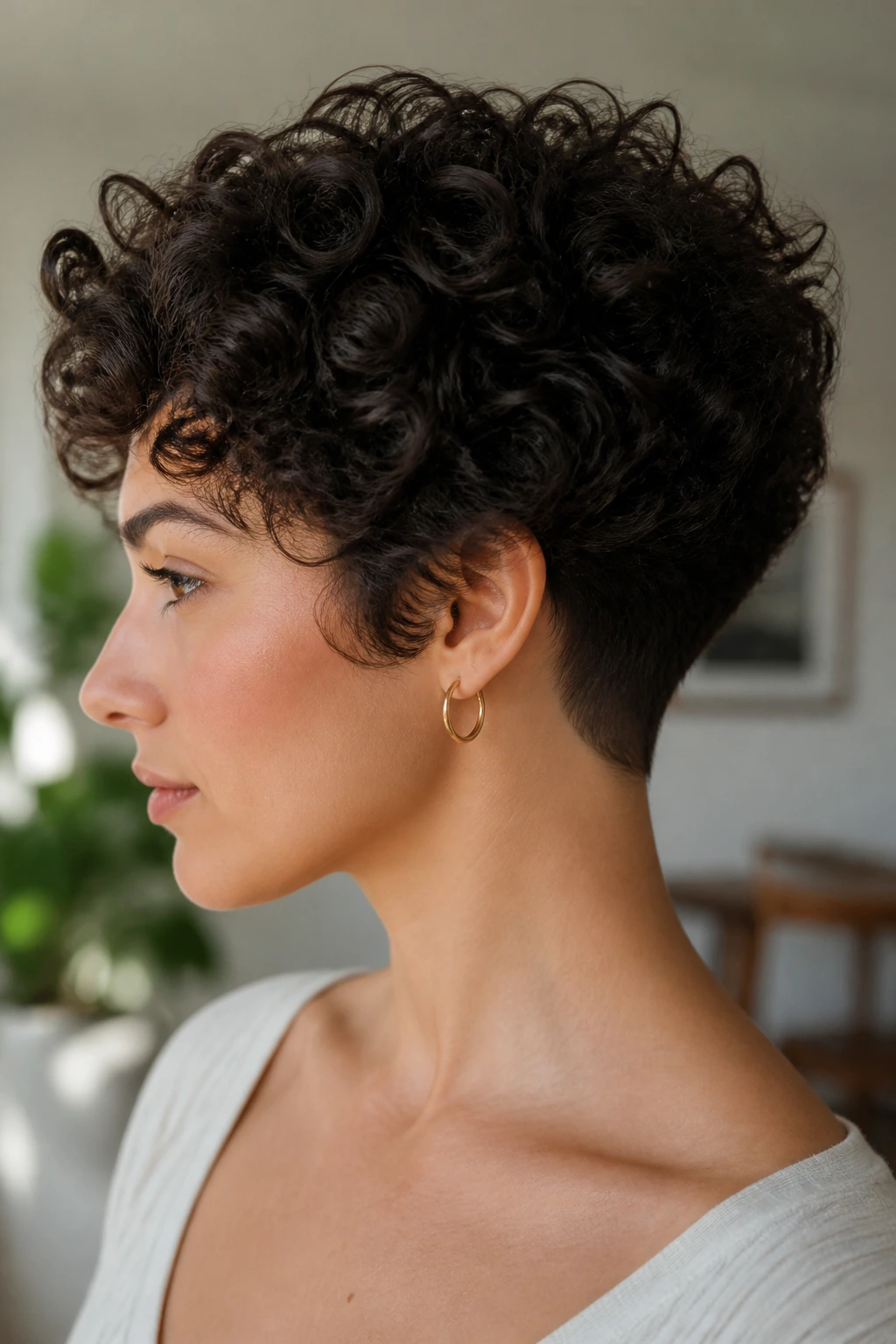
This shape keeps the back neat and the sides fuller, which is a smart way to handle 3A curls that puff at the neck but fall flat by the temples. The tapered nape removes the bulk that makes short curly hair stick out awkwardly under collars, while the fuller sides keep the cut from looking too narrow.
It’s a strong option if you wear jackets, collars, or scarves a lot. It also works if you want your hair to sit cleanly from the side profile. The cut has a tidy base, but the curls near the face still have room to move. That contrast is what gives it life.
19. Long Cut with Blunt Ends
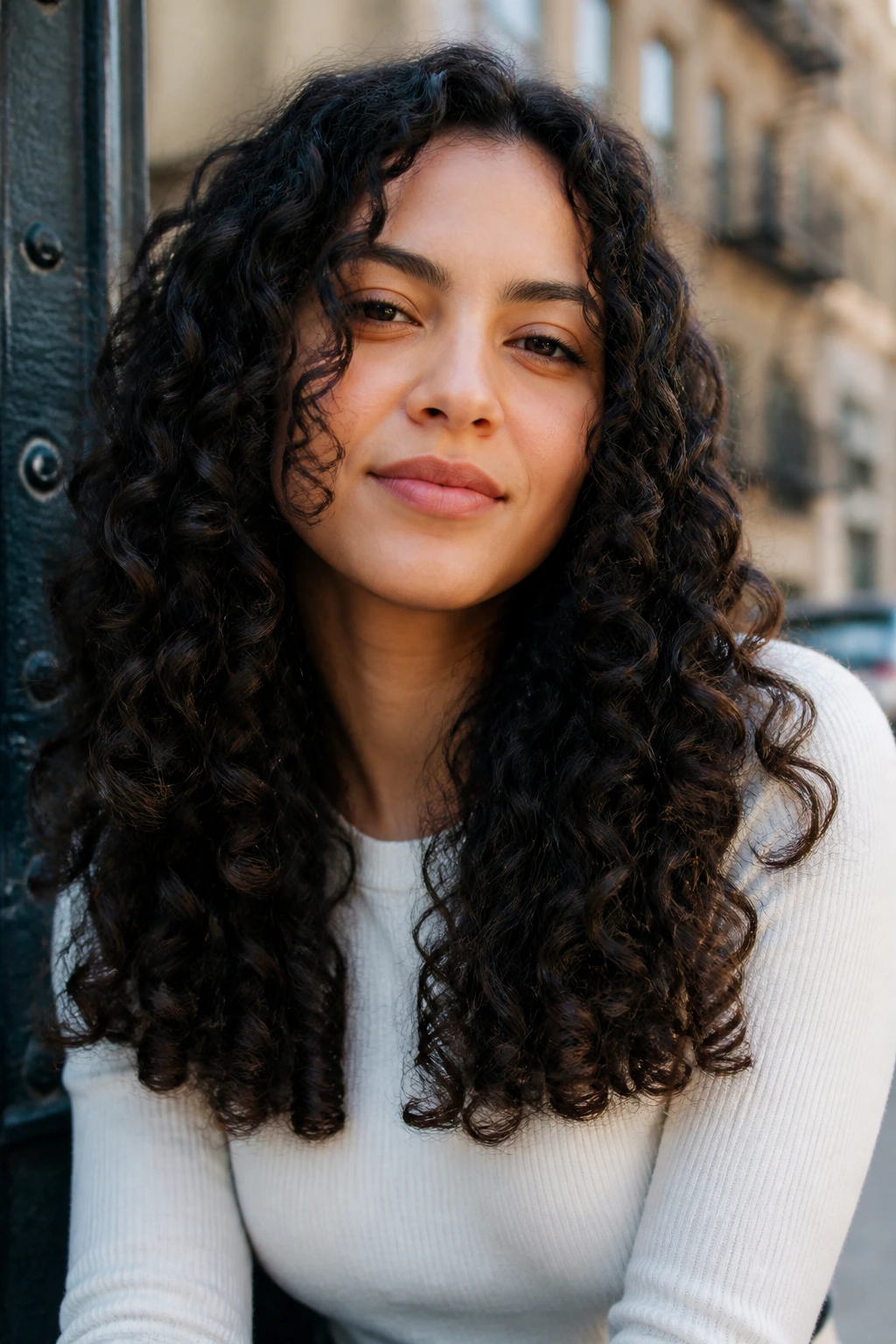
Blunt ends on 3A curls can be excellent when the hair is fine or medium-fine. The line at the bottom makes the hair look denser, and because 3A curls have enough bounce, the perimeter doesn’t usually feel as stiff as it would on straighter hair. You get a strong edge without a heavy block.
This is not the cut for someone who wants lots of movement around the hem. It’s for someone who wants the ends to look thick, tidy, and deliberate. If the hair is long enough, a small amount of invisible layering can still help, but the main line should stay solid. Cheap, in the good sense. Clean. Confident.
20. Square Shoulder-Length Cut

The square shoulder-length cut is blunt in the middle and slightly softened at the corners, which gives 3A curls a strong outline without turning the hair into a box. This works especially well when the curls are wide and springy because the hair lands around the shoulders and doesn’t bunch awkwardly at the neck.
The square shape can look severe if it’s cut too straight across, so the corners matter. A tiny bit of rounding near the face keeps it wearable. I like this shape on people who want structure, especially if they’re tired of haircuts that are all softness and no line.
21. Soft Mullet with Feathered Fringe
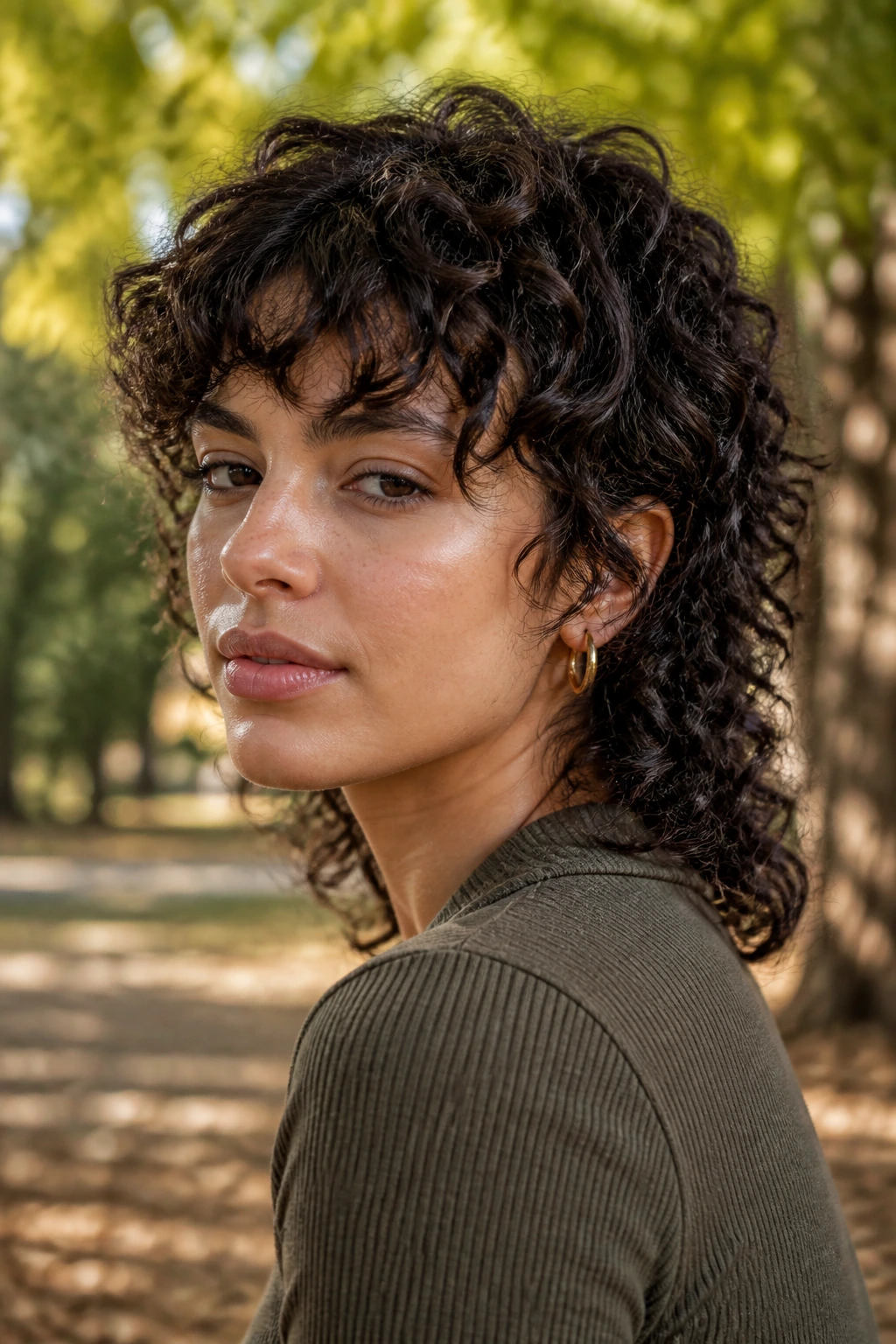
A soft mullet sounds like a dare, but on 3A curls it can be surprisingly flattering. The top and front stay shorter and more layered, the back keeps length, and the fringe breaks into pieces instead of sitting as one heavy curtain. The result is playful, but not costume-y.
The word here is soft. The back shouldn’t feel like a tail, and the front should connect to the sides. When it’s cut well, the shape gives height at the crown and movement around the face. It’s one of the better choices for someone who wants edge and doesn’t mind a little upkeep.
22. Undercut for Dense 3A Hair
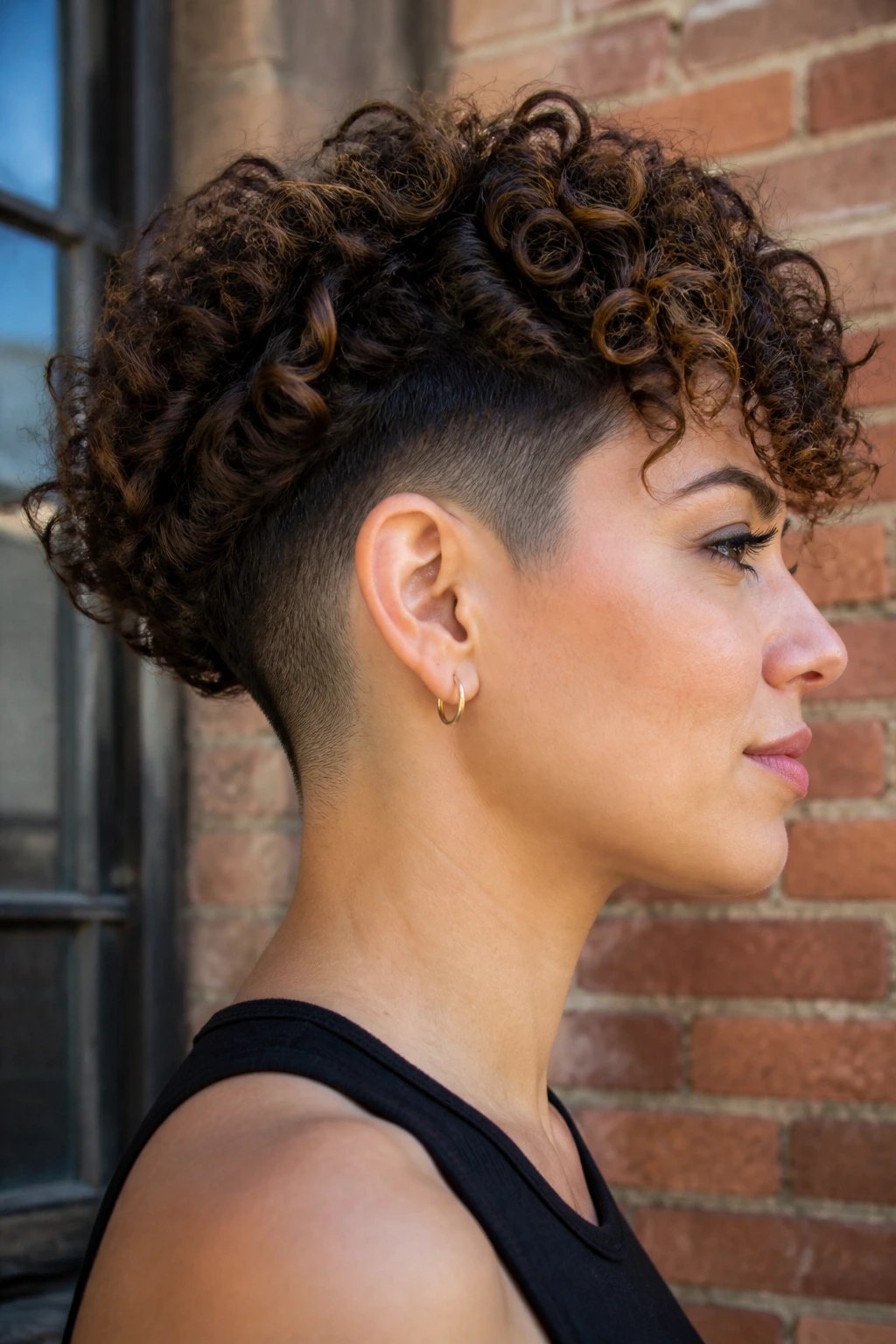
An undercut can be the difference between “full of curls” and “I have a fur coat on my head.” If your 3A hair is dense underneath, shaving or closely clipping the hidden lower section removes weight where nobody sees it and keeps the top layer from sitting like a helmet. The exterior can still look long and lush.
This is not a subtle move, but it’s practical. It cools the neck, helps the hair dry faster, and makes the shape much easier to manage. The tradeoff is obvious: when you wear your hair up, the undercut may show. If that doesn’t bother you, the payoff is strong.
23. Rounded Midi Cut with Cheekbone Layers

A midi cut sits between a lob and a long cut, and the rounded version is especially kind to 3A curls. The length usually lands somewhere around the upper chest, while the cheekbone layers open the front just enough to keep the face from disappearing behind hair. It’s one of the most balanced shapes on this list.
The reason it works is simple: the curl pattern has enough length to move, but not so much that it gets weighed down. The rounded outline keeps the silhouette from turning square. If you’re trying to grow your hair out but still want it to look finished, this is a smart place to stop.
24. Chin-Grazing Bob with Side Bangs
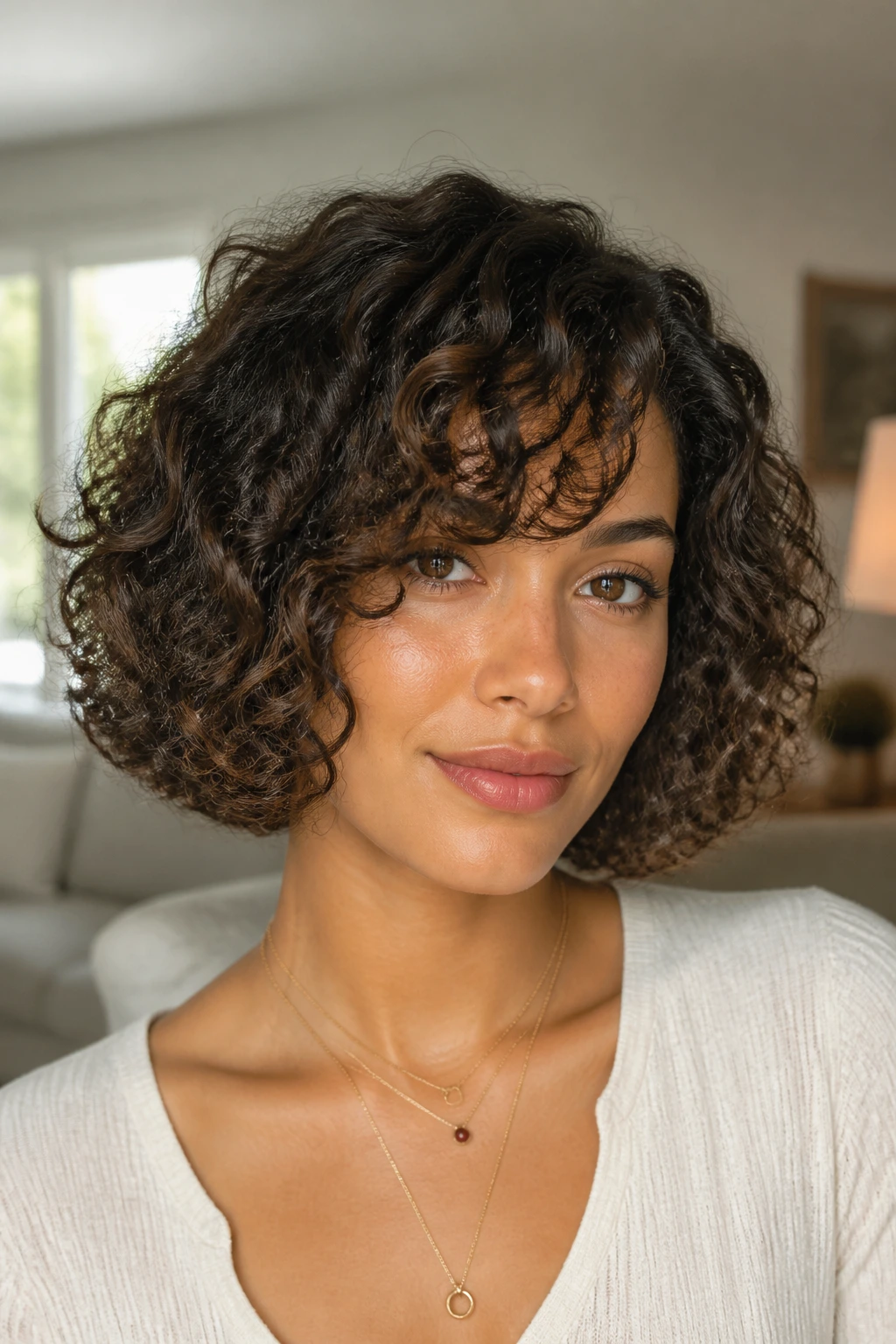
A chin-grazing bob is a little more playful than a jaw-length bob because it sits right where the face wants shape. Add side bangs, and the whole thing softens fast. On 3A curls, the side fringe usually falls into a sweep rather than a hard bang line, which is exactly why it works.
This cut is nice for anyone whose face feels too long with longer hair or too round with a center part. The side bangs draw the eye diagonally, and the chin-length bob gives the curls a crisp base. If you like your hair to look styled even on a lazy day, this one is a strong pick.
25. Long Center-Part Cut with Face-Framing Ribbons
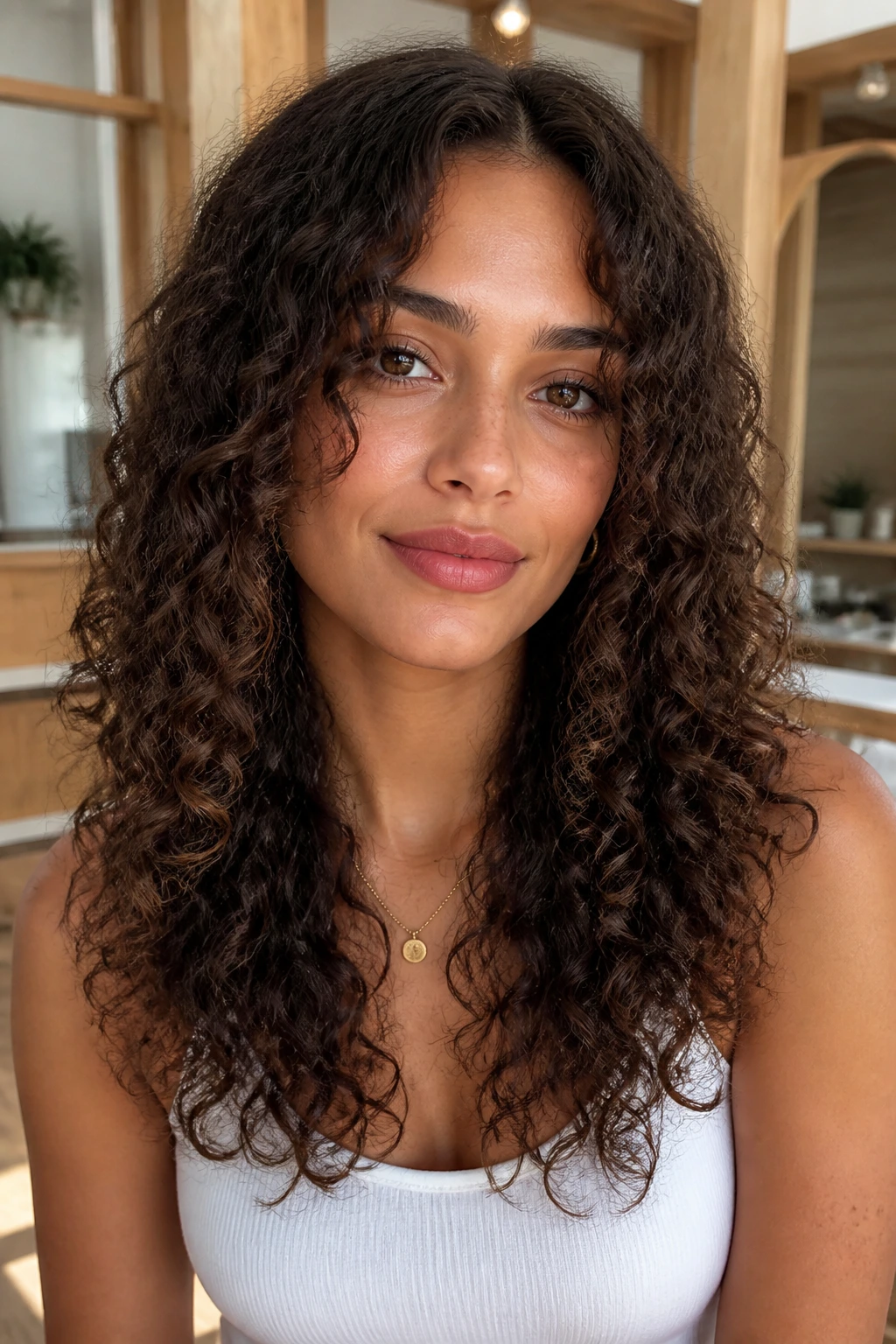
Some people want the simplest answer, and honestly, sometimes the simplest answer is the right one. A long center-part cut with face-framing ribbons keeps the overall length intact, then adds just enough shaping around the front to stop the hair from hanging there in one heavy sheet. The ribbon pieces should fall somewhere between the cheekbone and collarbone when dry, depending on how springy your curls are.
This is the cut for people who like easy symmetry. It looks polished when the curls are defined, and it still behaves when the weather gets a little mean. If you want one haircut that can be worn loose, clipped back, or swept behind the ears without falling apart, this is the quiet winner.
How 3A Curls Behave Under Scissors
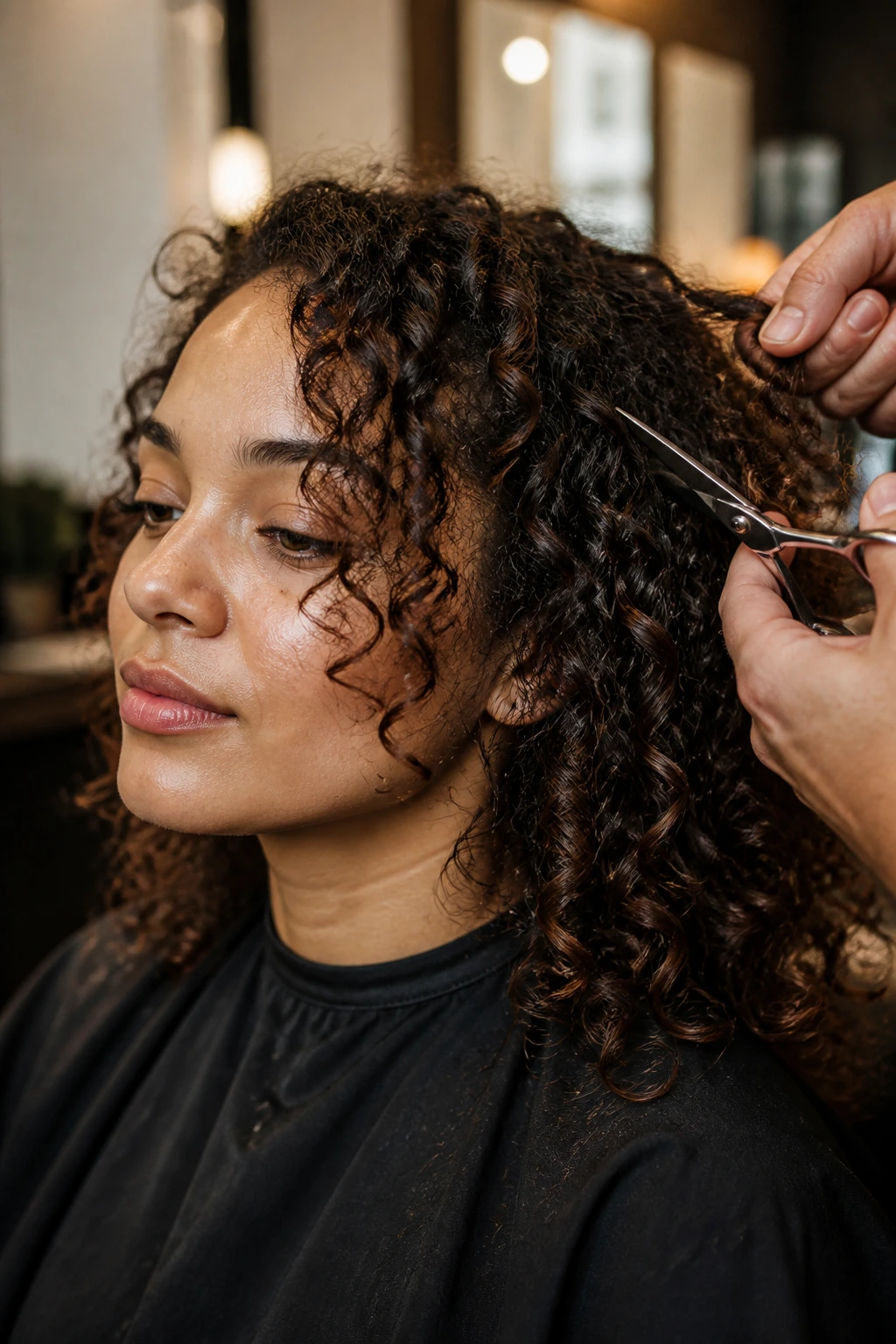
Type 3A curls are not difficult because they’re coarse or tight. They’re difficult because they show everything. A tiny angle error in the cut line becomes obvious once the curls dry, and a layer that looks balanced when wet can jump to a different length entirely after shrinkage kicks in. That’s why curl-aware cutting matters so much.
The best stylists treat 3A hair like a shape problem, not a “just trim the ends” problem. Dry cutting or a careful curl-by-curl approach lets them see where the curls naturally sit. Wet cutting can still work, but only if the stylist understands how much the hair will spring back. If they don’t account for that, you end up with short spots near the face and a bottom edge that feels too blunt.
3A curls also need weight in the right places. Take too much out of the ends and the hair starts to frizz outward. Leave too much weight at the crown and the top collapses while the sides puff. That push-pull is the whole game.
What to Bring to the Salon Chair
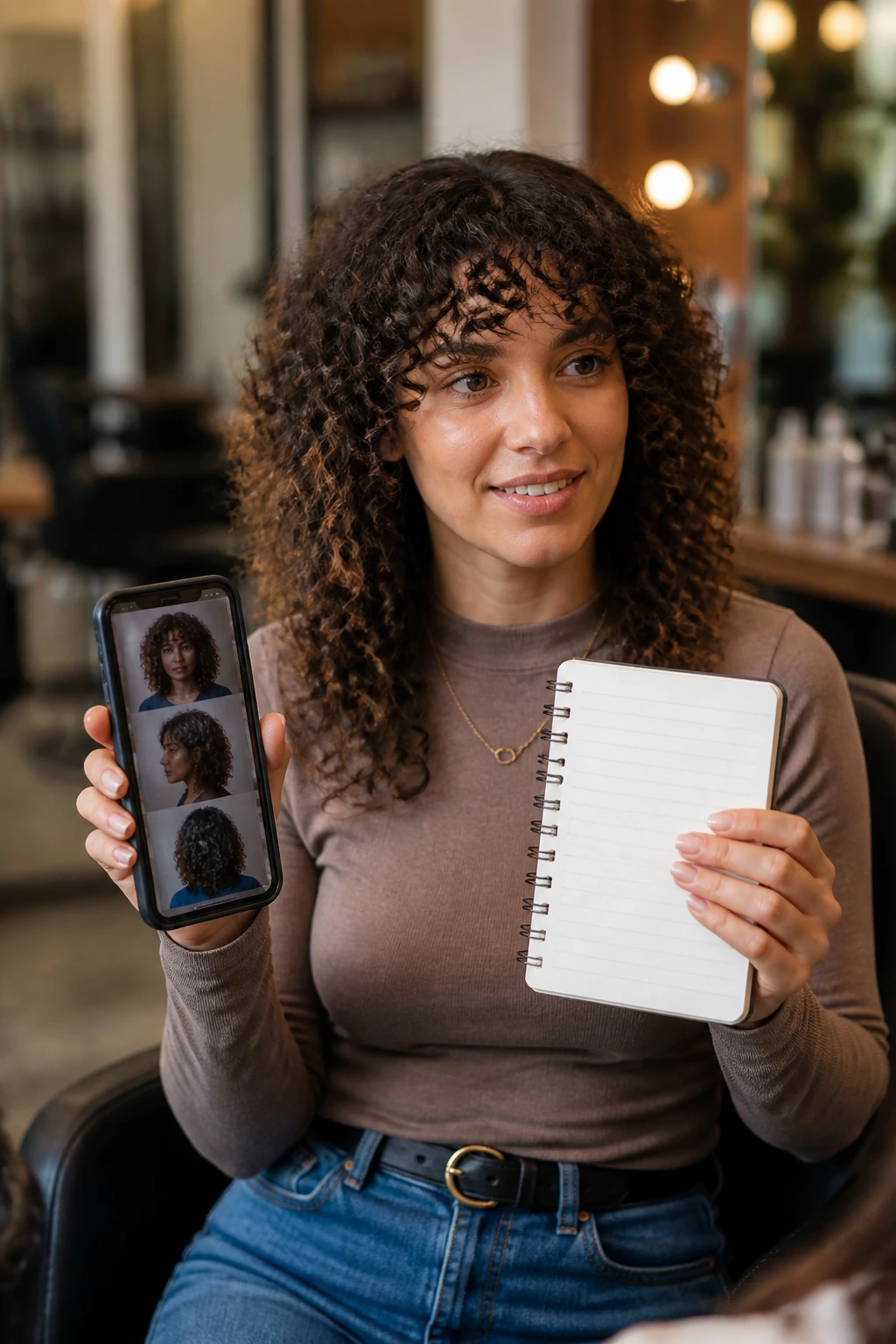
A haircut goes better when the stylist can see what your curls actually do, not what they look like after a diffuser marathon. Bring your hair in its natural state if you can. If that’s impossible, at least arrive with it styled the way you usually wear it, not in the version you use for weddings and good lighting.
Photos help, but bring the right kind. One photo from the front is not enough. Show the side, the back, and the length you want your curls to hit when they’re dry. If you have a curl pattern that shrinks a lot, say so plainly. If you hate seeing layers above the chin, say that too.
- Three angles of reference photos: front, side, and back
- One real note about shrinkage: where you want the curls to land dry
- Your styling habits: air-dry, diffuse, clip roots, or mostly wash-and-go
- A photo of what you do not want: this saves time and prevents bad assumptions
- A small notebook or phone note: write the length you want at the chin, collarbone, or shoulder so you don’t forget under salon lights
A good stylist will listen to the shape you want, not just the word “layers.” That word can mean almost anything in a curly chair.
Essential Tools for the Cut and the Follow-Up
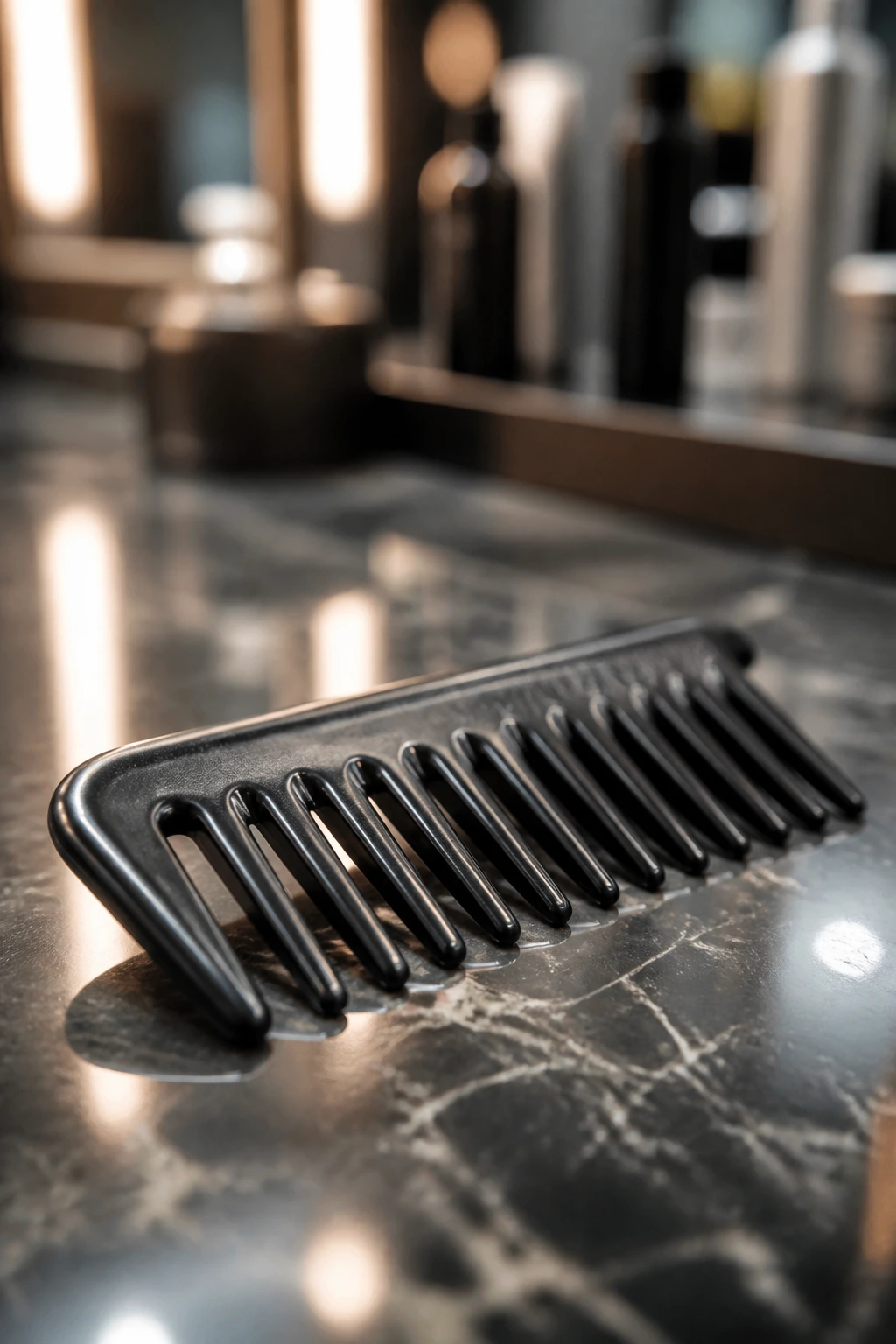
- Wide-tooth comb: useful only when the hair is wet and slippery enough not to pull apart the curl clumps.
- Curl clips or duckbill clips: help section hair cleanly if you’re checking shape at home.
- Microfiber towel or cotton T-shirt: keeps the curls from frizzing right after a wash.
- Spray bottle: handy for re-wetting sections if you need to assess the cut during a dry check.
- Hand mirror: lets you see the back of the haircut when the stylist turns you around.
- Diffuser attachment: useful if you like to test the cut after a quick dry.
- Satin pillowcase or bonnet: not for the haircut itself, but it keeps the shape from getting crushed overnight.
- Stylist reference photos on your phone: better than a vague explanation like “something with volume.”
How to Choose the Right Length, Layers, and Fringe
The three decisions that matter most are the ones people try to skip: length, layer depth, and whether you want fringe. Get those right, and a curly haircut usually behaves. Get them wrong, and the cut can spend months looking almost right.
Length first: 3A curls often look shorter than expected once dry. If you want collarbone length, do not ask for collarbone length based only on wet hair. Ask where you want the curls to land when dry. That phrasing matters. It forces the conversation to include shrinkage, which is where most bad surprises start.
Layers second: fine 3A hair likes softer, longer layers. Dense 3A hair can take more internal weight removal or a stronger shape like a shag or stacked bob. If your hair already feels airy at the ends, go light on the layers. If it feels bulky underneath, ask for interior shaping rather than aggressive thinning.
Fringe last: curtain bangs and side bangs are the safest bets. Full blunt bangs can work, but they demand a stylist who knows how much the curls jump after cutting. If you’re nervous, start with longer face-framing pieces. You can always go shorter next visit.
Common Mistakes That Flatten 3A Curls
The biggest mistake is treating 3A hair like straight hair with some bend in it. It isn’t. If the cut is drawn out straight, the dry result is usually too short in some places and too long in others. The curls then stack in strange ways, and no amount of scrunching fixes a bad perimeter.
The second mistake is over-thinning. Thin hair often gets talked into a little “movement,” then ends up with see-through ends that frizz the second humidity enters the room. If the hair already has loose ringlets and a fine feel, keep the thinning shears away from the bottom edge. Internal removal is one thing. Hollowing out the silhouette is another.
A third error is cutting bangs too short while the hair is still stretched. On 3A curls, that usually means eyebrows are gone by the next wash day. Better to leave fringe longer, check it dry, and trim again if needed.
And then there’s the triangle. Too much bulk at the bottom, too little shape at the top, and you get that classic wide base. Layers that start too low can do it. So can a blunt one-length cut on very dense hair. If your cut keeps flaring out under the ears, that’s the shape talking back.
Smart Variations for Fine, Dense, and Grow-Out Hair
The Soft-Fine Plan
If your 3A curls are fine, keep the perimeter blunt or only lightly rounded and use longer layers above it. Too much chopping makes the ends look wispy fast. This variation keeps the body where you need it most: at the bottom line and around the face.
The Dense-Curl Release
Dense 3A hair usually needs internal debulking, a stacked bob, or a shaped shag. The point is to remove bulk without making the outline patchy. If the hair feels heavy when wet and puffs wide as it dries, this is the branch to choose.
The Fringe-Friendly Version
Want bangs but don’t want regret? Start with curtain bangs, long side bangs, or a face-framing fringe that can grow into layers. It gives you the feel of a fringe without locking you into a short line that’s hard to manage on wash day.
The Straight-Hair-Sometimes Cut
If you wear your hair straight a few times a month, choose a shape that still looks clean when brushed out: a lob, a U-cut, or long layers with a blunt base. Super shaggy shapes can lose their point once stretched. A cleaner outline gives you more flexibility.
The Grow-Out Safe Cut
If you hate frequent trims, stick with rounded long layers or a collarbone lob. These shapes keep working as they grow. You’re not married to a sharp line, and that’s a relief when life gets busy and the salon appointment slips.
Keeping the Shape Between Trims
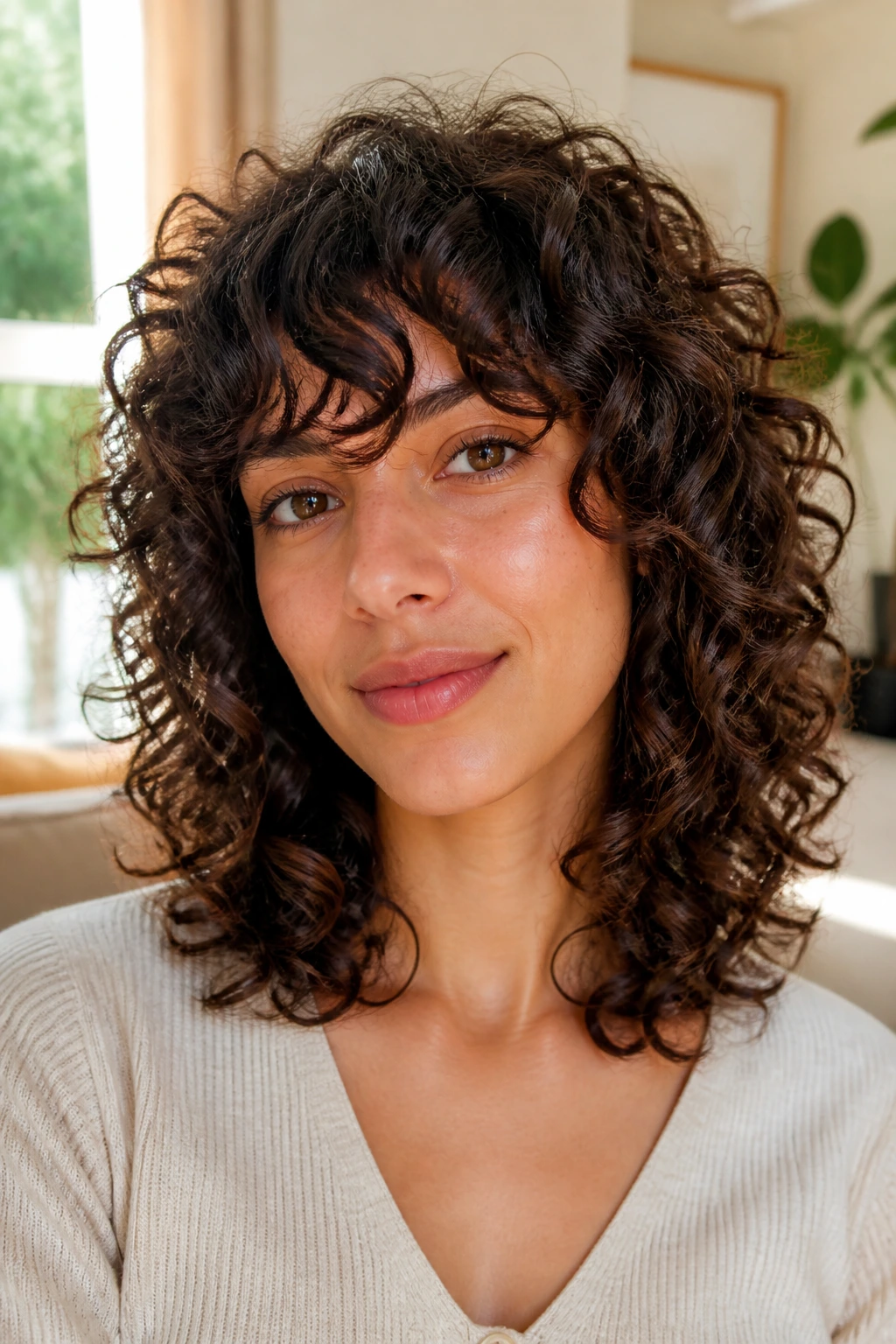
Curly haircuts do not stay alive on goodwill. They need small corrections. For most 3A curls, a trim every 8 to 12 weeks keeps the outline from getting ragged, especially if the haircut depends on layers or a fringe. If you’re protecting length, you can stretch that farther, but once the ends start looking transparent or the front pieces stop sitting where they should, the shape is already drifting.
Wash-day habits matter too. Don’t rough up the curls with a towel and expect a clean line. Use a microfiber towel or a cotton T-shirt, squeeze instead of scrubbing, and let the pattern form in clumps before you touch it again. A diffuser can help the top pieces keep lift if the crown tends to droop.
One thing people forget: grow-out changes the haircut’s behavior long before the length looks “long.” A lob can start flipping outward. A shag can lose its piecey top. A bob can widen at the jaw. If you see the shape changing in the mirror, that is the haircut asking for a light correction, not a dramatic overhaul.
Frequently Asked Questions

Should 3A curls be cut dry or wet?
Dry cutting usually gives the cleanest read on 3A curls because you can see the natural spring and where each curl sits. Wet cutting can work if the stylist knows how much shrinkage to expect and checks the shape dry before finishing.
What haircut makes 3A curls look thicker?
Rounded layers, a blunt lob, or a square bob can make the hair look fuller at the ends. For very fine curls, a blunt perimeter usually helps more than lots of short layers.
Do bangs work with 3A curls?
Yes, but length matters. Curtain bangs and side bangs are the safest starting points because they bend with the curl pattern instead of fighting it. Full bangs can work too, but they need a stylist who understands shrinkage.
How short can I go with 3A curls?
Short cuts can work well, especially a pixie, bixie, or chin-length bob. The main thing is to keep enough length on top for the curls to show their shape. If the top gets too short, the hair can stick out instead of curling neatly.
What if my curls look great on one side and weird on the other?
That usually means the part, crown height, or growth pattern needs to be built into the cut. An asymmetrical lob, deep side part, or curl-by-curl trim can help balance the shape instead of forcing both sides to behave the same way.
How often should I trim a curly haircut?
Every 8 to 12 weeks is a solid range for most 3A shapes. If you’re wearing bangs or a bob, you may want to clean up the line a little sooner. Long layered cuts can stretch longer between trims if the ends stay healthy.
Can I wear these cuts straight too?
Some of them, yes. Lobs, U-cuts, blunt bobs, and long layers usually stretch and still look decent. Shags and wolf cuts can get a little irregular when straightened, so they’re best if curly wear is your main plan.
What should I tell a stylist if they don’t usually cut curls?
Tell them you want the cut checked in its natural curl pattern, not only when it’s stretched out. Bring photos of the length you want dry, mention your shrinkage, and ask them to avoid over-thinning the perimeter.
A Shape That Lets 3A Move
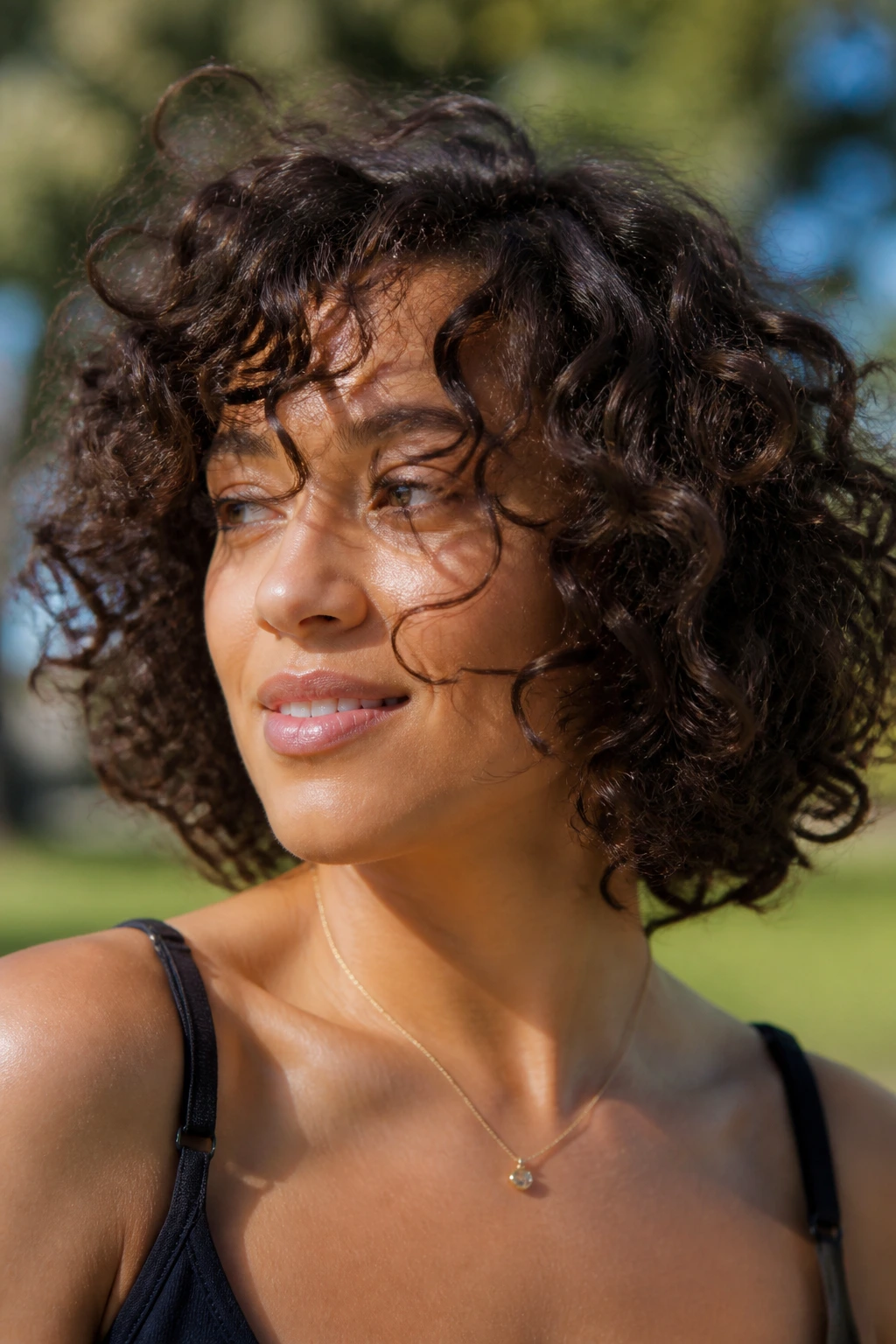
The best haircut for type 3A curls doesn’t fight the pattern, and it doesn’t flatten it into something polite and dull. It gives the curls a frame, then gets out of the way. That’s why some cuts feel easy even when they’re layered to the bone, while others look tidy for one wash day and then go sideways.
If you’ve been stuck in the same shape for too long, start with the silhouette you already know your hair likes. Rounded long layers, a collarbone lob, or a soft shag are safe bets. If you want something bolder, the bob, bixie, or pixie options can be excellent too—as long as the stylist respects shrinkage and the curl pattern gets the final say.
Pick the cut that fits how you live, not just how you wish the hair behaved in theory. That’s where the good ones start.
