



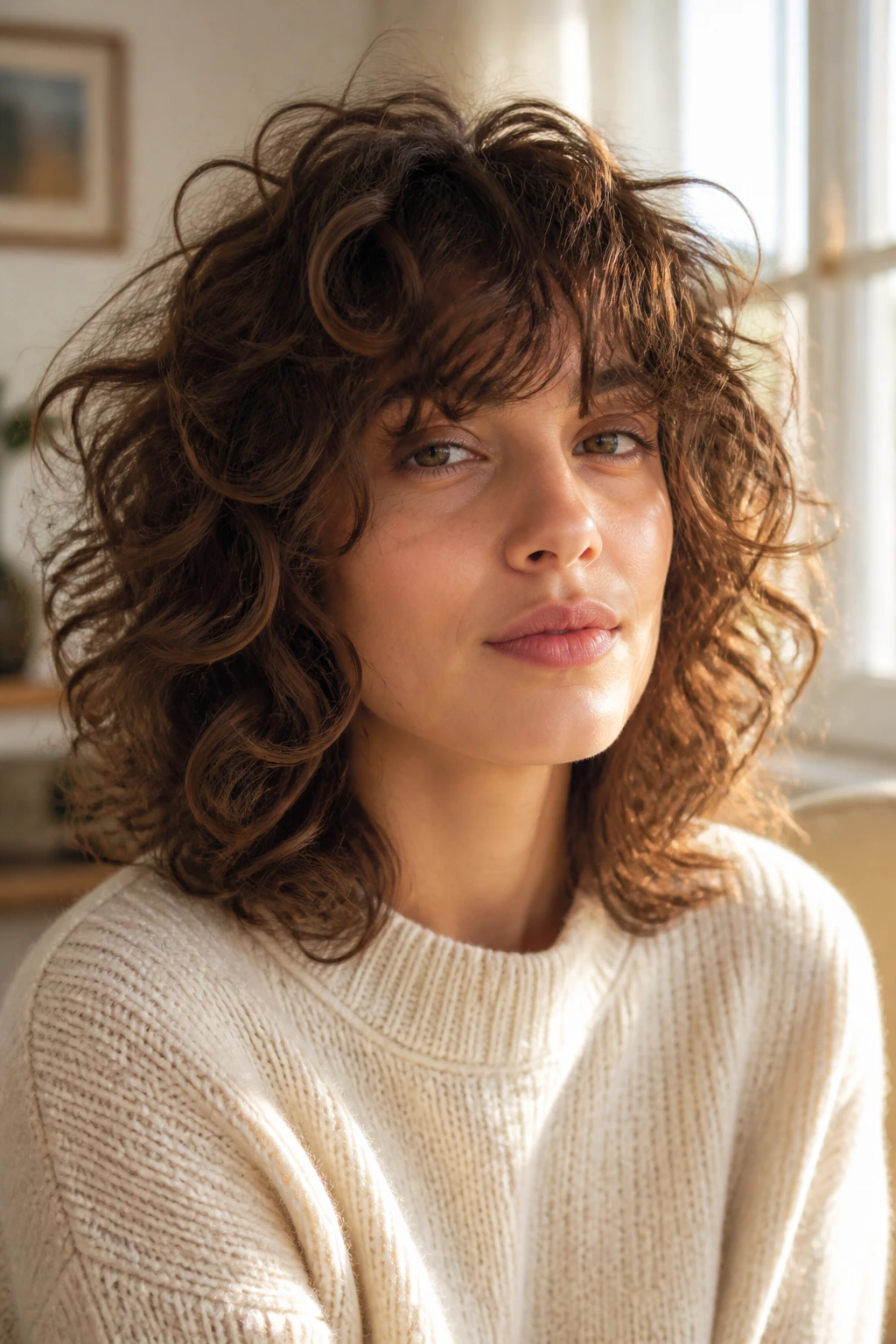
Shag haircuts for curly hair work when the layers respect the curl’s spring instead of pretending the hair is straight. That sounds obvious, but it’s the part people still get wrong. A curl that lands at chin length when it’s wet can bounce up to the cheekbone when it dries, and that one fact changes everything about where the layers should start.
The best curly shags don’t fight that shrinkage. They use it. The shape can be wild, soft, punky, polished, airy, or heavy at the crown, but the cut has to be built with movement in mind or the whole thing turns into a triangle with opinions.
I keep coming back to the same thought: a good curly shag is less about “adding layers” and more about removing weight in the right places. Once that happens, the curls start stacking in a way that looks alive instead of bulky, and the front can frame the face without getting stuck in one flat curtain. That’s the difference between a shag that grows out gracefully and one that needs to be rescued two weeks later.
Why These Curly Shag Shapes Keep Paying Off
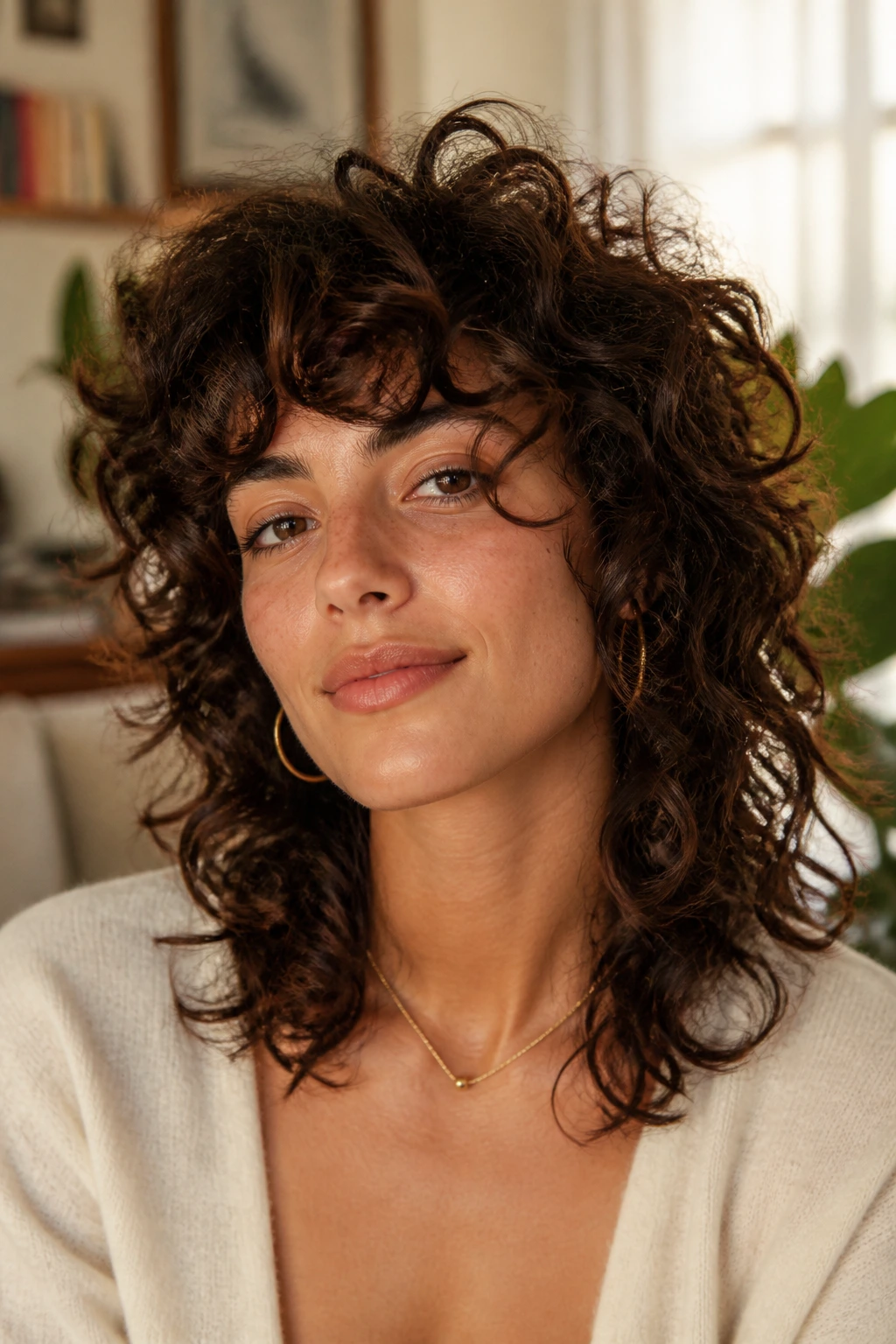
- Shrinkage-friendly structure: Curly hair can shrink 20% to 50% depending on texture, so a shag built for curls gives you room for that bounce instead of panicking at it.
- Face-framing without the helmet effect: The shorter front pieces break up the silhouette, which keeps the hair from flaring out at the sides like a bell.
- Better day-two hair: The right shag keeps its shape after sleeping on it, especially if the layers are cut to live inside the curl pattern rather than on top of it.
- More options with less work: You can wear it diffused, air-dried, clipped back, half-up, or with bangs pinned off the forehead, and the cut still makes sense.
- A safer grow-out: Because the layers overlap, the haircut softens as it gets longer instead of collapsing into a blunt block.
- Room for personality: A curly shag can be romantic, messy, edgy, or neat. Same family. Very different attitude.
1. Soft Face-Framing Curly Shag
This is the one I recommend when someone says they want shape, but they do not want their curls hacked into a cloud. The front pieces start around the cheekbone or just below it, then melt into longer layers that keep the back from swelling out too much. It looks especially good on loose 2C to 3B curls that need movement more than drama.
What makes it work
The magic is in the balance. You get enough shortening around the face to show off cheekbones and jawline, but the length in the back keeps the cut from feeling too chopped up. If the stylist leaves the perimeter a little heavier, the curls settle with a cleaner outline.
Ask for the first face-frame piece to be cut on dry hair, then checked again after the curls spring up. That small dry check saves you from the “too short when it dries” problem, which happens faster than people think.
Good for: medium density, curls that puff at the sides, and anyone who wants a shag that still feels soft at the ends.
One good tip: If your curls shrink a lot, ask for the front to land lower than you think when dry. Curly hair lies.
2. Rounded Curly Shag with a Halo Crown
A rounded curly shag has a full, circular shape that follows the head instead of fighting it. The crown gets lifted, the sides stay curved, and the silhouette reads as intentional even when the curls do their own thing.
That roundness matters. A lot of curly cuts get too flat on top and too wide at the bottom, which is how you end up with the old pyramid shape nobody asked for. This version avoids that by keeping the interior layers active while leaving enough weight at the perimeter to hold the curve.
It suits medium to high density curls, especially if your hair tends to drop at the roots after a few hours. With the right layers, the crown keeps some height without looking stiff.
I like this shape on people who wear their curls natural most days and want the haircut to do half the work. It does.
3. Wolf-leaning Curly Shag for Big Texture
Why does the wolf-leaning version look so good on curls? Because it takes the shag’s uneven energy and pushes it a little further. The crown is shorter, the sides are more broken up, and the ends stay a little longer so the cut feels rebellious without turning into a mullet costume.
This shape is strong on thick curls and coils that can handle a lot of weight removal. The top layers create lift, and the longer bottom keeps the cut from floating away from the head. If you’ve got heavy hair that dries with a blunt outline, this is a smart move.
Best way to wear it
Diffuse the crown first, not the ends. The top needs direction before the rest of the curl pattern gets too set, or the layers can sit flat and stubborn.
- Best curl patterns: 3B through 4A, especially dense hair
- Avoid if: your hair is very fine and already sparse at the ends
- Ask for: shorter crown layers with a longer perimeter
- Watch for: too much thinning near the nape, which can make the cut look stringy
This is the curly shag I’d call the loud one. Not everyone wants that. The people who do usually know it within five seconds.
4. Short Curly Shag with a Micro Fringe
The short curly shag is sharp, cheeky, and a little risky in the best way. Add a micro fringe and the whole haircut shifts from cute to pointed. The fringe sits high on the forehead, but on curly hair it will spring upward, so the real length has to be longer than the finished look.
That’s the catch. If the fringe is cut like straight bangs, it can shrink into a tiny shelf. Cute on some faces, ridiculous on others.
The cut works best when the stylist checks the fringe dry and leaves room for bounce. I’d only do this with a stylist who actually cuts curly bangs often, because the difference between “edgy” and “why is it there?” is about half an inch.
Quick read:
- Needs a confident curl pattern
- Works best with strong brow definition
- Likes regular bang trims
- Looks best when the fringe is styled separately from the rest
Short, bright, and a little bratty. That’s the charm.
5. Shoulder-Length Curly Shag with Long Layers
Shoulder length is the sweet spot for a lot of curly heads. The hair has enough weight to show off the curl pattern, but the layers keep it from sitting like a block. When the cut lands around the shoulders, the curls can bounce without getting too wild.
I like this version for people who are nervous about going short. It gives you a proper shag shape without losing the feeling that you still have hair to play with. The front can skim the collarbone, which makes it easy to tuck one side behind the ear or pin the top half back.
There’s a practical benefit here too. Shoulder-length layers are easier to refresh on day two because the curl pattern stays clustered instead of spreading out all over the place.
If you only try one shag shape first, make it this one. It has the least regret baked into it.
6. Long Curly Shag with Invisible Interior Layers
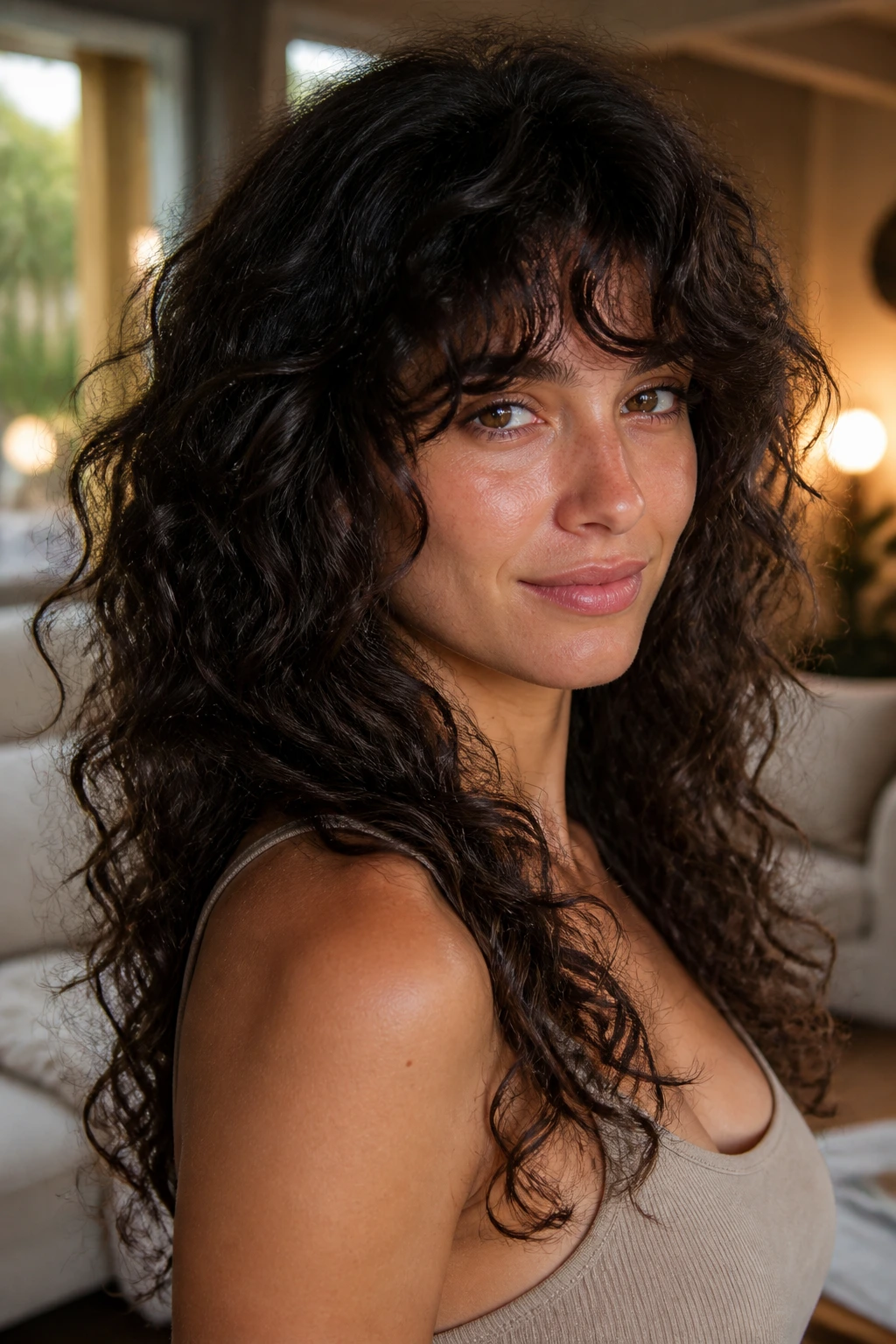
A long curly shag can look almost plain when it’s wet, and that’s the point. The real shape lives inside the haircut, where the stylist removes weight without leaving obvious choppy steps. Once the hair dries, the layers show up as movement instead of slices.
This is the version for someone who wants length to stay the story. The ends still move, the crown gets some air, and the face gets a little frame, but nothing looks aggressively cut. On long curls, that restraint pays off.
Why it’s different
Compared with a shorter shag, this one relies more on internal layering than on visible separation. The result is softer and less punk, which makes it easier to wear in professional settings or on days when you do not want your hair announcing itself before you do.
- Best for: long 3A to 3C curls
- Ask for: invisible or interior layers, not choppy ends everywhere
- Style note: a light cream plus gel keeps the layers from puffing
- Watch out for: over-thinning the ends, which makes long curls look wispy
It’s the quiet curly shag. Still a shag. Just with better manners.
7. Curly Shag with Curtain Bangs
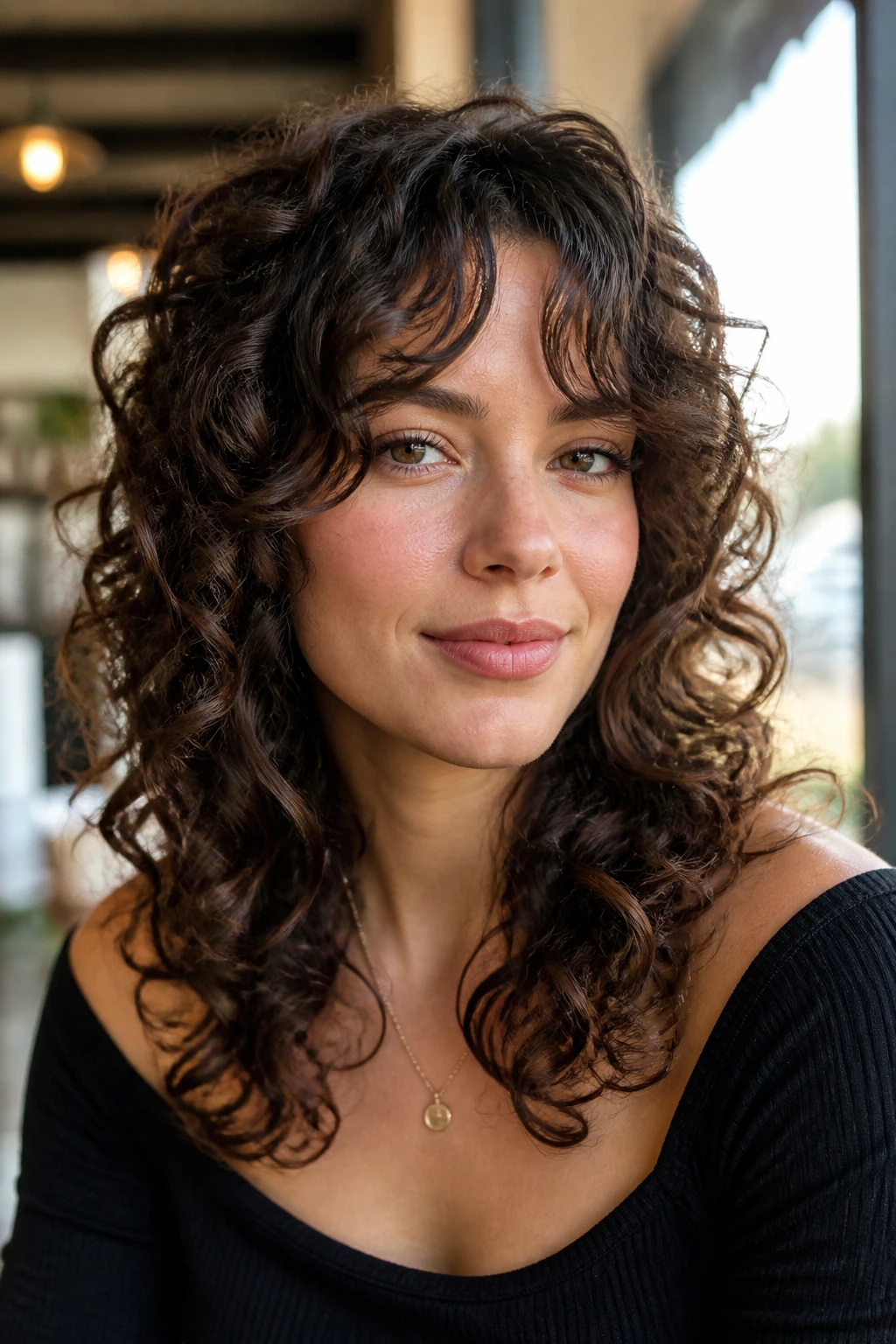
Curtain bangs on curls can look expensive in the best sense of the word: soft, casual, and a little undone in a way that feels planned. The trick is that the bangs should be cut long enough to split around the face after shrinkage. If they’re too short, they stop looking like curtain bangs and start looking like a surprise.
I prefer this shape on medium-density hair with enough front curl to support the fringe. The bang pieces usually start around the nose or lip line when dry, then settle upward into that open, face-skimming shape people want.
If your curls separate neatly, this cut is a winner. If they clump in odd directions, it can still work, but the bangs need a little more day-to-day attention.
One sentence advice: Do not cut curly curtain bangs the way you’d cut straight ones. That mistake is expensive in a haircut chair and annoying for weeks after.
8. Tapered Curly Shag for Tight Coils
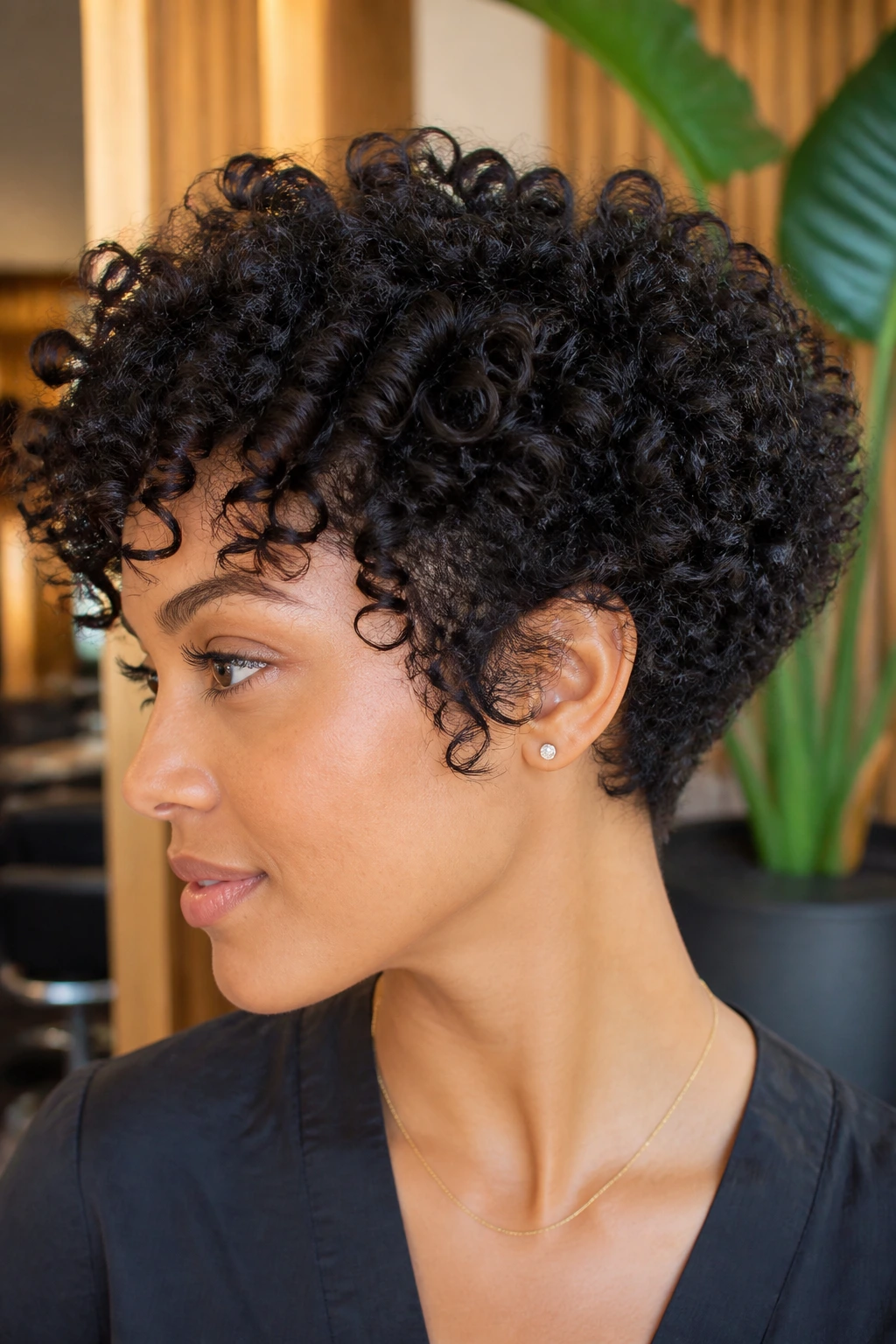
A tapered curly shag gives tight coils a shape that feels clean at the edges and full where it counts. The sides and nape are trimmed closer, while the crown and upper layers keep more length so the haircut doesn’t balloon outward.
This is a smart option for 4A to 4C textures that need structure, not just layers. Tight coils have their own shrinkage story, and a tapered shape helps the haircut sit closer to the head without losing the lively top. The result can be elegant, sharp, and surprisingly easy to live with.
What I like most is the neckline. A neat taper around the nape keeps the cut from looking heavy when the rest of the hair is moisturized and fluffy. That small detail changes the whole shape.
If you wear wash-and-gos, finger coils, or twist-outs, this version gives you room to style without a fight.
9. Tousled Mid-Length Curly Shag with a Side Sweep
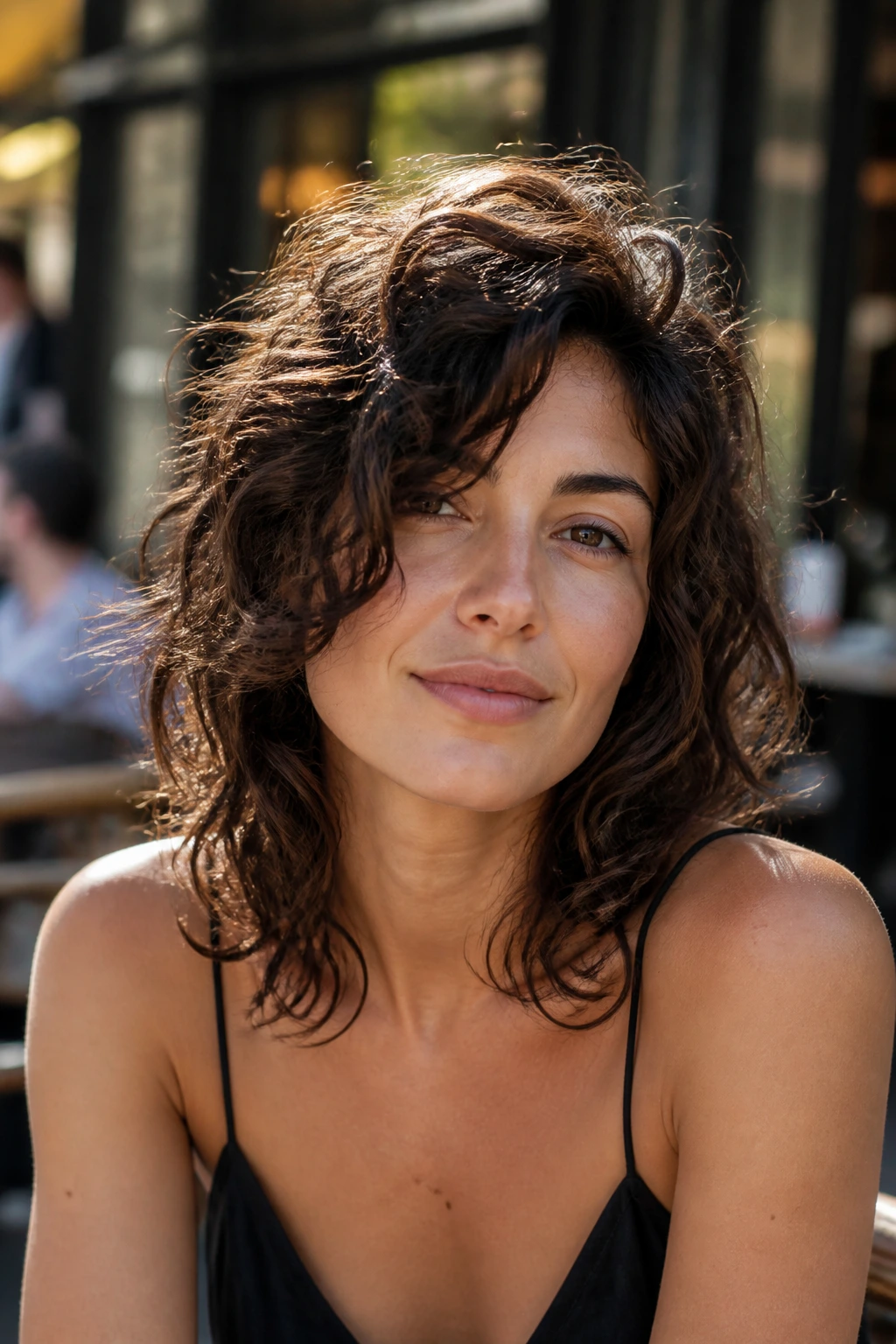
A side sweep changes the whole mood. Instead of a centered, evenly parted shag, this cut lets one side carry a little more weight, which makes the shape look softer and more relaxed. It’s a good answer for curls that already fall naturally to one side and refuse to be symmetrical.
The mid-length keeps the haircut from getting too dramatic, and the sweep across the forehead breaks up the top line in a nice way. You get movement around the face without needing bangs, which is a relief if fringe maintenance sounds annoying.
How to ask for it
Tell the stylist you want a shag that follows your natural part, not a forced center line. Ask for the heavier side to stay a bit longer at the cheekbone so the sweep blends instead of hanging there like a separate piece.
This cut likes a little scrunching with mousse at the root and a light hold product through the ends. Nothing fussy. The side movement should look like it happened on purpose, not by accident.
10. Airy Razor-Cut Curly Shag
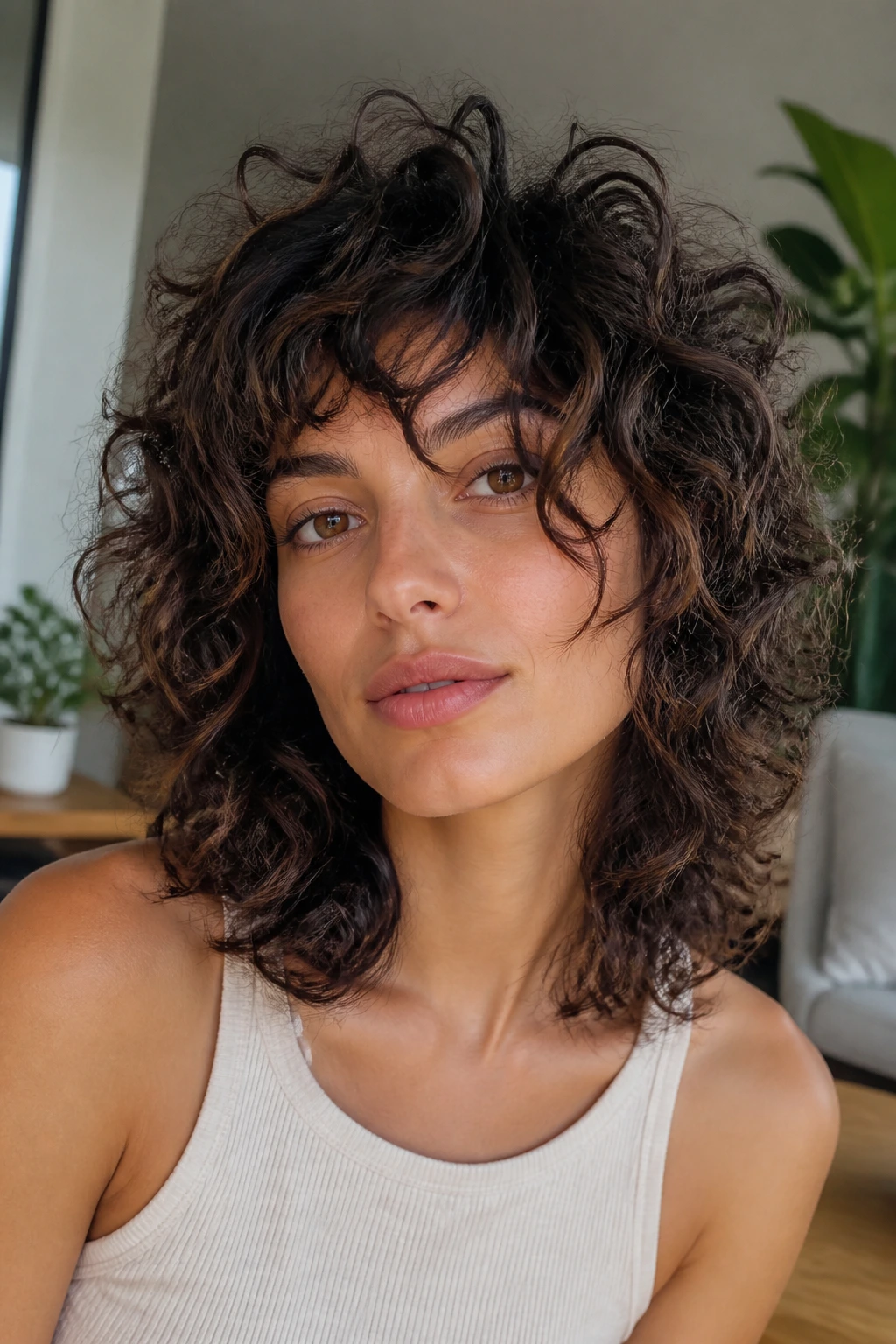
Razor-cut curly shags are a slippery topic. On the right curls, they create soft, feathered ends that move like fabric. On the wrong texture, they can rough up the hair and leave the ends looking frayed.
So here’s my take: use a razor only if the stylist knows textured hair and you have looser curls or waves that can take that kind of cut. The airy effect works because the ends don’t sit in blunt chunks. Instead, they break apart and fall with less heaviness.
This version feels lightest around the face. It’s the shag for people who hate the look of a dense edge and want the haircut to have a little wind in it even when the room is still.
If your hair is very dry or very tight, I’d be cautious. Shears may give you the same movement with fewer surprises.
11. Wet-Look Curly Shag with Defined Ringlets
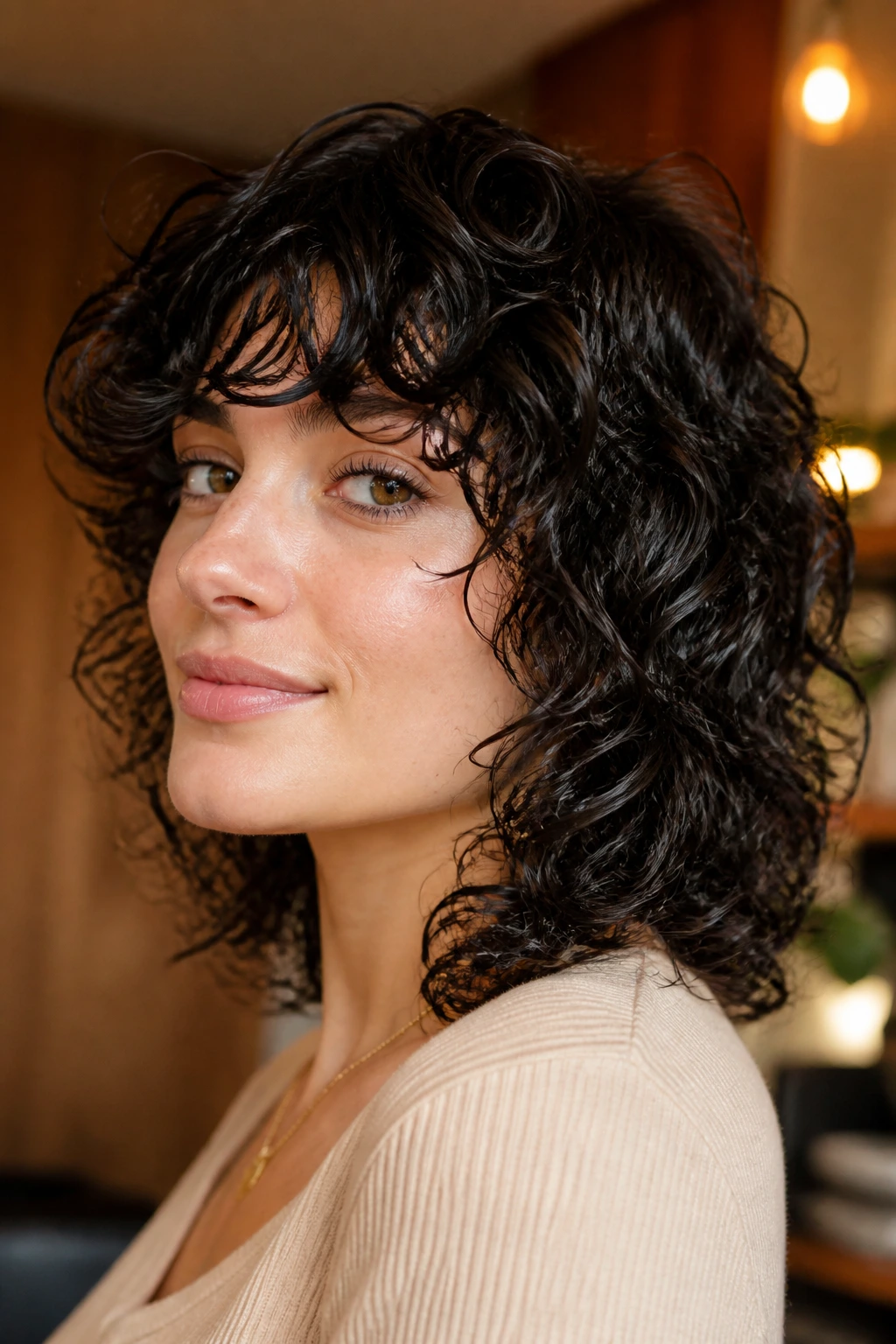
This is not a permanently wet haircut. Thank goodness. It’s a shag built to look slick and defined when you use gel, then break into shiny ringlets once the cast is scrunched out.
The layers are important here because the product does some of the visual work. Shorter face-framing pieces show off the definition, while longer back layers stop the style from getting too angular. It’s a strong choice if you like polished curls rather than fluffy ones.
A defined ringlet shape also works well when the hair is cut with a clear perimeter. That outline helps the gel cast settle into something neat instead of chaotic.
Some days this look reads glamorous. Some days it reads art-school cool. Same cut. Different styling.
12. 70s-Inspired Curly Shag with a Full Fringe
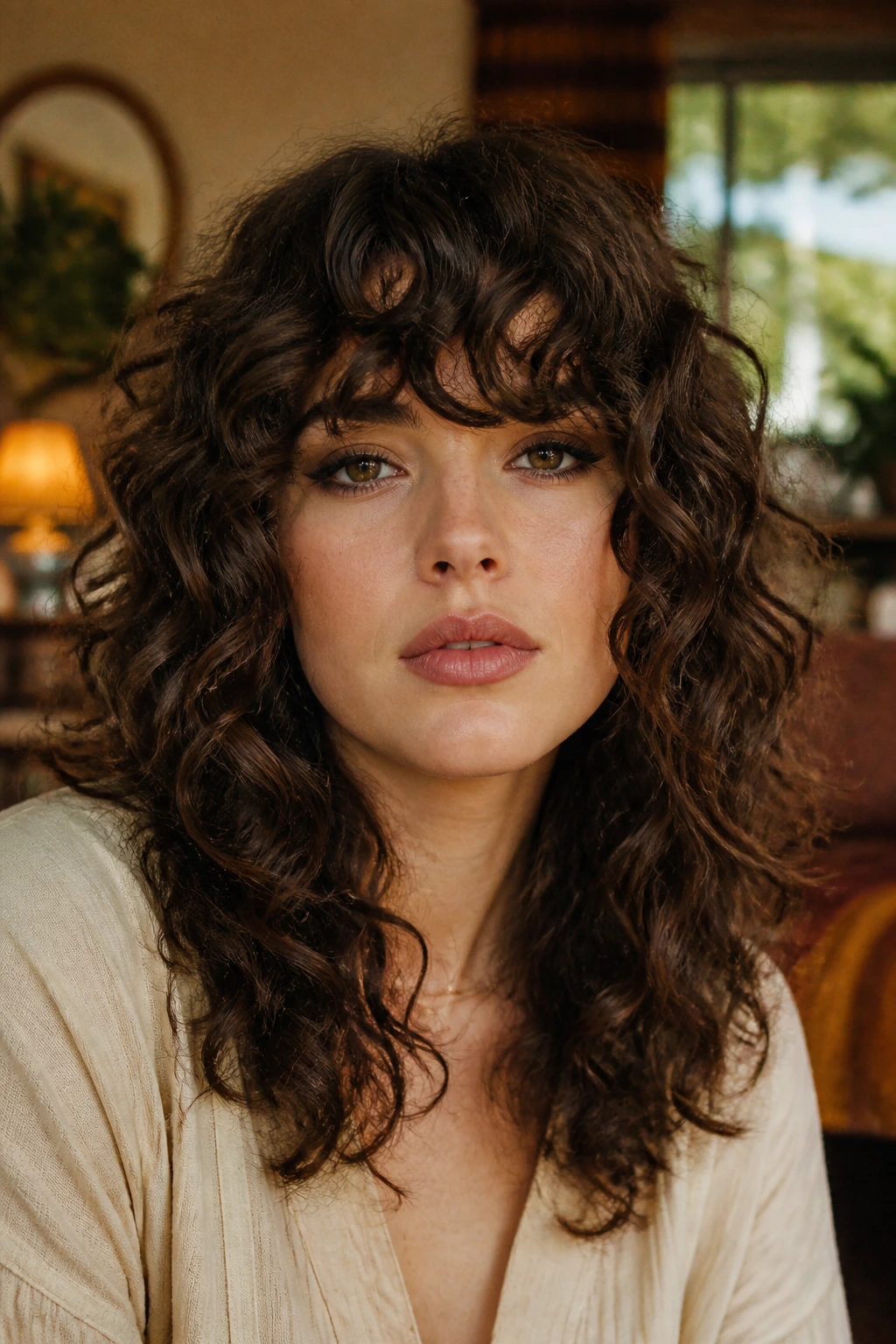
A full fringe changes the personality of a curly shag fast. Instead of soft face framing, you get a bold, forehead-covering line that breaks up the top half of the haircut and gives the whole thing a little vintage swagger.
The key is leaving enough length in the fringe so shrinkage does not ambush you. Curly bangs are never as short as they seem in the chair, and a full fringe needs room to breathe. On dense curls, it can create a lot of presence around the eyes and cheekbones.
I like this shape when someone wants the haircut to be the main event. It’s not subtle, and it should not be. The layers below the fringe keep the silhouette from becoming heavy, which is the part a lot of people miss.
If you like drama with a good haircut underneath it, this is your lane.
13. Pixie Shag for Curly Hair
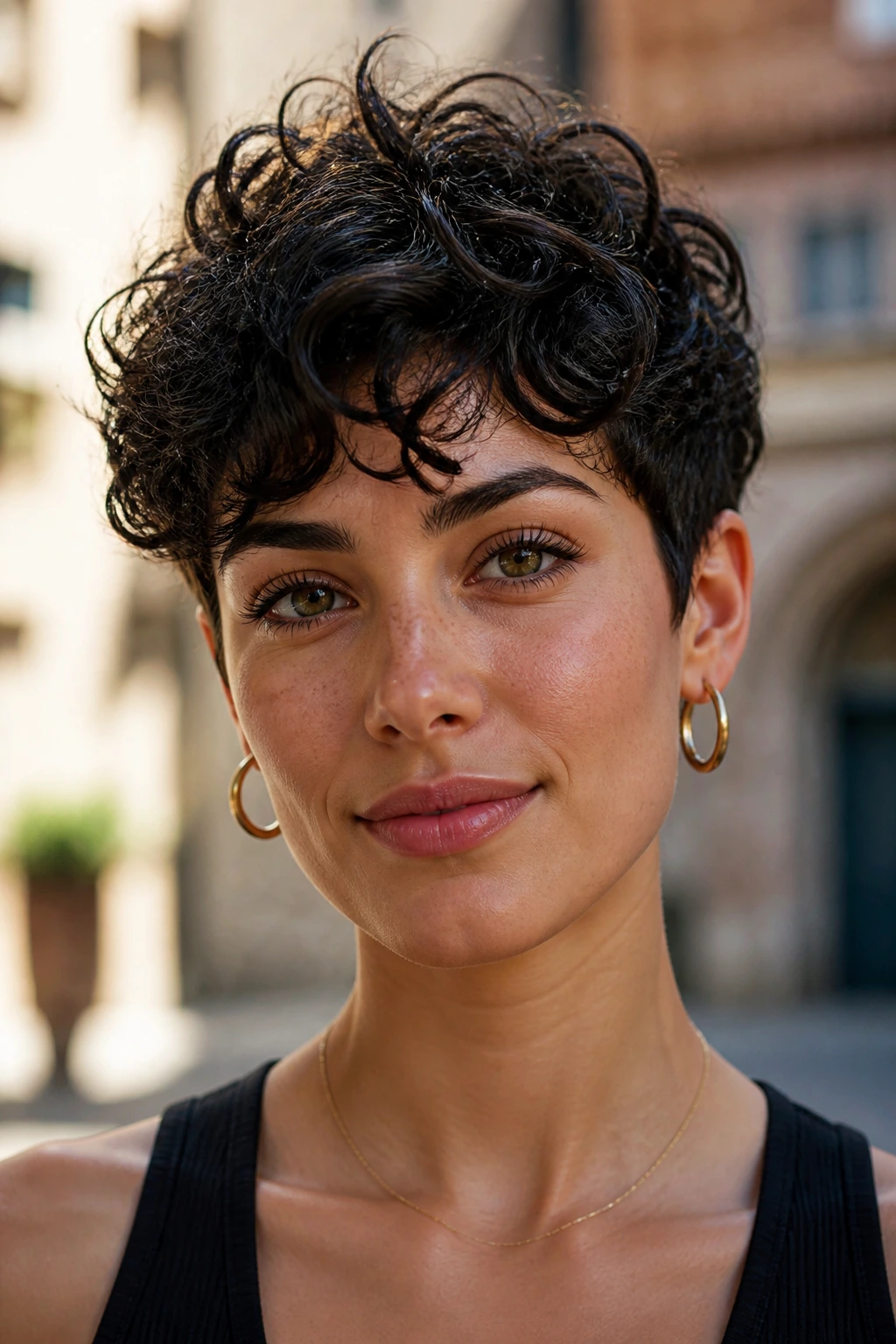
A curly shag pixie is small, fast, and full of personality. The top stays long enough to show curl pattern, while the sides and back are tight enough to keep the shape neat. It’s a haircut that opens up the neck and ears, which can feel great if you’re tired of fighting weight.
The best versions keep some softness around the temple and crown. If the cut goes too hard around the edges, it stops reading shag and starts reading clipped. The whole trick is to keep texture alive on top while the silhouette stays compact.
This one is lovely for people with fine curls who want more lift than length. It’s also practical if you sweat a lot or simply want fewer hair decisions in the morning.
A curly pixie shag is not for hiding. It shows everything. That’s part of the fun.
14. Lob Shag with Choppy Ends

The lob shag is the cautious friend in this lineup, and I mean that as praise. It sits somewhere between a bob and a mid-length cut, which makes it a comfortable first step if you want layers but don’t want to lose the safety net of length.
The choppy ends give the lob some edge, but not too much. The layers around the face keep the shape open, and the back stays long enough that you can still tie it up in a pinch. That matters more than people admit.
A lot of curly-haired clients end up here because it solves a simple problem: the hair needs movement, but the owner still wants options. The lob shag does both.
I’ve seen this cut work especially well on hair that gets too wide at longer lengths. Taking it up to the lob area helps the curls cluster more neatly.
15. Curly Shag for 3B Ringlets
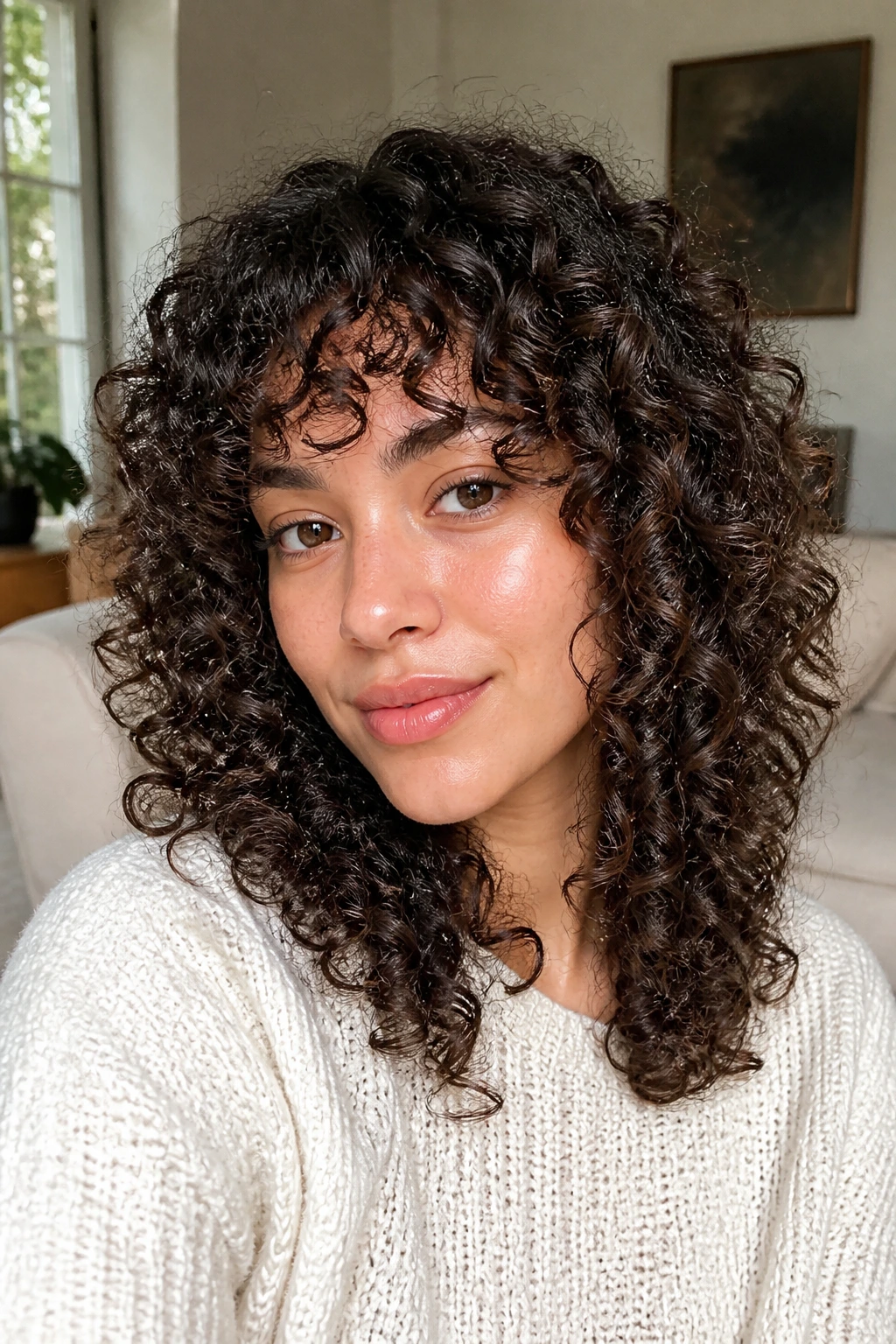
A 3B curly shag needs enough layering to make the ringlets stack, but not so much that the shape gets shredded. Those corkscrew curls already have their own spring and shine, so the cut’s job is mostly to show them off without overwhelming the pattern.
The sweet spot is usually around the cheekbones and collarbone. Layers should encourage the ringlets to fall in separate little groups, which gives the haircut that lively, bouncy look people are after. If the crown is too short, 3B hair can get fluffy fast.
What to watch for
- Too much thinning at the ends can make ringlets look stringy.
- A blunt lower layer can weigh the whole shape down.
- A dry cut helps the stylist see how much each ringlet actually springs.
- Medium hold products usually behave better than heavy creams here.
This is one of the easiest textures to build a shag around because the curl has enough shape to hold the haircut’s intention.
16. Curly Shag for 4A to 4C Coils
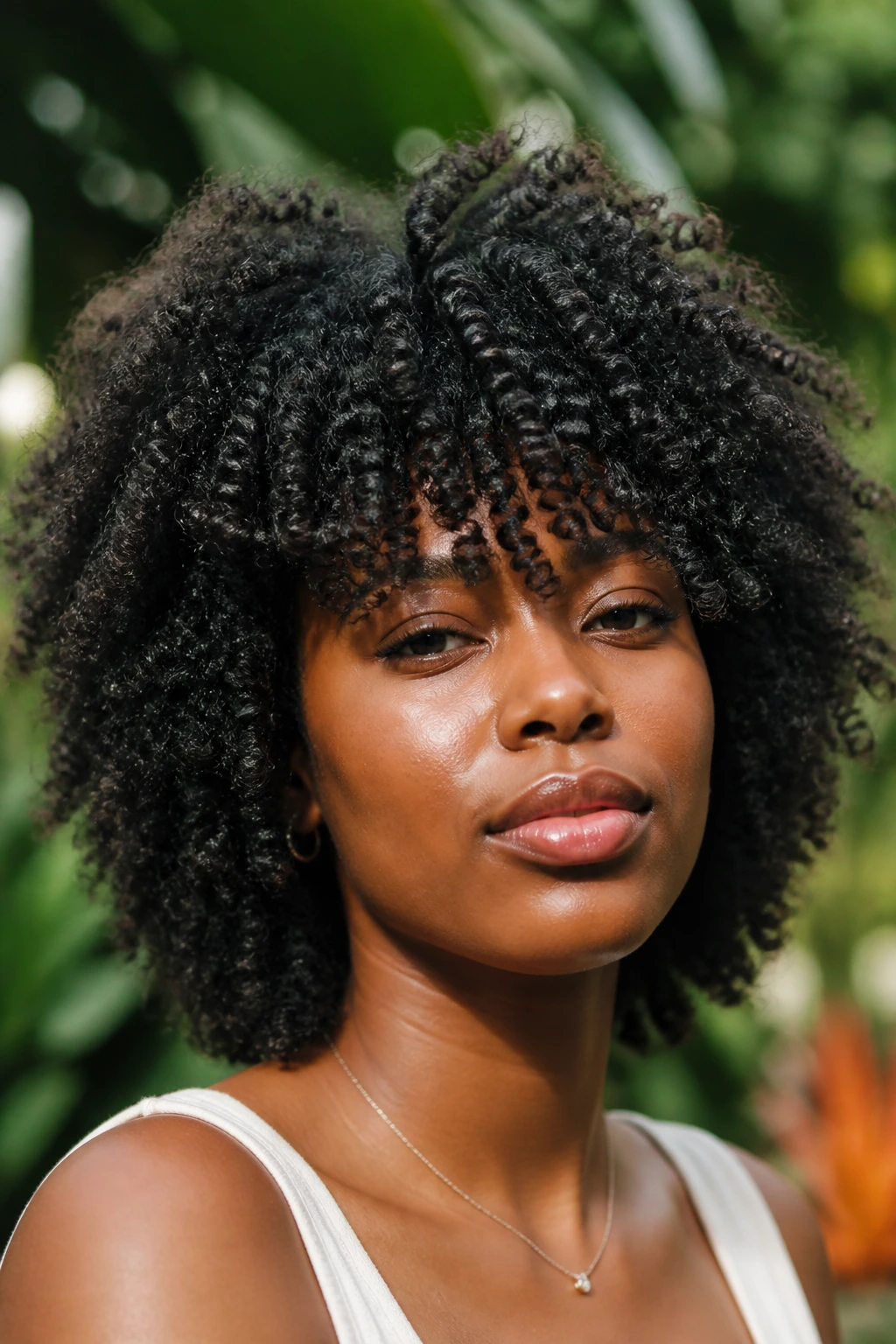
This is where a shag needs to be handled with real care. Tight coils can take volume off beautifully, but they also punish sloppy layering. If the cut removes weight in the wrong spots, the silhouette can become uneven or patchy fast.
A good 4A to 4C shag respects shrinkage and density first. The top can be slightly shorter to lift the crown, while the sides and back keep enough fullness to preserve shape. Some stylists prefer to work curl by curl or in small sections, and that attention matters here.
Moisture helps, but the cut has to earn the moisture. A healthy coil pattern will show off the layers; a dry, over-thinned one will just look hungry.
If you wear twists, wash-and-gos, or stretched styles, ask for a shape that works both ways. That little detail saves you from a haircut that only looks good in one styling method.
17. Shoulder-Skimming Curly Shag with a High Crown

This is the volume lover’s version. The crown is lifted a little more than in a soft shag, which gives the haircut height right where a lot of curly hair goes flat. The rest skims the shoulders so the shape still feels wearable.
The longer crown layers help especially if your roots collapse by noon. A little extra lift at the top keeps the cut from looking like it’s pulling backward. The shoulder length below gives the curls enough weight to stay defined, not floaty.
I like this shape on medium to thick hair that needs a stronger outline. It’s also a solid choice if you wear glasses, because the top volume balances the frame without crowding the face.
A good high-crown shag looks like the hair knows where it’s going. That sounds corny. It isn’t when the cut is right.
18. Indie Curly Shag with Piecey Bangs

Piecey bangs give the shag a more editorial feel. Instead of one soft fringe, you get separated curl clumps that break across the forehead and around the temples. It looks a little messier, a little sharper, and a lot less precious.
This shape works best when the stylist leaves space between sections, rather than trying to force one smooth curtain. The curls should have room to fall in little broken pieces. That gives the haircut movement even when the rest of the hair is simple.
A piecey fringe can be a lifesaver for people who want bangs but hate the heaviness of a full fringe. It also helps if your forehead is more of a feature you want to hint at rather than cover.
If the word “effortless” makes you roll your eyes, this is the shag for you. It has edge.
19. Low-Maintenance Air-Dry Curly Shag

This is the haircut for people who want the shape to show up before styling does. The layers are placed so the curls settle into a decent outline while air-drying, which means you are not spending twenty minutes chasing perfection with a diffuser.
The cut usually keeps the ends light and the top balanced, so there’s no giant shelf at the bottom. That makes the natural dry pattern look cleaner. A little curl cream, a little gel, and you’re mostly done.
The truth is, not every curly shag should need a salon-level styling session to behave. This one is built for a real routine, not a photo shoot.
If you live in a humid place, or you just hate hair tools, start here. It’s the easiest to maintain without losing the shag shape.
20. Glam Curly Shag with Long, Floating Layers

A glam shag needs length. Not endless length, but enough for the curls to cascade instead of spike out. The layers are longer and softer, and the result feels more polished than choppy.
I like this version when the hair has enough density to carry a longer shape without going heavy. The layers move when you turn your head, which is a small detail that makes a big visual difference. It also works well for curls that shine when stretched a bit during diffusing.
The key is restraint. If the layers get too short, the glam turns into a mess. Keep the movement, keep the weight, and let the curls do the rest.
This is the shag that looks good with a sweater, sure, but also looks dressed up with a jacket and earrings. Nice range.
21. Messy Rocker Shag with a Deep Side Part

The deep side part gives this shag its attitude. One side gets pushed up and over, the other side stays looser, and the whole cut looks like it belongs in a guitar shop even if you’ve never touched a guitar in your life.
This works especially well on medium to thick curls with some natural lift at the root. The part creates asymmetry, which helps break up dense hair and keep it from feeling too uniform. If your face shape is round or square, the diagonal line can be flattering in a very practical way.
Style it with enough hold to keep the part where you want it. Without that, curls will drift back to center and the whole effect disappears by lunch.
This is not a tidy haircut. That’s the point.
22. Soft Romantic Curly Shag with Bottleneck Bangs
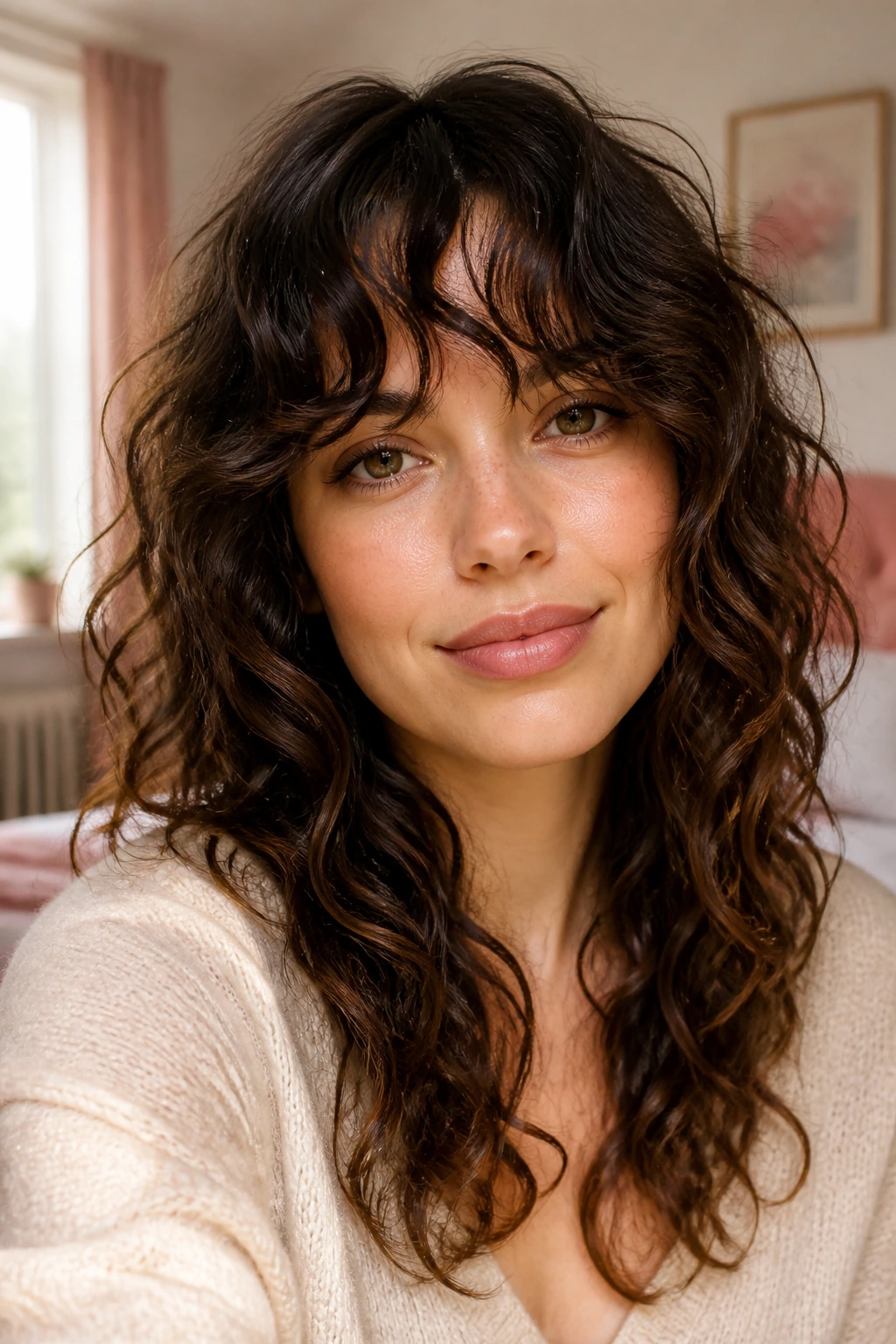
Bottleneck bangs on curls are a little softer than full fringe and a little more structured than curtain bangs. The center is shorter, the sides sweep longer, and the effect frames the face without sealing it in.
For curly hair, that middle section has to be left long enough to survive shrinkage. The shape is lovely on oval, heart, and longer face shapes because it brings attention inward without cutting the face in half. The shag layers below keep the softness going.
I like this version because it gives you bangs without the heavy maintenance of a blunt fringe. The bangs blend into the layers better, so the haircut grows out with less drama.
If you want something feminine without being fussy, this is one of the best shapes on the list.
23. Bold Short Curly Shag with a Tapered Nape
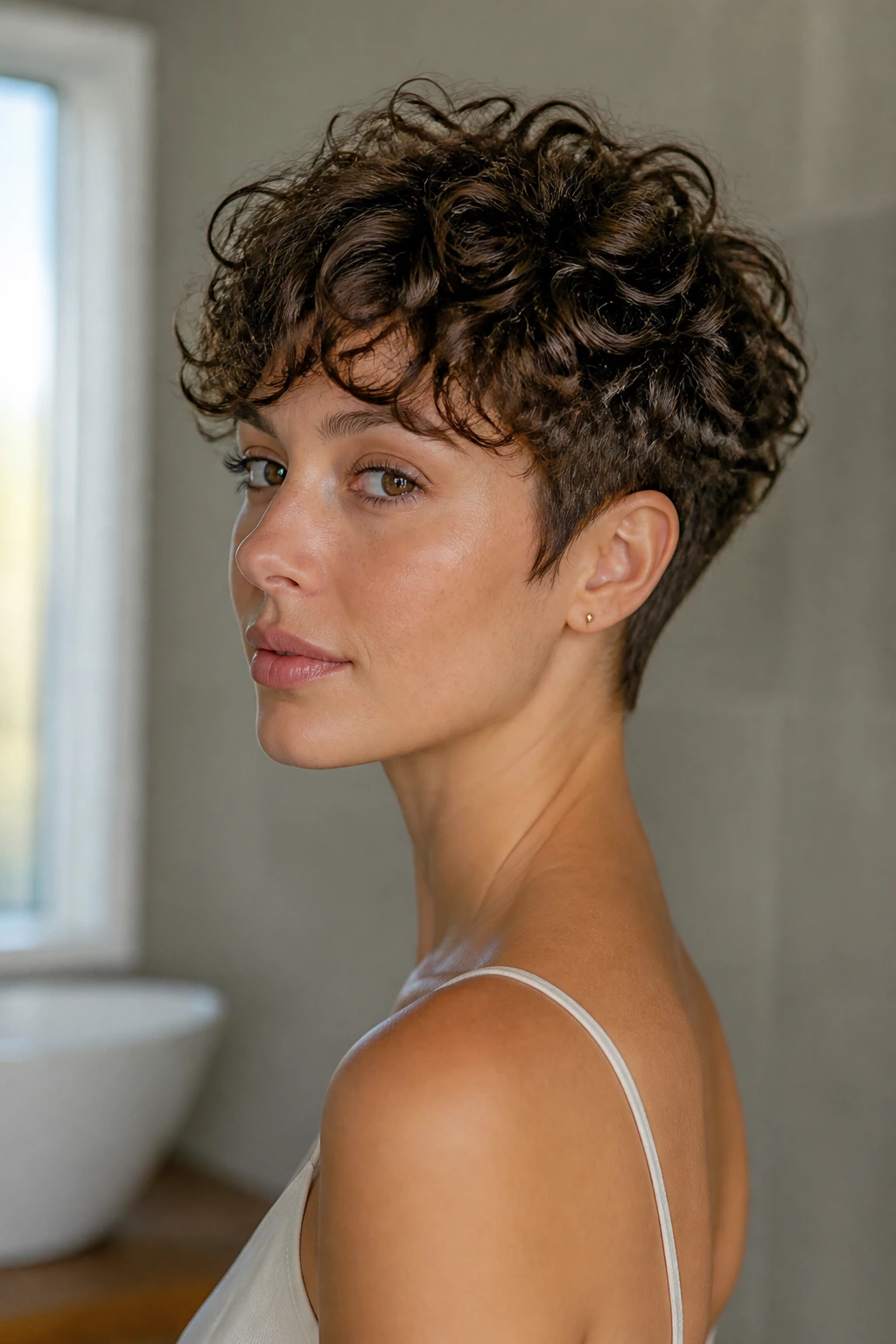
The tapered nape makes this short curly shag feel crisp instead of bulky. The back hugs the neckline, while the top keeps enough height and texture to show off the curl pattern. It’s clean, efficient, and a little daring.
This shape is excellent when you want less hair touching your neck but still want the shag’s layered energy. The taper also helps the haircut stay neat between trims, which is useful if your curls puff up fast after washing. On dense hair, it can save you from that mushroomy back view that so many short cuts accidentally create.
The best part is how much personality it has for such a small footprint. Short hair does not mean boring. It just means every inch has to earn its place.
Why a Curly Shag Needs Its Own Shape
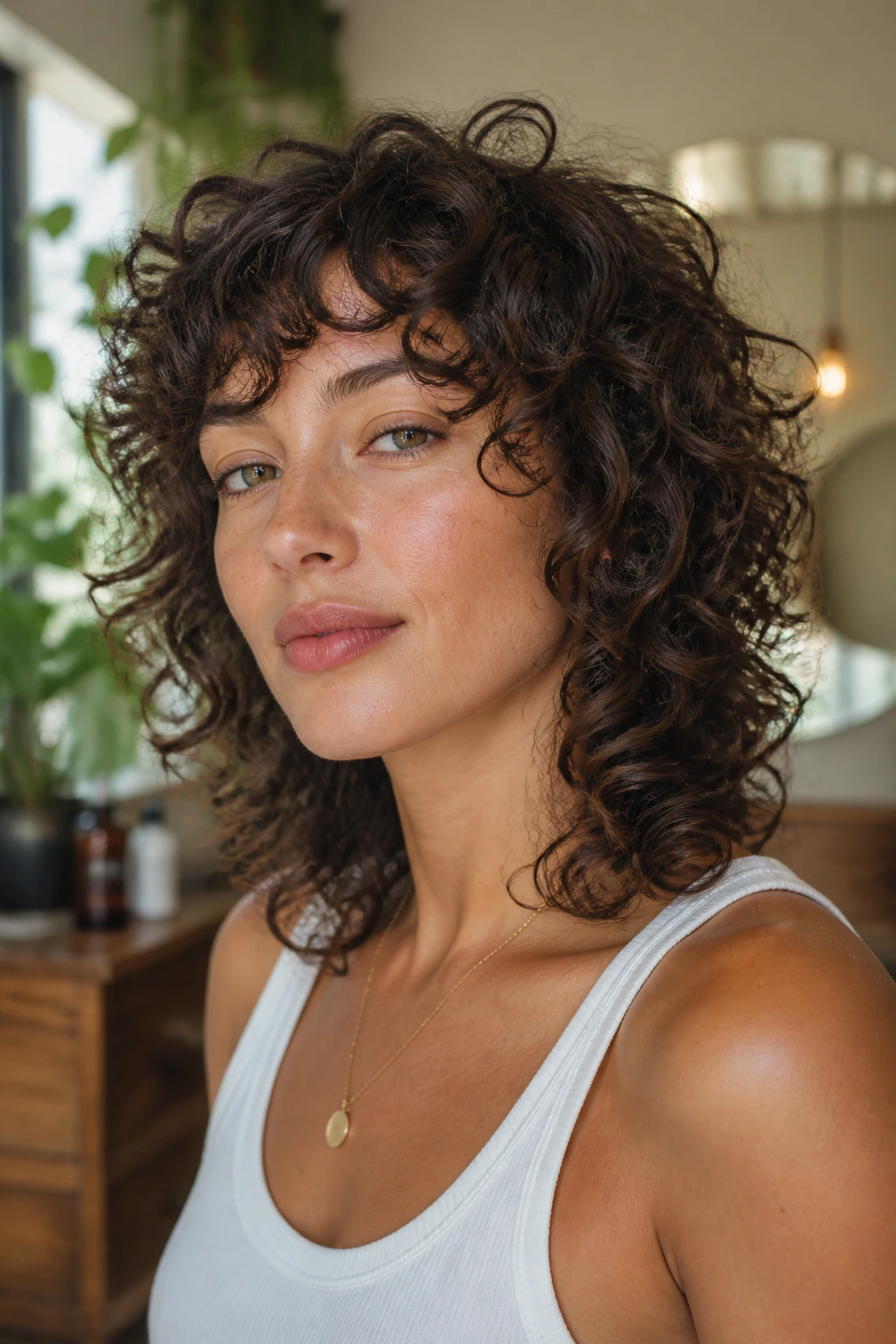
A curly shag cannot be borrowed from straight hair and expected to behave. Straight hair shows the cut as a line; curly hair shows the cut as a system. That means the layers, the perimeter, the crown, and the bangs all have to talk to each other once the curls dry.
Dry cutting helps because it shows shrinkage in real time. Wet curls stretch, lie, and sometimes lie spectacularly. A strand that looks long and cooperative when wet can spring up hard once it’s diffused, and that’s how bangs get too short and layers get too high.
There’s also the question of weight. Curly hair needs some places to stay dense or the silhouette turns fuzzy. Remove too much bulk at the wrong point and the cut gets thin at the ends; leave too much weight and the top collapses into a triangle. The sweet spot sits in the middle, and it changes with curl pattern, density, and porosity.
If you’ve had a curly cut that looked great in the chair and confusing at home, that usually means the shape was drawn for wet hair, not living hair. Those are not the same thing. Not even close.
What to Bring to the Appointment Chair
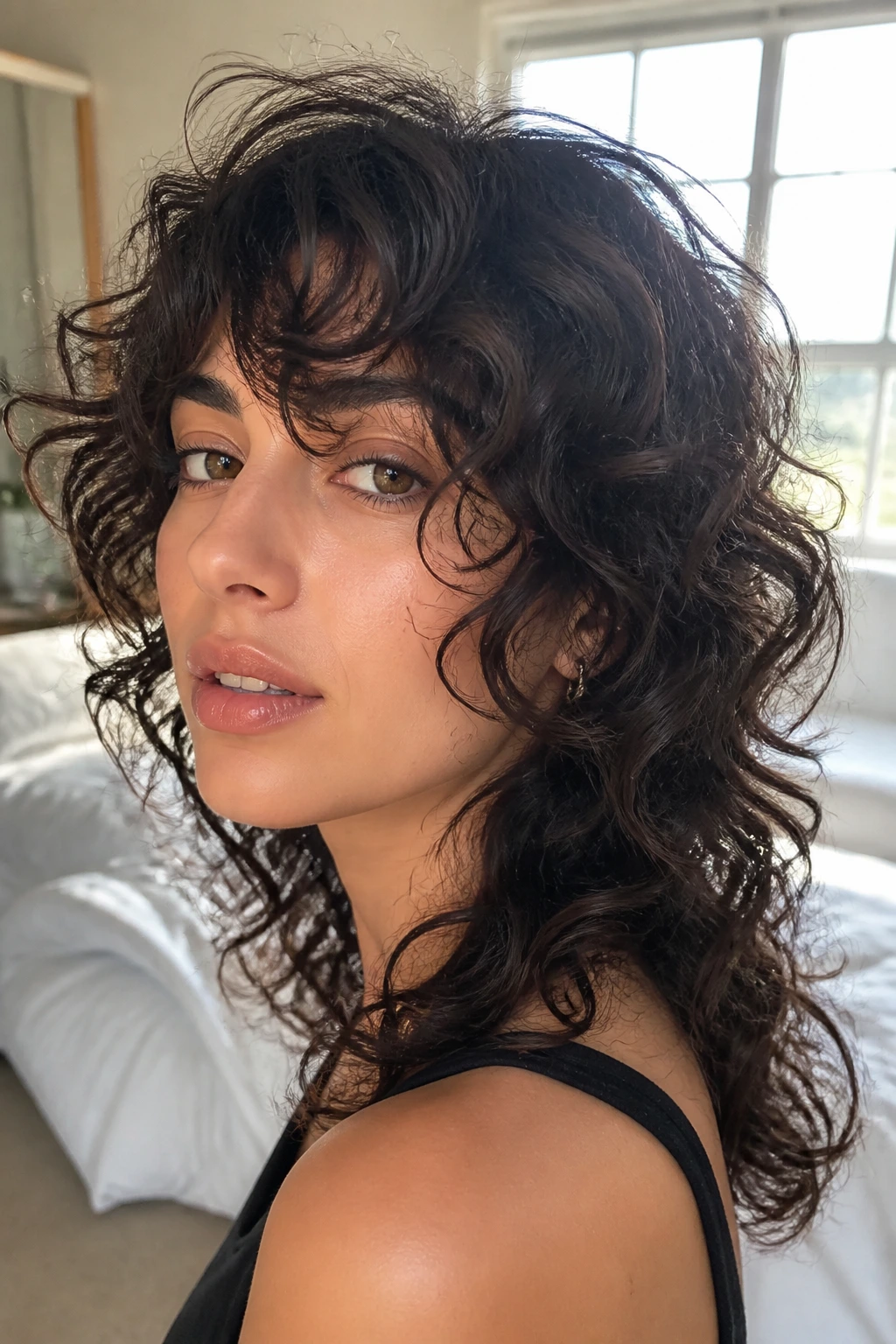
A good curly shag starts before the scissors come out. Show up with your hair in its usual state, not in some fantasy version of it, and bring photos that match your curl pattern as closely as possible. If you have 3B curls, a glossy straight-hair shag reference is mostly a distraction.
- Two to three reference photos — one front view, one side view, and one with a similar curl pattern if you can find it.
- A note about shrinkage — tell the stylist how much your hair bounces up after drying, especially around the fringe and crown.
- Your styling routine — air-dry, diffuse, twist, finger coil, wash-and-go; the cut should fit the habit.
- A detangling tool — wide-tooth comb or brush, if your stylist likes to work through the hair before sectioning.
- Product info — if you love mousse and hate cream, say so. The haircut should not assume a product routine you will not keep.
- A photo of what you dislike — this one saves time. “Not too triangular,” “not too short in front,” “no helmet shape.”
One quiet truth: stylists can usually work with a clear no-list better than a vague wish list. “I want movement” is fine. “I want movement, but not wide sides and not short bangs” is better.
How to Choose the Right Curly Shag for Your Texture
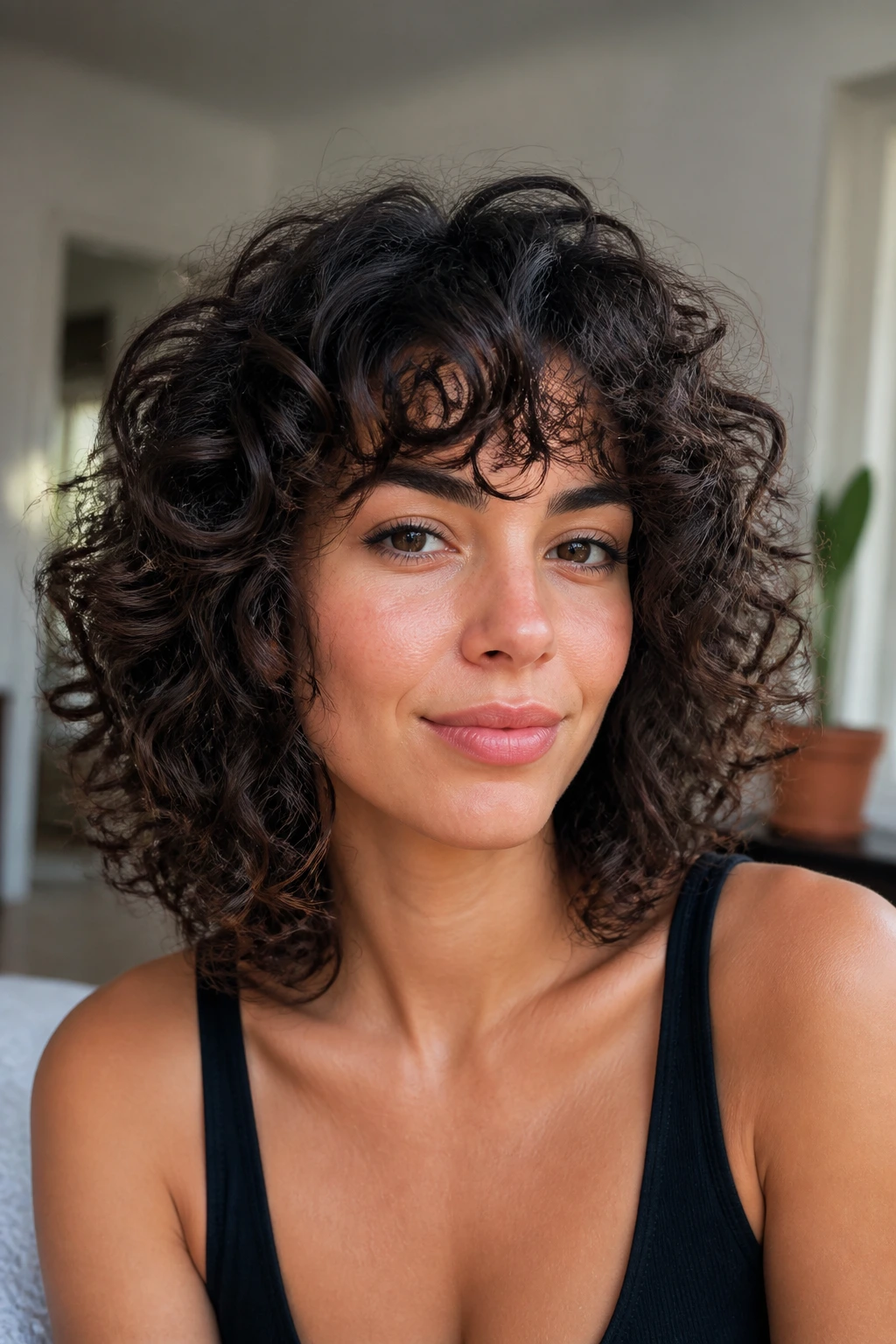
The right shag depends less on the trend name and more on how your curls behave when they dry. Fine curls need weight left in strategic spots so they do not disappear. Thick curls need enough shaping to prevent the mushroom effect. Tight coils need a cut that respects shrinkage and keeps the perimeter from looking chopped off.
Face shape matters too, but only after texture is handled. Round faces often like longer face-framing pieces that cut down the width. Longer faces can take a fuller fringe or curtain bangs. Square faces usually look good with softer layers around the cheekbone rather than hard angles that stop at the jaw.
Density changes everything. A very dense head can handle more internal removal, while sparse curls usually need a gentler touch. If the cut is too aggressively layered on fine hair, the ends can look see-through from the first wash.
The best stylist conversation is usually the boring one: how you wear your hair, how much time you spend styling, where it tends to collapse, and what part you hate most. Those details matter more than a pretty inspiration photo.
How to Style a Curly Shag Without Flattening the Shape
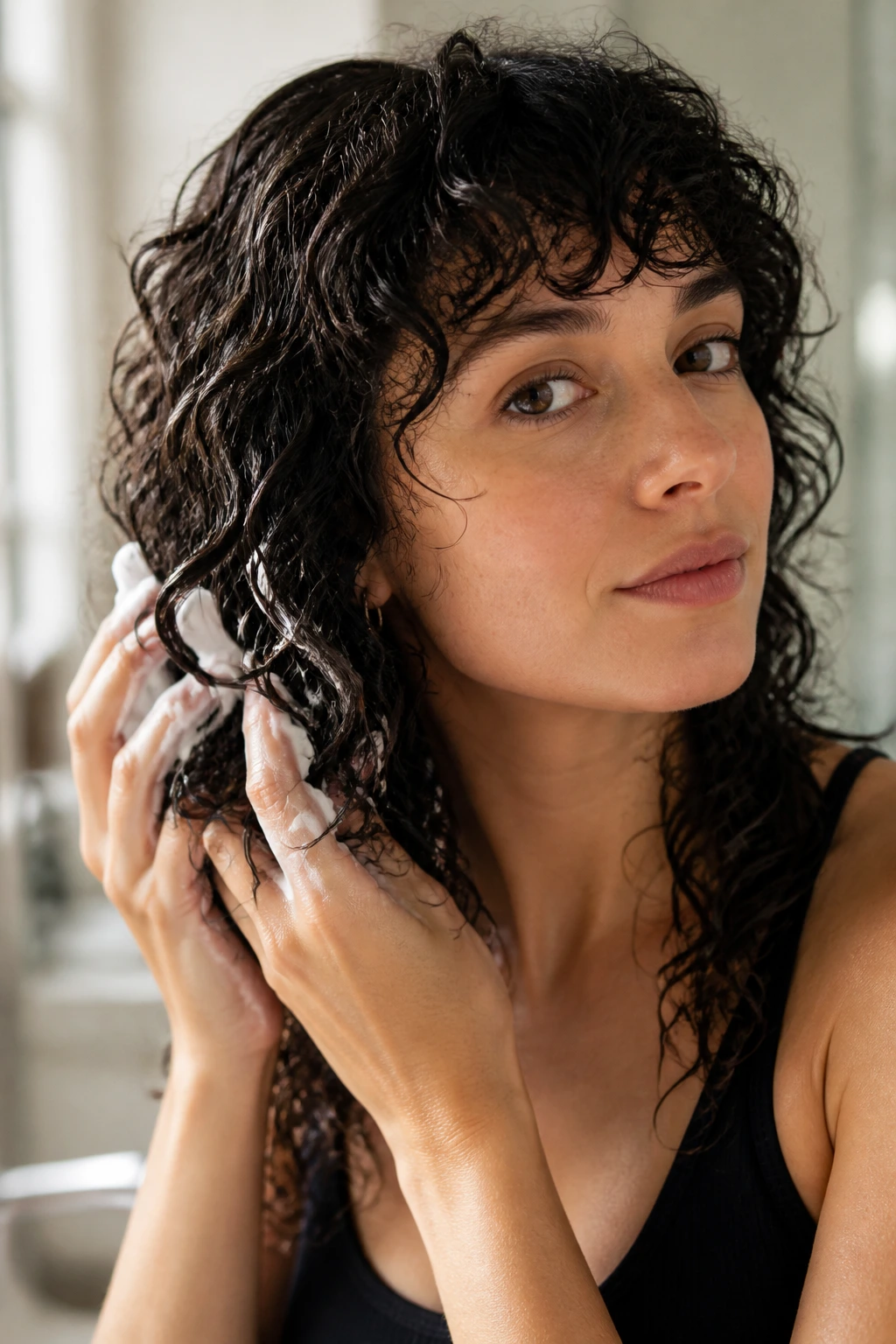
The cut does some of the work, but the styling choice decides whether the layers read as soft or chaotic. Start with water-based leave-in on damp hair, then add mousse or gel from mid-lengths to ends. A tiny bit at the root helps if you want lift, but too much near the scalp can leave the top sticky and flat.
Definition: If you want ringlets to separate, use a stronger hold product and do not touch the hair until the cast forms. Scrunching too early usually breaks the curl clumps and frizzes the shorter layers first.
Volume: If the crown goes flat, clips at the root during drying help more than extra cream ever will. Put them in while the hair is damp, then remove them once the roots have lifted and the shape has some memory.
Finish: Air-dry for softness or diffuse for more lift and a neater outline. Diffusing upside down can help, but only if your curl pattern does not clump into a chaotic halo. If it does, diffuse in sections and keep the airflow moving.
Refresh: Day two is usually where a shag earns its keep. A little water mist, a pea-sized amount of gel rubbed between wet palms, and a light scrunch around the bangs or front pieces can bring the haircut back without soaking it all over again.
Additional Tips and Shape Boosters
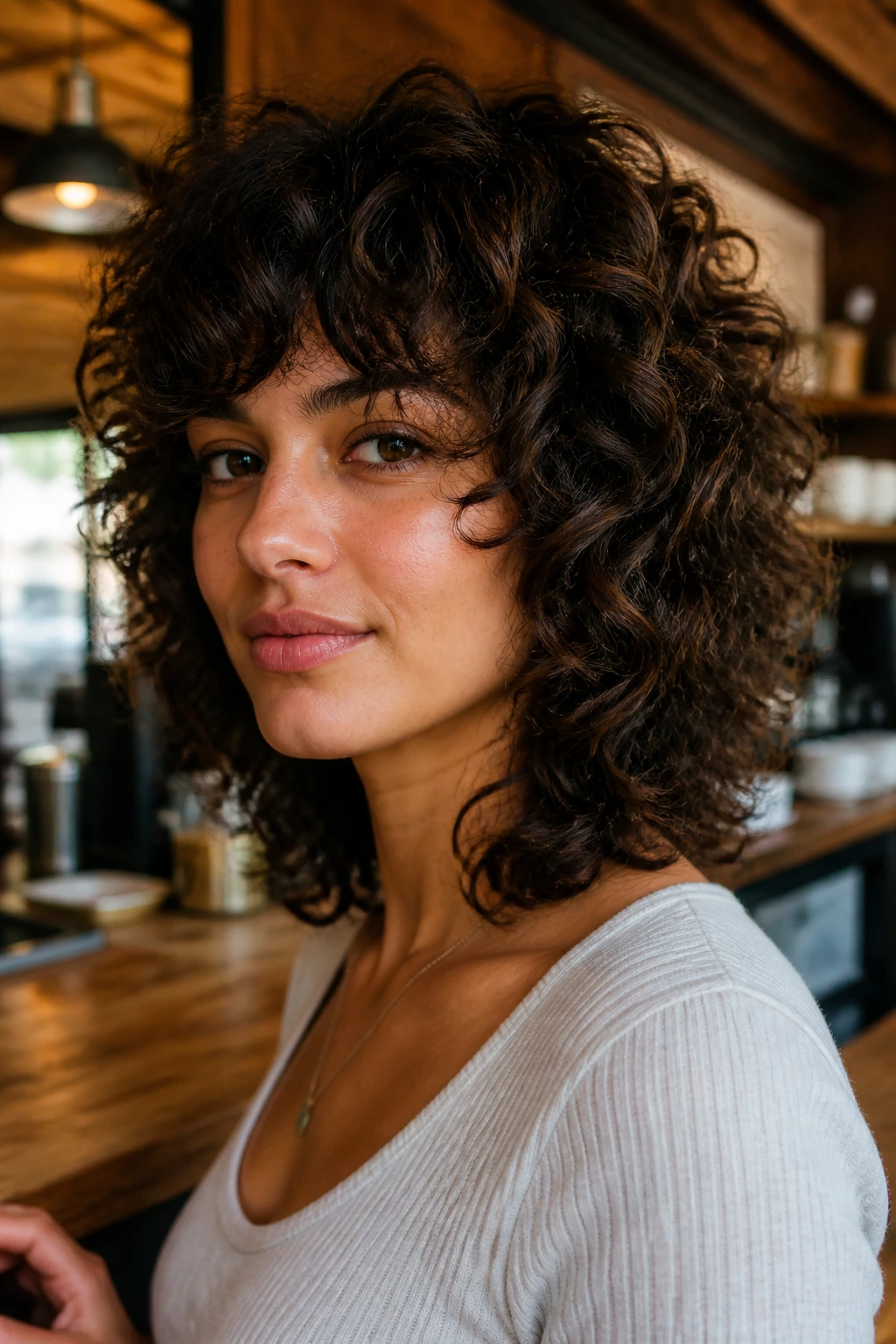
Shape Enhancement: If your curly shag feels too wide, ask for a touch more weight to stay at the lower sides. A better bottom line often fixes the whole silhouette faster than more layers do.
Customization: Tuck one front piece behind the ear and leave the other side loose. That small asymmetry can make the haircut feel more current without changing the cut itself.
Lift Trick: Root clips near the crown for 10 to 15 minutes after styling can save a flat top. I prefer them over teasing, which rarely looks good on curls and usually makes detangling a chore later.
Softness: A drop of lightweight oil on fully dry ends can calm the fuzz that pops up on choppy layers. Do not add it before the gel cast dries, or the definition can collapse.
Make-It-Yours: If you want more polish, keep the fringe longer and the layers softer. If you want more edge, shorten the crown, break up the ends, and let the shape lean messy.
Keeping the Shape Between Trims
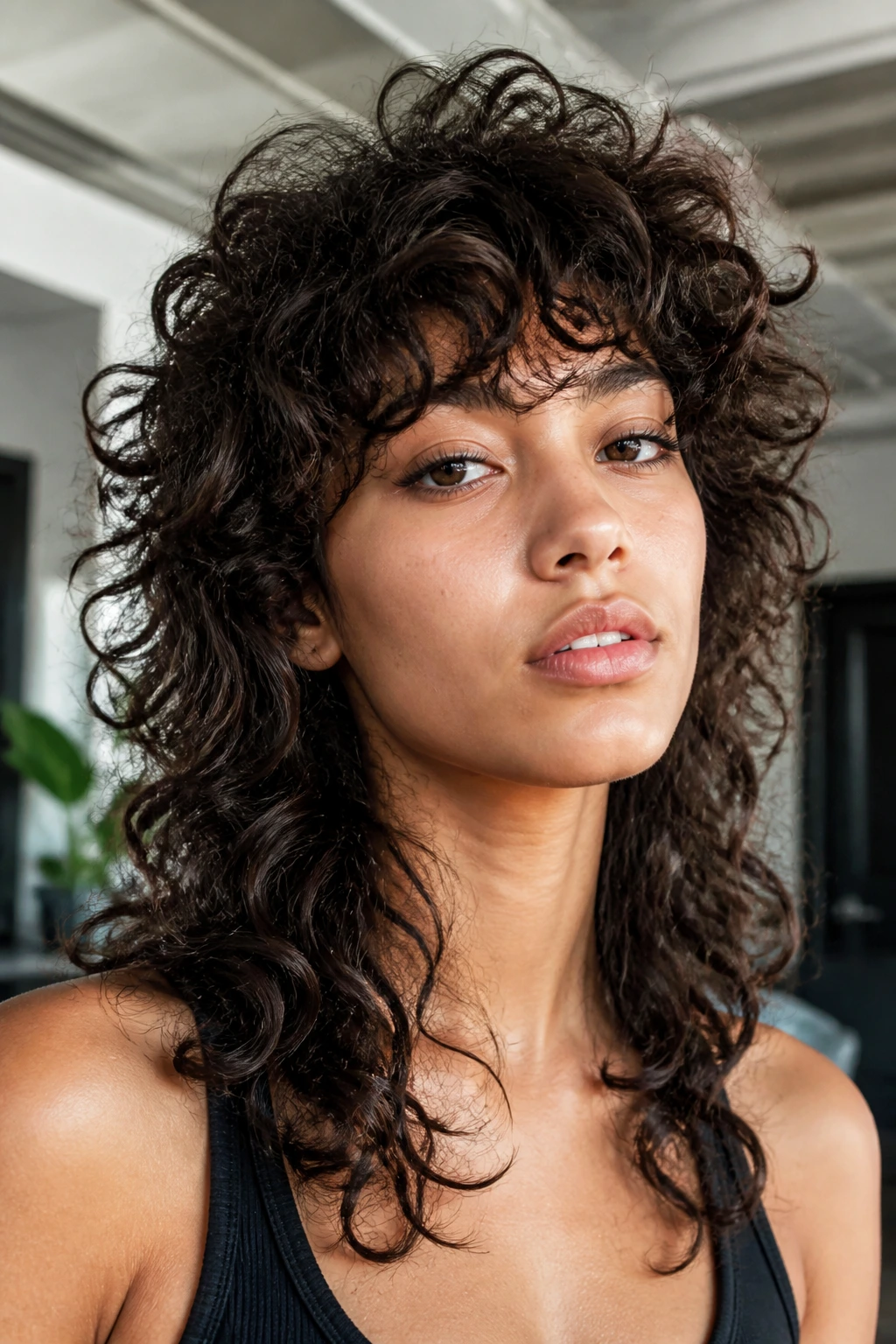
Curly shags age in a very specific way. The first couple of washes are often the sweetest spot, because the layers settle into one another and the fringe stops acting so dramatic. After that, the shape starts to spread, which is fine as long as the cut was built well.
For maintenance, plan on a trim every 8 to 12 weeks if you want the shag to keep its structure. Bangs usually need attention sooner, sometimes every 4 to 6 weeks, because curly fringe can drop into your eyes or spring too high depending on length. If you wear a very short shag or pixie shag, the shape may need a tidy-up on the earlier end of that range.
Sleeping matters. A satin pillowcase or bonnet keeps the top from getting smashed, and loose pineappling helps longer curls preserve the crown. If you wake up with flat roots, a quick mist at the base and a few finger scrunches are usually enough; you do not need to rewash the whole head just because one side got weird overnight.
Product buildup can make a shag feel heavy after a few weeks, especially if you like creams. Clarify every 2 to 4 weeks if your hair starts feeling coated, then follow with a richer conditioner if the ends need it. The haircut will look cleaner once the residue is gone — curls usually tell on themselves fast.
Common Mistakes That Flatten a Curly Shag
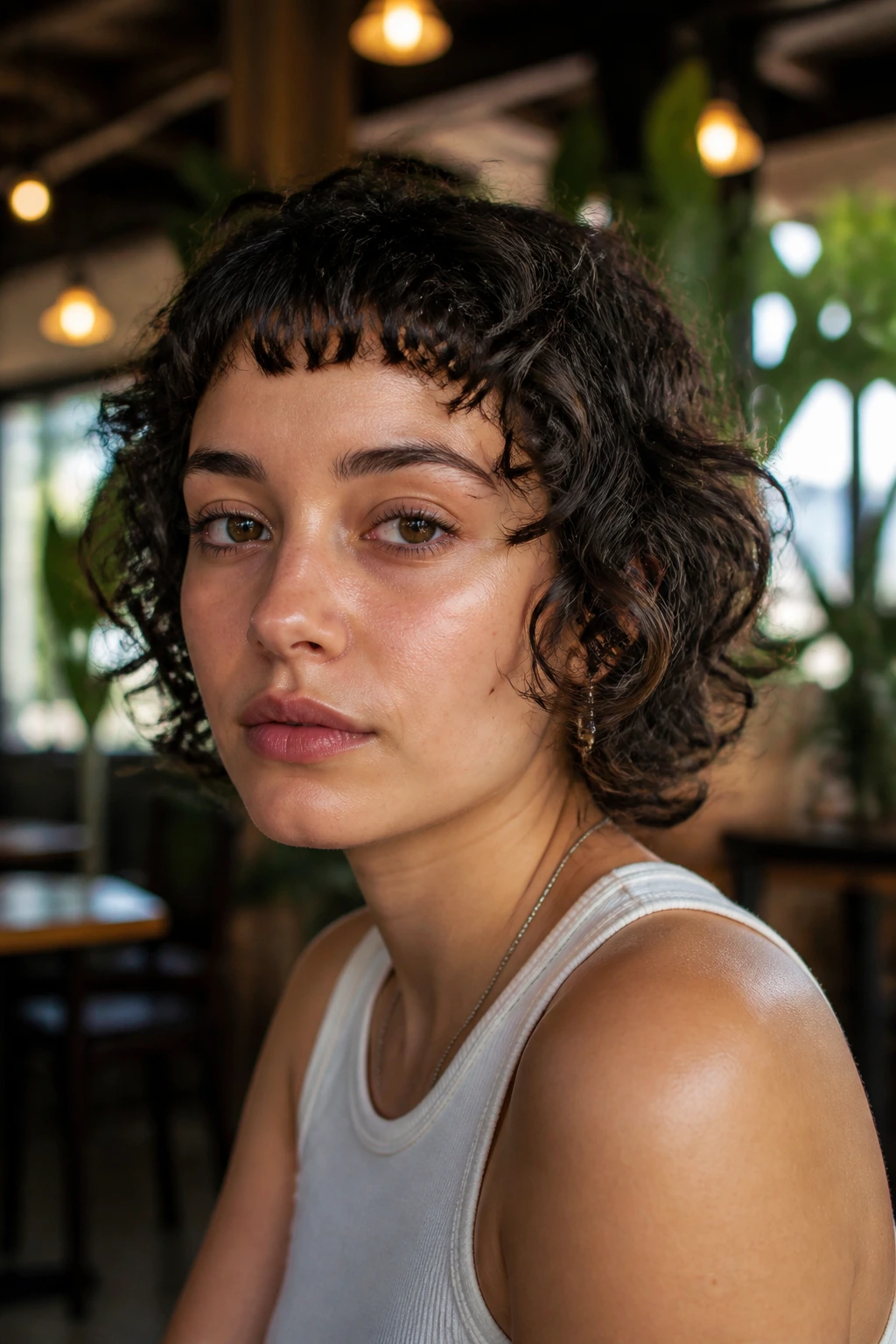
The easiest mistake is cutting the fringe too short because the hair looks longer when wet. Curly bangs shrink with attitude. If the stylist ignores that, the front can jump well above the brows and change the whole face framing in a way you never asked for.
Another common miss is removing too much weight at the crown. It sounds like a good idea until the top gets fluffy and the bottom goes stringy. The fix is to keep some density in the perimeter and let the crown layers work without stripping the whole head bare.
People also over-style shags into submission. Heavy cream, too much oil, too much brushing, or too much touching after drying can collapse the shape and blur the layers into one big puff. A lighter hand usually gives the cut more room to breathe.
The fourth mistake is choosing a reference photo with the wrong curl pattern. A shag on loose waves can look completely different on tight coils, and a cut on dense curls can look nothing like the same shape on fine hair. Bring pictures close to your own texture, or the appointment turns into guesswork.
Finally, some people never ask how the haircut will look on day two. That’s a mistake because curls are rarely judged on the first hour alone. A solid shag should still make sense after sleep, humidity, and one refresh mist.
Variations and Adaptations to Try

The Softer Office Shag: Keep the layers longer, soften the fringe, and leave the ends less broken up. This version still moves, but it reads polished enough for a blazer and a clean part.
The Bigger Wolf Shape: Shorten the crown a touch and push more texture into the top third of the cut. It’s the bolder sibling, with a little more lift and a little more attitude around the face.
The Grow-Out-Friendly Shag: Ask for long internal layers and a gentle perimeter. This is the one to choose if you hate seeing a haircut lose its shape in six weeks.
The Tight-Coil Taper: Build height at the top and taper the nape and sides. It keeps compact curls neat without flattening their natural spring.
The No-Bangs Version: Leave the front pieces long enough to tuck, sweep, or pin back. Good if you want the shag shape but do not want anything sitting on your forehead.
The Glossy Styled Version: Use a strong gel cast, diffuse to about 80% dry, then break the cast with a tiny bit of serum. The cut still stays shaggy, but the finish reads more refined.
Questions People Ask Before Getting a Curly Shag
Should curly shags be cut dry or wet?
Dry cutting is usually safer for curls because it shows shrinkage and natural spring. Some stylists use a mix of dry and damp sectioning, which can work well, but a fully wet cut can hide how much the hair will bounce.
Will a shag make my curly hair too poofy?
It can, if the cut removes too much weight near the top or if the styling is too fluffy. A good curly shag keeps enough length in the lower sections to anchor the shape.
Can I get bangs with curly hair?
Yes, but the bangs need to be cut longer than you think and checked against your real curl pattern. Curtain bangs and bottleneck bangs are often easier to live with than a blunt fringe.
What curl types suit a shag best?
Almost any curl pattern can wear one, but the layering strategy changes. Loose waves need gentler layering, while tighter coils usually need more careful shaping and shrinkage awareness.
How do I keep the layers from looking frizzy?
Use a light leave-in plus a product with hold, and avoid rubbing the hair dry with a towel. A microfiber towel or T-shirt keeps the shorter pieces from puffing up first.
What if my curls are uneven from one side to the other?
That’s normal. Ask the stylist to cut to the dominant side and balance the shape visually, not mathematically. Hair is not a spreadsheet.
How often should I trim a curly shag?
Every 8 to 12 weeks keeps the shape clean for most people. Bangs and very short layers may need a faster touch-up, especially if they spring up after every wash.
Can I grow out a shag without awkward stages?
Usually, yes, if the layers were planned with the grow-out in mind. Ask for softer interior layering and a perimeter that keeps some weight, and the haircut will soften instead of collapsing.
The Cut That Lets Curls Breathe
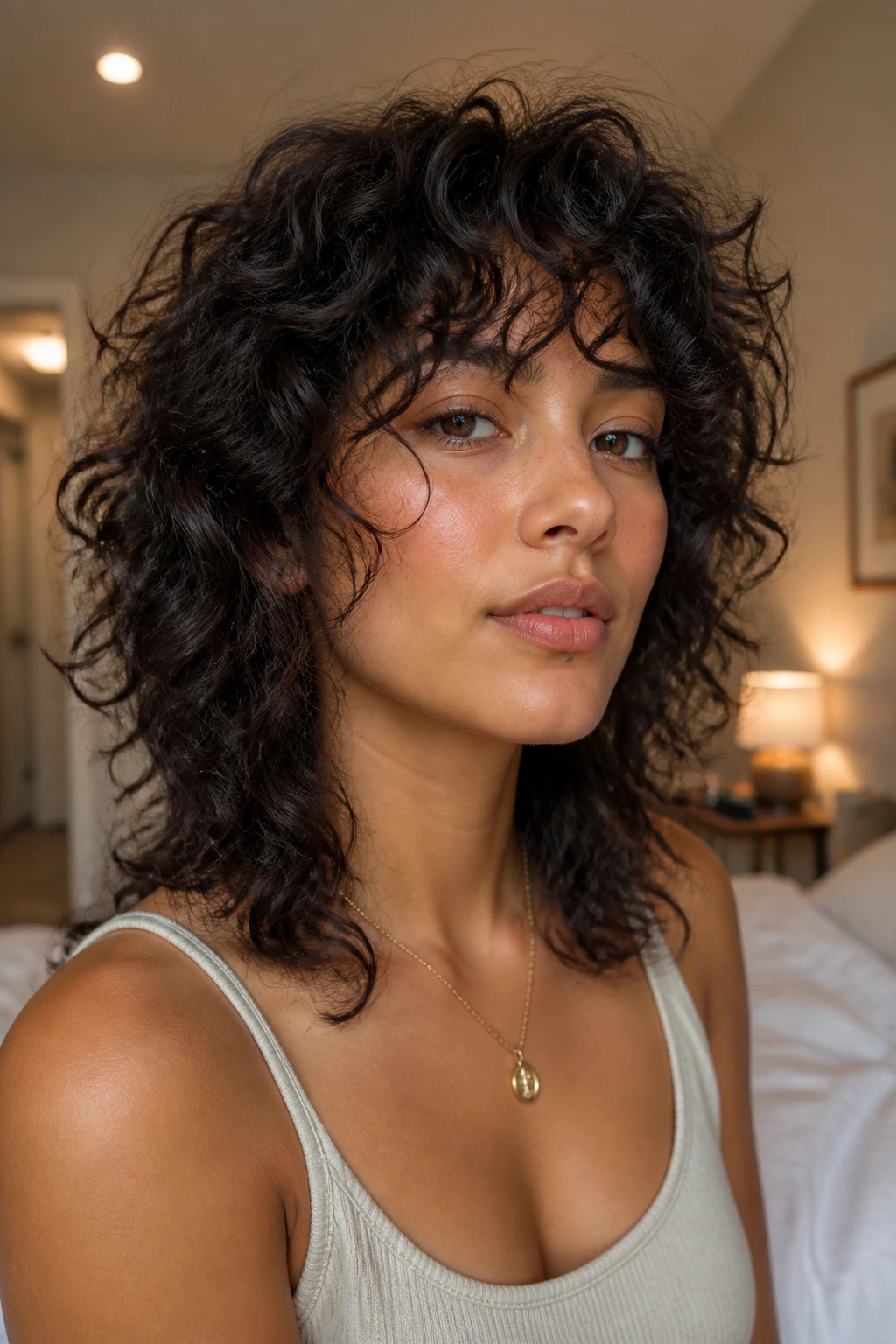
The nicest thing about a curly shag is that it gives curls a job without making them behave like straight hair. The layers can be soft or sharp, high or long, gentle or a little rude, but the cut still has to respect the curl’s real shape once it dries.
That’s the part worth remembering when you sit in the chair. Bring the pictures, talk about shrinkage, and ask for a shape that lives with your texture instead of against it. The result is a haircut that can look different from one wash to the next and still feel like itself.
And that, honestly, is the appeal. A good curly shag does not freeze your hair into one perfect photo. It gives the curls room to move, and that’s where the charm lives.
