



The first cool week changes hair color faster than people expect. A brunette that looked rich in strong summer sun can start reading flat under indoor bulbs, and blonde that felt airy in July can suddenly look too bright against knit sweaters and darker coats. That’s where fall highlights get interesting. They’re not about turning everything lighter. They’re about giving hair depth, warmth, and movement so the color still has something to say when the weather softens the whole picture.
The best fall highlights ideas lean into contrast control. A ribbon that sits one or two levels lighter than the base can make layers move. A face frame that stays warm but not orange can wake up the whole cut. A root shadow can buy you weeks of grow-out before the line starts shouting at the mirror. Small choices. Big difference.
And the fun part? The palette is wide. Cinnamon, caramel, bronze, mushroom, chestnut, copper, amber, rose-brown—each one lands differently depending on base color, texture, and how much maintenance you’re willing to live with. Some of these looks whisper. Some walk in wearing boots. All of them work because they keep the hair from collapsing into one flat tone.
Why These Fall Highlights Ideas Make Sense on Real Hair
Low-contrast grow-out: The smartest looks keep the root a little deeper, so the line of demarcation stays soft for 6 to 10 weeks instead of looking like a hard stripe after three shampoos.
Warmth with control: Caramel, bronze, copper, and maple all read richer when the light gets dull, but the best versions stay inside the same color family as the base.
Placement does the heavy lifting: A few well-placed ribbons around the face and crown can change how a haircut falls without flooding every strand with bleach.
Texture changes the result: Fine hair needs thinner highlights to avoid stripey patches. Thick curls can hold bigger painted pieces, because the bend of the curl breaks up the color naturally.
There’s a version for almost every base: Dark brunettes, medium browns, blondes, redheads, and gray-blending clients can all borrow from this palette without forcing one exact formula.
1. Cinnamon Latte Balayage
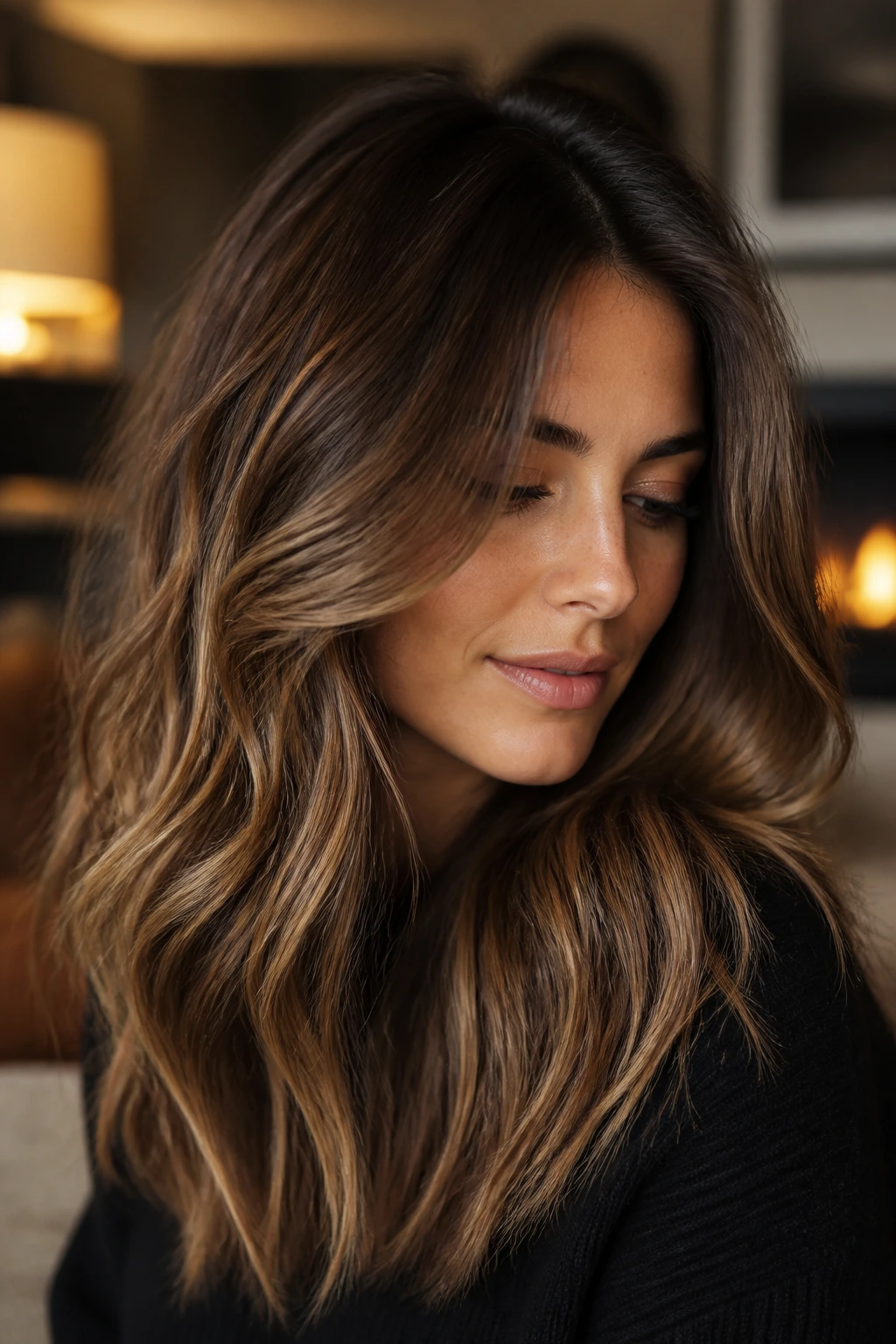
Cinnamon latte balayage is what I reach for when a brunette wants warmth without drifting into orange. The base stays chestnut, cocoa, or soft espresso, and the lighter pieces move through the mids and ends like steam rising off a mug. It feels cozy, but not sugary.
The trick is the placement. You want the ribbons broad enough to show, but not so wide that they look painted on. Ask for soft diagonal balayage through the front and the top layers, then a beige-cinnamon gloss that sits one shade warmer than your base.
- Best on level 4 to 6 brunettes.
- Looks strongest on layered cuts and loose waves.
- Works well when the ends need softness more than brightness.
Tip: Keep the face-framing pieces a touch lighter than the interior ribbons. If everything is the same tone, the color loses that latte-like shift.
2. Auburn Money Piece
Want something that wakes up the whole face in one move? Auburn money pieces do that without committing the rest of the head to a full copper makeover. The front panels catch light first, which means the color reads immediately even when the rest of the hair is down and quiet.
I like this look on deep brunettes, dark chestnuts, and black-brown bases that can handle a little drama. The auburn should live in the red-brown lane, not the bright copper lane. Too bright, and it starts competing with the eyebrows and skin instead of framing them.
Where it works best
- Long layers, lobs, and shaggy cuts.
- Hair that gets worn in clips or half-up styles.
- Clients who want visible color but low commitment elsewhere.
Best move: Ask for the money piece to stop before the very ends if your hair is fine. That keeps the front from looking like a stripe instead of a frame.
3. Toasted Caramel Ribbons
Toasted caramel ribbons are the safer, softer cousin of chunky blonde streaks. They sit in the mids and ends, where the hair bends and moves, so the whole style looks warmer instead of louder. On brown hair, they can make the cut feel three-dimensional without screaming for attention.
This look needs restraint. If the ribbons are too close together, the effect turns muddy. If they’re too far apart, you get scattered stripes. A skilled colorist will usually weave them through the top layers and leave some deeper panels underneath so the caramel has room to breathe.
A little note from the chair: this one looks better after the second style day than on the day of the appointment. Once the cut settles and the waves loosen, the ribbons fall into place.
4. Mushroom Blonde Melt
Mushroom blonde is for the person who wants blonde hair in fall but doesn’t want it to read sunny. It sits in that soft zone between beige, taupe, and smoky ash, which keeps the color calm under warm indoor lighting. Done well, it looks expensive in a quiet way.
The melt matters more than the highlight itself. A dark blonde or light brown base should fade into mushroomy mids, then into cooler beige ends. If the toner is too gray, the hair can look flat. If it’s too gold, you lose the point of the shade.
This is a good choice if your skin pulls pink or neutral and you hate orange. It also gives blondes a way to deepen the tone without going back to full brunette.
5. Copper Peekaboo Layers
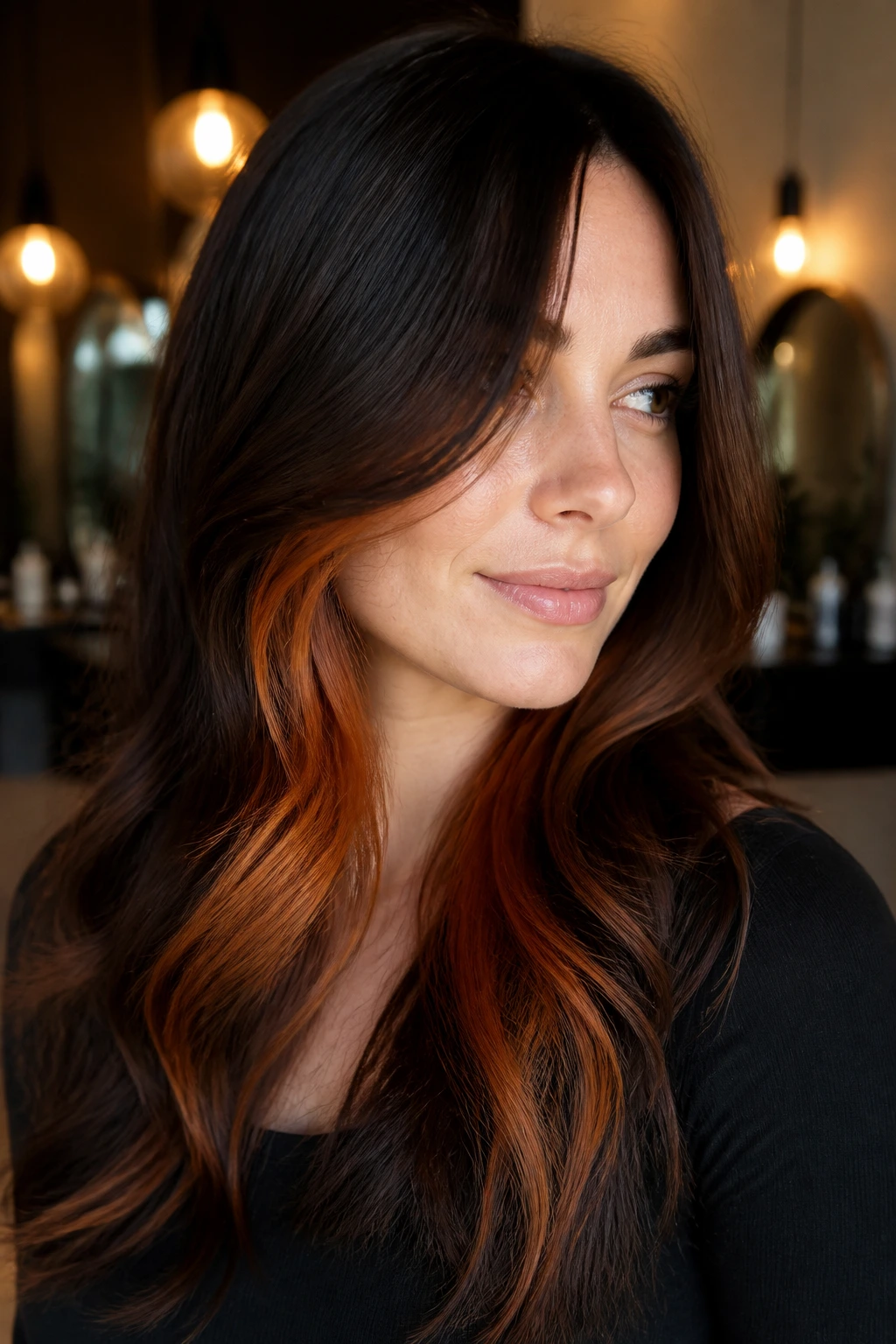
Copper peekaboo layers are for people who like a little surprise under the surface. The top layer stays brunette, blonde, or chestnut, while the copper sits beneath it and flashes when the hair swings or gets tucked behind an ear. It’s a smart move for layered hair because the cut does half the showing-off for you.
The copper can be soft and burnished or deeper and rustier depending on the base. On curls, it looks especially good because the color catches in different spots as the coil breaks apart. On straight hair, the movement is more subtle, which can be a bonus if you want the color to feel less obvious.
Why it works: You get seasonal warmth without a full head of bright pieces, and grow-out is easier because the vivid color is partly hidden.
6. Bronde with Root Shadow
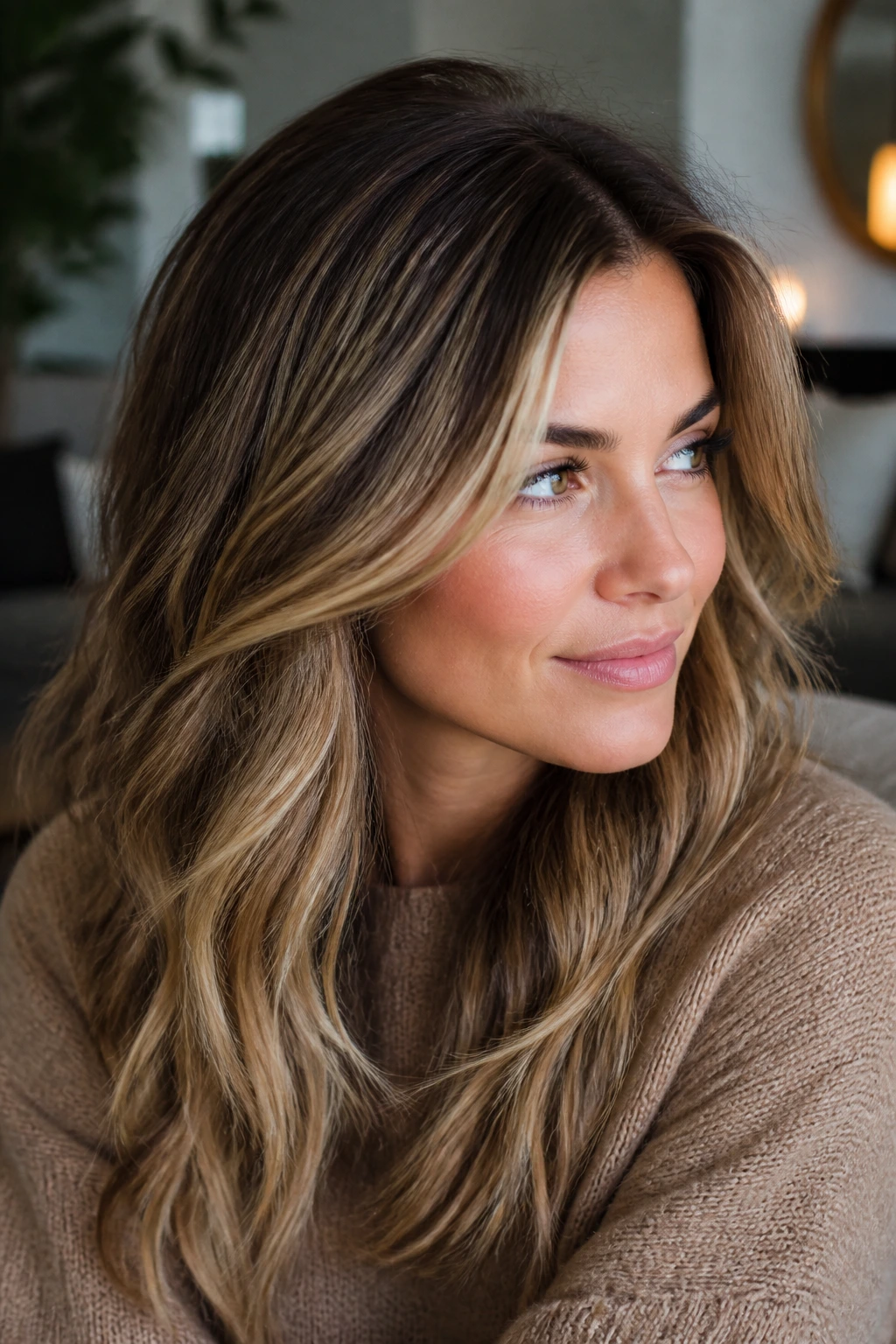
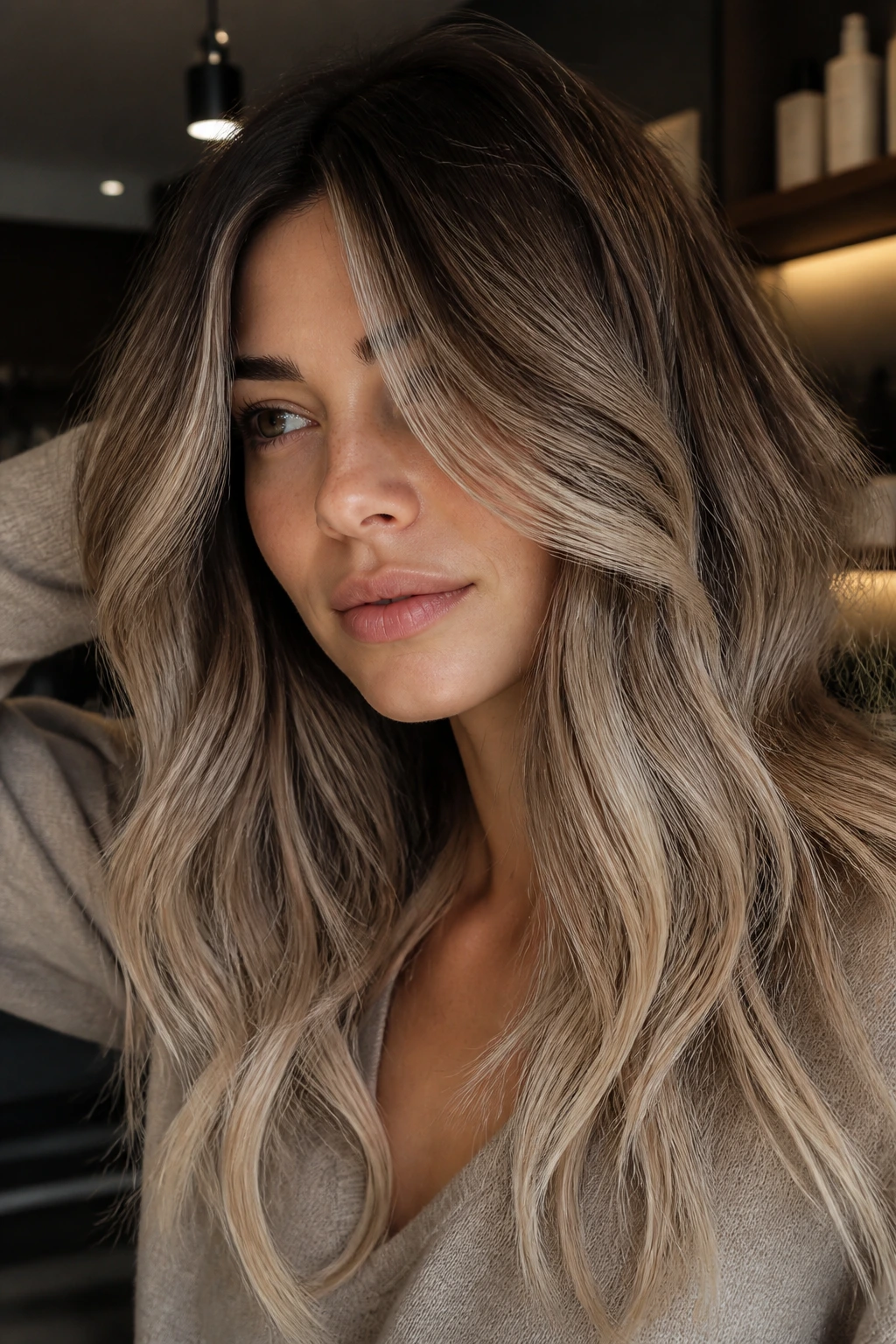
Bronde with a root shadow is the move for people who want blonde energy without a high-maintenance schedule. The root stays a shade or two deeper than the mids, so the grow-out line softens instead of showing up like a light switch. That little shadow gives the whole color more shape.
The best version has a mix of beige blonde and light brown, not a hard split between brown and gold. Think blurred edges, especially around the crown and hairline. The shadow root should not look muddy; it should look intentional, like the color is graduating instead of stopping.
If you keep your hair in a middle part, this is especially nice because the soft root gives the part some depth. If you wear it side-swept, the highlight panels show even more.
7. Pumpkin-Spice Face Frames
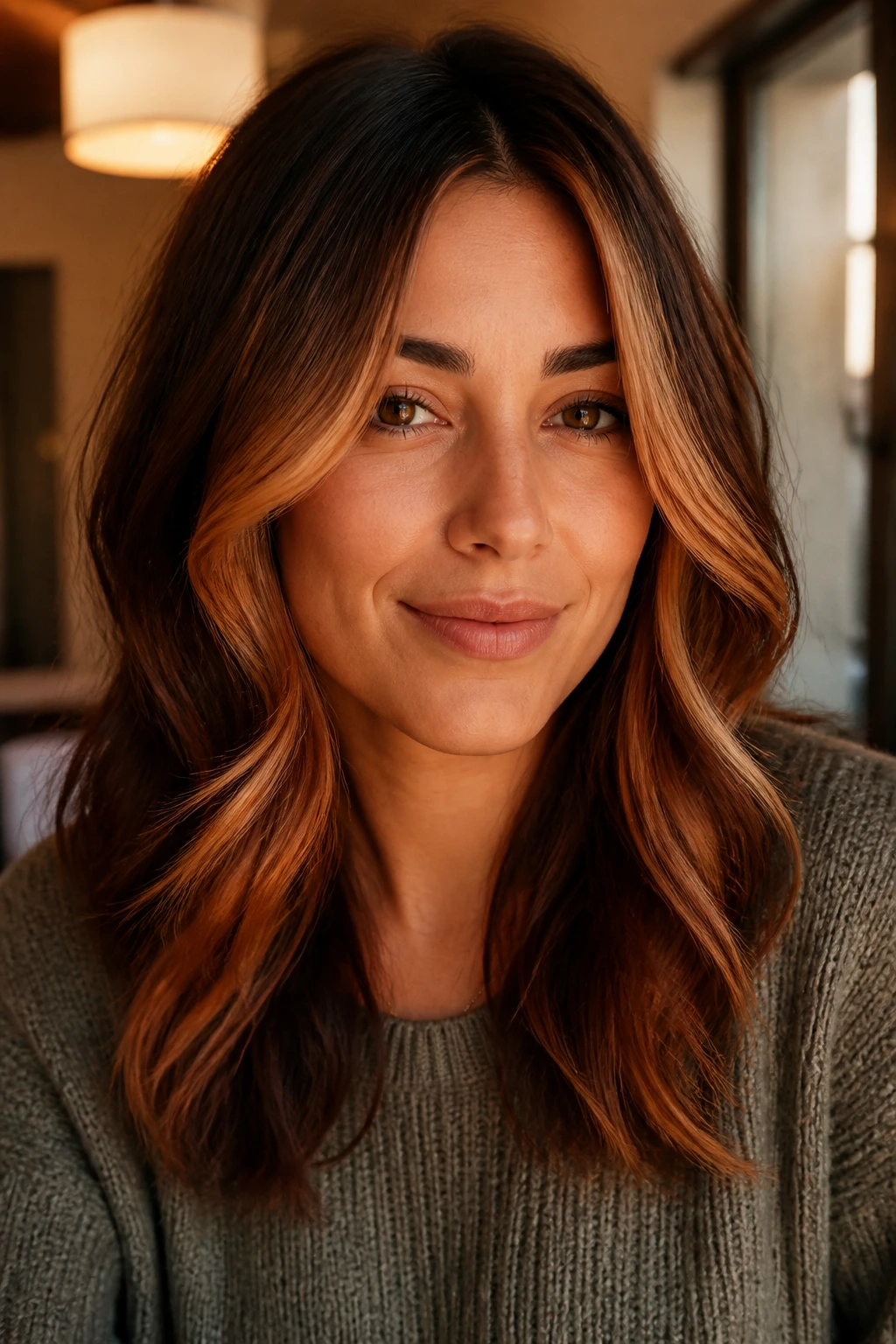
Pumpkin-spice face frames are for people who love warmth but do not want to go all the way copper. The face gets the brightest pieces, usually in a gold-copper or warm apricot lane, while the rest of the hair stays deeper and calmer. That contrast is what makes the haircut feel fresh.
This color works best when the framing pieces stay soft near the roots and a little brighter through the cheekbone area. If they start too close to the scalp and run too bright, they can look like racing stripes. The better version has a soft fade into the base.
It’s also one of the easiest ways to test whether you like warm color on yourself. You get the punch near the face, then you can decide if you want to go warmer on the rest later.
8. Espresso and Honey Foilayage
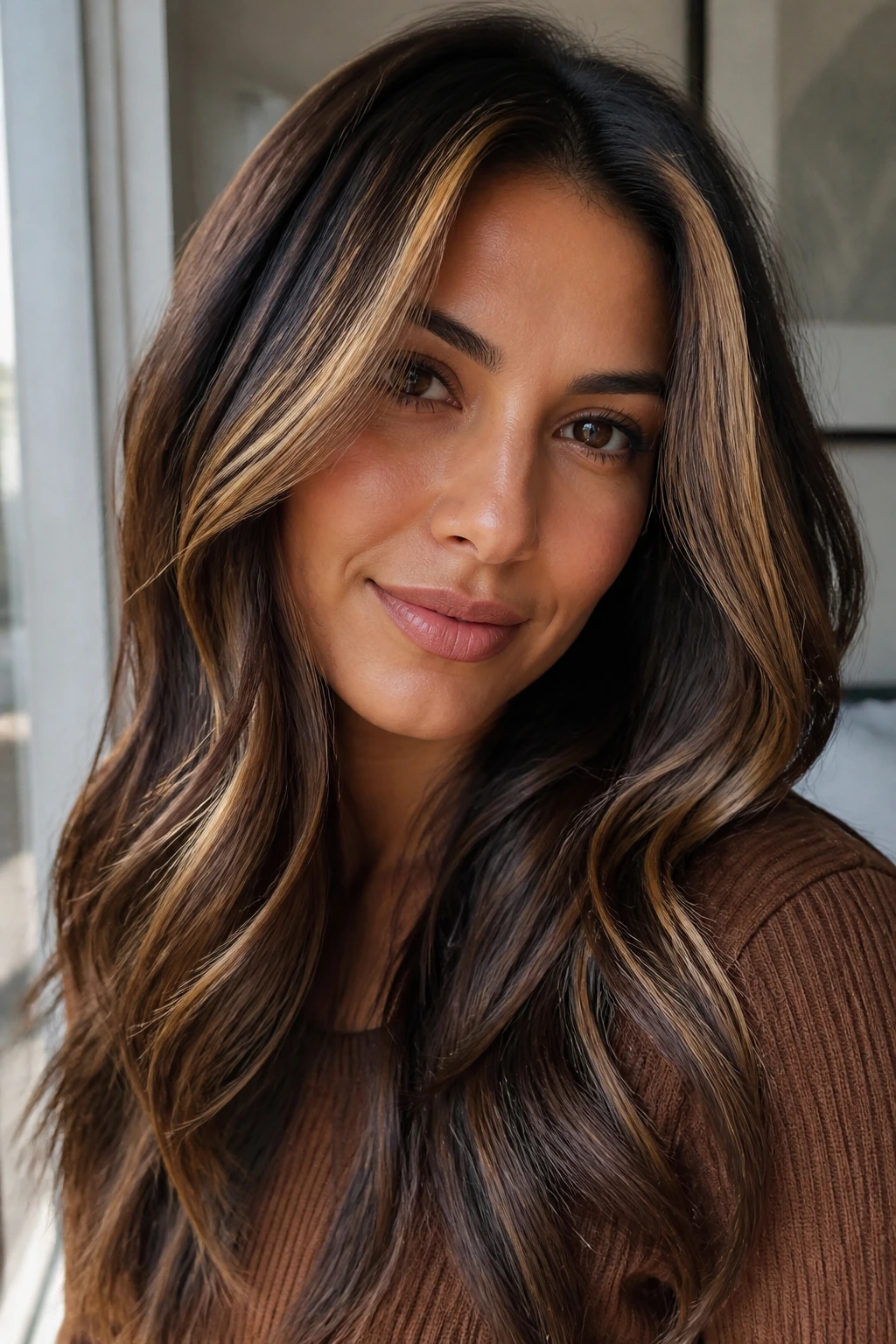
Espresso and honey foilayage is what happens when controlled brightness meets a dark base. The foils give more lift than open-air balayage, so the honey pieces can turn clearer and brighter without scattering into the background. On dark brunette hair, that matters.
I like this look around the crown, hairline, and upper mids, where the honey can actually be seen. If all the brightness lives only underneath, you lose the payoff. If it’s packed too tightly, though, the color starts to feel busy. The sweet spot is deliberate spacing with a few heavier pieces in the front.
A good honey tone should read golden, not yellow. That tiny shift keeps it rich instead of brassy.
9. Velvet Chestnut Highlights
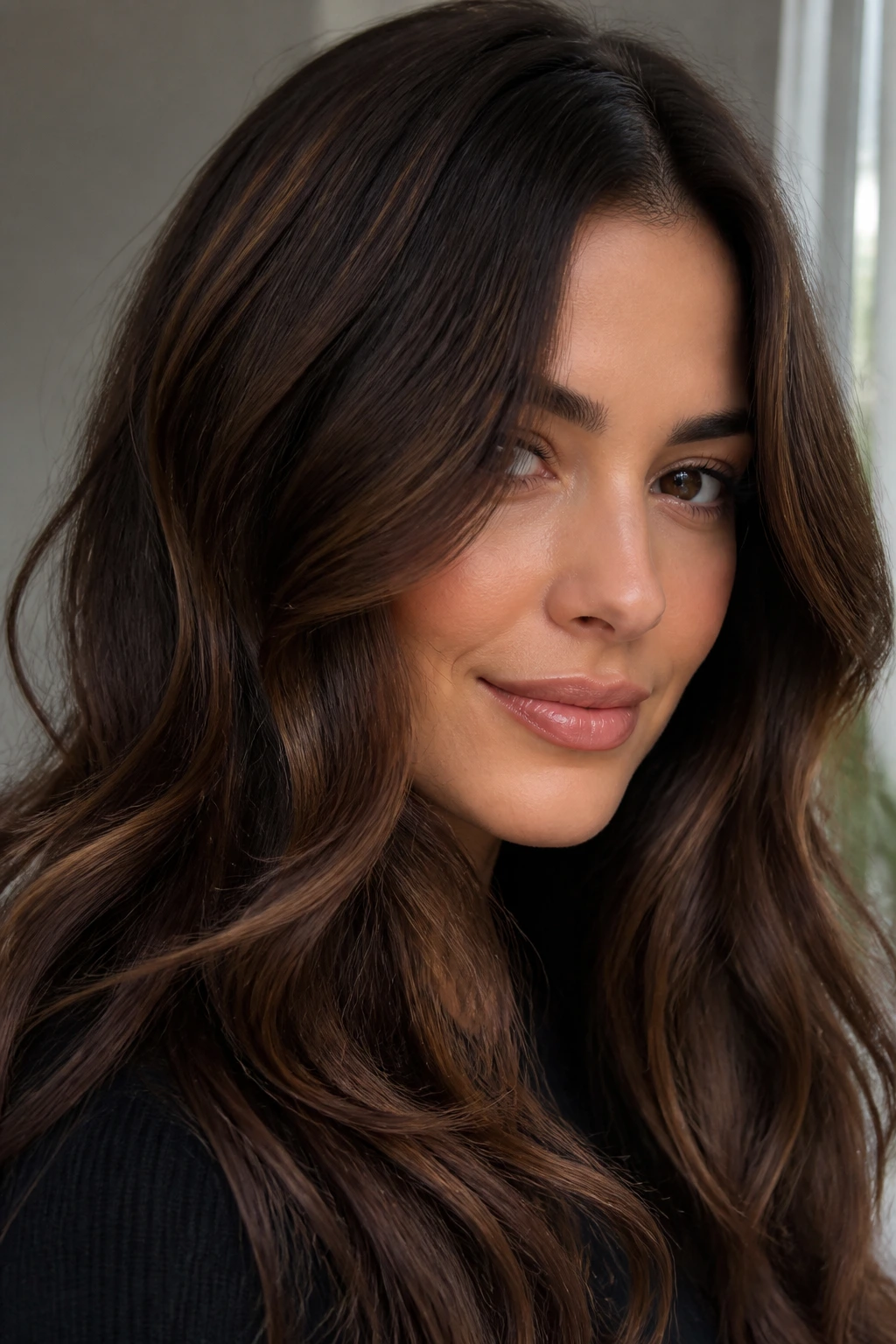
Velvet chestnut highlights are the quiet luxury version of fall color. They stay in the same family as a dark brown base, but the lighter chestnut pieces give enough shift to make the hair look thicker and more polished. On fine hair, that can be a lifesaver.
This is one of those colors that works best when the lightest pieces are not too far from the base. You want the hair to move between brown and brown-with-warmth, not brunette and blonde. The result is smoother, and the grow-out stays forgiving.
If your hair is blunt-cut or shoulder length, chestnut highlights can keep the shape from looking blocky. On longer hair, they give the ends some life without changing the whole mood of the color.
10. Golden Maple Babylights
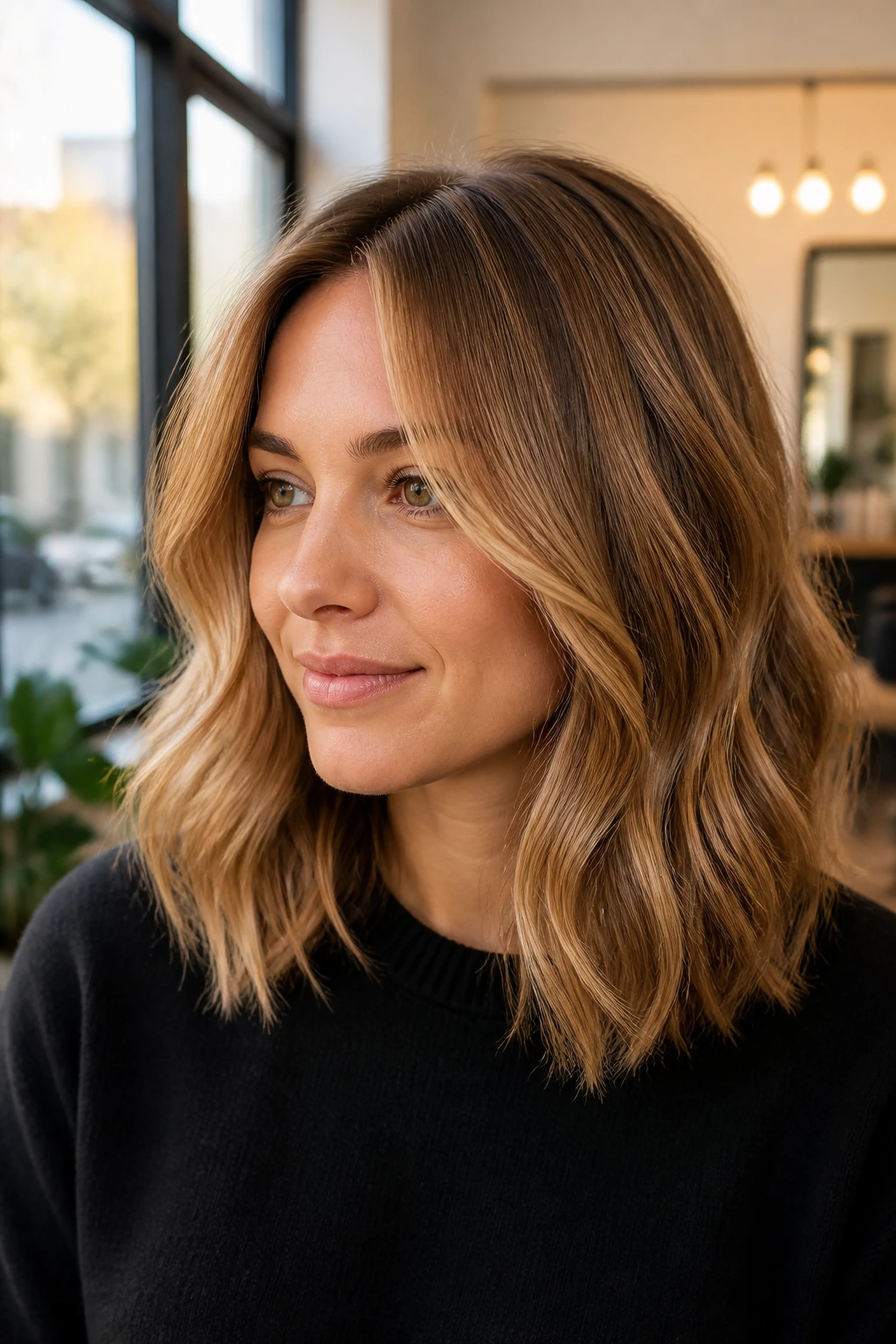
Golden maple babylights are tiny, delicate pieces that sit very close to the base and create a soft glow instead of obvious stripes. They’re a good answer for anyone who wants warmth without a high-contrast look. The highlights are so fine that they almost read like a filter built into the hair.
This shade works especially well on medium brown, light brown, and dark blonde bases. The gold needs to stay maple-rich, not bright yellow. A tonal gloss afterward matters here because babylights can look flat if they aren’t finished with a soft warm glaze.
Best part
They grow out quietly. That’s the whole point.
If you like a color that still looks polished when it’s been six weeks and a few ponytails since the appointment, this is one of the better bets.
11. Smoky Beige Blonde
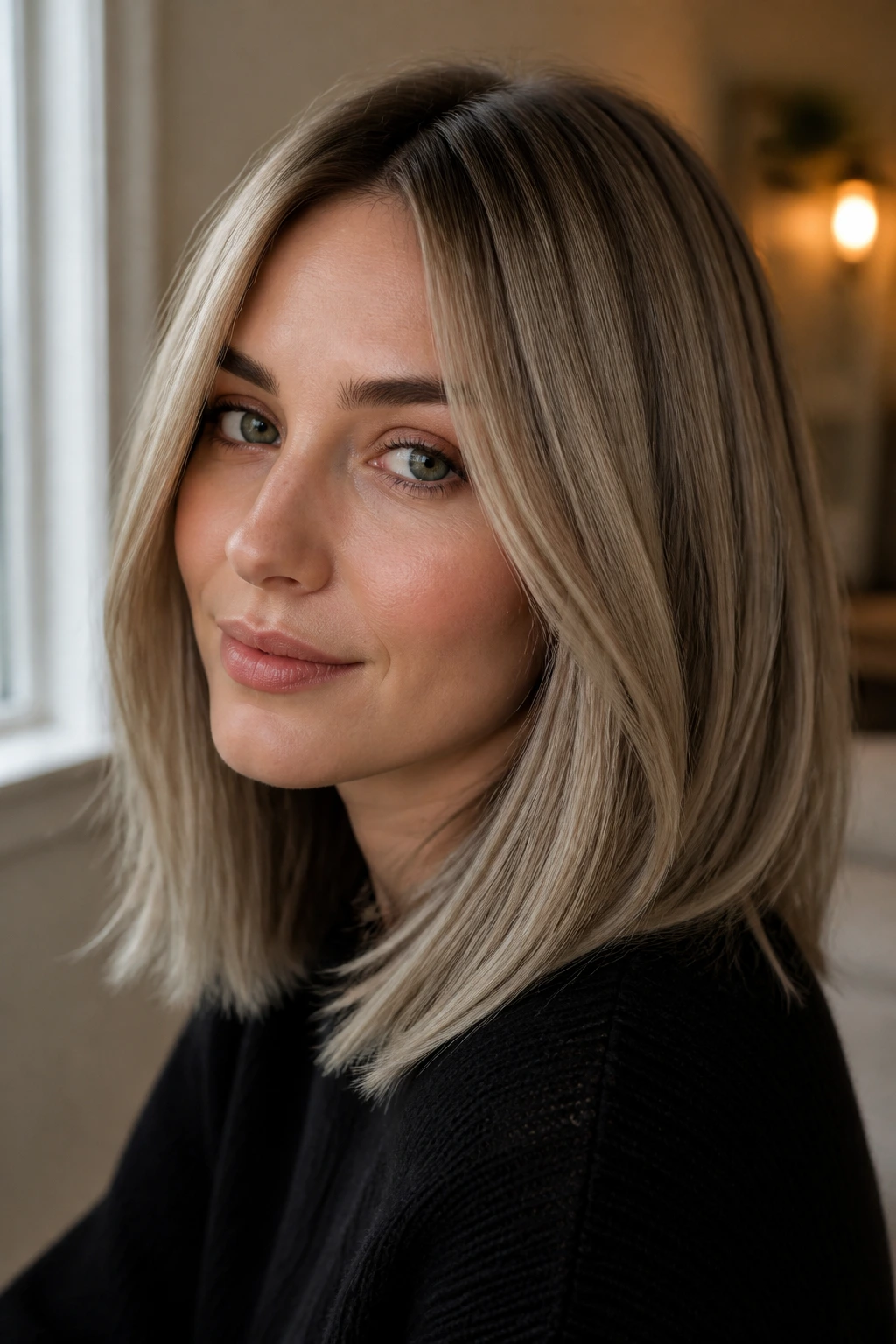
Smoky beige blonde is the cool-weather answer to bright summer blonde. It keeps the hair light, but the tone sits between beige and ash so it doesn’t shout gold under indoor lights. That’s the difference between a beachy blonde and a fall blonde.
The trick is leaving enough warmth in the formula to keep the color from looking gray. I’d rather see a beige base with a hint of smoke than a flat silver tone that washes out the face. On neutral or cooler skin, that balance works especially well. On warmer skin, a little extra beige keeps the whole thing from going chilly.
This is a strong pick if your summer blonde has gone too yellow and you want a cleaner, softer reset without turning darker.
12. Cherry Cola Dimension
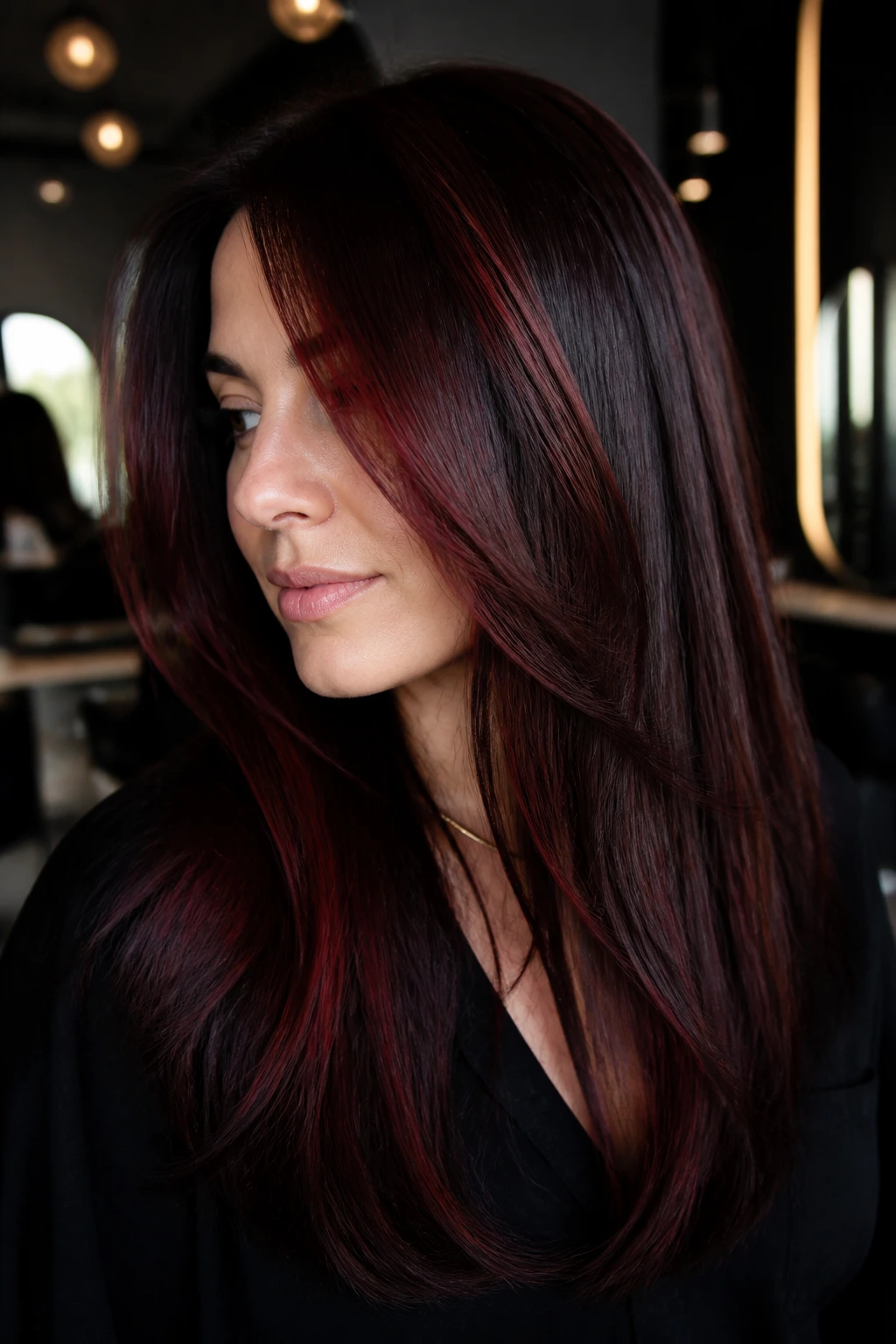
Cherry cola dimension is deep, moody, and not remotely shy. The base stays in the cola lane—dark brown, almost black, with red undertones—while the lighter panels flash cherry or wine when the hair moves. In straight hair, the contrast shows in clean ribbons. In curls, it turns richer and more layered.
You can place the cherry panels under the top layer for a peekaboo effect or bring them up around the face for more drama. Either way, the key is keeping the red tone deep enough that it reads cola, not neon.
If you want fall color with a little edge, this is one of the most satisfying options. It looks especially good with thick hair and a gloss finish that keeps the red from drying out and fading too fast.
13. Bronze Ribbon Lights
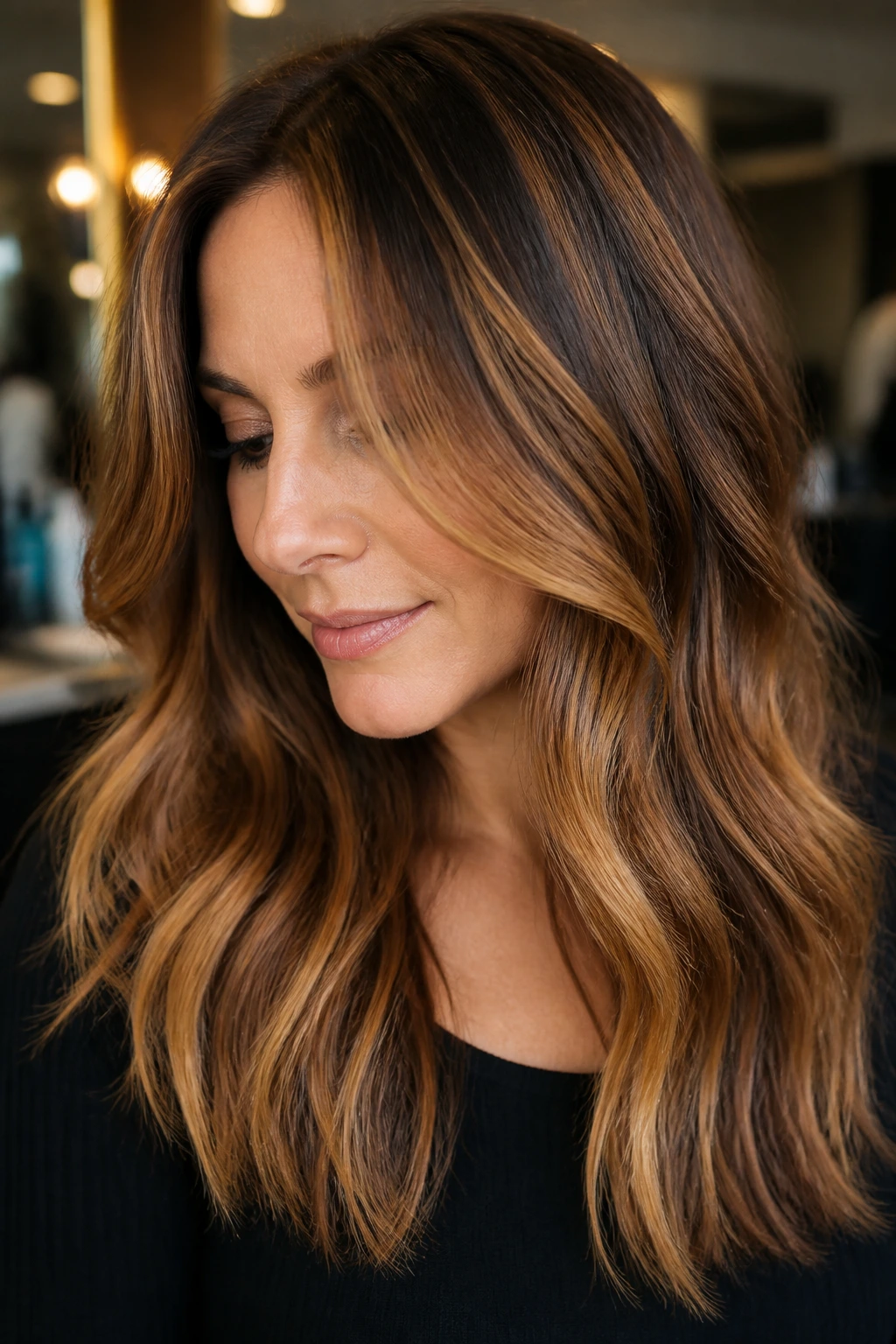
Bronze ribbon lights sit in that reflective middle ground between brown and gold, which is why they look so good under warm indoor lighting. They don’t read as blonde, and they’re not as red as copper. They just glow a little, which is often enough.
This look is especially strong on medium brunettes who want movement without a huge shift in level. The ribbons can be painted through the mids and ends, then toned with a bronze glaze that leans golden, not orange. On layered cuts, the different planes of the hair catch the bronze at different angles.
A blunt one-length cut can still wear this, but the placement has to be cleaner. You need enough contrast to see the movement, or the bronze gets lost.
14. Walnut Brown Micro-Highlights
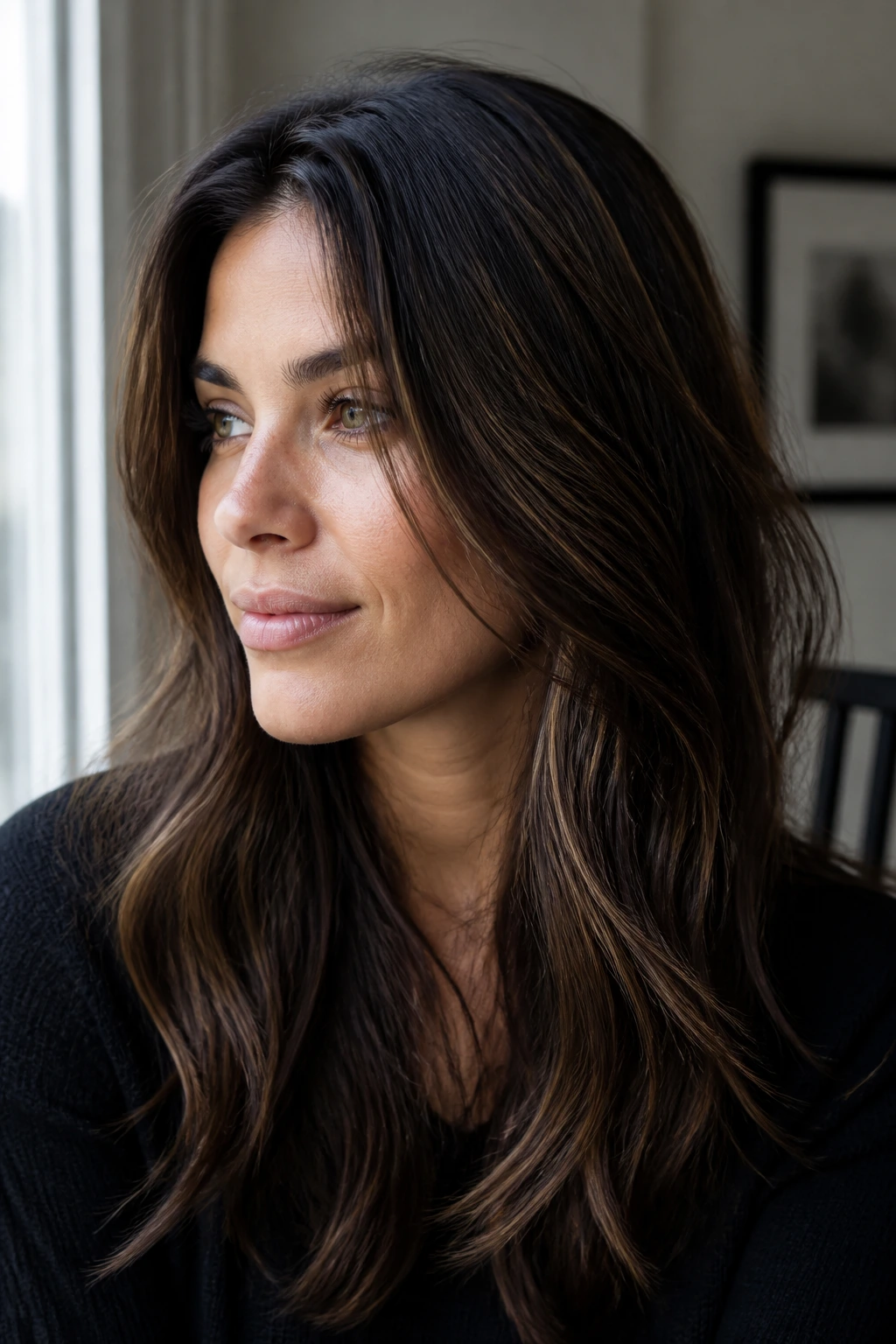
Walnut brown micro-highlights are for the person who likes the idea of highlights but hates seeing obvious stripes. These are tiny, tonal pieces one shade lighter than the base, usually scattered through dark brown hair to break up density. The effect is subtle, but it changes how the hair moves.
This is one of my favorite choices for fine hair, because it can create the impression of fullness without turning the head into a patchwork. The pieces should be thin enough that you notice them only when the light shifts or the hair parts a little differently.
If your workplace leans conservative, this is a safe lane. It still looks intentional, just not loud.
15. Honeyed Copper Ends
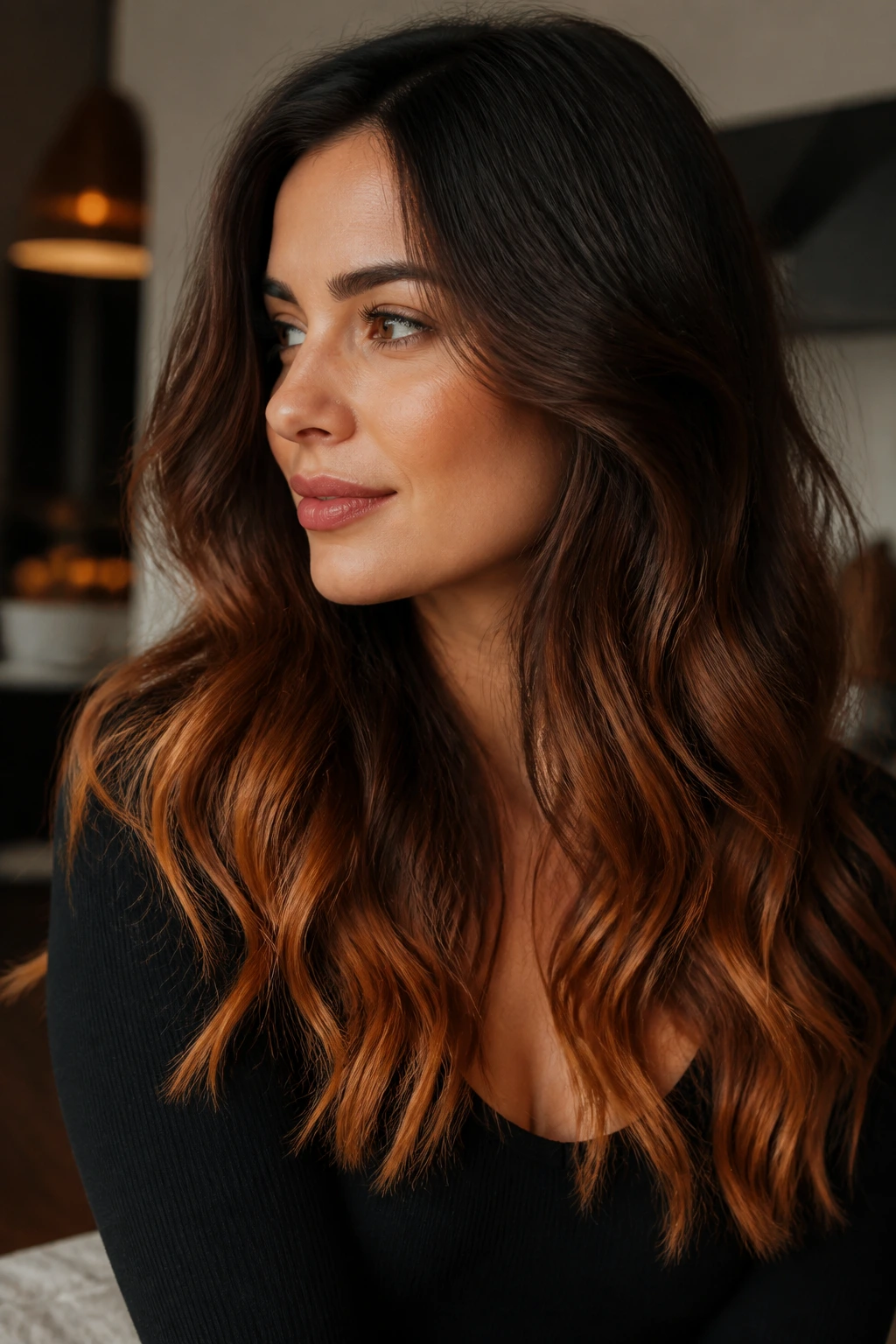
Honeyed copper ends put the warmth where the eye naturally lands. The roots and mids stay deeper, and the last few inches of the hair get washed with honey and copper so the color feels like it has been warmed from the bottom up. On long hair, that can look especially good because the ends stop disappearing into shadow.
The placement should be soft, not a hard dip-dye line. A clean fade through the lower third makes the hair look expensive; a sudden stop makes it look like a color experiment from the middle of an appointment you should have left an hour earlier. There’s a difference.
This is also kinder to maintenance. Since the lighter color stays away from the scalp, regrowth is less of a headache.
16. Amber Balayage for Dark Brunettes
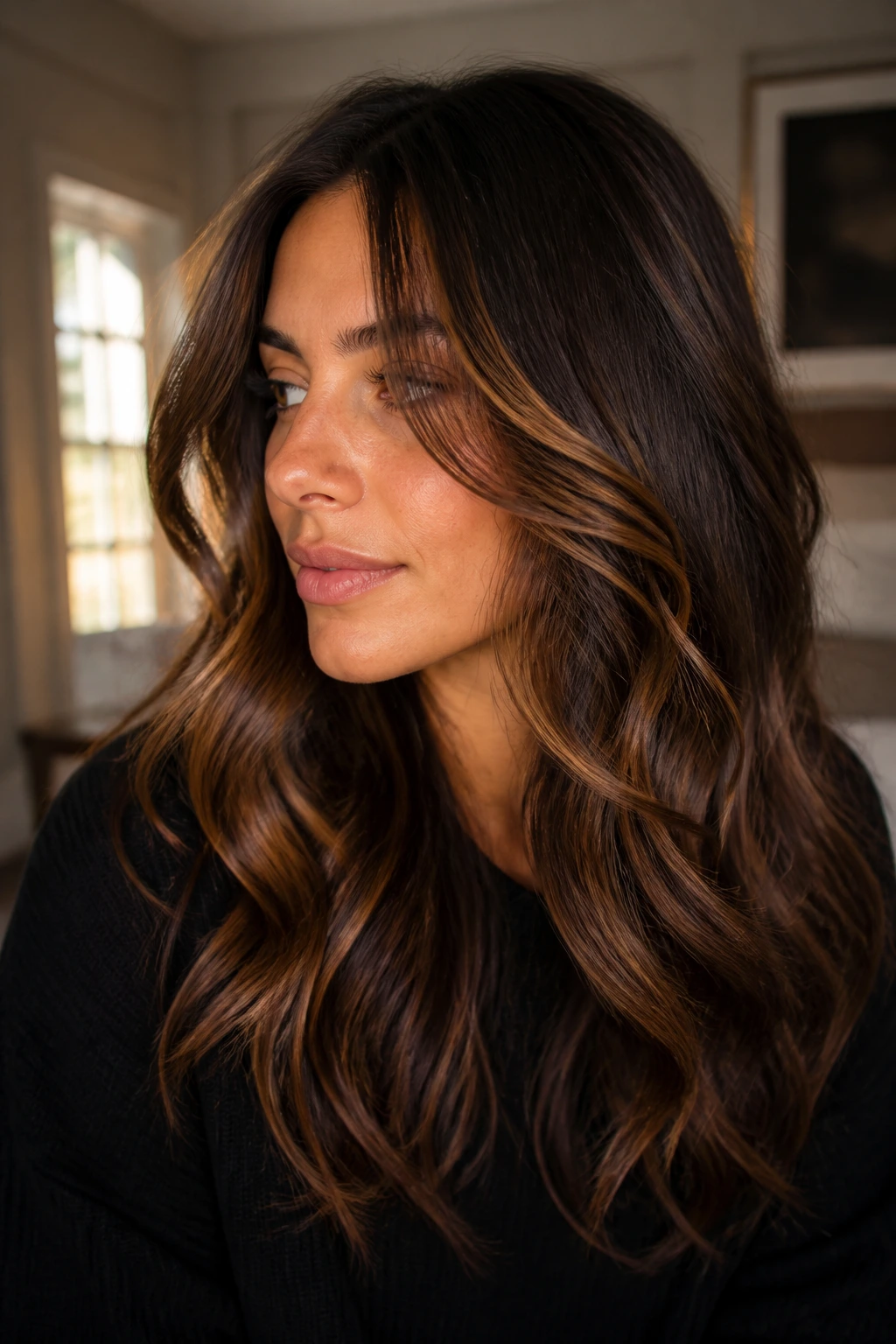
Amber balayage on a dark brunette base gives you warmth without forcing the whole head lighter. Amber has enough gold to read rich, but it still sits deep enough to work against black-brown and espresso hair. That matters because very dark hair can swallow softer tones.
The best placement usually lives around the face, through the top layers, and in broad ribbons across the mids. You want enough amber to catch the light when the hair moves, not enough to erase the depth underneath. On thick hair, this can be gorgeous because the darker panels frame the brighter ones.
If your hair lifts stubbornly, this is a smarter target than pale blonde. You get visible change without fighting the base too hard.
17. Cocoa and Toffee Melt
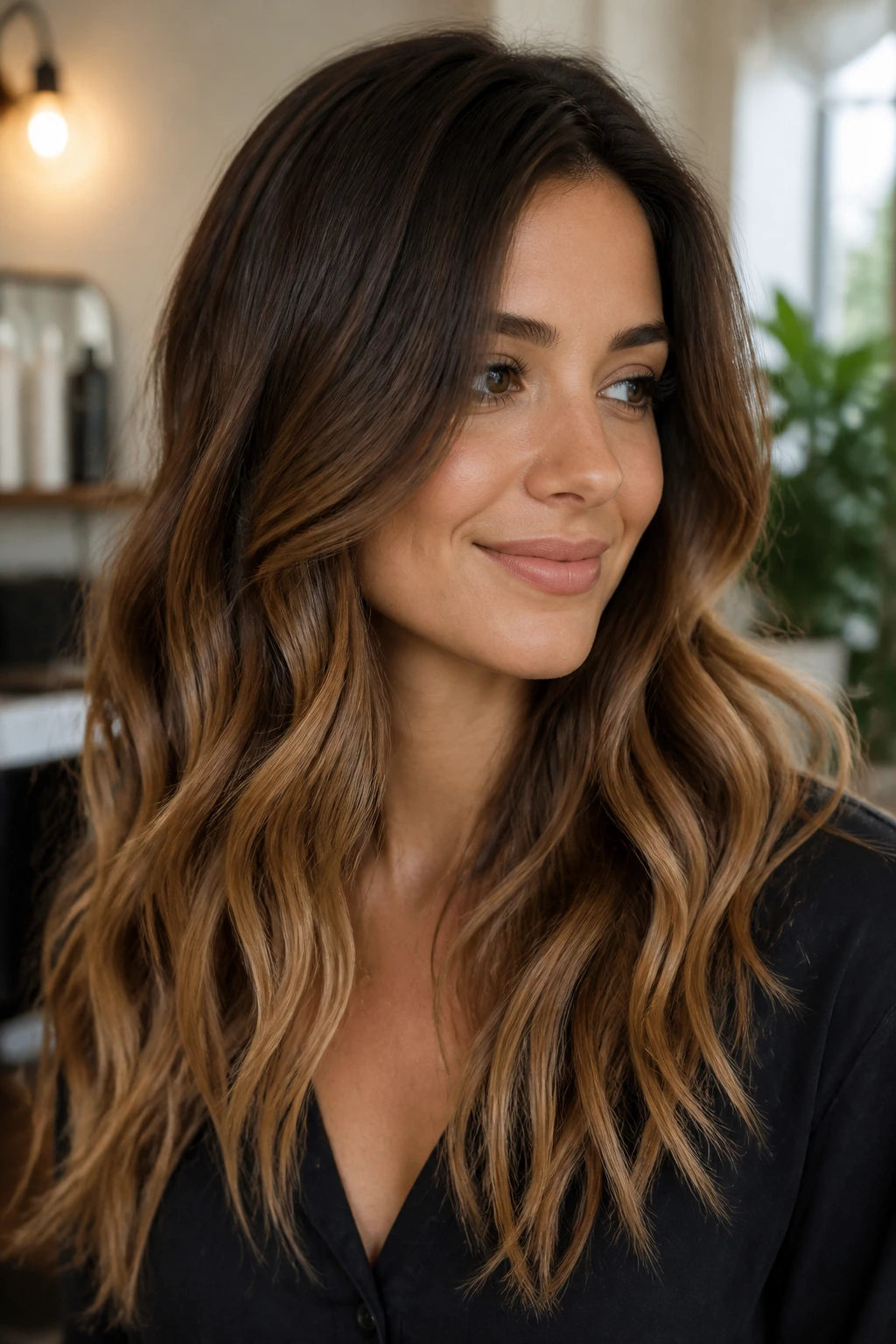
Cocoa and toffee melt is one of the easiest fall looks to wear because it feels balanced from root to end. The cocoa base keeps things grounded, while the toffee pieces warm the mids and ends just enough to show movement. It’s a blend that looks good in a mirror and even better in motion.
This is the kind of color that works when you don’t want a harsh contrast. The melt should be gradual enough that you can’t point to a single line where one color stops and the next starts. On layered cuts, that gradient looks soft and polished. On thicker hair, it keeps the style from looking heavy.
If you want a low-drama refresh, this is one of the most reliable places to land.
18. Smoked Beige Balayage
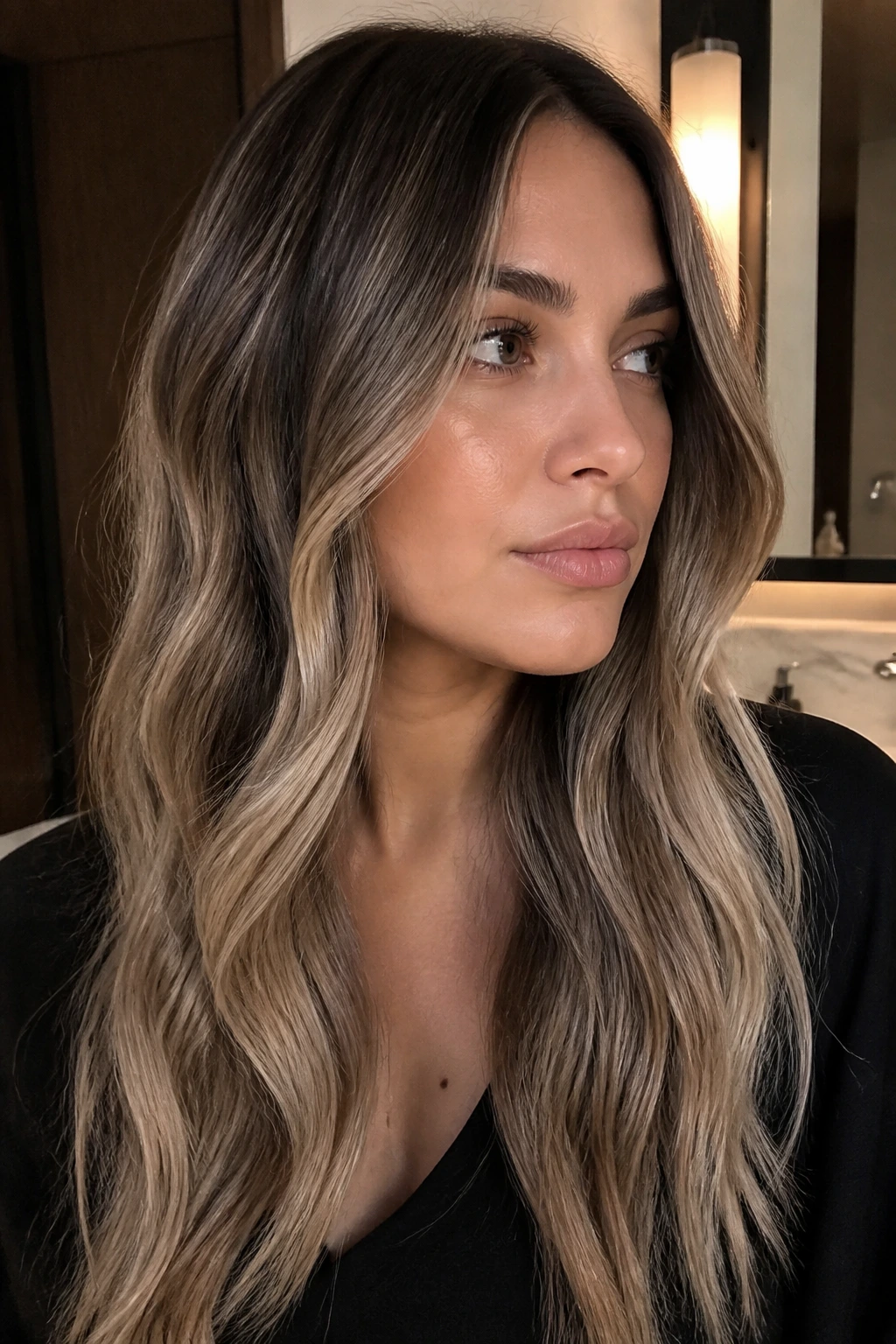
Smoked beige balayage is what happens when you want warmth with the brakes on. It’s beige, yes, but there’s a little smoke in the tone so the color doesn’t tilt yellow or overly sweet. That makes it useful for people who like soft blonde but know their hair tends to grab brass.
The finish matters here. A cooler gloss can sharpen the beige, but it should still leave a touch of warmth in the ends. Too much ash and the color flattens. Too much gold and it wanders back into summer territory.
This works best on light brunette to dark blonde bases that already lift evenly. If your hair has patchy porosity, ask for a cautious placement and a toner plan so the ends do not pick up too much warmth.
19. Rusted Rose Dimension
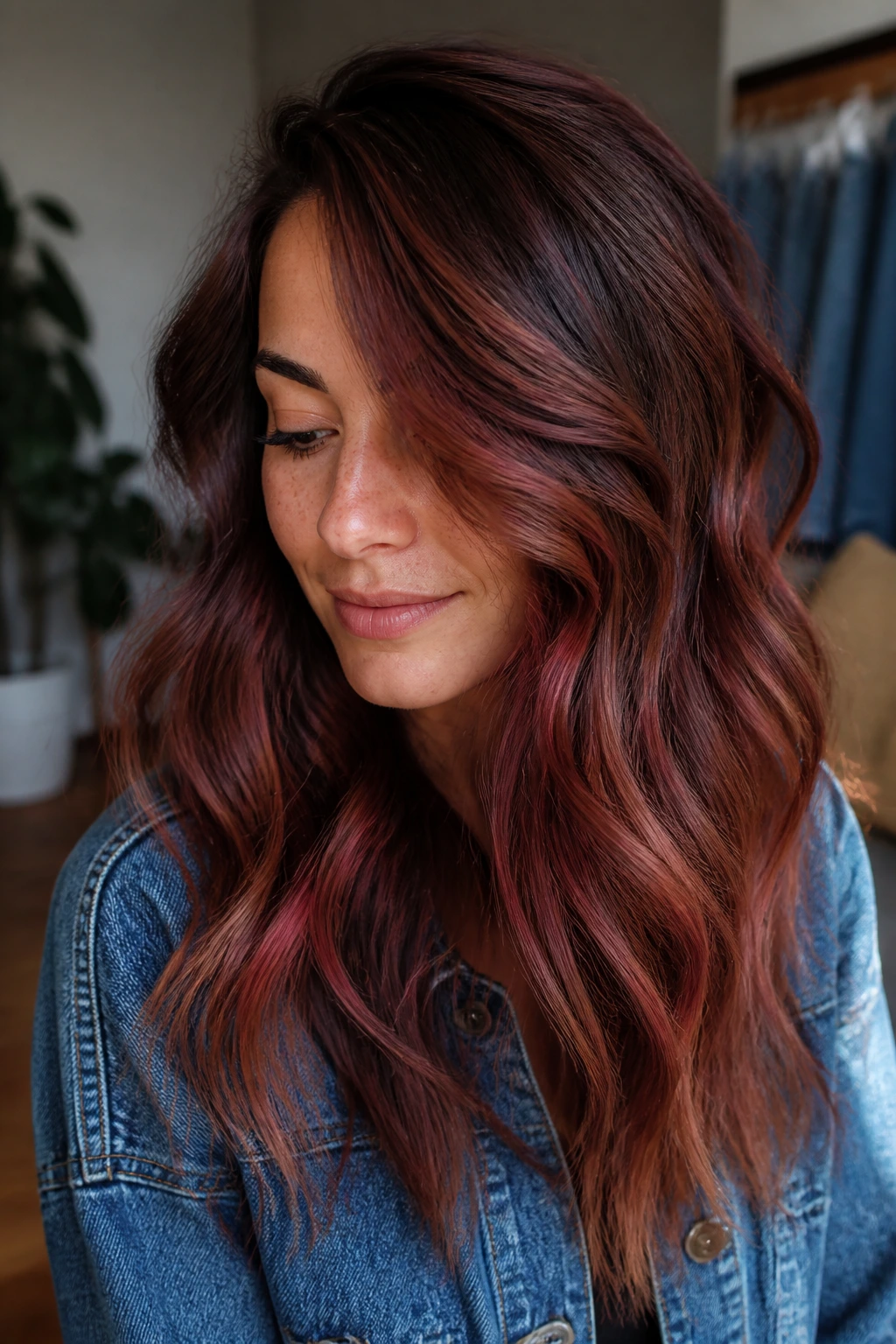
Rusted rose dimension is for the days when you want color with a little attitude. The shade sits between rose-brown, muted red, and rust, which gives it a dusty, worn-in look instead of a bright fashion shade. It can be surprisingly wearable if the base stays deep.
I like this on shoulder-length cuts and textured hair because the tones shift as the hair bends. On straight hair, it looks more graphic. On waves, it feels softer and more lived-in. If you wear a lot of denim, charcoal, or camel, the color tends to stand out in a good way.
This is not the quietest idea on the list. It’s for someone who wants the color to be noticed.
20. Warm Sand Foils on a Bob
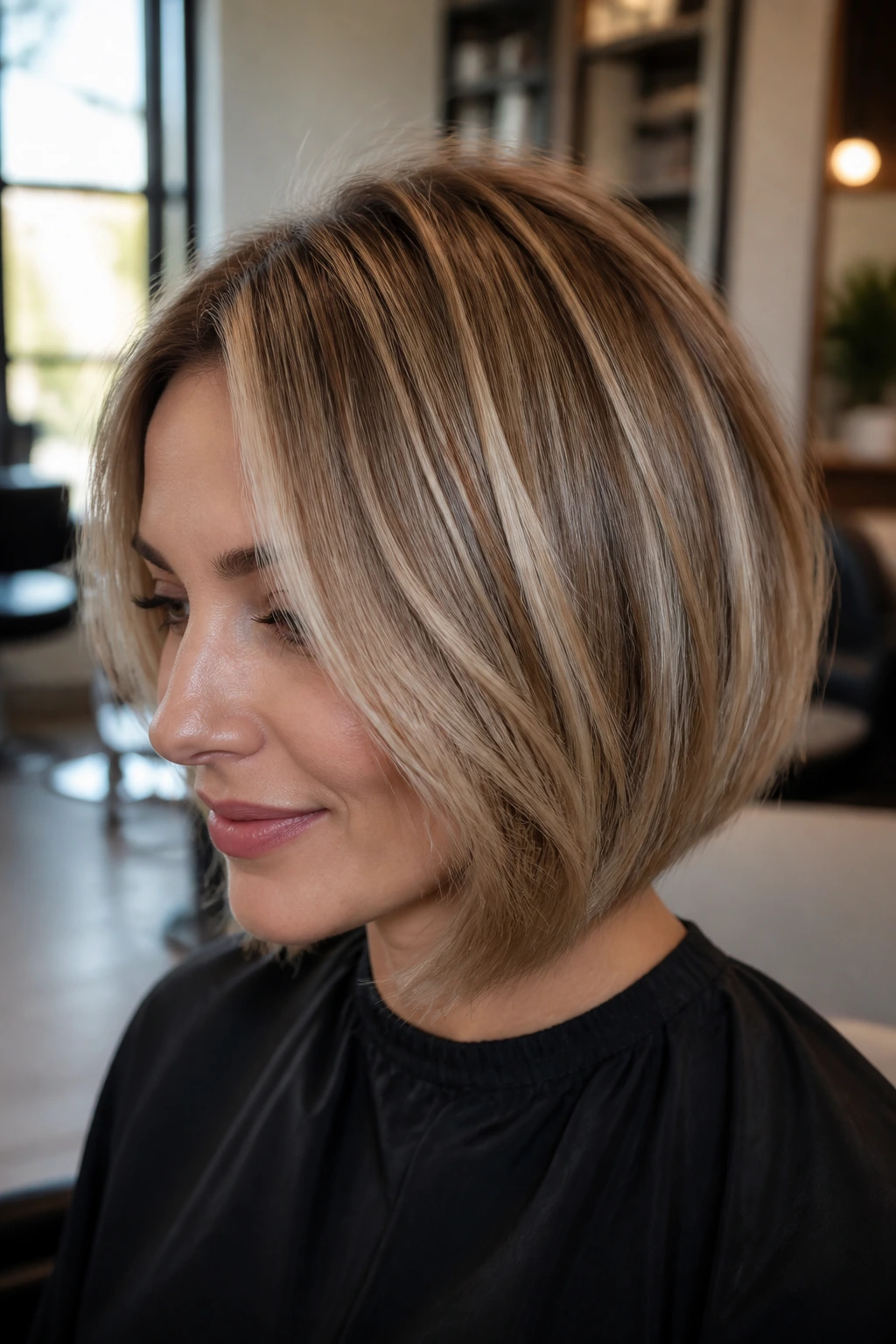
Warm sand foils on a bob need careful placement, because short hair has nowhere to hide a sloppy highlight. The lighter pieces should sit where the cut actually moves—around the perimeter, near the crown, and in a few front sections that catch the eye. Wide highlights can look chunky on a bob; finer foils keep it modern.
Warm sand is a nice tone for this cut because it brightens the shape without pushing into stark blonde. If the bob is blunt, the foils soften the edge. If it’s textured, they show the layers more clearly.
A bob with this kind of highlighting often looks best when the ends are tucked under just a little. That gives the color a clean line to sit on.
21. Mulled Wine Panels
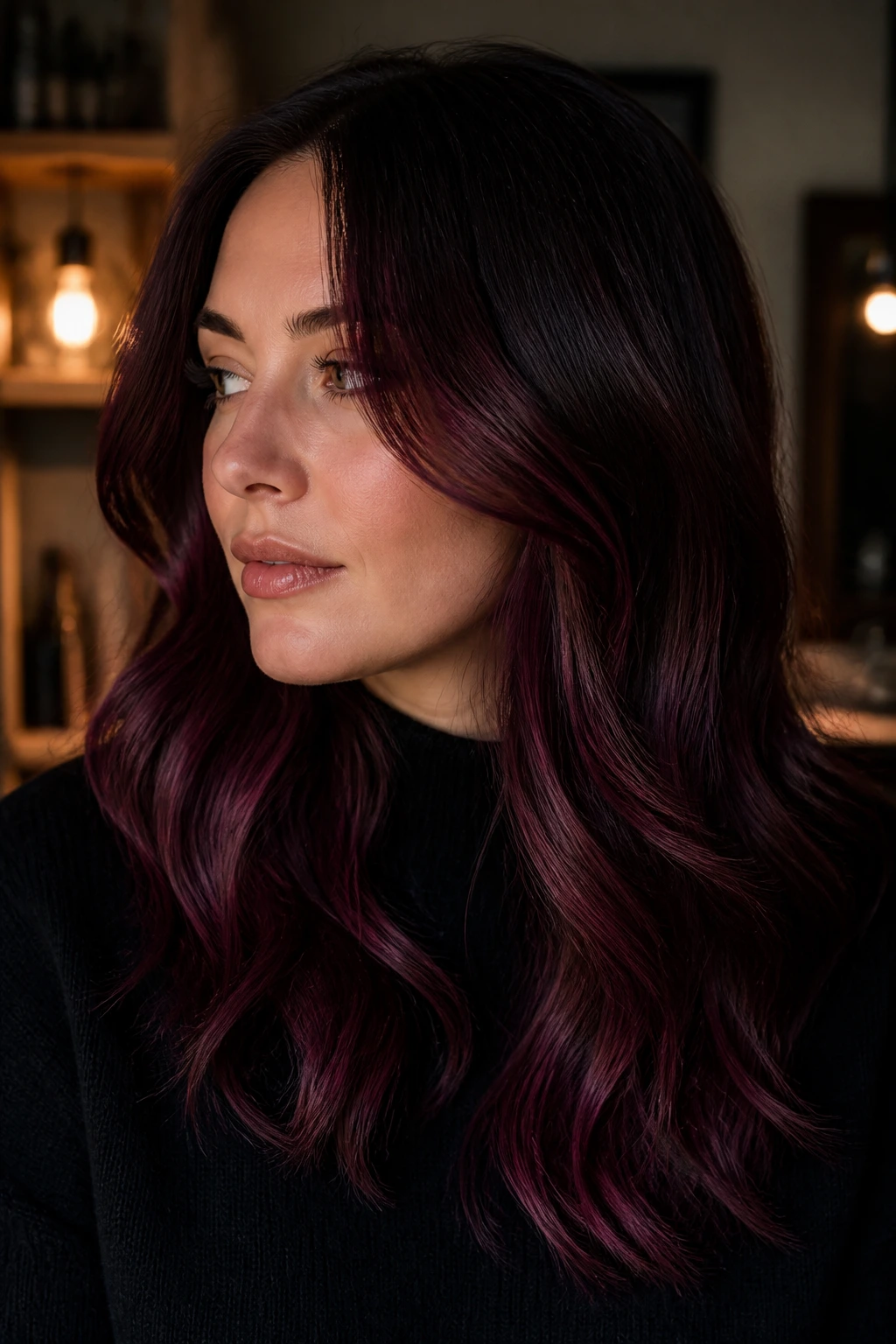
Mulled wine panels are rich, dark, and a little moody in the best way. They sit in burgundy, plum, and wine territory, usually on a deep brunette base, and they work well as hidden panels or wider surface sections depending on how visible you want them to be. It’s a stronger choice, but not a loud one.
The shade makes the most sense when the rest of the hair stays darker. Too much red all over and the effect loses its depth. A few wine panels through the mids or underneath the top layer let the color shift as you move, which is where it gets interesting.
This is a good one for people who like red tones but want something less bright than copper.
22. Caramel Contour Highlights
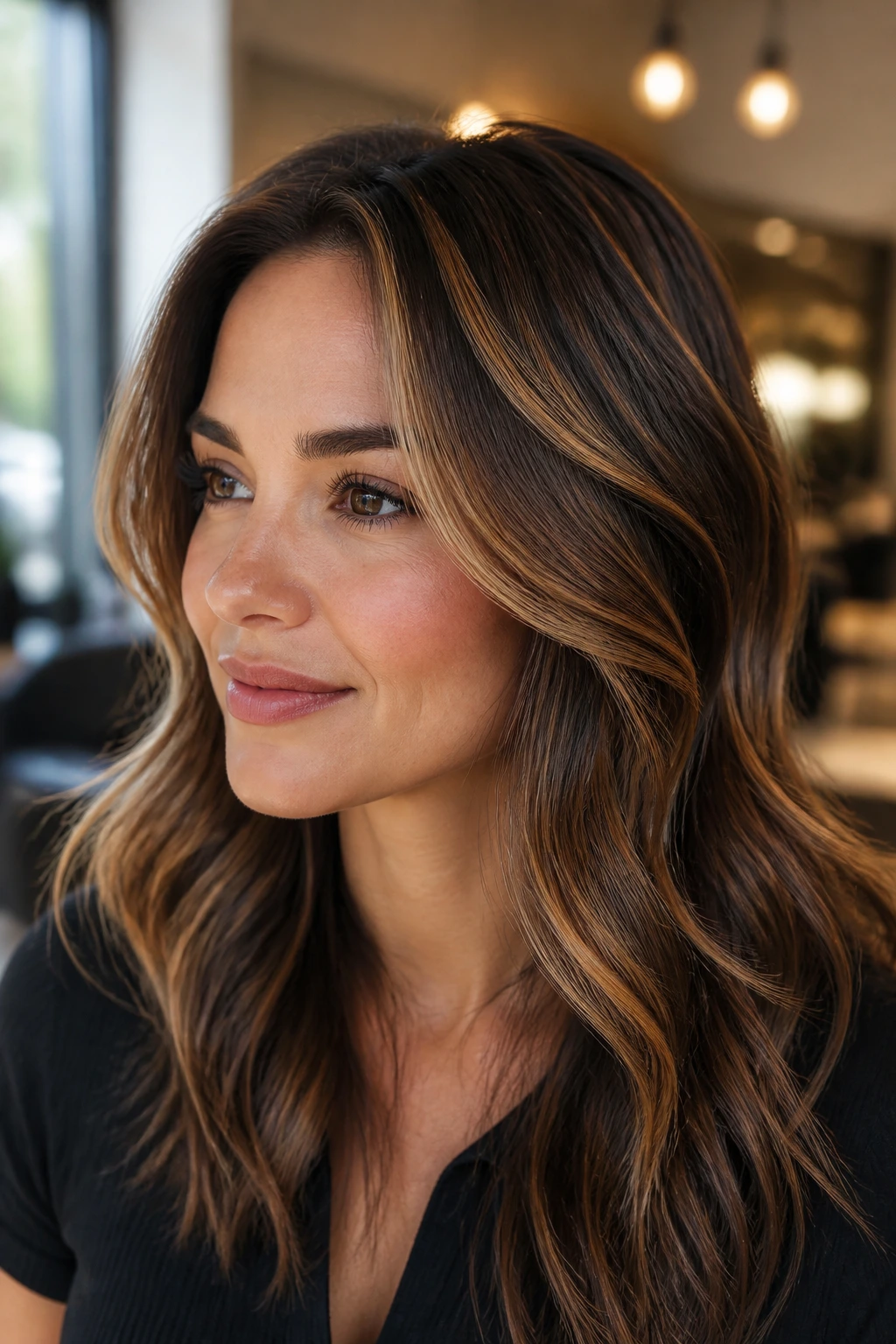
Caramel contour highlights are placed with the face shape in mind, which is why they feel more tailored than a standard front piece. The lighter caramel usually sits near the temples, cheekbones, and upper crown, then tapers back into softer ribbons through the length. It works almost like makeup for the hair.
This idea is especially useful if your haircut needs a little lift near the front. A blunt cut can look softer. A long layer can look more structured. And because the caramel stays concentrated in the areas people notice first, the effect feels polished without needing a full head of brightness.
If you change your part often, this is a smart option. The contour still reads from different angles.
23. Harvest Blonde with Root Tap
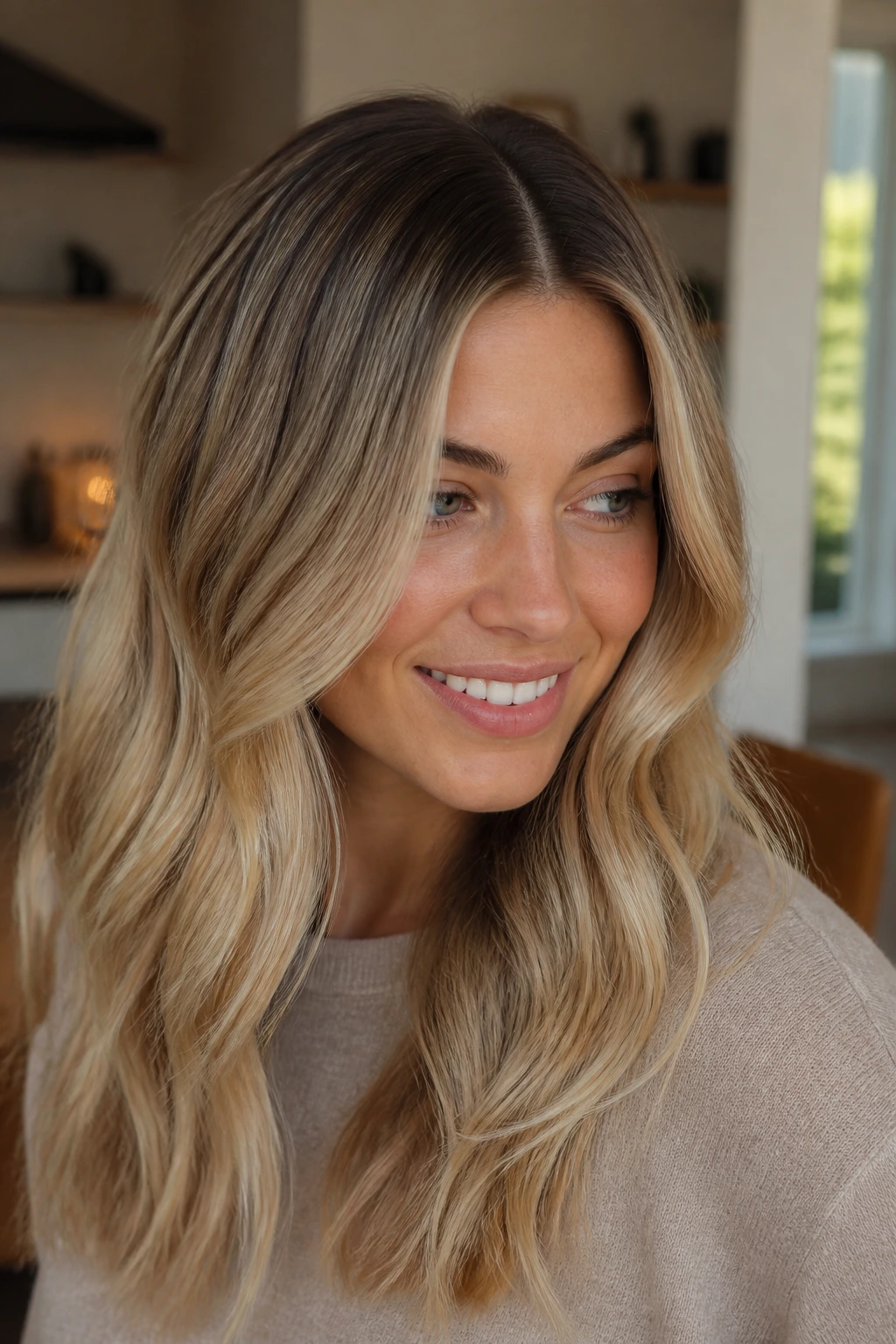
Harvest blonde with a root tap is for people who want blonde, but not the kind that makes every inch of regrowth obvious. The root tap keeps the first inch or so a touch deeper, then the blonde opens through the mids and ends in soft beige or golden tones. It’s a practical approach that still feels seasonal.
The tap should be gentle. If the root is too dark, the blonde can look disconnected. If it’s too light, you lose the whole point. A good version gives the hair shape and makes the face frame look softer, especially around a center part.
This is one of the better picks for clients who come in saying, “I want to be blonde, but I don’t want to live in the salon.”
24. Tiger-Eye Highlights
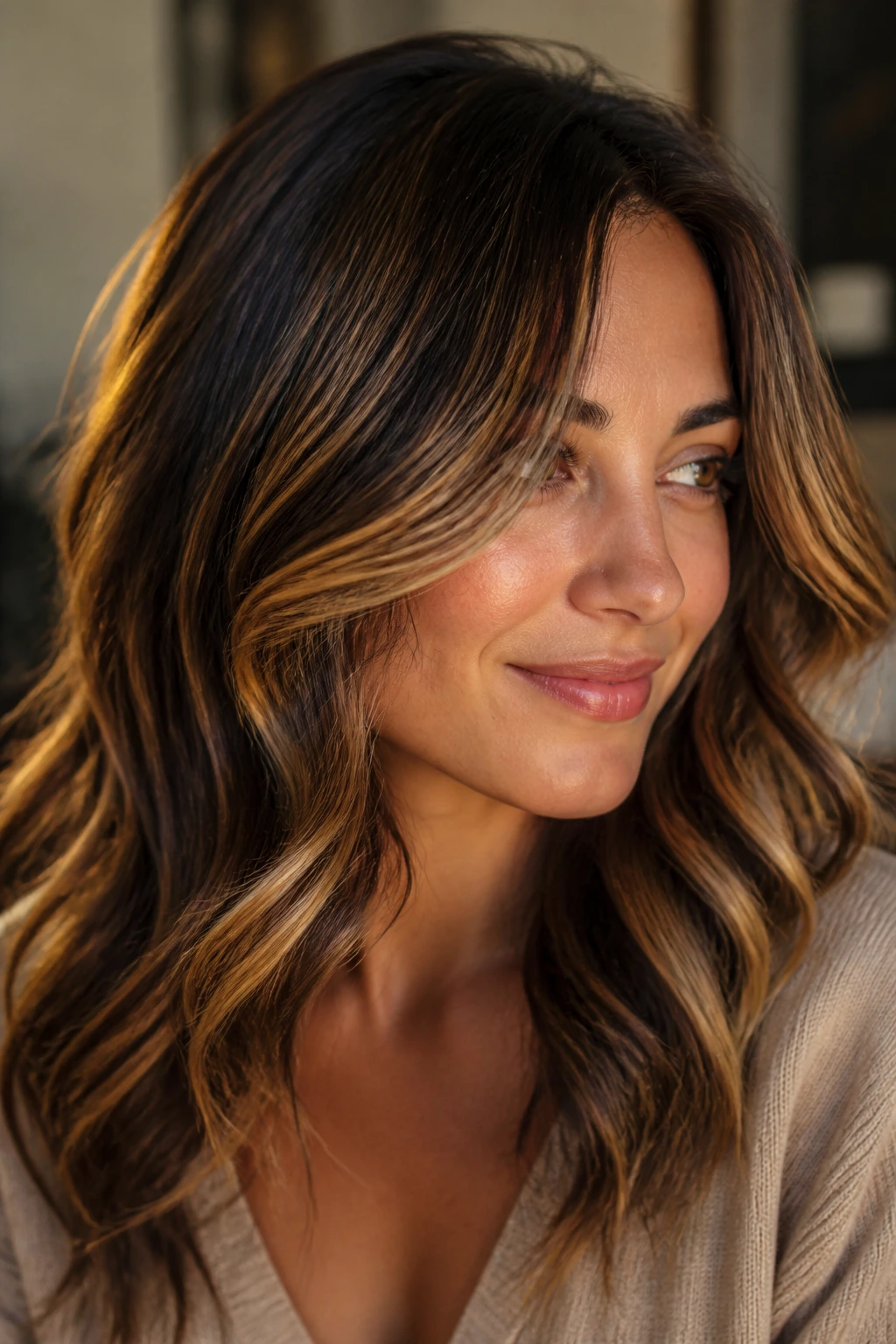
Tiger-eye highlights borrow that striped gemstone look, but the better version keeps the stripes blended. Think brown, gold, amber, and honey working in the same warm lane, with enough contrast to see movement but not enough to look harsh. On brunette hair, it can be striking.
The key is alternating warm pieces with deeper sections so the color doesn’t all blur together. If every strand is lightened, you lose the effect. If the ribbons are too narrow, the pattern disappears. The sweet spot is somewhere in the middle, especially around the face and through the mid-lengths.
This one works well on hair that gets worn down most of the time. The dimension needs space to show.
25. Soft Beige Brunette Babylights
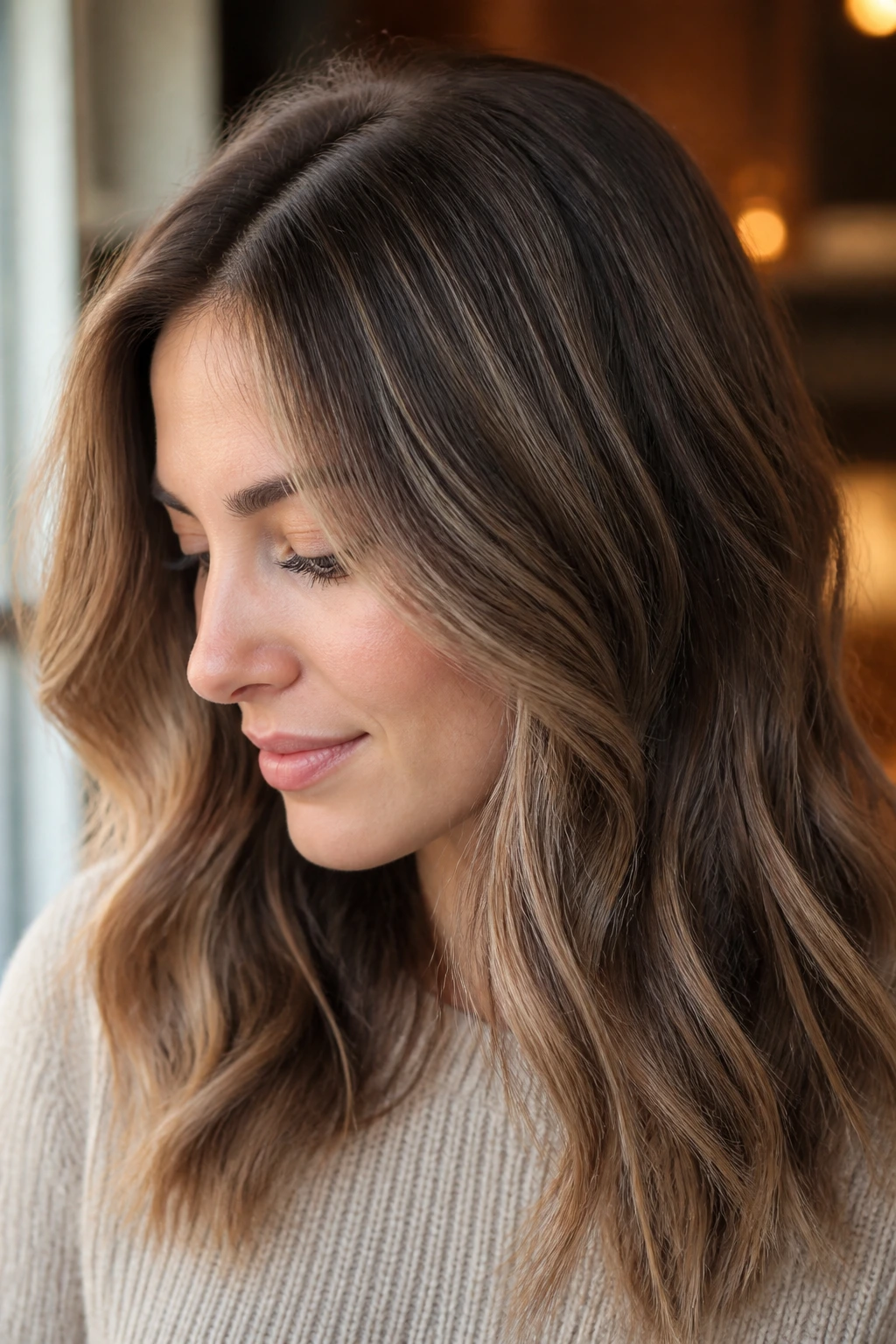
Soft beige brunette babylights are the quietest finish on the list, and I mean that as a compliment. The pieces are tiny, the lift is gentle, and the beige tone lives just a shade or two above the base. On brunette hair, the result is soft movement instead of visible stripes.
This is a strong first-step color if you’ve never had highlights or if you work somewhere that doesn’t love obvious hair color. The babylights add texture around the part line and through the crown, which helps the hair look fuller when it’s down and cleaner when it’s clipped back.
If you want fall highlights ideas that feel subtle in the chair but still shift the whole haircut, this is the cleanest place to start.
Why Dimension Wins When the Weather Turns Quiet
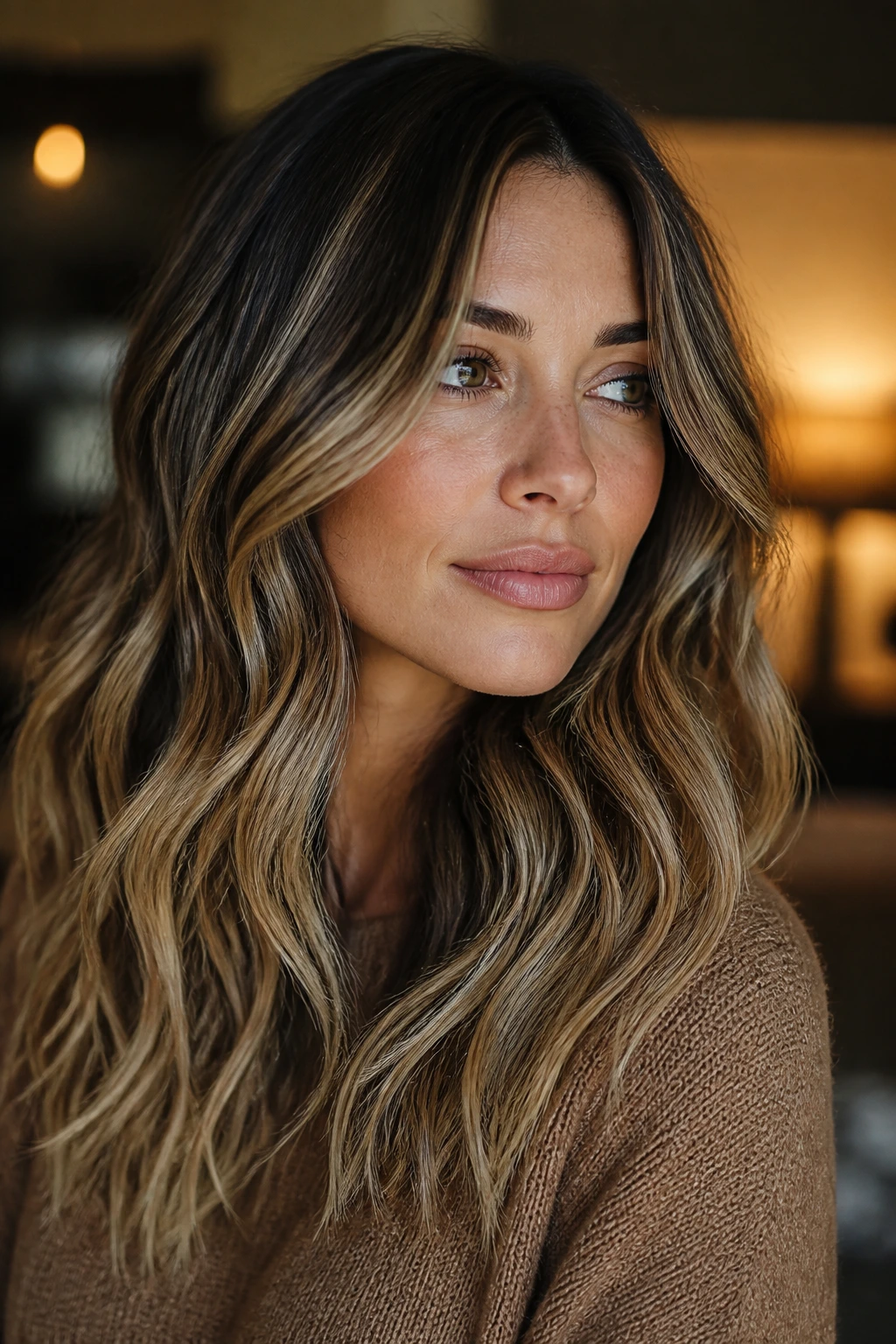
Flat color can look fine in bright sun. Indoors, under softer light, it often goes limp. That’s why these fall highlight ideas lean on ribbons, shadows, and root depth instead of chasing brightness for its own sake. A good highlight has more than one job. It needs to flatter the base, survive grow-out, and still look deliberate when you toss a scarf over your shoulder or tie your hair into a knot at the back of the head.
There’s also a practical reason to keep the base a little deeper. Hair that’s lifted too far all over can show damage faster, especially on the ends where old color and heat styling have already done their work. By leaving some depth in place, you let the lighter pieces do the talking while the darker pieces hold the shape together.
That is the part a lot of color photos skip. They show the brightest strand and ignore the support system underneath it.
Tools That Make Highlight Maintenance Less Annoying
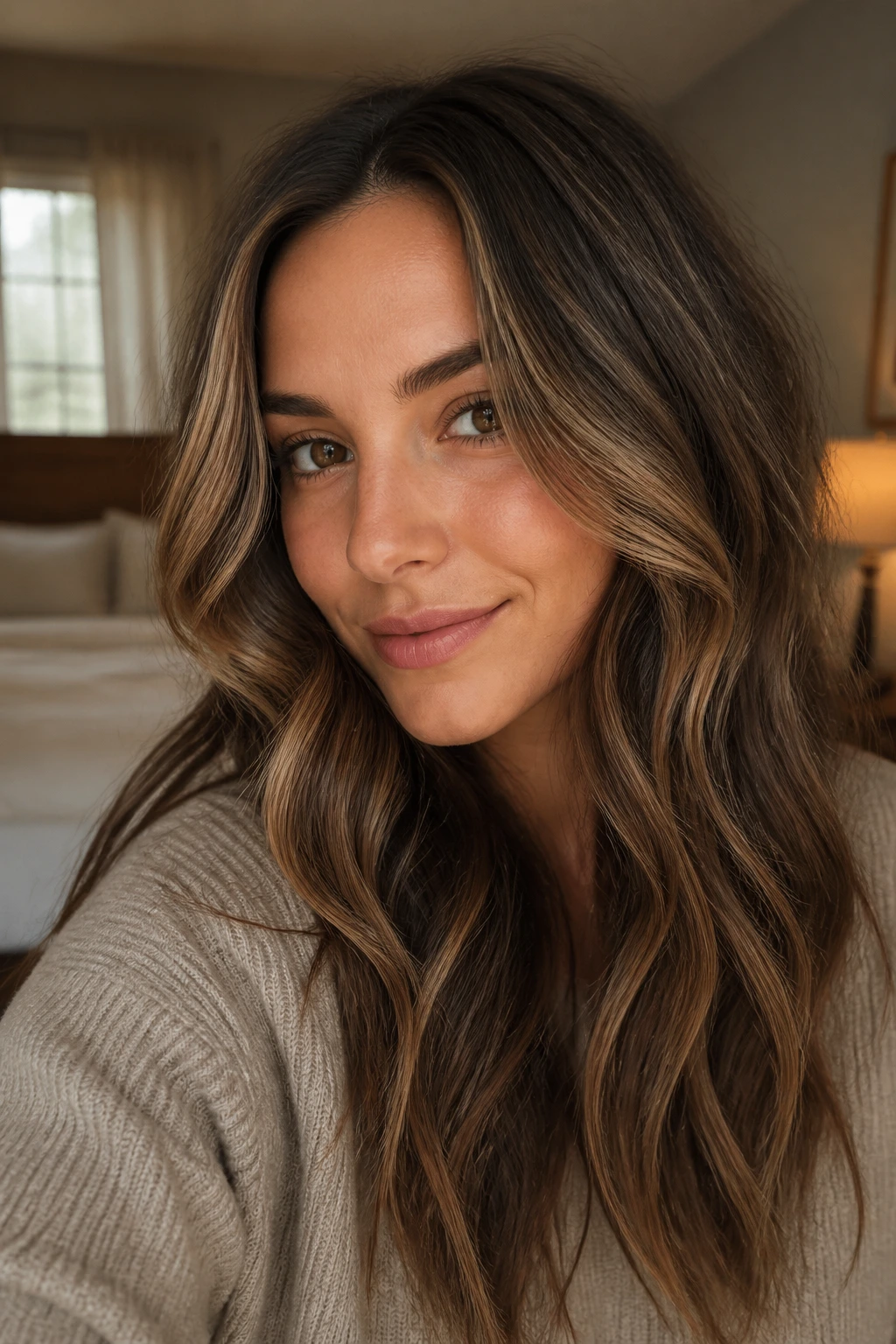
You do not need a drawer full of salon gear, but the right few items make a difference.
- Color-safe shampoo: Keeps toner and gloss from slipping out too fast; use a sulfate-free formula if your hair is lightened.
- Purple or blue shampoo: Purple helps beige and blonde tones stay clean; blue is better when brunette highlights start pulling orange.
- Bond-building treatment: Useful if your hair has been lightened more than once, because it helps the cuticle feel less fragile after processing.
- Wide-tooth comb: Less breakage on wet, highlighted hair than a fine brush.
- Microfiber towel: Cuts down on friction after washing, which matters more once the hair has been lightened.
- Heat protectant spray: Non-negotiable if you use a blow dryer, flat iron, or curling wand.
- Silk or satin pillowcase: Not fancy. Just less rubbing and less frizz at the ends.
- Tail comb and sectioning clips: Handy if you touch up a fringe, part, or styling section at home.
If you’re shopping for salon products, look for tone-specific language. Beige, ash, gold, copper, and violet all mean different things. They are not interchangeable.
How to Ask for the Right Tone and Placement
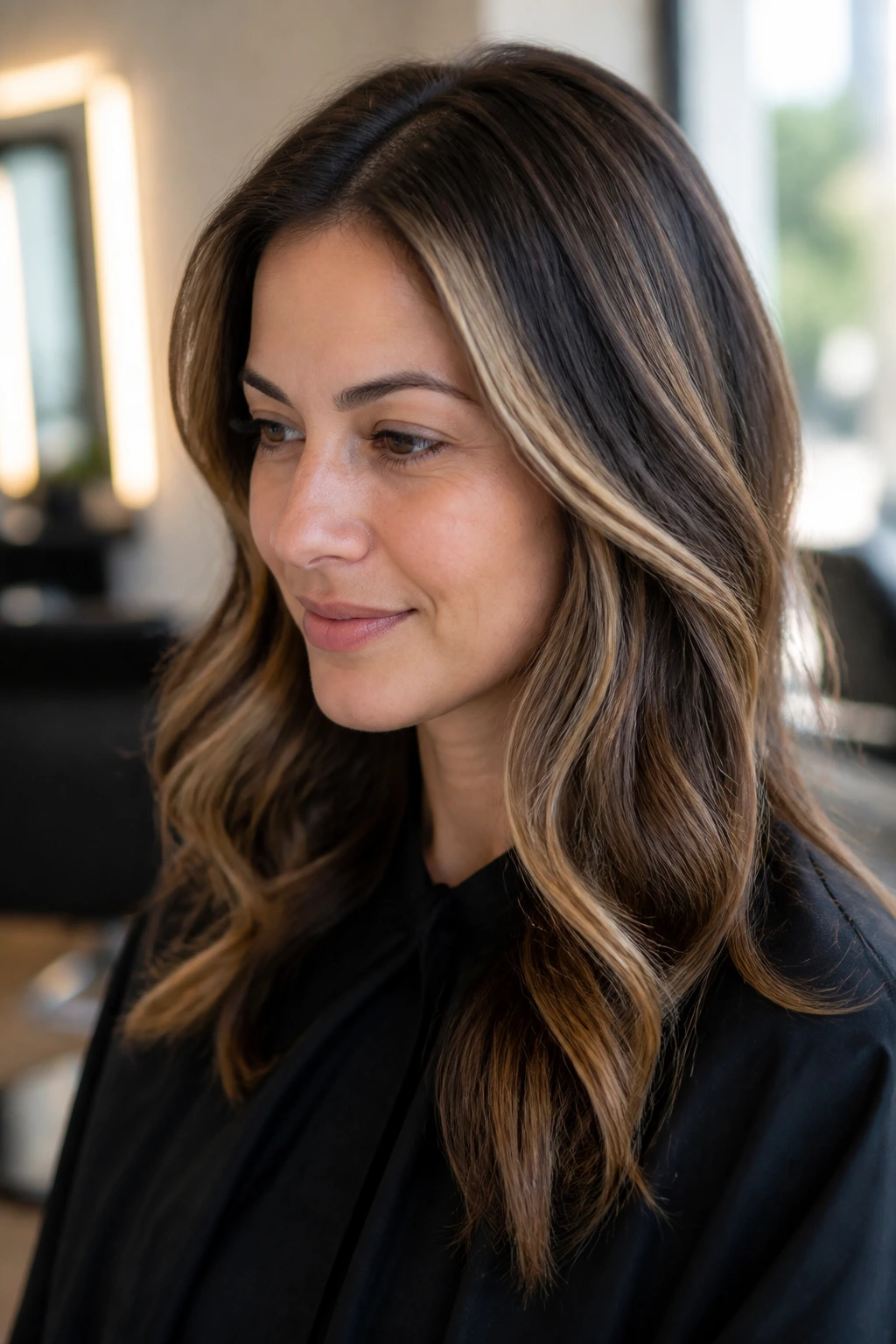
A good consultation saves more bad hair days than any rescue mask ever will.
Bring two photos, not one. One should show the tone you like. The other should show placement. People mix those up all the time. A photo can have perfect caramel ribbons but a terrible root line, or gorgeous root shadow with a tone you’d never wear.
Say what your hair actually does. If it turns orange in two weeks, say that. If the ends grab dark pigment and the mids lift fast, say that too. Color history matters, especially if you’ve used box dye, henna, or darker permanent color before.
Talk maintenance in plain words. If you only want to come back every 10 to 12 weeks, do not ask for a look that needs a bright root refresh every month. That mismatch is where frustration starts.
Tell the stylist how you wear your hair. Middle parts, side parts, claw clips, curls, and sleek blowouts all change where the highlight should sit. A face frame that looks gorgeous in waves can vanish in a bun. That’s not the color’s fault. It’s placement.
How to Style These Shades So the Ribbons Show
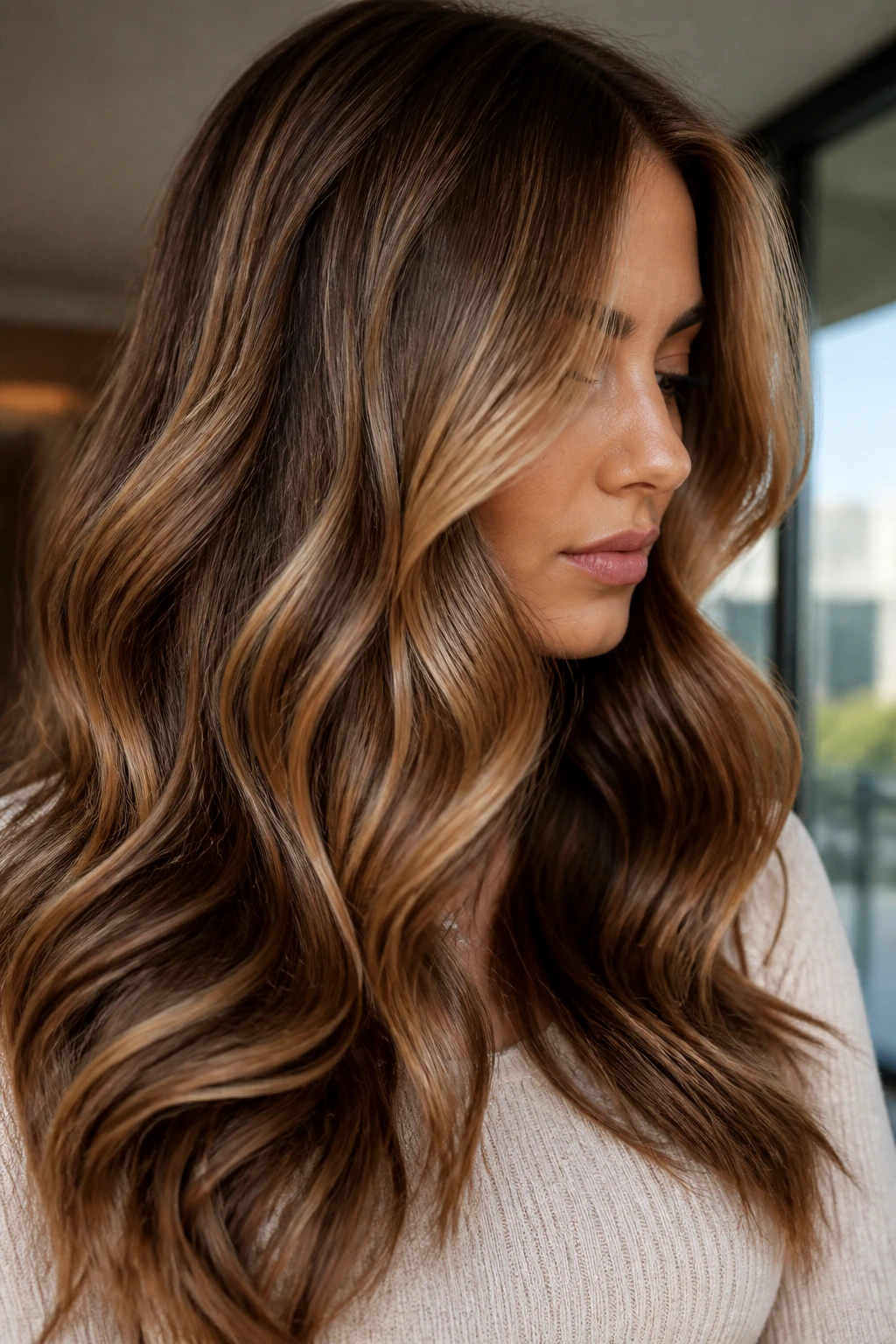
Color can disappear if the styling hides it. A few simple choices help the dimension show up.
Blowout: Use a round brush or blow-dry brush to bend the mids away from the face. That curve shows off caramel, bronze, and amber ribbons because the light hits the side of the strand instead of the flat front.
Loose wave: A 1-inch to 1.25-inch curling iron gives most of these looks enough movement without turning them into pageant hair. Wrap away from the face, leave the last inch out, and brush lightly once the hair cools.
Straight style: If you wear your hair sleek, ask for placement near the hairline and crown so the color still reads from the front. Micro-highlights and contour pieces matter more in straight hair than people think.
Updos and clips: Peekaboo copper, cherry cola panels, and mulled wine tones show up fast in half-up styles. If you wear clips a lot, ask the colorist to place some lightness where the hair is likely to bend or fold.
Additional Tips and Color Boosters
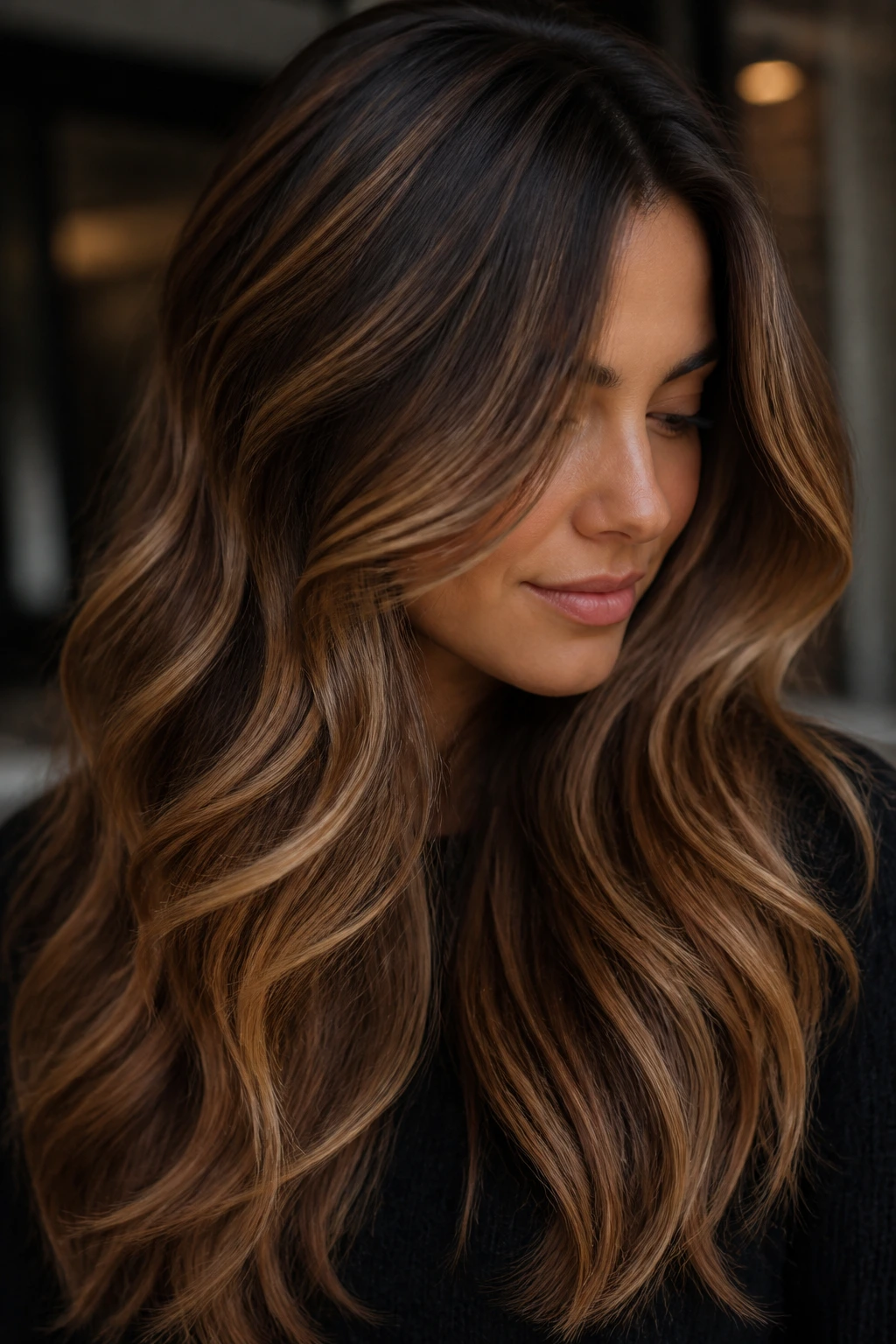
Tone Refresh: A clear or demi-permanent gloss every 4 to 8 weeks keeps caramel, beige, and bronze from drifting too dull or too brassy. It also makes the ends look smoother under indoor light.
Placement Upgrade: If you wear your hair up half the week, keep a few lighter pieces near the temples and crown. That way the color does something even when the back is pinned away.
Depth Trick: Leave more darkness underneath if your hair is very thick. It makes the lighter pieces stand out without needing extra bleach, and the whole shape looks less heavy.
Make-It-Yours: Warm skin tones usually like caramel, amber, copper, and gold. Cooler skin tones often look better in mushroom, smoked beige, and walnut-brown ribbons. If you’re unsure, start softer. You can always go warmer next time.
Maintenance, Washing, and Refresh Timing
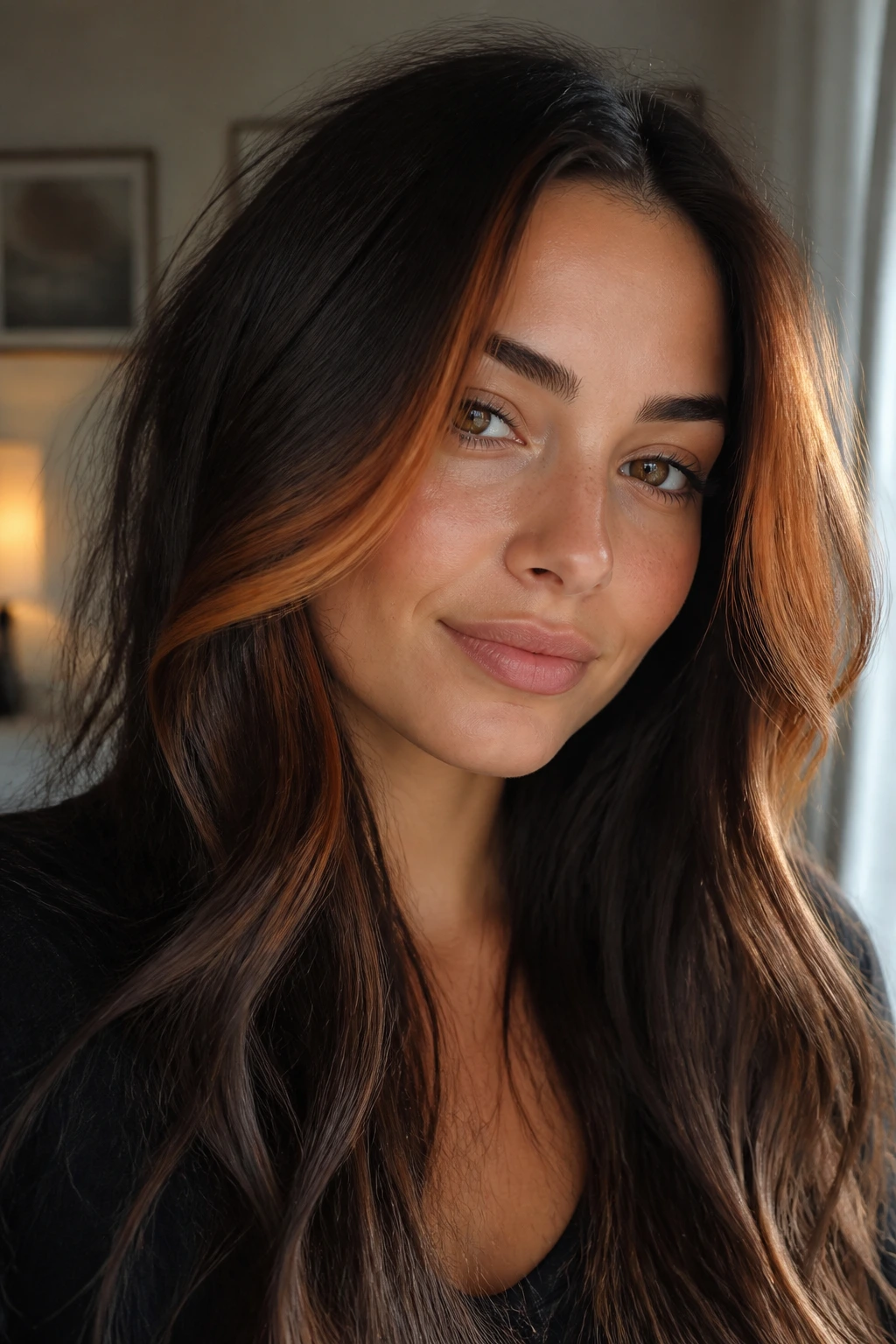
Highlighted hair needs a schedule, or the tone gets sloppy fast.
Balayage and root-shadow looks can often stretch to 8 to 12 weeks between bigger appointments if the tone is soft and the grow-out is planned well. Babylights, money pieces, and high-contrast front frames usually want attention sooner, often around 6 to 8 weeks, because the contrast shows regrowth faster. Copper, cherry, and rose tones fade the quickest, so those usually need a gloss or toner refresh every 4 to 6 weeks if you want the color to stay sharp.
Wash less than you think. Two to three shampoos a week is usually enough for lightened hair unless you sweat heavily or use a lot of styling product. Use cooler water on the rinse, not icy, just cooler than your shower habit. Heat tools are fine, but they need protectant every time. Skip that step once and the ends remind you later.
If the hair feels rough after lightening, put moisture back before you panic. A weekly mask helps, but the real fix is usually a better-toned, less-aggressive next appointment.
Variations and Adaptations to Try
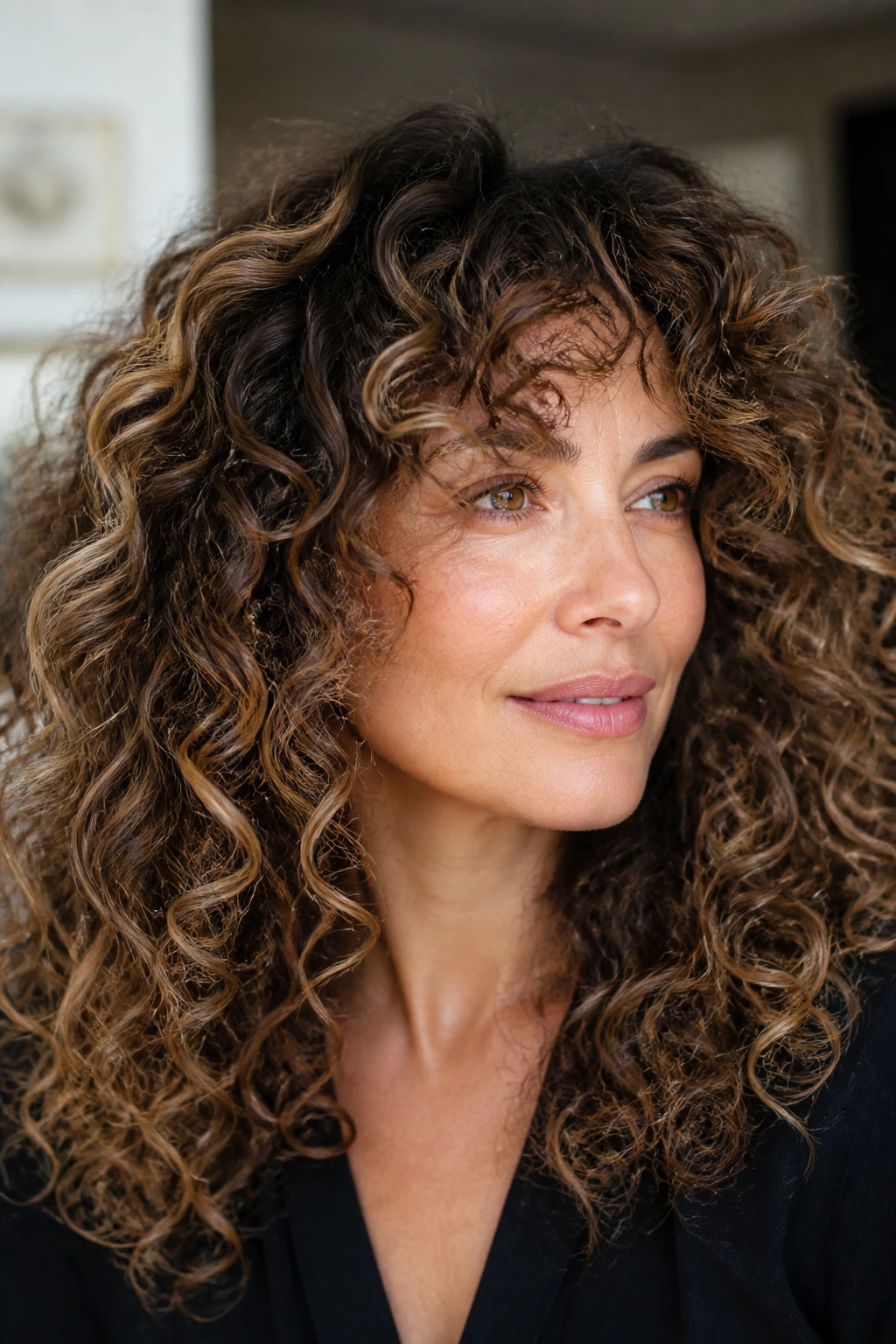
Curly-Hair Carving: Instead of painting every curl the same way, concentrate highlights on the outer halo and the curls that sit on top of the head. That keeps the dimension visible when the curl pattern springs up and prevents the ends from getting over-lightened.
Gray-Blending Brunette: Use soft beige, walnut, or chestnut highlights with a root shadow close to your natural color. The result doesn’t erase gray; it helps the silver blend into the whole shape instead of standing out in hard lines.
Low-Lift Brunette Refresh: If your hair is dark and fragile, skip big blonding and go for amber, caramel, bronze, or honey glossing. You get seasonal warmth with less lift and less stress on the ends.
High-Contrast Face Frame: Keep the base deep and make the money piece brighter, thinner, and more visible. This works when you want the haircut to pop from the front without turning the whole head light.
Copper Without the Commitment: Ask for peekaboo copper or copper ends instead of all-over red. You still get the warmth and movement, but the grow-out stays easier and the color fades in a more forgiving way.
Common Mistakes That Make Fall Highlights Look Off
Going too light too fast: Hair that jumps four or five levels at once often looks disconnected, especially on brunettes. The fix is slower lift, more depth left in the base, and a gloss that keeps the tone coherent.
Choosing a warm shade that’s too yellow: Not every gold is flattering. If the highlight looks like banana peel under the mirror lights, it’s gone too bright. Ask for beige-gold, bronze, or cinnamon instead of pure yellow blonde.
Placing highlights too far apart: Wide gaps can make the color look striped and old-fashioned. Finer placement or a softer blend through the mids usually solves that.
Skipping toner or gloss: Bleached hair without finishing toner tends to read raw, not rich. A toner is what turns the lifted strand into caramel, mushroom, beige, or bronze.
Treating every texture the same: A blunt bob, a loose wave, and tight curls need different placement. If the highlight map ignores the cut, the color won’t sit where the eye expects it.
Using the wrong shampoo on the wrong tone: Purple shampoo can mute copper and cherry tones faster than you’d like. Blue shampoo is better for brunette brass; violet is for blonde and beige. They are not one-size-fits-all.
Questions People Ask Before Booking Fall Highlights
Will fall highlights work on black or very dark brown hair?
Yes, but the tone choice matters more than the lift. Amber, bronze, auburn, and caramel usually show better than pale blonde because they can sit on a deeper base without looking patchy or fried.
Are balayage and foilayage the same thing?
Not quite. Balayage is painted by hand for a softer fade, while foilayage uses foils to get more lift and brightness with a blended edge. If you want lighter pieces that still look soft, foilayage often gives you more range.
How do I know whether to choose warm or cool fall highlights?
Look at what your hair does when it fades and what your skin already pulls toward. If your hair goes orange fast, cool beige or smoked tones usually behave better. If your skin likes gold and your base is deep, caramel, bronze, and cinnamon can look more natural.
Can I get these looks if my hair is curly?
Absolutely, but placement should follow the curl pattern, not the straightened version of the hair. Color placed on the outer curve of curls shows more movement and avoids thick, blocky spots when the curl shrinks up.
How often will I need to come back for maintenance?
Soft balayage can last longer between appointments, often around 8 to 12 weeks if the root shadow is well done. Money pieces, copper, and cherry tones usually need more frequent glossing or toning because the brighter pigment fades faster.
What if my hair lifts orange every time?
Then your formula probably needs more control, not more lift. Ask for a slower lightening plan, stronger toner, and a tone family that can handle warmth—beige, bronze, or mushroom instead of pure blonde.
Can I keep my current haircut and just change the color?
Yes, but the haircut changes how the highlights read. A blunt cut can make color look stronger and cleaner, while layers spread the highlights around and soften the contrast. Same color, different result.
Do these ideas work if I want something low-maintenance?
They can, but choose root shadow, babylights, or soft balayage rather than high-contrast front frames. The more the color depends on a crisp line, the more often you’ll need to touch it up.
The Shade Range That Feels Like Sweater Weather
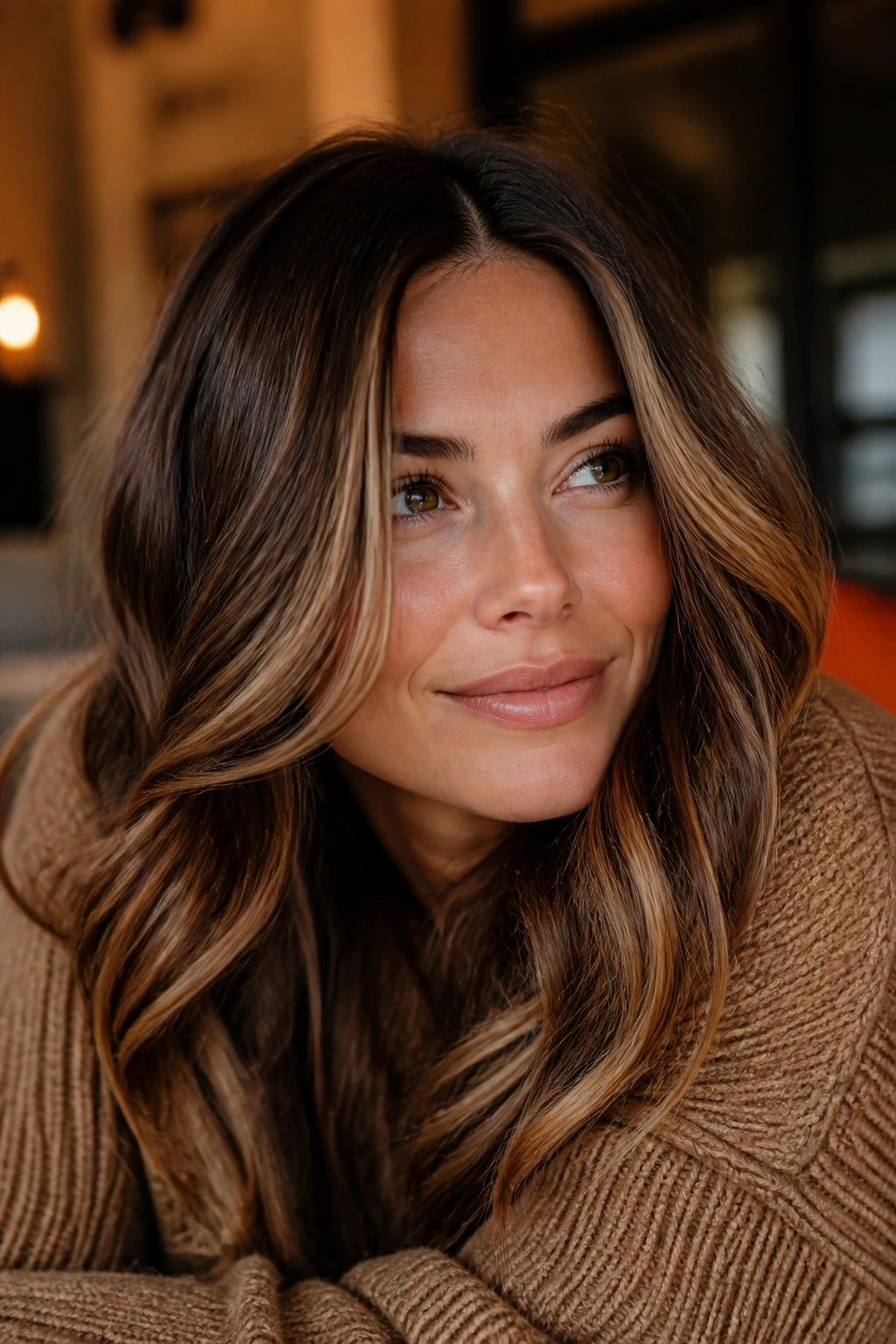
The best fall highlights are the ones that make hair look more alive, not more processed. A few caramel ribbons, a soft root shadow, a copper panel under the top layer, or a beige gloss over brunette lengths can change the whole mood of a haircut without turning it into a maintenance project you resent by week three.
If you keep one thing in mind, make it this: placement beats intensity. A well-placed piece around the face or through the crown can do more than a whole head of lighter hair with no plan behind it. That’s the difference between color that looks busy and color that looks considered.
Pick the lane that matches your base, your texture, and the amount of upkeep you’ll actually do. The right one will still feel right when the mirror is less forgiving and the light gets softer.
