



Wavy layered haircuts for soft texture sit in that narrow, useful lane between blunt and shaggy. They let the bend in your hair stay visible, but they stop the ends from hanging like one heavy curtain. On the right cut, the whole shape starts to move when you turn your head. The hair doesn’t just sit there. It lifts, swings, and breaks into little pieces of light and shadow, which is exactly why these cuts look so good with balayage, face-framing highlights, and even the plainest air-dry routine.
What makes them worth the chair time is not drama. It’s control. A good layered cut for wavy hair should take away the bulky spots that puff out around the sides while keeping enough weight at the perimeter so the shape doesn’t frizz into a cloud by noon. That balance is trickier than it sounds. Too little layering and the wave pattern gets buried. Too much and the haircut starts looking choppy, especially when the hair dries and springs up half an inch.
The sweet spot changes with density, face shape, and how much effort you want to put into styling. Some cuts lean soft and polished. Others have a little shag energy. A few are almost invisible until the hair moves. The common thread is simple: the layers are there to help the wave, not fight it.
Why These Cuts Work So Well on Wavy Hair
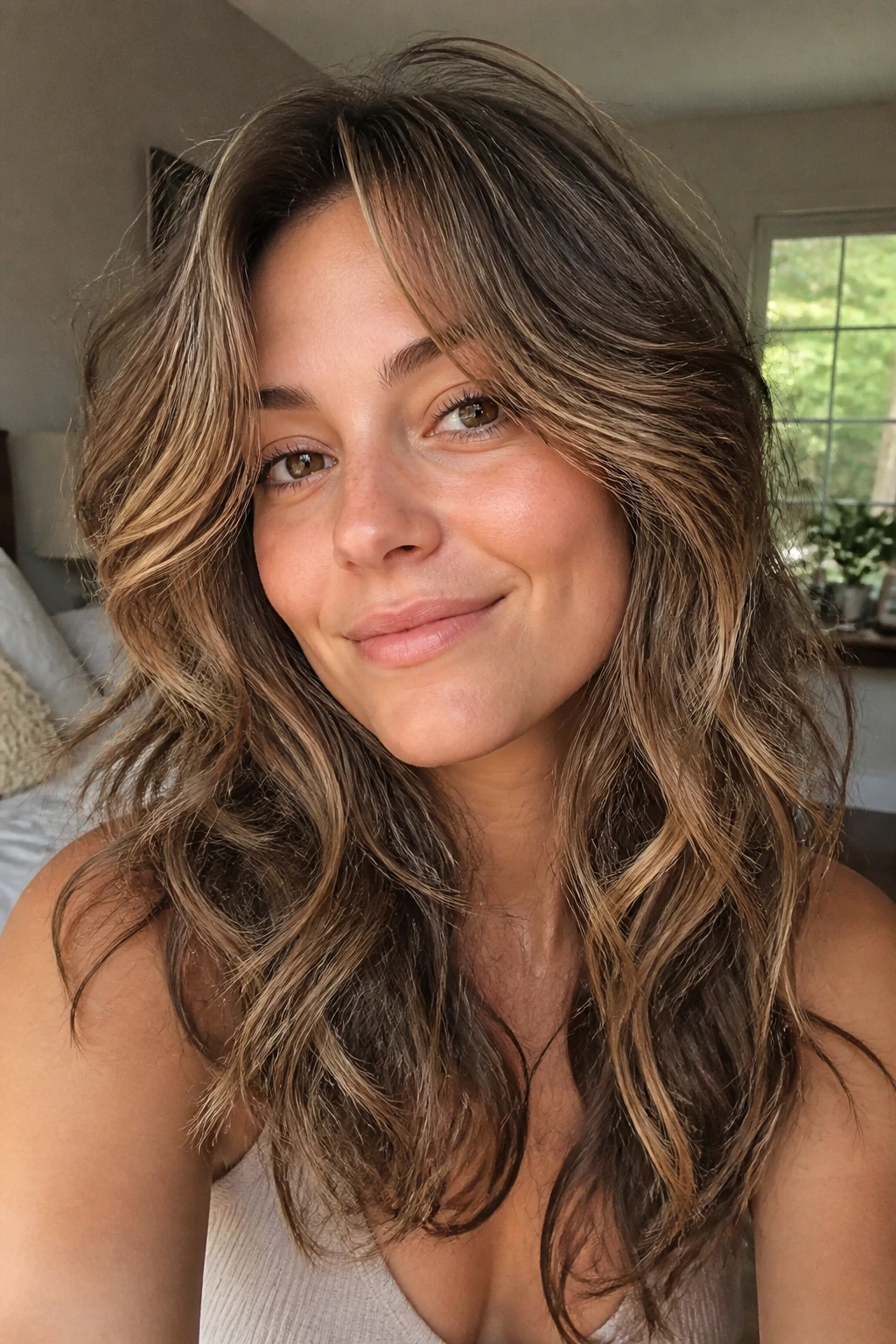
Built for movement: Layers let the wave pattern show instead of boxing it in, so the hair bends and falls in different lengths instead of one flat sheet.
Less triangle, more flow: Removing weight at the right points keeps the ends from spreading out wider than the crown, which is the shape problem that makes so many wavy cuts feel dated.
Better color payoff: Balayage, face-framing highlights, and soft ribbons of light show up more clearly when the hair has layers to catch them.
Easier second-day hair: Once the cut has shape, a little mist, a dab of leave-in, and a scrunch usually bring it back faster than trying to fight a blunt hemline into movement.
Flexible by nature: The same layer map can read as polished, shaggy, beachy, or grown-out and soft depending on how much length you keep and where the shortest pieces land.
1. Long Ghost Layers That Barely Leave a Mark
These are the layers for people who want movement without losing their length. The cut looks almost blunt from the front, then shifts when the hair turns and you notice the quiet layers inside. That’s the appeal. The shape feels expensive in the practical sense: it keeps the ends from dragging flat, but it does not shout “I got layers” every time you pass a mirror.
The best version lands on hair with loose 2a to 2b waves and medium density. A stylist usually keeps the outer outline long and slides in just enough interior shaping to stop the bottom from hanging like a curtain. If your hair is fine, this cut needs restraint. If your hair is thick, it can use a little more internal weight removal so the ends don’t feel heavy.
Balayage loves this cut because the longest pieces catch the light while the hidden layers create soft breaks underneath. If you want a low-key shape that still looks styled on day two, this is one of the smartest options on the list.
2. The Collarbone Shag With Airy Curtain Fringe
Why does a shag feel soft instead of harsh on wavy hair? Because the length hits around the collarbone, where the bends can actually move, and the fringe opens the face instead of chopping it off. That middle length matters. Too short and the texture gets loud. Too long and the layers disappear.
What Makes It Land
The curtain fringe should start around the cheekbone or just below, not halfway up the forehead. That gives the face some lift without creating a blunt shelf. The rest of the cut should taper in a loose way, with the shortest pieces staying around the face and crown, then easing into longer sections toward the back.
This cut suits someone who likes a bit of attitude but doesn’t want the hair to feel overworked. Air-dry it with mousse at the roots and a curl cream through the mids, then leave the ends alone as much as possible. The more you finger-comb, the more the wave clumps nicely instead of turning fuzzy.
3. Butterfly Layers That Lift the Crown
Picture long hair that still keeps its weight at the bottom, but has a lifted, airy top section that moves when you walk. That’s the butterfly idea. The shortest face-framing layers sit high enough to create volume around the cheekbones and crown, while the longer length underneath stays intact.
This cut works because it gives wavy hair two jobs at once. The top layers create shape and softness. The bottom length keeps the haircut from floating away. On medium to thick hair, that contrast can be dramatic in a good way. On finer hair, it needs careful handling so the top doesn’t get too sparse.
I like this cut with a center part and loose wave definition. It gives the layers a chance to fan out and show the shape, especially if the hair has subtle highlights. If you wear it blown smooth, the layers read more polished; if you scrunch it, the whole cut gets a little more air under it.
4. Soft Wolf Cut With Rounded Ends
Not every wolf cut has to look rebellious. The softer version keeps the shape, the movement, and a little edge, but rounds the ends so it doesn’t turn into a stack of sharp steps. That rounded finish matters a lot on wavy hair. It keeps the silhouette from looking jagged when the hair air-dries.
This version usually works best when the shortest layers stay modest and the length difference between sections is not huge. The crown gets lift, the sides get some release, and the bottom keeps enough density to look deliberate. If you’re nervous about going too short, ask for a soft wolf-inspired cut rather than a full shag. Those words matter more than people think.
The styling is easy enough: a light mousse at the roots, a touch of cream on the mids, and a diffuser if you want more separation. Skip the heavy oil. It kills the airy piecey effect fast.
5. Waterfall Face-Framing Layers
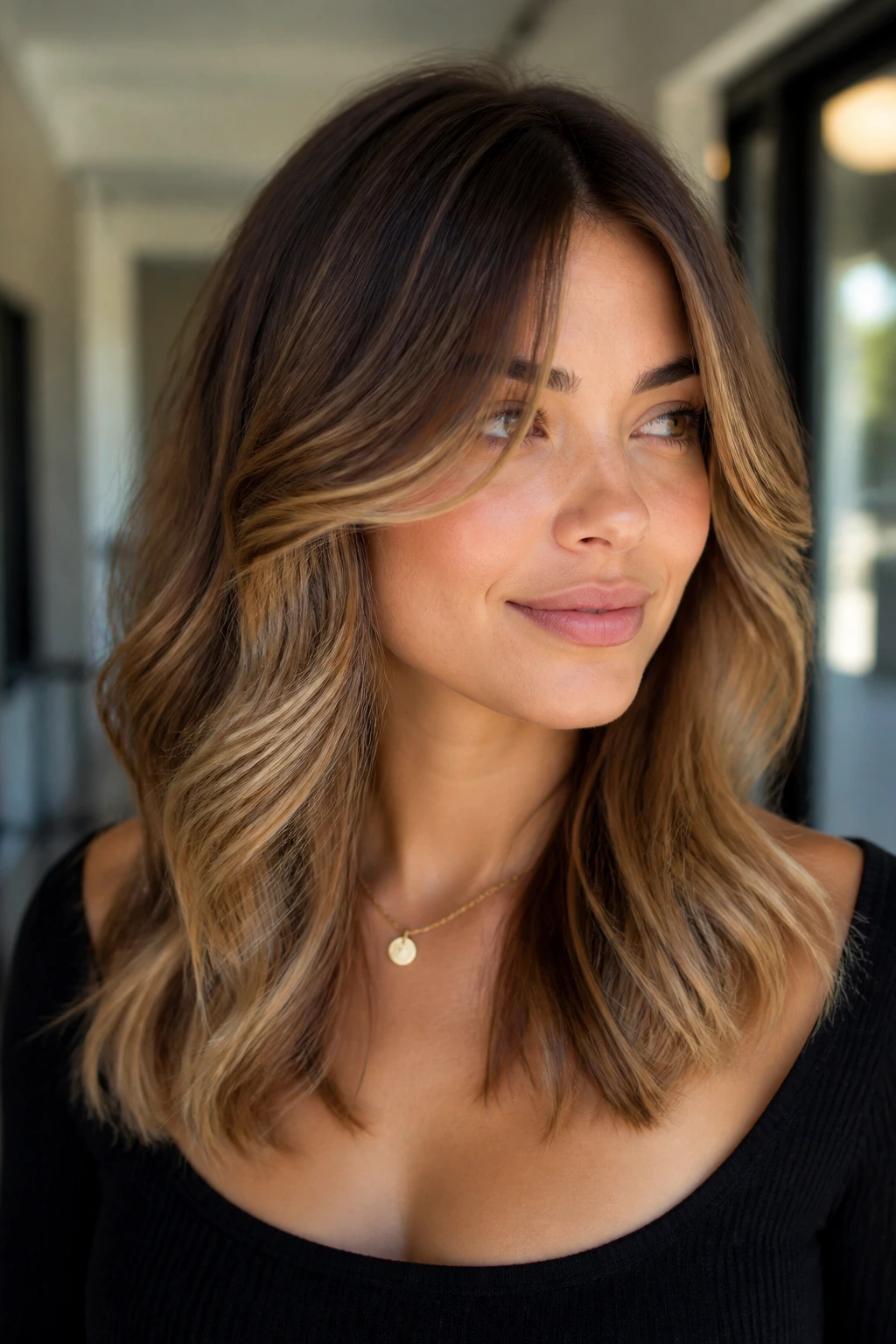
These are the layers that make people say, “Something changed,” without immediately spotting what. The front pieces start near the cheekbones and fall in a gentle cascade toward the collarbone or chest. The effect is soft and flattering, especially if you want movement around the face but don’t want the back of the haircut to get too choppy.
Waterfall layers are a smart pick for people who wear their hair half up often. The front sections stay visible when the rest is clipped back, so the cut still looks styled even on lazy days. That alone makes them useful. A haircut that disappears into a bun by default gets old fast.
I also like this shape with subtle balayage. The front layers give the color somewhere to live, and the pieces around the face show the ribbons of light without needing much product. If the hair is very thick, the stylist should keep the face frame longer so it doesn’t puff outward at the chin.
6. Rounded U-Cut for Thick, Wavy Hair
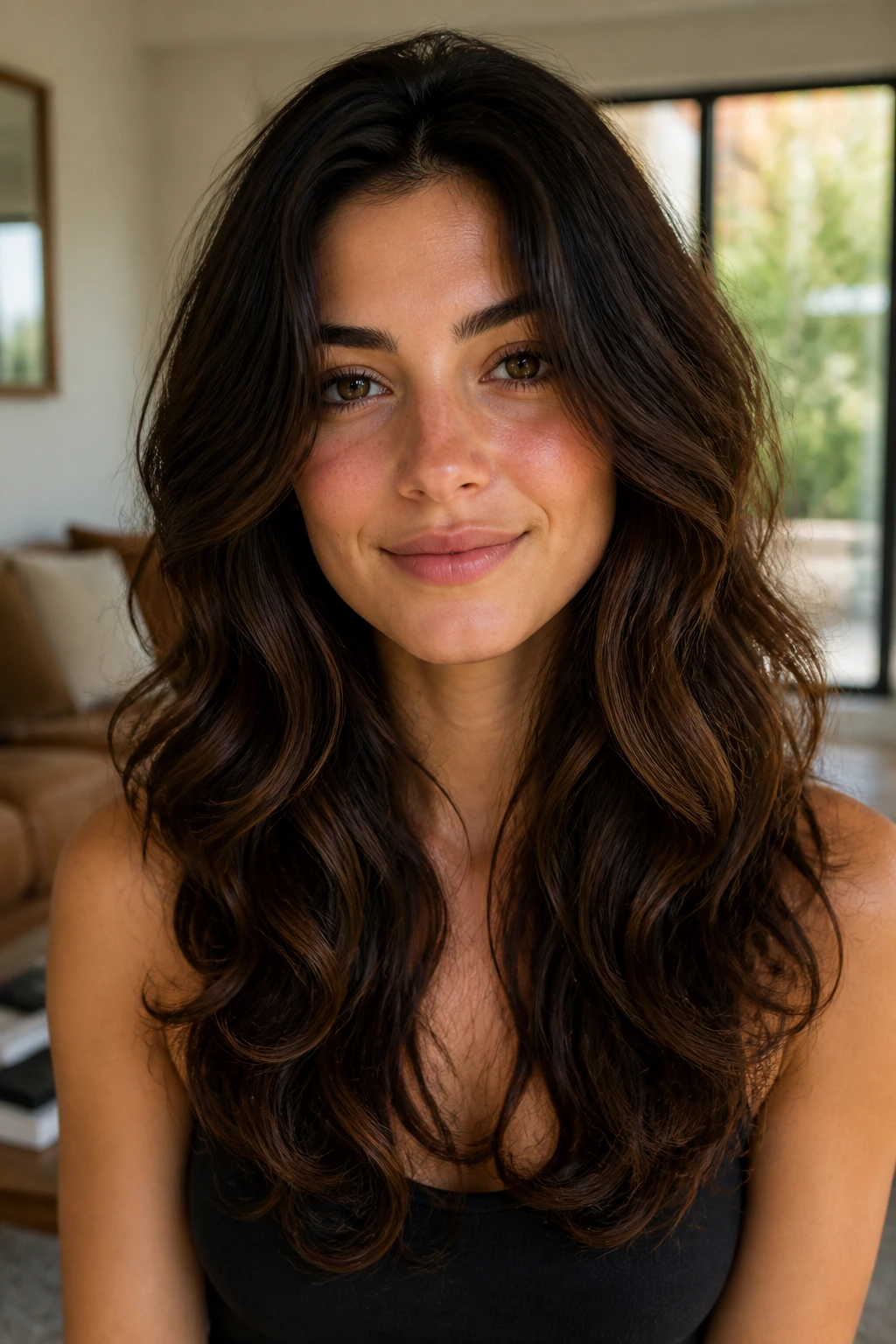
When thick wavy hair gets chopped into a blunt rectangle, it can balloon sideways. A rounded U-cut fixes that by keeping the perimeter soft and curved, which lets the weight sit lower and the waves fall in a smoother line. It’s one of those cuts that seems simple until you compare it with a straight-across hemline. The difference is obvious.
This shape is especially kind to dense hair that swells when it dries. The layers should be mostly internal, not all short and visible on the surface. That way you get movement without giving the ends a weird stepped look. If your hair gets puffy in humidity, this is a safer bet than a heavily layered shag.
A rounded U-cut also behaves well with curl-defining products. The curve keeps the bottom from flaring out, and the waves stack on top of one another in a way that looks intentional rather than over-styled. It’s not flashy. It’s steady. That’s the point.
7. The Wavy Lob With Chin-Grazing Pieces
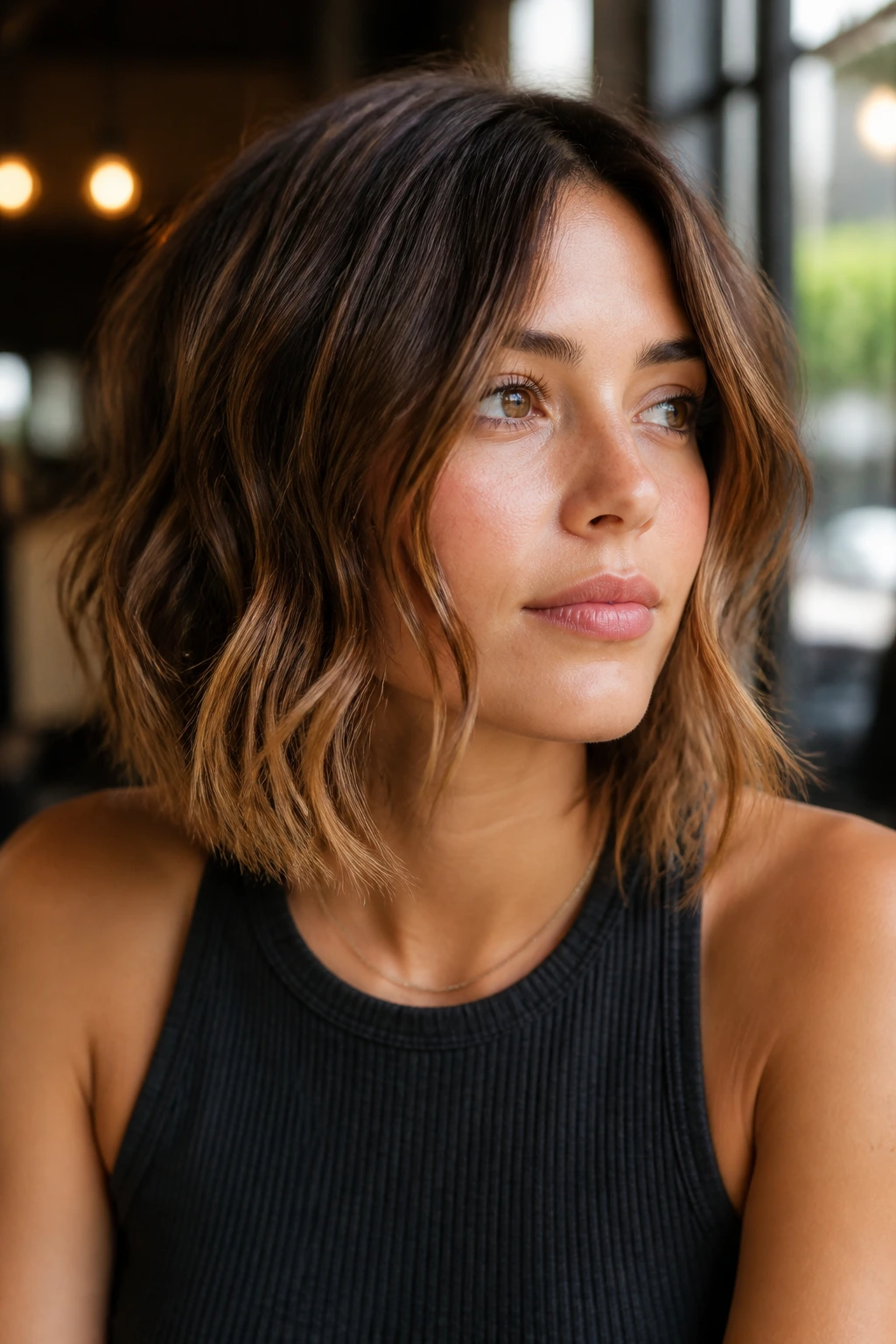
Why do so many wavy lobs look fresh? Because the length is long enough to bend, but short enough to lift. Once the cut hits the jaw or collarbone, the wave pattern stops hanging and starts shaping the outline of the face. Add a few chin-grazing pieces and you get movement right where it counts.
Best When You Want Balance
The lob is a sweet middle ground if you don’t want to commit to very short layers or very long hair. The wave can still drop into an S-shape, but the ends don’t drag the whole thing down. Chin-length face-framing pieces help break up rounder faces and soften stronger jawlines. On square faces, they can blur the edge a little.
Styling is forgiving here. A diffuser gives you more volume; air-drying with a bit of mousse gives you a softer, looser finish. If the haircut is done well, you should not need much more than that. The shape does the work.
8. Midlength Layers With Curtain Bangs

This is the cut for people who want softness near the face and movement through the body of the hair without going full shag. Midlength layers keep the ends light enough to swing, and curtain bangs open the forehead in a way that feels easy rather than severe. On wavy hair, that combination has a nice built-in softness.
The bang length matters. If the curtain fringe is too short, waves can spring up and make the front look awkward for a week or two. If it’s cut to cheekbone length or a touch longer, it grows out in a much calmer way. That’s one of the reasons this shape stays popular with people who don’t want high-maintenance fringe.
I’d call this a good “real life” haircut. It can be worn loose, clipped back, or pulled into a half-up knot without losing the outline. And if you color your hair, the front layers give balayage or bright face pieces somewhere to land without turning the cut into a spotlight.
9. Razor-Textured Beach Layers
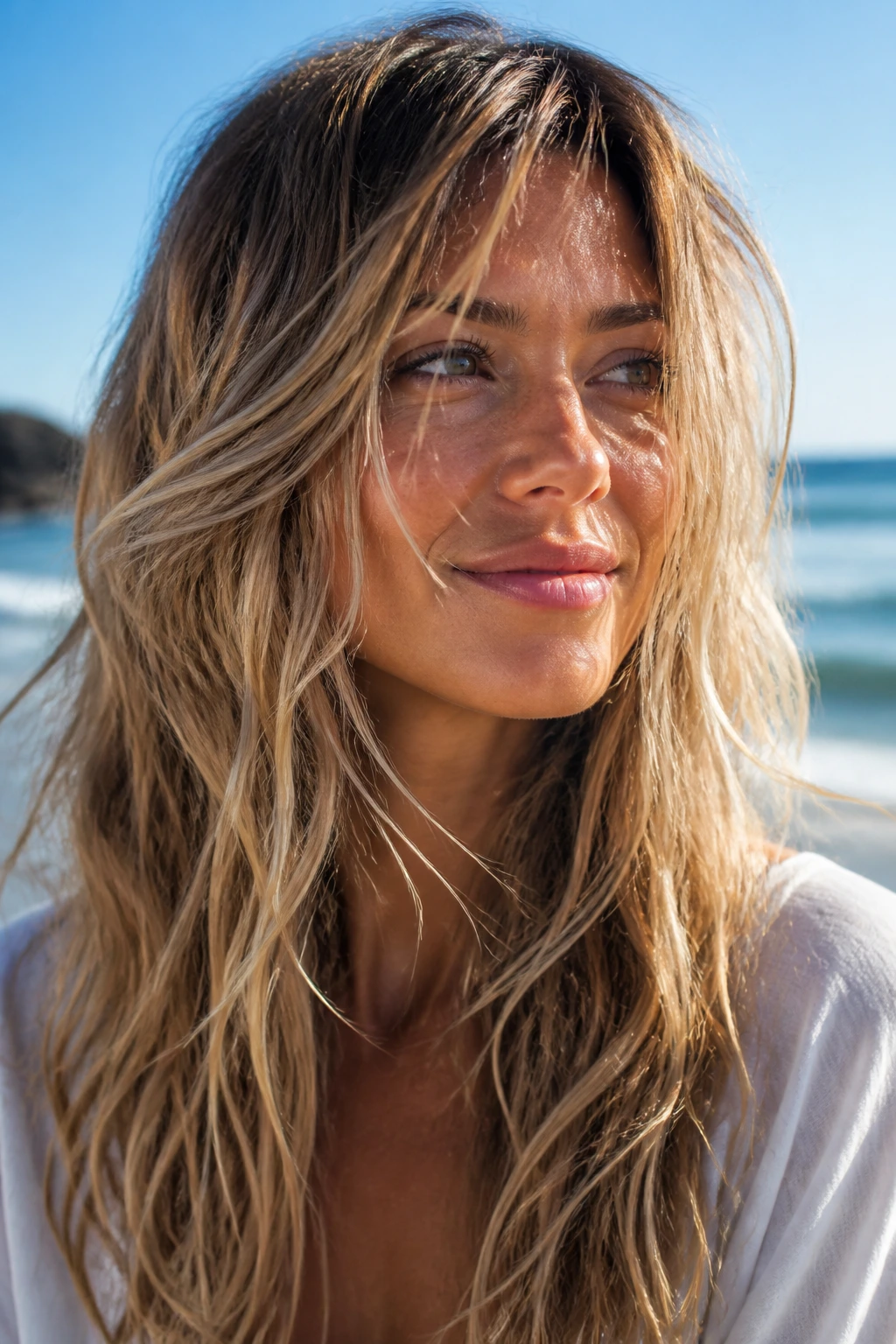
A razor finish can be lovely on the right head of hair. The key word is right. On soft, wavy strands with enough density, razor-textured layers can create that windswept, broken-up look that reads beachy instead of blunt. On coarse or frizz-prone hair, the same technique can get fuzzy fast. That’s the tradeoff.
The cut works best when the ends are kept light but not wispy. You want the hair to separate into pieces, not fray. A stylist who knows wavy hair will usually soften the interior, then leave enough structure at the bottom so the cut can still hold its line. If the ends look shredded in the chair, that’s usually too much.
This style likes salt spray in moderation. One or two mists too many, and the hair can feel sticky or rough. A little goes a long way. Scrunch, let it dry, then disturb it as little as possible. That restraint is what keeps the texture from looking forced.
10. Shoulder-Length Layers With Flipped Ends
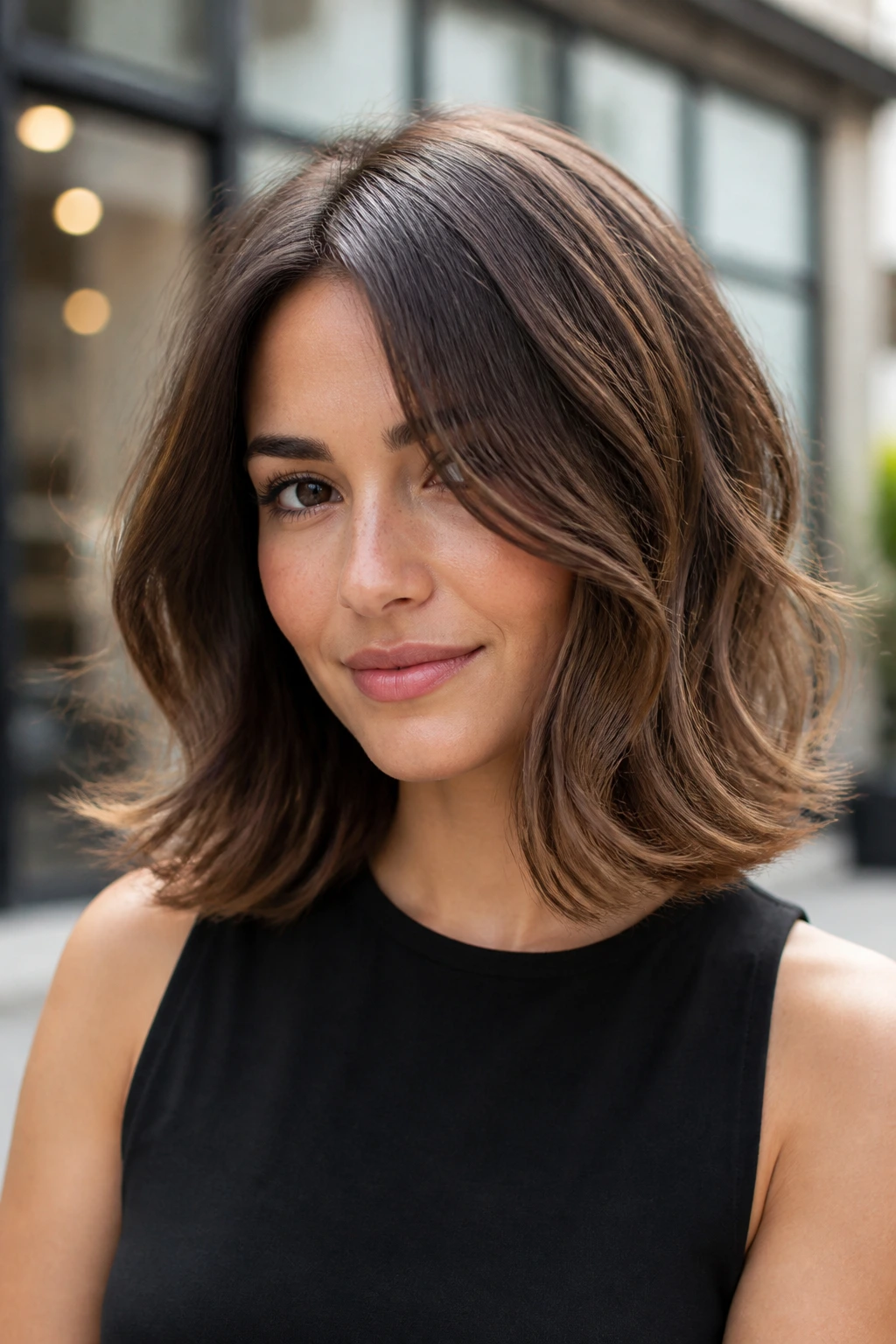
Shoulder-length hair has a funny habit of either looking energetic or looking stuck. Layers with slightly flipped ends fix that. The cut moves away from the neck, catches a bit of air, and avoids that heavy “stuck on the collarbone” look that can make shoulder-length hair seem flat.
This version is especially good if your waves are looser and you want a cleaner finish. The layers should be subtle enough that the haircut can still tuck behind the ears or flip out with a round brush. It’s a practical cut for people who like some structure in the morning and some softness by afternoon.
I also like this shape with a side part. The flip on one side can give the haircut a little swing, which makes the whole thing feel more alive. If you have highlights, the movement helps them show without needing a lot of styling product.
11. Long Layers That Keep Fine Waves From Going Limp
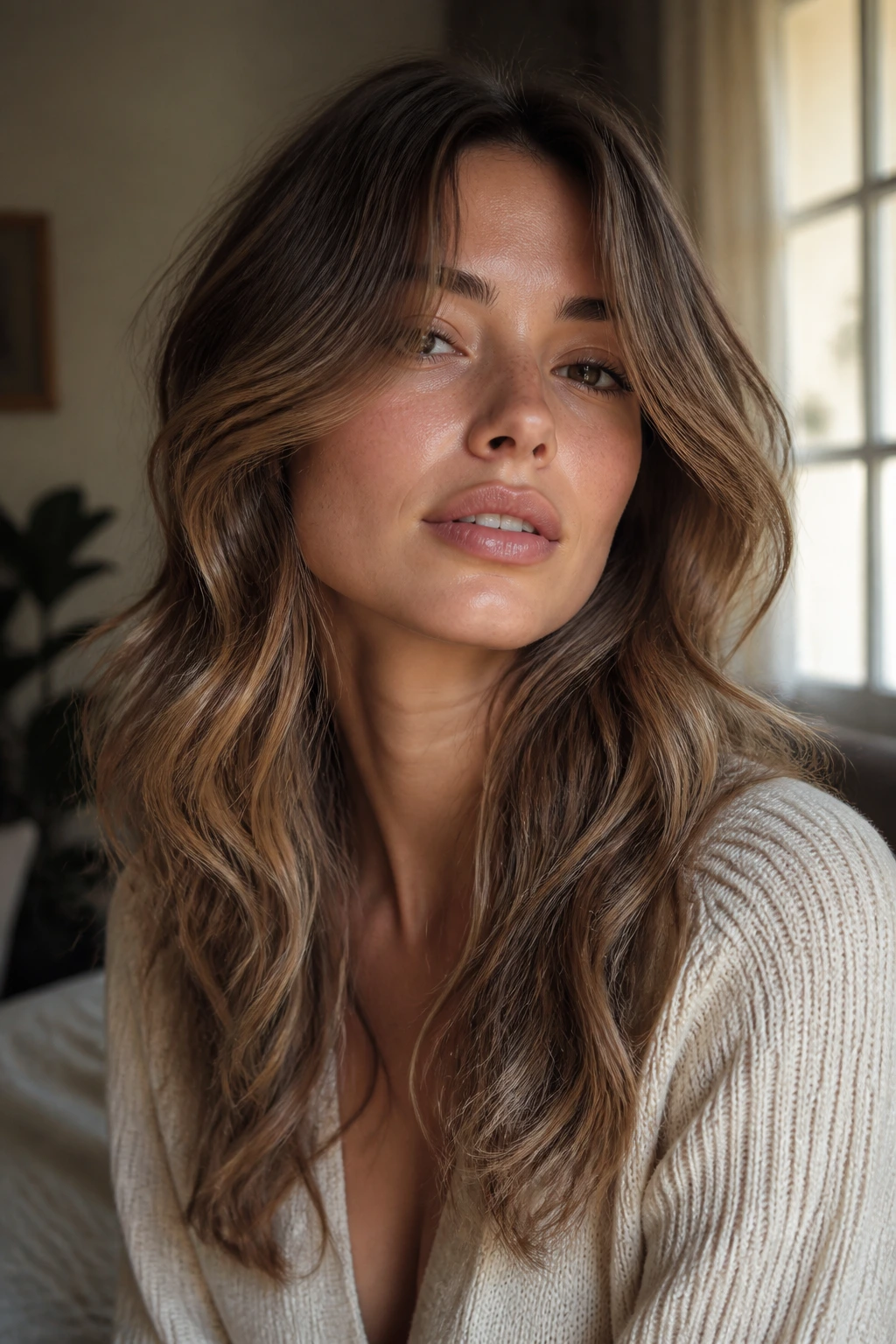
Fine wavy hair needs a careful hand. Too many layers can make it look thin at the ends, and too little leaves it hanging in one flat curtain. The answer is long layers that keep the outline soft while taking a little weight out of the interior. That preserves body. It also keeps the wave from collapsing under its own length.
The best long layers for fine waves usually start lower than people expect. I mean lower. Around the lips, chin, or even collarbone in some cases. That leaves enough hair around the crown and top lengths to make the shape look full. If the shortest layers sit too high, the ends can go stringy fast.
A lightweight mousse beats a heavy cream here. Fine hair gets flattened quickly by rich products, especially at the roots. A little lift at the crown, a gentle scrunch, and a quick blast with a diffuser are often enough. No need to drown it in product and hope for the best.
12. Heavy-Duty Layers for Dense Hair
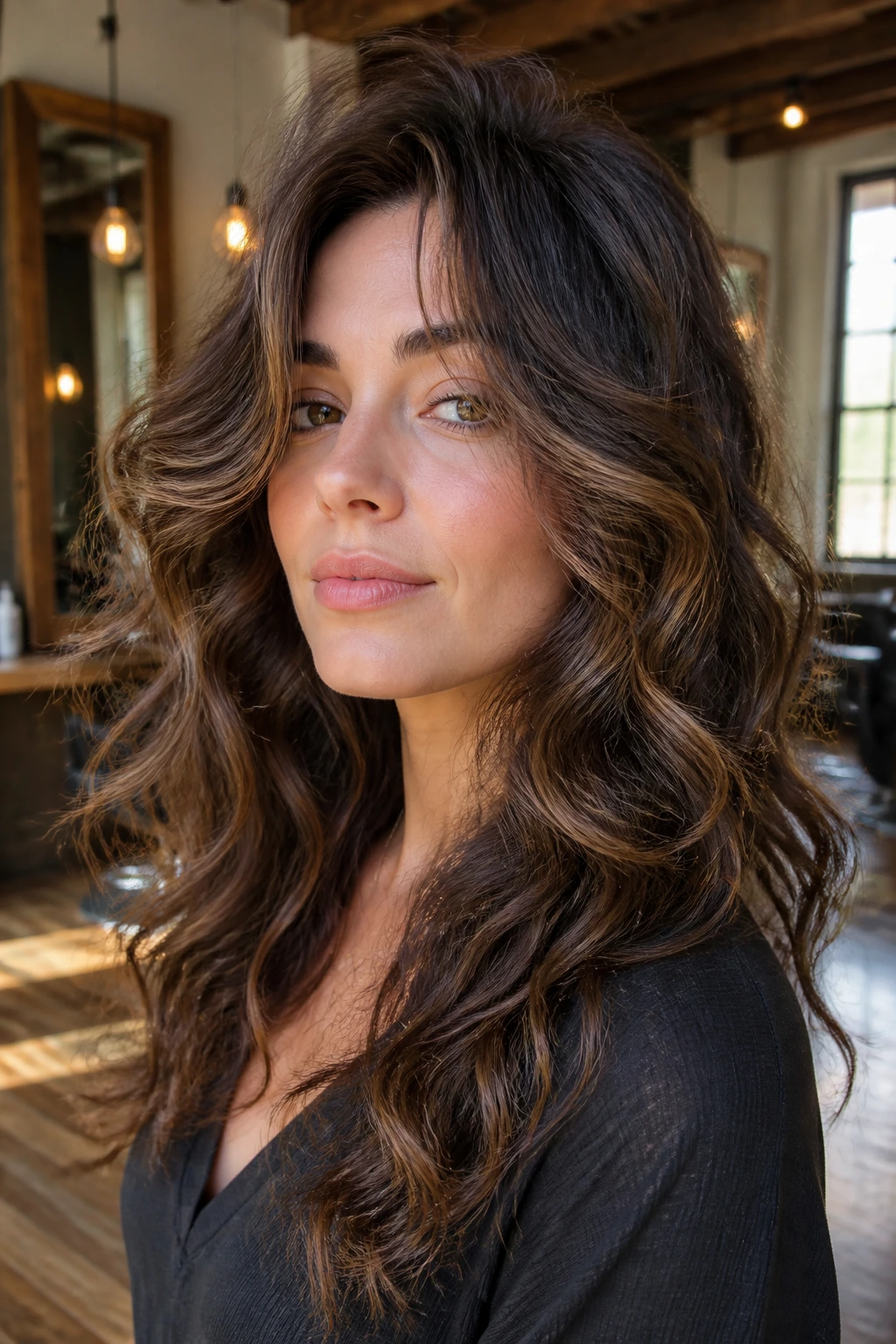
Dense wavy hair can carry more layers than fine hair, but it still needs the right kind. If the stylist removes weight without thinking about the shape, you can end up with frizz at the top and heavy shelves underneath. That’s the bad version. The better version uses layers to carve space inside the haircut so the hair can bend instead of puff.
What to Ask For
- Internal weight removal: enough to stop the middle from ballooning out.
- Longer perimeter pieces: so the ends still feel grounded.
- Visible face framing: especially if you want the haircut to feel lighter right away.
- Soft texturizing only: avoid anything that makes the ends look shredded.
This haircut is a relief for people who spend half their day stuffing their hair behind one ear because it feels too wide. With the right layers, it settles closer to the head and moves in a cleaner line. The whole head of hair feels less square. That alone can change how it wears on a daily basis.
13. Side-Part Layers That Swing Across the Face
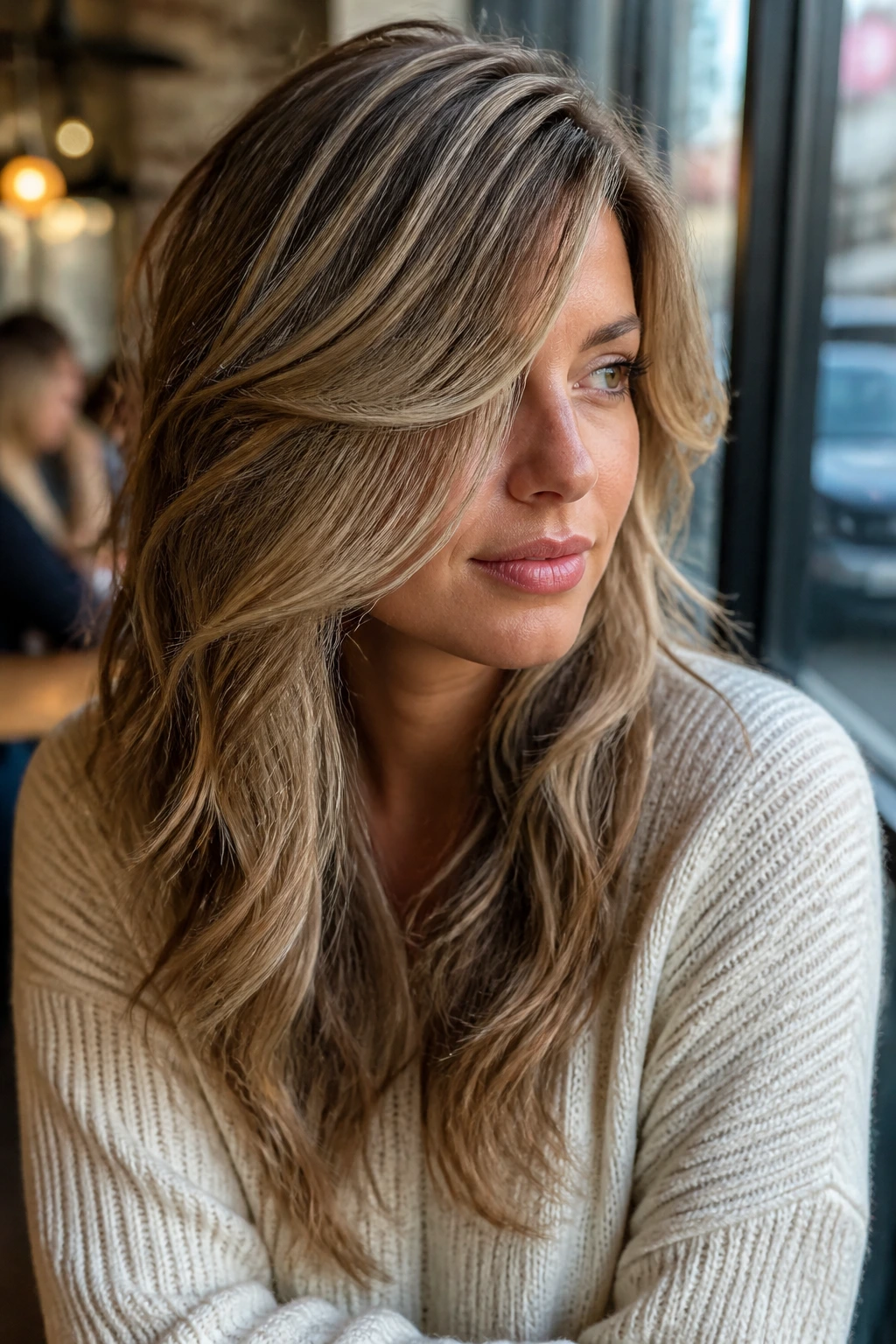
A side part changes the whole mood of layered waves. Instead of splitting the face evenly, the hair sweeps across one side and lets the layers cascade in a longer line. That can be a strong move for round, square, or heart-shaped faces, because the diagonal line gives the eye somewhere to travel.
The haircut itself does not need to be extreme. In fact, it usually shouldn’t be. A medium-length layered cut with a side part and one or two longer face-framing pieces is enough to create the effect. The part does the heavy lifting, and the layers keep the sweep from feeling stiff.
This is one of those styles that looks better when it’s a little imperfect. A clean, shellacked side part can feel old fast. A loose part with some bend around the forehead feels softer and more current. Leave a few bits to fall where they want. That looseness is part of the look.
14. Minimal Layers for Air-Dry Styling
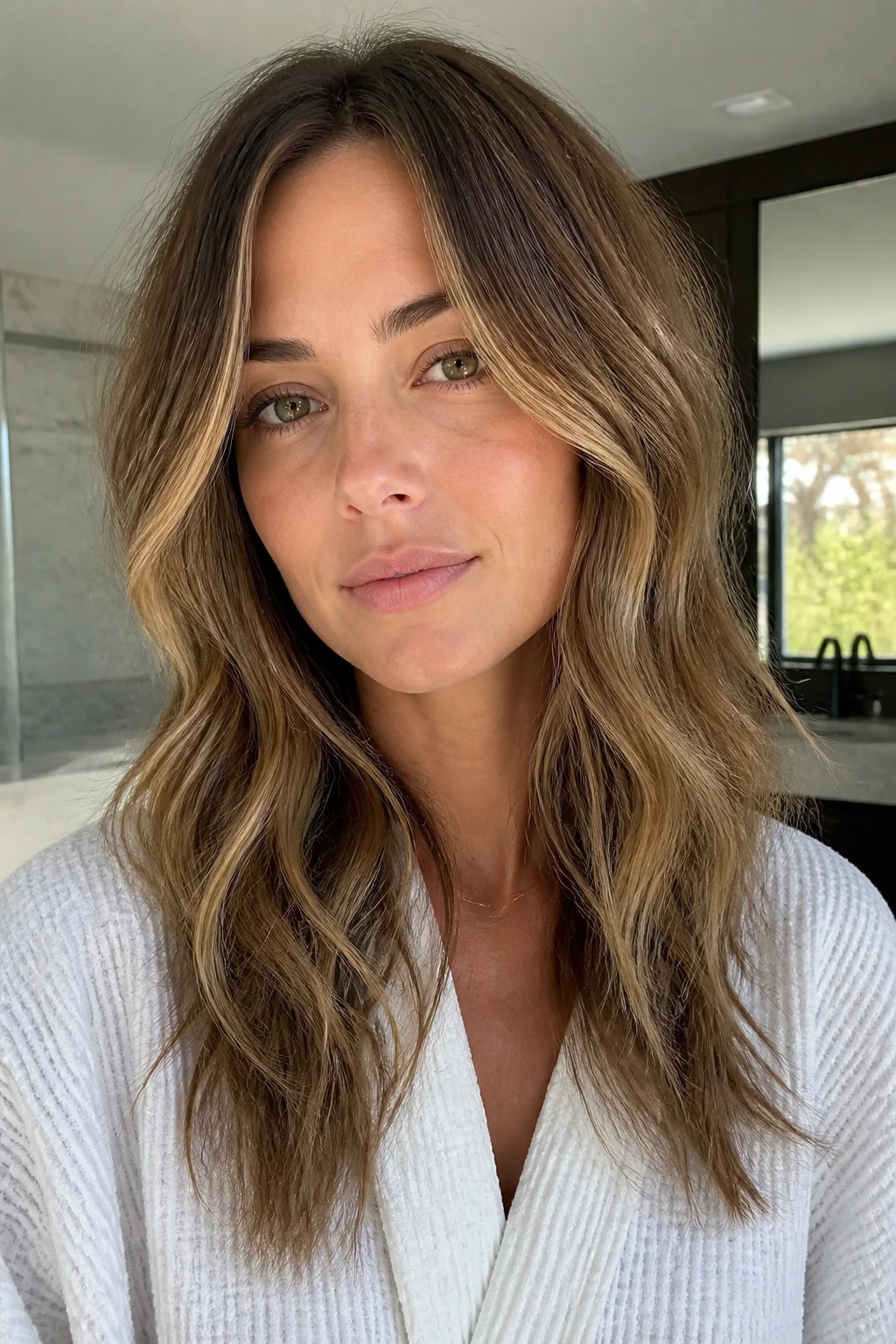
Not every wave cut needs a lot of chopping. Sometimes the smartest move is to keep layers minimal and let the hair do the bending. That’s especially true if you want air-dry styling and hate the look of too many short pieces around the crown. Minimal layers keep the shape soft, not carved up.
This cut is good when the wave pattern is already doing enough. The stylist might clean up the perimeter, add a little movement around the front, and leave the rest alone. The result is subtle. You see the lift more than the layers themselves, which is the whole point.
Air-dry hair needs a haircut that can dry in one piece without waiting on perfect technique. This one does that. A leave-in, a light gel or mousse, and a hands-off dry-down are usually enough. If you’re the sort of person who wants the cut to help you instead of asking for a full styling routine every morning, this is a strong option.
15. Bottleneck Bangs With Soft, Sweeping Layers
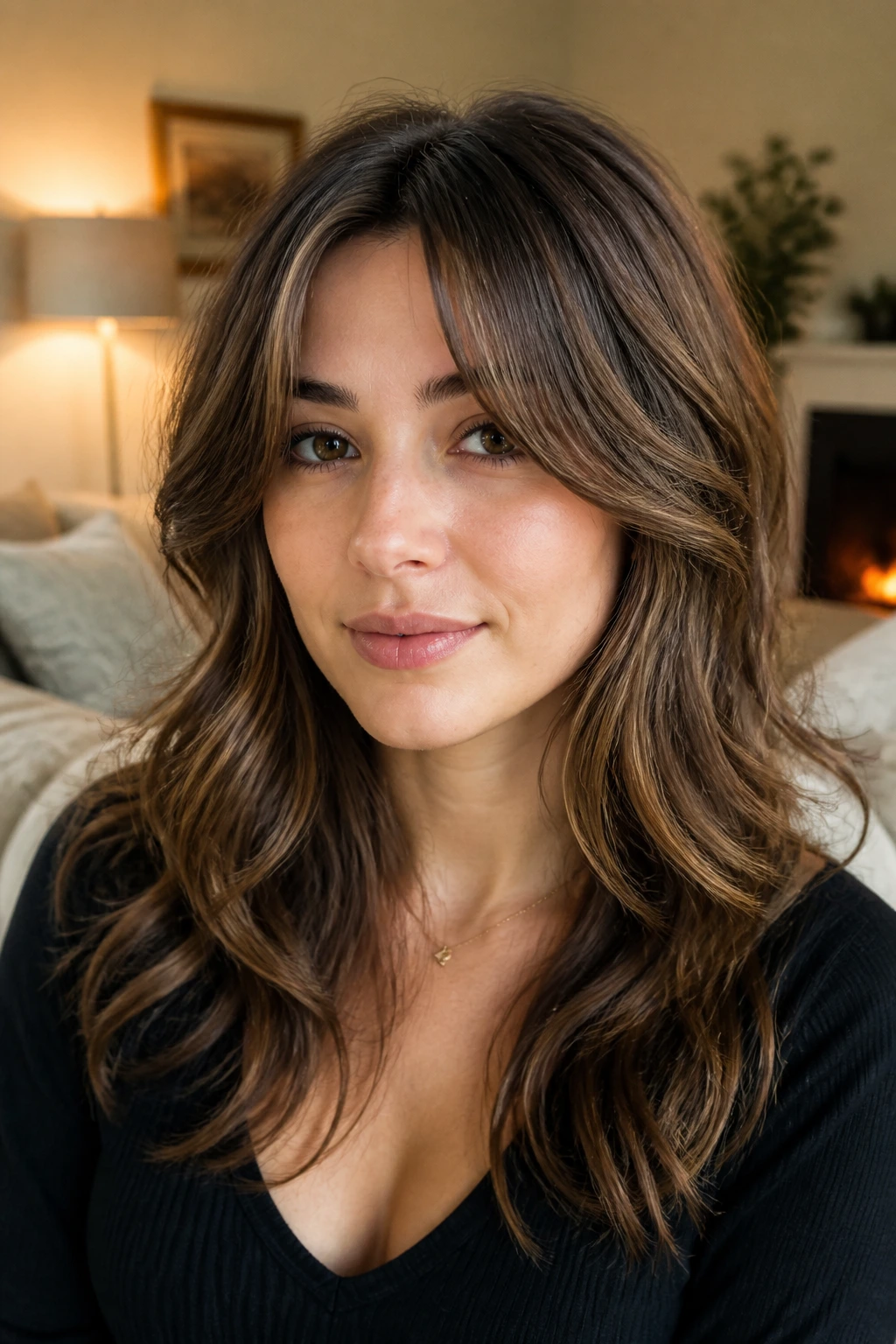
Bottleneck bangs can be a little fussy if they’re cut too blunt, but on wavy hair they soften nicely when the rest of the haircut has layered movement. The bangs open in the center and taper out toward the temples, which gives the front of the hair a gentle frame instead of a hard wall of fringe.
The layers behind the bangs matter more than people think. If the rest of the cut is too heavy, the bangs look detached. If the sides are softly layered, the whole haircut connects. That connection is what makes the style feel intentional rather than random.
I like this look for anyone who wants the face framed but doesn’t want to commit to full curtain bangs. The bottleneck shape gives a little more forehead coverage near the middle and a softer release near the sides. It’s a subtle difference, but on wavy hair subtle often looks best.
16. Shaggy Midi With Soft Mullet Energy

A shaggy midi cut can slip too far into edgy territory if the layers are cut too high. Keep them softer and a little longer, and you get the nice middle ground: movement at the crown, face-framing texture, and a lower perimeter that still feels wearable. That’s the version I’d choose for real life.
The midi length matters because it keeps the haircut from becoming too dramatic. It gives the hair enough room to bend, but not so much that the shape gets lost. This version works well for people who want some personality in the cut without having to style it into obedience every morning.
A little dry texture spray can help here, but don’t overdo it. You want separation around the layers, not a gritty finish. If the waves already have texture, you may need less product than you think. That’s often the part people miss.
17. Long Layers That Show Off Balayage Ribbons
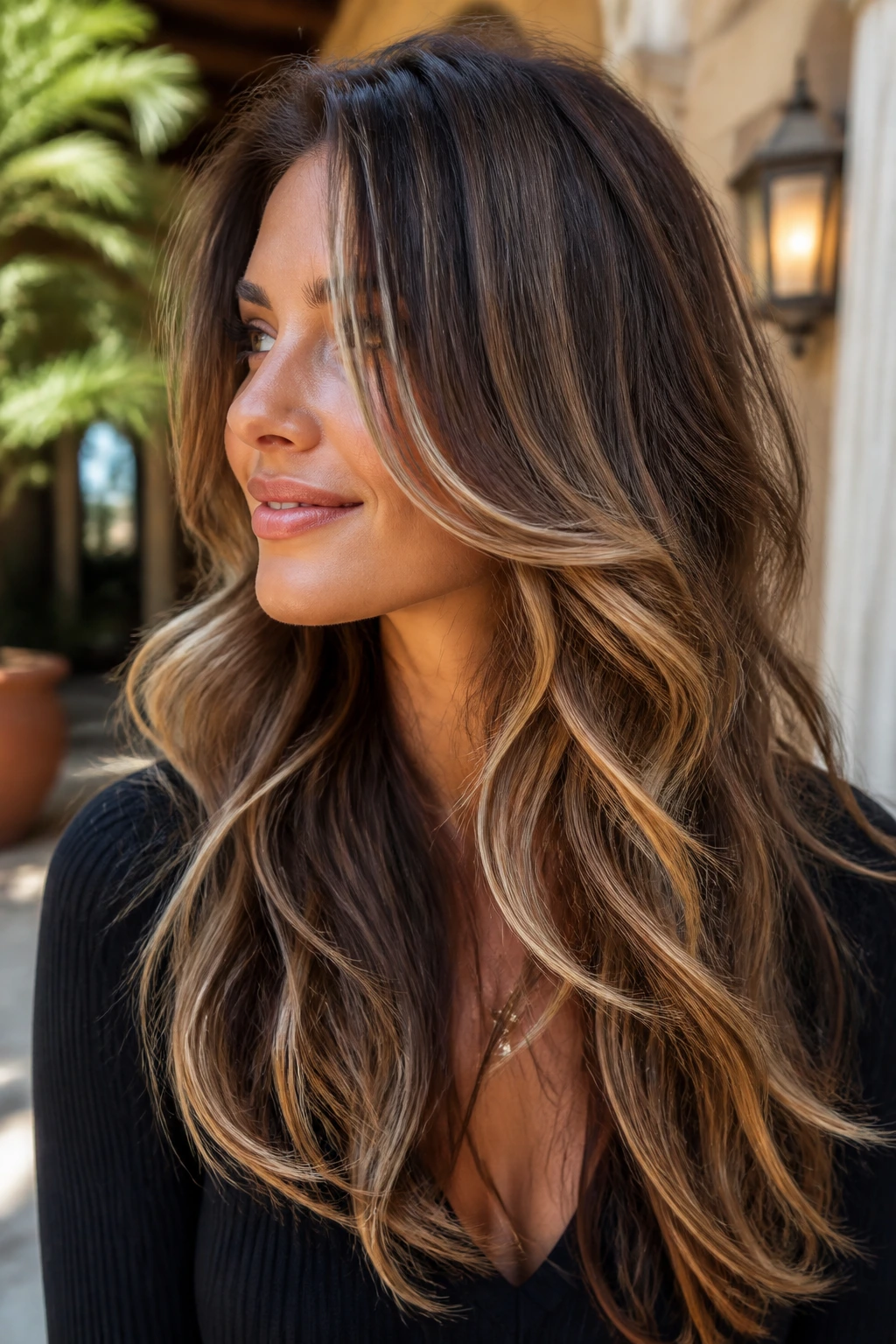
Does color change how layered waves read? Absolutely. Long layers make balayage look softer because the light catches on different lengths as the hair moves. Instead of one wide stripe of color, you get ribbons. That’s a much better match for soft texture.
This cut is especially nice if the color lives around the face and through the mids. The layers create little shelves where the brighter pieces can show through, while the longer bottom pieces keep the haircut grounded. It’s a good argument for getting the cut and color to talk to each other instead of treating them like separate jobs.
Ask for the shortest layers to live near the places you want the brightest movement. Around the cheekbones, near the collarbone, and through the outer edges of the haircut are the usual sweet spots. You do not need heavy highlighting to make this work. A few well-placed ribbons and a strong layer map can do more than a lot of foil ever will.
18. The Polished Layered Cut That Still Moves
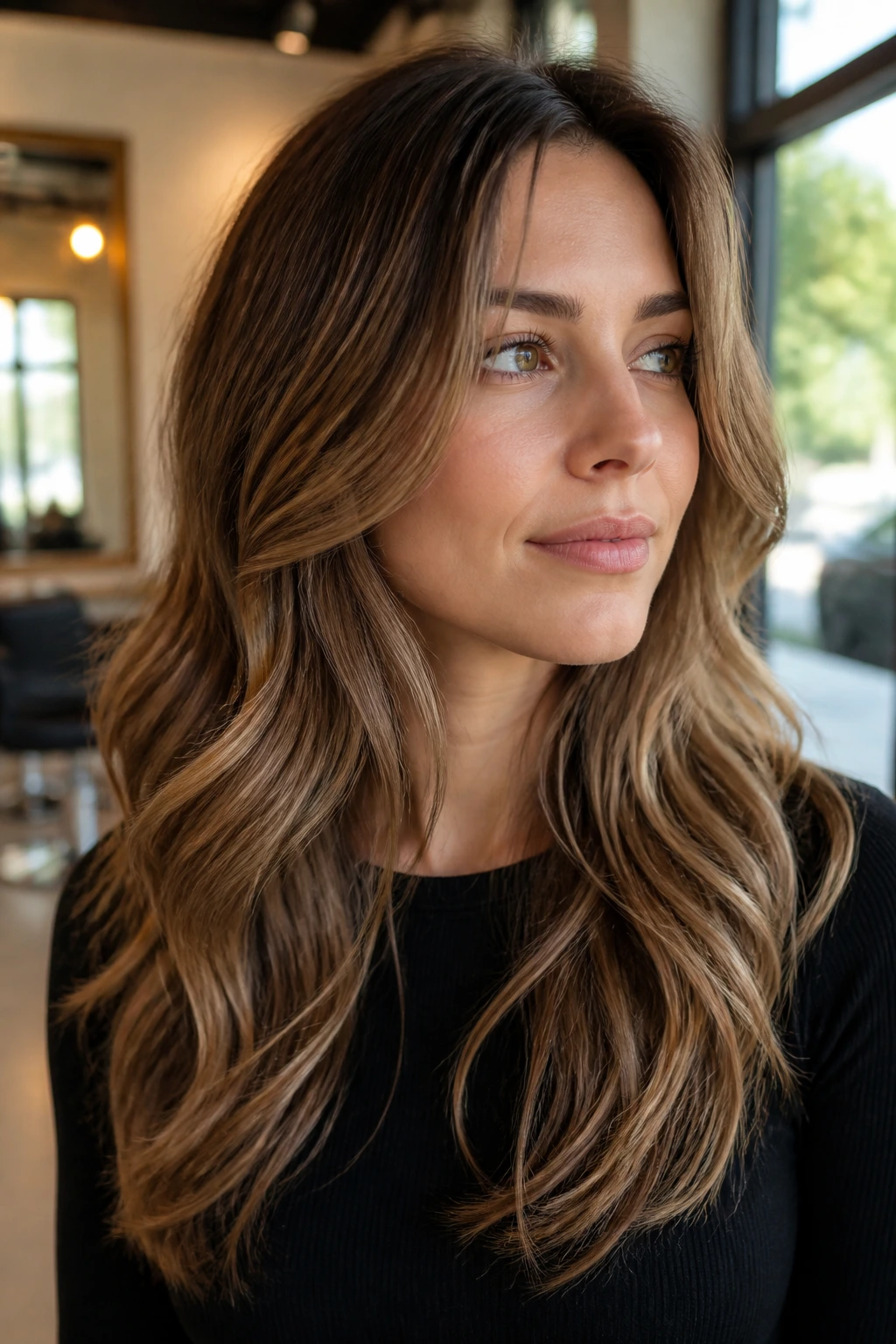
Some people want soft texture, not shag texture. That’s where the polished layered cut comes in. The outline stays clean, the ends stay full enough to feel healthy, and the movement happens in the interior instead of in a bunch of choppy surface pieces. It’s restrained, but not boring.
This shape is the one I’d point to for someone who wants a haircut that behaves in a meeting and still looks alive when the wind hits it. The layer lines should be long, blended, and hard to spot until the hair swings. If you ask for softness without obvious steps, this is the direction.
It also grows out gracefully. That matters more than it gets credit for. A cut that looks good for three weeks and then turns into an argument is not a good cut. Polished layers should still fall into shape six to eight weeks later, just a little looser around the edges.
How to Brief Your Stylist for Wavy Layered Haircuts
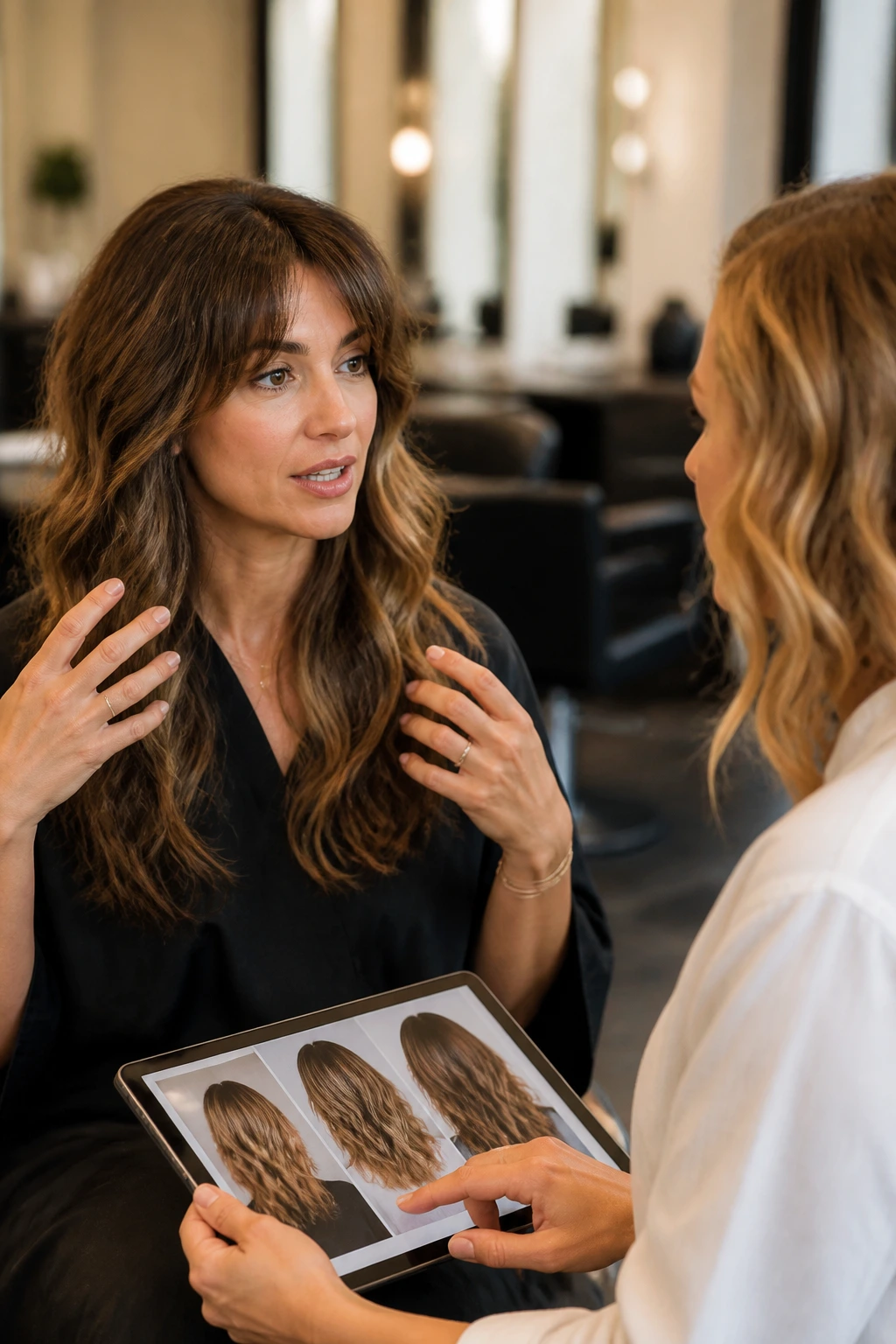
The best haircut request is not “more layers.” That’s too vague, and it usually lands wrong. What helps is describing where your wave sits, where the bulk lives, and how much styling you’re willing to do on a normal Tuesday. A stylist can work with that. They can’t work with hope and a reference photo alone.
Bring two photos if you can: one of the length you like, and one of the layer shape you like. Those are not always the same picture. One might have great fringe but too much thickness at the ends. Another might have the exact perimeter you want but a fringe you’d never wear. Mixing references is more useful than chasing one perfect image.
Say whether your hair is fine, medium, or dense, and point out the spots that go puffy first. Crown? Sides? Nape? That detail changes the layering plan. Ask if the cut should be done dry, wet, or finished with a dry check so the wave pattern can be seen as it actually lives. That one question saves a lot of bad surprises.
If you color your hair, mention where the highlights or balayage live. Layers and color placement are partners. A cut that opens up the right sections can make soft color look twice as intentional.
Essential Tools and Products for Soft Texture
- A lightweight sulfate-free shampoo — Good when your waves get dry or frizzy; it cleans without stripping every bit of slip.
- A moisturizing conditioner — Keep it from mid-length to ends, not at the roots, unless your hair is very dry.
- Leave-in conditioner — A small amount helps the layers stay soft instead of puffy after air-drying.
- Mousse or foam — Best for root lift and wave memory on fine to medium hair.
- Curl cream or lightweight styling cream — Use a small amount through the mids if your waves need clumping.
- Gel with a soft cast — Helpful when you want definition that can be scrunched out later.
- Microfiber towel or cotton T-shirt — Cuts down on rough frizz after washing.
- Wide-tooth comb — Better than brushing wet waves apart and then wondering why they went fuzzy.
- Diffuser attachment — Useful if you want more volume without blasting the wave pattern flat.
- Dry shampoo — Helpful for keeping layered roots from getting greasy and collapsing.
How to Keep Wavy Layered Haircuts Soft Between Washes

Wavy layers hold their shape best when you stop trying to over-control them on day two and day three. A silk pillowcase helps more than people expect. So does a loose pineapple or a soft clip that keeps the crown from getting crushed overnight. If you sleep on the cut like it’s a flat sheet, the layers lose their shape fast.
For refreshes, use a spray bottle with water and a few drops of leave-in, then scrunch the mid-lengths and ends lightly. Don’t soak the hair. You’re waking the waves up, not starting over from zero. A diffuser on low heat for five to seven minutes can bring the shape back without making the roots frizzy.
Trims matter, too. Long layered cuts usually look best every eight to twelve weeks, while shorter shags and fringe-heavy cuts need more frequent cleanup, often around six to eight weeks. If the shortest face-framing pieces start kicking out in a weird direction or the ends go see-through, that’s your sign.
Product buildup is the quiet enemy here. If your layers start looking dull and sticky instead of soft and airy, use a clarifying wash every two to four weeks, depending on how much mousse, cream, or dry shampoo you use. Clean hair holds shape better than gunky hair. That part is not glamorous, but it’s true.
Common Mistakes That Make Wavy Layered Haircuts Look Choppy

The first mistake is asking for too many short layers at the crown. On wavy hair, that often creates puff at the top and thinness at the bottom. The fix is to keep the shortest pieces controlled and leave enough weight through the perimeter so the shape can hang properly.
Another common miss is cutting the hair too wet and trusting the visual result. Wavy hair shrinks, bends, and changes direction as it dries. A dry check, even if the haircut starts wet, helps catch those surprises before you leave the chair.
Heavy creams and oils can flatten a layered cut fast. If the hair starts soft but turns stringy and limp by lunch, the product is probably too rich or applied too close to the roots. Keep heavy stuff off the top and use lighter formulas on the mids and ends.
A razor can be helpful, but on coarse or frizz-prone waves it can make the ends look shredded. That fuzzy edge often shows up when humidity hits. Ask for scissors or softer texturizing instead if your hair already expands on its own.
Skipping trims lets the layers turn into shelves. You’ll see it when the outer shape stays long but the shorter pieces separate in a stale way. That’s the haircut asking for maintenance, not a sign that layers stopped working.
Variations and Adaptations to Try
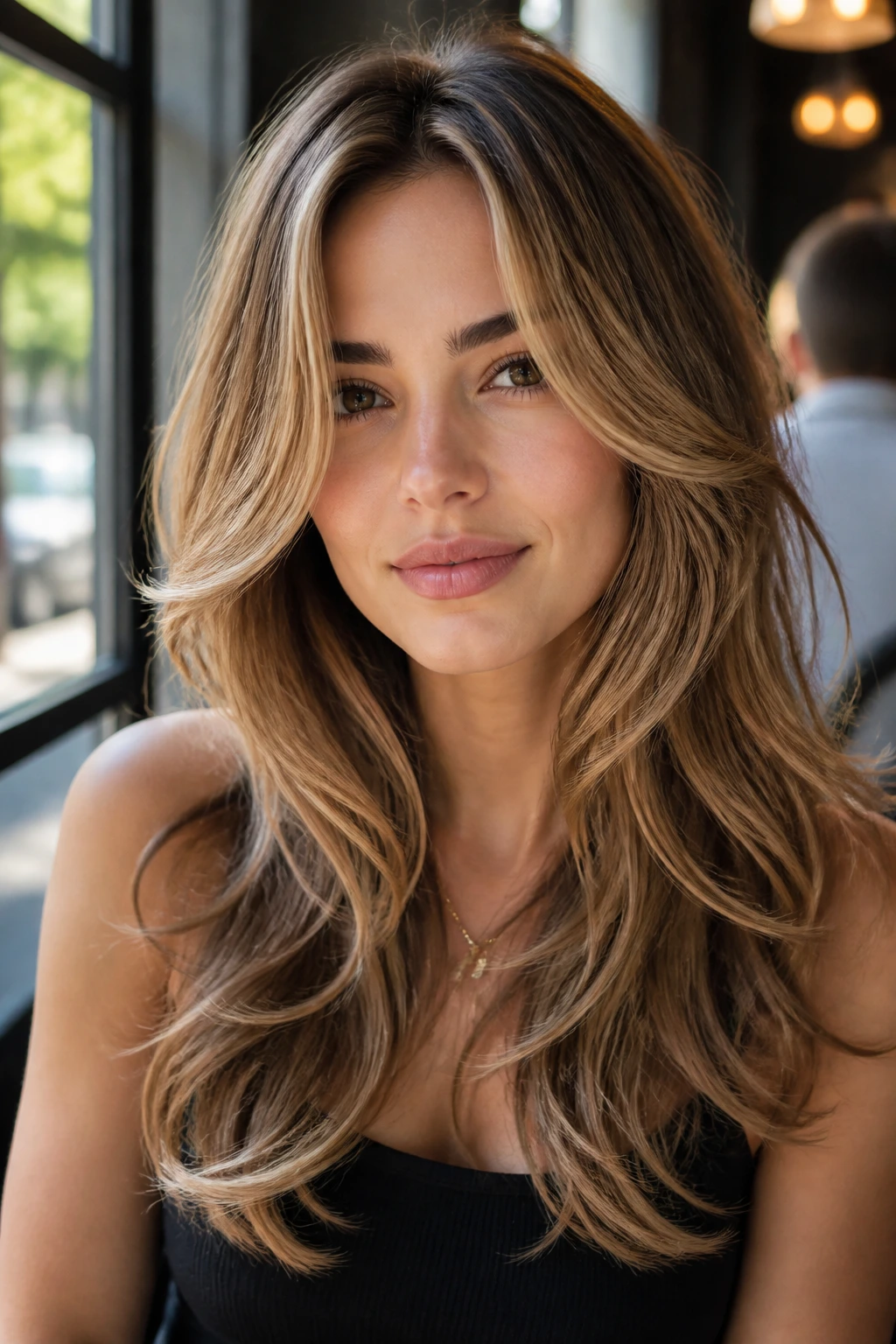
Fine-Wave Feathering
Keep the layers long and soft, with very little weight removed from the ends. This keeps fine waves from going see-through and gives you movement without exposing too much scalp through the top.
Thick-Hair Weight Control
Add internal shaping and a curved perimeter so dense waves stop ballooning. This version feels lighter around the sides and back, which helps if your hair always wants to turn into a triangle.
Curtain Fringe Softening
If you like bangs but want the gentlest version, ask for curtain bangs that start lower and blend more slowly into the sides. That gives you face framing without the maintenance of a blunt fringe.
Balayage-Forward Layering
Place the shortest pieces where your brightest ribbons live. The hair will catch light in a more broken-up way, and the color will look richer without adding more dye.
Low-Styling Shape
Keep the layers minimal and rely on air-drying or a quick diffuser pass. This works best for people who want the haircut to look good with little more than mousse and a scrunch.
Questions People Ask Before Cutting Layers

Will layers make my wavy hair look thinner?
They can, if the layers are too short or too aggressive near the ends. Long, blended layers keep movement without stripping away the density you need for shape.
Should wavy hair be cut dry or wet?
A lot of stylists do some version of both. Wet cutting gives clean structure, while a dry check shows how the wave sits once it settles. For wavy hair, that second look is the part that saves you.
Do curtain bangs work with layered waves?
Yes, and they usually soften the whole haircut fast. The trick is keeping them long enough to bend rather than spring up into a short fringe that feels too blunt.
What if my waves turn frizzy after the cut?
That usually means the layers were too high, the ends were too thinned out, or the styling products are too heavy or too rough. A lighter mousse, a gentler cut line, and less brushing usually fix a lot of it.
How often should I trim layered wavy hair?
Most long layered cuts are fine every eight to twelve weeks. Shags, fringes, and shorter lobs usually need cleanup a little sooner, around six to eight weeks.
Can I get soft layers if my hair is very thick?
Yes, but the layers need to be placed inside the haircut instead of hacked all over the surface. Thick hair needs shape control, not just more texture.
Do balayage highlights make layered cuts look better?
They can, because layers break the color into moving pieces instead of one flat band. Soft highlights around the face and mids are especially good at showing the cut’s shape.
What should I say if I want movement but not a shag?
Ask for long, blended layers with a clean perimeter and soft face framing. That phrase usually keeps the cut in the polished lane instead of the shag lane.
The Soft-Movement Sweet Spot
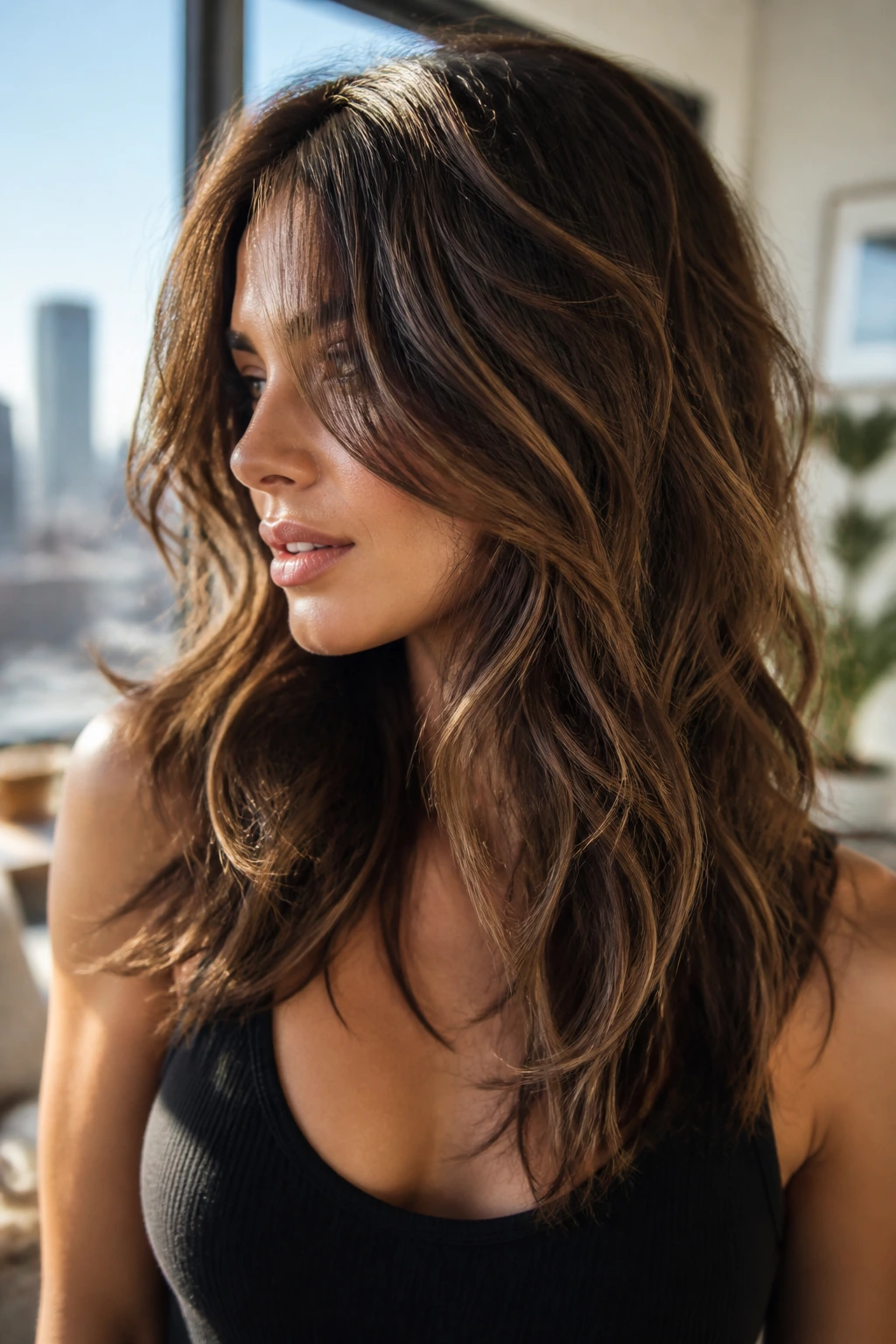
The best wavy layered haircut is the one that makes your hair look like it wants to move, not like it has been bullied into shape. That’s the whole game here. Layers should release weight, show off the wave, and leave enough length behind so the cut still feels like your hair when you touch it.
If you want the safest route, choose long blended layers and add face framing later. If you want more personality, move toward a shag, a wolf-inspired shape, or curtain bangs. Either way, the haircut should settle into itself without demanding a war on the styling mirror every morning.
A good layered cut grows out with grace. That might be the highest compliment a haircut can earn.
