



Long, straight hair tells the truth about color. Every ribbon, root shadow, and toner shift sits in plain view, which is why weak blonde work shows faster on sleek lengths than on waves or curls. A shade that looks soft and blended in photos can turn stripey the minute the hair hangs in one clean sheet.
That is why blonde hair looks for long straight hair need more planning than a quick foil refresh. You’re not just choosing “blonde.” You’re choosing brightness level, tone family, placement, contrast, and how much maintenance you’re willing to live with between appointments. On long straight hair, those details matter more than people expect, because the hair itself does not hide anything for you.
The upside is that straight lengths can make blonde look almost unreal in the best way. When the color is placed well, the shine travels from root to ends in one smooth line, and even a subtle beige gloss can look expensive in a way that loose curls never quite capture. The trick is picking a look that suits the way straight hair actually falls — flat at the crown, sharp at the perimeter, and very honest about every inch.
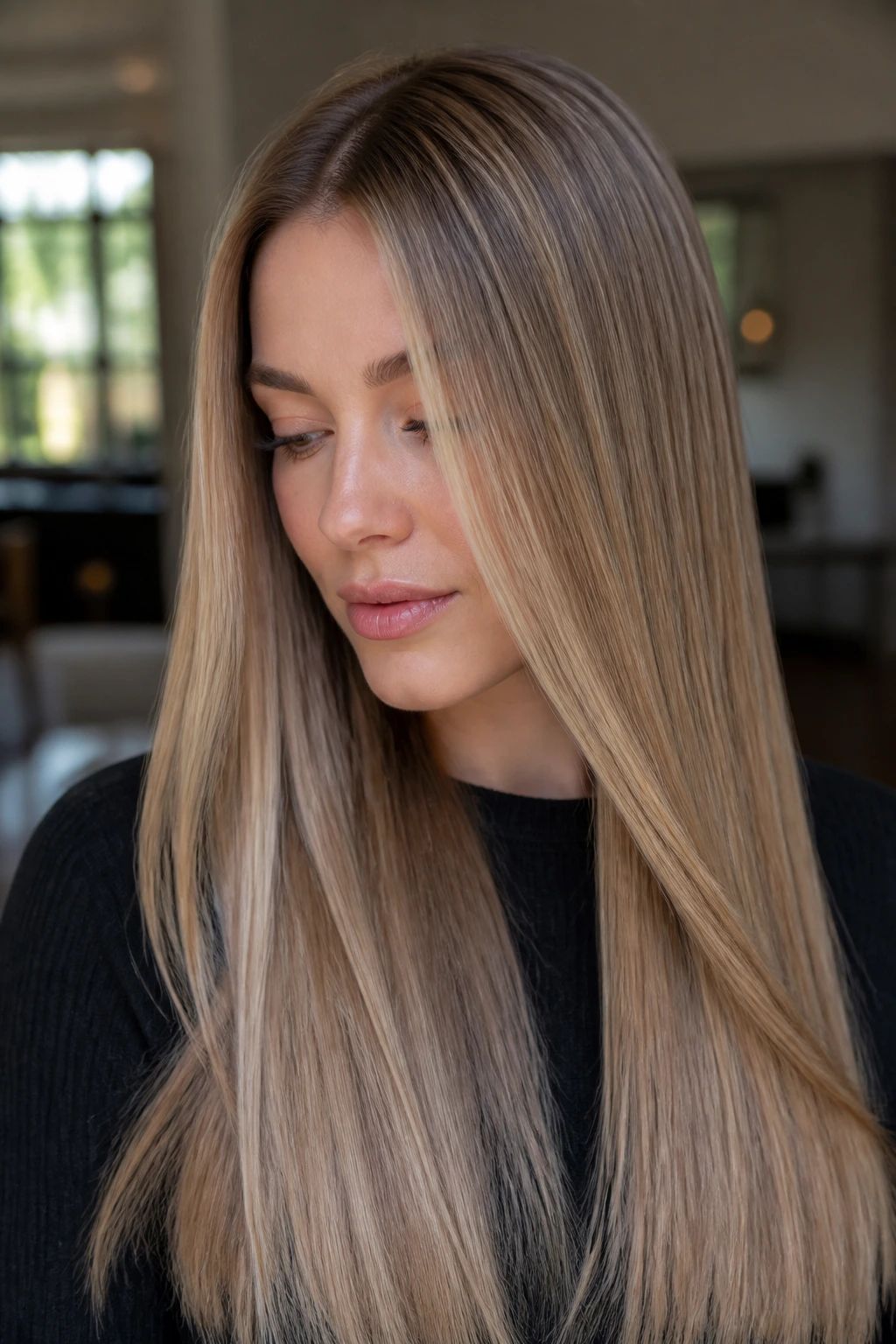
Why These Shades Read Better on Straight Hair
-
Dimension beats all-over lightness: Long straight hair can look like a sheet if every strand is the same tone, so these looks use root shadow, ribbons, or face-framing pieces to keep the eye moving.
-
Tone is doing half the work: Beige, pearl, champagne, honey, and mushroom blonde each read differently on straight lengths, even when the lift level is similar.
-
The front pieces matter most: On long hair, the money piece and face frame are the bits people notice first in a mirror, a selfie, or daylight near a window.
-
Maintenance changes the result: Some of these looks need a gloss every 4 to 6 weeks; others grow out softly for 10 to 12 weeks and still look deliberate.
-
Straight hair shows shine like nothing else: A clean blowout and a good toner can make blonde reflect light in a very crisp way. Frizz dulls that, so finish work matters.
-
You can go bright without going loud: A thin veil of babylights around the part can change the whole mood without turning the ends into a block of bleach.
1. Rooted Vanilla Blonde with a Clean Center Part
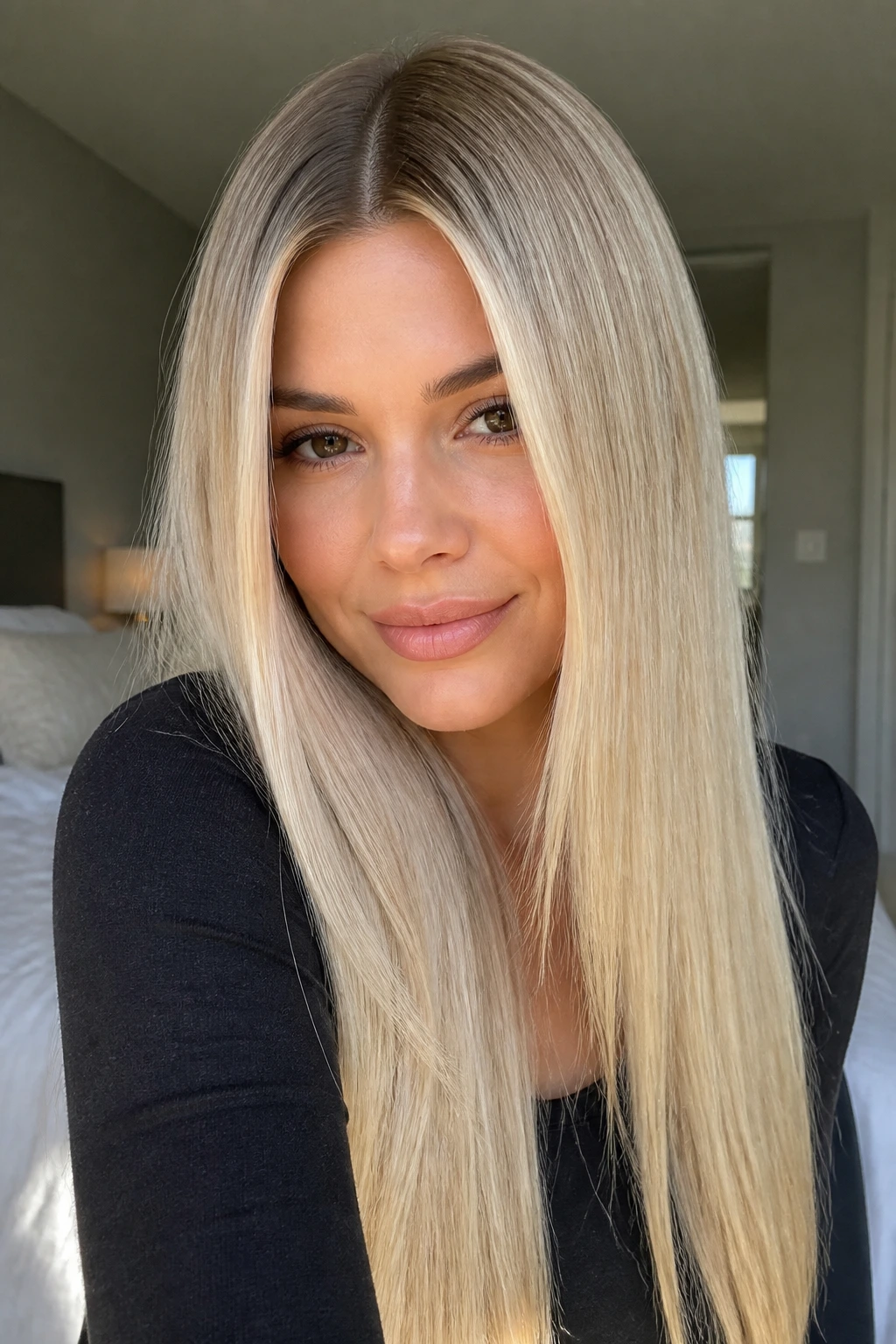
Vanilla blonde on long straight hair has a very specific kind of polish. It is not the icy, white blonde that shouts across the room, and it is not the muddy beige that disappears in flat light. It sits in that creamy middle ground where the hair looks soft, reflective, and a little expensive without trying too hard.
The rooted version is the one I’d pick most often for long lengths. A shadow root that stays one to two shades deeper than the mids keeps the color from looking bleached to the scalp, which matters a lot when the hair is worn pin-straight and parted down the center. The part becomes part of the design.
What makes it work
A vanilla tone with a soft root stretch gives straight hair some depth at the top and brightness where people actually see it — through the midlengths and around the face. If everything from crown to ends is the same pale shade, the look can turn flat fast. This version dodges that problem.
Ask for a level 8 or 9 root melt into level 10 vanilla-beige lengths, with baby lights concentrated around the hairline. That front brightness is the difference between “nice blonde” and “that looks tailored.”
- Best for: medium to thick hair that needs a little visual movement.
- Salon note: ask for a gloss, not just a toner, so the finish stays creamy instead of chalky.
- Maintenance: root touch-up every 8 to 10 weeks; gloss in the middle if the tone goes too warm.
A sleek center part makes this look feel intentional instead of accidental. It’s calm. It’s neat. And on long straight hair, that kind of restraint reads as style, not simplicity.
2. Champagne Money Piece on Ultra-Sleek Lengths
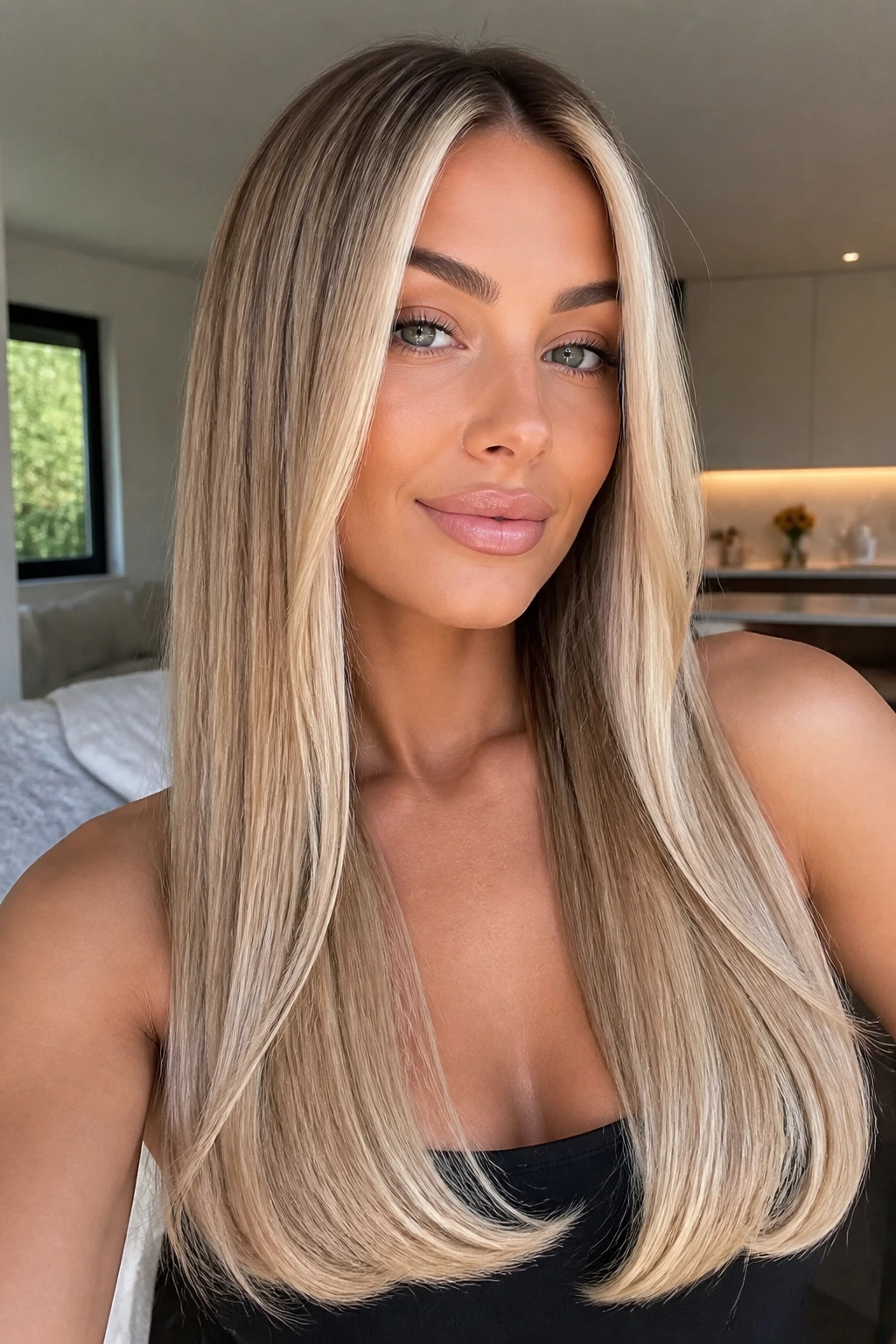
The champagne money piece is the one I reach for when someone wants brightness in the mirror but does not want to turn the whole head into a bleach project. The front pieces are lighter, cooler, and brighter than the rest, almost like a flash of candlelight tucked into the face frame.
On long straight hair, that contrast does something useful. It pulls the eye to the cheekbones and breaks up the heaviness that can happen when long lengths hang in one line from root to hem. A champagne money piece also looks good in bad lighting, which sounds like a small thing until you notice how much of your life is spent under grocery-store fluorescents and office LEDs.
The trick is keeping the money piece expensive-looking rather than striped. The front should be finely woven, then softened with a root tap so the line near the scalp doesn’t look pasted on. If the highlight is too wide, it can take over the whole face. Too narrow, and it vanishes the second the hair is tucked behind the ears.
I prefer this look with a smooth bend only at the ends, not full waves. Straight hair with a glossy champagne front looks crisp and a little glamorous in a way that loose curls can soften too much.
3. Beige Ribbon Balayage Down Mid-Back Hair
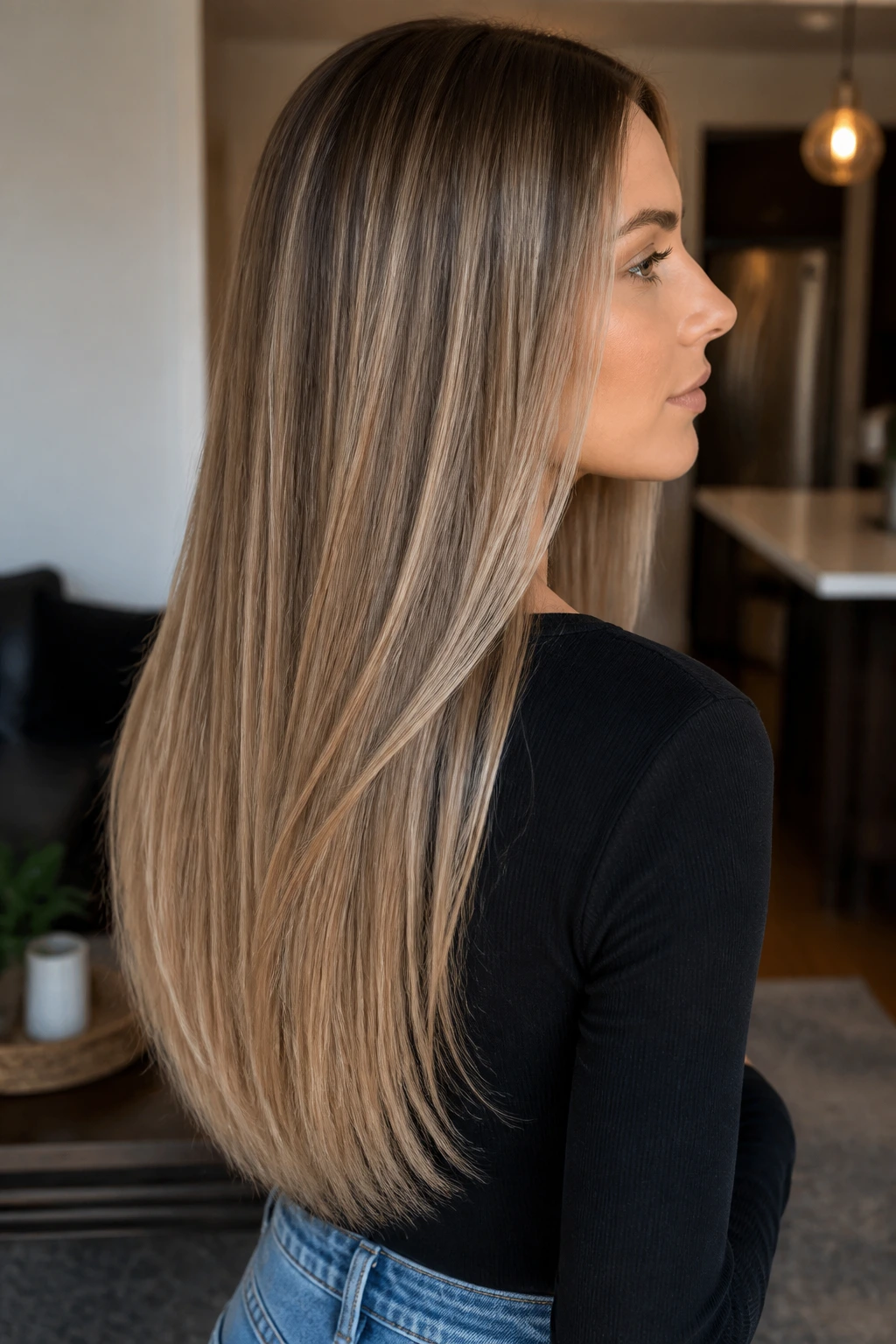
A beige ribbon balayage is what happens when you want blonde to feel woven through the hair instead of sitting on top of it. Think long, straight lengths with narrow lighter ribbons running through the mids and ends, plus enough depth left underneath to keep the color from turning into a pale blur.
This is one of the easiest blonde hair looks for long straight hair to wear because the ribbons give the eye a path to follow. There’s no harsh jump from dark root to light end. The color glides. That matters more on straight hair, where the light catches every line in one uninterrupted sheet.
What to ask for
Ask your colorist for fine balayage ribbons through the perimeter and the outer layers, with a beige gloss layered over the lift. A touch of root shadow keeps the top from looking too airy. If your hair is dense, ask for a few hidden lowlights under the top layer; they keep the lighter ribbons from floating too much.
- Best finish: a flat blowout with softly beveled ends.
- Best vibe: polished, but not icy.
- Upkeep: gloss every 6 to 8 weeks if you want the beige tone to stay clean.
There’s also a practical reason I like this one. It grows out without a screaming line. That makes it one of the better picks if you want to stay blonde but don’t want your appointment calendar running your life.
4. Honey Bronde Melt with Soft Face Framing
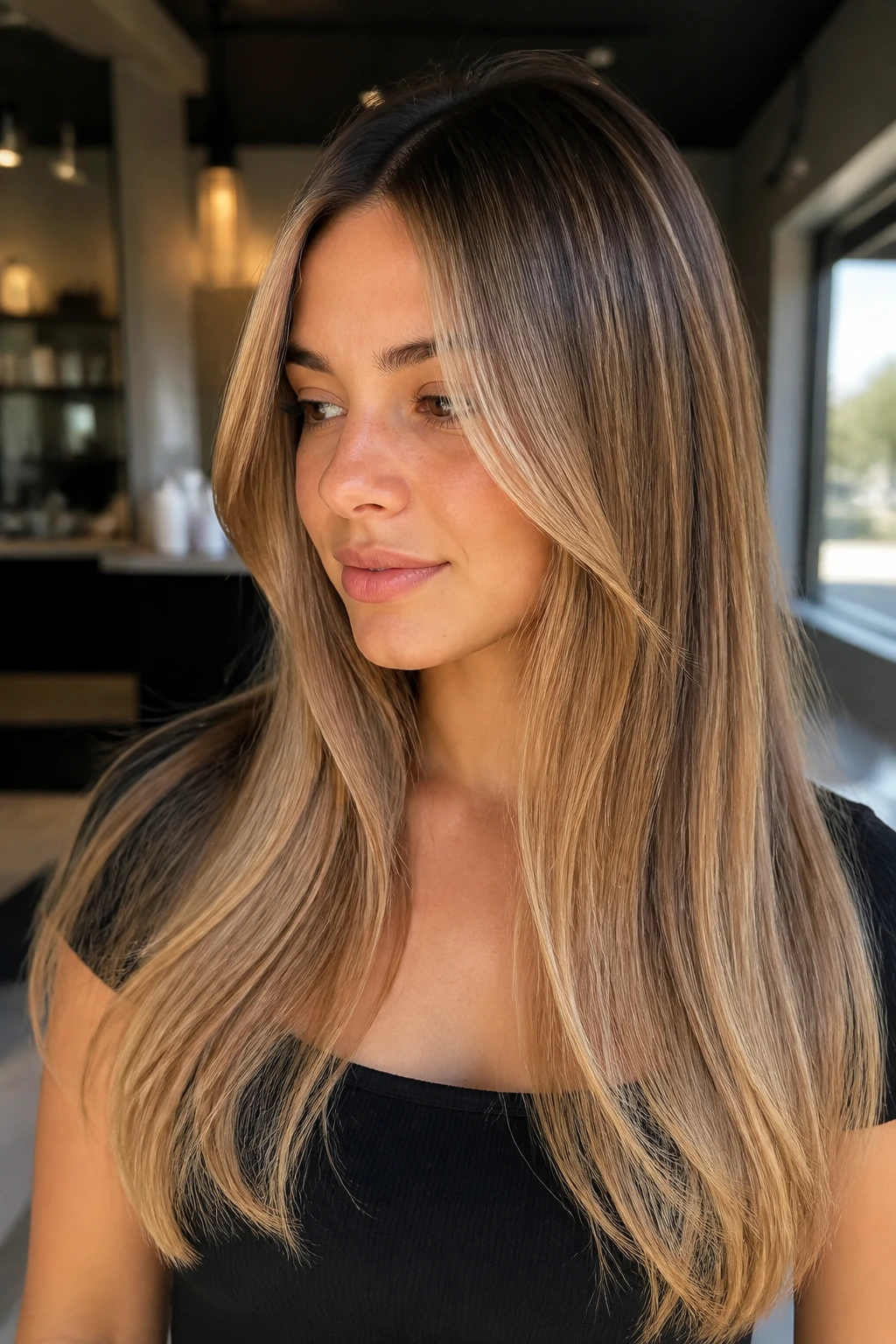
Can blonde feel warm without turning orange? Absolutely — if the formula is handled with a light hand. Honey bronde sits in that sweet spot where brunette depth and blonde warmth meet, and on long straight hair it looks richer than a brighter blonde because the contrast has somewhere to breathe.
The melt is the point. Darker roots, caramel-brown mids, and honey ends should slide into one another with no hard stop. On straight hair, that blend is easier to read than on textured hair, so the colorist has to be careful with placement. The face frame can be a touch lighter than the rest, but the whole thing should still feel like one family of tones.
A warm bronde is a good call if your natural base is dark blonde or light brown and you want brightness without the upkeep of a level 10 blonde. It also plays nicely with long straight layers, because the lighter ribbons can sit on top of the darker base and give the cut a little motion.
Nope, it is not a “lazy blonde.” That’s the wrong way to think about it. It’s a calculated warm shade, and when it’s glossed properly, it looks expensive in a grounded, lived-in way that bright platinum never quite does.
5. Pearl Blonde with a Cool Shadow Root
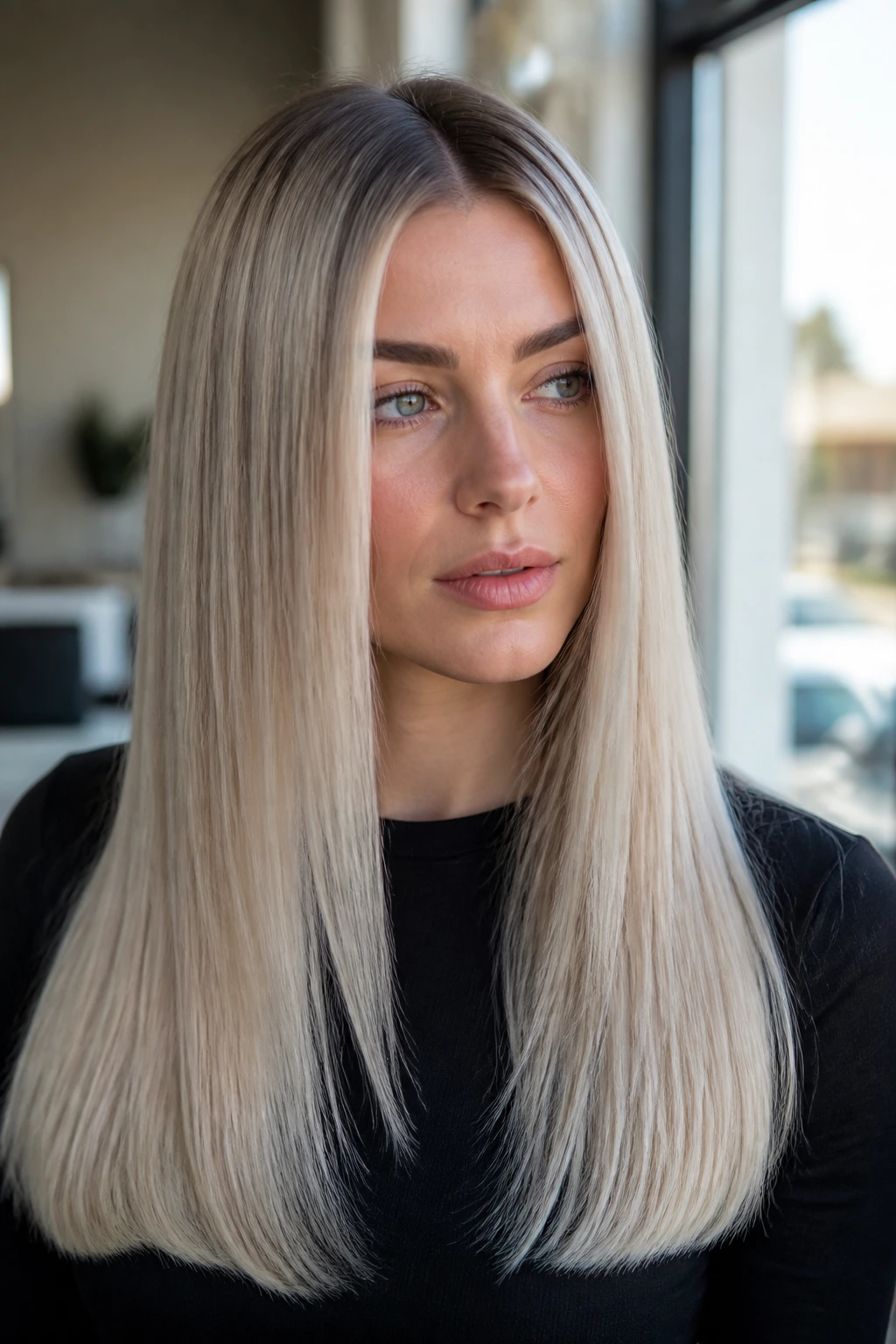
Pearl blonde has that soft, pale shine that looks almost milky in daylight. On long straight hair, the effect is clean and a little dreamy, but only if the toner is kept cool enough to avoid brass and warm enough to avoid a gray cast. That balance is touchy. Miss it by a little, and the whole look can tilt flat.
The shadow root is doing more work than people think. A cool root melt gives the scalp area depth, which stops the top of the head from looking washed out when the rest of the hair is pale. Long straight hair needs that contrast because the line of the part is so visible.
I like this shade best when the ends are trimmed blunt and the surface is smoothed to a satin finish. Too much texture and the pearl tone gets lost. Too much shine serum and the hair looks greasy. The sweet spot is one small pump from ears down, then a brush-through so the light catches the surface instead of sitting in oily patches.
A pearl blonde like this is high maintenance, yes, but not in a fussy way. It just asks for regular glossing and a patient eye. If you love that clean, frosted look, it delivers.
6. Scandi Ice Blonde with Polished Ends
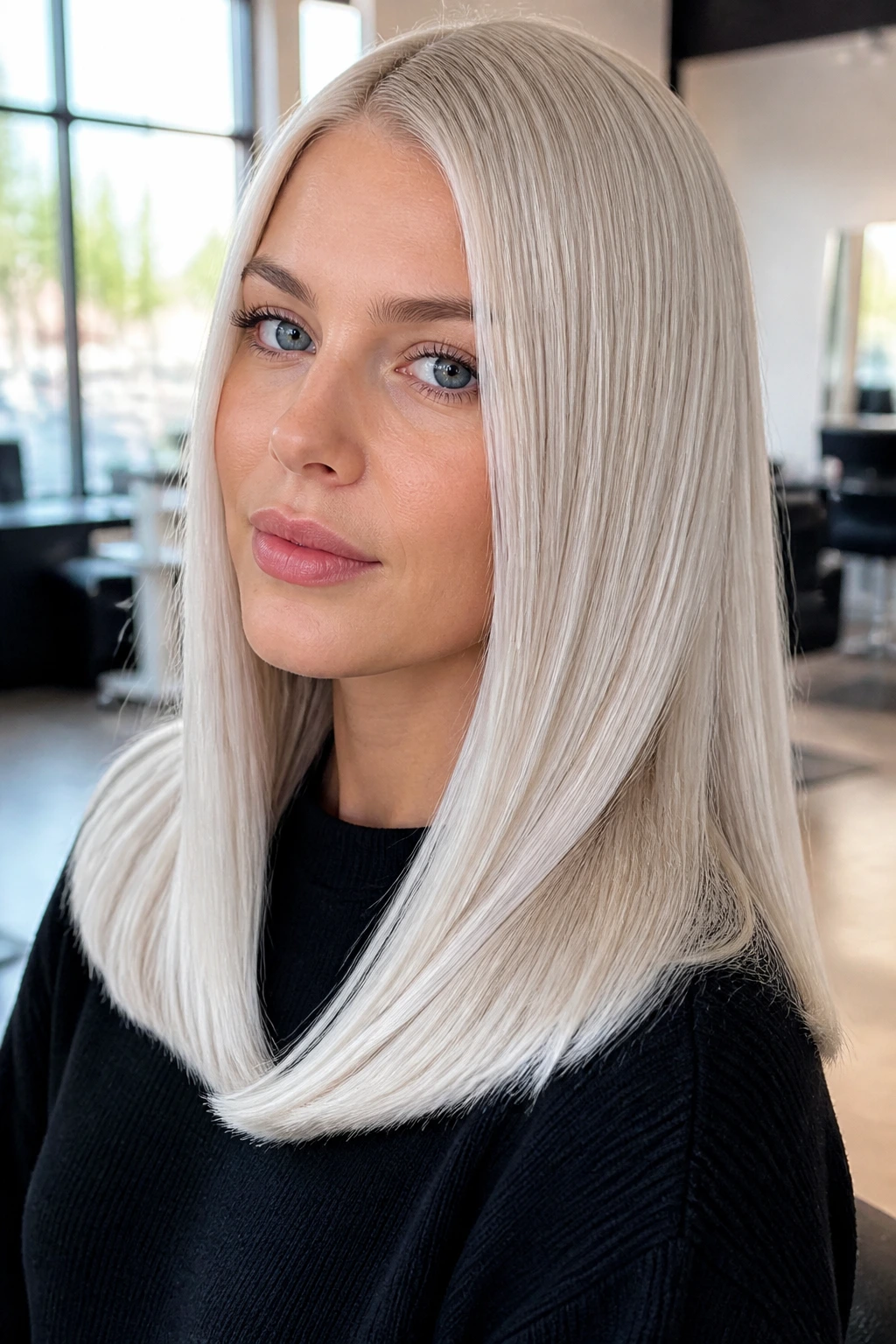
Scandi ice blonde is for the person who wants the hair to look almost white, but with cleaner edges than a full platinum bleach-out usually gives. On long straight hair, the iciness makes the lengths look sharp and graphic, almost like a sheet of satin with light running across it.
The catch is that this shade shows everything. Dry ends, uneven lift, and old brass all pop right out. Straight hair makes those flaws easier to spot because there’s no wave pattern to distract the eye. So the color has to be lifted evenly, toned carefully, and kept honest with good hydration.
The formula matters
A Scandi blonde usually starts with a very light base, then gets toned into a pale cool-beige or silvery pearl. A soft shadow root can keep the regrowth from looking harsh, but the overall vibe stays bright. If your hair is porous, your colorist may need to tone in two steps to stop the ends from grabbing too much ash.
- Best for: hair that can take lift without breaking apart.
- Salon ask: micro-babylights and a cool gloss, not chunky highlights.
- Upkeep: purple shampoo once a week, not three times a week. Too much and the hair starts to look dusty.
This is a bold look. It’s not subtle, and it doesn’t pretend to be. But on long straight hair, when the cut is sharp and the shine is right, it can look clean in a way that’s hard to beat.
7. Mushroom Blonde with Low-Contrast Dimension
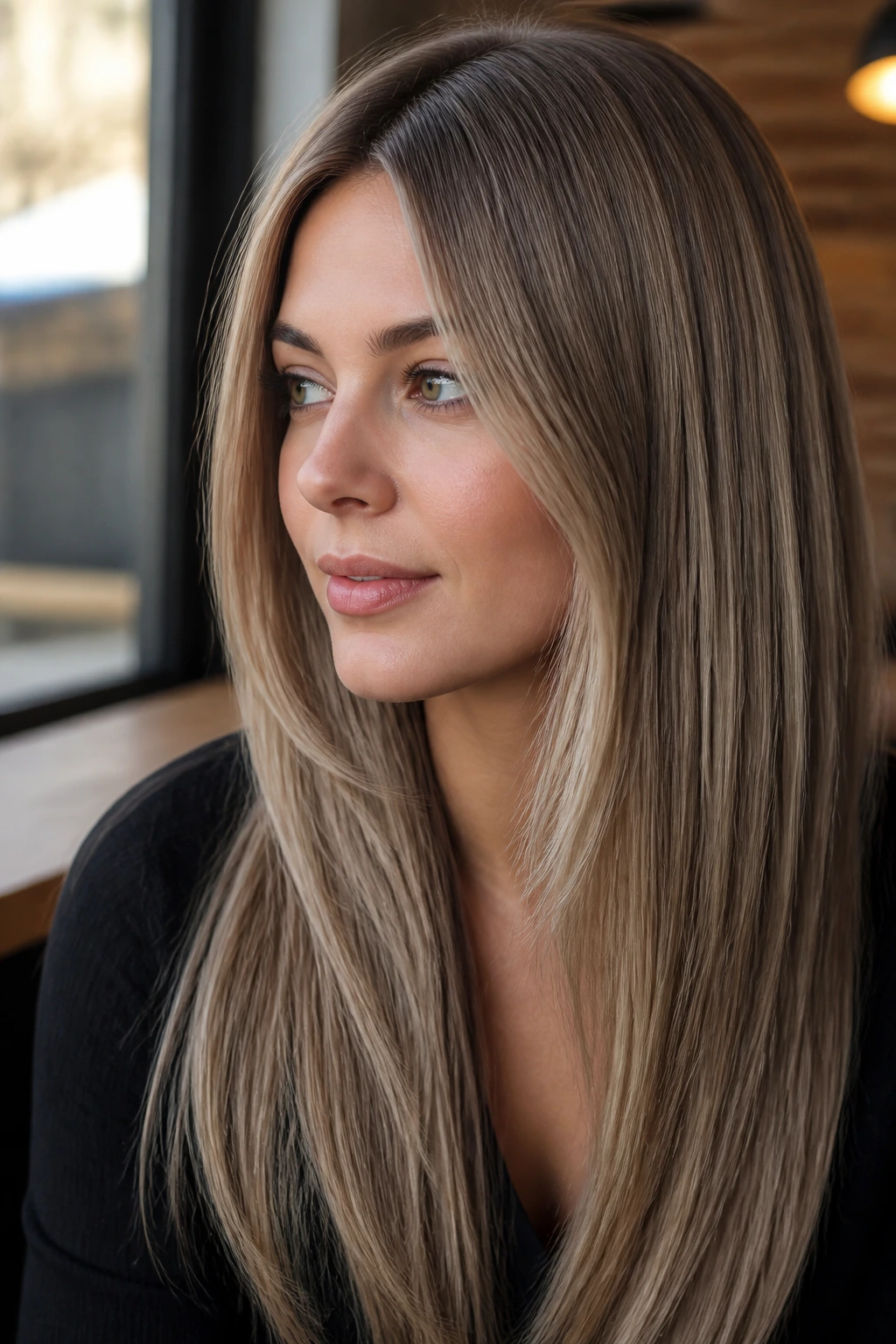
Mushroom blonde is one of my favorite answers to the question, “How do I go blonde without looking blond-blonde?” It’s smoky, beige, and slightly cool, with enough depth in the root and lowlights to keep straight hair from looking like one flat sheet of tone.
Unlike brighter blondes, mushroom blonde doesn’t depend on maximum lift. It depends on contrast that feels controlled. That makes it especially good on long straight hair, where too much pale color can erase the shape of the cut. Here, the darker undertones keep the hair looking thick and dimensional.
If your natural hair is medium brown, this look is a smart bridge shade. The colorist can paint in muted beige ribbons, then place a smoky gloss over the top to take the edge off any warmth. It’s also one of the better blondes for people who like cooler makeup shades, because the hair doesn’t fight with a nude lip or a gray sweater.
There’s a quiet confidence to this shade. It doesn’t sparkle from across the street. It looks better up close, where you can see the shift from taupe root to soft beige ends. That’s the whole point.
8. Butter Blonde with Long, Airy Layers
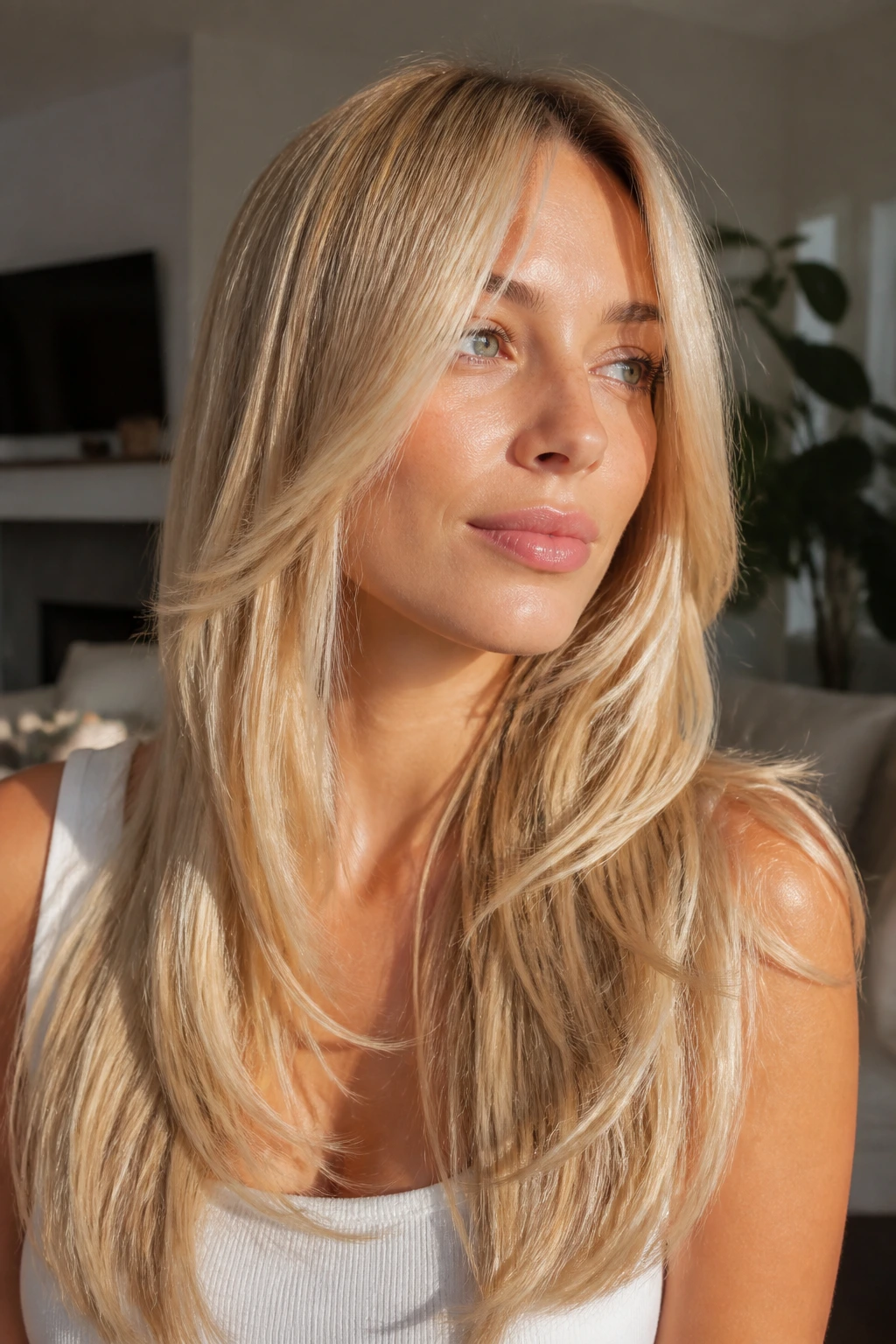
Butter blonde is warm, creamy, and sunlit in a way that feels friendly instead of loud. On long straight hair, the warmth can soften a severe center part or a blunt cut, especially if the hair has a few long, airy layers through the front and the underside.
This look works because the warmth lives in the blonde itself, not in brass. That distinction matters. Butter blonde should still look clean. The shade sits a little warmer than beige, but it stays clear, not yellow. If the toner is too gold, the hair can start to look flat under indoor light.
Why the layers matter
Long layers keep the blonde from looking like one heavy curtain. As the hair moves, the lighter pieces catch light at slightly different points, which gives the color texture without making it chunky. On pin-straight hair, that movement is subtle, so the cut has to do its share.
A soft bevel at the ends helps too. If the lengths are too blunt and too straight, the warmth can feel heavy. A little air around the hemline lightens the whole shape.
This is a good pick if you want blonde that reads friendly, not frosty. It has a certain ease to it, but not the lazy kind. The kind that still looks finished when the hair is tucked behind one ear and the other side falls forward.
9. Cream Soda Blonde with Melted Midlengths
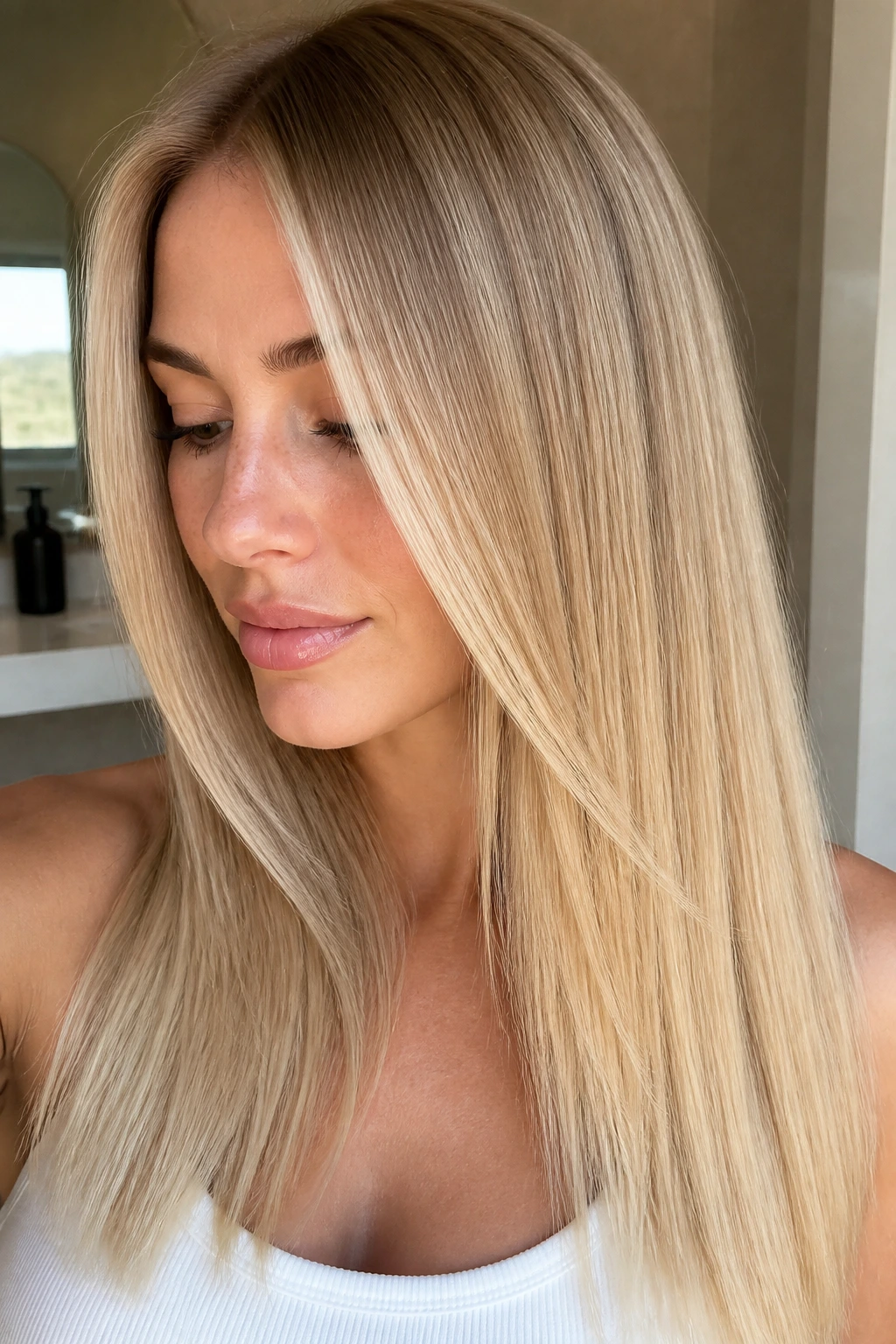
Cream soda blonde lives somewhere between beige and pale gold, with a pale root melt and creamy mids that keep the lengths from looking chalky. On long straight hair, it has a smooth, almost liquid feel. That’s what makes it such a good fit for sleek styling.
The name is not an accident. The color should feel softly fizzy in the light — not sparkly, not icy, just gently bright. A lot of people ask for “neutral blonde” when what they really want is this: enough warmth to look healthy, enough coolness to keep the tone clean, and enough depth at the root to make the lengths pop.
It’s a good choice if your skin leans neutral or you hate the way very ash blondes can drain the face. The melted midlengths keep the hair from reading as one solid block of color, which straight hair can fall into easily. A gloss that includes beige and a whisper of gold does most of the work here.
Wear this one with a sleek blow-dry and slightly curved ends. The curve matters. It gives the color a polished edge and stops the hemline from looking sharp in a way that only flat irons can create.
10. Ash Beige Contour Blonde
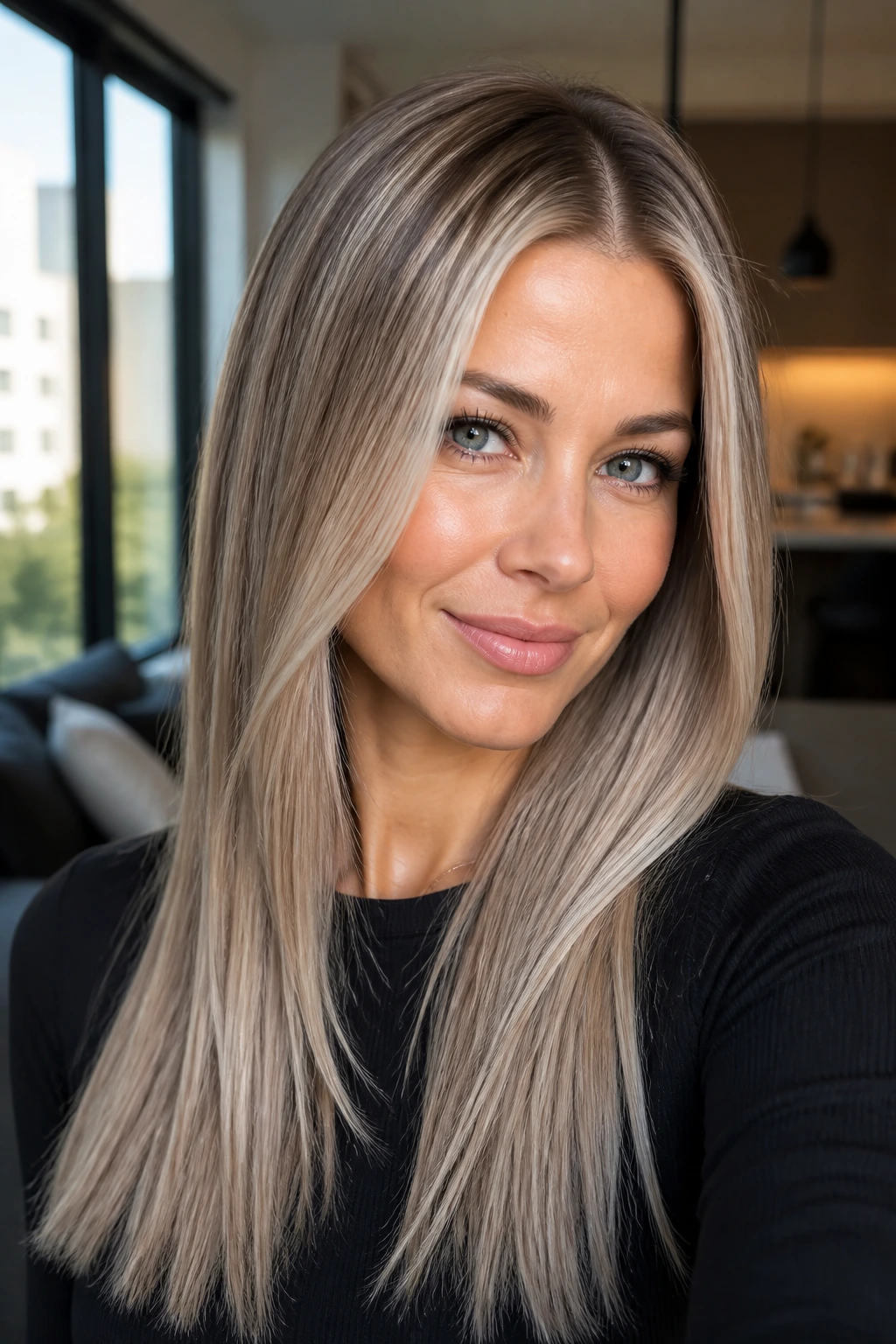
What if you want cool blonde, but not the stark kind that wipes out your features? Ash beige contour blonde solves that. It combines cooler ribbons with beige softness, then places the lightest pieces around the face and crown so the hair looks sculpted instead of washed out.
This shade is especially good on long straight hair because the contouring shows. Straight lengths make face-framing pieces read as deliberate lines, not random highlights. That means a lighter money piece around the cheekbone can change the whole shape of the hair without taking over the rest of it.
Where the light belongs
The best contour blonde keeps brighter pieces near the face, along the top layer, and through the perimeter where the hair sits against clothing. The inner layers stay a shade deeper. That contrast gives you movement without the wide, blotchy look that can happen when highlights are too evenly placed.
- Ask for: fine babylights at the hairline, soft teasylights through the crown.
- Avoid: ash toner over already porous ends without checking first.
- Best styling: smooth blowout, no aggressive wave pattern.
I like this look for people who wear a lot of black, charcoal, or crisp white. The hair gives shape to the outfit instead of fighting it, which is harder than it sounds.
11. Platinum Glass Lengths with Micro-Layers
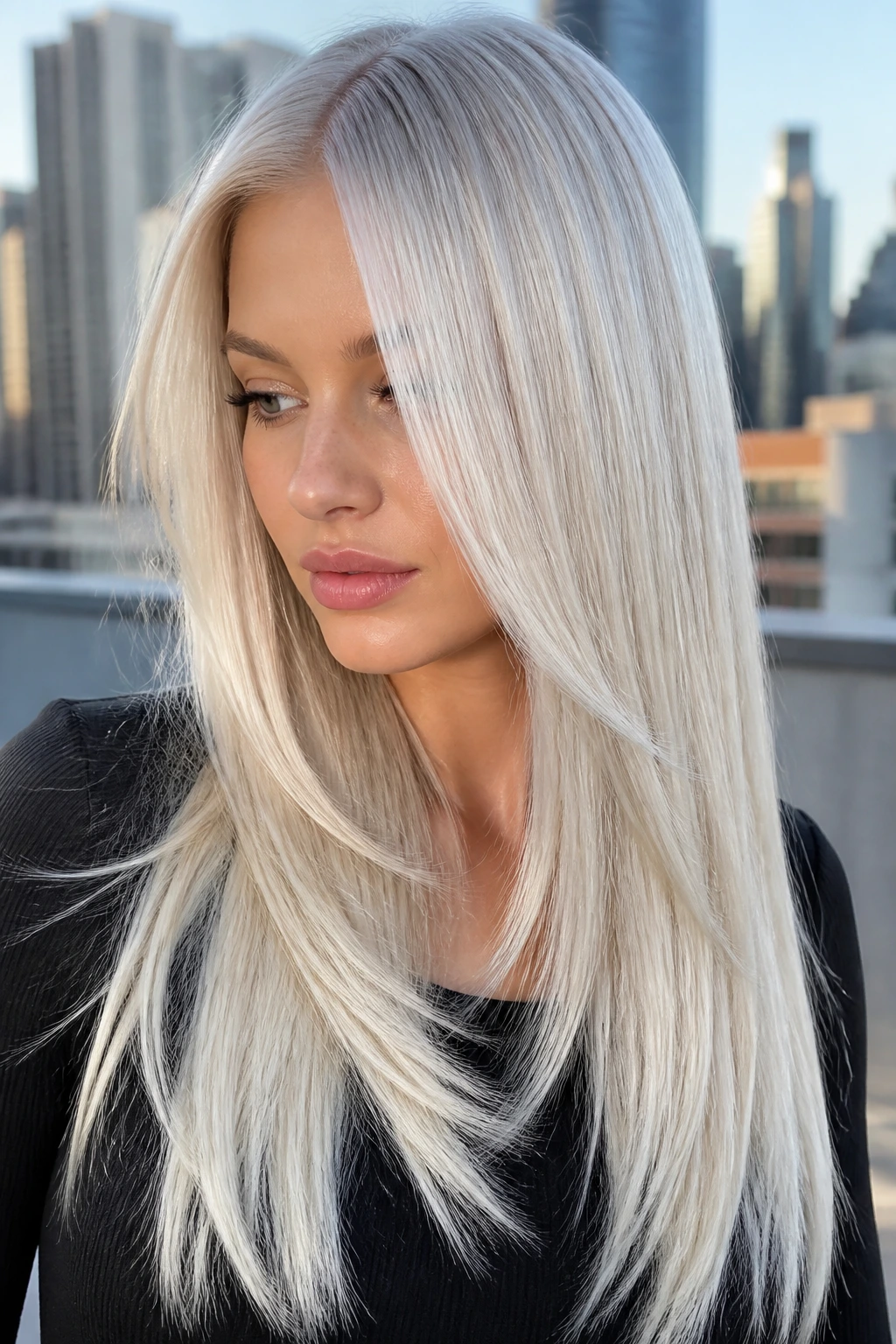
Platinum glass lengths are not for the faint of heart. They are bright, reflective, and very clean, with a mirror-like finish that can look spectacular on long straight hair if the cut and tone are both disciplined. If either one gets sloppy, the whole thing falls apart fast.
Micro-layers are the unsung hero here. A tiny bit of movement through the ends and around the face keeps the hair from looking like a single rigid curtain. On straight hair, that can be the difference between polished and helmet-like. The layers do not need to be obvious. They just need to stop the last six inches from hanging like a board.
The maintenance is real. Platinum wants hydration masks, careful toning, and a stylist who knows when to stop lifting. If the hair is pushed too far, it turns fragile and dull, and that glassy look disappears. The shine you’re after comes from healthy cuticle alignment, not from piling on product.
If you want drama, this is one of the boldest blonde hair looks for long straight hair. It is clean, icy, and sharp. It also shows every split end, which is why a trim schedule matters more than usual.
12. Golden Balayage with a Soft Root Stretch
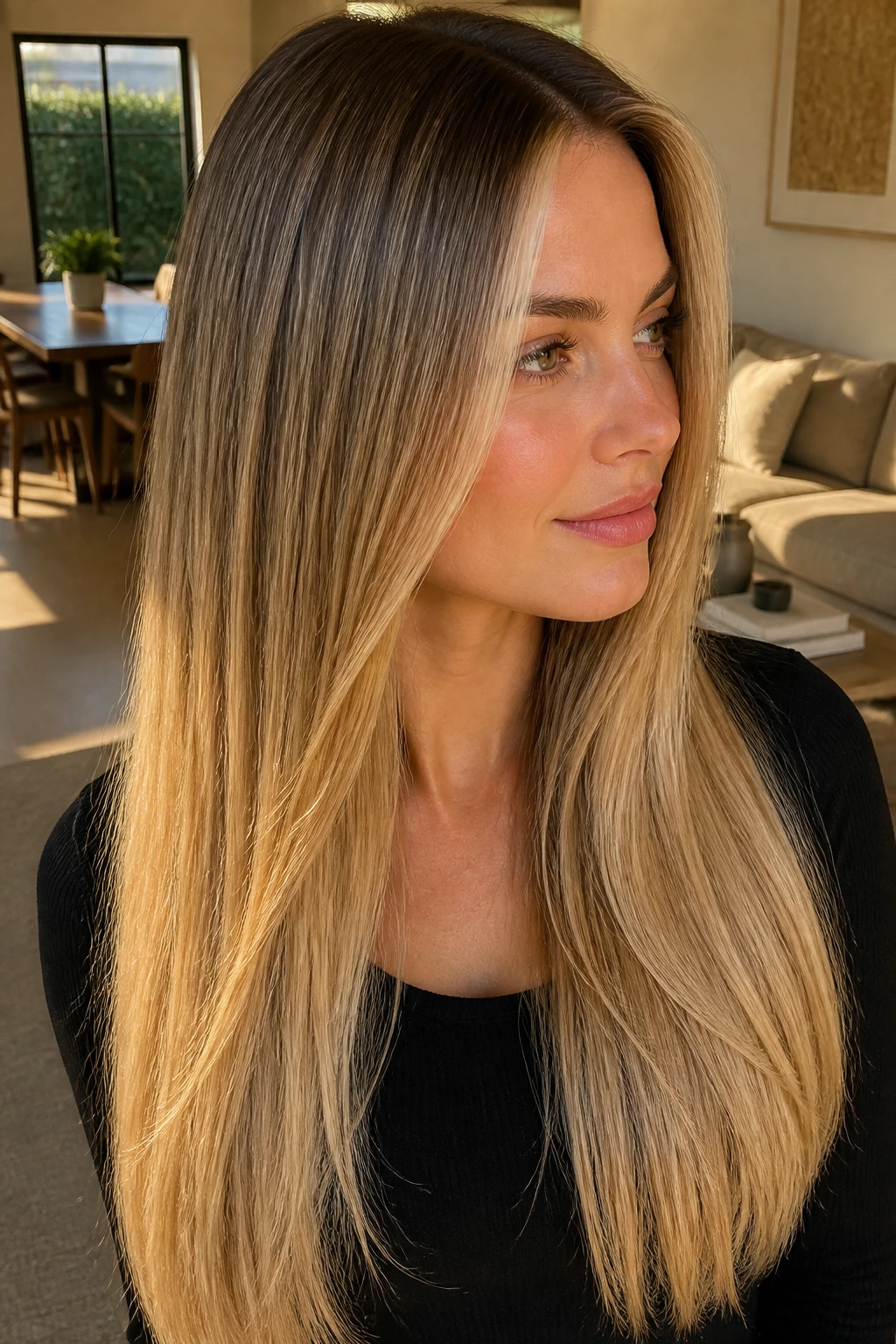
Golden balayage is what I recommend when someone wants movement and brightness without losing warmth. The root stretch keeps the base grounded, while the golden ribbons through the lengths catch light in a way that feels very natural on long straight hair.
There’s a reason this look is easy to wear. Straight hair doesn’t obscure the placement, so the painterly sweep of balayage actually shows. The eye can track the lighter pieces from midshaft to end, and the golden tone gives enough shine that the color stays visible even when the hair is freshly washed and hanging flat.
This is a good option if your natural color sits in the dark blonde to light brown range. The contrast can be soft enough to grow out gracefully, but the blonde still feels like an intentional choice. Ask for more saturation around the front and outer layers, then keep the underneath a bit deeper so the hair doesn’t feel overly light.
The best version of this look is glossy, not dry. Golden balayage should look like the hair has been in good light, not like it was dipped in yellow dye. That’s a very different thing, and colorists know the difference the second you say it out loud.
13. Old-Money Beige Blonde with Minimal Contrast
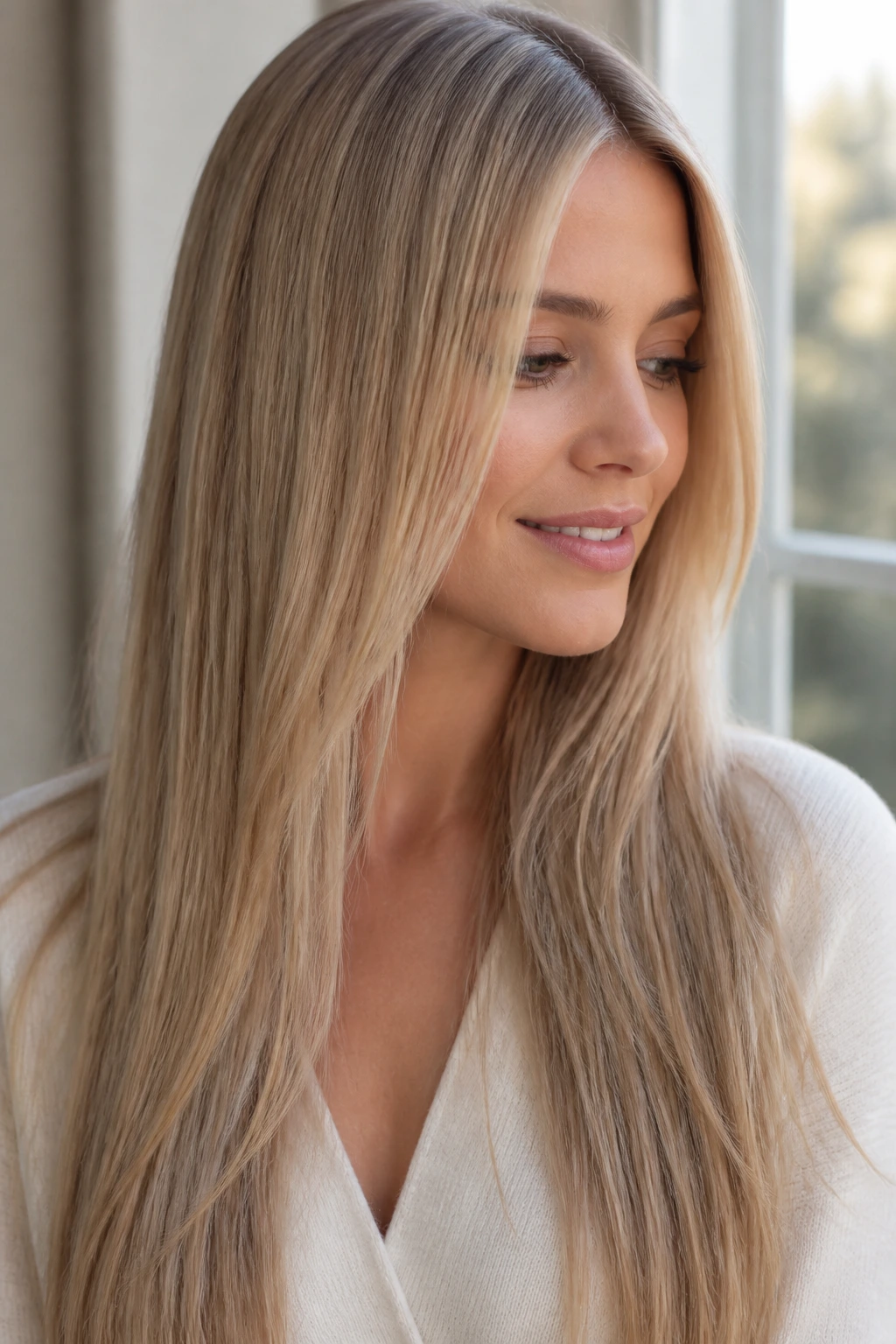
Old-money beige blonde sounds like a marketing phrase until you see it on long straight hair and realize why people keep coming back to it. It’s muted, expensive-looking, and not flashy. The root is softly deeper, the mids are beige, and the ends are pale without being stark.
This look is all about restraint. No harsh money piece. No chunky stripes. No over-toned ash. Just a beige family of tones that stay close together and let the haircut carry some of the visual weight. On straight hair, that minimal contrast can be a strength, because the shine and the cuticle smoothness do the talking.
I tend to like this on long hair with a blunt edge or a very slight U-shape at the bottom. The smooth line makes the muted tone feel deliberate. If the cut is too layered or too choppy, the subtlety of the color can get lost.
Who should wear it? Someone who wants blonde that looks expensive in daylight and unobtrusive indoors. That’s the sweet spot. It is not trying to be the lightest blonde in the room. It is trying to look composed.
14. Strawberry Champagne Blonde
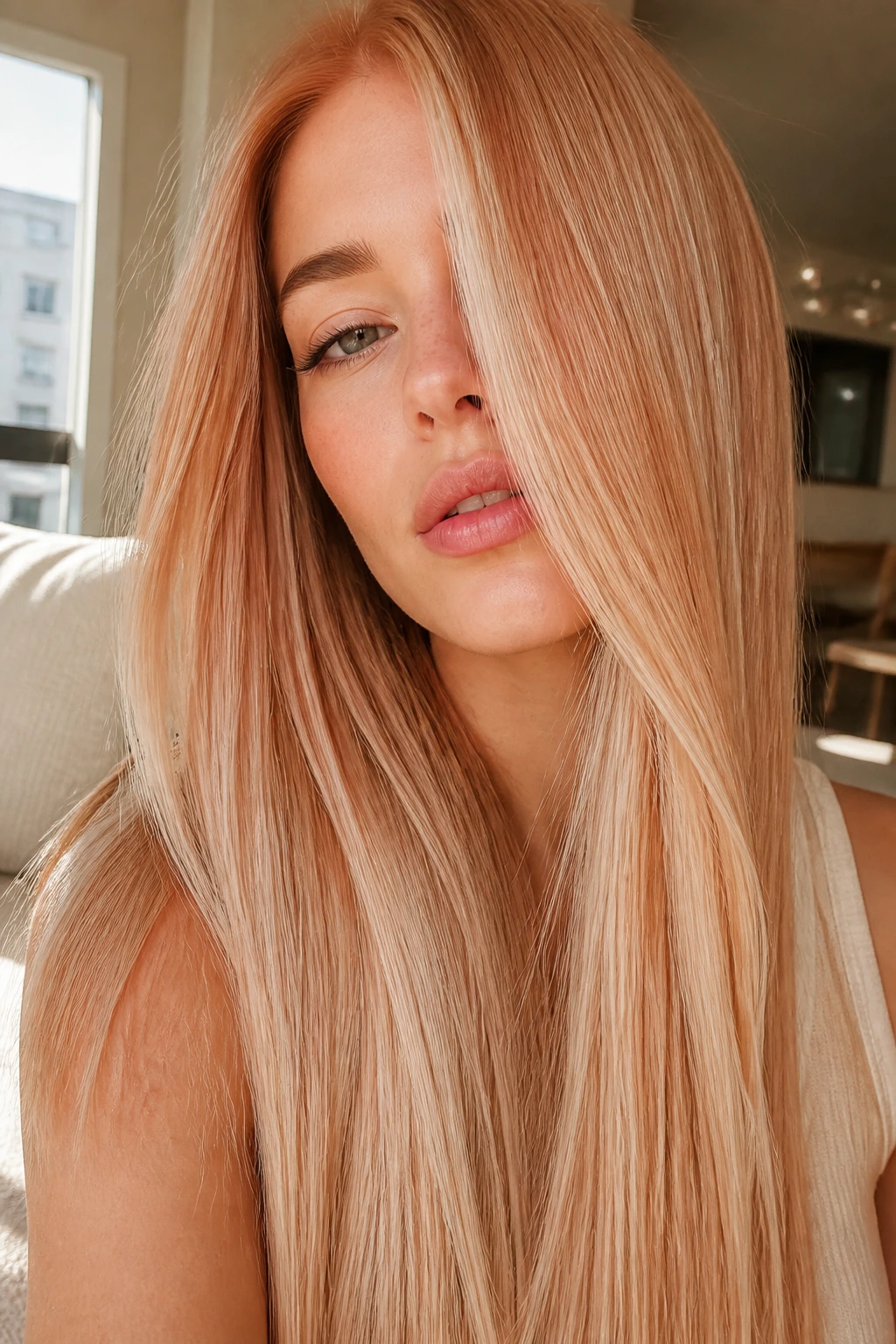
Strawberry champagne blonde sits in a slightly warmer lane than the classic beige blondes, but it never tiptoes into full copper. On long straight hair, the peachy undertone can be beautiful because it gives the lengths a soft flush that catches light in a less predictable way.
The risk is obvious: too much warmth and the blonde starts reading brassy. That’s why the champagne part matters. It cools the strawberry just enough to keep the shade from drifting into orange. If your base is naturally warm, this can be a flattering bridge between brunette and blonde without the shock of a pale cool lift.
I like this shade on long hair that has a clean, glossy finish. The warmth needs surface shine to look expensive. If the hair is porous or dry, the peach can go dull fast. A clear gloss between toners helps a lot here, and a trim keeps the ends from looking thirsty.
This is one of the softer, prettier blonde looks for long straight hair. Not sharp. Not icy. Just a little flushed, a little creamy, and much more interesting than people give warm blonde credit for.
15. Caramel-and-Blonde Ribbon Highlights
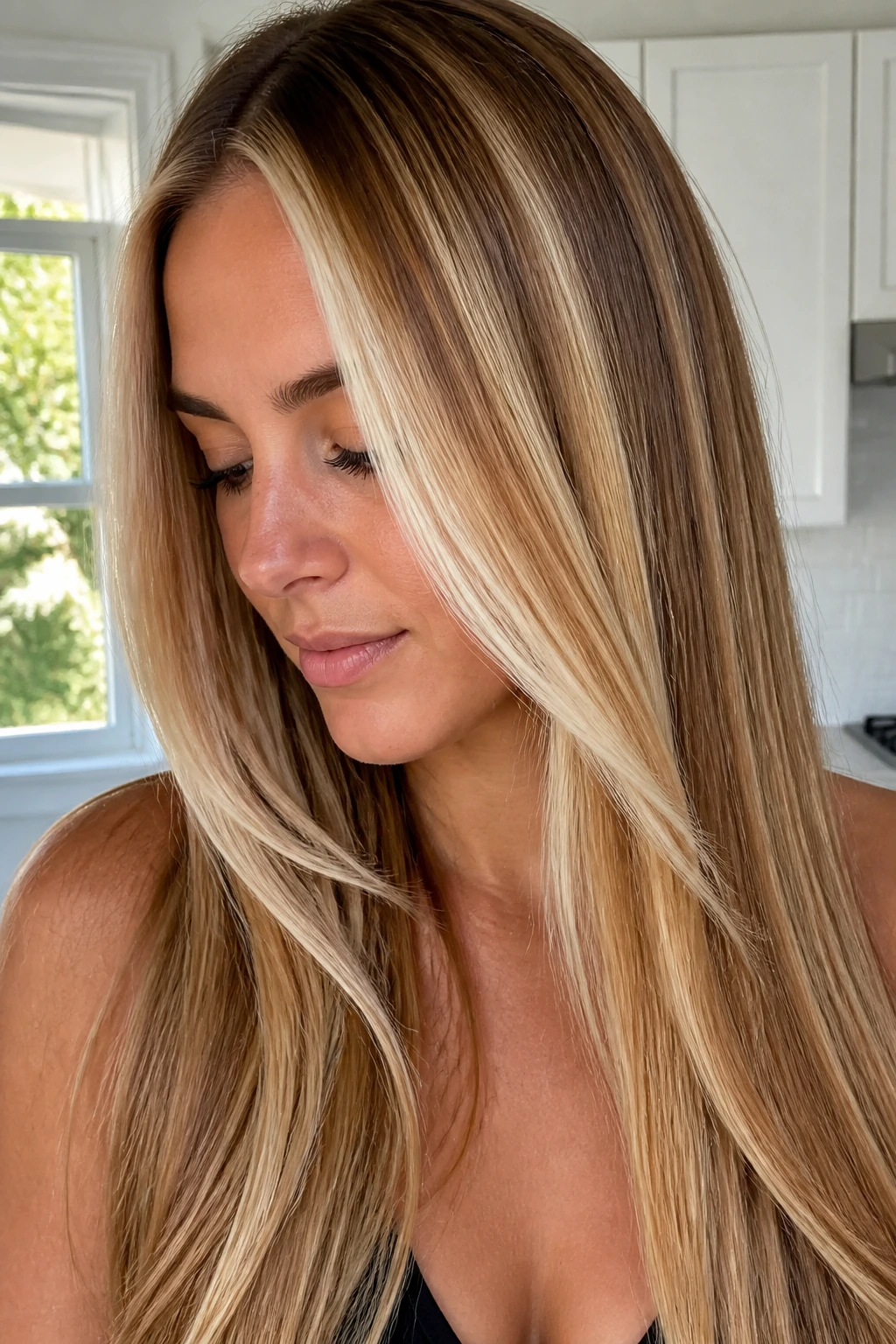
A ribbon highlight look is a smarter version of “just add highlights.” Instead of streaking the hair evenly, the colorist paints wider blonde pieces between caramel sections, so the straight length moves in visible bands rather than one solid shade.
On long straight hair, ribbons are useful because they mimic the natural swing of the cut. As the hair falls, the lighter bands appear and disappear in motion. That gives the style depth even when the hair is not curled or waved. You do not need texture to make this read well.
The caramel pieces are what keep the blonde from feeling too bright. They add heat and depth under the lighter sections, which is especially helpful if your natural base is medium brown. This look can be tailored to be subtle or high contrast, but I prefer it with medium contrast and a glossy finish.
It works best when the highlights are placed a little more densely around the front and outer layers. That way, the face frame picks up the light, while the underneath still has depth. Straight hair loves that kind of layering. It reads clean instead of busy.
16. Sandy Center-Part Blonde with Airy Ends
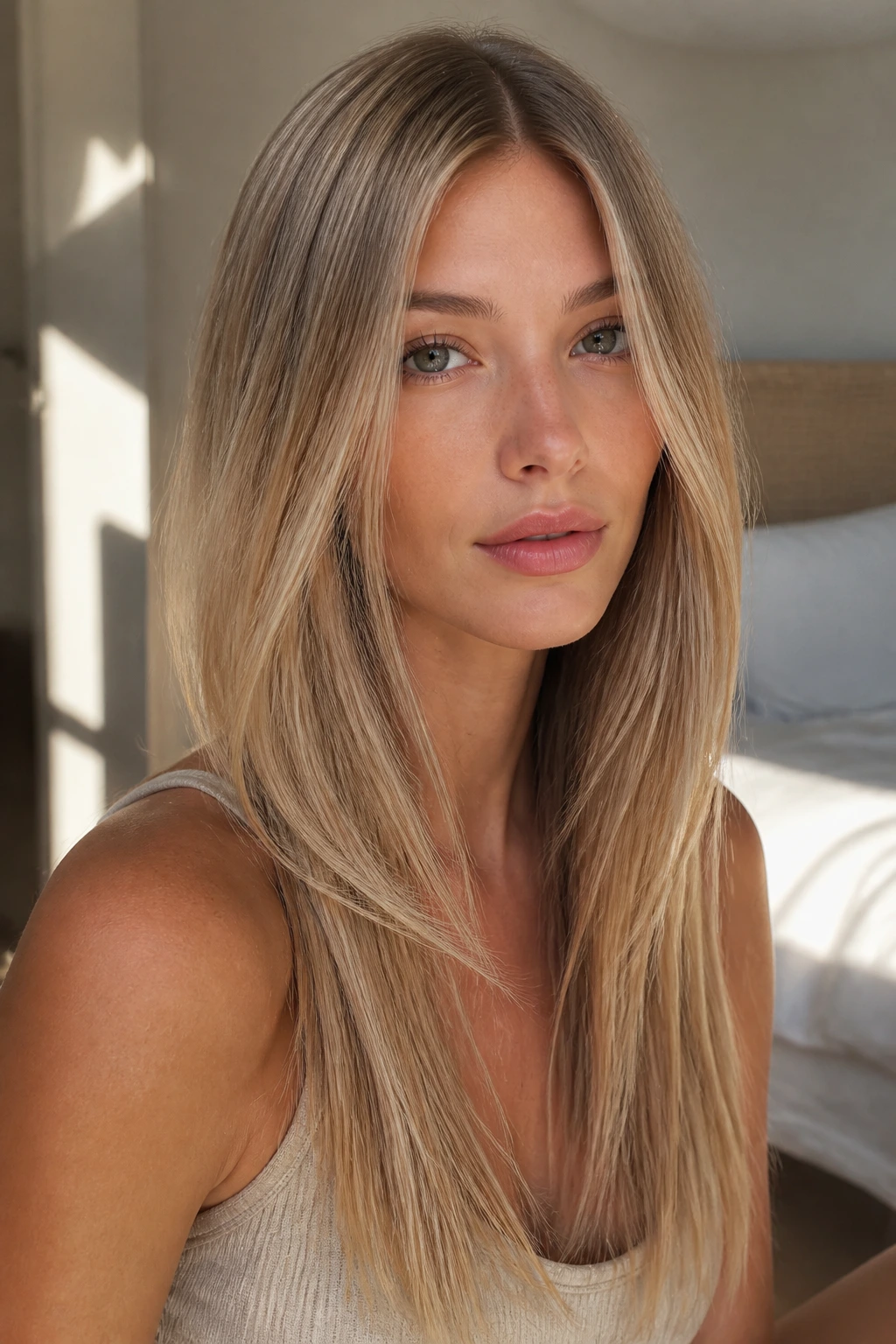
Sandy blonde is often underestimated because it doesn’t have the drama of platinum or the coziness of honey. On long straight hair, though, it can be one of the nicest shades around. It looks sun-worn in a controlled way, with a soft beige-sand tone that feels relaxed but still styled.
The center part matters here. Sandy blonde looks best when the hair is divided neatly and the lengths fall evenly on both sides. That gives the tone a calm frame and lets the airier ends do their work. If the ends are too heavy, the whole look can slump.
What sets it apart
This is a low-contrast blonde, which means the root and mids stay close enough in tone to avoid a stripey grow-out. The ends are brighter, but not so bright that they float away from the rest of the hair. On straight hair, that balance keeps the style from feeling like a flat curtain.
- Best for: people who want blonde without high salon maintenance.
- Styling cue: use a paddle brush blow-dry, then a flat iron only on the last inch or two.
- Color note: a beige gloss keeps the sandy tone from looking dull or khaki.
The look is quiet. That’s its strength. It doesn’t ask for attention; it earns it by looking clean and wearable from every angle.
17. Vanilla Bean Face-Frame Blonde
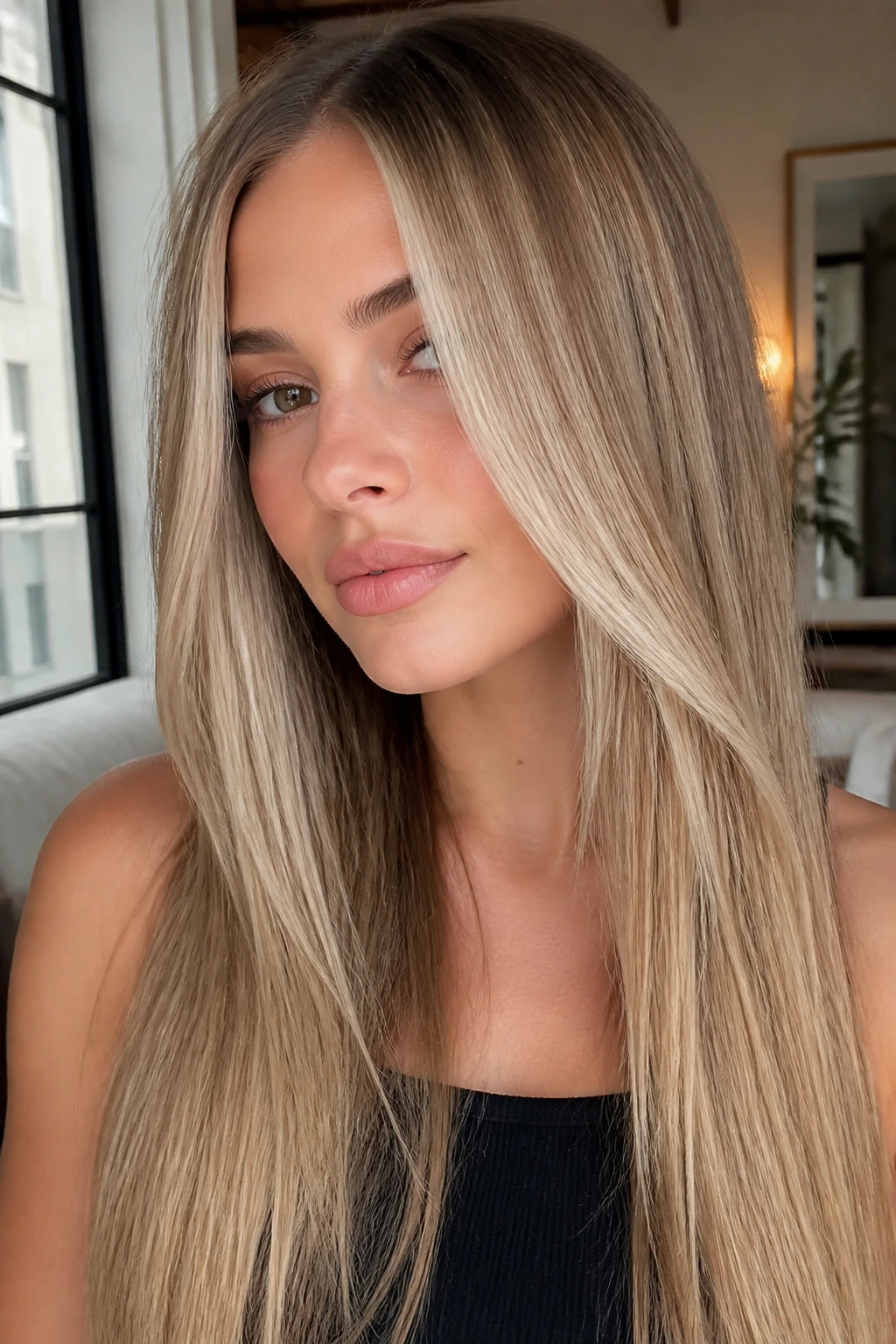
If you want a blonde look that wakes up long straight hair without changing the whole head, vanilla bean face-frame blonde is one of the strongest choices. The front pieces are creamy and bright, while the rest of the lengths stay softer and a little deeper.
That contrast is useful on straight hair because it gives the eye a place to land. When the hair hangs in one long line, the face frame becomes the moving part. It’s where the shape lives. The brightest pieces should sit around the cheekbone and blend down into the front lengths, not stop in a hard stripe near the eyebrow.
I like this version for people who like to wear their hair straight most of the time but still want a bit of lift near the face. You can keep the rest of the hair in a beige or soft honey zone, which saves maintenance and keeps the whole look from reading overprocessed.
It also photographs well in real life, not just in salon lighting — a plain wall, a window, even a slightly gloomy room. That front brightness can do a lot of work.
18. Smoked Champagne Blonde
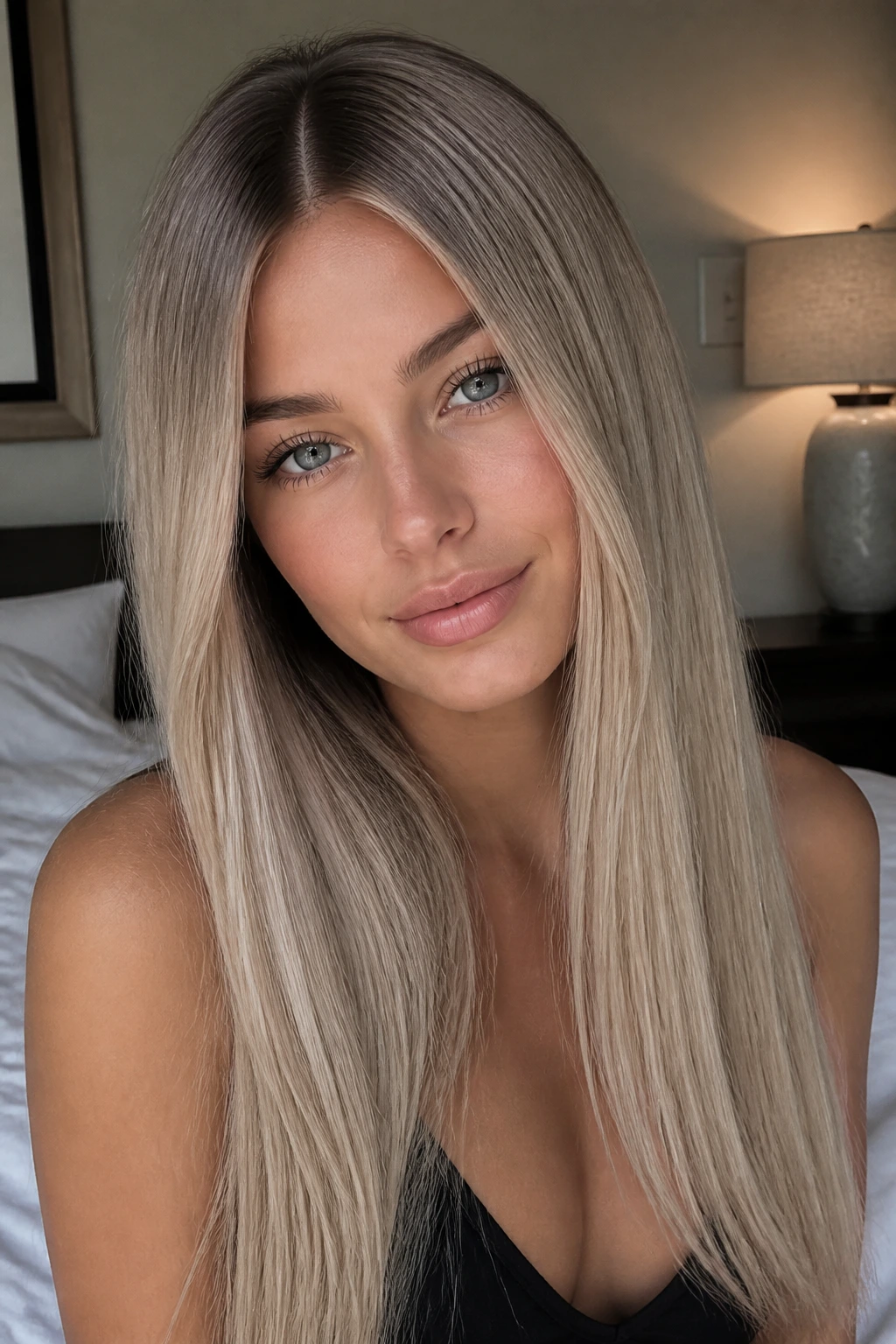
Smoked champagne blonde is a cooler, moodier cousin of the brighter champagne looks. The base stays soft and shadowed, the blonde is muted with a smoky gloss, and the whole thing has a slightly moody shine that suits long straight hair with a strong center part or a deep side part.
Can a blonde look understated and still feel expensive? Yes, and this is the proof. The smoke in the tone keeps the brightness from reading too sweet, while the champagne keeps it from getting muddy. On straight hair, that combination looks elegant in a practical way. You can wear it sleek, tucked, pinned, or loose, and it still makes sense.
How to keep it from going flat
The secret is contrast, but not too much of it. A soft root shadow, brighter face frame, and slightly darker underlayers stop the hair from blending into one foggy tone. If the gloss is too gray, the blonde loses life. If it’s too beige, the smoke disappears.
This is the shade I’d choose for someone who likes cooler jewelry, crisp knits, and hair that looks calm instead of sugary. It has edge. Just enough.
19. Bright Baby Blonde with Seamless Ends
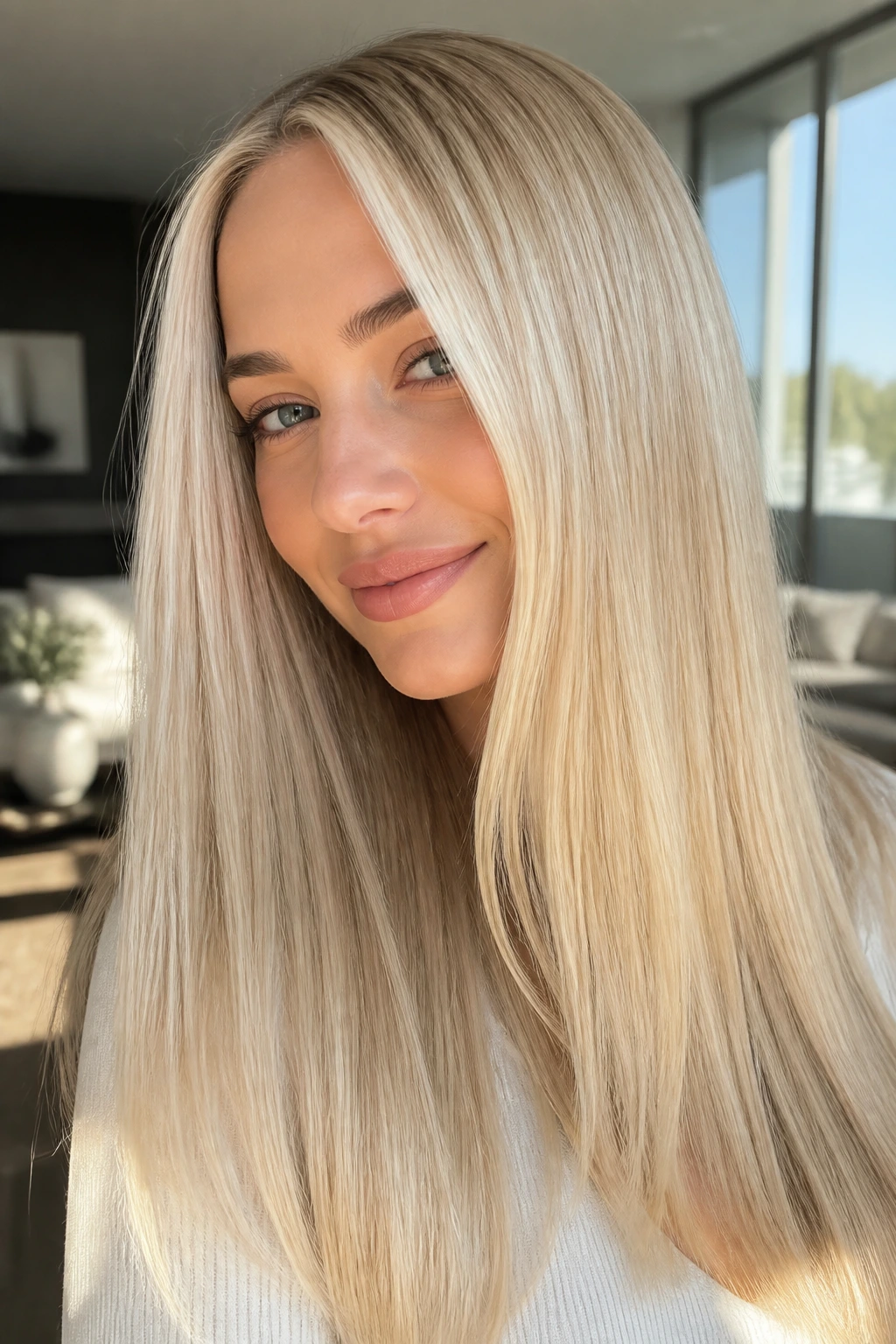
Bright baby blonde is the most luminous option in the lineup, but it only works on long straight hair when the ends are treated with care. You want brightness, yes, but not the brittle, over-bleached finish that makes long lengths look thinner than they are.
The best version uses fine babylights throughout, especially near the part and the perimeter, so the blonde looks evenly lit rather than striped. The ends should be bright, but still soft at the edge. If the last few inches are too white and too dry, the whole style can look rough, even if the roots are perfect.
This is a look for someone who likes a high-impact blonde and is prepared to treat it like one. It needs masks, trims, and a colorist who understands how straight hair exposes every weak spot. The payoff is huge, though. When the shine is right, it almost glows.
If you like a very clean finish and you do not mind keeping up with glosses and toners, this is the brightest way to wear blonde hair looks for long straight hair without losing the shape of the cut.
How Straight Hair Changes the Way Blonde Reads
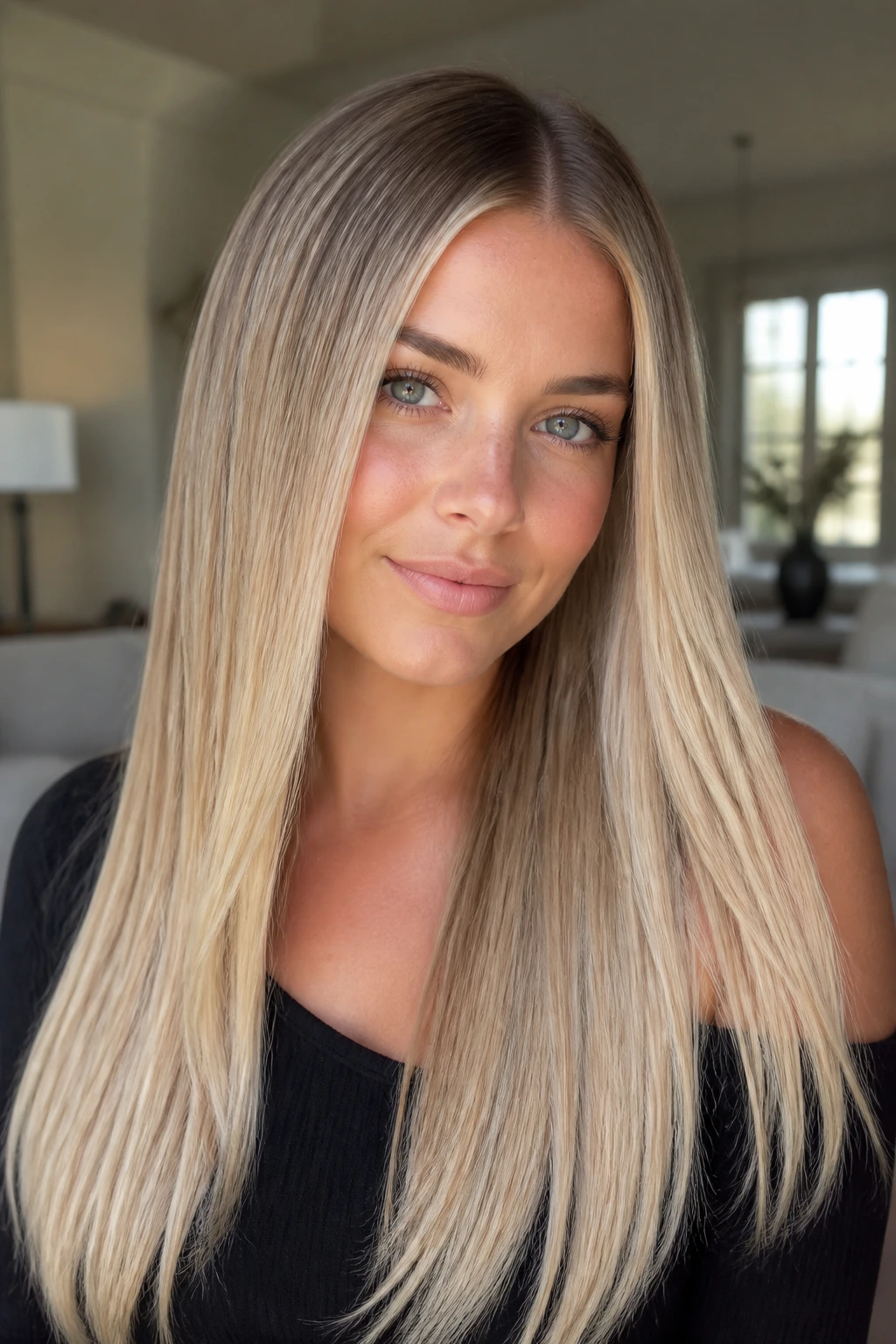
Straight hair is honest in a way wavy hair is not. That sounds harsher than I mean it, but it is the reason blonde placement matters so much here. When the texture is smooth, the eye sees the exact start and stop of each color zone. Root shadow, highlights, lowlights, toner, and the tone at the ends all become more visible.
That visibility is useful when the color is well planned. A soft ribbon highlight on straight hair can look more expensive than the same highlight on a curl because the line is crisp and readable. The downside is just as obvious. If the placement is lazy, the straight length gives you no mercy. Stripey foils, harsh demarcation, and yellow ends show fast.
The best blonde work on long straight hair usually uses one of three tricks: a deeper root, a lighter face frame, or a shift in tone from mids to ends. Often it uses all three. That’s how the hair keeps moving even when the texture is still. Without that variation, a long blonde length can collapse visually and look wider than it is.
Tone matters here too. Ash blondes can look sharper on straight hair. Beige and champagne blondes can look softer. Warm blondes need glossing more often, because brass shows quickly on a smooth surface. If the ends are porous, they drink toner unevenly. If the hair is very fine, too much lightness can make the perimeter disappear. None of that is a reason to avoid blonde. It just means the color needs to be built like a shape, not slapped on like paint.
Tools That Keep the Finish Sleek, Not Scruffy
-
Purple shampoo: Use this once a week for icy, pearl, or platinum shades. It helps keep brass from sneaking into the lengths, but too much will leave the hair dull.
-
Color-safe shampoo: A sulfate-free formula helps your toner last longer and keeps the cuticle from roughing up after every wash.
-
Heat protectant spray: Straight blonde hair shows heat damage fast, so this is non-negotiable before blow-drying or ironing.
-
Bond-building mask: Use it every 1 to 2 weeks if your hair has been lightened more than once or feels rough at the ends.
-
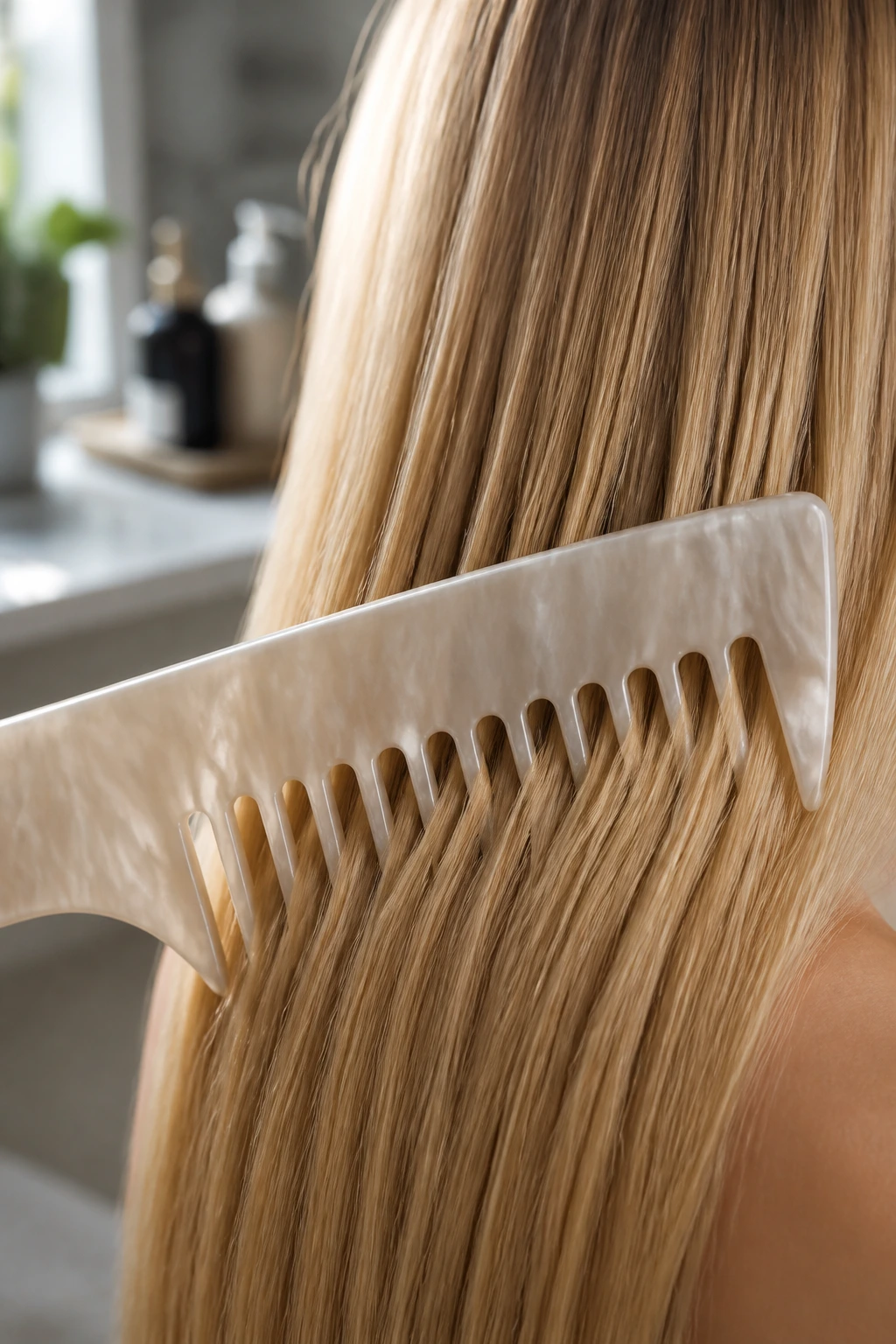
Wide-tooth comb: Handy in the shower for distributing conditioner without snapping fragile strands.
-
Paddle brush: Best for a smooth blowout on long straight hair. It pulls the hair taut without puffing up the ends.
-
Silk or satin pillowcase: Helps the surface stay smoother overnight, which matters when the whole look depends on shine.
-
Light serum or oil: A single pump from midlengths to ends can stop flyaways without making the blonde look greasy.
What to Tell Your Colorist Before the Foils Go In
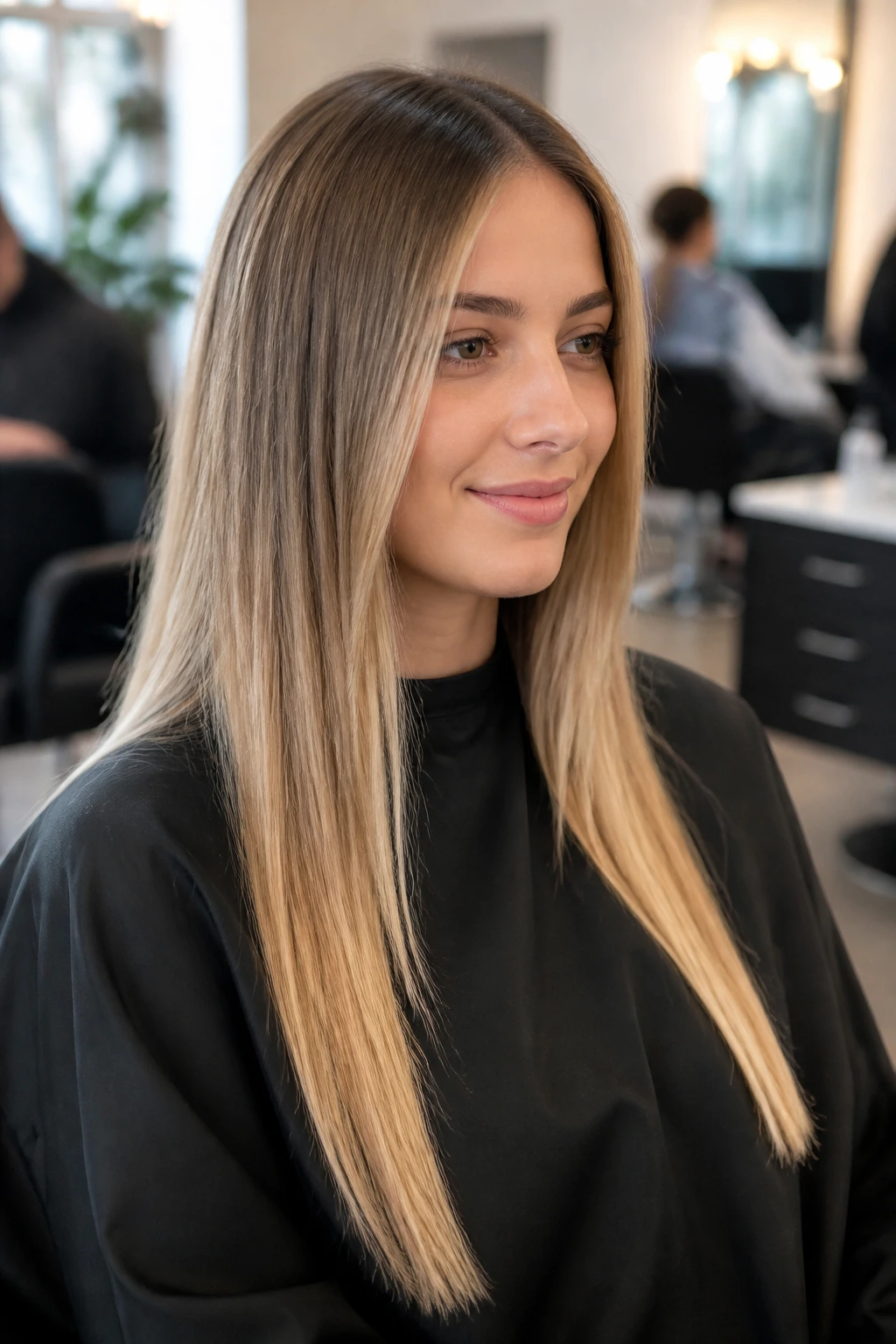
Bring photos, yes, but bring words too. Photos show tone and placement, but the salon chair is where you need to be specific about maintenance, root depth, and how bright you actually want the ends. Say whether you want a soft grow-out or a crisp, freshly done look. Those are not the same request.
On long straight hair, I would always talk about the perimeter. Ask how light the bottom 3 to 4 inches should be, because over-lightened ends can look stringy once the hair is straightened and hanging alone. If your hair is fine, ask for more dimension under the top layer so the length keeps looking full.
Here’s the detail people often skip: gloss tone. Beige, pearl, champagne, ash, and gold all look different on a straight canvas. If you say “blonde” and leave it there, the result can drift too warm or too flat. A good colorist will ask follow-up questions, but it helps if you arrive knowing whether you want creamy, icy, smoky, or warm.
If you’ve had breakage before, say so. If your hair pulls orange at the mids, say that too. Straight hair does not hide inconsistency, and the salon plan should account for it. A little honesty at the start saves a lot of toning later.
How to Style These Looks So the Color Stays Sharp
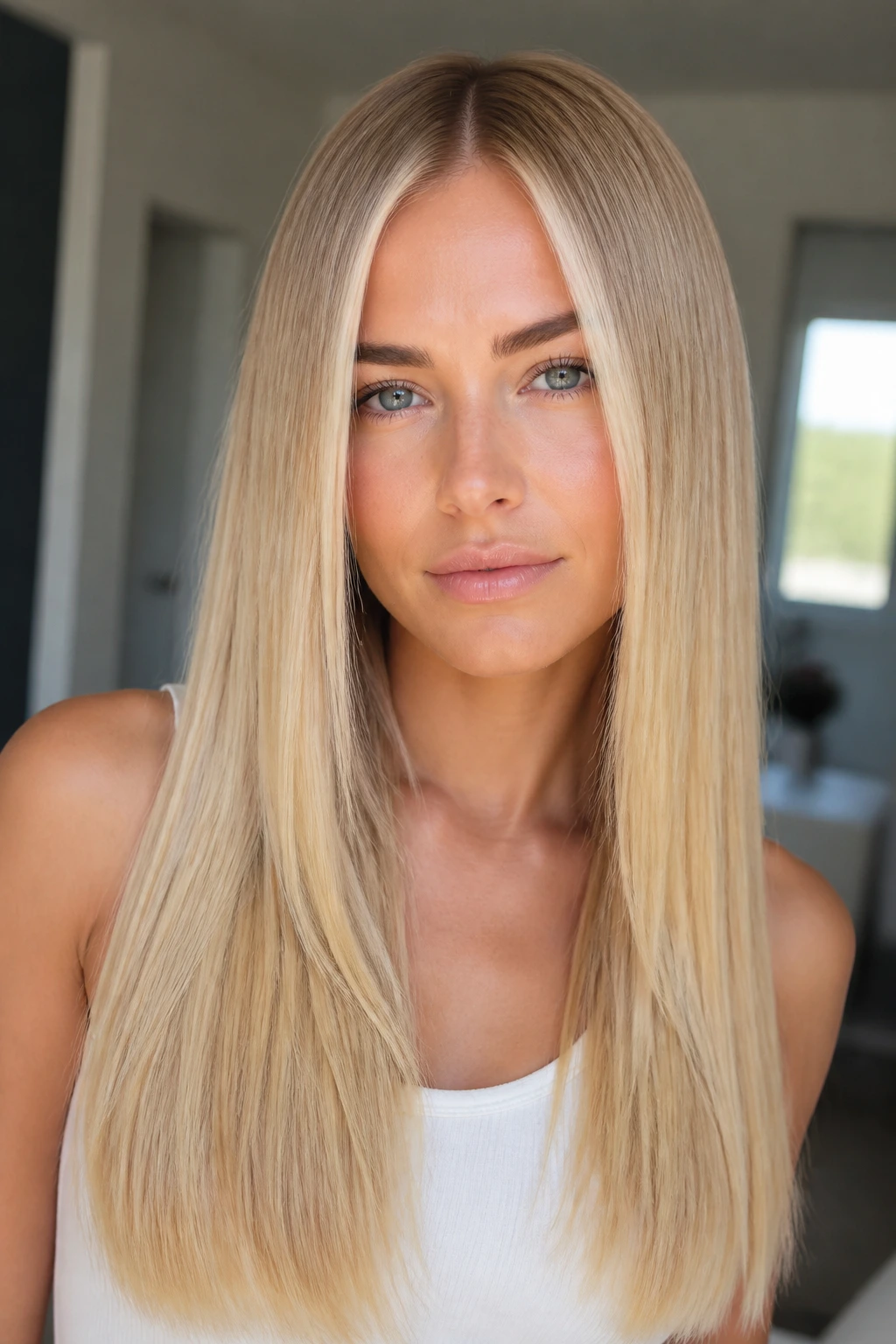
The simplest styling move is often the best one: blow-dry smooth, then give the ends a slight bevel instead of a hard flip. That tiny curve keeps the blonde from looking like a board and lets the highlights catch light at the hemline. On long straight hair, the finish is part of the color story.
Use heat protectant on damp hair, then dry with a paddle brush or a round brush if you want more bend near the front. Keep the iron moving if you straighten afterward. One slow pass is better than three quick ones. Too much heat flattens the surface and drains the shine from the blonde, which is the opposite of what you want.
A center part suits the more minimal looks: vanilla, beige, pearl, smoky champagne. A soft side part can help money pieces and contour blonde feel more visible. If you’re wearing bright platinum or ice blonde, keep the styling crisp; if the look is warm or bronzed, a little movement at the ends keeps it from feeling stiff.
And don’t drown it in product. That’s the easy mistake. Blonde hair looks best when the surface is smooth but still touchable, not coated in so much oil that the tone goes dark and sticky.
Extra Tips for Shine, Dimension, and Longevity
-
Color refresh: Ask for a clear or tinted gloss every 4 to 8 weeks. It keeps beige, champagne, and pearl tones from slipping into brassy or flat territory.
-
Front-brightening trick: If you want the color to read more dramatic without lightening the whole head, push the face frame one shade lighter than the mids.
-
Keep the ends alive: On long straight hair, the last few inches matter a lot. A trim of even half an inch can make the blonde look cleaner because split ends scatter light badly.
-
Use less purple shampoo than you think: Once a week is enough for most cool blondes. More than that can leave the hair chalky.
-
Match the gloss to your wardrobe: If you wear a lot of cream, camel, and gold jewelry, warmer blonde tones tend to look more natural. If you live in black, white, silver, and cool denim, beige or pearl reads cleaner.
-
If you want less upkeep: Ask for more depth under the crown and around the nape. Hidden dimension is the quiet trick that keeps long blonde hair from looking fragile.
Common Mistakes That Make Blonde Look Flat or Stripy
-
Making every strand the same shade: Long straight hair exposes uniform color fast. If the roots, mids, and ends are all lifted to the same level, the style can look hollow instead of dimensional. Ask for a root shadow, ribbons, or at least a softened perimeter.
-
Going too ash on porous ends: Porous ends grab cool toner like a sponge and can turn dull, gray, or khaki. The fix is to tone the midlengths and ends separately or ask for a softer beige gloss on the last few inches.
-
Using purple shampoo like it is regular shampoo: Overuse dries out the lengths and can make blonde look dusty. Once a week is usually plenty unless your hair pulls brass very fast.
-
Leaving the face frame too subtle: If the money piece is too narrow or too close to the base color, the look loses impact on straight hair. A good face frame should brighten the eyes and cheekbones without turning into a stripe.
-
Forgetting the trim: Long blonde hair with split ends reads thin and tired at the bottom. Straight hair does not hide fraying, so regular trims matter more than people like to admit.
-
Skipping heat protection: Blow-dryers and flat irons can fry the surface fast, and blonde hair shows that damage before dark hair does. Use a protectant every time. Every time.
Variations and Alternate Routes to Try
The Soft-Grow-Out Blonde: Ask for a deeper root and narrower highlights through the top so the color can live longer between appointments. This works well if you want a blonde that looks intentional for months, not weeks.
The Bright Money Piece Edit: Keep most of the hair beige or honey, then push the front pieces brighter and cooler. It gives long straight hair a sharper frame without forcing the whole head into high-maintenance territory.
The Warm Honey Route: If your skin loves warmth or you wear gold jewelry a lot, ask for honey, caramel, and buttery beige tones instead of ash. The result feels softer and less severe on straight lengths.
The Icy Platinum Route: Choose this if you want the highest-impact blonde and you’re fine with glossing, masks, and careful heat styling. It’s striking on long straight hair because the shine travels in one clean line.
The Low-Contrast Brunette Blend: Keep more depth in the root and underneath, then thread in soft beige highlights. This is the easiest way to stay blonde-adjacent without needing constant salon time.
The Pearl-Cool Finish: If you hate yellow but also hate gray, ask for a pearl gloss with a whisper of beige. It keeps straight hair luminous instead of chalky.
Frequently Asked Questions
Which blonde shade looks best on long straight hair?
The best one is usually the one with enough contrast to keep the hair from looking flat. Rooted vanilla, beige ribbon balayage, and champagne money pieces are safe bets because they give straight lengths movement without depending on curls or waves.
Do highlights or balayage work better on straight hair?
Balayage tends to look softer on long straight hair because the hand-painted placement creates a melt instead of a hard line. That said, fine highlights can work beautifully if they’re very thin and paired with a root shadow. Chunky foils are the ones that usually misbehave.
How do I keep blonde from looking stripy on straight hair?
Use a mix of fine lights, root depth, and a toner that suits the base. Straight hair exposes every line, so the placement has to be blended at the scalp and more scattered through the mids and ends.
What shade of blonde is the lowest maintenance here?
Honey bronde, mushroom blonde, and sandy beige blonde usually grow out the softest. They keep some depth at the root, which means the regrowth doesn’t scream at you two weeks later.
How often should I tone blonde straight hair?
Most people need a gloss or toner refresh every 4 to 8 weeks, depending on how fast the color warms up. Icy blondes and platinum often need it sooner; beige and warm blondes can usually stretch longer.
Can fine straight hair still wear bright blonde?
Yes, but the placement has to be careful. Too much lightness can make fine hair look thinner at the ends, so babylights, contour pieces, and a slightly deeper underside help the length stay full.
Why do the ends of straight blonde hair get brassy faster?
The ends are the oldest, driest part of the hair, so they pick up minerals, heat, and toner unevenly. That dryness makes warm tones show through more easily, especially when the hair is worn sleek and the surface is reflective.
Should I ask for a root shadow with every blonde look?
Not every time, but often enough that it’s worth discussing. A soft root shadow adds depth, helps the blonde grow out better, and keeps long straight hair from looking too light at the scalp.
Can I switch from warm blonde to cool blonde without damaging my hair?
Usually yes, but the process depends on what is already on the hair. A good colorist can often shift the tone with glossing and careful tonal correction instead of more lightening, which is much gentler on the ends.
The Blonde That Holds Its Shape
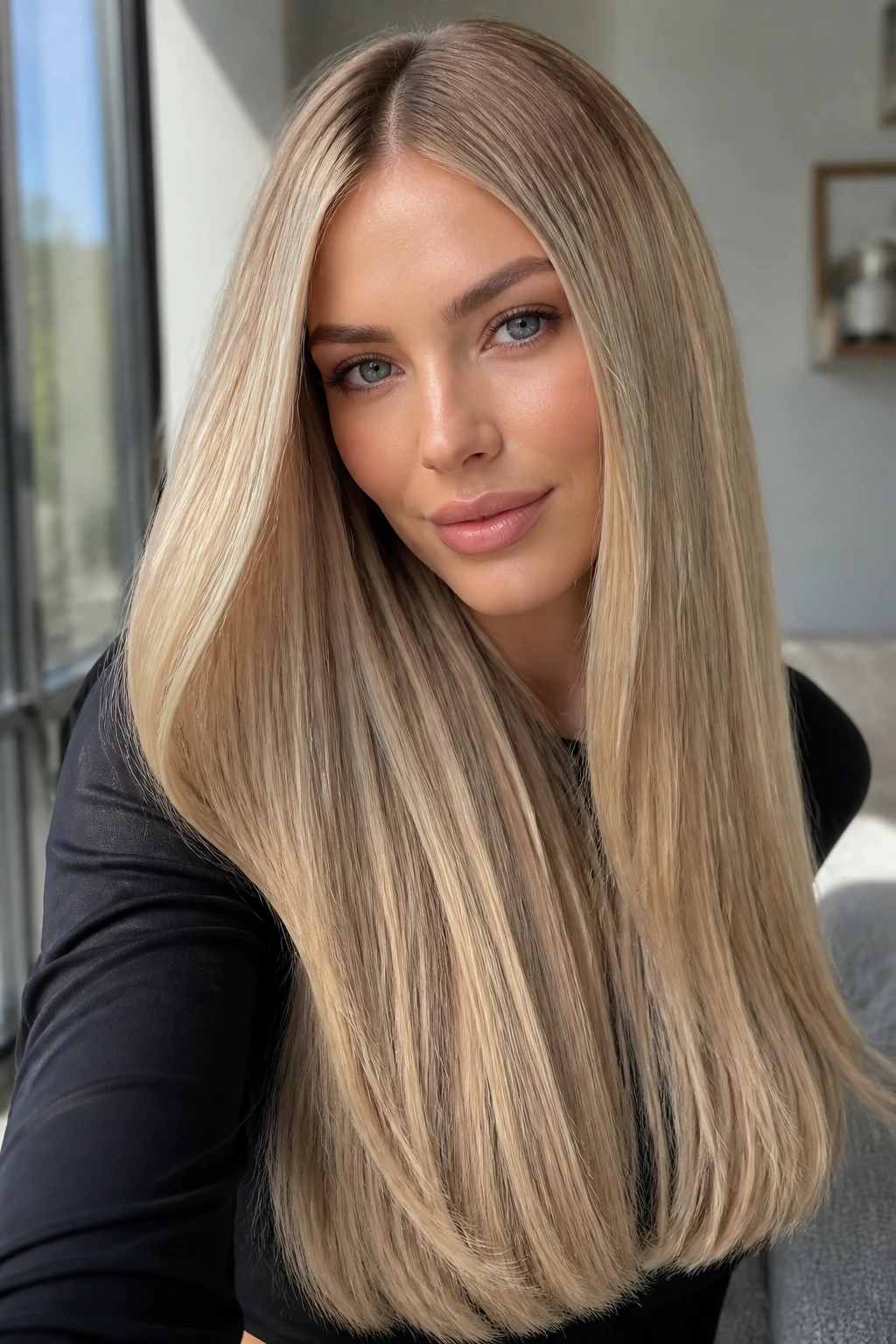
Long straight hair can make blonde look cleaner, brighter, and sharper than almost any other texture — but only when the tone and placement are doing real work. The best versions here aren’t the ones with the most bleach. They’re the ones with enough depth to keep the lengths full, enough gloss to keep the surface alive, and enough planning that the style still makes sense when the hair is hanging absolutely still.
Pick the tone that fits your maintenance habits, not the one that only looks good under salon lights. If you want something soft, go beige or vanilla. If you want edge, go pearl, ice, or platinum. If you want the easiest grow-out, root shadow and ribbons will save your sanity.
The sweet spot is usually somewhere between the two extremes. A good blonde on long straight hair should move when you move, shine when the light hits it, and still look tidy when you catch your reflection in a random window. That’s the version worth asking for.
