



Short hair on Black women doesn’t need to “make up for” anything. When the cut is clean and the texture is handled with a little care, short hair gives you shape, line, and attitude in a way longer styles sometimes can’t. A tapered nape, a crisp side part, a row of tiny coils, a set of flat twists — all of that reads from across the room. You notice the silhouette first. Then the detail.
That’s why short hair is such a satisfying canvas. It shows off the haircut itself, the curl pattern, the parting, and the finish. A great short style doesn’t hide the hair. It frames it. And on Black hair, that framing can be sharp, soft, polished, playful, or bold without needing inches and inches of length to do the job.
I’ve always liked how short styles force a decision. No filler. No hiding behind extra length. A half-inch difference at the temple changes the whole mood. A dab too much gel and the look goes stiff; the right amount and you get a clean sheen that catches the light without turning crunchy. That balance is where the fun lives, and the list below leans into it from every angle.
Why These Short Styles Earn Their Keep
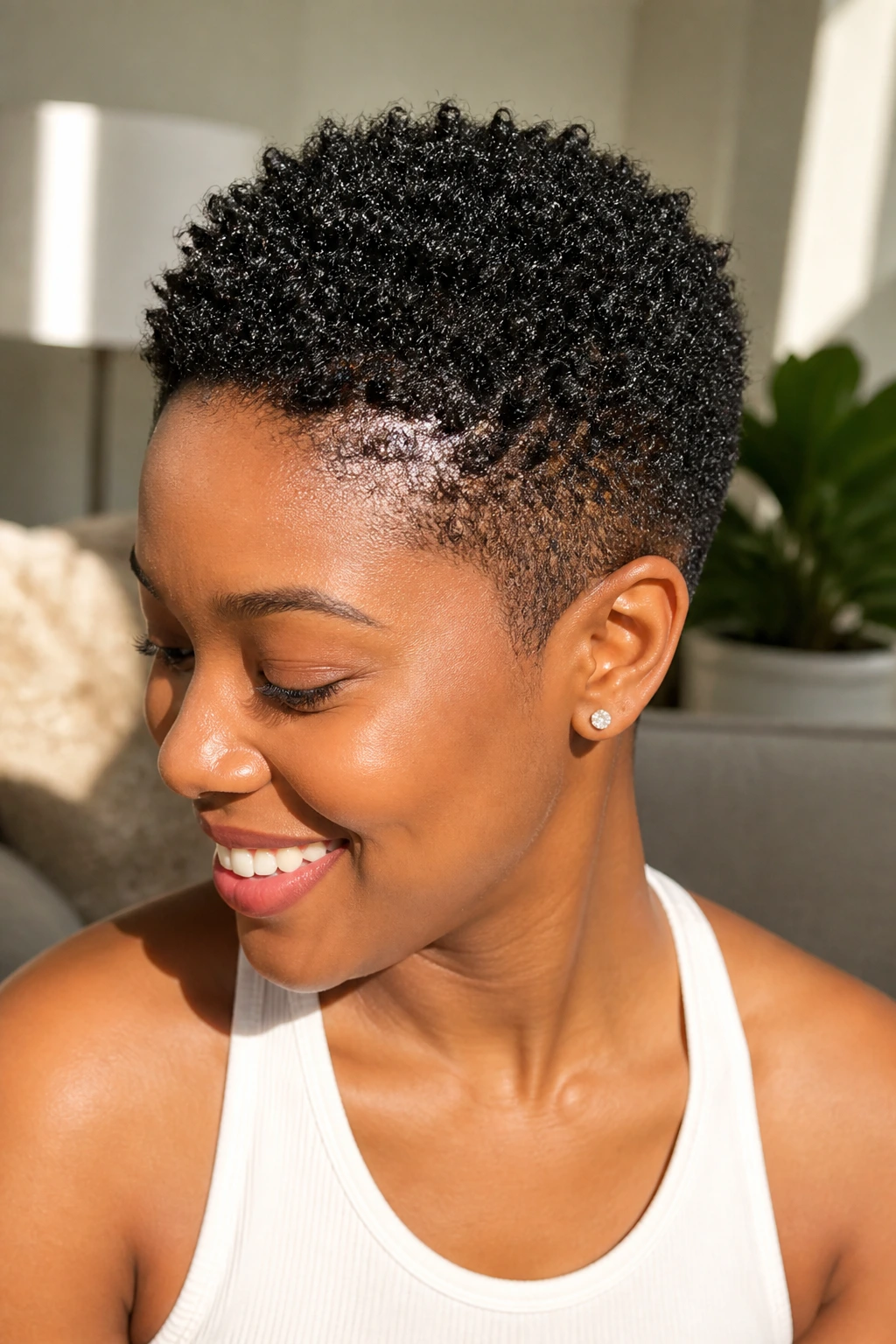
- Shape shows up fast: On short Black hair, a clean taper, a tight coil, or a sharp side part changes the whole outline in minutes.
- Texture gets to be the feature: Coils, waves, twists, and mini braids all look intentional when there isn’t extra length competing for attention.
- Most of these styles don’t ask for much product: A mousse cap, a finger-length ribbon of gel, or a small scoop of curl cream usually does the job.
- They can shift from casual to dressed up quickly: A gold cuff, a headband, or a deep side part can change the mood without touching the cut.
- Short styles are easier to refresh: A spray bottle, a scarf, and five minutes at the sink can wake up a look that would take much longer on longer hair.
- They work with a lot of textures and cuts: TWA, tapered cuts, pixies, starter locs, pressed hair, and short braids all have a place here.
1. Tapered TWA With Defined Coils
A tapered teeny weeny afro is one of those cuts that looks simple until you see it up close. The shape does half the talking. The tighter sides and back put the crown on display, and when the coils are defined — not plastered, not over-brushed — the whole style feels crisp and deliberate.
Why It Works
Short hair loves structure, and a tapered cut gives it exactly that. You get volume where you want it and closeness where you don’t, which keeps the style from turning into one round puff. A small amount of curl cream and a twist sponge or finger-coiling routine can make the crown look neat without making it stiff.
This one is especially good if you want a style that still looks like hair rather than a heavily finished sculpture. The texture is the point. Keep the sides clipped close, separate the top into tiny sections, and let the coils dry fully before touching them.
A one-inch difference in length at the top changes the silhouette more than people expect. That’s the magic here. Tiny moves, big result.
2. Side-Part Finger Coils
Finger coils on short hair give you a polished, glossy finish that feels more detailed than it is fussy. The side part matters a lot. Shift it a little deeper than you think you should, and the style suddenly has direction instead of looking evenly shaped in every direction.
The trick is small sections. If the pieces are too thick, the coils puff apart before they set. If they’re too tiny, you’ll be there all afternoon. I like coils that are roughly the width of a pencil eraser on short natural hair, with a little styling cream underneath and a stronger-hold gel just on the outer layer.
Best for: dense curls that shrink fast, short tapered cuts, and anyone who likes a neat finish without blow-drying the hair flat first.
Wear it with: hoops, a red lip, or a simple black turtleneck. The parting does enough.
3. Flat Twists Swept Into a Low Bun
This is one of the smartest short-hair styles when you want something tidy but not stiff. The flat twists give the front and sides a clean line, then the back gets gathered into a low bun or tucked knot at the nape if the length is short enough to hold.
It works because it doesn’t fight the hair’s actual length. Short hair often looks best when the style follows the head instead of trying to fake inches that aren’t there. Flat twists laid close to the scalp hold better than loose braids on cropped hair, and they make the back look fuller once you tuck or pin it.
Use this when you need a style that can handle a long day without falling apart by lunch. A satin scarf at night keeps the rows neat, and a tiny touch of edge control around the hairline can make the whole look feel finished.
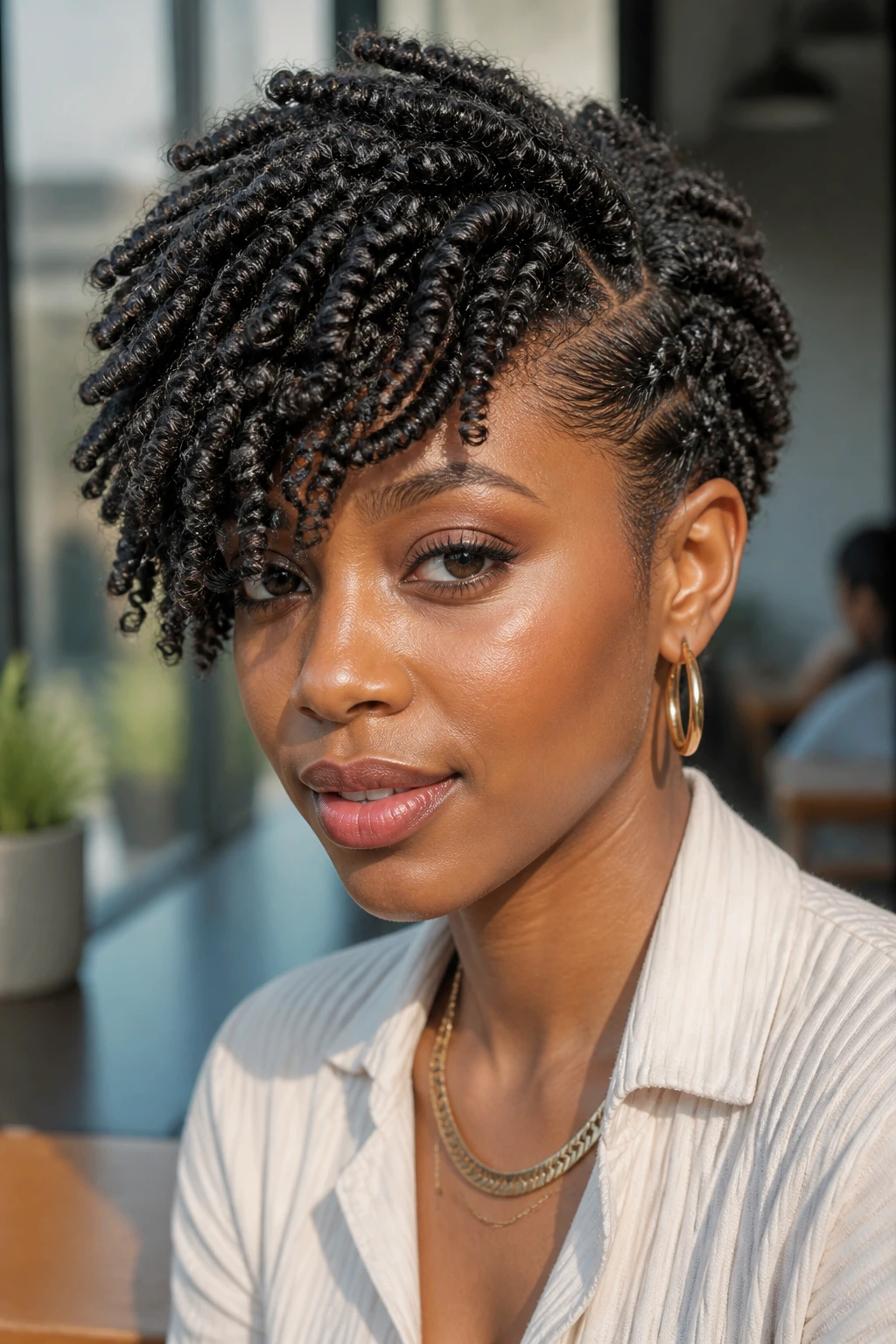
4. Mini Twist-Out With Side Sweep
A mini twist-out on short hair gives you soft movement without the fuzzy halo you sometimes get from a rushed wash-and-go. The key is patience. The twists need to dry all the way through before you separate them, or the ends lose their shape and the style turns into a puff with no definition.
The side sweep changes everything. Pulling the front across one brow line makes the cut look longer on top, which is useful if your hair is cropped close at the sides. It also keeps the style from feeling too symmetrical, which can look flat on short hair.
If you like touchable texture more than a stiff finish, this is a strong choice. Use a light cream on damp hair, twist in small sections, and separate with a little oil on your fingers instead of raking through aggressively.
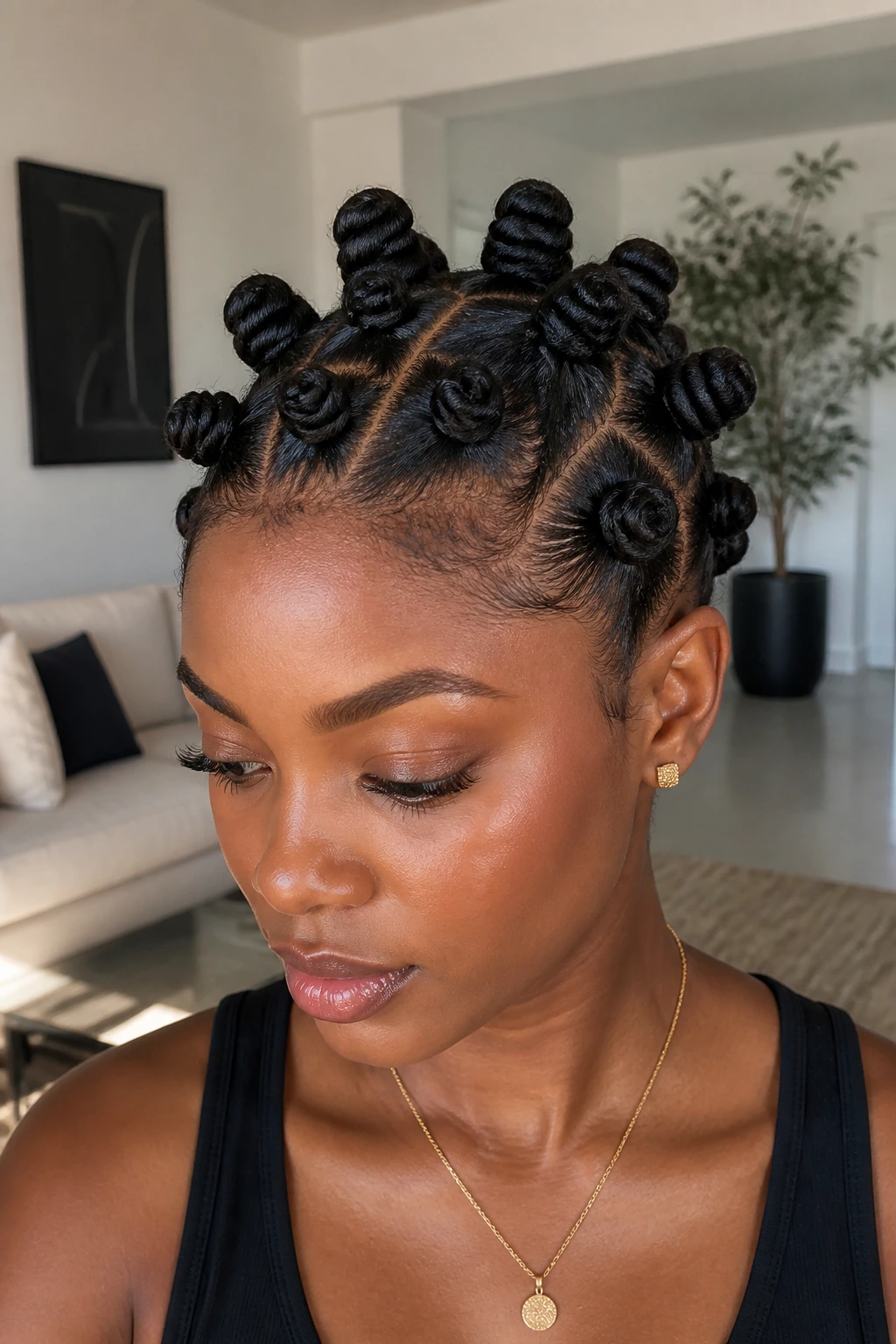
5. Bantu Knot Crown
Bantu knots on short Black hair have a built-in sculptural quality. Even if the knots are small, they make a clear pattern on the head, and that pattern becomes the style. You can wear them as knots, or take them down later for a tight, springy knot-out with a lot of texture.
The crown placement gives this look shape fast. Instead of scattering the knots randomly, cluster them around the top and center so the outline feels balanced. On shorter hair, smaller knots tend to hold better and look cleaner at the base.
This one works best when your ends are tucked in neatly. Loose ends make the style look unfinished fast. A little styling gel at the root and a firm twist at the base go a long way here.
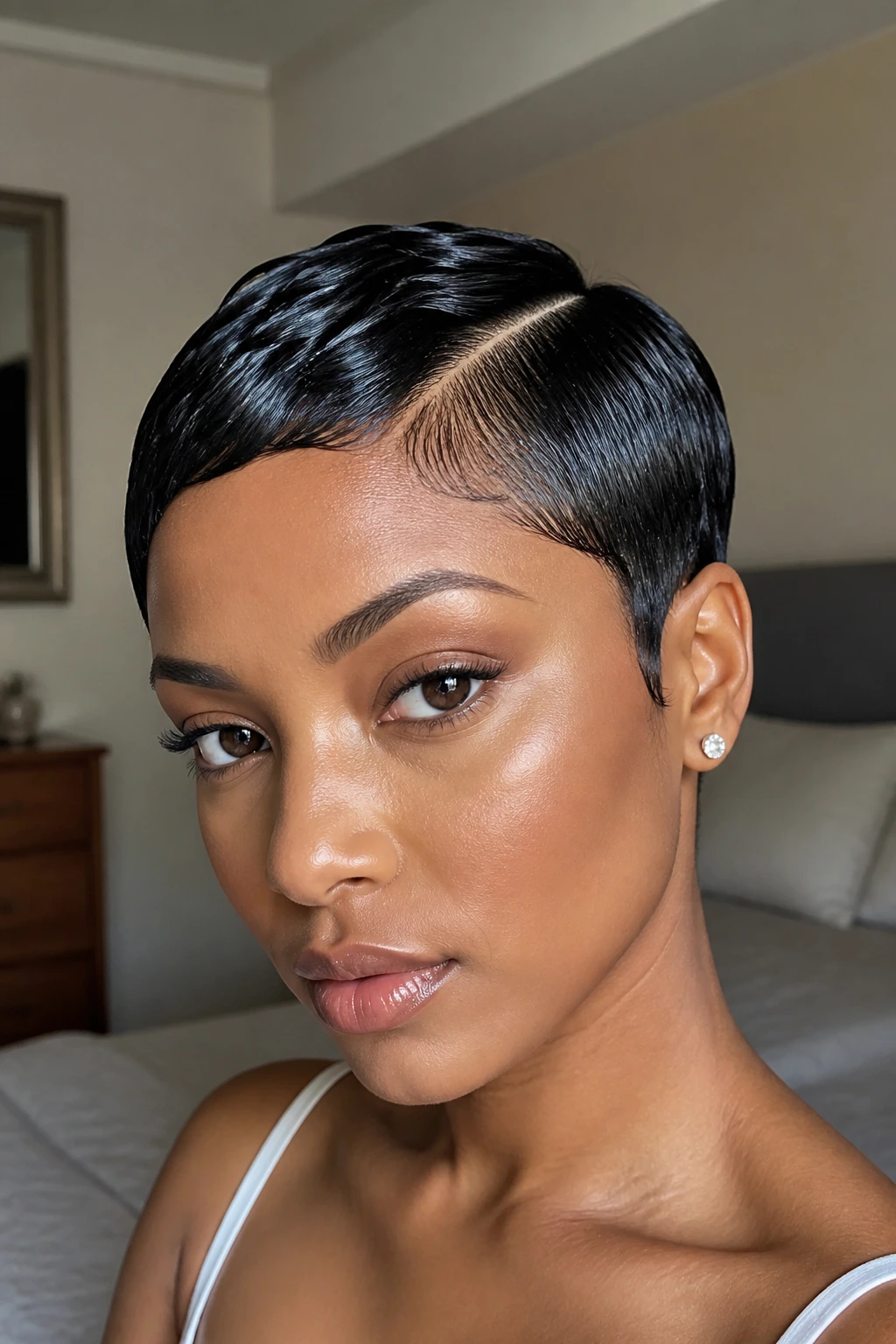
6. Sleek Wet-Look Pixie
A wet-look pixie is not for the indecisive. It wants shine, a tidy part, and enough gel or styling custard to keep the strands hugging the head instead of puffing up at the temples. On short hair, that sleek finish can look expensive in the plainest sense of the word: controlled, shiny, and direct.
The style is especially good on relaxed, pressed, or very short natural hair where the strands can lay down cleanly. A soft brush, a rat-tail comb, and a medium-hold gel are usually enough. I’d skip heavy cream underneath unless your hair tends to dry out fast; too many layers can make the finish cloudy.
One sharp side part or a tucked ear area changes the whole feel. Leave the ends neat, not jagged. This is one of those styles where the line matters more than ornament.
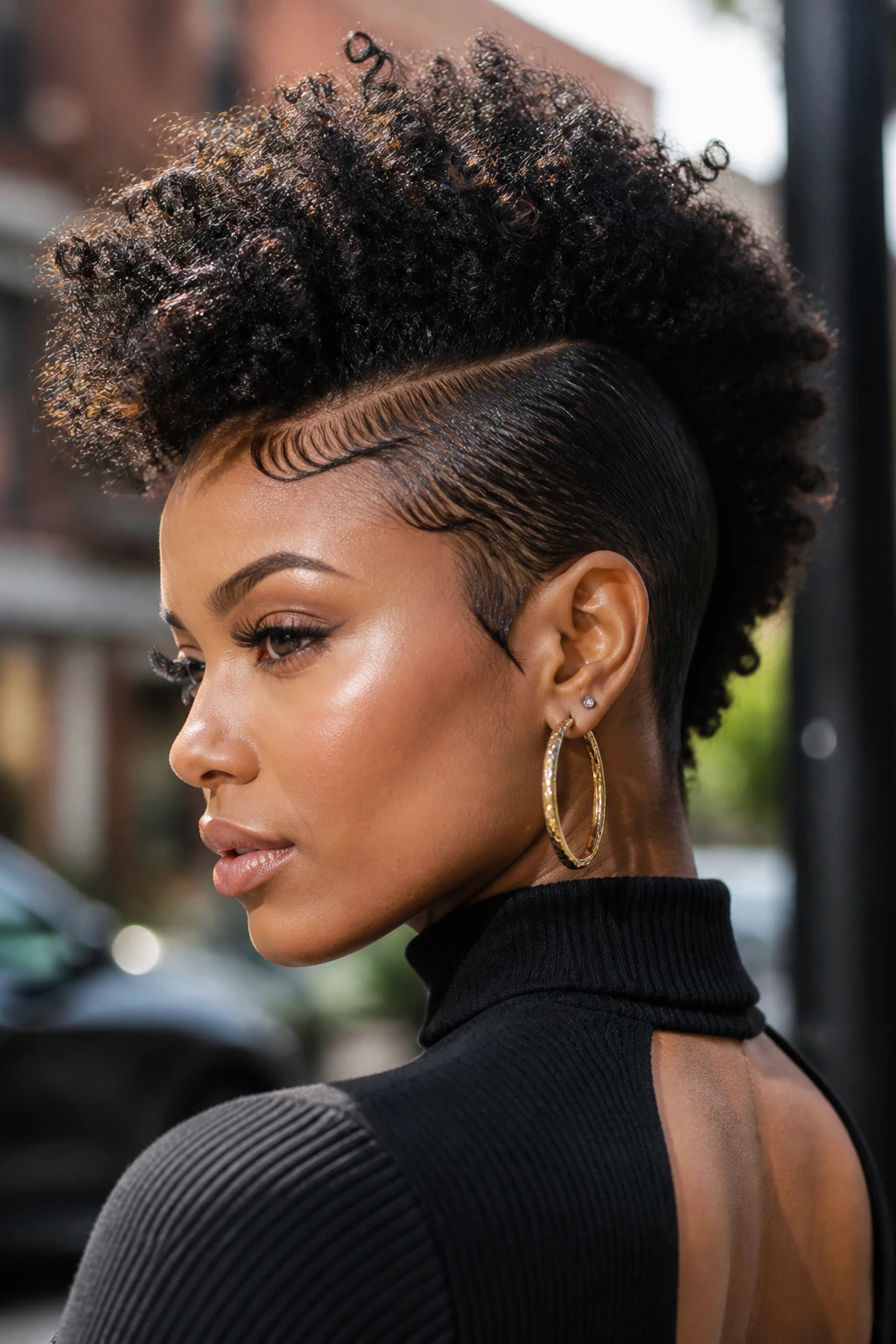
7. Frohawk With Laid Sides
A frohawk gives short hair a little swagger. The sides are slicked or twisted down, and the center strip keeps its height, which means the whole style reads as intentional even if the hair is only a few inches long. On Black hair, that contrast between close sides and textured center is what makes it hit.
You can go soft or sharp here. Soft means a fluffy center with loose definition. Sharp means gelled sides and a taller ridge down the middle. Both work, but the shape has to be clear. If the sides are half-finished, the style loses the whole point.
How to wear it:
- Use a denser cream or foam on the middle section for lift.
- Smooth the sides with a small brush and a little gel.
- Pin the back if the length at the nape wants to stick out.
No need to overdo the edges. The mohawk line is already doing the work.
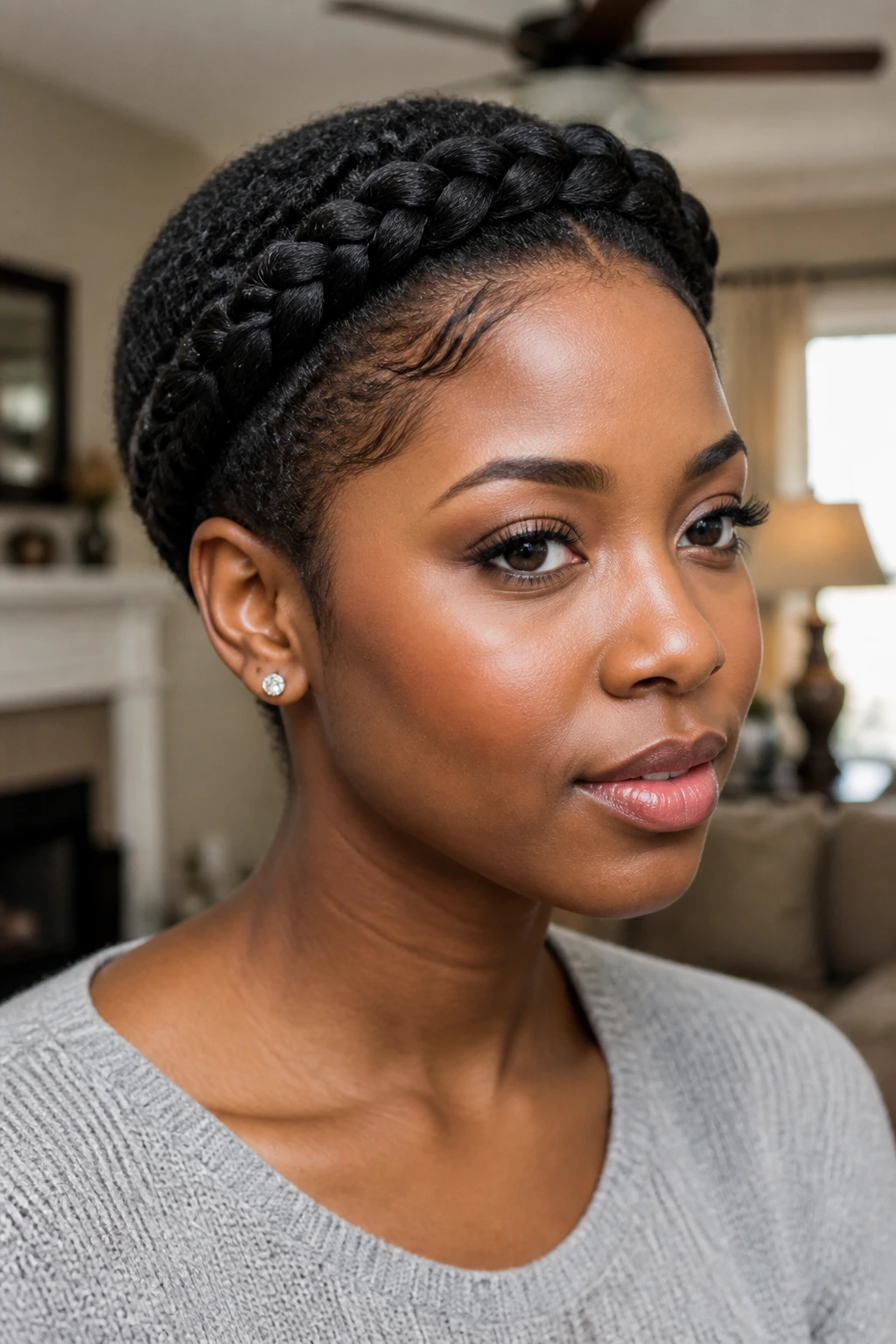
8. Halo Braid on Short Natural Hair
Can a halo braid work on short hair? Absolutely — if the hair is long enough to braid close to the scalp and tuck neatly as you travel around the crown. The result looks clean and a little regal without being fussy about length.
What makes this version useful is the way it keeps the hair off the face while still showing texture around the hairline. On shorter natural hair, you may need to keep the braid narrow and secure it with discreet pins at the end. That’s not a flaw. It’s the normal way this style works on cropped hair.
I like this style for days when the rest of the outfit is doing something simple. A plain tee, a structured blazer, a pair of hoops — done. The braid becomes the statement.
9. Mini Cornrows With Beads or Cuffs
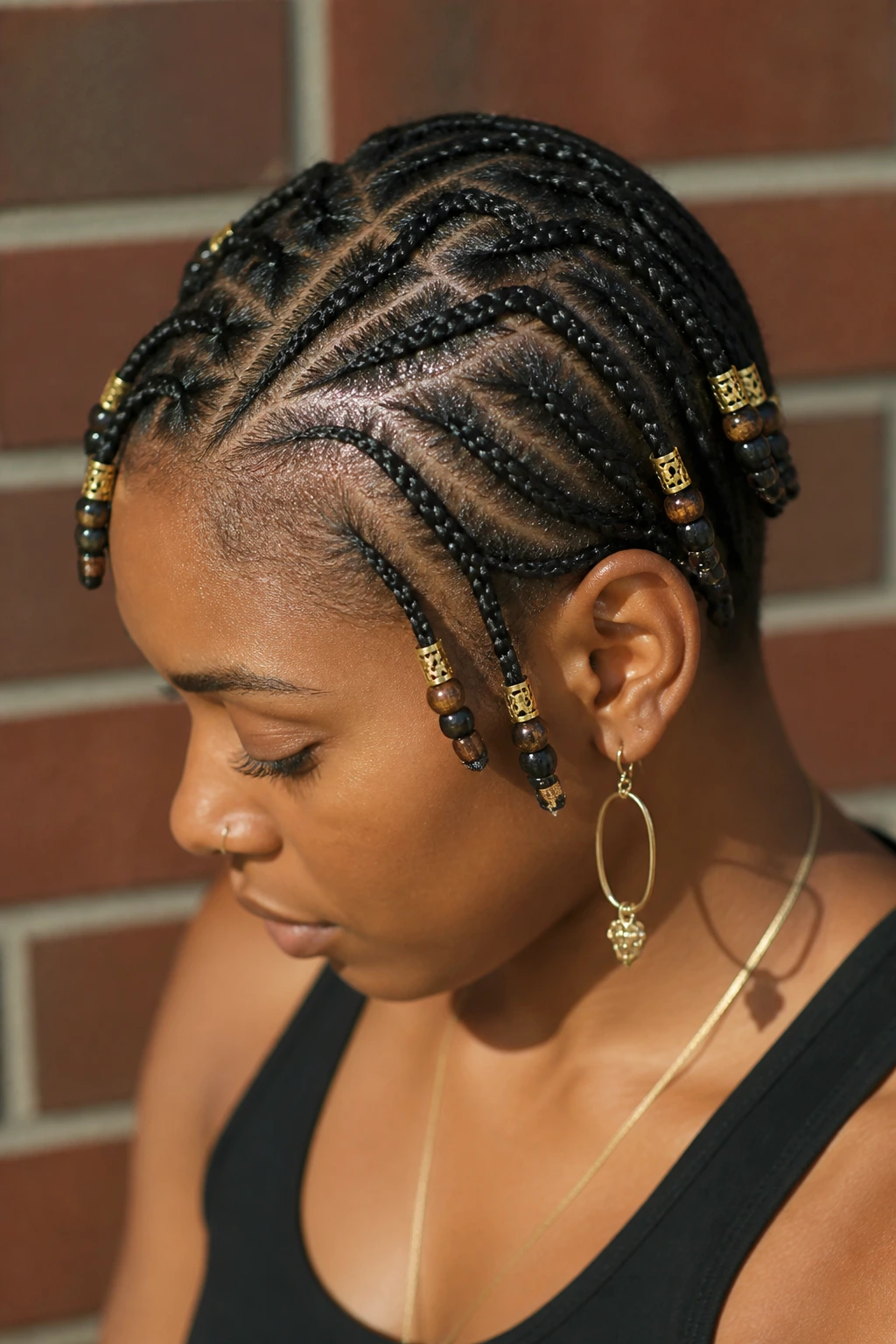
Mini cornrows on short hair bring out the scalp pattern in a way bigger braids can’t. The rows are close, tidy, and easy to customize with a few cuffs or small beads at the ends. On short Black hair, that detail becomes the visual punch.
They work well when you want a low-maintenance protective style that still feels styled. The parting has to be clean, though. Wavy lines or uneven rows show up immediately on short hair because there isn’t much length to disguise them. That’s not a problem if you take your time with the tail comb and keep the sections even.
Beads and cuffs change the mood. Silver cuffs lean sharper. Wooden beads feel softer. A single row of gold cuffs on one side is enough if you don’t want the whole head to look busy.
10. Comb-Coil Pixie
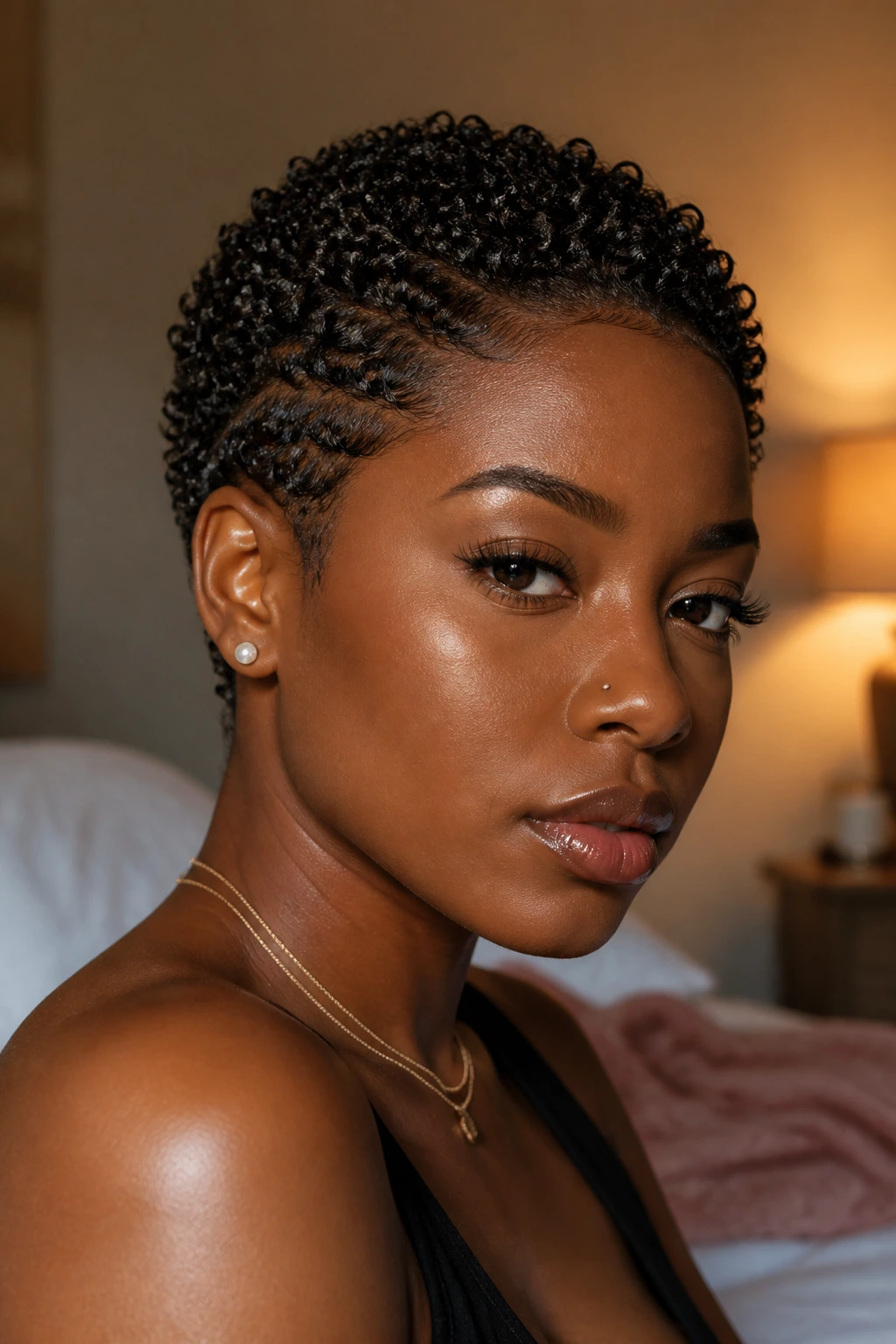
Comb coils are the neatest answer when you want short hair to look deliberate from every angle. Instead of finger-coiling, you use a comb to twist tiny sections into compact spirals that sit close to the scalp and hold a crisp outline as they dry.
This style shines on hair that shrinks fast or clumps unevenly with plain cream alone. The comb gives you more control over the direction of each coil, so you can build shape at the crown and keep the sides flatter. It’s a little more time-consuming than a twist-and-go style, but the finish is cleaner.
The real payoff is the texture. Comb coils make short natural hair look precise, almost architectural, without turning it stiff. If the sections are small and the product load is light, the coils stay distinct instead of melting together overnight.
11. Rod Set Curls
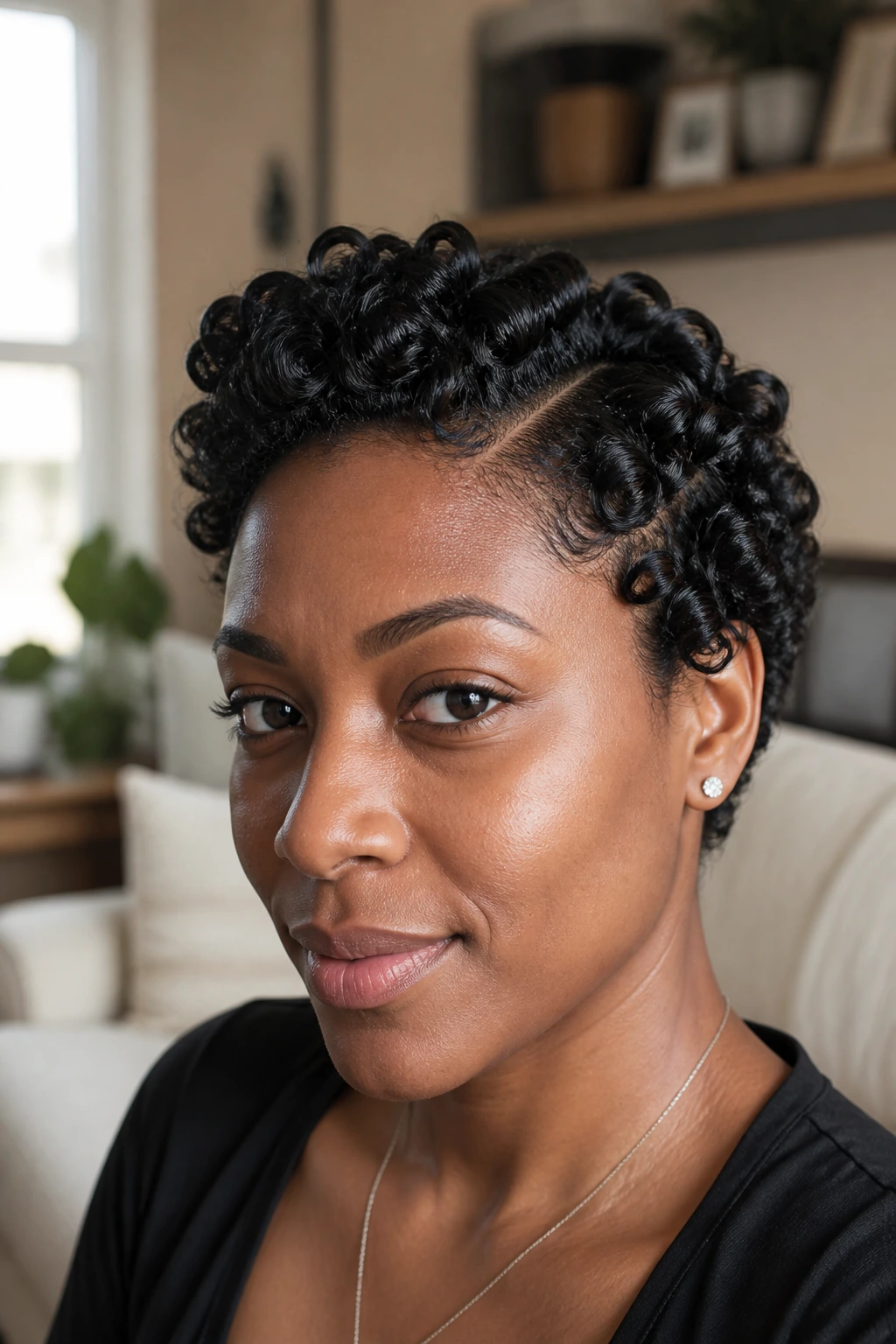
Rod sets on short hair give you a curl pattern that feels more uniform than a twist-out. That’s useful if your natural curl pattern is uneven or if you want a more polished look without heat. The rod size changes the mood fast: small rods for tighter curls, larger rods for a softer bend.
The styling part matters more than the drying part. Hair needs to be damp, not dripping, and each section should be wrapped smoothly from root to end with no twisty bumps in the middle. If the ends stick out, the curl won’t look clean once it sets.
This is one of my favorite short-hair styles for a dinner, a photo shoot, or any day when you want the hair to look set, not improvised. The curls usually separate nicely once dry, and a little sheen spray at the end is enough.
12. Side-Swept Flat Twists
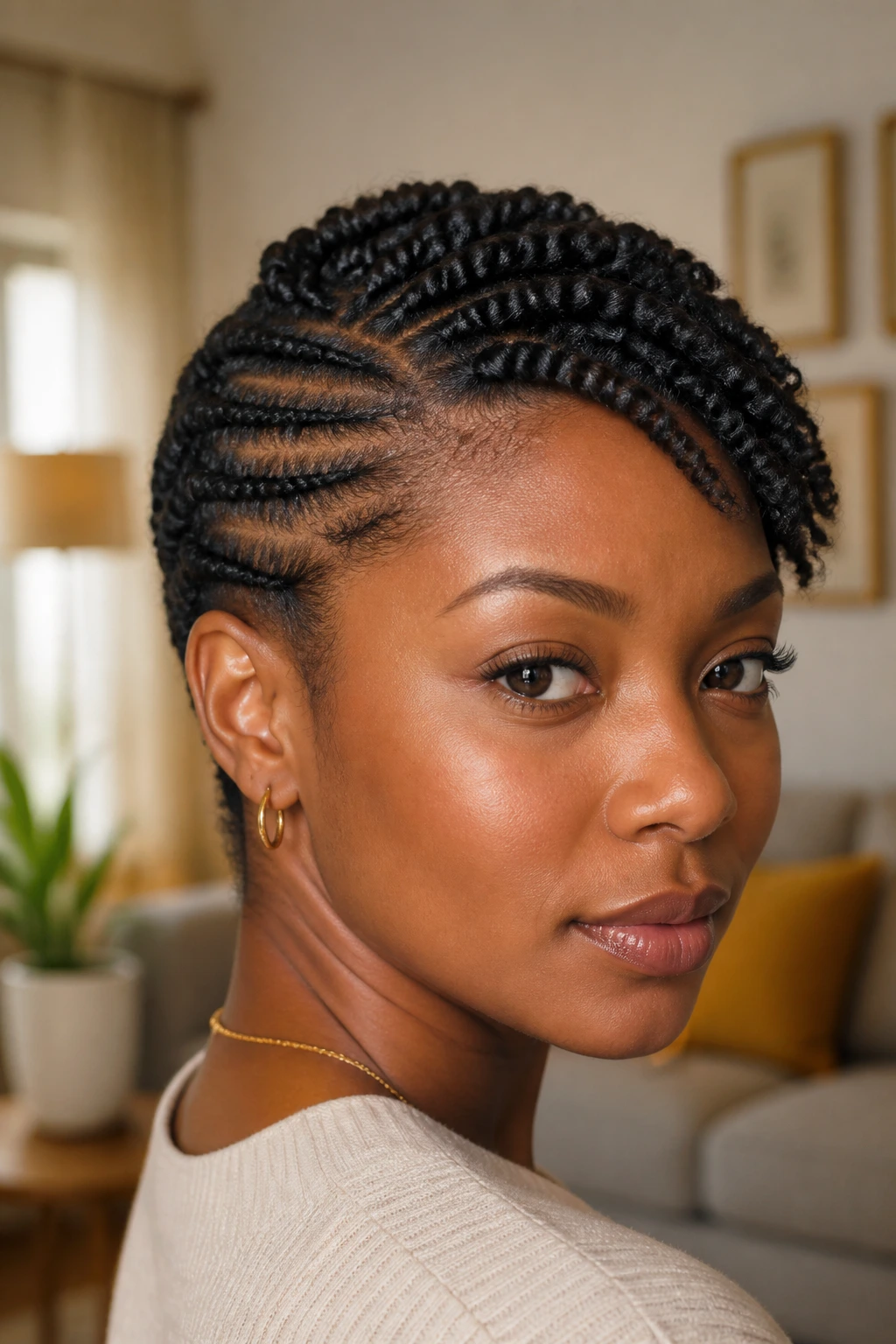
Side-swept flat twists are one of the most underrated ways to style short Black hair. They’re practical, yes, but they also create a gentle diagonal line across the head, which makes the face look framed instead of boxed in.
The side-sweep is what stops this from feeling school-uniform plain. Twist the front sections back toward one side, then pin the ends low and out of sight. On short hair, that offset shape can make even a simple style look much more thought through.
If you’ve got a strong jawline or like earrings with a little drama, this style works hard for you. It keeps the neck area open and the hairline tidy. And if the twists are small enough, you can usually wear it for several days with minimal refreshing.
13. Puff With Laid Edges
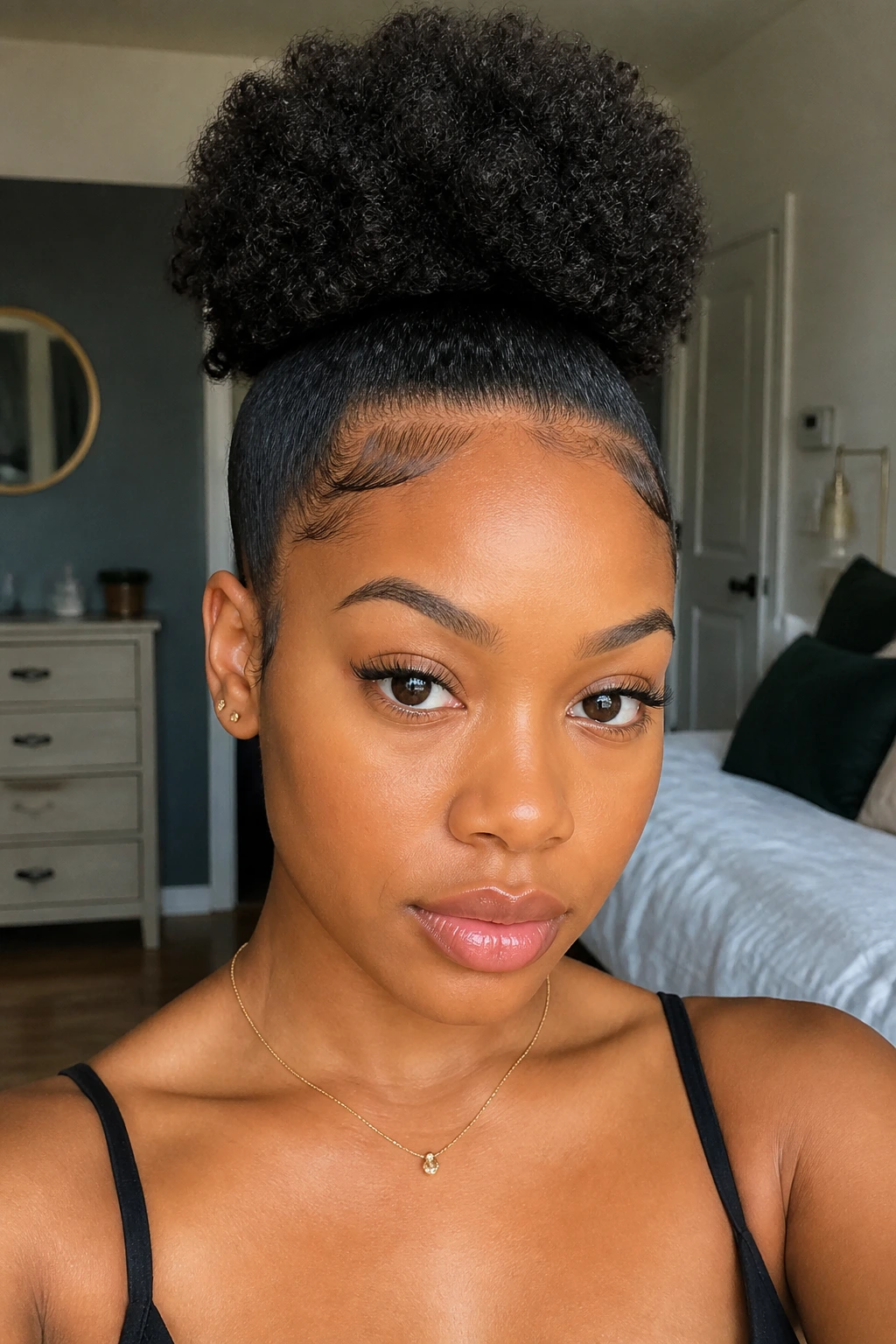
A short puff isn’t about pretending the hair is long. It’s about gathering what you have into one clean, textured mound and letting the shape do the work. On shorter natural hair, the puff sits higher and tighter, which can actually be more flattering than a bigger, looser version.
The part in front changes the whole thing. A clean middle part looks tidy. A deep side part looks softer and gives the puff more personality. Either way, the edges should be smooth enough to frame the face without becoming a hard helmet of gel.
This is a good style when you want something that feels casual but still finished. Add a scarf at the base, a pair of gold hoops, or a colorful scrunchie, and it moves from gym-quick to weekend-ready with almost no extra effort.
14. Wash-and-Go With Picked Crown
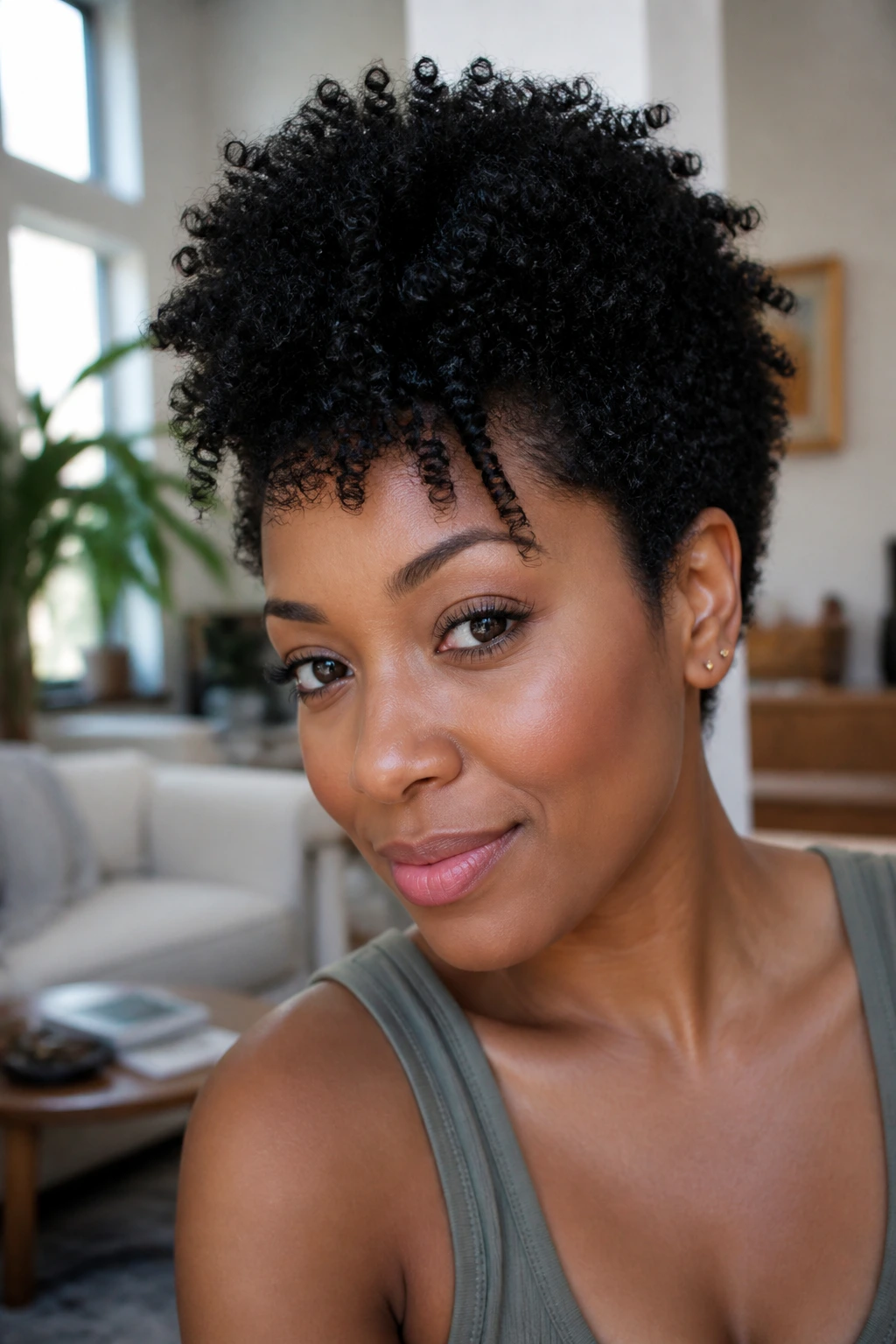
A wash-and-go on short hair can look flat if you don’t give the crown a little lift. That’s why I like this version with a picked top. The curls stay defined at the ends, but the roots get a bit of airy volume so the silhouette doesn’t collapse into the head.
The products matter here. A light leave-in, a defining gel, and a diffuser or air-dry routine all help. Once the hair is dry, a pick or the tail of a comb at the crown can open the top just enough to build shape without breaking up the curl pattern.
It’s a good everyday style because it tells the truth about the texture while still looking tidy. If your curl pattern is looser, this can stay fluffy. If it’s tighter, the roots will lift and the ends will keep a nice spring.
15. Two-Strand Twist Crown
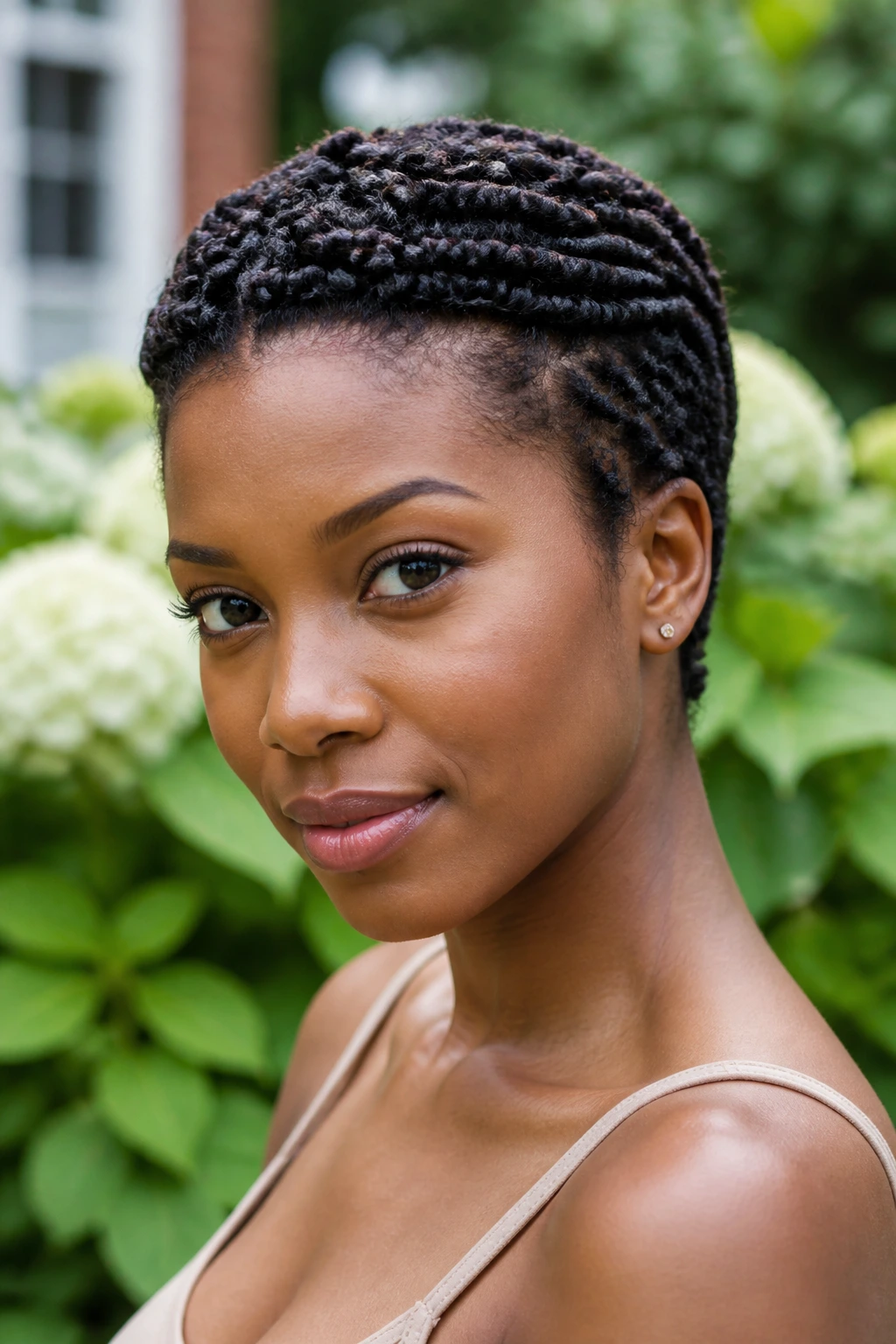
A two-strand twist crown gives the illusion of more length than you actually have, which is part of why it works so well on short hair. You twist from the front or the sides, wrap the twists across the top of the head, and pin them into a crown shape that follows the scalp.
It’s not a bulky style. That’s the point. On short hair, heavy twists can overwhelm the head fast. Smaller, cleaner twists sit better and make the crown line look neat instead of crowded.
Use this when you want something romantic without pretending your hair is longer than it is. A twist crown pairs nicely with a simple dress, but it also works with a denim jacket and bare face. The style does not need much help.
16. Shingled Curls on a TWA
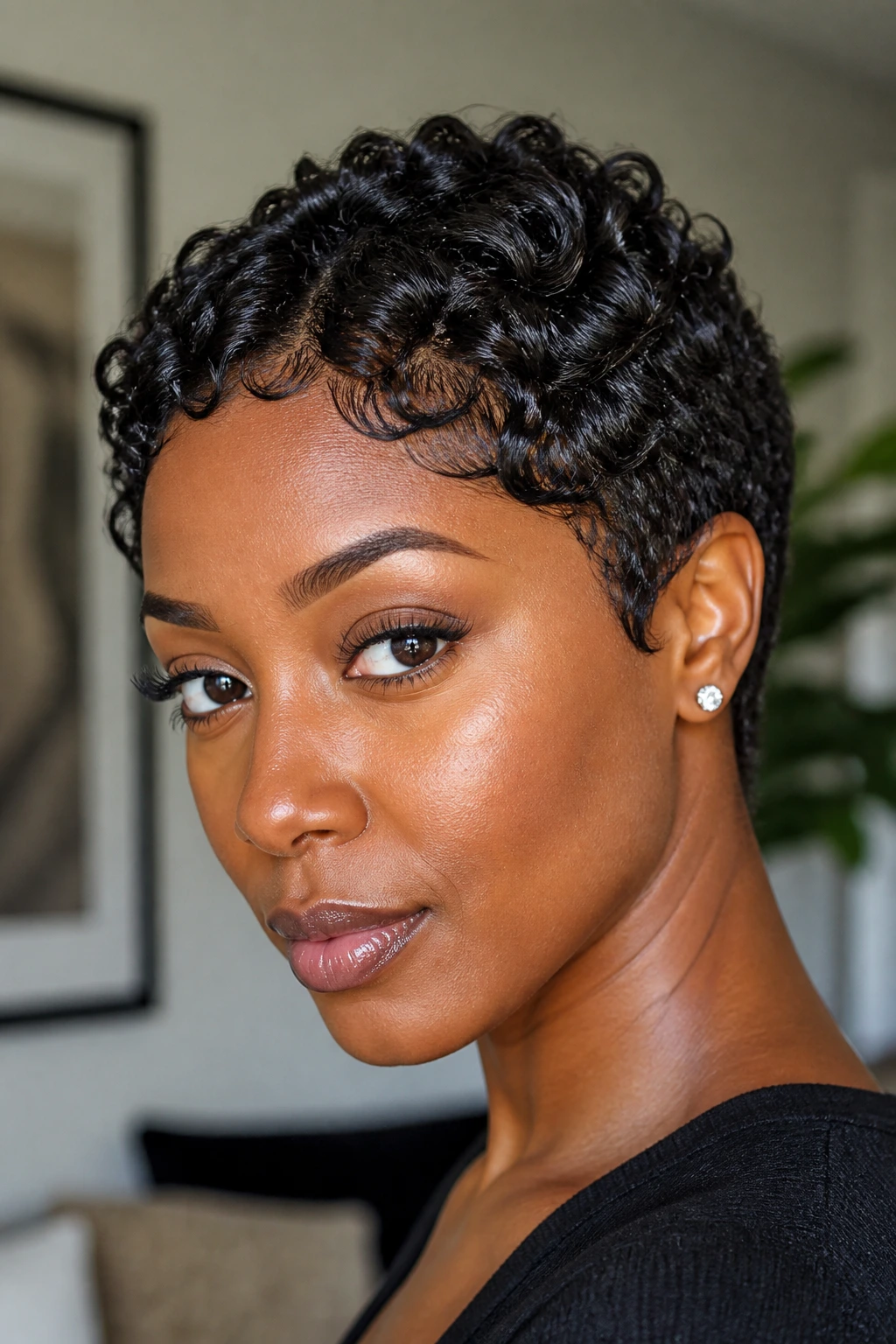
Shingled curls are what happen when you separate and arrange tiny curls in a way that lets each one sit on its own instead of clumping into one fuzzy shape. On a TWA, that can make the whole head look more defined and soft at the same time.
This style takes a bit of patience, but not as much as people think. Use a leave-in and a defining gel, then finger-style small sections so the curls lie in a consistent direction. The shingling process gives the hair a glossy, tidy finish that photographs cleanly without turning crunchy.
I like this one for the days when a wash-and-go feels too loose and a coil set feels too strict. It sits in the middle. Controlled, but not stiff.
17. Sculpted Finger Waves
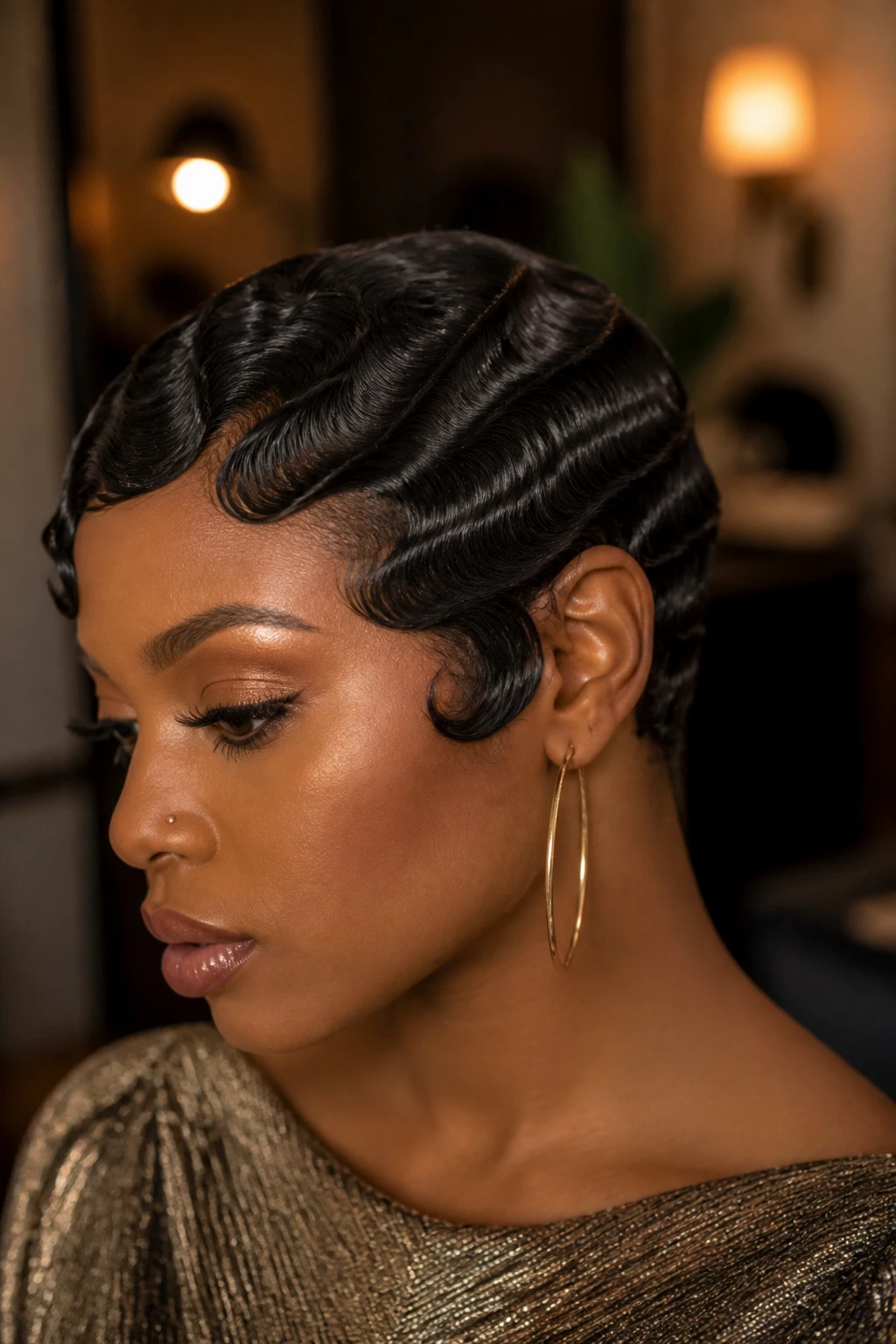
Finger waves on short Black hair have a sharp, old-school elegance to them. They need a smooth base, strong-setting lotion or gel, and a little time with the comb to create those S-shaped bends that hug the head.
This is the style for a pressed pixie, relaxed short hair, or hair that has been stretched enough to lay flat. On a natural TWA, it’s a different story unless the texture has been smoothed first. The wave pattern depends on that sleek foundation.
The payoff is worth it. Finger waves give the face a clean frame and make earrings, brows, and makeup pop without competing with the hair. They look especially good when the hair is cut close around the ears and the wave line stays crisp.
18. Half-Braided Half-Curly Look
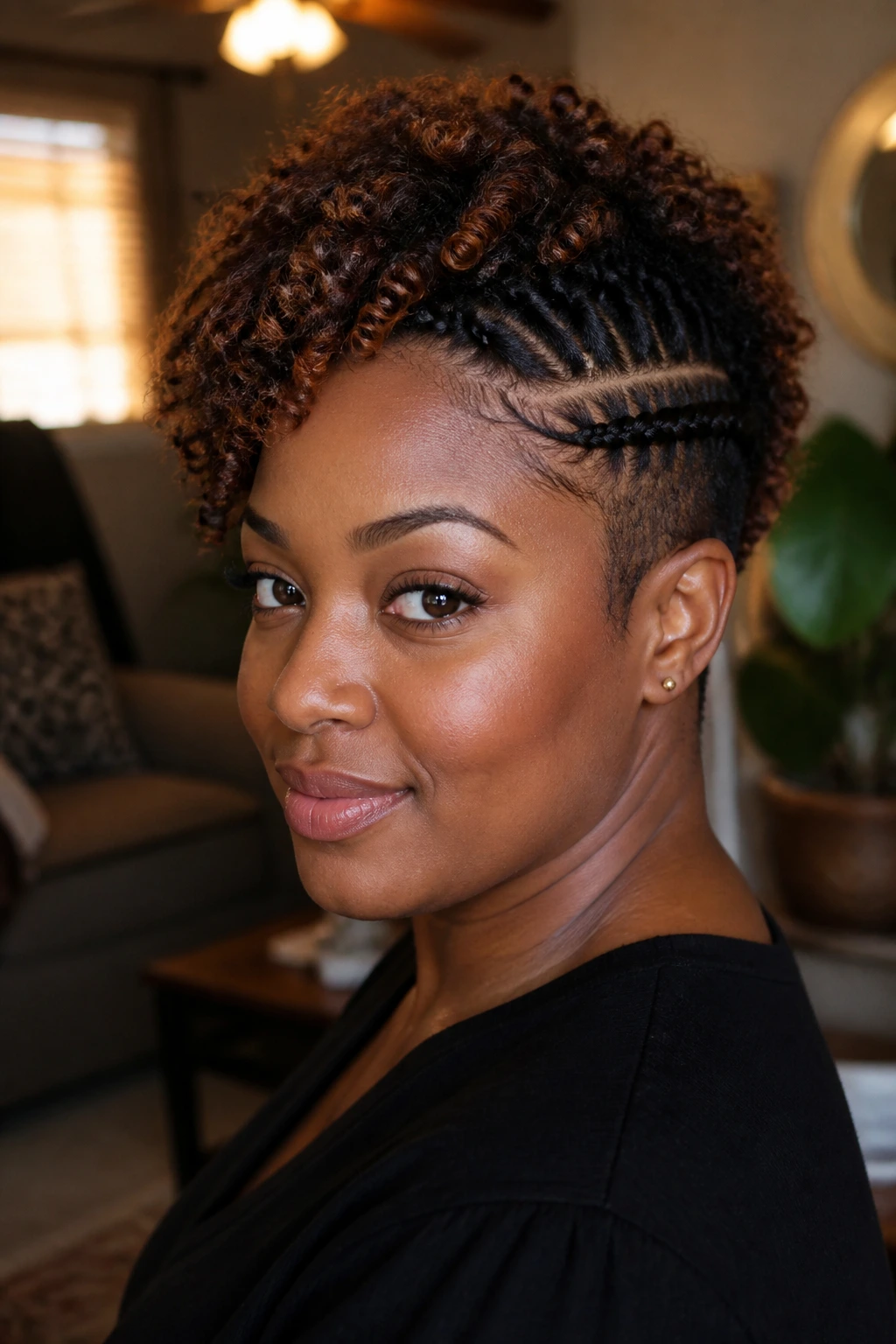
This style is for the person who cannot decide between neat and free. The front or one side gets braided close to the scalp, while the rest stays curly, coily, or softly defined. On short hair, that contrast feels bold without asking for much length.
The braid section does the organizing. It pulls the eye across the head and gives the curls something to play against. Keep the braid narrow if the hair is cropped close, because chunky braids can swallow the style and make the loose side look smaller than it is.
It’s a good choice when you want a style that has motion. One side framed, one side loose. A little asymmetry makes short hair look more interesting than trying to make both sides match perfectly.
19. Scarf Wrap With Tucked Ends
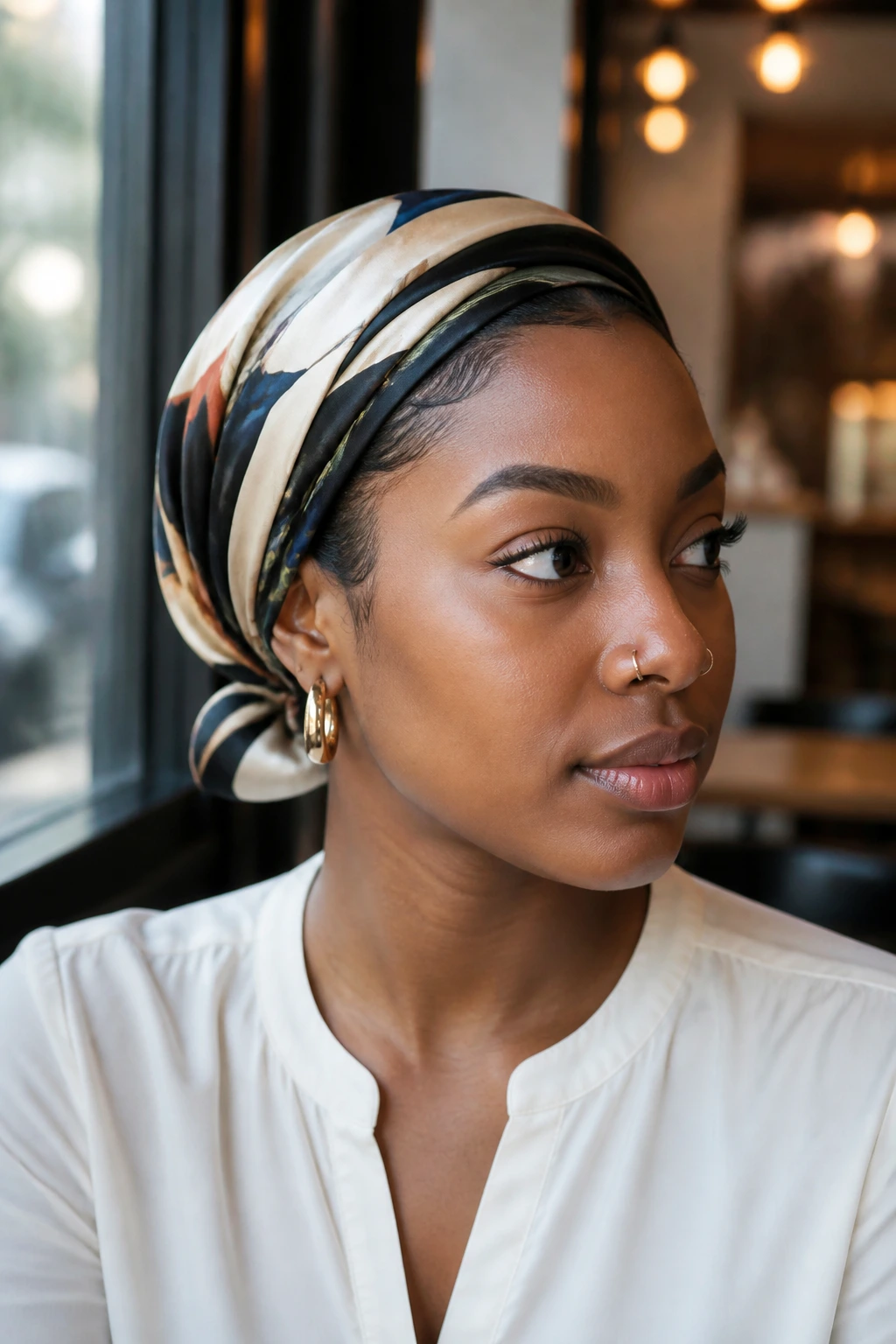
A scarf wrap is not a backup plan when you’re out of ideas. On short Black hair, it can be the whole style, especially when the hair is tucked low and the fabric does the visual work. A satin or silk scarf also buys you a little protection while still looking intentional.
The best versions use the hair itself as a base. Smooth the hair flat, tuck the ends at the nape or under the wrap, and let the scarf sit like part of the outfit rather than something added at the last second. Prints are fun, but a solid color with a strong knot can be just as striking.
This style is a lifesaver on humid days or when the hair needs a break. It gives your scalp space, keeps the edges calm, and still looks polished enough for errands, brunch, or a quick event.
20. Flat-Twist Mohawk
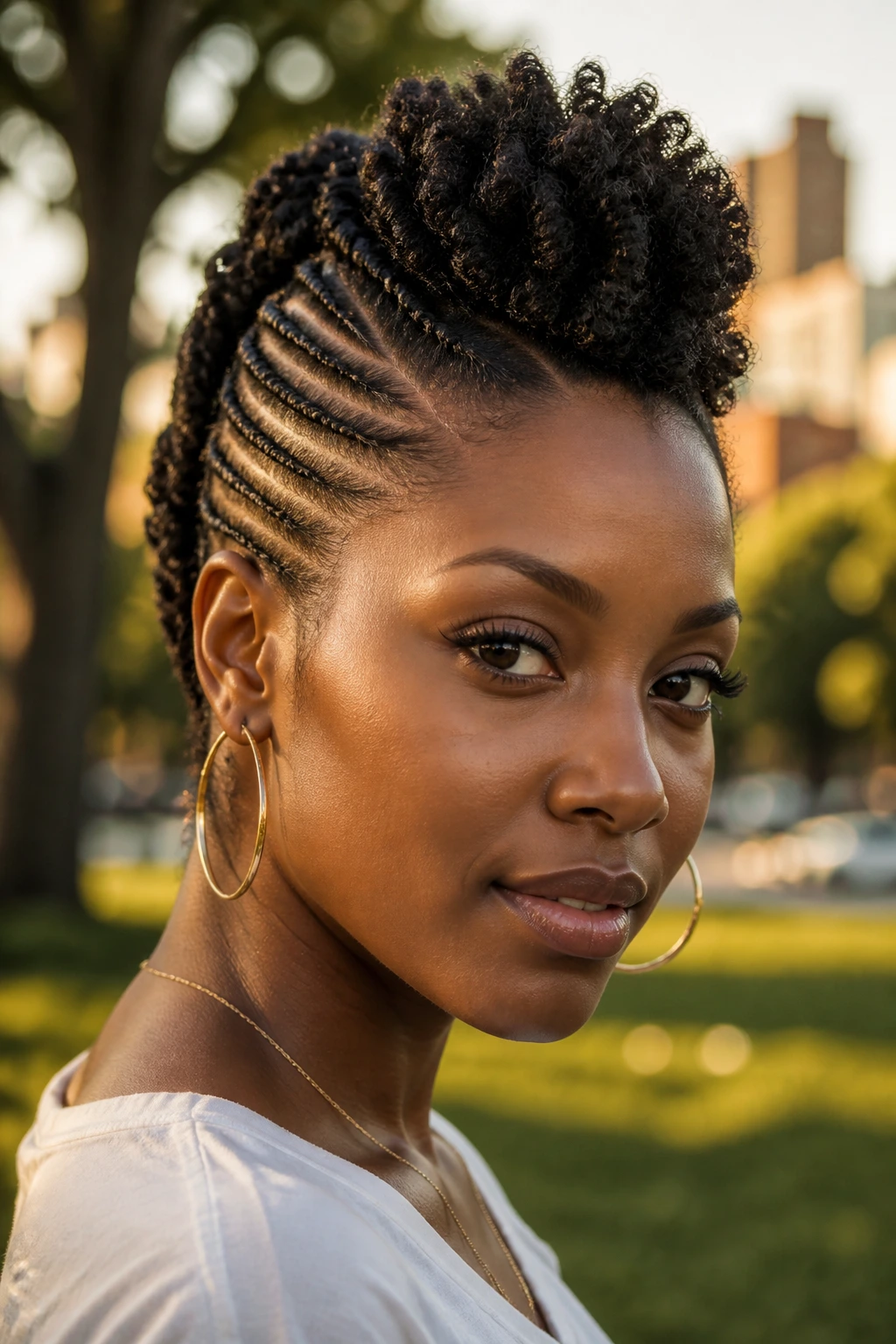
If the frohawk is the loud cousin, the flat-twist mohawk is the one that knows how to behave in public and still make a statement. The sides are twisted flat toward the middle, and the center is left fuller, higher, or more textured depending on the length.
What makes this style work on short hair is the direction. Everything points inward. That gives the illusion of height without needing a lot of actual length. It also keeps the sides neat, which is a nice fix if the hair around the ears tends to puff out first.
You can wear this with soft curls in the middle or tuck the center into mini rolls if the hair is especially short. Either way, the shape stays clear. That’s the whole game.
21. Starter Loc Barrel Twists
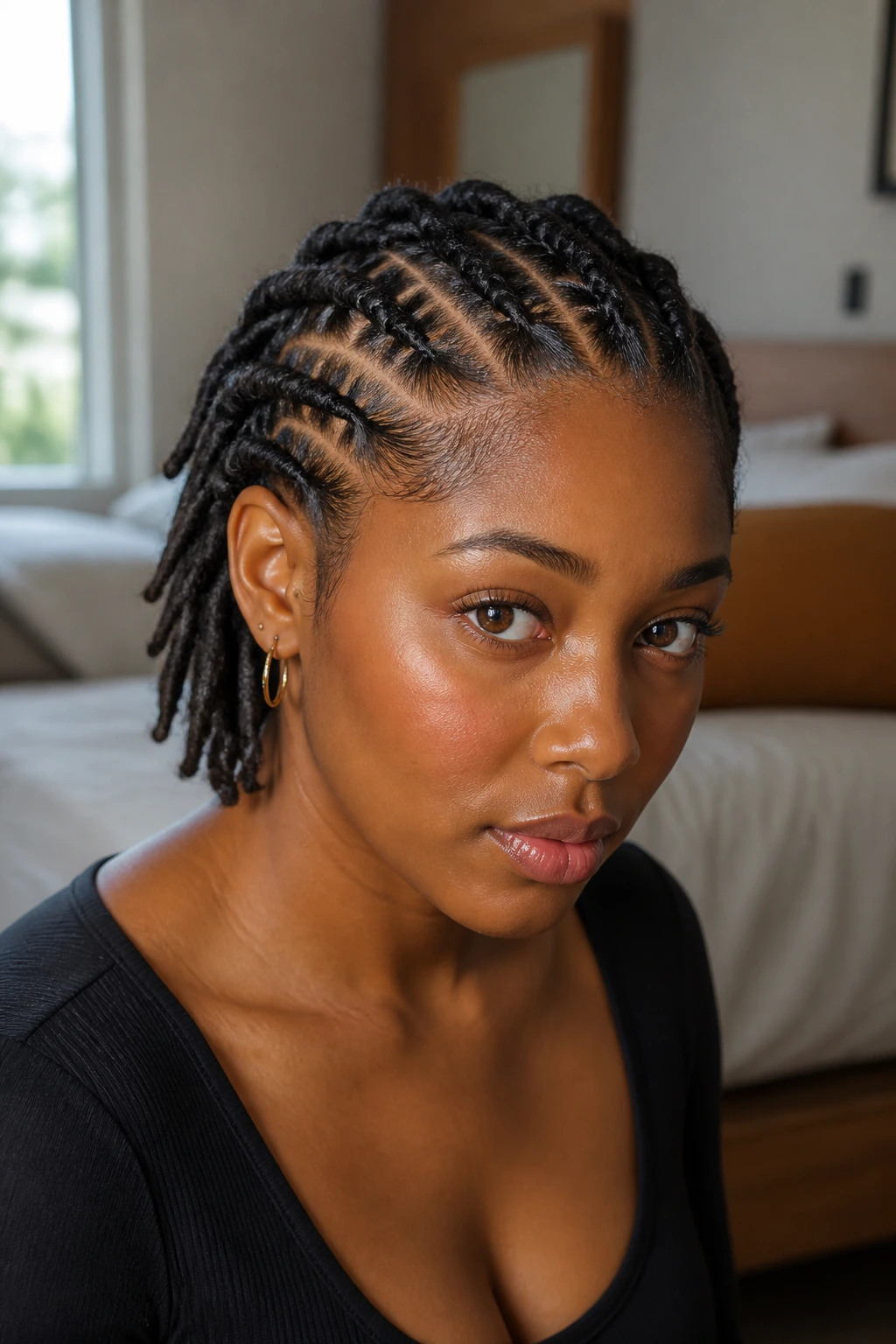
Starter locs can look unfinished if they’re left alone, but barrel twists give them shape and order fast. On short locs, the style keeps the roots neat while creating a larger pattern that reads as deliberate rather than in-between.
This is one of those looks where parting matters more than volume. Clean sections, consistent tension, and a few well-placed pins make the whole thing behave. If the locs are still short and springy, barrel twists can also help them sit closer to the scalp instead of sticking out in every direction.
I like this style because it respects the length. It does not try to fake fullness. It just arranges what’s there in a way that looks clean and strong.
22. Braided Bang With Cropped Back
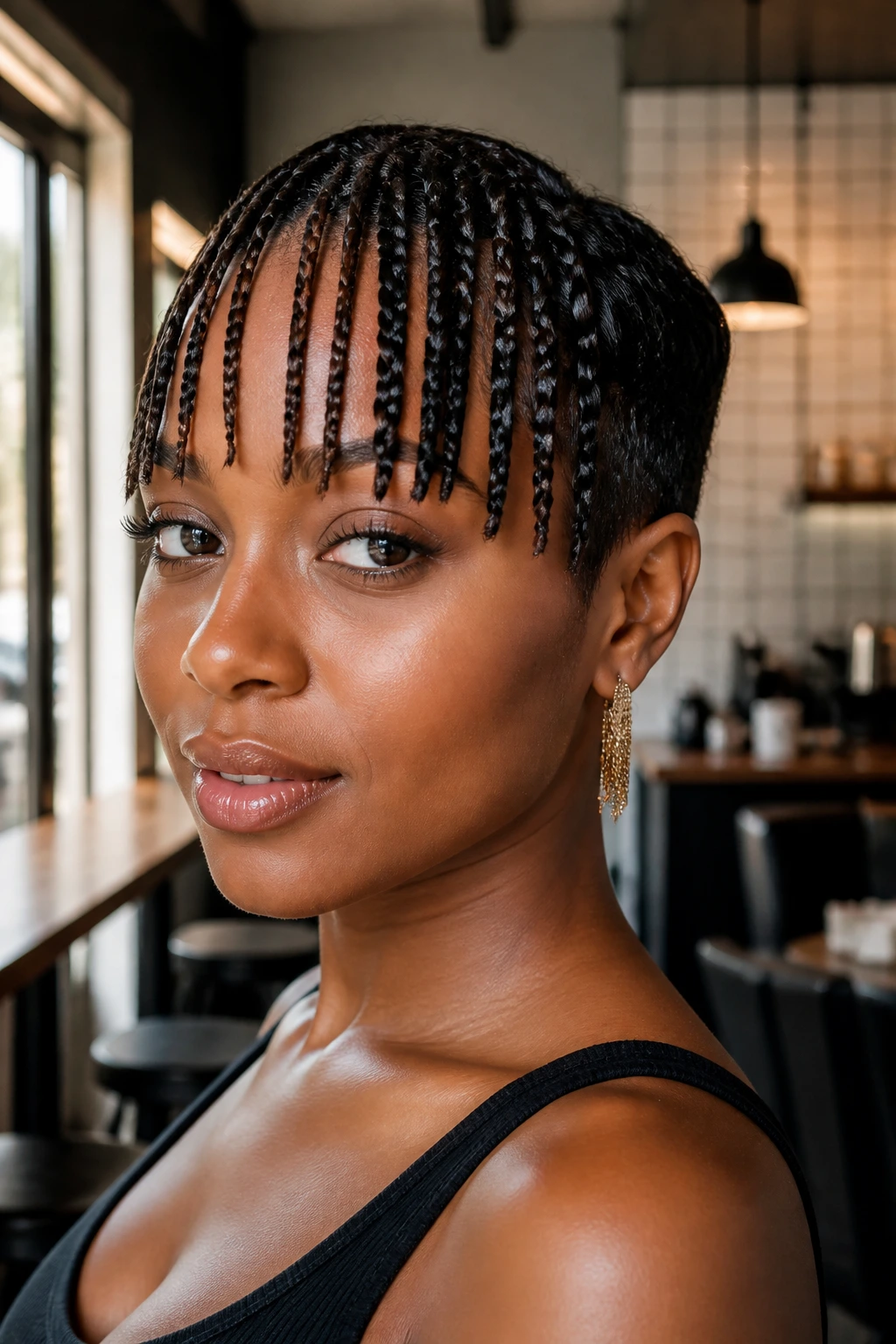
A braided bang is a sharp way to change short hair without touching most of the cut. Pull a few front pieces into one or two braids across the forehead, then keep the back cropped, tapered, or softly textured. The contrast is the point.
This style works well when you want to frame the face without committing to a full braided look. It’s also useful if the front area is a little longer than the sides — that extra length becomes the feature instead of the problem.
The vibe can go sweet or edgy depending on the finish. Add cuffs for polish. Leave the braid plain if you want the haircut to stay front and center.
23. Rolled Tuck Nape Style
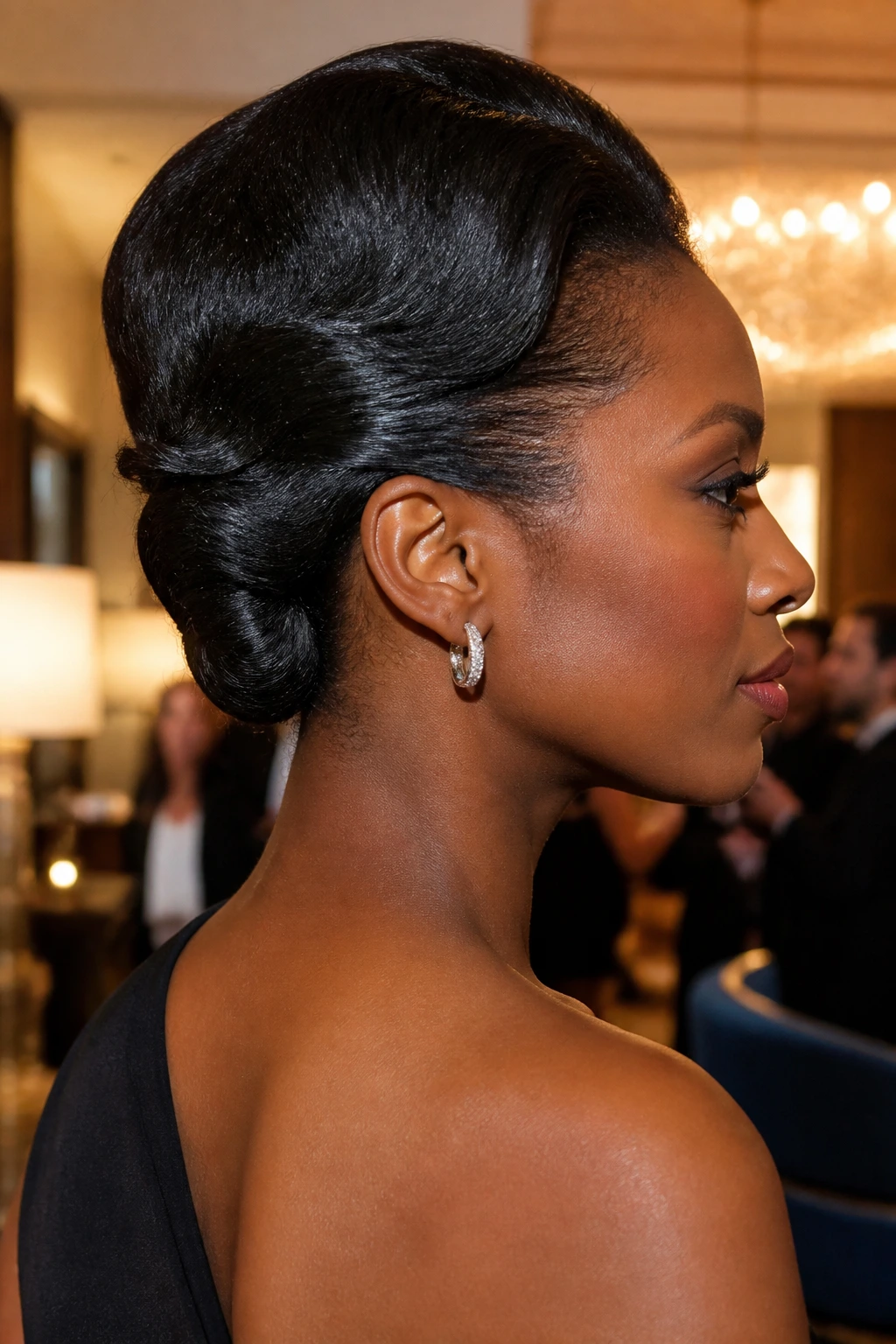
A rolled tuck at the nape is one of the cleanest ways to make short hair look dressed up without extra heat. The hair is brushed or twisted back, then tucked and pinned low so the neck area stays neat and the top keeps a smooth line.
Short hair loves this because it doesn’t fight gravity. It uses it. The rolled base hides shorter pieces and keeps the style from popping loose at the back the way a higher bun sometimes does.
It’s especially useful for events where you want a polished shape but don’t want your hair to dominate the look. Pearl pins, a side part, or a glossy finish can shift the mood a lot. Small changes, no drama.
24. Defined Side-Swept Curls With Clip
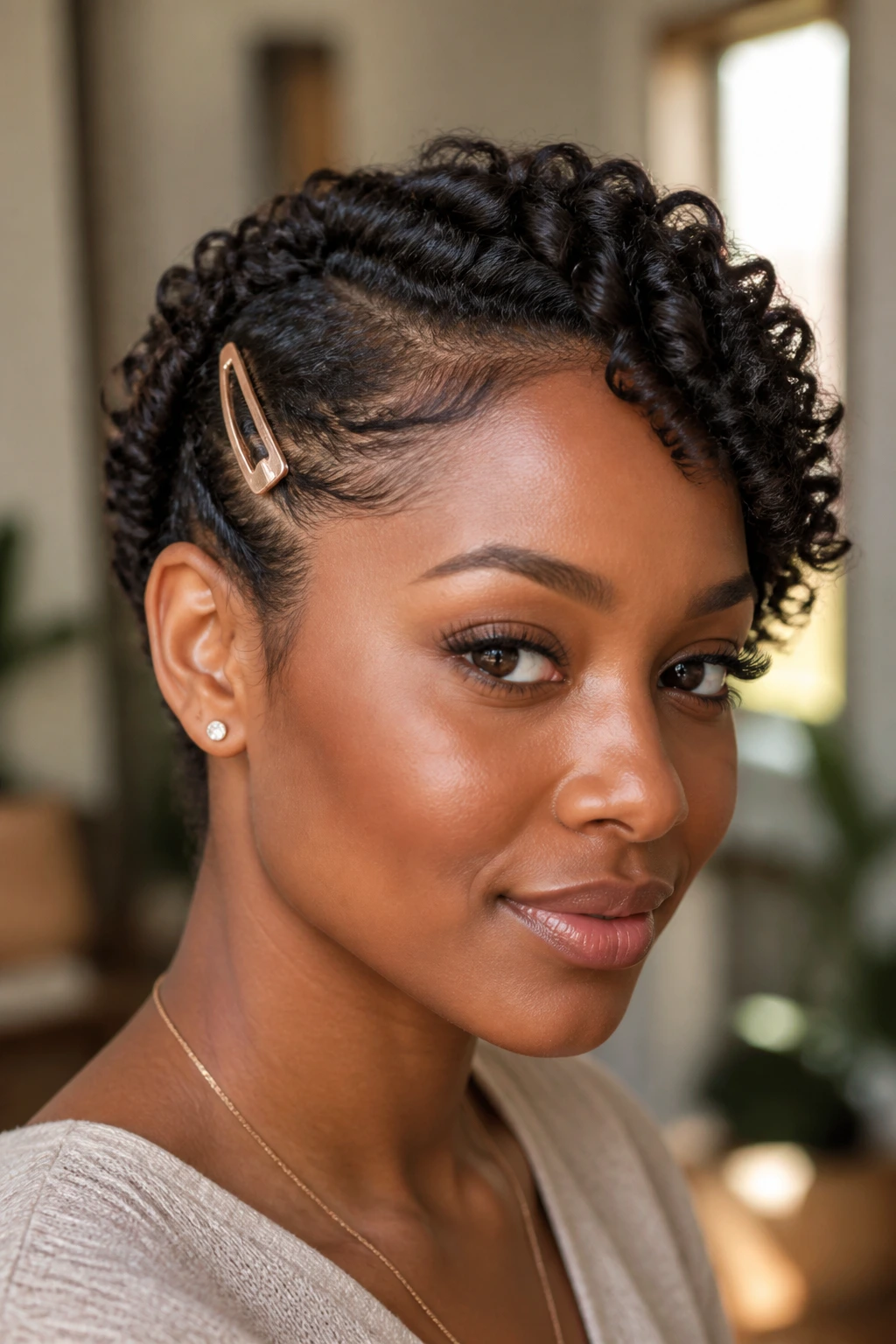
A side sweep with a clean clip gives short curls a little direction and a little shine. The clip becomes both anchor and decoration, which matters on short hair because one accessory can do the work of a whole extra styling step.
The curls themselves should stay defined and soft. Not over-separated. You want enough movement that the hair bends away from the face, but not so much volume that the clip disappears. A metal barrette, a rhinestone clip, or even a simple matte black pin can all work depending on the mood.
This is a smart option when you want a little romance without making the hair look overdone. The side sweep says you thought about it. The curls say you didn’t try too hard.
25. Braided Front Row With Mini Puff
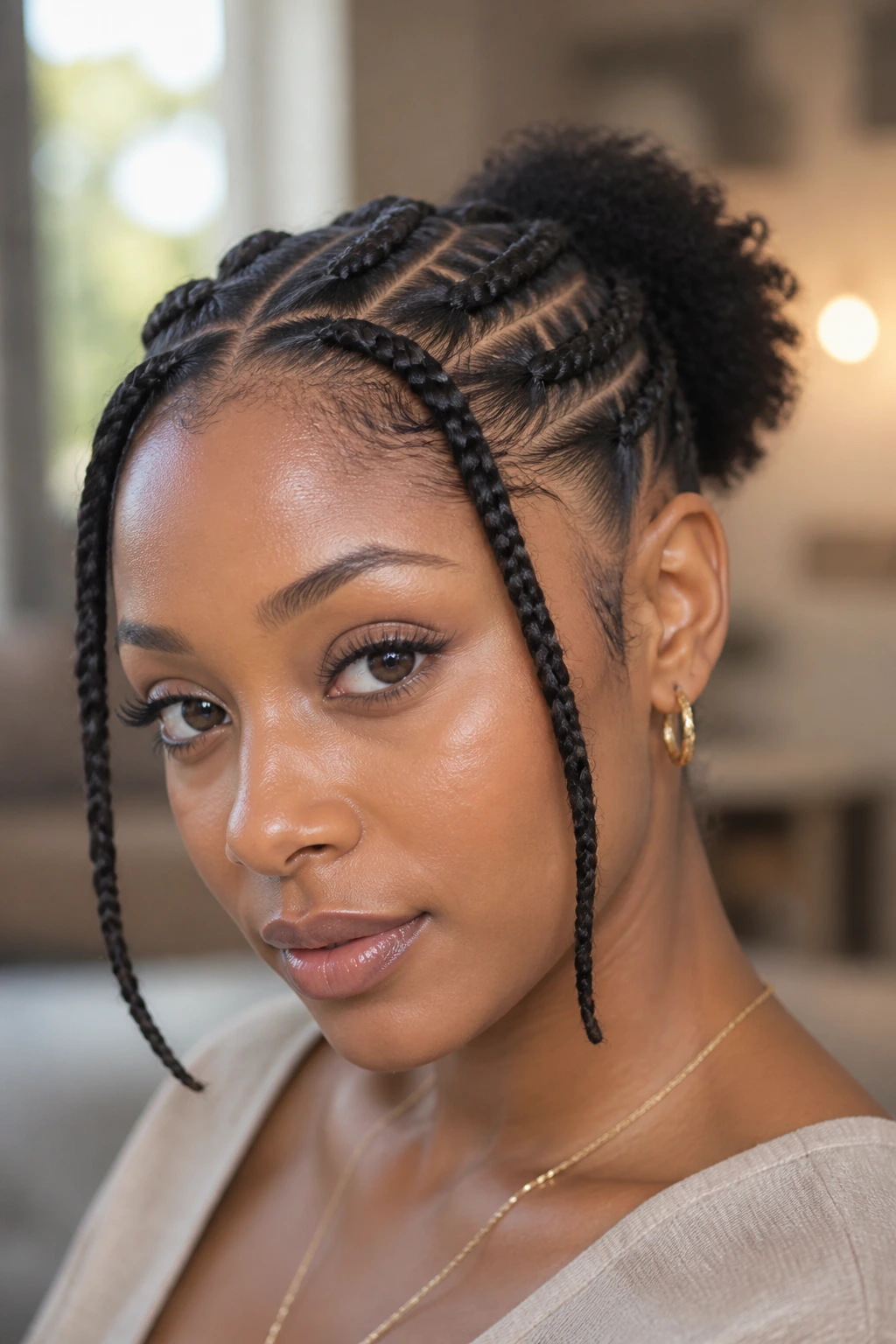
Here’s a style that gives short hair a built-in shape shift. One or two braided rows sit at the front, while the remaining hair gathers into a tiny puff or textured crown at the back. It’s part braid, part puff, and it solves the problem of short length by dividing the job.
The front braids keep the face framed and the hairline neat. The puff gives you volume where the length allows it. If the puff is small, that’s fine — a tiny puff can look sharper than a larger one when the cut is cropped.
I’d reach for this on days when you want to look styled but not overly polished. It reads playful. It also holds up well if you keep the braids tight enough at the base and leave the puff soft.
26. Color-Blocked Pixie With Shape
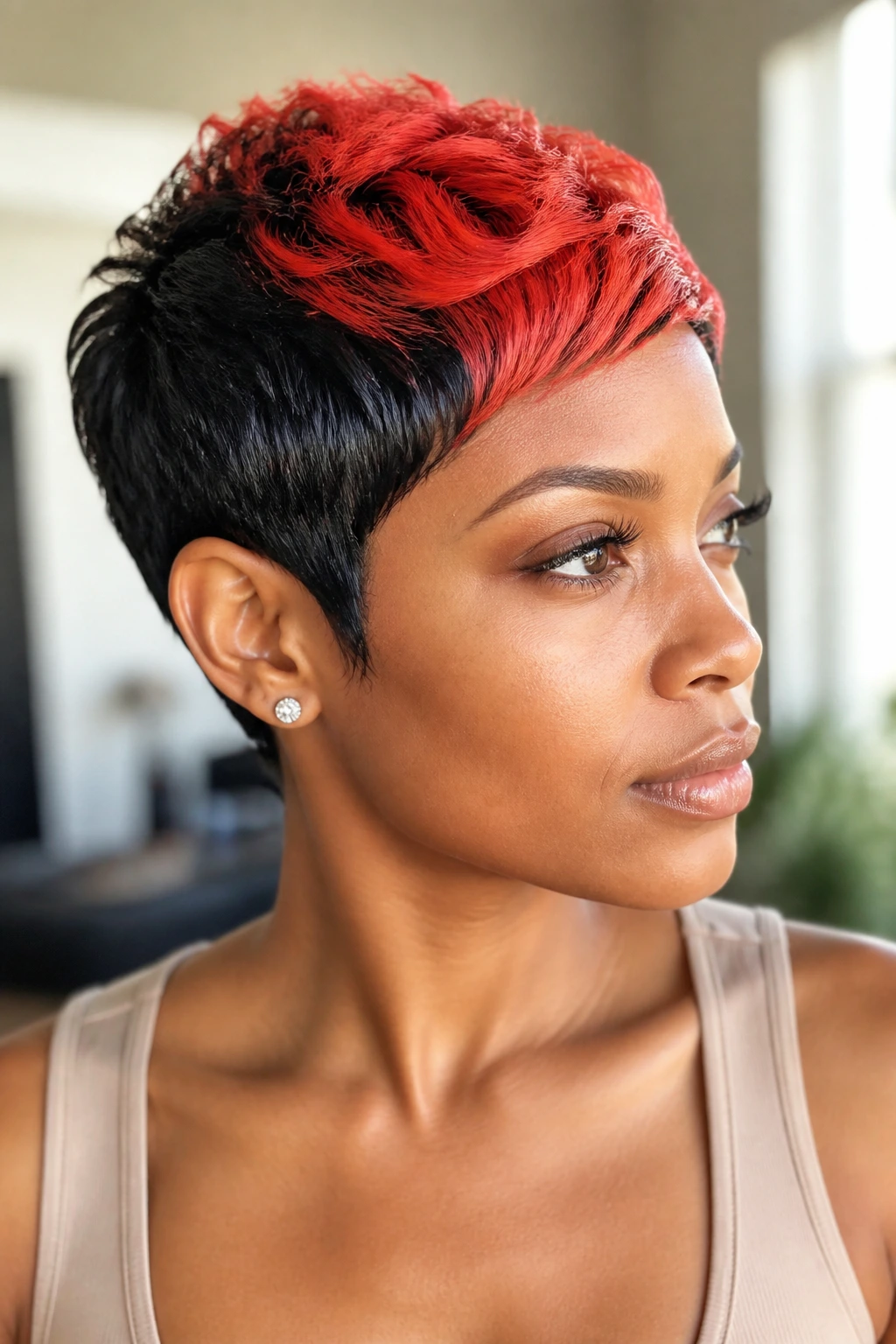
If the cut is already short, color becomes part of the haircut. A color-blocked pixie — maybe a darker root with a lighter top, or a bold panel at the front — makes the shape pop in a way plain color sometimes can’t.
This is not about chasing attention for its own sake. It’s about using contrast to show off the lines of the cut. A tapered side with a brighter crown, or a copper streak through a deep brown pixie, turns the haircut into something you read in layers.
The best part is that the style works even when the hair is not elaborately set. The color itself creates movement. Keep the cut tidy, and let the shade carry some of the visual weight.
27. Headband Faux Updo
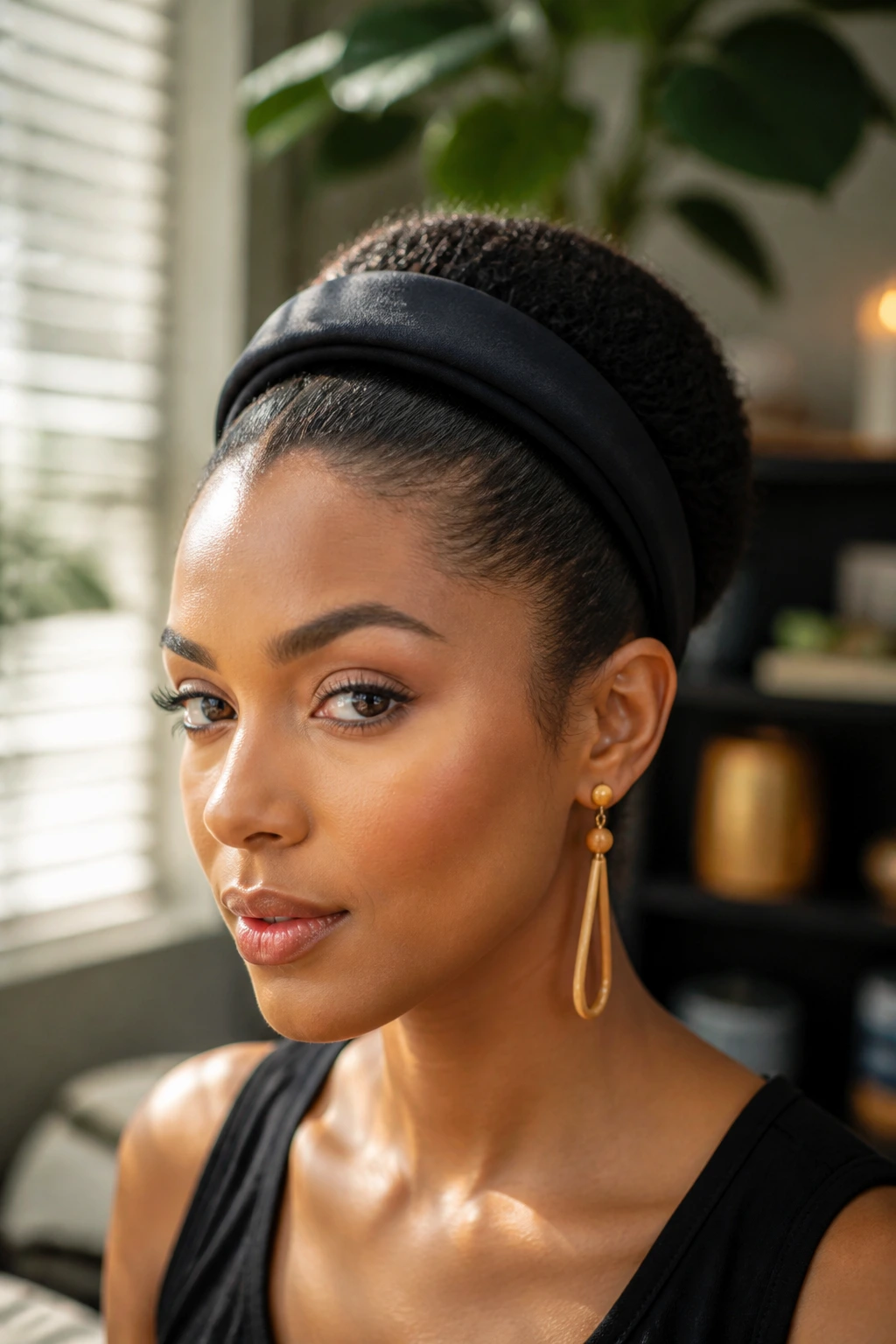
A headband faux updo is one of the quickest ways to make short hair look lifted without actually pulling it into a bun that doesn’t exist. You slick or smooth the hair back, tuck the sides, and use the band to create a lifted crown effect.
It’s a useful style when the hair is too short for a real updo but long enough to shape into one. The headband hides the transition points and keeps the style from falling apart when the lengths are uneven. Choose a thick band if you want stronger structure, or a slimmer one if the outfit is doing a lot already.
I like this look because it’s honest. It doesn’t pretend the hair is longer. It just gives short hair a smarter outline.
The Tools That Make Short Styles Behave
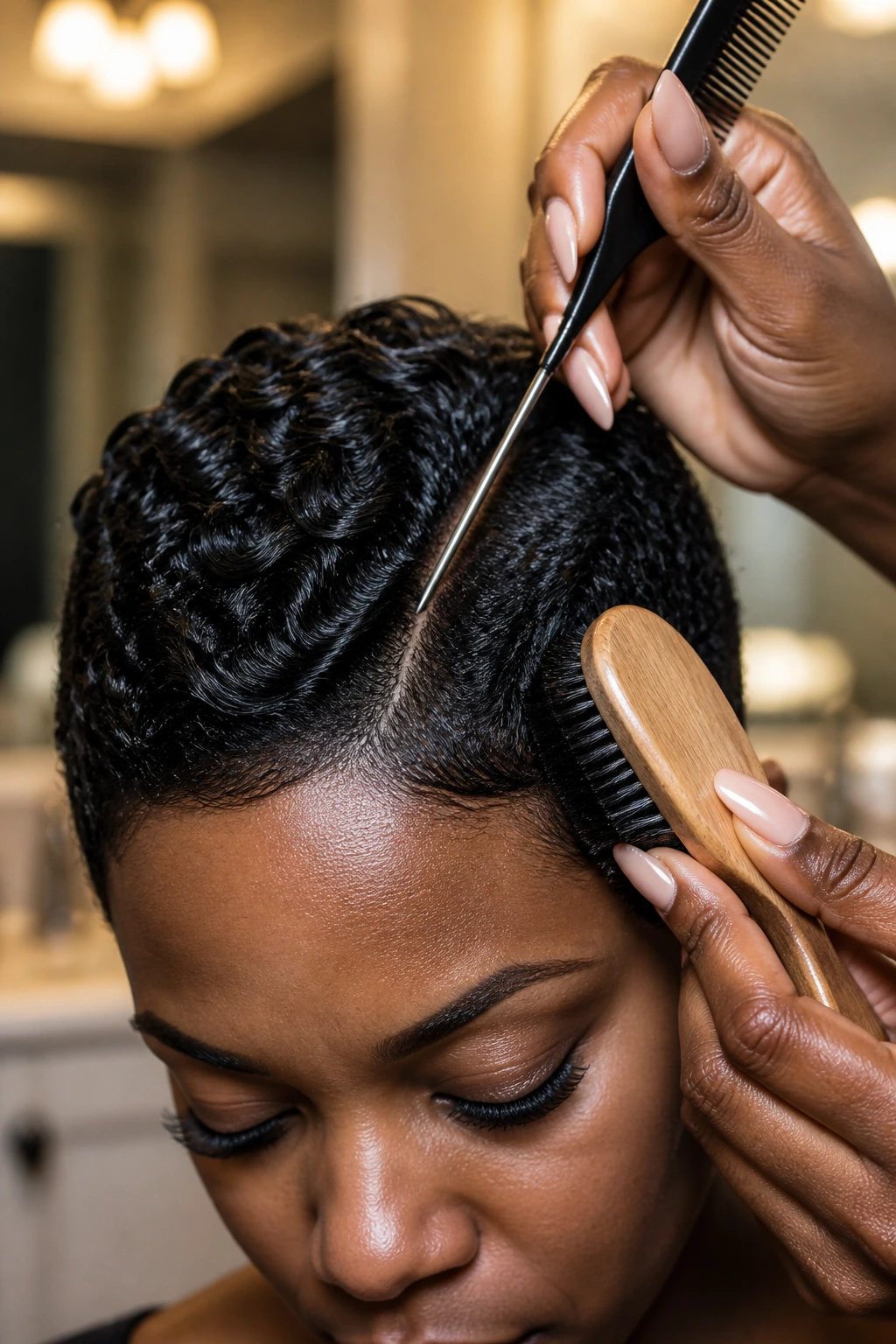
Short Black hair does not need a full bathroom counter to look good, but the right tools save time and save the style from looking rough around the edges.
- Rat-tail comb: Clean parts, sectioning, and small detail work; the pointed handle matters more than people think.
- Soft-bristle brush: Best for laying hair down at the hairline and smoothing gel without tearing up curls.
- Styling gel or edge control: Use a light hand; short hair shows excess product fast, especially around the temples.
- Curl cream or leave-in conditioner: Keeps coils soft before twist-outs, rod sets, and finger coils.
- Mousse or foam wrap lotion: Good for setting short curls, waves, and sleek styles without heavy buildup.
- Small elastics and no-snag bands: Handy for puffs, mini sections, and tucked styles.
- Bobby pins and hairpins: Essential for halos, tucks, crowns, and faux updos that need discreet support.
- Satin scarf or bonnet: Keeps the shape from drying out and flattening overnight.
- Diffuser attachment or hooded dryer: Useful when you want definition to set fully instead of collapsing from damp roots.
- Light oil or sheen spray: A little goes a long way; use it to finish, not to drown the hair.
Product Prep and Sectioning That Save Time
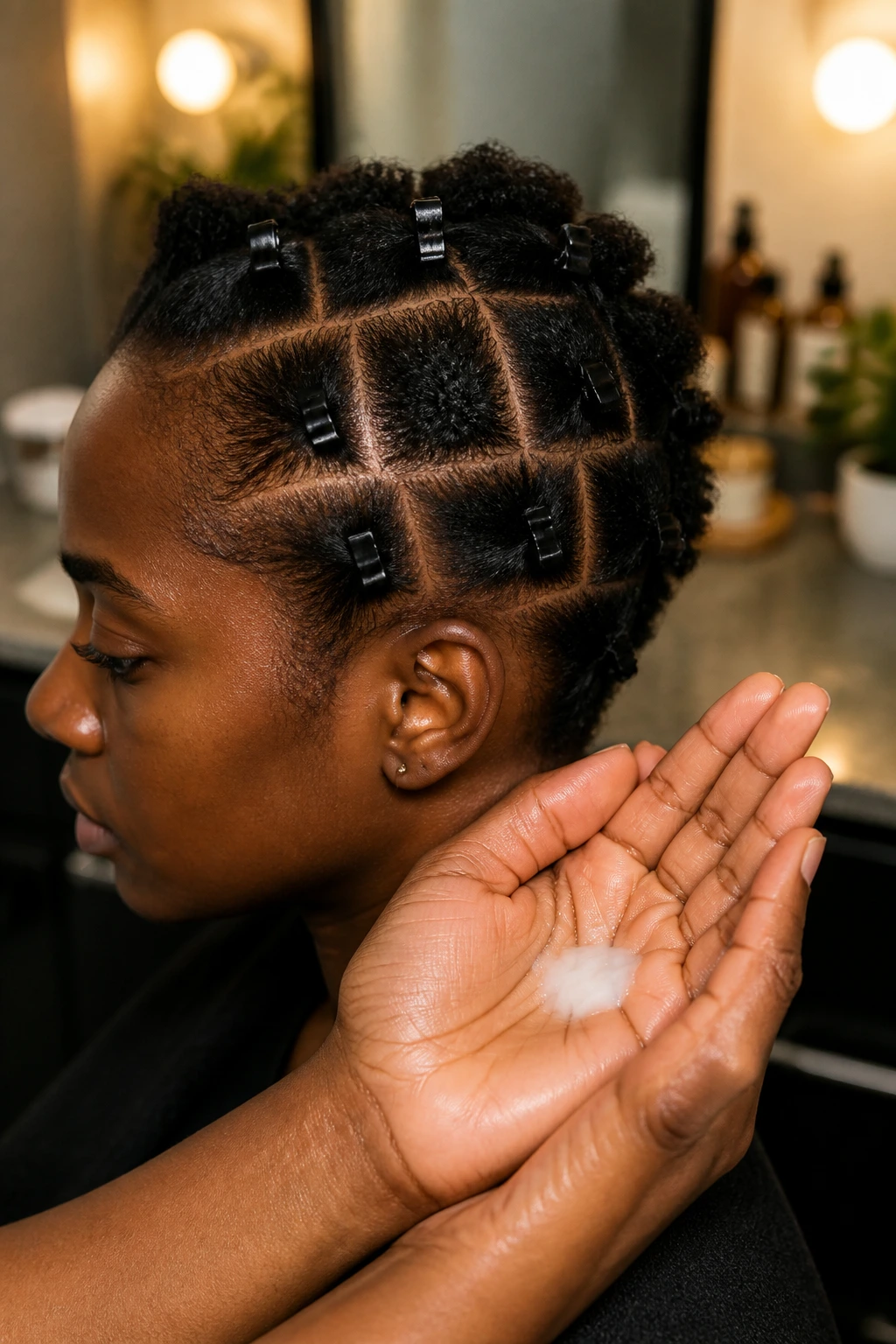
Short hair is more forgiving than people assume, but the prep still has to be clean. Start with hair that is fully detangled if you’re doing coils, twists, or braids. On a cropped cut, a knot shows up faster because there isn’t much length to hide it, and one bad snag can throw off an entire section.
Sectioning should match the style, not your mood. A TWA with defined coils usually does better in tiny squares or rectangles. A frohawk wants a central strip and smooth sides. Flat twists need clean rows that follow the curve of the head. If you skip this part and freehand everything, the result often looks busy instead of intentional.
And yes, product load matters. Short hair does not need a mountain of cream. A dime-size amount can cover a small section if you warm it between your palms first. Too much product makes the hair feel waxy, then flaky once it dries. That’s the part nobody likes to admit because it sounds fussy, but it’s the difference between neat and greasy.
How to Wear These Looks Without Making Them Feel Overworked
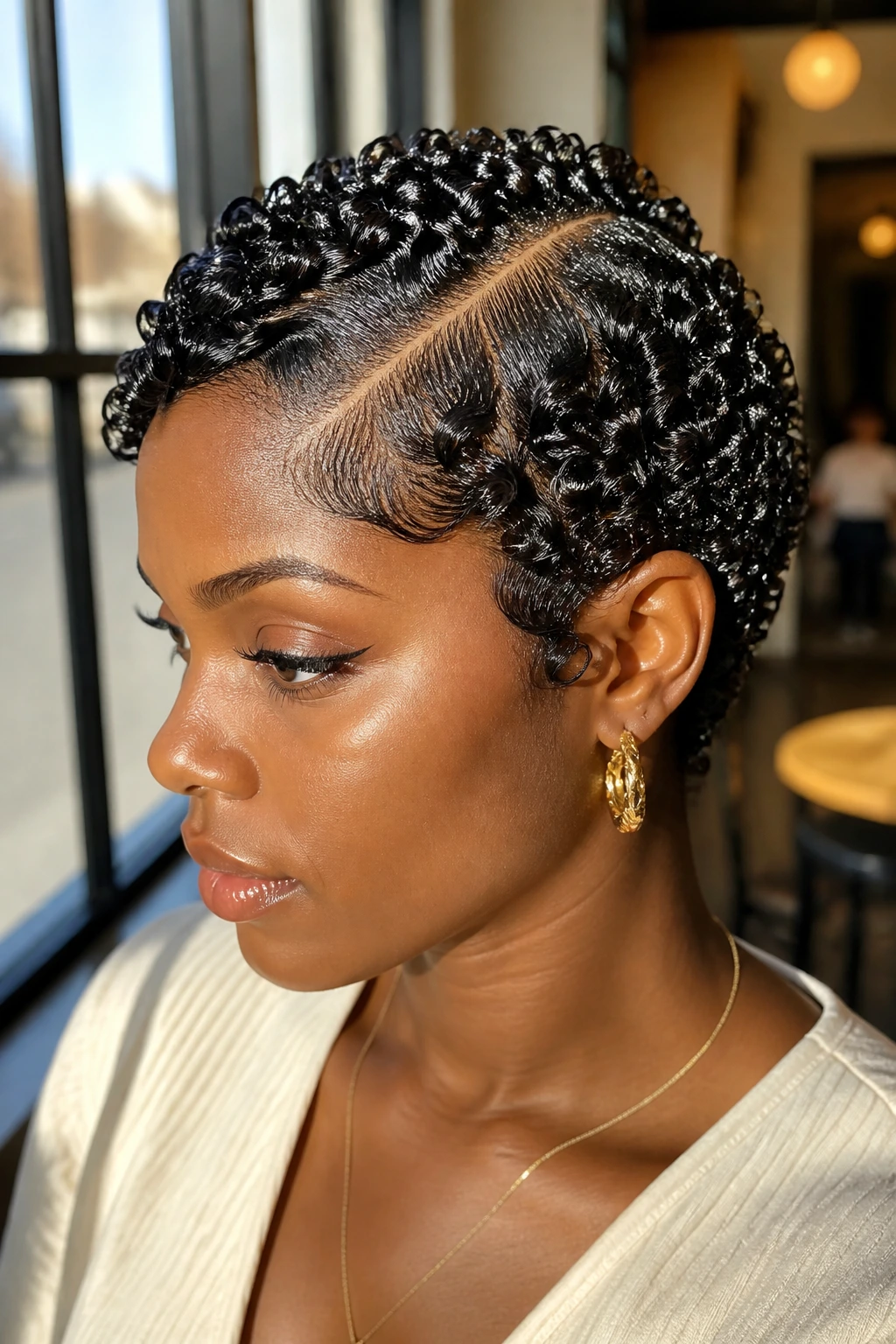
Everyday: Go for the styles that dry fast and refresh fast — wash-and-gos, finger coils, puff styles, and short twist-outs. They sit well with plain T-shirts, sweaters, and denim because the hair already has enough shape.
For Work or School: Flat twists, halo braids, rolled tucks, and sleek pixies keep the hairline orderly and the face open. Add one accessory, not five. A small gold clip or a clean part is usually enough.
For Events: Finger waves, rod sets, sculpted frohawks, and side-swept styles carry more drama without needing a dramatic outfit. If the dress is busy, keep the hair simpler. If the outfit is simple, let the hair be the point.
For Photos: Pick styles with visible texture and clear lines — comb coils, mini cornrows, color-blocked pixies, and halo braids. They hold shape under light better than styles that depend on fluffy volume alone.
Small Changes That Make Short Hair Look More Intentional
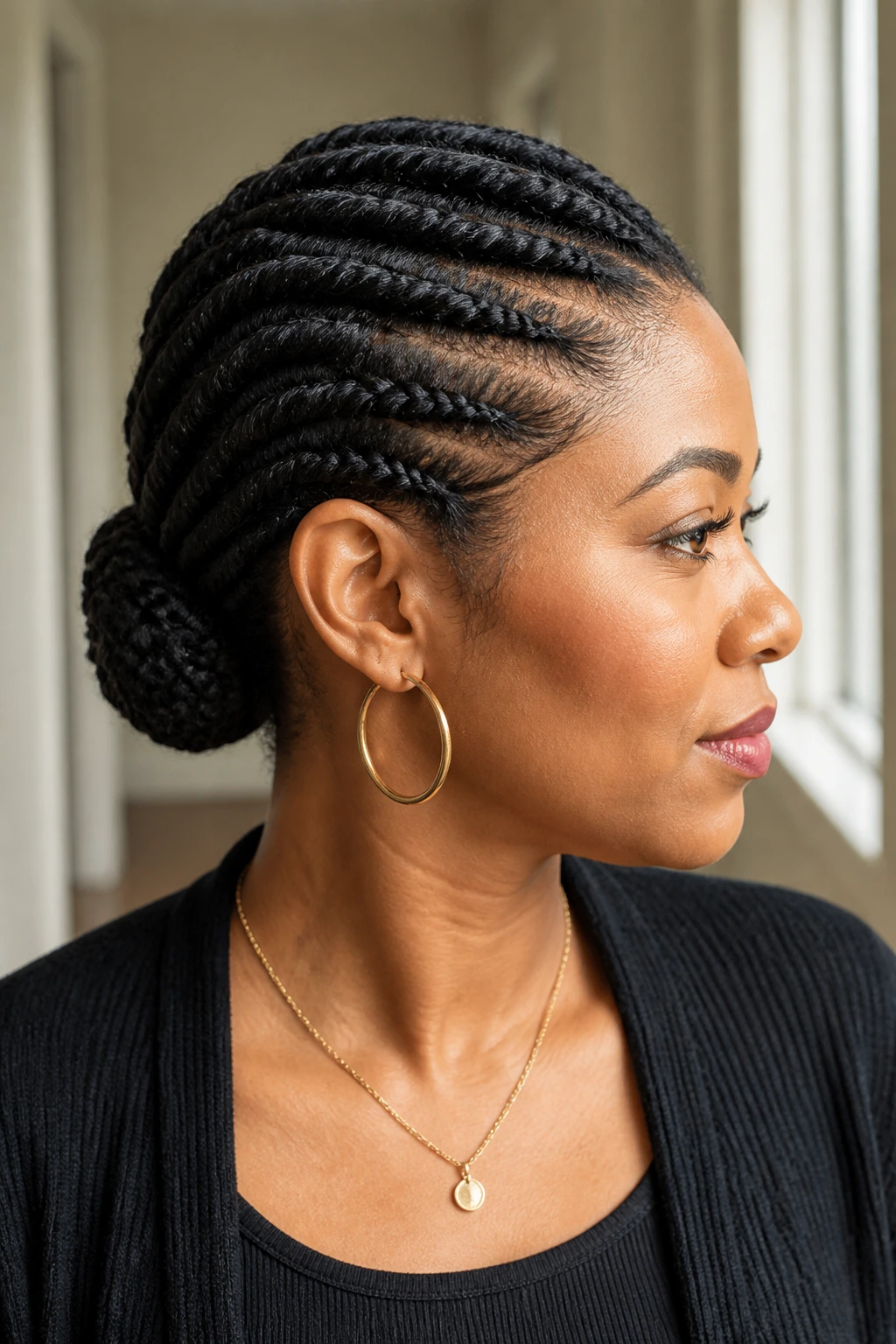
Shape Boost: Move the part an inch farther to the side, or leave a little more height at the crown. That tiny shift can stop a short style from looking flat against the head.
Accessory Swap: Cuffs, clips, satin wraps, beads, and headbands all change the mood without changing the structure. Use one piece that has a job, not five that fight each other.
Texture Change: If a style looks too soft, set it with mousse or smaller sections. If it looks too stiff, break up the finish with your fingers after it dries and add a touch of oil.
Edge Detail: Keep edges neat, but don’t carve them into a hard line unless the rest of the style is equally sharp. Short hair looks best when the hairline matches the tone of the cut.
Color Note: Even a small color shift — a honey streak, a copper rinse, a lighter top — can make a cropped style feel new without changing the shape.
Common Mistakes That Make Short Hair Fight Back
The first mistake is using too much product. Short hair shows buildup fast, especially at the roots and hairline. If the style feels heavy, looks dull, or flakes after it dries, you’ve probably used more gel or cream than the hair can hold.
Another one: choosing a style that needs more length than you have. A bun that should be a tuck turns into a stack of pins. A braid that needs three inches gets loose at the ends. Short hair does better when the style respects the actual length instead of pretending.
Skipping the drying time causes a mess too. Twists, coils, rod sets, and laid styles need to set fully before you touch them. If you unravel too soon, the shape collapses and the frizz comes back faster than you expect.
And then there’s the parting. Crooked parts stand out on short hair because there’s less surface area to distract the eye. If you want a clean look, take the extra minute to check the line from the front and from the crown.
Sleeping bareheaded will undo half the work. A satin scarf or bonnet keeps the style from losing moisture and getting flattened on one side.
Ways to Adapt These Looks to Your Texture and Schedule
For a TWA That Shrinks Hard: Use smaller sections and stronger hold. Coils, shingled curls, and mini twists usually show more definition than loose styles on very tight curl patterns.
For Relaxed or Pressed Hair: Finger waves, sleek pixies, side-swept clips, and rolled tucks hold especially well because the hair can lay flat without much struggle.
For Starter Locs: Barrel twists, mini cornrows around the hairline, and side-parted wrap styles help the growth look neat while the locs settle.
For Fine Density: Choose styles that build shape with direction, not bulk. Flat twists, side sweeps, and halo styles usually give more presence than heavy puffs.
For Busy Weeks: Stick with styles that refresh in under ten minutes — puff styles, short twist-outs, defined wash-and-gos, and scarf wraps. If a look needs a full reset every morning, it will get abandoned.
Keeping Short Styles Fresh Between Wash Days
Short styles live or die by what you do at night. A satin bonnet helps, but I usually prefer a scarf wrapped snug at the hairline if I want the shape to stay sharp. For coil styles, keep a little curl cream or leave-in in a spray bottle with water and mist the hair lightly before reshaping.
Twists and braids can last several days to a week if the roots are not overhandled. The trick is to smooth the base, not the entire strand, when you freshen them. Too much touching causes frizz at the first inch of hair, which is the part that shows most on a cropped style.
Gel styles need the lightest refresh. A damp brush pass at the hairline and a tiny touch of edge control is usually enough. Reapplying product all over just creates buildup. If the style starts to feel crusty, wash it instead of layering more on top.
Frequently Asked Questions
How short is too short for these styles?
Shorter than two inches can still work, but the options narrow. You’ll get the most variety once the hair can grip a coil, a small braid, or a flat twist without slipping loose.
What’s the easiest style for a true beginner?
A puff, a side-part wash-and-go, or a scarf wrap is the least fussy. They don’t demand perfect sectioning, and they still look finished if your parting isn’t museum-level precise.
Can these styles work on 4C hair without heat?
Yes. Finger coils, mini twists, flat twists, Bantu knots, and shingled curls all work beautifully on tightly coiled hair without heat. The only catch is drying time — short, dense hair can hold moisture in the center longer than it looks like it should.
What if my short hair frizzes up fast?
Use smaller sections and a stronger setting product, but don’t drown the hair. Frizz usually shows up when the style was set too loosely, handled too soon, or slept on without protection.
How do I make a short style last longer?
Pick styles that can be pinned, wrapped, or refreshed rather than re-done from scratch. Flat twists, cornrows, scarf wraps, and rod sets tend to outlast loose styles if you protect them at night.
Are protective styles possible on very short hair?
Yes, but protective does not mean zero tension. Short cornrows, flat twists, mini braids, and tucked styles work as long as the roots are not pulled tight and the style can be taken down without a fight.
How do I keep my edges from looking stiff?
Use a small brush, a tiny amount of product, and stop once the edges are smooth. If they look shellacked, they’ll crack faster and the style will look older than it is.
A Few Final Style Moves
Short hair on Black women does not need extra length to look finished. It needs shape, a clear part when the style calls for one, and a finish that fits the texture instead of bullying it flat. That’s the whole difference between a look that feels accidental and one that feels chosen.
The best part is how flexible these styles are. A tiny change in direction, a gold cuff, a deeper side part, a little height at the crown — that’s often enough to make the same cut feel like a new one.
Pick one shape, try it cleanly, and let the hair do what it already knows how to do.
