



A shoulder-grazing brunette cut can look flat in a hurry. Same hair, same length, same face — and yet one brown reads soft and dimensional while another sinks into a single block of color that does nothing for the haircut. The difference usually isn’t the cut. It’s the color placement, the tone, and whether the brown has enough movement to catch light at the jaw, collarbone, and ends.
That’s why medium-length brown hair color ideas are so worth obsessing over. A medium cut gives brown shades enough room to breathe without dragging them down the way very long hair sometimes does. You get enough surface area for ribbons, gloss, lowlights, and face-framing brightness to show up, but not so much length that the color disappears into the bottom half of the head. It’s a sweet spot. Useful. Underappreciated.
And brown is never just brown, which is the part most people miss. Espresso, chestnut, mushroom, caramel, cocoa, walnut, maple, toffee — each one changes how the haircut sits, how thick the ends look, and how much shine your hair throws back under daylight. Get the tone wrong and the whole style can feel dull or muddy. Get it right, and even a simple lob starts looking expensive without trying too hard.
Why These Brunette Shades Work So Well on Medium Length Hair
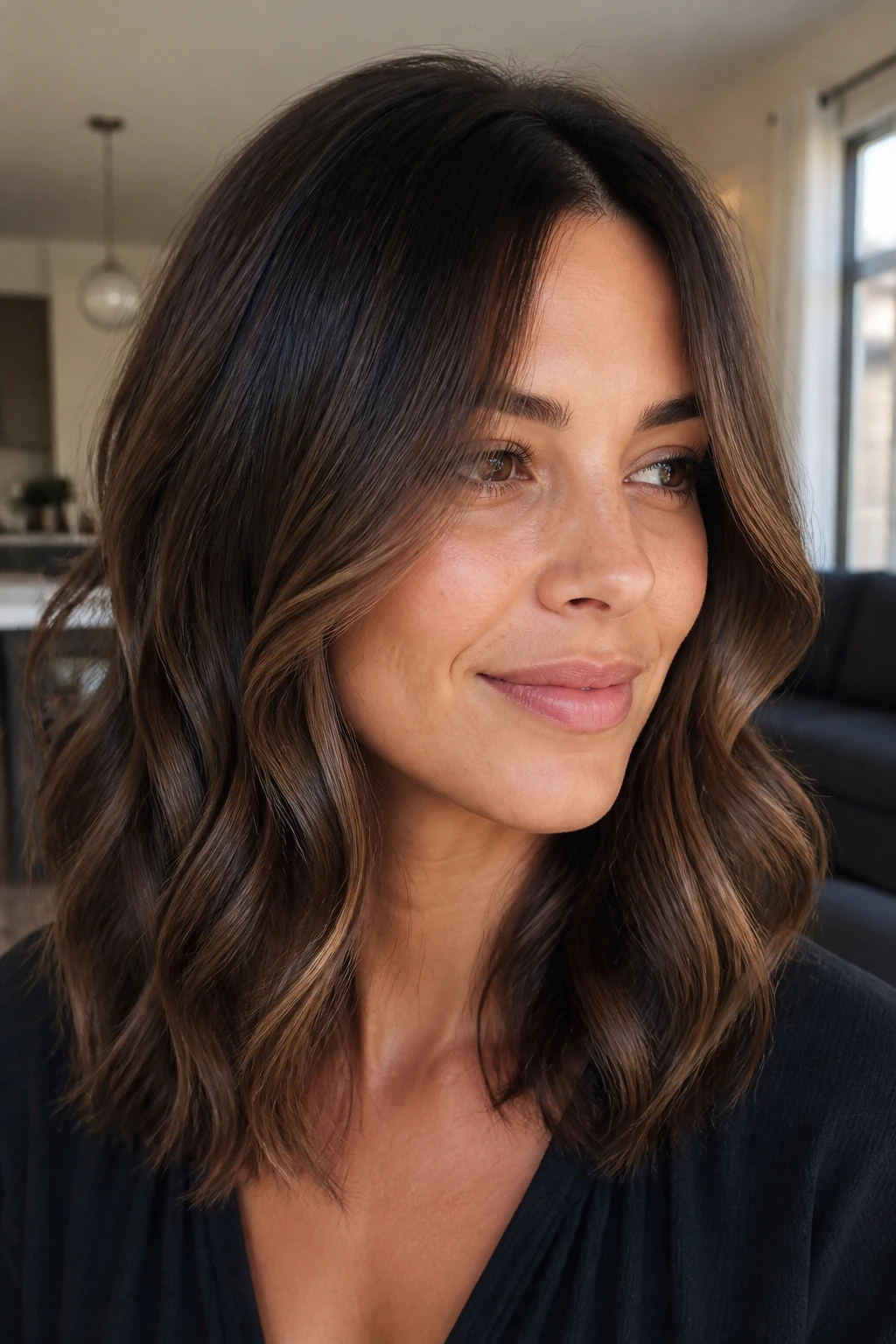
- The color actually shows up: Collarbone and shoulder-length cuts keep the lighter pieces in view, instead of burying them under a long curtain of hair.
- The grow-out is kinder: Brown roots blend more softly than blonde roots, so a shadowed base can last longer before looking obvious.
- The haircut does half the work: Medium-length layers, blunt ends, and loose bends give brown shades a built-in place to catch light.
- You can go subtle or bold: A few babylights change the whole mood, but a deeper balayage can shift the vibe without pushing you into full-color territory.
- Maintenance can match your patience: Some of these looks need a gloss every 4 to 6 weeks; others are happy living with a 10- to 12-week refresh cycle.
1. Espresso Brown with a Mirror-Gloss Finish
Espresso brown sits deep enough to look nearly black in a dim room, then flashes soft brown when light lands on the crown or the outer bend of the hair. On medium-length cuts, that shift matters. The hair isn’t long enough to swallow the shine, and it isn’t short enough to lose the depth.
Why It Works
This shade is strongest on blunt lobs, clean layers, or any medium cut that has a neat outline. The darker the base, the more the finish matters, so a gloss treatment or shine serum becomes part of the color story, not an afterthought. If your hair is porous at the ends, a clear glaze can stop the color from looking hollow down there.
Best ask: a level 3 or 4 espresso base with a clear or neutral gloss on top.
Best styling partner: a blowout with a slight bend at the ends. Flat, dry texture makes espresso look heavier than it is.
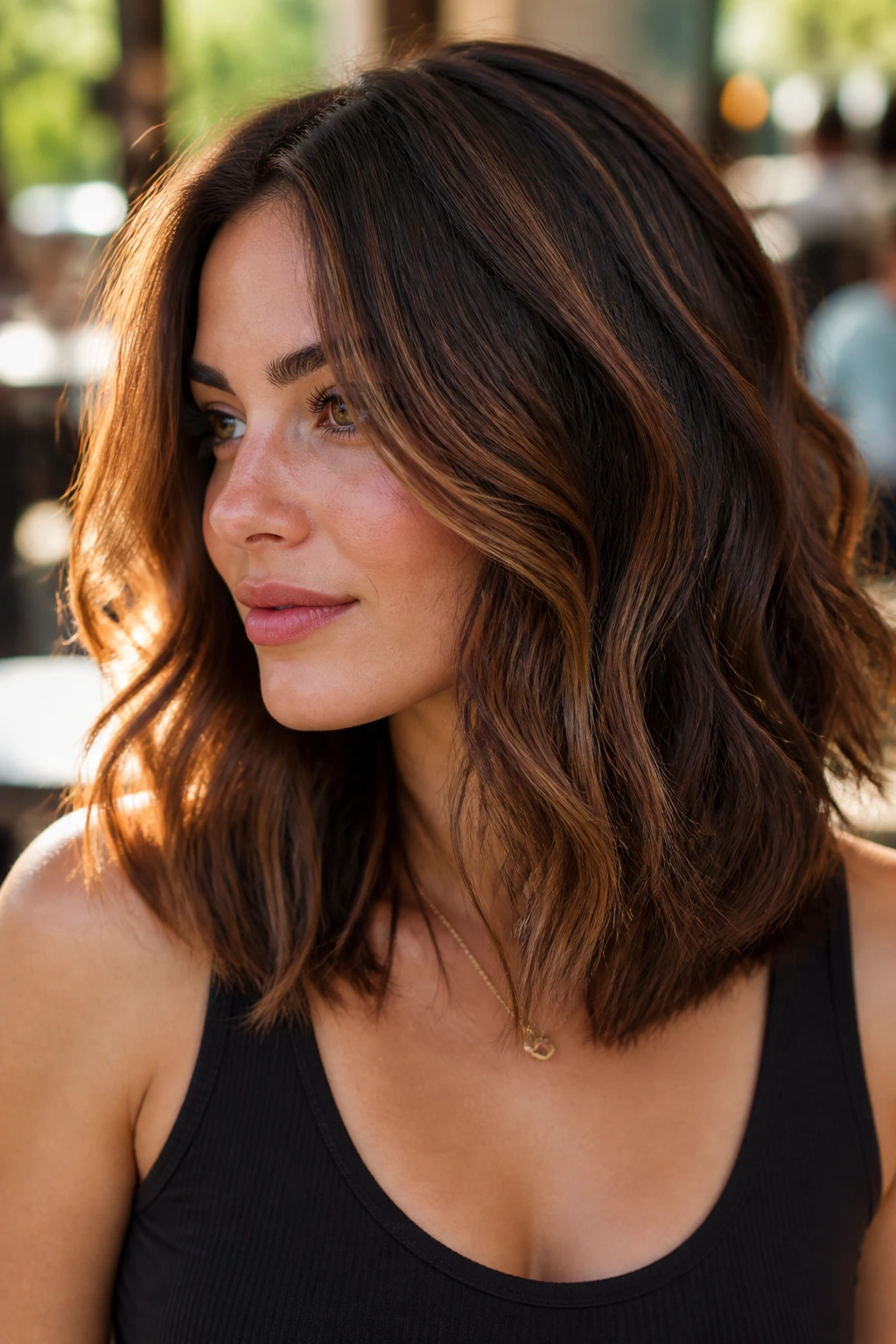
2. Chocolate Balayage with Cinnamon Veils
Why does chocolate brown work so well with cinnamon ribbons on medium-length hair? Because the color has enough length to travel, but not so much that the warm pieces get lost. The lighter veils sit mid-shaft and toward the ends, so every shoulder flip shows a little movement.
What to Ask For
Ask for a medium chocolate base with balayage pieces painted below the cheekbone and a few warmer cinnamon ribbons around the surface layers. You do not want stripes. You want color that looks like it was brushed through the hair after a week in the sun — not blonde, not red, just warm enough to wake the brown up.
How to Wear It
Loose waves make this shade the most obvious, because the bends separate the ribbons. Straight hair still works, but the warmth reads softer. If your hair tends to go brassy, keep the cinnamon pieces controlled and ask for a beige-brown toner, not gold.
3. Chestnut Brown with Face-Framing Pieces
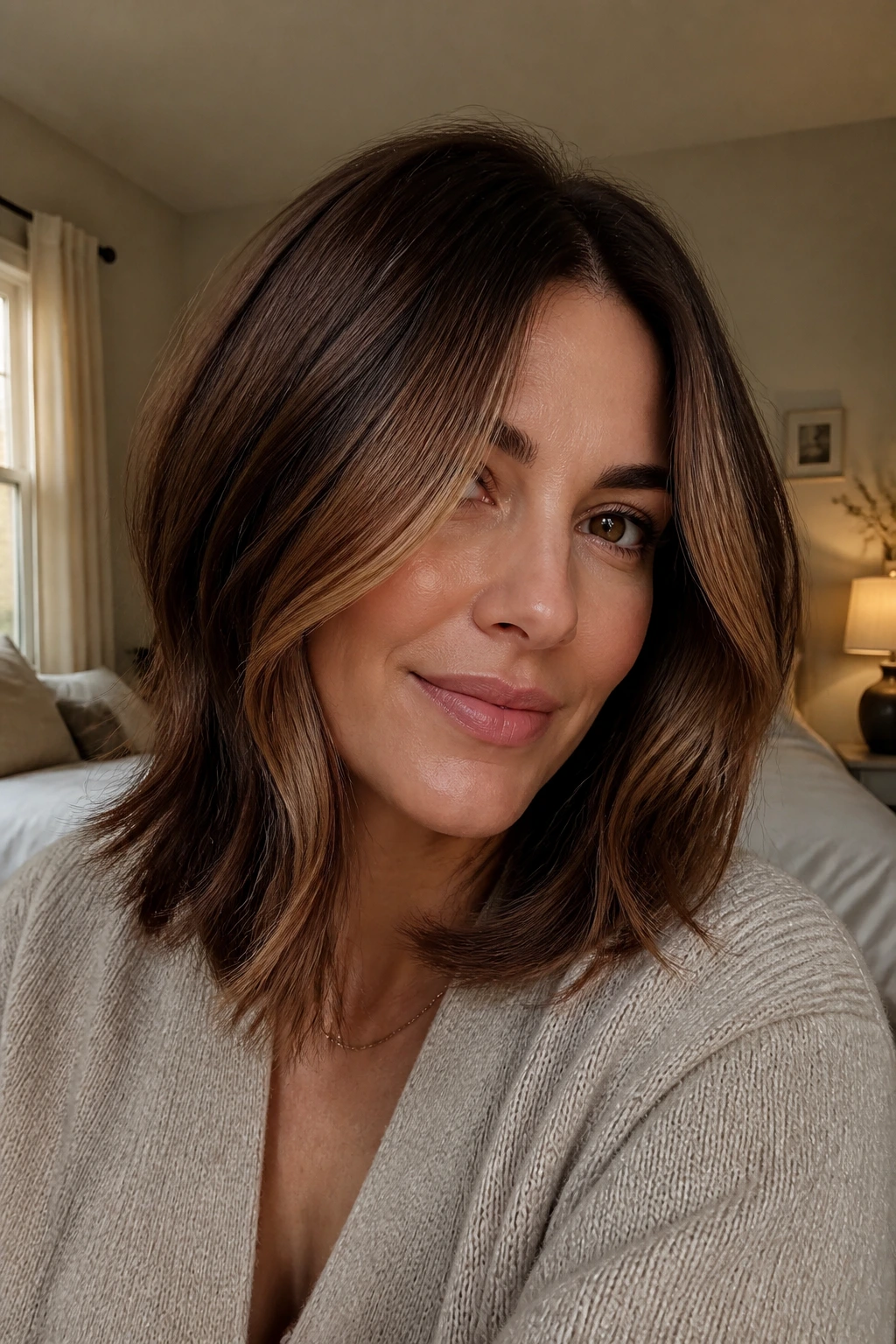
If your main goal is to brighten the front without changing the whole head, chestnut brown with lighter face-framing pieces is one of the cleanest moves you can make. The base stays warm and rich. The front panels do the lifting around the eyes, cheeks, and jaw.
This look suits medium-length hair because the brighter sections sit close to the face instead of disappearing into length. Curtain bangs and long layers make it even better. The lighter pieces can be placed just off the hairline and blended into the first few inches around the cheekbone, which keeps the grow-out softer than a full money-piece stripe.
Ask for one to two levels of lift at the front, not a huge blonde streak. Chestnut gets muddy if the front is lifted too far away from the base tone. Keep the back richer and you’ll get contrast without losing the brown identity.
4. Mushroom Brown on a Collarbone Lob
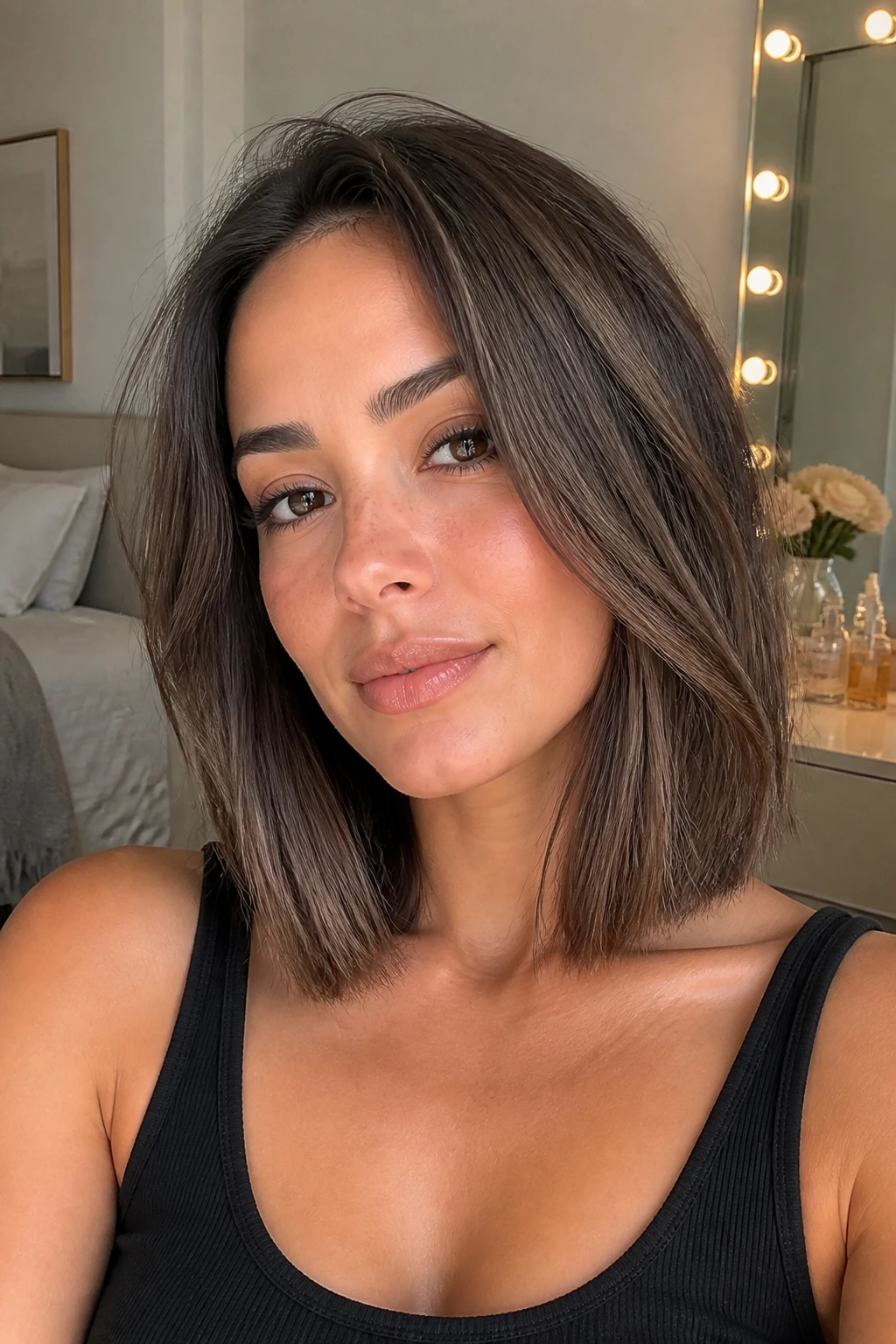
Cool brunettes have a strange reputation for being hard to wear, which is mostly nonsense. Mushroom brown is just what happens when you strip the red and orange out of a brunette and replace them with beige, taupe, and ash. On a collarbone lob, it looks tidy, smoky, and a little understated in the best way.
Why It Flatters Medium Length Hair
A lob has enough surface area for the cool tones to show, but not so much that the color starts to look flat. The shape matters here. A blunt edge makes mushroom brown feel crisp; loose waves make it softer and more lived-in.
Good Fit, Bad Fit
- Best for: cooler undertones, darker brows, and hair that lifts orange easily.
- Watch for: very warm complexions if you go too gray.
- Ask for: beige-brown lowlights and an ash gloss, not a one-note gray brown.
5. Caramel Ribbon Highlights Through Soft Layers
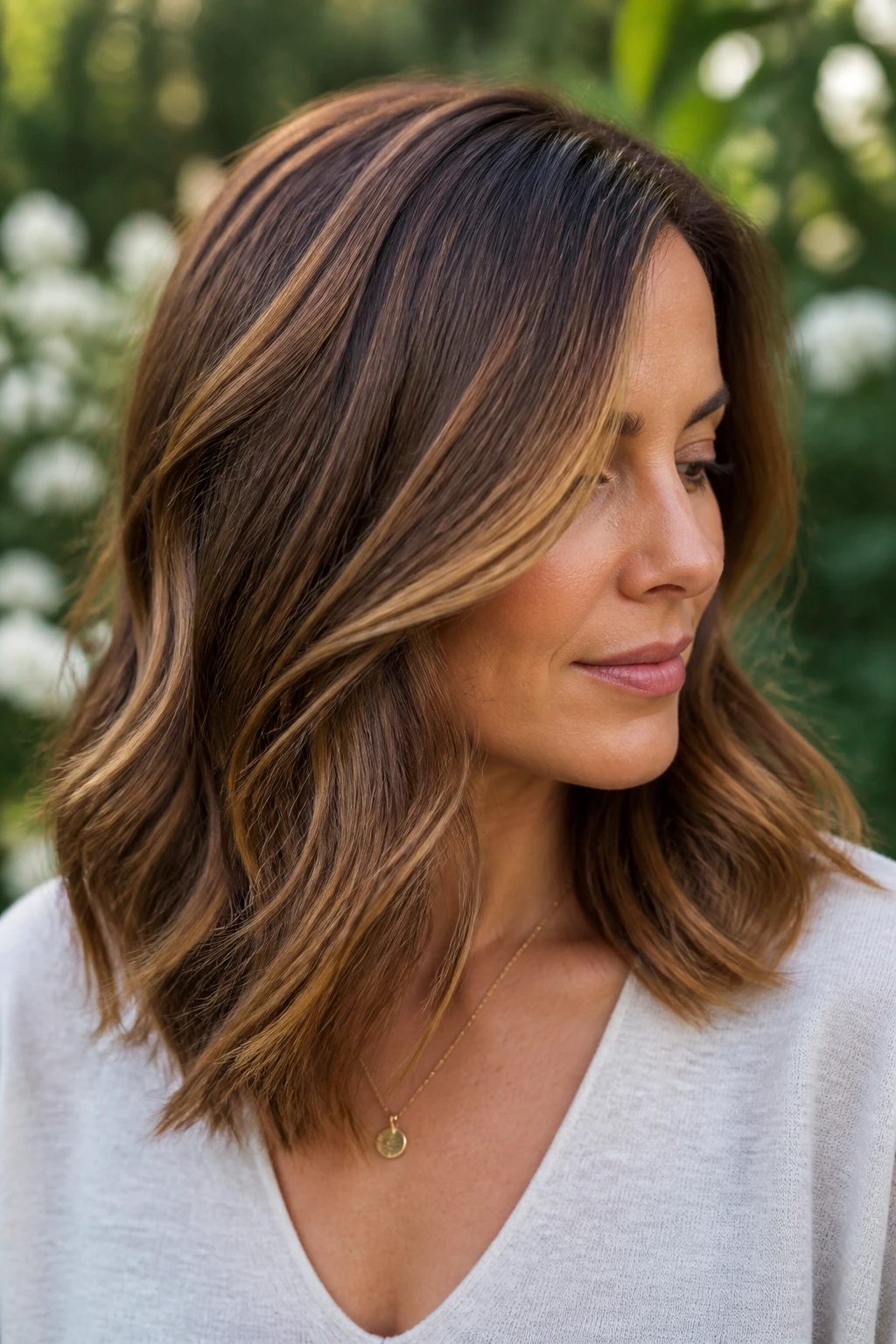
Caramel ribbons are the brunettes’ answer to “I want brightness, but I don’t want to look highlighted.” They snake through the hair in wider pieces than babylights, which makes them easy to see on medium-length layers. The movement is the point.
This is the look that benefits most from a soft wave pattern. When the hair bends around the shoulders, the caramel pieces separate from the base and look almost like light moving through fabric. The effect falls apart if the highlights are too chunky or too high on the head, so placement matters more than people think.
Keep the base around a medium brown or light brown and let the caramel stay one to three levels lighter. If the contrast gets too sharp, the color starts reading streaky instead of expensive.
6. Toffee Brown Melt from Root to End
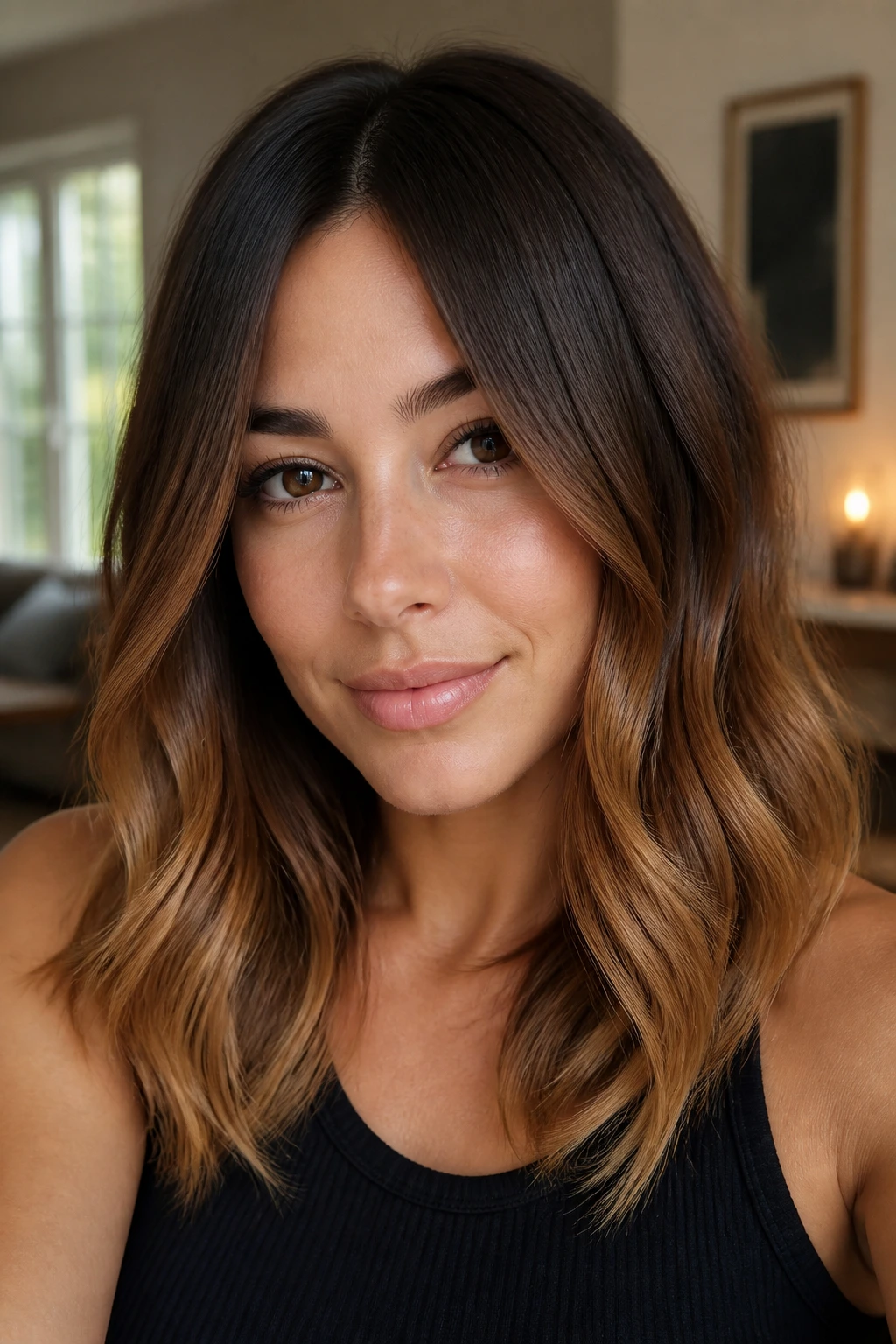
A toffee melt works because it removes the hard line between dark roots and lighter ends. The color opens up from a deeper brunette at the top into warm toffee through the mids, then eases into lighter brown ends. No cliff. No stripe. No obvious regrowth panic.
That smooth shift is especially good on medium-length hair because the transition has room to unfold before the ends. It looks polished on straight styling and softer on loose bends. If you’ve got layered ends, the lighter color will catch on the bottom pieces and keep the whole cut from feeling heavy.
Ask your colorist for a root shadow and a gradual lift through the lengths. This is not the place for harsh blonde pieces. The charm of a toffee melt is that it looks as if the brown simply got warmer as it moved down the shaft.
7. Ash Brown with a Shadow Root
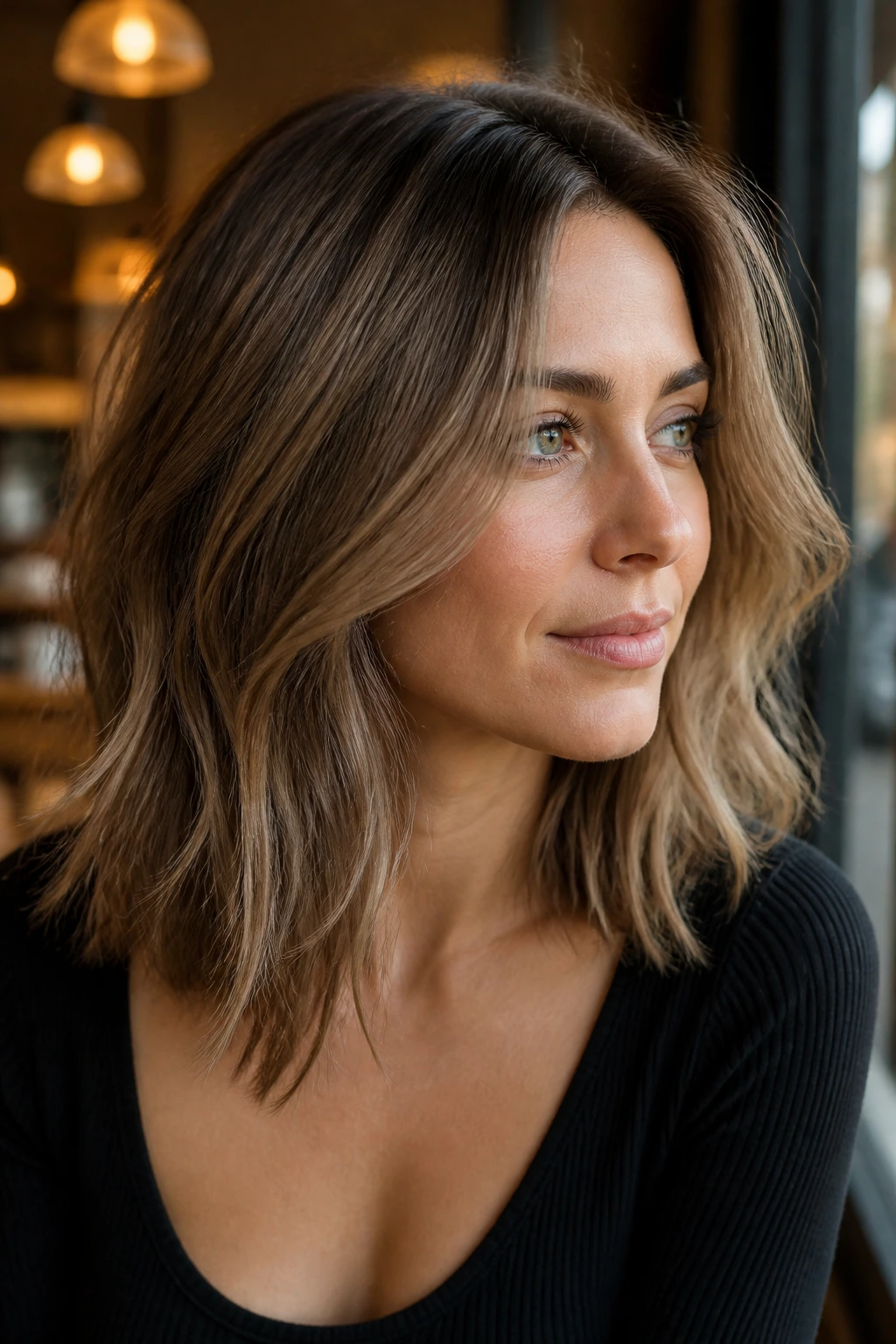
Ash brown can feel too cool on its own if the tone is flat, but a shadow root fixes that in a hurry. The root stays a touch deeper and darker, while the mids and ends take on a soft ash-brown cast. Medium-length hair handles this balance well because the darker top gives the style structure and the lighter lengths keep it from looking dense.
What Makes It Different
A full ash brown can sometimes look muddy if the hair is long or heavily layered. On a medium cut, the shorter length keeps the cool tone visible and neat. The shadow root also buys you time between salon visits, which is a nice bonus if your natural root is already on the darker side.
Keep in Mind
If your hair pulls orange, ask for a blue-based toner. Purple shampoo alone won’t always fix warmth in brunette hair, and using too much of it can leave the ends looking dusty.
8. Cinnamon Brown with Warm Light
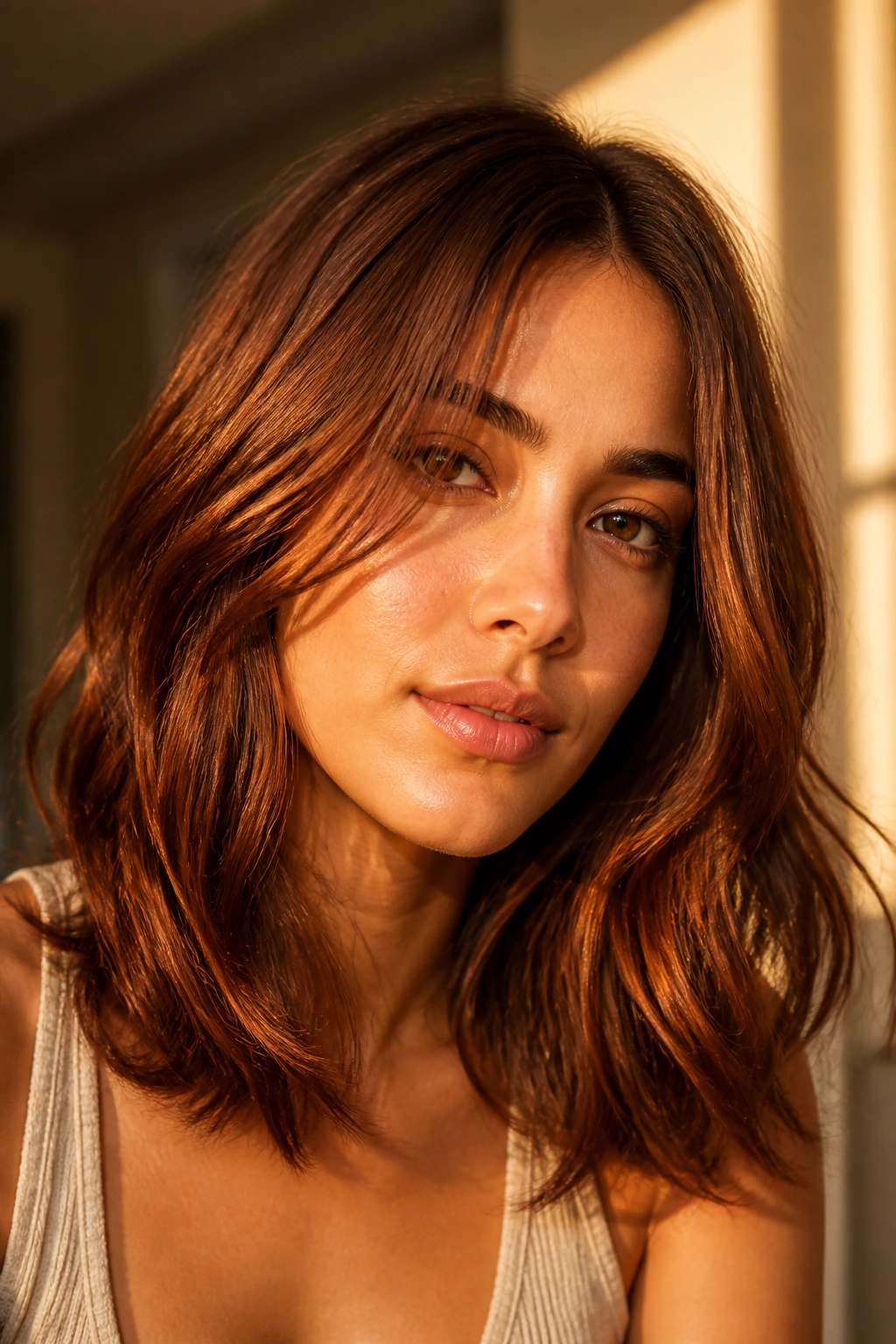
Cinnamon brown sits in the sweet spot between brunette and soft copper. It’s warmer than chestnut, richer than auburn, and a little more alive than a standard warm brown. On medium-length hair, especially with layers, the color catches just enough light to show off the red-brown undertone without going full red.
The trick is keeping the copper influence controlled. Too much and the whole style starts shouting. Too little and you lose the reason you picked cinnamon in the first place. A demi-permanent gloss or warm glaze usually keeps the tone readable without making the hair look overprocessed.
This shade loves a soft blowout or large-barrel bend. Flat-ironed cinnamon brown can look elegant, but the warmth looks best when the ends curve a little and the side pieces move.
9. Mocha Babylights on a Medium Cut
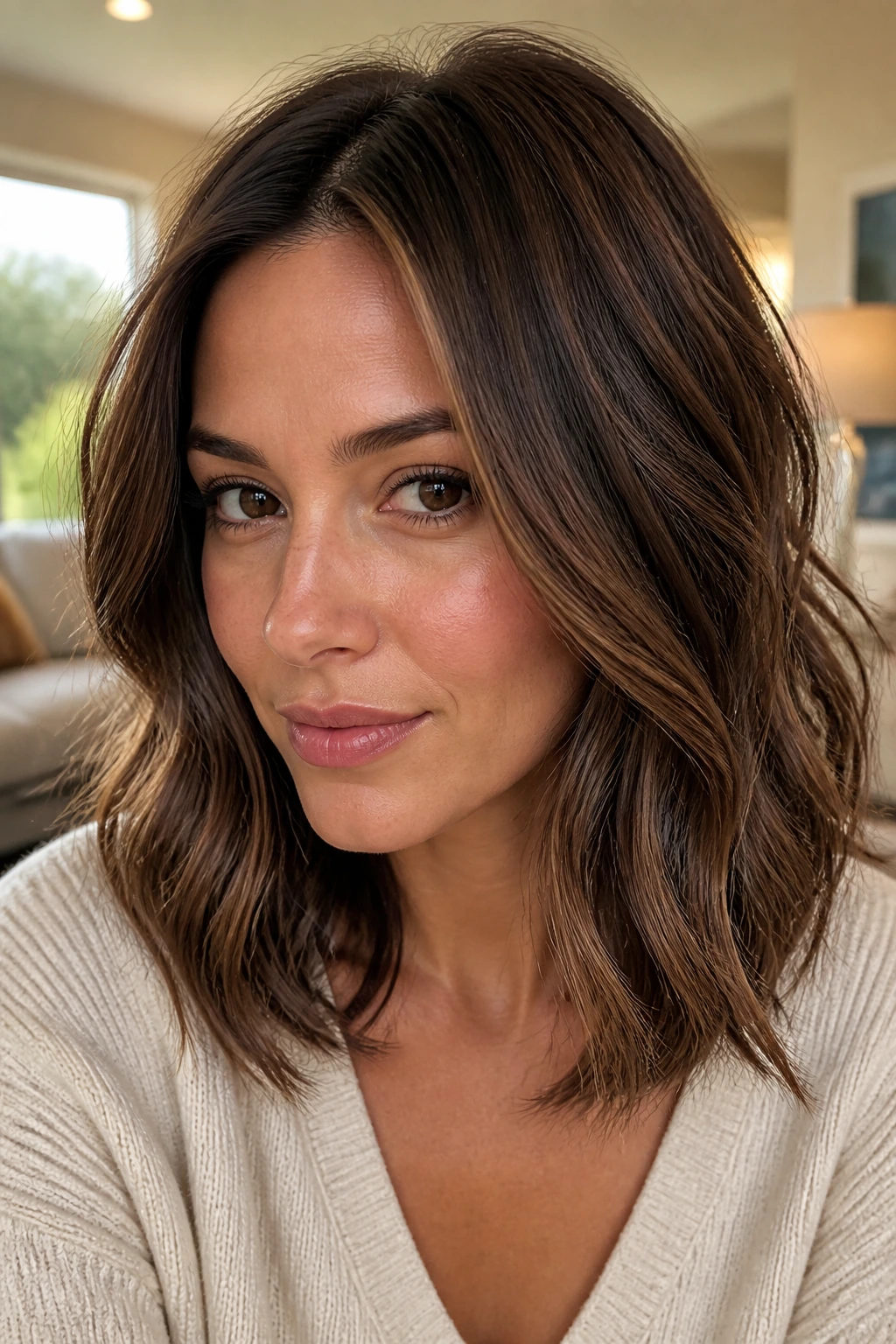
Mocha babylights are for people who want the brown to look richer, not louder. The highlights are so fine they almost disappear until the light moves. That’s what makes them work on medium-length hair: the cut gives those tiny ribbons room to shimmer without taking over the whole head.
Here, the color is doing texture work more than contrast work. Fine babylights around the part and through the upper layers give hair a little visual thickness, which helps if your medium cut is on the fine side. It’s especially nice on straight or lightly waved hair, where wide highlights can look too obvious.
Ask for This
- Very fine foils or hand-painted micro pieces.
- A mocha or beige-brown toner to keep the result soft.
- A rooty base that stays close to your natural level for easy grow-out.
10. Walnut Brown with Deep Lowlights
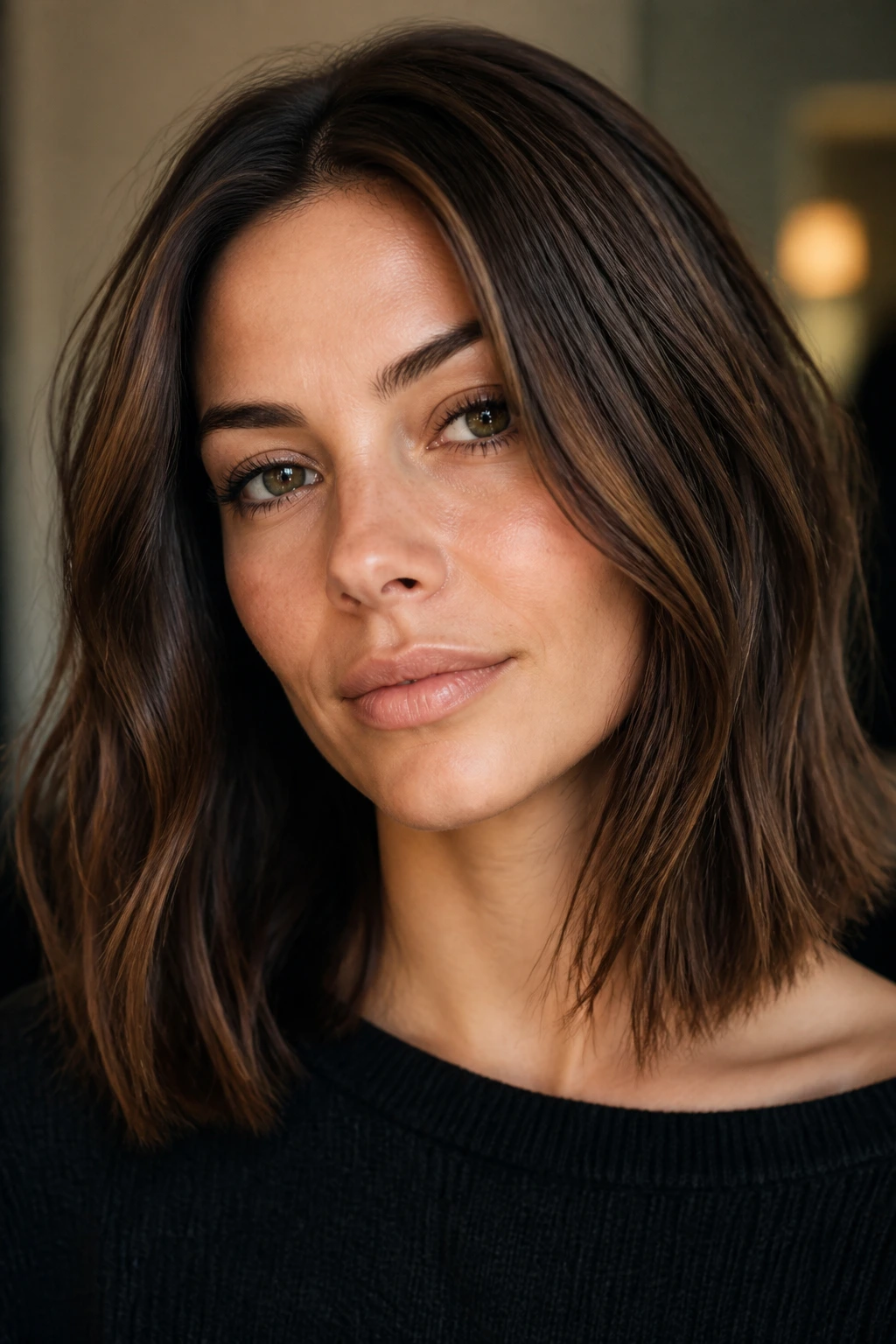
Walnut brown lowlights are a smart move when hair looks washed out rather than colorful. Instead of adding brightness, you add depth. On medium-length hair, that creates contrast inside the cut, which can make the hair look fuller and more expensive at the same time.
This is the brunette version of turning down the lights just enough to make the good parts stand out. If your current brown feels one-dimensional, a few walnut lowlights through the underlayers and around the interior of the cut can change that fast. The outer surface still looks brown, but the inside has more shape.
It works especially well with blunt mid-length cuts and smooth blowouts. The darker pieces peek through at the ends and under the top layer, which keeps the color from reading as a single block.
11. Hazelnut Brown with Micro-Highlights
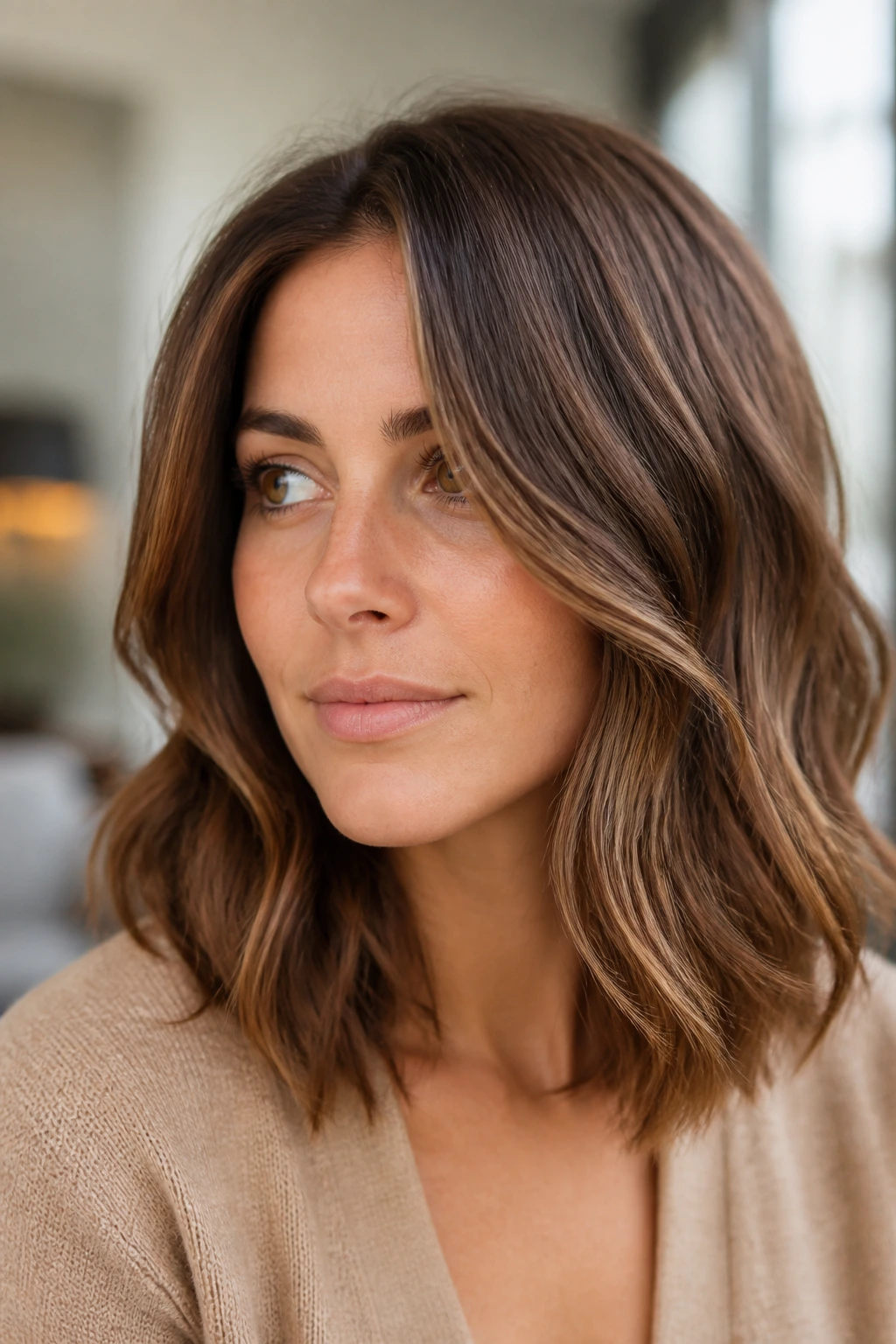
Hazelnut brown is warmer and softer than ash, but it doesn’t lean as sugary as caramel. Add micro-highlights, and the whole thing gets a finer grain. This is one of those shades that looks quiet in photos and much richer in person, especially on medium-length hair where the top layer can break apart a little when you move.
How to Think About It
If caramel ribbons are visible from across the room, hazelnut micro-highlights are visible when someone gets closer. That makes them useful if you want dimension without a dramatic salon statement. They also work well on finer hair because the tiny pieces don’t overpower the base.
Best Styling Move
A soft side part or a barely bent blowout shows this shade best. Tight curls can blur the micro-highlights too much, while flat-straight styling can make the color look plain. Somewhere in the middle is the sweet spot.
12. Brunette Money Piece with Honey Lift
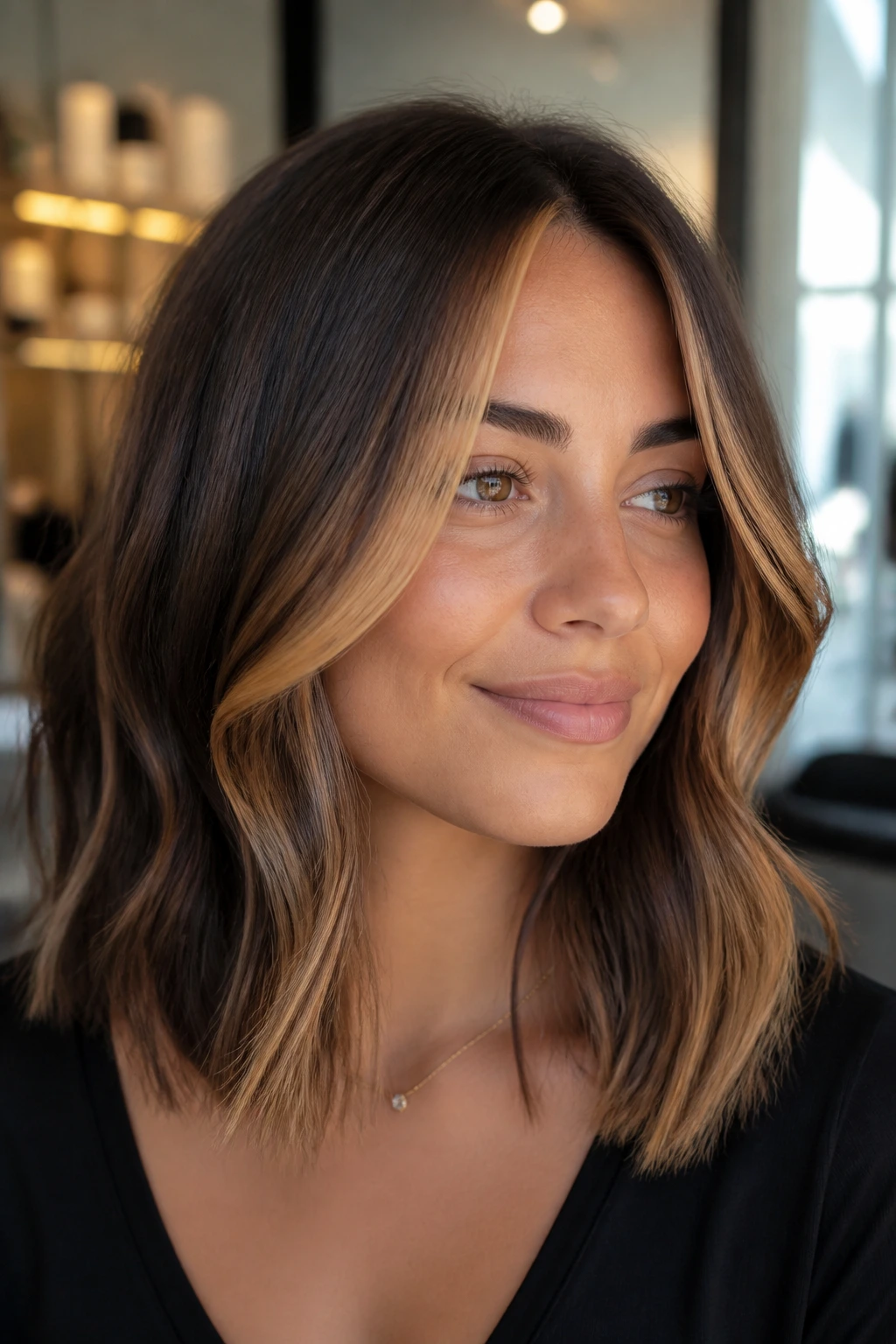
The money piece is still the fastest way to change a brunette without touching the whole head. On medium-length hair, it makes even more sense because the bright front sections sit close to the face and stop there. You get impact right where people look first.
Honey lift works better than pale blonde for a lot of brunettes because it keeps the front bright without turning the whole style icy. The contrast is sharper than chestnut face-framing pieces, but not as severe as platinum. That middle ground is what makes it wearable on a collarbone cut, a shoulder-length shag, or a blunt lob.
Ask for brightness around the hairline and first few layers, then keep the rest of the head richer. If you want a softer result, the front can be diffused with a glaze so it doesn’t look disconnected from the base.
13. Cool Cocoa Brown with a Satin Finish
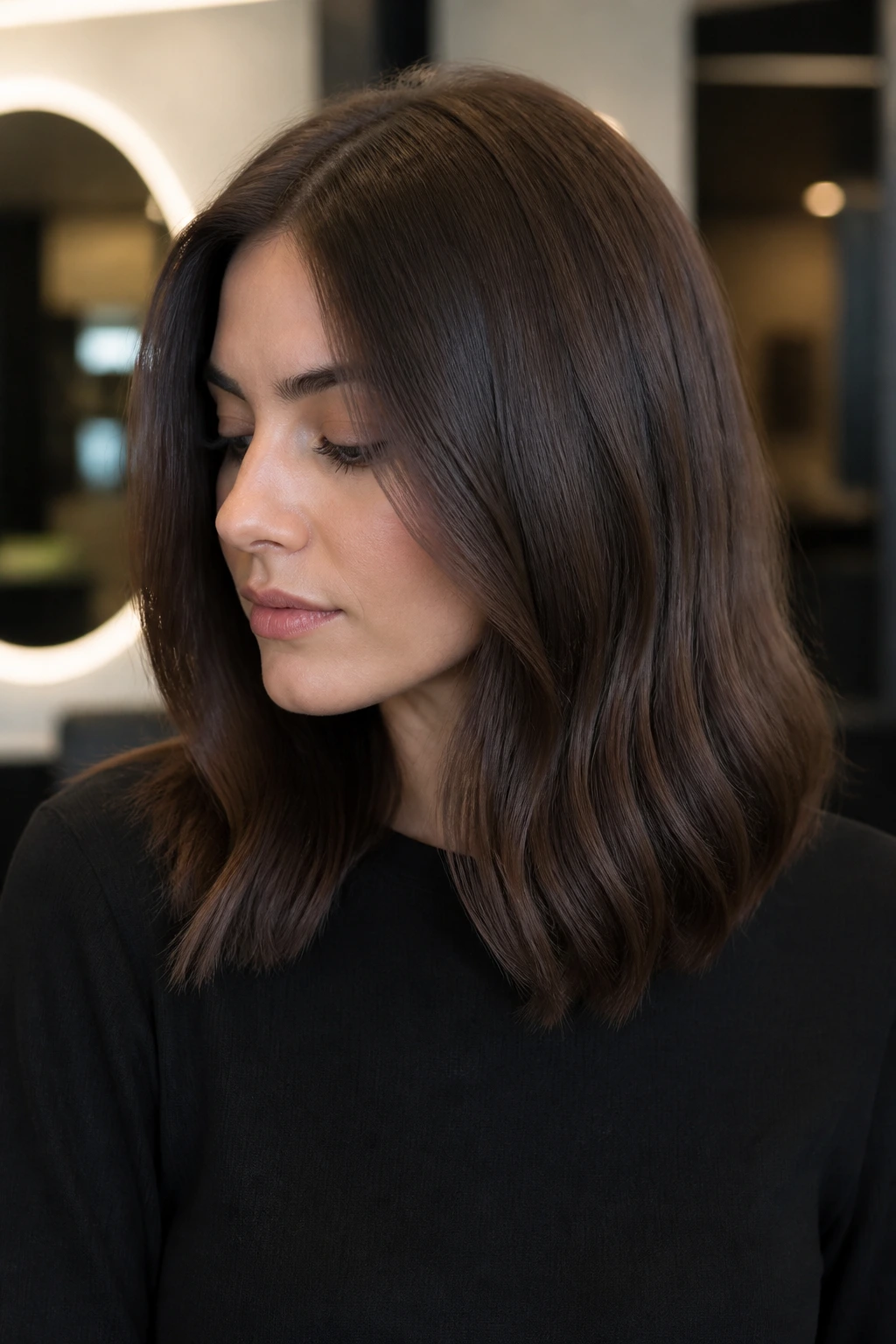
Cool cocoa brown is for the person who wants the hair to look smooth, dense, and expensive without relying on warmth. The tone sits somewhere between mocha and ash, which gives it that plush, soft-focus feel. On medium-length hair, the finish is everything. Satin is the goal, not gloss that looks wet and not matte that looks dusty.
This shade works best when the cut has clean ends and controlled layering. Too much texture can break up the cool tone in a way that makes the hair look darker than it is. Keep the styling smooth, keep the part deliberate, and the color gets to do the work.
If your natural brown leans red, this shade may need a stronger toner cycle. Otherwise it’s one of the easiest ways to make a medium brunette look polished without going high-contrast.
14. Maple Brown with a Copper Veil
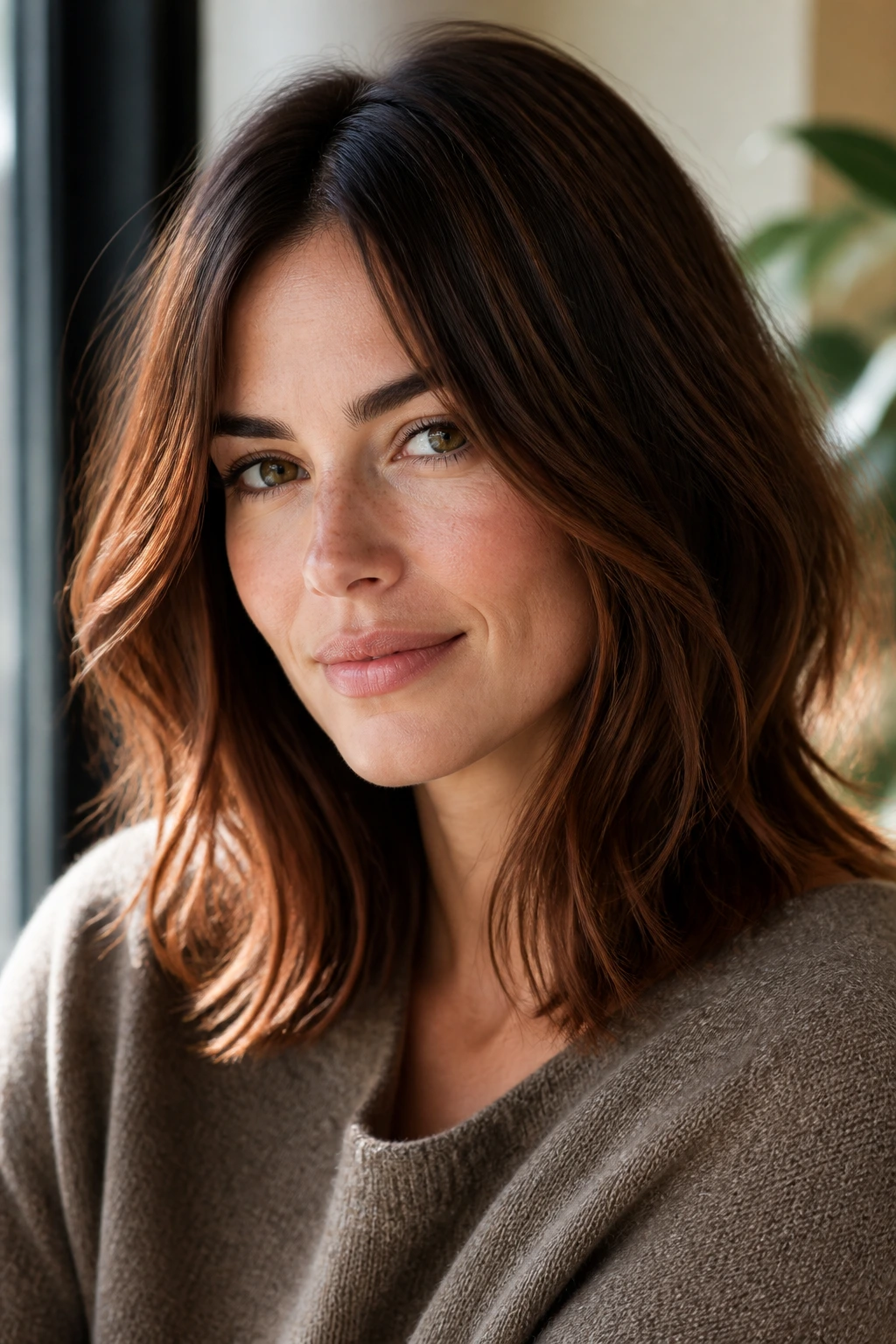
Maple brown is warm in a way that feels grounded, not flashy. A copper veil over the mids adds just enough red to change the mood without turning the hair into a full auburn. Medium-length cuts are ideal for this because the veil has room to show in the bends and around the ends.
What It Looks Like in Real Life
Indoors, maple brown reads like a deep brunette with a warm pulse. Outside, the copper threads wake up and give the whole cut a soft ember glow. That’s much more interesting than a flat warm brown, and much easier to live with than a true red.
Best Match
This shade looks best on layered lobs, shoulder cuts with movement, and anyone who likes wearing gold jewelry or warm makeup. If you’re worried about too much red, ask for the copper in a veil, not a full all-over glaze.
15. Dark Roast Brunette with Caramel Underlights
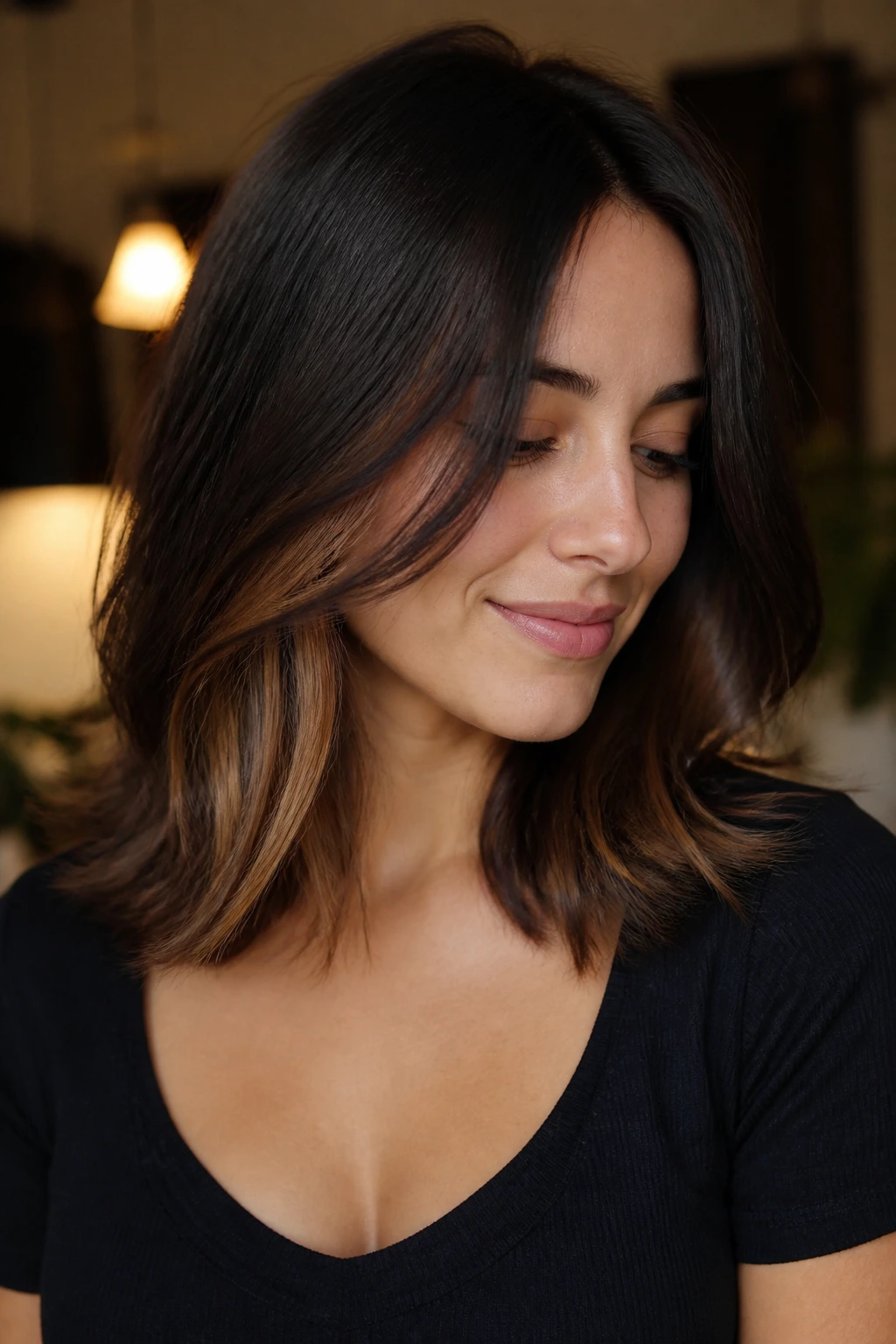
Dark roast on the surface, caramel underneath — that’s the fun of this one. The top layer stays rich and serious, while the lower sections carry the lighter tone. When hair swings or gets tucked behind the ear, the caramel shows up like a private detail.
That makes this a very good choice for medium-length hair, because the length is enough to hide and reveal color in the same cut. Underlights can feel gimmicky on some lengths, but on a shoulder-grazing brunette they look clever instead of loud. If you like the idea of brightness but want to keep things controlled, this is the move.
Ask for the caramel to stay underneath the top veil of hair, especially around the lower back and side panels. The result should feel surprising, not striped.
16. Beige Brown Contour Around the Face
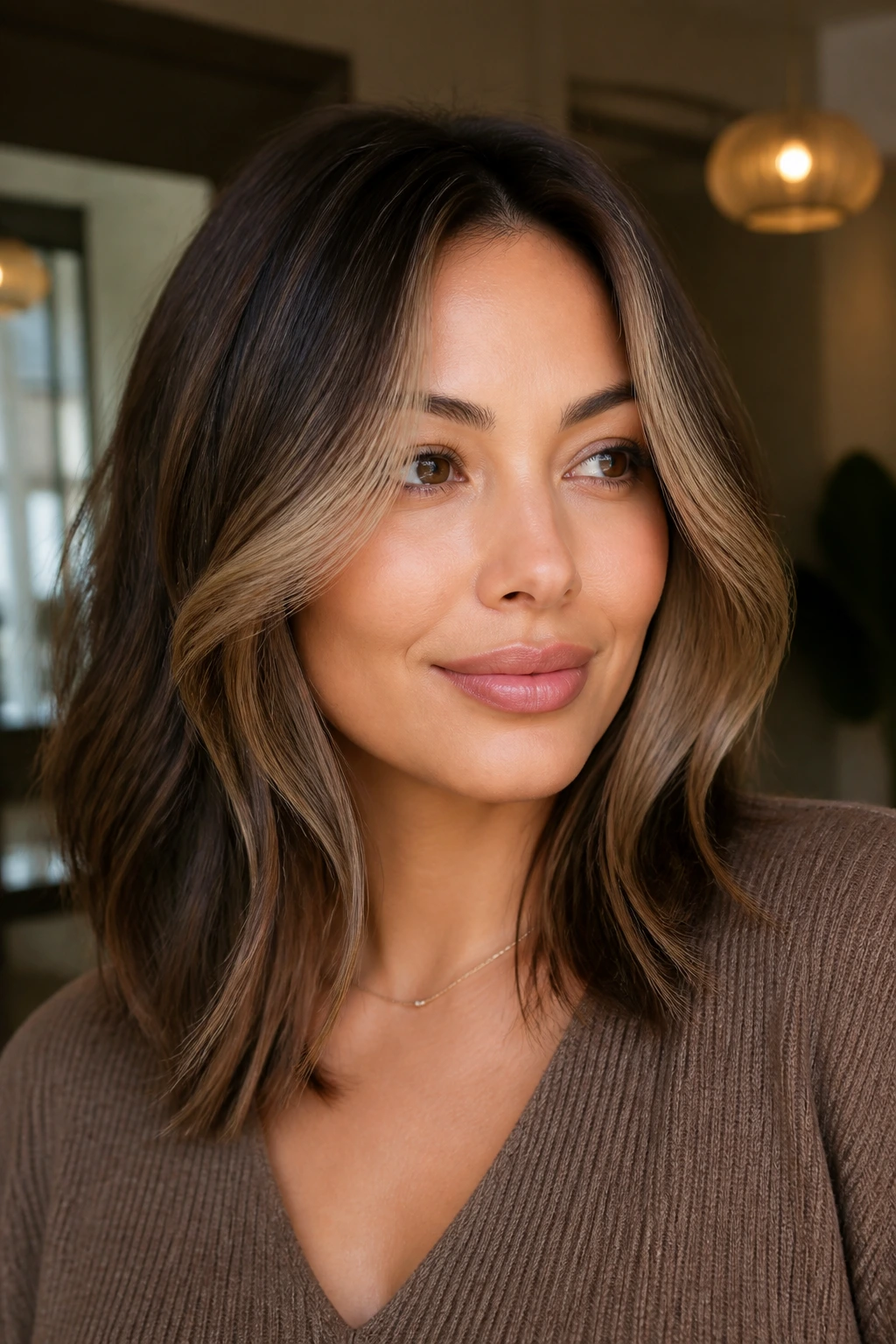
Beige brown doesn’t get enough credit. It’s neither warm enough to shout caramel nor cool enough to read ash, which is exactly why it can be so easy to wear. When the lighter pieces are placed like contour around the face and crown, the cut gets shape without needing dramatic contrast.
This one is especially useful on medium-length hair with long layers or curtain bangs. The beige pieces can be placed where the hair naturally bends near the cheekbone and jaw, which gives the face a softer frame. It’s subtle, but not vague. There’s a difference.
If you want a brown shade that doesn’t fight your makeup or your wardrobe, beige-brown contour is one of the safest bets on the list. It keeps the brunette identity, then just loosens the edges a little.
17. Milk Chocolate Brown with Sandy Ends
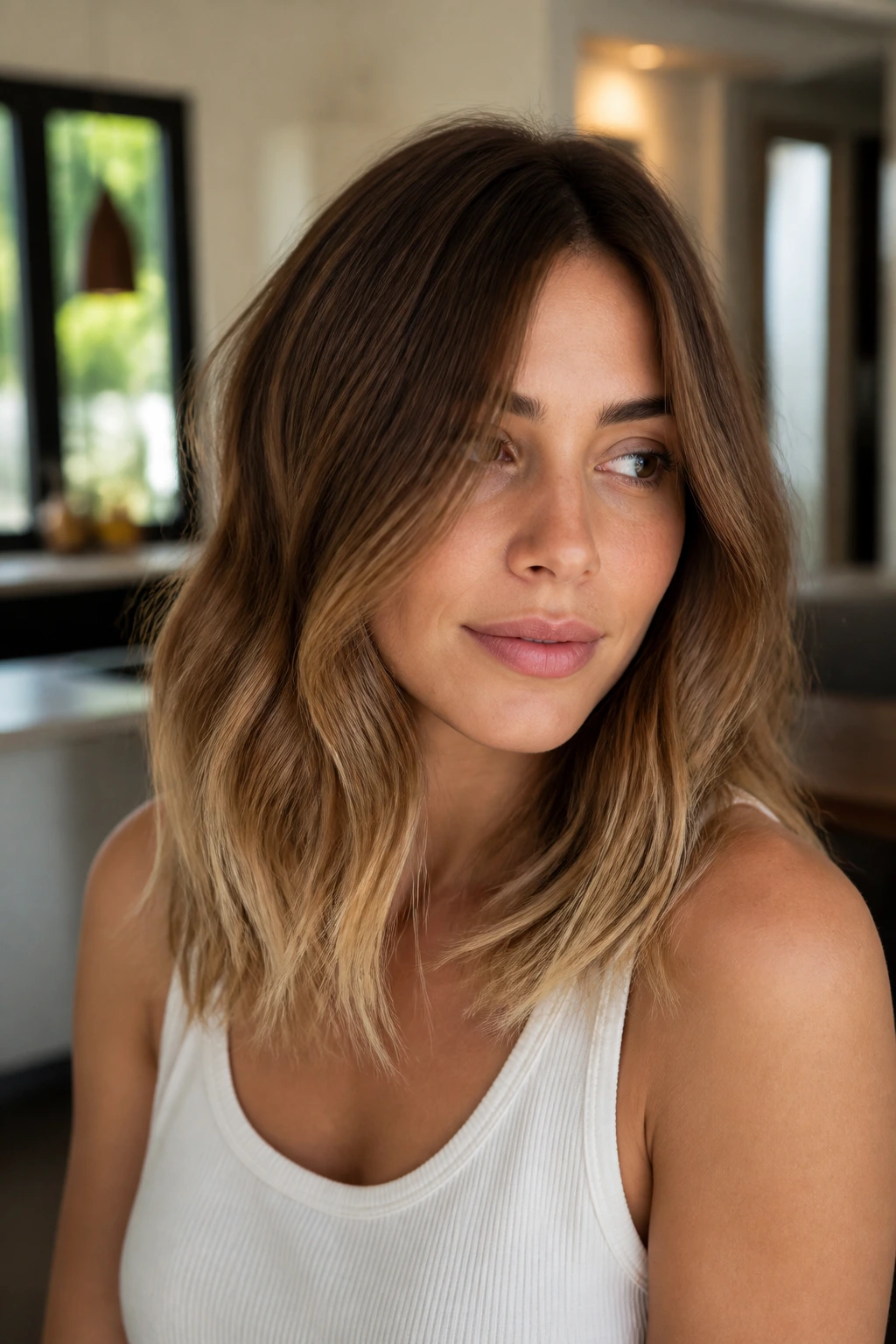
Milk chocolate brown has a creamy, softer look than espresso or cocoa, and sandy ends stop it from becoming too uniform. The blend works well on medium-length hair because the lighter ends show up where the cut ends, which is where the eye naturally lands.
This is a good choice if you want a brown that feels airy without getting close to blonde. The sandy ends should stay restrained — think softened beige, not bright gold. That keeps the style from looking beachy in a dated way. Loose bends show the shift best, but even a straight blowout gives the color some life.
If your hair is very thick, sandy ends can take some weight out of the silhouette. If your hair is fine, keep the lightening subtle so the ends don’t look thin.
18. Bronde Ombré on Shoulder Length Hair
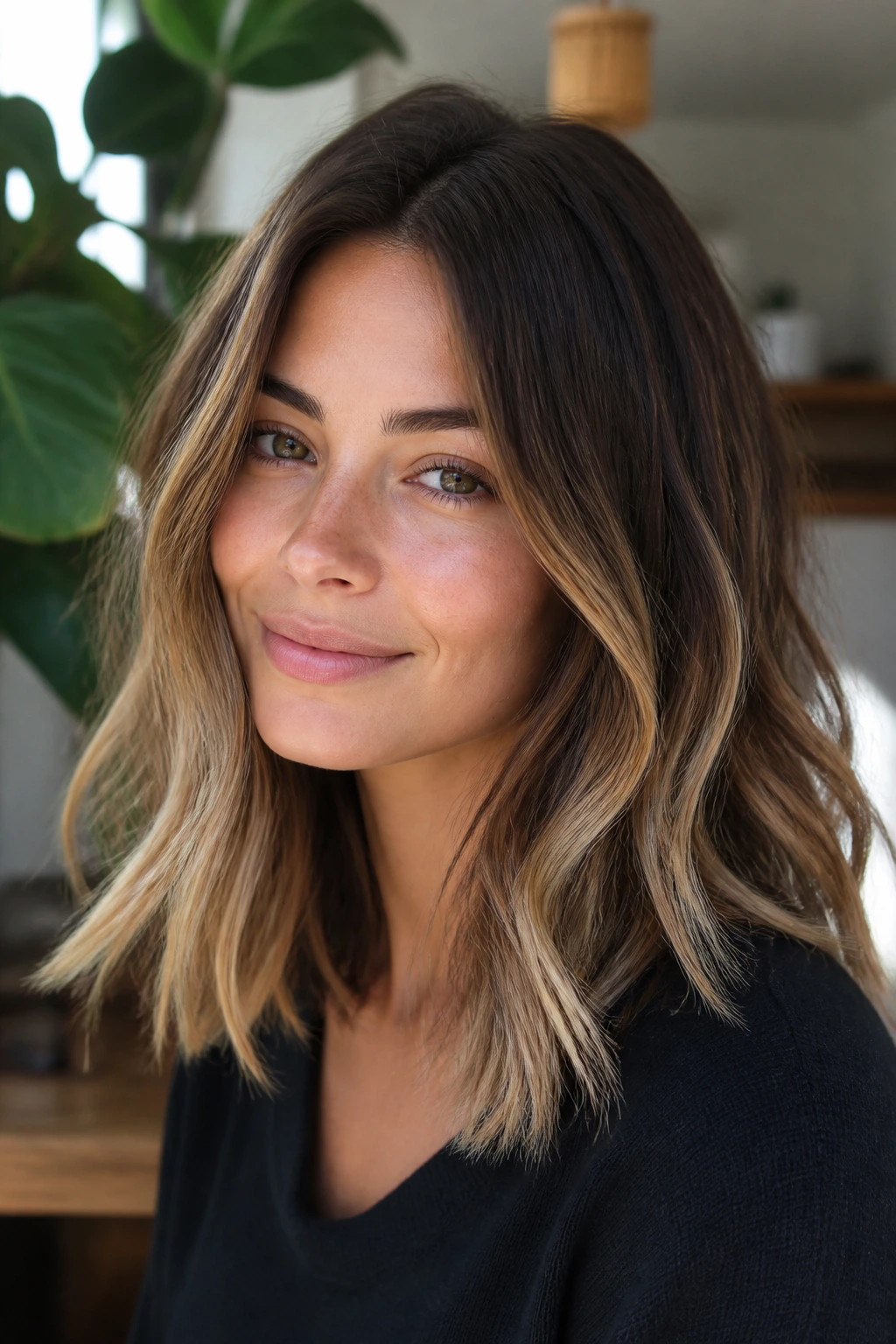
Bronde ombré can go wrong fast when it’s too blond at the bottom and too dark at the top. Keep it on the brunette side, and the result makes far more sense on medium-length hair. The transition from brown to soft bronde should feel like the hair has naturally lightened where the sun would land, not like two separate colors were stacked on top of each other.
That gradient works well on shoulder-length cuts because the ombré has enough distance to unfold without getting lost. A lob or a layered midi cut can carry the shift beautifully. The top remains grounded, the ends open up, and the whole thing reads as dimensional rather than loud.
This is one of the best choices if you want some brightness but hate the idea of constant root upkeep. The grow-out stays soft as long as the transition is blended.
19. Smoky Espresso with a Pearl Gloss
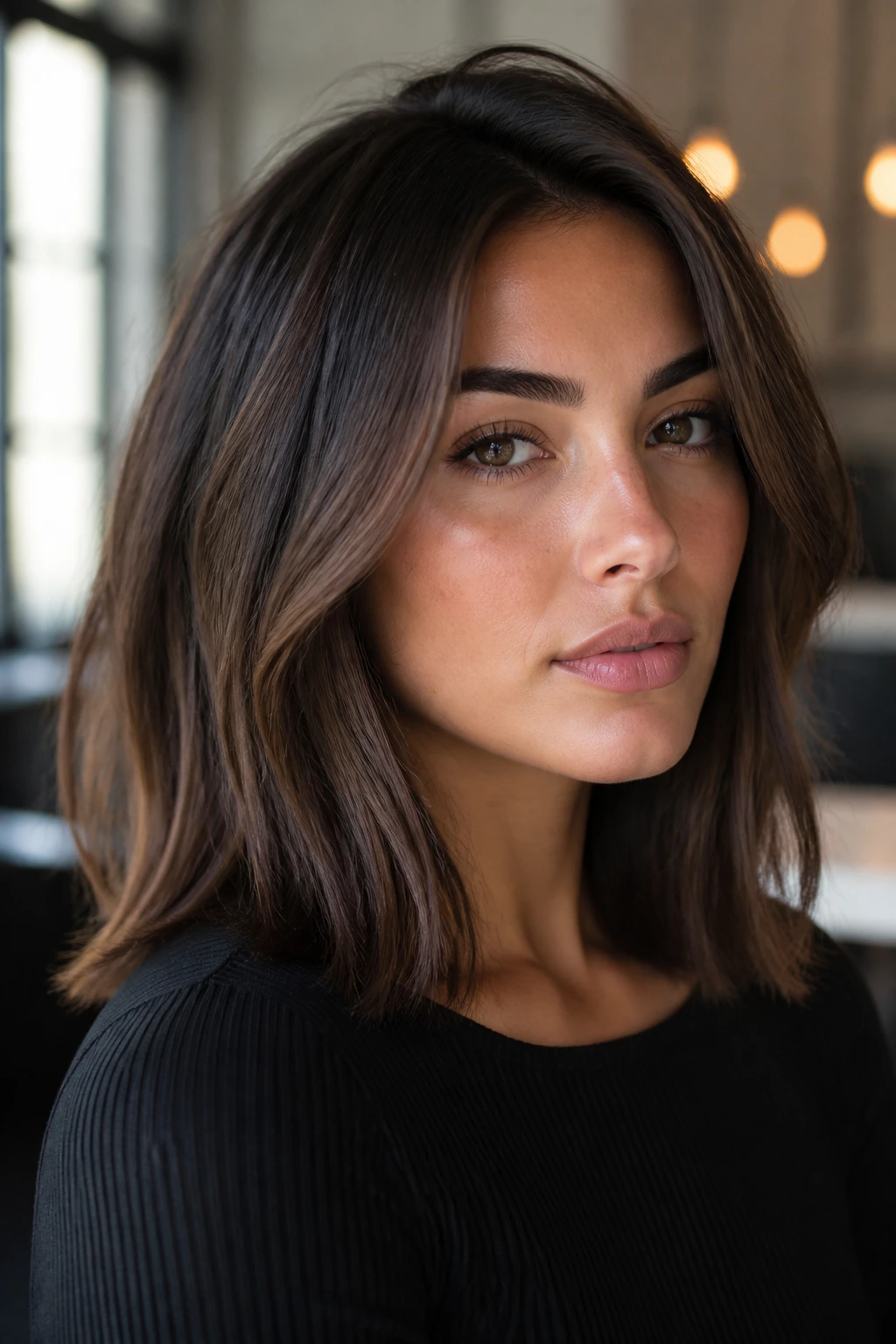
Smoky espresso is for brunettes who want depth with a little air in it. A pearl gloss softens the darkness so the color doesn’t harden into black. On medium-length hair, that kind of finish matters a lot, because the shape of the cut can look heavy if the brown has no reflective quality.
This shade is especially nice on straight or polished styles. The pearl-toned gloss gives the hair a faint cool sheen that looks sleek without leaning gray. If your natural color has warmth that won’t stay put, this is one of the cleaner ways to neutralize it.
Ask your colorist for a gloss rather than highlights if you want to keep the change subtle. Smoky espresso is about polish, not contrast.
20. Almond Brown with Sun-Kissed Tips
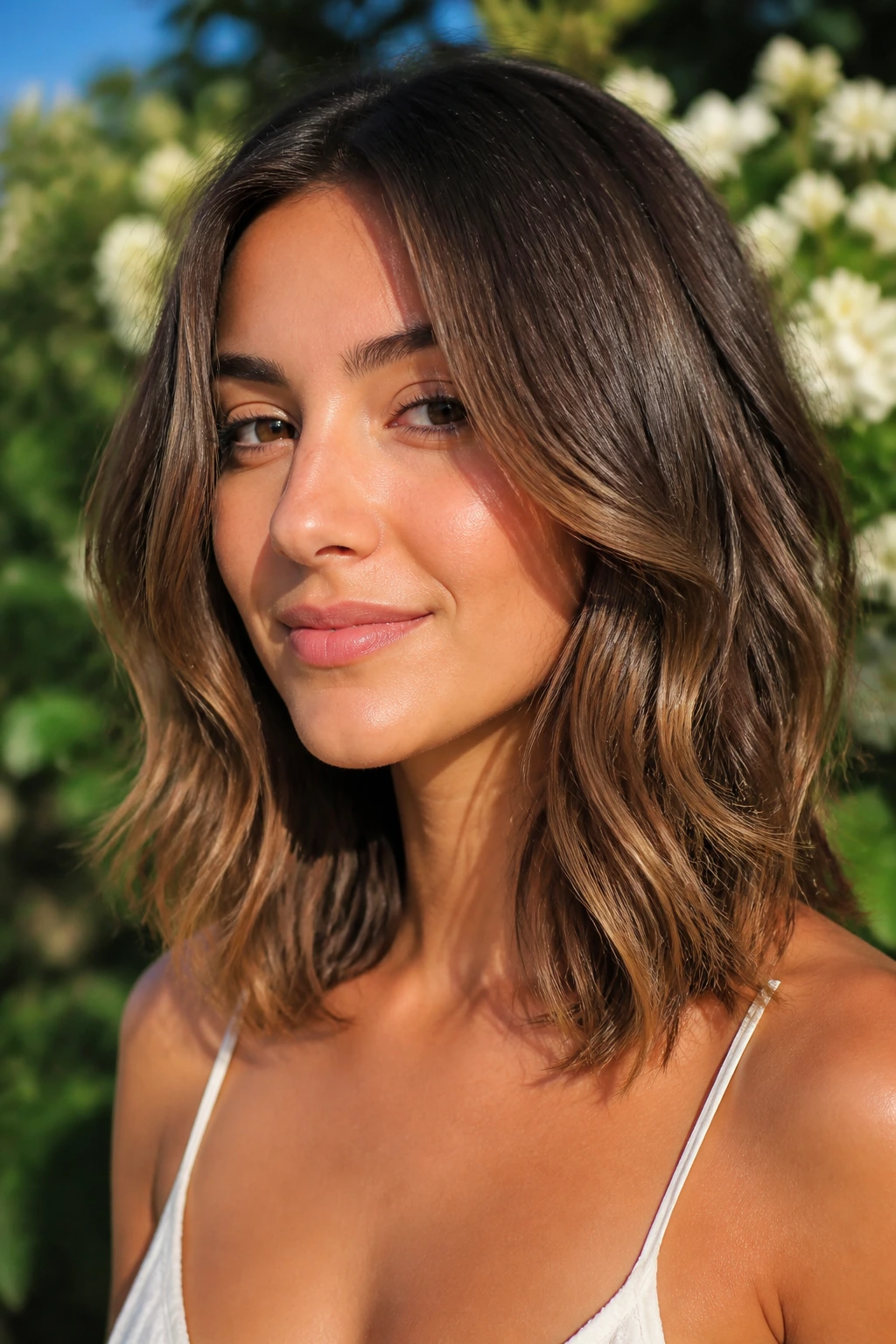
Almond brown sits in a comfortable middle ground: lighter than chocolate, softer than caramel, and calmer than gold. Add sun-kissed tips, and medium-length hair gets just enough lift at the bottom to keep the color from feeling dense. The ends look brighter, but they don’t announce themselves from across the room.
This is a solid choice for layered cuts because the ends are already moving. The lighter tips catch the motion and keep the haircut from looking boxy. It’s also one of the easier brunette ideas to wear if you want brightness but still want to look like a brunette first.
Keep the lift around the bottom inch or two, not halfway up the head. That keeps the ombré from becoming obvious and preserves the softness of the almond base.
21. Cherry Cola Brown with Berry Depth
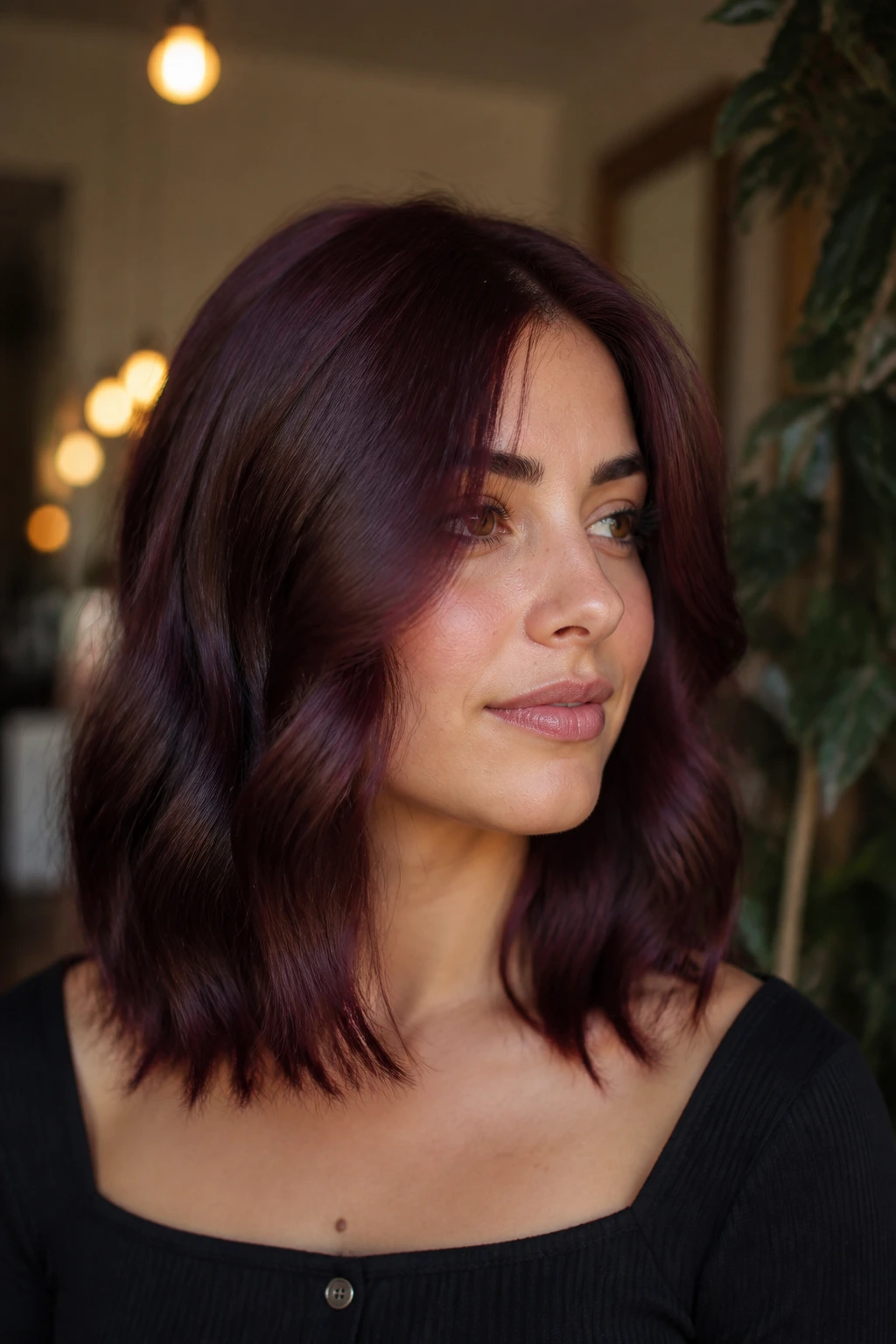
Cherry cola brown has a sneaky kind of drama. Indoors it looks like a deep brunette with a darkened wine tint, but daylight pulls the berry tone forward. Medium-length hair is a good canvas for it because the shade has enough surface to show the red-brown depth without needing long lengths.
This is not bright red. It’s darker, richer, and a little more moody. If you want something that feels different from standard brunette but still stays in the brown family, this is one of the better choices. It loves shine, and a smooth finish helps the cherry tones show instead of getting lost.
A gloss or demi-permanent color usually keeps cherry cola looking intentional. If it starts fading, the red undertone can disappear first, so color-safe care matters here more than with a plain brown.
22. Earthy Chestnut with Auburn Threads
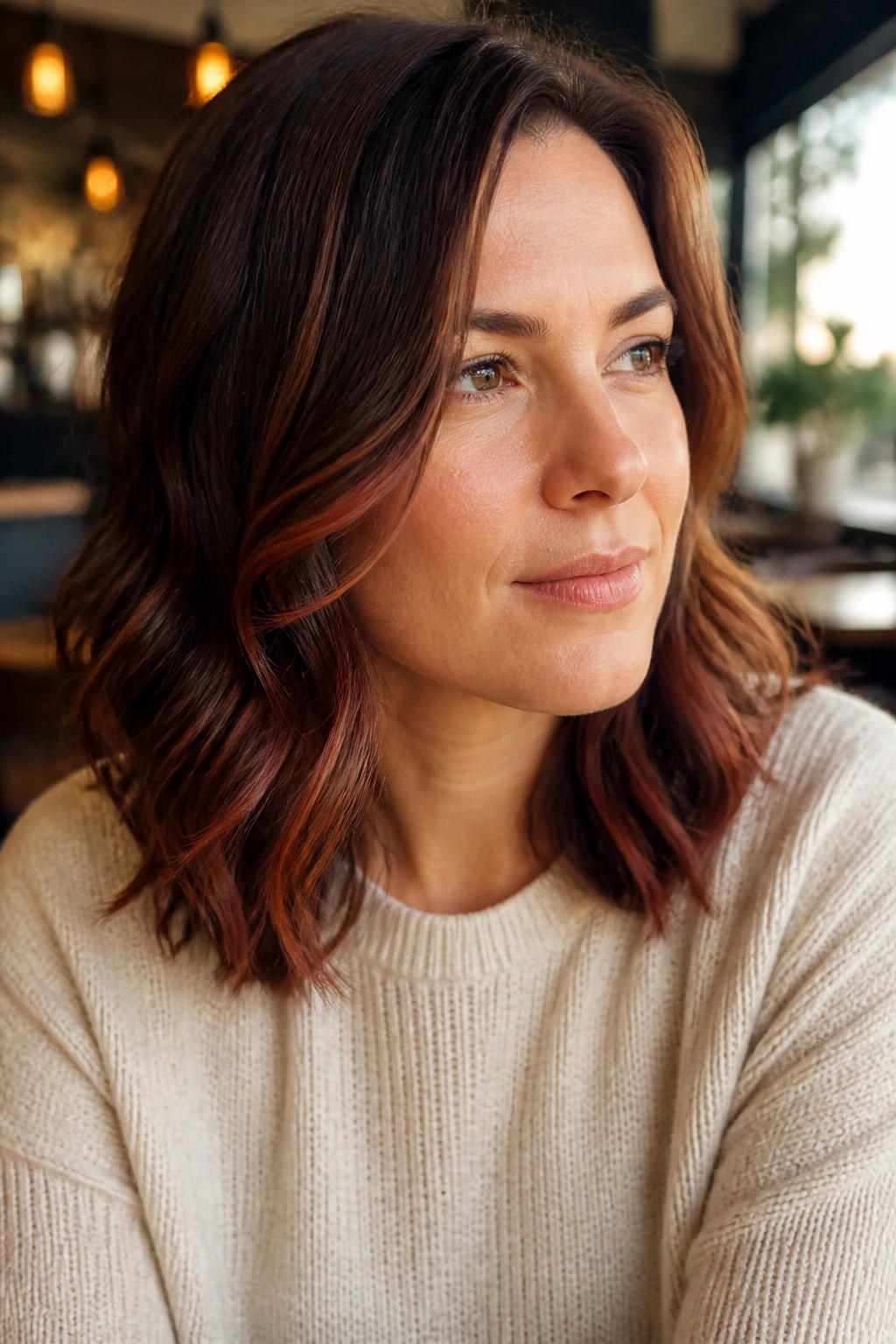
Earthy chestnut is already warm and grounded. Add thin auburn threads, and the whole thing gets more movement without tipping into copper overload. On medium-length hair, the threads show best around the outer layers and ends, where the light can catch them.
This shade feels especially good on thicker hair because the warmer threads break up dense sections. It keeps the brunette base visible while giving the cut some bounce. You don’t need many auburn pieces to make the point. A few strategic ribbons are enough.
If you wear your hair in a side part or soft waves, the auburn flashes show up more clearly. That’s the point. This is one of those colors that looks richer the more natural the movement is.
23. Walnut Biscotti Brown with Mixed Tones
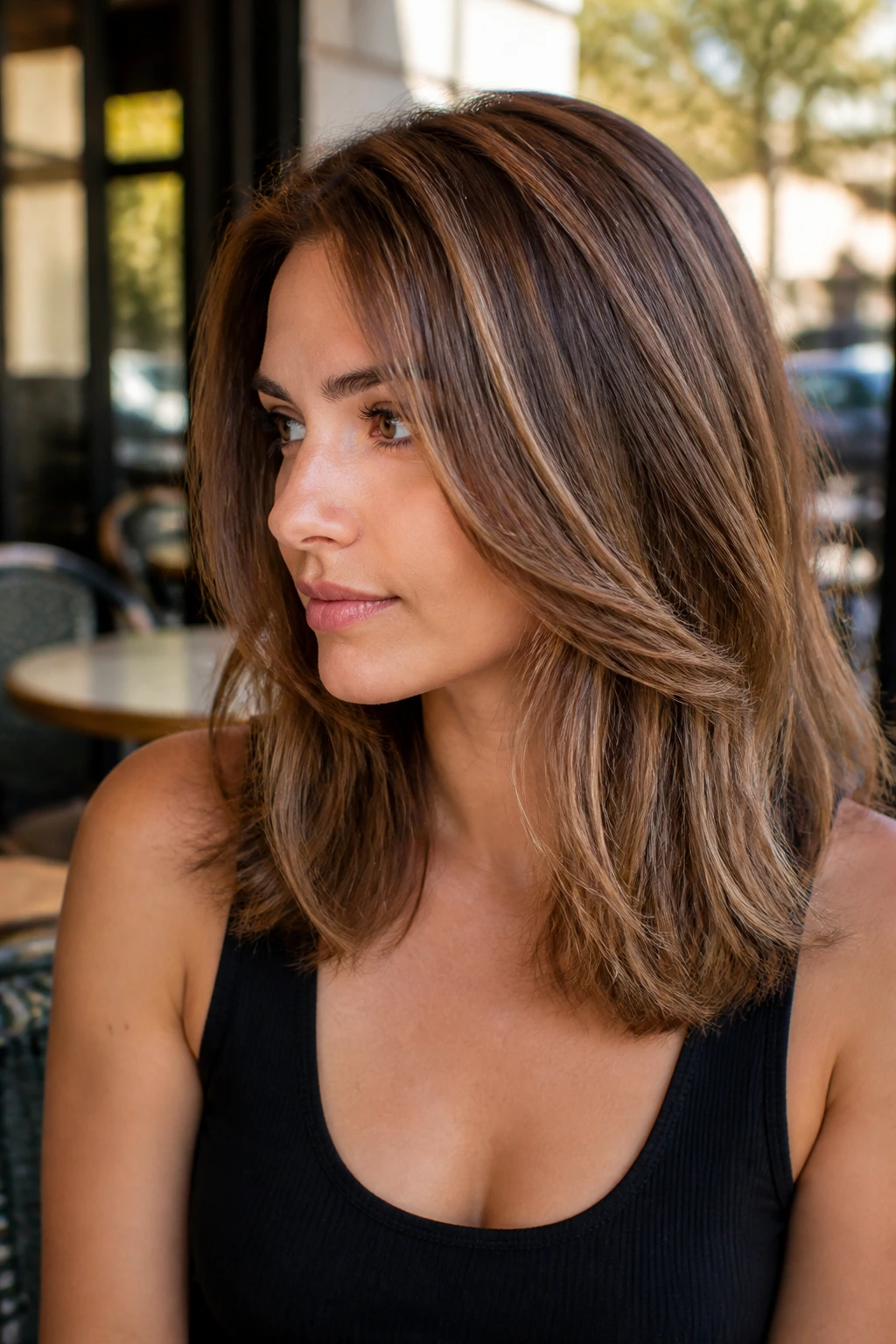
Walnut biscotti brown sounds like a coffee shop order, sure, but the color makes sense. It mixes walnut depth with beige and mocha pieces so the brown doesn’t settle into one tone. On medium-length hair, the mix feels soft and layered, which is exactly where this look shines.
Why It Stands Out
Unlike stronger balayage looks, walnut biscotti doesn’t rely on a dramatic light-dark contrast. The tones are close enough that the hair reads expensive instead of striped. That makes it a smart pick for people who like dimension but hate obvious highlighting.
Ask For
- A medium brown base with a few cooler beige pieces.
- Lowlights in the underneath layers.
- A soft gloss to keep the tonal mix connected.
24. Burnt Sugar Brown with Glossy Waves
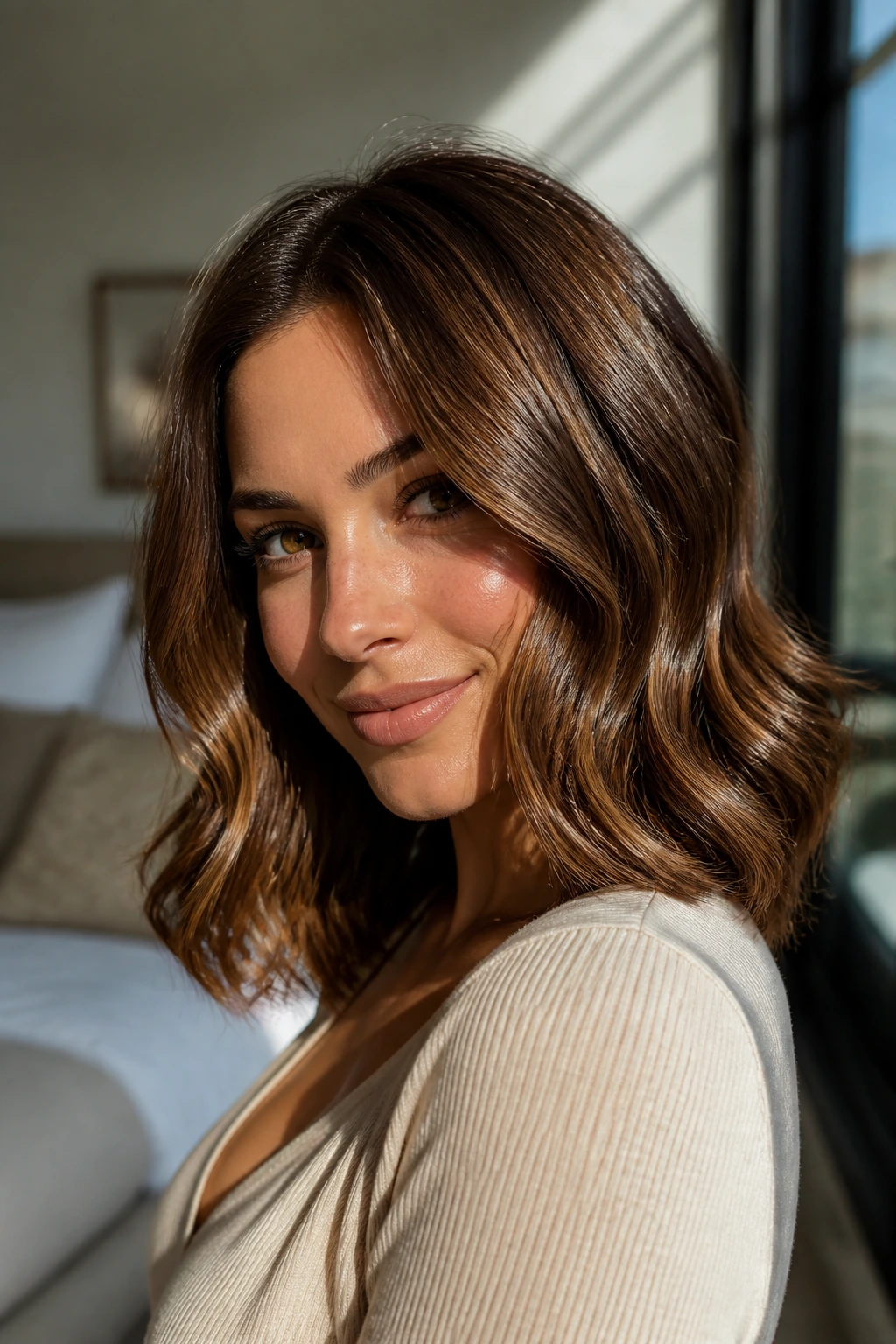
Burnt sugar brown has a caramelized depth to it, like the color spent a little time near warmth and picked up a richer edge. It’s deeper than toffee and warmer than ash, which makes it a good bridge shade for medium-length hair. The glossy waves matter here because the texture shows off the tonal shift.
This color can look flat if the waves are too tight or too uniform. You want a bend with a bit of looseness, the kind that lets the ends sit apart and catch light individually. The darker root and lighter mids should feel continuous, not painted on in separate zones.
Ask for a rich brown base with warm, slightly deepened ends. Burnt sugar should look warm enough to feel cozy, not orange enough to look accidental.
25. Latte Brown with Rooty Dimension
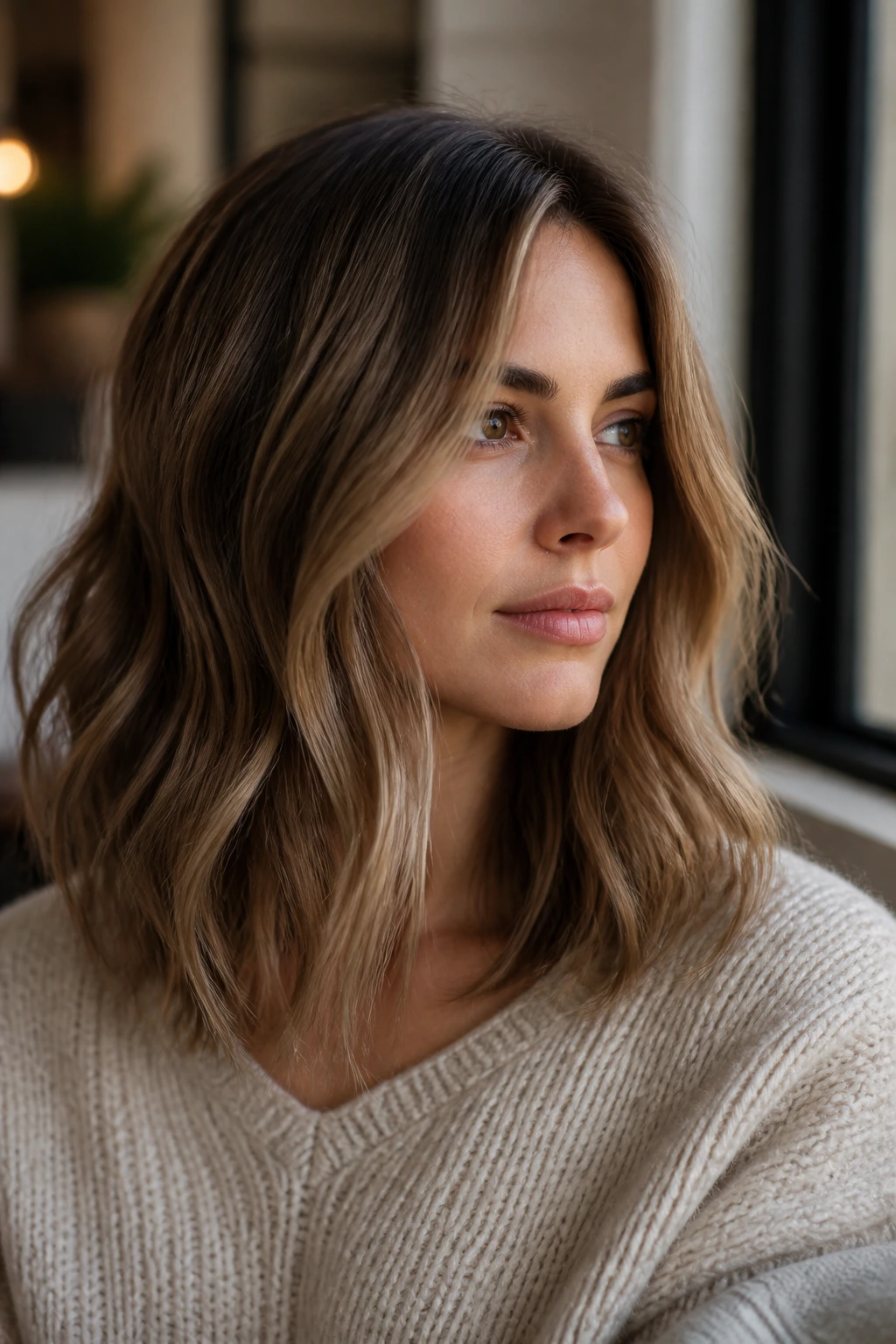
Latte brown is the kind of brunette that looks easy but isn’t actually lazy. The base stays creamy and soft, while the rooty dimension keeps the color from looking overdone. On medium-length hair, this combo is especially strong because the darker root shadow adds shape around the part and the lighter mids keep the cut from sinking.
It’s one of the most wearable options in the whole group. A collarbone cut, a long bob, or a layered shoulder cut can all handle it. The root shadow gives you a little grow-out forgiveness, and the latte tones stop the hair from feeling heavy or flat.
If you want a brown that can move between polished and relaxed without a full salon overhaul every few weeks, this is the one I’d hand to most people first.
Why Medium Length Browns Carry Color So Well
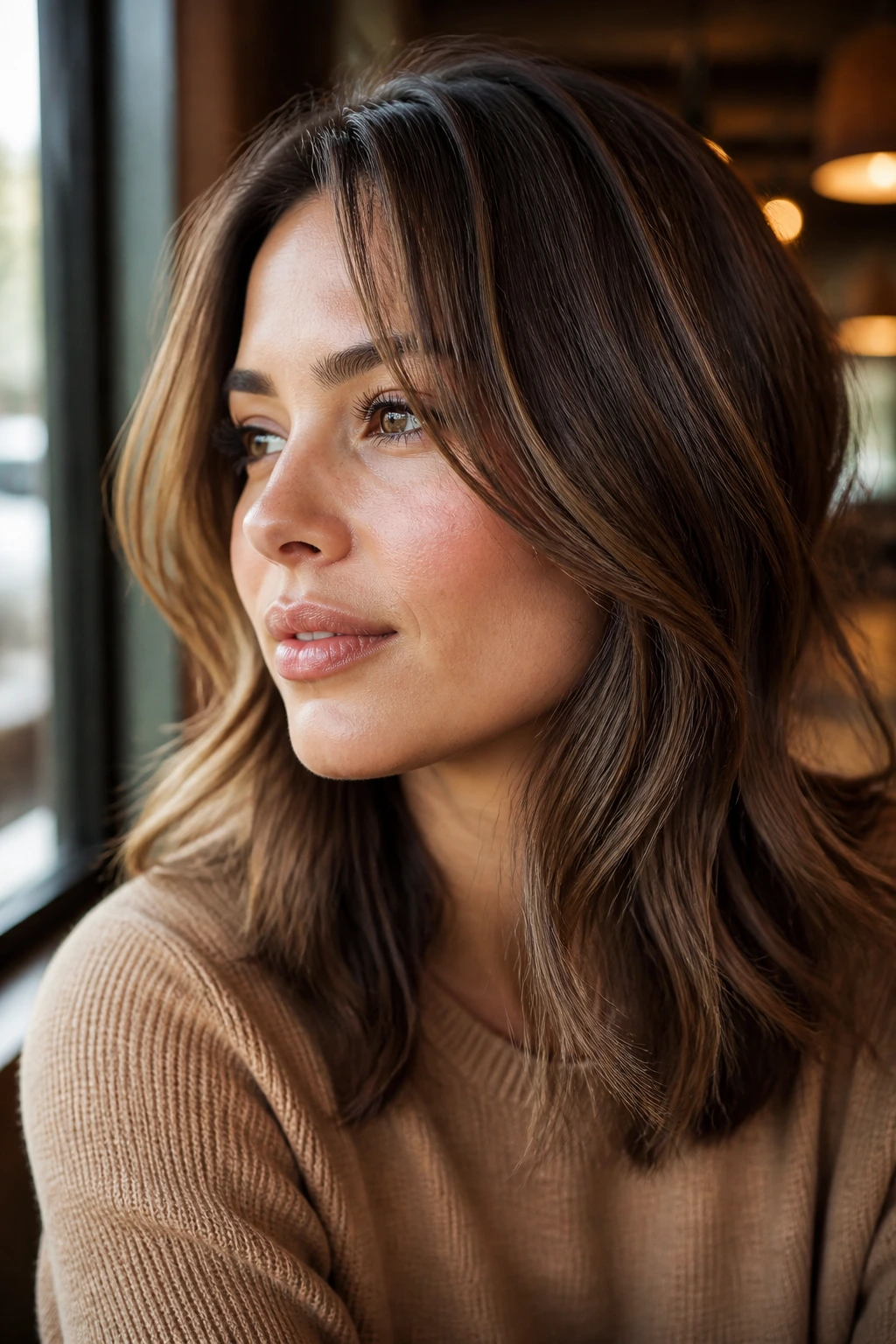
Medium-length hair sits in a sweet spot that colorists like for a reason. There’s enough length for highlights, lowlights, and gloss to show up in layers, but not so much that the ends drag the color down or hide the shape of the cut. That matters more with brunettes than people think. Brown is a working color. It depends on movement, shine, and placement.
A collarbone cut or shoulder-length lob gives color somewhere to live. The front pieces can brighten the face, the mids can carry ribbons or contour, and the ends can stay rich enough to keep the whole style from going transparent. On longer hair, you often have to add more contrast just to keep the shape visible. On medium hair, less can do more.
The other advantage is maintenance. Medium hair doesn’t need as much product or as much toning to stay coherent. A glaze, a root shadow, or a few well-placed highlights can change the whole look without turning your bathroom into a second salon. That’s a practical win, not a romantic one.
Tools and Products That Keep Brunette Color Looking Clean
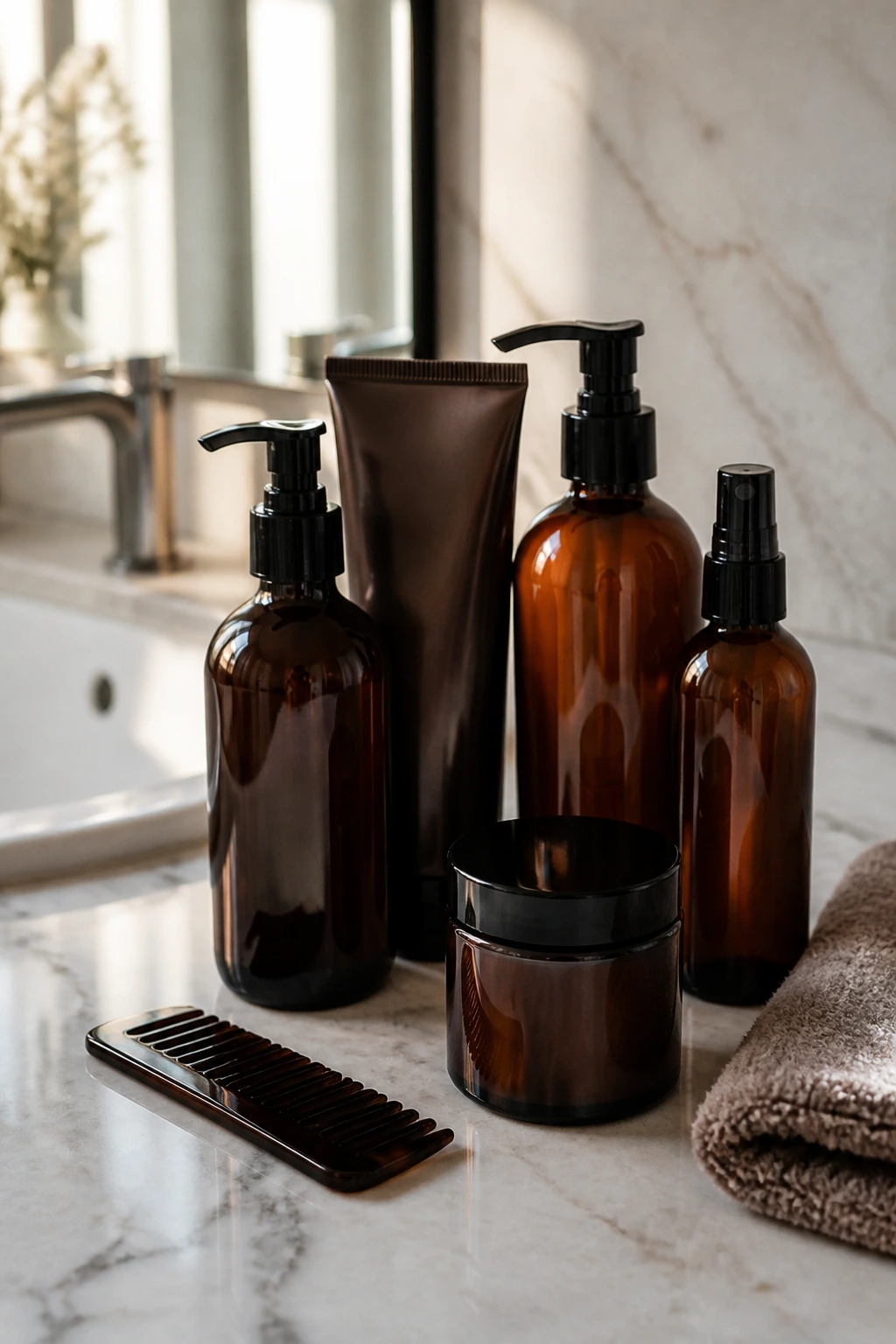
- Color-safe shampoo and conditioner: The basic pair that keeps brown from fading into a dull wash.
- A deep conditioner or weekly mask: Helps the ends stay smooth, which matters more once color has been lightened.
- Heat protectant spray: Use it before blow-drying, curling, or flat-ironing; brown hair can lose shine fast under repeated heat.
- Wide-tooth comb: Gentle detangling keeps lifted pieces from snapping, especially after washing.
- Tint brush and bowl: Handy if you use a gloss, glaze, or color-depositing treatment at home.
- Microfiber towel or soft T-shirt: Less friction means less roughness in the cuticle, which helps glossed brunettes stay reflective.
- 1-inch curling iron or flat iron: A soft bend shows ribbons, lowlights, and tonal shifts better than pin-straight hair.
- Shine serum or lightweight oil: Use a small amount on mids and ends; too much near the root makes brown look greasy instead of glossy.
- Clarifying shampoo: Useful once or twice a month if hard water or product buildup makes the color look cloudy.
- Shower filter: Optional, but worth considering if your water is full of minerals that tug brown tones orange or dull.
How to Choose the Right Medium-Length Brown Hair Color for Your Undertone
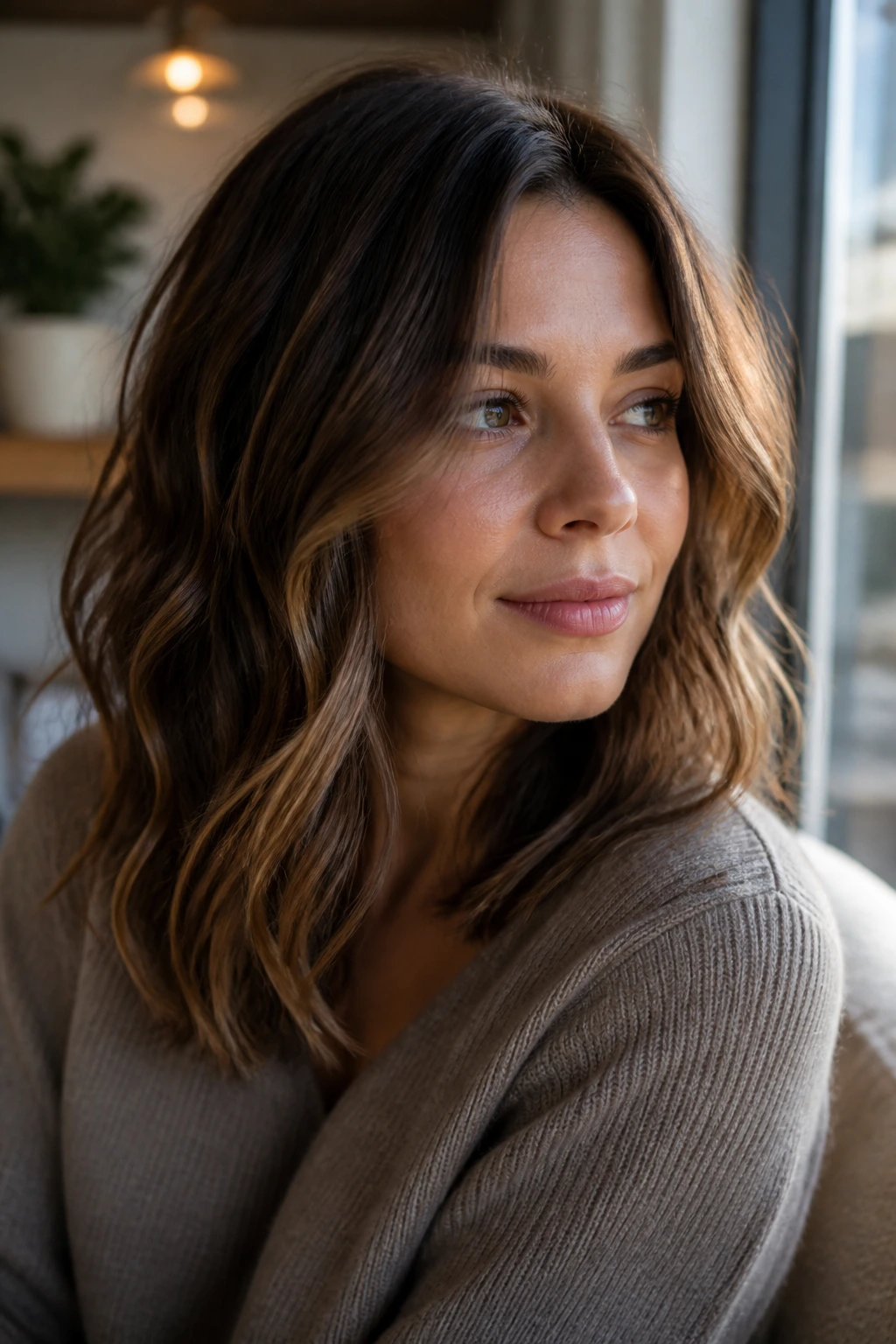
Warm, cool, and neutral all matter here, but the trick is not to turn it into a puzzle. Start with what your skin already does. If your skin looks better with gold, peach, or bronze makeup, warmer brown tones usually feel easier. If silver, pink, or cool taupe sit better on you, cooler brunettes tend to behave more politely.
Warm Undertones
Chestnut, caramel, maple, toffee, and cinnamon brown usually sit well on warm skin because they echo the same undertone family. If you go too ashy, the hair can make the skin look a little tired. A soft golden veil or honey face frame helps keep the brown alive.
Cool Undertones
Mushroom brown, ash brown, cocoa, smoky espresso, and pearl-gloss brunettes tend to flatter cooler skin because they don’t push extra red or orange into the face. If you want depth, cool tones are safer than warm ones. They also tend to look cleaner under natural light.
Neutral or Olive Undertones
You’ve got room to play. The best results usually come from choosing one dominant tone — warm or cool — and letting the rest stay quiet. A brown that tries to be everything at once can look muddy, especially on medium-length hair where the color is visible all the way from root to end.
How to Wear These Shades Without Fighting the Cut
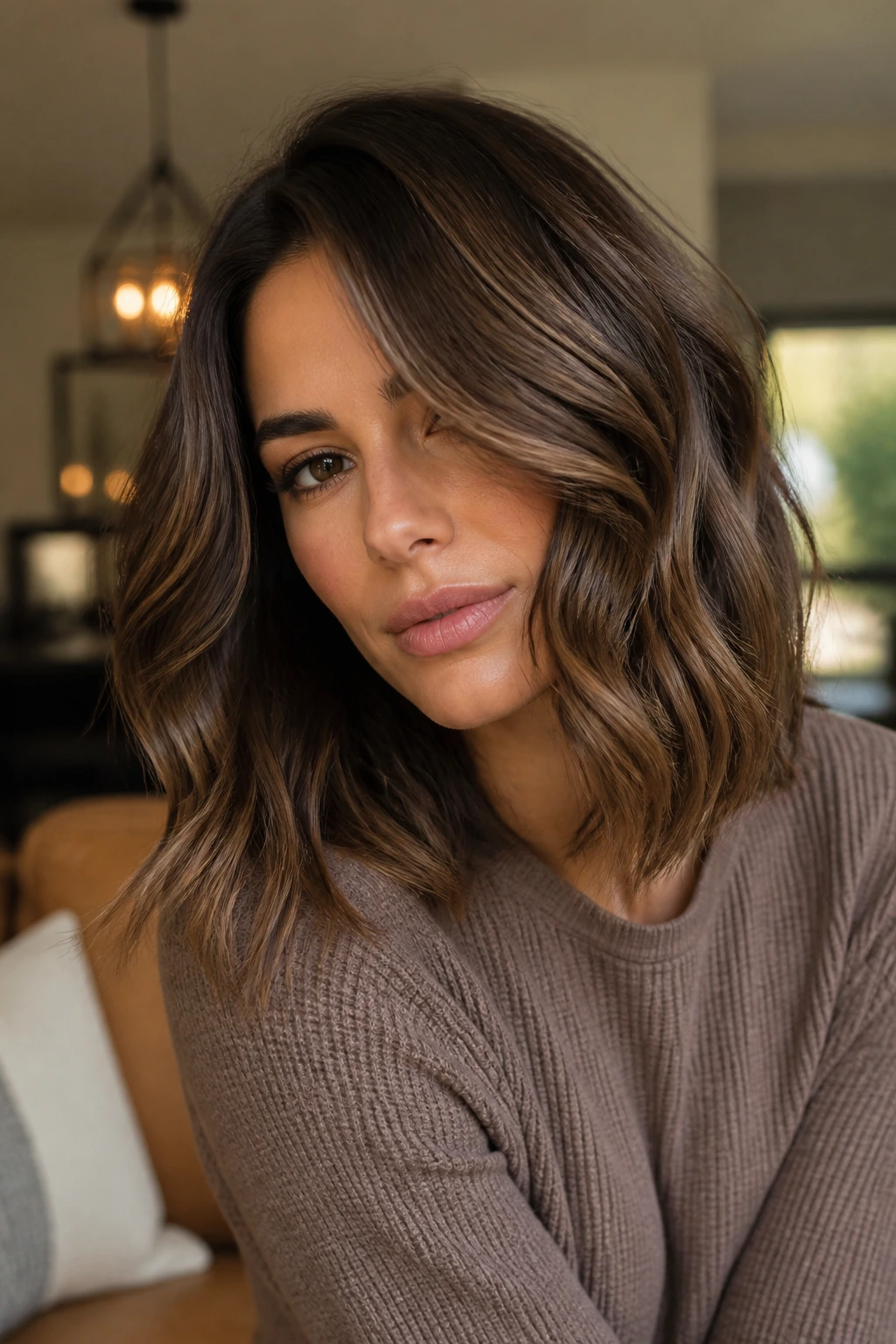
Presentation: Loose bends, soft waves, and a careful blowout show brunette dimension better than stiff styling does. A center part works well for cool shades like mushroom and ash brown, while a soft side part often flatters warmer colors like chestnut, caramel, and maple. If the color includes a money piece or face-framing lift, keep the front pieces visible instead of tucking them away all day.
Accompaniments: Curtain bangs, long layers, blunt lobs, and textured ends all change how the brown reads. A blunt medium cut makes solids like espresso and cocoa look denser; layers make balayage and ribbon highlights move more. Hair accessories should stay simple if the color is already doing a lot.
Portions: If you want a whisper of change, ask for a gloss or a few fine babylights. If you want something the room notices, go for a money piece, a balayage melt, or a stronger tonal shift at the ends. On medium-length hair, small amounts of contrast go farther than they do on long hair.
Beverage Pairing: Keep the salon chair civilized. Clear water, sparkling water, or a pale iced latte is the safest match while your color processes, because dark drinks and fresh toner have a talent for meeting at the worst possible moment.
Color Boosters and Styling Tricks Worth Borrowing
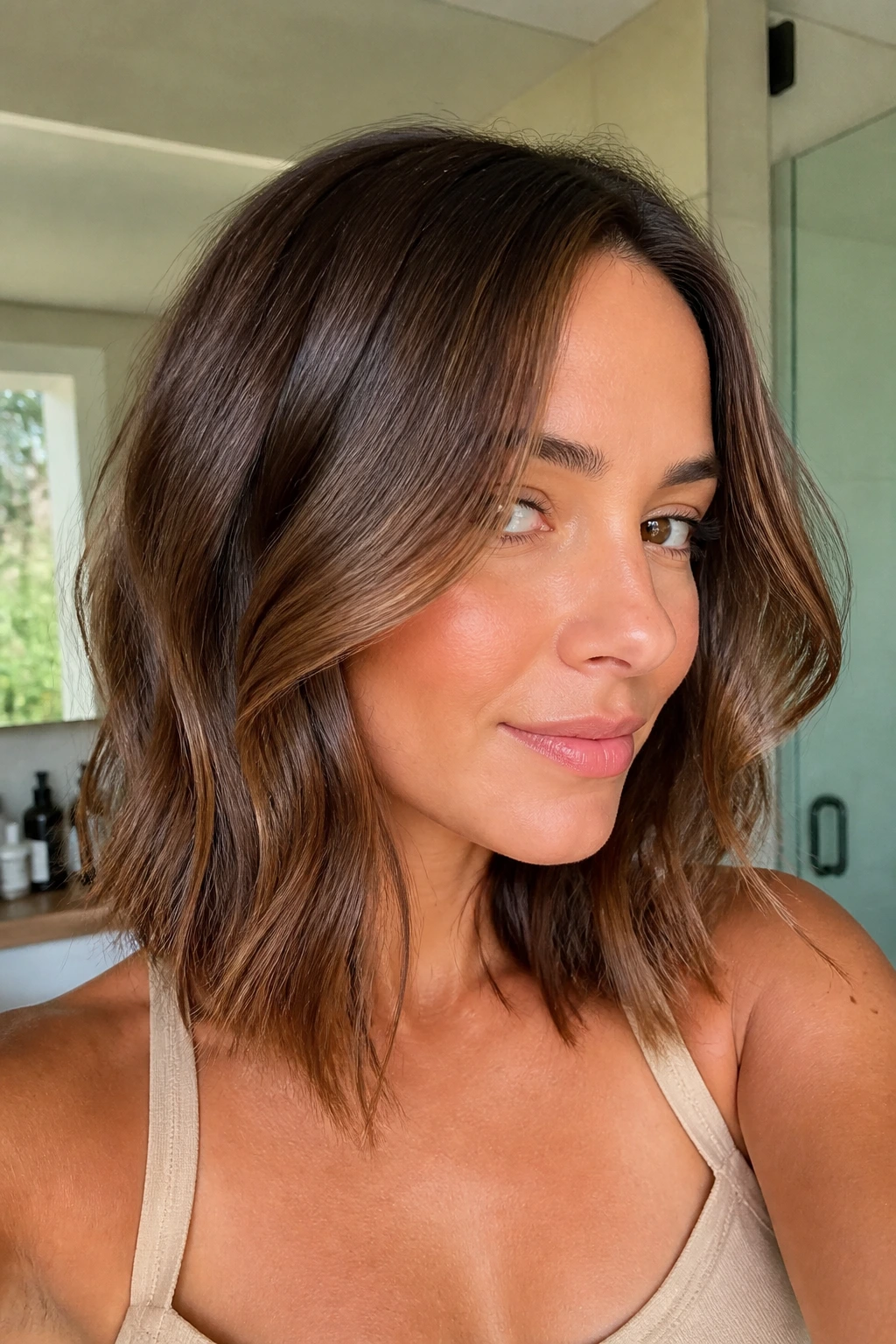
Gloss Trick: A clear or tinted gloss every few weeks keeps brown hair from turning matte and tired. If the color leans warm, a beige gloss keeps it soft; if it leans cool, ask for ash or pearl.
Texture Trick: One loose wave can do more for brunette dimension than twenty minutes of overstyling. The point is not beach hair. It’s separation at the mids and ends so the color has places to show.
Warmth Control: If your brown starts pulling orange, use blue shampoo sparingly and pair it with a hydrating mask. Purple shampoo alone can make some brunettes look dusty rather than cool.
Make-It-Yours: Fine hair usually looks best with babylights, glossy solids, or a root shadow that keeps the base intact. Thick hair can handle chunkier ribbons, underlights, and bolder contrast because it has enough density to support the color without looking patchy. Curly hair usually benefits from more depth underneath than brightness all over.
Maintenance, Fade Control, and Grow-Out Timing
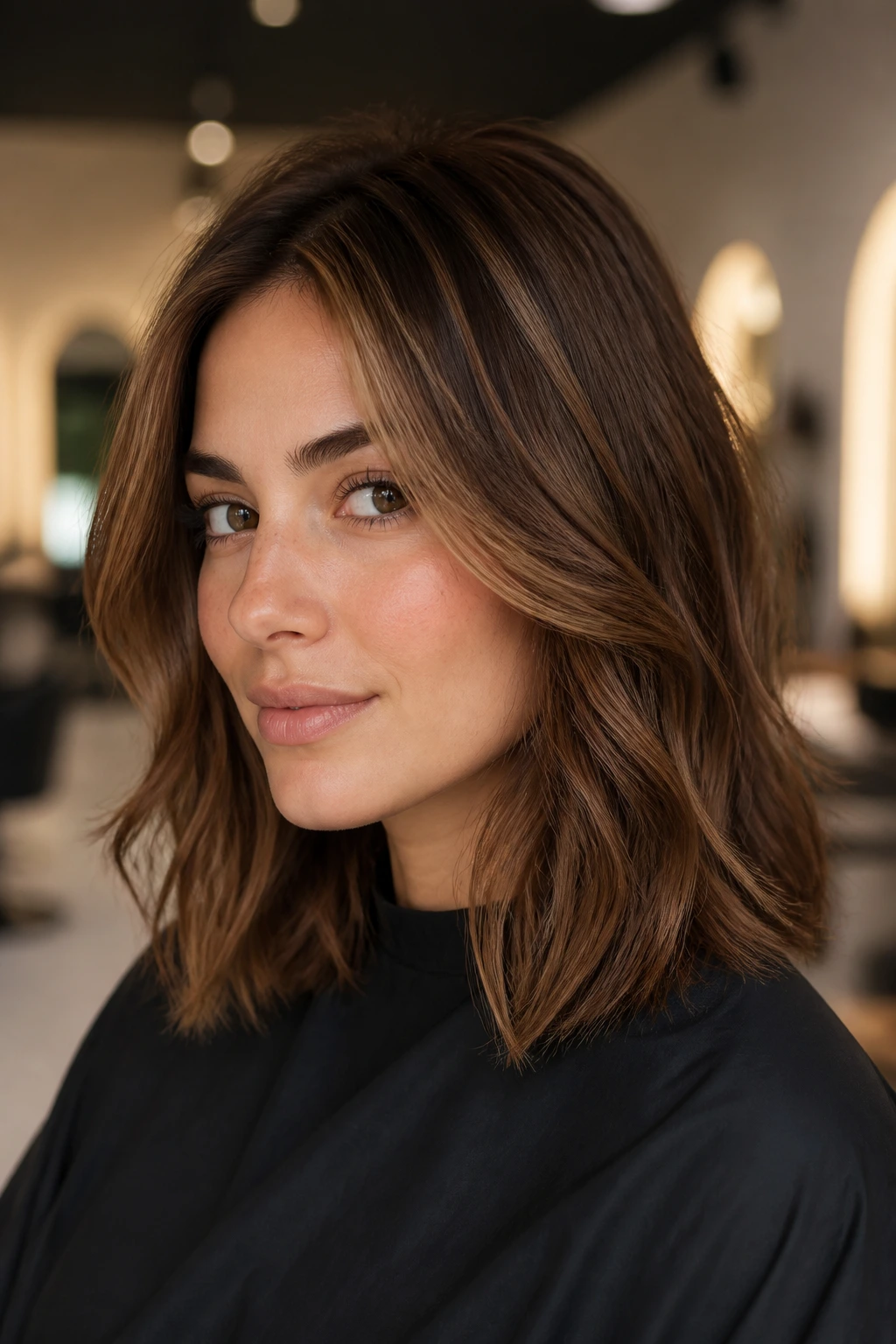
Brown fades more quietly than red or bright fashion color, but that does not mean it stays perfect on its own. If the shade has highlights or a gloss, the shine will soften first. The undertone usually follows. Warm browns can drift orange, cool browns can turn flat, and both can start looking tired if the ends get rough.
A good rule: wash color-treated brown hair about 2 to 3 times a week if you can. On the weeks you wash more often, use color-safe shampoo and cool to lukewarm water on the final rinse. Hot water strips the finish faster than most people expect. If hard water is part of the problem, a clarifying shampoo once every 2 to 4 weeks can help, but do not overdo it or you’ll scrub away the tone you just paid for.
Glossing schedules depend on the look. Solid brunettes and root-shadowed colors usually do well with a refresh every 4 to 6 weeks. Balayage, money pieces, and lowlights can often stretch farther — around 8 to 12 weeks — as long as you keep the ends conditioned. If you use heat often, a protectant before every blow-dry or curl helps preserve the shine between appointments.
Trim the ends every 8 to 10 weeks if your medium cut is lightened. Once the bottom starts looking dry, brown hair loses its depth fast. And if you want to stretch a salon visit, keep the root area close to your natural color or ask for a shadow root. That one move buys time.
Variations and Adaptations to Try
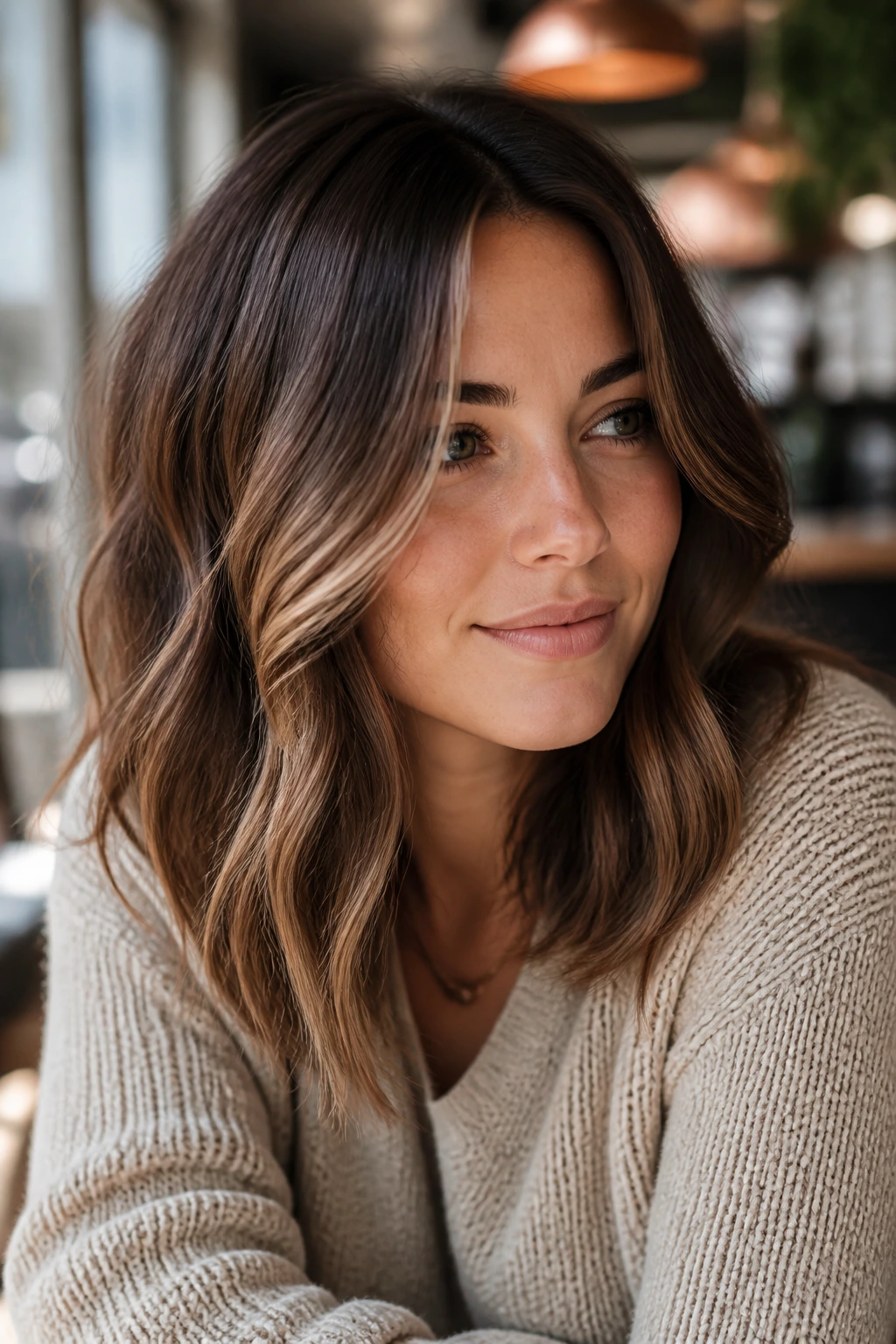
Soft Grow-Out Brunette: Ask for a shadow root and keep the lightest pieces only 1 to 2 levels above your base. This version is for people who want dimension without a hard regrowth line. It looks especially good on medium cuts with movement around the face.
High-Contrast Money Piece Brunette: Keep the back and ends rich, then brighten the front panels more aggressively. The contrast gives the haircut immediate shape and works well if you usually wear your hair tucked behind one ear or clipped back. It’s a visible change without committing to an all-over lighter brown.
Gray-Blending Chestnut: Mix chestnut, beige-brown, and a few fine highlights near the part line to soften early grays. The goal is to blur, not cover everything at once. This approach keeps the brunette base intact while making grow-out less obvious.
Curly Brunette Dimension: Curly and wavy medium-length hair usually needs more depth underneath and a lighter touch on top. A few ribbons or lowlights placed where curls separate can keep the shape from puffing out. Heavy highlighting all over can make curls look frayed, so restraint helps.
Warm Copper-Brown Shift: If you like warmth but do not want red hair, ask for maple, cinnamon, or chestnut with a copper glaze. Keep the copper in the veil, not the whole head. The result reads richer in daylight and softer indoors.
Common Mistakes That Flatten Brunette Color
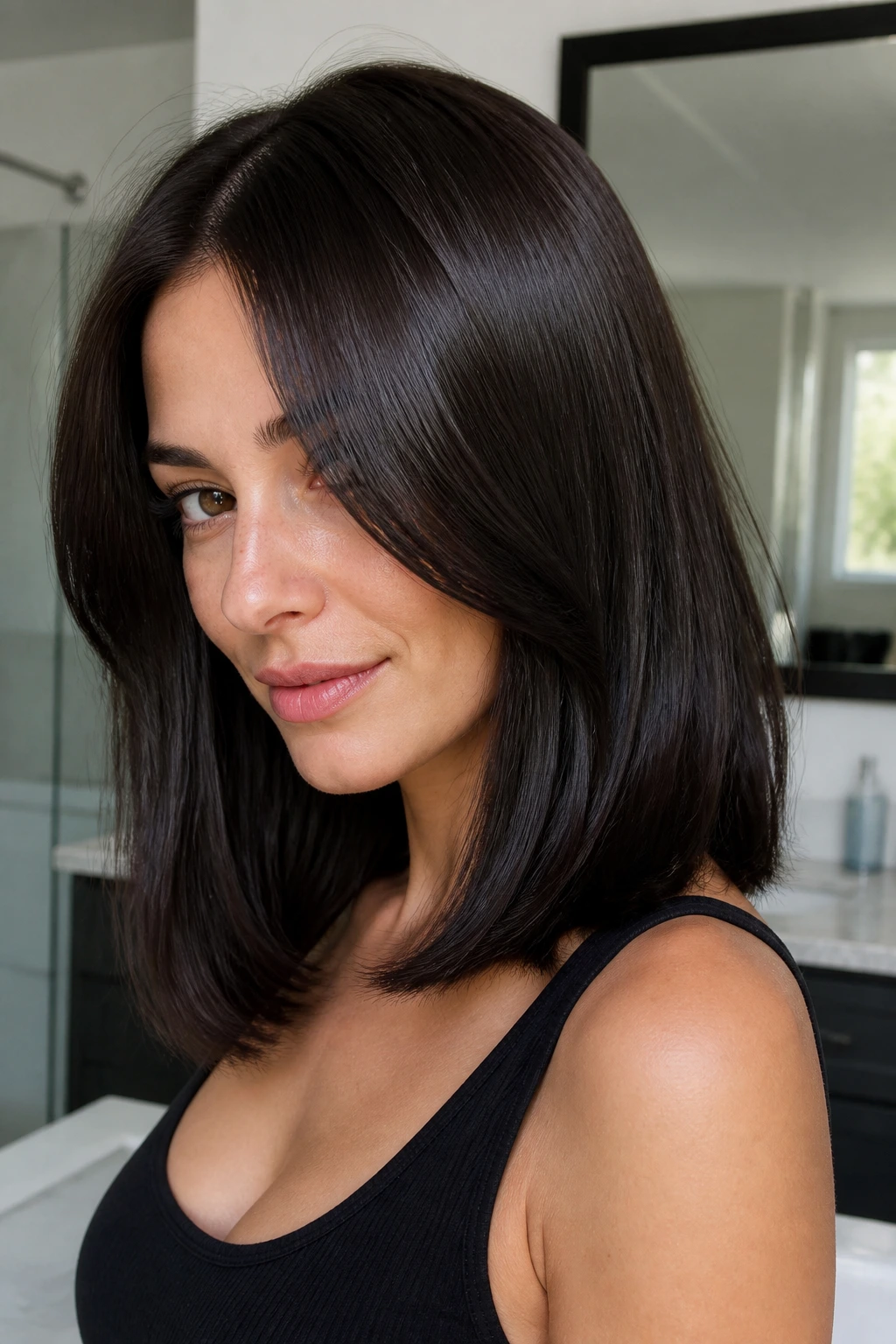
- Going too light on a medium cut: If the whole head jumps several levels lighter, the ends can look thin and the brown identity disappears. The fix is to keep most of the color in the brunette family and use brightness in targeted pieces.
- Ignoring your undertone: Warm skin with an icy ash brown can look a bit washed out; cool skin with too much gold can look brassy. Match the undertone first, then decide how bold the contrast should be.
- Putting all the lightness only on the ends: That creates a dip-dye effect that can make medium hair look bottom-heavy. Better to spread brightness through the mids, face frame, or top layer.
- Overusing purple shampoo on warm brunettes: A little can help neutralize brass, but too much can leave the color dusty and dull. Use it only when the brown starts leaning orange, not every wash.
- Skipping gloss after lightening: Highlighted brunette hair needs some shine put back into it. Without a glaze, the tones can turn rough at the surface and lose the clean brown look.
- Using too much heat without protection: Flat, dry ends make even a beautiful brown look older than it is. Heat protectant is not optional if you care about the finish.
Frequently Asked Questions
Which medium-length brown hair color is the lowest maintenance?
A soft espresso base with a shadow root or a latte brown with rooty dimension usually grows out the cleanest. Both keep the root area close to natural while letting the mids and ends hold the interest, so you are not racing back to the salon every few weeks.
Is balayage better than highlights on shoulder-length brown hair?
Balayage usually looks softer on medium-length brunettes because the hand-painted placement blends into the cut’s movement. Traditional highlights can still work, especially if you want brighter contrast near the front, but balayage is easier to grow out and tends to look less stripy on a lob.
How do I stop brown hair from turning orange?
Use blue shampoo sparingly, not obsessively, and keep a moisturizing mask in the mix so the hair doesn’t get dry and porous. If the warmth keeps returning, ask for a cooler toner or a gloss with ash or beige undertones instead of trying to fight it with shampoo alone.
Can I go from black to medium brown in one appointment?
Sometimes, but not always without compromise. If your hair is dyed black, a colorist may need more than one session or a careful lift-and-tone plan to avoid orange ends and damage. Natural black hair can also need gradual lightening if you want a soft medium-brown result instead of a harsh warm shift.
What brown shade makes hair look thicker?
Dimensional browns with lowlights, babylights, or a soft shadow root usually make hair look fuller than a single flat color. Walnut brown, mocha babylights, and cocoa shades are especially good when the goal is more visual density.
Does medium-length curly hair work with highlights?
Yes, but the placement has to follow the curl pattern. Curly hair usually looks best with lighter pieces where the curls naturally separate and with more depth underneath, so the shape doesn’t puff out or look overprocessed.
How often should I refresh brunette gloss?
A gloss every 4 to 6 weeks works well for most brown shades, especially if you want shine to stay crisp. Balayage and lived-in colors can stretch longer, but the finish will usually soften before the actual color looks grown out.
What if my brown hair looks flat after a week?
That usually means the surface lost shine or the color lacked enough dimension to begin with. A lightweight serum, a soft wave, or a quick clear glaze can help, but if the hair still reads one-note, ask for lowlights or a few finer ribbons at the next appointment.
Brown With Movement
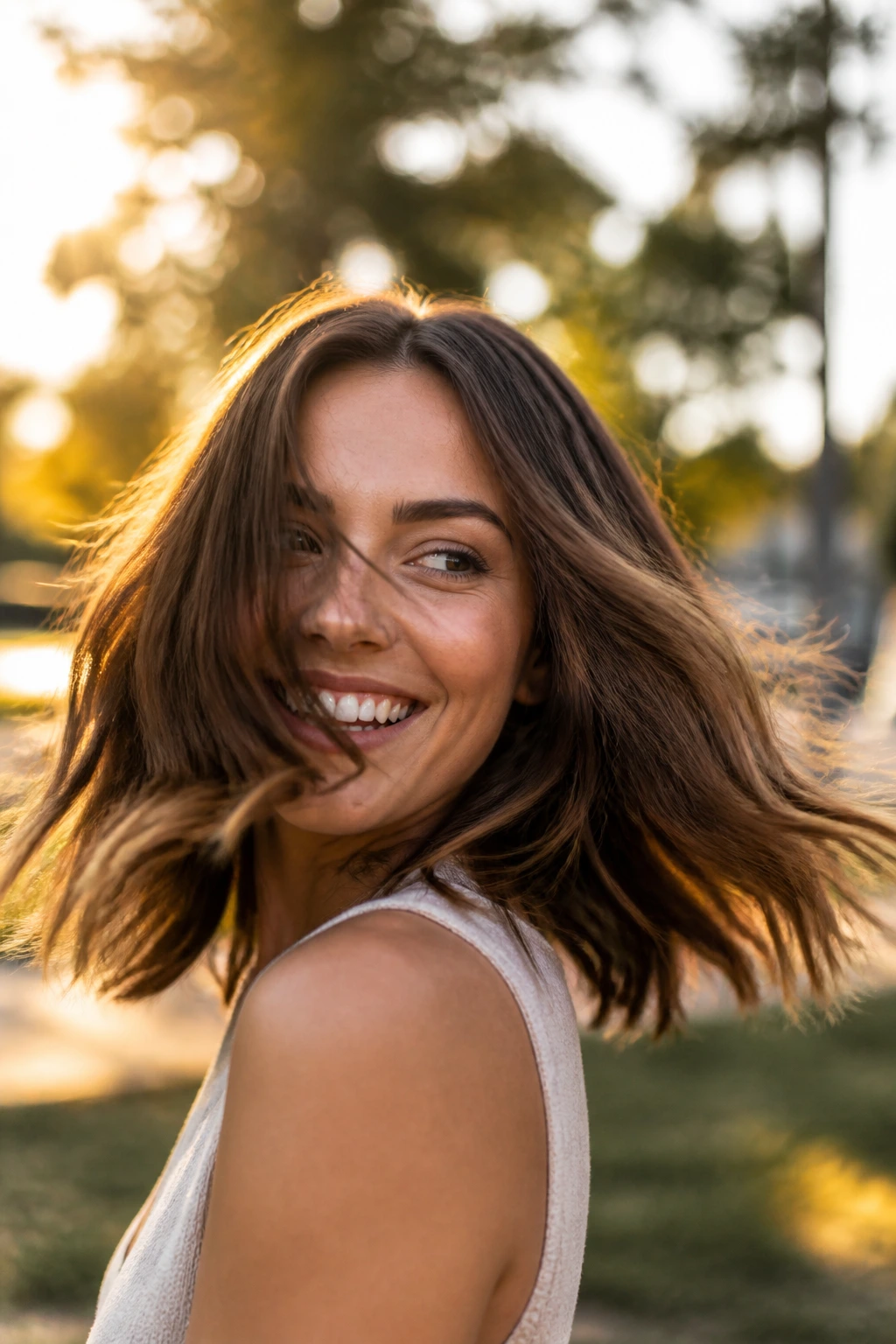
A good brunette on medium-length hair doesn’t need to scream. It needs shape. The best shades in this group work because they respect the cut — they land where the hair bends, they brighten the face without frying the ends, and they grow out in a way that feels intentional instead of messy.
That’s the real advantage of medium-length brown hair color ideas: they give you room to play without forcing you into a high-maintenance corner. Pick the tone that matches your undertone, the placement that fits your cut, and the finish your routine can actually support. That combination is what keeps a brown looking alive two weeks later, not just on the day you leave the salon.
