



Brunette hair can look flat in a hurry. On a medium-length cut, there’s nowhere to hide a muddy tone or a sloppy highlight line, which is exactly why the right color placement matters so much.
That’s also why medium length brunette hair color ideas are more interesting than they first appear. A collarbone lob, a shoulder-skimming cut, or a layered midi shape gives color enough room to move, but not so much length that the good parts disappear into the ends. When the shade is right, the hair looks denser, shinier, and more deliberate. When it’s wrong, every stripe and every brass-y patch shows.
The smartest brunette shades on medium hair do one of three things: they deepen the base and let the shine do the work, they break up the brown with ribbons or babylights, or they soften the grow-out so the color keeps looking tidy after a few weeks. That’s the whole game. Not more blonde. Better placement.
Why Shoulder-Length Brunette Color Gets So Much Mileage
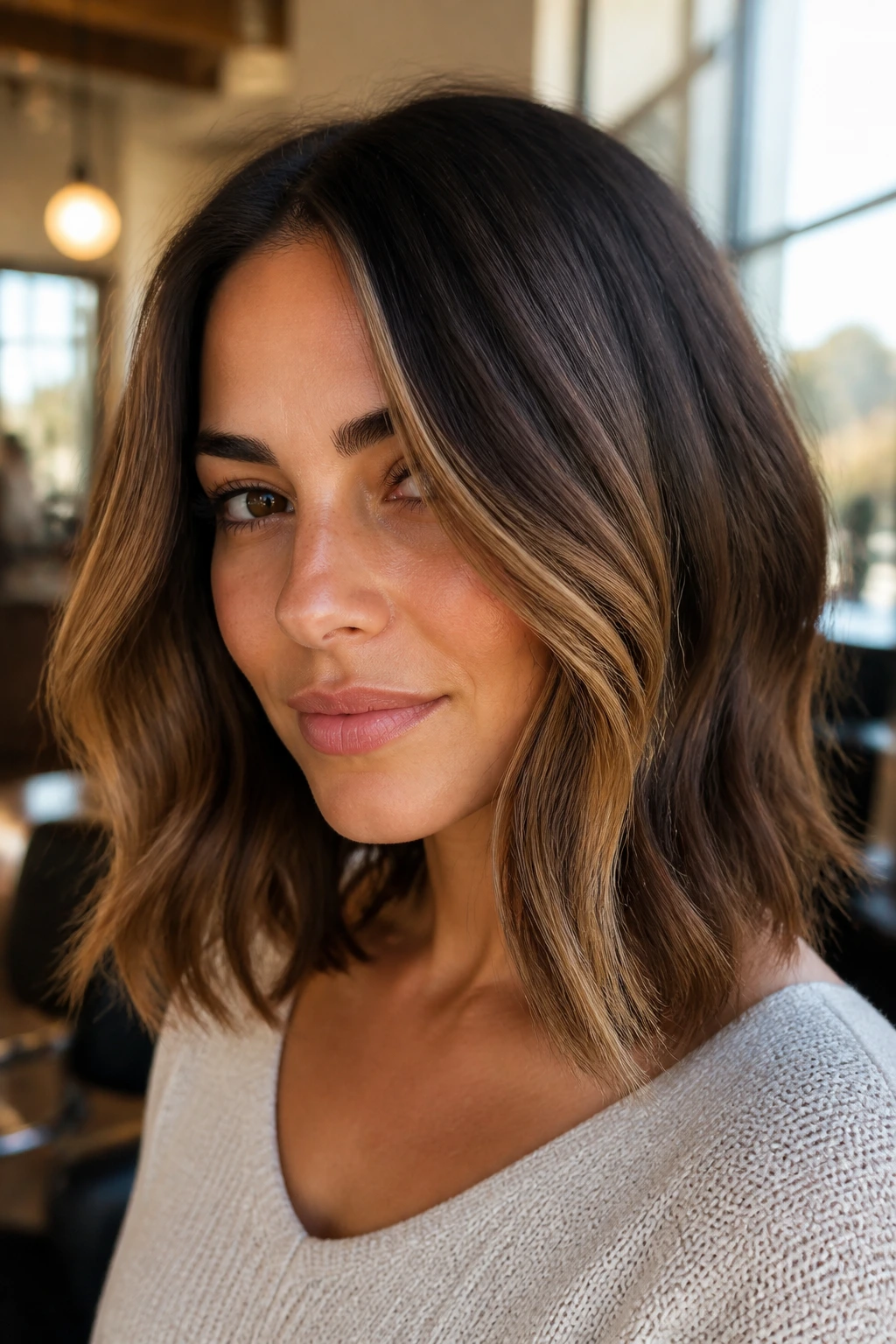
-
The shape does half the work: On a lob or shoulder-length cut, highlights sit closer to the face and ends, so even a subtle change in tone reads clearly without needing extra length.
-
Contrast shows faster: Medium hair gives you enough surface area for balayage, money pieces, or lowlights, but not so much hair that the dimension gets swallowed up.
-
Grow-out is easier to manage: A soft shadow root or root melt blends into the haircut instead of sitting like a hard line two inches from the scalp.
-
Texture changes the result in a good way: Loose waves make caramel and bronze pieces flash; a sleek blowout makes espresso, mocha, and ash tones look smoother and richer.
-
The haircut can be part of the color story: Blunt ends look thicker with deeper brunettes, while layered mids look lighter and airier with ribbons or babylights.
-
There’s room to be subtle or bold: Medium-length hair can handle a whisper of chestnut or a stronger bronde blend without tipping into the overdone zone.
1. Espresso Gloss With a Soft Shadow Root
Espresso gloss is the shade I reach for when someone wants brunette hair that looks polished in low light and almost lacquered in daylight. On medium-length hair, it makes blunt ends look dense and clean, especially if the cut sits right at the collarbone or just below it. The soft shadow root keeps the whole thing from reading as one solid block.
Who It Flatters
This works especially well if your natural hair is already medium brown or darker and you do not want a high-maintenance color routine. The gloss catches shine on the top layer, while the shadow root buys you some breathing room when your roots start growing.
If your hair tends to frizz, this shade can be a little unforgiving without good smoothing products. But on a sleek blowout or a smooth bend with a curling iron, it has that deep, expensive-looking brown tone that makes the haircut feel sharper.
2. Milk Chocolate Balayage
Milk chocolate balayage is for the brunette who wants movement without obvious contrast. The base stays a warm medium brown, then softer, lighter ribbons get painted through the mid-lengths and ends so the color shifts instead of shouting. On medium hair, that matters. You can actually see the sweep of the color when the layers move.
Ask for pieces that are only one to two levels lighter than your base if you want this to stay believable. Too much lift and it turns into a caramel look. Too little and you lose the point.
- Best on layered cuts: The ribbons show up in the bends of the hair instead of hiding in the bottom panel.
- Best finish: A round-brush blowout or loose S-waves.
- Salon note: Keep the lightest pieces below the root area so the grow-out stays soft.
3. Mushroom Brown With Smoked Ends
Mushroom brown is the answer when warm tones keep turning orange on you. It sits in that cool, earthy zone between ash, taupe, and soft brown, and the smoked ends keep the shade from looking flat. On medium-length hair, the effect is elegant in a quiet, practical way. It doesn’t scream for attention; it looks considered.
What Makes It Different
The trick here is balance. Too much ash and the brown goes muddy. Too much beige and you lose the mushroom note entirely. A good version has a cool root, neutral mids, and slightly deeper ends so the whole cut keeps its shape.
This shade makes the most sense if your skin leans cool or neutral and you do not want caramel fighting your undertones. It also works on straight hair better than people expect, because the smoky tone shows the haircut’s outline rather than relying on waves.
4. Caramel Ribbon Highlights
Caramel ribbon highlights are a safer version of blonde on brown hair, and that’s why they stay popular. The ribbons are wide enough to catch the eye but not so chunky that they slice through the haircut. On a medium-length brunette, they thread through the top layer and around the face, which is where the light lands first anyway.
Quick Placement Notes
- Keep the ribbons around the face and upper mids, not packed only into the ends.
- Ask for a caramel tone that stays warm but not yellow.
- A soft wave makes the ribbons look intentional; pin-straight styling can make them read harsher.
This is one of those shades that gets better with movement. If you like curling your hair away from the face, the lighter pieces flash and make the cut feel fuller.
5. Chestnut Face-Framing Pieces
Chestnut face-framing pieces are the easiest way to change your brunette without touching the entire head. You leave most of the base alone, then brighten the first few pieces around the cheekbones, jawline, and front layers in a warm chestnut tone. On medium hair, the effect is immediate because those front pieces sit right where people look first.
The reason I like this more than a heavy full-head highlight is simple: the haircut still feels like yours. It just has better light around the face. If your ends are blunt, chestnut framing also softens the edge a little, which can be useful if you want the cut to look less severe.
6. Mocha Melt With a Dark Root
A mocha melt is what happens when you stop trying to force one brown tone everywhere. The root stays deeper, the mids soften into mocha, and the ends drift a touch lighter so the color moves in a slow fade. Medium-length hair is the sweet spot for this because the gradient has enough room to show before the ends disappear.
Unlike a stripey highlight job, this shade works by blending, not contrast. That means it’s forgiving on days when you wear your hair up or tuck one side behind your ear. The whole thing still reads as brunette, but not flat.
If you usually wear your hair sleek, keep the end shade close to the mids. If you wear waves, you can push the fade a little farther because the bends show the transition.
7. Hazelnut Money Piece
A hazelnut money piece gives you the instant brightening effect people usually want from blonde, but without making the rest of the brunette feel disconnected. It’s lighter right at the front, usually one to two levels above the base, and then it melts back into a deeper brunette through the rest of the cut. On medium-length hair, that placement hits the cheekbones in a useful way.
Why It Works on Medium Hair
Because the haircut isn’t too long, the lighter front pieces stay visible instead of disappearing into heavy lengths. They also stop the face from getting swallowed by a dark base, which can happen fast on a blunt lob.
This is the color I’d pick if you like a center part, curtain bangs, or a soft wave around the face. It’s not subtle, but it’s not loud either, and that line matters.
8. Golden Toffee Lob
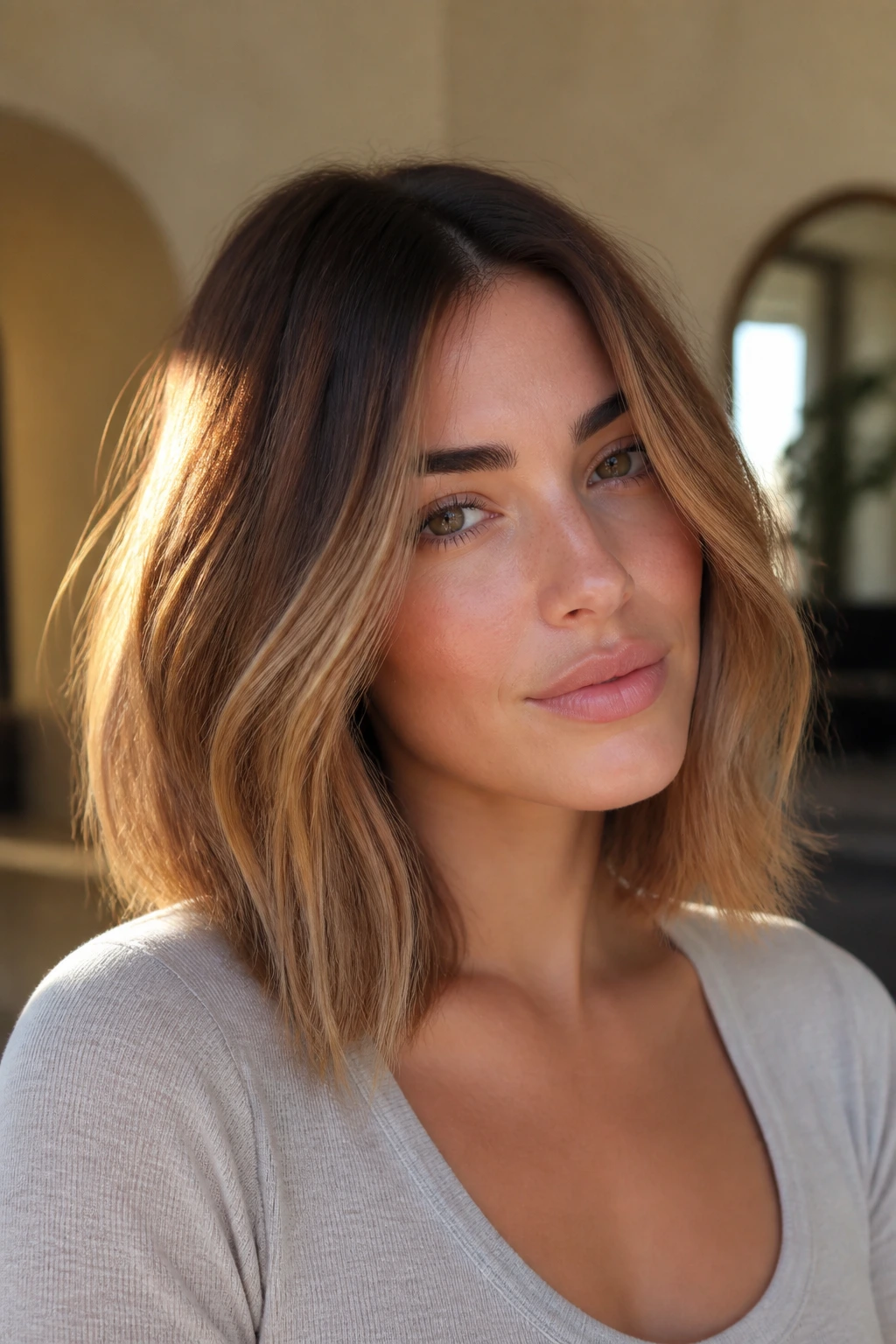
Golden toffee on a lob is warm in the best sense: soft, honeyed, and shiny without sliding into brass. The color usually sits in the level 5 to 6 range and gets its movement from thin light-reflecting pieces through the top layer. On medium hair, it looks especially good when the ends are slightly beveled under, because the warmer tone catches on the curve.
This one does want maintenance. Warm brunettes can go orange if the water is hard, the shampoo is harsh, or the tone is overexposed to heat. A gloss every few weeks keeps the toffee note where it should be.
If you wear a round-brush blowout, this shade looks smooth and rich. If you like messy texture, it can get a little too golden unless you keep the pieces soft.
9. Ash Brown Shadow Root
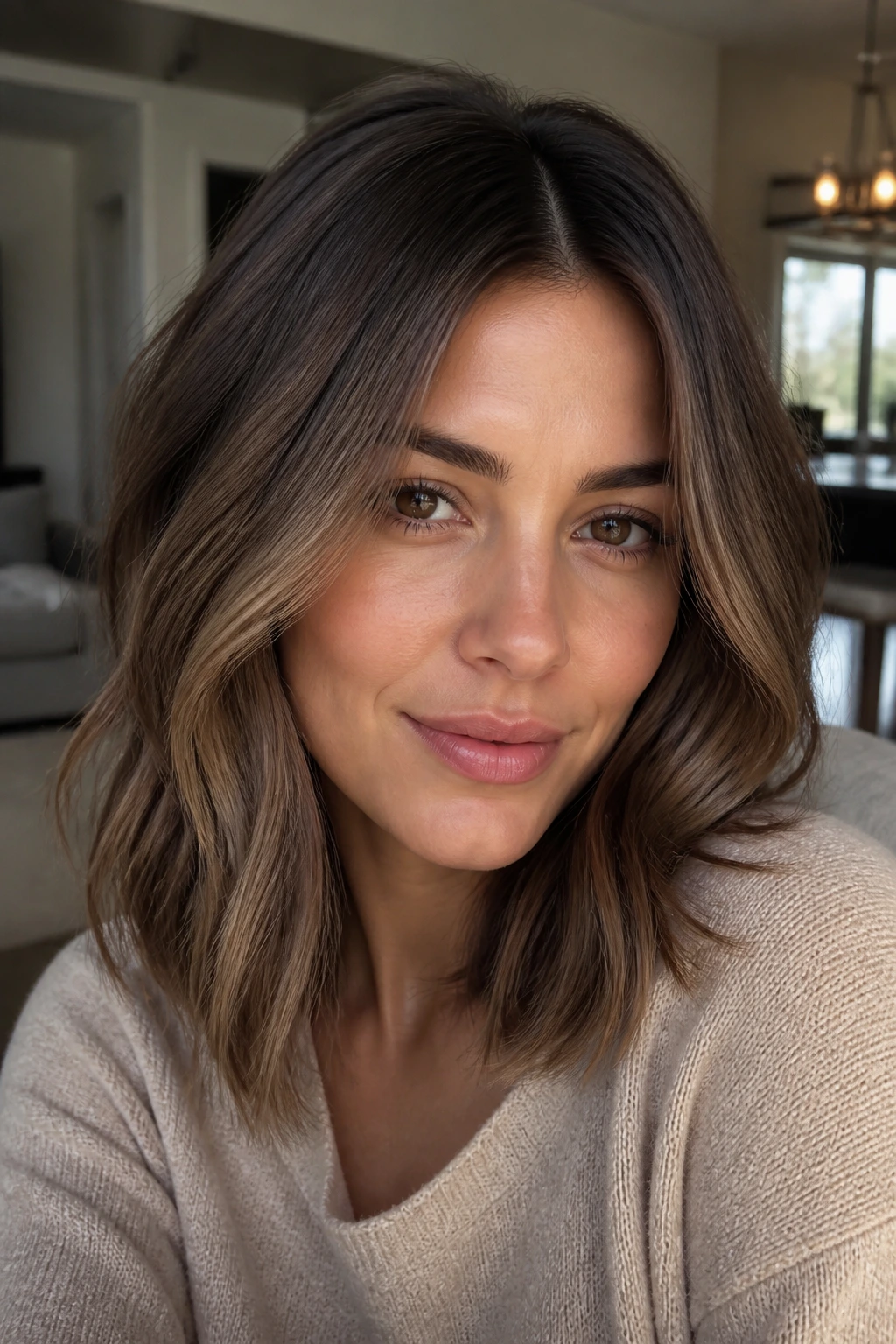
Can cool brunette still look soft? Yes, if the ash is handled with restraint. An ash brown shadow root keeps the top area deeper and cooler, then eases into a muted brown through the mids so the color never tips into flat gray. On medium-length hair, that root depth can make a simple cut look more finished.
When to Choose It
Choose this if brass is your enemy and warm caramel has never looked right on you. It’s especially useful for people who want dimension without obvious blonding. The best versions sit in a cool-beige range rather than a flat slate tone.
I like this shade on slightly wavy hair or a blunt lob with a center part. Straight styling shows the gradient cleanly, while waves make the cool tones look softer.
10. Cinnamon Brunette Glow
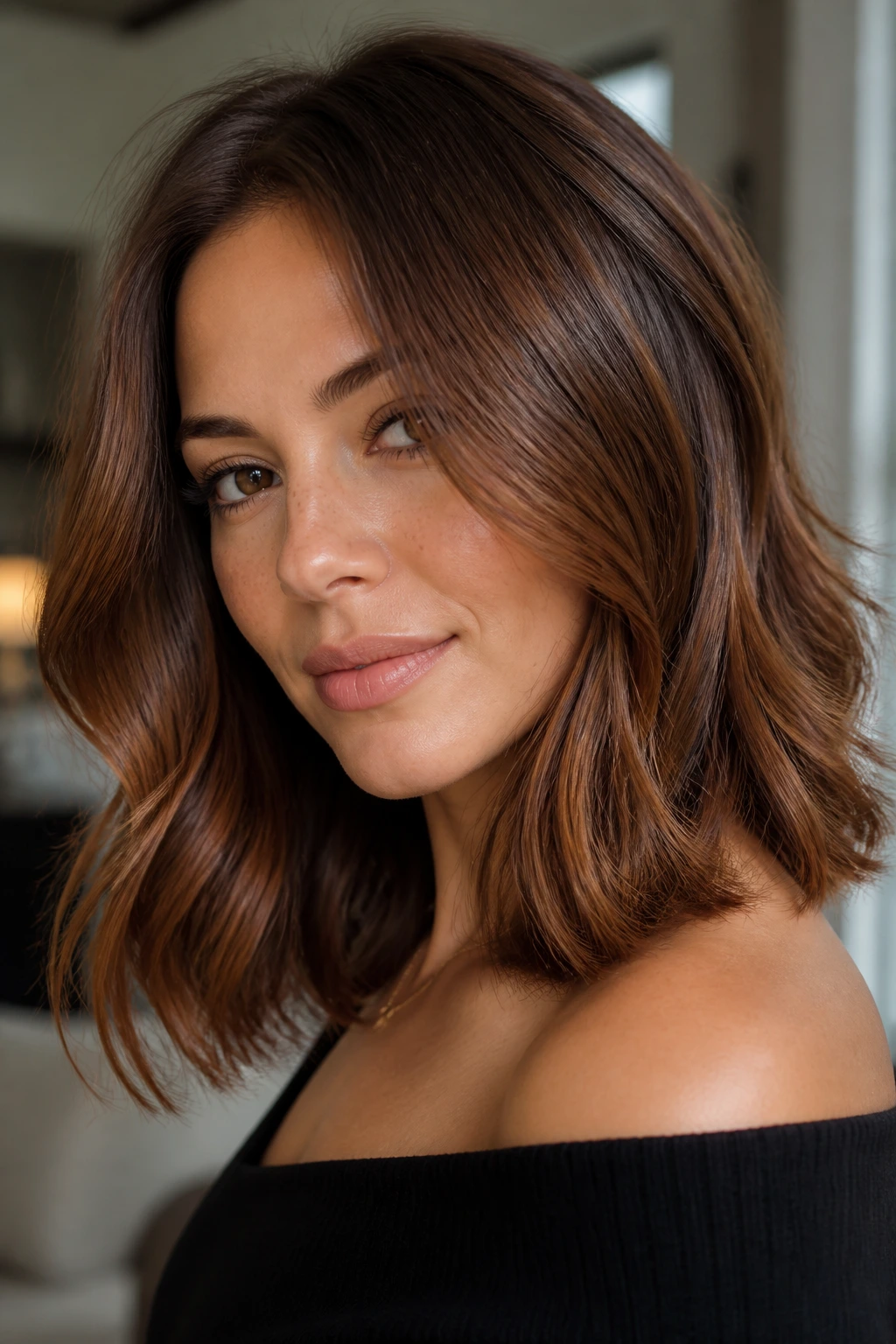
Cinnamon brunette has a warm red-brown undertone that only really shows when the light moves across it. That is what makes it good on medium-length hair: the color is not trying to dominate the cut, just wake it up. A little cinnamon through the mids and ends gives brown hair life without pushing it all the way into auburn.
The best versions use a glaze or demi-permanent tone rather than a hard, opaque red dye. That keeps the result sheer enough that it looks like brown hair with warmth, not red hair trying to settle down.
If your natural brown is dull, cinnamon gives it a lift. If your hair already pulls red, go lighter with the formula or it can get louder than you wanted.
11. Walnut Brown With Cool Lowlights
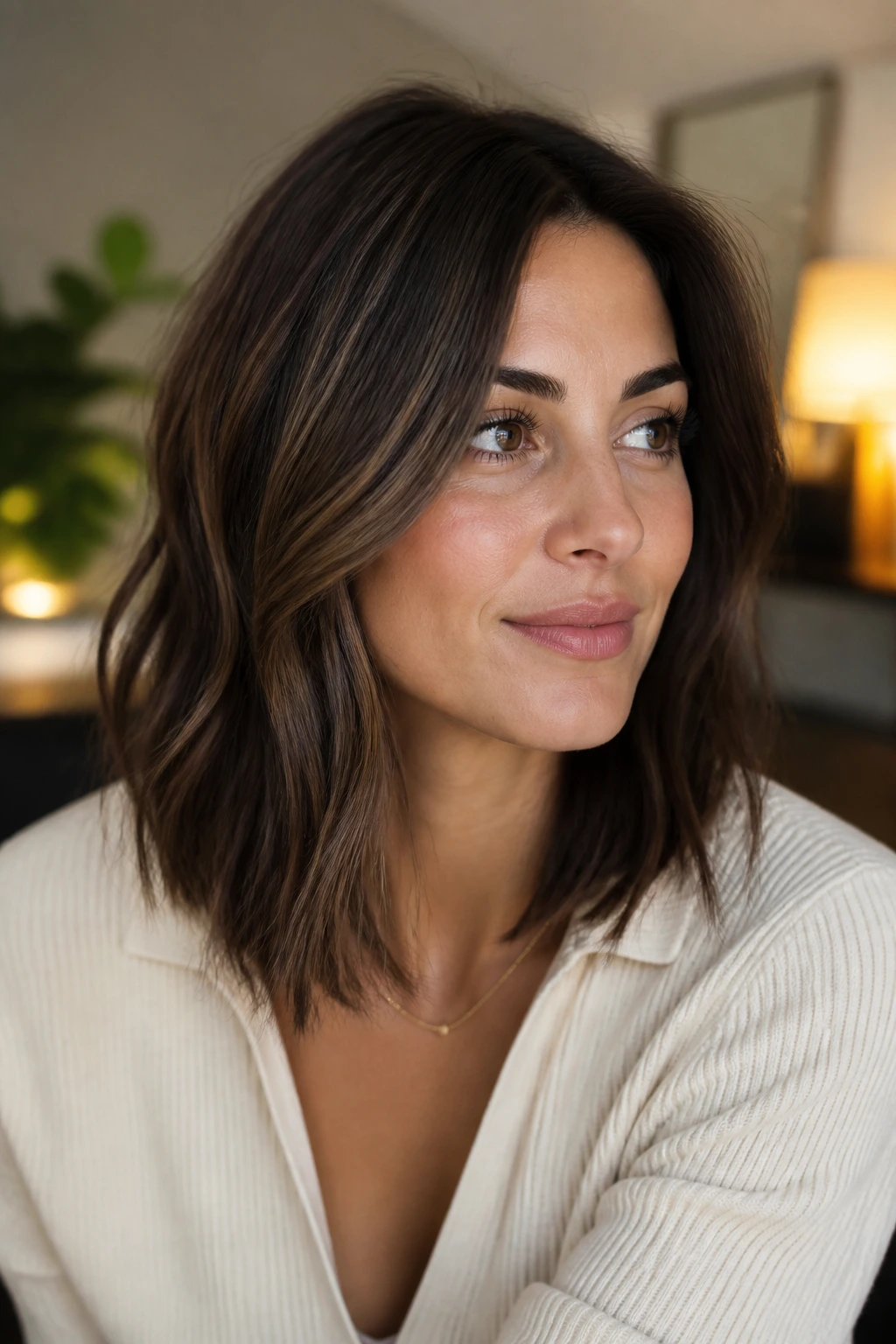
Walnut brown with cool lowlights is one of the best ways to fix a brunette that looks one-note under indoor light. Instead of making the hair lighter, you add slightly deeper cool strands under the top layer, which breaks up the surface and makes the base look richer. On medium-length hair, those lowlights show up fast because there isn’t a giant curtain of hair hiding them.
The Detail That Matters
Ask for lowlights that are no more than a shade or two darker than your natural brown. If they go too deep, the cut can look heavy. If they stay too close to your base, the dimension gets lost.
This is a smart choice for thick hair, because the extra depth helps the cut look less puffy. It also works well on one-length mids, where too much highlighting can make the ends feel thin.
12. Bronze Brunette Balayage
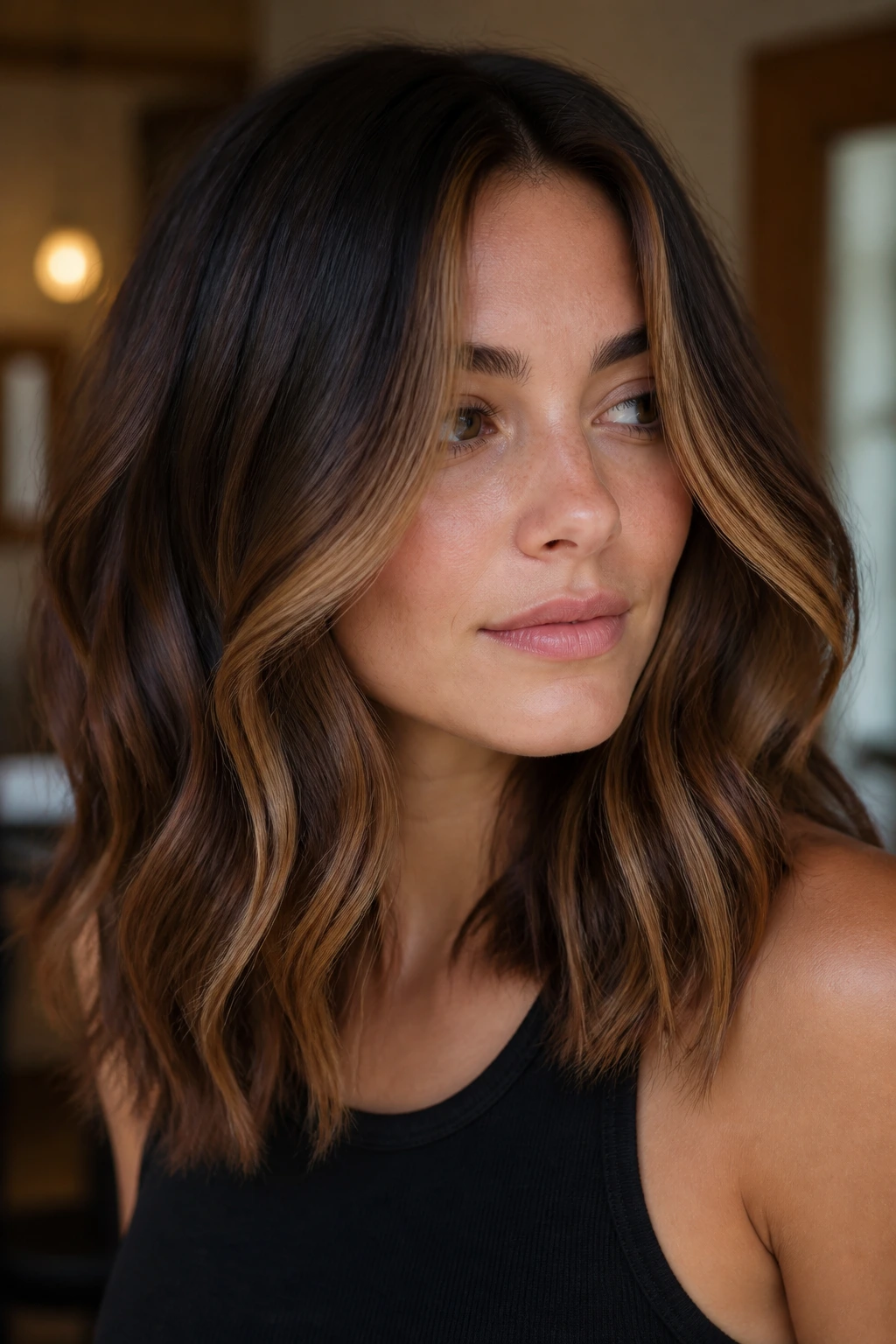
Bronze brunette balayage has a warmer, gleaming feel than caramel, but it avoids the yellow tone that can make some browns look cheap. Picture soft bronze pieces placed through the mid-lengths and around the front, with the base staying a deep brown. On medium hair, the bronze catches light every time the hair turns.
I’d ask for this if you like a little glow but do not want the whole head to look blonde-adjacent. Bronze sits in that useful middle ground where the color still reads brown, just brighter and shinier. It looks especially strong on a medium-length cut with loose waves, because the bright pieces bend and flash.
If you’re nervous about warmth, keep the bronze under control and leave more depth at the root. The color works best when it looks like sunlight, not metal paint.
13. Cocoa Brown With Baby-Lights
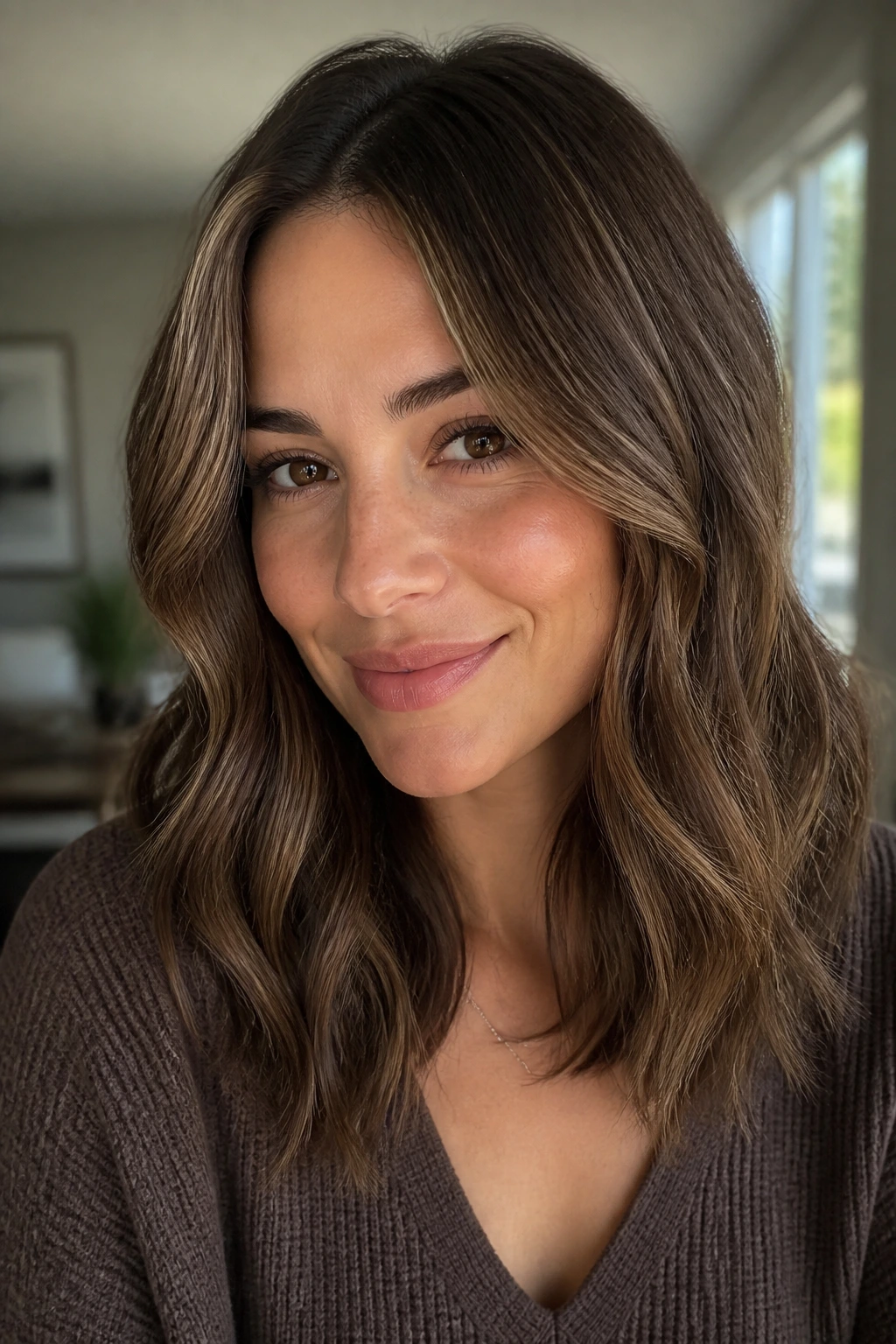
Cocoa brown with baby-lights is one of my favorite ways to keep brunette hair soft. Baby-lights are those tiny, fine highlights that don’t announce themselves all at once; they just make the hair shimmer when it moves. On medium-length hair, they can be packed through the top and around the face without looking stripey.
Why This Is Easier Than It Sounds
The colorist isn’t painting thick sections. They’re weaving very fine slices so the brightness sits underneath the cocoa base instead of sitting on top of it. That gives the whole style a hazy, broken-up look.
If you want brunette hair that looks fuller rather than lighter, this is a smart bet. It also ages well between appointments because the grow-out is soft and the color stays believable even when it fades a little.
14. Chestnut Copper Sheen
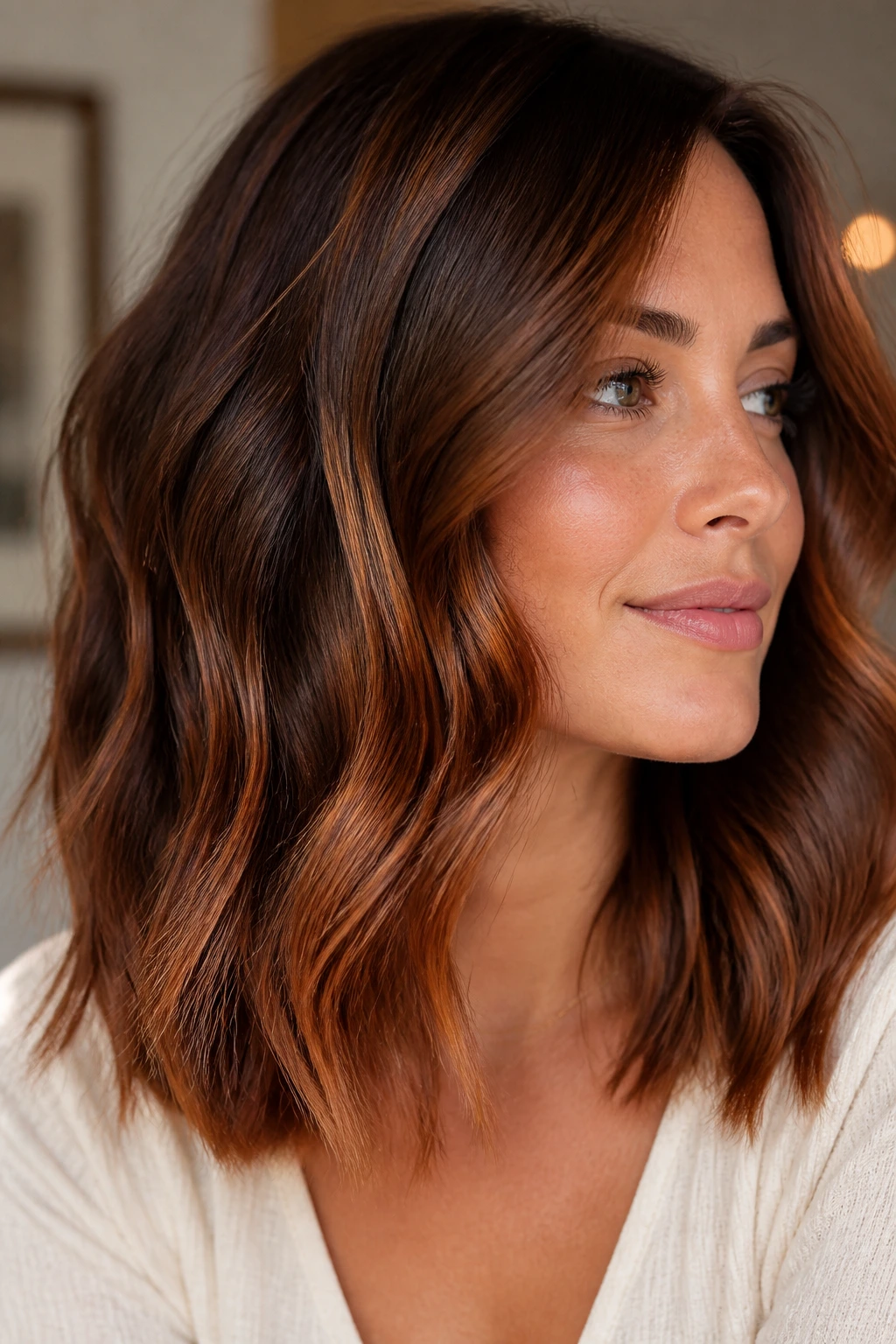
Chestnut copper sits right between brunette and auburn, and that in-between quality is what gives it charm. The chestnut base keeps the hair grounded, while the copper sheen shows up when the light hits the mid-lengths and ends. On medium hair, the shade doesn’t have to fight for attention. The cut is short enough to show the warmth, long enough to make it feel like part of the overall color.
This is a good pick if you want warmth but do not want your hair to turn orange. A soft copper glaze keeps the tone refined, especially if your natural brown is level 5 or 6. If you go too bright, the whole thing shifts from chestnut to red very quickly.
It looks best when the hair has some movement. Flat ironing it pin-straight can mute the sheen.
15. Bronde Brunette Blend
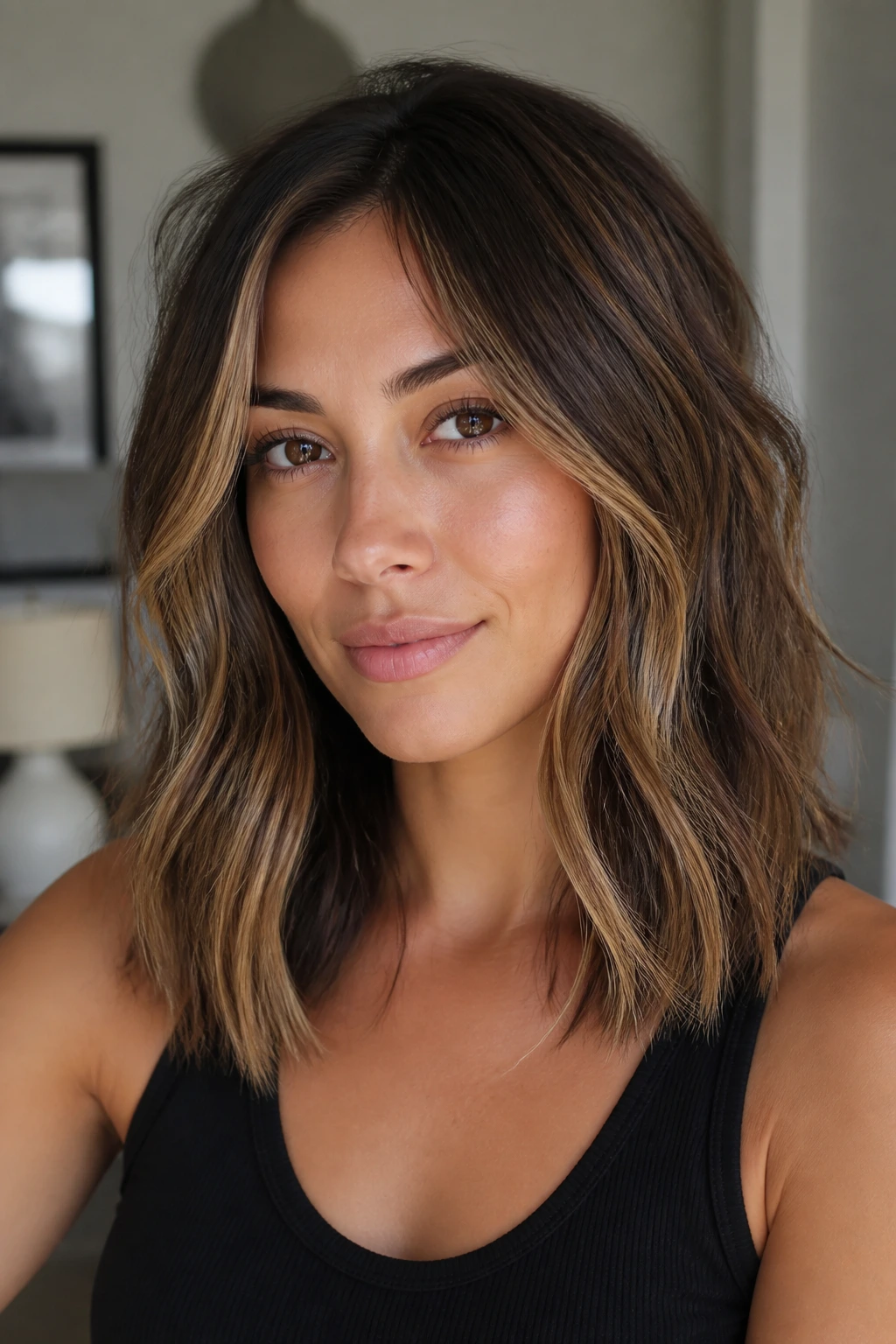
Want to go lighter without losing brunette depth? Bronde is the move. It’s that hybrid zone between brown and blonde, but on medium-length hair the trick is keeping the brunette base strong enough that the lighter pieces feel woven in instead of pasted on. Think beige ribbons, sandy mid-tones, and a root that still reads brown in low light.
What to Ask For
A good bronde blend usually needs a neutral or soft-warm base, not a very dark one. If your starting point is too deep, the lift can look harsh. If it’s already very light, bronde can slide into ordinary blonde.
I like bronde on layered mids because the layers catch the lighter pieces and keep the finish moving. On a blunt cut, it can look flatter unless the highlights are placed with more care around the perimeter.
16. Dark Chocolate With Beige Ribbons
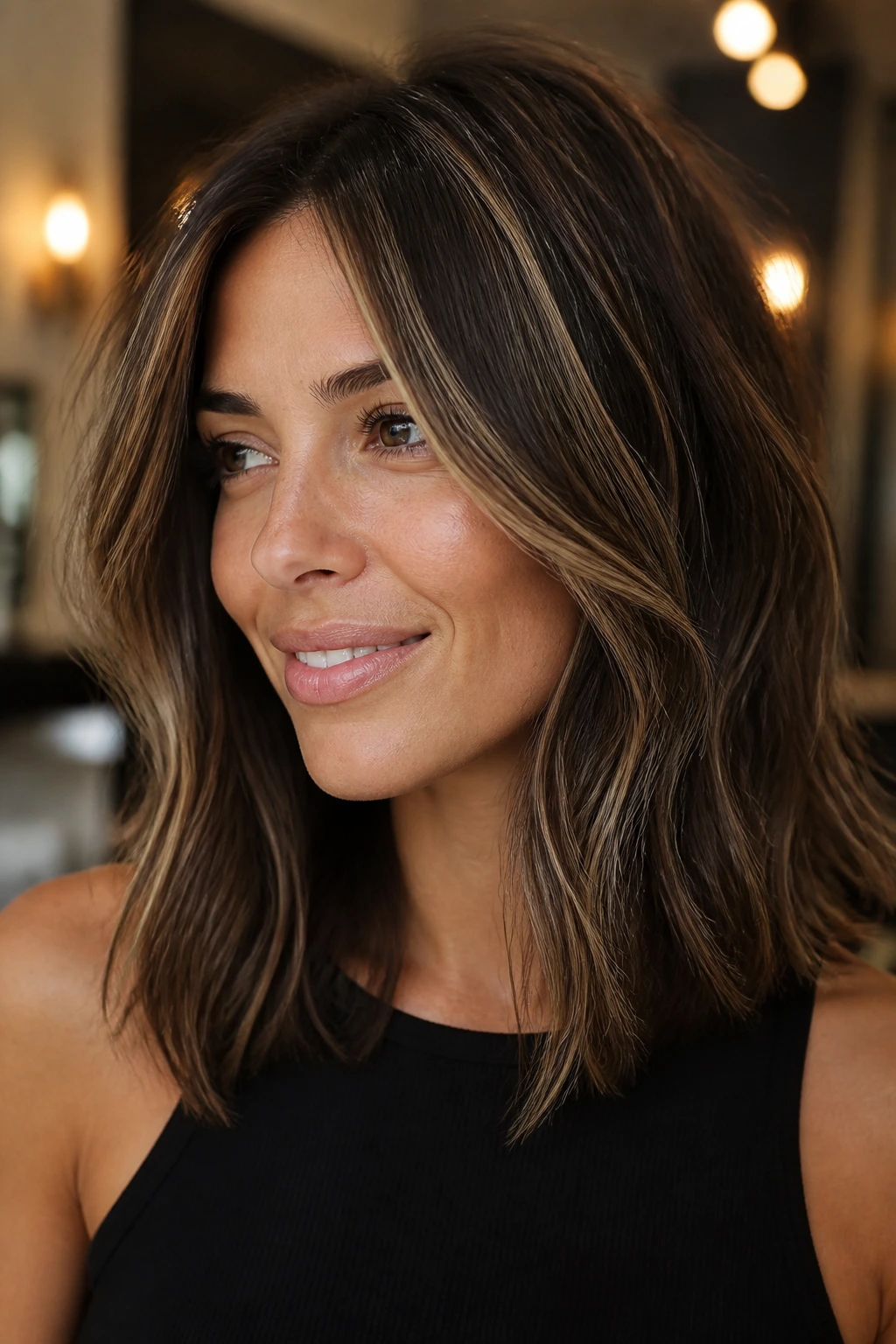
Dark chocolate with beige ribbons is for people who like brunette hair to look polished instead of loud. The base stays rich and deep, then beige ribbons thread through the top and front layers to keep the color from feeling one-note. Medium-length hair carries this shade well because the dark base makes the haircut look full while the beige pieces keep it from looking heavy.
The key is contrast control. If the ribbons get too pale, the shade starts competing with the cut. Keep them a soft beige, not platinum, and the whole look stays in brunette territory.
This color is especially good if you wear your hair straight. The ribbons show the line of the cut and make a clean lob look intentional instead of plain.
17. Tawny Brown Sombre
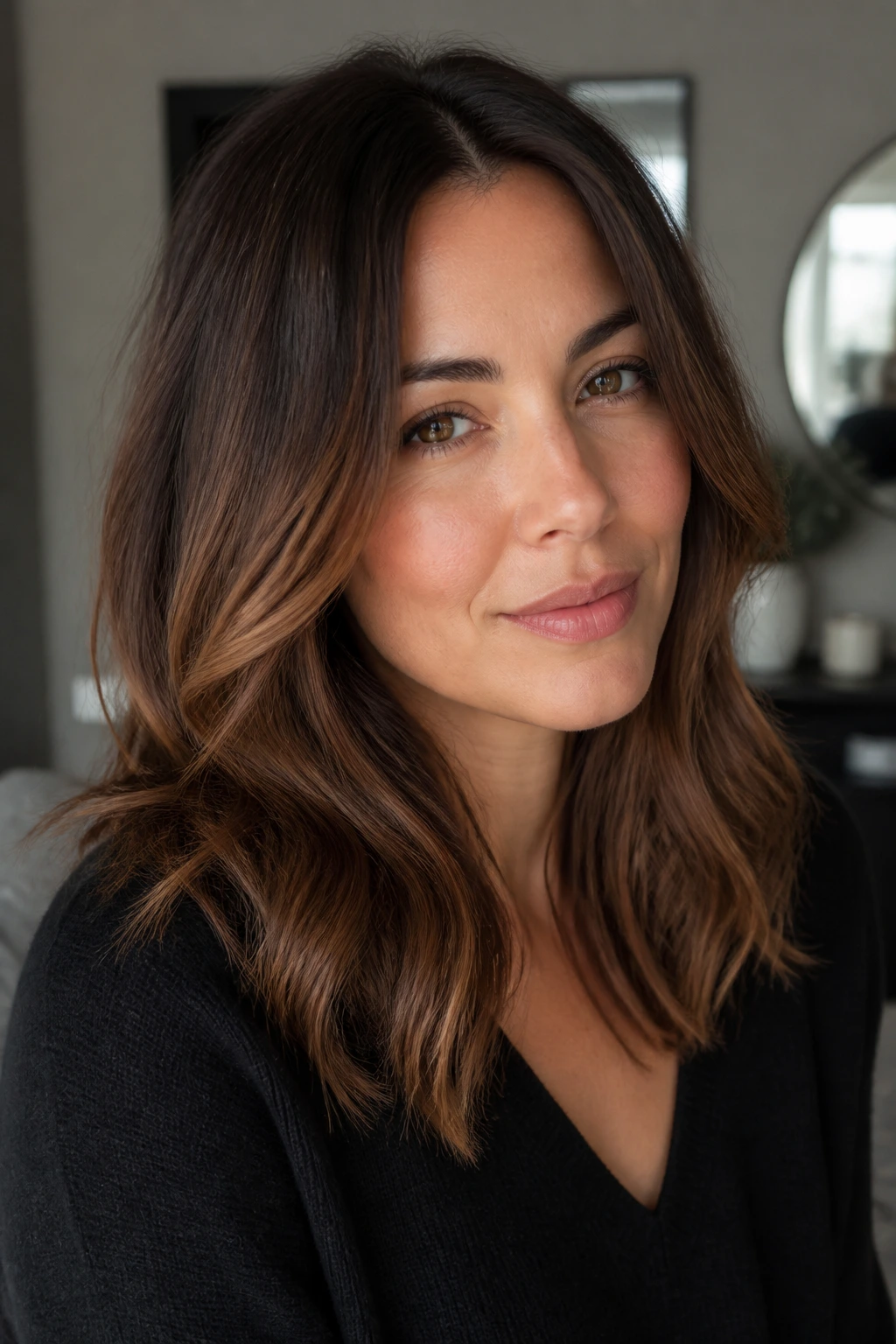
Tawny brown sombre is softer than an ombré and warmer than a cool brunette melt. The root stays close to your natural brown, then the mids and ends lighten gradually into tawny, sun-warmed pieces. On medium hair, that slow fade gives the cut a little movement without making the ends look thin.
Best For Grown-Out Color
If you hate obvious regrowth, sombre is your friend. The transition is softened, so the grow-out looks like part of the plan rather than a problem.
This shade suits someone who wants a little brightness but does not want to sit in the chair every few weeks. It’s especially nice on layered shoulder-length cuts, because the layers break up the fade and keep it from looking too neat.
18. Mahogany Brunette Shine
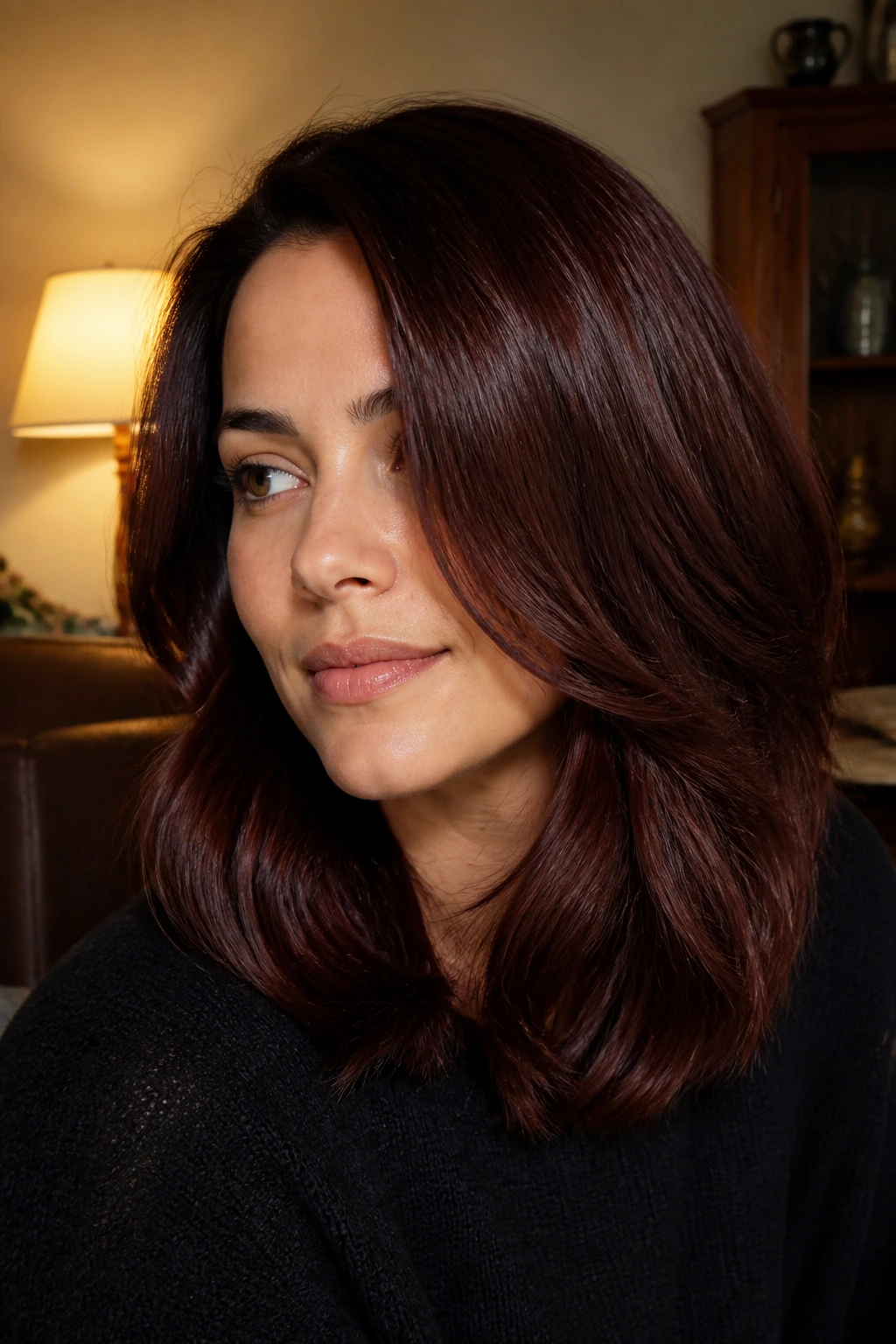
Mahogany brunette is the brown for people who want red tones but do not want orange. It has that wine-dark depth that looks rich in indoor light and a little more dramatic when the sun catches it. On medium-length hair, the color sits in a useful zone: visible enough to change the mood, subtle enough to stay wearable.
The best mahogany shades use shine, not saturation, to make the point. A gloss finish keeps the red-brown tones smooth and prevents them from looking flat or overly dark.
If your wardrobe leans black, cream, or deep green, this shade can look striking. If you wear a lot of warm earth tones, it can still work, but the undertone balance matters more.
19. Sandy Caramel Brown
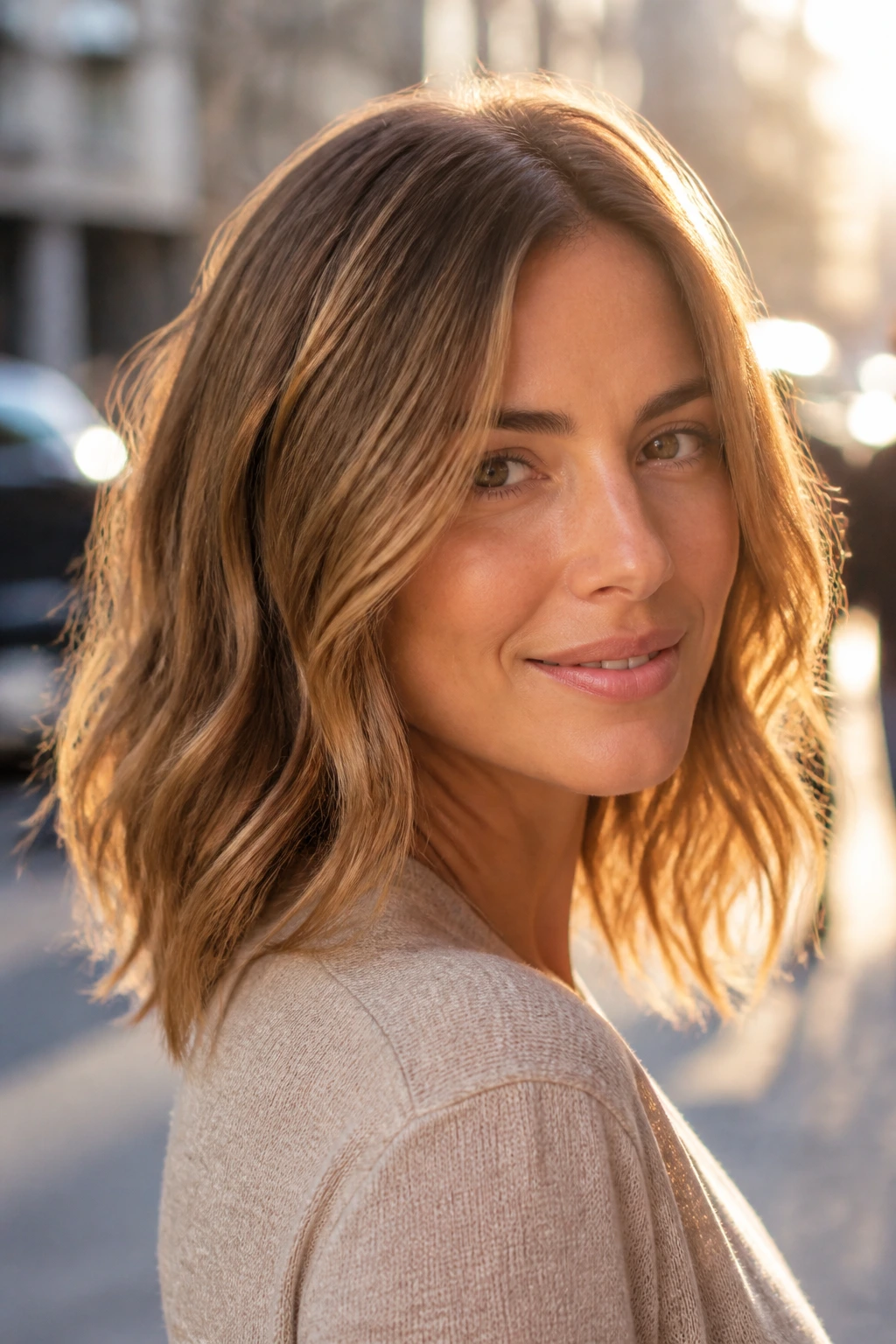
Sandy caramel brown is a softer, dustier take on caramel. Instead of loud gold, it gives you beige warmth with a little sun-faded softness. On medium-length hair, that matters because the cut already has enough structure; the color doesn’t need to compete with it.
This shade works best when the highlights are placed lightly through the outer layers and around the face. Too much caramel in the ends can make the cut look frayed. A sandy tone keeps the edges looking softer and the overall color more believable.
If your skin tone runs warm or neutral, this is an easy brown to wear. It looks especially good with loose bends and a side part that lets the light pieces fall across the front.
20. Smoky Brunette Ombré
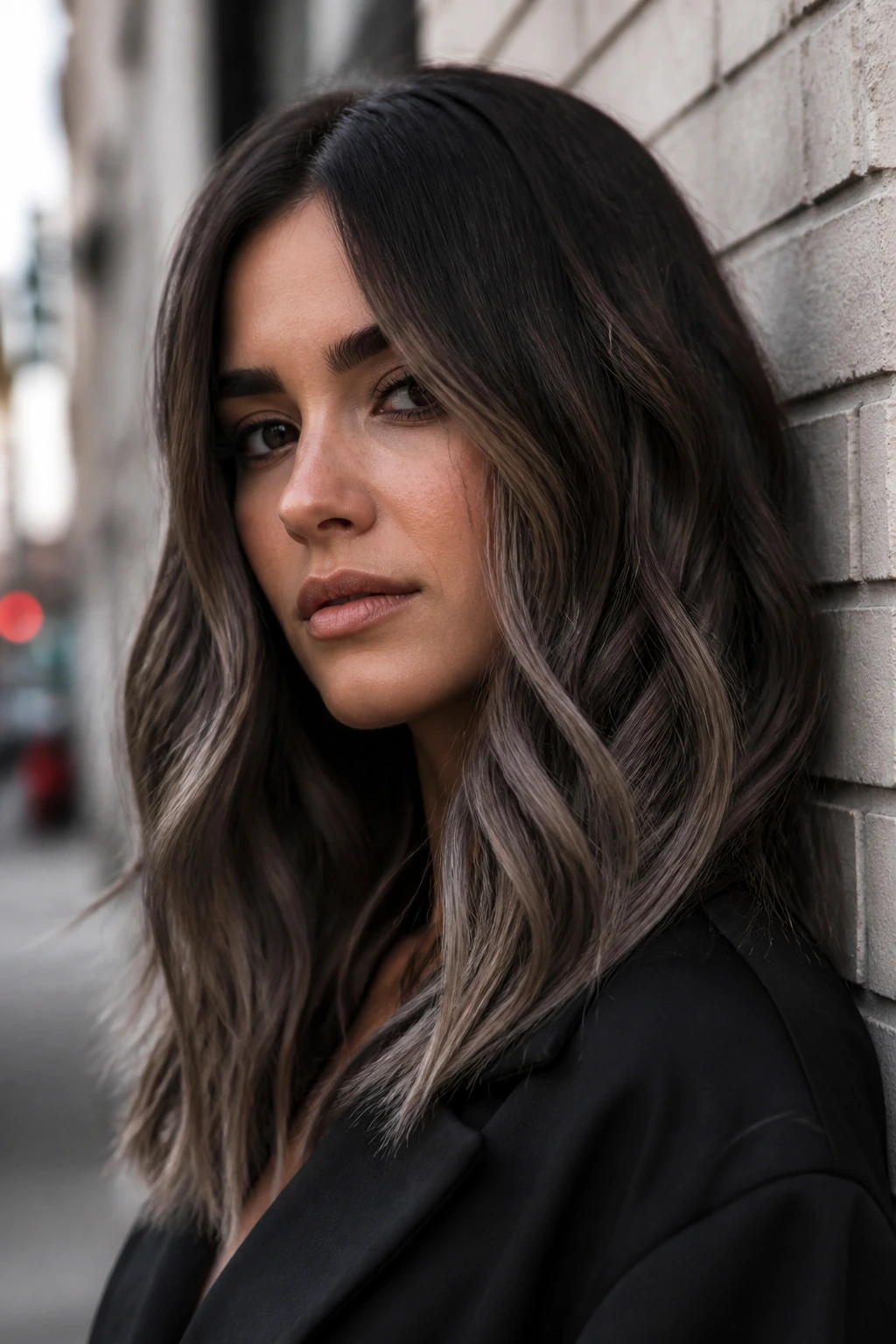
Smoky brunette ombré is what I’d suggest to someone who wants edge without bleaching the life out of the ends. The fade moves from a deeper brunette root into muted, smoky mids and ends — not blonde, not orange, just quiet and cool. On medium-length hair, the ombré is visible without swallowing the cut.
Unlike a caramel ombré, this version depends on tone more than brightness. The ends should stay grounded enough that the hair still reads brunette. If they go too light, the smoky effect disappears and the whole thing turns into a standard highlight job.
It’s a good pick if you wear leather jackets, sharp collars, or minimal makeup. The color does not need much help to feel finished.
21. Maple Brown With Warm Ends
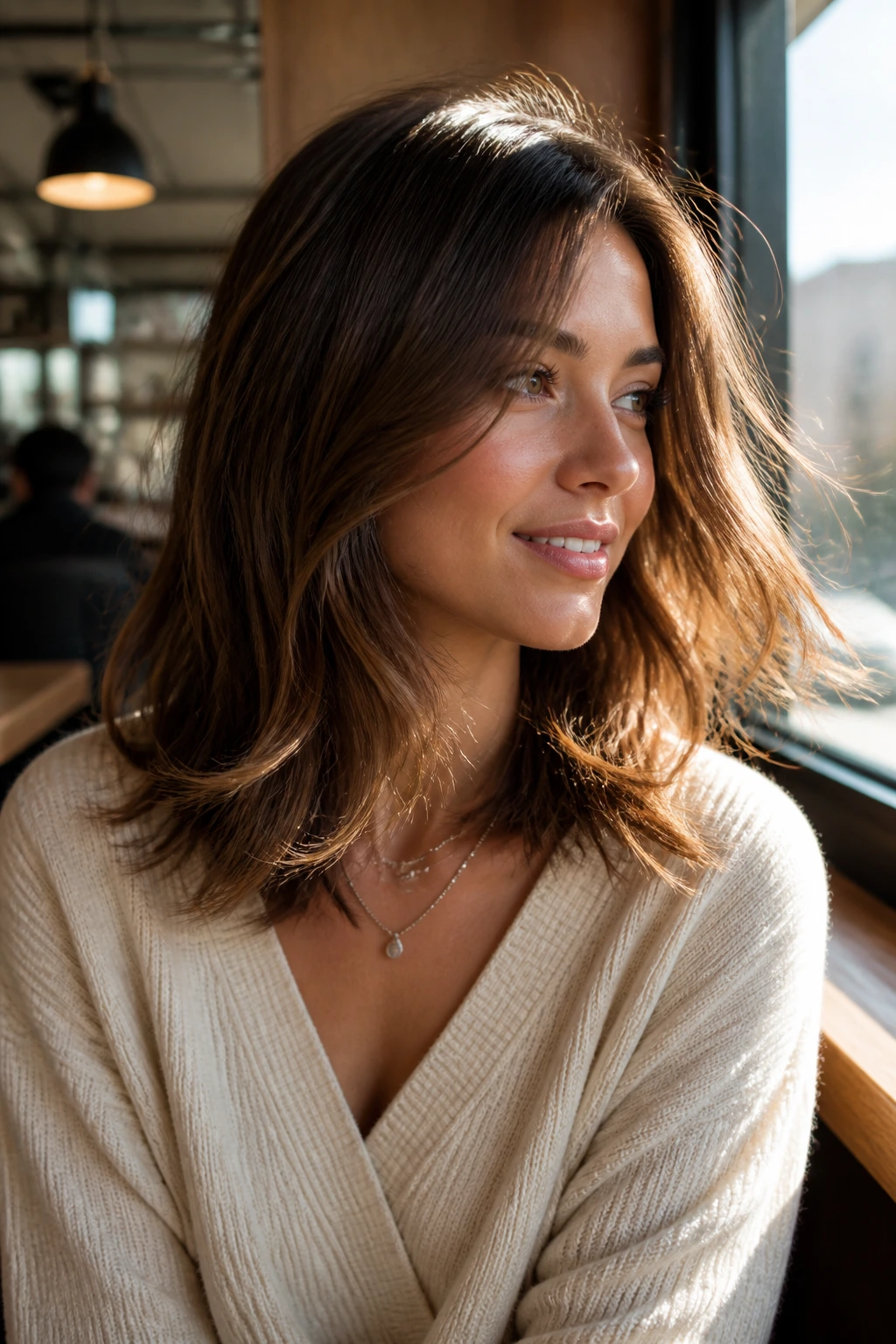
Maple brown has a warm, syrupy undertone that looks especially nice when the ends carry a little extra heat. On medium-length hair, that warmth reads in motion, not as one flat block. The base stays neutral or soft brown, then the ends pick up a richer maple note that catches light at the collarbone.
Best for Layered Cuts
If your hair has layers, the warmer ends show up in the movement. That’s what makes this color feel alive on shoulder-length hair, because the layers swing just enough to reveal the variation.
I like this shade when someone wants a brown that feels cozy but not dark. It has more life than a monochrome brunette and less maintenance than a full highlight set.
22. Mocha Ash Balayage
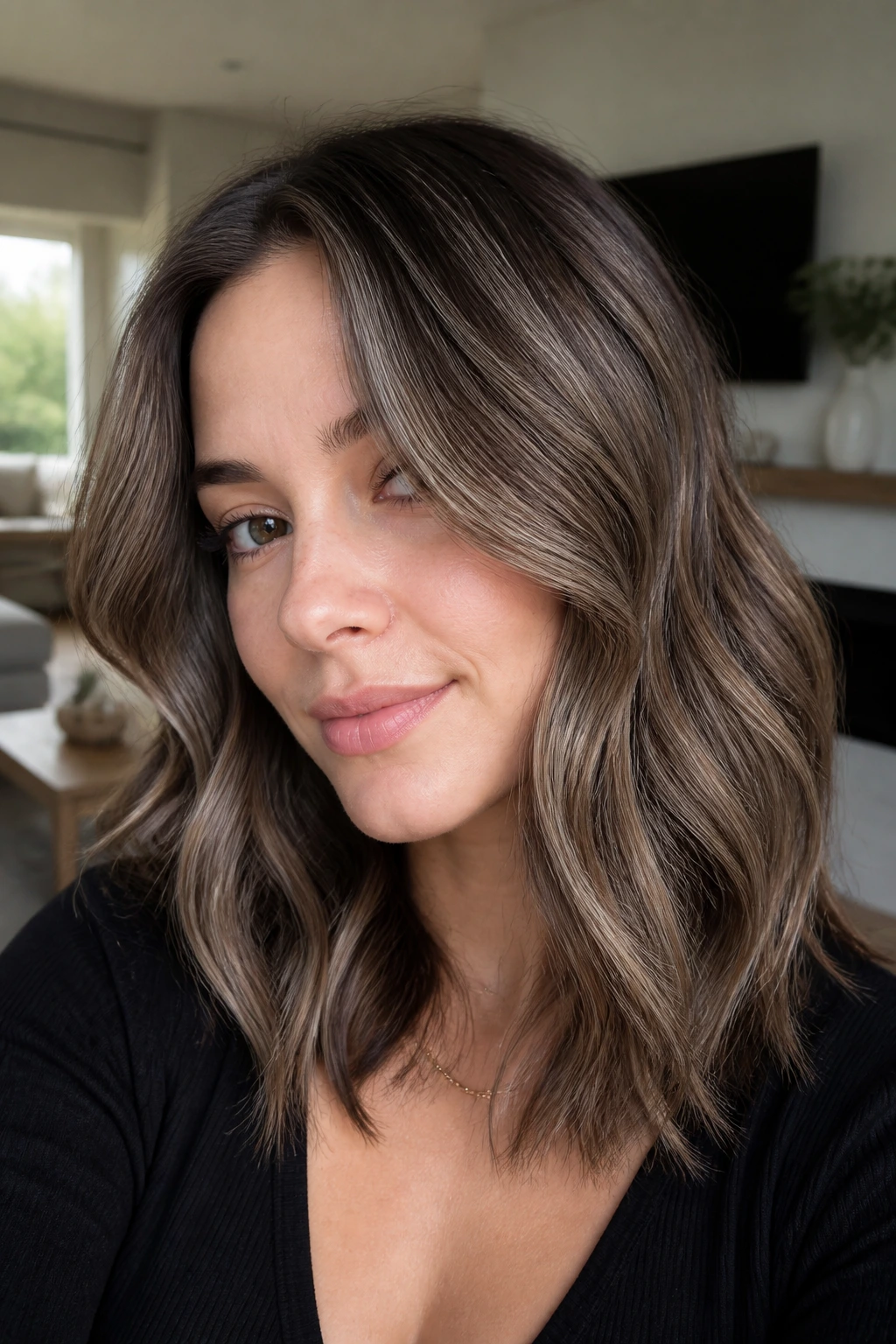
Can one brunette look warm and cool at the same time? Mocha ash gets close. The base is a soft mocha brown, but the balayage pieces are toned toward ash so the whole color feels balanced instead of red or golden. On medium-length hair, that mix can look especially clean because the cut gives each tone a chance to show without turning noisy.
The trick is not to overdo the ash. Too much cool tone and the hair starts looking dull. Too much mocha and you lose the point of the contrast. A good version feels neutral from a distance and interesting up close.
This is a smart shade if your hair tends to pull brassy but you do not want to go icy. It plays well with a smooth blowout and a slightly off-center part.
23. Deep Chestnut With Soft Curtain Pieces
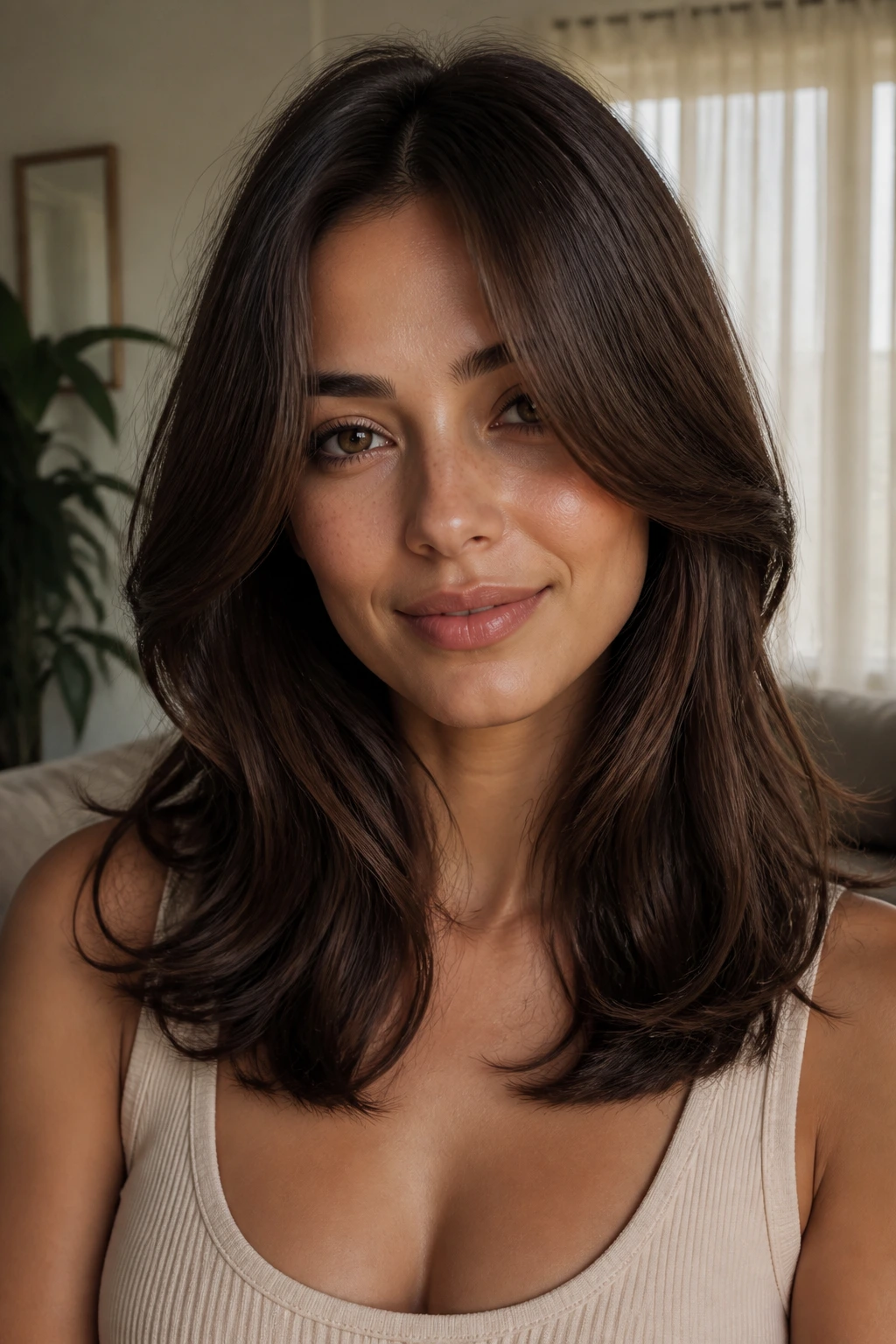
Deep chestnut with soft curtain pieces is one of those color and cut pairings that makes immediate sense. The chestnut base keeps the brunette rich, and the curtain pieces open the face just enough to stop the style from feeling heavy. On medium-length hair, the front layers sit where the lightest bits matter most.
The best versions keep the curtain pieces only a shade or two lighter than the base. You do not need a dramatic stripe here. You want a soft opening around the face, especially if you wear curtain bangs or a face-framing layer that falls past the cheekbone.
If your hair is thick or heavy, this look can take some weight out visually without chopping the length. It’s a quiet fix, but a useful one.
24. Biscotti Brunette
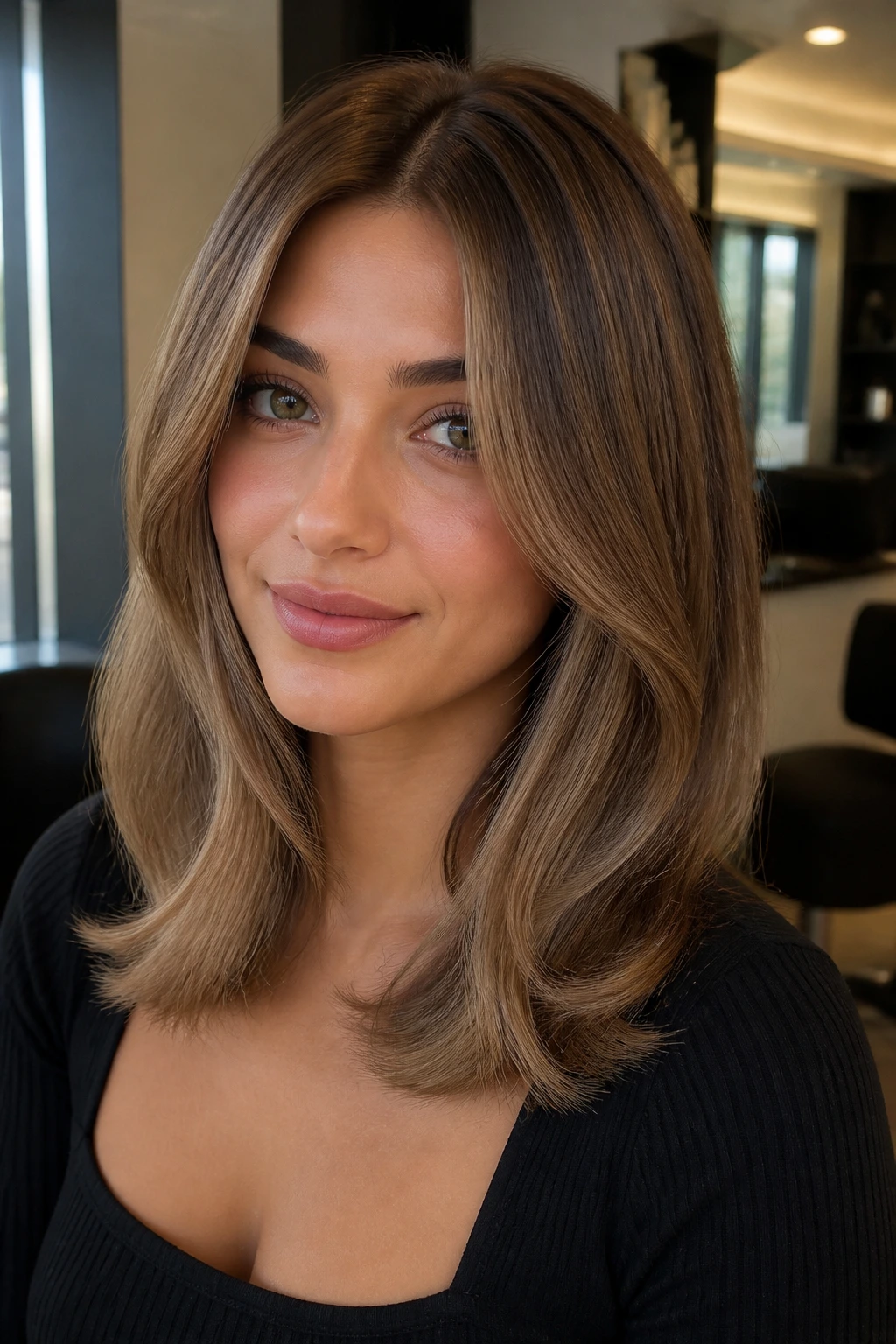
Biscotti brunette is creamy, beige-brown, and a little softer than a standard chocolate tone. It sits between light brunette and deep blonde territory, which makes it a nice choice for medium-length hair if you want brightness without going too light. The shade looks best when there’s still enough brown left in the base to anchor the cut.
What to Tell Your Colorist
Ask for beige warmth, not yellow warmth. That tiny difference matters. Yellow can look flat or brassy; beige keeps the color soft and wearable.
This shade is especially good on smooth blowouts or tucked-under ends, because the creamy tone shows up in the movement of the hair. If you like a bright brown that still reads elegant, biscotti lands in that zone.
25. Velvet Espresso With a Mirror Finish
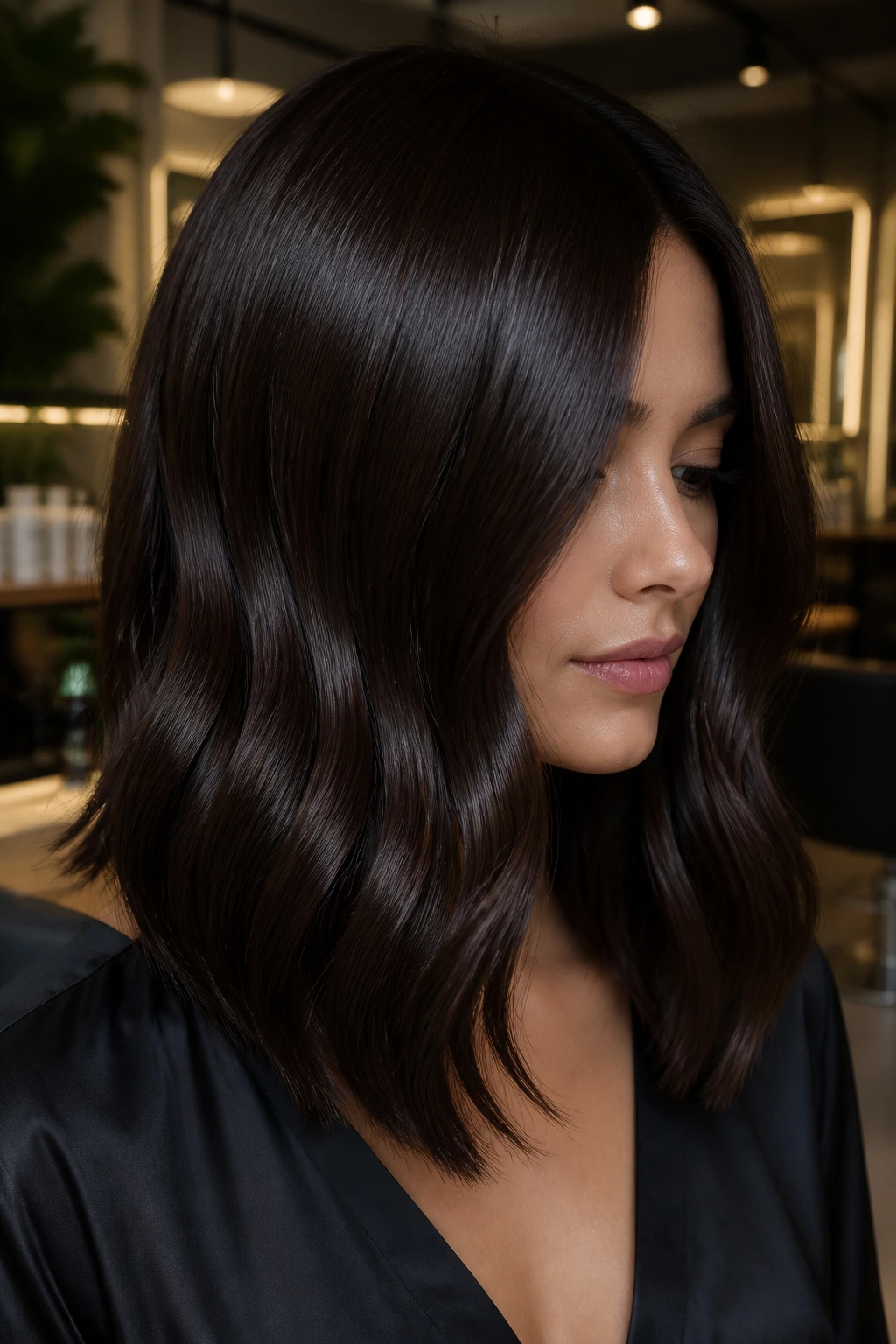
Velvet espresso is the dark brunette that knows exactly what it is. No chunky highlights, no warm streaks, no unnecessary contrast. Just a rich, deep brown finished with a mirror gloss so the surface reflects light instead of swallowing it. On medium-length hair, that kind of finish makes a blunt or lightly layered cut look clean and controlled.
This is the shade I’d choose for someone who wants the hair to look expensive in the plainest, least theatrical sense of the word. The color itself is not the whole story. The gloss is. Without shine, espresso can look heavy. With it, the cut feels intentional from root to end.
It’s also one of the easiest brunette ideas to maintain if you love a darker base. Keep the tone rich, refresh the gloss, and let the haircut do the rest.
Why Medium-Length Brunette Hair Shows Color So Well
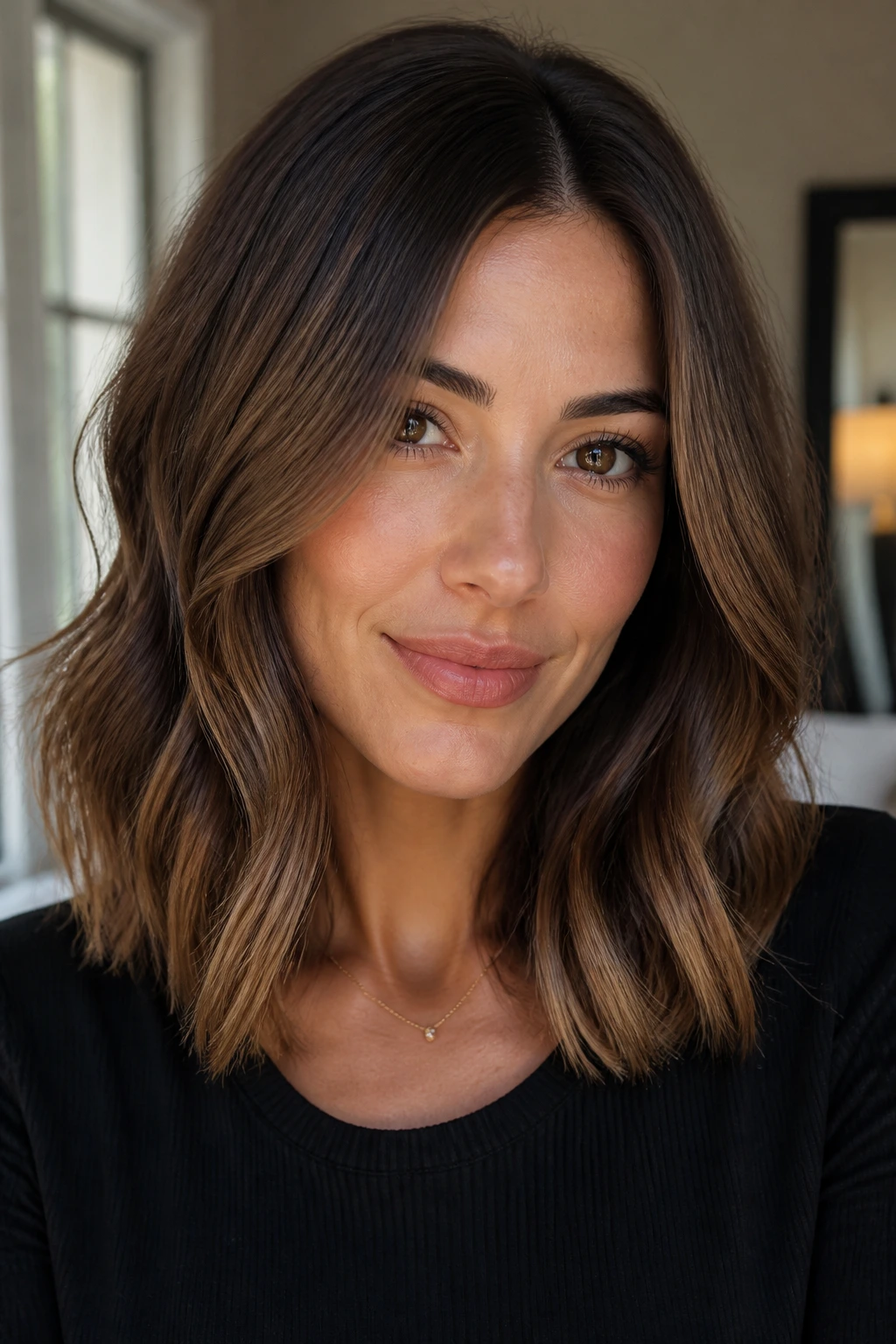
Medium-length hair gives brunette color a rare kind of balance. There’s enough length for placement to matter, but not so much that the best pieces get lost halfway down your back. A few well-placed ribbons around the face, a smart shadow root, or a gloss that deepens the mids can change the entire mood of the haircut without making it feel fussy.
The other advantage is shape. A collarbone cut or shoulder-length lob usually moves more than a long blunt sheet of hair, so color shifts are easier to see. That movement is useful. It lets caramel read warm instead of flat, ash read cool instead of gray, and deep espresso look shiny instead of heavy.
If you have ever felt like brunette hair “needs something,” this is usually what people mean. It does not need a whole reinvention. It needs placement, tone, and a little contrast where the eye lands first.
Essential Tools for Brunette Color and Styling
-
Color-safe, sulfate-free shampoo: Helps keep brown pigment from rinsing out too quickly, especially if your shade has gloss or toner in it.
-
Moisturizing conditioner: Brings back slip and keeps highlighted or lightened pieces from feeling rough at the ends.
-
Heat protectant spray: Use this before blow-drying, curling, or flat-ironing; brunette shine disappears fast when hair gets cooked.
-
Microfiber towel or soft cotton T-shirt: Reduces frizz after washing, which matters because frizz scatters light and makes brown tones look dull.
-
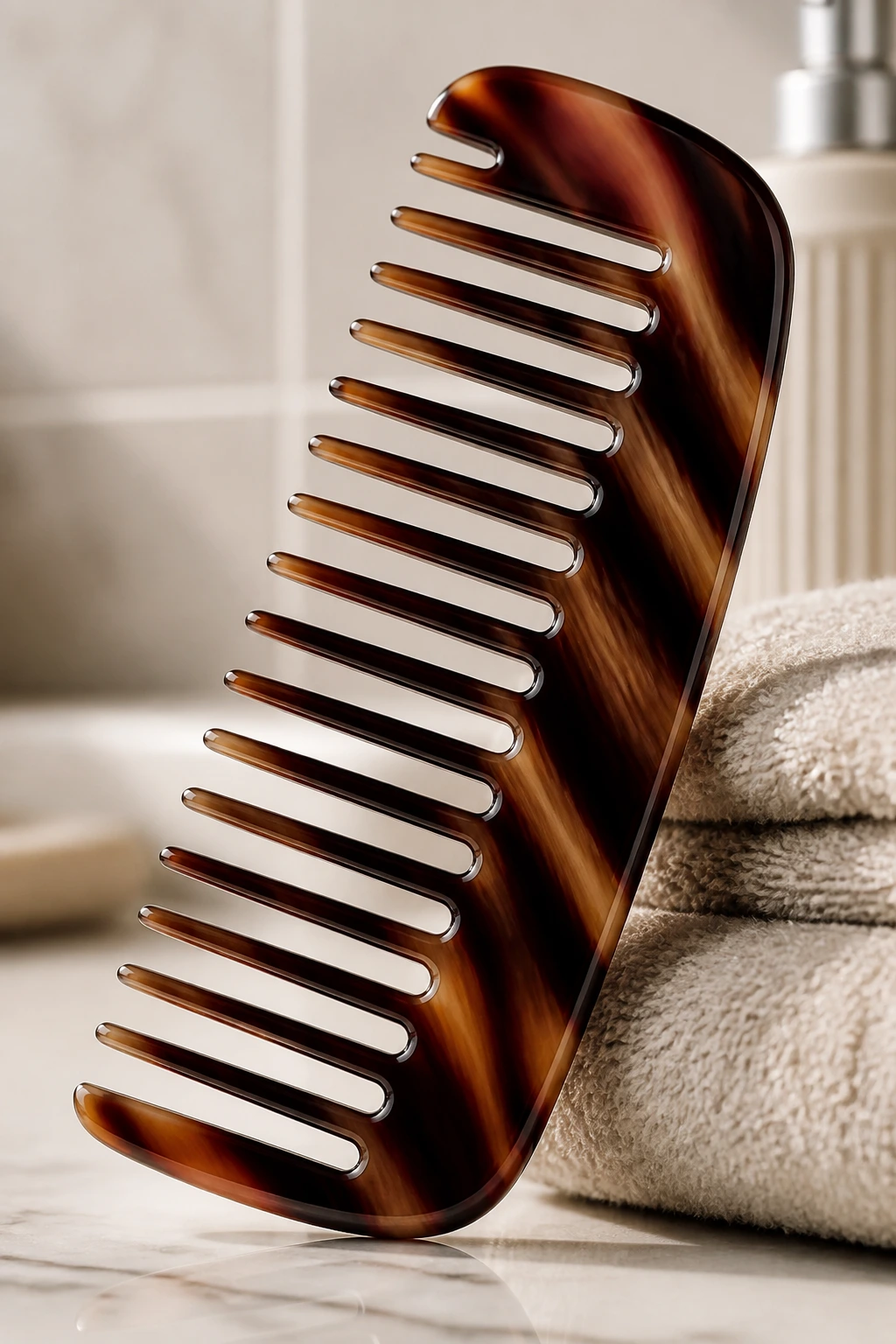
Wide-tooth comb: Useful for detangling without scraping color from porous ends.
-
Round brush or large-barrel curling iron: Helps show dimension in balayage, babylights, and ribbon highlights.
-
Color-depositing mask or gloss: Handy when warm brunettes start looking orange or cool brunettes start looking flat.
-
Sectioning clips and a tail comb: Make at-home styling or root touch-up work cleaner and less chaotic.
-
Shower filter, if your water is hard: Not required, but it can help keep ash tones from going muddy and caramel tones from turning brassy.
Smart Shade-Picking Tips for Undertones, Base Level, and Maintenance
Start With Your Natural Base
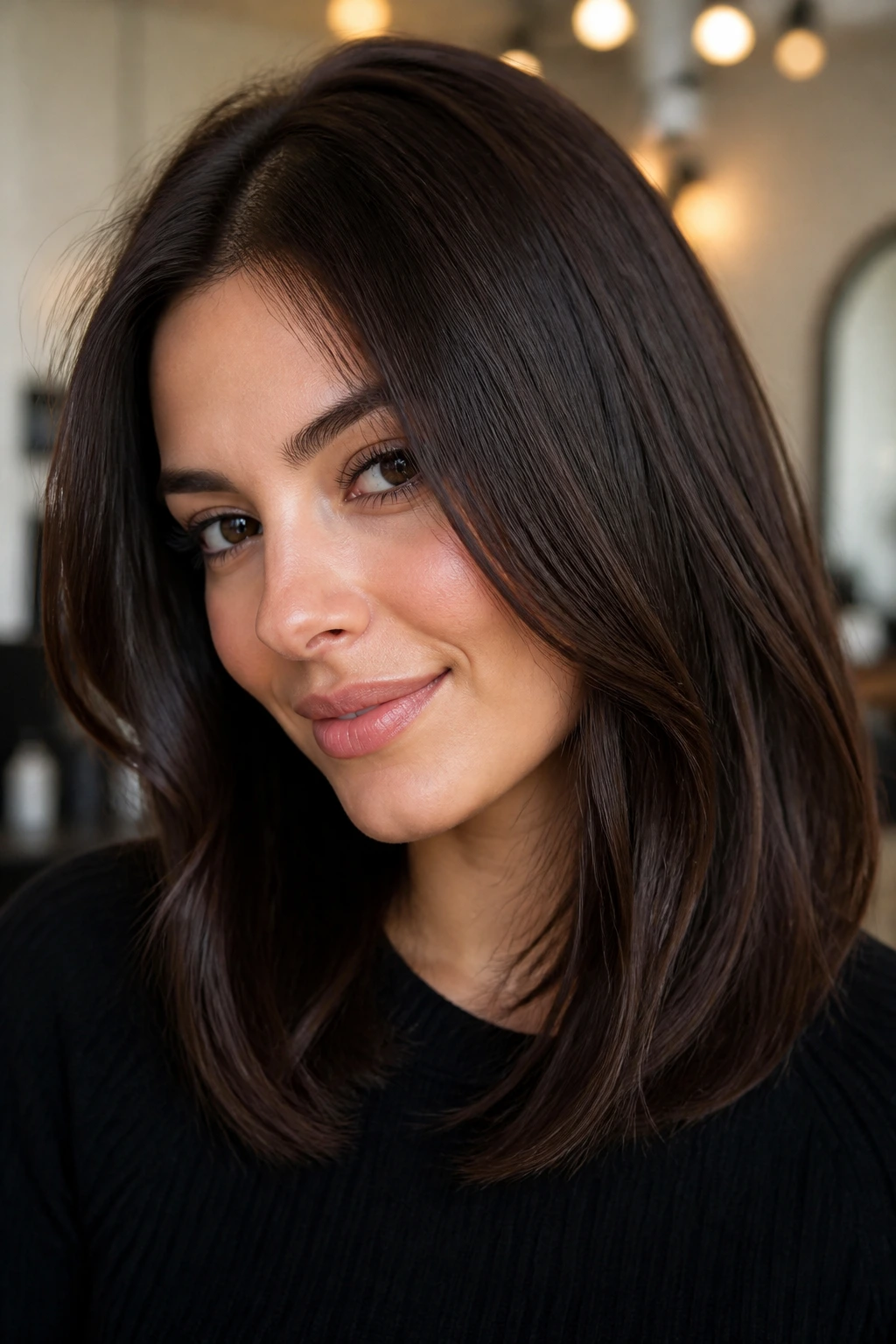
If your hair is already around a level 4 or 5 brown, most of these shades are within easy reach. Espresso, chocolate, chestnut, walnut, and mocha tones will feel natural and usually need less chemical lift. If you’re starting darker than that and want caramel, bronde, or biscuit-toned brightness, expect a slower process. One sitting can be too much for hair that has been colored dark for years.
Match the Undertone, Not the Name
A lot of people pick brunette shades by name alone and miss the part that matters. Ash, mushroom, and smoky tones work better on cooler skin or anyone who hates warmth. Caramel, toffee, chestnut, bronze, and maple suit warm or neutral skin and tend to look alive in daylight. Mahogany and cinnamon are the middle path if you want depth with a little red.
Be Honest About Upkeep
If you hate salon visits, choose a shadow root, sombre, mocha melt, or deep espresso gloss. Those shades grow out softly and can be stretched with a gloss refresh every 6 to 8 weeks. Bronde, caramel ribbons, and money pieces look great too, but they ask for more toner and more frequent maintenance.
Bring Specific Words to the Appointment
“Brown with highlights” is too vague. Better words: level, tone, placement, and contrast. If you know you want a level 5 neutral base with beige ribbons and a soft root shadow, say that. Your colorist can work with that. The word “brunette” alone covers a huge amount of territory.
How to Wear These Brunette Shades Day to Day
Sleek and Straight
A straight finish makes espresso, velvet brown, mushroom, and dark chocolate shades look sharper. The clean line of the cut shows every tone shift, which is useful if you’ve chosen a shadow root or a subtle melt. A light serum on the ends is enough. Do not pile on heavy oil or the shine gets greasy instead of reflective.
Soft Waves and Loose Bends
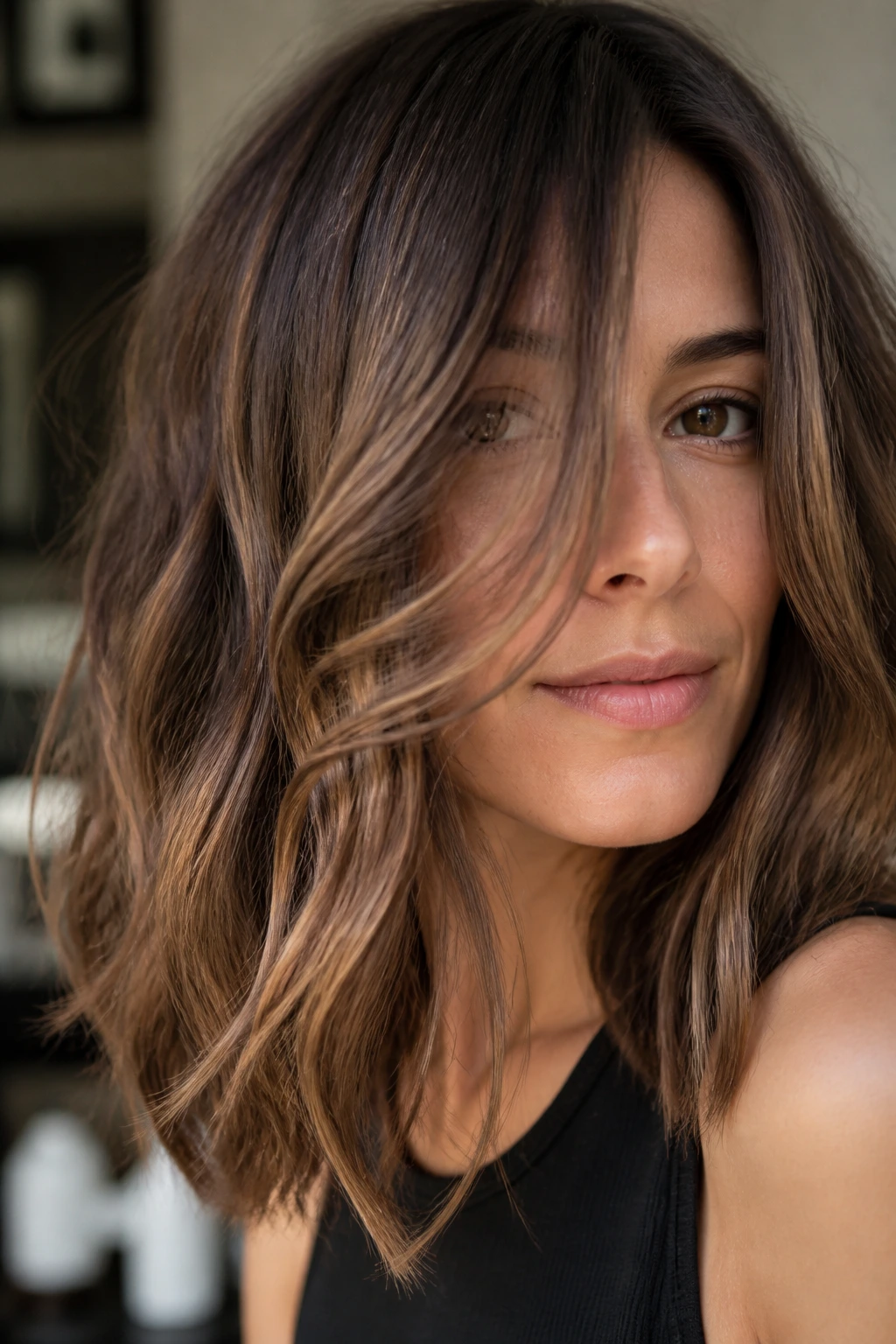
Waves are the friend of caramel, bronze, bronde, and babylight-heavy brunettes. The bend in the hair creates little shadows between the light pieces, so the dimension reads more clearly. A 1-inch curling iron or a flat iron used with a gentle bend usually looks better than tight curls, which can make the color look busy.
Blowouts and Curtain Bangs
If your cut has curtain bangs or long face-framing layers, use a round brush and blow-dry those sections away from the face. That shows off hazelnut money pieces, chestnut framing, and maple warmth without overcomplicating the rest of the style. A good blowout makes brunette color look intentional fast. It also buys you a day or two before the hair feels flat again.
When Texture Helps
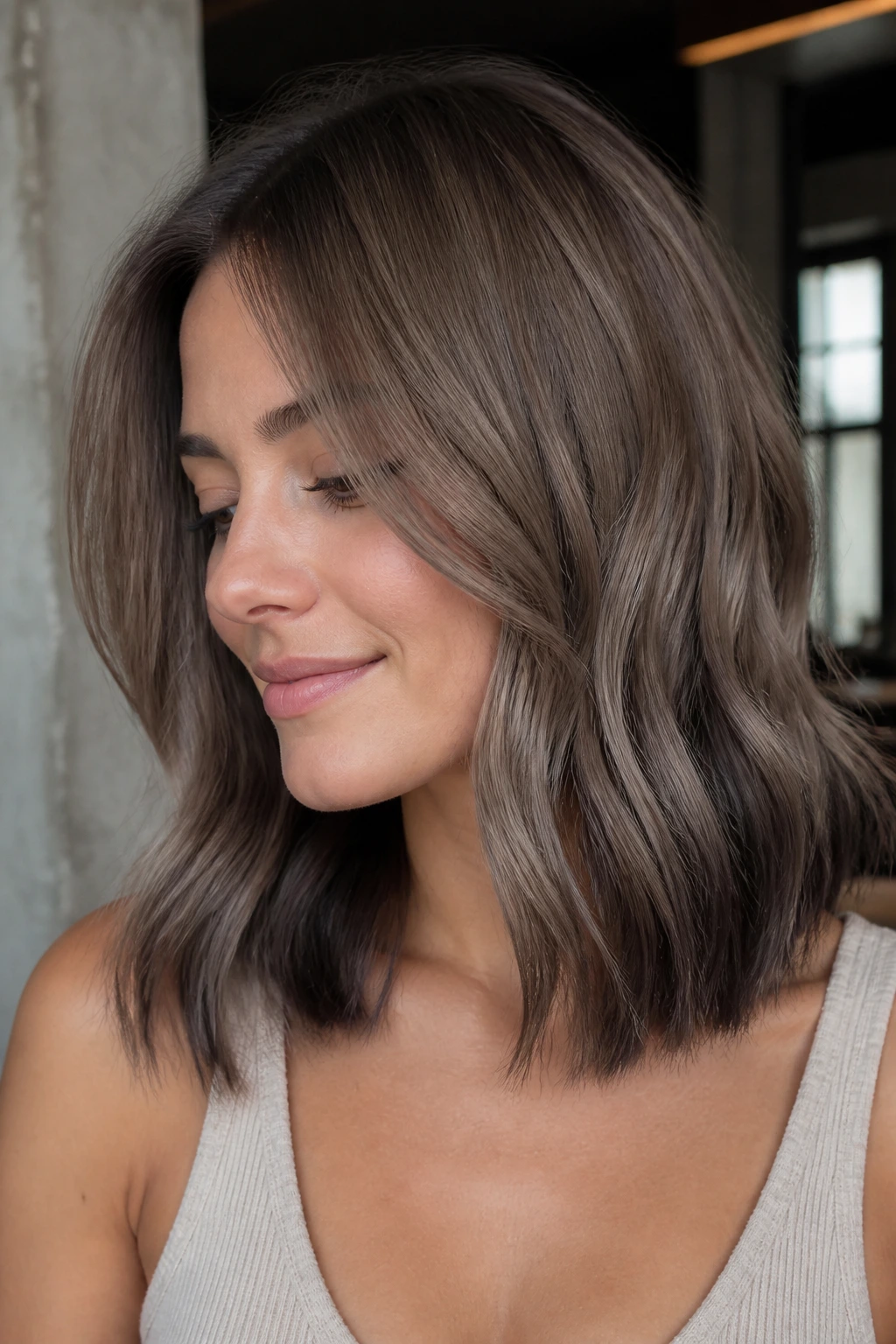
Air-dried waves work well for smoky brunette ombré, tawny sombre, and mocha ash balayage. The color doesn’t need a polished finish to look good; it needs movement. If you have a natural bend to your hair, don’t fight it too hard. The rougher texture can make the color look softer and more lived-in.
Additional Tips and Shine Boosters
Gloss Boost: A clear or tinted gloss every 4 to 6 weeks keeps brunette shades from fading into a dull brown haze. If your color is warm, use a warm gloss. If it leans cool, choose beige or ash-toned gloss instead of trying to force brightness back with shampoo.
Customization: Ask for the lightest pieces around the face and the softest depth near the ends if your hair is fine. If your hair is thick or one-length, interior lowlights can add shape without sacrificing fullness. Medium-length hair handles both well.
Serving Suggestions: Use a lightweight serum on the mid-lengths and ends, not the root area. A shine spray on a blown-out lob can make dark brown look richer without changing the color itself. On lighter brunettes, a tiny bit of texture spray can keep balayage from collapsing into the haircut.
Make-It-Yours: If you run warm, lean into caramel, chestnut, bronze, or maple. If you run cool, choose mushroom, ash brown, smoky ombré, or mocha ash. If you sit in the middle, neutral shades like milk chocolate, cocoa, walnut, and dark chocolate with beige ribbons are the safest place to start.
How to Keep the Color Fresh Between Salon Visits
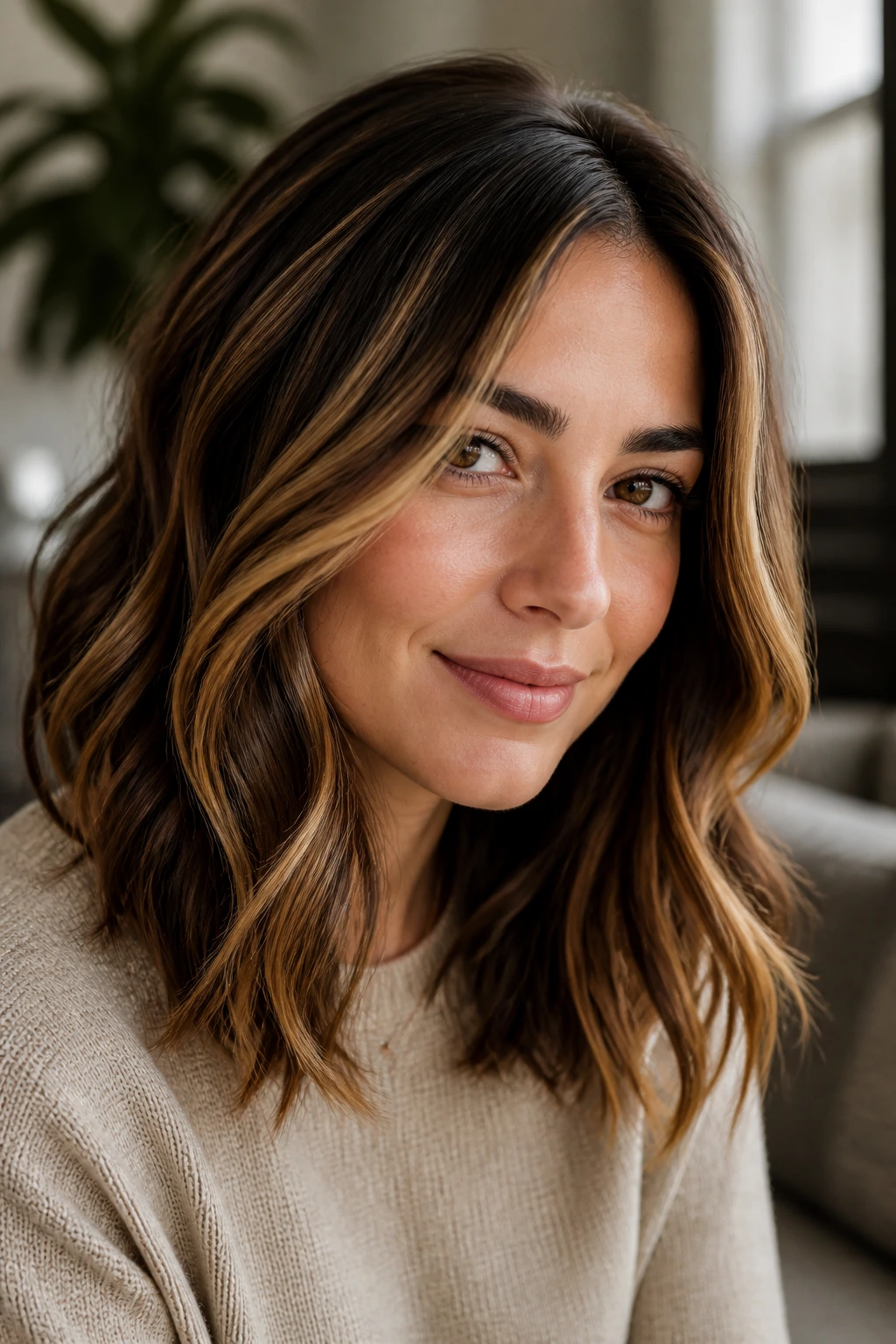
Brunette color holds up better than blonde, but it still changes fast if you wash too often or blast it with high heat. A good rule is to wash 2 to 3 times a week with lukewarm water, not hot. Hot water strips the surface faster, and brunette gloss is all about surface shine.
If you have caramel, copper, bronze, or toffee in the hair, a color-depositing mask once every 1 to 2 weeks can keep the warmth from looking faded or orange. If your brunette is cool-toned, use a toning mask only when the shade starts drifting yellow or muddy. Over-toning ash brunettes can make them look dusty.
Root shadows and soft melts usually need a salon refresh every 6 to 10 weeks, depending on how fast your hair grows and how much contrast you chose. Babylights and money pieces can sometimes go a little longer if the placement was soft. A clear gloss is often enough in between.
For heat styling, keep the iron low enough that the hair does not smell singed. That burnt smell is the sound of shine leaving the hair. Once the cuticle gets rough, brunette shades lose their depth fast.
Variations and Adaptations to Try
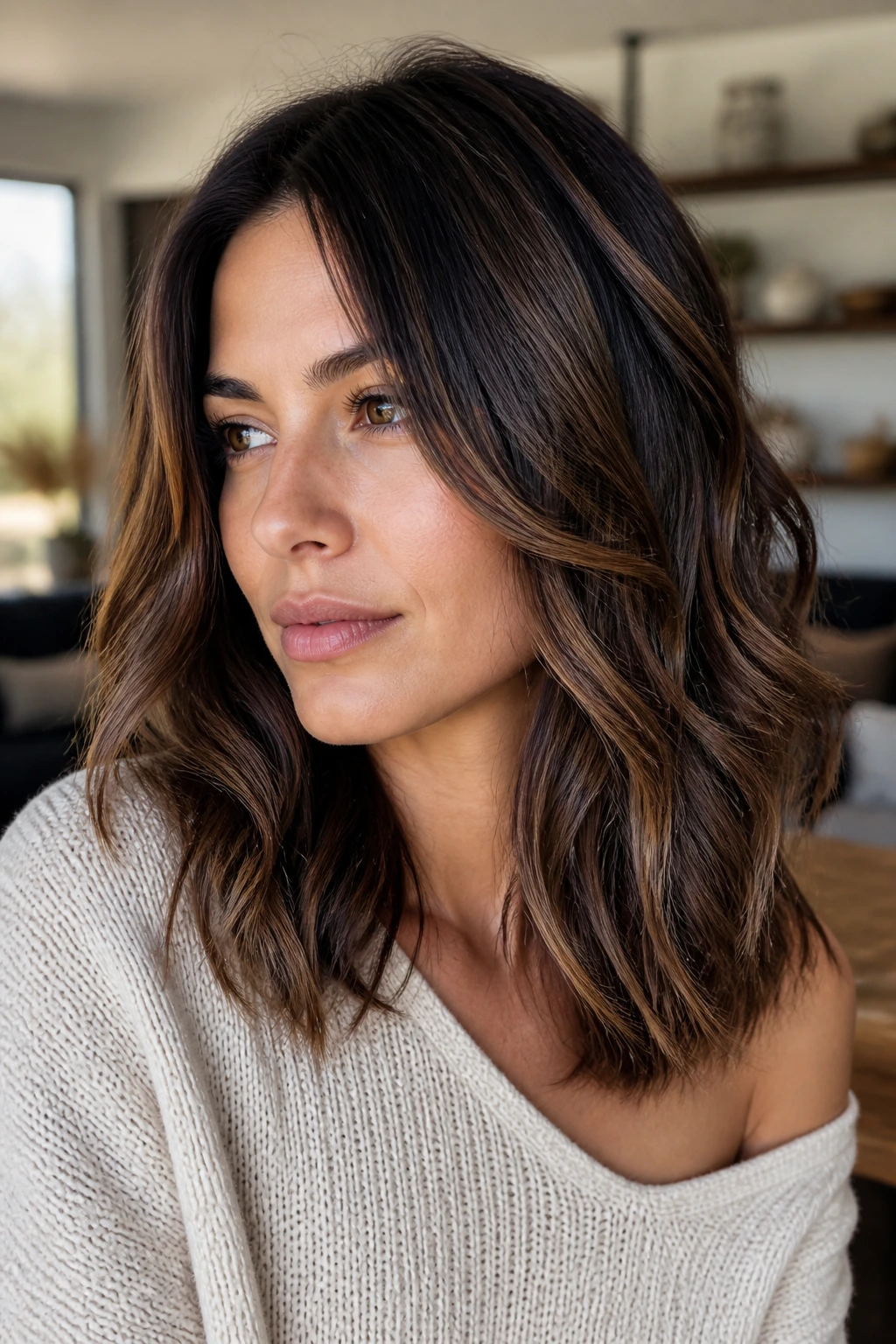
Low-Maintenance Soft Root: Keep the base deeper and let the lighter pieces stay only around the face and top layer. This works if you want a grow-out that still looks planned after 8 weeks.
Warm Caramel Shift: Swap ash or beige pieces for caramel, toffee, or bronze. The result is brighter and friendlier in daylight, especially on medium hair with loose waves.
Cool Smoke Edit: Replace golden pieces with mushroom, mocha ash, or smoky beige. This is the version to choose if brass makes you miserable and you want the brown to stay calm.
Curly-Hair Dimension: Use finer ribbons and lower contrast so the color doesn’t disappear when curls shrink. Curly mid-length hair can swallow chunky highlights fast, so softer placement works better.
Gray-Blend Brunette: Add a soft shadow root and neutral lowlights if you want to blend early grays without a hard line. This is cleaner than trying to cover everything with one opaque brown.
High-Contrast Face Frame: Keep the body of the color deep and concentrate the brightness at the front. It’s bolder, but on a medium-length cut it can look sharp rather than overdone.
Common Mistakes to Avoid
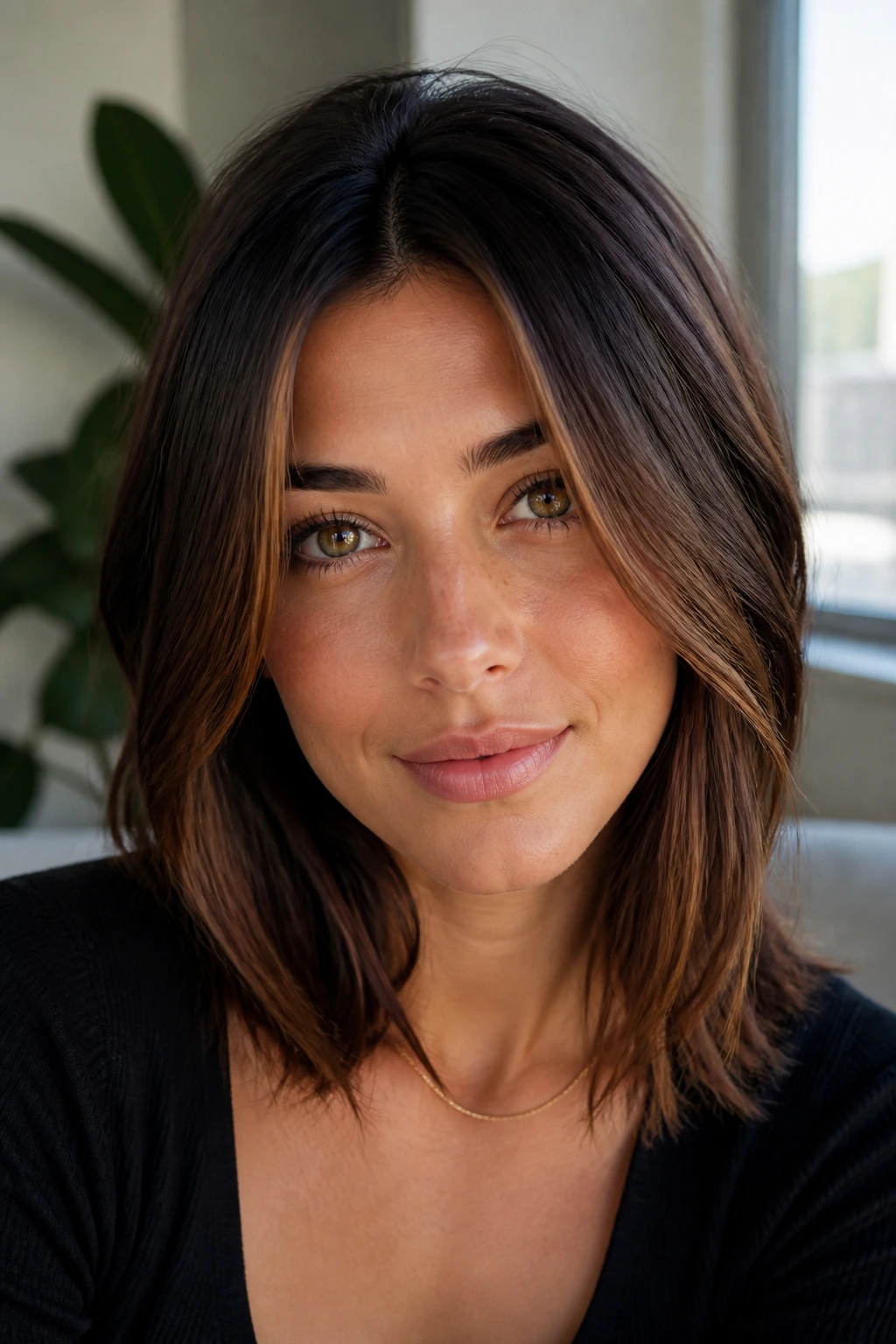
Choosing a tone that fights your undertone: If your skin runs cool and you pick a very gold caramel, the hair can look brassy instead of warm. The fix is simple: soften the tone toward beige, ash, or neutral, and let the brightness live in the placement instead of the hue.
Making the highlights too chunky: Thick stripes on medium-length hair can carve the haircut into pieces. The result is usually stripy, especially when the hair is straight. Babylights, ribbons, and soft balayage break that up without making the color disappear.
Leaving the ends too light: If the lightest color sits only at the bottom, the cut can look thin and oddly disconnected from the root. Better to keep a little depth through the ends and push the brightness into the face-framing and top layers.
Skipping toner or gloss: Brunette blonding without a finish step almost always fades into dullness or brass. A gloss seals the tone and keeps the brown looking richer for longer.
Using heat like the hair is uncolored: Brown shades lose their shine fast when you flatten them with hot tools every day. Use heat protectant, keep the temperature reasonable, and let the hair cool before touching it. That cooling step matters more than most people think.
Asking for vague “brown with blonde” directions: That can mean anything from sandy babylights to a full bronde transform. Bring two or three reference photos and name the tone, root depth, and placement you want. The conversation gets much easier.
Frequently Asked Questions
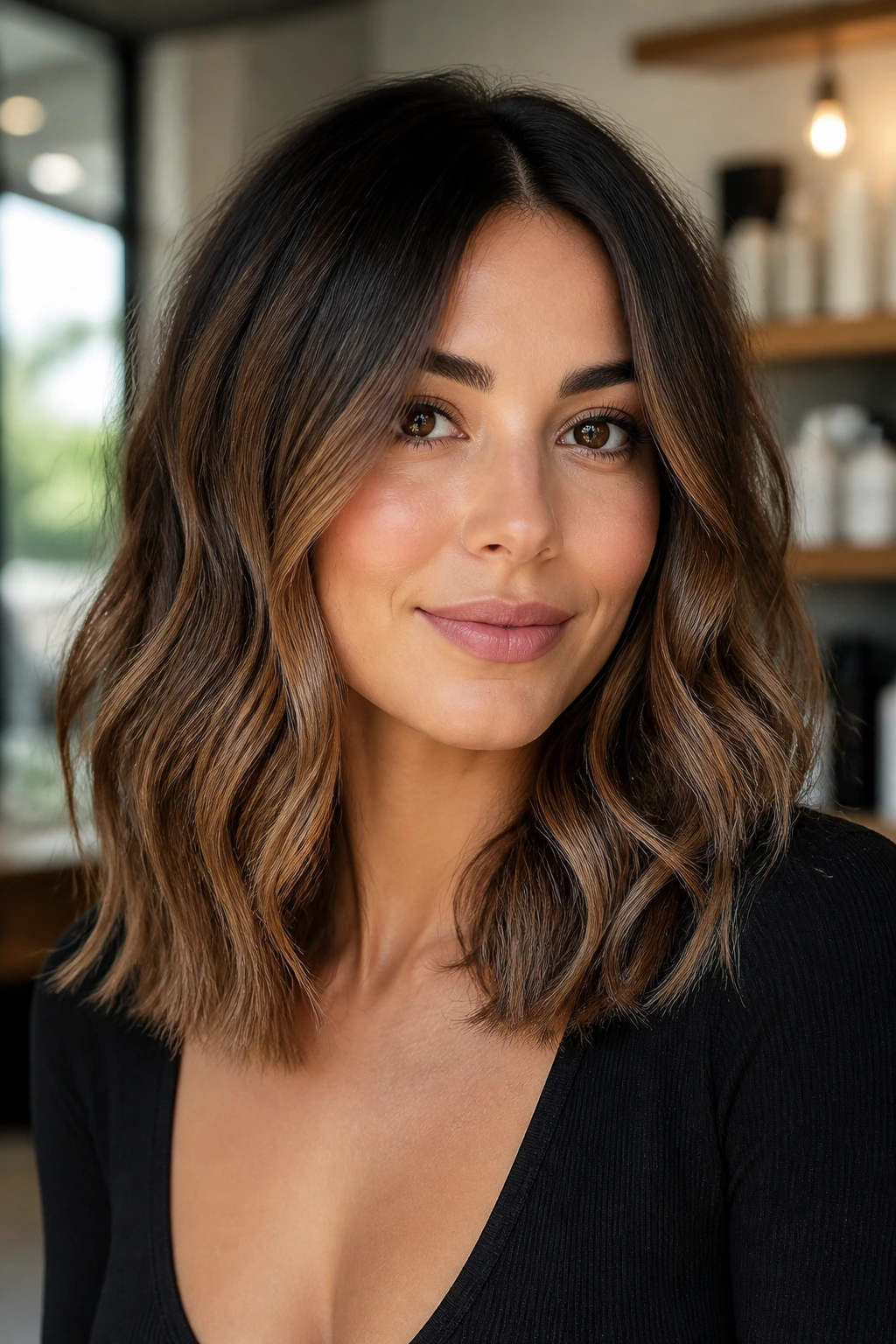
Which brunette shade makes medium-length hair look thicker?
Deeper shades like espresso, velvet espresso, dark chocolate, and walnut usually make medium-length hair look fuller because they reduce see-through ends. If you want dimension without losing thickness, add very fine babylights or face-framing pieces instead of broad highlights.
Is balayage or babylights better for a lob?
Balayage gives a softer, more lived-in look, while babylights give a finer, hazier dimension. On a lob, balayage works well if you want visible movement, and babylights are better if you want the brown to stay soft and blended.
What is the lowest-maintenance brunette idea in this list?
Espresso gloss, mocha melt, ash brown shadow root, tawny sombre, and velvet espresso are all easier to live with than high-contrast highlights. They grow out softly and usually need only a gloss refresh between bigger appointments.
Can dark brown hair go caramel without looking orange?
Yes, but the lift has to be controlled. Ask for caramel that stays beige-golden rather than copper-gold, and keep some depth near the root so the color doesn’t tilt orange when it fades.
Will ash brown wash me out?
It can if the tone is too gray or if your skin already leans cool and pale. A better version is ash brown balanced with beige or mocha so the color stays soft instead of chalky.
How often should brunette hair be toned or glossed?
Every 4 to 6 weeks is a solid range for glossing, especially if your shade has warmth or a noticeable highlight pattern. Cooler brunettes can sometimes stretch a little longer, but once the shine drops off, the color starts looking tired fast.
What should I tell my colorist if I want something subtle?
Say you want a soft shadow root, fine ribbons, and no chunky contrast. Mention how much maintenance you’re willing to do, because a subtle brunette that grows out well is a very different request from a bright ribboned brunette.
Do these ideas work on curly medium-length hair?
Yes, but the placement should be softer and a touch more concentrated than on straight hair. Curly texture shrinks and expands, so very chunky contrast can disappear or look uneven once the curls dry.
A Better Brunette Starts With the Right Tone
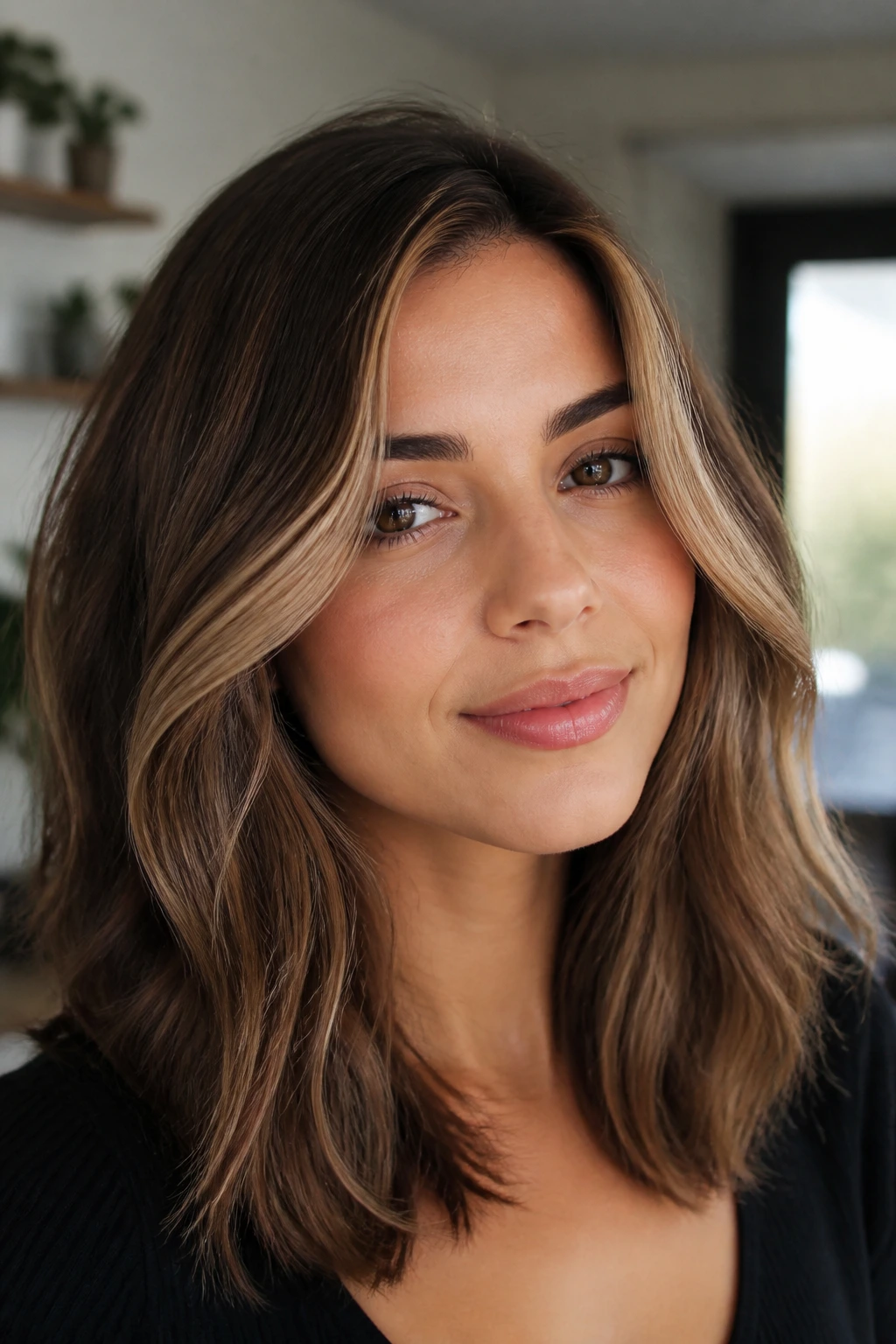
The nicest thing about medium-length brunette hair is that it does not need a dramatic makeover to look better. A cleaner root shadow, a smarter ribbon placement, or a gloss that keeps the brown from going flat can change the whole cut without making it feel overworked.
Pick the shade that matches your real life, not the version of your hair you only see in a salon mirror. If you wear it smooth, go for shine and depth. If you wear it wavy, go for movement and placement. The best brunette on medium hair is the one that still looks good when you pull your keys out of your bag, catch yourself in a window, and realize the color is doing exactly what it should.
