



Long hair can go limp in a hurry. One blunt cut and the whole thing hangs like wet rope; add the right layers, and the same length suddenly gets swing, lift, and that little bend at the ends that makes hair look awake. That’s the real promise of long layered haircuts: not more drama, just better shape.
What separates a good layered cut from a bad one is restraint. Too many layers too high up the head can make the top look wide and the bottom look see-through. Better versions remove weight where the hair actually needs it, then leave enough length through the perimeter so the ends still feel full. If you add balayage, highlights, or even a soft money piece, the layers show up even more clearly because light catches the bends instead of sitting on a flat sheet of color.
I’ve always liked long layers because they do the quiet work. They soften a heavy line, help thick hair stop acting like a blanket, and give fine hair a little air without forcing it into a short cut. The styles below lean into that sweet spot — soft movement, body, and enough length to still throw over your shoulder when you want it to.
Why These Cuts Earn Their Keep
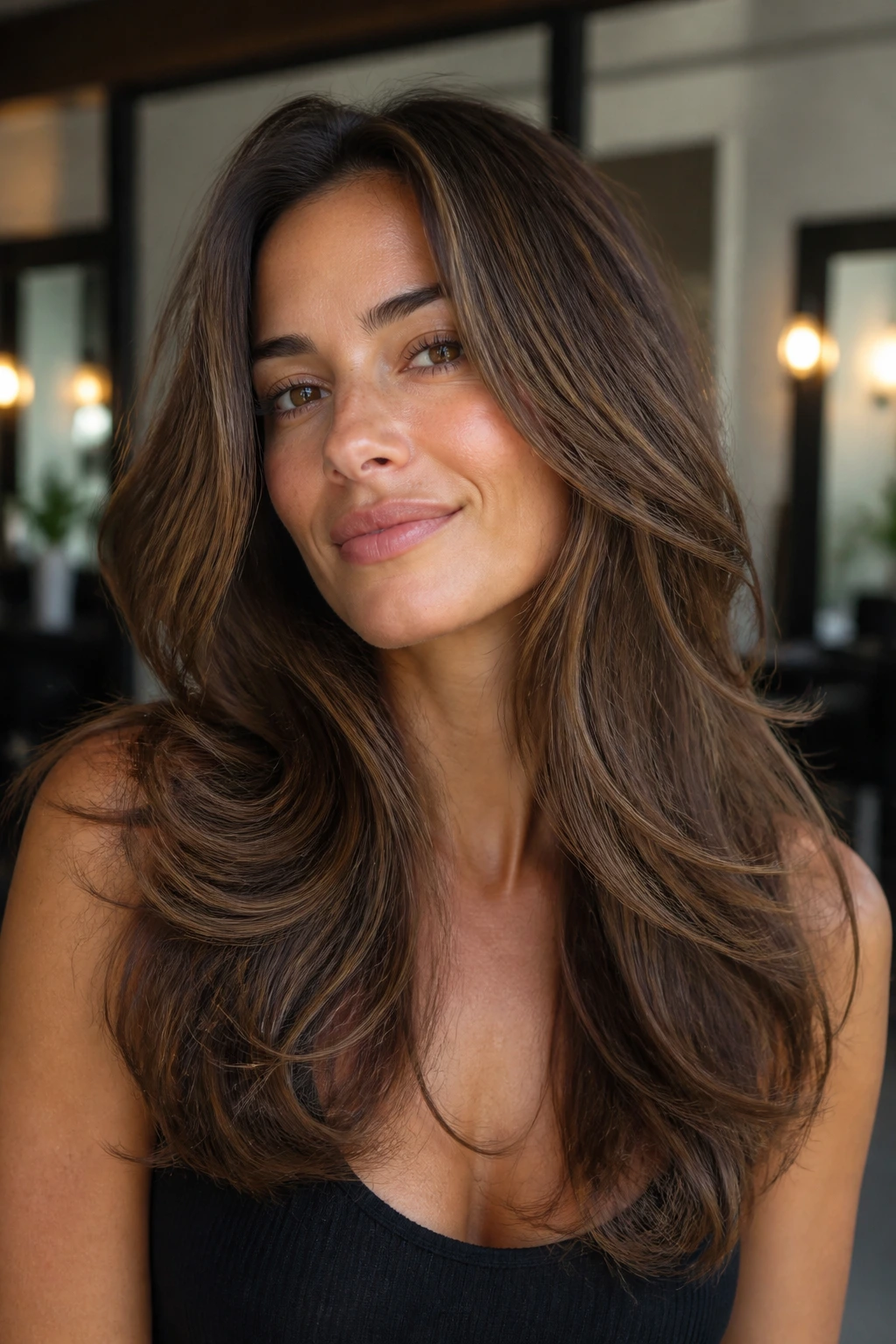
- They keep the length you paid for: Long layers remove weight without chopping off the bottom, so you get movement without losing that long-hair feel.
- They play well with color: Balayage and highlights make each bend and flip read more clearly, especially around the face and ends.
- They’re easier to style than one-length hair: A layered cut usually takes less effort to bend into shape, because the hair doesn’t fight itself as hard.
- They can be tuned to your texture: Fine hair, dense hair, straight hair, waves, and curls all need different layer placement — and that’s where these cuts get interesting.
- They grow out with less weirdness: Soft layers and face-framing pieces tend to fade better between trims than a hard blunt line with a few random snips.
- They create body where hair usually collapses: If your ends hang flat by noon, the right layering gives them a little lift and swing back.
1. Soft U-Shaped Layers
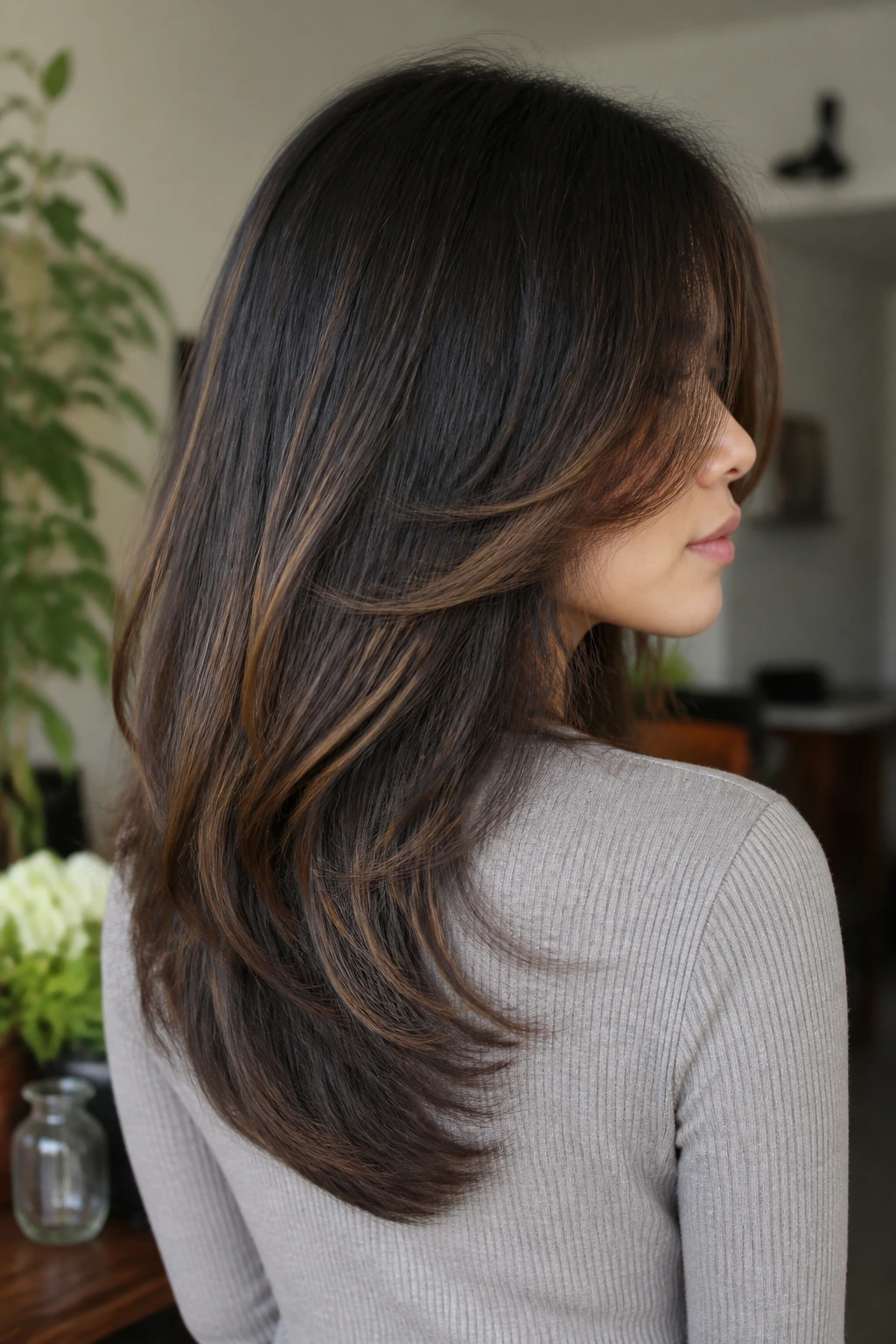
A soft U-shape is one of those cuts that looks almost simple until you move your head. The back curves gently instead of dropping in a hard line, and the layers are tucked in low enough that the silhouette still feels long and plush. It’s a calm haircut. No jagged edge. No loud angles.
Why it works
The U-shape keeps weight at the perimeter, which matters if your hair is naturally straight or only slightly wavy. You get movement through the mids and ends, but the bottom still looks full rather than wispy. A few balayage ribbons through the lower half make the curve easier to see, especially when the light hits the outer bend.
Best for
- Medium to thick hair that needs a little release
- Anyone who wants softness without a shaggy finish
- Long hair that tends to hang in one heavy curtain
My take: Ask for the first layer to start lower than you think. That’s what keeps the cut from turning into something too choppy.
2. Long Face-Framing Layers
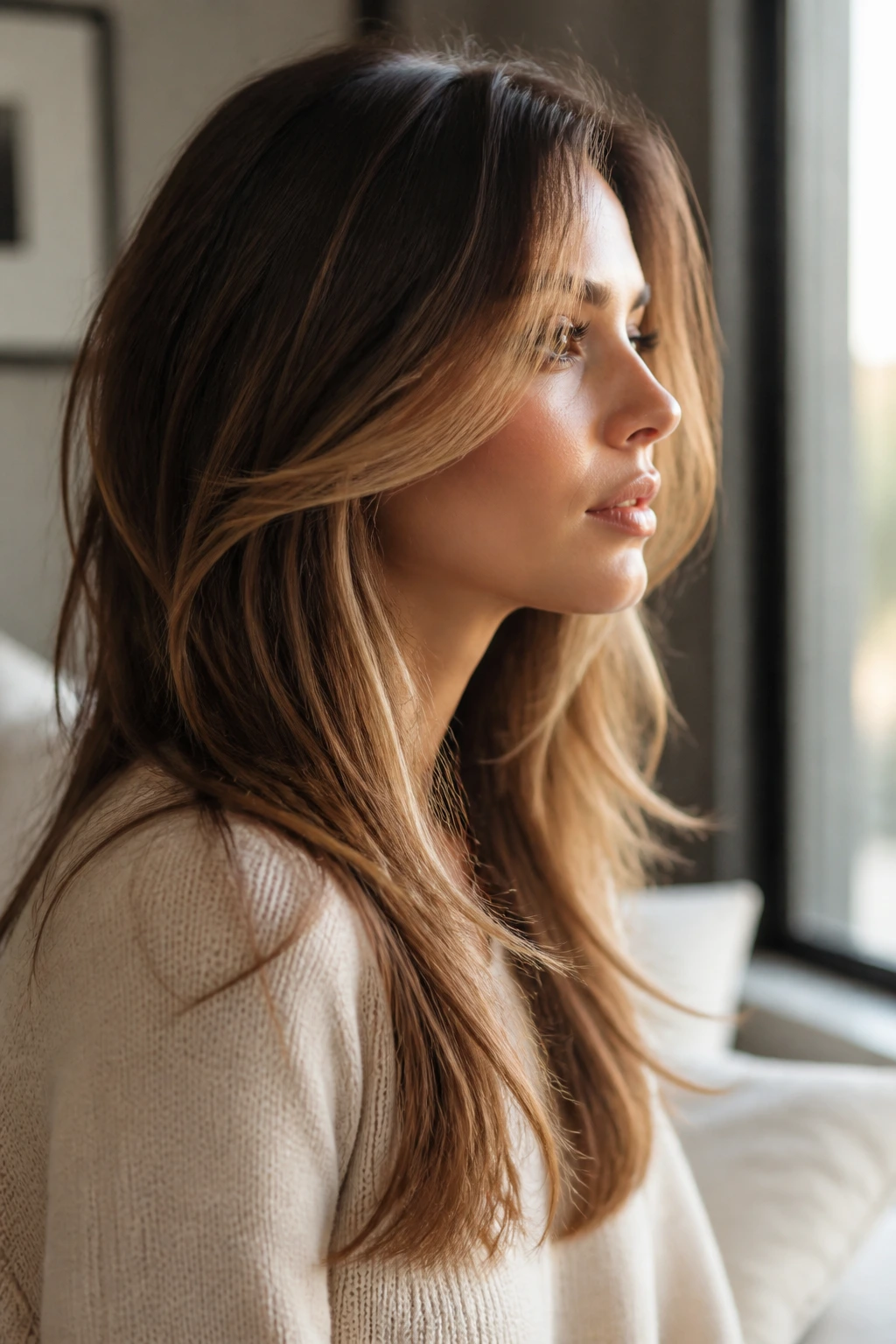
If you want the fastest way to make long hair look more alive, start around the face. Face-framing layers hit the cheekbone, jaw, or collarbone and then drift into the rest of the length, which means you get shape where people actually look first. It’s flattering, yes, but the bigger point is motion.
The front pieces break up a heavy center section and keep the cut from reading as one long block. With highlights or a brighter money piece, those front layers pull forward even more. I like this cut on clients who wear their hair down most of the time, because it gives instant payoff without asking for a big commitment.
3. Butterfly Cut
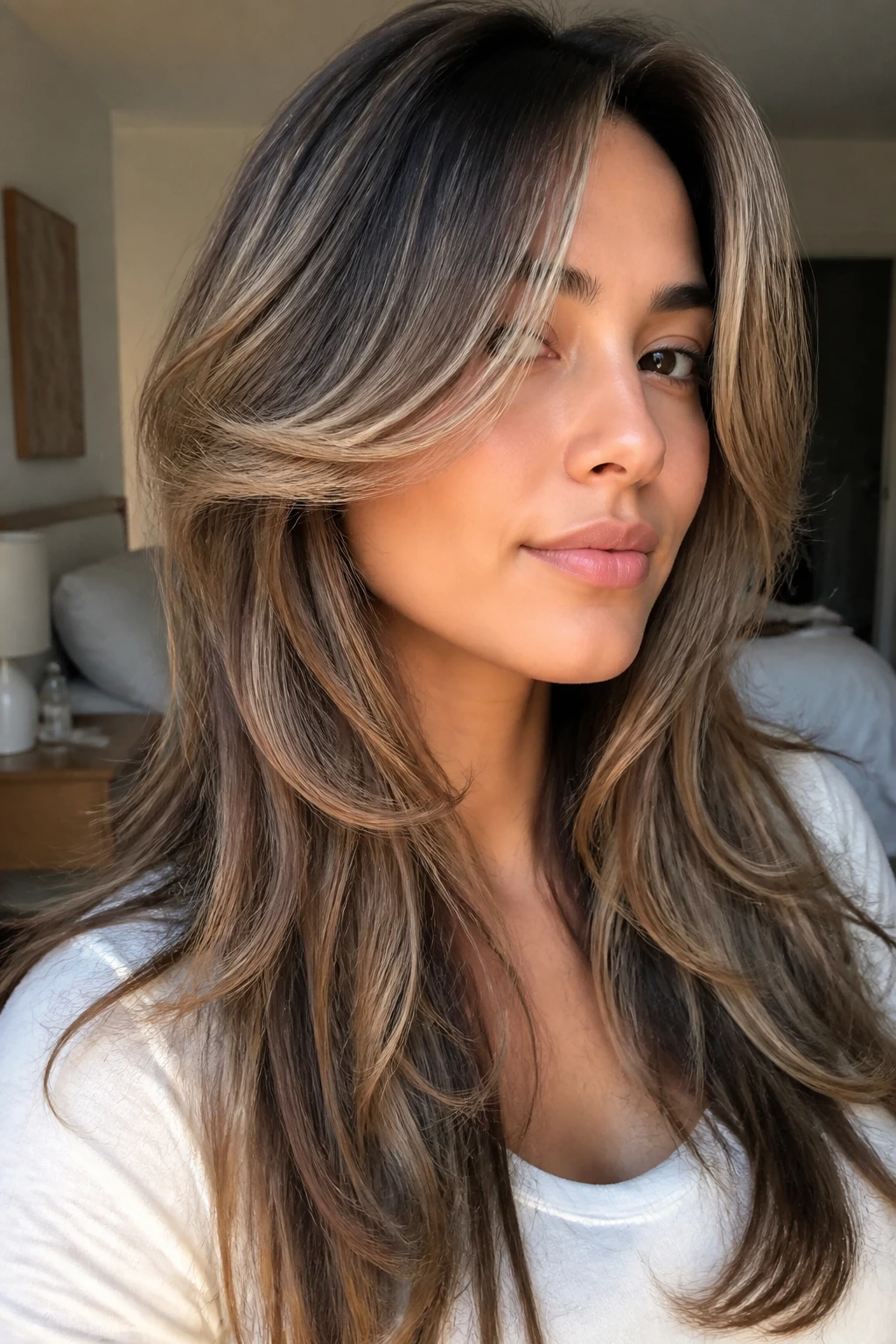
Why does the butterfly cut keep showing up? Because it solves the annoying part of long hair: the top can look flat while the ends look heavy. This cut uses shorter, floating layers around the crown and longer lengths underneath, so you get lift up top and still keep the long sweep below.
What makes it different
The upper layers create that blowout-friendly bounce around the face and shoulders. The lower layer keeps the length intact. On wavy hair, it gives a soft winged shape; on straight hair, it creates the illusion of volume without heavy teasing. If you add subtle balayage through the top pieces, the separation becomes easier to see.
How to wear it
Blow-dry the top sections away from the face with a round brush, then leave the ends loose or give them a soft bend with a large iron. It should look full, not puffy.
4. Feathered Blowout Layers
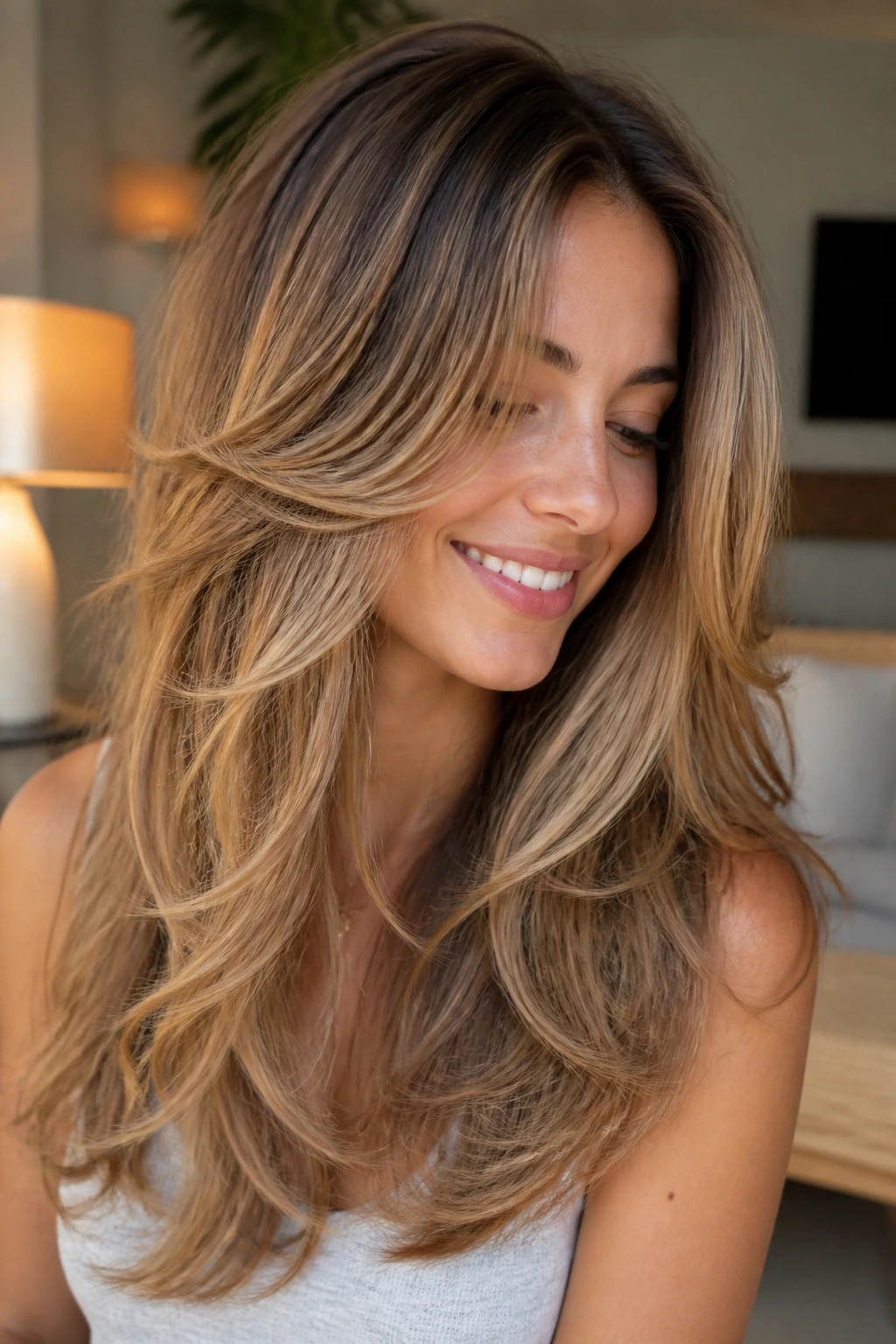
This is the haircut for people who like hair that seems to move even when they’re standing still. Feathered layers are cut and styled so the ends taper lightly, which gives that airy, 90s blowout feel without turning the whole head into a helmet. The best version is soft at the root and flicky at the bottom.
I like it on hair that’s thick enough to hold shape but not so coarse that it springs apart. A few lighter highlights through the mid-lengths help the feathering show up, because the cut depends on visible separation. If your stylist rounds the ends too aggressively, it can get dated fast. Keep it soft. Keep it loose.
5. Invisible Layers
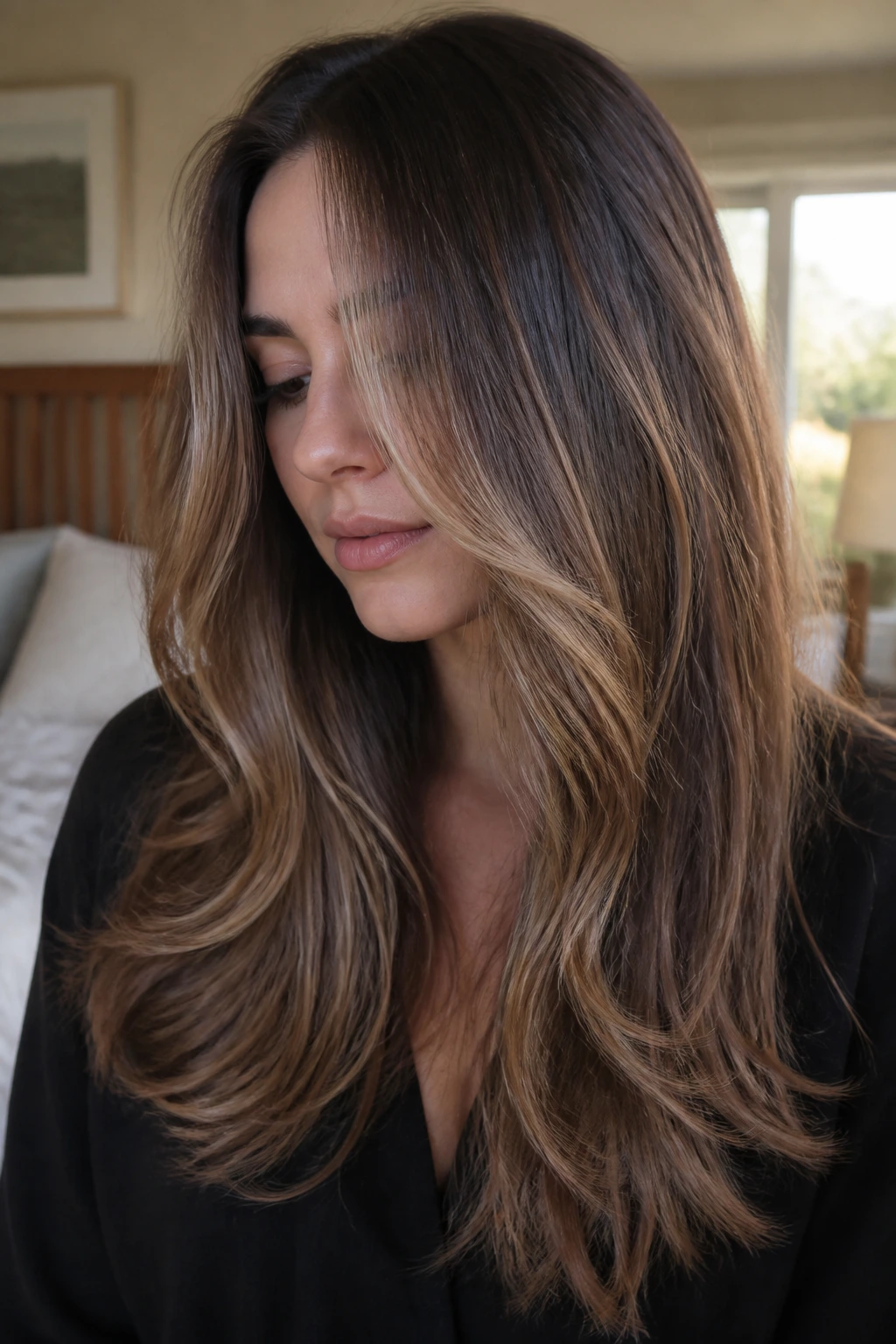
Invisible layers are for people who want movement but hate the look of obvious layers. The cut is carved inside the shape, so the outer line stays smooth while the interior loses weight. From the outside, it can still look like a sleek long cut. Underneath, it behaves much better.
That makes it a smart choice if you like wearing your hair straight or in soft bends. It also works well with balayage, because the color sits across the surface while the hidden layers help the hair fold and fall. You don’t get that choppy shelf effect some layered cuts create. You get a quieter kind of body.
6. Long Shag with Airy Texture
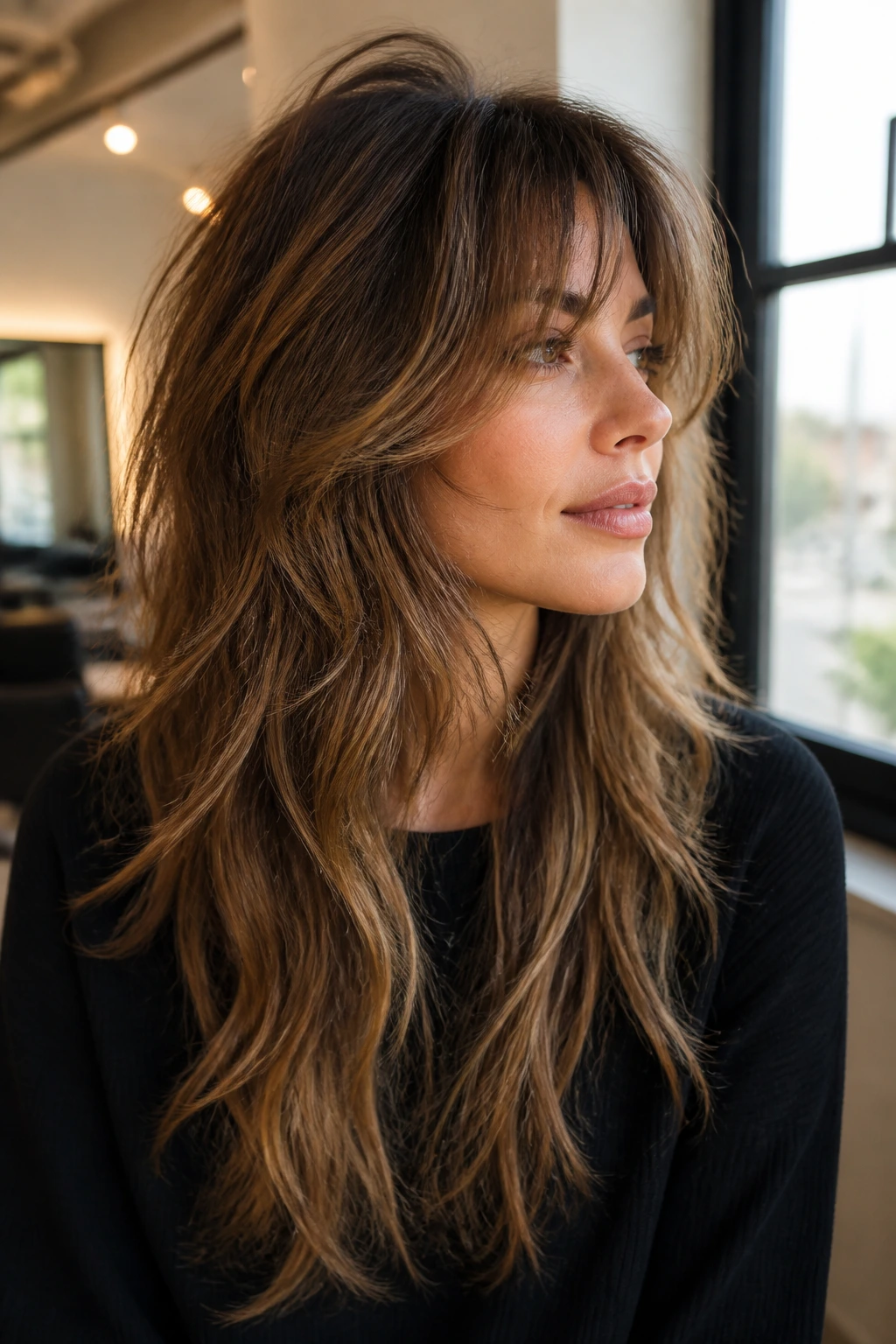
A long shag is not for people who want their hair obedient. Good. It’s for people who want movement that looks a little lived-in, a little messy, and very on purpose. The layers are higher, the ends are more broken up, and the whole cut has a looser attitude than a polished blowout style.
What it gives you
- Lift through the crown without short, poufy bangs
- Ends that kick and separate instead of hanging straight down
- A shape that works well with waves and scrunching
- Extra dimension if you wear gloss, toner, or soft balayage
It’s a strong cut for hair that falls flat when it’s all one length. The trade-off is styling. You need a bit of mousse or texturizing spray, or the shape can go limp.
7. Curtain Bangs with Cascading Layers
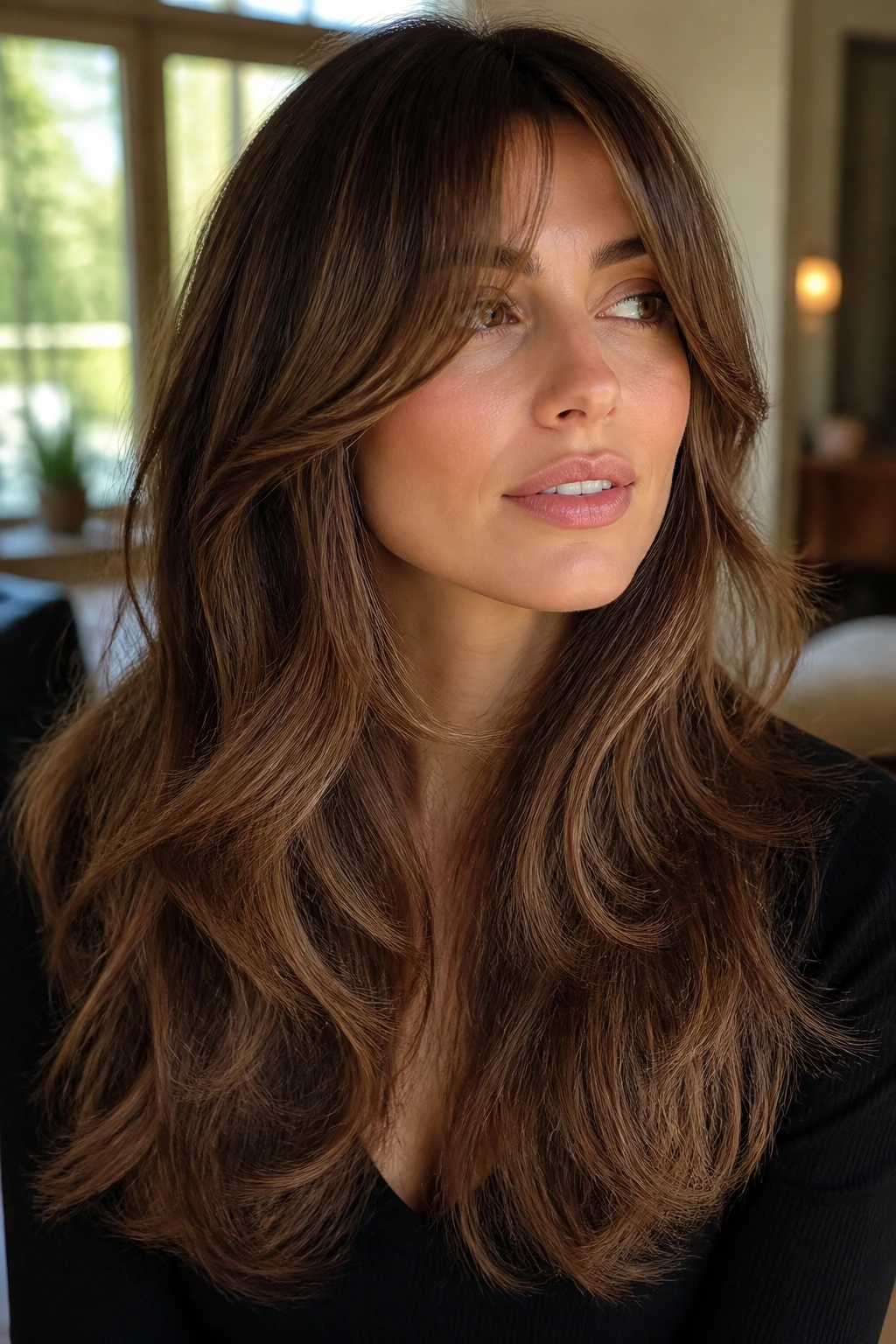
Curtain bangs are the gateway layer for a lot of people, and I get why. They soften the front without locking you into a short fringe. When they’re paired with cascading long layers, the whole haircut feels like it opens around the face instead of stopping at the cheekbones.
The trick is balance. The bangs should blend into the first layers, not sit on top like a separate haircut. If your hair is highlighted, especially around the front panels, this style looks even better because the fringe pieces catch the light before they disappear into the length. It’s one of the easiest ways to make long hair feel less heavy around the eyes and jaw.
8. V-Cut Layers
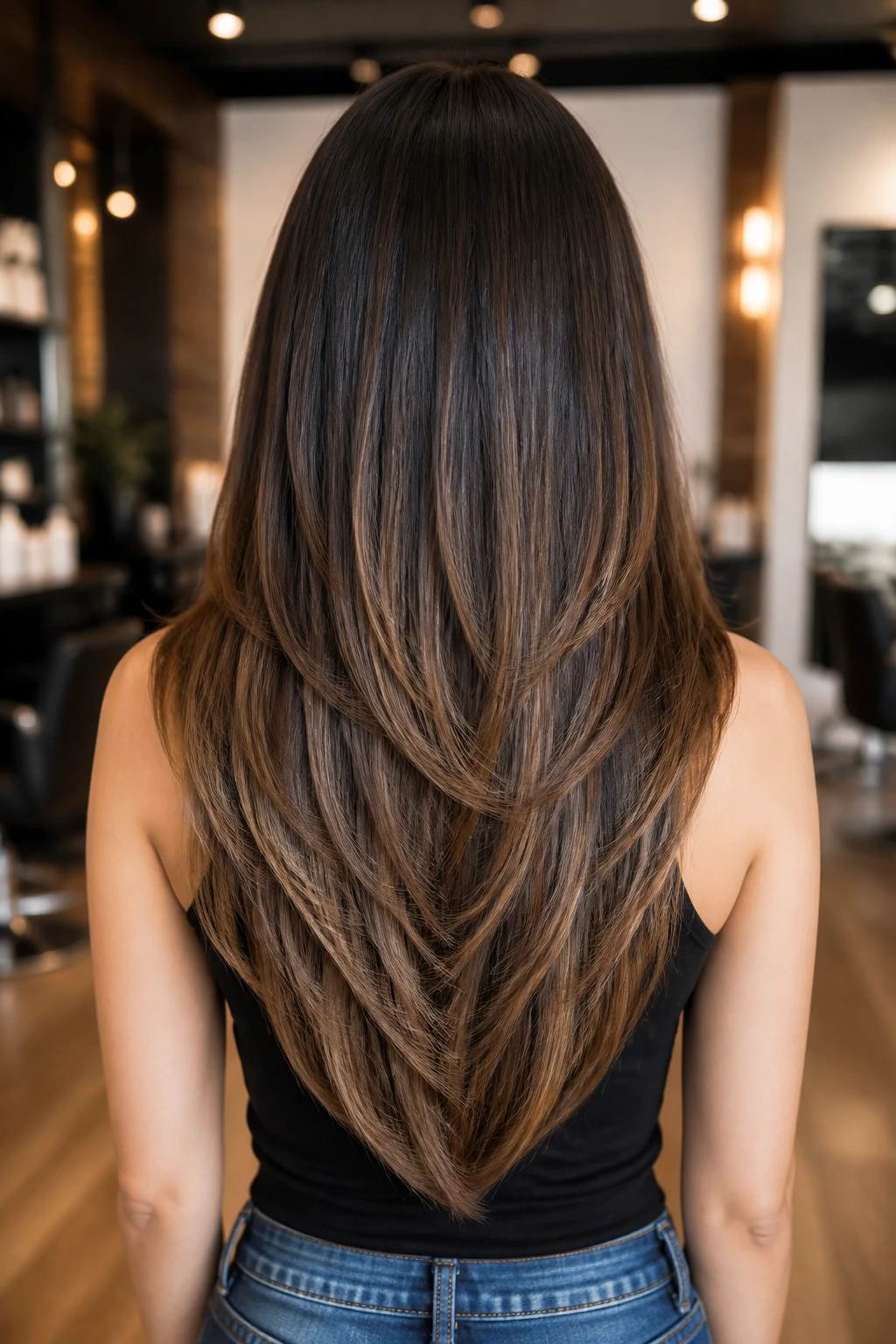
A V-cut gives the back of the hair a sharper point than a U-shape, and that point changes the whole attitude of the cut. Instead of a gentle curve, the silhouette narrows toward the center of the back, which makes the length look longer and a bit more dramatic. It’s clean. It’s not fussy. And on thick hair, it can be a lifesaver.
I like this cut when someone wants motion but still wants the back to hang with a little weight. The V shape stops the ends from looking like one flat shelf. Add a few subtle highlights near the lower sections and the point becomes easier to read, especially if your hair is dark. Skip it if you hate visible shape at the back. This one does not hide.
9. Choppy Long Layers
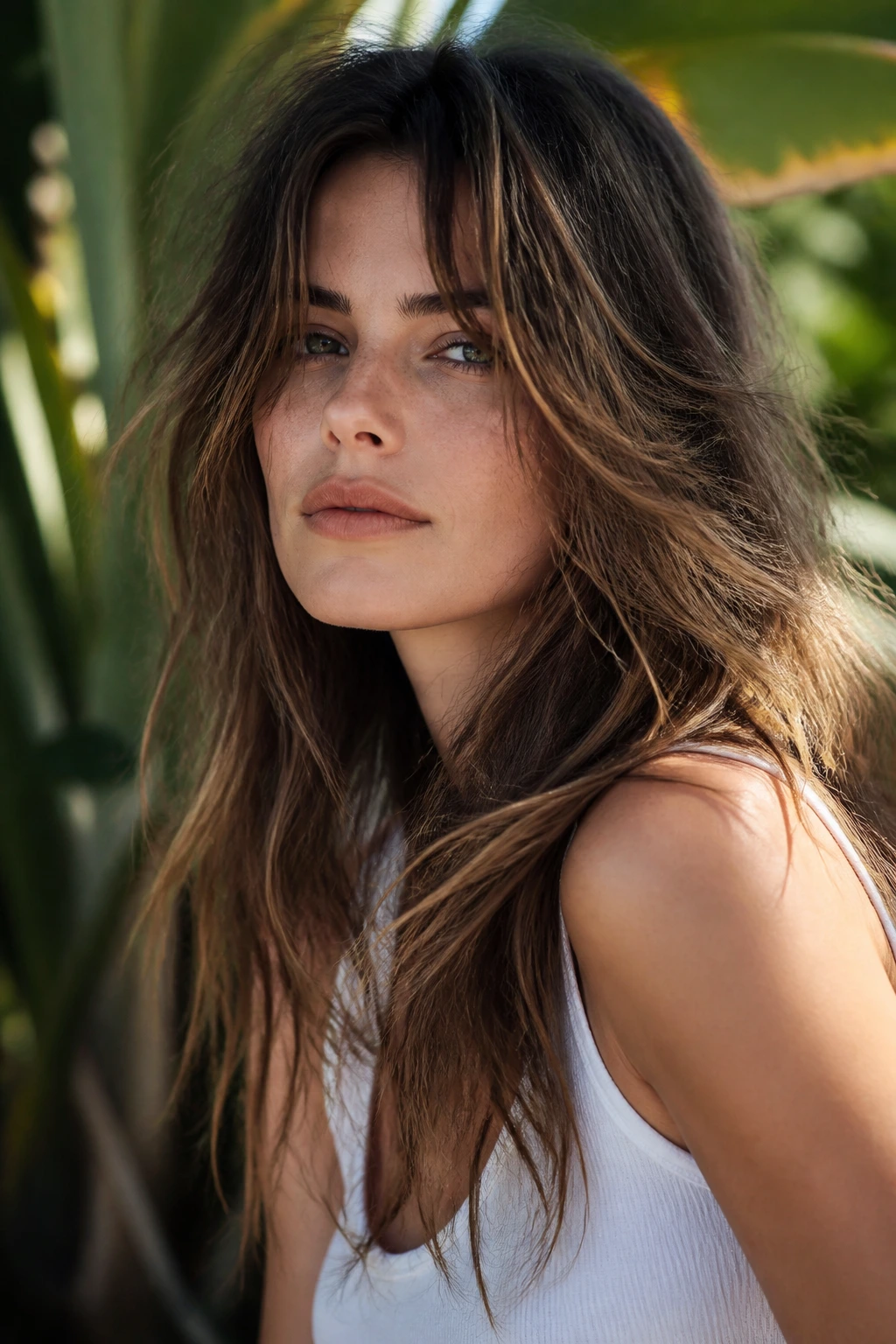
Choppy layers bring edges, and that edge is the whole point. Instead of floating softly into one another, the layers have a more broken texture that gives the hair a slightly undone look. It’s not messy. It just has a little grit.
This works especially well on dense hair that needs some air taken out of it. The choppier finish keeps the ends from collapsing into a heavy block. On natural waves, it can look terrific with a rough-dry and a bit of sea-salt spray. If you wear it sleek all the time, though, the choppiness will show more plainly, so you need to like that textured feel.
10. Rounded Layer Cut
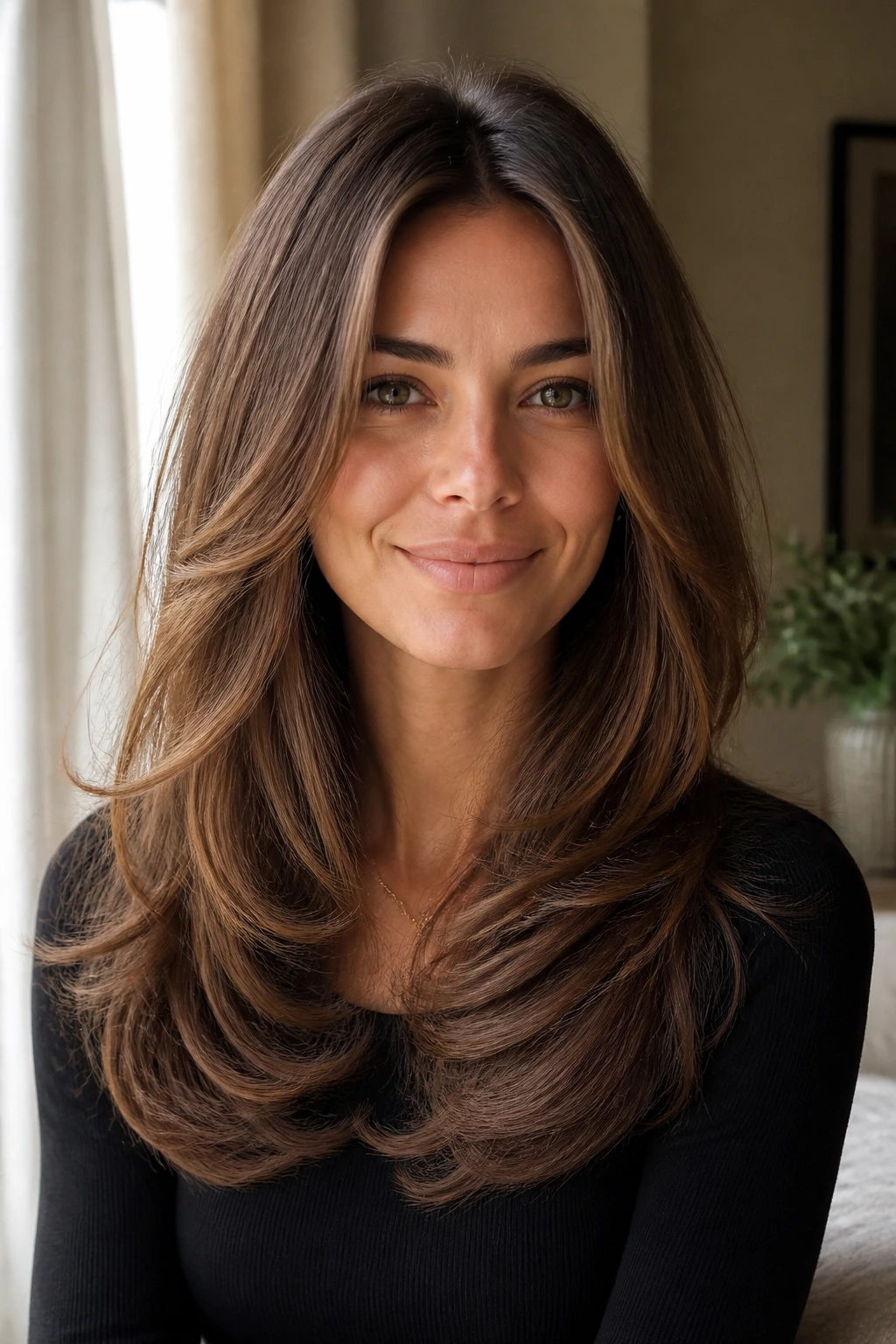
A rounded layered cut is one of the most flattering shapes for long hair because it mirrors the head instead of fighting it. The sides stay soft, the back is subtly curved, and the layers move in a way that feels deliberate rather than hacked in. It’s a polished shape, but not stiff.
This cut works especially well if you wear your hair in a middle part and like a fuller look around the cheeks and shoulders. The roundness helps long hair avoid that triangle effect where the ends go flat and the mid-lengths puff out. With soft caramel highlights or babylights, the rounded shape looks even smoother, because the light traces the curve.
11. Sliced Layers for Fine Hair
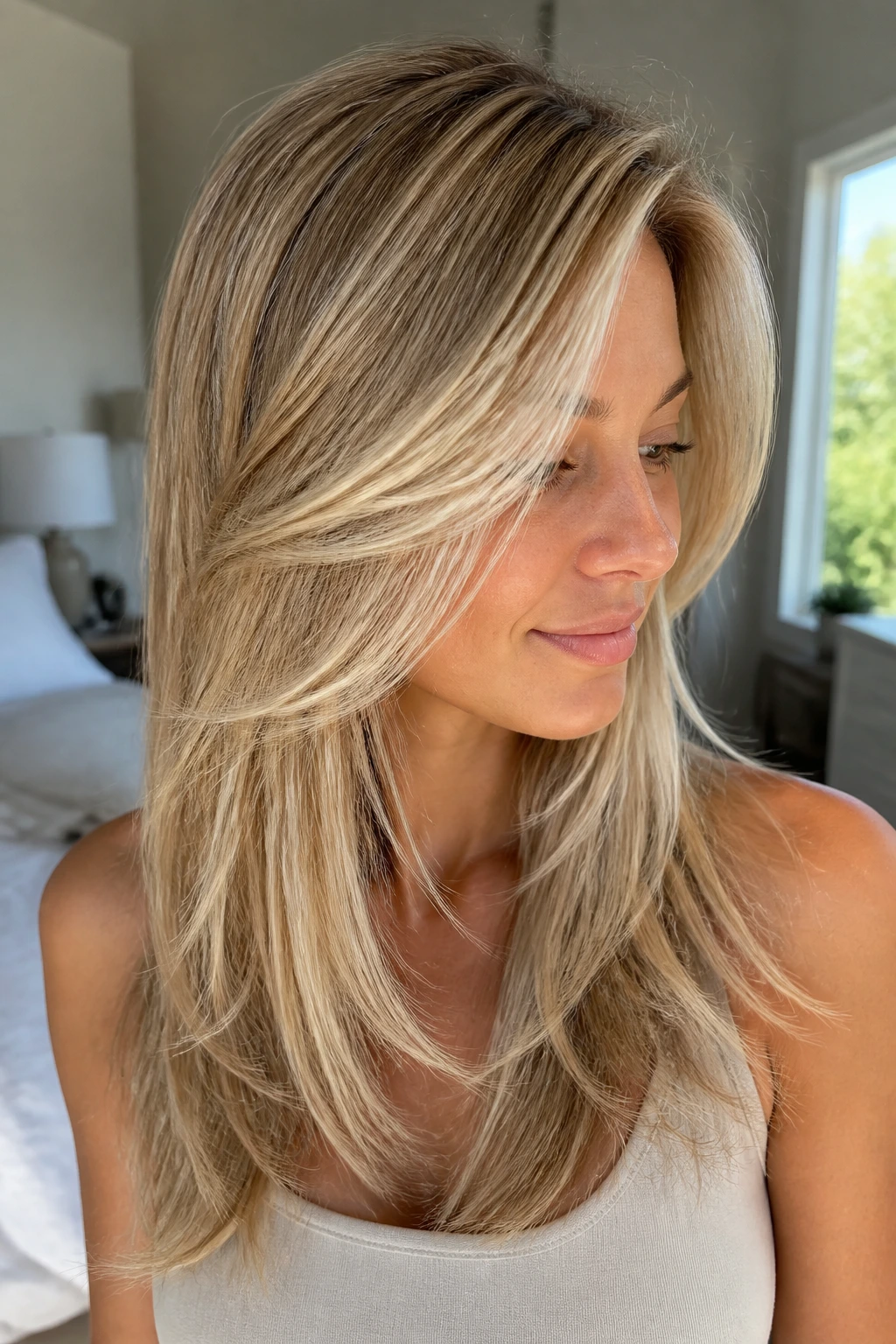
Fine hair needs a careful hand. Too much texturizing and you’ll see through the ends. Too little and it hangs like string. Sliced layers split the difference by removing weight in clean, controlled sections, which keeps the hair from clumping while still leaving enough substance at the bottom.
Unlike blunt cuts, sliced layers don’t fight the natural bend of fine hair. They let it move. That means your blow-dry looks less like a helmet and more like hair with actual lift. If you’re wearing highlights, the sliced movement helps the color pieces separate instead of blending into one pale sheet.
12. Weight-Removing Layers for Thick Hair
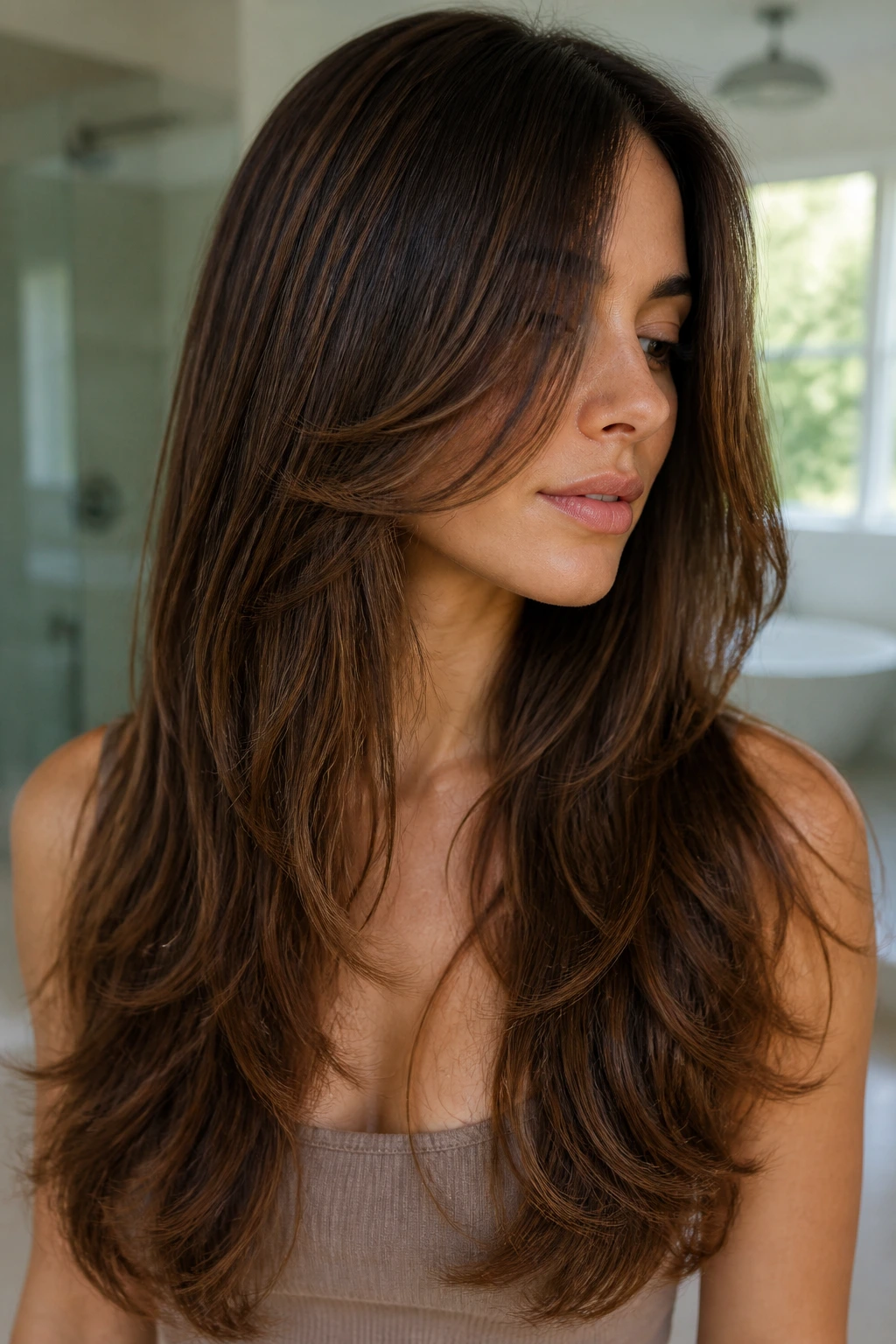
Thick hair is not the enemy. Heavy, unbalanced thick hair is the enemy. This cut removes bulk from the interior and lower mids so the hair falls with less drag, which keeps the length from ballooning out at the sides. It’s the difference between a mane that sits on your shoulders and one that slides over them.
I’d ask for this if your hair takes forever to dry or if the bottom two inches feel like a brick. The layers should be long enough to blend, not so short that they puff. A gloss or dimensional color helps, too, because dense hair can swallow detail unless there’s some variation in tone.
13. Wolf Cut for Long Hair
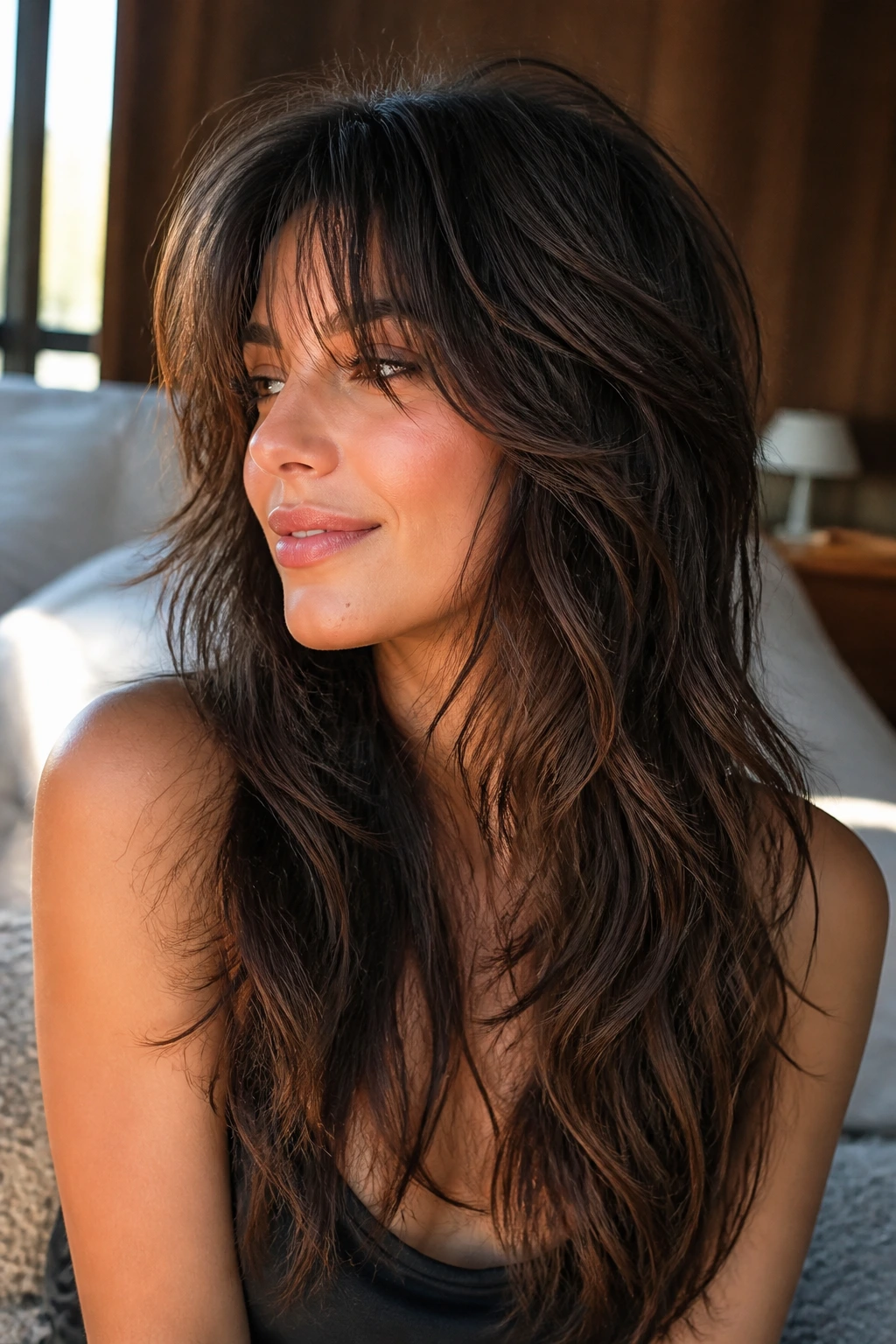
A long wolf cut is the rebellious cousin in this whole group. It keeps the length, but the top is more layered, the texture is more broken up, and the silhouette feels a little wild in a good way. If your style leans edgy or undone, this is the one that gives you movement without trying too hard.
Why it’s different
The crown has more lift, the sides are choppier, and the overall shape is looser than a classic layered cut. That means it pairs well with waves, curls, and natural texture. It can also work with darker balayage or face-framing highlights, because the rougher shape makes the color look more dimensional. It is not the haircut for someone who wants a neat, conservative finish.
How to ask for it
Ask your stylist to keep the length long, but build texture higher through the top and around the face. If they cut it too short around the crown, you lose the point.
14. Bottleneck Bangs with Long Layers
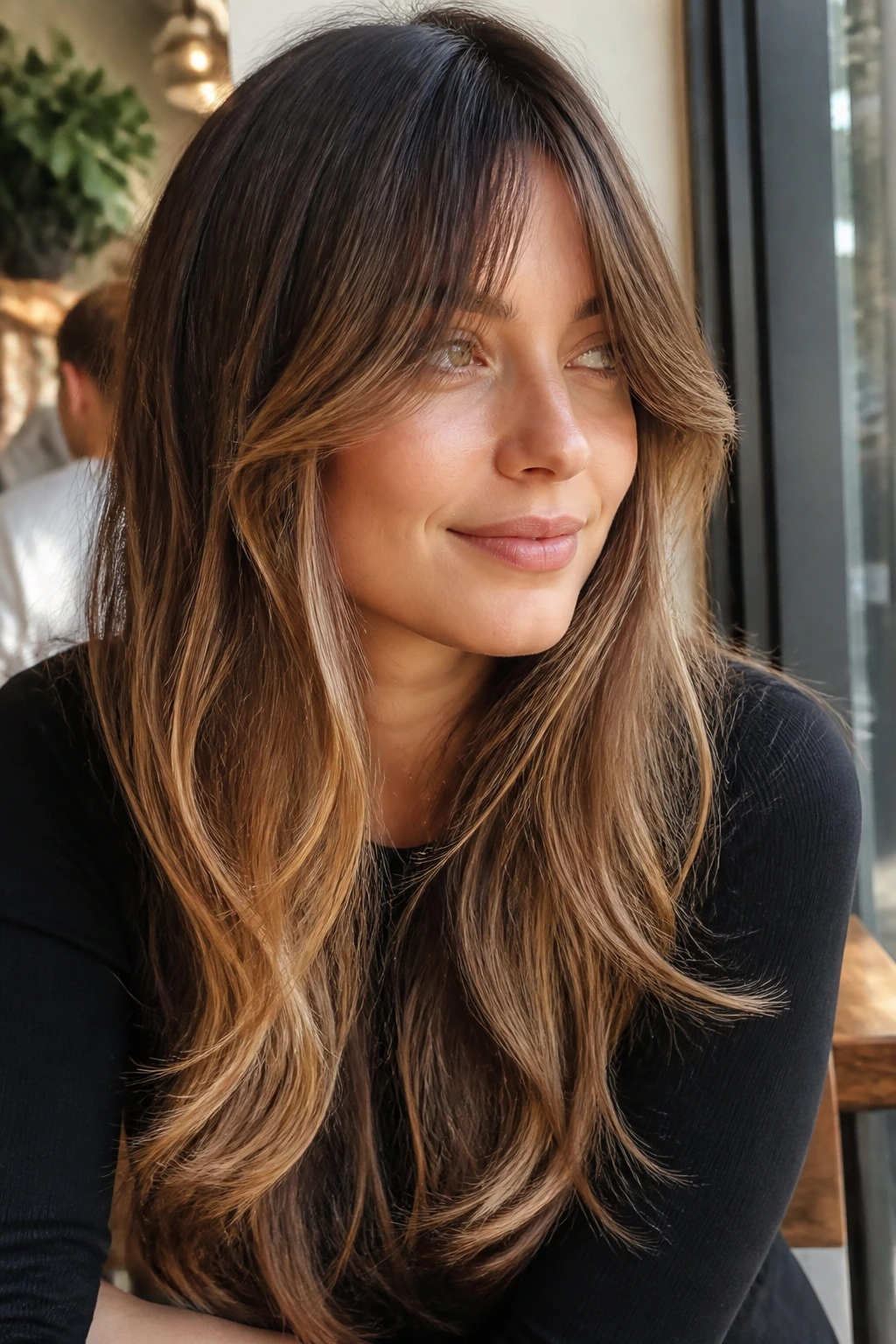
Bottleneck bangs sit in that sweet spot between curtain bangs and a fuller fringe. They start narrower in the center, open up around the eyes, and then melt into the longer layers. The result is soft, but it still frames the face with purpose.
This is a smart choice if you want movement near the front without committing to a heavy fringe. It also pairs well with warm highlights, because the lighter pieces around the bangs and temples make the whole cut read more open. I’d avoid this if your hairline is stubborn or your cowlicks are dramatic. Bangs are honest. They show everything.
15. Polished Blowout Layers
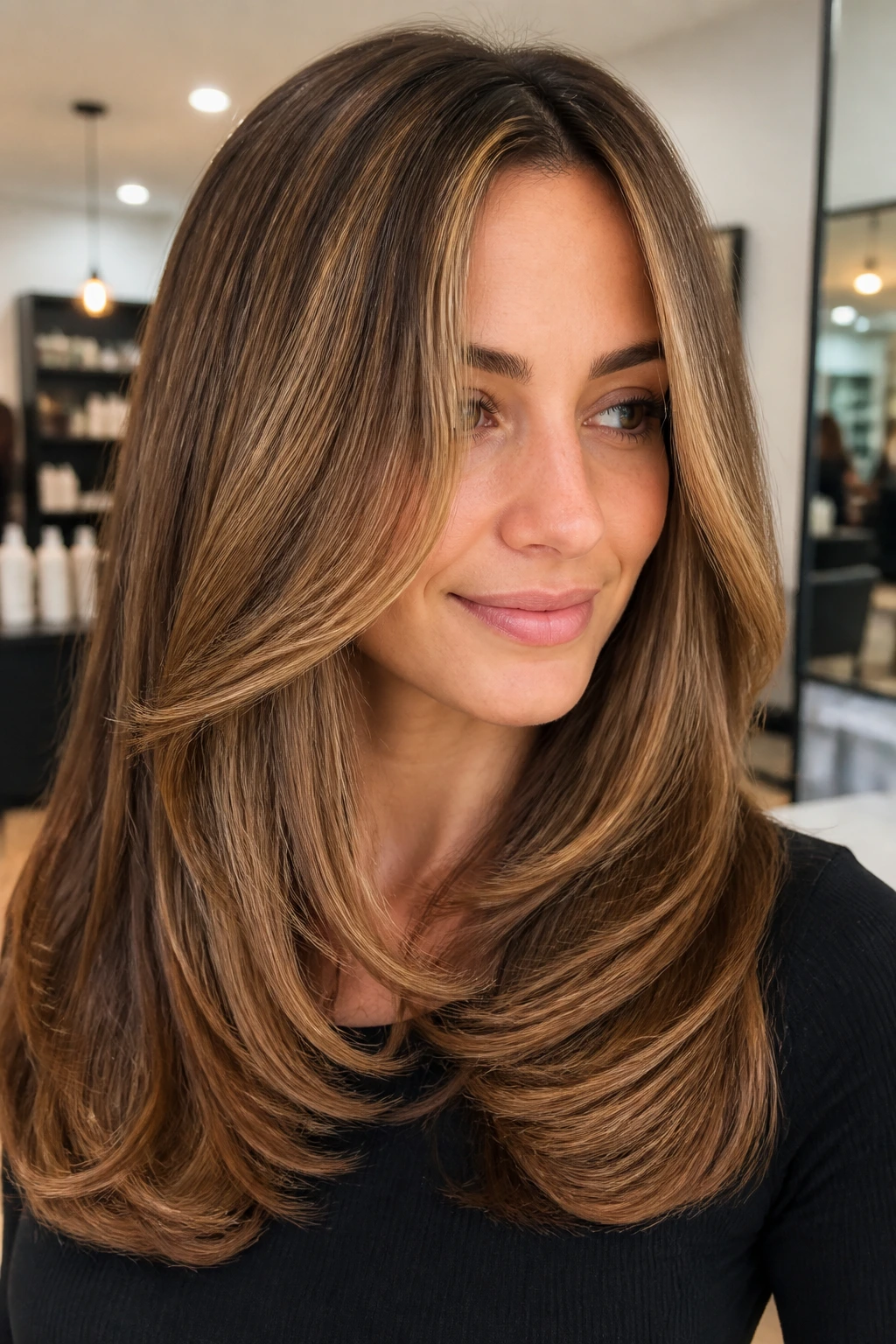
Some long layered haircuts are meant to look a little messy. This one wants polish. The layers are cut to support a round-brush finish, so the ends flip under or out in a controlled way, and the body sits through the mids where it can actually be seen. It’s the haircut you pick when you want the blowout to do some of the talking.
The shape is especially good on straight to slightly wavy hair that loses volume at the root. The layers give the brush somewhere to travel, which helps the blow-dry hold. A glossy toner or a soft caramel balayage can make the movement more visible because polished hair shows color dimension better than matte hair.
16. Textured Layers for Wavy Hair
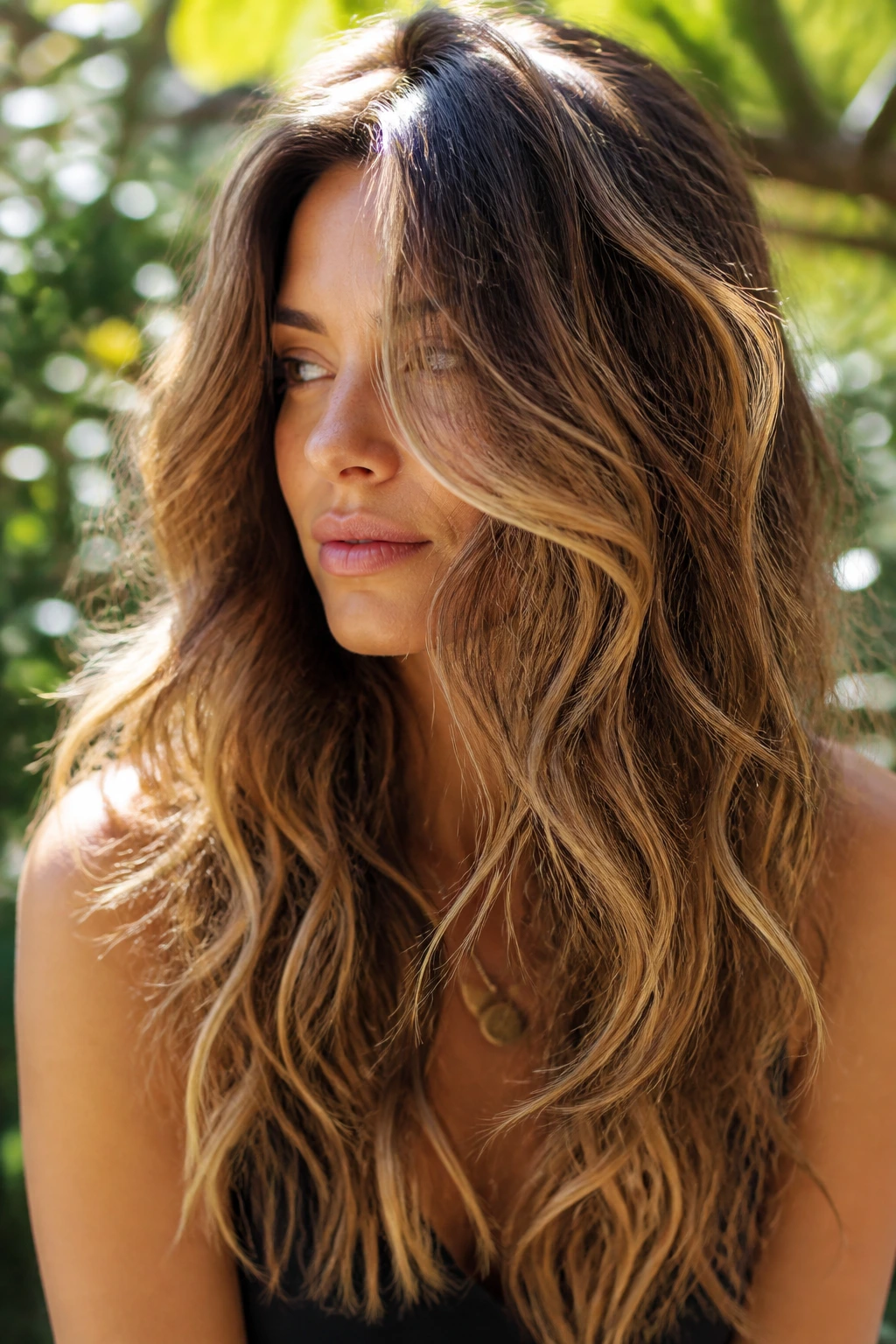
Wavy hair already has movement, but that doesn’t mean every wave behaves. Some clump. Some bend weirdly. Textured long layers help the waves stack in a cleaner pattern, so the shape looks intentional instead of accidental.
The best version of this cut keeps the longest layers long enough that the wave pattern doesn’t get chopped up. Too much cutting can make wavy hair frizzier than you want. Keep the texture soft around the face, then let the ends stay a little lighter. If you wear balayage, this is where it shines — each wave catches a different piece of color, and the cut starts doing half the work.
17. Ribbon Layers for Straight Hair
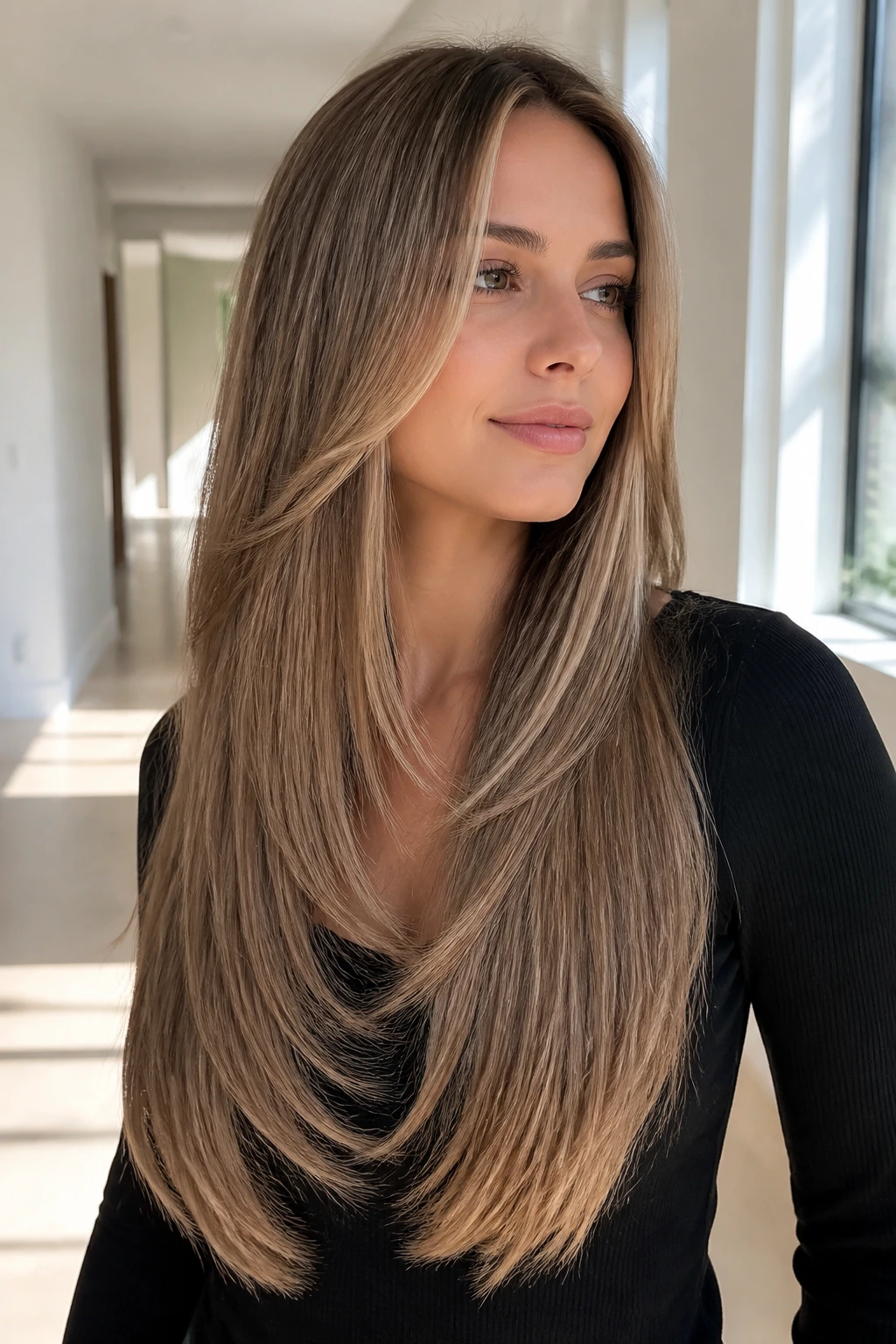
Straight hair can be tricky because it shows every bad line. Ribbon layers solve that by creating long, smooth sections that fall one over another instead of stacking in chunky steps. The result is sleek, but not flat.
What I like here is the way the ends move when you turn your head. They don’t have to curl. They just need to separate enough to look alive. This is also a good cut for subtle highlights, since straight hair makes tonal shifts easy to see. Keep the layers long and the ends clean. If the cut gets too piecey, it stops looking refined.
18. Curly Long Layers
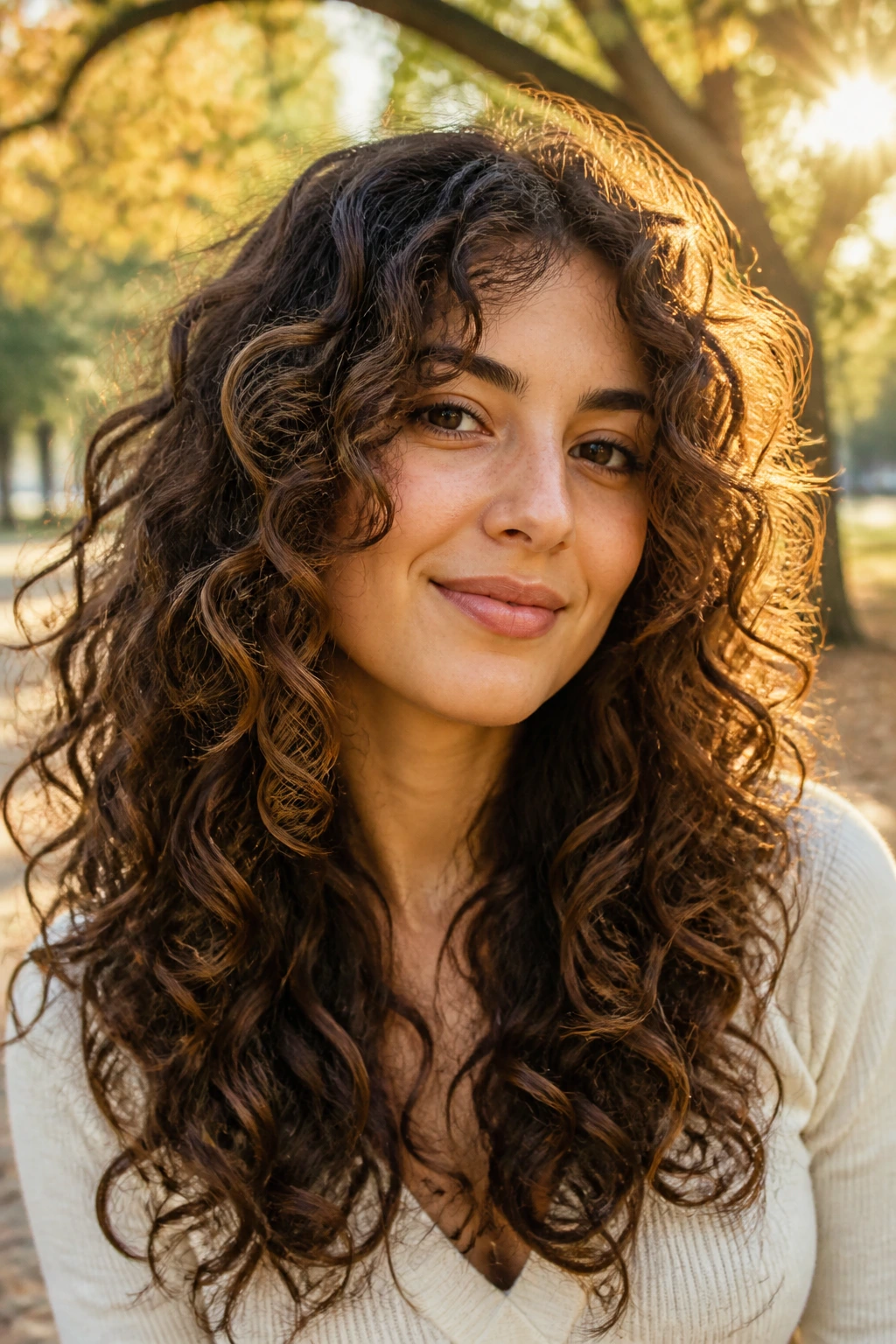
Do curls need layers? Yes. Absolutely. But they need the right layers. Long curly layers remove weight so the curls spring instead of dragging, while still keeping enough length for that full, flowing shape that curls do best when they’re not overcut.
The danger is shrinkage. A curly layer that looks reasonable wet can bounce up two inches, sometimes more, once it dries. That’s why the cut needs to respect the curl pattern and be checked in dry form if your stylist works that way. A few brighter pieces — especially around the top and front — can make the layers easier to read without making the shape feel busy.
19. Money Piece Layers
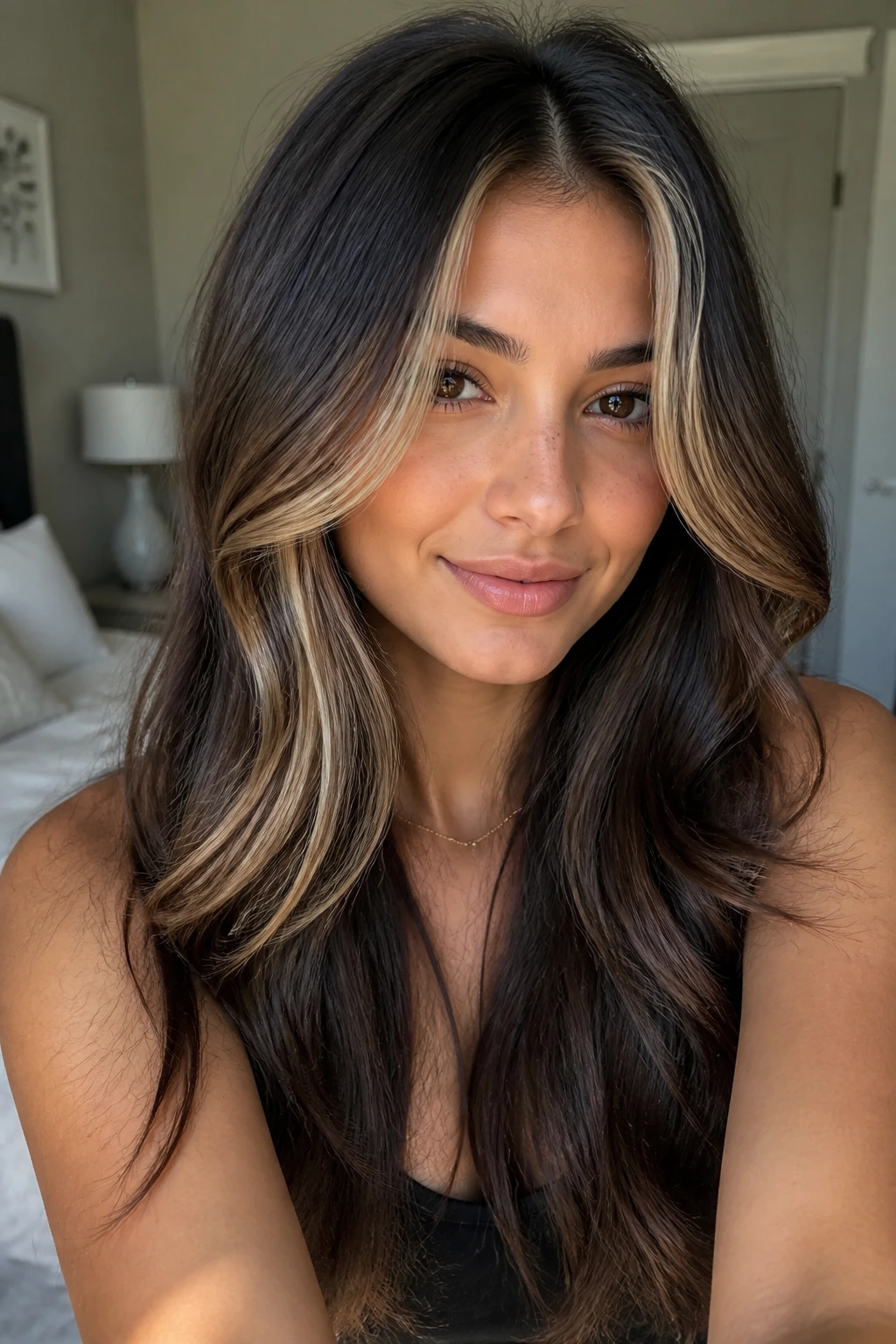
This cut is less about the haircut alone and more about how the haircut and color work together. The front layers are built to frame the face, and the money piece — those lighter front strands — sits right on top of that shape so the movement becomes impossible to miss. It’s a smart combo if you want a visible change without a full restyle.
The haircut itself should stay soft and long enough to blend into the sides. The color does the loud part. That’s the balance. Too much layering and the money piece can look disconnected. Too little and the color feels stranded. When the two are matched well, the front opens up and the rest of the length stays plush.
20. Deep Side-Part Layers
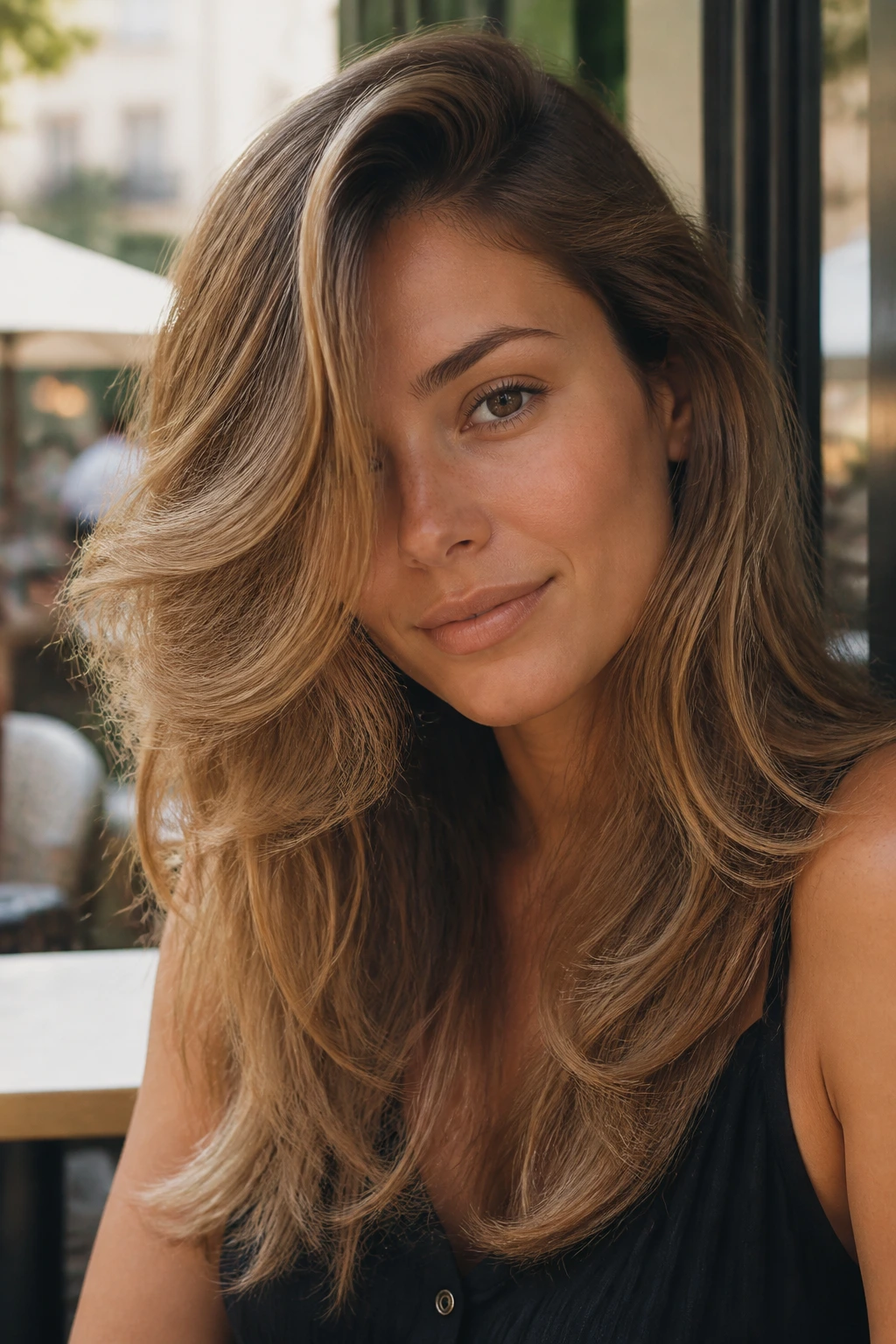
A deep side part changes the haircut more than people expect. It creates lift on one side, sweep on the other, and a little asymmetry that makes long layers look fuller without adding actual bulk. If your hair always falls flat down the middle, this is an easy correction.
The layers should support the part, not fight it. That means the front pieces need enough length to fall across the forehead and cheek without collapsing. Side-part layers also show off highlights in a nice way because the hair moves in broader arcs. The finished shape feels softer than a center part, a little more romantic, and less strict.
21. Razor-Soft Layers
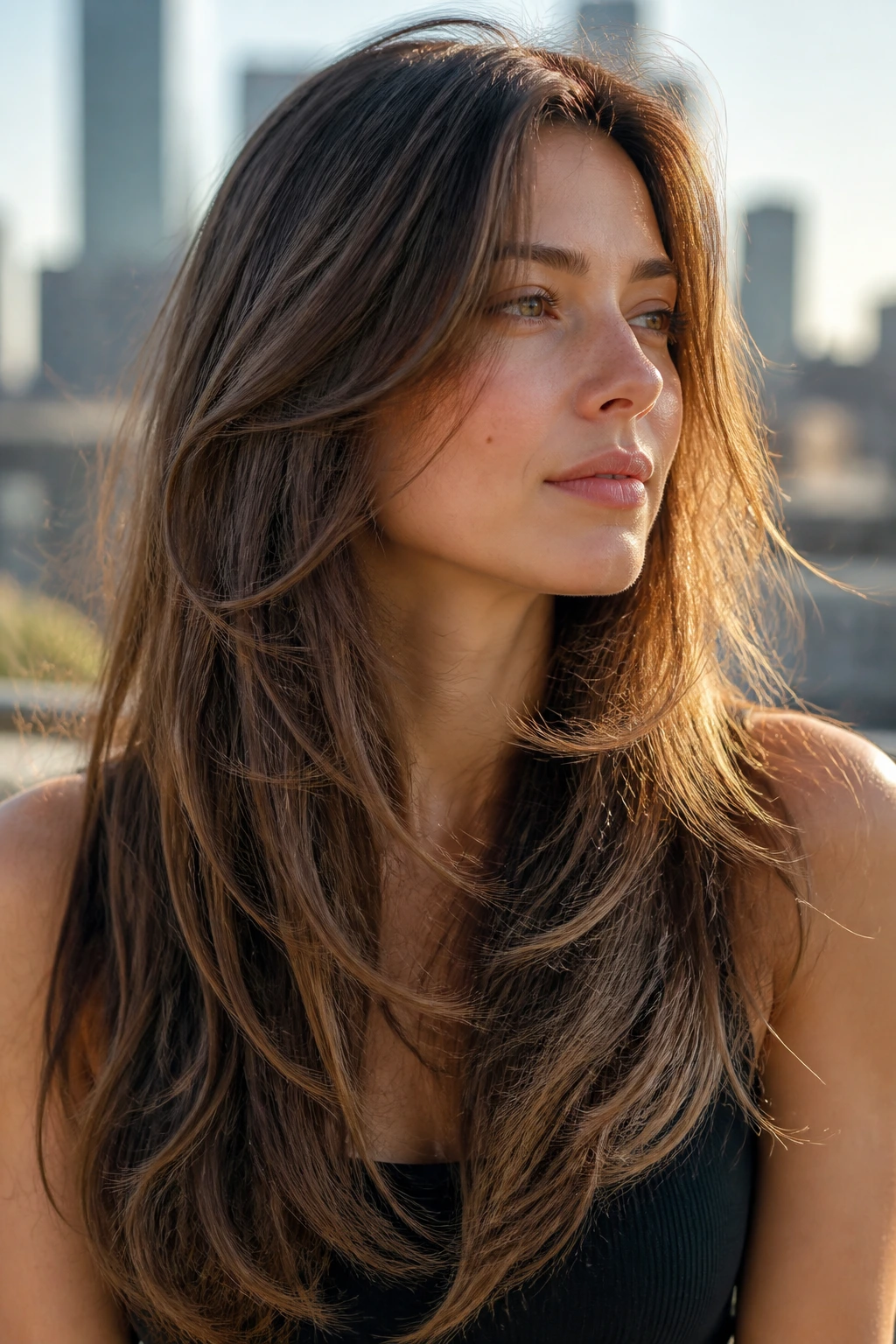
Razor cutting is not for every hair type, and I’m happy to say that out loud. On the right hair, though, it creates a soft, feathery edge that scissors can’t quite mimic. The ends look broken in a gentle way, which gives the whole cut a sense of motion even before you touch a blow-dryer.
The key is control. Razor layers work best when the hair is healthy and the stylist knows how the blade behaves on your texture. On fine hair, too much razor work can make the ends look thin. On thick hair, it can remove bulk beautifully. This is one of the better options if you want long layered haircuts with a looser, airier finish.
22. Step Layers with Noticeable Movement
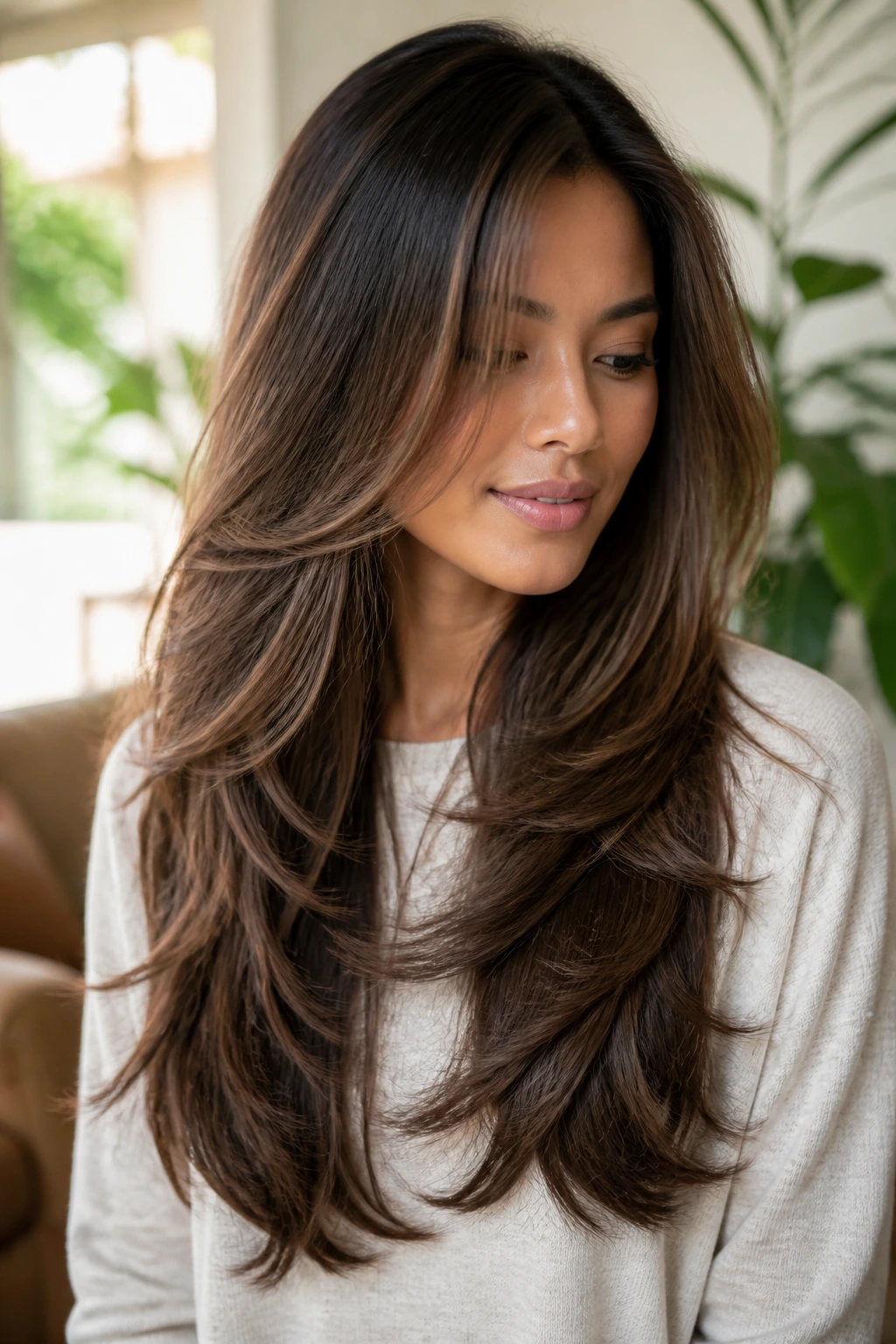
Step layers are more visible than invisible layers, and that’s the point. Instead of melting entirely into one another, the layers have a clear change in length, which gives the cut a stronger shape and more bounce. It’s a good answer for long hair that needs personality.
The trick is keeping the steps long enough that they don’t look abrupt. Short, harsh steps can feel dated fast. Longer, softer steps give you the same movement with less awkward grow-out. A few well-placed lighter panels can help the transitions show up without making the whole cut look busy.
23. Long Layers for Round Faces
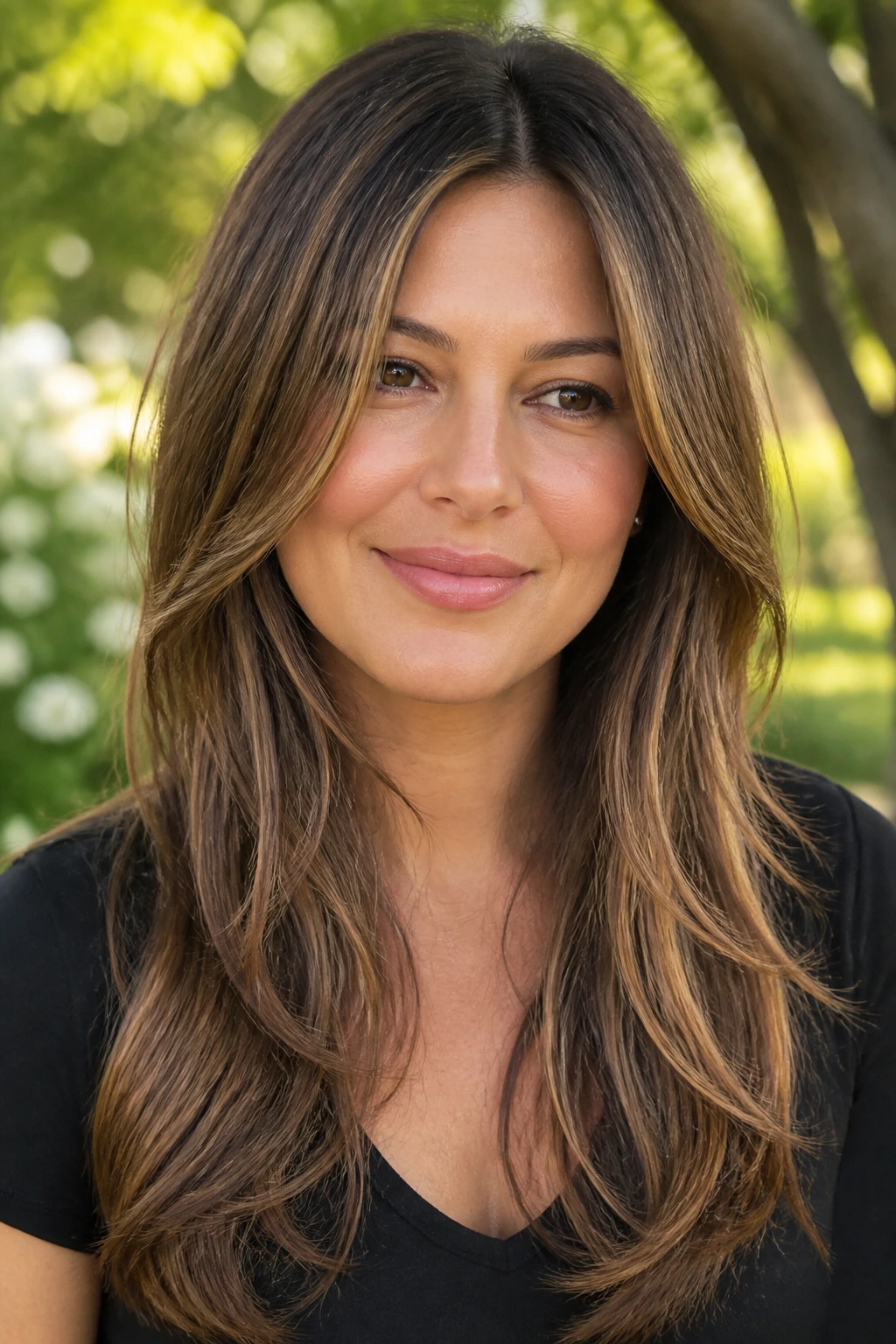
Can long layers flatter a round face? Yes — if the shape is placed with some care. The goal is to build vertical movement, not width at the cheeks. That usually means starting the first layers lower, letting them fall past the jaw, and keeping the face frame soft rather than bulky.
The best version of this cut draws the eye downward. Center parts can work, side parts can work, and a little balayage around the front helps even more because it adds a vertical line of light. What you want to avoid is a short, puffy layer at cheek level. That’s the part that can widen the face. Keep the curve lower, and the whole haircut behaves better.
24. Balayage-Emphasized Layers
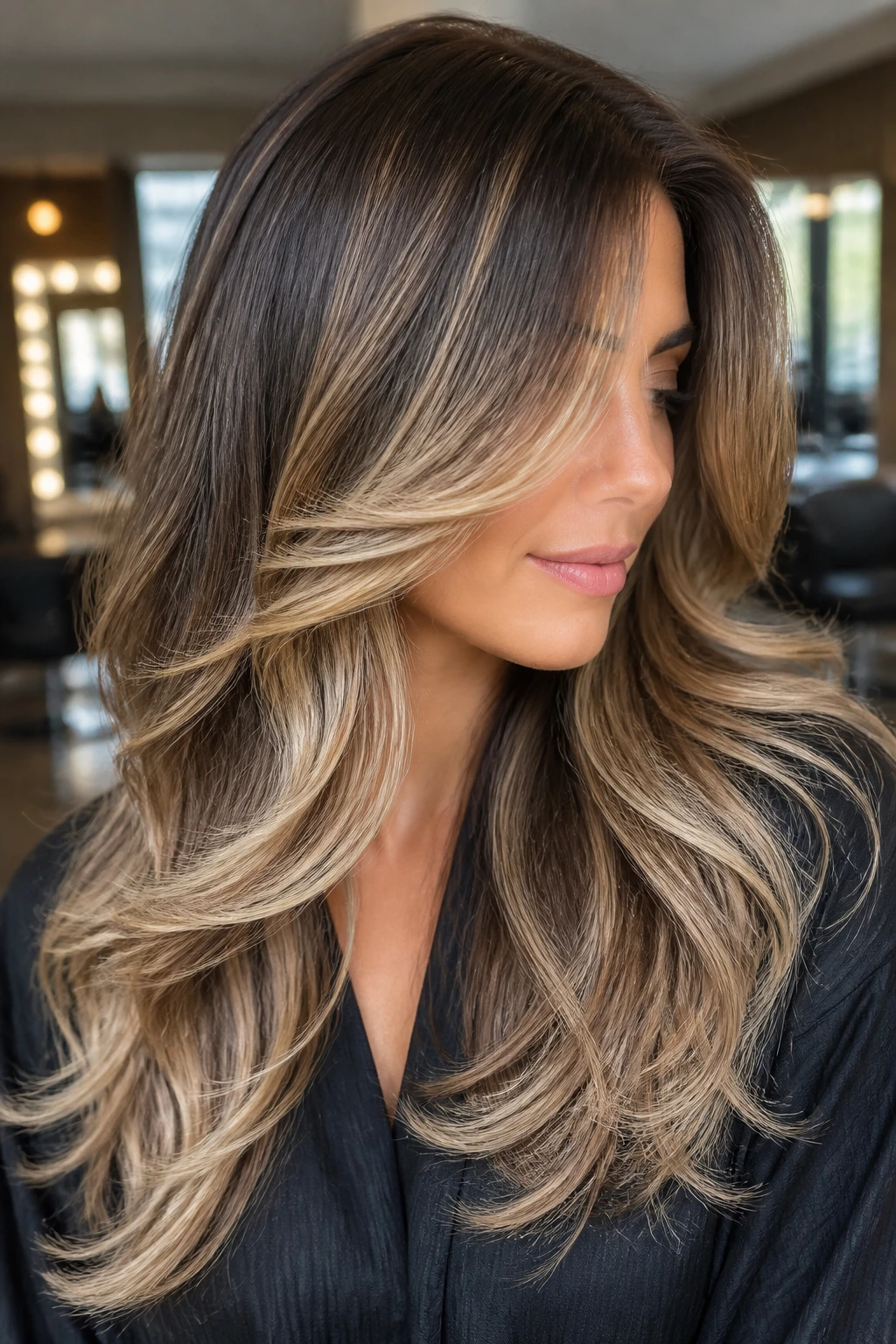
This is the haircut I’d point to when someone says, “My hair has no dimension.” The layers do the movement, and the balayage gives that movement a visual trail. Each bend shows a slightly different tone, which makes the cut read as fuller and more expensive-looking without trying to be flashy about it.
The color placement matters. Light pieces through the face frame, mids, and lower half of the hair show the layers better than random streaks placed at the top. That’s because layers need contrast to stand out. If the color is too flat, the haircut disappears. If the placement follows the shape, the movement becomes obvious.
25. Soft Fringe with Long Layers
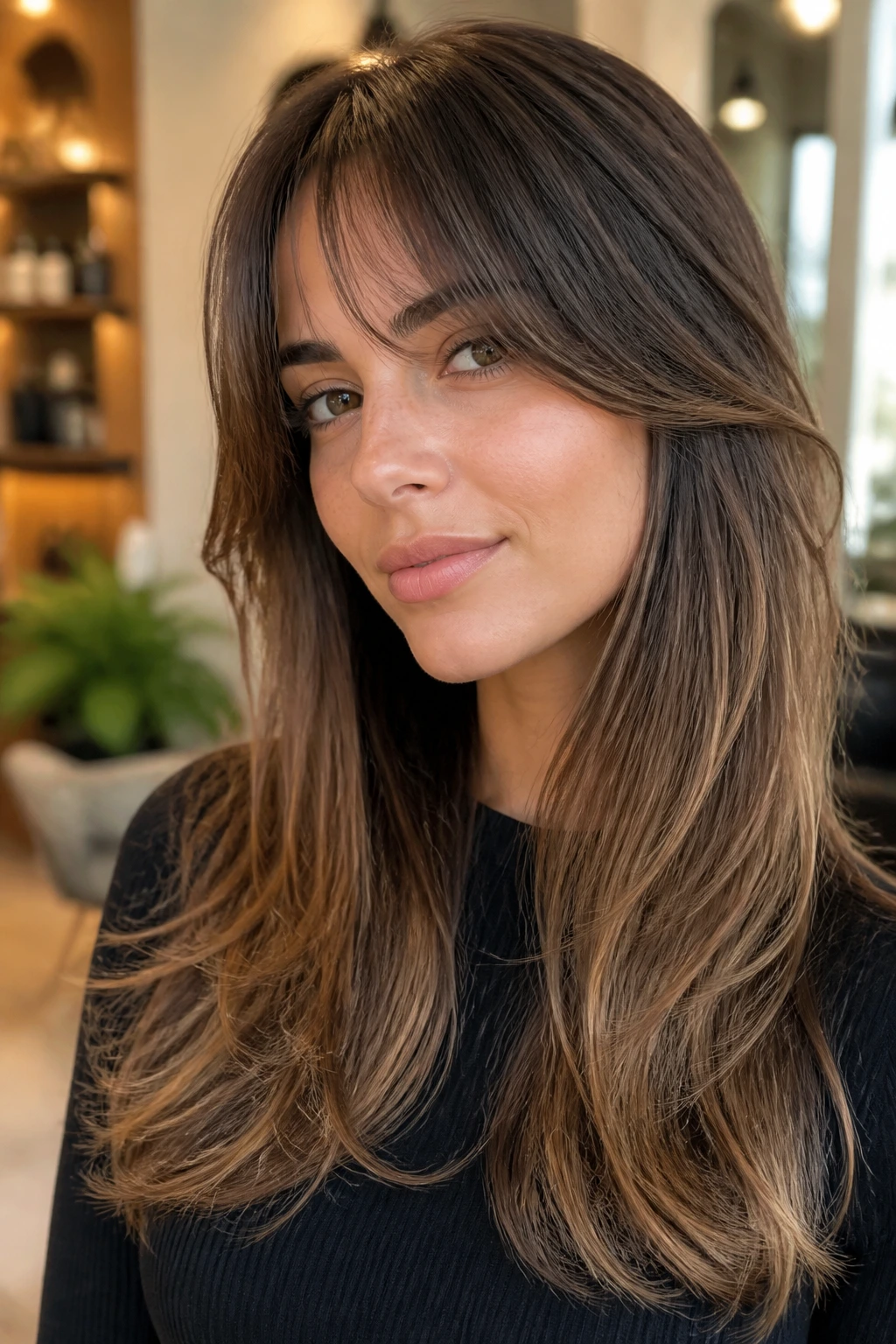
A soft fringe is for people who want a little more face shape but don’t want bangs that demand daily negotiations. It’s lighter than a full fringe, less committed than curtain bangs, and easy to blend into the rest of the cut. Paired with long layers, it keeps the whole style from feeling bottom-heavy.
I like this option on medium-density hair where the front can afford some softness without turning sparse. The fringe should connect to the layers rather than sit apart from them. If you wear highlights, the fringe gets an extra lift because the lighter pieces break up the line around the forehead. It’s subtle, but that’s why it works.
Why Long Layers Create Lift Instead of Bulk
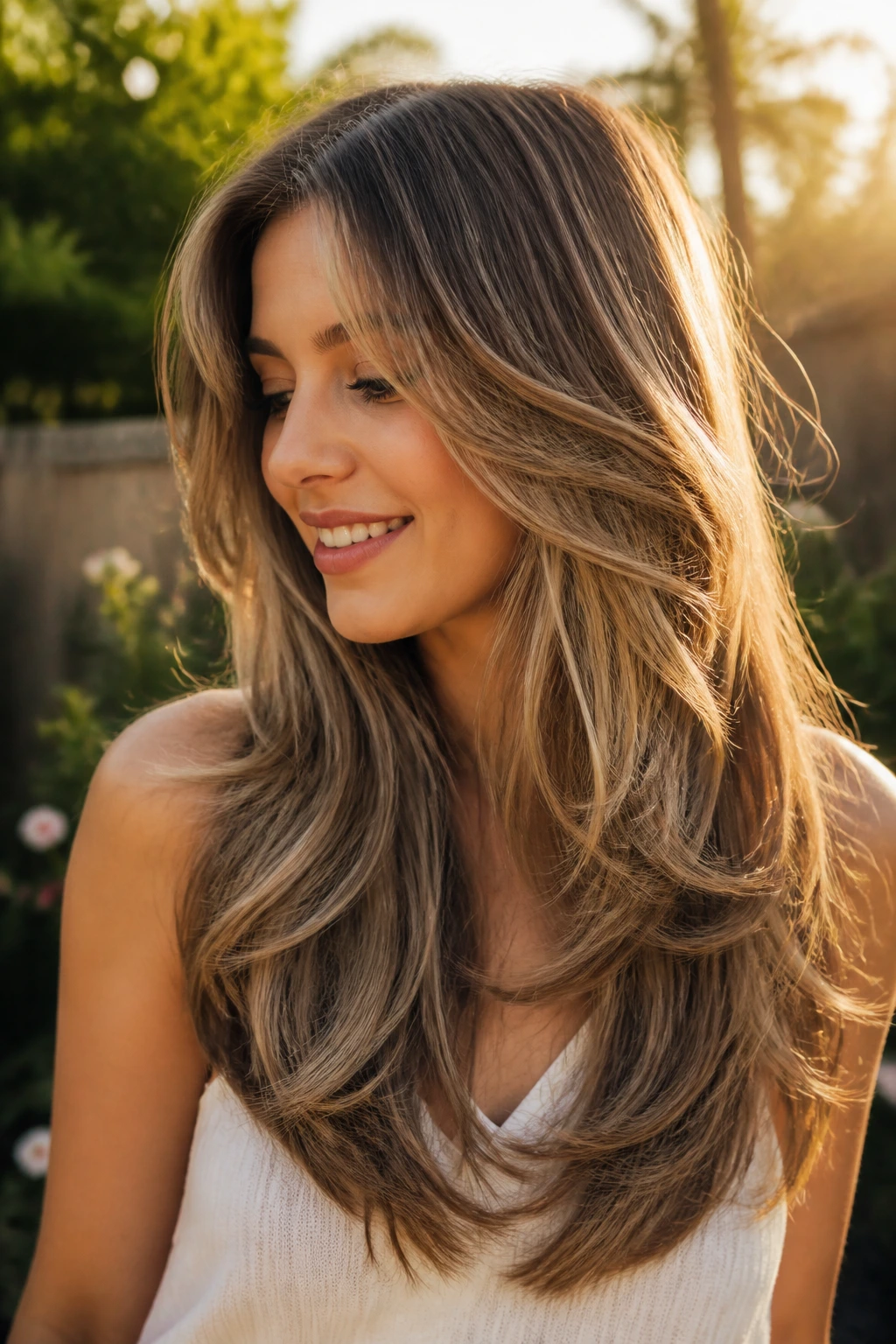
Long layered haircuts work because they redistribute weight. That’s the plain version. The better version is this: when hair is cut one length, the ends all land in the same place and build a heavy edge. Long layers interrupt that edge, so the hair can bend, fold, and sit with a little air between sections.
The result changes with texture. Straight hair gets more swing because the ends are no longer fighting each other. Wavy hair gets clearer bends because the layers let the pattern stack instead of collapsing into one mass. Thick hair loses some of that shelf-like width around the sides. Fine hair can gain lift if the layers are kept long and soft enough not to thin the perimeter too much.
Color makes a bigger difference than most people think. Balayage, babylights, and face-framing highlights help long layers show up in motion, because the eye can read the bends and separations more easily when the tone shifts. Dark, flat color tends to blur the shape. Dimension helps the cut do its job.
Tools That Make These Cuts Easier to Wear
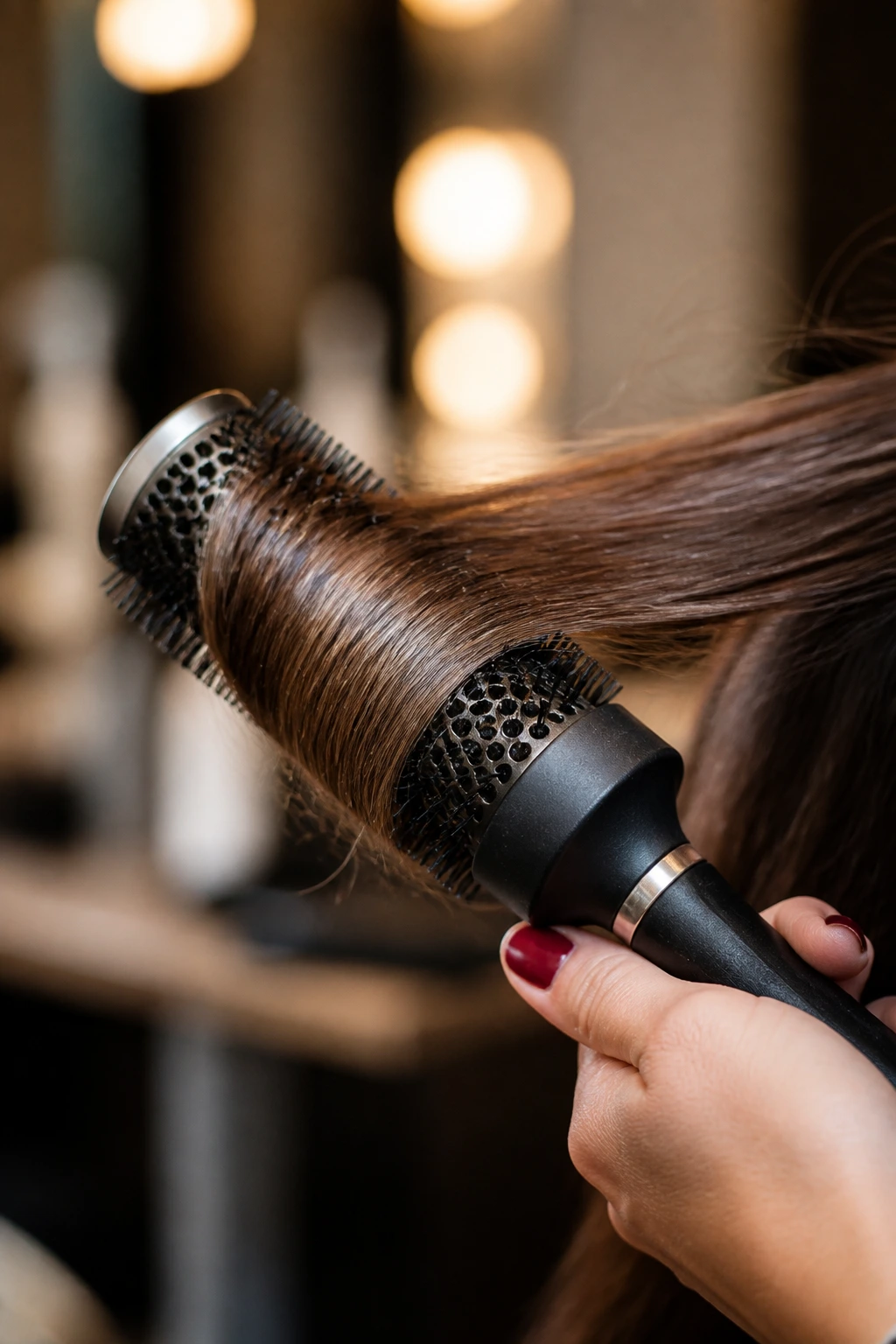
- A round brush: Best for blowouts, face-framing bends, and building root lift without teasing.
- A 1¼-inch curling iron or wand: Useful for soft waves that show off layers without making them look stiff.
- A wide-tooth comb: Better than a brush on wavy or curly layers when the hair is wet.
- Heat protectant spray: Non-negotiable if you style with hot tools more than once a week.
- Texturizing spray or lightweight mousse: Good for shaggy, feathered, and butterfly styles that need grip.
- Hair clips: Handy for sectioning during blow-drying, which matters more than people admit.
- A tail comb: Great for clean center parts, side parts, and precise face-framing sectioning.
- A quality pair of haircutting photos: Not a tool in the drawer sense, but probably the most useful thing you can bring to a salon.
What to Tell Your Stylist Before the First Snip
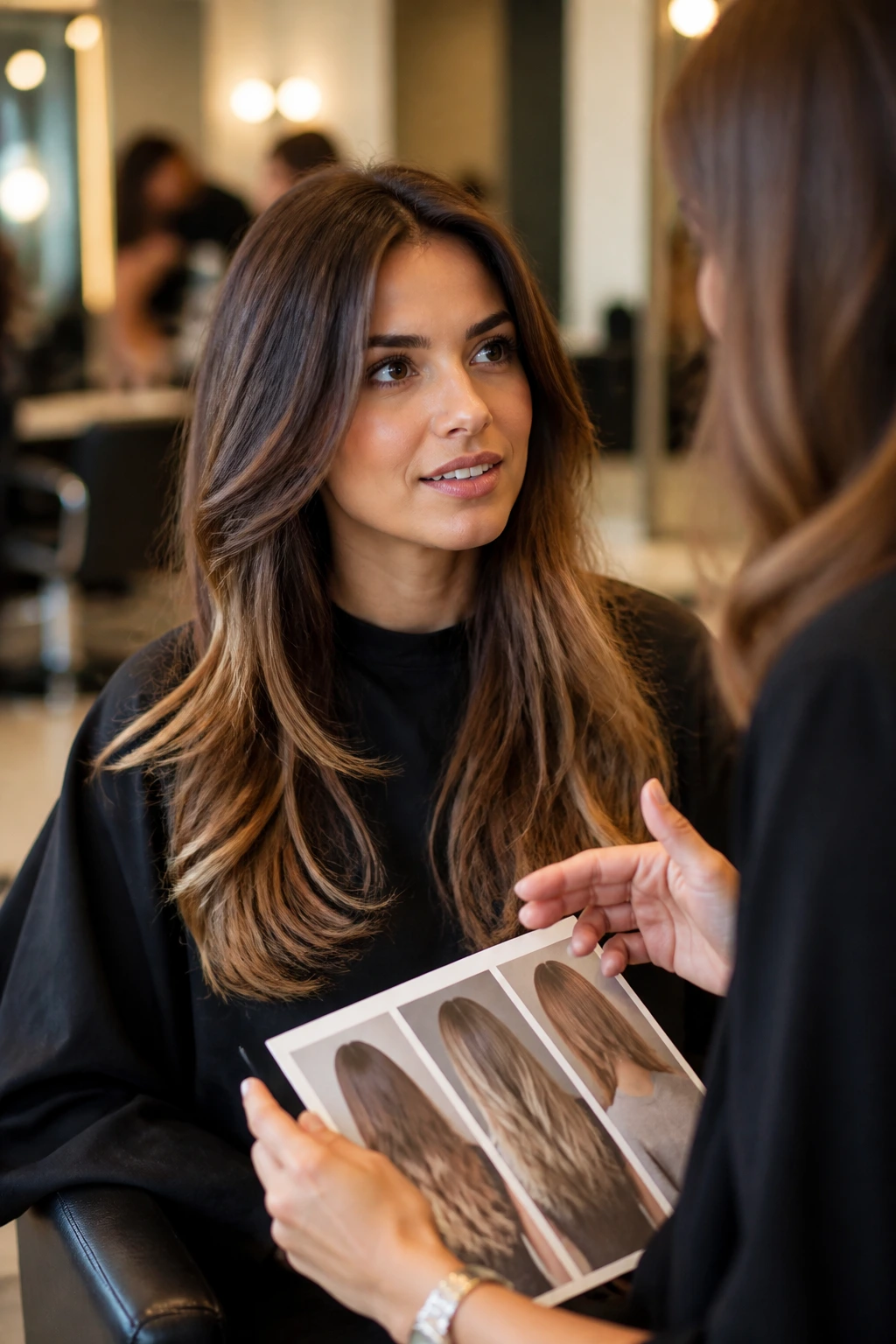
Bring more than one photo. One photo shows the shape you like. Two or three show the shape you don’t want. That saves a ridiculous amount of guesswork.
Then get specific. Say where you want the first layer to start — cheekbone, jaw, collarbone, or lower. Say whether you wear your hair straight, blown out, curled, or air-dried. Say if your hair is fine and flimsy, thick and heavy, or wavy and frizzy when it dries. A good stylist can work with all of that, but they need the details. If you also want balayage or highlights, mention whether you want the color to follow the layers or just brighten the face. That changes the whole read of the haircut.
How to Style Long Layers for Soft Movement
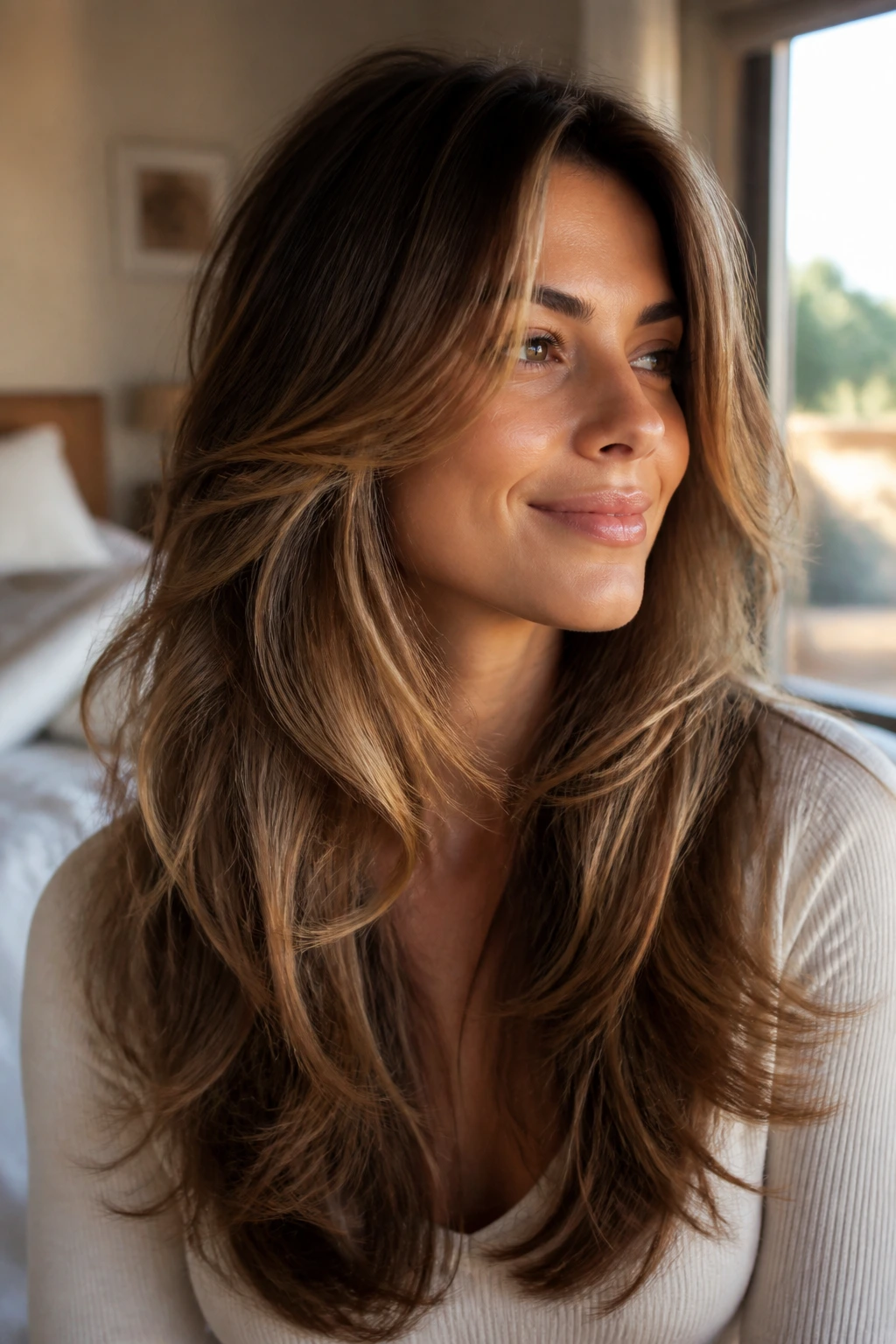
Blowout: Start with a rough dry until the hair is about 80% dry, then use a round brush to lift the root and curve the ends under or away from the face. The first pass matters most; if you flatten the crown early, the rest of the style has to work too hard.
Air-Dry: Use a lightweight leave-in and a touch of mousse at the roots, then scrunch or twist the mids in sections. Long layers should still show shape when they dry naturally, not collapse into one heavy curtain.
Heat Styling: Wrap medium sections around a 1¼-inch iron for soft bends, not ringlets. Leave the last inch out on purpose if you want that lived-in, layered finish.
Finish: A small amount of serum on the ends smooths the cuticle and keeps the layers from looking dry or blown apart. Use less than you think. Too much product kills the movement fast.
Small Adjustments That Make the Cut Look Richer
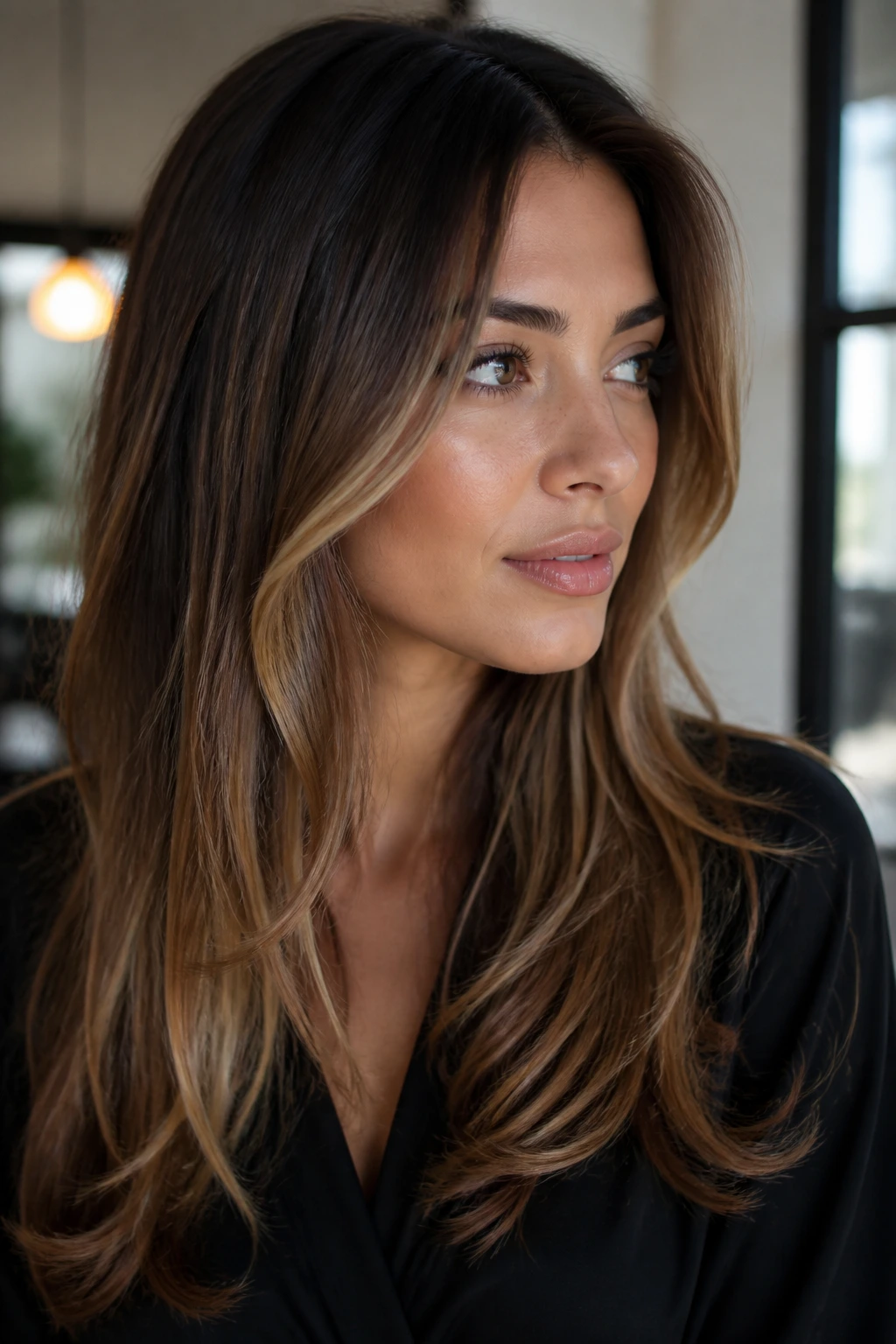
Shape Boost: Ask for the longest face-framing pieces to sit just below the cheekbone if you want more movement around the front, or nearer the collarbone if you want a quieter result. That one decision changes how soft the whole cut feels.
Texture Boost: If your hair is dense, a little interior layering is more useful than short surface layers. It removes weight where you can’t see it, which keeps the outline smoother.
Color Boost: Balayage placed through the ends and face frame makes long layers easier to read. A soft root shadow can keep the top from looking too light or stripey.
Make-It-Yours: For straighter hair, keep the layers longer and polished. For wavy or curly hair, let the layers breathe a bit more so the shape has room to spring.
Grow-Out, Trims, and Maintenance
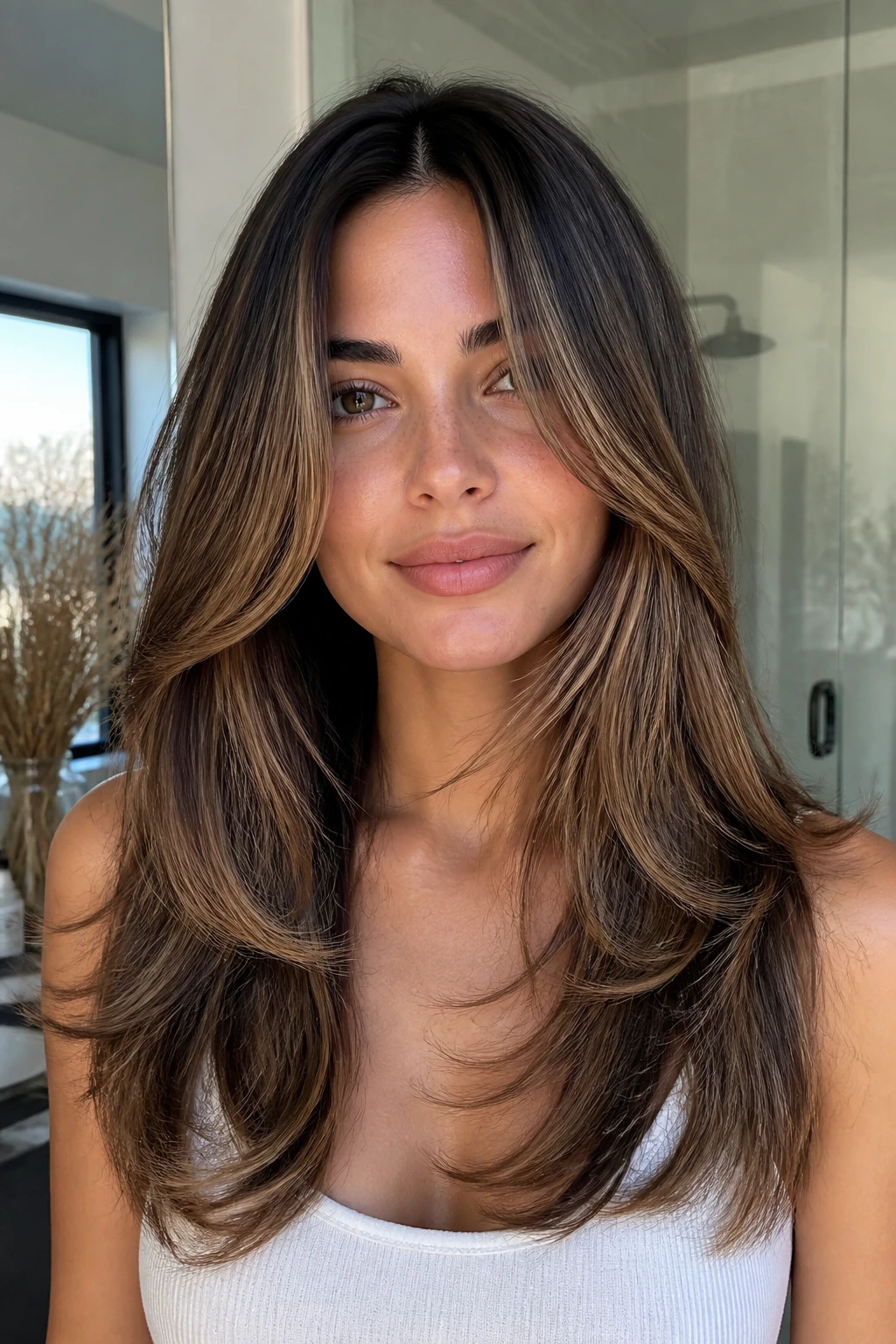
Long layers are forgiving, but they still need upkeep. If you like a crisp face frame or bangs, plan on a trim every 6 to 8 weeks. If your layers are softer and longer, 8 to 12 weeks is usually enough to keep the shape from drifting too far. Thick hair and heavy balayage cuts can stretch that a bit longer, but the ends will tell on you before the rest does.
Heat styling changes the maintenance picture too. A cut that only looks good after a daily blowout needs more product discipline and more regular dusting of the ends. Air-dried layers can go longer between salon visits, but they also show breakage faster if you keep roughing them up with a brush. If the haircut starts flipping in odd directions or the front pieces stop blending, that’s your cue to book a shape refresh.
Variations and Adaptations to Try
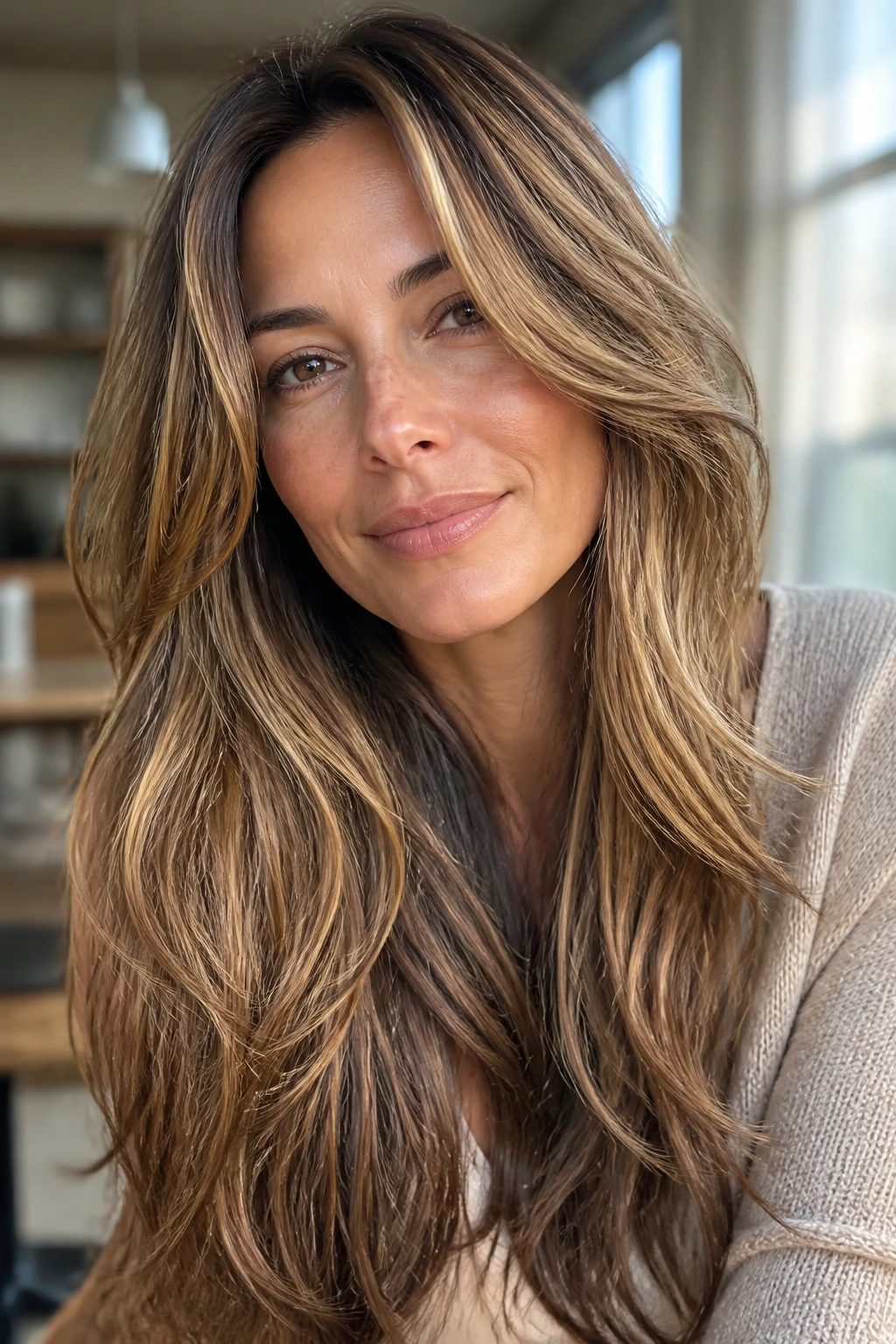
Fine-Hair Feathering: Keep the layers long, soft, and low around the perimeter so you get lift without exposing too much scalp through the ends. This version works best with a light mousse and a round-brush finish.
Thick-Hair De-Bulking: Ask for interior weight removal and a gentle U or V shape. The goal is control, not thinning for its own sake. Too much texturizing can leave thick hair frizzy instead of lighter.
Curly-Shape Layers: Let the curl pattern guide the cut and keep the layers longer than they look when wet. Dry checking matters here, because curls spring up and shift the whole outline.
Balayage-Frame Combo: Pair long layers with face-framing balayage for a soft, bright effect around the front. The cut and color work together, which is why this version tends to look more dimensional than either one alone.
Soft Fringe Add-On: Add a light fringe if you want more face shape but not full bangs. It changes the vibe fast, especially on long, straight hair that needs a little front-end movement.
Razor-Soft Finish: Choose this if you want a piecey, airy edge and your hair can handle a blade. It’s a sharper look, but the movement is excellent when done with control.
Mistakes That Flatten the Shape
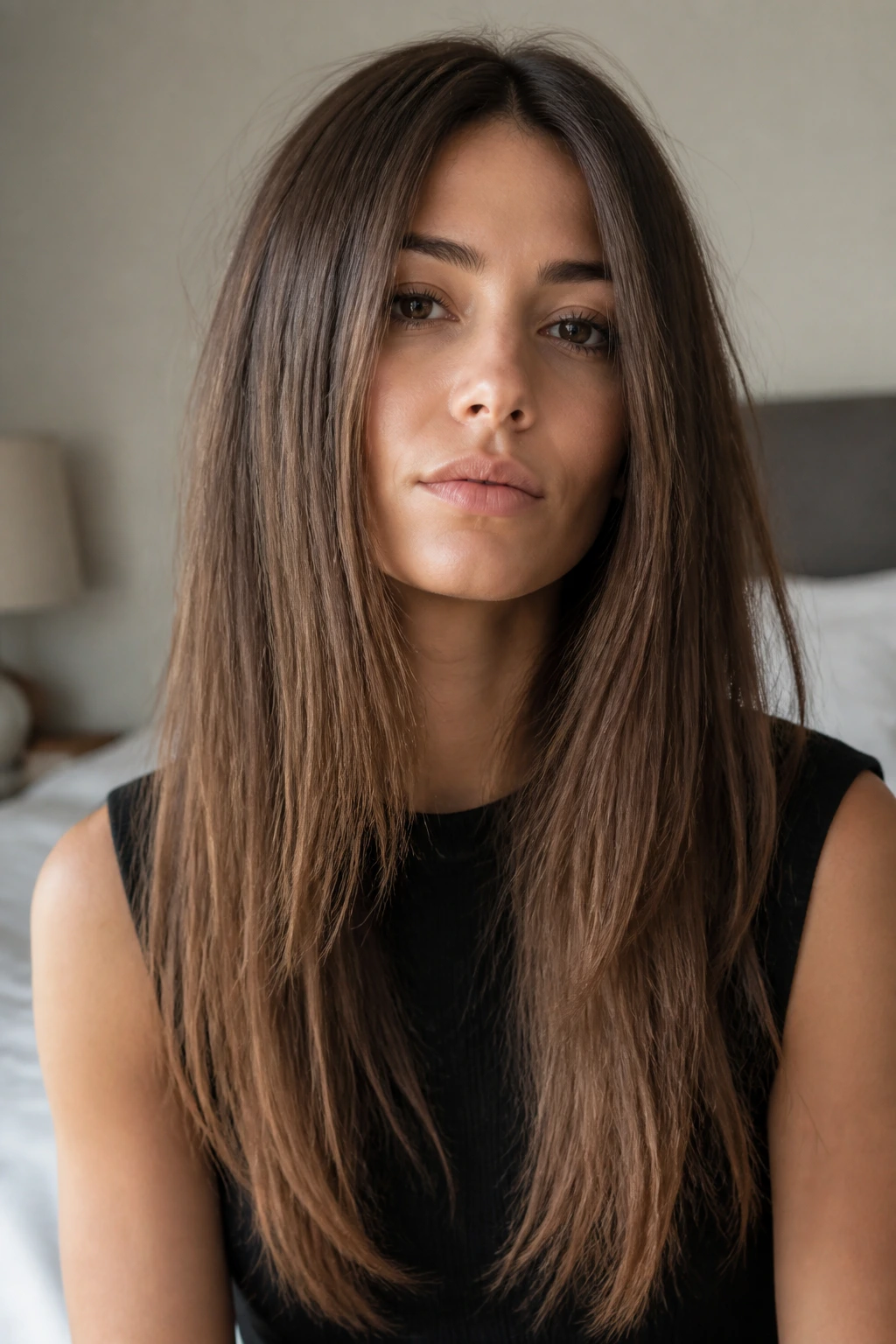
The most common mistake is asking for layers that start too high. The symptom is obvious: the top looks wide, the bottom looks thin, and you lose the long sweep you wanted in the first place. The fix is simple. Move the first layer lower and keep the face frame longer.
Another problem is overtexturizing fine hair. It can feel light for a day, then look see-through from the side. If your hair is already fine, you want strategic layering, not aggressive thinning. Thick hair, on the other hand, usually needs internal weight removed — but only in the right places. Too much razor work or too many short layers can puff out instead of lie down.
Skipping styling advice is a mistake people make all the time. A cut that looks amazing blown out may look limp air-dried, and a shag that looks perfect scrunched may feel unruly if you flat iron it. Ask how the layers are meant to live on your head. That part matters.
Questions People Ask Before Getting Long Layers
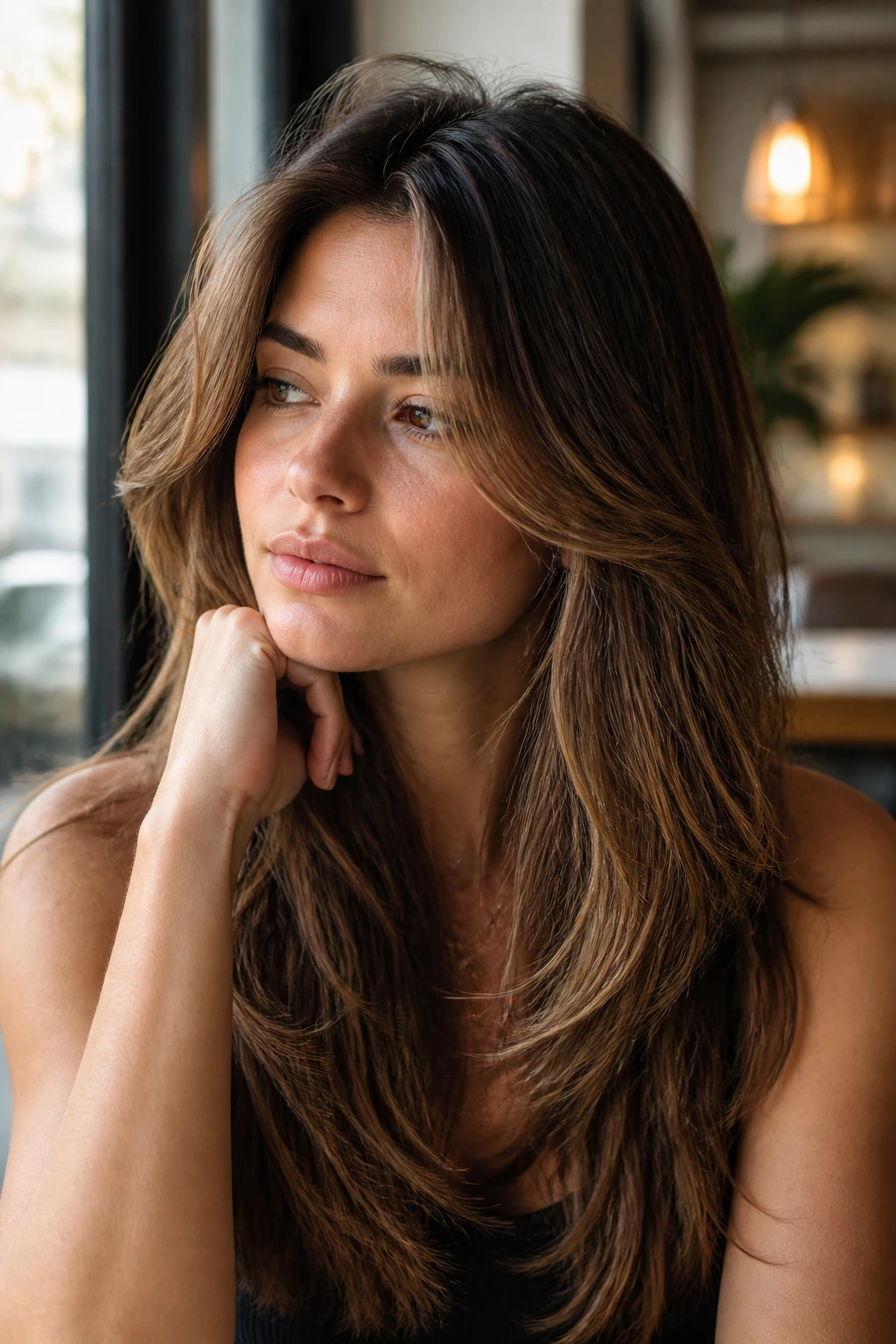
Will long layers make my hair look thinner?
They can if they’re cut too aggressively, especially on fine hair. Kept long and soft, they usually do the opposite by removing heaviness and making the hair move more.
Are long layers good for thick hair?
Yes, and often that’s where they shine most. Thick hair can hold shape beautifully when the bulk is removed from the interior and the perimeter stays full.
Do I need highlights or balayage for layers to show?
No, but color helps. Even a subtle gloss or a few lighter front pieces can make the movement more visible, especially in very dark hair.
How do I know if I should get bangs with long layers?
If you want more shape around the face and don’t mind a little upkeep, they’re worth considering. If you hate daily styling, stick with long face-framing pieces instead.
Can I still wear long layers straight?
Absolutely. Straight styling is where invisible layers, ribbon layers, and soft U-shapes do some of their best work.
What if my layers flip out weirdly?
That usually means the layer line was cut too short or your styling brush is pushing the ends in the wrong direction. A longer layer and a larger round brush usually calm that down.
How often should I trim them?
Most long layered cuts need a shape refresh every 8 to 12 weeks. Bangs and sharper shags tend to need attention sooner.
The Cut That Keeps Moving
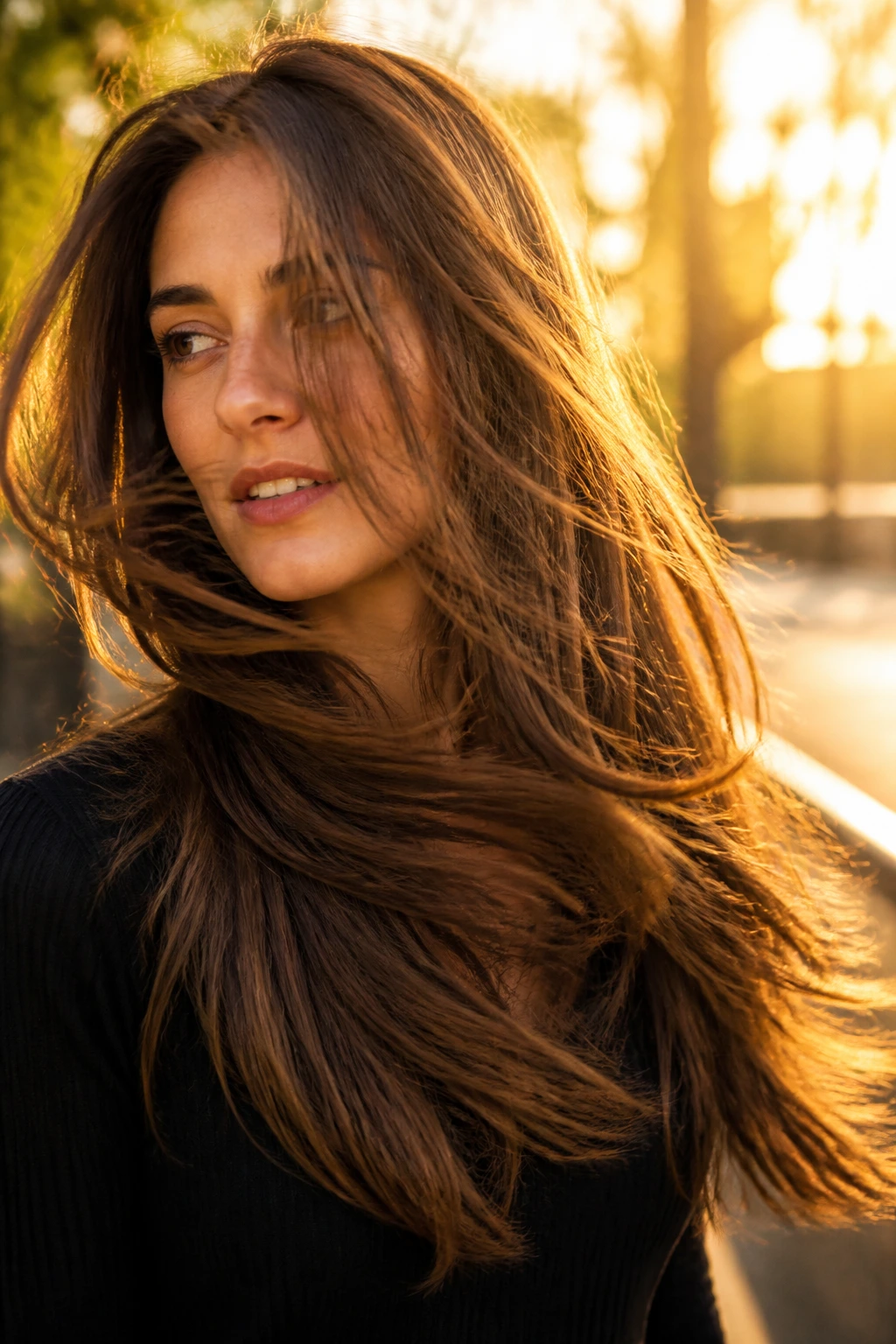
Long layered haircuts work because they understand a basic truth: long hair doesn’t need more length to feel dramatic. It needs shape. It needs a little air under the ends, a little lift around the face, and enough structure that the whole thing moves when you do.
That’s why the best versions here are never just “more layers.” They’re cuts with a plan. Some soften thick hair. Some give fine hair a better profile. Some make balayage look deeper, and some make a plain blowout look finished without much effort. The right one depends on what your hair is doing when you leave the chair — not just what it looks like in the mirror under salon lights.
If your long hair has started feeling heavy, flat, or oddly stubborn at the ends, this is the kind of change that makes sense. Choose the shape that matches your texture, bring photos that show the finish you want, and let the layers do the quiet work.
