



A good mullet haircut doesn’t look like a joke from the back row. It looks like a shape with a pulse. The top has lift, the sides stay honest, and the back carries enough length to move when you turn your head. When the layers are right, the whole cut reads as texture first, nostalgia second.
That’s why the modern version works so well. Flat mullets get swallowed by their own outline; textured mullets keep little breaks in the line, so the shape feels alive instead of frozen in place. A soft taper at the temples, a bit of internal weight removal, and broken ends through the crown can change the whole mood. Same silhouette. Completely different energy.
Hair type matters here, and so does attitude. Straight hair needs more built-in roughness. Wavy hair usually gives you the easiest win. Curly hair can look brilliant in a mullet when the sides are kept tidy and the back is allowed to spring, not puff. The trick is choosing the version that fits your density and your daily routine, not the version that only looks good in a mirror for five seconds.
Why These 25 Cuts Earn Their Keep
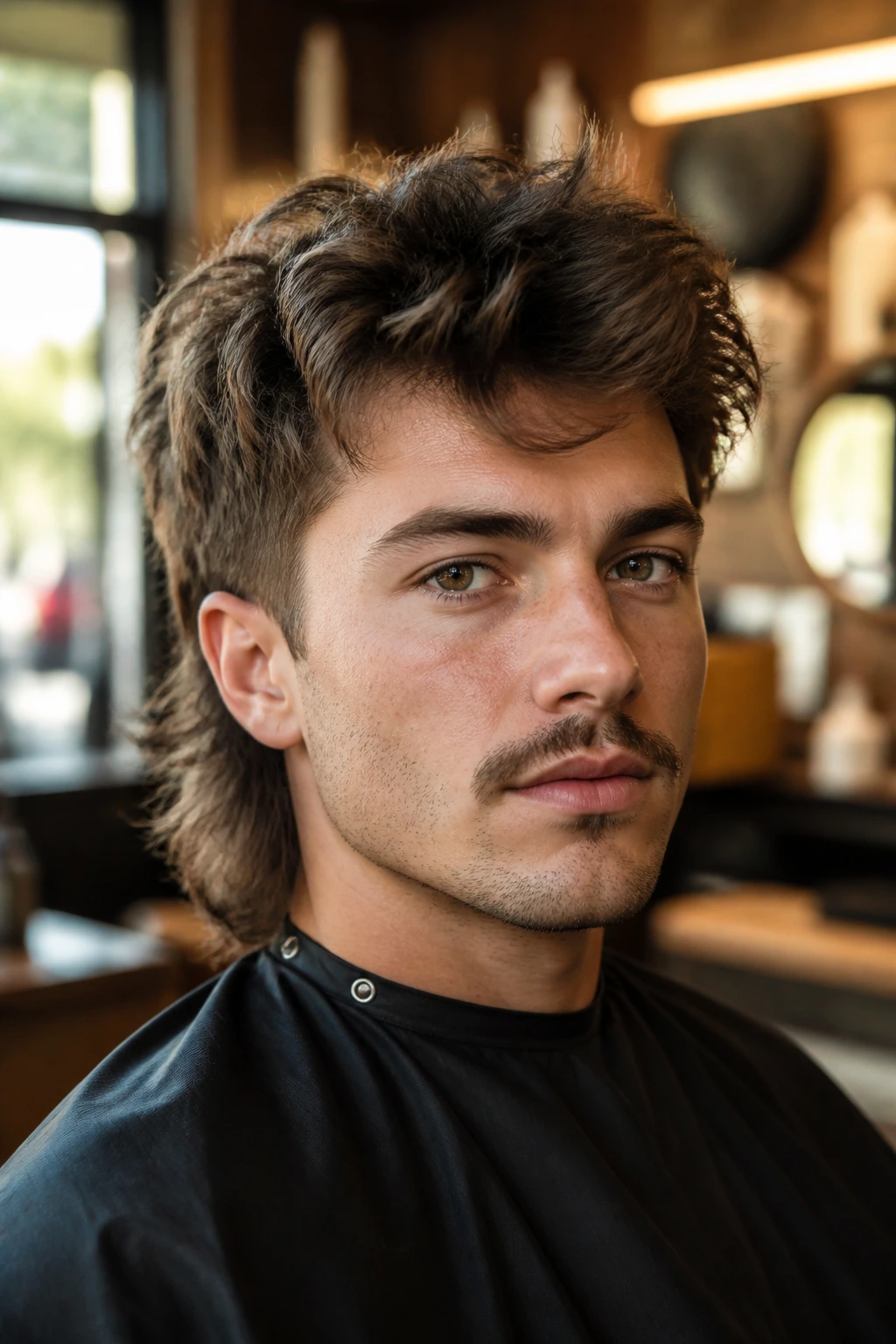
- Texture First: Every cut in this collection uses layers, fringe, or tapering to keep the shape moving instead of sitting like one solid block.
- Flexible Contrast: You can go soft, sharp, shaggy, or clean without losing the mullet silhouette; the back does not have to be dramatic to read well.
- Works With Real Hair: Wavy, curly, coarse, and fine hair all have a place here, as long as the cut respects how your hair falls on its own.
- Barber-Friendly: Most of these ideas translate into clear chair language: length at the crown, taper at the sides, and a nape that’s either tidy or intentionally loose.
- Easy to Personalize: A change in fringe length, fade type, or product finish can make the same cut feel punky, polished, soft, or nearly office-safe.
- Grows Out Better Than You’d Think: A lot of these shapes look even better at the four- to six-week mark, when the edges soften and the texture gets a little dirtier.
1. Soft Wolf Mullet With Broken Ends
This is the mullet for people who want movement, not drama. The top sits a little longer, the sides taper softly at the temples, and the back drops toward the nape with ends that look chipped away instead of cut blunt.
It works because the outline never feels too hard. A barber can point-cut the ends, keep the crown light, and leave the fringe loose enough to fall forward without turning into a curtain. If your hair is wavy or thick, this shape gives you room to breathe.
- Best on medium to thick hair with some bend.
- Ask for point-cut ends and a soft taper around the ears.
- Finish with sea salt spray and a pea-sized matte paste.
The nice thing here is that it looks finished even when you don’t spend long on it. Rough-dry the roots, pinch a few pieces forward at the front, and leave the back a little messy. Clean is not the goal. Intentional is.
2. Burst Fade Mullet With Clean Temples
Want sharper edges without losing the mullet shape? The burst fade handles that problem neatly. The fade curves around the ear, keeps the temples tight, and lets the back length stay visible instead of disappearing into the sides.
This version has a stronger contrast than the soft wolf cut, so it suits people who like a more sculpted outline. The crown can stay textured, but the fade gives the haircut a clear frame. On dense hair, that frame matters. Otherwise the whole thing balloons.
What to ask for in the chair
Tell the barber you want a rounded burst fade, not a high skin fade that chews away too much side length. Leave enough top length for texture—around 3 to 5 inches if you want a real sweep through the front. The back can sit at collar-grazing length or a little shorter depending on how loud you want it.
This cut reads best when the top is matte. Glossy product flattens the contrast, and that kills the whole point. Use a light cream or paste, then work it in with your fingers so the top stays piecey.
3. Curly Mullet With Tapered Sides
Curly hair can carry a mullet better than most people expect. The shape already has movement, so the job is mostly about removing weight in the right places and keeping the sides neat enough that the curls don’t spread sideways.
The back should spring, not frizz out. That means the barber should leave enough length for curl definition and taper the sides so the face doesn’t get buried in width. A soft neckline helps too. Hard lines can fight the curl pattern and make the cut look rigid.
- Ask for the curls to be cut dry or nearly dry if possible.
- Keep the sides tapered rather than shaved bare.
- Use leave-in conditioner and a diffuser on low heat.
The best curly mullets feel airy. Not fluffy. There’s a difference. Airy curl means each ringlet has room to separate; fluffy curl means the shape has gone wider than it should. A little curl cream, a little patience, and no rough towel rubbing—that’s the whole game.
4. Razor-Shag Mullet for Wavy Hair
A razor-shag mullet has a more broken surface than a scissors-cut version, and that roughness is the point. The blade removes weight fast, so the ends fall in thinner pieces and the waves pop instead of clumping into a heavy mass.
This cut works especially well when your hair already bends at the ends but feels too bulky through the middle. A razor can lighten the crown, soften the fringe, and make the back swing instead of sit. If your hair is too fine, though, you’ll want a lighter hand. Too much razor work can leave it wispy.
A decent way to think about it: this is the mullet for people who like a little grit. Not polished grit. A touch of movement that still looks a bit slept-in. Sea salt spray and a blow dryer with your fingers are usually enough. You do not need a perfect finish here. A little irregularity is part of the appeal.
5. Micro Mullet With a Sharp Nape
The micro mullet is the quiet one in the room. The difference between front and back is there, but it’s modest, almost wry. You get a short top, a narrow side profile, and just enough length at the nape to make the silhouette read.
This is a strong choice if you want a mullet without the full shout. It works on straight hair, fine hair, and even dense hair that looks better trimmed close. The shape is cleaner, so the texture has to do more of the work. That’s why a matte product matters.
- Keep the nape just touching the collar line.
- Ask for a soft taper around the ear, not a heavy disconnect.
- Style with texture powder or a dry paste for lift.
The micro version also grows out well. When the top gets a little longer, it turns into a shaggy short cut rather than a mess. That’s a useful escape hatch if you like changing your mind.
6. Permed Mullet With Airy Movement
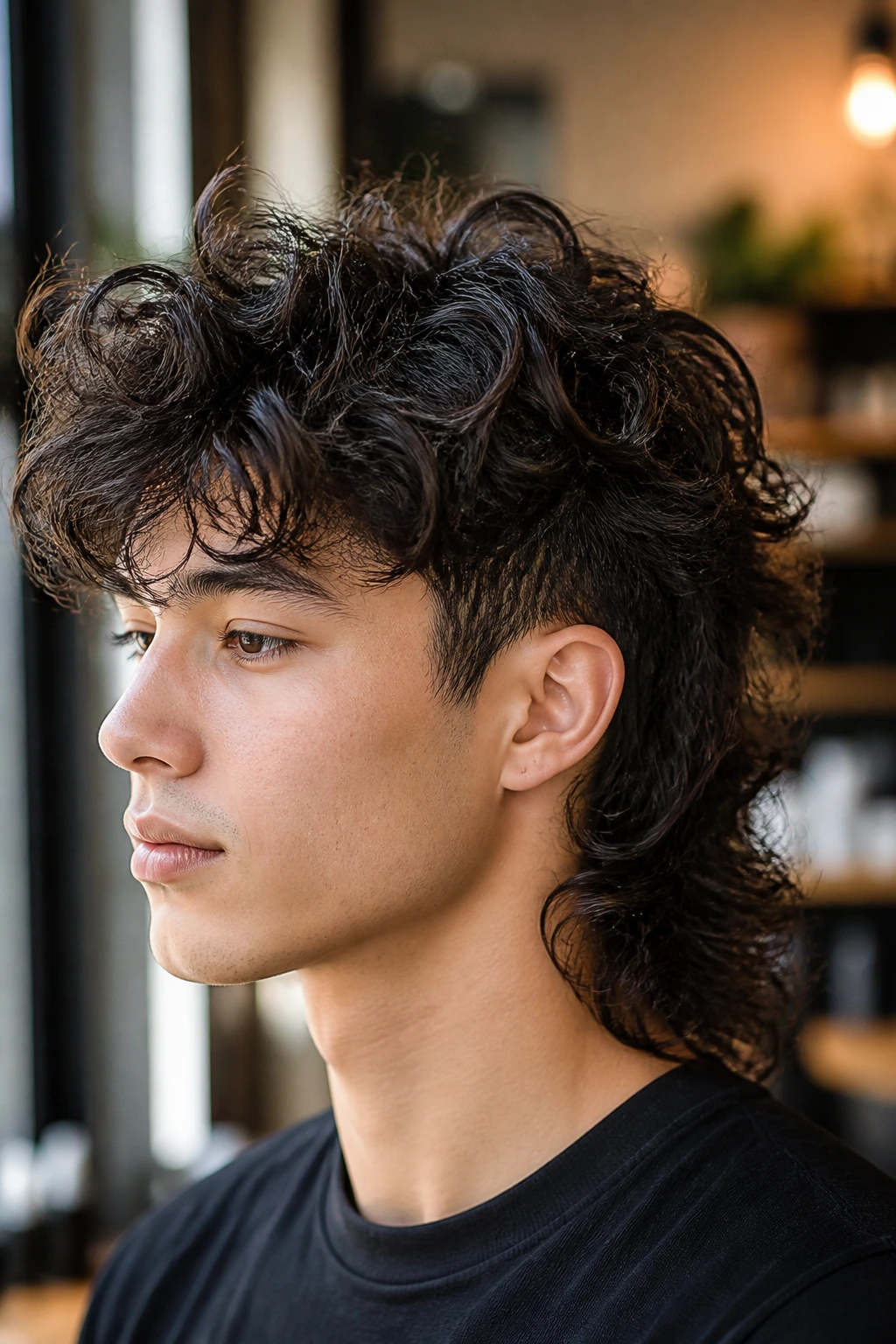
A perm can give a mullet a very specific kind of life: not curl for curl’s sake, but controlled bounce. The best version keeps the sides tidy and lets the top and back move in loose, springy bends.
This cut shines when hair falls flat on its own. The perm creates body through the crown and gives the back a soft bend that doesn’t collapse by lunchtime. If the curls are too tight, the outline can drift into triangle territory, so the rod size and aftercare matter.
The better approach is to ask for loose, modern curl formation rather than a tight spiral. Think body and separation, not poodle. That sounds blunt, but it saves people from a haircut they can’t easily wear.
A light curl cream is enough most days. Heavy gels can make the shape look wet in a bad way, especially at the back where the length already gives you visual weight.
7. Curtain Fringe Mullet With a Loose Center Part
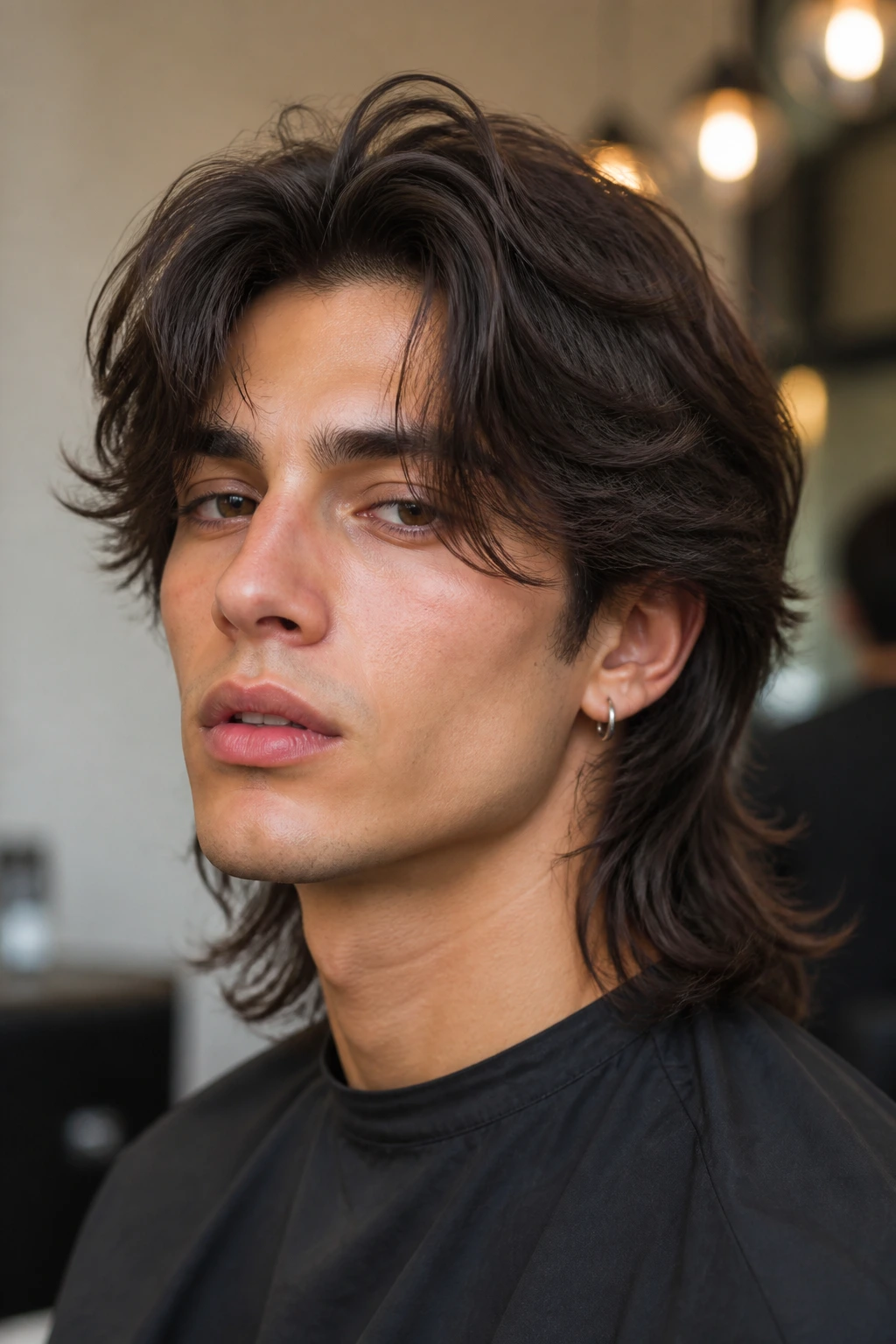
If you like a face-framing front, this one lands in a sweet spot. The curtain fringe parts softly down the middle, the sides stay controlled, and the back carries the longer tail that makes the mullet shape visible.
It’s one of the easiest versions to wear with straight or slightly wavy hair. The center part opens the face, while the textured fringe keeps the front from feeling too neat. The back can be short enough to stay wearable or longer if you want more swing.
Why it works
The curtain fringe gives the haircut balance. Without it, a longer back can make the cut feel back-heavy. With it, the whole shape feels distributed, which is why this version often looks more expensive than it is. The front and back are speaking to each other instead of fighting.
Use a round brush only at the roots if you need lift. Over-brushing kills the looseness. A little bend around the cheekbones is enough.
8. Slicked-Back Mullet With Wet-Textured Top
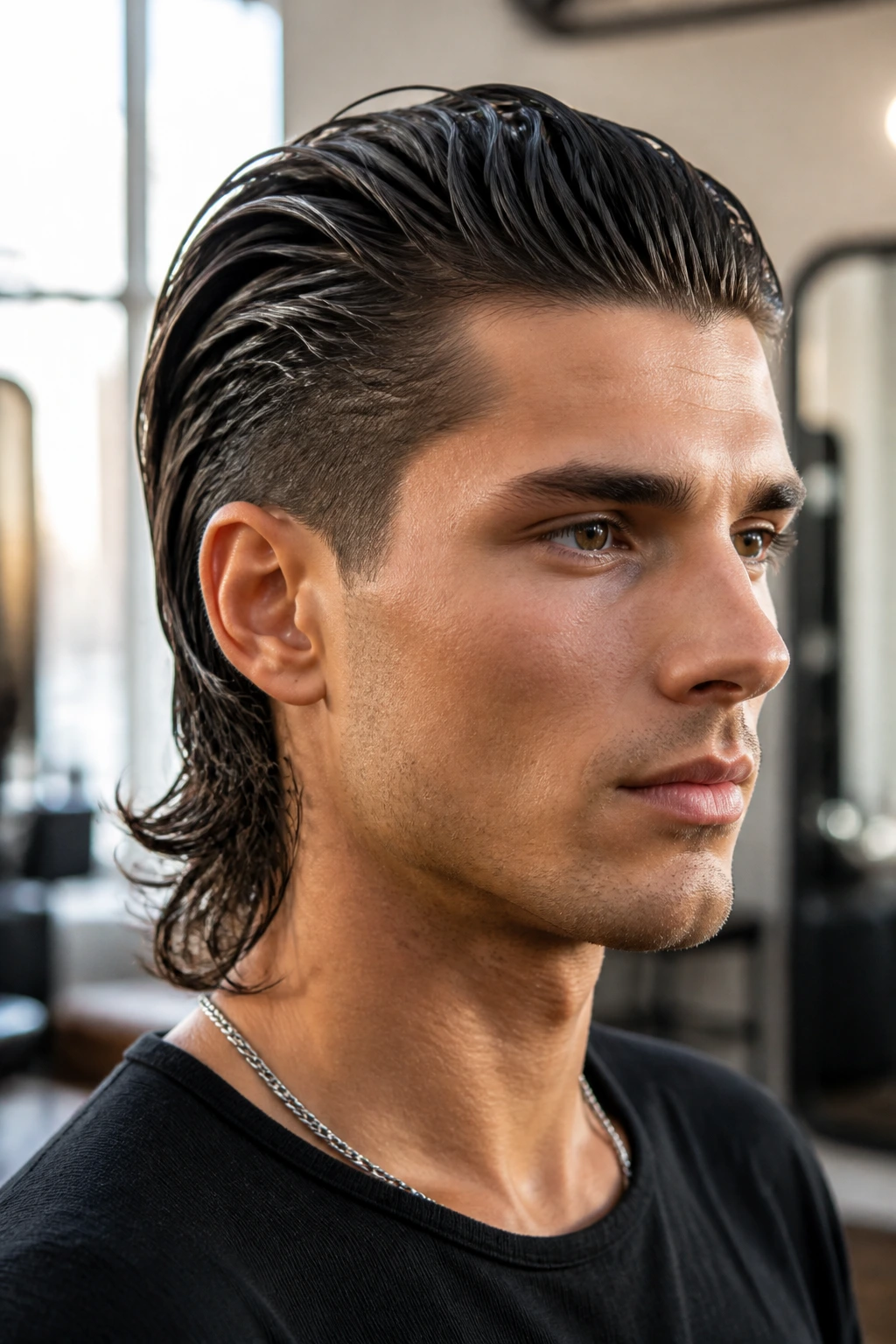
This one is for people who want the mullet shape to feel sharper and a little more dressed up. The top gets brushed back, the sides stay narrow, and the back keeps enough length to remind you this isn’t a regular short cut.
It can look too shiny if you use the wrong product. That’s the trap. A water-heavy gel gives the top that wet texture, but the back should still feel separated, not glued down. The aim is controlled shine, not helmet gloss.
- Best on straight or dense hair.
- Ask for clean sides with enough top length to brush back.
- Use a comb for direction, then break the finish with your fingers.
This version pairs well with a strong jawline, but that’s not a requirement. What matters more is density and a clean neckline. If the back is tidy, the whole thing feels intentional.
9. Disconnected Mullet With a Hard Edge
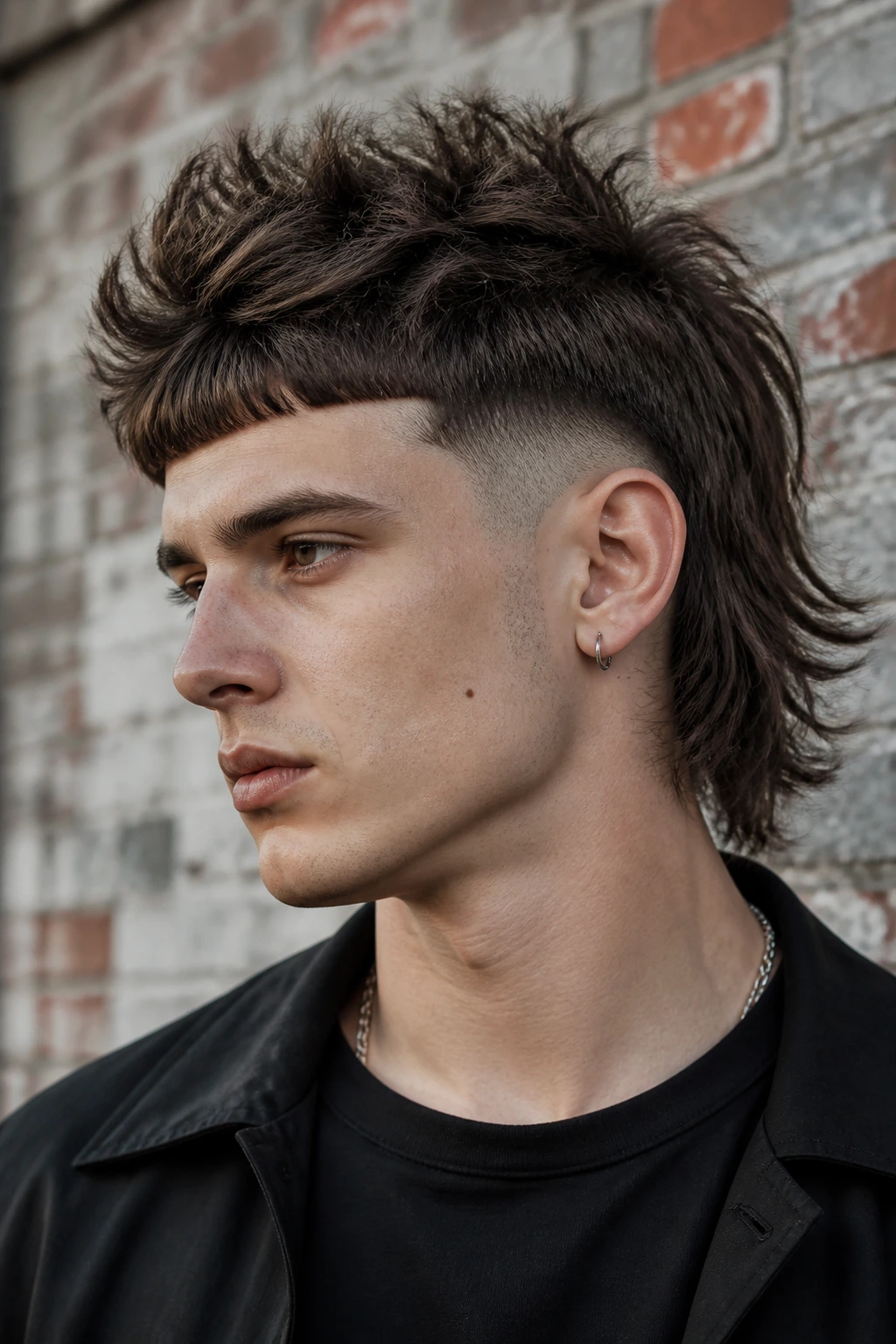
A disconnected mullet is not shy. The top and back sit apart from the sides with a visible step, and that contrast gives the haircut a bold, graphic line. If you like a cut that looks clear from across the room, this is the one.
The danger is overdoing the disconnect. Too much separation can make the haircut feel split in two. The better approach is to keep the line deliberate and the texture on top choppy enough that the contrast looks designed, not accidental.
Ask for a clear length difference between the side panel and the top, then let the back carry a little more length than the sides so the silhouette still reads as a mullet, not an undercut with a tail. That distinction matters. A lot.
Use a matte paste and work the top up with your fingertips. If the top lies flat, the disconnect turns harsh in the wrong way.
10. Feathered Retro Mullet With Soft Layers
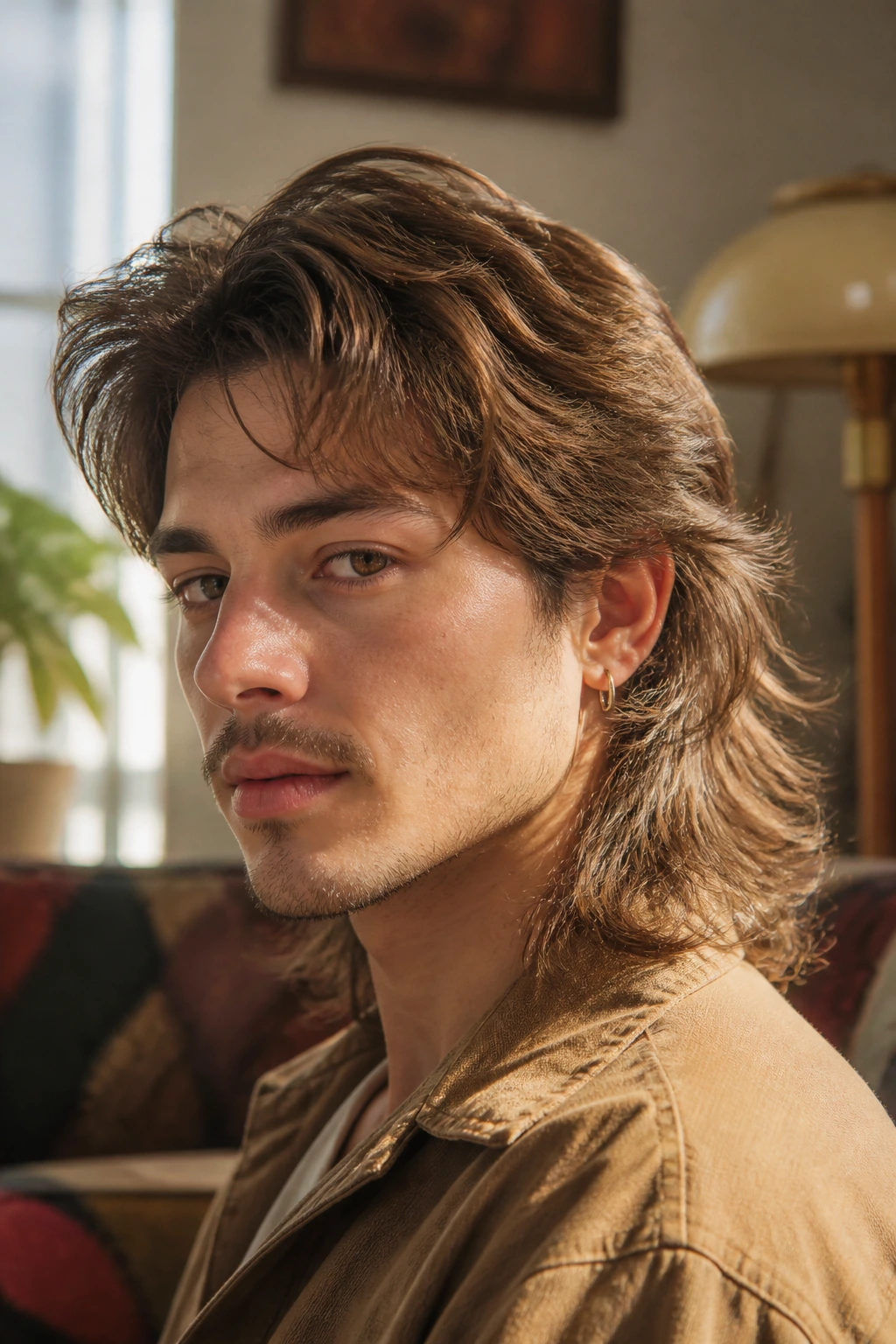
Feathering changes everything. Instead of hard edges, the layers sweep backward and outward, which gives the haircut a breezier, older-feeling shape without dragging it into costume territory.
This cut is one of my favorites for medium-density hair. The feathered top moves easily, the back keeps a gentle length, and the sides melt into the rest of the cut instead of stopping abruptly. It feels less aggressive than a disconnected version, but it still has character.
The styling is old-school in the best way: blow-dry the crown with a brush, direct the layers away from the face, and keep the finish soft. A little mousse at the roots helps if your hair collapses fast. No need to drown the hair in product.
11. Textured Crop Mullet With a Short Front
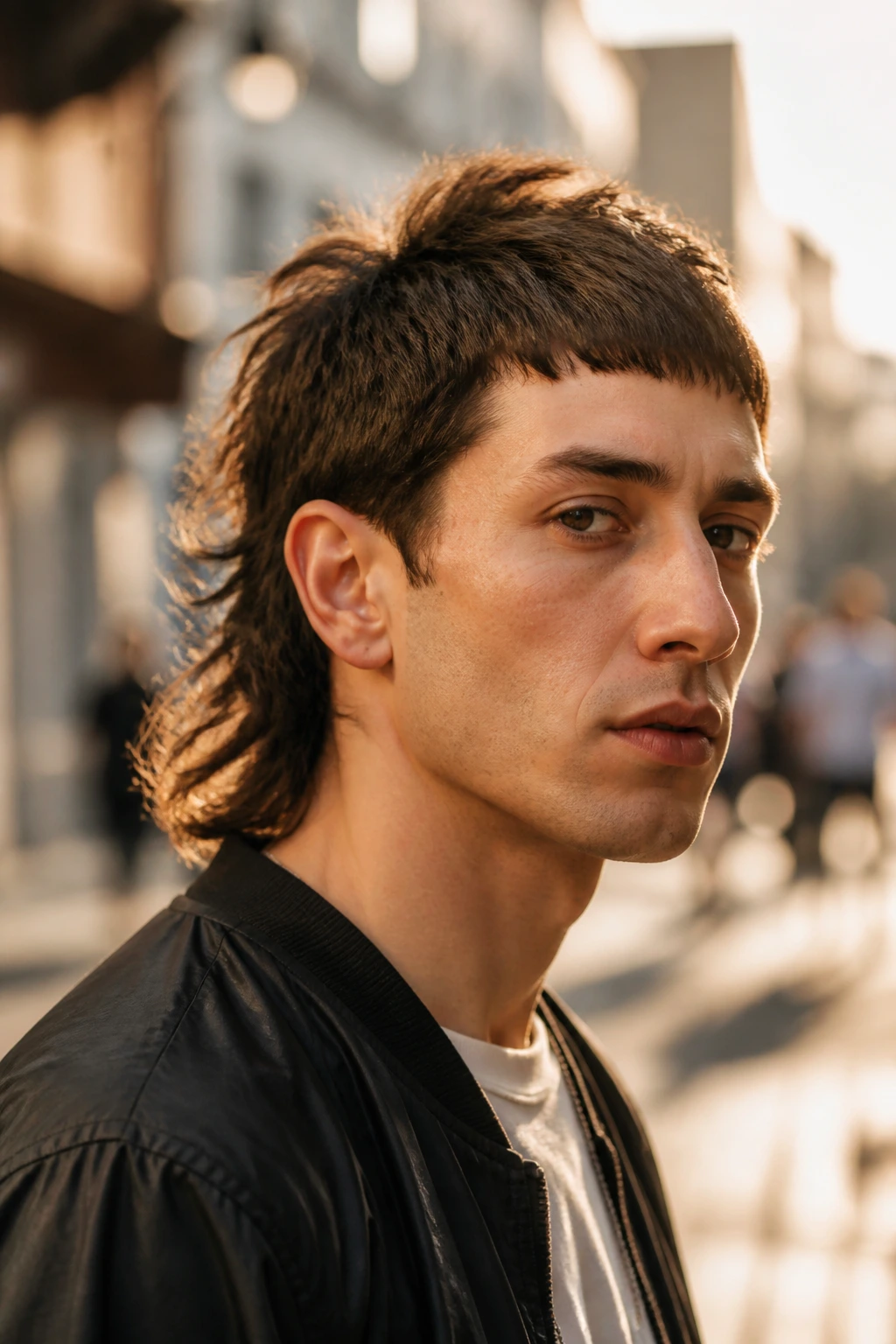
Here’s the short, sharp version for people who don’t want fringe hanging in their eyes. The front stays cropped and jagged, the crown gets texture, and the back extends just enough to keep the mullet identity alive.
It’s a clever cut for fine hair because the top length doesn’t have to carry the whole look. A short front keeps the haircut from sagging, and the back gives it shape. You want the texture to look piecey, not puffy.
- Keep the fringe short and choppy.
- Ask for internal layers at the crown so it doesn’t block up.
- Finish with texture powder at the roots.
This one feels a little more urban, a little less nostalgic. That’s a good thing if you want a mullet that doesn’t lean too hard into retro references. It also grows out with a nice messy line, which is useful if you hate perfect hair.
12. Drop Fade Mullet With a Curved Profile
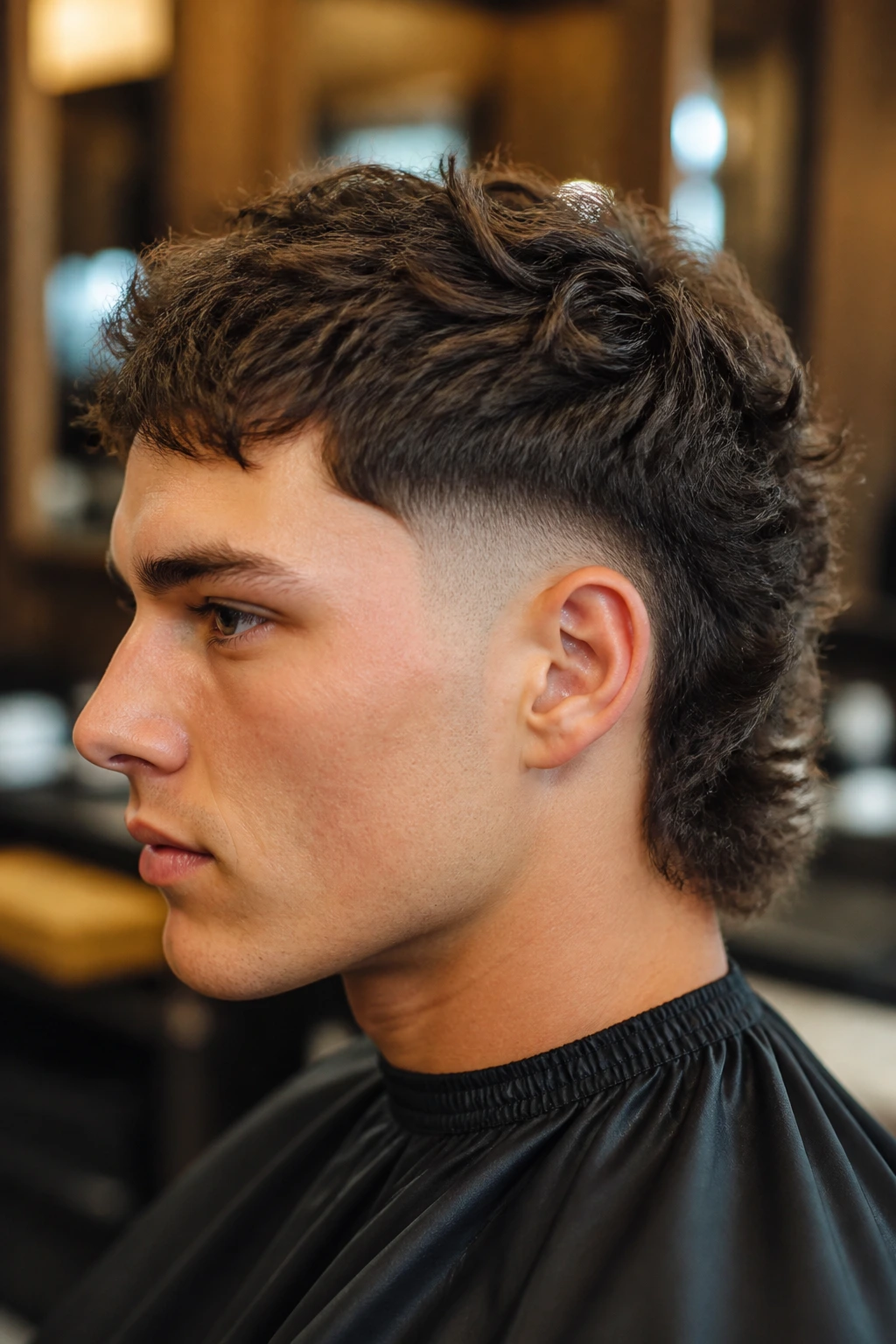
A drop fade lets the haircut follow the head shape instead of cutting a straight line around the side. The fade dips behind the ear, which gives the profile a smooth curve and makes the back length stand out without shouting.
This is a good pick when you want cleaner sides but still need some softness through the silhouette. It works nicely on rounder or fuller head shapes because the curved fade can slim the profile a little. Straight sides can sometimes look boxy; a drop fade avoids that.
A barber should keep the top textured and the back slightly longer than the drop zone so the shape still reads as a mullet. That back length doesn’t have to be huge. Just enough to separate the outline from a standard fade.
The styling is easy: dry the top up and forward, then push a few pieces back with a matte paste. Leave the back loose. The contrast should feel natural, not staged.
13. Layered Mid-Length Mullet With Collar Grazing Ends
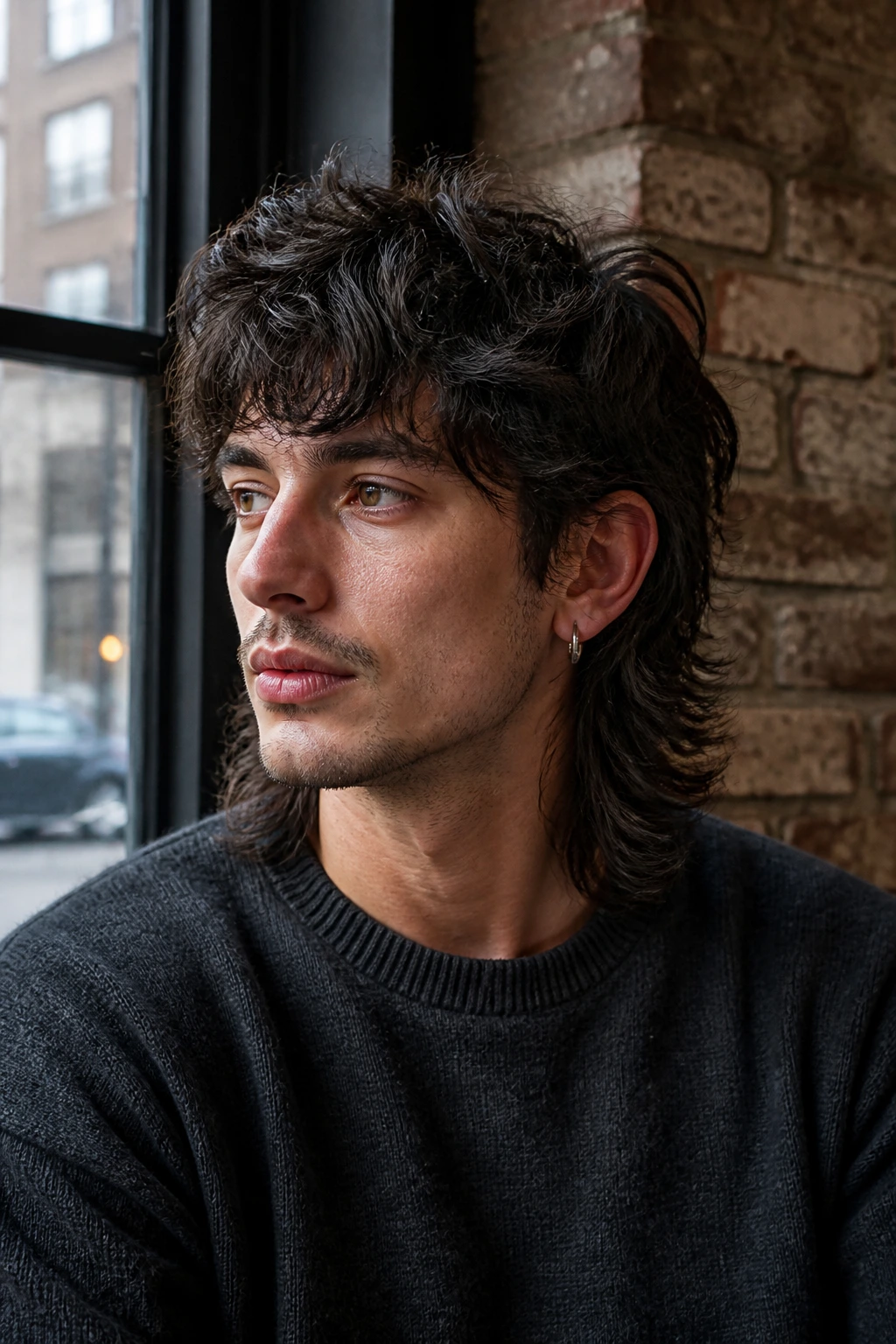
This version lives in the middle of the road in the best way. The top is layered, the back reaches the collar or brushes it, and the sides stay narrow enough to keep the shape from turning into a mushroom.
If you’re growing hair out from a shorter cut, this is often the cleanest bridge. The layers stop the ends from hanging like one heavy curtain, and the neckline still has enough length to look intentional. The cut is forgiving. You can wear it messy or brushed into place.
A little shaping around the ears helps a lot. So does a light dusting of texture spray on day two, when the hair has a bit more grip. That extra friction makes the layers separate better.
The whole point here is motion. If the back sits still, the haircut feels too polite. Once the ends move, the shape wakes up.
14. Messy Fringe Mullet With Choppy Eyebrows
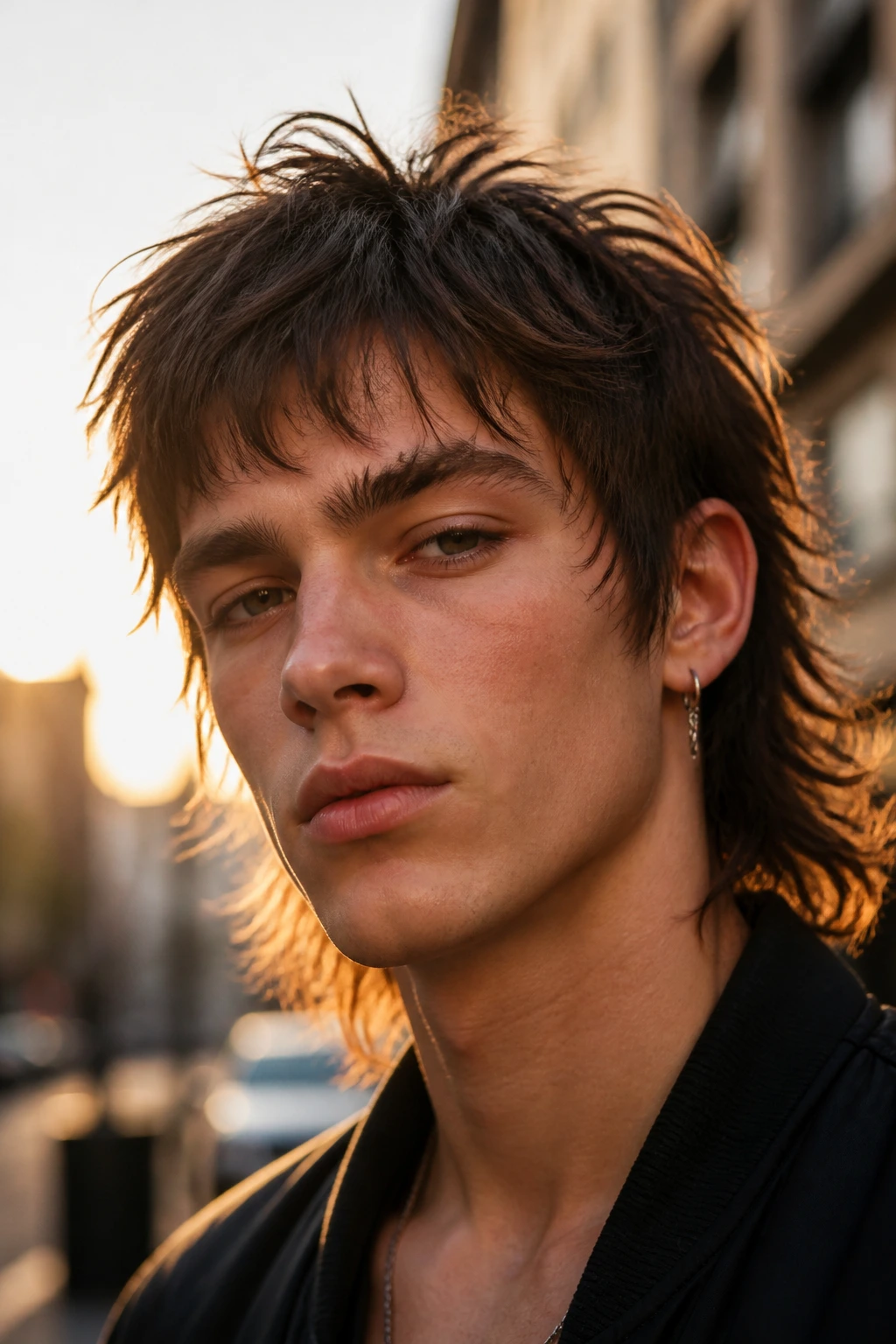
The messy fringe version leans into front texture first. The fringe hangs rough across the eyebrows, the top stays uneven in a good way, and the back keeps the signature length so the cut doesn’t lose its identity.
This shape is useful if your hair falls forward on its own. Instead of fighting that, the cut uses it. The fringe can hide a high forehead, soften a long face, or just make the whole haircut feel less formal. I like it best when the fringe looks cut with tiny breaks rather than one solid line.
What to watch for
Don’t let the fringe get too heavy. If it sits in one thick slab, the whole cut feels tired. A barber should break the line with point cutting and leave the crown airy enough that the front can move. Product should stay light. Heavy cream tends to drag the fringe down by noon.
That little bit of mess is the whole reason to wear it. Too neat, and you lose the charm.
15. Side-Part Mullet With Old-School Polish
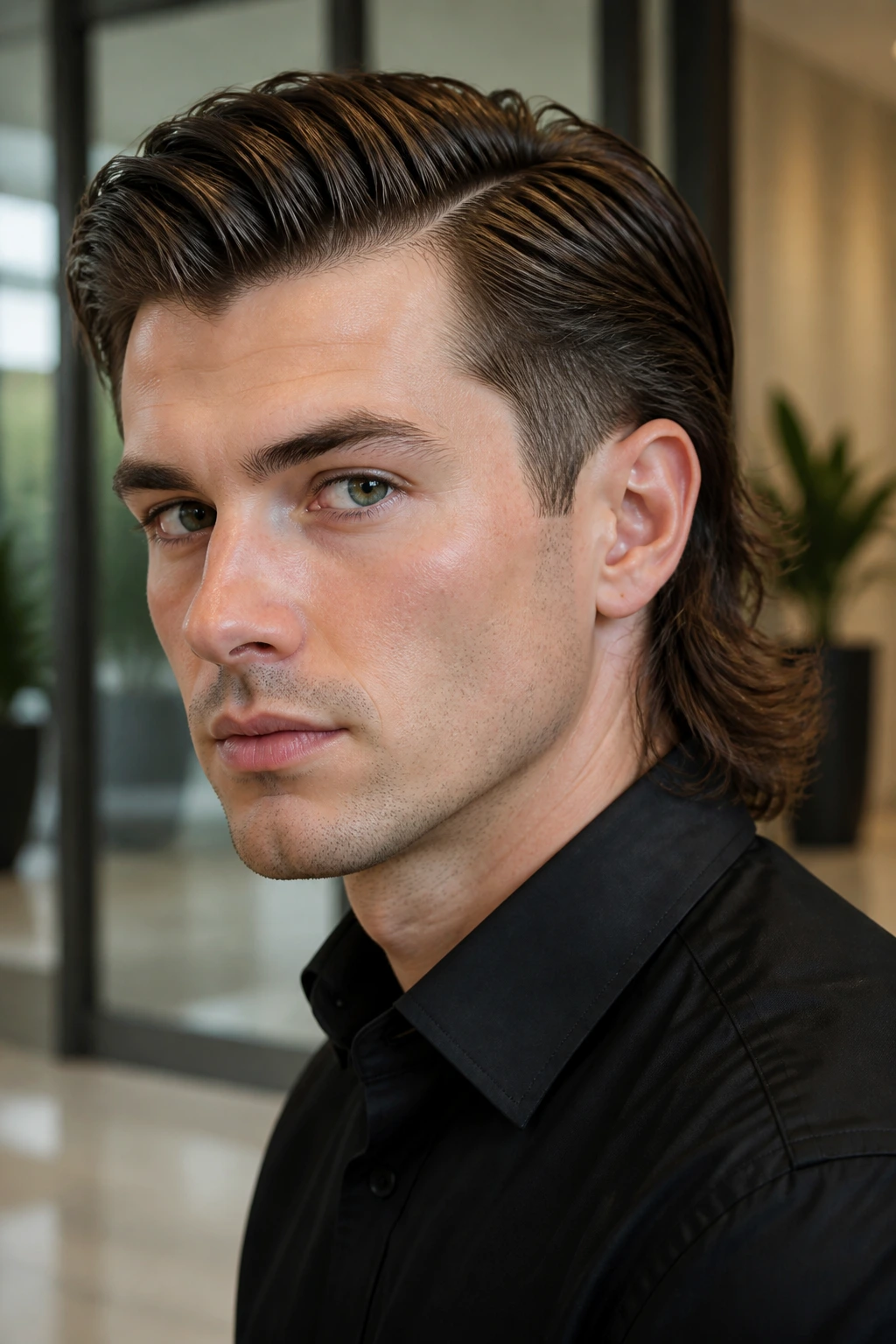
A side part gives the mullet a more structured personality. Instead of falling straight forward, the top is directed to one side, and the back length comes in as a surprise behind that cleaner front line.
This version works well if you want texture but can’t stand a loose fringe in your eyes. The part keeps the haircut readable in a professional setting, while the back keeps it from turning into a standard short taper. It’s quieter, which makes it useful.
The trick is not to over-polish the finish. If the side part is slick and the back is frizzy, the contrast can look accidental. Better to keep both areas in the same texture family: matte, slightly separated, and brushed with purpose.
A comb establishes the part, but fingers finish the job. Fingers keep the line from looking too formal.
16. Long Flow Mullet With Narrow Sides
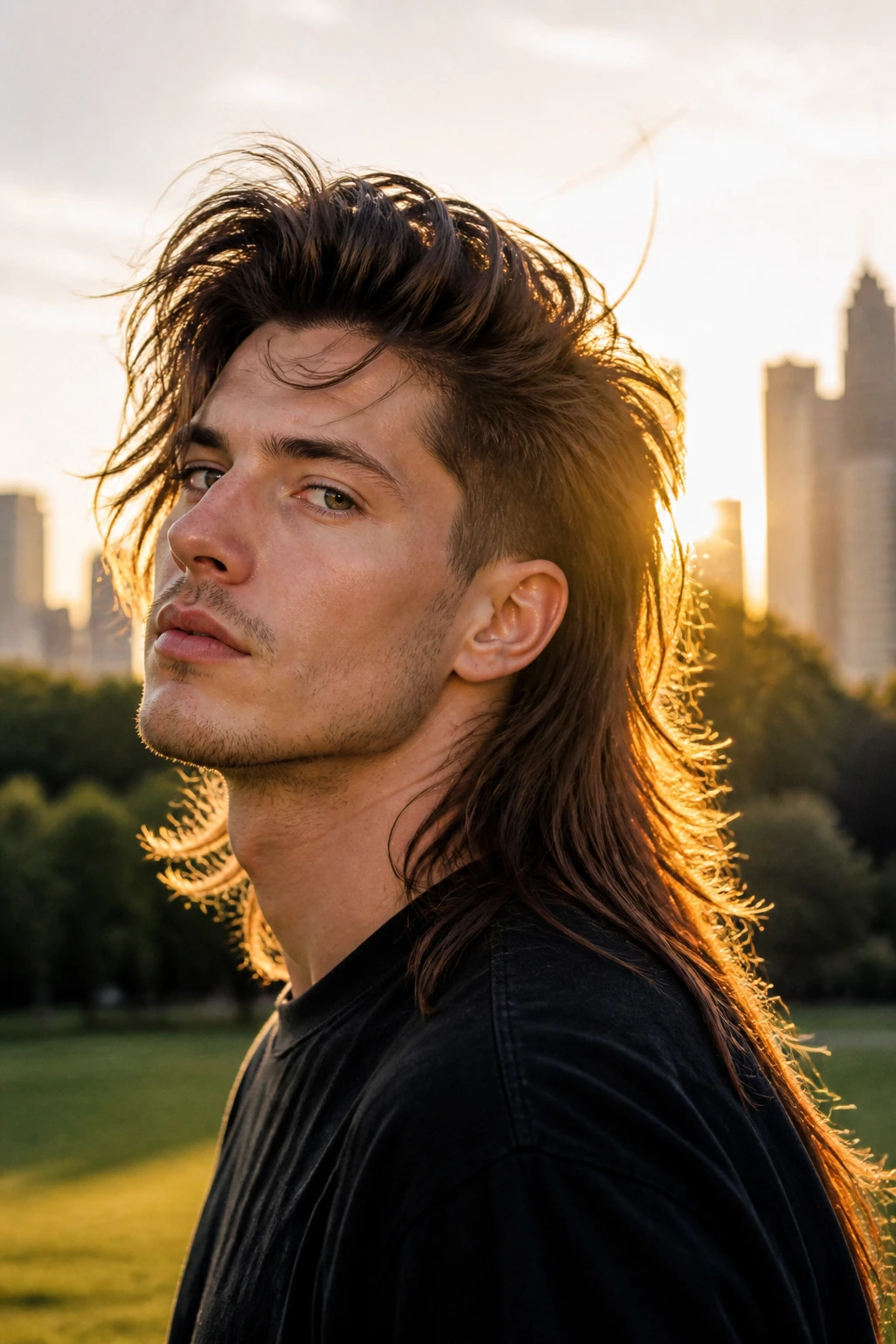
This is the dramatic one without being fussy. The top and back stay longer, the sides are kept close, and the overall line has that flowing, almost shoulder-length motion that moves when you walk.
Long flow mullets need good weight control. If the barber leaves too much bulk at the sides, the cut turns puffy fast. If the top is over-thinned, the front loses its sweep. The balance is in leaving length where the movement lives and removing it where it blocks the shape.
- Keep the sides narrow from temple to ear.
- Leave enough length at the back for swing, not just a tail.
- Use a light cream or spray, not a heavy wax.
This version suits people who want a stronger silhouette and don’t mind the upkeep. It’s one of the easier cuts to make look rich, but it can go shapeless if you skip trims.
17. Spiky Mullet With Choppy Crown Texture
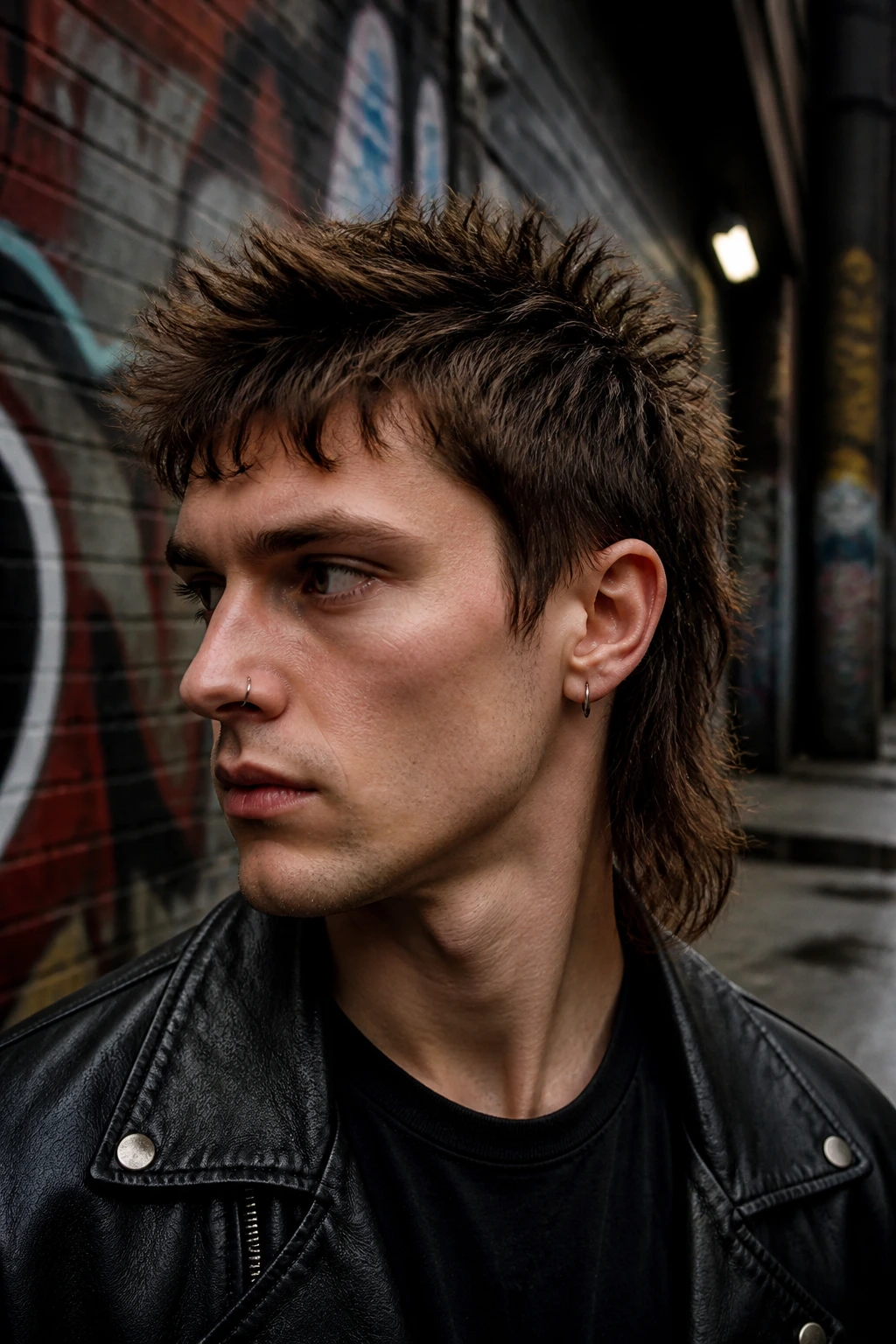
The spiky version is a little punk, a little playful, and very dependent on the crown. The top is cut short enough to stand up with product, while the back keeps enough length to separate it from a regular spiky crop.
It works best on hair with some density or natural grit. Fine hair can do it too, but you’ll need a root-lifting spray and maybe a blow-dryer for support. The spikes should look broken and irregular, not like stiff little thorns.
This cut likes a dry finish. A matte clay or paste gives the crown texture without making the hair look shiny and heavy. If the product is too slick, the spikes collapse into lumps, which is the opposite of what you want.
The back should stay softer than the top. That contrast is what keeps the shape readable.
18. Mullet With an Undercut and Clean Disconnect
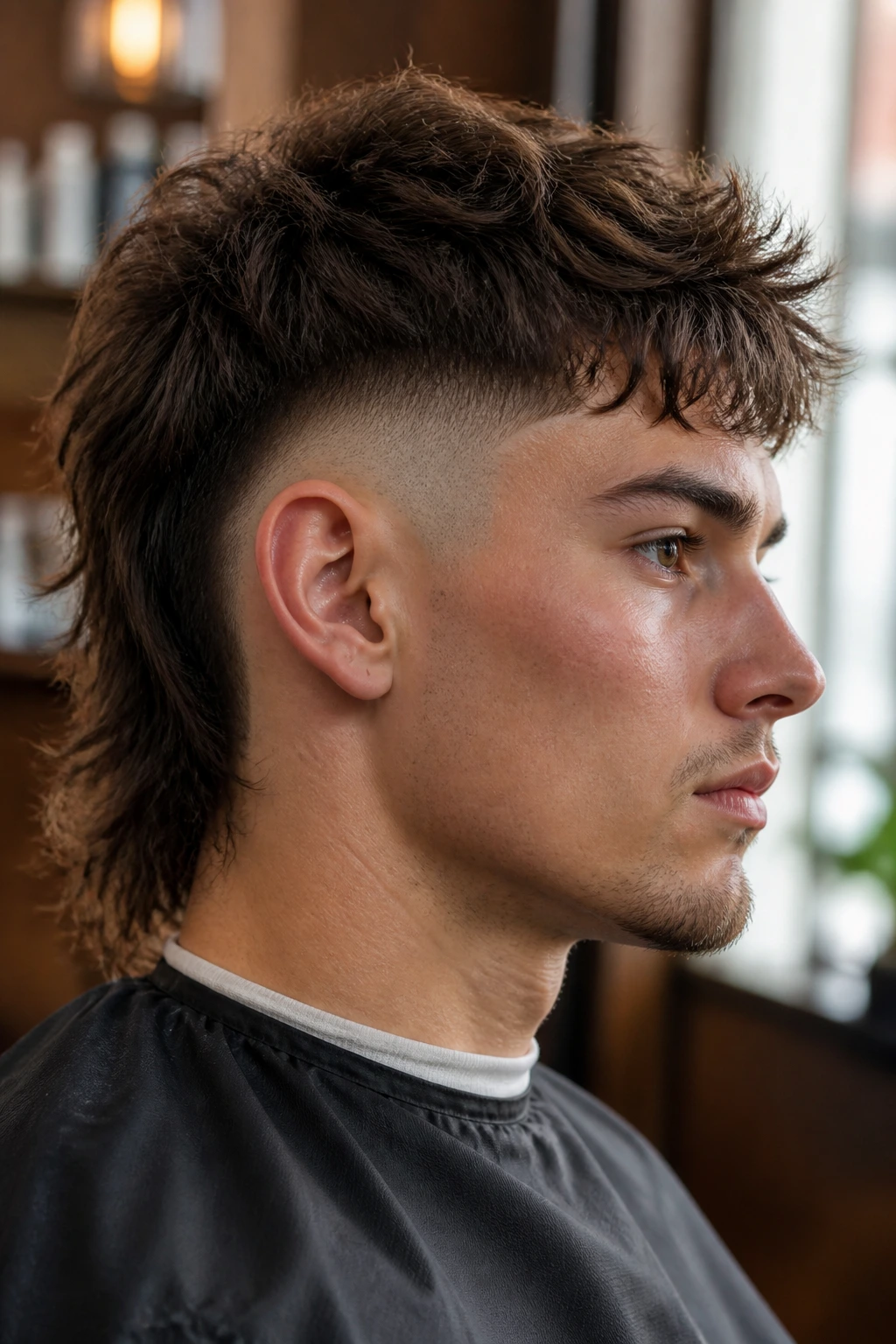
This one leans hard into contrast. The undercut removes a lot of bulk from the sides, the top stays long and textured, and the back carries the signature length with a strong break in between.
Because the sides are so reduced, the top has to do more visual work. That means the crown should be layered, not left as one thick panel. If the top is too heavy, it sits like a cap. If it’s too thin, the disconnect looks accidental. The middle ground is where this cut lives.
Why people choose it
It’s clean. It’s sharp. And it doesn’t hide the fact that it’s a mullet. That clarity is part of the appeal. You can style the top messy or brushed back, but the undercut keeps the outline from getting muddy.
If you wear this cut, keep the neckline neat. The undercut already brings a lot of edge. A sloppy nape just looks unfinished.
19. Platinum Mullet With Lightweight Texture
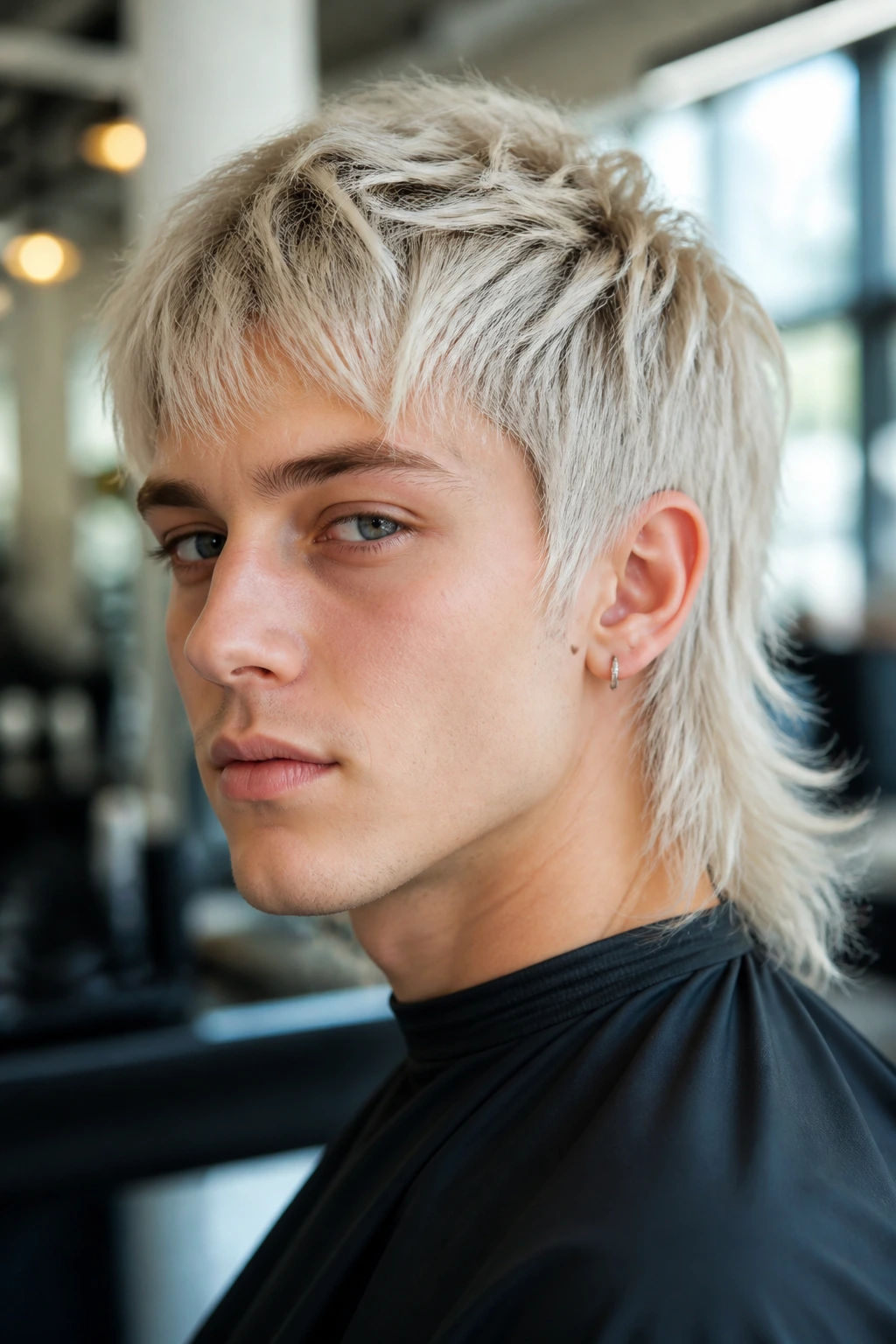
Lightening the hair changes the whole read of the cut. Platinum or pale blonde makes each layer more visible, so the texture shows up in a way dark hair sometimes hides. That can be a blessing or a curse, depending on the cut.
This version needs clean shape work. Every point-cut edge, every broken fringe piece, every bit of taper becomes more obvious once the color is light. That’s why a good bleach job should go hand in hand with a good shape. One without the other is rough.
The style finish matters too. A chalky texture spray or a soft matte paste usually works better than a shiny product, because bright color already catches the eye. Too much gloss can make the whole thing look flat and processed.
If you want the cut to stand out without extra length, color is a smart move. It’s visual texture without adding more bulk.
20. Two-Block Mullet With a Rounded Top
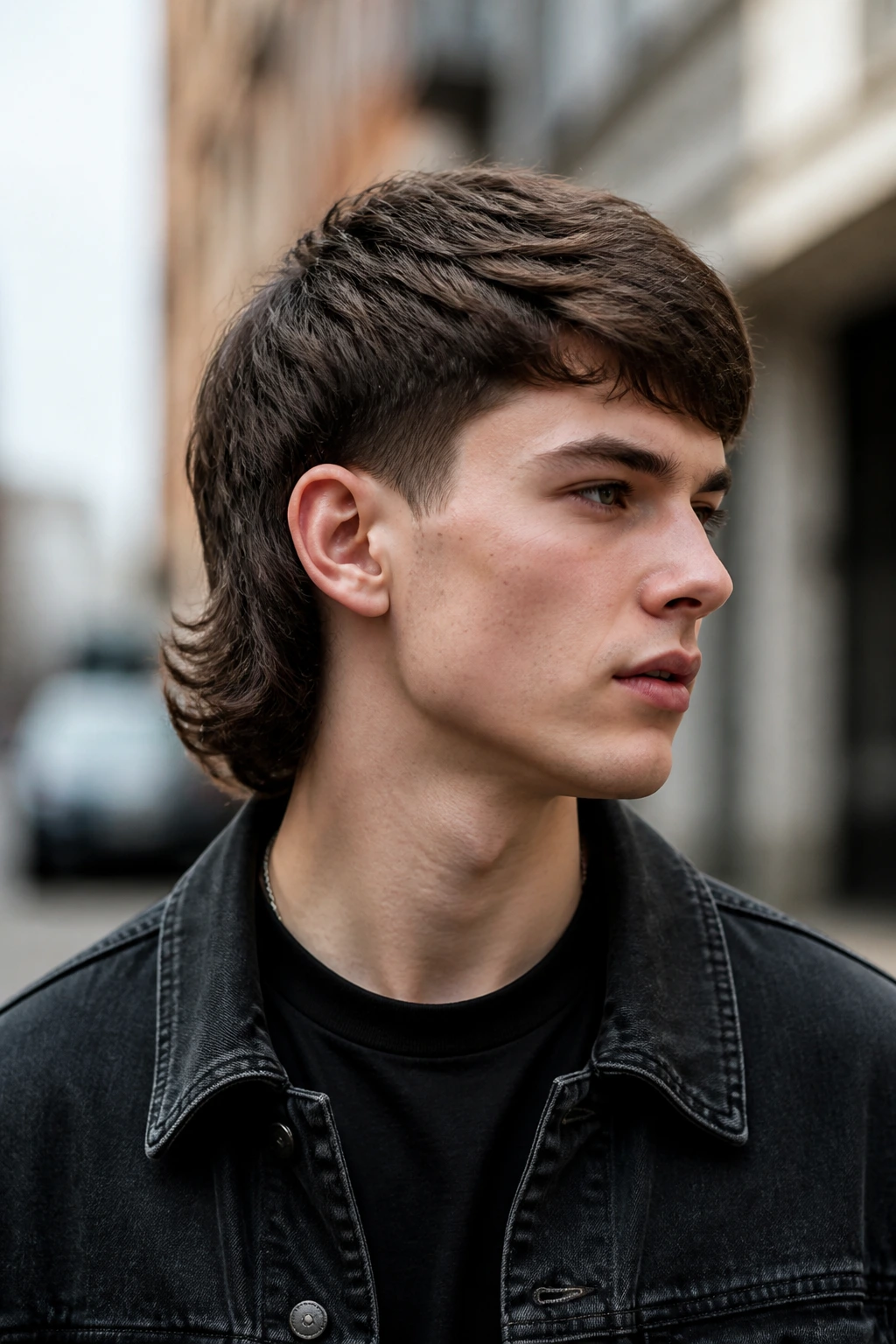
The two-block shape keeps the sides and lower back tighter while letting the top and upper back stay fuller. It has a neat, rounded feel that can read a little cleaner than a rugged shag version.
This cut works especially well on straight, thick hair because it lets the top keep body without turning the sides into a mushroom. The back length can be modest or dramatic; the important part is the visual split between the blocks. That’s what gives the haircut its frame.
A round brush can help if you want the top to curve softly. If not, finger-drying keeps the shape more casual. Either way, the sides should stay controlled enough that the block structure doesn’t disappear.
There’s a nice middle ground here between polished and messy. That’s rarer than it sounds.
21. Hard-Part Mullet With a Sharp Line
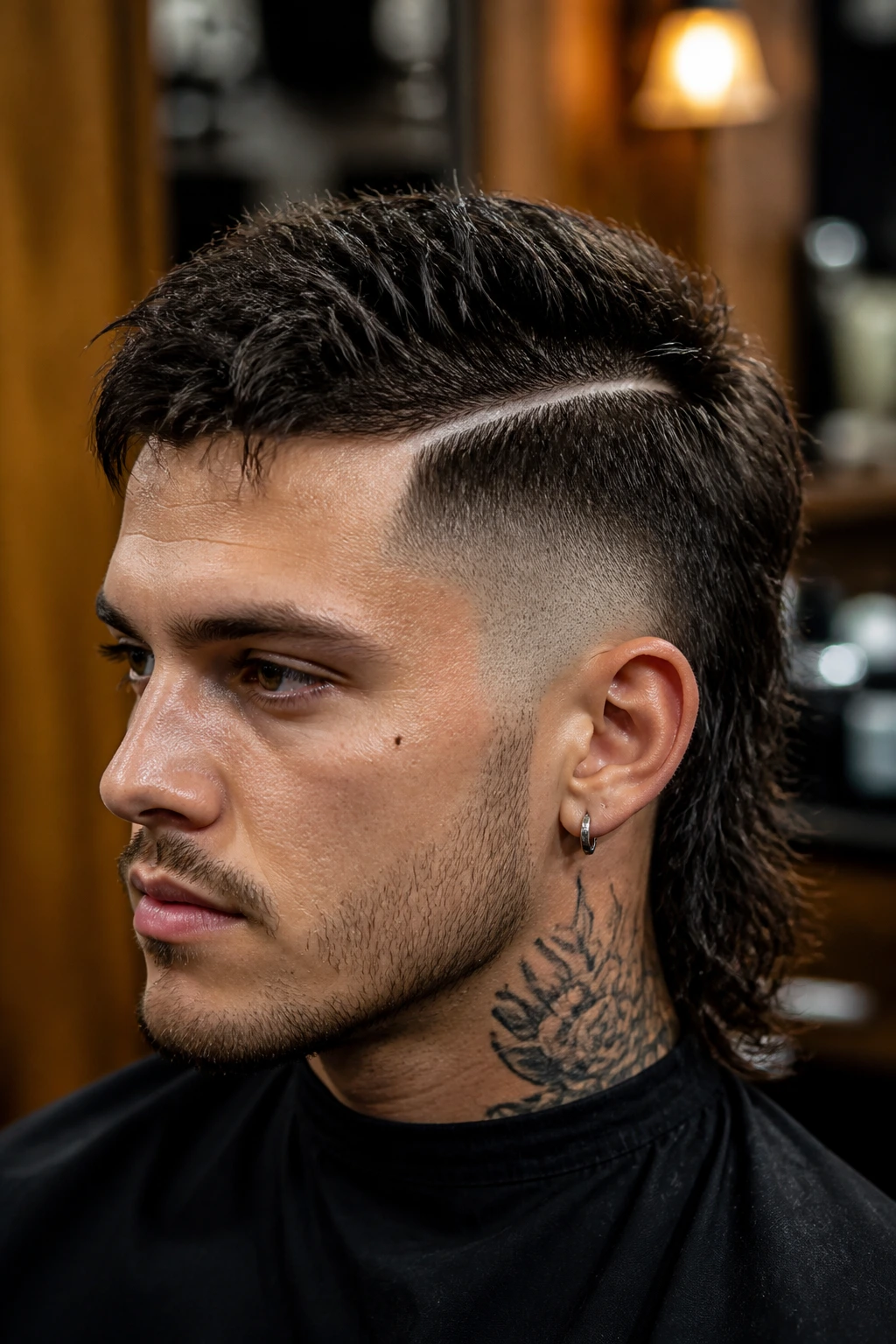
A hard part gives the cut a graphic line that makes the front feel more deliberate. It’s a strong option when you want to keep texture on top but still like a visible direction in the haircut.
This version depends on contrast without chaos. The part line, the taper, and the back length need to make sense together, or the haircut starts looking over-designed. A barber should carve the part cleanly, then keep the rest of the top loose enough to move.
The benefit is clarity. You always know where the shape starts, and that matters if your hair tends to fall everywhere at once. A hard part keeps the front organized so the back can do the interesting work.
Use a comb to place the part, then stop. If you keep combing it flat all day, the texture disappears.
22. Thick-Hair Shag Mullet With De-Bulked Layers
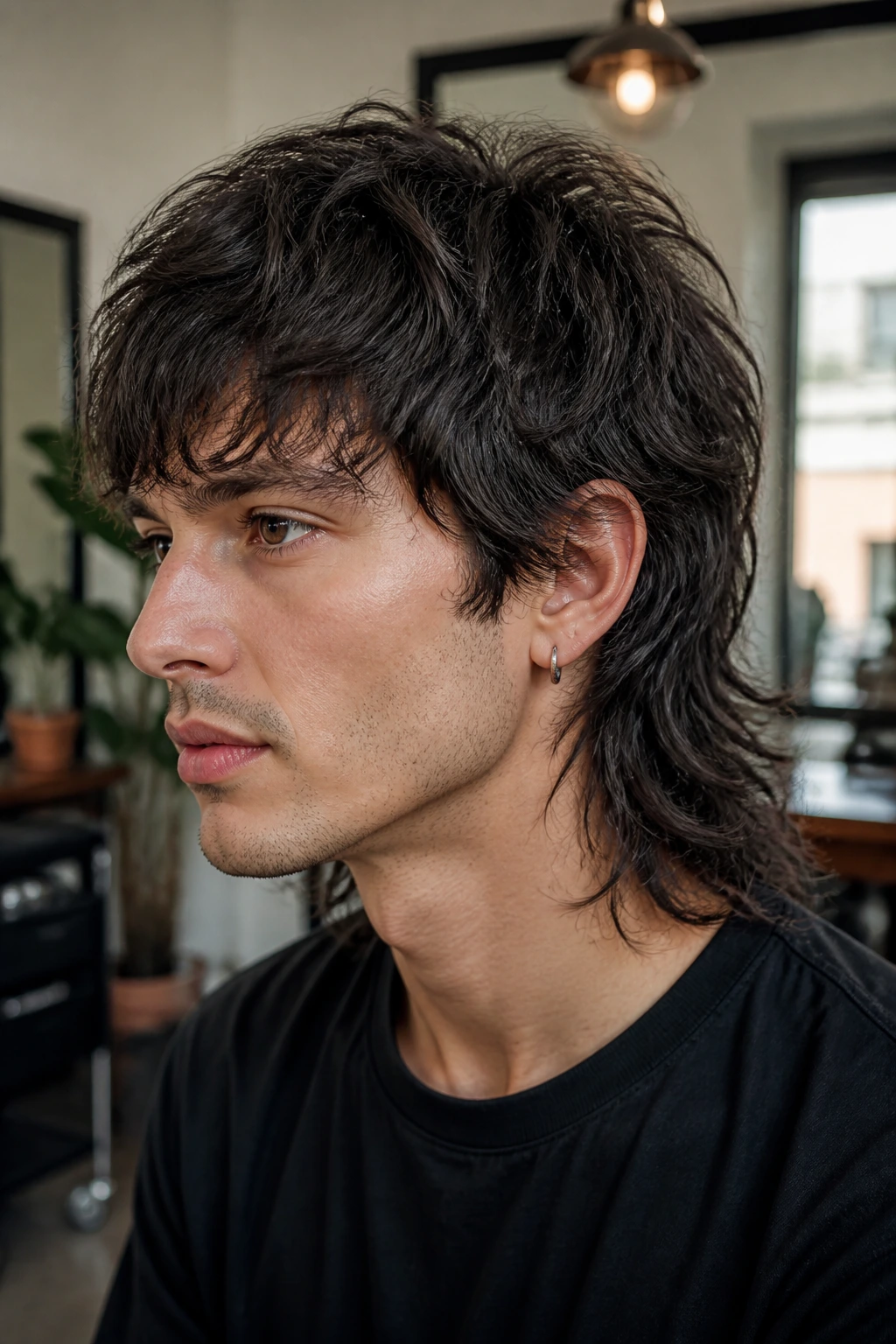
Thick hair and mullets get along better when the barber removes weight from the inside, not just the ends. This shaggy version does that, which keeps the cut from puffing out like a triangle the minute it dries.
The top should have broken layers, the sides need softness, and the back should move instead of dragging. Thick hair can take more length, but it cannot take too much bulk. That’s the part people miss. The cut isn’t about taking hair away everywhere; it’s about taking it away where it stops the shape from moving.
- Ask for internal debulking, not just surface layers.
- Keep the fringe light so it doesn’t split the face into a wall of hair.
- Finish with a matte product that separates, not weighs down.
This is one of the most wearable versions if your hair naturally feels heavy. Once the weight is gone, the texture shows up fast.
23. Fine-Hair Mullet With Root Lift and Soft Ends

Fine hair needs a different strategy. Don’t fight for giant volume; build a shape that looks airy and keeps the ends from collapsing into nothing. That usually means shorter, smarter layers and a little lift at the roots.
The back can still have length, but it should be soft and light. A heavy tail will drag the whole cut down. Keep the crown a touch shorter, use a mousse at the roots, and rough-dry with your fingers or a vent brush. The goal is movement, not density.
A lot of fine-haired people make the mistake of asking for too much thinning. Bad idea. If the cut loses too much mass, it starts looking transparent and sad. Better to keep the perimeter soft and let the styling do the lift.
This version shines when the front has a little lift and the nape stays neat. That gives the cut a shape without asking the hair to do something it cannot do.
24. Bowl-Mullet Hybrid With a Broken Perimeter
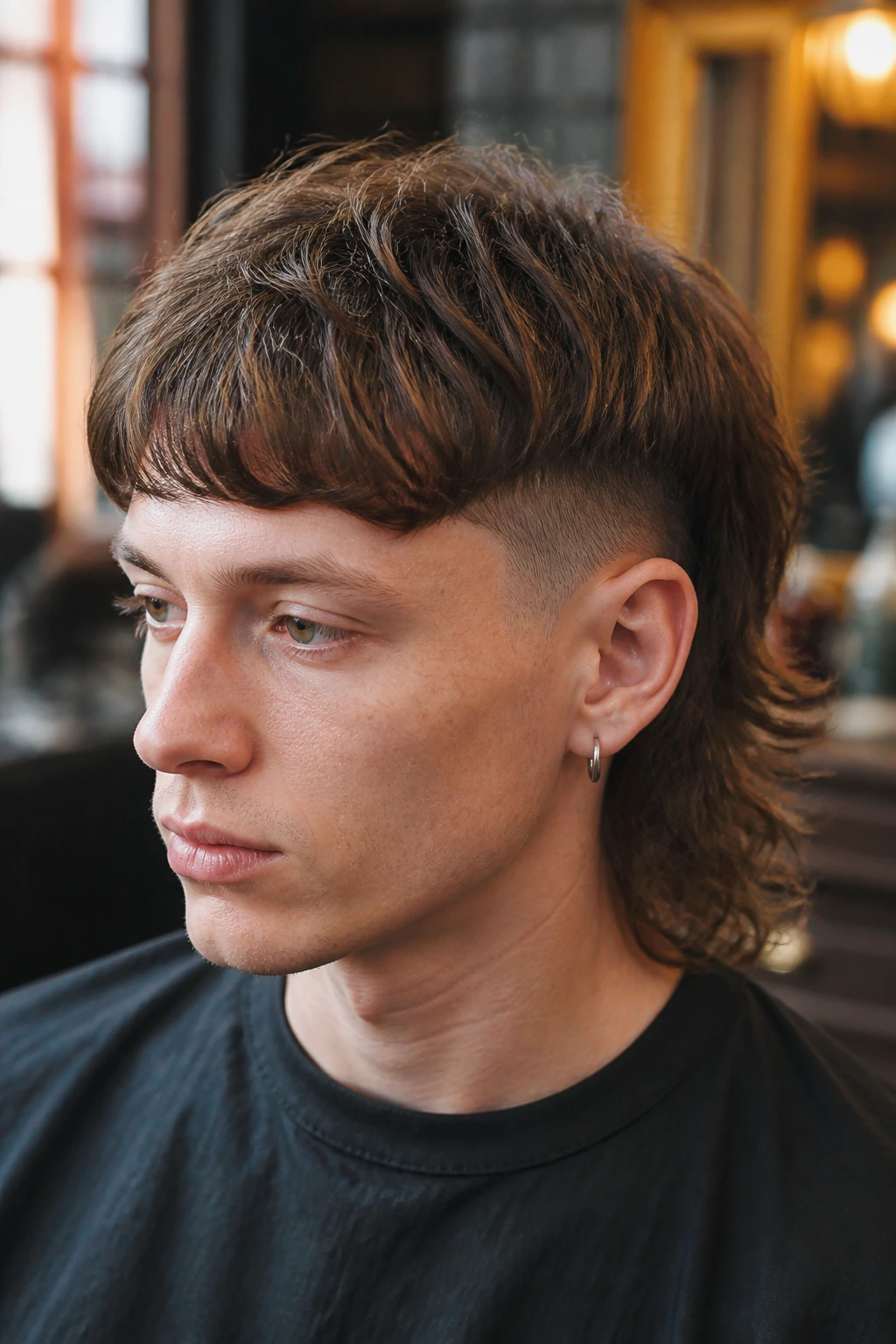
This is the most fashion-forward cut in the bunch. The front carries a bowl-like curve, but the line is broken up with texture, and the back extends beyond it so the mullet shape comes through.
It sounds strange until you see it done well. The broken perimeter keeps the bowl from feeling rigid, and the longer back gives the haircut a second layer of movement. It works best when the barber softens the edges with razor work or point cutting, because a blunt bowl line can overpower everything else.
I like this on people who want something a little strange but still wearable. It has a distinct shape, but the texture keeps it from looking like a costume piece from a bad photo booth.
The styling should stay loose. If you over-style it, the contrast gets too literal. A small amount of matte paste and a few bends with the fingers are enough.
25. Tapered Nape Mullet With a Soft Finish
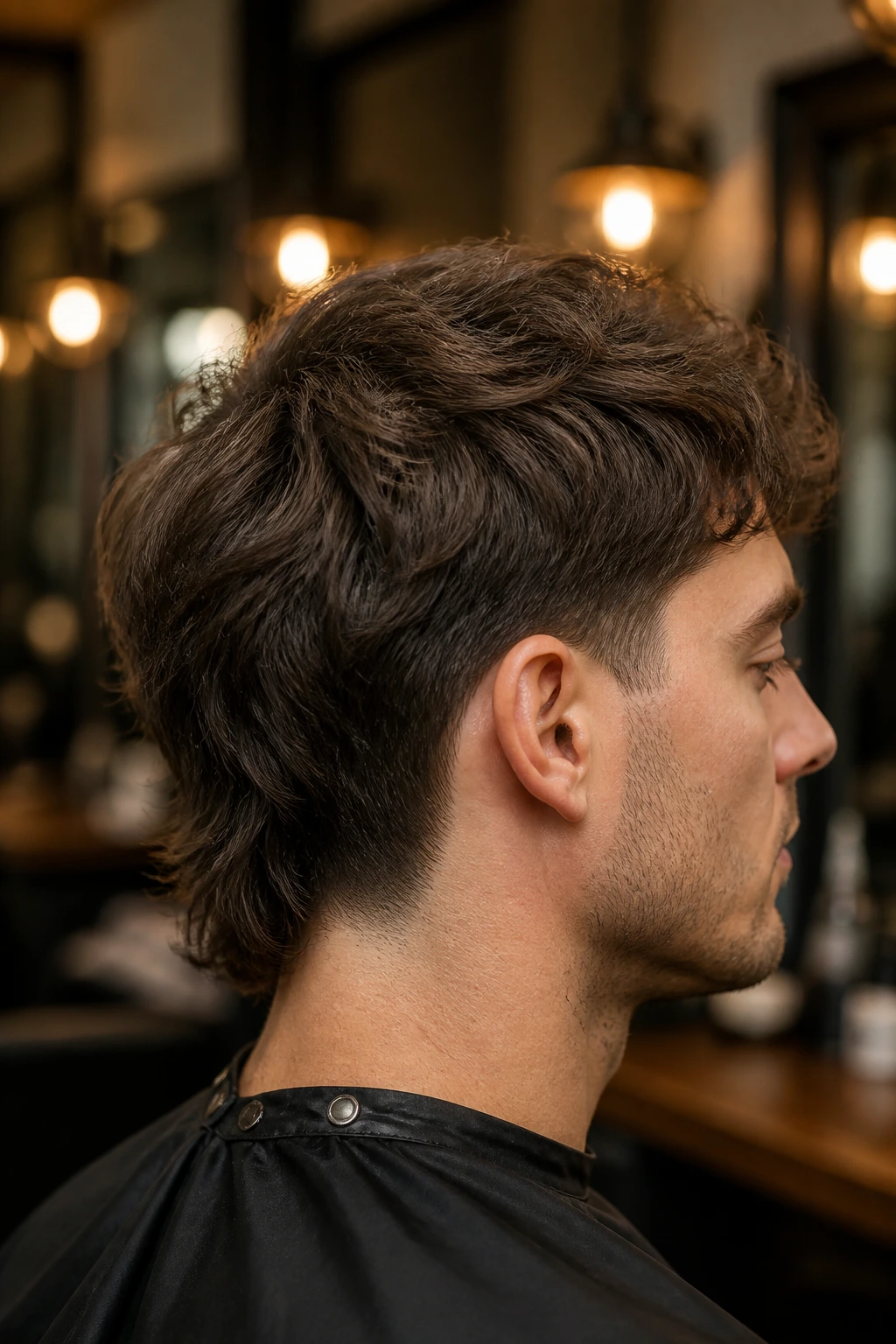
If you want the easiest version to live with, start here. The nape is tapered cleanly, the sides stay controlled, and the top and back hold enough length to give you the mullet line without a lot of drama.
This cut is strong because it doesn’t try too hard. The taper keeps the neckline tidy, which matters when the back has movement. It also makes the cut easier to grow out, since the outline already sits in a softer place. For a lot of people, that’s the real win.
A soft finish keeps it from feeling sharp or aggressive. Use a light cream, brush the top in the direction it naturally wants to go, and leave some ends free. If the haircut has good internal layering, it will already look like it has texture. The product just nudges it.
This is the one I’d steer a cautious first-timer toward. Clean enough to wear anywhere, textured enough to feel like a mullet.
What Makes a Modern Mullet Read as Texture Instead of Costume
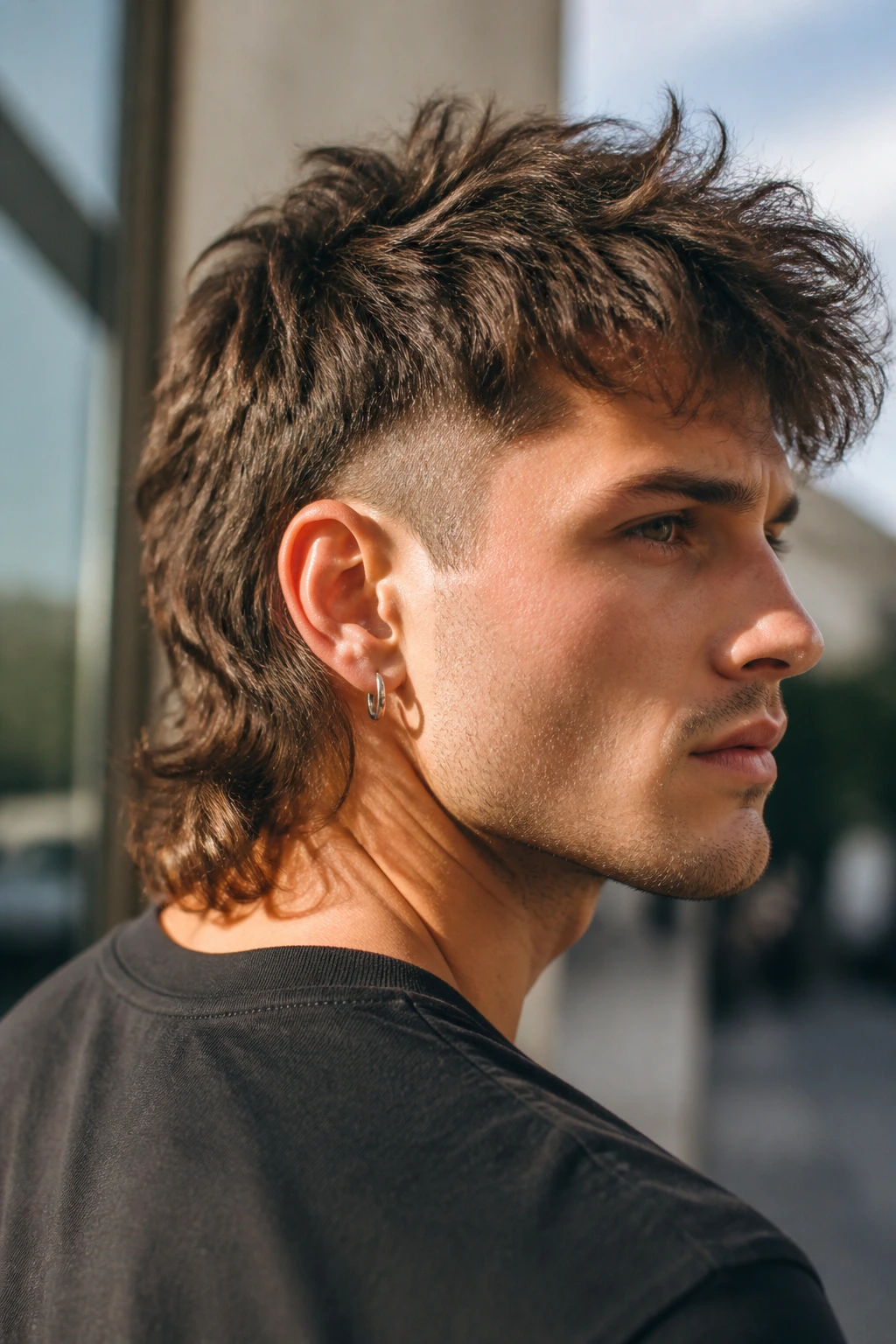
A modern mullet lives or dies on three things: the crown, the side profile, and the nape. Miss any one of those, and the cut can collapse into an odd shape that feels dated fast. Get them working together, and the whole haircut starts to feel intentional.
The crown needs movement. That can come from point cutting, razor work, or a good layer pattern, but it has to be there. If the top is one solid sheet, the haircut sits like a helmet. The sides then decide how loud the contrast feels. A taper gives you a softer read. A burst fade or undercut makes the cut sharper. The back is the last piece, and it does not need to be huge. It needs to be visible.
One thing people miss: texture is not only about product. It starts in the cut. Product just helps the shape show up. If your barber leaves too much weight behind the ears or too much bulk at the neckline, no paste in the world will fix it. The hair may still look styled, but it will not look shaped.
Essential Tools for Styling These Cuts
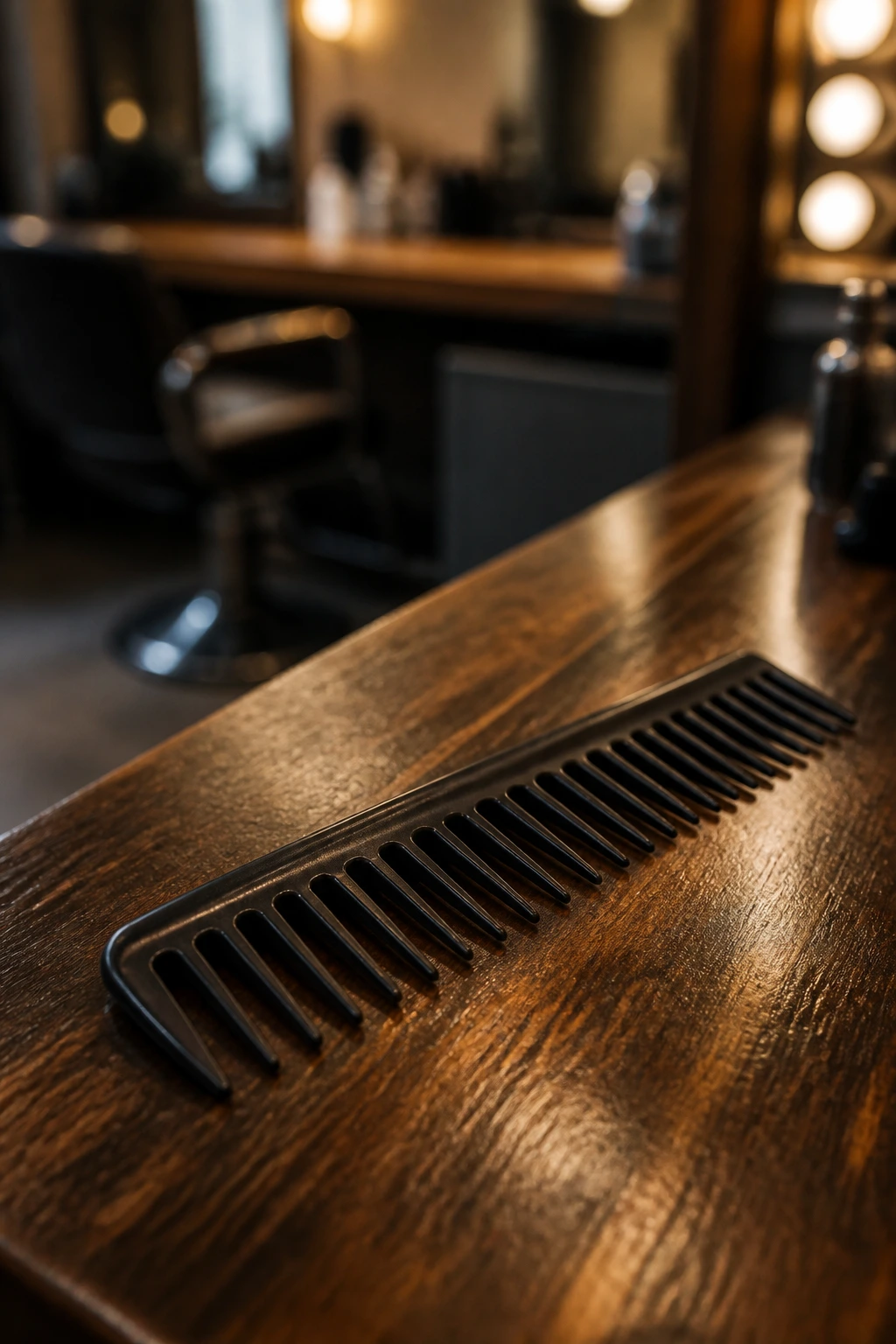
- Blow dryer with a concentrator nozzle: Directs air where you want lift at the roots instead of blowing the fringe everywhere.
- Diffuser: The easiest way to keep curls and waves intact without turning the back into a puffball.
- Wide-tooth comb: Good for distributing product through damp hair without flattening texture.
- Vent brush or round brush: Useful for lifting the crown and directing the fringe when you want a cleaner finish.
- Matte paste or clay: Gives separation and grip without making the hair shiny or heavy.
- Sea salt spray: Helps straight or fine hair feel rougher and easier to shape.
- Mousse: A solid pick for fine hair or curly hair that needs root support.
- Texture powder: Handy on day-two hair when the top has gone a bit soft.
- Hand mirror: Worth having if you trim your own neckline or just want to check how the back is sitting.
How to Brief Your Barber Without Guesswork
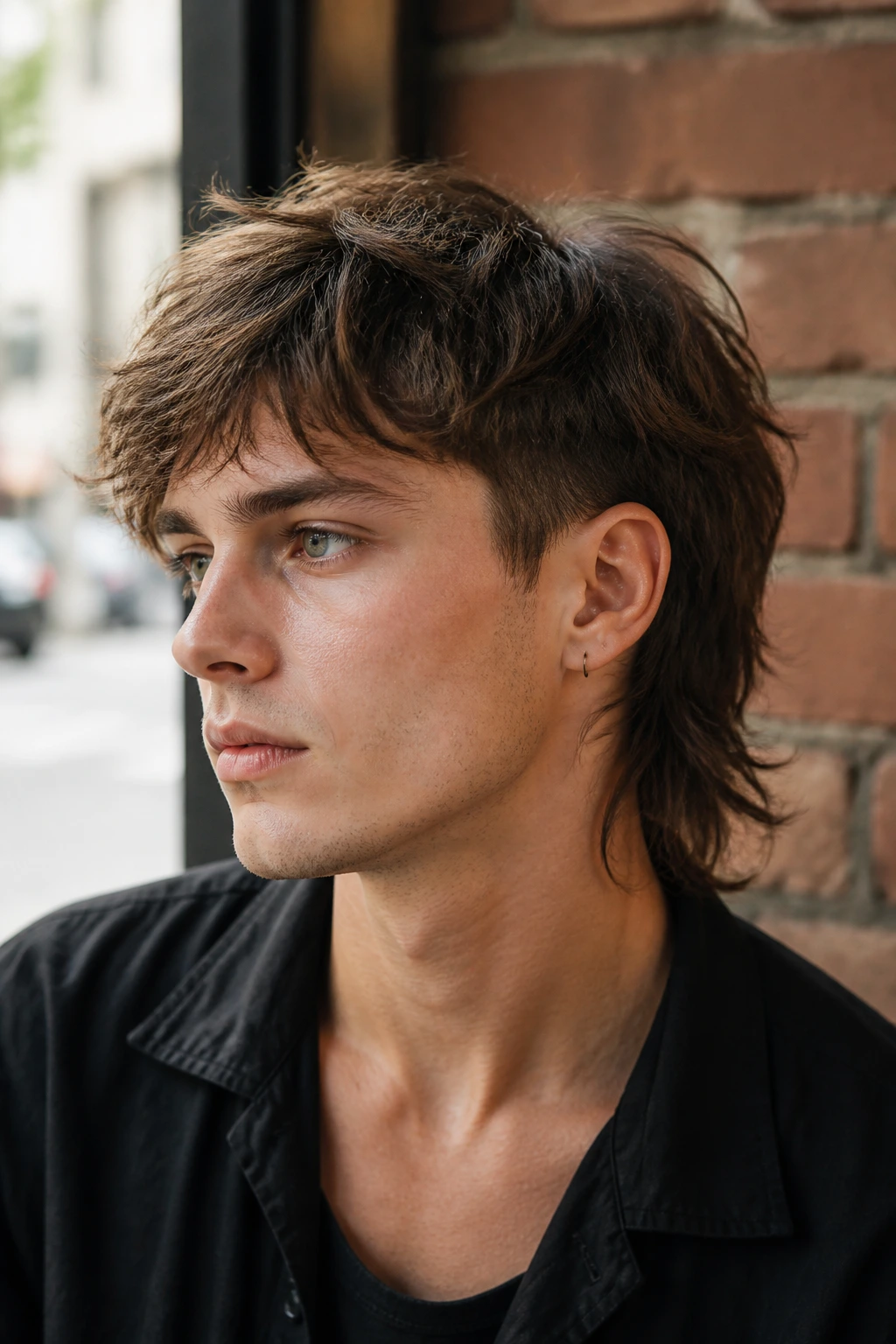
Say what you want the haircut to do, not only what you want it to be called. “Mullet” can mean a soft shag, a burst fade, a disconnected shape, or a nearly hidden grow-out. If you leave it at the name, you’re letting the chair do too much work.
Bring two or three photos, and make them different angles. Front only is not enough. The back matters here more than it does in most cuts, and a side photo shows whether the silhouette is soft or sharp. Then give numbers where you can: how long you want the top, whether the nape should brush the collar, and how short you want the sides near the ear.
Use this kind of language: “Keep the top around 4 inches, taper the temples, and leave enough length in the back to hit the collar.” If you want more edge, say so. If you want less, say that too. “I want the back visible, but I don’t want a hard disconnect” is a sentence most barbers can use.
One more thing. Tell them how you style your hair on a normal morning. A cut that looks brilliant blown out and terrible air-dried is not a win if you hate blow-drying.
Styling Moves That Keep the Texture Visible
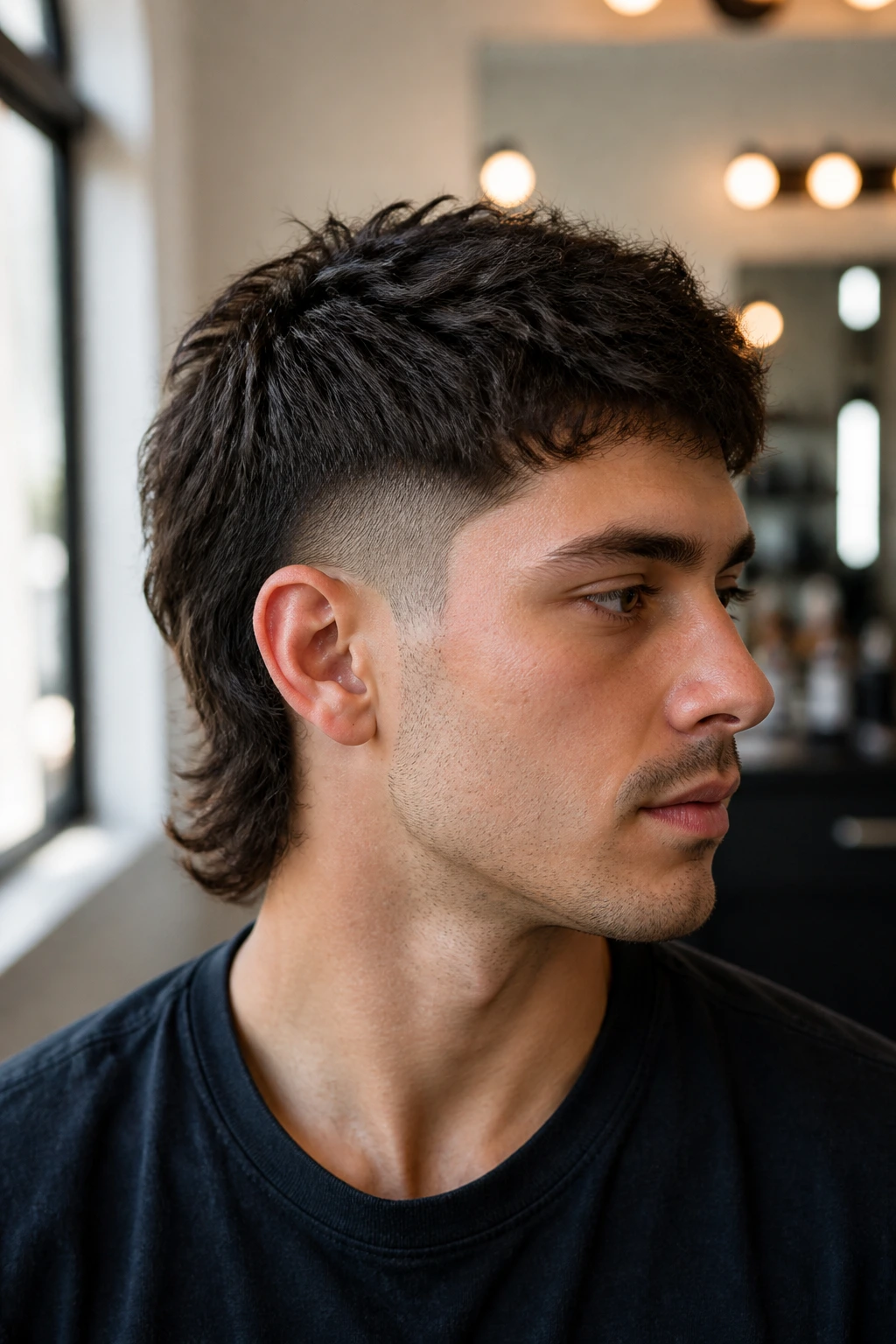
Texture Boost: Work sea salt spray or a light mousse through damp hair, then rough-dry the roots first. That keeps the top from collapsing before you even get to the ends. For wavy and straight hair, this is the difference between “nice shape” and “why does this look flat?”
Product Order: Start light. A small amount of matte paste or clay goes on after the hair is about 80 percent dry. Put it in the mid-lengths and ends with your fingertips, not your palms, so the pieces stay separated. Too much product at the start turns texture into mush.
Pro Move: Blow-dry the fringe in the direction you want it to live, then stop touching it. People fuss with the front until it goes limp. Leave it alone once it’s set, and the cut keeps its structure longer.
For Curly Hair: Use leave-in conditioner first, then a diffuser on low heat. Keep the diffuser moving and stop when the hair still feels a touch damp. Over-drying curls is how you end up with frizz around the back and no definition at all.
For Fine Hair: Use dry texture powder at the roots only. If you dust it through the ends, the hair can go fuzzy in a bad way. The crown needs lift; the back needs shape.
Common Mistakes That Flatten the Shape
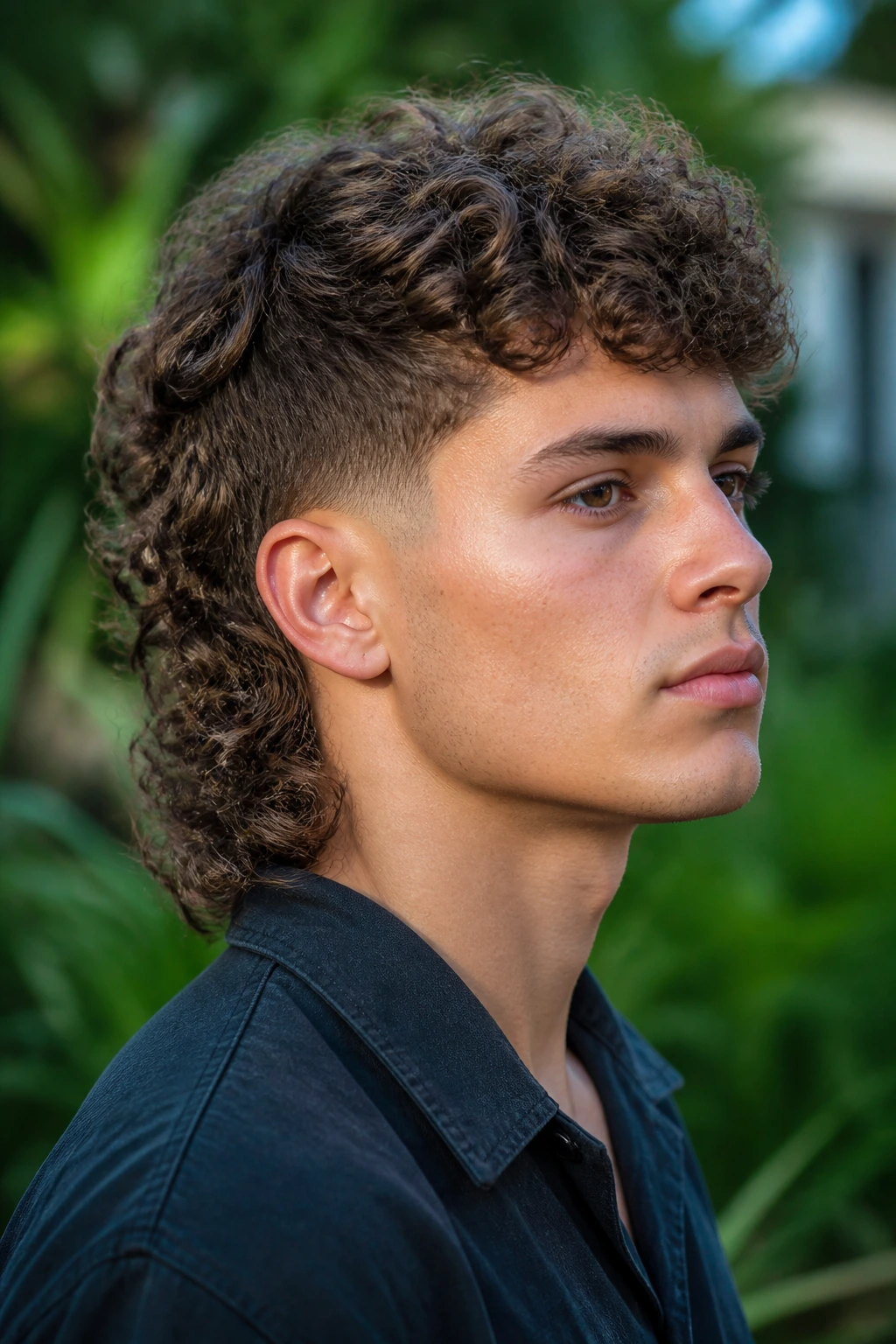
Over-thinning the sides: The haircut starts looking split apart instead of balanced. You want contrast, not a hollow frame around your face. The fix is a soft taper or a controlled fade, not a bare shave unless that disconnect is part of the plan.
Leaving the back too heavy: The nape puffs out and the whole shape turns triangular. This usually happens when the barber only cuts length off the ends. Ask for internal weight removal and a cleaner neckline so the back moves instead of bulking up.
Using heavy cream or glossy pomade: The top falls forward, the texture disappears, and the cut looks greasy by lunch. Matte products hold the broken pieces better. If your hair is fine, this matters even more.
Cutting the fringe too blunt: A hard line across the front can make the haircut feel blocky. Broken fringe edges or point cutting keep the face-framing part of the cut softer and easier to wear.
Skipping neckline cleanup: A mullet with a shaggy back still needs a tidy nape line, unless the mess is intentional. When the neck grows out for too long, the cut stops reading as styled and starts reading as neglected. Clean that area every couple of weeks if you like the shape sharp.
Variations and Alternatives to Try

Soft Office Mullet: Keep the side taper gentle, shorten the back a little, and leave the top with loose texture instead of a hard disconnect. This version slips into a more conservative setting without losing the silhouette. It’s the easiest pick if you want the shape but don’t want it to shout.
Street-Texture Mullet: Ask for stronger point cutting, a choppier fringe, and a matte finish that looks a bit slept on. This one leans into rough edges and piecey separation. It’s a good fit if you like your haircut to look lived-in by noon.
Curly Halo Mullet: Let the curls form a halo around the crown while the back keeps enough length to swing. The sides should be tapered enough to stop the shape from getting too wide. This version has a softer outline and a more natural feel.
Bleach-and-Texture Mullet: Light color makes every layer more visible, so the cut reads bolder even when the length stays modest. This works best when the shape underneath is clean; otherwise the bleach just exposes bad layering. Use a toning shampoo and a light styler so the color doesn’t turn dull.
Grow-Out Mullet: If you’re coming from a shorter cut, keep the sides tidy while the top and back catch up. The result is a shaggy in-between stage that can look better than the final destination. A lot of people stop here because the shape has its own character.
Keeping the Shape Between Trims
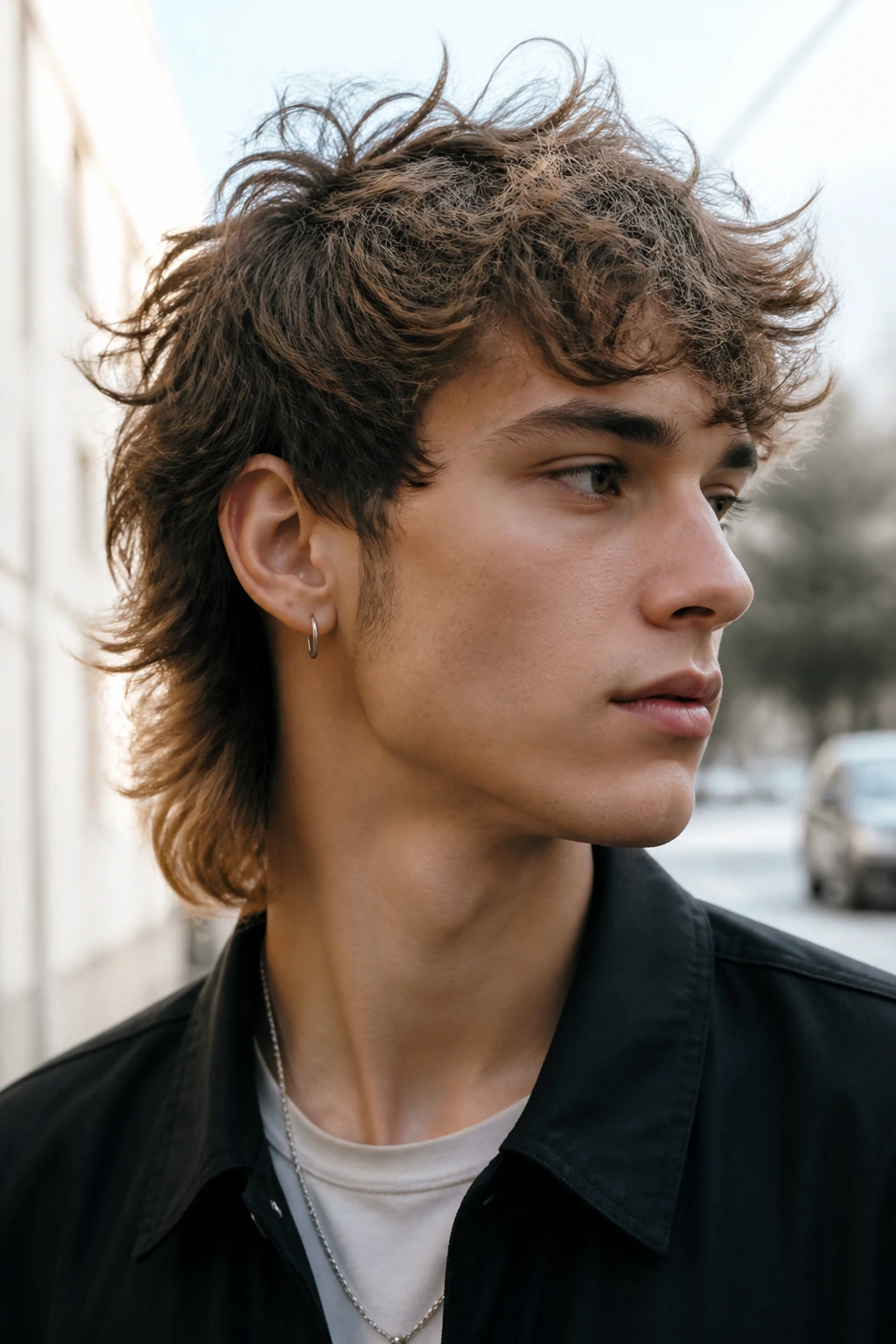
Most mullets need a little more maintenance than a basic short cut, but not as much as people fear. The neckline and the area around the ears usually need attention first. If you like a cleaner outline, a tidy-up every 2 to 3 weeks keeps the shape crisp. Longer versions can stretch to 4 or even 5 weeks before the silhouette starts to blur.
The top and back do not age the same way. The top usually loses lift before the length feels too long, while the nape can start sticking out in ways that make the haircut look wider than it is. A quick dusting at the neck and a bit of cleanup at the temples often fixes most of that. If your barber is only using scissors, ask them to keep the layers broken rather than blunt. That softens the grow-out.
Washing too often can flatten the texture, especially on fine hair. Two to four washes a week is plenty for most people using matte products, and a water rinse between washes can freshen curls without stripping them. If your hair gets greasy fast, focus shampoo on the scalp and let the ends get cleaned by the runoff. They do not need a scrub of their own every time.
Frequently Asked Questions
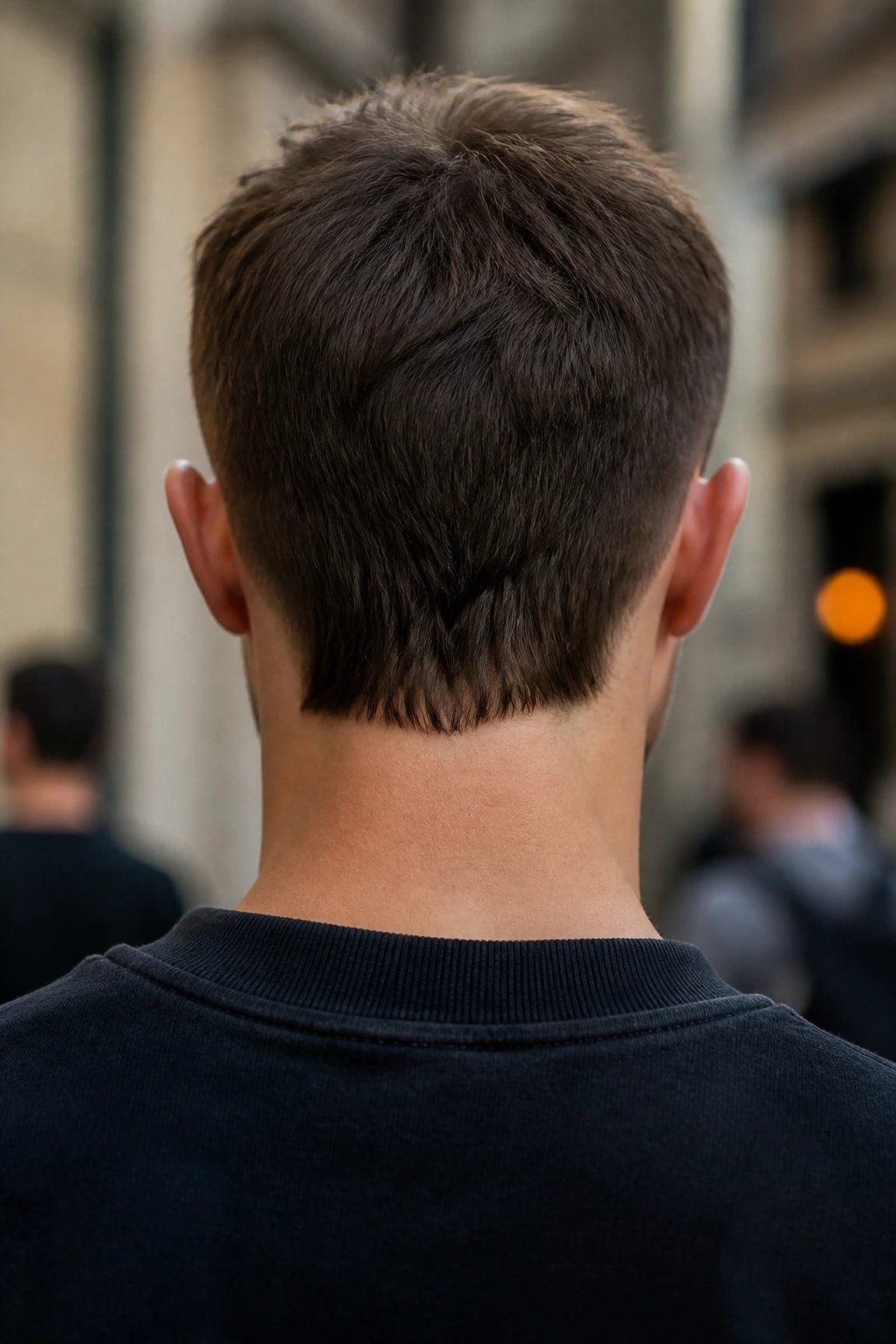
What face shape works best with a mullet haircut?
A mullet can work with most face shapes if the proportions are adjusted. Round faces usually do better with a little height on top and less width at the sides, while longer faces often look stronger with a softer fringe and a back that doesn’t stretch too far.
Can fine hair pull off a mullet?
Yes, but the cut has to stay light. Ask for layers that create movement without over-thinning the perimeter, then style with mousse or texture powder so the crown doesn’t collapse.
Do curly and wavy hair need a different approach?
They do. Curly hair needs weight removed where it swells widest, and wavy hair usually needs texture added through the ends so the shape doesn’t fall into one smooth line. Cutting dry or nearly dry helps both.
How short can the sides be before it stops reading as a mullet?
Short sides are fine if the back and crown still carry enough length to create a clear shape. If the side fade is too high and the back is too short, the haircut starts reading like a cropped fade with a tail instead of a mullet.
How often should I trim the neckline?
Every 2 to 4 weeks is a good range, depending on how tidy you want it. If the nape sits below the collar and the shape is softer, you can go a little longer before it feels messy.
What if the back sticks out too much?
That usually means there’s too much weight behind the ears or not enough internal layering. Don’t just shorten the ends. Ask for the bulk to be taken out from inside the shape so the back falls instead of flaring.
Can I grow a short cut into a mullet without it looking awkward?
Yes. Keep the sides neat while the top and back catch up, and the cut will pass through a shaggy phase on the way. That in-between stage is often the most wearable part.
Do I need heat tools every day?
No. Most versions only need a bit of root lift and a light product. Heat helps if your hair lies flat, but the cut should still look like itself on a low-effort day.
The Shape That Moves With You
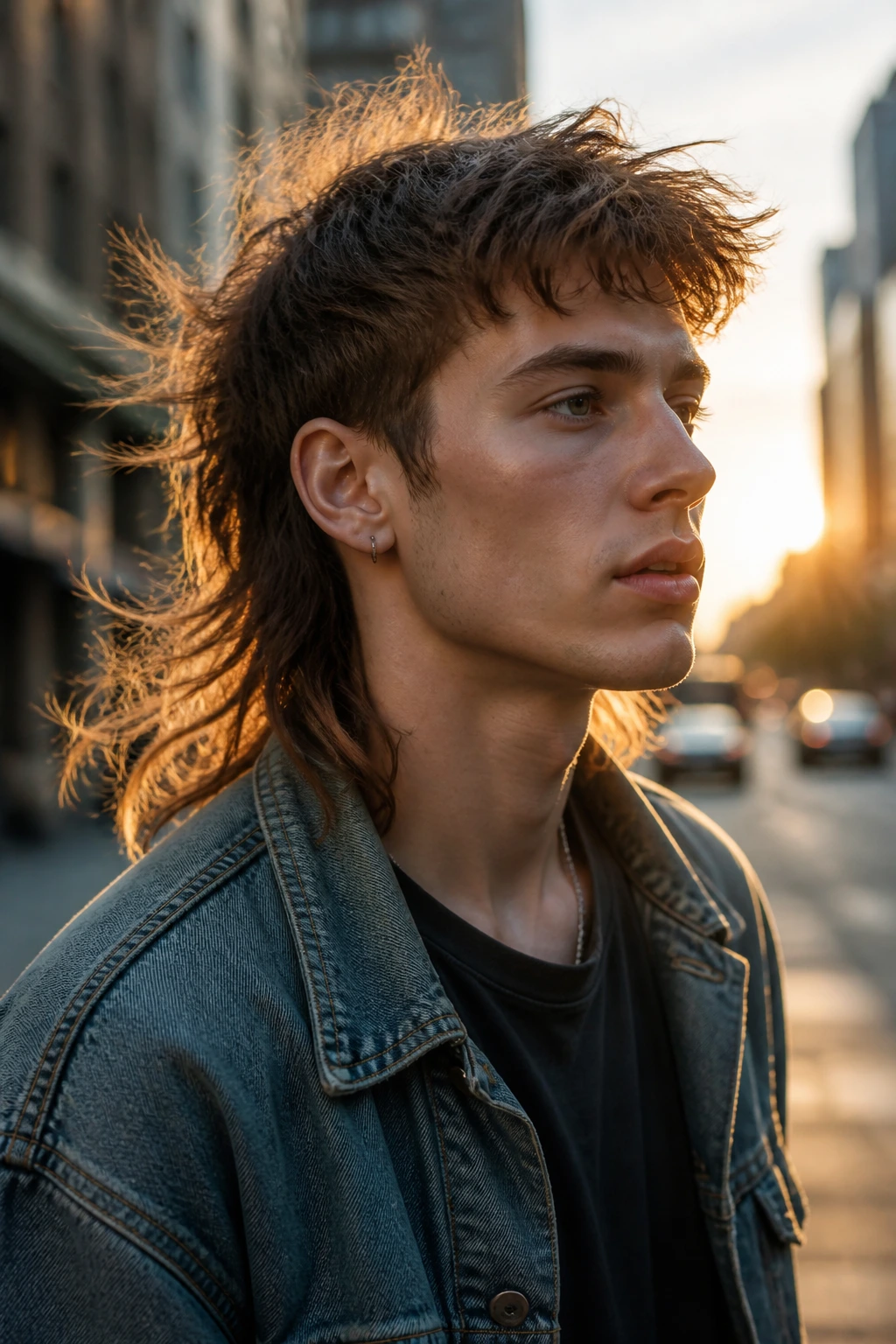
The nicest thing about a good mullet is that it doesn’t pretend to be one thing. It can be soft or sharp, curly or straight, narrow or full, and still keep the same basic idea: texture in front, movement in back, and enough contrast to make the shape read.
That’s why the stronger versions in this lineup work. They know where to be neat and where to be loose. If you bring a barber clear photos, ask for the right amount of length at the crown and nape, and keep heavy product out of the way, the haircut does the rest with very little fuss.
Pick the version that matches your hair, not the one that tries hardest in a chair mirror. The cleanest cut is not always the smartest one. The one that moves well on a windy street, at the end of a long day, or after you’ve stopped thinking about it—that’s the one worth wearing.
