



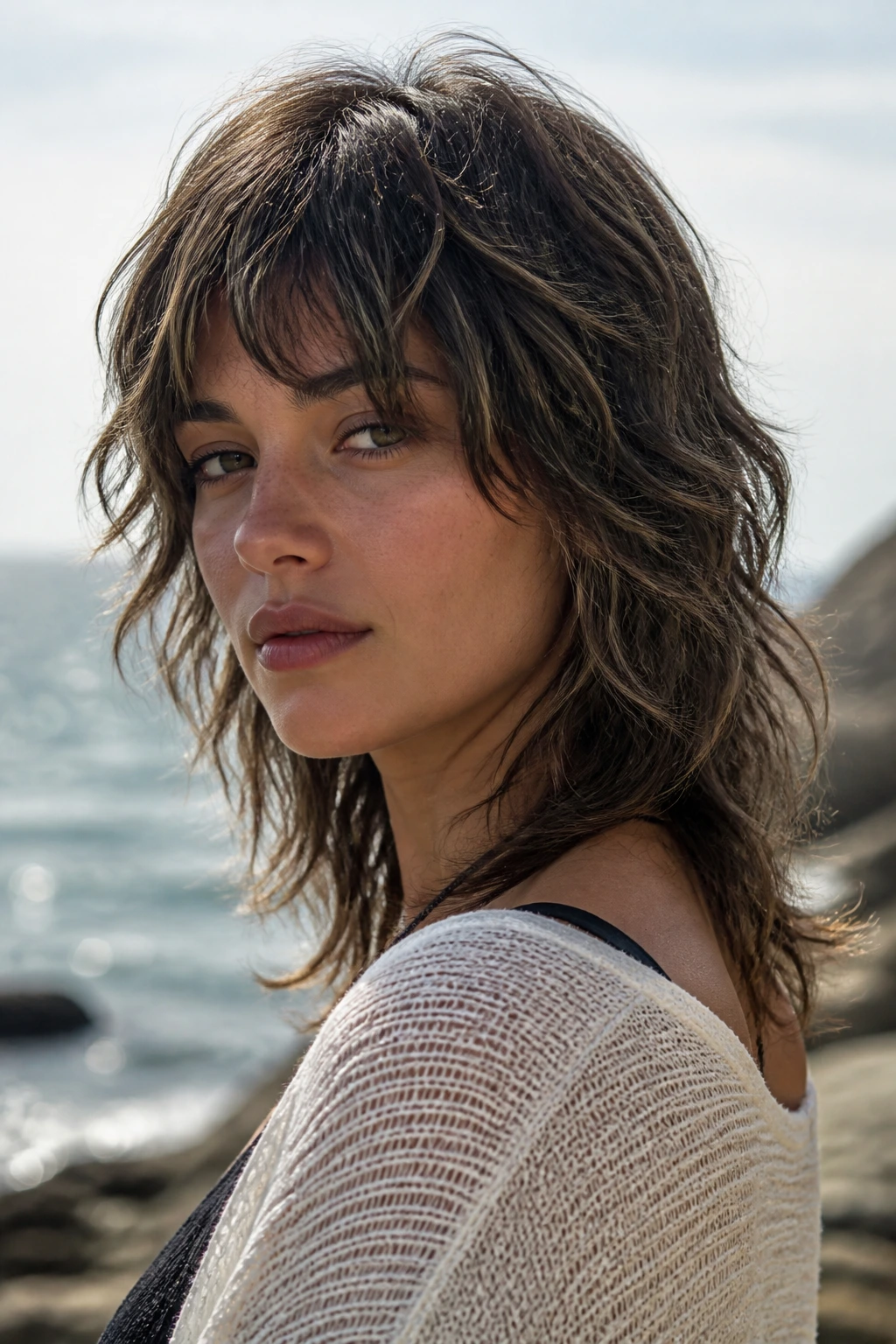
Shoulder length mullet haircuts have a peculiar advantage: they give you enough shape to look deliberate, but not so much length that the cut turns theatrical. The back can brush the shoulders, the crown can sit a little shorter, and the front can fall into a fringe, curtain pieces, or a sharp side sweep. That middle ground is why this version of the mullet feels modern instead of costume-y.
The shoulder is doing more work here than people realize. Hair that lands right on that point bends, kicks out, or hooks inward depending on texture, and that natural movement helps the haircut read as lived-in rather than stiff. You can air-dry it and let the ends do their own thing, or blow it smooth and let the layers show up in a cleaner way. Both routes make sense.
The best shoulder length mullet haircuts are not trying to imitate the classic hard-edged version from a vintage photo. They use texture, fringe, and layer placement to build a shape that can be soft, edgy, glossy, curly, or shaggy. Some lean into the wolf-cut side of the family tree. Others are almost polite until you catch the back and realize there’s more going on there than a standard layered cut. Start with the version that matches your hair’s natural bend, and the rest gets easier.
Why This Collection Stands Out
-
Shape without commitment: Shoulder-grazing length keeps the cut wearable, so the mullet reads as texture and movement instead of a hard style statement.
-
Built for real hair: Waves, curls, and straight strands all do something useful at this length; the crown can lift while the ends still have enough weight to move.
-
Easy to style three ways: Air-dried, brushed smooth, or rough-dried with a little paste, the same cut can change mood fast.
-
Grows out cleanly: When the edges soften, the shape slides toward a shag or a layered lob instead of turning into a bad grow-out.
-
Fringe-friendly: Curtain bangs, heavy bangs, micro bangs, and side-swept pieces all have room to breathe when the back stays near the shoulders.
Why Shoulder Length Mullet Texture Lands So Well
The shoulder is a useful stopping point because hair does not hang there passively. It bends. It flips. It catches a little air. That gives a shoulder length mullet a built-in bit of motion, even before you add mousse, spray, or a round brush. When the back sits at or just below the collarbone, the haircut keeps its outline without looking dragged down.
The other reason this length works is balance. A classic mullet can swing hard in either direction: too short on top and too long in back, or too subtle to read as a mullet at all. Shoulder length cuts avoid both traps. The crown can still be shorter, the sides can still be controlled, and the back can still have that longer tail-like feel, but the whole thing stays softer around the face.
Texture is the real star here. A good shoulder length mullet haircut uses internal layers, not just surface thinning, to create lift and separation. That’s why one version can look shaggy and loose while another looks smooth and tailored. The cut does not need to shout. It just needs clean layering, a smart perimeter, and enough room for your hair to bend where it wants.
1. Soft Curtain Shoulder Length Mullet
This is the version for people who want the mullet shape without the full attitude spike. The front falls into curtain bangs that split around the cheekbones, while the back skims the shoulders instead of dropping heavy down the spine. It has movement, but it’s not messy. The line stays soft.
Why it works: The curtain fringe pulls the eye upward and frames the face, while the shoulder length back keeps the silhouette grounded. On straight or slightly wavy hair, this cut looks best with a light blow-dry at the roots and a bend through the front pieces. It gives you that mullet outline without forcing a sharp contrast.
- Best for: Oval, heart, and longer face shapes.
- Styling note: Blow the fringe away from the face with a round brush, then let the rest fall loose.
- Watch for: Too much thinning in the ends; that makes the shape look wispy instead of soft.
2. Wolf-Cut Shoulder Length Mullet
A wolf-cut mullet at shoulder length has more bite. The crown is shorter, the layers are choppier, and the whole cut wants to look a little wild even on a calm day. It’s the version people pick when they want texture to do the talking.
The key difference is the layered stack through the top third of the head. That lifted crown creates volume fast, especially on medium-thick hair. Air-dry it with mousse and a touch of salt spray, and the cut gets that uneven, lived-in outline that makes the wolf-mullet family so recognizable.
Who should try it: Anyone with wavy hair that collapses at the roots or straight hair that needs more body.
Styling move: Scrunch while the hair is about 70% dry, then leave the ends alone.
Small warning: If your hair is very fine, ask for less aggressive layering around the crown so the top doesn’t go see-through.
3. Curly Shoulder-Length Mullet
Curly hair changes the whole story. A shoulder length mullet on curls is less about sharp separation and more about shaping the halo so the curls stack in a way that feels intentional. The back still stays longer, but the front and crown need enough room to spring.
The smartest version is cut dry or nearly dry, curl by curl, so the stylist can see where each bend lands. If the fringe is too short, curls can pop up like springs and lose the face frame. Leave the front pieces a little longer than you think, then let the curl shrink up on its own.
Best for: Loose curls through tight coils, especially hair that gets bulky near the crown.
Styling note: Use a cream first, then a light gel to keep the curl pattern clean.
Pro tip: Ask for rounded corners around the sides. Boxy side sections can make curly mullets look puffy in the wrong places.
4. Razor-Sliced Airy Mullet
A razor-sliced mullet has a different mood from a scissor-cut version. The edges look softer and more feathered, almost like the haircut has been lightly torn instead of neatly trimmed. At shoulder length, that can be a very good thing.
This cut suits thick hair that holds too much weight in the ends. Razor slicing removes that heaviness and gives the layers room to separate. The result is airy, slightly broken-up texture that shows well when hair moves. It is not the cut I’d choose for ultra-fine hair, though. Fine strands can fray if the razor work is too aggressive.
Best for: Dense, straight, or wavy hair that feels bulky at the bottom.
How to wear it: Rough-dry with a nozzle, then add a pea-sized amount of paste to the ends.
What to ask for: A razor-softened perimeter with controlled layering, not a shredded finish everywhere.
5. Heavy Fringe Mullet
This one has a blunt little backbone. A heavy fringe mullet uses a fuller bang line—brow-skimming or just below—against a lighter, more textured body. That contrast is the whole point. The fringe anchors the face, then the back and sides loosen up behind it.
It’s a strong look, but shoulder length keeps it from feeling too severe. If the back were much longer, the heavy fringe could feel disconnected. At this length, though, the haircut reads as balanced. It looks sharp from the front and relaxed from the side.
How to style it: Blow the fringe smooth first, then bend the lengths with a round brush or large curling iron.
Best for: Straight to wavy hair and anyone who likes a clear line near the eyes.
Avoid this mistake: Don’t overload the fringe with dry shampoo or heavy wax. A dense bang plus product buildup turns stiff fast.
6. Sleek Center-Part Shoulder Length Mullet
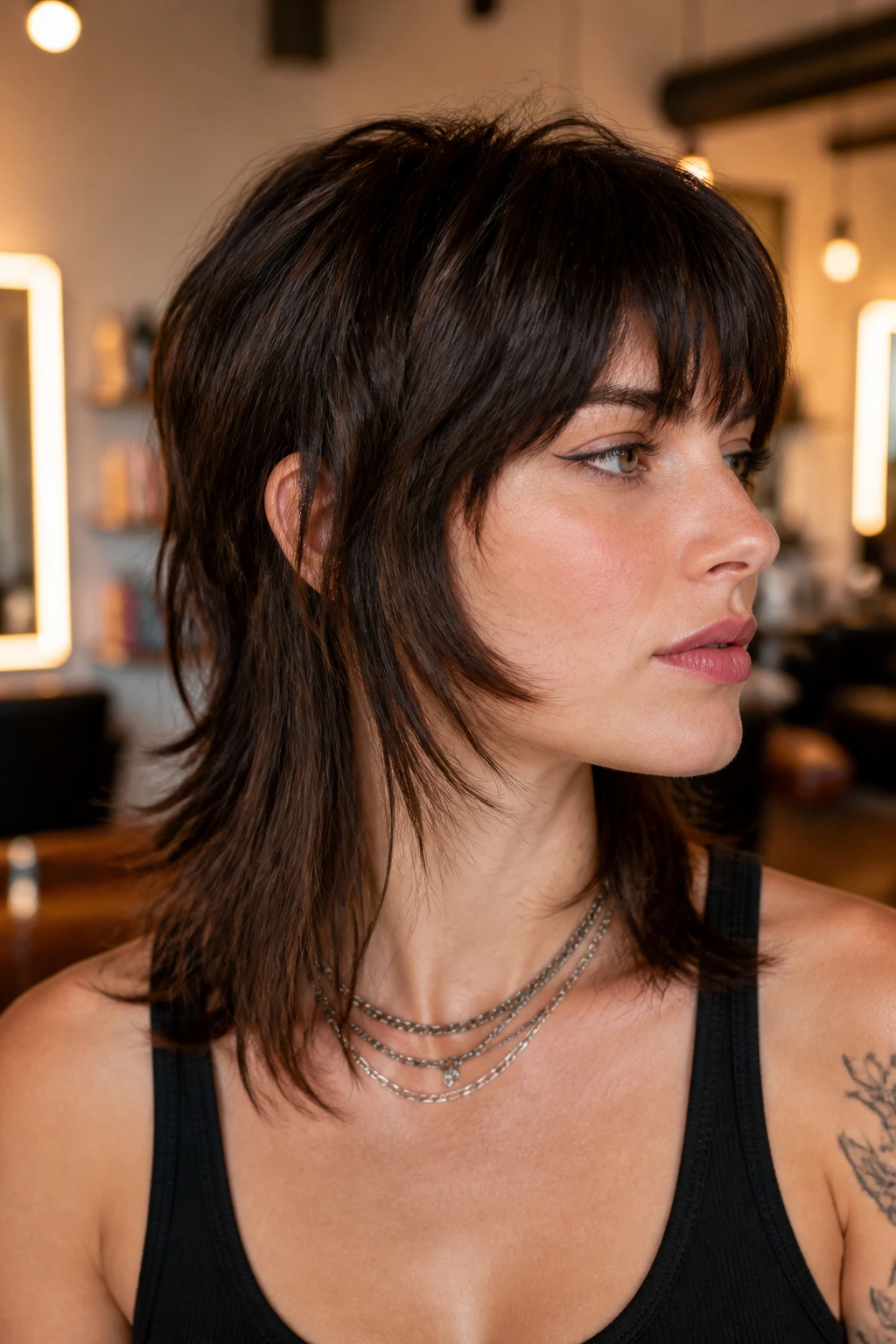
Can a mullet look polished? Absolutely, if the cut is built right. The sleek center-part version keeps the layers clean and the surface smooth, so the texture shows up in the shape rather than in frizz or roughness. It feels sharper than the shaggy versions.
The center part opens the face and lets the front pieces drop in long, symmetrical lines. That symmetry makes the shorter crown and longer back feel deliberate. A flat iron can help, but a good blow-dry with a brush usually does most of the work. Keep the ends slightly beveled, not poker-straight, or the cut loses its bend.
Best for: Straight or lightly wavy hair, especially if you wear minimal makeup or clean tailoring.
Styling note: Use a smoothing cream only from mid-lengths down.
Why it stands out: The mullet shape remains visible, but the finish is polished enough for people who think they do not like mullets.
7. Piecey Layered Shoulder Length Mullet
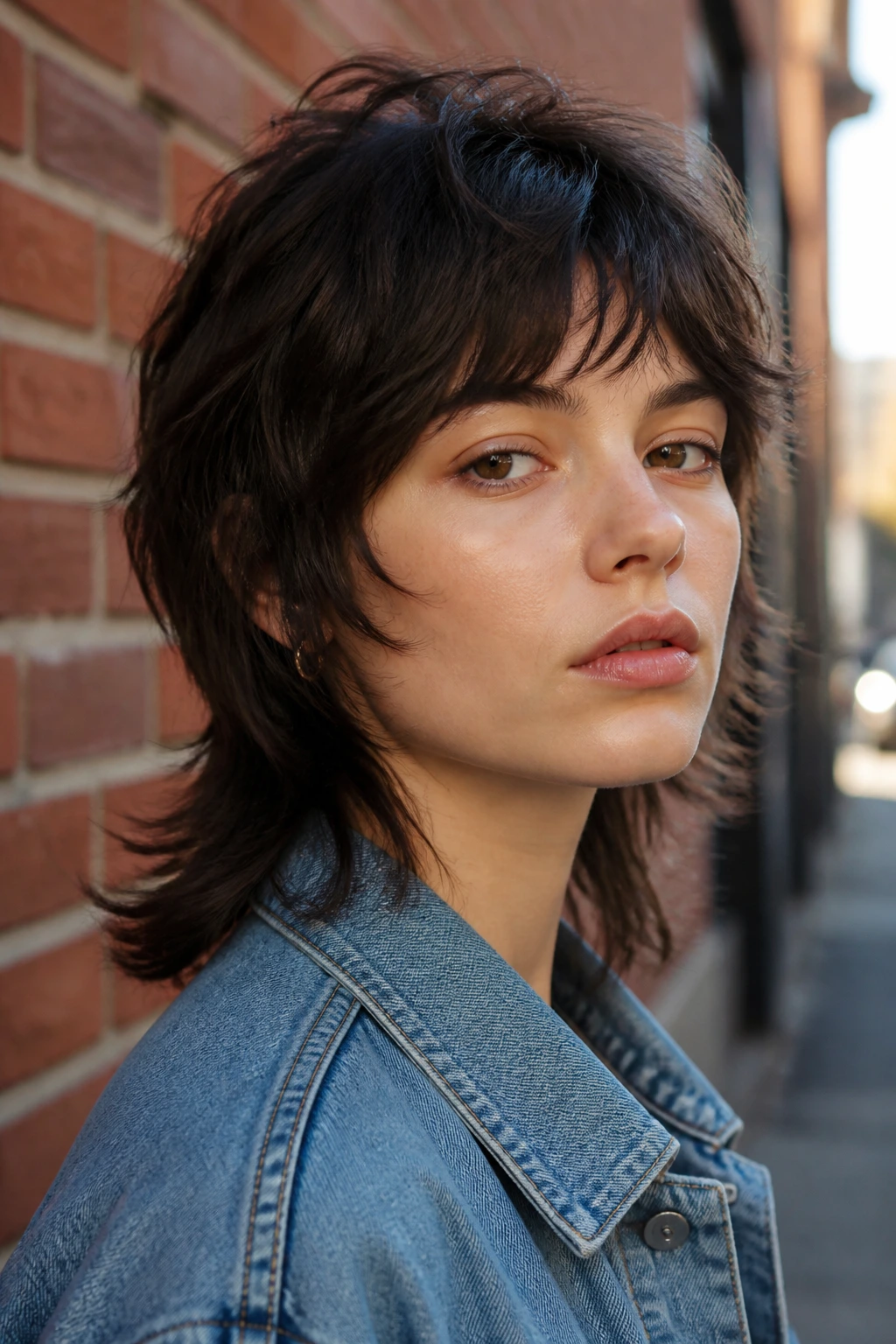
This version is all about separation. The layers are sliced so the hair falls into defined pieces instead of one soft mass. You get visible movement around the cheekbones, a bit of lift at the crown, and ends that do not sit in one heavy curtain.
Piecey cuts tend to look best with a styling paste or dry texture spray worked through the mid-lengths. Not much. A little goes a long way. The trick is to pinch the ends and let them break into sections rather than combing them smooth. That broken-up finish gives the haircut its modern edge.
Best for: Medium-density hair that can hold a shape without collapsing.
Styling note: Twist random sections around your fingers while the hair is still warm from the dryer.
Tip: If you love separation but hate crunch, use a matte cream instead of a stiff spray.
8. Feathered 70s Shoulder Length Mullet
Feathering softens everything. This cut borrows from retro blowouts, with layered ends that flick away from the neck and face instead of hanging straight down. Shoulder length makes the feathering feel fresh rather than costume-like.
The magic is in the direction. Blow the front pieces off the face, then flip the lower layers slightly out with a brush. You end up with movement at the jaw, a light crown, and a back that still has enough length to read as a mullet. It’s smoother than a wolf cut and less confrontational than a razor slice.
Best for: Medium to thick hair with a natural bend.
How it wears: Beautifully with a side part and big earrings, though it does not need them.
Watch out for: Over-rounded ends. Feathering should feel airy, not curled into little helmets.
9. Choppy Collarbone Mullet
This cut sits in the zone where a lob and a mullet shake hands. The longest pieces brush the collarbone, while shorter layers through the crown and front keep the silhouette from turning into a regular layered bob. It feels a touch sharper than most shoulder length styles.
The collarbone length gives the back a nice swing. When you turn your head, the ends move instead of clinging to the neck. That makes this one especially good for people who want a haircut that looks alive even when it’s worn plain.
Best for: Straight and wavy hair that needs texture but not a lot of product.
Style note: A quick bend with a flat iron at the front pieces is often enough.
Why it works: The choppiness gives the silhouette shape, but the collarbone length keeps the whole thing wearable.
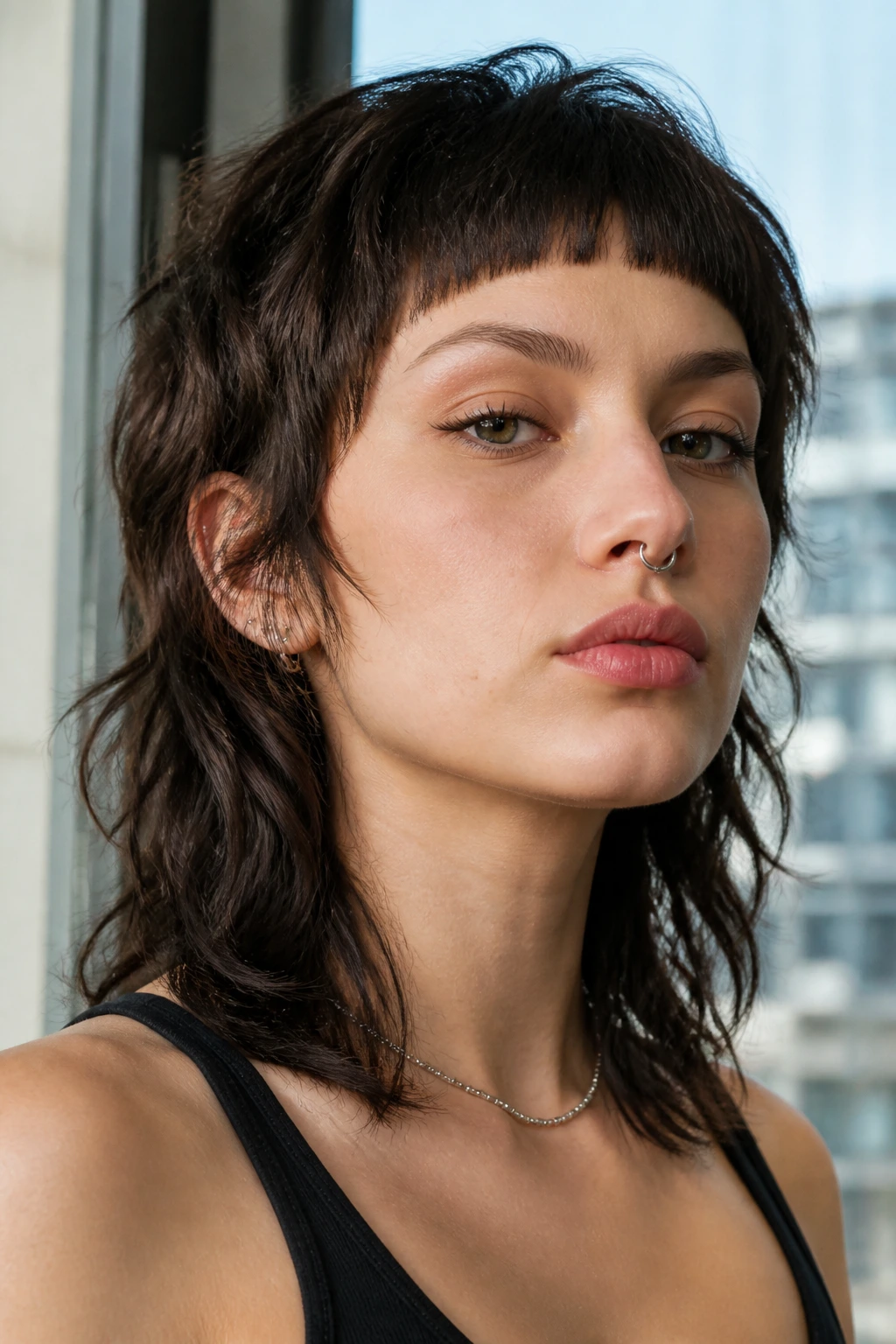
10. Micro-Bang Shoulder Length Mullet
Micro bangs change the entire personality of a mullet. The tiny fringe creates a sharp top line, so the rest of the haircut can relax into texture below it. At shoulder length, the contrast feels fashion-forward instead of severe.
This is not a shy cut. It needs some confidence, and it works best when the crown is tidy enough to support the tiny fringe. Keep the back layered and the sides slightly softer, or the bang starts to feel like the only idea in the room. The good version has a clean forehead line and a textured body below it.
Best for: Straight to slightly wavy hair and people who like a strong front view.
How to style it: A flat brush and a quick blast at the roots keep the fringe sitting flat.
Small caution: Micro bangs grow fast. If you hate trim appointments, this is not the most forgiving choice.
11. Beachy Wave Shoulder Length Mullet
Beachy waves and a mullet shape make a lot of sense together. The shoulder length back has enough room to bend softly, and the shorter crown keeps the roots from lying flat. The whole cut looks best when the waves are loose, uneven, and a little undone.
Sea-salt spray can help, but don’t drown the hair in it. A light mist, scrunched through damp lengths, is usually enough. The point is to give the hair a slightly rough surface so the layers separate on their own. If your hair is already wavy, this cut may feel like cheating in the best possible way.
Best for: Wavy hair, obviously, but also straight hair that holds a bend well.
Styling move: Twist two-inch sections away from the face while the hair dries.
Do not: Brush it out once dry. That turns “beachy” into “puffy.”
12. Rounded Shag Mullet
This is the softer cousin in the family. A rounded shag mullet keeps the silhouette curved instead of angular, which makes the haircut feel friendlier around the jaw and neck. The back still has length, but the outline wraps in a smoother shape.
The rounded profile is useful for hair that gets triangular when it grows out. A good stylist will remove enough bulk through the crown and sides to keep the balance, but not so much that the ends look skinny. If you want movement without a jagged edge, this is a smart lane to choose.
Best for: Medium to thick hair with a little natural wave.
Styling note: Use a medium round brush and aim the front layers toward the cheekbones.
Why it stands out: It reads more like a refined shag with mullet DNA than a loud retro cut.
13. Side-Swept Retro Shoulder Length Mullet
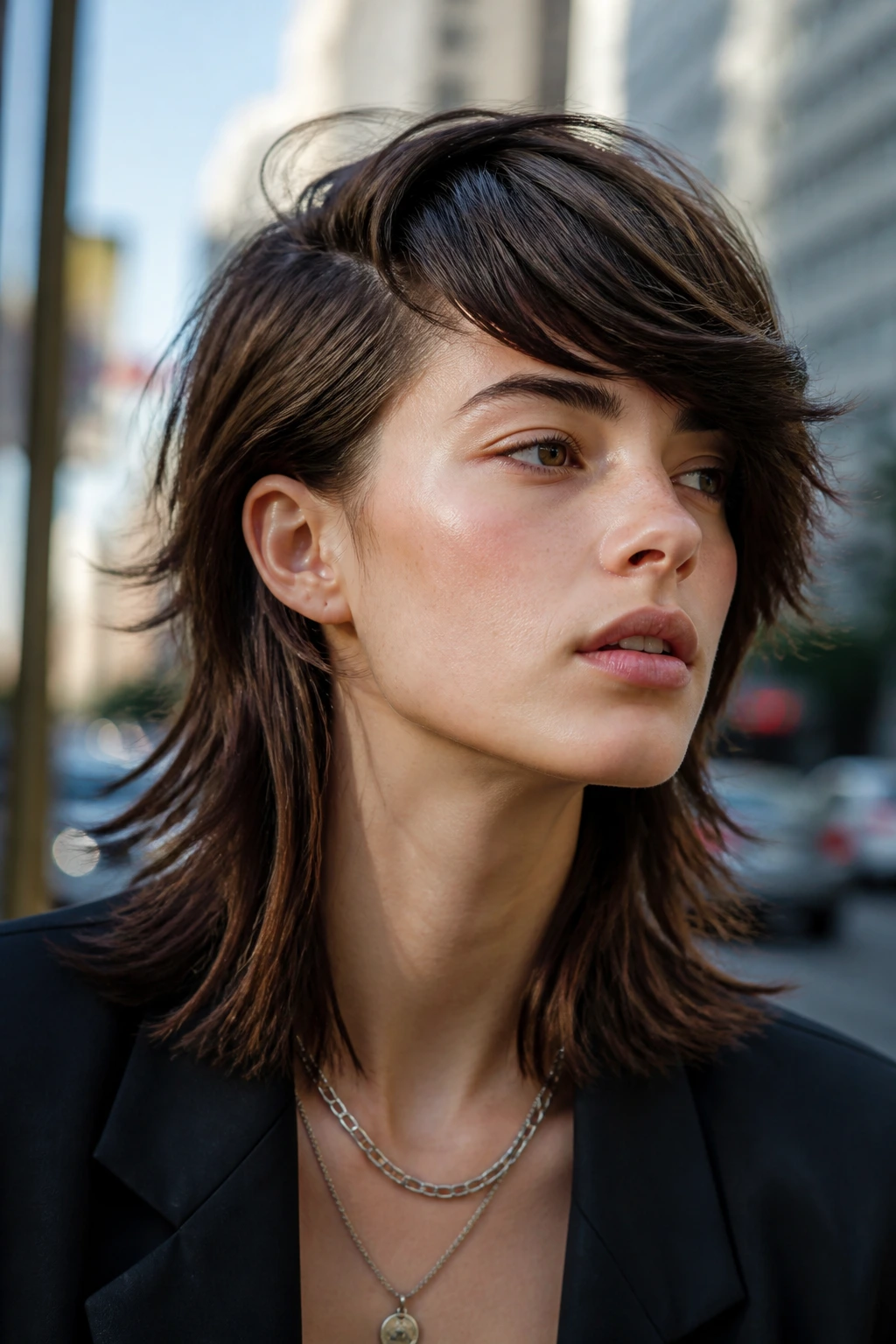
A side part changes the attitude instantly. Instead of splitting the face in the middle, the hair sweeps over one side, which makes the shorter top layers feel more dramatic and the back feel longer. It has a little old-school swagger.
This version suits people who like asymmetry. The side-swept fringe can drop to the cheekbone on one side while the opposite side stays a bit lighter, and that unevenness gives the haircut energy. Keep the ends textured but not shredded. The shape should feel intentional, not accidental.
Best for: Heart and square faces, or anyone who wants one side to carry more visual weight.
Styling note: Set the part while the hair is still damp so the direction stays put.
Little detail that matters: Tuck the heavier side behind the ear once it dries. It shows off the length change fast.
14. Disconnected Crown Shoulder Length Mullet
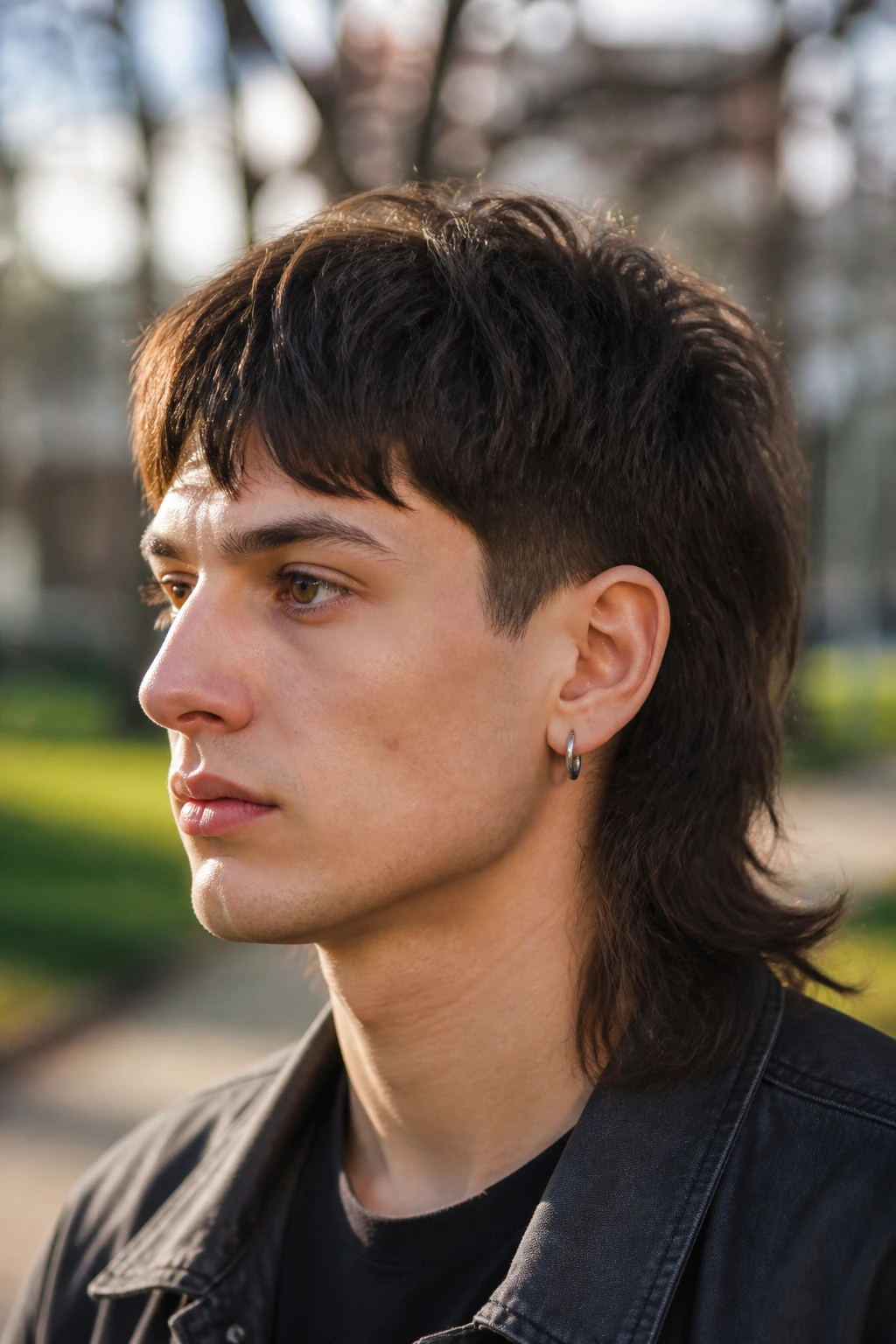
This one leans into contrast. The crown is noticeably shorter and fuller, while the lower sections keep more length, so the top and bottom read as two distinct zones. It’s sharper than the softer shag versions and a lot more visible in profile.
That disconnect is what creates lift. Hair at the crown is encouraged to stand away from the scalp, then the shoulder-length back drops underneath it. If your hair collapses at the roots, this shape can give you the height you’ve been missing. If it’s too aggressively cut, though, the head can start to look top-heavy.
Best for: Thick hair and people who like a stronger silhouette.
Styling note: Blow-dry the crown first with clips at the roots for extra bend.
Watch for: Too much contrast through the sides; the cut should still connect, just not too smoothly.
15. Face-Framing Ribbon Mullet
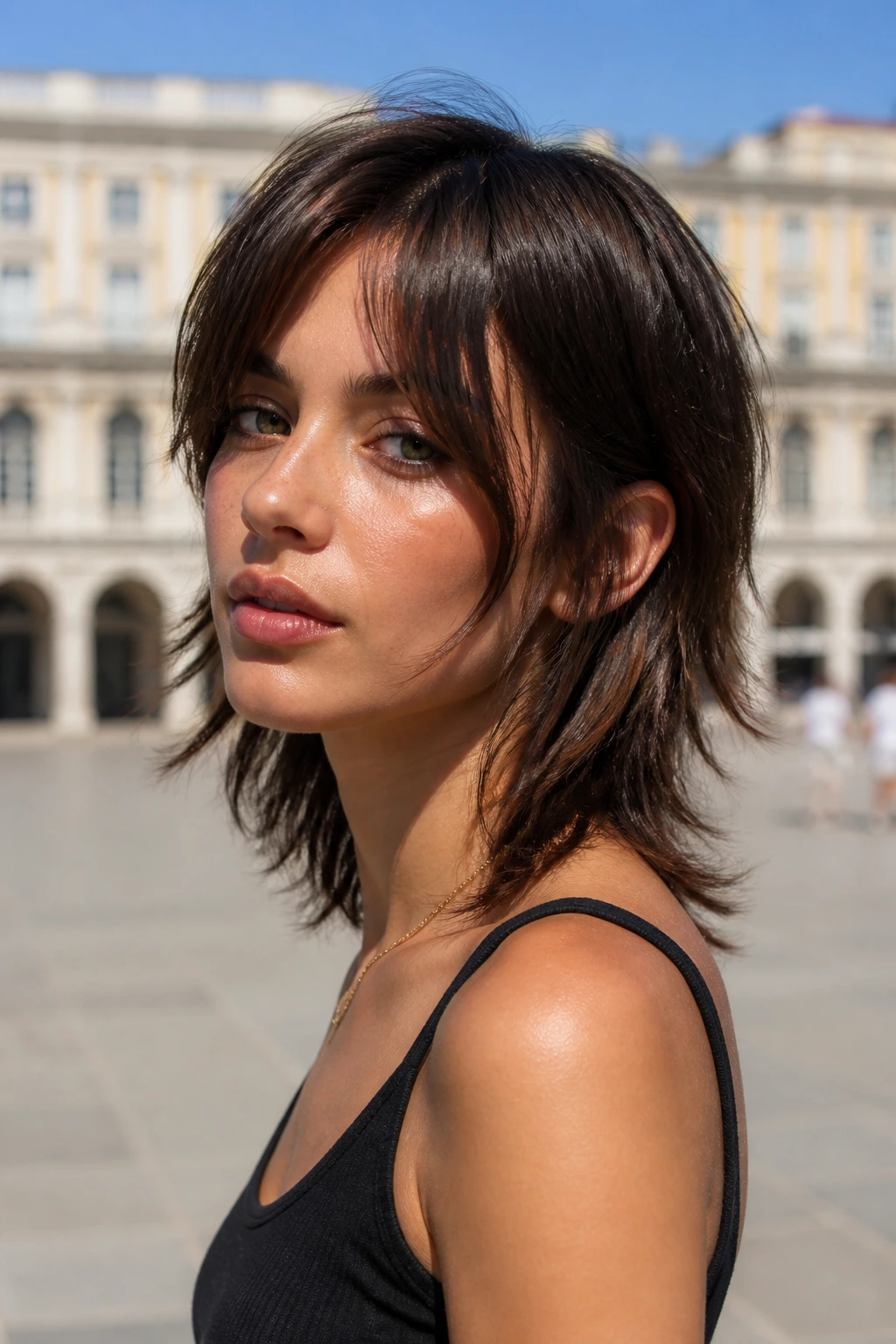
This is the softest face-framing version on the list. Long, ribbon-like pieces fall from the cheekbones down into the shoulder-length body, giving the haircut a lighter front view. The back can stay a little rougher, which keeps the mullet shape alive.
Those ribbons matter because they break up the perimeter near the face. Instead of a blocky line, you get strands that move when you turn your head. That’s a small thing until you actually wear the cut; then it becomes the bit everyone notices first.
Best for: Rounder faces, broad cheeks, or anyone who wants the front to feel gentler.
How to wear it: Add a soft bend to the front pieces and leave the rest loose.
Good habit: Ask for the front pieces to be checked after the rest of the cut is done. It helps keep the frame clean.
16. Soft Nape Shoulder Length Mullet
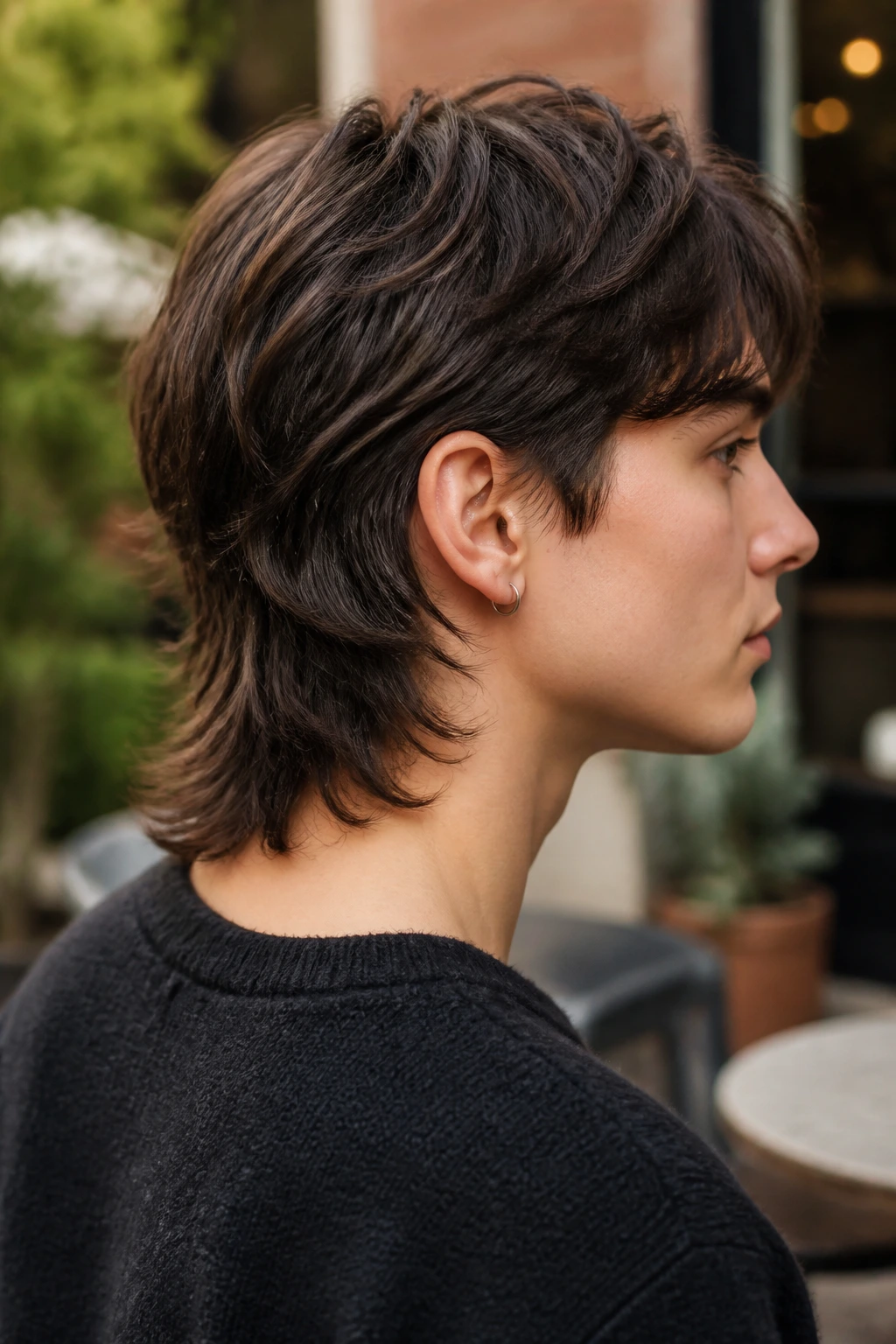
A clean nape changes everything. This version keeps the back of the neck tidy while the shoulder-length sections carry the texture. It’s a quieter mullet, but not a weak one. The contrast shows up in the neckline instead of in a loud tail.
That makes it easier to wear with collared shirts, jackets, and anything that sits close to the neck. The haircut feels neater from behind, which matters more than people admit. The nape can get bulky fast if it is not trimmed well, so the shape depends on discipline there.
Best for: People who want structure without a messy back.
Styling note: Keep the nape smooth with a small paddle brush or comb after blow-drying.
Why it matters: A clean nape keeps the cut from drifting into “grown-out shag” territory.
17. Glossy Straight Shoulder Length Mullet
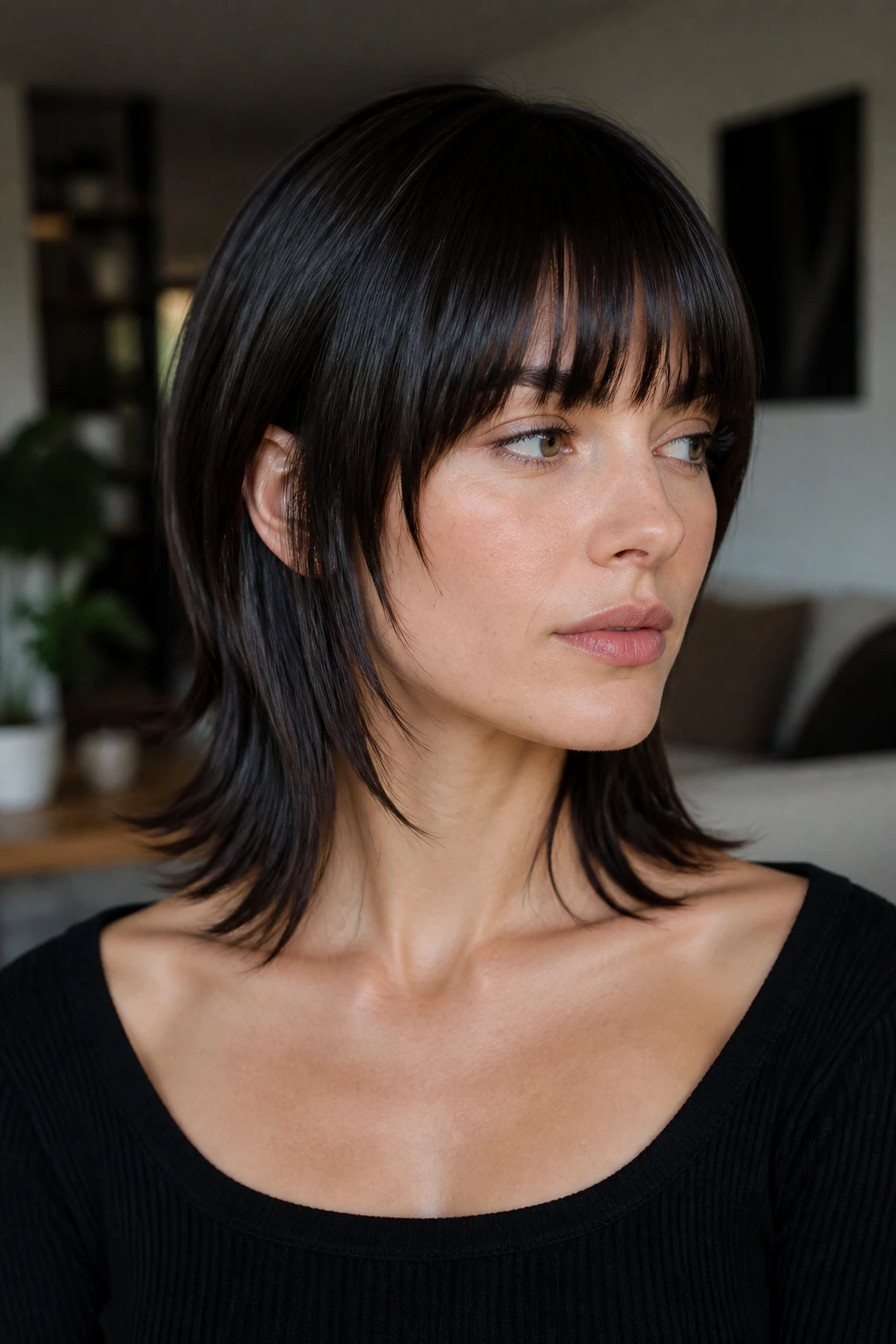
Straight hair does not have to look flat in a mullet. In this version, shine is part of the appeal. The layers are precise enough to show movement, but the surface stays sleek so the haircut looks sharp from every angle.
A smoothing serum or lightweight oil on the ends can help, but use less than you think. The shape should stay separated enough to show the layers. If the hair is too coated, the back will cling and the whole cut will lose its edge.
Best for: Straight hair that reflects light well and holds a smooth finish.
Styling move: Use a flat brush at the crown, then bend the very ends inward just a little.
Real-world note: This version is the easiest to dress up without much effort. It looks neat with very little fuss.
18. Chunky 90s Shoulder Length Mullet
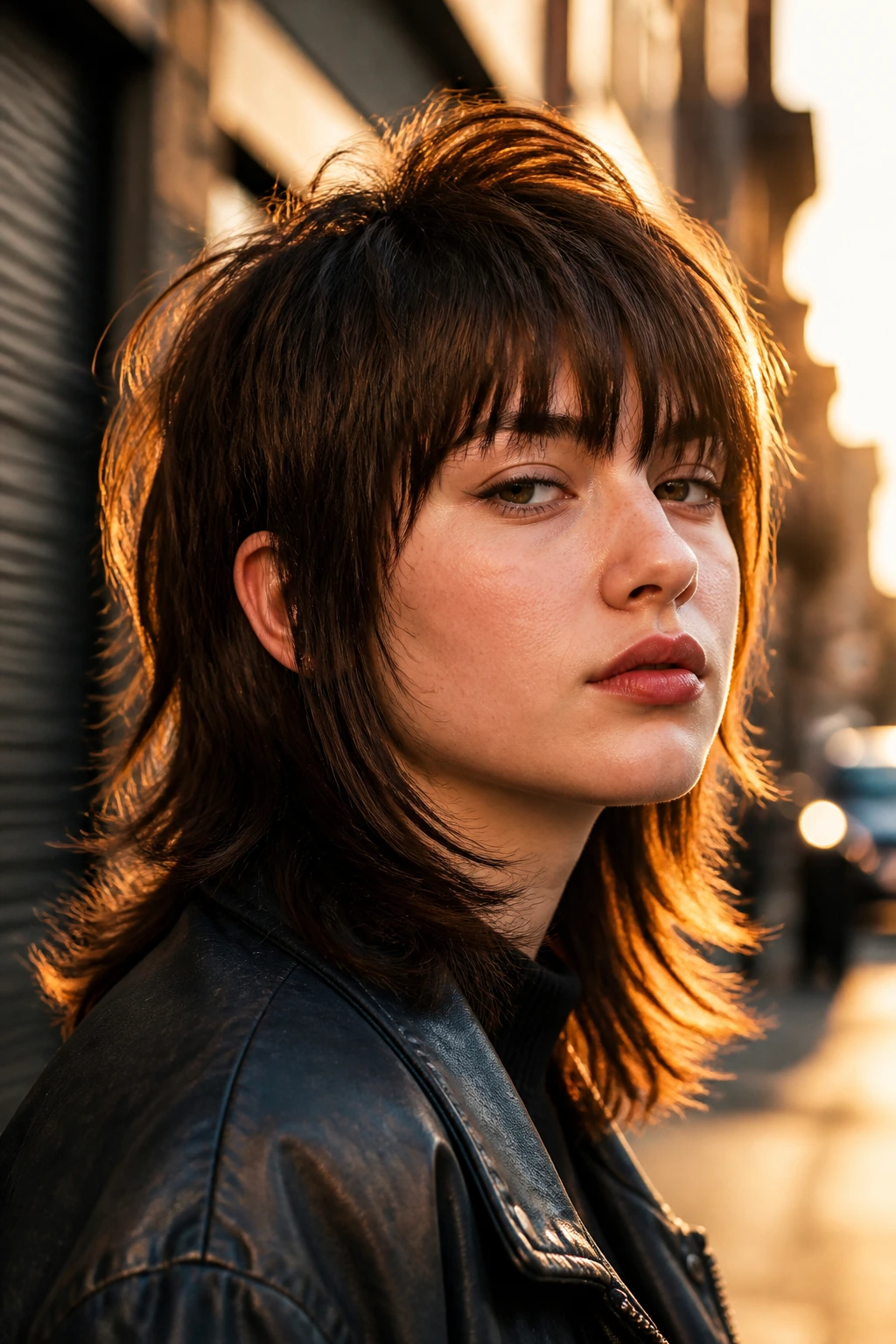
This cut brings back bold sections and visible layer blocks. The crown feels lifted, the fringe often sits heavier, and the ends are separated into obvious chunks instead of soft pieces. It has attitude from the first glance.
Shoulder length keeps it from going full costume. The cut nods to the 90s without locking itself into that decade’s shape. It works well with strong styling paste, especially when you want the sections to stay put and show their lines. If you like hair that looks slightly sculpted, this one delivers.
Best for: Thick hair or medium hair with a lot of natural body.
Styling note: Use your fingers, not a brush, to shape the front pieces after drying.
Small caution: Don’t overdo the product. Chunky does not mean greasy.
19. Low-Maintenance Air-Dry Mullet
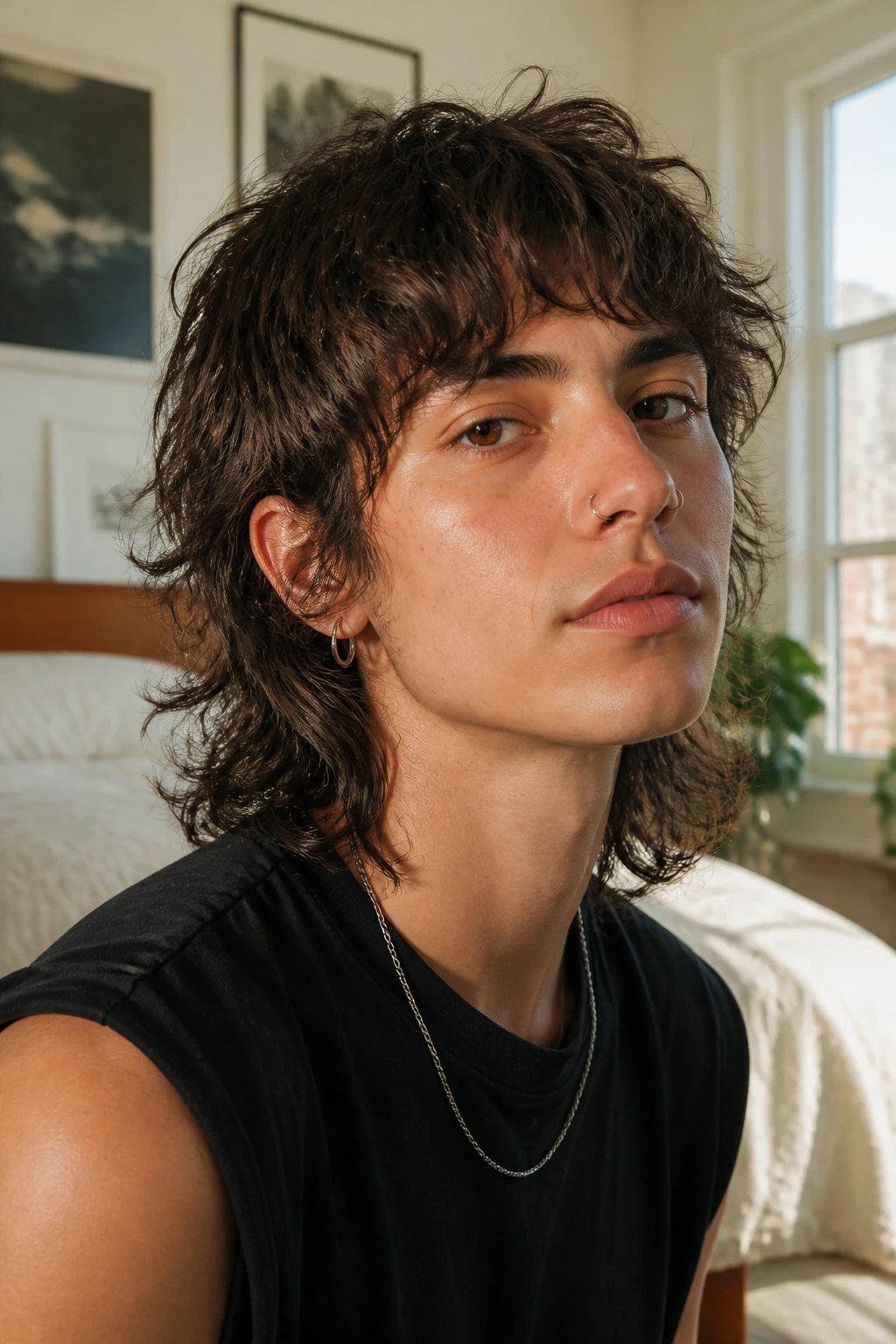
Some cuts are built to be fussed over. This is not one of them. The low-maintenance air-dry version leans on shape and texture that show up with almost no heat, which makes it a useful choice for wavy hair or anyone who hates a long styling routine.
The crown should be light enough to lift on its own, while the shoulder-length back should hold a bend as it dries. A little mousse at the roots and a leave-in cream through the ends is usually enough. The haircut does the work once it has the right layers.
Best for: Busy routines, humid climates, and natural waves.
Styling note: Scrunch in product, part it where you actually wear it, and leave it alone while it dries.
Why it’s smart: It looks better the second day, after the movement settles.
20. Razor Wolf Shoulder Length Mullet
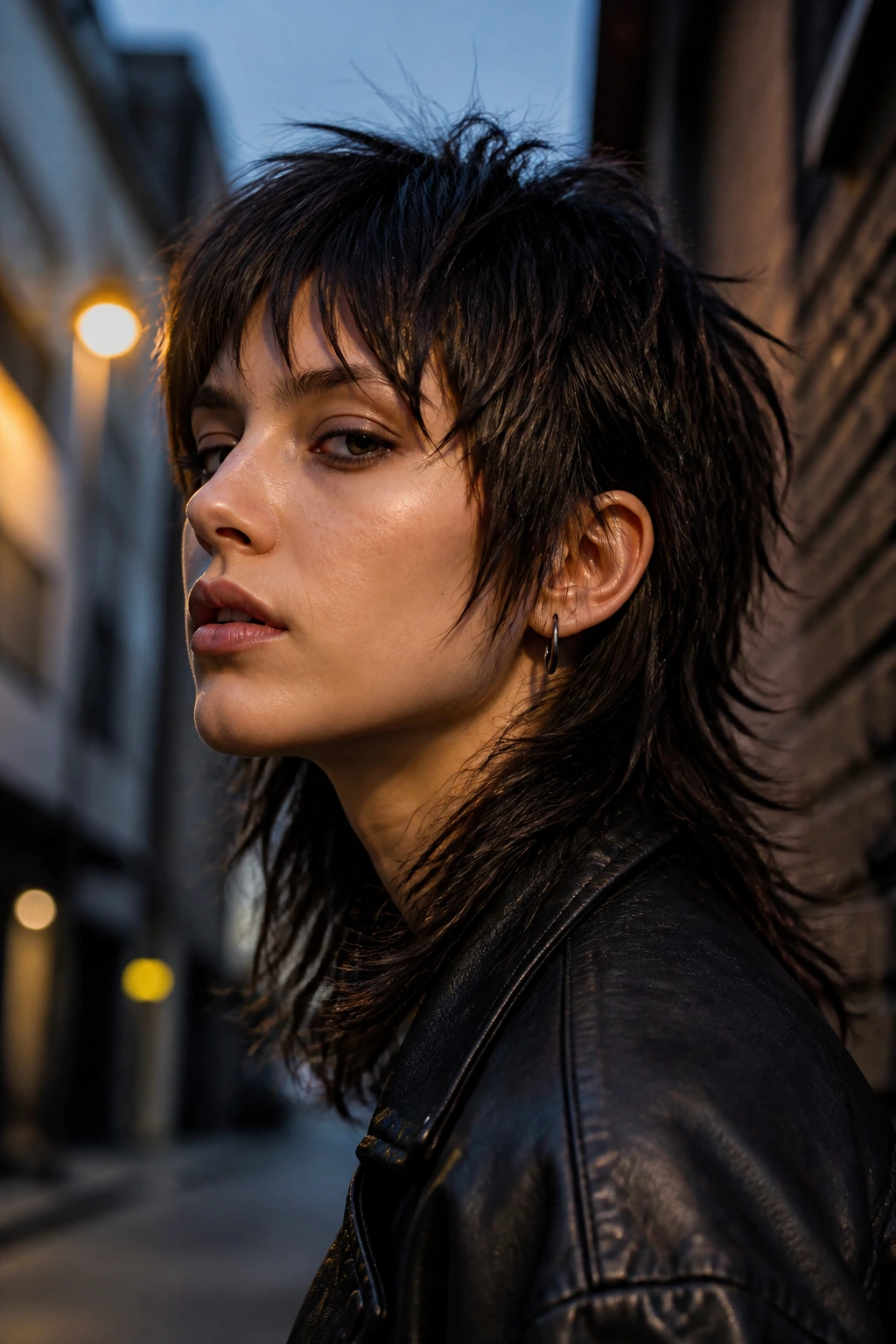
This one is sharper than the standard wolf cut. The layers are more pointed, the ends are more jagged, and the whole cut has a slightly shredded outline. Shoulder length keeps that sharpness readable without making it look overdone.
The difference between this and item 2 is the finish. The wolf cut leans fluffy and wild; the razor wolf version leans sliced and broken up. It’s the cut for people who want edge first and softness second. Thick or coarse hair tends to show it best, because the texture can hold those sliced layers.
Best for: Dense hair, especially if you like a rough finish.
How to style it: Diffuse or rough-dry, then pinch the ends with a little matte paste.
Watch out: Too much razor work near the front can make the fringe look frayed rather than sharp.
21. Long Curtain Bang Shoulder Length Mullet

Here, the bangs are the main character. They start near the part and sweep down past the cheekbones, blending into the rest of the layers with a soft arc. The shoulder-length body keeps the overall cut from feeling too heavy.
This version is especially good if you want face framing without a blunt bang line. It opens easily into a center part, but the long curtain pieces still do enough to soften the forehead and cheek area. A round brush and a quick bend away from the face are usually enough to set the mood.
Best for: Almost everyone, which is rare for a mullet-style cut.
Styling note: Hit only the bangs with heat on day two; the rest can stay a little undone.
Good detail: Ask for the curtain pieces to blend into the crown layers, not stop dead at the temples.
22. Blowout Shoulder Length Mullet

This cut looks expensive when it’s styled right, though that word gets thrown around too casually. What matters here is the shape: volume at the crown, smooth movement through the mids, and a rounded end that flips slightly under or out. The shoulder length back gives the blowout somewhere to land.
A medium round brush, a dryer nozzle, and a little patience go a long way. The front pieces should curve away from the face, not sit flat against it. The result is a mullet that feels polished, which is useful if you want the cut to live outside of casual weekends.
Best for: Straight or wavy hair that can hold a brushed shape.
Styling note: Roll the brush only halfway through the ends so the bend stays soft.
Why it works: The cut keeps the mullet structure, but the finish reads smooth and controlled.
23. Tapered Volume Shoulder Length Mullet
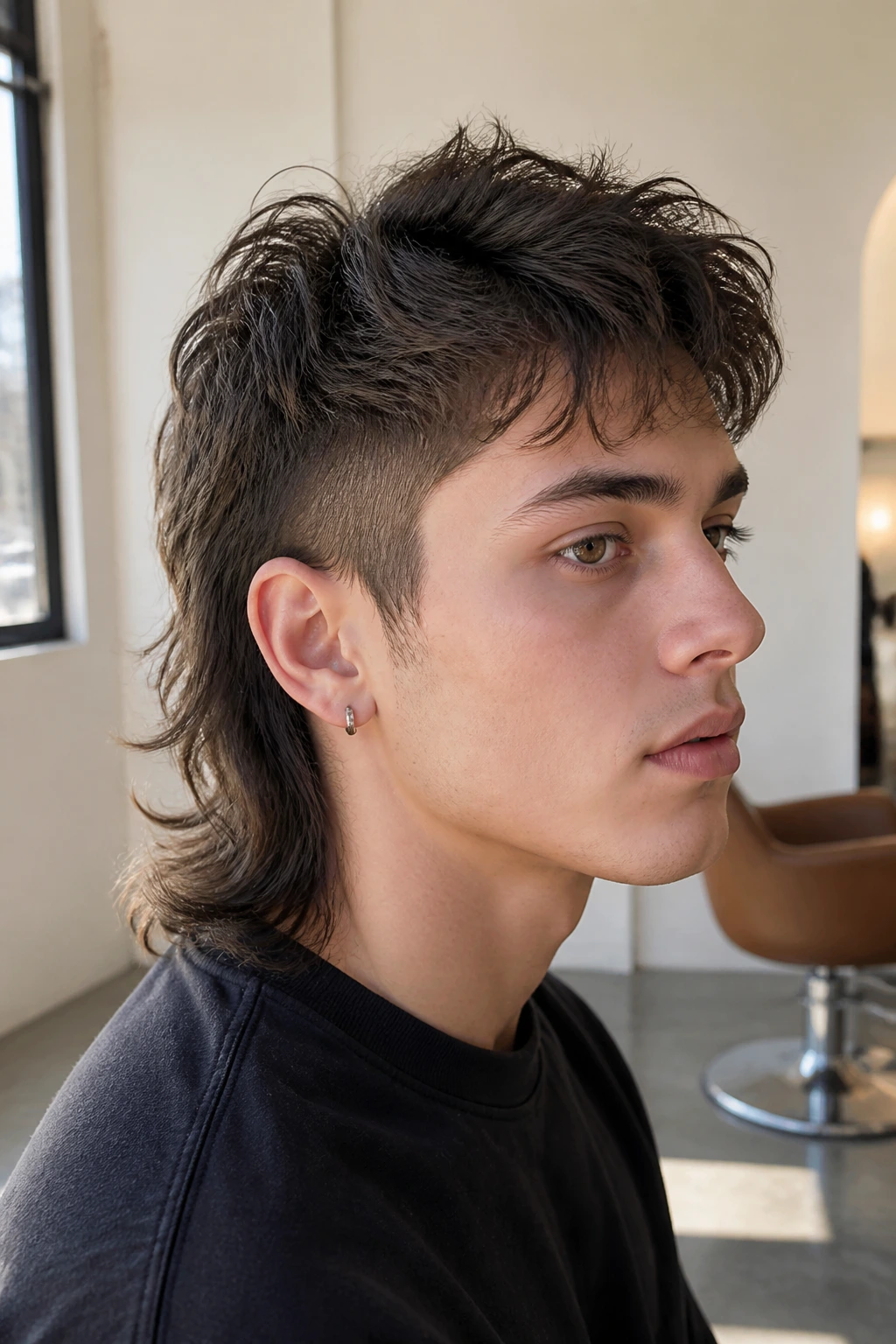
Volume up top, taper down the sides. That’s the formula here. The crown gets a little lift, the layers narrow as they move toward the shoulders, and the silhouette feels balanced instead of bulky. It is one of the easiest ways to make a shoulder length mullet look intentional from every angle.
This version is good if your hair grows outward instead of downward. The taper stops the sides from puffing, and the top keeps enough life to stay interesting. You do not need wild styling. You need shape that respects where your hair wants to sit.
Best for: Thick hair, especially if it swells at the sides.
Styling move: Blow-dry the roots up and back, then smooth the lower sections with your hands.
Tip: Keep the perimeter a little softer than you think. Too much taper can expose the head shape in a bad way.
24. Soft Grow-Out Shoulder Length Mullet
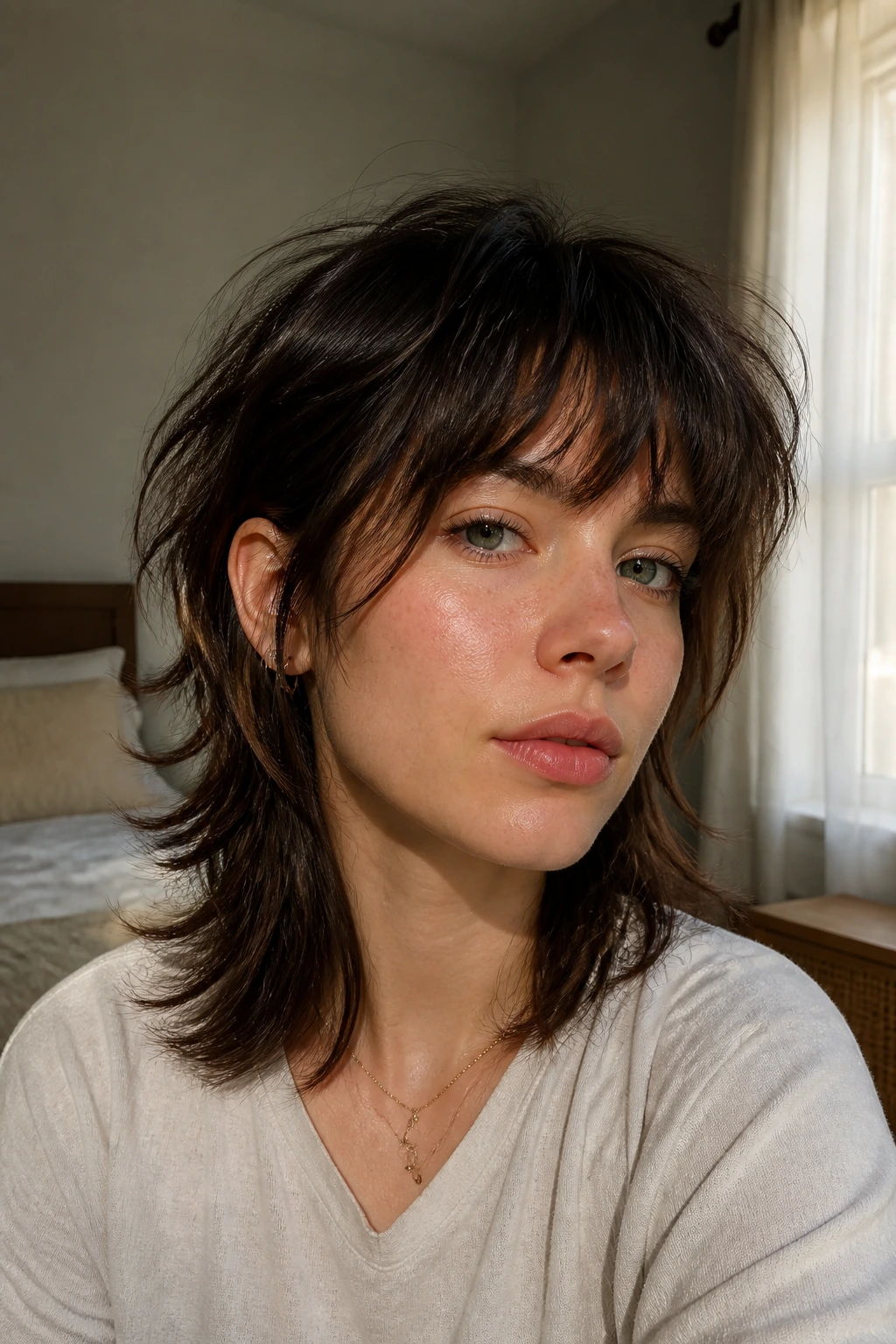
This one is for the transition phase, and that matters more than people admit. A soft grow-out mullet helps a grown-out pixie, bob, or old layered cut look deliberate while you wait for length. It has enough structure to read as a style, but enough softness to avoid looking like you missed your trim.
The key is restraint. Leave the front pieces a little longer, keep the crown layered but not choppy, and let the back graze the shoulders. That way, as hair grows, the shape shifts toward a shag instead of collapsing into a weird in-between stage.
Best for: Anyone moving from short hair toward a longer textured cut.
Styling note: Dry shampoo at the roots can buy you a day or two of lift.
Why it’s useful: It makes the awkward grow-out phase look planned, which is half the battle.
25. Minimal Shoulder Length Mullet
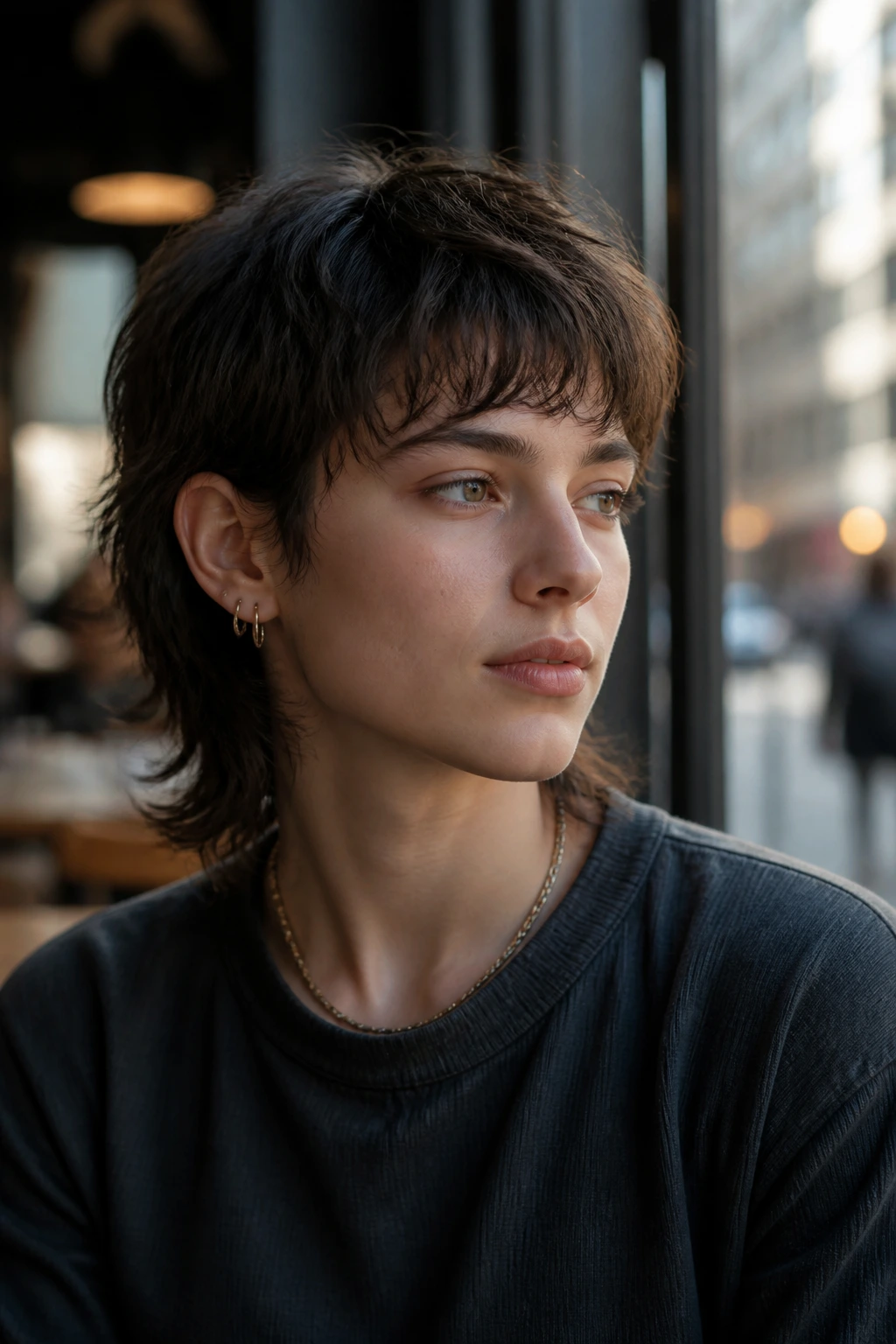
If you like the idea of a mullet but do not want the drama, this is your lane. The layers are subtle, the contrast is low, and the back stays only a little longer than the front. You still get the shape, but the haircut reads clean and modern first.
It’s the version I’d suggest for people who wear a lot of simple clothes and want the haircut to do quiet work in the background. There’s movement when you turn your head. There’s texture when the light hits it. But no one has to wonder whether you meant to do it.
Best for: First-timers, office settings, and straight-to-wavy hair.
Styling note: A light cream and a quick rough-dry are usually enough.
Tiny detail that matters: Ask the stylist to keep the nape neat so the shape stays crisp as it grows.
How to Choose the Right Shoulder Length Mullet for Your Hair Type and Face Shape
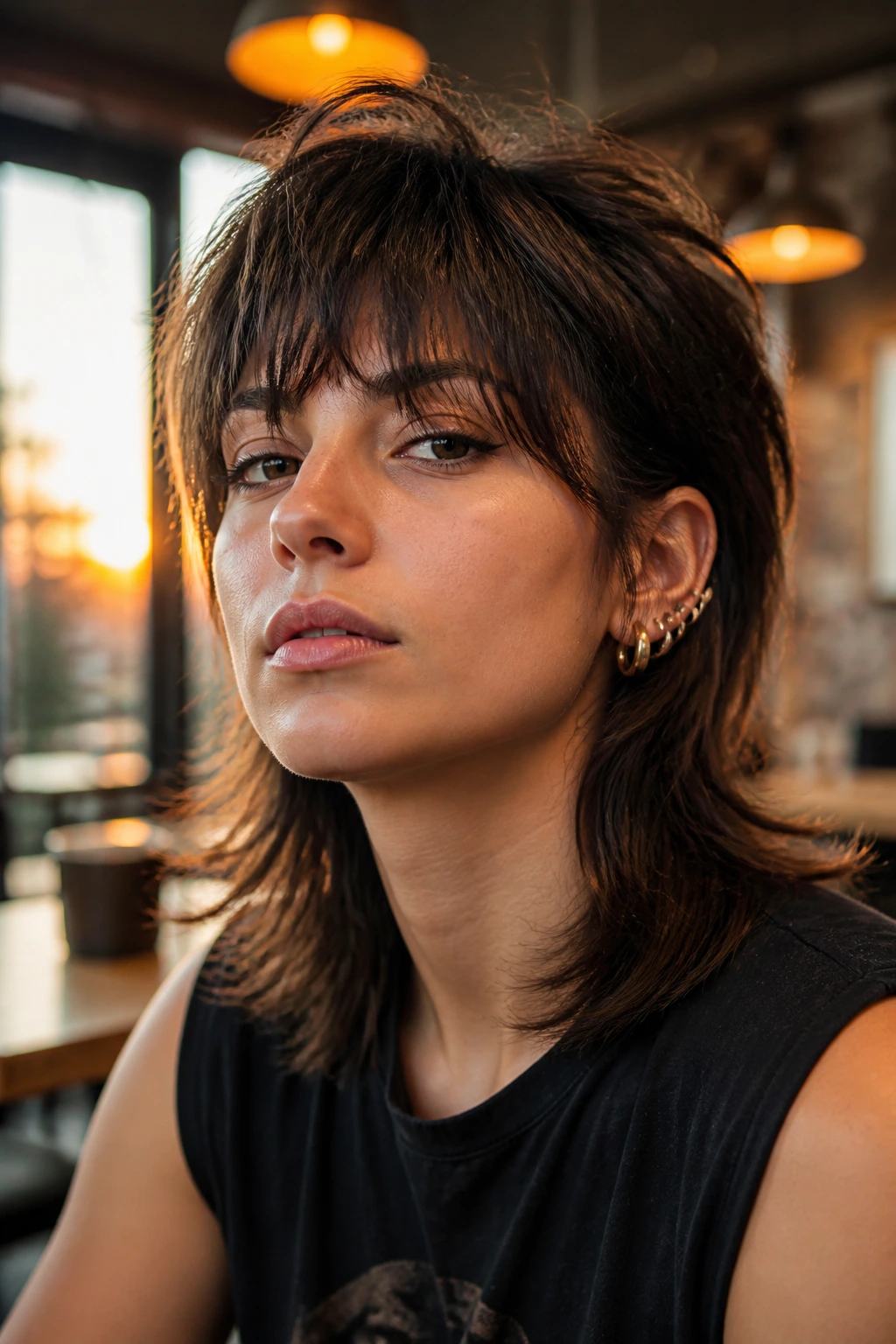
Hair type should steer the cut more than trend photos do. Fine hair usually needs softer layers and less aggressive thinning so the ends do not turn stringy. Thick hair can take more internal removal, especially through the crown and sides, because the weight would otherwise swallow the shape. Curly hair needs room to shrink, which means the front and back should be left longer than they look in the chair.
Face shape matters too, but not in a rigid, if-this-then-that way. Rounder faces often benefit from longer front pieces that fall below the cheekbones, because that vertical line helps stretch the silhouette. Square faces usually soften when the fringe is piecey or curtain-like instead of blunt across the forehead. Heart-shaped faces tend to look balanced when the volume sits lower around the jaw rather than stacked too high at the temples.
The cleanest ask is to think in terms of where the hair should hit. Do you want the longest pieces grazing the collarbone, the shoulders, or the top of the shoulder? Do you want the fringe to open at the center, sit heavy, or fall side-swept? Those answers matter more than saying “I want a mullet” and hoping for the best.
Tools and Products That Keep the Shape Clean
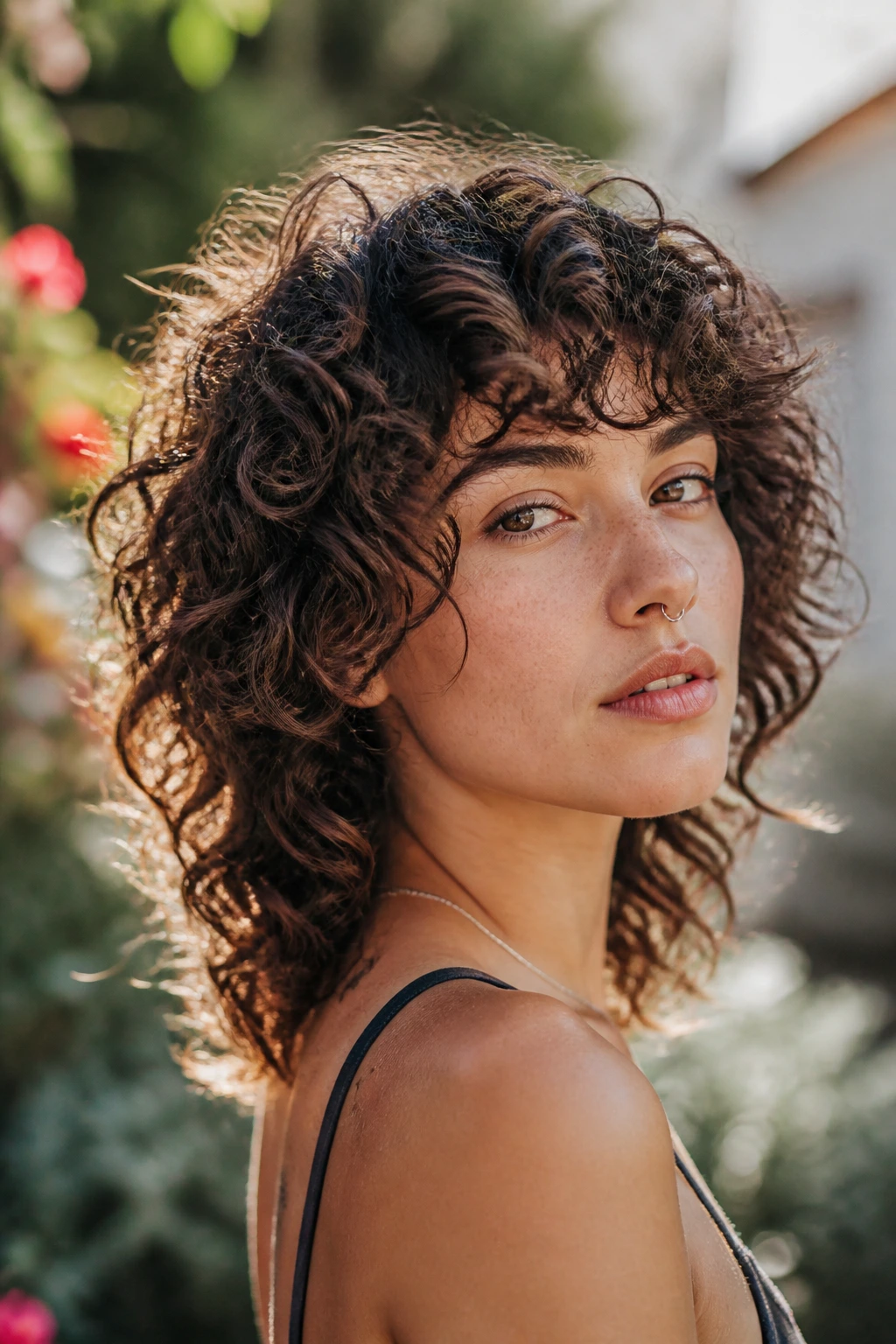
A shoulder length mullet does not need a drawer full of gear, but a few useful things make the cut behave better.
-
Sharp hair-cutting scissors: A clean edge matters here; dull blades make the ends fuzzier than they should be.
-
Texturizing shears: Useful for removing bulk in thick hair, though they should be used lightly and only where the shape needs it.
-
Blow dryer with a nozzle: The nozzle keeps the front pieces directional and helps the crown lift instead of puffing.
-
Medium round brush: Best for bending curtain bangs, smoothing the top, and flipping the ends just enough.
-
Diffuser attachment: A smart pick for waves and curls, since it keeps the pattern intact while building volume.
-
Light mousse or root spray: Good for crown lift without stickiness; start at the roots and keep the amount small.
-
Sea-salt spray or texture mist: Useful for piecey, air-dried looks, especially on wave-prone hair.
-
Matte paste or soft cream: One gives separation, the other gives control. Use whichever suits the finish you want.
-
Wide-tooth comb: Better than a brush for curls and for distributing product without flattening the texture.
How to Ask a Stylist for the Cut
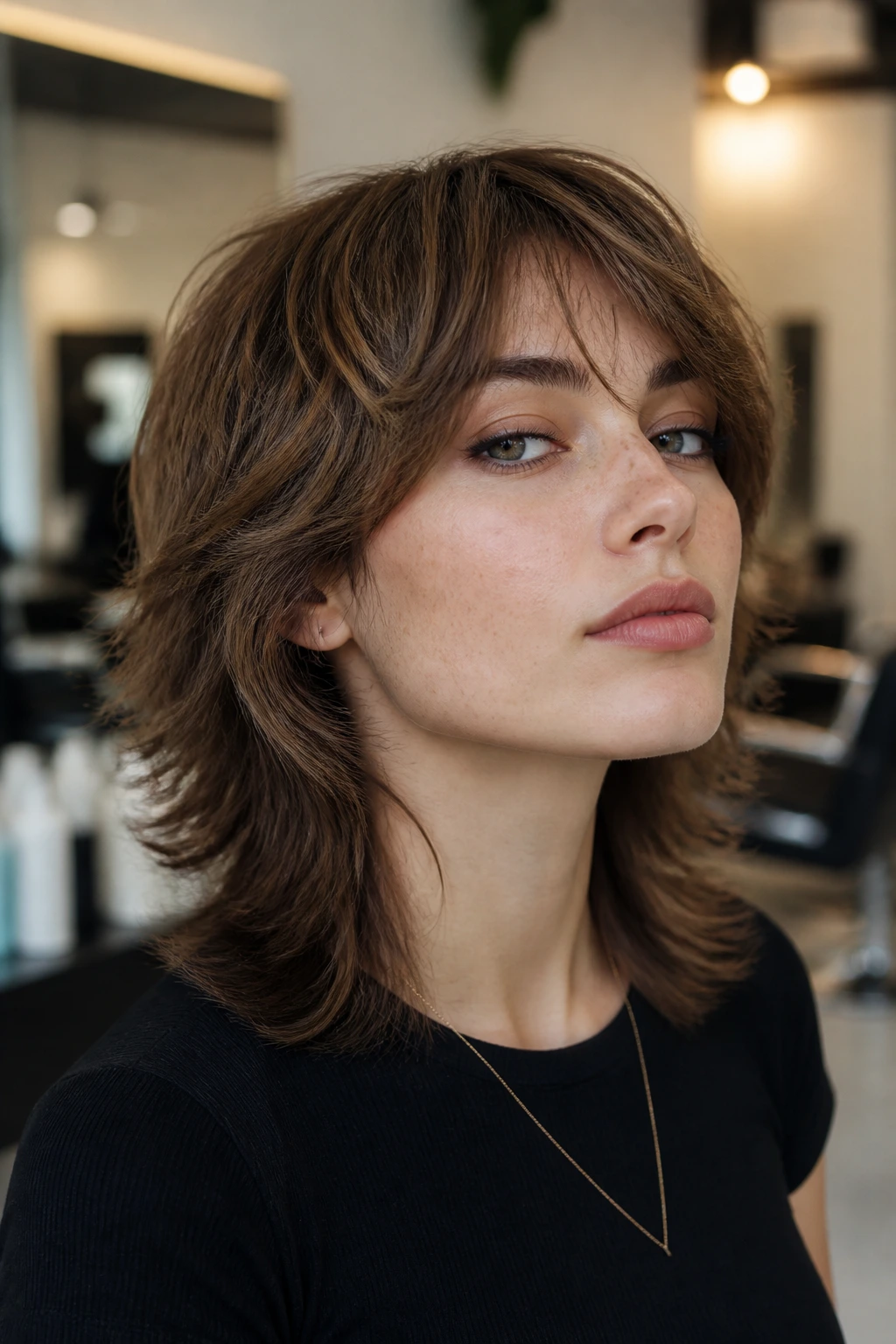
Bring photos, but do not stop there. A lot of haircut disappointment comes from pictures that show one thing in the front and something else in the back. You want to point out the exact length of the longest pieces, the amount of crown lift, and how bold you want the layers to feel.
Try phrases like, “Keep the longest pieces at the shoulder or collarbone, but leave the crown shorter so it has lift.” That tells the stylist where the weight should live. If you want a softer result, say “I want mullet shape, but with a gentler transition through the sides.” If you want edge, say the opposite: “I’m fine with visible separation and sharper layers.”
Mention your routine. That part matters more than people think. If you air-dry most days, the cut needs to look good without a round brush. If you wear your hair smooth, the layers can be a bit more precise. And if you have a cowlick at the crown or a stubborn part line, say so before the scissors come out.
Styling Moves for Air-Drying, Blowouts, and Heat
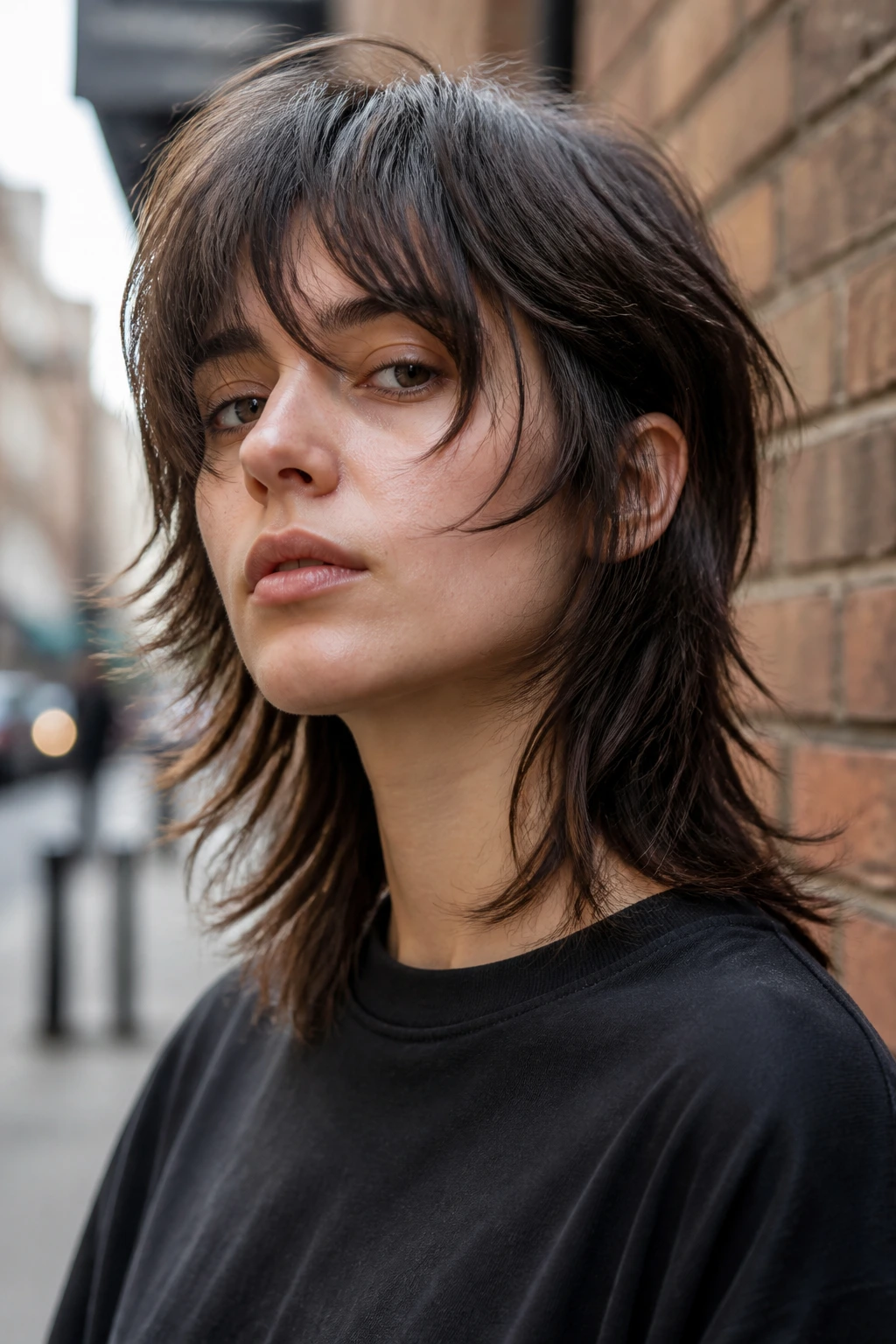
Air-drying and blowouts can give the same haircut two different personalities. For air-drying, start with a light mousse at the roots and a small amount of cream through the mids. Scrunch the lengths, twist the front pieces away from the face, and leave the hair alone until it’s about 90% dry. Touching it too much creates frizz where you wanted movement.
For a blowout, rough-dry first until the hair is mostly damp, not dripping. Then use a round brush at the crown and front pieces, lifting the roots and bending the ends either under or away from the face. You do not need to curl every section. That’s where shoulder length mullets start looking overworked. Just shape the places that define the cut.
Heat styling should be selective. A flat iron bend at the front pieces or a few loose waves through the mid-lengths is usually enough. If you curl the whole head the same way, the layers lose their contrast and the haircut flattens out. The goal is not uniform curls. The goal is shape with some edge left in it.
Common Mistakes That Make the Shape Fall Flat
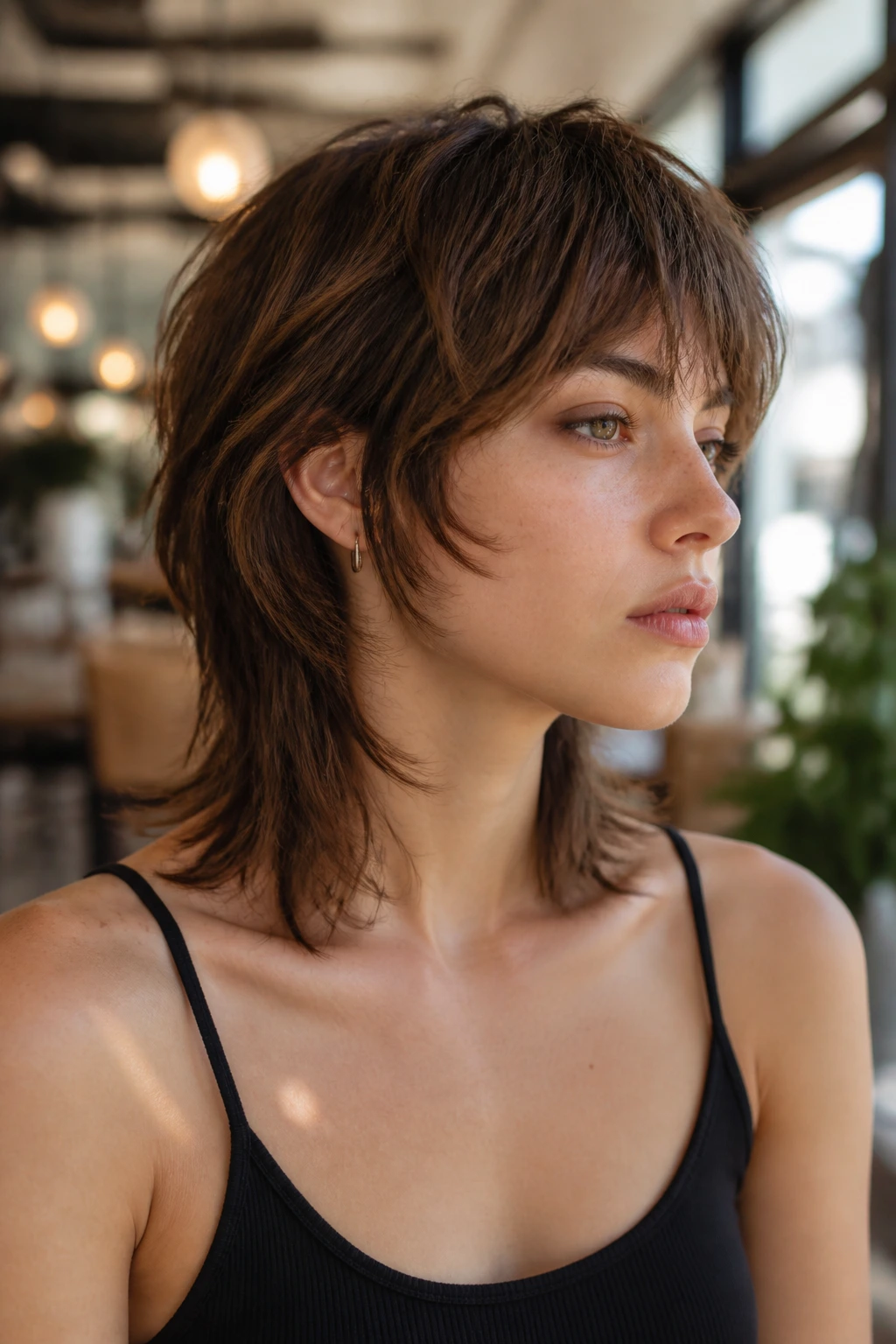
The first mistake is over-thinning the ends. The symptom is easy to spot: the haircut looks airy in the chair and hollow two days later. The fix is to remove bulk inside the shape, not strip the perimeter bare.
Another problem is making the crown too tall. That can turn the silhouette into a helmet or mushroom shape, especially on dense hair. Ask for lift, not height for its own sake. Those are not the same thing.
Heavy product is a sneaky one. Too much cream, oil, or paste can collapse the texture and make the layers clump in the wrong spots. Start small. You can always add more. Taking it out is much harder.
The fringe gets ignored too often. If your bangs are cut too short or too dense for your face, the whole haircut feels off, no matter how good the rest is. The bangs and the back need to belong to the same haircut, not separate ideas.
Variations and Adaptations to Try
The Office-Safe Soft Mullet: Keep the fringe longer, soften the crown, and reduce the contrast between top and back. It still has movement, but it sits comfortably under a blazer.
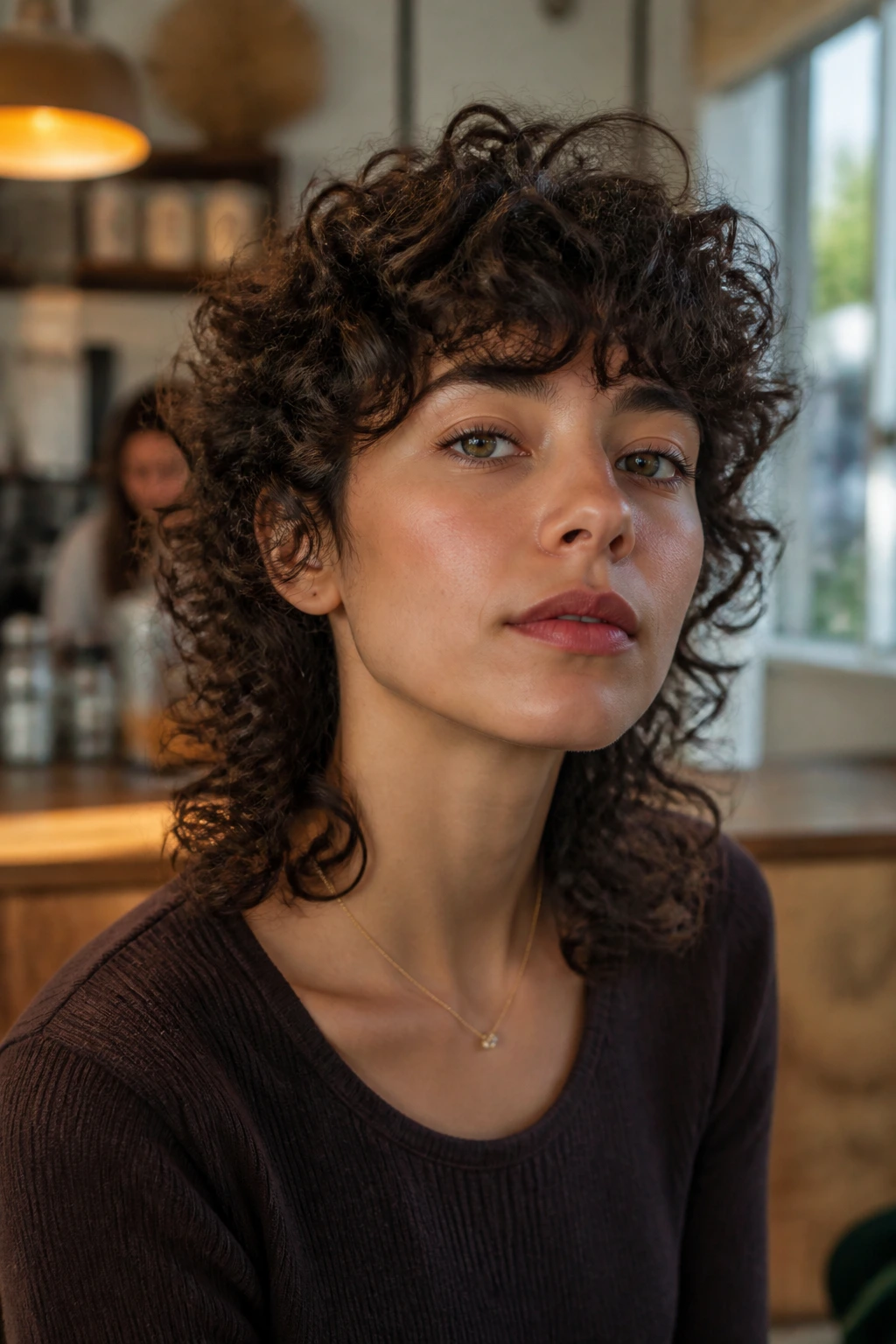
The Curly Halo Version: Let the curls create a rounded cloud through the sides and crown, then keep the back just a touch longer. This is the best route if your curl pattern has a mind of its own.
The Punk-Rough Version: Ask for sharper layers, visible separation, and a more obvious disconnect at the crown. This one looks best with matte paste and a little bit of bad behavior.
The Fine-Hair Lift Version: Use shorter internal layers through the top and keep the ends blunt enough to hold shape. The goal is lift without leaving the perimeter stringy.
The Grown-Out Bob Version: If you’re moving away from a bob, keep the back only slightly longer and let the front pieces stretch toward the cheekbones. It feels like a bridge, not a dramatic leap.
Maintenance, Trims, and Grow-Out Timing
Shoulder length mullet haircuts grow out better than a lot of people expect, but they still need attention. If you want to keep the shape crisp, plan on a trim every 6 to 8 weeks. That keeps the fringe clean, the nape from bulking up, and the layers from losing their edges. If you prefer a softer grow-out, you can stretch that to about 10 to 12 weeks, though the haircut will become more shag-like as it lengthens.
At home, the easiest upkeep trick is to protect the shape overnight. A silk pillowcase helps with friction, especially if your cut relies on piecey ends or a smooth fringe. If you wear your hair curly or wavy, a loose pineapple or a soft clip at the crown can keep the top from getting crushed.
Product buildup can flatten the haircut fast. If you use mousse, spray, or paste most days, a clarifying wash every couple of weeks helps reset the texture. And if the fringe starts misbehaving between trims, a quick wash at the front or a dry shampoo blast at the roots often brings the shape back to life faster than a full restyle.
Frequently Asked Questions
Does a shoulder length mullet work on fine hair?
Yes, if the layers are handled carefully. Fine hair usually needs internal shaping and a lighter perimeter, not aggressive thinning, or the ends start to look sparse. A little root spray and a quick blow-dry at the crown can help the cut hold its shape.
Can curly hair pull off this haircut?
Absolutely. Curly versions often look better than straight versions because the curl pattern gives the shape natural lift. The key is to cut with shrinkage in mind and leave the front pieces longer than they first appear.
How often should I get it trimmed?
Most people need a tidy-up every 6 to 8 weeks if they want the fringe and nape to stay sharp. If you like a softer, grown-in look, you can wait longer, but the haircut will move closer to shag territory.
What if I want the cut to feel softer and less edgy?
Ask for less contrast between the crown and the back, and keep the fringe more curtain-like than blunt. Softening the side layers usually changes the mood fast without losing the mullet shape.
Will this haircut look professional enough for work?
It can, especially if you choose a minimal, soft, or sleek version. A smoother finish, neat nape, and controlled fringe make a big difference. The more piecey and disconnected the layers are, the more casual the cut feels.
Do I need bangs with a shoulder length mullet?
No, but some kind of front shape usually helps. You can wear curtain pieces, side-swept fringe, a heavy bang, or no fringe at all if the front is layered enough to frame the face.
How do I stop it from puffing out at the sides?
Ask your stylist to manage the bulk through the sides and crown, not just chop the length. At home, use a nozzle when drying and avoid piling on heavy texture spray near the ears, where puffing tends to show first.
What should I show my stylist if I want a version like this?
Bring 2 or 3 photos that show both the front and side view if possible. Then point to the exact details you want: fringe length, shoulder length, crown lift, and whether you want the shape soft, sharp, or piecey.
A Shoulder-Length Cut That Keeps Its Edge
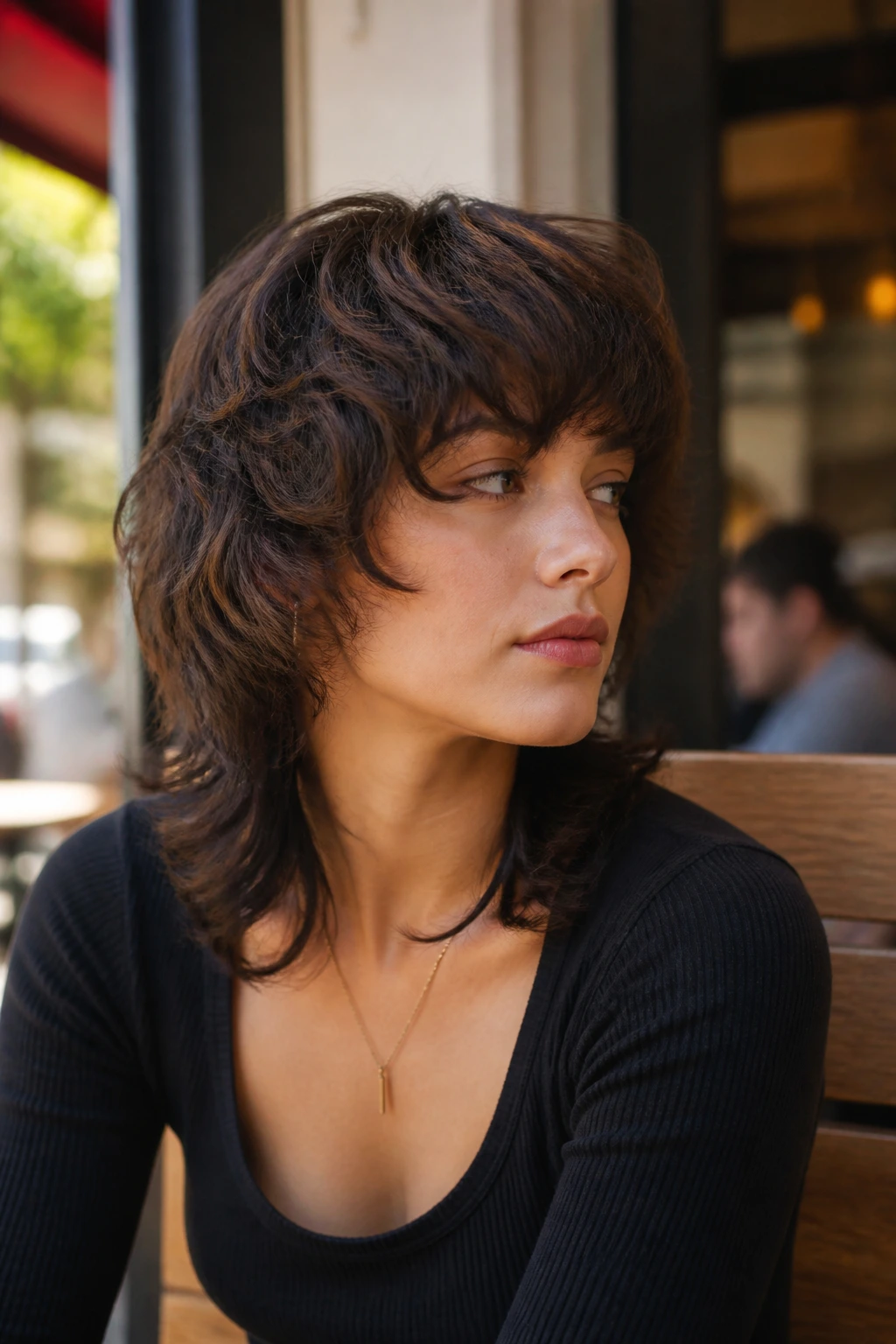
The best shoulder length mullet haircuts do something rare: they keep their edge even when the hair moves, grows, or gets a little messy. That is the real appeal. You are not locked into one finish, one vibe, or one level of effort. The cut can be soft in the morning, sharper by evening, and softer again after a wash.
Pick the version that suits your texture instead of forcing your hair into a photo that only worked because the lighting was kind. When the length, fringe, and crown all line up with your hair’s actual behavior, the haircut stops fighting you. And that is when it starts looking good on purpose.
