



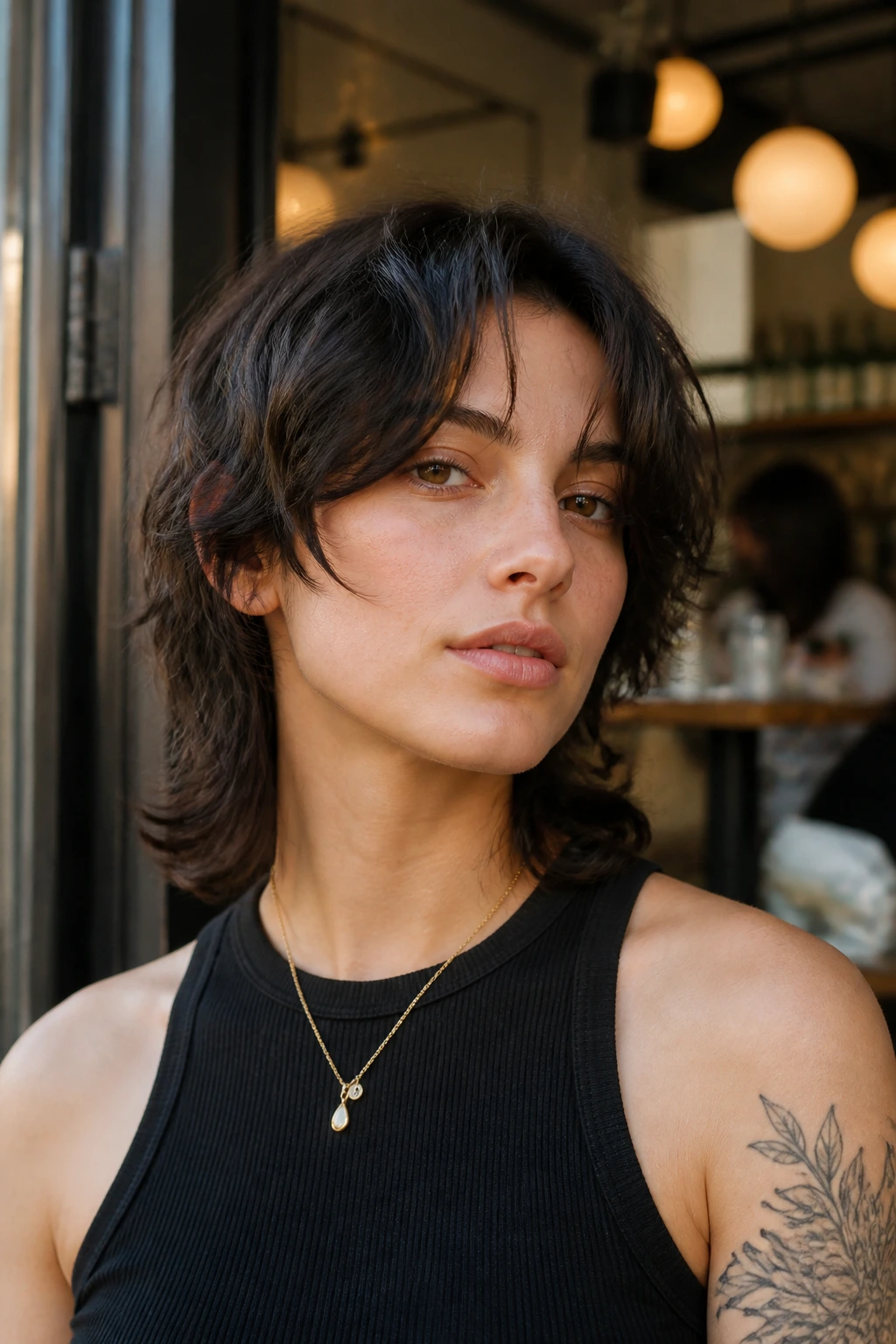
Short wolf mullet cuts have a sneaky advantage: they make short hair look intentional instead of merely shortened. A good one lifts the crown, keeps the sides close enough to show the bone structure, and leaves enough movement in the back that the cut shifts when you turn your head. That balance is the whole thing. Miss it, and you get a confused little shape that sits there and sulks.
On short hair, the silhouette matters more than the length. An extra half inch at the nape can change the mood of the entire cut, and a crown that’s over-thinned by a quarter-inch can fall flat by lunch. That’s why the short wolf mullet is such a useful shape: it works with texture, not against it. You’re not forcing the hair into one clean line. You’re letting the layers do the heavy lifting.
I keep coming back to this cut because it solves a real problem. A blunt bob can feel too neat. A pixie can feel too sealed off. A short wolf mullet sits in the middle with more bite than a bob and more swing than a pixie, and when it’s cut with some restraint, it looks like a decision rather than a dare. The best versions are the ones that still look good after you’ve run your fingers through them three times and missed your blow-dry window entirely.
Why These Short Wolf Mullet Cuts Keep Showing Up
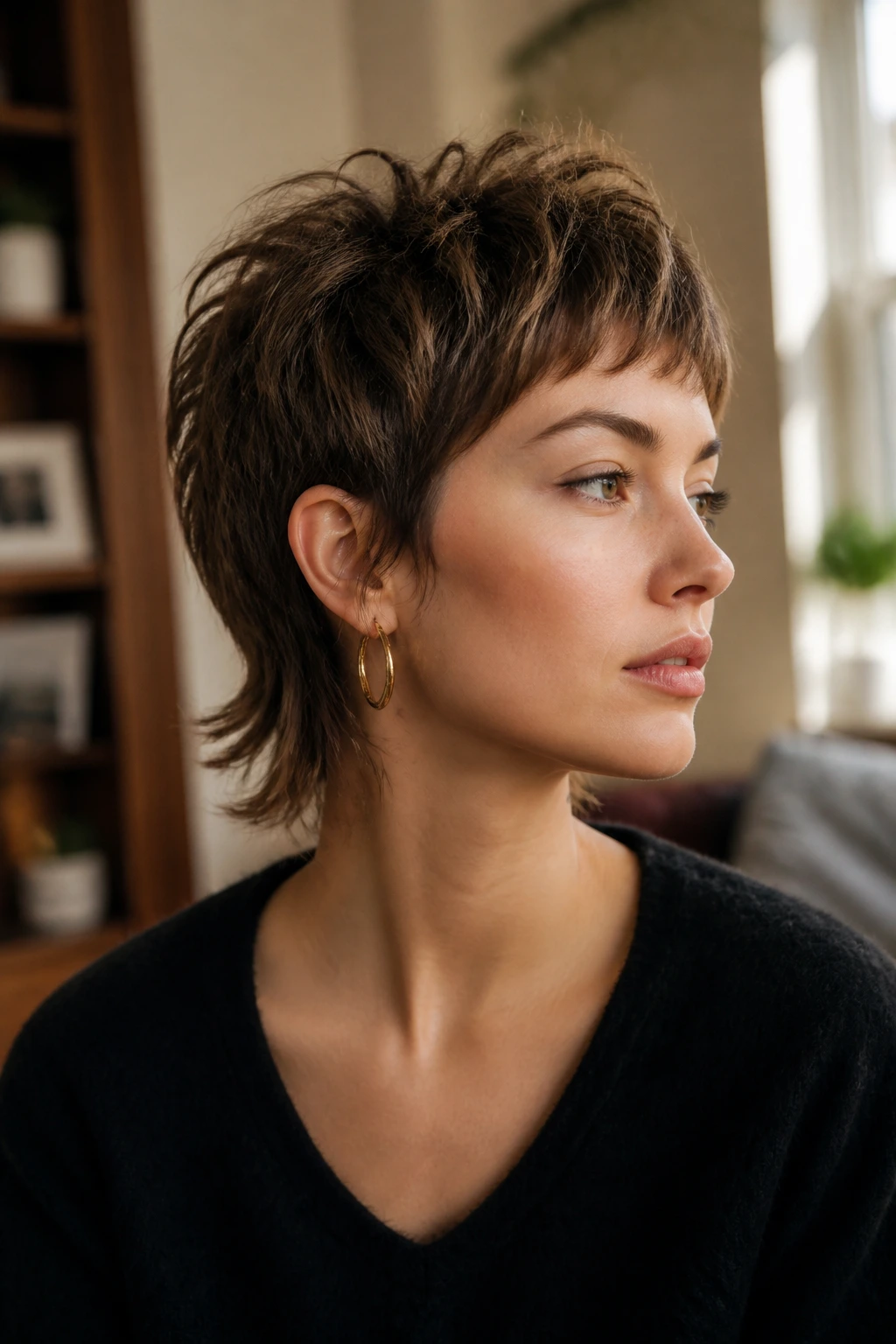
-
Built-in lift: The shorter crown layers keep fine hair from collapsing into a flat cap, especially if your roots tend to go soft by midday.
-
Less bulk where it counts: Thick hair stops ballooning around the jaw when the interior weight is removed in the right spots, not everywhere at once.
-
Bang options are easy to change: Micro fringe, curtain bangs, and longer wisps all sit naturally with this shape, so you can go softer or sharper without rewriting the whole haircut.
-
The grow-out is less cruel: Because the cut already relies on texture and mismatch, a six- to eight-week trim keeps it in line instead of turning it into a shapeless in-between stage.
-
Short hair gets more character: A jaw-length or ear-skimming cut can look plain fast. Add the right layers and the haircut starts moving in profile, which is where this shape earns its keep.
1. Soft Feathered Wolf Mullet
This is the version I’d hand to someone who wants texture without looking like they’ve joined a band on purpose. The crown is lightly layered, the ends are feathered instead of hacked, and the back stays short enough to tuck but long enough to flick. On short hair, that softer edge keeps the cut from reading severe.
Why It Works
The shape depends on softness at the perimeter and lightness at the top. If the crown is too bulky, the cut sits like a mushroom. If the back is too long, it stops feeling short. Keep the nape grazing the upper neck and the face frame around cheekbone length.
- Best for: straight to softly wavy hair that needs movement.
- Ask for: feathering, not heavy texturizing.
- Style with: a little mousse at the roots and a quick bend from a round brush.
2. Micro Fringe Wolf Mullet
A tiny fringe changes everything. It pulls the eye upward, gives the haircut a sharper front edge, and makes the rest of the layers feel more deliberate. On short hair, micro bangs can be the thing that keeps the cut from drifting too soft.
The catch is maintenance. A true micro fringe sits well above the brows, which means it grows out fast and starts touching your lashes sooner than you expect. If you like a cleaner line across the forehead and don’t mind trimming every two or three weeks, this one has a lot of attitude in a small package.
Best For
- Smaller foreheads or people who want the eyes to take center stage.
- Wavy or straight hair that can hold a shorter front line.
- Anyone who likes a sharper, more graphic look.
3. Curly Wolf Mullet
What happens when curls meet a wolf mullet? You get movement for free, but only if the layers are cut with some respect for shrinkage. On short curly hair, the crown has to stay light enough to avoid the triangle effect, and the back needs enough length to show the curl pattern instead of packing it into a puff.
A good curly version feels airy at the top and shaped at the sides, not round everywhere. That means cutting in a way that lets the curl spring up without ballooning at the temples. If your hair is dense, ask for internal removal rather than aggressive thinning.
How to Style It
- Use a curl cream on soaking-wet hair.
- Scrunch in a light gel for hold.
- Diffuse on low heat until the roots are dry and the curls feel set.
4. Razor-Cut Pixie Wolf Mullet
This one is for people who are done pretending their hair wants to behave like a tidy crop. The top stays close to pixie length, the ends are chopped with more texture, and the back keeps just enough tail to signal that this is not a standard short cut. It’s sharper. A little scruffier. Better with matte paste than shine.
I like this version when the hair is naturally straight or only slightly wavy, because the razor work gives it movement that scissors sometimes miss. If your hair already has a rough texture, ask for controlled slicing, not too much thinning, or the whole thing can get wispy fast.
5. Curtain-Bang Wolf Mullet
The curtain-bang version is the softest way into the shape. Split the fringe down the middle, leave the shortest point at the cheekbone, and let the sides drift into the rest of the cut. It keeps the face open while still giving the front a clear direction.
On short hair, curtain bangs are doing real work. They blur the line between shag and mullet, and they help the back feel less abrupt. If you want a short haircut that still slips under a blazer collar without fighting it, this is one of the calmer choices.
What Makes It Different
The front doesn’t land as a blunt shelf. It curves. That curve softens the whole silhouette and makes the cut easier to grow if you later decide you want more length around the face.
6. Choppy Bob Wolf Mullet
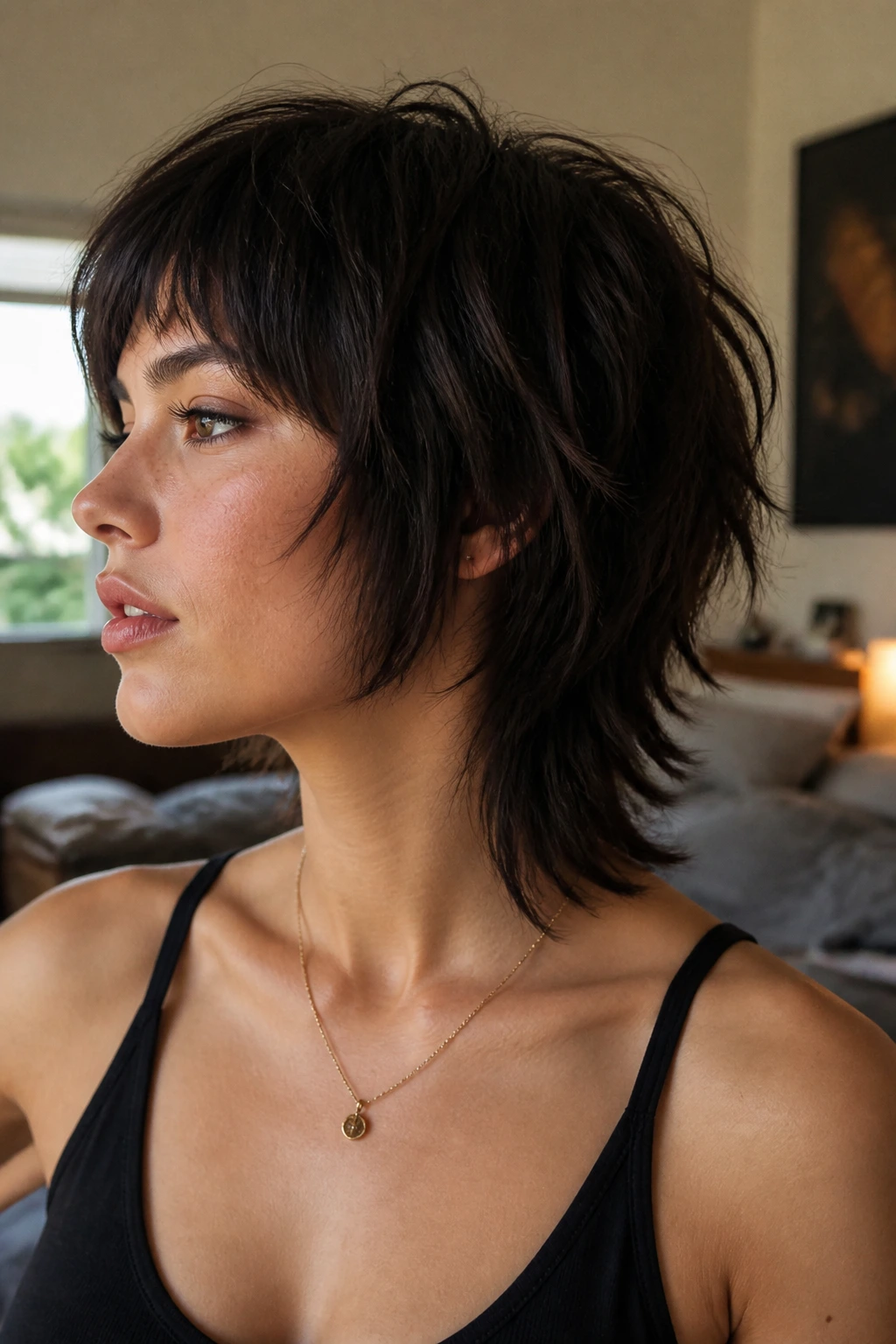
This is what happens when a bob gets bored and cuts loose a little. The base still sits around the jaw, but the internal layers create that wolf-mullet shake in profile. It’s a smart choice if you want to keep the security of a bob while ditching the heavy blocky feeling that comes with one-length hair.
The trick is restraint. If the back is too long, it turns into a shaggy bob. If the front is too short, it starts reading pixie. The sweet spot is a visible difference between the crown and the lower edge, with some uneven ends to keep the movement alive.
7. Tapered Nape Wolf Mullet
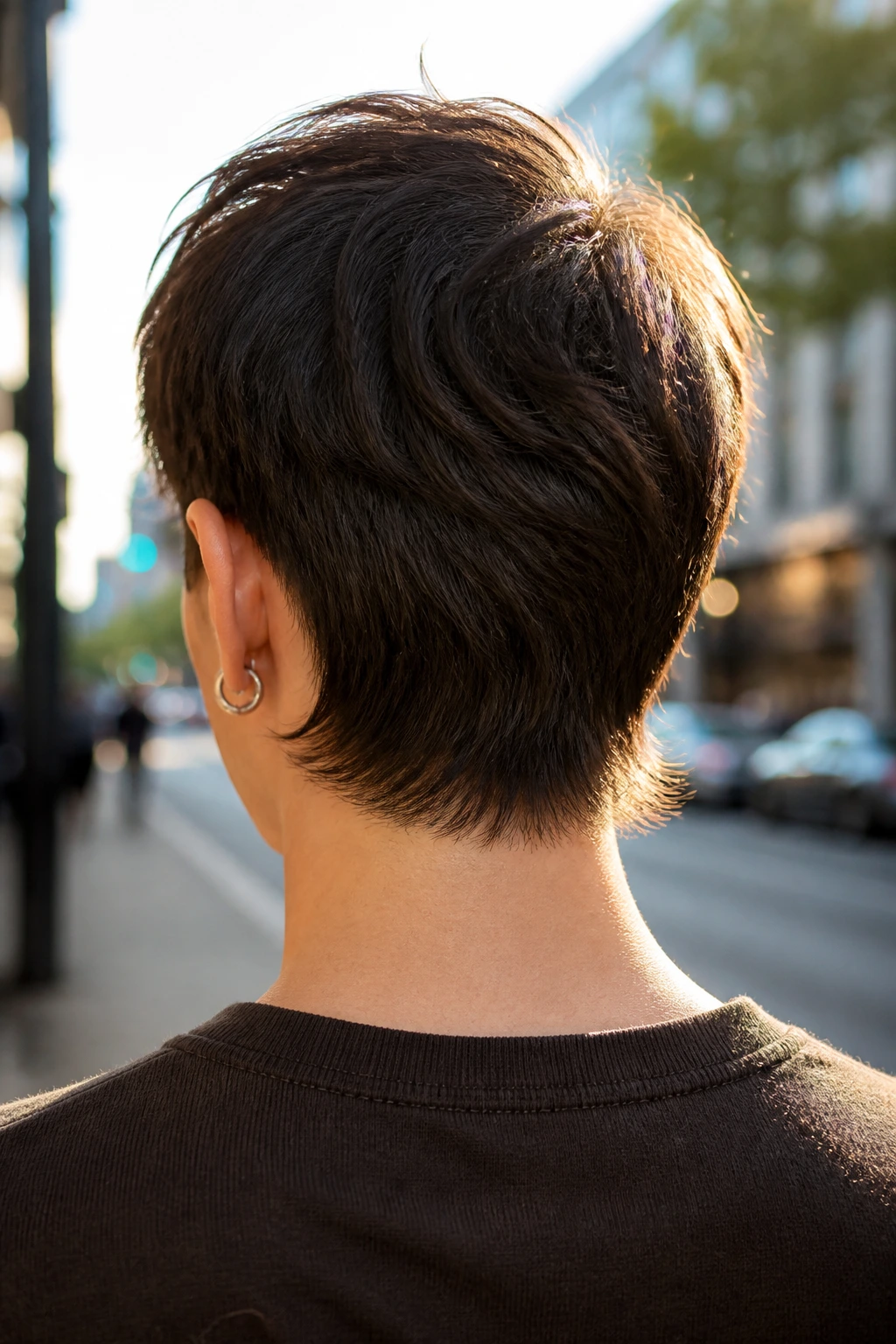
A tapered nape makes the whole haircut look cleaner from behind. The neckline is kept close, the back layers graduate softly, and the result is a short wolf mullet that fits nicely under coats, scarves, and collars without puffing out like a mushroom at the base of the neck.
This version works especially well if you hate hair sticking to your collar. It also grows out neatly, which matters more than people admit. A soft taper buys you a few extra weeks before the shape starts to drift.
Tiny detail, big difference: ask for the taper to stop before it becomes a fade. You want shape, not a barbershop underside.
8. Undercut Wolf Mullet
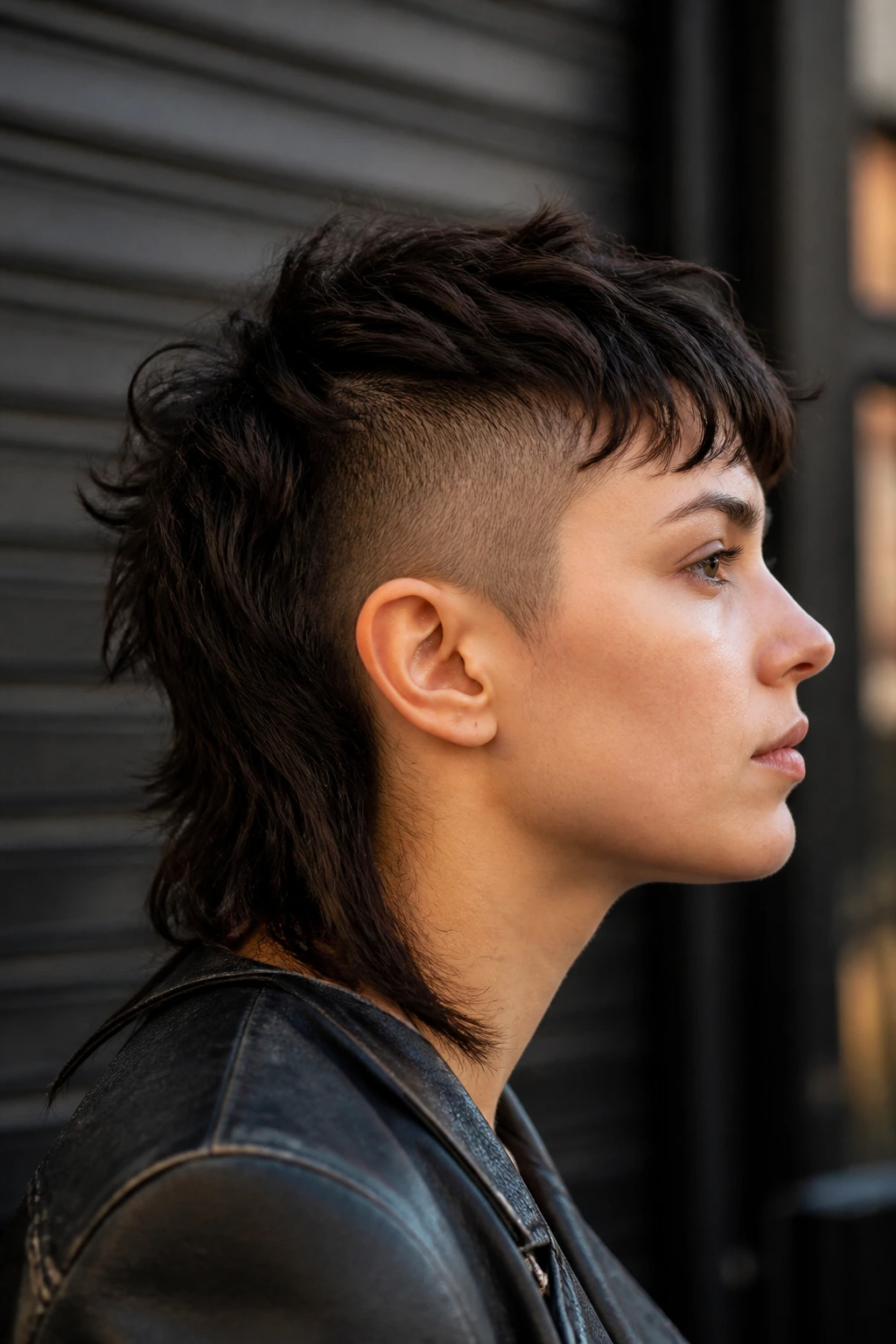
If your hair is dense or you like a sharper edge, the undercut version changes the game fast. Shaving or closely cropping the sides underneath removes weight where short hair tends to flare, and it lets the top and back sit with more contrast. The visible layer can still look soft, but underneath it’s all practicality.
This is not a timid cut. It shows the neck, opens the temples, and makes the crown feel taller than it is. If you wear glasses or statement earrings, the undercut gives them room to show up instead of fighting the hair.
9. Wavy French Wolf Mullet
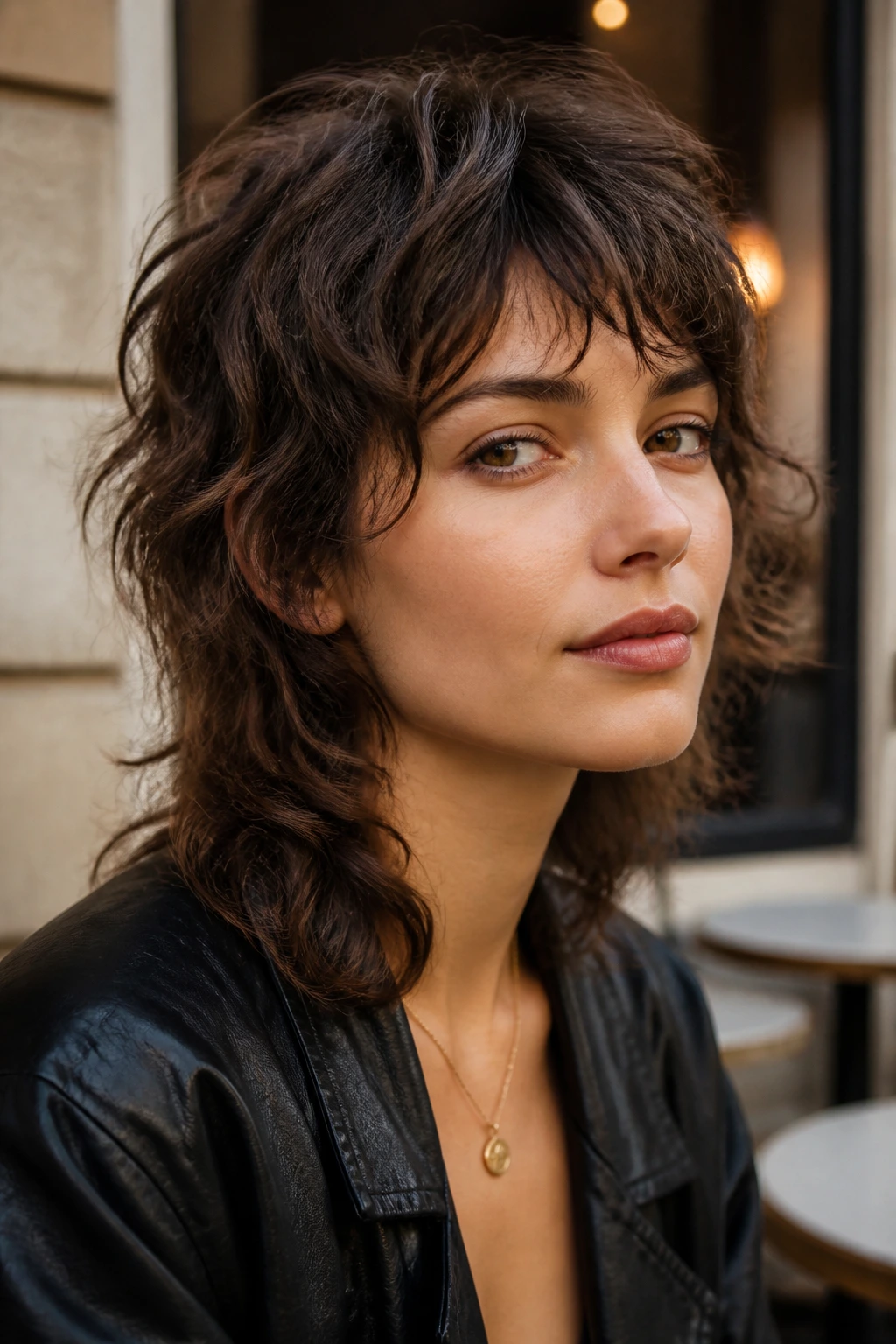
There’s a particular kind of wave that makes a cut look like it was dried in a hurry on purpose. That’s the mood here. The layers are looser, the fringe is softer, and the overall shape feels airier than the choppier versions. Short hair gets a little less punk and a little more Paris street corner.
It works best when the wave is encouraged, not overworked. A small amount of cream on damp hair, then a rough dry with your fingers, is usually enough. If you blast it into submission, the charm disappears and you’re left with a fuzzy triangle. Nobody wants that.
10. Fine-Hair Airy Wolf Mullet
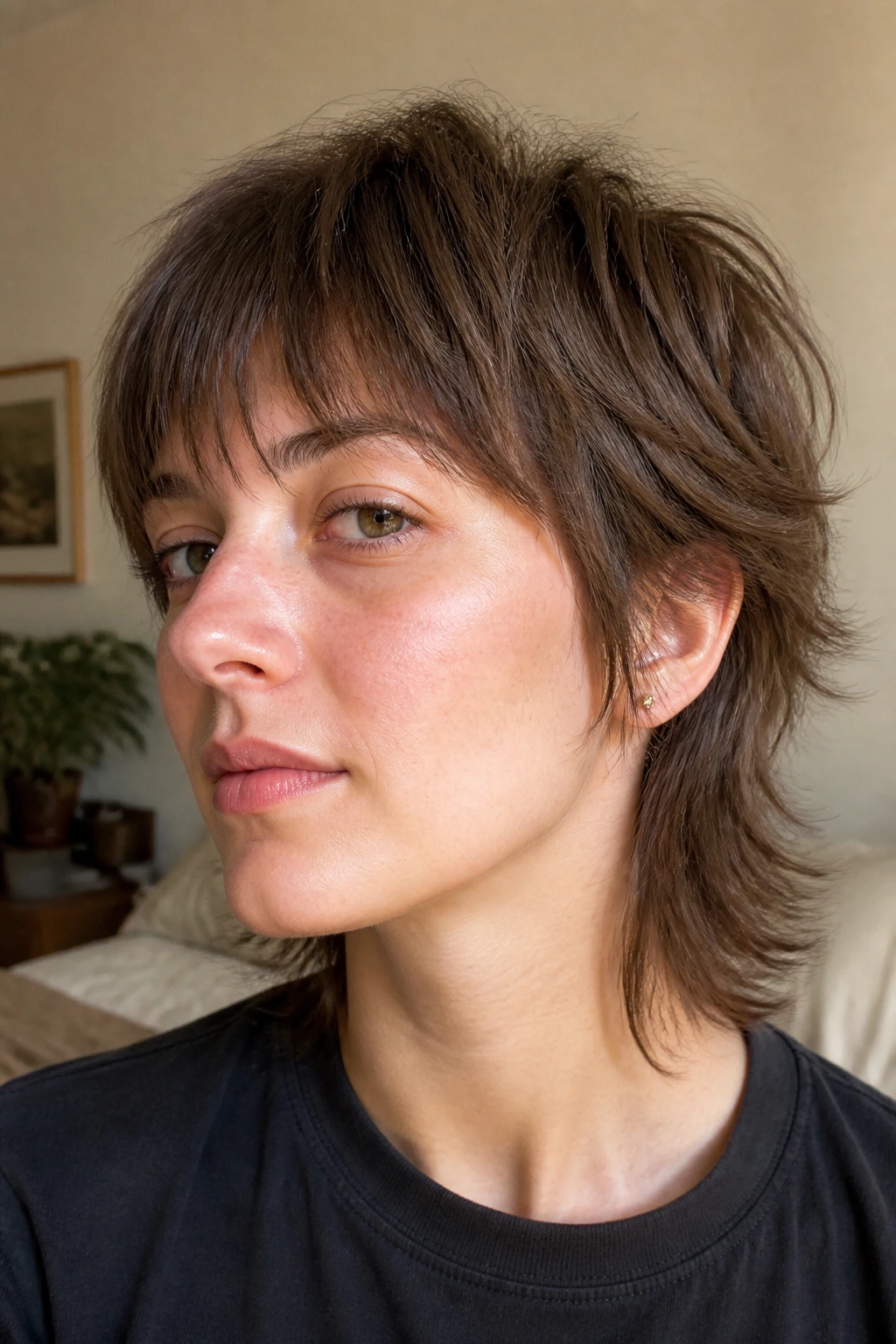
Fine hair and a wolf mullet can get along beautifully, but only if the cut respects what fine hair actually does. Too many layers and it goes see-through. Too little and it falls flat. The airy version keeps the crown lifted with small, strategic cuts and leaves enough density through the ends to make the shape hold.
I’d skip heavy texturizing here. Use mousse at the roots, dry the hair upside down for a minute or two, then finish upright so the crown keeps its lift. The ends only need a whisper of paste.
Best For
- Hair that goes limp near the scalp.
- People who want movement without a lot of product.
- Short cuts that need a fuller-looking outline.
11. Thick-Hair Weight-Removed Wolf Mullet
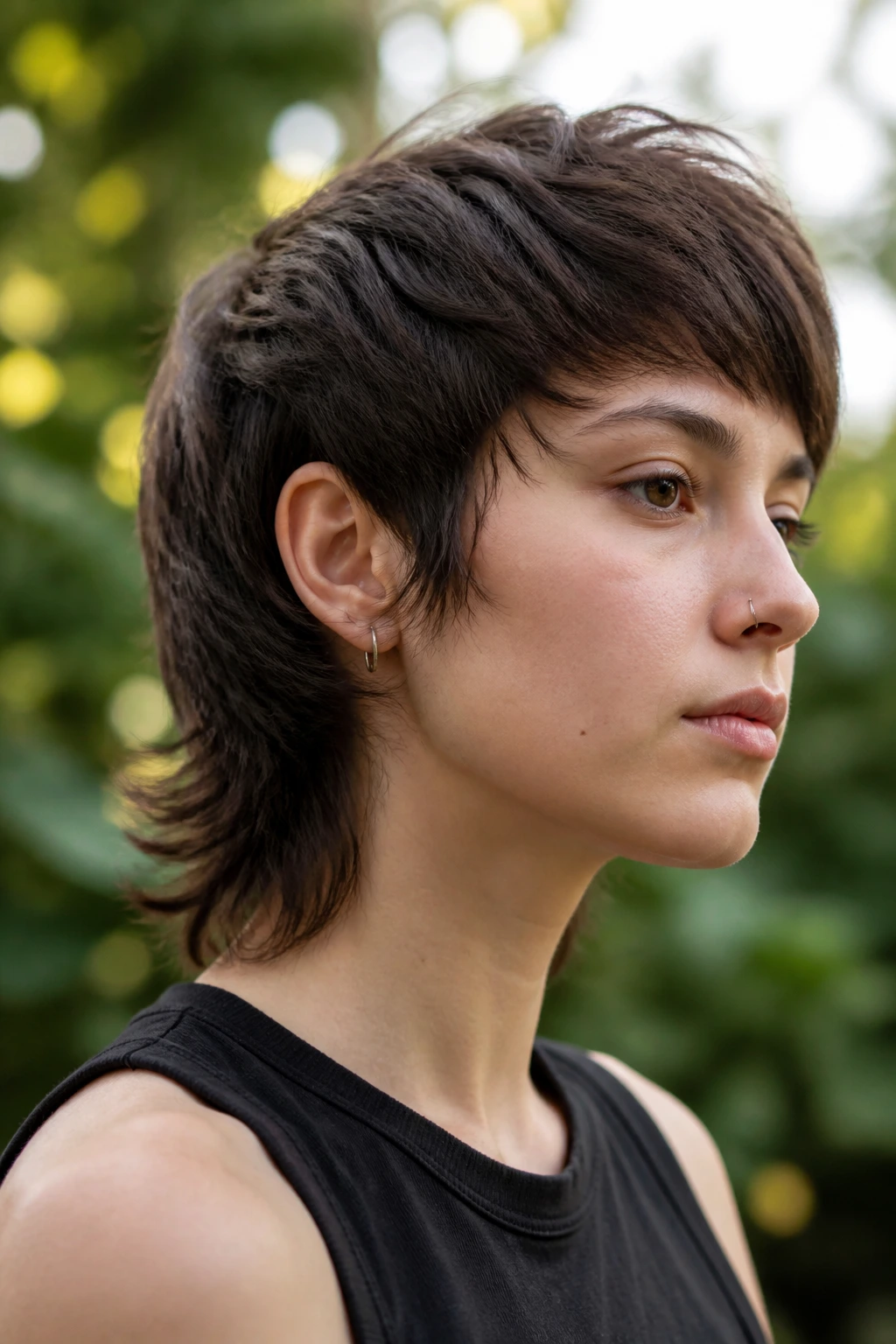
Thick hair can wear this shape, but it needs discipline. The goal is not to thin everything out until it floats. The goal is to remove weight in the right lanes so the cut doesn’t puff out around the jaw or behind the ears. When that’s done well, the haircut looks cleaner, lighter, and much less helmet-like.
This version usually benefits from interior layering and careful debulking around the crown and sides. If someone starts attacking it with thinning shears from roots to ends, stop them. Aggressive thinning makes thick hair frizzier, not easier.
12. Asymmetrical Wolf Mullet
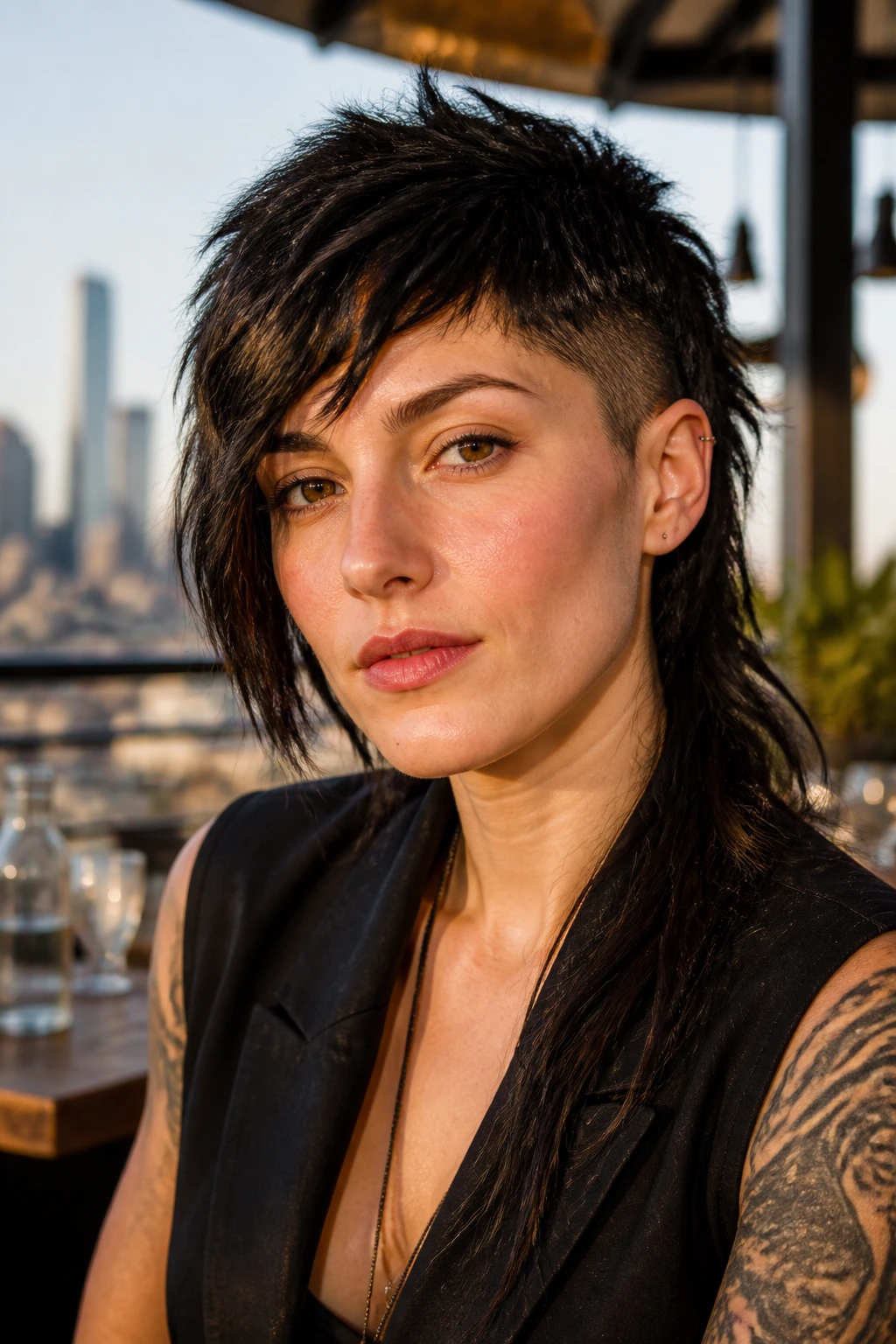
One side longer than the other. Simple idea, strong payoff. On short hair, asymmetry adds instant shape because your eye has something to follow instead of a uniform outline. It can be subtle — just a half-inch difference — or obvious enough to change the whole attitude of the cut.
This is a good fit if you like a slightly editorial look and don’t mind that the haircut will always look intentional. It’s also a nice way to work with a side part or a face that has stronger angles on one side than the other. Keep the imbalance clear, though. If it’s nearly even, it just looks like a mistake.
13. Jaw-Length Wolf Mullet
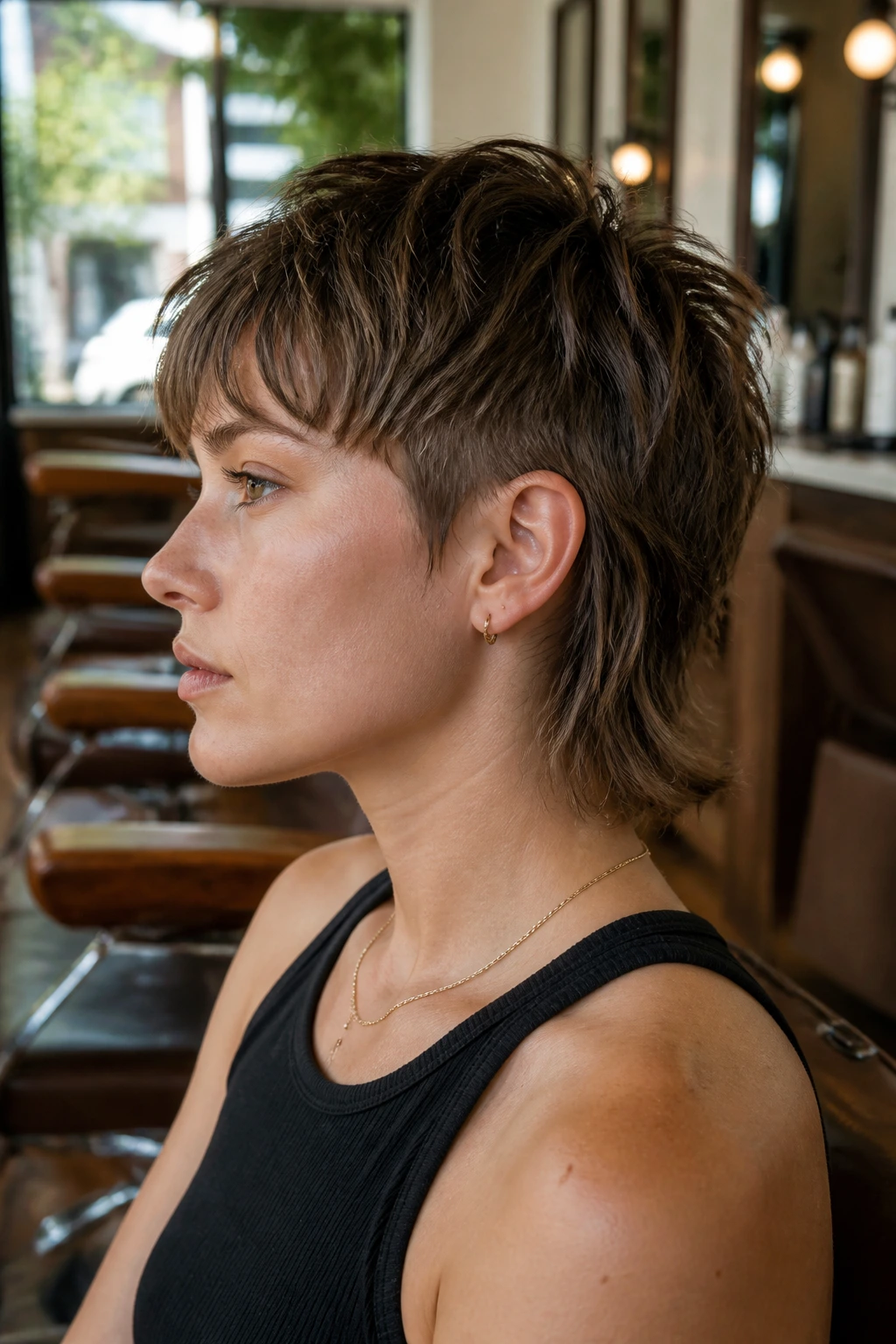
Jaw-length is the middle ground for people who want the short wolf mullet shape but don’t want anything flirting with a pixie. The back lands around the jaw or a touch below, the sides stay lighter, and the crown still carries the texture. It’s one of the easiest versions to live with because it keeps enough length to tuck, bend, or pin.
This is the cut I’d suggest if you’re growing out a bob and want the transition to look deliberate. You get the softness of a shag, the attitude of a mullet, and enough perimeter to make it feel like a real haircut rather than a half-finished project.
14. Rounded Wolf Mullet
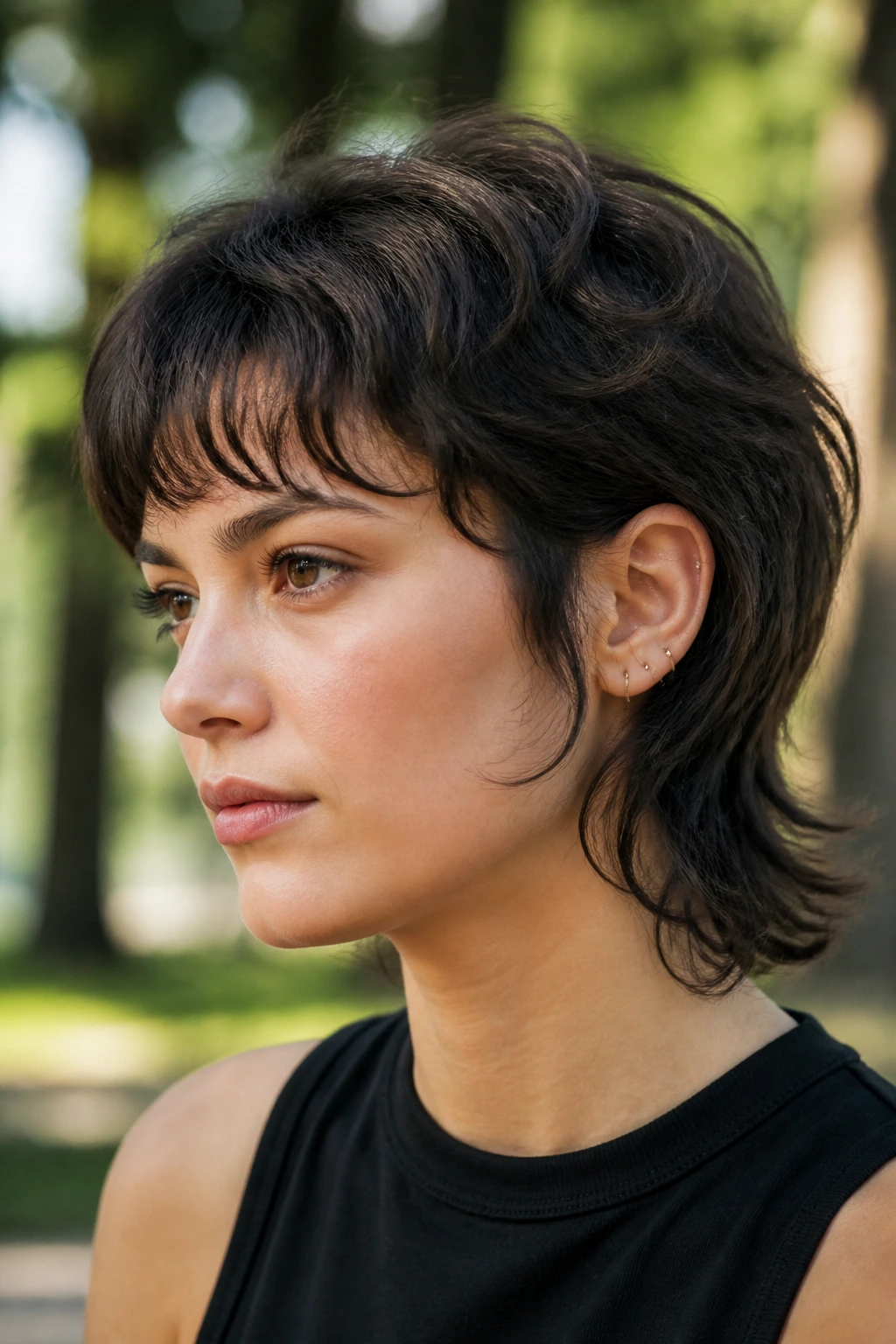
Not every wolf mullet has to look sharp-edged. The rounded version keeps the outline softer through the back and temples, which can be a relief if your face is already angular or if you don’t want the haircut to shout from across the room. It still has contrast, but the edges curve instead of kick out.
The shape is especially useful on short hair that tends to spring wide. A rounded crown and a slightly curved nape keep the silhouette from looking boxy. If you wear your hair behind your ears half the time, this version usually behaves better than a choppier cut.
15. Baby Bang Wolf Mullet

Baby bangs are blunt little troublemakers, and that’s exactly why they work here. They add a hard front line above the brow while the rest of the cut stays messy and layered. The contrast is what makes it interesting.
This version is less forgiving than curtain bangs. The fringe needs regular trims, and your forehead will be part of the look whether you planned on that or not. But if you like a short haircut with a sharp front edge, the baby-bang wolf mullet has real personality without needing much styling beyond a bit of texture at the ends.
16. Face-Framing Layer Wolf Mullet
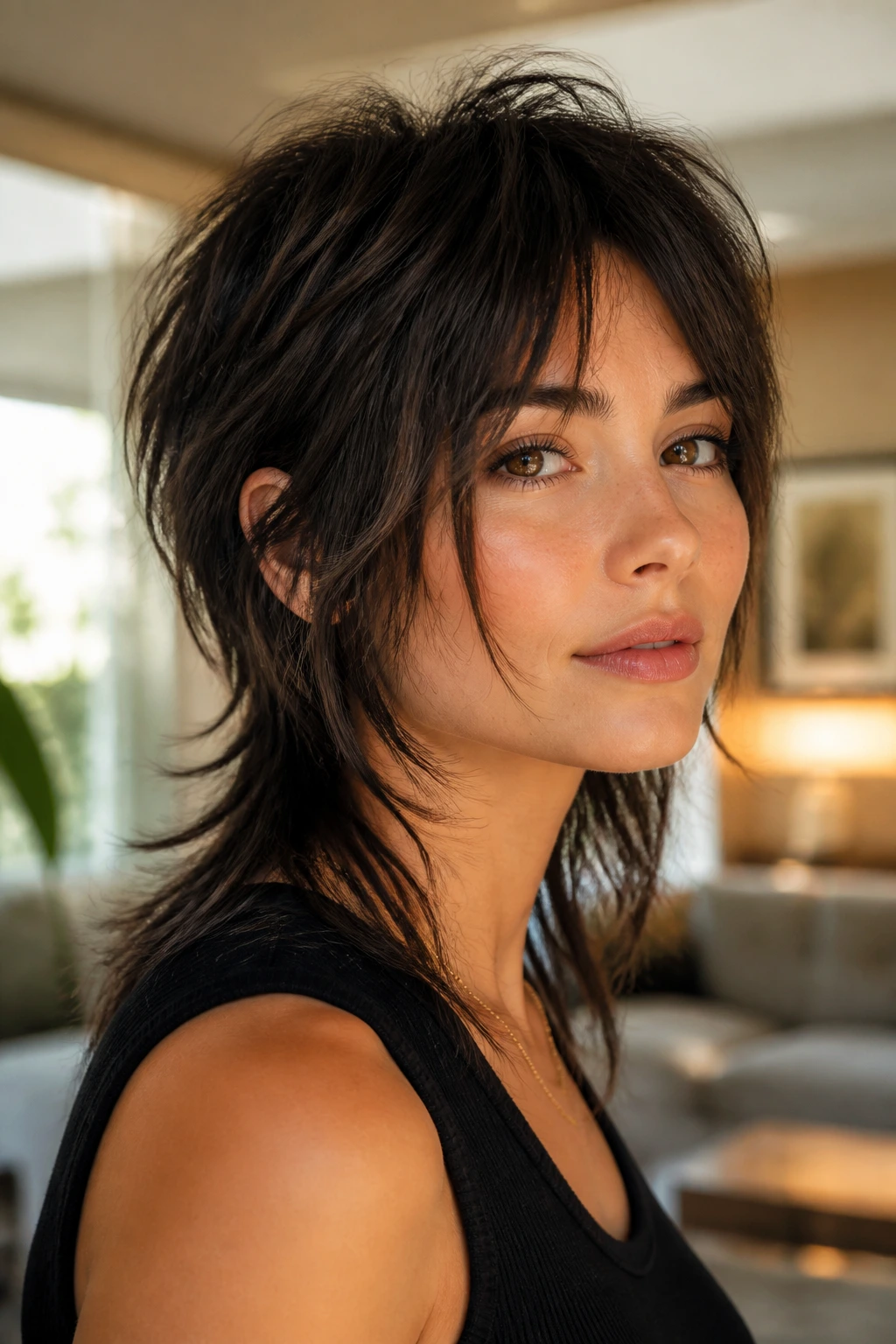
This is the softer, more flattering option for people who want the cut to lean around the face rather than punch straight through it. The front pieces start a little longer, usually around the cheekbone or jaw, and they blend into the shorter crown layers. It keeps the face open while still giving the cut movement.
I like this one when someone says, “I want the shape, but I still want to like my profile in photos.” Fair request. The longer front layers can soften a strong jaw, reduce width at the cheeks, and make the whole cut feel less abrupt from the front.
17. Wet-Look Wolf Mullet
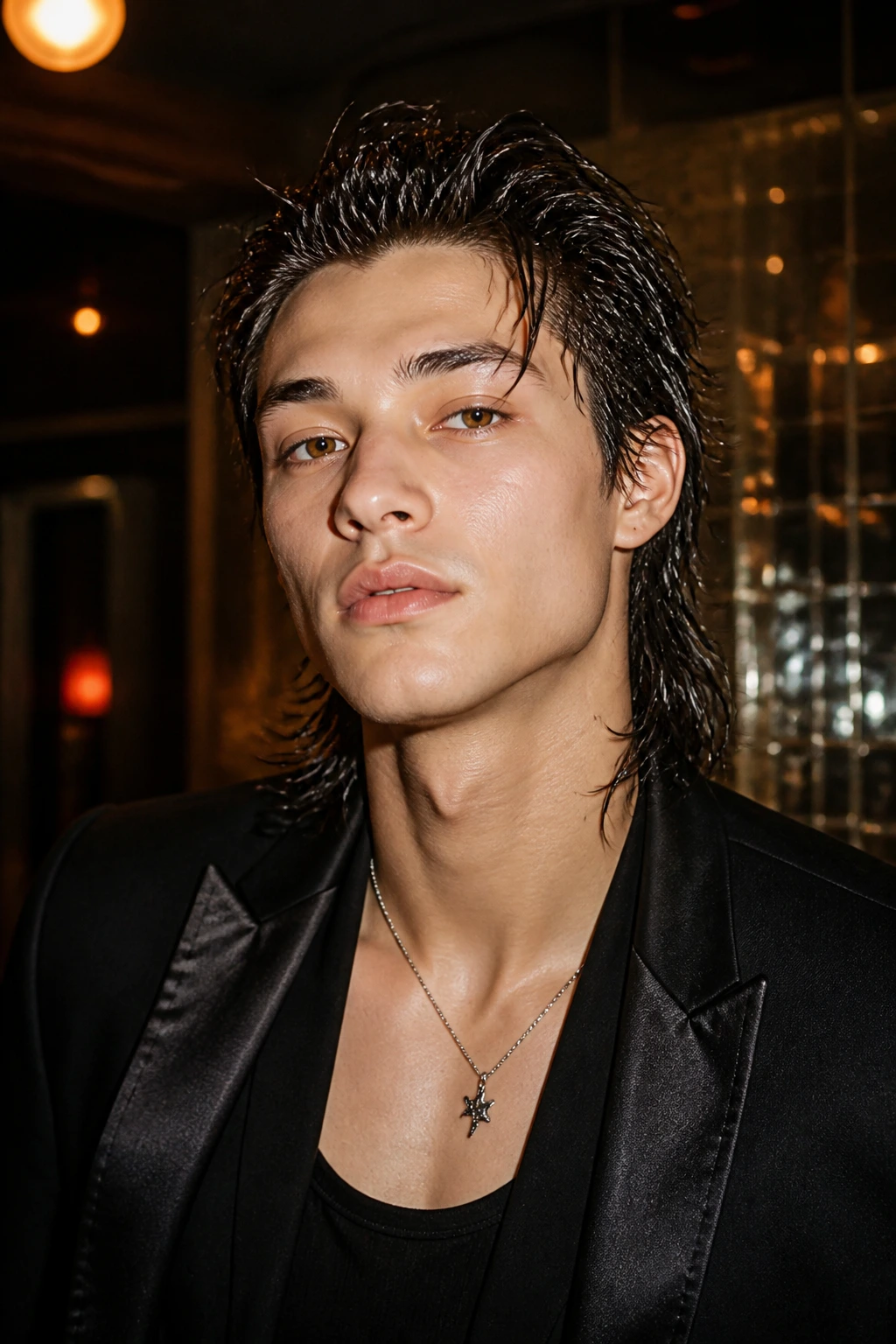
Here the cut itself does some of the work, but the finish is half the point. Gel or styling cream gives the layers a pressed, shiny look that turns a short wolf mullet into something sleeker and a little more nightlife-ready. The back still needs enough texture to move, but the crown and fringe sit flatter and more controlled.
It’s a good choice when you want the haircut to feel deliberate rather than fluffy. The trick is to use enough product to separate the strands, not so much that the hair looks greasy. A fine-tooth comb or your fingertips can push the front in the right direction without making it helmeted.
18. Permed Wolf Mullet
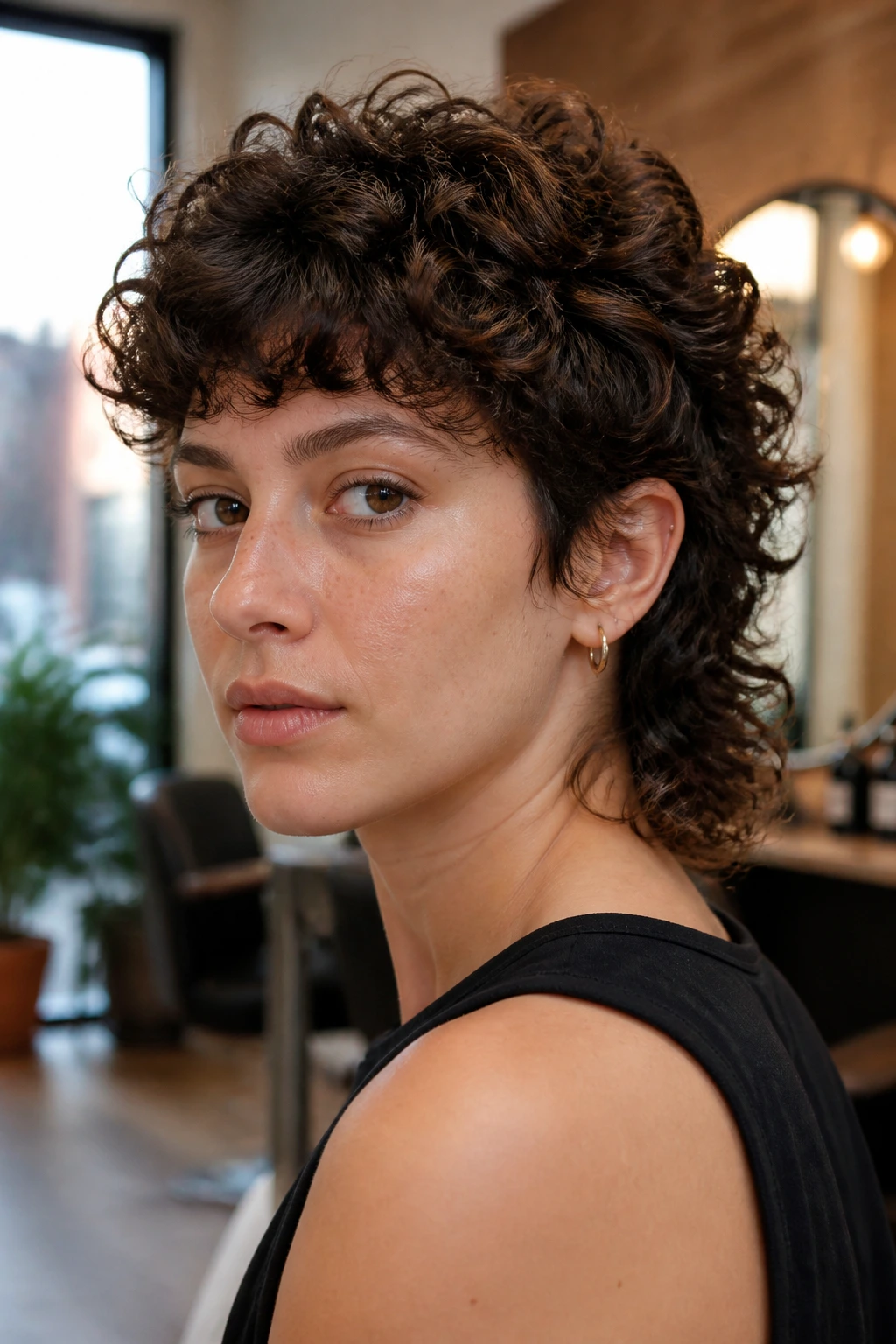
A perm brings in the shape this haircut is always asking for. On short hair, that can mean softer body, stronger curl, or a more obvious bend through the crown and back. The wolf-mullet outline keeps the perm from turning into one round puff.
This is one of those versions that can look rough in the best way when the curls are cut with the perm in mind. Ask for length to be left where the curl springs up most, and don’t let anyone cut all the shape off in the first pass. Permed short hair shrinks. More than you think.
19. Color-Block Wolf Mullet
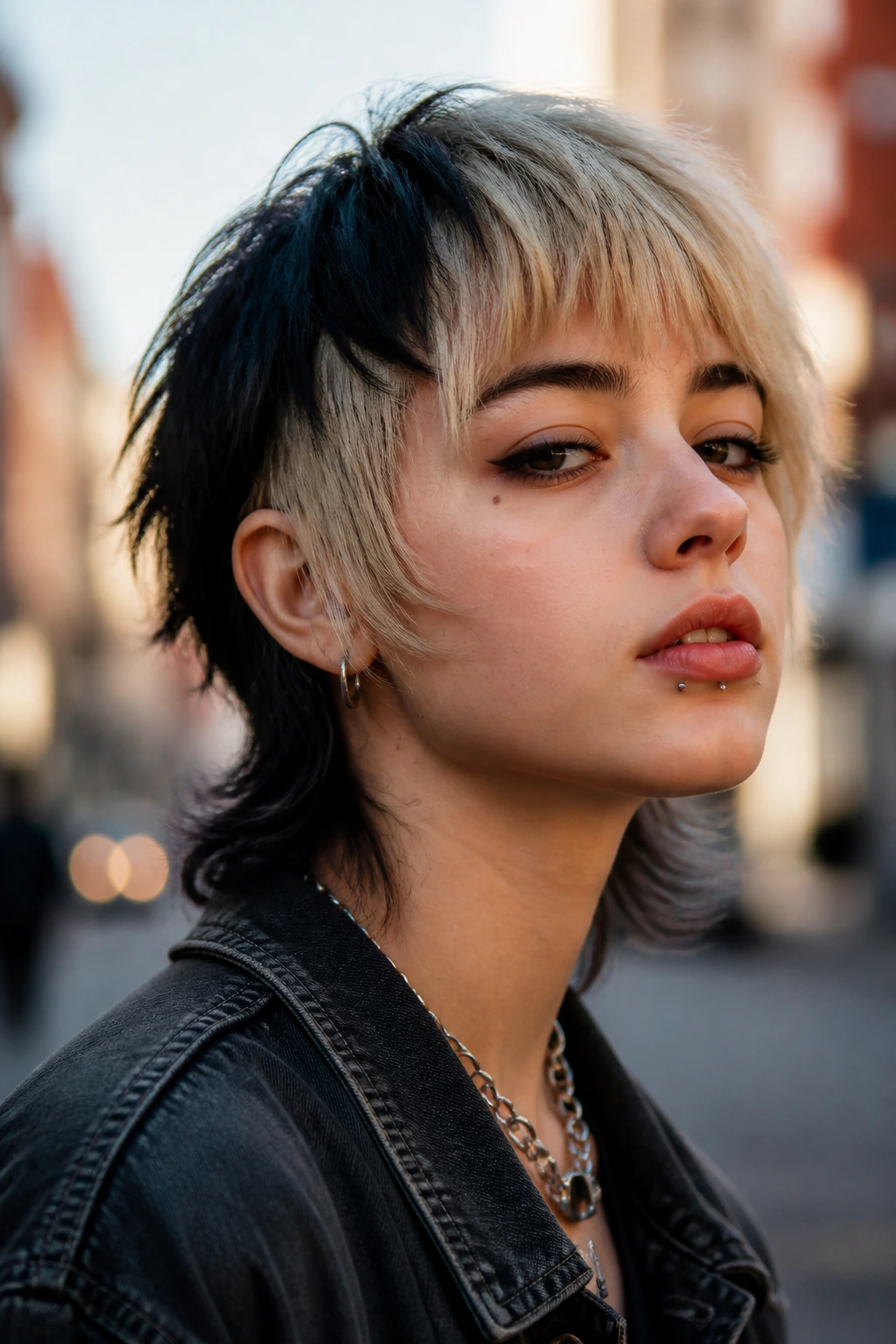
A strong cut gets louder when the color has a plan. With a color-block version, the fringe, underlayer, or back can be a different shade from the rest, which makes the movement easier to see. On short hair, that contrast can be the difference between “interesting cut” and “I can’t stop looking at it.”
This works especially well when the haircut already has obvious layers. A lighter front against a deeper back, or a bright panel under darker top layers, makes the silhouette obvious even when the hair is tucked. If you like hair that reads from across a room, this is your lane.
20. Salt-and-Pepper Wolf Mullet

Gray hair has texture built in, and a short wolf mullet can make that texture look sharp instead of accidental. The contrast between silver strands and darker pieces gives the layers more definition, which means the cut often looks fuller than it did at the salon mirror.
The best thing about this version is that it doesn’t pretend to be younger or older. It just looks like a haircut with a little edge and some honesty. Keep the ends soft enough to move, or the gray can start reading wiry. A light cream or serum helps more than heavy wax here.
21. Blowout Wolf Mullet
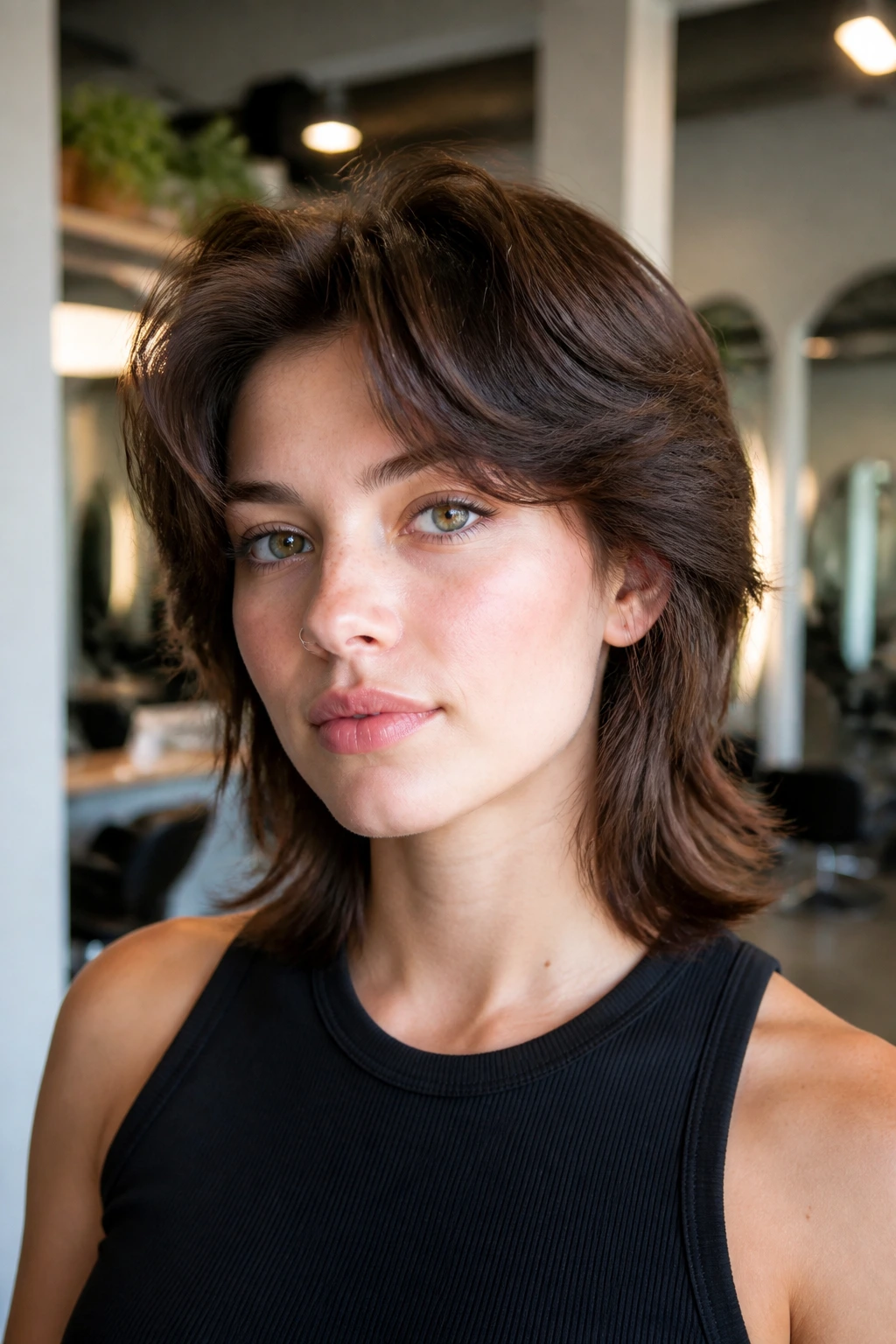
If you like a smoother finish, this is the polished cousin of the whole family. A round brush or blow-dry brush lifts the crown, bends the ends under or out, and keeps the shape refined instead of ragged. It’s short hair with a bit of a salon polish.
The cut underneath still needs texture, though. If the layers are too blunt, the blowout can look puffed at the sides and flat at the top, which is a bad trade. The point is movement with control. You want the ends to curve, not cling.
22. Air-Dried Shag Wolf Mullet
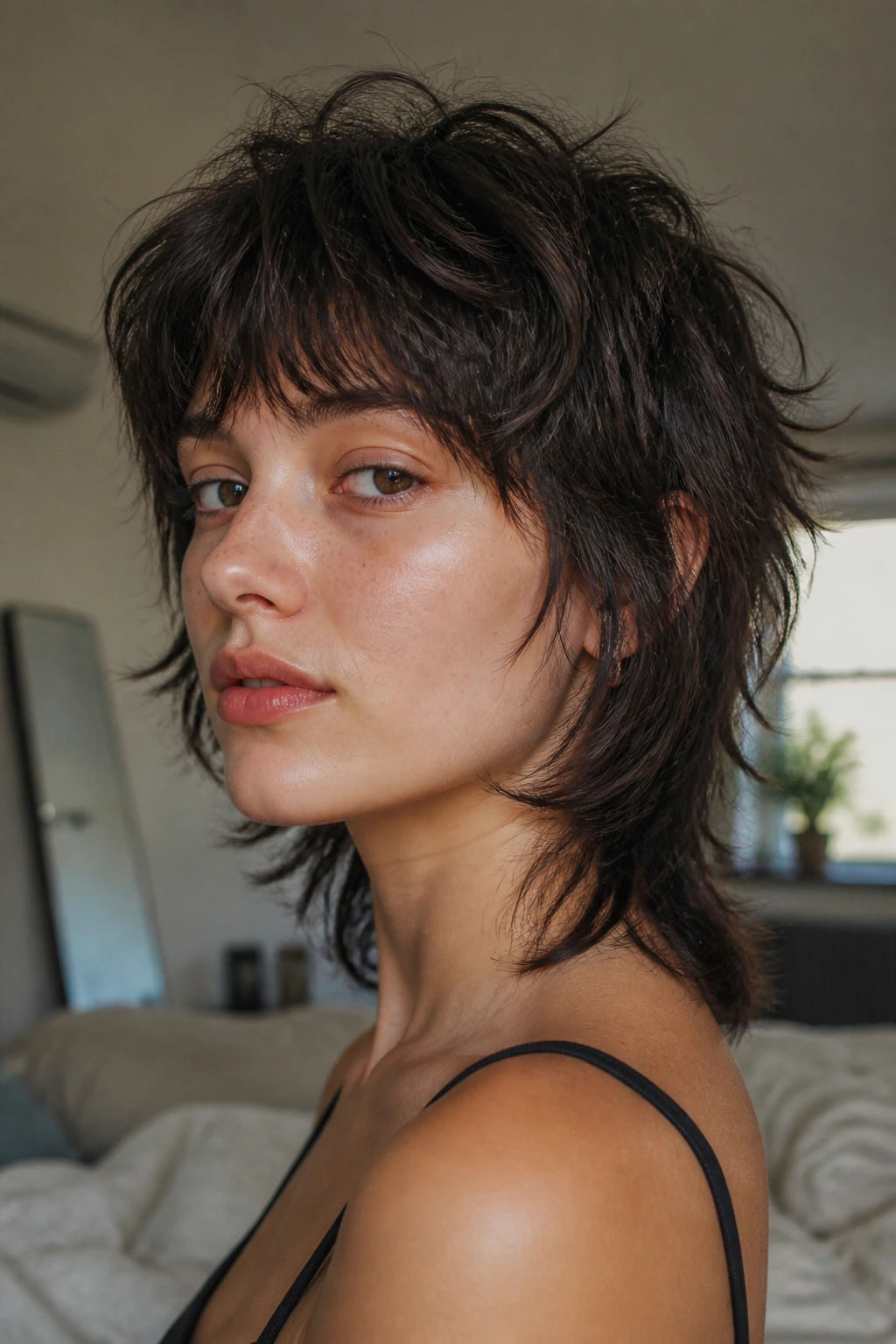
Some hair looks best when it’s left alone long enough to stop overthinking itself. The air-dried shag version leans into that. The layers are soft enough to dry with a bend, the fringe stays loose, and the whole cut keeps a casual, slightly slept-in finish.
This one can be a lifesaver if heat styling makes your hair frizz up. Use a little mousse or curl cream, scrunch, and keep your hands out of it until it’s dry. If you keep touching it, the crown goes frizzy and the ends separate in a messy way that isn’t the good kind.
23. Sleek Short Wolf Mullet
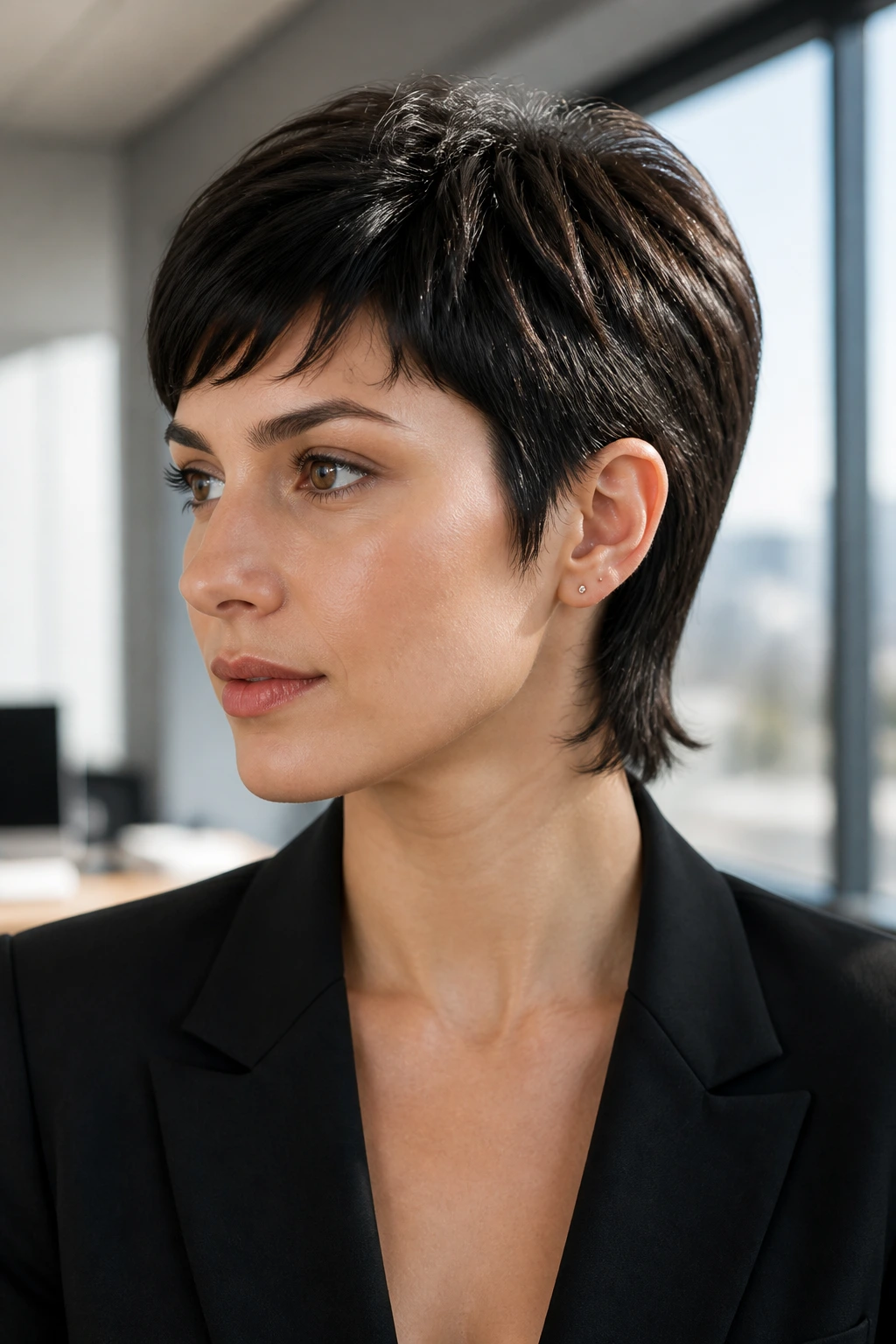
This is for the person who likes the idea of a wolf mullet but doesn’t want chaos on their head. The sides are smoothed, the crown is controlled, and the back stays short enough to keep the shape neat. It’s one of the most office-friendly takes, which is saying something for a cut with mullet in the name.
A flat iron or blow-dry brush can keep the surface smooth, but the internal layering still needs to be there or the cut loses its point. Keep the finish glossy, keep the edges clean, and don’t over-stack the product. Sleek hair shows every mistake.
24. Grown-Out Pixie Wolf Mullet
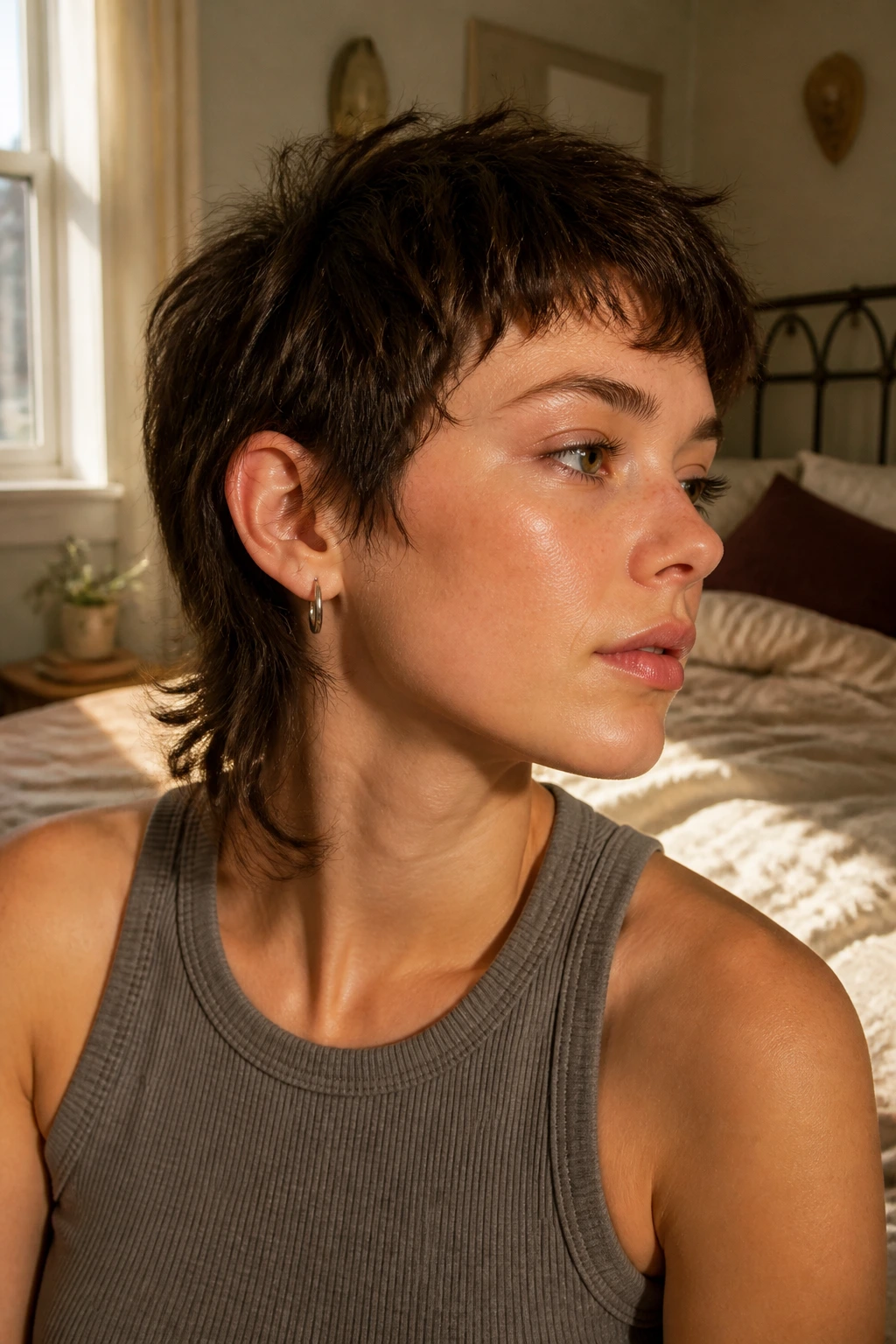
This is the shape you get when a pixie refuses to become boring. The top stays a little longer, the sides begin to soften, and the back catches up just enough to hint at a mullet silhouette. It’s an excellent in-between cut because it makes the grow-out look planned instead of awkward.
I like this one because it respects the reality of short hair. Not everyone wants to jump from cropped to shaggy in one appointment. This cut lets you keep the ears open, keep some lift at the crown, and still move toward a fuller shape over time.
25. Temple-Tucked Wolf Mullet
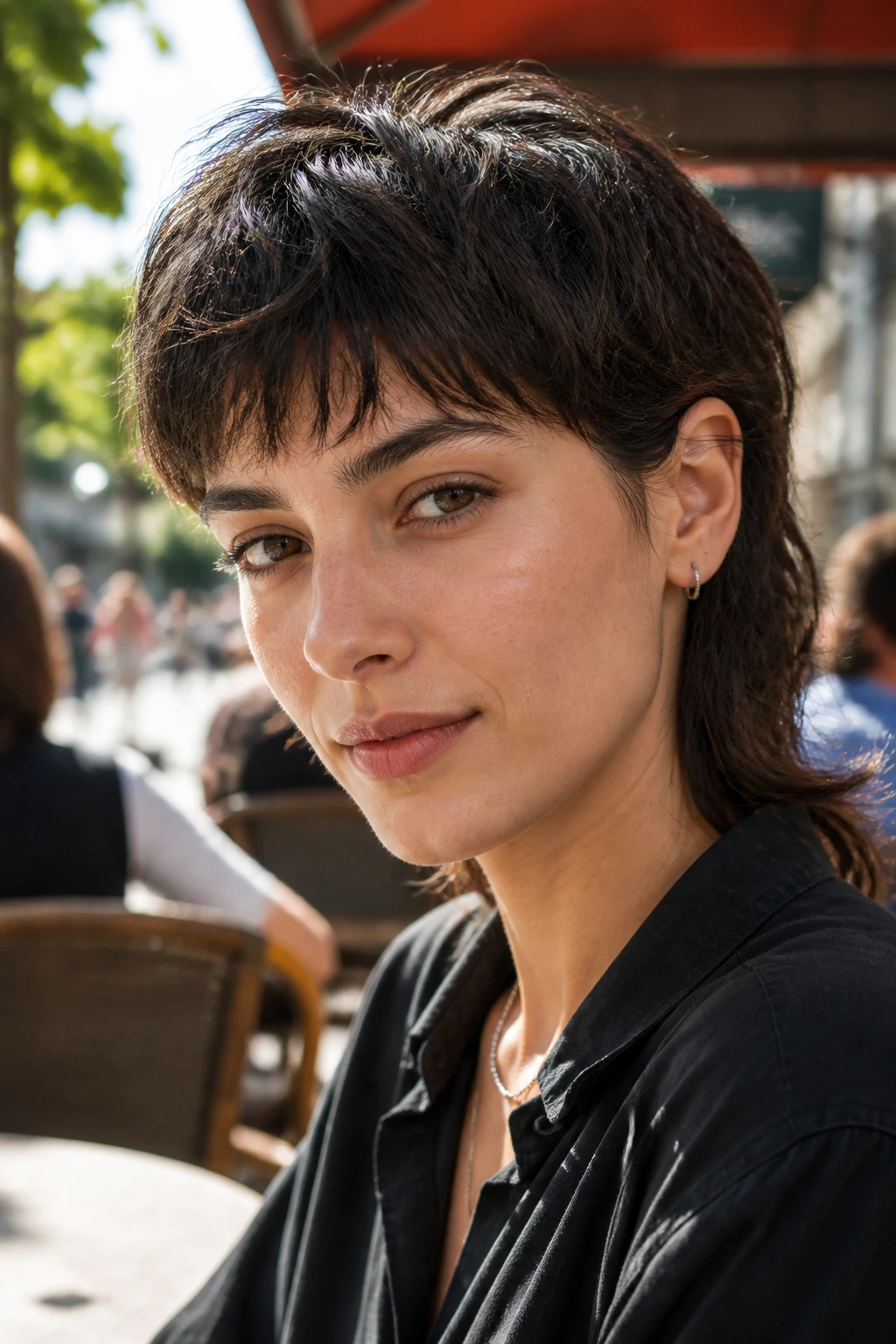
There’s something smart about a cut that lets the temples breathe. The temple-tucked version keeps the sides short enough to tuck behind the ears without breaking the line, while the crown and back still carry the wolf-mullet energy. It can look neat from the front and more playful in profile.
This is a good one if you wear glasses, like statement earrings, or just hate hair sitting on your cheeks all day. It also suits people who prefer a cleaner outline around the face but still want texture through the crown and nape. That little tuck changes the whole attitude of the haircut.
Why the Short Wolf Mullet Shape Works on Real Hair
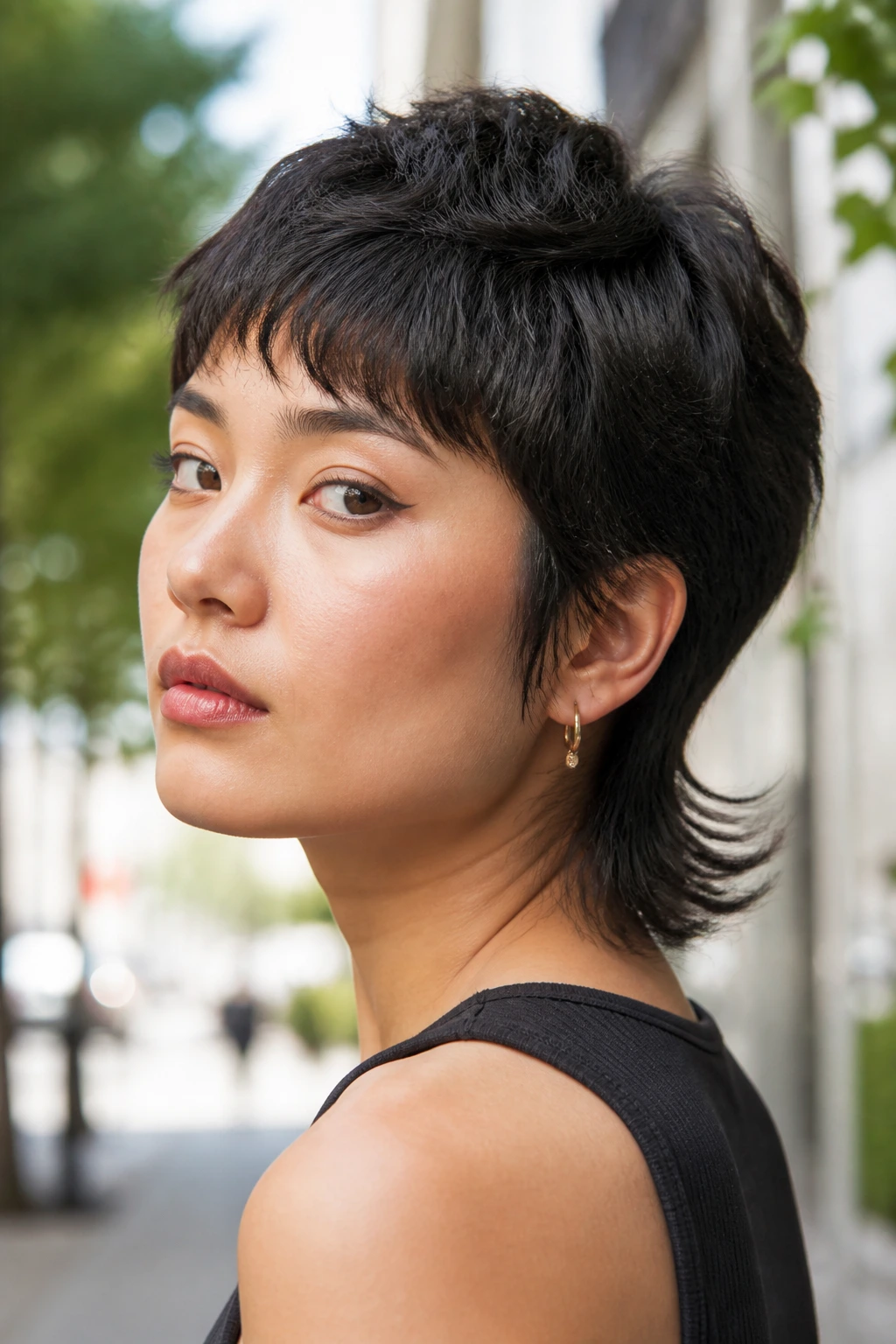
The short wolf mullet works because it respects how hair actually behaves when it’s cut above the shoulders. Short hair loses weight fast, which means a tiny adjustment at the crown or nape can change the whole outline. If the top is too heavy, the cut sits flat. If the back is too long, it starts behaving like a shag with no point.
The best versions create a clear contrast between the upper layers and the lower edge. That contrast gives the eye something to follow. It also helps short hair move instead of sitting like one block. You feel it most when you turn your head and the shorter pieces around the temples shift first, then the back catches up a beat later. That staggered movement is the good stuff.
There’s also a practical side people ignore. A short wolf mullet can work with coarse hair, fine hair, waves, curls, and straight strands, but the cut has to be adjusted for density and cowlicks. A single formula doesn’t fit everybody. It never has.
How to Talk Your Stylist Through the Cut
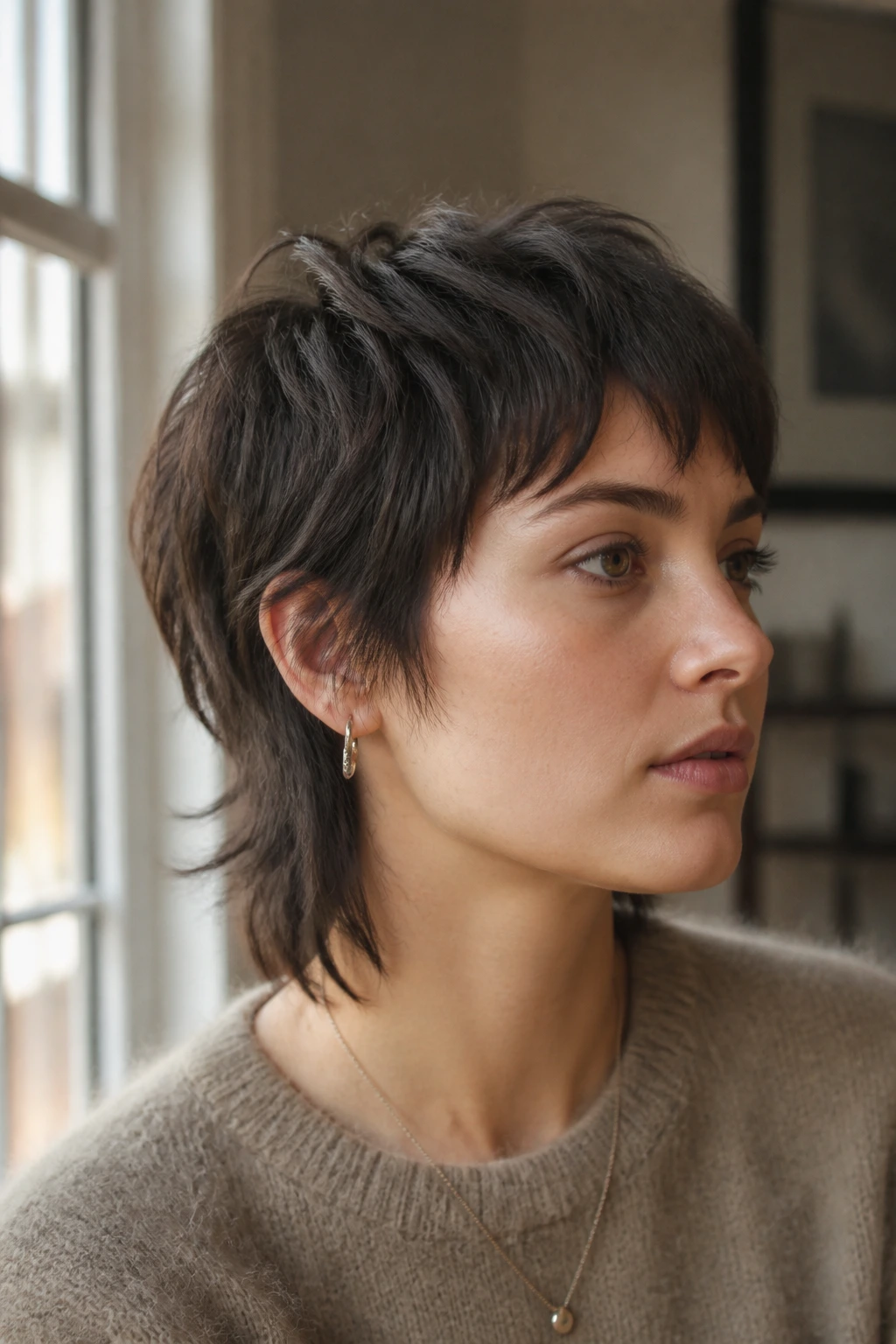
Bring photos. Not one photo — three if you can: front, side, and back. The front tells them about the fringe, but the side and back are where the short wolf mullet lives or dies. If the back in your reference photo is longer than you want in real life, say so out loud. Haircuts are not a mind-reading contest.
Be specific about the nape. Tell them whether you want the back to stop at the upper neck, the jaw, or a touch below. On short hair, that one detail changes the whole silhouette. If you want collars and scarves to sit cleanly, ask for a tighter nape. If you want more swing, leave it longer.
Talk about your styling patience. If you air-dry most days, say that. If you are willing to use a blow dryer and a brush, say that too. A wolf mullet that looks sharp with a round brush can sit differently when left to dry on its own, and a stylist who knows your routine can cut the texture to match.
Mention your problem spots. Cowlicks at the crown, one side that flips out, hair that splits at the temples — all of that matters. Short hair does not hide much, so it’s better to put the trouble on the table before the scissors come out.
Tools and Products That Actually Help

-
A blow dryer with a nozzle: Directs air at the roots so the crown lifts instead of collapsing sideways.
-
A diffuser: Useful for wavy or curly versions; it keeps the pattern together without blasting the cut into frizz.
-
A 1-inch curling iron or flat iron: Good for bending the ends and putting a little curve into the fringe.
-
A round brush: Helps smooth the top and give the front pieces a soft bend.
-
Texture spray: Gives short layers grip without turning them crunchy.
-
Light mousse: Best for fine hair that needs lift at the crown without heavy residue.
-
Matte paste or fiber cream: Useful for piecey ends and short, choppy layers that need separation.
-
Dry shampoo: Handy for day two, especially if the crown starts to go soft.
-
Sectioning clips: Make it easier to dry the hair in parts instead of mashing the whole head at once.
-
A fine-tooth comb: Good for sleeker versions and for directing the fringe where you want it.
How to Wear It Day to Day

Everyday finish: Rough-dry the roots, put a pea-sized amount of mousse or cream through damp hair, and let the ends stay a little imperfect. That’s where the shape lives. If you spend ten minutes fighting every strand into place, you’ll miss the charm of the cut.
Polished finish: Blow-dry the crown with a round brush, then bend the ends with a flat iron if they need help. Keep the front pieces curved toward the cheekbones, not locked straight down. That one bend keeps the haircut from reading severe.
Low-effort finish: Use dry shampoo at the crown and a touch of paste at the ends. Finger-comb, not brush. A brush can flatten the texture that makes the cut work in the first place.
Best with: clean necklines, simple collars, small hoops, and anything that lets the hairline show. The cut already has personality. You do not need to pile more drama on top of it.
Common Mistakes That Flatten the Shape
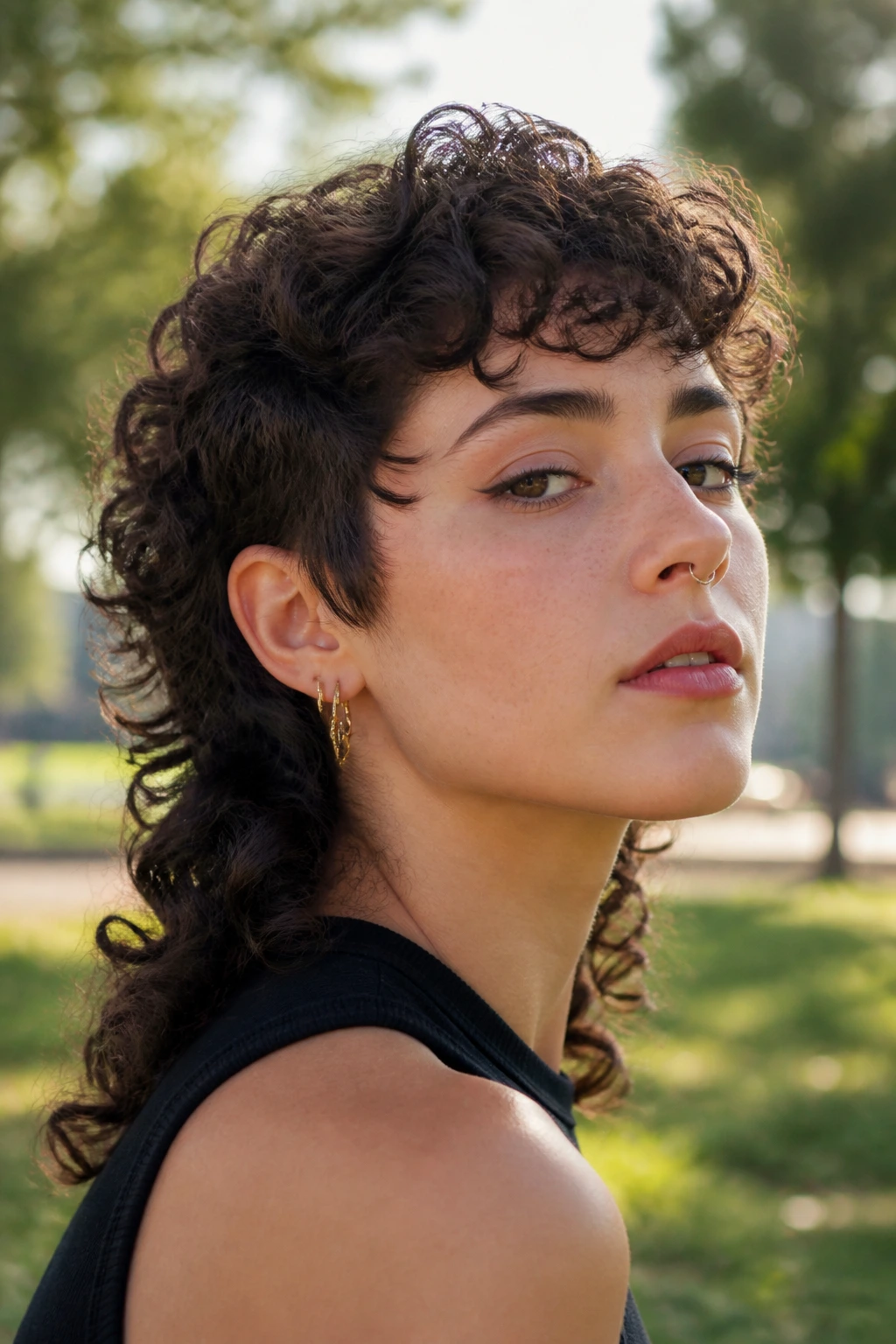
The biggest mistake is over-thinning the crown. The hair looks wispy in the chair, then collapses at home because there isn’t enough weight left to hold the line. The fix is simple: remove bulk in sections, not in one aggressive pass, and leave enough density on top for lift.
Another one is letting the back go too long. Once the nape starts hanging past the point where the top layers can balance it, the cut loses its short-hair energy and starts feeling like an overdue shag. Keep the back in check with trims every six to eight weeks.
Fringe trouble shows up fast too. Bangs that are cut too short on day one can stand up, split, or sit oddly after one wash. Leave yourself a little more length than you think you need, especially if your hair springs up when it dries.
Heavy product is its own trap. If you smother the hair with cream or oil, the layers glue together and the top goes flat. Use product where the hair needs shape — roots for lift, ends for separation — and stop before the cut turns slick.
Easy Variations and Adaptations to Try
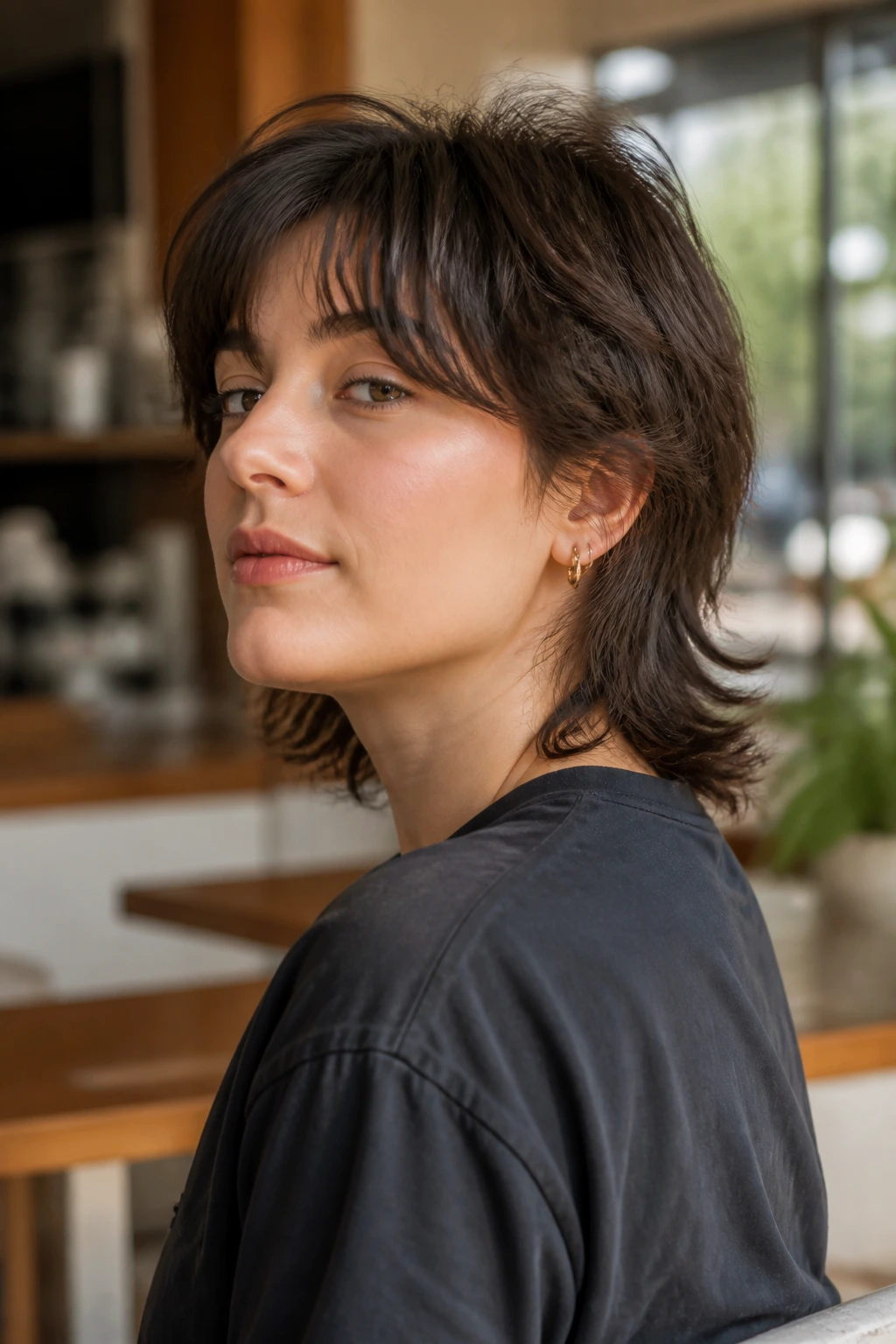
Soft Office Wolf: Keep the fringe longer, avoid shaved sides, and leave the nape just above collar length. It reads cleaner while still keeping the layered silhouette.
Curl-First Wolf: Cut it with the natural curl pattern in mind and leave extra length at the perimeter so shrinkage doesn’t wreck the balance. This works best on hair that springs up fast.
Punk Edge Wolf: Add an undercut or a micro fringe and keep the ends heavily textured. A little color block or root shadow makes the shape punchier.
Fine-Hair Lift Wolf: Reduce the number of layers, keep the ends blunt enough to hold density, and use lightweight mousse instead of cream. The point is lift without see-through ends.
Grow-Out Wolf: Leave the front pieces a bit longer and keep the back soft, not shaggy. That gives you room to stretch the trim cycle without losing the shape.
Trim Schedule, Grow-Out, and Care
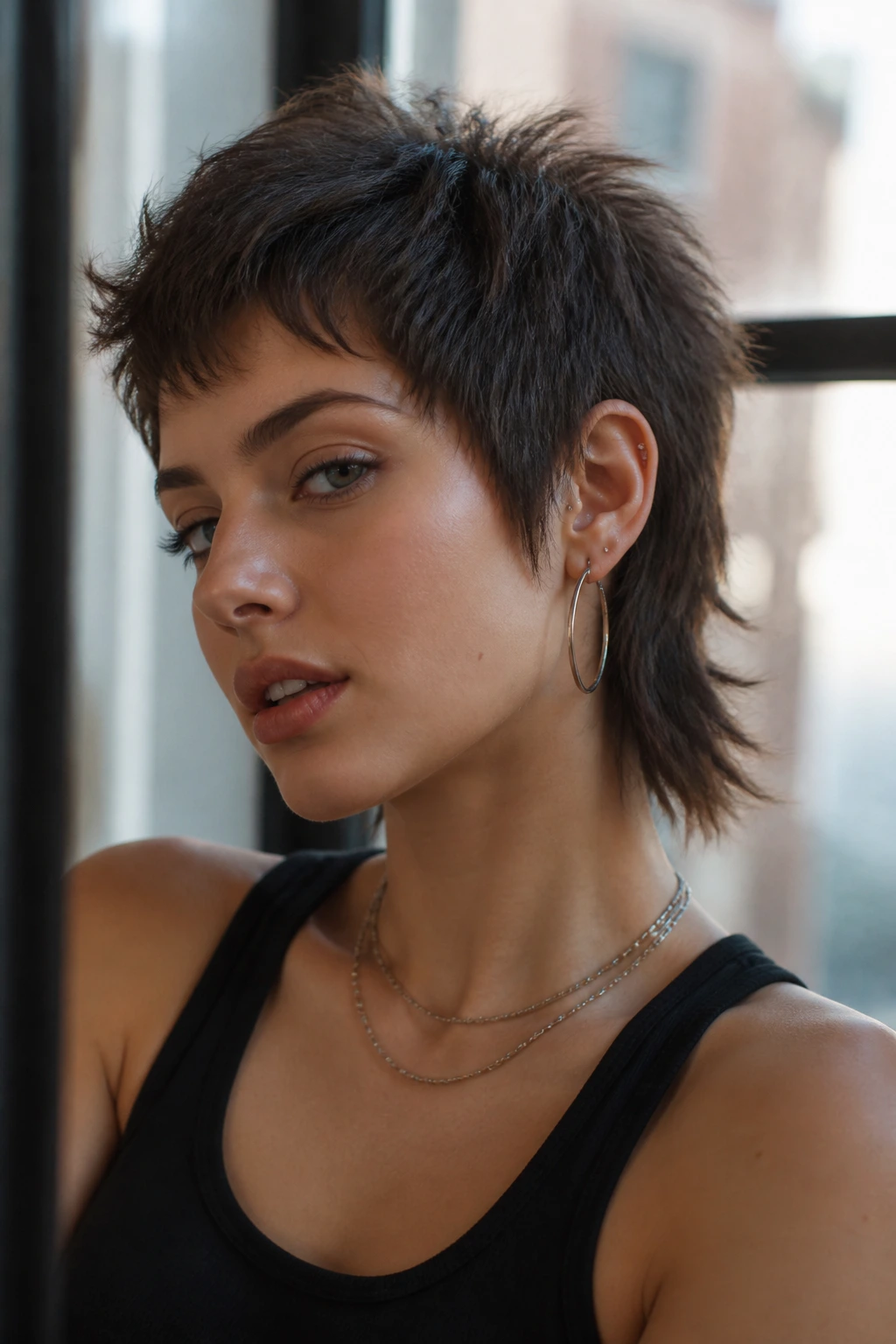
Short wolf mullets need regular attention, but they’re not high drama if you stay ahead of them. Bangs usually need a touch-up every 2 to 4 weeks, especially if you chose micro fringe or baby bangs. The full shape tends to look its best with a clean-up every 6 to 8 weeks, because that’s when the nape starts to lose the contrast that makes the cut feel sharp.
Between trims, work with the cut’s texture instead of fighting it. Day two hair often sits better than freshly washed hair, especially if you add a little dry shampoo at the roots and a touch of paste through the ends. If your hair is curly, sleep on a satin pillowcase or wrap the top loosely so the crown doesn’t get crushed flat overnight.
Wash frequency depends on scalp and texture, not trend. Fine hair may need washing every day or every other day because the crown goes soft fast. Coarser or curlier hair can usually go longer. The important part is keeping the shape alive at the roots and not overloading the ends with conditioner.
Frequently Asked Questions
Can a short wolf mullet work on fine hair?
Yes, but the cut has to stay light and controlled. Ask for shorter crown layers for lift, keep the ends from getting too wispy, and use mousse or dry shampoo instead of heavy creams.
What’s the difference between a wolf cut and a wolf mullet?
A wolf cut usually leans shaggy and blended, while a wolf mullet keeps more contrast between the top, sides, and back. On short hair, that contrast is what gives the cut its shape and attitude.
How often do I need to trim the bangs?
Micro bangs and baby bangs usually need a trim every 2 to 3 weeks. Curtain bangs can stretch longer, often closer to 4 to 6 weeks, because the shape still looks good as they grow.
Will this work if my hair is very straight?
It can, but you’ll need more help from the cut and the styling. Ask for texture through the ends, not just around the fringe, and use a flat iron or round brush to bend the pieces so the shape doesn’t fall flat.
Is this a good choice if I wear glasses?
Absolutely, especially if you choose a temple-tucked or curtain-bang version. Keeping the sides light stops the hair from crowding the frames, and the fringe can sit above or around them without fighting for space.
How do I stop it from turning into an awkward grow-out?
Keep the nape trimmed and don’t let the fringe run wild. A short wolf mullet starts looking like a shapeless shag once the back gets too long and the front loses its outline, so small trims matter more than big fixes later.
Can I ask for this if I have thick hair?
Yes, but the stylist needs to remove weight in the right places. Interior layering and controlled debulking matter here; otherwise the sides can puff out and the cut will feel boxy instead of shapely.
What if my crown has a strong cowlick?
Tell your stylist before they cut. A cowlick at the crown changes where the layers should land, and on short hair it can either help the lift or kick the hair into a stubborn bump if it’s ignored.
The Shape That Keeps Working
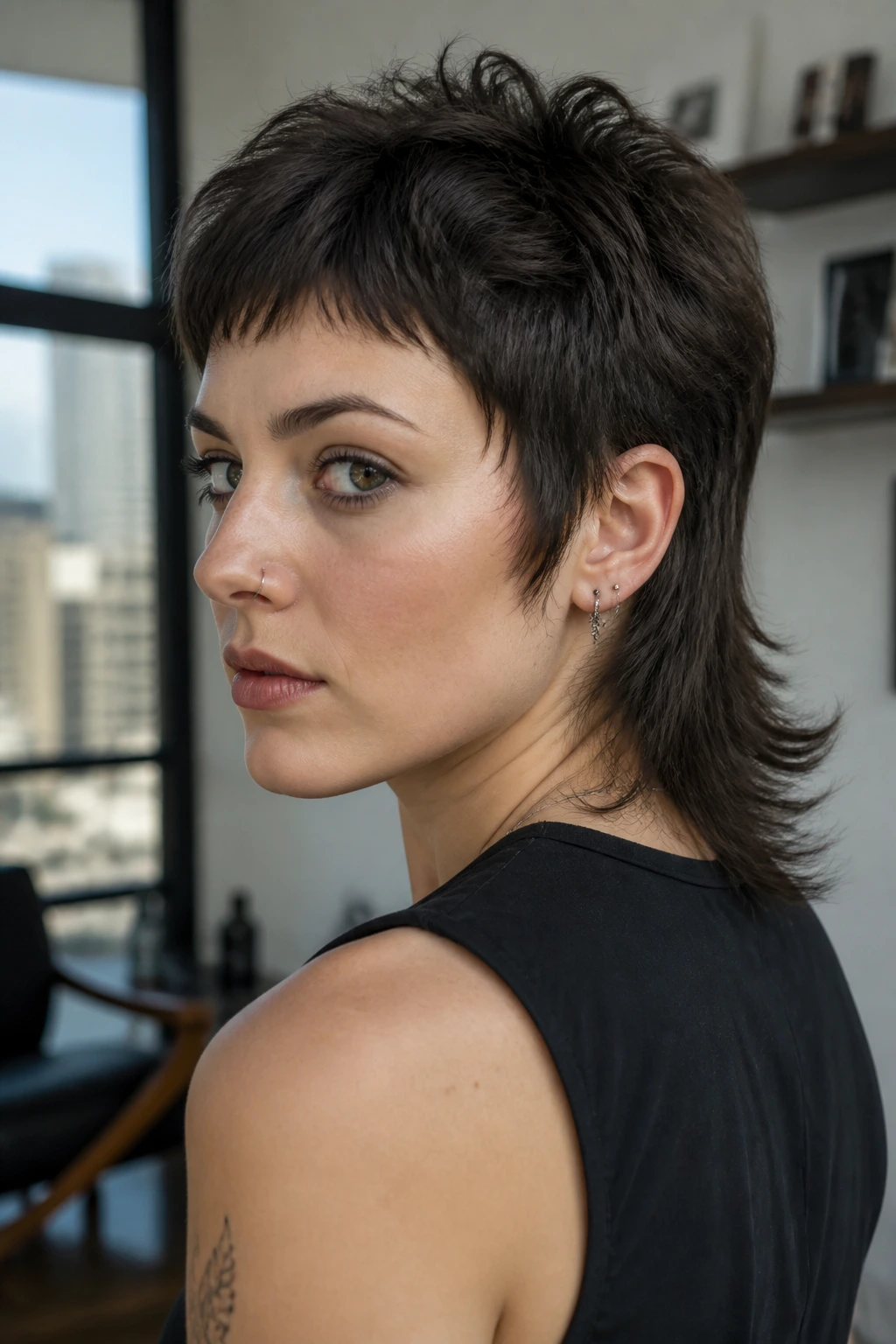
The best short wolf mullet isn’t the loudest one. It’s the one that still looks like itself after you’ve washed it, slept on it, and left the house a little too fast. That’s why this cut keeps showing up on short hair: it gives the crown a lift, the back some swing, and the face enough softness or edge to match the person wearing it.
If you’re choosing between versions, start with the one that matches your texture first and your mood second. A soft feathered cut on the wrong hair type is still the wrong cut, no matter how many photos you save. Get the silhouette right, keep the nape under control, and the rest is mostly styling.
And that’s the part I like most. The short wolf mullet does not demand perfection. It asks for shape, some honest texture, and a little maintenance. After that, it can carry more style than its length suggests — and it keeps doing that long after the salon mirror is out of sight.
