



Fair skin can make auburn hair look electric—or muddy, if the red sits in the wrong place. The strongest auburn mullet hairstyles for fair skin keep the warmth close to the face, give the crown enough lift to stop the style from collapsing, and leave the nape with enough softness that the cut feels lived-in rather than severe.
That balance matters more than people think. A mullet is not just “short in front, long in back.” The top needs movement, the sides need breathing room, and the back needs enough length to read as a shape instead of a stray afterthought. When auburn lands on that structure, it picks up light in the feathered layers and gives pale skin a little more life without forcing the whole look into heavy makeup territory.
I’m partial to auburn shades that lean copper, cinnamon, strawberry, or soft chestnut on fair complexions. Cherry red can be gorgeous, but it wants a stronger haircut and a little more attitude; muted auburn is easier to wear, easier to grow out, and less likely to make your face look red instead of warm.
The good ones do not all behave the same way. Some are soft enough for straight hair and office days. Some are shaggy and wild and need almost no coaxing. Some live or die by the fringe. The range is wider than people expect.
Why These Auburn Mullets Stand Out on Fair Skin
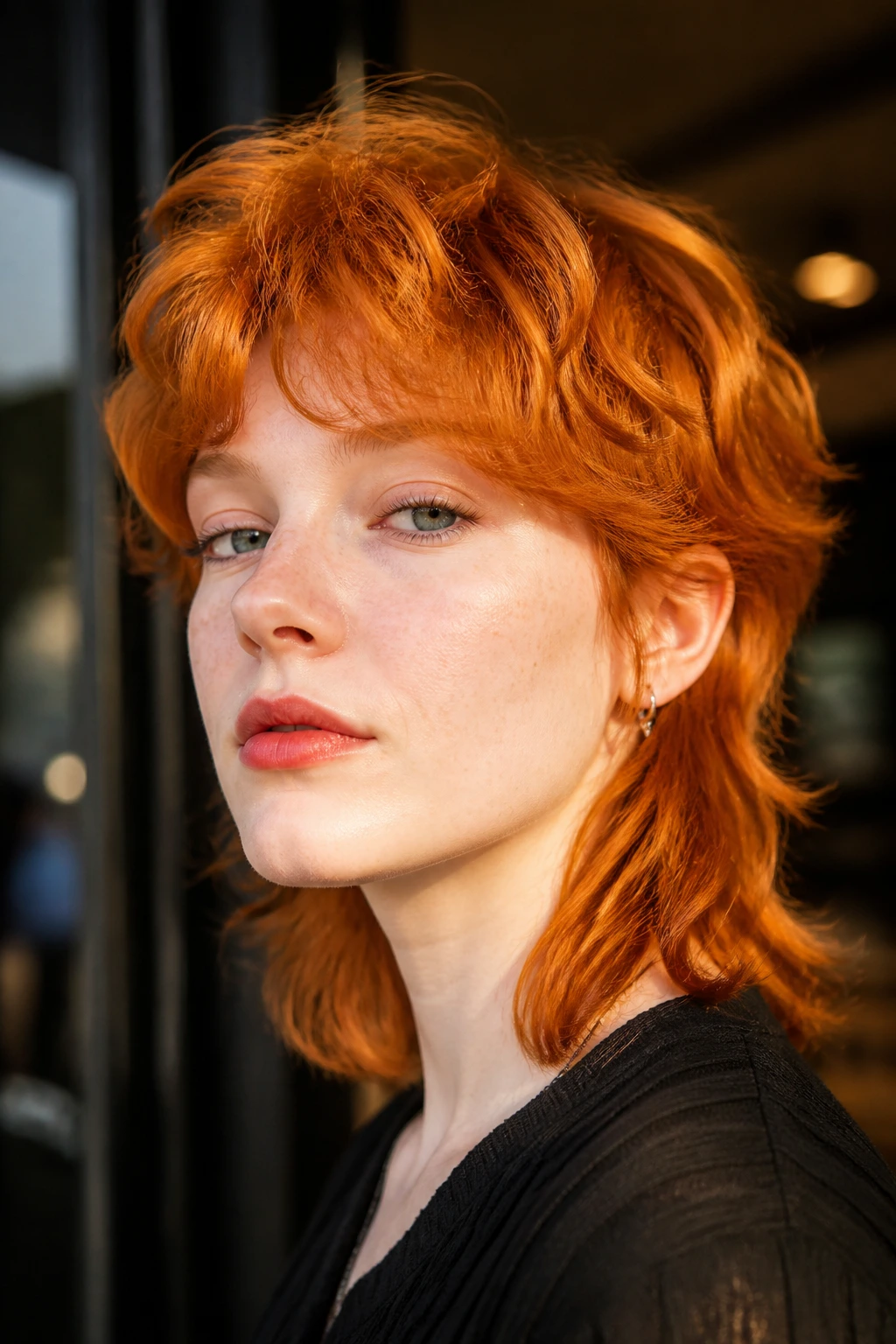
- Copper does the heavy lifting: On fair skin, copper and strawberry tones wake up the face fast because they reflect light instead of sinking into the complexion.
- The cut keeps the color moving: Short crown layers, face-framing pieces, and a longer tail stop auburn from reading like one flat color block.
- There’s a shade for every undertone: Pink-leaning fair skin usually likes rose or strawberry auburn; peachy or neutral skin often takes cinnamon and chestnut better.
- The style can go soft or sharp: Feathered ends feel airy, while razored edges and micro bangs give the same color a harder edge.
- It grows out with shape: A good mullet keeps some structure even after a few weeks, which matters if you do not want a panic haircut every month.
- Texture makes it easier, not harder: Wavy and curly hair can make auburn look richer because the bends break up the light.
1. Copper Feathered Mullet

Copper is the safest place to start if you want auburn to look awake on fair skin without drifting into red overload. Feathered layers around the crown and ears stop the shade from sitting in one heavy sheet, which matters when the complexion already runs light.
I like this version when the top gets a little lift from a round brush and the ends are point-cut instead of blunt. It feels airy, not precious. If your hair has any natural bend, let it stay slightly imperfect; that softness is what keeps the copper from looking costume-like.
2. Strawberry Auburn Curtain-Bang Mullet

Strawberry auburn has a softer edge than cherry, and that makes it one of the easiest reds for pale skin to wear. The curtain bangs split around the face, so the color lands near the cheekbones instead of crowding the forehead.
This cut is especially good if you want the mullet shape to feel less rebellious and more romantic. Ask for the curtain fringe to start around the brow and angle down toward the cheekbones, then keep the back lightly layered so it moves when you turn your head.
- Best for: straight to wavy hair that needs a little shape at the front.
- Styling note: a small round brush through the bangs gives them that soft swing.
- Color note: keep the strawberry tone warm, not neon.
3. Cinnamon Wolf Cut Mullet

This one leans shaggy and a little wild, and that’s the point. Cinnamon auburn sits in the middle ground between red and brown, which keeps fair skin from looking washed while the wolf-cut layering gives the haircut some bite.
I reach for this shape when the hair has thickness or natural wave. The crown stays choppy, the sides break apart instead of hanging straight, and the back carries enough length to keep the silhouette from turning into a pure shag. It wants texture spray more than polish.
4. Cherry Auburn Micro-Fringe Mullet
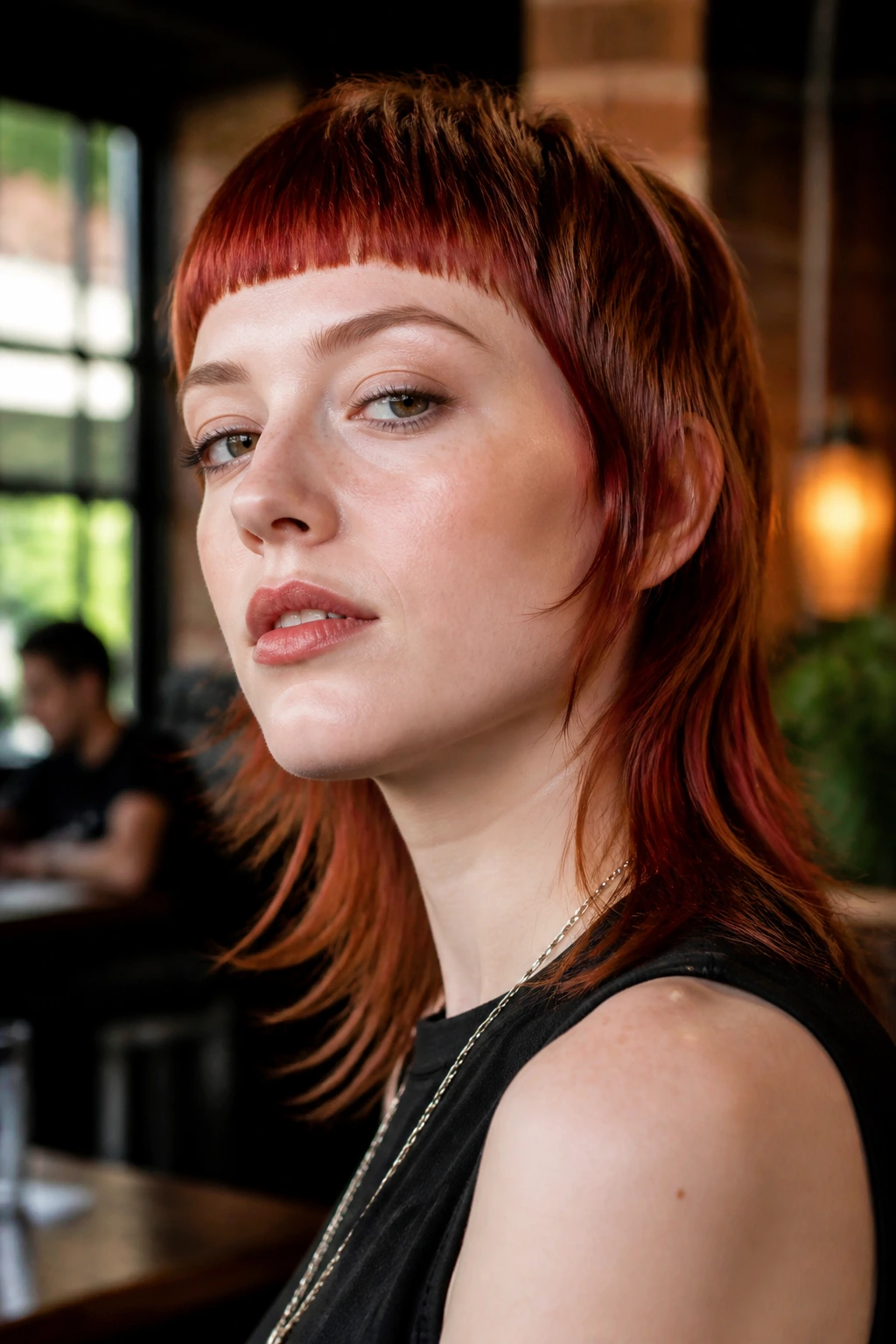
A micro fringe changes everything. Suddenly the haircut feels sharper, the auburn reads brighter, and fair skin becomes part of the contrast instead of blending into the background.
This version is not subtle, and that is why it works. Keep the fringe short but not blunt, and let the sides fall a touch longer so the face does not look boxed in. A cherry auburn glaze can be stunning here, especially if you like stronger brows, liner, or a slightly punk finish.
- Best for: oval or heart-shaped faces.
- Ask for: a tiny fringe that sits above the brows, not a heavy block.
- Finish with: a matte paste at the ends so the cut keeps its edge.
5. Rose Auburn Shag Mullet
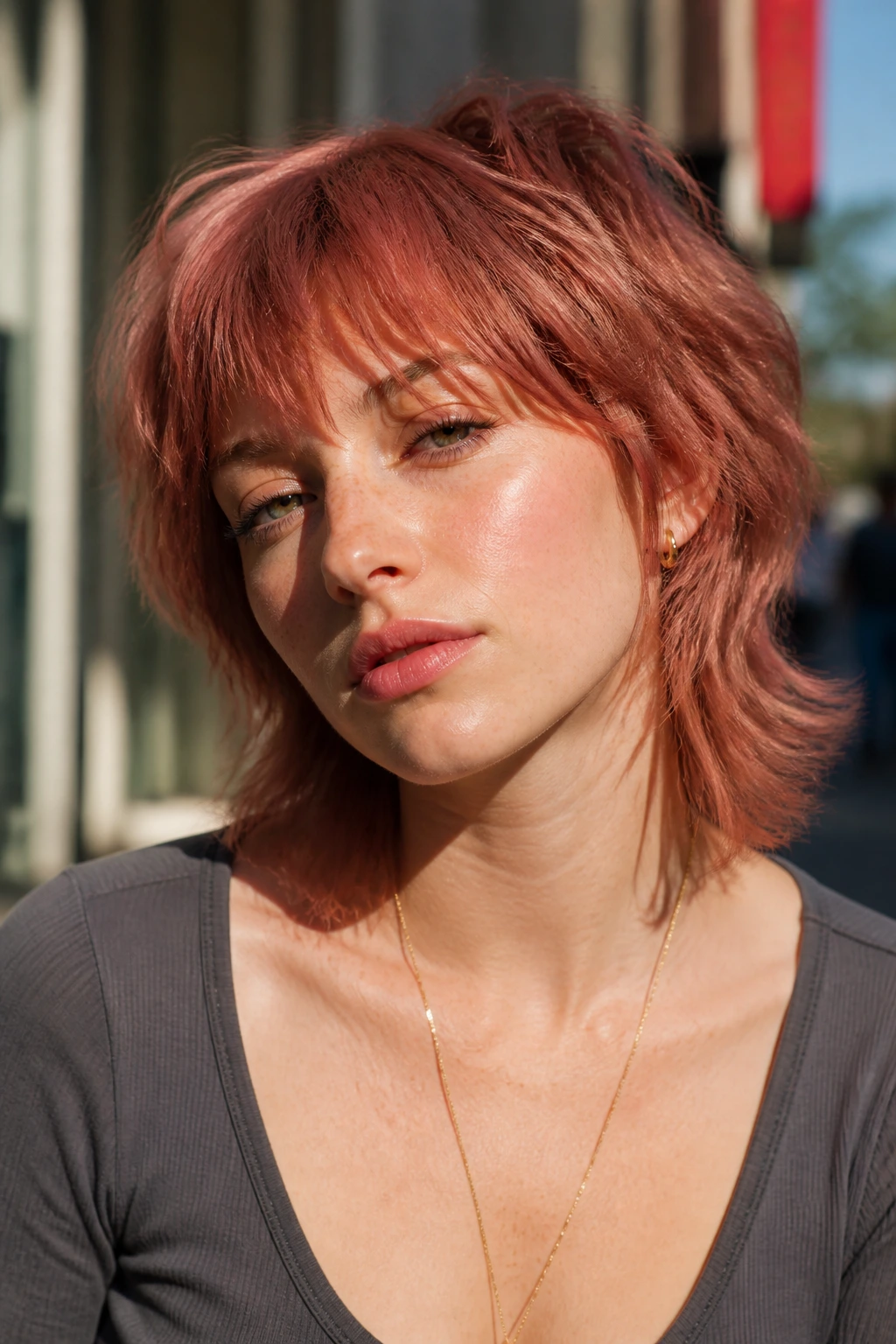
Rose auburn has a blushy softness that flatters cool or pink-leaning fair skin better than harsher reds do. It gives the face warmth without making the whole look feel hot.
The shag shape keeps the color from reading too sweet. You want pieces around the cheekbones, some broken texture through the crown, and ends that flick instead of hang. I like this best when the hair is medium density and the part is just a little off-center.
6. Burnt Sienna Razor Mullet
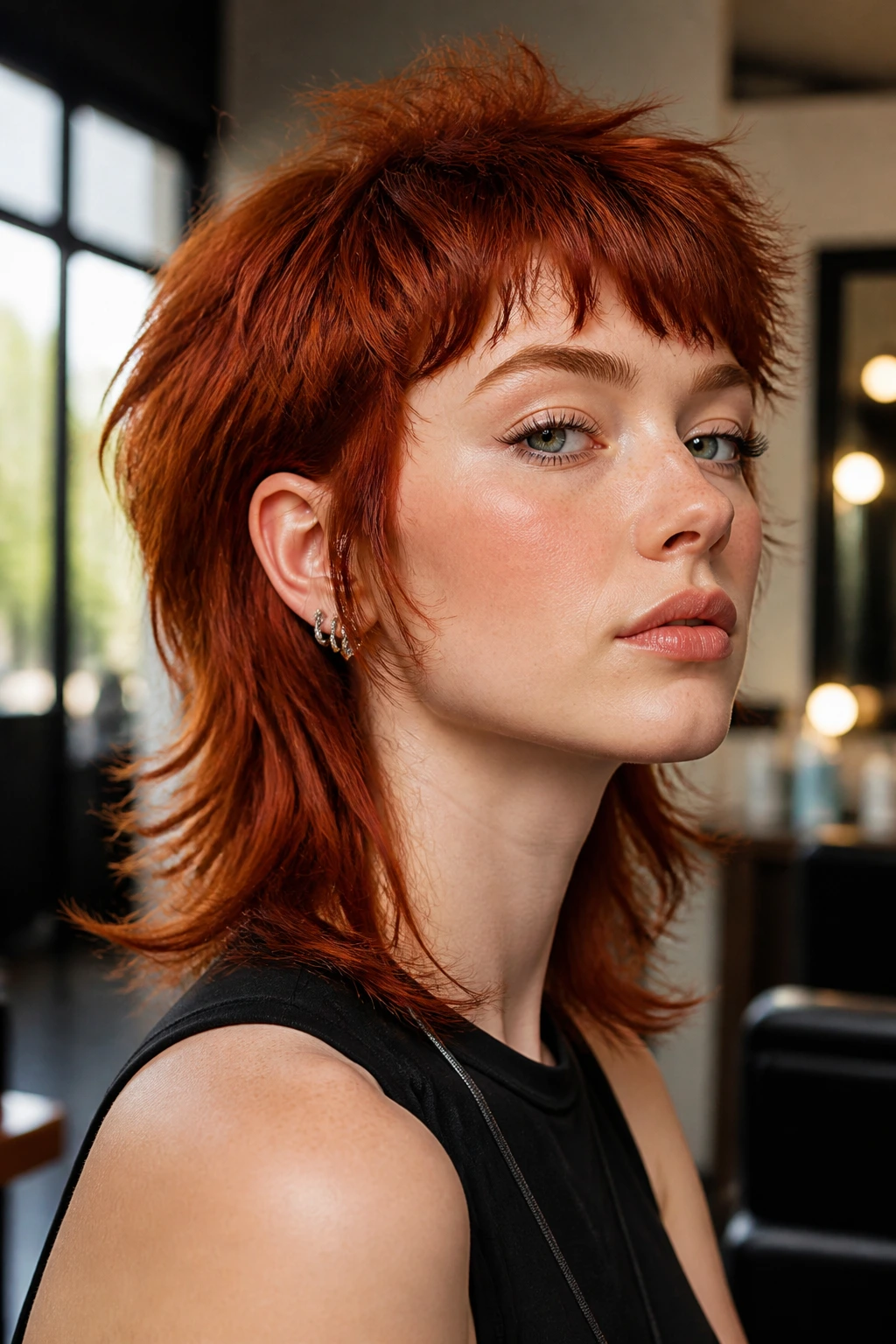
Burnt sienna has more earth in it, which is useful if you want auburn without brightness that feels loud. Razor-cut edges give this style a crisp outline, and that sharpness makes the color look intentional on fair skin.
This is a good choice for thick hair because the razor can remove bulk without flattening the shape. Keep a light styling balm on hand; too much product and the ends go stringy. Too little and the razored pieces can puff out in awkward places.
7. Chestnut Auburn Soft-Layer Mullet

This is the quiet version, and honestly, sometimes that is the smartest version. Chestnut auburn carries enough red to warm the complexion, but enough brown to keep the cut wearable in daylight, office light, and bad bathroom lighting alike.
Soft layers matter here. You want the crown to lift, the sides to stay loose, and the back to taper gently instead of dropping into a hard tail. On fair skin, this shade is a good choice if your face already flushes easily and you do not want the hair color competing with it.
8. Curly Auburn Mullet with Airy Fringe
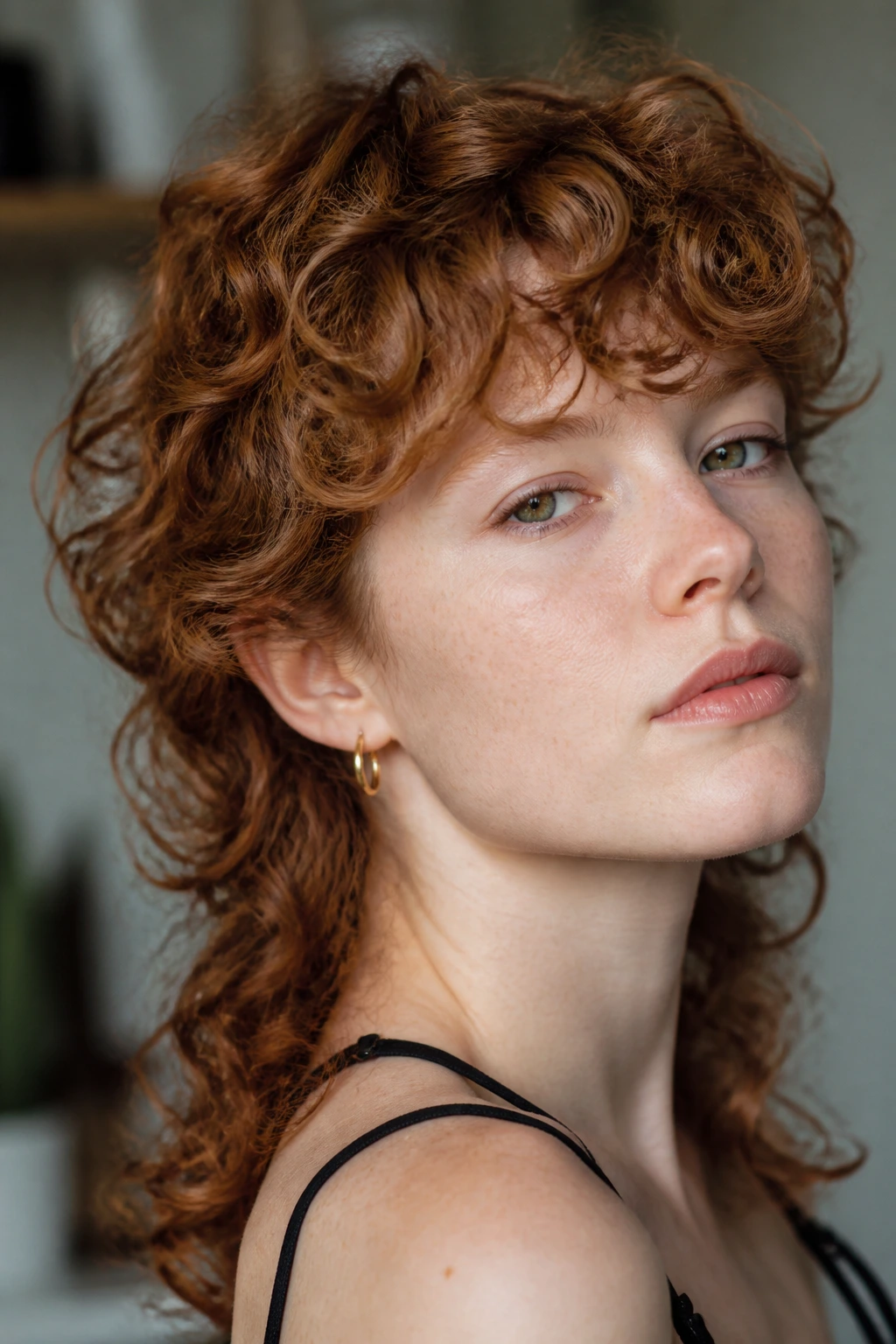
Curly hair makes a mullet come alive when the layers are cut to the curl pattern instead of fighting it. Auburn deepens the shape because every bend catches a different bit of light, which is a gift on fair skin.
Ask for an airy fringe that shrinks up a little once dry, not a dense bang that sits heavy across the forehead. A diffuser, a leave-in cream, and a small amount of gel are enough. The goal is bounce, not helmet.
- Best for: 2C to 3B curls that need room at the crown.
- Styling note: scrunch while damp, then leave it alone.
- Color note: copper or cinnamon auburn usually reads richer than flat red on curls.
9. Copper Balayage Long Mullet
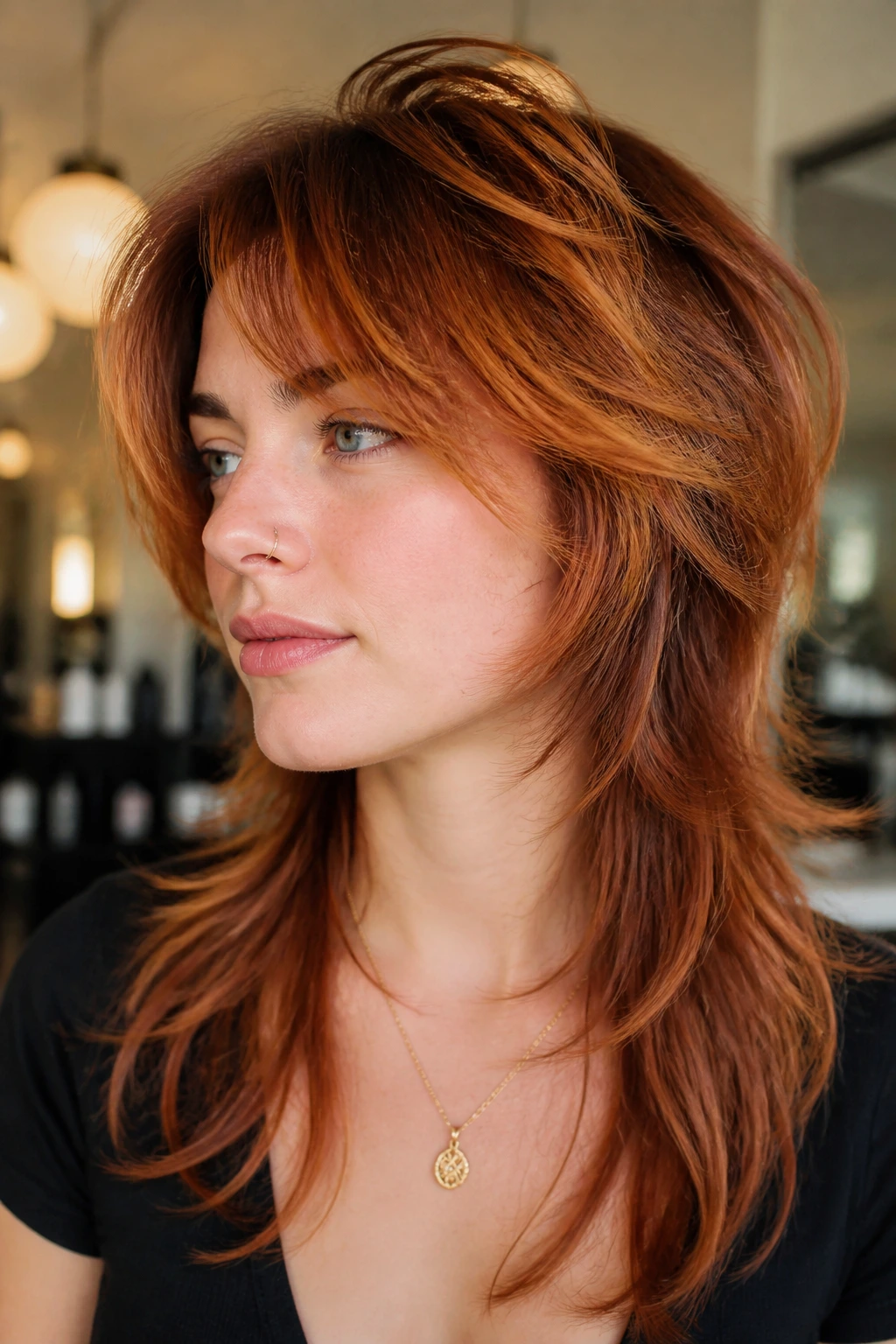
If you want the mullet silhouette but do not want to lose length, this is the one I’d start with. The balayage keeps the copper moving through the layers, and the longer back makes the whole shape feel less drastic.
Fair skin benefits from the brightness around the face and the softer depth through the ends. The longest pieces can skim the shoulders or pass them a little, which gives you room to wear it up, braid it, or let it hang. It grows out cleanly too, which I appreciate.
10. Mahogany-Root Auburn Mullet
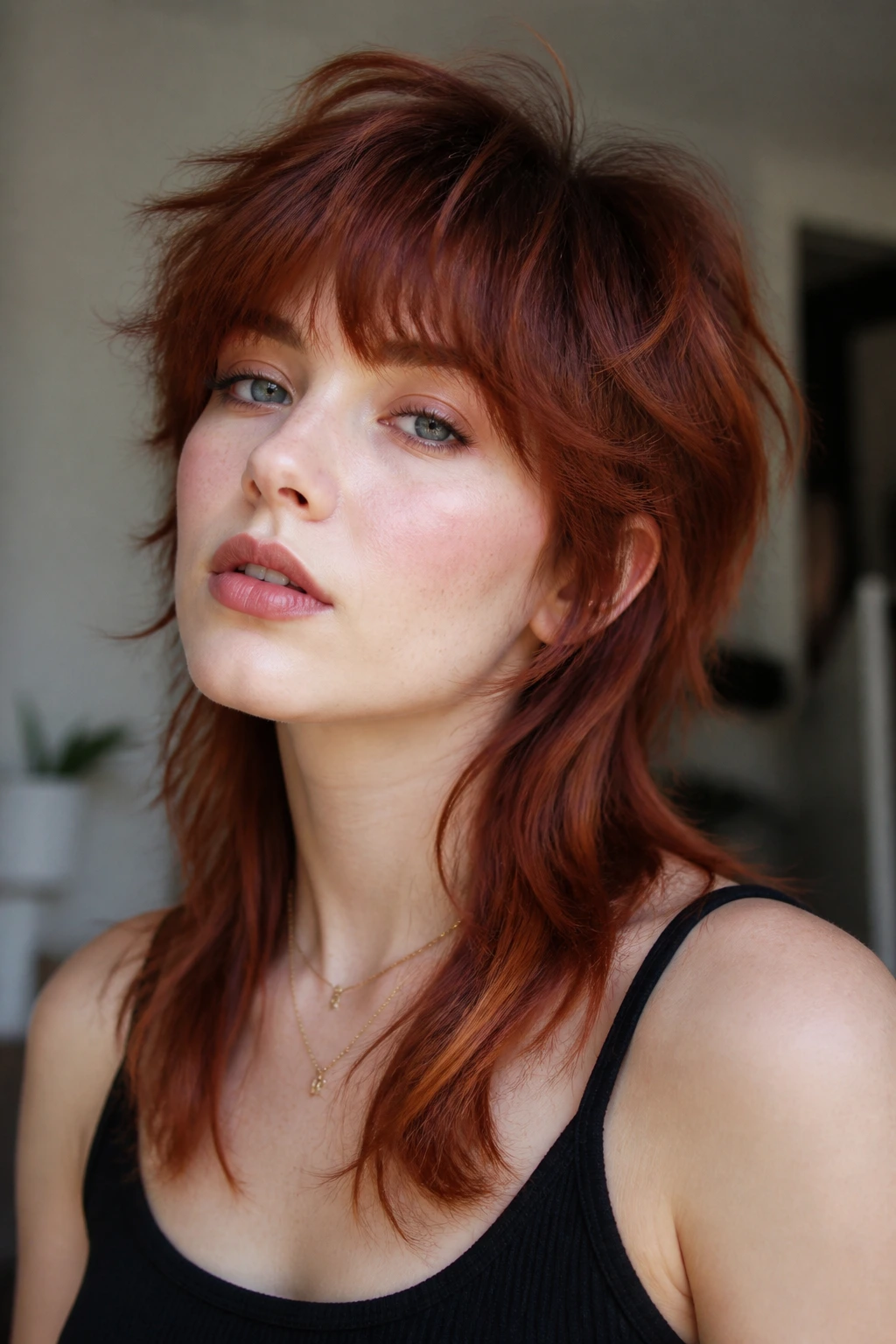
A darker root buys you softness at the scalp and a little breathing room between salon visits. Mahogany roots paired with warmer auburn through the mid-lengths keep fair skin from being washed out by one flat red tone.
This works especially well if your natural color is already medium brown or dark blonde. The root shadow grounds the cut, the brighter lengths keep it alive, and the whole style looks more expensive than it should. If your skin is very pale, ask for the root to stay soft, not inky.
11. Ginger Auburn Boho Mullet
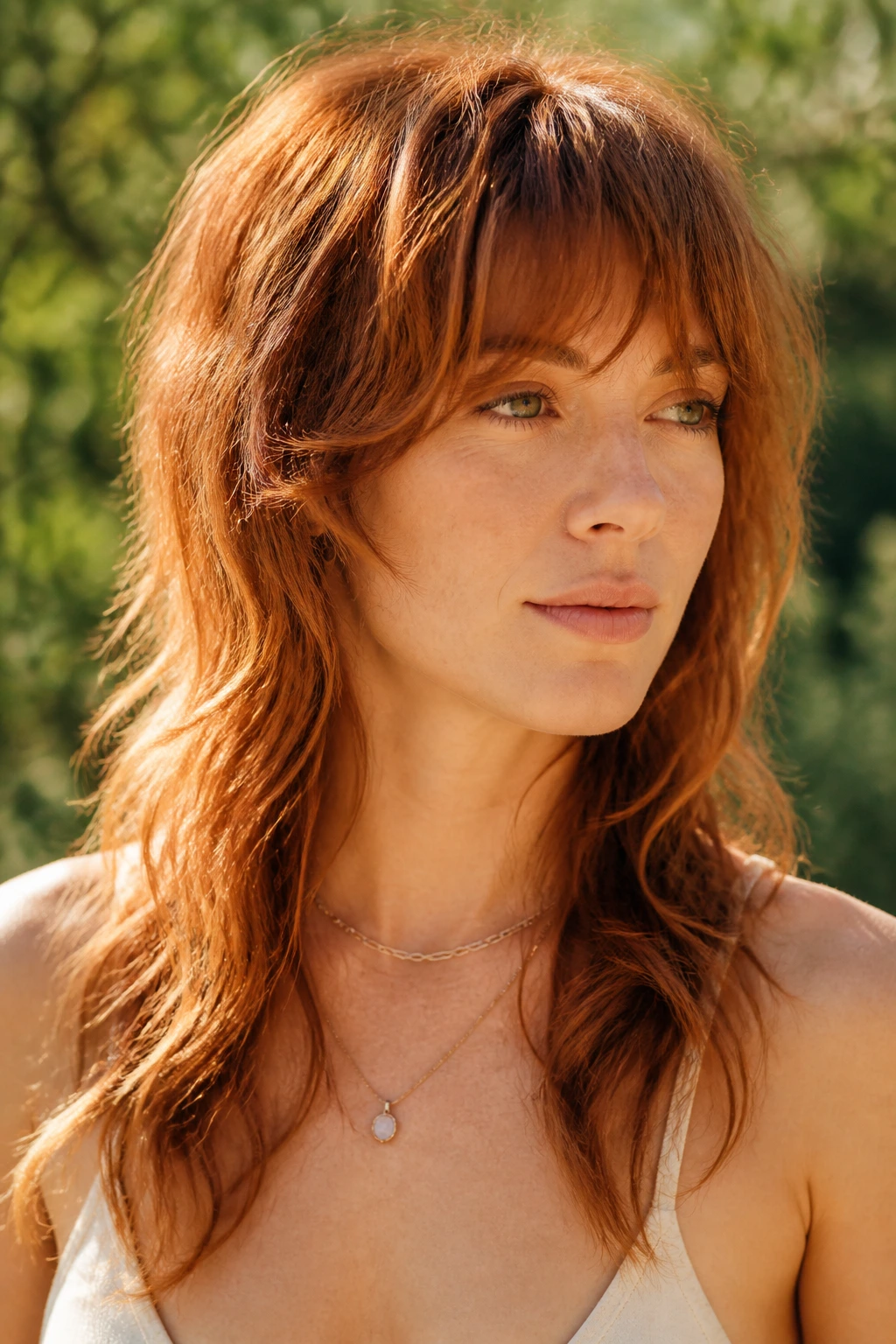
Ginger auburn has a sunlit feel that suits fair skin with peach or neutral undertones. It looks loose, casual, and a little bit late-summer even when the weather has nothing to do with it.
The boho version needs movement. Think soft waves, broken ends, and a fringe that doesn’t sit too perfectly in place. A little sea salt spray is enough; too much and the hair turns dry and rough, which steals the warmth out of the color.
12. Tapered Auburn Mullet with Side Part
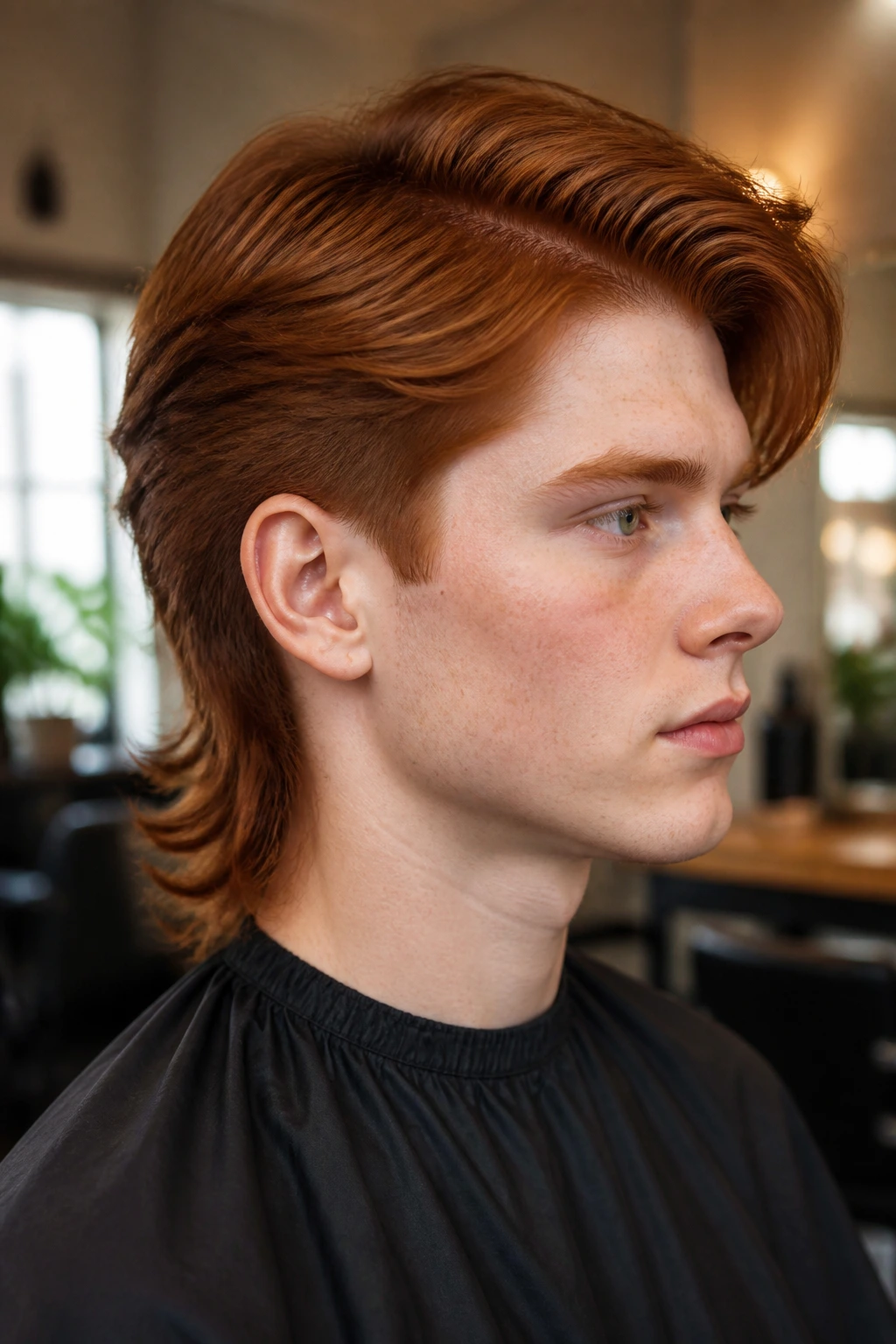
A side part changes the whole mood. It shifts the volume, opens one side of the face, and gives auburn a more polished read on fair skin than a center part usually does.
This cut works well when you want the mullet shape but not the obvious “I have a mullet” feeling. The sides taper gradually, the top keeps lift, and the back can still carry length without looking shaggy. It’s tidy without being stiff.
- Best for: rounder faces that need a little vertical line.
- Ask for: the part to be cut into the shape, not just styled later.
- Finish with: a light smoothing cream through the front and a touch of texture at the back.
13. Smoked Copper Mullet with Bottleneck Bangs

Bottleneck bangs are narrow in the center and open wider near the cheekbones, which is one of the easiest ways to soften a mullet on fair skin. Smoked copper keeps the shade muted enough that the bangs do not take over the whole face.
I like this version because it has shape without shouting. The fringe guides the eye downward, the crown stays airy, and the longer layers give the color somewhere to settle. It is a good middle path if you want something interesting but not harsh.
14. Disconnected Auburn Mullet
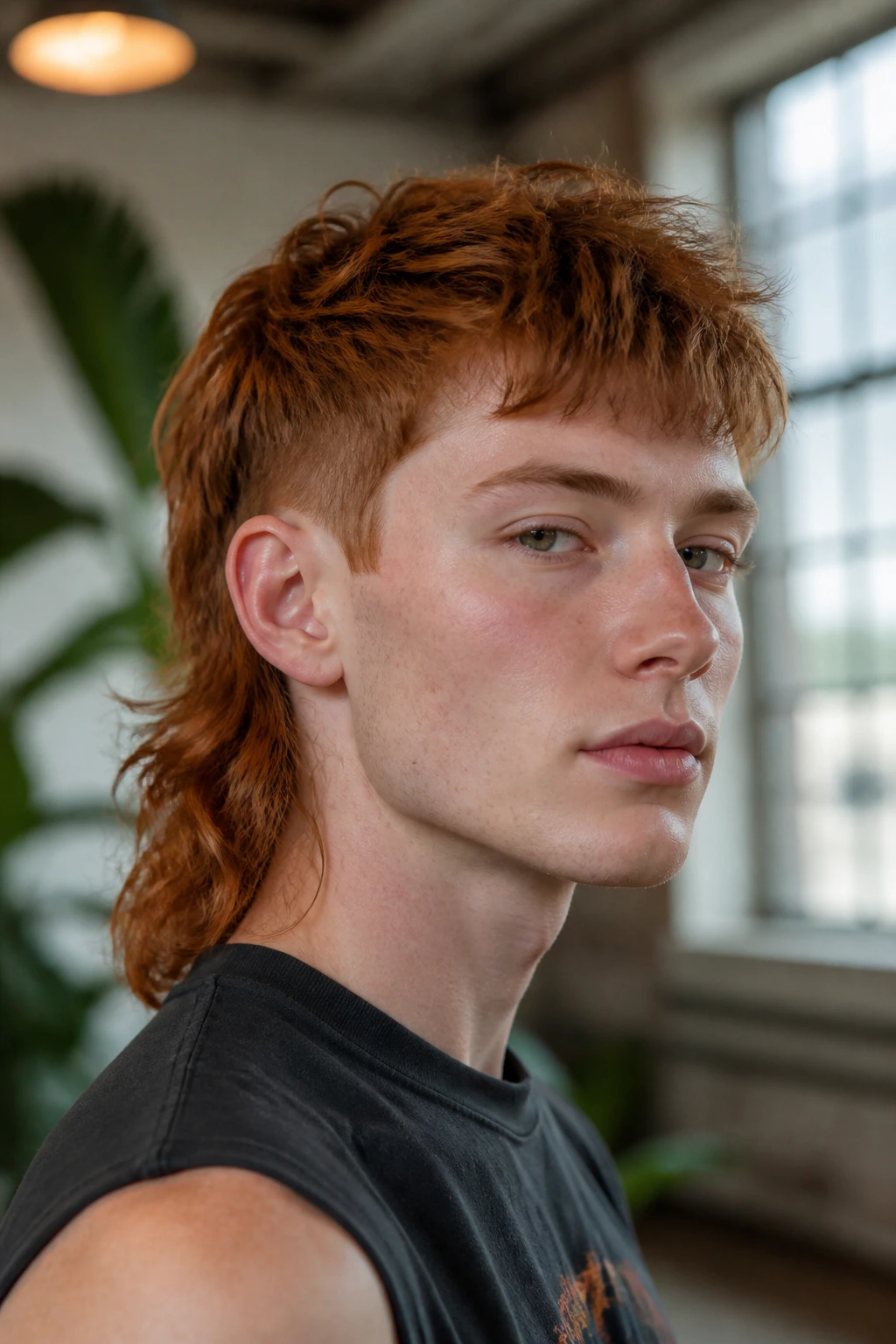
A disconnected cut gives the mullet a visible contrast between the shorter top and the longer lengths underneath. Auburn makes that contrast look richer, especially on fair skin where the color can otherwise flatten out.
This is the more fashion-forward choice. The trick is to keep the disconnect deliberate, not sloppy. If the top is too soft and the back too heavy, the whole thing loses tension. If you like a cut with attitude, this is one of the clearest ways to get it.
- Best for: straight or slightly wavy hair.
- Styling note: use a texturizing spray where the top meets the longer layers.
- Color note: copper or cherry auburn helps the disconnect read on purpose.
15. Long Auburn Mullet with Wispy Curtain Bangs

If you want length to stay part of the story, this is the friendliest answer. Wispy curtain bangs soften the front, and the longer back keeps the mullet from feeling like a dramatic chop.
On fair skin, this style works best when the auburn is warm but not too bright. Copper, cinnamon, and soft strawberry tones all sit well here. I like it because it gives you movement around the face without removing so much hair that you lose styling options.
16. Tousled Auburn Mullet with Face-Framing Pieces
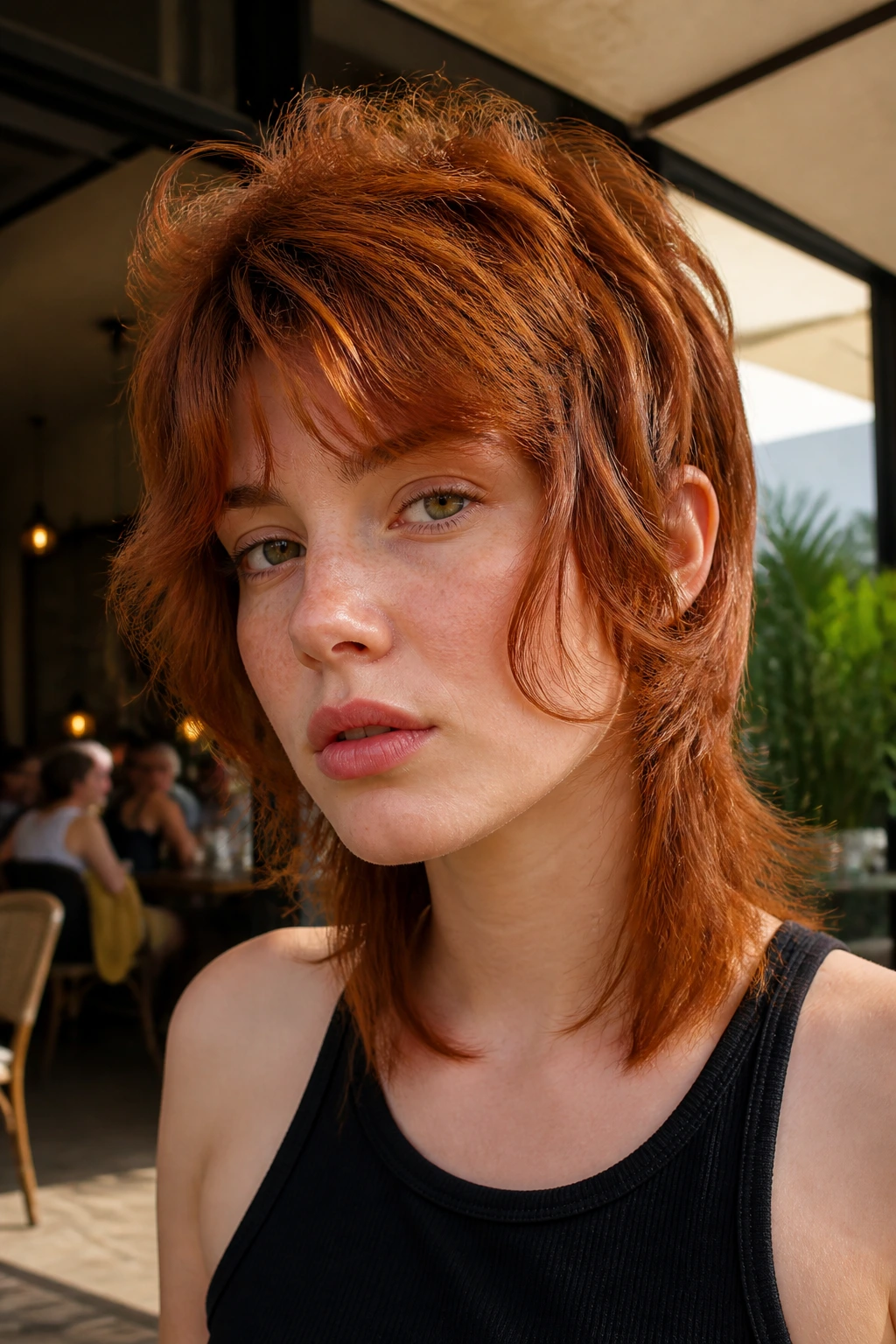
This is the version that looks like you styled it in three minutes and somehow got lucky. The face-framing pieces land at cheekbone or jaw level, which is enough to keep fair skin from going pale next to the red.
The best part is the ease. A little mousse at the roots, a scrunch of texture spray, and you’re done. The cut does the work if it’s layered well. I’d choose this if you want a casual mullet that still looks planned.
17. Auburn Mullet with Permed Waves
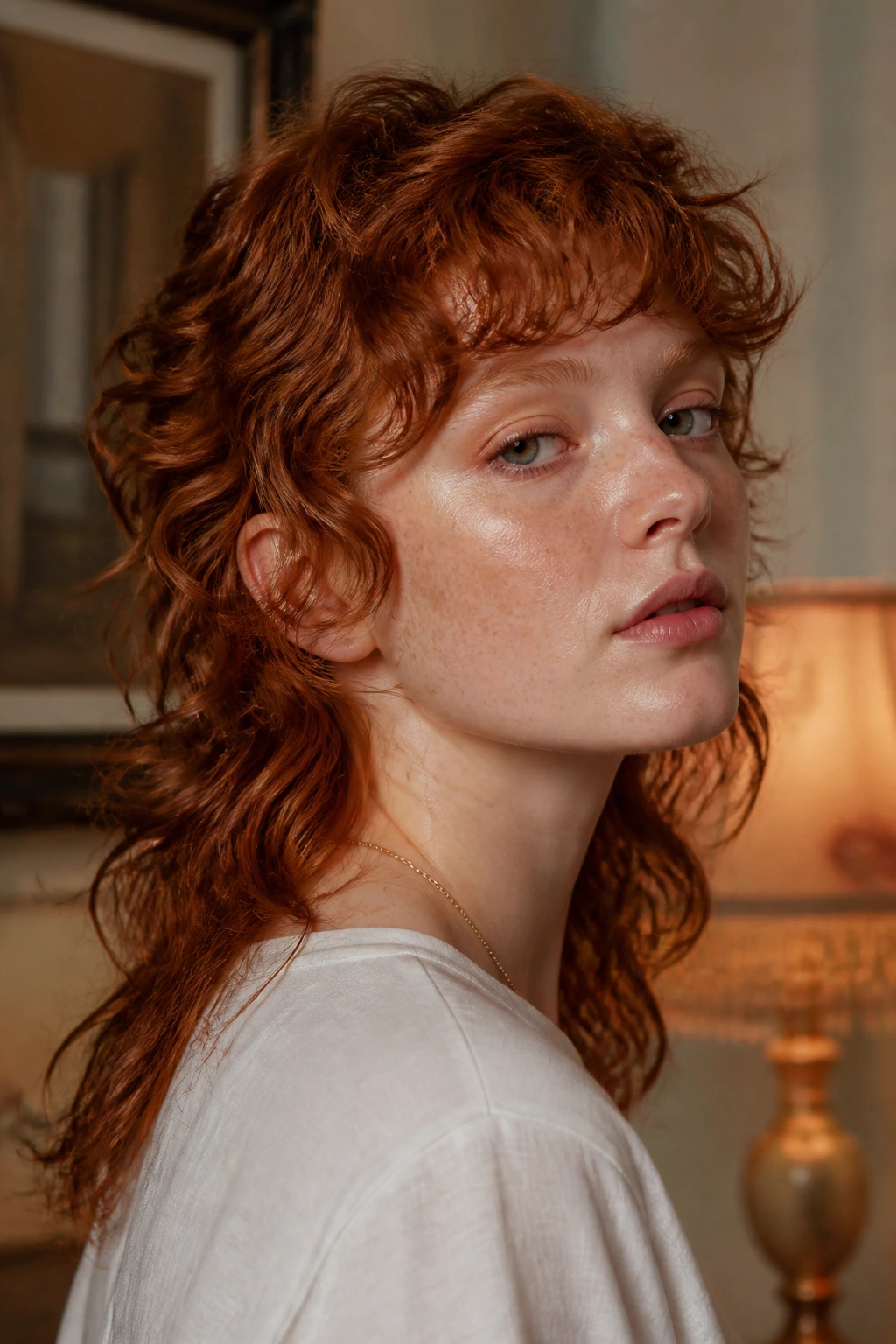
Permed waves bring a springy, old-school energy that feels sharp in the right auburn tone. On fair skin, the movement stops the color from looking flat or overly dense.
This cut loves moisture. Use a soft cleanser, a leave-in cream, and a diffuser if you want to keep frizz under control. The layers should be long enough that the curl pattern can expand without ballooning outward. When it’s cut well, the back has a very good bounce.
18. Dark Copper Mullet with Honey Face-Framing Strands
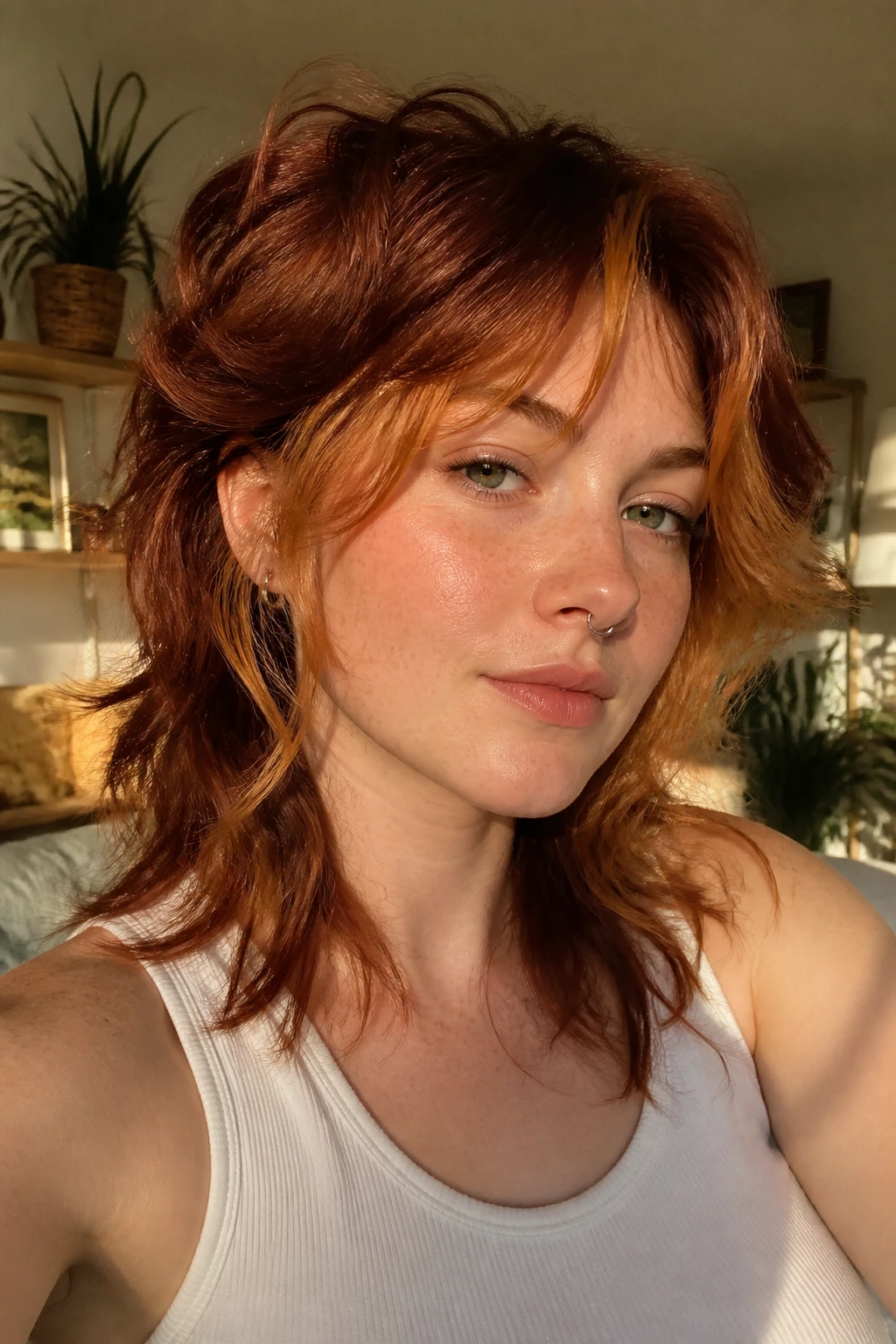
The contrast is the whole point here. Dark copper through the body keeps the base rich, while honey-toned strands around the face act like a built-in highlight on fair skin.
That front brightness is what makes the cut feel more dimensional and less heavy. I like this version when someone wants red hair but not a full-head copper shock. The face-framing strands should be subtle enough to blend, not chunky enough to look striped.
- Best for: people who want brightness near the face only.
- Ask for: the front pieces to be lighter by just a level or two, not a full blond contrast.
- Finish with: a gloss so the copper and honey tones stay shiny together.
19. Side-Swept Auburn Mullet

A side-swept fringe turns the mullet into something softer and a little more romantic. It also gives fair skin a gentler frame, which is useful if you do not want the auburn to dominate the whole face.
The side sweep works especially well with cinnamon or strawberry auburn. It lets the eye move diagonally across the face, which usually feels more flattering than a hard horizontal line. Keep the sweep loose; if it is too shellacked, the whole cut loses its movement.
20. Shaggy Auburn Mullet with Choppy Ends

This is the low-fuss version that still has shape. Choppy ends stop the cut from looking precious, and auburn brings warmth to all that broken texture.
I like this on hair that dries with a little bend already. You do not need perfect blowout work here. In fact, too much polish can flatten the whole point of it. If your fair skin tends to look pale on gray days, a warm auburn shag like this can keep the face from disappearing into the haircut.
21. Cropped Auburn Mullet Bob
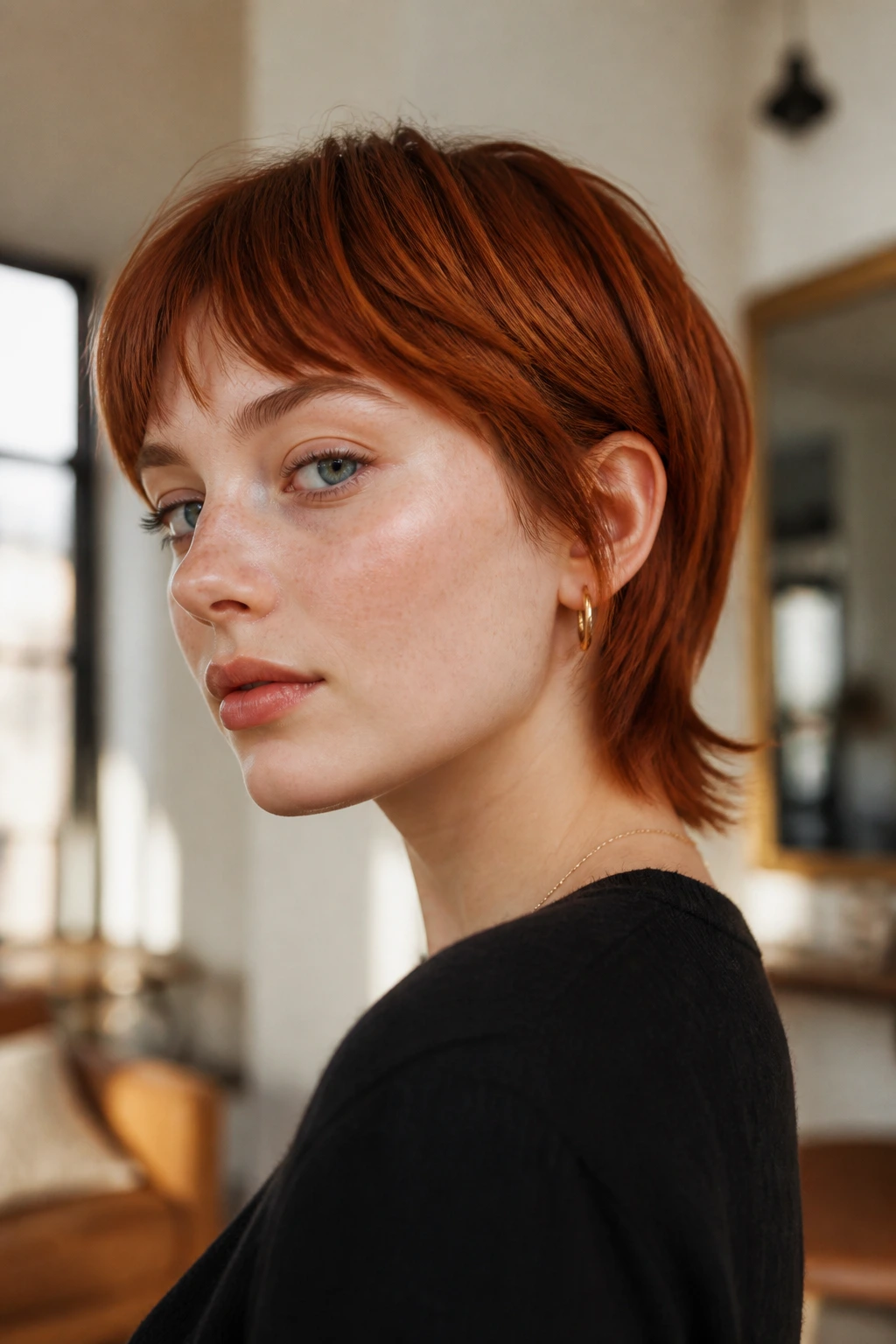
Shorter backs make this one feel cleaner than a longer mullet, but it still keeps the attitude. The bob-like front length balances the nape, and the auburn shade keeps the cut from looking too severe on fair skin.
This is a smart pick if you want a sharper neckline and less hair on the shoulders. The silhouette looks neat, almost architectural, but the color softens it. On fine hair, it can create the illusion of more shape without needing heavy layering.
22. Long Layered Auburn Mullet

Long layers give the mullet a calmer profile. The crown still lifts, the tail still exists, but the overall line stays elongated instead of chopped.
This works well when you’re growing out another cut and don’t want to lose length. Chestnut auburn and copper auburn both sit nicely here because the longer sections show more color variation. The whole style has a softer rhythm than a short mullet, which suits fair skin that needs warmth more than drama.
23. Copper-Toned Curly Mullet with Fringe

Curls plus fringe can be tricky, but when they’re cut with restraint, the result has a lot of personality. Copper-toned color brings brightness to fair skin without needing blonde accents to keep the style alive.
The fringe should sit light and springy, not dense. Let the curls around the sides and back fill out the silhouette naturally. This is one of those cuts that looks best when you resist overcombing it. The curl pattern is the decoration.
24. Auburn Mullet with Undercut Nape
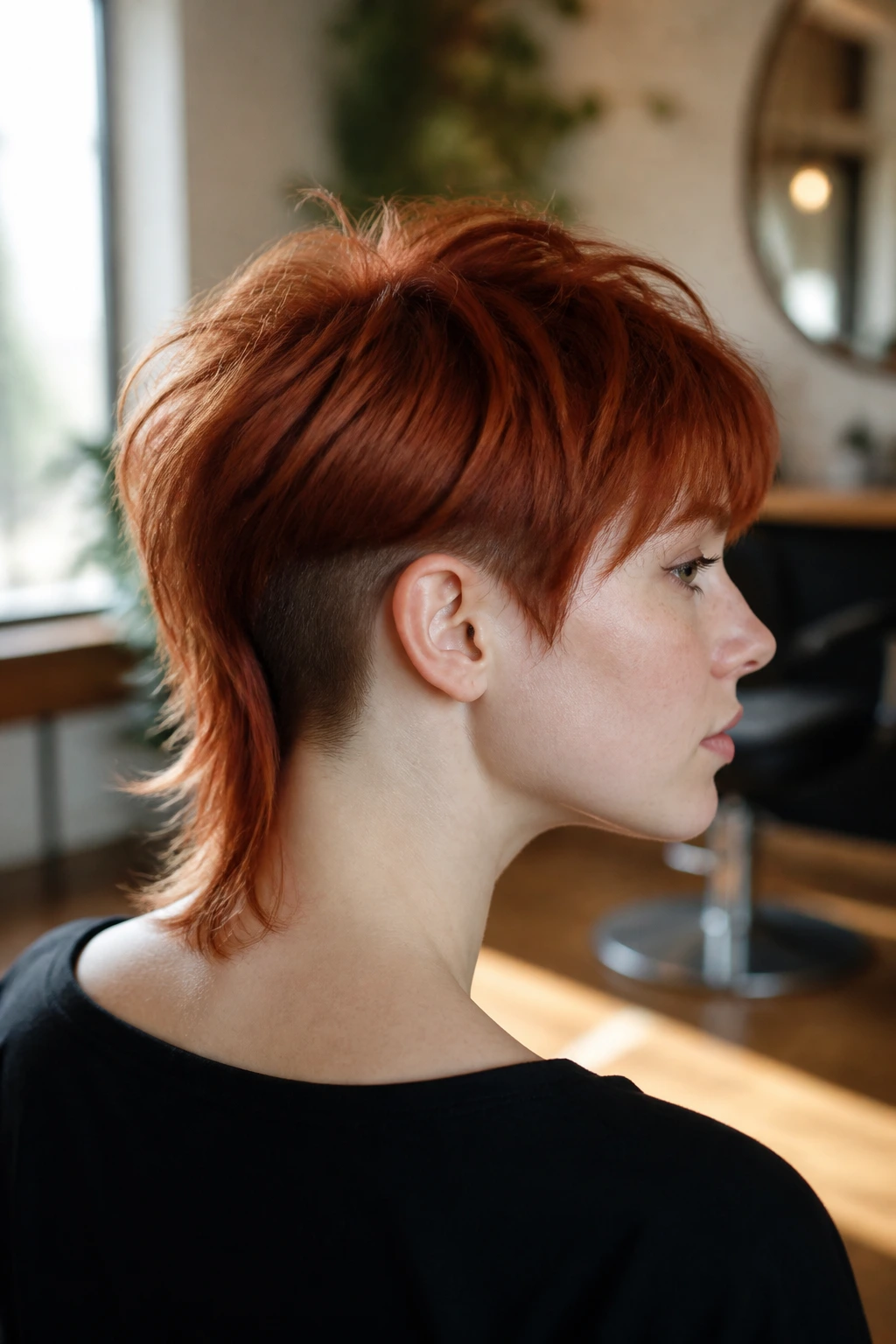
The undercut clears out bulk where the collar usually rubs, which makes this a useful choice for thick hair or hot weather. Auburn softens the undercut line, so fair skin sees color first and edge second.
I like this because it solves a real problem: too much hair at the nape. You still get the length and movement up top, but the base stays lighter and easier to live with. A small amount of styling cream at the crown is enough to keep it from puffing.
- Best for: thick, dense hair that tends to swell in humidity.
- Styling note: blow-dry the top away from the scalp so the shape stays lifted.
- Color note: a warm copper or cinnamon red prevents the undercut from reading too stark.
25. Airy Auburn Mullet with Wispy Bangs

Airy bangs make the whole cut breathe. That matters on fair skin, because a dense fringe can sometimes swallow the face and make auburn feel heavier than it should.
This version keeps the front light and the crown soft. It is one of the easiest looks to wear if you want red hair but do not want a hard line across the forehead. A lightweight mousse and a quick finger-dry are usually enough to get it into place.
26. Glossy Straight Auburn Mullet
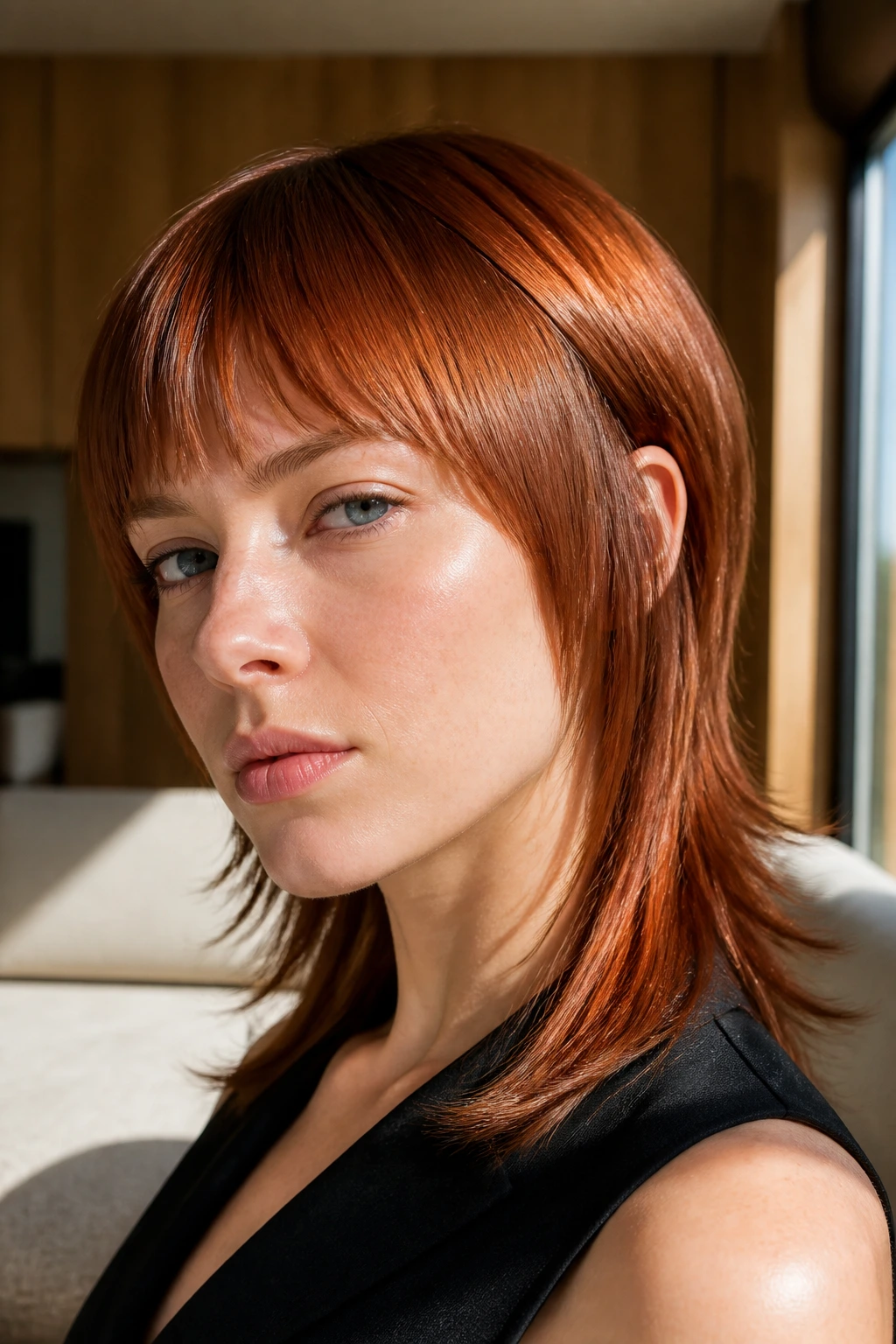
Straight hair does not have to make the mullet look flat. When the finish is glossy and the cut is crisp, auburn turns into clean ribbons of color, which looks especially neat on fair skin.
This one asks for more blow-dry work or a pass with a flat iron, but not much product. Keep serum on the mids and ends only, or the crown will collapse. I like this version when someone wants a sleeker mullet that sits somewhere between tidy and rebellious.
27. Cinnamon Auburn Mullet with V-Cut Back
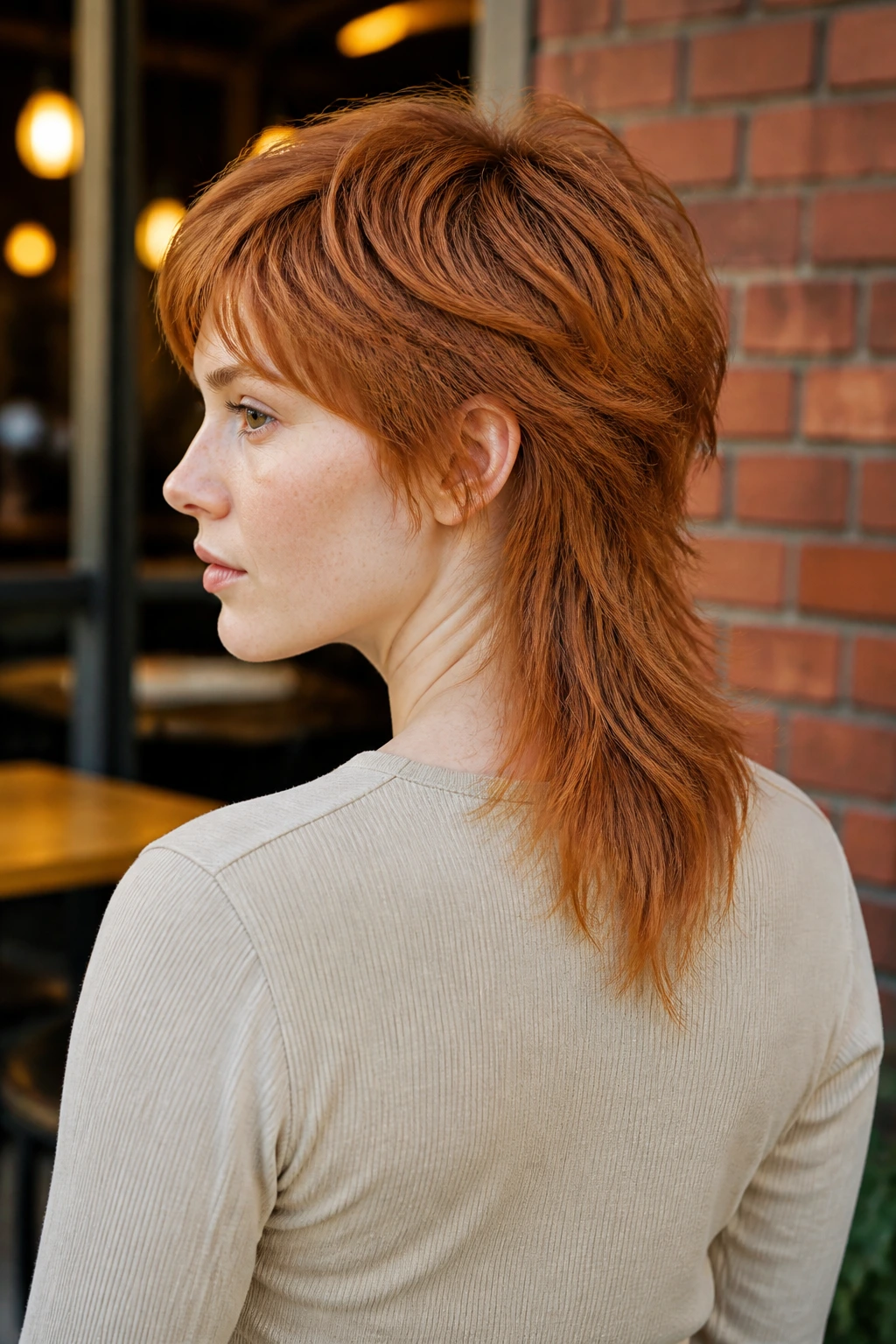
The V-cut back gives the tail a pointed finish instead of a blunt drop. That shape lengthens the back visually and keeps the style from feeling heavy, which is useful if your hair is thick.
Cinnamon auburn is one of the easiest tones for fair skin because it has enough red to warm the face and enough brown to stay grounded. If you want a shape that looks intentional even when you throw it into a low clip, this is a strong candidate.
28. Brushed-Out Volume Auburn Mullet
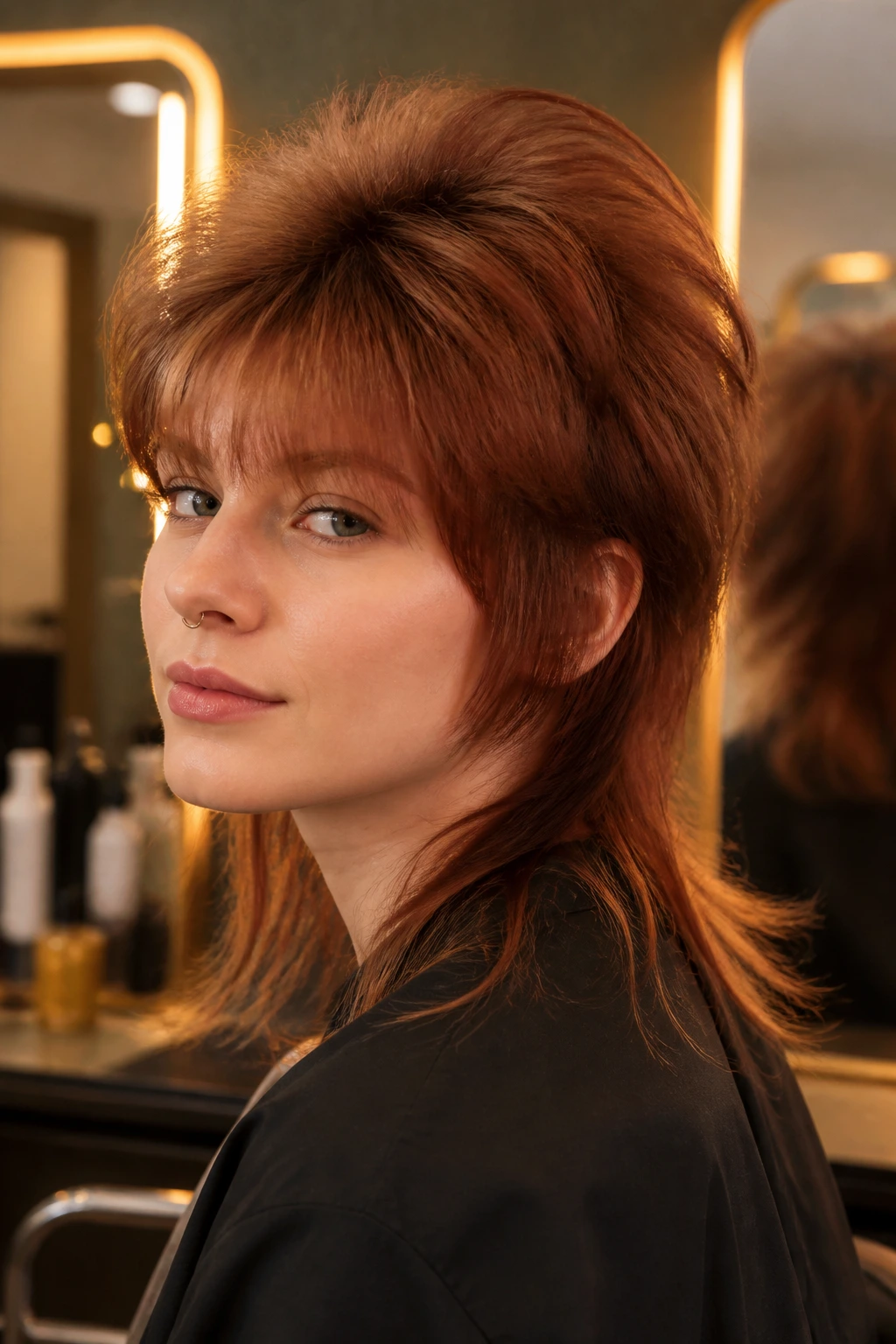
Think blowout, not bedhead. A brushed-out finish gives the crown height and lets auburn shimmer through the layers, which can be especially flattering on fair skin under indoor light.
This cut benefits from a round brush, a medium-hold mousse, and a little patience at the root. Once it’s dry, brush it out and let the pieces separate on their own. You want volume with movement, not a puffy helmet.
29. Strawberry Copper Mullet with Crown Lift

The crown is the star here. Lift at the top opens the face, and strawberry copper brings enough brightness to make fair skin look warmer without turning the haircut loud.
Root-lifting spray and a small round brush make a real difference. Keep the sides light and the back soft so the volume at the top does the talking. This one feels especially fresh when the bangs are just a little airy.
30. Heavy Fringe Auburn Mullet
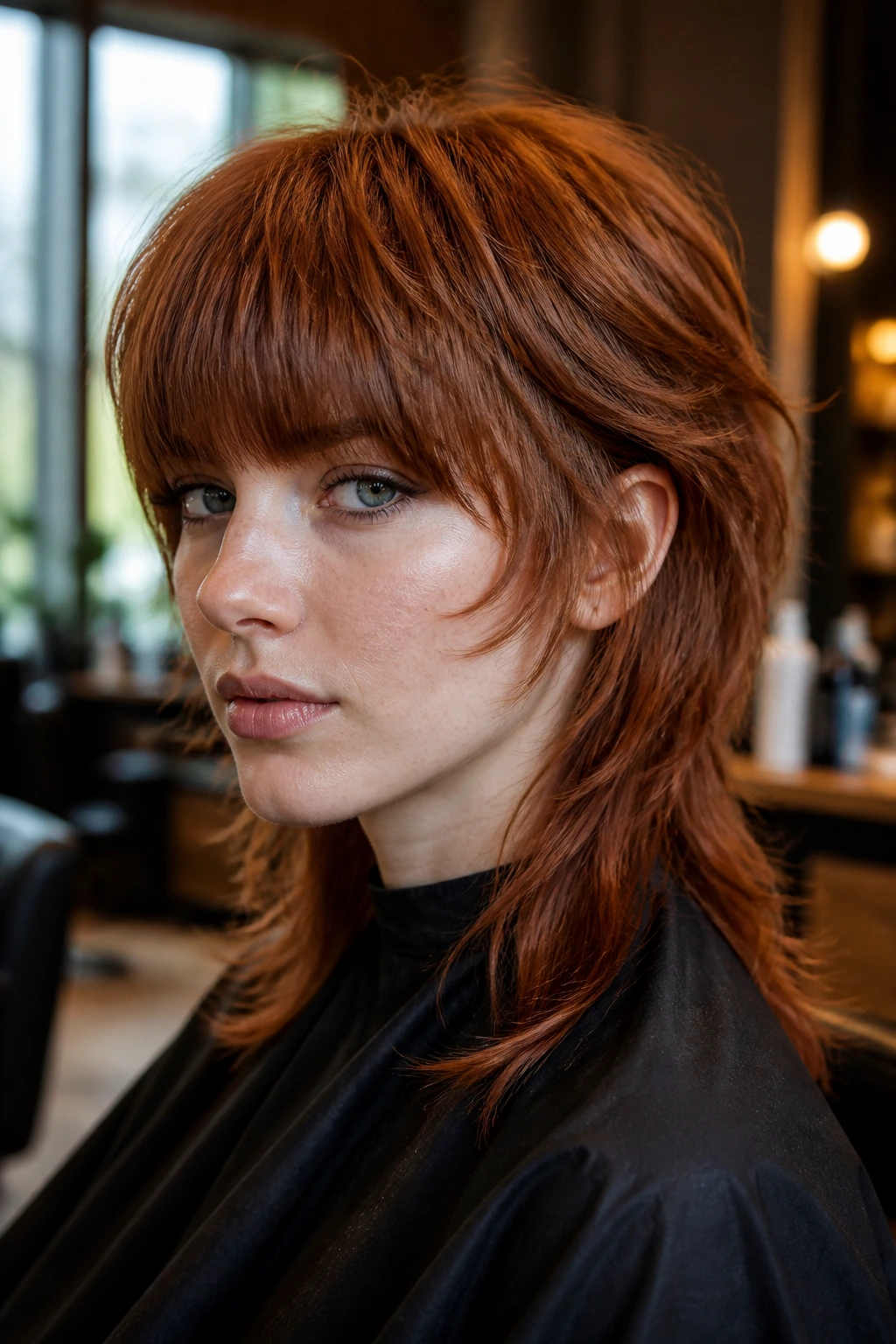
A dense fringe changes the mood fast. It gives the haircut a stronger front edge, which can balance a long face or soften a sharp jaw.
On fair skin, I’d keep the auburn tone a little muted—cinnamon or smoked copper works better than a high-shine cherry red here. The fringe needs regular trims so it doesn’t swallow the eyes. If you like structure and do not mind upkeep, this has presence.
- Best for: longer faces, strong brows, and people who like defined shapes.
- Styling note: keep the fringe dry with just a touch of texture paste.
- Warning: too much thickness at the front can make the whole cut feel boxy.
31. Soft Auburn Mullet for Fine Hair
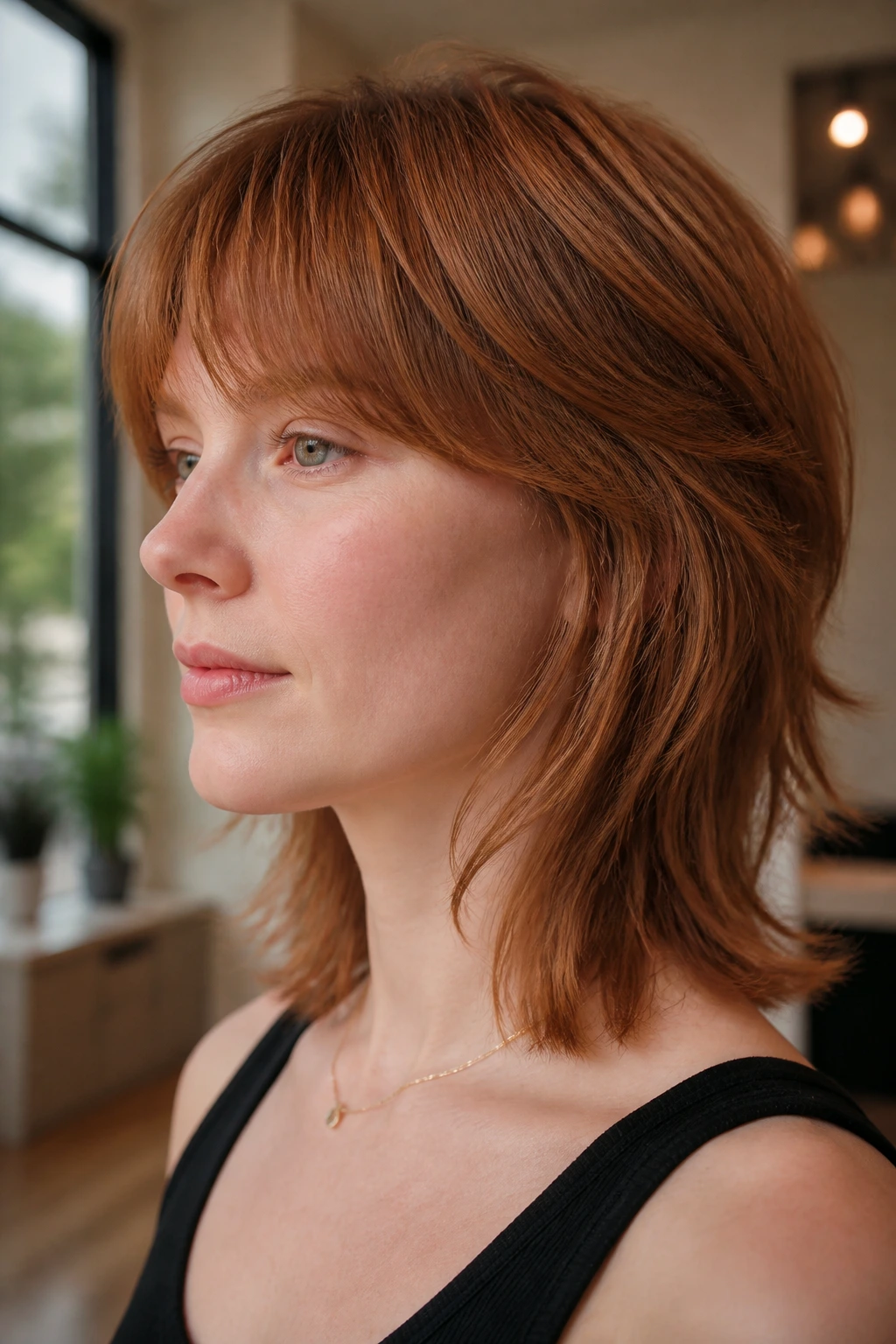
Fine hair needs shape, not over-thinning. The soft auburn mullet keeps the layers light but preserves enough weight at the ends that the cut does not disappear by noon.
This is where auburn helps more than people expect. The color creates visual depth, so the hair looks fuller even when the strands themselves are slim. Ask for blunt enough ends to hold a line, then keep the crown only lightly layered. A small amount of mousse at the roots goes a long way.
32. Shadow-Root Auburn Mullet

A shadow root buys you time. It softens the grow-out, gives the auburn lengths a richer base, and keeps fair skin from being overwhelmed by one flat block of color.
This is a smart choice if you like the cut but do not want constant touchups. The darker root makes the layers underneath pop, and the whole style reads a little more grounded. If you want a mullet that can survive busy weeks, this is one of the most practical versions on the list.
Why Auburn Mullet Hairstyles for Fair Skin Work So Well

Copper near the face changes the whole read
Fair skin reflects warm tones fast. That is the reason copper, strawberry, and cinnamon auburn tend to look lively instead of muddy on pale complexions. When those shades sit around the cheeks and eyes, the face looks brighter without needing a heavy contour routine.
The opposite can happen too. A red that leans too blue or too dark can pull attention toward redness in the skin, especially if the haircut has blunt edges. That is why softer warmth usually wins here. It gives the complexion a little life instead of a fight.
The cut gives the color somewhere to move
A mullet has more surfaces than a one-length cut. You get the crown, the sides, the face frame, and the tail at the nape. Auburn looks richer across that structure because light hits each layer a little differently.
That movement matters. On straight hair, the layers prevent the color from feeling like a painted panel. On wavy or curly hair, the auburn shifts every time the texture bends. The haircut and the color end up doing half the work for each other.
Undertones decide the shade, not trend names
If your fair skin leans pink, rose auburn, strawberry auburn, and smoked copper usually sit better than a very bright cherry red. If your skin leans peach or neutral, cinnamon, copper, and chestnut auburn often feel easier to wear. That rule is boring, but it saves people from bad color choices.
I’d trust undertone more than mood. You can love the image of a rich dark auburn and still look better in a lighter copper glaze. The mirror will tell you fast enough.
What to Tell Your Stylist About Auburn Mullet Hairstyles for Fair Skin
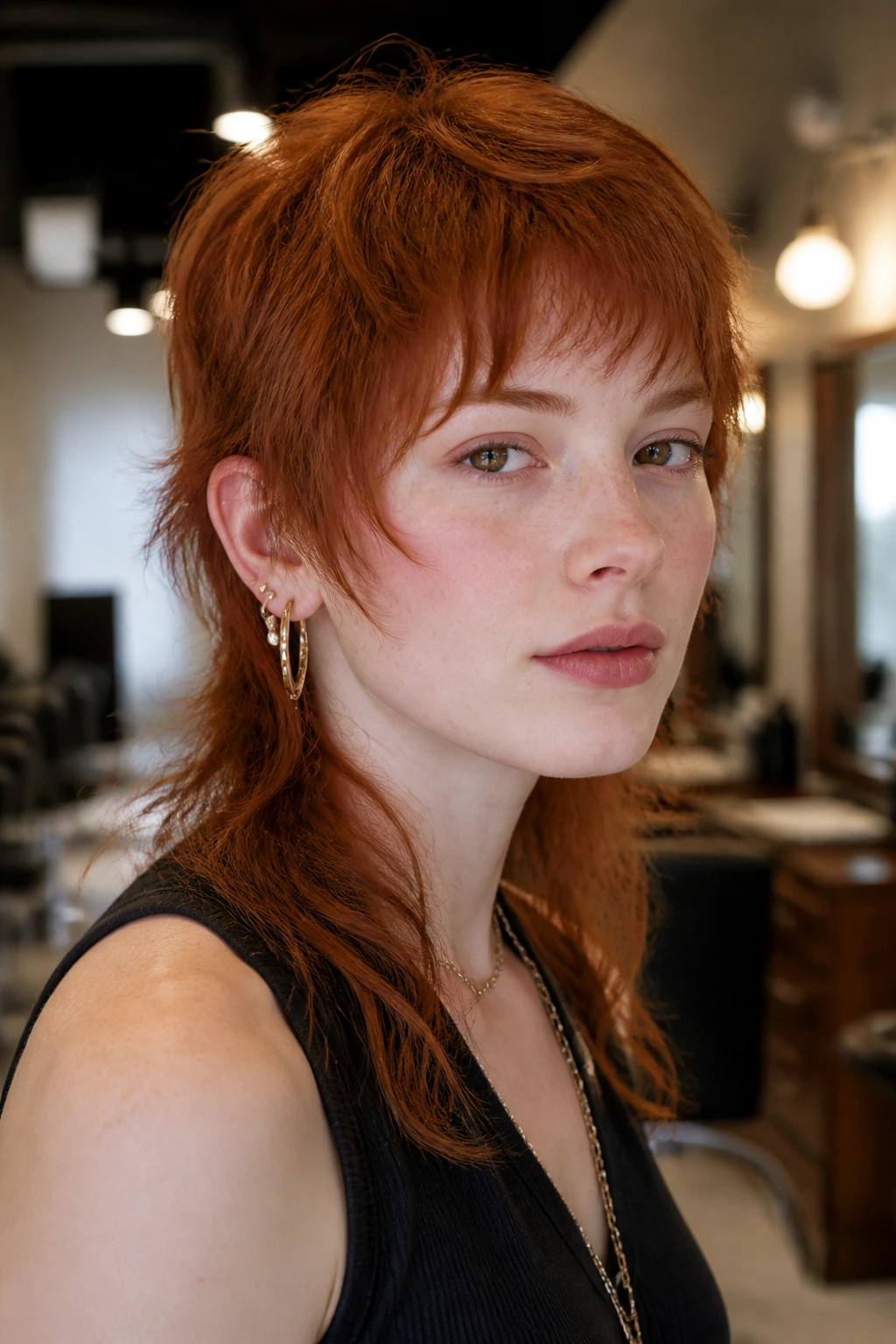
A good cut starts with a clear photo and a few sharp sentences. Bring one reference for the front, one for the side, and if possible one for the back. Stylists can work with words, but they work faster when they can see the length of the nape and how disconnected you want the layers to be.
- Ask for the crown to stay light, not puffed out: On fine hair, too much removal at the crown can make the style collapse; on thick hair, it can keep the top from ballooning.
- Say where you want the back to hit: Collarbone, shoulder, or above the shoulder all read differently once the layers are cut.
- Talk about the fringe before the rest of the haircut: Curtain, micro, bottleneck, wispy, or side-swept bangs change the entire face frame.
- Mention your styling habits honestly: If you air-dry, say so. If you blow-dry once a week and forget the rest, say that too.
- Be specific about color depth: Copper auburn, strawberry auburn, cinnamon auburn, and chestnut auburn all behave differently on fair skin.
- If your hair is curly, ask for the cut to respect shrinkage: Dry cutting or cutting close to dry helps the shape land where it should.
Styling Tools That Keep the Layers in Shape
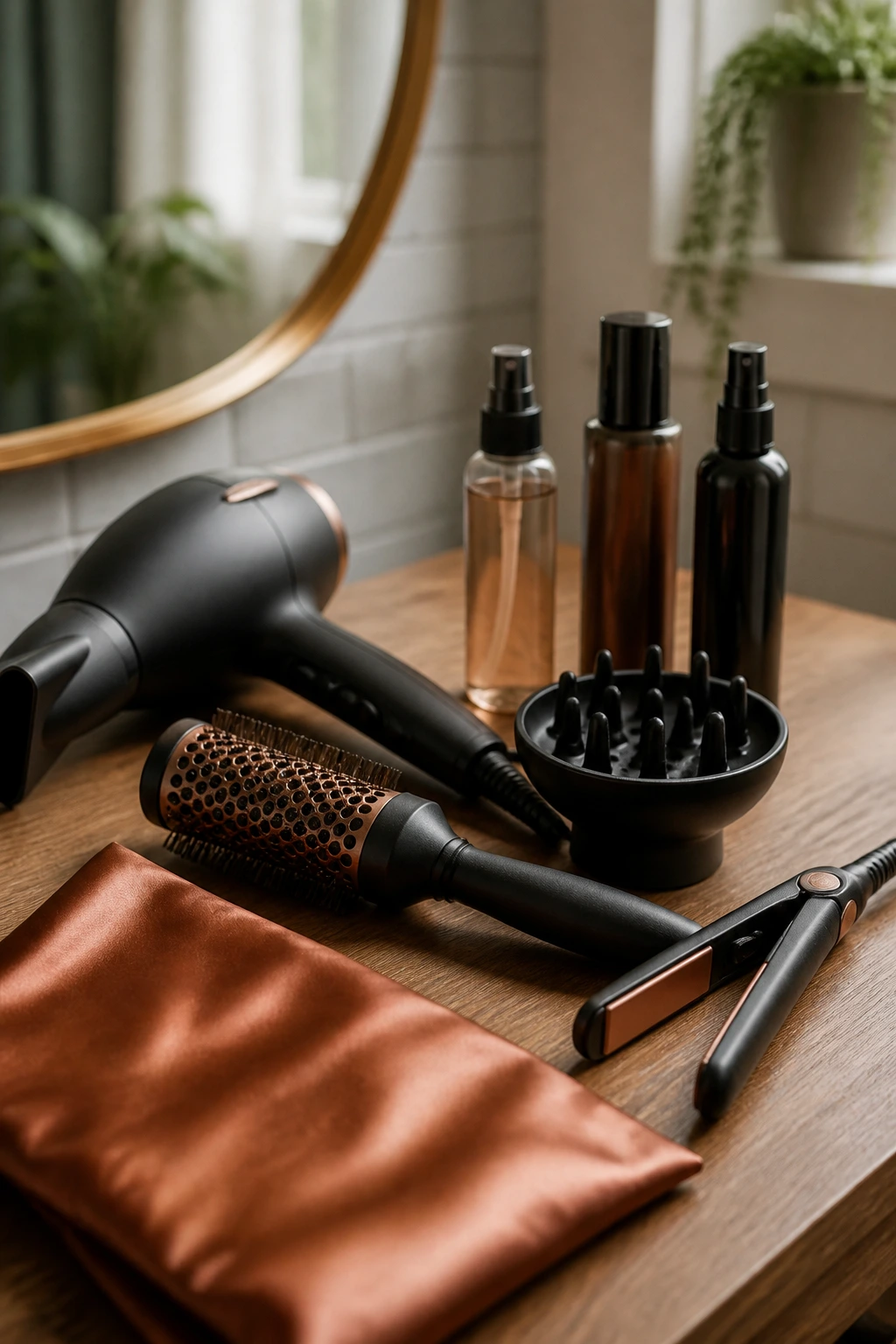
- Blow dryer with a concentrator nozzle: This gives you control at the crown and stops the layers from frizzing out in random directions.
- 1 to 1.5 inch round brush: Small enough for bangs and crown lift, wide enough to smooth the sides without flattening them.
- Diffuser: A must if your hair is curly or wavy and you want the shape to keep its bounce.
- Heat protectant spray: Copper and strawberry tones fade faster when hair is cooked dry, so this is not optional if you use hot tools.
- Light mousse or root-lifting spray: The top needs lift, especially on finer hair that falls flat after an hour.
- Texturizing spray: Good for that piecey separation through the ends; use less than you think.
- Color-safe shampoo and conditioner: Sulfate-free formulas keep auburn from sliding toward dull brown or brassy orange.
- Satin pillowcase or bonnet: Less friction means fewer broken fringe pieces and less morning fluff at the nape.
- Small flat iron with rounded edges: Useful for smoothing a fringe or bending the front pieces without making the whole cut dead straight.
How to Wear an Auburn Mullet Without Fighting It

Face Framing: Keep the front pieces near cheekbone level if you want the auburn to sit where the eye lands first. On fair skin, that little bit of red around the face does more than a full-head color flood.
Texture: The cut needs separation. A soft mousse, texture spray, or a bit of cream on the ends gives the layers a clear shape. Too much oil or cream and the whole thing turns limp.
Accessories: Small hoops, narrow headbands, and tucked-behind-the-ear styling show off the nape instead of hiding it. I like earrings with this cut because they make the front pieces feel deliberate.
Makeup and clothing: Warm blush, soft bronzer, denim jackets, leather, and open collars all make auburn look intentional. If the color leans copper, a muted berry lip can be sharp in a good way.
Small Tweaks That Change the Mood
Softer edges: Keep the fringe longer and the corners rounded if you want the mullet to feel less confrontational. This is the move for people who like the color but do not want a harsh outline.
More edge: Ask for a tighter nape, sharper layers, or a micro fringe. The auburn will read bolder because the haircut gives it a hard frame.
Less maintenance: Choose a shadow root or a gloss over your natural base instead of full, high-contrast color. Grow-out looks cleaner when the root has some depth from day one.
More body: Root lift, a little mousse, and a rough-dry at the crown can make the whole shape feel fuller without piling on product. That matters on fine hair and on straight hair that tends to fall flat by lunch.
Common Mistakes That Throw Off the Cut
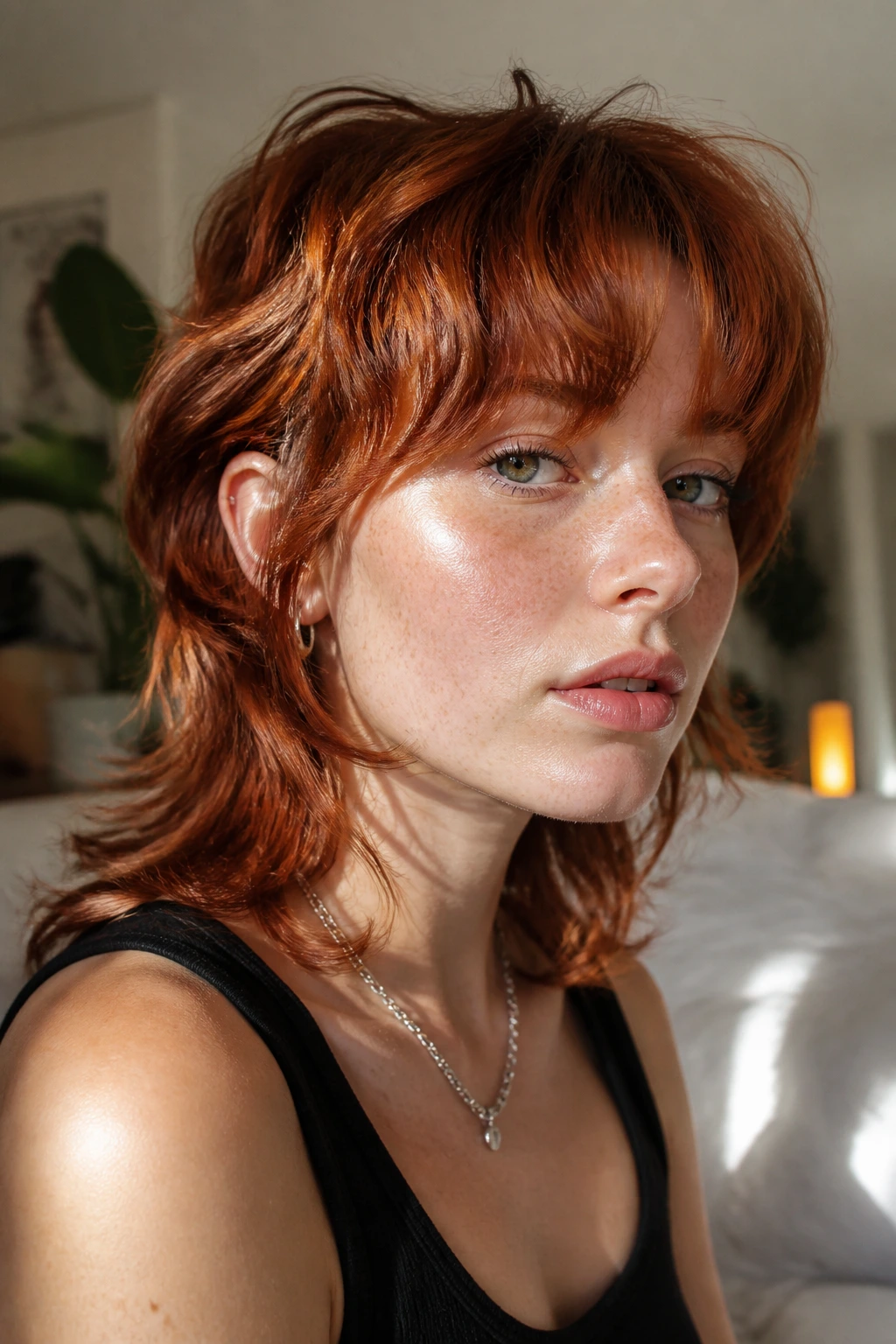
- Picking auburn that is too dark for your skin: The face can look drained, and the red loses the warmth you wanted. Fix it by staying closer to copper, cinnamon, or strawberry auburn and asking for a gloss that keeps the shine up.
- Over-thinning fine hair: The ends go wispy and the mullet loses its shape. Keep some bulk at the perimeter so the cut can hold a line.
- Cutting the fringe too short too fast: Short bangs grow out awkwardly and can overwhelm fair skin if the forehead gets boxed in. A brow-grazing or cheekbone-skimming fringe is easier to live with.
- Using too much serum on top: The crown collapses, and all the lift disappears. Put heavy products only on mids and ends.
- Skipping color refreshes: Auburn fades faster than brown, especially on porous or highlighted hair. Once the warmth goes, the cut can look flat even when the shape is fine.
- Ignoring your texture: A razor-cut mullet on fine straight hair can go stringy fast, while thick curly hair may need more weight left in the shape. Match the cut to the hair, not to a photo alone.
Variations and Adaptations Worth Trying

Soft Copper Curtain Version: Keep the back long, the layers feathered, and the front split into curtain bangs. This is a good choice if you want auburn on fair skin but do not want a hard line across the face.
Razor-Edge Cherry Version: Sharpen the ends, shorten the fringe, and push the red a little brighter. It has more attitude and works best when you want the haircut to be the statement.
Curly Halo Version: Let curls build volume at the sides and keep the fringe light. A curly auburn mullet like this can look rich and rounded instead of boxy.
Low-Maintenance Shadow-Root Version: Keep your natural root darker and let the auburn live through the mid-lengths and ends. This stretches salon time and keeps the color from fading into a flat orange.
Cropped Nape Version: Shorten the back and clean up the neckline if you want a more compact shape. It still reads as a mullet, but it fits better if you dislike hair brushing your collar.
Wash Days, Trim Days, and Color Refresh Timing
Auburn hair needs a little more care than brown hair, mostly because the red molecules fade faster when you wash often or blast the hair with heat. Two to three washes a week is a sensible rhythm for most people. Use lukewarm water, not hot, because hot water opens the cuticle and makes the color slip out faster.
For maintenance, I’d think in layers. The cut itself usually wants a trim every 6 to 8 weeks if you want the mullet shape to stay clear. If you let it go past 10 weeks, the back can get too soft and the crown can lose its lift. The color usually benefits from a gloss or toner refresh every 4 to 6 weeks if you love a copper finish.
Night care matters too. A satin pillowcase cuts down on friction at the fringe and around the nape, which keeps the layers from frizzing into little odd angles. Dry shampoo on the roots can buy you an extra day or two between washes, and a tiny bit of leave-in on the ends keeps the auburn from looking thirsty.
I would avoid purple shampoo unless your auburn is drifting too orange and your colorist has told you to use it sparingly. Purple can mute the warmth that makes auburn work on fair skin in the first place.
Frequently Asked Questions
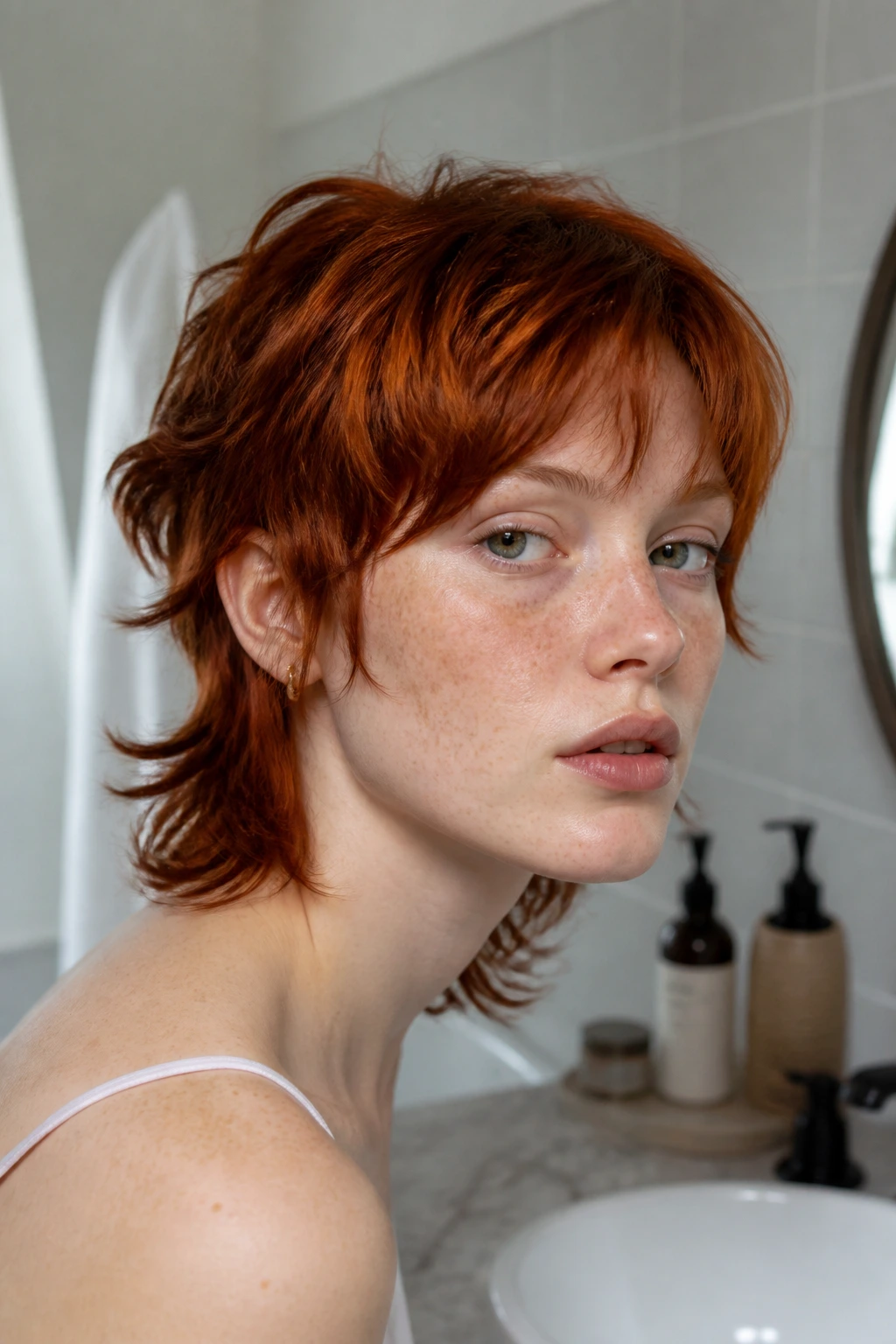
What auburn shade looks best on very fair skin?
Copper auburn and strawberry auburn are usually the easiest starting points because they add warmth without making the face look muddy. If your skin flushes pink easily, a softer cinnamon auburn often looks calmer.
Can a mullet work if my hair is fine?
Yes, but the cut needs restraint. Keep some weight at the ends, avoid over-thinning, and use root lift instead of trying to create volume everywhere at once.
Will this haircut work on curly hair?
It can look excellent on curls if the layers are cut with the curl pattern in mind. The main thing is not to cut it too short when wet, because shrinkage can turn a good mullet into a surprise.
How often should I trim it?
Most versions need a shape cleanup every 6 to 8 weeks. If you have a heavier fringe or a very defined nape, you may want to touch those areas a little sooner.
Can I get auburn without bleaching?
Often, yes. If your hair is already light brown or dark blonde, a copper or strawberry glaze may be enough. Darker hair may need lightening first if you want the red to read clearly instead of just looking warm.
What if the auburn starts looking brassy?
Ask for a gloss or toner that restores the copper or cinnamon tone, and cut back on hot water and heat styling for a while. Brass usually means the warm pigment has faded unevenly, not that the color is ruined.
Does a heavy fringe make fair skin look washed out?
Not if the shape and shade are balanced. A dense fringe works best with muted auburn and enough lift at the crown so the face does not disappear under the hair.
How do I ask for a softer version of the cut?
Use words like feathered, wispy, soft taper, and low disconnect. Those phrases tell the stylist you want the mullet shape without the hard lines.
A Cut That Keeps Its Edge

The best auburn mullet on fair skin is not the loudest one in the room. It is the one that makes your face look warmer, your hair look fuller, and the silhouette feel deliberate from every angle. That usually comes from a good match between shade and shape, not from chasing the brightest red or the sharpest haircut.
If you take one thing from this, make it this: bring a shade reference and a cut reference, and make sure they belong to the same person in the same light. That tiny bit of coordination is where the good versions live.
