



Shaggy mullet cuts have a specific kind of swagger. They look a little unruly, but only because the cut did the hard work first. The crown sits lighter, the nape hangs longer, and the ends move in broken-up pieces instead of one heavy sheet. That imbalance is the whole point.
A bad mullet looks like a haircut that grew out without a plan. A good shaggy one looks designed to be touched, flipped, tucked behind one ear, then wrecked with your fingers five minutes later. The difference lives in the layering: point-cut softness at the fringe, controlled weight at the back, and enough length around the face to keep the whole thing from reading costume-y.
That’s why this shape shows up on women who like their hair with a little grit. It can be soft, sharp, curly, bleached, dark, choppy, or almost tame for weekday wear. The trick is choosing the right version for your texture and your nerve. Some of these cuts barely whisper mullet; others kick the door open.
Why These Shaggy Mullet Cuts Stand Out
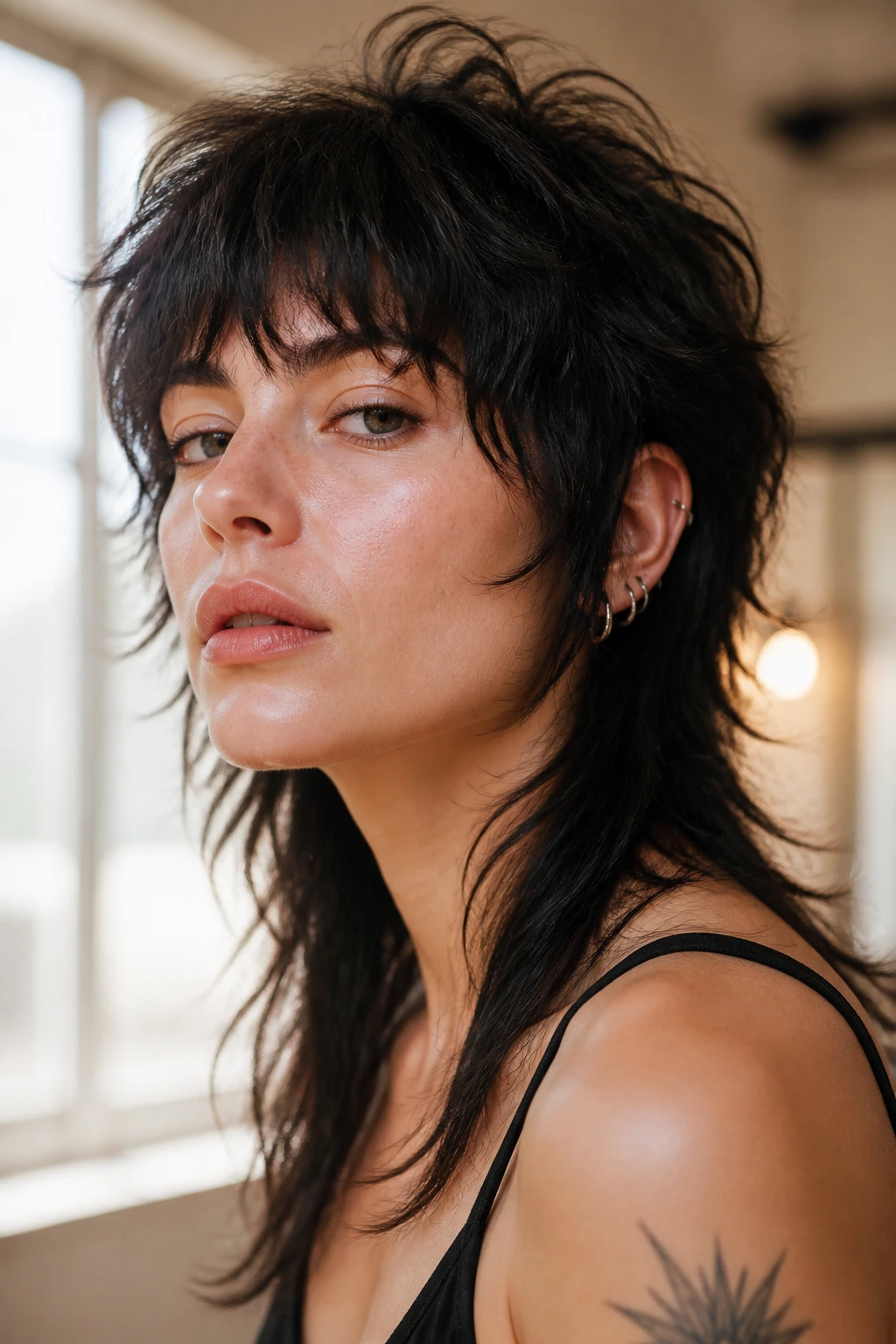
-
The shape does the heavy lifting: A good shaggy mullet keeps the crown airy and the back broken up, so the cut has movement even when you skip a full blowout.
-
Texture looks intentional here: Second-day hair, dry shampoo, and a little grit spray help the layers separate instead of collapsing into one flat shape.
-
There’s room to go soft or sharp: You can keep the fringe long and the back feathery, or push it into micro-bang territory with razored ends and a tighter nape.
-
Grow-out is less annoying: As the cut lengthens, it shifts into a shag instead of turning into a square mop. That matters more than people admit.
-
It works across hair types: Straight hair gets edge from the slice of the layers, wavy hair gets bounce, and curls get shape instead of triangle bulk.
-
The styling options are broad: Air-dried and messy, blown out and glossy, or rough-dried with a flat iron bend on the ends — the same cut can swing in different directions.
1. Soft Wolf-Back Shag
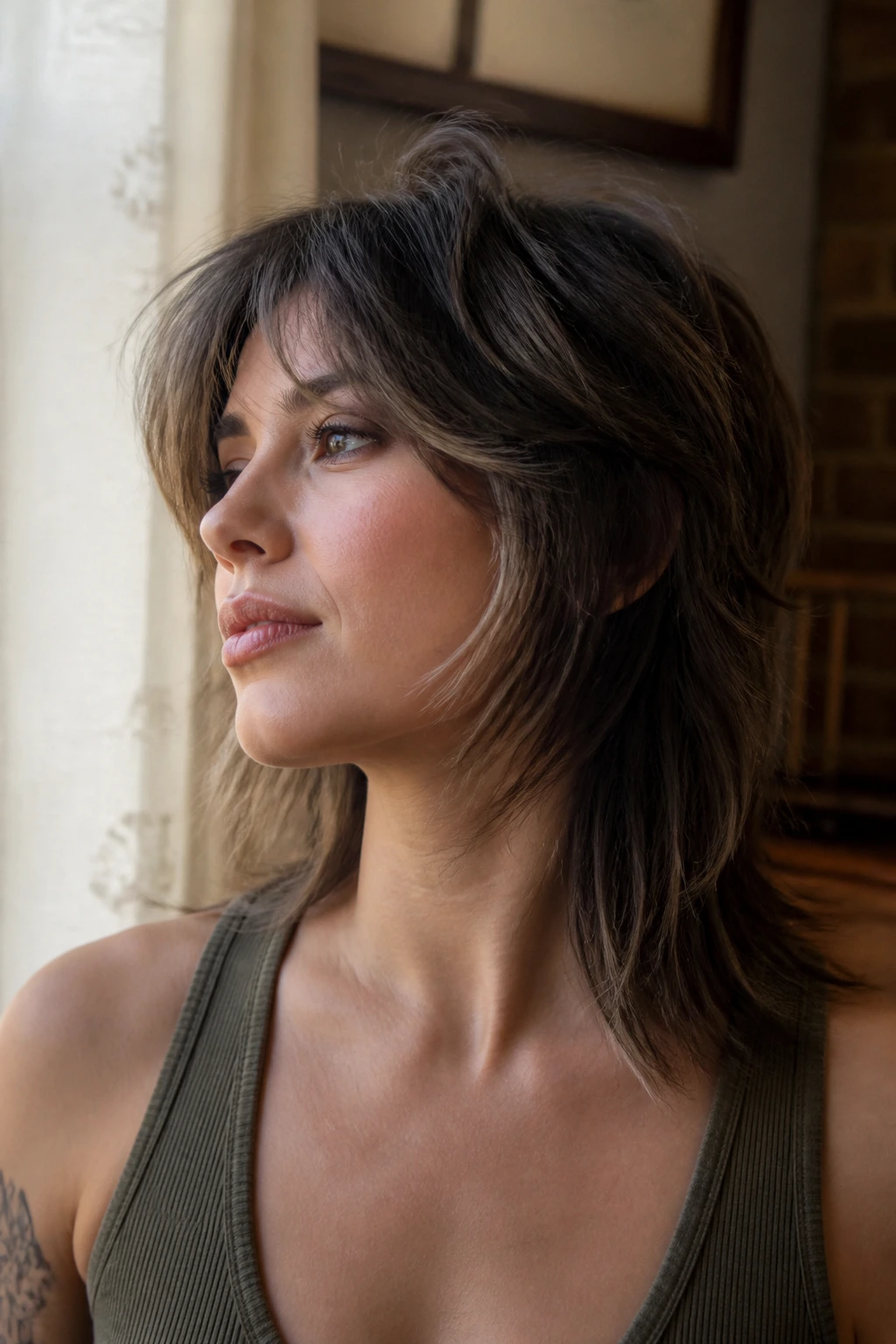
This is the gentlest place to start if you want the shaggy mullet shape without looking like you borrowed it from a punk flyer. The crown is cut with lift, the face-framing pieces fall around the cheekbones, and the back keeps enough length to give that little tail flick that makes the whole thing work.
The key is softness. Ask for point cutting through the perimeter and keep the transition between the front and back smooth enough that the cut reads as lived-in, not chopped. On straight or slightly wavy hair, this one sits best when the ends are brushed loose with a bit of texture spray, not hammered flat with a straightener.
Why it flatters first-timers
If you’re nervous about mullet territory, this shape gives you the silhouette without the shock. The layers sit close enough to the head to feel modern, but the back still carries that slightly rebellious drop. It’s the kind of cut that can pass in a clean white T-shirt and still look like you have opinions.
The best part is how it grows. After six to eight weeks, it still looks deliberate because the layer pattern is doing the work, not a sharp outline. That’s a rare gift.
2. Micro Fringe Riot
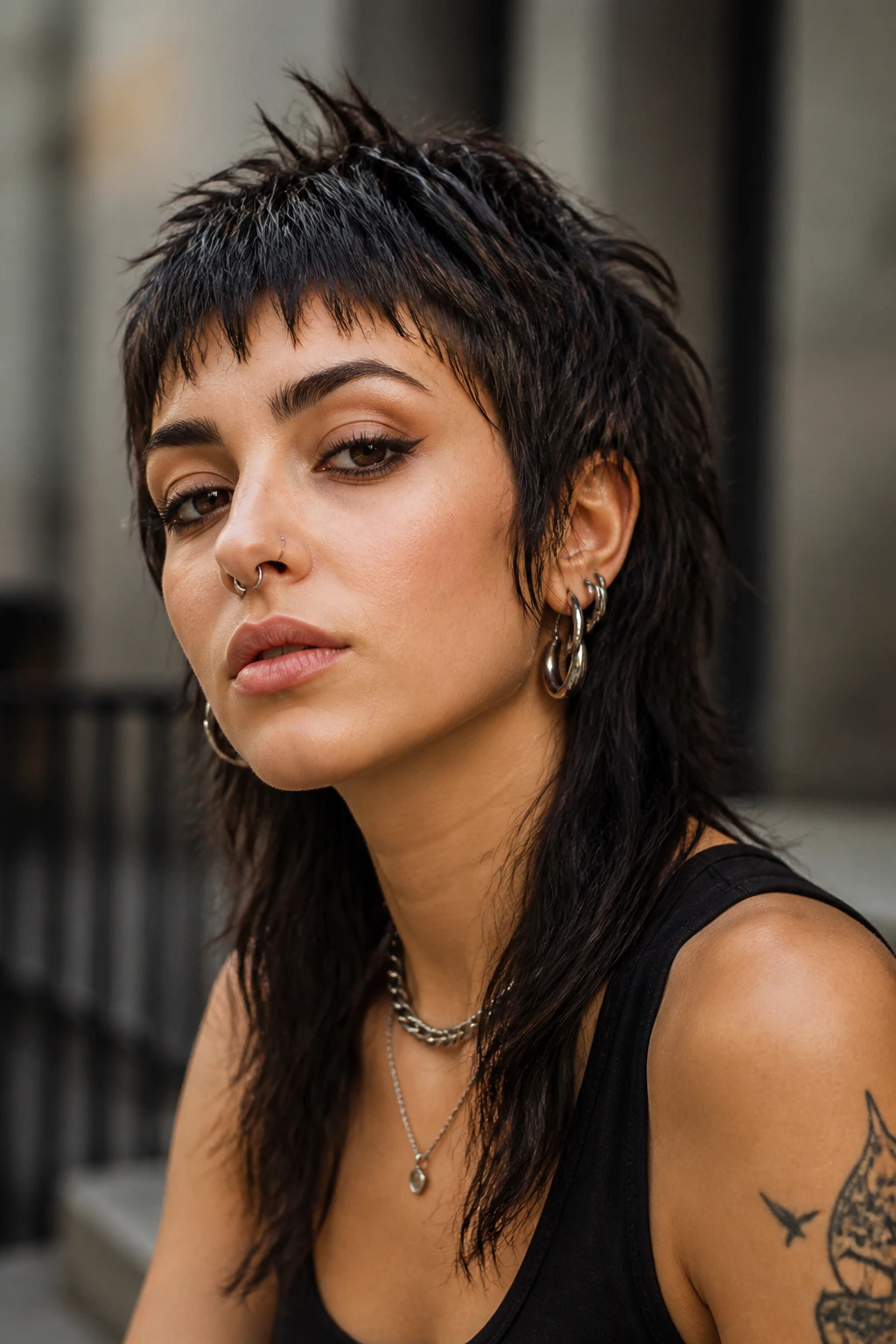
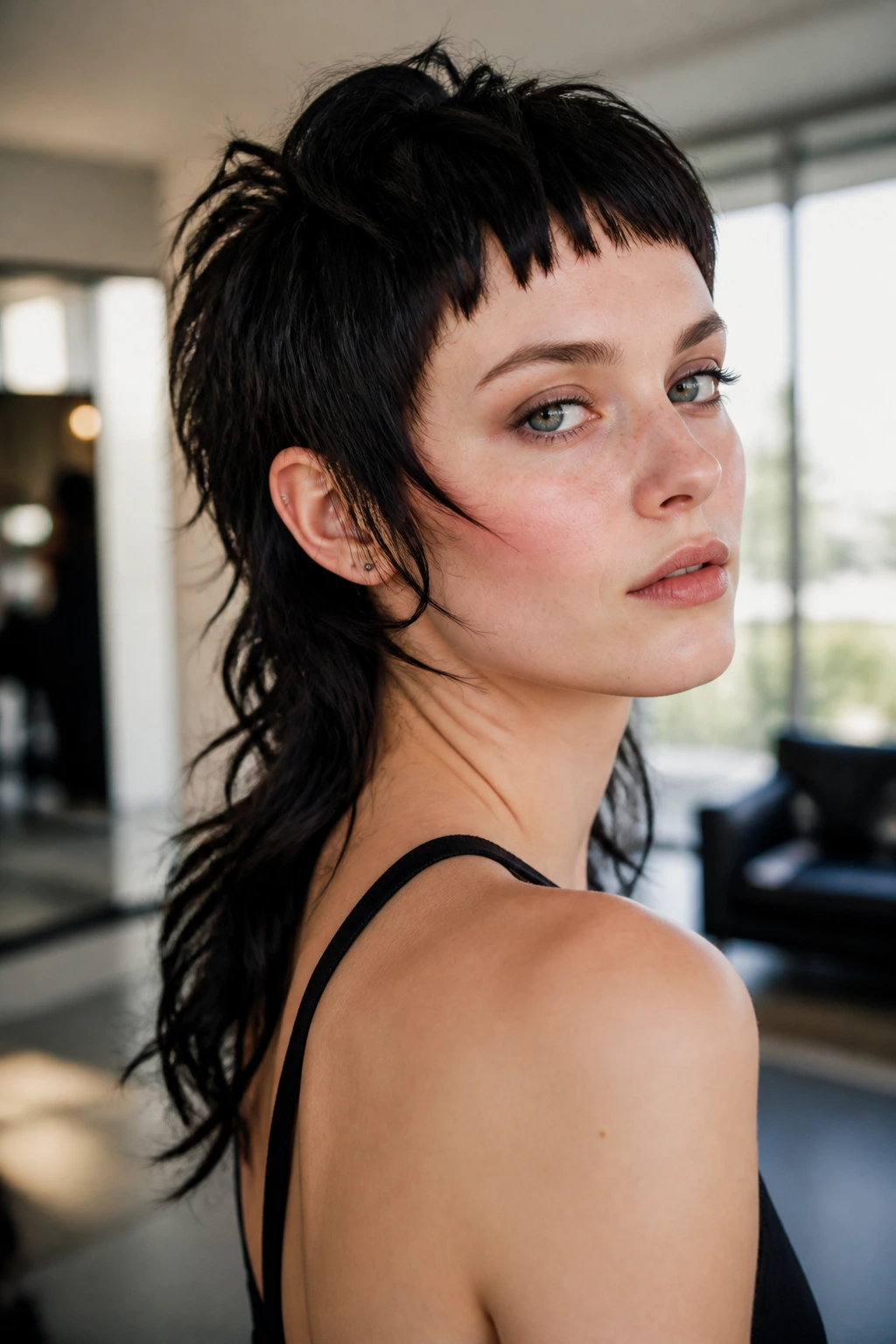
A micro fringe changes the mood fast. The moment that short, blunt-broken line hits the forehead, the haircut stops being sweet and starts looking like it has a plan. Pair it with shattered sides and a shaggy back, and you get a mullet that feels sharp without needing a lot of length to make the point.
This version is strongest on straight to wavy hair because the fringe sits better and the rest of the cut can flare out a little. If your cowlick fights hard at the front, ask for the bangs to be cut dry and a touch longer than you think you want. Tiny bangs shrink in a blink.
Ask for this at the salon
Tell your stylist you want the fringe short but not helmet-stiff, with internal texture through the crown and soft tapering around the temples. You want the eye line framed, not swallowed. If the back is too neat, the whole thing loses its bite.
Maintenance is part of the deal. A micro fringe needs a trim before it starts poking into your lashes. Otherwise it just turns fussy.
3. Curly Crown, Tapered Nape
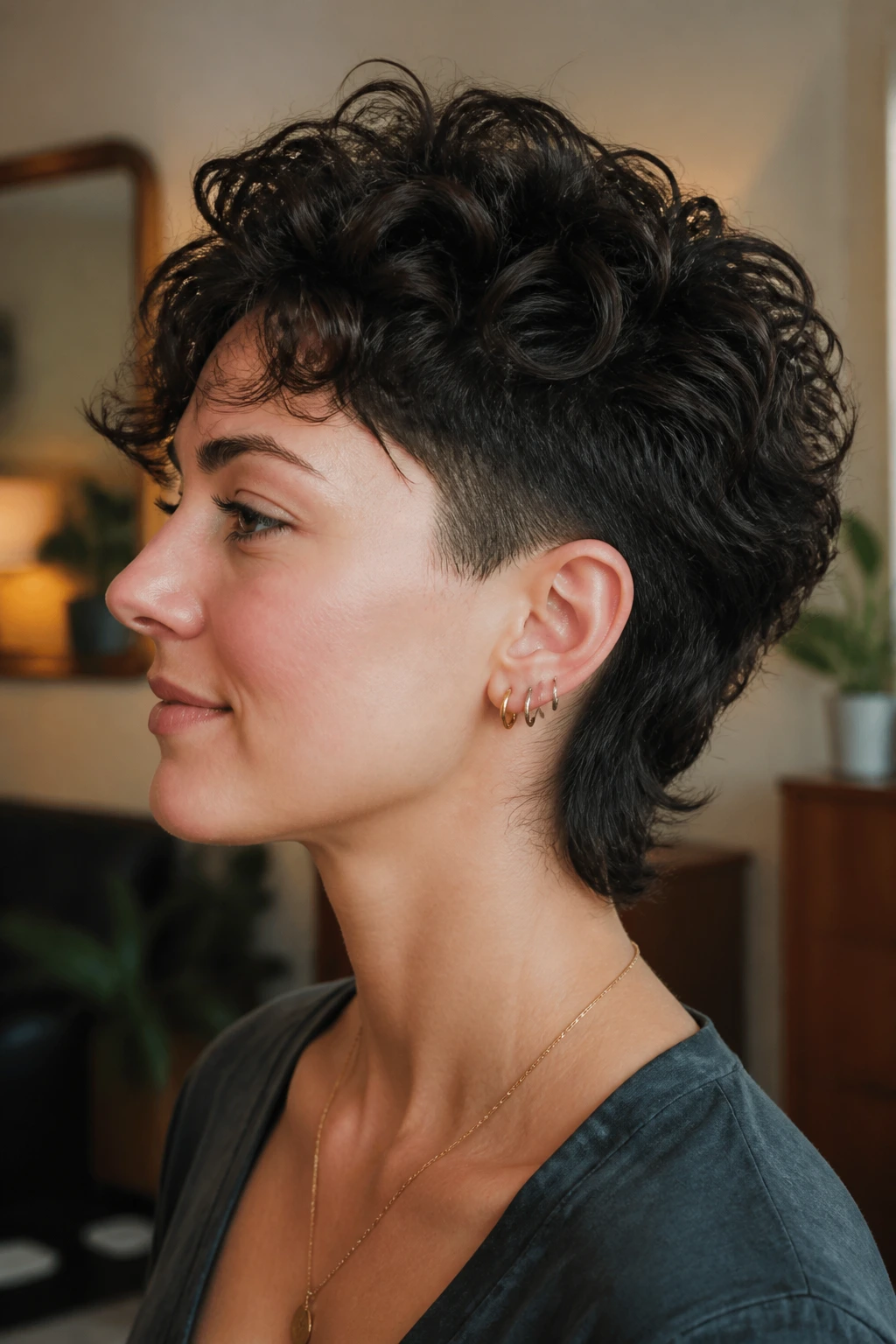
Curly hair loves this shape when the cut respects shrinkage. The crown gets room to spring, the sides are cleaned up so the volume doesn’t puff out at the temples, and the nape is tapered instead of left to bulk up into a triangle. That taper is the difference between chic and mushroom.
The smartest way to cut this version is usually dry or nearly dry, with the curl pattern visible. Wet curls lie. They always do. A stylist who understands curls will cut based on how the coil sits at its resting point, then leave the top a little longer than you’d expect so the shape doesn’t disappear when it dries.
What makes it work
The cut keeps the crown lively, which matters because curly hair can flatten at the roots even while the lengths expand. With the right layering, you get lift at the top and a narrow enough neck area to keep the silhouette tidy. Use curl cream or lightweight mousse, then diffuse just until the roots lift and the ends are set.
Skip aggressive thinning. Curly hair does not need to be shredded to have movement. It needs direction.
4. Platinum Razor Shag
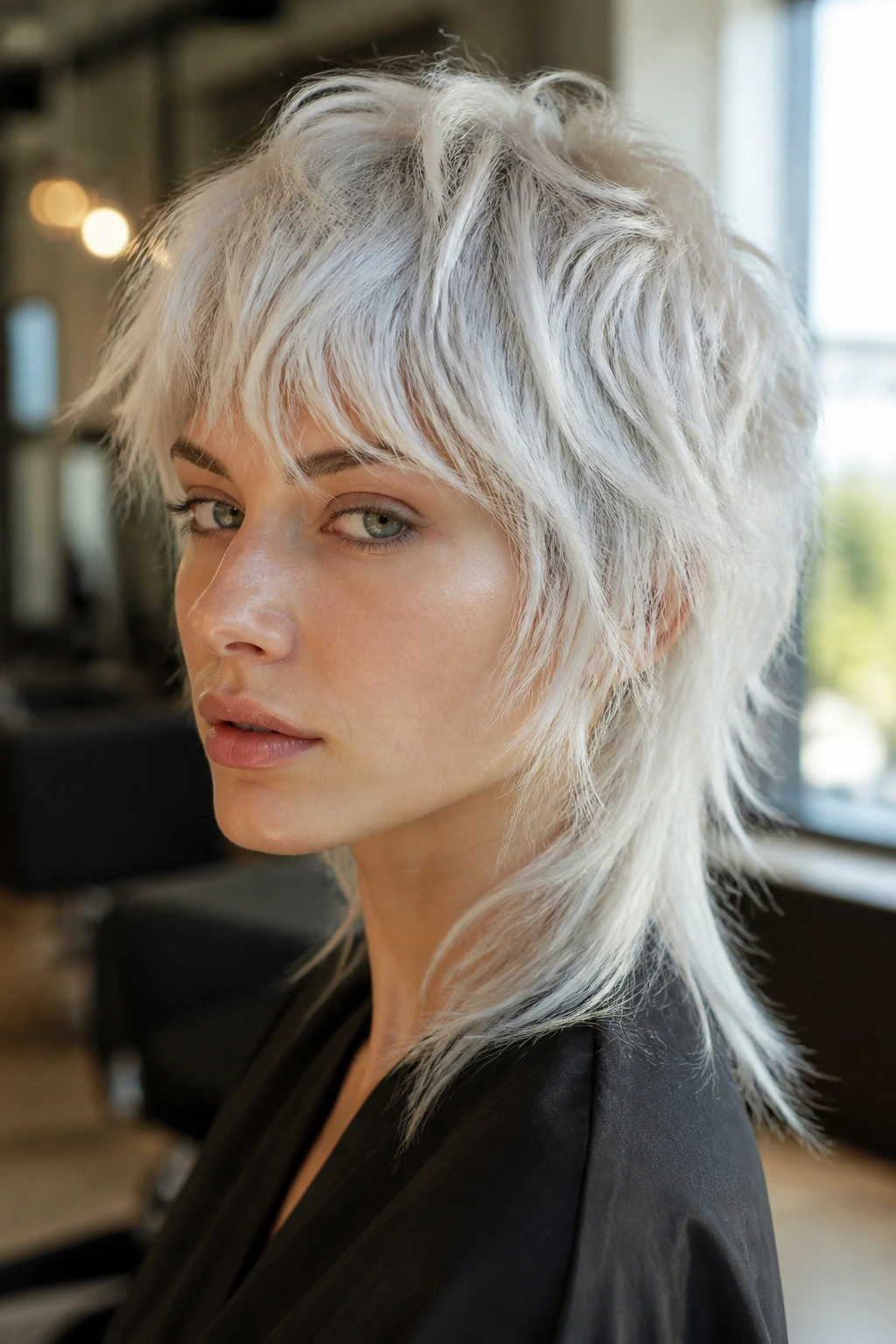
Platinum hair makes every sliced layer louder. That’s the first thing to know. The second is that a razor shag on pale blonde hair can look almost glassy at the top and feathery at the ends, which is a very good contrast when you want the haircut to feel a little cold and a little wild.
This cut needs a healthy base. Bleach can leave hair thirsty, and a razored shape on fried strands can start to fray in an ugly way instead of a cool one. Ask for softened ends, not over-thinned ends. The line between edgy and stringy is thin when the hair is light and dry.
The easiest styling move is a rough blow-dry with a heat protectant and a small round brush only on the front pieces. Leave the back a little messy. That unevenness is where the cut gets its attitude.
5. Copper Feather Flip
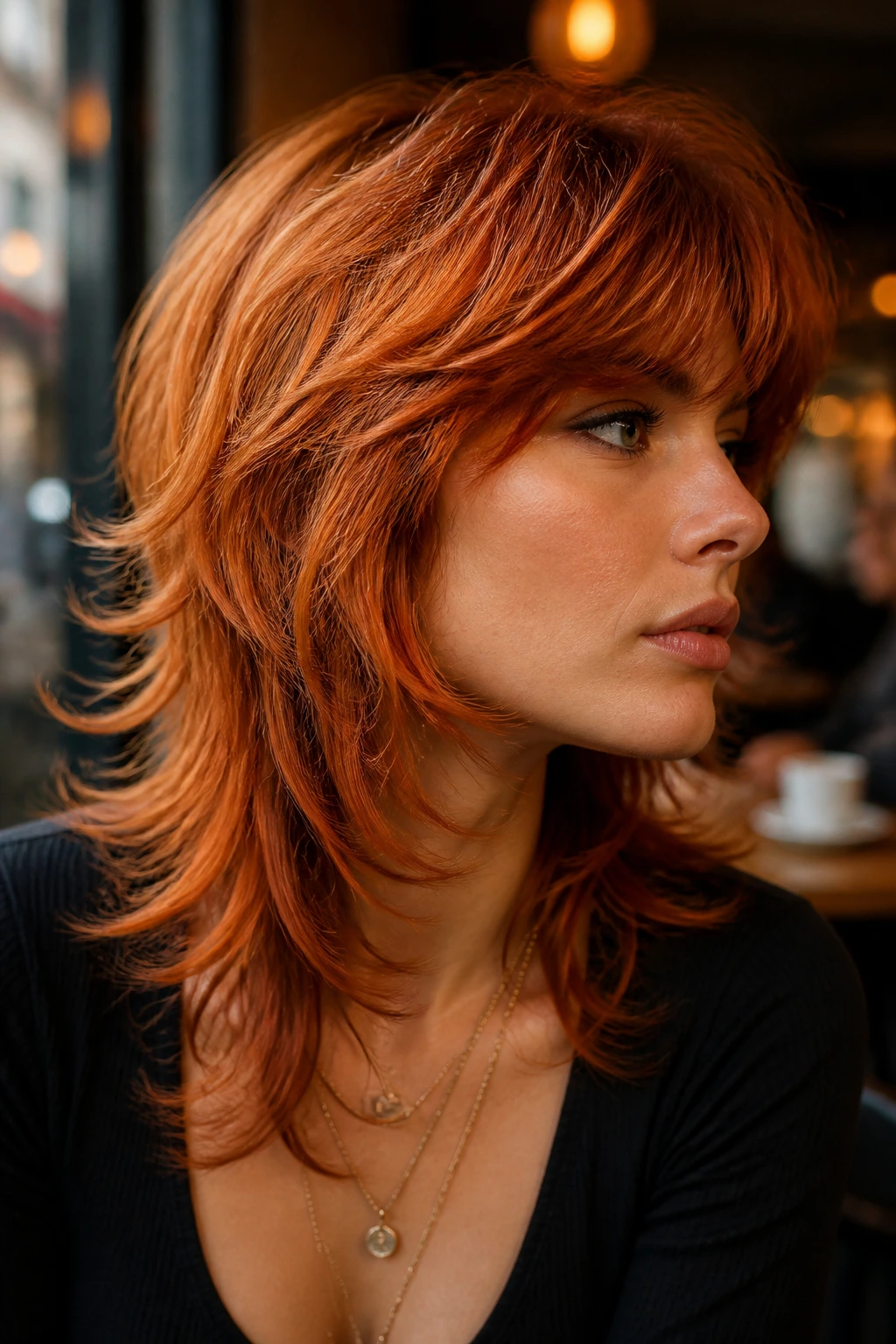
Copper makes shaggy layers look warmer and more expensive-looking, even when the cut is rough around the edges. A feathered flip at the ends gives the haircut motion, while the color catches light across every broken layer. It’s a good option if you like a rock-and-roll shape but want something less severe than black and platinum.
Ask for longer fringe pieces that can sweep back from the face, then feather the bottom section so the ends move when you turn your head. The shape lands especially well on medium-density hair because there’s enough body to show the layers without turning into a puffball.
Copper does need tone care. Nothing fancy, just consistent glossing and gentle shampooing so the orange-red doesn’t go flat and muddy. A copper shag that’s faded to straw loses the whole point.
6. Curtain Bang Shag Mullet
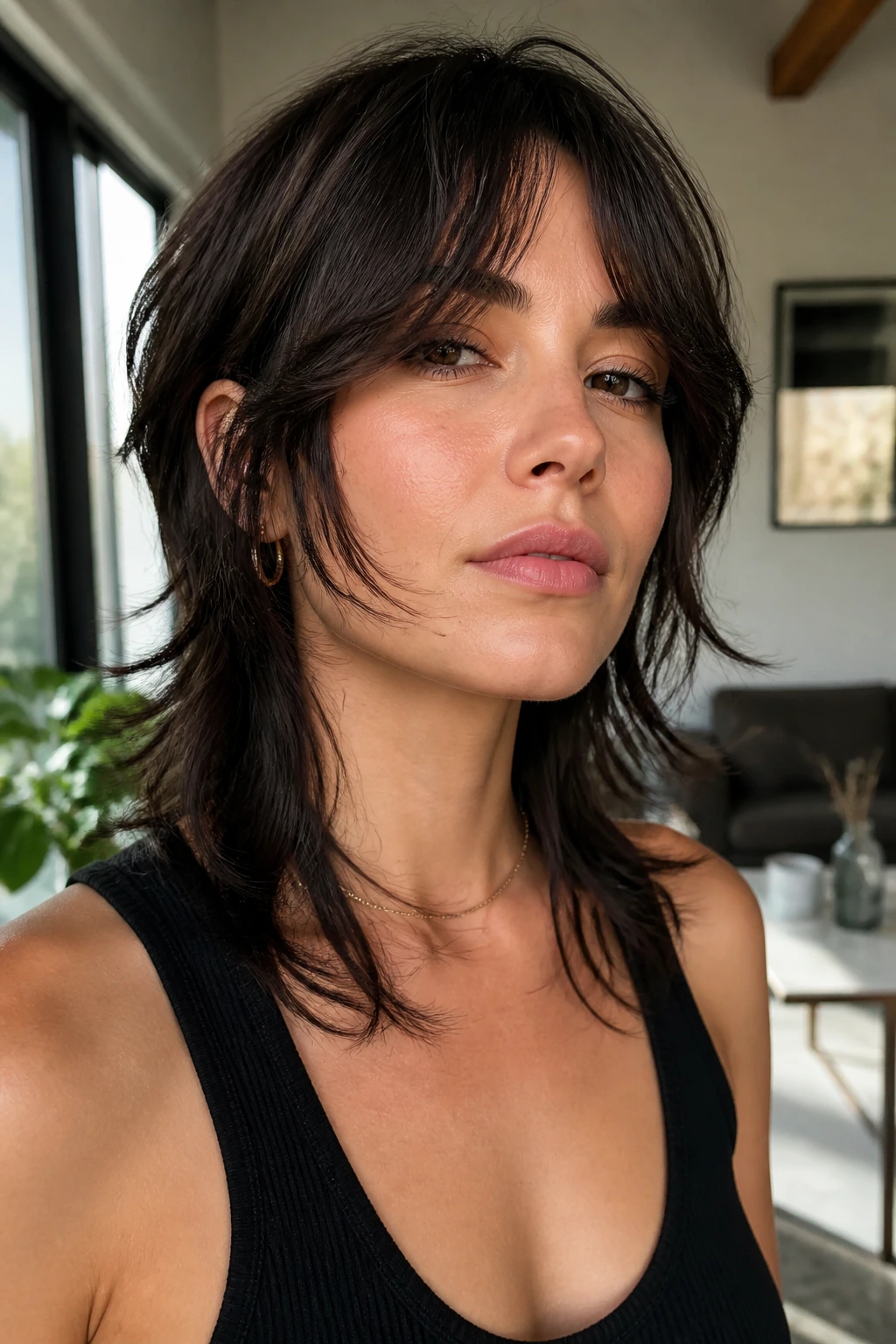
Curtain bangs make a shaggy mullet easier to wear because they soften the front immediately. Instead of one blunt event happening across the forehead, you get two longer pieces that open away from the face and blend into the sides. That split line is forgiving. It also gives the haircut more movement when you tuck one side behind your ear.
Why the face-frame matters
The front pieces should start around the nose bridge or cheekbone area, not too high on the forehead. Too short and the cut starts fighting your features. Too long and the bangs disappear into the rest of the shape.
A curtain bang mullet is one of the best choices if you want drama with some daylight in it. It still has the kick, but you can wear it with a clean blazer or a denim jacket and not feel like you’ve crossed into costume. Blow-dry the bangs away from the center with a round brush, then mist a little dry texture spray through the back for separation.
7. Chin-Length Choppy Mullet
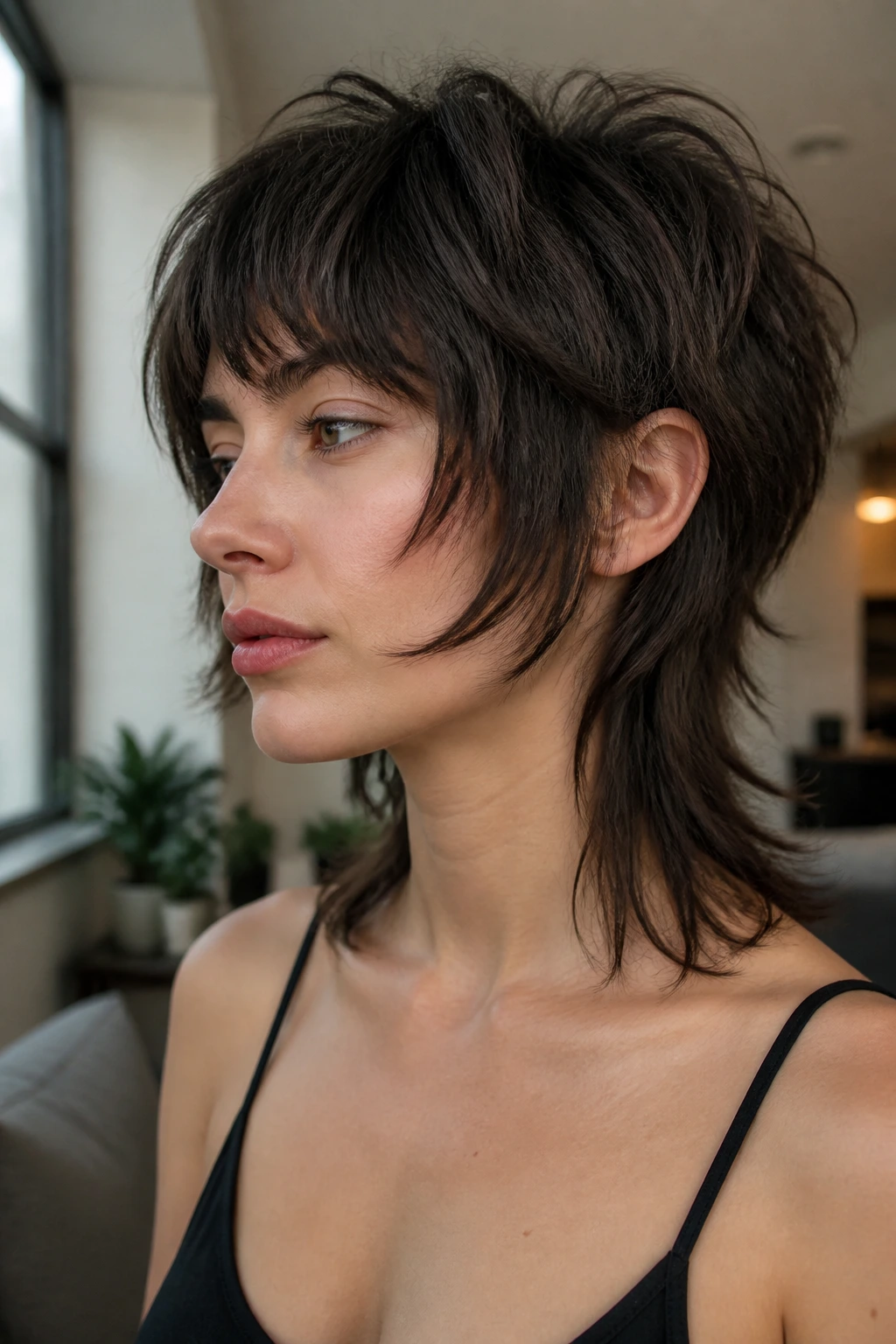
This one sits right on the edge between a bob and a mullet, and that’s why it works. The front pieces hit around the chin, the sides stay jagged, and the back drops just enough to keep the silhouette from looking like a standard chopped bob. It’s compact. It’s edgy. It also frames the jaw in a way that feels deliberate.
The chin-length front gives the haircut a clean point of focus. When you turn your head, the back reveals the longer tail, and that contrast is what gives the style its charge. On straighter hair, this shape looks especially good with a flat iron bend at the ends. On wavier hair, a little mousse and hand scrunching are enough.
If you want a cut that feels sharp but not extreme, this is a good lane. It’s got more structure than a shag and more grit than a bob. A useful middle ground, which is rare.
8. Long-Length Shaggy Mullet
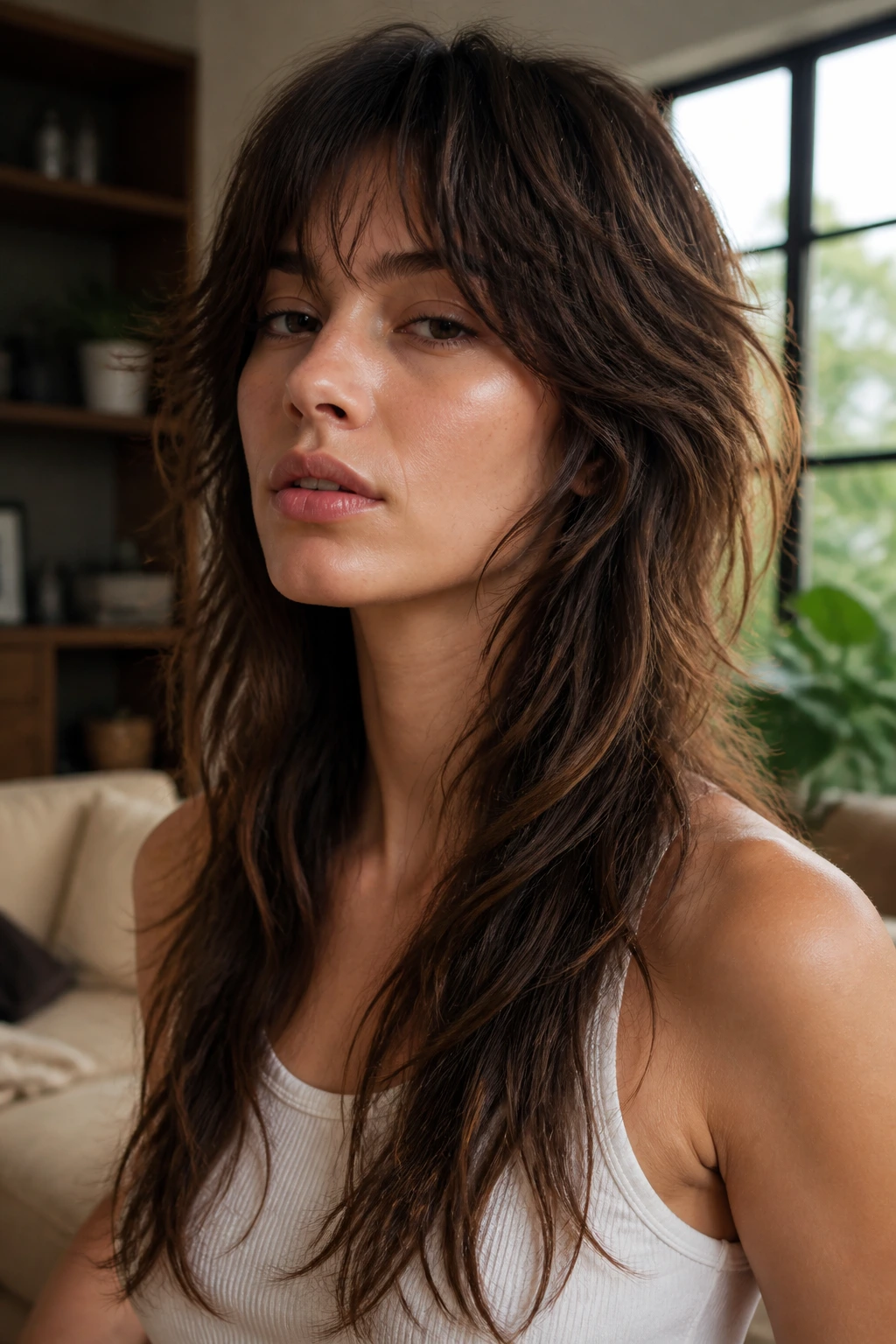
Some women want the mullet silhouette without surrendering the length. Fair. This version keeps the ends long, sometimes even past the shoulders or into waist territory, while the crown and face frame get enough layering to create that unmistakable shag shape. The result is less punk flyer, more long-haired rebel with good scissors.
The trick is internal layering. If the stylist only carves out the front, you’ll end up with long hair and a little fringe, not a shaggy mullet. The crown should be lighter, the mid-lengths should move, and the ends need enough breakup to keep the length from sitting like a sheet.
This version loves wavy hair, but straight hair can wear it too if you add bend through the face-framing pieces. The bigger the length, the more important the layer placement becomes. Otherwise the weight drags everything down.
9. Airy Fine-Hair Mullet
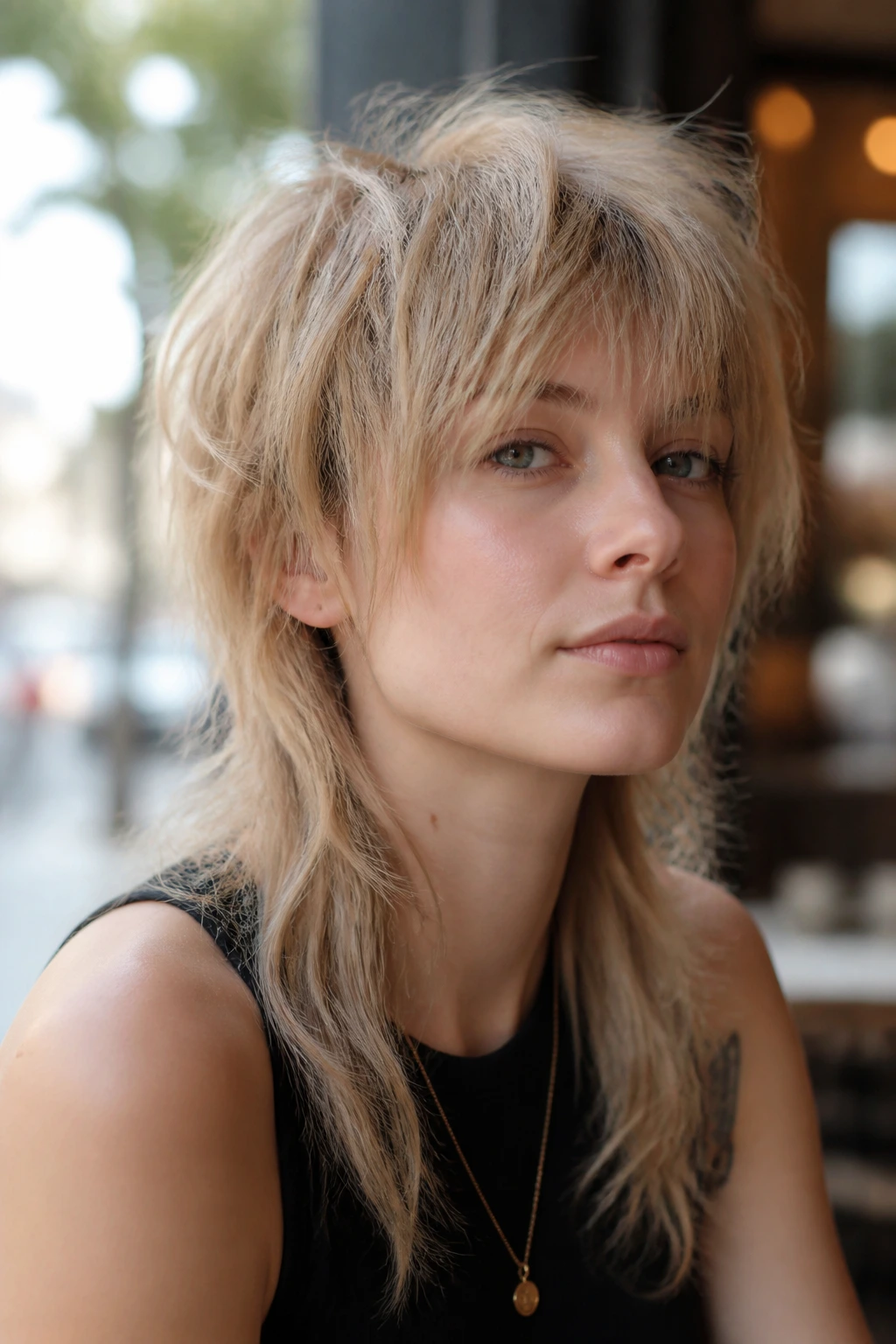
Fine hair needs a light hand. Too much thinning and it goes see-through. Too much razoring and the ends look wispy in a sad way. The best fine-hair shaggy mullet uses long layers, soft texture, and just enough internal reduction to stop the crown from lying flat against the scalp.
The shape should build volume at the top while keeping the bottom ends a little blunt for support. That’s the part people miss. Fine hair needs a framework, not a haircut that removes all its substance. Ask for face-framing layers that begin around the cheekbones and a back section that keeps enough weight to swing.
A mousse at the roots and a quick blow-dry upside down can change everything here. So can a tiny bit of dry shampoo on clean hair. Fine hair often looks better with a whisper of grit than with too much shine.
10. Heavy Fringe Thick-Hair Mullet
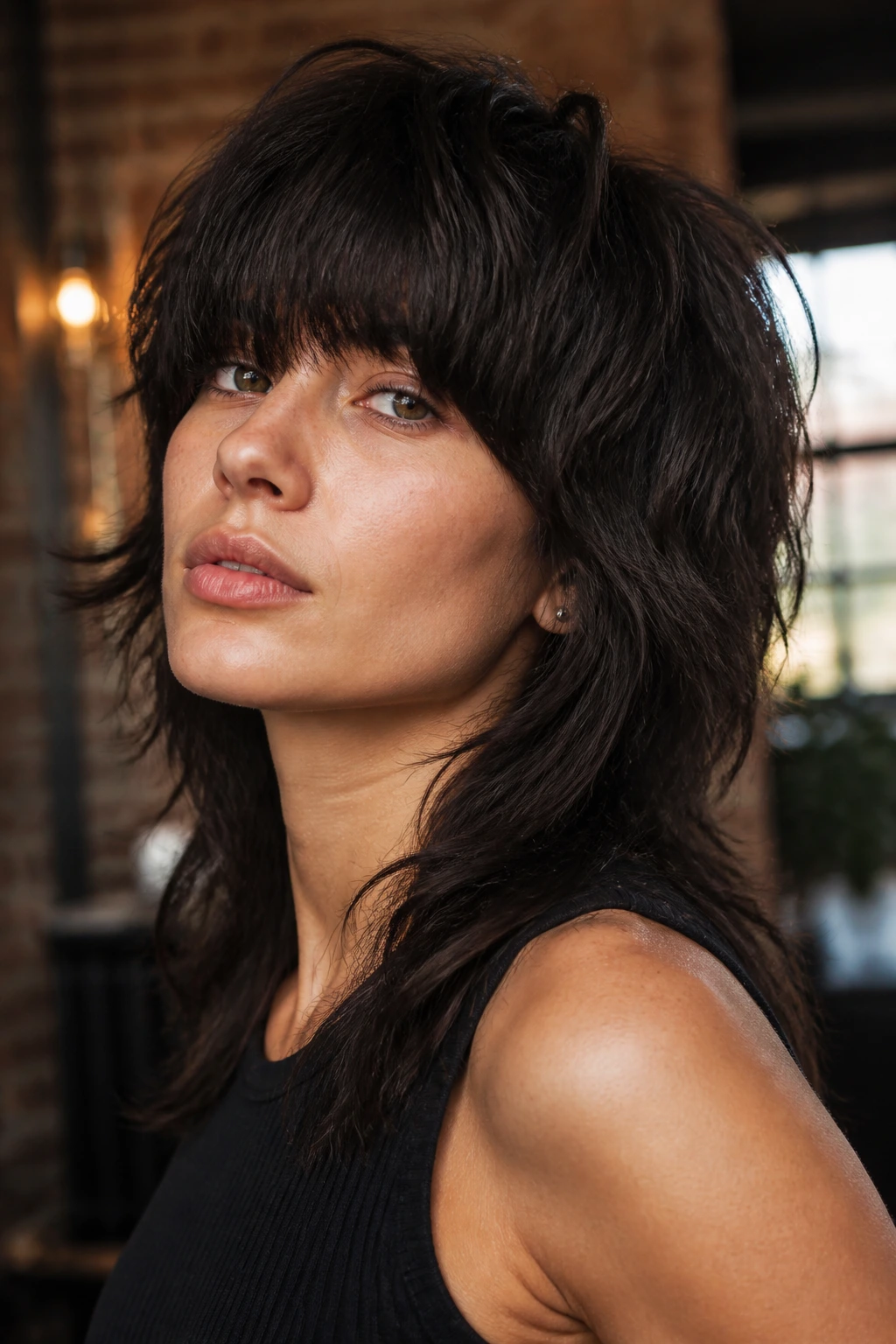
Thick hair can handle a heavier fringe and a more dramatic back, which is lucky because this cut looks terrific when it has real substance. The challenge is control. Without enough internal debulking, thick hair turns the mullet into a triangle with attitude problems.
The fringe should sit dense enough to matter, but not so dense that it forms a heavy curtain. A stylist will usually use point cutting or slide cutting to remove bulk while preserving shape. You want movement, not puff. The back can stay longer and a bit rougher, which lets the weight settle in a useful way.
This is a good choice if your hair already has natural body and you want the cut to look full even on days when you do almost nothing. Use a blow-dry cream or light serum, not a heavy oil. Thick hair gets weighed down fast, and this cut needs lift around the crown to stay believable.
11. Tapered Coil Shag Mullet
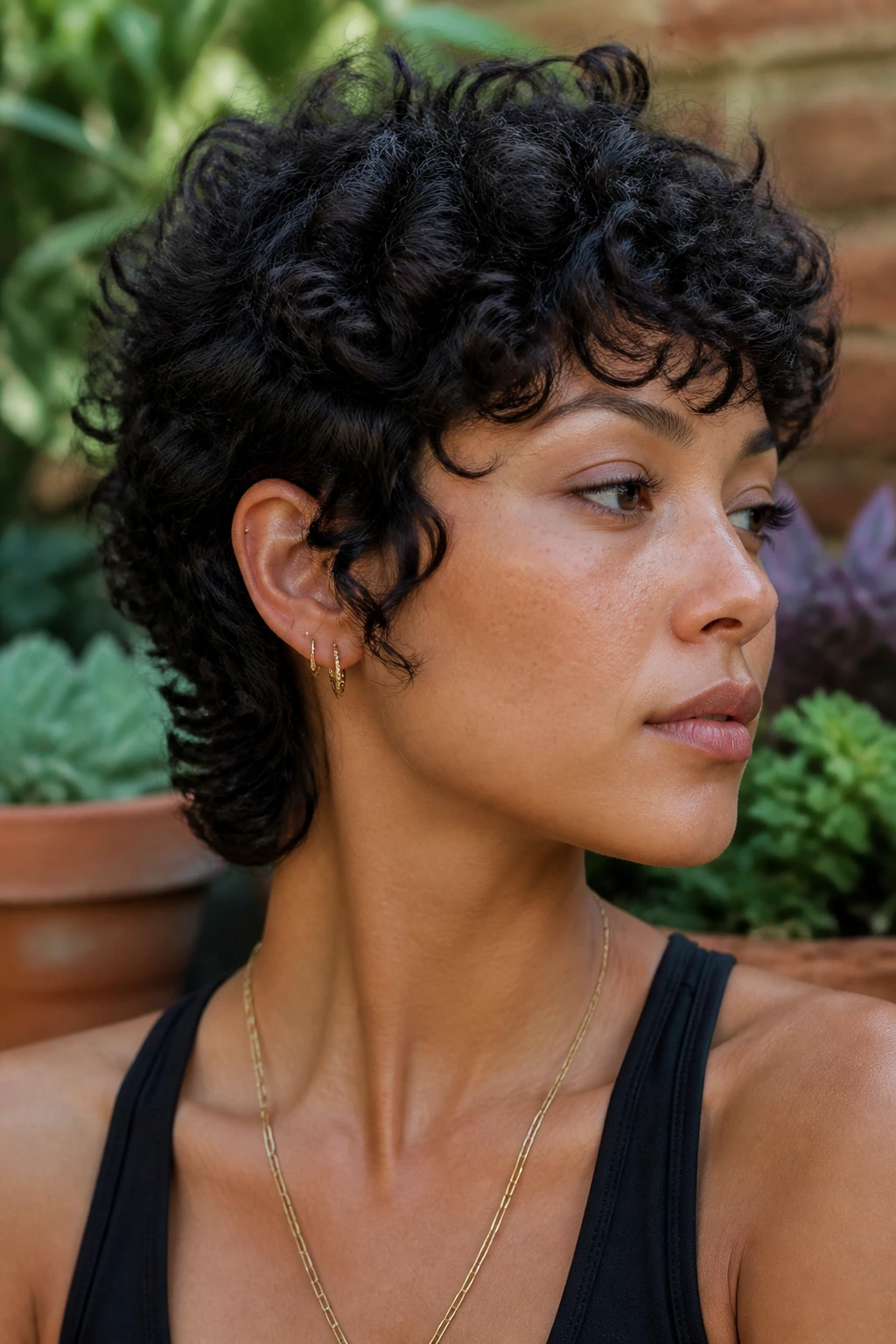
Coils need room at the top and restraint at the nape. That’s the whole game. A tapered coil shag mullet keeps the shape soft around the edges while letting the curls stack and spring where they want to. It’s a gorgeous line when it’s cut well, because the silhouette looks sculpted without losing the springy texture that makes coils so alive.
Cut it for shrinkage, not fantasy
A wet coil lies. A dry coil tells the truth. That means the shortest layers should be set with shrinkage in mind, and the nape should be tapered carefully so the back doesn’t expand into a blunt mass. If the stylist is nervous about cutting dry, they can work in stages, but the final shape has to respect the coil pattern.
Styling is simple once the cut is right. Use a cream that gives slip, then a mousse or gel at the roots for hold. Diffuse until the roots are set, then leave the ends alone. Fiddling too much breaks up the curl clumps.
12. Pixie-Mullet Hybrid
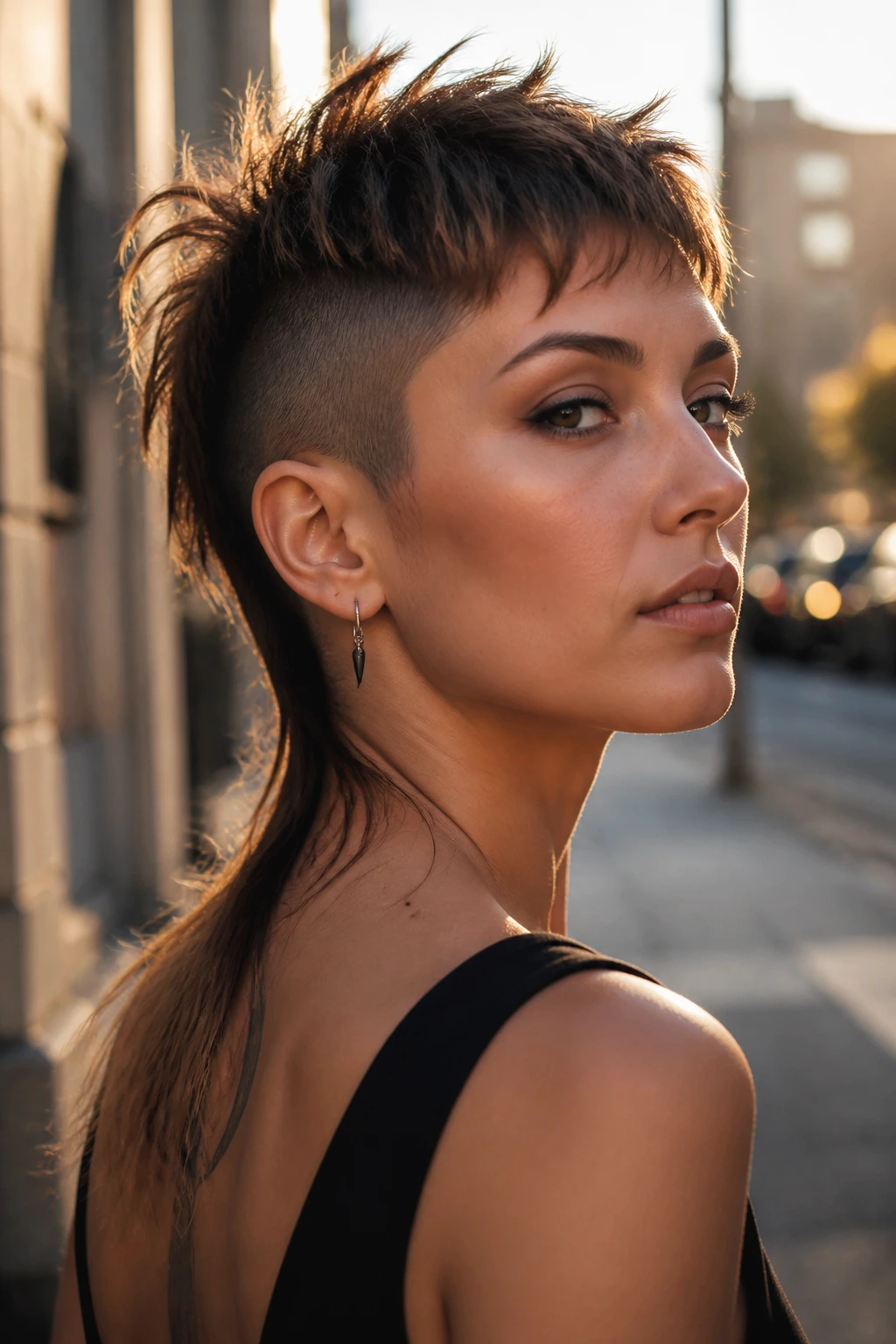
This one is pure nerve, and I mean that as a compliment. The top is cropped short, the sides are close enough to show the head shape, and the back drops into a skinny little tail or soft wisps that make the whole thing feel mischievous. It’s not trying to be pretty. It’s trying to be cool.
The beauty of the pixie-mullet hybrid is the contrast between exposed skin and longer back length. That contrast gives cheekbones, ears, and neck a stage, which is why the cut can look almost architectural. If your hair is thick, the undercutting keeps it from ballooning. If it’s fine, the short shape can make the texture look denser.
You do need trims. A lot of them. This cut loses its shape quickly if the nape starts creeping down and the top grows out unevenly. That’s not a flaw. It’s part of the bargain.
13. Black Cherry Shag Mullet
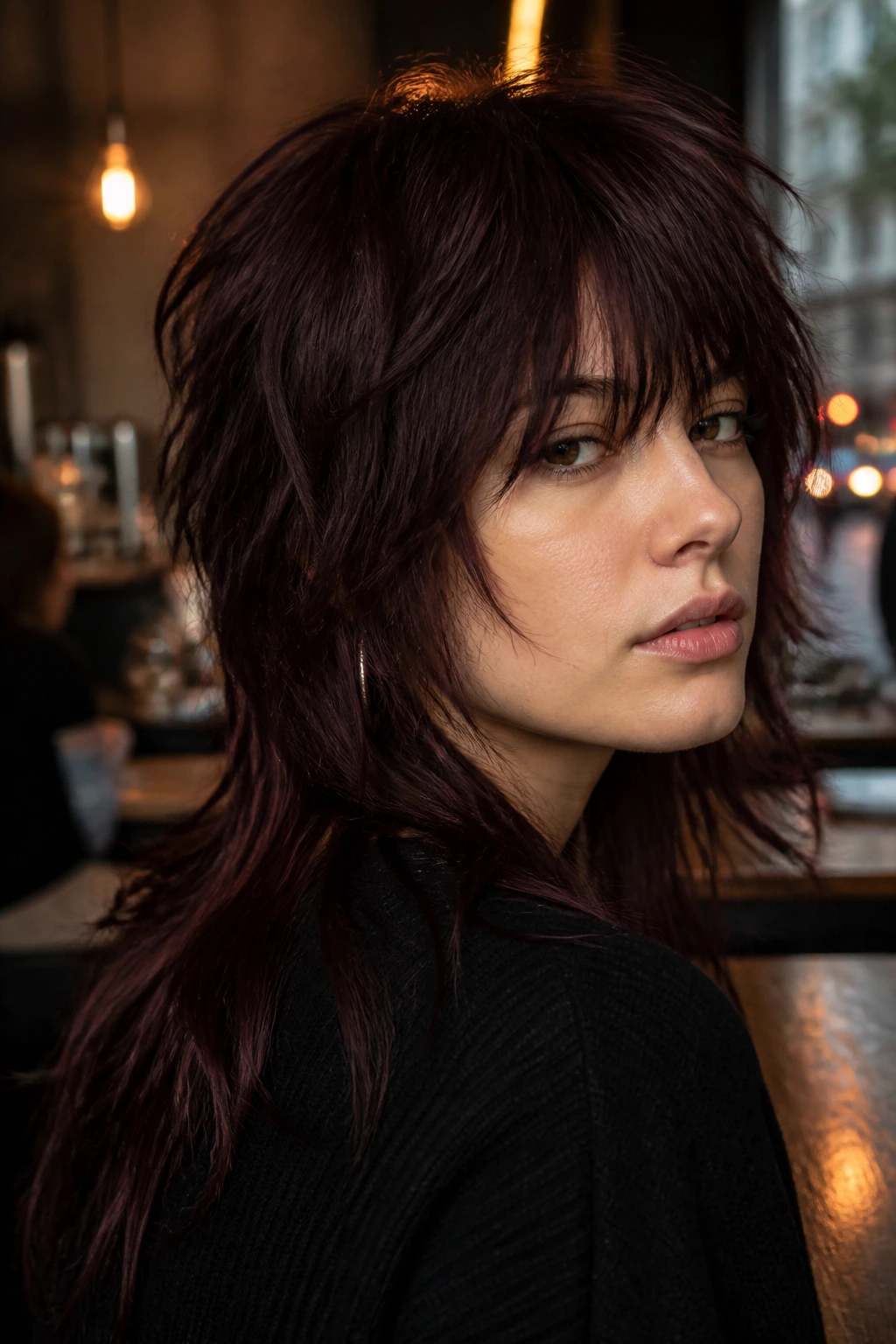
Dark cherry tones make layered cuts look richer, especially when the light catches the red-violet note in the strands. On a shaggy mullet, that color reads in motion. Every broken layer picks up a different glint, which is why this cut looks stronger with a bit of shine rather than a matte finish.
The haircut itself should stay lively: shorter crown pieces, a soft fringe, and a back section that keeps its length but not its weight. Black cherry can look flat if the cut is blunt, so texture matters. Ask for feathered ends and keep the face frame soft enough to show the color shift around the cheekbones.
Color care matters here too. Sulfate-heavy washing strips the shine fast, and the deeper red note goes missing first. A color-safe shampoo and a gloss every few weeks keep the color from turning into a dull brown-black.
14. Bronde Feathered Mullet
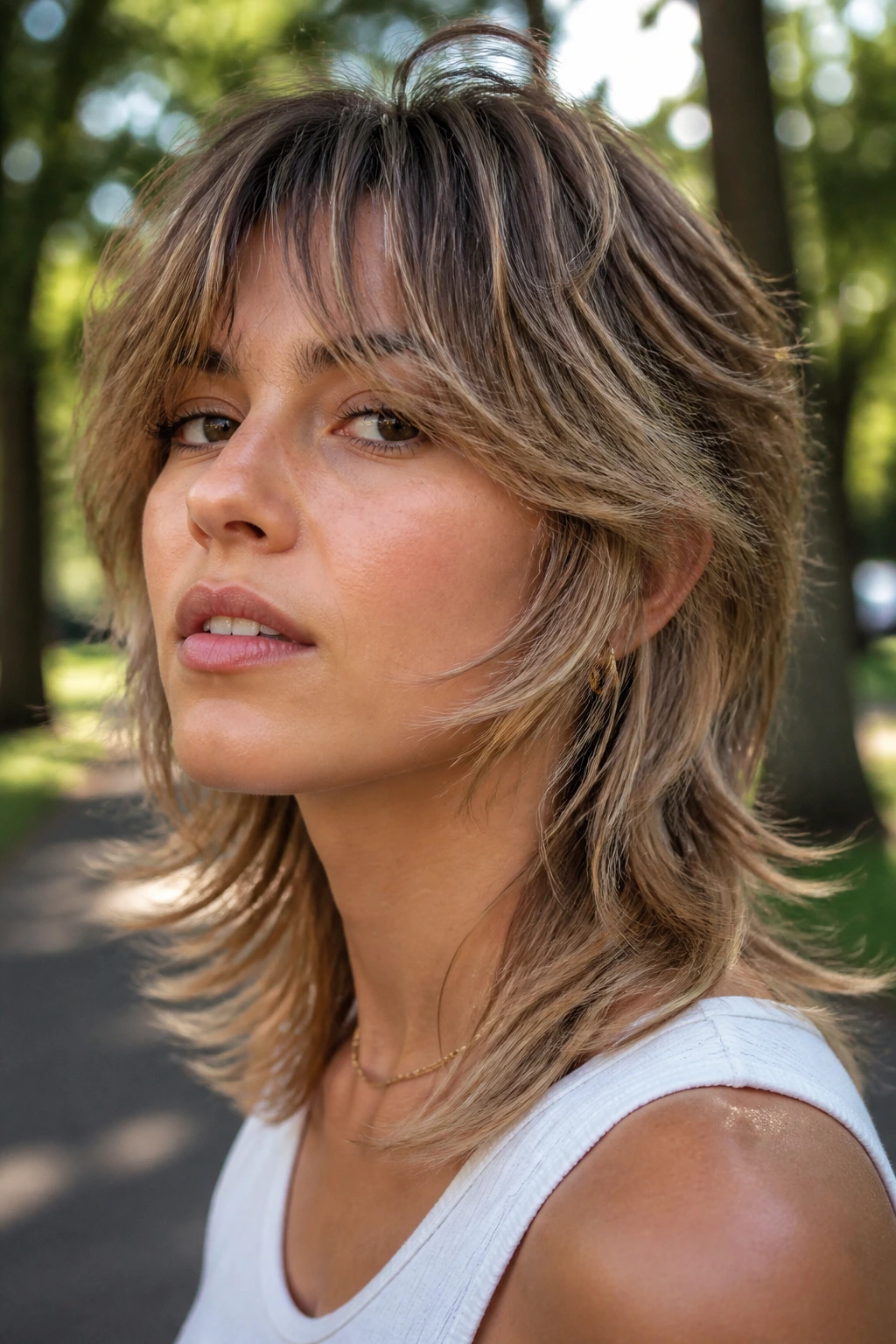
Bronde is a nice way to soften mullet energy without sanding off the edge. The brown-blonde mix makes feathered layers look sun-kissed and dimensional, which helps if you want the haircut to feel expensive in that undone way people pretend not to try for. It’s less shouty than platinum, less dark than black, and easier to live with than either.
The cut should lean airy. Think long feathering around the face, a back that drops with movement, and enough lightness at the crown that the hair doesn’t sit like a cap. Bronde shows texture best when the ends are piecey, not over-polished.
This version suits people who want a shaggy mullet but still need it to behave in normal life. It can move between casual and dressed-up without a fight. That flexibility is why it’s such a useful shape.
15. Wet-Look Slick-Top Mullet
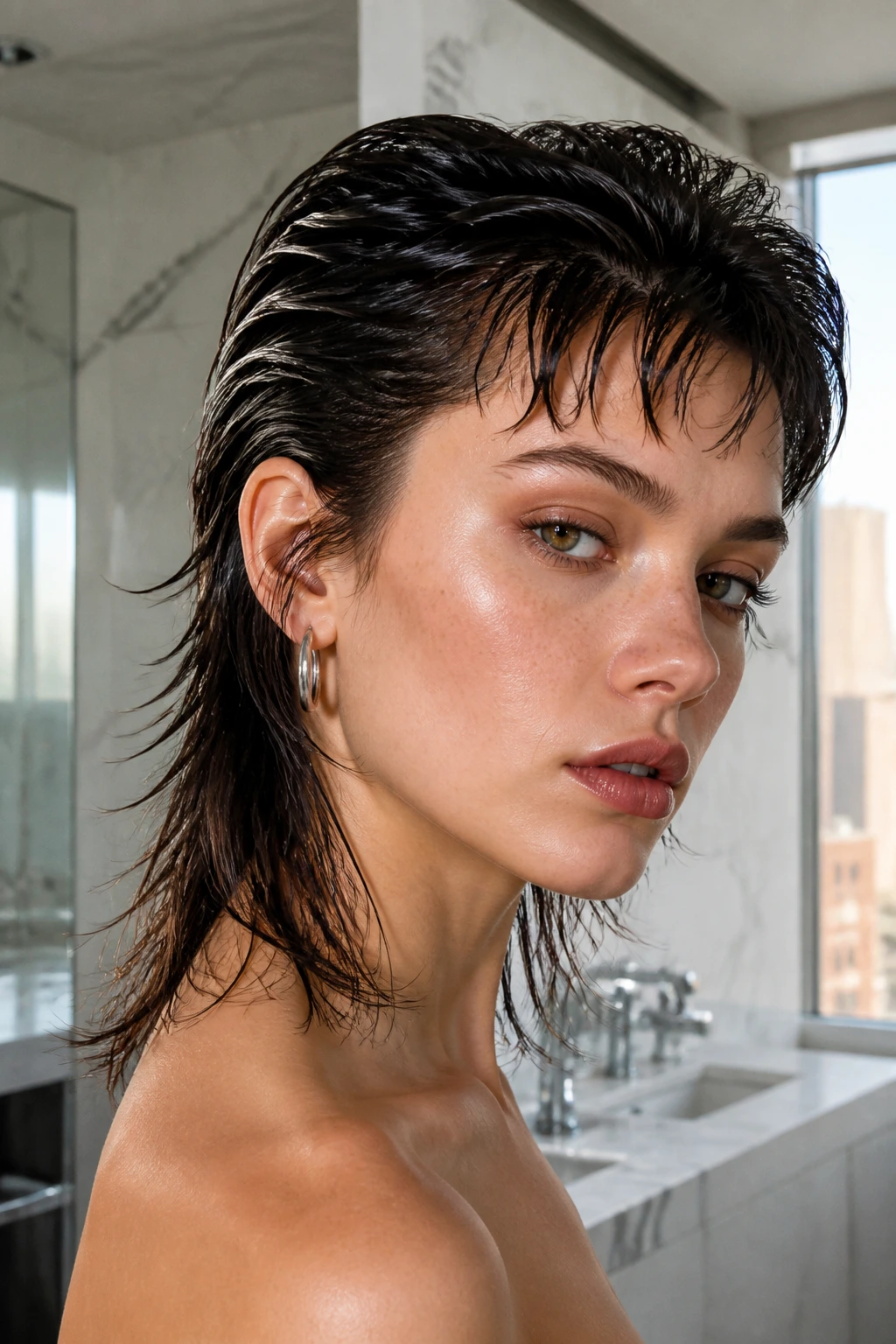
A slick top with rough ends is a good way to make a shaggy mullet feel sharper and more editorial. The crown gets brushed smooth with gel or cream, while the back and ends stay separated and dry-looking. The contrast does all the work. It’s controlled up top and a little feral underneath.
This works best when the haircut already has good layering, because the slick finish will expose the structure. A bad cut becomes painfully obvious when it’s flattened. A good one looks deliberate, almost sculptural. The hairline and parting matter here too, so keep the front polished and the back a touch chaotic.
Use this version when you want a night-out look or when the outfit is clean and you want the hair to supply the attitude. It’s the kind of style that looks expensive in a messy way, which is harder to pull off than it sounds.
16. Round-Face Frame Mullet
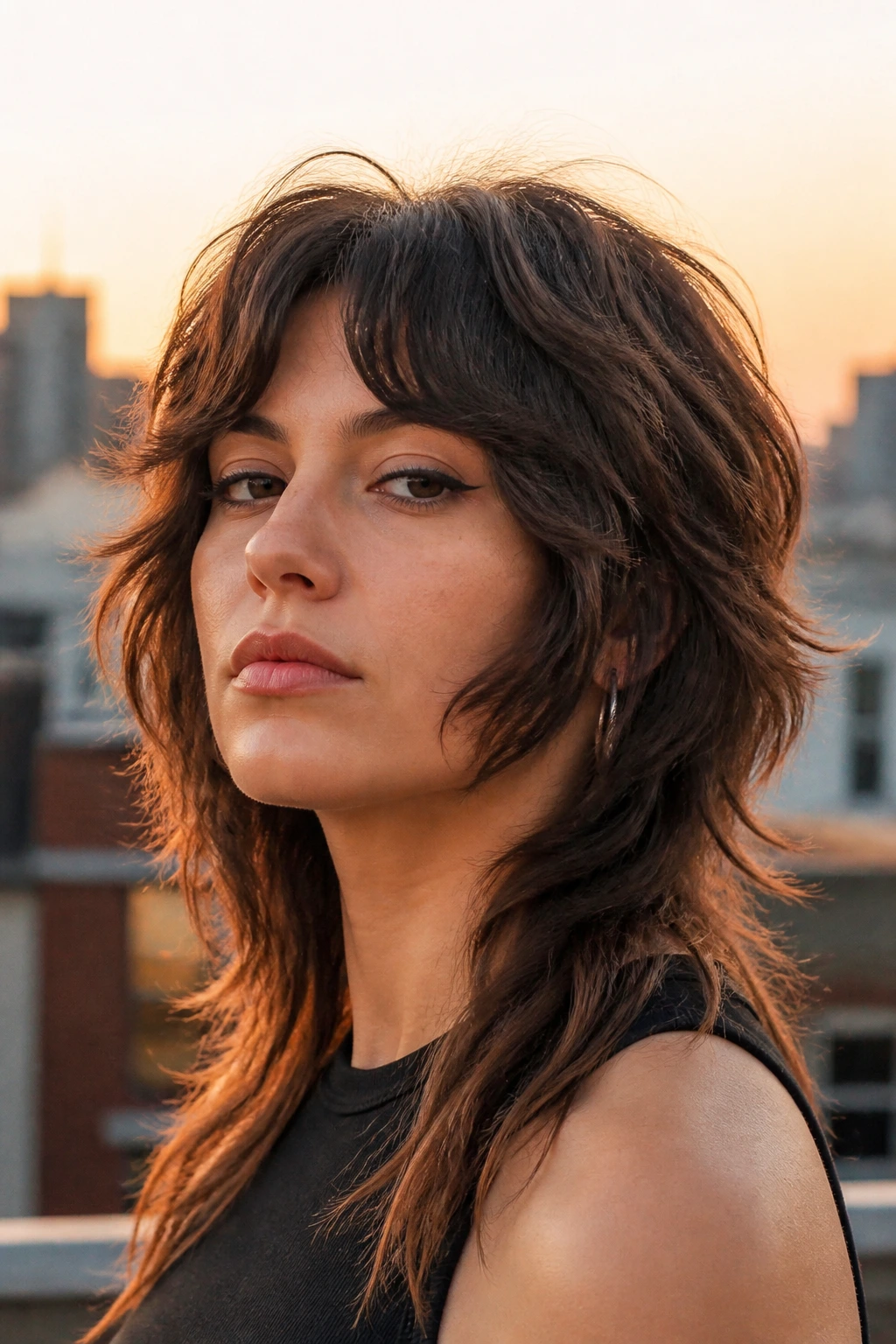
Round faces usually benefit from height at the crown and longer frame pieces that break up width at the cheeks. This shaggy mullet does both if the cut is planned well. The front should fall below the widest point of the face, and the crown should stay light enough to add vertical line without puffing out like a mushroom.
The shape rule that matters
The shortest pieces should not stop right at cheek level. That’s the trap. Instead, ask for layers that skim past the cheeks and angle down toward the jaw, with the nape left long enough to pull the eye downward. That elongation is what gives the face room.
This version can be very flattering when the cut is balanced, and it doesn’t need to be severe to work. A little wave in the front pieces helps the lines soften. Flat, blunt bangs across the widest point of the face? Hard pass.
17. Square-Jaw Soft-Angle Mullet

A square jaw can carry a shaggy mullet beautifully, but the cut has to soften the corners. Longer side pieces, broken ends, and a fringe that bends rather than cuts straight across all help. You want movement near the jawline, not a frame that echoes it too loudly.
This is one of those cuts where the face-framing layers do nearly as much work as the back. The back can stay a little piecey and rough, while the front pieces soften the jaw with diagonal movement. If the hair is straight, add a small bend with a flat iron at the ends so the line doesn’t turn boxy.
The shape feels strong, not hard. That’s the sweet spot. It gives a square jaw some softness without hiding it, which is the whole trick.
18. Grown-Out Rebel Mullet
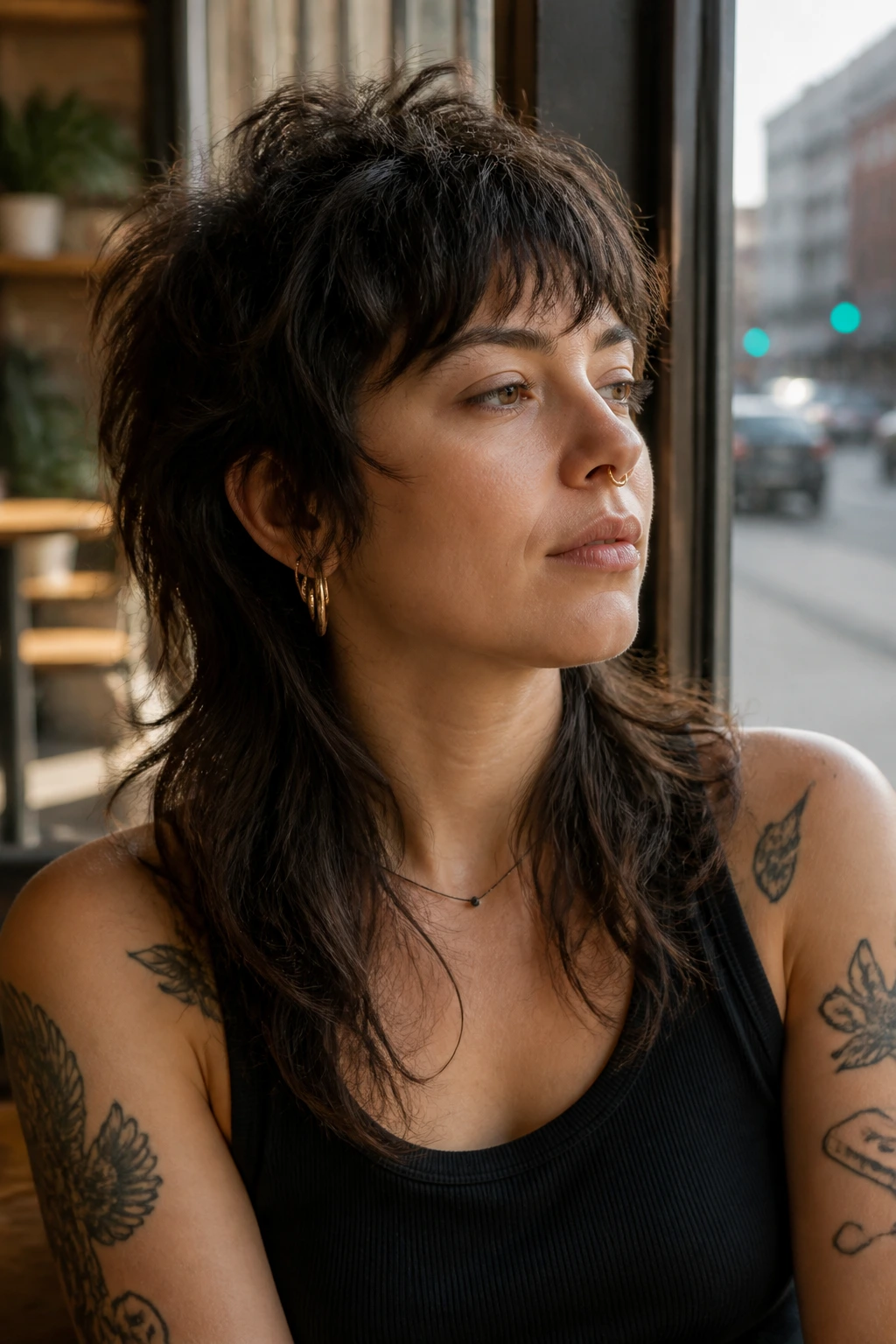
Some haircuts only look good on day one. This is not one of them. A grown-out rebel mullet is built to look better after it’s lived a little, with layered pieces that loosen over time and a back section that settles into a shaggy tail instead of a messy accident.
The key is getting the initial shape cut with soft internal structure. If the edges are too blunt, grow-out becomes awkward fast. If the crown is too short, the balance disappears and you’re left chasing the shape with styling products. A wise stylist will leave you enough length at the temples and fringe to survive the messy middle.
This cut is for people who don’t want a haircut that requires panic every four weeks. It wants some freedom. Let it have some.
19. Side-Swept Layer Mullet

A side part changes the whole mood. Suddenly the haircut feels less centered and more slashed across the face, which is useful if you want a little drama without a full-on bang moment. Side-swept layers work especially well when the front is long enough to tuck, flip, or drag across one eye on purpose.
The shorter side should still connect to the back cleanly, or the style starts looking chopped rather than shaped. That connection matters more than the part itself. If your hair tends to fall the same way every day, a side-swept mullet can help break that pattern with almost no extra effort.
This is also a good glasses-friendly version. The layers can sit around the frames instead of fighting them. That small detail makes a difference in day-to-day wear.
20. Razor Bob Mullet
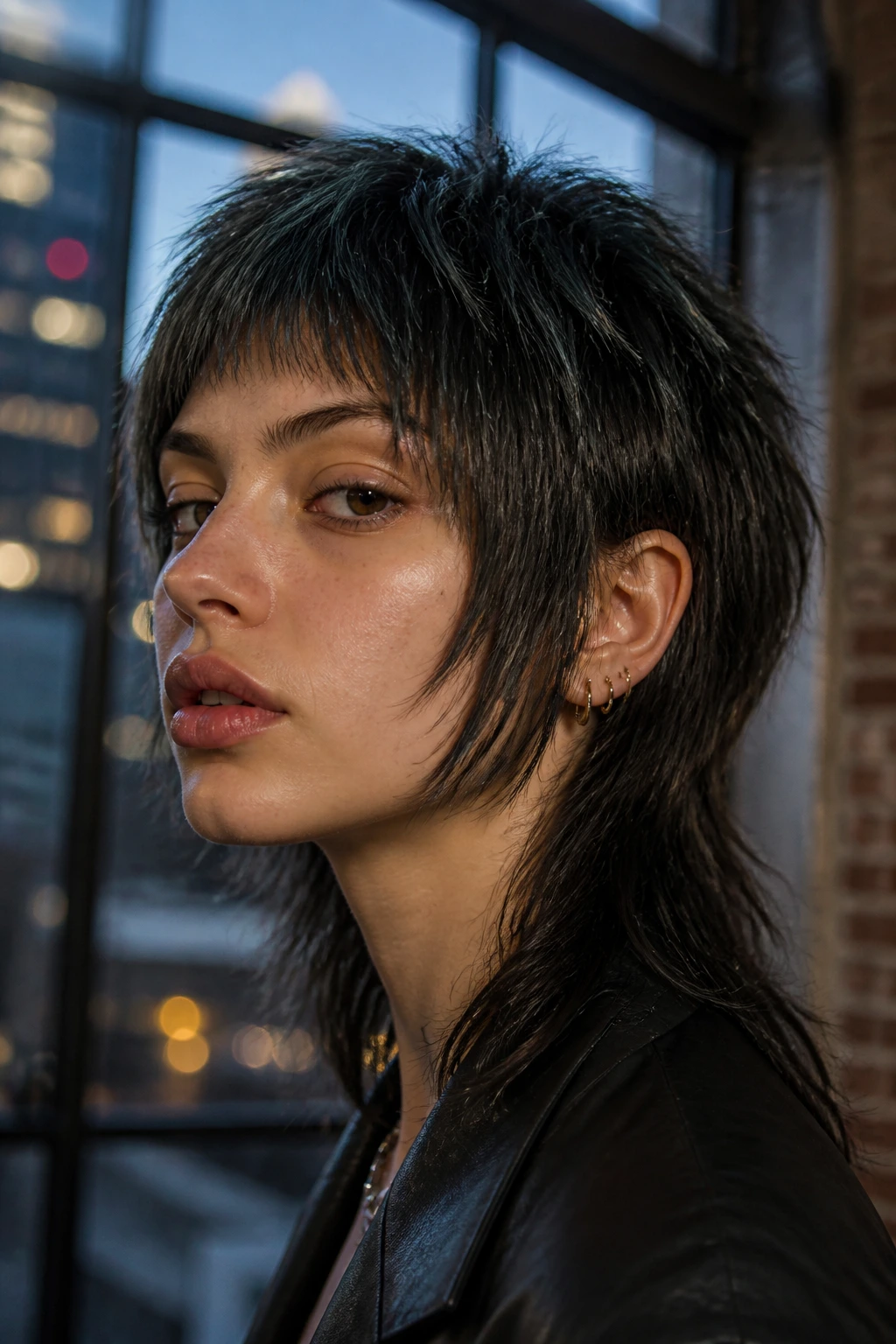
A razor bob mullet gives you the neatness of a bob at the front and the mischief of a mullet at the back. The front line usually stops around the jaw or just below, while the nape stays longer and shaggier. It’s graphic. It’s a little mean. I like that.
This cut depends on clean geometry. The front needs enough shape to read as a bob, but the perimeter should be chipped or razored so it doesn’t turn stiff. The back can be left more broken, which creates that abrupt shift between polished and rough that makes this version feel modern.
Straight hair loves this cut, especially when it’s blown smooth and then bent at the ends. Wavy hair can wear it too, but the texture should be controlled near the front so the bob line doesn’t vanish. A little tension in the cut is the point.
21. Flicked-Ends Messy Mullet
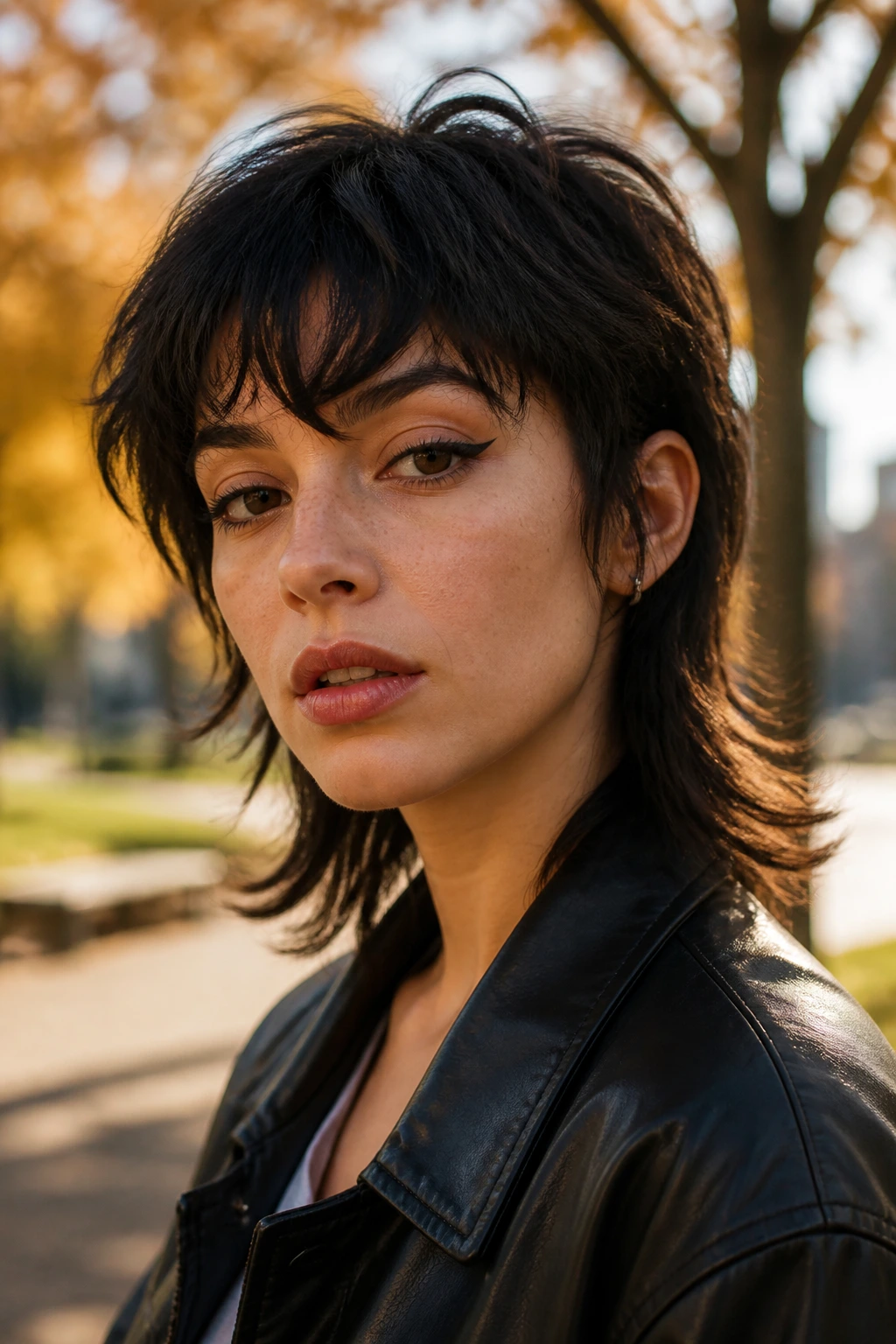
Flicked ends give away the secret instantly. The haircut was designed to move. The sides and back are layered enough that the tips swing outward, while the crown stays slightly compressed so the whole shape doesn’t balloon. It’s playful, but not childish.
What to ask for
Tell the stylist you want the ends to flick rather than hang heavy. That means softening the last inch or two of the hair, often with point cutting or a small bend in the perimeter. If the cut is too blunt, the flick dies.
This version looks especially good with a bit of heat styling on the front pieces and a quick pass of texture spray through the ends. Nothing too polished. The minute the hair starts looking too neat, the effect disappears.
22. Retro Rocker Shag Mullet
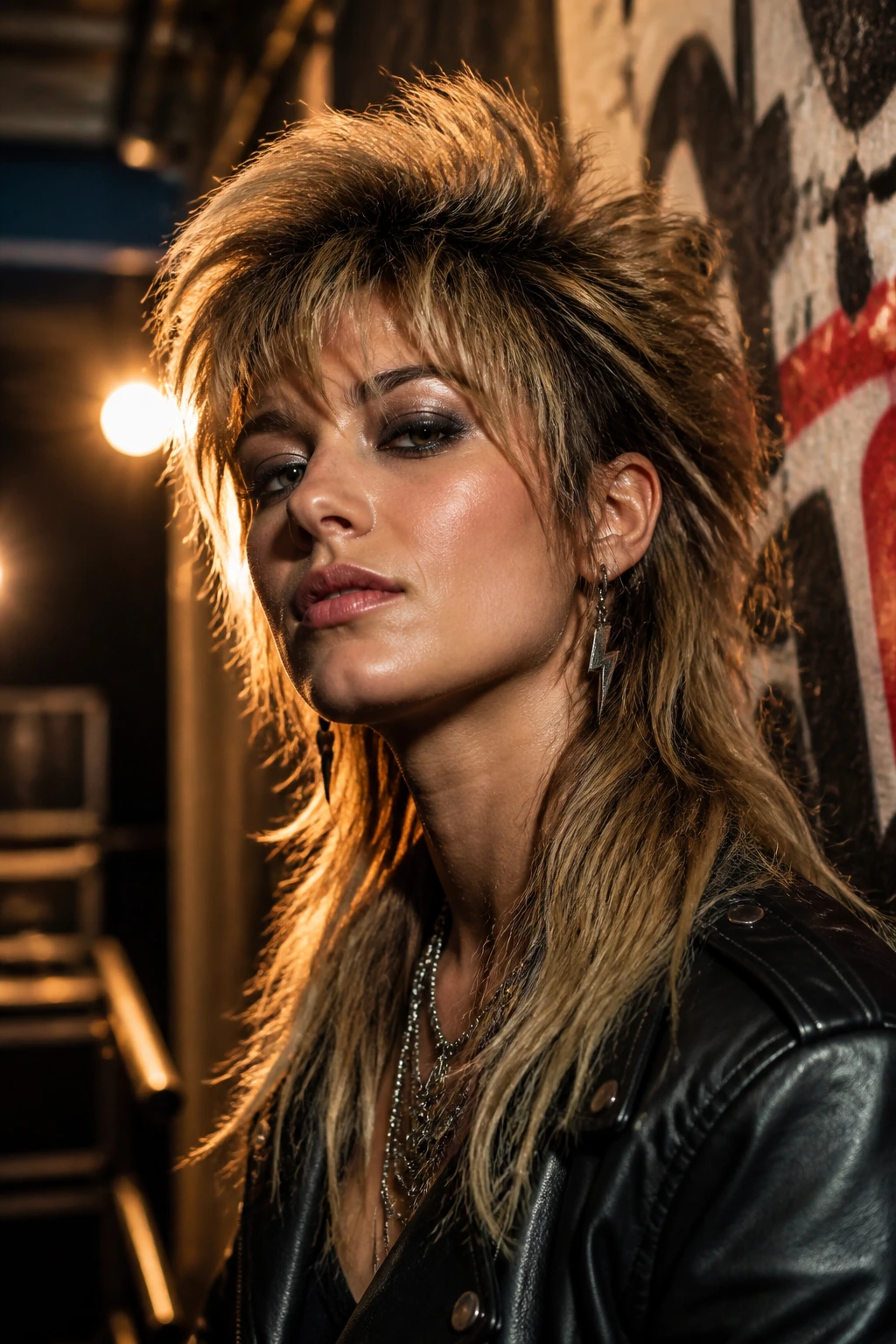
This is the loud one. Big crown, swept fringe, longer back, and enough feathering to make the whole cut feel like it belongs on a stage, a bike, or both. The retro rocker shag mullet has less apology built into it than most versions.
It works because the shape has clear intention. The crown has lift, the top layers move back from the face, and the lengths are arranged so the silhouette feels like a frame rather than a blanket. Volume spray at the roots and a round brush through the bangs make a real difference here.
If you like a haircut that looks better the more it’s styled with your hands, this is your version. It doesn’t want perfection. It wants presence.
23. Minimalist Clean Mullet
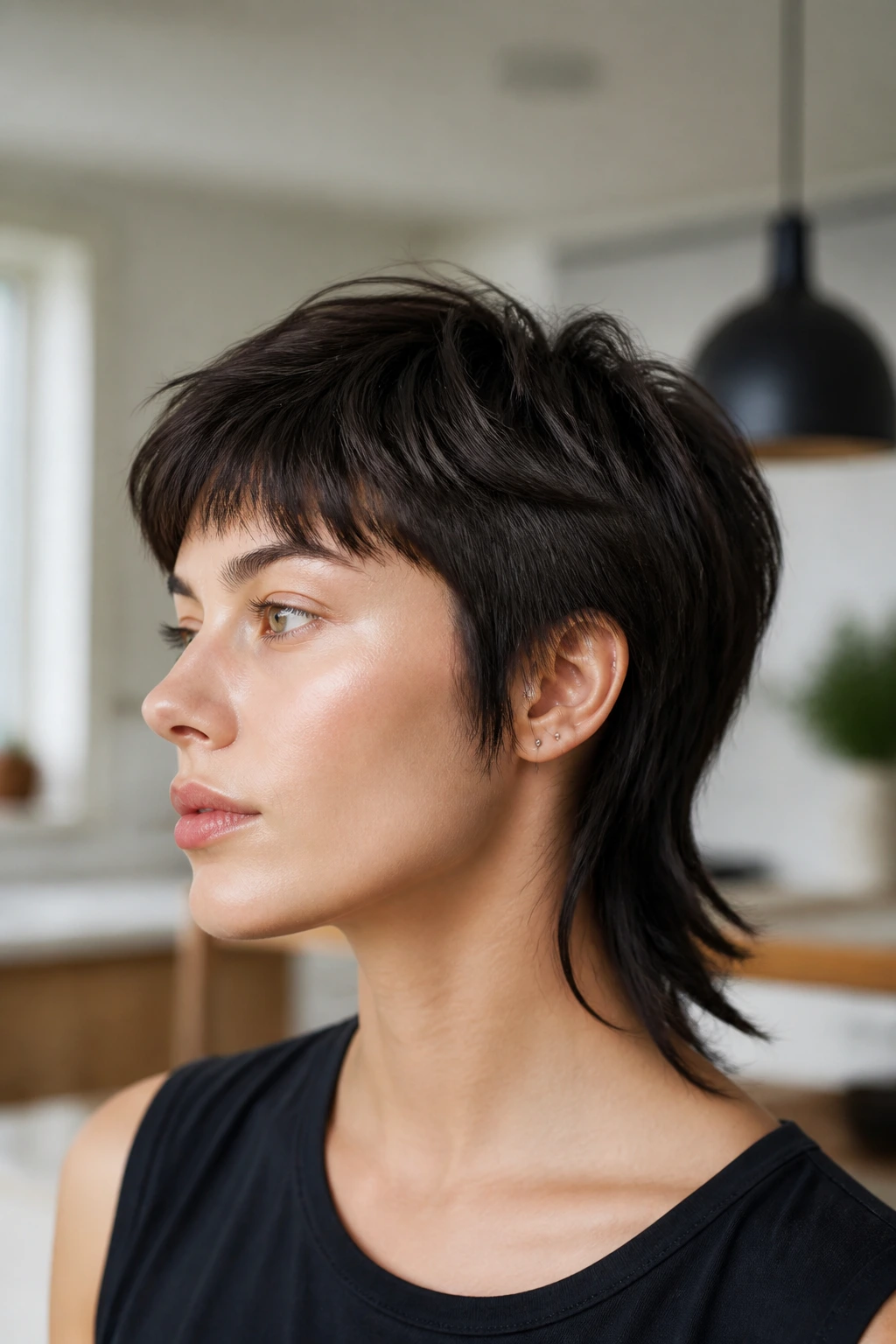
Not every mullet has to look like it’s ready to start a fight. The minimalist version keeps the shape subtle: a soft difference between the front and back, light layering around the crown, and just enough tail in the back to count. It’s probably the easiest way to test the silhouette without committing to the loudest possible read.
The front should stay clean and wearable, not ragged. The back should be long enough to shift when you move, but not so long that it announces itself from across the room. This is a stealth haircut. The people who notice will notice, and everybody else will just think you have good hair.
That’s a useful place to live if you want edge without daily styling drama. A bend at the ends and a little dry shampoo are often enough.
24. Voluminous 90s Shag Mullet
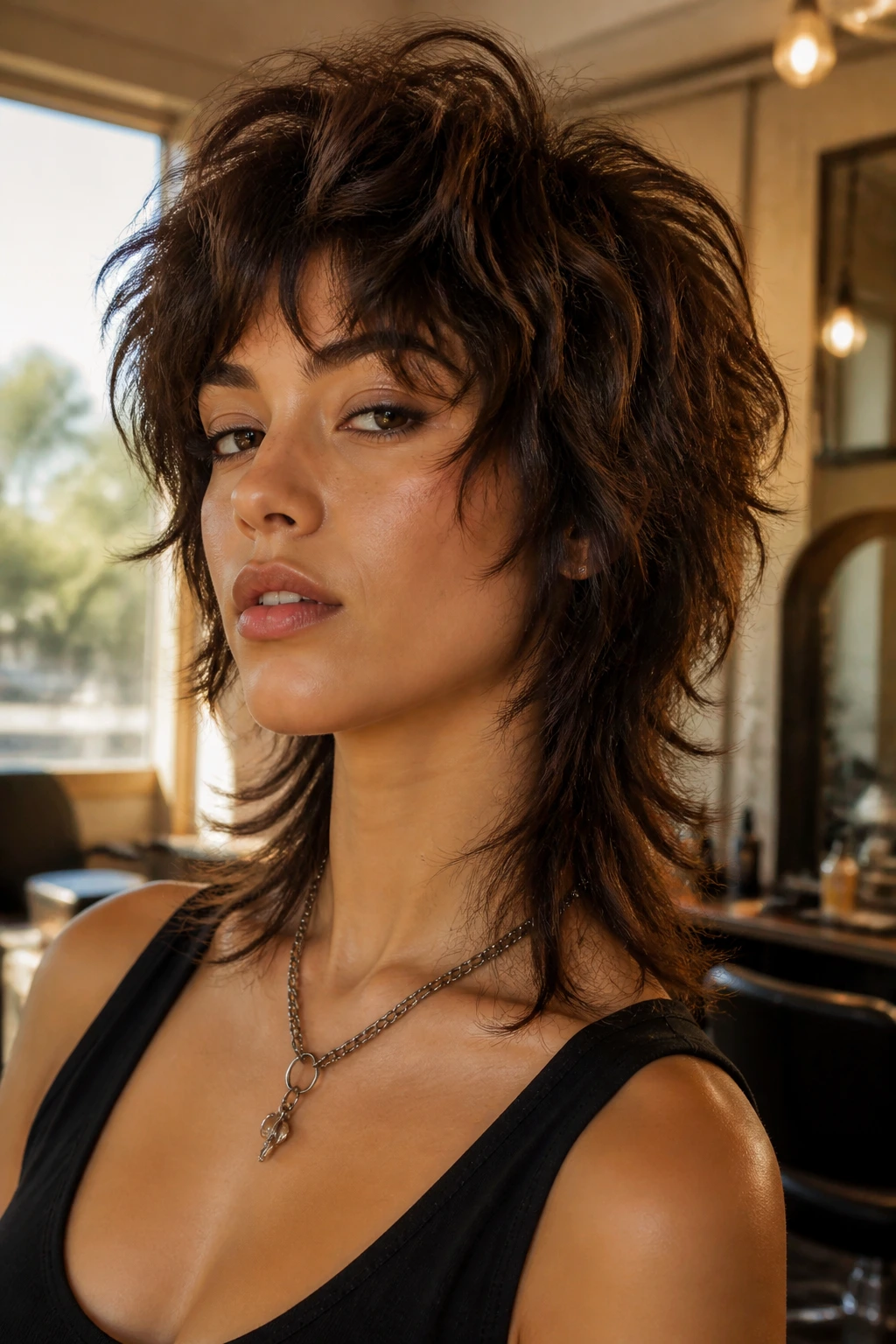
This cut wants body. Not a little. Actual body. Think crown lift, cheekbone movement, fluffy layers, and ends that flick around instead of lying close to the neck. It has a nostalgic feel, but the shape still works because volume is doing the sculpting.
The best version of this cut uses a round brush or rollers at the front and root-lifting product at the crown. Hair that is naturally dense or wavy usually gives the strongest result, though finer hair can fake the mood with mousse and a careful blow-dry. The look should be plush, not crunchy.
This is the mullet for people who like a little glam with their rough edges. It feels big without being stiff. That’s the charm.
25. Color-Blocked Mullet
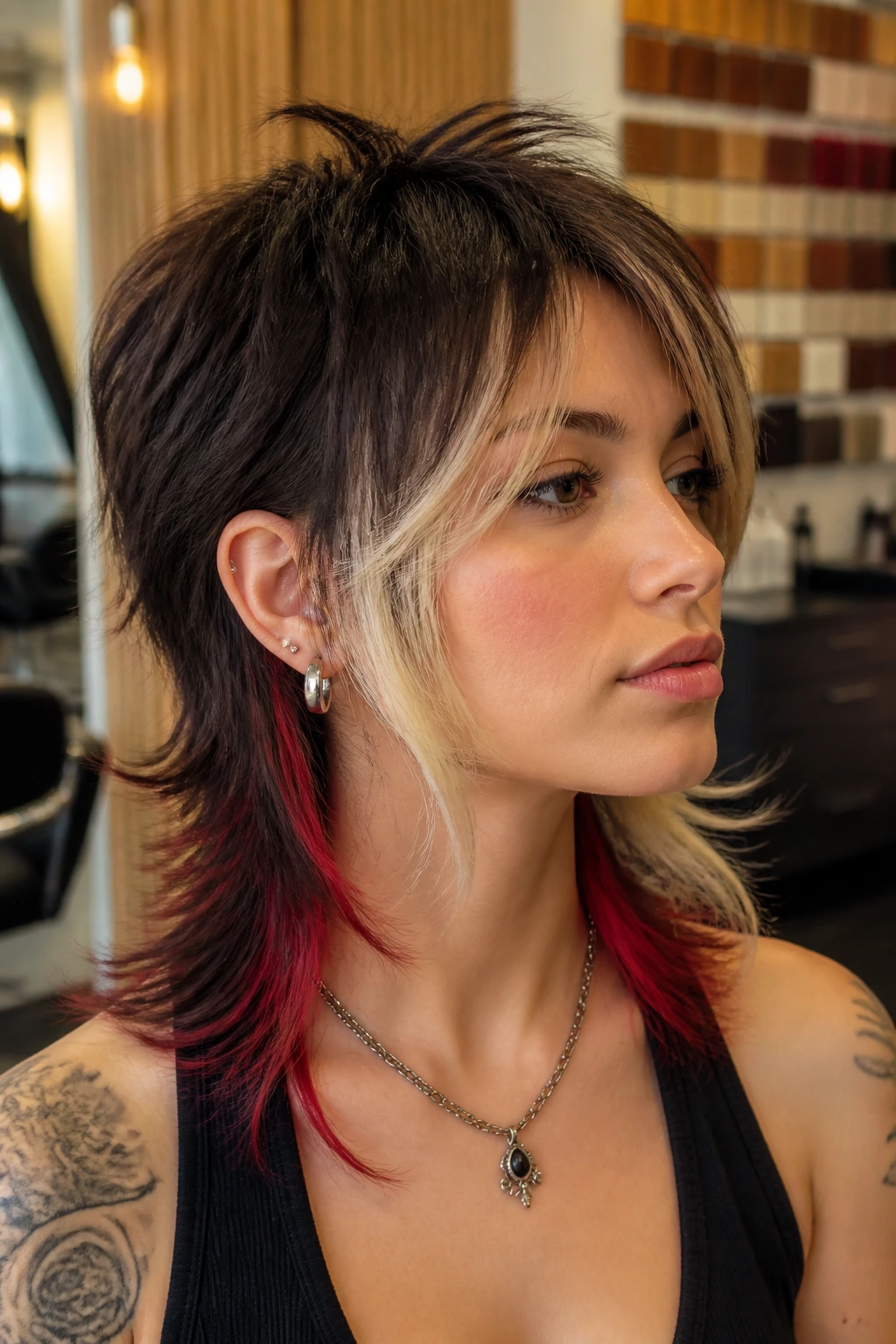
Color-blocking turns the layers into a visual map. A darker base with lighter face-framing pieces, or a bold underlayer peeking from the back, makes the cut read in chunks instead of one line. That works especially well with shaggy mullets because the hair already has segmented movement.
The haircut itself should stay simple enough to let the color do some of the talking. Too many competing textures can get noisy. Better to keep the shape clean and let the color slices show off the difference between the crown, sides, and tail. A vivid panel under the top layer looks especially good when it flicks out at the nape.
Maintenance depends on the color, not just the cut. If you’re doing a bright block, expect toning and root upkeep. If you’re doing a softer contrast, the grow-out can stay easier.
26. Air-Dried Curl Mullet
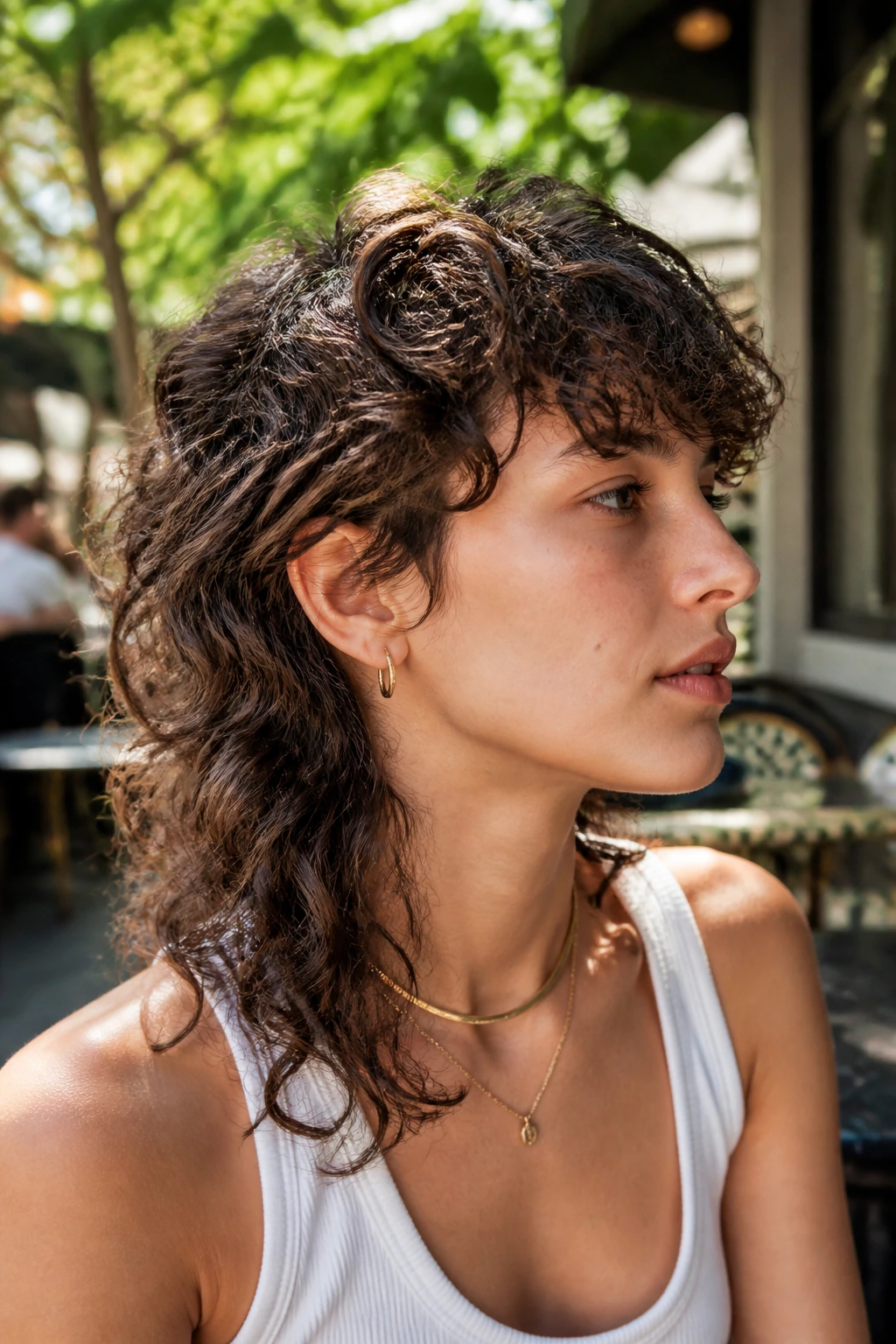
This one is built around natural movement, not fighting it. Air-dried curls or waves give the shaggy mullet its rough edge for free, and the cut only has to give the pattern a clear direction. That means shaping the crown so it doesn’t flatten, keeping the sides from puffing too wide, and leaving enough length in the back to show the curl pattern.
A good stylist will cut this with your texture in mind, often dry or with the hair left mostly natural. The goal is not uniformity. The goal is balanced chaos. A curl cream, a little scrunching, and a hands-off dry are enough most days.
If you hate long styling routines, this is the friendliest version in the bunch. It rewards restraint.
27. Sleek-Top Rough-Ends Mullet
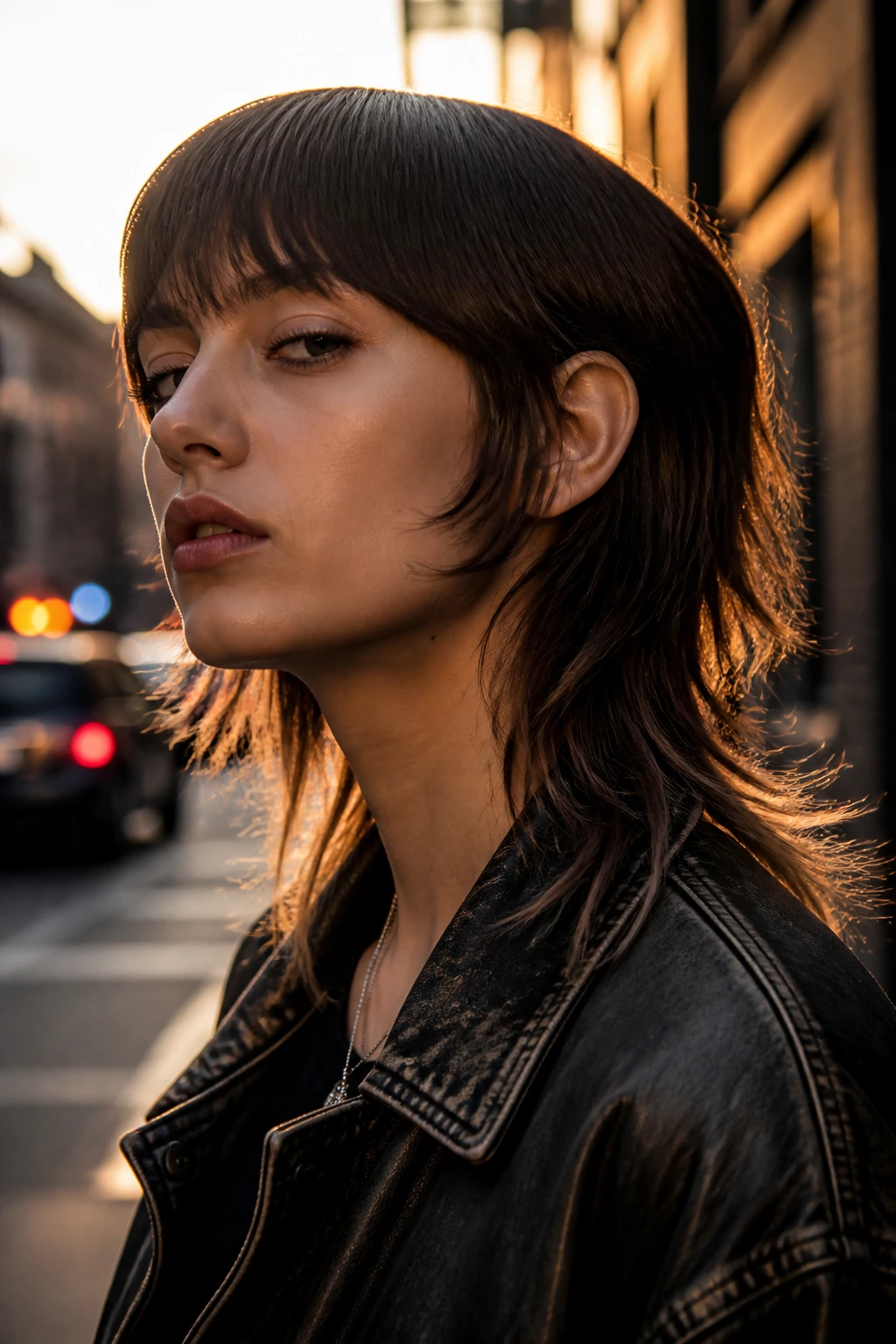
A sleek top with rough ends has a nice contradiction built in. The crown is smoothed down, sometimes with a side part or middle part, while the ends stay frayed and piecey. That contrast makes the haircut feel deliberate instead of over-styled. It also gives you two moods in one cut.
This version needs a clean outline near the scalp, so the top should be cut with enough discipline that it lies flat without fighting. Then the ends can do their own thing. A flat iron bend near the bottom half of the hair can sharpen the line, especially if you want the ends to kick out slightly.
It’s a good option when you want to look put together from the front and just a little dangerous from the side. Which, frankly, is a useful arrangement.
28. Undercut Shag Mullet
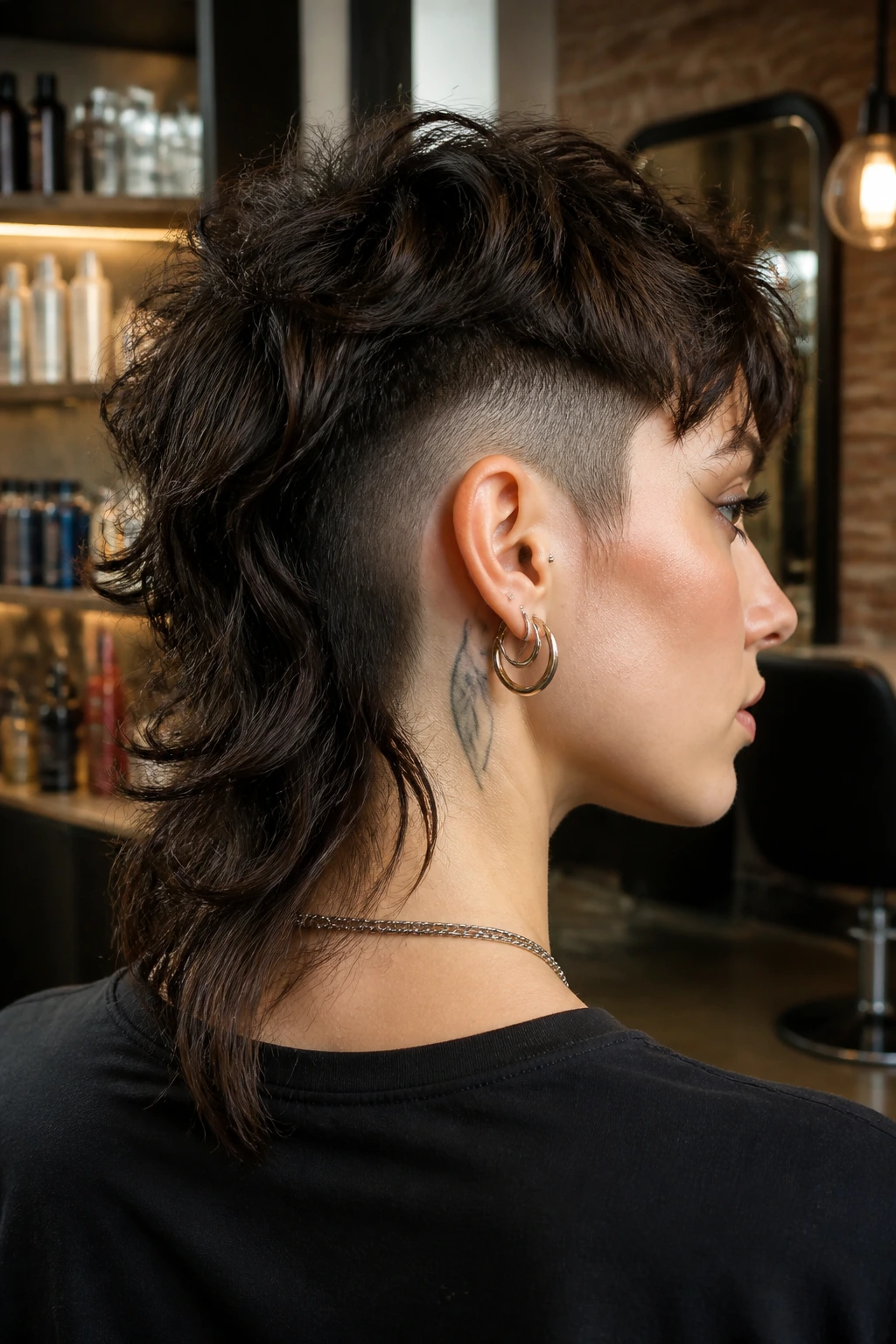
The undercut shag mullet is the strongest version in the lineup. Shaving or clipping a section underneath removes weight fast, which is a gift if your hair is thick or you want a hidden edge that only shows when the top moves. The surface layers can stay shaggy and soft while the underlayer does the hard, quiet work.
This cut is fantastic for density, because it keeps the back from turning into a brick. It also creates air around the neck and nape, which changes the whole silhouette. The haircut can look relatively soft from the front and then reveal its sharper side when you tuck the hair up or sweep it over.
If you like contrast and don’t mind a cut that announces itself when the wind blows, this one has teeth. It does need thoughtful grow-out, though. An undercut that’s left too long starts to lose its clean line, and then the magic gets muddy.
Why a Shaggy Mullet Looks Sharp Instead of Scruffy

A shaggy mullet only looks good when the shape has a spine. That’s the part a lot of people miss. They think the haircut is about being messy, when really it’s about where the weight sits and where it doesn’t. The crown should feel lighter, the face frame should create direction, and the back should carry enough length to create contrast without dragging the whole cut down.
A stylist usually builds that shape with point cutting, razor work, or slide cutting, depending on the hair type. Those methods break up the perimeter so the ends move instead of hanging in one blunt line. On straight hair, that broken edge keeps the haircut from looking too heavy. On wavy or curly hair, it prevents the sides from puffing out like a triangle. Different texture, same problem.
Crown, sides, and nape
The crown needs lift. Always. If the top is too flat, the rest of the cut has nowhere to go and the mullet reads as a bad grow-out. The nape is where the attitude lives, but it can’t be the heaviest part of the head. That’s how you end up with a tail and not a shape.
Fringe matters more than people think
Short bangs, curtain bangs, side-swept layers, or no fringe at all — each one changes the haircut’s personality. A fringe gives the eyes a place to land. Without it, the cut depends more on the silhouette from the side. That can work, but it changes the whole mood.
A good shaggy mullet is never only about the back. The front and crown have to earn the shape.
What to Tell Your Stylist Before the First Snip
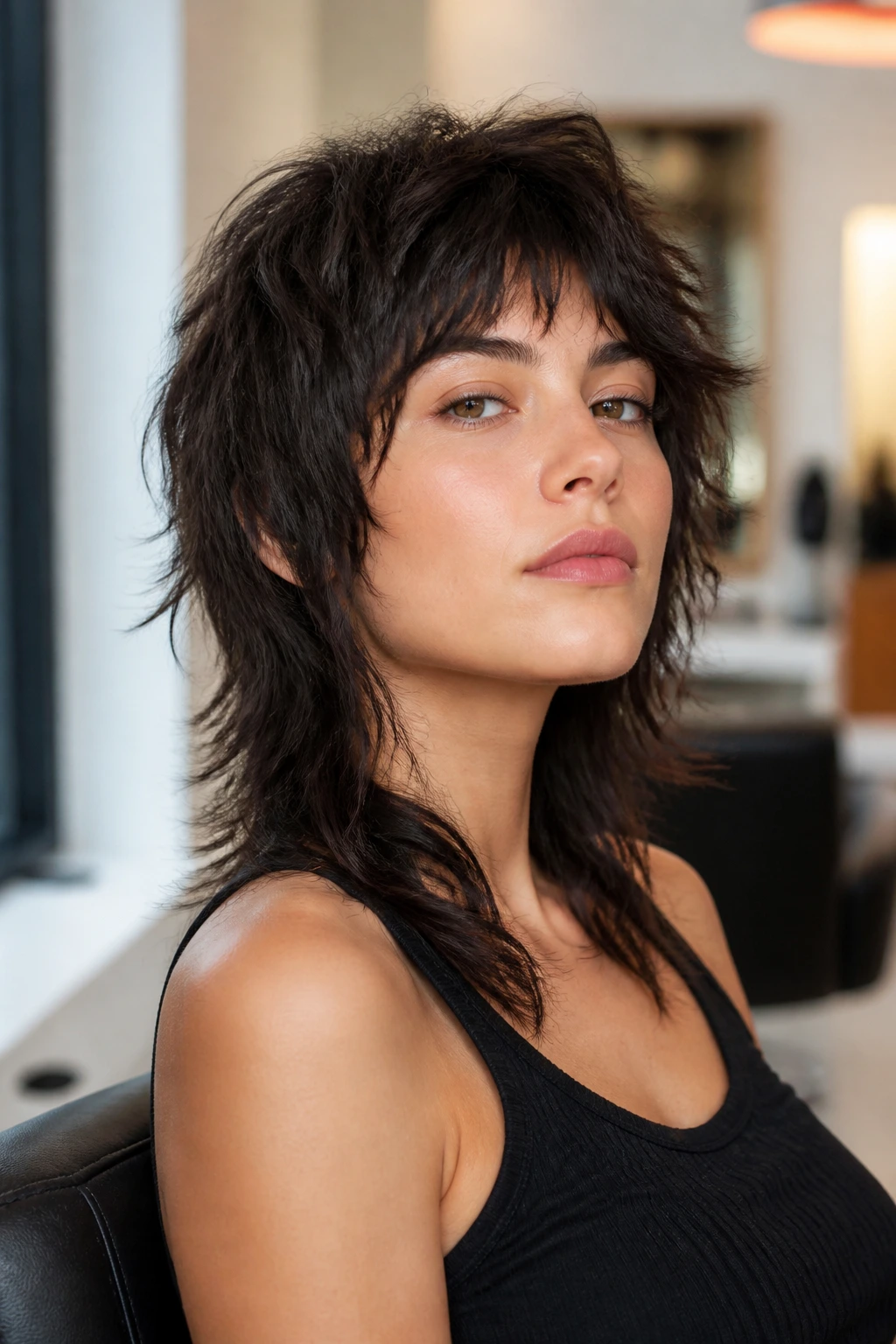
Bring photos, but bring the right photos. You want pictures of people with hair that behaves like yours, not a celebrity with three assistants, a curling iron, and a wind machine. A clean visual target helps a lot more than vague words like “edgy” or “soft.” Those words mean wildly different things to different stylists.
Say where you want the shortest point to sit. Tell them whether you want the fringe to hit the eyebrows, the cheekbones, or the nose. Mention if you style your hair mostly air-dried or if you blow it out. That single detail changes how the layers should be placed. A mullet cut for air-dried waves is not cut the same way as one meant to be brushed smooth.
Be honest about maintenance. If you’ll never come back for a fringe trim, don’t ask for a micro bang. If you hate styling cream in your hair, say so. A good haircut should fit your habits, not the fantasy version of your mornings.
- Say where the tail should stop: collarbone, shoulder, or longer.
- Name the shortest face-framing point: cheekbone, jaw, or chin.
- Ask for internal layering instead of bulk removal if your hair is fine.
- Ask for stronger debulking if your hair is dense or coarse.
- Mention your styling routine before the cut starts.
The stylist should also know whether you want visible separation or a softer shag. That one choice decides how aggressive the texturizing should be.
Tools That Actually Help This Cut Behave
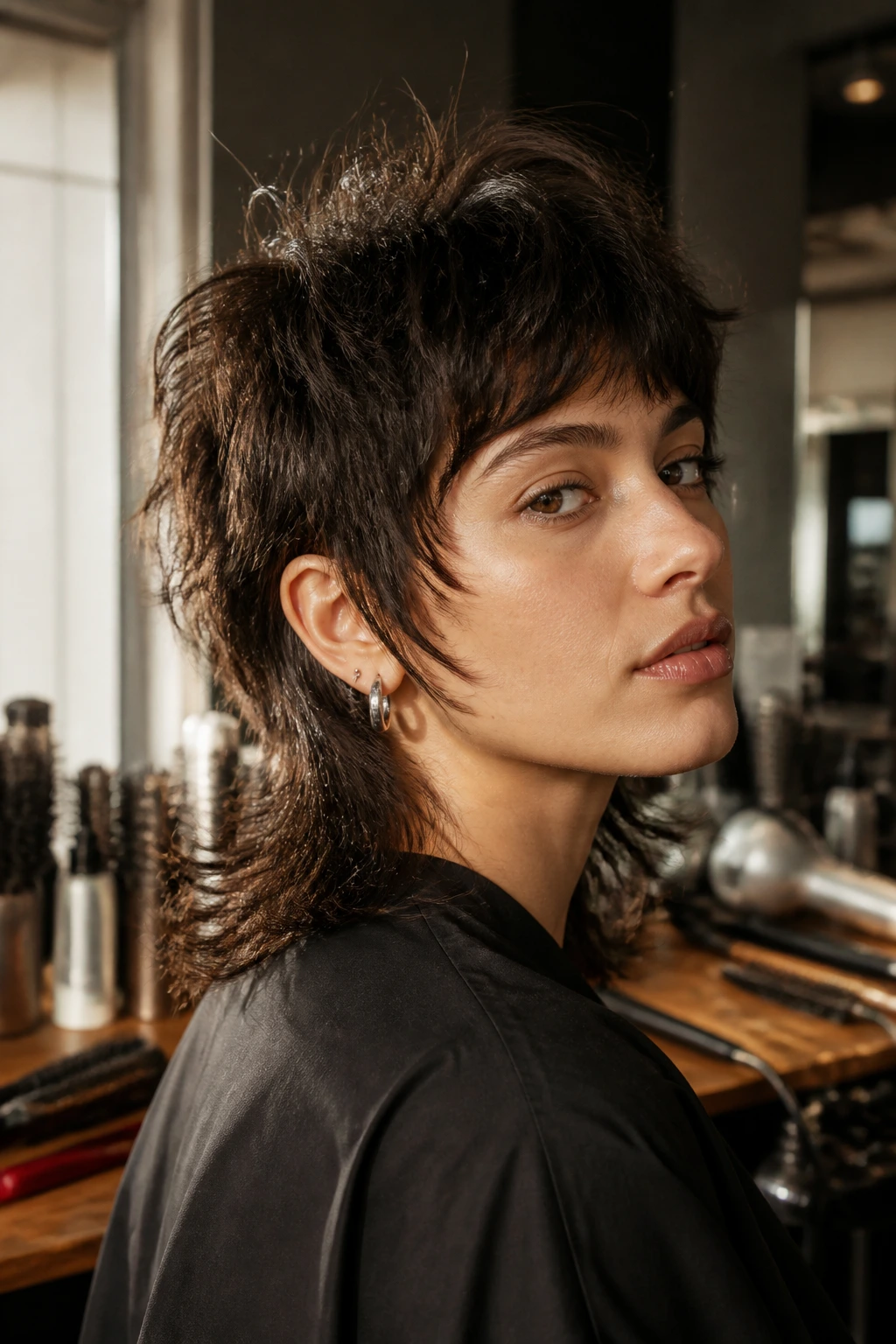
-
A blow dryer with a concentrator nozzle — Useful for lifting the crown and smoothing the front without blasting the layers into a fuzz ball.
-
A diffuser — A must for waves and curls; it keeps the pattern intact while adding lift near the roots.
-
A small round brush — Best for bending the fringe and face-framing pieces without making the cut look overdone.
-
Texturizing spray — Gives the ends grip and separation, which is half the point of a shaggy mullet.
-
Lightweight mousse — Good for root lift on fine or straight hair, especially if the crown collapses fast.
-
A flat iron with narrow plates — Handy for adding a tiny bend to the ends or defining a few front pieces.
-
Dry shampoo — Not only for grease; it adds grip at the root and keeps the style from going limp.
-
A wide-tooth comb — Better than brushing the life out of curls or waves between washes.
-
Heat protectant — If you use any hot tool on bleached, colored, or fine hair, this is not optional.
Styling Tricks That Keep the Texture Alive

Air-Dry Base: Start with damp hair, work mousse through the roots and mids, then scrunch the ends and leave the crown alone until it’s about 80% dry. That last stretch of drying matters because touching the hair too soon flattens the lift.
Heat-Style Lift: If you want a cleaner finish, blow-dry the front pieces with a round brush and keep the back rough. A shaggy mullet looks best when not every section is trying to behave the same way. A little inconsistency is the point.
Piecey Finish: Work a tiny amount of paste or pomade between your fingertips and pinch just the ends, not the whole head. Too much product at the root makes the cut droop. The ends need separation; the scalp does not.
Frizz Control: Use serum only on the outer layer and only on the driest parts. Curls and waves need definition, not a glossy coating that seals everything shut.
Second-Day Reset: Mist the hair lightly with water, add a touch of texture spray, and lift the crown with your fingers. Don’t re-wet the whole head unless you enjoy starting over.
How to Keep the Shape Between Appointments
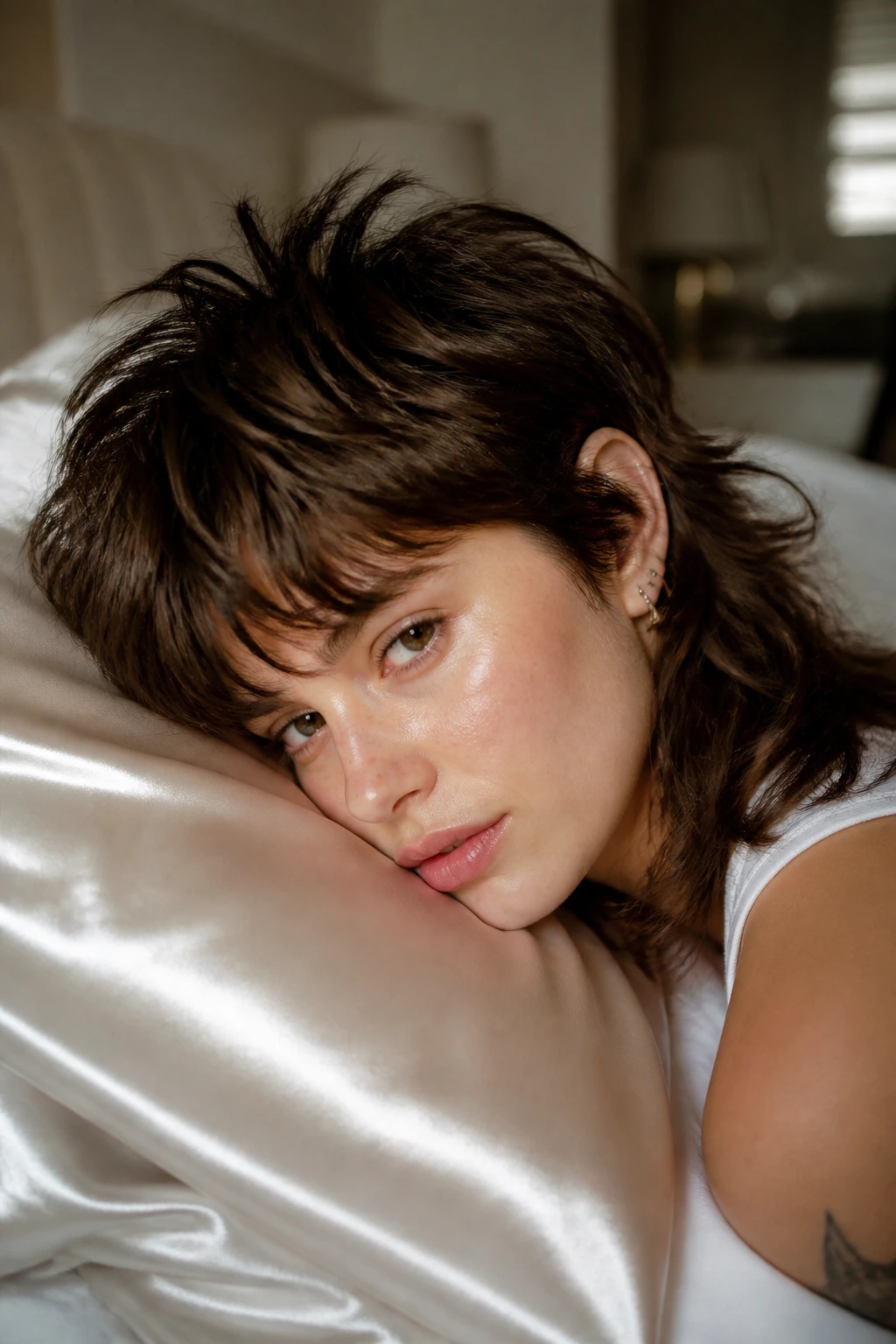
A shaggy mullet stays best when the outline doesn’t get too heavy at the crown or too blunt at the back. Most versions need a trim every 6 to 8 weeks to keep the layers readable. Micro fringes and sharper undercut versions need attention sooner. If the bangs hit your eyes or the nape starts growing into a thick shelf, the cut is already losing its edge.
Wash frequency matters too. Overwashing strips the texture that makes the haircut feel alive, especially on fine or color-treated hair. For many people, 2 to 4 washes a week is enough, with dry shampoo used between washes to keep the roots from going flat. Curly and coily versions can often go longer between washes, as long as the scalp stays clean.
Sleep on a satin pillowcase if the style frizzes easily. It sounds fussy. It also works. For wavy and curly versions, a loose pineapple or clipped top section can help the layers keep their shape overnight. Straight textures usually just need a quick shake and a little product in the morning.
Fringe trims are their own little maintenance task. If your bangs are part of the look, don’t wait until they’re hanging in your eyes like wet curtains. Keep them in shape, and the haircut looks intentional longer.
Common Mistakes That Flatten the Whole Thing
-
Over-thinning fine hair: The ends turn wispy and the cut loses its body. Fix it by keeping more weight in the perimeter and asking for longer layers instead of aggressive texturizing.
-
Leaving the crown too heavy: The top goes flat, and the whole mullet reads like a haircut that forgot its own idea. The remedy is simple: remove some bulk at the crown and create lift near the roots.
-
Cutting curly hair too short when wet: The shrinkage can turn a planned shape into a surprise crop. Curly textures need room to spring, so the final length should be judged with the curl pattern in mind.
-
Using too much smoothing product: A slicked-down sheet of hair kills the movement that makes the style work. Keep creams and oils light, and use texture spray where the ends need grit.
-
Blunt bangs that fight the rest of the cut: A hard fringe with a soft shag can look disconnected. Blend the fringe into the sides unless you want the bang to be the headline.
-
Ignoring your cowlicks: If your hair pushes a certain way at the front or crown, the cut needs to work with it, not against it. Cowlicks left unaccounted for will bully the styling every morning.
Variations and Softer or Sharper Swaps
The Office-Soft Version: Keep the layers long, the fringe curtain-like, and the back only slightly extended. It still reads as a shaggy mullet, but it behaves better under a blazer.
The Punker Version: Go for a micro fringe, sharper razoring, and a more obvious tail in the back. This one has more bite and likes stronger texture spray.
The Curly Halo Version: Leave more crown height and keep the sides narrow so curls form a rounded shape with a tapered nape. It’s good if you want movement without puff.
The Minimal Bob-Mullet: Keep the front around jaw length and make the back just a little longer. This is the easiest bridge for anyone who likes the idea but not the full drama.
The Color-First Version: Add platinum, copper, black cherry, or hidden panels to make the layers more visible. Color can make an otherwise soft cut feel bolder with very little extra length removed.
The Undercut Version: Take weight out from underneath and leave the top shaggy. It’s the sharpest choice for thick hair and the easiest one to make feel unapologetic.
FAQ About Shaggy Mullet Cuts
Will a shaggy mullet work on fine hair?
Yes, if the cut keeps enough weight in the perimeter. Fine hair usually looks best with long layers, a lifted crown, and only light texturizing at the ends so the style doesn’t go see-through.
Can curly hair wear a shaggy mullet without turning into a triangle?
Absolutely, but the cut has to respect shrinkage and taper the nape. A dry or curl-aware cut with careful layering keeps the top lively while preventing the sides from blowing out too wide.
How often should I trim it?
Most shaggy mullets hold shape for about 6 to 8 weeks, though fringe-heavy versions need touch-ups sooner. If the crown goes flat or the back starts reading as one block, it’s time.
What’s the difference between a shag and a shaggy mullet?
A shag is usually more uniform through the lengths, while a shaggy mullet keeps a more obvious contrast between the front, crown, and back. The mullet version has a longer tail and a clearer directional shape.
Can I style it sleek for work and messy later?
Yes, and that flexibility is one of the cut’s best traits. Smooth the front and crown with a round brush or flat iron, then rough up the ends with texturizing spray when you want more bite.
Will it suit a round face?
It can, especially if the layers fall below the cheekbones and the crown has some lift. Avoid short, blunt pieces that stop at the widest part of the face.
What if my hair grows fast and the shape disappears?
That’s normal, and the fix is a slightly longer version at the start so the grow-out stays readable. Ask for a shape that softens into a shag rather than a sharp outline that needs constant rescue.
The Cut That Refuses to Behave
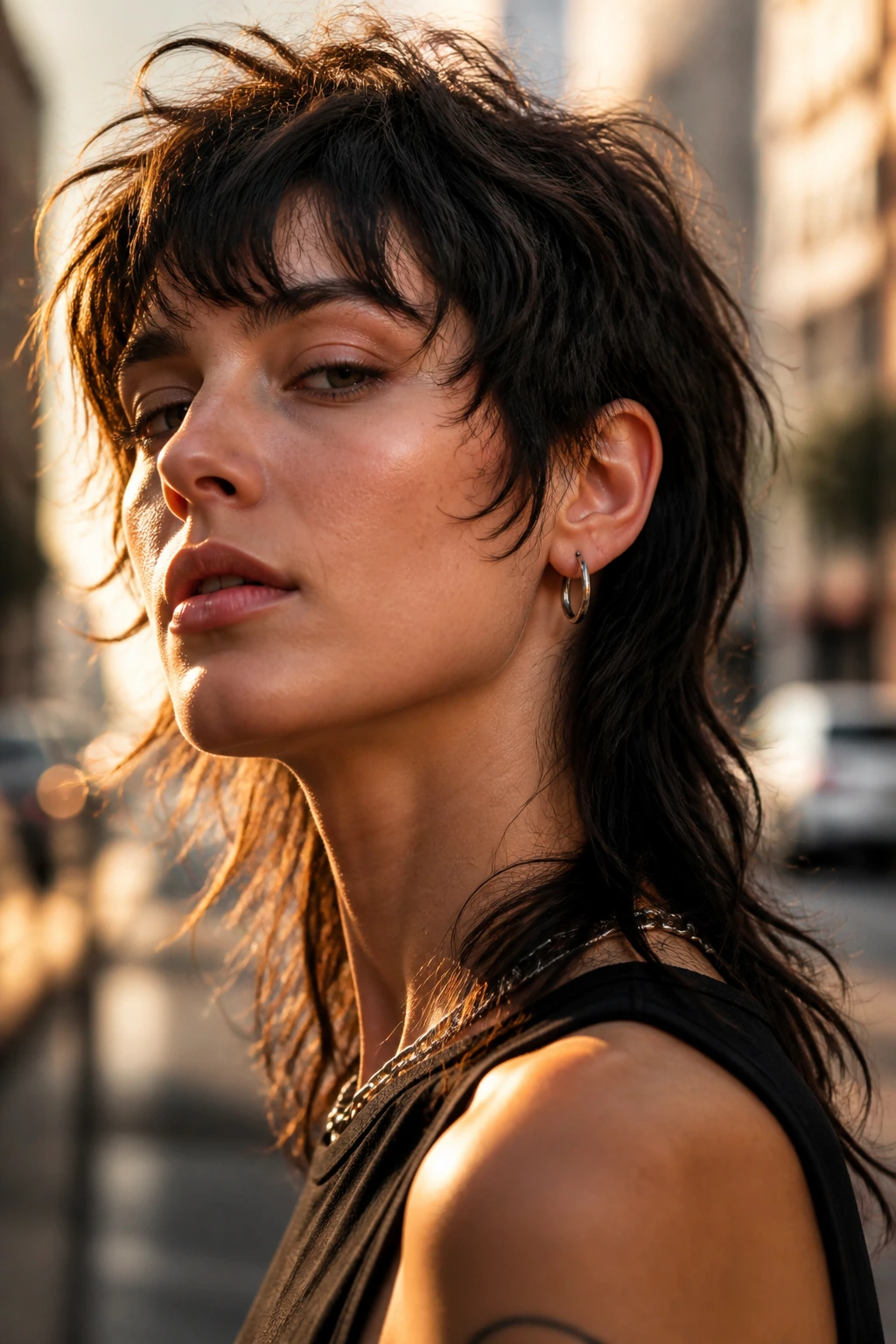
A shaggy mullet works because it has range. It can be soft enough for someone testing the waters, or sharp enough to make a room look twice. The shape depends on the cut, though, not just the attitude. That’s the part worth remembering when you sit in the chair.
The best version is the one that fits your texture, your maintenance habits, and how much edge you want people to see on the first glance. Get those pieces right, and the haircut does something useful: it keeps looking good even when you stop fussing with it. That’s the real trick.
