



Shoulder-length blonde hair color ideas work because the cut does half the styling for you. A collarbone-grazing length gives blonde room to move: a few brighter ribbons catch around the face, a shadow root keeps the top from looking stripey, and the ends stay light enough to reflect shine instead of swallowing it whole.
I’ve always liked this length better than very long hair for blonde work. Long hair can start to look busy if the highlights are too busy, and shorter cuts can feel a little abrupt when the blonde is high-contrast. At shoulder length, the color has space to breathe, but it still feels crisp. That’s the sweet spot.
Blonde also changes character fast at this length. A beige tone can look soft and expensive on a blunt lob, while an icy platinum can feel sharp and graphic on a shaggy cut. That’s why the best shoulder length blonde hair color ideas are not just “lighter hair.” They’re combinations of tone, placement, root depth, and movement.
Why These Blonde Looks Work at Shoulder Length
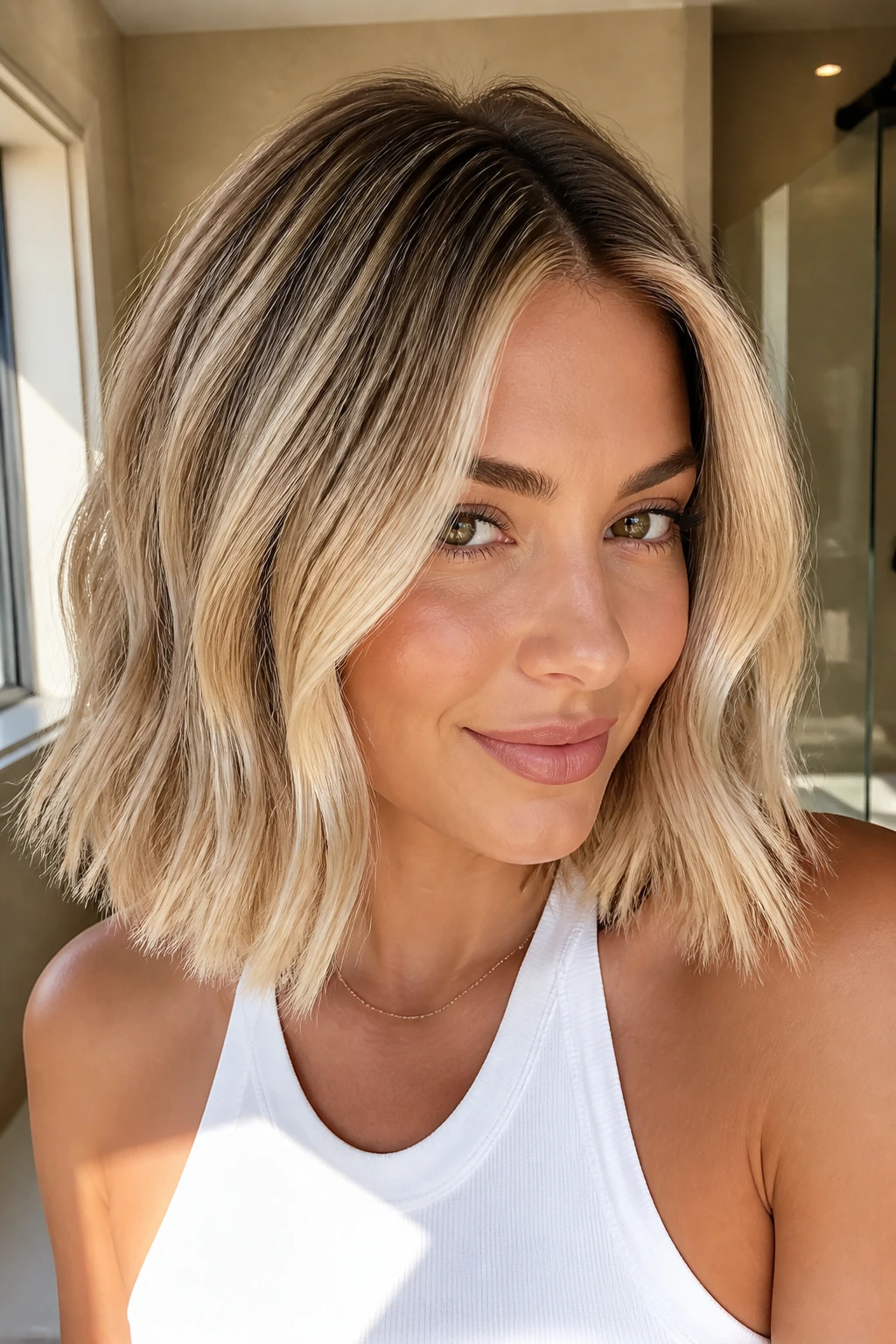
- The grow-out is easier to live with: A soft root shadow or balayage ribbon pattern grows into the cut without leaving a hard line at the crown.
- The face gets the brightness first: Shoulder-length hair lets you put the lightest pieces right around the cheekbones and jaw, where they actually change the way the whole cut reads.
- The ends don’t vanish: At this length, blonde tips still show when you curl, wave, or tuck the hair behind one ear.
- Tone matters more than chaos: A good beige, honey, or champagne blonde looks deliberate on a lob; too many competing tones just make the hair look noisy.
- It works with blunt, layered, and shaggy cuts: Same length, different mood. The color can be clean and polished or airy and undone.
1. Butter Blonde with Soft Shadow Root
Butter blonde is the shade I reach for when someone wants warmth without tipping into orange. On shoulder-length hair, it reads creamy and glossy, especially if the cut has a blunt edge or very soft internal layers. The shadow root keeps the crown from looking heavy, and the lighter mids and ends give that warm, sun-kissed finish without turning brassy.
A good version of this look usually starts around a level 7 or 8 root and lifts into pale gold-beige through the lengths. You want the transition to feel blurred, not striped. If the highlights are too chunky, butter blonde can look dated fast. If they’re fine and evenly placed, it looks expensive in the plainest, nicest sense of the word.
What to ask for
- A soft root melt one to two shades deeper than the mids
- Fine to medium highlights through the top layers
- A beige-gold gloss on the ends, not a flat yellow toner
This shade is especially good on thick hair, because the warmth keeps the cut from looking stiff. Add a loose wave with a 1¼-inch iron and the whole thing moves like silk.
2. Champagne Blonde with Face-Framing Brightness
Champagne blonde has a little sparkle to it. Not glitter. Just a pale, cool-neutral brightness that looks clean around the face and less yellow than classic golden blonde. On shoulder-length hair, I like it with face-framing pieces that start just below the root and feather down around the cheekbones.
The trick here is restraint. Too much champagne can go flat if everything is lifted to the same level, so the best version keeps a soft beige root and lets the front pieces carry the brightness. That contrast is what gives the cut shape. Straight hair shows it cleanly; loose bends make the color look airy and expensive without trying too hard.
This one suits people who want blonde that still looks polished after a few weeks of grow-out. It’s also a good choice if your hair tends to pull warm, because a champagne glaze can cool the yellow without making the whole head look gray. The result is crisp, reflective, and a little bit dressy.
3. Beige Blonde Balayage on a Blunt Lob
Why does beige blonde work so well on a blunt lob? Because the cut already gives you a strong line, and beige softens that line just enough. You get contrast without harshness. The ends stay visually thick, which matters a lot if your hair is fine or medium and tends to disappear when it’s all one light tone.
Beige blonde balayage usually sits in that middle ground between ash and gold. It’s one of those shades that looks calm in daylight and polished under warm indoor light. If you’ve ever seen blonde hair that looks “done” but not obviously colored, this is the lane it lives in.
Best placement
- Keep the brightest ribbons through the mid-lengths and front
- Leave a deeper root for a more natural grow-out
- Ask for a gloss that leans beige, not metallic
I like this look on blunt cuts because the color doesn’t fight the shape. It just gives the shape more depth. That matters more than people think.
4. Honey Blonde with Caramel Lowlights
Honey blonde is where warm blonde gets its depth. On shoulder-length hair, caramel lowlights keep the whole head from going one-note, especially if your base color is a darker blonde or light brown. The lowlights sit in the underside and around the back, so the surface still looks bright while the cut has some real dimension.
This is a good shade if you want blonde that doesn’t feel icy or high-maintenance. Honey reflects light in a soft, golden way that flatters waves and curls especially well. On straight hair, the caramel strands keep the finish from looking too pale. On textured hair, they make the pattern pop.
If your hair fades fast or has a porous texture, this is one of the easier blonde looks to keep looking healthy. The warmth hides a little wear and tear. You’ll still need toner, but the upkeep is calmer than a super-light platinum.
5. Vanilla Cream Blonde with a Glossy Finish
Vanilla cream blonde is for people who want lightness, but not that stark, white-blonde look that can make hair feel brittle if the tone is off. Shoulder-length hair gives this shade enough surface to shine, which is half the reason it looks so rich. The gloss matters here. A lot.
I like vanilla cream when the hair is smooth and the cut has a little swing at the ends. Think shoulder-length layers that flick out slightly, or a soft lob with face-framing pieces. The color itself should feel milky, soft, and clean, not dry or chalky. If it starts to look powdery, the toner has gone too cool.
Ask for a level 9 blonde with a cream or ivory gloss, then protect the finish with a sulfate-free shampoo and a hydrating mask once a week. This is one of those shades that looks effortless only if you keep it in good shape. There’s no shortcut around that part.
6. Mushroom Blonde with Smoky Depth
Mushroom blonde is the cool-girl answer to “I want blonde, but I don’t want it screaming from across the room.” On shoulder-length hair, it gives the cut a smoky, beige-brown base with lighter ribbons folded through the top layers. The effect is soft, muted, and very good on hair that naturally leans ash.
This shade can flatten out if the lowlight pattern is too heavy, so I like it best when the blonde pieces stay concentrated around the face and crown. The ends can be only a shade or two lighter than the base. That keeps the whole look calm instead of muddy.
It’s one of the easiest blonde ideas to wear when you don’t want obvious regrowth. The root grows out into the style instead of sitting on top of it. If you’re the kind of person who likes the idea of blonde but hates looking over-colored, mushroom blonde is worth a hard look.
7. Pearl Blonde with Cool Ribbon Highlights
Pearl blonde has a pale sheen that reads cool without looking icy in a harsh way. It works beautifully on shoulder-length cuts with movement, because the lighter ribbons flash through the hair as you turn your head. On a smooth lob, it can look sleek and glassy. On a softer wave, it looks almost liquid.
The ribbon highlights are the important part. You do not want a solid sheet of brightness. You want thin, placed strands that let a slightly deeper base show through underneath. That contrast keeps the color dimensional and stops it from turning into a washed-out block.
This is a better choice for someone who likes crisp, polished blonde and doesn’t mind using purple shampoo more carefully. Overdo the purple shampoo, and pearl blonde can go flat or dull. Use it sparingly. Once every week or two is usually enough if the tone is already cool.
8. Sandy Blonde with Babylight Layers
Sandy blonde is one of the most believable blonde shades on shoulder-length hair. It sits in that lived-in zone between light brown and soft beige blonde, which means the color looks natural even when it’s freshly done. Babylights make the top layers look sun-touched without creating blunt stripes.
I like this shade on layered shoulder-length cuts because the light pieces catch on the ends and around the face, then disappear into the middle of the hair in a way that feels effortless. That’s not a word I throw around much, but here it fits. The cut and color are doing different jobs, and they aren’t fighting each other.
A good sandy blonde should have:
- A slightly deeper root for dimension
- Tiny highlights through the crown
- Soft beige ends, not yellow ends
If you want something low-contrast and easy to keep up, this is one of the smartest blonde choices on the list. It buys you softness without demanding constant toning.
9. Bronde Melt with Bright Ends
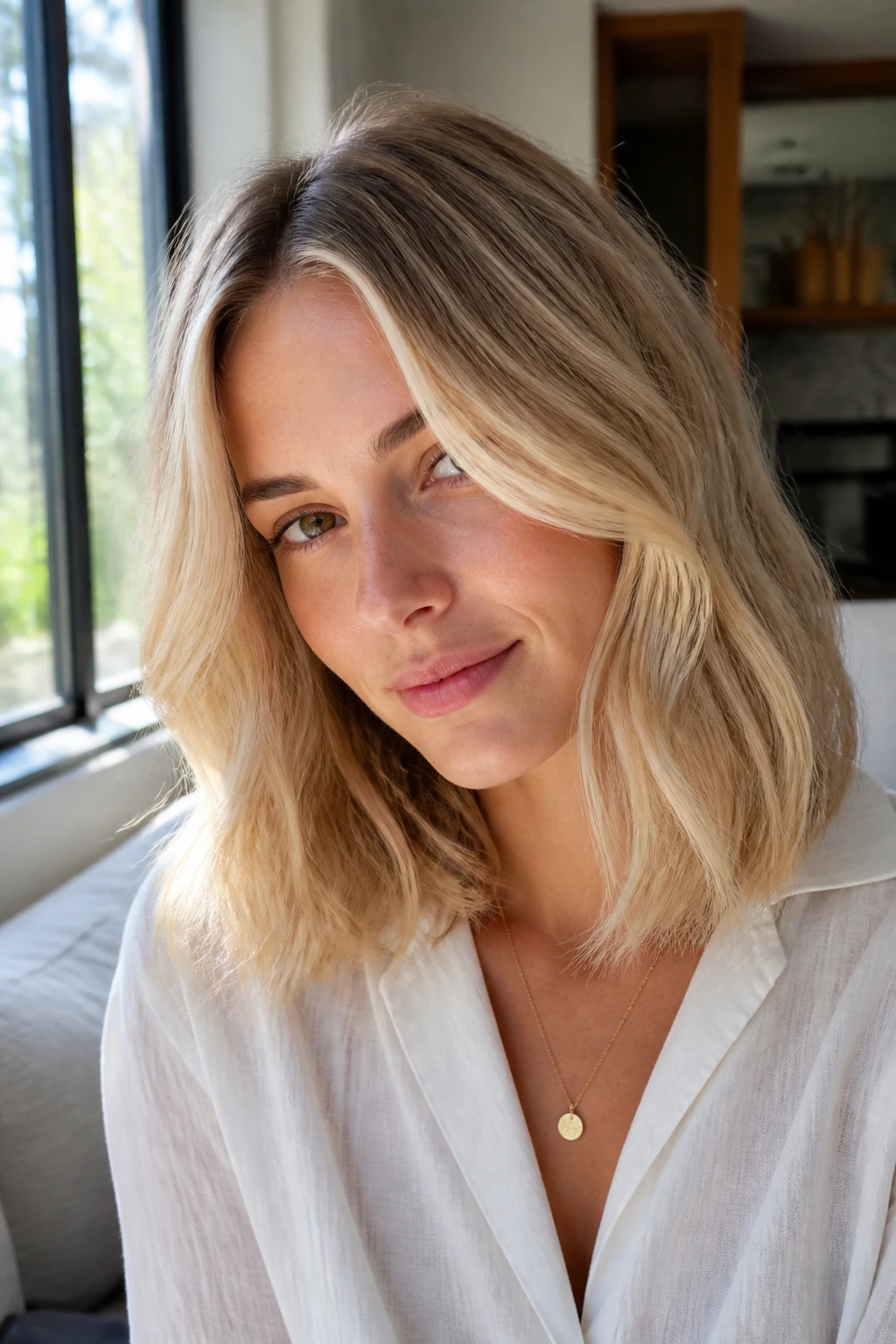
Bronde is the bridge between brown and blonde, and on shoulder-length hair, that bridge looks especially good. A bronde melt keeps the top rich and dimensional, then gradually lightens the mids and ends so the whole shape feels fuller. It’s a clever move if your natural hair is dark blonde or light brown and you don’t want to spend your life at the salon.
Bright ends keep the cut from feeling heavy. Without them, shoulder-length bronde can read a little flat, especially on straight hair. With them, the lob gets movement and the color feels intentional from root to tip.
This is also one of the more forgiving choices if you’re growing out old highlights. Instead of fighting the old pattern, a bronde melt folds it into something softer. That’s why it often looks better after a few weeks than it does on day one.
10. Scandi Hairline Blonde on a Layered Lob
Scandi hairline blonde is all about that bright frame right at the front hairline. It’s a small detail, but on shoulder-length hair it changes everything. The rest of the hair can stay softly beige or neutral blonde while the hairline pieces go much lighter, almost like a halo around the face.
I like this look on a layered lob because the front pieces have somewhere to fall. They don’t just sit there; they sweep forward, separate a little, and catch light near the cheekbones. The contrast is sharp enough to be interesting, but the overall head of hair doesn’t need to be ultra-light.
This is a good option if you want a visible blonde change without making every strand lighter. It also works well when you wear your hair half up, because the bright front pieces still show. The upkeep is centered at the hairline, which is nice if you’d rather refresh a small area than maintain a full platinum job.
11. Ice Blonde with a Shadow Root
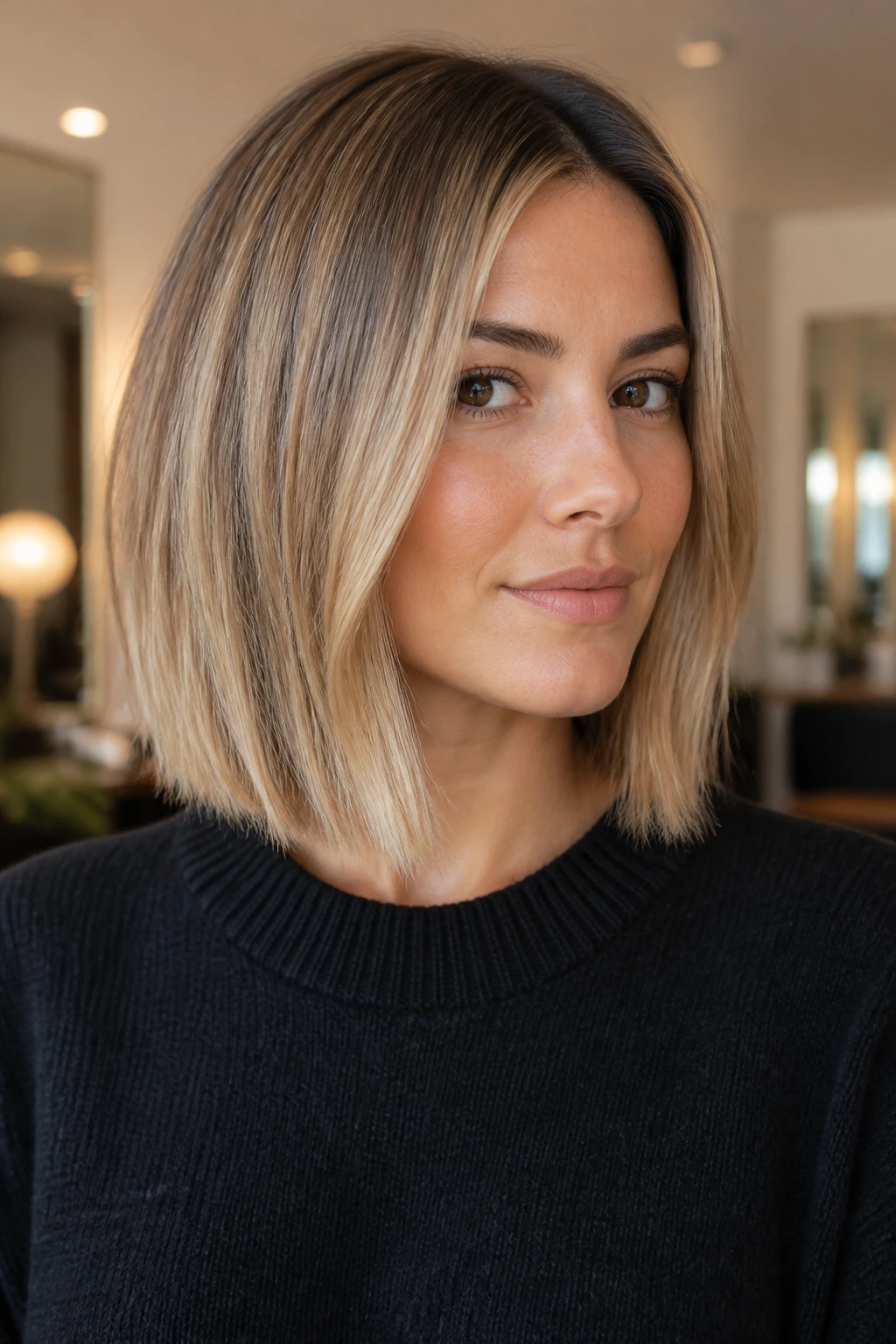
Ice blonde is dramatic. There’s no getting around that. On shoulder-length hair, though, it becomes a little more wearable because the cut keeps the color from stretching too far and looking costume-like. A shadow root is what keeps it grounded. Without that darker base, the look can feel brittle and overexposed.
The best ice blonde is pale, clean, and cool, but not white in a dry way. The hair should still move. It should still shine. If it looks like chalk, the toner went too far. A soft root shadow lets the eye rest and gives the lightest pieces more impact.
This shade is best when you’re willing to protect it like it matters: heat protectant, cool water rinse, careful purple shampoo use, and regular glossing. If you like a crisp, high-contrast blonde and don’t mind the maintenance, this is the one that turns heads.
12. Wheat Blonde with Curved Balayage
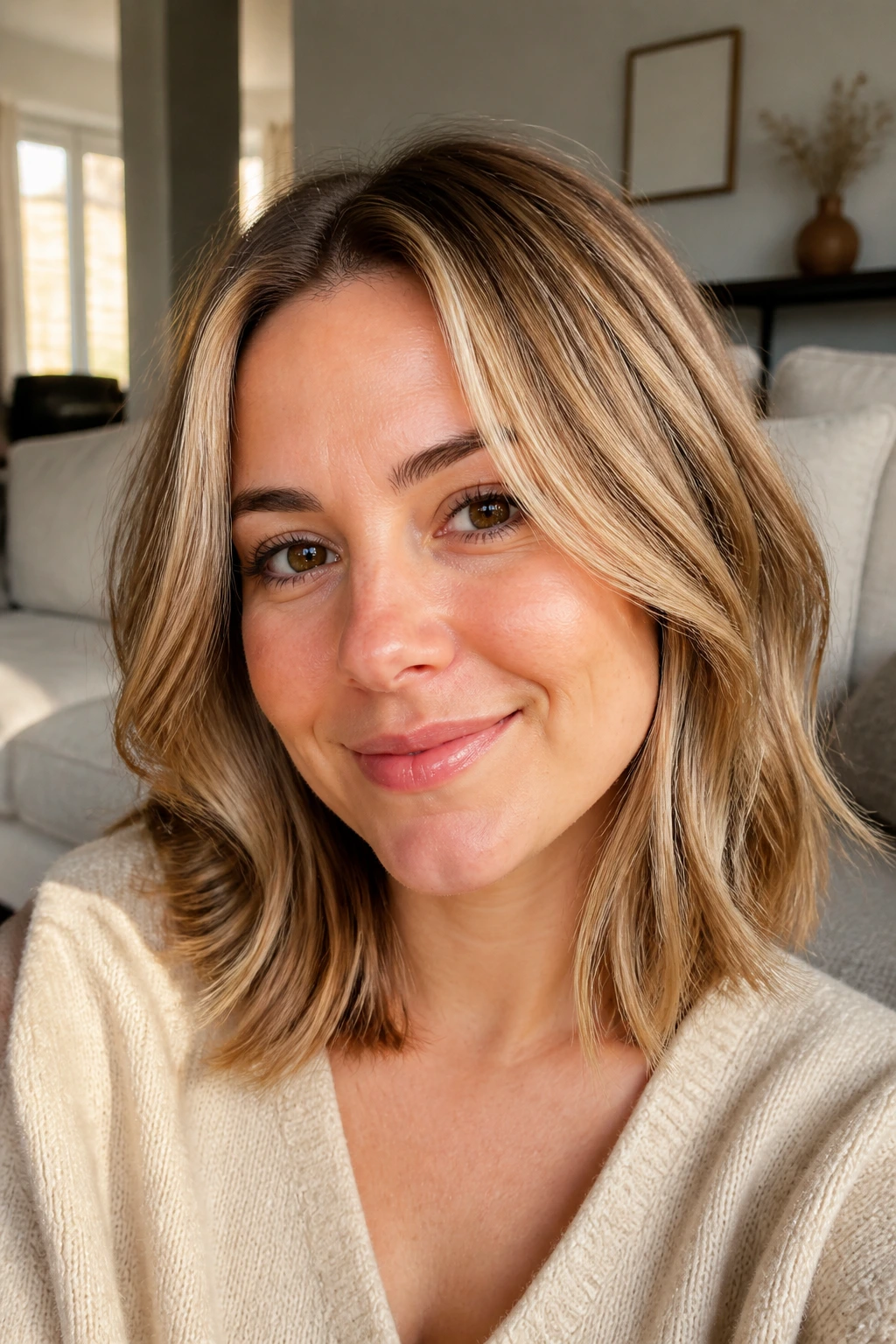
Wheat blonde has a soft, grainy warmth to it that looks especially good when the highlights are painted in curved sections around the head. That curved balayage helps the color follow the shape of shoulder-length hair instead of sitting on top of it. It makes the whole style look more natural and less “highlighted.”
This shade is quietly flattering on a lot of people because it sits in the middle: not too gold, not too ash. If your hair pulls warm at the ends, wheat blonde can blend that in instead of fighting it. That’s one reason it works so well on hair that has a little texture or a loose wave.
A blunt shoulder-length cut with wheat blonde can look fresh and clean. A layered cut makes it feel softer and more piecey. Either way, the color has enough warmth to feel friendly, but not so much that it turns brassy on you by accident.
13. Toasted Almond Blonde with Warm Dimension
Toasted almond blonde is what happens when blonde gets a little deeper and less fussy. The almond base gives the hair some body, and the toasted highlights add lift without making the whole head look bleached out. On shoulder-length hair, that balance is a gift.
This look is especially good if you’re transitioning from brunette to blonde and don’t want a hard stop between the two. The warmth at the root and the softer blonde through the mids make grow-out easy to live with. It also flatters shoulder-length cuts with curtain bangs because the fringe can pick up just enough lighter color to brighten the eyes.
You’ll see this shade look best with a loose bend or a blowout that flicks the ends under slightly. It’s a little bit retro, a little bit polished, and much easier to wear than people assume when they hear “warm blonde.”
14. Strawberry Blonde with Peachy Gold Reflection
Strawberry blonde on shoulder-length hair has a way of looking both soft and bold at once. The peachy-gold reflection keeps it firmly in the blonde family, but the warm red undertone gives it depth that plain blonde doesn’t have. It’s a smart pick if you want color that feels a little less common.
The cut matters here. Shoulder-length waves or a textured lob help strawberry blonde look dimensional instead of flat. Straight hair can still wear it, but I prefer some movement because the color shifts more naturally as the light changes.
This is one of those shades where glossing makes a huge difference. A warm peach or gold glaze keeps the color fresh, while a faded toner can make it look dull and muddy. If your natural base is light enough, you can lean into this without bleaching every inch of hair. If not, place the color strategically around the face and top layers.
15. Cream Soda Blonde with a Soft Money Piece
Cream soda blonde is light, sweet, and a little frothy in the best sense. The base tends to sit in a beige-gold zone, while the money piece around the face gets a shade or two brighter. On shoulder-length hair, that bright front section does a lot of work, because the cut brings it right into view.
I like this when the face-framing pieces are placed to follow the cheekbones and jawline. You get light where it matters, but the rest of the hair can stay softer and easier to maintain. That keeps the color from looking overprocessed.
This is a good choice for someone who wants a noticeable blonde refresh without a full head of super-light highlights. The money piece gives you the hit of brightness, and the cream soda base keeps it from feeling harsh. It’s one of the easier ways to make shoulder-length blonde hair look intentional fast.
16. Dirty Blonde with Fine Bright Ribbons
Dirty blonde gets a bad reputation from people who think it means “in-between and boring.” It doesn’t. On shoulder-length hair, a dirty blonde base with fine bright ribbons looks rich because the contrast is subtle, not loud. The darker blonde underneath gives the bright strands something to sit against.
The fine ribboning is the key. Too many light pieces and you lose the dirty blonde depth; too few and it reads flat. When it’s done well, the hair looks like it has internal light, especially on layered shoulder-length cuts where every bend shows a different band of tone.
This is one of my favorite ideas for people who want blonde that can handle real life. It doesn’t punish you for missing a toner appointment by a week or two. It also looks good in a messy bun, which is underrated. Some color falls apart the second it leaves the blowout chair. This one doesn’t.
17. Golden Blonde with Curtain Bangs
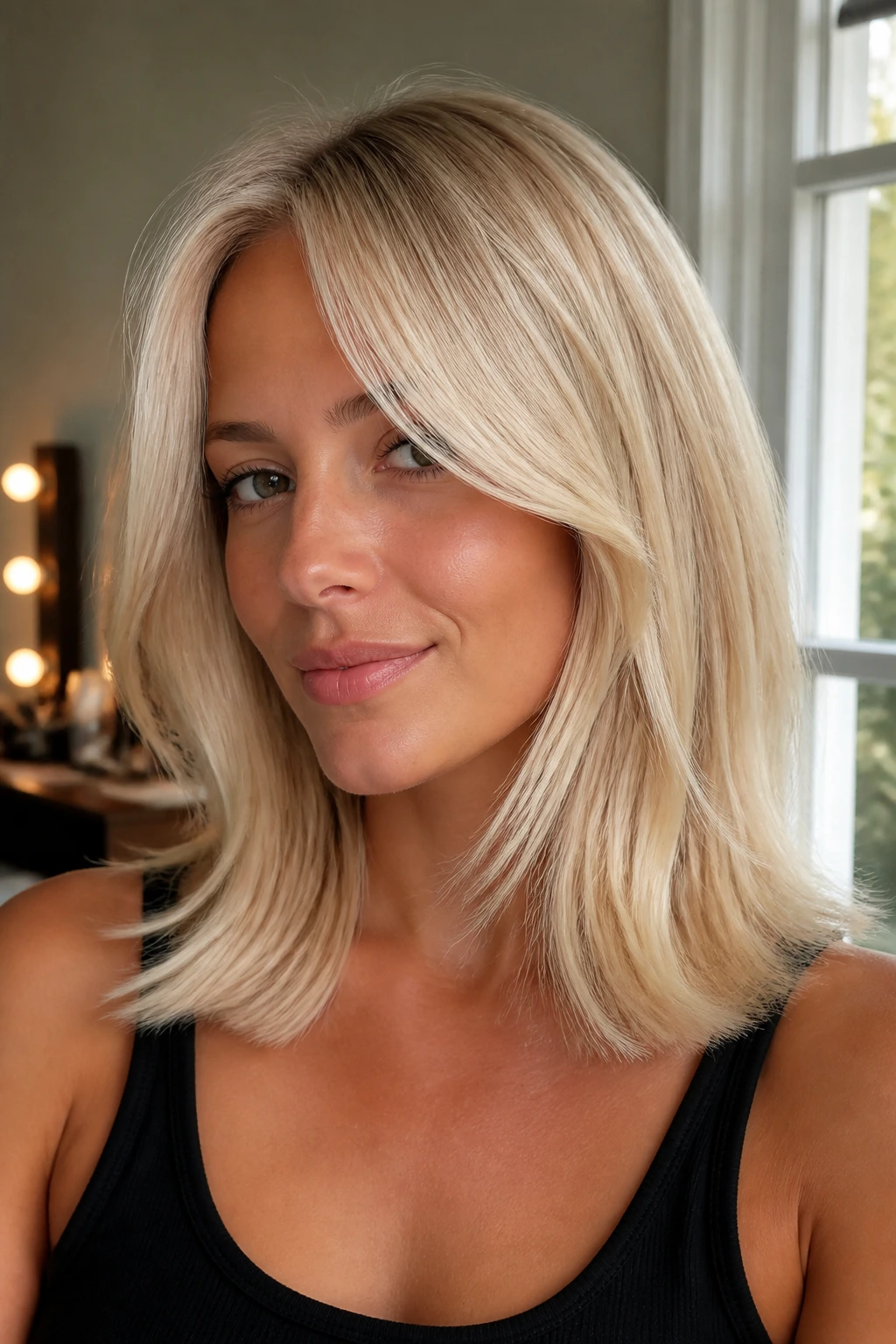
Golden blonde is warm, bright, and easy to read from across the room. Pair it with curtain bangs on shoulder-length hair, and the whole cut gets a soft frame that feels deliberate instead of overdone. The bangs bring the color forward near the eyes, which is where the warmth does the most good.
The trick is keeping the gold clean. If the tone starts drifting too orange, the bangs will show it first. A good golden blonde should still look shiny, not brassy. The ends can be slightly lighter to keep the shape from feeling heavy.
This is one of the friendliest blonde ideas on the list. It works on wavy hair, straight hair, and blowouts with a round-brush bend. It also grows out in a forgiving way because the bangs break up the top line and soften the root area.
18. Oyster Blonde with a Cool Beige Finish
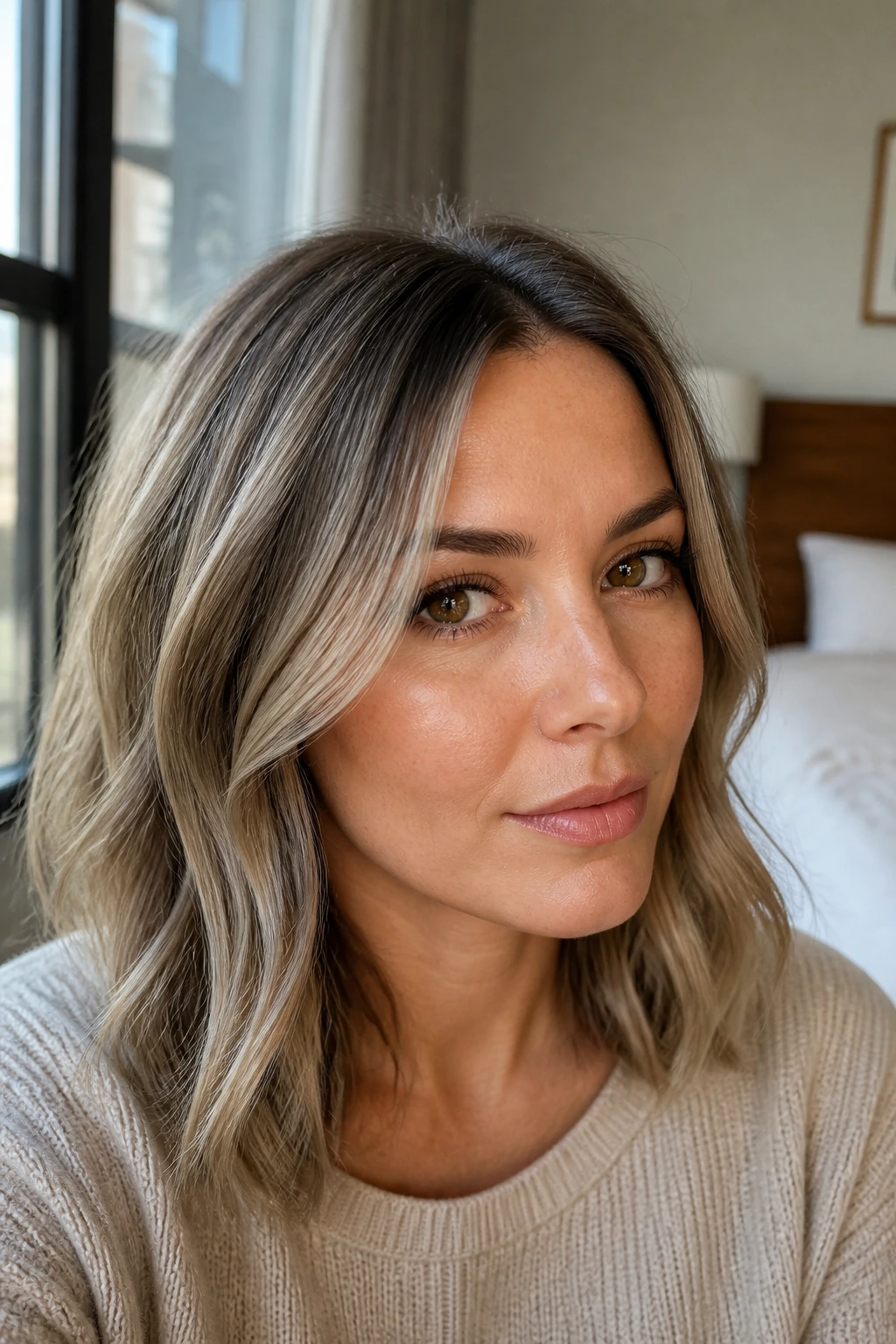
Oyster blonde sits in a pale, cool-beige zone that feels more pearly than icy. On shoulder-length hair, it gives you a soft shine without the starkness of platinum. I like it when the color is kept close to the cuticle with a clean gloss, because that reflective finish is what makes it look polished.
The best oyster blonde looks calm. Not flat. Calm. There’s a difference. You still want dimension at the root and through the undersides, but the surface should read as smooth and even. That makes it a nice match for straightened hair or a sleek shoulder-length bob.
If you tend to overdo ash toner, be careful with this shade. It needs coolness, not dullness. A silver-beige gloss can be beautiful here, but if the hair starts looking dusty, you’ve gone too far. Keep the finish soft and shiny, and it stays elegant instead of lifeless.
19. Soft Champagne Ombré
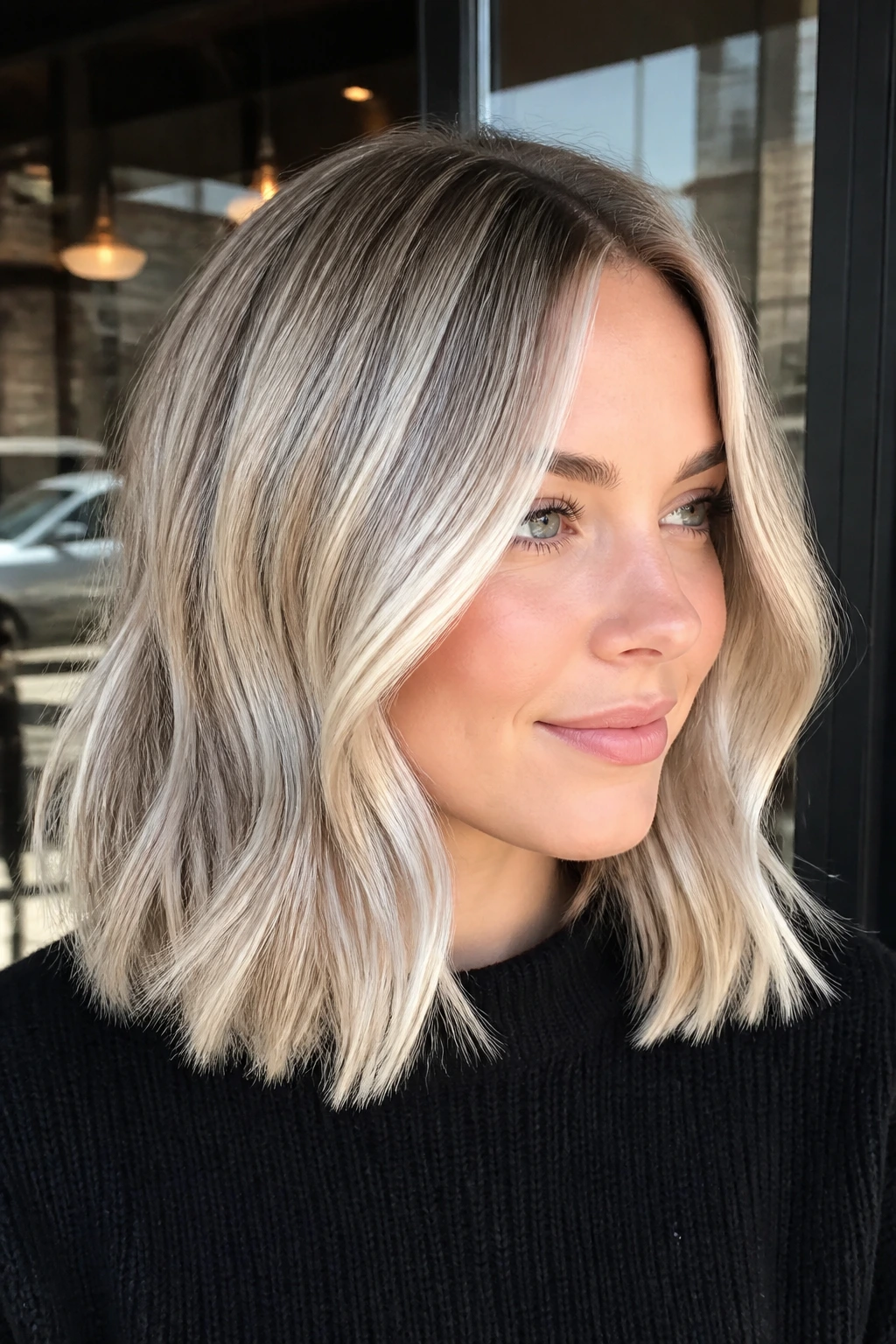
A soft champagne ombré is a calmer way to go blonde at shoulder length. The roots stay deeper, the mids lift gradually, and the ends get a pale champagne finish that feels light but not severe. Because the length is not endless, the ombré reads cleanly instead of dragging down the cut.
This is one of the easiest blonde ideas to live with if you like the look of dimension and hate obvious grow-out. The darker top section gives the ombré shape, and the lighter ends keep the shoulder-length cut from feeling dense. If your hair is thick, that contrast is especially helpful.
I prefer this on loose waves, where the fade in tone can travel through the bends and look soft. Straight, it reads more graphic. Both versions work. They just tell a different story.
20. Ash Blonde with a Root Tap
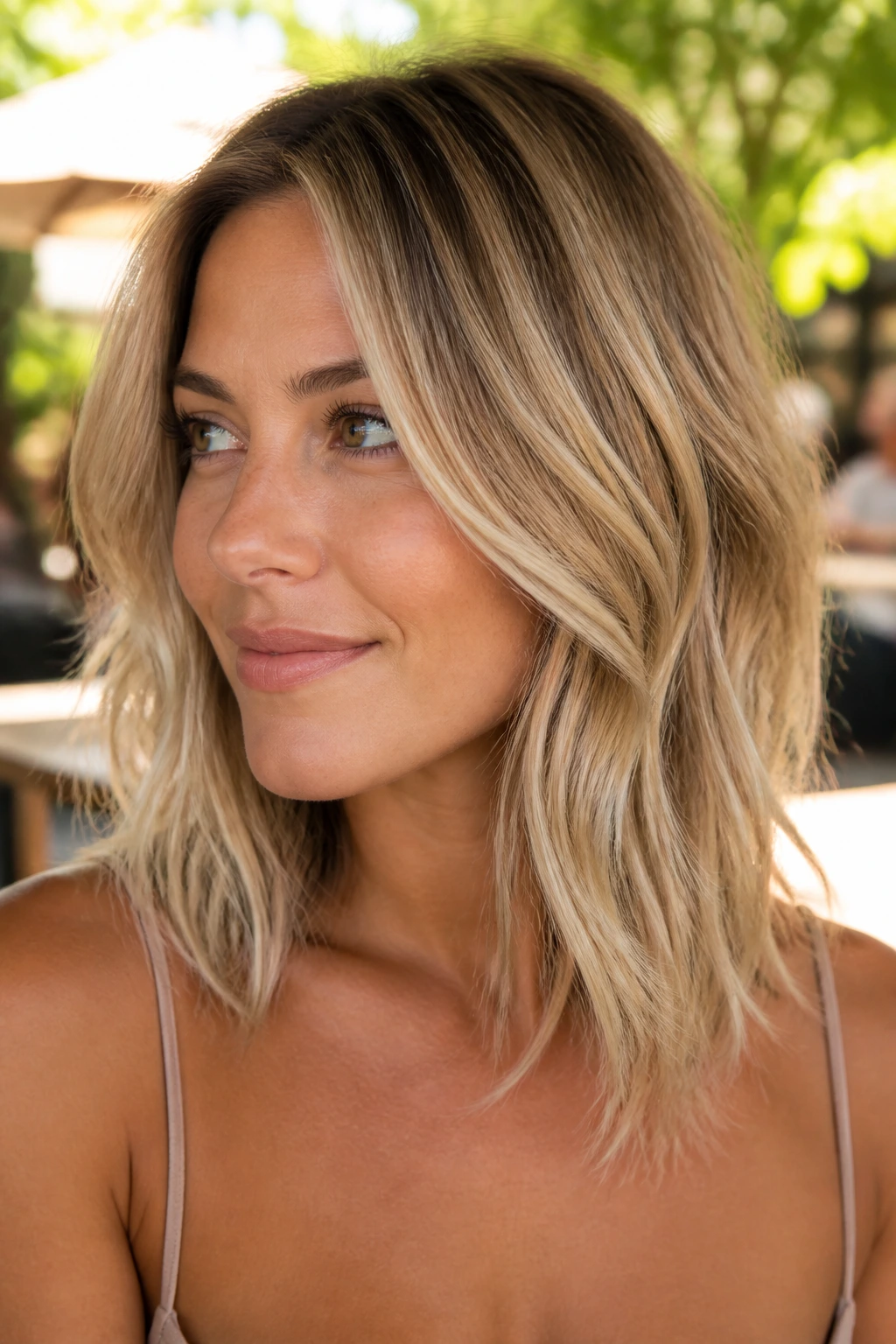
Ash blonde can look stunning on shoulder-length hair, but it needs a root tap so it doesn’t turn into a hard, pale sheet. The root tap softens the transition from the scalp into the lighter lengths and gives the whole look some shadow. That shadow matters. It keeps the ash from feeling cold in a bad way.
The lengths should still have movement. A flat ash blonde with no dimension can look dry, especially if your hair is fine. A root tap plus a few lighter ribbons around the face solves that. You get coolness without losing shape.
This is a smart choice if your skin tone leans cool or neutral and gold tones make you look a little flushed. It also works if you just like cleaner, cooler blonde. Use purple shampoo carefully and follow it with moisture, because ash tones show dryness faster than warmer blondes do.
21. Honey Butter Blonde Waves
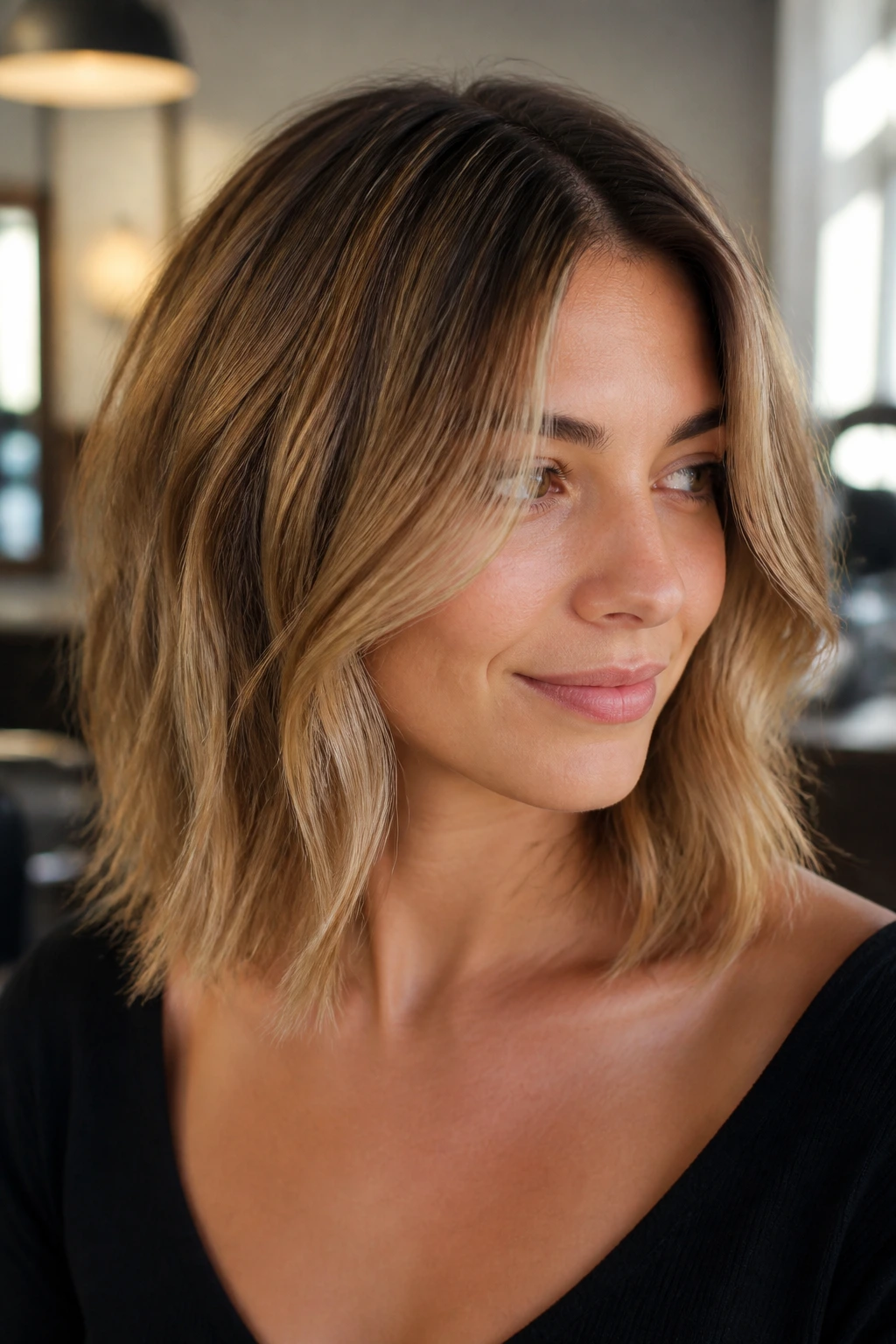
Honey butter blonde is one of those shades that sounds almost edible, and yes, it looks that soft too. The color sits between golden honey and creamy butter, which gives shoulder-length waves a warm, light-catching finish. It’s especially good when the waves are loose and not too uniform, because the color shift shows better.
I like this shade on mid-length hair that has a little natural texture. You don’t need perfection here. In fact, the charm is partly in the movement. If the highlights are placed around the face and through the lower half of the hair, the whole look comes alive when you turn your head.
This is warmer than beige blonde and less dramatic than golden blonde. That middle ground makes it easy to wear. If you want blonde that feels soft in daylight and rich indoors, honey butter is a strong pick.
22. Platinum Peekaboo Layers
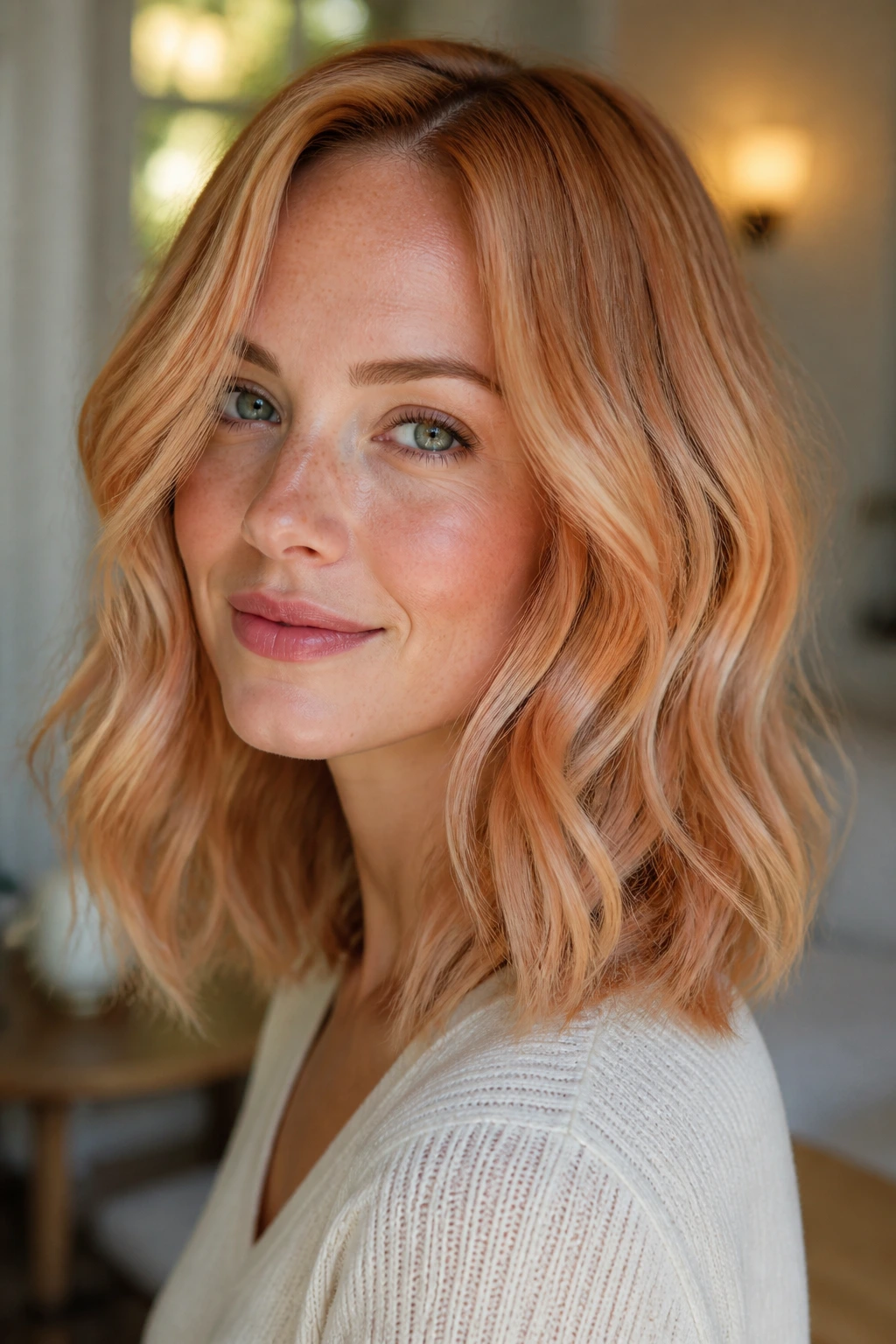
Platinum peekaboo layers are for people who want the drama of platinum without painting every inch of hair to the same bright level. On shoulder-length cuts with layers, the hidden lighter panels show when the hair moves, then disappear into the deeper top layer. It’s a smarter kind of contrast.
The peekaboo placement helps the color stay wearable. It gives you that sudden flash of platinum under the top section, which looks especially good in curled styles or half-up looks. Straight hair can wear it too, but the movement makes the effect richer.
This idea is less maintenance than full platinum, because the visible brightness is concentrated in specific places. You still need toning and moisture, but you aren’t fighting brass on every strand. If you want something a little edgy without committing to a full bleach-heavy head, this is the one to try.
23. Caramel Blonde Bob-Lob Blend
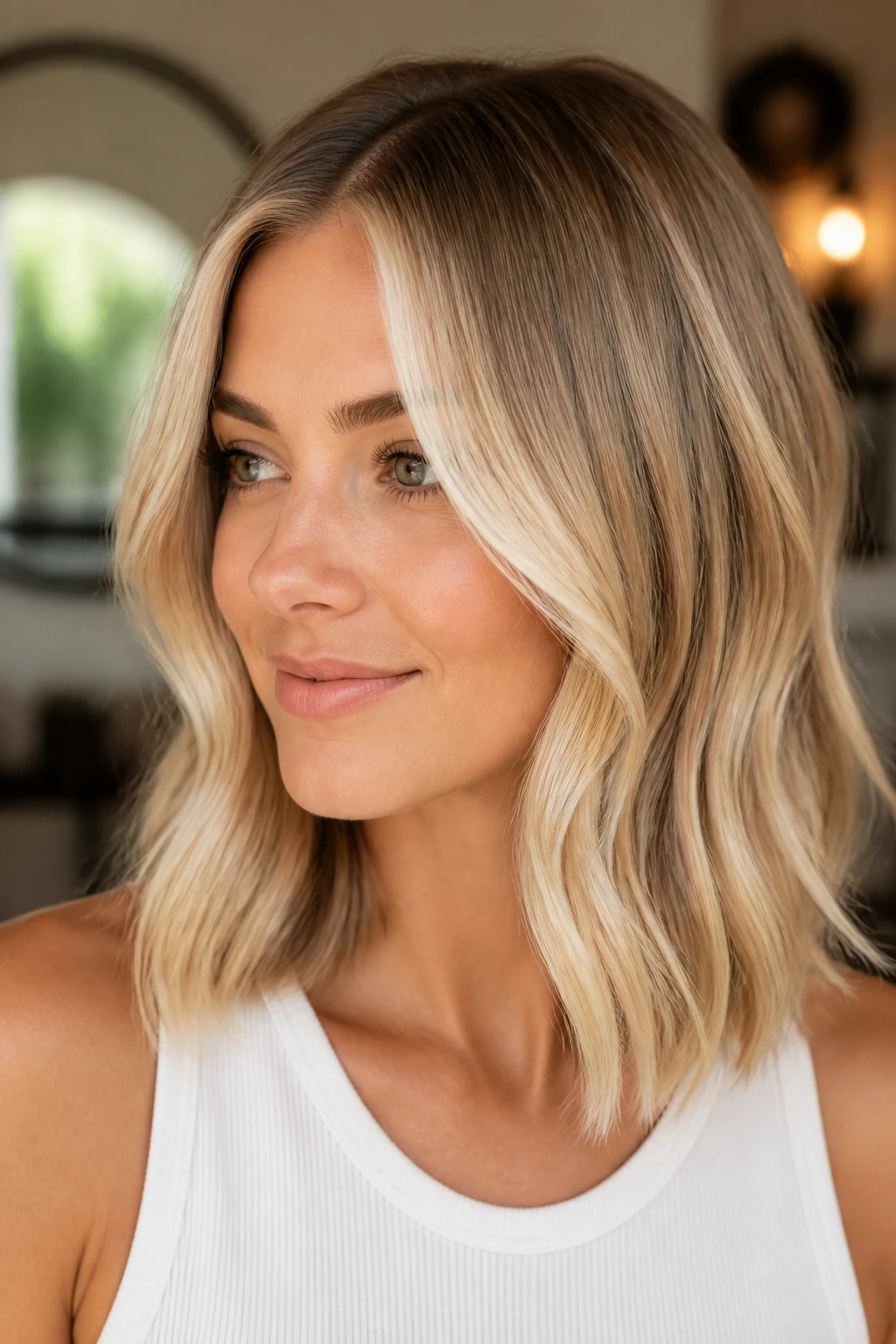
Caramel blonde on a bob-lob blend has a depth that fine blonde sometimes misses. The caramel tones sit lower in the hair, then lighter blonde pieces lift the surface. On shoulder-length hair, that contrast gives the cut substance and keeps it from looking too airy.
This is a good choice if your natural hair is medium brown and you want blonde that doesn’t erase your base completely. The caramel keeps a sense of richness, while the lighter pieces near the top and around the face still give you the brightening effect people want from blonde.
A small bend in the ends is enough here. You don’t need big curls. The point is not glamour-drama; it’s a warm, dimensional finish that looks polished even when the hair is just tucked behind the ears.
24. Sunlit Beige Blonde
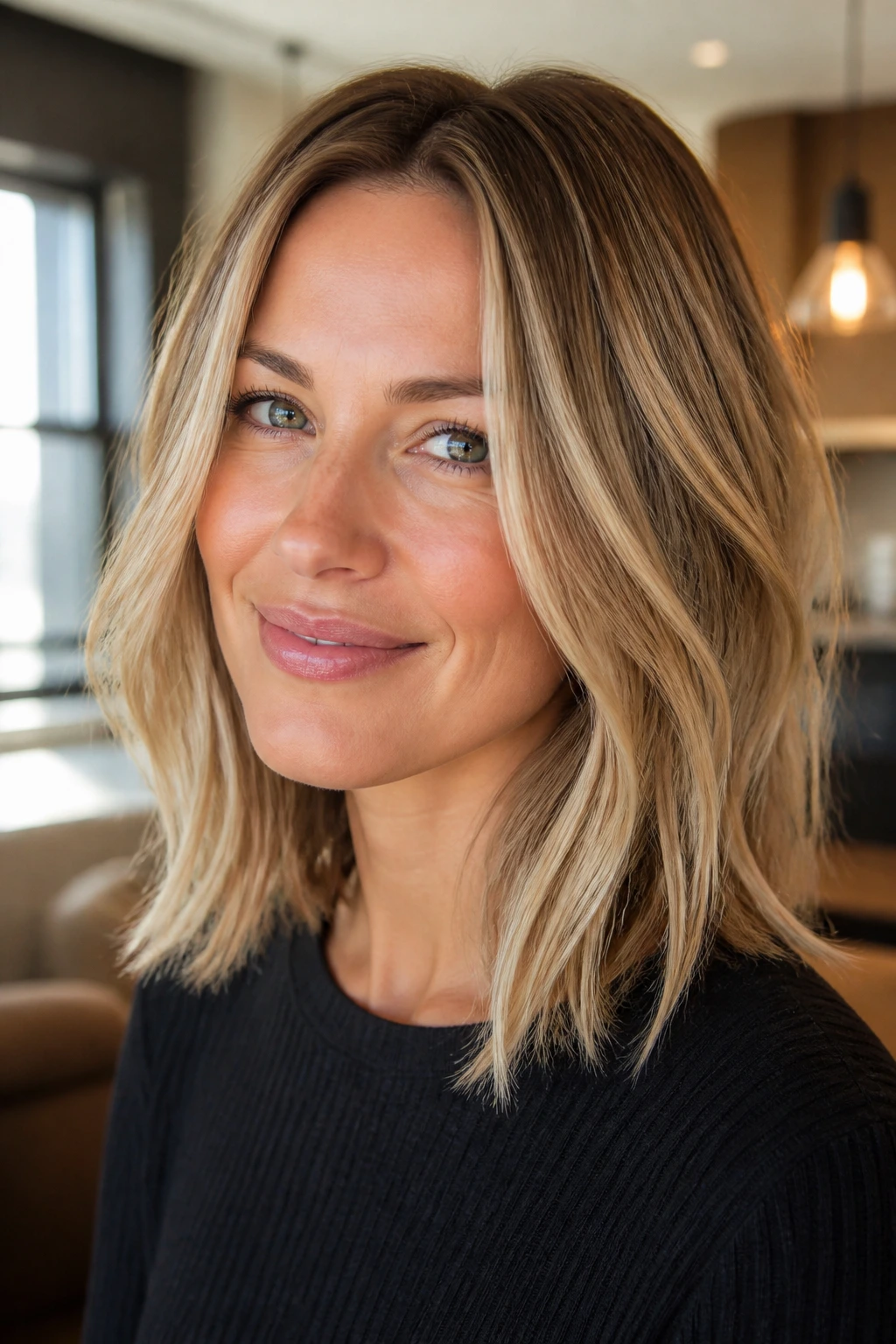
Sunlit beige blonde is one of the easiest shoulder-length blonde hair color ideas to wear because it sits so naturally in the middle. The beige base softens the brightness, and the sunlit highlights show up in the places that matter: crown, face frame, and a few end pieces. Nothing feels pasted on.
I like this shade when the cut has some light layering. The movement keeps the beige from looking heavy. If the hair is one-length and very dense, you may want a few more ribbons near the ends so the color doesn’t disappear into the bulk.
This is a solid option for someone who wants blonde that can survive air-drying, claw clips, and a few skipped styling days. It still looks put together when the finish is imperfect, and that’s a good quality to have.
25. Vanilla Beige Blonde with a Fresh Tone-Up
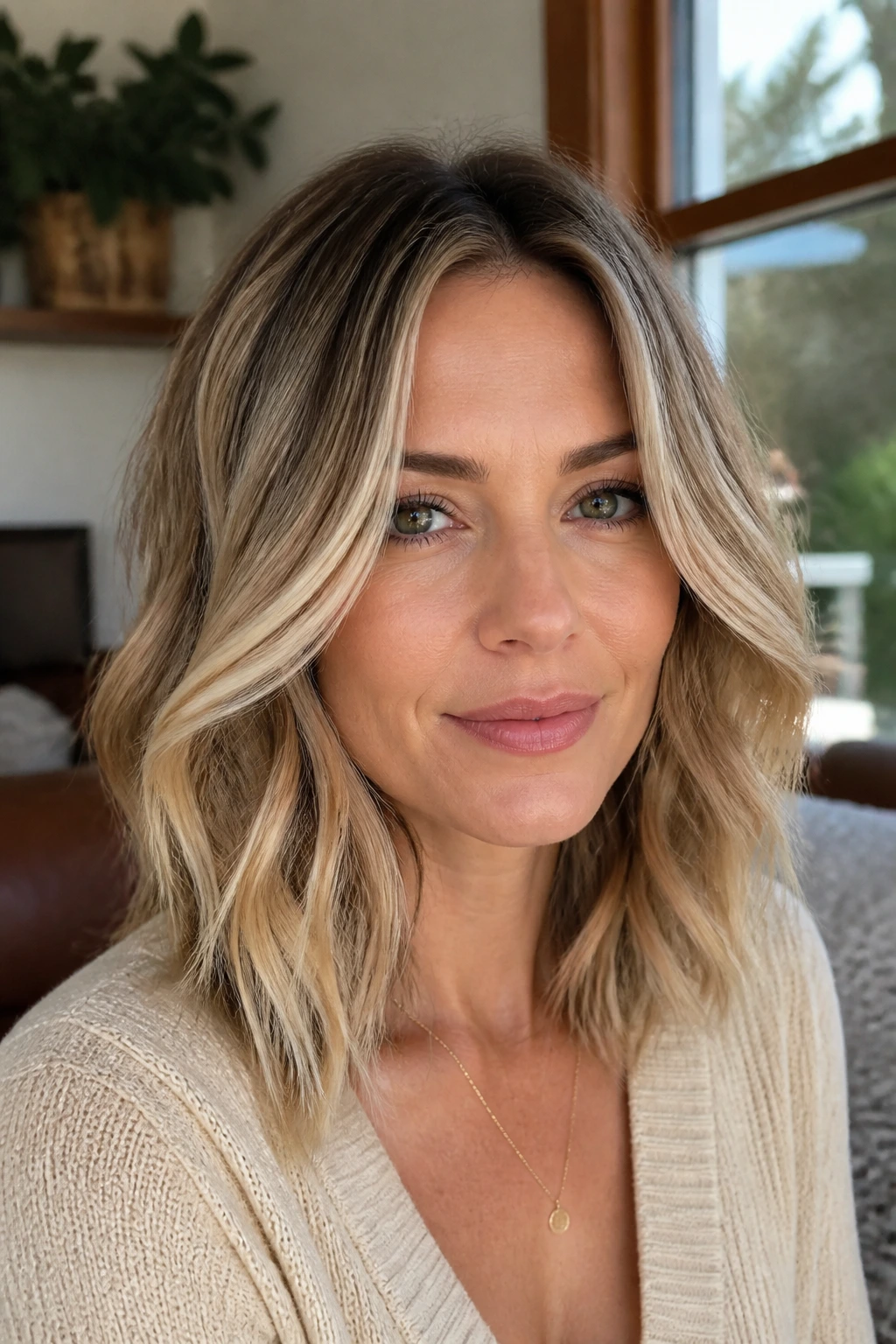
Vanilla beige blonde is the closest thing to a clean slate on shoulder-length hair. It blends cream, beige, and a soft pale blonde so the finish looks fresh without going icy. A tone-up or gloss keeps it from drifting yellow, and that little bit of polish makes a big difference on mid-length cuts.
This shade is especially pretty on hair that has a smooth surface or a blunt edge. The clean line at the ends makes the pale color read as deliberate rather than washed out. If the hair has layers, the texture adds movement and keeps the vanilla-beige tone from feeling too uniform.
I’d call this the polished cousin of butter blonde. It’s softer, cooler, and a little more restrained. If you want a blonde that looks clean from root to tip and still feels wearable, this one closes the list on a strong note.
Why Shoulder-Length Hair Shows Blonde Dimension So Well
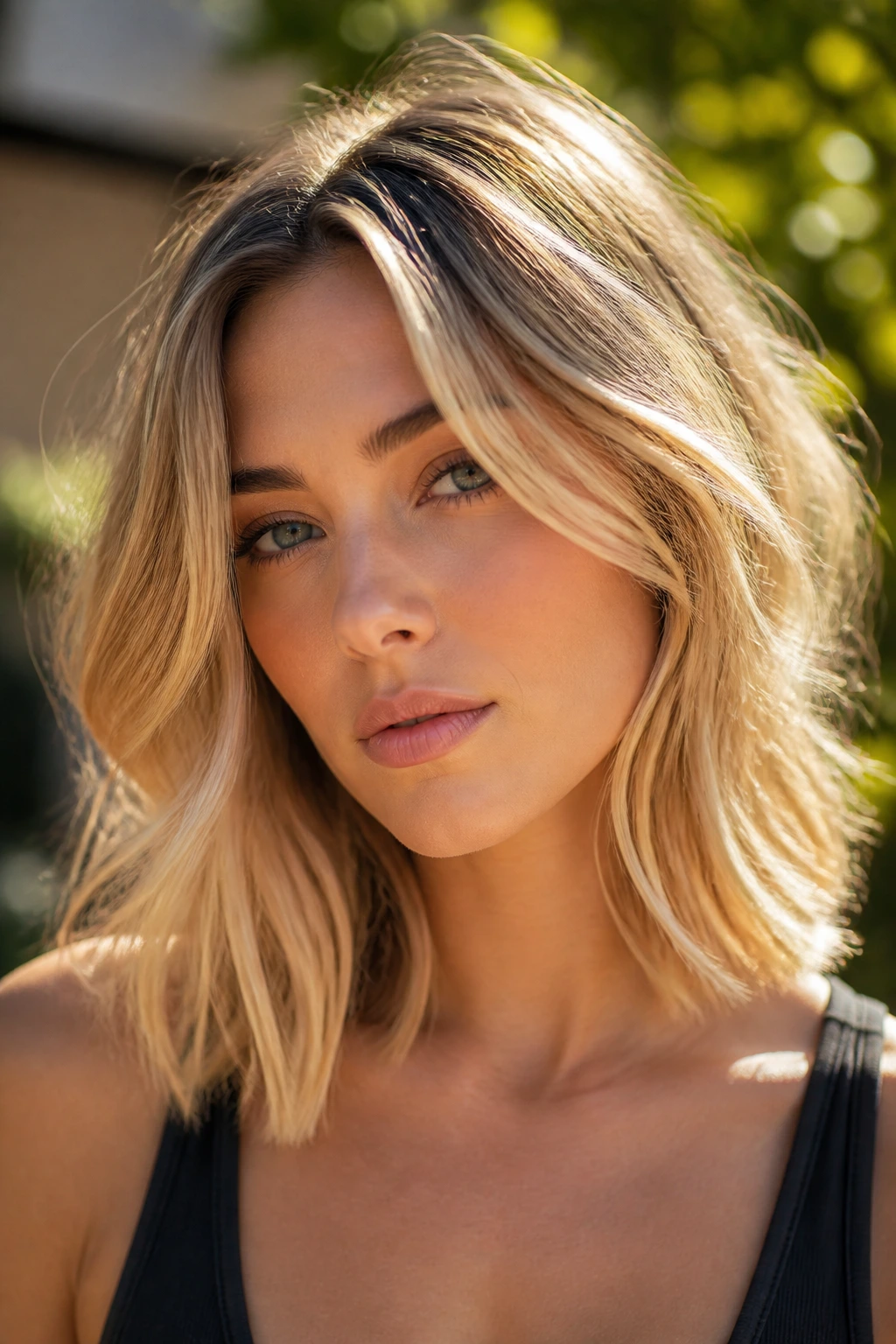
Shoulder-length hair has one job that longer hair often struggles with: it lets color show up without swallowing the whole face. A blonde ribbon on a lob is visible. A root shadow on a collarbone cut is visible. A face frame actually frames something, instead of getting lost in six extra inches of length.
That makes the cut useful in a very practical way. You can keep the hair light enough to feel bright, but you still have enough length to build in depth through lowlights, root taps, and soft ombré. The color doesn’t have to do all the work. The cut carries part of the load.
There’s also a maintenance advantage here that nobody should pretend is glamorous but everybody should appreciate. Shoulder-length hair gives you room to grow out a root shadow without the style collapsing, and enough surface for toner to matter. If your blonde tends to fade fast, this length is forgiving in a way that a razor-sharp pixie or a very long waterfall of hair isn’t.
And honestly, the movement is what makes it interesting. When the hair sits at the shoulders, every bend, flick, and tucked-back side changes where the light hits. That’s when a blonde reads as rich instead of flat.
Essential Tools for Blonde Looks Like These
- Color-safe shampoo: Keeps toner from getting stripped out after two washes and helps the blonde hold its tone longer.
- Purple shampoo: Use it sparingly for icy, pearl, or ash shades; too much can dull warm blondes.
- Deep conditioner or mask: Blonde hair loses moisture fast, and shoulder-length hair shows dryness at the ends first.
- Heat protectant spray: Non-negotiable if you blow-dry, curl, or flat-iron. Blonde ends burn faster than darker hair.
- Wide-tooth comb: Useful for wet detangling without snapping the lighter, more fragile lengths.
- Duckbill clips: These make sectioning easier if you style with a round brush or set curls in clean rows.
- Gloss or toning glaze: Handy for refreshing beige, champagne, or vanilla tones between salon visits.
- Microfiber towel or soft cotton T-shirt: Helps cut down on rough friction while the hair is wet.
- Round brush, 1 to 1.5 inches: Ideal for polishing lob-length hair and flipping the ends under or away.
- Shower filter, if your water is hard: Hard water can mute blonde and leave a gritty feel on the mids and ends.
Smart Salon Notes and Shopping Tips
Ask for tone before you ask for “blonde.” That sounds fussy, but it saves everyone time. Beige, honey, champagne, ash, pearl, and butter blonde all sit in different spots on the color wheel, and shoulder-length hair shows those differences quickly. A warm blonde on a blunt lob looks lush; the same placement in a cool tone can look almost smoky.
Bring photos, but pick photos that show the root area, not just glossy front pieces. Shoulder-length color lives or dies on the transition at the crown. If the root is too light, the whole style can look overprocessed. If it’s too dark, the face frame can feel disconnected from the rest of the hair.
Shopping for at-home products is a different game. Look for sulfate-free shampoo if you’re working with a toner-heavy blonde, and don’t buy a purple shampoo just because it’s popular. Use it only when your blonde starts tipping yellow. Warm shades like honey and butter blonde usually need moisture more often than purple pigment.
If you color at home, keep expectations sane. Going from brunette to pale blonde on a shoulder-length cut is not the place to improvise with box dye and hope for the best. That road tends to end in orange mids and stressed-out ends. For small changes — a gloss, a tone refresh, a root smudge — at-home work can be fine. For major lift, pay for the lifting step and save your weekend.
How to Wear These Shades Day to Day
Straight and Sleek:
A smooth blow-dry makes beige, champagne, oyster, and vanilla blonde look clean and deliberate. Use a light serum only on the ends, not the crown, or the lighter pieces will start looking stringy.
Soft Waves:
Loose bends are the easiest way to show ribbons, babylights, and balayage. Wrap sections away from the face, leave the ends out on a few pieces, and brush it out once it cools so the wave looks soft instead of curled.
Air-Dried Texture:
Sandy blonde, dirty blonde, and honey butter blonde all look good with air-dried texture because the color placement does some of the styling for you. Scrunch in a light leave-in, then let the natural movement show the dimension.
Pinned Back or Half-Up:
Scandi hairline blonde, platinum peekaboo layers, and money-piece looks become much more obvious when the front is pinned back. That’s useful if you want the bright pieces to read even when the rest of the hair is simple.
Low-Bun Days:
If the blonde is well-placed, a low bun doesn’t hide the color — it concentrates it around the face and nape. That’s one reason shoulder-length blondes are so practical. They keep showing up even when the style is minimal.
Extra Tips and Tone Boosters
Tone Enhancement: A clear or beige gloss every few weeks keeps pale blondes looking fresh without overusing purple shampoo. If the hair starts to feel dry and chalky, stop reaching for pigment and start reaching for moisture.
Customization: Want less contrast? Keep the root soft and blend the highlights lower. Want more pop? Brighten just the face frame and the very ends, then leave the interior slightly deeper so the cut has depth.
Pro Move: If your hair is fine, ask for finer highlights and a few lowlights under the top layer. Fine hair can look feathery fast when everything is lifted to the same level; a little shadow gives it body.
Make-It-Yours: Warm undertones usually look lovely with honey, butter, or golden blonde. Cool undertones often read better with champagne, pearl, or oyster. If your skin sits in the middle, beige blonde is the safest place to start, then you can lean warmer or cooler with the toner.
Finishing Touch: A pea-sized drop of lightweight oil on the ends makes blonde reflect light better. Too much will separate the pieces and make the color look greasy. Little bit. That’s the move.
Maintenance and Between-Appointment Care
Blonde at shoulder length is easiest to manage when you stop pretending every tone needs the same schedule. A warm honey or butter blonde can often go longer between toner refreshes because a little warmth hides fading. A pearl, ash, or ice blonde usually needs a tone-up sooner because brass shows up faster and the cool finish has less room to drift.
Most shoulder-length blondes do well with a gloss or toner refresh every 6 to 8 weeks, though icy looks may want attention closer to 4 to 6 weeks. Root maintenance depends on the technique. A shadow root or balayage can often stretch well past that, while face-framing bright pieces may need a touch-up sooner because they’re the first thing you see.
Washing less often helps, but only if the hair still feels clean enough to live in. Dry shampoo can buy you a day or two, but too much product buildup will mute the shine that blonde needs. Once a week, give the hair a gentle clarifying wash if your water is hard or your styling products are heavy, then follow with a mask.
Heat styling can make shoulder-length blonde look polished, but too much heat quickly chews up the lighter ends. Keep the iron around 300°F to 325°F for most hair, use a heat protectant every time, and let curls cool fully before you brush them out. That cooling step matters more than people think.
If you swim, coat the hair in clean water first and use leave-in conditioner before the pool. Blonde hair, especially lighter ash and pearl shades, can pick up weird tones from chlorine and hard water faster than darker hair. A little prevention saves a lot of correction later.
Variations and Adaptations to Try
Low-Maintenance Grow-Out Blonde: Keep the root deeper and let the brightest pieces stay around the face and ends. This works well if you want blonde that can survive a busy stretch without looking rough.
Cooler Beige Shift: If your blonde feels too yellow, ask for a beige or mushroom glaze instead of going full ash. It softens the tone without making the hair look dusty.
Warm Honey Upgrade: If the color feels too pale or flat, add a honey gloss through the mids and ends. This is a good fix for hair that needs warmth to look healthy.
Curly-Hair Blonde Placement: Put the lightest pieces on the outer curl pattern and around the face, not in thick blocks. Curly shoulder-length hair needs placement that follows the curl, or the blonde disappears into the texture.
Fine-Hair Brightening: Use babylights and ribbon highlights instead of chunky foils. Fine hair looks fuller when the light is woven in softly and the root area stays a little deeper.
Gray-Blending Blonde: Blend natural grays into a beige or champagne blonde instead of trying to erase them. A soft shadow root and scattered lighter pieces can make the transition smoother and less obvious as it grows.
Common Mistakes to Avoid
The biggest mistake is asking for the same blonde everywhere. When the root, mids, and ends all sit at the same level, shoulder-length hair loses shape and starts looking like a sheet. A small shadow at the root or a deeper underside keeps the cut alive.
Another common problem is over-toning. If your blonde is already beige or warm and you keep hitting it with purple shampoo, it can turn flat and muddy. Use pigment only when you actually see yellow creep in. Not before.
People also choose the wrong tone for their base. An icy blonde on naturally warm hair can fight the undertone instead of flattering it, which means more upkeep and less shine. A warmer blonde often behaves better if your hair and skin both lean golden.
A fourth mistake is bleaching the ends too aggressively on a shoulder-length cut. Those ends are the oldest, driest part of the hair. If they’re pushed too light too fast, they’ll feel rough and look frayed, no matter how nice the color is near the root.
Last one: skipping the gloss. Blonde without gloss can look loud in the wrong way, especially under indoor light. A clear, beige, or tone-specific gloss gives the cut that finished look people think comes from luck. It doesn’t. It comes from one extra step.
Questions People Ask Before Going Blonde at Shoulder Length
What blonde shade is easiest to keep up on shoulder-length hair?
Beige balayage, dirty blonde with bright ribbons, and a soft shadow-root blonde usually wear the best. They grow out without a hard line and don’t demand perfect toner timing.
Does shoulder-length hair make blonde look thicker or thinner?
Usually thicker, if the color is placed well. A few darker lowlights or a soft root shadow keep the ends from disappearing, which is what gives the cut body.
Can I go blonde if my hair is naturally dark brown?
Yes, but it usually takes more than one session if you want the hair healthy. A bronde melt, caramel blonde, or honey butter blonde is often a smarter first step than jumping straight to icy platinum.
What if my blonde turns brassy fast?
Use less heat, wash less often with harsh shampoo, and ask for a toner in a cooler beige or ash direction only if your base actually needs it. Brass often shows up because the hair was lifted warm in the first place, not because you missed one purple shampoo day.
Is platinum a bad idea for shoulder-length hair?
Not bad, just demanding. Platinum peekaboo layers or a shadow-root ice blonde are easier to wear than a solid platinum sheet because they let the color breathe and give the cut some shadow.
Which blonde works best with curtain bangs?
Golden blonde, cream soda blonde, and butter blonde are strong choices. Curtain bangs move a lot, so a softer warm tone shows off the shape without making the fringe look harsh.
How do I keep my blonde from drying out?
Use a mask once a week, avoid blasting the ends with high heat, and don’t overdo purple shampoo. Blonde hair at shoulder length needs moisture more than miracle products.
Can fine hair pull off these shades?
Absolutely. Babylights, pearl ribbons, and beige blondes can make fine hair look fuller, as long as the highlights aren’t too chunky and the root isn’t lifted everywhere at once.
Should I go warmer or cooler?
Start from your natural undertone. Warm skin usually likes honey, butter, and golden shades. Cool or neutral skin often suits champagne, pearl, oyster, and mushroom blonde better.
A Blonde That Stays Interesting
The best shoulder-length blonde hair color ideas do one thing well: they give the cut shape. That’s the whole trick. When the root has a little shadow, the mids have movement, and the ends carry the light, the hair stops looking like a single color and starts looking built.
That’s why this length keeps winning for blonde. It gives you enough room for ribbons, gloss, and contrast, but not so much length that the color drifts away from the face. The result can be soft, sharp, warm, cool, or somewhere in the middle — and that range is exactly what makes shoulder-length blonde so easy to keep coming back to.
