



Shoulder-length hair balayage has a useful little advantage that longer lengths often lose: the color sits where people actually see it. On a lob, the lighter ribbons land around the face, through the curve of the haircut, and down to the ends without disappearing into endless inches of hair. The result can look polished, but not fussy. And that’s the sweet spot.
My bias here is plain enough. Shoulder-length hair is one of the best canvases for balayage because the shape gives the color somewhere to move. You can keep depth near the roots, brighten the mid-lengths, and still leave enough contrast that the whole head doesn’t go flat when the hair is dry and a little tired on day three.
The trick is choosing the right mood. Some shoulder-length balayage ideas lean caramel and soft. Others go icy, smoky, coppery, or rose-toned. A few are all about face-framing brightness, while others live on the quieter side and only reveal themselves when the hair bends in the light. That range is exactly why the cut works so well with color, and it’s why the best examples never look pasted on.
Why These 25 Shoulder-Length Hair Balayage Ideas Stand Out
- Soft grow-out: Shoulder-length hair gives balayage room to blur into the root, so regrowth tends to look intentional instead of harsh.
- Face-framing payoff: The lighter pieces land near the cheekbones and collarbone, which is where this haircut has the most shape.
- Built for texture: Waves, bends, and loose curls show off the color shifts far better than a one-length sheet of straight hair.
- Color range: Brunette, blonde, red, and black bases can all take balayage in a way that still looks like their hair.
- Easy to tune: You can push the tone warmer, cooler, brighter, or softer without changing the cut.
- Less visual weight at the ends: A shoulder-length finish keeps the lightest parts from dragging down the whole look.
1. Caramel Ribbon Brunette
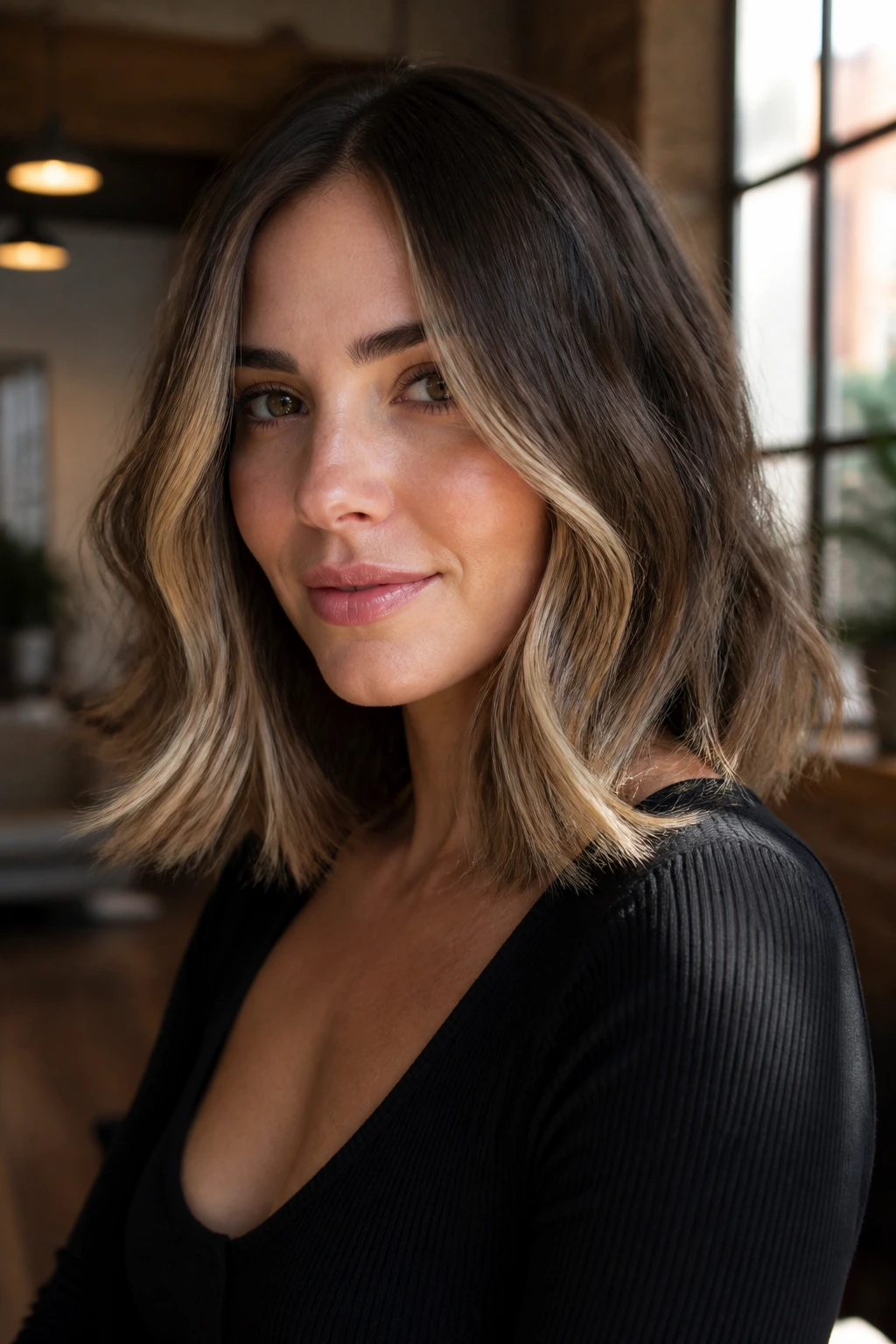
Caramel ribbon balayage is the version I reach for when someone wants movement without giving up brunette depth. On shoulder-length hair, those warm ribbons sit in the bend of the cut and make the ends look fuller, not thinner. It’s a clean way to wake up dark brown hair without pushing it into blonde territory.
Ask for thin-to-medium painted ribbons through the top and a softer, brighter piece around the front. The best version stays one or two levels lighter than the base, with the color concentrated where the hair curves around the face. It looks especially good with loose waves and a middle part.
2. Mushroom Brown Balayage
Mushroom brown is for anyone who likes a cooler, suede-like finish instead of warmth. It has that ashy, earthy tone that makes shoulder-length hair look expensive in a quiet way. No brass, no orange, no obvious highlight stripes.
I like this on medium brunettes because the shade shift is subtle but visible. The colorist should keep the root area deeper and weave cool beige-brown pieces through the mid-lengths, not just the surface. If your skin tone runs cool or neutral, this one tends to sit beautifully without much effort.
3. Honey Blonde Lob
Honey blonde on a shoulder-length lob has a sunnier personality than beige or ash blonde. The warmth catches the cut’s outer curve and gives the whole head a soft glow, especially when the hair is brushed out or bent with a one-inch iron. It reads brighter than caramel, but not as stark as platinum.
This works best when the lightest pieces are kept around the face and on the upper layers, with the ends staying a touch deeper for dimension. If your base is naturally dark blonde or light brunette, honey tones can blend without looking striped. They also hold up better than icy shades when your hair tends to pull warm.
4. Beige Blonde Melt
Beige blonde is the color you pick when you want brightness without that yellow, beachy heat. On shoulder-length hair, a beige melt can make the haircut look airy and expensive at the same time. The blend from root to end matters here more than the exact shade.
The best beige balayage keeps the root slightly shadowed and the mid-lengths buttery-neutral, not white. I’d ask for a gloss that softens the highlights rather than a toner that pushes them flat and gray. This one is a nice fit for finer hair because the neutral tone helps the color look cleaner and less busy.
5. Copper Cinnamon Swirl
Copper cinnamon balayage brings real energy to shoulder-length hair. It’s one of those shades that looks alive even when the hair is simply tucked behind one ear. The warmth shows up in the bends, so every wave feels a little more defined.
This is the right lane if you want red tones without a solid all-over copper color. Ask for painted copper ribbons through the mid-lengths and a deeper cinnamon shadow near the root so the finish doesn’t look flat. It flatters brown eyes particularly well, but the bigger win is texture: curls and bends make the copper look much richer.
6. Ash Bronde Balayage
Ash bronde lives between brown and blonde, but the cool undertone keeps it from drifting too golden. On shoulder-length hair, that balance is useful because the haircut already has enough structure; the color doesn’t need to shout. It just needs to move.
If your natural base is a level 6 or 7, ash bronde can look soft and believable with a pale money piece and cooler ends. I’d keep the brighter sections a little narrower near the front so the overall effect stays smoky instead of streaky. This is one of the best choices for people who hate obvious highlight lines.
7. Espresso-to-Toffee Dimension
Dark espresso roots fading into toffee ends make shoulder-length hair look dense in the best way. The contrast gives the haircut shape, and the warmer ends keep the cut from looking heavy near the bottom. It’s one of the strongest choices for dark brunettes who want visible change without a full blonde turn.
The placement matters more than the tone here. Keep the top half deeper and let the toffee show up in wide, soft strokes through the lower half and around the face. A loose blowout or brushed wave keeps the transition looking smooth; pin-straight hair can make the contrast feel sharper.
8. Face-Framing Money Piece
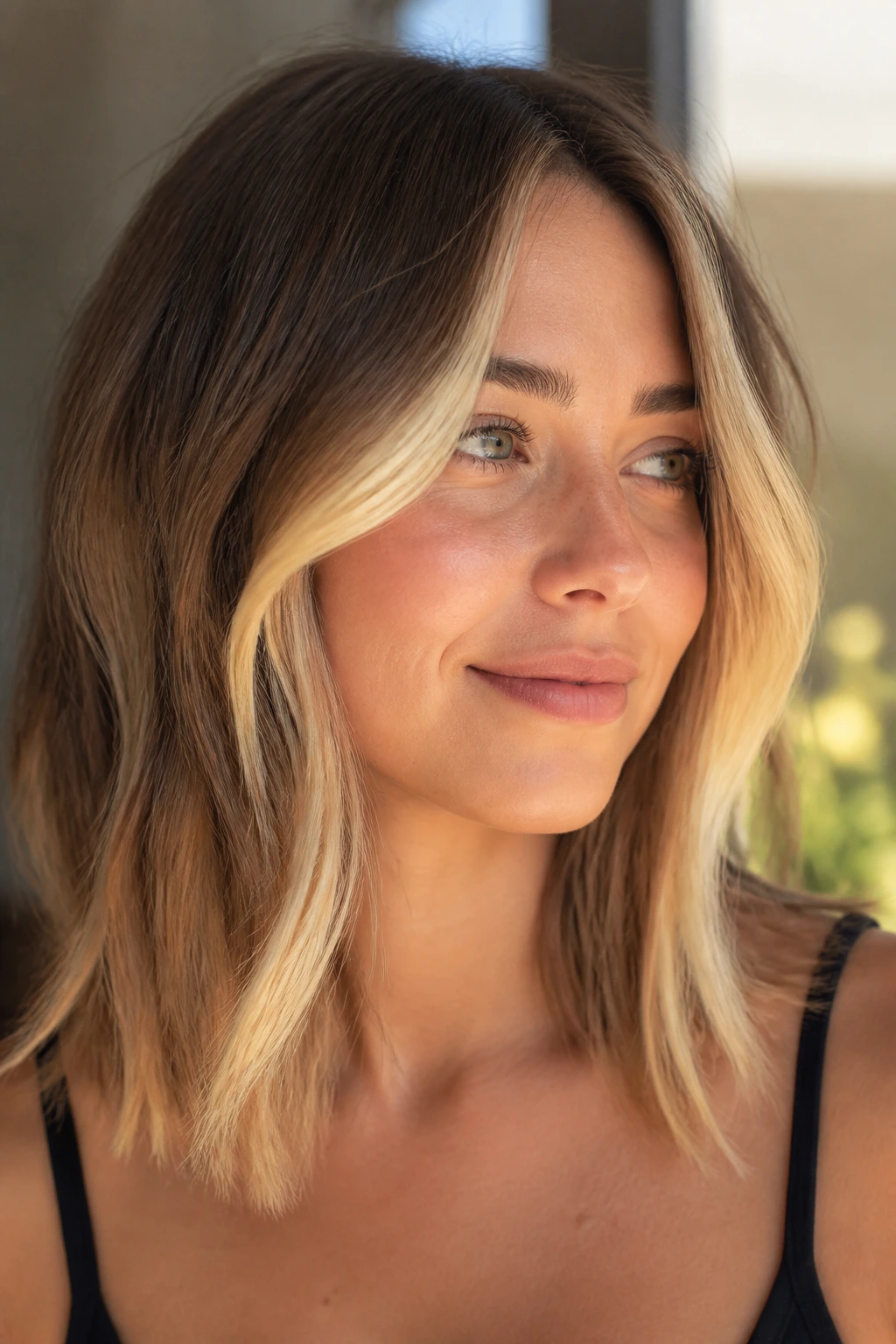
A face-framing money piece can change the mood of shoulder-length hair fast. It’s the most direct, high-impact balayage move on the list, and I like it when the cut is blunt or slightly layered because the bright pieces sharpen the outline of the face. Done well, it looks bold but not disconnected.
The rest of the hair should stay softer and a touch deeper so the front panels don’t float alone. Ask for brightness that starts a little below the hairline and melts back into the side sections. If you wear your hair up often, this is the one that still shows off, which is part of why people keep coming back to it.
9. Icy Sand Blonde
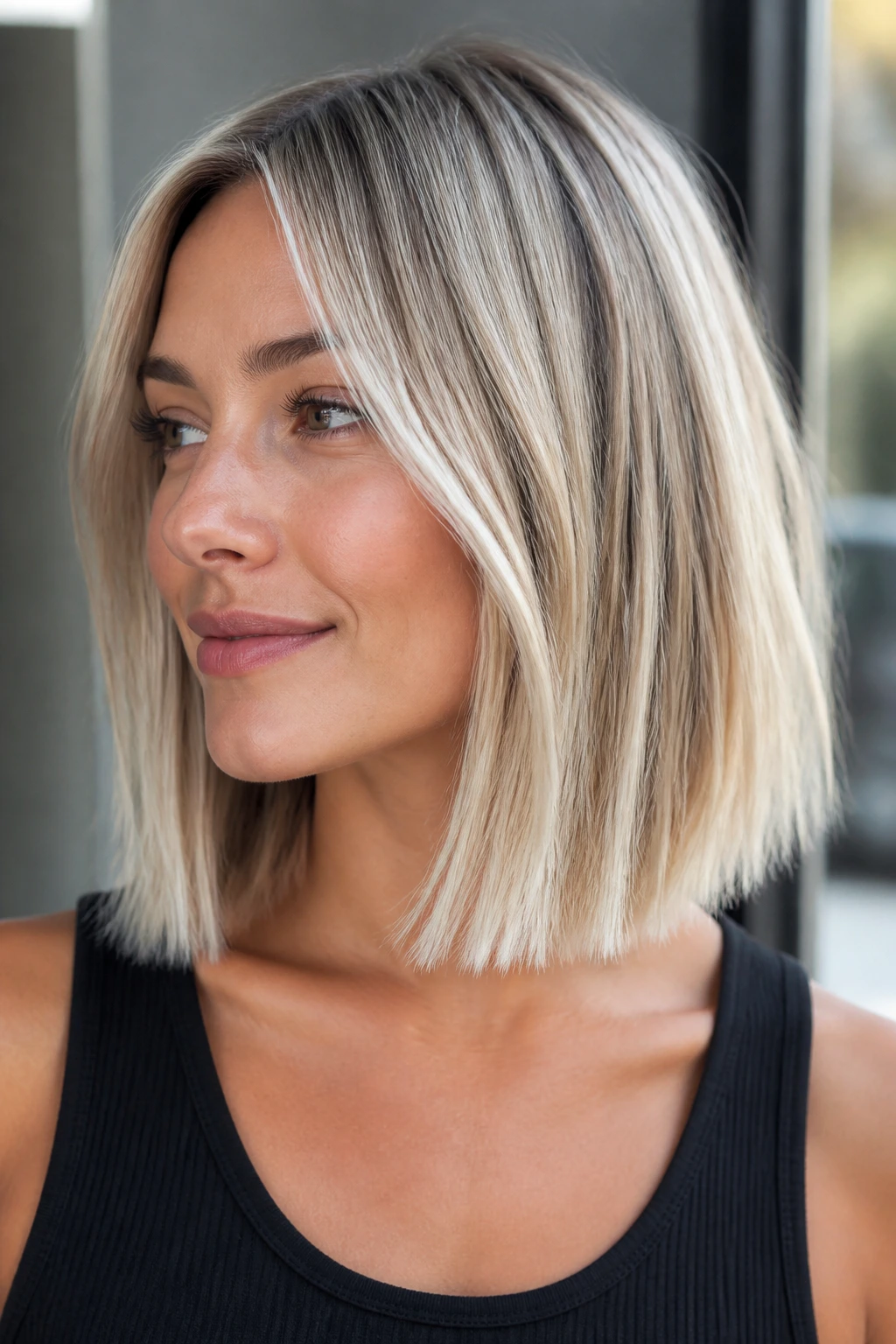
Icy sand blonde sits in that cool-but-not-chalky zone that can be hard to get right. On shoulder-length hair, it brings a crisp edge to the cut, especially if the ends are blunt. The cool tone makes the shape look clean, and the lighter pieces around the front stop the color from feeling severe.
This is best when the base is already fairly light or when you’re willing to lift carefully and tone well. I’d avoid making every piece pale; a few darker lowlights keep the look from washing out. If your hair tends to yellow fast, this is the shade that will ask for the most toner discipline.
10. Smoky Mocha Balayage
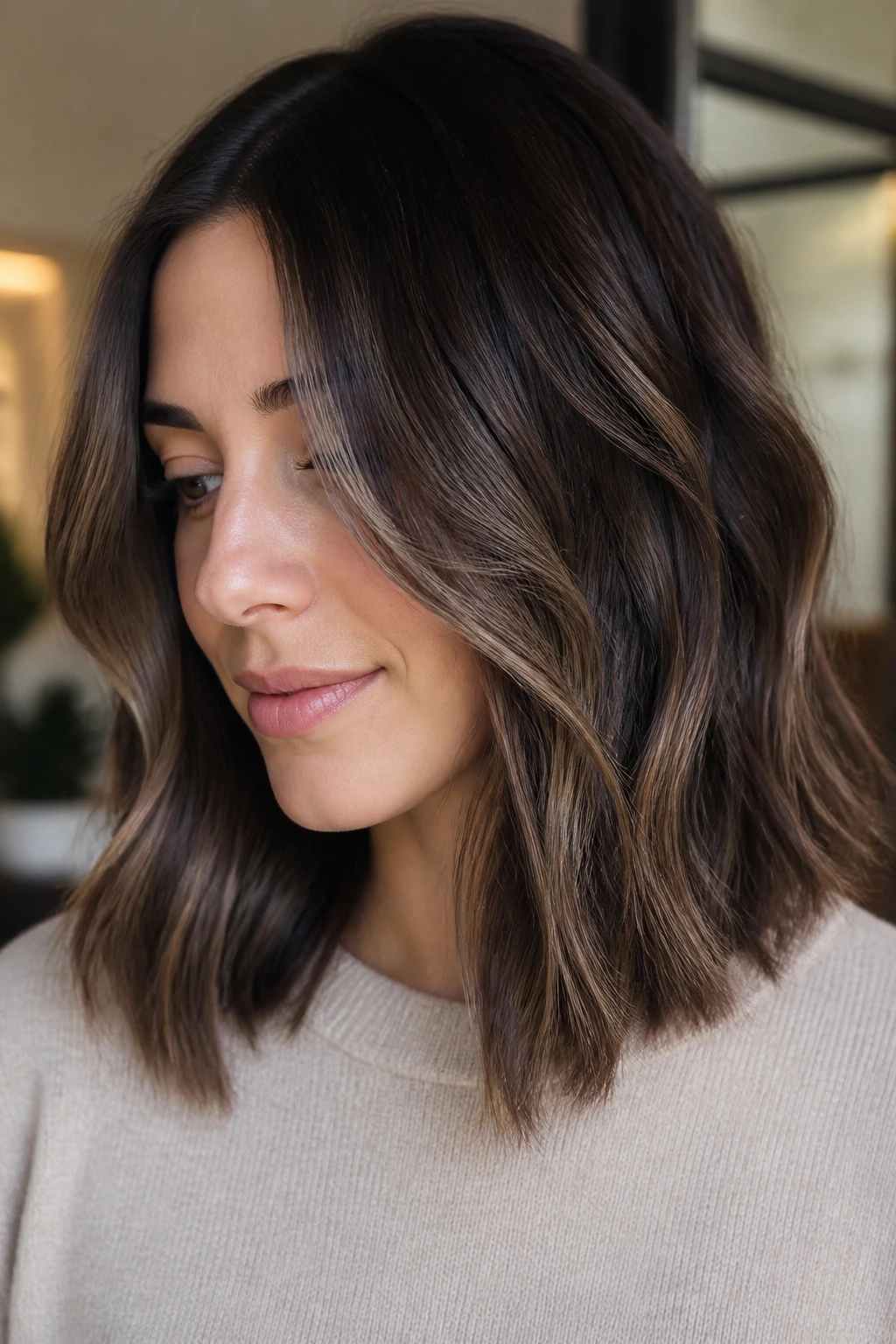
Smoky mocha balayage is a brunette color with manners. It keeps the base deep, adds cool brown lightness, and never slides into warmth that feels accidental. On shoulder-length hair, the smoky finish can make a blunt cut look softer around the edges.
What I like most is the restraint. You can keep the top and underlayer rich, then feather the lighter mocha bits through the crown and face-framing sections. It works especially well if you want dimension that still looks office-safe, wedding-safe, and low-drama in a ponytail.
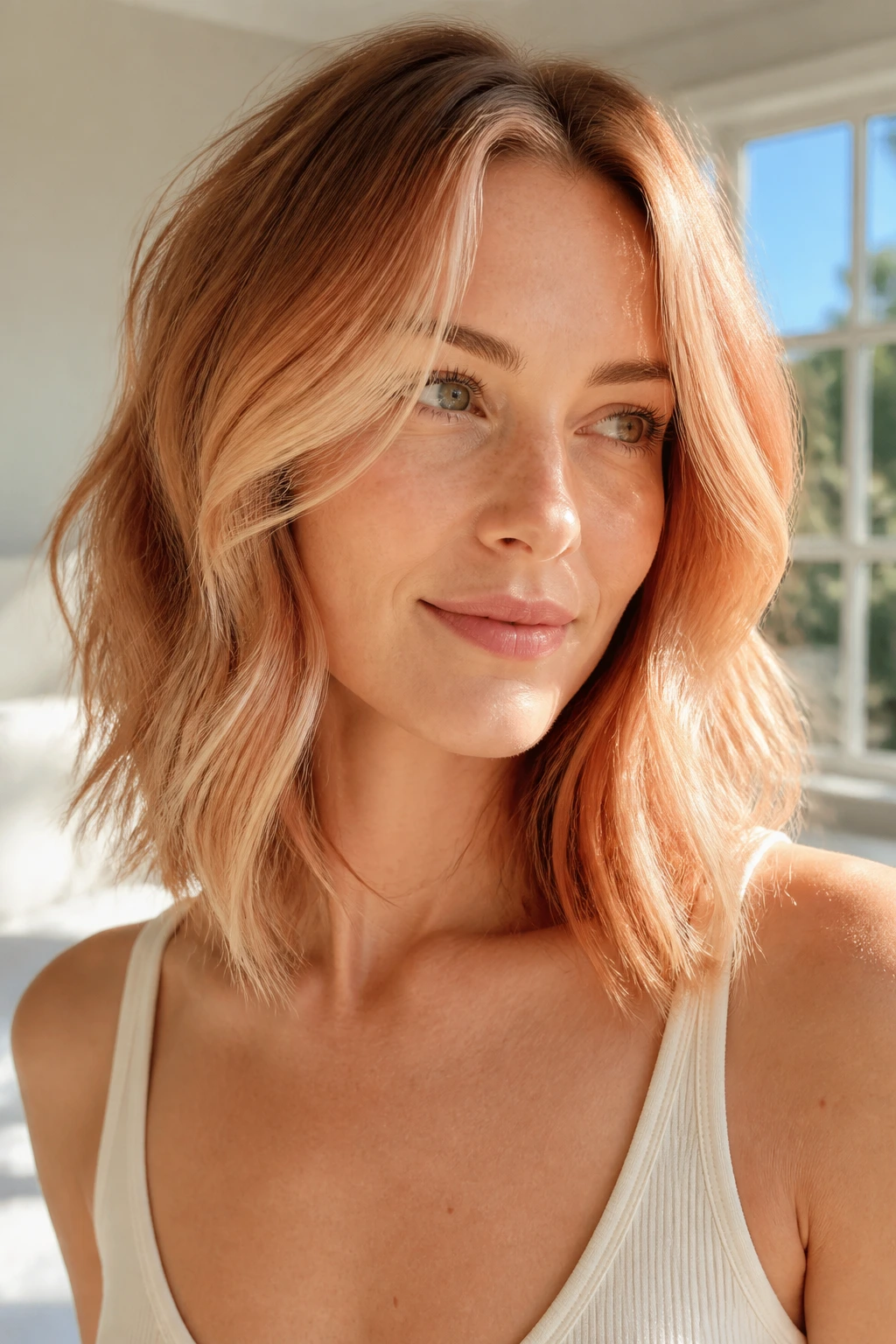
11. Strawberry Blonde Glow
Strawberry blonde balayage has a softer, fresher feel than full copper. It sits somewhere between warm blonde and pale red, which makes shoulder-length hair look light without losing personality. The shorter length keeps the color from reading too sweet or washed out.
This shade is lovely when the painted pieces are fine and airy rather than chunky. The best version uses warm peach-blonde ribbons near the front and a slightly deeper strawberry tint through the ends. If your natural color is light brown or dark blonde, this can feel like a very natural detour.
12. Rose Gold Sheen
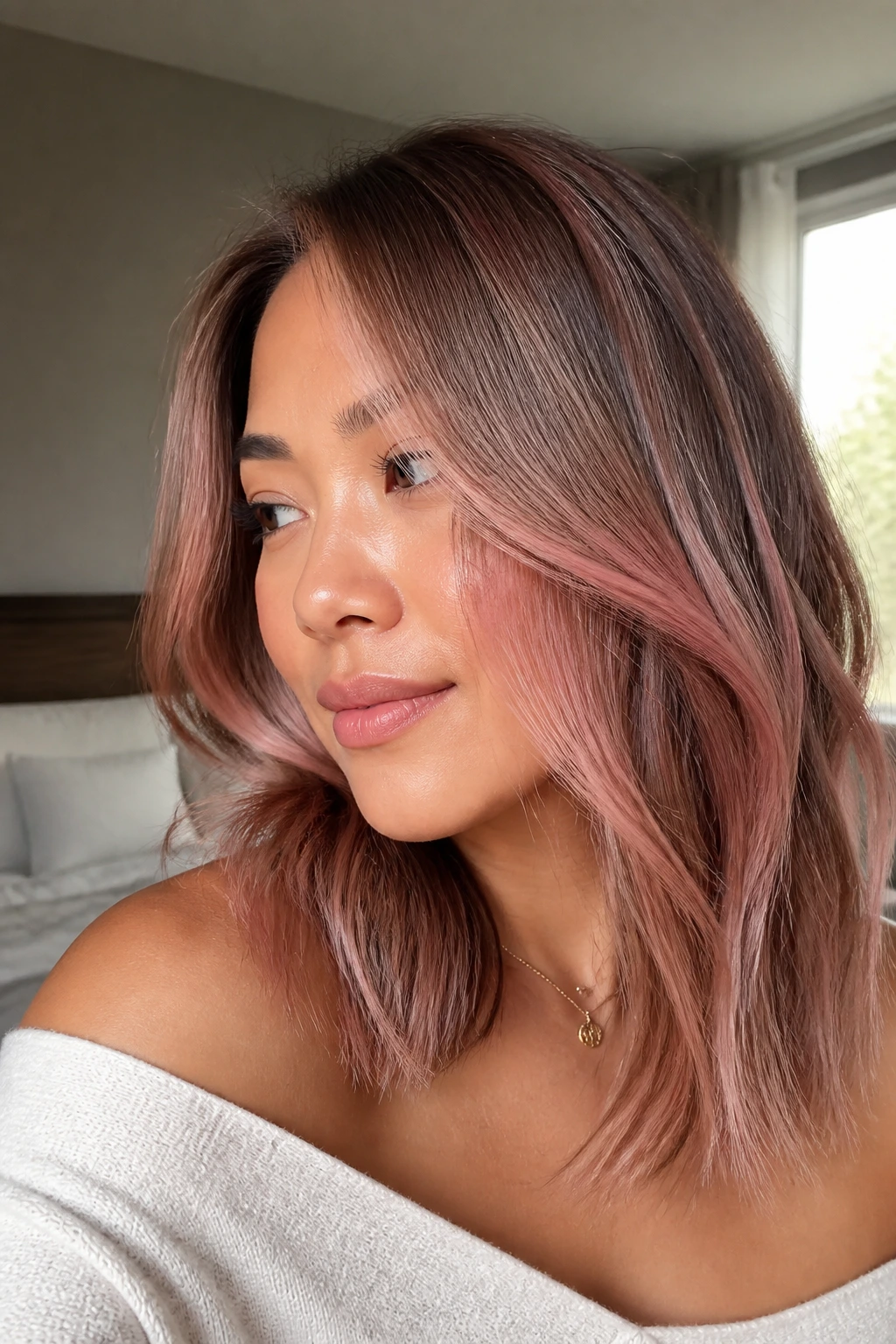
Rose gold on shoulder-length hair has a playful edge, but it works best when the pink is restrained. Think blush over gold, not candy pink. The lighter pieces land around the face and through the outer layers, where the color picks up movement instead of looking like a stain.
I’d keep the base soft and neutral so the rose tone doesn’t fight with brass. A gloss finish matters here. If the hair is too porous, the pink can grab unevenly and go loud in a hurry, which is not the point. The nicest rose gold versions look like they’ve been brushed with light, not dipped in dye.
13. Chocolate Cherry Ribbons
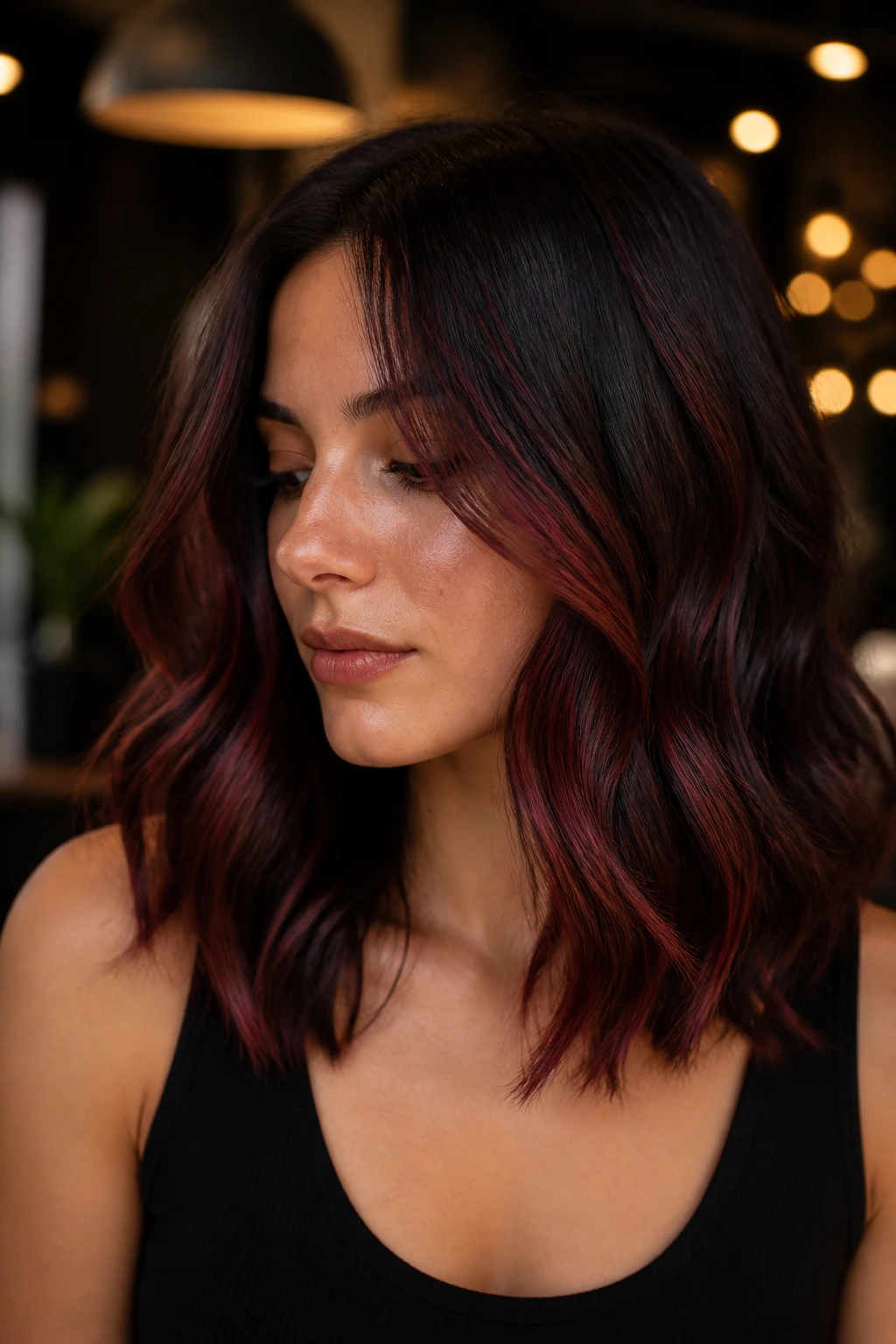
Chocolate cherry balayage is one of the more dramatic brunette ideas, and I mean that in a good way. On shoulder-length hair, the red-brown ribbons show up just enough to feel rich, but not so much that the hair turns costume-like. It’s moody, glossy, and a little bit dangerous.
The deeper chocolate base keeps the red from getting bright. Ask for cherry tones mostly in the mid-lengths and around the face, then let the ends carry a few stronger ribbons. This looks especially strong on hair with a natural wave, because the bends reveal the cherry tones in layers.
14. Sun-Kissed Chestnut
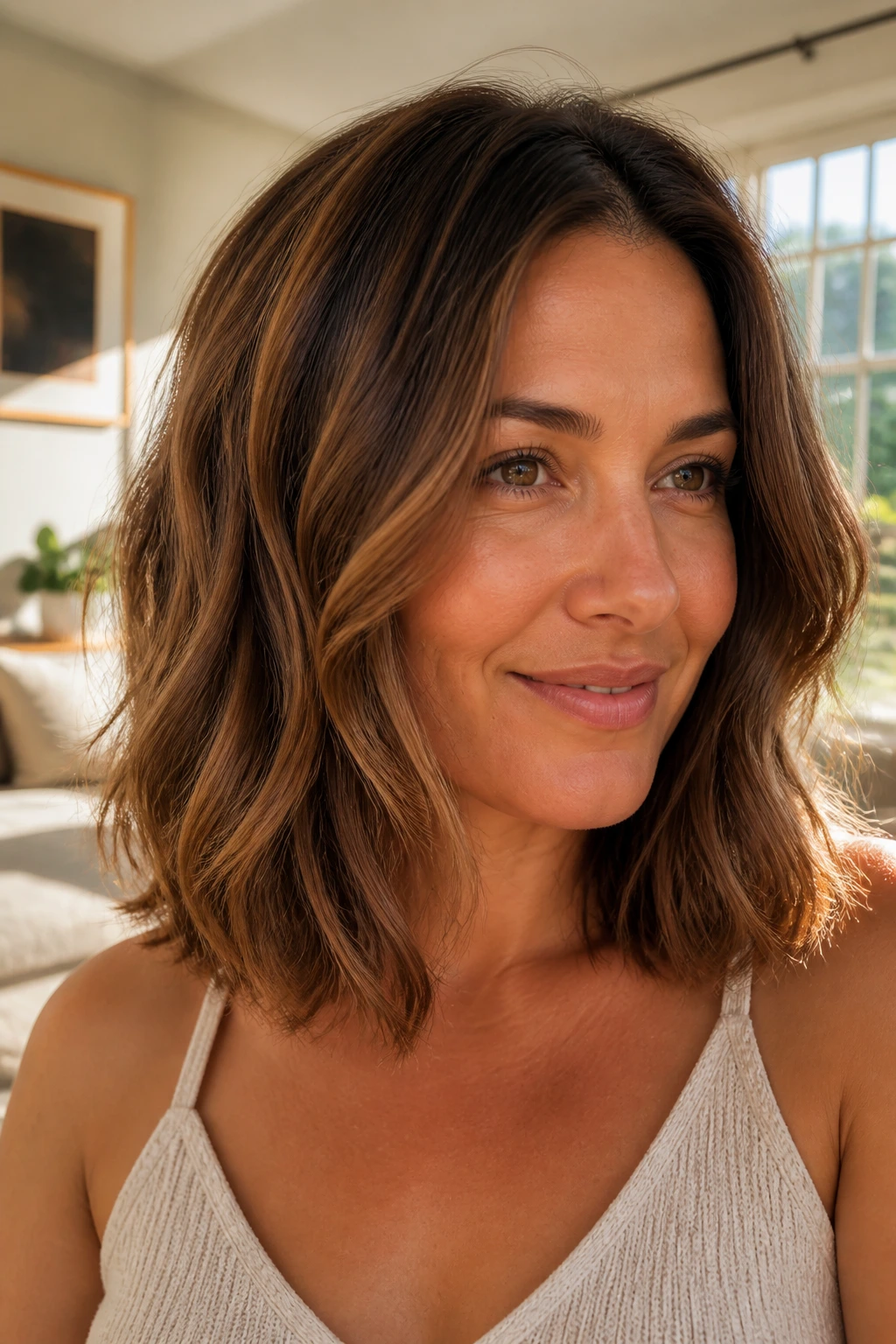
Sun-kissed chestnut is the shade for people who want “I woke up like this” hair without the cliché. It keeps the chestnut base intact and only nudges the surface lighter in a few strategic places. On shoulder-length cuts, that restraint works because the haircut itself already gives the color shape.
The nicest version has a little lift on the top layer and a few whisper-light pieces near the cheekbones. Nothing stripey. Nothing too blonde. This is one of the easier balayage ideas to wear year-round because it doesn’t lock you into a single seasonal look.
15. Vanilla Cream Ends
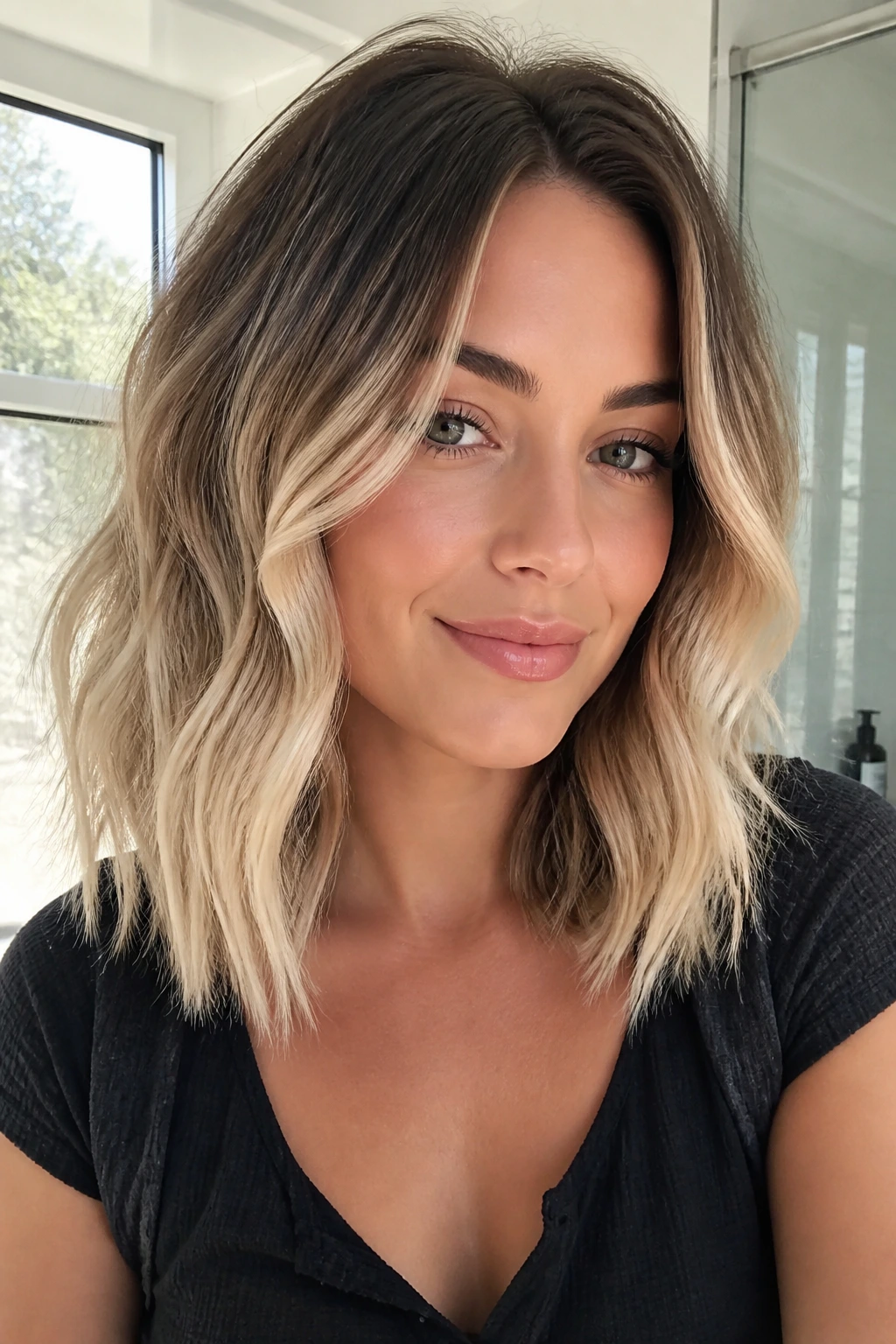
Vanilla cream ends bring a brighter finish to shoulder-length hair without requiring a full blonde commitment. The ends look lifted and clean, while the root stays deeper so the haircut still has backbone. It’s a good choice if you want the lower half of the hair to read lighter in photos and more reflective in motion.
I’d keep the transition soft through the mid-lengths rather than drawing a hard line. That cream tone should feel airy, almost whipped. If your hair is naturally medium brown, the contrast can be gorgeous, but it needs toning to avoid a brassy fade.
16. Auburn Balayage on Dark Brown
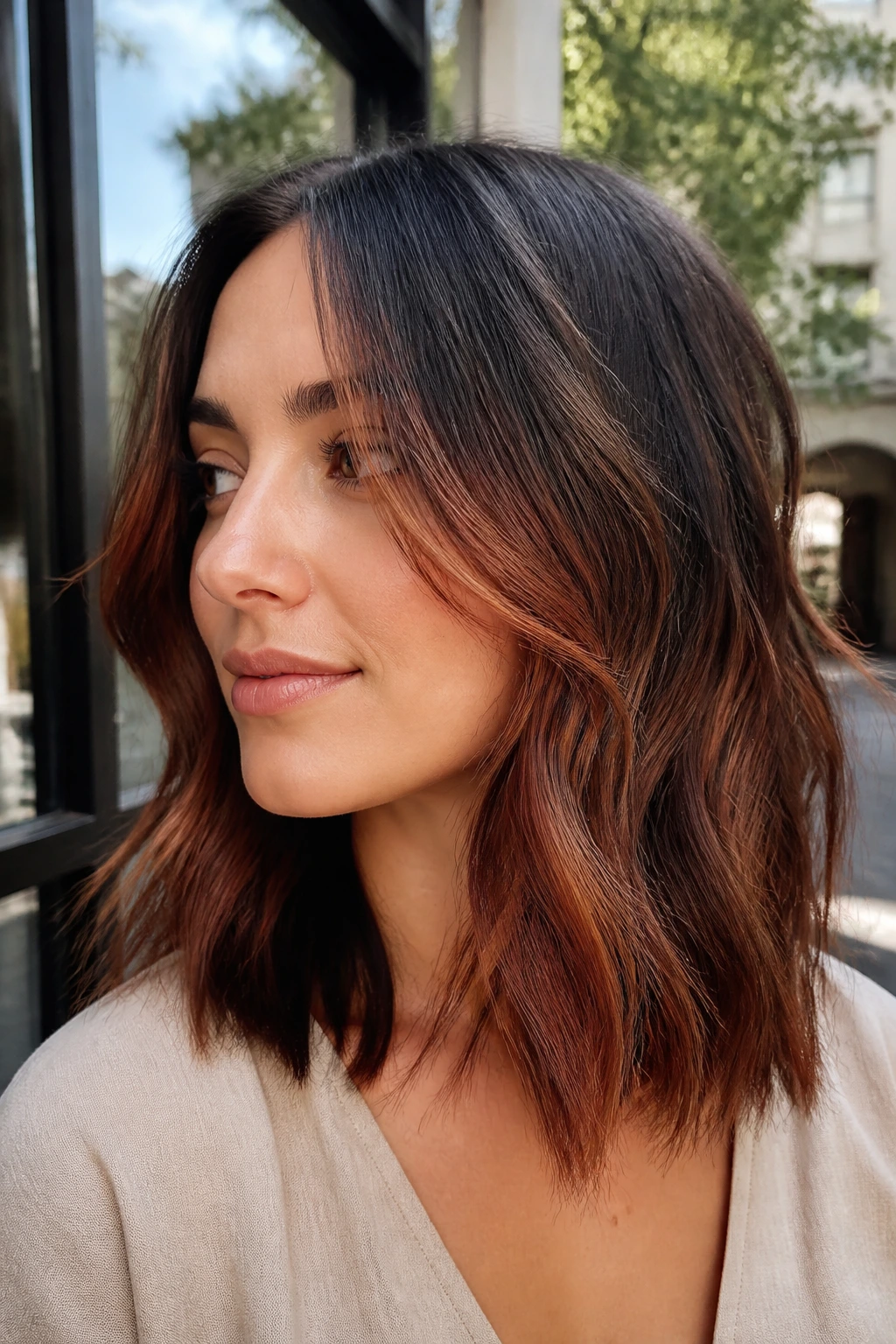
Auburn balayage on dark brown hair gives shoulder-length cuts a warm, autumnal depth that doesn’t need much styling to look finished. The red-brown accents are subtle in low light and richer in daylight, which is part of the appeal. The color seems to shift as the hair moves.
This is a nice choice if you want red without going bright copper or burgundy. Keep the auburn painted into the outer layers and a few face-framing streaks, then leave the underlayer darker. That contrast gives the hair dimension and keeps the whole look grounded.
17. Sandy Bronde Waves
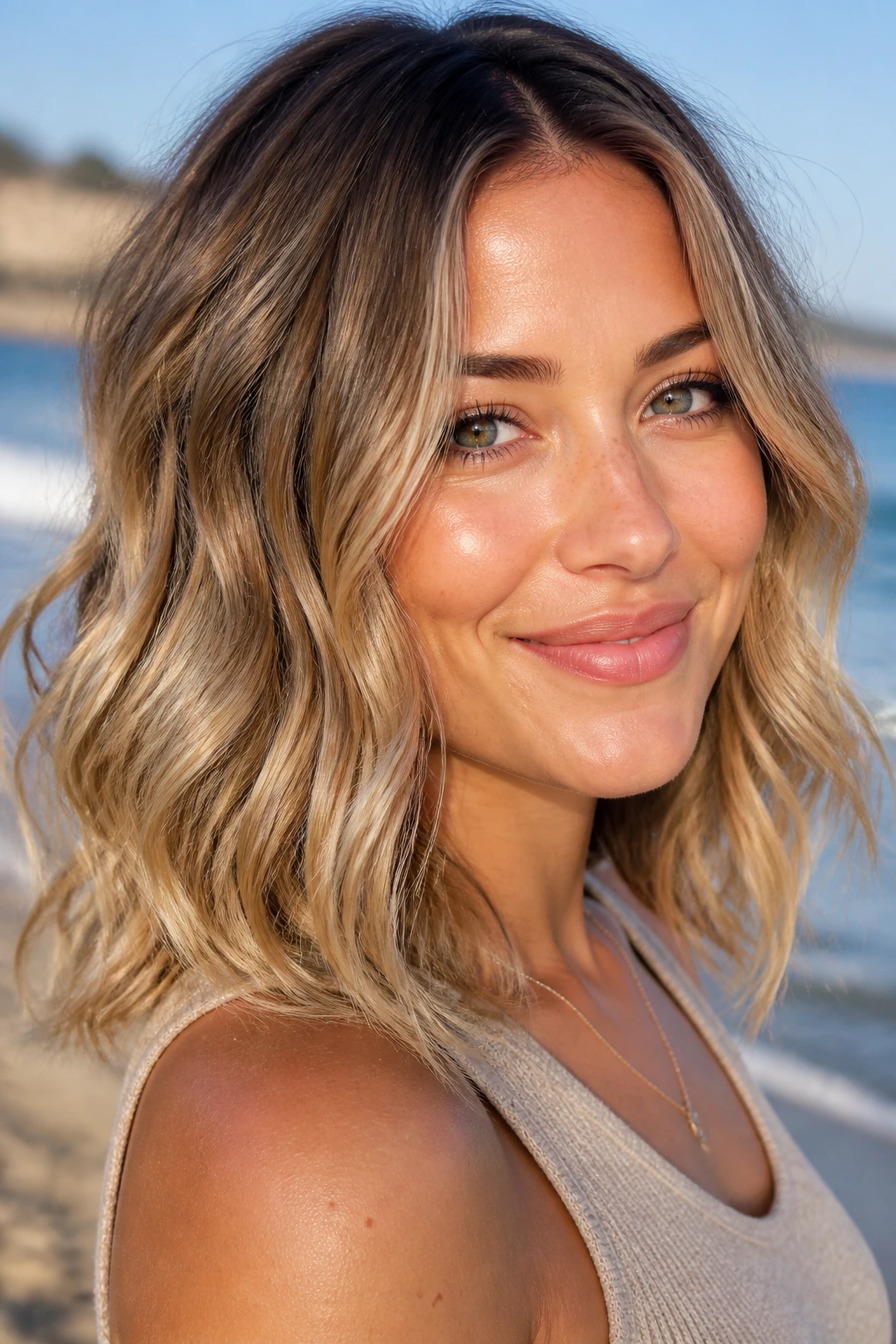
Sandy bronde is the friendliest version of blonde-brunette balance. It has enough beige warmth to keep the hair from looking flat, but enough brown depth that shoulder-length hair still feels full. With waves, it can look easy in a way that’s hard to fake.
The best sandy bronde balayage usually has a soft root shadow and medium-light pieces through the mids. I prefer this on hair that isn’t too fine, because the multi-tone effect has more room to show. If your hair is straight, a bend at the ends helps reveal the color without making it look overworked.
18. Bronze Glow Balayage
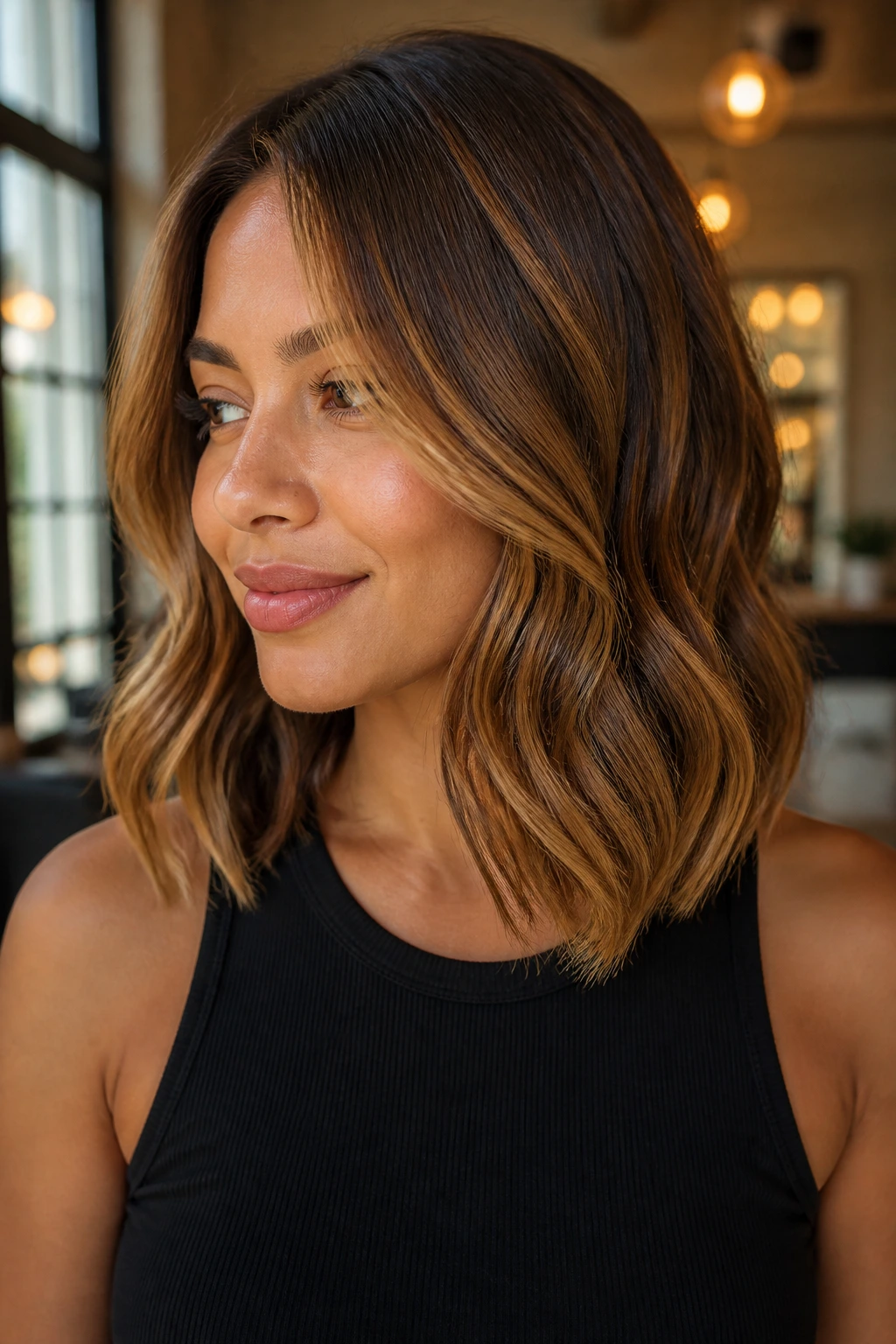
Bronze balayage has a polished richness that suits shoulder-length hair beautifully. The metallic warmth gives the cut a subtle sheen, especially when the ends are polished with a tiny bit of oil. It lands somewhere between brunette and light copper, which is a strong place to be.
This shade shines when the highlights are painted in broad, flowing sections instead of tiny streaks. You want warmth, yes, but you also want depth underneath. Bronze is one of those colors that looks especially expensive when the colorist keeps the root shade a touch darker and the ends luminous, not pale.
19. Soft Black Balayage
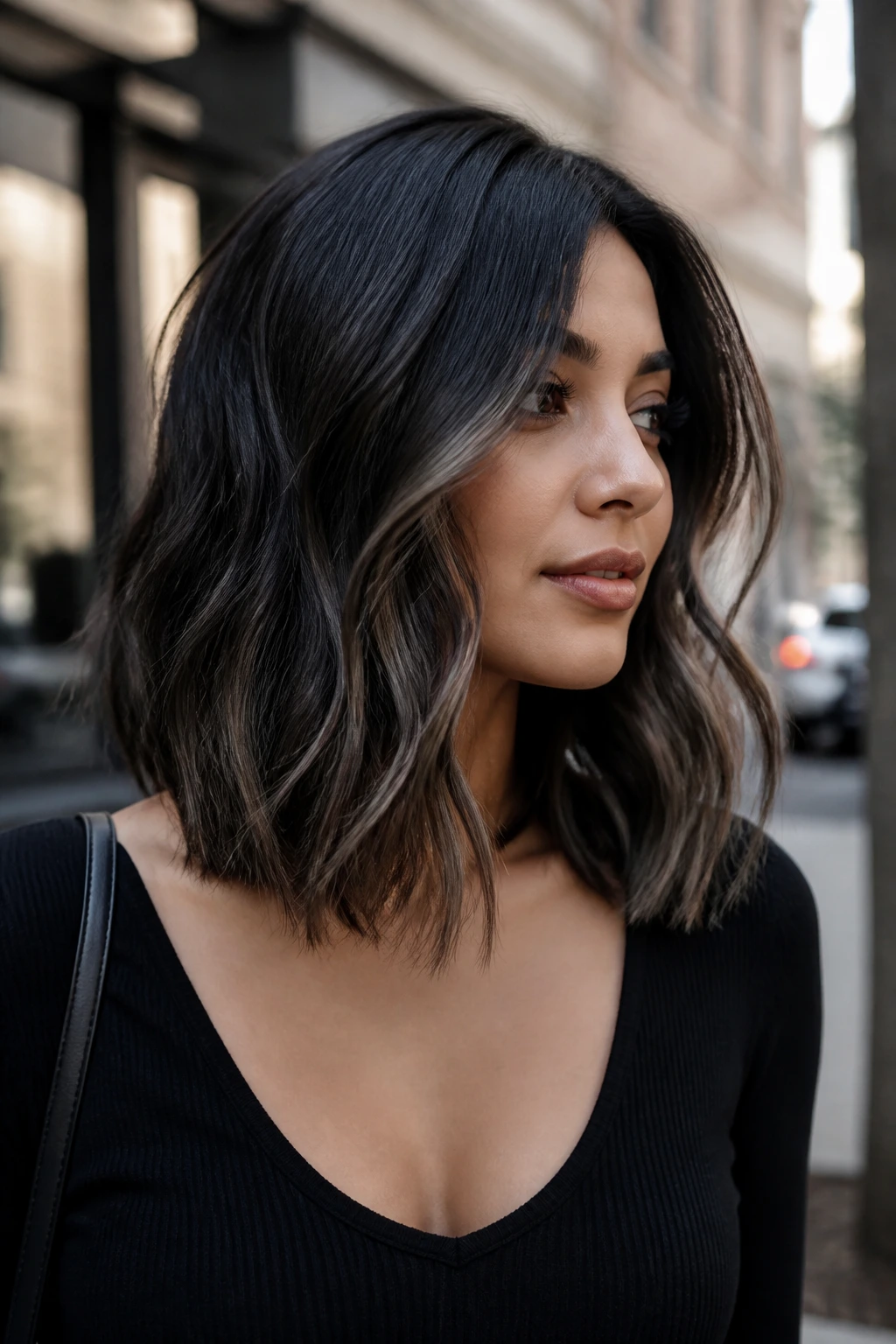
Soft black balayage is for dark hair that wants movement without losing its inky base. On shoulder-length hair, the lighter ribbons can be espresso, charcoal brown, or a muted blue-black sheen, depending on how much contrast you want. The point is to keep the look dimensional, not washed out.
I like this when the hair is dense or naturally coarse, because the color can help break up weight near the ends. The brightest pieces should stay close to the top layer and around the face. If you go too light, the whole thing stops looking soft and starts looking stripey, which misses the point entirely.
20. Peachy Beige Balayage
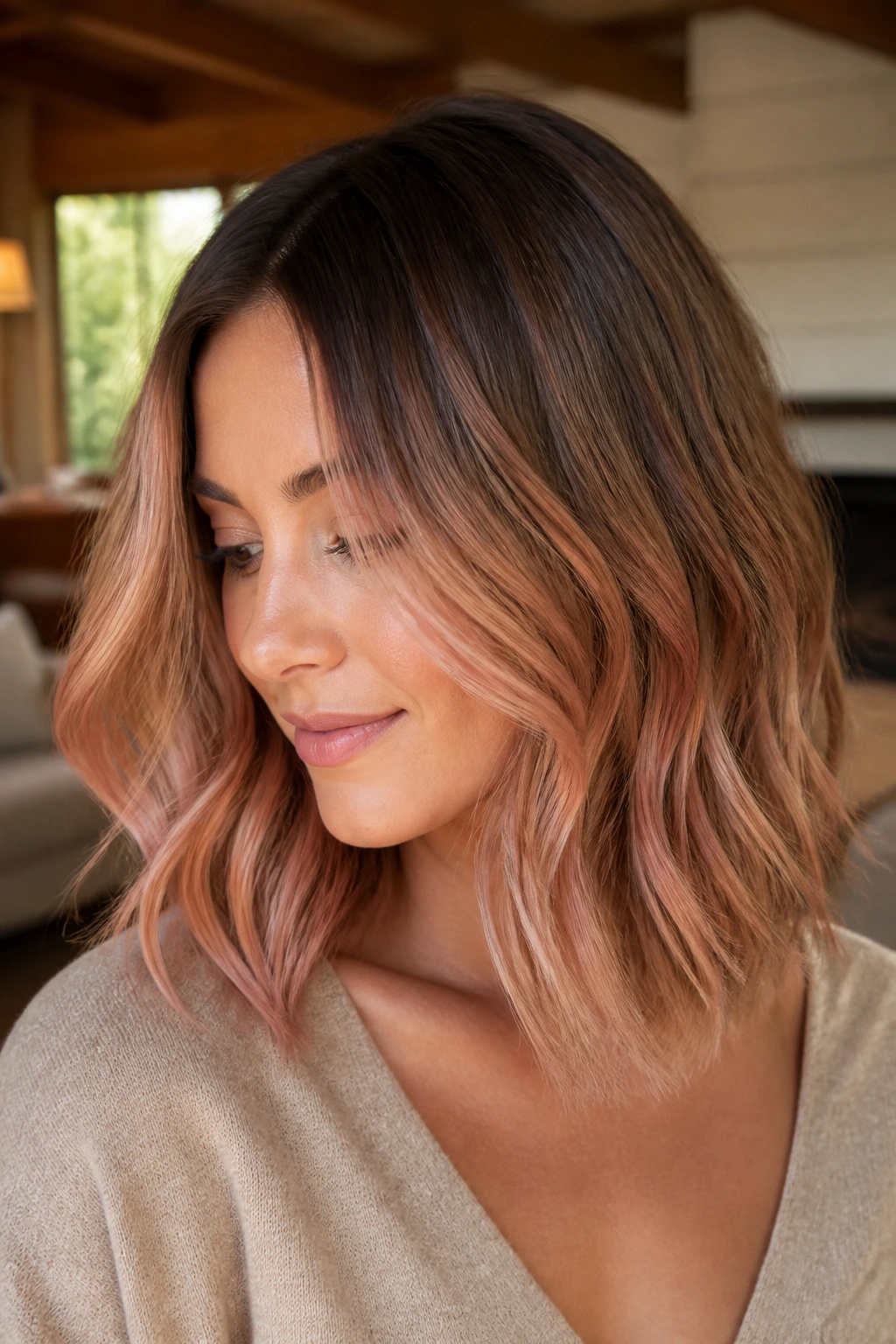
Peachy beige is one of the prettier choices if you want something slightly fashion-forward but still wearable. The peach warmth softens the blonde, while the beige keeps it from going neon. On shoulder-length hair, the color catches the shape of the cut and gives it a brushed, airy look.
This works best when the base is light enough to support the peach tone without turning orange. A pale beige gloss underneath keeps the finish calm. I’d keep the peach mostly in the mid-lengths and front, then let the back stay more neutral so the color doesn’t take over the whole head.
21. Caramel Melt with Shadow Root
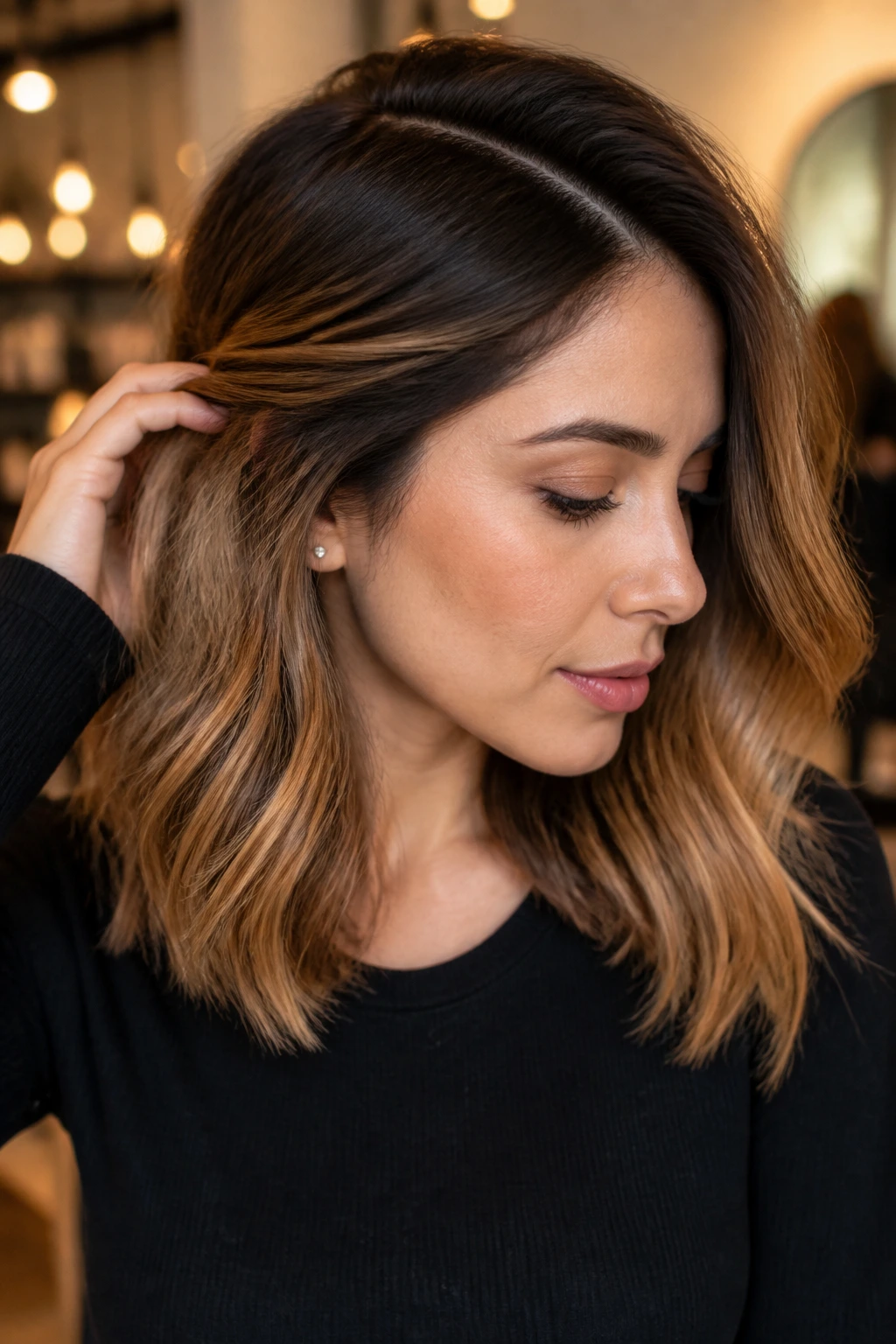
A shadow-root caramel melt is the low-maintenance move many people secretly want. The dark root gives you breathing room, and the caramel gradually opens through the mids and ends, which makes shoulder-length hair look softly blended from every angle. It’s polished, but it doesn’t feel precious.
This one works especially well if you don’t want to rush back for touch-ups. The shadow should be deep enough to blur the regrowth line, but not so dark that it looks heavy. Caramel near the ends keeps the whole style warm and wearable, especially when the hair is curled away from the face.
22. Champagne Blonde Lob
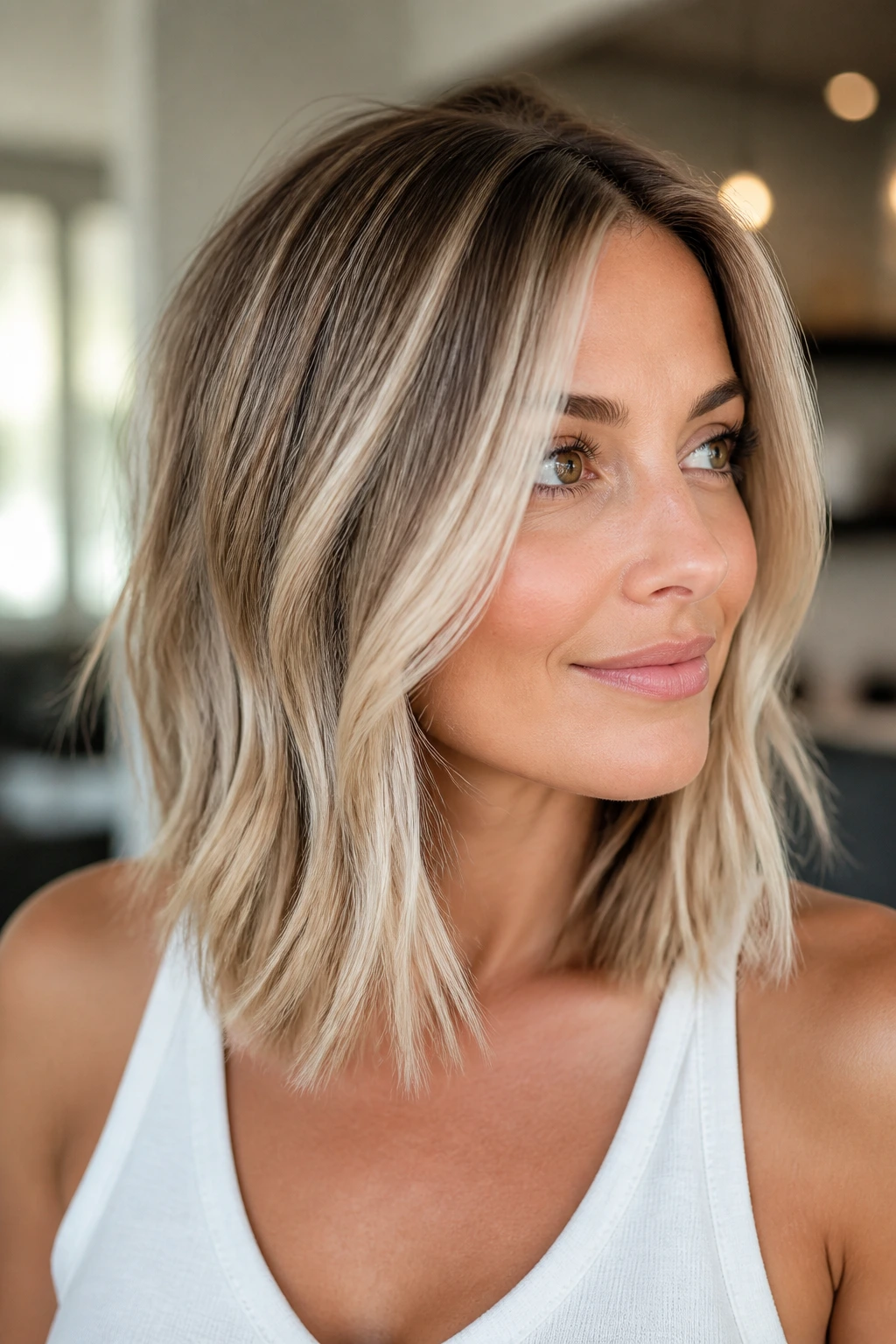
Champagne blonde is brighter than beige and less yellow than honey. That middle ground makes it one of the easiest blonde balayage ideas to wear on shoulder-length hair because the lightness feels clean without turning harsh. It has a slight sparkle to it, especially under indoor light.
The smartest version keeps the highlights fine near the crown and a bit fuller around the face and ends. That way, the color feels layered instead of bleached in blocks. If your skin tone is neutral, champagne can be one of those shades that looks expensive right away.
23. Toffee Babylights
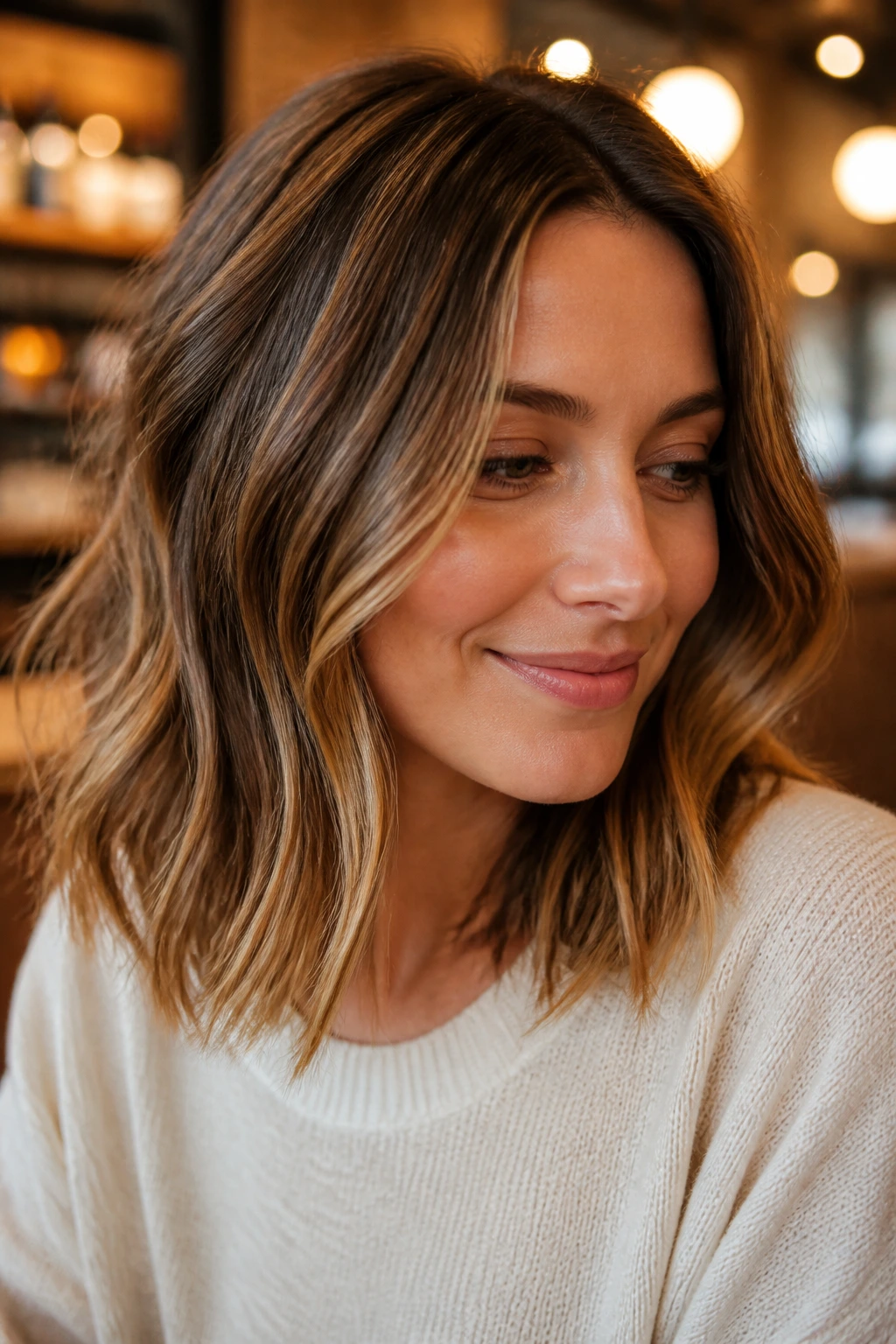
Toffee babylights are tiny, fine highlights that give shoulder-length hair a soft shimmer instead of obvious stripes. I like this when someone wants dimension but doesn’t want the color to be the first thing people notice. The effect is delicate, but the hair still looks better for it.
The trick is in the size of the weave. Babylights should be thin enough that the eye reads them as a soft glow, not a panel. With toffee tones, they warm up brunette hair and make the haircut look denser through the ends, which is a nice trade.
24. Dimensional Mocha Curls
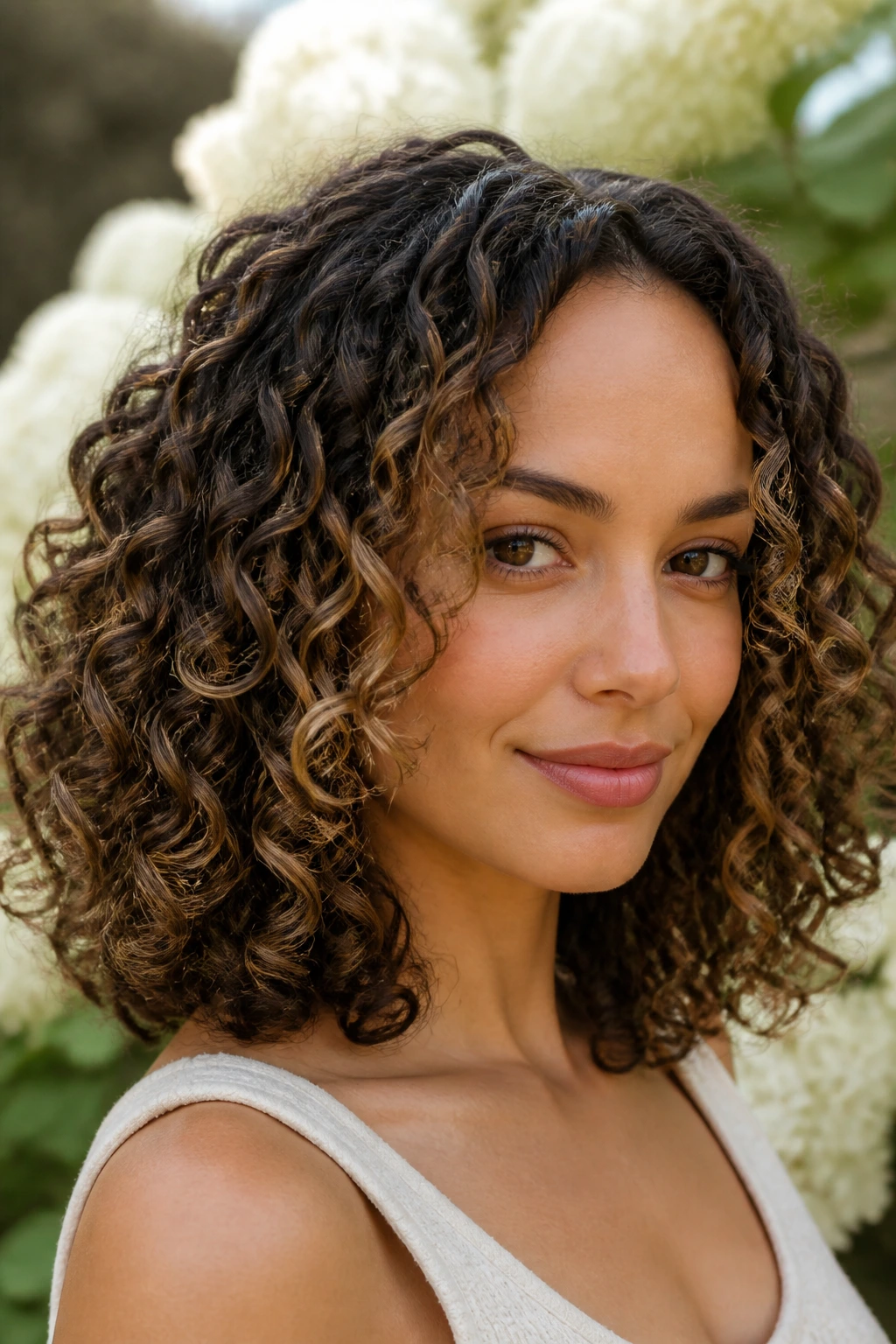
Dimensional mocha balayage on curls is where the pattern really starts to matter. Shoulder-length curls have enough spring to show the contrast between dark mocha depth and lighter painted pieces, but not so much length that the shape gets lost. The result feels plush.
This works best when the colorist paints with the curl pattern in mind, not against it. Lighter pieces around the outer ring of curls and near the face keep the shape readable. If the highlights are placed randomly, the curl clump can swallow them. Done well, though, mocha dimension gives curly shoulder-length hair a lot of life.
25. Smoked Caramel Contour
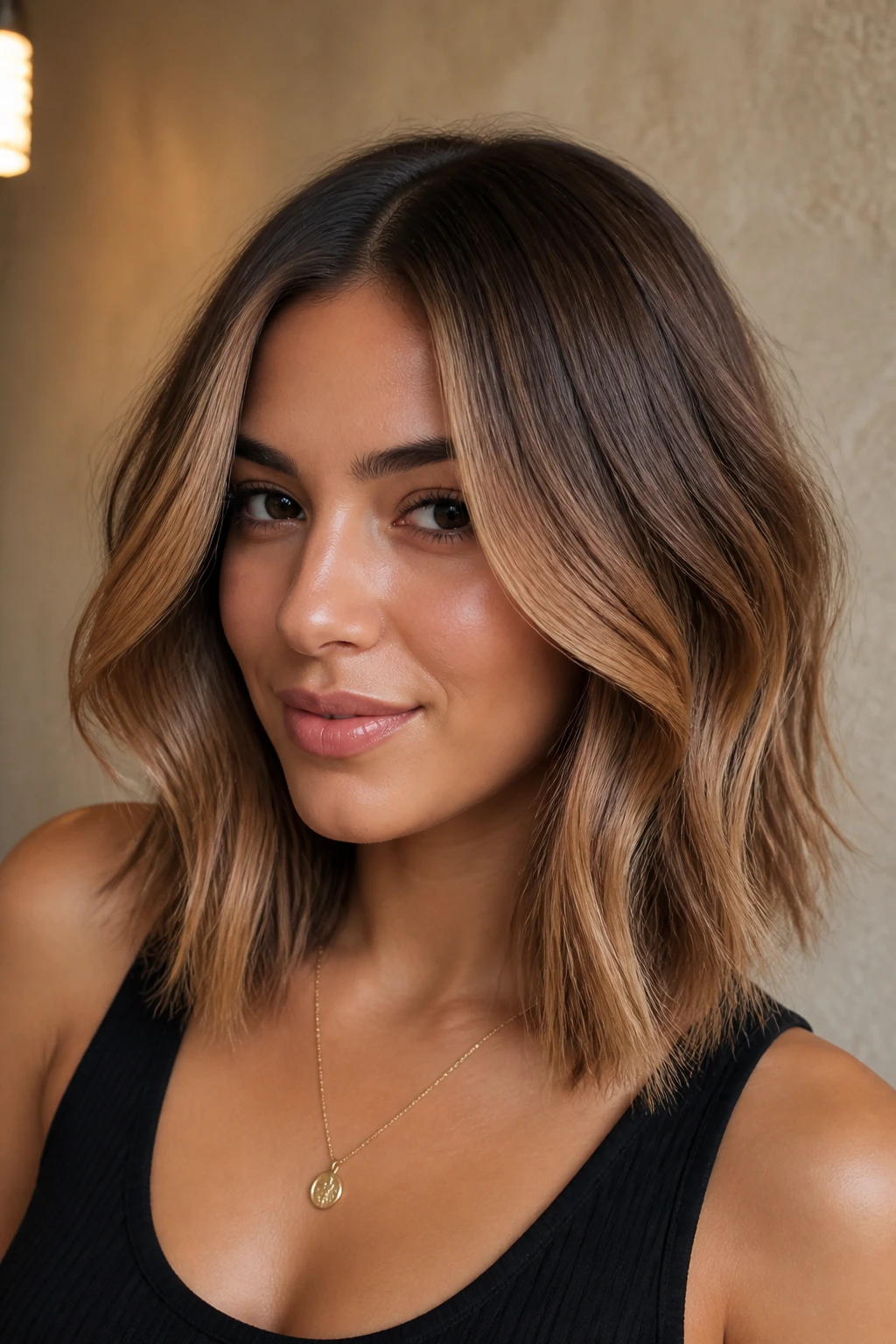
Smoked caramel contour is a face-framing balayage idea with a little more drama than the softer caramel looks. The lighter caramel sits where the eye expects shape, while the smoked root and deeper side sections keep the color from turning one-note. On shoulder-length hair, that contrast sharpens the whole cut.
I especially like this when the haircut has a slight angle or soft layers around the front. The contour effect makes the cheekbone area pop, then lets the rest of the hair fall back into something quieter. If you want color that acts almost like makeup, this is the one.
Why Shoulder-Length Balayage Has So Much Range
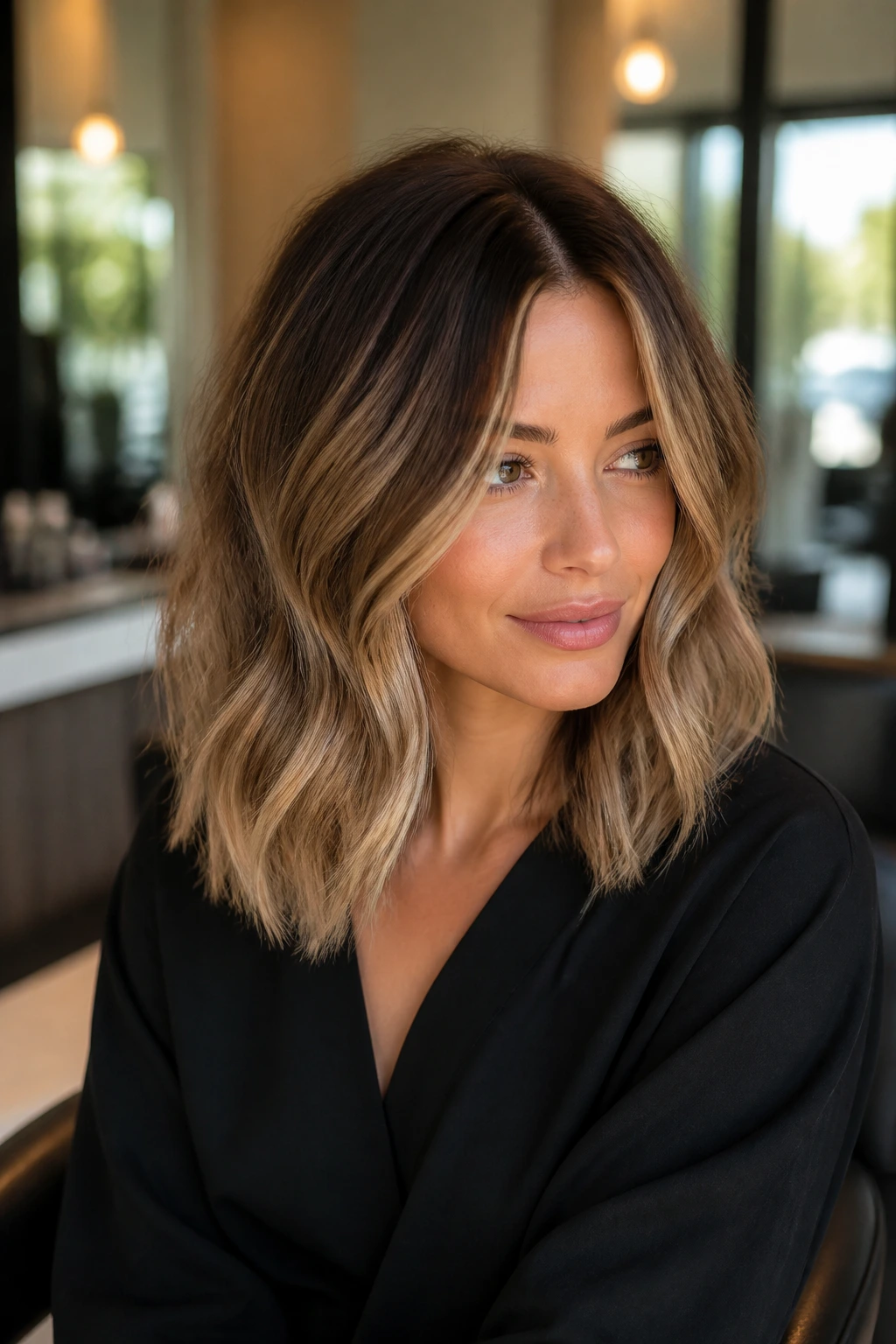
Shoulder-length hair is the zone where balayage stops fighting the haircut and starts working with it. There’s enough length for a real gradient, but not so much that the light pieces vanish down at the hemline. That means the color can sit in all the visible places: the crown, the front panels, the mid-lengths, and the edges that brush the collarbone.
The cut also changes how light moves through the hair. A shoulder-length shape bends at the jaw, the neck, and the shoulders, which gives balayage more surfaces to catch on. That’s why the same formula can look dramatically different on a blunt lob, a softly layered cut, or a wavy collarbone-length shape. Placement matters here more than people think. Always has.
Smart Salon Notes and Product Picks
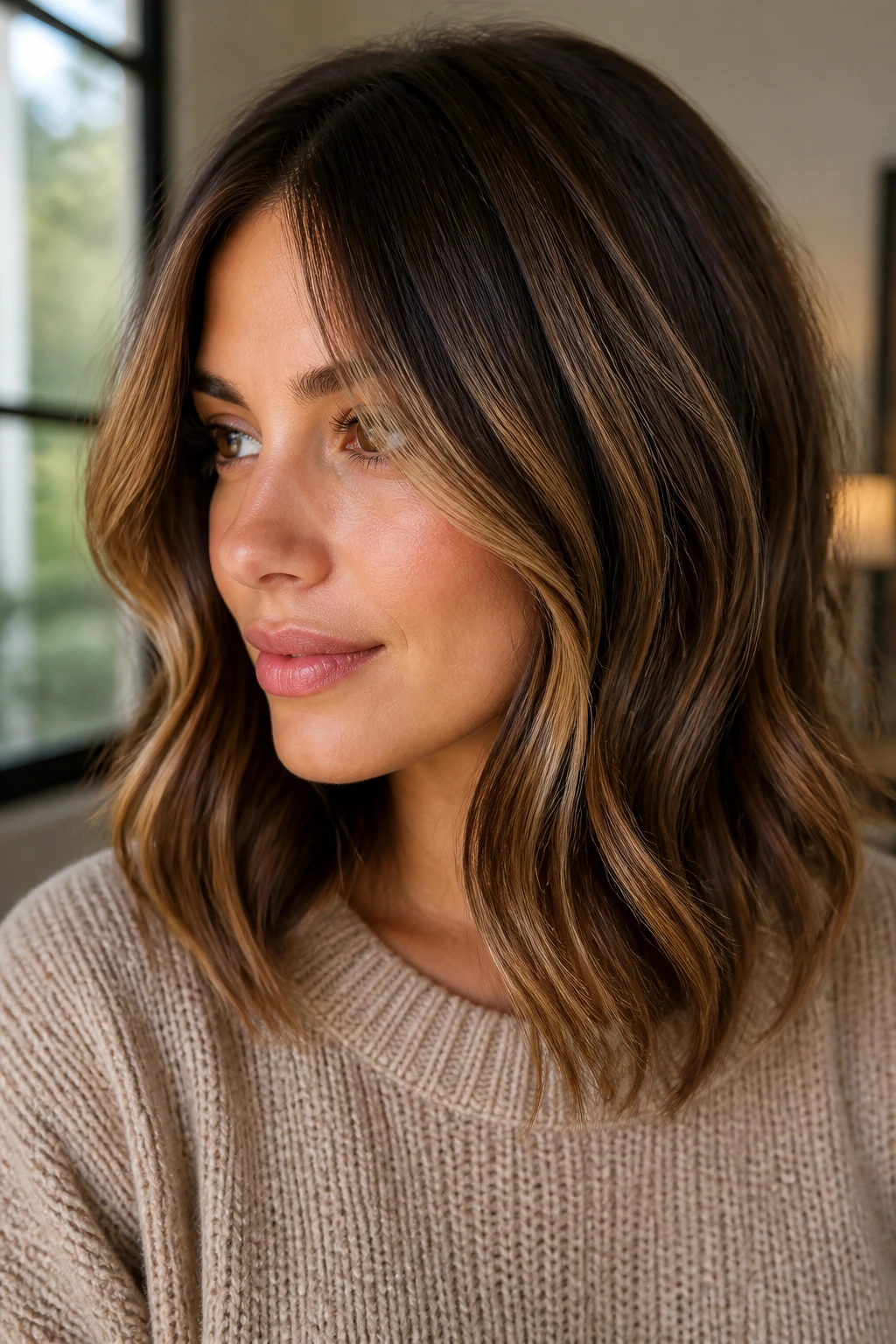
Bringing the right reference photos matters more than saying “caramel” or “blonde” and hoping for the best. Ask for shots that match your base color, your haircut length, and your texture. A caramel balayage on waist-length curls will not translate cleanly to a blunt shoulder-length bob, and your colorist knows that too.
- Reference photos: Bring 2 or 3 images with a similar base level and haircut shape, not just a pretty shade.
- Color-safe shampoo: Pick a sulfate-free formula if you want the tone to stay put longer between washes.
- Purple or blue shampoo: Purple helps pale blonde hair stay clean; blue is useful when brunette hair starts pulling orange.
- Heat protectant: Use one before blow-drying or curling. It matters more on balayage, since lightened hair can get dry at the edges.
- Gloss or toner: Ask your colorist what toner they use and how long it should stay on the hair before refresh.
- Silk pillowcase or bonnet: Optional, but it cuts down on friction and keeps the bends from frizzing up overnight.
- 1.25-inch curling iron or flat iron: A soft bend shows balayage better than pin-straight hair most of the time.
- Wide-tooth comb: Useful when the hair is damp and the color has been freshly toned.
How to Style Shoulder-Length Balayage So It Shows Up
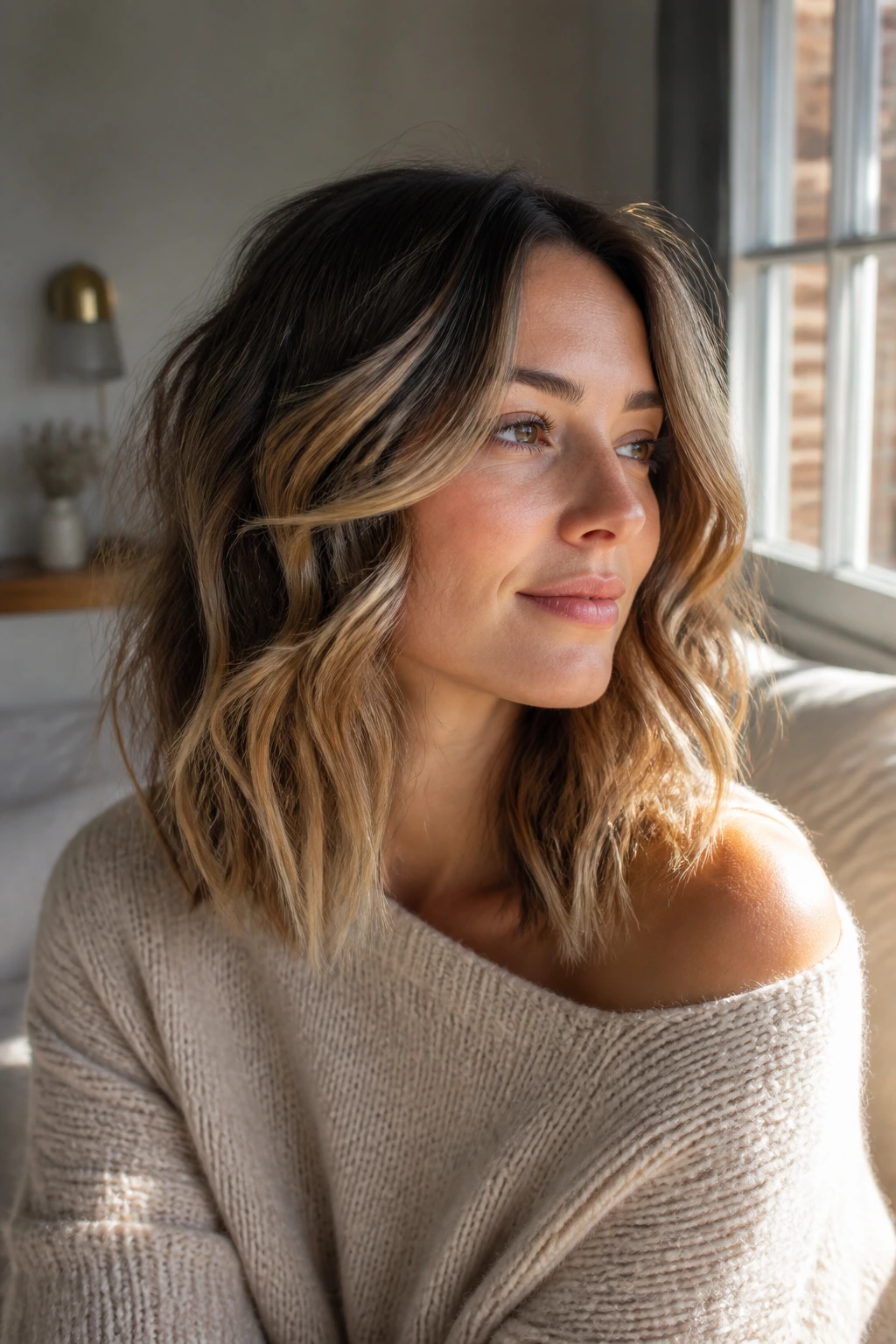
Parting: A center part makes the balayage read balanced and symmetrical, which works well with soft brunette and blonde melts. A side part throws more light toward one cheekbone and can make face-framing highlights look richer.
Texture: Loose waves are the safest bet because they let the color fall in ribbons. If you want the shade to look softer and more blended, brush the waves out. If you want contrast, leave them slightly more defined.
Finish: A light serum on the ends is enough. Heavy oil at the root kills the movement and makes shoulder-length hair look narrower than it is.
Styling pairings: Clean necklines, open collars, and simple earrings let the color do its job. Very busy clothing can swallow a subtle balayage, especially one that leans smoky or beige.
Little Tweaks That Change the Whole Look
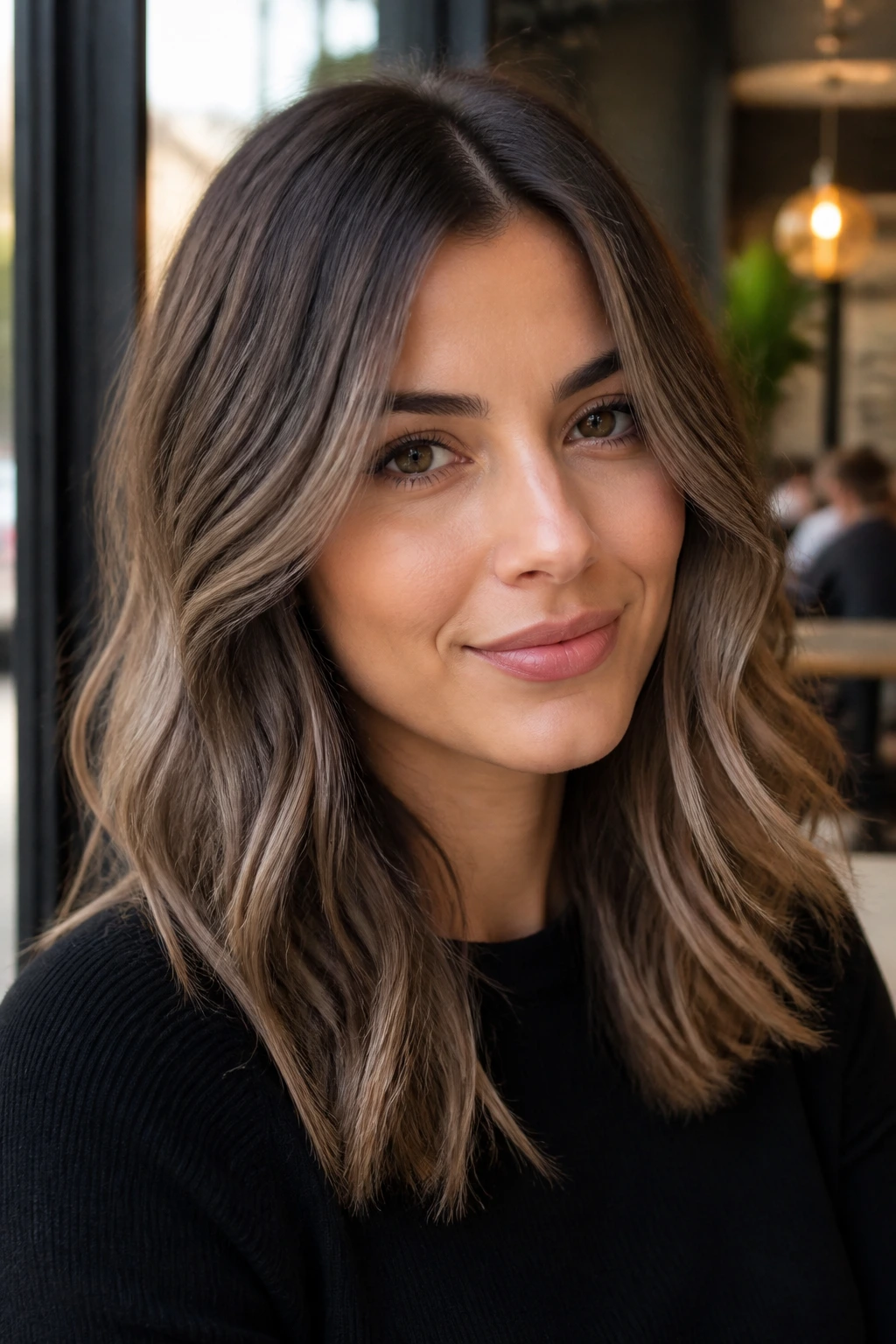
Gloss Boost: Ask for a demi-permanent gloss every 4 to 6 weeks if your balayage leans blonde, rose, copper, or beige. It keeps the tone from getting muddy, and it’s kinder than repeatedly lifting the hair.
Placement Trick: If you want a softer effect, keep the brightest pieces below the cheekbone and around the outer layers. If you want a sharper, brighter frame, move a few of those pieces closer to the hairline.
Contrast Control: A shadow root that sits one to two levels deeper than the mids usually looks more believable on shoulder-length hair than a hard root line. It also buys you more grow-out time.
Movement Upgrade: Curl alternating sections away from the face, then rake the waves apart with your fingers. The color shows up in bands instead of one blended mass.
Make-It-Yours: Fine hair often looks better with finer babylights and fewer chunky pieces. Thick or curly hair can take bolder ribbons and wider placement without losing the blend.
Keeping the Color Fresh Between Appointments
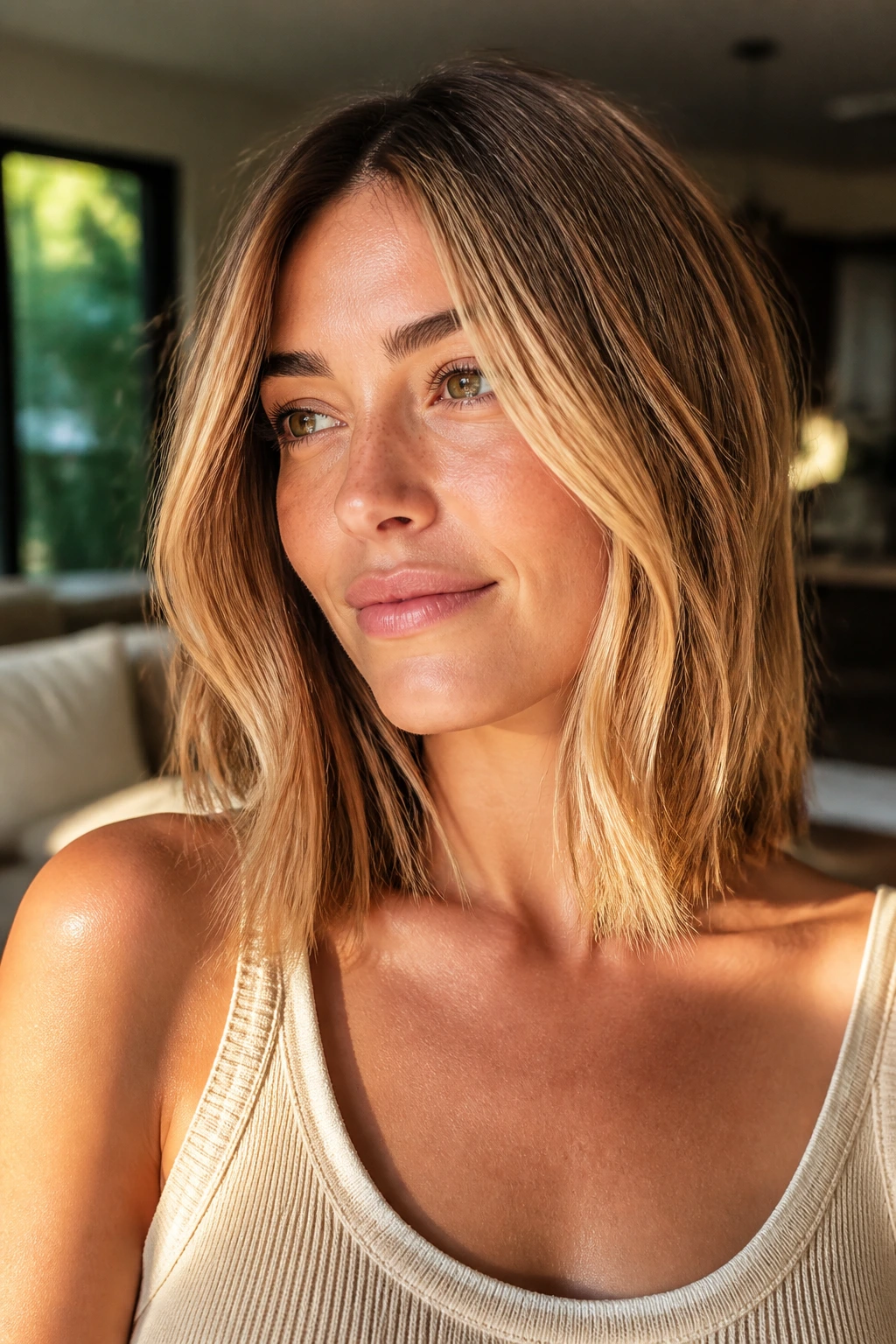
Balayage grows out more gracefully than traditional highlights, but that does not mean it can be ignored. If your hair is blonde, copper, or rose-toned, a toner or gloss refresh every 4 to 8 weeks keeps the shade from drifting warm or dull. Brunette balayage can usually stretch longer, especially when the contrast is soft.
Wash frequency matters too. Two or three washes a week is easier on color than daily shampooing, and a cooler rinse at the end helps the cuticle lie flatter. If your hair is lightened, heat protectant should be treated like a non-negotiable, not a nice extra. Once the ends start feeling rough, the color loses its clean edges fast.
Swimming and sun exposure can mess with tone faster than people expect. Chlorine can make blonde look flat and muddy; salt water can rough up the ends. If you’re going to be outside or in a pool often, use a leave-in with UV protection and rinse the hair as soon as you can afterward. That tiny habit saves a lot of toner appointments.
Common Mistakes That Flatten the Blend
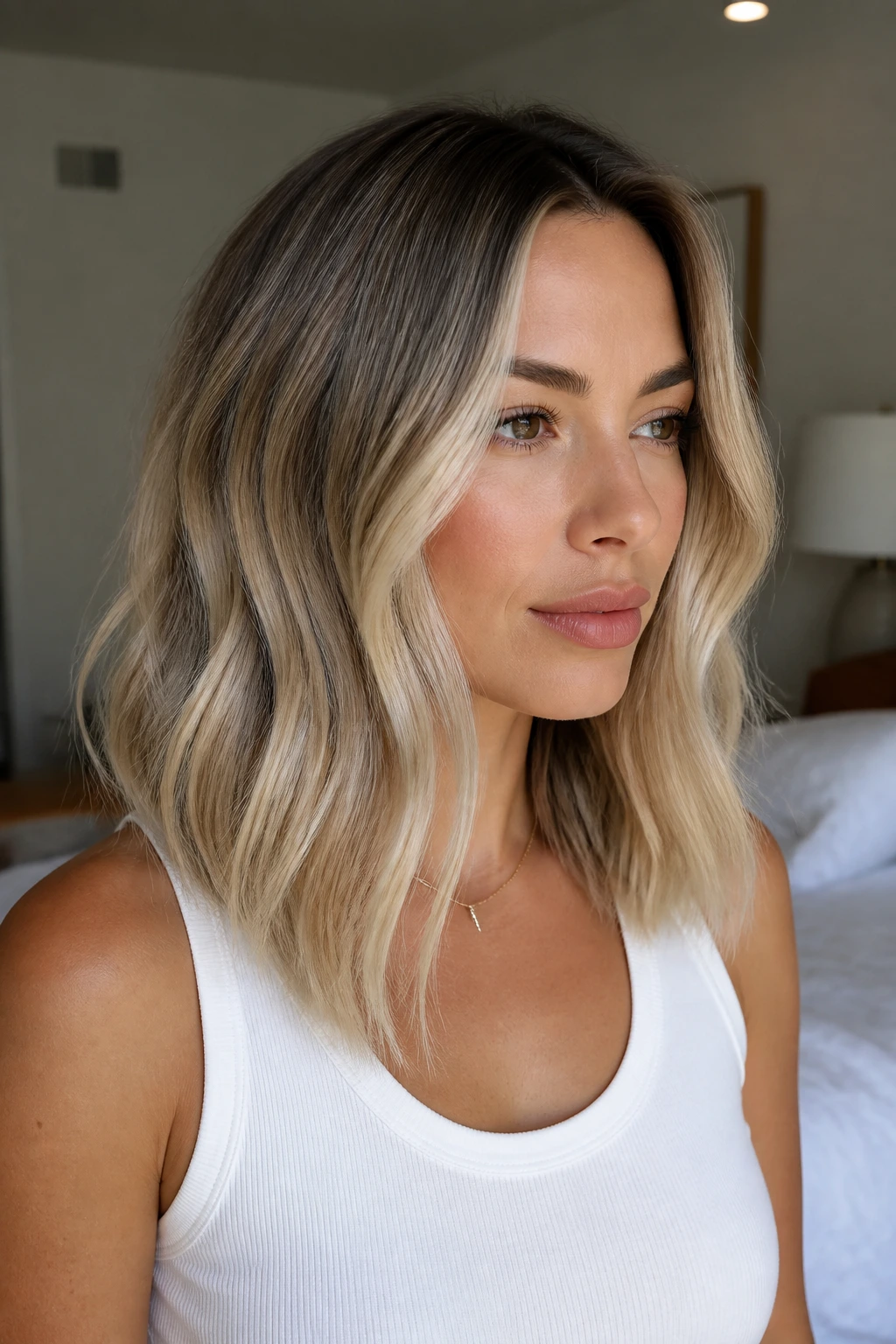
- Putting the lightest pieces everywhere: When every section is bright, shoulder-length balayage loses its shape and starts looking busy. Keep the strongest lightness near the face, crown, and outer layers, then leave some depth underneath.
- Ignoring undertone: A warm caramel on cool skin can still work, but a yellow blonde that pulls too gold or a copper that goes orange will fight the whole look. Match the tone to what your hair naturally wants to do.
- Skipping the shadow root: Without a darker root or deeper base, the color can look patchy at the top and too airy at the ends. A little depth near the scalp makes the blend cleaner.
- Over-toning blondes: Too much ash can make beige or champagne balayage look dull and dusty. Tone enough to cancel brass, not so much that the hair loses all warmth.
- Using too much heat on lightened ends: Shoulder-length hair often gets curled every time it’s worn out, and that’s where the damage creeps in. Keep the iron around 300°F to 330°F for lightened hair and use heat protectant every time.
- Forgetting the haircut: Balayage can’t save a shape that needs a trim. If the ends are blunt in the wrong way or thinned out at the bottom, the color will only make that more obvious.
Variations and Adaptations for Different Hair Types
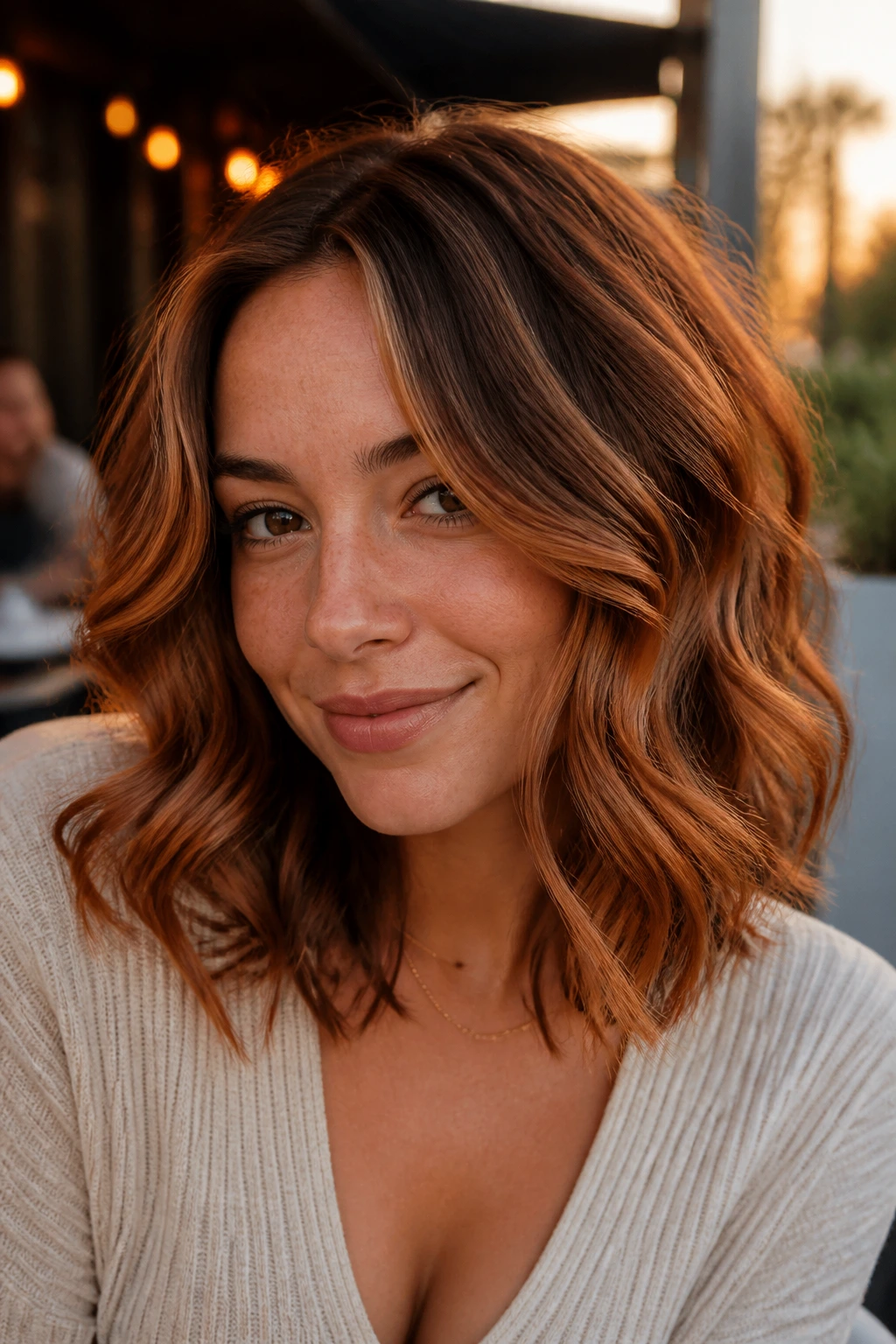
Fine-Hair Airbrush: Use very thin babylights and a soft root shadow instead of chunky ribbons. Fine shoulder-length hair usually looks fuller when the dimension is subtle and layered, not blocky. The finish should read as shimmer, not stripes.
Curly Coil Balayage: Paint the lightest pieces where the curls naturally separate, especially around the outside ring and face frame. Curly hair needs the placement mapped to the curl pattern, or the highlights disappear in the shrinkage. A gloss finish helps the color sit neatly on the curl surface.
Deep Brunette Melt: If your hair is almost black or very dark brown, stick to mocha, espresso, bronze, or smoked caramel rather than jumping straight to blonde. The softer lift keeps the grow-out believable and avoids that harsh line some dark-to-light balayage can create.
Copper Wash: For people who like warm tones, turn the copper down into cinnamon, apricot, or auburn instead of going bright orange. Shoulder-length hair takes to these colors well because the mid-lengths and ends can carry warmth without looking overpainted.
Cool Bronde Sweep: If brass bothers you, ask for beige, ash, and mushroom tones in the same head of hair. The trick is keeping the palette cool enough to feel polished while still leaving some depth. This version is easy to wear if you want a neutral finish that doesn’t lean yellow.
Bright Front Piece, Quiet Back: This is the right move when you want a little drama without committing to lightness all over. Keep the back and underlayer soft, then make the front panels one shade brighter. It’s a smart compromise on shoulder-length hair because the face gets the payoff while the grow-out stays manageable.
Frequently Asked Questions
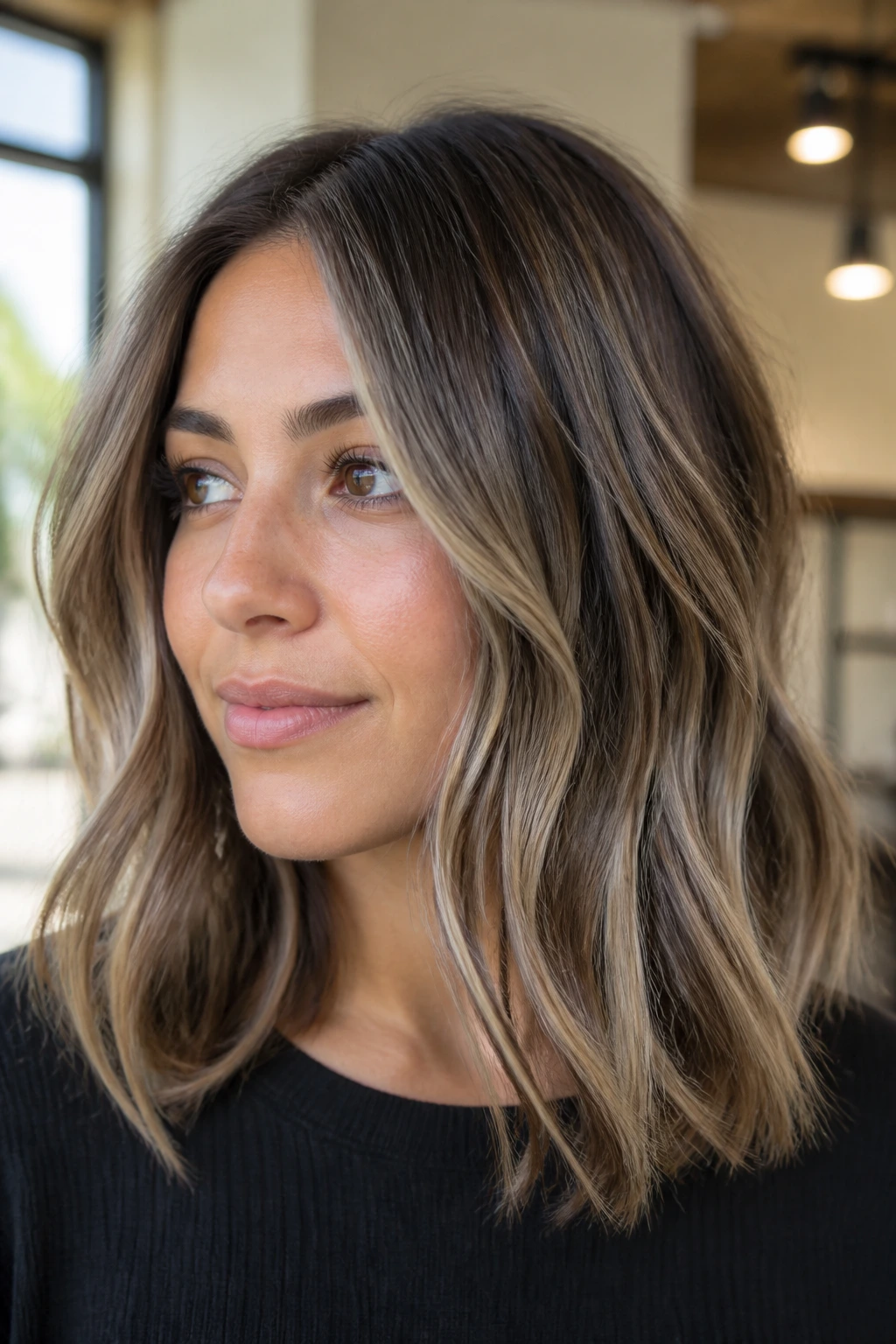
Is shoulder-length hair long enough for balayage?
Yes, and in a lot of cases it’s the ideal length. You have enough hair for a real melt, but not so much that the lighter pieces disappear into the ends. That balance is why lob balayage can look so clean.
What balayage shade is easiest to maintain?
Soft brunette caramel, bronde, and shadow-root blondes are usually the easiest. They grow out with less visible contrast, so the line between natural root and painted color stays blurred longer.
Can balayage make fine shoulder-length hair look thinner?
It can if the highlights are too wide or placed too heavily on the bottom third. Fine hair usually does better with thin ribbons, a little root depth, and brightness concentrated near the face and top layer.
How do I ask for shoulder-length balayage at the salon?
Bring photos of the tone, the placement, and the amount of contrast you want. Say whether you want warm, cool, or neutral, and mention how often you’re willing to come back for toner or refresh appointments. That gives the colorist real information instead of a vague target.
Is balayage different from ombré on shoulder-length hair?
Yes. Balayage is painted for a softer, more scattered blend, while ombré tends to look like a more obvious fade from dark to light. On shoulder-length hair, balayage usually looks more flexible because the lightness can sit in specific spots instead of taking over the whole lower half.
Can curly shoulder-length hair wear balayage well?
Absolutely, but the placement needs to follow the curl pattern. Curly hair hides and reveals color in clumps, so the brightest pieces should be painted where the curls separate and frame the face. Otherwise the work gets lost.
What if my balayage turns brassy?
That usually means the tone drifted too warm for the base color. A blue shampoo can help brunette hair that goes orange, while purple shampoo helps blonde hair that turns yellow. If the brass is strong, a salon gloss is faster and cleaner than trying to fix everything at home.
How often should shoulder-length balayage be refreshed?
The full color can often be stretched for months, but toner or gloss may need refreshing every 4 to 8 weeks depending on the shade. Blonde and copper tones usually ask for more maintenance than brunette melts.
Can I keep my natural root and still have balayage look finished?
Yes, and that’s often the smartest version. A natural root with soft painted mids and ends gives shoulder-length hair shape without forcing constant touch-ups. It’s one of the reasons this haircut and this coloring method work so well together.
The Last Word Before You Book
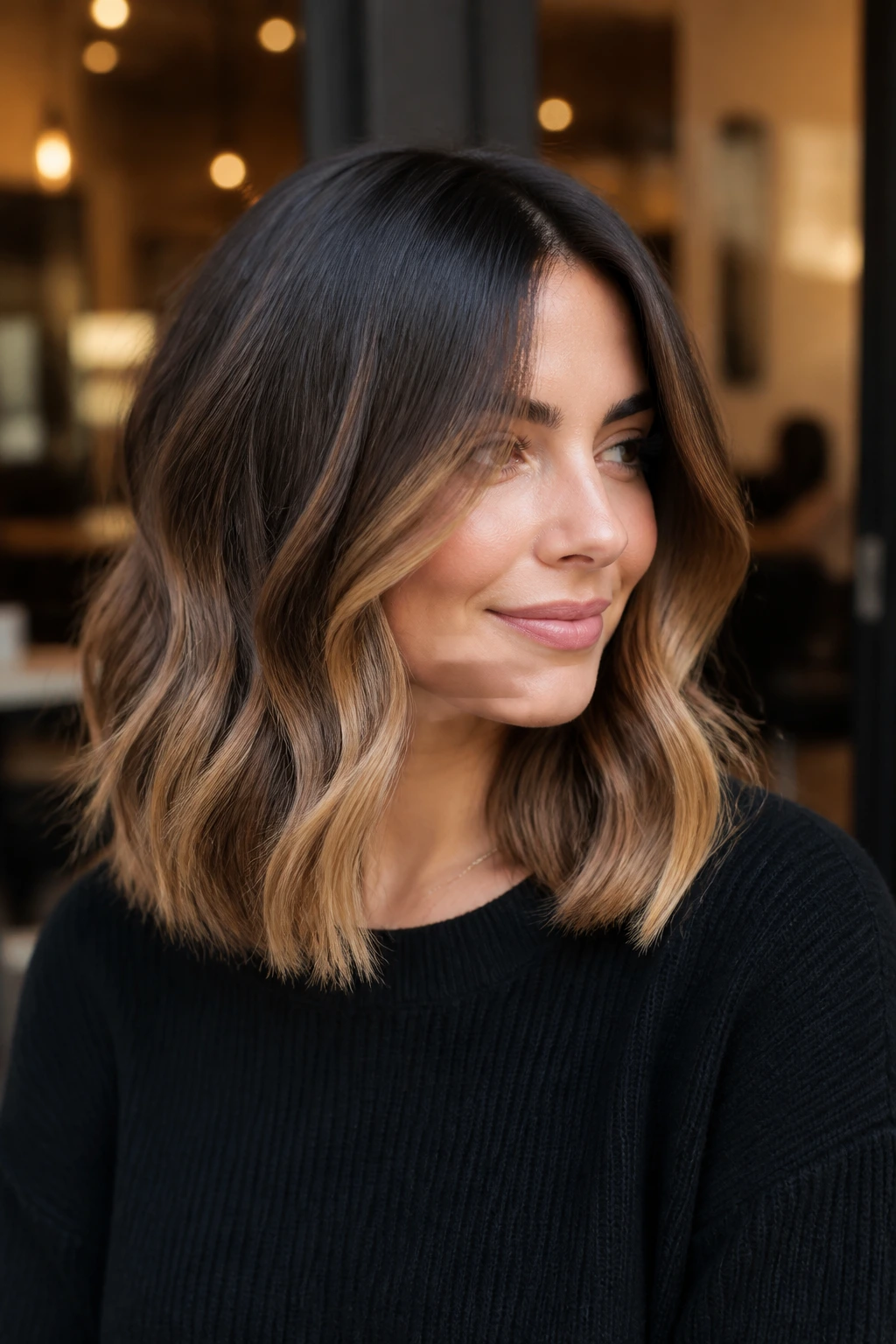
Shoulder-length hair balayage works because it respects the haircut instead of fighting it. The best versions add shape where the eye lands first, keep enough depth that the color doesn’t go flat, and leave the ends looking polished rather than over-lightened.
If you’re taking one idea to the salon, make it this: choose a tone that fits your base, then decide how bold you want the front pieces to feel. The rest is placement and restraint, and those two things tend to matter more than the shade name on the photo.
