



Blonde hair on medium-length wavy hair has a sweet spot straight hair never quite gives you. The bends catch light on their own, so even a soft beige balayage can look layered and expensive without a lot of drama. Medium length helps too; there’s enough hair for dimension, but not so much that the lighter pieces disappear into a long curtain of ends.
That’s why the best blonde looks for this length are rarely the loudest ones in the room. They’re the ones that understand movement. A root melt that starts just a touch lower, a money piece that lands at the cheekbone, a buttery ribbon that sits on top of a wave bend — those details matter more than another round of brightness through the whole head. I’ve seen more than one blonde go flat simply because the placement ignored the wave pattern.
The real trick is that medium wavy hair can wear a lot of different blonde moods. It can go warm and honeyed, soft and beige, icy and high-contrast, or grown-out and low-key. The color reads differently depending on where the light sits, and that gives you room to be picky in a good way.
Why These Blonde Looks Work So Well on Medium Length Wavy Hair
-
The waves do half the blending: The bends blur highlight lines, which is why balayage and babylights look softer here than they do on pin-straight hair.
-
Medium length keeps dimension visible: There’s enough hair for ribbons of blonde to move, but not so much length that the lighter pieces sink into the ends and disappear.
-
Grow-out looks more forgiving: Root shadows and lived-in blondes can stretch a few extra weeks because the wave pattern breaks up the line at the scalp.
-
Tone changes the whole mood: Honey, beige, champagne, and pearl blondes all sit differently on the same cut; the placement and gloss decide whether the result reads warm, cool, or neutral.
-
Styling doesn’t need to be fussy: A loose bend with a 1-inch wand, then finger-combing, is enough to show off the color. You do not need a glass-smooth blowout for the blonde to make sense.
1. Honey Ribbon Balayage on Soft Shoulder Waves
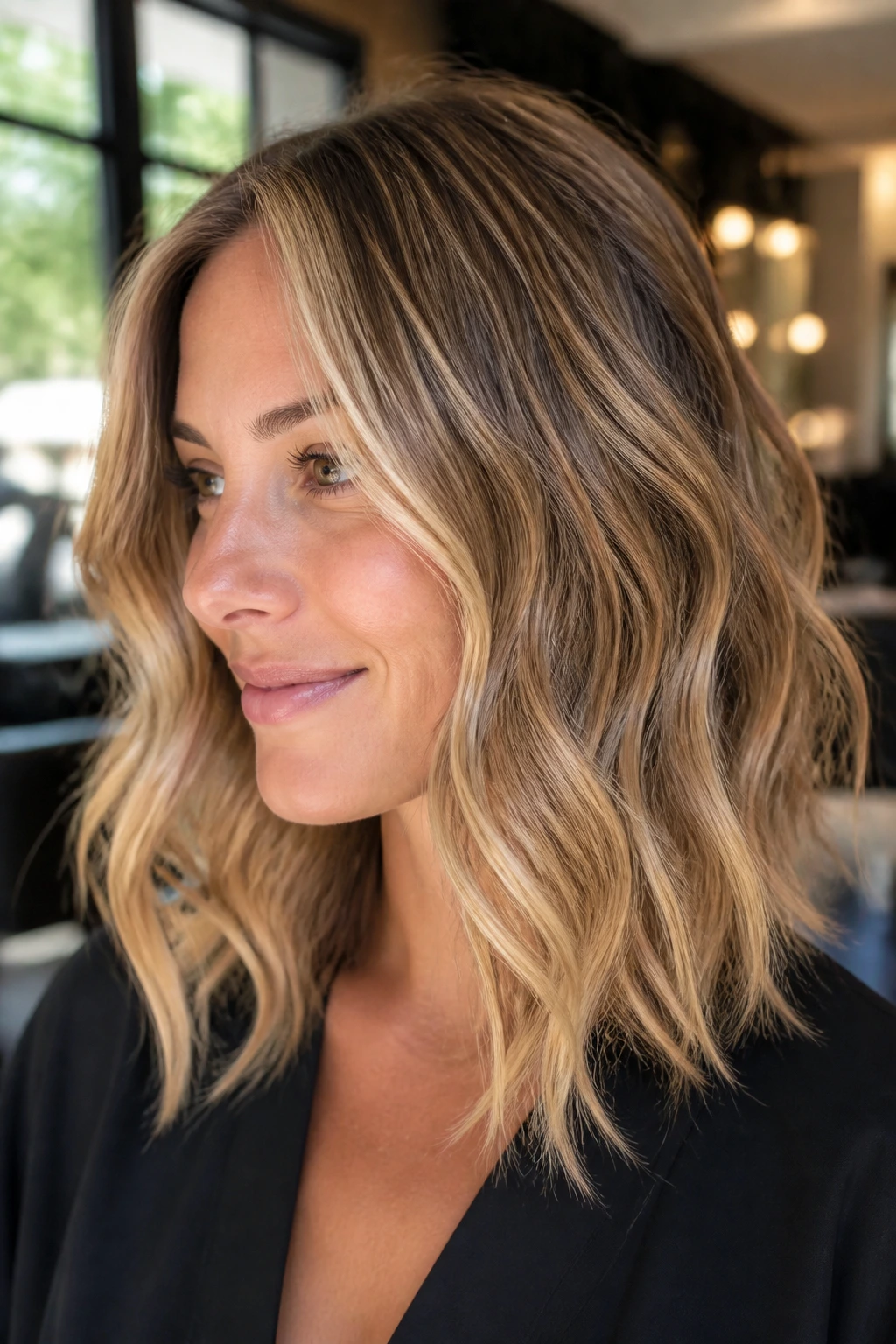
Honey ribbon balayage is the blonde I reach for when someone wants warmth that doesn’t slide into brass. On medium-length waves, the ribbons sit right where the hair bends, so the color looks woven in instead of painted on top. That little detail matters.
Why It Works on Waves
Ask for level 8 honey ribbons with a softer level 6 or 7 root shadow. The darker root keeps the color from looking too bright at the scalp, and the honey pieces light up the mid-lengths where waves naturally flip. If your hair has a little natural texture, this placement makes it look intentional instead of accidental.
A beige-gold gloss is the finishing move here. Without it, honey can swing yellow. With it, the blonde stays plush and warm.
Best for: medium-density hair, warm undertones, and anyone who likes a golden finish that still has shape.
Styling note: bend the hair away from the face, then leave the last inch straight. That tiny contrast keeps the ribbons visible.
2. Champagne Money Piece on a Lived-In Lob
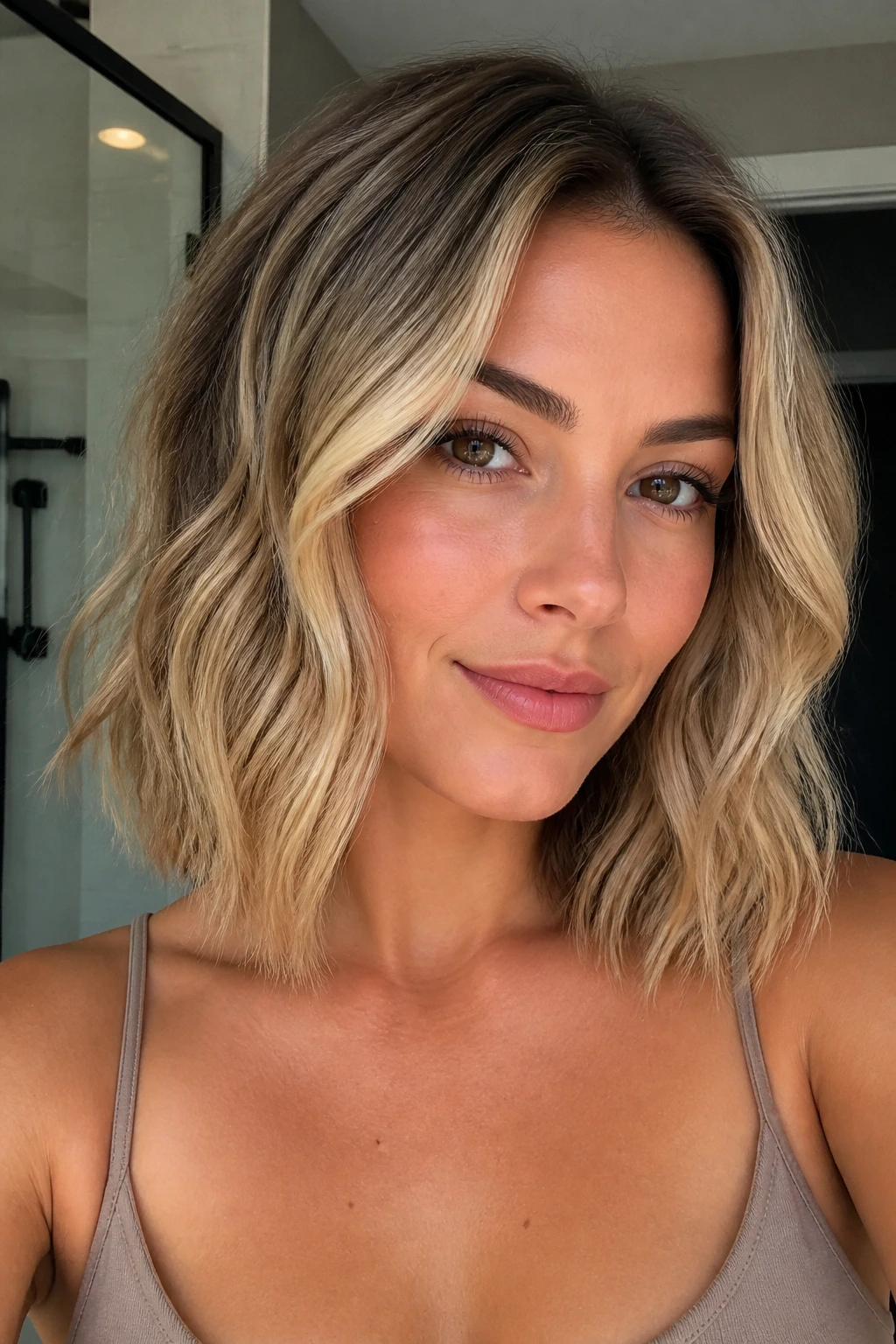
A champagne money piece can wake up a medium lob faster than flooding the whole head with light. The brightness sits around the face, so you get lift where people actually look first. The rest of the blonde can stay softer and quieter.
Champagne is the sweet spot between cool and warm. It avoids the flatness that happens when the blonde is too ash-heavy, but it also skips the orange cast that can creep in with gold. On wavy hair, that balance reads clean and polished even when the rest of the style is a little undone.
I like this look when the front pieces start at about the cheekbone or just below the brow. Any higher and it can feel harsh. Any lower and the money piece loses its job.
If you wear your hair tucked behind one ear a lot, this is one of the smartest blonde looks on the list. The front light catches every time the waves shift.
3. Beige Blonde Root Melt With Airy Ends
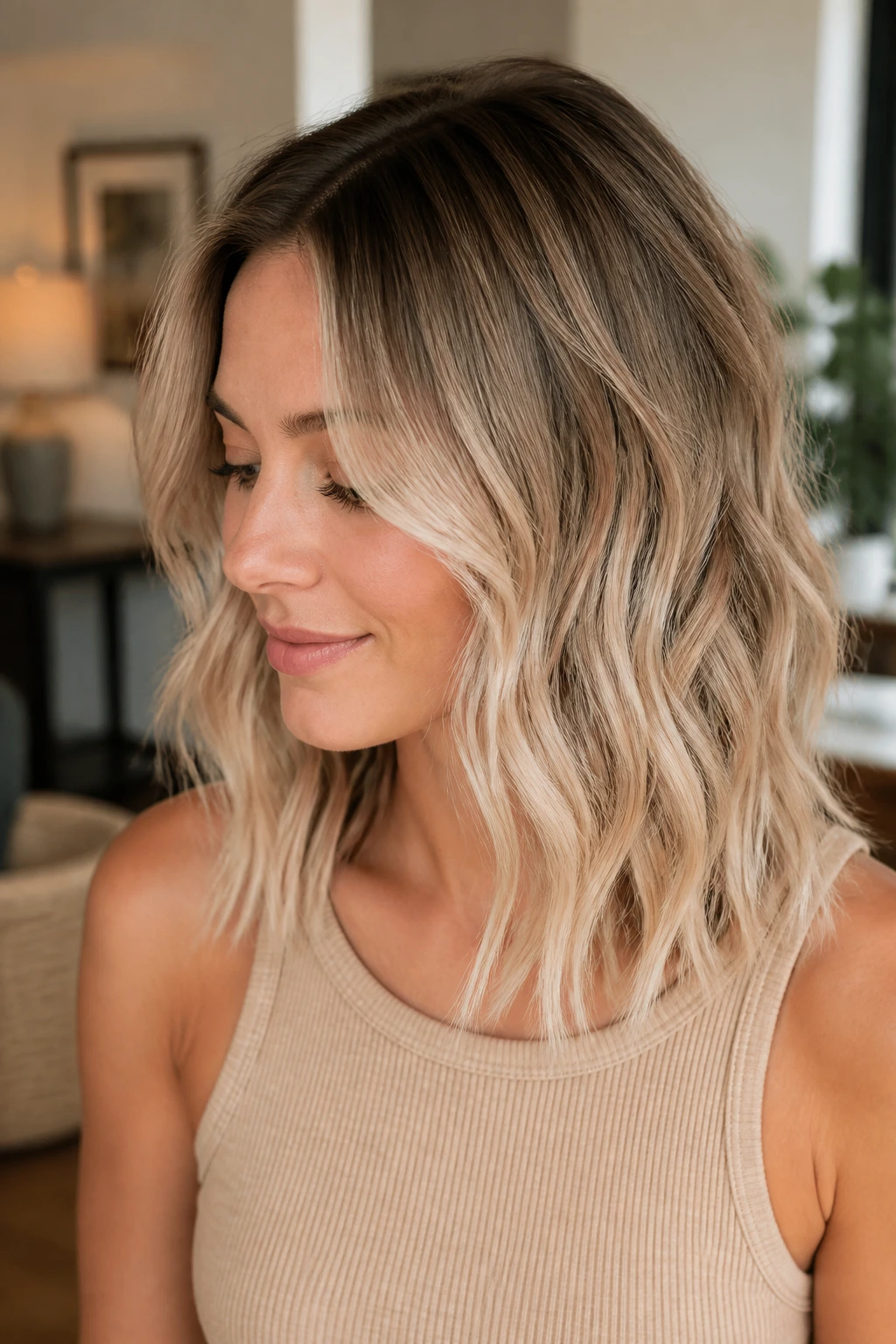
Why does a beige root melt look so expensive on waves? Because it lets the hair keep its depth at the top and its brightness at the bottom without making either part fight the other. Medium-length wavy hair loves that kind of quiet contrast.
The Shape of the Color
Start with a soft shadow root and let the beige blonde open up gradually through the mids. Don’t push the light all the way to the scalp. That line near the root is what keeps the grow-out from looking rigid after six or seven weeks.
The ends should stay airy, not chalky. Beige blonde works best when it still has a little warmth in the reflection, especially if your wave pattern is loose and S-shaped. Too cool, and the shape can flatten out.
If your natural hair lifts to a darker blonde or light brown, this is one of the safest bets on the whole list. It feels soft, low-drama, and easy to live with.
4. Butter Blonde Waves With Face-Framing Lift
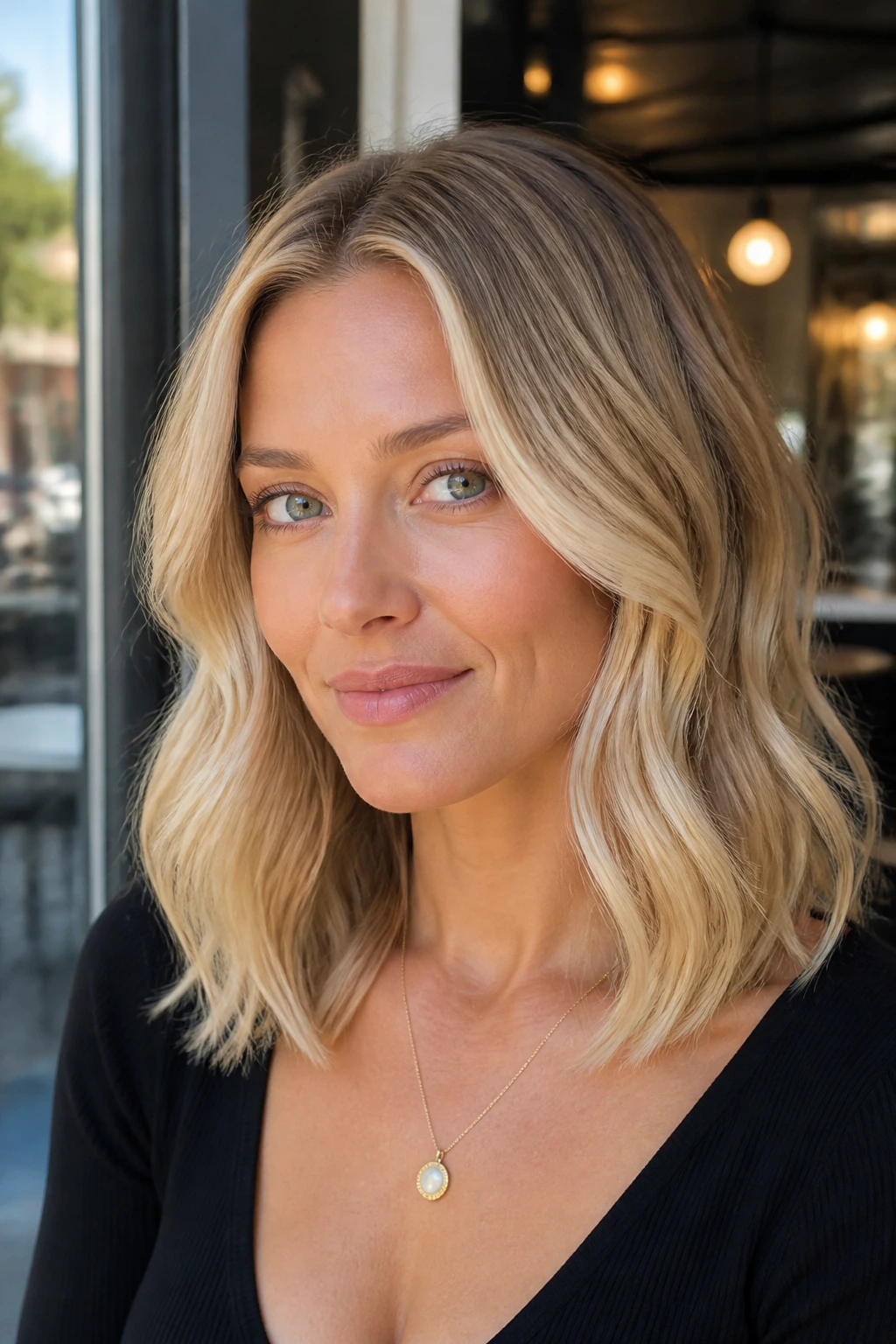
Butter blonde is the color that makes medium waves look fuller than they are. It’s warm, creamy, and a touch brighter than honey, which gives the wave crests a little extra shine without pushing into high-contrast territory.
Picture this on shoulder-skimming hair: the front pieces are a touch brighter, the mids are buttery and smooth, and the ends are softly diffused. That’s the version I like. Not stripey. Not too pale. Just enough light to catch every bend in the texture.
- The front stays bright: Place the lighter pieces from the temple down to the collarbone.
- The mids stay creamy: A beige glaze keeps the blonde from turning yellow.
- The ends stay soft: Leave a whisper of depth at the tips so the hair doesn’t look wispy.
This is a good choice if your waves are loose and your cut has blunt-ish ends. Butter blonde gives the line some softness without killing the shape.
5. Mushroom Blonde Lob for Cooler-Toned Waves
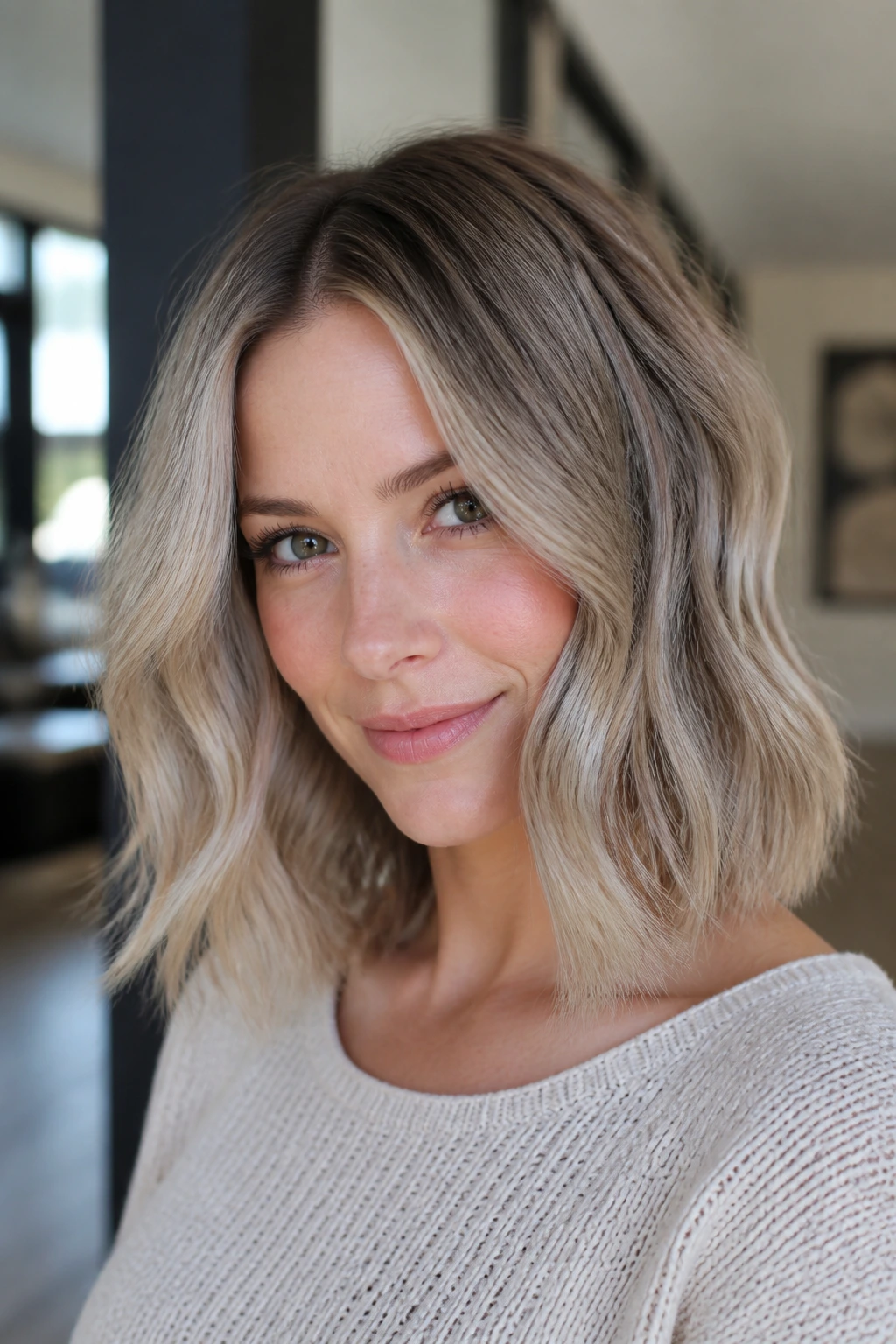
Mushroom blonde is the one for people who look at gold and say, no thanks. It lives in that cool beige zone where brown and blonde stop arguing. On a lob, it has a nice grounded feel, especially when the waves are loose and a little messy.
The key here is contrast, or rather the lack of it. You want an ashier root and cool beige through the mids, but not so much silver that the hair starts to look dusty. Medium-length waves give mushroom blonde a chance to move, and movement is what keeps it from feeling flat.
A lot of guides push cool blondes as if they’re easy. They’re not always. This shade works best when the gloss is kept soft and the highlights are finer around the face. Chunky light pieces can ruin the whole effect.
If you like dark root, muted tone, and a lob that looks polished even on a rough day, this one belongs near the top of your reference folder.
6. Sandy Babylights Through a Mid-Length Cut
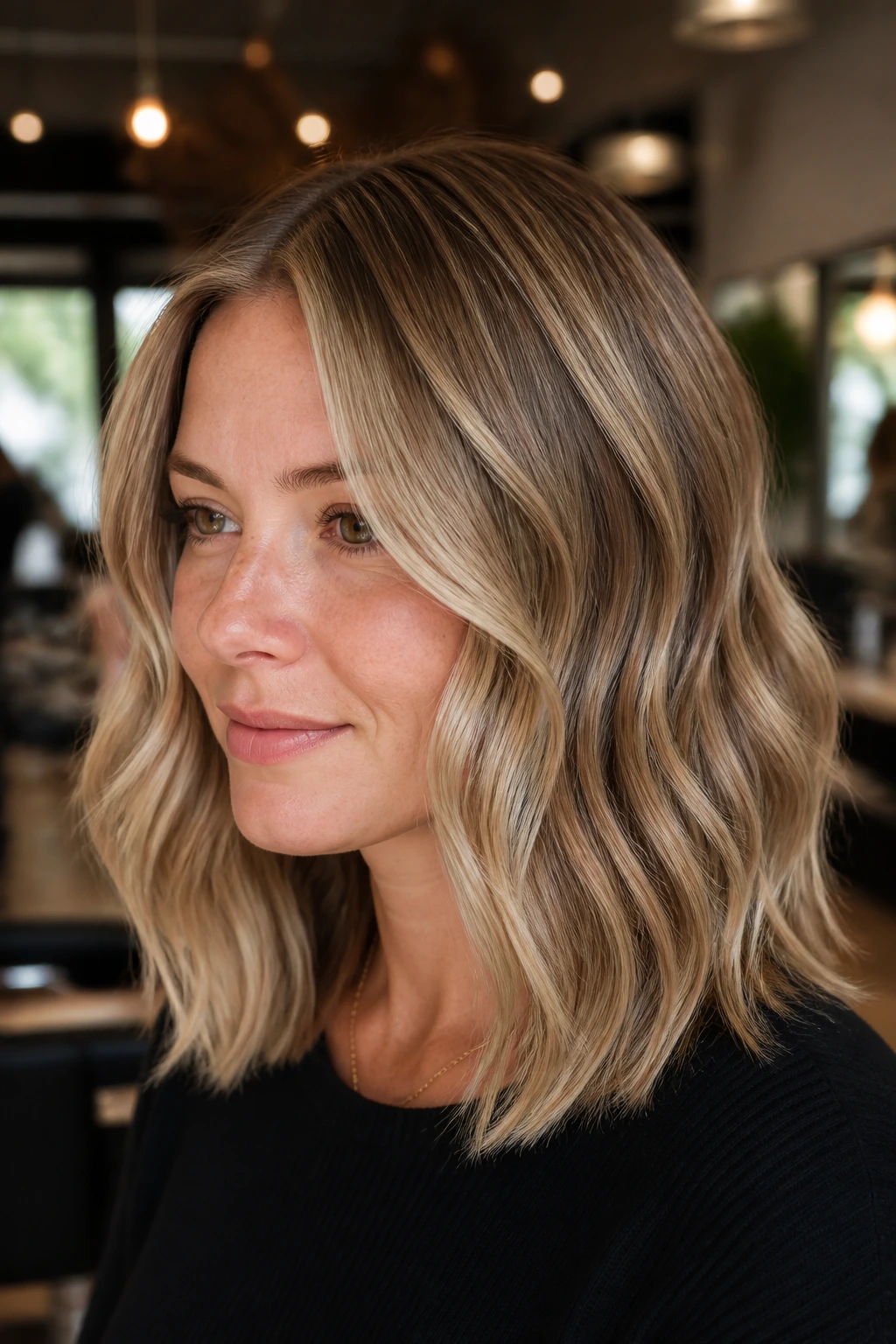
Sandy babylights are the opposite of loud. They’re tiny, fine, and barely announce themselves until the light hits the wave pattern. On medium-length hair, that subtlety is the point.
Why the Fine Weave Matters
Babylights work because the strands are so fine that they blend into the natural base instead of sitting on top of it. When you add a sandy blonde toner — something neutral-warm, not yellow — the hair gets that beach-washed look without the actual beach damage.
This look is especially good if your hair density is medium to fine. Big highlights can swallow fine hair. Babylights don’t. They add the feeling of thickness by creating tiny shifts in tone.
Ask for more brightness around the part and temples and a lighter hand through the back. That keeps the overall effect airy instead of busy. I like this one on waves that are a little imperfect; the uneven bends make the tiny lights look even softer.
7. Creamy Full Foil Blonde With Clean Dimension
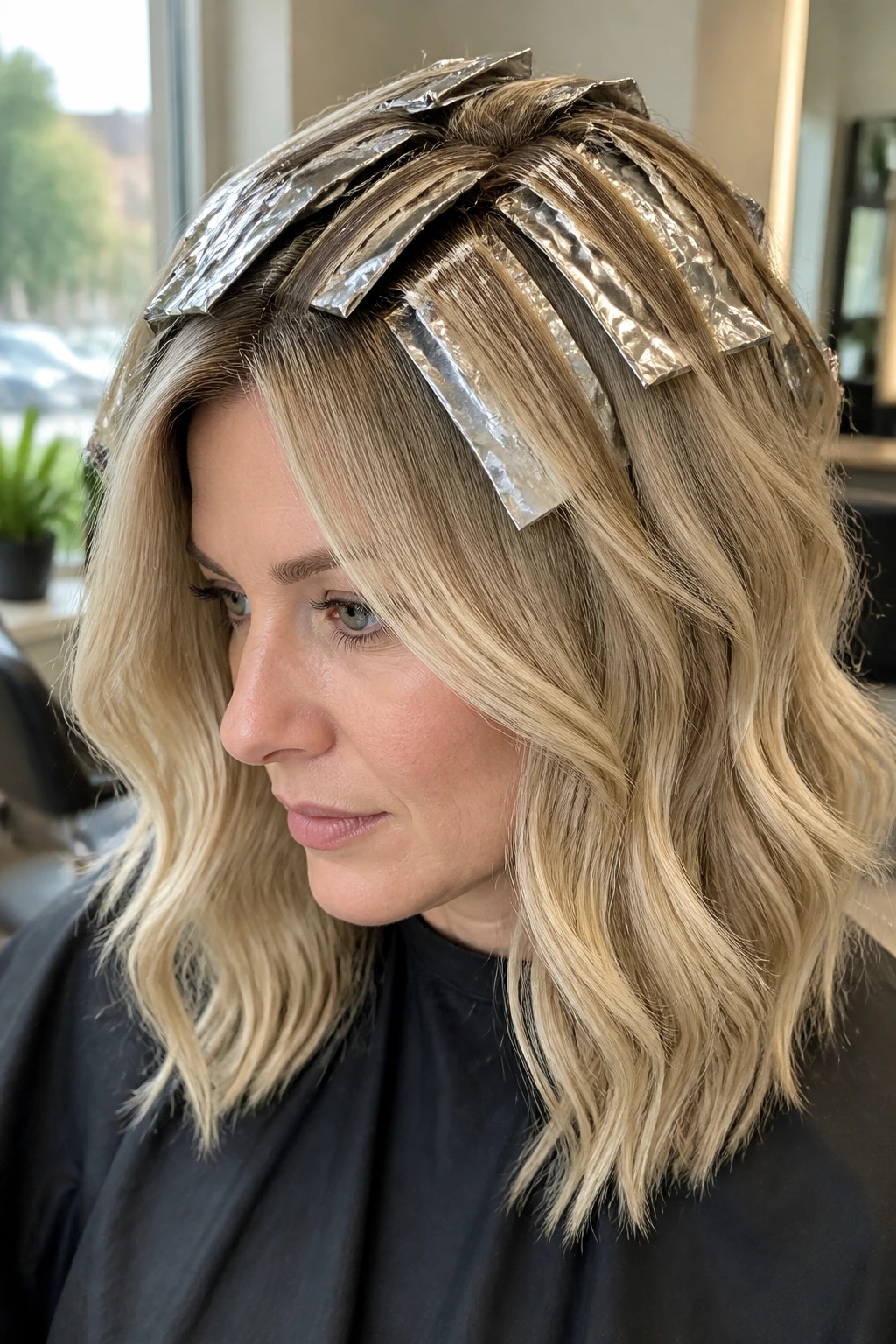
Creamy full foil blonde is for people who want more brightness than balayage gives, but still want the hair to move. On medium-length waves, full foils can look rich instead of harsh if the toner stays creamy and the root is kept soft.
The danger with this look is overdoing the lift. If every foil starts too high and ends too pale, the wave pattern turns into a busy stripe show. Better to leave a little depth underneath and in the nape. The lighter pieces should feel like they’ve been placed, not poured on.
What to Ask For
- Foils that are denser near the crown
- Softer brightness under the outer layer
- A beige-cream toner instead of icy silver
- A small root shadow so the grow-out doesn’t snap at the scalp
This one is a good pick if your hair is naturally medium brown and you want a brighter blonde result without losing the bend in the cut. It reads clean from a distance and still has texture up close.
8. Vanilla Blonde With Soft, Air-Dried Ends
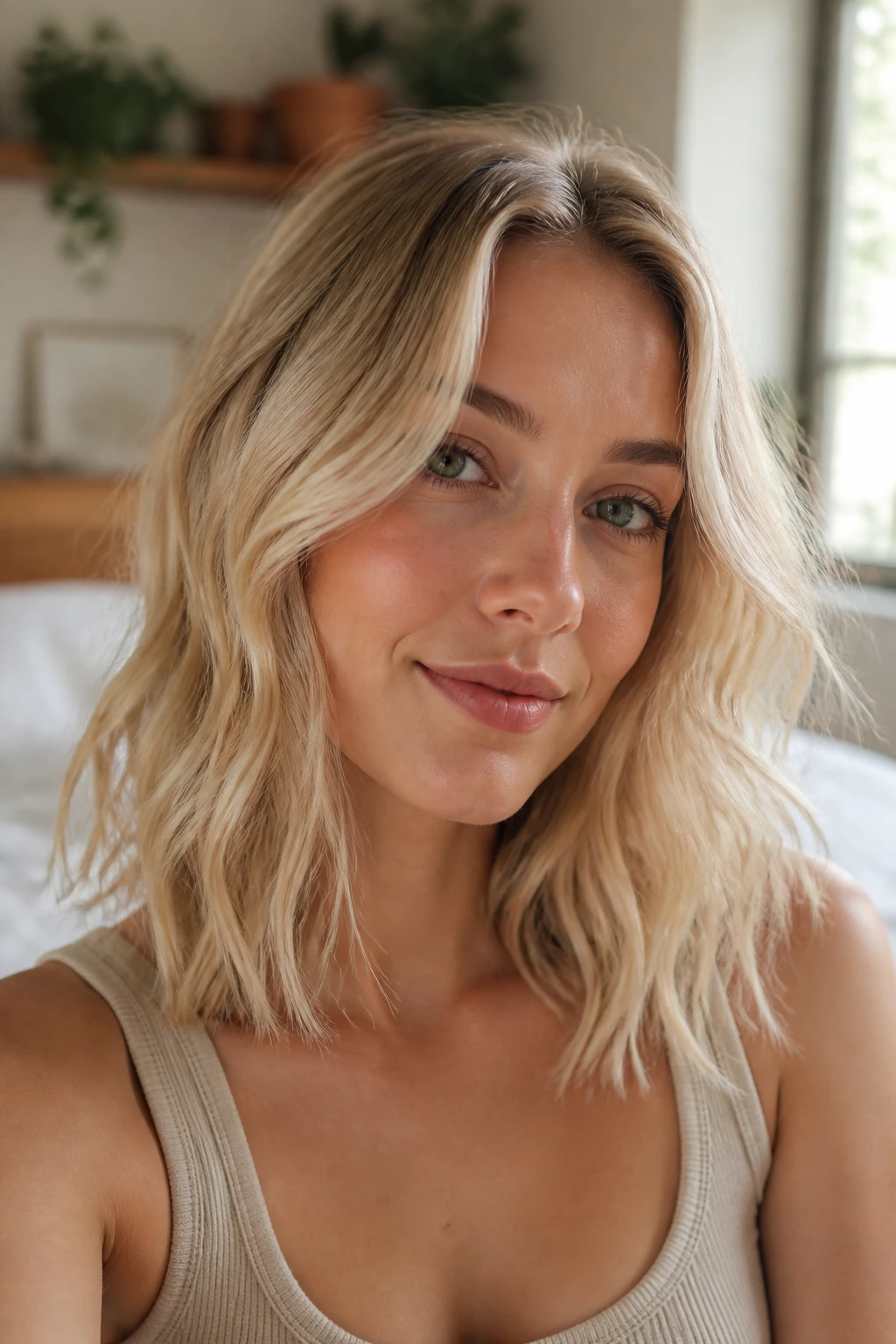
Vanilla blonde is one of my favorites on medium waves when the goal is clean, light, and a little cool without going icy. It has enough warmth to stay wearable, but the tone is pale enough to look crisp.
I like this shade when the ends are left a touch softer than the mids. That keeps the cut from looking overprocessed, which is a real concern on shoulder-length hair where the ends already do a lot of work. If the blonde is pushed too hard through the very bottom, the shape can start to look fragile.
The styling here should stay easy. A rough dry, a few bends with a wand, and a dab of light serum on the outer layer is enough. No heavy oil. No greasy gloss. Vanilla blonde needs movement, not weight.
This is the blonde for someone who likes a fresh, clean finish more than a sunkissed one. It’s quiet, but not bland. Big difference.
9. Toasted Coconut Blonde With Darker Depth
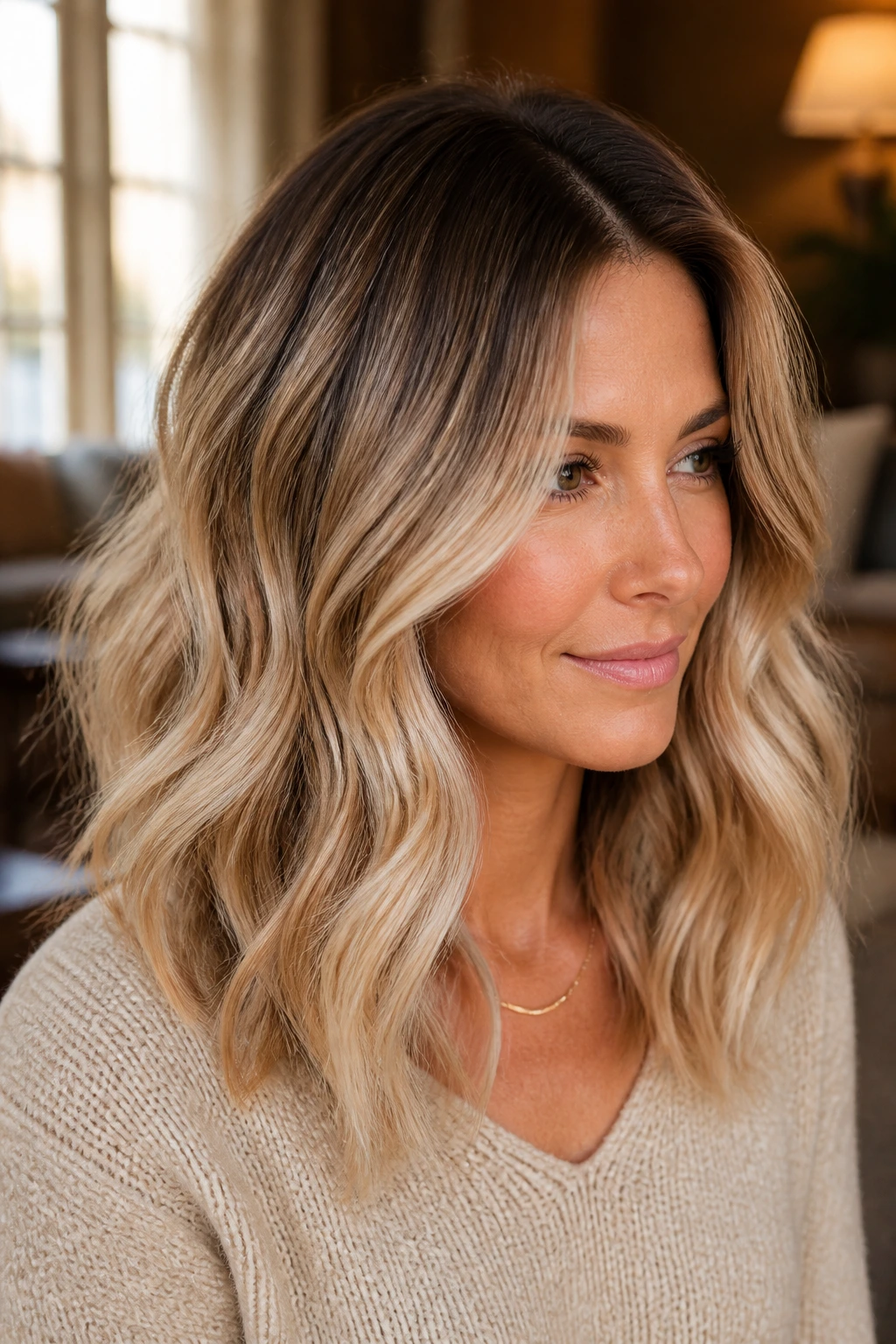
What happens when you keep the root darker and let the blonde melt through the mids? You get toasted coconut, and on medium-length wavy hair it has a nice expensive-looking depth. The darker base keeps the color grounded. The lighter ends keep it from feeling heavy.
This is a strong choice if your natural color lives in the dark blonde to medium brown range. The transition should be smooth, almost smoky at the top, then creamier and lighter as it moves downward. If the waves are loose, the blend looks even better because every bend shifts the tone a little.
The style also buys you time. Grow-out is gentler when the root isn’t fighting the blonde. That matters if you don’t want a harsh line every few weeks.
Best detail to request: a root shadow that sits about one to one and a half inches from the scalp, then a soft melt into neutral blonde ends.
10. Pearl Blonde Gloss on Glossy Waves
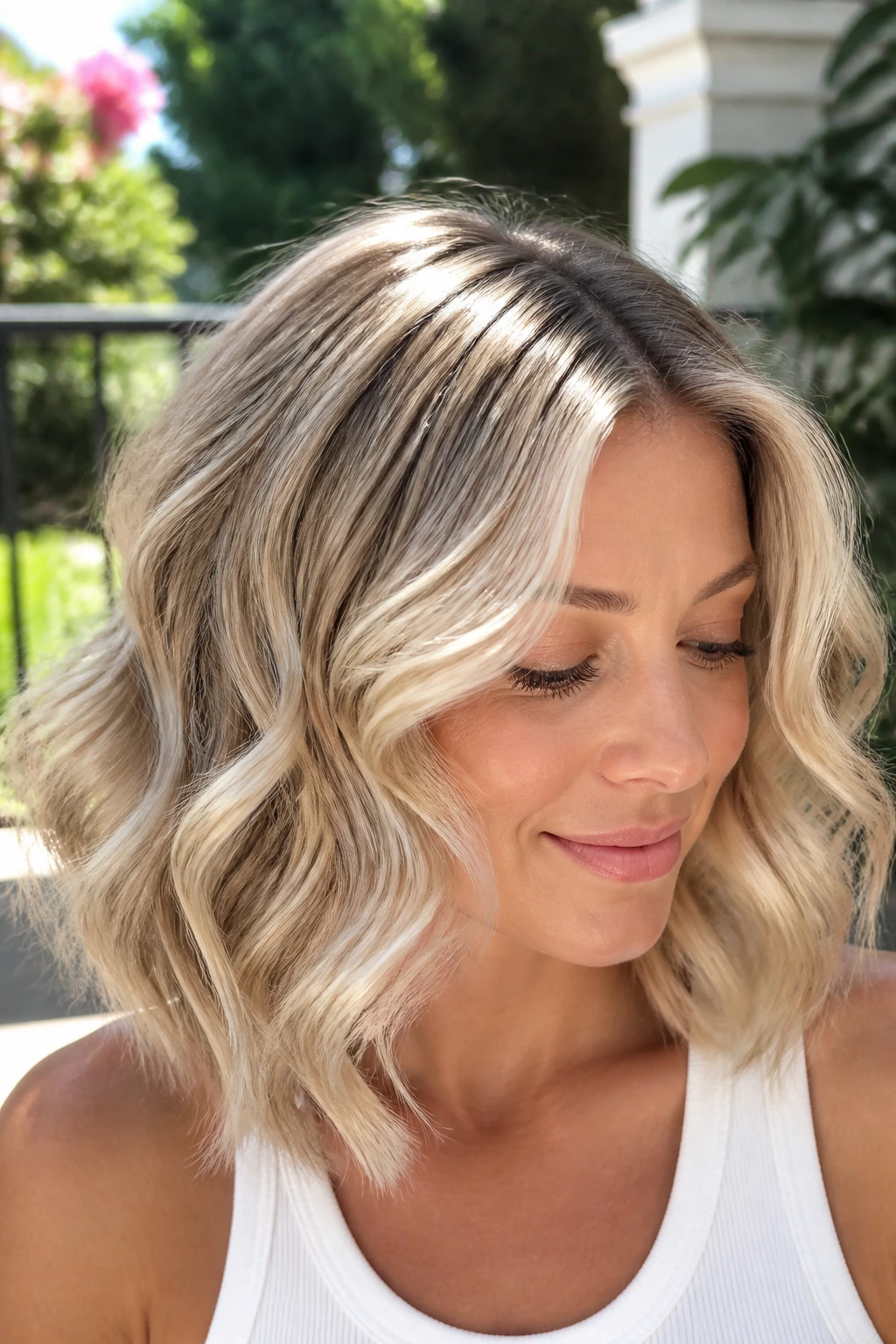
Pearl blonde can look icy in photos and flat in real life if it’s handled badly. On medium-length waves, though, the gloss has enough movement to keep it alive. The trick is making the blonde reflective, not chalky.
Here’s the scenario where pearl blonde shines: fine to medium hair, a clean cut, and waves that are styled with a soft bend rather than a tight curl. The color catches the ridge of each wave and flashes cool light without turning gray. It’s a sharp look.
- Keep the toner soft: A pearl finish should glow, not bleach out the mids.
- Use a heat protectant every time: Cool blondes show damage fast.
- Finger-comb the finish: A brush can break the wave and make the tone look harsher.
- Avoid purple shampoo overload: One wash every week or so is usually enough.
Pearl blonde is not the easiest maintenance color on this list, but it rewards careful styling. When it’s right, it looks almost liquid.
11. Wheat Blonde With Subtle Lowlights
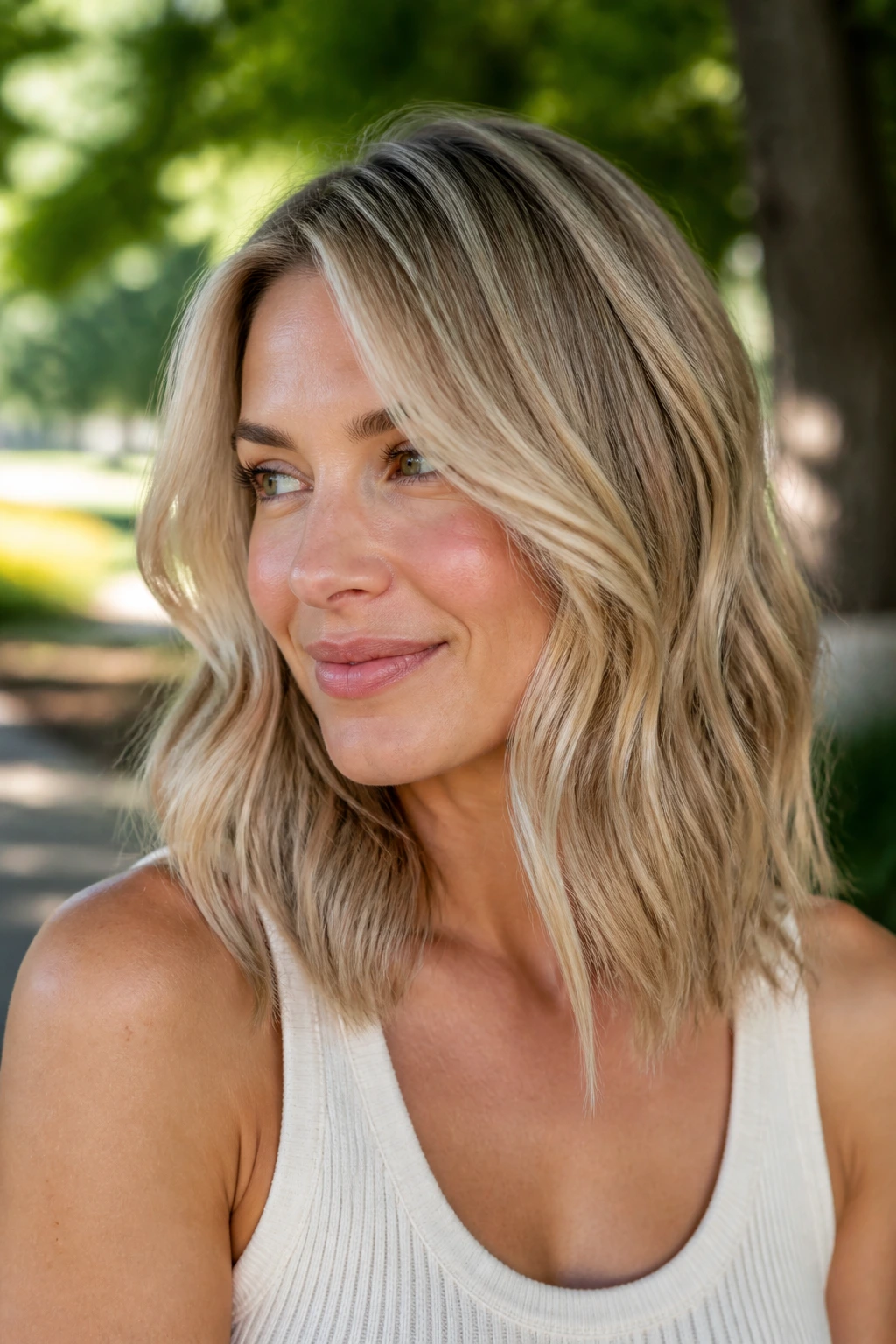
Wheat blonde is what happens when you add just enough depth to keep a blonde from getting flat. The lowlights are the quiet hero here. They sit under the surface, especially around the nape and inside layers, and they make the lighter pieces above look fuller.
This is a smart move on medium-length wavy hair because the texture already breaks up the color. Add lowlights and the wave pattern gets even more visible. Without them, a pale blonde can start to read as one solid mass when the hair settles.
I’d suggest this for anyone with naturally light brown or dark blonde hair who wants a softer grow-out and less risk of brass. Wheat blonde works with neutral wardrobes too, which sounds boring until you realize how often hair color has to live with your actual clothes.
The best part? It does not scream for attention. It just sits there looking finished.
12. Bronde-to-Blonde Melt for Easy Grow-Out
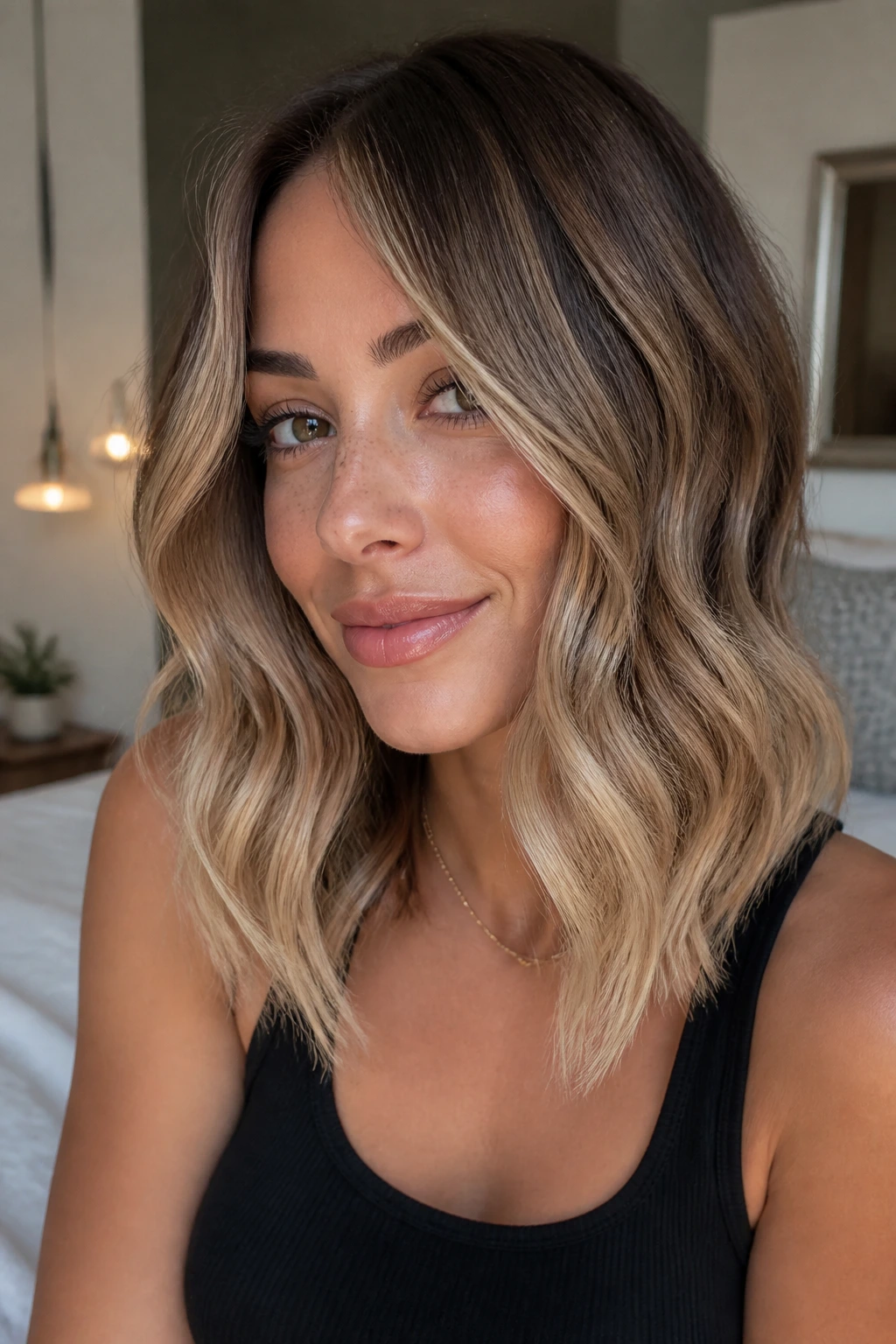
Bronde-to-blonde is the low-maintenance answer for people who like a blonde result but hate the maintenance bill. The root stays brunette-adjacent, the mids drift lighter, and the ends land in soft blonde territory. On medium waves, the blend looks natural because the bend pattern hides the transition.
Unlike a high-contrast blonde, this one doesn’t rely on a dramatic scalp-to-end jump. It works through gradation. That makes it a good fit if your hair is medium length and you wear it loose most days. The movement does the camouflage.
A gloss every six to eight weeks keeps the lighter pieces from turning muddy. If the blonde starts to feel too yellow, keep the toner neutral instead of pushing it too cool. Bronde looks best when it still has a little warmth in the light.
This is one of those colors that keeps getting better the more you live in it. Not because it’s lazy. Because it’s smart.
13. White Gold Streaks Through Soft Bends
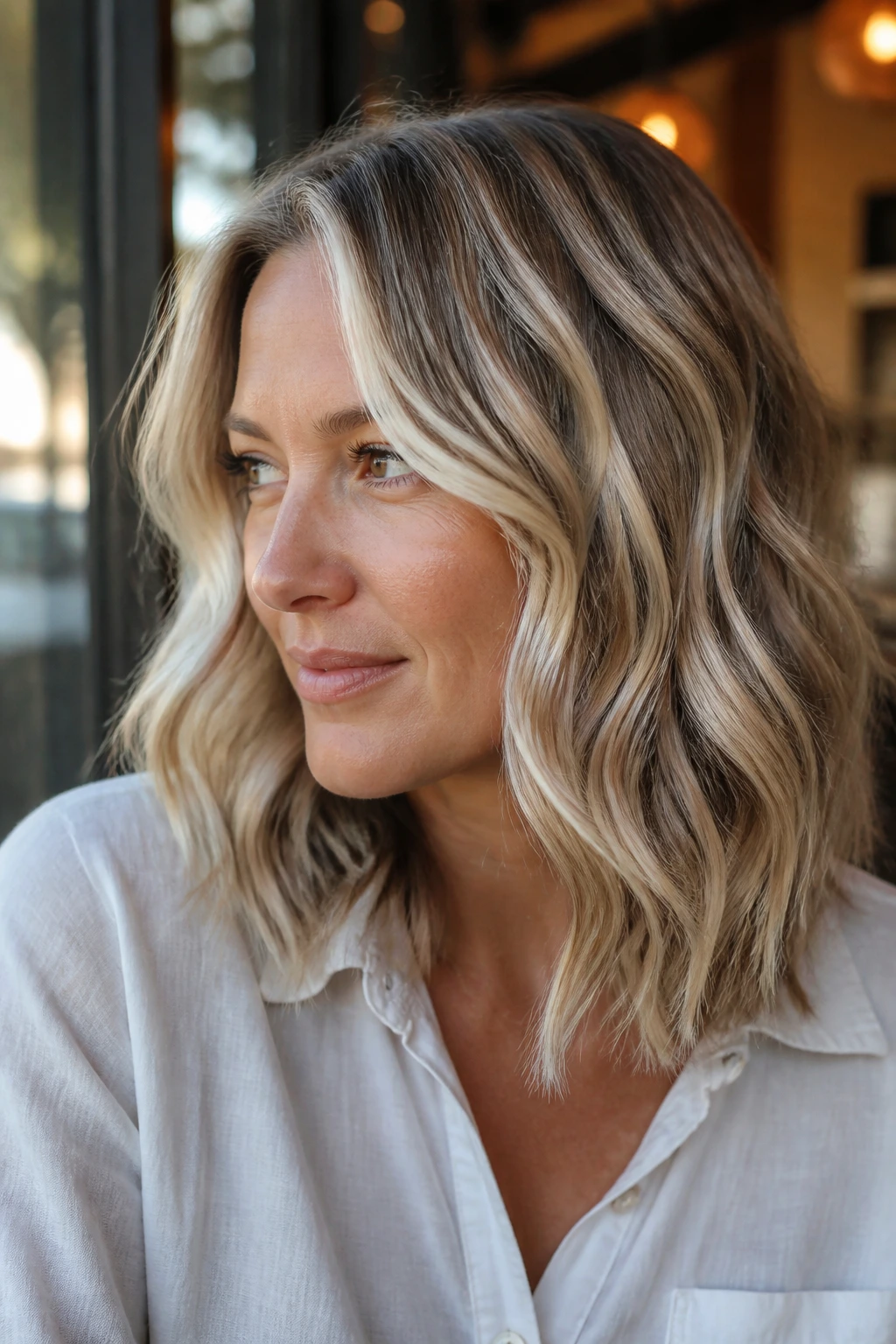
White gold is the blonde that makes medium waves look crisp, not sugary. It sits between cool platinum and warm champagne, and that middle ground gives it a hard-to-define shine. The color flashes clean in motion.
This look works when the streaks are placed with restraint. You want a few stronger pieces around the face and crown, then finer breaks through the lengths. If every section is equally bright, the hair loses its texture and starts to look busy. White gold needs contrast to show off the wave line.
The best version has a soft root and a slightly brighter mid-length. Not a jump. A drift. That’s the part most people get wrong when they ask for cool blonde and end up with flat silver. White gold should still feel like hair, not metal.
If you wear minimal makeup or simple clothes, this shade brings enough edge on its own. It does the work.
14. Golden Curtain Bangs With Blonde Ends
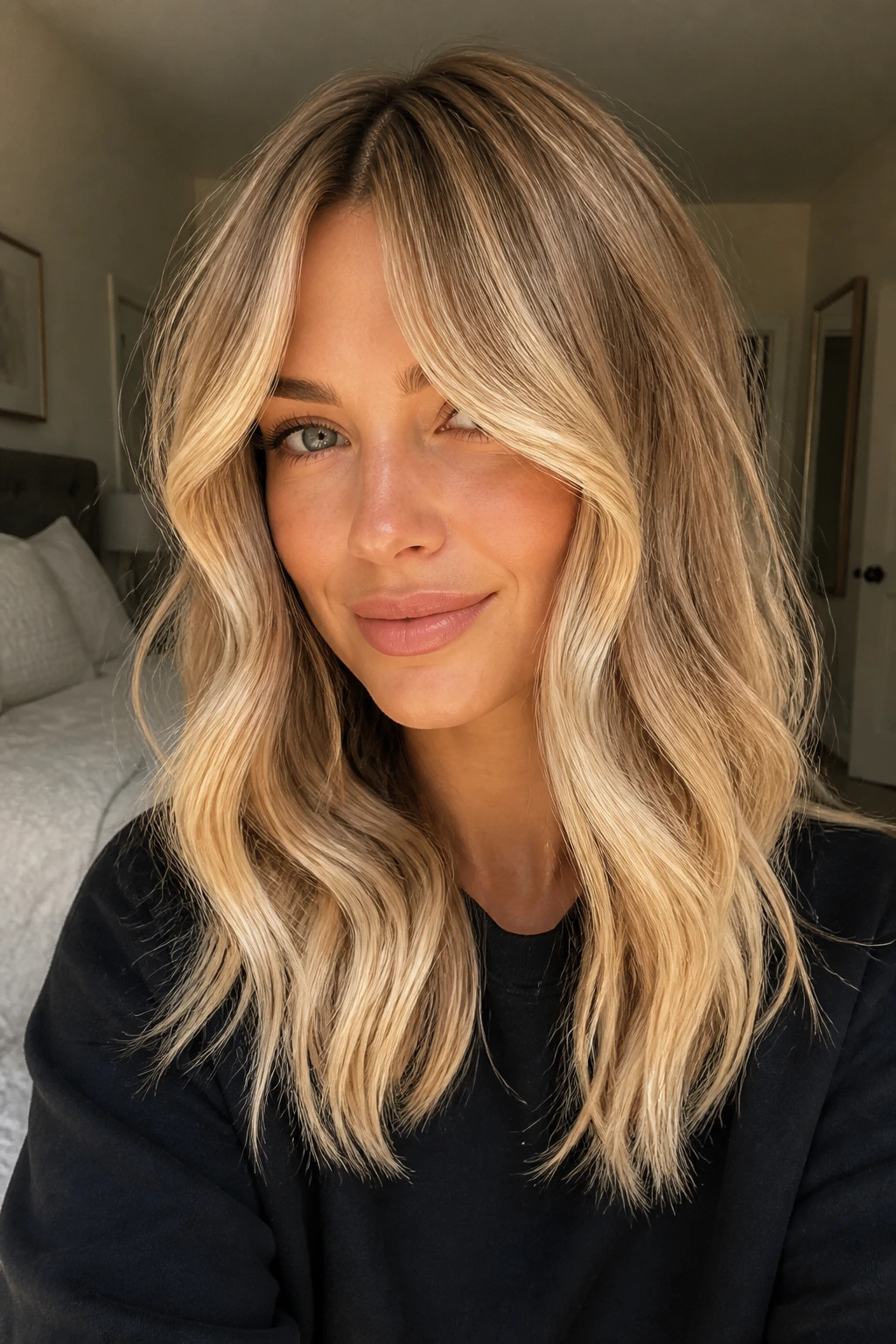
Curtain bangs and medium waves are already friends. Add blonde to the front pieces and the whole cut gets more movement with less effort. Golden curtain bangs are especially good when you want the color to frame the face instead of taking over the entire head.
The bright pieces should start a little lower than you think, usually around the cheekbone or the top of the mouth when the hair is dry and parted. That keeps the fringe from looking too blocky. The ends can stay softer and lighter, which gives the whole style a kind of staggered brightness.
This is a nice choice if you like to wear the rest of your hair tucked back or clipped away. The bangs and front layers do the visual work. The waves in the mid-lengths just support them.
A small round brush at the root and a loose bend through the lengths is enough. Don’t overstyle the fringe. It should look like it belongs to the rest of the haircut, not like it came from another head.
15. Beige Shag With Bright Ribbons
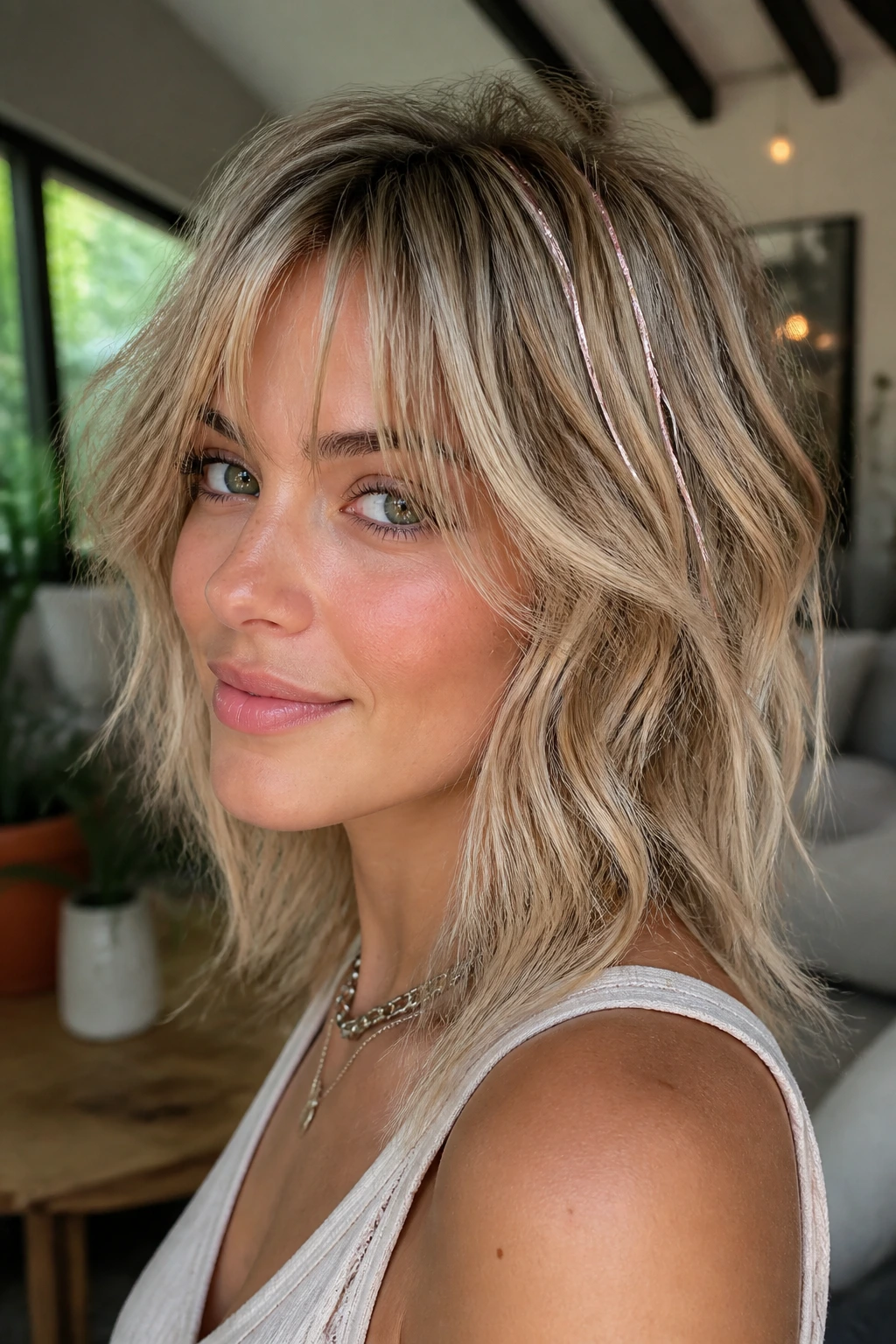
A shag with waves needs color that understands layers. Beige blonde ribbons do that better than a solid all-over lift because they catch on the shorter pieces and show off the cut’s movement. On a medium-length shag, the blonde almost becomes part of the texture.
What Makes It Click
If the layers are strong, keep the ribbons a little finer and brighter through the top. If the cut is softer, you can push a bit more light through the mids. The point is to avoid heavy blocks of color. Shags already bring motion; the blonde should underline it, not fight it.
This is one of those styles that looks better slightly messy. A bit of dry texture spray, a quick shake at the roots, and you’re there. If you spend half an hour smoothing every wave into place, you lose the whole point.
Ask for a beige gloss with a faint root shadow. That keeps the shag from looking striped at the part line, which is a common problem with layered cuts.
16. Soft Platinum Ends on Mid-Length Waves
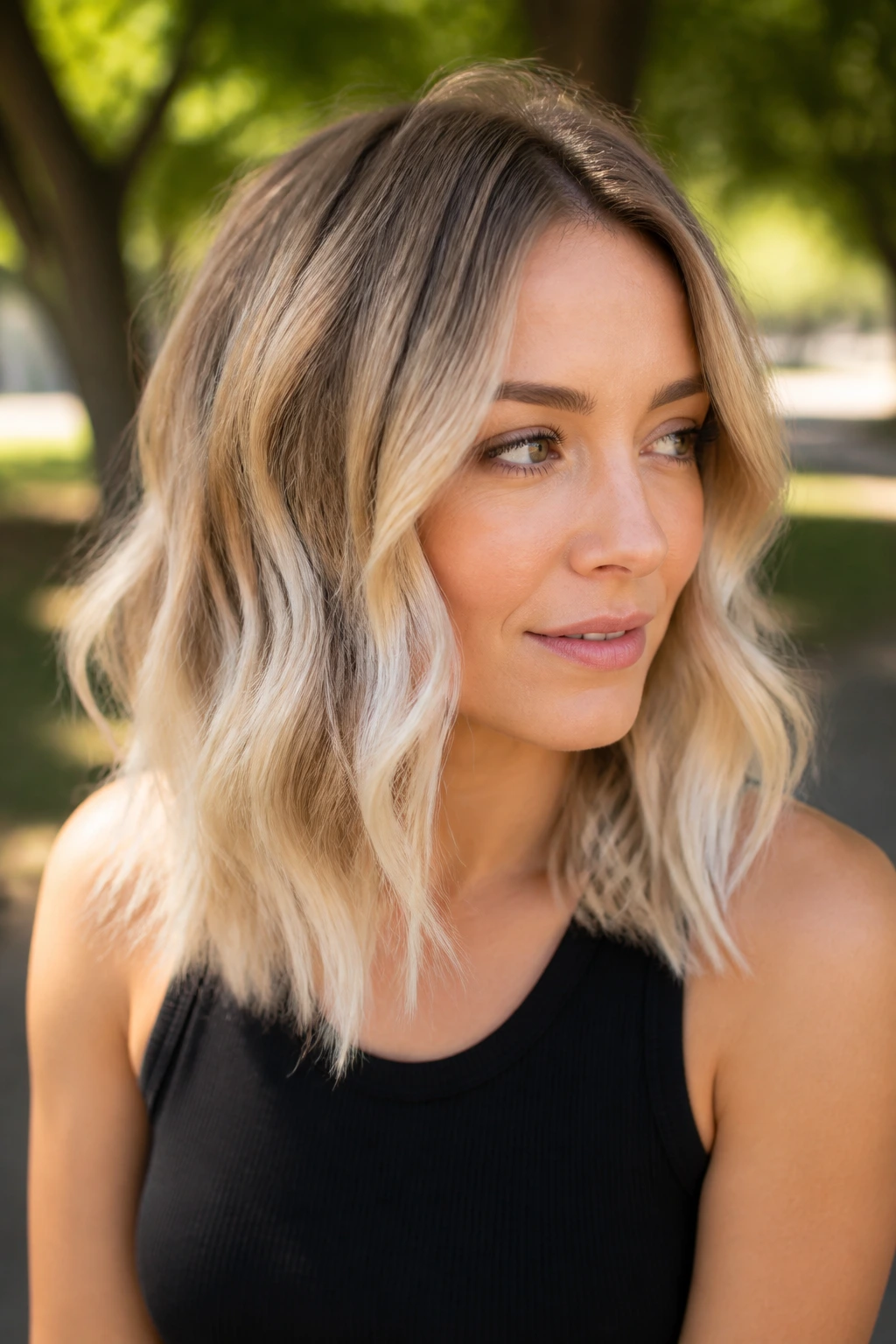
Soft platinum ends are for people who want the edge of platinum without bleaching the whole head to the same level. The root and mids can stay slightly warmer, while the lower half turns pale and crisp. On medium waves, that contrast can look sharp in a good way.
The catch is condition. Platinum at the ends shows dryness fast, especially if the hair already feels porous. You need bond care, regular masks, and a gentle hand with hot tools. Still, when it’s done well, the wave pattern gives the pale ends a lot of movement, which makes the color feel less severe than it would on stick-straight hair.
I like this look best when the cut has blunt-ish ends. It keeps the platinum from fraying visually. If the ends are too wispy, the lightest shade on the list can start to look thin.
Ask your colorist to keep the root soft and the transition gradual. Hard lines and platinum do not get along.
17. Almond Blonde Waves for a Neutral Finish
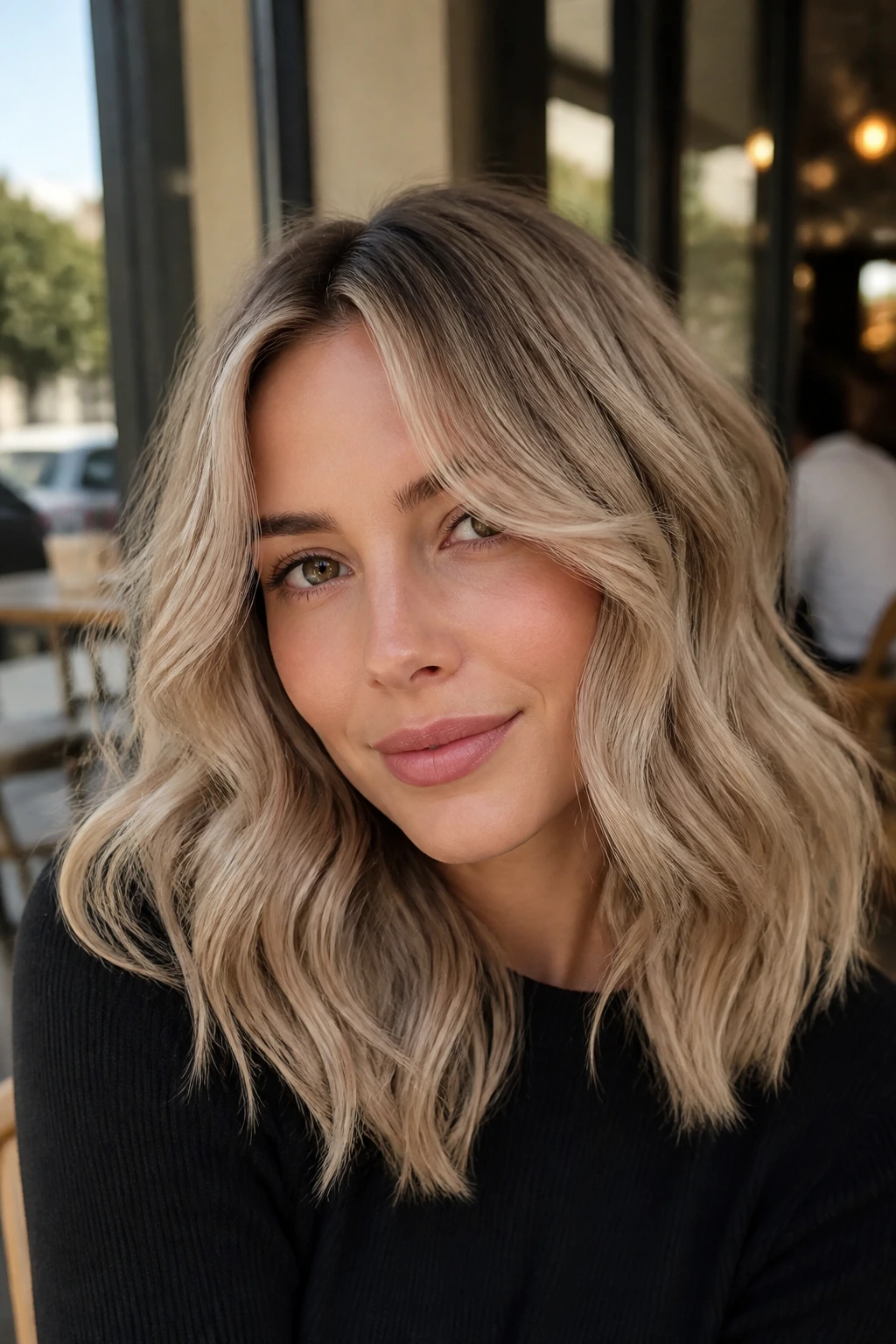
Almond blonde sits in that comfortable middle where honey, beige, and soft brown all meet. On medium-length wavy hair, it has an easy, lived-in feel that works whether you air-dry or use a wand. It doesn’t shout. It just fits.
This is a strong pick if you’re torn between warm and cool. Almond blonde keeps enough warmth to avoid dullness, but the neutral base makes it wearable on most hair textures. The waves help by breaking up the tone so the color never feels too even.
It’s also a good option for people who wear a lot of earth tones, cream, black, or denim. The color stays steady against all of them. That sounds practical because it is.
If you want one safe reference point, this is it: ask for a neutral beige blonde with soft light pieces around the face and a deeper root through the crown. That combination keeps the style from collapsing into one flat shade.
18. Sunlit Microbabylights Across the Crown
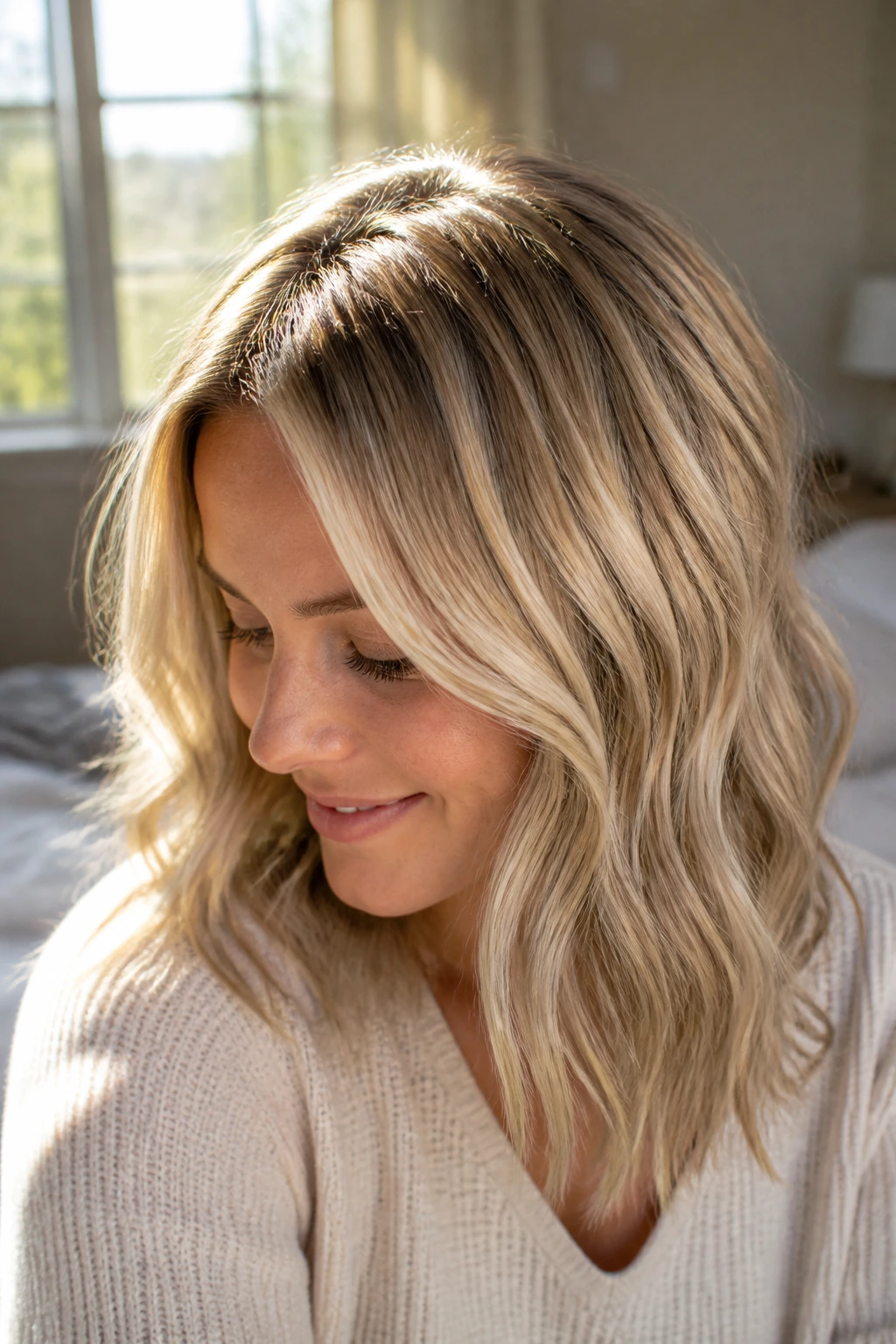
Sunlit microbabylights are the quietest blonde on this list, and maybe the smartest for people who hate obvious highlights. The pieces are so fine that they read as brightness, not streaks. On medium waves, they scatter light across the surface instead of sitting in bold bands.
Why They Look Soft
The crown gets the most benefit because that’s where waves usually break and where the part line can look flat first. Tiny lights there create the illusion of volume. Through the lengths, the contrast stays soft enough that you can still see the natural base underneath.
If your hair is fine, this is a very good place to start. It gives dimension without overloading the cut. If your hair is thicker, pair it with a few slightly brighter ribbons around the face so the look doesn’t disappear.
This is the blonde version of a well-made white shirt: not loud, but always right. And yes, that analogy is doing work here.
19. Rooted Ice Blonde With Clean Contrast
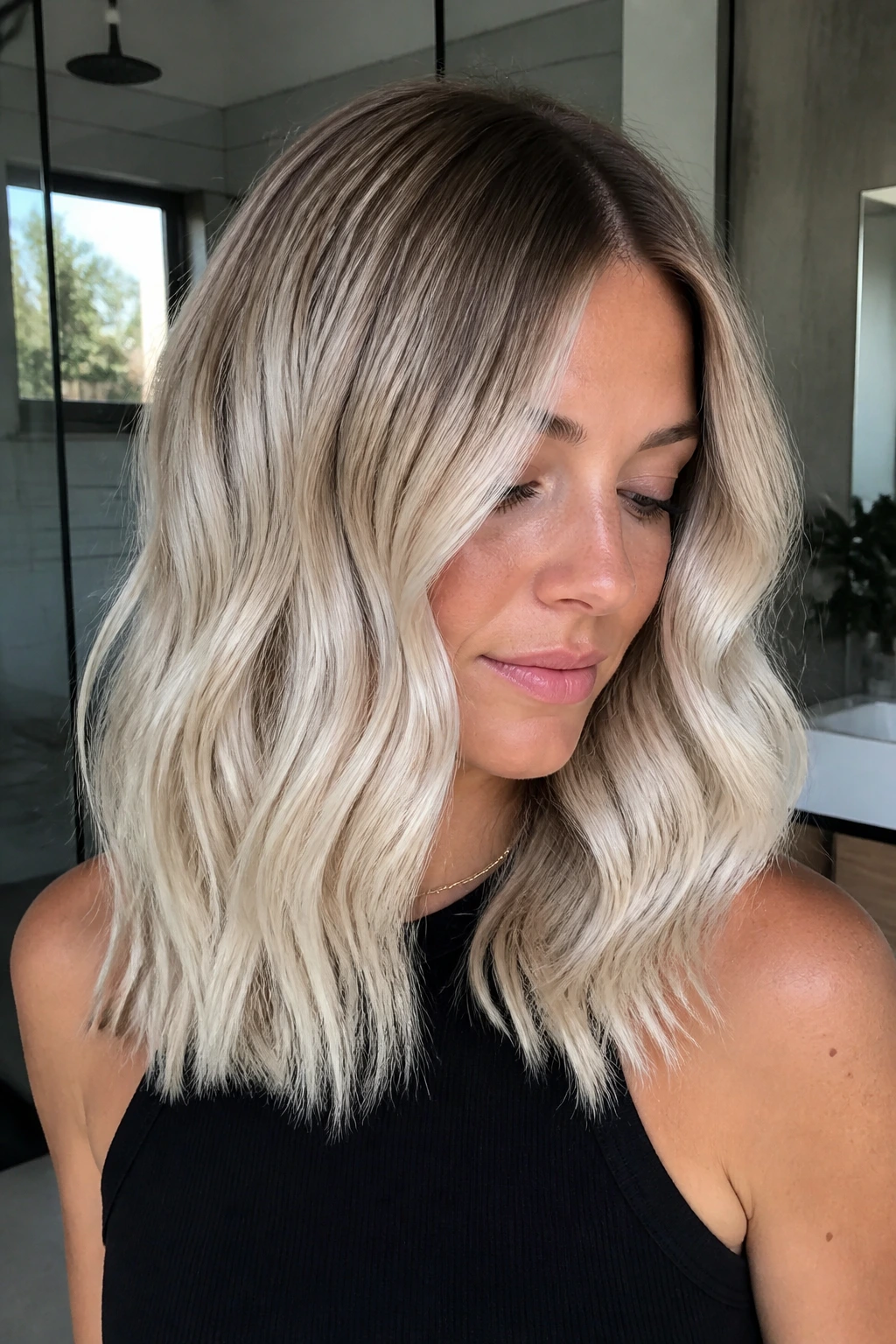
Rooted ice blonde gives medium-length waves a sharper edge. The root stays deep enough to anchor the look, while the mids and ends move toward a cool, pale finish. The contrast is the point.
This style works best when the waves are soft rather than tight. Soft bends let the icy pieces catch light without turning the hair into a sheet of pale color. It also helps if your cut has a little internal layering; otherwise the pale blonde can make the outline feel blocky.
You do need to stay on top of toner here. Cool blondes drift warm faster than people expect, especially if you use heat tools or wash often. Purple shampoo can help, but don’t lean on it every wash. Once a week is plenty for most heads.
If you like a cleaner, sharper look and you don’t mind maintenance, rooted ice blonde has real presence. It’s not subtle. That’s the appeal.
20. Caramel-to-Blonde Dimension That Feels Rich
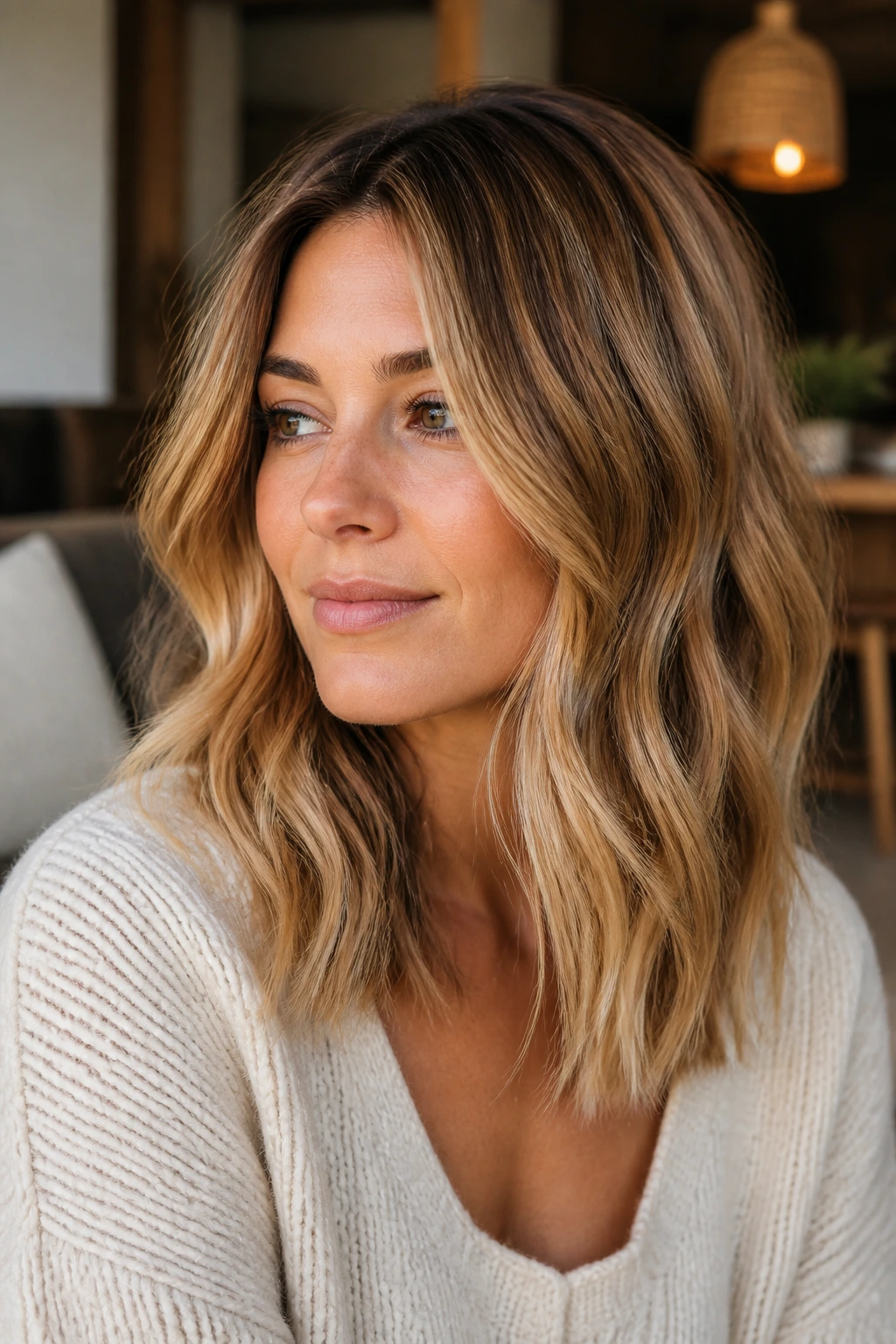
Caramel-to-blonde dimension is what happens when the colorist keeps some warmth in the mid-tones and lets the ends go lighter. The result is layered, rich, and easy on medium waves because the bends keep the different tones from blending into mush.
This is one of the best choices for darker natural bases. The caramel acts like a bridge, so the blonde doesn’t look pasted on. On wavy hair, that bridge matters. It keeps the color readable even when the waves separate and rejoin through the day.
I’d ask for caramel ribbons through the underlayer and lighter blonde only where the light hits first: around the face, the top bend, and the outer lengths. That keeps the look dimensional instead of overly bright.
This one also tends to photograph well in low light, which is a nice side effect if you spend a lot of time indoors. The warmth doesn’t vanish.
21. Sandblonde Grown-Out Lob
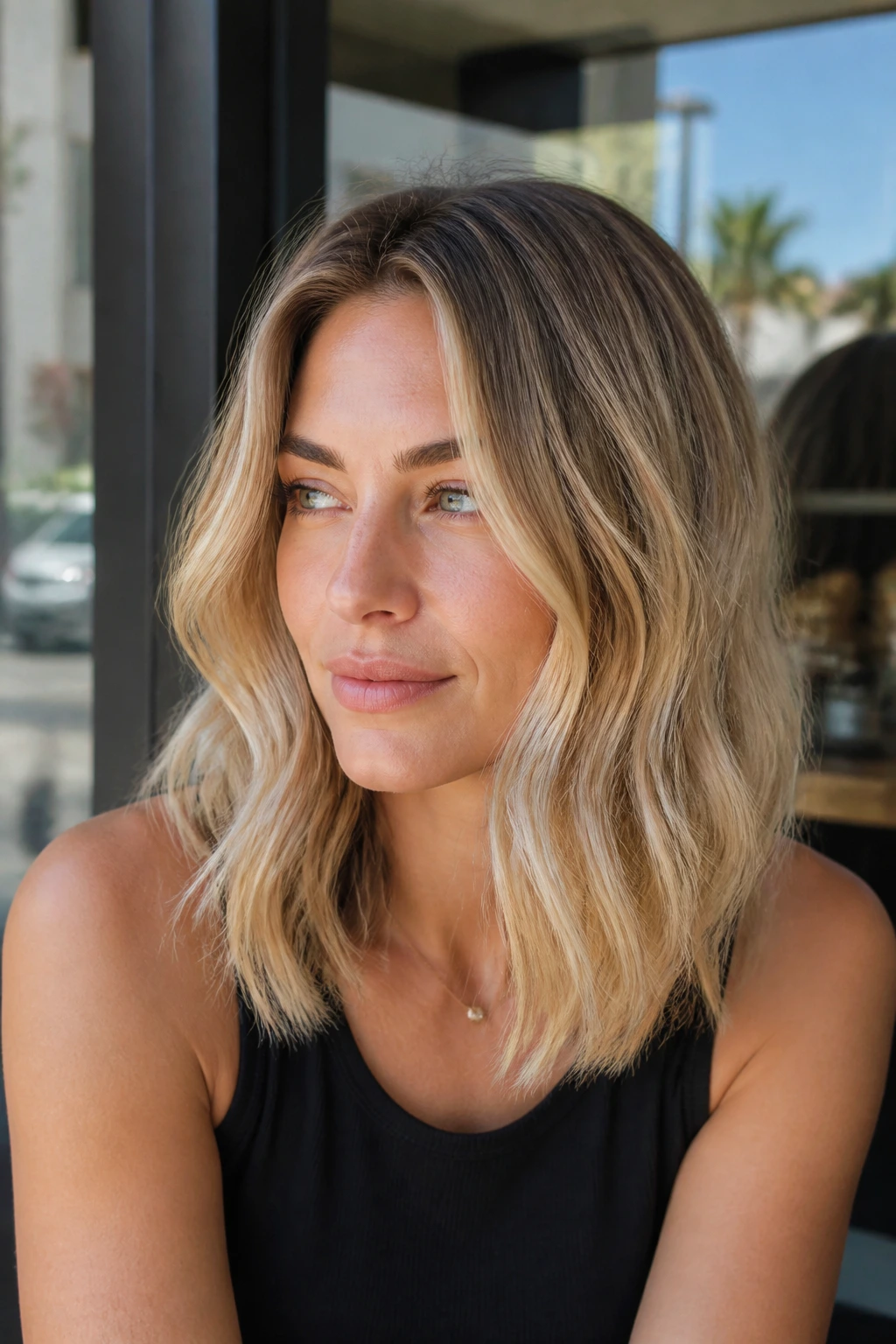
Sandblonde is the color you choose when you want the grow-out to disappear into the wave pattern. It’s soft, neutral, and a little sun-faded without looking washed out. On a lob, it has a calm, easy rhythm that fits medium waves beautifully.
The roots can stay a touch darker, but the transition should be long and gradual. No hard line. The mids and ends should feel like they were lightened by the same sun, not the same foil packet. That distinction matters more than people think.
This look is especially forgiving if you don’t like spending every six weeks in a chair. The color works with the cut as it softens. If the lob is blunt, the sandblonde keeps it from feeling too heavy. If the lob has layers, the tone keeps the movement visible.
It’s a good final look because it doesn’t try too hard. It just sits there looking lived in.
How to Pick the Right Blonde Tone for Your Base Color
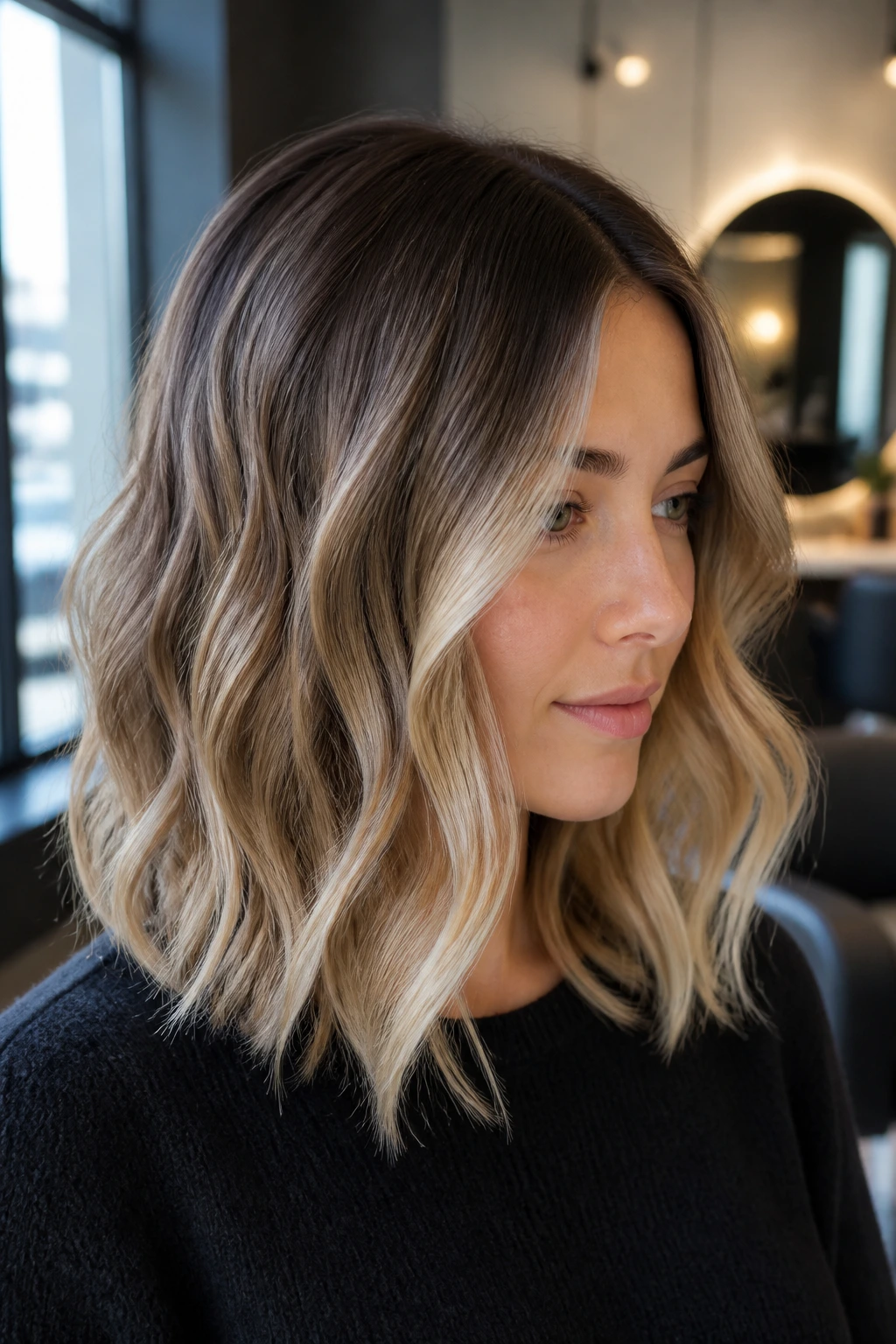
Choosing the right blonde tone on medium-length wavy hair starts with your natural base, not the inspiration photo. That’s the part people skip, then wonder why the color looked soft on one person and harsh on another. If your base is dark blonde or light brown, beige, honey, almond, and sandblonde usually grow out with the least fuss. They let your root stay part of the story.
If your hair lifts quickly and evenly, you have more room to go champagne, vanilla, or pearl. Those tones need a cleaner canvas. They also tend to show toner drift faster, so the upkeep has to be part of the plan. If your ends are porous, be careful with the coolest blondes on the list. Porous hair grabs toner fast, then releases it unevenly, and that’s how pale ends start looking muddy.
A few practical rules
- Dark base + waves: keep a root shadow and ask for softer ribbons, not full-head brightness.
- Fine hair: use babylights or microbabylights so the color doesn’t overpower the texture.
- Thicker waves: you can handle more contrast, especially around the face and crown.
- Center part: soften the part line with lighter pieces slightly off-center so the color doesn’t split into a stripe.
Bring a photo that shows the color from the back, not just the front. The back matters more on medium waves than most people realize.
Essential Tools for Styling These Looks
-
1-inch curling wand or iron: Gives medium waves enough bend to show the blonde ribbons without turning the style into a uniform curl pattern.
-
Heat protectant spray: Keeps pale ends and highlighted pieces from drying out or turning rough after wand work.
-
Color-safe shampoo: Helps keep toner and gloss from fading too fast, especially on beige, pearl, and champagne blondes.
-
Purple shampoo: Useful for cool blondes, but use it sparingly; too much can leave the ends flat or gray.
-
Hydrating mask: A weekly mask helps highlighted waves stay soft, especially if the hair has been lightened more than one level.
-
Wide-tooth comb: Better than a brush for dry waves, because it keeps the light pieces separated instead of puffing them into frizz.
-
Microfiber towel or soft T-shirt: Cuts down on roughing up the cuticle after washing, which matters when the blonde is reflective.
-
Duckbill clips: Handy for sectioning while styling or setting face-framing pieces so the pattern stays intentional.
-
Silk or satin pillowcase: A small upgrade that helps highlighted ends keep their shape between wash days.
How to Keep Blonde Hair Bright Between Salon Visits
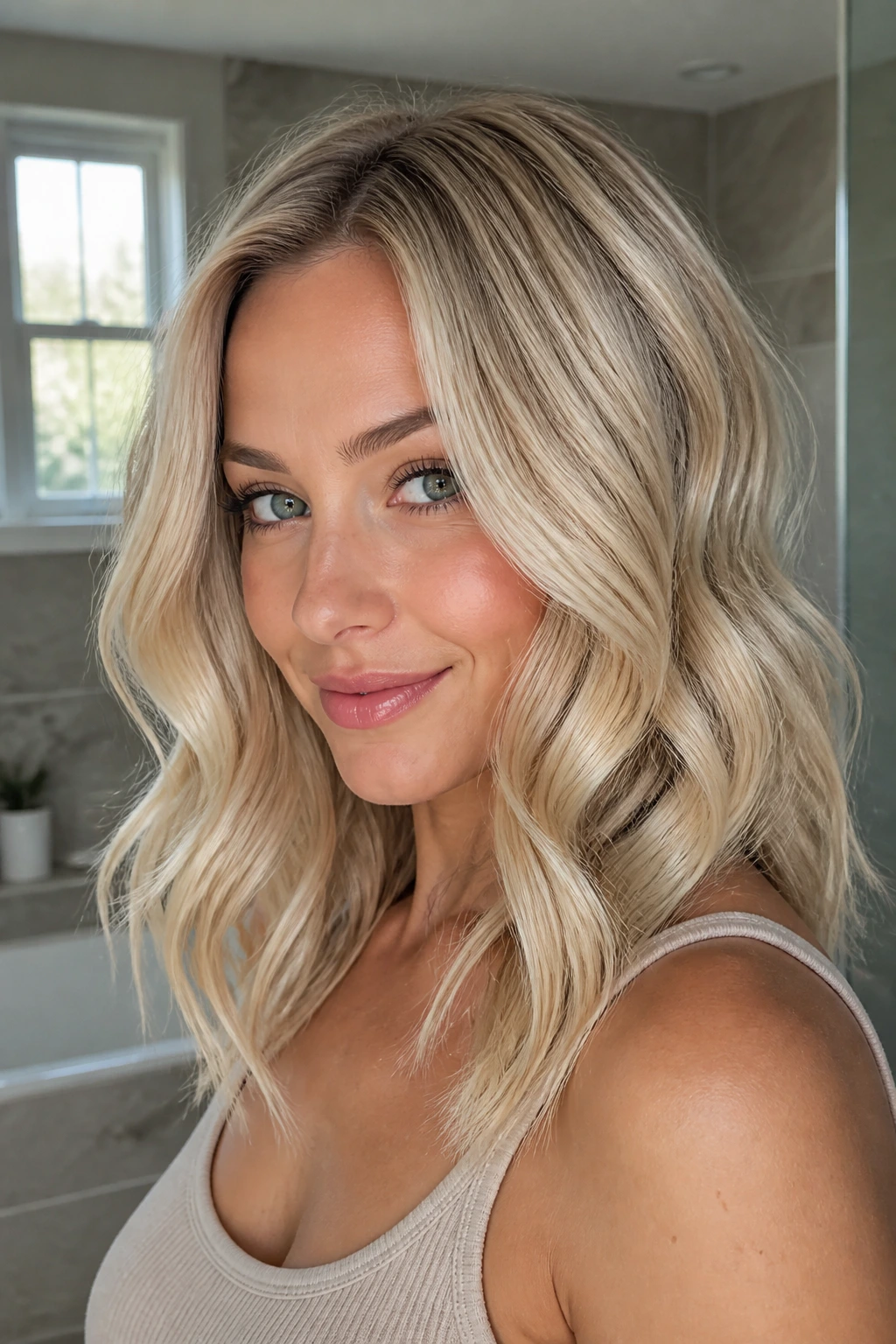
Blonde on wavy hair ages in stages. The first week, it looks fresh. After that, the root shadow softens, the wave pattern loosens, and the toner starts to drift. None of that is a problem if you plan for it. The trick is to protect the tone without suffocating the hair.
Wash with color-safe shampoo two or three times a week if your scalp allows it. More washing usually means faster fade, especially on cool blondes. A purple shampoo once every seven to ten days is enough for most cool or pearl shades. Warm blondes often do better with a moisturizing shampoo instead, because over-toning can make them look flat and dusty.
Deep condition once a week, but keep the mask off the roots unless your hair is very dry. Medium-length waves get weighed down fast if you put heavy products everywhere. For heat styling, keep tools around 300 to 325°F unless your hair is very coarse. Higher heat on lightened ends is where the roughness starts.
Glosses and toners are worth the appointment. A refresh every six to eight weeks keeps the tone from drifting too warm or too dull. If you love the grown-out look, you can stretch it longer. Just do not let brass sit for months and hope it magically softens. It won’t.
Common Mistakes That Flatten Blonde Waves
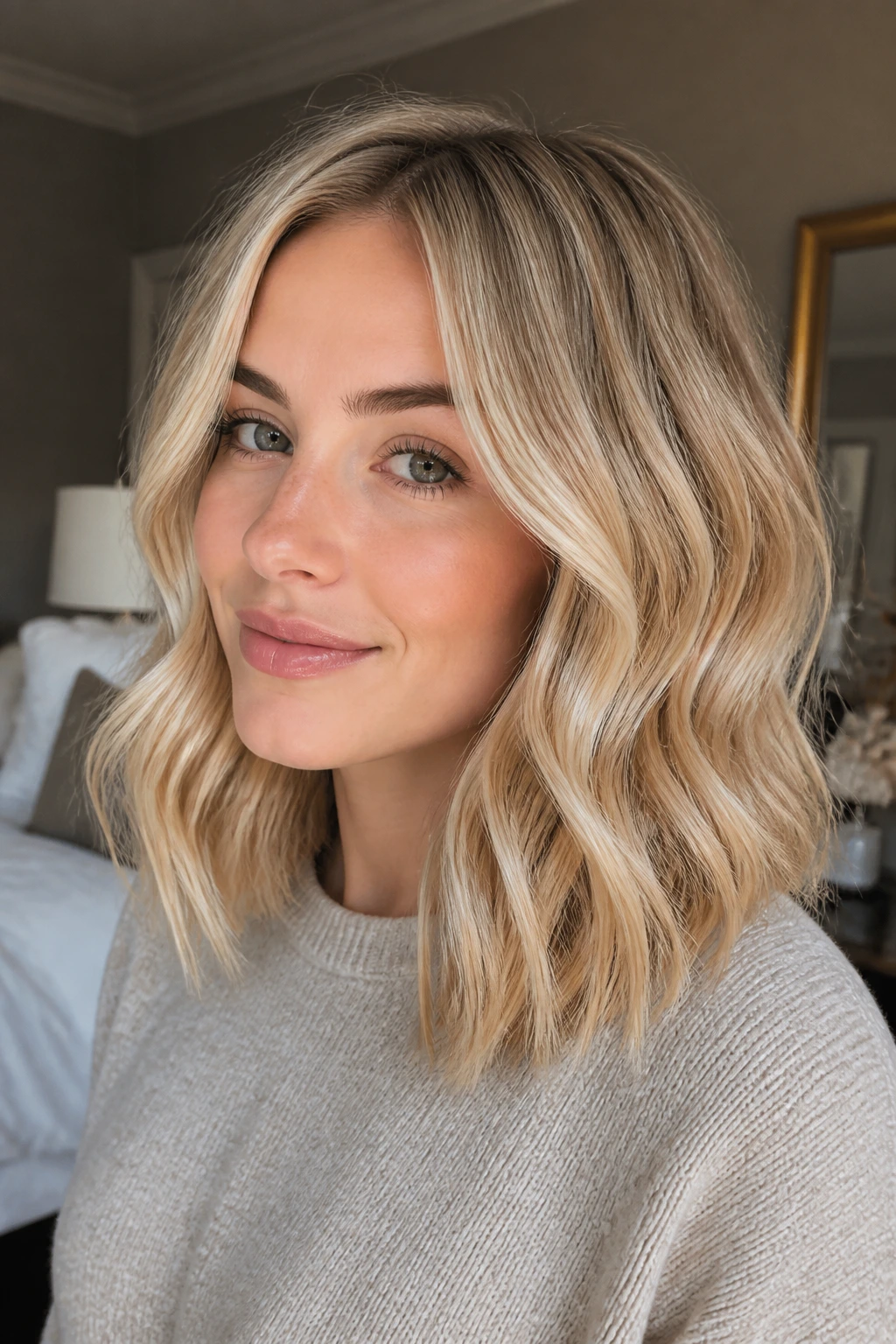
The first mistake is painting the light too high or too thick around the part. It can look bright in the chair, then turn stripey as soon as the hair moves. The fix is a softer root shadow and a finer weave near the scalp.
Another common problem is going too cool on a warm base. Cool blondes can be lovely, but if the undertone fights the natural pigment, the color turns muddy in daylight. If that happens, ask for a neutral beige gloss instead of trying to force icy blonde through the whole head.
Over-toning with purple shampoo is a big one. The symptom is pale ends that start looking chalky or flat. Stop using it every wash. One time a week, maybe less, is usually enough.
People also over-curl medium waves in the same direction, which makes the blonde look like stripes instead of ribbons. Alternate the direction of the bend or leave the ends out for a straighter finish. That breaks the pattern just enough.
Finally, there’s the heavy product problem. A thick oil or creamy curl product on highlighted hair can collapse the top layer. Use less than you think. The blonde needs movement to show itself.
Variations and Adaptations to Try
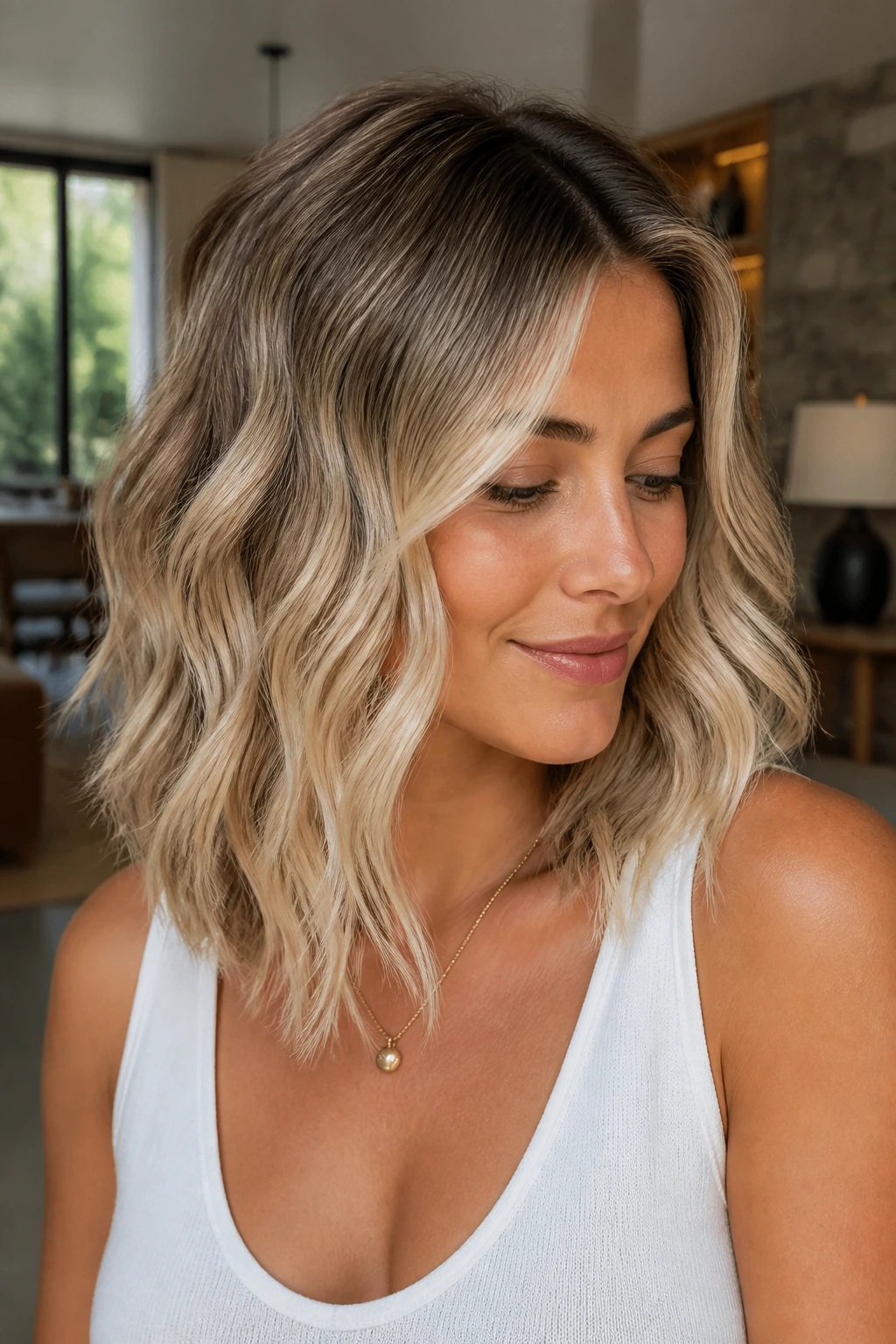
Low-Maintenance Root Shadow: Keep the root deeper and let the blonde start lower through the mids. This is the one to choose if you want softer grow-out and fewer obvious appointment lines.
Cool Pearl Finish: Swap a warm gloss for a cooler beige or pearl toner. It’s sharper and brighter, but it needs a little more toner upkeep so it doesn’t drift yellow.
Warm Honey Upgrade: Add a golden glaze to honey, butter, or caramel looks if you want the color to feel richer and a bit more sunlit. This works especially well on hair that tends to look flat in cold light.
Fine-Hair Babylight Version: Use microbabylights and keep the lowlights subtle. Fine hair can disappear under chunky contrast, so tiny highlights preserve the softness of the wave.
Thick-Hair Ribbon Blend: If your waves are dense, ask for broader ribbon placement and slightly stronger face-framing brightness. Dense hair can hold more contrast without losing shape.
Budget-Friendly Partial Blonde: A partial foil with a gloss can still give medium-length waves a clear blonde effect. Focus the light on the top layers, temples, and part line, then let the lower sections stay deeper.
Frequently Asked Questions
What blonde shade looks best on medium-length wavy hair?
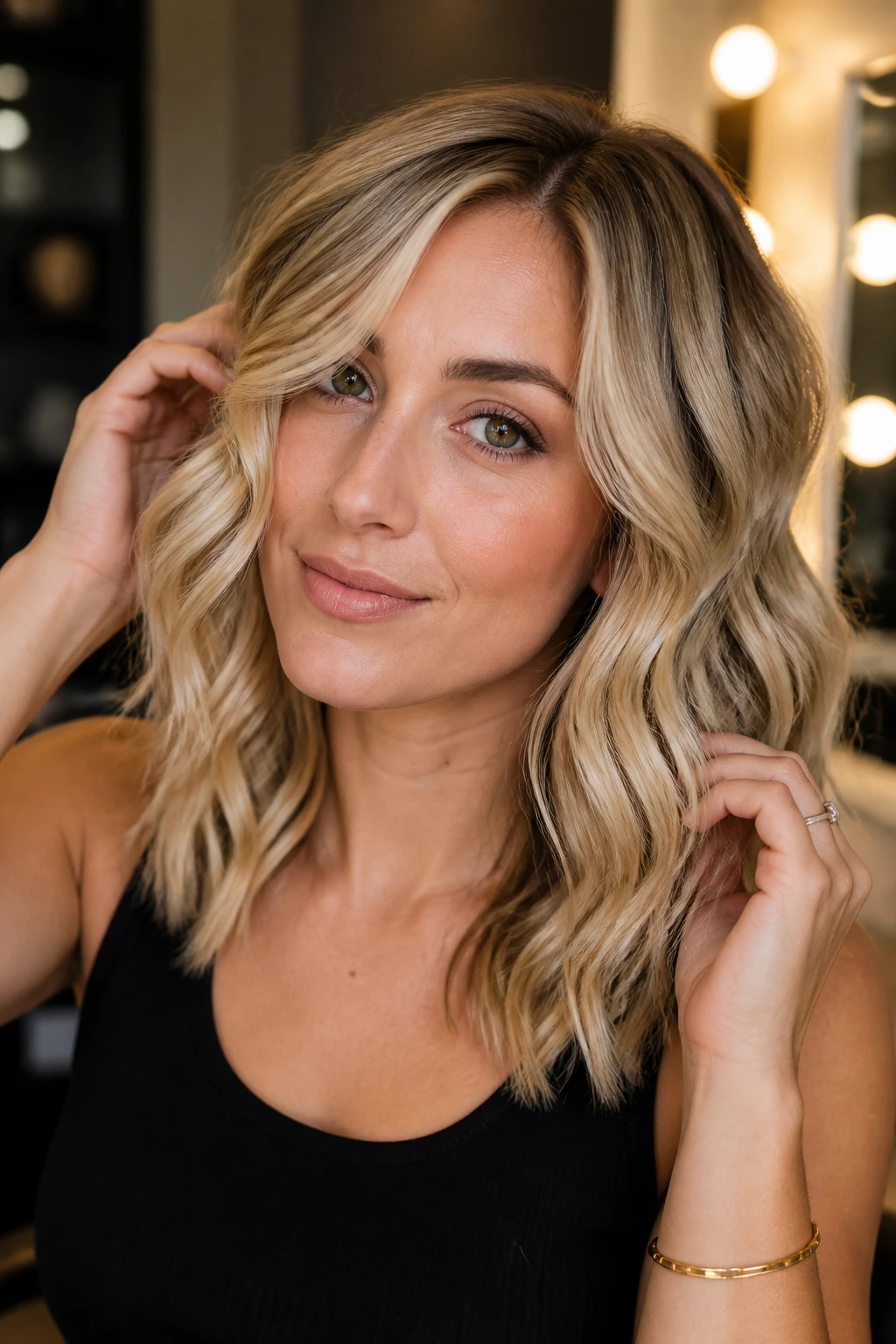
Beige blonde, honey ribbon balayage, and sandblonde are usually the easiest starting points because they work with the wave pattern instead of against it. If you want more edge, champagne or pearl blonde can look sharper, but they ask for a little more tone maintenance.
Is balayage better than traditional highlights for wavy hair?
For most wavy cuts, yes, because balayage gives a softer grow-out and doesn’t rely on obvious stripes. Traditional highlights can still work if they’re fine enough, but chunky foils can fight the movement and make the hair look busier than it needs to be.
How often should blonde wavy hair be toned?
A gloss or toner every six to eight weeks is a solid rhythm for most blondes. If your hair leans cool, you might want a toner refresh a bit sooner. If you like a warmer, softer finish, you can often stretch it longer.
Can dark brown hair go blonde without looking stripey?
Yes, but it usually needs a root shadow, a gradual lift, and lighter pieces placed with the wave pattern in mind. If the highlights are too chunky or too close to the scalp, the result can look stark instead of blended.
Why does blonde hair look lighter on waves than on straight hair?
Because the bends catch light on different planes. Straight hair tends to show every line; waves break up the color and bounce brightness around, which makes the blonde read softer and sometimes brighter at the same time.
What if my blonde turns orange or yellow?
Orange usually means the hair needs more lift or a cooler toner. Yellow usually means the tone has faded and needs a refresh. Use the right gloss for the issue, not just more purple shampoo, because shampoo alone won’t fix a color mismatch.
How do I keep highlighted ends from feeling dry?
Limit heat, use a weekly mask, and avoid piling heavy oil on the outer layer. Dry ends on wavy blonde hair often look worse when overloaded with product, so light layers of moisture work better than one heavy coat.
Should I choose warm or cool blonde if I air-dry my waves?
Warm and neutral blondes are usually easier because they stay soft even when the styling is loose. Cool blondes can still work, but they need cleaner tonal upkeep and a little more attention so they don’t drift dull between washes.
The Blonde That Keeps Its Shape
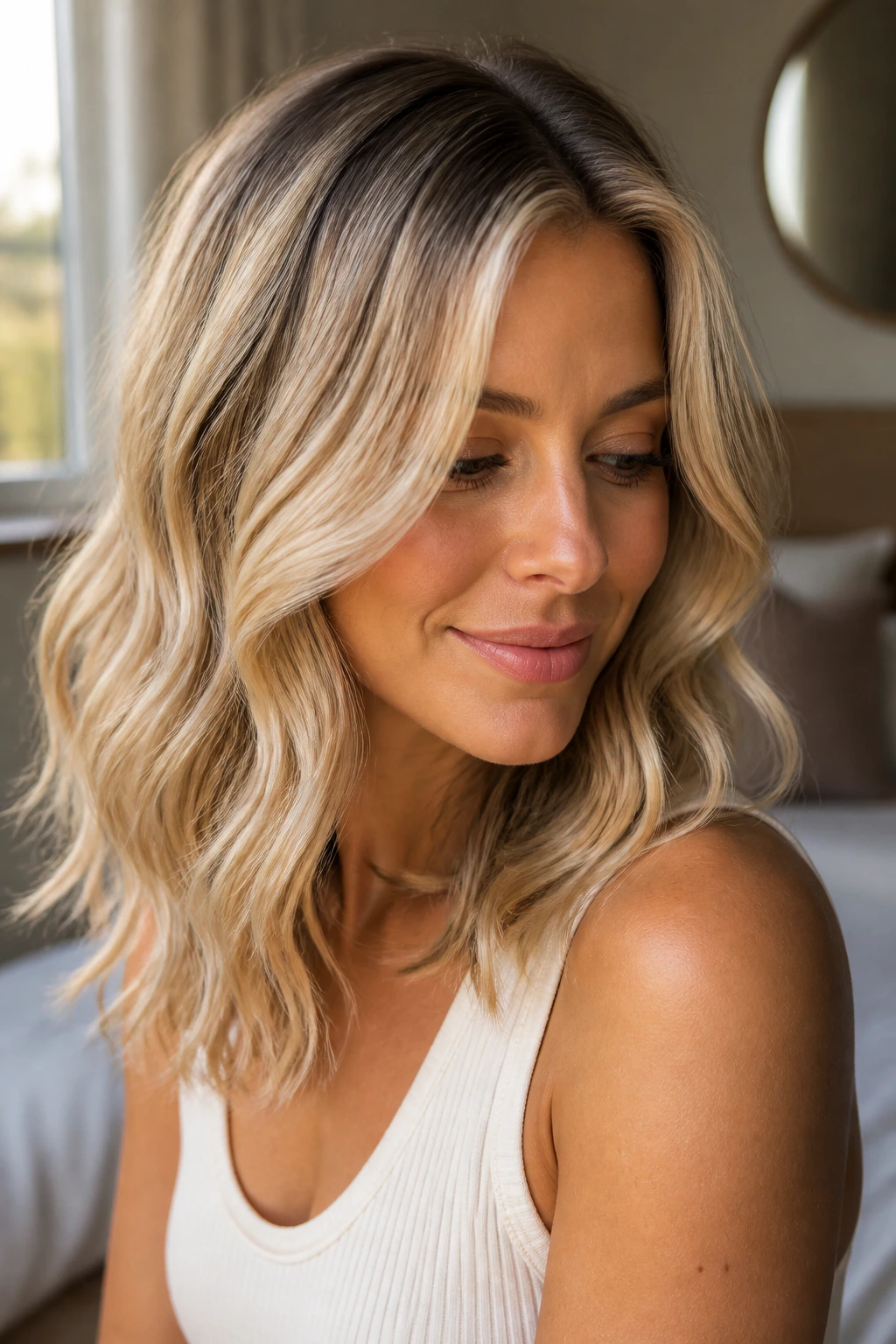
The best blonde on medium-length wavy hair is the one that still makes sense after the hair has moved around for a few hours. That’s the test. Not the mirror at the salon. Not the photo under perfect lighting. The real-life version, with the root showing a little and the waves separating at the ends.
That’s why these looks lean on placement, root depth, and tone more than on pure brightness. Medium waves already bring the motion. The color just has to catch it. If you keep that in mind, the blonde feels softer, richer, and easier to live with — which is usually the point.
Bring your stylist one photo for tone and one for placement, and be specific about where you want the brightness to start. That tiny bit of clarity saves a lot of guessing, and it tends to lead to the kind of blonde that still looks right when you catch your reflection three days later.
