



Medium length hairstyles for fine hair earn their place fast. The wrong length hangs there and looks tired by noon; the right one lands with enough weight to hold a line, enough movement to keep the cut from looking helmet-stiff, and enough room to fake volume where the crown usually falls flat.
Fine hair gets misunderstood all the time. It’s not the same thing as thin hair. Fine refers to strand diameter, which means you can have a full head of it and still need a cut that stops the ends from looking see-through. That’s why a blunt collarbone shape often reads thicker than a heavily layered shoulder cut that sounded good in theory and looked wispy in the mirror.
And medium length is where the styling choices start to matter in a good way. You can tuck it, wave it, bend it, clip it back, throw it half-up, or leave it sleek and let the perimeter do the heavy lifting. The best cuts here don’t fight fine hair; they give it a structure it can actually keep. That’s the sweet spot.
Why These Medium Length Hairstyles Work So Well on Fine Hair

- The ends stay denser: A collarbone or shoulder-grazing line gives fine strands a solid edge instead of a scraggly taper.
- You get movement without losing shape: Long, controlled layers bend with the hair instead of stripping away all the weight.
- Styling stays lighter: These looks usually need a mousse, a root spray, or a little texturizing mist — not a shelf full of heavy creams.
- They grow out cleanly: Medium cuts tend to keep their shape for weeks, which matters when the wrong trim can make fine hair look flatter than it already does.
- You can change the mood fast: A part switch, a quick wave, or a half-up twist changes the whole look without cutting anything else.
- They work with bare minimum effort: Air-dried, blown out, tucked behind the ears, or pinned back, medium length gives fine hair more than one useful life.
1. The Blunt Collarbone Lob
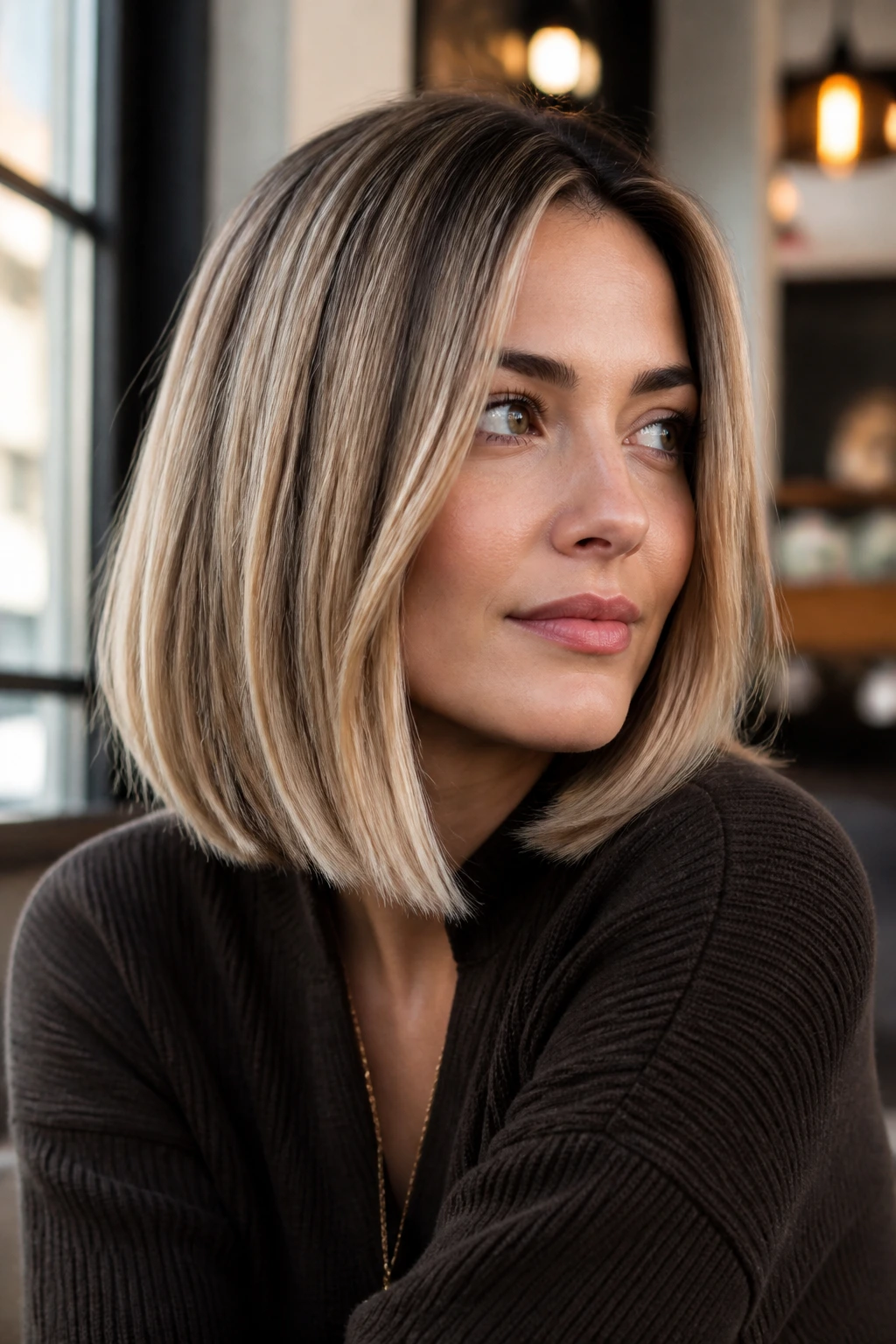
A blunt collarbone lob is the cut I’d trust first for fine hair. It gives you one clean line, and that line makes the ends look fuller than they are. When the perimeter lands right at the collarbone, the hair has enough length to move but not enough to drape into limp strings.
This one shines on straight and slightly wavy textures because the edge stays visible. Ask for the bottom to be left blunt or only lightly beveled. If the stylist starts carving into the ends with too much texturizing, the whole point disappears.
Styling note: rough-dry the roots first, then use a 1.25- or 1.5-inch round brush to create a tiny bend under the ends. Keep the product light. A pea-sized amount of mousse at the crown is enough.
2. The Soft Layered Lob
Why do some layered cuts make fine hair look thinner while others add body? Placement. A soft layered lob works because the layers stay long and hidden through the interior instead of chewed up around the bottom edge.
That matters. Fine hair needs some movement, but it does not need every inch of the perimeter shredded. Ask for layers that start below the chin or at the cheekbone area, then stop there. The bottom line should still read as a full shape.
I like this version for hair that is fine but not sparse, especially if it has a little natural bend. It keeps the line from looking blocky, and it gives you enough lift to wear the hair loose without feeling like you’re staring at a sheet of it.
3. The Curtain Bang Lob
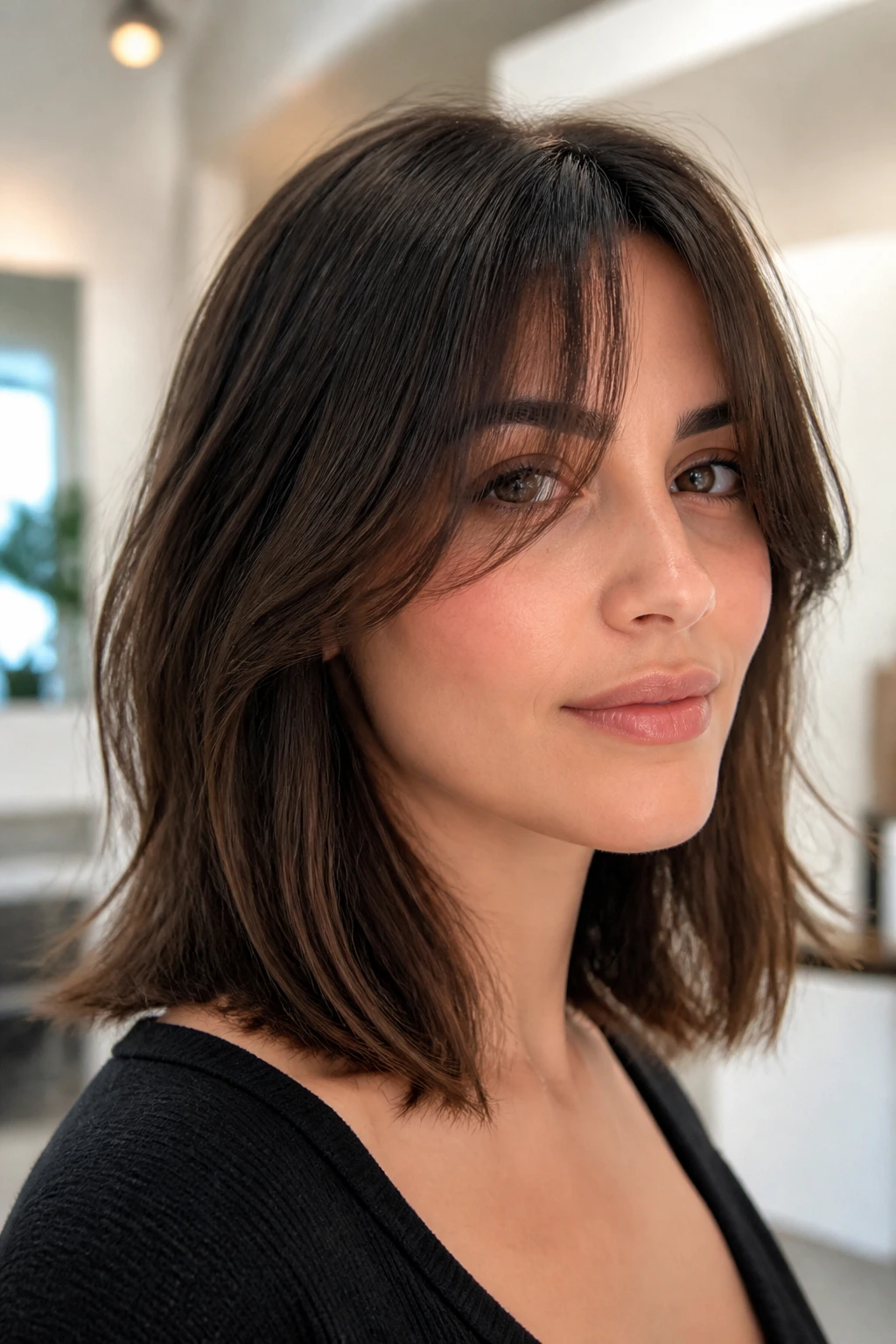
Curtain bangs can be a gift on fine hair, but only when they’re kept airy. A thick, heavy fringe eats up density at the front and makes the rest of the hair look flatter by comparison. The softer version opens at the center and drops into the sides around the cheekbones.
The trick is to keep the bang area narrow and blended, not dense and blunt. On medium length hair, curtain bangs can pull attention up toward the eyes and give the crown a little visual lift, which is half the battle when the top section wants to lie down.
Blow them away from the face with a round brush and let them cool in that shape. If they’re still too full, a quick sweep with a dry texture spray at the roots usually settles them without making them sticky.
4. The Deep Side-Part Lift
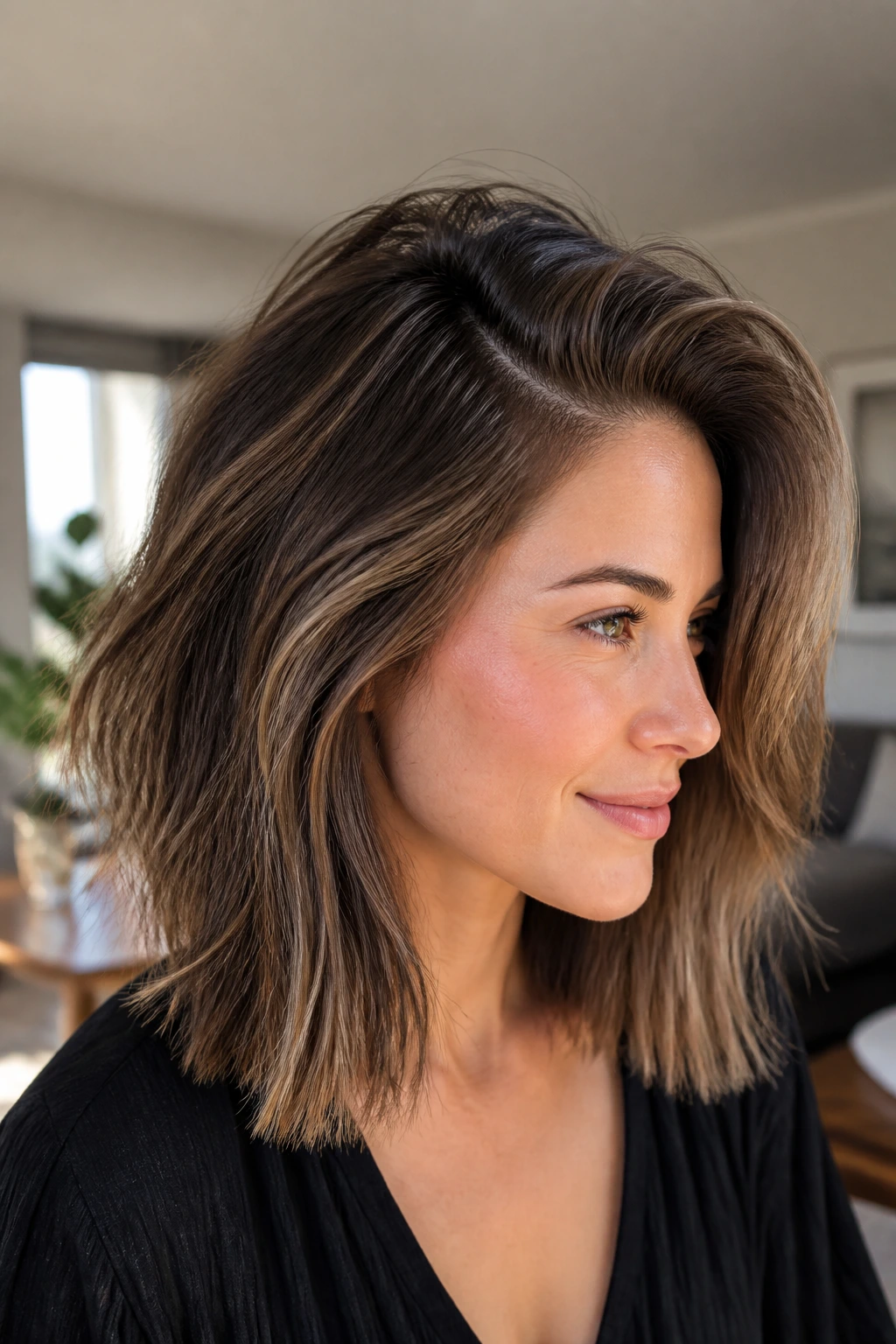
A deep side part is one of the cheapest volume tricks in the book, and I mean that as a compliment. Fine hair often falls into the same groove day after day, and a part that sits in exactly the same place will flatten the root even more.
Move the part an inch or two off center, then sweep the heavier side over with a vent brush or your fingers. The hair on the lifted side has a chance to rise at the crown instead of clinging to the scalp, and the whole cut suddenly looks fuller.
This works especially well with medium-length waves or a collarbone lob because the part becomes part of the style, not just a detail. If your hair starts collapsing by lunchtime, flip the part to the other side and rework the root with a few misted sprays of dry shampoo.
5. The A-Line Lob With a Gentle Angle
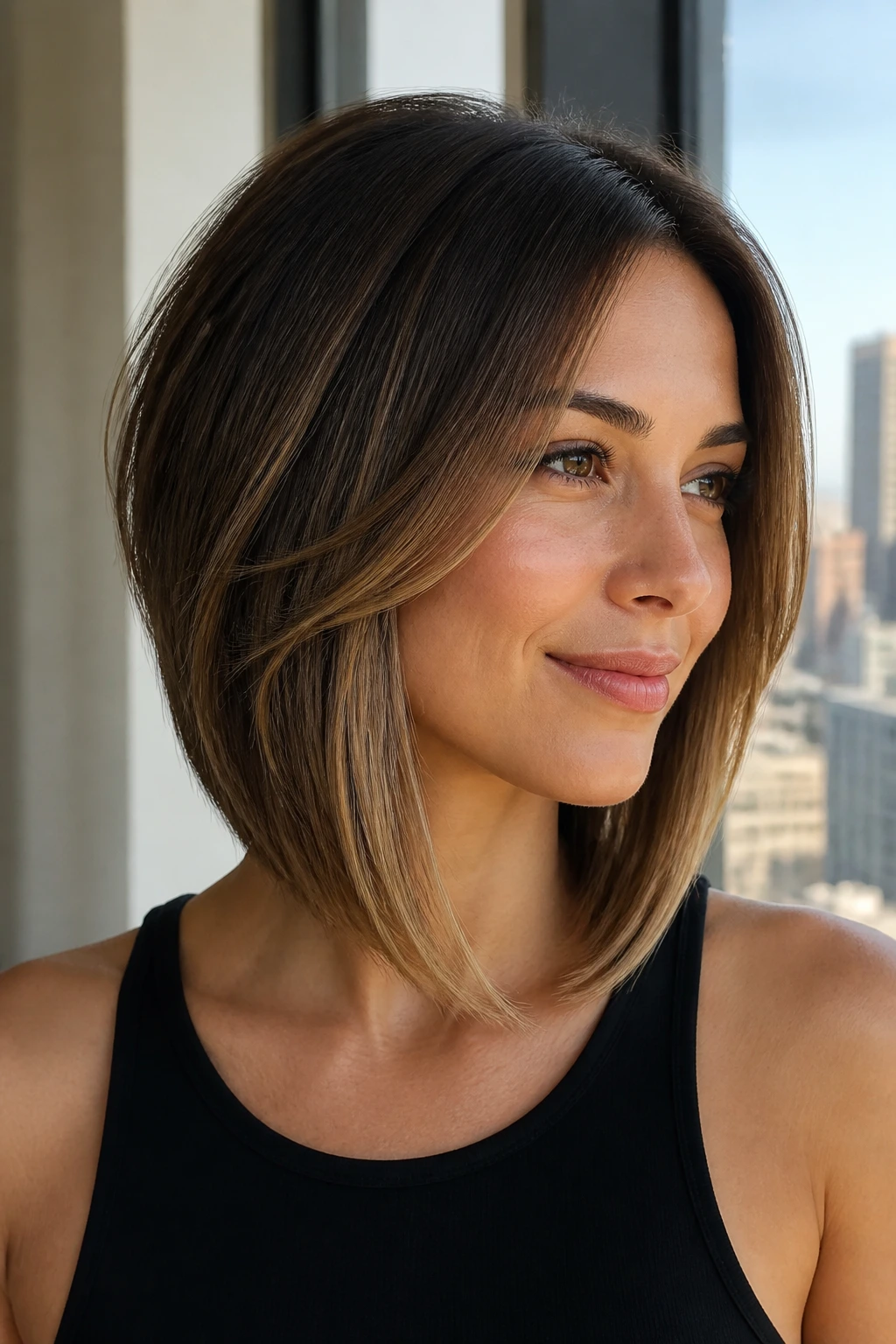
An A-line lob gives fine hair a little architecture. The back sits slightly shorter, the front drops a touch longer, and that subtle slope keeps the ends from feeling too blunt or too shaggy. I prefer a gentle angle on fine hair — nothing severe, nothing that screams salon diagram.
Why it works: the front pieces frame the face while the back carries less weight, which helps the crown stay lifted. Too much length in the back can drag the whole shape down. Too much angle can look dated fast. The middle ground is where this one lives.
If your face is round or soft in shape, this cut can add a bit of length visually. If your hair is pin-straight, keep the angle subtle and the ends clean. That keeps the style from looking stringy when it grows out.
6. The Feathered Shag for Fine Hair

Fine hair and shags can get along, but only if the layers behave. The old-school shredded shag is too aggressive here. What you want is a feathered version with long, airy layers and enough weight left at the perimeter to keep the cut from looking see-through.
The best feathered shag on fine hair starts with a medium base — usually collarbone to shoulder length — then builds soft bends around the cheekbones and jaw. It’s a little messy, a little lived-in, and much better than over-thinned ends that sit in separate pieces.
Air-dry it with mousse or diffuse on low heat. Skip the heavy cream that seems designed for thick curls. Fine hair usually wants a little grip, not a coating.
7. The U-Shaped Medium Cut
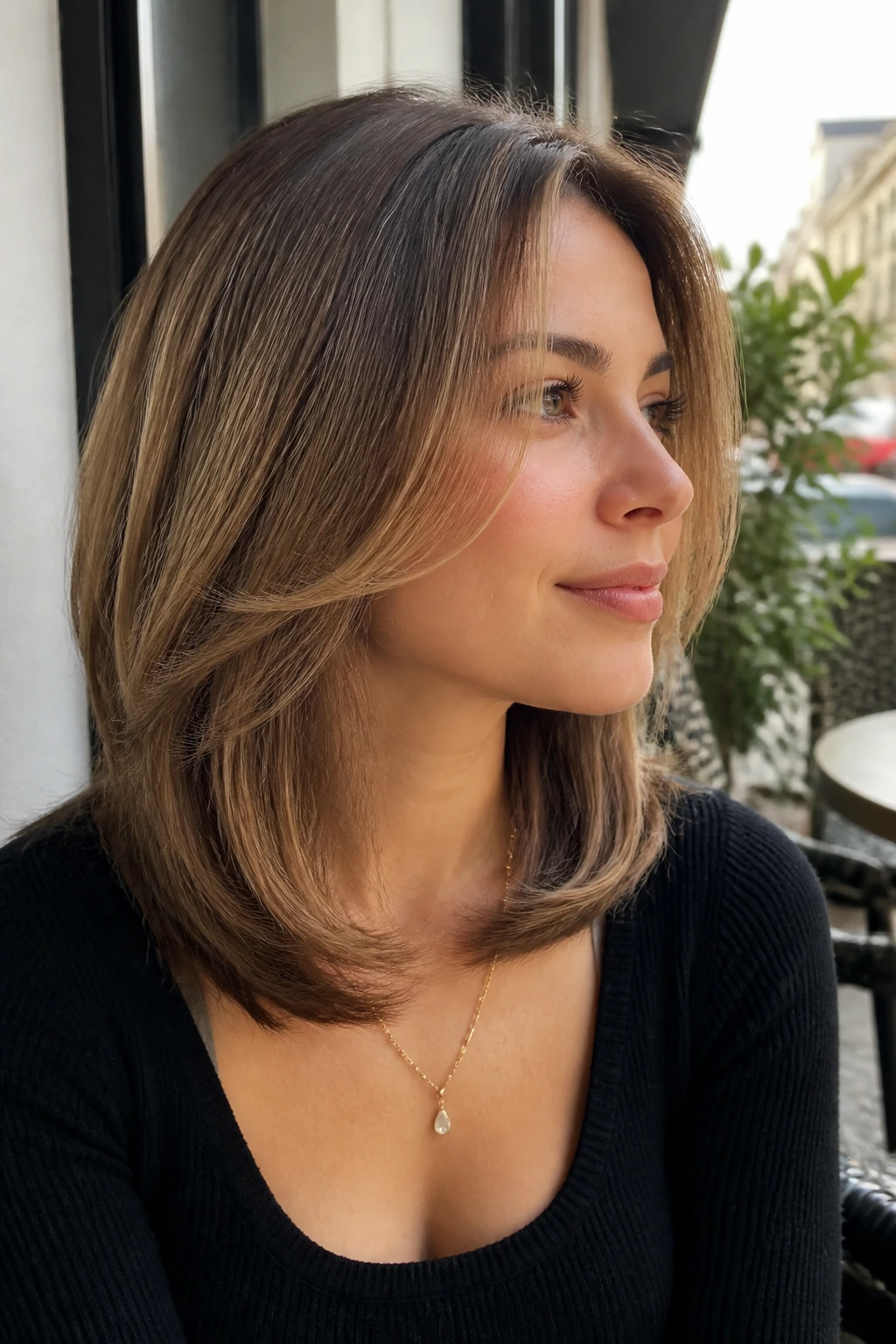
A U-shaped cut is one of those quietly smart choices. The back curves gently upward, the sides stay a little longer, and the whole shape keeps more visual density at the ends than a flat straight line would.
That curve matters because it gives fine hair a softer silhouette without carving away too much weight. It’s especially nice if you like to wear your hair down most of the time and want it to feel fuller when it rests on the shoulders.
This shape also grows out gracefully. After a few weeks, the curve softens instead of turning into an awkward shelf. That’s a small thing, but for fine hair it makes a real difference.
8. Face-Framing Layers With Flipped Ends
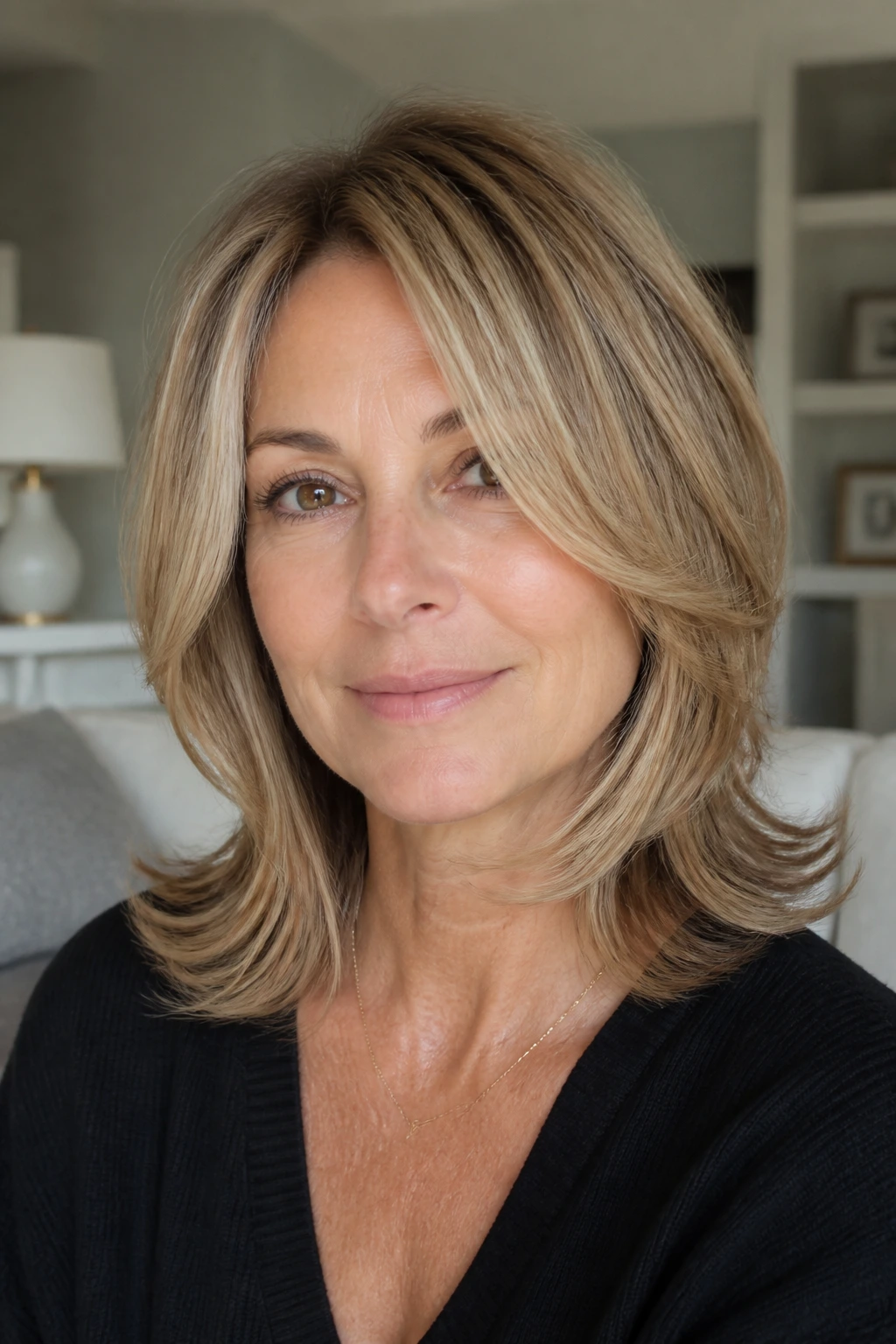
Face-framing layers are where you can cheat a little volume without touching the whole head. The pieces at the front start around the chin or cheekbone, then taper softly so the face gets shape and the rest of the hair keeps its thickness.
The flipped-end finish is the fun part. Curl the ends under or away from the face with a flat iron or round brush, just enough to create that gentle bend that makes the cut feel more awake. Fine hair that hangs poker-straight all the way through can look sparse; a little movement at the front changes the read of the whole style.
This is one of my favorite choices for anyone who wants a medium cut that doesn’t feel severe. It’s polished without being rigid. That’s rare.
9. The Modern Rachel Cut
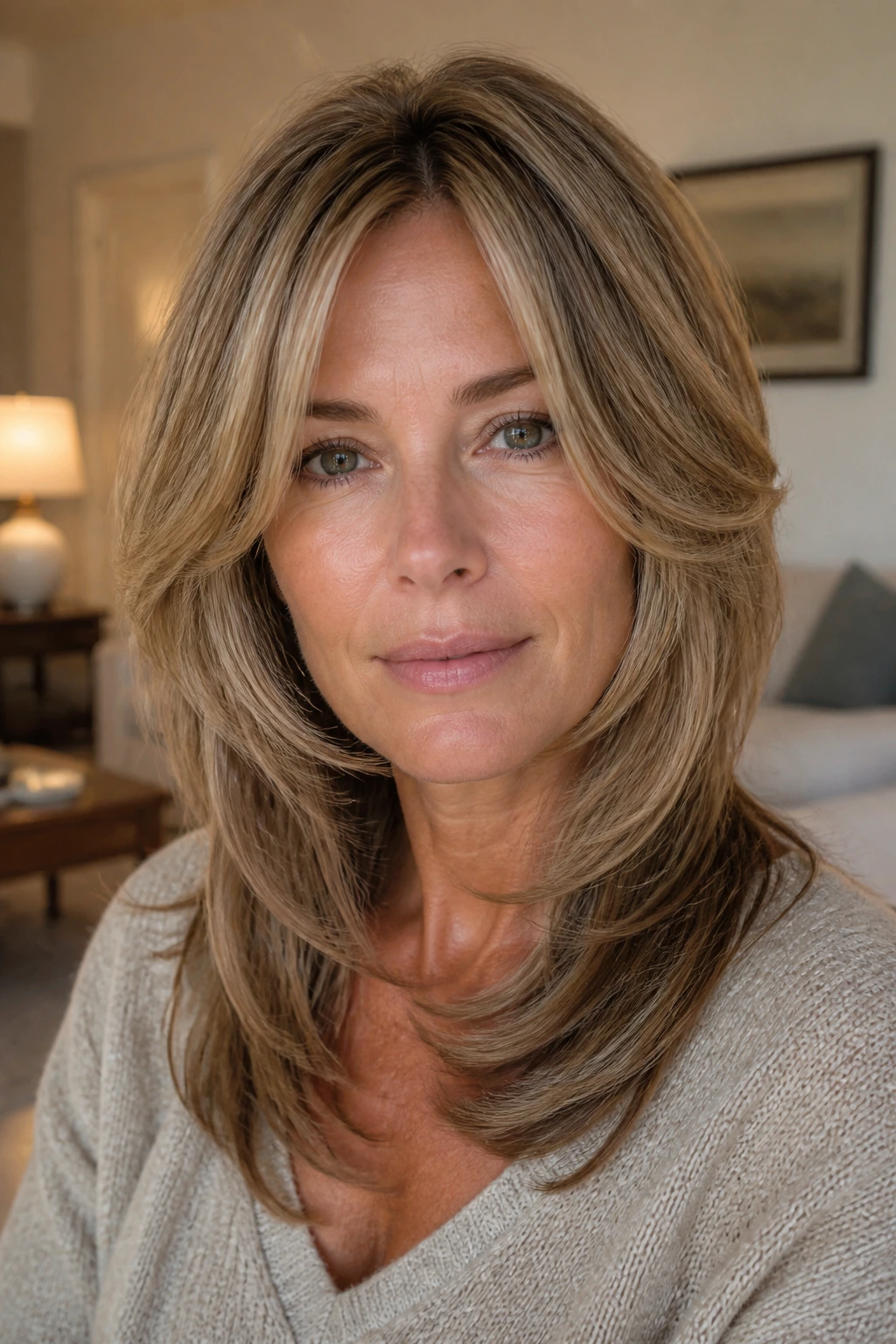
The modern Rachel cut borrows the face-framing shape people remember, but it behaves better on fine hair when it’s softened. The original version could get bulky on top and flip out in odd places. The updated version keeps the layers long, blended, and easier to live with.
What makes it work is the balance between lift and weight. You get movement around the face and crown, but the perimeter still has enough density to look full. If your hair is fine and you like a blowout finish, this is one of the better medium-length hairstyles to ask for.
Use a round brush and direct the front layers away from the face, then let them cool before touching them. Fine hair keeps shape better when you leave it alone for a minute. Annoying, yes. Worth it, also yes.
10. The Sleek Middle-Part Lob
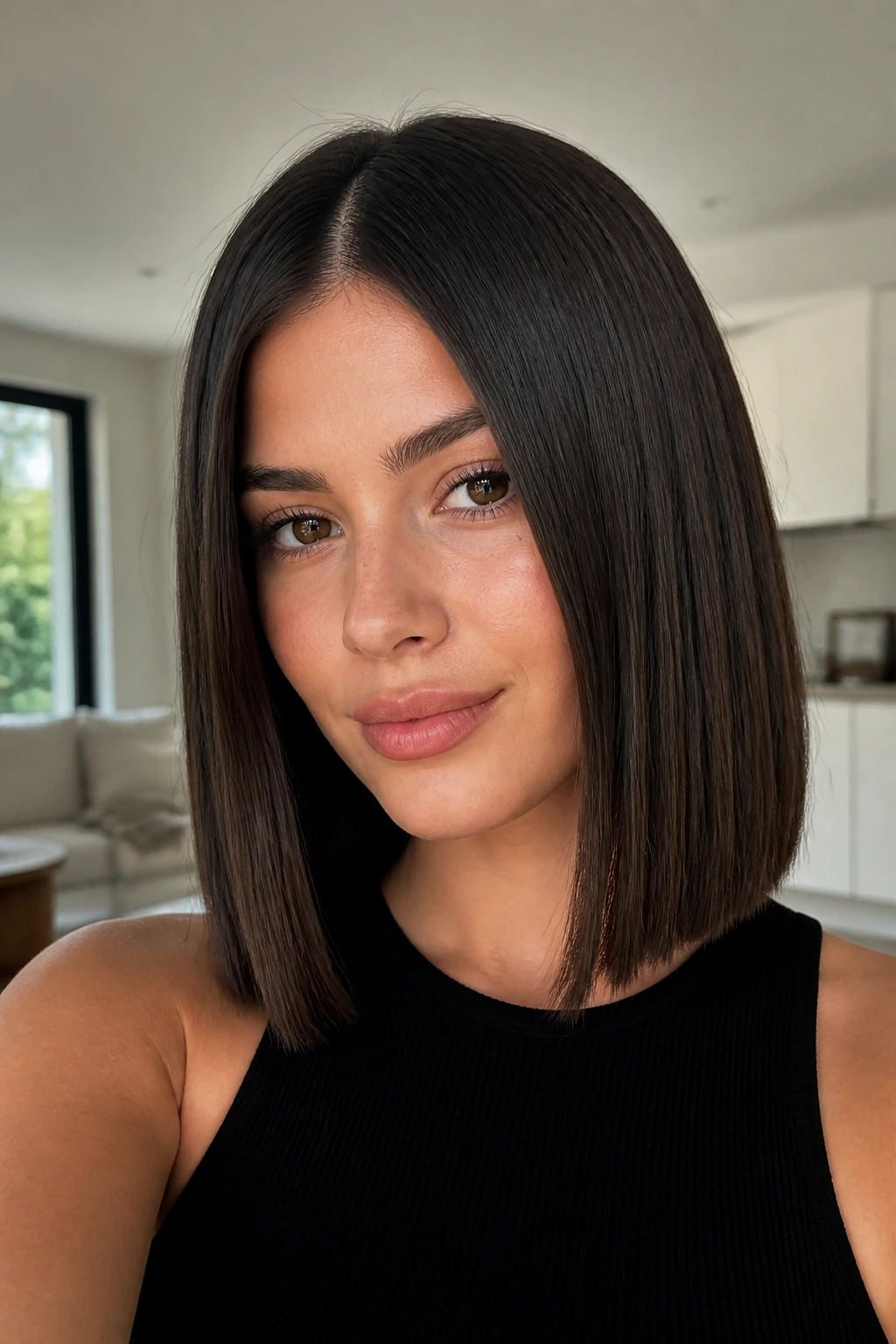
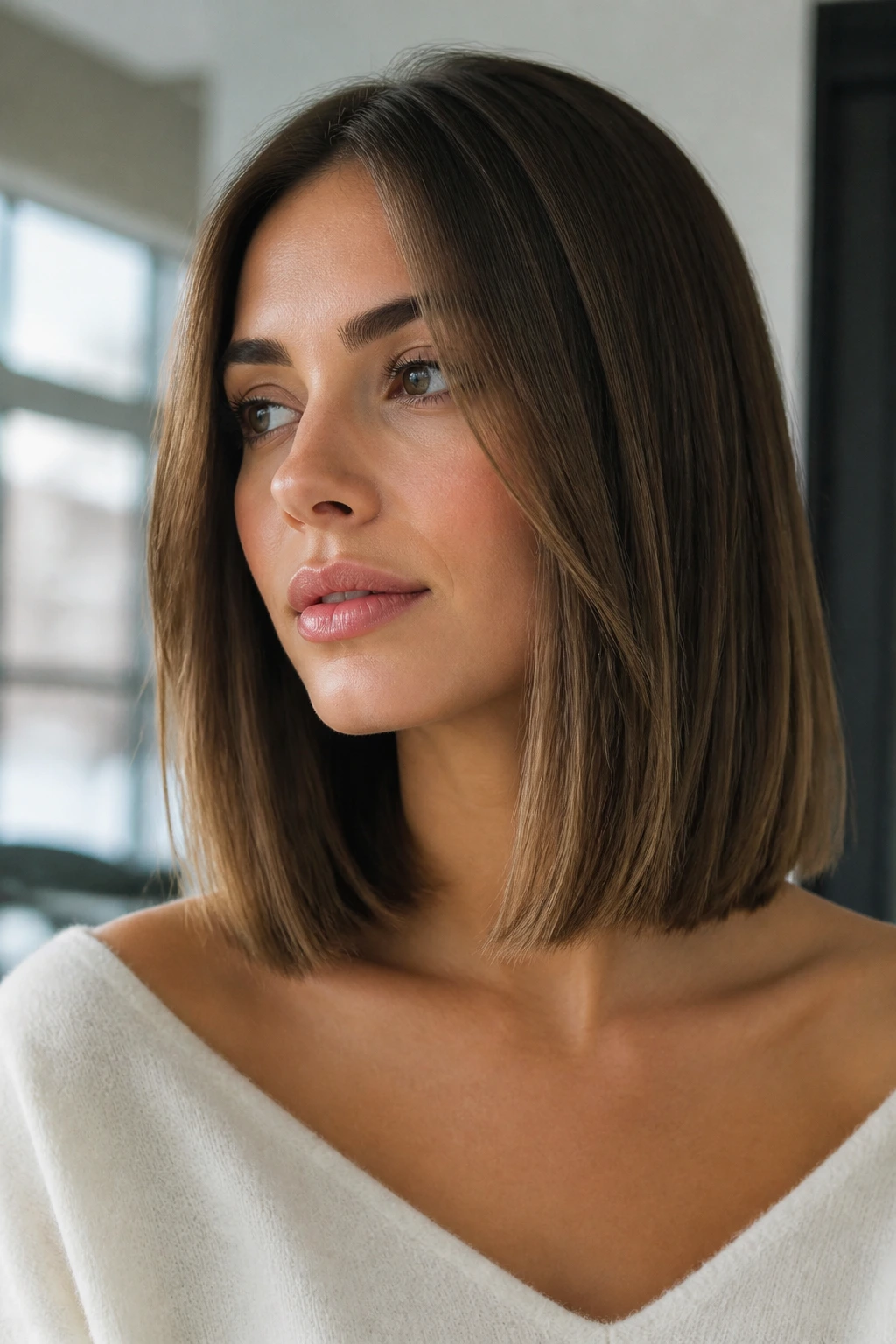
A sleek middle-part lob can look gorgeous on fine hair if the ends are blunt and the styling is clean. The middle part gives symmetry, and the blunt edge stops the style from dissolving into a wispy curtain.
The key is restraint. Don’t load the hair up with serum or smoothing cream. A drop on the very ends is enough. Too much shine product clings to fine strands and makes them collapse faster than humidity can.
This shape works best when you want polish instead of softness. It’s strong on straight hair and on hair that already falls in a smooth line. If the crown is flat, a quick root lift spray before blow-drying helps keep the top from looking pressed down.
11. Loose Waves With Root Lift

Do loose waves make fine hair look thinner? Not when the bend starts below the eye line and the roots stay lifted. That’s the trick. If you curl all the way from scalp to ends, the hair shrinks and can look smaller. If you keep the top section straighter and add movement lower down, the style looks fuller.
Use a 1-inch or 1.25-inch iron, take medium sections, and wrap only the middle and ends. Leave the last inch or so straighter if you want the wave to look modern instead of overdone. Then clip the roots while the hair cools. That one step is boring, but it pays off.
Fine hair likes waves that feel loose and slightly imperfect. Brush them out only after they’re fully cool, then mist a light texture spray through the mid-lengths. Not at the roots. Never at the roots if they’re already soft.
12. Brushed-Out Waves
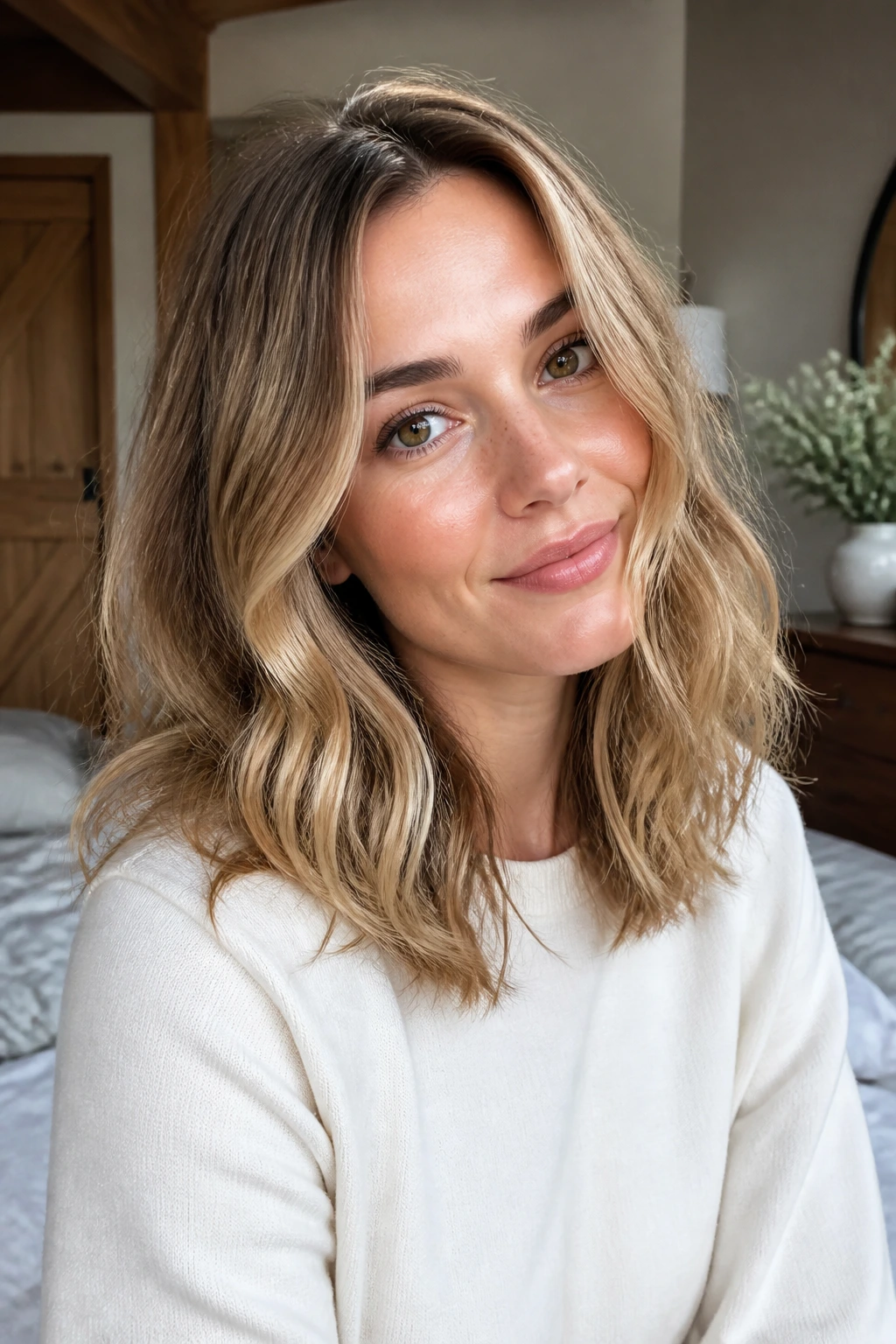
Brushed-out waves are different from loose waves in one very useful way: they trade curl definition for softness and body. For fine hair, that brushed finish can make the whole head look thicker because the strands separate less rigidly and settle into one bigger shape.
The style starts with a larger barrel or a loose heat-set wave. Let the hair cool. Then use a soft brush or wide-tooth comb to break up the pattern until it looks airy, not crunchy. That cooling step matters more than the brushing itself.
I’d reach for this when you want a little glamour without tight curls that disappear by dinner. Add texture spray only in the mid-lengths and ends. The roots should still feel clean.
13. The Half-Up Crown Lift
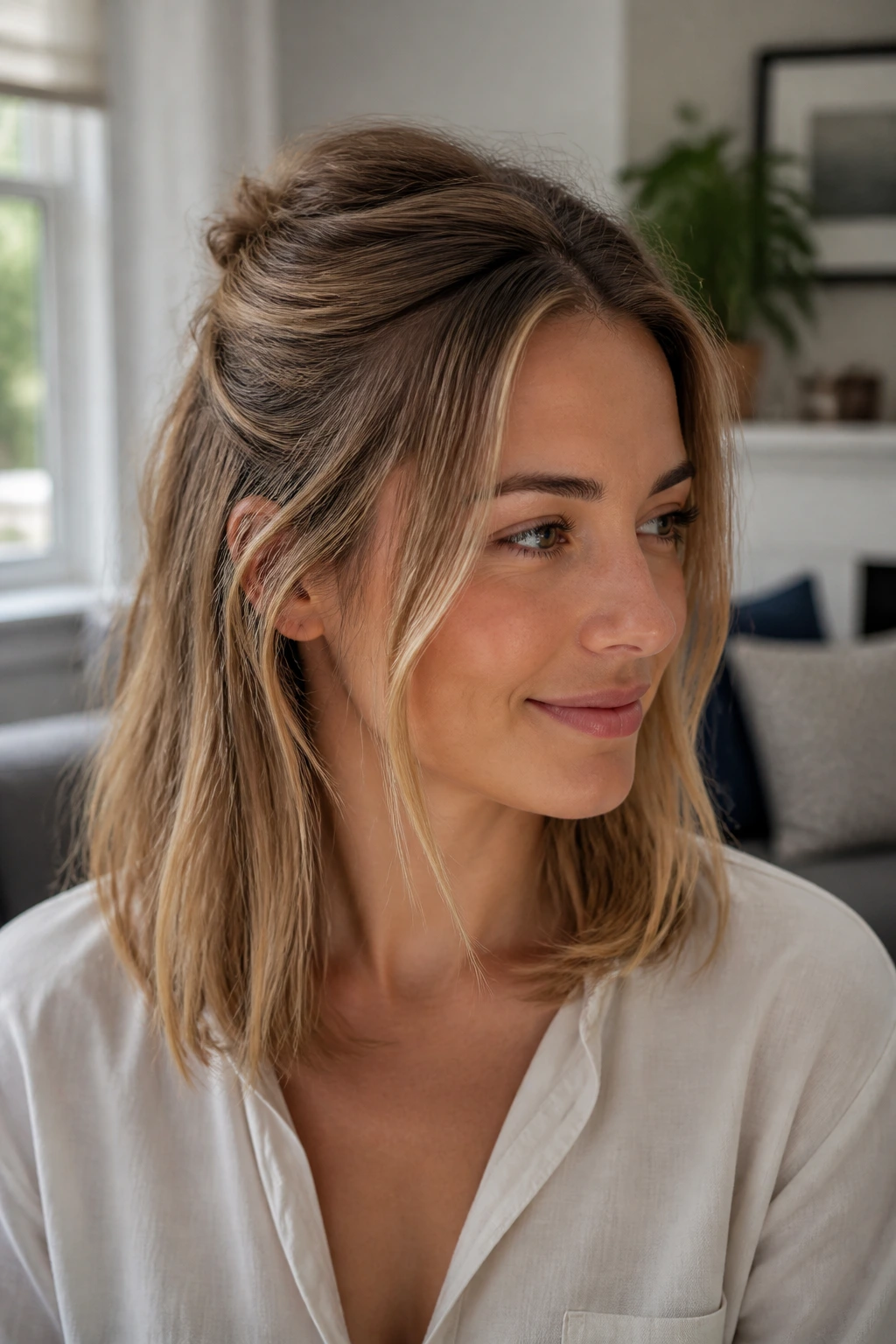
A half-up crown lift is the fastest rescue for fine hair that goes flat at the top. Pulling the top section back takes some pressure off the crown, and a little lift at the base of that section makes the whole style look thicker.
Keep the top loose. That’s the mistake people make. If the half-up section is pulled tight, you expose the scalp and lose the soft volume you were trying to create. A tiny tease at the crown, or even just pinching the top section after it’s secured, is enough.
This works especially well on day-two medium hair. Spray the roots lightly first, then secure with a small elastic or a couple of bobby pins. The rest can stay down and wavy, or smooth and tucked. Both read well.
14. The Twisted Half-Up
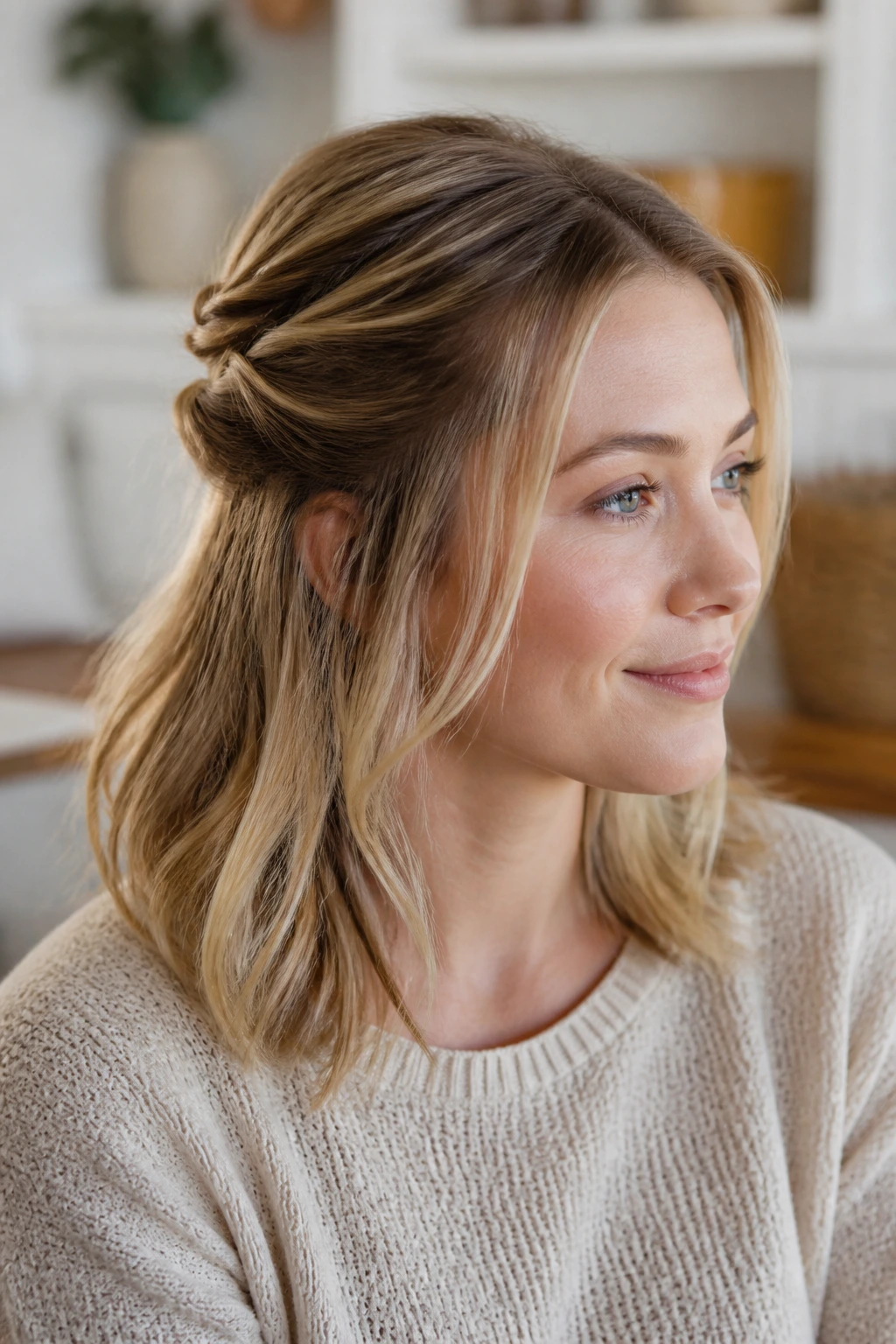
The twisted half-up is a cleaner cousin of the crown lift. Instead of pulling a whole section back, you twist the sides from the temples and pin them at the back of the head. That leaves the crown less flattened and gives the front pieces a bit of direction.
It’s a smart choice when you want the hair out of your face but don’t want a full ponytail or bun. Fine hair tends to look better when the style doesn’t demand too much bulk from the top section, and this one works with what the hair already has.
Use two small pins on each side so the twist stays low and snug without looking tight. Pull a few narrow pieces loose around the face. That softens the line and keeps the style from feeling severe.
15. The Low Knot With Soft Tendrils
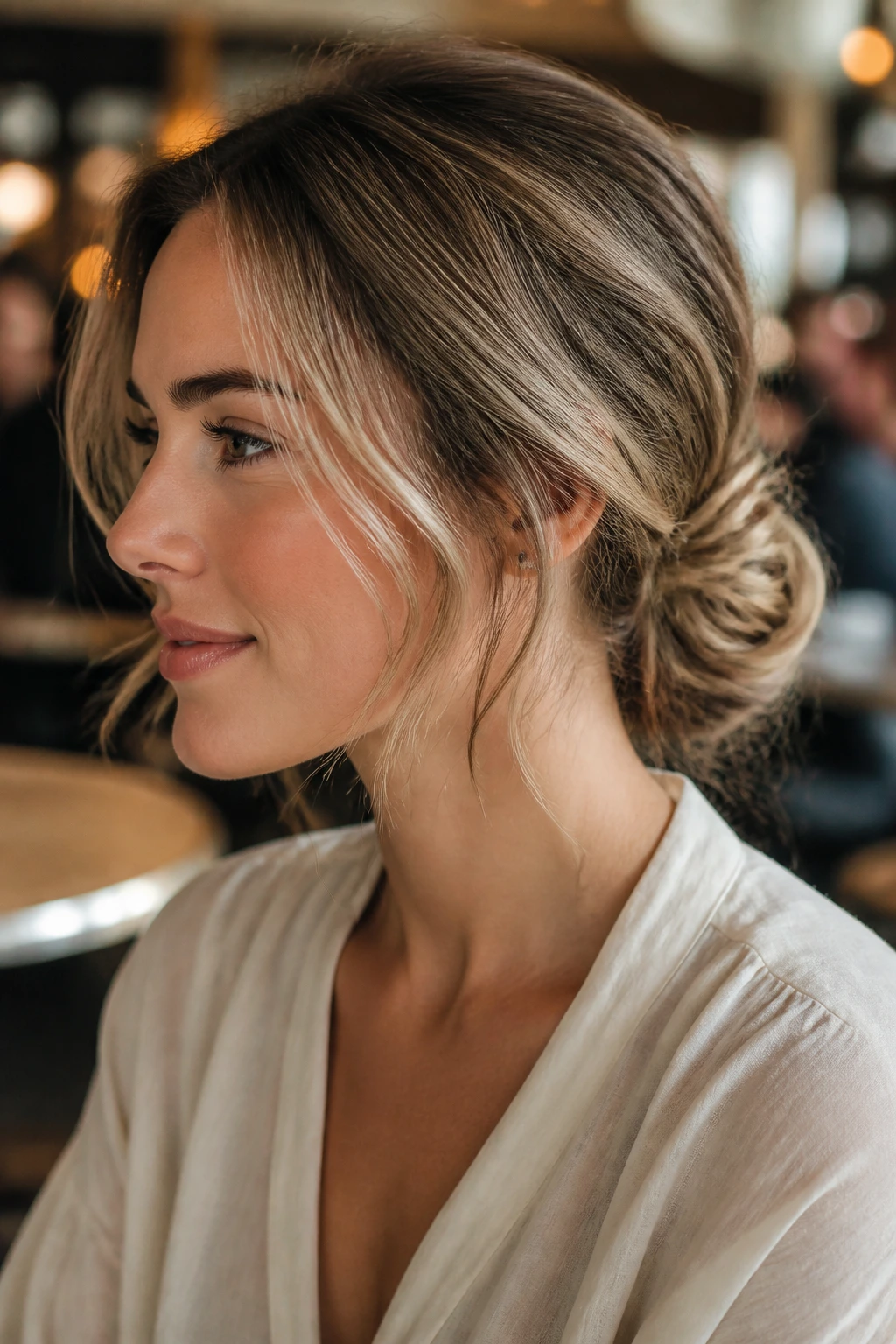
A low knot sounds plain until you loosen it correctly. On fine hair, a bun that sits too high can look tiny, and a bun pulled too tight can show every thin spot. A knot at the nape with soft tendrils around the face tends to look fuller and calmer.
The trick is to build a little width before you pin it. Twist the hair loosely, wrap it once, and tuck the ends under rather than folding them into a tight ball. Then pull a few front pieces free so the style doesn’t feel too polished.
This is one of the easiest medium-length hairstyles for fine hair when you’re short on time. It works better if the hair has a bit of texture already. Clean, slippery hair can be fussy; second-day hair is usually easier.
16. The Side-Swept Blowout
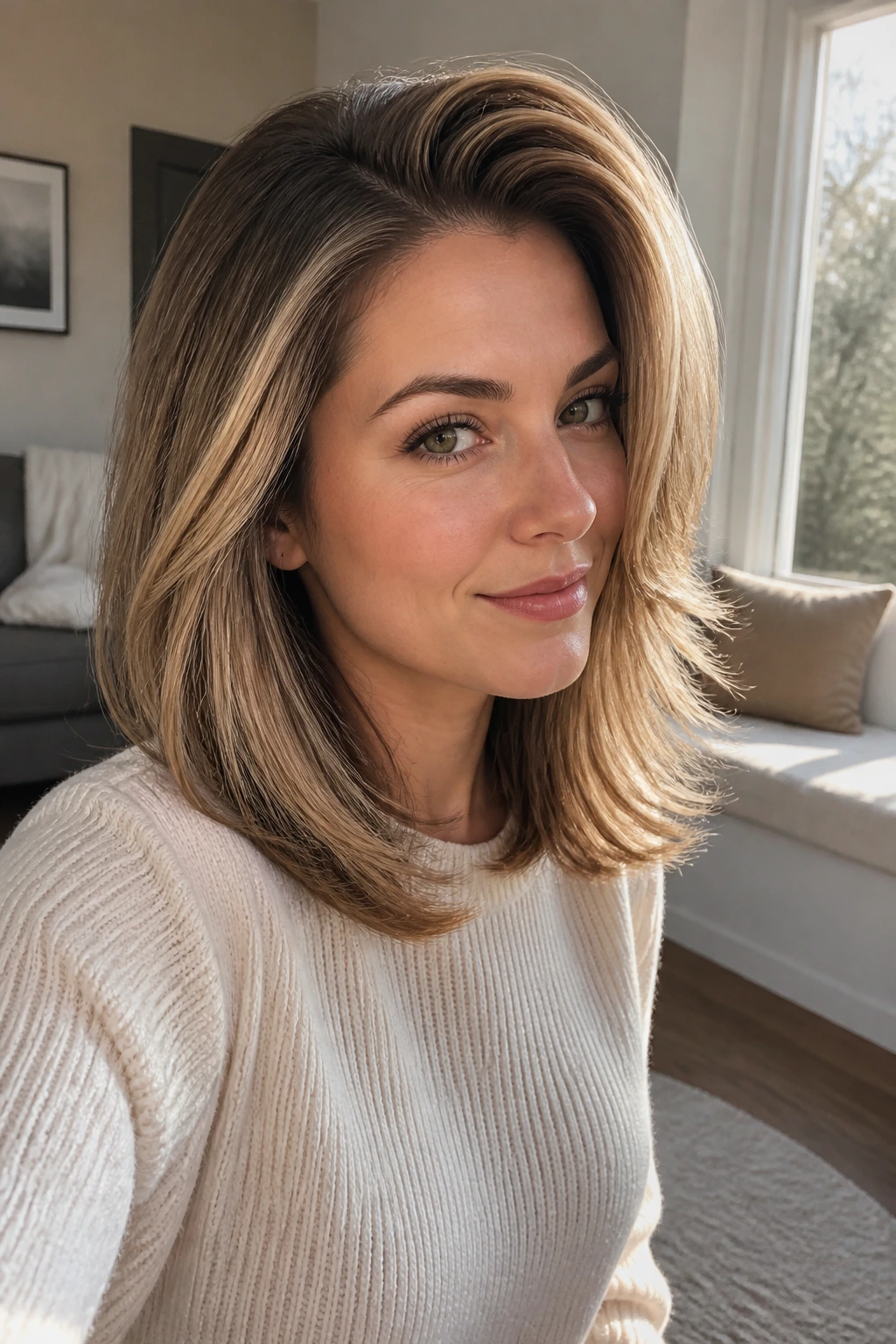
A side-swept blowout gives fine hair a shape that feels richer than a center-parted straight style. The side sweep adds lift at the root and lets the front sections flow in one direction, which creates the illusion of density through the top.
Use a round brush or large rollers to direct the front away from the face. Keep the ends smooth but not pin-straight. A slight bend at the bottom keeps the style from flattening into one flat sheet by the afternoon.
This is the look I’d pick for someone who wants movement with a little drama. Not pageant drama. Just enough. If your hair has a tendency to separate at the crown, a side sweep gives the root a reason to rise instead of settle.
17. The Bubble Ponytail
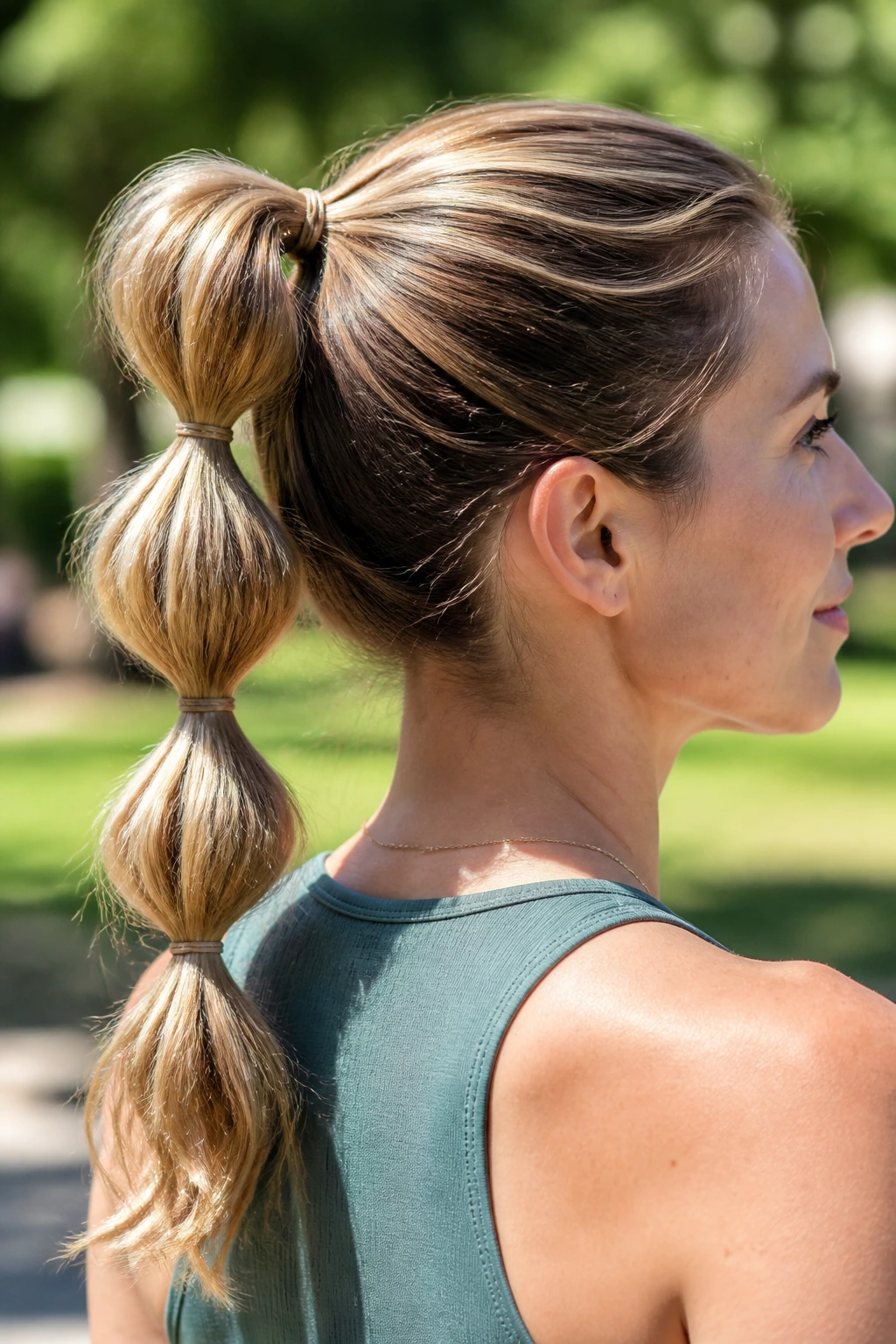
Bubble ponytails are one of those styles that look fussy and are not. For medium-length fine hair, they create visible volume by breaking the ponytail into sections with clear elastics. Each bubble makes the tail look fuller than it really is.
Start with a low or mid-height ponytail. Secure it, then add elastics every 2 to 3 inches down the length. Gently tug each section outward so the bubbles widen. That tiny widening motion is the whole trick.
I like this better than a tight sleek ponytail for fine hair because it gives the eye more structure to read. If the hair is too short to bubble dramatically, keep the sections smaller. Even three rounded sections can make the tail look thicker.
18. Tucked-Behind-Ears and Polished Ends
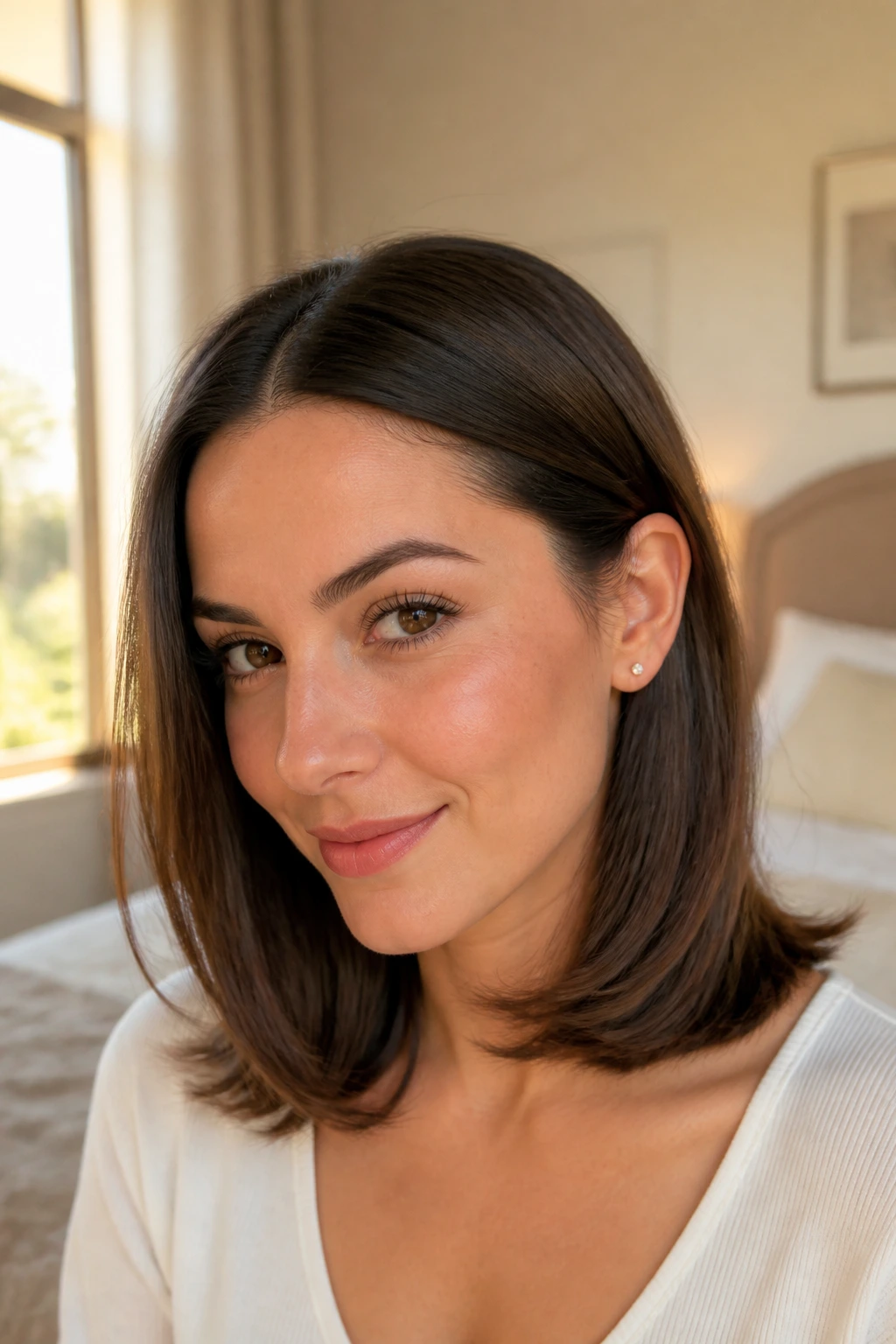
Tucking one or both sides behind the ears is a simple move, but on medium-length fine hair it can be the difference between flat and intentional. The key is to keep the ends polished and the front pieces soft enough that the tuck doesn’t expose every layer.
This style works because it cleans up the outline of the face and lets the rest of the hair sit freely. A blunt or softly beveled perimeter is especially useful here. If the ends are too wispy, the tucked shape can look thin around the jaw.
Wear it with a center part for a cleaner line or an off-center part for a little lift. Either way, finish the ends with a flat iron bend or a round brush so they curve slightly inward. Sharp ends and tucked sides can look harsh on fine hair. A softer finish behaves better.
19. The Soft Braided Headband
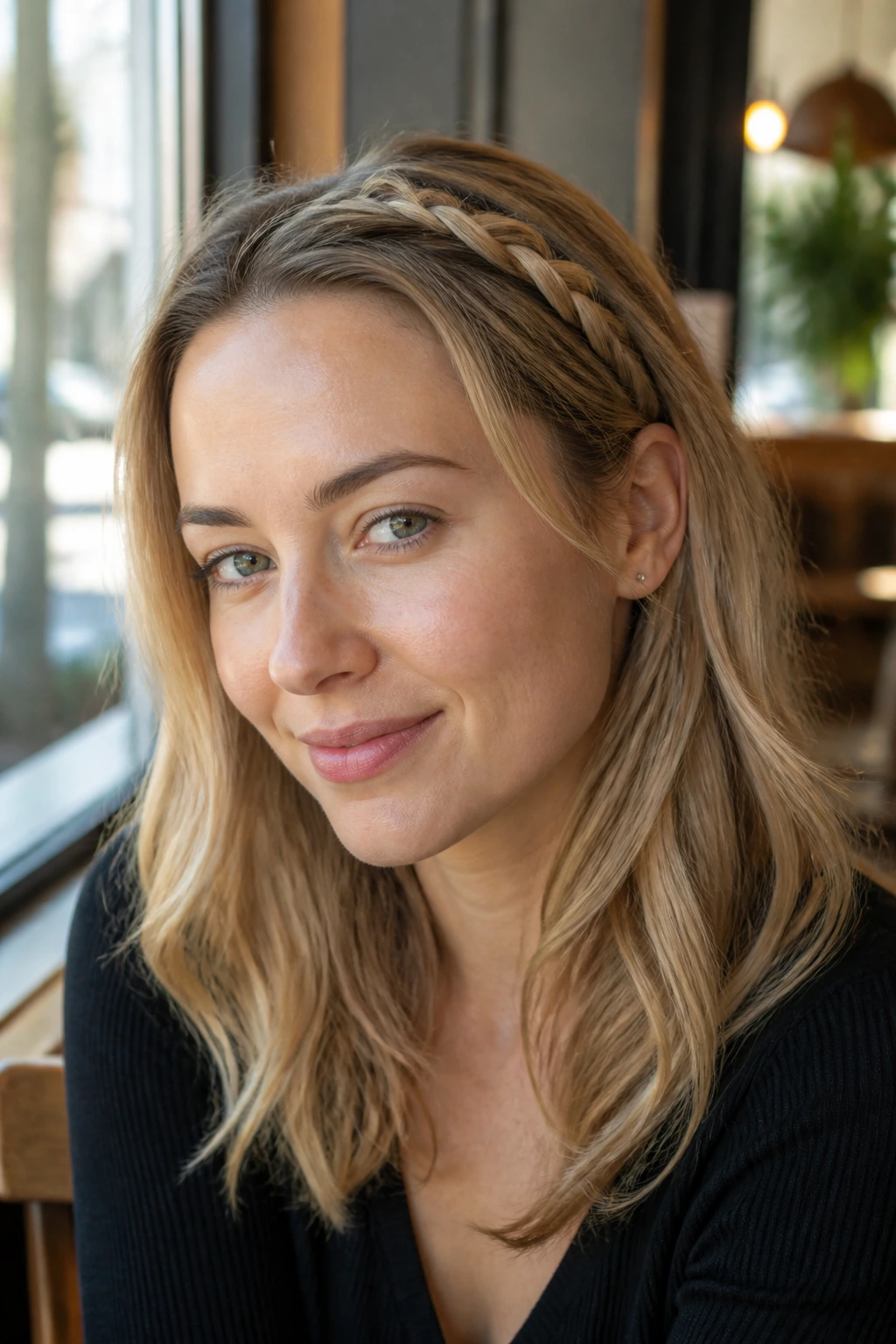
A soft braided headband gives fine hair texture right where people look first — across the front and crown. The braid can be tiny and loose, not a giant showpiece. That’s actually better here. A small braid adds interest without eating up the bulk of the style.
This is useful for medium-length hair that needs a second-day fix or a way to keep the front off the face. Pull the braid across the crown and pin it discreetly behind the ear. Leave the rest of the hair loose and either smooth or waved.
Don’t braid too tightly. Tight braids flatten the root and make fine hair look narrower than it is. A softer braid gives you that lived-in texture without shrinking the head shape.
20. The Clipped-Back Volume Style
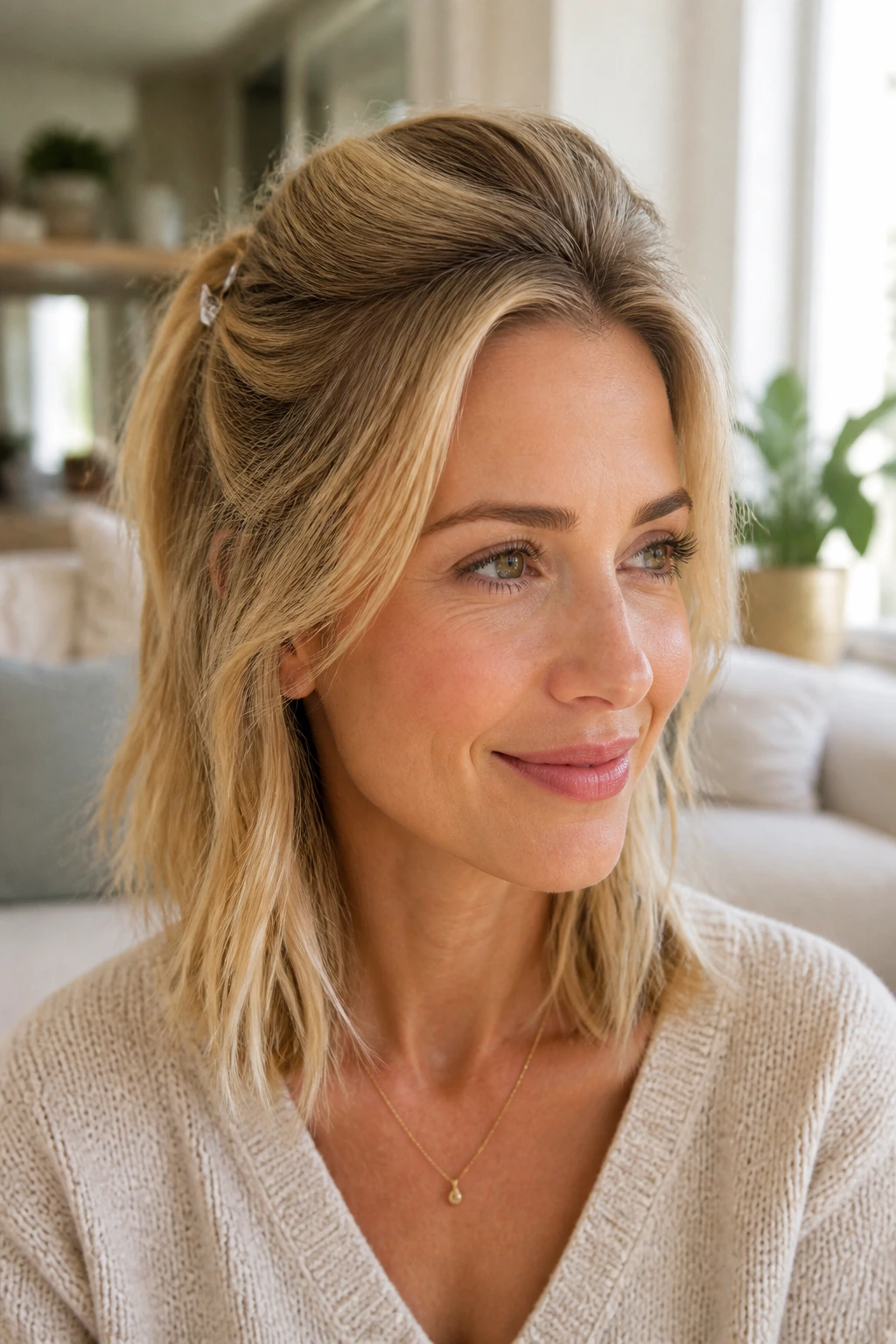
A clipped-back volume style is the quickest rescue for medium-length fine hair when the roots are tired but the ends still look good. Use a small claw clip or a pair of decorative pins to lift the sides and leave the crown alone.
The point is not to flatten the front. It’s to remove hair from the face while preserving a little height at the top. A chunky clip can drag fine hair down, so choose something lighter and smaller than you think you need.
This style works well on straight, wavy, or slightly bent hair. It’s especially useful on days when dry shampoo has already done its job and you don’t want to restart the whole routine. A quick clip, a finger-combed crown, and you’re back in business.
What Medium Length Actually Does for Fine Strands
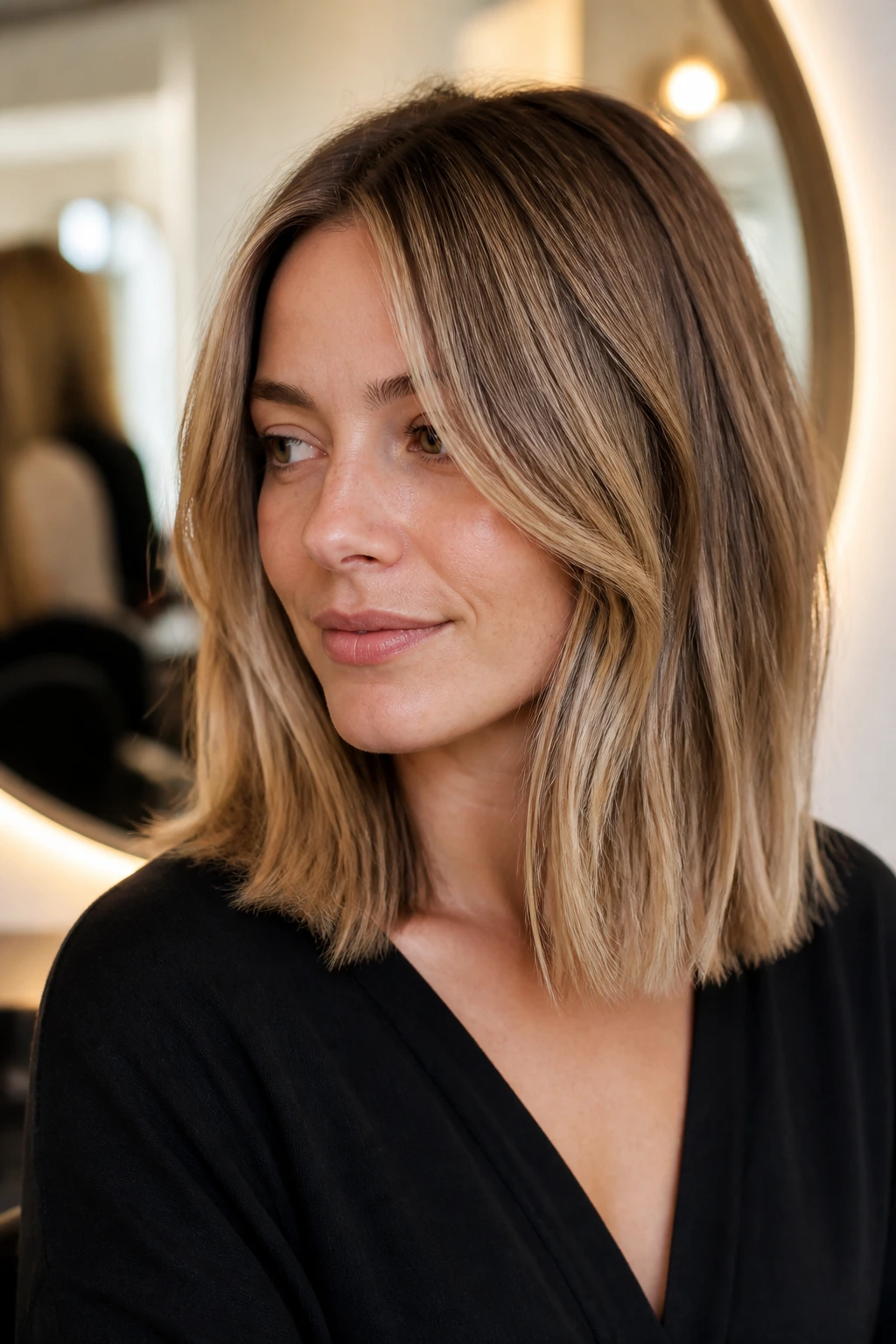
Medium length sits in a useful middle zone for fine hair. It gives the ends enough weight to hold a line, but not so much length that gravity wins every single fight. That’s the main reason a collarbone cut often looks thicker than a long cut with the same texture.
Weight, Not Just Length
Fine hair can look sparse when the ends are too long and too soft. The hair starts separating into little see-through pieces, especially if it’s straight. A medium cut keeps the weight closer to the shoulders, where the hair can still look intentional.
Why Blunt Ends Matter
A blunt edge acts like a visual full stop. The eye sees one consistent perimeter, and that perimeter reads as density. You can still soften the shape a little with a bevel or tiny face-framing pieces, but once the ends are heavily texturized, the shape starts losing its body.
When Layers Help
Layers are useful when they’re doing a job, not when they’re showing off. Long layers around the face, or a few internal layers below the crown, can keep the hair from collapsing. Short, choppy layers near the top are a different story. Those can expose too much scalp and leave the ends hanging in pieces.
If your fine hair is also dense, you can usually handle a little more layering. If it’s fine and sparse, keep the shape cleaner. That rule saves a lot of bad salon cuts.
What to Ask Your Stylist for at the Chair
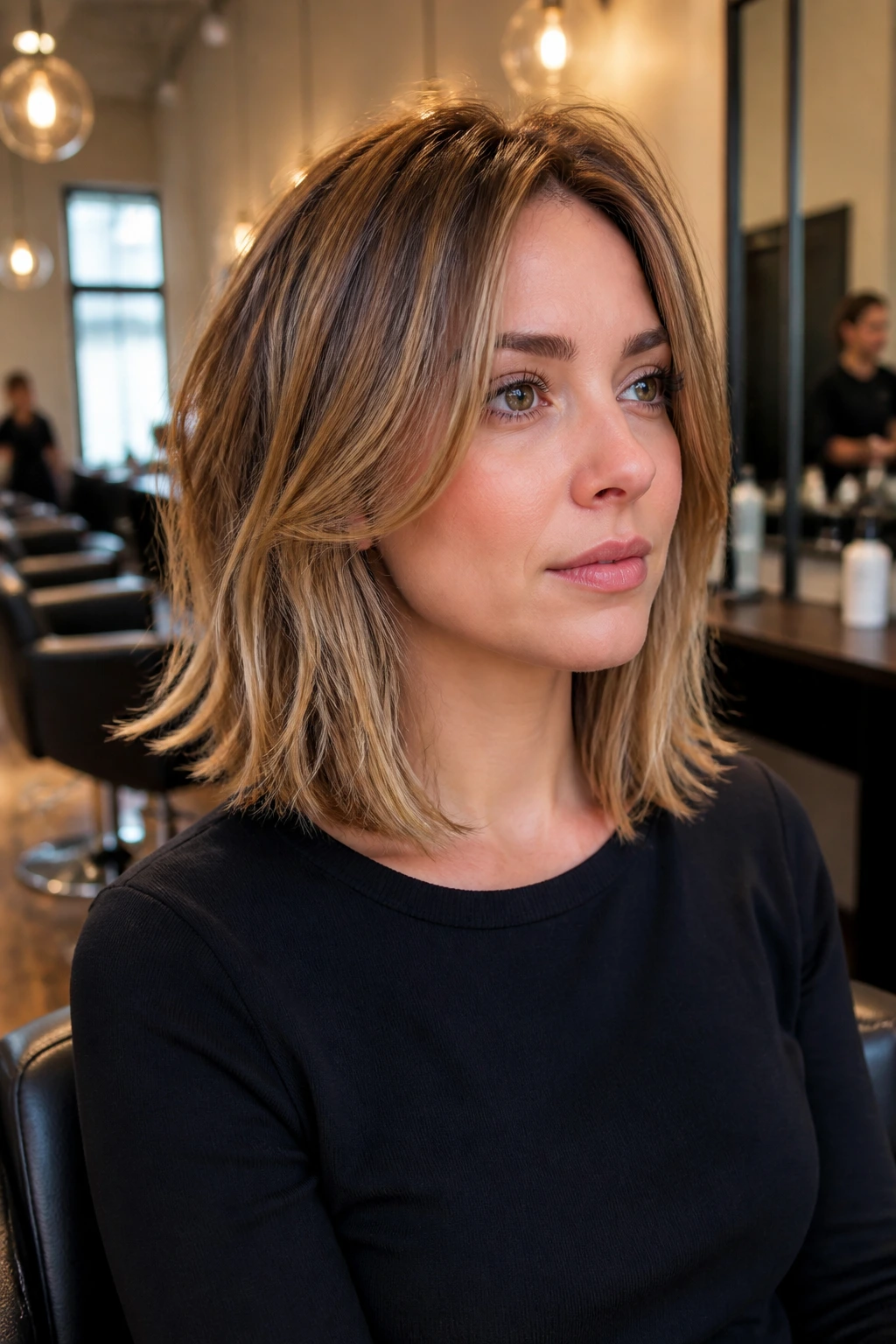
Ask for the length first. Collarbone or just below usually works well. Once that’s settled, talk about the perimeter. If you want fullness, say you want the ends left blunt or only softly beveled, not heavily razored.
Tell your stylist how you wear your hair most days. Air-dried? Blow-dried straight? Curled at the ends? Pulled back? That changes where the layers should sit. A cut that looks perfect after a round-brush blowout can fall apart if you air-dry it with nothing in it.
A few useful phrases help:
- “Keep the bottom edge full.”
- “I want long layers, not choppy ones.”
- “Leave enough weight that it still looks thick when it’s tucked behind the ears.”
- “I need a shape that still works if I only do a quick blow-dry.”
Bring photos of both the front and the side if you can. Fine hair can look totally different from one angle, and the side view tells you more about the perimeter than the glossy front shot ever will.
The Tools That Keep These Styles Full
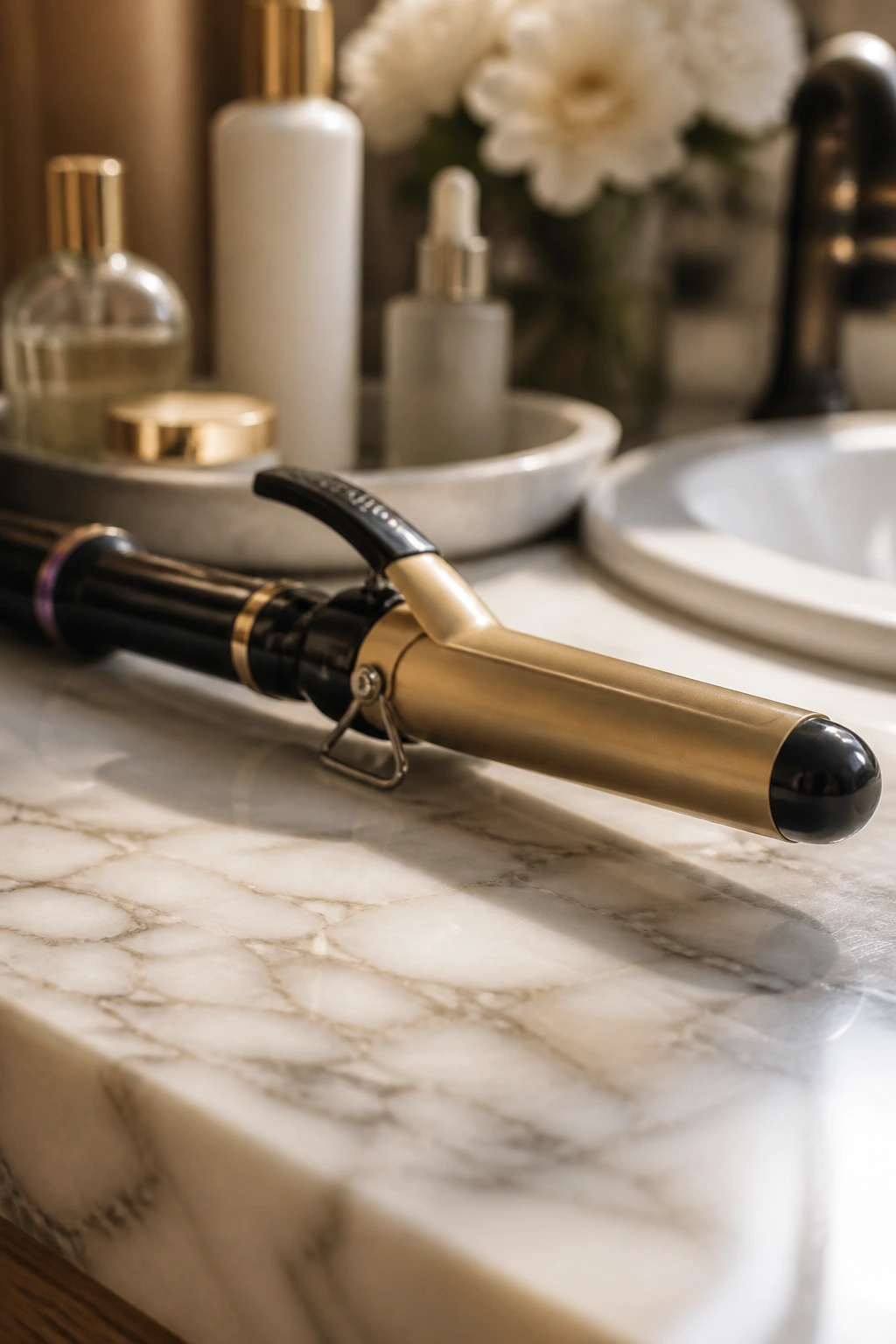
- 1.25-inch curling iron or wand: Best for loose waves, brushed-out curls, and face-framing bends without shrinking medium-length hair too much.
- 1.5-inch round brush: Useful for collarbone lobs, curtain bangs, and polished under-curves at the ends.
- Vent brush: Good for rough-drying roots fast when you need lift and don’t care about a sleek finish.
- Paddle brush: Helps smooth sleek lobs and middle-part styles without creating too much bend.
- Blow dryer with a concentrator nozzle: Gives you more control at the root and keeps the cut from puffing out unevenly.
- Root-lift mousse: Add it to damp roots only. This is the difference between hair that lifts and hair that flops.
- Light texturizing spray: Best for mid-lengths and ends, where it adds grip without making the crown sticky.
- Heat protectant spray: Non-negotiable if you use hot tools. Fine hair burns and frays faster than people expect.
- Small claw clips and bobby pins: Handy for half-up styles, tucked-back sections, and low knots that need a little help staying in place.
Smart Product Choices for Fine Hair
Heavy cream is the enemy here. Not because it’s bad, but because fine hair doesn’t have the structure to carry much of it. Look for lightweight mousses, root sprays, and dry texture sprays that dry down without leaving a film.
A good conditioner for fine hair should soften the mid-lengths and ends while staying off the scalp. That means a smaller amount than most people think — usually from the ears down. If your hair gets limp the day after washing, your conditioner may be too rich or too close to the roots.
Dry shampoo is useful, but it’s better as a preventative than a rescue mission. A light dusting at the roots on clean hair can help keep volume alive for another day. Once the hair is already oily and flat, it’s working harder than it should.
If you use serum, use it with a very light hand. One drop on the ends is enough for most fine medium-length styles. More than that and you’re back to collapse.
How to Style Fine Hair Without Flattening the Roots
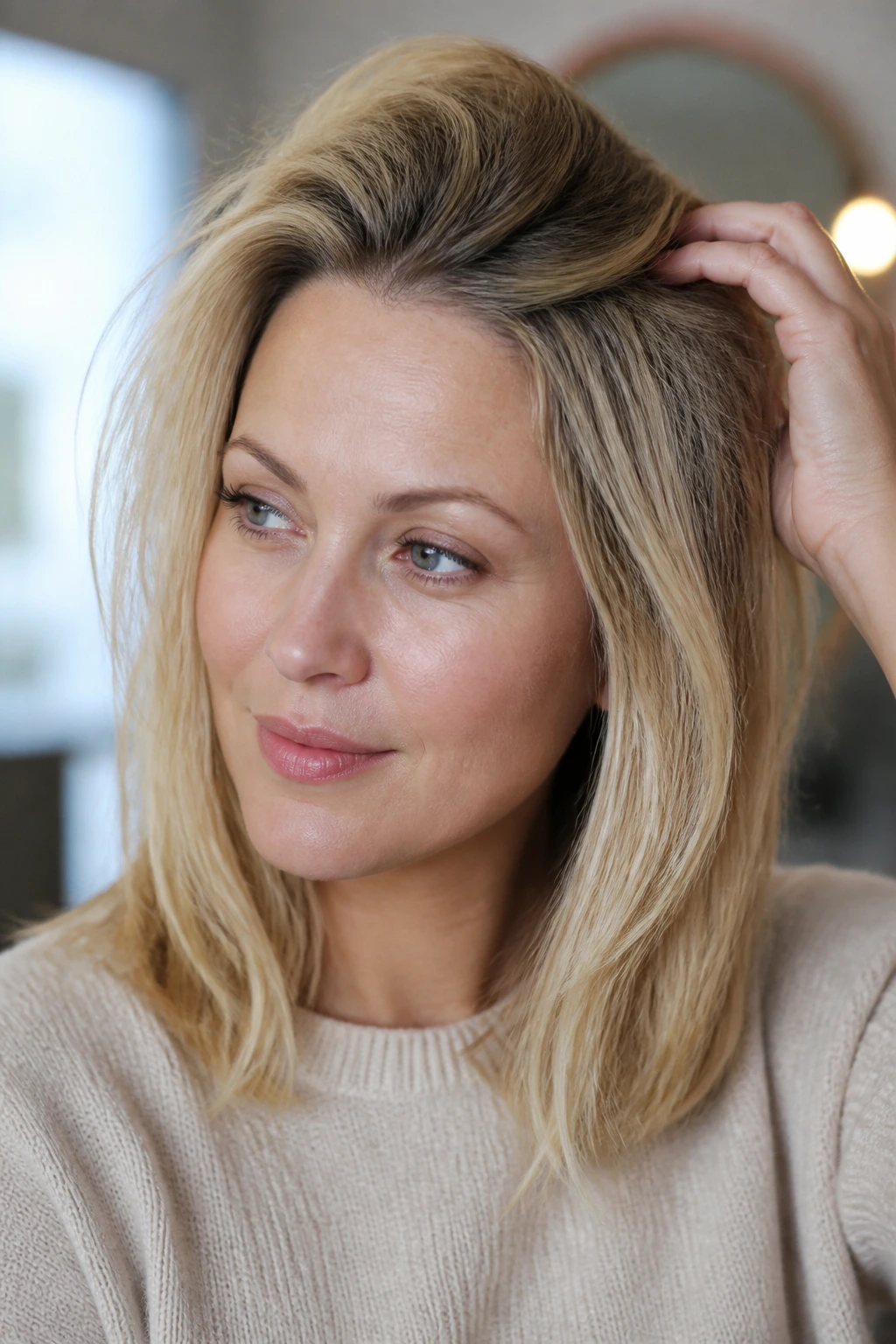
Root lift: Start with damp hair and put your volumizing product at the crown and along the part line. Then blow-dry that area first, lifting the hair up and away from the scalp. If the roots dry flat, the rest of the style is already behind.
Blow-dry direction: Aim the nozzle downward on the mid-lengths and ends, but lift the roots with your fingers or a vent brush. That keeps the cut smooth while still giving the top a little air. The crown should not be pressed into the scalp.
Texture without grit: Add wave or bend from about eye level down. Leave the roots cleaner and smoother. Fine hair gets overwhelmed fast when every inch is roughened up.
Second-day rescue: Flip the part, mist the roots lightly with dry shampoo, and clip the crown up for five to ten minutes while you get dressed. That tiny pause can bring back shape without washing the whole head again.
Common Mistakes That Make Fine Hair Look Thinner

- Too many short layers: If the shortest layers sit too high, the crown can look patchy and the ends look stringy. Ask for longer layers and keep the shape controlled.
- Heavy product at the roots: Creams, oils, and rich leave-ins near the scalp will pull fine hair down in minutes. Keep them on the ends only.
- Skipping trims for too long: Fine hair splits and thins at the bottom faster than people expect. Once the ends fray, the whole shape looks smaller.
- Curling from root to tip every time: That kind of heat styling can make medium hair shrink and lose its line. Start lower and keep some straightness near the crown.
- Using one part forever: A fixed part creates a flat groove in the roots. Switch it side to side now and then.
- Texturizing the ends too much: A razor-happy finish can make a medium cut look nice for one day and sparse for the next six weeks. Leave the perimeter fuller.
Variations for Different Faces, Textures, and Routines
The Straight-Hair Sharp Line: If your hair is straight and fine, lean into blunt edges, a collarbone length, and a middle or slightly off-center part. The cleaner the line, the fuller it reads. Skip excessive layering.
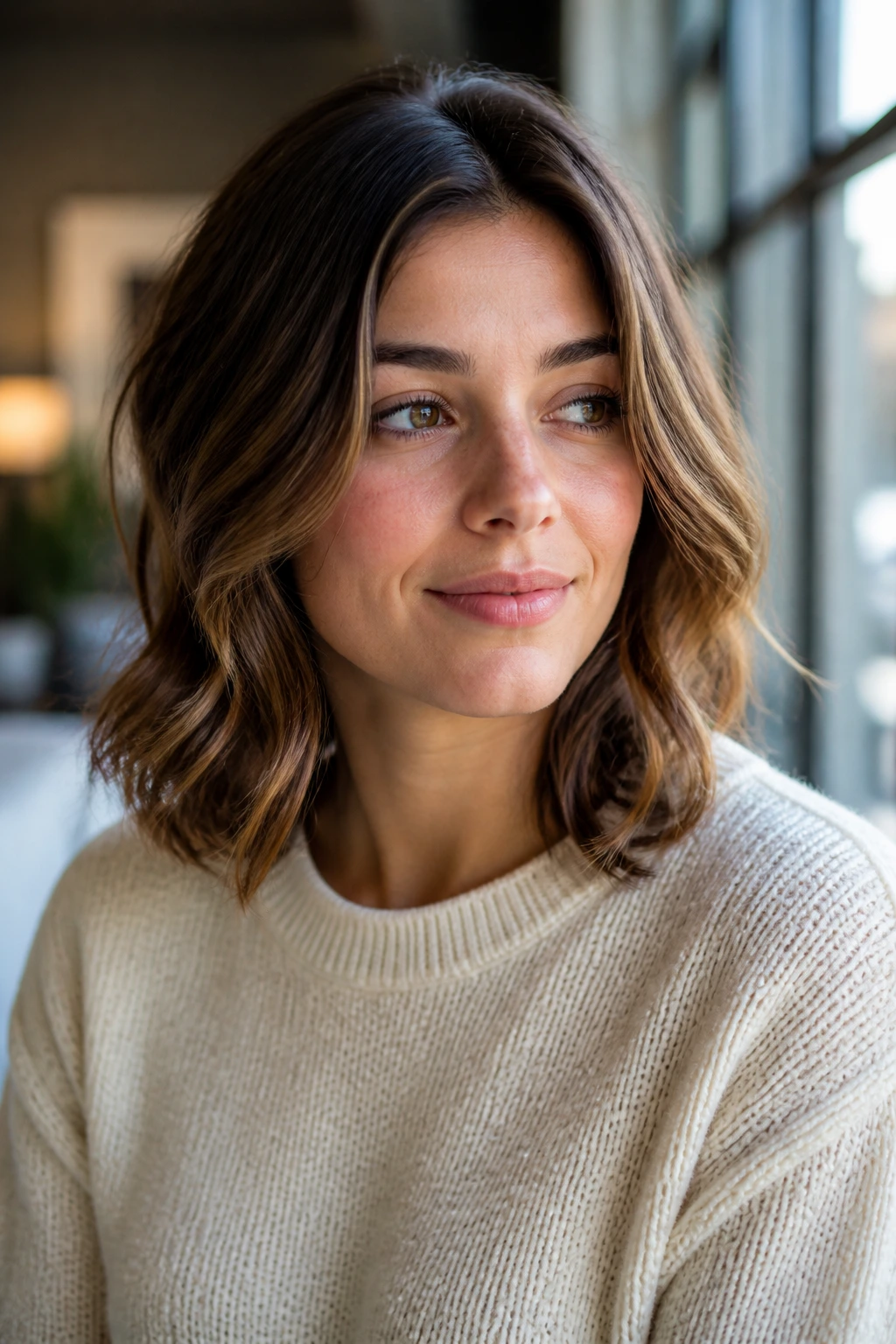
The Wavy-Air Dry Version: If your hair has a natural wave, use long layers and a soft shag or lob shape. Scrunch in mousse, let it dry with a little movement, and don’t fight every bend into submission. That battle drains the hair.
The Dense-Fine Balance: If your hair is fine but you have a lot of it, you can handle more shape around the face and a little internal layering. Keep the ends solid, though. Density and fineness are not the same thing, and that combination gives you more room to work.
The Low-Maintenance Workday Cut: For a routine that needs to be fast, pick a blunt lob, a deep side part, or a tucked-behind-the-ears style. These need less daily styling and still look deliberate when you skip the full blowout.
The Round-Face Lift: A-line shapes, side parts, and face-framing pieces around the cheekbones help lengthen the face visually. Keep the shortest pieces below the chin so the volume doesn’t sit too high.
How to Keep a Medium Cut Looking Good Between Trims

Fine hair does not forgive neglected ends. If you want a blunt collarbone lob or a clean medium shape to keep reading full, plan on trims every 6 to 8 weeks for sharper cuts, or about 8 to 10 weeks for softer layered styles. Wait much longer and the perimeter starts to fray.
Sleep matters too. A silk pillowcase helps, but a loose clip or soft scrunchie can keep the hair from getting crushed overnight. Tight elastics leave a bend that’s hard to smooth out without heat the next morning.
Product buildup can weigh fine hair down fast, especially if you use dry shampoo, texture spray, or mousse most days. A clarifying wash every couple of weeks helps reset the roots. Then go back to the light stuff. Heavy masks have their place, but not every wash day.
If you heat-style often, a trim schedule matters even more. Fine ends show wear early. Once the tips start splitting, no amount of root lift will save the silhouette.
Frequently Asked Questions
Is medium length better than long hair for fine hair?
Usually, yes. Medium length keeps the ends denser and stops gravity from pulling the whole shape flat. Long fine hair can work, but it needs more careful layering and more frequent trimming.
Should fine hair get layers or stay blunt?
Both can work, but the safest default is a blunt or softly beveled perimeter with long, controlled layers only where they help shape the hair. If the cut looks wispy at the bottom, there’s too much layering.
Are curtain bangs a bad idea on fine hair?
Not if they’re soft and narrow. Heavy curtain bangs can steal too much density from the front, but airy ones around the cheekbones add movement and lift the whole cut.
What part makes fine hair look fullest?
There isn’t one magic part, but a slight off-center part often gives the root more lift than a hard middle part. Flipping the part from time to time also helps keep the crown from flattening.
Can fine hair hold waves at shoulder length?
Yes, and medium length is one of the better lengths for it. The key is cooling the wave before you touch it and keeping the product light so the bend doesn’t get dragged down.
How often should I trim medium-length fine hair?
Every 6 to 8 weeks if you want a clean blunt line, or every 8 to 10 weeks if the cut is softer and more layered. Fine ends wear out faster than thick ones, so waiting too long usually shows.
What if my fine hair is also wavy?
Lean into that texture. A soft shag, a layered lob, or brushed-out waves usually work better than a severe blunt cut that fights the bend. Keep the layers long so the waves don’t turn frizzy at the ends.
What should I ask for if I want volume but low maintenance?
Ask for a collarbone-length perimeter, long layers only around the face, and a shape that still works when air-dried. That gives you movement without turning the cut into a daily styling project.
The Cut That Keeps Its Shape
The nicest thing about medium length hair on fine strands is that it gives you options without asking for miracles. A blunt lob, a soft layered cut, a side part, or a loose wave can all change the shape of the hair without making it feel overworked. That’s the real win here.
If your fine hair has been dragged too long, thinned too much, or overloaded with product, a clean medium cut can fix more than people expect. Start with the perimeter. Keep the layers honest. Let the hair keep some weight where it needs it.
Then leave it alone a little more often. Fine hair usually looks better when the shape does most of the work.
