



Straight hair does not forgive sloppy layering. Every blunt line shows, every awkward shelf at the crown sits there like a warning, and every too-short nape can turn a mullet into a haircut that looks unfinished by accident. That is exactly why long shaggy mullet cuts for straight hair can look so good when they’re built with intent — the shape reads clean, the movement shows up, and the length keeps the whole thing wearable.
The trick is not to chase chaos. It’s to place the shortest layers where they lift the face, then let the back stay long enough to keep the silhouette grounded. Straight hair likes structure. It also likes a little air around the ends, because heavy, one-length hair tends to hang like a curtain and kill the whole point of a shag.
Some versions lean soft and romantic. Others keep the edges sharp enough to feel almost tailored. Pick the one that matches how much fringe, contrast, and daily styling you’re willing to live with, because the difference between “interesting” and “why does this look off?” is often just a few centimeters of layer placement.
Why These Long Shaggy Mullet Cuts Work on Straight Hair
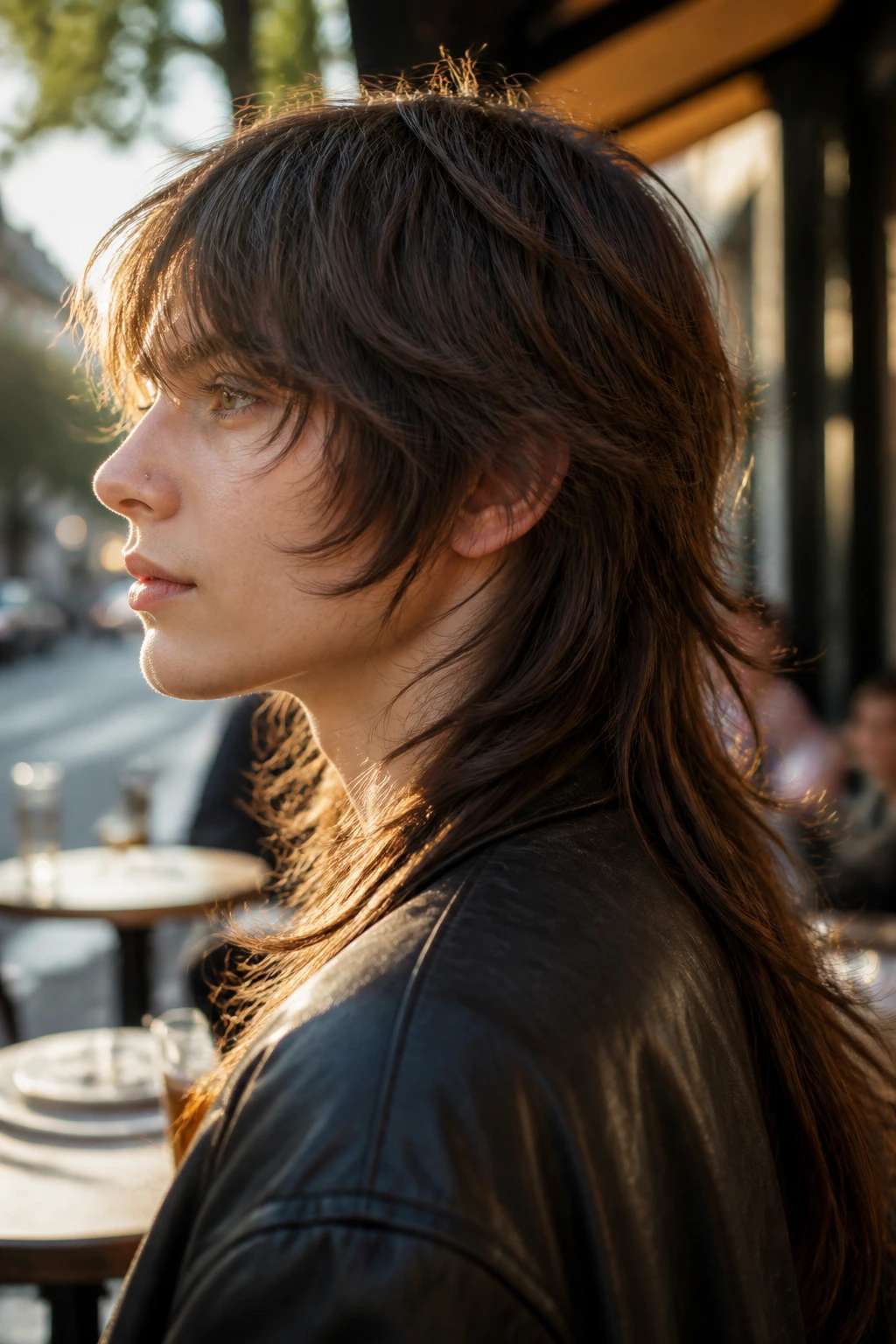
-
The shape reads cleanly: Straight strands show the outline of the cut instead of hiding it, which makes feathered layers and a long tail look deliberate instead of fuzzy.
-
You get movement without a curl pattern: A good shaggy mullet creates swing at the cheekbones, jawline, and nape even when your hair dries pin-straight.
-
The grow-out is kinder: Longer backs and soft face-framing pieces can slide through awkward in-between stages better than a hard line cut.
-
Fine hair can look fuller: Strategic layering around the crown and sides can give flat hair a little lift without turning the ends wispy.
-
Thick hair can lose weight fast: If your straight hair feels puffy or boxy, internal layers and point cutting can remove bulk without making it look chopped to pieces.
-
It changes the mood instantly: The same cut can read polished, rocker, or soft depending on the fringe and how much texture you work into it.
1. Feathered Center-Part Mullet
This is the version that eases people into the mullet conversation. The center part opens the face, the front layers skim the cheekbones, and the back stays long enough that the whole cut still feels grounded. On straight hair, the feathering matters more than the length itself; you want the ends to move when you turn your head, not sit like a heavy sheet.
Why It Works on Straight Hair
A feathered center part gives straight hair shape without forcing it into a curl it will never hold. Ask for soft point cutting around the face and a longer, tapered back that lands below the shoulders if you want the cut to stay gentle. I like this version on medium-density hair because it shows movement without requiring a ton of product.
- Ask for the shortest layers to hit around the cheekbone.
- Keep the back long enough to brush the collarbone or lower.
- Use a light blow-dry cream, not a heavy balm.
Tiny tip: blow the front away from the face, then flip the ends under with your fingers while they’re still warm.
2. Curtain-Bang Shag Mullet
If you want the mullet to look soft instead of punk, curtain bangs do half the work for you. They break up the forehead, bridge the gap between the short front and the long back, and keep the cut from feeling too abrupt on straight hair. The result has a little swing to it. Not drama. Just enough.
The key is keeping the bang pieces long enough to split cleanly at the center and slide toward the cheekbones. If they’re cut too short, the whole thing stops looking shaggy and starts looking like a mistake you need to grow out.
This one suits straight hair that falls flat at the crown but still has some density through the ends. It gives you shape without asking for a full styling session every morning. A round brush and a quick bend at the fringe are usually enough.
3. Razor-Cut Collarbone Mullet
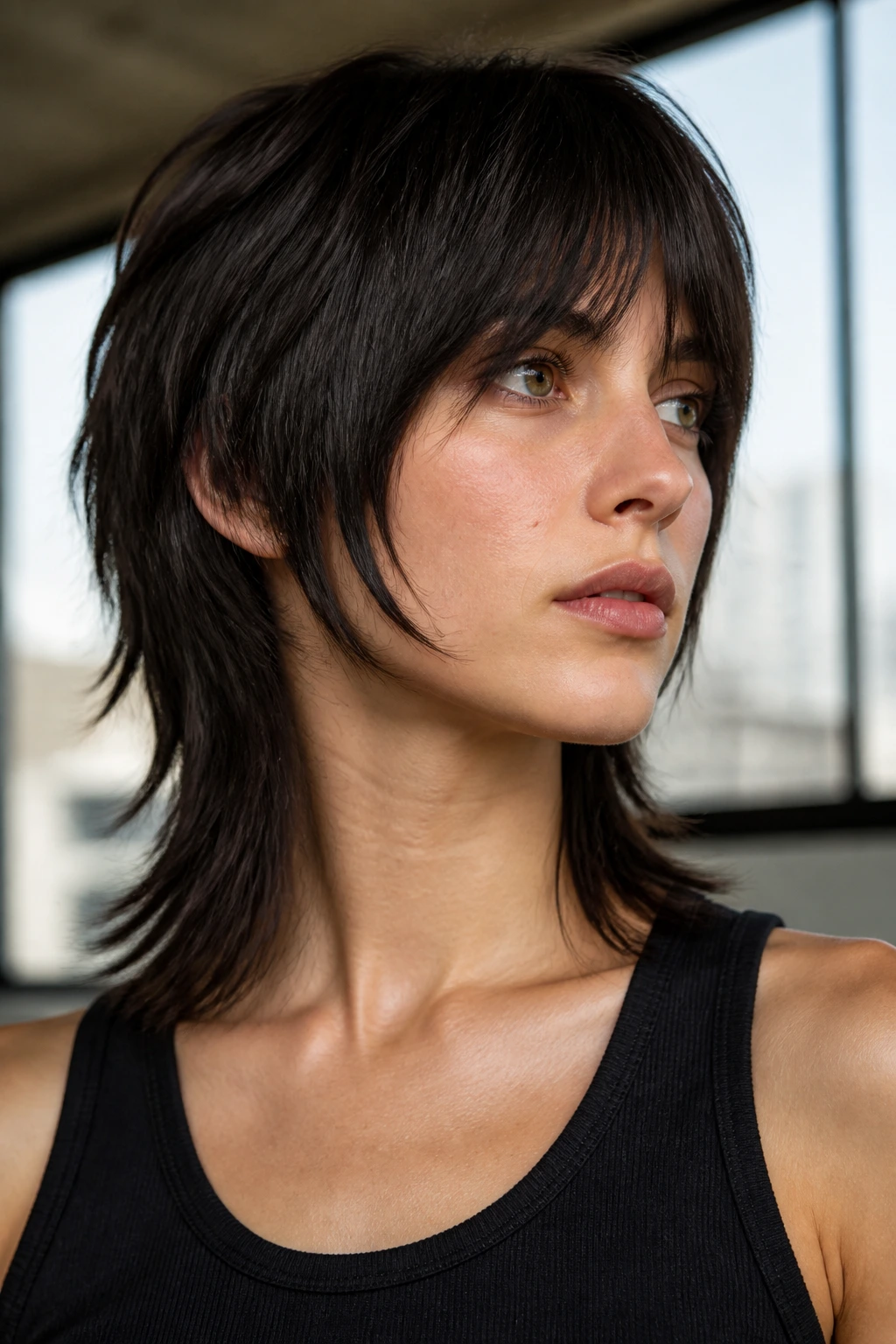
A razor-cut collarbone mullet has a sharper edge than the feathered versions, and that’s the point. The razor takes some weight out of the perimeter, so the ends separate instead of hanging in one blunt sheet. On straight hair, that separation can look sleek rather than messy if the stylist stops before the hair gets stringy.
What to Watch For
- Best on hair that is medium to thick, because very fine hair can look see-through if the razor work goes too hard.
- The shortest front pieces should still graze the jaw or lips, not jump straight up to the cheek.
- A little texturizing spray at the ends gives the cut a lived-in finish without turning it crunchy.
If your hair has a habit of collapsing by noon, this cut gives it a little more air. Keep the back at collarbone length or longer if you want the mullet part to stay visible.
4. Soft Wolf Mullet
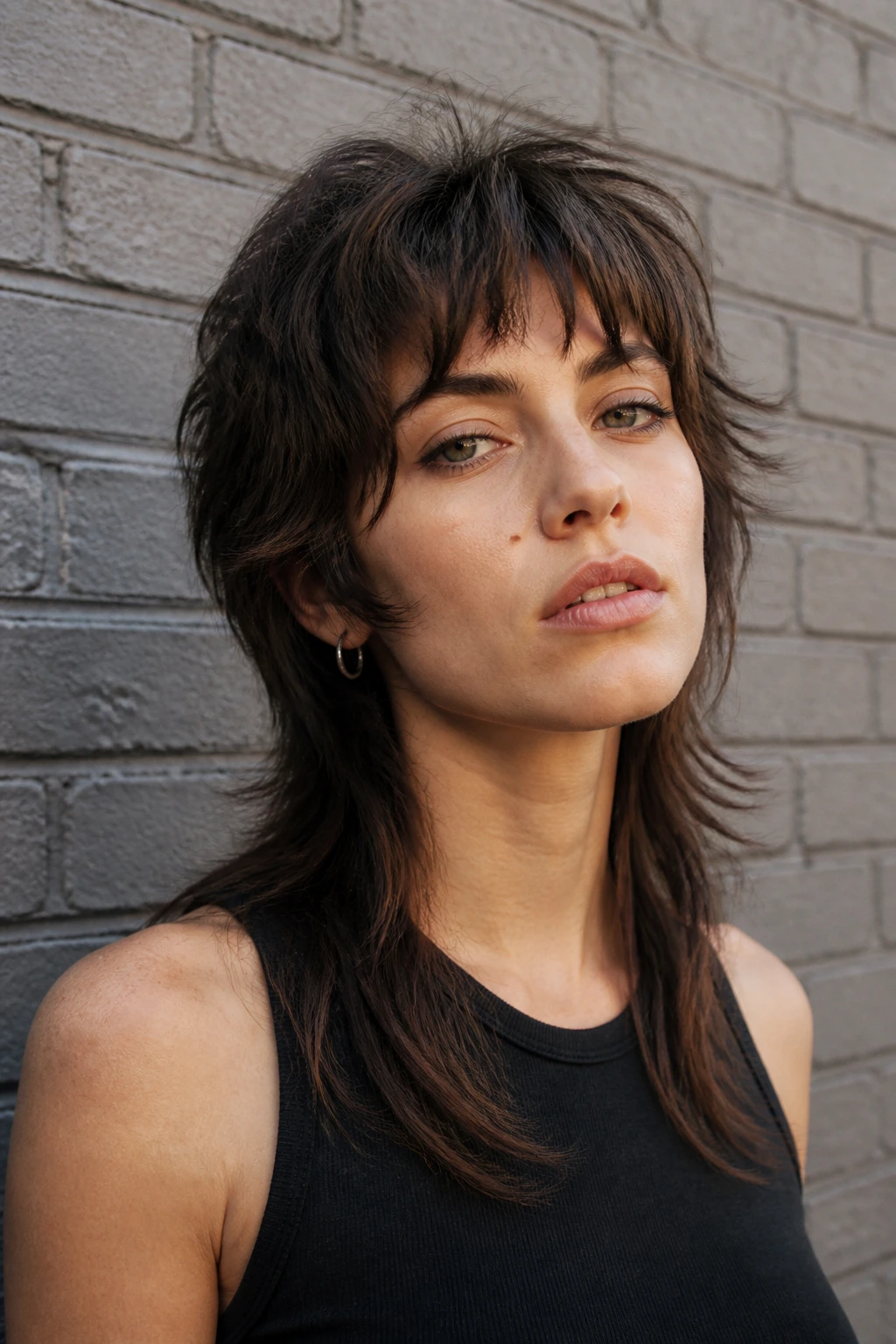
This is the version for people who like the mullet idea but do not want to walk around looking like they committed to a full punk revival. The wolfy shape brings more crown volume, more cheekbone framing, and a messier top layer, while the long back keeps it from becoming a full shag. Straight hair handles this well because the layers show clearly instead of blending into a puff.
What makes it work is restraint. Too many layers and you lose the long silhouette. Too few and the top goes flat. You want the shape to feel loose, almost accidental, but the haircut itself needs to be precise. That is the annoying part, really. The “undone” look usually takes the most careful scissors.
I like this cut on people who wear black tees, big earrings, or high-neck tops because the shape gives those simple outfits a bit of edge.
5. Cheekbone-Piecey Mullet
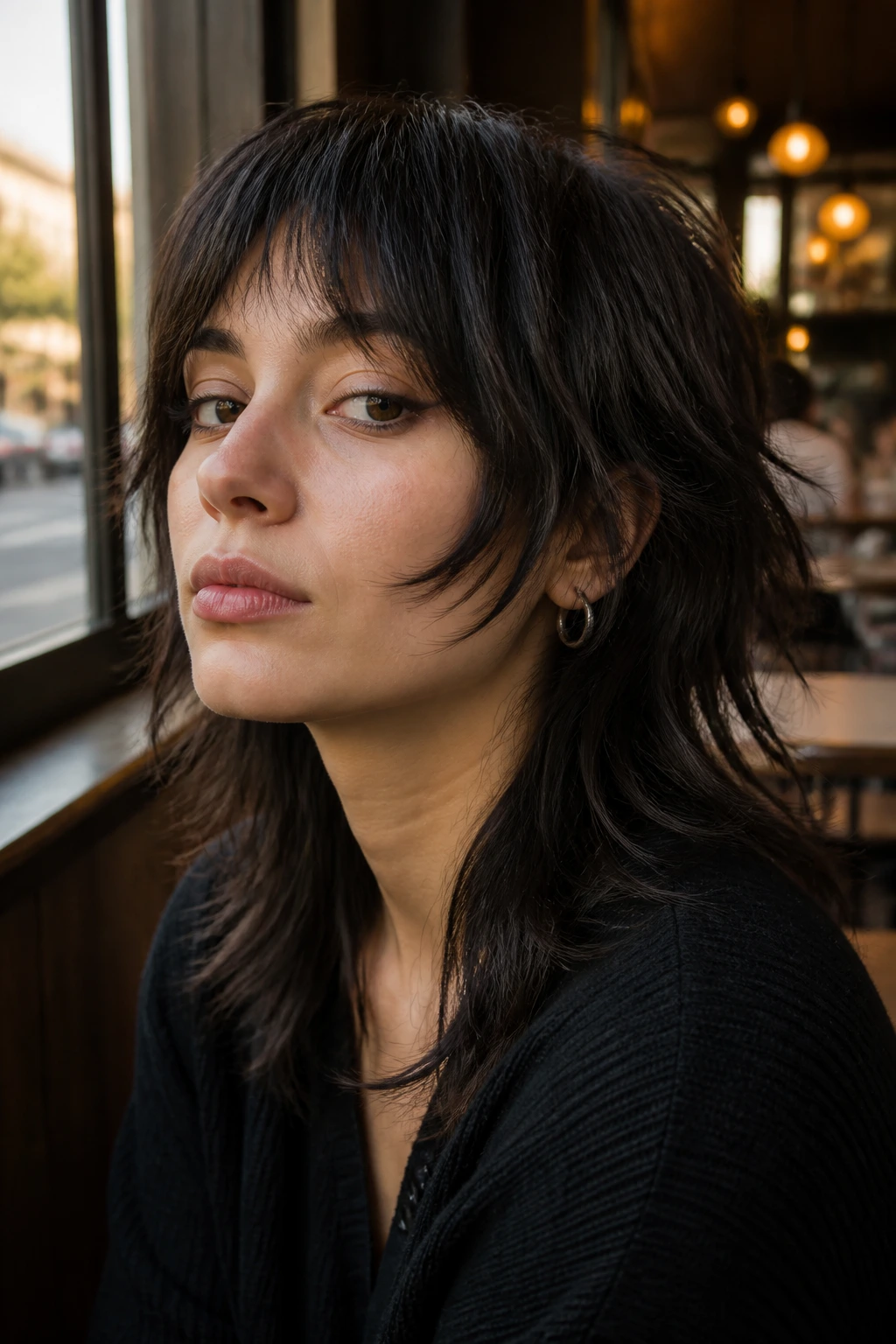
Want something that lifts the face without drowning it in fringe? This is the one. The front pieces are cut to land right at the cheekbones or just below them, then broken up enough that they separate instead of sitting in one solid wedge. Straight hair makes those pieces look crisp, which is exactly why the cut works.
The main move here is detail, not volume. Ask for face-framing strands that are shorter in the center and gradually longer as they move toward the ears. That little slope keeps the haircut from looking severe. If your face is narrow, keep the front a touch longer. If it’s round, a stronger cheekbone hit can sharpen everything up.
A quick pass with a flat brush or small iron bend is usually enough. No need to over-style it into submission.
6. Bottleneck Bang Mullet
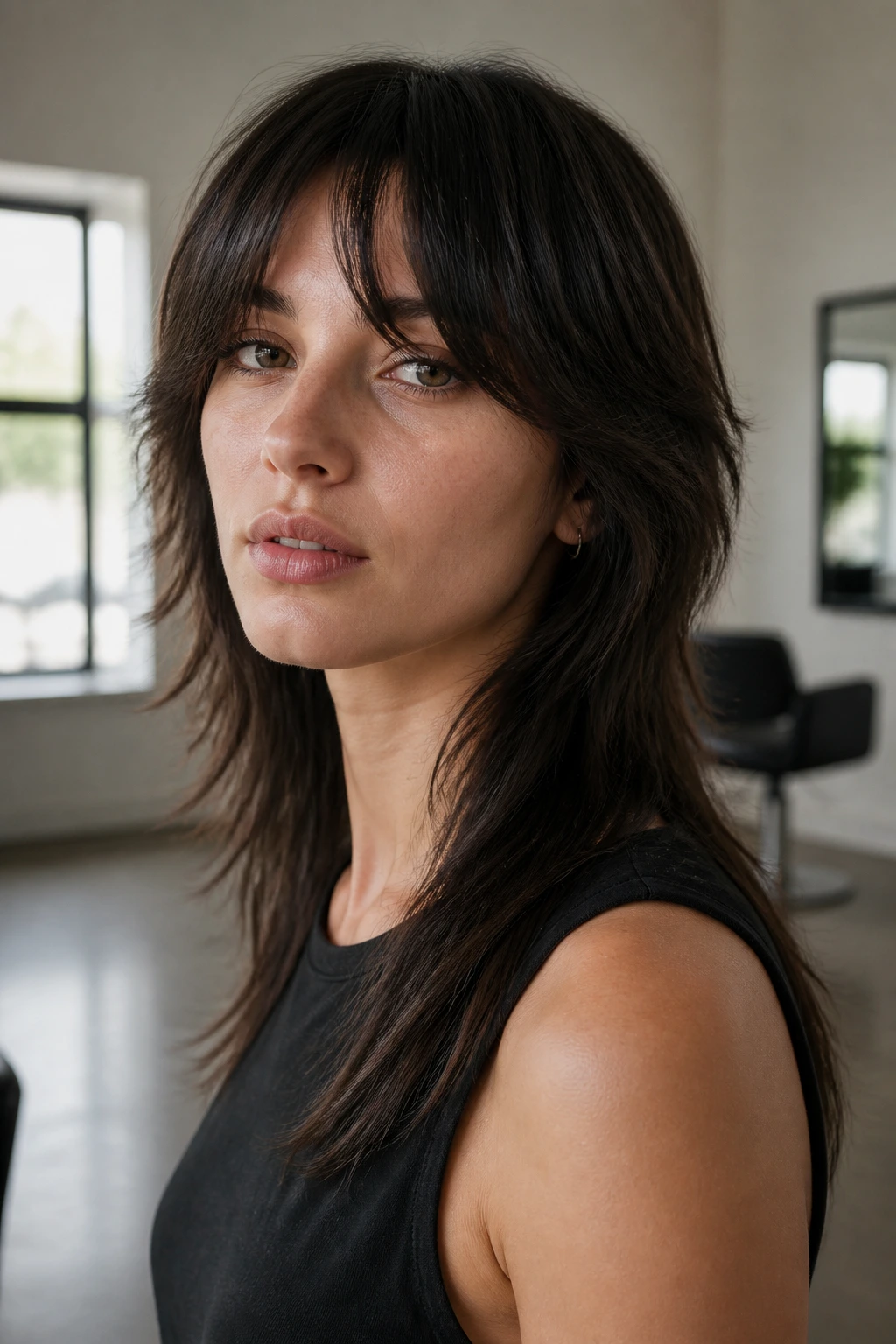
Bottleneck bangs give you a tighter center and wider sides, which is a smart move on straight hair. The middle opens just enough to keep the forehead from feeling boxed in, while the longer side pieces melt into the rest of the cut. It’s one of the cleanest ways to soften a shaggy mullet without losing the shape.
This version is especially good if you have a longer face or a high forehead, because the bang pattern shortens the visual length up front. Keep the center of the fringe light and the side pieces softly layered so they don’t read like two separate haircuts. They should join the rest of the hair with a little bend, not a hard line.
A lot of people cut this fringe too blunt and then wonder why it feels heavy. The answer is usually that the sides were not connected enough.
7. Long Octopus Mullet
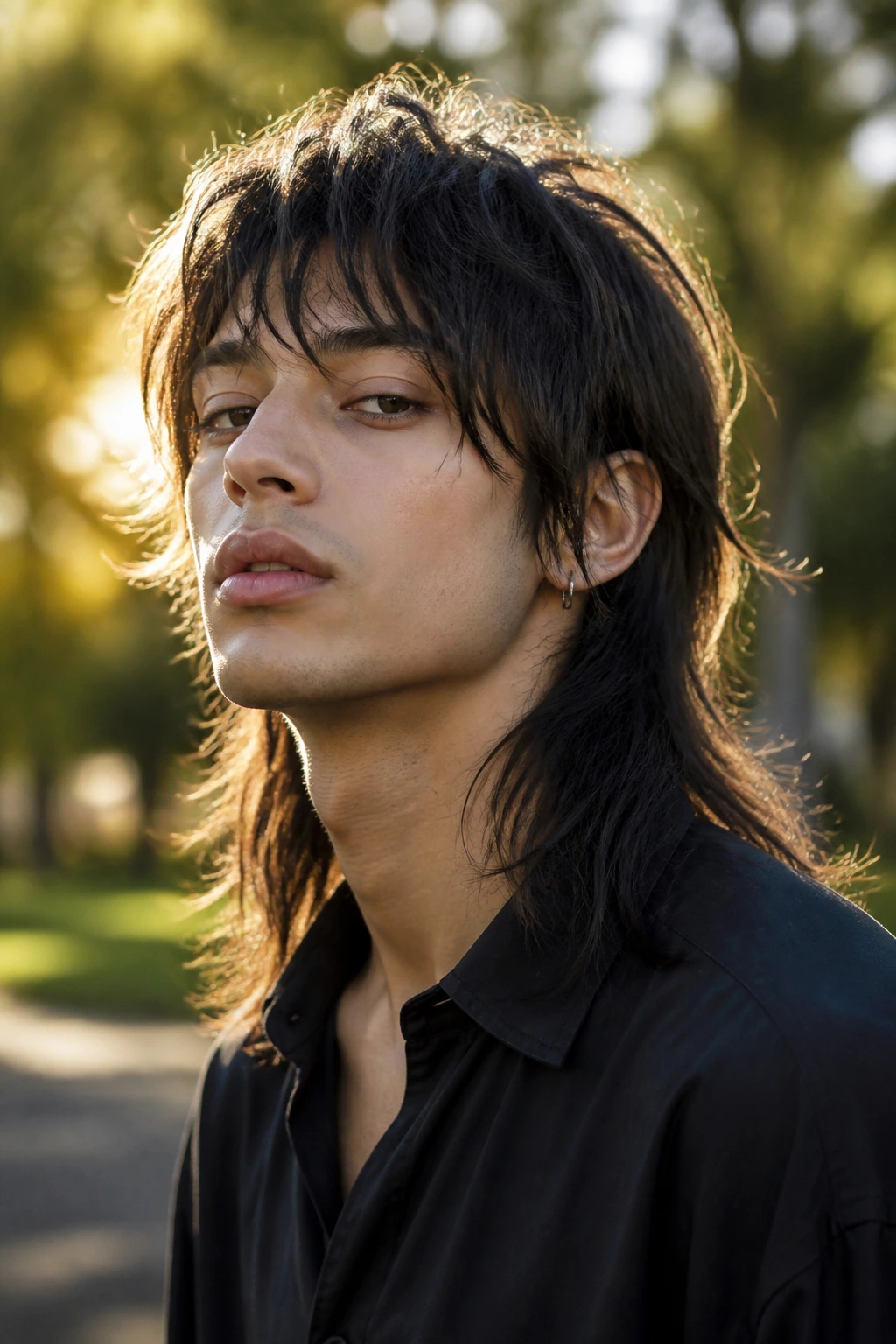
The long octopus mullet is what happens when the top stays fuller, the face frame stays light, and the back drops long enough to keep the silhouette dramatic. Straight hair needs a careful hand here because the layered “tentacles” can look sparse if the density is already low. But when it’s done right, the cut has a strange, elegant swing to it.
What Makes It Different
The top should feel lifted, not chopped. The ends should split and move, not sit in blunt clumps. That balance is what keeps the octopus shape from turning into a weird, over-texturized shag. Ask for long internal layers and a soft taper through the nape so the back stays graceful.
How to Style It
A small amount of mousse at the roots, then a round-brush bend through the sides, is usually enough. If you over-curled it, you’d lose the whole point. The charm is in the separation.
8. Side-Part Tail Mullet
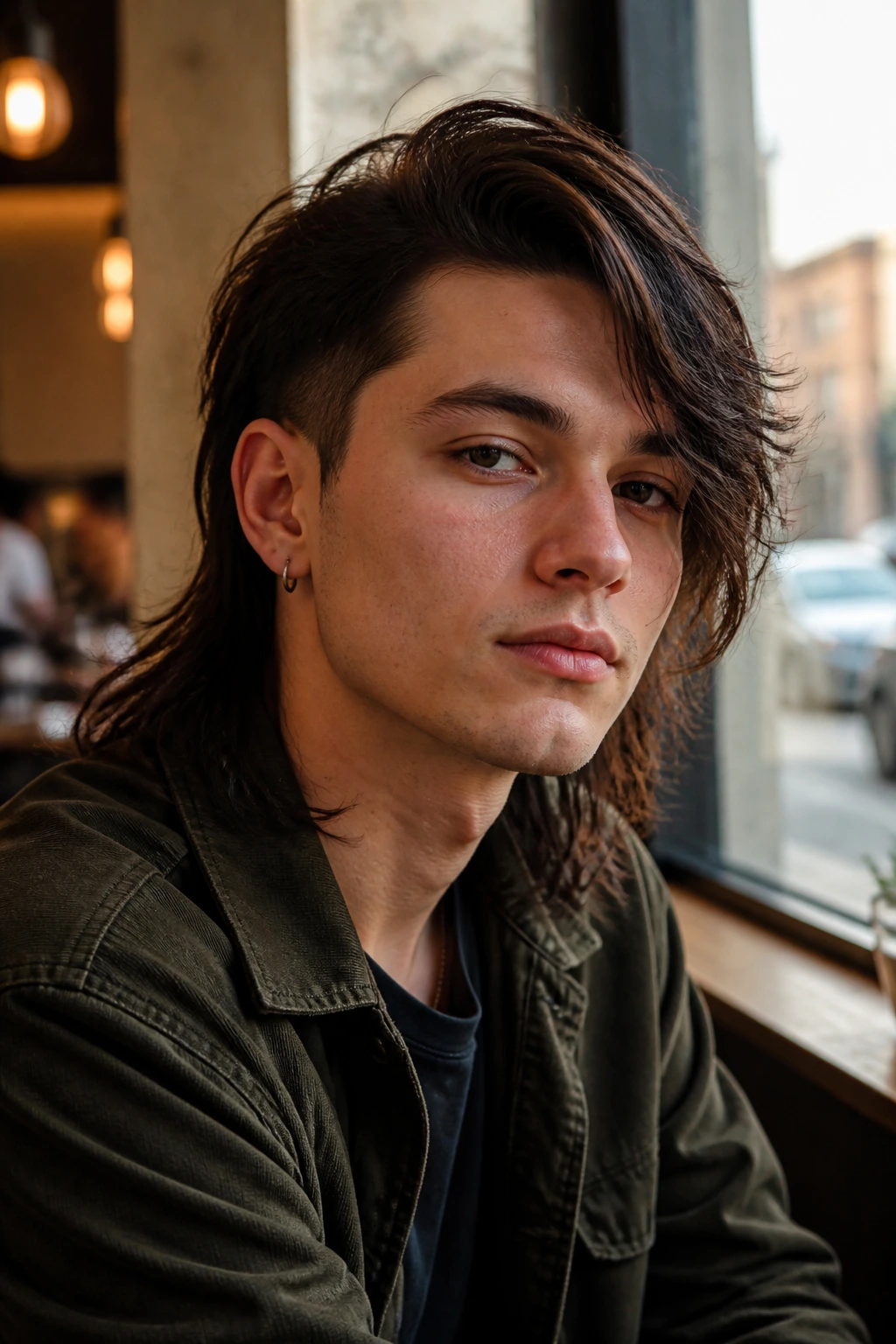
A side part changes the whole mood. Straight hair that falls flat in the middle can suddenly look lively the minute you shift the part and let the fringe sweep across the forehead. The long tail at the back keeps the mullet identity obvious, but the front feels less symmetrical and a lot more flattering on people who do not want their face fully exposed.
The side-part version also helps if one side of your hair grows differently from the other. That happens more than people admit. Instead of fighting it, you build the cut around the natural fall and let the asymmetry look intentional.
Best on medium to thick hair, especially if you want a little lift at the crown without a lot of teasing. A quick blow-dry with the part pushed opposite your usual direction gives the roots a bend that lasts.
9. Choppy Shag Mullet
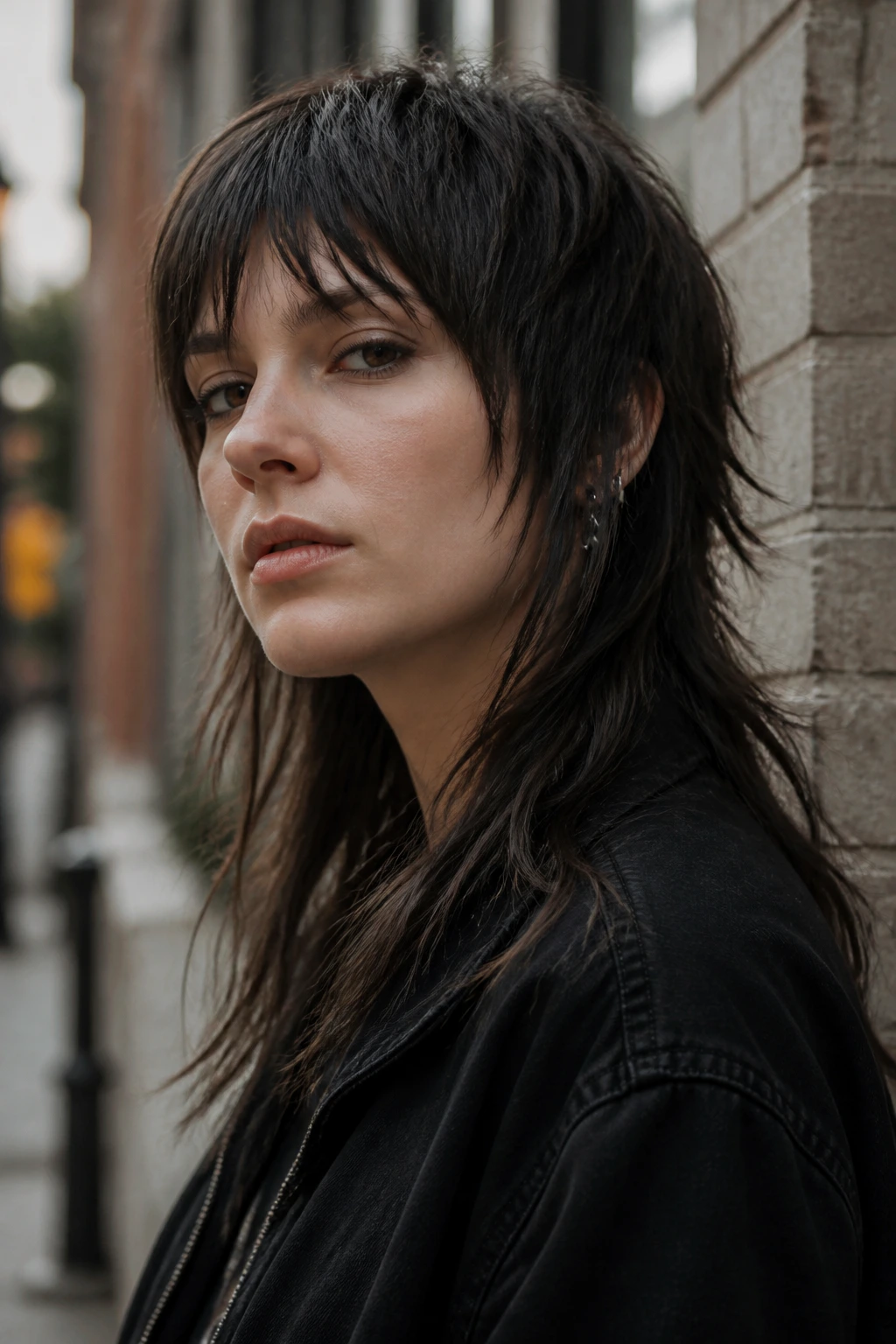
This one is blunt about what it is. Choppy. Broken up. A little unruly. Straight hair can wear that energy well if the cut is kept long enough that the ends still swing. The danger is going too short with the layers and making the hair stick out like a rough draft. Nobody wants that.
What saves the look is spacing. The choppiness should live in the mids and face frame, while the back stays long and clean enough to ground everything. If your stylist knows how to point cut rather than hack away at the perimeter, the result looks edgy instead of damaged.
I’d pair this with a matte texturizing spray and nothing heavier. Oil or thick cream dulls the separation. The cut wants a little bite.
10. Wispy Fringe Mullet
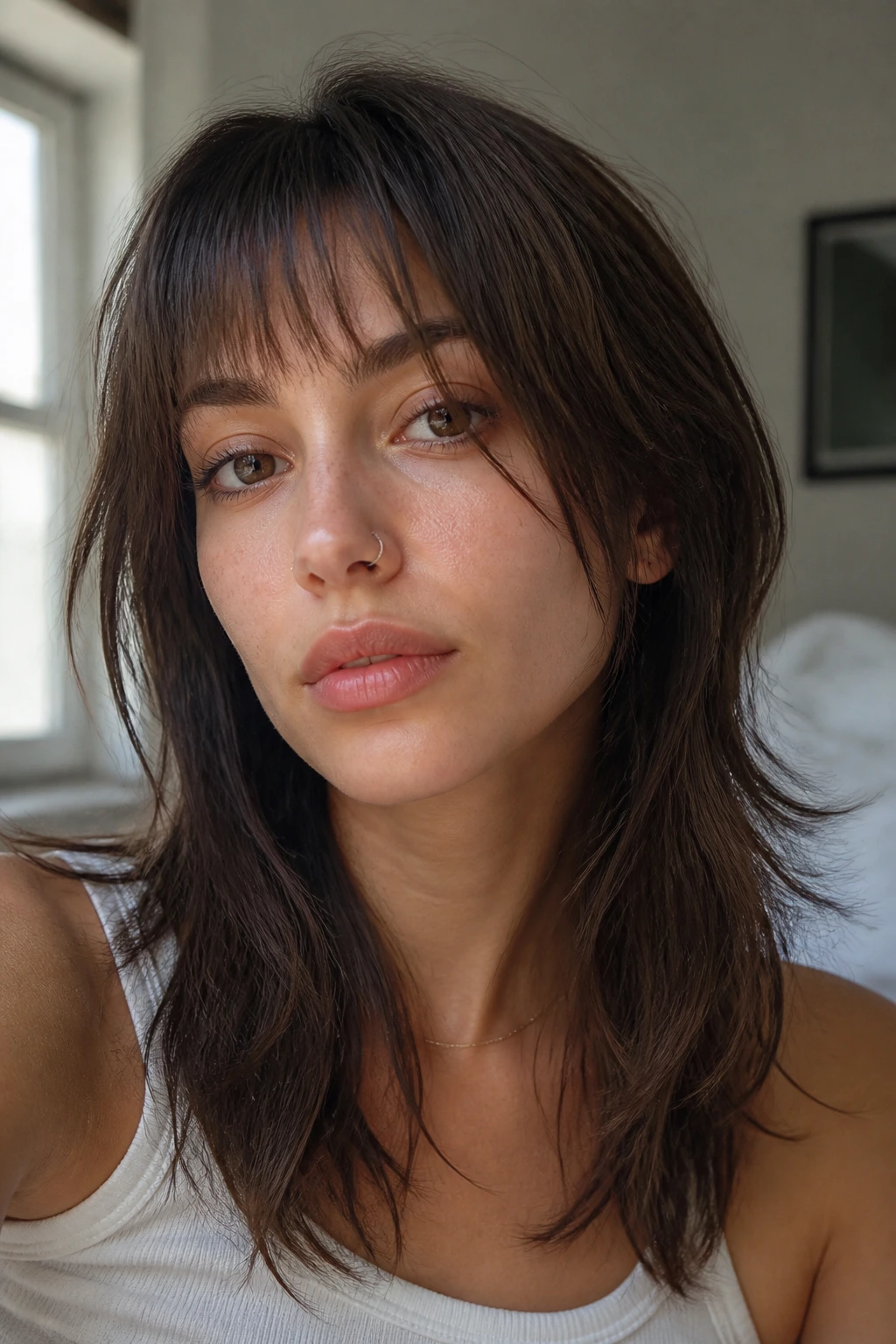
A wispy fringe makes a shaggy mullet easier to wear because it breaks up the forehead without announcing itself from across the room. On straight hair, wispy bangs can look airy instead of thin, which is a nice distinction. Thin bangs are a problem. Wispy bangs are a choice.
The rest of the haircut can stay long and piecey while the fringe keeps the front light. This is a good route if you want to keep your face open but still want something happening around the eyes. Ask for the fringe to be slightly longer at the temples so it blends into the side layers.
It is especially nice on finer straight hair, because heavier bangs can drag the whole cut down. A little dry shampoo at the roots gives the front enough lift to keep from collapsing.
11. Sleek Layered Mullet
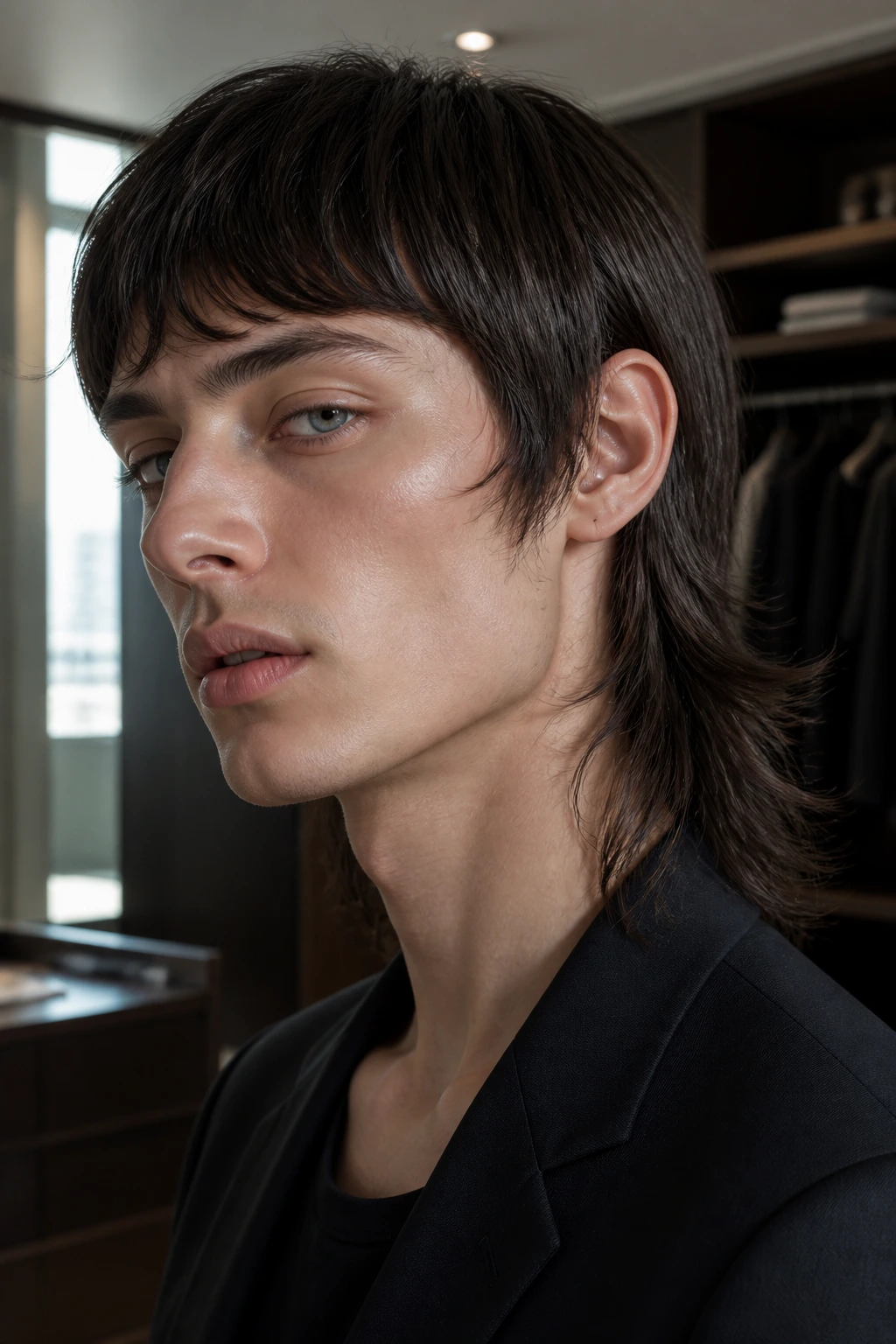
A sleek layered mullet is for the person who likes the shape but does not want visible mess. Clean part, smooth roots, controlled layers, long tail. That is the whole recipe. Straight hair can make this version look expensive in the plainest sense of the word, because the lines stay crisp and the motion shows up only where it should.
This cut is less about grit and more about balance. The layers are still there, but they are soft enough that you can wear the hair tucked behind the ears or blown smooth and it still makes sense. If you work in an office where a chaotic shag would feel out of place, this is the one to keep in your back pocket.
Use a paddle brush or flat brush while blow-drying, then bend just the ends with a small iron if you want a little shape. That’s it. Anything more starts to fight the point of the cut.
12. Airy Mid-Length Mullet
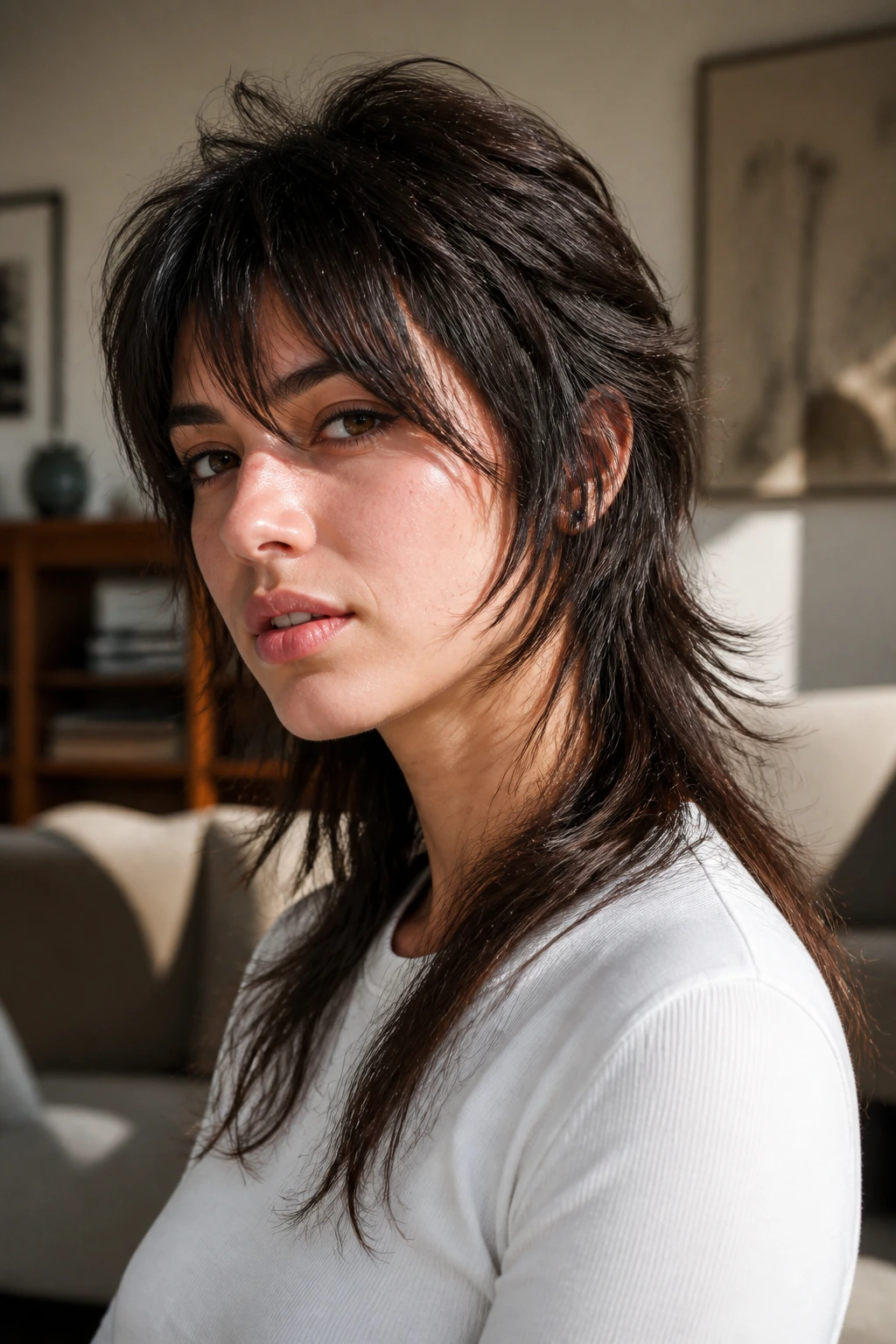
This is the quiet middle ground. Not too short. Not too dramatic. The front pieces sit around the jaw or collarbone, the crown has enough lift to avoid looking flat, and the back stays below the shoulders so the whole haircut feels like a long shape with attitude, not a short haircut pretending to be rebellious.
The Sweet Spot
- Works well if you are nervous about losing length.
- Keeps enough hair around the face to soften straight features.
- Easier to style than a highly disconnected mullet because the layers are more forgiving.
What to Ask For
Tell the stylist you want movement around the cheekbones and a long, tapered back, but no harsh shelf at the crown. That phrasing matters. It keeps the cut airy instead of boxy.
A little mousse and a rough dry are usually enough. This one should not need a full round-brush marathon.
13. Heavy Crown Mullet
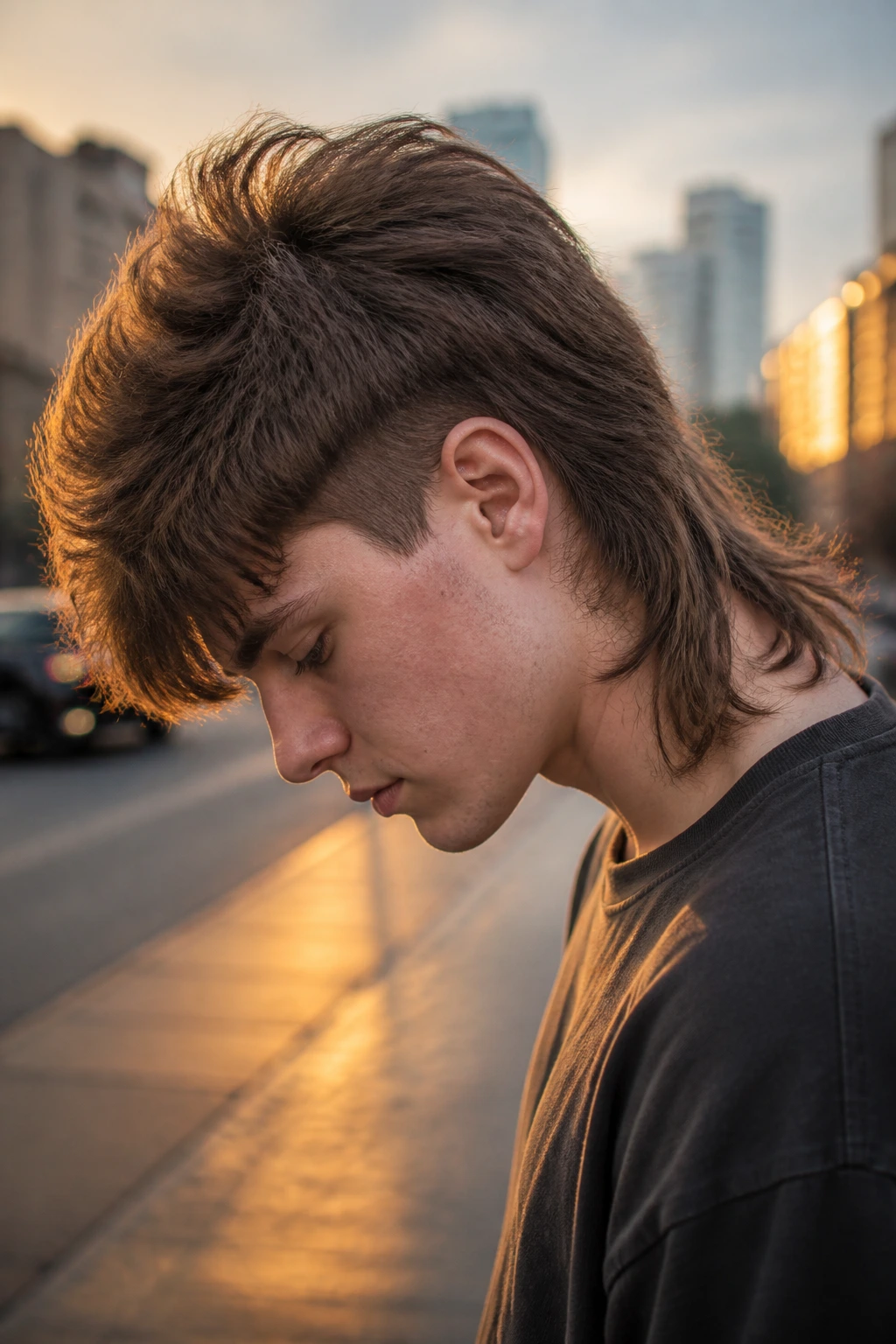
Flat crown? Start here. Not with more product. With more shape. A heavy-crown mullet keeps the top fuller and the sides slightly shorter, which gives straight hair the lift it needs before it has a chance to collapse. If your roots lie flat the minute you walk out of the house, the haircut itself has to do some of the work.
The trick is not to over-thin the crown. That’s the trap. People see “shaggy” and start removing weight like they’re auditioning for a feather pillow commercial. Instead, keep enough density at the top so the hair stands a little away from the scalp, then soften only the surface.
This cut looks especially good when blow-dried with the head tipped forward for a minute or two. Let the roots cool in the lifted position. Small detail. Big difference.
14. Grunge-Lite Mullet
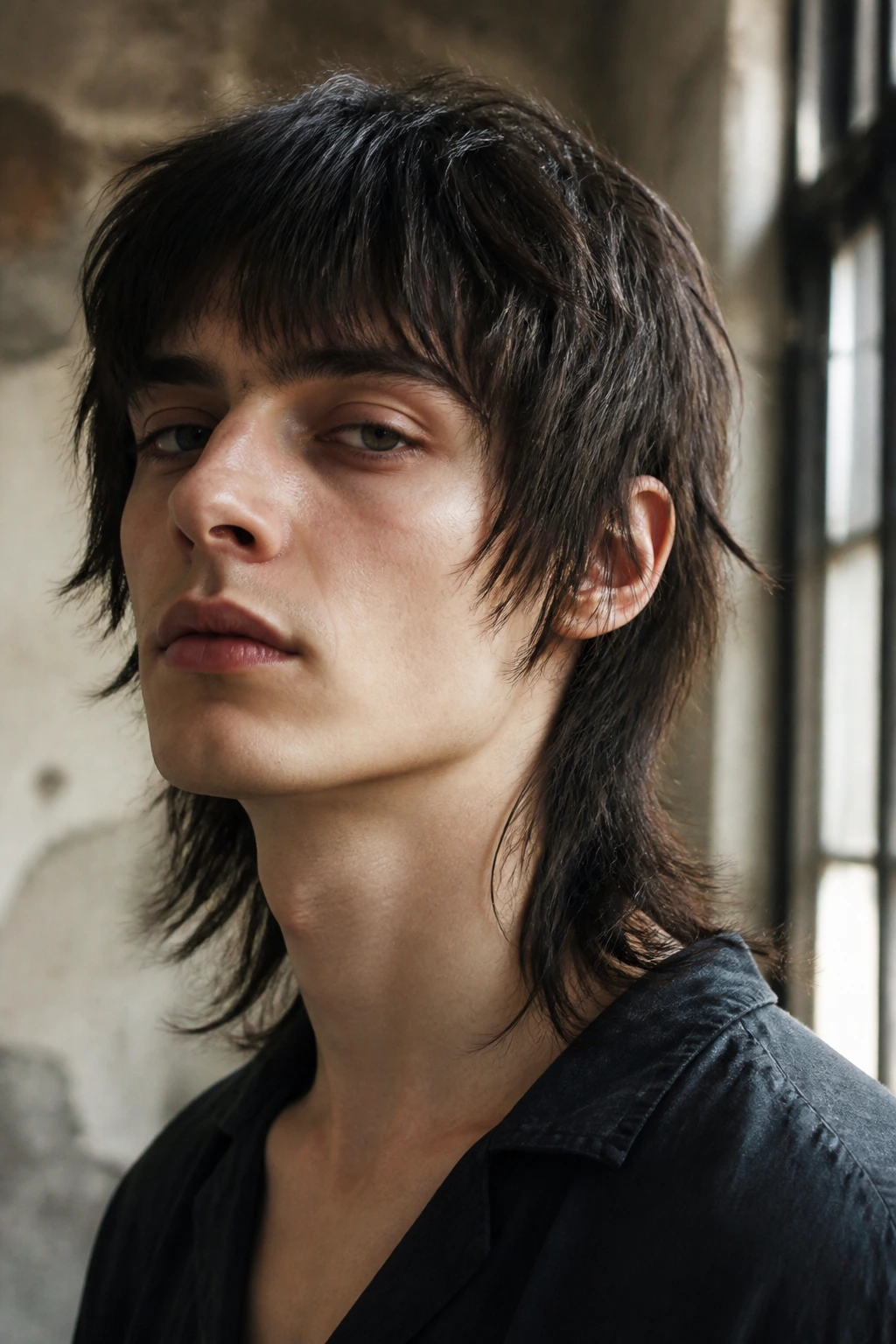
Grunge-lite is my favorite phrase for a cut that wants attitude but also wants a seat at the nice table. The shape is rougher than a sleek layered mullet, but it stops short of looking like you slept in a car. Straight hair gives this version a nice edge because the broken pieces show up clearly, especially around the temples and nape.
The whole point is controlled damage, if that sounds less glamorous than the haircut deserves. The front can be a little ragged, the sides a touch uneven, and the back long enough to pull the entire thing together. What you do not want is random chopping. There’s a difference. One looks deliberate. The other looks like a salon got interrupted by a fire drill.
Pair it with a dry, matte finish and a bit of lived-in texture. If your hair is glassy and slippery, this version needs product or it disappears.
15. Minimalist Mullet

This is the mullet for people who hate obvious hair decisions. The change in length is there, but it stays subtle: a bit shorter around the crown, a soft face frame, and a long back that only gives itself away when you turn around. Straight hair is good for this because the silhouette stays tidy.
The minimalist version matters if you want the shape of a mullet without the social commitment. It can sit in a normal life easily. Blazer, hoodie, clean tee — it all works because the haircut doesn’t shout. The danger is cutting it too flat, which leaves you with a weird long bob and a confusing neckline. Keep at least some separation at the nape.
A middle part or soft off-center part keeps it from feeling too severe. No heavy styling required. That’s the point.
16. Soft Razor Shag Mullet
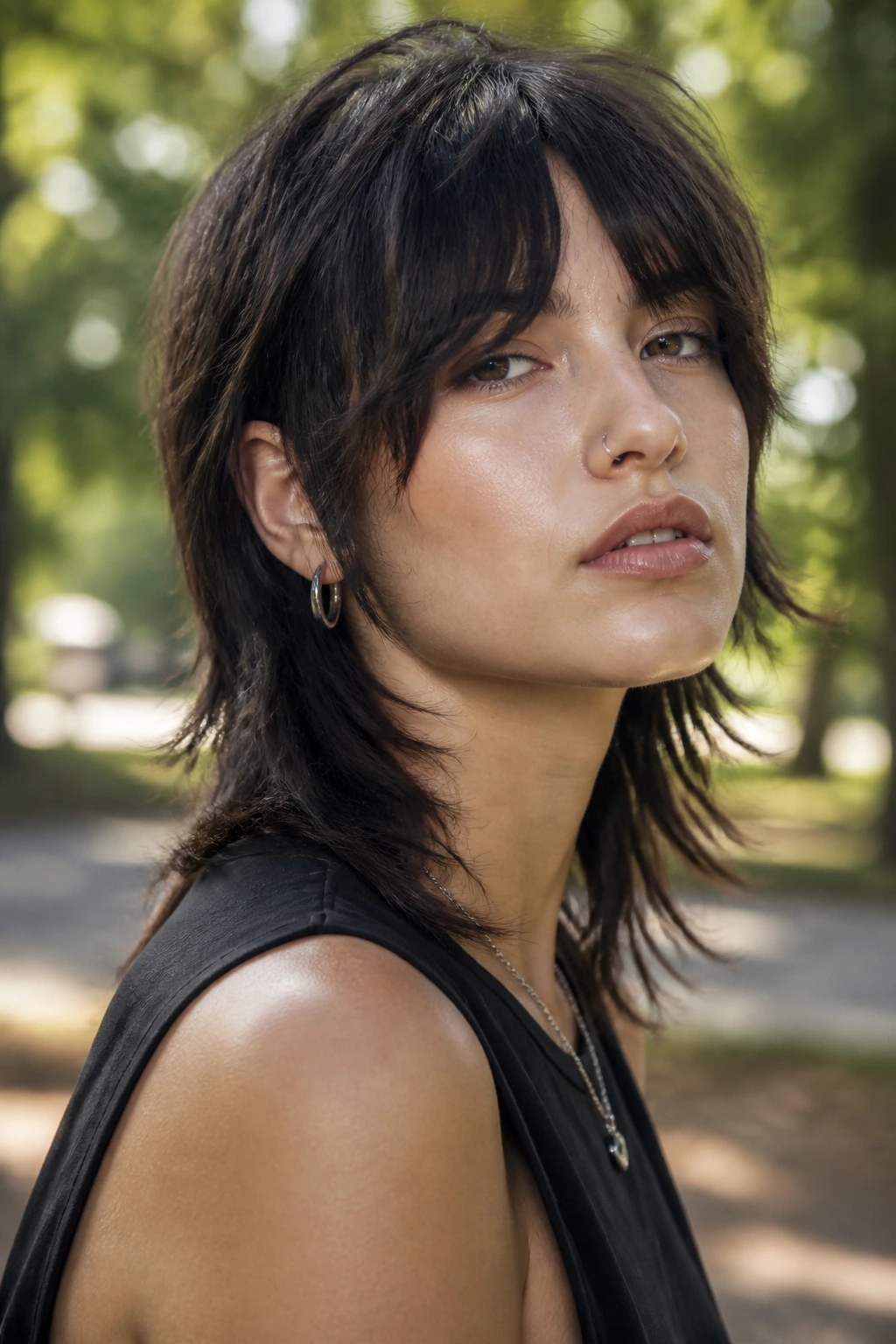
Soft razor cutting can be lovely on straight hair when the stylist knows when to stop. The razor creates a little air at the ends, which helps the layers move, but the “soft” part matters just as much as the razor itself. If the blade work gets too aggressive, straight hair goes wispy and tired fast.
This cut sits nicely between a polished shag and a more rebellious mullet. The front pieces should brush the cheekbones, the sides should stay connected, and the back should taper out with enough length to keep the shape readable. I like it on hair with natural body but no strong bend, because the razor creates its own movement.
A smoothing cream at the mids plus a tiny bit of texturizing spray at the ends usually does the trick. No heavy oils. They kill the separation the razor created.
17. Money-Piece Mullet
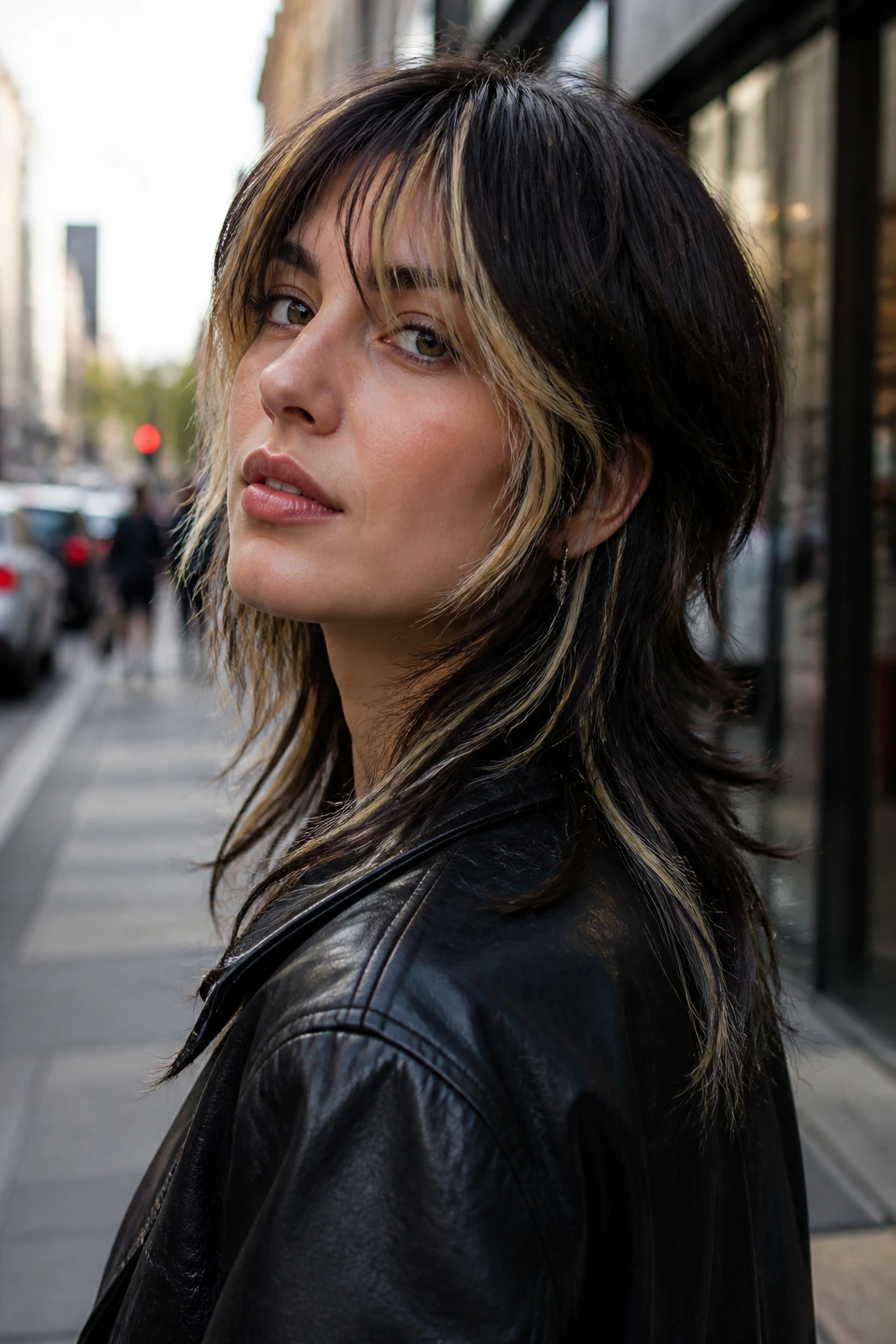
A money-piece mullet uses lighter face-framing pieces to make the haircut read brighter and sharper. You do not need dramatic color here. Sometimes two shades lighter at the front is enough to make the layer pattern pop, especially on straight hair where the cut lines already show well. The visual effect is immediate.
The haircut itself should still carry the shape. Keep the back long and shaggy, but let the front frames sit a bit more deliberately around the face. That contrast between bright front and long back is what gives the style its punch. If you wear makeup, this version can make the whole face look more lifted with less effort than a heavy bang.
It’s a good choice if you want the cut to feel fashion-y rather than punk. The color does some of the talking. The layers just back it up.
18. Side-Part Shag Mullet
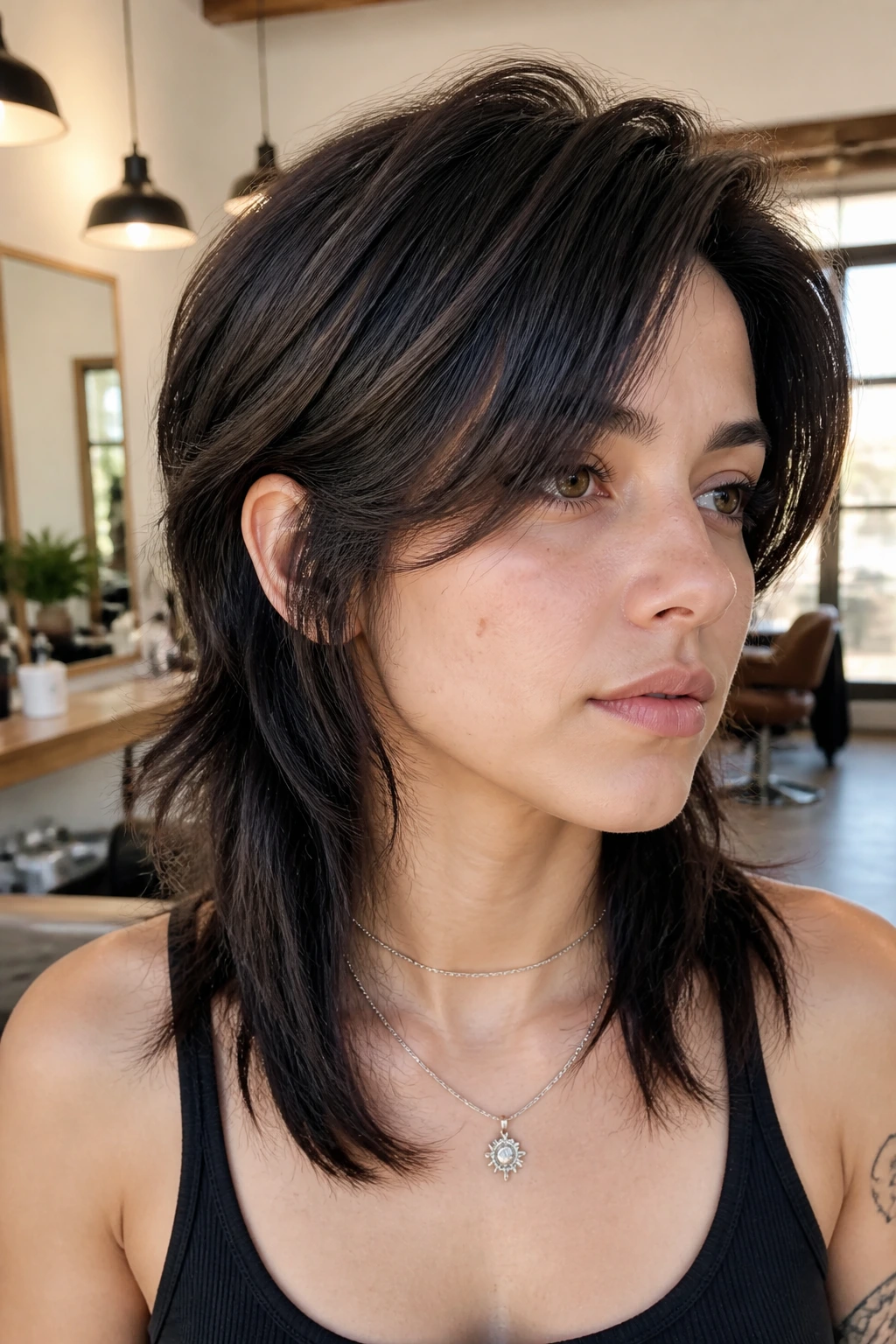
A side part can rescue a straight-hair mullet from looking too stiff. The shift moves the weight off the center line, gives the crown a little lift, and lets the front layers sweep in a way that feels more relaxed. It’s one of the easiest changes to make if your current cut feels too symmetrical.
When a Side Part Saves the Cut
If the middle part makes your hair hang flat against your face, a side part can open the cut instantly. It also helps if you have a strong cowlick or a front section that likes to separate in weird places. Sometimes the hair is telling you the part is wrong.
What to Tell Your Stylist
Ask for long, side-swept face framing that blends into the back rather than ending in a hard corner. You want the transition to feel soft, not triangular. Straight hair will show the blend, so make sure the layering starts high enough to do actual work.
A little root lift spray at the part line is enough. No helmet hair required.
19. Broken-Up Layer Mullet
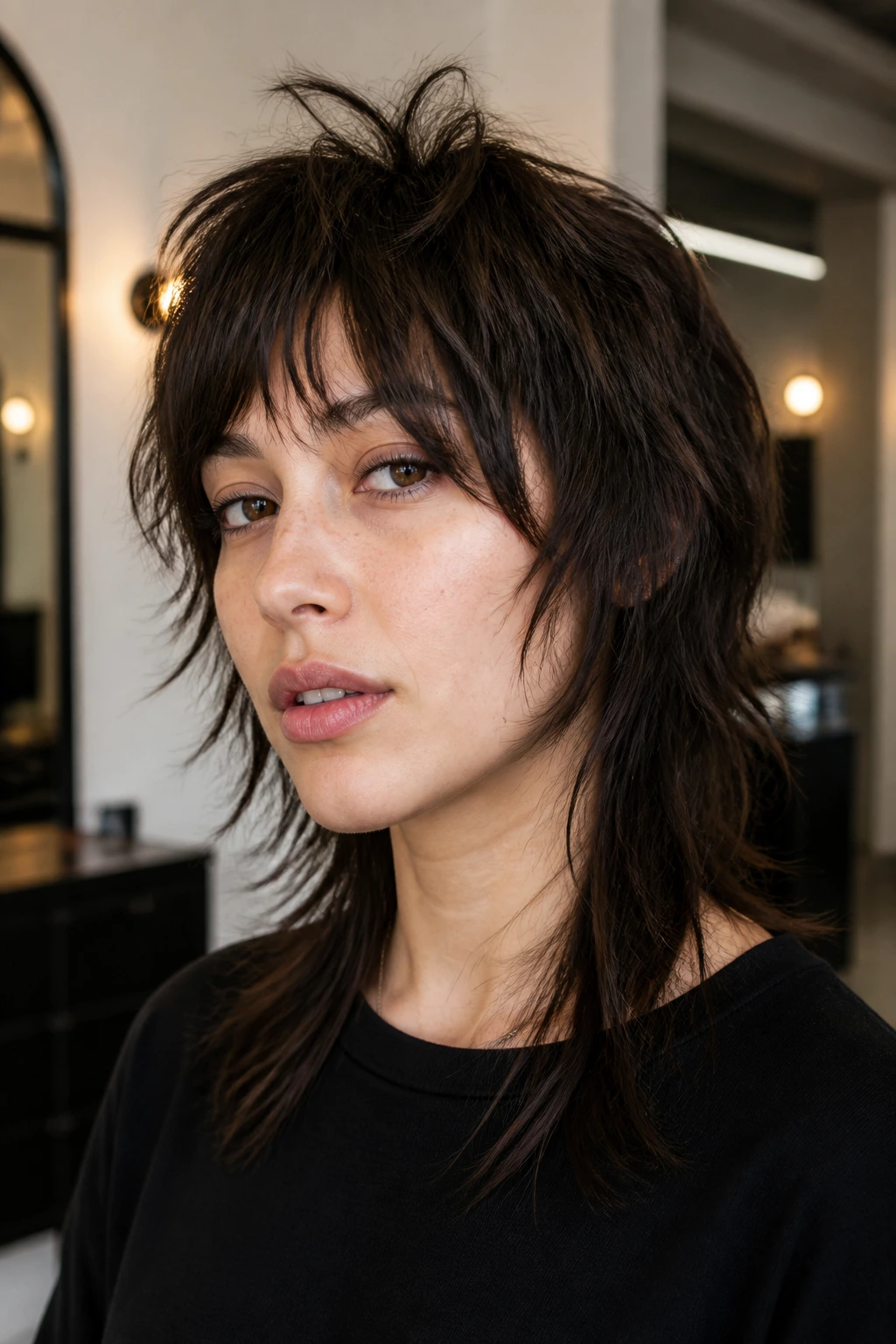
This version has a jagged, piece-by-piece feel that reads especially well on straight hair. Instead of one smooth slope from front to back, the layers change in little steps. That broken-up effect can look expensive when the cut is precise, because it gives the hair a kind of engineered movement.
The big caution is density. Fine straight hair can lose too much bulk if every layer is over-texturized. Thick straight hair, though, can wear this cut beautifully because the broken shape helps the hair move instead of sitting like a block. The back should stay long enough to keep the style from turning into a choppy shag with identity issues.
I’d use a small amount of dry texture spray and then stop. The haircut already has enough attitude.
20. Tapered Nape Mullet
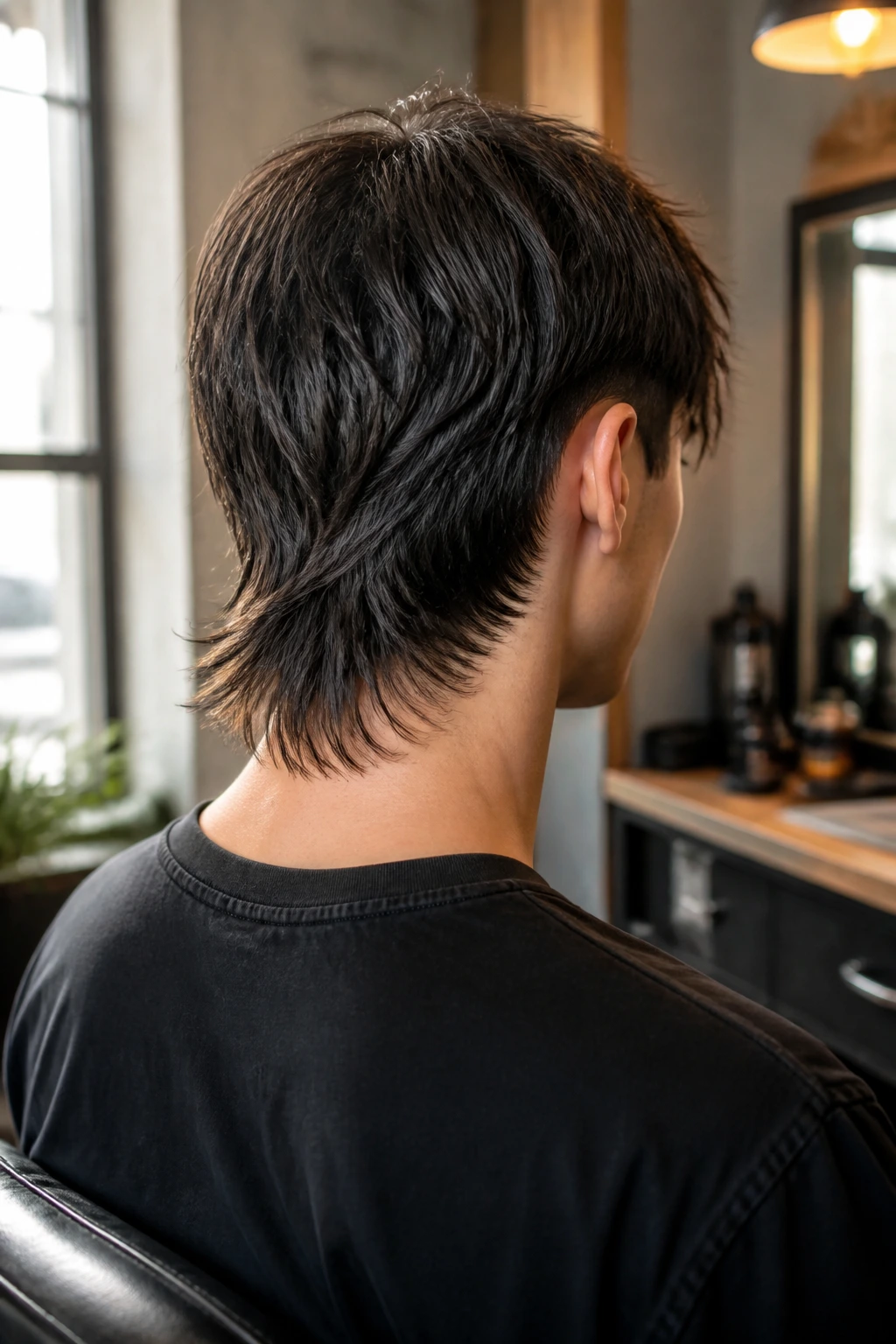
The tapered nape is where this cut gets sharp. The back narrows neatly into the neckline instead of dropping in a blunt curtain, which gives straight hair a cleaner finish. If you like your hair to look tidy even when the rest of the cut is shaggy, this is a smart version to ask for.
A tapered nape also makes grow-out easier because the neckline stays intentional for longer. The front can grow a bit, the layers can soften, and the cut still holds its shape. That’s useful if you don’t want to sprint back to the salon every five weeks.
This version feels best when the top is lightly layered and the sides are not over-thinned. Keep the silhouette long. Let the nape do the tail-end work.
21. Blunt Fringe Mullet
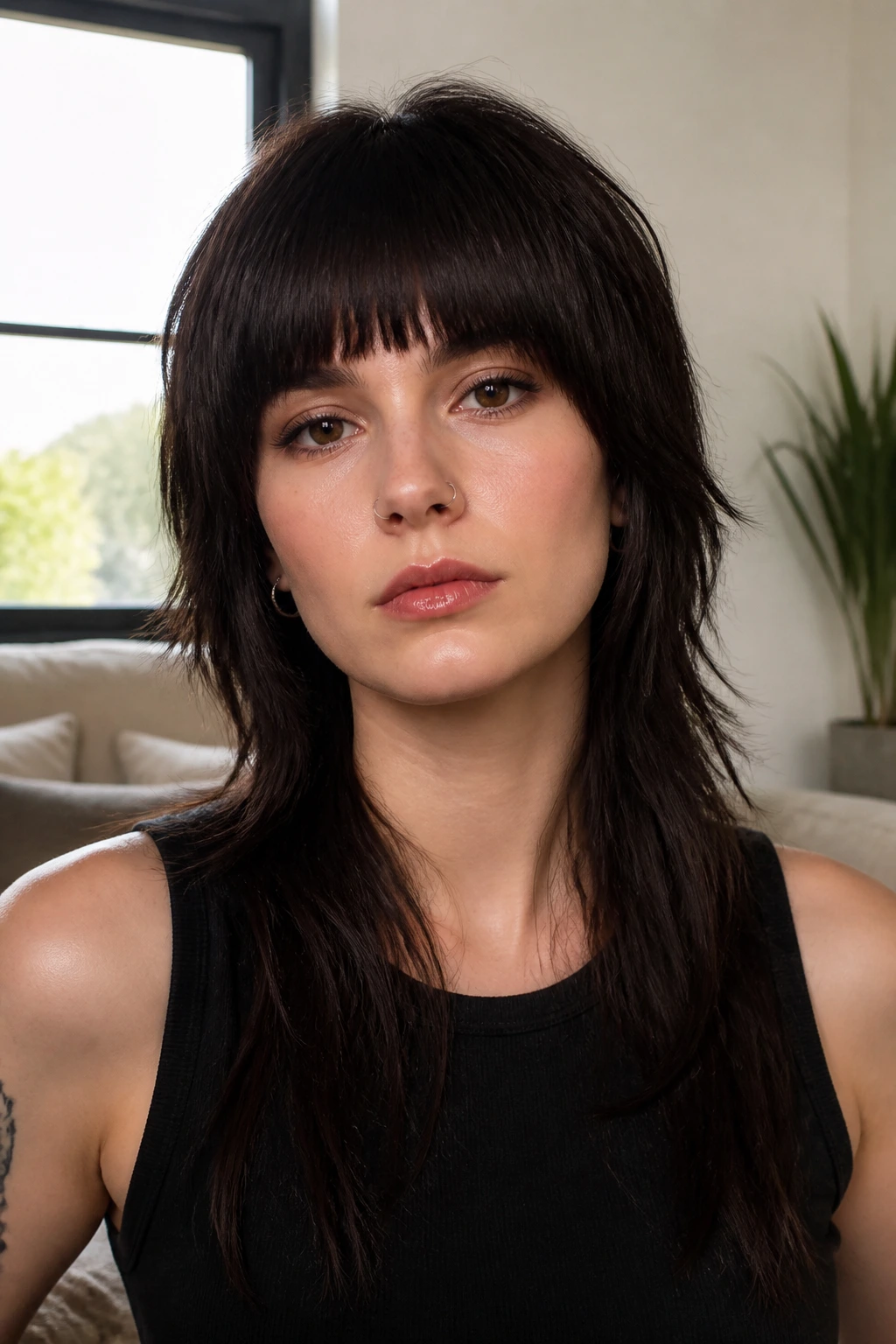
A blunt fringe with a shaggy mullet is a stronger move than most people realize. On straight hair, the fringe sits clean and heavy, which can make the rest of the cut look even more textured by contrast. That contrast is the point. It keeps the haircut from dissolving into all softness.
The catch is balance. If the bangs are too short or too dense, the whole style can look top-heavy. Ask for a blunt fringe that still has a little softness at the edges, plus long face-framing layers that connect into the sides. Without that connection, the front and back can feel like two separate haircuts in a trench coat.
This one suits someone who likes a little attitude up front and a long, moving back length behind it. It’s not subtle. It does, however, photograph extremely well in real life because the line across the brow gives the eye something to hold.
22. Swooping Face-Frame Mullet
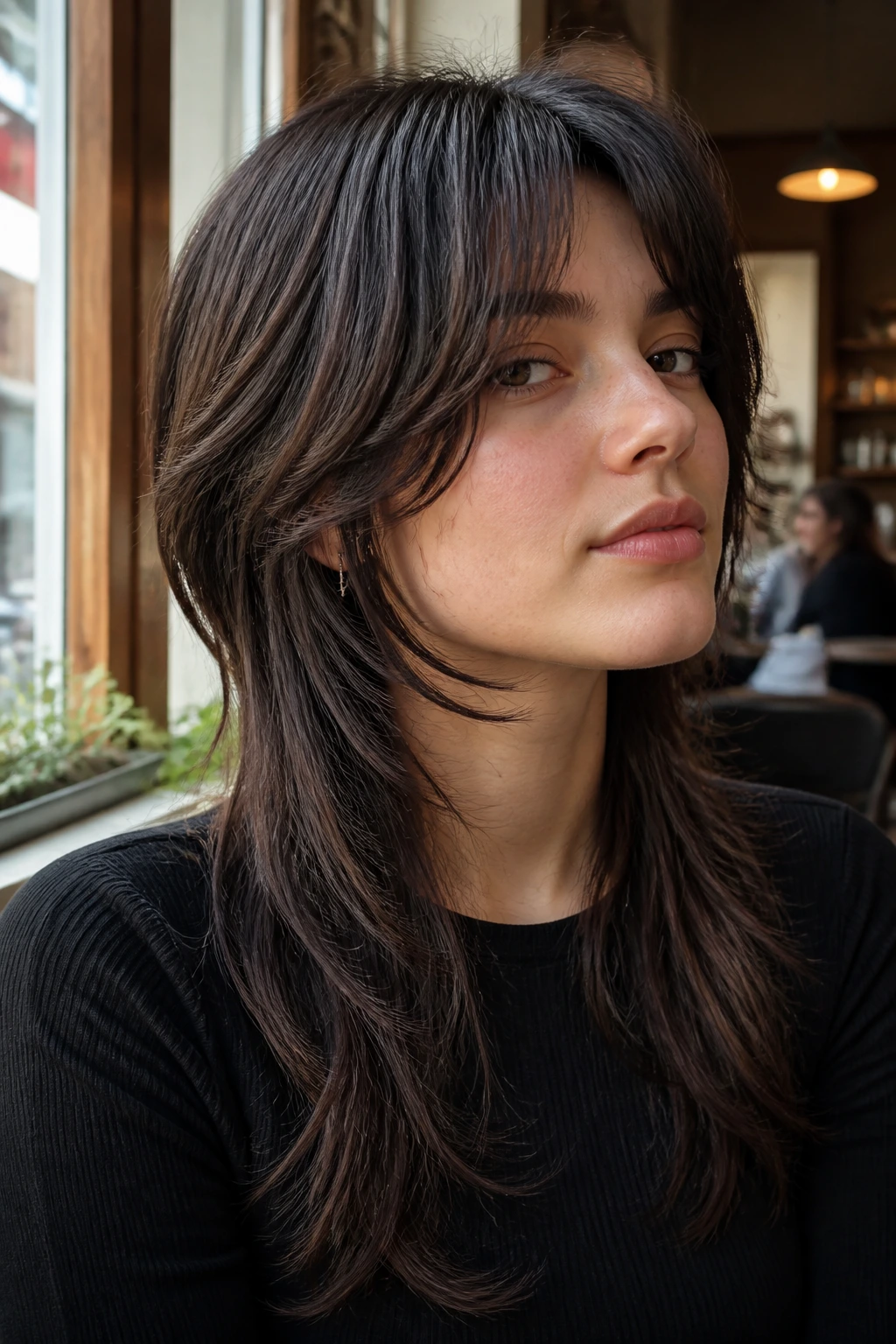
This cut leans into movement around the face. The front layers sweep from the cheekbones into the jawline, then fade into the longer back in a way that makes straight hair feel softer and more flattering. It’s a good choice if you want the mullet shape but do not want a sharp bang to sit on your forehead every day.
The swoop matters because it changes how the eye reads the haircut. Instead of a hard edge at the front, you get a diagonal line that pulls the whole style upward. That can be kinder on square or round faces, especially when the hair is worn with a slight off-center part.
A quick blowout with a medium brush is enough. Let the front fold away from the face and then settle naturally. Don’t over-polish it. The bend should look lived-in, not lacquered.
23. Invisible Layer Mullet
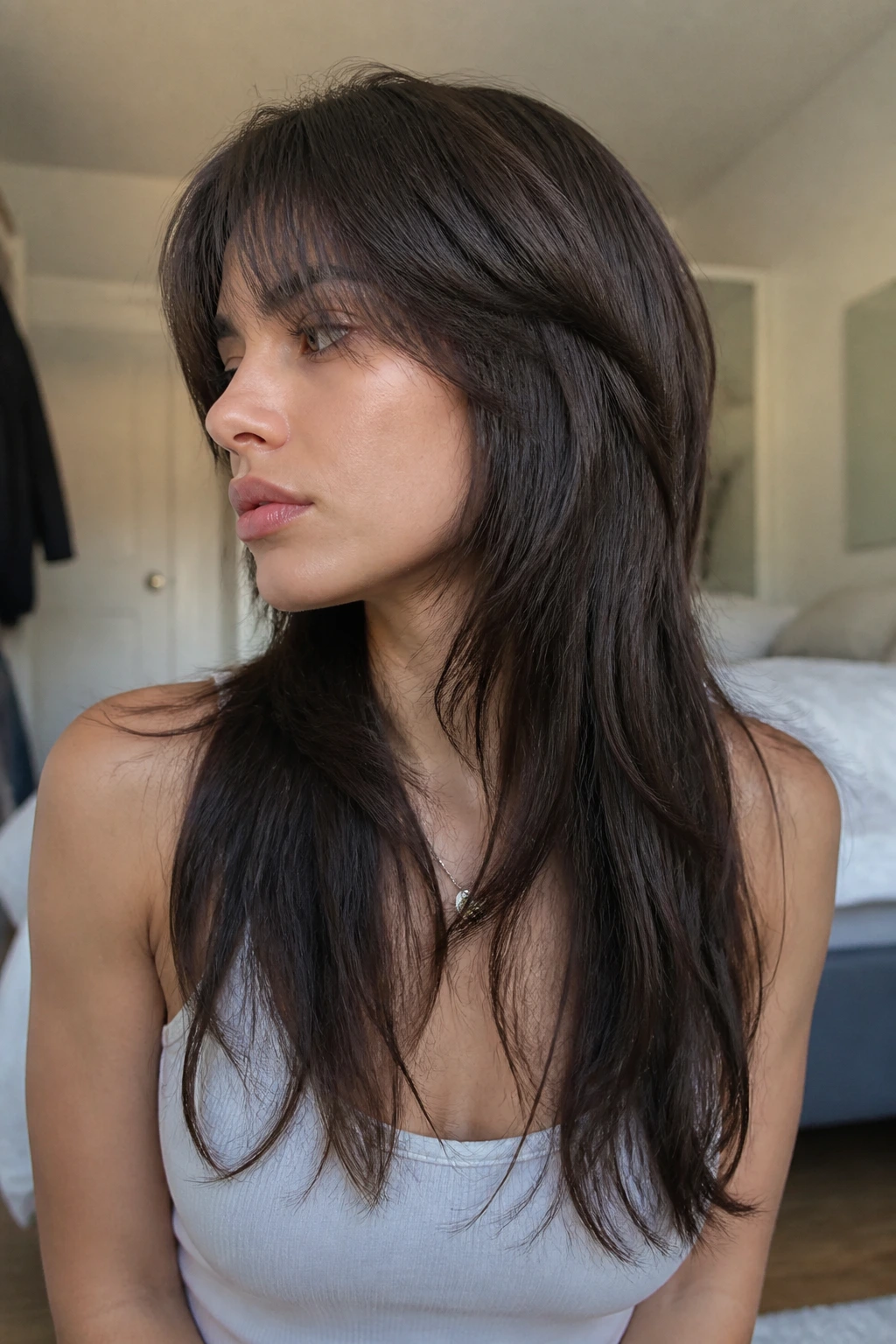
This is for people who want the shape without letting the layers scream about it. The haircut is built with internal layering, so the exterior still looks relatively smooth while the inside carries the movement. Straight hair loves this approach when you want fullness but not a chopped surface.
Who It Is For
- People with fine straight hair that gets wispy fast.
- Anyone who wants a conservative version of the mullet shape.
- Folks growing out a bob who need a bridge haircut, not a dramatic reinvention.
How It Should Feel
The ends should move when you walk, but the top should not look shredded. Ask for invisible internal layers rather than obvious disconnected chunks. That phrasing helps.
This is one of the easiest styles to live with if you hate heavy styling. It can air-dry cleanly and still keep a shape.
24. Chin-Front Long-Back Mullet
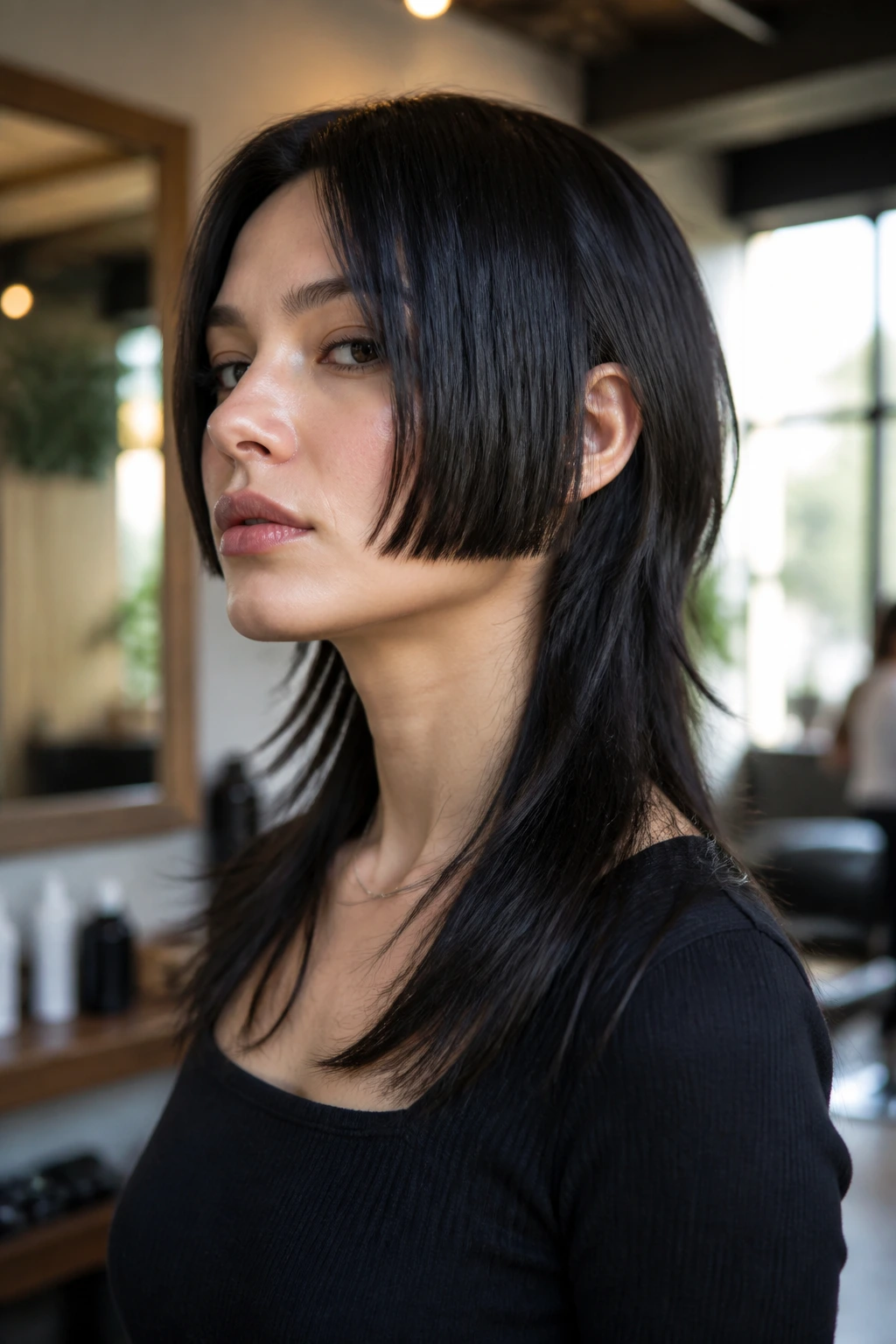
This one is built on contrast. The front sits around the chin, maybe a touch shorter if your face can handle it, while the back stays long enough to make the difference obvious. Straight hair makes the contrast look sharper, which can be a good thing if you want the mullet to read on purpose.
The chin length up front is what gives the cut its little jolt. It frames the jaw and puts the eyes back into the conversation. Meanwhile, the long back keeps the style from becoming a bob with a rogue tail. If the transition between front and back is too abrupt, the cut loses elegance and starts to feel like separate parts taped together. Ask for a smooth slope through the sides.
This is a stronger statement than most of the softer shags in the list. It’s also one of the easiest ways to make straight hair look styled even when you have not done much at all.
25. Bent-End Layered Mullet

If your straight hair tends to lie too flat, bent ends can save the day. This cut is shaped to look best with a slight inward or outward bend at the perimeter, so the layers don’t just dangle. A tiny curve at the ends is enough. Full curls are not the goal. The shape itself carries the style.
This version works especially well when the face frame is kept long and the back is layered in a soft cascade. The bend adds movement without making the haircut look fluffy. I prefer it for people who want something polished during the day and a little looser at night.
A flat iron or round brush can create that bend in under ten minutes once you get the hang of it. Keep the movement soft. Think shaped, not curled.
26. Internal Texture Mullet
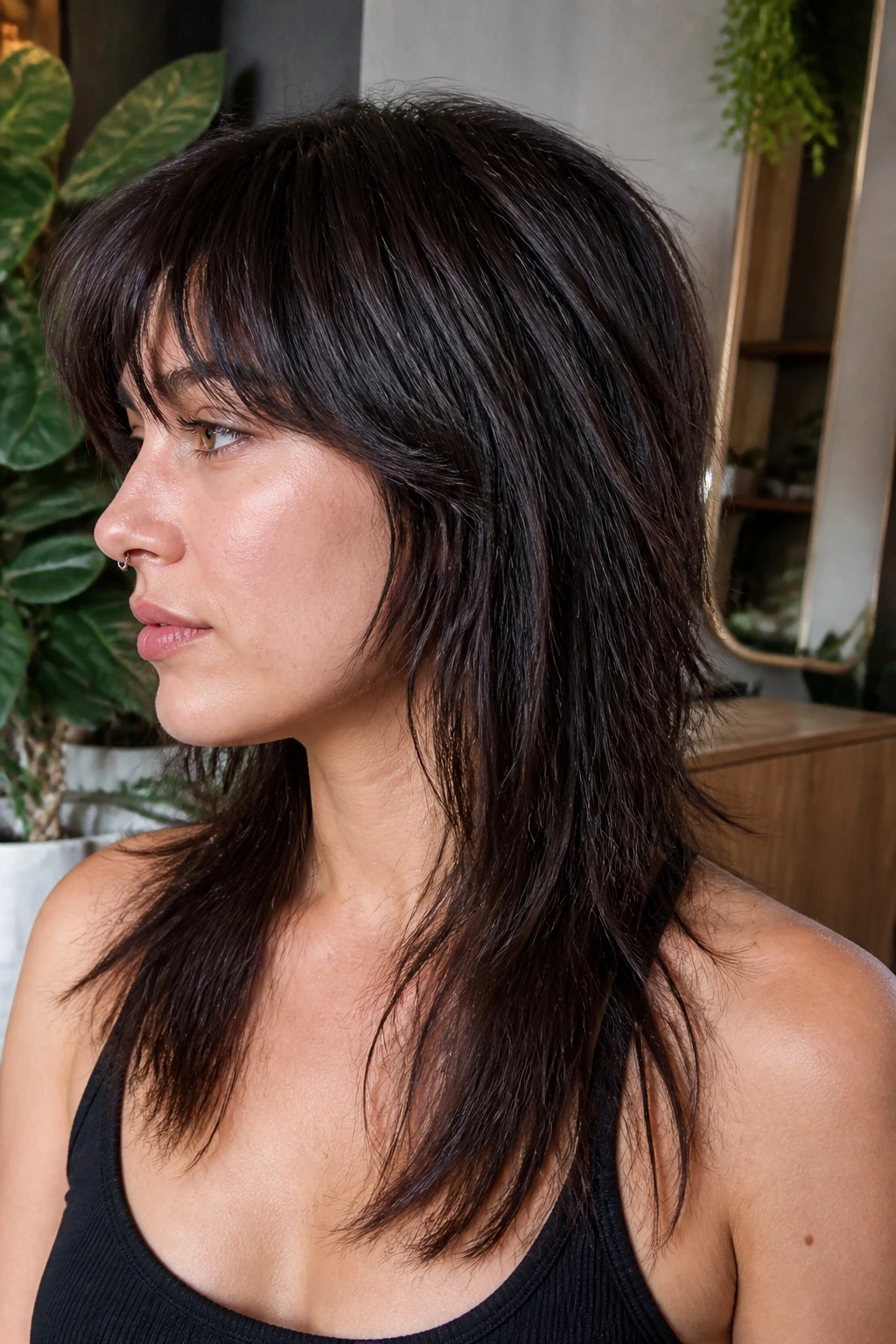
This is the choice for heavy straight hair that refuses to move. Instead of carving the outside to death, the stylist removes weight from inside the shape so the surface still looks smooth. That matters a lot. You keep the clean outline, but the hair stops behaving like one thick panel.
It’s one of the smarter cuts for people who like long hair but hate the feeling of bulk around the neck and jaw. The internal texture gives the back a little separation and keeps the crown from puffing outward. On straight hair, that can be the difference between a cool shape and a triangle you regret.
Ask your stylist to keep the perimeter long and clean while softening the interior. If you hear them talking only about “more texture” without mentioning where the weight comes out, be a little cautious.
27. Retro Feather Mullet
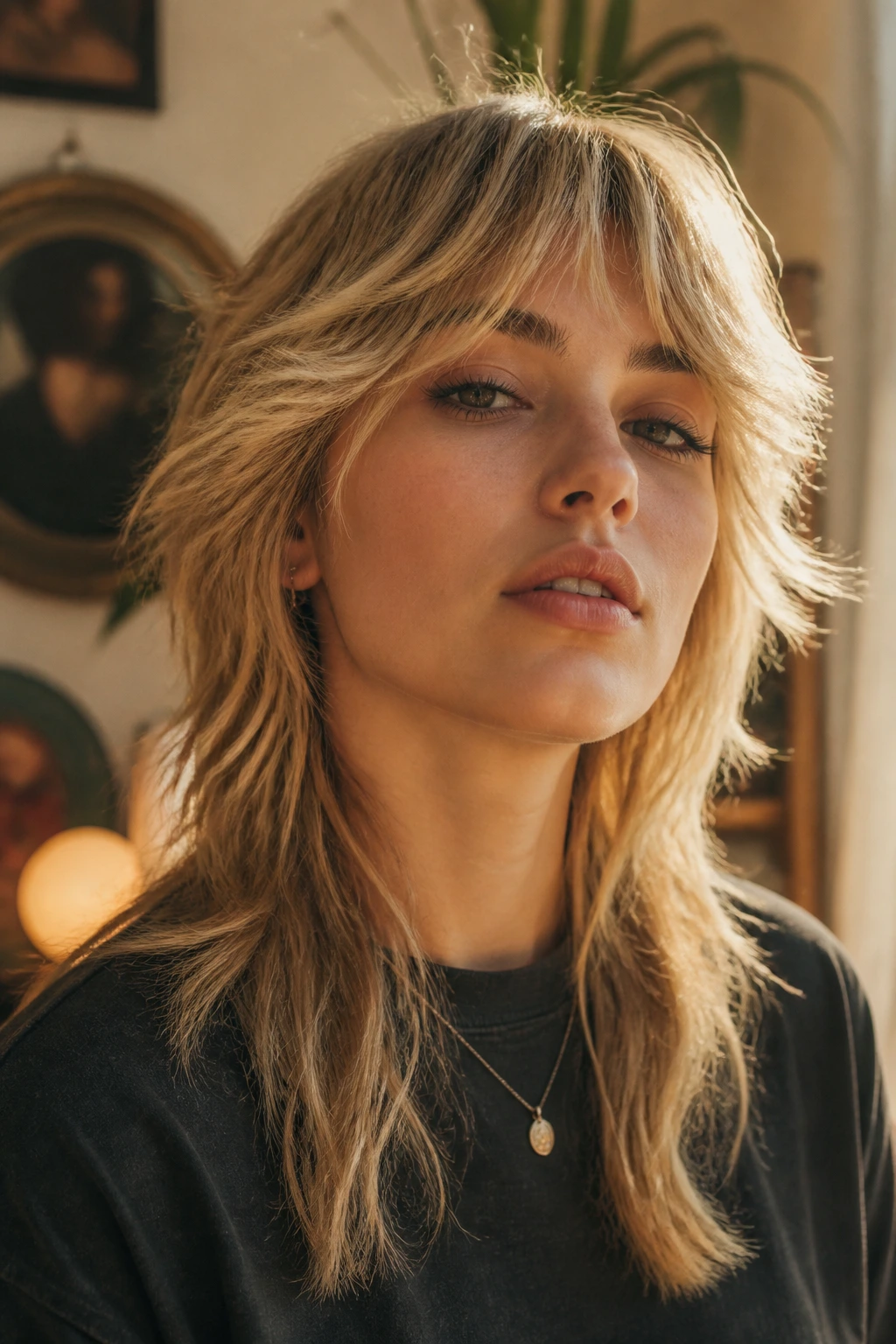
This version has a clear 70s feel, but it does not need to look costume-y. The feathering opens around the face, the layers fan out softly, and the long back keeps the whole thing from turning into a short retro shag. Straight hair is excellent for this because the feathered edges stay visible.
The 70s Feel Without the Costume
The key is keeping the fringe and side pieces soft. If they’re too crisp, you drift into a pageant shape. If they’re too shaggy, you lose the feathered elegance. The sweet spot lives in the middle, where the hair turns away from the face in a gentle sweep.
Who Should Try It
Anyone who likes soft volume, big earrings, and a little movement around the cheekbones. It works especially well with a center part or a very soft side part. The back should stay long enough to keep the silhouette modern.
A round brush and a light mist of flexible hairspray are enough. No helmet. No crunch.
28. Polished Editorial Mullet
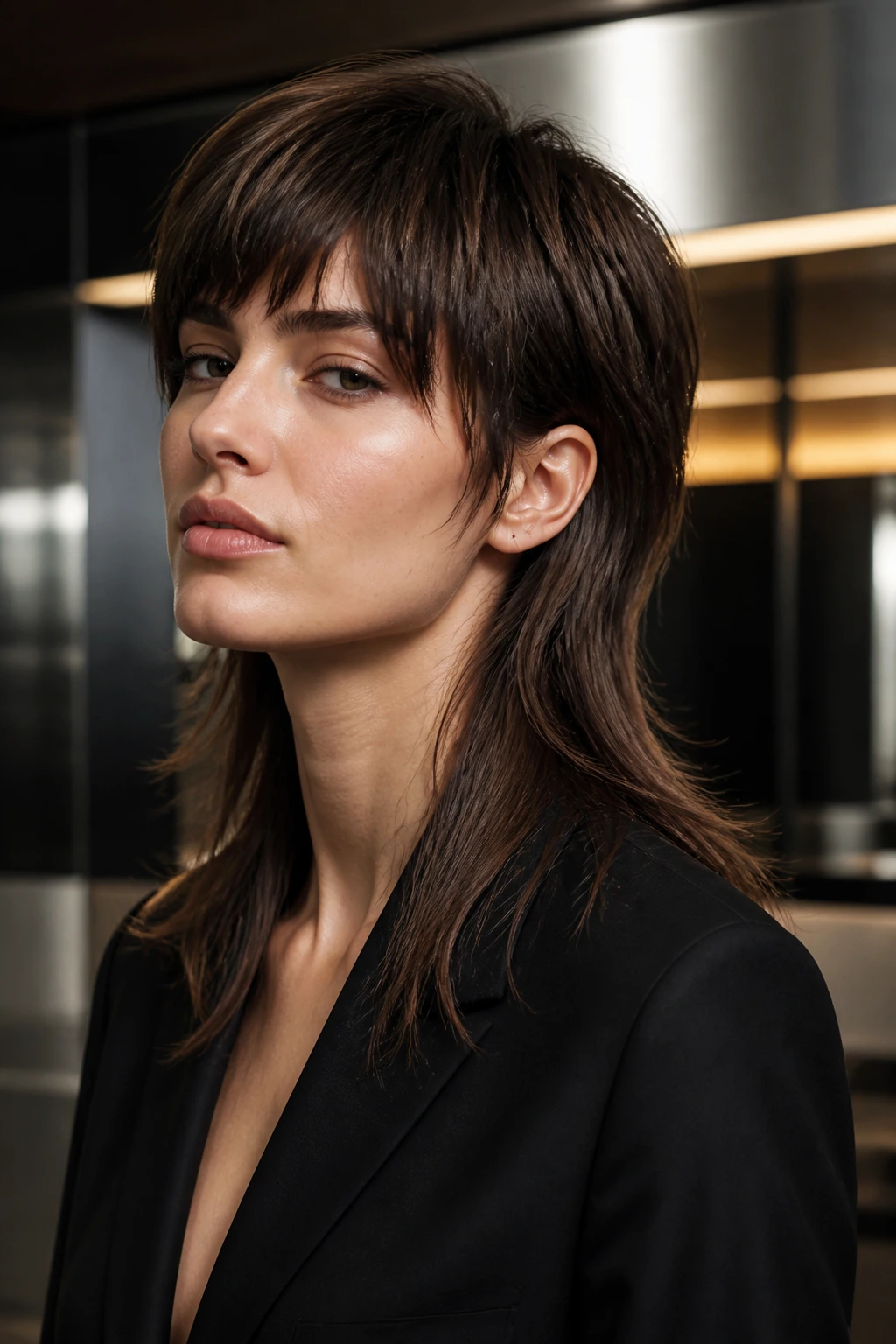
This is the sharpest-looking version in the bunch. The lines are cleaner, the layers are more deliberate, and the whole cut feels like it belongs in a fashion spread rather than a garage band flyer. Straight hair helps here because the cut geometry stays visible.
What makes it editorial is control. The fringe is clean, the crown is shaped but not overdone, and the back falls in a smooth, long line that looks intentional from every angle. It’s not shaggy in a messy way. It’s shaggy in the “someone spent real time thinking about this” way.
If you want the cut to read expensive without becoming fussy, this is the one. Pair it with a crisp shirt, a bold earring, or even just a perfect center part and a glossy finish. It looks strongest when the hair is shiny and the ends are clean.
Why Straight Hair Changes the Whole Mullet Equation
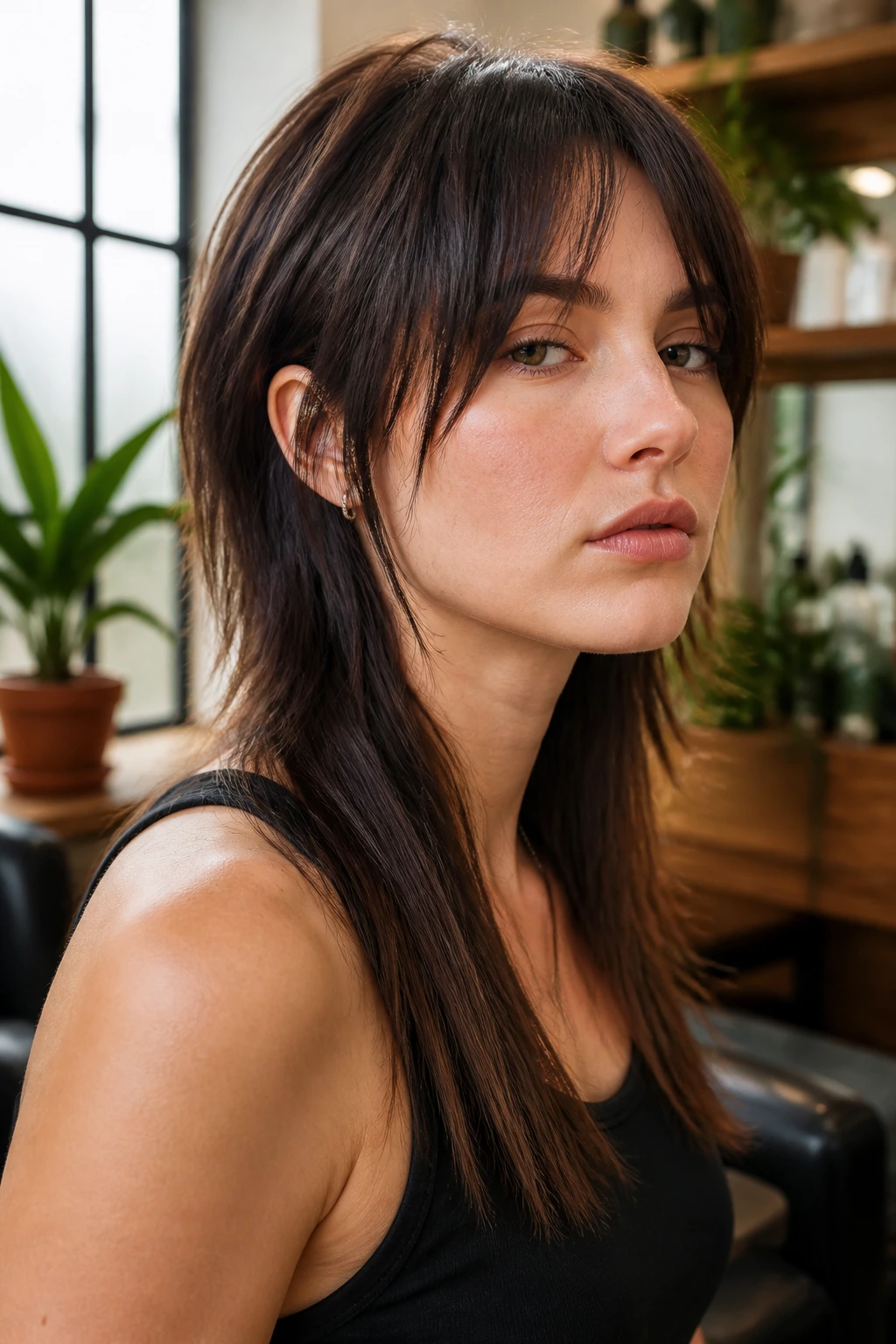
Straight hair exposes every decision in a haircut. That sounds harsh, but it’s useful. On wavy or curly hair, a lazy layer can hide inside the pattern. Straight hair does not hide anything. If the crown is too heavy, it lies flat. If the nape is too short, the silhouette looks accidental. If the face frame is disconnected, you see the gap immediately.
That’s why the best long shaggy mullet cuts for straight hair rely on internal weight removal, point cutting, and a clear relationship between the front and back lengths. You are not just cutting layers. You are building a shape that needs to move even when the hair hangs still.
The part most people miss
A straight-hair mullet usually fails because too much weight gets removed at the wrong place. The crown gets thinned, the ends get wispy, and the long back never gets enough substance to balance the front. A better cut keeps enough density at the perimeter to hold the silhouette while softening the inside so the hair swings instead of sitting there like a helmet.
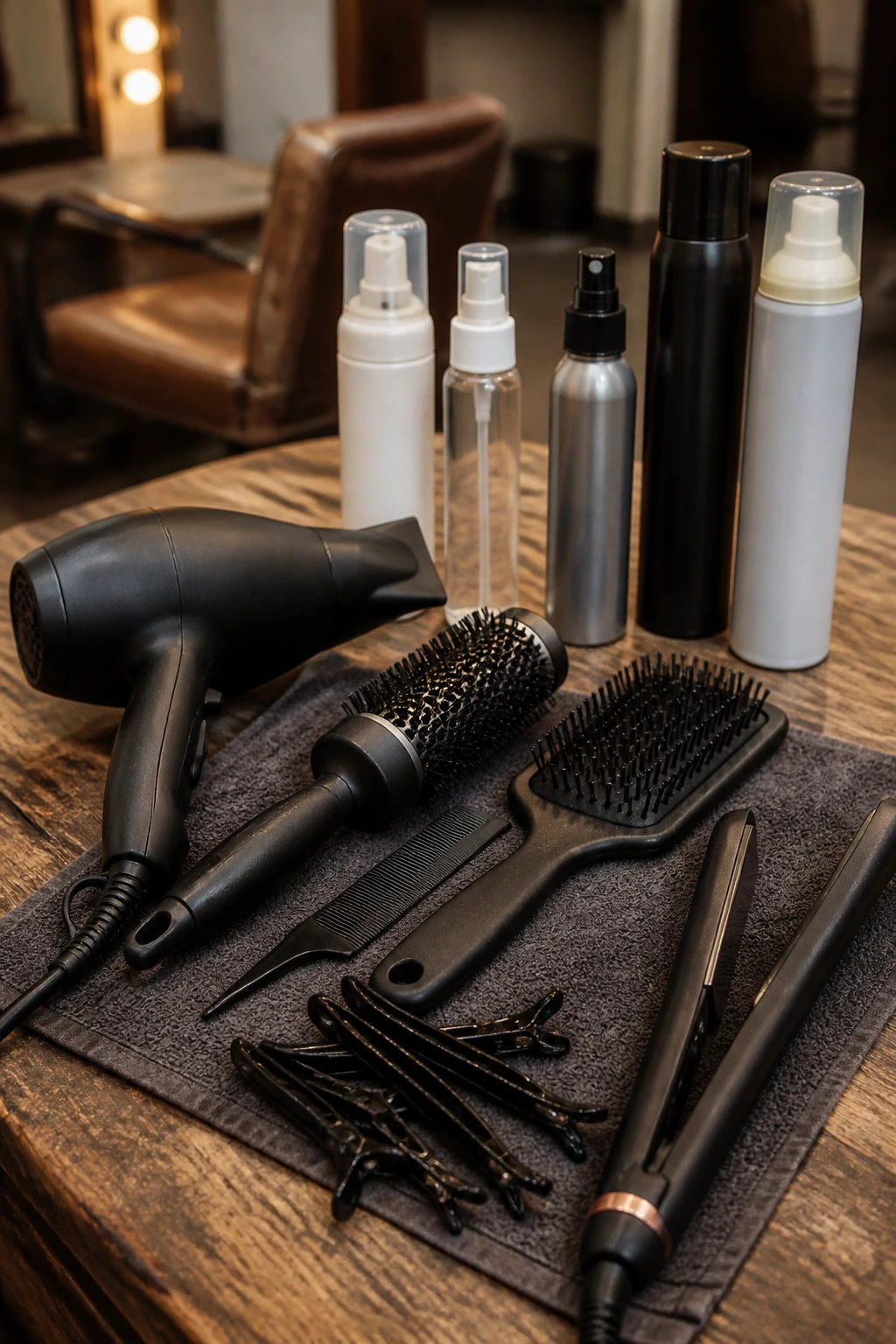
Essential Equipment for Styling These Cuts
-
Blow dryer with a nozzle attachment — The nozzle directs airflow so you can lift the roots without blasting the whole cut flat.
-
Medium round brush — Useful for giving curtain bangs, face-framing layers, and bent ends a soft curve.
-
Flat brush or paddle brush — Better when you want sleek roots and smoother mids with less volume.
-
Tail comb — Makes it easier to set a clean center or side part, which matters a lot on straight hair.
-
Sectioning clips — Keep the crown lifted while you dry the lower layers so the shape does not collapse.
-
Lightweight mousse — Adds root support without the sticky feel that heavier creams can leave behind.
-
Heat protectant spray — Use it before any blow-dryer, iron, or brush work. Straight hair shows heat damage fast.
-
Texturizing spray — Gives separation to shaggy ends and keeps the cut from looking too polished.
-
Dry shampoo — Helps the crown stay alive on day two or three, especially if your hair gets oily near the scalp.
-
1-inch flat iron or small curling iron — Optional, but handy for bending the ends rather than making full curls.
-
Hand mirror or phone camera — Check the nape and side shape. Straight hair makes asymmetry obvious.
How to Brief Your Stylist Without Hand-Waving
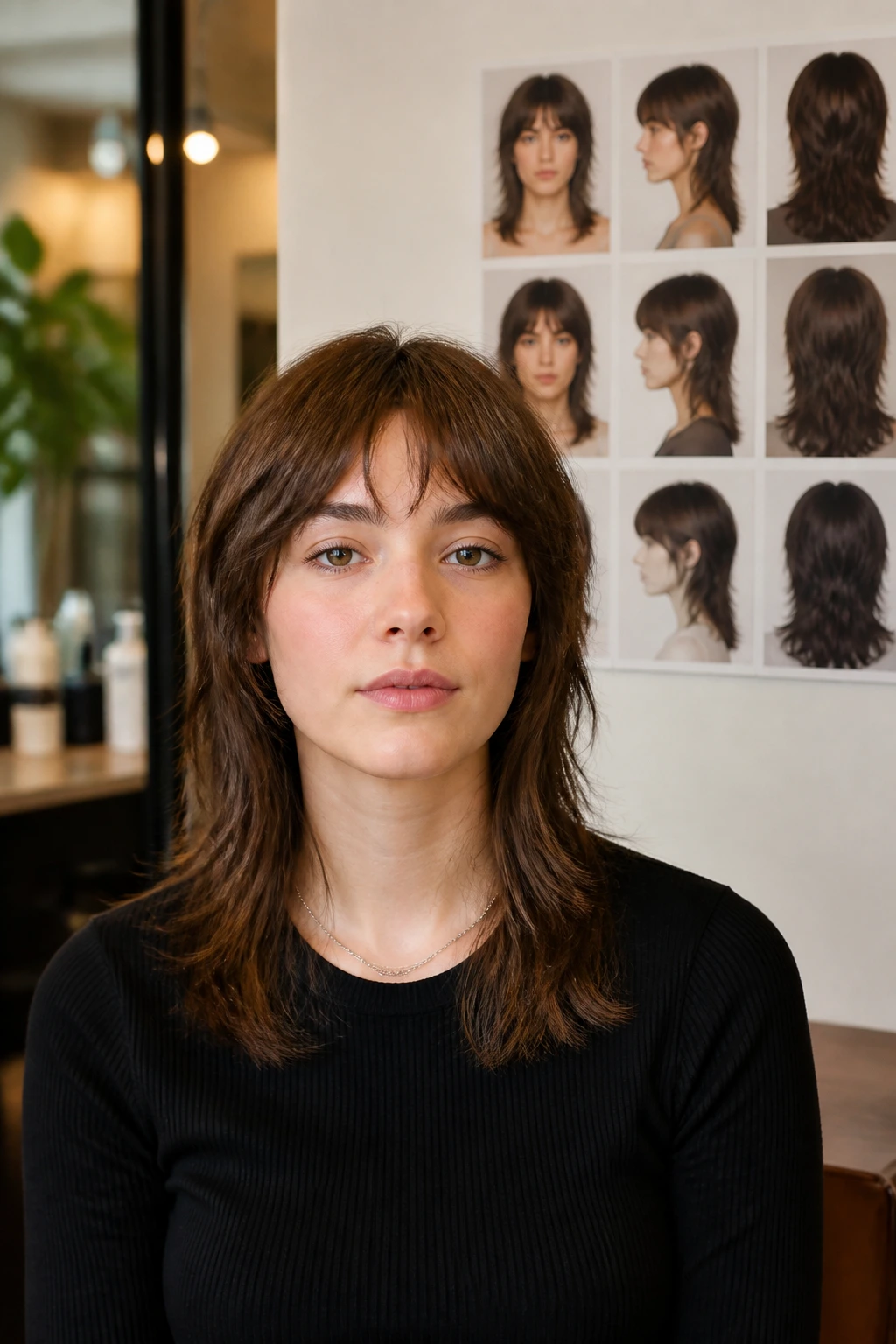
Bring photos from the front, side, and back. One pretty picture is not enough, because a mullet lives in the profile. Show the stylist where you want the shortest layer to hit — eyebrow, cheekbone, lip, chin — and where you want the back to land. That one sentence does more work than ten vague words about “movement.”
Say whether you want the cut blended or disconnected. Those are not the same thing. A blended version slides smoothly from front to back, while a disconnected one keeps a clearer difference in length. On straight hair, that distinction matters because the line between stylish and awkward can be thin.
If your hair is fine, ask for less thinning and more shape. If it’s thick, ask where the weight should come out instead of saying “make it lighter” and hoping for the best. Hope is not a salon strategy.
How to Style the Cut So It Doesn’t Collapse
At the roots
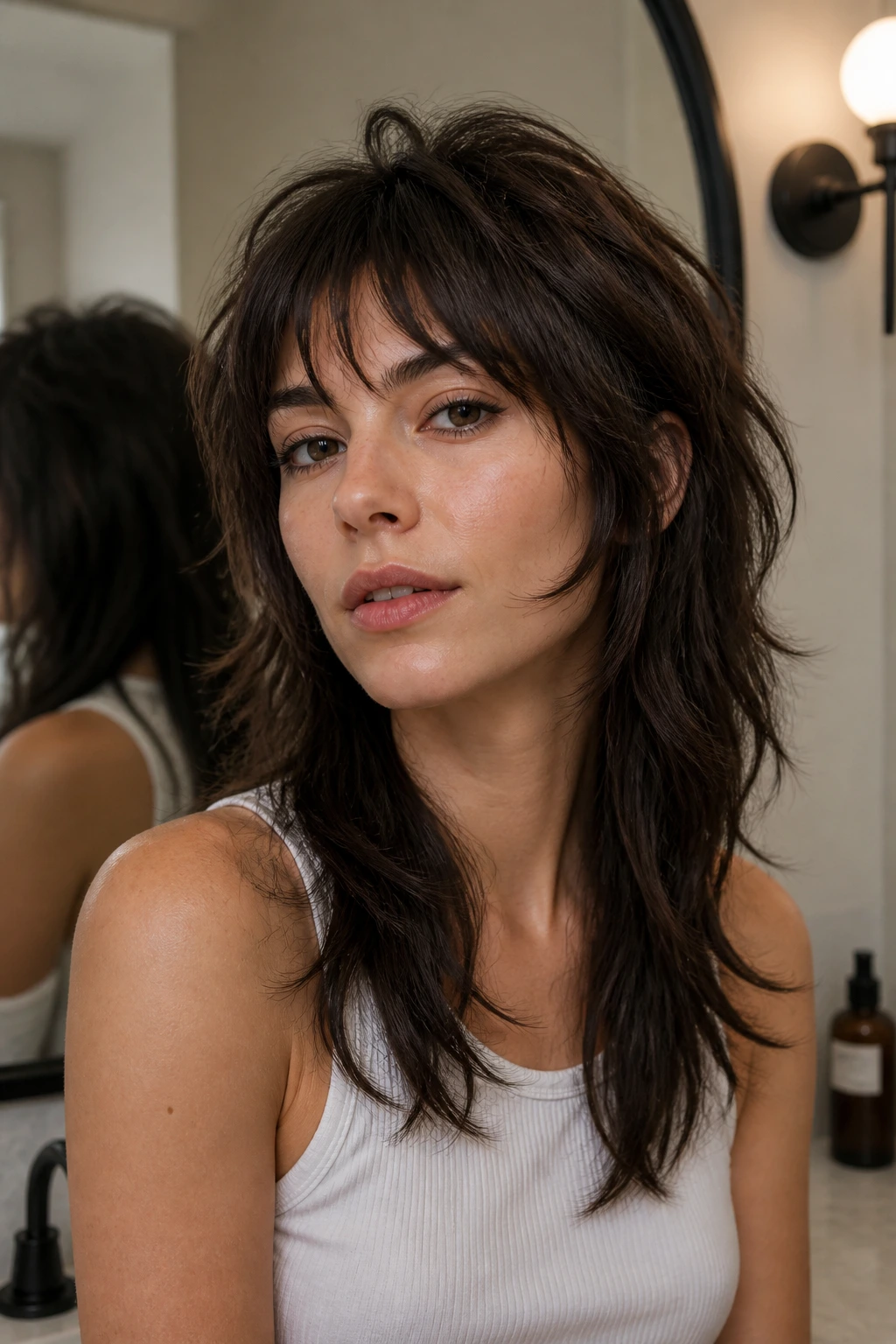
Start with towel-dried hair and a small amount of lightweight mousse at the crown. Work it in close to the scalp, not all the way through the ends. Straight hair tends to lose root lift first, so this is the part worth fussing over.
Through the mid-lengths
Use a little heat protectant and, if needed, a pea-sized amount of smoothing cream from the ears down. Keep the mids controlled. If they get too slippery, the layers will separate in a bad way and the haircut will sink by lunch.
At the ends
Use a round brush or flat iron to give the ends a soft bend. Not a curl. A bend. That tiny curve keeps the shaggy mullet from looking stiff, and it helps the back move when you walk. Finish with a light texturizing spray or a touch of dry shampoo at the crown if your hair leans flat.
If you air-dry, clip the crown up for a few minutes while it sets. Straight hair loves a little cheating.
How to Wear It With Accessories and Outfits
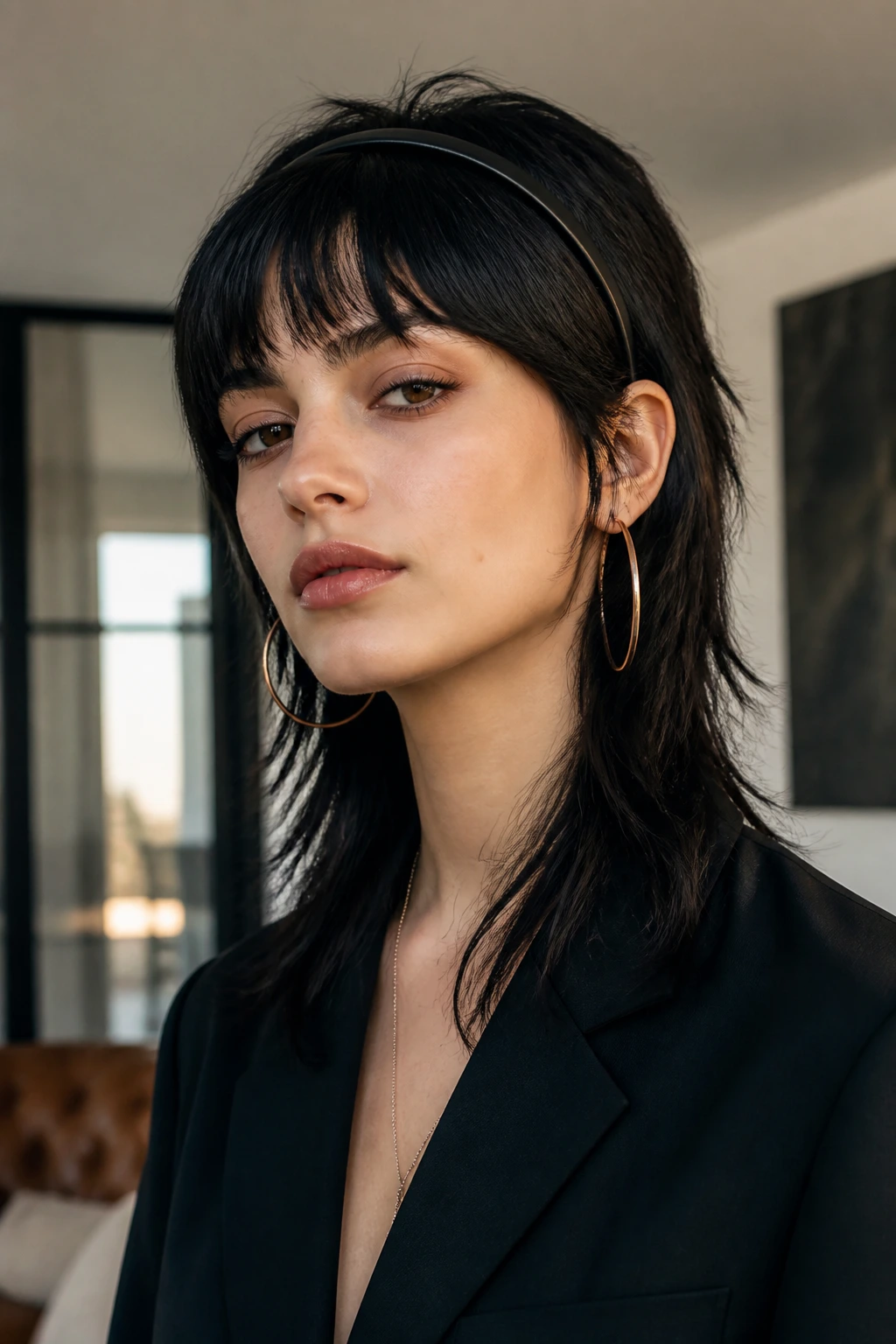
Presentation: Keep the part visible and let the face-framing layers do the work. A straight-hair mullet looks best when the outline is clean, so avoid burying it under too many styling products or a hat that crushes the crown.
Accessories: Hoop earrings, slim headbands, barrettes, and even sunglasses with a sharp frame can make the cut look deliberate. If you wear hats, choose ones with a little structure so the top does not flatten into a sad pancake.
Scale: Bigger earrings and open necklines pair nicely with a stronger mullet silhouette. If the cut is softer and more minimal, smaller accessories keep it from feeling overdesigned.
Finish: A satin sheen or soft matte finish both work. What you want to avoid is a greasy crown and dry ends. That contrast looks accidental, and not in a charming way.
Additional Tips and Texture Boosters
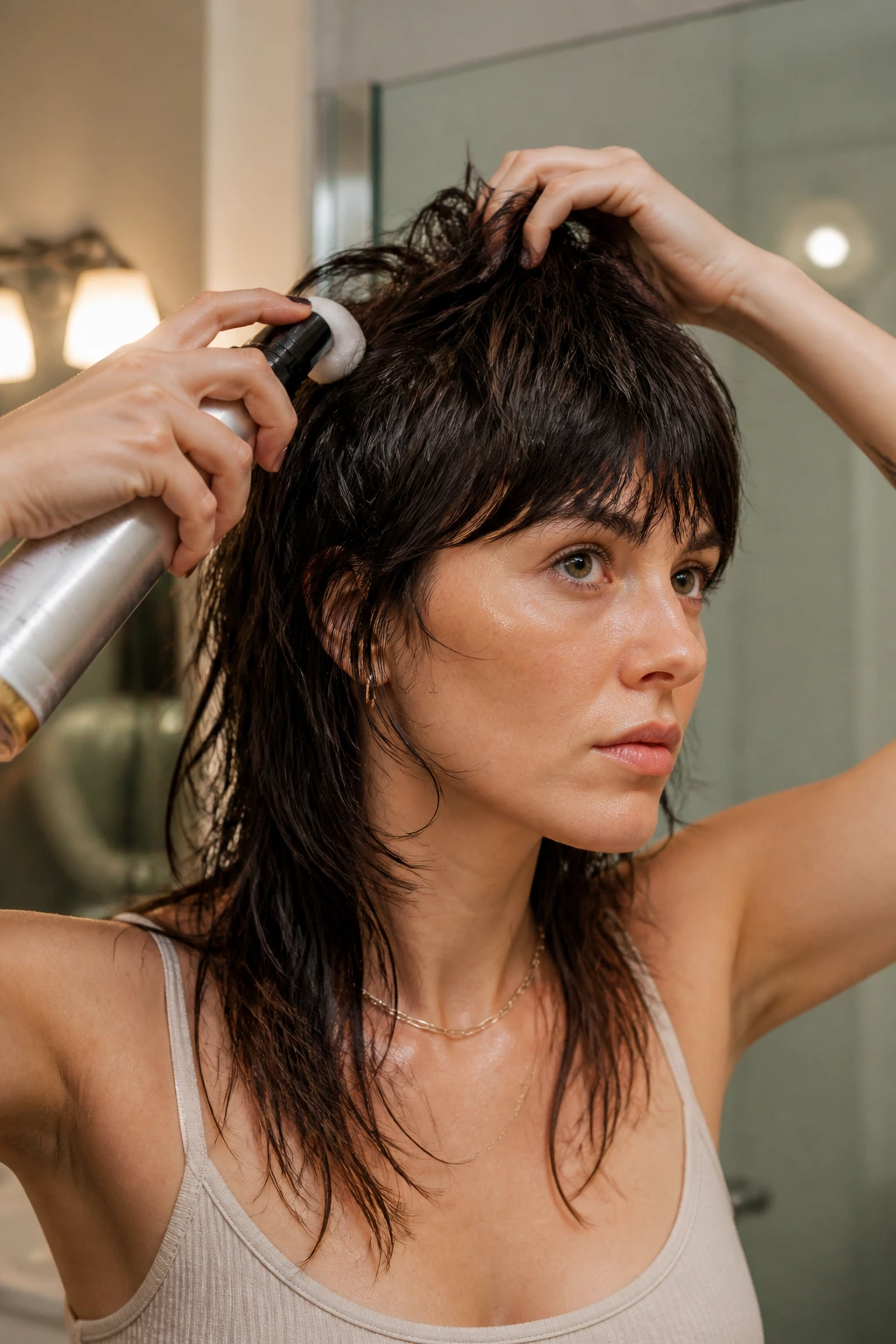
Texture Boost: Use root-lifting mousse on damp hair, then hit the crown with cool air for the last minute of drying. That extra chill helps the lift stay put longer than hot air alone.
Customization: Ask for the shortest face-framing point to sit at a specific landmark — brow, cheekbone, or jaw — instead of saying “short layers.” A real target keeps the cut from wandering into random territory.
Serving Suggestions: If you wear glasses, keep the fringe a touch longer so it doesn’t sit awkwardly on the frame. If you wear bold lipstick or heavy eye makeup, a sleeker mullet version can balance the face instead of competing with it.
Make-It-Yours: Fine hair usually needs fewer layers and a softer back. Thick hair usually needs more internal debulking and a cleaner nape. If your hair gets oily fast, keep the crown lighter and use dry shampoo at the roots, not through the ends.
Common Mistakes to Avoid
-
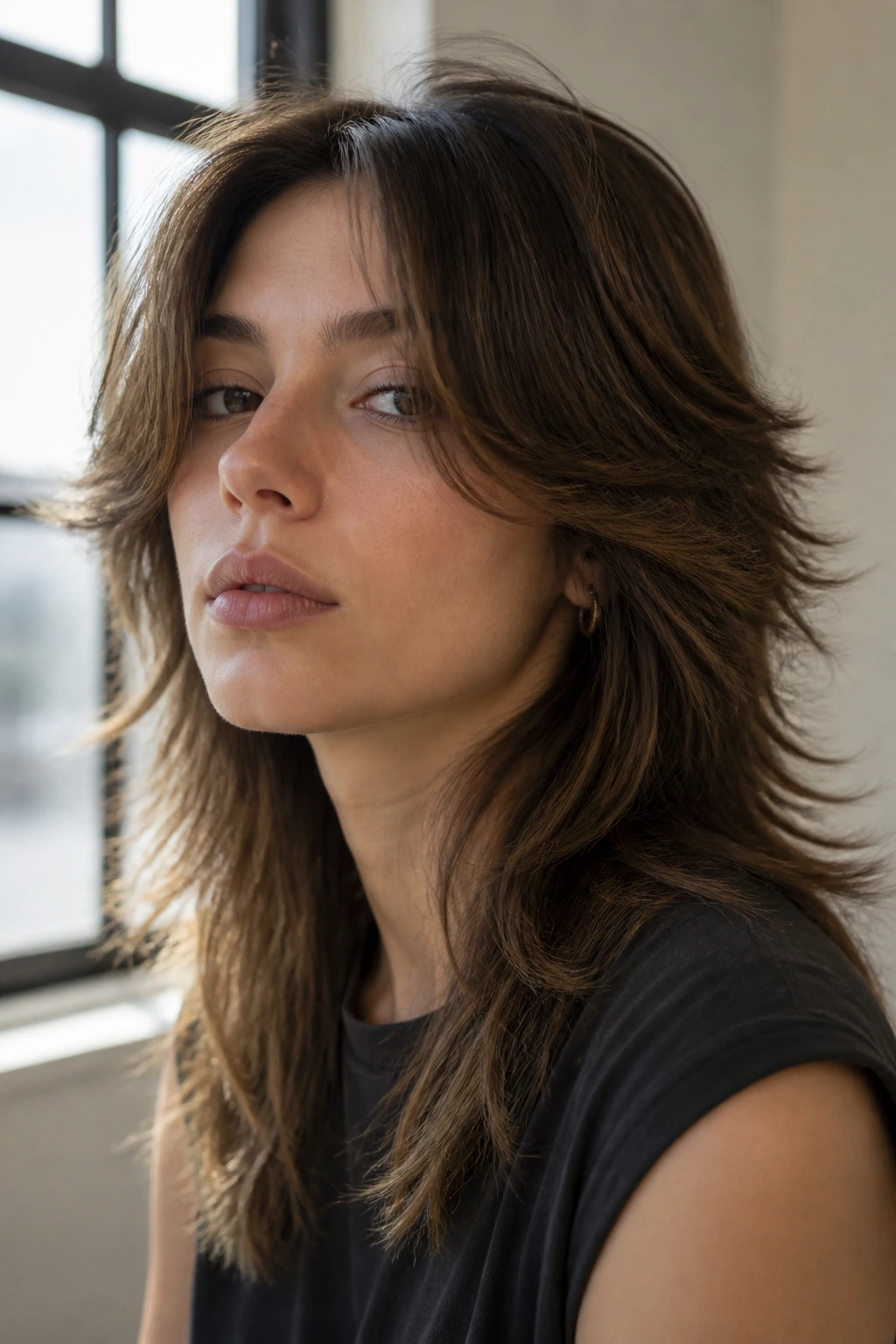
Over-thinning the crown: Straight hair with too much weight removed at the top can go see-through fast. The fix is to keep some density at the crown and remove bulk lower in the shape.
-
Cutting the bangs too short too soon: A short fringe on straight hair can sit like a hard line across the forehead. Start longer and soften it once it dries naturally.
-
Making the back too short: If the tail barely clears the neck, the cut starts to look like a bob with a mullet idea. Keep enough length in the back to make the silhouette obvious.
-
Using too much heavy product: Straight hair goes limp fast under thick creams and oils. Use lightweight mousse or a small amount of texturizing spray instead.
-
Never changing the part: A center part every single day can press the crown flat. Rotate the part a little now and then so the shape stays alive.
-
Waiting too long between trims: The layers lose their distinction and the nape gets shaggy in a sloppy way. A trim every 8 to 10 weeks keeps the cut from turning vague.
Variations and Alternatives to Try

Soft Office Mullet: Keep the front long, the layers subtle, and the nape only slightly longer than the collar. This is the version to choose if you want the silhouette without the loudness. It pairs well with sleek styling and a middle or soft side part.
Sharper Punk Mullet: Shorten the crown a little more, add stronger separation through the sides, and leave the back noticeably long. It needs confidence and a little texture spray, but it gives straight hair a proper edge.
Fine-Hair Saver: Skip heavy razoring and ask for fewer, cleaner layers. The point is to keep the hair looking full while still giving it movement, because fine straight hair can go wispy fast if you overdo the texture.
Thick-Hair Debulked Version: Use internal layering and careful weight removal below the crown. This helps thick hair move without puffing out around the ears and neckline.
No-Bangs Version: Leave the front open and rely on cheekbone and jaw layers to frame the face. It’s a smart choice if you hate fringe maintenance but still want the mullet shape.
Grow-Out-Friendly Version: Keep the front around the chin and the back only a little longer than that. The cut will soften gracefully as it grows instead of turning into a shape you resent every morning.
Long-Term Care, Trims, and Grow-Out
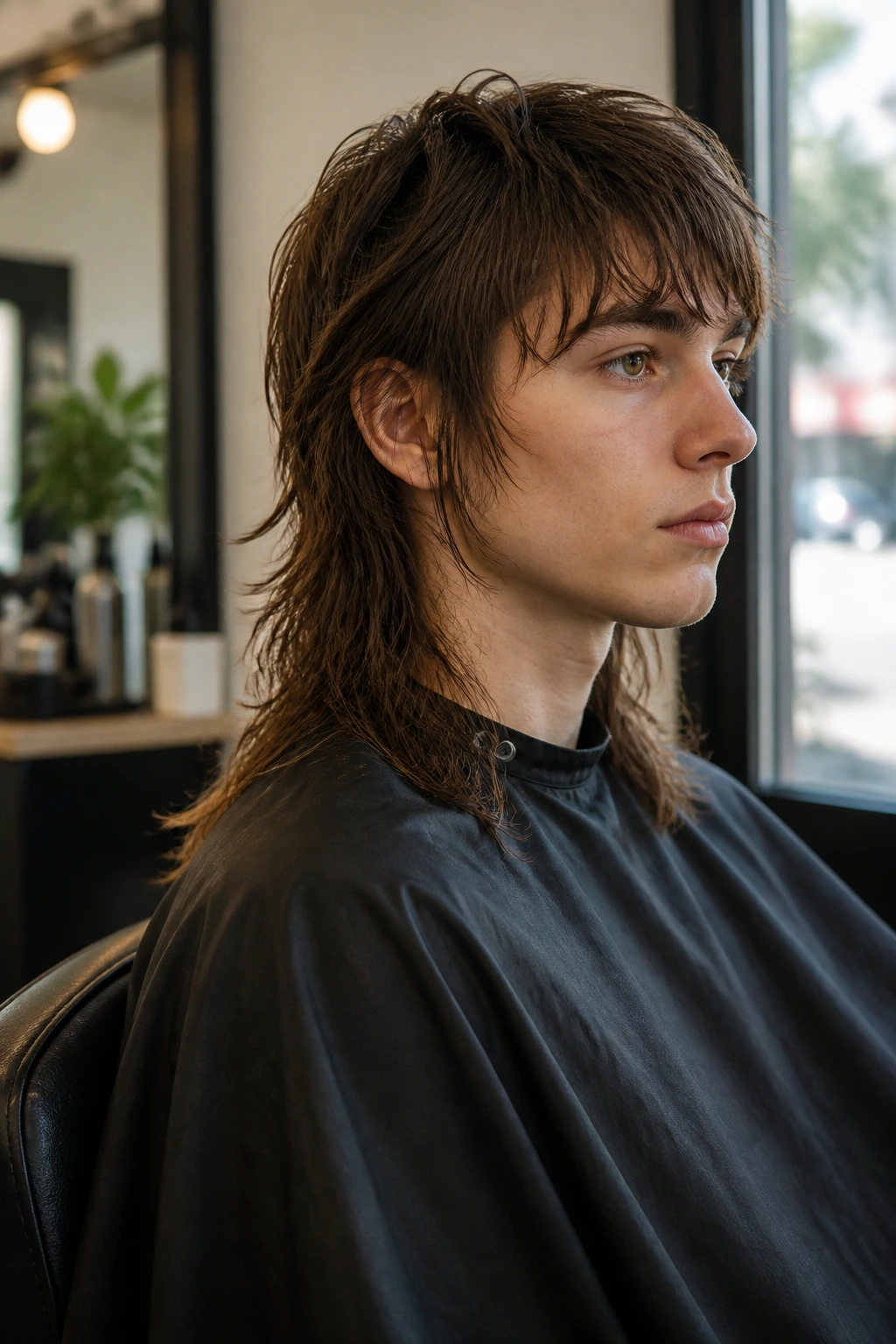
Straight hair grows out in a way that makes the silhouette drift before you notice it. First the fringe starts poking into your eyes. Then the crown loses its lift. Then the back starts looking too blunt or too narrow, depending on how the cut was built. That’s why a trim schedule matters more than people think.
If you wear bangs or a short front, plan on a cleanup every 6 to 8 weeks. If your front is longer and the fringe is soft, 8 to 10 weeks usually works. The back can go a little longer between cuts, but the layers around the face need regular shaping or they start to turn into random pieces that no longer connect.
Wash frequency depends on your scalp, not the haircut. Straight hair often gets oily faster at the roots, so dry shampoo at the crown and a light refresh through the mids can stretch a style by a day or two. Use heat protectant every time you use a dryer or iron. Once the ends get fried, the shag looks limp instead of shaggy.
If you want to grow the cut out, tell your stylist to keep the longest pieces intact and soften the top only as needed. That lets you shift toward a softer shag or long layered cut later without going through an awkward blocky stage.
Frequently Asked Questions
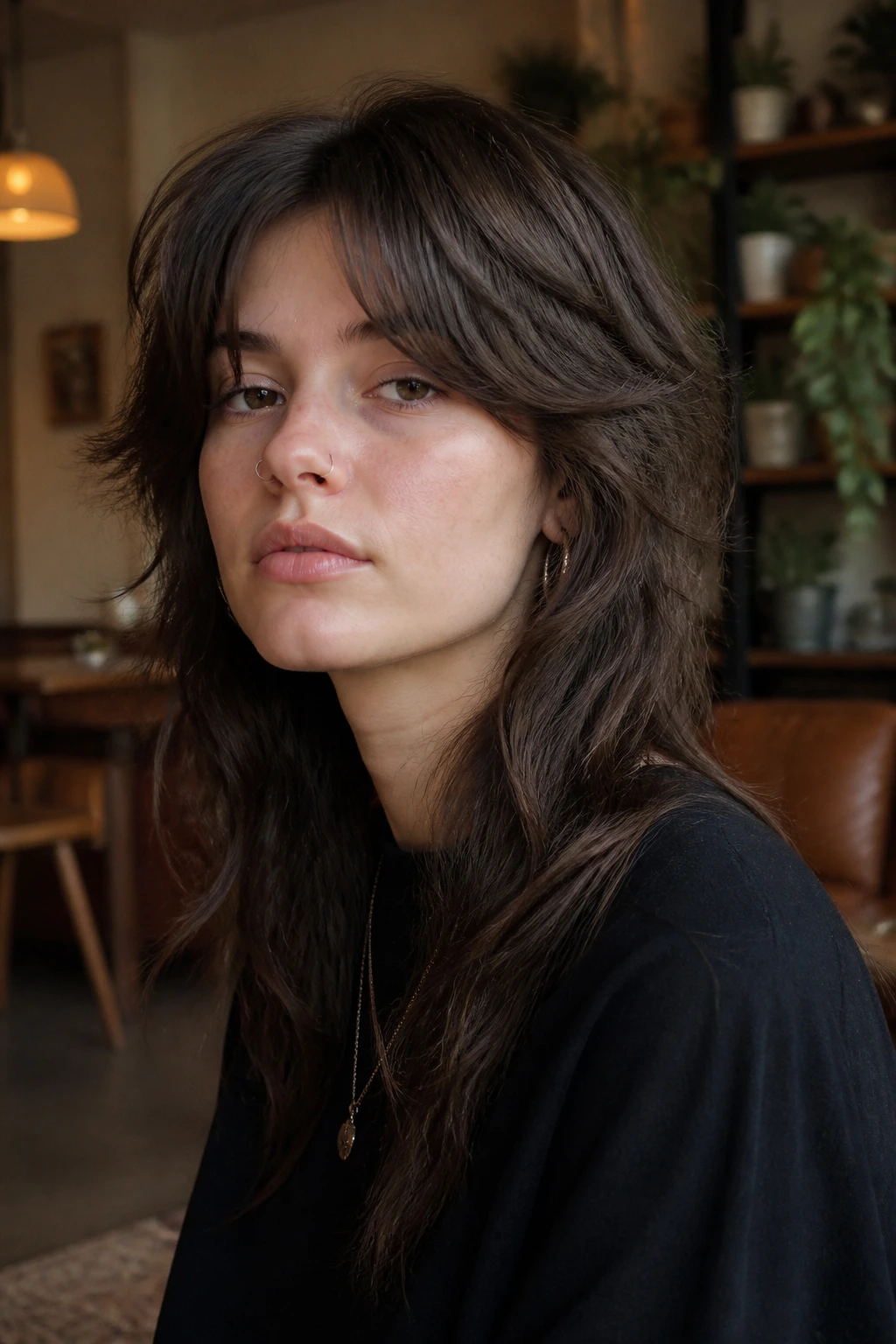
Will a long shaggy mullet work on pin-straight hair?
Yes, and in some ways straight hair is the easiest canvas for this cut because the layers show clearly. The trick is keeping enough internal texture so the hair moves instead of hanging in one flat line.
Do I need a razor to get this look?
No. A razor can help on some hair types, but point cutting and slide cutting can give a softer result without making the ends too wispy. If your hair is fine, scissors are often the safer choice.
How do I ask for a mullet without looking too extreme?
Ask for long face-framing layers, a soft crown, and a back that stays below the shoulders or collarbone. The more specific you are about keeping the transition gradual, the less punk the cut will read.
What if my straight hair is fine and flat?
Keep the layers fewer and the perimeter fuller. Heavy texturizing can make fine hair collapse, so ask for movement at the front and crown lift without stripping out too much bulk.
Can I air-dry a shaggy mullet?
You can, but use a little mousse at the roots and clip the crown up for a few minutes so it does not dry flat. A quick blow-dry at the top gives better shape, even if the rest air-dries.
How often should I trim it?
Most versions need shaping every 8 to 10 weeks. If you have short bangs or a strong face frame, you may want a cleanup closer to 6 to 8 weeks so the front does not swallow your eyes.
Can I wear this cut with glasses?
Absolutely, but fringe length matters. Keep the front pieces a bit longer or more swept to avoid having hair land exactly on the frame line, which can get irritating fast.
What if I hate the back once it’s cut?
Ask for the nape to be softened, not chopped shorter immediately. A good stylist can blend the shape into a softer shag or long layered cut without losing all the progress you made in the front.
Does a center part have to be part of the look?
No. A side part can make straight hair look fuller and more relaxed, and it often helps the layers fall in a better direction. Part choice changes the whole cut more than people expect.
The Version That Fits Your Hair
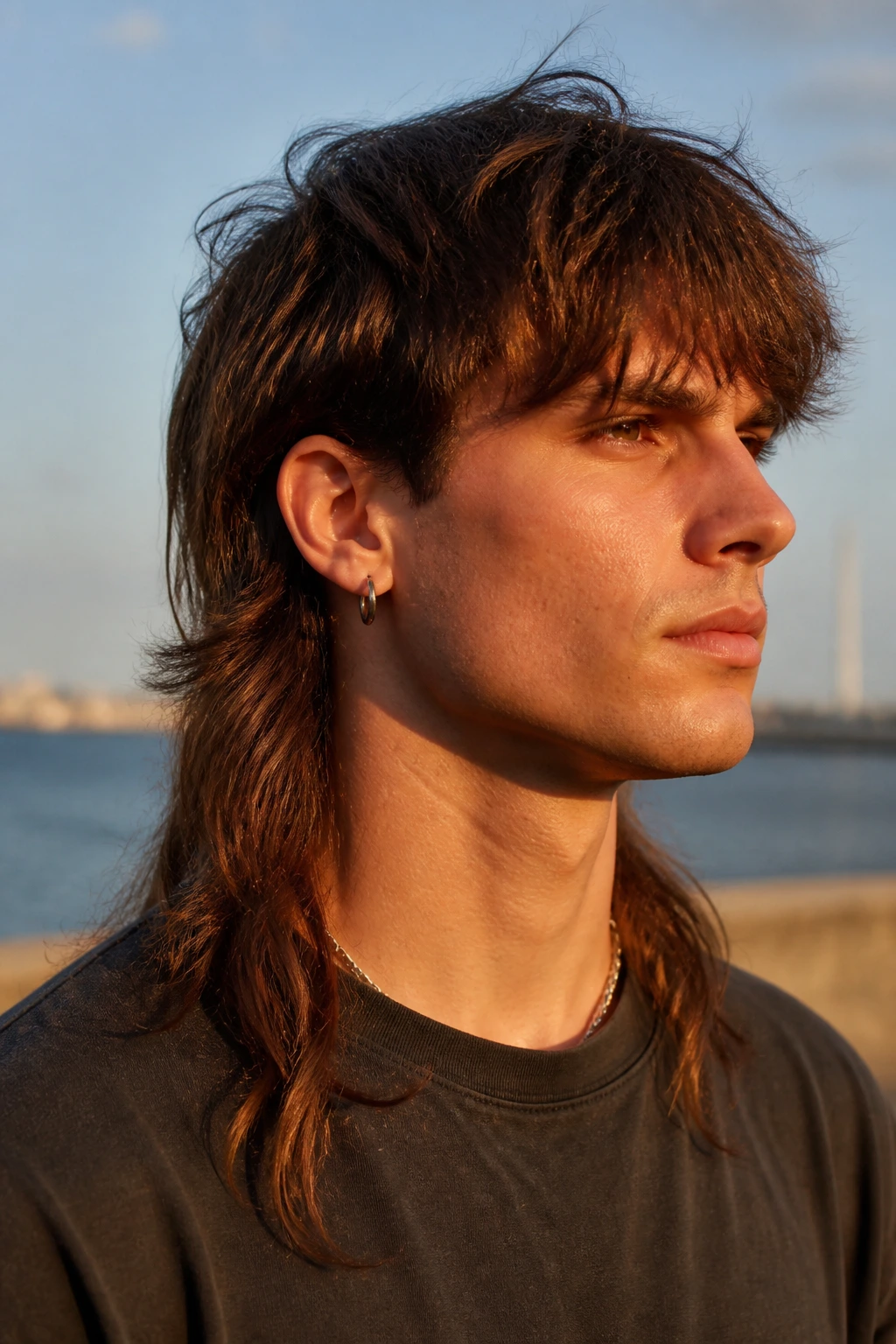
A good long shaggy mullet on straight hair should look like a decision, not an apology. The best versions keep the front expressive, the back long enough to anchor the shape, and the layers soft enough to move without turning stringy or flat. That balance is the whole game.
If you’re tempted to go big, start one step softer than your first instinct. Straight hair shows everything, which is exactly why a well-planned cut can look so clean. Give it a shape that works with your density, your part, and how much time you actually want to spend in front of a mirror. Then let the next trim sharpen the edges.
