



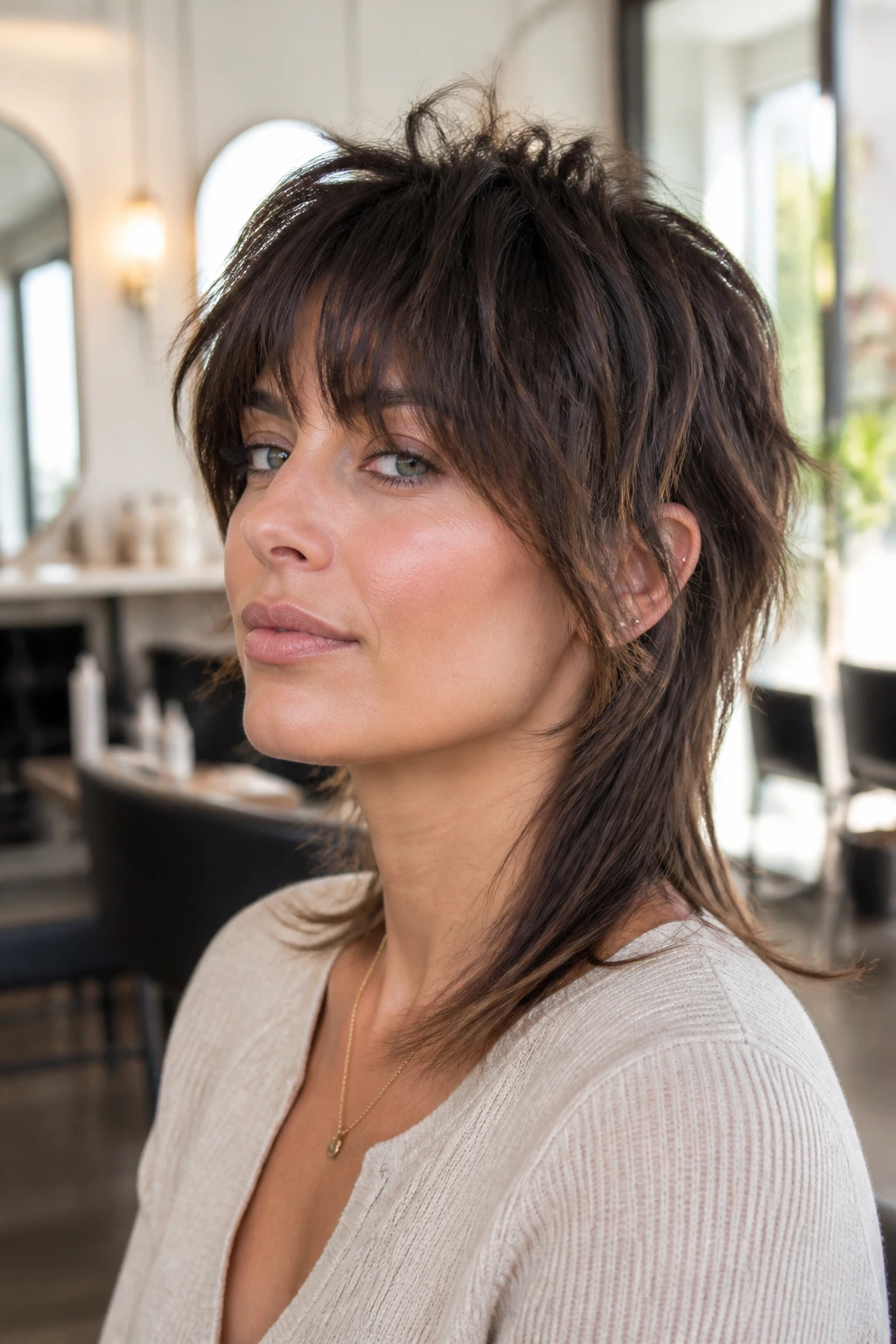
Feminine mullet shag cuts for round faces work best when the front stays airy, the crown gets a little lift, and the longest pieces fall past the jaw instead of stopping on the cheeks. Miss that placement, and the cut can spread sideways in a way that fights the face. Get it right, and the whole shape looks longer, softer, and more deliberate.
That’s why this haircut earns such loyal fans. A good shaggy mullet isn’t just “edgy” for the sake of being edgy. It uses layers the way a tailor uses darts: to steer the eye where you want it to go. On a round face, that usually means upward at the crown and downward through the ends, with face-framing pieces that flirt with the cheekbone instead of sitting right on top of it.
The best part is how many directions you can take it. Some versions are featherlight and polished enough for an office chair. Others have choppy, almost rock-band energy. A few are built for curls, a few for fine hair, and a few are for anyone who wants to look a little more interesting without losing softness around the face. The shape does the heavy lifting. That’s the real win.
Why These 25 Cuts Stand Out on Round Faces

-
Crown height changes everything: A little lift at the top makes a round face read longer, even when the rest of the cut stays soft and feminine.
-
The front pieces are placed on purpose: The best versions avoid ending exactly at the widest part of the cheeks, which is where a lot of “cute” cuts quietly go wrong.
-
Length below the jaw keeps the eye moving: A longer tail, even a subtle one, creates a vertical line that round faces usually benefit from.
-
Texture replaces blunt width: Feathered, sliced, and piecey ends look lighter than a solid edge, so the cut feels lived-in instead of boxy.
-
Every texture gets a lane: Straight hair can go glossy and tapered, wavy hair can flick out, and curls can stay buoyant without turning into a triangle.
-
The grow-out is kinder than people expect: When the layers are placed well, the cut softens into a shag rather than collapsing into a bad in-between shape.
What a Round Face Needs From a Mullet Shag
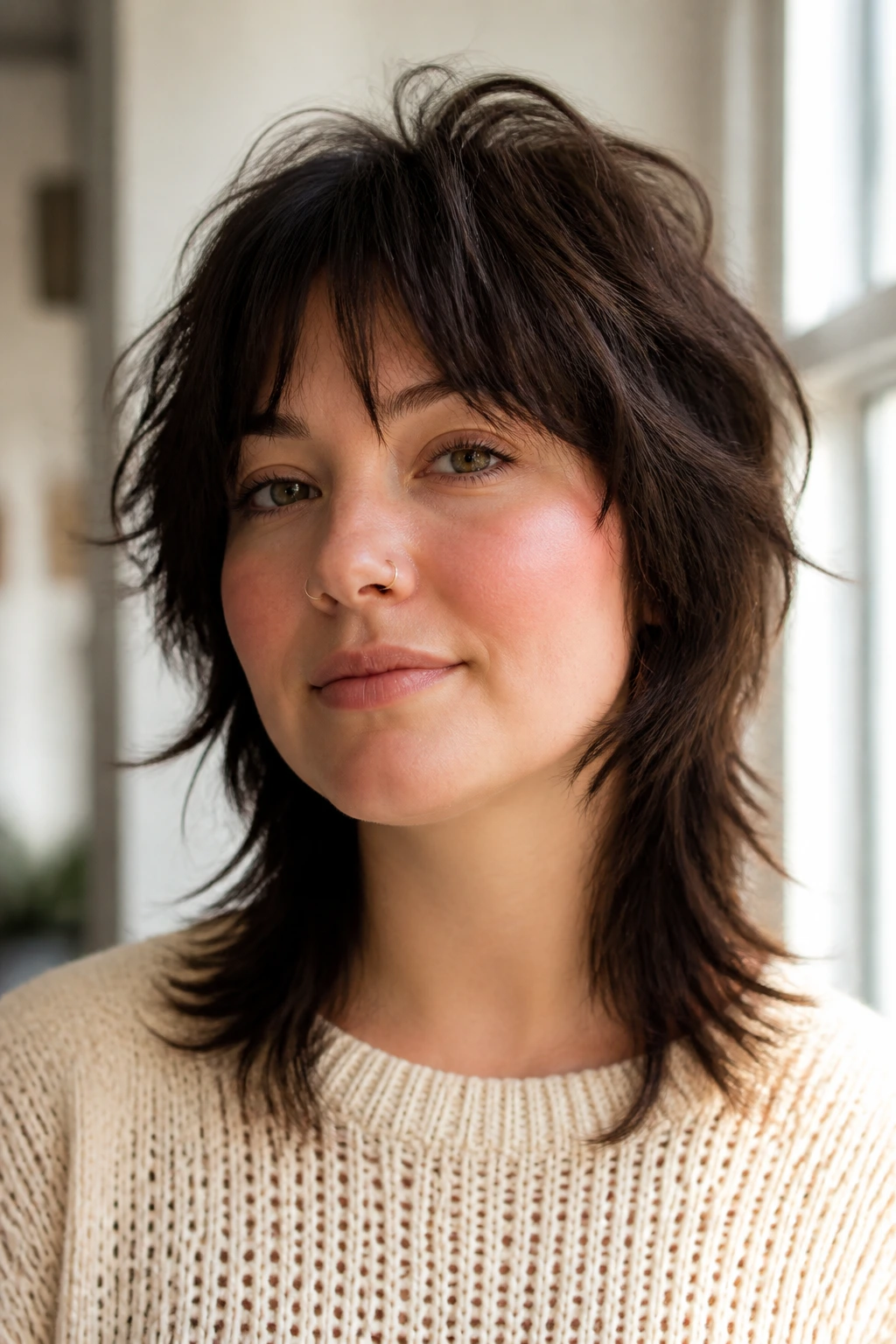
A round face usually has the widest point around the cheeks, with soft angles and not much length from forehead to chin. That does not mean you need to hide the face. It means the cut should create a little architecture around it.
Crown Lift Matters More Than Side Volume
The easiest mistake is to pile movement right at the sides. That makes the face read wider. A better move is to keep the crown a touch taller, which visually stretches the whole silhouette without making the haircut feel stiff.
The Fringe Should Break the Circle
Bangs are not the enemy here. Heavy, straight-across bangs are the problem. Curtain bangs, bottleneck fringes, wispy micro-bangs, and side-swept pieces all work because they interrupt the roundness instead of echoing it.
Ends Need to Fall in the Right Place
The shortest front layers should usually hit above the cheekbone or slide past it, not land dead center on the fullest part of the face. That tiny difference can decide whether the haircut looks open or crowded.
1. Soft Center-Part Wolf Mullet
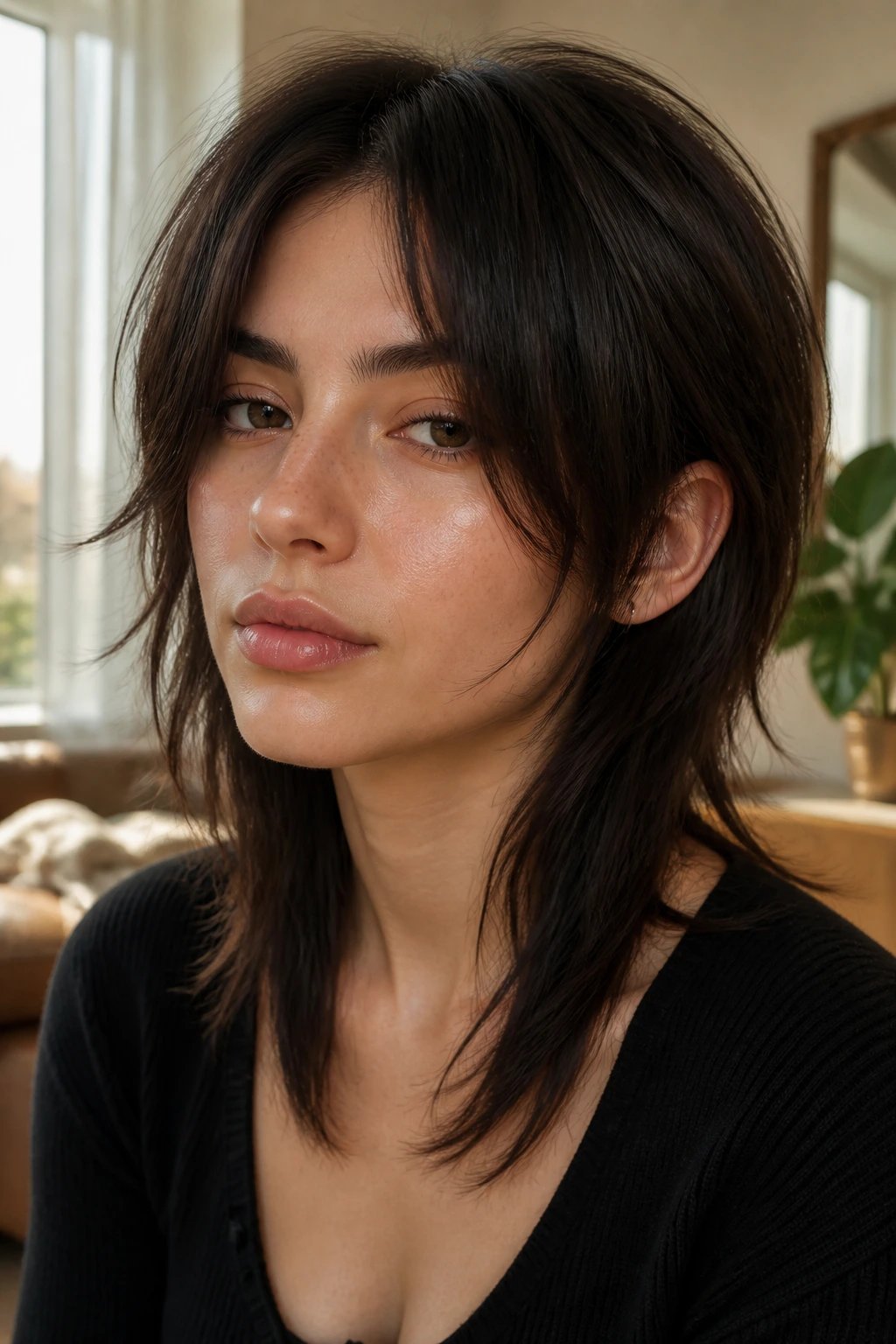
This is the easiest place to start if you want the mullet shag shape without a lot of attitude in the front. The center part makes a neat vertical line, while the longest front pieces drift past the cheekbone and into the collarbone area. It’s one of those cuts that looks a little cooler every time you tuck one side behind your ear.
Why it works:
The center part pulls the eye up and down instead of side to side, which is a gift for a round face. Keep the shortest face-framing layer around the upper lip or just below the nose, then let the outer pieces graze the jaw and neck. That stacked length gives you movement without creating width where you do not want it.
How to style it:
A pea-sized amount of mousse at the roots, then a rough blow-dry, is usually enough. Bend the front pieces away from the face with a 1.25-inch curling iron, and stop before the ends start looking overworked. This cut looks best when the layers are soft, not curled into perfect ribbon spirals.
Pro tip: ask for point-cut ends instead of a hard line. The difference is subtle in the chair and obvious in the mirror.
2. Curtain Bang Mullet with Cheekbone-Skimming Ends

If you want a version that feels friendly on day one, start here. Curtain bangs keep the forehead open, split the face in the middle, and taper away from the cheeks instead of boxing them in. The rest of the cut can stay shaggy and undone; the fringe keeps it from tipping into chaos.
Why it flatters a round face:
The shortest point of the curtain bang should sit around the bridge of the nose or just under the brows, then open wider toward the temples. That opening creates two diagonal lines, and diagonals are your friend when the face is naturally circular. The side pieces should be long enough to skim the cheekbone, then drift lower.
Styling note:
Blow-dry the bangs first, not last. Use a small round brush and direct the center section forward, then sweep the sides away from the face and let them cool there. If you wait until the rest of your hair is done, the fringe usually frizzes out and loses its shape.
This one works especially well if you wear glasses, because the bangs can sit above or just beside the frame without getting stuck on it.
3. Feathered Crown-Lift Shag Mullet

Want the face to look a little longer without losing softness? Build the shape at the top. A feathered crown-lift shag mullet keeps the top layers short enough to create lift, then sends the rest of the weight downward through the back. It has a light, almost airy feel when the cut is done right.
The whole trick is hidden in the crown
Ask for internal layering near the top rather than heavy thinning through the sides. You want the hair to rise from the scalp, not puff outward at the cheeks. A stylist who knows point cutting will usually leave the perimeter soft while taking enough weight out of the crown to let the top sit higher.
This cut is especially kind to fine to medium hair because the lift gives the illusion of density. On thick hair, it can remove enough bulk to keep the style from sitting like a helmet.
Use root-lift spray before blow-drying, then clip the crown for two or three minutes while it cools. That tiny pause helps the height hold through the day.
4. Wispy Micro-Bang Mullet Shag
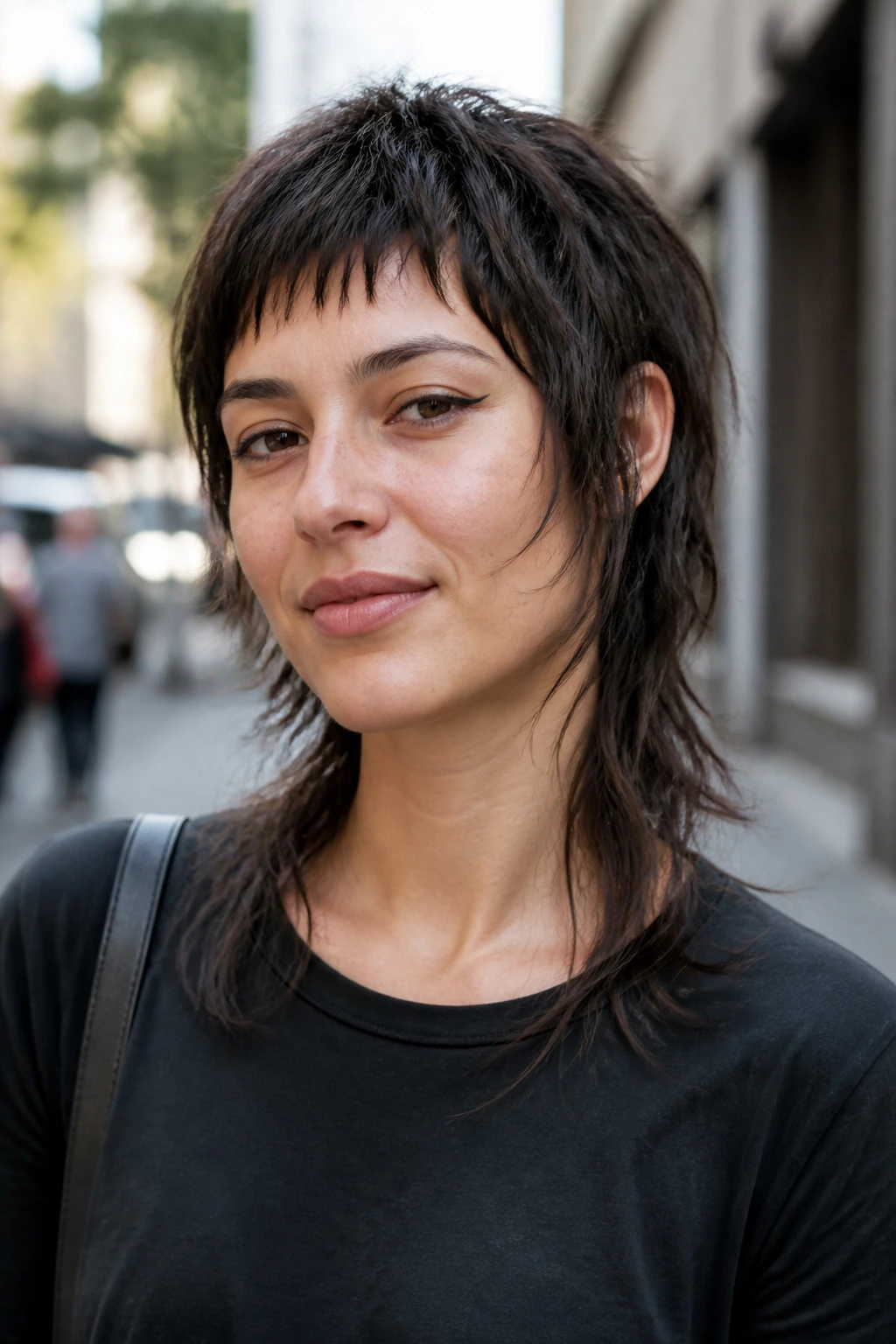
This one has a little edge, but it is not nearly as harsh as people think. Micro-bangs can actually suit a round face when they stay airy and broken up, because they expose more of the face and keep the front from feeling heavy. The key is that they should look feathered, not chopped with a ruler.
Why it works:
A short fringe pulls attention upward and makes the face feel taller. Pair that with longer sides and a soft tail in the back, and the haircut reads deliberate instead of severe. The round face gets contrast, which matters more than length alone.
What to watch for:
This is not the cut for a strong forehead cowlick unless you enjoy wrestling your fringe every morning. It’s also not the easiest option if you want to hide your brow line. The maintenance is a little higher, and the payoff is a sharper, more graphic silhouette.
Styling tip:
Keep a tiny flat iron or a small round brush handy. The bangs should be separated, not stuck together. A touch of dry texture spray on the ends helps the whole cut look light rather than stiff.
5. Collarbone Layered Mullet
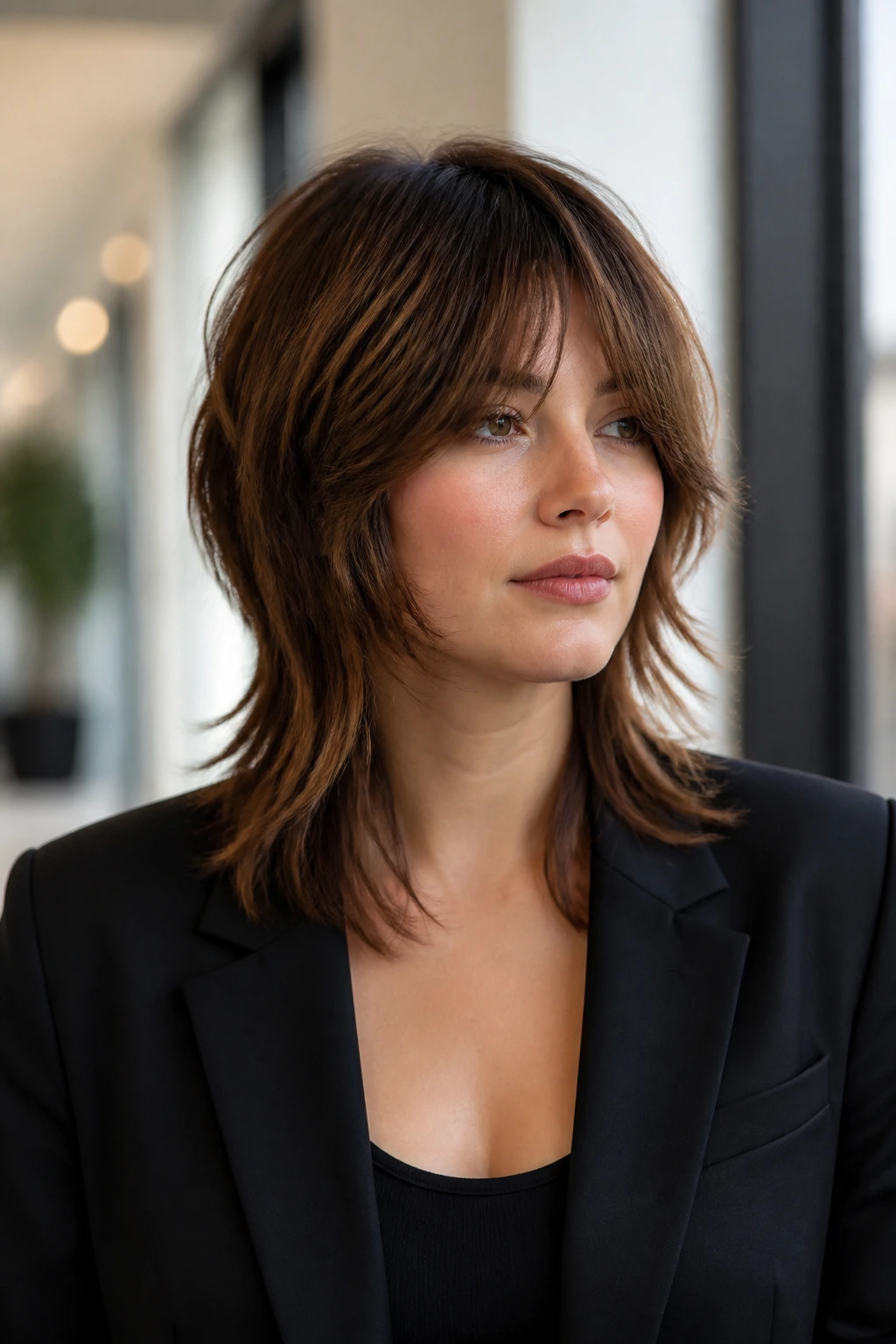
Not everyone wants a mullet that announces itself from across the room. This version is quieter. The front layers fall around the mouth and chin before sliding toward the collarbone, while the back keeps enough length to maintain the mullet shape without shouting about it. It’s polished, a little airy, and easy to wear with a blazer or a tee.
The reason it suits a round face is simple: the collarbone is lower than the jaw, and the eye naturally follows that line downward. The face frame should never stop right at the cheek’s fullest point. Let it travel. That downward move softens the roundness without making the haircut feel severe.
This is one of the best picks for medium-density hair that tends to puff when over-layered. The shape stays controlled, and you can tuck the front pieces behind one ear without losing the outline.
6. Bottleneck Fringe Mullet Shag
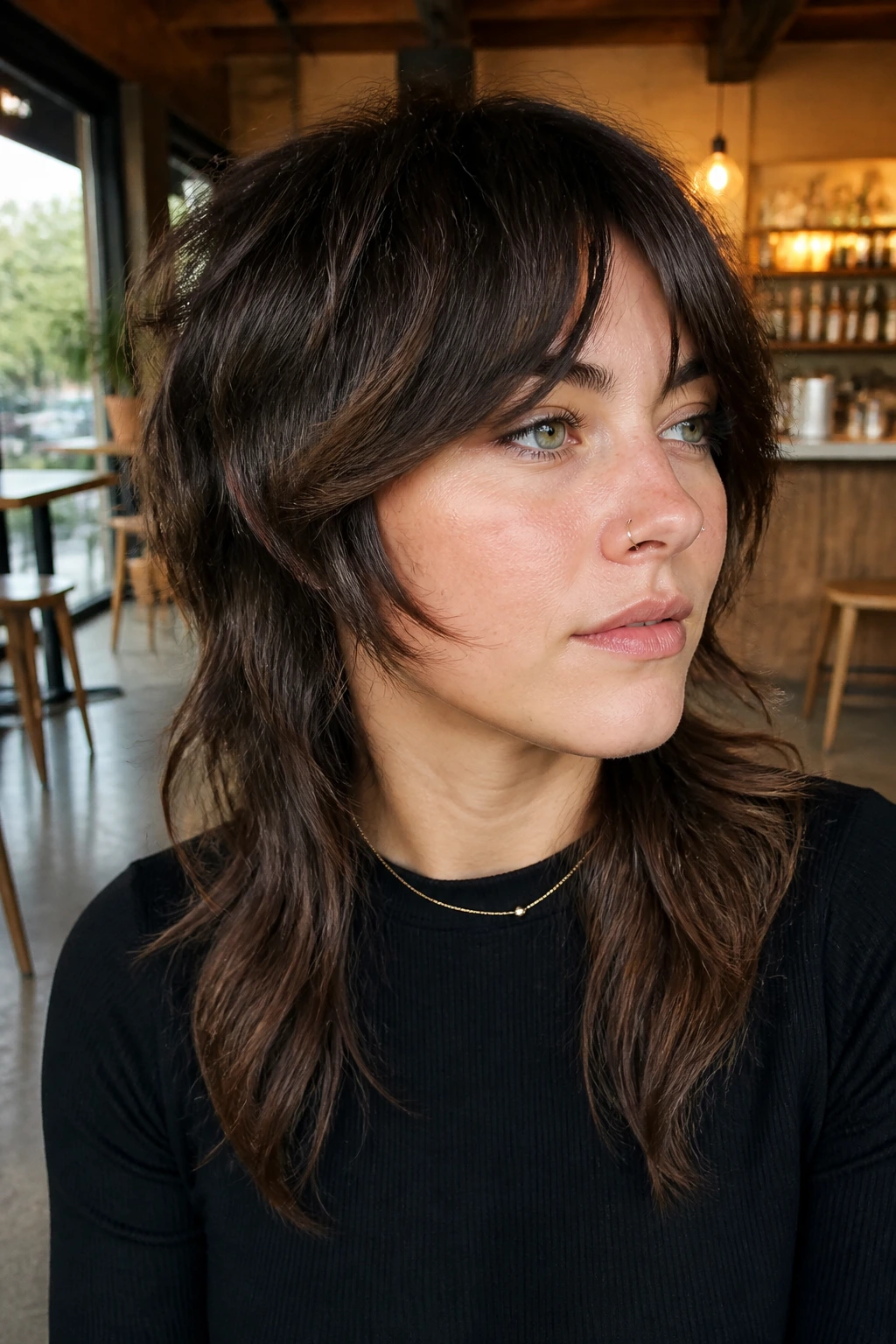
A bottleneck fringe is one of the smartest fringe shapes for a round face, and I wish more people used it. It starts narrow in the middle, then opens gradually toward the temples, which avoids the blunt shelf effect that can make cheeks look wider. Paired with a shaggy mullet, it gives you shape right up front without losing softness.
Why it stands out:
Unlike a straight fringe, the bottleneck shape splits the visual weight. The middle section lifts the eye, while the longer sides fall where they can frame the face instead of trapping it. If your hair is thick, this fringe also takes beautifully to point cutting because it can feel dense fast if left blocky.
Best for:
Medium to thick hair, especially if you want a little polish with your texture. It also works well if you like to wear your hair half-up, because the fringe stays distinct without needing a full styling session every day.
Ask your stylist to keep the longest fringe pieces just past the brow and to leave the sides soft around the cheekbone. That one instruction does a lot of the face-shaping work.
7. Flick-Out Wavy Copper Mullet
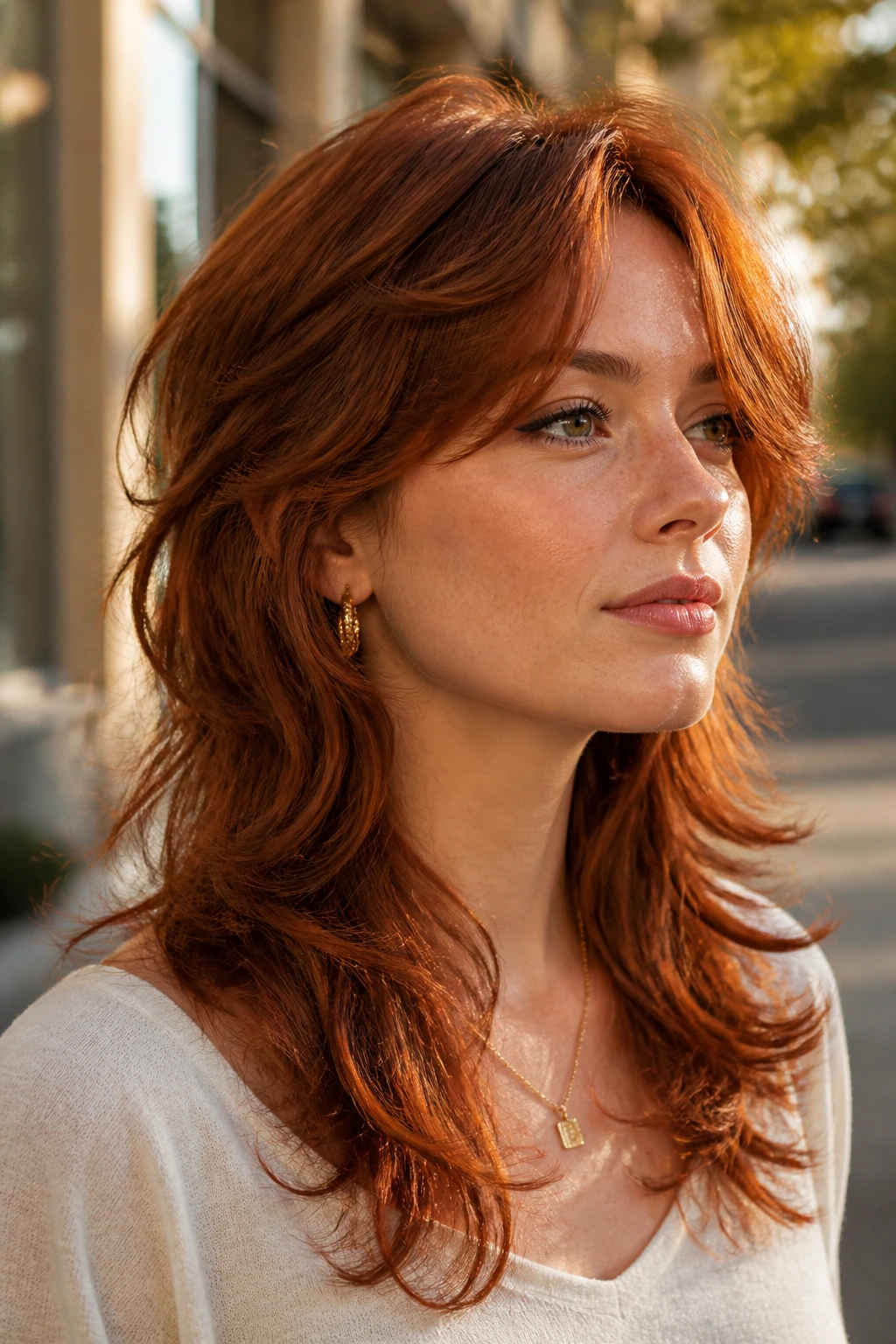
Waves and copper tones are a good pair, and this cut leans into both. The hair flicks away from the face in loose bends, the ends kick outward just enough to show movement, and the color catches every ridge in the layering. On a round face, that flick-out shape helps the cut feel vertical instead of puffy.
The trick is where the bend happens. Keep the wave through the mids and ends, but do not add extra puff right at the cheeks. A 1-inch iron or wand can give you a soft outward curve from the chin downward. If your natural wave already does half the work, even better.
This version looks especially strong with a side part or a broken center part. The copper tone makes the layers visible, so the cut never disappears into one flat shape. It has a little warmth, a little movement, and a very lived-in feel.
8. Curly Halo Mullet Shag

Curly hair can wear a mullet shag beautifully when the layers are carved to respect the curl pattern. The goal is not a wide triangle. The goal is a halo: lift at the crown, airy movement around the face, and enough length in the back to keep the silhouette narrow where it needs to be.
Keep the bulk off the cheeks
Ask for internal layers that remove weight from the middle, not just the ends. If the curls are dense right at the cheekbone, the face reads wider. If the volume sits higher and lower instead, the shape feels intentional and soft.
Diffuse with the head tipped slightly forward, then clip the crown for a few minutes while it cools. Separate the curls with a drop of oil only after they are dry. That keeps the cut from exploding into frizz.
This is one of the prettiest versions on natural texture because it does not fight the curl. It just gives it a taller outline.
9. Piecey Side-Sweep Mullet
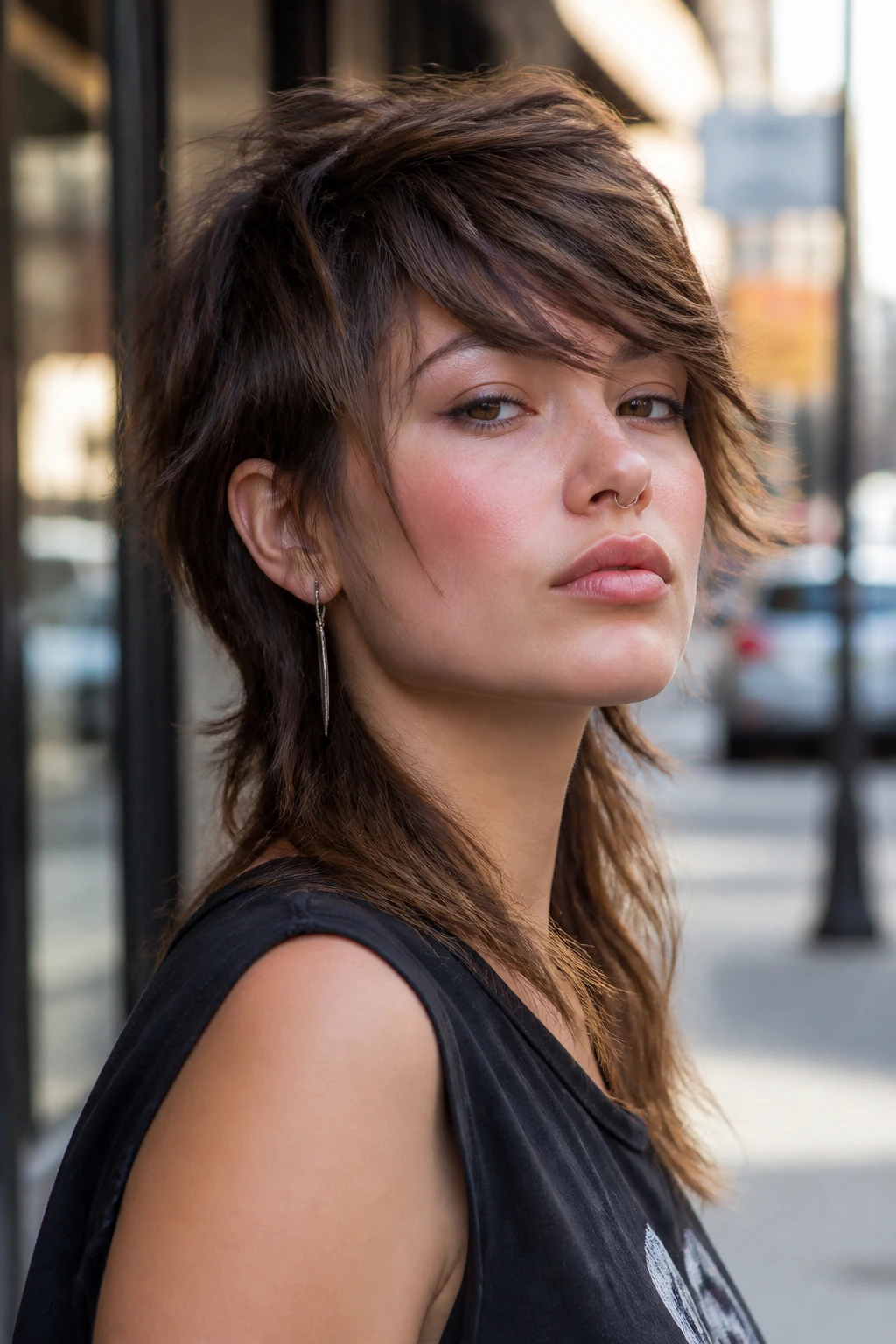
A side sweep is underrated on a round face. It draws a diagonal line across the forehead and cheek, which breaks up the circle in a way a center part never quite can. Add piecey layers through the sides and a longer tail in back, and the whole cut feels a little cinematic.
Why it works:
The side-swept front gives one side of the face more coverage and lets the other side stay open. That asymmetry is the point. Round faces often look sharper with even a small off-center part, especially when the front piece is long enough to land below the cheekbone rather than directly on it.
Styling note:
Use a blow dryer and vent brush to push the front sweep across the forehead, then cool it in place with your fingers before adding product. If the front keeps falling flat, a few grams of dry shampoo at the roots will usually give it enough grip.
This cut feels softer than a heavy fringe but more styled than a simple shag. It sits in that useful middle ground.
10. Feathered Bronde Shag Mullet

Color changes the way a cut reads, and bronde is a sneaky good choice here. The lighter ribbons around a medium brown base make the feathered layers visible without turning the haircut into one bright block around the face. On a round face, that matters. Chunky light pieces right at the cheeks can widen things fast.
The feathering keeps the ends soft, and the color helps the movement show up in photos and in daylight. Ask for vertical ribbons that trace the layers from crown to end, not a thick money piece that lands exactly on the widest part of the face. That difference is small on paper and obvious on the head.
This version is especially nice if you want dimension without needing a dramatic cut. The shape does the elongating; the color just makes the movement easier to see.
11. Choppy Pixie-Mullet Hybrid
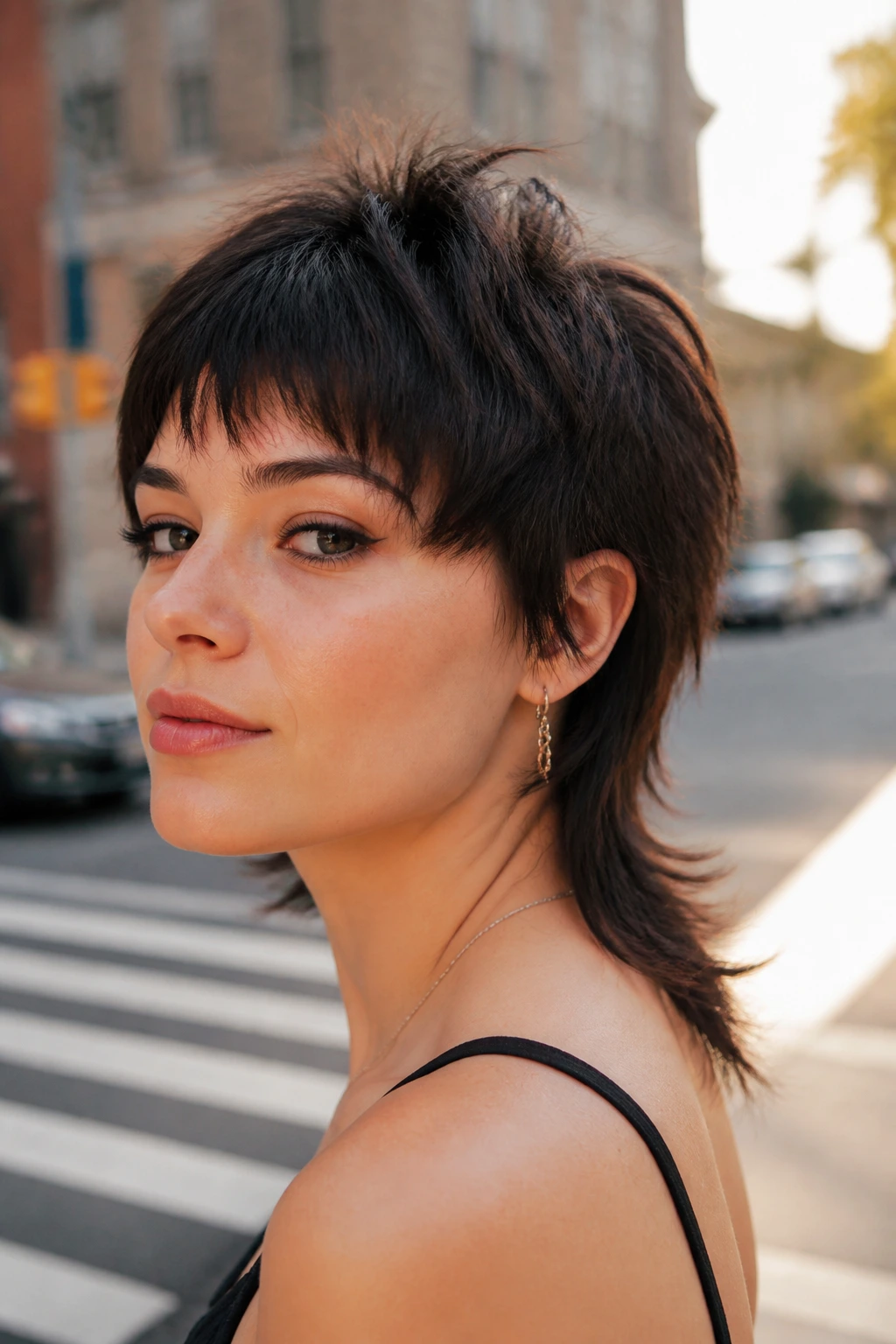
This one is for the person who wants to keep the neck visible and the styling fast. The top stays short and choppy, the sides narrow in, and the back hangs longer than a pixie would dare. It has a sharp little bite, but the overall silhouette still flatters a round face because the height sits high and the width stays controlled.
A pixie-mullet hybrid looks best when the crown is deliberately messy, not flattened. The shorter top gives lift, the longer back provides the vertical line, and the side pieces should never be so blunt that they widen the cheeks. If the cut is too short around the face, it turns boxy. Keep the front light.
This is a good pick for fine hair that needs structure, or for anyone who likes styling in under ten minutes. A matte paste on the ends and a quick finger-rake is often enough.
12. Long Shag with Dropped Back Length

If you like the idea of a mullet shag but don’t want to lose your length, this is the version to ask for. The front layers can still be cheekbone-aware and soft, but the back drops farther down the neck or even past the shoulders. That extra length makes a round face look narrower because it gives the eye somewhere to go.
The cut works best when the front stays mobile and the back keeps a little weight. Too much thinning at the ends and the whole style starts to fray. You want movement, not fuzz. A long shag like this can also be tied back more easily than a shorter mullet, which is a practical bonus people forget to mention.
It’s one of the easiest cuts to live with if you want face-framing without a dramatic transformation. The shape is there, but it won’t shout every time you catch it in a mirror.
13. Soft Face-Frame Cascade Mullet

This cut is all about the face frame. The layers start softly at the temple and cascade down in a way that feels closer to a waterfall than a chop. On a round face, that descending line is useful. It creates movement around the cheeks without ending there.
The best thing about this version is its flexibility. It can look polished with a blowout or relaxed with a little wave. Keep the shortest layer near the cheekbone, then let the next pieces stretch toward the jaw and collarbone. That graduated fall keeps the face open.
It’s especially flattering on medium to thick hair because the layers show up without needing much styling. A small amount of smoothing cream on the front pieces will keep the cascade from puffing outward.
14. Retro ’70s Shag Mullet with Soft Ends

The ’70s version is where the shag and mullet ancestry really shows, but this modern softer ending keeps it wearable. Think tall crown, airy fringe, and ends that feather out instead of snapping into a hard perimeter. Round faces often suit this shape because the height at the top and the looseness at the sides work together instead of fighting each other.
There’s a difference between “retro” and “costume.” The soft ends keep it from tipping into a throwback wig moment. Ask for movement through the mids, not a harsh layered shelf around the cheek.
This one looks especially good with a large-barrel curl or a brushed-out wave. It likes a little texture, but not a crunchy one. The finish should feel touchable.
15. Undercut-Free Textured Mullet
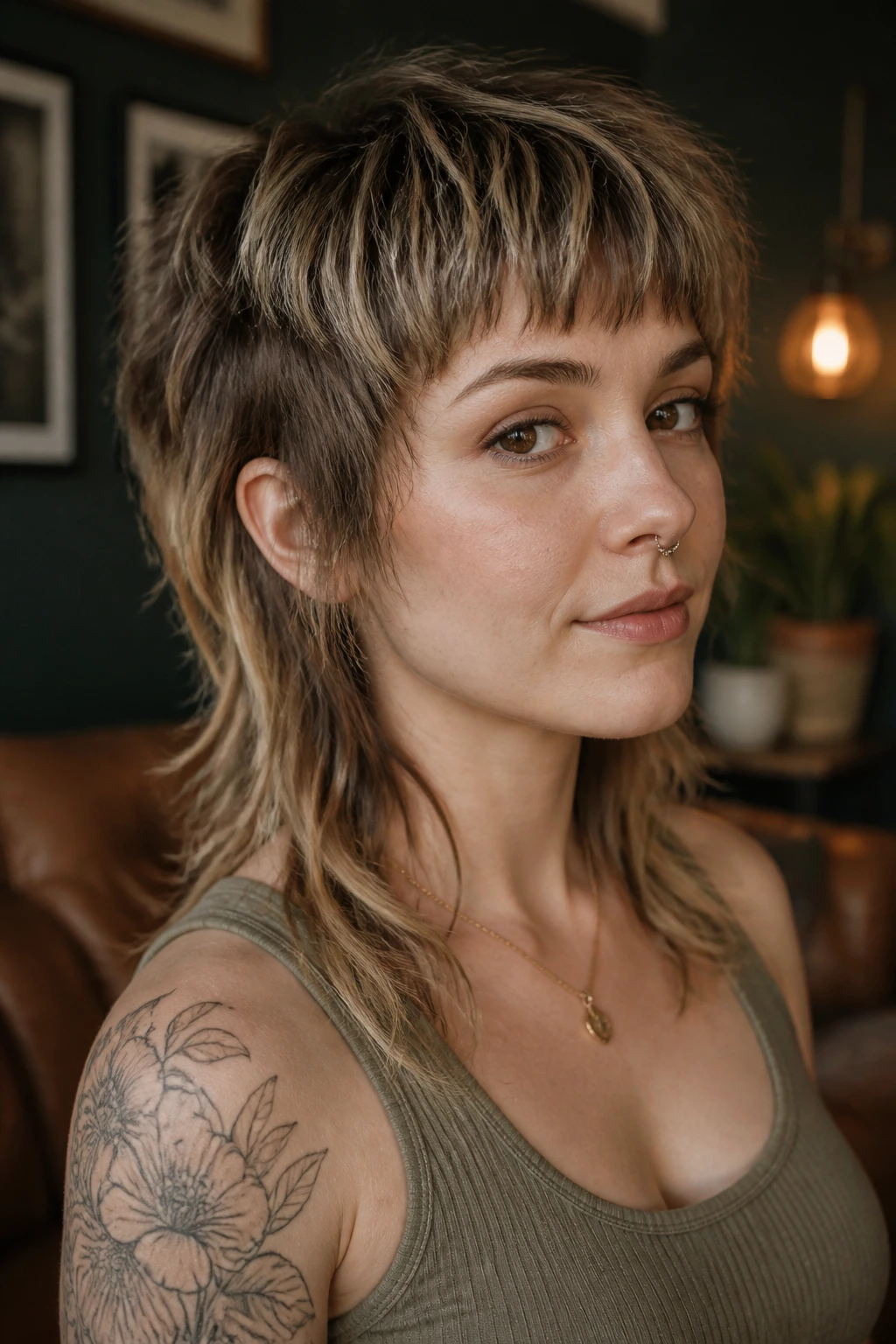
You do not need an undercut to get a mullet shape. That’s a useful truth, because not everyone wants shaved sides or a neckline that demands constant upkeep. An undercut-free textured mullet keeps the outline soft while still giving you the shorter top and longer back that define the cut.
For a round face, this is a good compromise. The sides stay narrow without being severe, and the texture keeps the shape from feeling too tidy. Ask for internal layers through the crown and gentle debulking through the ends if your hair is thick. If your hair is fine, keep the layers a little cleaner so the cut doesn’t collapse.
This version also grows out in a more forgiving way. No sharp shaved line, no awkward patch at the nape. Just softer shag territory.
16. Glossy Straight Mullet with Tapered Layers
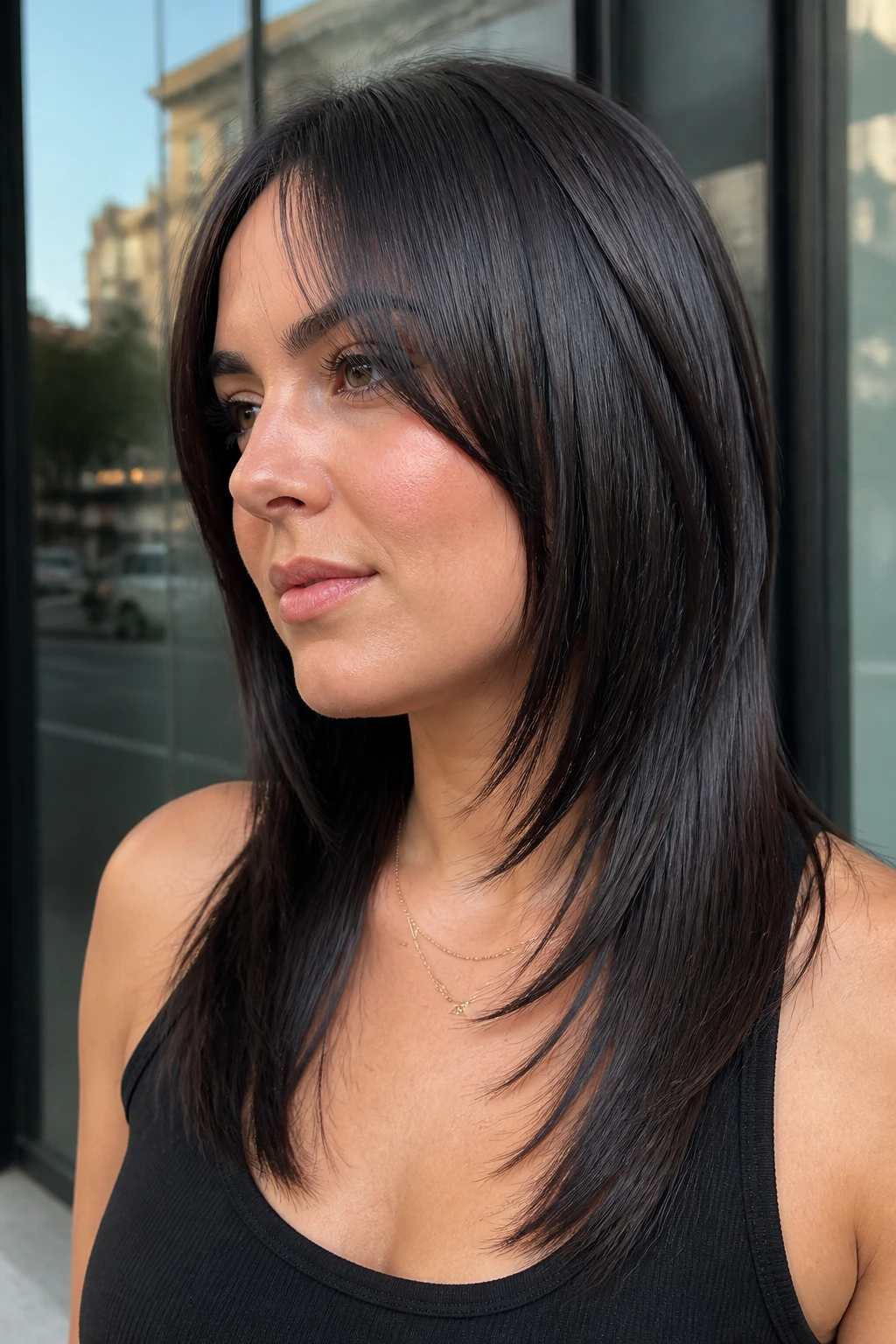
Straight hair can make a mullet look bold in a way that either works or does not. The answer is usually tapering. Keep the front layers soft and gradually longer toward the ends so the shape reads sleek rather than blunt. On a round face, that sleekness helps more than people realize.
A glossy finish is the point here. Use a smoothing serum on mids and ends, not at the roots, then blow-dry with a concentrator nozzle so the crown sits neat. The front pieces should still curve away from the face a touch; you do not want a poker-straight line hitting the cheeks.
This is a good cut for someone who likes polish but wants a shape with some edge. It’s cleaner than a wolf cut, but not plain. There’s enough movement to keep it from looking severe.
17. S-Curve Wavy Mullet

What if your hair already wants to bend? Then use that. An S-curve wavy mullet lets natural wave pattern do the face-framing work. The front pieces should sweep in a gentle curve away from the cheeks, while the back keeps enough length to create that unmistakable mullet line.
The most flattering part of this cut is the softness. There’s no hard edge sitting at the jaw. Instead, the wave pattern creates a fluid outline that keeps the face looking open. Round faces often look good when the wave starts a little lower than the cheekbone and spills toward the collarbone.
This is a smart cut for medium-density hair that tends to lose shape in humidity. The wave itself helps hide the odd frizz patch, and the silhouette stays interesting even on low-effort days.
18. Shoulder-Skimming Shag Mullet

Not everyone wants long hair, and you do not need it for the shape to work. A shoulder-skimming shag mullet keeps the overall length manageable while still giving the front enough room to soften the face. The shoulder line sits lower than the jaw, which helps a round face look longer.
The haircut feels playful without getting too short around the cheeks. That’s the sweet spot. Keep the face-framing pieces at or below the mouth and make sure the back is not trimmed so high that the whole thing balloons outward. Shoulder-length mullet shags can go wrong when the ends are chopped too bluntly. Softness matters.
It’s also a good option if you wear your hair up a lot. The front still drops around the face, even when the back is clipped back loosely.
19. Shaggy Mullet with Long Sideburn Pieces
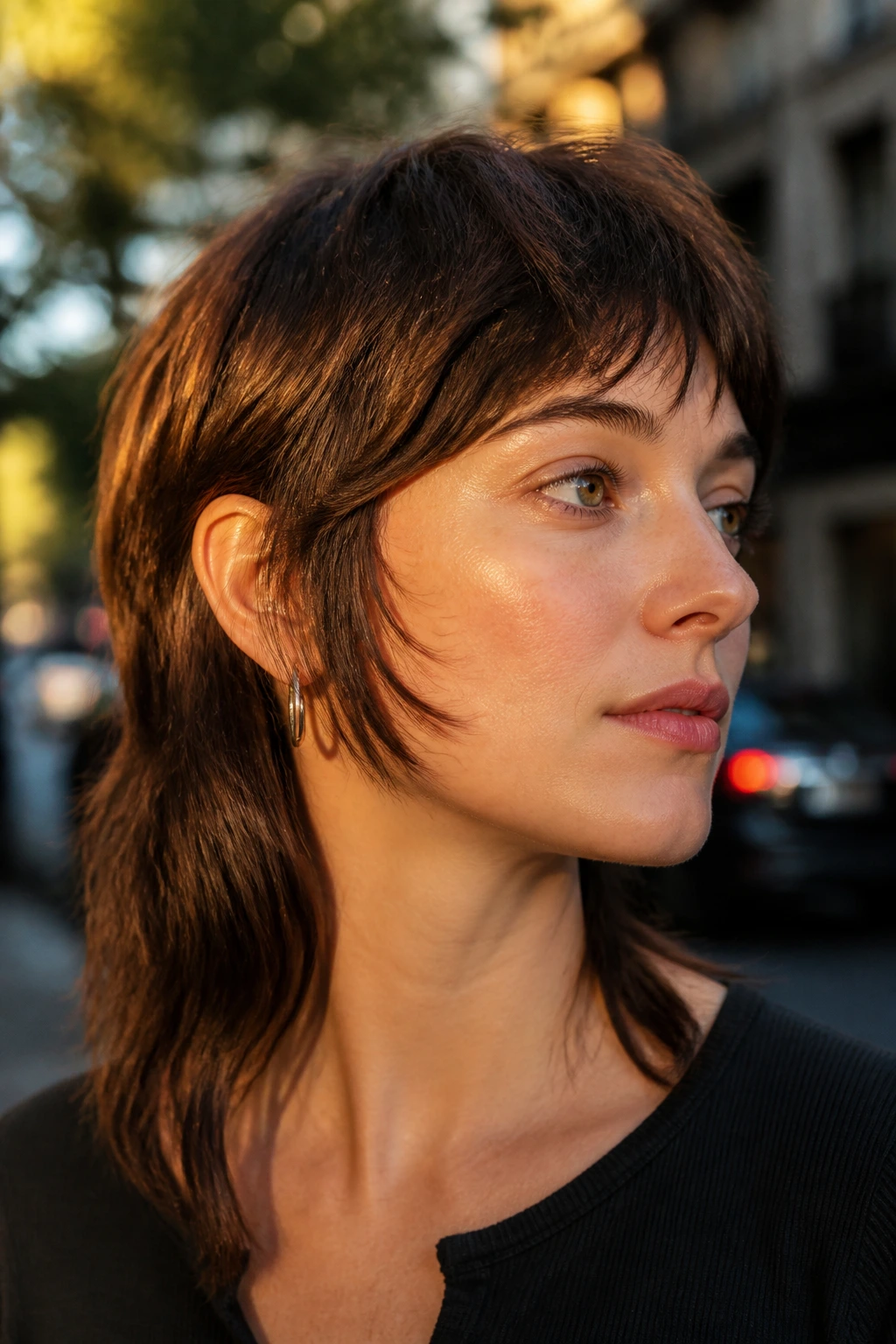
Long sideburn pieces are one of the prettiest tricks for round faces. They create a slim line along the cheek and jaw without feeling fussy. When they’re paired with a shaggy mullet, they help the haircut look intentional from the front even if the rest of the style is a little undone.
This shape is especially useful if you like to tuck your hair behind your ears. The sideburn pieces stay out in front and keep the face from feeling too open. They also look nice with hoops or statement earrings, which is one reason this cut photographs so well in real life, not just in salon photos.
A tiny bit of wax or paste on the tips keeps those front pieces separated. Do not load them up. They should move.
20. Air-Dry Friendly Mullet for Thick Hair

Thick hair needs a cut that removes bulk without turning the whole head into a cloud. This version does that. The layers are internal and strategic, the perimeter keeps enough weight to stay put, and the back length helps the face look longer instead of wider. For round faces, that is a useful combination.
Air-dry friendly doesn’t mean lazy. It means the cut has been shaped so it falls into place without a major blowout. Use a leave-in conditioner, then a small amount of curl cream or smoothing cream through the ends only. If you put heavy product at the roots, you’ll lose the lift that keeps the face lengthened.
This one is a relief for people with thick, wavy hair who are tired of spending twenty minutes blasting the sides into submission. The shape does a good portion of the work on its own.
21. Fine-Hair Volumized Mullet with Root Bend
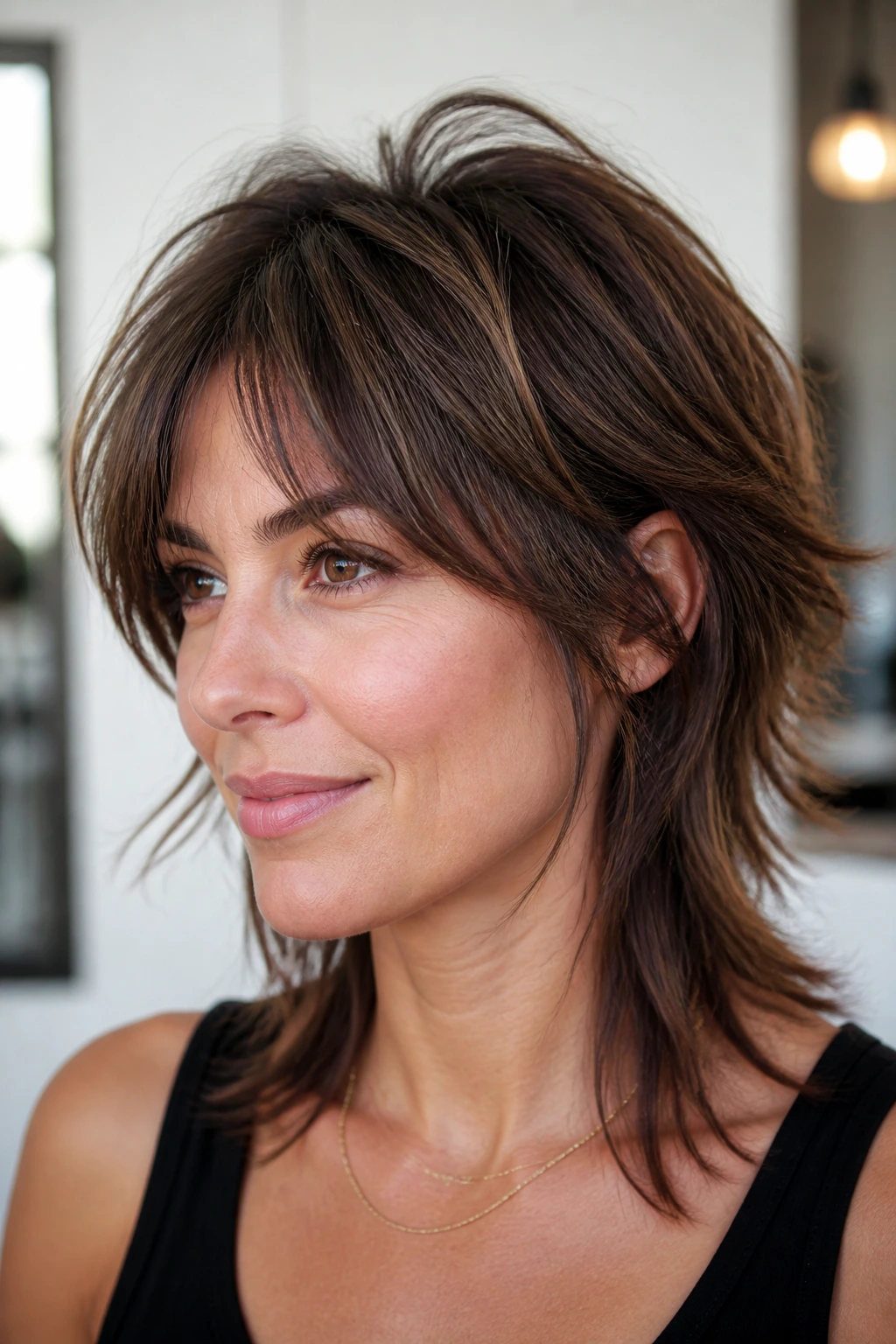
Fine hair needs structure, not a lot of thinning. That’s the part most people get backward. A volumized mullet for fine hair should keep a clean perimeter, add lift at the crown, and avoid over-texturizing the ends until they look see-through. On a round face, the lift matters more than the frayed edge.
What to ask for:
- Shorter crown layers to encourage height
- Light face framing that starts above the cheekbone
- Minimal thinning through the ends
- A soft tail that still reads as length
Styling note:
Mousse at the roots is the move here. Blow-dry with a round brush, then clip the crown while it cools. If you want extra body, flip the head upside down for the last 30 seconds of drying and then smooth the top back into place.
This is the cut that proves fine hair can wear a shaggy mullet without looking stringy.
22. Curly-Edge Mullet with Internal Layers
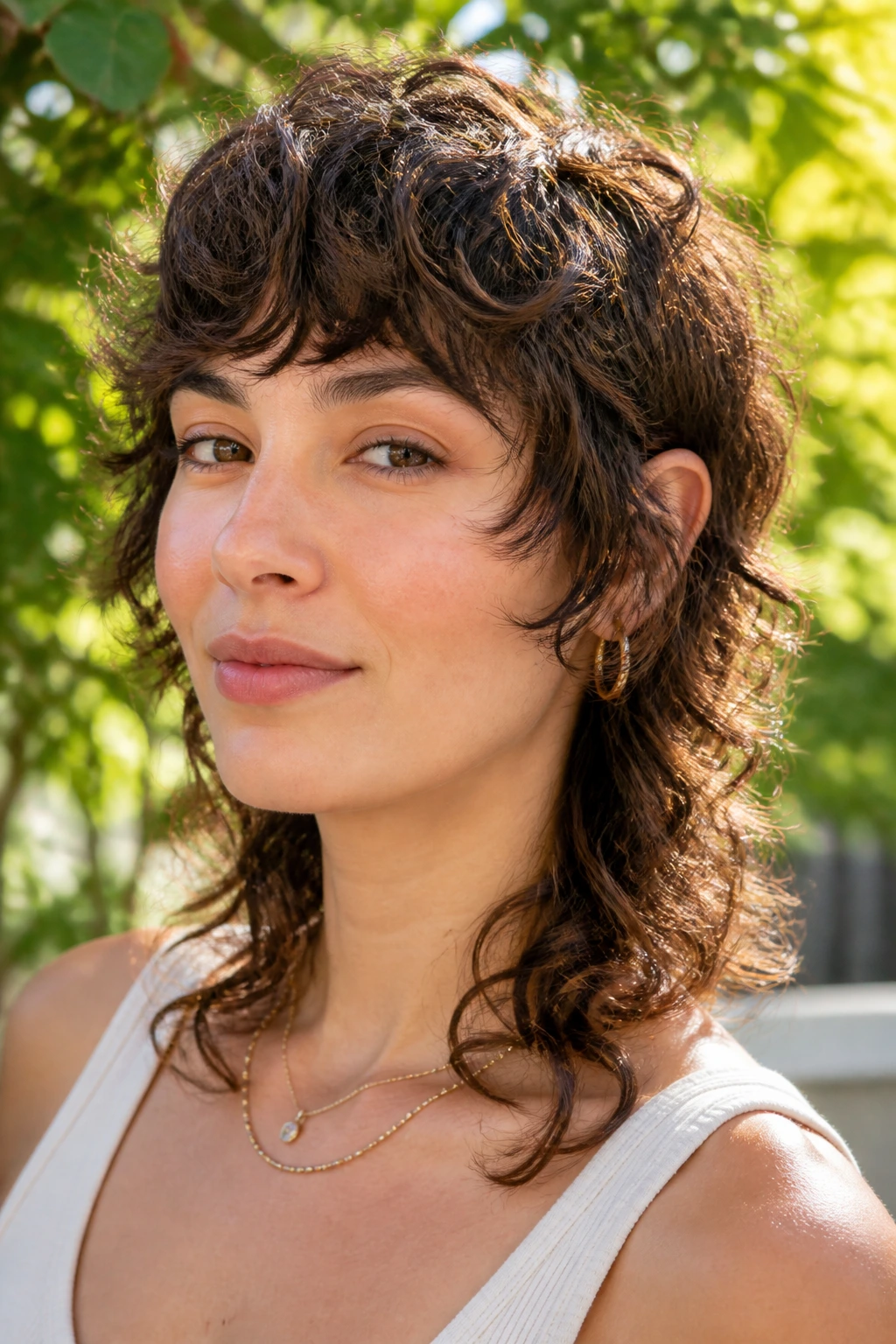
Curly hair has its own geometry, and this cut respects it. The internal layers keep the curls from stacking too wide around the cheeks, while the edges stay soft and springy. A round face benefits from that controlled lift because the curls can bounce upward without making the sides feel heavy.
Cut for the curl pattern, not against it
If your stylist knows curls, a dry cut is often the better call. It lets them see exactly where each curl sits and where the shape wants to flare. The shortest face-framing pieces should still be placed with the round face in mind, usually around the mouth to cheekbone range, not right at the jaw.
For styling, glaze the curls with gel, diffuse until the cast forms, then scrunch it out once fully dry. The shape should feel airy at the top and narrower through the sides.
This cut is a little more specific than some of the others, but when it’s right, it looks tailored rather than generic.
23. Soft Black Mullet with Ribbon Highlights
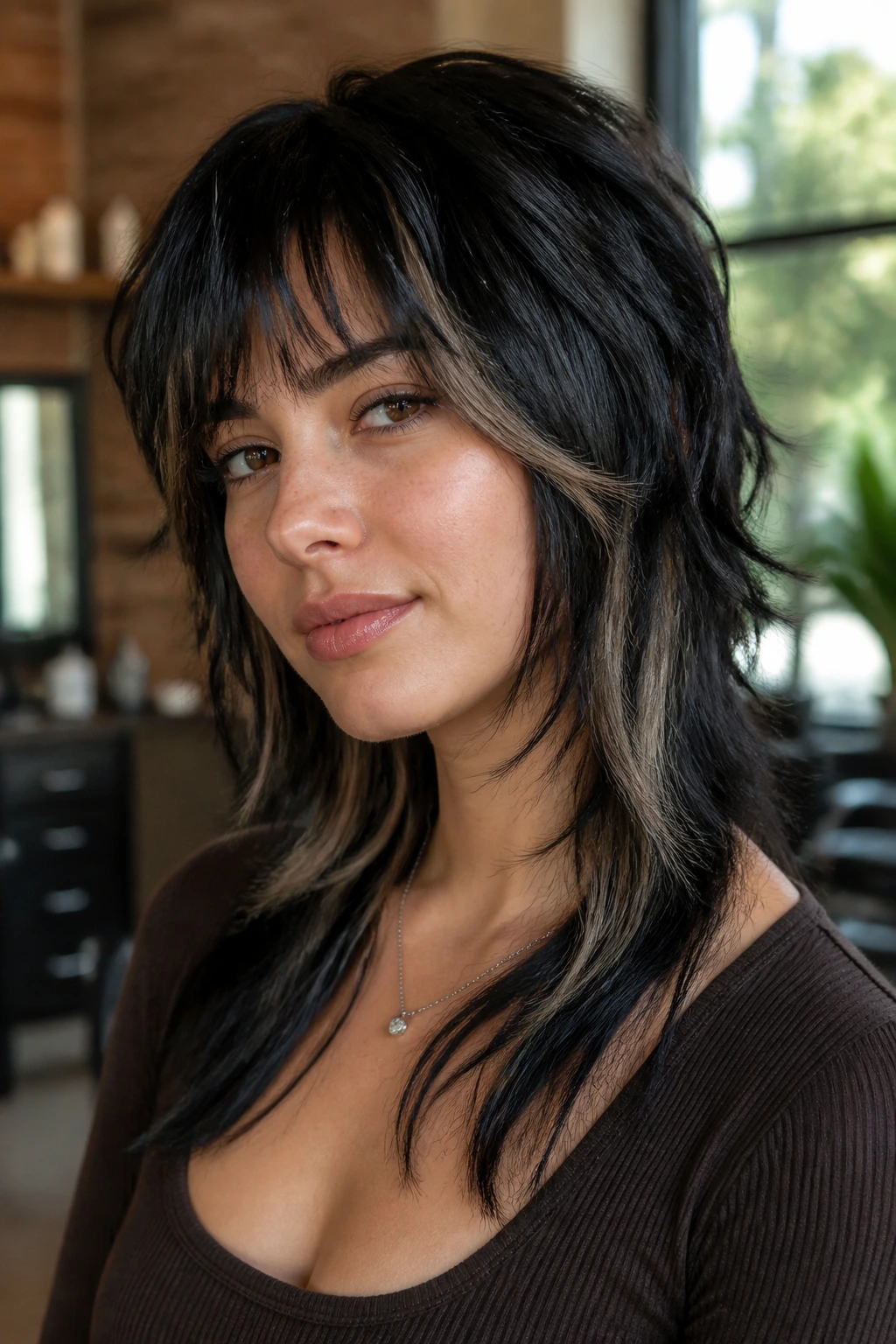
Dark hair can swallow a lot of layering if nothing breaks up the surface. Ribbon highlights fix that. Thin, vertical pieces of lighter color running through the front and back make the layers visible without turning the cut into a chunky color block at the cheeks. That matters on a round face, because a big light panel can widen the face fast.
The soft black base keeps the haircut elegant. The ribbon highlights add movement where the layers need help being seen. Keep the brightest pieces a little lower than the cheekbone if possible, or they’ll sit too close to the widest part of the face.
This is a strong choice if you want a mullet shag that looks refined rather than rebellious. It has texture, but the finish is smoother than a raw choppy cut.
24. Platinum Razor Shag Mullet
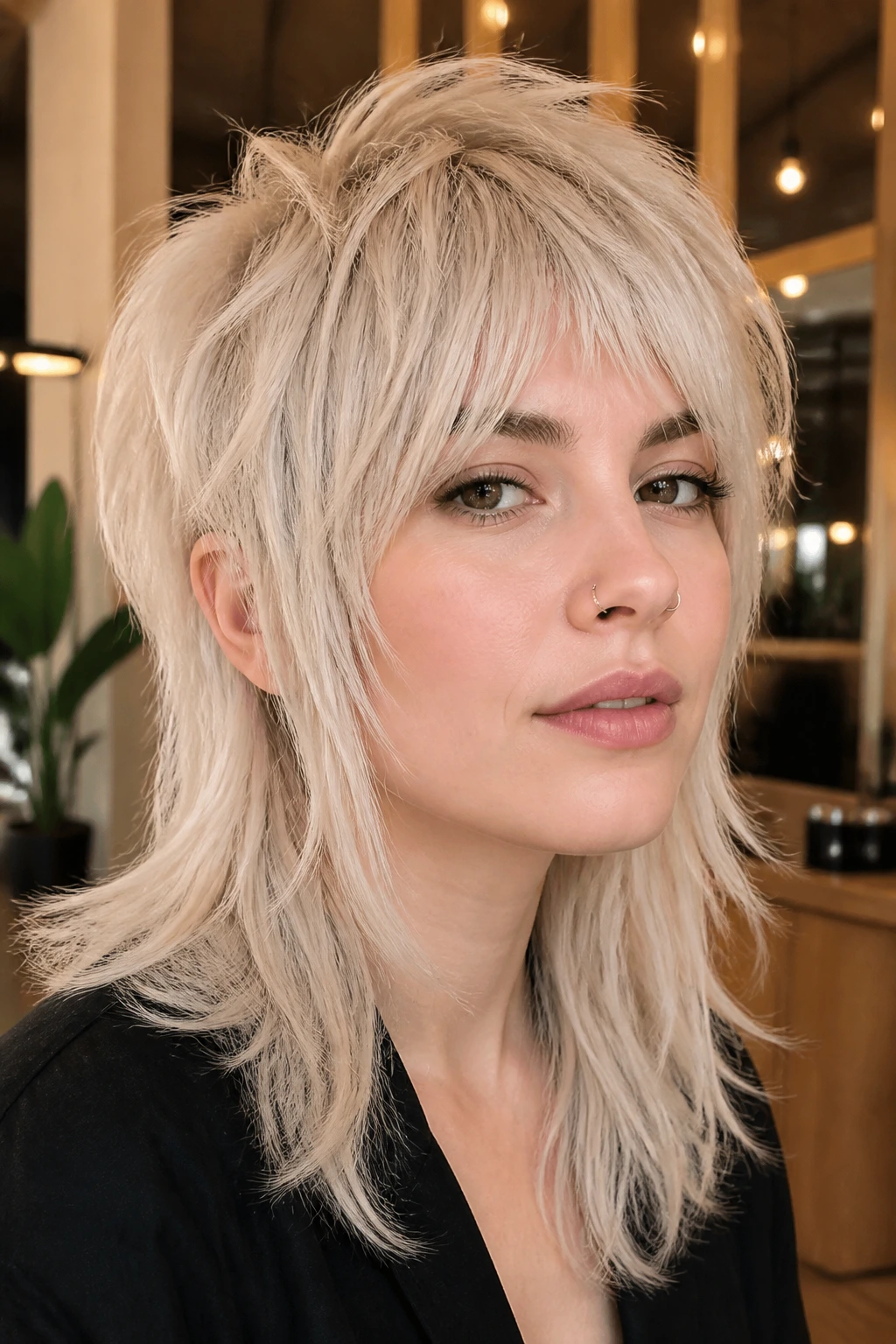
Platinum makes every line louder, so the cut has to be good. A razor shag with pale color can look amazing on a round face if the perimeter is kept long enough and the front pieces stay soft. Too much shortness around the cheeks and the whole thing starts looking sharp in the wrong places.
The razor texture gives the ends a feathered, almost airy edge, which helps the style feel light despite the bright color. Keep the shortest layers near the brow or upper cheek, then let the longer ones fall below the jaw. That keeps the face open and prevents the platinum from forming a wide halo.
Maintenance note:
Tone it regularly with a purple shampoo that does not leave the hair dull and chalky. Use it sparingly, maybe once a week, and follow with a conditioner that puts some slip back into the ends. Platinum already asks for attention; the cut should make that worth it.
25. Low-Maintenance Grow-Out Mullet Shag
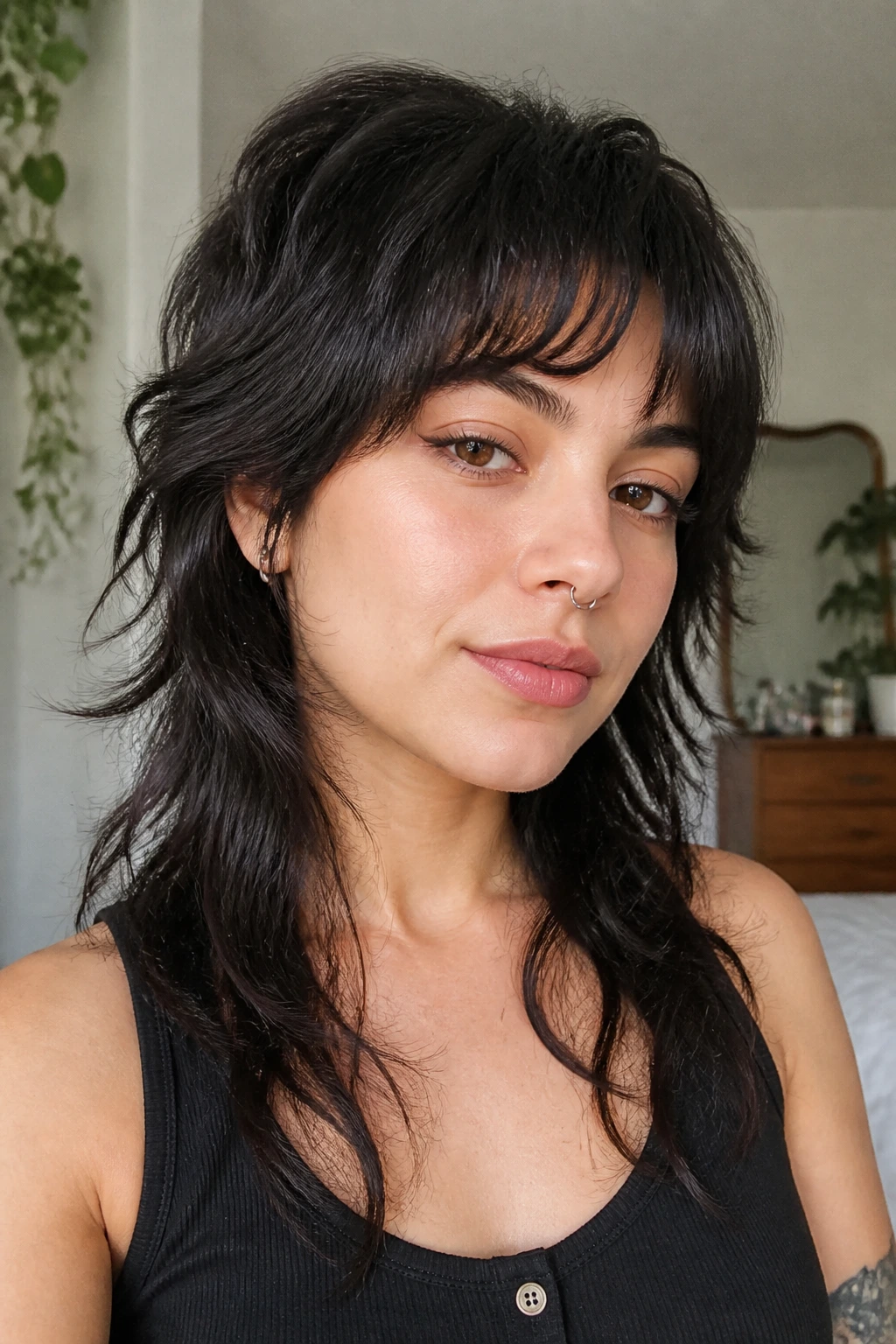
If you know you will miss a trim or two, choose this one. The layers are blended enough that the haircut can stretch into a long shag without losing its shape. The front stays long enough to tuck behind the ears or sweep into a part, and the back keeps enough length to carry the mullet line even as it softens.
This is one of the most practical options for a round face because the silhouette keeps working as it grows. The face frame should start soft and stay soft. No hard line, no dramatic shelf. Just enough structure to keep the cheeks from taking over the whole picture.
It’s also the easiest version to personalize. You can wear it airy and polished, rough it up with texture spray, or let it settle into a more relaxed shape between washes. That flexibility is the point. When a haircut can grow gracefully, it becomes a habit instead of a project.
Choosing the Right Mullet Shag for Your Hair Texture
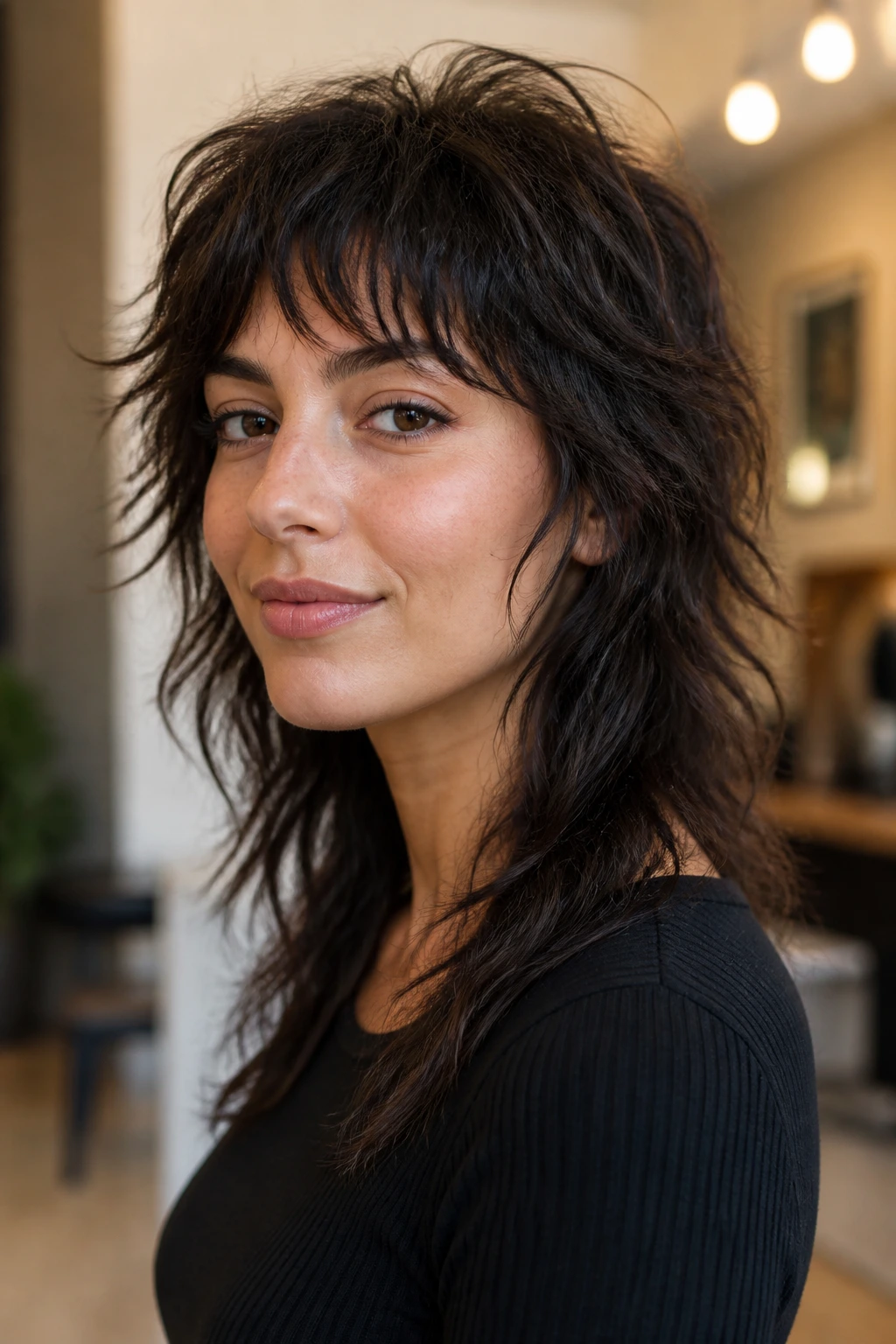
The same cut can act very differently on straight, wavy, curly, and thick hair, so texture should shape the plan from the start. Straight hair shows every line, which is useful if you want a glossy, tapered finish, but it also means blunt layers can look harsh fast. Wavy hair brings movement on its own, so the cut can be lighter through the mids and ends without disappearing.
Fine hair needs restraint. Too much texturizing and you lose the body that keeps the face looking balanced. Thick hair needs control. Too little debulking and the sides can blow out wider than you wanted. Curly hair needs room for shrinkage and bounce, which means the shortest pieces should be measured with the curl pattern in mind, not cut as if the hair were straight.
If you only remember one thing, remember this: a round face usually looks better when the haircut creates a longer outline than the face does on its own. Texture should support that outline, not fight it.
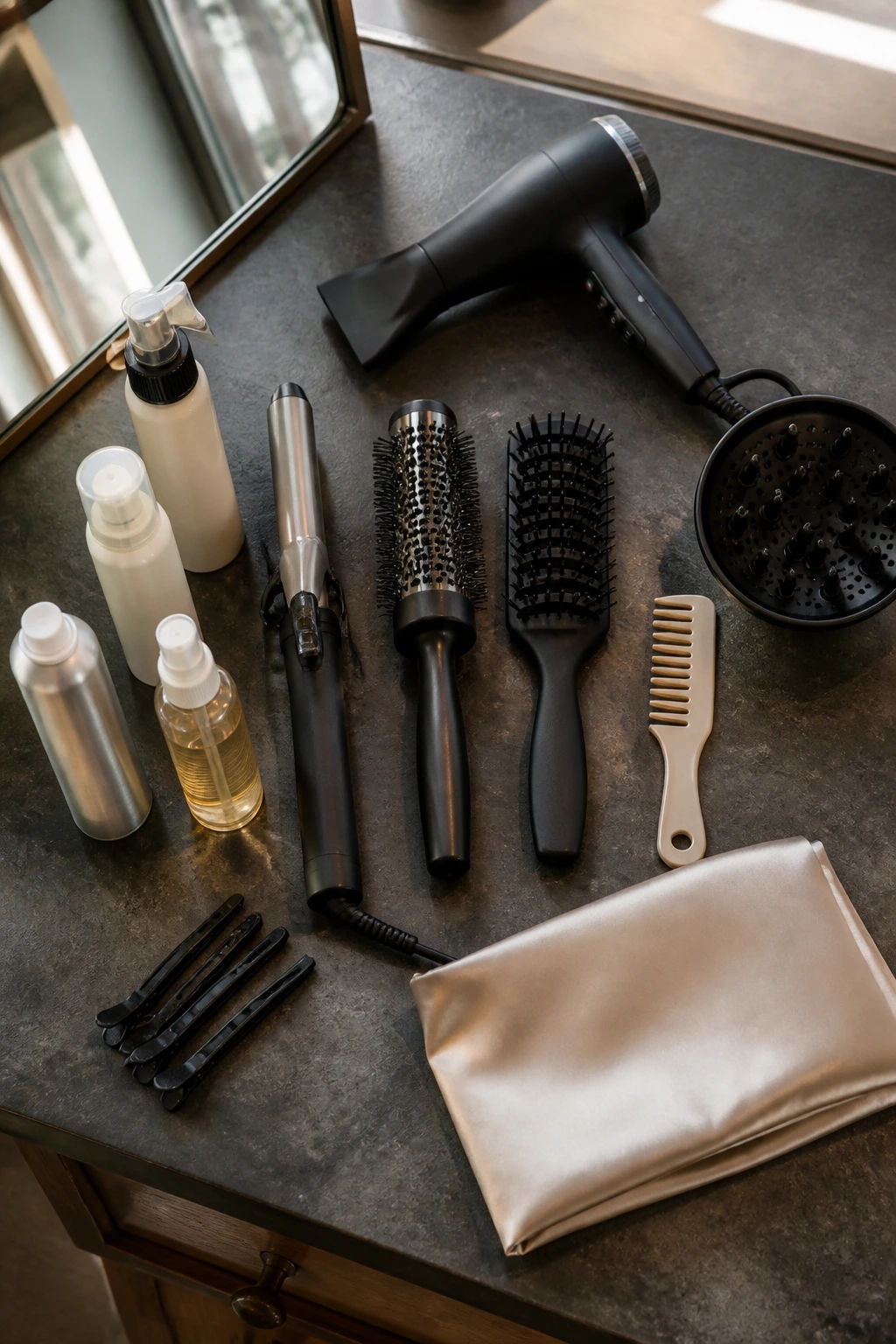
Essential Tools for These Cuts
-
Blow dryer with a concentrator nozzle: Helps smooth the crown and direct the front pieces away from the cheeks.
-
1-inch or 1.25-inch curling iron or wand: Useful for bending the face-framing layers without making them look overdone.
-
Round brush, medium size: Best for curtain bangs, crown lift, and softening the top layers into place.
-
Vent brush: A good pick for quick rough-drying when you want volume without a full blowout.
-
Heat protectant spray: Protects the shorter layers and fringe, which often get styled more often than the rest.
-
Mousse or root-lift spray: Builds lift at the crown and keeps fine hair from collapsing flat.
-
Dry shampoo: Gives day-two grit to the roots and helps piece out the ends.
-
Texture spray or lightweight paste: Good for separating the ends so the cut does not read as one solid shape.
-
Diffuser attachment: Worth it if your hair is wavy or curly and you want the shape to stay narrow at the sides.
-
Duckbill clips: Handy for pinning the front pieces or crown while they cool.
-
Wide-tooth comb: Safer than a brush for curls and easier on freshly styled waves.
-
Satin pillowcase or bonnet: Keeps the fringe and face frame from getting bent into awkward directions overnight.
What to Tell Your Stylist Before You Sit Down
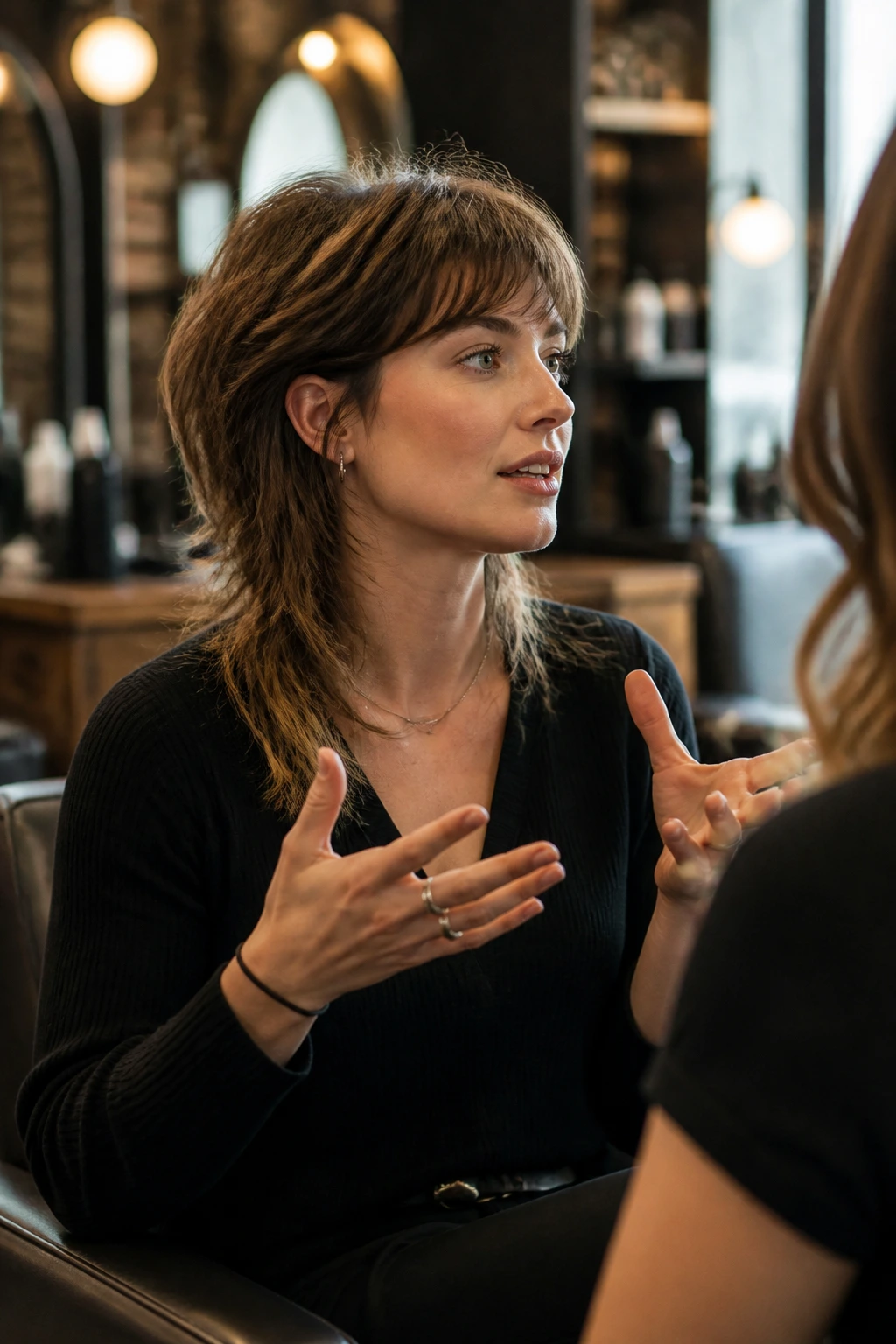
Bring photos, yes, but bring the right photos. One front view, one side view, and if possible one picture that shows the back. A single glamorous selfie never tells the whole story, and mullet shag cuts live or die on the profile.
Tell your stylist where you want the shortest face-framing pieces to land. Use real landmarks: upper lip, cheekbone, jaw, collarbone. On a round face, that placement matters more than the label on the haircut. If you want softness, say so. If you want edge, say that too. The words “mullet” and “shag” can mean ten different things in ten different chairs.
A few things worth mentioning out loud:
- how long you spend styling on a normal day
- whether your hair is fine, thick, straight, wavy, or curly
- where your cowlicks sit
- whether you wear glasses
- how often you want trims
That last one is not small talk. A cut that looks great every six weeks may feel annoying by week ten if the fringe is too short or the crown too layered.
How to Wear These Cuts Day to Day
Everyday:
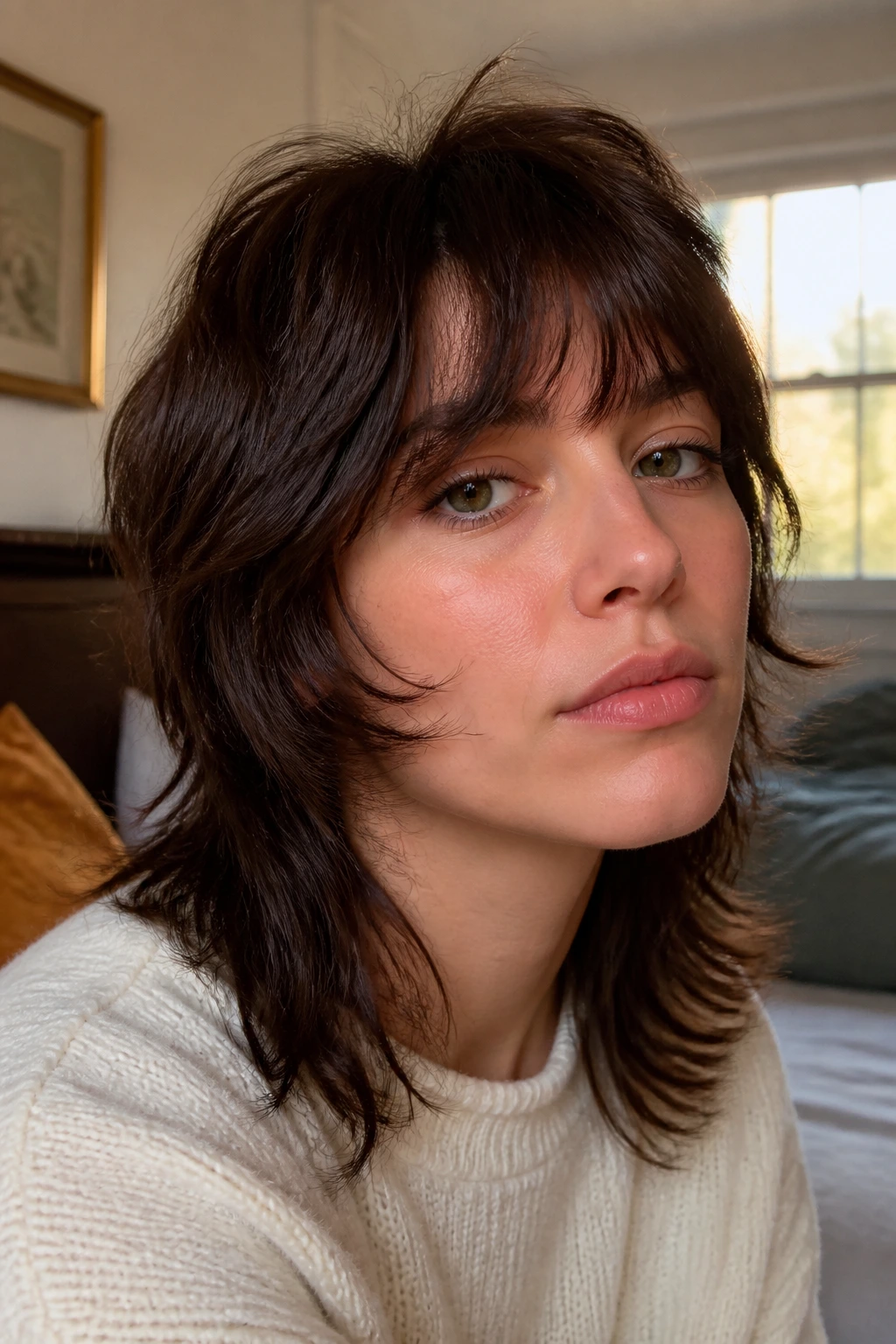
Rough-dry the roots, bend the front pieces away from the face, and stop there. A round face usually looks better when the crown has a little lift and the sides are not too poofy. You do not need a perfect finish for this shape to work.
Polished:
Use a round brush on the fringe and crown, then tuck one side behind the ear. That small asymmetry helps the cut read longer and cleaner. It’s the easiest way to make a shaggy mullet feel intentional instead of accidental.
A little more edge:
Work a tiny amount of paste through the ends and pinch a few pieces into separation. Do not smear product through everything. You want definition, not crunch.
Fastest version:
Mist the front with water, reshape the fringe with your fingers, dry the roots for two minutes, and go. If the face frame is good, the rest can be a little imperfect.
Additional Tips and Styling Boosters
Shape Boost:
Clip the crown up while it cools after blow-drying. That one habit can add enough lift to change how the whole face reads.
Texture Boost:
Spray texture product on the mids and ends only. Keep the cheeks cleaner and smoother, because too much grit there can make the face feel wider.
Color Move:
If you color your hair, ask for vertical ribbons or lowlights that track the layers. Chunky light pieces around the widest part of the face can work against the cut.
Shortcut:
On day two, refresh only the front pieces. A quick mist of water, a bend with a curling iron, and a touch of dry shampoo at the roots is usually enough.
Make-it-yours:
If you like a softer finish, keep the layers longer and the fringe airy. If you want more attitude, shorten the crown a touch and let the back keep its tail.
Common Mistakes to Avoid
-
Letting the shortest layers hit the widest cheek point:
That’s the fastest way to make the face look broader. Ask for the shortest face-framing pieces to land above that point or drop below it. -
Over-thinning fine hair:
Fine hair turns wispy fast if the stylist removes too much weight. The fix is a cleaner perimeter, less razor work, and more root lift instead of more thinning. -
Putting all the volume at the sides:
Side puff makes a round face feel rounder. Shift the lift to the crown and keep the sides soft and narrow. -
Cutting a heavy fringe too short:
A blunt, short fringe can trap the face in a square-ish frame. If you want bangs, ask for curtain, bottleneck, or wispy pieces instead. -
Ignoring your natural texture:
A cut that fights your wave or curl pattern will need constant correction. Work with the bend you already have, and the shape will sit better with less effort. -
Skipping maintenance on the fringe:
Even a good shag can look tired if the front pieces outgrow the face shape. A tiny trim schedule matters more than people like to admit.
Variations and Adaptations to Try

Soft Office Version:
Keep the fringe longer, the crown gentle, and the back around collarbone length. It still has shape, but it reads polished enough for meetings and school pickup.
Curly Amplified Version:
Ask for curl-by-curl shaping or a dry cut if your stylist works that way. The goal is to keep the cheeks narrow and the crown buoyant, not to flatten the curl pattern.
Fine-Hair Lift Version:
Use minimal texturizing, a bluntish perimeter, and strong root support. Fine hair needs body more than shredded ends.
Thick-Hair De-Bulk Version:
Build internal layers through the middle and keep the outer shape controlled. Too much bulk at the side of the face is the enemy here.
Color-First Version:
Pair the cut with vertical highlights, lowlights, or a gloss that makes the layers visible. Color can make a good shape read better from across the room.
Grow-Out-Friendly Version:
Ask for layers that can relax into a long shag, not a sharp wolf cut. Keep the fringe long enough to sweep aside once it starts to grow out.
Maintenance, Trim Timing, and Grow-Out Care

A shaggy mullet is not a high-maintenance cut in the way a precise bob is high maintenance, but it still wants occasional shaping. Plan on a trim every 6 to 8 weeks if you want the structure to stay crisp. If you like the softer, grown-in version, you can stretch that a little longer, though the fringe may need attention sooner.
Micro-bangs or shorter curtain bangs usually need a touch-up every 3 to 4 weeks because they lose their face-framing power quickly. Longer bangs can often wait longer. The back usually forgives you more than the front does.
Overnight care matters more than people think. A satin pillowcase keeps the front from bending into a weird crease, and a loose clip at the crown can preserve lift if your hair falls flat while you sleep. For curls, pineapple the hair loosely so the top does not get crushed.
Between washes, dry shampoo at the roots and a tiny refresh of the front pieces can stretch the style another day or two. If the haircut is good, the grow-out should shift into a shaggy shape, not a mess. That’s the mark of a cut with good bones.
Frequently Asked Questions
Will a mullet shag make a round face look wider?
Not if the layers are placed correctly. The mistake is usually too much side volume or a fringe that ends right at the cheeks. Keep the crown lifted and the front pieces longer, and the shape reads longer instead of broader.
Are curtain bangs the safest choice for a round face?
They’re one of the safest, yes. Curtain bangs split the face and taper outward, which softens the circle without trapping it. Bottleneck fringes and side sweeps are close behind.
Can fine hair pull off this cut without looking stringy?
Yes, but the cut has to be cleaner. Fine hair usually does better with subtle layering, a bit of root lift, and less aggressive texturizing through the ends.
What if my hair is curly?
Curly hair can wear this shape beautifully. Ask for a curl-aware cut, ideally one that respects shrinkage and keeps the sides from widening too much around the cheeks.
How often should I trim it?
Every 6 to 8 weeks is a good rhythm for keeping the shape sharp. If the bangs are short, you may want a bang trim sooner than that.
Can I wear glasses with this haircut?
Absolutely. Just make sure the fringe does not sit directly on the frame unless that is the look you want. Slightly longer curtain pieces or side sweep usually work best.
Is this cut too edgy for a professional setting?
Not if you choose a softer version. Collarbone layers, undercut-free shapes, and longer fringe lines can look polished enough for almost any workplace.
How do I grow it out without going through an awkward phase?
Keep the front long enough to tuck, and ask your stylist to blend the back into a long shag rather than chopping it into a strict shape. That way the haircut softens instead of collapsing.
What if the crown falls flat by lunchtime?
That usually means you need more root support at the start, not more product at the end. Mousse, a quick blow-dry at the root, and a clip while the hair cools usually fix the problem better than re-spraying everything.
Keeping the Shape Soft
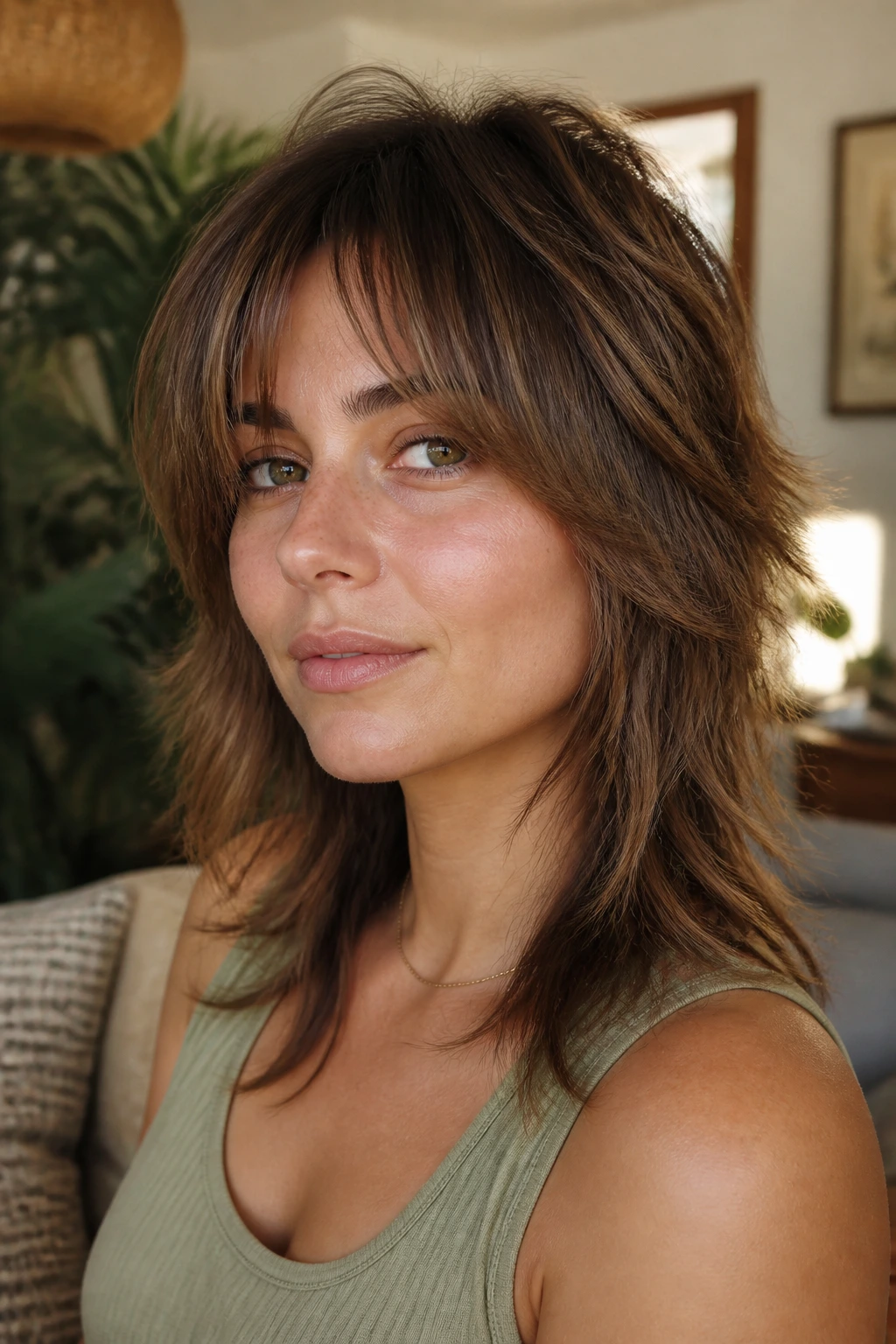
The best thing about these cuts is that they do not need to shout. A round face usually looks strongest when the haircut creates a little height, a little diagonal movement, and enough length to keep the cheeks from taking over. Once those three pieces are in place, the mullet shag stops feeling like a risk and starts feeling like a shape with actual purpose.
If you want the safest starting point, go with one of the softer versions first — curtain bangs, collarbone length, or a center-part wolf shape with gentle face-framing. If you want more attitude, there is room for that too. The structure is flexible. The trick is keeping the widest part of the haircut away from the widest part of the face, and that one rule does more than a dozen trend words ever could.
