



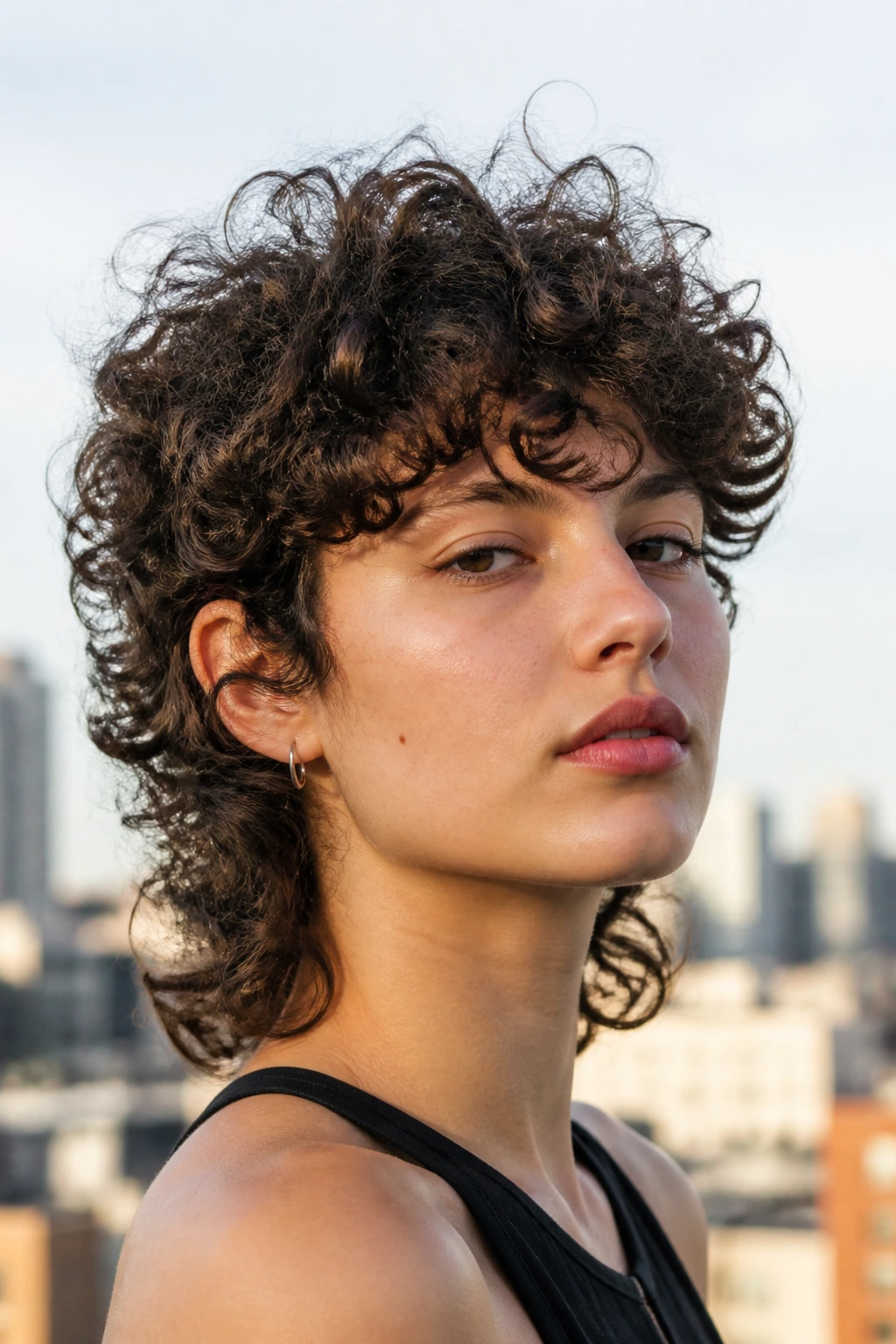
A curly mullet has one job: let the curl pattern move instead of fighting it. When the top is cut with enough lift and the back is left with a little swing, the whole shape gets that loose, springy feel that straight-haired mullets often have to fake with product. The bad versions are easy to spot. The crown puffs, the sides sit heavy, and the nape turns into a shaggy shelf.
The good versions look like they grew that way, but they did not. They rely on the right balance of layering, perimeter, and length at the temples, because curly hair shrinks in ways a flat photo never warns you about. A cut that looks tidy wet can spring up two inches dry. That’s not a problem; it’s the whole point, if the shape is built for it.
Curly mullet haircuts work best when the stylist respects the curl pattern instead of forcing every strand into the same line. Keep the top light. Keep the back intentional. Let the curls do the heavy lifting.
Why These Curly Mullet Cuts Keep Their Lift
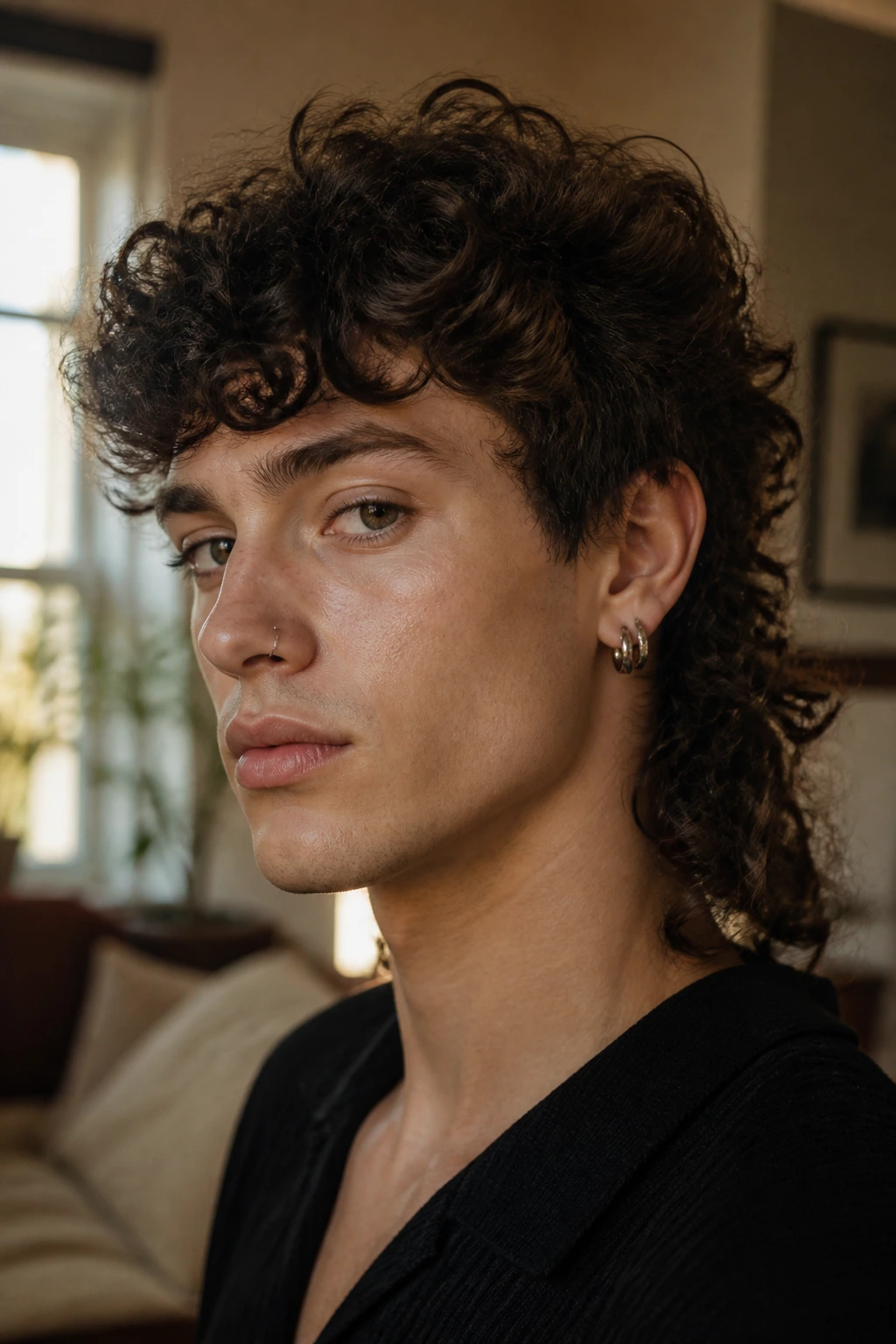
Shrinkage-friendly shape: The smartest curly mullets leave extra room at the crown and nape, so the cut still reads after the curls dry and tighten.
Movement without bulk: A good mullet removes weight in the right places, not everywhere. That’s how you get bounce instead of puff.
Fringe control: A curly fringe can soften the face fast, but only if it’s cut with the curl pattern in mind. Too blunt, and it sits like a shelf.
Easy to style: Most of these cuts need a leave-in, a little curl cream or gel, and a diffuser if you want the shape to last past lunch.
Works with real life: Some of these are sharp and defined. Others are messy in the best way. Pick the one that fits how much effort you actually want to spend on your hair.
1. Soft Layered Curly Mullet
This is the easiest place to start if you want movement without committing to a loud silhouette. The top stays airy, the back keeps its length, and the layers are soft enough that the curls stack instead of ballooning. It’s the kind of cut that looks better the longer you watch it dry.
What makes it work
The layers are the whole point here. They let the curl clumps fall in different lengths, which keeps the shape from turning into one heavy block. Ask for the top to stay light around the crown and for the back to taper gently into the neck, not end in a blunt line.
A soft layered curly mullet is forgiving on most curl types, especially if your hair bends somewhere between waves and spirals. It gives the ends enough freedom to flick out, but it does not scream for attention. That’s a nice trade.
Best for: people who want a mullet shape that still feels easygoing.
Watch for: too much thinning near the ends. That can make the back look wispy.
Styling note: a small amount of curl cream and a diffuse on low heat will keep the layers separated without making them crispy.
2. Round-Halo Curly Mullet
A round-halo mullet is the fix for anyone who hates the triangle effect. Instead of letting the widest point sit at the jaw, this cut keeps the silhouette circular and soft, with the curl volume floating a little higher around the head. It reads plush, not puffy.
The trick is in the perimeter. The sides are kept rounded around the ears, and the back keeps enough length to move, but not so much that it drags the whole shape down. If your curls already have a lot of spring, this shape gives them a cleaner outline. It’s a mullet with manners.
Best when you want…
- a fuller crown without a square outline
- a shape that flatters round and oval faces
- a cut that looks good air-dried without a ton of fixing
The key is not to carve it too sharply at the temples. That’s how you lose the halo and end up with a hard edge. Keep the transition soft, and the curls will do the rest.
3. Curly Mullet With a Micro Fringe
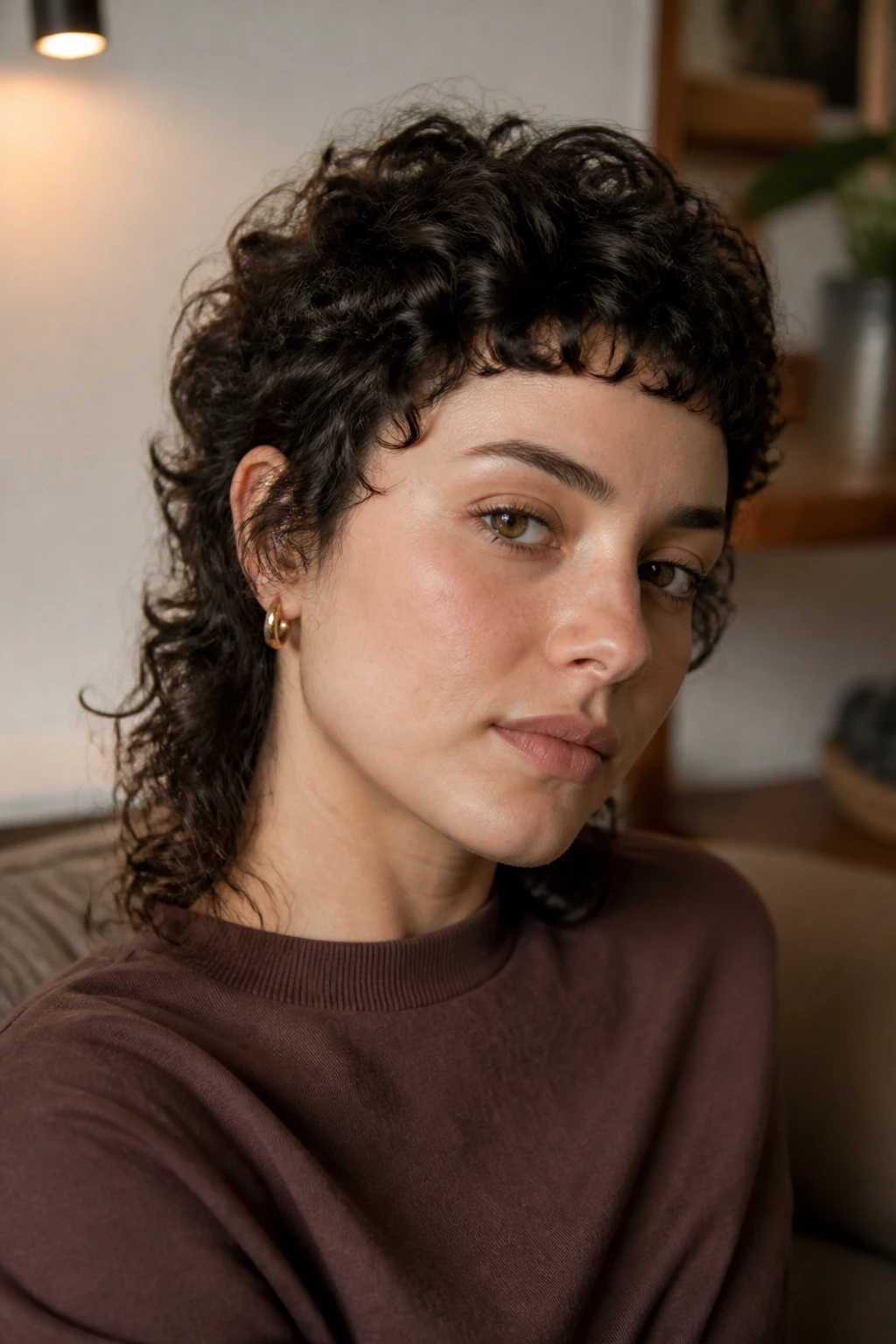
Can a tiny fringe work on curls? Yes, but only if you respect shrinkage. A micro fringe gives the mullet a sharper front edge while keeping the rest of the cut loose and lived-in. It’s a good choice if you want the eyes front and center and you do not mind a little attitude.
The fringe should be cut dry or close to dry, because a curly bang that looks eyebrow-length when wet can spring halfway up the forehead when it dries. That’s not a disaster. It’s just how curly hair behaves.
How to ask for it
- keep the fringe short but not blunt
- leave room for shrinkage at the center front
- connect the fringe softly into the top layers
This cut is strongest on loose to medium curls, where the front pieces can sit in soft little bends instead of popping into a spiky line. If your curls are tighter, ask for a slightly longer fringe so it can fold rather than stand up.
4. Tapered Temple Curly Mullet
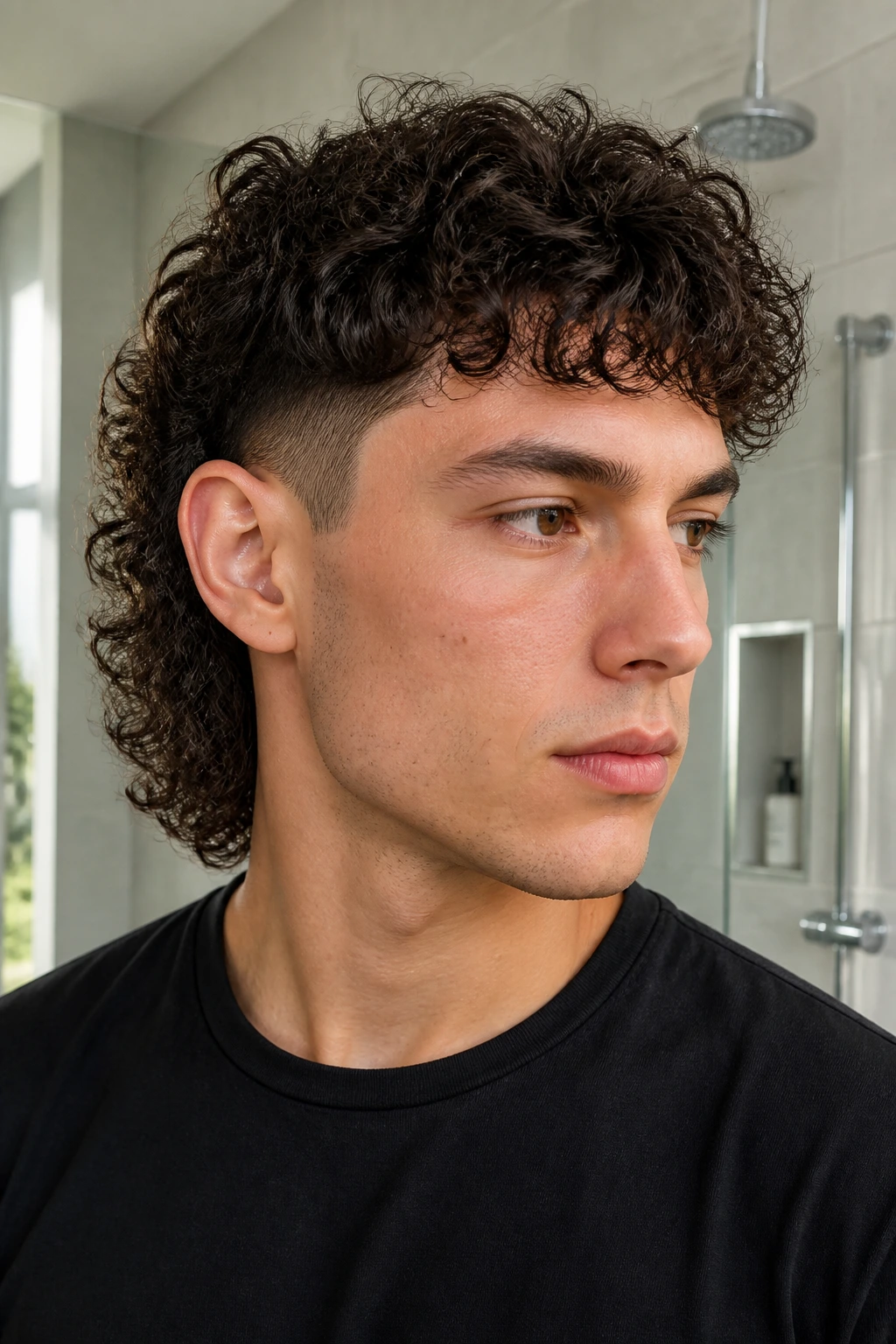
If your sides tend to go bulky fast, this is the one worth showing your stylist. A tapered temple mullet keeps the sides neat around the ears while letting the curls in back stay obvious and springy. The effect is sharper without losing the texture.
I like this shape when someone wants the haircut to feel controlled from the front and looser from the back. It’s a quiet contradiction, which is half the appeal. The taper trims the visual weight near the face, so the curls don’t overwhelm the jawline.
The mistake to avoid is shaving the taper too high. That can make curly hair look disconnected in a cheap way. Keep the taper low and soft. The mullet silhouette will still be clear, and the curls won’t lose their frame.
Pro move: ask for the taper to start around the temple area, not halfway up the head. That keeps the cut wearable even as it grows.
5. Shoulder-Skimming Shag Mullet
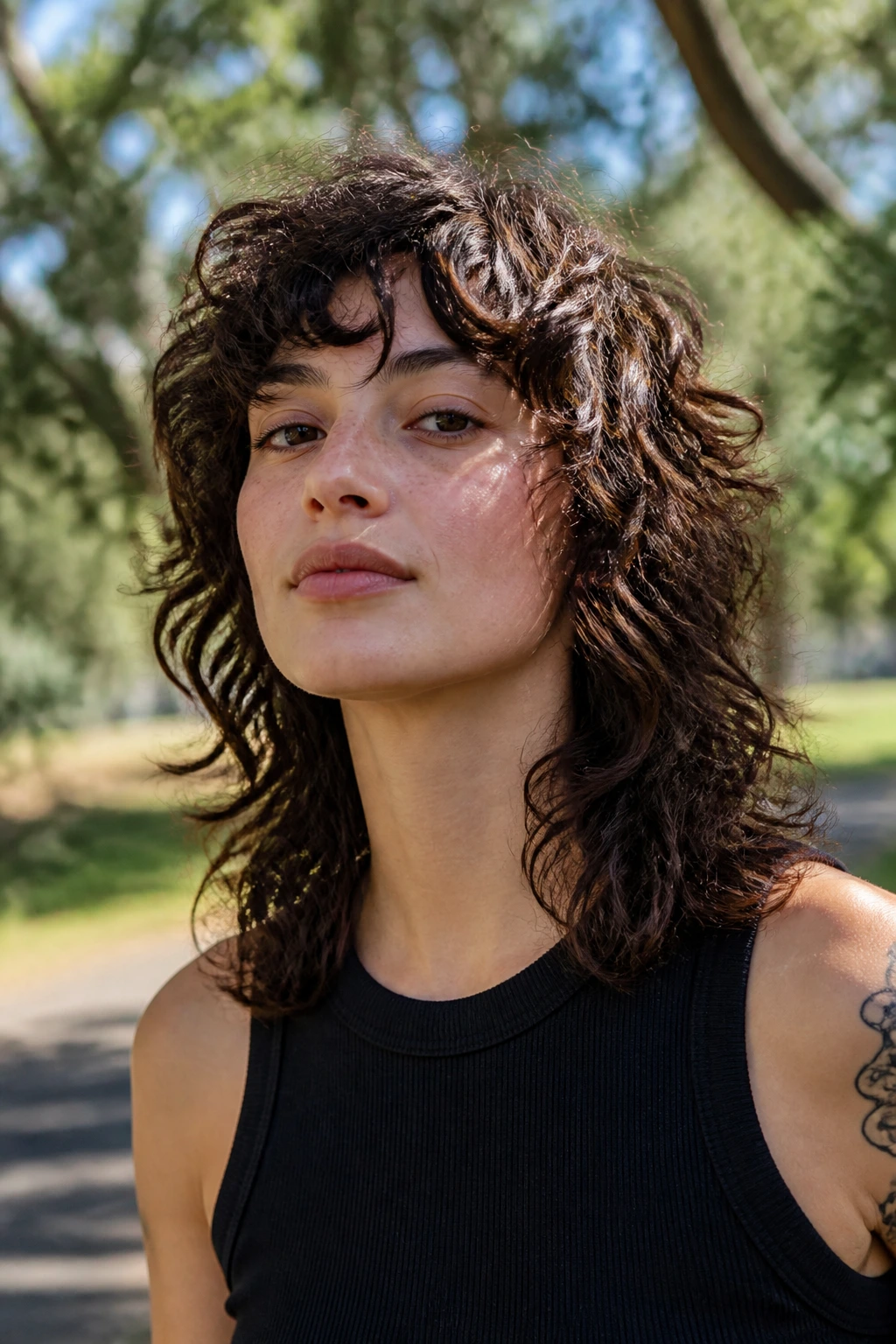
This one sits between a shag and a mullet, and that’s exactly why it works. The front layers are long enough to frame the cheekbones, the crown stays broken up for lift, and the back grazes the shoulders so the curls can stretch instead of bunching. It feels a little softer, a little more rock-and-roll, and far less fussy than a fully sculpted version.
The shoulder-skimming length is useful if you hate seeing your curls spring too high after a wash. There’s enough length to let them breathe. The shape still has a tail, but it doesn’t rely on it alone.
If your hair is medium-density and your curls are looser on top than in back, this cut can help even out the whole head. It gives the crown a bit of action without stealing weight from the bottom. That balance matters more than people think.
6. Face-Framing Wolf Mullet
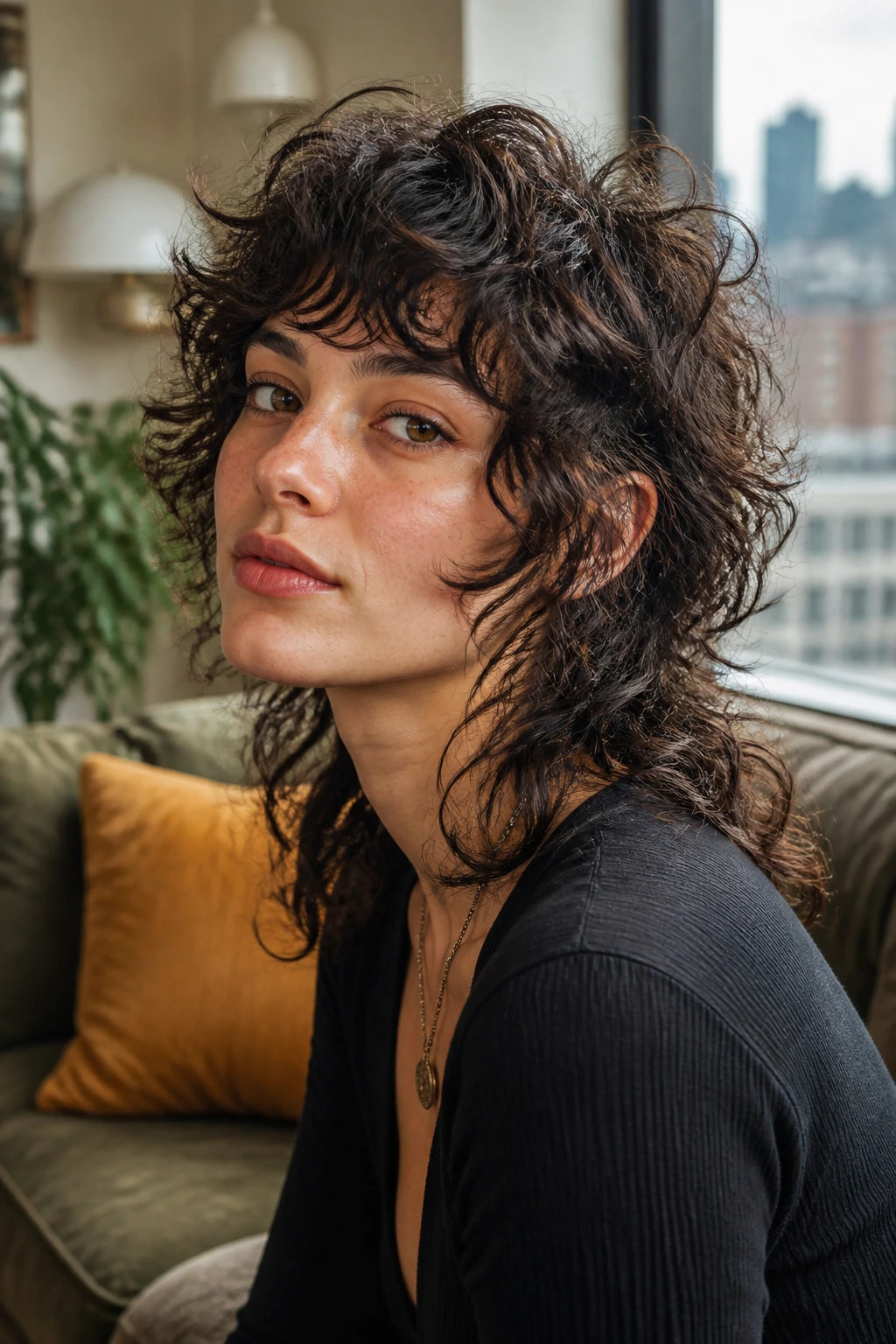
Unlike a classic mullet, this one leans hard into the front pieces. The wolf-inspired shape keeps the top and sides layered, then lets the back trail behind in a softer way. The face-framing pieces matter here. They can land at the cheekbone, jaw, or just below the chin, depending on how much shape you want around the face.
This is a strong pick if you like your curls to look intentional from the front, not just interesting from the side. It has more texture than a standard curly mullet, and the layers tend to feel a little wilder.
Why people pick it
- it softens strong cheekbones
- it keeps the front from looking flat
- it gives curly hair room to move at every angle
The front should not be chopped into tiny pieces. That’s the fastest way to lose the flow. Keep those face-framing layers long enough to curl on their own.
7. High-Volume Crown Curly Mullet
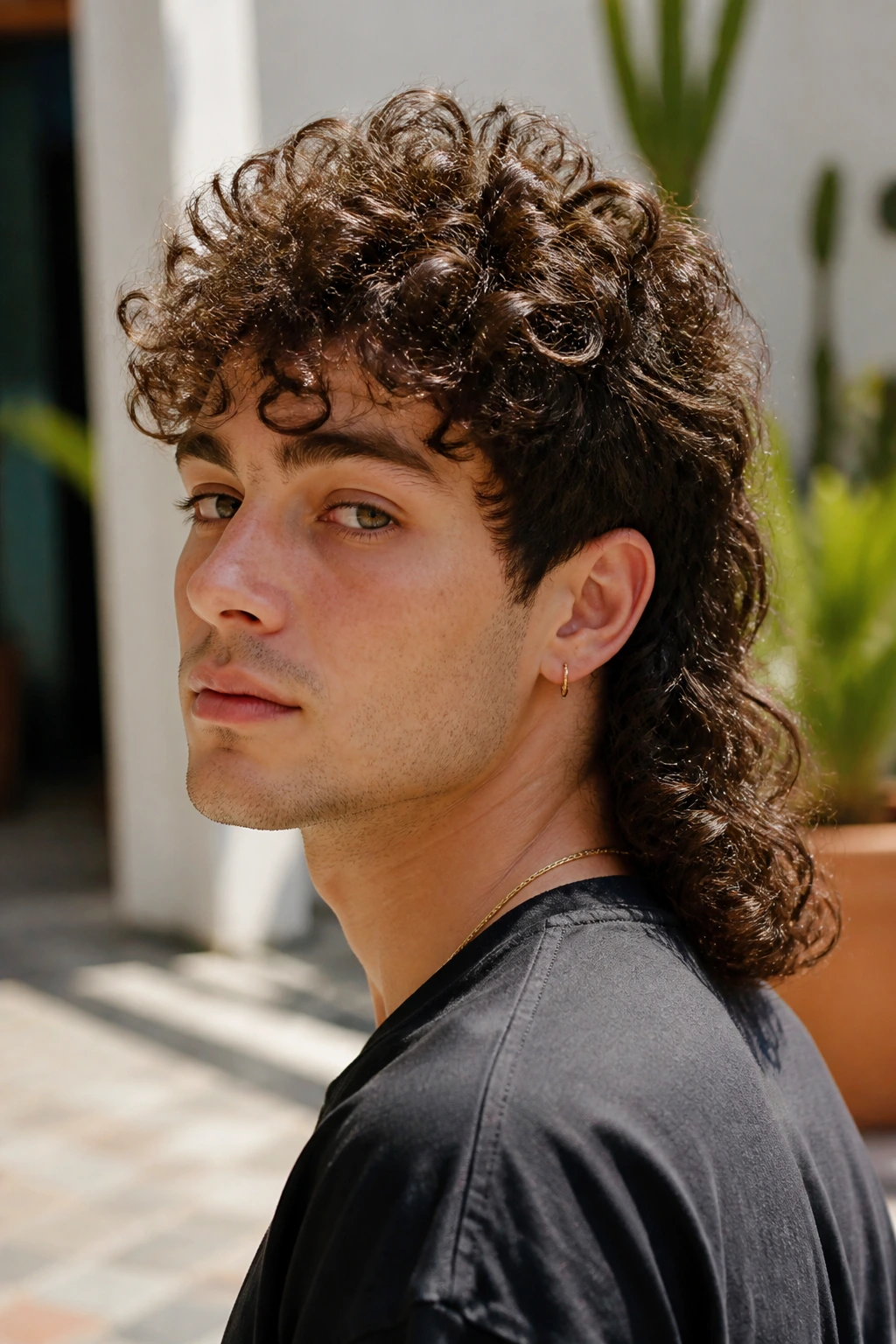
Flat crown? Not with this cut. A high-volume crown curly mullet builds lift right where curls usually collapse, which makes the whole haircut feel taller and more animated. The back still trails, but the crown gets its own spotlight.
This shape needs strategic layering near the top. Not too much. Just enough to stop the crown from dragging the rest of the cut down. If your curls settle flat after a day or two, the answer is not more product. It’s a better layer map.
Ask for this:
- shorter internal layers at the crown
- longer pieces through the back
- enough weight at the sides to keep the outline from widening
I’m picky about this one. If the stylist overcuts the top, the shape starts to frizz instead of lift. The crown should look buoyant, not shredded.
8. Short Curly Mullet With a Fade
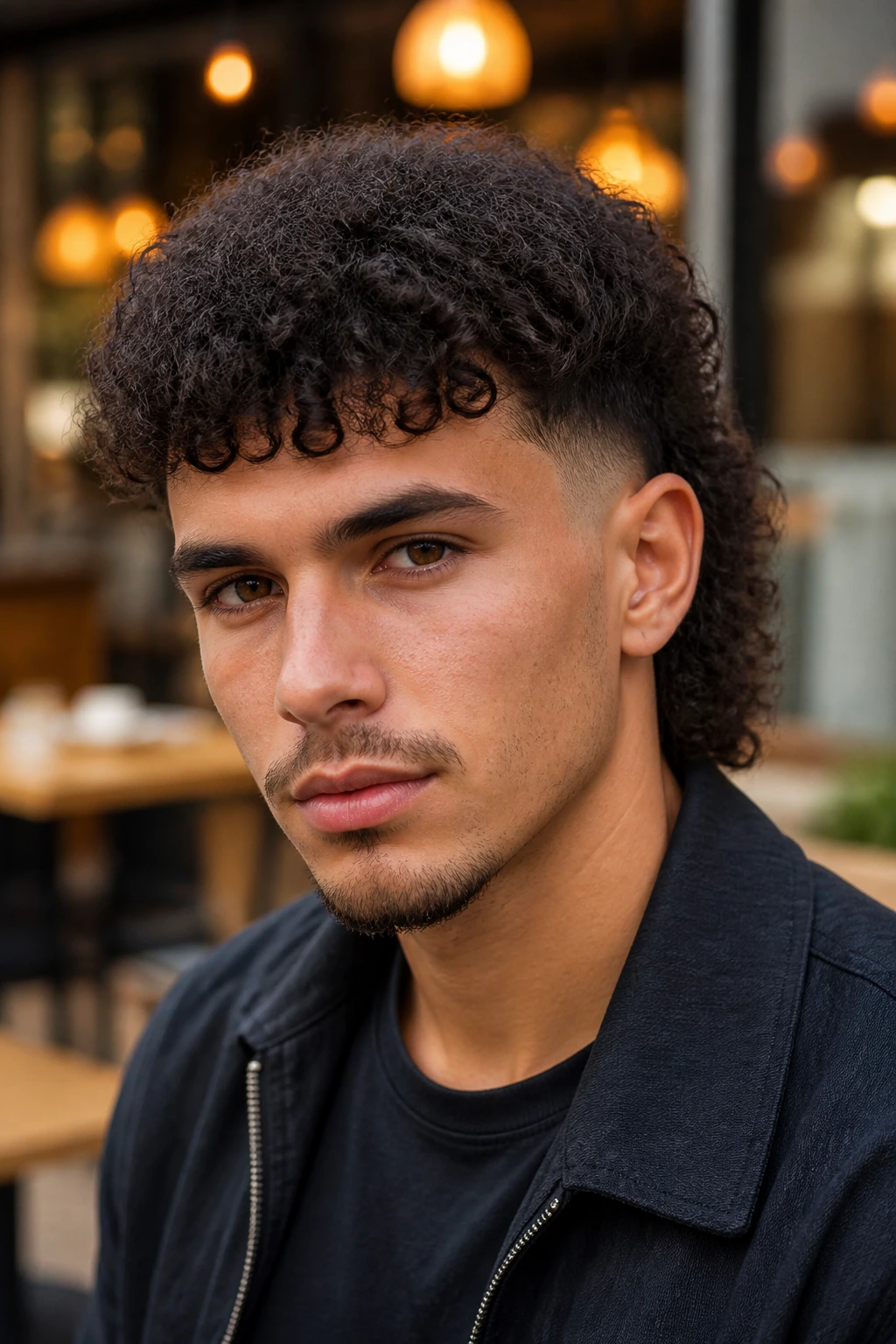
Yes, a mullet can be short and still read as a mullet. This version keeps the curls compact on top and in back while the sides fade down cleanly, which makes the texture pop. It’s neat around the ears, sharper through the neckline, and easier to maintain than a longer shape.
The fade does a lot of work here. It keeps the haircut from looking bulky on dense hair and gives the curls somewhere to land visually. For tighter curls, this is one of the best ways to keep shape without making the cut feel too wide.
The back should still have enough length to curl, though. If the nape is taken too short, the whole thing turns into a regular short cut with a little attitude. That may be fine. It just won’t be a mullet.
9. Long-Back Curly Mullet
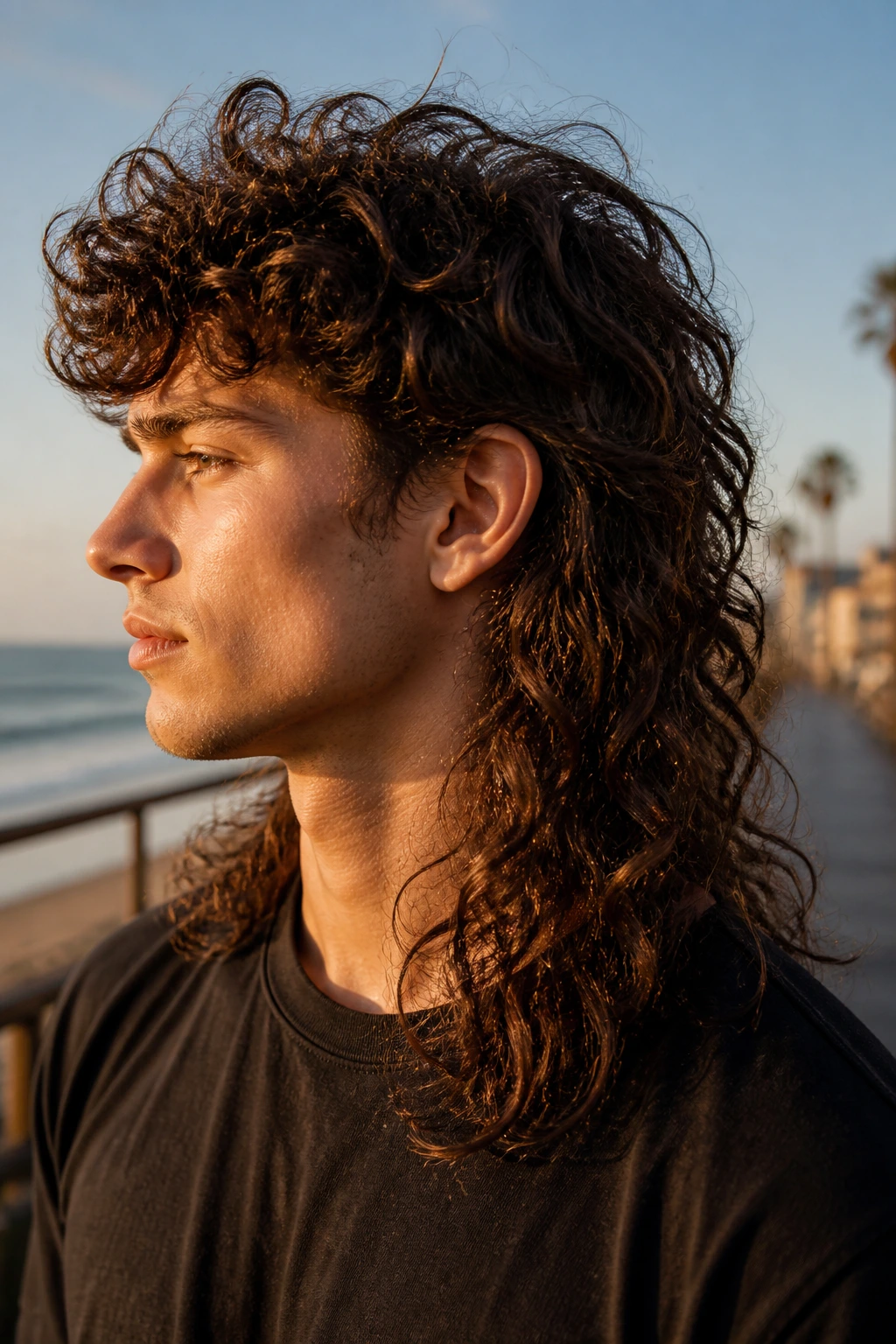
How long is too long? For a long-back curly mullet, the answer depends on how much weight your curls carry. Some people can wear a back that falls to the collarbone and still keep the shape light. Others need the back trimmed higher so the curls don’t pull the whole cut down.
This version is dramatic, but it works best when the back is kept soft through the ends. A blunt edge at that length can feel heavy fast. I prefer a gentle bevel, where the curl clumps taper into one another instead of ending all at once.
A long-back mullet is strongest when the front stays shorter and the crown is controlled. Otherwise, the whole thing becomes long hair with a vague memory of a mullet. That’s not the same thing.
10. Curly Mullet With Curled Bangs
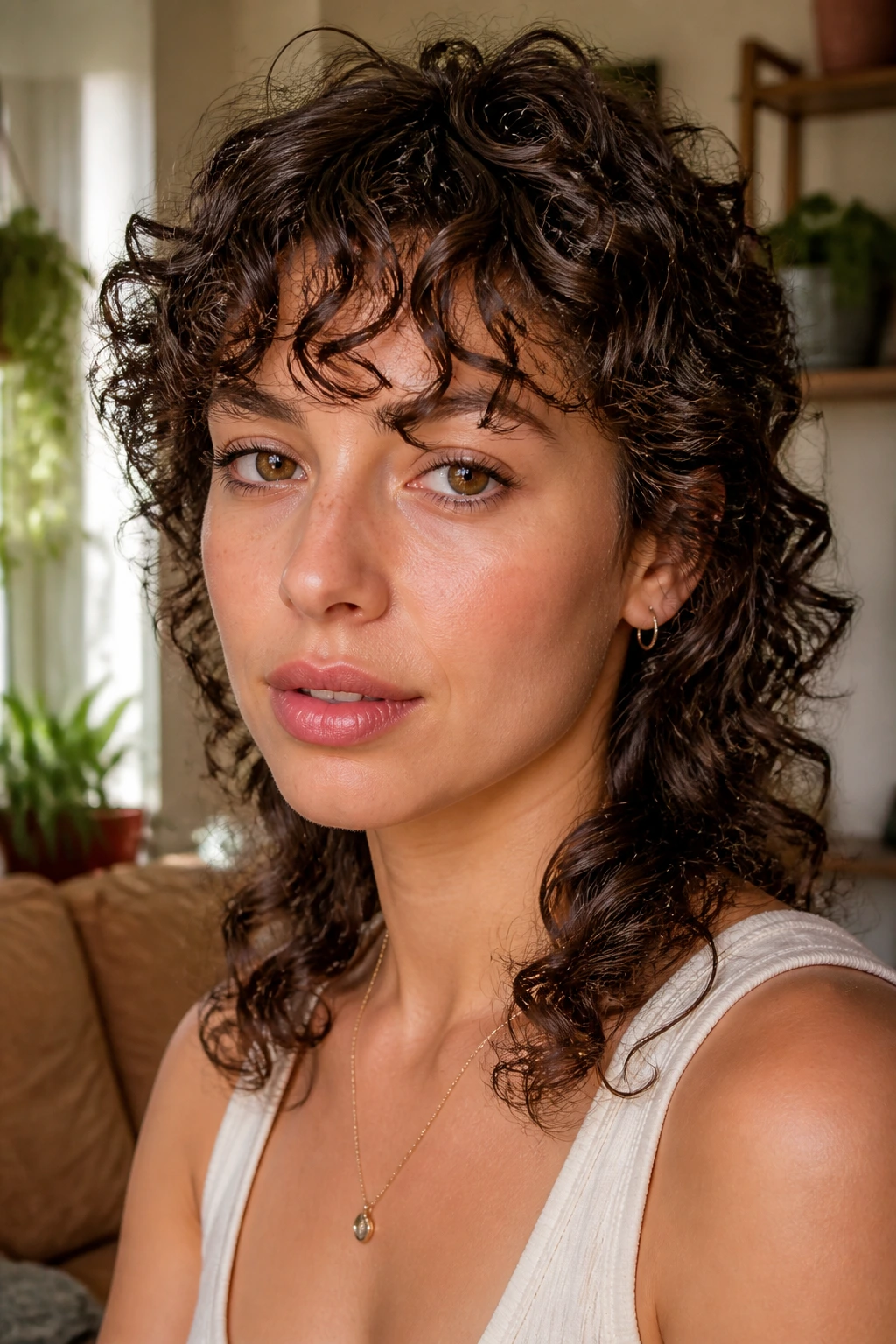
Curled bangs can make a mullet feel youthful without turning it into a novelty cut. The bangs sit on the forehead in soft pieces, and the rest of the haircut falls back behind them. It’s a little playful, a little retro, and much easier to wear than a straight fringe on curly hair.
The important part is length. Curly bangs need room to spring. If they’re cut too short, they can sit awkwardly above the brows and refuse to settle. If they’re left too long, they drift into the eyes. The sweet spot is usually right around brow level when dry, maybe a touch longer.
This shape works especially well if your curls clump cleanly. The bang area can sit in a few defined pieces instead of one fuzzy curtain. That makes the whole haircut feel cleaner.
11. Razor-Textured Curly Mullet
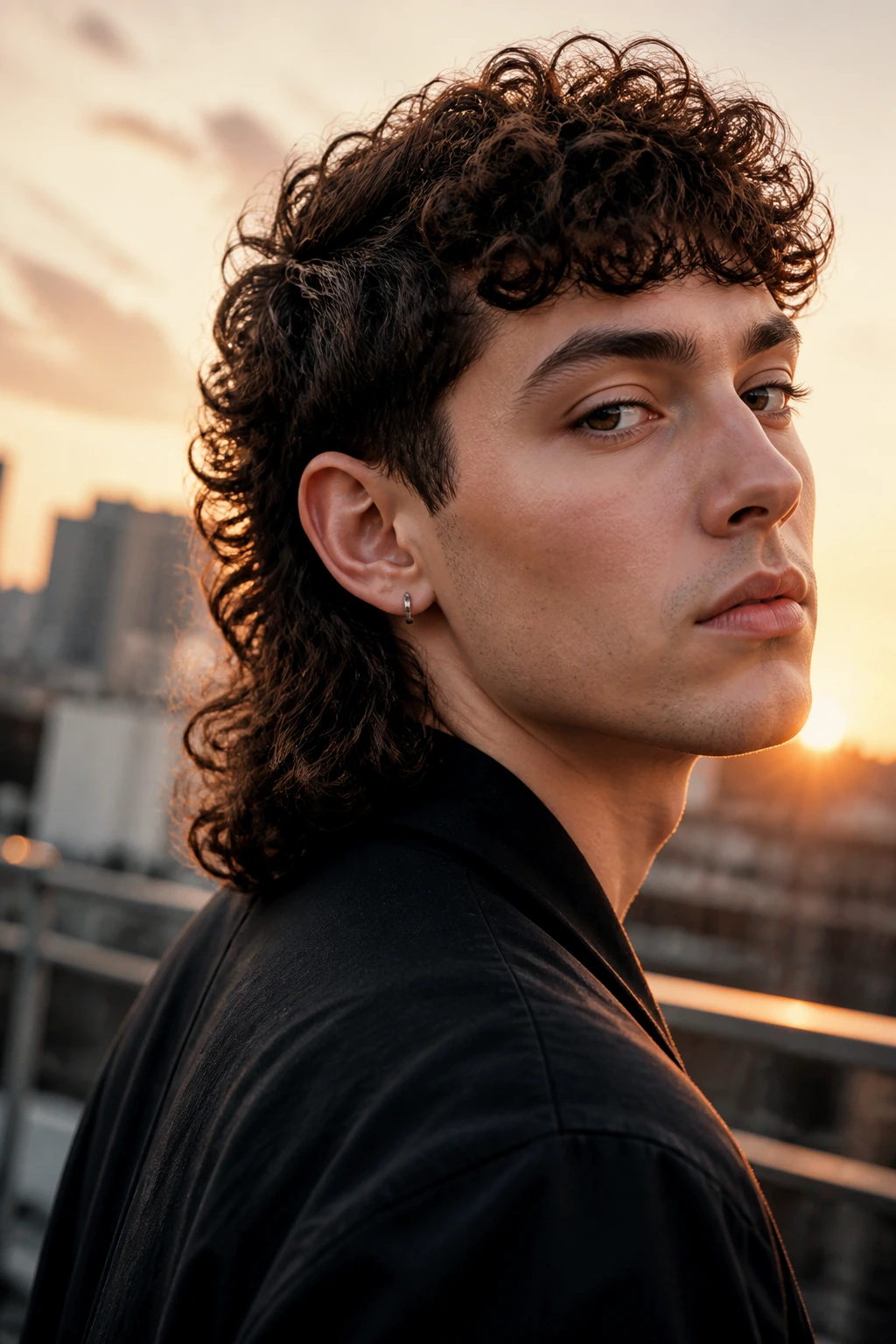
Razor cutting on curls is not something I hand out like candy. On coarse, strong curls, though, it can make the cut feel lighter and more air-filled. The edges break up a little, the layers separate, and the mullet gets a softer swing through the back.
The catch is frizz. Fine curls and razors are a bad match most of the time. The hair can look frayed at the ends, which kills the bounce instead of boosting it. On denser or sturdier textures, though, a light razor touch can take the weight out without making the shape flat.
Use this if:
- your curls are coarse or thick
- you want a softer, more piecey finish
- you’re okay with a little edge instead of a polished line
If you’re not sure, ask for a small section first. A good stylist will know quickly whether your texture can handle it.
12. Side-Part Curly Mullet
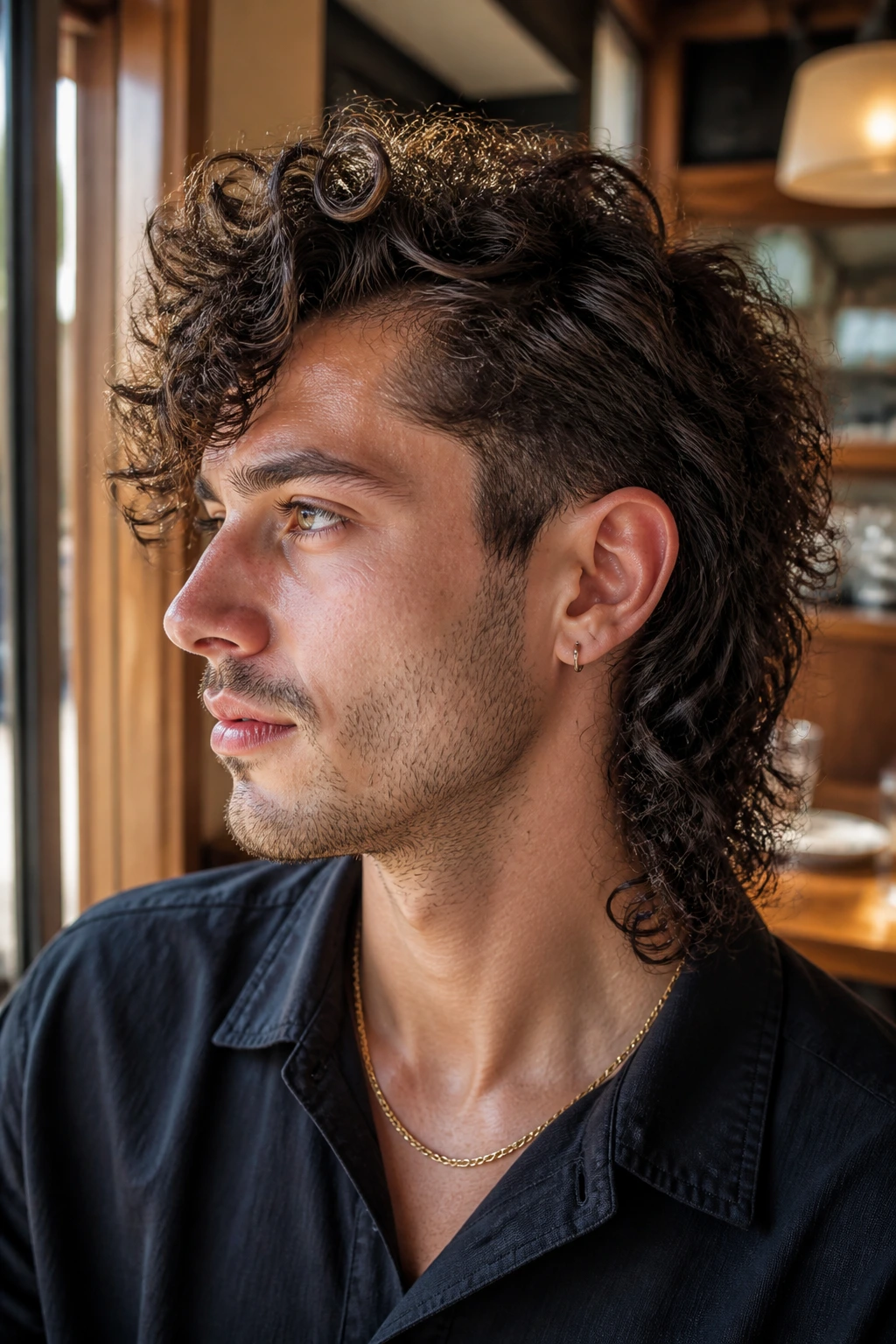
A side part changes everything. With curls, it shifts the volume off the center line and gives the mullet a more relaxed, less symmetrical feel. The front falls a little farther on one side, the back keeps its movement, and the whole cut looks more deliberate than random.
This is a smart choice if center-part styles make your face feel too open. A side part can shorten the forehead visually and give the curls a little direction. It also helps if one side of your hair naturally wants to lie flatter than the other. Work with that. Don’t fight it.
The best part is how easy it is to restyle. A new side part, a little root lift, and the same haircut suddenly looks fresh. That kind of flexibility is worth more than it sounds.
13. Deva-Cut Curly Mullet
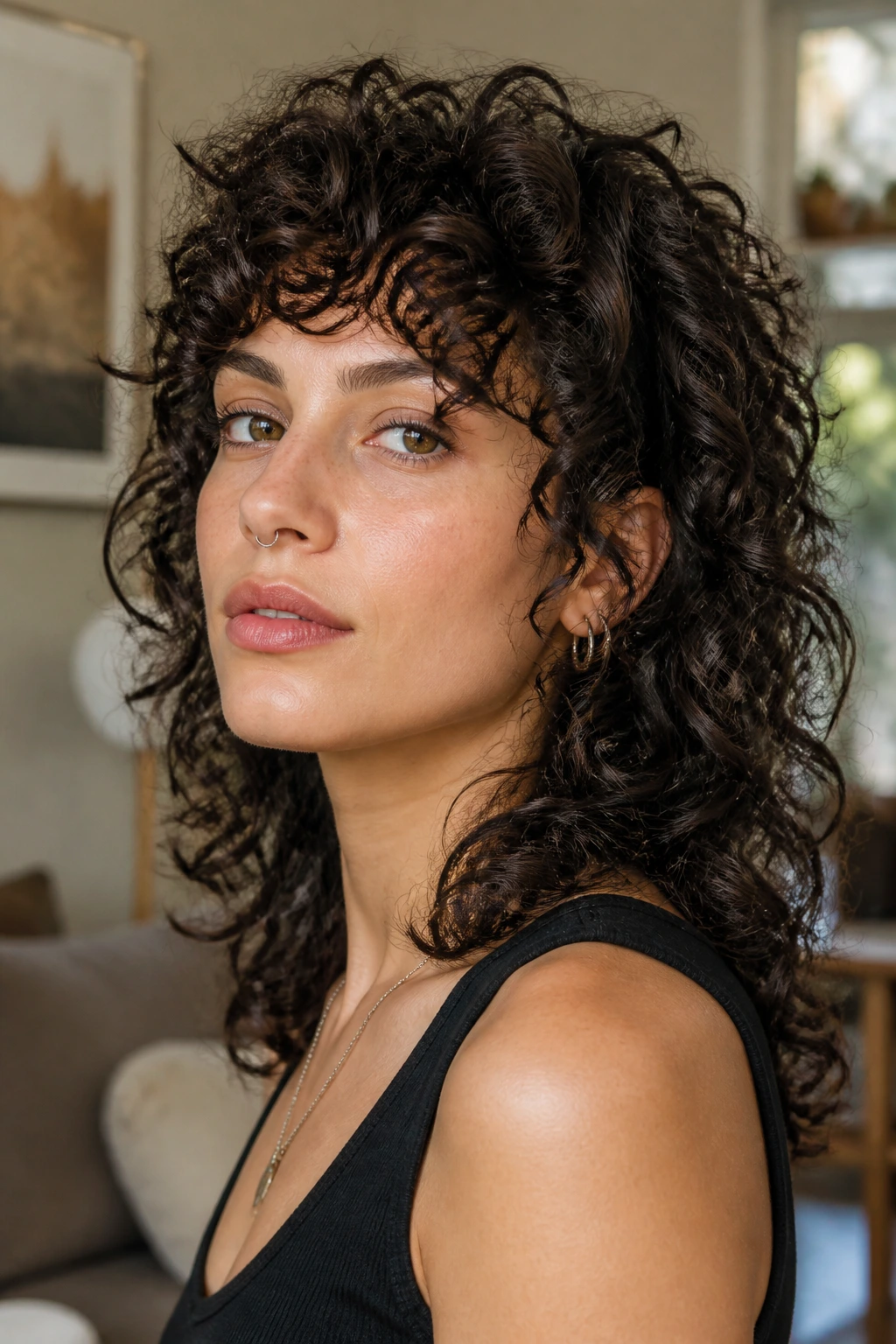
A Deva-style curly mullet is cut curl by curl in its natural state, which makes it one of the best options if your pattern is unpredictable. Instead of guessing how the curls will settle, the stylist shapes them dry so the final silhouette matches the way they actually live on your head.
That matters most at the nape and around the face. Those are the places where wet cutting can lie to you. Dry shaping keeps the back from getting too heavy and the front from shrinking into a surprise fringe.
If you have different curl patterns in different zones, this method is worth the time. The crown can be looser, the sides tighter, the back a little springier, and the haircut still makes sense. That’s the beauty of it.
14. Retro Rocker Curly Mullet
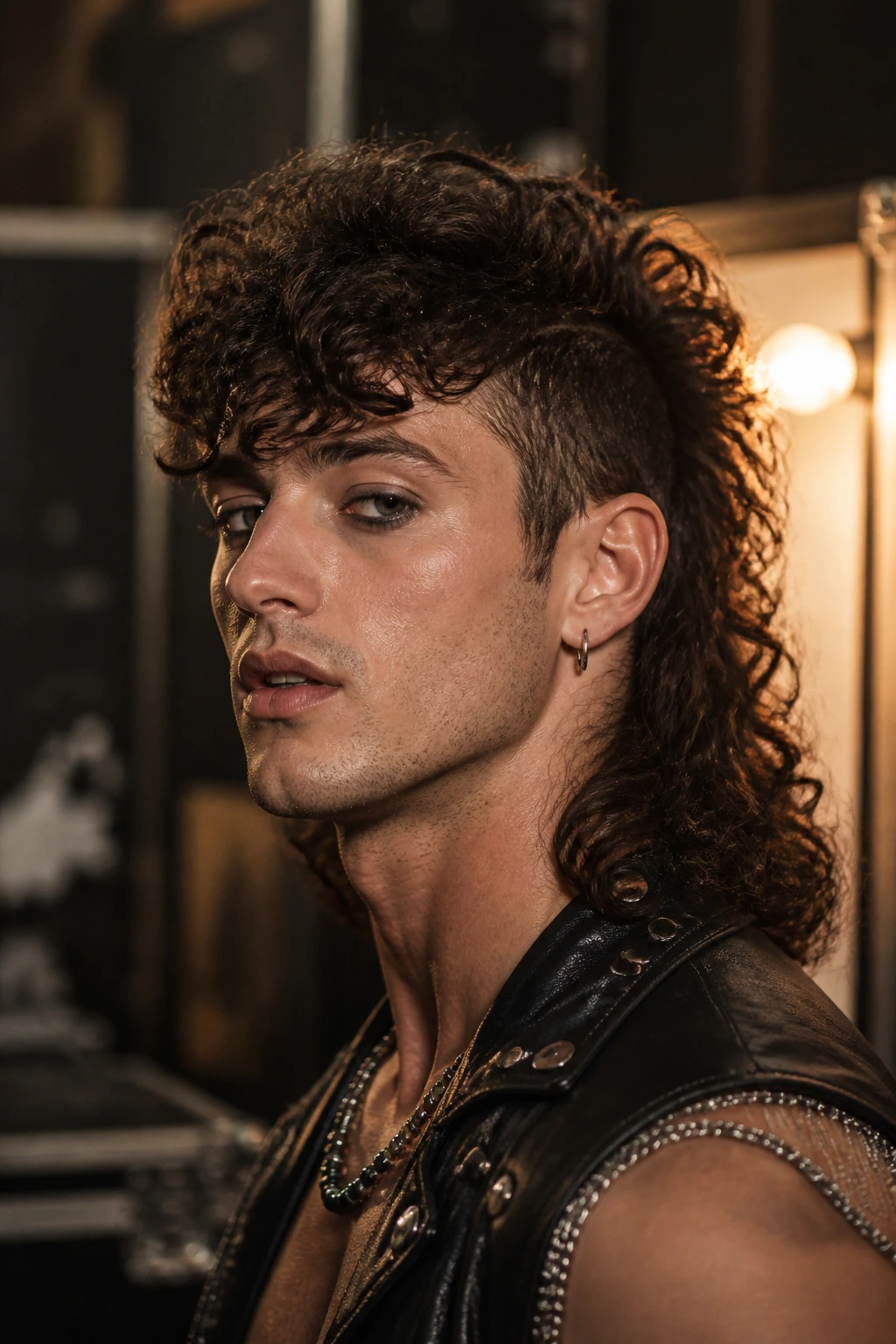
This one has attitude in the best possible way. Think more stage hair, less polite salon shape. The layers are bold, the back moves, and the front can carry a little fringe or a hard side part depending on how loud you want the result to feel.
It looks best when the curls are defined, not brushed out. A diffuser on low heat helps the texture hold its shape, and a medium-hold gel can keep the pieces from frizzing into a blur. You want visible curl clumps here. That’s part of the charm.
The retro rocker version is not for anyone who wants hair that disappears into the background. It announces itself. Hard to argue with that, honestly.
15. Oval-Softening Curly Mullet
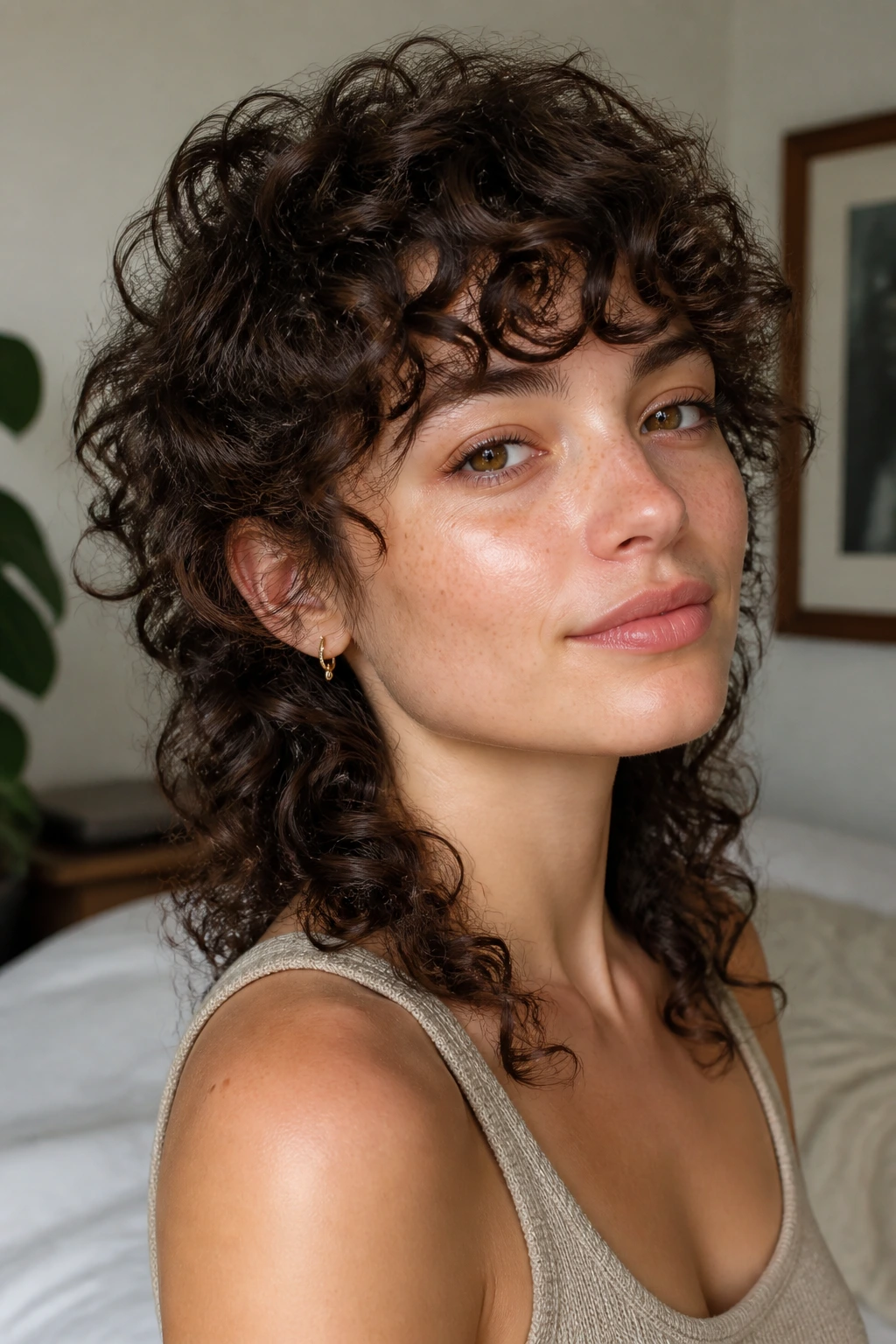
Oval faces can take a lot, which sounds useful until a haircut makes everything look too even. This shape breaks that symmetry in a nice way. The front stays soft, the side lengths hover around the cheekbone, and the back adds just enough contrast to keep the face from looking too long.
A little scenario helps here: imagine curls that fall straight down with no structure. Fine, if that’s the goal. But if you want the face to feel framed, the oval-softening mullet gives you that framing without chopping the hair into obvious pieces.
Good details to ask for
- soft layers around the cheekbone
- a back length that stops before it gets draggy
- a fringe or front piece that bends, not pokes
It’s a calm shape. Not boring. Just calm.
16. Square-Softening Curly Mullet
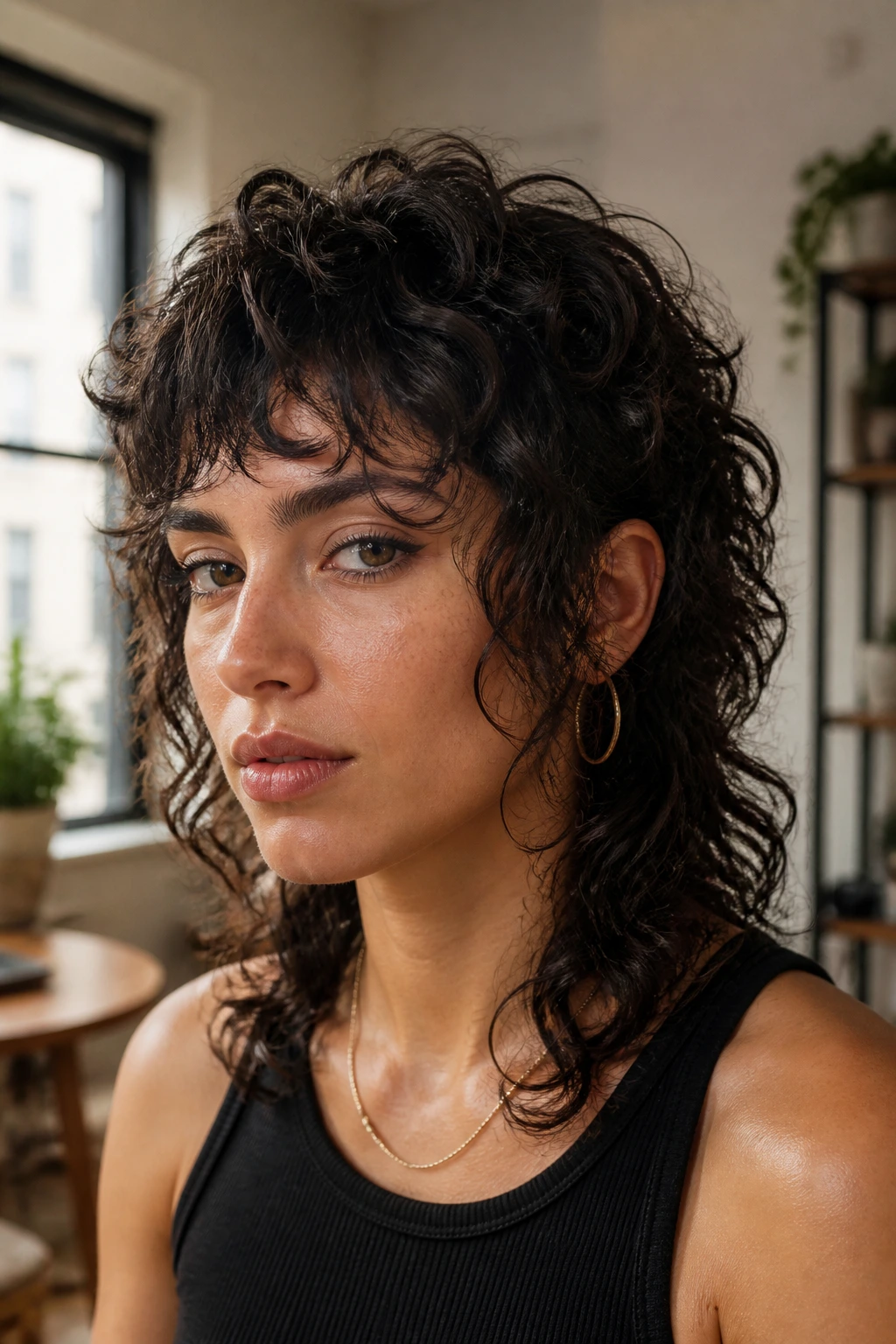
Strong jawline? This cut likes that job. Square-softening curly mullets round off the corners by keeping the sides a little airier and letting the front pieces fall past the widest part of the jaw. The result is less boxy, more fluid, and a bit easier on the eye.
The key move is avoiding a blunt edge at the jaw. That’s the detail that makes curls sit heavy in all the wrong places. Instead, keep the side layers curved and the back slightly longer, so the whole silhouette bends rather than stops.
I’d choose this shape for thick or medium-thick curls, especially if you want the haircut to read softer in photos and in motion. The cut should move when you do. If it stands still and looks squared off, it needs a rethink.
17. Low-Maintenance Air-Dry Curly Mullet
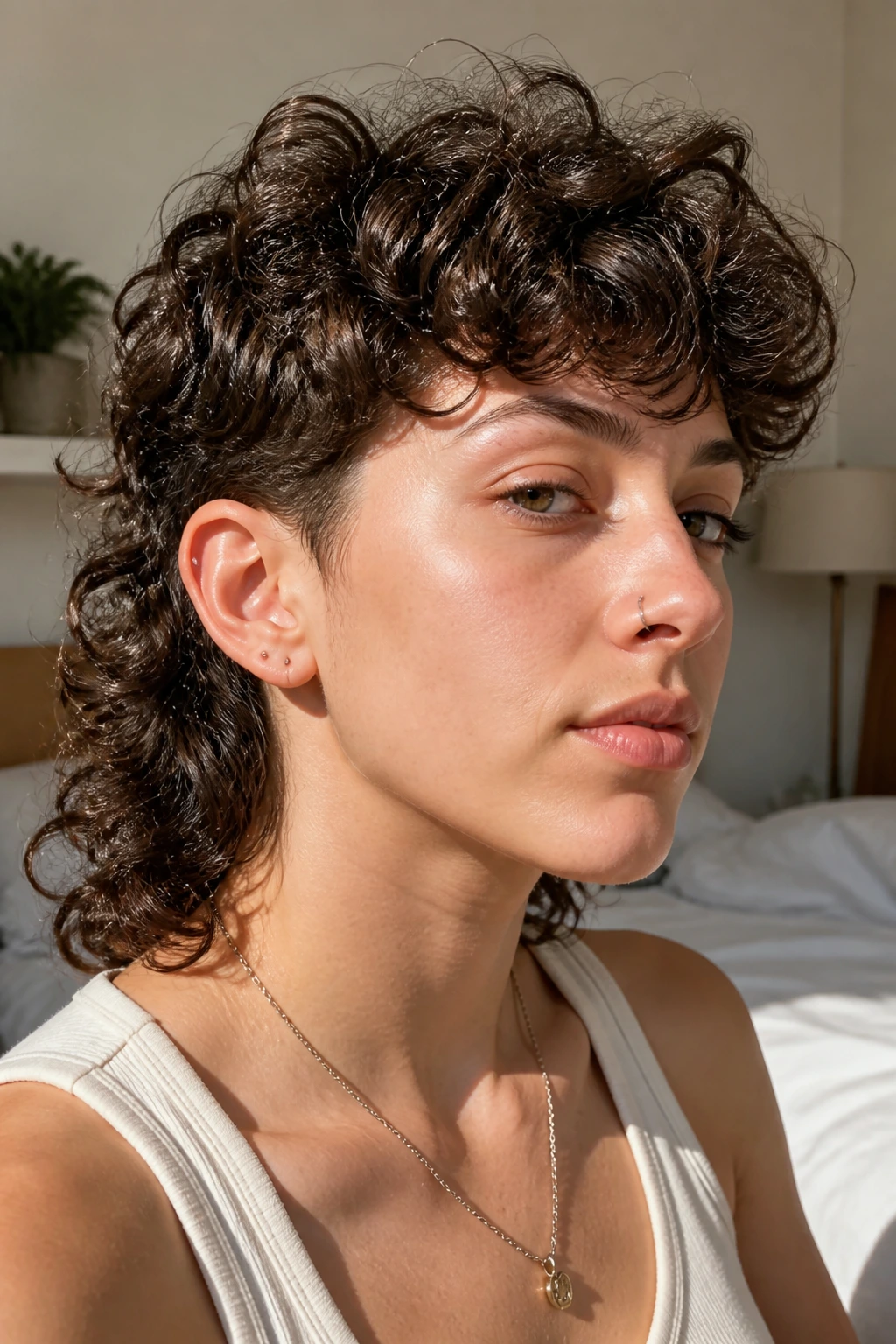
What if you want the mullet look without a twenty-minute styling routine? This is the answer. The haircut is built so the curls can air-dry into shape, with enough internal layering to keep the top lifted and enough length in back to preserve the silhouette.
The cut should not rely on elaborate styling. That means fewer micro-layers and more thoughtful weight removal. You want the curls to fall into place with a leave-in and maybe a touch of mousse, not a whole rack of products.
This version is a good fit for people whose curls behave better when left alone. And some do. Overhandling them can kill the bounce faster than a bad haircut ever could.
18. Dense-Hair Curly Mullet
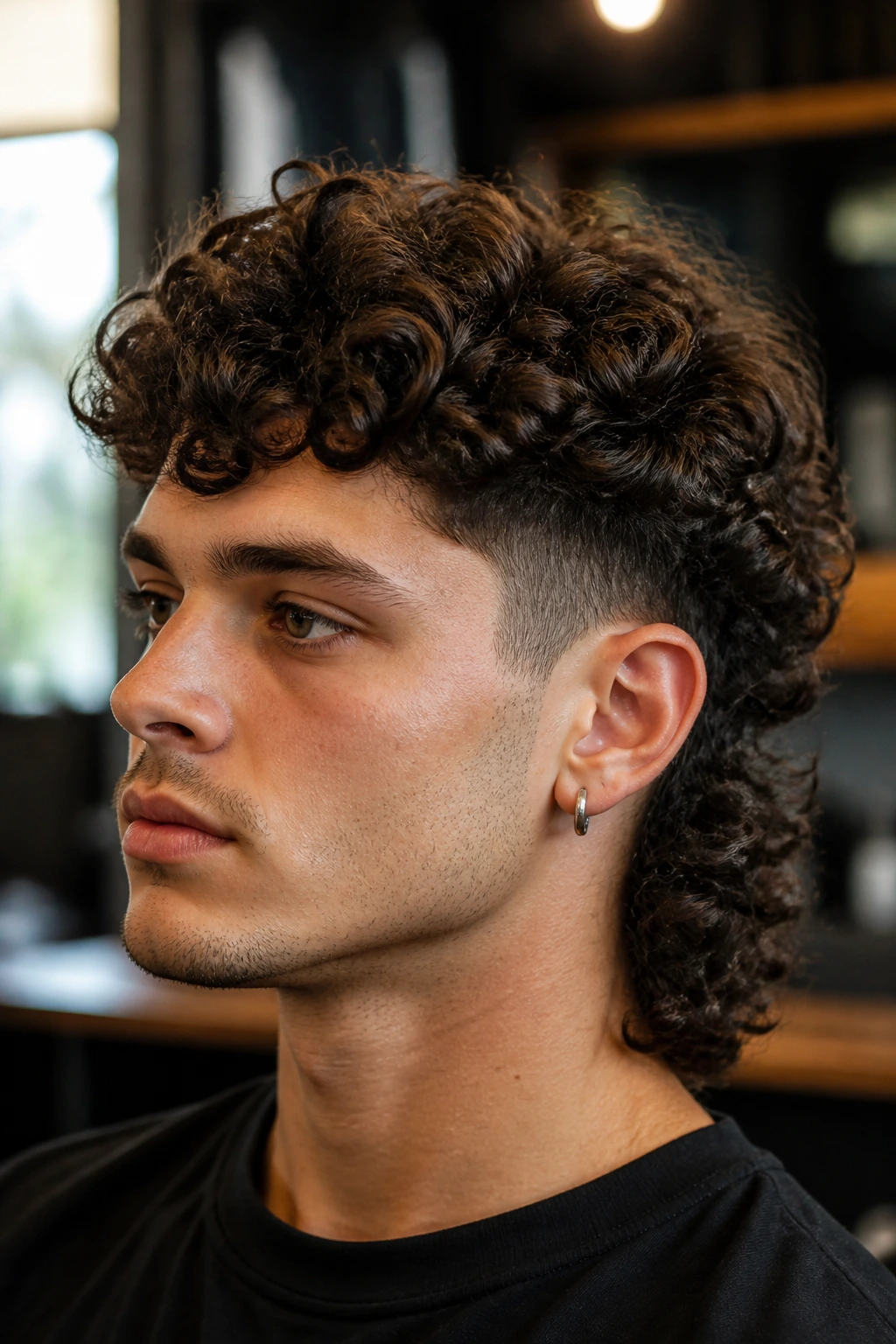
Dense hair needs a different strategy. If you remove too much bulk in the wrong spots, the cut turns fluffy and wide. The better move is to take weight out beneath the surface while keeping the outer shape intact. That way the curls still stack, but they do not sit like a helmet.
The nape and sides deserve special care here. Dense hair can become a triangle fast if the back is left too full and the sides aren’t tapered enough. A dense-hair mullet should feel sculpted, not hacked apart.
A good stylist will leave enough interior structure so the curls have something to rest on. That’s the part people miss. Removing weight is not the same as removing shape.
19. Fine-Hair Curly Mullet
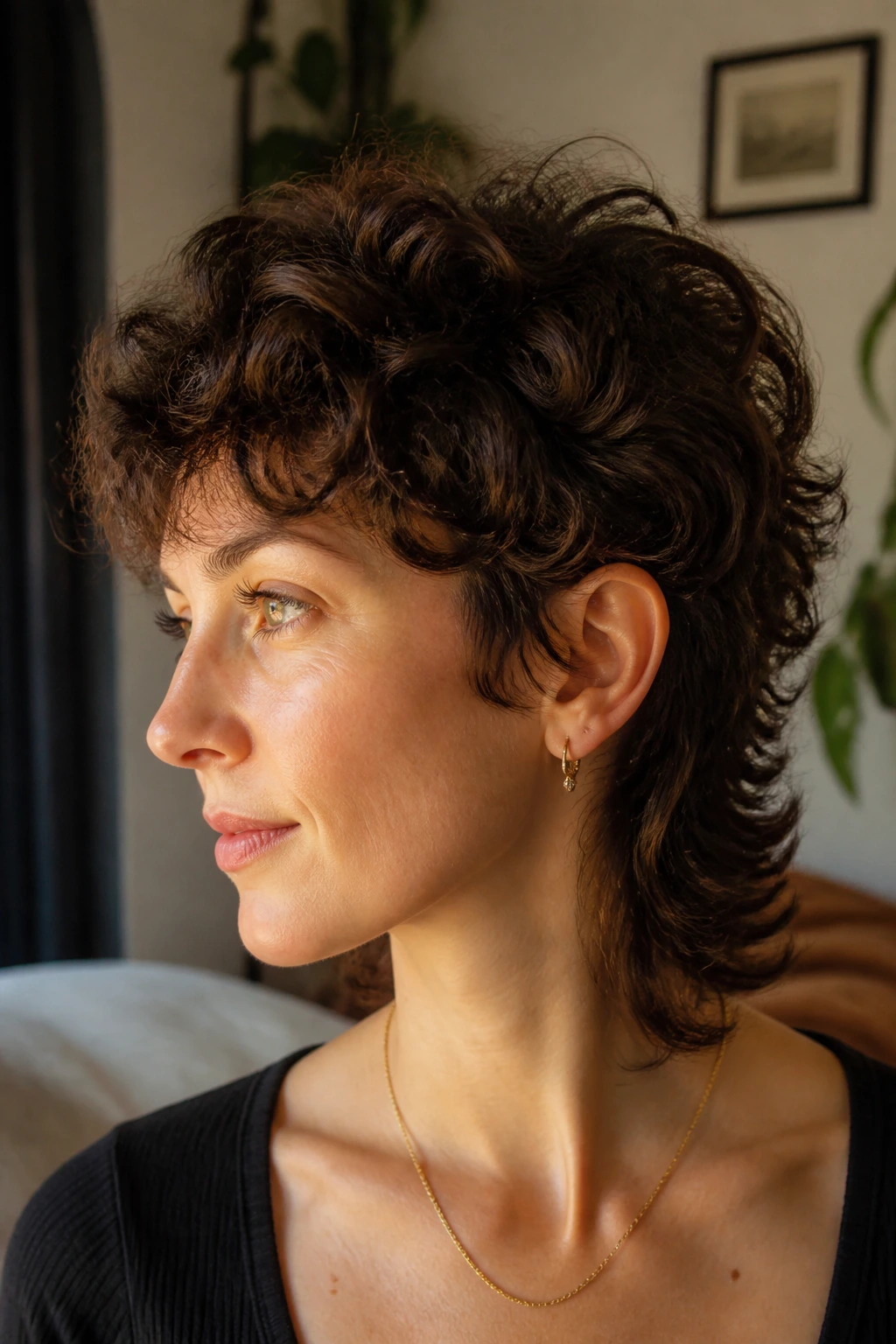
Fine curls need restraint, not a pile of layers. That sounds backward until you see the haircut dry. Too many cuts can leave the ends thin and the whole back looking stringy. A better approach is to keep more perimeter weight and use shorter layers only where lift is needed.
The shape should stay compact. A fine-hair mullet looks best when the silhouette is clean and the curls have enough density to clump together. Product matters here, but not too much of it. A light foam or a small amount of curl cream is usually enough.
If your hair goes flat at the roots, ask for subtle crown support rather than aggressive texturizing. You want bounce, not see-through ends.
20. Grow-Out Friendly Curly Mullet
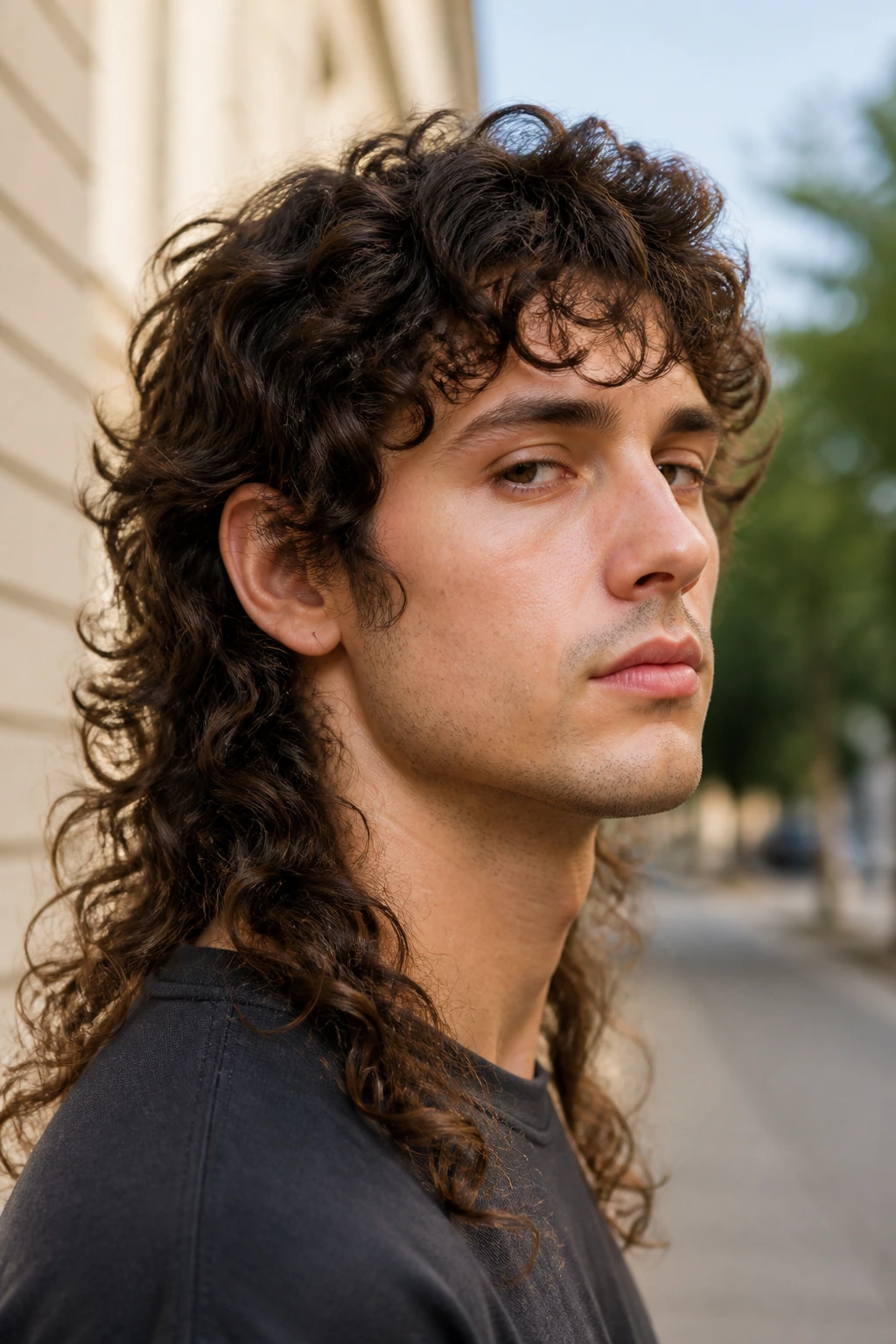
This is the cut for anyone who knows they won’t trim on a perfect schedule. A grow-out friendly curly mullet starts with a shape that can stretch. The back is long enough to keep curling, the front is soft enough to blend later, and the sides aren’t shaved so sharply that they look odd after a few weeks.
It matters because curly hair changes fast between appointments. A cut that looks crisp on day one can start to look accidental once the temple pieces grow. Here, the goal is to keep the haircut making sense even when it softens.
If you like a haircut that can live through a missed appointment without falling apart, this one earns its keep. Not every style needs to look fresh for five minutes and then panic.
Why Curly Mullet Shapes Hold Up Better Than Flat, Blunt Cuts
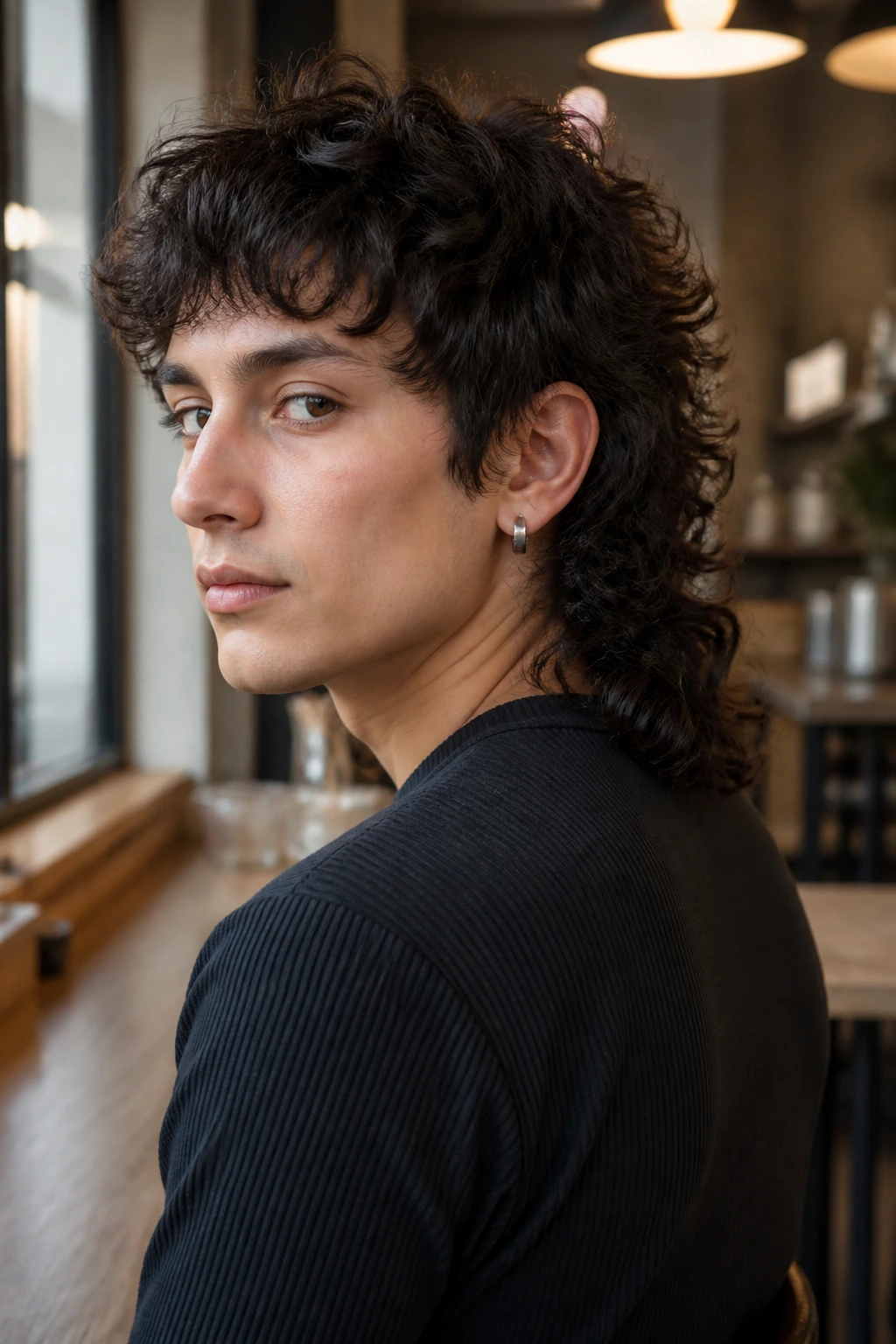
Curly hair has its own geometry. You can’t bully it into straight lines and expect it to cooperate. That’s why a mullet can work so well here: the cut already depends on movement, uneven length, and a little bit of attitude. Curly texture gives all three of those things for free.
The trick is placing weight on purpose. A good curly mullet doesn’t strip the sides bare and hope for the best. It leaves enough body to frame the face, enough lift at the crown to avoid collapse, and enough back length to make the whole thing read as a mullet instead of a random shag.
Dry cutting helps. So does cutting the fringe and nape with the natural curl pattern visible. If your hair shrinks a lot, that matters even more. A half-inch mistake in the chair can become a full inch at home. That’s not fearmongering. That’s curly hair doing curly hair things.
The Tools and Products That Keep the Bounce Alive
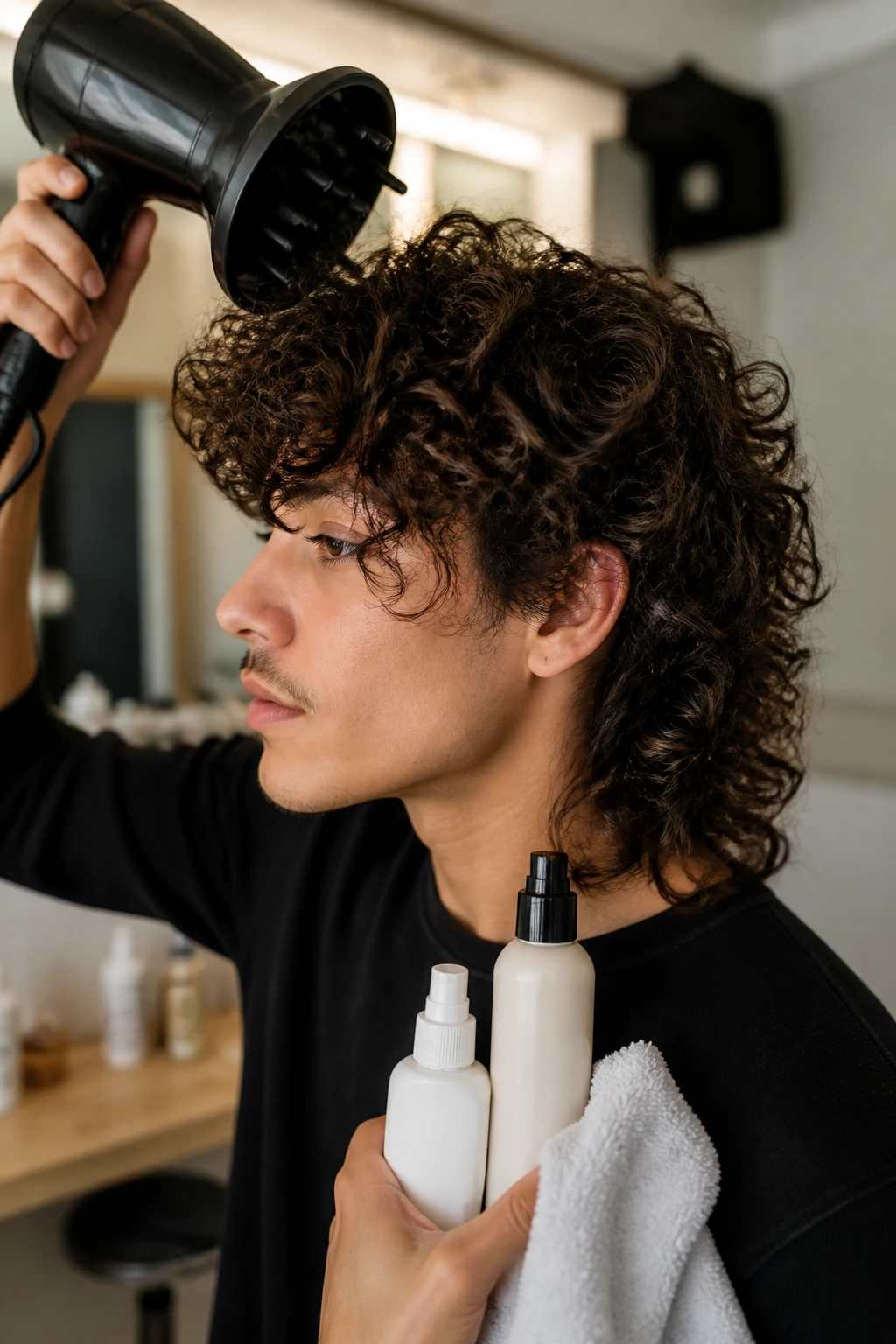
Diffuser attachment: This is the fastest way to set the shape without blasting the curls apart. Use low heat and stop before the hair gets fully hard and fried.
Microfiber towel or cotton T-shirt: Regular bath towels rough up the cuticle and create frizz. A softer cloth squeezes out water without wrecking the curl clumps.
Leave-in conditioner: One to two pumps is enough for most medium-length curly mullets. It keeps the top from drying out before the rest of the cut catches up.
Curl cream or mousse: Curl cream gives slip and control; mousse gives airy lift. Some hair likes both. Some hates one of them. Start light.
Light-hold gel: This helps the curls keep their shape while drying. Scrunch it in while the hair is still damp, then break the cast once it’s dry.
Duckbill clips: A tiny detail that makes a big difference at the crown. Clip the roots for a few minutes if you need extra lift.
Wide-tooth comb or fingers: Use either one in the shower, not after the curls start to set. Once the hair begins drying, leave it alone.
How to Ask for a Curly Mullet Without Losing the Curl Pattern
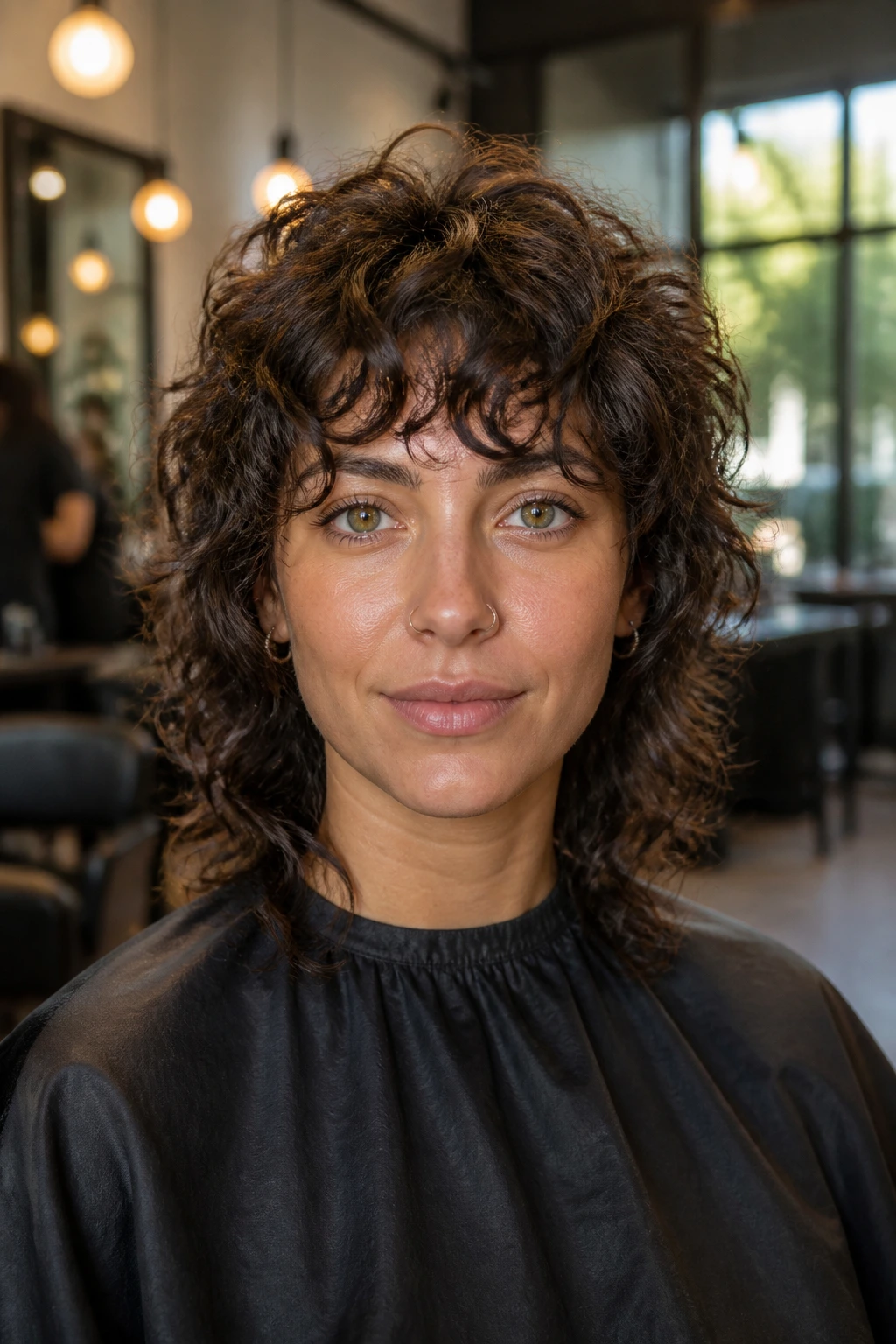
Bring photos. Three of them, if you can: front, side, and back. A single glamour shot rarely tells the stylist what matters. The side view shows length. The back view shows how dramatic the tail is. The front view shows whether the fringe is soft or blunt.
Say the words that matter. “I want the curls to keep their spring.” That sentence is worth more than asking for “a mullet, but not too much.” Be specific about where you want weight removed and where you want it kept. If your crown goes flat, say that. If your sides puff out first, say that too.
Mention your routine. If you air-dry most days, the cut needs to work without a diffuser. If you diffuse every wash, the stylist can leave more shape at the top. And if your curls shrink hard, tell them the dry length you usually end up with. That part saves disappointment later.
How to Style a Curly Mullet So the Bounce Lasts Past Lunch
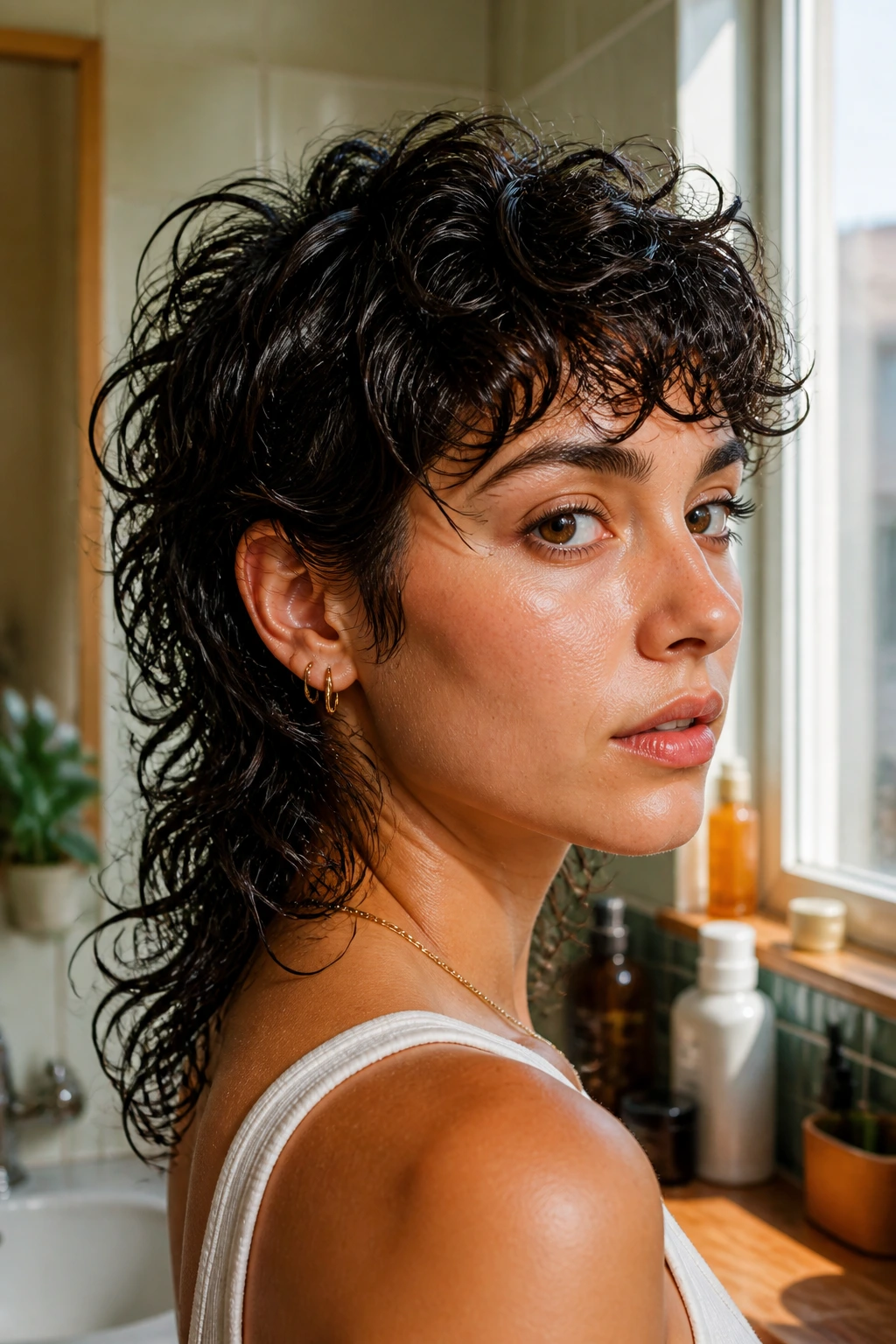
Start in the shower. Clean curls are easier to shape, but you do not need to scrub them into squeaky silence. Conditioner should make the hair slippery from the mid-lengths down, not oily at the root. Once you rinse, apply leave-in while the hair is still dripping.
Add curl cream or mousse in sections. Don’t dump it on the whole head and hope it spreads evenly. Work it from the back forward, then scrunch upward with your hands or a T-shirt. If your crown needs help, clip the roots for ten minutes while the hair is damp. That tiny step helps more than people expect.
Diffusing on low heat is where the bounce usually gets saved. Keep the dryer moving, don’t touch the curls too much, and stop when the hair is about 80 percent dry. Let the rest air-dry. Once fully dry, scrunch out any cast if you used gel. The curls should feel springy, not sticky.
Small Tweaks That Change the Whole Silhouette
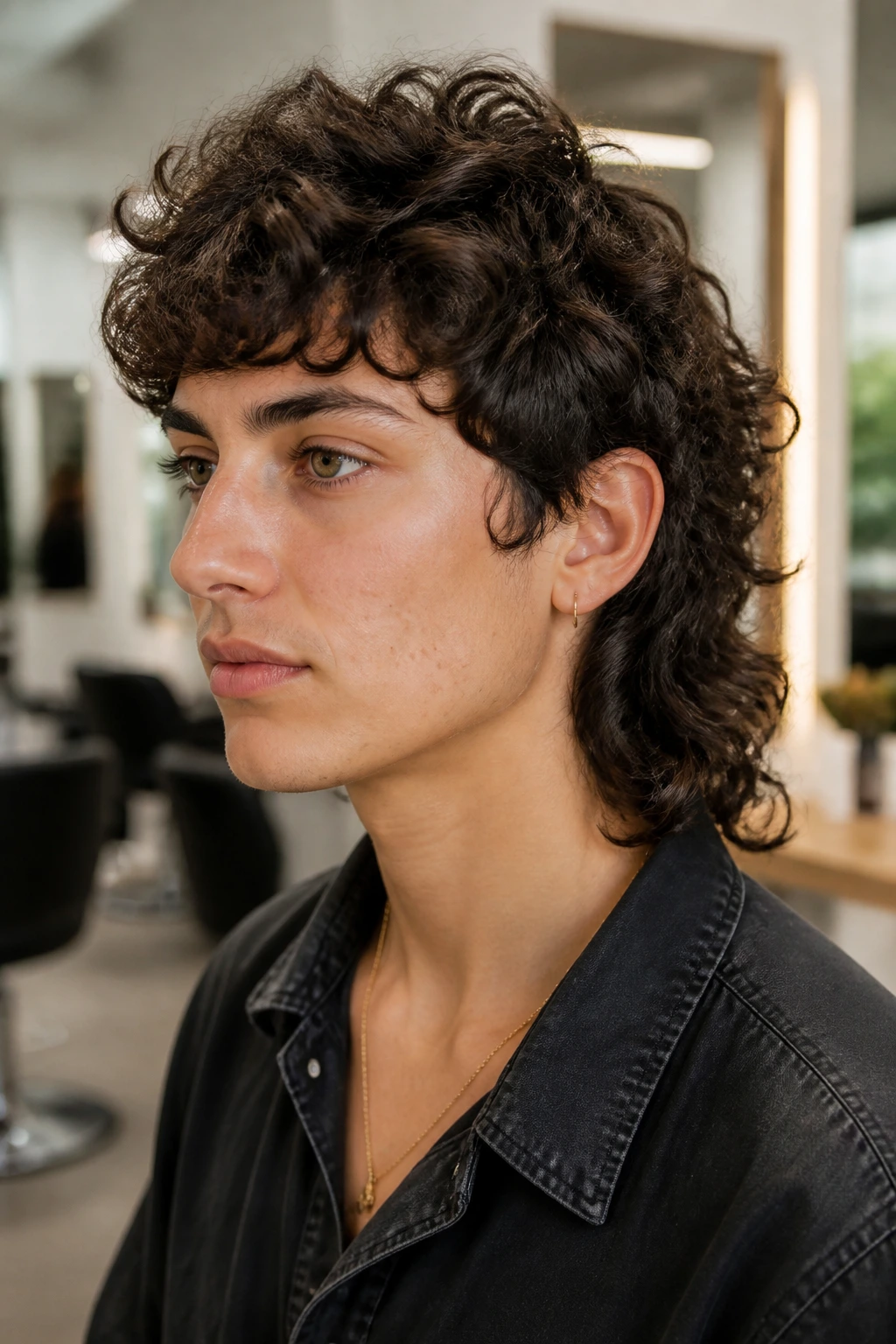
Root Lift: If the top falls flat, clip the crown at the roots for 10 to 15 minutes after product goes in. That gives the hair a little memory before it dries.
Edge Softening: If the shape feels too sharp, have the stylist soften the perimeter around the ears and nape. Small changes there can make the whole cut feel less severe.
Fringe Control: A curly fringe should be trimmed with room to shrink. Cutting it too short is the quickest way to get a permanent surprise every morning.
Make-It-Yours: Thick hair usually needs more internal weight removal; fine hair usually needs less. Tight curls often look better with a bit more length in back, while looser curls can handle a more dramatic tail.
Wash Days, Refresh Days, and Sleep-Care for Curly Mullets
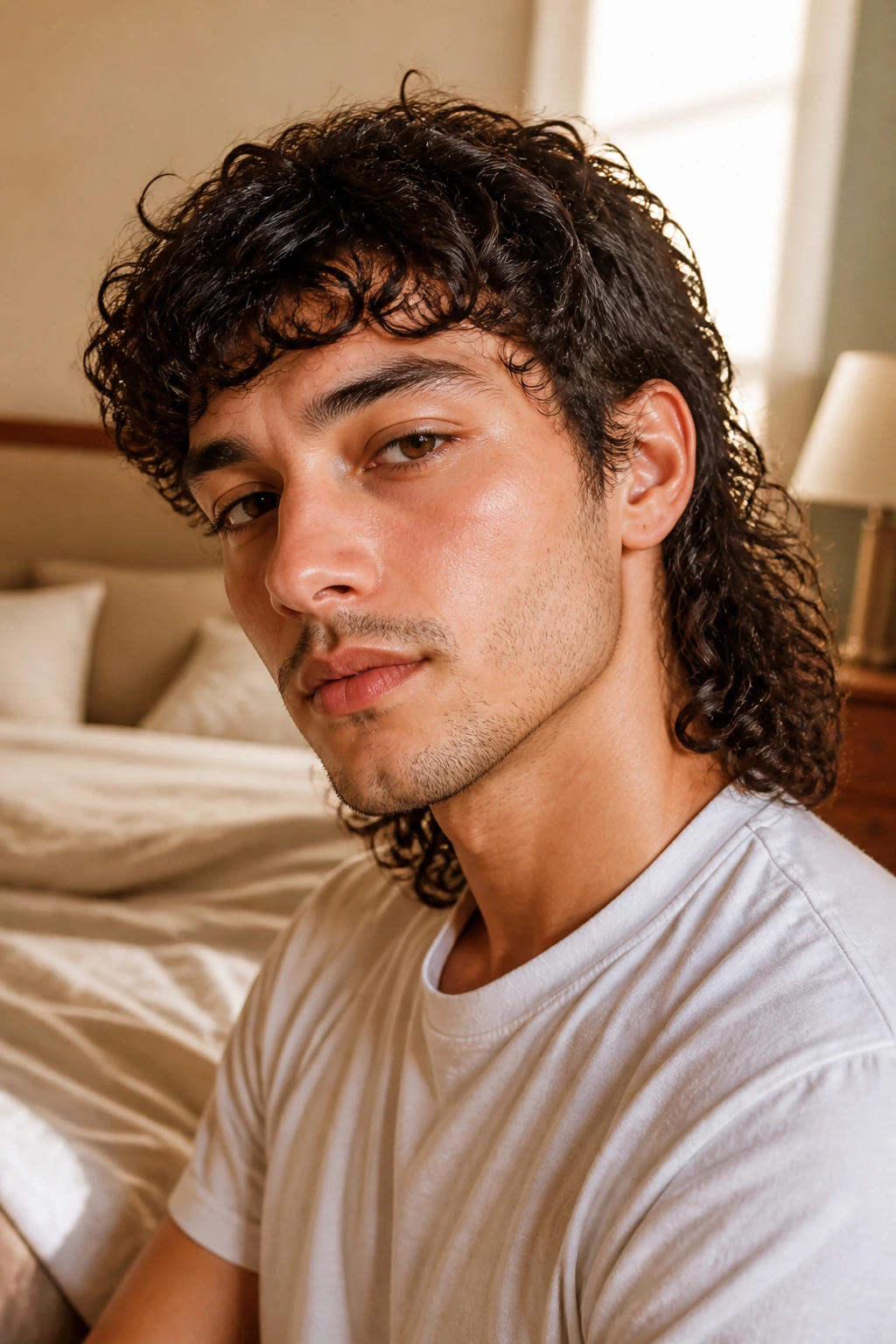
Curly mullets tend to look best on day one or day two, depending on the curl type and how much product you use. If the scalp gets oily fast, wash every two or three days. If your hair stays dry and the curls hold shape, you can stretch that longer with a refresh spray and a bit of water at the ends.
At night, pineapple the hair loosely at the crown or use a satin bonnet. A satin pillowcase helps too, though I’ve never met a curly-haired person who regretted the bonnet once they got used to it. The goal is to keep the back from getting crushed and the fringe from bending into a weird line.
For refresh days, mist the curls lightly, smooth a pea-sized amount of leave-in through the frizzier pieces, and re-scrunch. If the crown lies flat, flip the head upside down and give the roots a few seconds of diffuser heat. Tiny reset. Big difference.
Smart Salon Communication for a Curly Mullet That Actually Fits
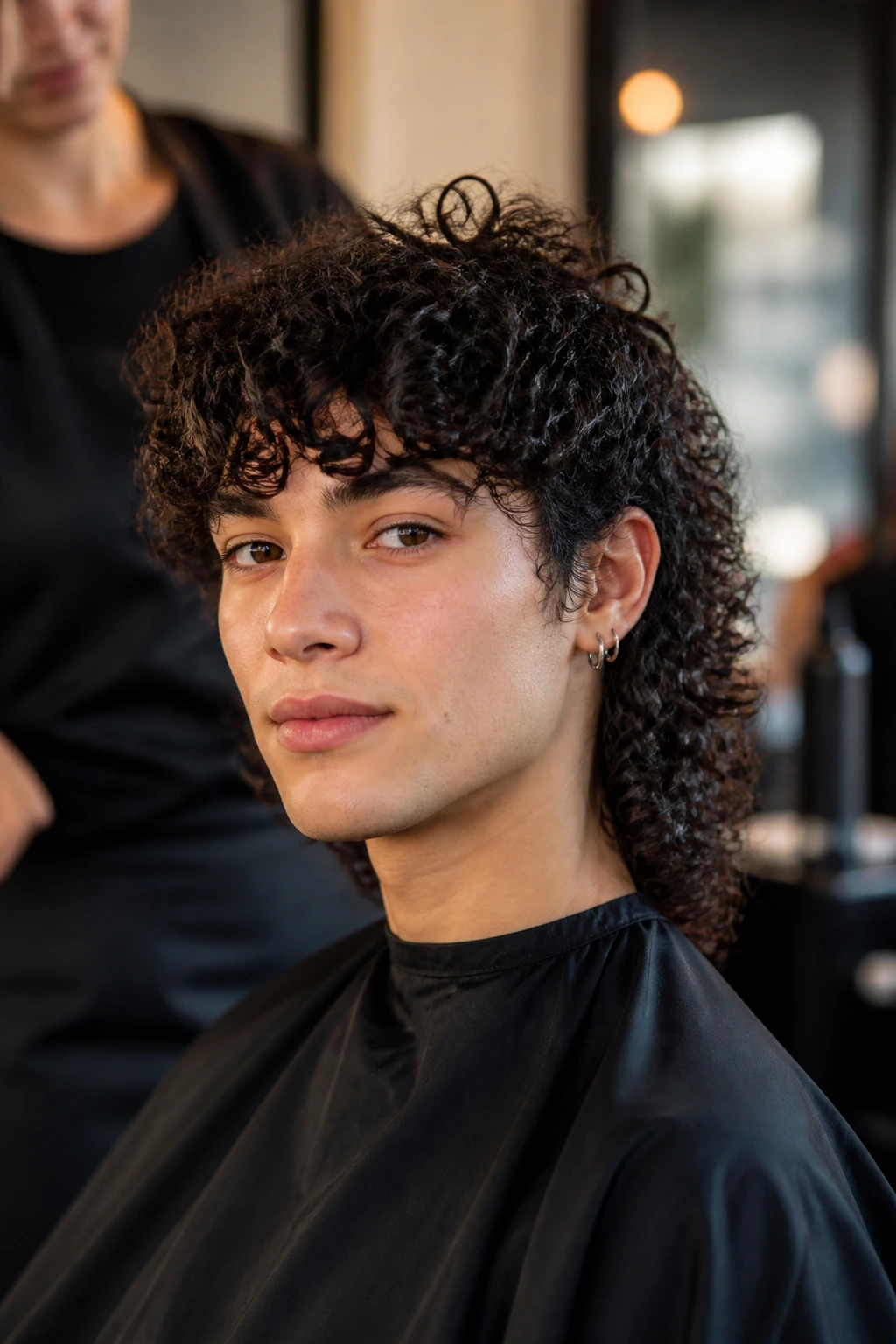
Start with what you want the hair to do, not what you want it to look like in theory. Say: “I want lift at the crown, softness around the face, and length in the back that still shows the curl pattern.” That tells the stylist more than a trendy name ever will.
Bring up your curl behavior. If one side dries faster, if your fringe shrinks more than the rest, if the nape gets bulky by week three, say so. Those are the details that change the cut.
A good consultation should include a talk about dry cutting versus wet cutting, where the weight sits, and how often you’ll trim. If nobody mentions shrinkage, ask. If nobody mentions the nape, ask that too. Curly mullets live or die in those two spots.
Common Mistakes That Flatten the Shape
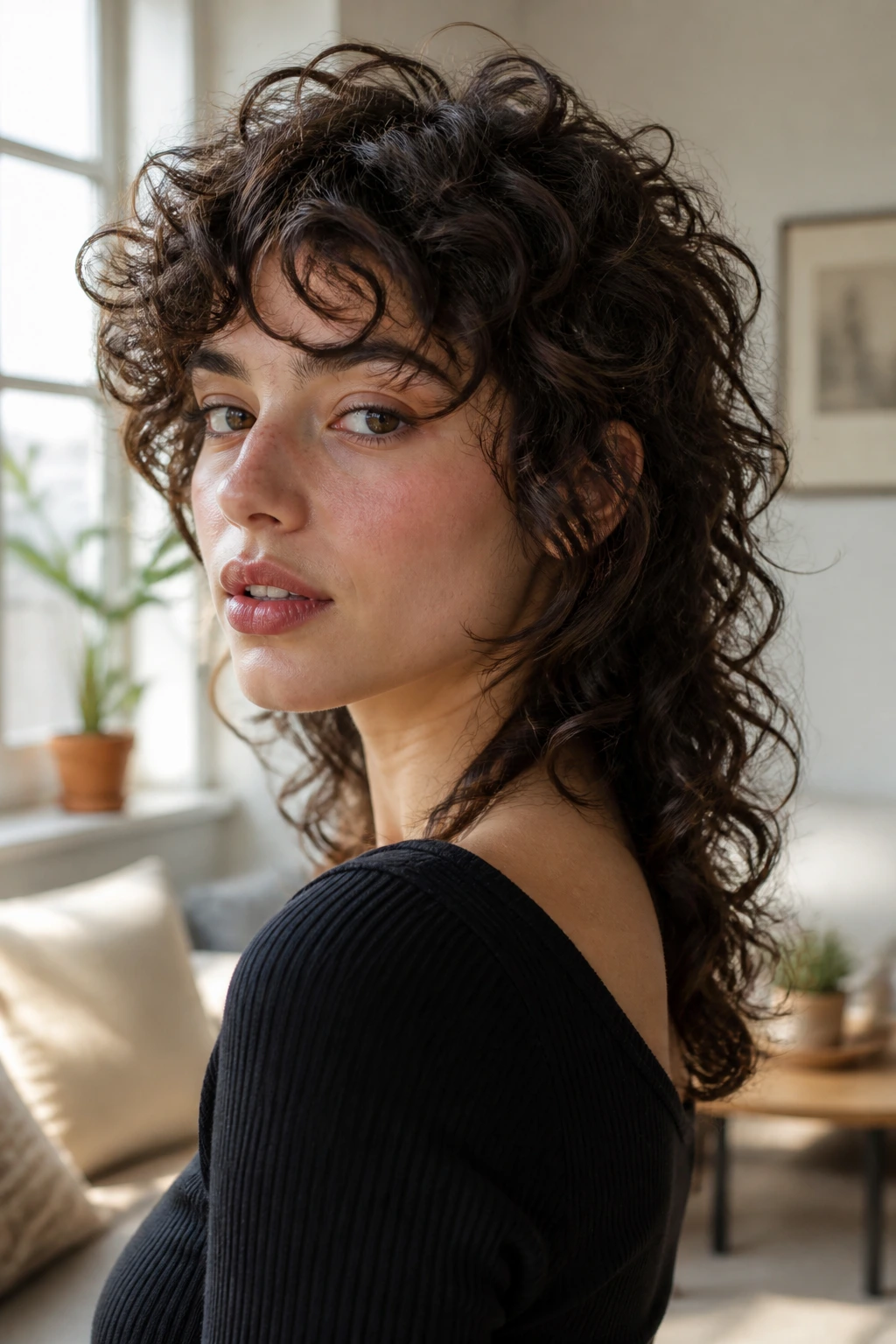
Cutting too wet: Wet curls lie. A lot. What looks like a tidy shape can dry into a crop you never wanted. Fix it by asking for some dry shaping, especially around the front and nape.
Removing too much side weight: If the sides are thinned too aggressively, the hair can flare out like a mushroom. Keep some structure near the temples so the silhouette stays anchored.
Using too much product: Heavy cream and oil can kill the bounce, especially on fine curls. Start with less than you think you need, then add only if the hair still feels dry.
Ignoring shrinkage at the back: The nape can jump up enough to change the whole feel of the cut. Leave extra length there if your curl pattern is springy.
Letting the crown go flat: A mullet with a dead crown looks unfinished. Root clips, light layers, and a careful diffuser pass fix most of that.
Variations and Adaptations to Try
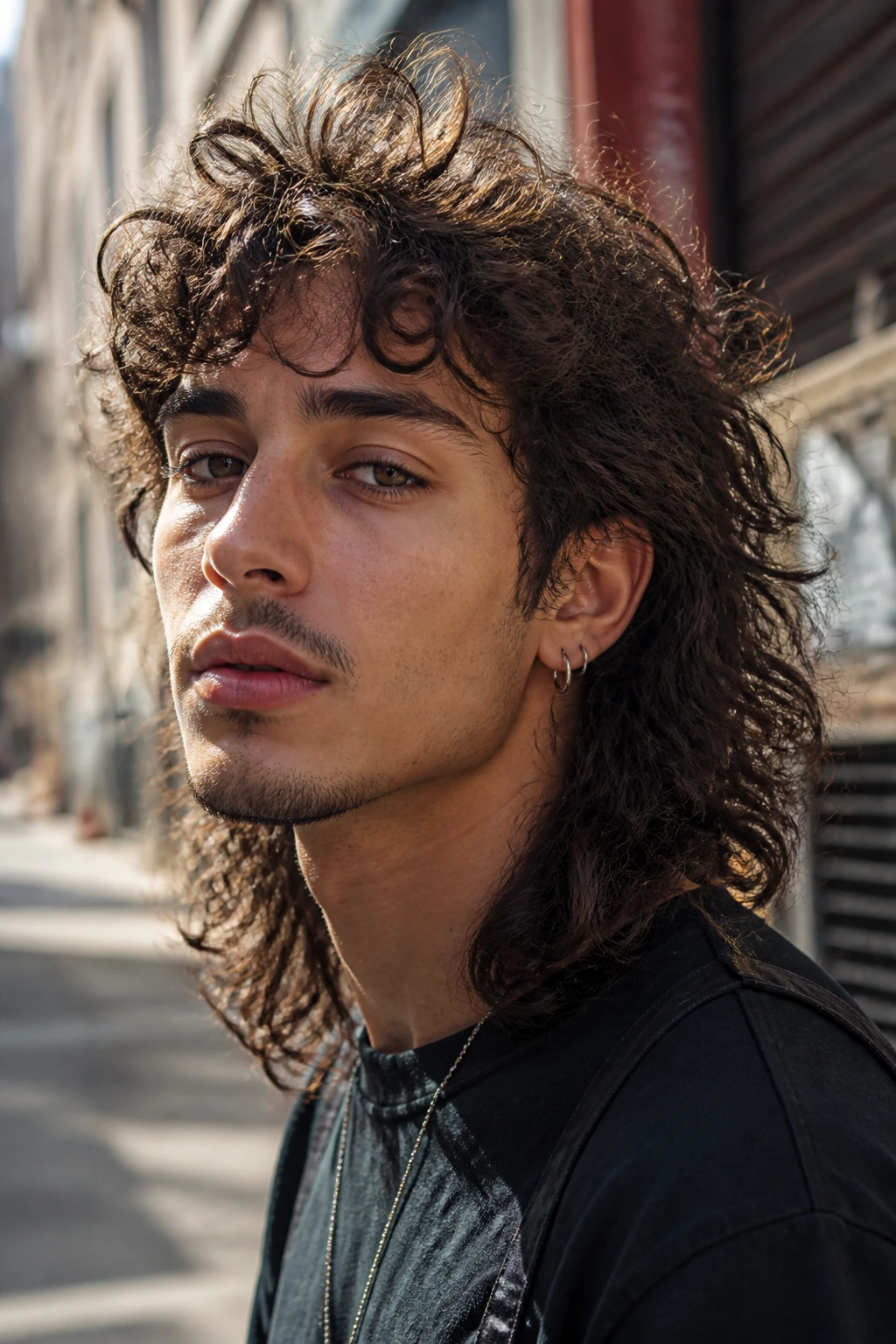
The Soft Shag Blend: Add more feathered layers through the top and front if you want the mullet to read closer to a shag. It’s a softer entry point and less angular around the back.
The Clean-Fade Curly Cut: Keep the sides faded low and the back compact for a sharper, more barbered feel. This works well on tighter curls and shorter lengths.
The Curtain-Fringe Mullet: Let the front pieces split naturally down the middle and fall toward the cheeks. It softens the face and gives the cut a more relaxed, 70s feel.
The Shoulder-Length Rebel: Push the back to shoulder length and keep the top lighter. This suits people who want movement without a short, choppy outline.
The Tight-Curl Sculpted Version: On coily hair, keep the shape compact and use careful shaping instead of heavy layering. You get a controlled tail and a stronger silhouette.
Frequently Asked Questions
What curl types work best for a curly mullet?
Loose waves through medium curls are the easiest to shape, but tighter patterns can wear it well too. The main difference is length and how much weight you leave in the back.
Should a curly mullet be cut wet or dry?
Dry or mostly dry is safer, especially near the fringe, crown, and nape. Wet cutting can hide shrinkage and leave you with a shape that jumps too short once it’s fully dry.
How often should I trim it?
Most curly mullets need a trim every 8 to 12 weeks to keep the sides from ballooning and the back from losing its shape. If your fringe shrinks fast, you may want a touch-up sooner.
Can fine hair wear a curly mullet without looking sparse?
Yes, but keep the layers lighter and the back shorter. Too much texture removal will make the ends look thin and the silhouette lose body.
What if the back flips out instead of curling down?
That usually means the length is sitting in an awkward zone. Either let it grow a little longer or have the perimeter softened so the curl can fall more naturally.
Can I wear a curly mullet in a polished setting?
Absolutely, if the sides are neat and the fringe is controlled. A side part, a cleaner taper, and defined curls make the cut feel much more deliberate.
How do I keep the crown from puffing up?
Use less product at the root, clip the crown for lift while drying, and avoid over-diffusing the top. A little structure goes a long way there.
Is this cut hard to grow out?
Not if it starts with softer layers and a not-too-short taper. A good grow-out mullet can slide into a shag or layered shape instead of turning into an awkward in-between mess.
The Shape That Keeps Moving
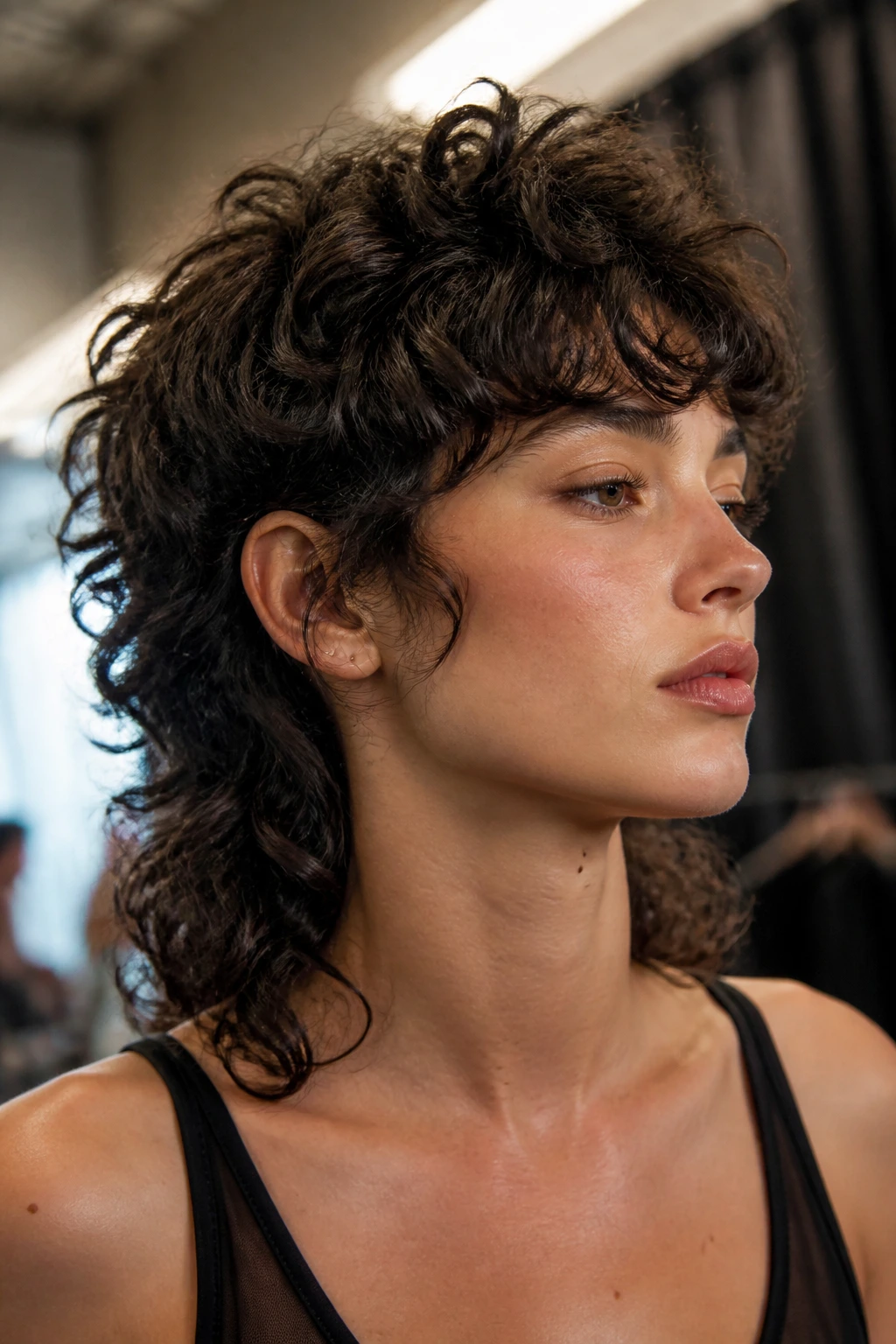
Curly mullets work because they respect the way curly hair actually behaves. They don’t try to flatten the pattern into obedience. They build a shape around lift, swing, and shrinkage, which is why the result feels so alive when the cut is done well.
The best version for you is the one that matches your curl density, your patience level, and how much you want the silhouette to say something. Quiet, sharp, messy, romantic, rocker-ish — the curly mullet can lean in any of those directions if the layers are placed with care.
Pick the shape that lets your curls do their best work, then leave enough room for them to move. That’s where the good hair days live.
