



A crew cut can look razor-clean in the chair and strangely flat by the time you reach the parking lot, and the difference usually comes down to less than an inch. That tiny bit of length on top decides whether the cut feels crisp, military, Ivy League, or like you asked for “short” and hoped for the best.
The crew cut is honest. It shows the shape of the head, the line of the hairline, and the way your hair grows at the crown. That is exactly why it works so well when it’s done with intention. A strong version gives you structure without dragging you into high-maintenance territory, and it gives a barber enough room to tailor the cut to thick hair, fine hair, curls, a receding front, or a beard that needs something clean to sit beside.
What makes this haircut useful is the range. One crew cut can sit low and soft around the ears. Another can climb into a high fade and look sharp enough for a suit. Another can keep extra weight in front so a cowlick doesn’t bully it all day. The haircut only looks simple from a distance. Up close, it’s all about proportions, and that is where the good versions separate themselves from the rushed ones.
Why These Crew Cuts Keep Their Shape
-
Barber-friendly length language: You can describe most crew cuts with one top length, one side length, and one fade choice, which makes the chair conversation far easier than with longer cropped styles.
-
Works with different hair textures: Straight, wavy, curly, coarse, and fine hair all behave differently, and a crew cut lets the barber adjust the top instead of fighting your growth pattern.
-
Sharp without fuss: Most versions need little more than a matte product, a comb, and a trim every few weeks. No heat styling ritual. No morning wrestling match.
-
Good in harsh light: Fluorescent office lights, gym mirrors, and bathroom bulbs show every flaw. A properly shaped crew cut still looks clean when the lighting gets rude.
-
Easy to pair with facial hair: Clean-shaven faces, short stubble, and short beards all work here, as long as the sideburns and neckline are handled with some care.
-
Doesn’t trap you in one vibe: The same haircut can read athletic, polished, older, younger, or more relaxed, depending on where the fade sits and how much length stays on top.
1. The Classic Crew Cut
A classic crew cut is the haircut version of a white T-shirt with a sharp shoulder seam. Nothing flashy. Nothing fussy. Just a short, controlled top that usually sits around 1 to 1.5 inches, with the sides tapered down enough to keep the shape tight without turning the whole thing into a buzz cut.
Why It Stays Sharp
The classic version works because it respects the head shape instead of trying to hide it. The top is short enough to lie naturally, but not so short that it loses all movement. That little bit of lift in front keeps the cut from looking like a helmet.
What to Tell Your Barber
- Keep the top short, but leave enough length to brush forward or slightly up.
- Ask for a clean taper around the ears and neckline.
- If your hair swirls at the crown, say so. That spot changes the whole result.
Best move: leave the front just a touch longer than the crown. It stops the cut from collapsing flat after one day.
2. The Ivy League Crew Cut
The Ivy League crew cut is what happens when the classic version puts on a collared shirt. It keeps the short back and sides, but the top gets enough length to part, sweep, or lay with a little direction. The result feels neater and a bit more refined, especially if your hair has some natural bend.
The difference is not huge on paper. In the chair, though, it matters. A barber might leave closer to 1.5 to 2 inches on top, sometimes a little more in the front, and then soften the sides with a taper rather than a hard fade. That extra room lets the cut move from barbershop-casual to office-clean without changing the basic shape.
This version is the one I recommend to men who want a crew cut but don’t want to look like they sleep in a gym locker. It works nicely with glasses, short beards, and hair that doesn’t love standing straight up.
3. The Low Taper Crew Cut
Want a crew cut that stays neat without showing a lot of scalp around the ears? A low taper crew cut does that job better than a harsh fade. The taper sits low on the sides and nape, which keeps the cut soft around the edges and makes the top feel more balanced.
How It Reads
This is the version that looks controlled from every angle. The top still carries the crew-cut shape, but the sides don’t disappear all at once. That gives the head a smoother outline, which helps if your face is narrow or your head has a strong ridge at the temples.
Barber Note
Ask for a low taper, not a high one, and mention whether you want the neckline squared or slightly rounded. A squared nape feels sharper. A rounded one grows out more gently.
If you wear a jacket collar a lot, this is one of the smartest choices in the whole list. The grow-out is kinder. The clean line around the ears lasts longer. No drama.
4. The Mid Fade Crew Cut
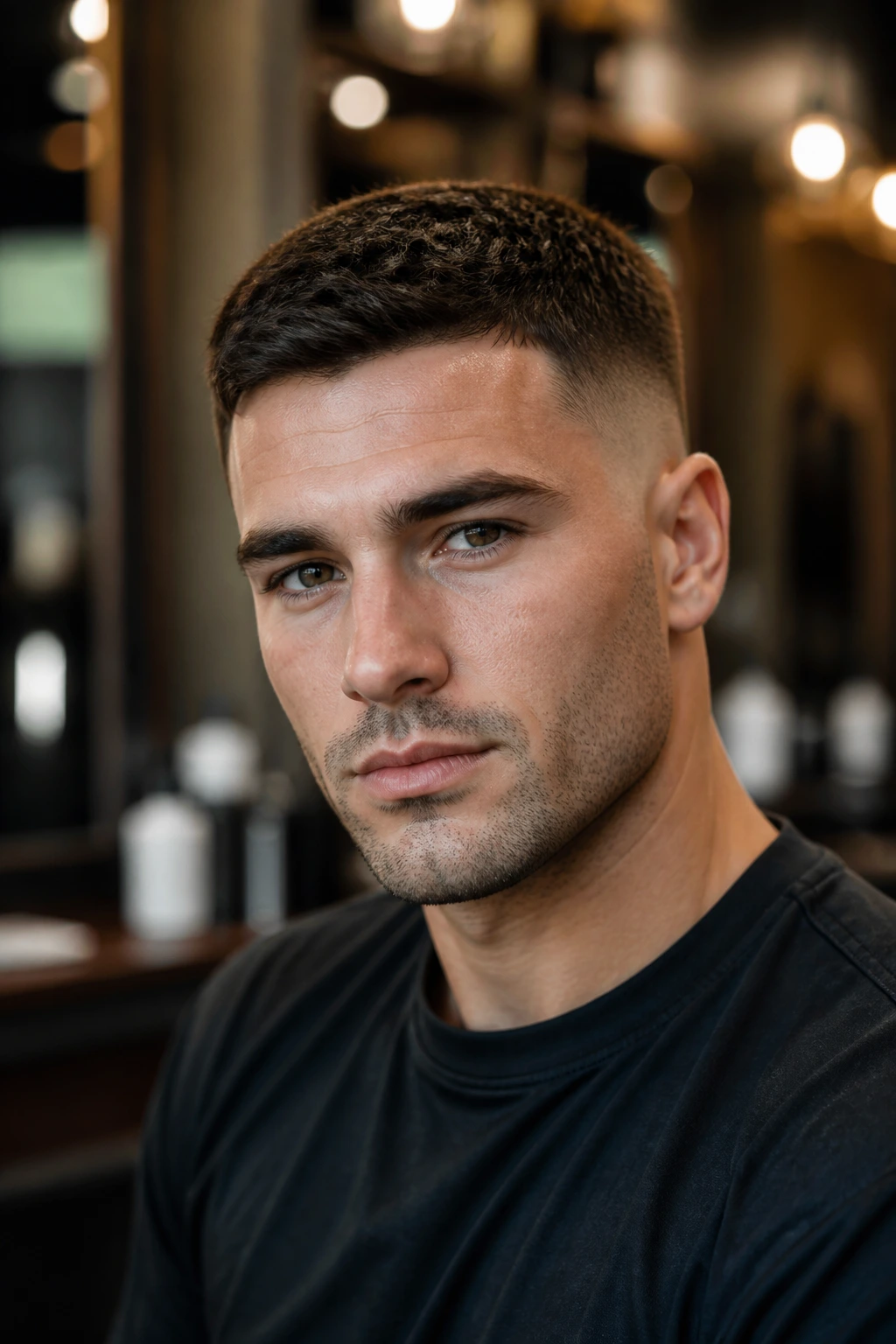
The mid fade crew cut sits in the middle for a reason. It’s the version people ask for when they want the haircut to look modern but not aggressive. The fade starts higher than a low taper, usually somewhere around the upper ear area, and the top stays short enough to keep the classic crew silhouette.
I like this cut for guys whose hair has some density but not a ton of bulk. The mid fade creates a clear contrast without making the top look disconnected. It also plays well with a little product—just enough matte paste to separate the front a bit and keep it from sitting dead flat.
Key Details
- Top length: around 1 to 1.5 inches.
- Fade placement: mid, not climbing too close to the temple ridge.
- Finish: matte, not glossy.
- Best for: medium-thick hair that likes to sit in place.
This one tends to age well over a couple of weeks. The fade softens without turning muddy.
5. The High Fade Crew Cut
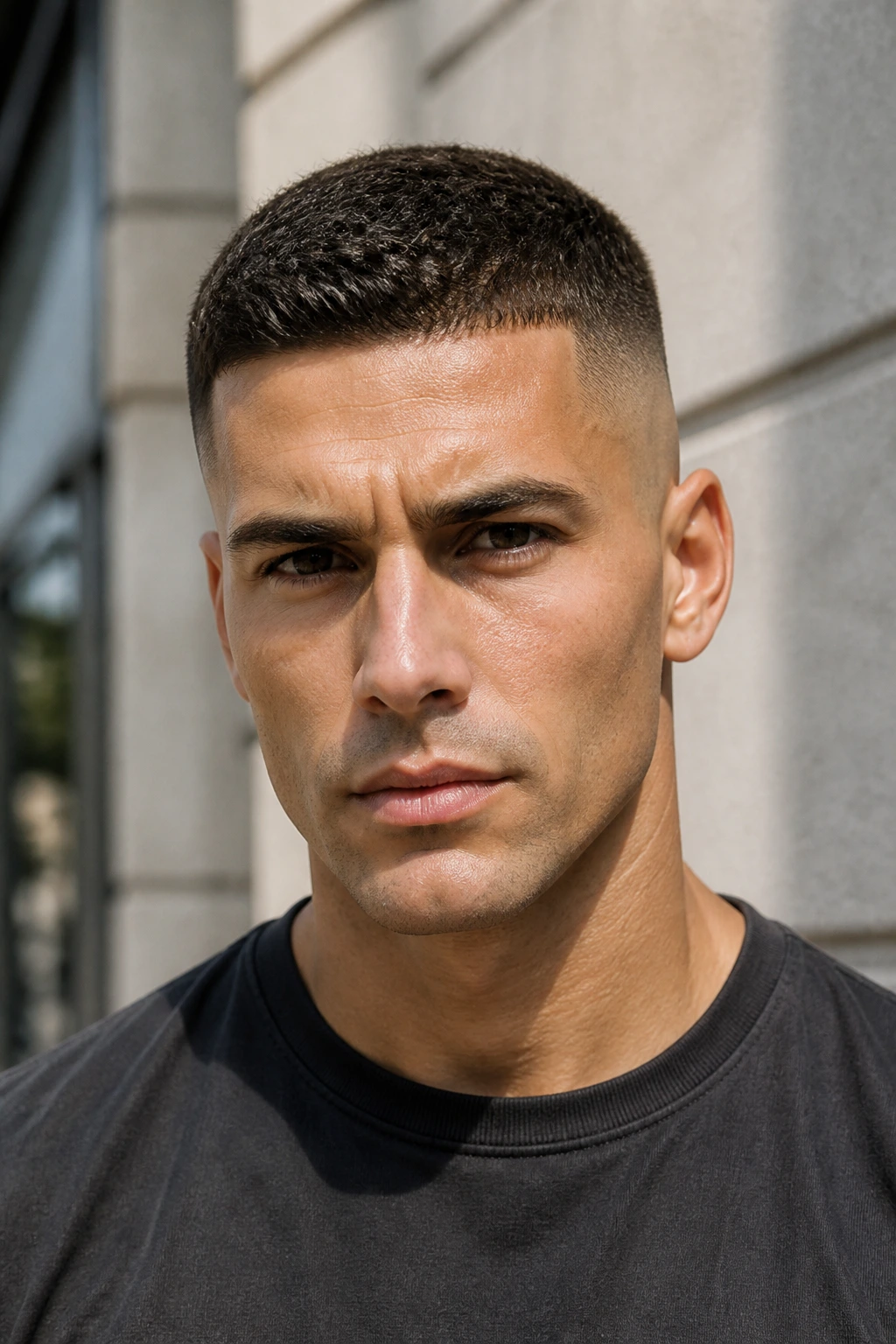
A high fade crew cut is the loudest clean haircut in this group. The sides drop away fast, sometimes near the temple area, which makes the top stand out hard against the skin. On the right head shape, it looks crisp and athletic. On the wrong one, it can make the face feel taller than it really is.
That is the trade-off. Strong contrast comes with stronger geometry. If your hair is thick and your forehead is not doing you any favors, a high fade can still work beautifully, but the top needs enough length to balance it—usually a touch more in front than at the crown.
This cut likes straight, defined lines. It also likes confidence. If you want something clean that reads from across a room, this gets there fast. If you want something soft and quiet, skip it.
6. The Skin Fade Crew Cut
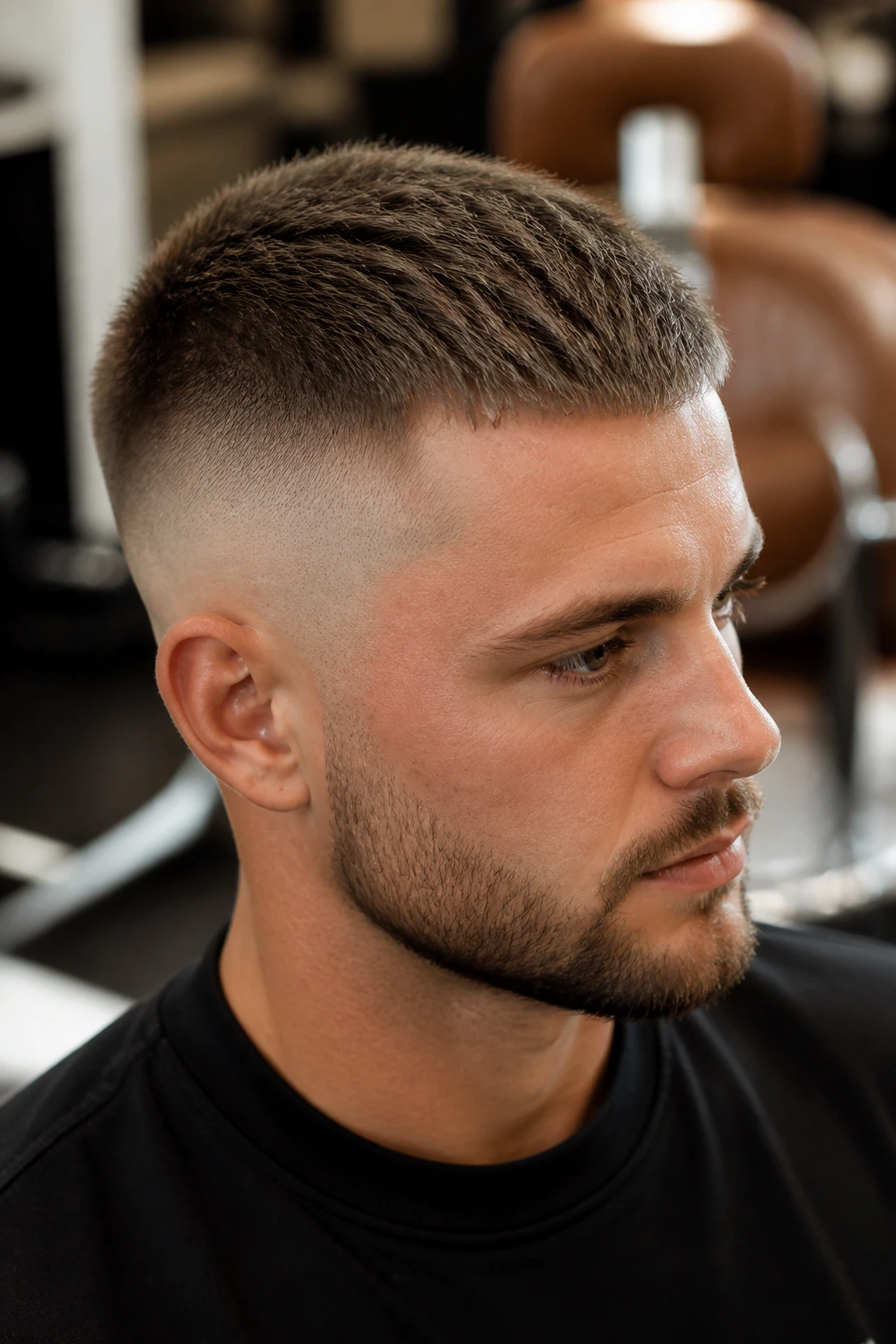
A skin fade crew cut is not trying to hide anything. The sides go all the way down to bare skin, then rise into a short top that keeps the crew shape intact. It’s a sharper, more obvious version of the cut, and it looks especially good when the top has a bit of texture instead of being combed smooth.
The problem with skin fades is growth. They look fantastic on day one, then the outline starts fuzzing out around the ears and neckline sooner than a taper. That does not make the cut bad. It just means you’re signing up for more upkeep.
Best Use Case
If you want a clean, lean outline and you don’t mind visiting the barber more often, this is a strong pick. It suits angular faces, dense hair, and anyone who wants the haircut to look more sculpted than soft.
No shine. Ever. Matte clay or a dry cream keeps it believable.
7. The High and Tight Crew Cut
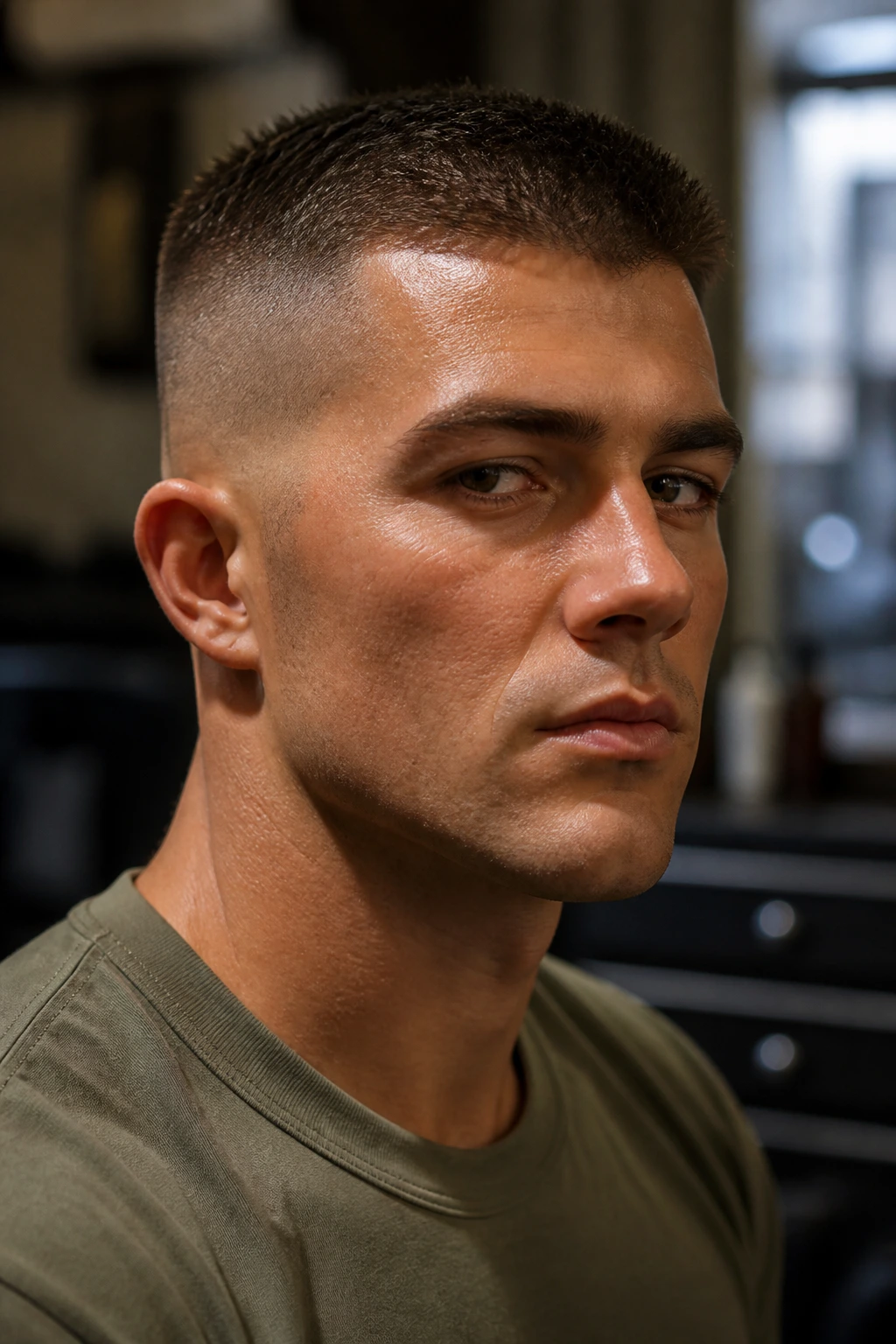
The high and tight crew cut lives close to military territory, and it doesn’t apologize for that. The top stays short—sometimes very short—while the sides and back drop down hard and high. You can see the structure from across a room. There’s almost no room for indecision here.
This is the version for someone who wants the discipline of a crew cut with very little daily maintenance. It works best when the top still has enough length to show direction, even if it’s only about an inch. Go too short and the whole thing starts to drift into buzz-cut territory.
What It Does Well
- Keeps the face open.
- Feels neat even when hair is coarse.
- Looks clean with a strong jaw or short stubble.
If your crown swirls hard or your hair pushes forward in weird patches, tell the barber before the clippers start. That one detail can save the whole cut.
8. The Regulation Crew Cut

The regulation crew cut leans old-school in the best way. It keeps the top short and tidy, but not choppy, and it usually carries a more controlled side profile than the faded versions. Think neat, straight, and practical, with enough room on top for a side part or a slight brush forward.
This is the cut I’d call the quietest one here. It does not need to announce itself. It works in places where sharpness matters more than style signals, and it wears well with a blazer, a uniform, or a plain oxford shirt.
The barber should keep the top even and avoid over-texturizing it. Too much point cutting makes a regulation cut lose its clean line. That’s a small mistake, but on this style, small mistakes show fast.
9. The Textured Crew Cut
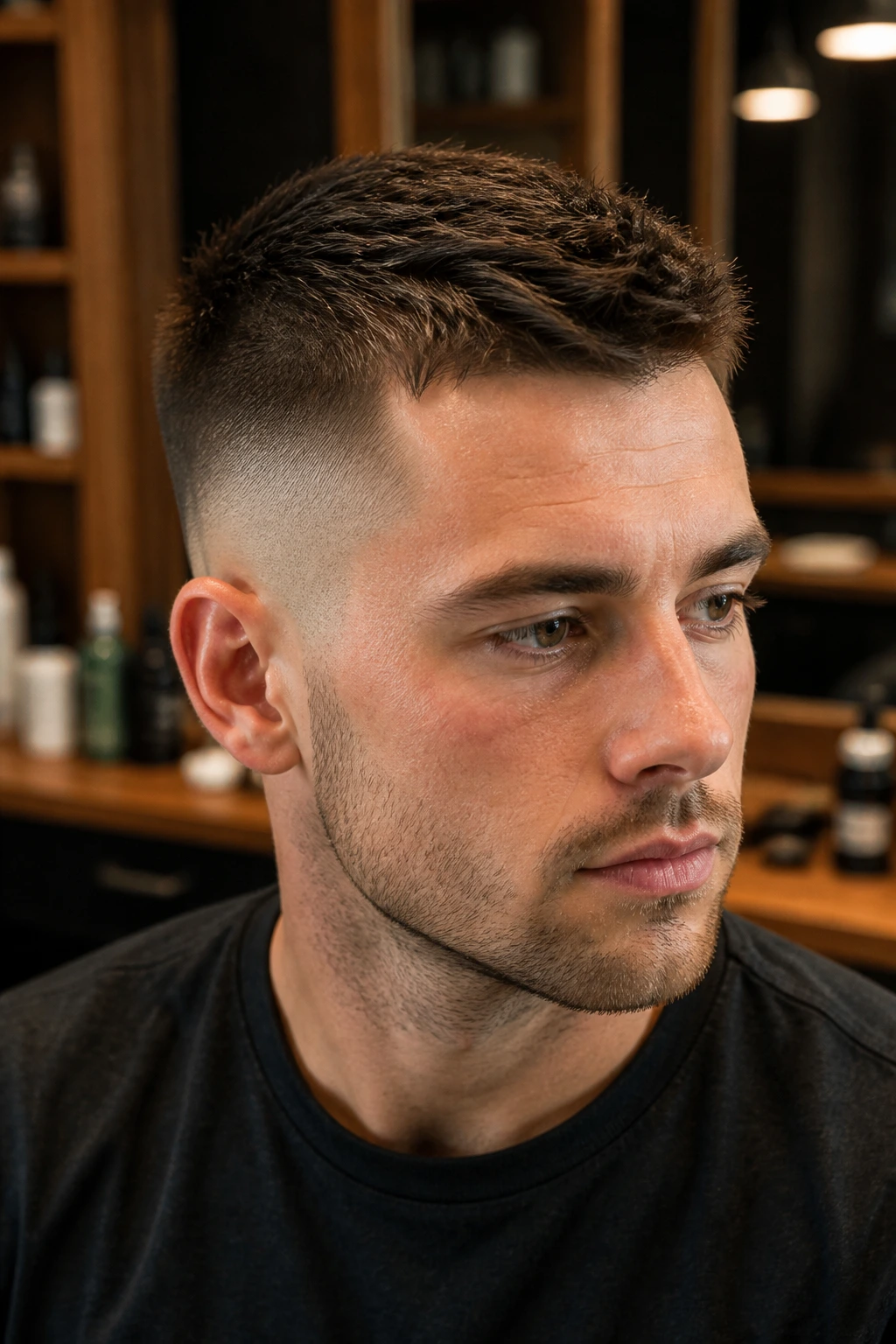
A textured crew cut is what happens when a barber gives the top some bite instead of leaving it smooth and flat. The silhouette still reads as a crew cut, but the top has movement—small pieces, slight irregularity, a little separation that catches the light without looking messy.
Why It Works
Texture solves one of the common crew-cut problems: flatness. If your hair grows in a direction that lies stubbornly down, a textured top gives it some life. It also helps thick hair lose weight without becoming wide at the sides.
Ask For This
Use the words point cutting or texturizing if your barber knows them, and ask to keep the top long enough for product to grab. Around 1.5 inches is often enough, but dense hair may need a bit more.
A matte clay is the friend here. Rub a small amount between your palms, push it through the top, then pinch the front into tiny ridges. Done right, the cut looks deliberate. Done wrong, it looks like you slept on it.
10. The Brushed-Up Crew Cut
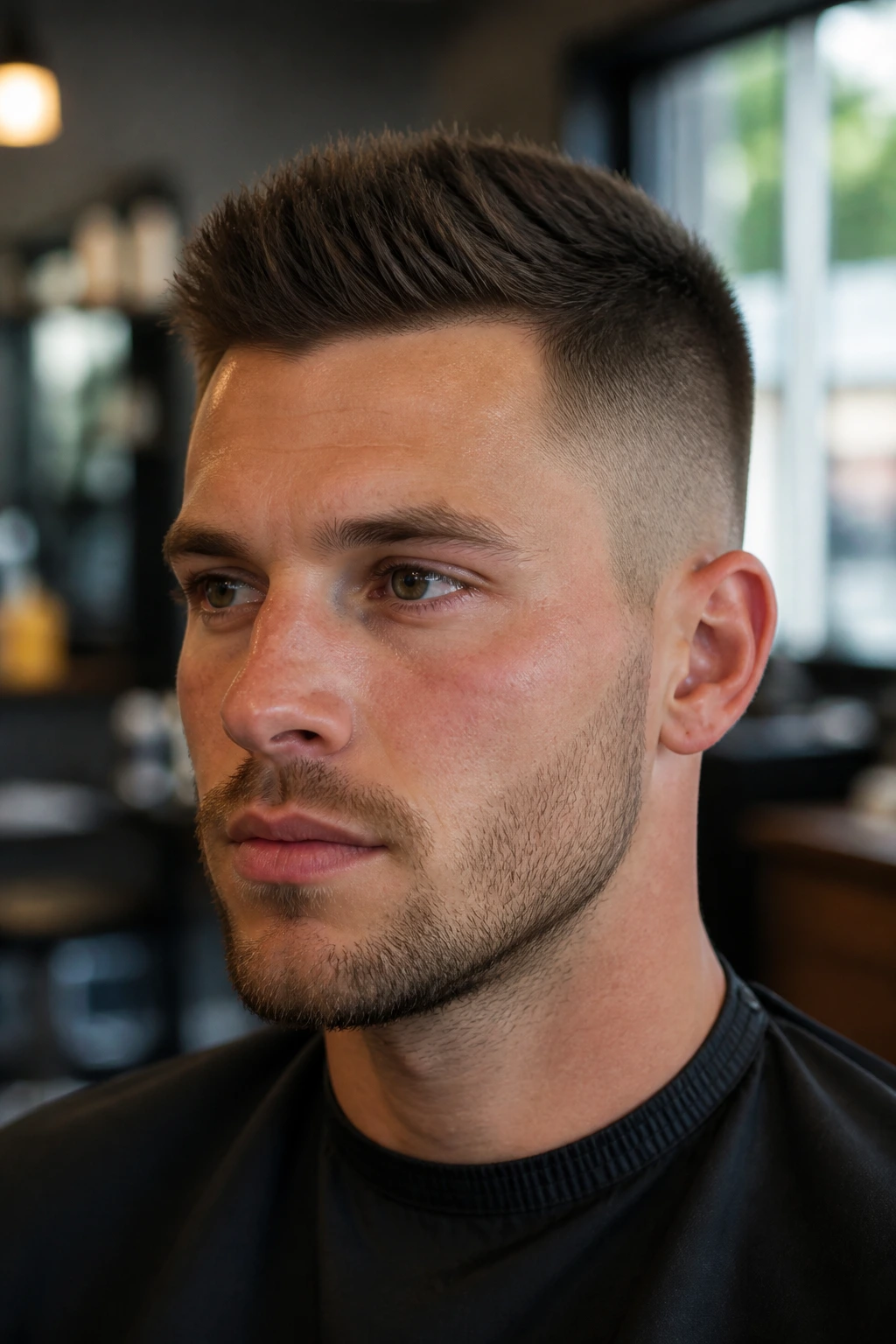
The brushed-up crew cut gives the top a little vertical lift, which sounds small until you see the difference in person. That extra height makes the cut feel more energetic and gives rounder faces more length. It also pulls attention upward, which can be useful if the sides are very clean.
You do not need a giant quiff here. A modest lift is enough. Blow-dry the front for 20 to 30 seconds if your hair tends to collapse, then work in a matte paste and push the front up and slightly back with your fingers. Not a comb. Fingers give it a less stiff shape.
This cut likes hair that has some natural body. Fine hair can do it too, but it usually needs a little blow-drying help. If you try to force the lift without enough length, the result can look spiky in a bad way. Keep it controlled.
11. The Brushed-Forward Crew Cut
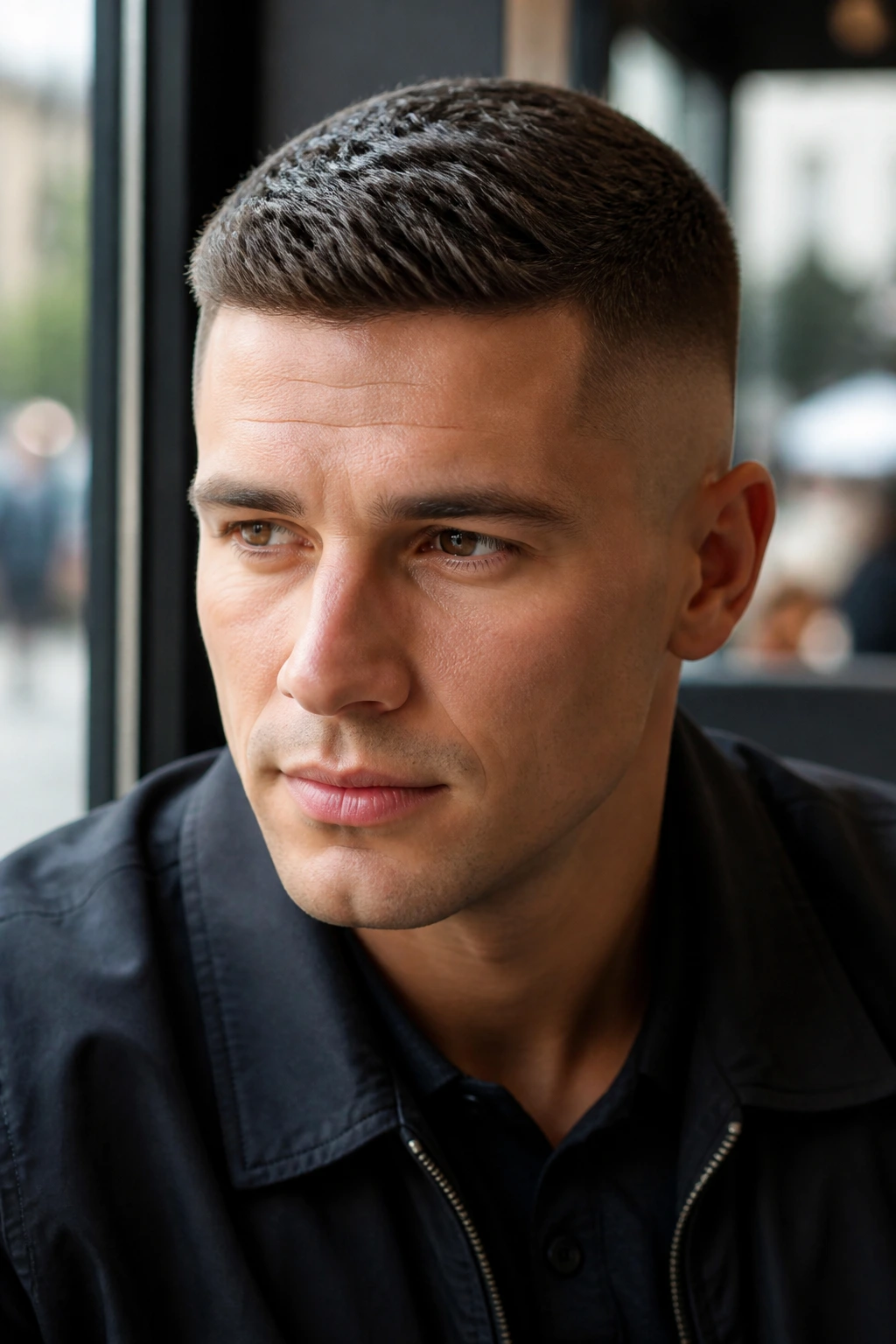
Brushed-forward crew cuts are underrated. They pull the top toward the forehead instead of away from it, which gives the haircut a more grounded shape and keeps it from looking too tall. It’s a smart move if your hairline is strong, your forehead is prominent, or you just prefer a cleaner front edge.
The trick is not to flatten the front like a bowl. Leave enough length to create a slight ridge, then use a pea-size amount of matte product to guide the top forward. The top should rest, not stick.
This version is especially good when the wind is rude. A forward direction tends to hold its shape better than a swept-up one, and it can make thin spots less obvious because the hair lays over them rather than fighting them.
12. The Side-Swept Crew Cut
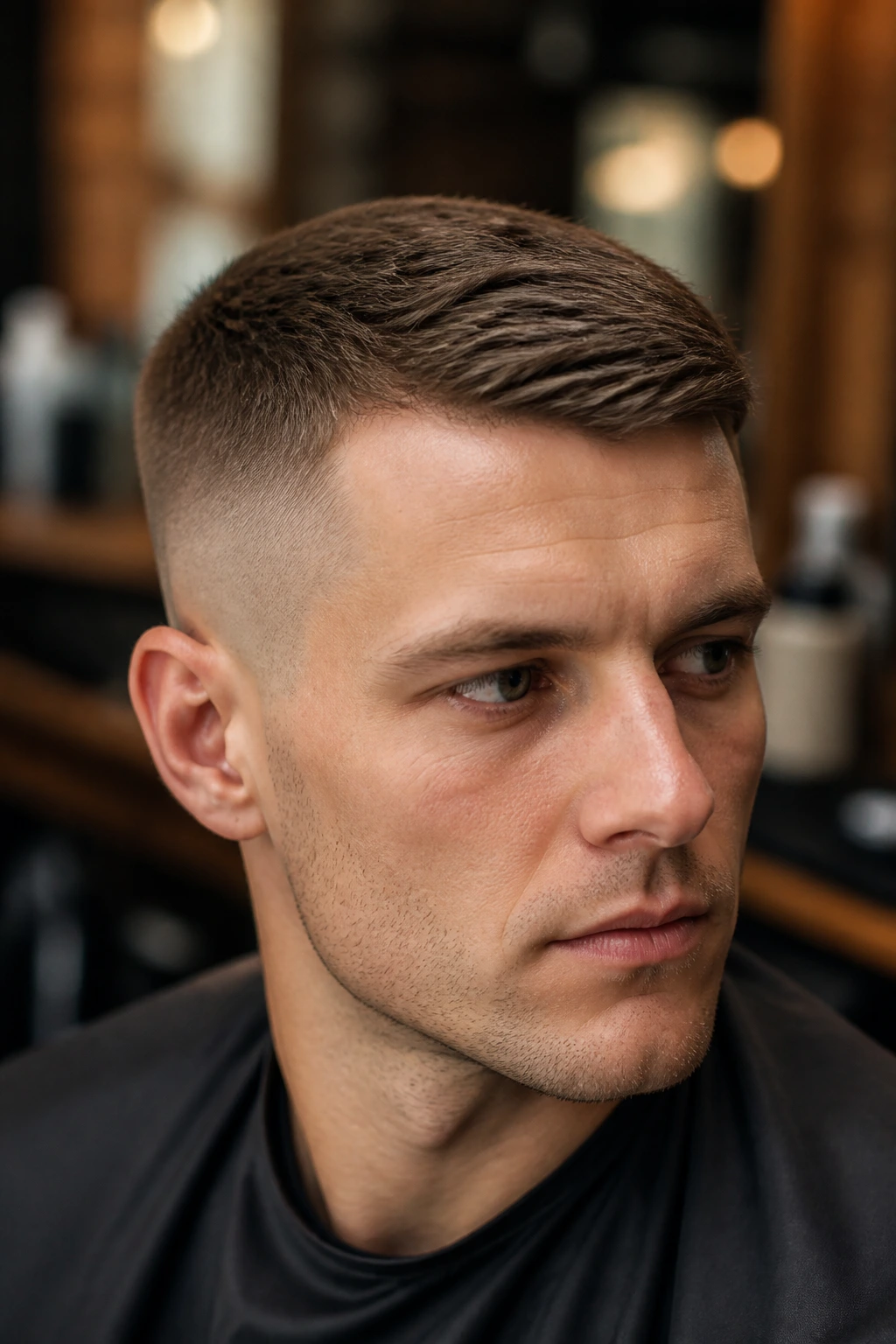
Can a crew cut have a side sweep and still feel like a crew cut? Yes, if the top stays short enough and the sides remain tight. The side-swept version keeps the basic structure but gives the front a clear directional move, which can soften a strong forehead or add some polish for work settings.
The best side-swept crew cuts are subtle. You are not building a dramatic part. You are just giving the top a direction that feels natural. That makes the cut look less static and a little more thoughtful, especially if the hair has a gentle wave.
If your hair naturally falls to one side, lean into it. Fighting that growth pattern only creates a bump in the morning and a weird ridge by lunch.
13. The Longer Crew Cut
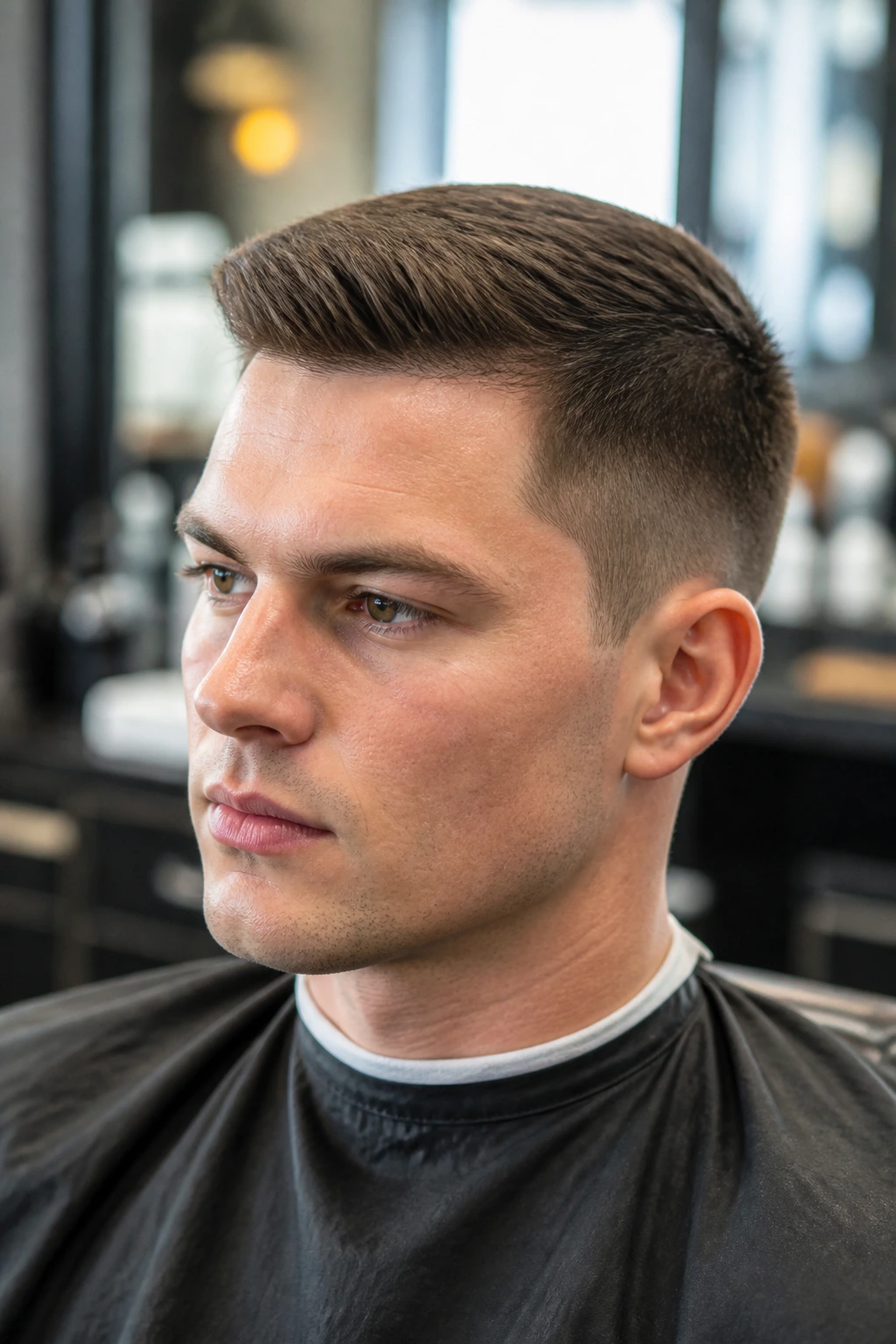
A longer crew cut pushes the top well past the bare-bones version. You get more room to part, sweep, or brush it forward, and that extra length can change the whole personality of the cut. Suddenly it reads less military and more refined.
This is the best option for people who want flexibility. One day it can look neat with a side sweep. The next day it can be pushed slightly up with matte paste. The sides still need to stay controlled, or the whole thing loses the crew-cut identity, but the top can carry a surprising amount of movement.
Who It Suits
- Hair that grows thick but not wildly outward.
- Faces that benefit from a little more visual length.
- Anyone who wants styling options without committing to a long top.
The downside is simple: more top means more chance for the cut to collapse if you skip styling. Not much. Just enough to matter.
14. The Close-Cropped Crew Cut
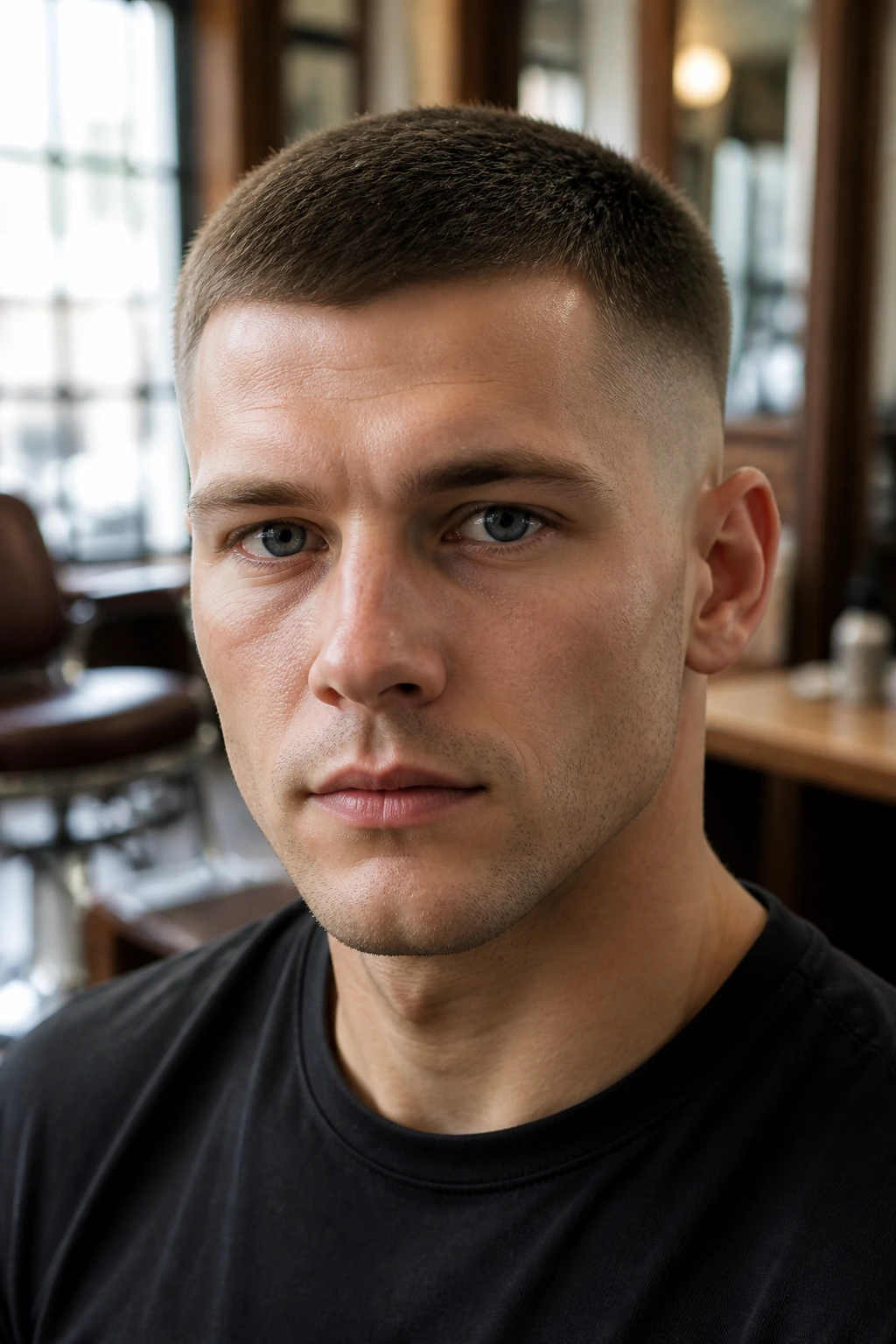
The close-cropped crew cut sits near the edge of a buzz cut, but it keeps enough top length to stay in crew-cut territory. This is the version for people who want the shape and none of the fuss. It’s short, clean, and fast to dry.
The danger here is over-shortening the top until the haircut loses all shape. You still want a visible difference between the top and the sides. Even a quarter inch of extra length can make the crown read as intentional rather than shaved.
This is a sharp choice for summer heat, workouts, and guys who hate product. It’s not the most flexible version on the list, but it may be the easiest to live with. That counts for something.
15. The Curly Crew Cut
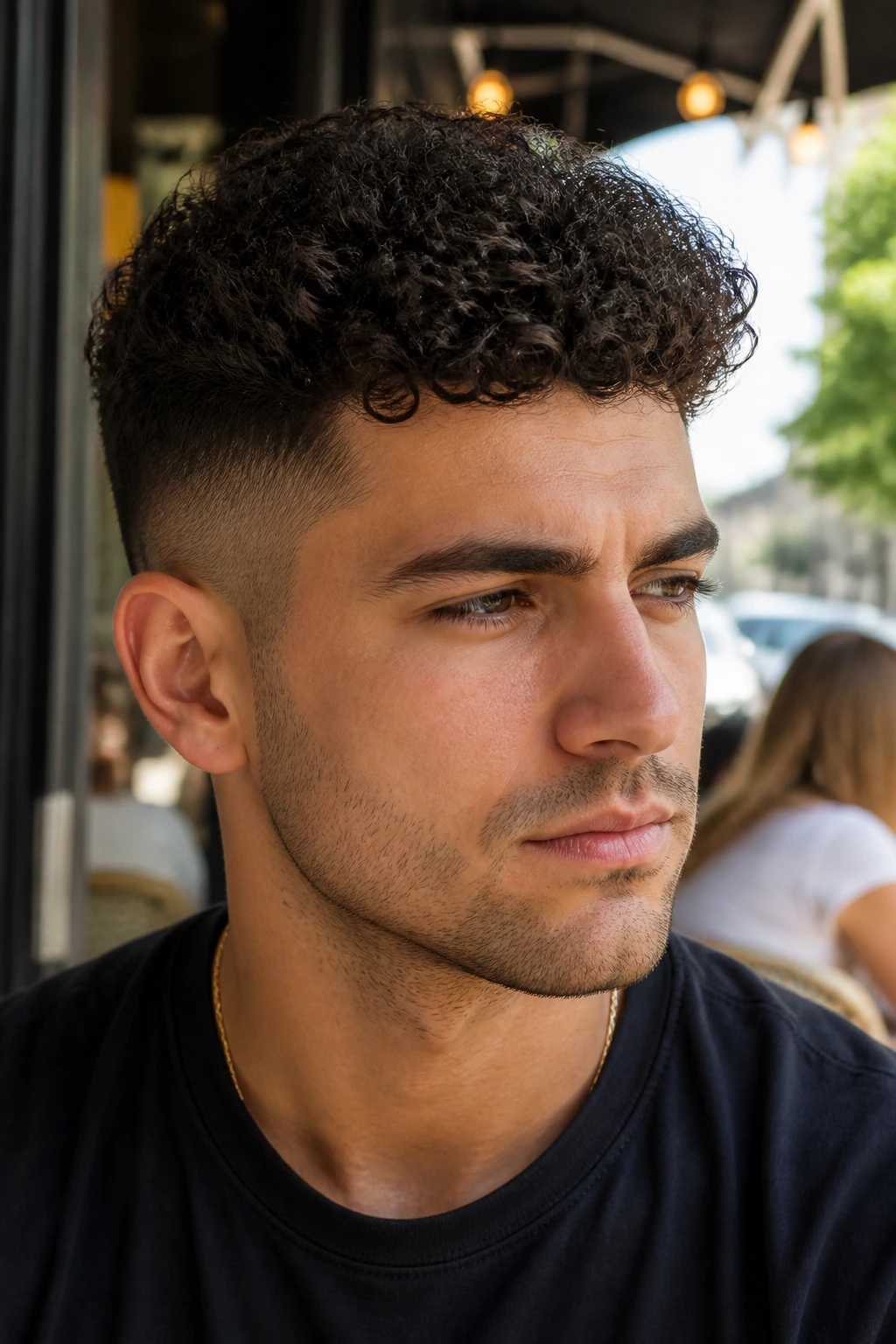
A curly crew cut needs more length on top than a straight-haired version. Curls shrink once dry, and if you cut them too close, the shape turns awkward fast. Leave enough room for the curl to form—usually more than you think you need—and keep the sides neat so the top doesn’t balloon outward.
The best curly crew cuts use the curl, not against it. A barber can shape the top with scissors to control bulk and keep the front from sticking up in random directions. That makes the cut look softer and more natural than a hard clipper-only approach.
I like this cut most when the curl pattern is loose to medium. Tight curls can still wear a crew cut, but they often need a different balance on top. The important part is honesty: cut for the pattern you have, not the one you wish showed up in the mirror.
16. The Wavy Crew Cut

A wavy crew cut lives in a sweet spot. The wave gives the top movement, but not so much that it loses the clean crew-cut outline. If you’ve got hair that bends on its own, this version is one of the easiest ways to make the cut look richer without adding length.
Unlike straighter versions, this one does not need heavy styling. A small amount of matte cream or paste is enough to guide the wave into place. Push the front slightly to one side or forward, then leave the rest alone. Too much combing destroys the natural shape.
This is also a forgiving cut for grow-out. The waves hide small uneven spots better than flat hair does. That means you can stretch your barber visits a little longer without the cut falling apart.
17. The Thick-Hair Crew Cut
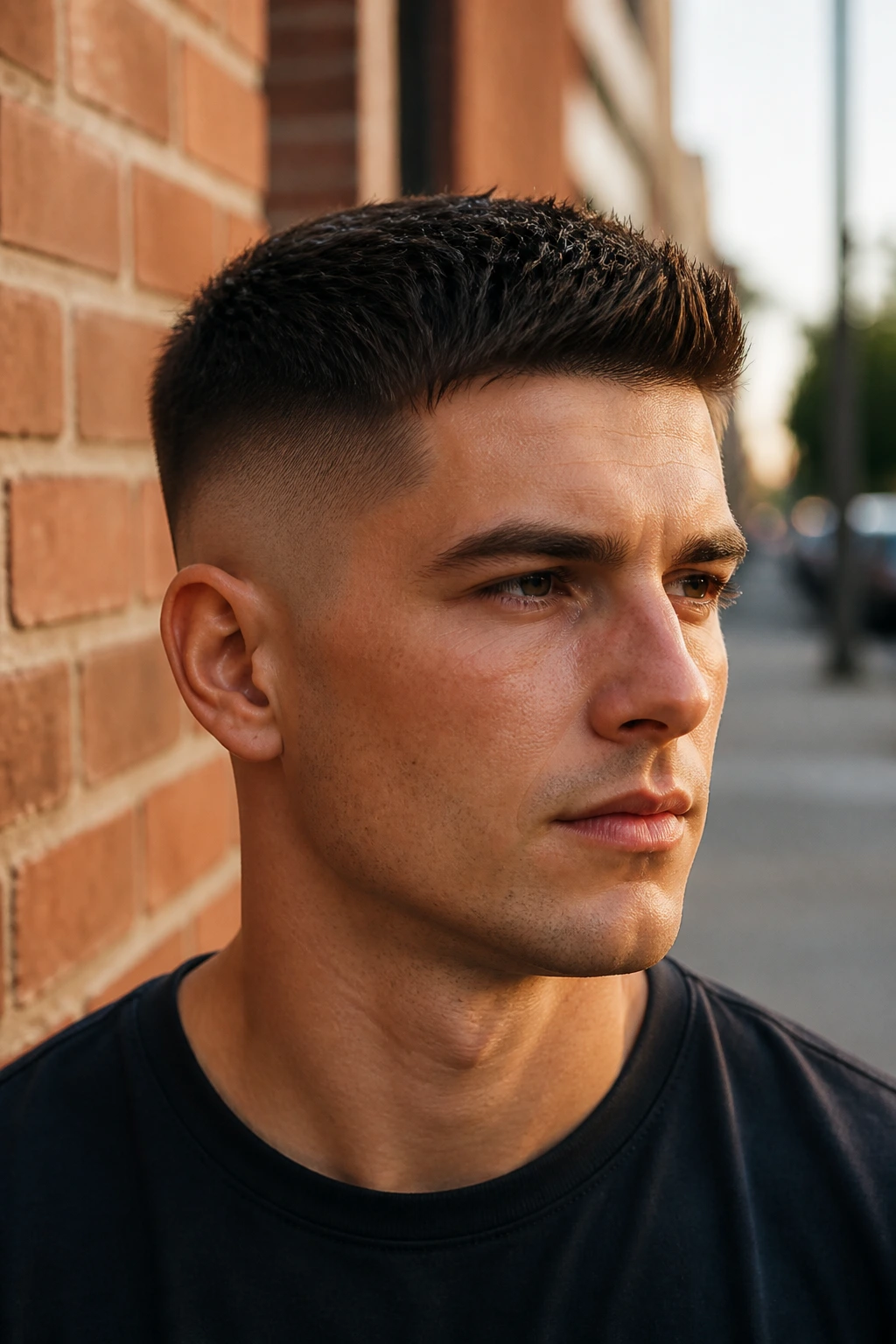
Thick hair can make a crew cut look fantastic, but it can also bulk up fast if the barber leaves too much weight in the wrong places. The answer is control. Use scissor-over-comb or careful clipper work to remove bulk through the sides and keep the top from forming a shelf.
What Helps Most
- Point cutting on top to break up density.
- A mid or low fade to reduce width at the temples.
- A matte finish so the cut doesn’t reflect light and look even heavier.
Thick hair likes a crew cut because the short length keeps the volume in check. The catch is that it needs balance. If the top is chopped too bluntly, the hair can spring up like a block. If it’s thinned too aggressively, the cut can look patchy. The sweet spot is somewhere in the middle, and a good barber knows how to find it.
18. The Fine-Hair Crew Cut
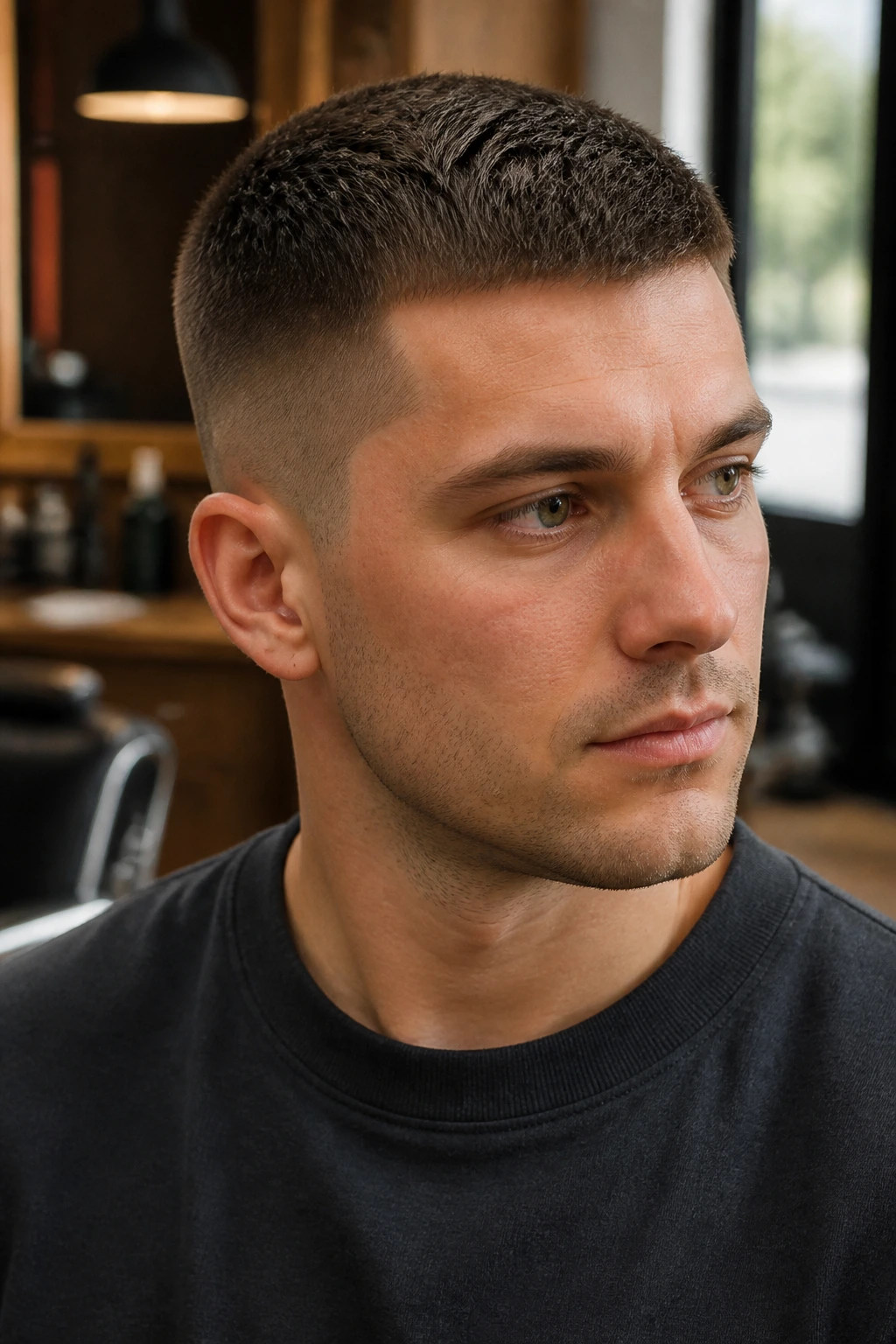
Fine hair needs a different strategy. If you cut it too short, the scalp shows through too easily and the crew cut starts to look thinner than it really is. Keep a little more length on top—enough to give the strands some overlap—and avoid a fade that climbs too high.
This is one place where a longer crew cut often wins. The extra length gives the hair room to sit together, which makes the top look fuller. A matte paste can help too, but use less than you think. Too much product separates fine hair and makes it look stringy.
The best fine-hair crew cuts are tidy, not severe. Think modest taper, short but visible top, and a soft front that doesn’t expose every scalp line in harsh light.
19. The Receding-Hairline Crew Cut
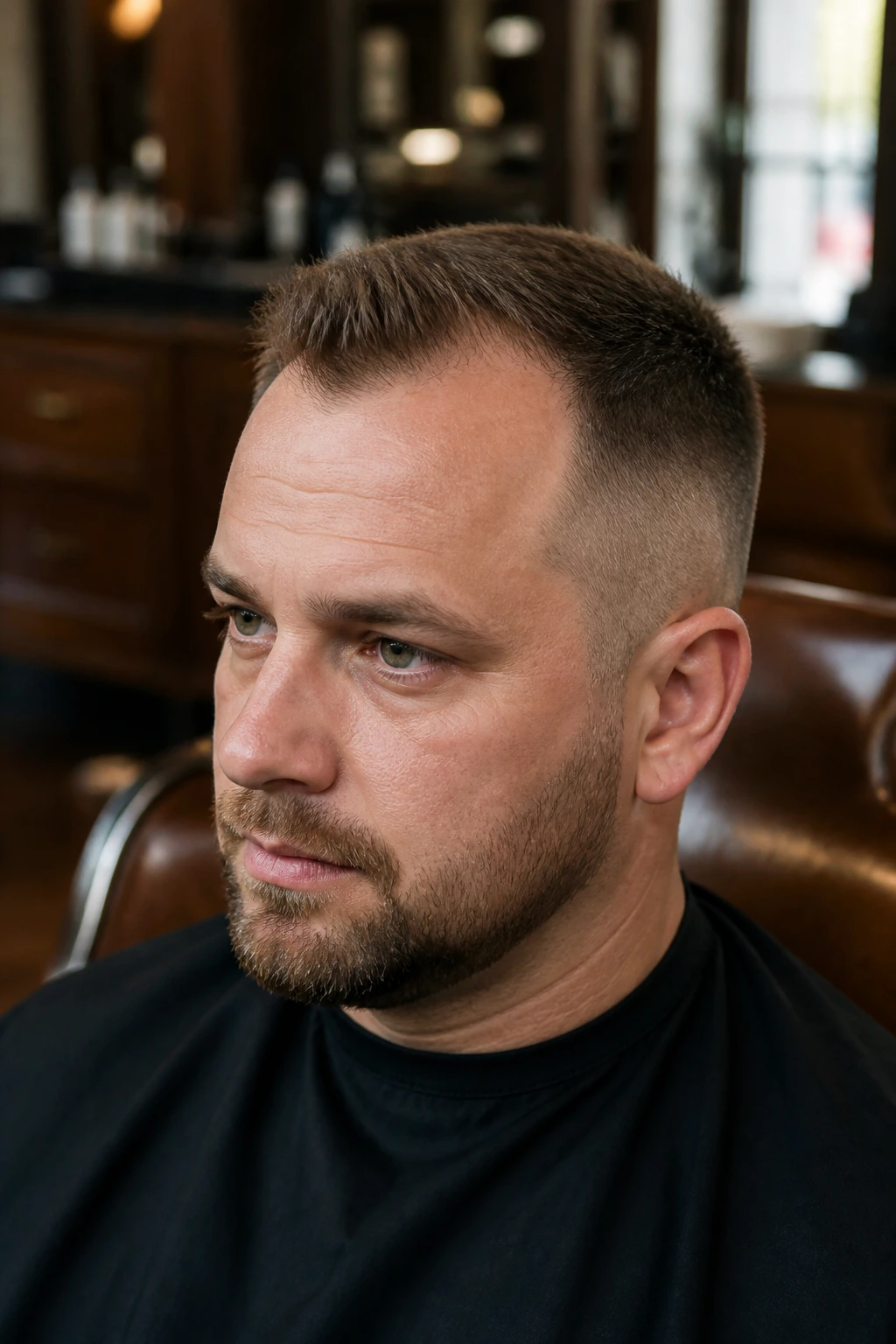
A receding hairline does not kill a crew cut. It just changes the rules. The smartest version keeps the front softer, leaves a little more length where the hairline needs help, and avoids carving a sharp line that only makes the recession look more obvious.
The goal is balance, not camouflage theatre. If your front corners have moved back, a slightly longer crew cut with a brushed-forward front can make the transition look intentional. A hard fade at the temples can work too, but it should be chosen carefully. Too much contrast around the hairline draws the eye exactly where you do not want it.
This is one of those cuts that looks better when the barber is honest and patient. A rushed shape-up can create a shelf at the front. A softer edge gives the cut room to breathe.
20. The Round-Face Crew Cut
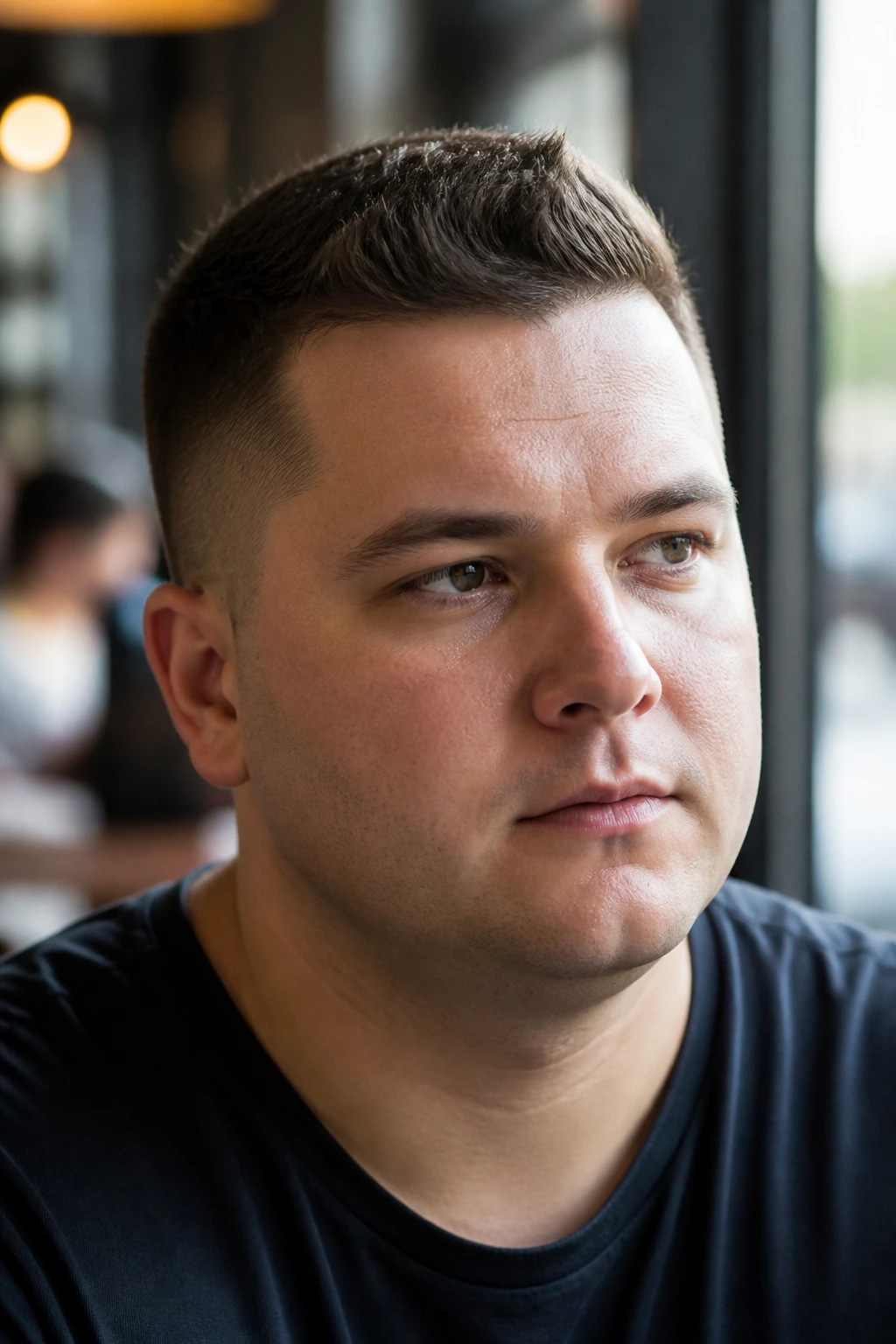
A round face usually benefits from a crew cut that adds height and keeps the sides disciplined. The extra vertical line helps the face look a little longer, while the tight sides stop it from widening out. That means a brushed-up or lightly textured top often works better here than a blunt, flat one.
Do not over-fade the sides unless you want to emphasize the roundness more than the length. A low or mid fade usually gives a cleaner balance. I also like a slightly off-center direction on the top, because a dead-straight front can make the face look more circular than it is.
The cut should look narrow at the sides and a touch taller in front. That shape does the real work.
21. The Square-Face Crew Cut
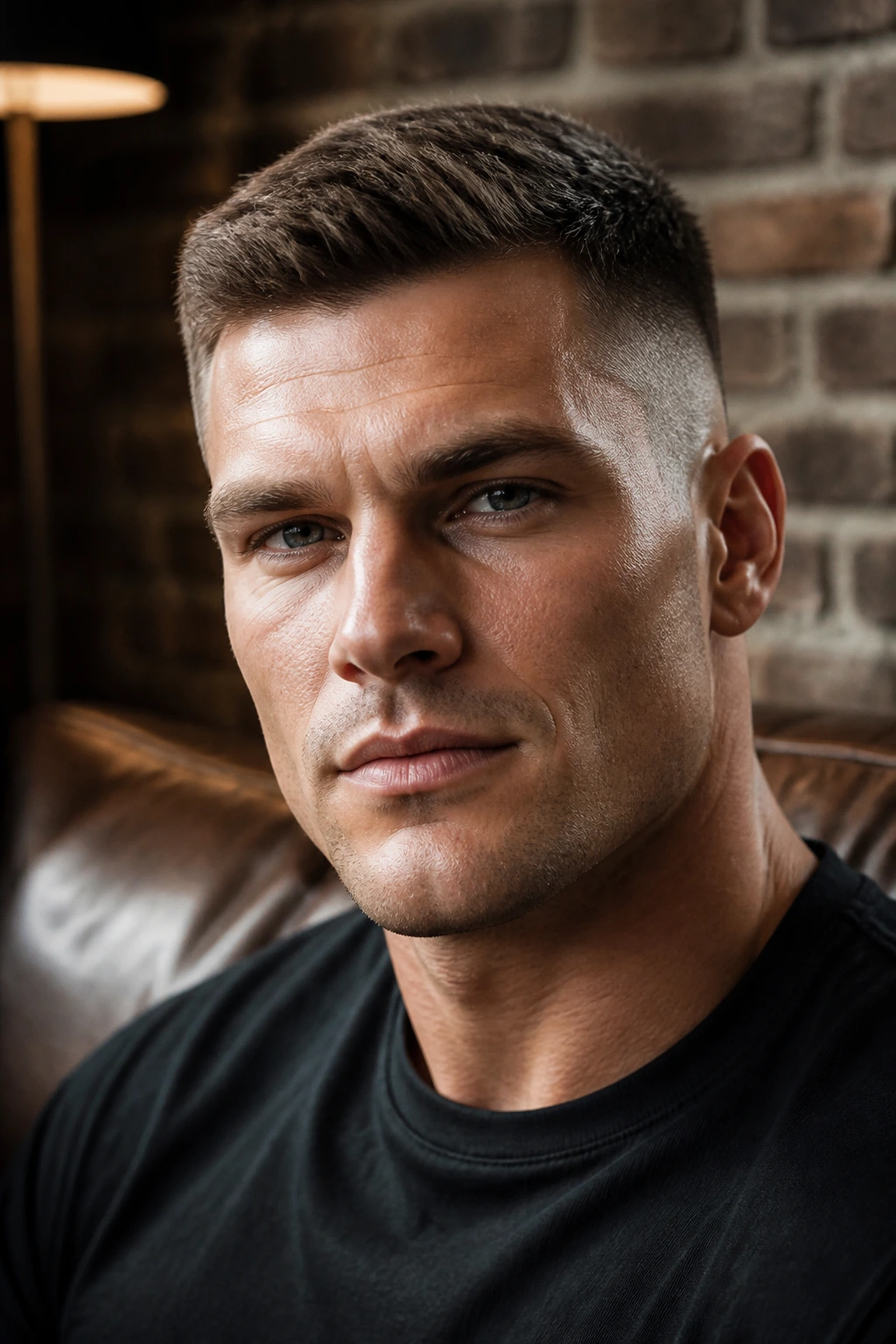
Square faces have strong jaws and broad corners, which can look excellent with a crew cut if the top has enough softness. A heavily lined, boxy version can make the face feel tougher than necessary. A textured or lightly side-swept top does a better job because it breaks up the hard angles.
Best Shape Choices
- Keep the top slightly irregular.
- Use a low or mid taper instead of a severe high fade.
- Soften the front line rather than cutting it into a hard block.
This is a haircut that benefits from a little looseness. Not messiness. Just a touch of shape movement so the face doesn’t look like it was drawn with a ruler.
22. The Oval-Face Crew Cut

Oval faces get the easy assignment. Most crew-cut versions work here because the proportions are already balanced. That means you can choose based on personality more than correction. Want clean and simple? Go classic. Want more edge? Try a skin fade. Want polish? Ivy League.
The only real caution is overdoing the height. An oval face already handles proportion well, so a very tall brushed-up crew can start to look a little top-heavy. Most of the time, a medium top with a tidy fade gives the best result.
If you have an oval face and you’re not sure where to start, pick the version that matches your day-to-day clothes. That sounds basic. It works.
23. The Beard-Blend Crew Cut
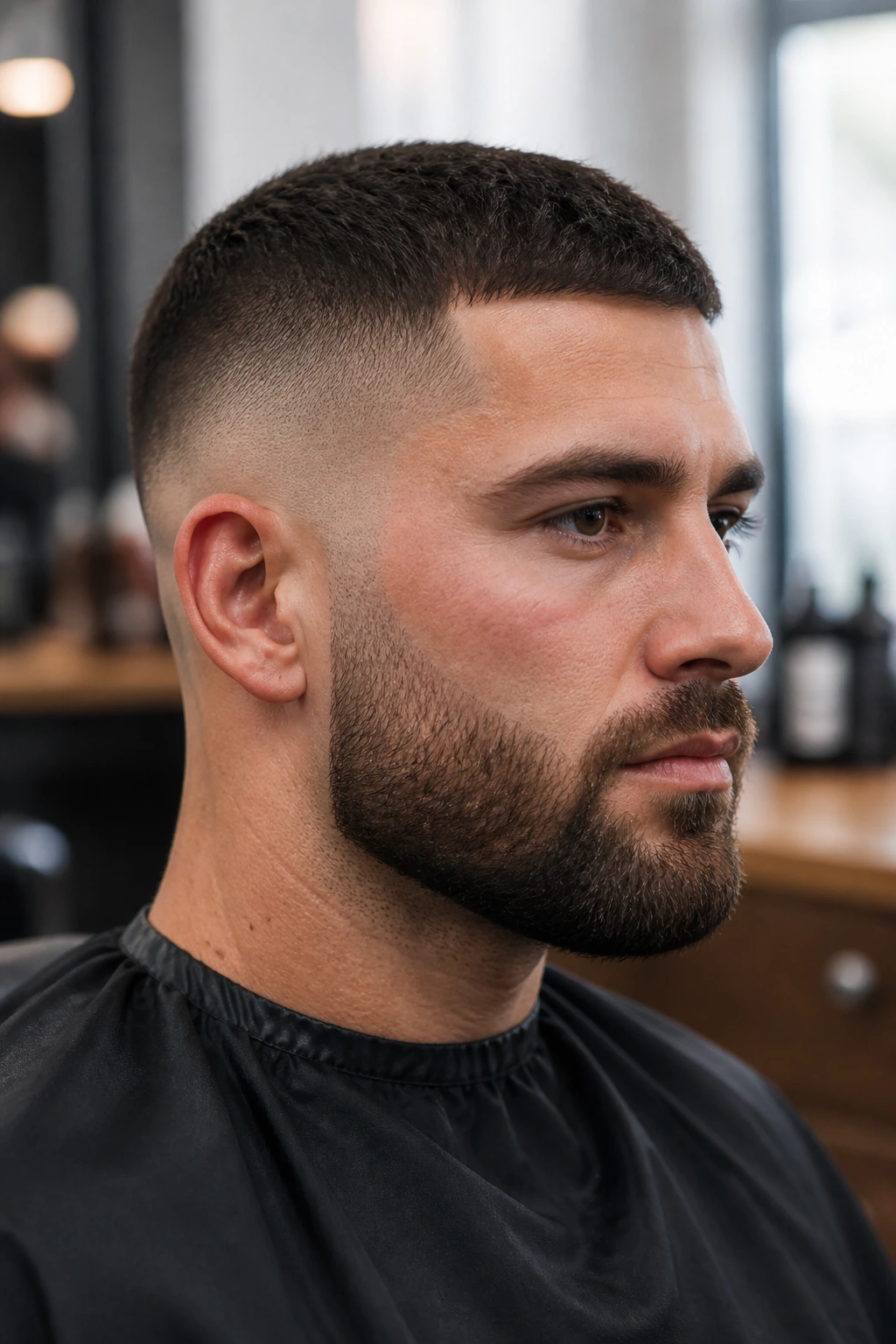
A beard-blend crew cut connects the haircut to the facial hair so the whole face reads as one shape instead of separate pieces. The sideburn area matters most here. If the fade or taper drops cleanly into the beard, the transition looks intentional and sharp.
This is one of my favorite pairings because it gives the crew cut more presence. A short beard can widen a narrow jaw, while the short top keeps the look neat. If your beard is patchy, though, keep the blend shorter and cleaner; a heavy fade into a thin beard can make the gaps stand out more.
The barber should think in lines: top, temple, sideburn, cheek, neckline. If one of those lines is ignored, the cut feels unfinished.
24. The Hard-Part Crew Cut
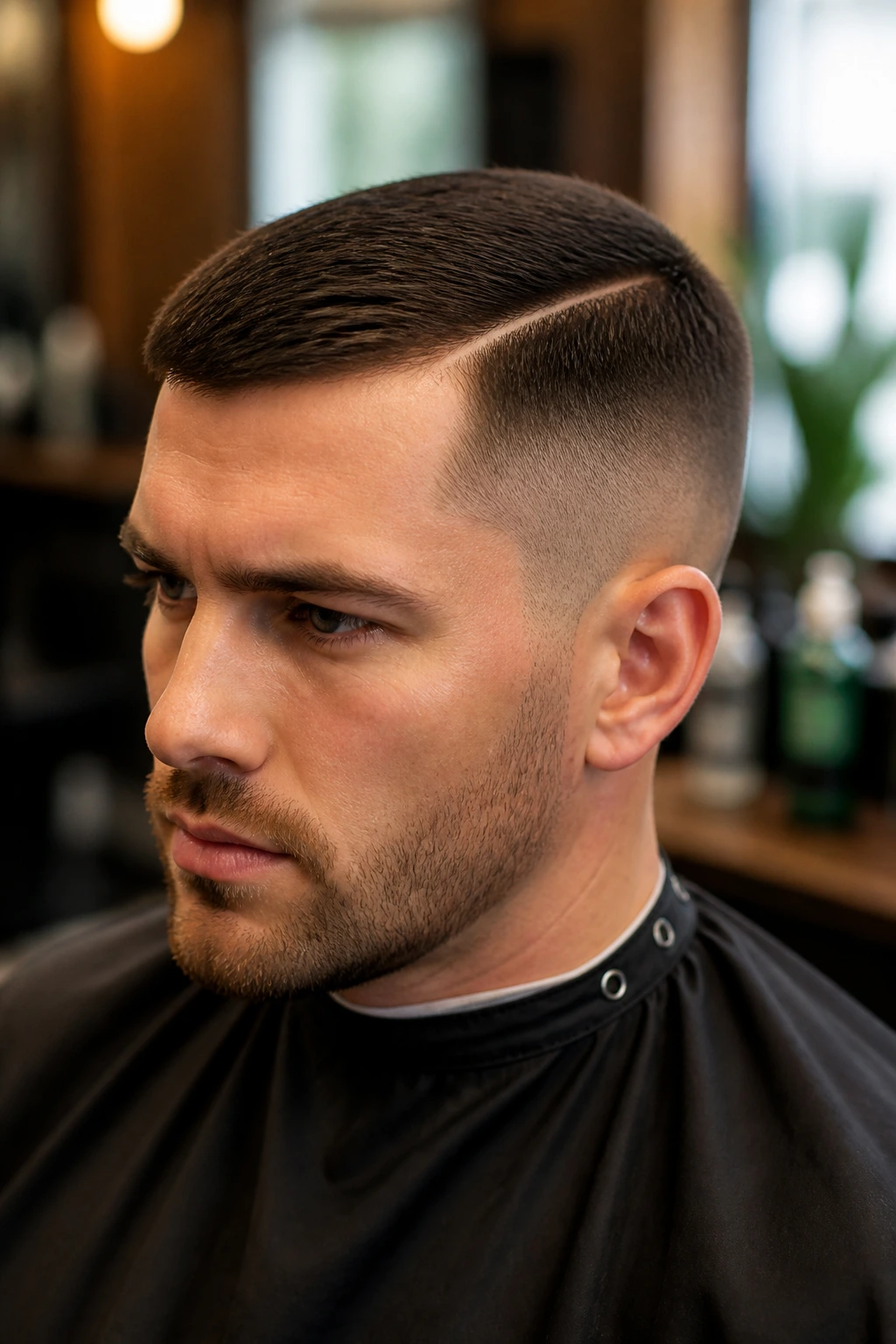
A hard-part crew cut adds one crisp line through the top, usually on one side, to make the haircut look more structured. It works best when the top has enough length to sit around the part without collapsing into it. If the top is too short, the hard part turns into a decoration with no real function.
That line gives the crew cut a more polished edge, which can be useful if you wear it with shirts, jackets, or anything a little sharper than gym clothes. It also helps define direction for hair that naturally wants to split in more than one place.
Quick Notes
- Keep the part subtle, not cartoonish.
- Pair it with a low or mid fade for balance.
- Expect more visible grow-out than with a soft part.
This is a commitment cut. It looks clean. It also asks for maintenance.
25. The Temple-Taper Crew Cut
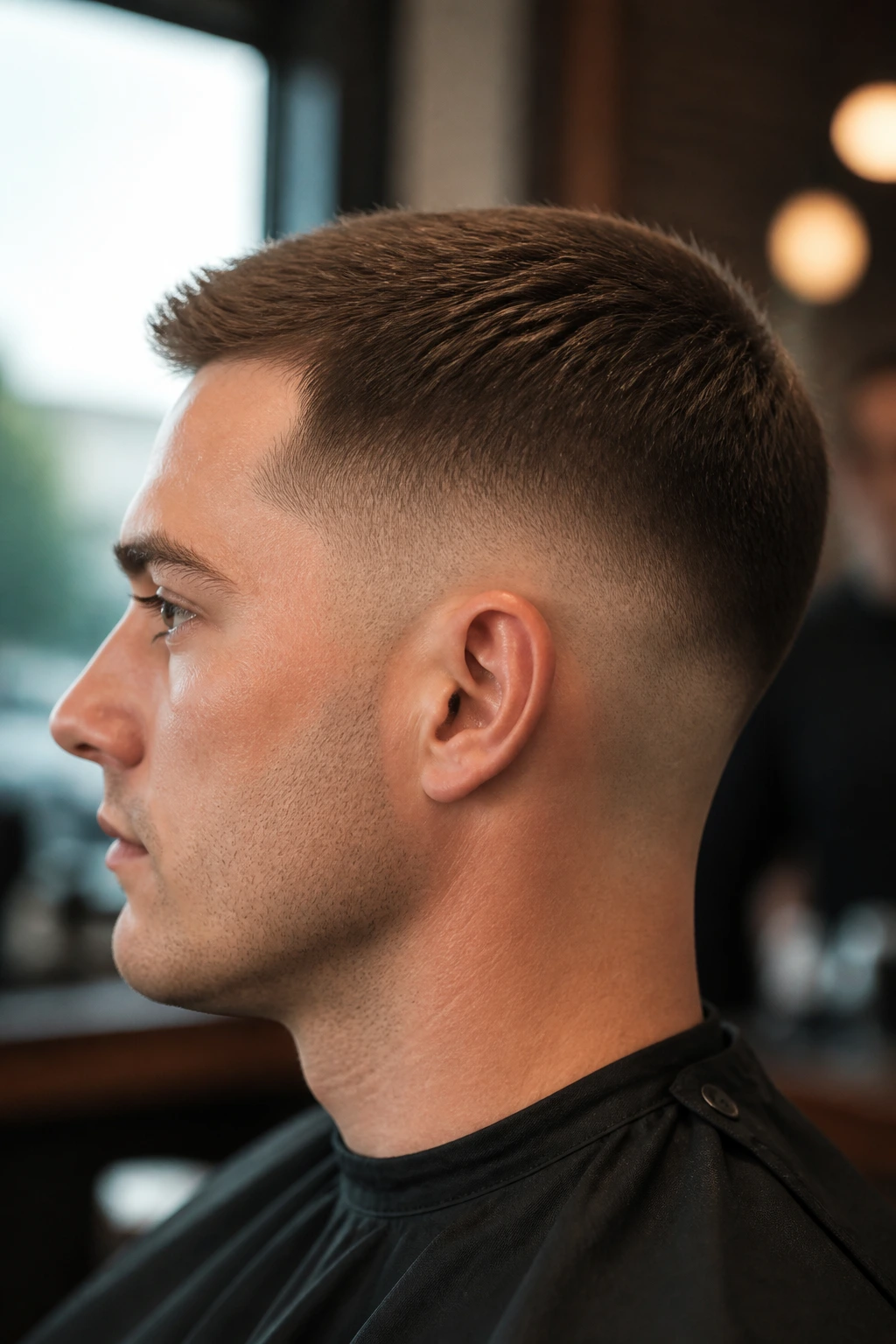
The temple-taper crew cut is the one I’d hand to someone who wants the haircut to feel refined rather than loud. The temples are eased down gently, the neckline stays clean, and the top keeps enough length to remain a real crew cut instead of a crop that was rushed through the clippers.
What makes this version stand out is the transition. There is no abrupt cliff at the side of the head. The taper moves gradually, which gives the whole haircut a calmer outline. That makes it a strong choice for men whose hairline is uneven or whose head shape looks better with softer edges.
It also grows out better than a harsh skin fade. If you like clean lines but don’t want to be in the chair every other week, this is the smart compromise. Quiet. Neat. Hard to mess up.
What Makes a Crew Cut Look Sharp Instead of Flat
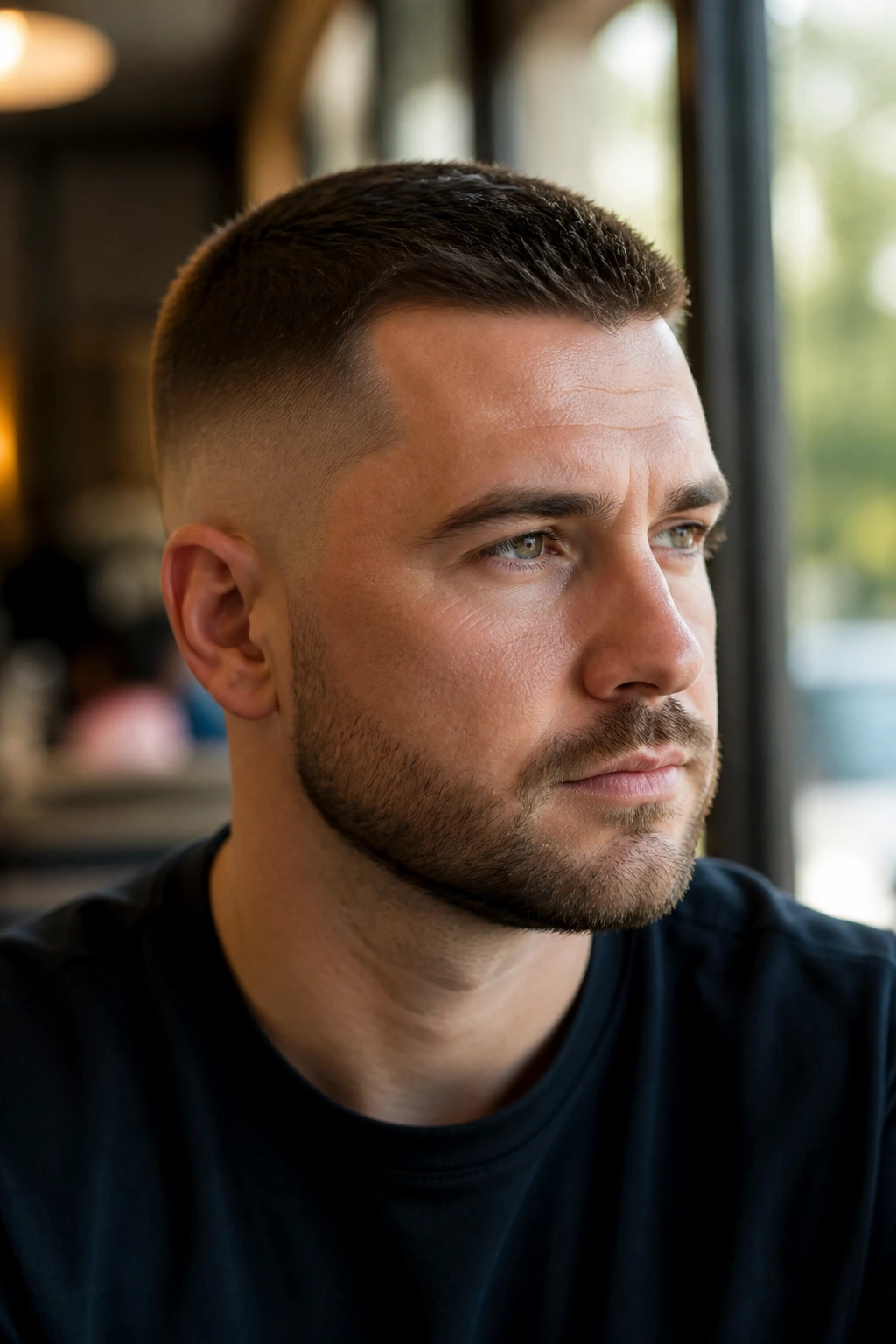
A crew cut lives or dies on proportions. Leave the top too short and you lose the shape. Push the sides too high and the head starts to look taller and narrower than it really is. That is why the best versions pay attention to the crown, the temples, and the front edge instead of treating the whole head like one uniform patch.
The top usually needs a little more length at the front than at the back. That small shift helps the cut stand up to cowlicks and keeps it from collapsing into a buzzed block. If the hair grows forward hard, the front needs room. If the hair wants to split, a barber may need to cut around that pattern instead of through it.
Where People Go Wrong
The crown gets ignored.
A strong swirl at the crown can lift shorter hair in strange ways. Leave a bit more length there, and the cut settles better.
The fade climbs too high.
A very high fade can look clean for a week and then suddenly look harsh. A lower taper lasts longer and feels softer.
The top gets thinned too much.
Fine hair needs some body. Thick hair needs bulk removed carefully. Either way, random thinning shears can wreck the shape fast.
A good crew cut should still look like a haircut when it grows out a little. That’s the test.
The Tools That Keep the Outline Honest
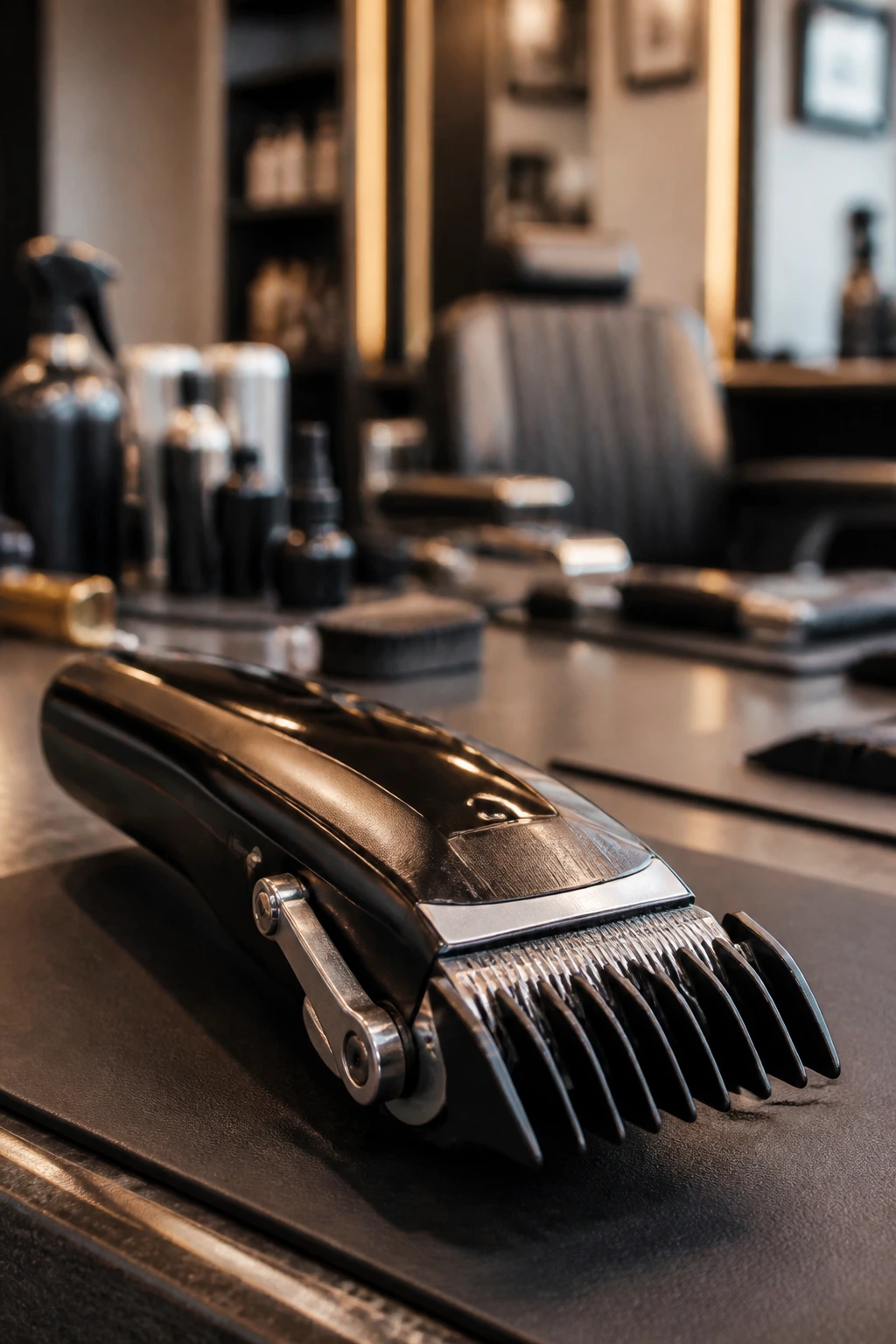
A crew cut does not need a drawer full of gadgets, but a few tools make a big difference if you trim at home or just want the barbershop visit to last longer.
- Adjustable clippers: Useful for cleaning the neckline and sideburns between visits. A good lever matters here.
- Guard set: The #1, #2, and #3 guards are the ones most people actually use for crew-cut maintenance.
- Detail trimmer: This is the tool for sharp edges around the ears and temple area. A large clipper is clumsy for that.
- Fine-tooth comb: Helps lift the top before cutting or styling. A wide-tooth comb is fine for curly hair.
- Handheld mirror: Necessary if you ever check the back of your neck at home. Guessing is a bad plan.
- Spray bottle: A light mist makes trimming and styling easier, especially on hair that stands up dry.
- Matte paste or clay: The finish product that keeps the top controlled without shine.
- Neck brush: Small, underrated, and useful for clearing loose hair off the collar and neckline.
A reference photo is worth adding to that list. One front view and one side view save a lot of awkward explaining.
How to Ask for the Right Crew Cut Length
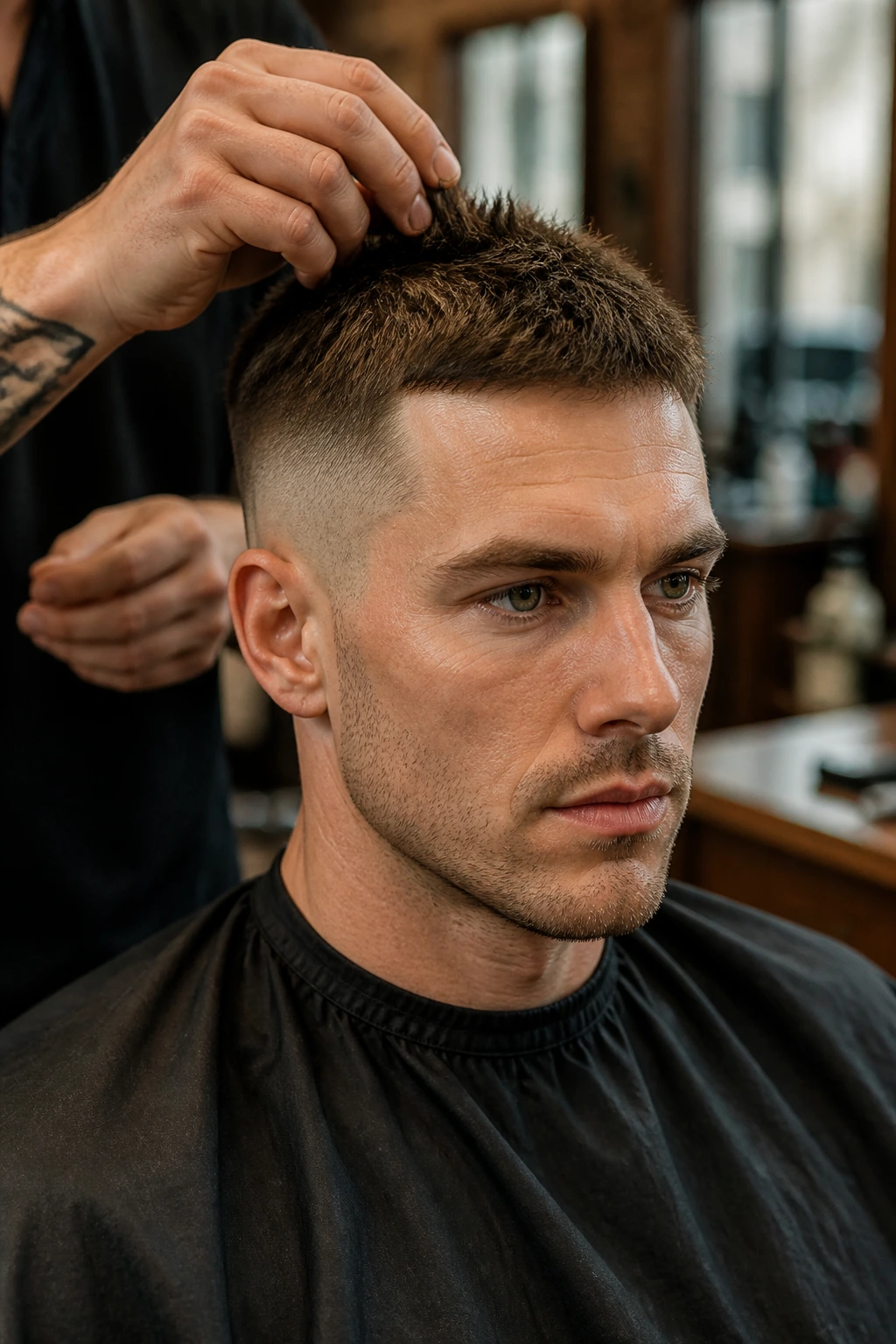
The best barber conversations are boring in a good way. Short top, clean sides, and a clear idea of where the fade should sit. If you show up and say only “crew cut,” you’re inviting the barber to fill in the blanks, and the blanks are where bad haircuts are born.
Start with the top. If you want the classic version, say you want enough length to brush forward or slightly up, but not enough to flop over. If you want the Ivy League version, ask for more length in front so the top can part or sweep. If your crown swirls hard, say that before the clippers come out.
The Three Details That Matter Most
Top length: Tell the barber whether you want it closer to 1 inch, 1.5 inches, or a little longer. That number changes the haircut more than people think.
Side height: Ask for low taper, mid fade, high fade, or skin fade. Don’t assume the barber hears “short” the same way you do.
Front shape: Say whether you want the front brushed forward, slightly up, or side-swept. That keeps the haircut from turning into a generic short back and sides.
If you can bring a photo, do it. Better still, bring a photo of the front and the side.
How to Wear and Style a Crew Cut
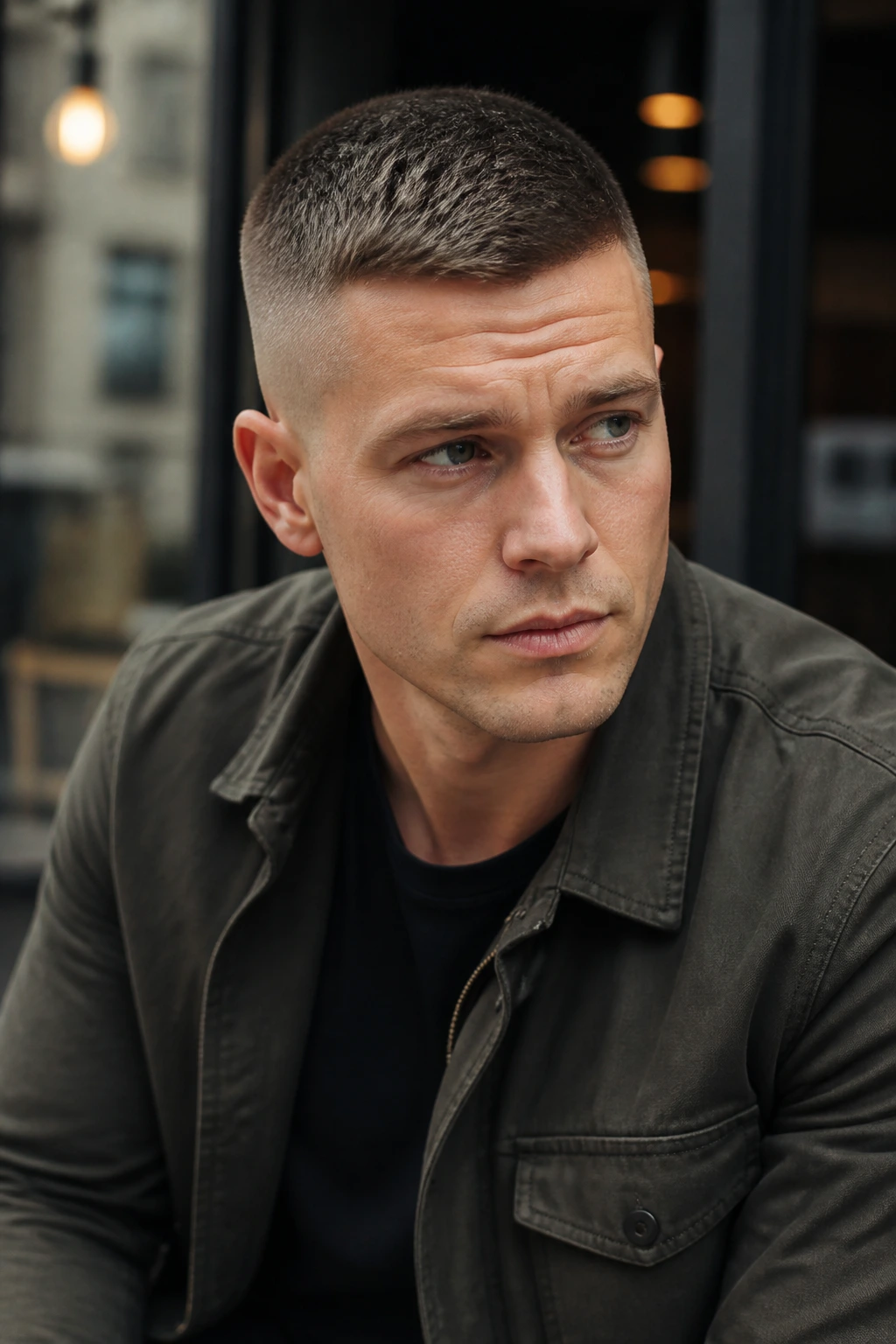
A crew cut looks strongest when the styling matches the cut’s level of sharpness. A close-cropped version wants almost no product and a neat neckline. A longer or textured version wants a little more shaping on top so it doesn’t sit limp.
Presentation: Keep the top direction consistent. Either brush it forward, sweep it slightly to one side, or lift it a little in front. Random direction makes the cut look careless.
Best Pairings: Short stubble, a clean shave, or a short beard all work. A crew cut also sits well with plain tees, work shirts, and jackets that have a clear collar line.
Finish: Matte paste, matte clay, or a light cream gives the top shape without shine. If your hair is fine, use less than you think. If it’s thick, warm the product in your hands first.
Scale: If your face is long, keep a touch more width at the sides and less height on top. If your face is round, add a little height and keep the sides disciplined.
One good crew cut can be worn half a dozen ways, but it still needs a plan.
Small Upgrades That Change the Whole Cut

The difference between a decent crew cut and a very good one is often one small decision. A barber who point-cuts the top instead of chopping it bluntly changes how the hair sits. A slightly softer temple line changes how the haircut grows out. A cleaner neckline changes how polished it feels from the back.
Texture Boost: Ask for light point cutting on the top if your hair is thick or wants to lie flat. That breaks up the surface without making it look hacked apart.
Line Control: If your hairline is uneven, keep the temples soft rather than carving a hard edge. A clean-but-soft temple often looks more balanced than a razor line.
Make-It-Yours: Add a hard part if you want more structure, or keep the part invisible if you want the cut to stay relaxed. The beard can also shift the look a lot—shorter and tighter for a cleaner face, fuller for more balance.
Low-Effort Move: If you hate styling, choose a low taper or temple taper. If you like a little shape work, go with a textured top and a mid fade.
That’s the whole game. Small choices. Big difference.
Common Mistakes That Make Crew Cuts Look Off

The most common mistake is simple: people ask for a crew cut and never name the length. That leaves too much room for interpretation, and interpretation is how you end up with something shorter than you wanted. Say the top length. Say the fade height. Say whether you want the front soft or firm.
Another mistake is pushing the fade too high. The haircut can look sharp the day you leave the chair, then feel top-heavy once the contrast settles in. If you want the cut to grow well, keep the fade lower or choose a taper. The grow-out matters more than people admit.
Watch Out For These
- Top too short: The haircut turns into a buzz cut with ambition.
- Sides too high: The head can look narrow and tall.
- Hard line at the front: This can make a receding hairline more obvious, not less.
- Too much product: Shine makes the hair look shorter and wetter.
- Ignoring the crown: A stubborn swirl will kick the top around if you leave it unmanaged.
The fix is not complicated. Talk more clearly in the chair, and trim for the way your hair actually grows.
Variations and Alternatives to Try
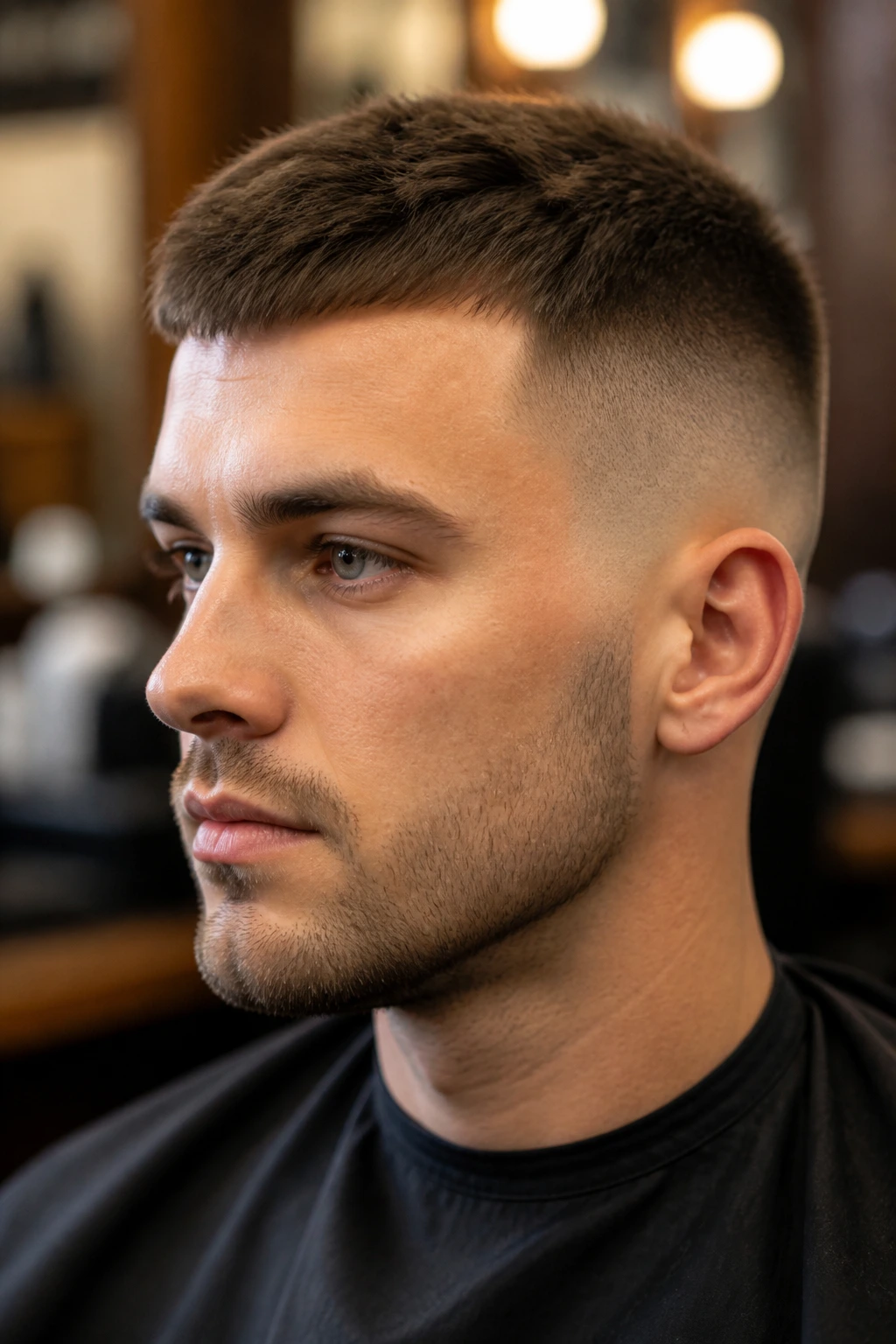
The Boardroom Crew: Keep the top modest, the sides low, and the finish matte. This version works well if you want the haircut to look neat in a jacket without drawing attention to itself.
The Weekend Texture Crew: Leave the top a little longer and add choppy texture through point cutting. It reads more relaxed and hides small growth changes better between appointments.
The Beard-Linked Crew: Blend the sideburns into a short beard with a soft taper. The face looks more balanced, especially if your jawline needs some extra shape.
The Curly Crown Crew: Keep enough length on top for curls to form and trim the sides clean. This is better than forcing curls into a flat, shaved-down shape.
The Soft Skin-Fade Crew: Pair a short top with a skin fade, but keep the fade lower at the temples than you might expect. You get sharp contrast without making the head look overexposed.
Each version shifts the mood a little. None of them changes the basic crew-cut idea.
Keeping the Shape Between Barber Visits
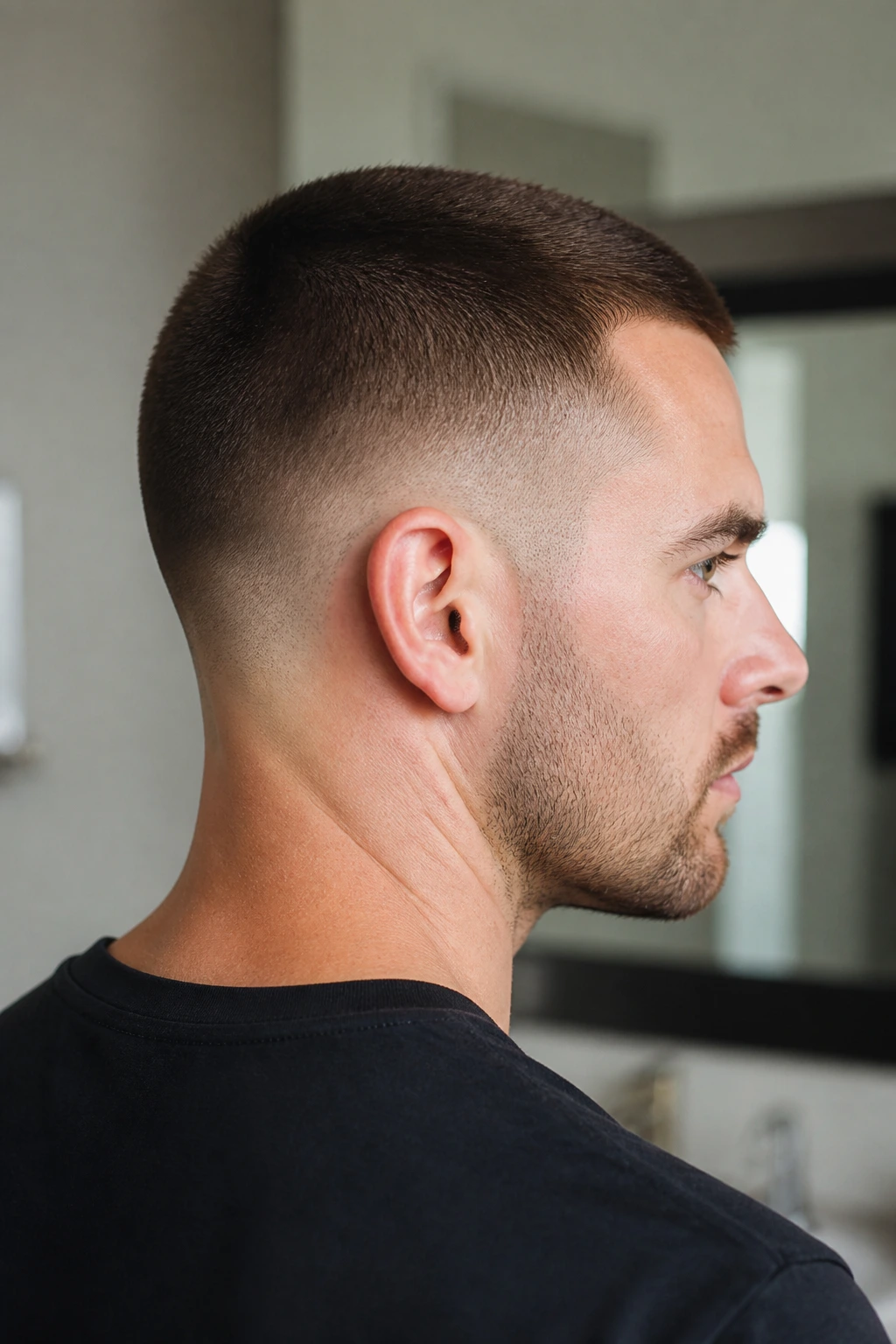
A crew cut looks best when the edges stay neat. That usually means a trim every 2 to 4 weeks, depending on how fast your hair grows and how sharp you want the sides to stay. Skin fades need more attention. Low tapers buy you a little more time.
Between visits, clean up the neckline every 7 to 10 days if you’re comfortable using a trimmer. Sideburns may need a quick touch-up too, especially if they start blurring into the beard or the skin near the ears gets fuzzy. Keep it small. Home cleanup should support the shape, not redesign it.
A Simple Maintenance Rhythm
- Daily: damp hands, then a pea-size amount of matte product if needed.
- Weekly: check the neckline, sideburns, and temple area in a bright mirror.
- Every 2 to 4 weeks: full barber visit, depending on fade height and hair growth.
- Every wash day: dry the top in the direction you want it to sit, even if it’s only with a towel and your fingers.
Shampoo frequency depends on scalp oil and product use. A short cut does not need daily shampoo unless your scalp demands it. Too much washing can make matte styling harder than it needs to be.
Questions People Ask Before Getting a Crew Cut
How short should a crew cut be on top?
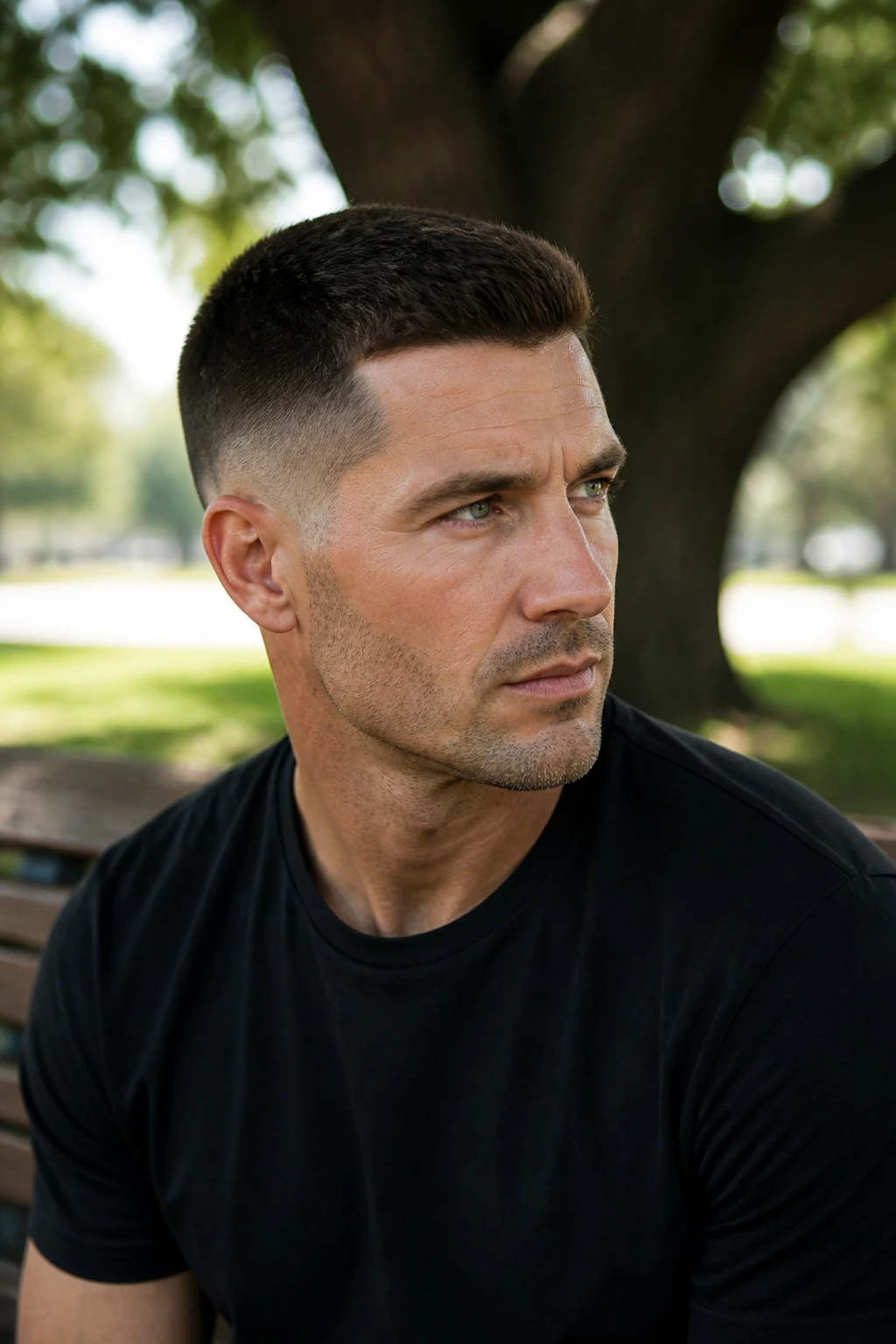
Most classic crew cuts sit somewhere around 1 to 1.5 inches on top, while Ivy League versions can go longer. If you want more styling room, ask for a little extra in front.
Is a crew cut the same as a buzz cut?
No. A buzz cut is generally shorter and more uniform. A crew cut keeps more shape on top and usually has a clearer transition on the sides.
Can curly hair wear a crew cut?
Yes, and it can look excellent. The key is leaving enough length on top for the curls to form instead of cutting them so short that they spring into odd shapes.
What if my hairline is receding?
A softer crew cut with a brushed-forward front or a low taper usually works better than a hard edge. The goal is to support the shape you have, not chase a line that keeps moving.
How often should I get it cut?
Every 2 to 4 weeks is the usual range, but skin fades and hard parts need more attention than low tapers. The cleaner you want it, the sooner you’ll be back in the chair.
Does a crew cut need product?
Not always. Short, close-cropped versions can look fine with nothing but a towel dry. Longer or textured versions usually look better with a small amount of matte paste or clay.
Can I ask for a crew cut with a beard?
Absolutely. The sideburn transition matters, though. If the beard and haircut are not blended together, the face can look chopped into separate sections.
What if the barber cuts it too short?
Don’t panic. A shorter version often settles after a week, especially if the top was left with any texture. If it is truly too short, the next cut is your chance to adjust the top length and fade height more precisely.
A Clean Finish
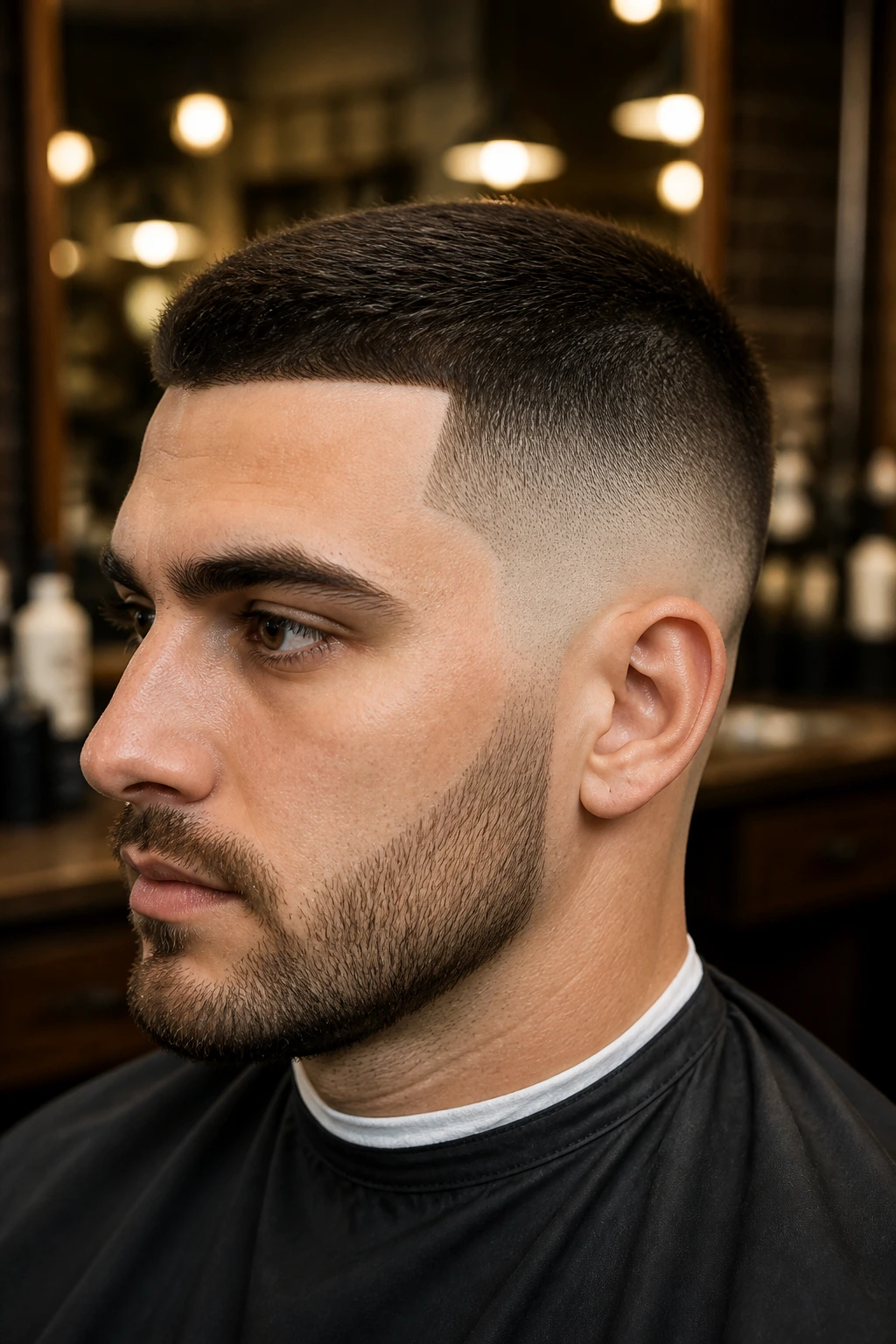
The best crew cuts do not try to be dramatic. They try to be precise. That precision can look old-school, modern, sharp, relaxed, or even a little rugged, depending on where the fade sits and how much room stays on top for the hair to move.
That’s the part people miss. A crew cut is not one haircut. It is a shape family. Once you know how to steer the top length, the fade height, and the front line, the style opens up in a way that feels almost unfairly useful.
Pick the version that matches your hair, your face, and the amount of maintenance you’re willing to live with. Then keep the edges honest. That is where the haircut earns its keep.
