



A blonde fade can look expensive, or it can look like someone took clippers to the sides and hoped the bleach would carry the whole thing. The difference is in the balance. When the fade is tight and the blonde tone is chosen with a little restraint, the cut gets that bright, sun-kissed look that reads clean from across the room and even cleaner up close.
That contrast is why blonde fade haircuts keep showing up in barbershops. The faded sides give structure. The lighter top catches the eye. And when the length on top, the fade height, and the shade of blonde all work together, the haircut does more than sit there looking “nice.” It sharpens the face, shows off texture, and makes even a simple crop feel deliberate.
The tricky part is that blonde magnifies everything. A weak fade looks weaker. A brass-heavy bleach job looks louder than you meant. A badly chosen toner can make the whole style feel flat instead of bright. So the best versions are the ones that know exactly where the weight should be, how much scalp to expose, and how warm or cool the blonde should run.
Why These Blonde Fade Haircuts Work So Well
Contrast does the heavy lifting here. Blonde on top and darker skin or shorter faded sides create a clean visual break, which is why these cuts read sharp even when the styling stays casual.
The fade keeps the color from feeling heavy. A brighter blonde can swallow the whole haircut if the sides stay bulky. Taking the sides down to a skin fade, taper, or low blur keeps the shape crisp.
Texture shows up better in lighter hair. Crops, quiffs, curls, and fringes all look more defined once the blonde catches light across the ends.
You can push the style soft or bold. A rooted beige blonde with a low taper feels relaxed. A platinum skin fade with a lineup is louder and more exact.
The cut grows out in a useful way. Even after the fade softens, the lighter top still reads as intentional instead of messy, which buys you a little more time between appointments.
1. Platinum Skin Fade with a Sharp Line-Up
This is the one people notice first. The top is pale, almost white in good light, and the skin fade underneath gives it a hard edge that makes the whole haircut feel engineered. It works best when the top stays short enough to look crisp but long enough to show a little texture, usually around 1 to 1.5 inches.
Ask for a clean skin fade down to a foil shaver, plus a squared or lightly rounded line-up at the forehead. If your barber leaves too much bulk at the temples, the brightness on top loses its punch. The point is contrast, not weight.
On coarse hair, this cut looks even sharper because the hair keeps a little body after bleaching. On fine hair, it can go limp if you overload it with shiny product. Use a matte paste, not gel. The blonde should look bright, not greasy.
2. Ash Blonde Taper Fade
Ash blonde has a cooler, smokeier feel than golden blonde, and that makes this cut look calmer than a platinum skin fade. The taper keeps some softness around the neckline and sideburns, which is a good move if you want the blonde to feel grown-in rather than severe.
A barber should leave more length through the crown and take the taper low around the ears. That small change matters. A taper fade lets the top color do the talking without the sides disappearing into bare skin.
This is a smart pick if your hair naturally pulls orange when lightened. The ash tone cools that down. It also suits guys who wear sweaters, denim, or muted colors a lot — the haircut doesn’t fight the rest of the outfit.
3. Bleached Buzz Cut Fade
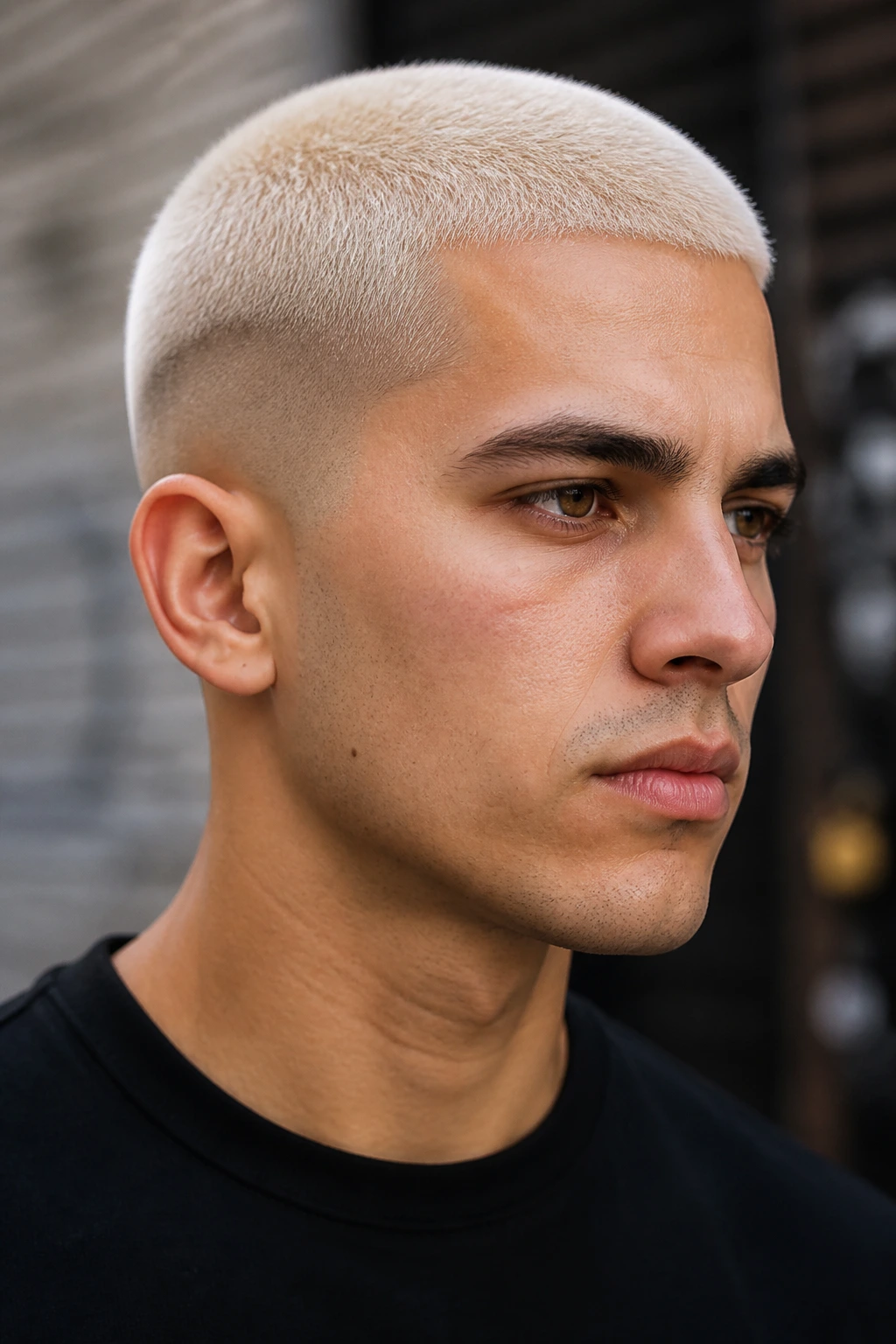
Short. Blunt. Honest. A bleached buzz cut fade strips the style down to the shape of the head and the brightness of the color, which is exactly why it works. With a #1 or #2 guard on top and a clean fade on the sides, there’s nowhere for sloppy blending to hide.
If you have a strong hairline or a good skull shape, this cut pays that off. If your crown has a flat spot, the buzz length keeps it from standing out too much. The bleach should be even, though — patchy lift is obvious at this length.
Keep the tone close to beige or platinum rather than yellow. Short blonde hair can turn brassy fast under daylight, and buzzed length leaves no room for distraction. A little purple shampoo once a week helps, but don’t overdo it or the hair starts to look dull.
4. Brushed-Up Blonde High Fade
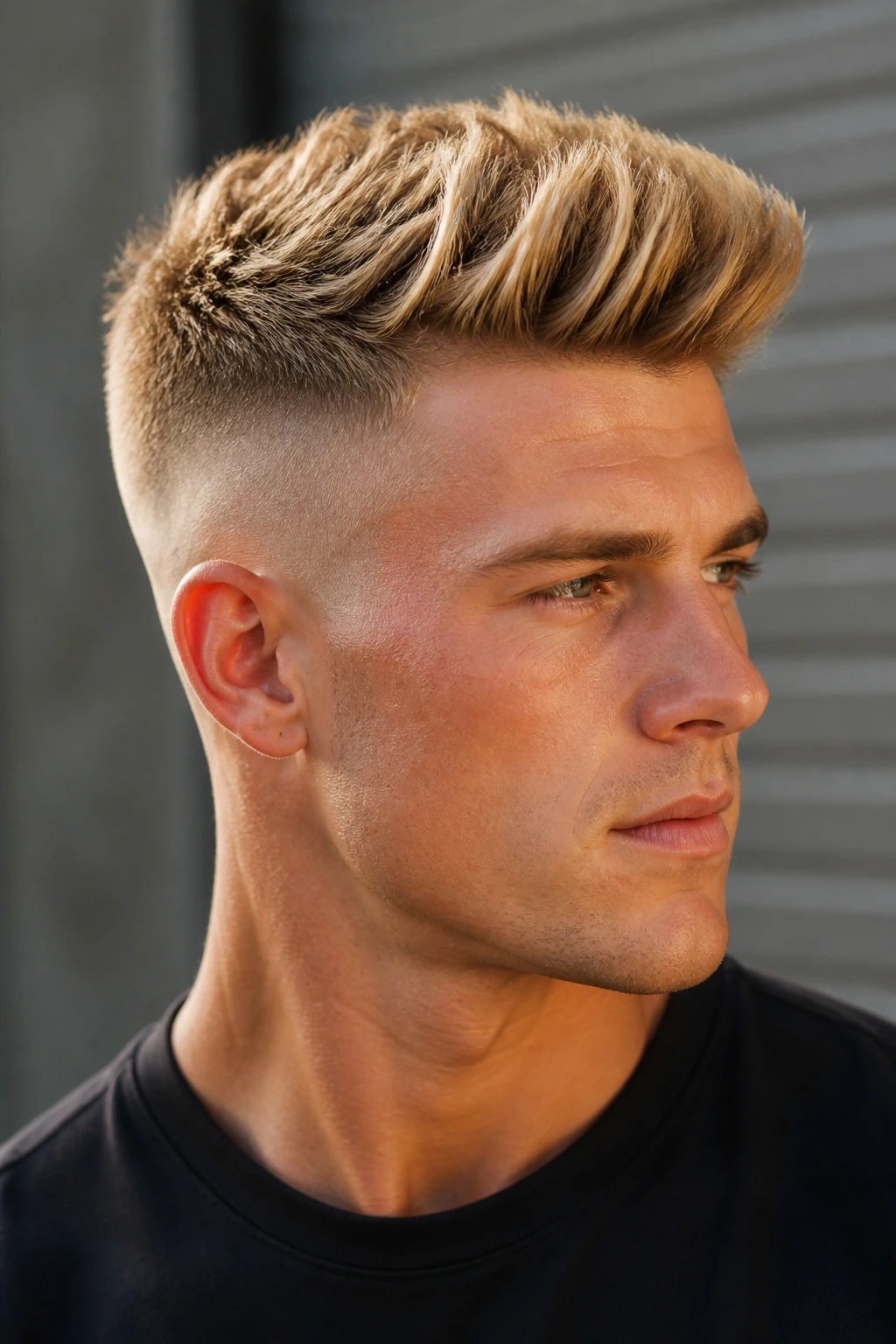
Here the fade is the frame and the brushed-up top is the picture. The height gives the blonde a lifted, airy feel, especially if your hair has enough density to stand without falling flat. A high fade around the temple makes the top look even taller.
This cut likes a blow-dryer. Finger-comb the hair up while it’s damp, then hit it with a vent brush and warm air. That takes the roots from floppy to shaped in a way product alone usually can’t manage.
Best for: thick hair, rounder faces, and anyone who wants the top to look purposeful even on low-effort days.
Tell your barber: keep the fade high and tight, but don’t carve the top into a perfect helmet. A little irregularity in the texture is what keeps the style from looking dated.
5. Blonde Textured Crop with a Drop Fade
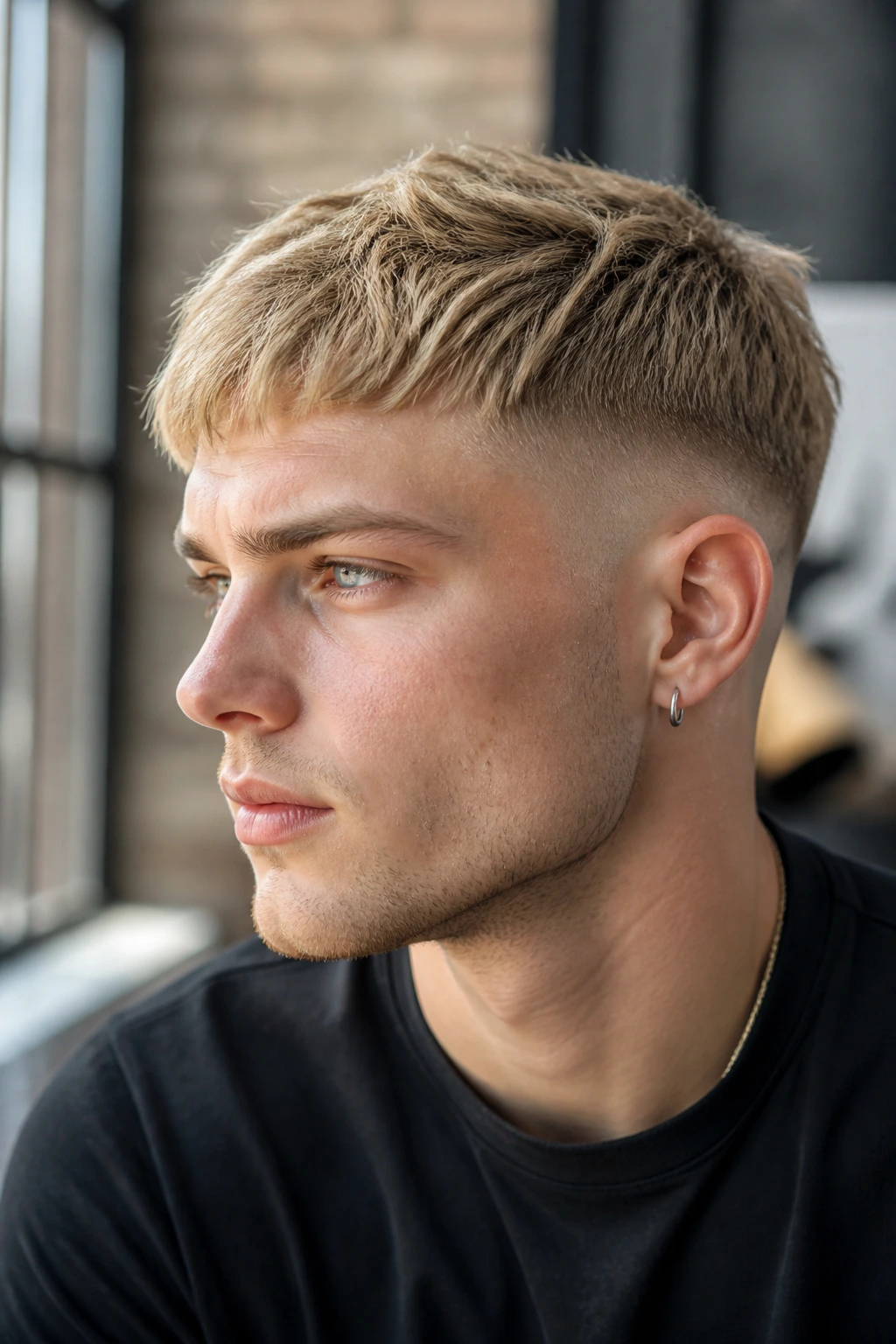
A textured crop in blonde has a certain roughness that works in its favor. The fringe sits forward, the top is chopped into short, uneven pieces, and the drop fade curves lower behind the ear instead of cutting a straight line across the head. That curve gives the haircut shape from the side, which a straight fade sometimes misses.
This one is especially good if your hair has stubborn cowlicks. The cropped length helps control them. The blonde shade should sit in the sandy-to-beige zone; stark platinum can make the texture look brittle if the top is too choppy.
A dab of paste is enough. Too much product makes the fringe stick together, and then the whole point of the crop disappears. You want separation at the ends, not a slick blanket.
6. Golden Blonde Mid Fade Quiff
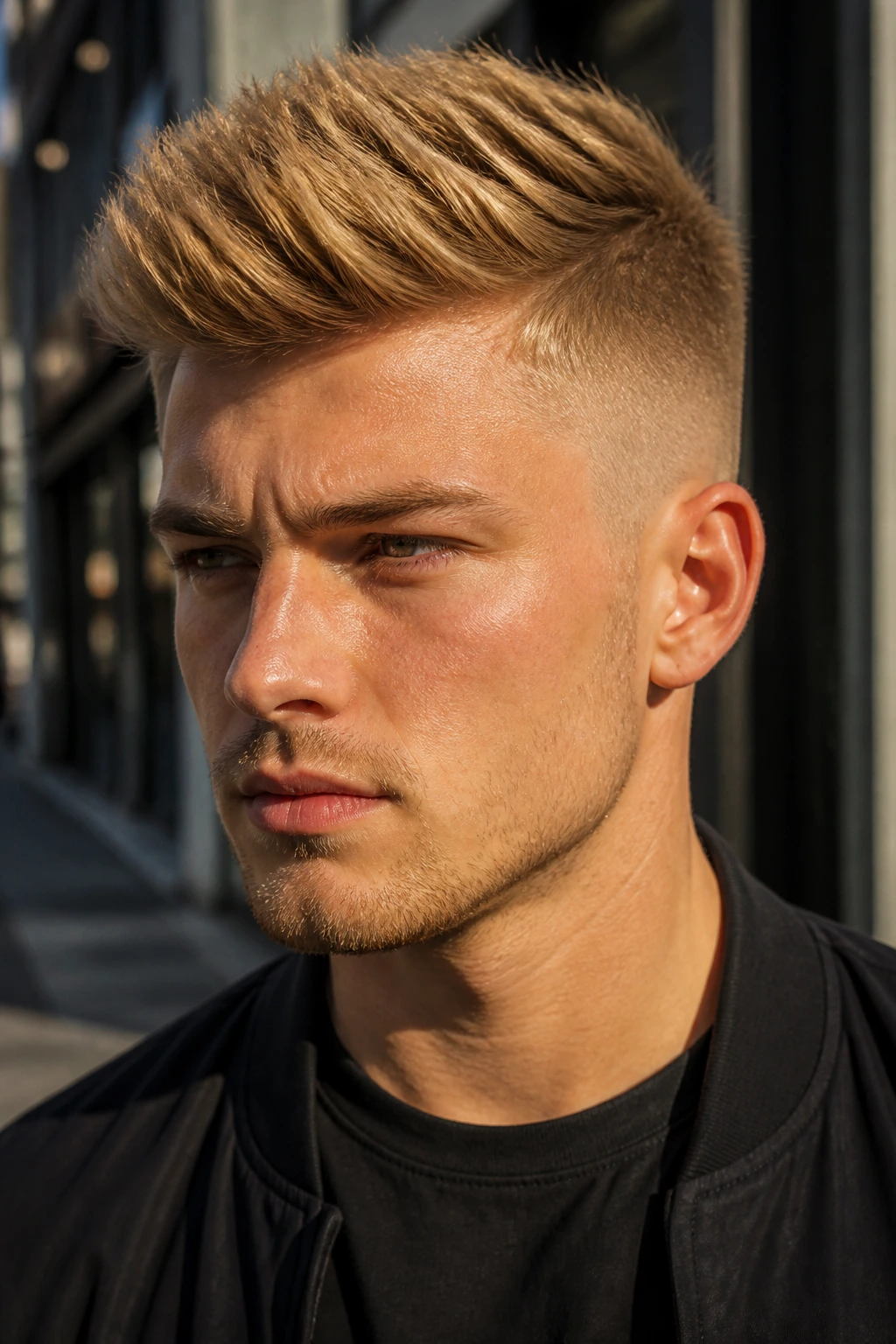
Golden blonde is warmer, softer, and a little more old-school than icy platinum. Put it on a mid fade with a quiff, and the result feels bright without looking bleach-heavy. The quiff adds height at the front, which works well if you want the face to look a bit longer.
This haircut likes hair that can be trained back with a bit of resistance. Blow-dry the front upward and slightly backward, then use a medium-hold matte cream or clay. A wet-looking product kills the quiff shape fast.
The mid fade is the useful part here. High fades can make a quiff feel too exposed. Low fades can leave the sides too heavy. Mid gives you that middle ground where the warmth of the blonde can actually show.
7. Icy Blonde Burst Fade Mohawk
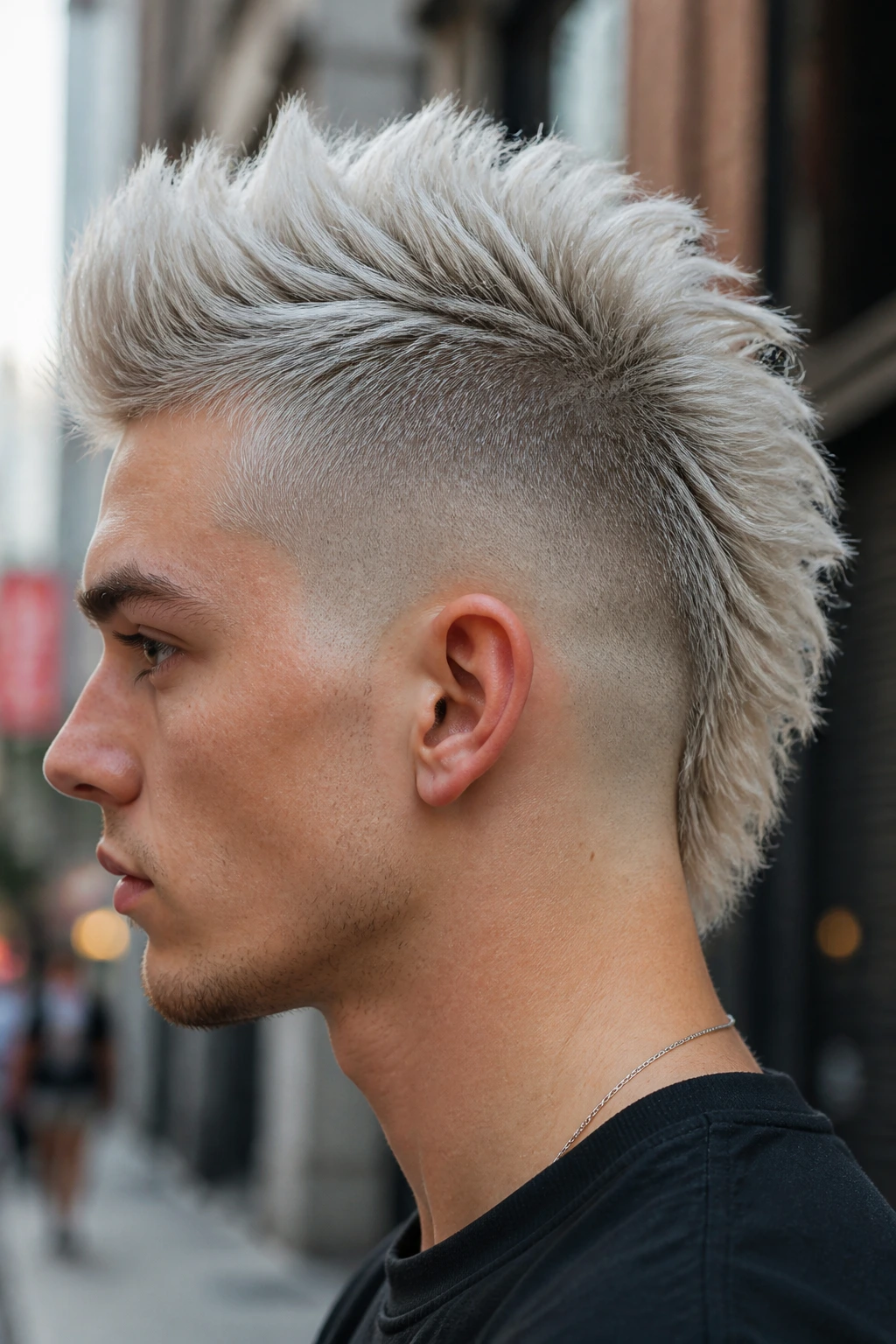
A burst fade curves around the ear and leaves a strip of length through the center, so the haircut already has motion built in. Add icy blonde on top, and the shape starts looking electric. It is not a quiet style. It never has been.
This works best when the top is kept narrow and the sides are cut close around the ear so the mohawk line stays defined. The blonde should be pale enough to look intentional, because a yellow-toned burst fade mohawk can go from bold to messy in one bad tone job.
If you have straight hair, a little upward texture keeps the strip from lying flat. Curly or wavy hair gives this style more lift for free. Either way, the burst around the ear is the part that makes the cut interesting.
8. Sandy Blonde Low Fade with a French Crop
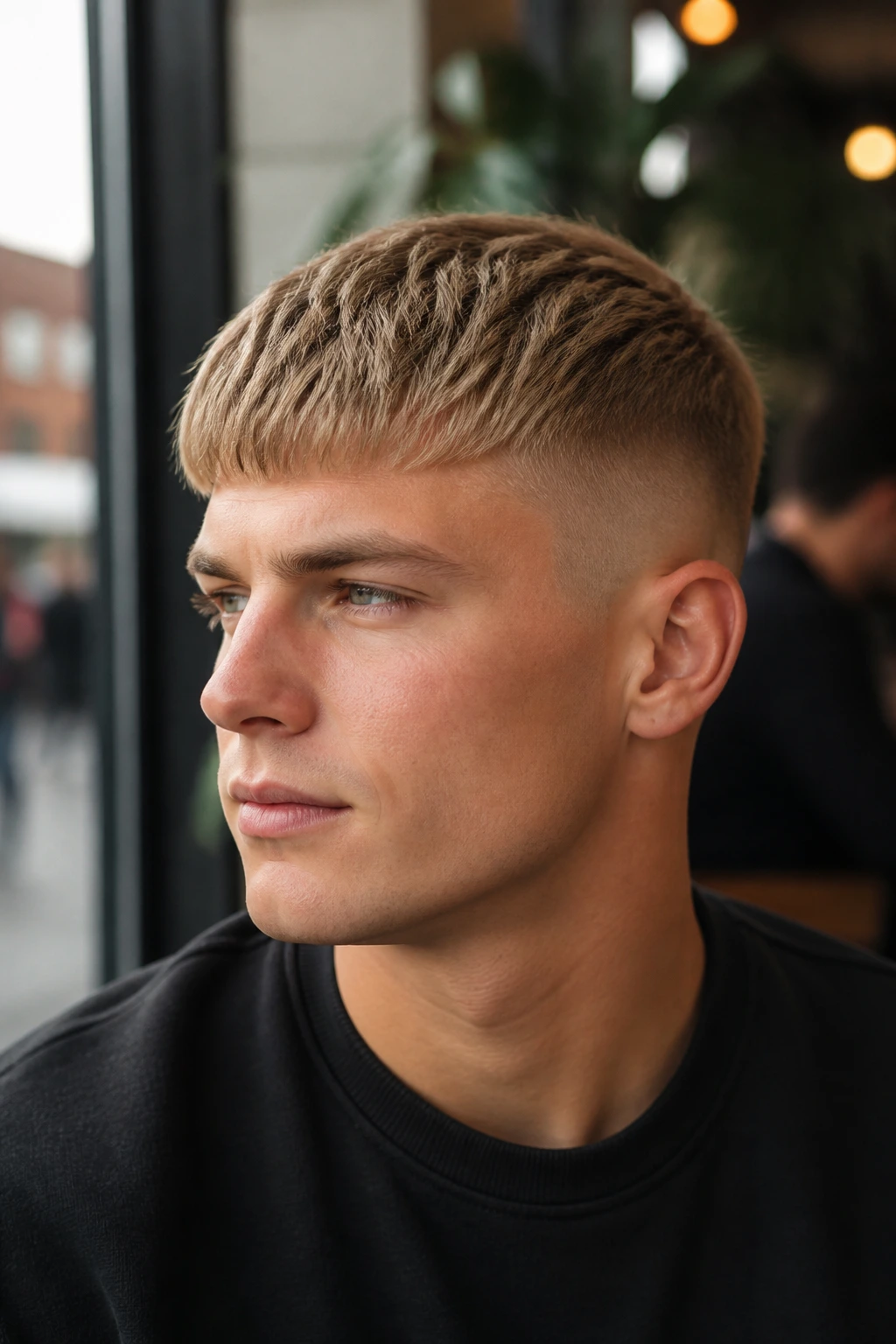
The French crop is already one of the easiest cuts to wear. Put it in sandy blonde with a low fade, and it gets a little sun-warmed without losing that neat, cropped shape. The fringe is short and blunt, which gives the face a cleaner line than a longer textured fringe.
This is a smart choice if you want blonde without screaming for attention. The low fade keeps the sides tidy, and the sandy tone avoids the metallic look that some lighter blondes pick up. It’s one of the better options for guys who want color but do not want to fight it every morning.
Keep the top short enough that the fringe sits naturally. If it gets too long, the crop turns into an awkward forward sweep. A light clay is all you need. Heavy product will make the crop collapse.
9. Blonde Faux Hawk Fade
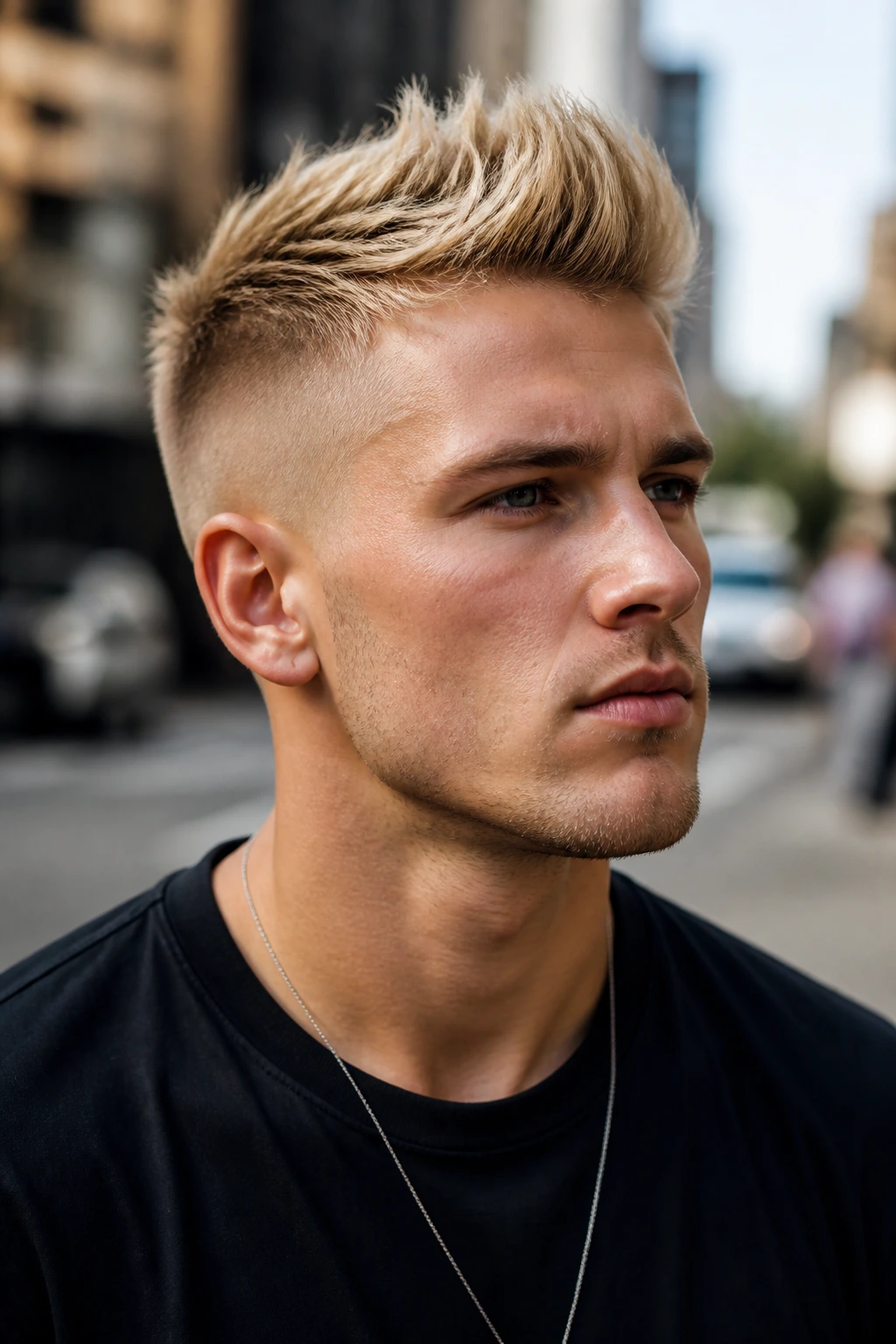
A faux hawk fade has that same center-strip energy as a mohawk, but it softens the edges enough to wear in more places without looking like you’re trying too hard. The blonde color helps because it lights up the ridge through the middle and gives the style some height even when it’s not spiked.
The key is tapering the sides low enough to narrow the silhouette, but not so low that the top looks isolated. If the strip is too wide, the faux hawk loses its point. If it’s too narrow, it looks costume-like. The sweet spot sits in the middle.
This one likes a touch of grit. Sea salt spray before blow-drying gives the top enough hold to lift without turning into helmet hair. That is the difference between a faux hawk that looks alive and one that looks stiff.
10. Strawberry Blonde Temple Fade
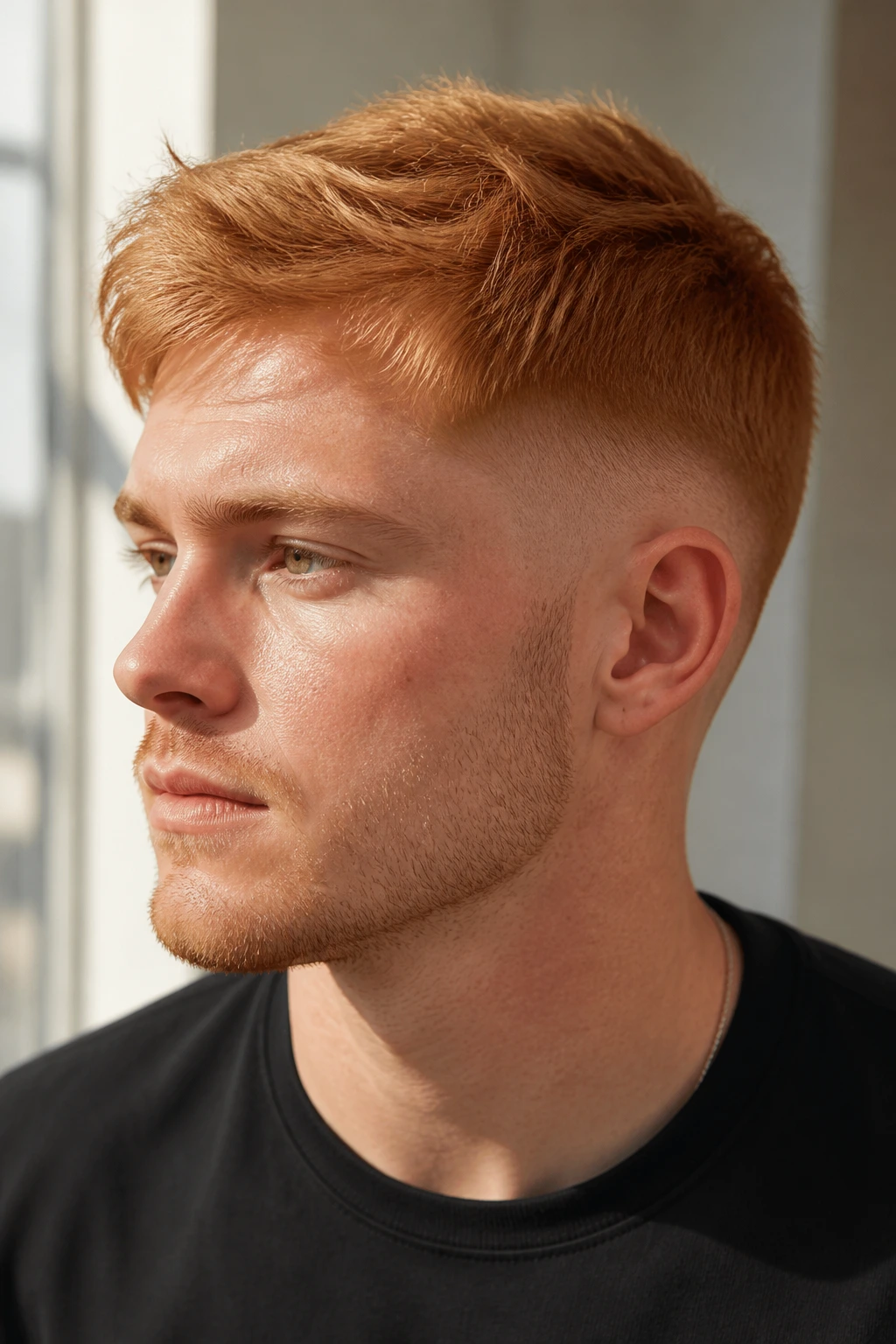
Strawberry blonde brings warmth that a lot of lighter cuts miss. It sits somewhere between copper and blonde, which makes the temple fade look softer and a little more natural than a full platinum job. The fade around the temples cleans up the edges without stealing the warmth.
This cut is flattering when the hairline has a bit of irregularity, because the temple fade can tidy the corners without drawing a hard box around the face. The color is the real charm here. Under daylight, strawberry blonde picks up gold, rose, and soft copper notes all at once.
If your skin tone runs warm, this shade usually lands well. Keep the finish matte. Too much shine can make strawberry tones look orange instead of rich.
11. Shadow Root Blonde Fade
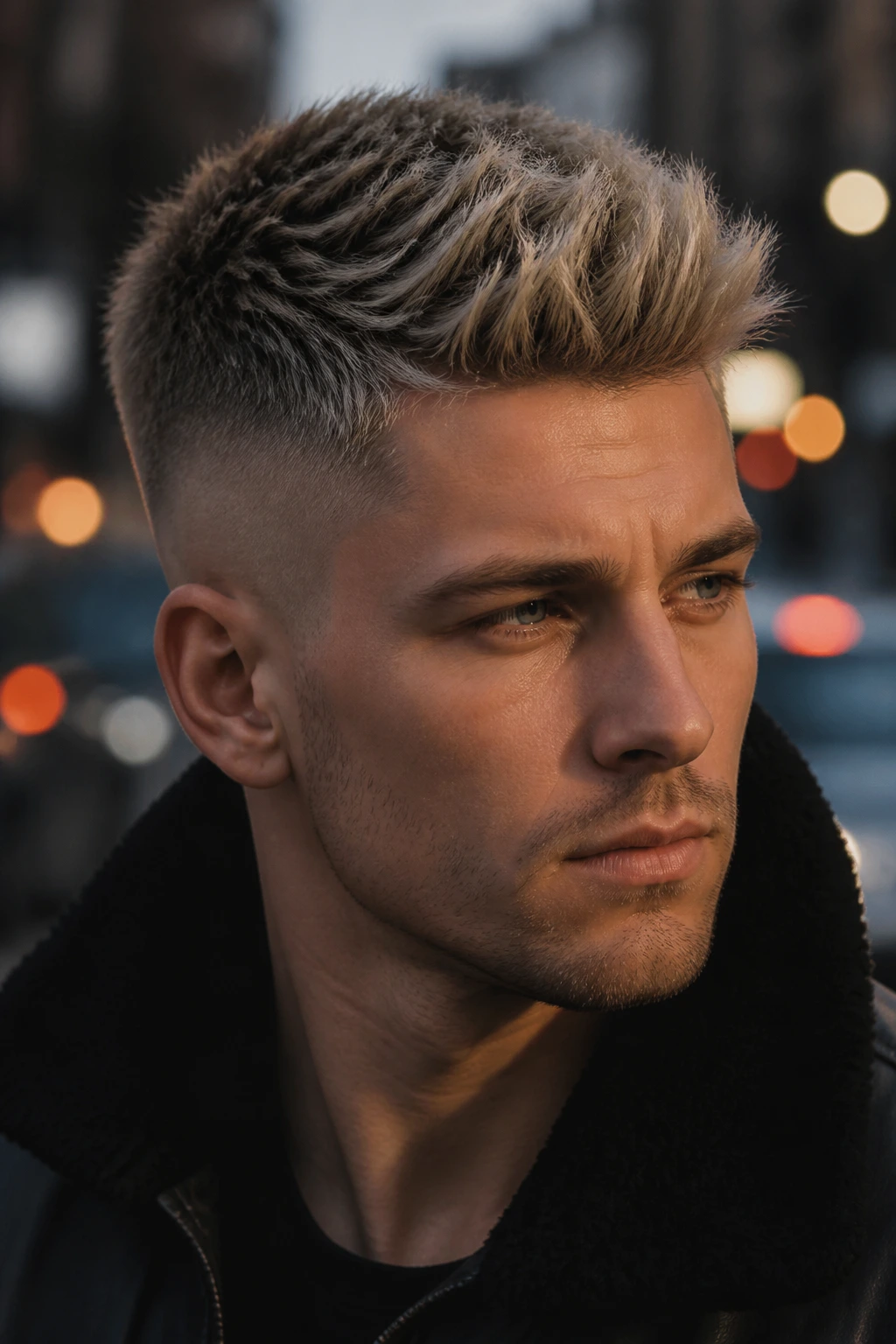
A shadow root is the barber and colorist’s way of keeping the blonde from looking overprocessed. The roots stay darker, the mids and ends are lighter, and the fade on the sides ties the whole thing together. The result feels deliberate, not fried.
This style is especially useful if you don’t want to touch up every few weeks. The darker root blur hides grow-out at the crown and makes the blonde look more dimensional. On straight hair, it gives depth. On wavy hair, it adds movement without extra effort.
Do not chase the lightest possible blonde here. The darker root is part of the design. If everything goes white, you lose the contrast that makes the cut interesting in the first place.
12. Bleached Side Part Fade
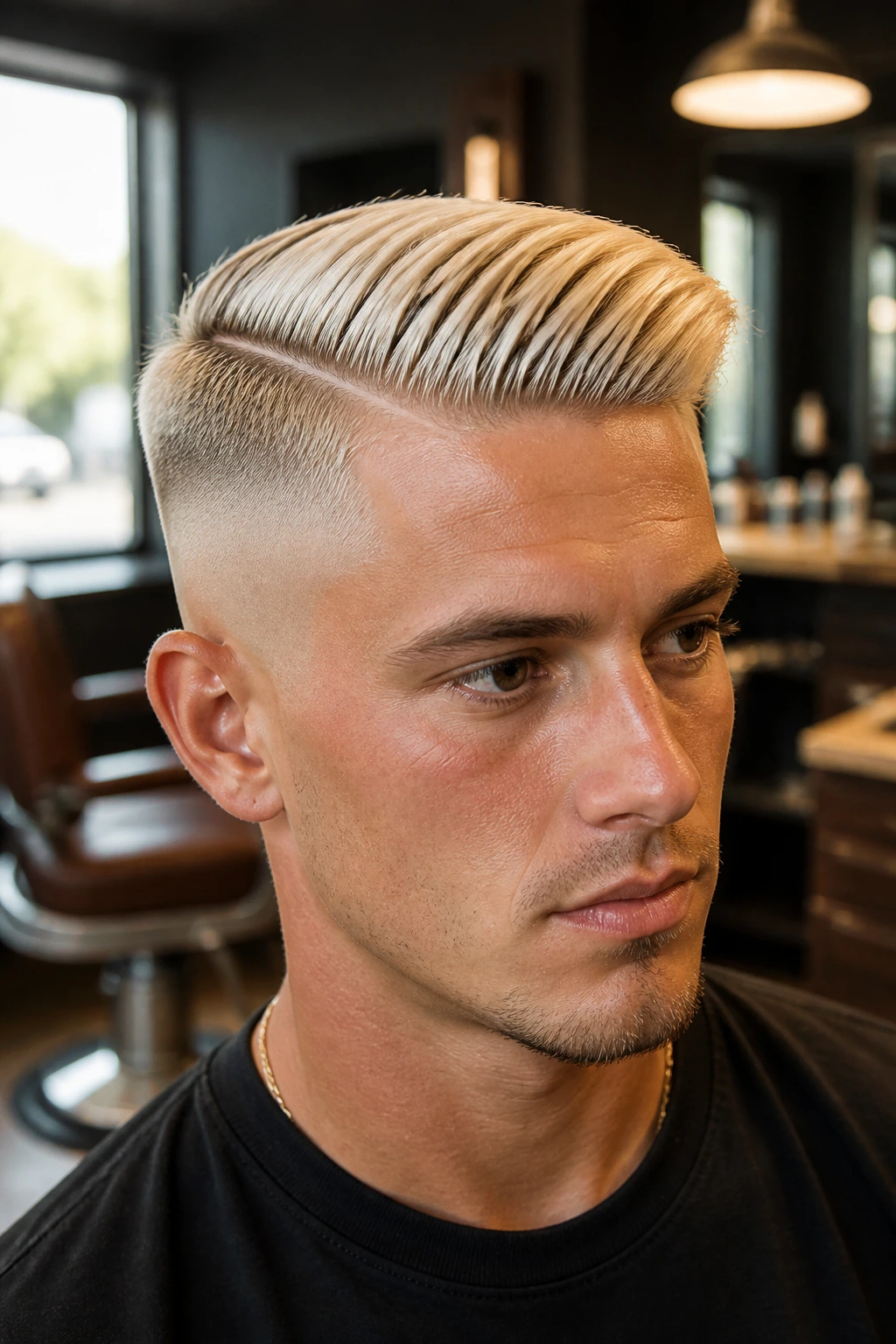
There’s something satisfying about a side part that knows exactly what it’s doing. Add a clean fade and a bleached top, and the haircut gets that polished, almost tailored look that works with a jacket as easily as it does with a hoodie. The part line creates structure, the blonde keeps it from feeling too stiff.
This style needs enough top length to sweep over cleanly — usually 3 to 4 inches. Shorter than that and the part looks accidental. The fade can be low or mid depending on how much scalp you want showing.
A side part fade can look too formal if you use the wrong product. Go with a lightweight cream or matte pomade. You want control, not a wet shell.
13. Curly Blonde Fade
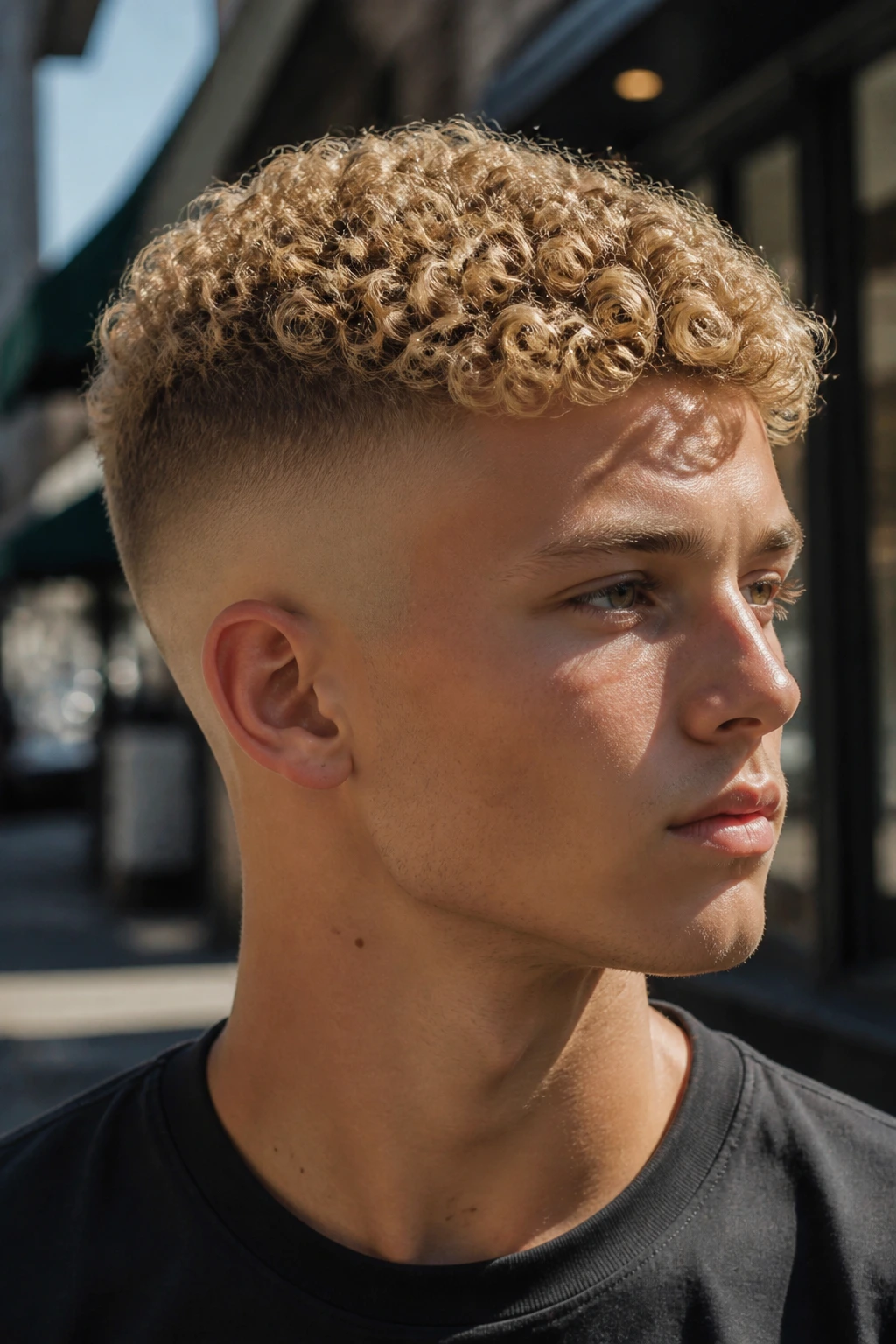
Curly hair and blonde color are a better match than a lot of people expect. The fade trims down the sides so the curls stay the focus, and the lighter color catches every coil and bend. If the bleaching is done evenly, the curl pattern looks fuller, not flatter.
The main caution is porosity. Curly hair often lightens fast in the ends and slower near the roots, so the tone can go uneven if the process is rushed. That’s why this cut is best when the blonde is chosen with a little softness — beige, honey, or pale gold usually looks better than harsh white.
Let the curls live. Don’t over-stretch them with too much blow-drying or product. The fade already gives the haircut shape; the curls should give it life.
14. Wavy Blonde Taper Fade
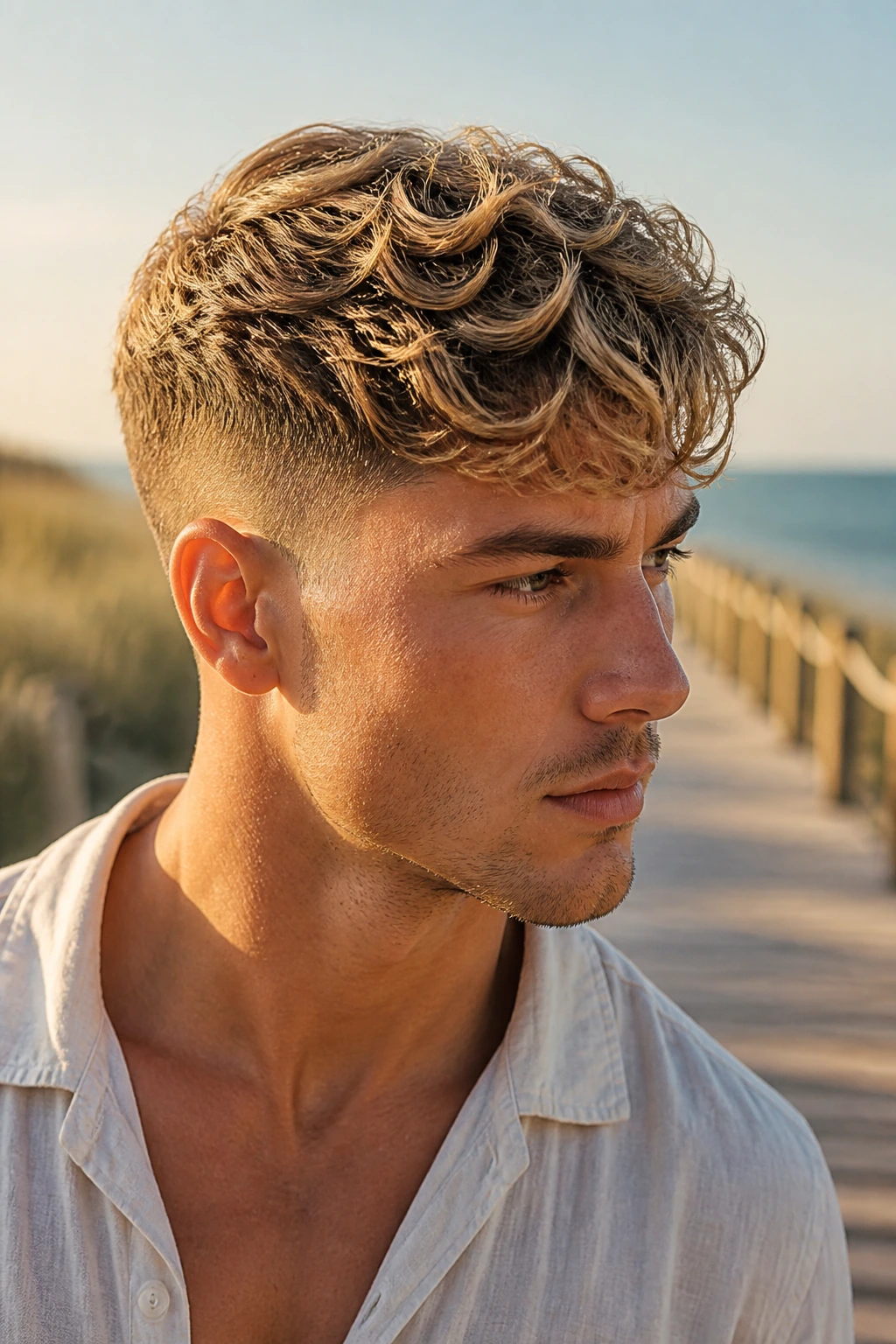
Waves can make a blonde fade look almost beach-lit, but not in a cheesy way. The taper keeps the ears and neckline clean while the top stays loose enough for the movement to show. A wavy blonde cut is one of the easiest ways to get that sun-kissed look without a heavy bleach-and-go vibe.
This works best when the top is left long enough to bend naturally, usually 2 to 4 inches depending on the wave pattern. The blonde should stay in the sandy or beige family so the waves don’t get lost in too much brightness.
Scrunching in a little cream while the hair is damp can help define the wave without turning it crunchy. If your hair dries frizzy, a diffuser on low heat is worth the time.
15. Blonde Crew Cut with Mid Skin Fade
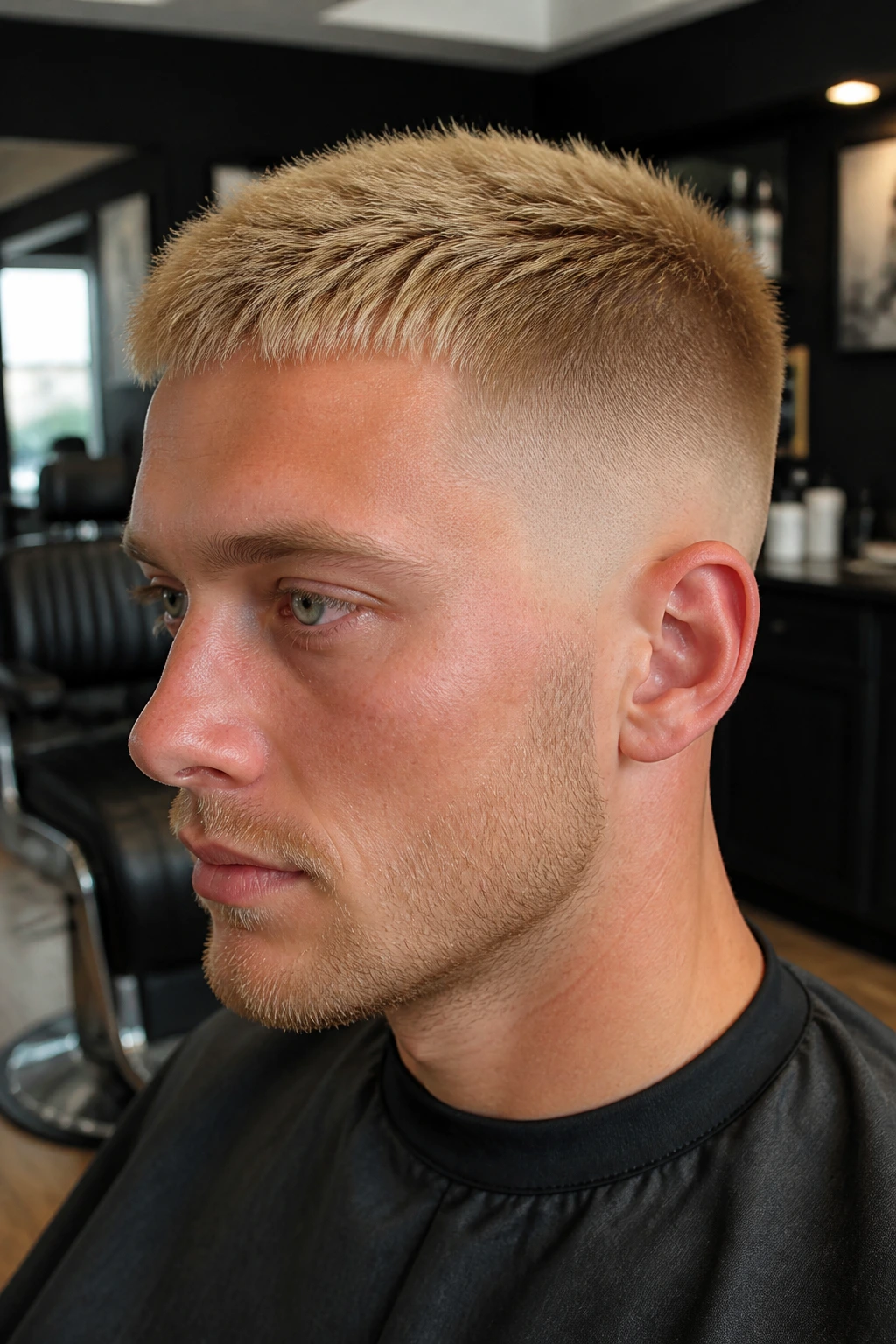
A crew cut keeps things short and tidy, but blonde changes the whole read of it. Suddenly the cut looks lighter, sharper, and less military. The mid skin fade pulls the sides down enough that the top length shows off the shape of the head instead of getting lost in it.
This is a useful style if you want something low-fuss but not boring. The crew cut can survive a bad hair day better than most blonde styles because there’s less hair to misbehave. But the color still needs care — short blonde hair shows toner issues faster than longer hair does.
If your hairline is strong and your head shape is even, this cut feels especially clean. It is blunt in the best way.
16. Blonde Mullet Fade
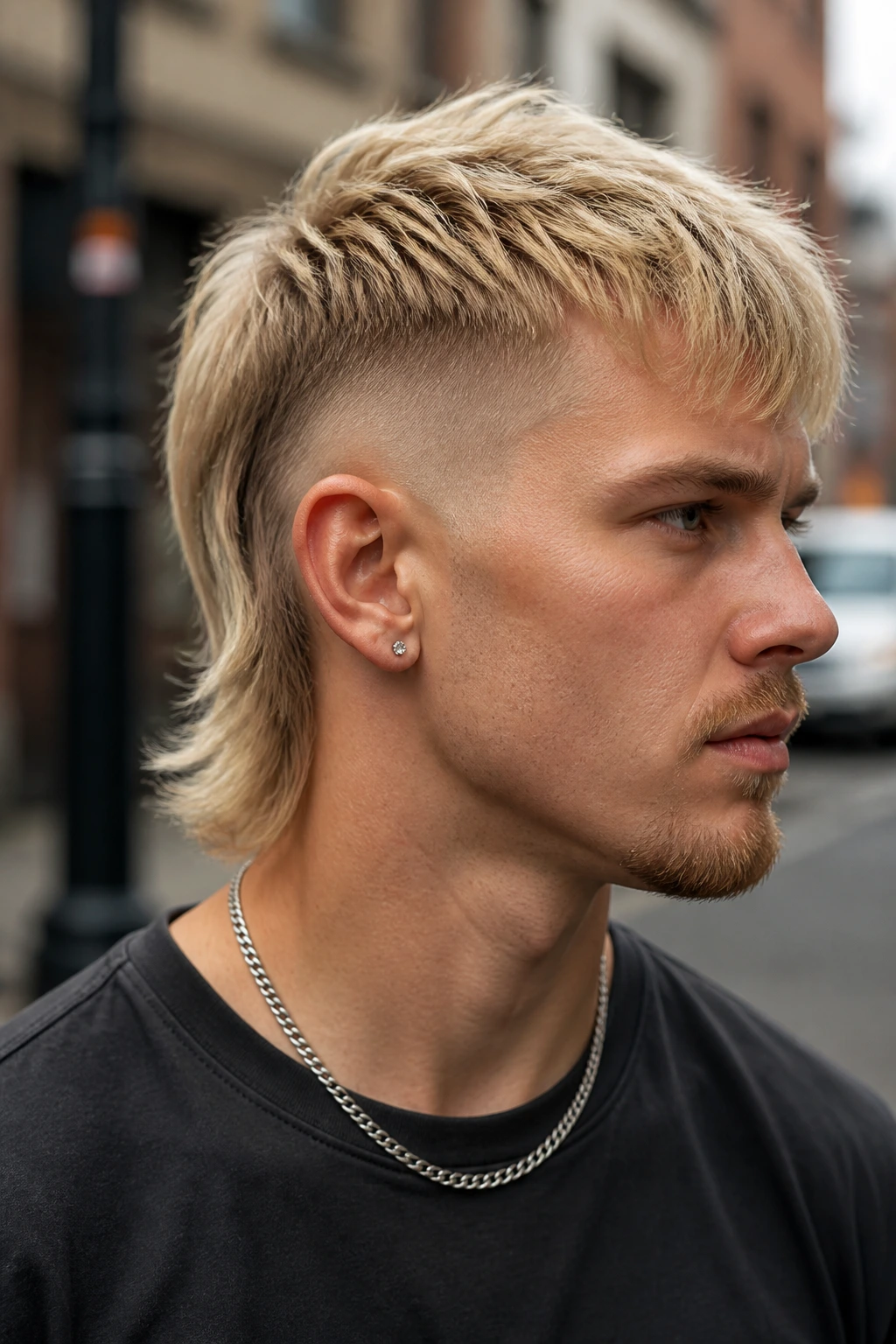
The mullet is still the haircut with the most attitude in the room, and blonde gives it a brighter, more playful edge. The fade in front and around the sides keeps the business end neat, while the length in back adds that unmistakable tail. Bleached or sun-kissed, it works because the shape is already interesting.
This style needs a barber who understands proportion. If the back gets too long too early, the whole cut starts looking like a grown-out accident. The blonde should help define the shape, not blur it. A bit of texture on top keeps the front from lying flat.
It’s a good pick if you want something with movement. Not polished. Movement.
17. Blonde Comb Over Fade
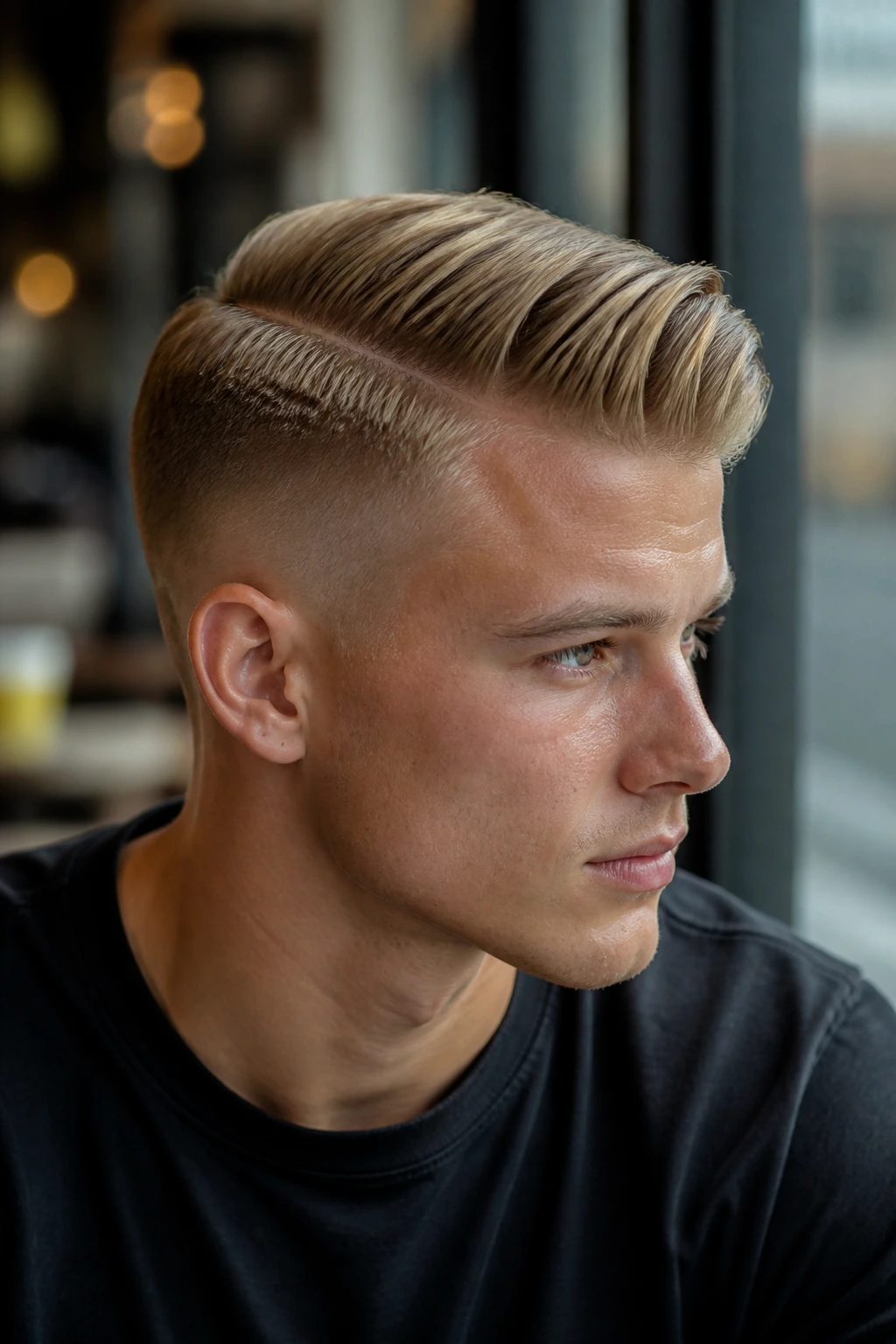
A comb over fade has more structure than most blonde looks, which is why it can feel unexpectedly clean. The parting gives the eye a line to follow, and the blonde on top makes that line look even sharper. It’s especially good when the hair has a little natural volume.
The fade can be high if you want contrast, or low if you want the style to feel softer. The top should stay long enough to comb sideways without forcing it. Too short, and the shape looks clipped instead of swept.
This cut also benefits from a calmer blonde tone. Champagne, wheat, or light beige tends to fit the comb-over shape better than icy platinum, which can make the style feel too stark.
18. Bleach-Heavy Textured Fringe Fade
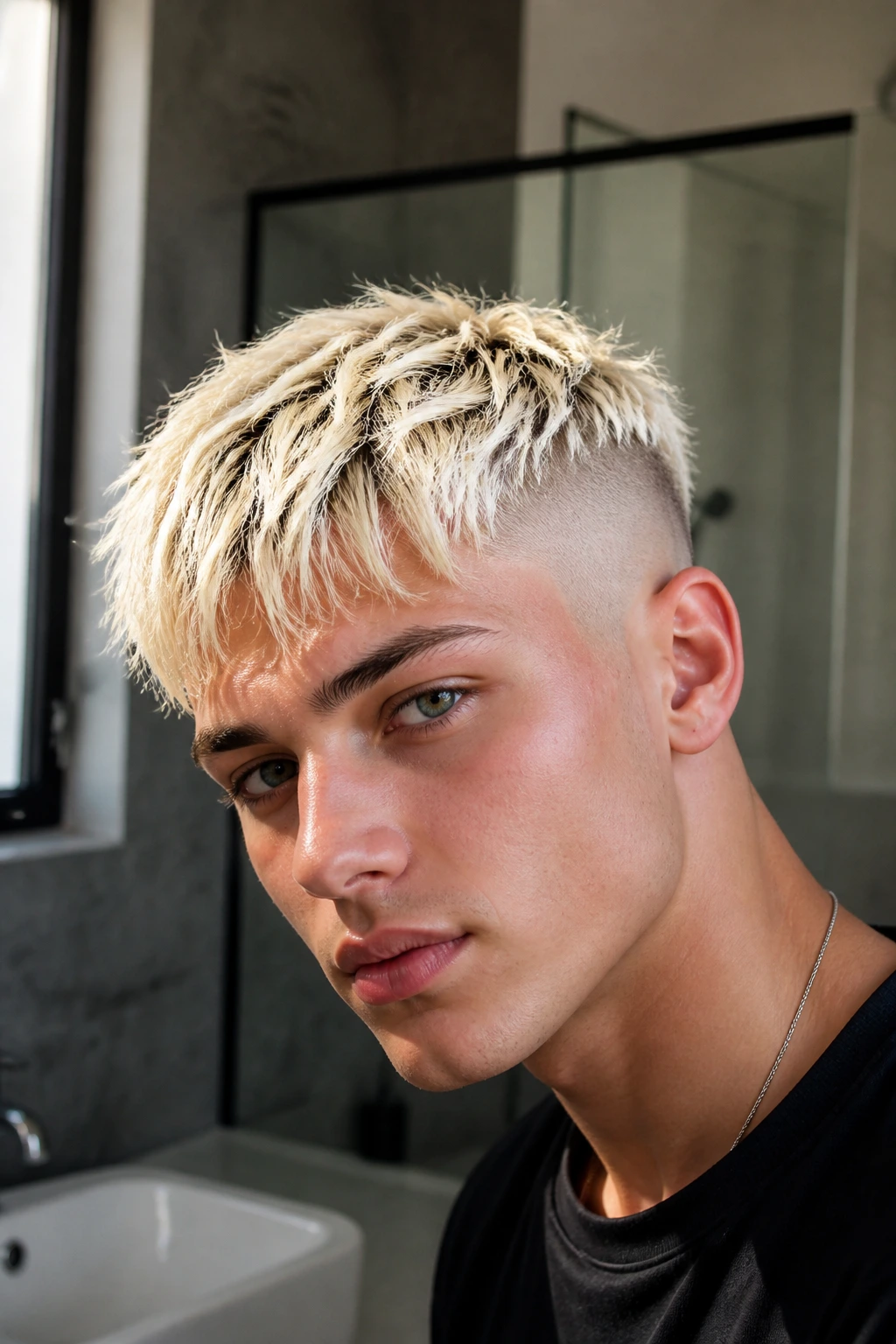
A textured fringe with heavy bleaching can look rough in the best possible way. The fringe falls forward in broken pieces, the fade cuts the sides down hard, and the blonde brings the whole top into focus. It is one of the more fashion-forward cuts in the bunch, but it still works on ordinary hair if the texture is handled right.
The fringe should not be pasted to the forehead. It needs separation. That means cutting it with some irregularity and styling it with a small amount of matte paste or powder. The fade underneath keeps the front from feeling too thick.
If your forehead is long or your hairline recedes a little, this can be a useful disguise. Just keep the fringe light, not blunt and heavy. Heavy fringe turns into a curtain fast.
19. Honey Blonde Burst Fade
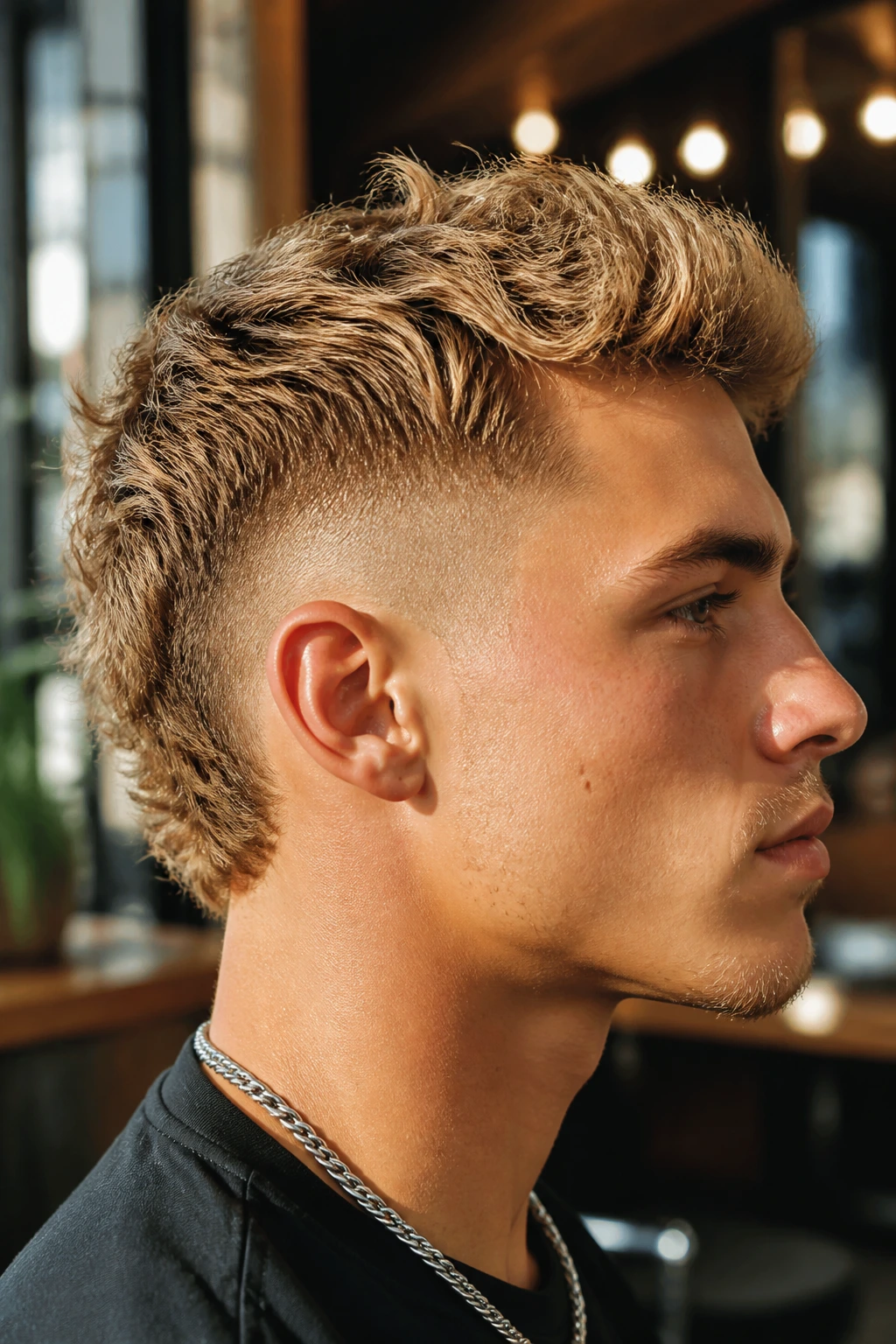
Honey blonde has enough warmth to feel rich without going copper. Put it with a burst fade, and the haircut gets a smooth curve around the ear plus a bright, slightly golden top. It’s a friendlier-looking blonde than platinum, which is part of the charm.
This cut works well on hair with a little density because the honey shade adds the illusion of thickness. The burst fade opens the side profile, so the head shape matters. A clean curve behind the ear helps the whole style feel intentional.
Honey blonde is one of the easiest colors to live with if you do not want a sharp toner schedule. It fades gracefully. That alone makes it worth considering.
20. Platinum Afro Fade
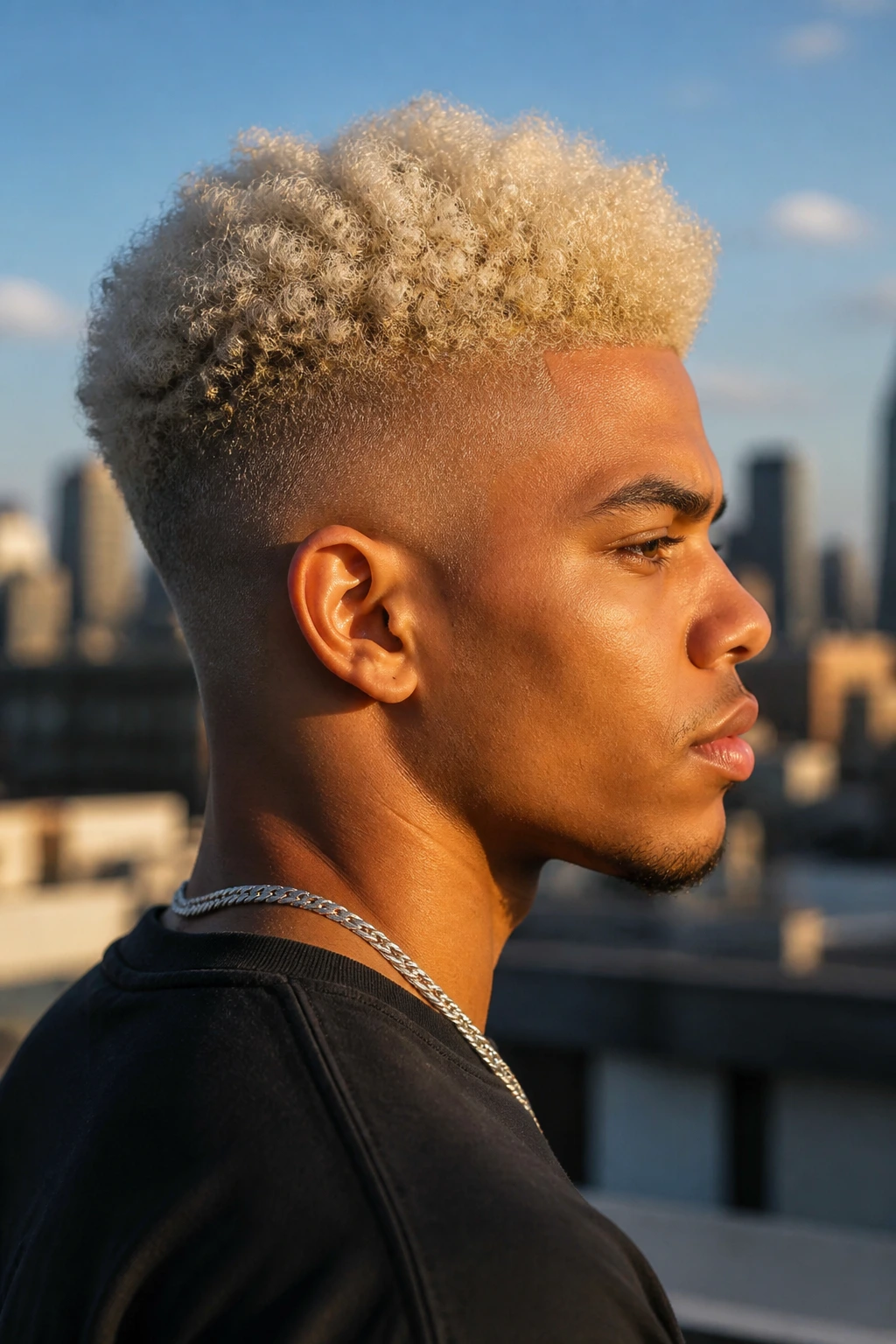
A platinum afro fade is a serious look. The fade removes bulk from the sides and neckline, while the afro shape on top holds the volume that makes the style feel full instead of flat. Platinum color gives the texture a dramatic edge, especially when the coils catch light on the surface.
This is not a cut to rush. Bleaching tightly curled hair needs care because the structure can get dry fast if the process is too aggressive. The best versions keep the top strong and rounded, not over-stretched or thinned out.
A good shape-up at the front and temples matters here. The color will draw attention, but the outline is what keeps it looking controlled.
21. Champagne Blonde Slick Back Fade
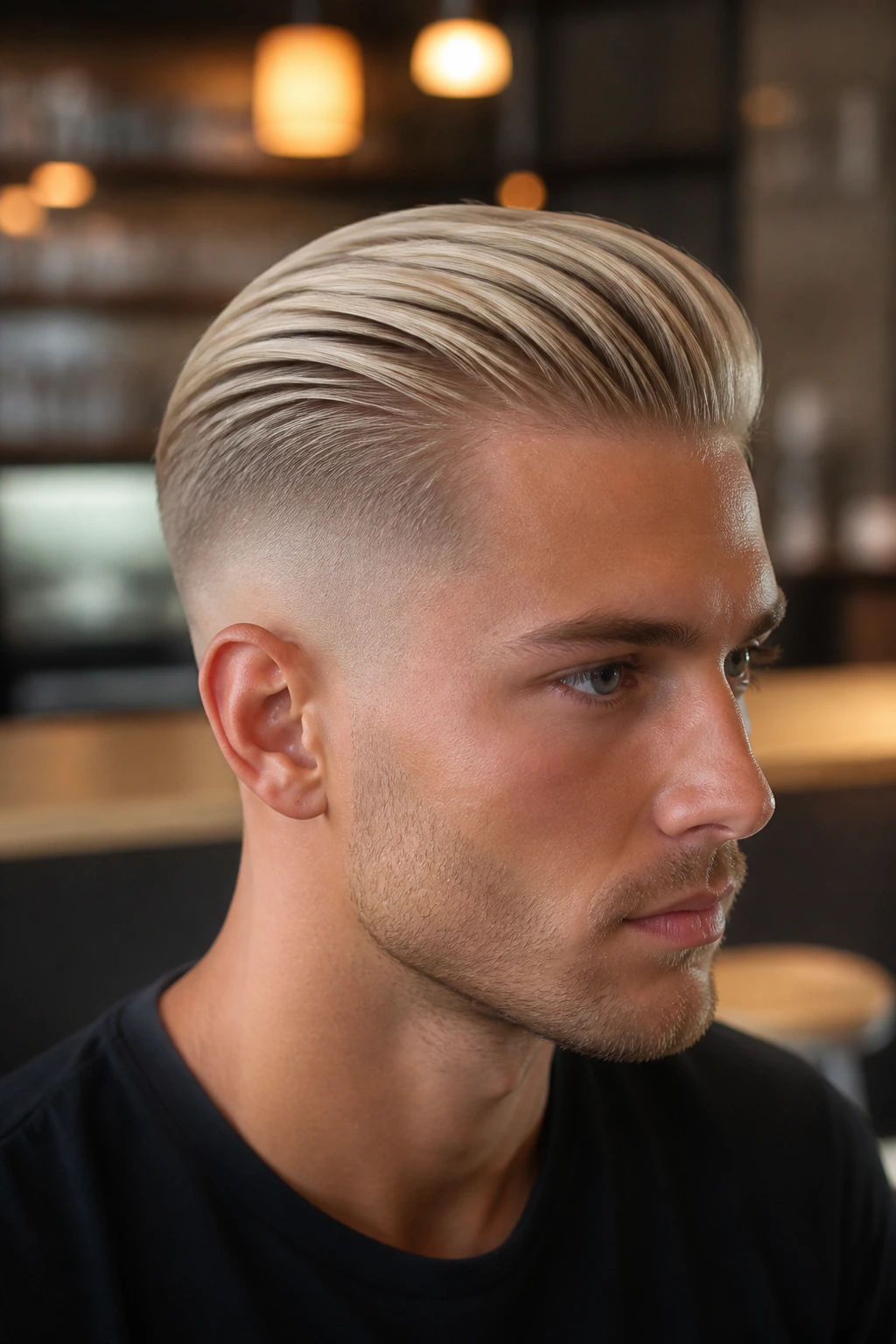
Champagne blonde has a soft, pale glow that sits between beige and gold. On a slick back fade, it can look smooth without feeling too shiny or wet. The fade keeps the sides tight, and the longer top brushes back in a clean line that shows off the color from forehead to crown.
This cut depends on length. You need enough hair on top to sweep backward without fighting the roots. Usually 4 inches or more gives you room to work. A blow-dryer helps, and a lightweight cream or low-shine pomade keeps the style from looking greasy.
If you want a blonde fade that feels a little dressed up, this is one of the easiest routes.
22. Sandy Blonde Ivy League Fade
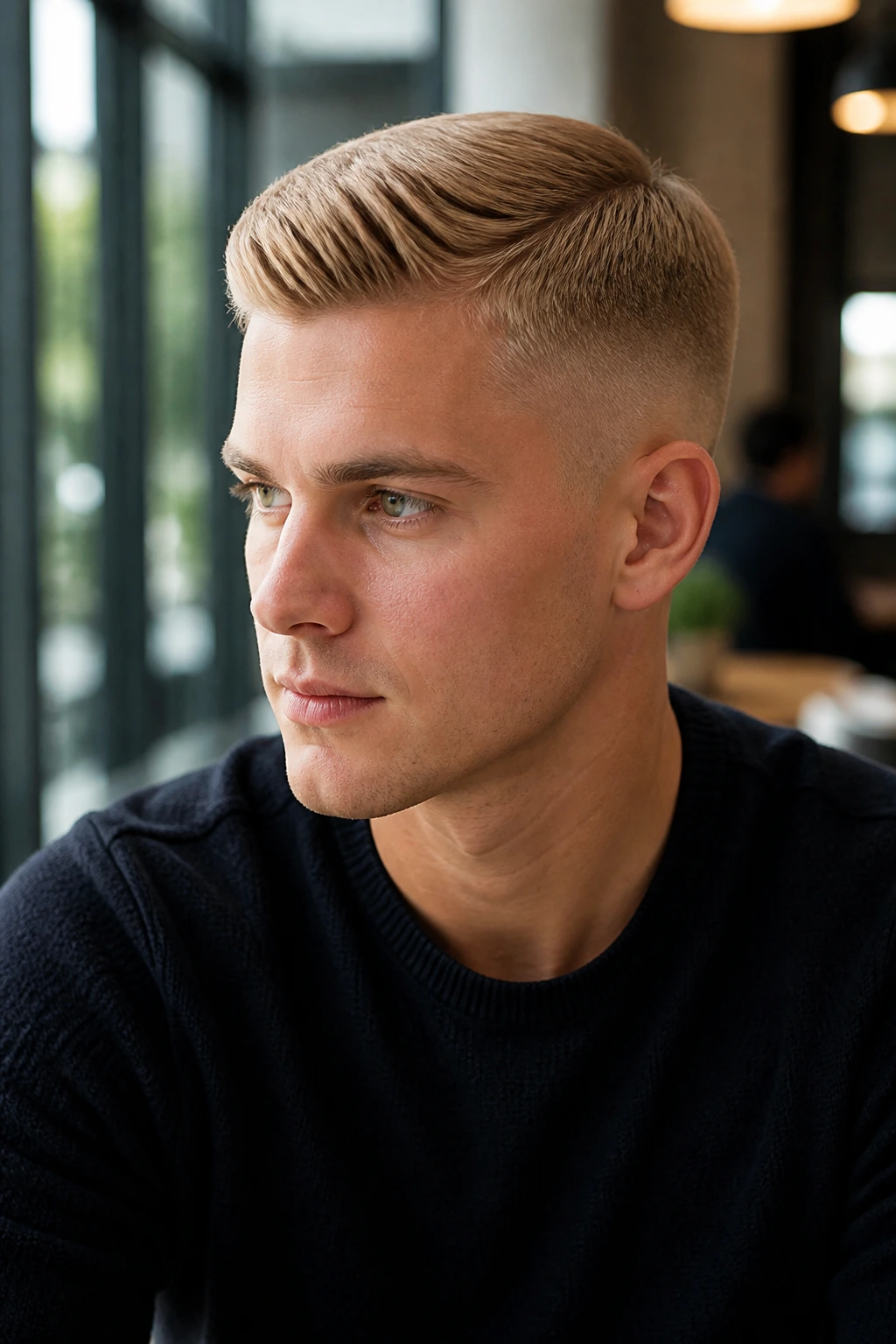
The Ivy League sits between a crew cut and a side part, which makes it a nice middle ground for blonde. Sandy blonde keeps the style relaxed. The fade tightens the sides enough that the top still looks neat when you comb it over or brush it forward.
This haircut is a good fit for people who want clean lines but do not want a harsh look. The sandy tone softens the overall shape, and the side-swept top adds a little movement without needing much product.
I usually like this cut with a low or mid fade rather than a skin fade. The softness at the edges keeps the blonde from feeling too stark.
23. Choppy Blonde Caesar Fade
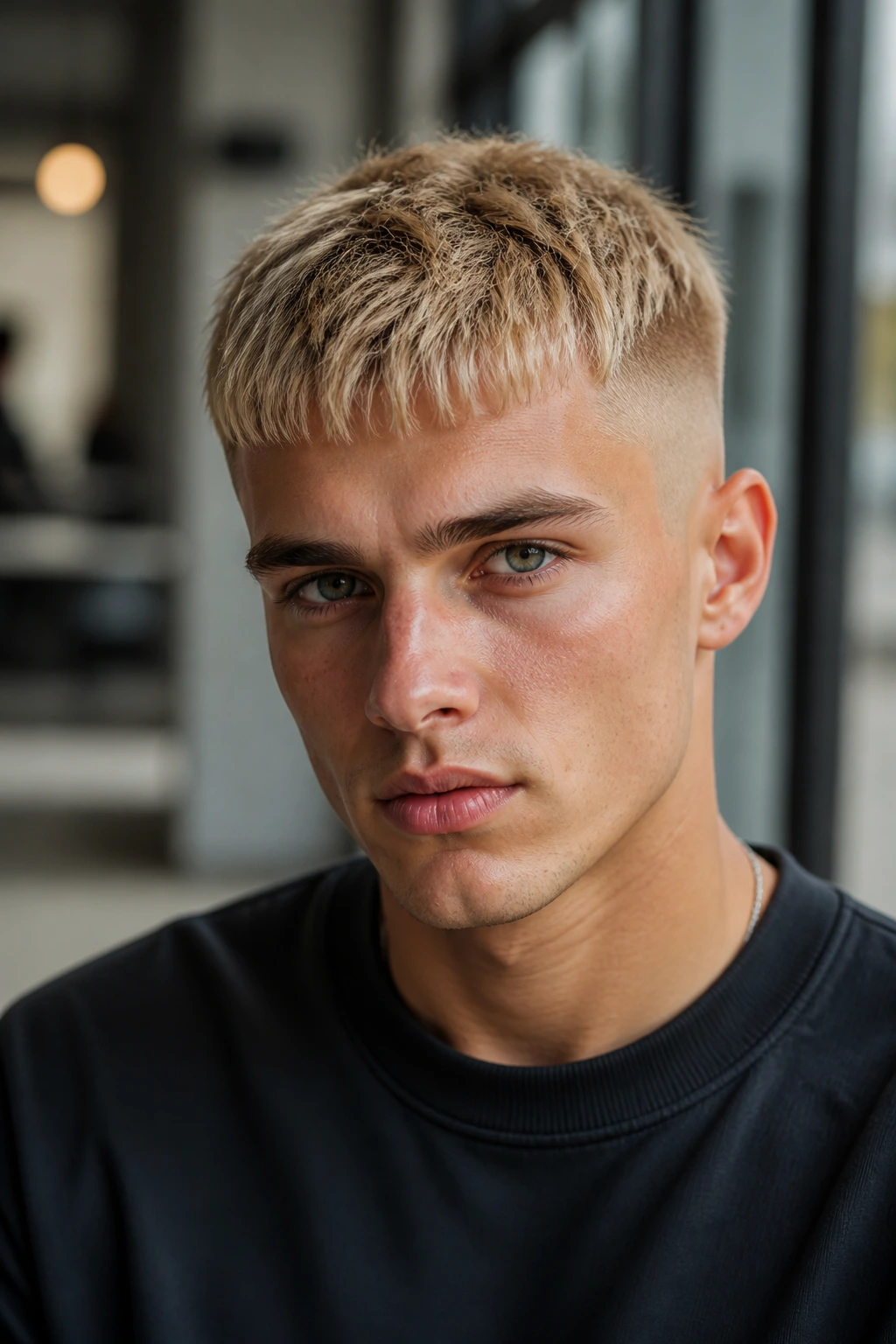
The Caesar is blunt, short, and to the point. Add choppy texture and a blonde finish, and it suddenly feels much less rigid. The fringe stays short and forward, while the fade keeps the sides and back tidy enough that the top can stay the main event.
This is a good choice if you want a low-maintenance blonde cut with structure. The chopped top helps hide minor grow-out, which is useful because blonde roots show earlier than darker ones. A matte product keeps the texture visible.
If the fringe is cut too straight, the style can feel boxy. The choppy version avoids that. It looks better when the ends are slightly uneven and the finish is soft.
24. Silver-Blonde Drop Fade
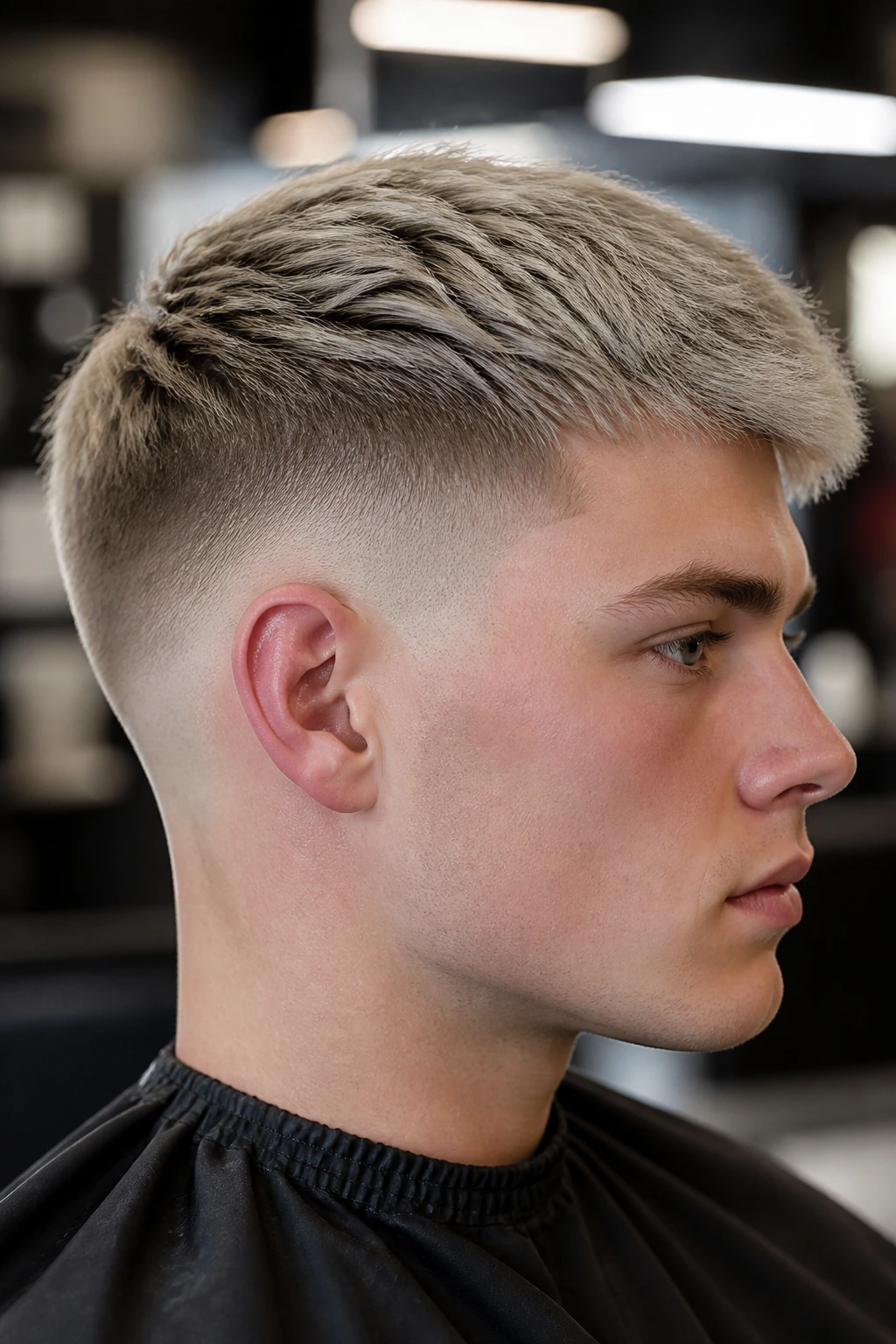
Silver-blonde sits at the cooler end of the spectrum, almost like blonde that has been run through a steel filter. Put it on a drop fade and you get a haircut with a clean curve at the back that follows the head shape instead of cutting across it. That shape is especially flattering if the back of your head is rounder than the sides.
This one needs strong tonal control. If the silver drifts yellow, the whole thing loses the crisp edge that makes it interesting. Keep the top textured enough that the color doesn’t flatten out into one sheet of light.
It is a sharper look than honey or sandy blonde, and that is the appeal. The drop fade softens the geometry just enough.
25. Sunlight Blonde High and Tight
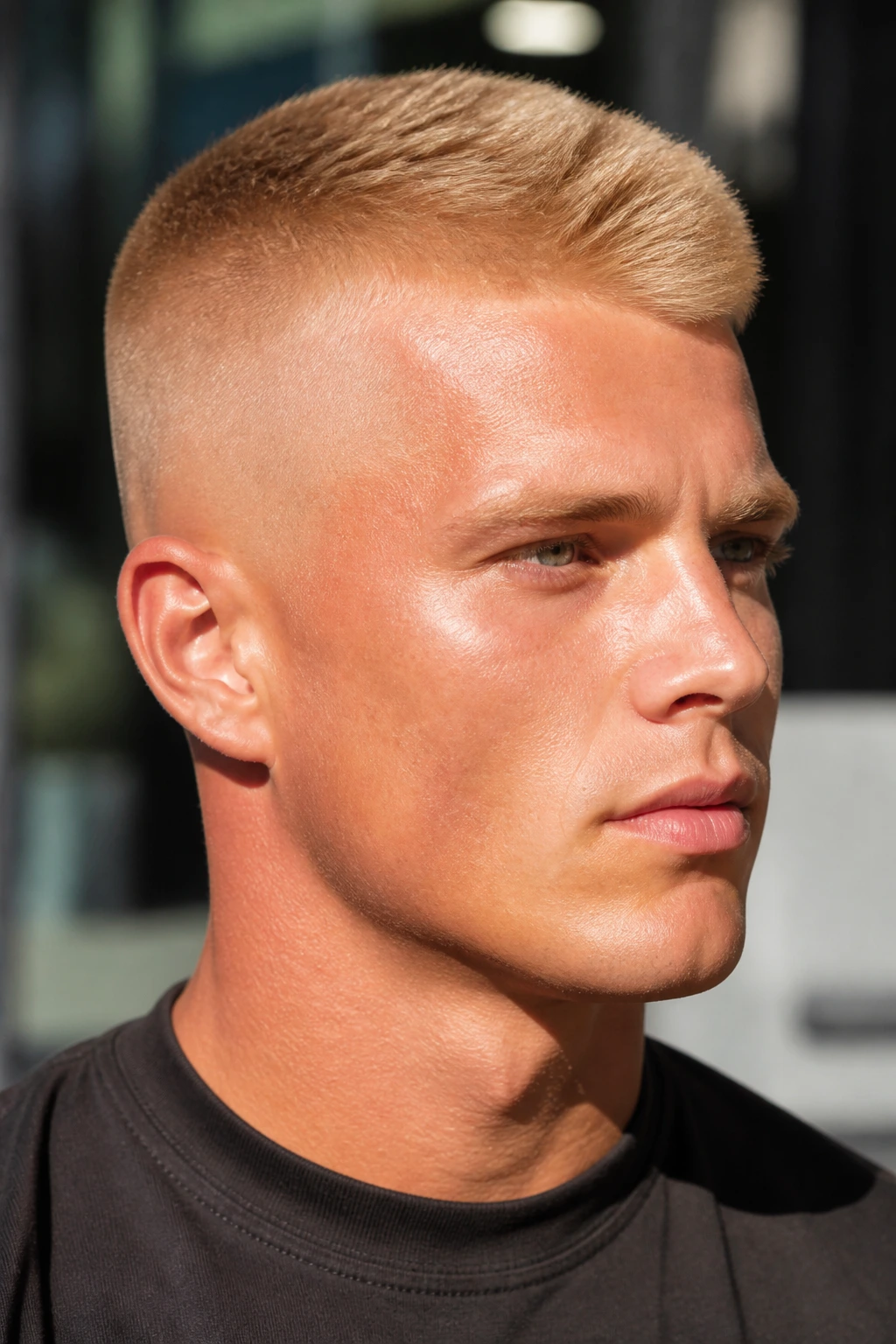
A high and tight in blonde is the cleanest cut in the whole set. The sides are taken up high and close, the top stays short, and the blonde gives the cut a brighter finish than you’d expect from such a military shape. It feels neat, dry, and direct.
This cut doesn’t need much styling. A little texture cream or nothing at all is often enough. If the blonde is warm enough to feel sunlit instead of bleached, the high and tight stops looking severe and starts looking sharp in a very usable way.
It’s also one of the easiest styles to keep lined up between appointments. When the cut is this short, the details are the haircut.
What Makes a Blonde Fade Look Bright Instead of Brass
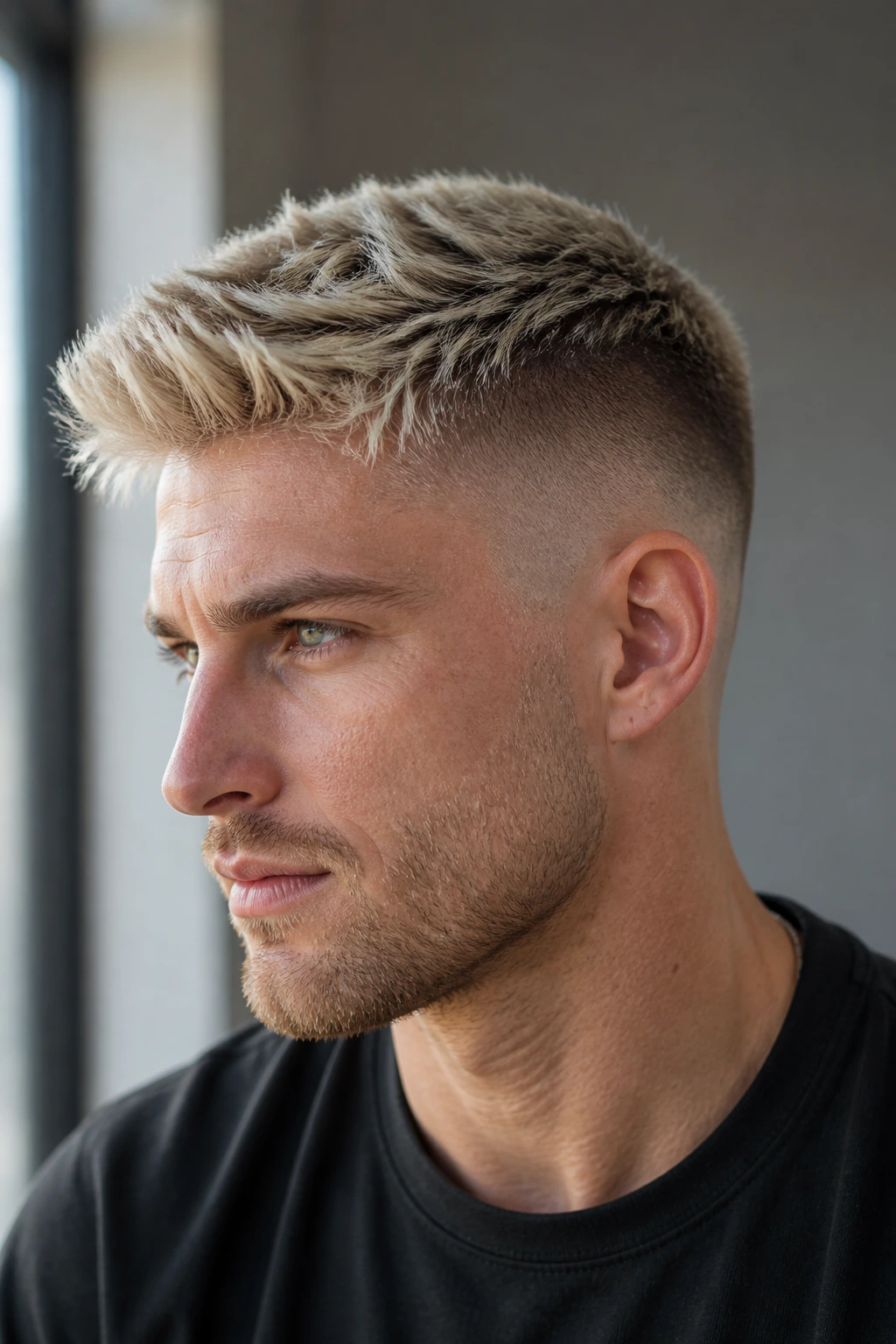
Tone matters more than most people think. A blonde fade can go muddy fast if the shade is too yellow for your skin tone or too flat for the haircut shape. Ash, beige, honey, platinum — those are not interchangeable.
The barbering matters just as much. A clean fade height, a tidy neckline, and a top length that fits the texture all give the blonde somewhere to sit. If the sides are bulky, the color has to work overtime. If the fade is tight, the blonde gets room to breathe.
You also need to think about grow-out. Dark roots can look deliberate in some styles and sloppy in others. A shadow root works with crops, quiffs, and comb overs. It does less for a buzz cut or a high and tight, where the contrast is already doing the work.
Essential Tools for Keeping Blonde Fade Haircuts Sharp
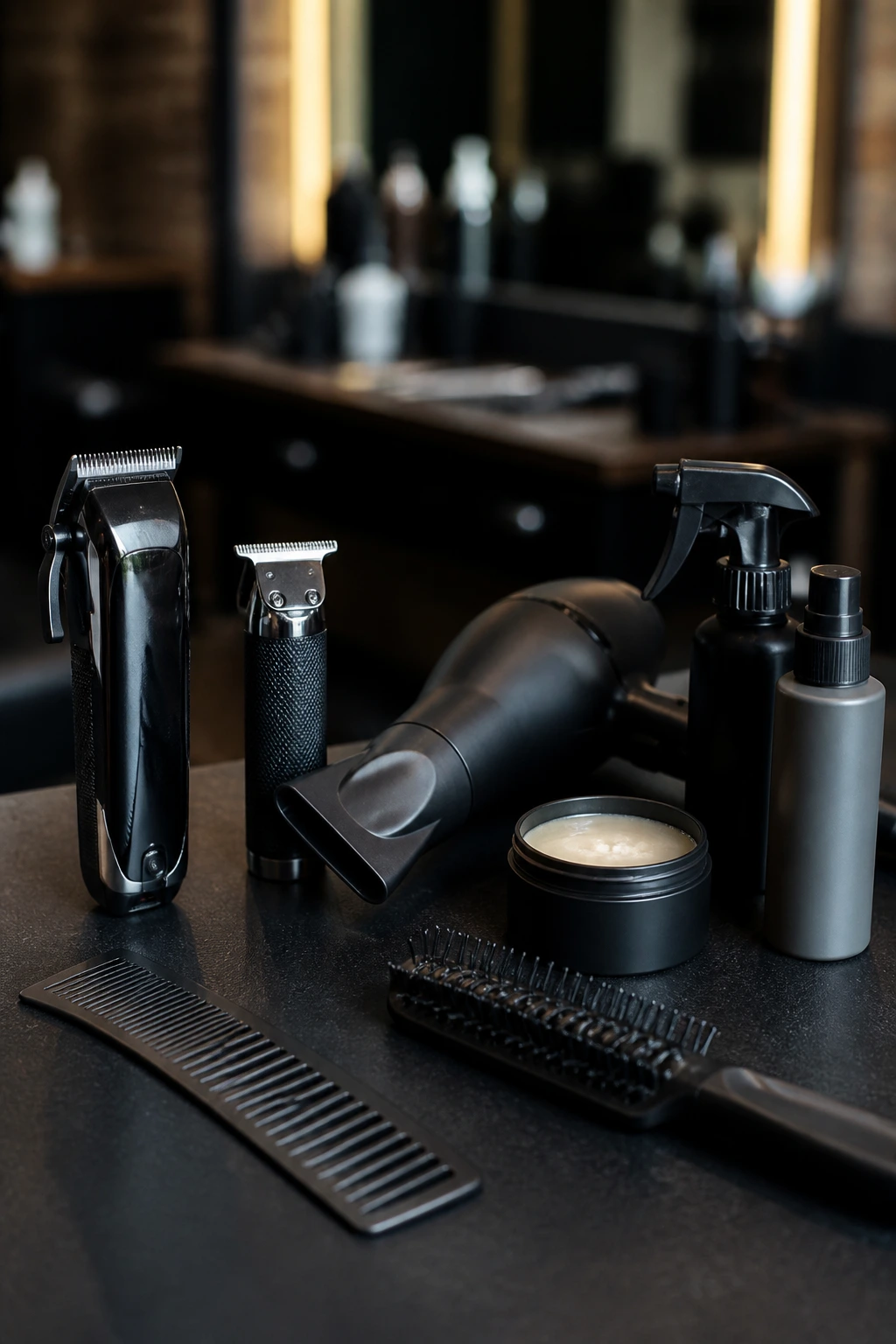
- A good pair of clippers with multiple guards — useful for trimming the neckline and cleaning around the ears between barber visits.
- A precision trimmer — the tool that keeps outlines crisp without chewing into the fade.
- A blow-dryer with a concentrator nozzle — helps lift the top on quiffs, crops, and brushed-up styles.
- Matte clay or paste — better than shiny gel for most blonde fades, because it shows texture instead of coating the hair.
- Purple shampoo — use it sparingly to keep pale blonde from turning yellow, especially on platinum and silver tones.
- Color-safe shampoo and conditioner — keeps lightened hair from drying out and turning straw-like.
- Wide-tooth comb or vent brush — useful for waving, combing, and shaping the top without pulling too hard.
- A hand mirror — worth having if you trim your own neckline or want to check the fade from behind.
- Heat protectant spray — not optional if you blow-dry often; blonde hair shows heat damage fast.
How to Choose the Right Blonde Shade and Fade Height
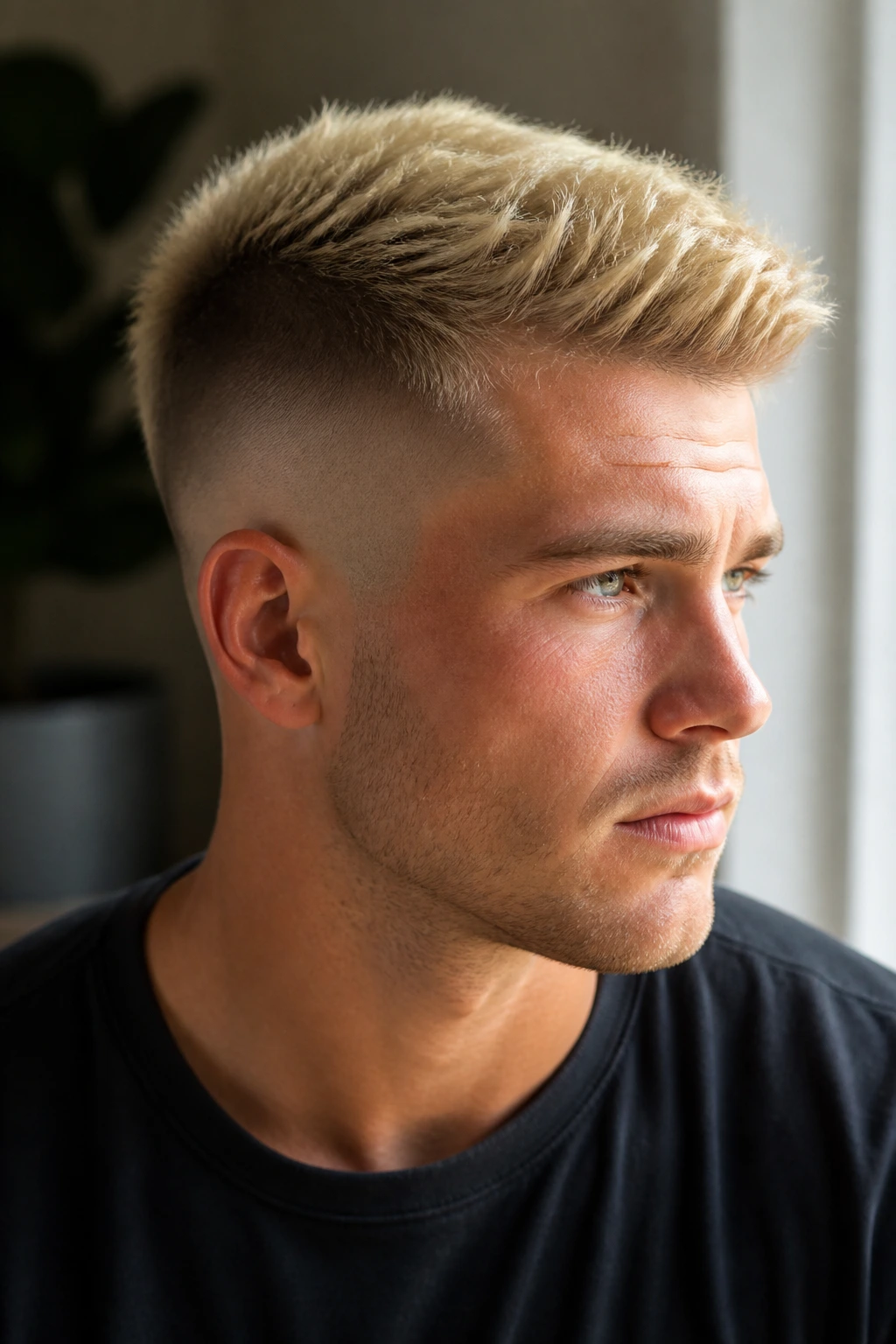
The smartest blonde fade starts with one plain question: how much contrast do you actually want? If you want a hard, bright look, go with platinum, silver-blonde, or icy beige and pair it with a high or skin fade. If you want something softer, honey, wheat, sandy, or champagne blonde sits better with a low or mid fade.
Face shape matters too, but not in the rigid internet-chart way people love to repeat. A high fade with volume on top will lengthen a round face. A low fade with a textured crop can pull attention inward and calm down a long face. A drop fade follows the head shape nicely when you want the sides to curve instead of rise straight.
Hair texture changes the whole equation. Fine hair looks better with shorter tops and lighter products. Thick hair can carry quiffs, comb overs, and textured fringe without collapsing. Curly and coiled hair can handle more visual brightness because the movement keeps the cut from looking flat. The blonde tone should support the texture, not fight it.
Bring photos to the barber, but bring better photos than the ones people usually bring. Show the front, side, and back. If you only show one angle, the fade height and neckline become guesswork, and that is where most bad blonde fades start.
Styling and Daily Care That Keeps the Color Clean
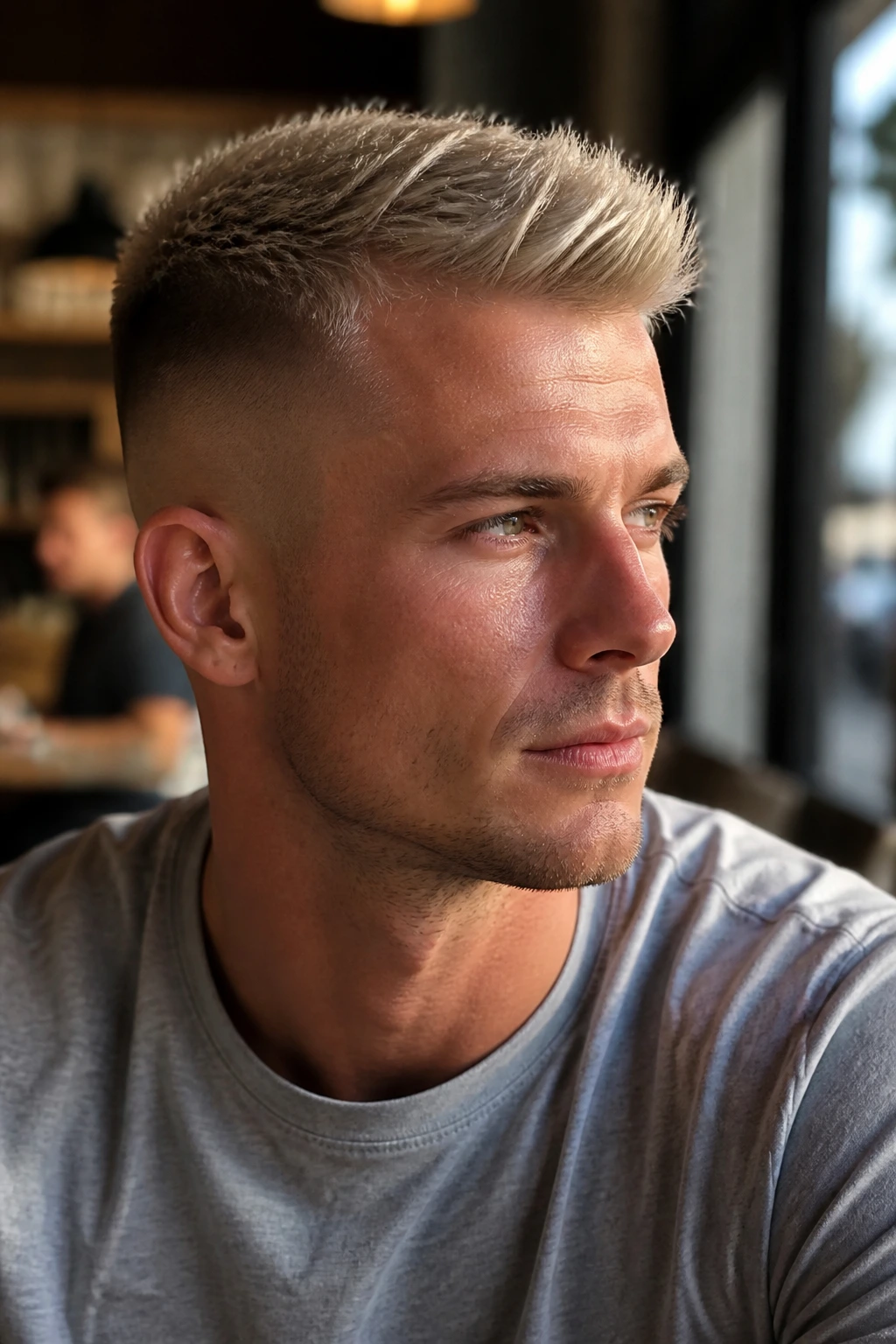
Blow-dry first, product second. A blonde fade with texture usually looks better when the hair is lifted and set before paste or clay goes in. If you load product onto damp hair and hope for the best, the top often falls flatter than you wanted.
Use less product than you think. Blonde hair shows buildup fast. A pea-sized amount of matte clay can be enough for a crop or quiff, and a little more than that can make the color look dusty or sticky.
Purple shampoo has a job, not a personality. Use it once every 1-2 weeks unless your toner is fading quickly. Too much and the hair can turn dull or slightly violet, which is a bad trade.
Trim the neckline before it gets wild. A clean fade loses half its power if the nape grows into a fuzzy patch. Quick cleanups every 1-2 weeks make the haircut look maintained even when the top is growing out.
Heat protection is worth the extra step. Lightened hair dries out fast under a blow-dryer, and dry blonde looks brittle at the ends first. A small spray before drying is enough.
Common Mistakes That Make a Blonde Fade Look Off
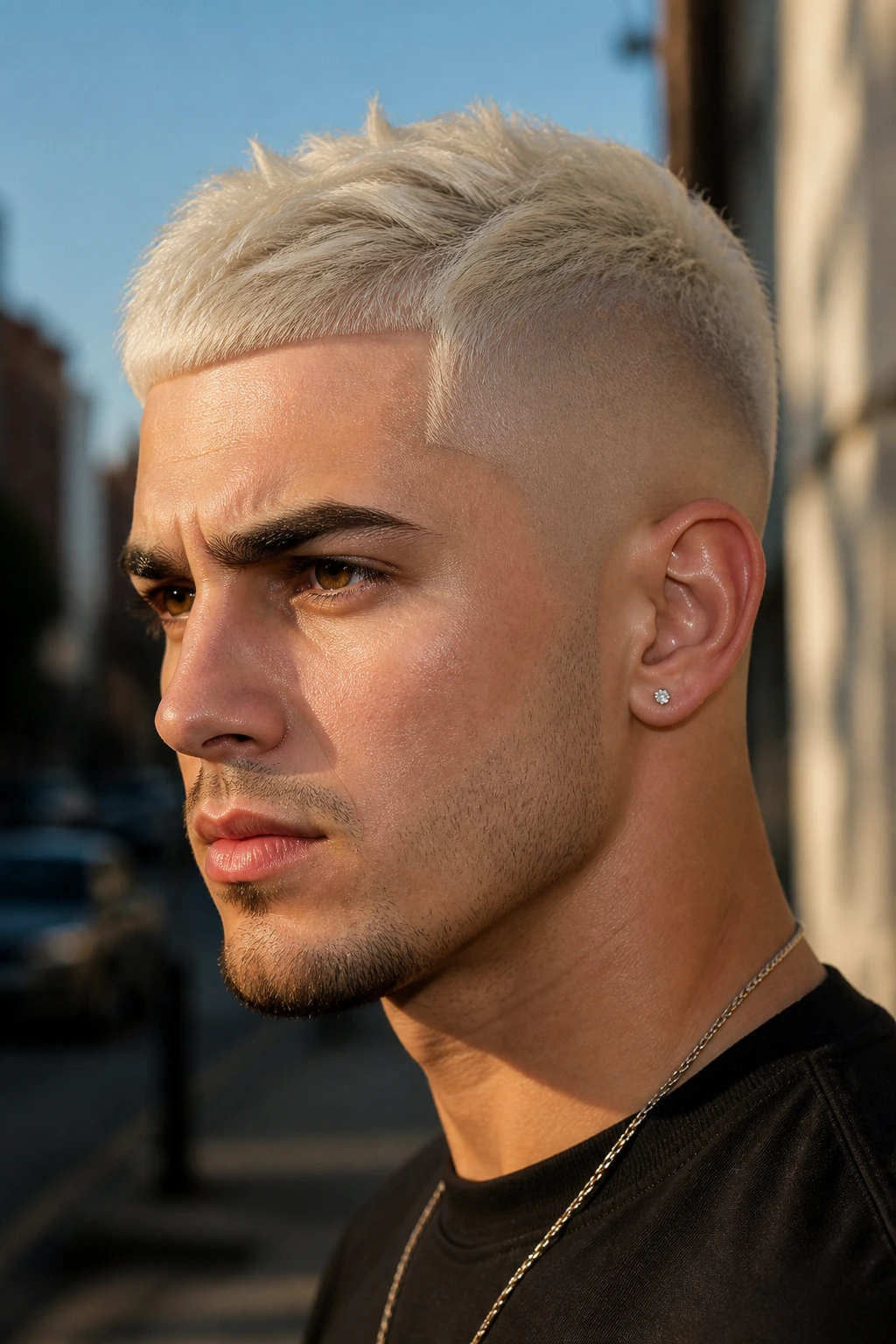
The first mistake is asking for blonde without naming the tone. Beige, ash, honey, platinum, and silver all read differently. If you leave that decision vague, you can end up with a color that clashes with the cut.
Another problem is pushing the fade too high for the amount of top length you have. A high fade with a very short top can look top-heavy or unfinished. A low or mid fade gives short blondes more room to settle into shape.
People also overload the hair with shiny product. It’s a bad habit on darker styles too, but blonde shows it faster. The hair starts to look clumped instead of textured, and any uneven tone becomes more obvious.
Bleach damage is the one nobody enjoys talking about, but it matters. If the hair feels gummy when wet or snaps too easily, the blonde needs a break. Deep conditioning, trimming damaged ends, and backing off the lightener are better than trying to force brightness through dry hair.
Variations Worth Trying on a Blonde Fade
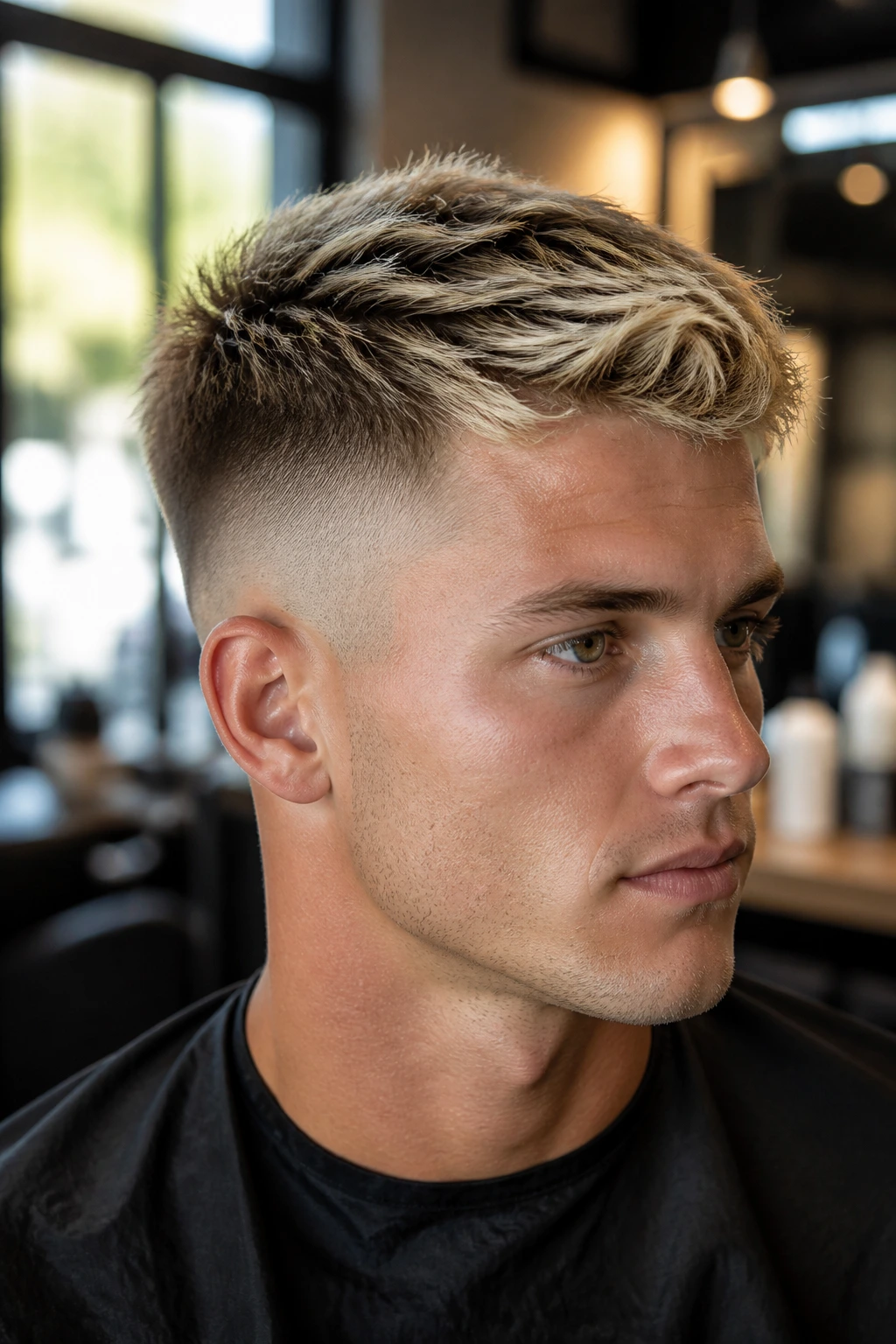
Rooted Bright Blonde: Keep the roots darker and let the mids and ends go lighter. This gives the fade more depth and makes grow-out less harsh.
Honey-Edged Blonde: Add warmth through the top so the cut sits in that sunlit, late-afternoon range. It works especially well on crops, side parts, and quiffs.
Cool Silver Finish: Push the tone toward silver or icy beige for a sharper, cleaner read. Best on short cuts and tighter fades.
Soft Beige Fade: A quieter version that still looks blonde but doesn’t scream for attention. Good if your job or dress code leans conservative.
High-Contrast Platinum: Bright top, dark shadow at the root, tight skin fade underneath. This one is blunt and unmistakable.
Keeping the Fade Bright Between Barber Visits
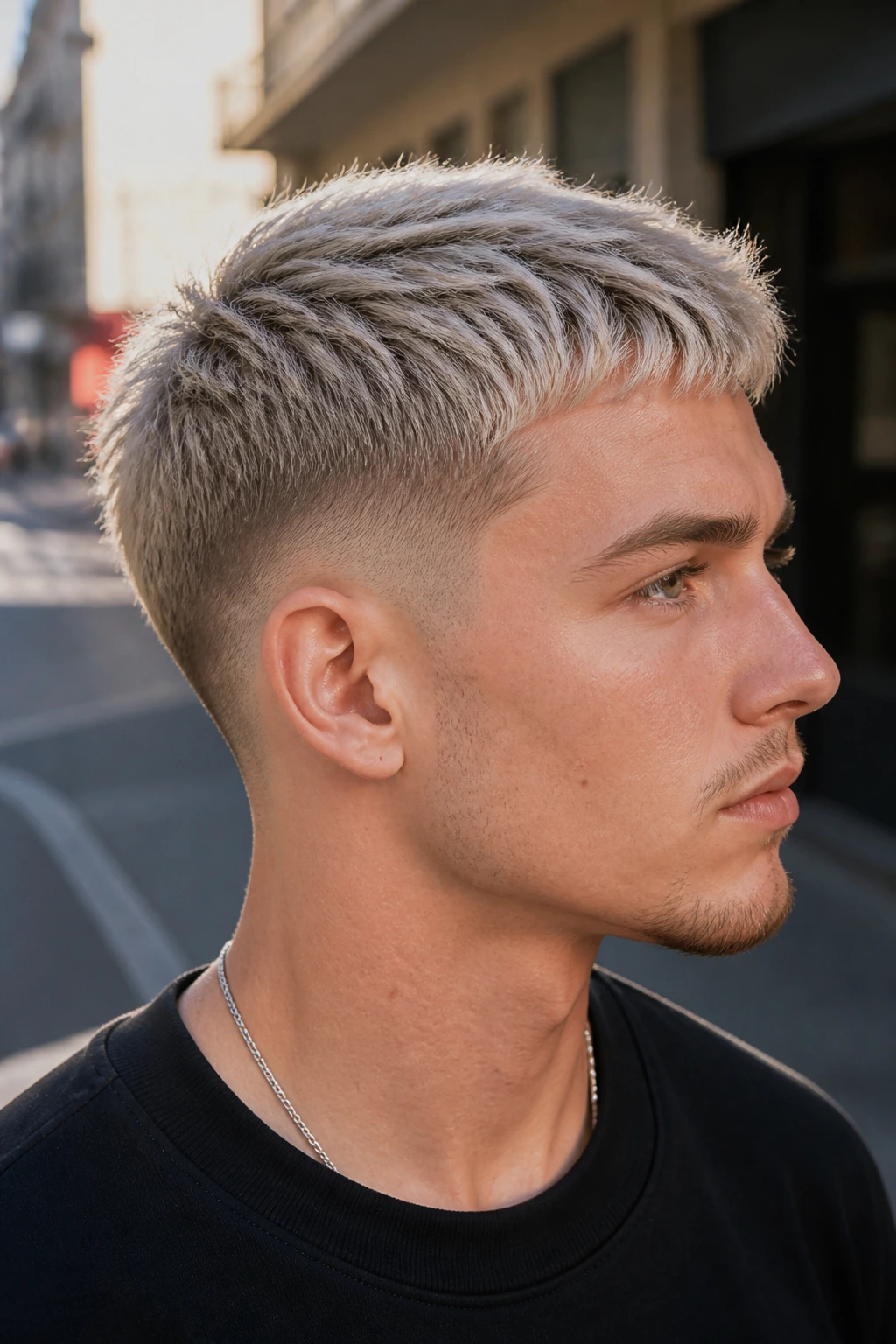
A blonde fade looks clean longest when you treat the top and the sides differently. The top needs color care. The sides need shape care. Those are not the same thing, and trying to solve both with one product never works out well.
Use color-safe shampoo on the blonde sections, especially if the hair has been lifted several levels. A sulfate-free formula helps preserve tone and keeps the ends from drying into that rough, matte straw texture that makes even a good fade look tired. If the blonde starts turning yellow, a small amount of purple shampoo can pull it back, but stop once the tone looks even. Overcorrecting is easy.
The fade itself grows out in visible stages. First the outline softens at the sideburns and around the ears. Then the neckline gets fuzzy. Then the shape starts to spread at the temples. A quick cleanup every couple of weeks can extend the life of the cut without forcing a full haircut appointment every time. If you trim your own neckline, use a guard you trust and stay conservative. It is easier to remove less than to fix a chunk taken too high.
Bleached hair also needs a little moisture, but not so much that it collapses. A lightweight conditioner and a weekly mask are enough for most people. Heavy oils can make the top lose that crisp, light-catching finish. That’s the whole point of these cuts, after all. Brightness with shape.
Questions People Ask Before Getting a Blonde Fade
How short should the top be on a blonde fade?
It depends on the style. Buzz cuts and crew cuts can sit at 1/2 inch to 1.5 inches, while quiffs, side parts, and textured crops usually need 2 to 4 inches. The fade height and the blonde tone should match that length, or the haircut can look lopsided.
What blonde shade is easiest to maintain?
Honey, beige, and sandy blonde are usually easier to live with than icy platinum. They hide small toner shifts better and grow out with less drama. Platinum and silver look sharper, but they need more upkeep.
Can curly hair pull off a blonde fade?
Absolutely, and it often looks better than people expect. The fade cleans up the sides, and the lighter color makes the curl pattern pop. The main thing is to avoid overbleaching, because curly hair dries out fast.
Does a skin fade work with blonde hair?
Yes, and it can look excellent. Skin fade plus blonde gives strong contrast, which is the reason many of these cuts read so bright. Just make sure the top has enough length or texture to keep the haircut from looking too bare.
What if my hair turns orange during lightening?
That means the hair has not lifted far enough for the tone you wanted. A toner can correct some of it, but if the hair is very dark, the process may need to be done in stages. Rushing it usually leaves brass behind.
Is purple shampoo enough to keep blonde bright?
No. It helps, but it is not a fixer for bad lightening or weak toning. Think of it as maintenance, not a cure.
Can I ask for a blonde fade if my hair is already damaged?
You can, but the barber or colorist may need to go lighter slowly. Damaged hair takes bleach badly and can break if pushed too hard. Sometimes a darker blonde or shadow-root version is the better move.
The Fade That Holds Its Shape
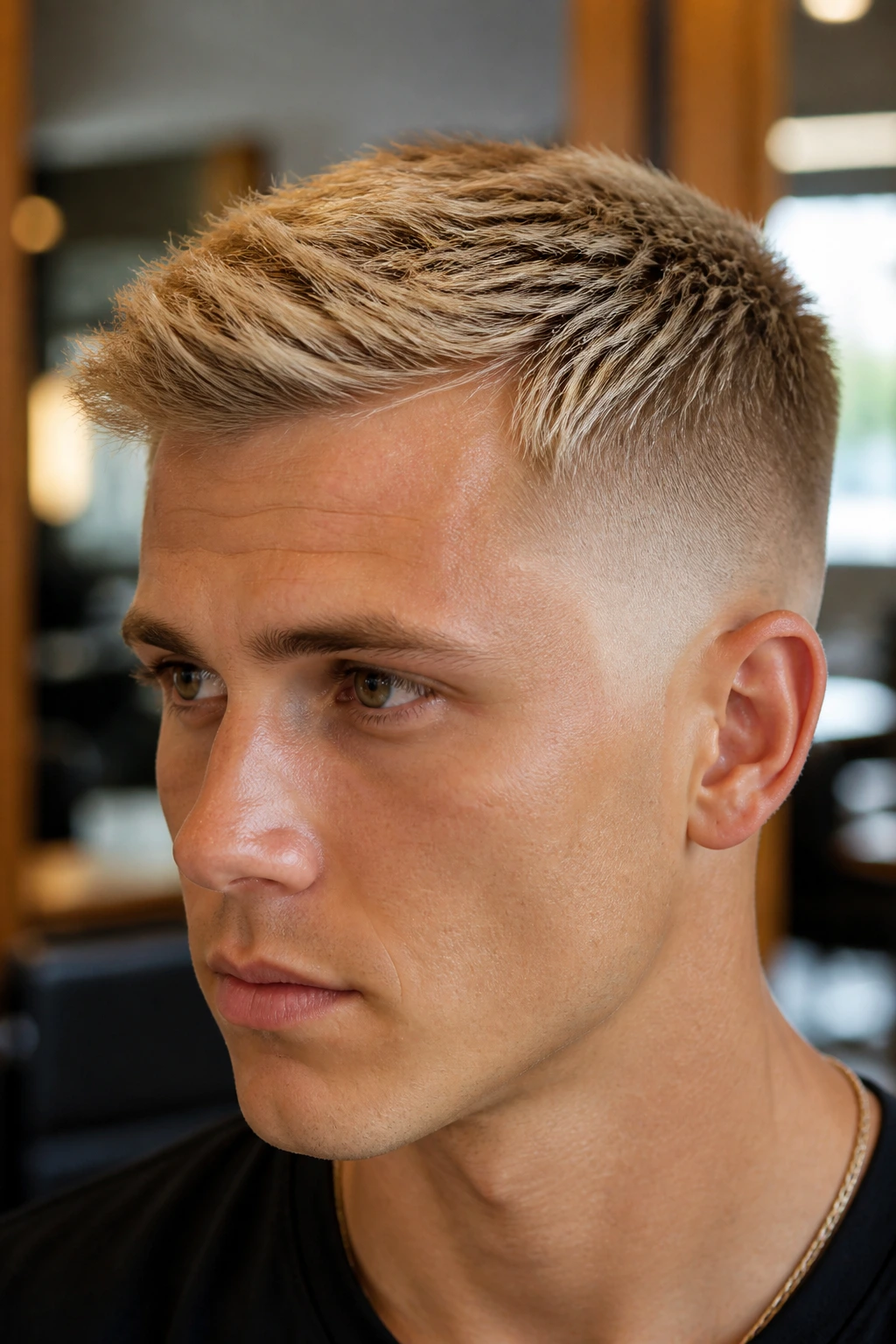
A good blonde fade has a little discipline in it. The color may be bright, but the cut can’t be sloppy. If the fade is clean, the top length matches the texture, and the blonde tone is chosen with care, the whole thing ends up looking sharp instead of noisy.
That’s the real advantage of these cuts. They give you brightness without turning the haircut into work. Pick the shade, pick the fade height, and don’t ignore the upkeep. The result has enough contrast to catch the eye and enough structure to keep it there.
