



A razor line can rescue a cut that is starting to look ordinary. On coily hair, one clean carve at the temple or nape changes the whole read of the style — suddenly the shape has direction, the curl pattern has a frame, and even a tiny TWA looks deliberate instead of accidental.
That is the part people miss when they talk about shaved design hairstyles for Black women. The design itself matters, sure, but placement does most of the heavy lifting. A thin zigzag near the temple feels sharper than the same line hidden under a puff. A shaved panel under a bob reads differently from a full side shave. And a line that looks crisp on day one can soften fast if the grow-out wasn’t planned with your texture in mind.
I love these cuts because they don’t ask Black hair to behave like something else. They work with shrinkage, density, and shape. They also give you options: loud when you want loud, subtle when you want subtle, and surprisingly elegant when the barber keeps the linework tight and the rest of the silhouette clean.
Why These Shaved Design Hairstyles Feel Fresh on Natural Texture
-
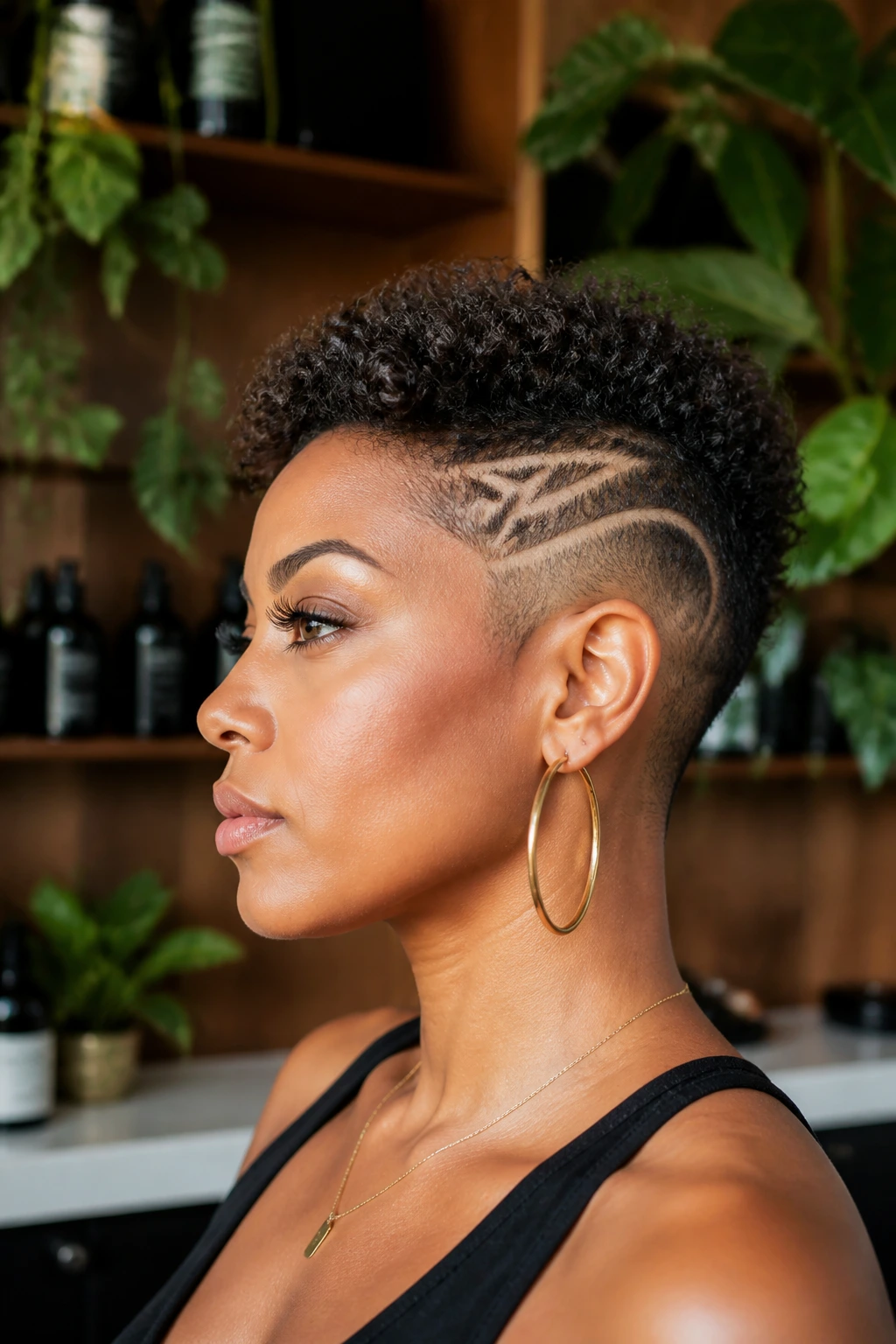
Texture does the framing: Coils, curls, locs, and braids create a built-in backdrop, so even a small etched line shows up with more contrast than it would on straight hair.
-
The shape changes fast: A side shave, nape carve, or undercut can make a round silhouette look longer, a wide shape look slimmer, or a short crop look more intentional.
-
You can dial the drama up or down: A single temple slash is work-friendly in a way a full starburst pattern is not, which makes this category easier to match to real life.
-
Grow-out is part of the design: The best versions don’t fight regrowth. They blur in a way that still looks good when the edges soften after a week or two.
-
Protective styling still fits in: Braids, twists, locs, and puff styles can all be paired with shaved panels, so you are not locked into one length or one routine.
-
The barber’s hand matters: These looks are only as clean as the clipper work. A steady hand, good light, and a clear reference photo make a bigger difference than people think.
1. TWA with a Side Zigzag
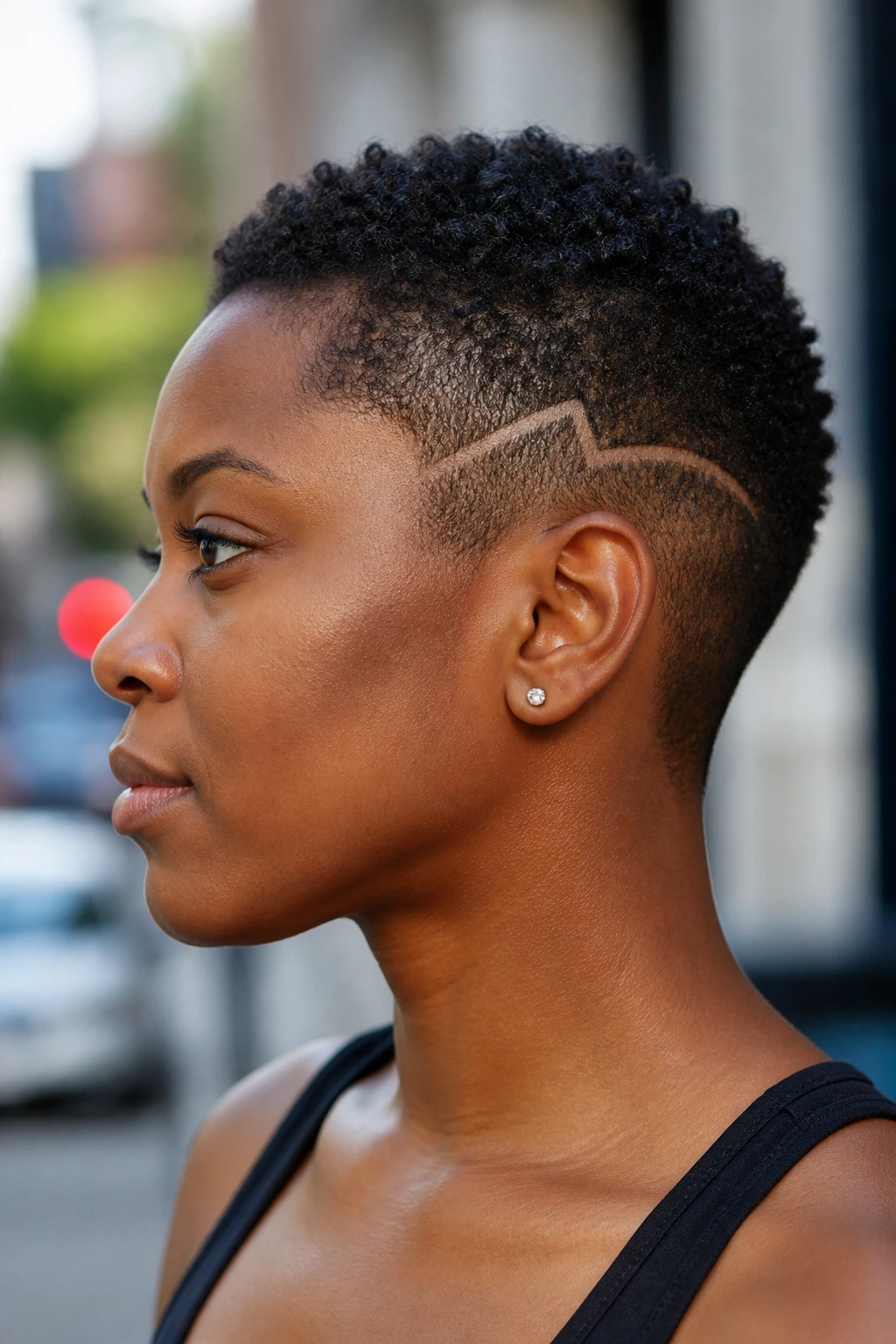
A tiny zigzag carved into one temple gives a TWA enough attitude to stop looking like a “starting over” cut. On tight coils, that little break in the line has real presence because the hair around it is short enough for the design to read cleanly from across the room.
Why it works on short coils
The shorter the cut, the more the design matters. Keep the sides low and the top softly rounded so the zigzag looks intentional, not like a random scratch. I like this best when the line starts near the temple and angles back toward the ear instead of ending bluntly.
Ask for a narrow line — about pencil width — if you want something that grows out gracefully. If you keep the top brushed with a little leave-in and a soft curl cream, the contrast between the coils and the shave stays crisp longer.
2. Curly Crop with a Temple Heart
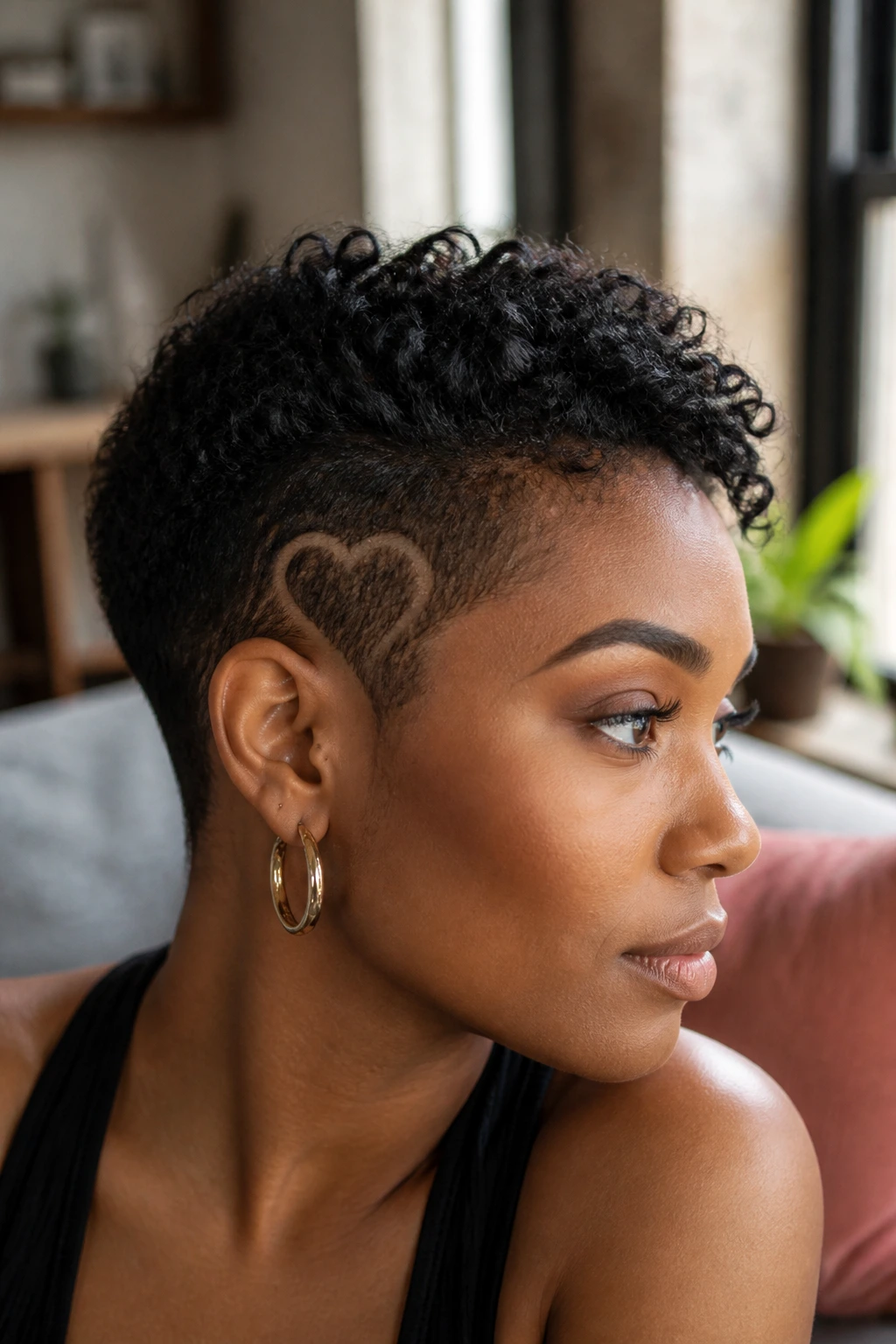
A shaved heart at the temple sounds playful, and it is, but the clean version of it can still look polished. The trick is scale. Keep the heart small and tucked close to the hairline so it reads as detail, not costume.
This works especially well on a short curly crop with a faded nape, because the curve of the heart echoes the curve of the curl pattern. If your barber is freehanding it, ask for an outline heart rather than a filled-in shape; outlines grow out better and don’t overpower the rest of the cut. It’s a sweet spot for anyone who wants a little softness next to a sharp fade.
3. Tapered Frohawk with a Crown Part
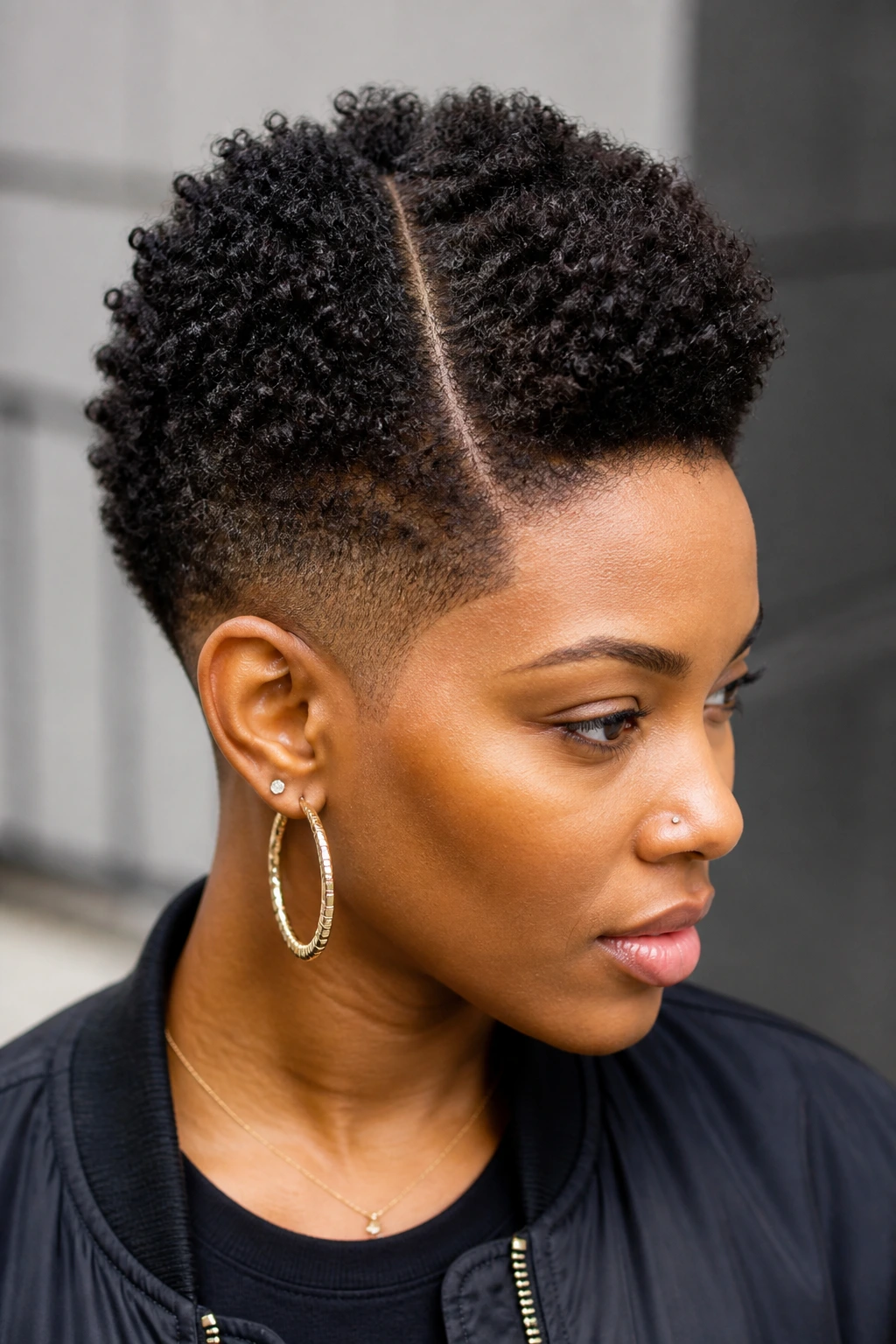
A frohawk already has built-in drama. Add a clean part at the crown and the whole cut suddenly feels more architectural. The center ridge can stay fluffy, stretched, or sponge-shaped, while the sides stay tapered down enough to let the linework breathe.
What I like here is the contrast. Soft texture up top, hard edges on the sides, and one simple design line that keeps the eye moving from front to back. If your hair has density at the top, ask for a narrow center strip and low taper around the ears; too much bulk on the sides makes the design disappear.
4. Buzz Cut with Double Razor Lines
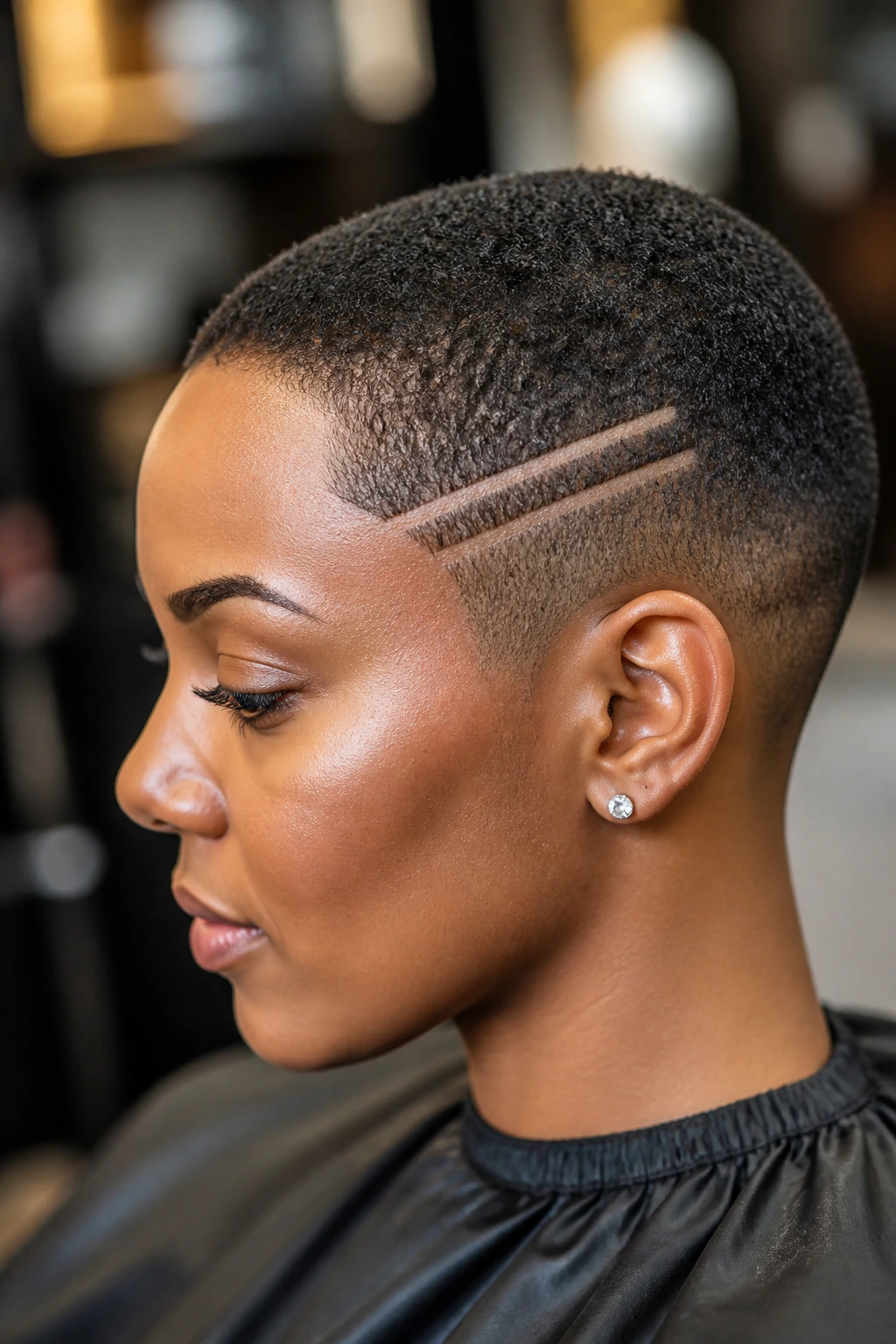
A buzz cut gives you almost nothing to hide behind, which is exactly why the double-line version hits so hard. Two clean parallel lines on one side or both temples add shape without asking for length, layers, or styling time.
This is one of the most low-maintenance shaved design hairstyles for Black women, but it still needs thought. The lines should sit where your head has a natural curve — usually above the ear or at the temple — so they don’t fight the shape of your face. If you wear this cut, keep the scalp moisturized with a light oil or tonic and avoid heavy grease that can make a fresh buzz look dull.
5. Asymmetrical Pixie with Side Panel Art
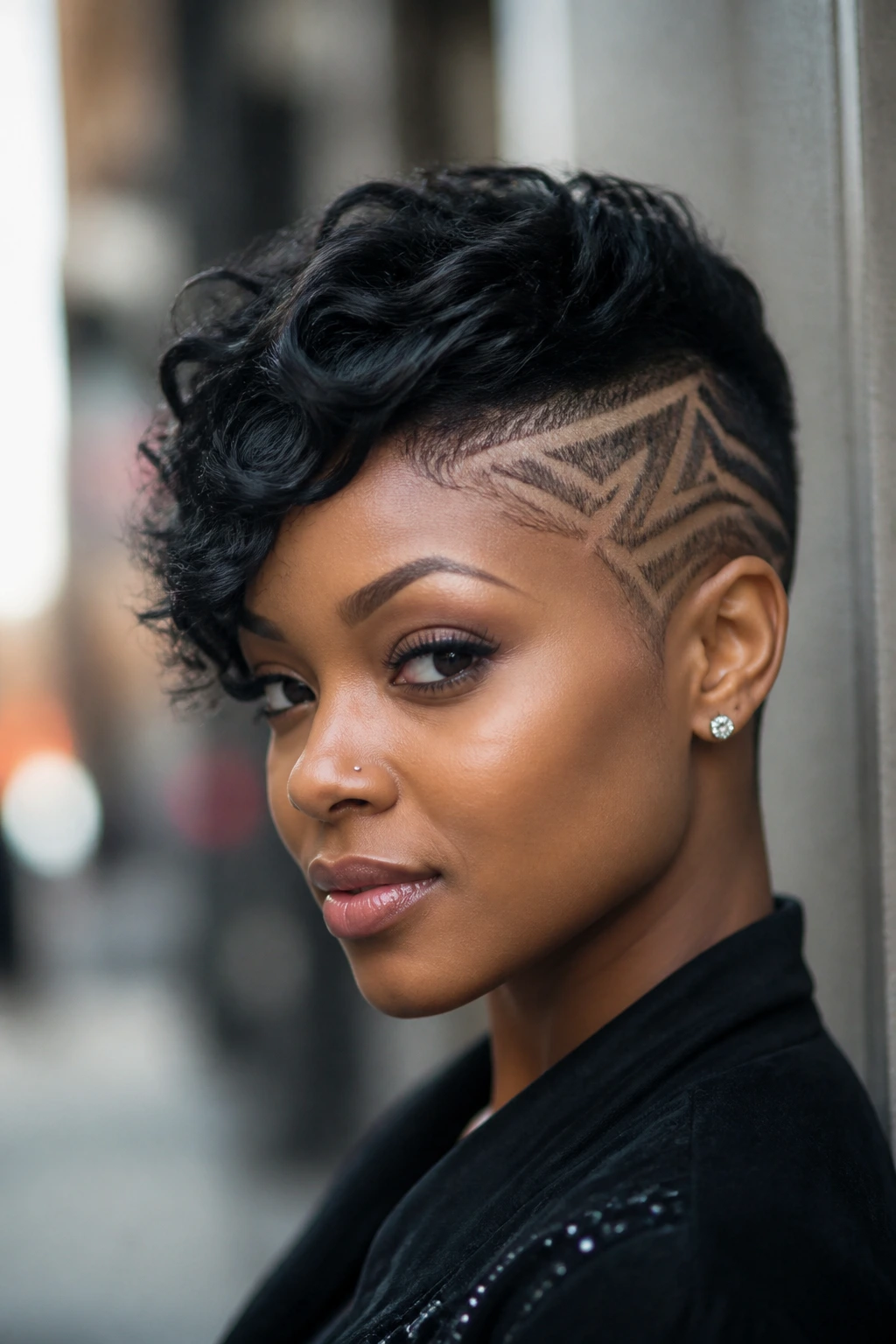
One side longer, the other side shaved. That’s the whole idea, and it works because the asymmetry is doing the styling for you. The longer side can sweep across the forehead or tuck behind one ear, while the shaved panel gives the cut a clean place to land.
I like this cut when the design itself is geometric — a box panel, a thin slash, or a small set of stacked lines. The long side softens the sharpness, which keeps the look from feeling too hard-edged. If your cheekbones are one of your best features, this cut puts them on display without needing a lot of product.
6. Finger-Coil Top with a Shaved Nape Design
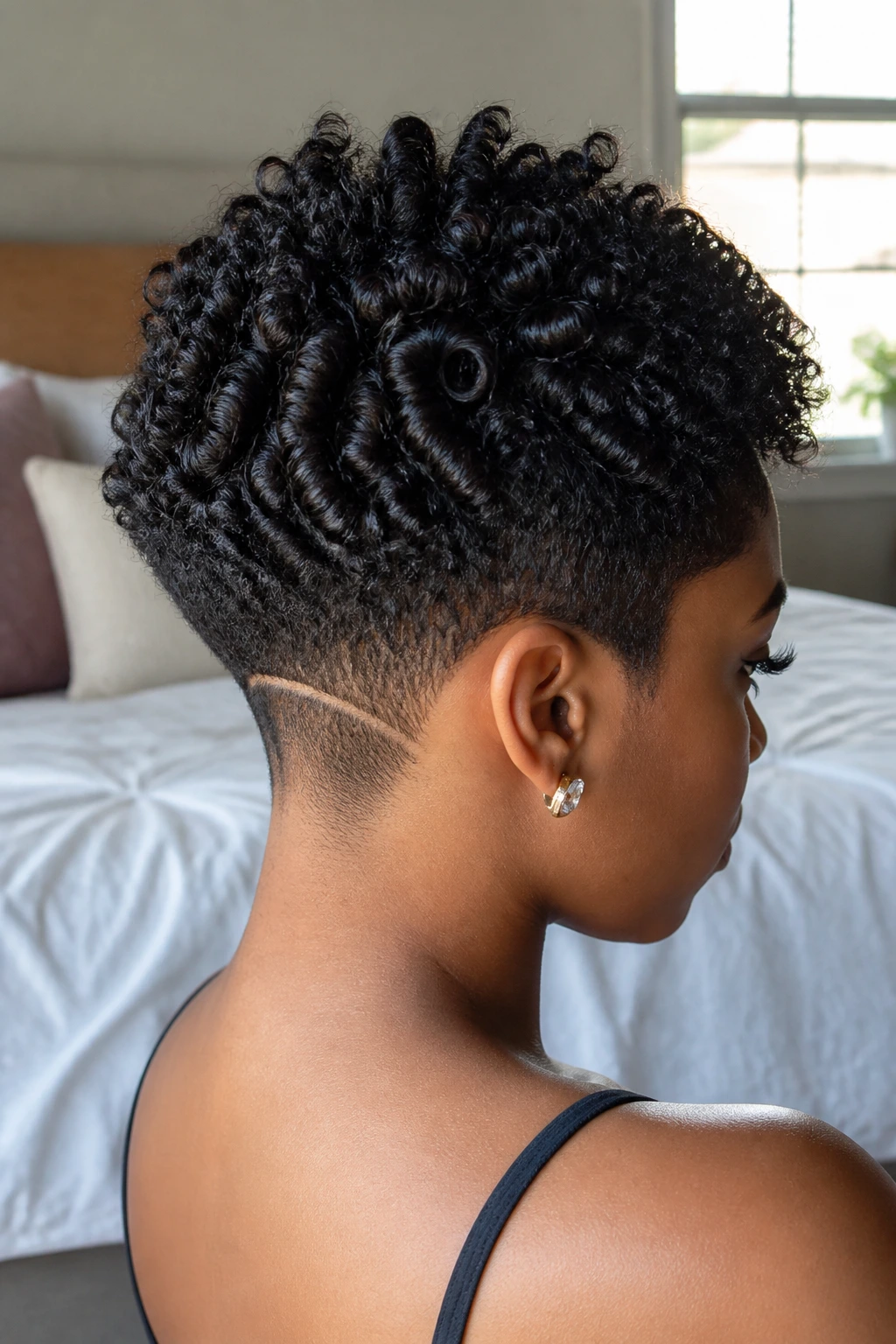
This is a quiet surprise. The front and top stay neat with defined finger coils, but the nape carries the art — a curved line, a tiny crescent, or a short bar pattern that only shows when you pull the hair up or turn your head.
The strength of this cut is the contrast between polished and hidden. It’s a smart choice if you work somewhere that prefers a softer front view but you still want personality tucked underneath. Ask your stylist to keep the nape design low enough that it doesn’t show through the curls from the side. That way it feels intentional, not busy.
7. Loc Hawk with Clean Fade Sides
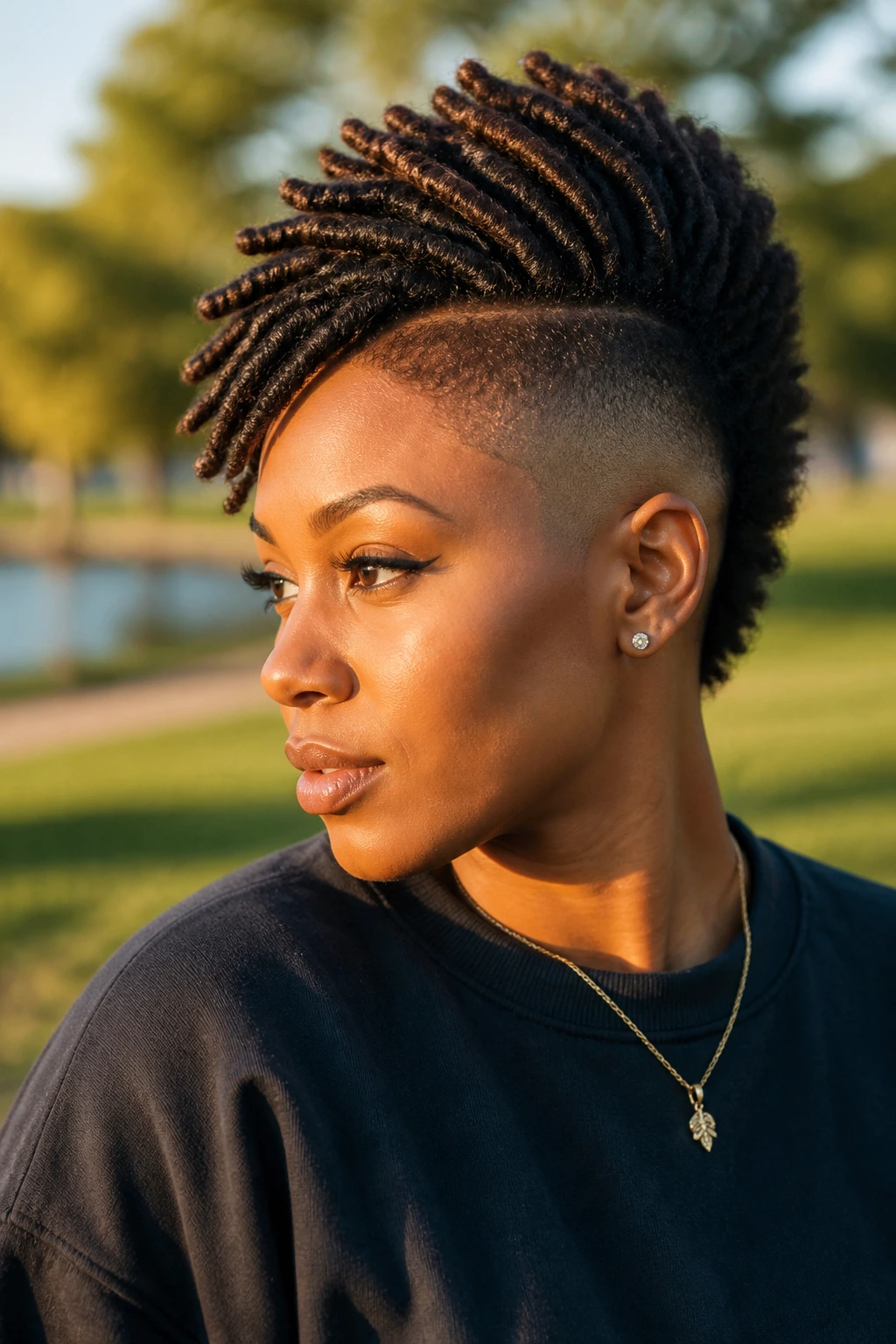
Locs in a hawk shape bring height, movement, and a little swagger without needing much styling effort. Shave or fade the sides close, then let the locs run down the center like a ridge.
The cleanest versions keep the side lines tight and the locs separated enough that the shape doesn’t collapse. If your locs are medium-length, ask for a soft hold at the roots and a curved fade around the ear. A single design line at the temple is usually enough here. Too much extra art starts to compete with the locs, and the whole point is to let them lead.
8. Cornrow Spine with Bare Sides
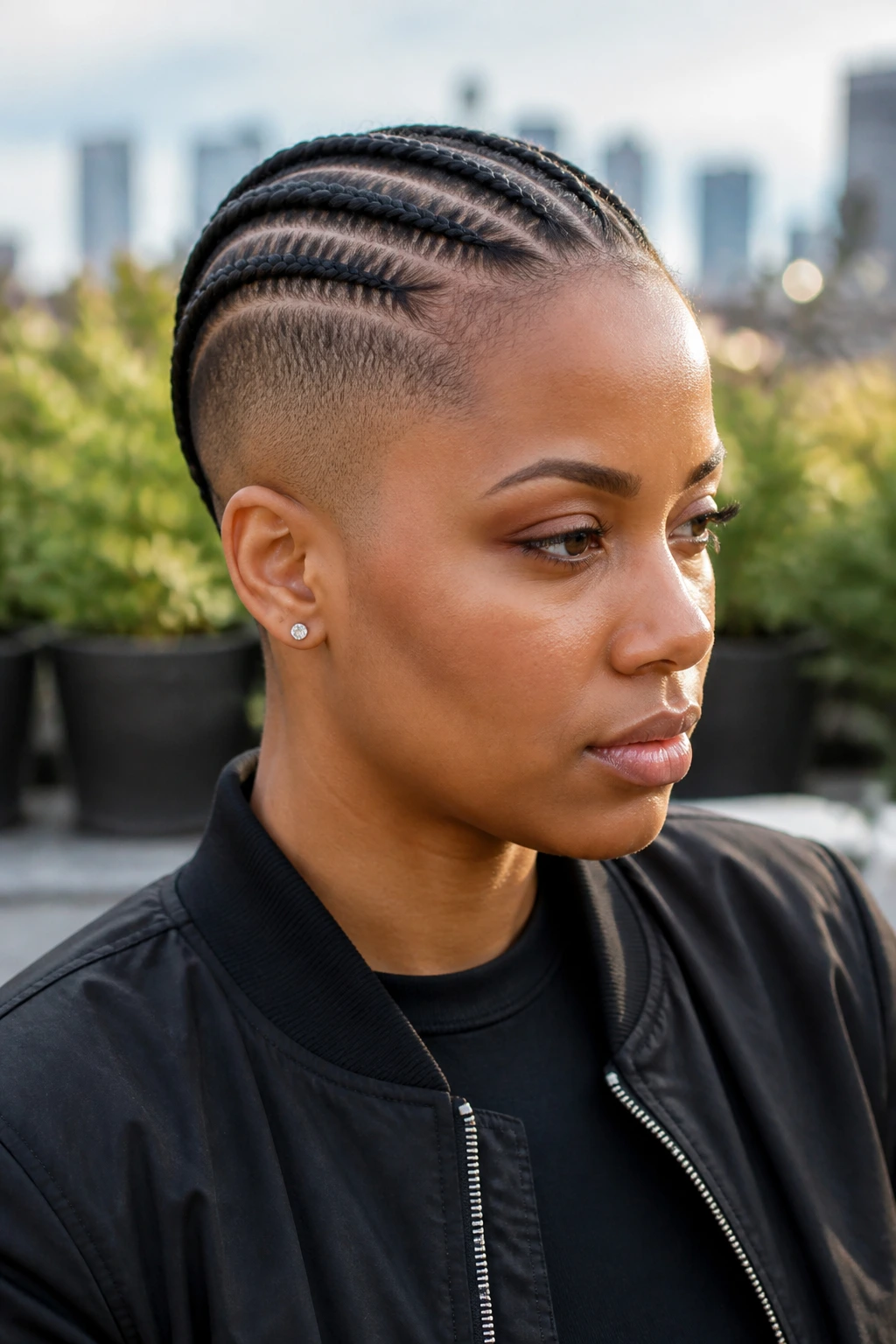
Think of this as a straight road down the middle of the head. Cornrows run from forehead to nape, while the sides stay shaved or faded down close, which gives the whole style a strong, almost graphic profile.
It’s one of the most practical options if you like protective styling with edge. The shaved sides cut the bulk, the braid pattern keeps the top controlled, and the shape can last well if you sleep in a satin scarf. If you want the cleanest finish, ask for the braids to start just behind the hairline rather than too far back; that keeps the front from looking flat.
9. Flat-Twist Mohawk with a V-Shaped Cut
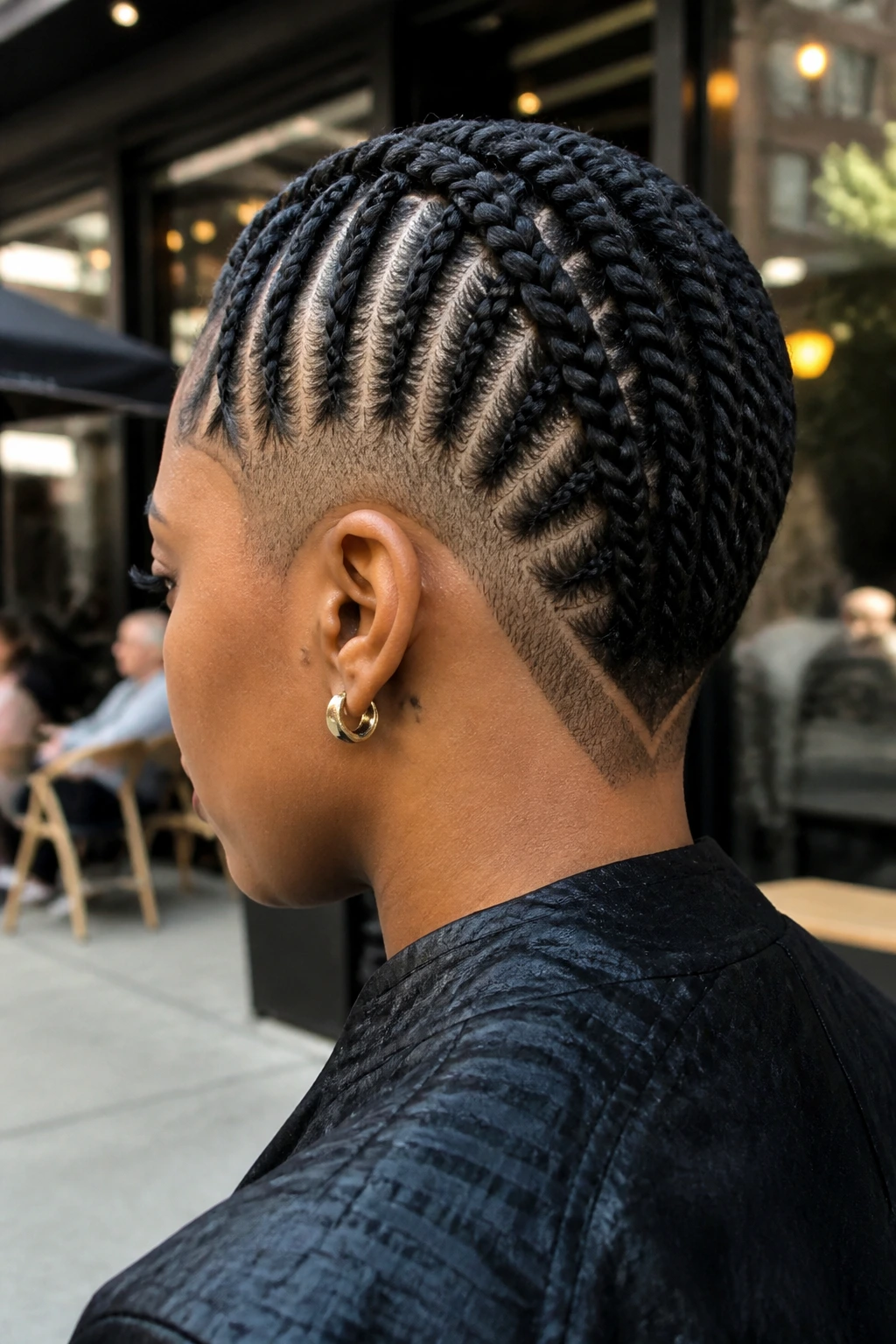
A V at the nape does more than sound pretty. It pulls the eye downward in a clean line, which makes the center mohawk appear taller and more structured. Flat twists work well here because they lay close to the scalp and show the shape clearly.
This is a good choice when you want the cut to feel a little dressier than a loose frohawk. Keep the twists medium-sized so the center strip doesn’t look bulky. A sharpened V is the part that sells it; if the neckline is soft or uneven, the whole silhouette loses its edge.
10. Undercut Bob with Hidden Geometric Etching
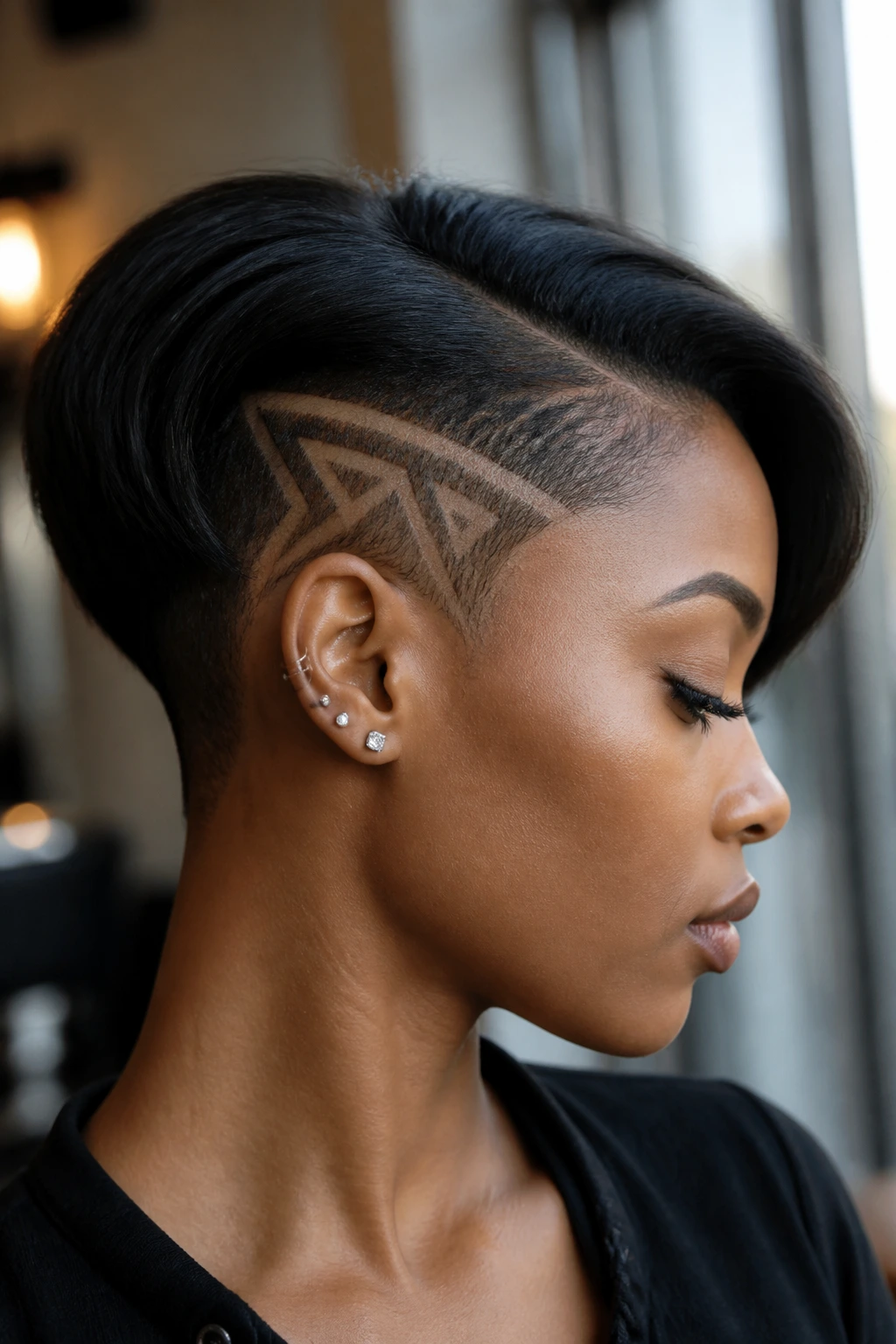
Here’s the version for someone who wants the reveal to happen slowly. The top layer sits like a bob, but the undercut underneath carries a geometric design that only shows when you tuck one side behind the ear or lift the hair.
That hidden-detail effect is the whole charm. It works well on straightened, stretched, or blown-out natural hair because the top layer needs enough swing to cover the undercut most of the time. Ask for a design that sits below the crown and above the nape, not too low, or it can get swallowed by the bob’s movement.
11. Rounded Fro with a Crescent Moon at the Nape
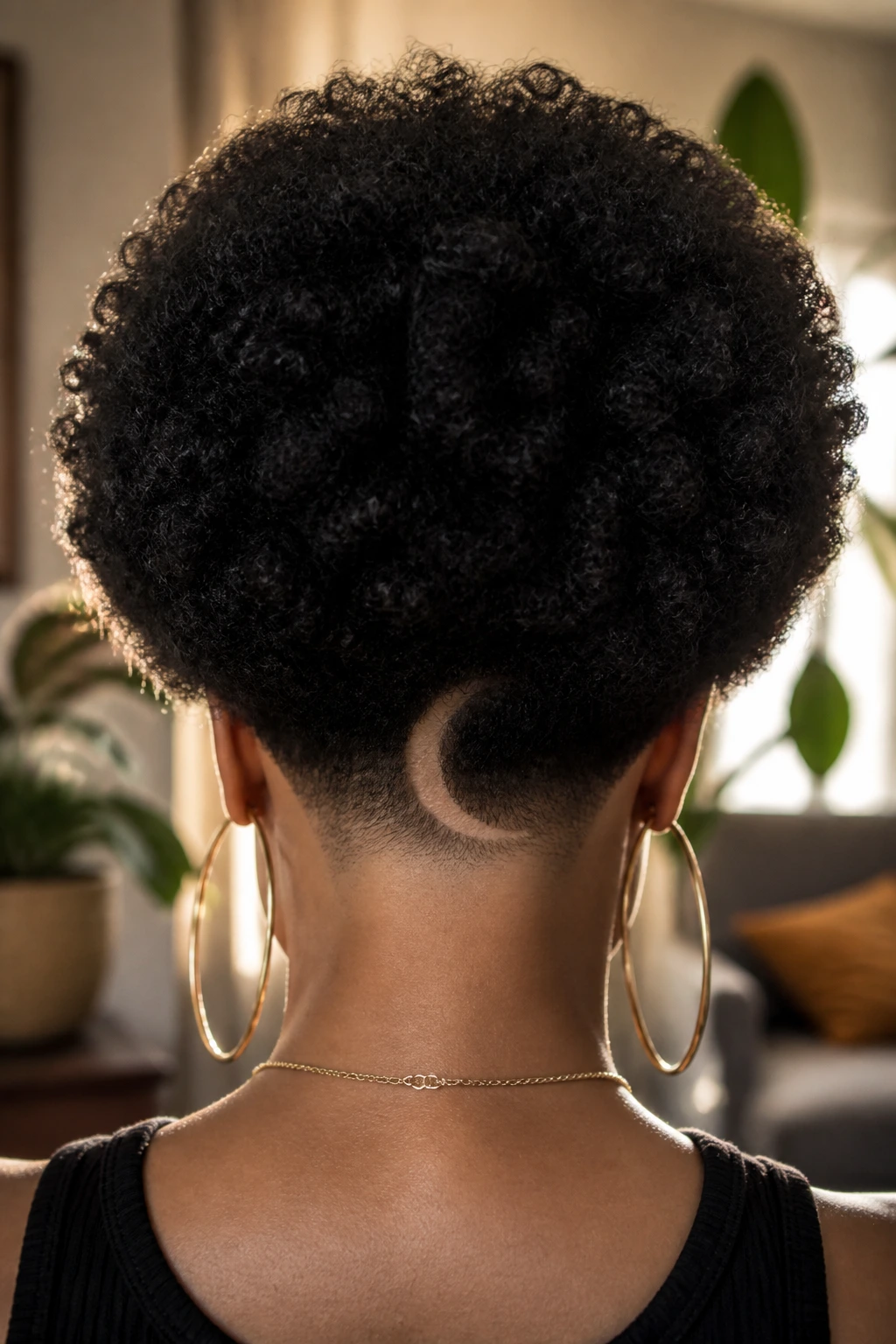
A rounded fro gives you softness and volume, and the crescent moon at the nape adds a little wink when you turn around. I like this pairing because it feels balanced — the fro is full and organic, while the design is clean and exact.
If your fro shrinks a lot, shape the top into a rounded dome before the design is cut. The moon shape should sit low enough to peek out under the fro’s edge but not so low that it gets lost against the neckline. This one wears best when the sides are shaped neatly, because the nape design needs a clear frame.
12. Box Braids with One Shaved Side
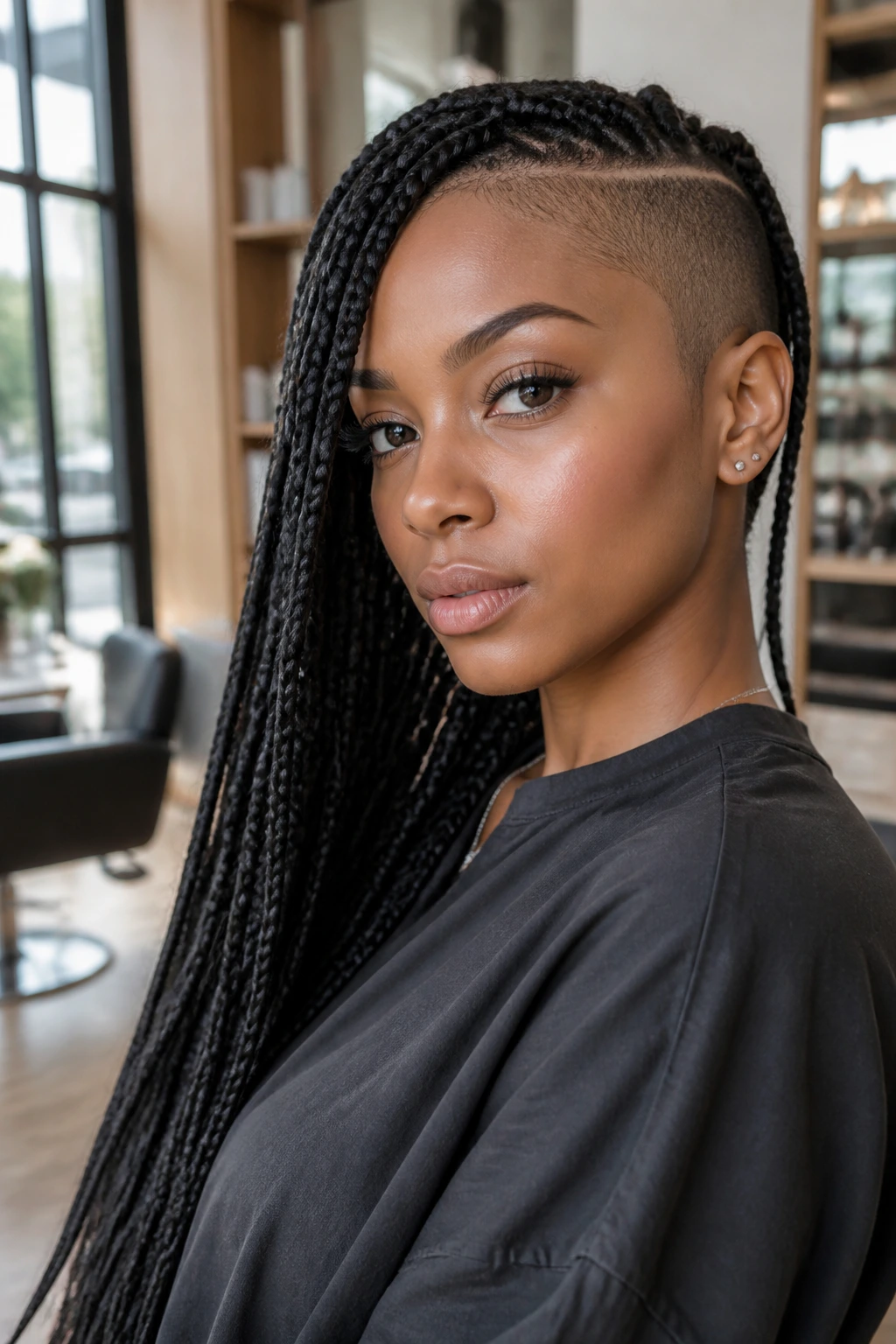
One shaved side next to long braids makes the braids look even longer. The contrast is that strong. You get the movement and length of box braids on one side or across the top, while the exposed side becomes the canvas for a few razor lines or a small pattern.
I prefer this look when the shaved side isn’t too wide. Leave a solid strip of hair above the ear so the design has room without making the whole head feel bare. If you like earrings, this is a gift — the open side spotlights hoops, cuffs, or studs without much effort.
Ask for this at the chair
- Keep the shaved section narrow enough to grow out without an awkward shelf.
- Place the design where it won’t disappear under braid tension.
- Ask for the braids to start with a clean parting line so the shaved side and braid pattern don’t fight each other.
13. Bantu Knot Hawk with a Soft Fade
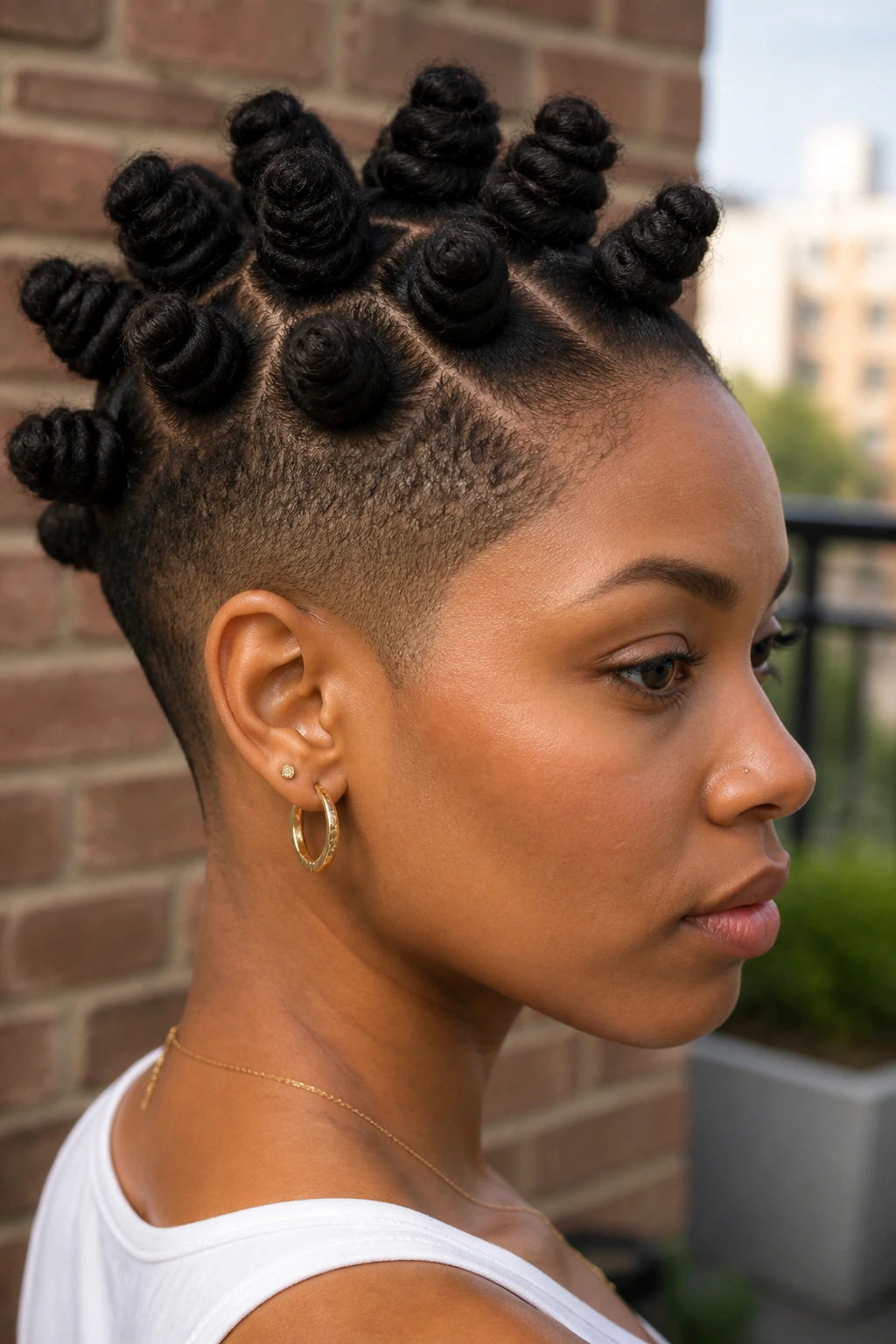
Bantu knots already bring shape, but when they’re arranged into a hawk and paired with a soft fade on the sides, the whole style gets a sculpted look. It’s one of the more striking options on the list, and it works because each knot becomes a little dome of texture.
The fade should stay soft, not skin-tight, unless you want a harder contrast. I’d choose this for a special event, a photoshoot, or any day you want your hair to carry the whole outfit. The design doesn’t have to be loud — sometimes the structure of the knots is enough, especially if the sides are cleanly faded at the temple and nape.
14. Short Twist-Out with a Temple Slash
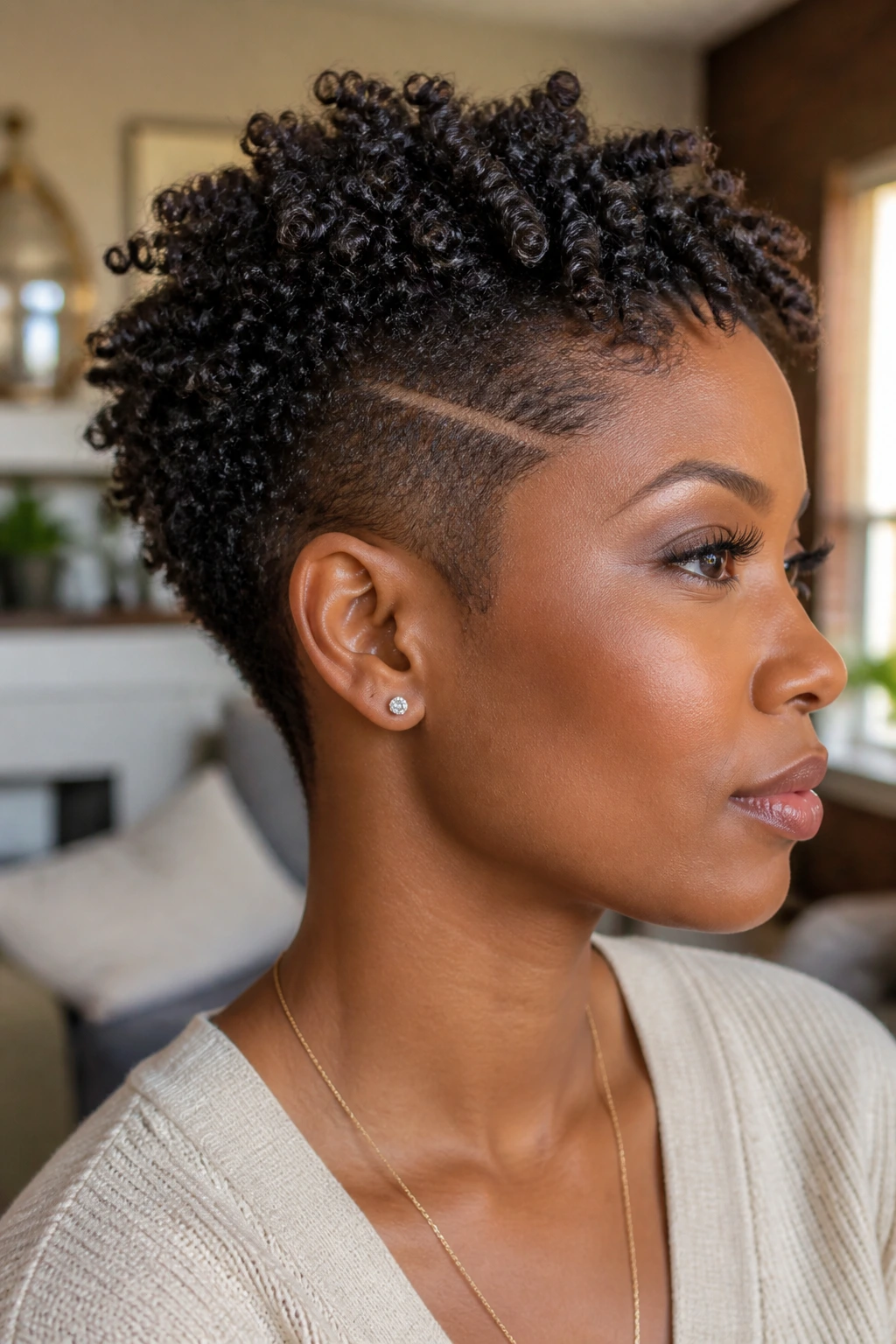
A twist-out can be soft and feminine and still carry a shaved design. A single slash at the temple is enough to give the style a sharper edge, especially when the curls are picked out just a little for shape.
This is one of my favorite subtle looks because it doesn’t rely on a huge undercut. The slash works best when it angles back slightly, following the line of the brow rather than sitting straight up and down. If you like low-drama hair that still has a point of view, this is your lane.
15. Sponge Coil Crop with Curved Lines
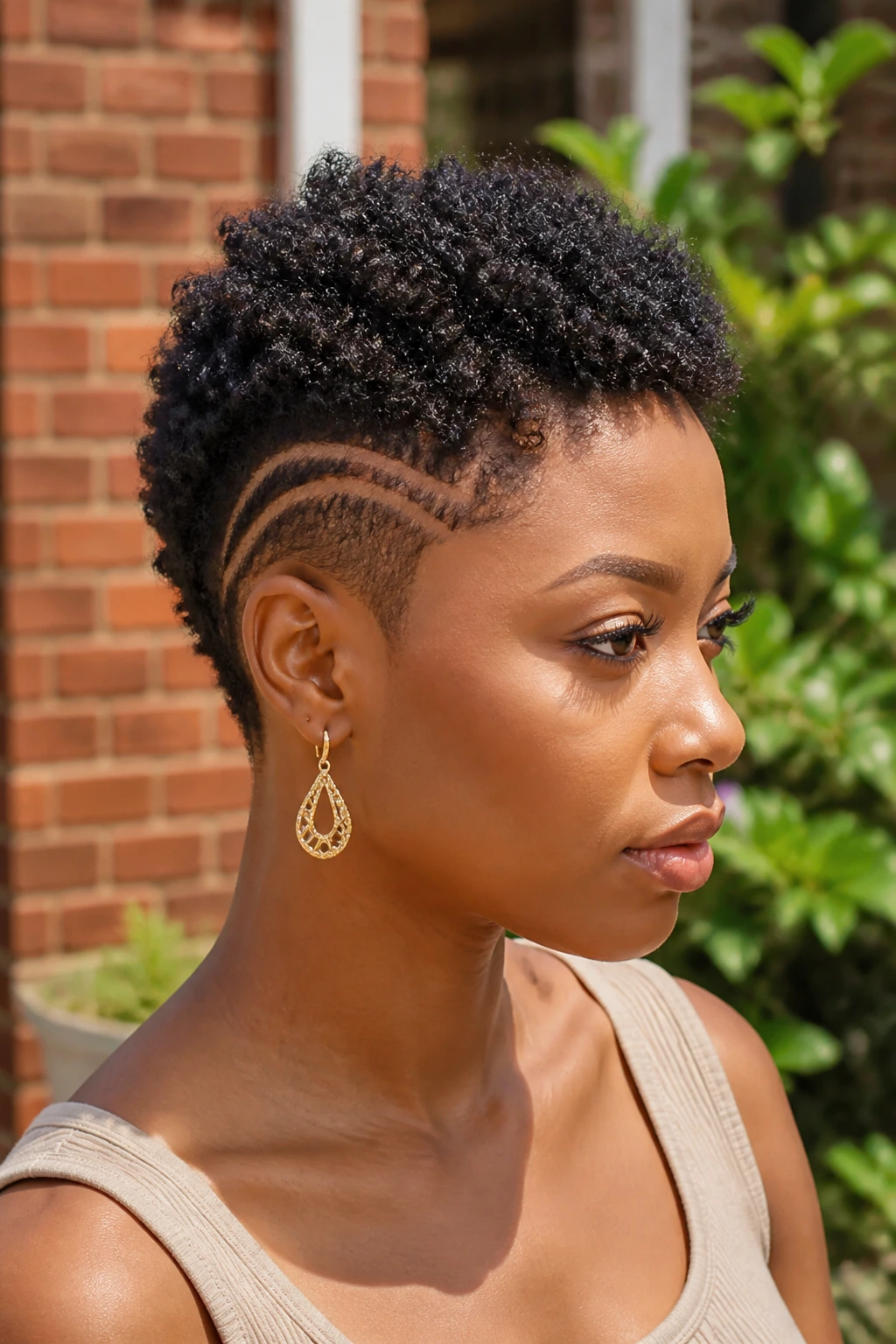
A short sponge-coil crop has a round, springy texture that pairs well with curved linework. Straight lines can look too rigid on it; curves feel more natural because they echo the hair’s movement.
Ask for one or two swooping lines at the side, not a crowded pattern. The shape of the coils already does a lot of visual work, and the shave should support that rather than compete. Keep the top moisturized with a light cream so the coils stay separated and the shaved curves stay easy to see.
16. Shadow Fade with a Starburst Design
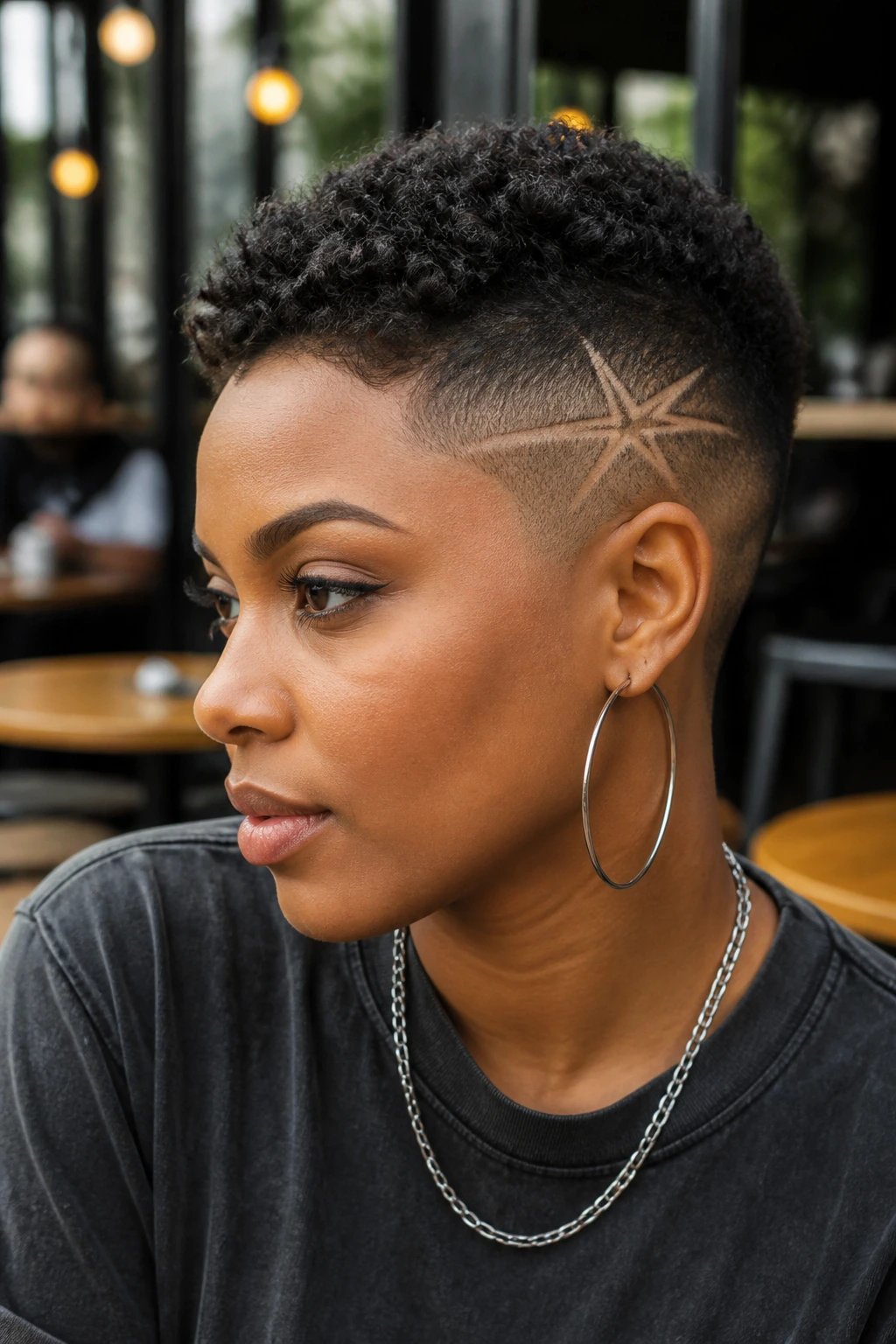
A shadow fade moves from dark to lighter without a hard jump, which makes it a nice base for a starburst. The design comes alive because the fade creates a softer backdrop around it, instead of a harsh line swallowing everything.
This cut has more edge than the subtler options, so I’d save it for someone who likes a little spectacle. The starburst can sit above the ear or near the temple, depending on your head shape and how much space you want. If the barber has a steady hand, the lines will look sharp without needing a lot of extra length on top.
17. Side-Parted Crop with an Ear Arch
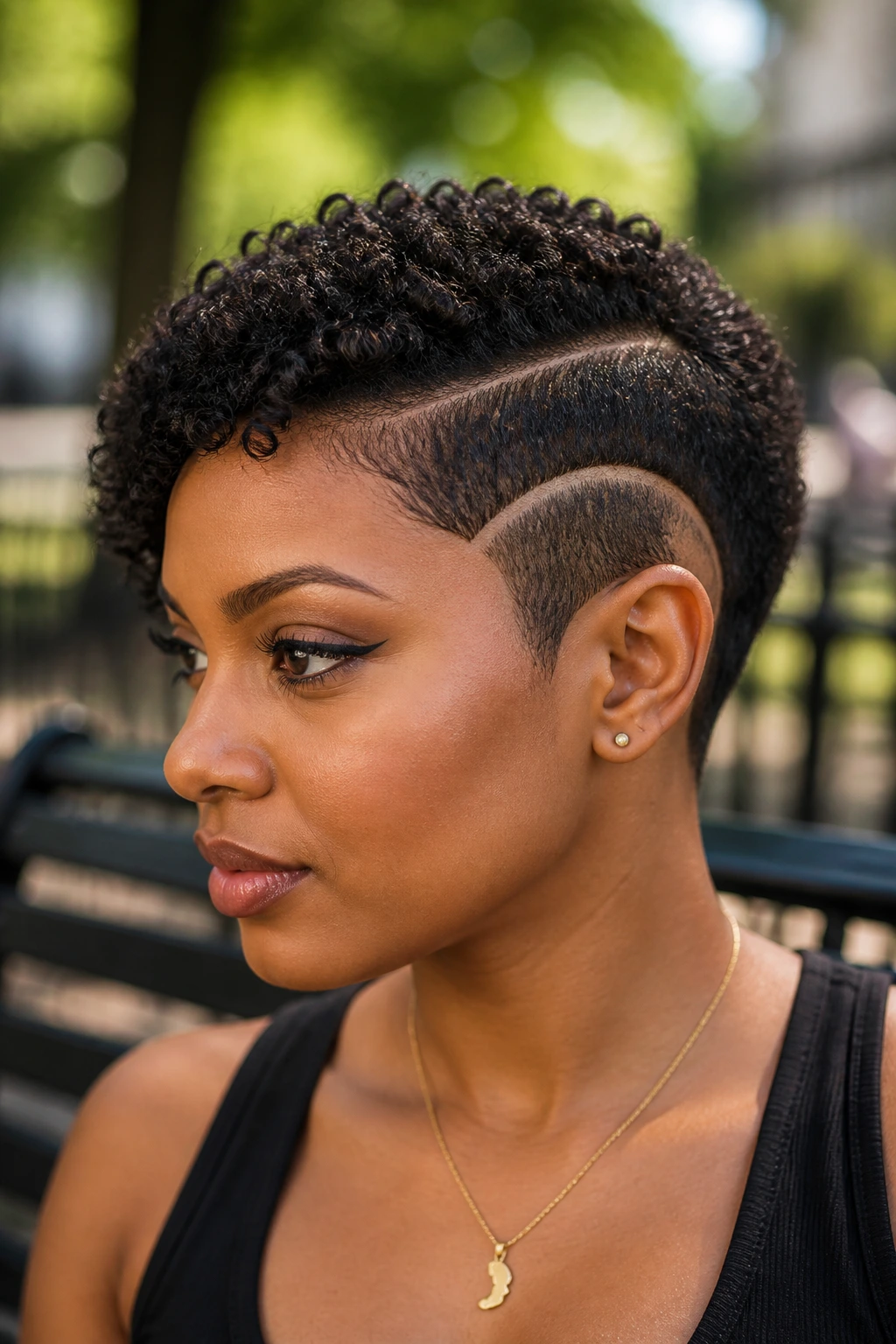
An arch that curves around the ear can do more for a crop than a whole wall of linework. It frames the ear, makes space for jewelry, and gives the haircut a clear visual edge without taking over the cut.
The side part matters here. Keep it deep enough to create direction, then let the arch sit low and smooth. This style suits people who want a neat profile and don’t want the design to be the loudest thing in the room. It’s a clean cut. Smart, too.
18. Mini Loc Bob with Back Panel Art
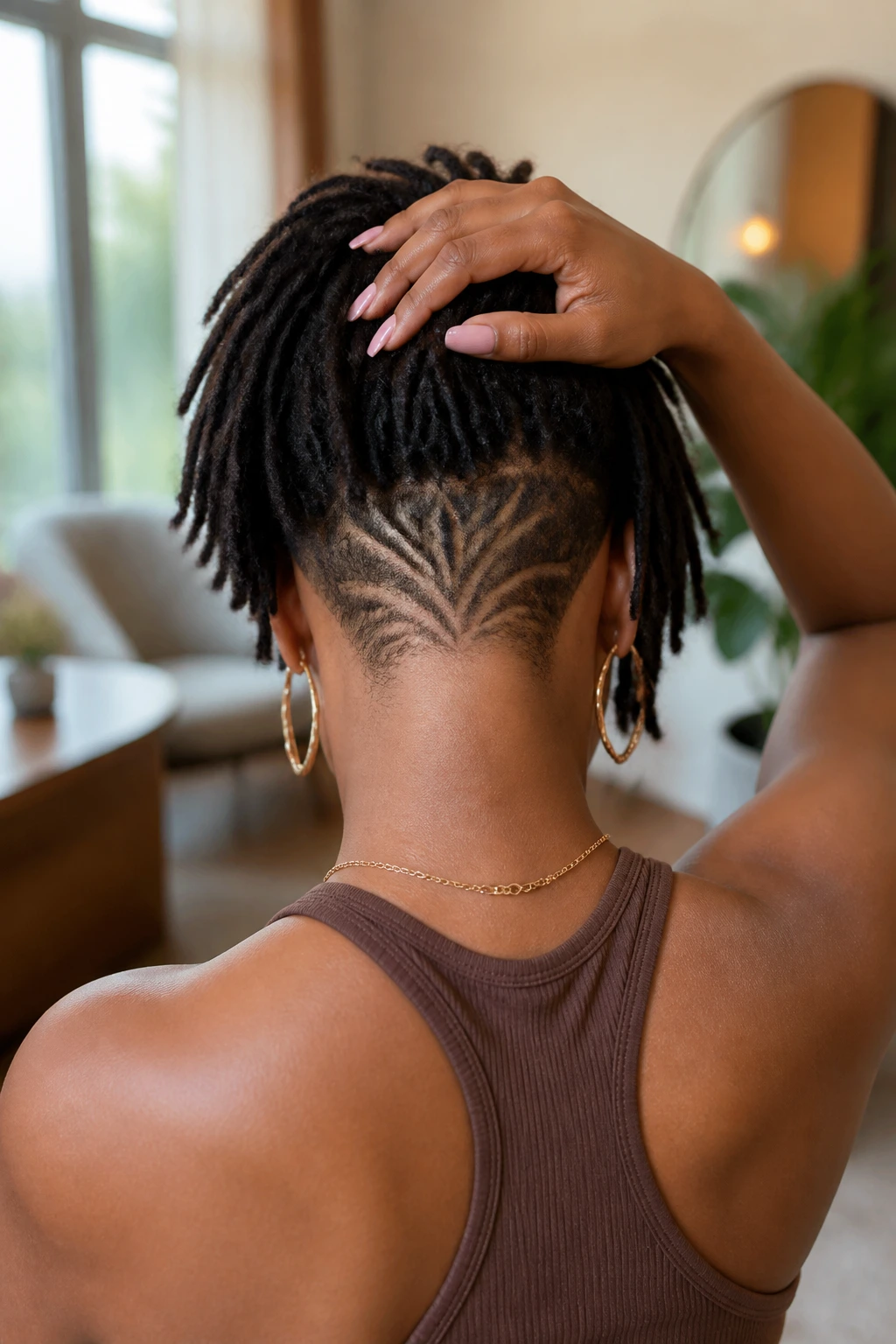
Mini locs cut into a bob shape already have movement. Add a shaved back panel with line art and the style goes from simple to quietly detailed. The best part is that the design stays hidden under the locs most of the time, so it feels personal.
This is a great option if you like the weight of locs but don’t want them all the way down your back. Keep the panel design low and centered so it doesn’t peek through the sides unless you want it to. A clean neckline makes the bob sit better, and the art looks sharper when the loc ends are even.
19. Curly Bangs with a Low Side Shave
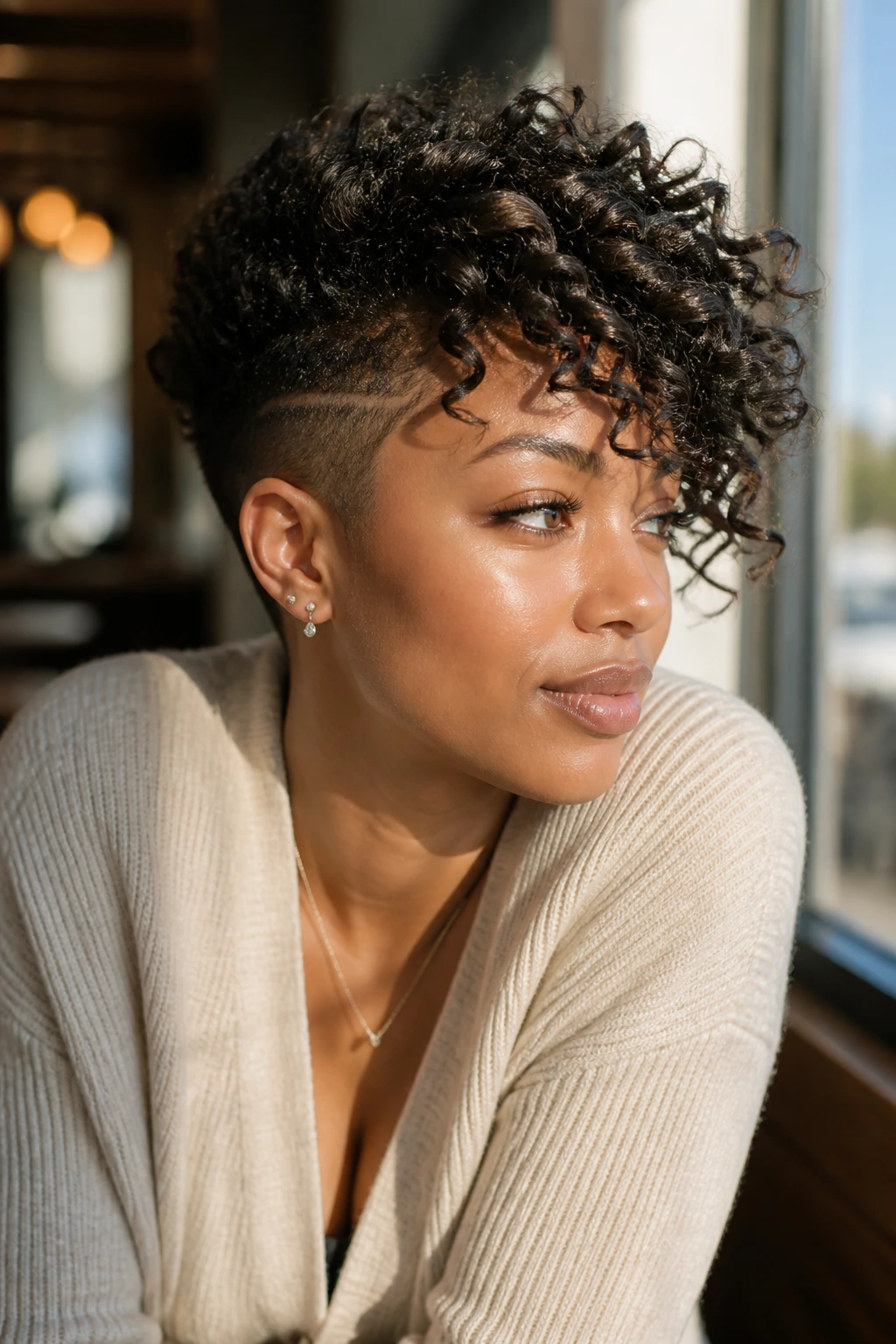
Curly bangs soften a face fast. A low side shave gives them a sharper edge underneath, which keeps the style from drifting into sweet and predictable.
The trick is balance. Let the bangs fall forward with some movement, and keep the shaved side close enough to the head that it doesn’t interrupt the curl pattern on top. If you like glasses or statement earrings, this cut frames both well. It’s one of those styles that looks casual in motion and more intentional when the light catches the side design.
20. Bleached Buzz with Razor Etch
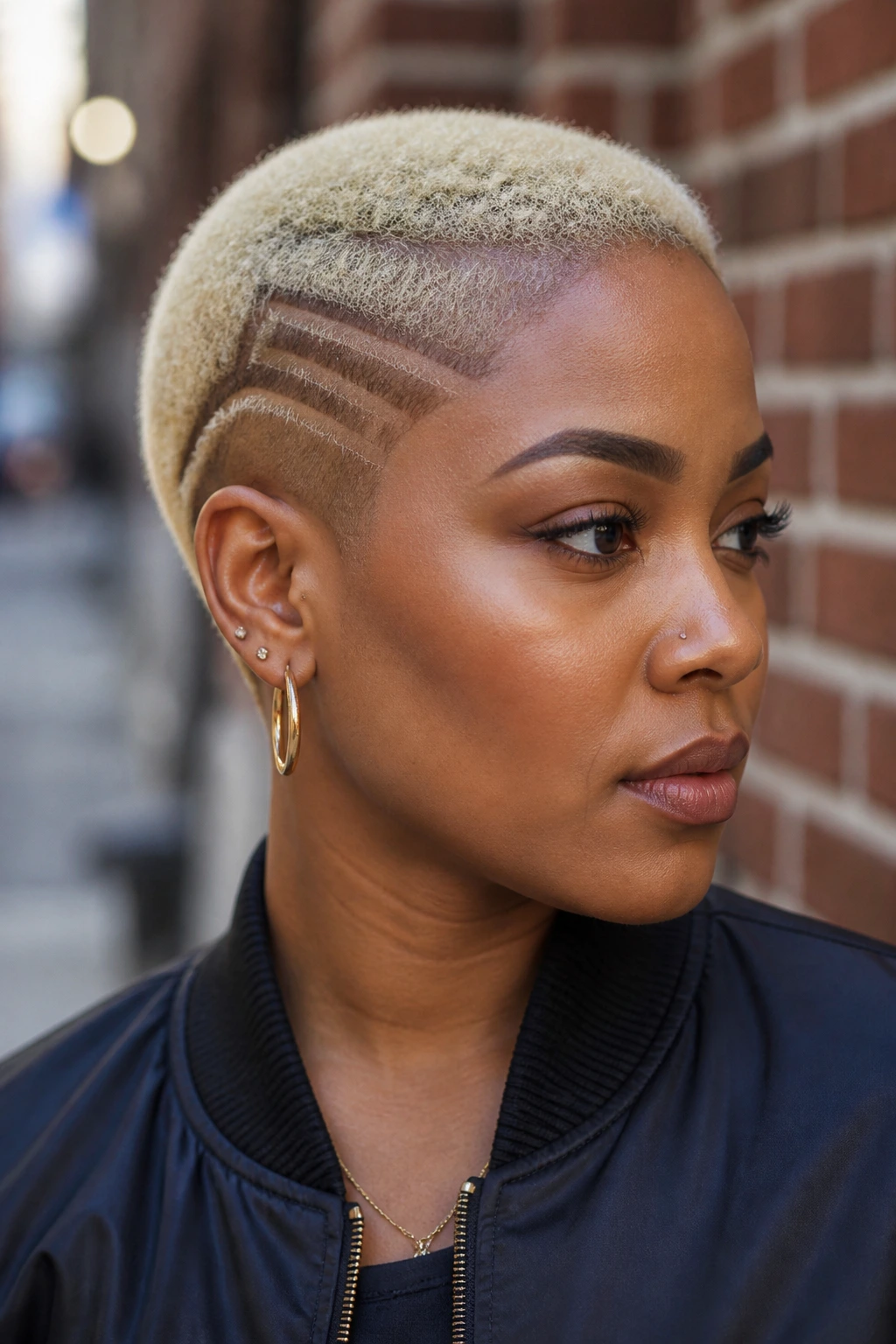
A close buzz with a lightened top and a razor etch is not shy. It’s a strong look, and I would not dress it up as anything else. The color makes the texture visible; the etch gives it shape.
Because there’s color involved, the scalp care matters more here. Keep the shave smooth, moisturize lightly, and avoid heavy products that can dull the brightness. The etched lines should be simple enough to survive grow-out — one or two clean cuts, not a maze. The style is strongest when the top color and side design work together instead of competing for attention.
21. High Puff with an Underlayer Design
A high puff hides a little secret underneath. The top stays full and lifted, while the underlayer can carry a shaved pattern that only shows when the hair is gathered or when the puff sits high enough to expose it.
This is a smart cut if you like volume but still want detail in the base of the style. The design should sit on the side or nape where the puff naturally lifts away from the scalp. I’d keep the exposed shave narrow, because the puff already creates a lot of shape and you don’t need a wide bare section stealing the show.
22. Stitch-Braid Hawk with Bare Sides
Stitch braids bring crisp parting lines, and when they’re shaped into a hawk with bare sides, the whole style gets a tailored feel. The braids create structure, the shaved sides reduce bulk, and the center ridge stays the star.
This is one of the more defined looks on the list, which means the parting has to be neat from the start. If the sections are crooked, you’ll see it immediately. Ask for the sides to stay clean and the braid ends to be tucked or finished in a way that keeps the hawk shape from sagging. It wears best when the hairline is kept soft but tidy.
23. Tapered Afro with Crescent and Wave Lines
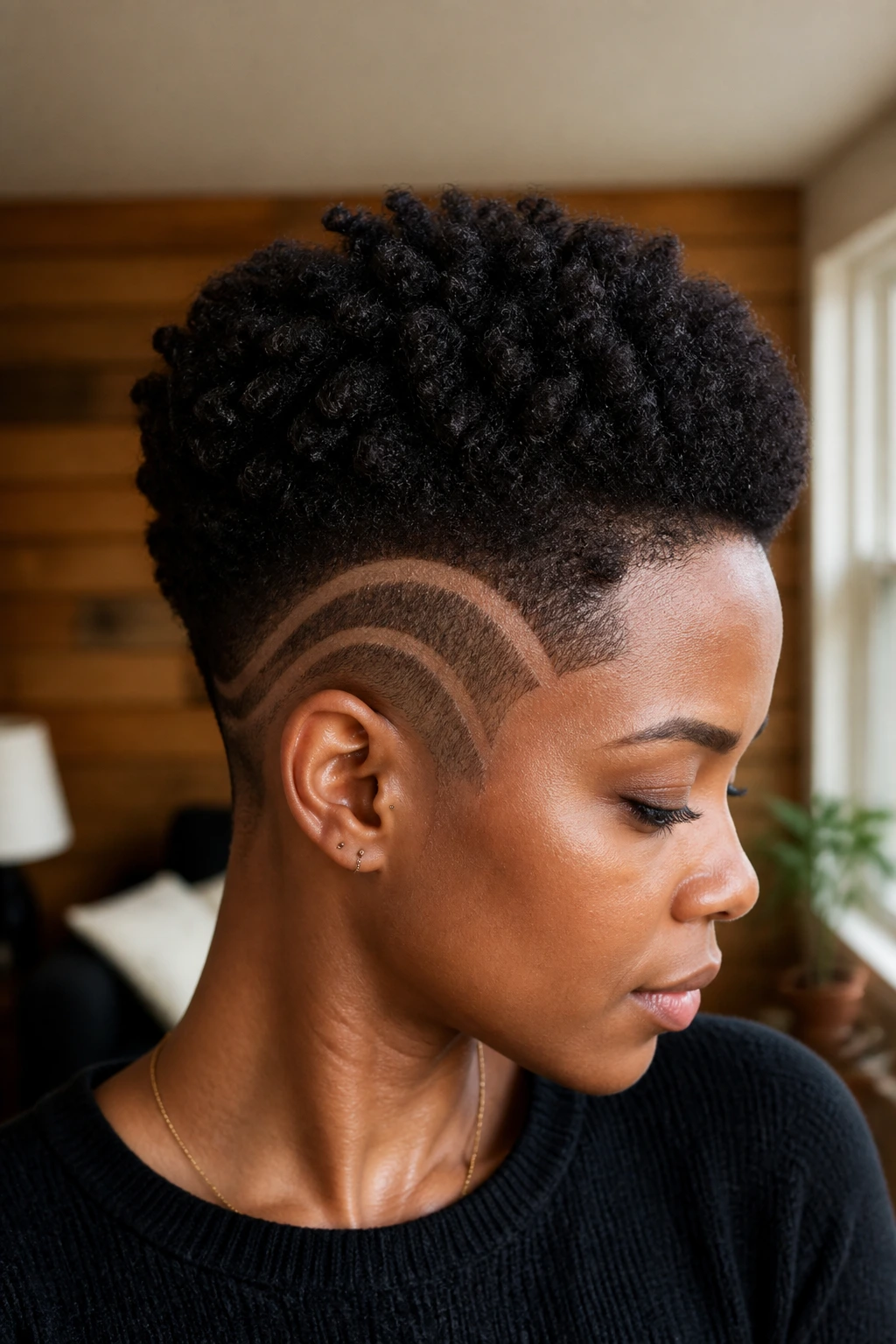
A shaped afro already has a strong silhouette. Add a crescent and a set of wave lines at the temple or nape, and the cut gains direction without losing its softness.
This is a favorite of mine because it respects the roundness of the afro instead of cutting against it. The crescent gives you a focal point, while the wave lines travel in a way that mirrors the curl pattern. Keep the taper low around the sides and back so the shape stays full where it matters. If you wear this cut, a pick at the roots and a little moisture at the ends go a long way.
24. Coily Crop with Abstract Tribal Lines
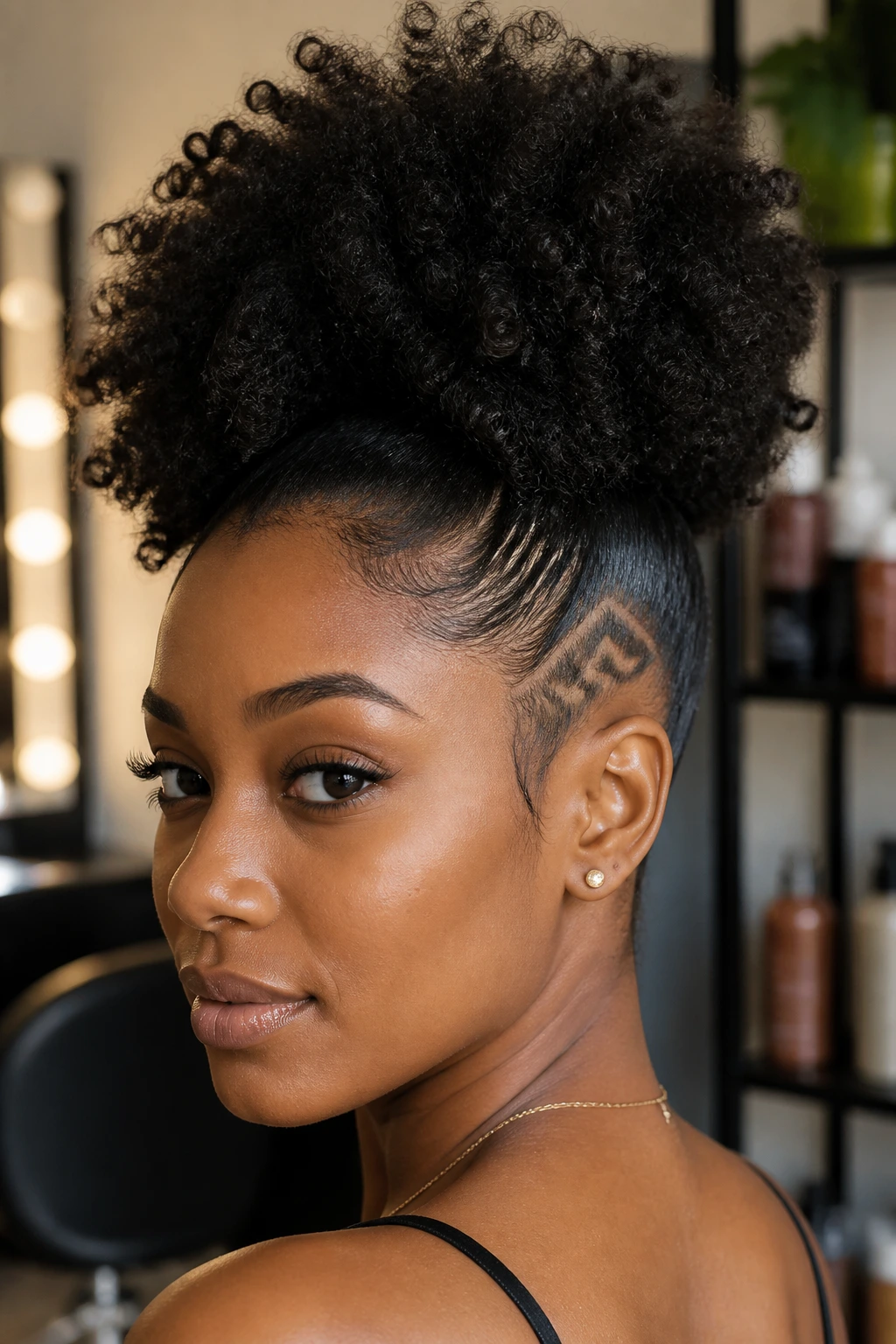
Abstract linework looks best when the crop is short enough to keep the shapes visible. The coils make a textured field, and the design can move across that field like a drawing instead of a simple trim.
This style feels more artistic than strict geometric cuts. Ask for curved breaks, angled segments, or a layered pattern that follows the curve of the head. I would not crowd it. Too many lines turn into noise fast. One strong side panel is usually enough, especially if the top is already rich with tight coils.
25. Halo Braid with a Shaved Nape Crescent
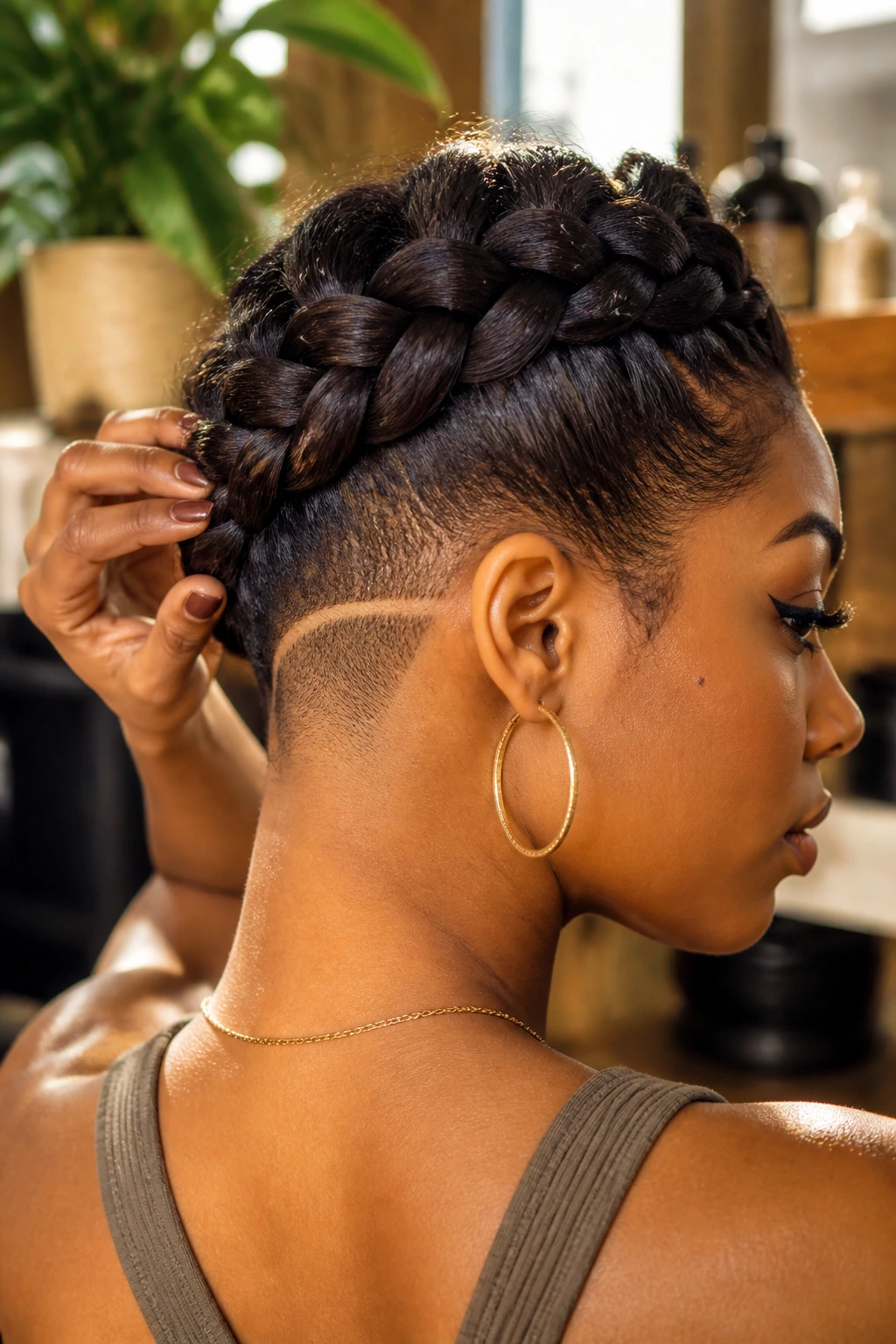
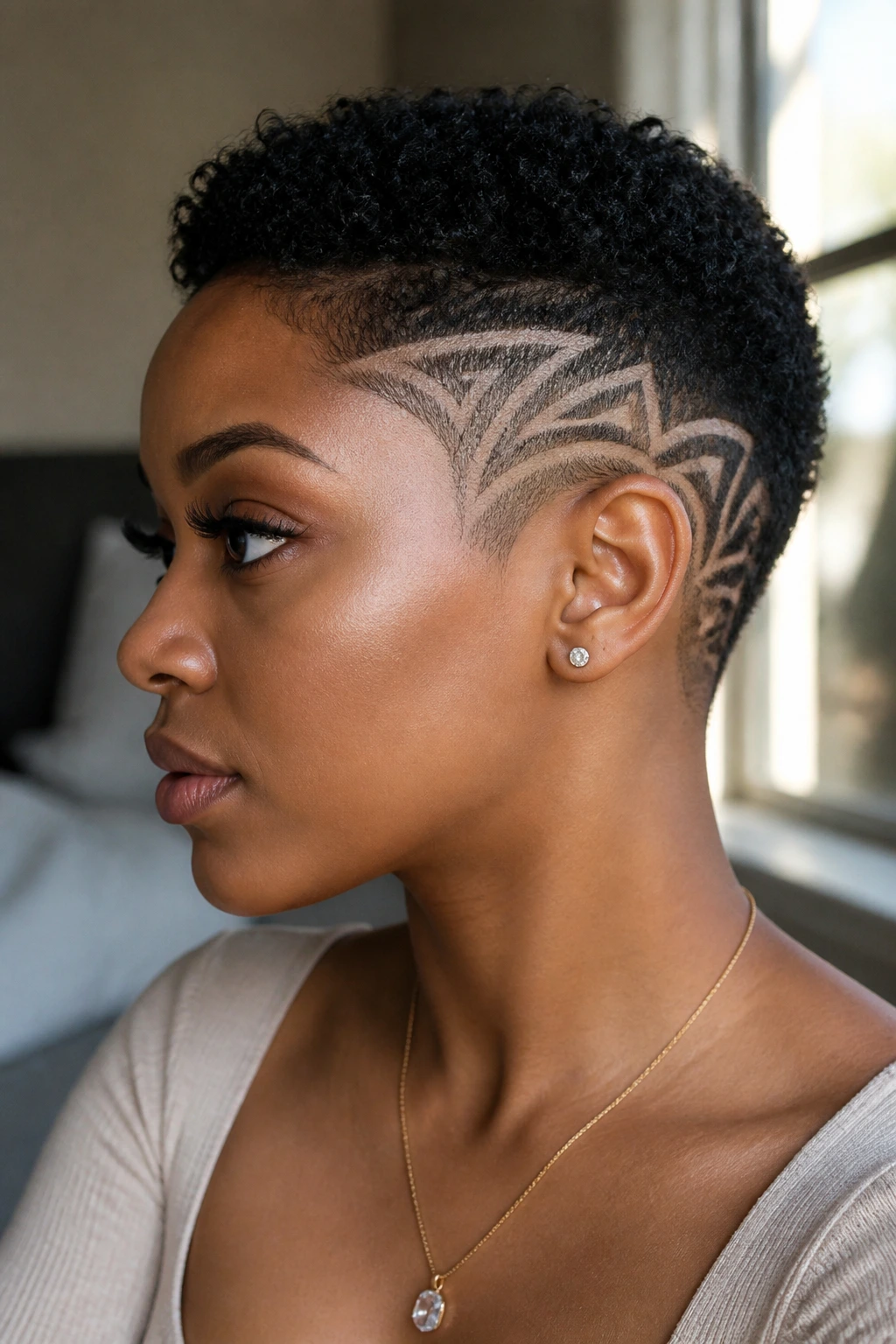
A halo braid gives you that wrapped, crown-like shape, while a shaved crescent at the nape adds a hidden detail that pops when the braid is lifted or worn higher. It’s a pretty smart pairing because the braid feels soft and graceful, and the shave keeps it from going too precious.
Best way to wear it
- Keep the braid snug enough to hold shape, but not so tight that the nape line gets stretched out.
- Place the crescent low and centered so it shows when the braid is moved.
- Add a little sheen only to the braid, not the shaved skin, or the contrast gets muddy.
This one is gorgeous with earrings and a clean neckline. Clean, not fussy.
26. Side-Swept Undercut with a Lightning Bolt Part
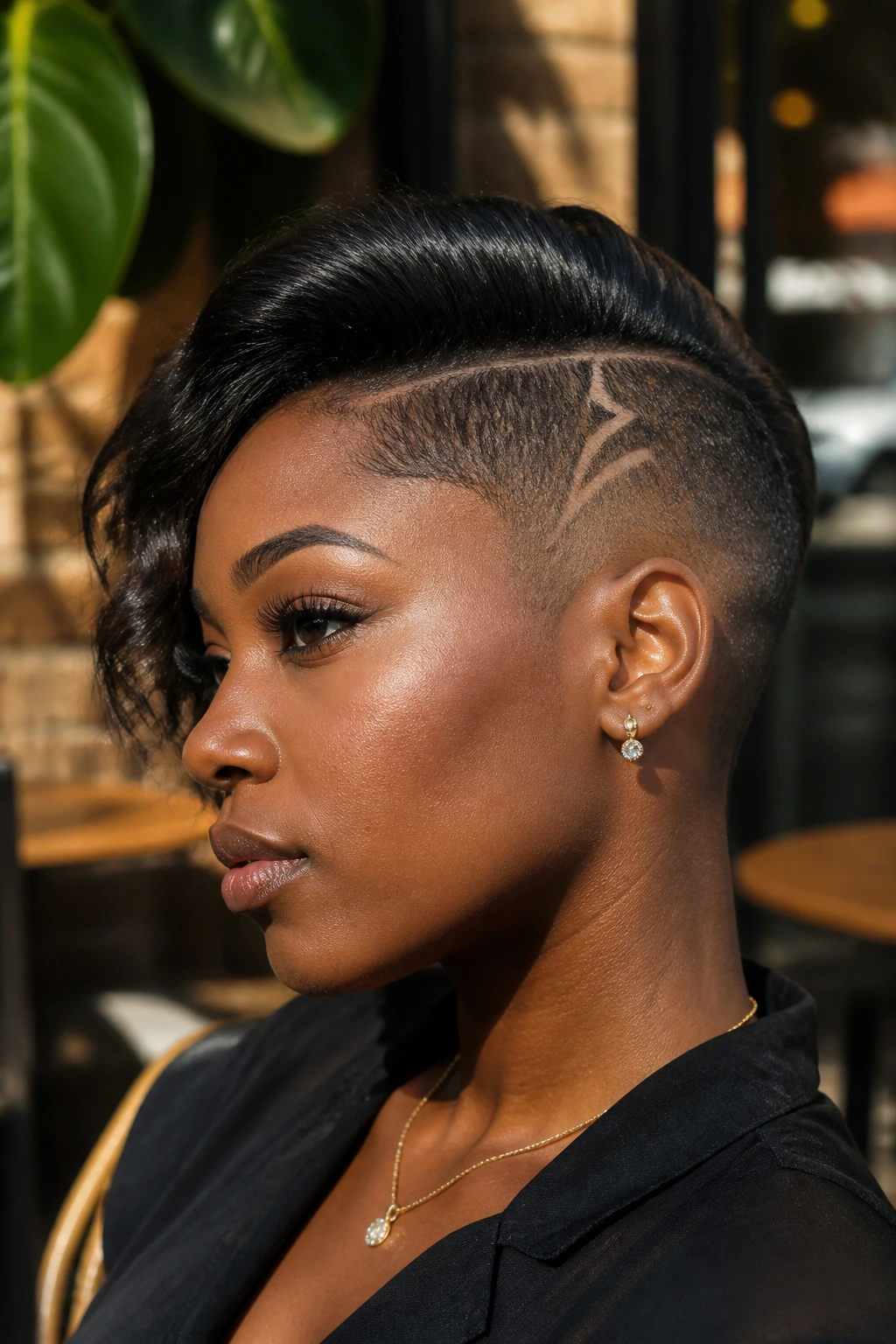
A lightning bolt part is a loud little thing. Put it under a side-swept undercut and it has room to stand out without swallowing the whole style. The longer section can cover part of the undercut, which makes the reveal more dramatic when you tuck it back.
This works best when the sweep is directional. Don’t leave the hair flopping randomly over the shave. Shape it toward the opposite side so the bolt sits where the eye naturally lands. If you want the style to read as sharp rather than juvenile, keep the bolt slim and the rest of the undercut clean.
27. Two-Strand Twist Frohawk with a Double Fade
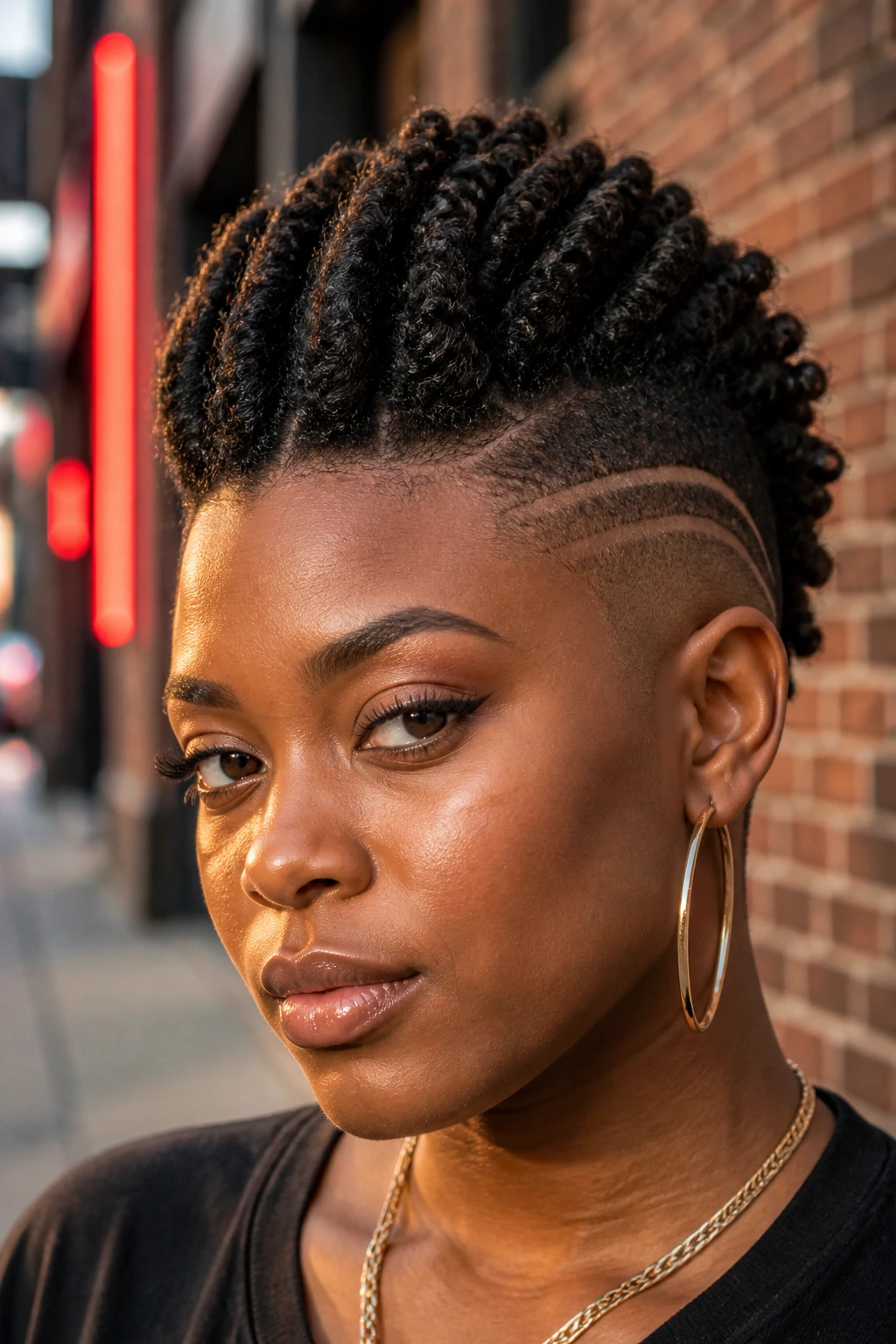
Two-strand twists can be gathered into a hawk shape that looks neat from every angle. Pair that with a double fade — one at the temple, one at the nape — and the style gains a cleaner outline than a single fade would give.
It’s a strong choice for women who like texture but don’t want loose curls hanging everywhere. The twists keep the top controlled, and the fades give the head shape a more deliberate finish. If your hair is dense, leave a little extra length in the center strip so the hawk keeps height after the twists settle.
28. Curly Mullet with Nape Art
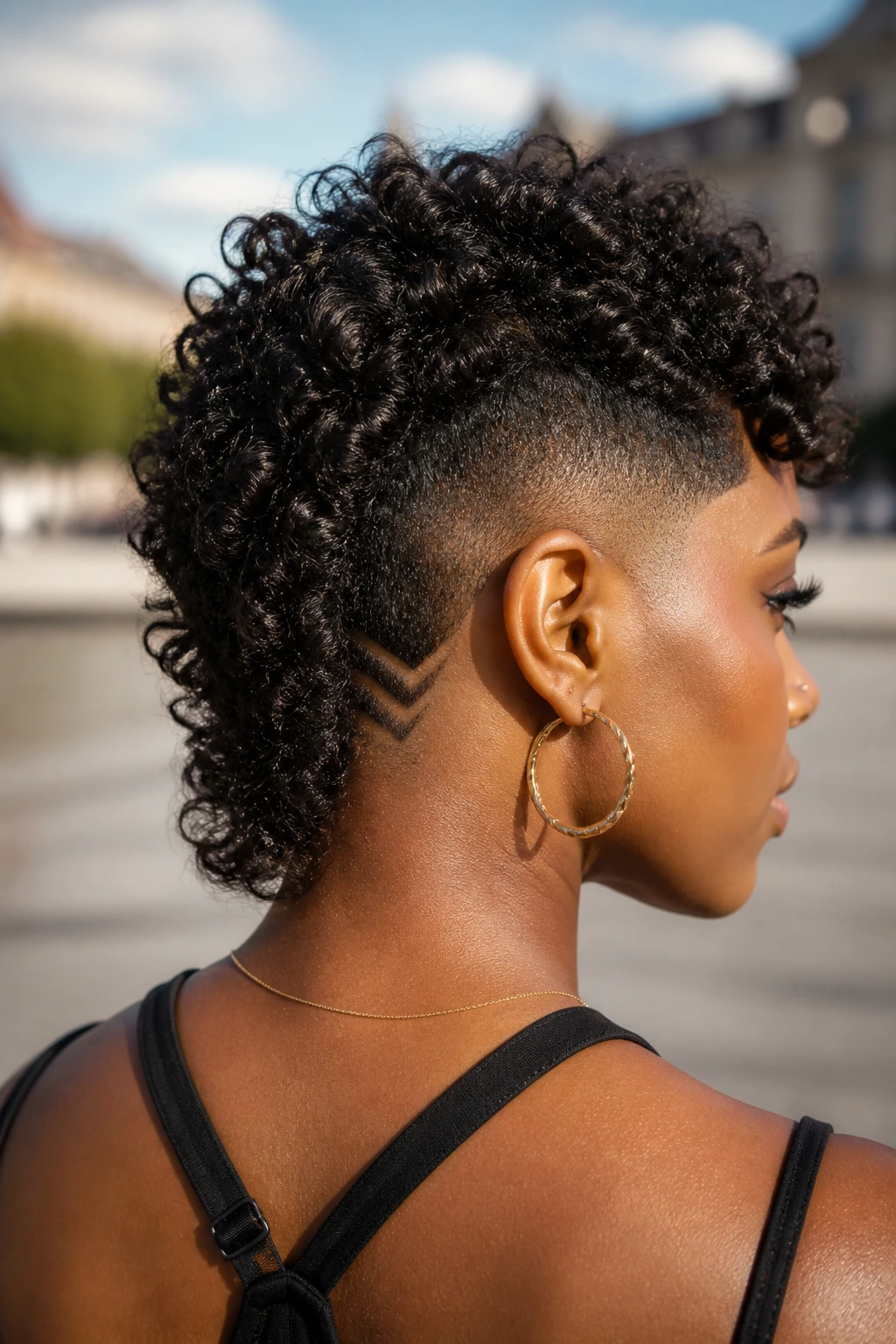
The curly mullet is for the person who does not mind a reaction. Shorter in front, longer in back, shaved or faded at the sides, and a design tucked into the nape — it’s edgy, a little retro, and surprisingly wearable when the shape is balanced.
What keeps it from looking messy is the curl pattern. The curls need enough definition to separate the front from the back, and the nape design should sit low enough that it becomes part of the silhouette instead of fighting it. If you like fashion-forward hair that does not look like everyone else in the room, this is the one that gets remembered.
How Shaved Design Hairstyles for Black Women Change the Shape of a Cut
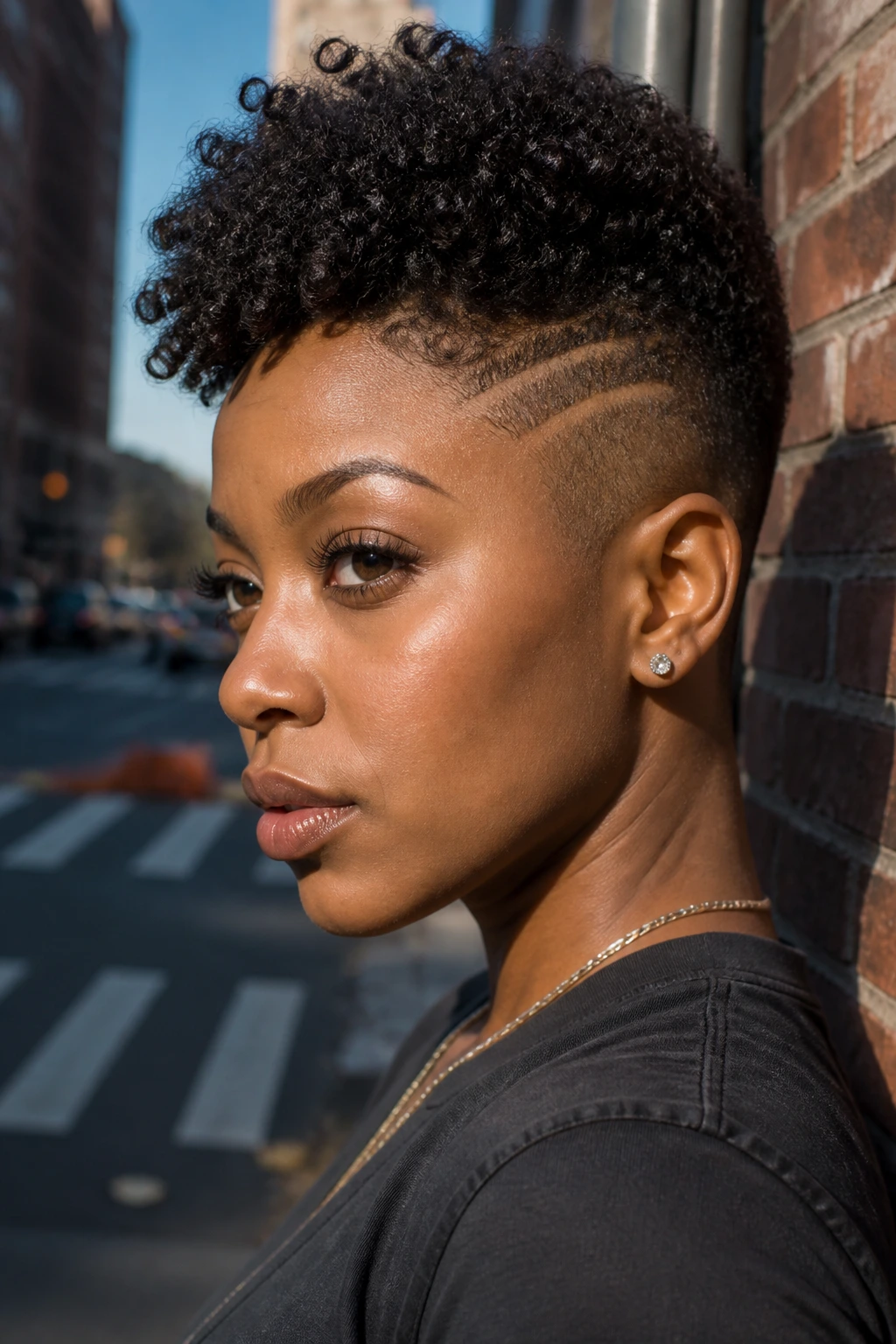
A shaved design is not just decoration. It changes the silhouette before anyone notices the line itself. A temple carve can pull the eye upward and make the face look longer. A nape design can slim the neckline. A shaved side can make thick curls or locs feel lighter, even when the top length stays the same.
That shape-shifting part matters more on textured hair than people admit. Coils and curls take up space in a way straight hair often does not, which means the negative space created by a shave becomes part of the style. One small gap can make the whole head look cleaner.
Temple lines and side panels
Temple lines are the quickest way to add motion without sacrificing length. They work especially well if you wear glasses, side parts, or asymmetrical crops, because the line sits where the eye already wants to travel.
Side panels are louder. They show up in profile, which is helpful if you want the haircut to be noticed from the side and front. The danger is crowding the panel too hard with design. Leave some skin visible, and let the shape breathe.
Nape art and hidden details
Nape designs are for people who like a little secret in the cut. They grow out softly, hide under braids and puffs, and still feel special when you catch them in a mirror. I think nape art is underrated because it gives you personality without forcing the whole cut to be loud.
Full side shaves and mohawk shapes
Once you shave more of the side, the silhouette changes fast. Frohawks, loc hawks, twist hawks, and braided centers all become more dramatic because the top is standing on a cleaner base. That’s where the edge comes from.
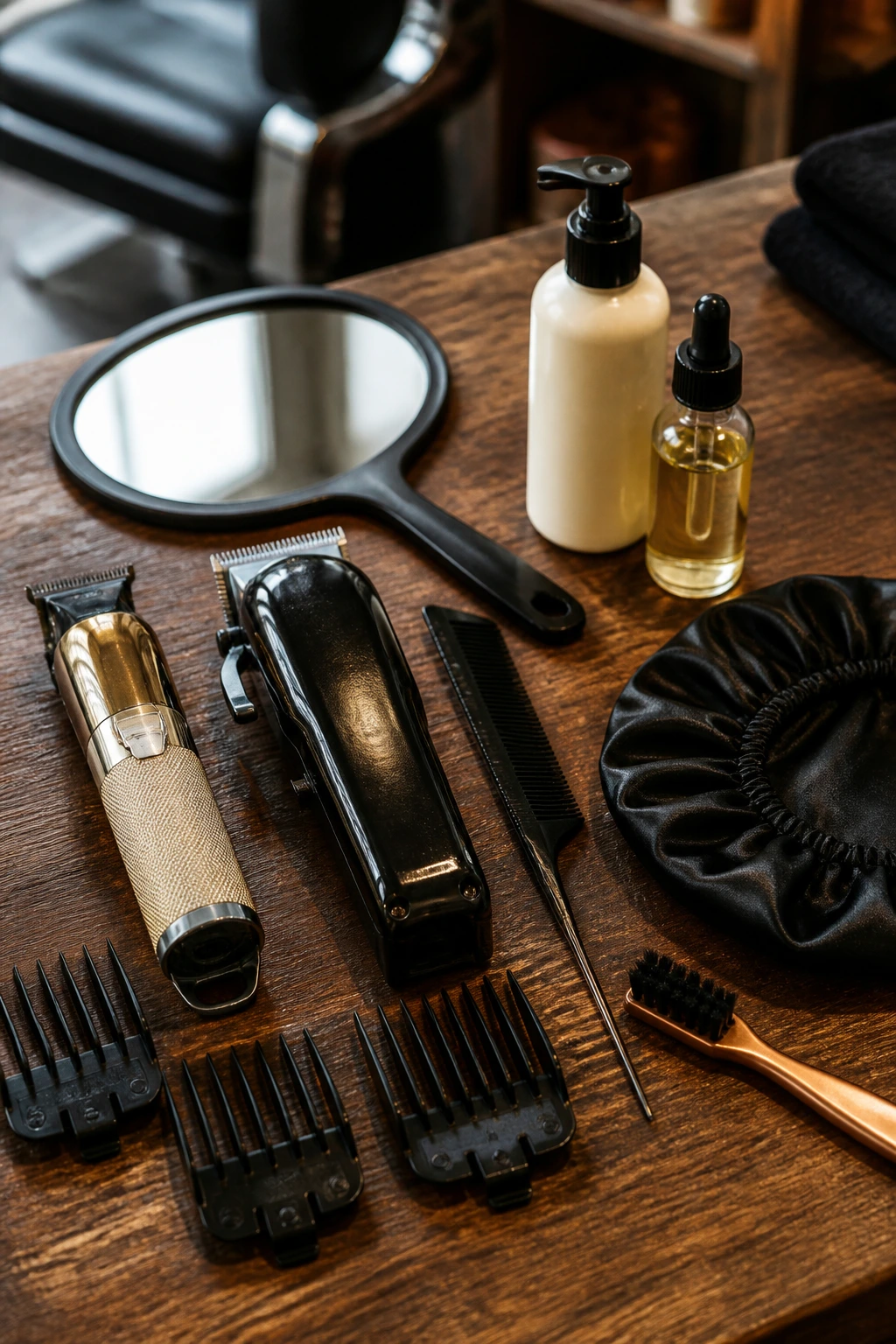
Tools That Make the Lines Stay Clean
-
Detail trimmer: This is the tool that draws the actual line. A good one cuts close without snagging, which matters when the design is only a few millimeters wide.
-
Clipper with guards: You need this for the fade or taper that sits around the art. Without a clean gradient, even a sharp design can look unfinished.
-
Hand mirror: Essential for checking the back and both sides. A phone selfie is not enough when you want to see whether the nape lines are even.
-
Rat-tail comb: Useful for parting hair before the cut, separating coils for styling, and checking that braid or twist sections are neat.
-
Moisturizing leave-in: Keep the top soft so the texture frames the design instead of looking dry and frizzy around it.
-
Light scalp oil or tonic: A small amount goes a long way on shaved areas. Use it sparingly so the cut stays crisp.
-
Satin bonnet or scarf: This protects both the design and the shape overnight. Cotton pillowcases steal moisture and rough up the edges.
-
Edge brush: Handy for keeping the hairline tidy without smearing product all over the shave.
Keeping Shaved Design Hairstyles for Black Women Sharp Between Visits
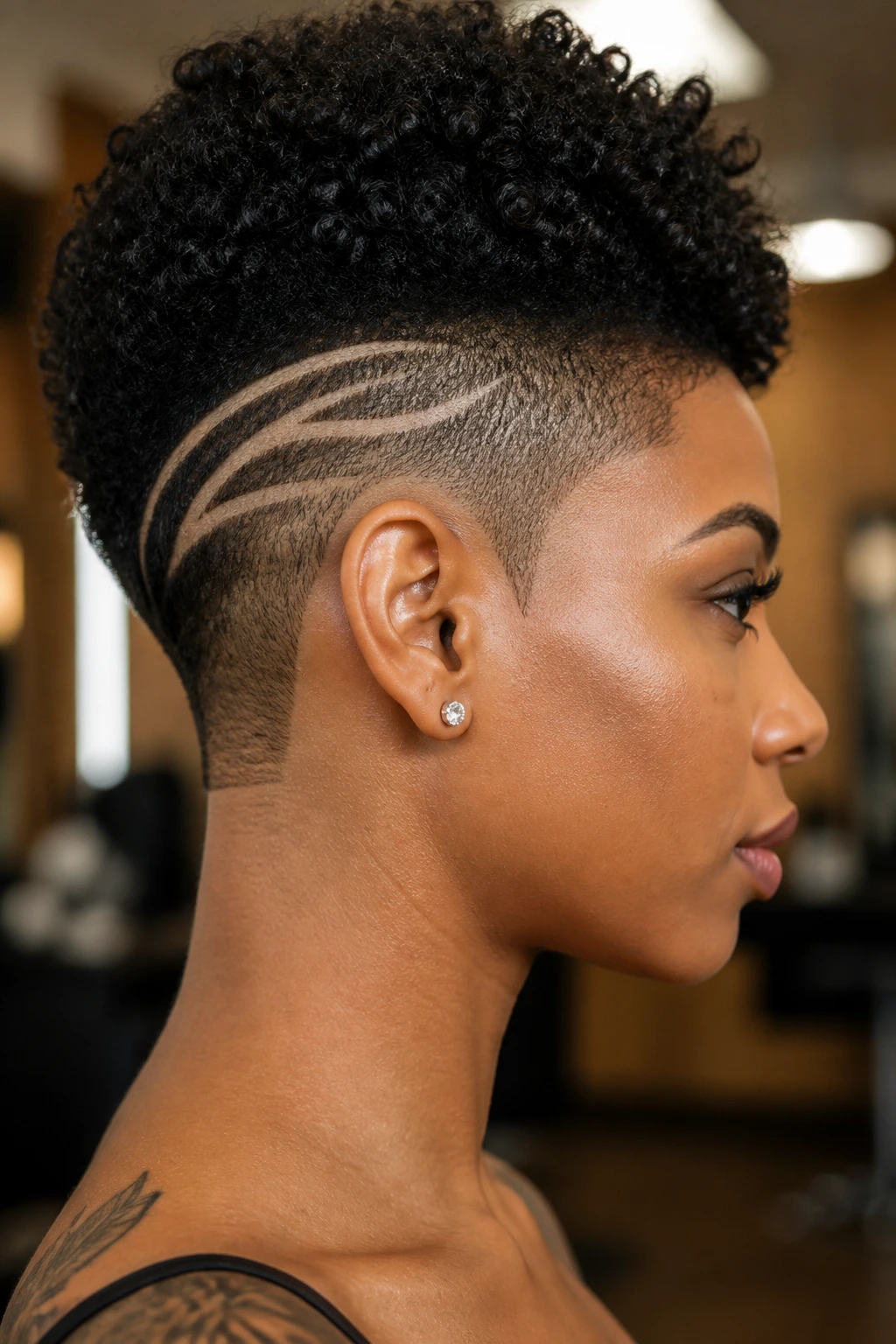
Fresh lines and fuzzy lines are separated by a millimeter or two of growth. That tiny amount matters. Temple and nape areas often soften first because they get rubbed by pillowcases, collars, glasses arms, and daily hand contact.
Most shaved designs need a quick refresh every 1 to 2 weeks if you want the lines to stay crisp. If the design is small and hidden, you can stretch that longer. Bigger side panels or full etched art usually need more attention, because the edges lose definition faster as the hair grows back through the fade.
At home, the goal is not to keep shaving yourself unless you know exactly what you’re doing. It’s to keep the cut neat. Wrap your hair at night, moisturize the top lightly, and avoid piling thick products onto the shaved skin. If the scalp gets dry, a few drops of tonic or oil are enough. More than that starts to blur the linework.
If your design is visible at the temple, try to keep your hairstyle from constantly rubbing it. Tight glasses, hard headbands, and repeated edge brushing can wear the area down faster than actual growth. A cleaner pillowcase situation helps, too — satin is better than cotton, and that’s not a cute suggestion. It makes a real difference.
Practical Ways to Wear and Style It
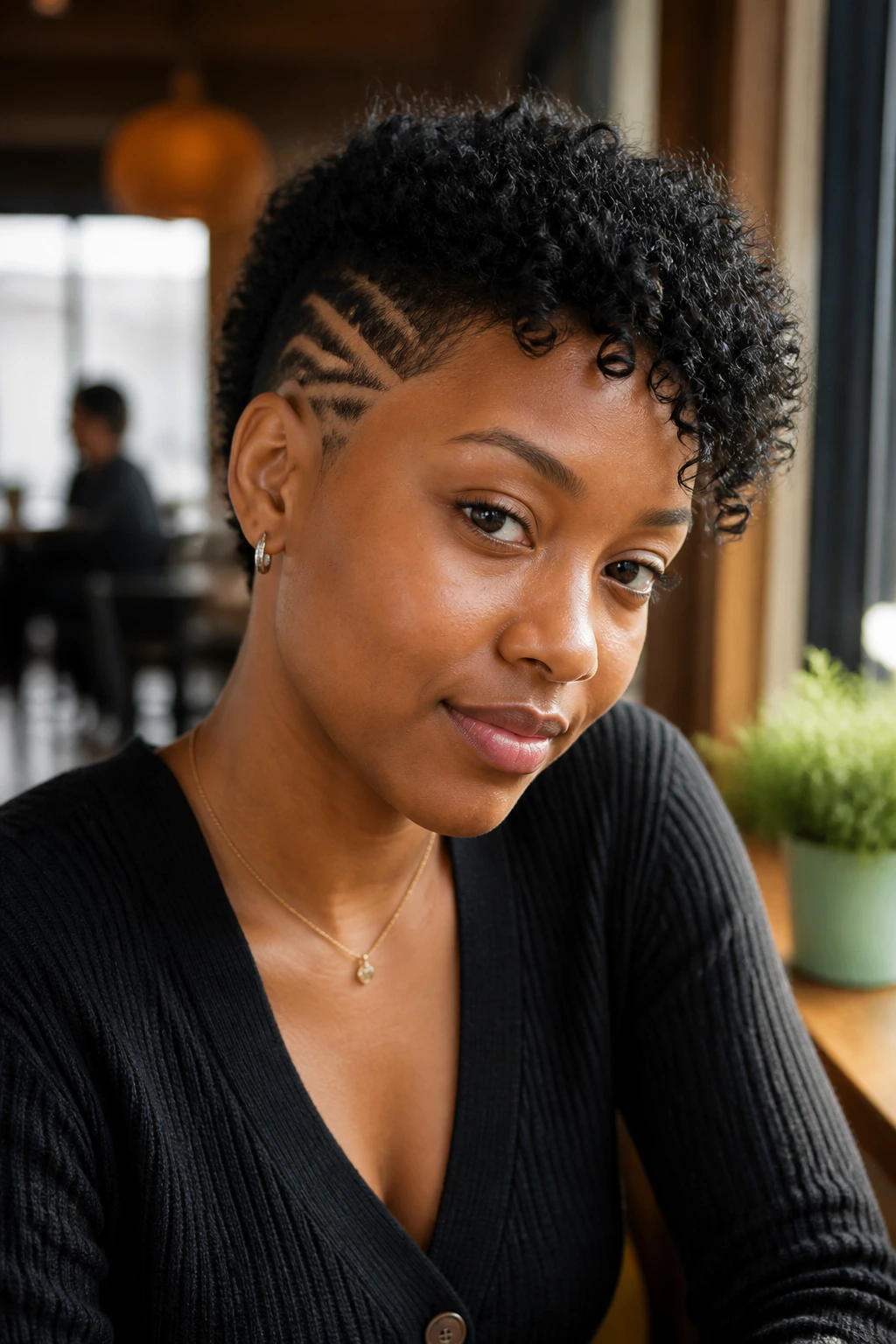
Placement matters: Keep the shaved art where your usual styling won’t hide it. If you wear a side part every day, place the design on the opposite temple or lower nape so it stays visible.
Tone it up or down: A single line is enough if you wear bold earrings, color, or sharp makeup. If the haircut is the statement piece, let the rest of your look stay cleaner and simpler.
Use moisture, not weight: Coils and curls look better around a design when they’re defined, not greasy. A leave-in plus a light cream usually gives more shape than a heavy pomade.
Think about grow-out before the cut: Ask how the design will look after 10 days, not just on day one. That question saves a lot of regret.
Protect the line at night: Satin scarf, satin bonnet, or both. The edge around the shave softens faster than the top, so the nighttime wrap matters more than people think.
The Mistakes That Make a Good Design Look Off
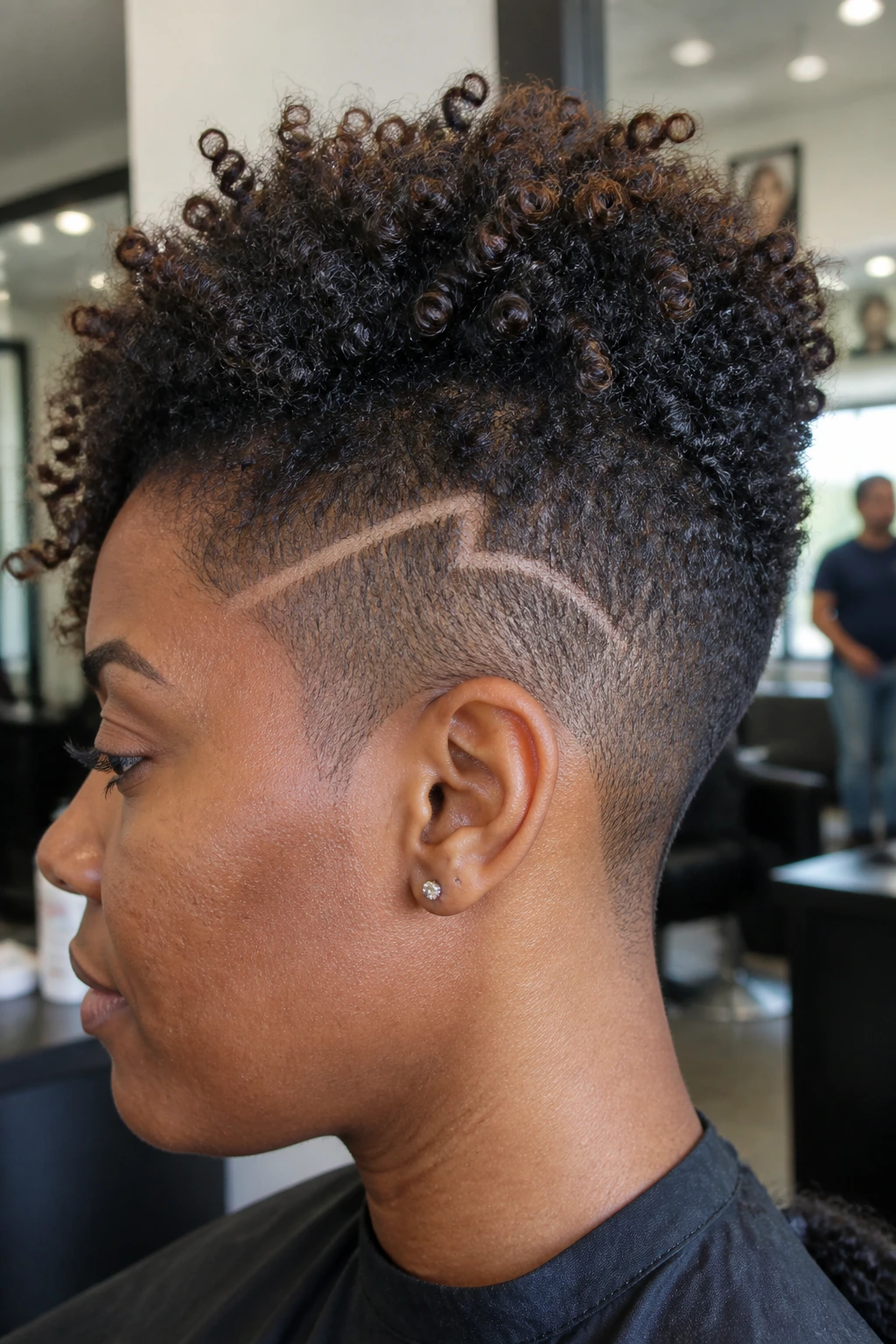
The first mistake is crowding the head with too much art. One strong design beats three tiny ones fighting for space. When the lines are packed together, they blur once the hair starts to grow back, and the cut looks cluttered instead of clean.
Another common error is putting a design in the wrong spot for the haircut’s natural shape. A beautiful line on the temple can look lopsided if the rest of the cut is fuller on the other side. The fix is simple: match the design to where the hair already wants to sit.
Heavy product can also wreck the look. Thick grease on a shaved section makes the scalp shine in a sloppy way, and it clings to the line, which softens the edges. Use light moisturizer on the top, and keep the shave itself dry and clean.
The last big mistake is forgetting about grow-out. A lot of people love the day-one photo and hate week-two fuzz. If you want a style that still looks good after a few days, choose simpler linework, a lower fade, or a hidden nape design that can blur gently.
Variations and Alternatives to Try
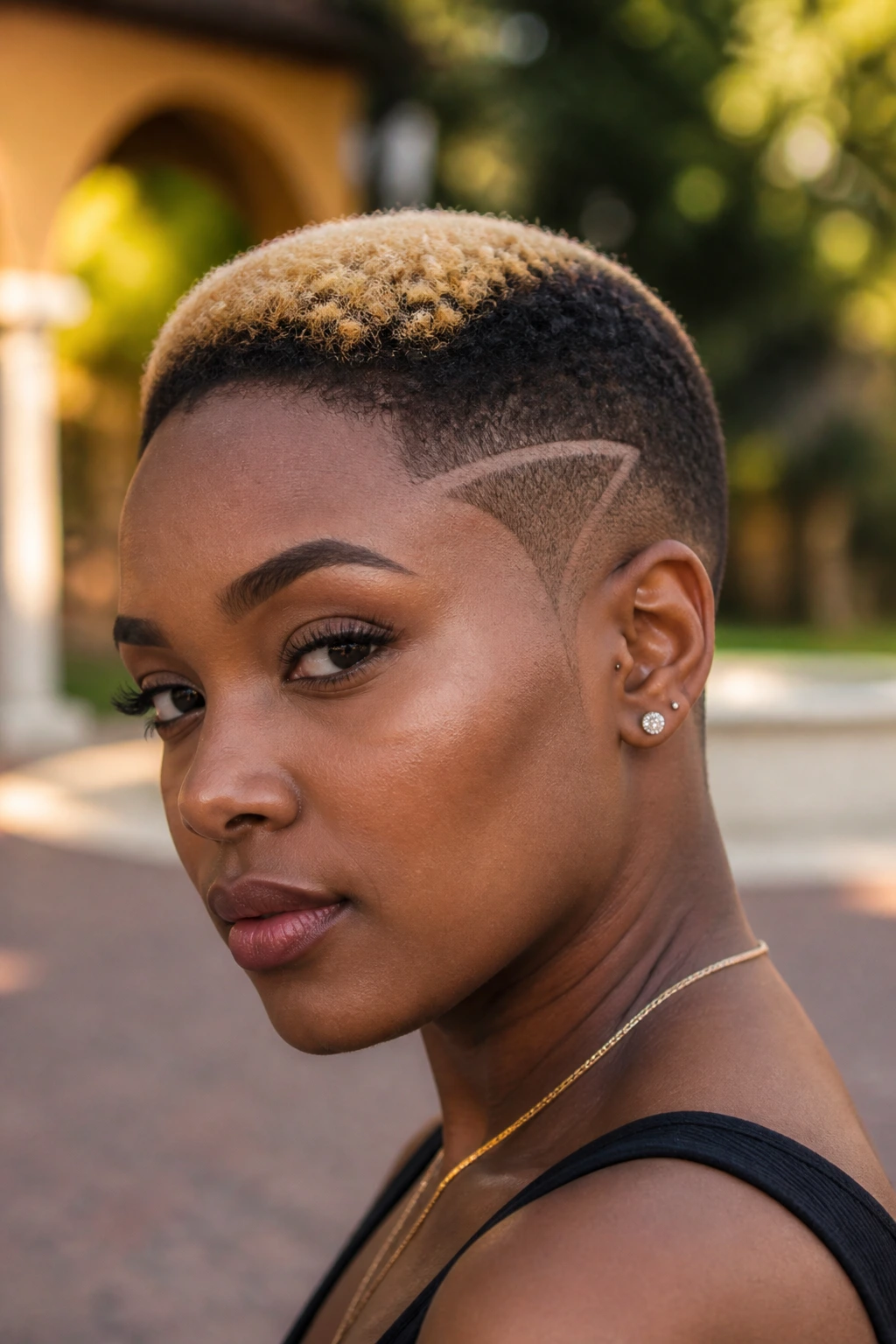
Soft Graphic: Keep the shave minimal — one temple line, one nape curve, or one small panel. This version is easier to wear to work and still gives you a clean edge.
Full Fade Drama: Go lower on the sides and bolder with the artwork. Starbursts, bolts, and double lines all fit here, especially if the top is short and sculpted.
Protective Styling Remix: Pair the shave with braids, twists, or locs so the cut stays neat while the top keeps length. This is the one I’d pick if you want less daily styling.
Color and Contrast: Add a little color to the top — honey blonde, copper, red, or a close-cropped bleached section — and let the shave sharpen the outline. The contrast makes the design pop without needing extra linework.
Minimal Edge-Up: Skip the full design and keep just the cleanest edge around the temple or nape. It’s a strong option if you love the idea of a shaved look but not the maintenance that comes with bigger art.
Frequently Asked Questions
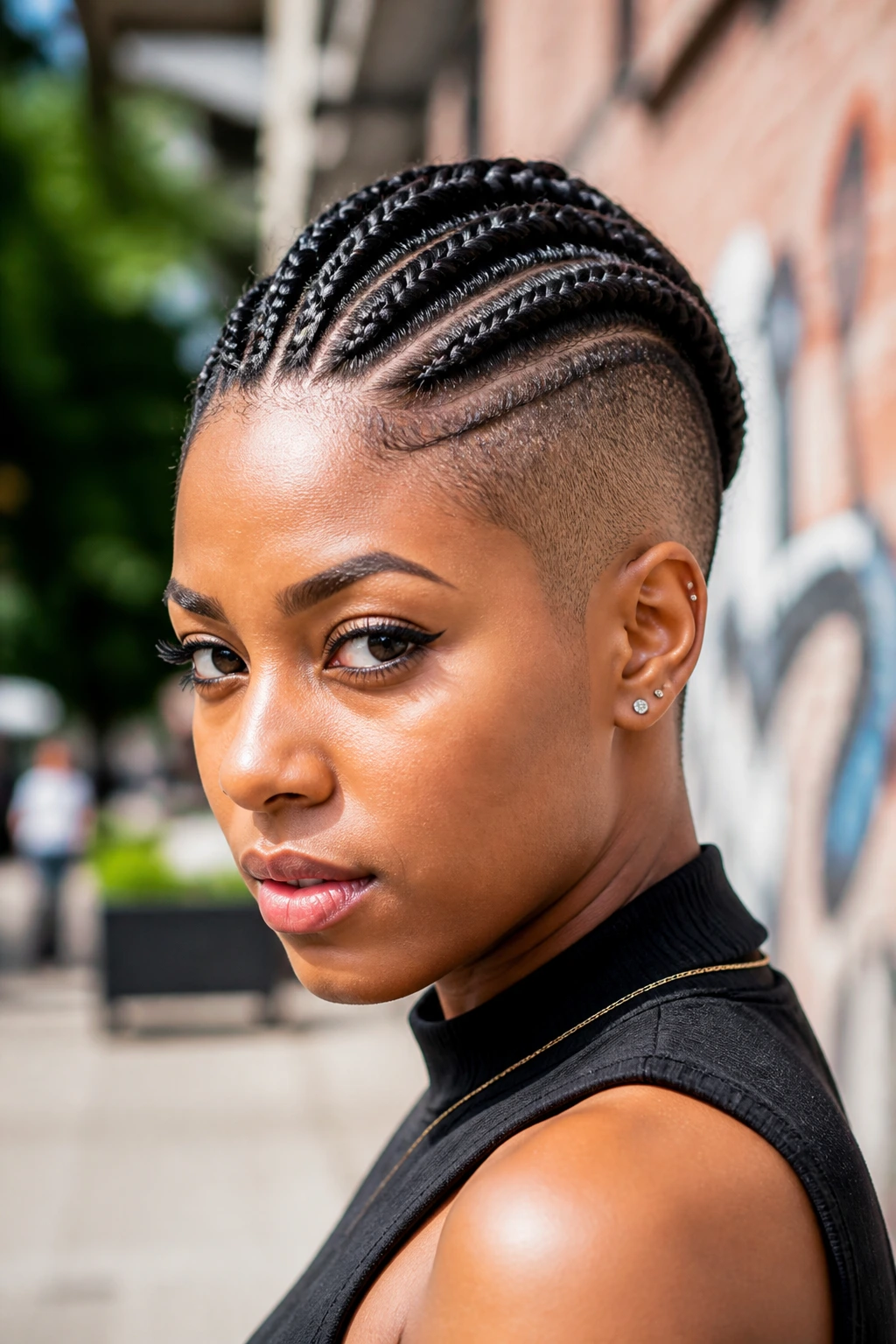
How long do shaved design hairstyles usually stay crisp?
Most designs hold their cleanest shape for about 1 to 2 weeks, sometimes a little longer if the linework is small and the fade is soft. Temple and nape areas soften first, so those spots usually need the earliest touch-up.
Can I get a shaved design if my hair is natural and dense?
Yes, and dense coils often make the design stand out more because the contrast is stronger. The main thing is to choose a placement that works with shrinkage, so the design does not disappear when the curls tighten.
Do shaved designs damage hair?
The shave itself doesn’t damage the hair shaft when it’s done properly. The bigger issue is scalp irritation from too-close work, rough product buildup, or constant scratching. If your scalp is sensitive, ask for a gentler clipper finish instead of a razor-skin shave.
What if I want the design but need a professional look?
Go smaller. A single curved line at the temple, a low nape crescent, or a hidden undercut panel usually feels more restrained than a big geometric pattern. Placement makes the difference more than people think.
Can these styles work with braids or locs?
Absolutely. Braids, twists, and locs actually pair very well with shaved panels because the texture on top gives the design a frame. Just keep the shaved section narrow enough that it does not fight the protective style.
How do I ask for the design I want without sounding vague?
Bring a photo and point to the exact spot: temple, nape, side panel, or crown. Then describe the shape in plain words — line, curve, star, heart, zigzag, bolt, crescent. Specific placement is half the battle.
What if the design grows out unevenly?
That usually means the cut was placed in a spot that gets more rubbing or the fade was too high for your growth pattern. A simpler design, lower placement, or more gradual fade will usually grow out in a cleaner way next time.
Are shaved designs hard to maintain at home?
The style itself is not hard, but the edges need care. A satin scarf, light moisturizer, and a clean neckline routine will keep it looking better between appointments than heavy products and constant brushing.
Clean Lines, Soft Texture
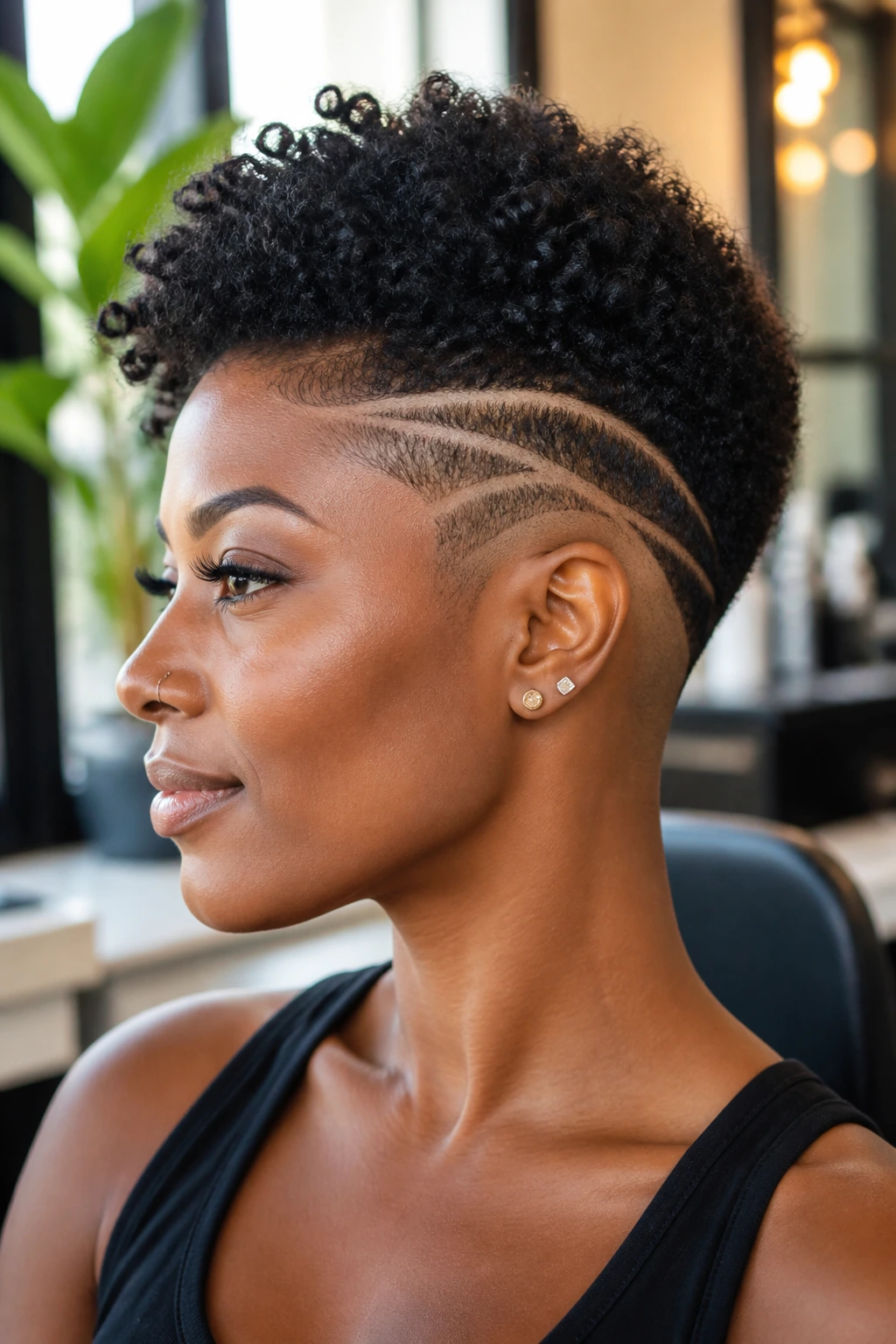
The best shaved design hairstyles for Black women do two things at once: they give texture a stage, and they give the cut a shape you can actually feel in the room. That’s why these styles still work whether the top is a tiny TWA, a full fro, locs, braids, or a close buzz.
If you want the haircut to hold up past the first mirror selfie, focus on placement first and decoration second. A good design should make the rest of the hair look better, not simply add more to it. That’s the standard I keep coming back to.
Pick the version that fits your routine, your face shape, and how much grow-out you’re willing to live with. Then let the texture do what it does best.
