



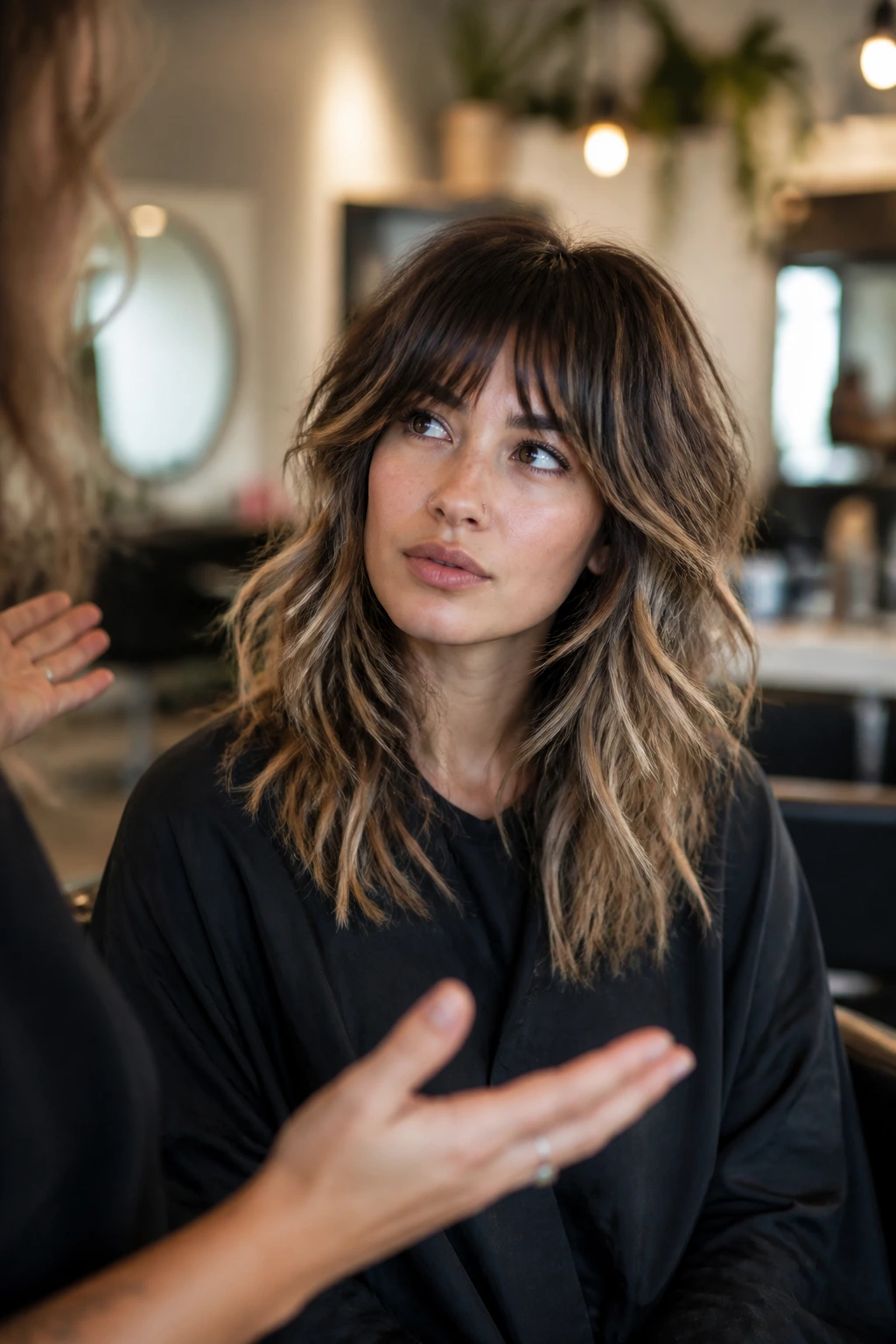
Balayage can make a wolf cut look airy, or it can make it look muddy. The difference is placement. When the painted pieces follow the layer pattern—lighter around the face, softer through the mids, deeper at the root—the whole cut gets that lived-in, feathered movement people want from wolf cuts with balayage and soft dimensional color. When the color is dropped in too high or too chunky, the texture starts fighting itself. The ends look busy. The crown looks puffy. The nice part is that the fix is not mysterious. It’s usually just a smarter map.
That pairing works because the haircut already brings motion to the table. A wolf cut has a short, broken-up crown, a messy fringe or curtain bang, and longer lengths that taper away from the face. Balayage gives those layers something to catch. Beige ribbons, caramel veils, ash money pieces, copper flashes—none of them need to shout. They just need to separate the shapes so the cut reads as soft, dimensional, and a little wild in the best way.
The sweet spot is restraint. A good wolf cut with balayage does not look striped, and it does not look dyed flat from root to tip. It looks like the color is living inside the layers. That’s the trick behind every look below, and it’s why the same haircut can feel smoky, warm, cool, edgy, or plush without changing the bones of the cut.
Why These Wolf Cut Balayage Looks Feel Softer Than Solid Color
-
Root shadow keeps the crown calm: Leaving the first inch or two deeper at the root stops the top from ballooning into one bright block and gives the layers room to move.
-
The brightest pieces sit where hair bends: Around the temples, cheekbones, and collarbone, the painted strands catch light as the hair swings, which makes the cut look lighter without thinning it out.
-
Balayage breaks up the wolf cut’s choppiness: The cut already has broken texture; soft ribbons of color echo that shape instead of turning it into a blunt, disconnected mess.
-
Grow-out looks intentional: A softer fade from dark root to lighter mids means the style still reads well six or eight weeks later, even when the regrowth is showing.
-
Tone changes the whole mood: Beige makes the cut feel quiet, ash makes it cooler, copper makes it warmer, and mushroom brown makes it look expensive without trying hard.
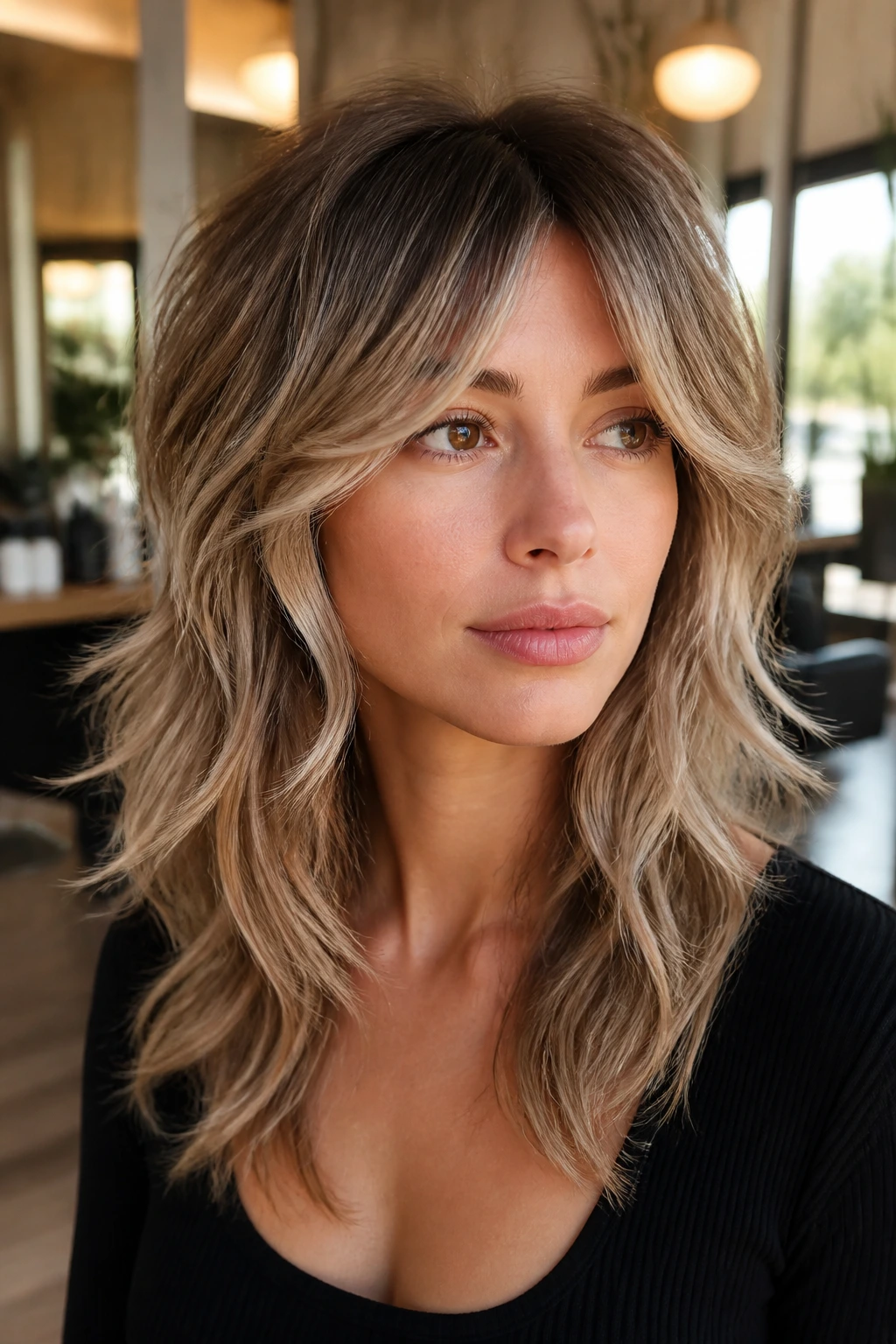
1. Smoky Brunette Wolf Cut With Beige Ribbons
This is the version I reach for when someone wants movement without going loud. The brunette base stays rich, almost espresso at the crown, while thin beige ribbons skim the surface of the layers. The result is softer than a blonde-heavy balayage and much easier to live with when your hair air-dries a little rough.
Why It Works
The smoky base keeps the wolf cut from looking frosted or overdone. Beige sits in that middle zone between warm and cool, so it doesn’t pull orange on darker hair or read chalky on lighter brown hair. Put the brightest bits around the face and through the upper lengths, and the texture starts to separate on its own.
A small styling note
This version looks best with a loose bend, not a tight curl. I’d style it with a 1.25-inch iron or a quick pass of a flat iron, then rake the waves apart with a matte cream. The ends should still feel piecey, not polished.
2. Honey Bronde Wolf Cut With Curtain Bangs
Honey bronde is the friendliest version of this whole collection. It gives you enough brightness to show off the layers, but not so much that the haircut stops looking shaggy. Curtain bangs help because they let the face-frame pieces fall open instead of sitting like a heavy fringe.
What makes it different
The honey tone pulls the color warmer at the ends, which is useful if your natural base sits somewhere between dark blonde and light brown. That warmth softens the wolf cut’s rough edges. It also flatters wavy hair that wants to puff around the cheeks unless you give it a bit of shaping.
Best on
- Medium-density hair that needs movement
- Bases from level 6 to level 8
- People who want a sunny finish without full blonde upkeep
A little root shadow keeps this from turning too sweet. That’s the part people skip, then wonder why the color looks flat. Leave depth at the crown, and the bangs do the rest.
3. Mushroom Brown Wolf Cut With Feathered Ends
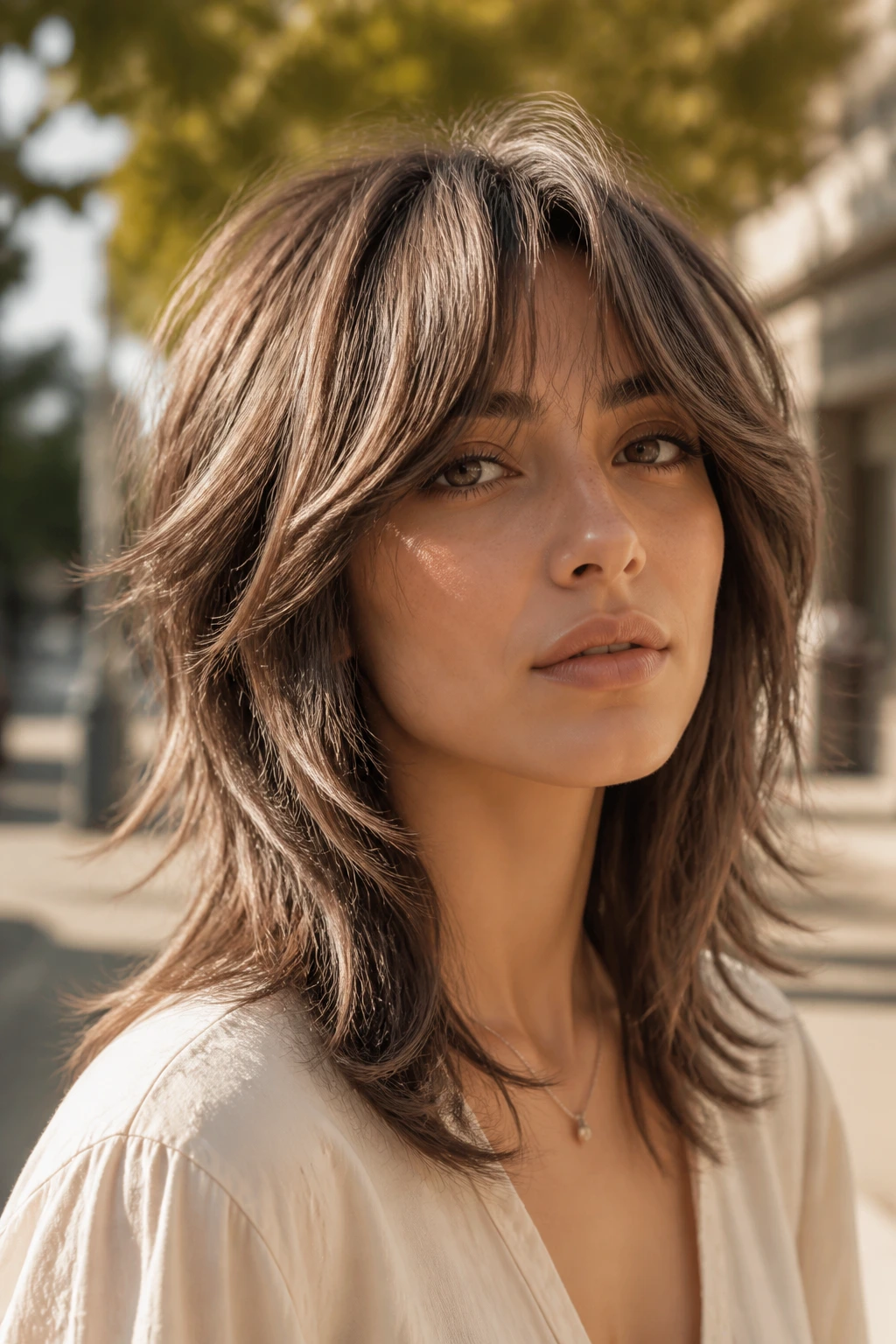
Mushroom brown is one of the best tones for anyone who likes their hair cool, soft, and slightly smoky. On a wolf cut, it gives the layers a velvety look, especially when the ends are feathered rather than blunt. The whole shape feels light, but not wispy.
The tone matters here. Mushroom brown lives between taupe, ash, and soft beige, which means it can smooth out brassiness in naturally warm brown hair. It’s especially nice if your hair tends to reflect red in the sun and you want something calmer.
How to wear it
Ask for balayage that starts lower on the head and gets denser only around the face and upper mids. That keeps the crown from going patchy. This version looks good with air-dried waves, a side-swept fringe, or even straight hair with a little rough texture at the ends.
4. Caramel Wolf Cut on Mid-Length Waves
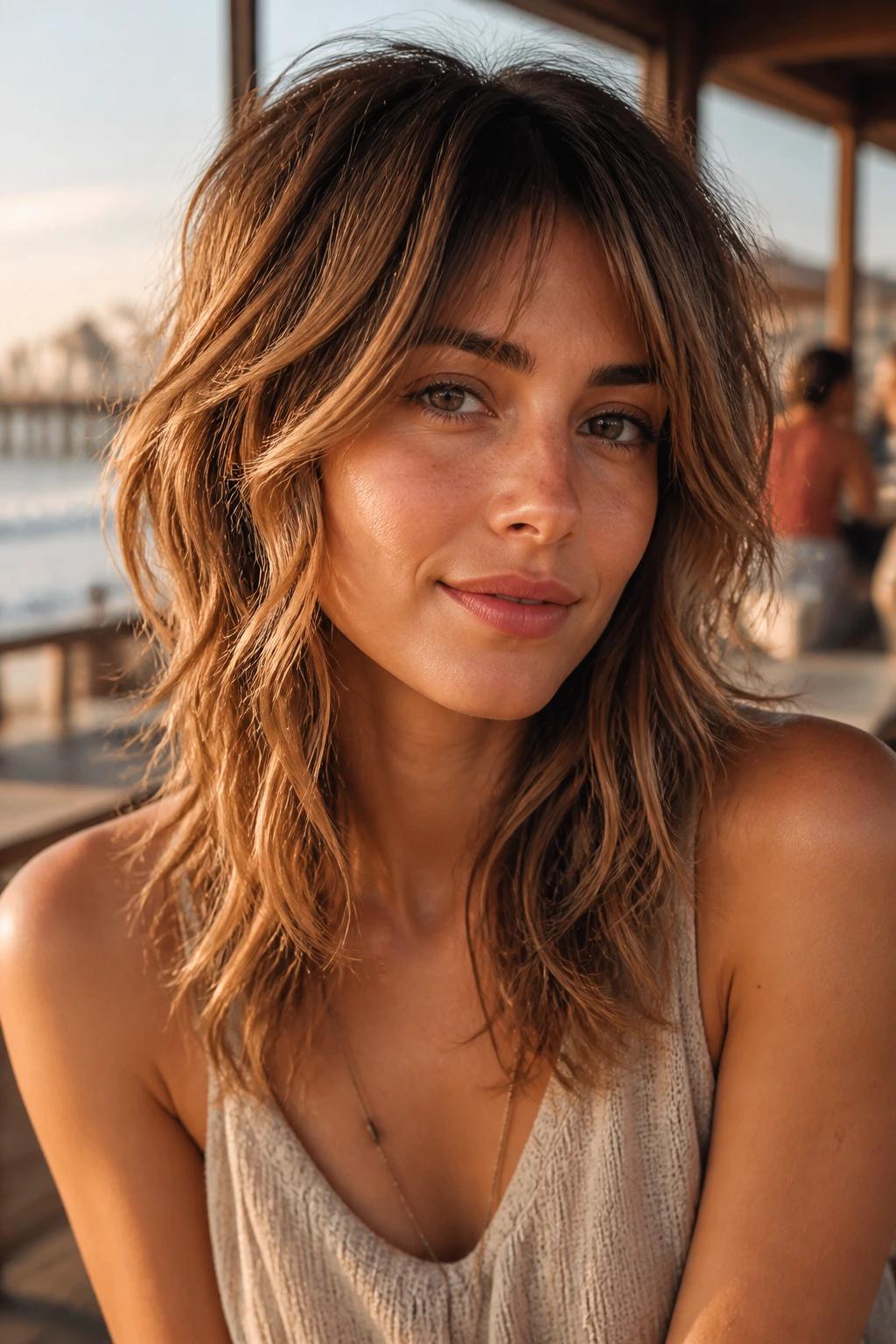
Caramel balayage gives a mid-length wolf cut that easy, sun-washed look people keep saving to their mood boards. The warmth shows up in ribbons rather than a solid gold sheet, so the cut still has air between the layers. On wavy hair, it’s almost unfair how well this works.
A mid-length cut is the sweet spot for caramel because there’s enough hair for the color to travel through, but not so much length that the texture gets lost. The face frame stays bright. The nape stays slightly deeper. That contrast is doing a lot of the visual work.
What to ask for
A soft hand-painted placement through the top layers and around the cheekbones. Keep the ends lighter than the root, but not pale. Caramel should glow, not bleach out. If the goal is soft dimensional color, this is one of the least fussy ways to get there.
5. Dark Chocolate Wolf Cut With Toffee Face Frame
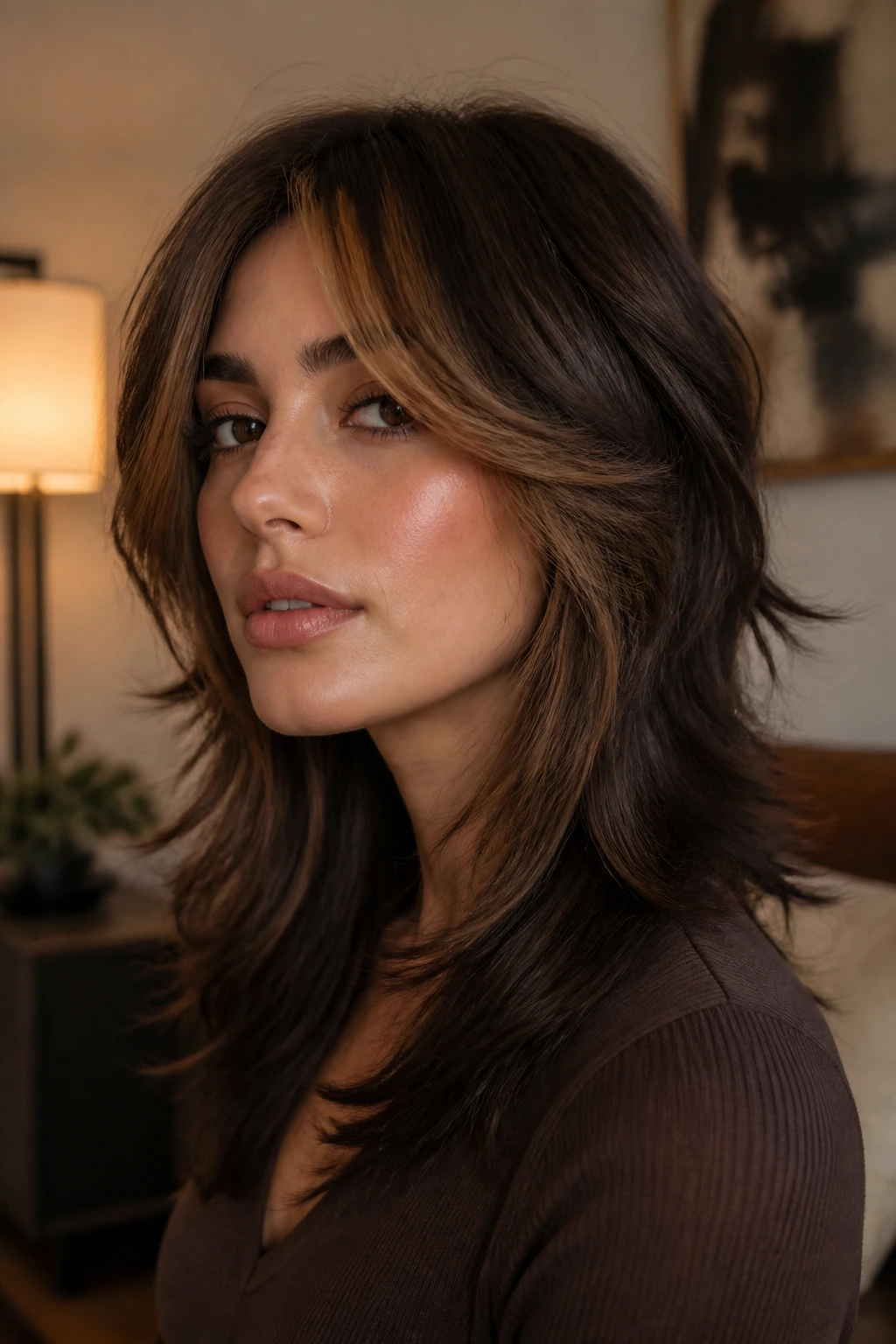
Dark chocolate hair with a toffee face frame is a good reminder that balayage does not have to mean dramatic lightness. A few toffee pieces around the front can lift the entire haircut, especially if the rest of the color stays deep and glossy. It looks expensive in a very plainspoken way.
The contrast here is the point. The longer layers keep their weight, but the front gets enough brightness to pull the eye upward. That makes the fringe and cheekbone layers look intentional instead of accidental. I like this one on thicker hair because the depth keeps the ends from looking puffy.
Styling cue
Blow-dry the face frame away from the face with a round brush, then leave the rest a little undone. If the front is too curled and the back is too flat, the color loses its shape. The whole look needs a bit of imbalance. That’s the charm.
6. Copper Wolf Cut With Soft Auburn Balayage
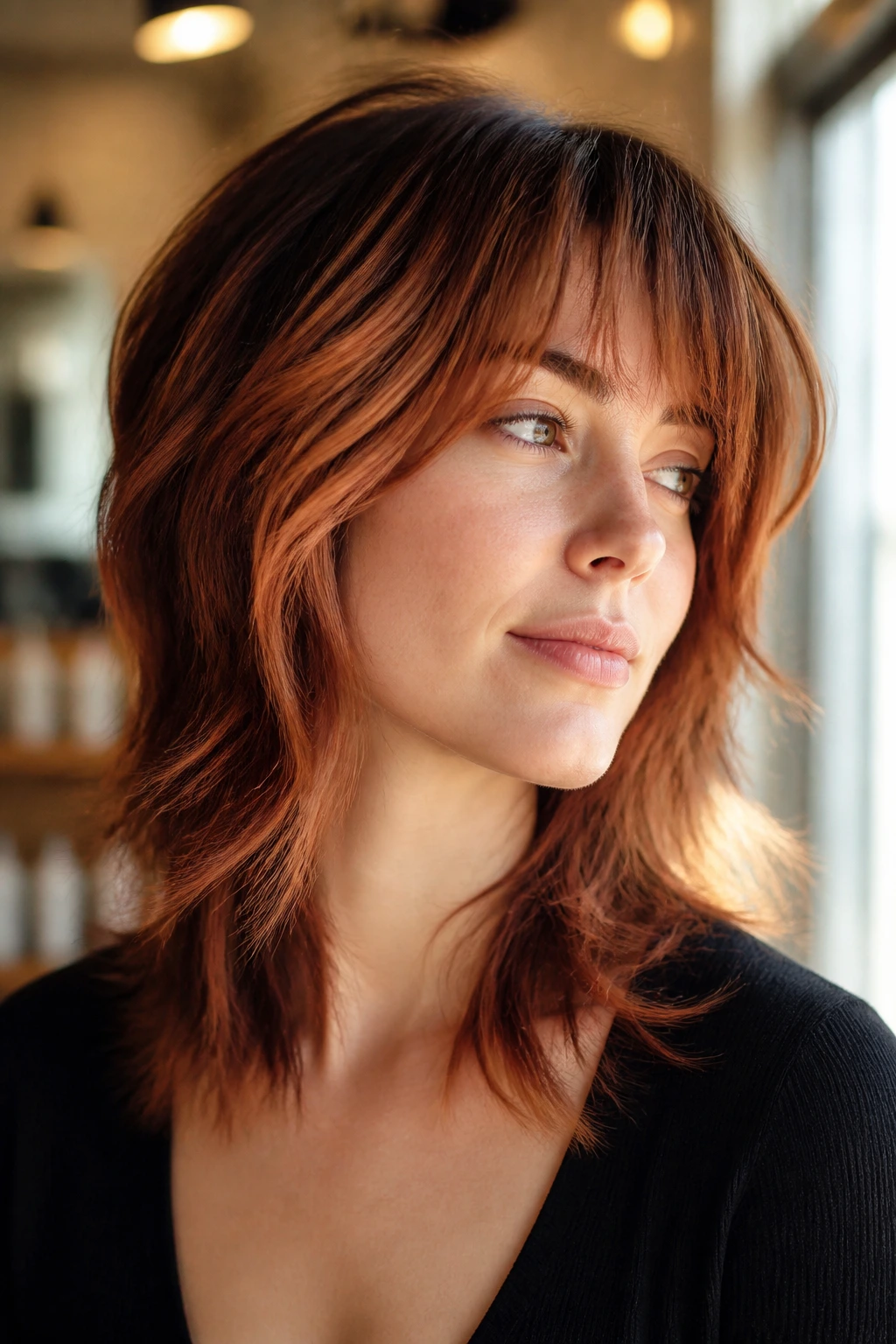
Copper on a wolf cut is loud only if you push it too bright. Keep it soft, more auburn than orange, and the result is gorgeous. The layers pick up the light in all the right places, especially when the hair moves around the jaw and shoulders.
This version works best when the roots stay deeper and the copper appears in translucent veils through the mids. If every strand is equally bright, the shape gets busy. If the color is painted with enough space between ribbons, the haircut suddenly looks fuller and more alive.
Good match for
- Natural redheads who want more depth
- Brunettes who can lift to a warm coppery level
- Wavy textures that hold movement well
It’s also one of the few warm looks that still reads soft, not brassy, when the hair starts to grow out. That matters. Brass is not the same thing as copper, and no one wants the first version.
7. Strawberry Blonde Wolf Cut With Airy Fringe
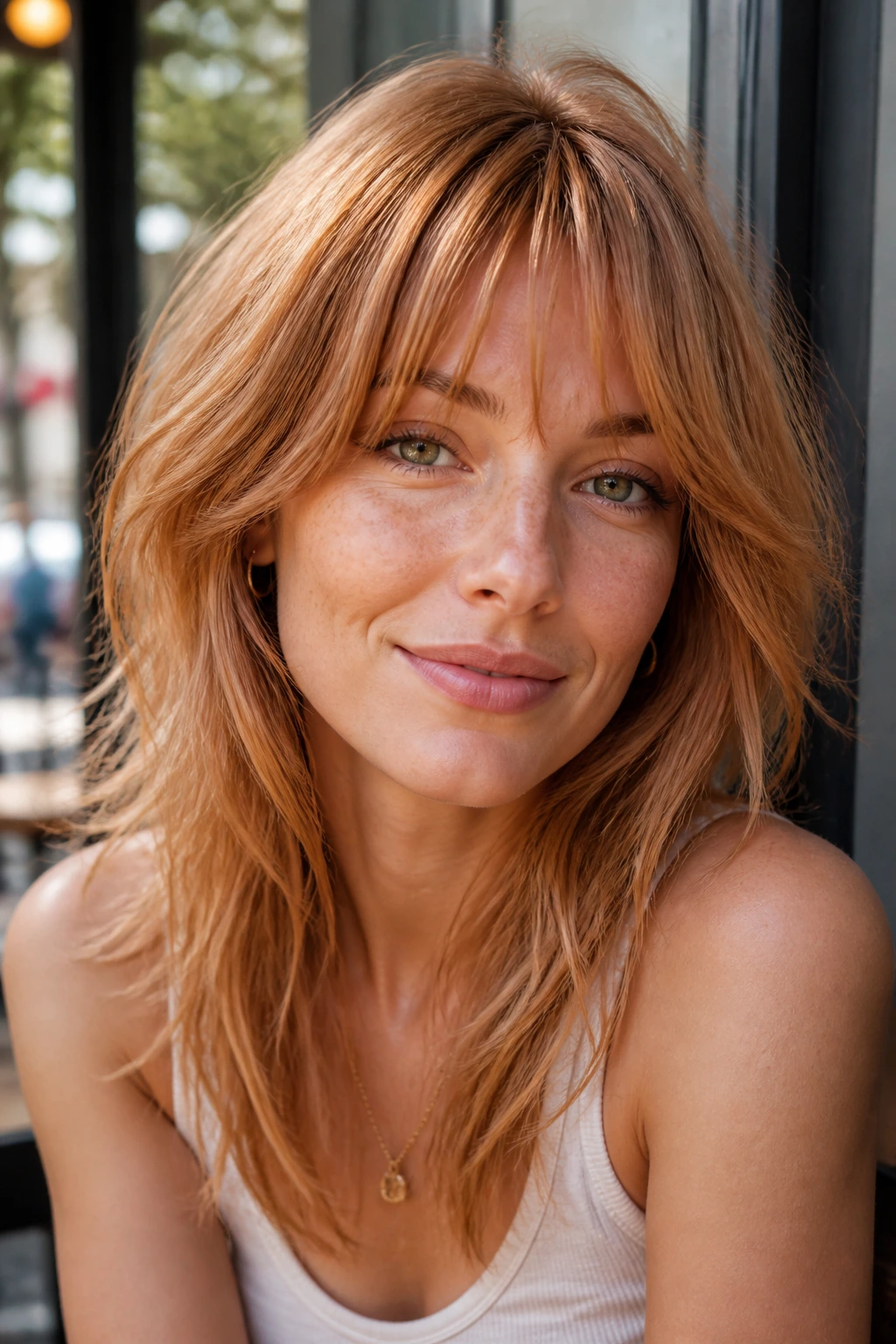
Strawberry blonde on a wolf cut has a slightly romantic feel, but the cut keeps it from getting too precious. The airy fringe breaks the sweetness. The shaggier layers stop the color from looking like a single pastel wash. It’s playful, but not delicate in a fragile way.
The key is keeping the strawberry tone sheer. You want peachy gold, not candy pink. A little warmth around the face frame brings out freckles and softens sharper features. On fine hair, this look can give the illusion of a fuller perimeter because the lighter tone makes the ends read broader.
How to style it
Use a light mousse at the roots and a cream through the mids. Skip heavy oils. They will collapse the feathered pieces and make the strawberry tone look darker than it is. A quick bend at the ends is enough.
8. Ash Blonde Wolf Cut With Root Shadow
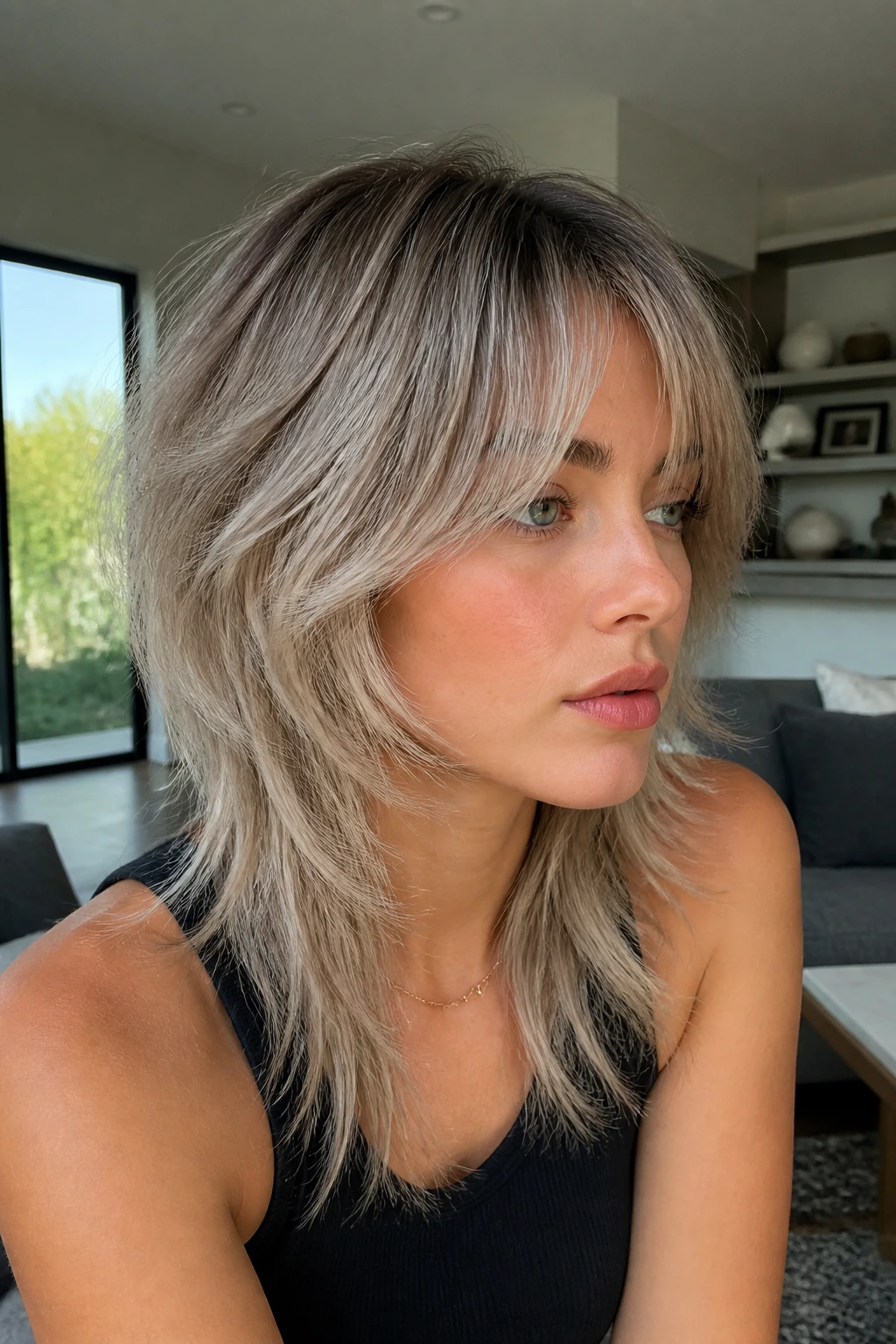
Ash blonde can look icy in a way that sometimes fights a wolf cut. The trick is keeping the root shadow soft and the ends lightly muted, so the whole thing reads as dimensional rather than stark. On the right base, it feels clean, cool, and very modern without getting glassy.
This version is especially good if your natural color sits in the dark blonde to light brown range and you want a cooler finish. The root shadow prevents the crown from looking flat, which is a real problem on this cut if everything is lightened too uniformly. A touch of beige in the mids keeps the ash from going gray.
What to avoid
Too much silver toner. It can make the layers look dry and brittle, even when the hair itself is healthy. Ask for ash, not steel. There’s a difference, and it shows immediately in the mirror.
9. Bronde Wolf Cut With Lived-In Dimension
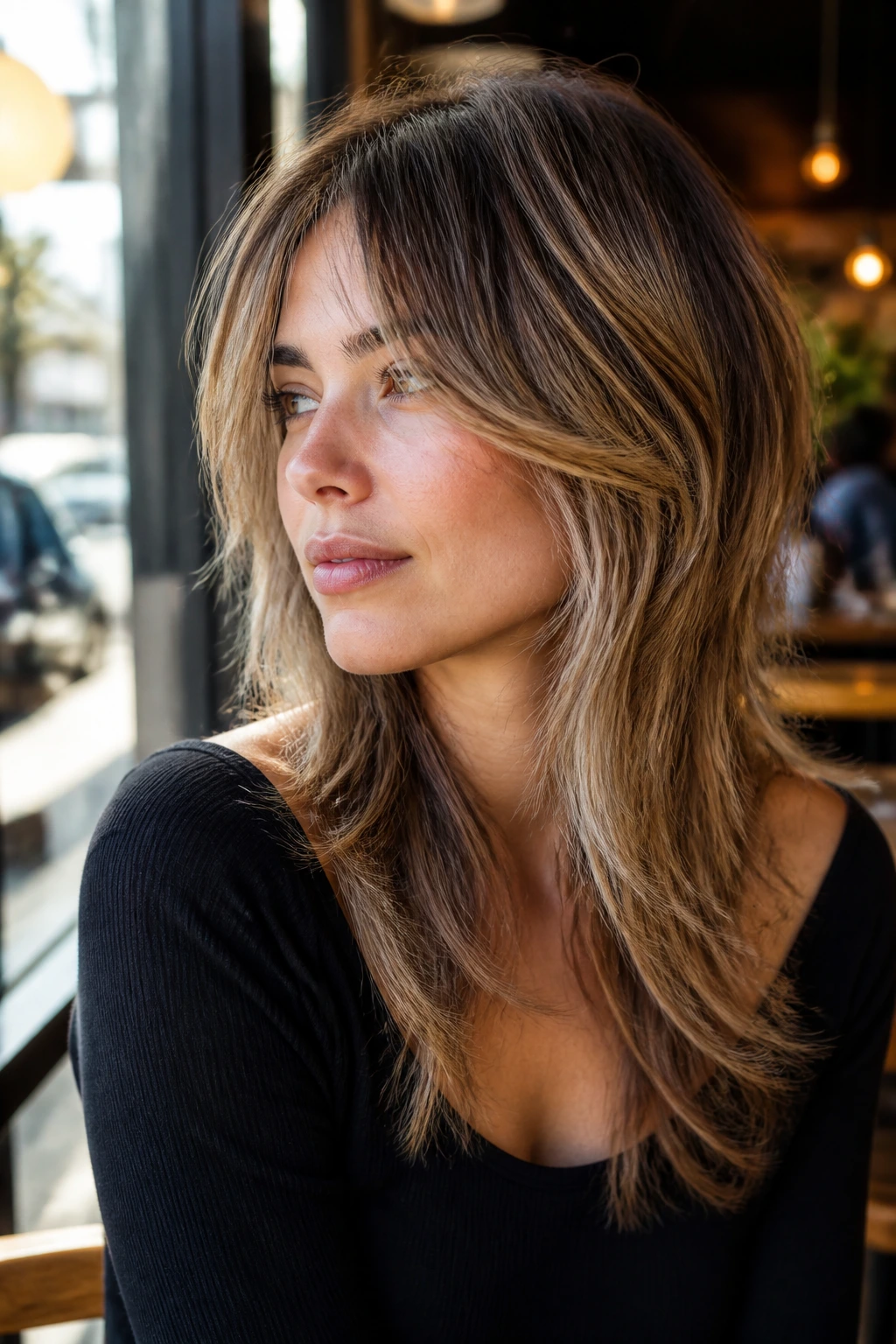
Bronde is the safe bet that never feels boring. It gives a wolf cut enough contrast to show the layers, but not so much lift that you get a hard blonde-brunette split. The color melts from darker root to lighter mids in a way that suits almost every face shape.
I like bronde on people who want movement more than drama. The finish is soft around the fringe and brighter through the mid-lengths, so the haircut still looks textured when it’s tucked behind the ear. If your hair tends to flatten at the crown, this one fixes that better than a solid brunette ever will.
Quick visual guide
- Darker root for depth
- Beige-gold mid-lengths for separation
- Slightly lighter pieces around the face
- Ends kept soft, not chunky
That balance is why the cut keeps working even when the color starts to mellow out.
10. Vanilla Cream Wolf Cut With Choppy Lengths
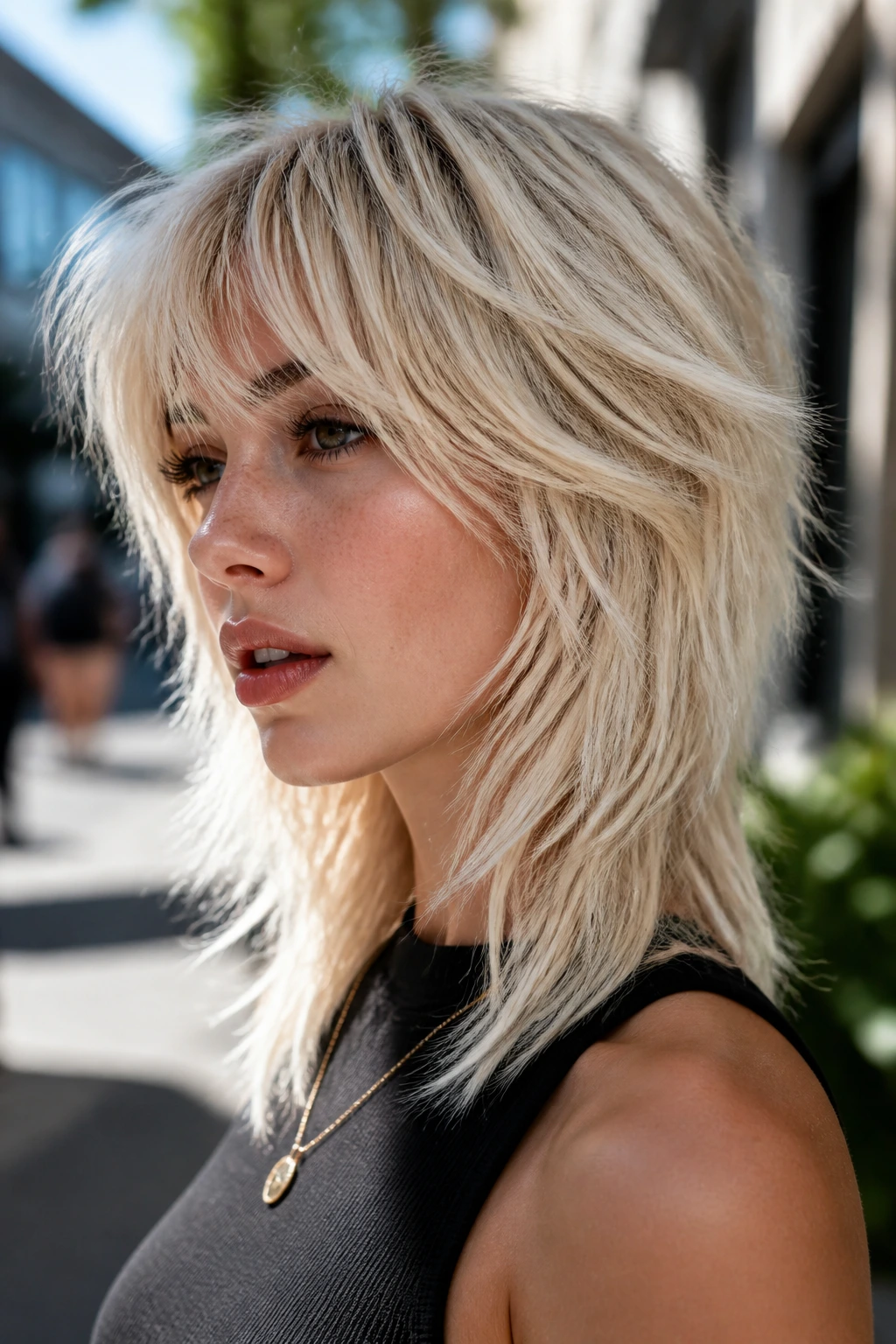
Vanilla cream is a brighter choice, but it still works if the wolf cut keeps some depth underneath. Think of it as a pale, creamy blonde sitting on top of softer shadow. The layers become very visible, especially in daylight, because the light bounces off the choppy edges.
This is not the place for a solid platinum sheet. The cut needs darker pockets under the surface, or the ends start looking too thin. When the dimension is right, the hair almost looks thicker because the highlights and shadows keep moving.
Best for
People who like a brighter finish but don’t want the haircut to lose its edge. It also works on shoulder-grazing lengths where the layer pattern can be seen clearly. Straight hair needs a little bend to keep this from reading flat. Wavy hair gets the easy mode.
11. Cinnamon Brunette Wolf Cut With Warm Veils
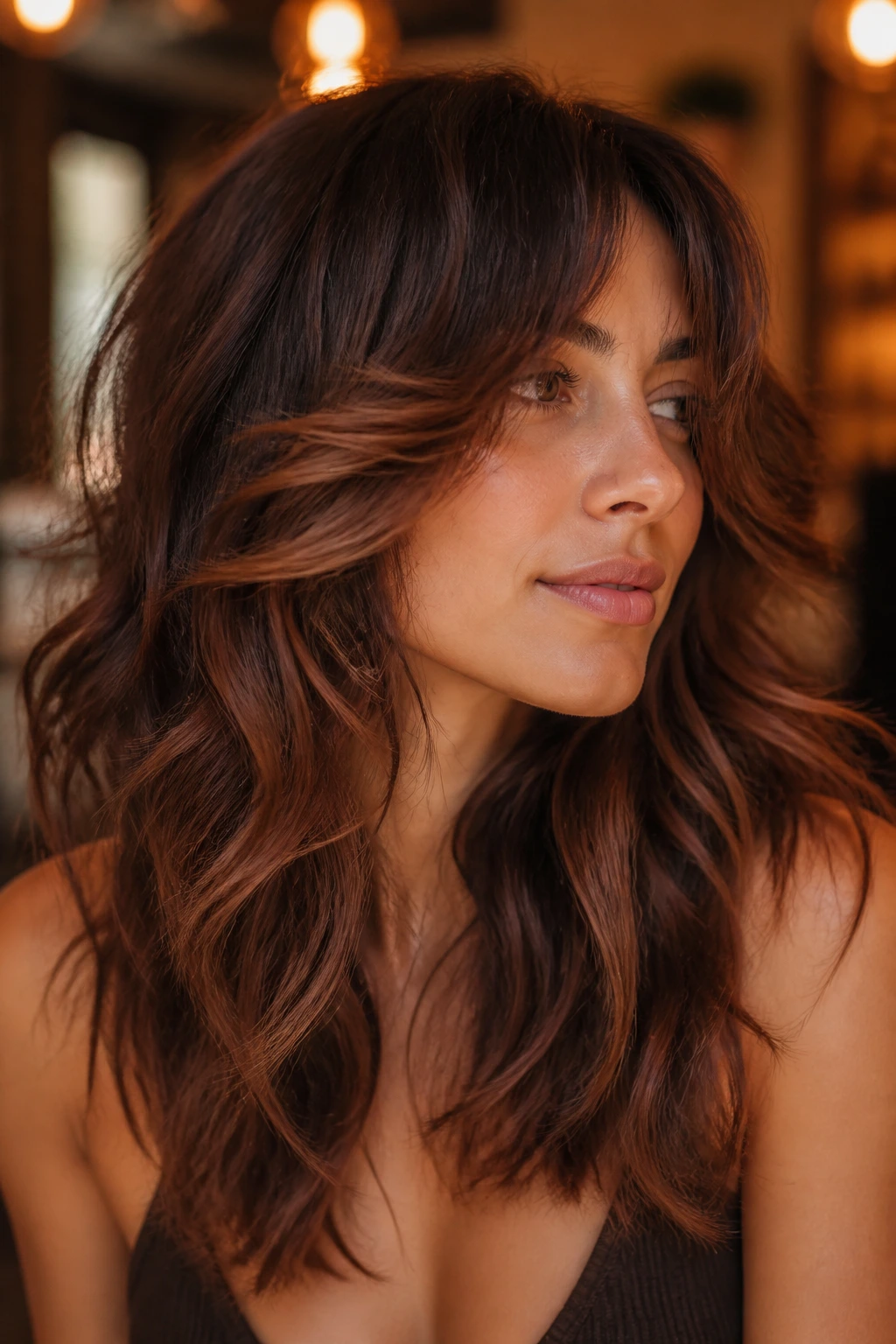
Cinnamon balayage brings warmth without tipping into copper overload. On a brunette wolf cut, it creates a rich, spiced finish that feels soft at the ends and slightly glowing around the face. It’s one of the best options if you want warmth that still looks grounded.
The color placement should be loose and irregular. A few brighter veils near the fringe, some softer pieces in the mids, and deeper sections underneath. That irregularity keeps the haircut from looking over-processed. The goal is movement, not stripes.
Style note
This version gets along with round brushes, hot rollers, and soft waves. It does not need pin-straight styling. In fact, a too-sleek finish can make the cinnamon pieces look flat. Leave some grit in the texture and the color starts to breathe.
12. Espresso Wolf Cut With Beige Money Pieces
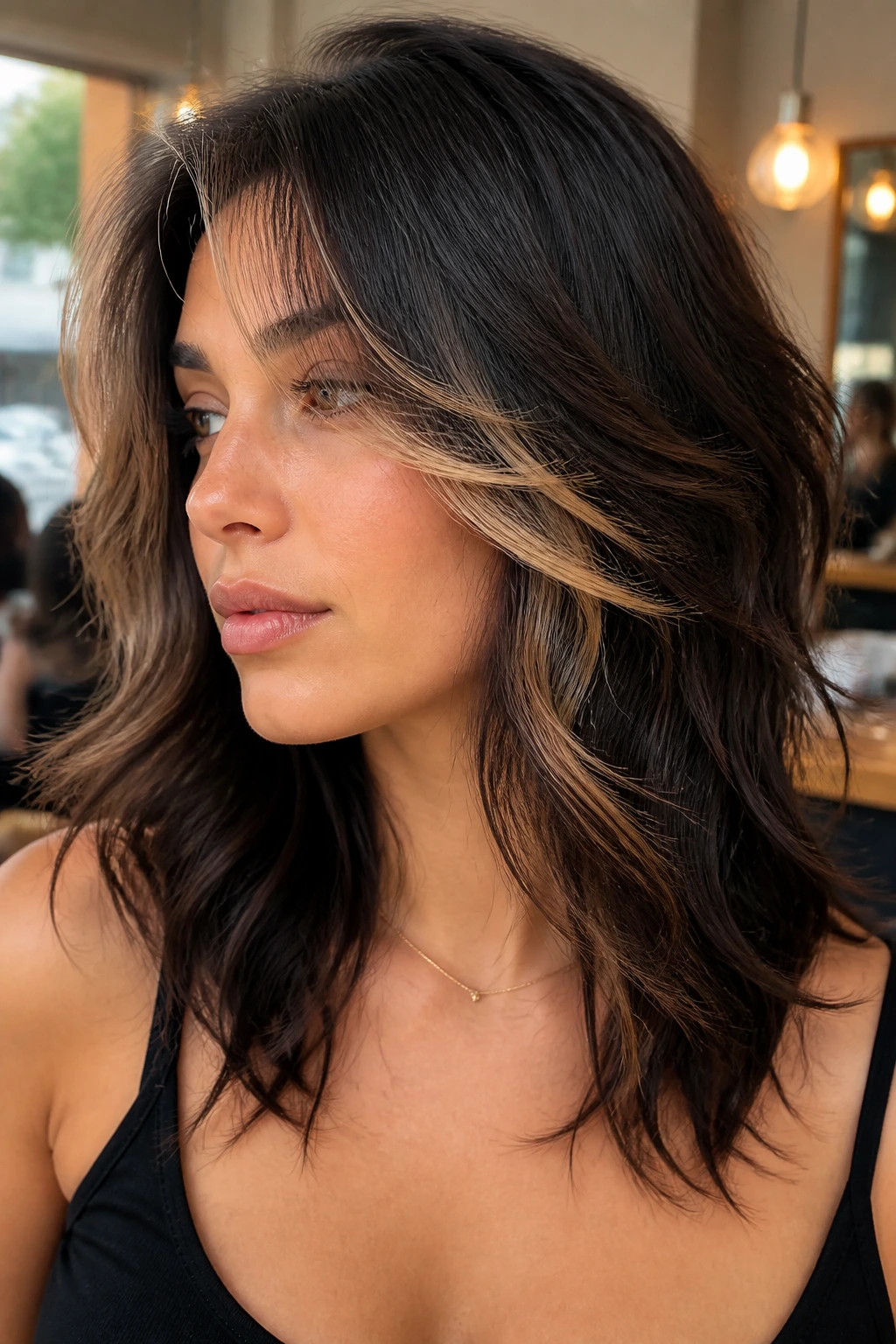
Espresso is one of my favorite bases for a wolf cut because it makes the lightest pieces stand up on their own. Beige money pieces at the front are enough to brighten the whole face without turning the rest of the hair into a highlight project. The contrast is sharp, but still soft enough to wear every day.
This works particularly well if you want the front to look lifted and the back to stay dark. That contrast can slim the silhouette and sharpen the fringe at the same time. On long hair, the beige pieces need to travel a little farther through the top layers, or they’ll look disconnected from the rest.
Pro move
Ask for the money piece to feather into the side layers rather than stopping at the fringe. That tiny detail keeps the front from looking pasted on. It should feel like it belongs to the cut, not just the photo.
13. Sandy Blonde Wolf Cut With Razor Layers
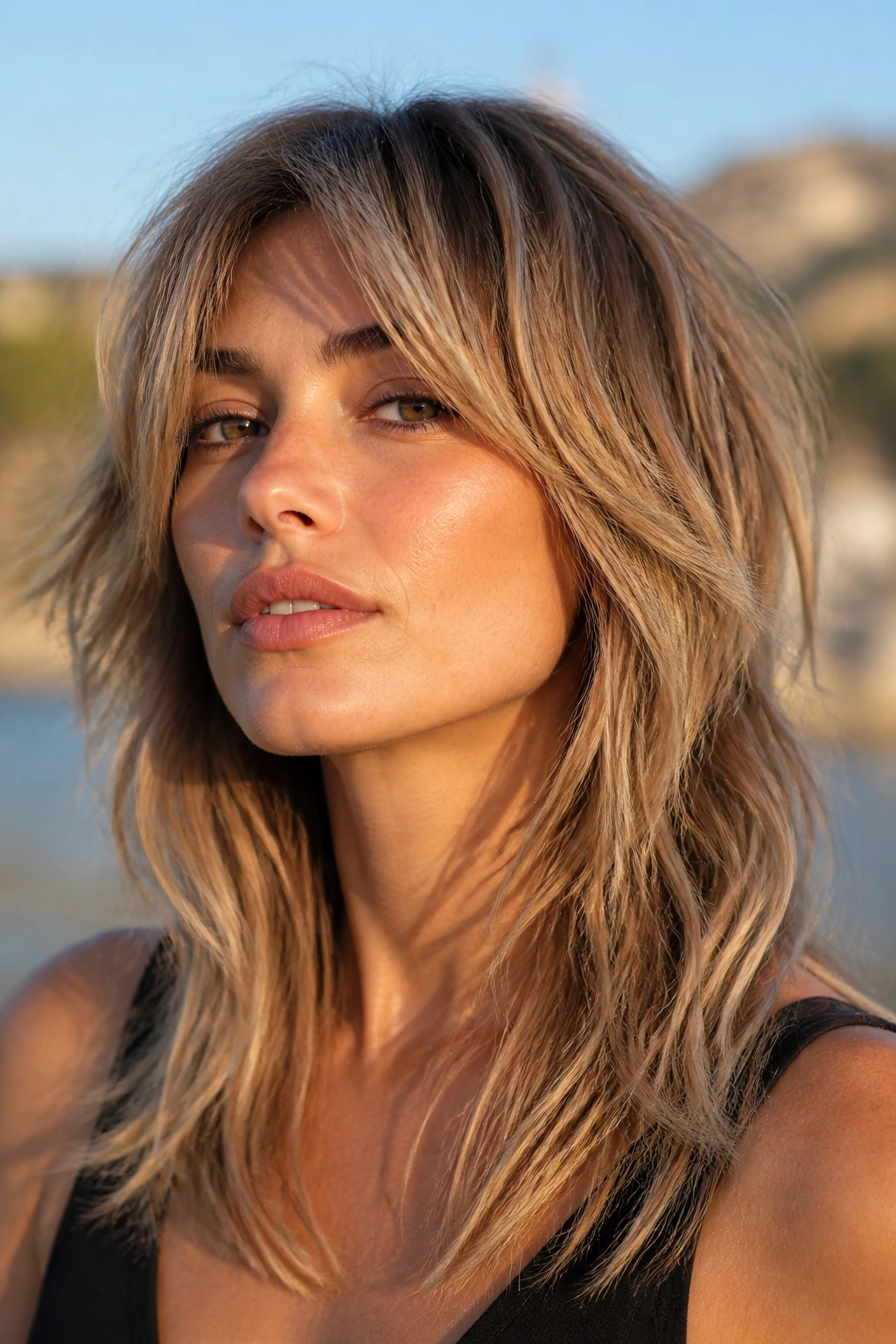
Sandy blonde has that dry, sun-faded feel that suits razor-cut layers better than heavy, rounded ones. The color is soft enough to keep the wolf cut from looking overstyled, and the razor texture helps the brighter pieces separate without much effort.
This one looks especially good on fine-to-medium hair because the lighter tone and the lighter cut both create lift. Too much layering can make thick hair puff, though, so the cut needs to be balanced. Sandy blonde is forgiving in a way that cooler blondes aren’t. It grows out with a soft edge, not a hard line.
A useful rule
If the face frame is bright, keep the underlayers a shade or two darker. That contrast gives the cut shape from the side, which matters more than people think. Front-only color can look pretty in a mirror and disappear in profile.
14. Chestnut Wolf Cut With Subtle Auburn Glow
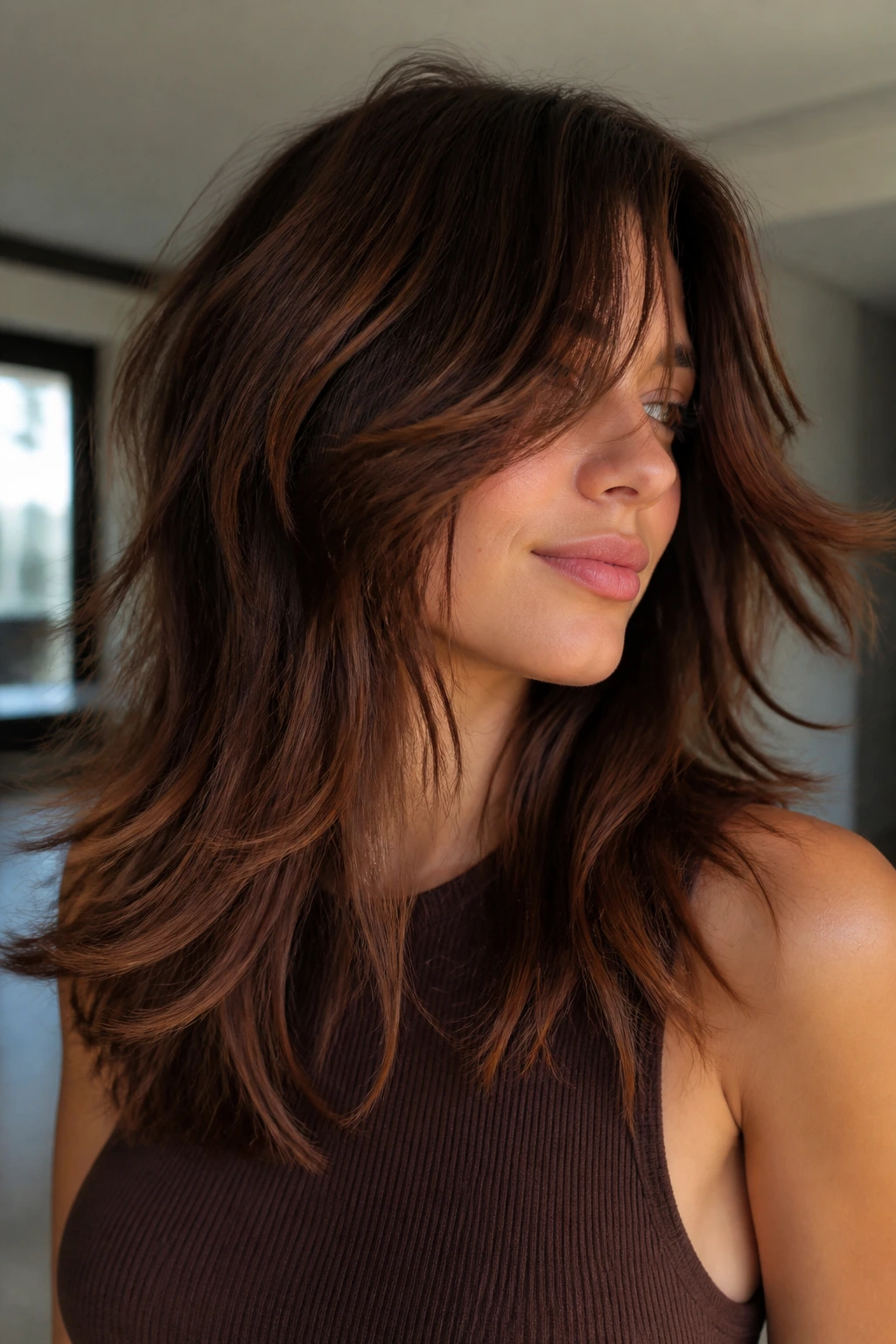
Chestnut is one of those shades that looks plain in the bowl and rich on the head. Add a whisper of auburn balayage, and the wolf cut gets warmth that shows in motion rather than sitting as a block of color. It’s subtle. That’s the whole point.
The glow should be visible mostly in daylight and at the ends of the layers. You do not want a bright red effect. You want a deep brown base with a gentle rusted sheen where the hair bends. This is excellent for people who want a little warmth without making maintenance the center of their life.
Works best when
The cut is slightly longer around the perimeter. That extra length lets the auburn glow drift through the ends instead of pooling at the crown. Shorter wolf cuts can still wear it, but the color has to be lighter-handed.
15. Pearl Blonde Wolf Cut With Smoky Roots
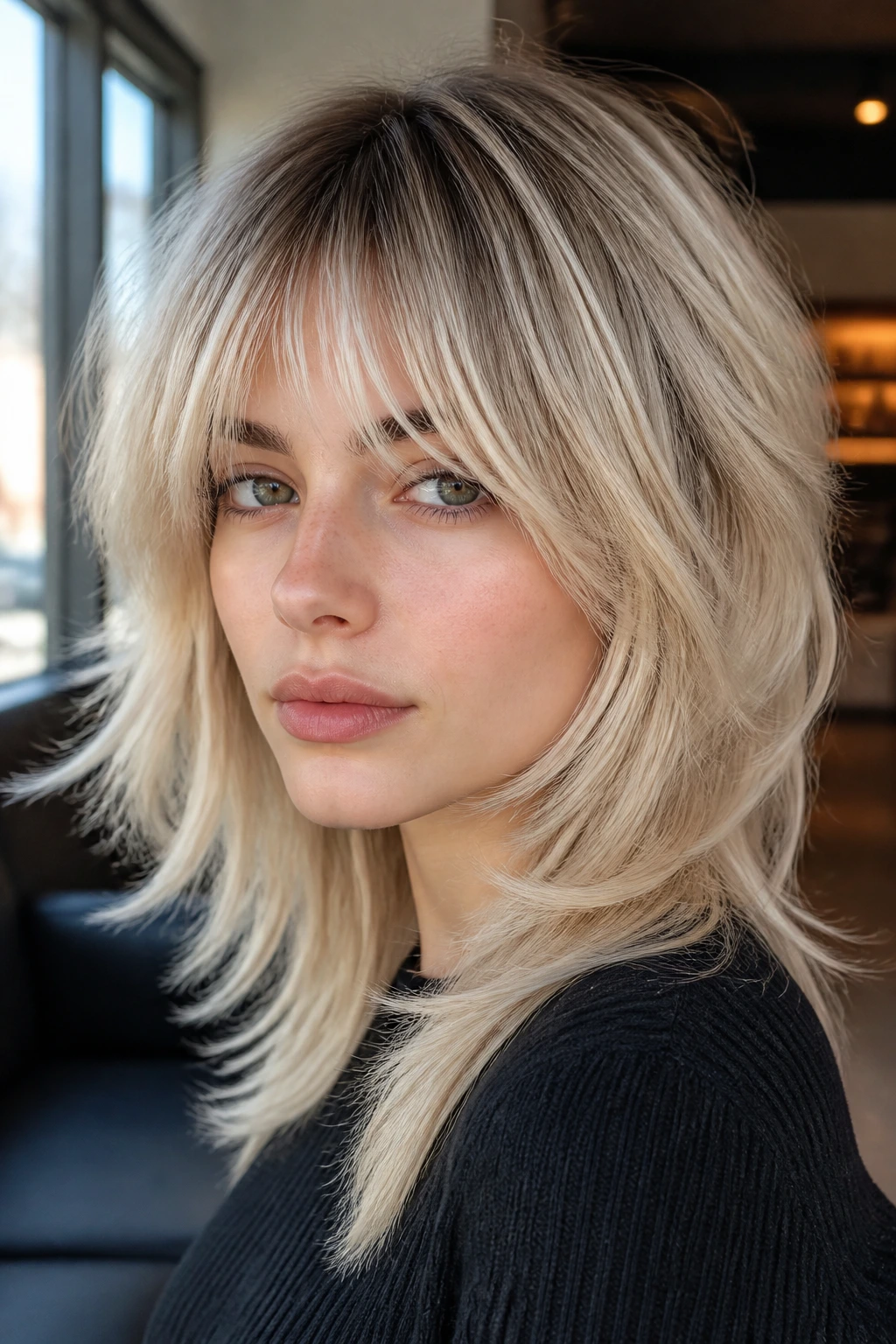
Pearl blonde has a soft shine that feels more luxe than icy platinum. On a wolf cut, it softens the roughness at the ends and gives the fringe a polished lightness. Smoky roots keep the whole thing grounded so it doesn’t slide into a helmet of pale color.
This is the blonde I like for people who want brightness but not a harsh line. The root shadow can be beige, smoky brown, or even a muted mushroom tone, depending on the base. Pearl blonde does not need a lot of contrast to work. A little depth goes a long way.
Styling tip
Use a purple shampoo only when the tone starts drifting yellow. Too much of it can make pearl blonde look dull. A gloss with beige or neutral undertones usually does a better job of keeping the softness intact.
16. Rose Gold Wolf Cut With Pink-Beige Dimension
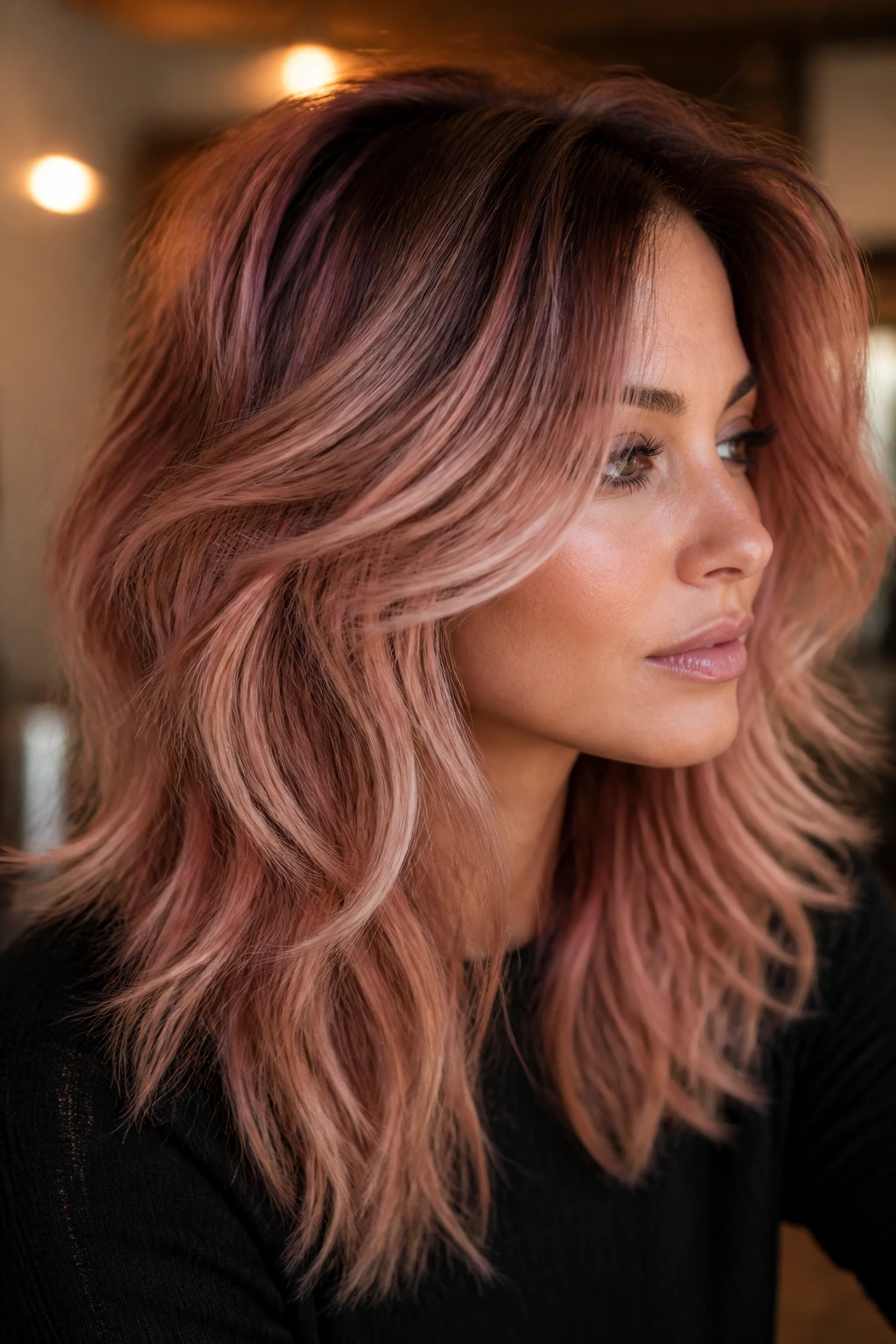
Rose gold is not subtle, but it can still be soft if the base is rooted and the pink reads more blush than bubblegum. On a wolf cut, that faint rosy dimension peeks through the shaggy layers and gives the whole shape a warm, cheeky finish.
This look is strongest when the pink-beige tone lives mostly in the mids and ends. Keep the root deeper. Keep the face frame softer. That way the color looks dimensional instead of costume-like. It’s a good one for people who like a little personality in their hair and don’t mind a toner refresh now and then.
Best paired with
Loose waves, airy bangs, and a little shine spray on the surface. Heavy texture products can flatten the rose tone and make the hair look dusty. A light hand wins here.
17. Mocha Wolf Cut With Almond Highlights
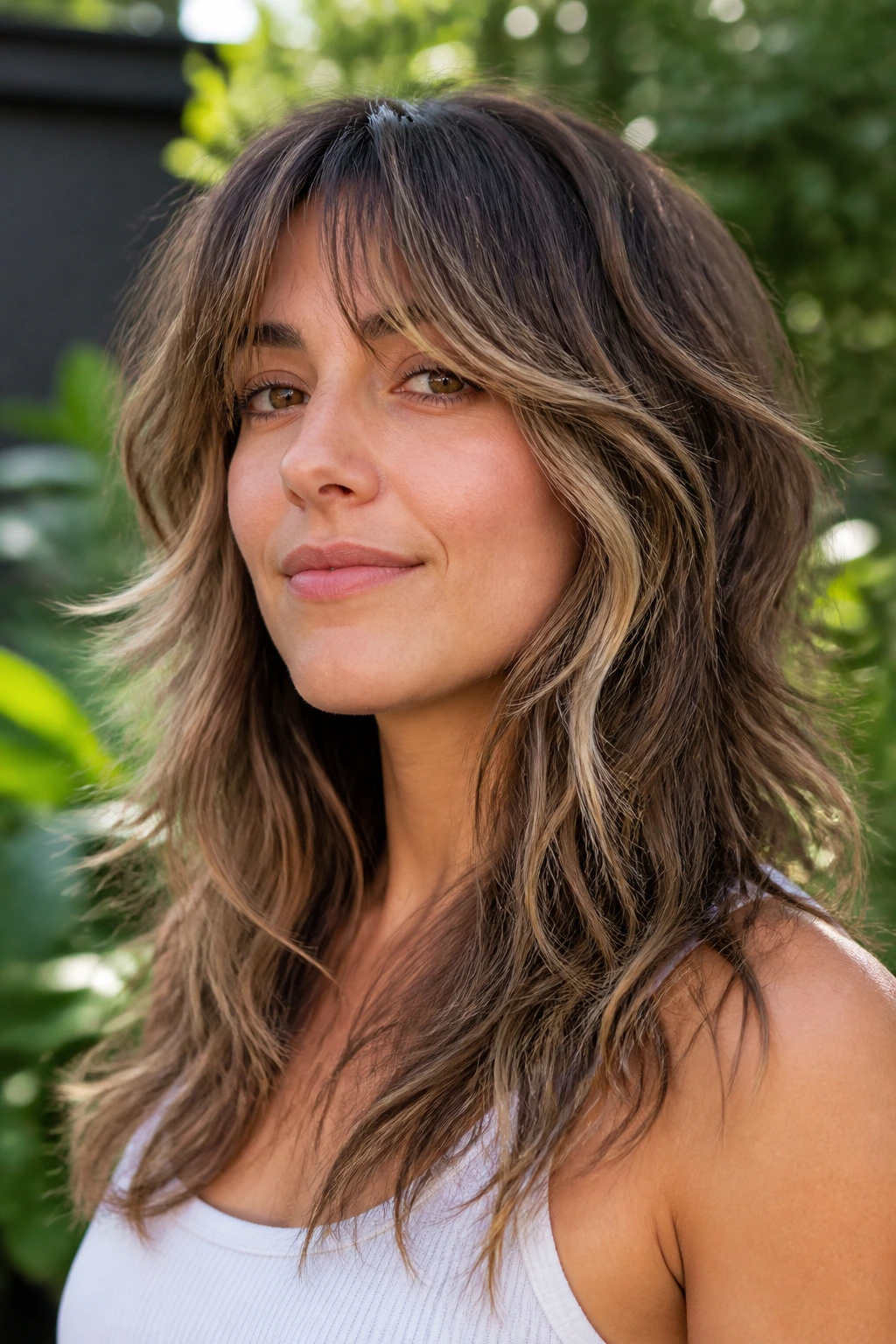
Mocha and almond is a clean, wearable combination that works across a lot of textures. The mocha base gives the wolf cut a plush, coffee-dark depth, while almond highlights keep the layers from disappearing into the background. It’s soft, but not sleepy.
This one is especially nice if you want dimension that shows indoors and outdoors. The almond pieces should be thin enough to blend, but bright enough to catch movement around the face and top layers. On wavy hair, the contrast reads effortlessly. On straighter hair, a few bends make the color far more interesting.
Simple color rule
Do not push the almond too light. The cut needs contrast, yes, but it also needs softness. If the highlights jump too far from the base, the whole thing starts feeling louder than a wolf cut should.
18. Cool Brunette Wolf Cut With Mushroom Balayage
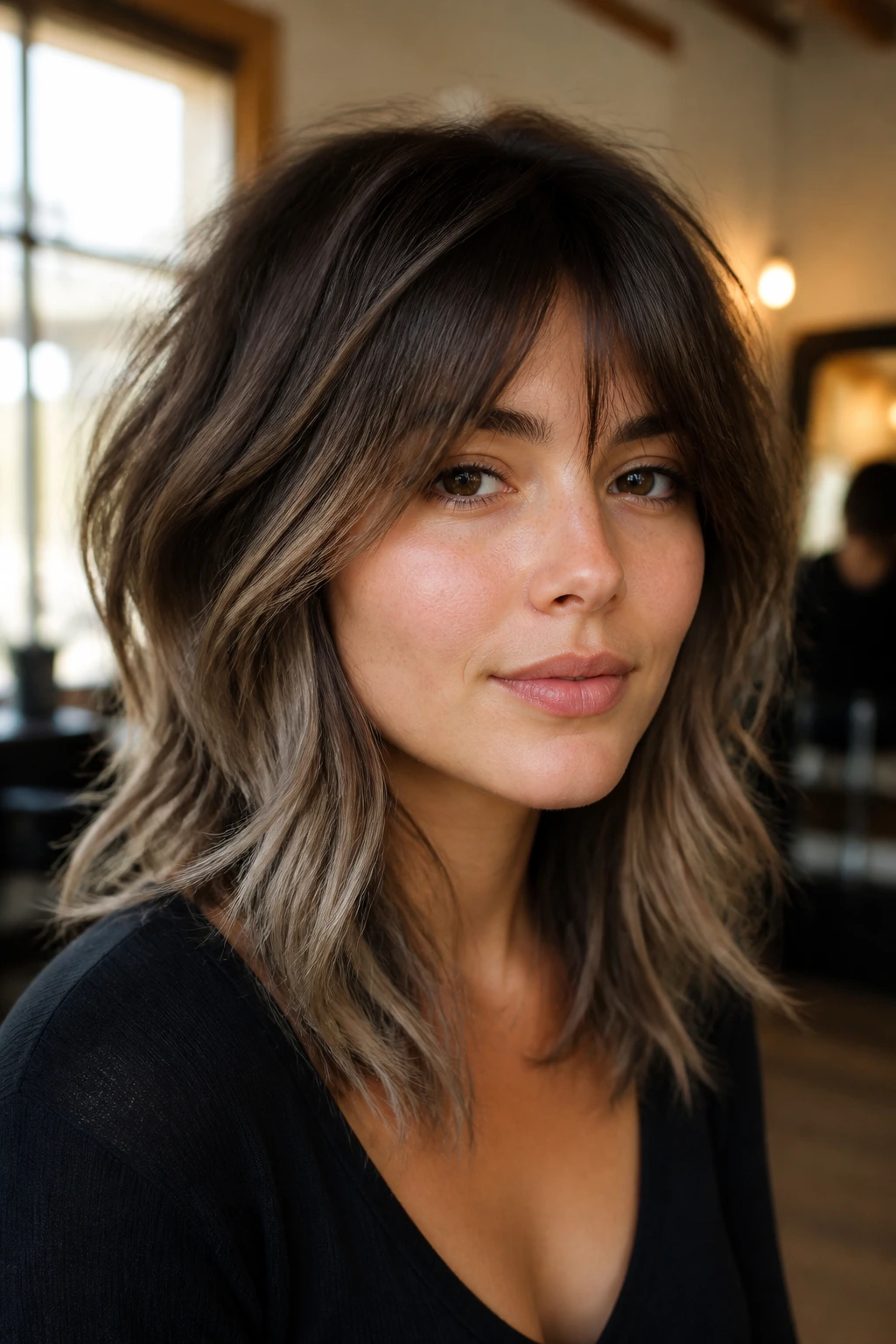
Cool brunette with mushroom balayage is where a wolf cut looks polished without losing its edge. The cool tones make the layers feel silky, almost matte in a good way, and the slight taupe shift through the mids keeps the hair from reading flat.
I like this on people who have a lot of natural brown depth and want dimension that still looks quiet. The contrast is not dramatic, so the placement has to be smart: brighter through the face frame, slightly lighter on the outer layers, deeper beneath. That keeps the shape visible from every angle.
H3: Why it works
The cut already creates shadow. Mushroom balayage leans into that instead of fighting it. If you want soft dimensional color that looks expensive but not flashy, this sits near the top of the list.
19. Golden Beige Wolf Cut With Long Layers
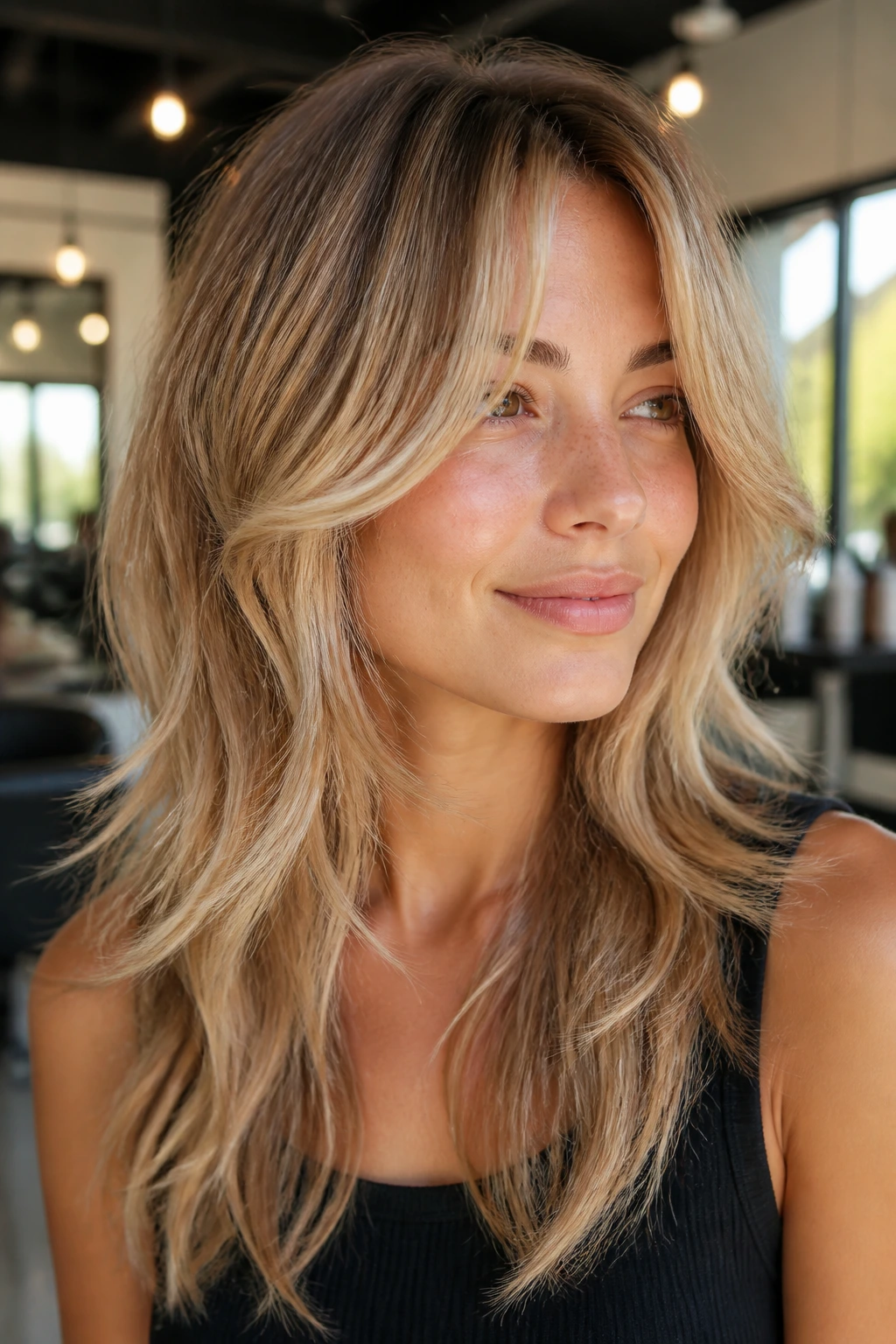
Golden beige is one of the easiest tones to wear because it sits between warm and neutral. On long wolf-cut layers, it creates that sunlit, slightly windblown effect that people usually want from a salon blowout but rarely get at home. The longer shape lets the balayage travel.
The trick here is keeping enough depth at the top so the cut does not lose its structure. Long layers can swallow color if everything is painted too evenly. I prefer brighter pieces through the sides and around the collarbone, with a softer, looser lift toward the back. It moves better that way.
Best for
- Longer hair that still wants texture
- Wavy or slightly coarse hair
- Anyone who likes a warm-neutral blonde, not a cold one
It’s the sort of look that still makes sense when tied back halfway. That matters more than it gets credit for.
20. Platinum Wolf Cut With Root Smudge
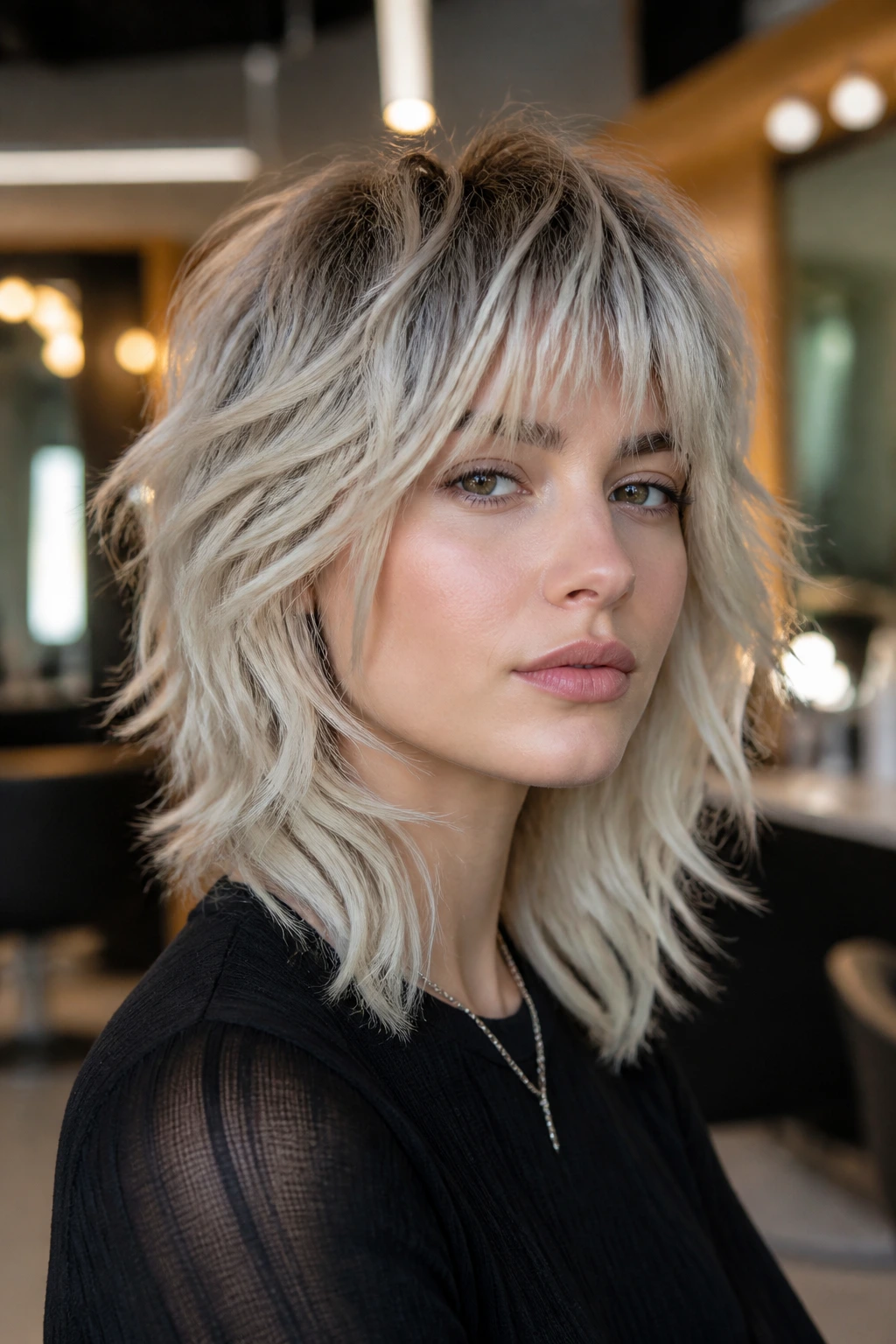
Platinum on a wolf cut is high contrast by nature, so the root smudge is doing a lot of the heavy lifting. Without it, the cut can look too severe and the layers lose their softness. With it, the shape keeps some depth and the bright ends feel deliberate.
This version is not low-maintenance. It asks for toning, hydration, and a little patience. But if you want a sharp, airy look that still has dimension, a shadow root and carefully softened platinum pieces can make the whole cut feel expensive rather than brittle.
What to watch
The ends need to stay healthy. Platinum shows damage faster than caramel or beige ever will. If the hair is already porous, this is not the shade to rush. Let the cut breathe first, then go lighter.
21. Ginger Wolf Cut With Copper Veils
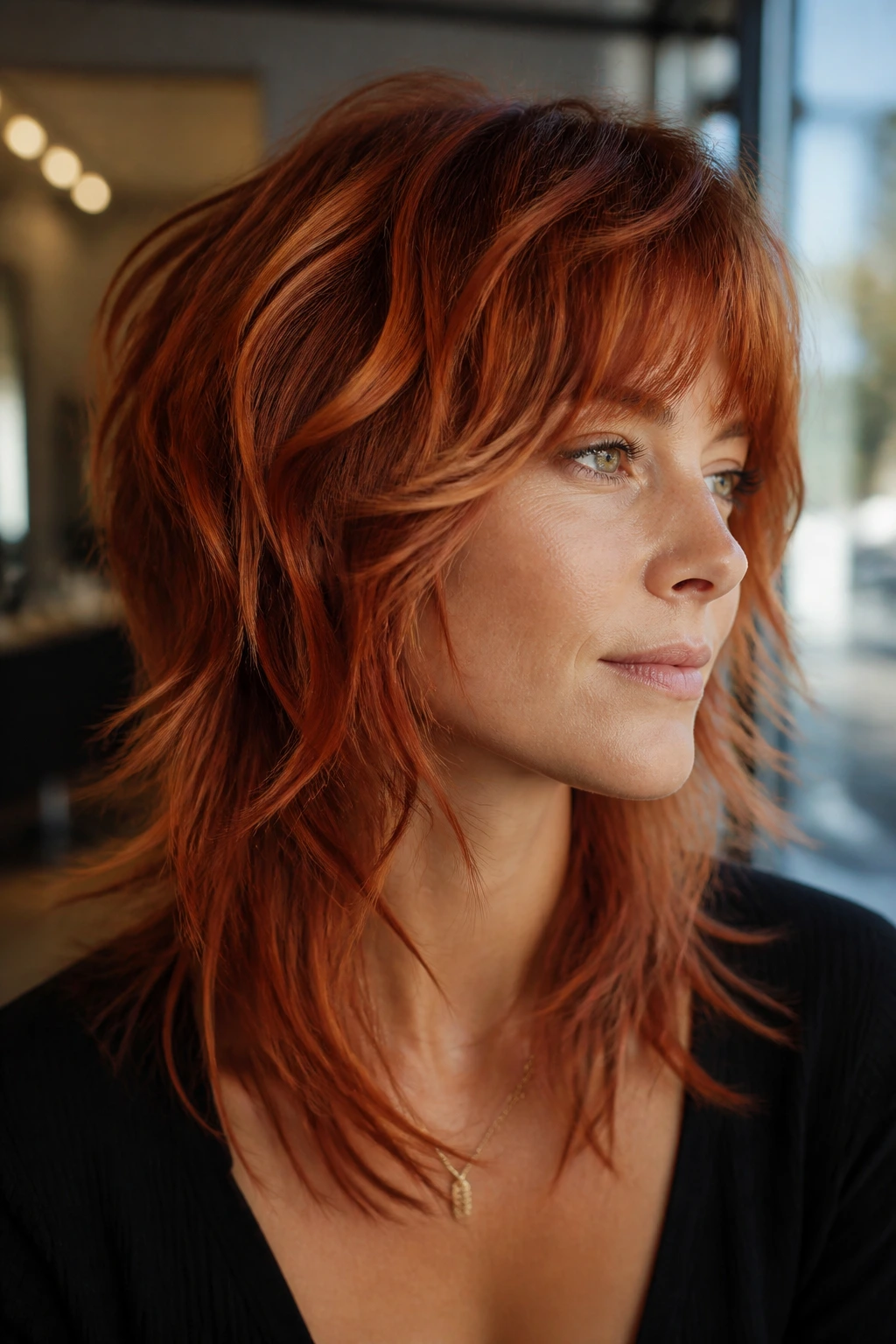
Ginger balayage brings a brighter, more vivid warmth than cinnamon or chestnut, but the wolf cut keeps it from taking over. Copper veils through the mids make the layers look lit from inside. It’s bold, but still has softness if the root area stays deeper.
This is a strong choice for naturally warm brunettes or redheads who want more movement without going full neon. The face frame can be the brightest section, while the underlayers stay slightly muted. That contrast makes the fringe pop without turning the whole head into one flat red panel.
A good salon request
Ask for painted copper rather than all-over copper. Those little variations in tone are what keep the style dimensional. One flat red tone can look costume-ish fast. Veils are better.
22. Taupe Brown Wolf Cut With Whisper Highlights
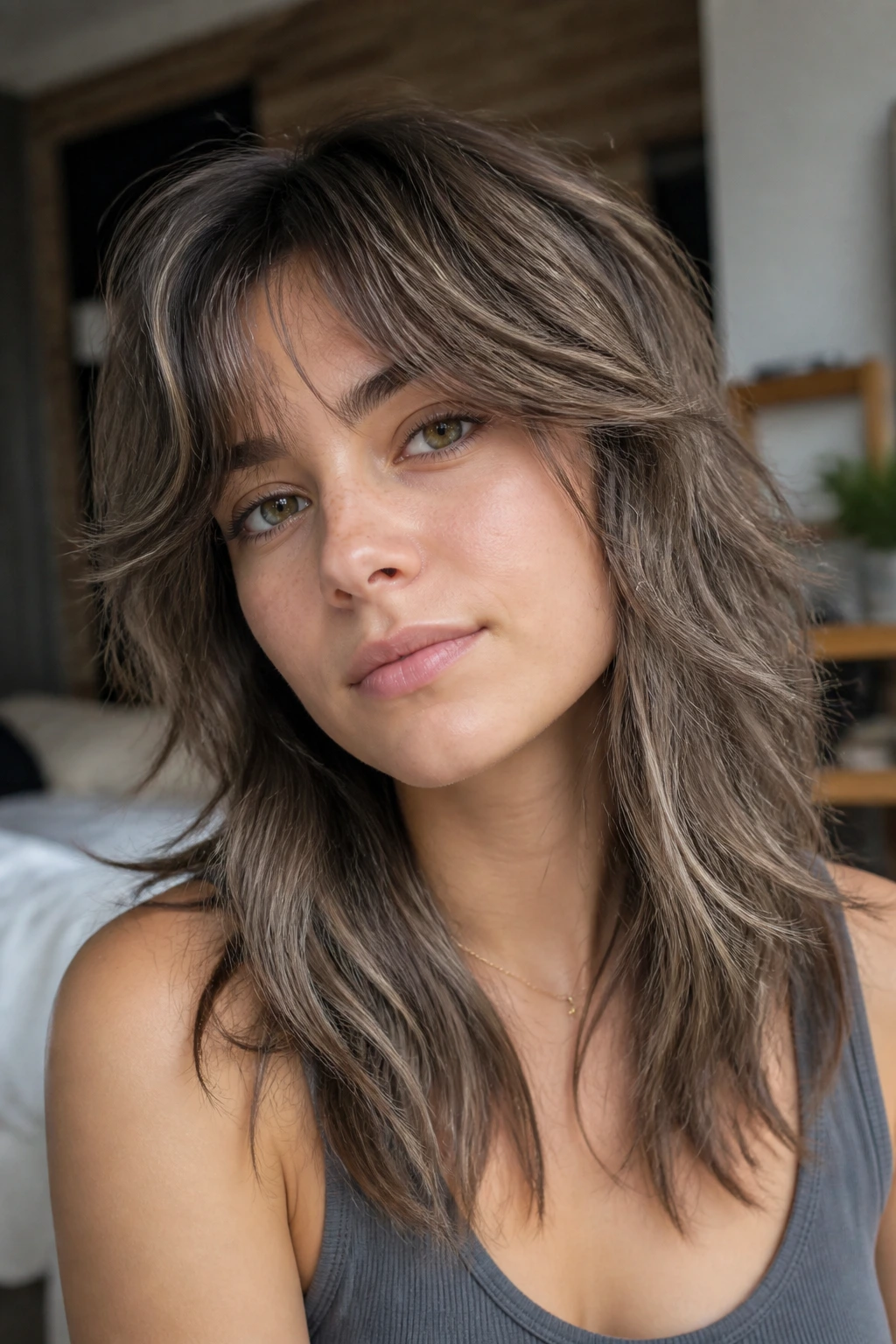
Taupe brown is the quietest option in the set, and that is exactly why it works. A wolf cut doesn’t need loud blonde streaks to show texture. Tiny whisper highlights in taupe, beige, and ash give the layers enough separation to read in motion, especially on medium-density hair.
This style suits someone who wants softness first and lightness second. The highlights should be scattered, not packed in. You want the color to sit in the cut, not sit on top of it. That makes the whole shape look plush and very wearable.
Quick note
If your hair is naturally warm, ask for cooler toners in the mids only. Leaving the root and lower underlayer a bit deeper keeps the taupe believable. Too much lightness here turns it into a different haircut.
23. Beige Blonde Wolf Cut With Air-Dried Texture
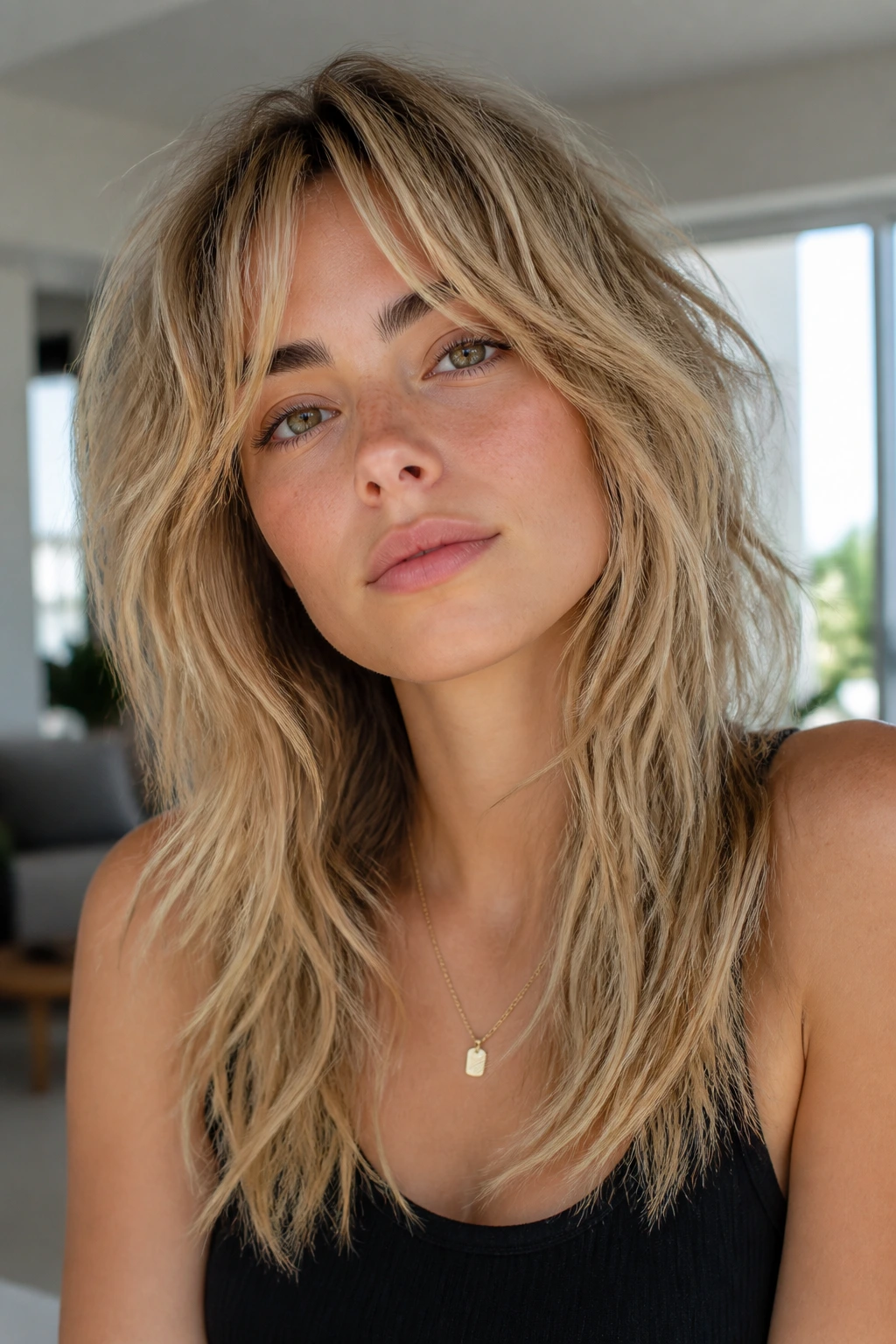
Beige blonde is the air-dry queen of this collection. It works because the tone is soft enough to forgive uneven wave patterns and the wolf cut gives those waves a place to land. You don’t need perfect styling. You need enough separation to let the dimension show.
The best version has a sandy beige root melt into lighter mids, with the face frame slightly brighter than the rest. That makes the cut look intentional even when you run out the door with damp hair. If your hair tends to frizz at the ends, this tone can hide a little chaos better than a high-gloss platinum ever could.
Best practice
Use a light leave-in, scrunch the mids, and let the shape do the work. Over-smoothing this look makes it less interesting. A bit of texture is the point.
24. Smoky Auburn Wolf Cut With Feathered Fringe
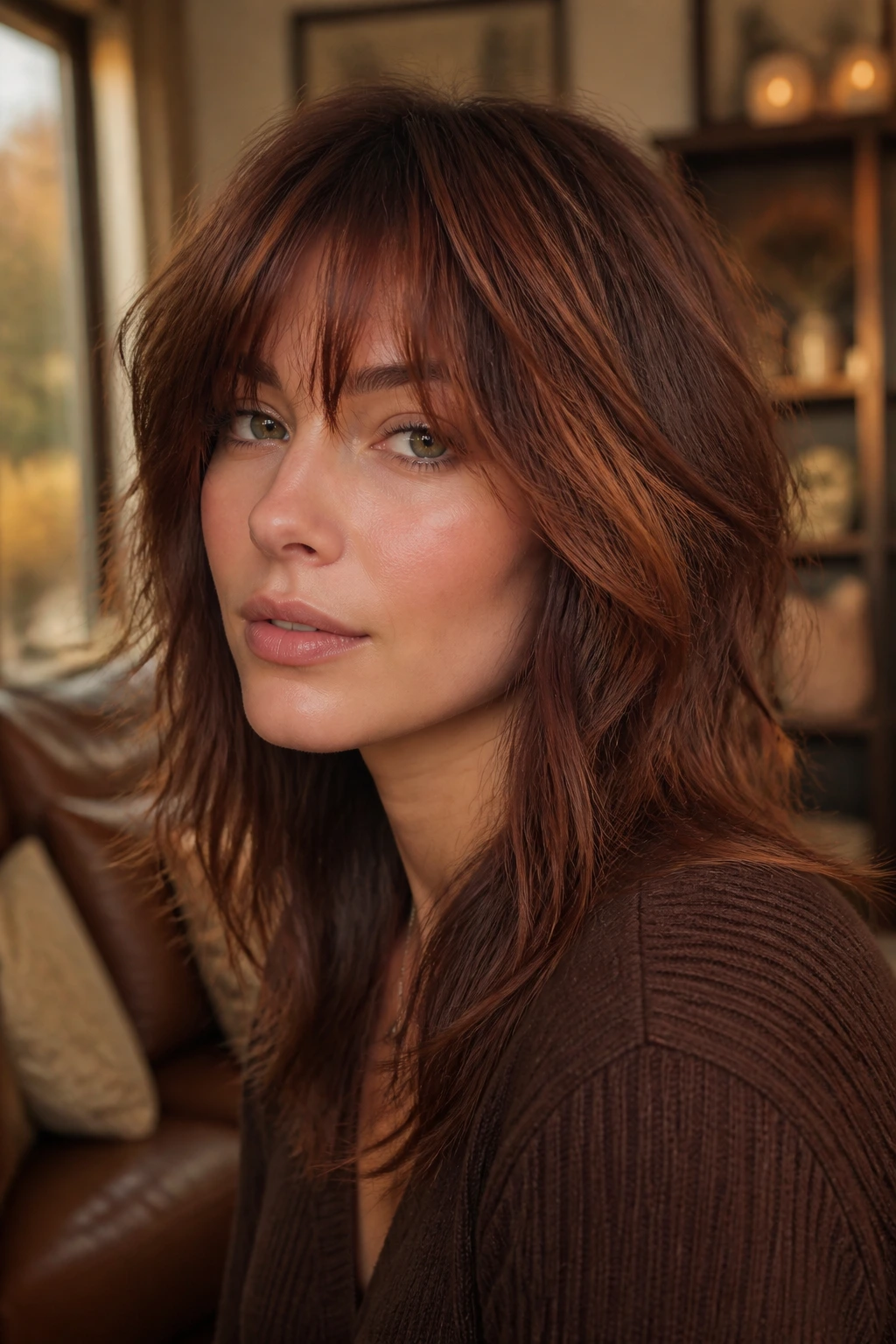
Smoky auburn sits between red, brown, and copper, which gives a wolf cut a moody warmth without pushing it too bright. The feathered fringe helps because it breaks up the front and lets the color show in soft slivers rather than a solid curtain of color.
This look is especially good for autumn-leaning palettes, but I’m not going to pretend it only works one time of year. It suits anyone who wants warmth with edge. On thicker hair, the smoky auburn keeps the shape from feeling bulky. On finer hair, the feathered fringe keeps the front from looking too heavy.
Style it like this
Blow-dry the fringe with a round brush just enough to create lift, then leave the lengths loose. That contrast between soft front and slightly rough ends is what makes the color come alive.
25. Black Cherry Wolf Cut With Dimensional Balayage
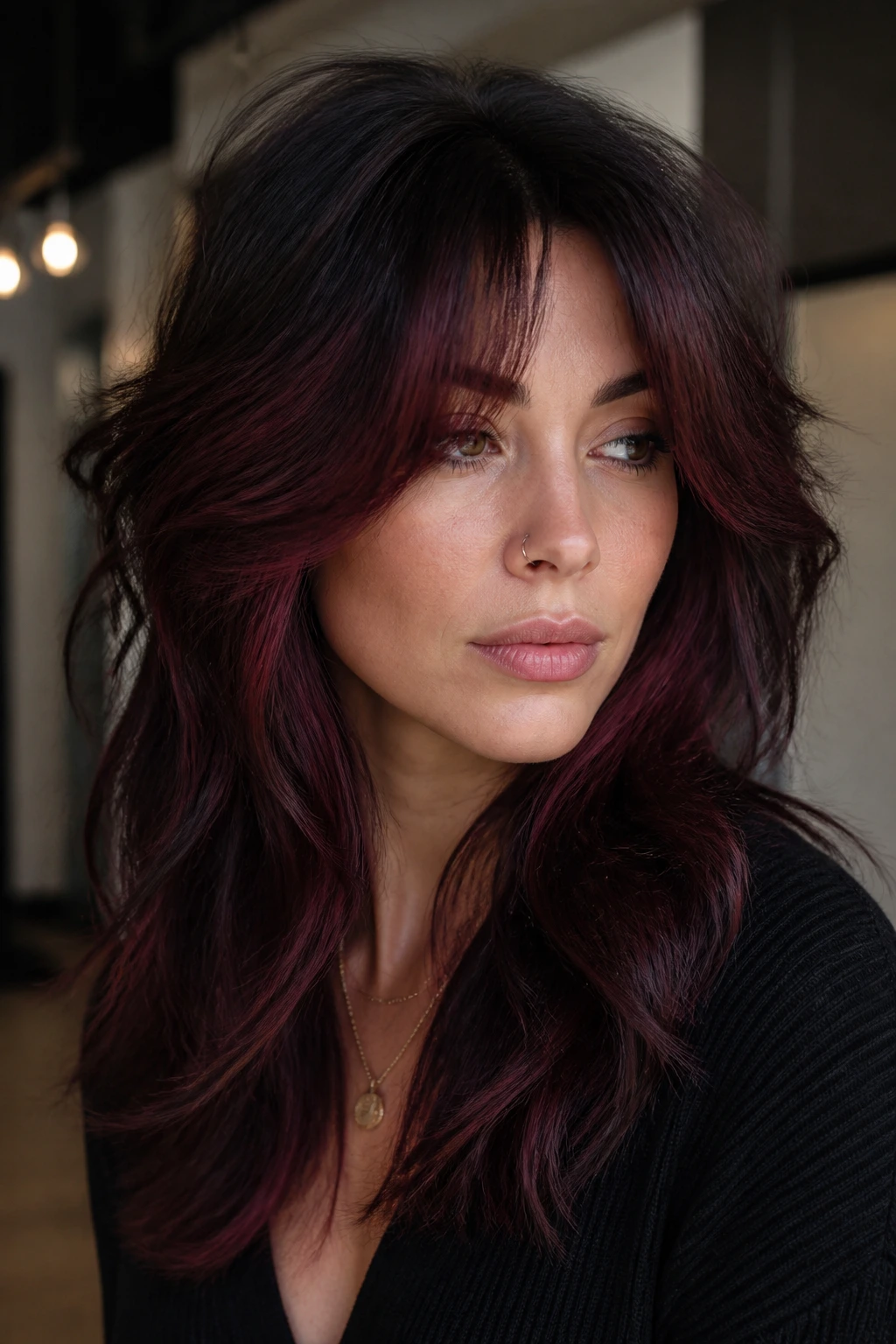
Black cherry is the most dramatic color here, but when it’s done as dimensional balayage instead of a flat all-over dye, it stays wearable. The deep burgundy notes show up in the light, while the base stays dark enough to hold the wolf cut’s shape. It’s rich. Almost glossy in the best way.
This version works when the red is treated like a veil rather than a full saturation. A few brighter cherry threads around the face and through the top layers are enough. Keep the underlayers darker, and the haircut suddenly has that dark, glossy movement that looks different every time you turn your head.
When to choose it
If you want the wolf cut to feel a little more intense without losing softness, this is the one. It pairs well with loose waves and a side or off-center part. The color does the talking, so the styling can stay easy.
Why Balayage Brings Out the Wolf Cut’s Layers
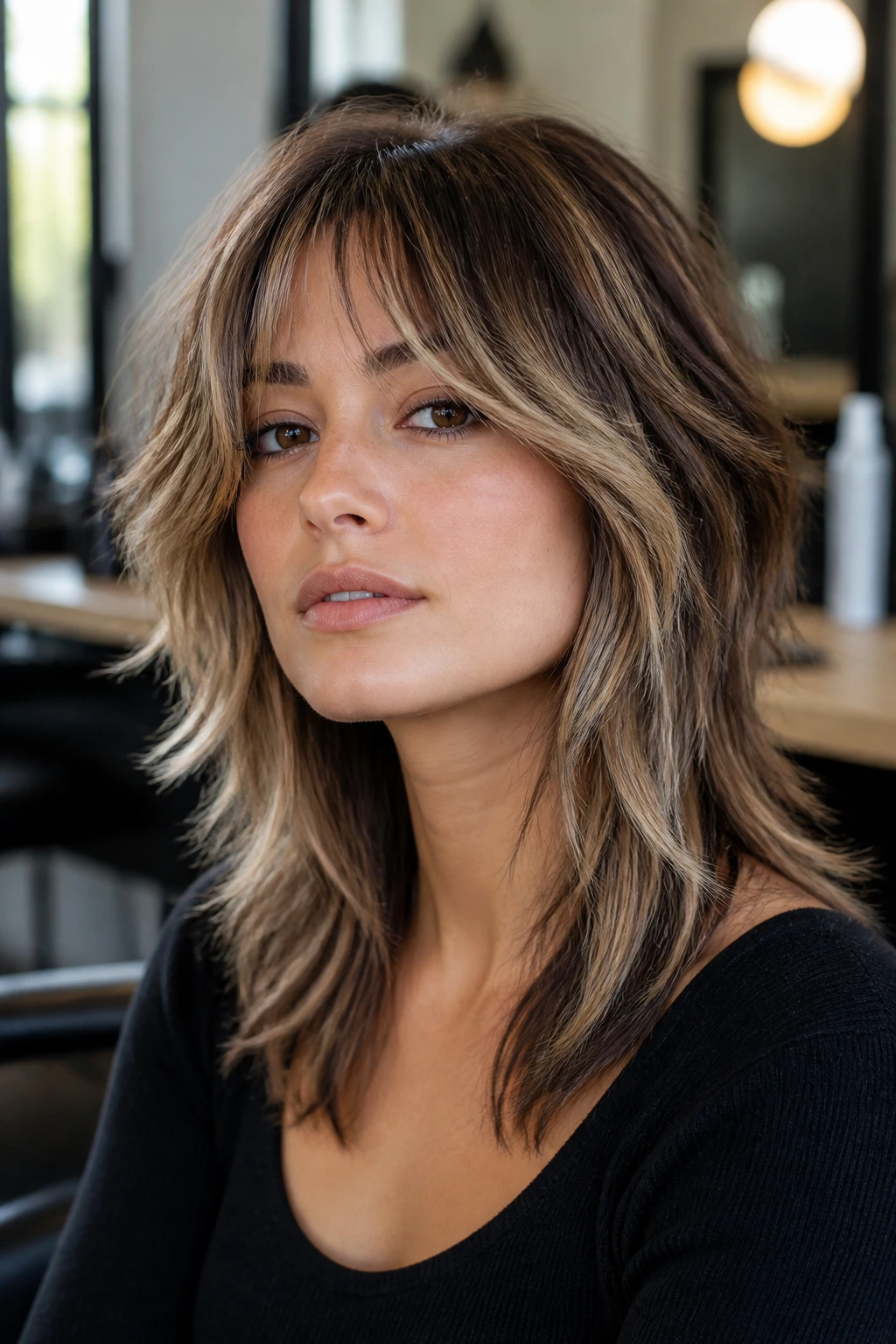
The wolf cut gives you a built-in shape map. Balayage gives you a way to underline it without drawing heavy lines through the hair. That is why the combination works so well. You can brighten the face frame, lift the crown visually, and keep the lengths from feeling like one solid mass.
The best balayage placement on a wolf cut usually starts by respecting the haircut’s own geometry. The crown is short and broken up, so a little lightness there can help, but too much turns puffy fast. The sides and front layers are where color can really live. That’s where the bend shows. That’s where the eye lands.
I also think this pairing works because it forgives imperfect styling. A wolf cut rarely wants to be pin-straight and glossy every day. Soft dimension means the cut still reads well when the waves loosen, the fringe separates, or the ends do that slightly messy thing they always do by noon. The color keeps the shape alive.
Tools That Help You Shape the Cut and Show the Color
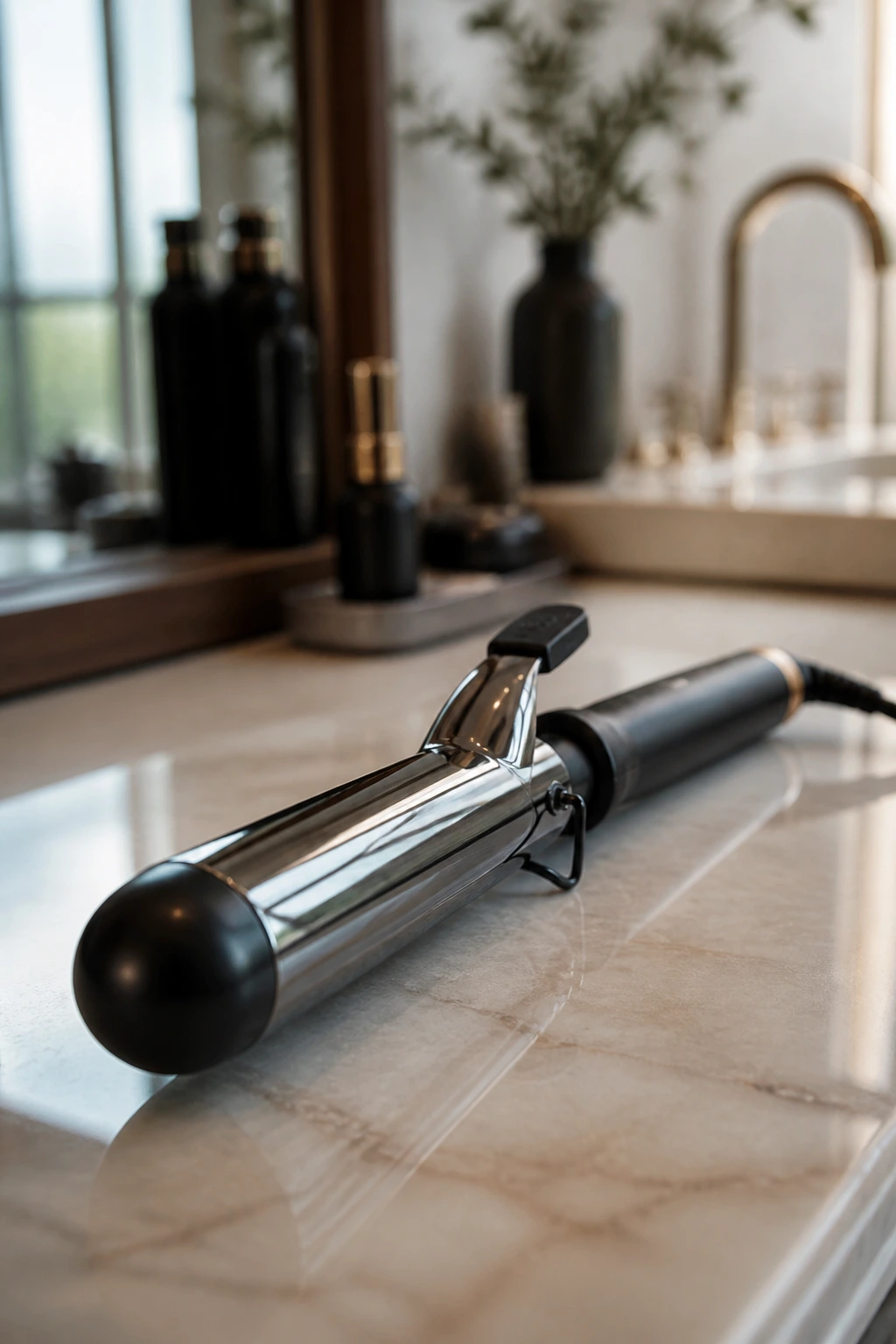
-
1.25-inch curling iron or wand: Loose bends show balayage ribbons better than tight curls, which can hide the dimension in a ringlet.
-
Flat iron with rounded edges: Useful for a softer, lived-in bend through the mids and ends without a curled finish.
-
Round brush, medium barrel: Helps lift the face frame and smooth the fringe so the lighter pieces sit where they should.
-
Diffuser attachment: A must for curly or wavy wolf cuts; it keeps the hair from puffing while protecting the painted pieces.
-
Sectioning clips: They make styling and color touch-ups easier, especially around the crown and face frame.
-
Heat protectant spray: Non-negotiable if you’re using hot tools. Balayage hair tends to be the driest at the lightened parts.
-
Texture spray or lightweight mousse: Keeps the layers separated without making the ends greasy.
-
Color-safe shampoo and mask: Good for keeping toner from fading too fast and for protecting the lighter ribbons.
Smart Shopping and Color Tips
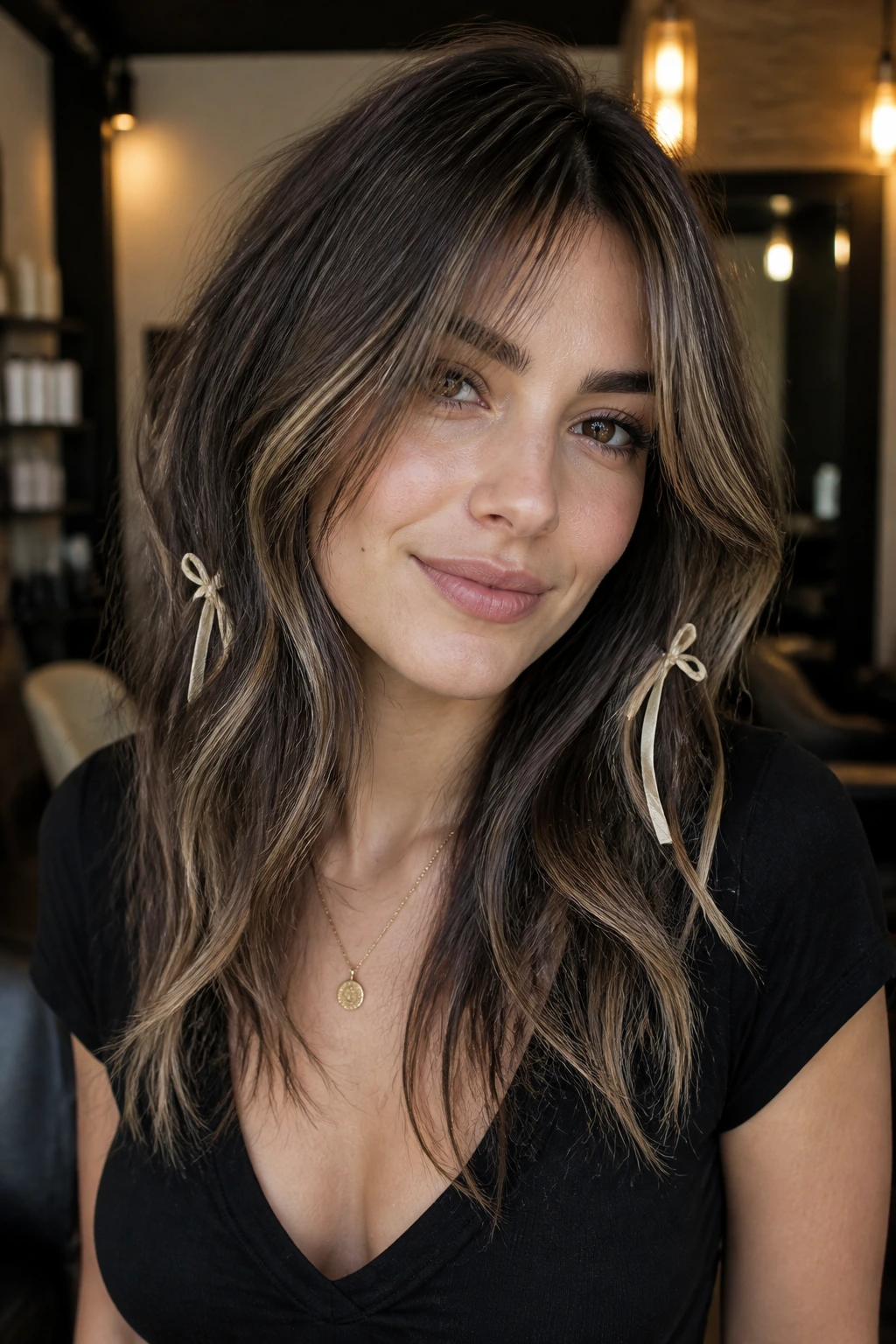
A good wolf cut with balayage starts long before the scissors or the brush come out. Bring reference photos that show both the cut and the tone, not just one or the other. A pretty blonde on a straight cut may have nothing to do with the look you want on a layered, shaggy shape. You need the layers, the root depth, and the lightness all working together.
The base color matters more than people think. On darker hair, beige, mushroom, caramel, and smoky brown tones usually read softer than high-lift blonde. On lighter hair, ash, pearl, honey, or vanilla can keep the dimension from disappearing. If your hair is already porous from previous color, a gloss often gives a better finish than pushing for more lift.
Ask your colorist where the lightness will start. A soft look usually means the first bright pieces sit somewhere below the crown and around the face frame, not right at the scalp. That keeps the wolf cut from looking stripey. It also makes the grow-out much easier to live with. If you want the style to stay low-drama, root shadow and tone choice are the two levers that matter most.
How to Wear These Cuts So the Color Reads From Every Angle
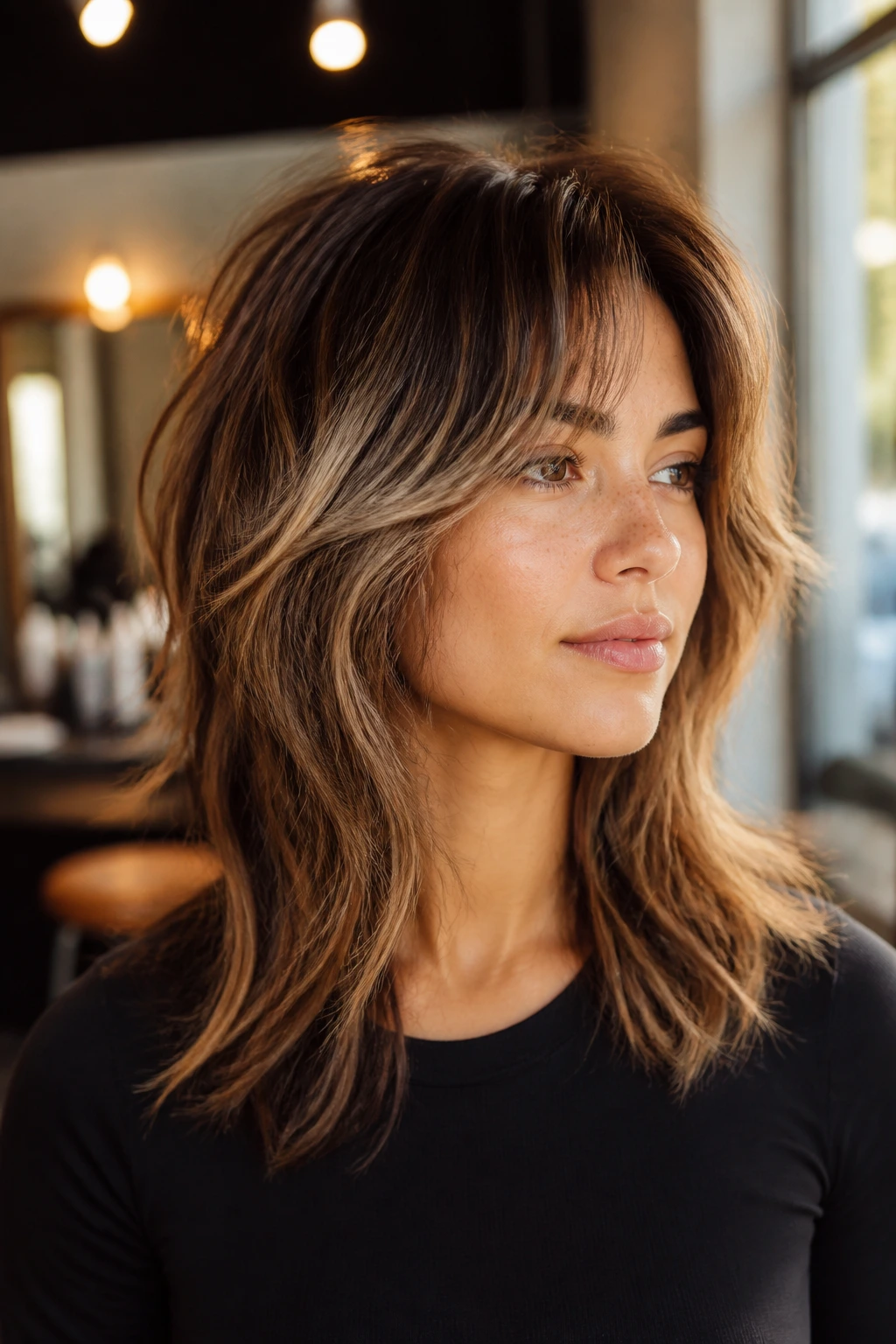
Presentation: The most flattering finish is usually a little undone. Loose bends, a soft off-center part, or a curtain fringe that opens at the cheekbones lets the balayage show instead of hiding it inside a stiff shape.
Accompaniments: Simple earrings, open necklines, and collars that don’t crowd the face frame help the lighter pieces do their job. If the neckline is swallowed by a turtleneck or a big hood, the layers still look good, but the color loses some of its lift.
Length Choice: Shorter wolf cuts feel sharper and more punk; shoulder-grazing cuts feel softer; longer versions make the balayage look more gradual and plush. Pick the length that matches how much movement you want to see at the ends.
Finish: Use enough product to separate the layers, not enough to glue them down. A light cream, a touch of oil on the very ends, or a texture mist through the mids usually beats heavy shine serum here.
Extra Styling Tricks for Softer Dimension
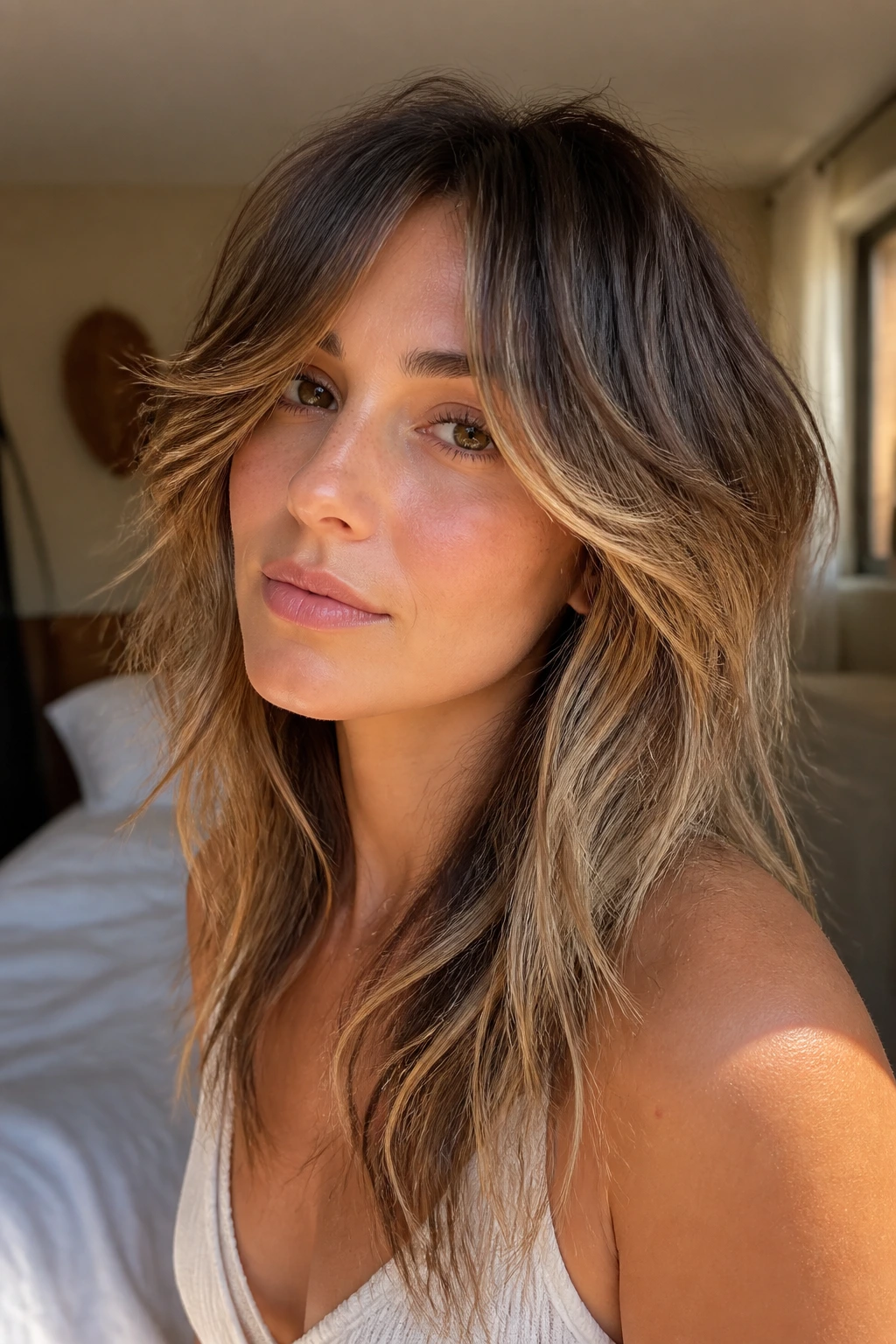
Gloss Boost: A clear or beige-tinted gloss every few weeks keeps the lighter ribbons from turning dull or brassy. I prefer gloss over piling on more toner if the hair already feels dry.
Texture Boost: Apply mousse at the roots and a texture spray through the mids, then rough-dry until the hair is about 80% dry. That little bit of lift makes the color show in the bends instead of pooling in flat sections.
Face-Frame Focus: If you want the cut to look brighter without lightening everything, spend your budget on the front panels and upper side layers. That’s where the eye goes first, and it is usually enough.
Make-It-Yours: Fine hair usually looks better with softer, more scattered balayage. Thick hair can handle a stronger contrast and a few denser painted pieces. Curly hair wants the lightness mapped to the curl groups, not just the surface.
Common Mistakes That Flatten the Layers or Hollow Out the Color
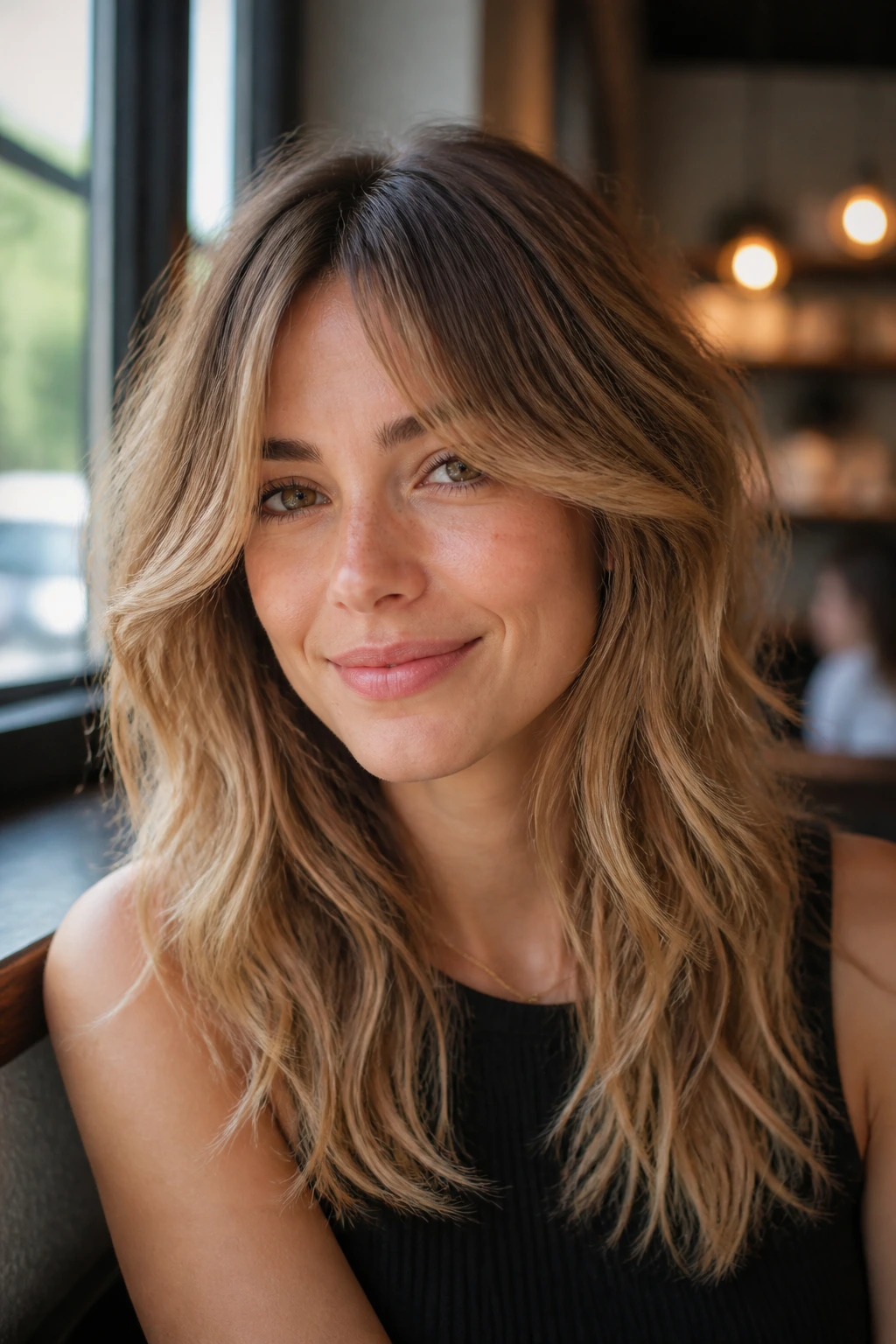
A wolf cut with balayage can go wrong in a few predictable ways, and most of them are easy to avoid once you know what to look for.
Too much lightness at the crown: If the top is painted too bright, the cut can puff out and lose shape. Keep the crown a little deeper and let the brightness happen through the face frame and mids.
Chunky stripes instead of soft ribbons: Thick, blocky highlights fight the cut’s texture. They make the color look disconnected. Thin hand-painted pieces usually work better because they follow the movement of the layers.
Over-toning the blonde: Ash overload can make the ends look flat and chalky. Ask for soft beige or neutral gloss if the hair already feels cool.
Ignoring the underlayers: If only the top gets color, the haircut can look pretty from the front and dull from the side. A little tonal variation underneath gives the whole shape depth.
Styling it too sleek: A pin-straight finish can flatten the layers and make the balayage read less dimensional. A bend or soft wave is usually more flattering.
Variations and Alternative Takes to Try
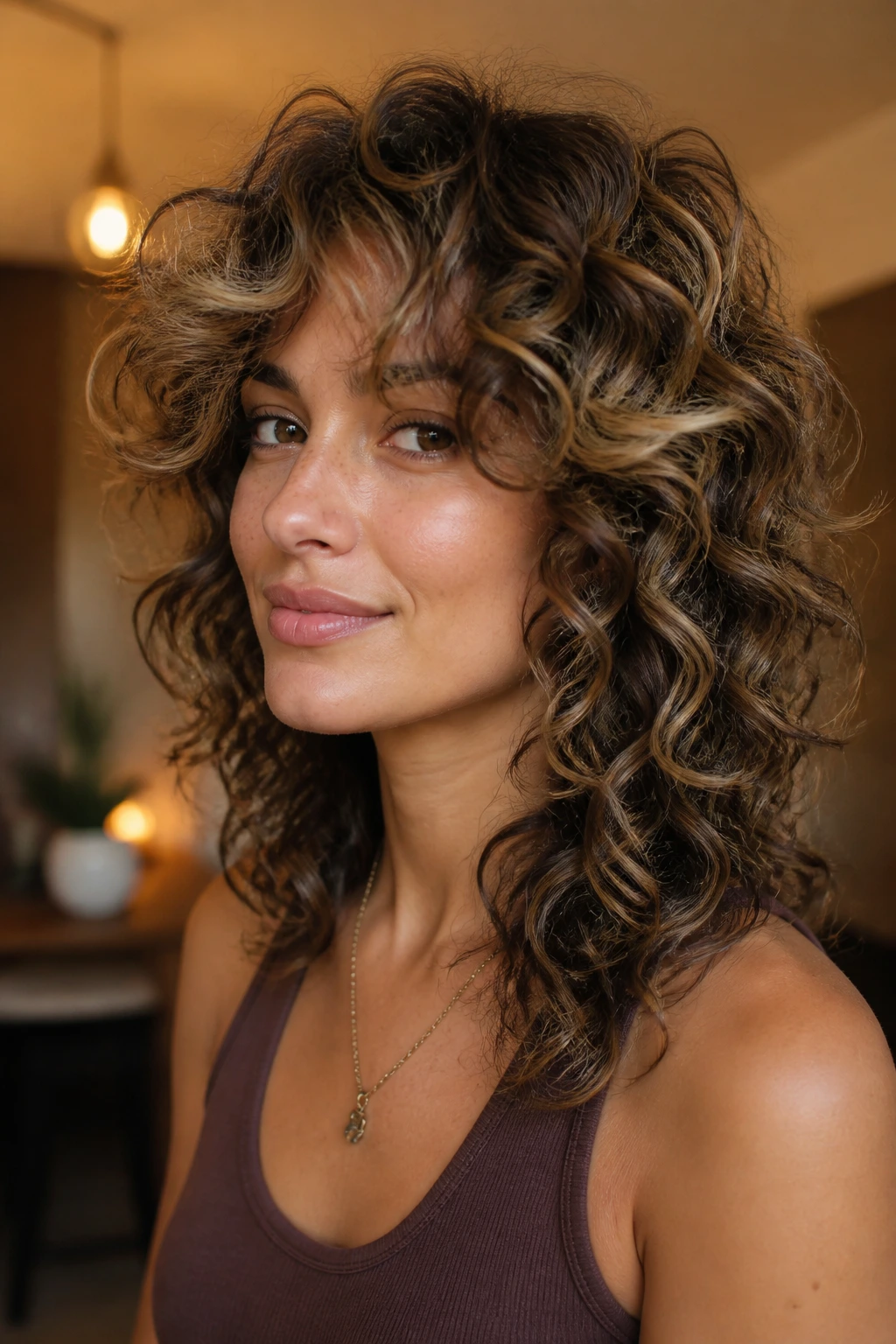
Curly Cloud Wolf Cut: Let the balayage follow the curl pattern instead of painting straight lines through the hair. This keeps the color from looking striped and makes the curls look fuller, especially around the cheek and jaw.
Short Cropped Wolf Cut: Keep the nape tighter and the crown choppier for a sharper outline. Soft balayage around the top and fringe stops the short shape from feeling too hard or too punk.
Extra-Lived-In Root Melt: Leave more depth at the root and drag the lightness down only through the mids and ends. That gives you a softer grow-out and makes the color easier to maintain between appointments.
High-Contrast Bronde: Deep brown at the top, beige-gold through the mids. This one gives the layers a little more punch without losing softness. It’s a strong choice if your hair tends to vanish in photos.
Warm Copper Glow: Swap beige or ash ribbons for cinnamon, ginger, or auburn. The cut becomes warmer and a little more expressive, especially on medium to dark brunettes.
Keeping the Shape and Tone Fresh Between Visits
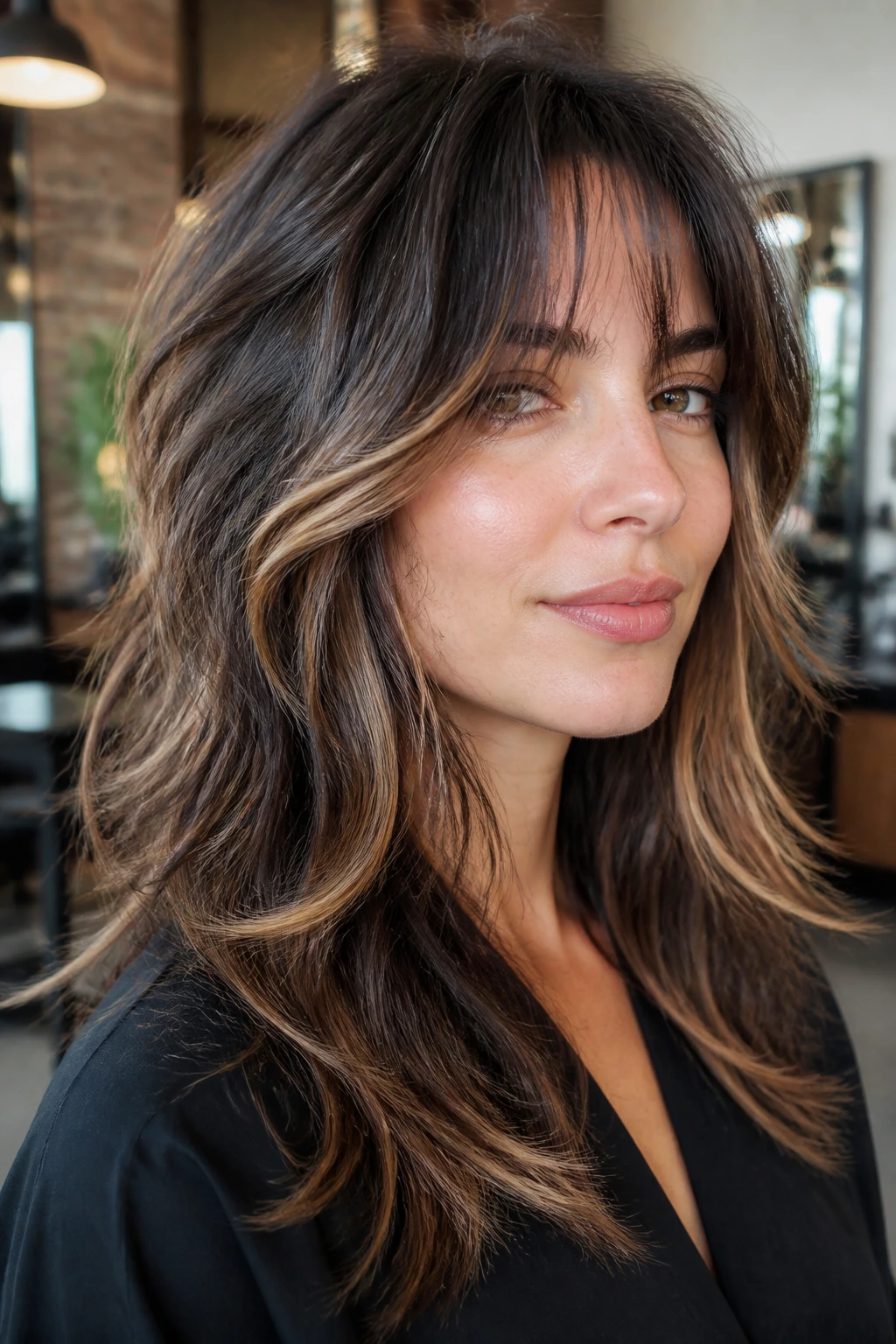
A wolf cut lives or dies on two things: the layer shape and the tone on the lightened pieces. The shape usually needs a trim every 8 to 10 weeks if you want the silhouette to stay shaggy instead of just grown out. If you like a softer, longer perimeter, you can stretch that a bit, but the crown and fringe will still need cleanup.
Color maintenance depends on how light you go. Beige, caramel, and bronde tones usually ask for a gloss or toner refresh every 4 to 8 weeks. Cooler blondes and platinum pieces can need more frequent toning if your water is mineral-heavy or your hair pulls yellow fast. Use color-safe shampoo most of the time, then keep a mask in the rotation once a week if the ends feel dry.
Heat styling matters too. Balayaged ends get thirsty. A heat protectant before hot tools and a light leave-in after washing will help the soft dimension last longer. If the hair starts to look frayed, stop chasing more lightness and spend the next appointment cleaning up the cut and restoring shine. That’s usually the better fix.
Questions People Ask Before They Book
Does balayage work on straight wolf cuts, or does it need waves?
It works on straight hair, but the dimension is more subtle. If you want the layers and color to show from across the room, a small bend at the ends helps a lot.
Can a wolf cut with balayage work on fine hair?
Yes, but the placement has to be gentle. Too much lightness can make fine hair look see-through, so softer beige or bronde ribbons usually beat chunky blonde pieces.
How often should the tone be refreshed?
That depends on how light the color is and how much brass your hair pulls. Softer brunettes and brondes can go longer between glosses; lighter ash or pearl blondes usually need more regular toning.
Will this style grow out badly?
Not if the root is shadowed and the lightness is placed with some space. A good wolf cut grows into itself better than many layered cuts because the ends are already meant to look a little broken up.
Is a wolf cut too high-maintenance for dry or damaged hair?
Not if the layers are cut with restraint and the balayage stays soft. The problem is usually over-lightening, not the haircut itself.
Can I keep my natural dark brown base?
Absolutely. Dark bases with beige, caramel, or smoky ribbons are some of the easiest wolf-cut balayage combinations to wear. You get dimension without pushing the hair into full blonde territory.
Do curtain bangs matter?
No, but they do make the face frame more interesting. A wolf cut without bangs can still work; it just needs the balayage to do more visual work around the front.
What if the cut feels too choppy after the appointment?
Ask for the perimeter to be softened a little and keep the front pieces a touch longer. That usually settles the shape without losing the wolf-cut edge.
The Shape That Keeps Moving
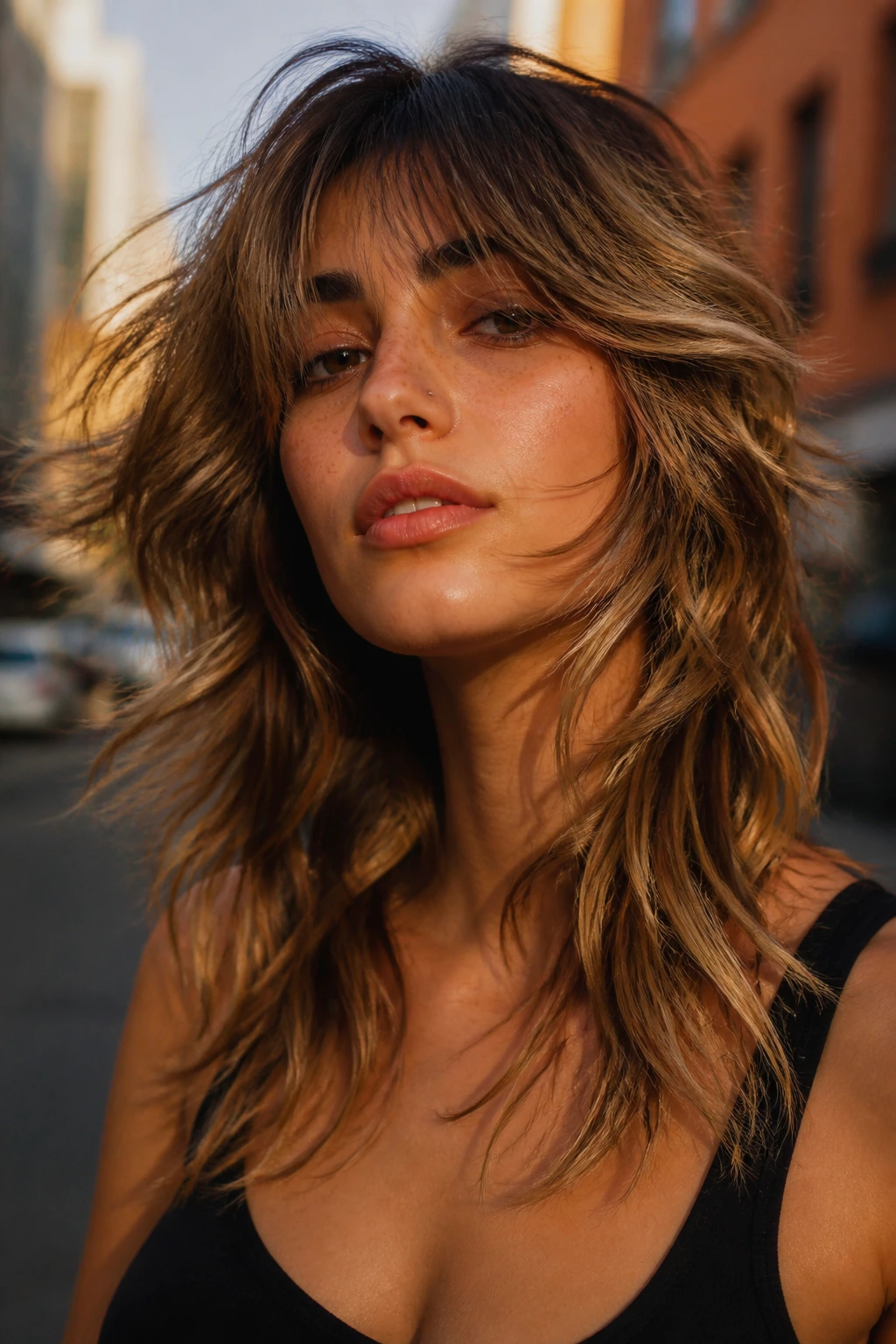
A good wolf cut with balayage doesn’t ask the hair to behave. It gives the hair a shape that can handle a little mess, a little grow-out, a little change in tone. That’s why the soft dimensional versions work best: they let the cut stay interesting on the days you style it and on the days you barely touch it.
If you’re choosing between brighter blonde, smoky brunette, copper warmth, or something in the beige-bronde middle ground, the smartest move is to start with the movement you want first and the tone second. The tone should support the cut, not overpower it. When those two pieces line up, the result has that easy depth people keep trying to fake with filters and a flat iron.
