



A wolf cut can go wrong in one very specific way: the layers are there, the fringe is there, the texture is there, and still the whole head reads as a single dark mass. Add highlights in the wrong spots and you get patchy brightness; place them well and the haircut starts to breathe. That’s the real appeal of wolf cuts with highlights. The cut gives you shape, and the color gives that shape somewhere to go.
What makes this combination so satisfying is how little it takes to change the result. A few beige ribbons near the face can soften a heavy jawline. Fine babylights at the crown can stop thick hair from looking helmet-like. A deeper root with lighter ends can keep the shaggy outline from feeling too staged. I’ve always liked that this look can be as subtle as a whisper or as bold as a flash, depending on where the light falls.
The best versions do not scatter brightness everywhere. They put it where the layers flip, feather, and break apart. That means the face frame, the crown, the mid-lengths, and the outer ends matter far more than a blanket of blonde. Get that balance right, and the haircut has movement even when you’re standing still.
Why These Wolf Cuts With Highlights Hit the Sweet Spot
Softness at the edge: A wolf cut already has a jagged outline, and highlights soften that silhouette without sanding off the attitude.
Brightness where it counts: Light around the face and crown does more for the eye than an all-over lightening job that disappears into the texture.
Forgiving grow-out: Root shadow, balayage, and babylights keep the color looking lived-in longer, which matters when the cut itself is already intentionally undone.
Works with different textures: Straight hair gets more dimension, wavy hair gets more movement, and curls get more definition when the color follows the pattern instead of fighting it.
Easy to customize: You can keep it brunette and subtle, push it into honey or copper, or go lighter with beige, champagne, or pearl tones.
Not one-note: The haircut stays edgy, but the highlights keep it from looking harsh or flat. That balance is the whole point.
1. Sunlit Face-Framing Wolf Cut
A good face-framing wolf cut starts with brightness near the temples and cheekbones, not a neon streak that slices straight across the front. The best version looks as if the sun found only the top layers first. On brunette or dark blonde hair, that means keeping the base deeper and lifting just the front panels and a few crown pieces by one or two levels.
Why It Reads So Soft
The cut already gives you choppy movement. The face frame simply tells the eye where to look first. If the lightest pieces sit around brow level and taper down toward the jaw, the haircut feels softer without losing the shaggy edge.
A beige or neutral blonde toner keeps the brightness from turning yellow on darker bases. I’d keep the highlight width narrow—roughly the size of a shoelace, not a paint stripe—so the result feels airy, not streaky.
- Best base: dark blonde, light brown, or medium brunette.
- Highlight tone: beige, champagne, or soft wheat.
- Placement: temples, cheekbones, and a few crown slices.
- Maintenance: gloss every 6 to 8 weeks if you want the tone to stay clean.
Pro tip: Ask for the front pieces to be lifted a touch higher than the rest. That tiny shift gives the haircut shape even when your hair is tucked behind your ears.
2. Beige Balayage on a Chin-Grazing Wolf Cut
Short wolf cuts need color near the top or they vanish. That’s the part people miss. Once a cut sits around the chin, the layers don’t have much length to show off, so beige balayage becomes less about “lightening hair” and more about making the texture visible.
A chin-grazing wolf cut with beige balayage works because the warm-neutral tone softens the outline of the layers without drawing a hard line between dark roots and light ends. Keep the lightest pieces around the cheekbones and the first bend of the length, then feather a few lighter strokes into the ends. The result feels modern, not overworked.
If your hair is thick, this is a smart move. The beige tone breaks up bulk. If your hair is fine, ask for fewer but slightly brighter ribbons so the shape doesn’t disappear.
The finish should look hand-painted, not striped. That’s the difference between “I got highlights” and “my haircut has actual dimension.”
3. Caramel Ribbons on a Long Wolf Cut
Why does caramel look so good on long wolf cuts? Because the length can get heavy fast, and warm ribbons stop the lower half from turning into a dark curtain. The color gives the ends a little lift, especially when the layers kick out around the shoulders and collarbone.
On long hair, I like caramel highlights that begin below the cheekbone and grow denser through the mid-lengths. That keeps the root area deeper and gives the haircut a lived-in feel. If the lightest pieces start too high, the look can become busy. Too low, and you lose the whole point.
How to Wear It
- Let the front layers curve away from the face with a round brush or large-barrel wave.
- Keep the ends soft and broken up, not curled into one smooth flip.
- Use a light shine cream on the mid-lengths only; too much product at the root will flatten the crown.
Caramel on a long wolf cut is one of those combinations that looks expensive without trying very hard. Not because it’s fancy. Because it’s balanced.
4. Ash Brunette Wolf Cut with Cool Money Pieces
A dark brunette wolf cut can go brassy fast if the highlights lean too warm, and that is where ash brunette with cool money pieces earns its keep. The front panels brighten the face, while the rest of the hair stays smoky and grounded. It feels sharper than caramel, but less severe than jet-black hair with platinum streaks.
The trick is restraint. Keep the money pieces cool, not icy. Think mushroom brown, taupe, or soft ash beige. If the base runs orange, a gloss with blue-violet undertones helps keep the whole thing from drifting copper in a few washes.
This version works especially well when the layers are heavy around the crown and cheekbones. The cool front brightness pulls the eye upward, so the cut reads as lighter and more lifted. If you wear glasses, even better—the frame and the front pieces start talking to each other.
A wolf cut with this color story doesn’t need much styling. A bend through the mid-lengths and a little root lift at the crown is enough.
5. Copper Glow on a Shaggy Wolf Cut
Copper on a wolf cut has a different energy than blonde highlights. It feels warmer, less sun-faded, and a bit more deliberate. The color catches on the rough edges of the layers and gives the haircut a flicker, especially when the ends are textured instead of blunt.
I like copper best when it’s mixed through the top layers and around the fringe. If every strand is turned orange-red, the cut can lose depth. A soft copper gloss on brown hair, or copper ribbons over a deeper auburn base, keeps the brightness from shouting. It should look like the color is living inside the layers, not sitting on top of them.
This is a good choice if your skin leans golden, peachy, or neutral-warm. It also makes a dry haircut look less dry, which sounds odd until you see it: the warmer tone softens the visual roughness of the layers.
Skip heavy purple shampoo here. That’s the wrong tool and the wrong mood.
6. Champagne Blonde Wolf Cut with Airy Ends
Champagne blonde is the move when you want lift without the flat, pale look that can make a shag feel harsh. Compared with icy blonde, champagne keeps a little warmth in the tone, which is kinder to the wolf cut’s broken texture. The layers still stand out, but they do it with less edge.
This works especially well on fine to medium hair. Very light, cool blonde can make the ends look see-through if the haircut is already heavily layered. Champagne keeps the surface brighter while leaving enough depth underneath that the shape survives a messy air-dry.
I’d keep the roots shaded rather than fully lightened. A soft root shadow, even if it’s only half a shade deeper, gives the haircut a better base. Then the lighter ends feel feathered rather than bleached to death.
The result is clean, soft, and slightly airy. Not frosty. Not beige. Somewhere in the middle, which is where this cut tends to look best.
7. Mushroom Brown Wolf Cut with Fine Babylights
If you want color people notice only after a second look, this is the one. Mushroom brown is cool, muted, and a little earthy, and fine babylights through the crown and fringe keep it from reading flat.
Babylights matter here because wolf cuts have so many slices of hair moving in different directions. Thick highlights can look stripey on a muted brunette base. Tiny woven pieces blend into the layers and give you the sense that the hair is shifting under the light instead of flashing bright.
This is one of the best versions for someone who wants something professional enough for a conservative dress code but still interesting from the side. The tone sits in that smoky brown-beige zone that doesn’t fight with most skin tones. If your natural color is dark blonde or light brown, the upkeep is gentle.
A mushroom wolf cut lives or dies by the toner. Keep it neutral-cool and refresh it before the warmth starts creeping in.
8. Honey Blonde Midsize Wolf Cut
Honey blonde is the easiest way to make a midsize wolf cut look fuller. Warm light reflects off the layers and gives the illusion of thickness, especially around the sides where the haircut can otherwise collapse. That’s why this color works so well on shoulder-grazing lengths.
The highlights should be soft and broken up, not chunky. A few brighter honey pieces near the face and through the outer layers are enough. Leave the underlayers darker so the style still has depth. If everything is lifted to the same tone, the haircut loses that feathered swing.
What to Ask For
- Honey-toned ribbons around the face.
- A deeper root for contrast.
- Lightness focused on the top half and outer edges.
- A gloss that keeps the gold from turning orange.
This version is especially good if your natural hair color sits between light brown and dark blonde. It reads warm without looking brassy, and it’s one of the better choices for people who want color that doesn’t need a strict salon schedule.
9. Espresso Wolf Cut with Soft Mocha Highlights
Dark hair does not need to go blonde to look dimensional. In fact, on an espresso wolf cut, mocha highlights often do a better job because they preserve the depth that makes the layers look thick and rich. You still get movement, but you don’t lose the dark base that gives the cut its bite.
The secret is placement. Put the mocha ribbons through the mid-lengths, crown, and a few face-framing pieces. Keep the bottom layers darker. That way, the light sits on the bends of the haircut and the ends stay grounded.
This is a strong choice for people who like low-contrast color. It’s less dramatic than caramel and far easier to wear on naturally dark brown or black hair. You’ll see the effect in sunlight and in indoor lighting, which is where a lot of darker color work either succeeds or falls flat.
A clear gloss over the top every so often keeps the mocha tone soft and prevents the look from turning muddy.
10. Platinum Wolf Cut with Dark Roots
Platinum on a wolf cut can be stunning, but only when the roots are left dark enough to keep the shape from vanishing. A full head of bright blonde can erase the very texture you paid for. Dark roots bring the outline back.
This look works best when the platinum sits on the outer layers and fringe, not buried deep in every section. That contrast gives the cut a slightly punk edge, while the darker base keeps it wearable. If your hair is naturally medium brown or darker, the maintenance is real. So is the payoff.
You will need toner. You will need purple shampoo. You may also need to accept that platinum fades fast if you wash it too often or blast it with hot water. That is the tradeoff.
Still, when the color is clean, the effect is hard to beat. The layers look sharper, the fringe looks brighter, and the whole haircut gets a bit of electricity.
11. Strawberry Blonde Wolf Cut with Peachy Ends
Strawberry blonde sits in a sweet spot between red and blonde, which makes it a nice match for the wolf cut’s softer edges. Add peachy ends and the whole shape gains warmth without tipping into copper overload. It feels fresh, but not loud.
This is one of the better choices if your hair is already light and you want something with a little more personality than beige or honey. The peach tones keep the ends from looking washed out, especially on wavy hair where the layers break up the color naturally. If the hue is too vivid, the cut can start to look costume-y. Keep it sheer.
I like this best when the fringe gets the most color and the crown stays a little deeper. That keeps the face bright and the top of the haircut from losing depth. A soft gloss every few weeks helps the peach stay peach instead of sliding into copper or rose.
It’s a pretty specific look. That’s exactly why it works.
12. Bronde Wolf Cut with Root Melt
Bronde is the practical answer for people who want brightness but hate obvious grow-out. On a wolf cut, a root melt lets the dark and light blend through the layers so the haircut keeps moving as the color fades. You don’t get a hard line. You get a gradual slide from deeper roots into lighter mids and ends.
This version suits thick or medium-density hair especially well. The mixed tones stop the haircut from reading bulky, while the root melt keeps the crown from looking patchy. If your hair has a lot of natural warmth, ask for a neutral-beige finish so the bronde doesn’t drift orange after a few washes.
The best thing about bronde is that it looks expensive without pretending to be high-maintenance. It’s not. The grow-out is the point.
13. Toasted Almond Wolf Cut with Ribbon Highlights
Toasted almond sits between brunette and blonde in a way that flatters the wolf cut’s layers without pulling all the attention to the front. Ribbon highlights thread through the hair in longer, softer strips than babylights, which is useful if your texture is wavy or if you like a bit more visible contrast.
The color itself should feel warm and mellow, not gold-heavy. Think almond milk with a little toasted edge. The ribbons work best when they follow the movement of the haircut—around the face, through the crown, and along the outer layers where the hair bends. That gives the style a little shine without turning the whole head light.
If you air-dry often, this is a smart pick. The highlights catch on bends and twists without needing perfect styling. A diffuse wave or loose blowout is enough to show what’s going on.
14. Rose Gold Wolf Cut for Wavy Hair
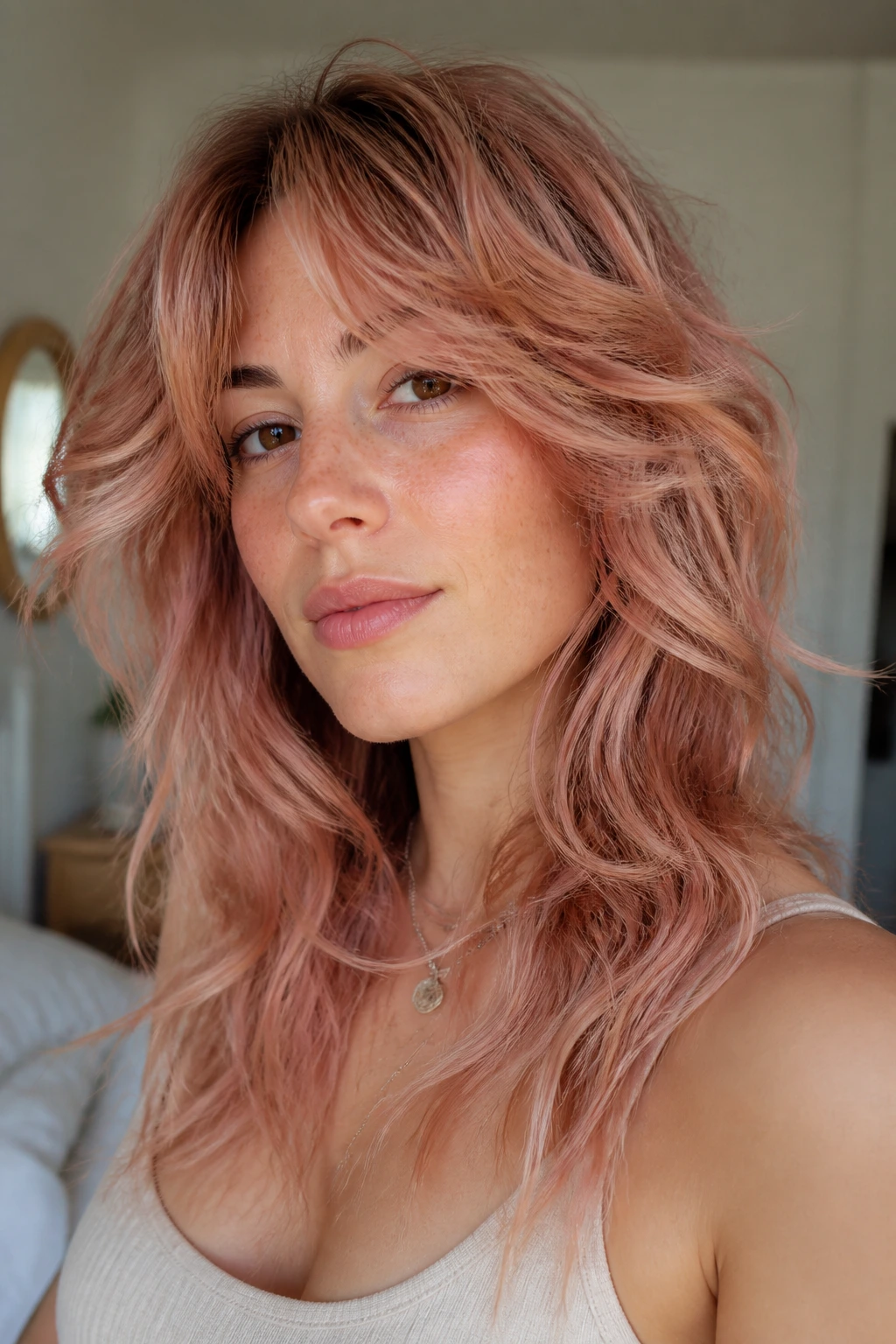
Rose gold on a wolf cut has a softness that a lot of brighter shades don’t. The pinkish warmth sits nicely on wavy texture because the waves break up the color and keep it from reading too flat. It looks especially good when the highlights are already a little pre-lightened and the rose tone is added as a gloss or toner.
I’d keep the rose gold subtle. Too much pink, and the look goes costume. Too little, and it becomes just warm blonde. The sweet spot is a dusty, sheer finish that shows up most clearly in the outer layers and near the face.
This color is at its best when the haircut has a lot of bend and movement. Straight hair can make it feel more obvious than intended. Waves let the rose tone flicker in and out, which is where it gets interesting.
15. Golden Apricot Wolf Cut
Golden apricot is one of those tones that seems minor until you see it on layered hair. Then it makes sense. The warmth is softer than copper, brighter than beige, and just peachy enough to keep the wolf cut from looking muddy at the ends.
This color shines on shoulder-length and slightly longer wolf cuts. The reason is simple: there’s enough length for the apricot tone to spread across the layers without crowding the face. I’d concentrate the lightest sections around the fringe, temples, and the ends of the top layer. Keep the underlayers a touch deeper so the shape doesn’t flatten.
It’s especially flattering if your skin tone already runs warm or neutral. Still, the bigger win here is texture. Apricot gives wavy and straight hair a little warmth that reads as depth instead of brass.
16. Chestnut Wolf Cut with Cinnamon Veils
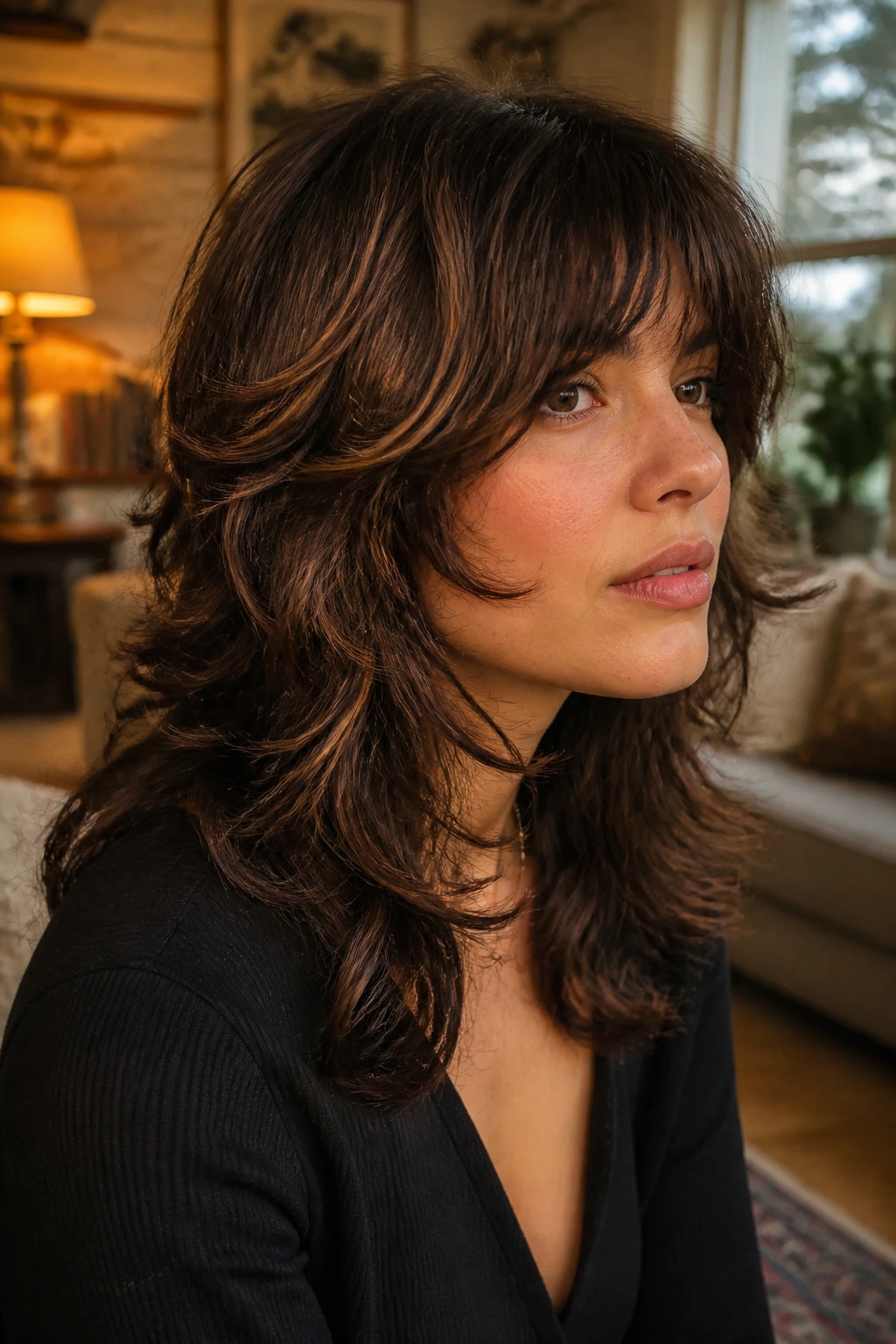
Chestnut is a dependable base, but cinnamon veils give it the movement that a solid brown sometimes misses. The veils should be narrow and softly placed, almost like light slipping through branches. That’s the right mood for this cut.
This look is particularly strong on thick hair. Chestnut keeps the overall mass rich and deep, while cinnamon threads break up the body so the haircut doesn’t look too dense. On curly or coily textures, the veils should follow the curl grouping rather than sitting on top of the surface. If they ignore the curl pattern, they disappear.
One thing I like here is that the color shifts quietly. You do not get a loud contrast. You get a layered brown that changes as the hair moves. That’s the kind of brightness that suits a wolf cut when you want softness more than drama.
17. Soft Auburn Wolf Cut with Copper Veil
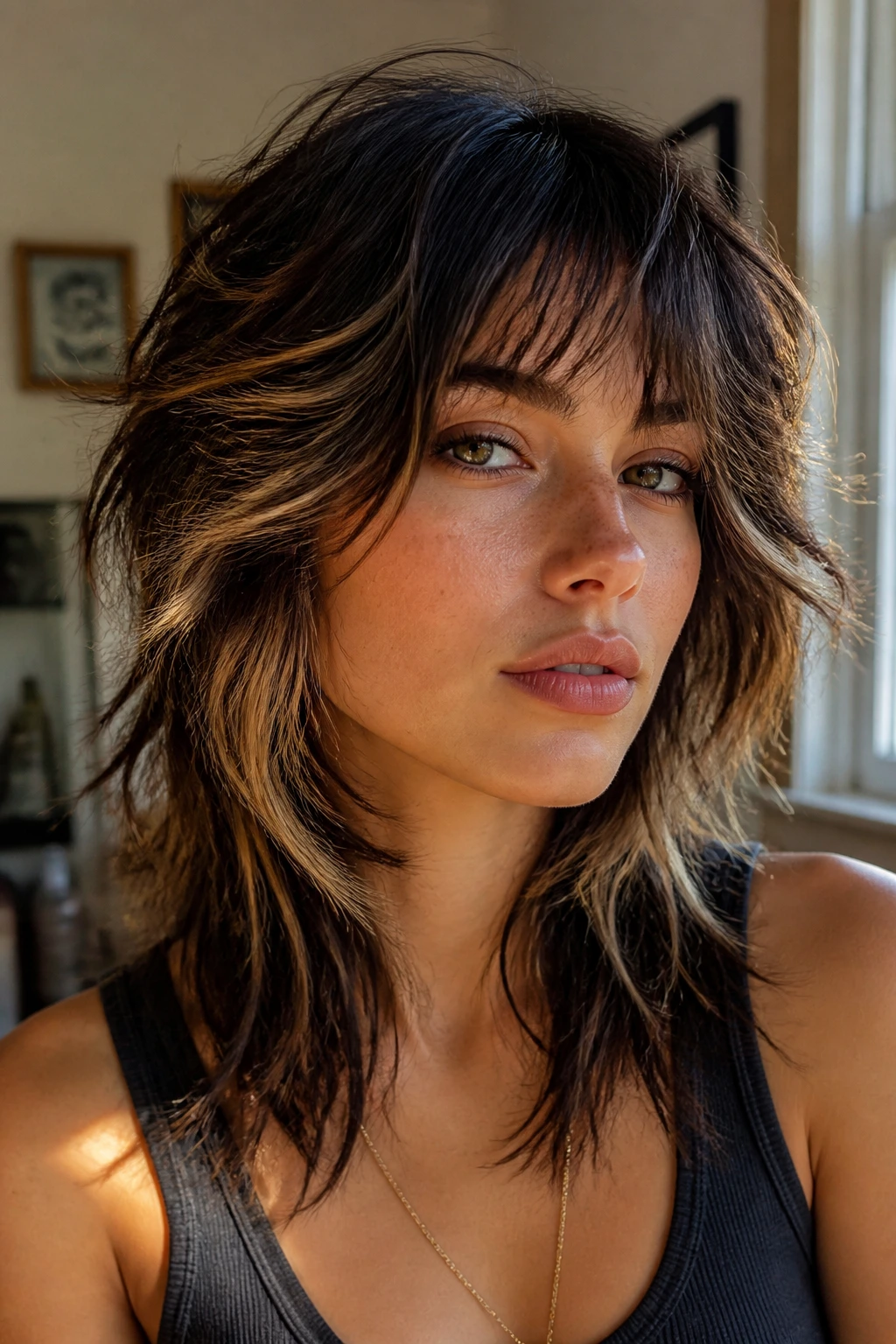
Auburn and copper are cousins, but they do different jobs. Auburn gives the base richness; the copper veil wakes up the front and outer layers. On a wolf cut, that combination makes the fringe and crown look alive without tipping into fiery red.
This version is a good fit for natural redheads who want a little more depth, or brunettes who want to move warm without going all the way blonde. Keep the veil thin and glossy. Too much copper on top of auburn can blur into one flat red note, and the haircut loses its layered read.
A color-depositing conditioner can help between salon visits. Use it lightly. You want sheen and warmth, not a heavy stain that makes the ends look dark and sticky.
18. Curly Wolf Cut with Honey Highlights
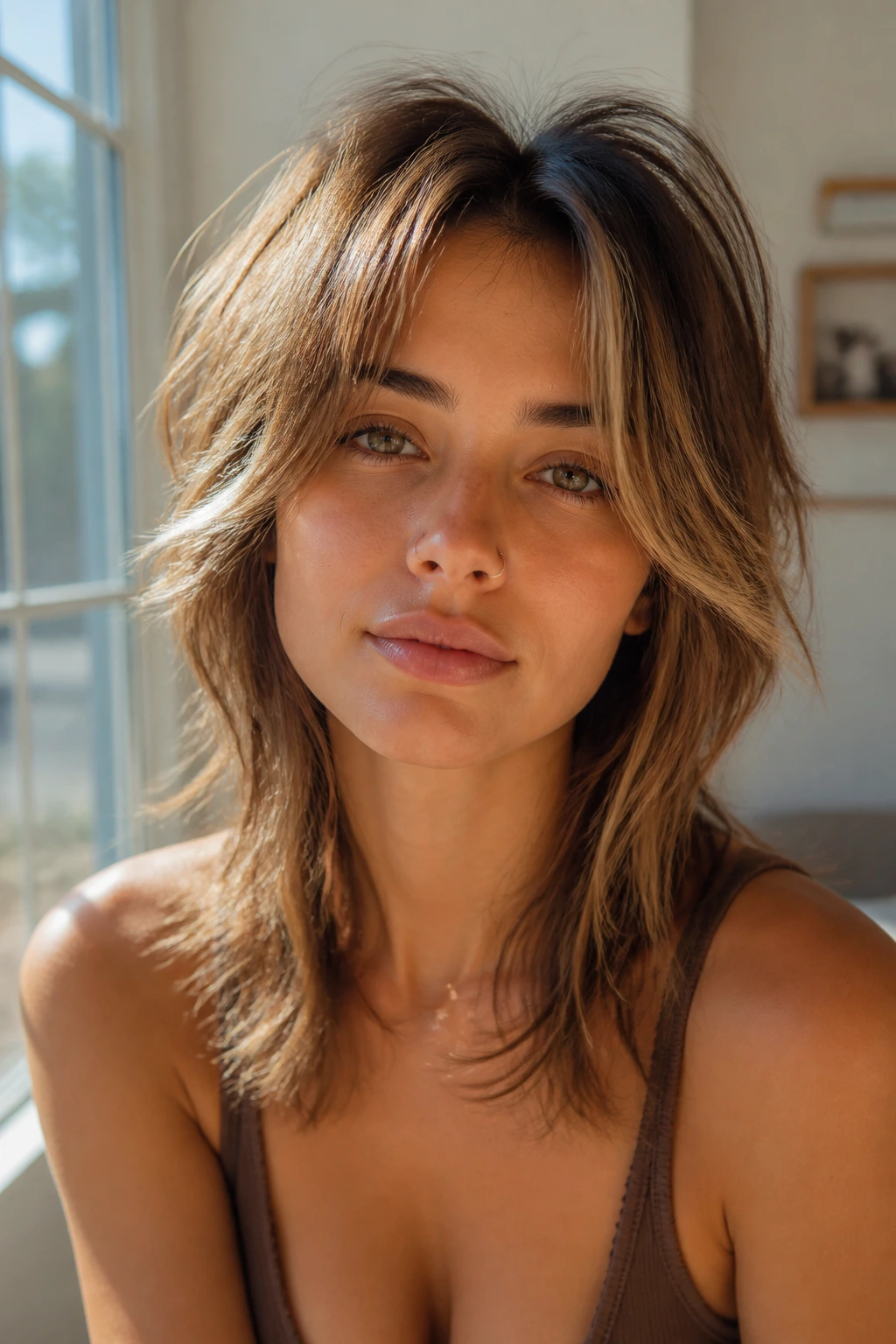
Curly hair changes the rules. A wolf cut on curls has more lift and more shrinkage, so the highlights need to be placed where the curl actually opens, not just where the hair lies when wet. Honey highlights work well because they brighten the curl pattern without making the texture look frizzy.
How to Keep the Curl Pattern Visible
The lightest pieces should sit on the outer curves of the curls and around the face. That way, when the curls spring up, the brightness shows at different depths instead of forming a flat stripe. Honey is a useful tone here because it keeps the curl shape soft.
- Keep the highlight sections fine.
- Avoid placing too much light at the very ends.
- Use a toner that leans warm-neutral, not icy.
- Diffuse on low heat so the cut keeps its shape.
If a curly wolf cut feels too puffy after coloring, the issue is usually placement, not the cut itself. The color can either outline the curl or erase it. Honey highlights usually do the first.
19. Short Wolf Mullet with Pearl Highlights
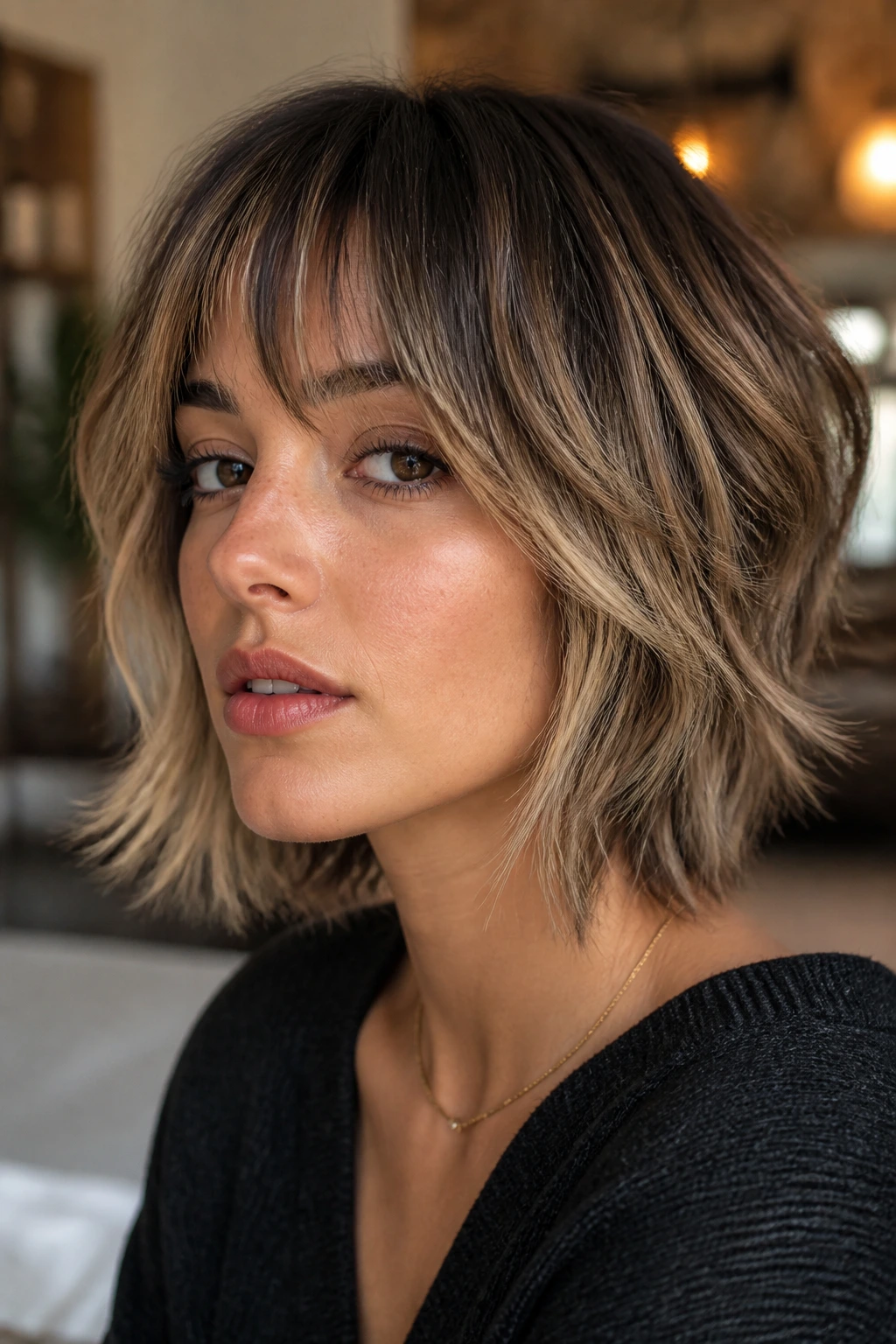
The short wolf mullet already has attitude. Pearl highlights soften the edges without taking away the bite. That slight opalescent tone gives the haircut a cooler finish and keeps it from looking too punk or too heavy.
This is a smart choice if you like short hair that still feels a little wild. Pearl works best on a pale blonde or pre-lightened base, because the tone is more about finish than dramatic contrast. The highlights should sit on the fringe, crown, and outer tips, where they can catch movement. Skip the underlayers if you want the shape to stay strong.
I like this one because it doesn’t try to hide the haircut. It sharpens it. The light plays against the short layers and makes every flick of hair visible.
20. Blended Bronze Wolf Cut for Fine Hair
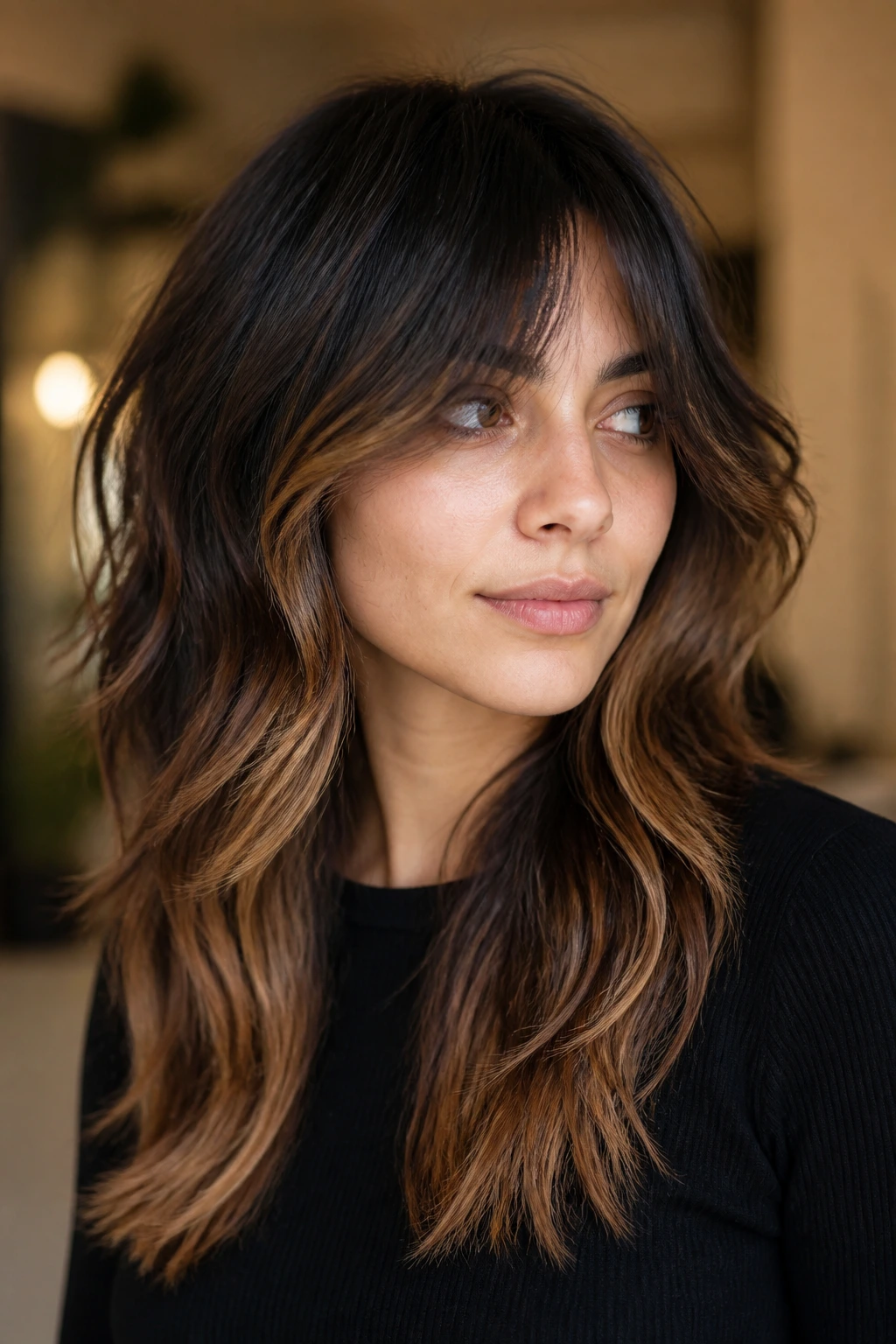
Fine hair needs a careful hand. Too much highlighting and the whole head starts to look see-through. Bronze solves that by adding warmth and depth at the same time, which gives the hair more visual body.
The best bronze wolf cut uses micro-foils or fine balayage pieces rather than broad slices. Keep the brightness concentrated around the crown, the face frame, and the upper sides. If the ends are over-lightened, they can look wispy in a bad way. Bronze through the mid-lengths keeps the shape from disappearing.
This is one of the few color stories that can make fine hair look thicker without making it look overprocessed. A soft wave or bend will do the rest.
21. Soft Greige Wolf Cut with Frosted Ends
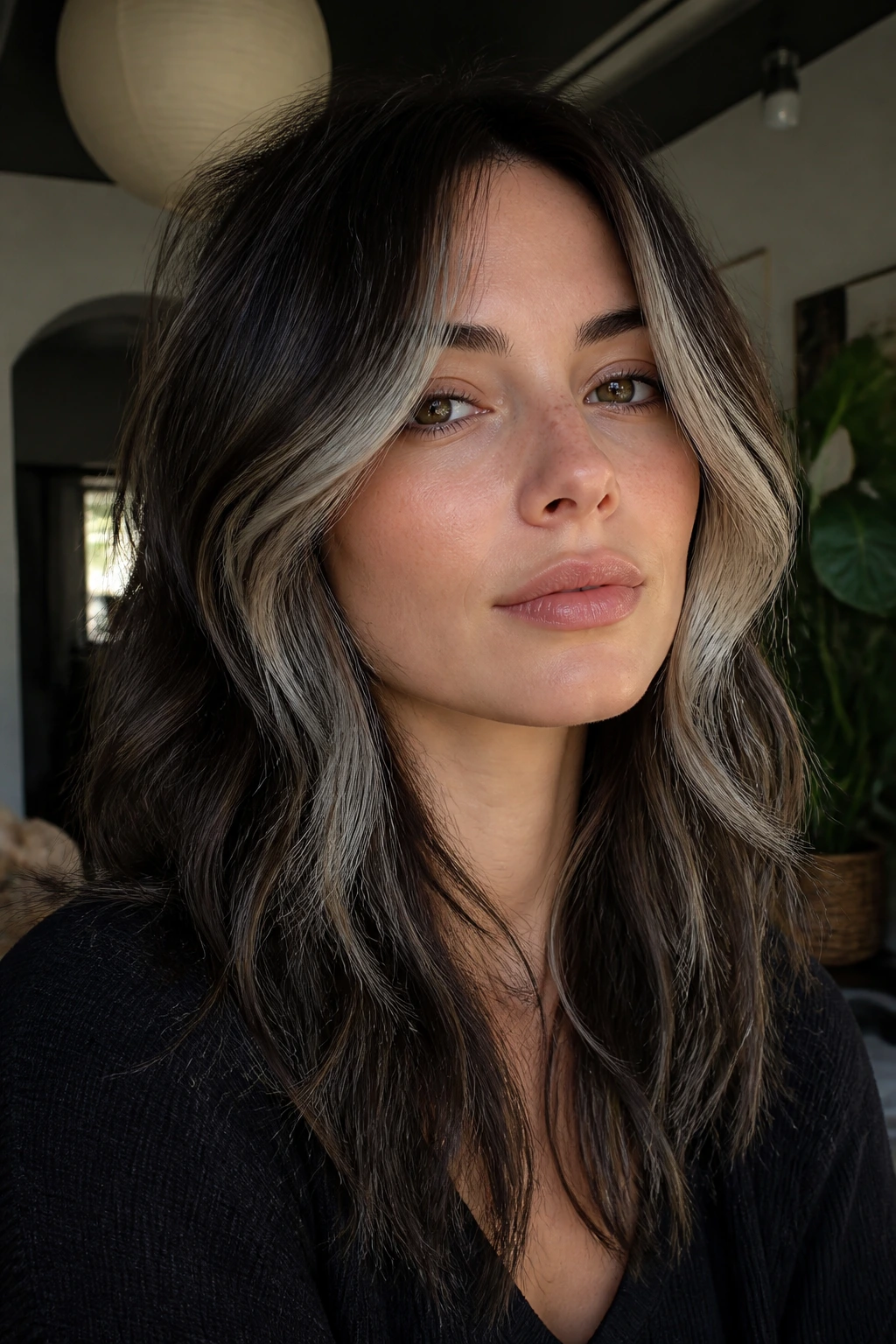
Greige sits in the cool-beige middle ground, which makes it a nice answer for anyone who wants softness but not warmth. Frosted ends keep the wolf cut’s perimeter bright, while the rest of the color stays grounded and muted.
This style has a cool, polished mood without feeling stiff. That’s rare. The frosted ends should be subtle, not white. You want just enough lift to define the outer layers, especially if the cut has lots of choppiness near the bottom.
I’d steer this toward medium to light brown bases. On very dark hair, the contrast can get too strong too quickly. On lighter hair, though, greige can make the whole cut feel chic without dragging it into harsh blonding territory.
22. Midlength Black Wolf Cut with Smoke-Toned Money Pieces
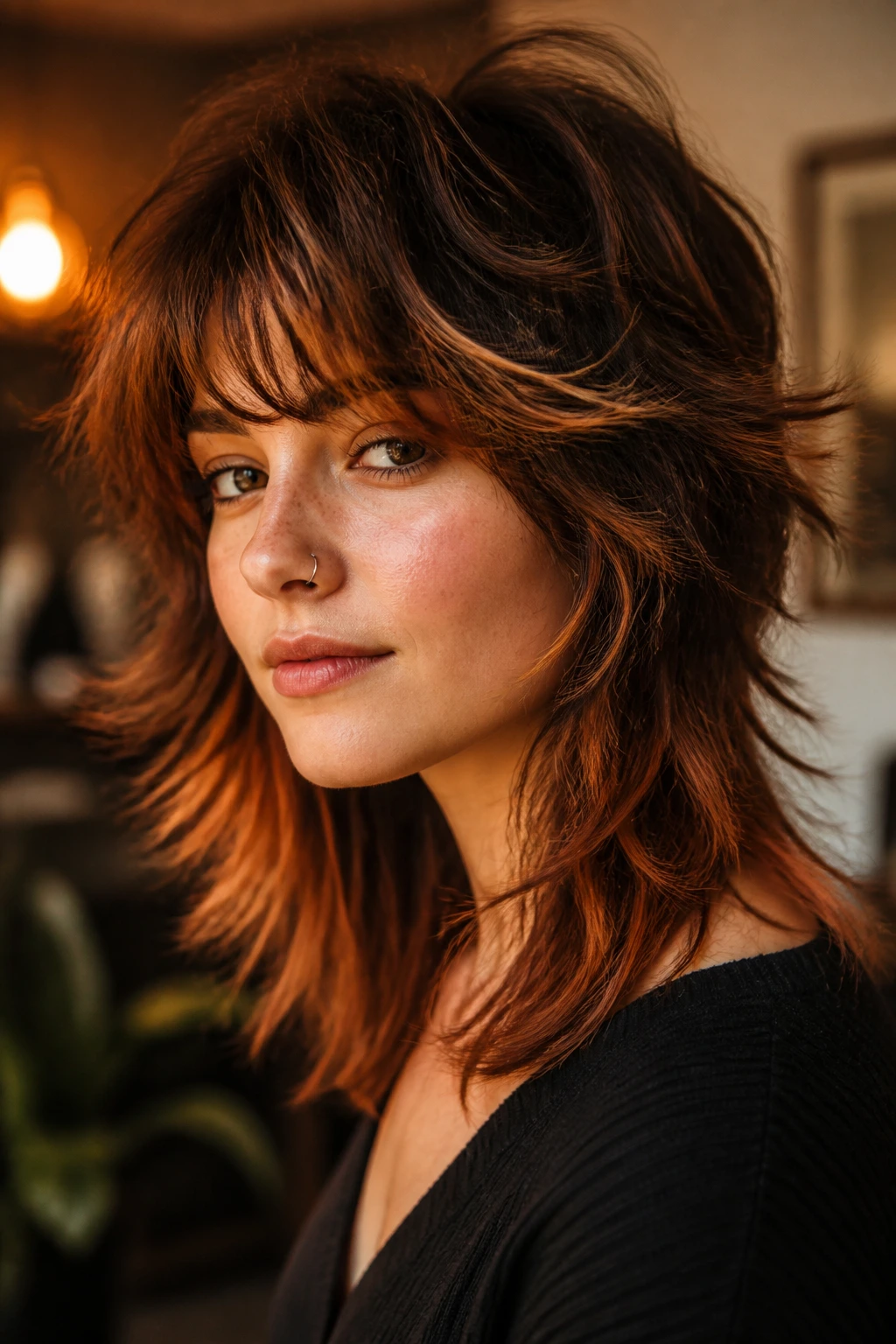
A black wolf cut does not need blonde to be dimensional. Smoke-toned money pieces—charcoal, graphite, soft slate—can do the work without breaking the dark mood. That makes the look feel dramatic, but still soft enough to wear every day.
The placement matters more than the shade here. Keep the pieces around the face, top layer, and a few crown sections. If the highlights drift too far into the interior, they can read as random streaks instead of part of the shape. Smoke tones are subtle, so the haircut needs the color in places the eye naturally follows.
This is a good option if you like high contrast, but not bright contrast. It stays sleek in a way that blonde highlights sometimes don’t on black hair, especially when the cut has lots of jagged layers.
23. Sandy Bronde Wolf Cut with Root Shadow
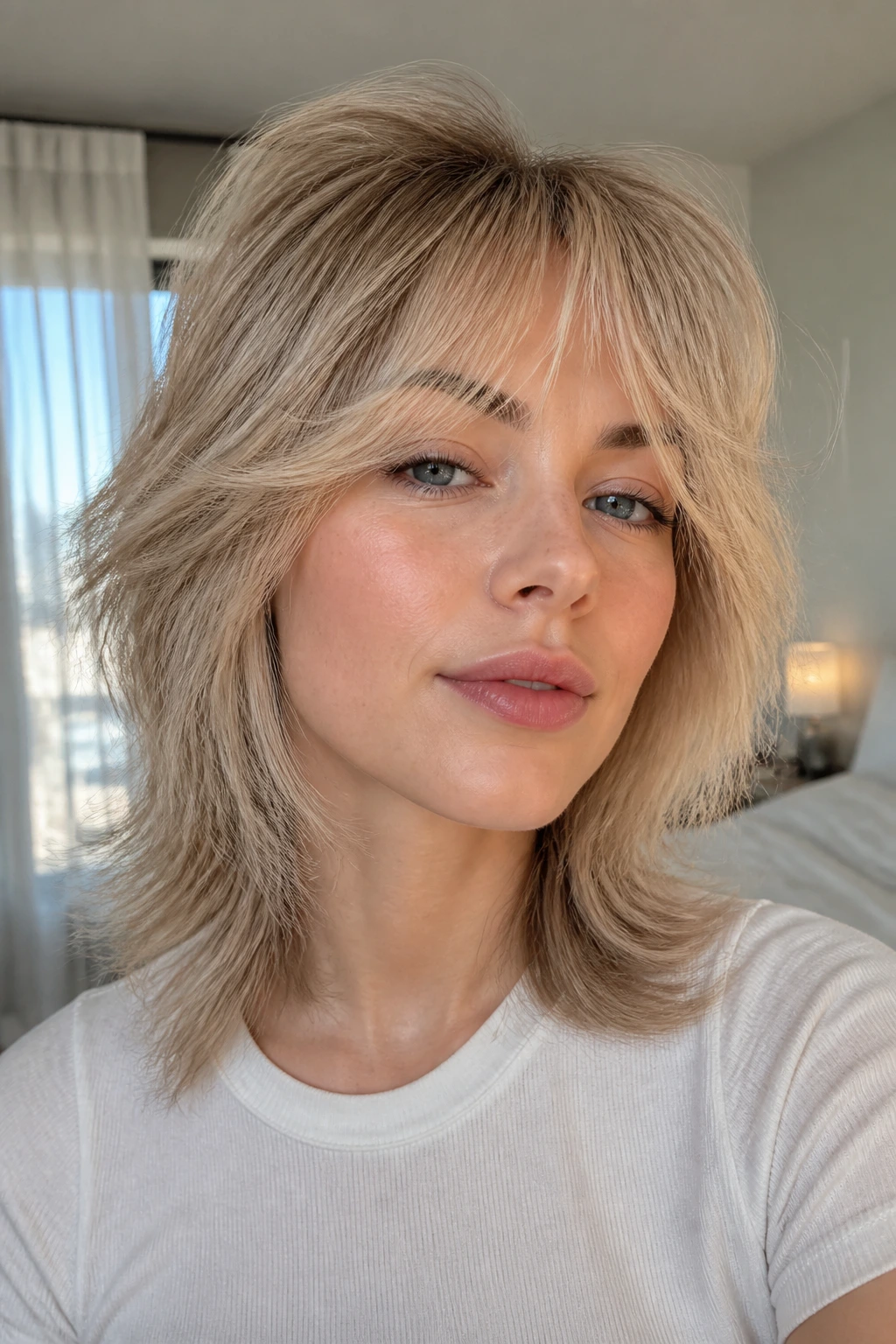
Sandy bronde is one of the easiest colors to wear because it lands in a neutral zone. The root shadow keeps the top soft, and the sandy pieces through the ends keep the haircut from feeling heavy. It’s casual in the best way.
On a wolf cut, that root shadow is doing real work. It preserves depth at the crown, which is where a lot of layered cuts can start to feel thin after highlighting. The sandy pieces should be placed where the hair bends—around the cheekbones, collarbone, and outer ends—so the shape reads all the way down.
If you wash your hair often, this is a forgiving choice. It fades into something still believable instead of turning into a line of obvious regrowth.
24. Peach Blonde Wolf Cut with Layered Fringe
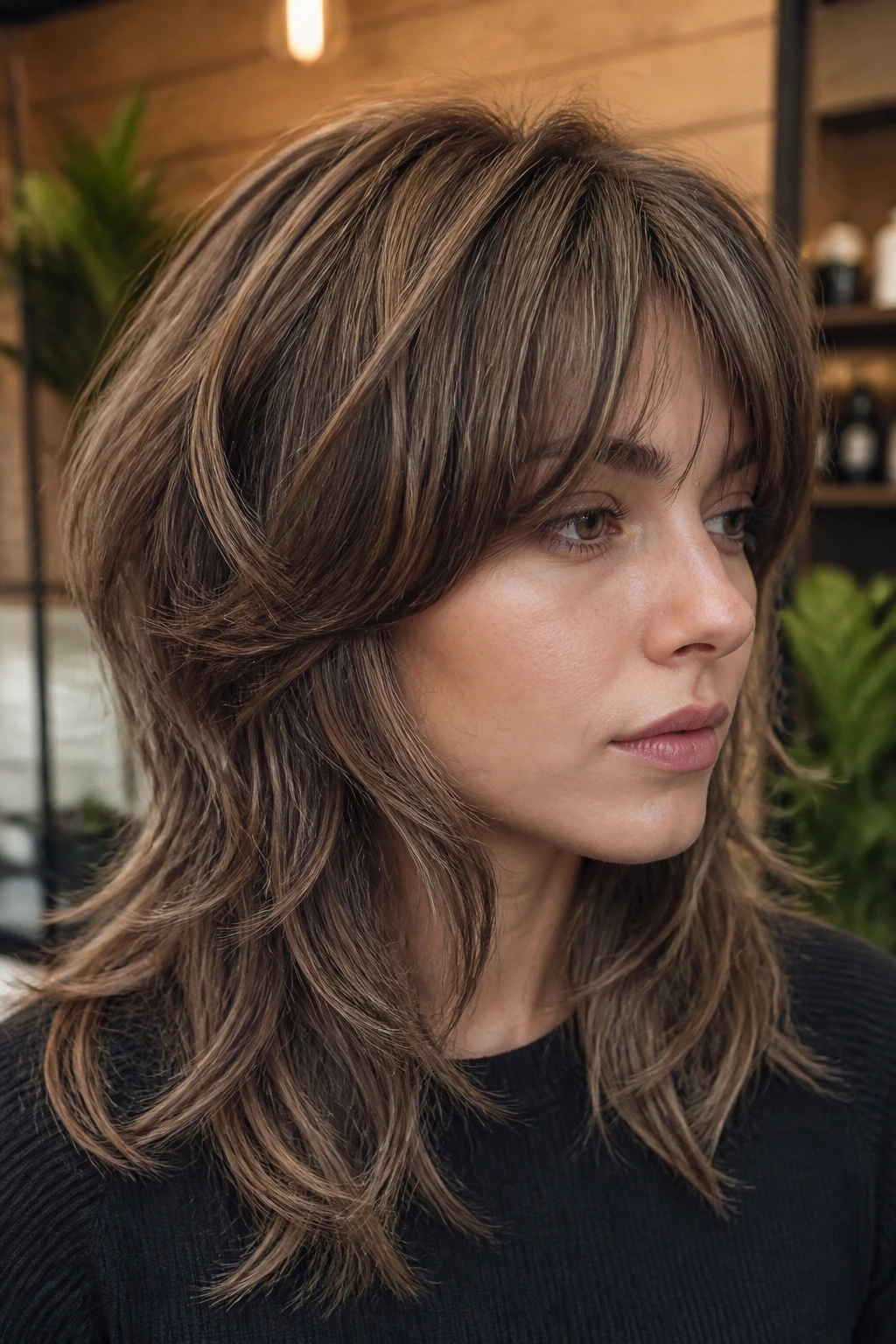
Peach blonde is bright, but it has enough warmth to keep the face from looking washed out. On a wolf cut with a layered fringe, it can be especially good because the fringe gives the color a place to sit. Without that, the shade can feel too airy.
I’d keep the peach tone delicate. Think pale apricot with a blush cast, not bubblegum. The lightest pieces should frame the forehead and drift into the side layers so the whole front half feels lifted. If the ends are too light and the crown is too dark, the haircut can look disconnected. The color should move with the layers, not fight them.
This one tends to shine on pre-lightened hair that can hold pastel or semi-pastel tones without getting muddy. It’s a playful option, but still soft enough to stay wearable.
25. Dimensional Mocha Wolf Cut with Feathered Ends
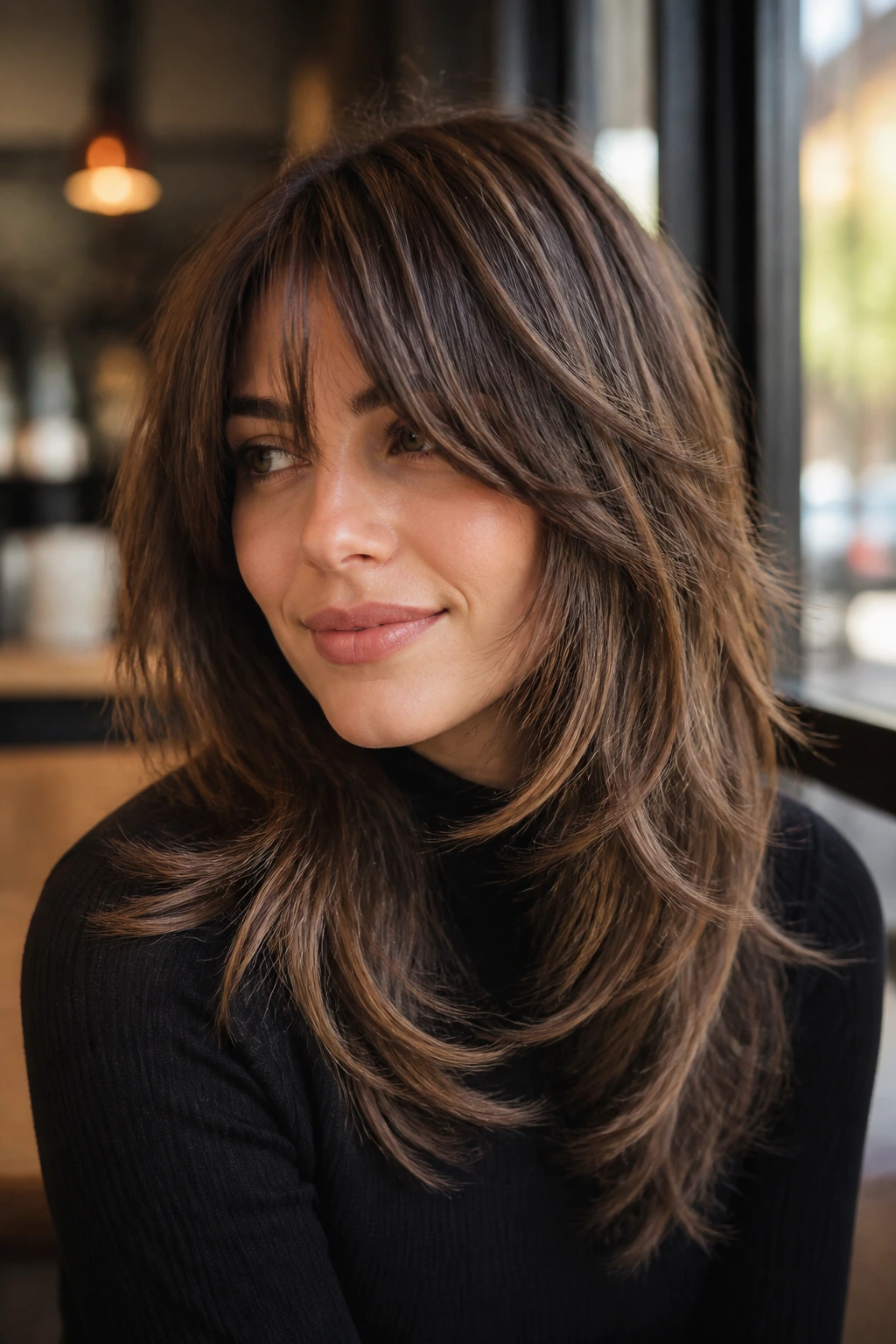
Dimensional mocha is the sleeper hit here. It does not chase brightness for its own sake. Instead, it uses deep brown, milk-chocolate mids, and slightly lighter feathered ends to keep the haircut readable from every angle.
This is the look I’d hand to someone who wants softness more than contrast. The highlights don’t need to shout. They just need to separate the layers enough that the wolf cut doesn’t collapse into a single brown shape. Feathered ends matter here because they let the lighter pieces break apart as the hair moves.
The color works across a wide range of lengths, but it looks especially good on medium hair with a bit of natural wave. The movement does half the work. The rest comes from keeping the tone rich instead of too golden.
Why Wolf Cuts and Highlights Stay Soft Instead of Harsh
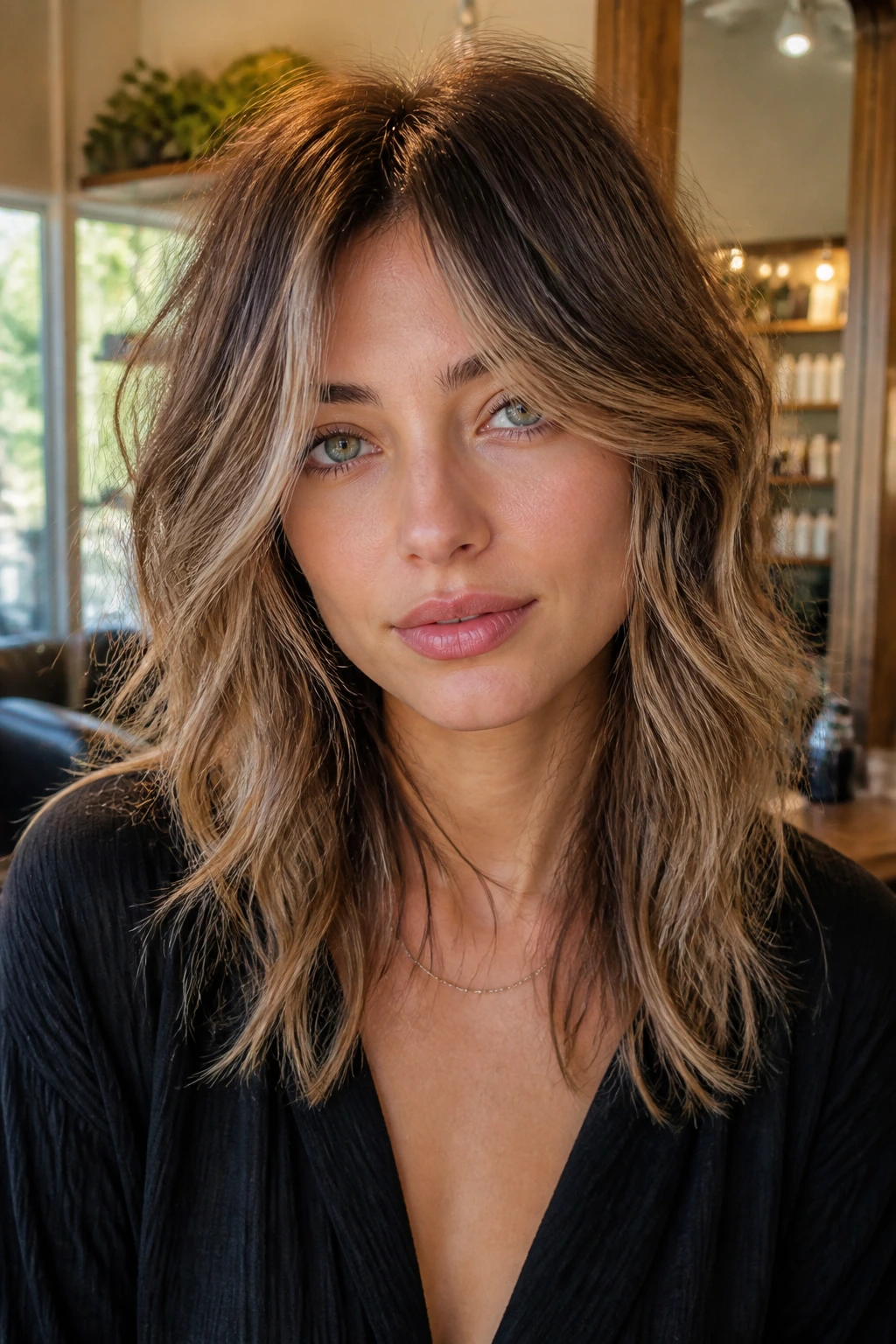
The combination works because both parts of the look are already a little undone. A wolf cut is built from disconnection: crown volume, broken layers, a fringe that isn’t too neat. Highlights do their best work when they follow that looseness instead of imposing a clean pattern over it.
Placement matters more than brightness. That’s the part worth repeating. A few bright pieces around the face, some softer light in the crown, and a touch of dimension through the mid-lengths will do more than an all-over blonde job that erases the haircut’s edges. If you ever wonder why one wolf cut looks airy and another looks messy, the answer is usually the color map.
Tone matters too. Beige, champagne, mocha, honey, copper, pearl, and greige all create different moods. Choose the one that supports your base instead of fighting it, and the haircut starts to feel intentional without looking stiff.
Essential Tools for Styling and Maintaining These Looks
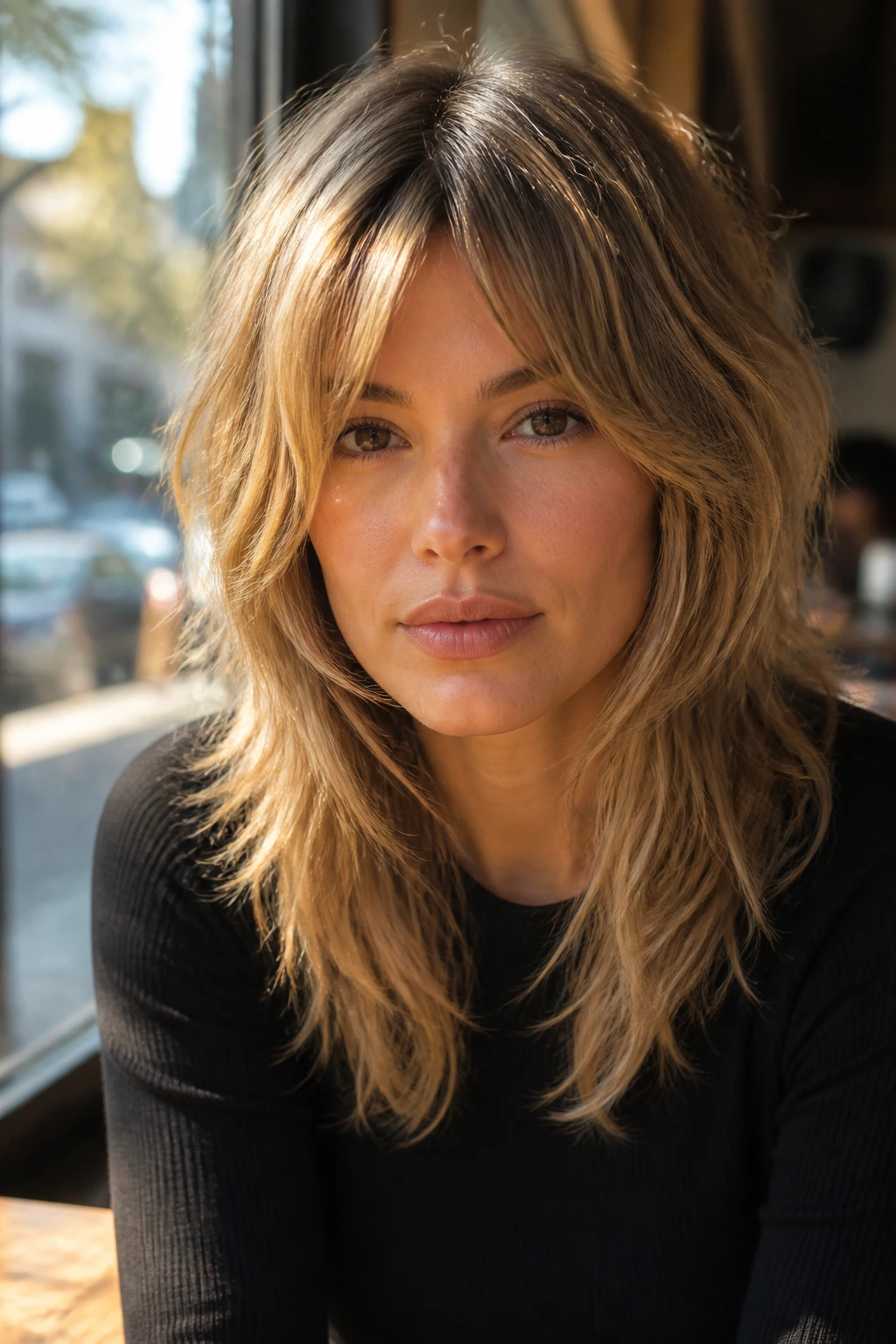
- A heat protectant spray: Use it before blow-drying, curling, or flat-ironing; wolf cuts show heat damage fast at the ends.
- A round brush or vent brush: Helps lift the crown and give the fringe a bend without flattening the layers.
- A diffuser attachment: Useful for wavy and curly versions, especially when you want the highlights to sit on top of defined texture.
- A gloss or color-safe conditioner: Keeps beige, honey, copper, and pearl tones from going dull between salon visits.
- A wide-tooth comb: Better than a fine comb for distributing product through layered hair without pulling the shape apart.
- A lightweight texturizing spray: A small mist at the mid-lengths helps the layers separate so the highlights show.
- A silk or satin pillowcase: Reduces frizz and keeps the ends from roughing up overnight.
- Section clips: Useful if you style with a blow-dryer or touch up the fringe separately from the rest of the cut.
How to Choose Highlight Placement for Your Layers
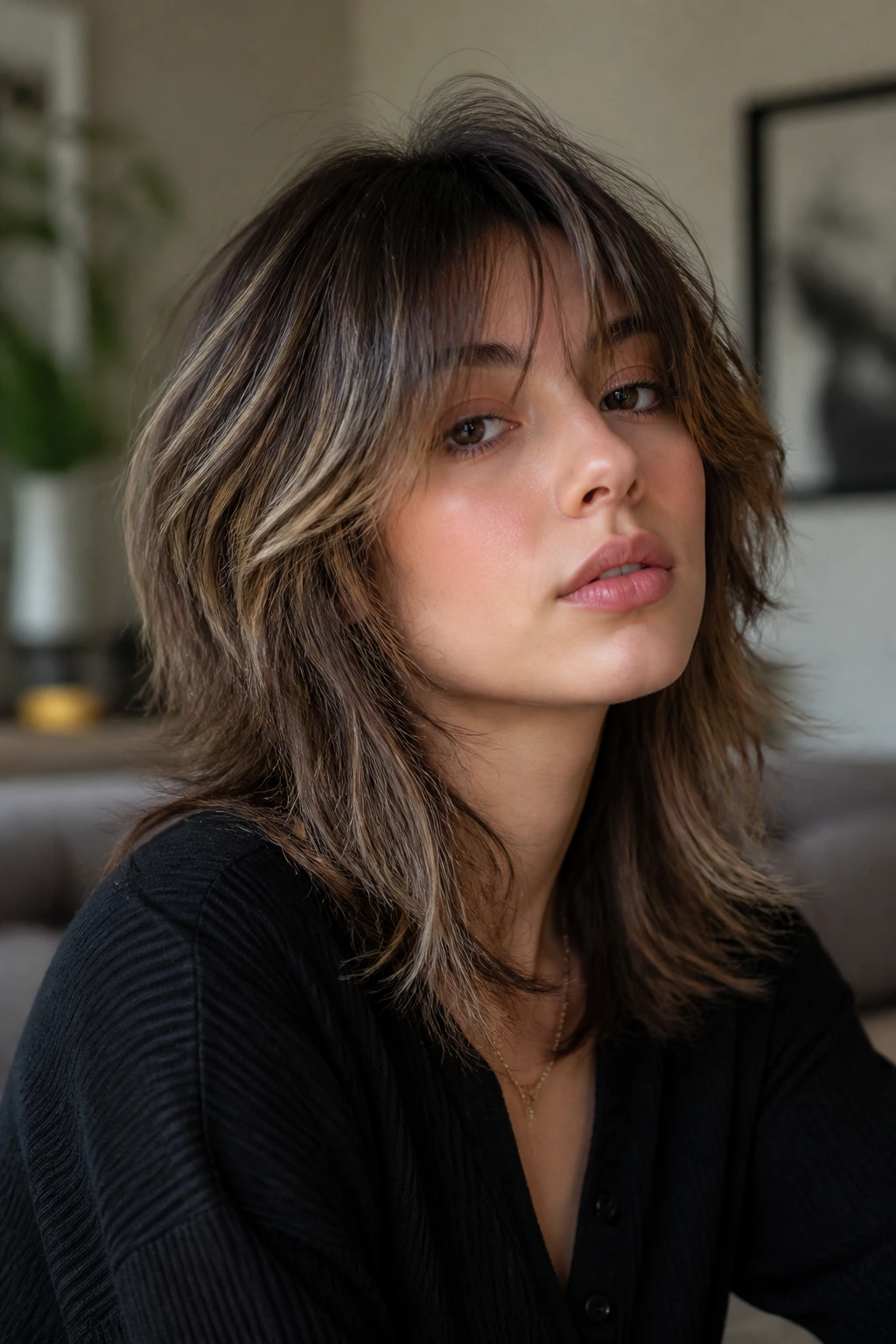
The fastest way to flatten a wolf cut is to place the brightness too low and too evenly. Layers need variation. The top should not look the same as the ends, and the face frame should not disappear into the rest of the hair.
For straight hair, I usually prefer more visible front pieces and crown lights, because the texture doesn’t create much movement on its own. Wavy hair can handle softer blends and longer ribbons, since the bends already give the color some rhythm. Curly hair needs highlights that follow the curl group, not the wet stretch of the strand, or the pattern gets muddy once it dries.
Thick hair can take bolder ribbons. Fine hair usually looks better with babylights, micro-foils, or a shadow root that keeps the top from looking too airy. If the goal is brightness without bulk loss, keep the lightest pieces around the face and outer layers. If the goal is more visible dimension, move the brightness slightly higher into the crown.
Ask for placement that mirrors how you wear your hair most often. That part matters more than trend language ever will.
How to Style a Wolf Cut So the Highlights Show Up
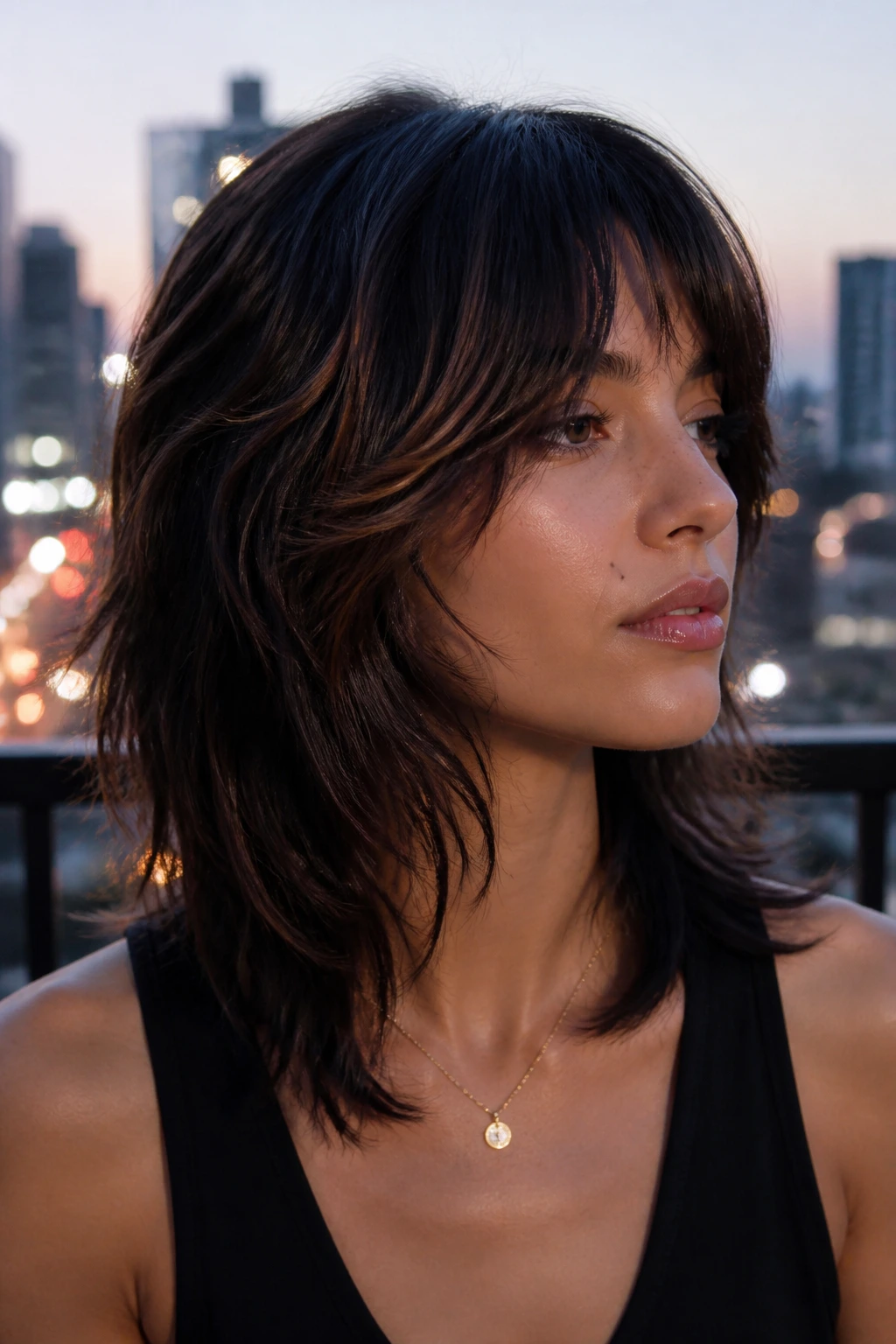
A wolf cut with highlights does not need a perfect blowout. It needs a bit of lift at the roots and a bend through the layers. That’s all. Too much polish can actually hide the cut.
Start with a heat protectant and rough-dry the roots first. Then lift the crown with a round brush or your fingers while directing the front layers away from the face. If you have waves, scrunch a small amount of mousse or curl cream into the mid-lengths before diffusing. The color will read better when the hair has some separation.
Straight-haired versions benefit from a soft bend near the ends. A flat iron wave, done in large sections, can help the highlights peek through without turning the whole style into curls. For shorter wolf cuts, a little paste or lightweight wax on the fringe and tips creates texture fast. Don’t pile on product. The hair should look piecey, not greasy.
The best final touch is usually the smallest one: a mist of texture spray, a finger rake through the fringe, and a quick check in daylight.
Extra Brightness Boosters and Personal Tweaks
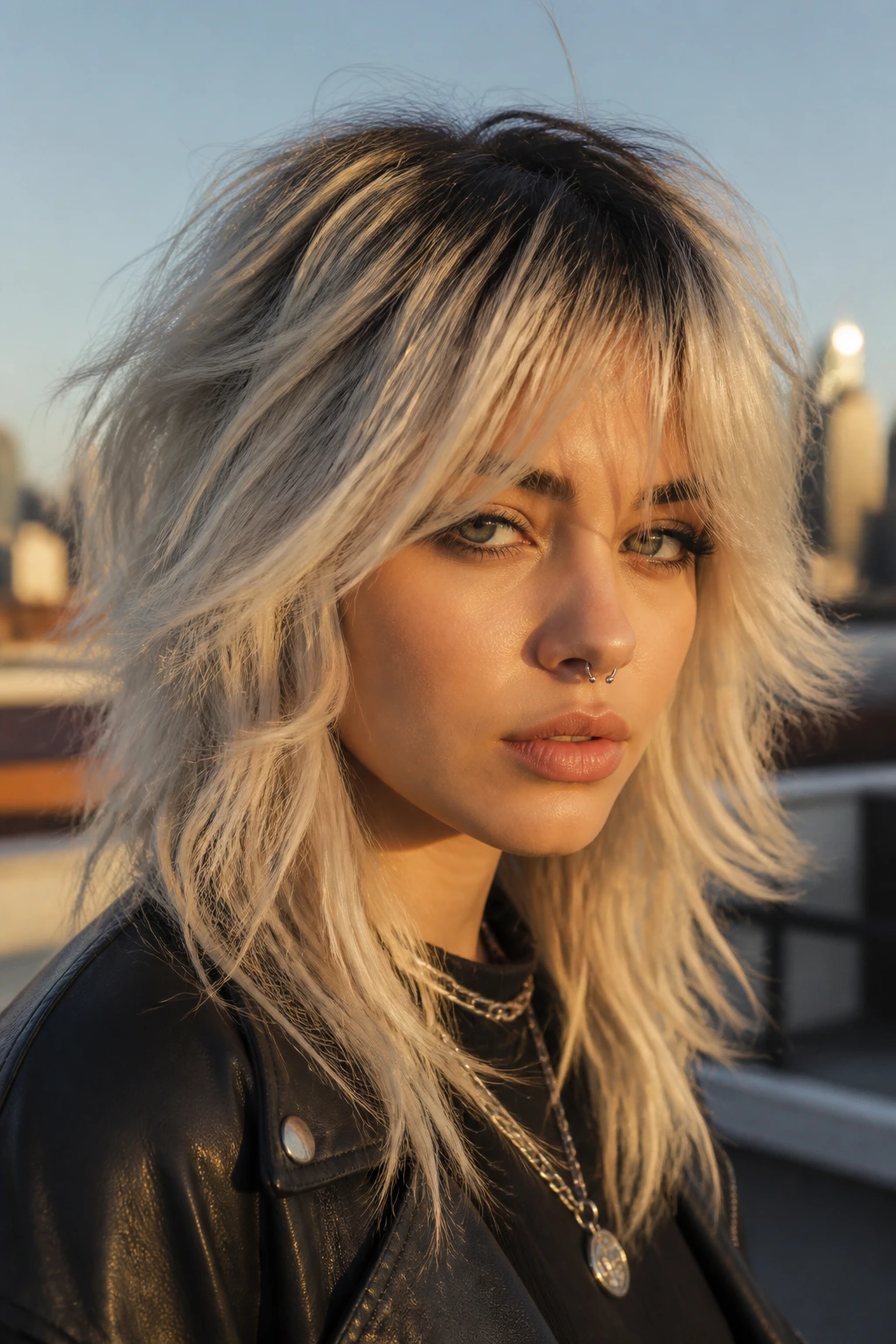
Color Placement: Put the lightest pieces around the face and the top bends of the layers. That keeps the brightness where the haircut naturally moves and avoids wasting light on hidden sections.
Tone Maintenance: Beige, champagne, pearl, and ash shades all need toner or gloss refreshes. If the color starts turning muddy, it is often the tone, not the lightness, that needs fixing.
Styling Shortcut: Flip the front pieces away from the face with a round brush for 30 seconds on each side. That tiny move makes the highlights look intentional instead of accidental.
Make-It-Yours: For warmer skin tones, honey, copper, apricot, and toasted almond usually look more alive. For cooler skin tones, mushroom, ash brunette, greige, or pearl tends to sit better. If you want low maintenance, keep the root darker and let the brightness live in the mid-lengths.
Quick Upgrade: A clear gloss at the salon or a shine spray at home can make the color look fresher without changing the haircut at all. Small difference. Big payoff.
Common Mistakes That Flatten the Cut

Putting highlights too low: If all the brightness sits under the layers, the top can look heavy and the haircut loses lift. Move some light into the crown and front sections.
Going too yellow or too orange: Brass shows up fast on shaggy cuts because the layers create shadows that make warmth look louder than it is. Use a toner that matches the base, not one that fights it.
Overloading fine hair with light: Too many highlights on fine strands can make the ends look wispy in a bad way. Use fewer, finer pieces and keep some depth underneath.
Styling with too much cream or oil: Heavy product clumps the layers together and hides the color separation. Use the smallest amount that controls frizz.
Ignoring the fringe: Wolf cuts live or die by the face frame. If the front pieces are dull or too dark, the whole haircut looks less alive. Brighten the fringe enough to match the rest of the plan.
Skipping regular tone refreshes: A soft blonde or copper can drift muddy, flat, or brassy after a few washes. Glosses and toners are not optional if you want the brightness to stay clean.
Variations and Adaptations to Try
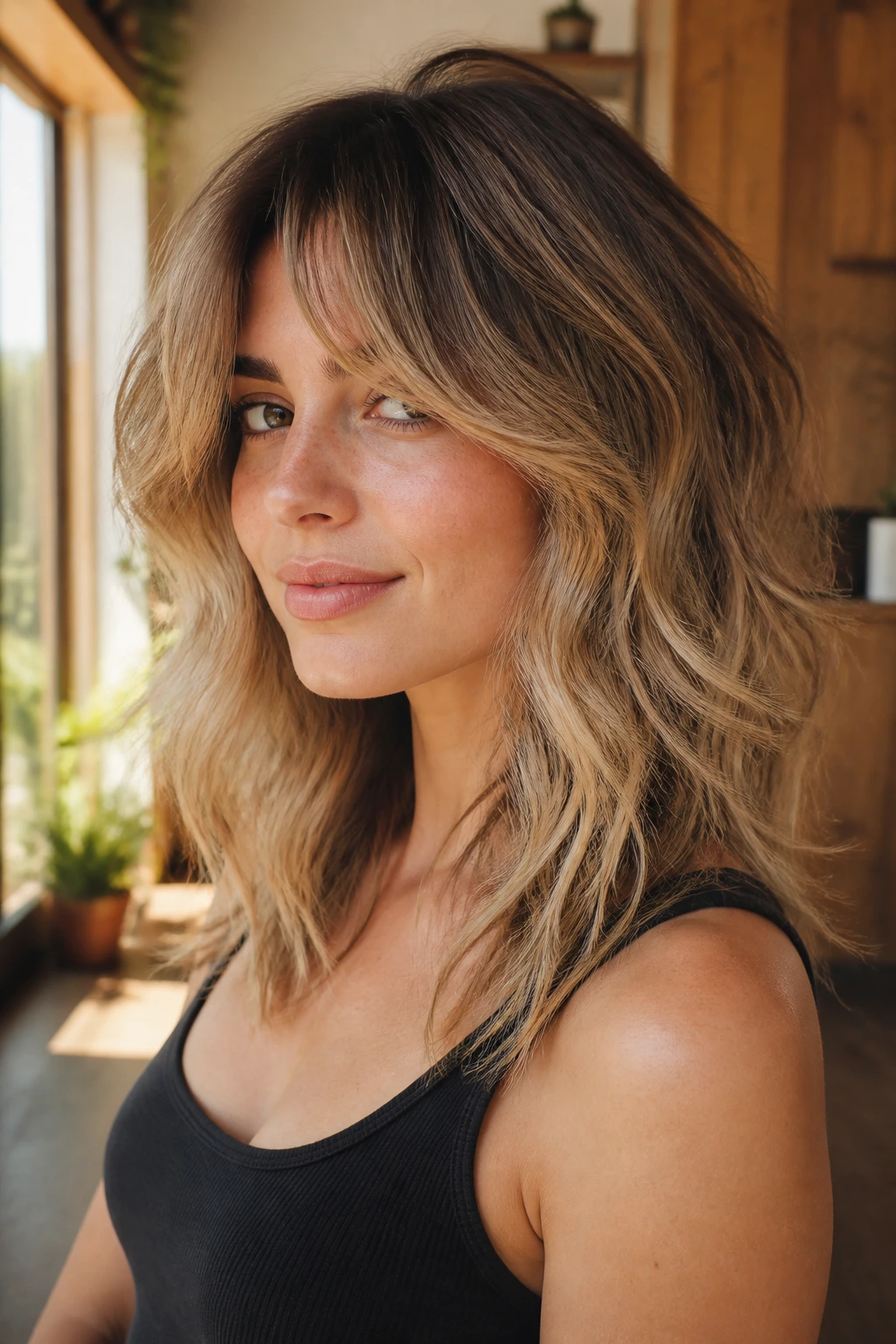
Low-Maintenance Root Melt: Keep the roots deeper and let the highlights start lower through the mid-lengths. This works well if you do not want hard grow-out lines and prefer a softer, lived-in finish.
Curly Definition Edit: Place the lightest pieces on the outer curls and around the face, then leave the interior darker. The curl pattern stays readable, and the brightness lands where people actually see it.
Short Crop Shift: On a shorter wolf cut or wolf mullet, concentrate the light at the fringe, crown, and tips. Too many highlights below the occipital area can make the cut look sparse.
Warm Bronze Swing: Swap beige or ash for bronze, honey, or toasted almond if your hair tends to look flat in cool tones. The warmth can make the layers appear thicker and more textured.
Cool Smoky Finish: Use mushroom, greige, ash brunette, or smoky money pieces if you want the haircut to feel sharper. This version is especially strong on naturally dark hair.
Soft Pastel Touch: On pre-lightened hair, try rose gold, peach blonde, or pearl glossing only on the outer pieces. The color stays delicate and the layers keep their rougher edge.
Maintenance, Wash Days, and Salon Timing
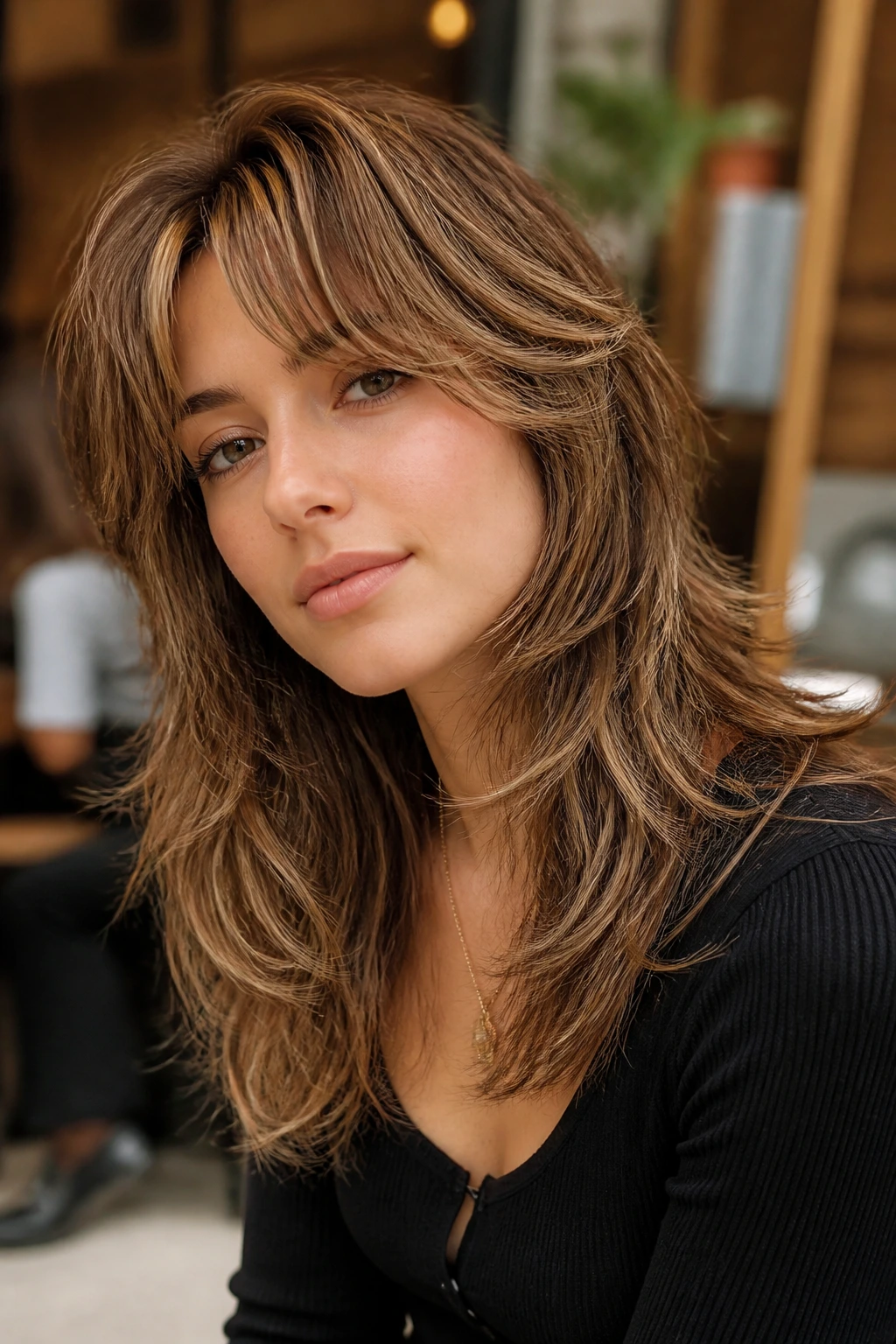
Wolf cuts are forgiving on the cut side and less forgiving on the color side. The haircut can grow out with some shape still intact. The highlights, though, need maintenance if you want the brightness to stay soft instead of dull.
Most color-treated versions do best with washing every 2 to 4 days, depending on how oily your scalp runs. Hot water strips tone faster, so lukewarm water is the safer choice. If you use a purple, blue, or color-depositing shampoo, keep it short and targeted. Overusing it can make beige or honey tones look dull.
Glosses and toners usually need refreshing every 4 to 8 weeks, depending on how light the highlights are and how often you heat-style. Root shadows can stretch the salon schedule longer because they blur the grow-out. Shorter wolf cuts tend to need shape trims more often, usually every 6 to 8 weeks, since the fringe and crown lose their balance first.
At home, sleep with the hair loose or clipped in a very low tie. Tight elastics bend the layers in odd places and can make the front pieces look crooked the next day. A satin pillowcase helps more than people expect.
Frequently Asked Questions
Will highlights damage a wolf cut more than a blunt haircut?
Not automatically, but layered hair can show dryness sooner because the ends are already thinned out. A good leave-in conditioner and regular trims matter more on a wolf cut than on one-length hair.
What highlights work best on dark brown hair?
Mocha, caramel, honey, and smoky brunette pieces are usually the safest bet. They add dimension without the orange turn that can happen when dark hair is pushed too light too fast.
Can I get this look on curly hair?
Yes, and it can be one of the best versions if the highlights are placed with the curl pattern in mind. Keep the pieces fine and curved, and avoid lining them up in a way that only looks good when the hair is wet.
How often will I need toner?
That depends on the shade. Cool blondes and ash brunettes need it more often than copper or bronze tones, which are usually easier to keep alive between appointments.
Do highlights make a wolf cut look thinner?
They can if the placement is too sparse or too light at the ends. Keep some depth under the surface, and the highlights will make the haircut look more textured rather than thin.
What if my hair is fine and breaks easily?
Go softer. Micro-lights, babylights, and root shadow are your friends. A few well-placed bright pieces will give you more dimension than a heavy blonde job that leaves the ends fragile.
Is balayage better than foils for this haircut?
Balayage gives a softer, more blended effect, while foils can give more brightness and contrast. For a wolf cut, balayage is often easier to live with, but foils are better if you want more visible lift around the face.
How do I ask for this at the salon?
Show a photo of the cut shape and another of the color tone if you can. Then say where you want the brightness to land: face frame, crown, outer layers, or ends. That detail matters more than vague words like “dimension.”
A Cut That Still Moves
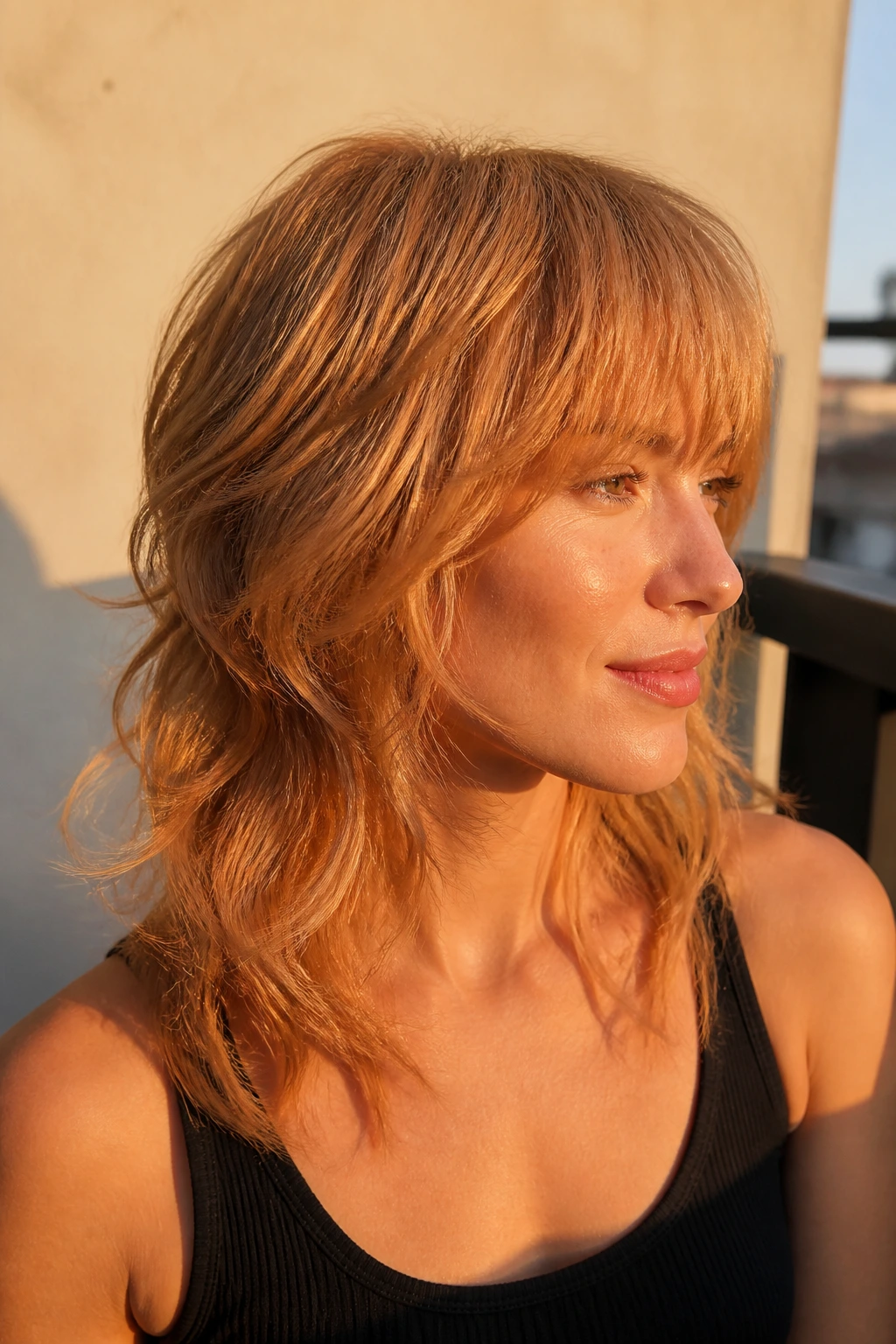
The nicest thing about wolf cuts with highlights is that the color doesn’t have to fight the haircut. It can sit inside the shape, where it does the real work: opening up the crown, softening the fringe, and keeping the ends from disappearing into one dark block. That’s why this combo can look easy from a distance and still reward you up close.
If you want the safest route, start with beige, honey, or mocha placement and keep the roots a little deeper. If you want more edge, push into ash brunette, pearl, platinum, or smoky money pieces. Either way, the best version is the one that lets the layers stay messy in the right places and bright in the right places. That balance never gets old.
