



A wolf cut with peekaboo highlights has a particular kind of swagger. It looks messy in the best way from across the room, then turns sly and polished the second the hair moves and the hidden color flashes through the layers. That’s the whole appeal, really: the cut does the heavy lifting, and the peekaboo color does the wink.
What makes this combo so fun is that it doesn’t announce itself all at once. A heavy fringe, choppy crown layers, and tapered ends create that shaggy wolf-cut silhouette, but the color lives underneath the top sheet of hair, tucked into the nape, the inner layers, or the lower panels around the ears. The result can read soft, punky, romantic, expensive-looking, or downright rebellious depending on how you place the color and how loud you choose to go with it.
And that flexibility is why this look keeps showing up in salons with such range. One person wants caramel ribbons under a brunette wolf cut so the color peeks out in daylight. Another wants cobalt hidden in a black base so the whole cut flashes when they turn their head. Same haircut philosophy. Completely different mood.
Why These 25 Cuts Earn Their Keep
-
Hidden color, low drama: Peekaboo placement lets you wear bold pigment without painting the whole head, so the color grows out in a softer way and doesn’t shout from every angle.
-
The cut does half the styling: Wolf cuts already have movement, so the hidden highlights get a built-in stage. You do not need perfect curls or a flat iron finish to make them show.
-
Works with more than one hair texture: Straight hair reveals the color in clean slices, wavy hair breaks it up, and curls scatter it through the shape. Different effect, same payoff.
-
Easy to dial up or down: Swap neon for copper, or keep the hidden color close to your base shade, and the whole look changes from loud to subtle without losing the edge of the cut.
-
Face-framing stays playful: Because the color sits under the top layer, it can brighten the jawline, collarbone, and cheek area without turning the whole style into a full-head bleach project.
-
The grow-out is kinder than people expect: The hidden panels can look intentionally lived-in for weeks, which matters if you do not want roots announcing themselves every time you pass a mirror.
Why Wolf Cuts and Peekaboo Color Click So Well
A wolf cut has built-in motion. That’s the first thing that matters. The crown is shorter, the lengths are tapered, and the layers usually drop in a rough cascade instead of a neat staircase, which means the hair separates and moves instead of sitting in one flat sheet. Peekaboo highlights need that movement. Hidden color can look flat in a blunt cut, but in a wolf cut it shows up in slashes, flicks, and surprise flashes that change from one angle to the next.
Placement matters more than people think. The prettiest peekaboo color is rarely the loudest one. It’s usually the one tucked where the top layers part naturally: under the crown, around the occipital bone, behind the ears, or through the lower half of the haircut where the ends swing. That gives you color that appears when you tie the hair back, tuck one side behind your ear, or catch a breeze. Small reveal. Big payoff.
There’s also a practical reason this pairing works. Wolf cuts already have a lived-in feel, so the hidden highlights don’t need to look perfectly even to make sense. A slightly deeper stripe here, a lighter ribbon there — that unevenness can look intentional, almost painterly, because the cut itself is not rigid. I actually think this is why the style ages better than a lot of neatly planned color work. A little imperfection helps it.
And then there’s contrast. Darker bases make brighter hidden shades look like they’re lit from beneath. Lighter bases let rose gold, beige blonde, or smoky lilac read as a whisper instead of a shout. Once you see how much depends on that contrast, you stop asking, “What color should I choose?” and start asking, “What do I want the movement to do when the light hits it?” That question gets you closer.
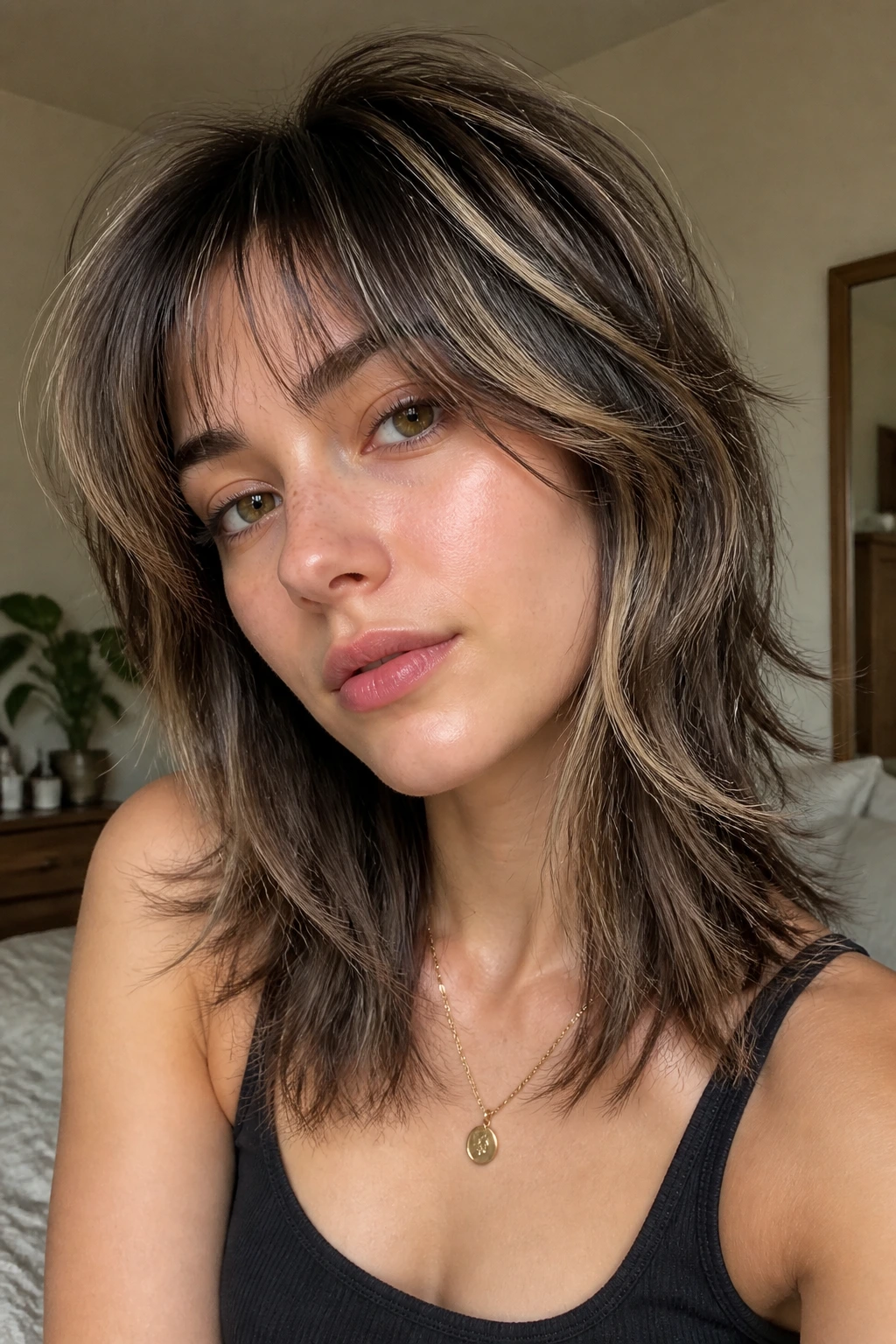
1. Espresso Wolf Cut With Honey Veil
This is the version I keep coming back to when someone wants hidden color but doesn’t want the hair to look precious. The base stays deep espresso, almost black in dim light, while a honey veil sits underneath the top layers and around the lower sides. The result feels warm and a little sultry, but not syrupy. It moves like a jacket lining you only notice when the coat opens.
Why it works
The deep brunette base gives the wolf cut a dense, plush look, and the honey hidden pieces break up that heaviness without wiping out the shadow. On straight hair, the color shows in crisp ribbons. On waves, it melts into a softer shimmer. If your hair tends to look flat at the crown, this is one of the easiest ways to build visual lift without teasing or aggressive backcombing.
What to ask for
- A mid-length wolf cut with choppy crown layers
- Honey blonde peekaboo panels placed under the top layer
- Slightly brighter pieces near the front bottom for movement
- A soft fringe, not a blunt bang
A little warmth goes a long way here. If the honey shade goes too yellow, the whole thing can slide into brass territory. Keep the toner beige or golden, not lemony. That small shift makes the whole style read more expensive, and yes, that word gets overused, but in this case it’s the right one.
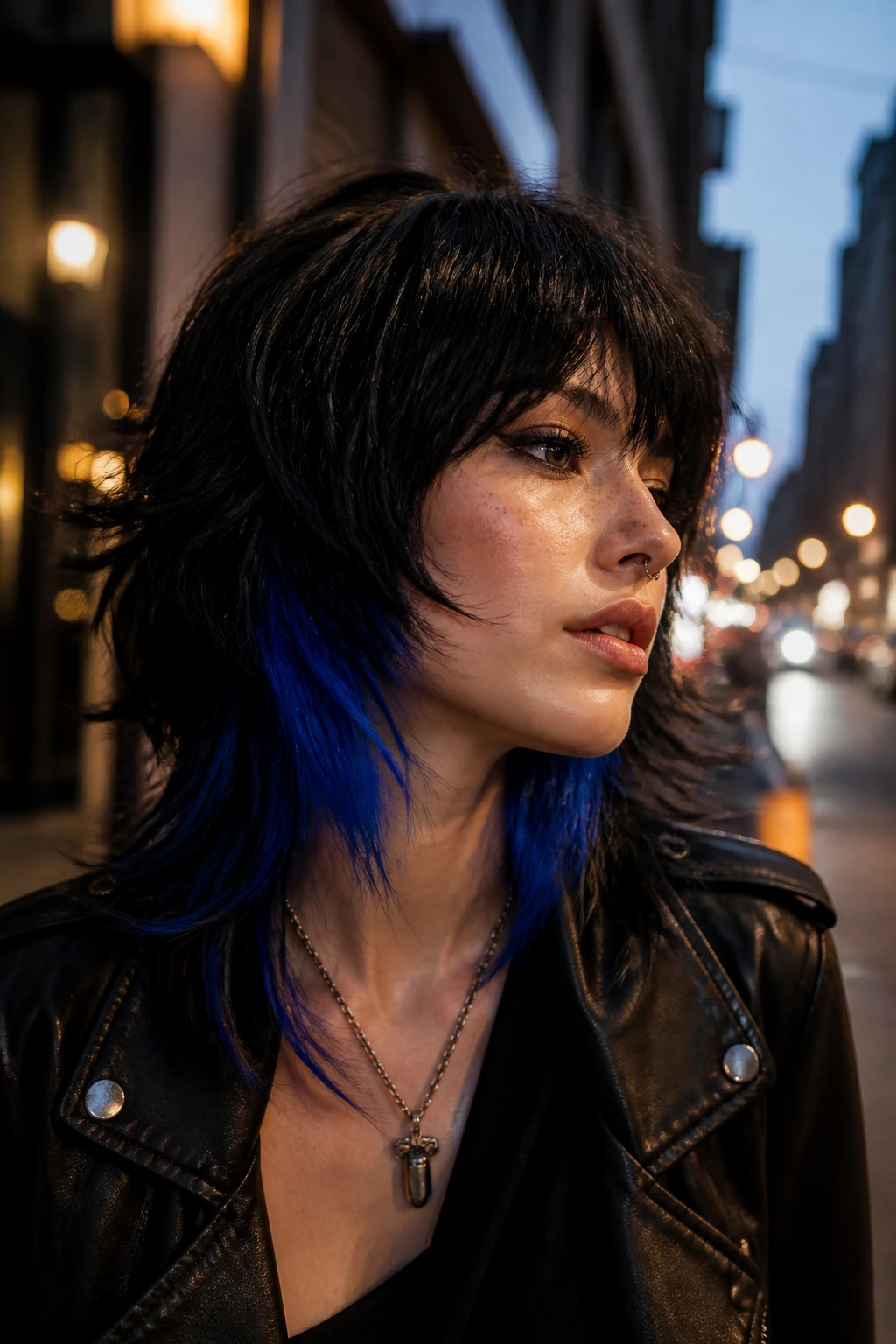
2. Jet-Black Shag With Electric Blue Underlights
Why do people keep pairing jet black with electric blue? Because it works every single time. The contrast is so sharp it almost looks graphic, and the wolf cut gives the blue enough broken edges to keep it from feeling like a cartoon stripe. It’s bold, but not messy-bold. There’s a difference.
What makes it different
The trick is placement. Keep the blue under the crown and through the lower back sections, then let the top hair fall over it like a curtain. When the hair swings, the blue flashes; when it settles, it vanishes back into the black. That hidden-reveal pattern is the whole charm.
Best for
- Thick straight hair that can hold clean separation
- Wavy hair that wants a little drama
- People who wear the top half clipped back often
Blue fades. That’s the honest part. If you want this look to stay vivid, wash with cool water, use color-safe shampoo, and avoid scrubbing the hidden sections like you’re washing a dish. Those bright pigments can dull fast if you overdo it.
3. Copper Wolf Cut With Auburn Ribbons
Copper and auburn together can get muddy if you’re careless, but in a wolf cut they can look rich and layered, almost like autumn leaves caught in motion. The base stays coppery, while the peekaboo ribbons slip into darker auburn underneath the outer layers. Nothing screams. Everything glows.
A quiet note on placement
This version is for someone who wants warmth without monotony. If every strand sits in the same copper family, the hair can flatten out. Auburn underneath gives the layers a deeper bottom note. It’s the hair equivalent of putting a little smoked salt on caramel.
How it reads in motion
- On curls, the auburn disappears and reappears in tiny shadows.
- On waves, you get alternating bands of copper and red-brown.
- On straight hair, the underlayers peek out near the jaw and collarbone.
I like this for medium lengths because the color conversation stays close to the face. Long lengths can dilute the effect unless the underlayer is placed with intention. If you want the result to feel cohesive, ask for a gloss that keeps both shades in the same warm family.
4. Curly Wolf Cut With Rose Gold Peekaboo
Curls change everything. They don’t show hidden color in neat bands; they scatter it. That’s why rose gold peekaboo pieces on a curly wolf cut look like little sparks caught in the bend of the curl pattern. It’s softer than neon, more playful than beige blonde, and a lot more forgiving than people expect.
Why this pairing sings
Curly wolf cuts already create lift around the crown and sides, so the rose gold doesn’t have to do much work to stand out. It catches at the bends, especially where layers stack on each other. You get a warm metallic glow instead of a flat stripe.
A few practical notes
- Keep the hidden color slightly deeper at the roots so it doesn’t wash out too fast.
- Ask your stylist to place the panels where your curls naturally separate.
- Diffuse on low heat to avoid puffing the cut into a triangle.
Rose gold can fade to peach, and on some bases that’s a nice accident. On others, it turns a little dusty. If you like the color when it’s fresh, plan for tonal refreshes. Curly hair tends to be porous where it’s been lightened, and porous curls grab water and product fast.
5. Mushroom Brown Wolf Cut With Smoky Beige Highlights
This one is for the person who wants hidden color without obvious color. The base sits in that cool mushroom-brown zone, and the peekaboo highlights lean smoky beige rather than gold. The effect is soft, earthy, and a little expensive-looking in the quietest way possible. Not flashy. Not dull. Just controlled.
Why it works
Cool brunette shades can go flat if every layer is the same tone. Smoky beige hidden highlights give the cut a second temperature, which makes the layers separate visually. It’s especially good on fine to medium hair because the contrast stays believable rather than stripey.
How it wears
A straight blowout makes the beige pieces slide through the ends like pale thread. Loose waves make them blur into a sanded, hazy finish. If you like low-contrast hair that still has depth when the light moves, this is one of the nicest versions on the list.
I’d avoid yellow-beige here. That’s the wrong lane. You want ash, taupe, and a little softness at the edge. If the color leans too warm, it stops reading mushroom and starts reading old highlights.
6. Platinum Wolf Cut With Cotton-Candy Panels
Platinum on its own can feel severe. Add cotton-candy peekaboo panels underneath, and the whole haircut loosens up. Pink, soft lavender, and pale peach all work here, but I prefer the version that mixes two pastel shades instead of one. It gives the hidden color a candy-shop feel without looking juvenile.
What to keep in mind
This is high-maintenance color, no sugarcoating it. Platinum hair needs care, and pastel pigment fades faster than almost anything else. But the payoff is a wolf cut that feels sharp, airy, and just a little mischievous when the layers lift.
Best approach
Ask for the pastel pieces in lower panels and under the back crown, not only in the front. That way the color shows when you flip the hair, not just when you stare head-on in the mirror. And if your hair is thick, the hidden color will have enough weight underneath to show through without being swallowed.
A clean wave pattern helps here. So does a gloss every so often to keep the platinum from going dull and the pastel from turning chalky. The wrong shampoo can wreck this look faster than any heat tool.
7. Long Wolf Cut With Cinnamon Peekaboo
Long wolf cuts can get overlooked because people assume the style has to be short and shaggy to work. Wrong. A long version with cinnamon peekaboo highlights has a gorgeous drape, especially when the hidden color sits through the mid-lengths and lower layers. The cinnamon adds warmth and movement without breaking the length apart too aggressively.
Why it feels different from shorter versions
The cut keeps more weight at the bottom, so the hidden color shows in longer sweeps rather than quick flashes. That makes the style feel calmer, less punk, more lived-in. It’s a nice option for someone who wants a wolf cut but doesn’t want to sacrifice the feeling of length.
A useful detail
Keep the layers visible around the face and crown, then let the hidden color start a little lower. If you place the cinnamon too high, the whole look can turn busy. If you place it too low, you won’t get enough movement. The sweet spot is usually somewhere around the ear to mid-neck zone, depending on density.
This version pairs well with soft bends from a 1.25-inch curling iron, then finger-combed out while warm. Don’t curl every piece in the same direction. That ends up too neat.
8. Shoulder-Length Wolf Cut With Teal Underlayers
Teal is one of those shades that either looks rich or looks like a craft-store marker. On a shoulder-length wolf cut, hidden underlayers give it the best possible setup. The shorter length means the teal flashes quickly as the hair flips at the collarbone, which keeps it lively instead of heavy.
Why shoulder length matters
A lot of hidden colors need movement to show up. Shoulder length gives you that movement every time you turn your head, tuck the hair back, or throw it in a half-up knot. That little reveal is the whole point of peekaboo color.
A clean formula
- Keep the base dark brown, black, or deep ash blonde
- Place teal under the top veil and around the nape
- Add slightly brighter teal near the ends for a dip-dyed effect
Teal loves contrast. If your base is too close in tone, the color loses its bite. If you want a softer finish, mute the teal with a smoky blue toner. If you want punch, go cleaner and brighter. Don’t sit in the middle. Middle tones can look accidental.
9. Razor-Cut Wolf Cut With Silver Smoke Streaks
There’s a sharper, more graphic side to the wolf cut, and razor-cut ends are where it lives. Silver smoke streaks under those layers make the shape look almost metallic, especially when the hair is dark ash brown or black. It’s edgy without needing neon to do the talking.
Why this one stands out
The razor cut breaks the ends into softer, wispy pieces, which lets the silver look scattered rather than striped. That matters. A solid silver block under a wolf cut can feel too heavy, but smoke-toned streaks taper into the shape and keep the whole haircut airy.
Best for
- Straight hair that shows the line work
- Wavy hair that blurs the silver into misty ribbons
- Anyone who wants a cool-toned look without blonde warmth
Silver tones can go yellow if the hair is porous or the products are harsh. Use a light toner mask, not every purple product you own at once. Too much purple can leave the silver looking dull and muddy. Less is more here.
10. Thick-Hair Wolf Cut With Caramel Slice Highlights
Thick hair can swallow hidden color if you place it carelessly. Caramel slice highlights fix that by creating enough warm contrast to break through the density. On a wolf cut, the slices show up as broad, bendy panels underneath the outer sheet, which makes the hair look lighter and more mobile than it actually is.
The real advantage
Thick hair often needs shape more than anything else. The wolf cut gives that shape. Caramel hidden pieces keep the lower half from feeling like a solid block. The result is movement without sacrificing fullness.
What to ask for
A stylist should thin the bulk carefully rather than over-layering the whole head. Over-thinning thick hair can leave you with frizz and dead ends. Instead, keep the perimeter strong and use the hidden highlights to create the illusion of more separation between layers.
This version looks especially good when the caramel is a little warm, almost toffee-like. Too pale, and it disappears. Too orange, and it fights the natural dimension of the cut.
11. Fine-Hair Wolf Cut With Thin Champagne Ribbons
Fine hair needs a gentler hand. Thin champagne ribbons hidden through a wolf cut can make the hair look brighter and more dimensional without making it look stringy. The key is restraint. Small sections. Light placement. No chunky money-piece nonsense here.
Why this works on finer strands
Champagne is light enough to brighten but not so pale that it rips the depth out of the haircut. On fine hair, you want to preserve the impression of density at the root while still slipping in a few lighter lines that catch the eye when the layers move.
Best practices
- Keep the layers soft, not aggressively razored
- Ask for micro-weave peekaboo pieces instead of big panels
- Style with a root-lifting mousse and a round brush at the crown
If the light pieces are too wide, fine hair starts to show scalp and gaps in the wrong places. Tiny ribbons are smarter. They give you the shimmer without exposing too much structure. That matters more than people think.
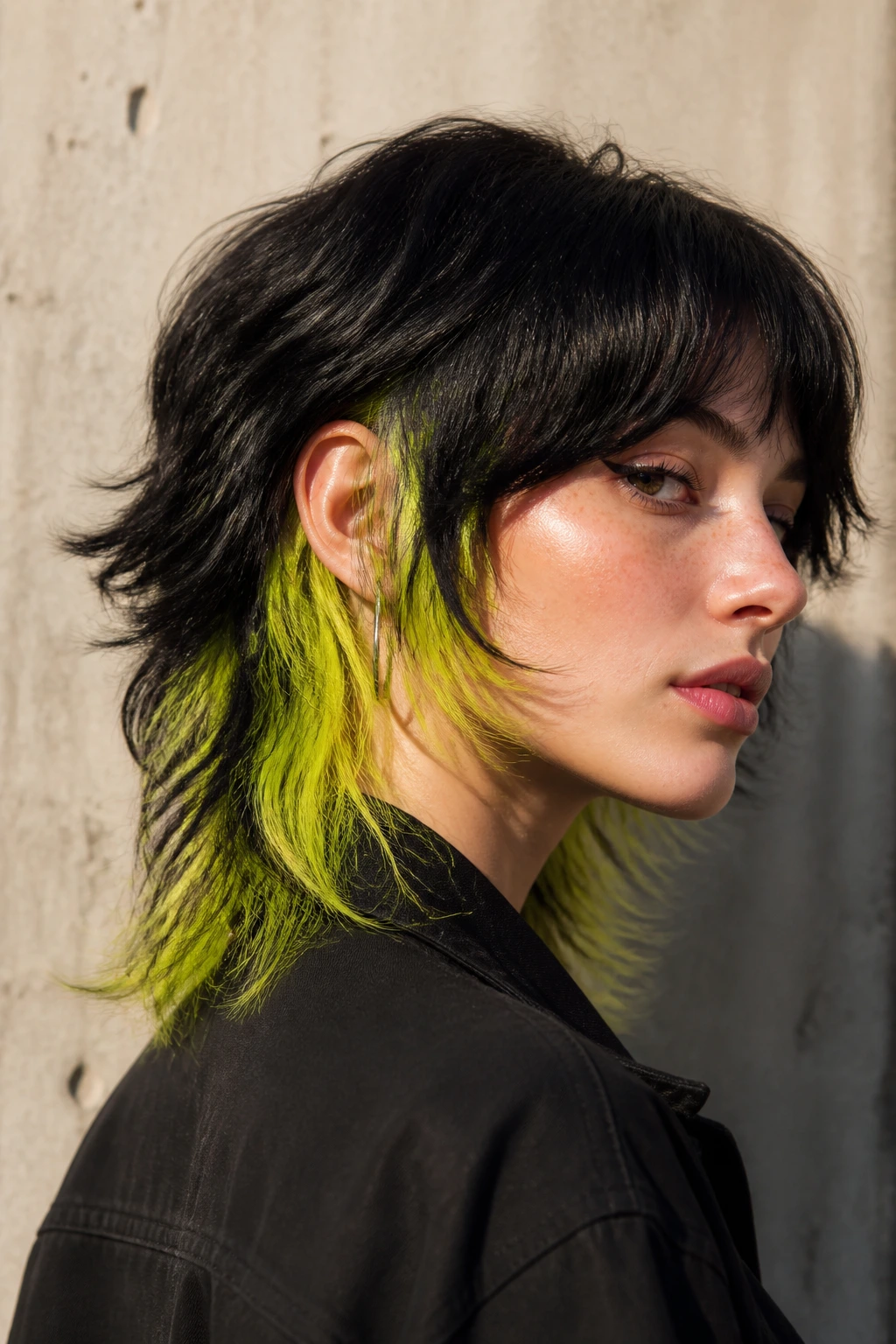
12. Mullet-Edge Wolf Cut With Neon Lime Surprise
This one is not for the shy. A mullet-leaning wolf cut already pushes the silhouette toward attitude, and neon lime peekaboo pieces underneath make it feel sharper, meaner, and a little chaotic in the fun way. The contrast is so intense it almost reads as a graphic accent.
Why it works
Because the cut already has a strong personality, the color can be a little absurd. That’s a gift. When the shape is bold, hidden neon stops looking random and starts looking intentional. You get flash at the nape, a hit of color near the ears, and enough restraint on top to keep the look wearable.
Practical reality
Neon lime fades fast, and it usually shifts toward chartreuse or yellow-green if you don’t babysit it. That’s fine if you like a worn-in punk finish. It’s less fine if you expect the color to stay electric for long. Use depositing masks if the shade is custom mixed, and don’t wash it in hot water unless you’re ready to watch it soften.
13. Soft Wavy Wolf Cut With Lilac Peeks
Lilac under a wavy wolf cut has a dreamy quality that doesn’t need a lot of explanation. The wave pattern breaks the lilac into patches, and because the color sits beneath the top layer, it feels tucked in rather than painted on. The look is light, playful, and less precious than pastel hair often gets.
What to notice
Lilac works best when the base is neutral — not too warm, not too yellow. Beige blonde or cool brown bases let the hidden color read clean. If the base fights the lilac, the whole thing turns muddy.
Where it shines
This is one of the nicest choices for people who wear loose waves most days. The color appears in irregular flashes, which is exactly what makes it feel human instead of salon-perfect. If you prefer a slightly dreamy finish over a hard-edged one, this is a smart pick.
A little texturizing spray goes a long way. Too much product weighs the waves down, and the lilac loses the little catches of light that make it interesting.
14. Coily Wolf Cut With Bronze Undercrown Color
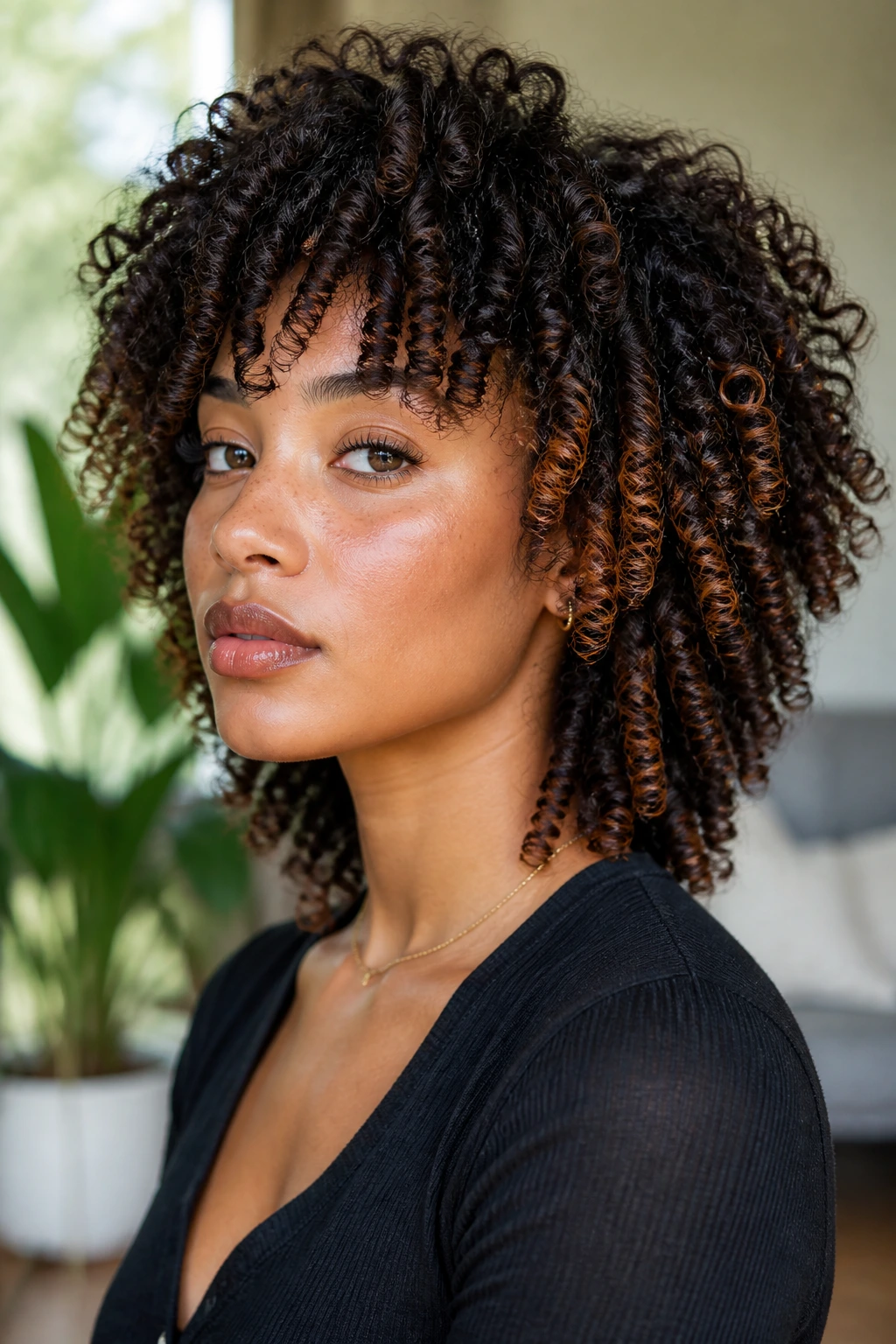
Coily hair has its own logic. The shape rises, contracts, and stacks in a way straight hair never quite copies, which means hidden color needs to live where the curls will actually reveal it. Bronze under the crown and through the lower interior does that beautifully. It flashes as the coils separate, then tucks back in when they shrink.
Why bronze is a smart pick
Bronze has enough warmth to glow against darker bases, but it’s not so pale that it disappears in the coil pattern. The hidden color catches between the spirals and gives the cut a richness that feels dimensional from every angle.
A note on placement
Ask for color to be placed where the hair naturally expands, not just where it falls flat. On coily textures, that’s often closer to the mid-shaft and interior layers than people expect. You want the color to live where movement happens, not buried so deep it never sees daylight.
Moisture matters here. Dry coils make hidden color look dull and thirsty. Keep your leave-in conditioner and curl cream in rotation, or the bronze loses some of its warmth.
15. Short Wolf Cut With Peach Peekaboo Ends
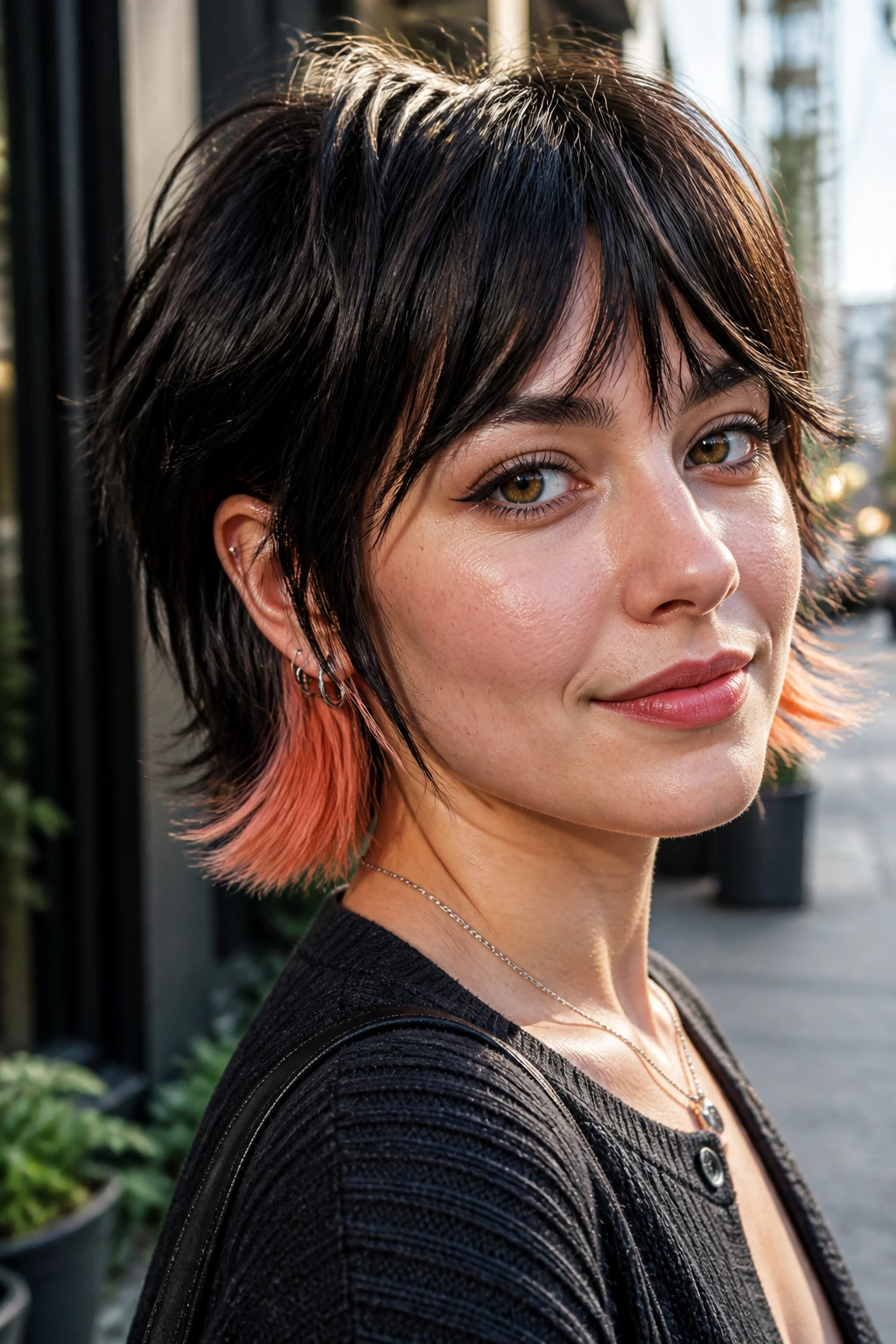
Short wolf cuts are mischievous. Add peach peekaboo ends, and the whole style turns into a little flash of color every time the hair flicks around the jaw and neck. Peach is one of the more forgiving hidden shades because it can read soft, warm, or slightly neon depending on the light.
Why short length changes the effect
With less length, the hidden color shows more often. That makes peach a useful choice because it creates movement without overwhelming the cut. It’s especially nice if you want the surprise of color but don’t want to live with something loud at every meeting and every grocery run.
Keep this in mind
If the ends are too lightened, peach can go chalky. If they’re too dark, the color disappears. You want a pre-lightened base that still has enough warmth left in it to support the tone. That balance is finicky, but it matters.
This is one of the easiest wolf cuts to style with just a quick scrunch and a bit of sea salt spray. The color doesn’t need a perfect finish to look good.
16. Tousled Wolf Cut With Sunset Copper and Gold
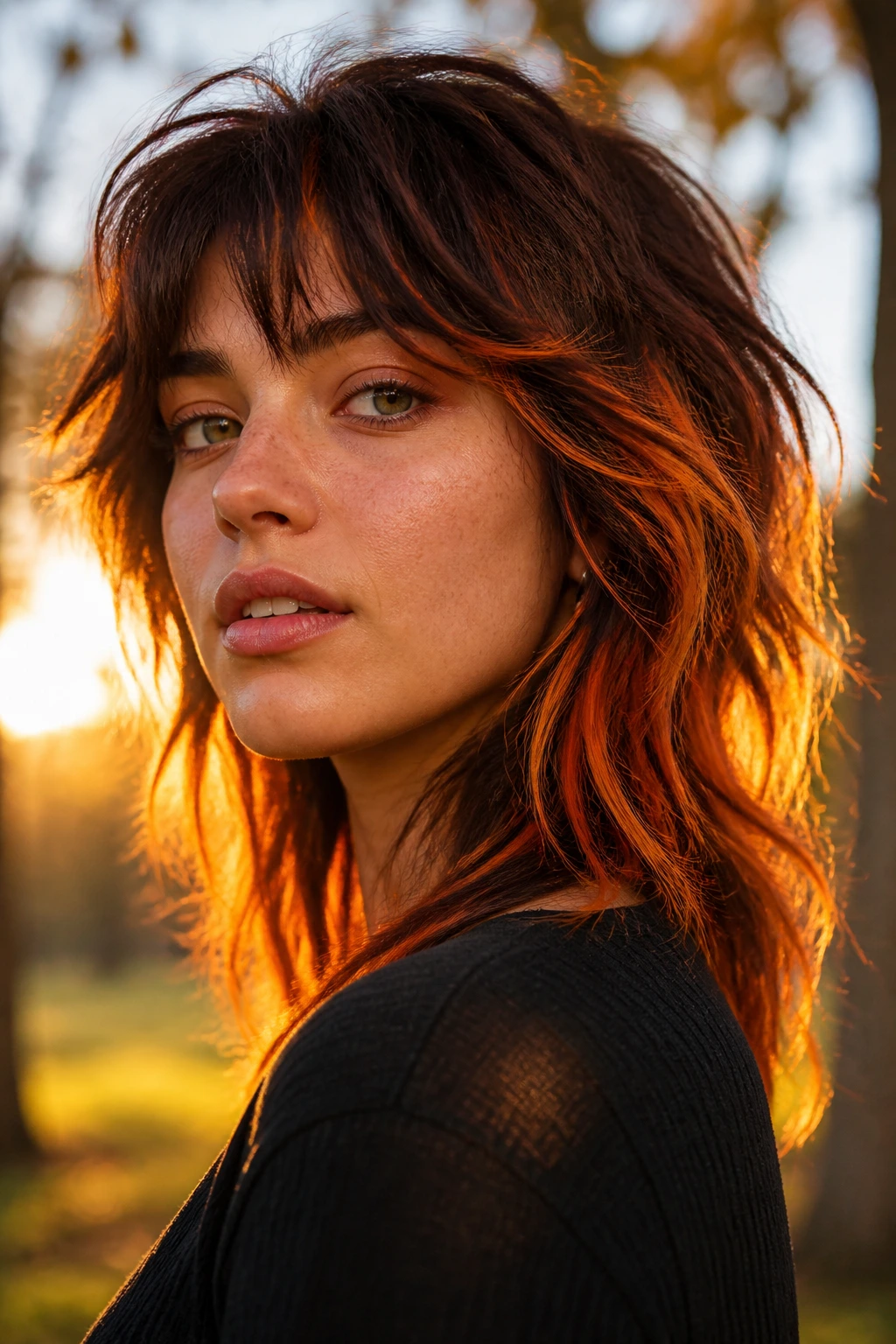
This is the warm-weather version in spirit, though I’m careful with that phrase because hair doesn’t care what month it is. Sunset copper and gold hidden highlights give a tousled wolf cut a glowing, late-day look, with enough contrast to feel dimensional and enough warmth to stay soft. Nothing icy. Nothing flat.
What sets it apart
The color story here moves from deeper copper at the interior to brighter gold at the ends of the hidden panels. That gradient makes the movement feel natural, like the hair was lit from one side. It works especially well on wavy textures and brushed-out curls.
A detail worth asking for
Request a slightly deeper root at the hidden panels. That keeps the grow-out from reading as a hard line. The result should feel like warmth blooming through the lower half of the haircut, not a stripe pasted underneath.
If your skin tone runs cool, this version can still work. The trick is controlling how orange the copper gets. Keep it rich and brown-leaning, not tangerine.
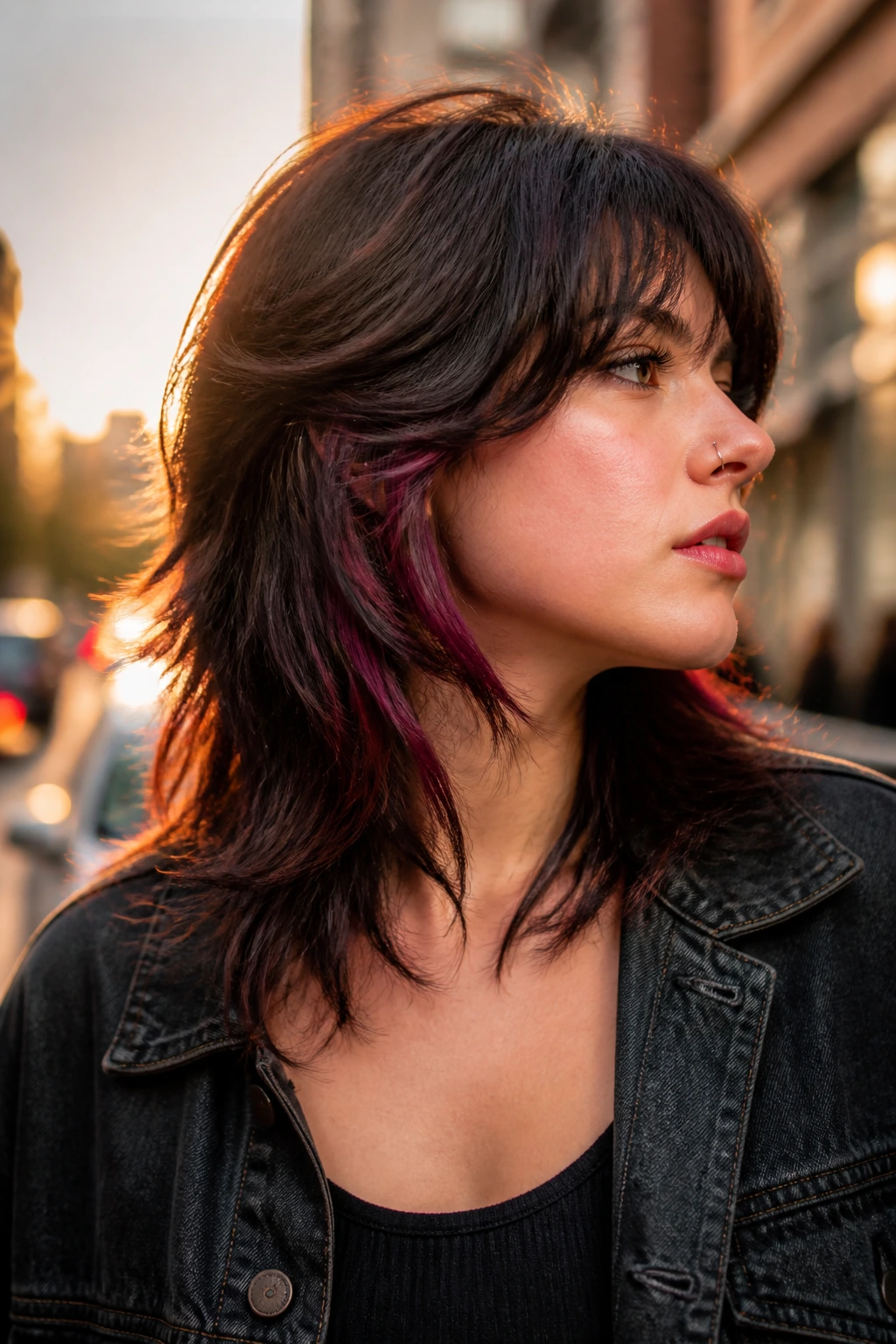
17. Black Cherry Wolf Cut With Plum Underlights
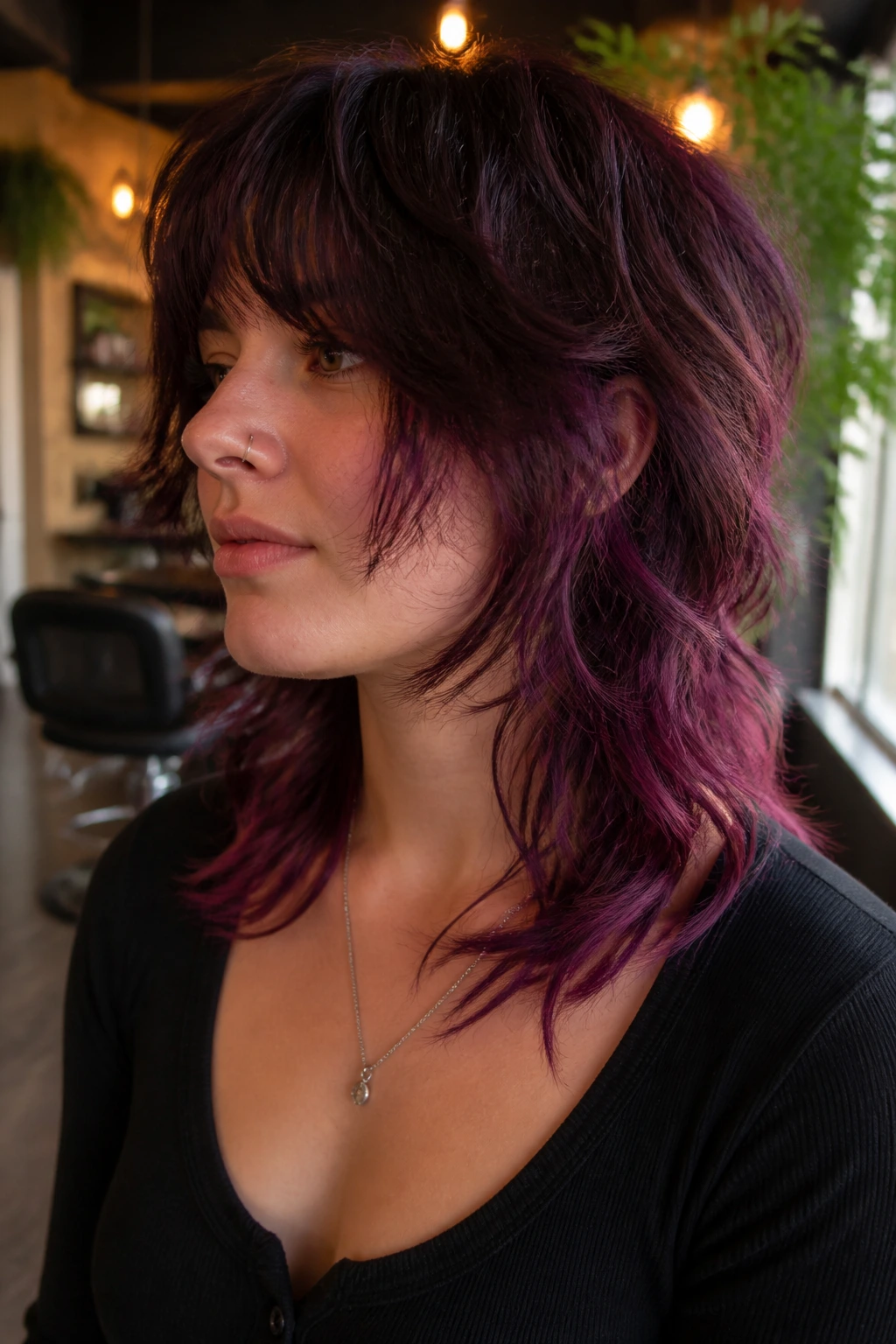
Black cherry is a deliciously moody color on a wolf cut. The base can stay deep burgundy or almost-black, while plum underlights live underneath the top layers and around the neck. The plum doesn’t have to be loud. In fact, the best versions are slightly shadowy, like a dark fruit skin seen in dim light.
Why it lands
Plum has enough depth to stay elegant against a dark base, and the wolf cut gives the color movement so it doesn’t sink into the background. You see it most when the layers separate or the top hair is tucked back. That delayed reveal is what makes the whole thing feel intentional.
Who this suits
Anyone who wants a dark look with a little more personality than plain brunette. It’s also a nice bridge if you’re moving from vivid color back toward something easier to live with, because plum can soften into burgundy and eventually into a deep warm brownish shade.
18. Blonde Wolf Cut With Strawberry Blonde Peekaboo
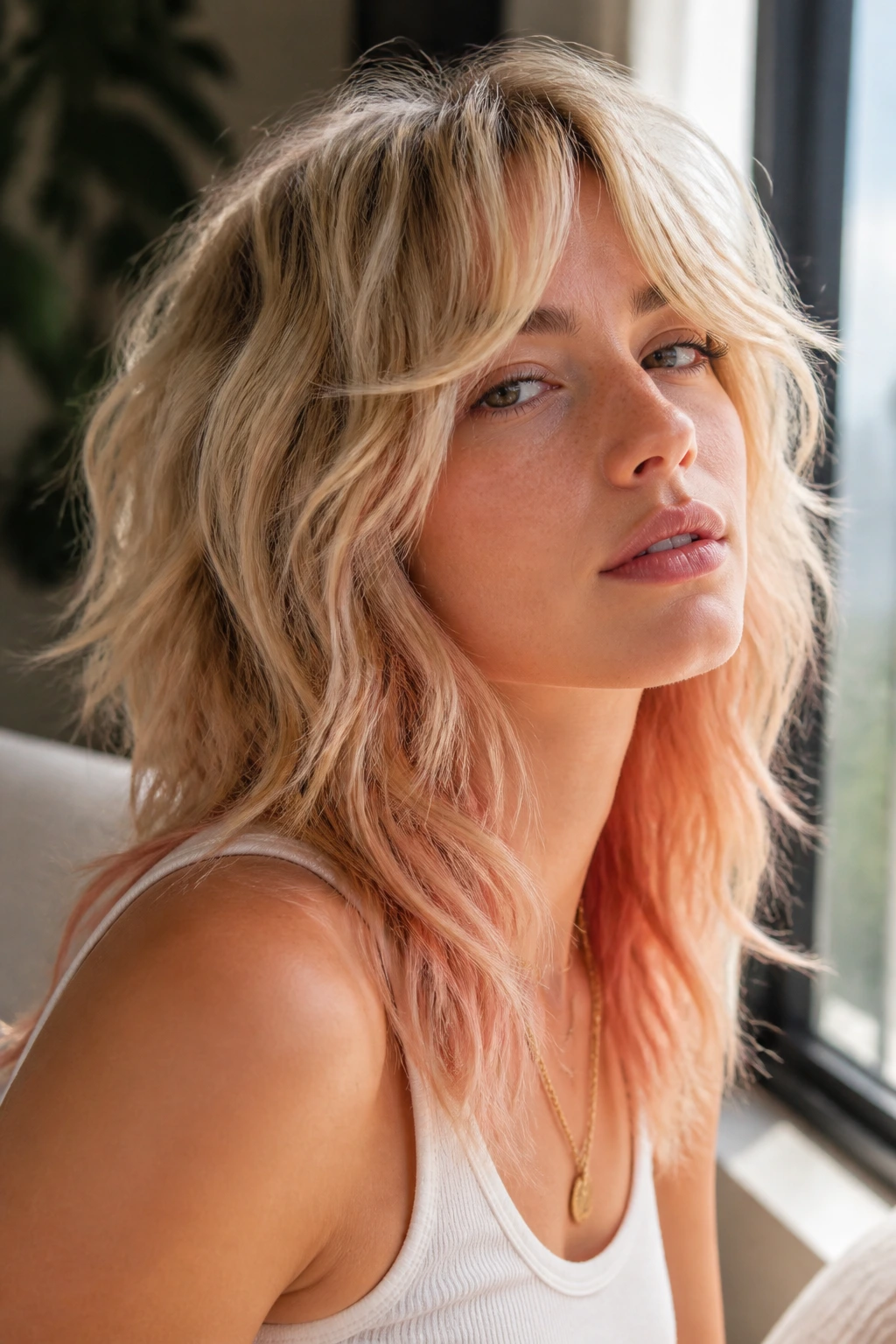
Blonde on blonde can get boring fast, and strawberry blonde peekaboo layers fix that by putting a warmer note under the surface. The hidden color gives the hair a rosy glow without pushing it into full copper territory. It’s soft. Fresh. Not bland.
Why it works
The wolf cut breaks the blonde up enough that the strawberry pieces feel like part of the texture rather than a separate idea. On brighter blondes, the hidden color adds a blush tone. On darker blondes, it gives more visible depth.
Good placement
Keep the strawberry shades under the mid-lengths and lower crown. That way the color peeks out when the hair bends or when you sweep it up into a claw clip. If every bit of strawberry lives only in the front, it loses the surprise factor.
This look is best when the blonde is not too icy. Slight warmth makes the strawberry hidden panels feel connected instead of pasted on.
19. Shaggy Wolf Cut With Forest Green Panels
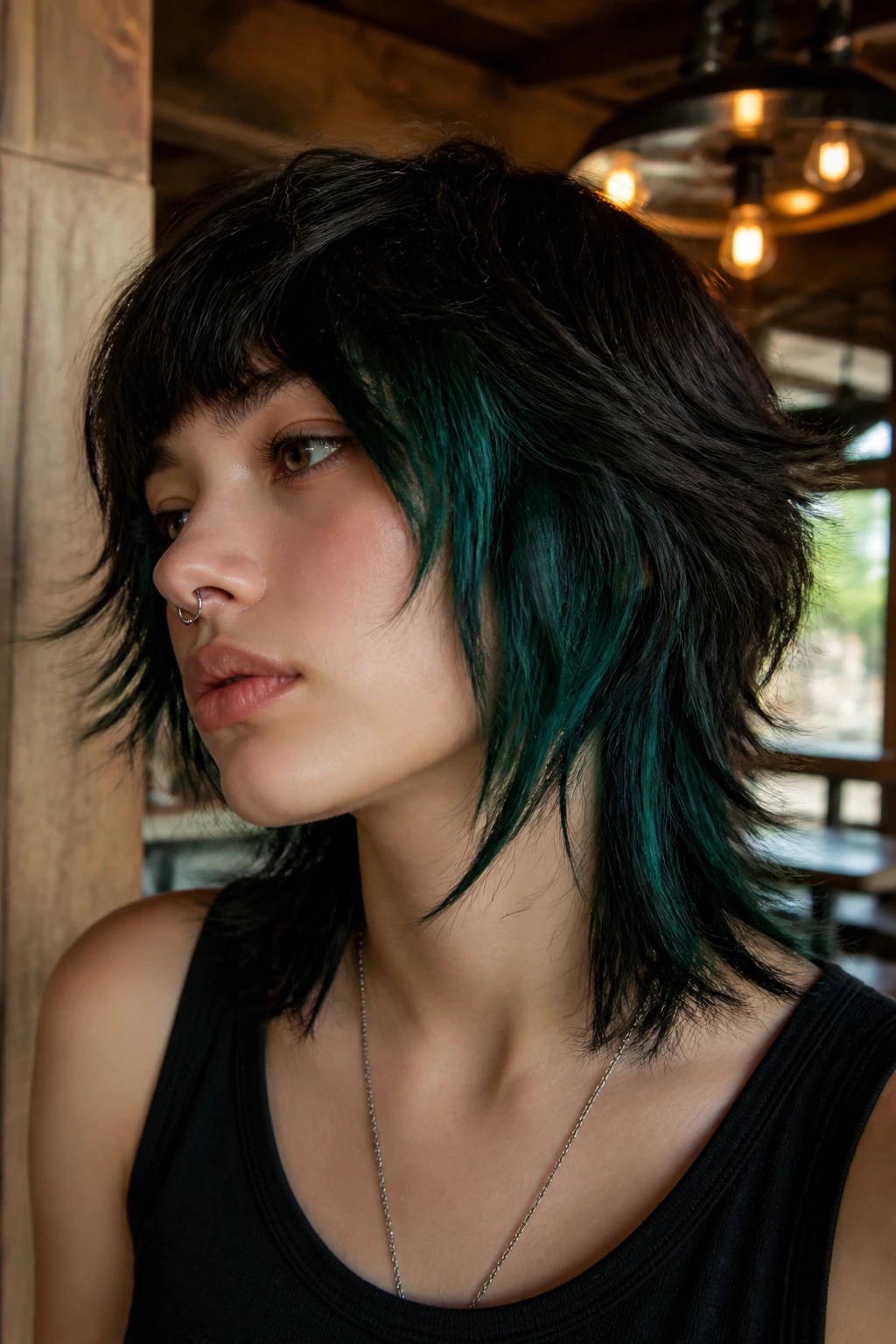
Forest green is one of the underrated hidden shades. It’s rich, grounded, and far more wearable than people expect, especially when it hides under a shaggy wolf cut. The top layer stays dark or neutral, while the green peeks out at the sides and nape like a secret note.
Why forest green works here
A wolf cut already has a slightly wild edge. Forest green leans into that without crossing into novelty. It looks particularly strong against dark brown, black, and deep auburn bases. The color has depth, so it doesn’t vanish the moment the hair shifts into shadow.
A smart caveat
Green pigments can fade weirdly if the hair was over-lightened. You don’t want swampy ends. You want a clean, forest-floor tone. That means the lightening level has to be controlled, and the toner needs to be chosen with real care.
This version is especially nice if you like dark clothing and want your hair to have one sharp, moody detail that doesn’t scream for attention.
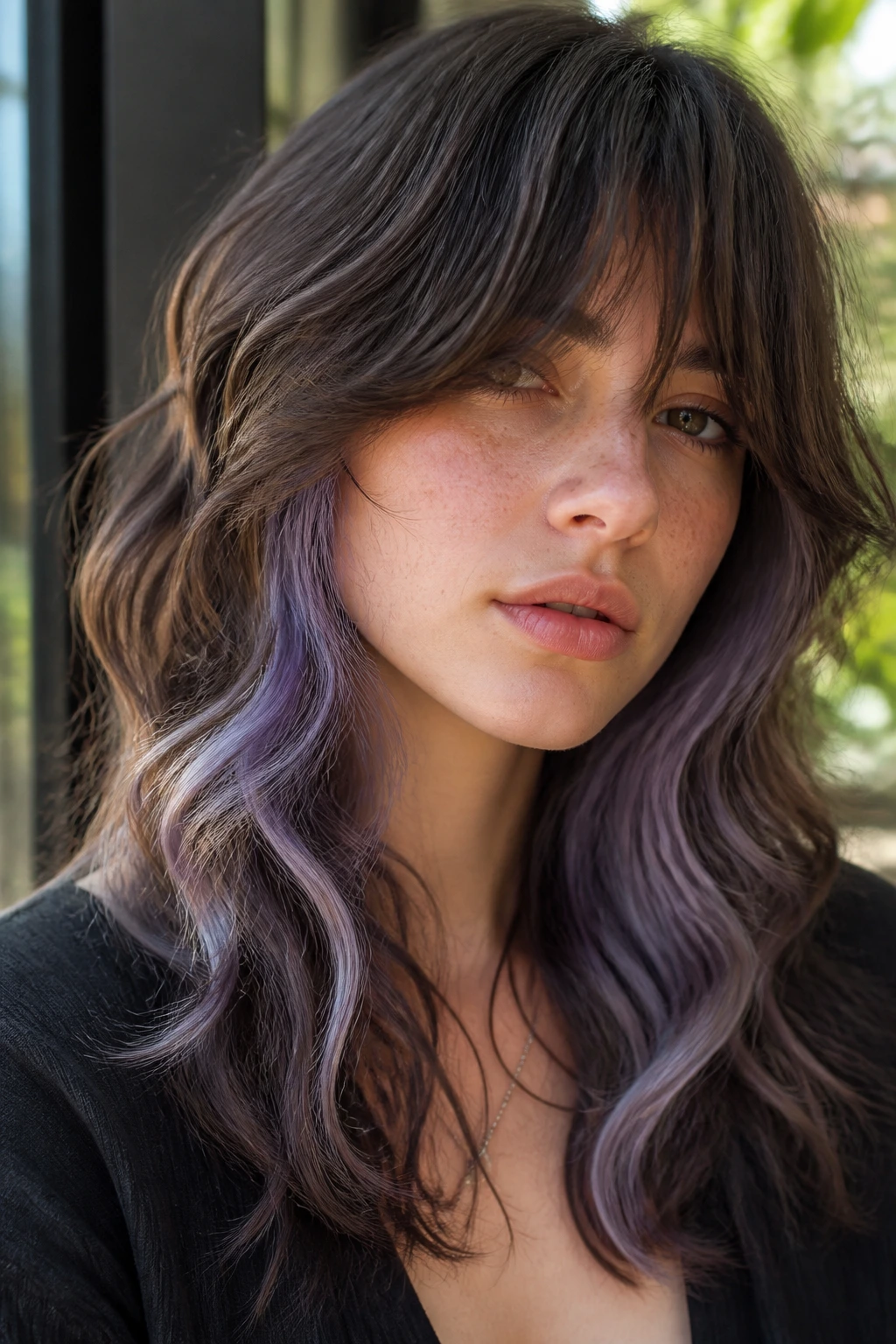
20. Layered Wolf Cut With Smoky Lavender Veil
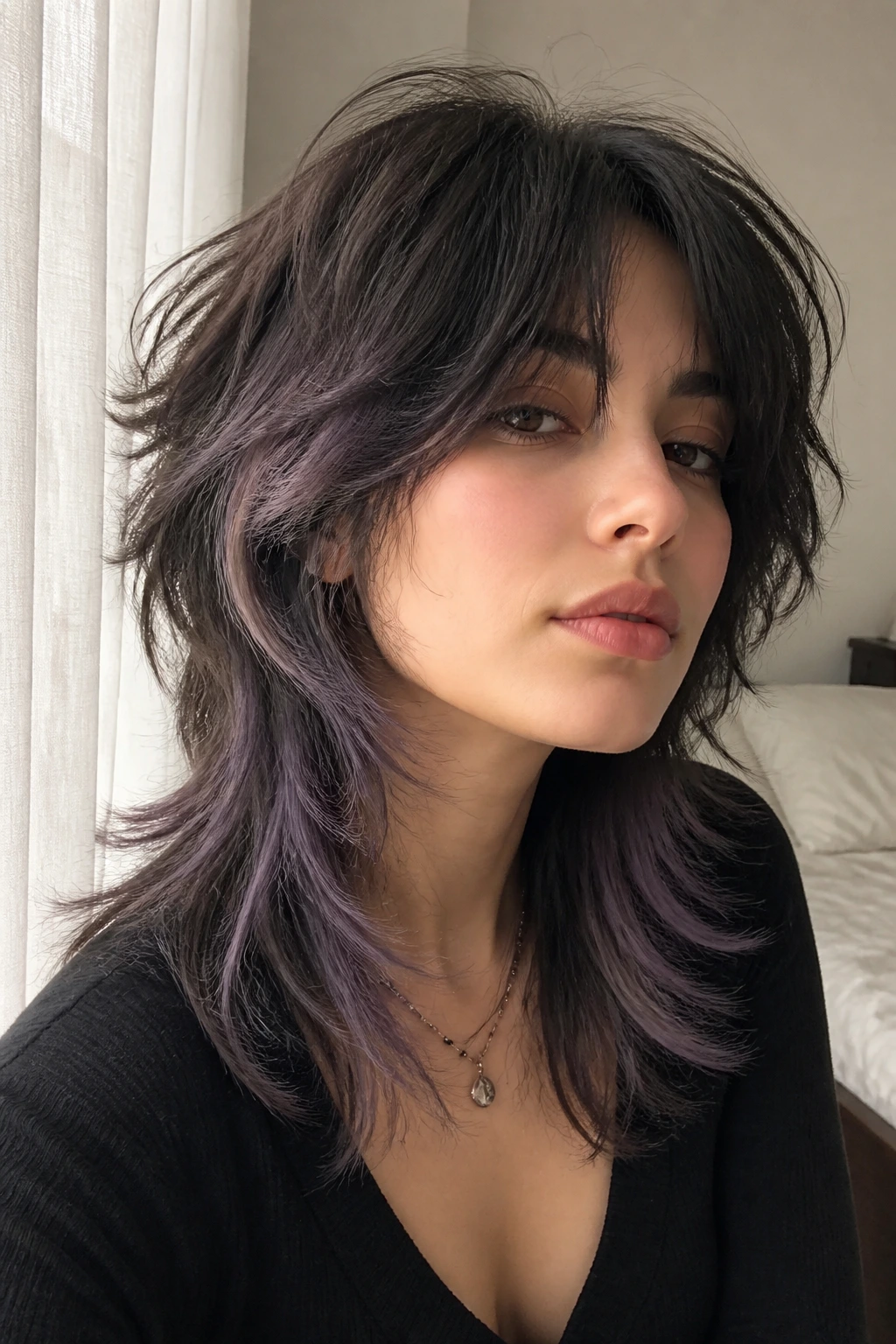
Smoky lavender is the cool cousin of pastel purple. It has a gray cast that keeps it from turning sugary, which is exactly why it works under a layered wolf cut. The hidden color feels misty, not cartoonish. It’s one of those shades that looks expensive without trying too hard.
Why this one feels polished
Lavender can go very sweet, very fast. The smoky version has enough ash to keep the whole cut from feeling childish. Under a wolf cut, that ashiness blends with the layered texture and creates a soft, clouded effect when the hair moves.
What to request
Ask for the lavender to sit mostly in the interior lengths and under the outer top layer. If the color is too exposed, the misty effect gets lost. The magic is in the glimpse, not the full reveal.
I’d pair this with a slightly undone wave or a blowout that bends the ends outward. Too much polish drains the softness out of the shade.
21. Face-Framing Wolf Cut With Coral Flash
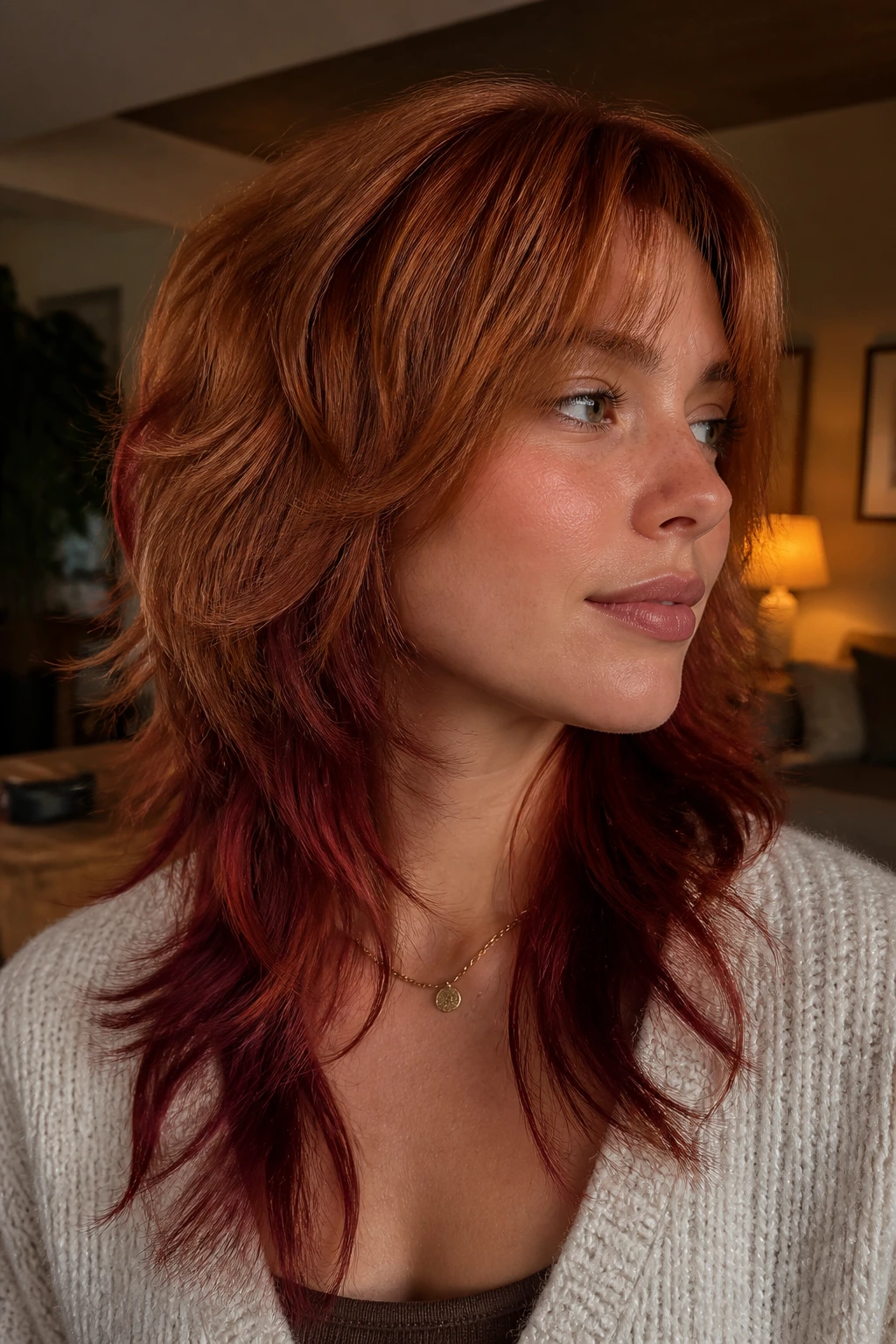
Coral hidden color around the face can look unexpectedly fresh on a wolf cut, especially when the rest of the hair stays muted. The flash sits just under the front sections and near the lower cheek line, so it shows as the hair parts or swings. It’s a smart way to brighten the face without committing to full warm-toned color.
Why it works
Coral is vivid enough to read, but softer than orange. That matters. It lights up the lower face in motion and keeps the rest of the wolf cut grounded. You get a hit of brightness where the eye naturally lands.
Best use case
This is the version for someone who likes a small surprise more than a full color story. The hidden coral can be subtle at first glance, then startling in the best way when the front layers separate. It’s a neat trick if you wear hair forward often.
A little shine spray helps here. Coral loves clean light. Dull hair eats it.
22. Low-Maintenance Wolf Cut With Mocha and Toffee
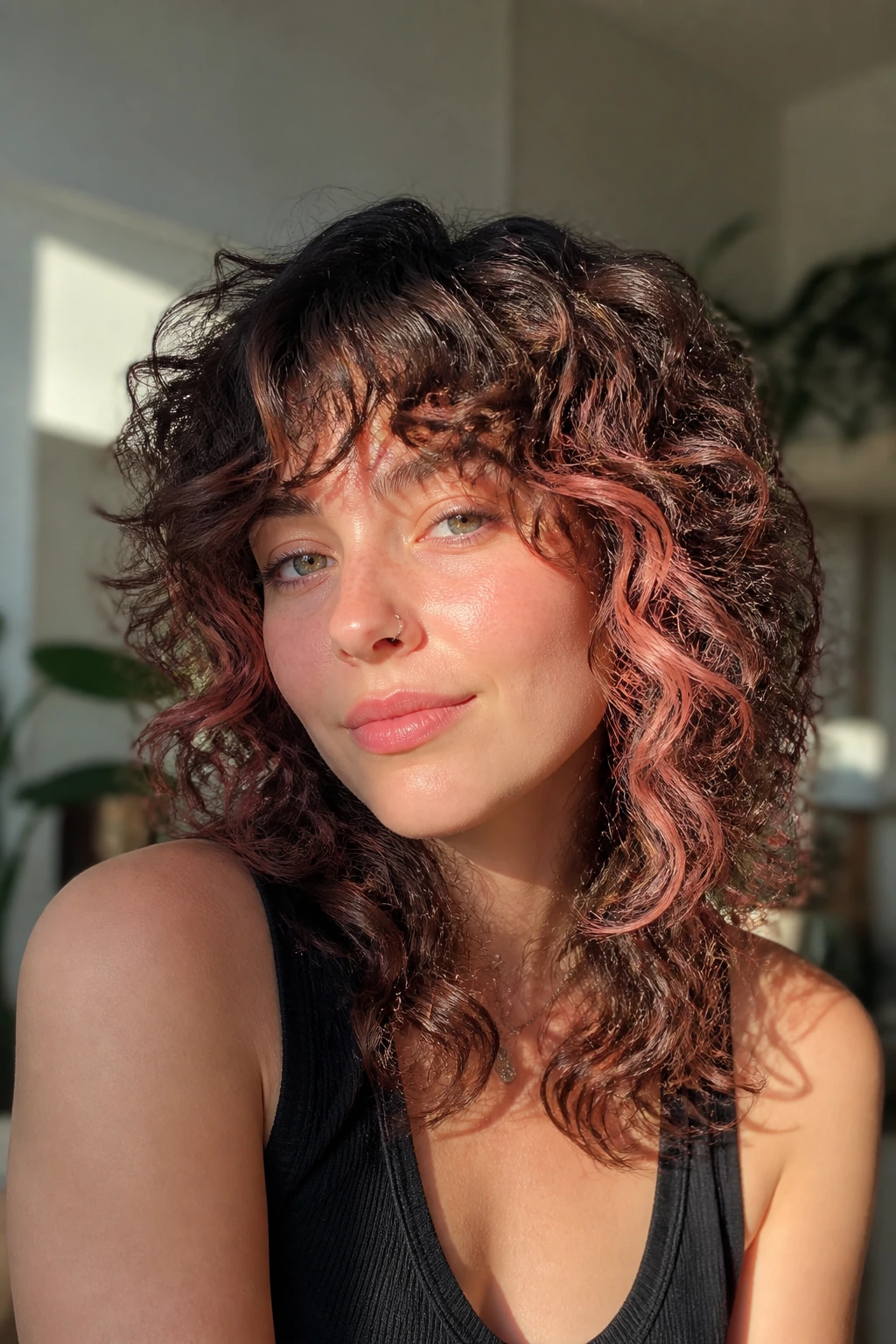
Not every peekaboo highlight has to be bright. Mocha and toffee hidden layers keep the look low-contrast and easy to live with, especially on brown bases. The color difference is gentle, but the movement still shows. Sometimes that’s the smarter choice.
Why this is underrated
When the hidden color stays in the brunette family, the grow-out is smoother and the upkeep is easier. The wolf cut still gets dimension, but you don’t have to sit in the chair as often to keep the look coherent. That’s a real advantage if your calendar is not built around color appointments.
Who it suits
People who like soft detail more than high drama. Also anyone with naturally dark hair who wants depth without lifting into blonde territory. The toffee panels can be placed under the ends and through the interior, so the hair gets warmth without looking streaky.
This version proves a good point: peekaboo highlights do not need to be loud to be useful.
23. Edgy Wolf Cut With Cobalt Peekaboo
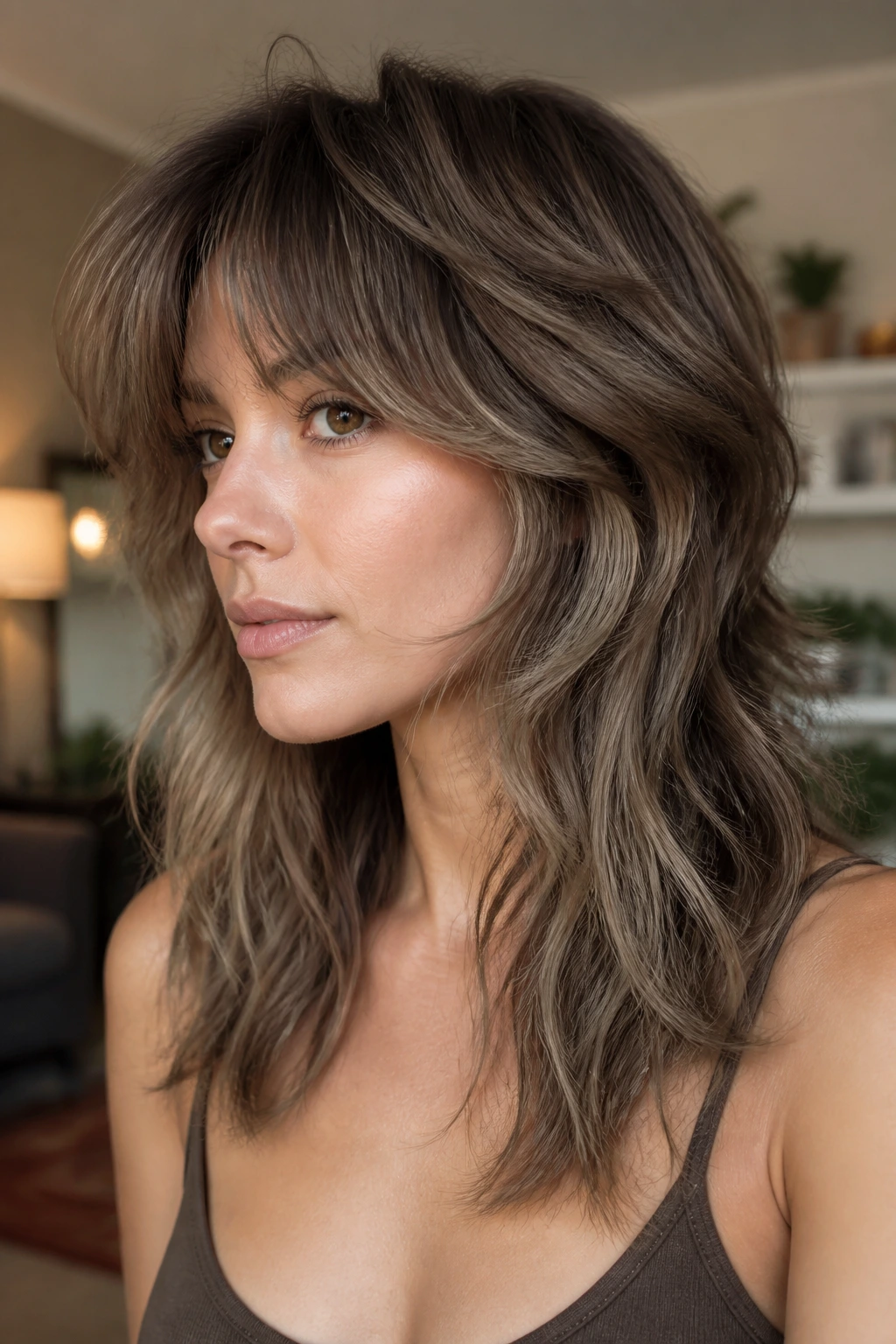
Cobalt is cleaner and harsher than electric blue, which gives this wolf cut a cooler, more graphic edge. The shade sits underneath the top layers and around the lower sides, flashing like a sharp line when the hair flips. It’s a little more controlled than neon blue, and I think that makes it easier to wear.
What changes the mood
Cobalt feels less playful and more precise. It works with a razored or heavily textured wolf cut because the color reinforces the cut lines instead of softening them. If you want your hair to look like it has edges, this is a strong choice.
A good detail to remember
Cobalt holds better on pre-lightened hair that isn’t over-processed. If the base is too porous, the color can sink in unevenly and look patchy. That patchiness is not the same thing as intentional depth. It’s just patchiness.
Use cool water, low-heat styling, and a color-safe cleanser. That sounds tedious because it is. Bold blue shades often demand a little discipline.
24. Soft Wolf Cut With Pearl Gray Streaks
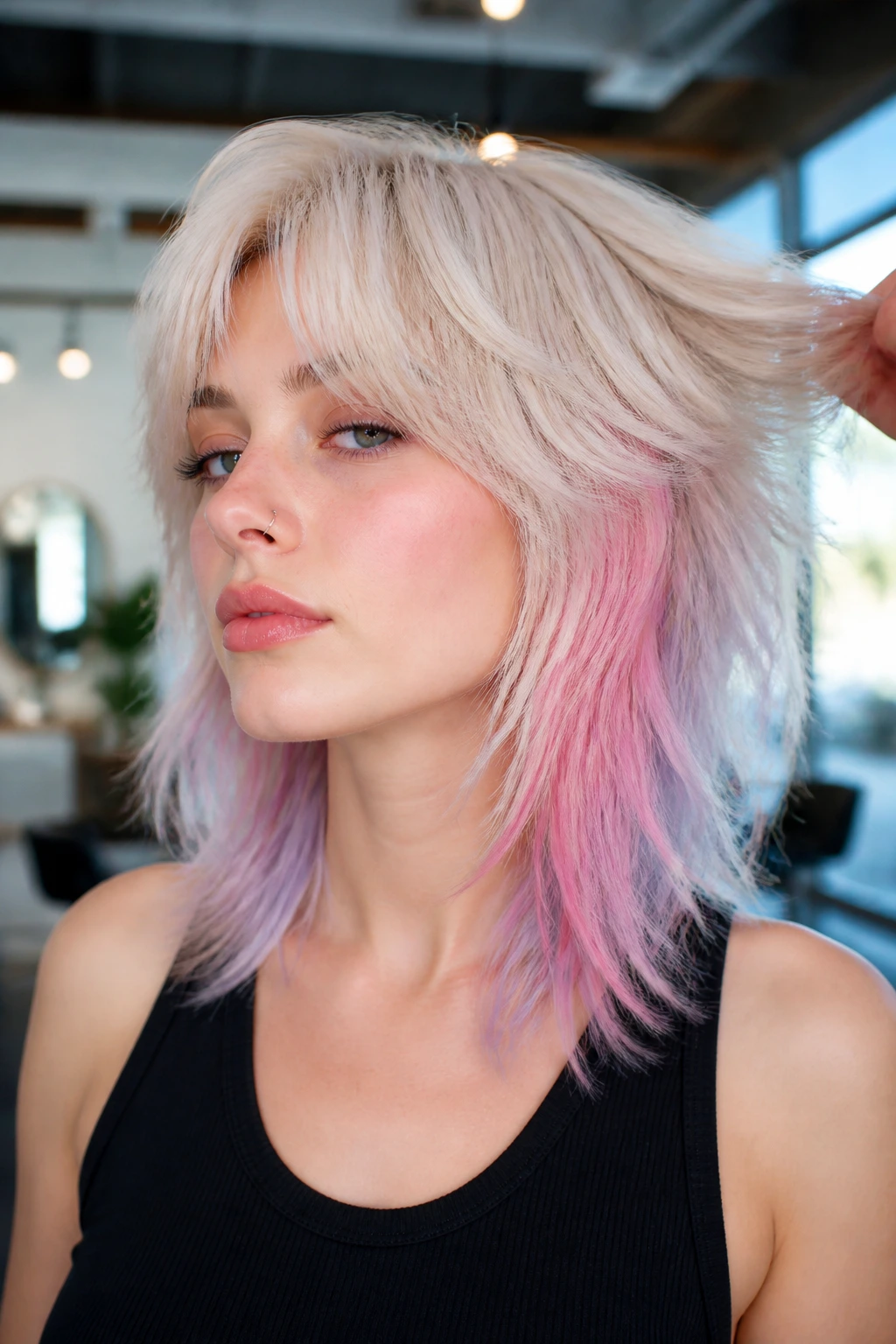
Pearl gray under a wolf cut has a calm, floating quality that’s hard to fake with other shades. It doesn’t scream silver, and it doesn’t lean muddy. It just sits there, bright enough to notice, soft enough to feel elegant. Not a word I usually reach for, but here it fits.
Why pearl gray is worth a look
The color has enough brightness to give hidden contrast without the hard sparkle of full silver. On layered hair, it creates a soft drift of light under the surface. It’s especially good if you want something refined rather than punk.
A small warning
Pearl gray can flatten if the cut is too heavy. The wolf shape needs room to move so the gray can breathe between layers. If you keep the cut too solid, the color loses its floating quality.
This one also grows out in a gentle way. Roots show, of course, but they don’t ruin the effect the way they can with brighter fashion shades.
25. Long Wolf Cut With Jewel-Tone Hidden Panels
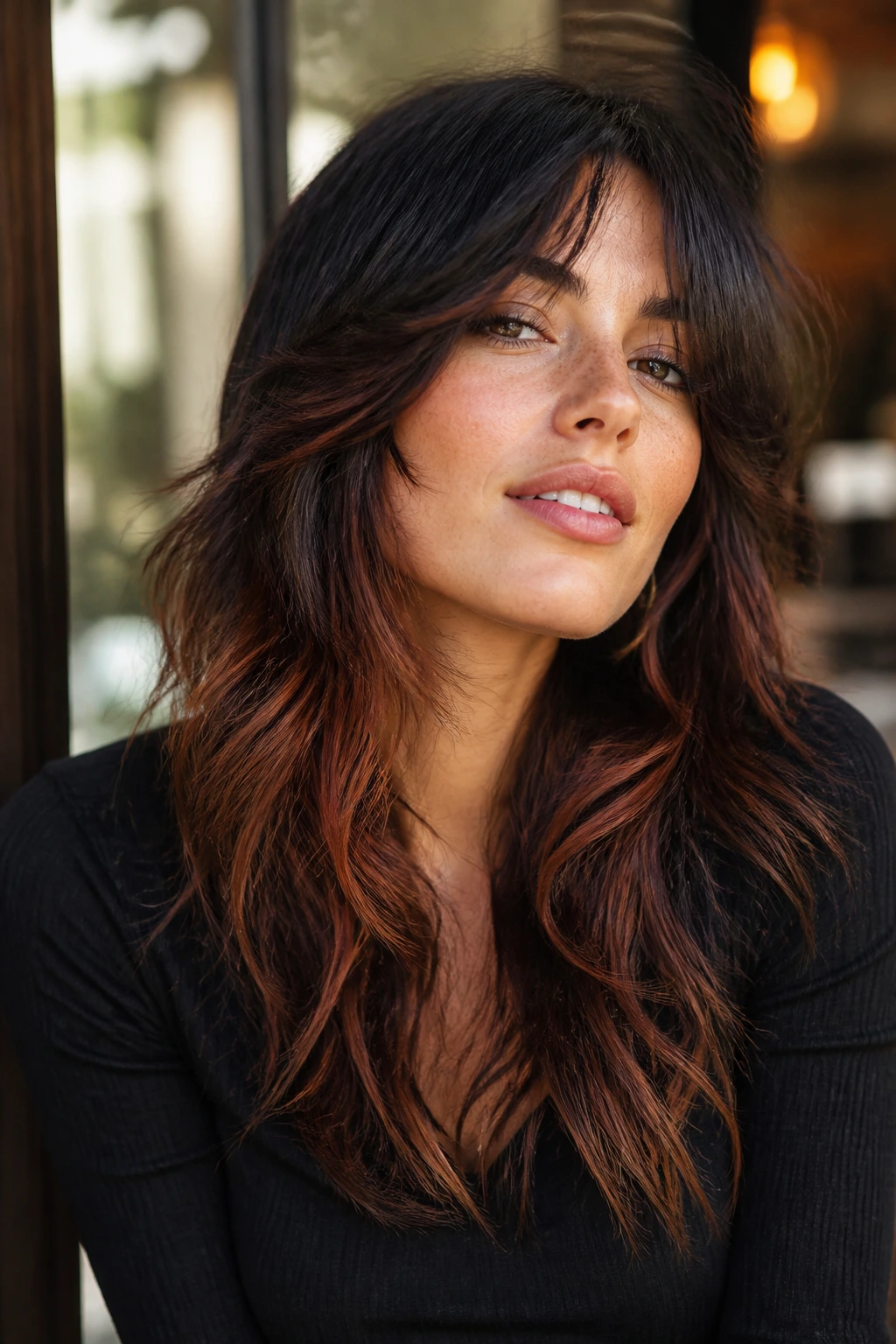
This is the maximalist ending, and it earns it. Think hidden panels in emerald, sapphire, amethyst, or ruby — not all at once, unless you want the whole haircut to veer into costume territory. On long wolf cut layers, jewel tones peek out in deep, rich flashes that feel dramatic but controlled.
Why this version is special
Long layers give jewel tones room to breathe. The color can sit in the interior and lower lengths, then break through as the hair moves. Because the base wolf cut already has a rough silhouette, the richness of the color keeps it from looking messy in a bad way.
A good way to approach it
Pick one jewel tone and one accent tone, not five. Emerald with a little sapphire. Amethyst with a touch of blue-black. Ruby with a darker wine base. That limited palette keeps the hidden color from turning chaotic when the layers overlap.
If you want a single word for the effect, it’s depth. The cut has it. The color adds more.
How to Choose the Right Wolf Cut for Your Hair Texture
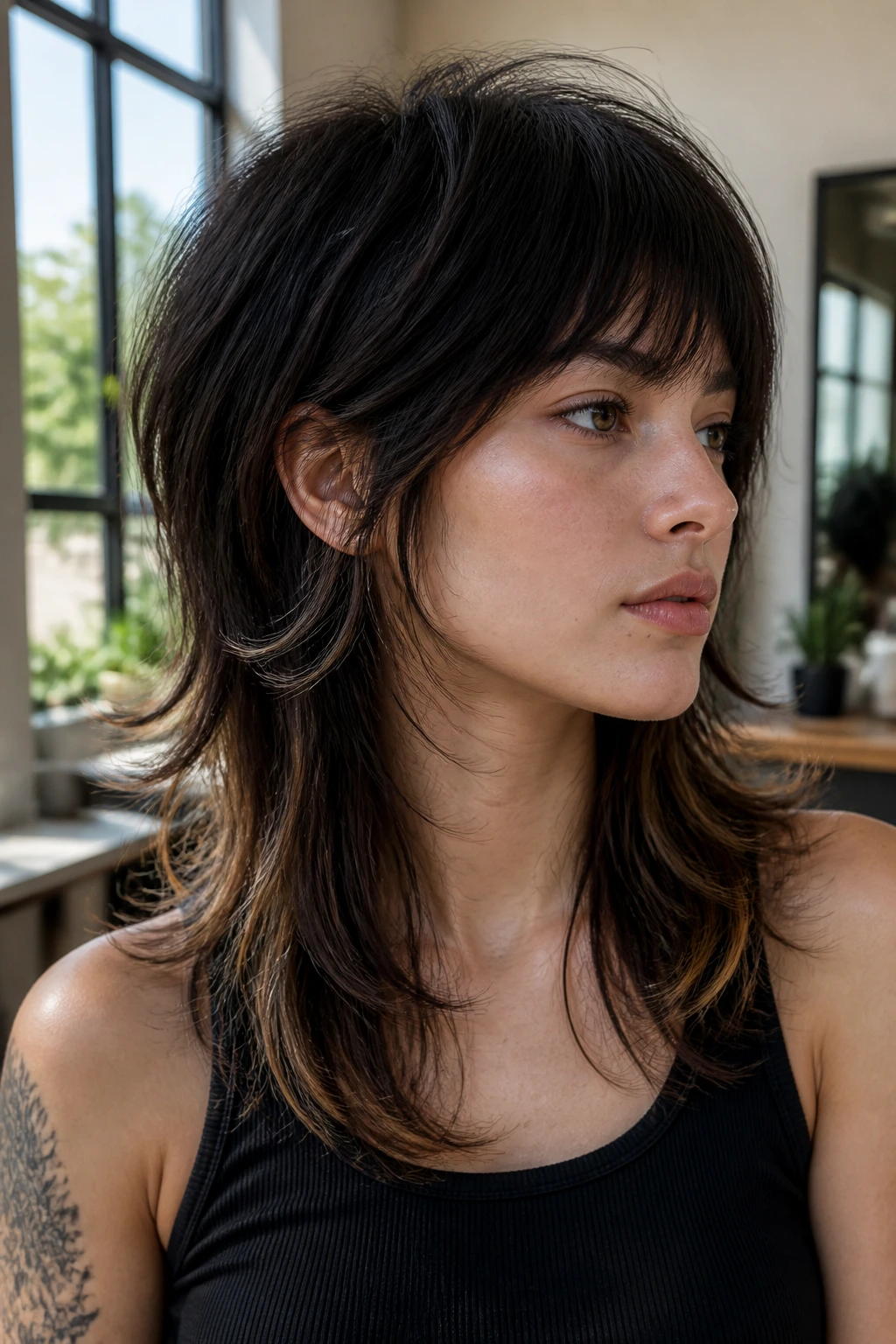
Texture changes the whole story. Straight hair shows every hidden panel in clean slices, which makes bold color look more graphic. Wavy hair breaks the color into softer flashes and usually gives the most forgiving result. Curly and coily textures scatter the highlights the furthest, so the surprise is gentler and the overall look feels more dimensional than literal.
That means you should not choose a peekaboo shade only by swatch. Choose it by how your hair sits on your head. If your strands are fine and straight, a heavy neon block can look harsher than you expect. If your hair is thick and curly, a delicate champagne ribbon may disappear unless the placement is deliberate. The same shade can behave like two different animals.
Face shape matters too, though not in the stiff, overcomplicated way people sometimes talk about it. If you want the eyes pulled upward, keep the shortest layers and the brightest hidden color higher around the crown. If you want the color to flick around the jaw and neck, push the panels lower. If you want softness around the cheeks, ask for hidden color in the front-bottom pieces and feathered fringe.
And yes, density matters as much as texture. Dense hair can handle broader hidden highlights because the top layer is thick enough to veil the color. Finer hair usually needs smaller, more carefully spaced ribbons so the scalp doesn’t start peeking through in odd places. That’s not a flaw. It’s just how the haircut behaves.
What to Tell Your Stylist Before They Touch the Color Bowl

Bring pictures, but not only glam pictures. Bring one photo that shows the cut silhouette, one that shows the color placement, and one that shows the level of contrast you like. That three-photo approach saves a lot of vague hand-waving in the chair. It also keeps you from accidentally asking for three different ideas at once.
Say where you want the color to appear when the hair moves. That sentence matters more than “I want hidden highlights.” Hidden where? Under the crown? Around the ears? Near the nape? Along the lower sides? If you do not specify, a stylist can make a decent guess, but a guess is still a guess.
Tone is another place where people get sloppy. Ask for warm, cool, smoky, metallic, or vivid. Those are useful words. “Caramel” and “ash” are useful words. “Nice blonde” is not. A good color conversation should include base shade, lift level, and fade expectation. If you want cobalt, ask how it will fade on your starting color. If you want pastel pink, ask how often you’ll need a gloss. That is the real conversation.
Common Mistakes That Make Peekaboo Color Look Flat
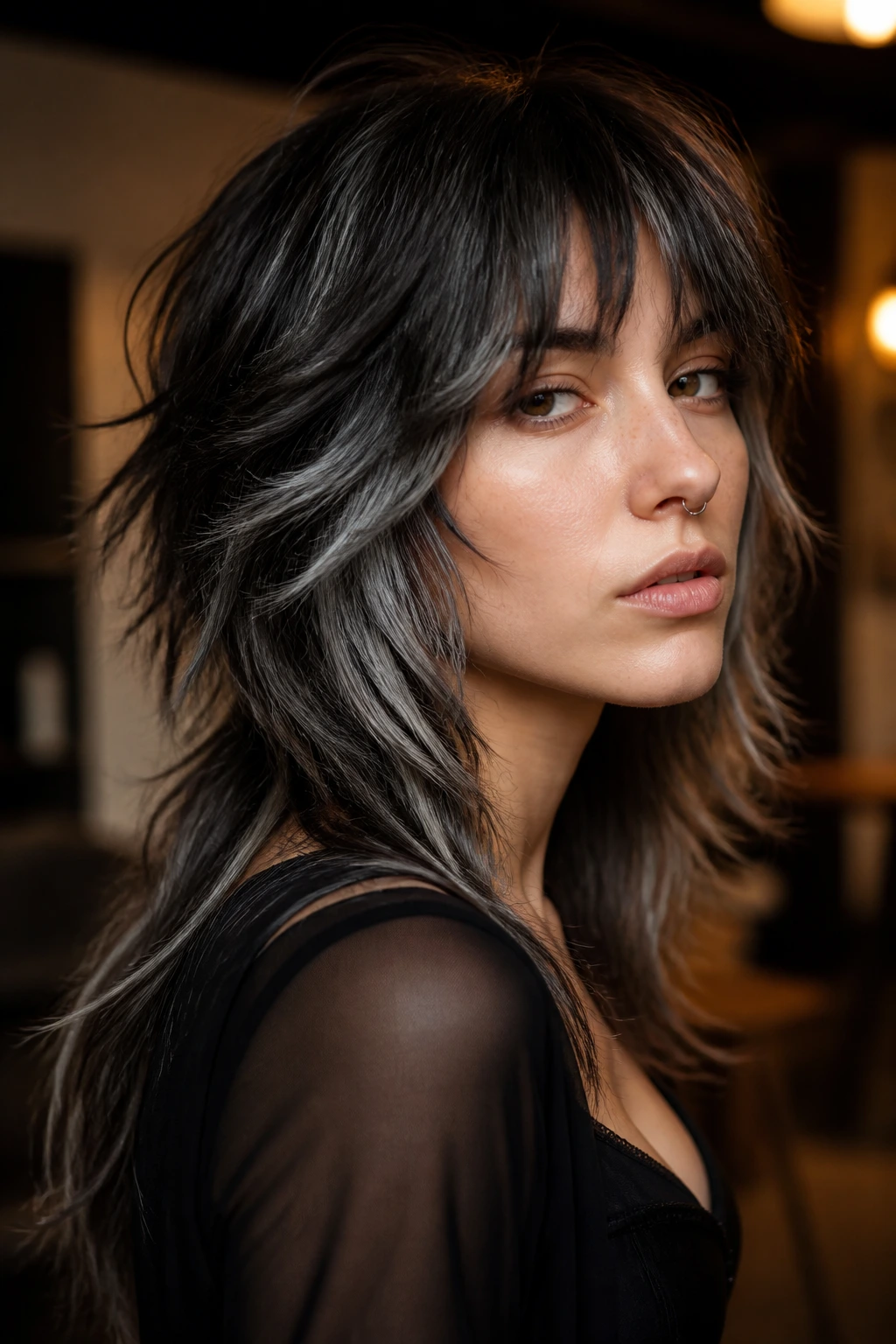
The first mistake is putting the hidden color too high. If the panels sit on the top canopy of the head, they stop being peekaboo and start being regular highlights. The whole surprise disappears. Keep the boldest sections under the outer veil unless you want a louder result.
The second mistake is choosing a shade that fights the base. Bright gold over brassy blonde can look messy. Silver over a yellow-heavy base can turn muddy. Neon over porous ends can go patchy. The base and the hidden color have to speak the same language, even if they’re saying very different things.
Third: too much thinning. Wolf cuts need texture, yes, but if the stylist removes too much bulk from fine or medium hair, the hidden color starts showing scalp and gaps instead of movement. That’s not dimension. It’s overcutting. Ask for shape, not shredding.
Fourth: ignoring maintenance. Vivid peekaboo color under a wolf cut still needs care. Just because it’s hidden doesn’t mean it can survive bad shampoo, too much heat, or rough towel-drying. Hidden color gets neglected precisely because it’s hidden, and that’s when it starts to look tired.
Fifth: forgetting that placement should follow your real styling habits. If you always wear your hair in a half-up clip, the color should live where that style exposes it. If you almost never tie your hair up, maybe put more of the hidden color into the sides and front lower layers. Haircuts should fit the way you actually live, not the way a photo suggests you might live.
Variations and Alternatives to Try If You Like This Look
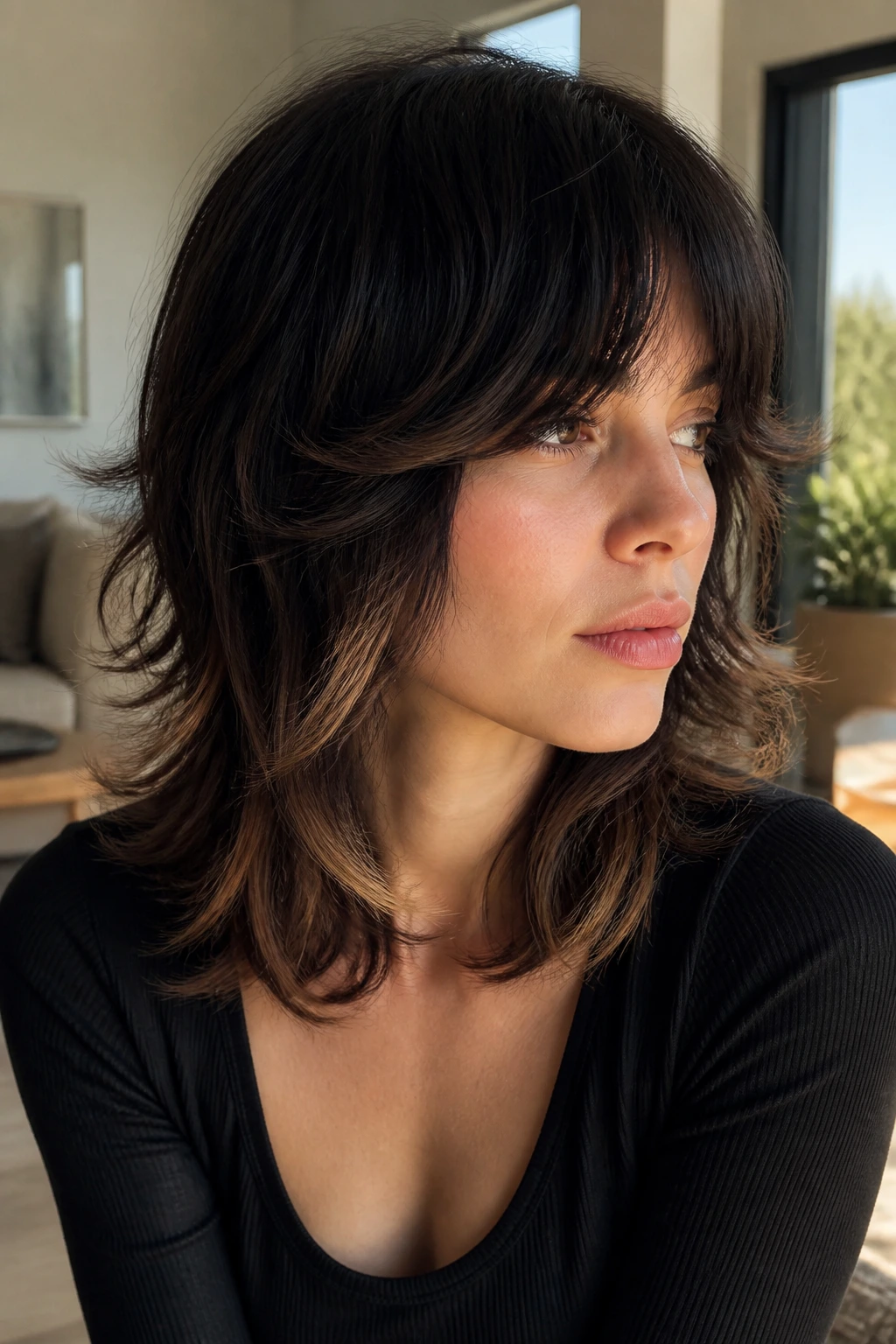
Money-Piece Wolf Cut: Keep the peekaboo color hidden everywhere except a couple of brighter front ribbons. That gives you face light without sacrificing the secret-color effect.
Undercut Reveal: If you wear the top layer long enough, a hidden undercut with color underneath can make the wolf shape look much sharper. The contrast becomes obvious the second you tuck the hair up.
Soft Goth Version: Swap bright fashion shades for deep plum, slate blue, or smoky green. The result feels darker and more wearable, but it still has that hidden flash when the layers shift.
Pastel Drift: Use two pale tones — like lilac and rose — instead of one. The blend looks cloudier and more delicate, which works well on lighter bases and softly layered cuts.
Low-Contrast Brunette Shift: If you want something subtle, stay inside the brunette family and use mocha, toffee, or chestnut in the underlayers. It’s a nice alternative for workplaces or routines that don’t welcome loud color.
Tools That Make the Cut and Color Easier to Manage
- Wide-tooth comb: Good for detangling without ripping through the wolf cut’s texture.
- Tail comb: Helpful for lifting sections when you want to see where the peekaboo color sits.
- Color-safe shampoo: Keeps hidden tones from washing out too quickly.
- Purple or blue toning conditioner: Useful if your hidden color sits over lightened blonde or silver pieces.
- Heat protectant spray: Necessary if you blow-dry or use a curling wand often.
- Microfiber towel or soft tee: Reduces frizz when the cut is fresh and textured.
- Clips for sectioning: Make at-home styling less chaotic.
- Round brush or diffuser: Choose based on whether your wolf cut is straighter or curlier.
- Hair gloss or glaze: Handy for keeping brunette shadows rich and fashion shades less dusty.
How to Keep the Shape and Color Fresh
Wolf cuts look best when the layers keep their edge, not when they’re left to grow into one blunt mass. Most people do well with a trim every 6 to 10 weeks, depending on how fast their hair grows and how shaggy they want the finish to stay. If the fringe starts hitting the lashes and the layers stop separating, it’s time.
Hidden color usually needs more attention than the cut. Vivid shades can fade within a few washes if you use hot water or heavy clarifying shampoo. Brunette-based peekaboo highlights hold longer, but they still lose punch if the ends get dry. A color-refresh gloss every 4 to 8 weeks can keep the tone from drifting too far.
Wash less often if you can. Two to three times a week is plenty for many hair types, and dry shampoo between washes helps the crown keep lift. If the top layer gets oily, the wolf cut can collapse fast, and then the hidden color stops showing through in the right places.
Heat tools are fine, but not every day. A wolf cut can live on air-dried texture, rough blow-drying, or a quick bend with a curling iron. The more often you blast it with high heat, the faster the hidden color loses shine. That sheen matters. Peekaboo highlights look best when the finish still has some slip.
Frequently Asked Questions
Can wolf cuts with peekaboo highlights work on short hair?
Yes, as long as the cut still has layered movement. Shorter wolf cuts tend to reveal the hidden color faster, so the effect is punchier and less subtle.
Do peekaboo highlights damage the hair more than regular highlights?
Not by default. The damage comes from how much lightening the hair needs, not from the placement itself. Dark hair that needs a strong lift will take more stress than hair that only needs a mild color shift.
What hidden colors fade the fastest?
Neons, pastels, and bright reds usually fade faster than brunette-based or smoky shades. Porous ends lose vivid pigment first, so the color often softens at the bottom before it changes near the roots.
Can I keep this look if I air-dry my hair?
Absolutely. In fact, wavy and curly wolf cuts often look better air-dried because the hidden color breaks into natural bends. Just use a leave-in product so the texture doesn’t get puffy or dry.
How do I make peekaboo highlights show more?
Ask for the color lower in the interior layers, then style with movement. A half-up style, loose wave, or tucked-behind-the-ear finish reveals the color better than a perfectly still blow-dry.
Is this a good choice for fine hair?
It can be, but the color placement needs to stay light and narrow. Too much contrast or too many thick panels can make fine hair look sparse instead of dimensional.
What if I want the color to be bold but still office-friendly?
Pick a hidden shade with depth — plum, teal, deep copper, or smoky blue — and keep it under the top veil. It gives you a clear color hit without turning the whole head into a neon block.
How often should I refresh the toner or gloss?
For lightened hidden pieces, every 4 to 6 weeks is a useful target if you want the shade to stay clean. Brunette and red-brown hidden colors can stretch longer, especially if you use gentle shampoo and cool rinses.
The Shape and the Surprise
The best wolf cuts with peekaboo highlights do two jobs at once. They give you a cut with movement and grit, then hide a second story underneath it. That second story can be warm, smoky, bright, or strange. That’s the fun part. You get to decide how much of it the room sees at once.
If you choose the right placement and the right color family, the look stays interesting long after the first salon day. It shifts when you move. It catches when you turn. And it never needs to be loud to make a point, which is probably why it keeps winning people over one hidden flash at a time.
