



Thick hair and a wolf cut can be a brilliant pairing—or a puffy mess—depending on where the weight comes out. That’s the whole game with choppy wolf cuts for thick hair: the shape has to remove bulk in the right places, keep enough density to show the layers, and leave the ends with some grit so the cut doesn’t collapse into a block by lunchtime.
Thick hair is generous. It holds shape, it takes texture well, and it can make a wolf cut look full in a way finer hair often can’t. But it also has a bad habit of turning every blunt line into a shelf. If the crown is too heavy, the top sits flat. If the ends are over-thinned, they go fuzzy and see-through. And if the fringe is cut without thinking about shrinkage, especially on wavy or curly hair, it springs up and gets bossy.
One thing I’ve noticed, over and over, is that the best versions of this cut are not the most shredded ones. They’re the ones with a clear weight plan. Shorter at the crown, broken up through the mids, and long enough at the perimeter to keep the whole thing from looking like you lost a fight with thinning shears. The right wolf cut gives thick hair room to move without making it look hungry.
Why You’ll Love These 23 Thick-Hair Wolf Ideas
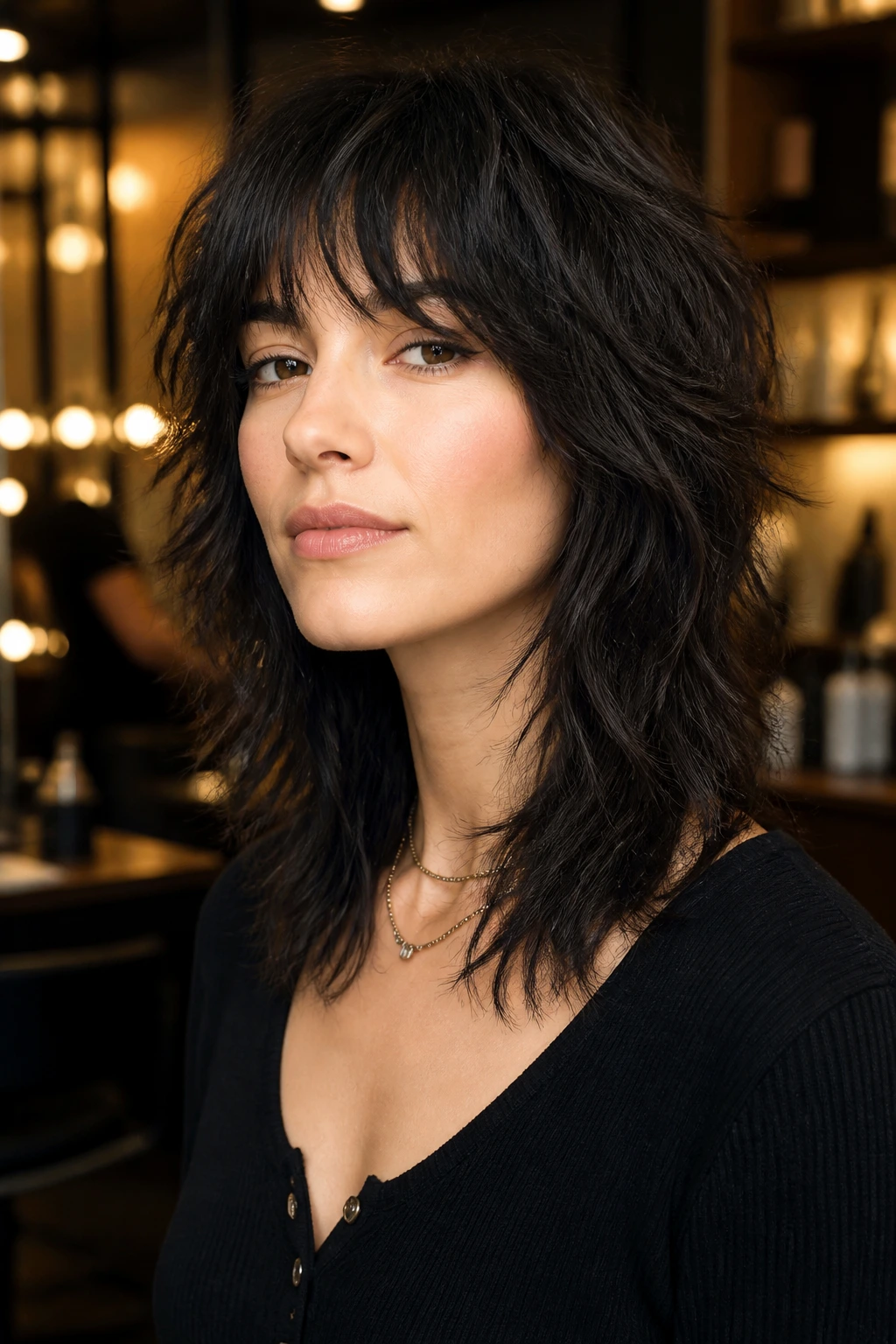
- Bulk control: The right wolf shape takes the heaviness out of thick hair without leaving the ends flimsy or straggly.
- Built-in movement: Choppy layers create bend and swing, so the haircut doesn’t sit like one heavy sheet.
- Fringe flexibility: You can go curtain, heavy, side-parted, or nearly bang-free and still keep the wolf silhouette.
- Length options: These cuts work at jaw length, collarbone length, and well past the shoulders.
- Easier styling: A wolf cut on dense hair often needs less round-brush labor than a blunt cut, because the shape already does some of the work.
- Better grow-out: The layers soften as they grow, so the cut doesn’t fall apart in two weeks.
1. The Soft Crown Shagwolf
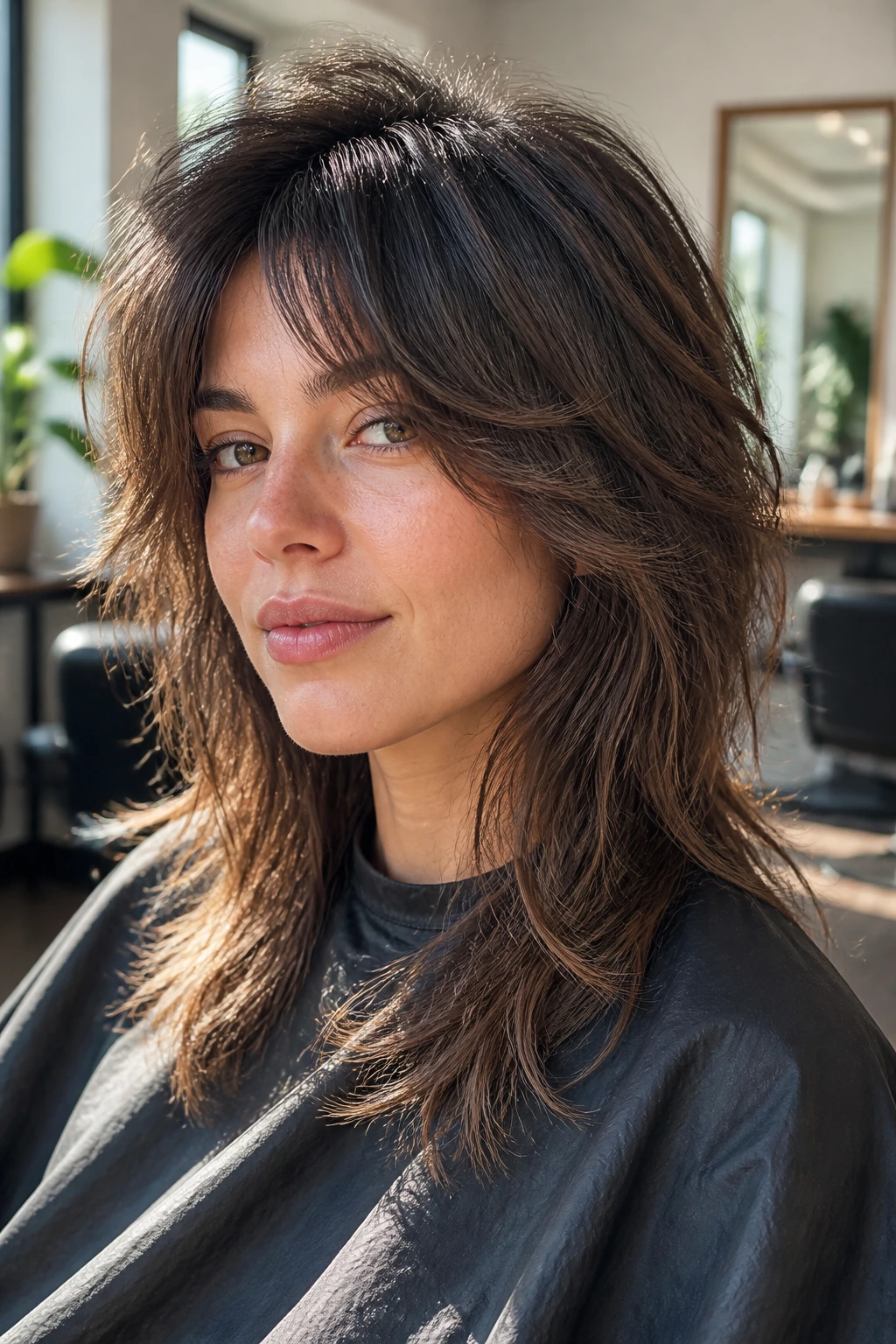
This is the version I’d hand to someone who likes texture but hates looking too “done.” The crown is lifted enough to remove that thick, helmet-like feel, while the perimeter stays solid. On dense hair, that balance matters. You want movement, not a lacey outline.
Ask for internal layers through the top and upper back, then keep the ends blunt-ish with point-cutting at the very tips. That small detail keeps the line from looking sharp and boxy without making the hair wispy. The result is soft, touchable, and a little rebellious, but not so choppy that it starts to look thin.
A light mousse at the roots and a rough-dry with your fingers is usually enough. If your hair has a stubborn crown cowlick, clip the top flat while it cools. That one habit changes everything.
2. Curtain Fringe Wolf With Cheekbone Lift
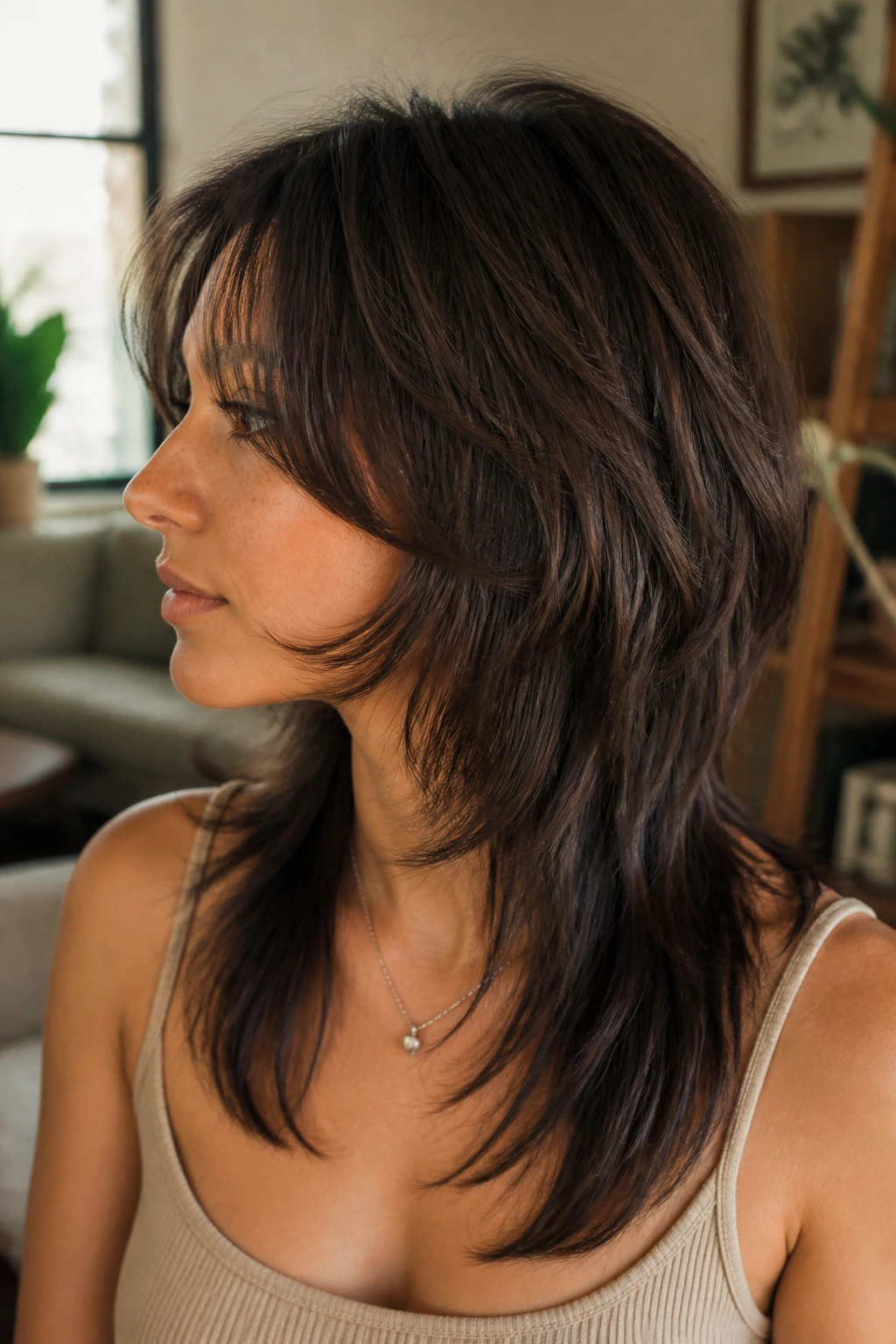
Curtain bangs and thick hair get along better than people expect. The density gives the fringe enough body to sit in a clean split, instead of separating into three sad see-through strands. What makes this version work is the starting point: the shortest pieces should hit around the cheekbone, not ride all the way up to the brow.
The rest of the cut should angle away from the face in slow, soft steps. That keeps the front from feeling too blunt, which is a common mistake on thick hair. I like this shape when someone wants the wolf mood but still needs the face framed in a way that feels wearable with a sweatshirt, a blazer, or a messy bun.
How to wear it
Blow-dry the fringe away from the face with a small round brush, then roll it back down through the cheek area. If your hair is coarse, let the bangs cool on the brush before touching them. Warm hair bends; cool hair remembers.
3. Collarbone Wolf With Broken Ends

If you don’t want to go short, this is the safe-but-not-boring option. The length lands at the collarbone, which gives thick hair enough weight to hang well, while the layers above it stop the cut from turning into one long shelf. The choppiness stays visible, but the outline still feels deliberate.
This cut works best when the stylist removes bulk from the inside, not by carving huge gaps through the outer perimeter. You’ll notice the difference most on wash day. Instead of the hair stacking outward at the sides, it falls forward with a bit of bend at the ends.
A collarbone wolf loves a bendy finish: think loose waves, not tight curls. A 1-inch iron or a big flat iron bend through the mid-lengths gives it that slightly rumpled look without making the ends frizz out.
4. The Heavy Fringe Wolf

A thick fringe can look fantastic on thick hair because it has enough body to sit there with conviction. Thin bangs on dense hair often disappear into the rest of the haircut. Heavy bangs don’t. They create a strong top line, then the choppy layers below them loosen the whole shape so it doesn’t feel too rigid.
The trick is keeping the fringe dense at the center while softening the sides so it blends into the face-framing layers. If the bang is cut too blunt and too short, it can feel like a wall. If it’s too thinned out, it puffs up and starts fighting the rest of the cut. The sweet spot sits somewhere in the middle.
This is a good pick if you like a little drama and don’t mind regular fringe trims. Bangs on thick hair grow fast enough to get in your eyes, and once they do, they’re annoying. Not tragic. Just annoying.
5. Razor-Edited Wolf for Coarse Hair
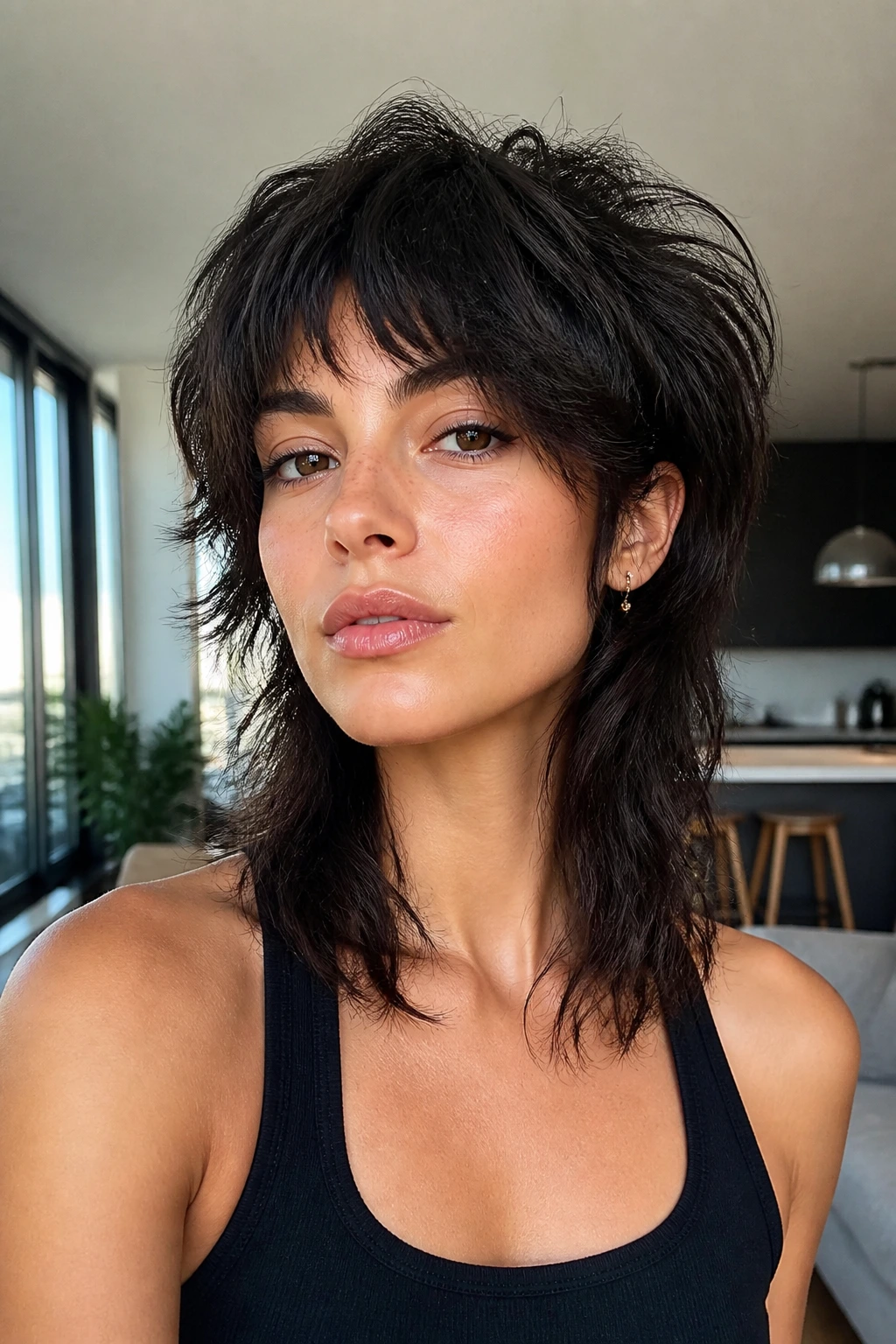
Coarse thick hair can handle a razor better than many people think, but only when the stylist knows where to stop. A razor can break up the surface and give the layers a softer edge, which is useful if your hair feels too blunt in every cut. It can also go wrong fast if the hair is dry, brittle, or already frizzy.
The best razor wolf keeps the line weighty enough to hold shape, then uses the razor to remove bulk from the surface and ends. That creates a lived-in texture that doesn’t look chopped by accident. I’d choose this version when the hair is dense, straight, and resistant to movement.
What makes it different
- The ends look softer, not shredded.
- The crown still has lift, but the outline stays controlled.
- It plays well with a matte paste or texture spray.
Skip this approach if your hair frizzes the moment humidity hits. For that texture, a scissor-based wolf cut usually holds up better.
6. The Short Nape Wolf
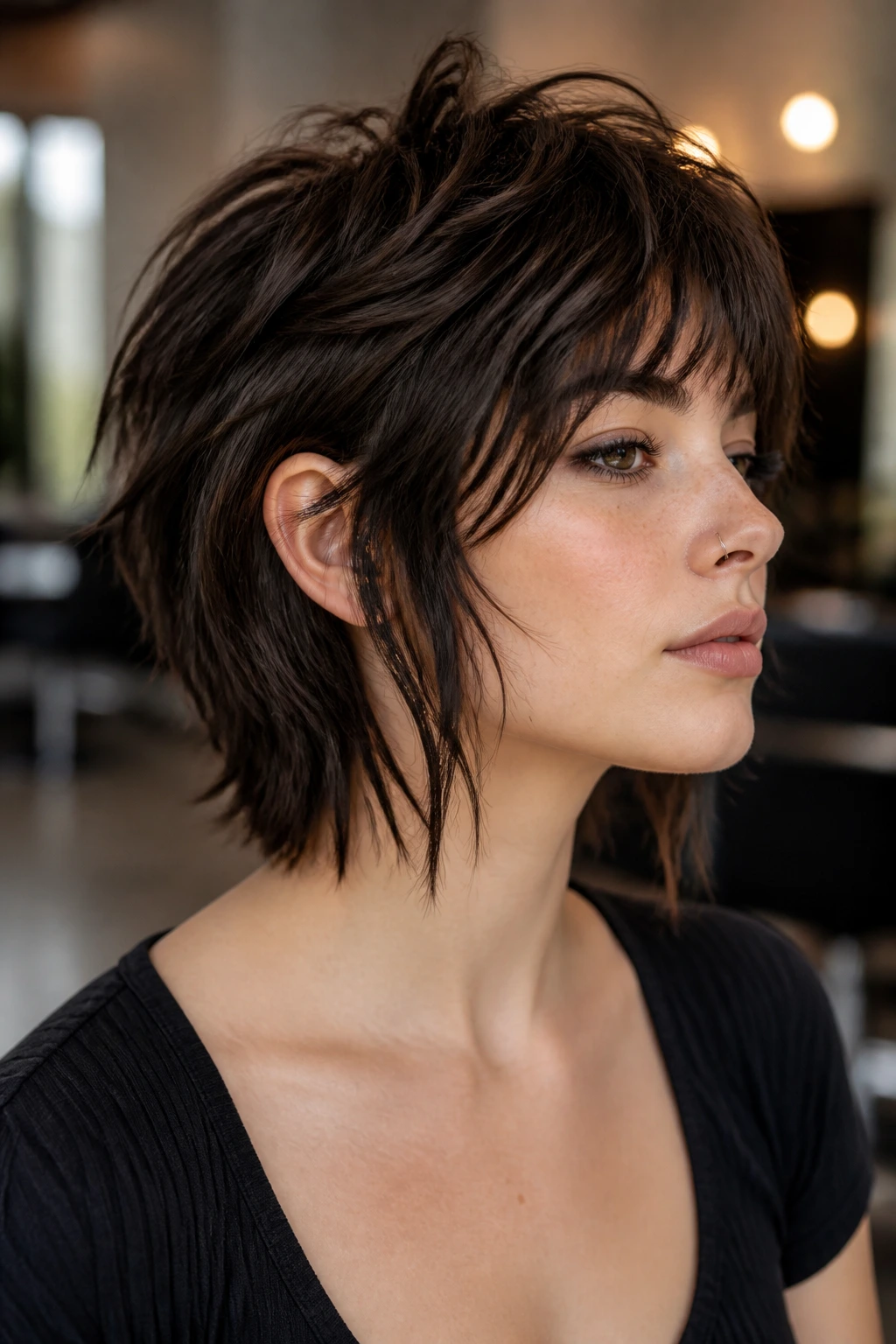
Shorter in back, longer at the front, and a little mischievous. That’s the appeal here. Thick hair can feel hot and bulky at the nape, especially when it grows past the neckline and starts sticking out under coats or sweaters. Cutting the back shorter removes some of that weight without forcing the whole haircut into a pixie.
The front pieces stay long enough to frame the jaw and cheekbone, which keeps the cut from reading too harsh. This version is best if you want the edge of a wolf cut but can’t live with long layers hanging around your shoulders. The silhouette gets sharper. The neck gets air.
A tiny amount of paste at the ends can help the back sit in pieces instead of one smooth curve. I like that detail because it keeps the cut from looking too polished. A wolf cut should look like it has opinions.
7. Long-Flow Wolf Layers

Not everyone wants to lose length. Fair enough. This version keeps the hair well past the shoulders and uses internal layering to make the crown and mids lighter without taking the long tail off the haircut. Thick hair can carry this shape beautifully because the long ends still look full even after some bulk is removed.
The key request here is movement, not reduction. Say that out loud if you have to. You want your stylist to take weight out of the upper half and around the face, then leave enough length through the perimeter that the hair still feels substantial. Too much surface texture on a long wolf can tip into stringy territory.
Ask for this
- Crown layers that sit shorter than the longest length by a few inches
- Soft face framing that starts around the cheekbone
- Point-cut ends, not an aggressively thinned hemline
This is the version I recommend for thick hair that behaves well in waves but gets bulky when it’s all one length.
8. Rounded Wolf for Dense Hair
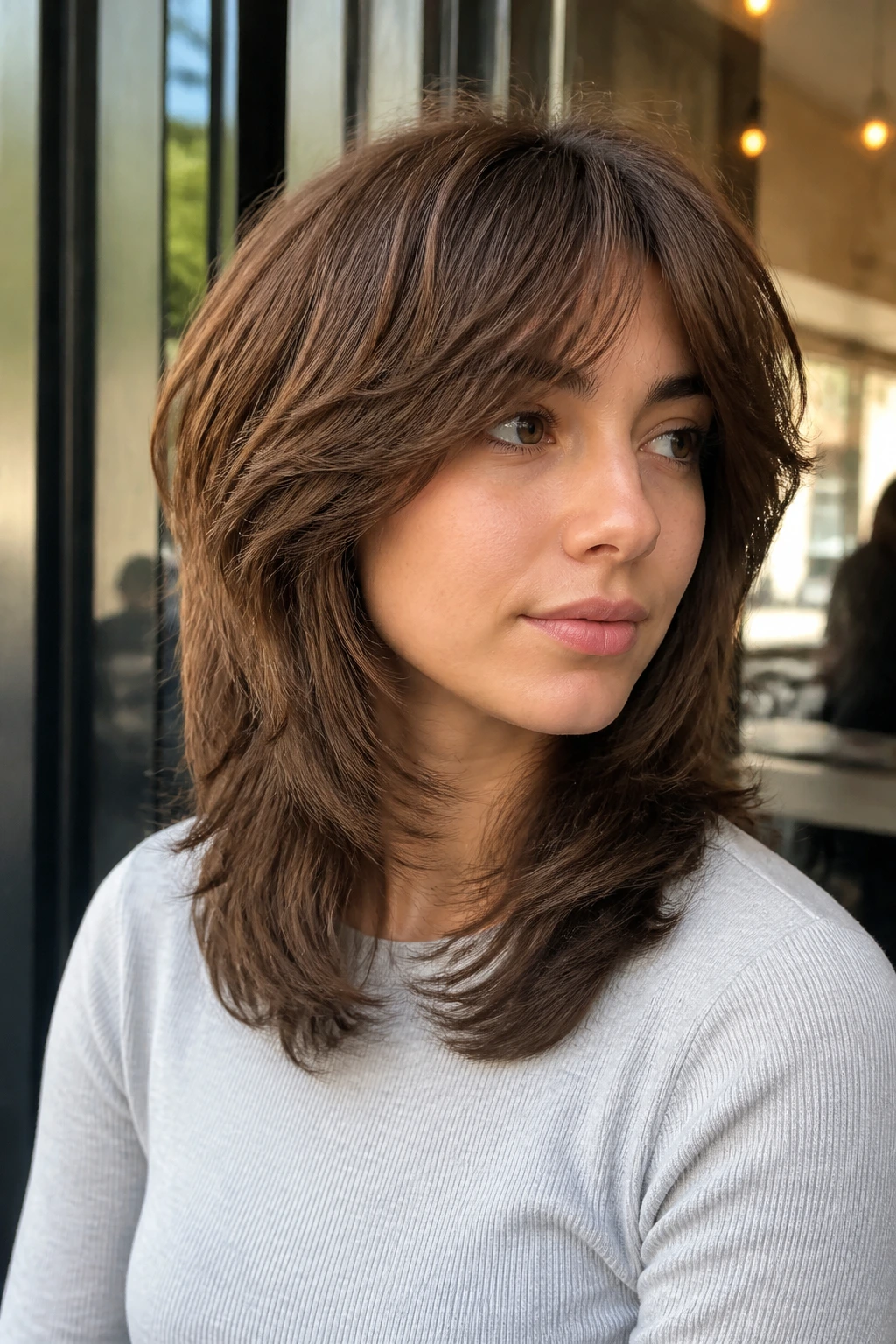
A square haircut on thick hair can make the head look wider than it is. A rounded wolf fixes that by curving the layers around the head shape instead of letting them stick out at the corners. It’s a smart choice if your hair grows outward at the sides and gets that bell shape near the shoulders.
The rounding happens in the internal structure, not by making the haircut soft and flat. There’s still a wolf edge there. You just don’t see every layer as a hard line. The result feels easier on the eyes and a little more modern than a blunt thick-hair cut with a few random slices taken out.
If you wear a side part, this shape can look especially good because the roundness follows the way the hair naturally falls. With a center part, it’s a little more graphic. Either way, it needs a little root lift to keep the crown from sitting too close to the scalp.
9. The Mullet-Leaning Wolf Cut

Some people want the wolf cut to lean all the way into its mullet roots. Fine. Thick hair is one of the few textures that can make that look intentional instead of accidentally lopsided. The front stays shorter and more face-focused, while the back holds onto length and weight.
That contrast keeps the haircut lively. It also helps dense hair stop behaving like a single block. If your hair is thick enough to fight the layers, a stronger disconnect can actually make the cut easier to wear because the shape has somewhere to go. There’s less polite blending. More attitude.
I like this version best with a bit of texture spray and rough separation through the ends. Don’t brush it to death. The whole point is to let the layers show their edges.
10. Cheekbone Sweep Wolf

This is one of the easiest ways to flatter thick hair without committing to a heavy bang. The front sections sweep back from the cheekbones and slide into the rest of the cut, which gives the face shape without boxing it in. It’s a strong option if full bangs feel like too much maintenance.
What matters here is the angle. If the face-framing layers start too low, they turn into a long curtain and lose the lift. If they start too short, they can puff out at the sides. The cheekbone is the sweet spot because it gives you a visible frame and enough length to tuck behind the ear on lazy days.
This shape looks especially good on hair that has a natural bend. You don’t need perfect waves. A few loose bends through the front pieces are enough to make the whole cut feel alive.
11. Side-Part Wolf With Built-In Lift
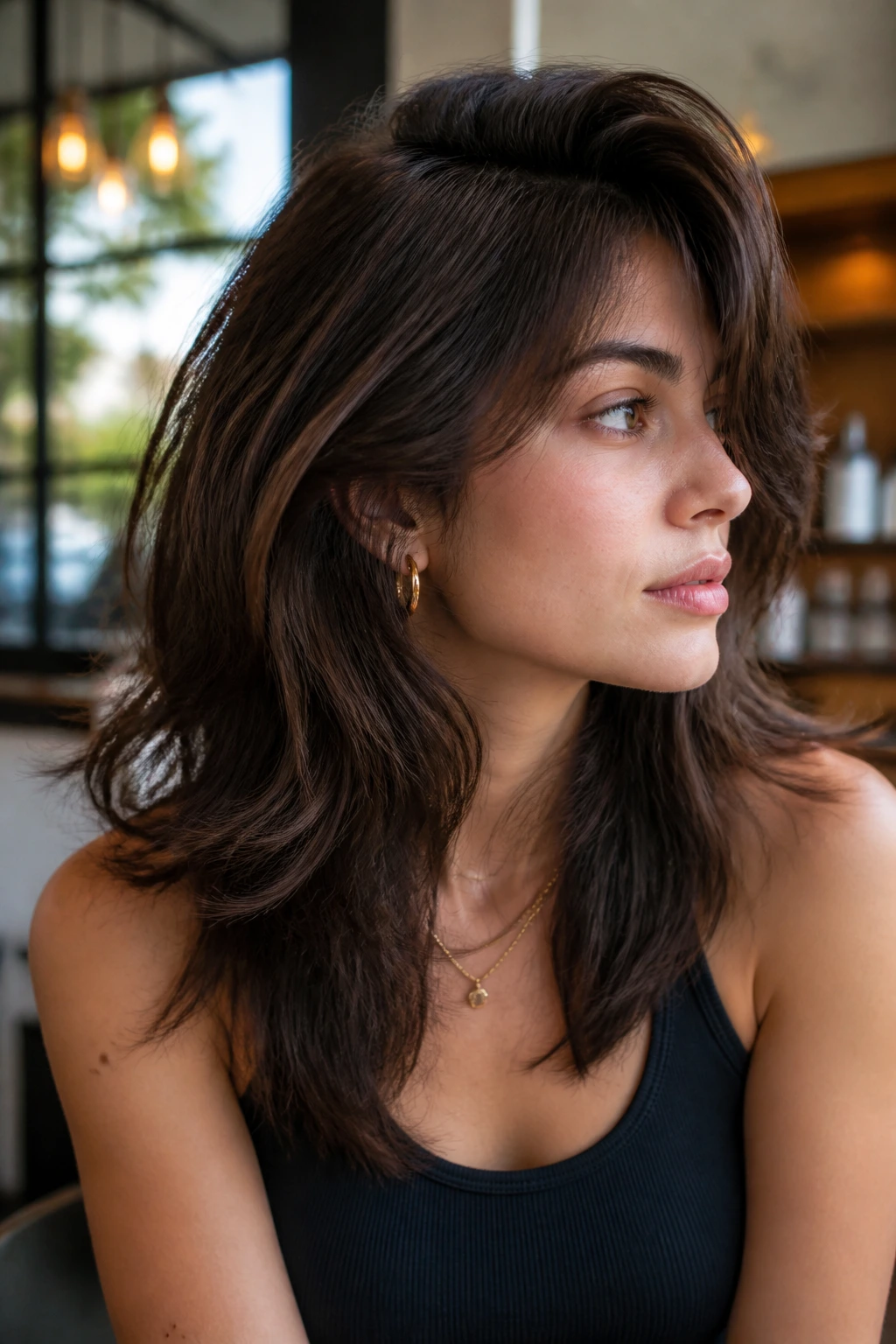
Center parts are everywhere, but thick hair doesn’t always need one. A side-part wolf creates immediate lift at the roots and takes pressure off the crown, which can be handy if your hair tends to fall flat on top and puff at the sides. The asymmetry also makes the choppy layers feel more deliberate.
This cut works because the weight distribution changes. The heavy side gives the hair somewhere to anchor, while the lighter side opens up the face. It’s a nice trick for thick hair that has a stubborn cowlick or a crown that splits in odd places.
Best when you want
- Less flatness at the roots
- A softer shape around one side of the face
- A cut that still looks good after a quick finger comb
Use a root-lift spray at the part and blow-dry the roots in the opposite direction first. Then flip the part back where you want it. That small reset makes a bigger difference than most people expect.
12. Curly Wolf for Dense Coils
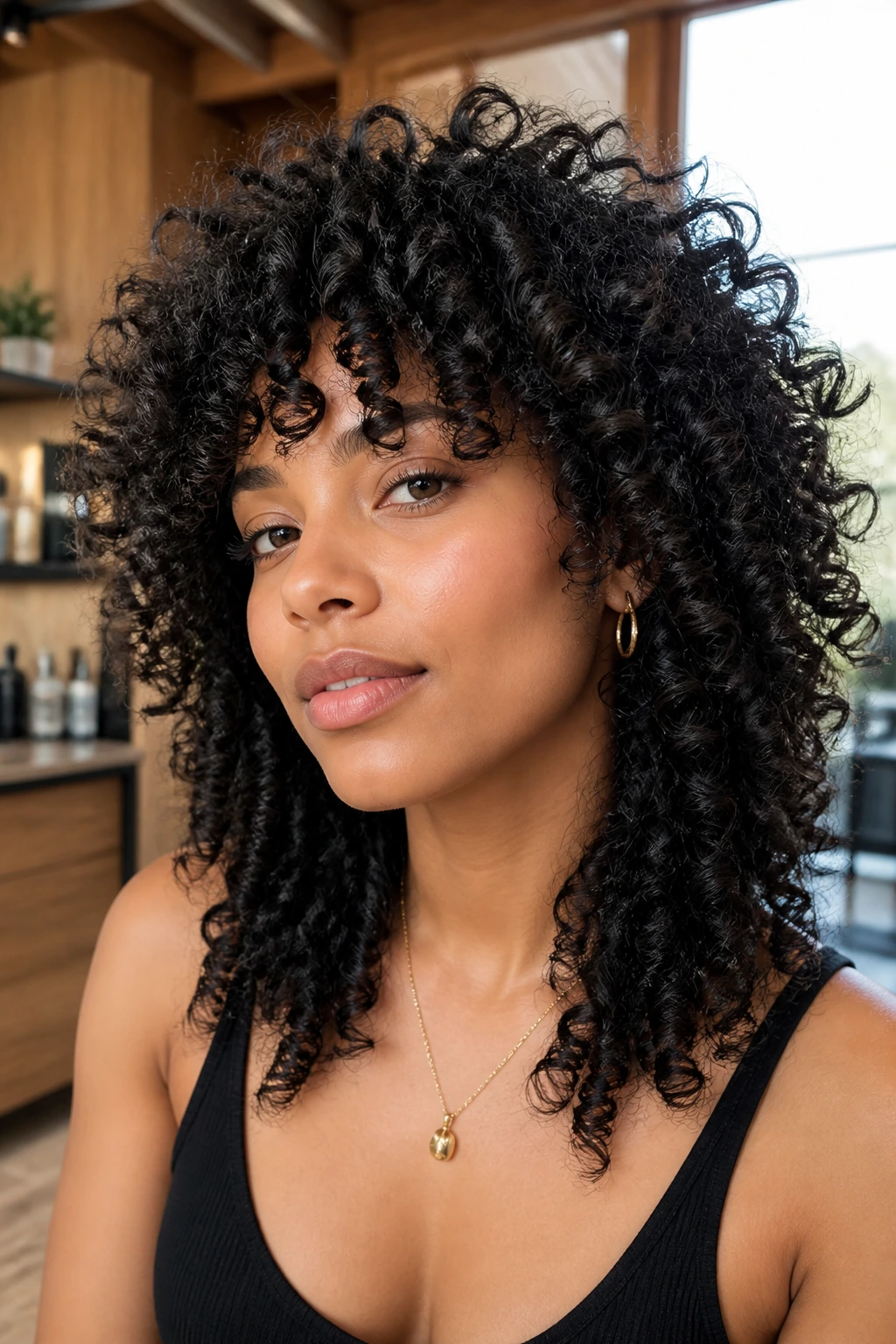
Curly thick hair needs a wolf cut that respects shrinkage. If the cut is done wet without a plan, the layers can pop up too short and leave the shape choppy in the wrong way. I’d want this version cut dry, or nearly dry, so the stylist can see where the curls actually live.
The crown should be opened up enough to take some weight away, but the perimeter needs to keep enough length to hold the curl pattern. That keeps the shape from turning into a puff ball. On coils, the wolf silhouette can be gorgeous because the layers create a stacked, airy outline instead of one dense triangle.
A curl cream with some hold works better than heavy butter here. Thick curly hair already has enough body; what it needs is definition and a little control around the fringe and temple area.
13. Wavy Wolf With Piecey Ends
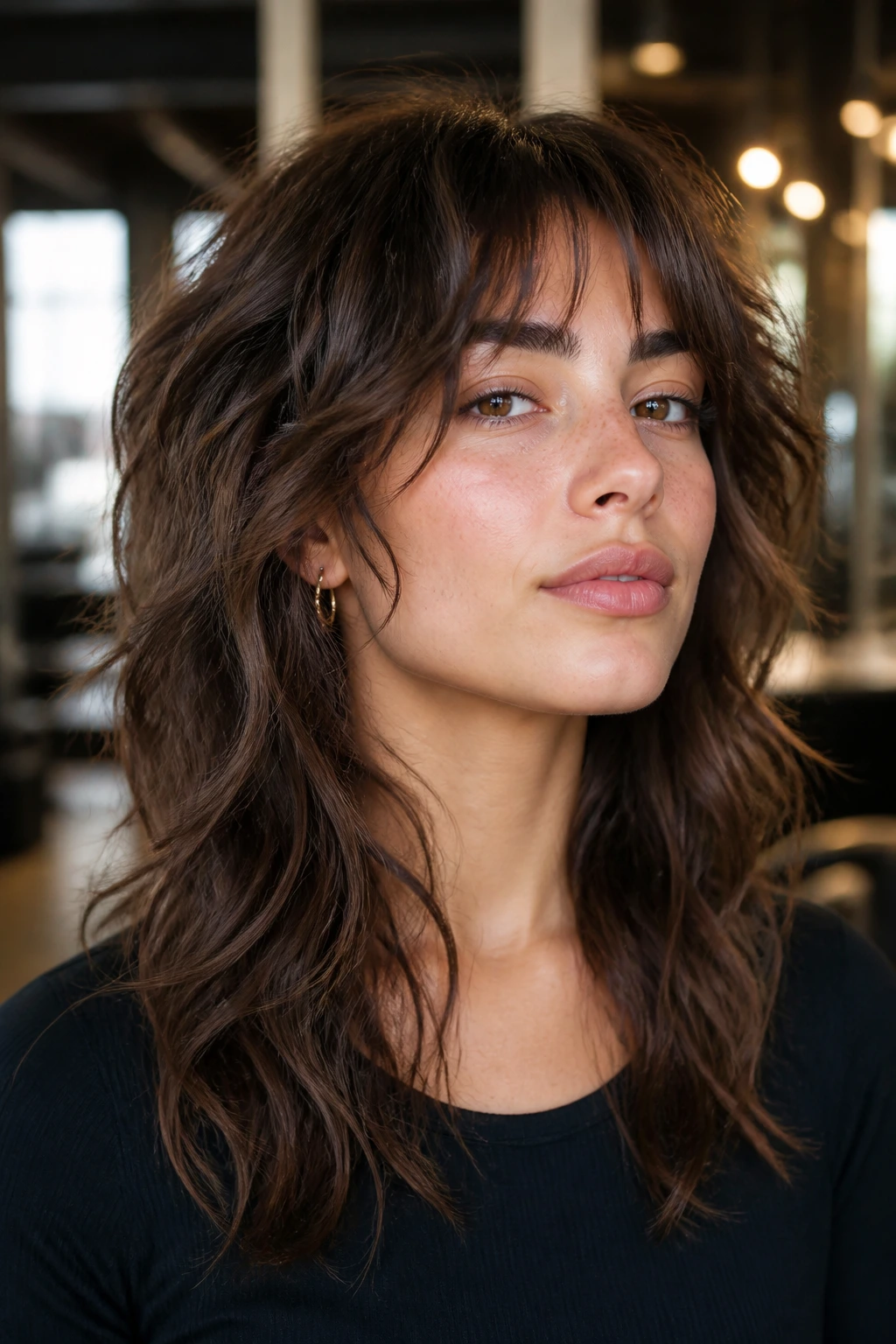
Wavy thick hair is where the wolf cut starts to feel easy. The bend in the hair helps the choppy layers show up without much coaxing. The cut should still remove bulk at the crown and through the sides, but it doesn’t need as much styling force as a straight texture.
I like this shape with a slightly rough perimeter. Not ragged. Rough. The difference matters. Ragged ends look accidental. Rough ends look alive. If your waves are loose, a lightweight texture spray can help the layers stay separated after drying.
A diffused dry with the hair scrunched upward gives the cleanest finish. If you prefer air-drying, use a small amount of mousse at the roots and a gel-cream through the mids, then leave the hair alone. Touching it too much is how waves get fluffy in all the wrong places.
14. Straight-Thick Hair Wolf

Straight thick hair shows every decision, which is why this version needs the sharpest plan. Without bend or wave to hide behind, the layers have to be cut with intention. That means the crown gets internal removal, the face pieces get a clear angle, and the ends get broken up enough to stop the helmet effect.
I’d avoid over-texturizing this one. Straight thick hair can go from sleek to fuzzy if the ends are too shredded. Better to keep the shape clean and use styling to add movement. A flat iron bend at the mids, alternating directions as you move down the head, gives the haircut enough texture to breathe.
This is one of those cuts that looks best on day two if you use a tiny bit of dry shampoo at the roots. The extra grip gives the layers somewhere to sit.
15. Disconnected Wolf With a Hidden Undercut
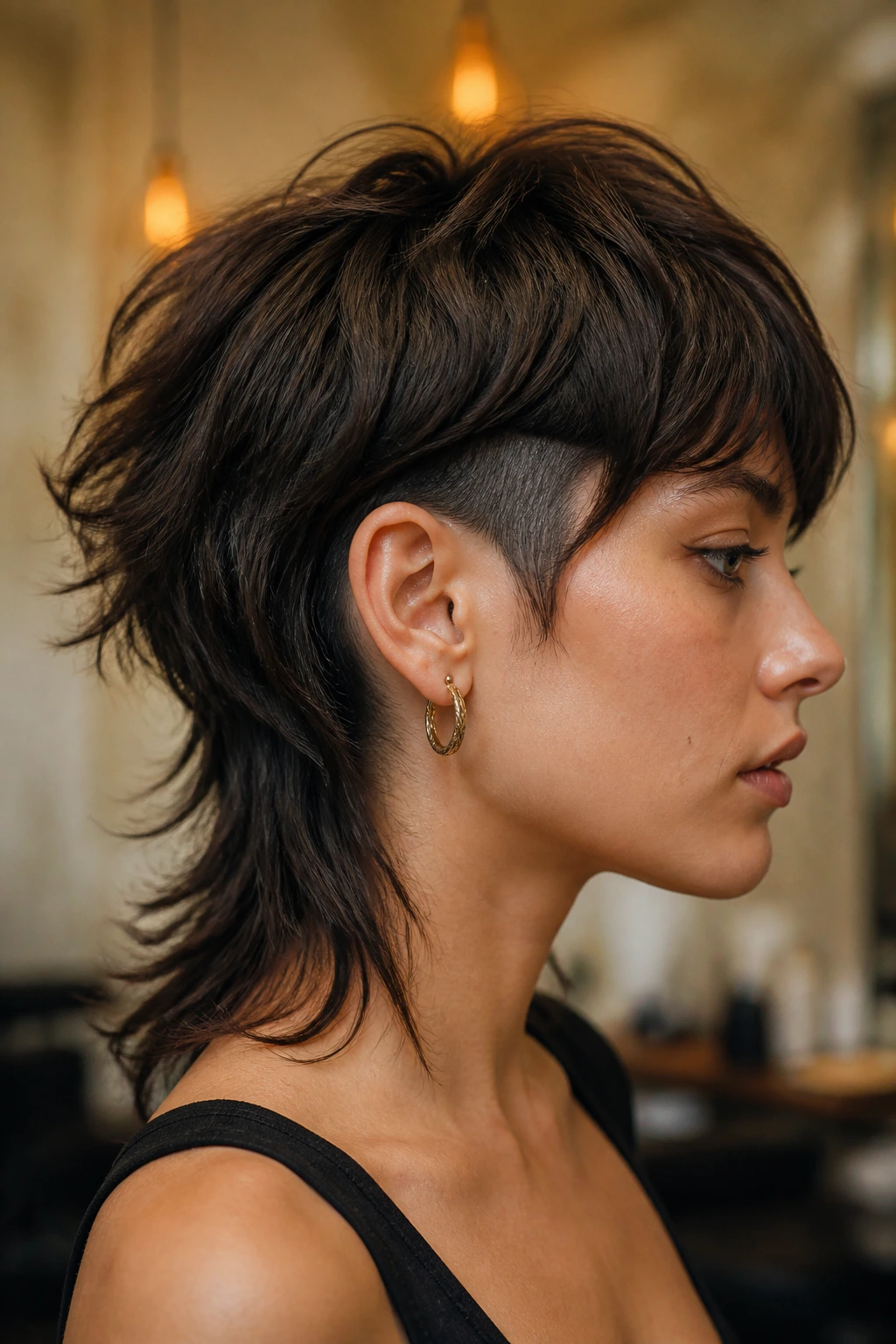
When thick hair is almost too thick, a hidden undercut can change the whole experience. The outer layers still look like a wolf cut, but the underlayer removes some of the bulk at the nape or behind the ears. You don’t always see the undercut, which is the point.
This version is useful if your hair takes forever to dry or if the back of your head feels hot and heavy by the end of the day. The hidden removal lets the top layers fall more freely, and the visible choppiness reads cleaner because the underneath isn’t fighting it. It’s a practical move, not a flashy one.
The tradeoff is upkeep. An undercut grows fast in thick hair, and once it starts poking through, it needs a tidy-up. If you like low maintenance, keep the undercut subtle and wide enough that it blends when it grows.
16. Feathered Wolf With Softer Ends
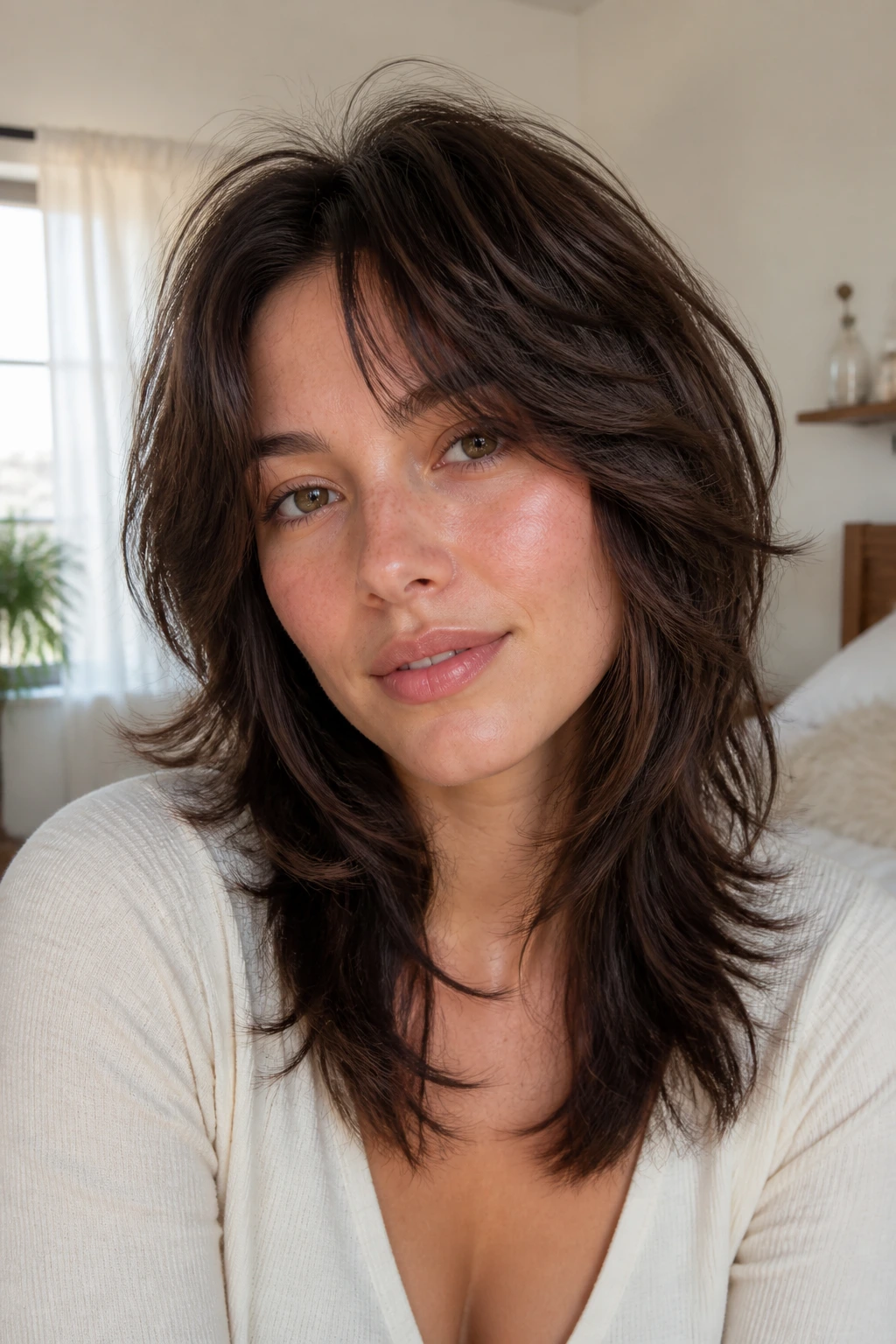
Not every wolf cut has to look sharp-edged. Feathering gives thick hair a softer finish, especially if you want movement without the punkier, shredded look. The layers still rise around the crown and fall away from the face, but the ends are softened enough to look airy rather than jagged.
This works beautifully on thick hair that tends to sit heavy at the bottom. Feathering breaks that weight into smaller pieces, which helps the haircut move when you turn your head. It’s also a smart choice if you wear your hair to work and don’t want the style to feel too rowdy.
A round-brush blowout suits this shape better than a scrunch-and-go finish. Think bend, not curl. If you polish the front pieces and leave the rest a little loose, the cut reads expensive without looking fussy.
17. Shoulder-Shattered Wolf

Shoulder length is a tricky place for thick hair. Hit the shoulders too bluntly and the ends kick out like they’re trying to escape. Go too short and the whole shape can balloon. The shoulder-shattered wolf lives in the middle, with broken ends that stop the perimeter from forming that hard shelf.
This is one of my favorite lengths for thick hair because it gives the wolf cut room to show its structure. The shorter crown keeps the top light, the face layers frame the jaw, and the shoulder-length ends keep the shape grounded. It’s balanced, but not boring.
If your hair flips at the shoulders no matter what, ask for a slight angle through the front so the longest pieces sit below the collision point. That tiny adjustment saves you from daily battle with a curling hemline.
18. High-Crown Wolf With Big Root Lift
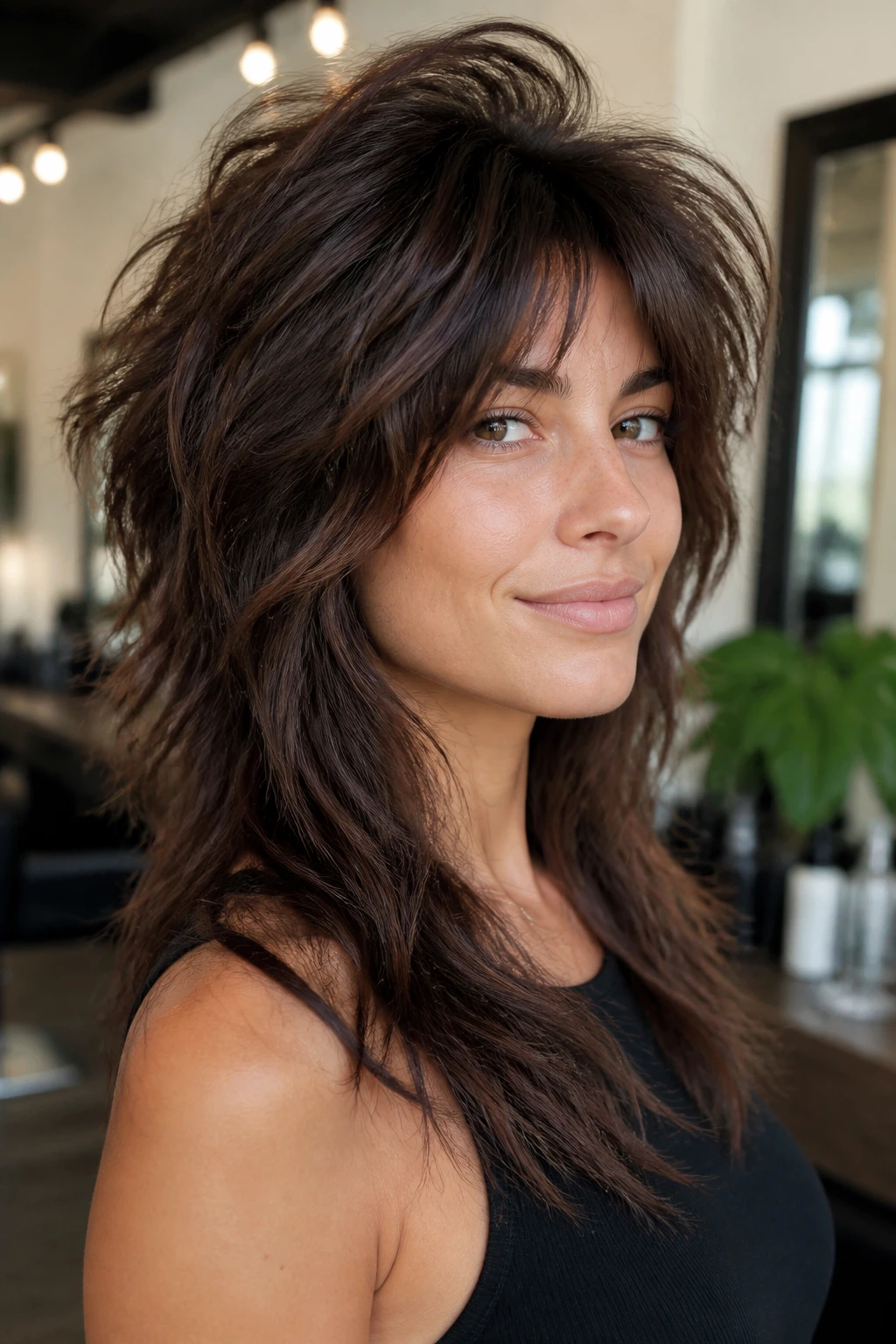
Some thick hair wants to be tall. Not huge. Tall. The high-crown wolf builds its personality around volume at the top, where the shorter layers can stand up without collapsing. This shape is especially good if your hair grows outward at the sides but sits flat on the scalp.
The crown layers should be the shortest part of the haircut, with a deliberate transition into longer face pieces and a solid perimeter. That difference makes the top look lively. It also keeps the haircut from becoming one big puff because the weight still has somewhere to land below the crown.
Root clips, a nozzle dryer, and a round brush are your friends here. If you dry the crown in the wrong direction, the whole shape loses the point. Lift the roots while the hair is damp, then let them cool before you touch them.
19. Air-Dry Wolf for Busy Weeks
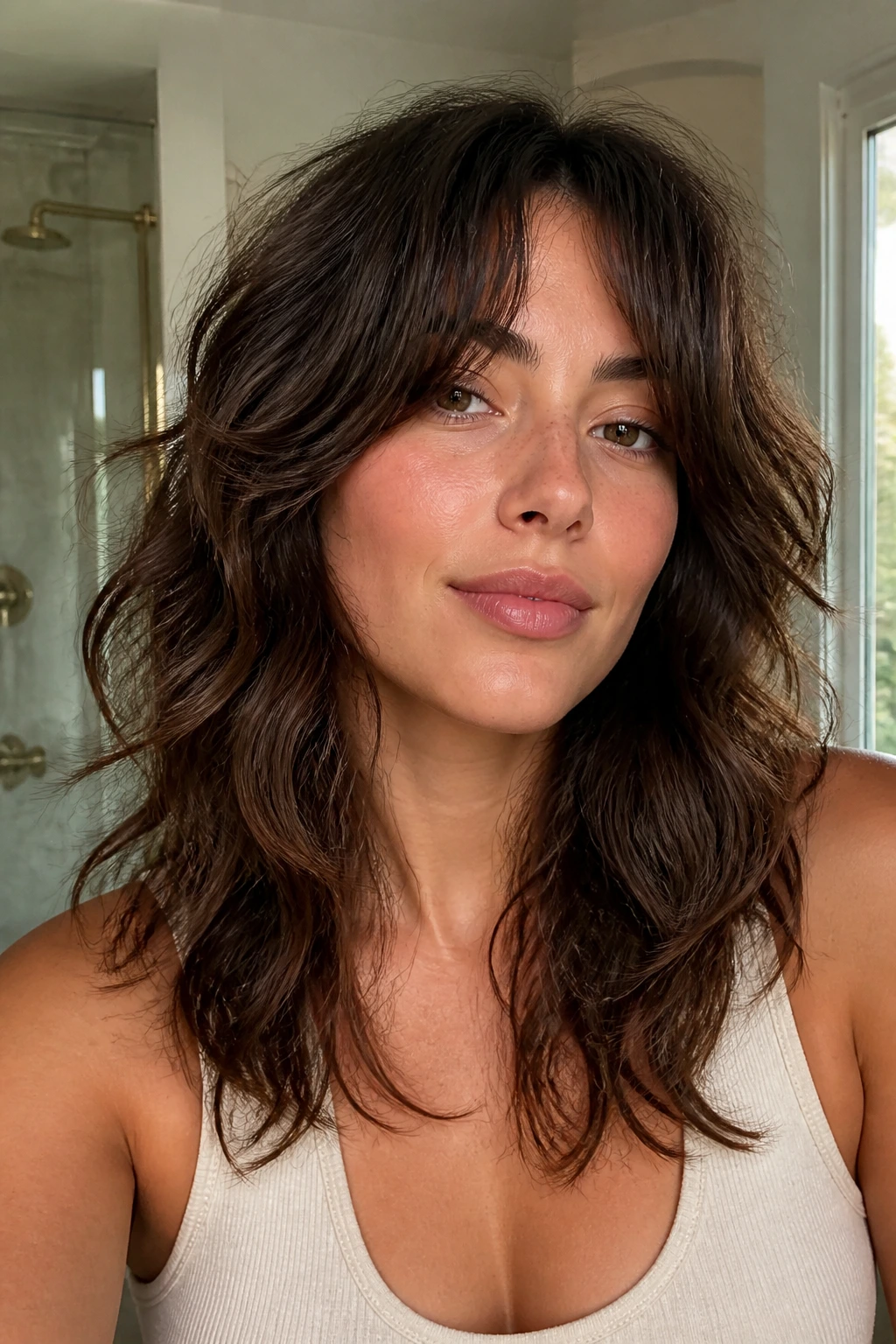
If your thick hair has a decent wave pattern, this is the version that pays you back on tired mornings. The cut needs enough internal layering to stop the mids from swelling into a triangle, but it shouldn’t be so chopped up that air-drying turns the ends fuzzy. A controlled amount of texture is the goal.
I’d use a light leave-in on the mids and a mousse or foam at the roots, then scrunch the hair upward and leave it alone. Once it dries, you can separate the pieces with a drop of serum on the palms—one drop, not half the bottle. Heavy products will pull the crown down and make the cut lose its lift.
This version is useful for people who don’t want to blow-dry every wash day. It still looks intentional when you walk out the door, which matters more than sounding glamorous about it. Hair that behaves is underrated.
20. Polished Wolf for Office Settings

The wolf cut can look tidy. It doesn’t have to scream. This version keeps the choppiness, but softens the perimeter and smooths the face frame so the haircut reads controlled from a distance. Thick hair helps here because it can hold a sleek bend without losing the layered shape underneath.
The trick is in the finish. Use a blow-dryer with a nozzle and a medium round brush to keep the top smooth, then add only a few loose bends through the lower pieces. You’re not trying to make curls. You’re trying to show that the haircut has shape even when the styling is conservative.
This is a good pick if you like texture but need the haircut to cooperate with dress codes, meetings, or low-drama mornings. It’s the wolf cut with a collar on.
21. Grow-Out Wolf Between Salon Visits

A smart thick-hair cut should survive its own grow-out. This version is planned with that in mind. The crown stays layered enough to keep lift for several months, while the ends and fringe are cut so they can lengthen into a shag rather than turn into one awkward block.
Ask for softness around the ears and nape, not a super-short disconnect there. As the hair grows, those shorter pieces will settle in and blend instead of looking like they were cut by a separate person. That matters more than people think. A good grow-out buys you time.
If you’re the type who stretches appointments, keep the fringe a little longer than you think you want. Bangs grow fast on thick hair, and a fringe that starts too short becomes an everyday annoyance before you know it.
22. Flipped-Out Wolf With Retro Ends
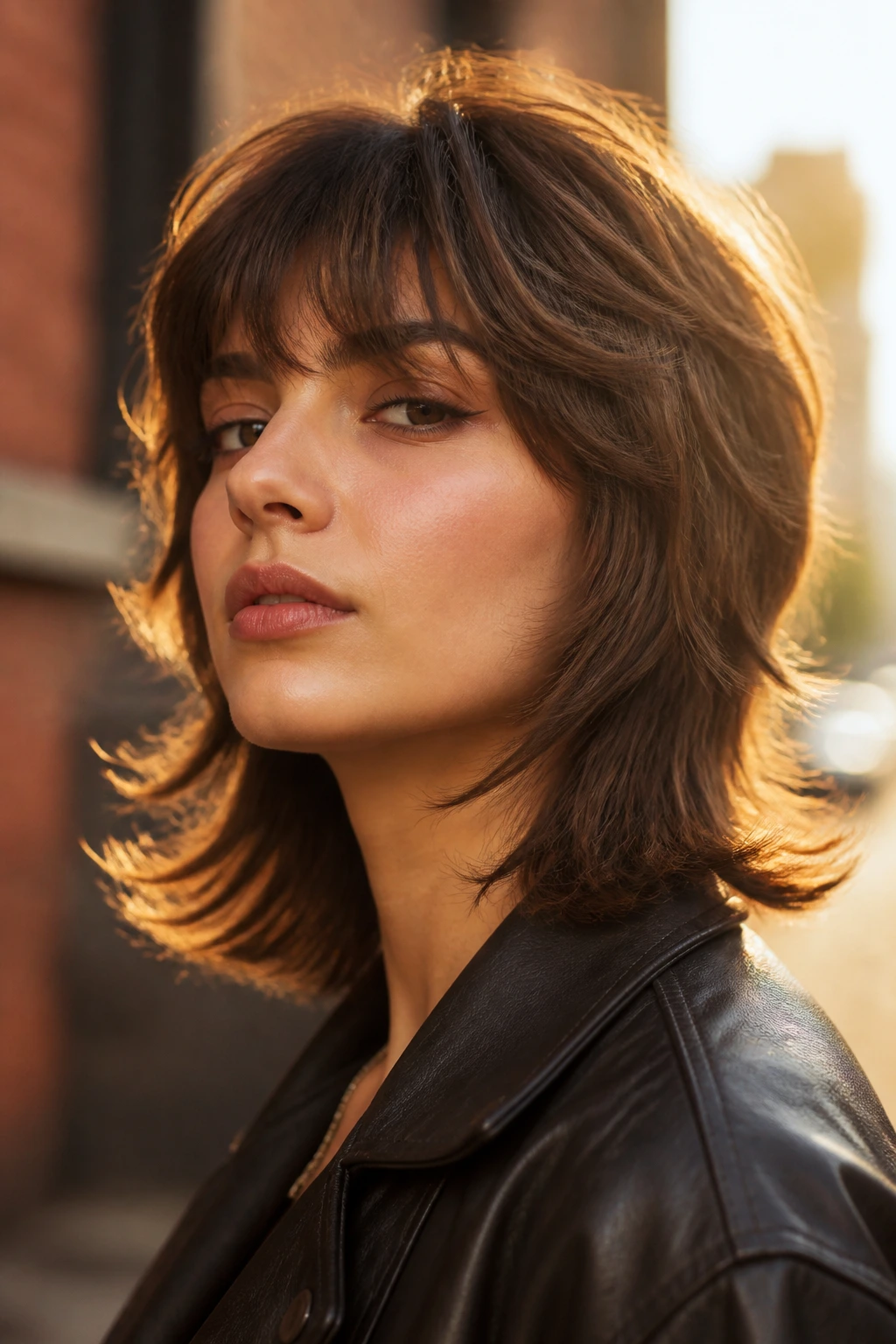
This one leans playful. The ends kick away from the neck and shoulders instead of lying flat, which gives thick hair a lively finish that feels a little retro without turning costume-y. The haircut itself needs enough layered structure to let the flip happen, especially through the lower half.
A 1-inch round brush or a flat iron bend can create that outward flick. Work the ends only. If you bend the whole strand from root to tip, the shape gets too busy and loses the wolf balance. The flip should feel like an accent, not the entire haircut.
I like this version for thick hair because the density helps the ends hold shape all day. Fine hair can imitate it. Thick hair carries it.
23. High-Contrast Editorial Wolf
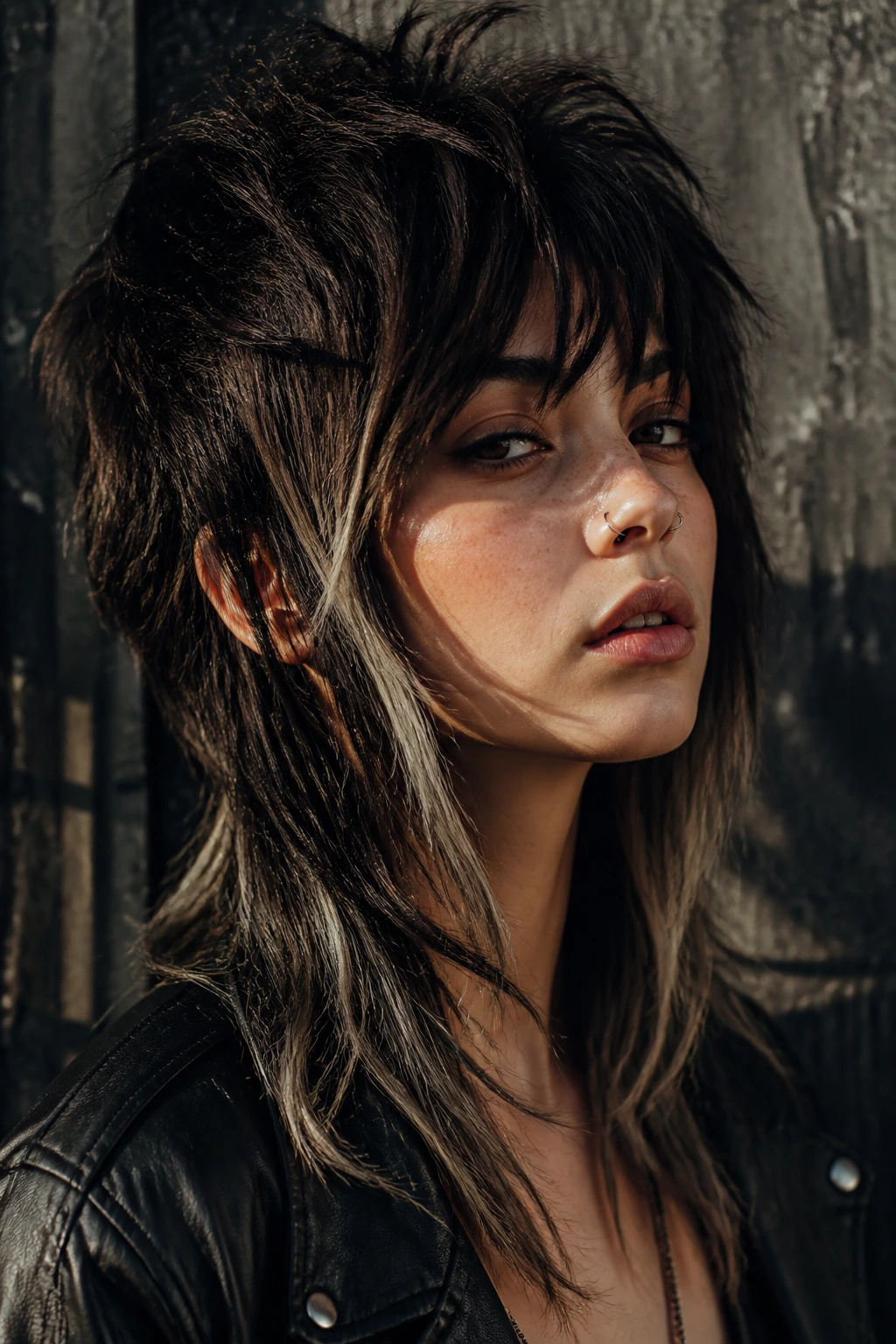
If you want the cut to make a statement, this is the most dramatic version in the bunch. The crown is shorter, the face pieces are clearly framed, and the back keeps enough length to make the disconnect visible. Thick hair can support that contrast without going limp, which is why this shape lands so well on dense textures.
The styling should be piecey and deliberate. Use texturizing spray, bend a few sections in different directions, and keep the ends separated by hand. A little matte paste at the fringe or nape can sharpen the outline when the hair starts to soften during the day.
This is not the easiest version to maintain, and that’s fine. Not every haircut needs to be easy. Some need to look like you had a point when you sat in the chair.
Why Thick Hair Makes the Wolf Shape Work

Thick hair gives a wolf cut the one thing it really needs: substance. The shorter layers at the crown can stand up instead of disappearing. The face-framing pieces show up. The broken ends keep their shape instead of turning stringy by lunch. That density makes the whole cut feel intentional, not flimsy.
The catch is that thick hair also punishes lazy layering. If the stylist removes weight only on the outside, the haircut can mushroom. If they thin the ends too much, the outline goes fuzzy. The best wolf cuts on dense hair use internal layering, point-cutting, and careful perimeter control so the shape moves without losing its spine.
I like to think of it this way: thick hair can carry more architecture. That’s why these cuts work so well. There’s enough hair to hold the shape, which means the stylist can carve the silhouette instead of begging the hair to cooperate.
How to Brief Your Stylist Without Ending Up With a Triangle
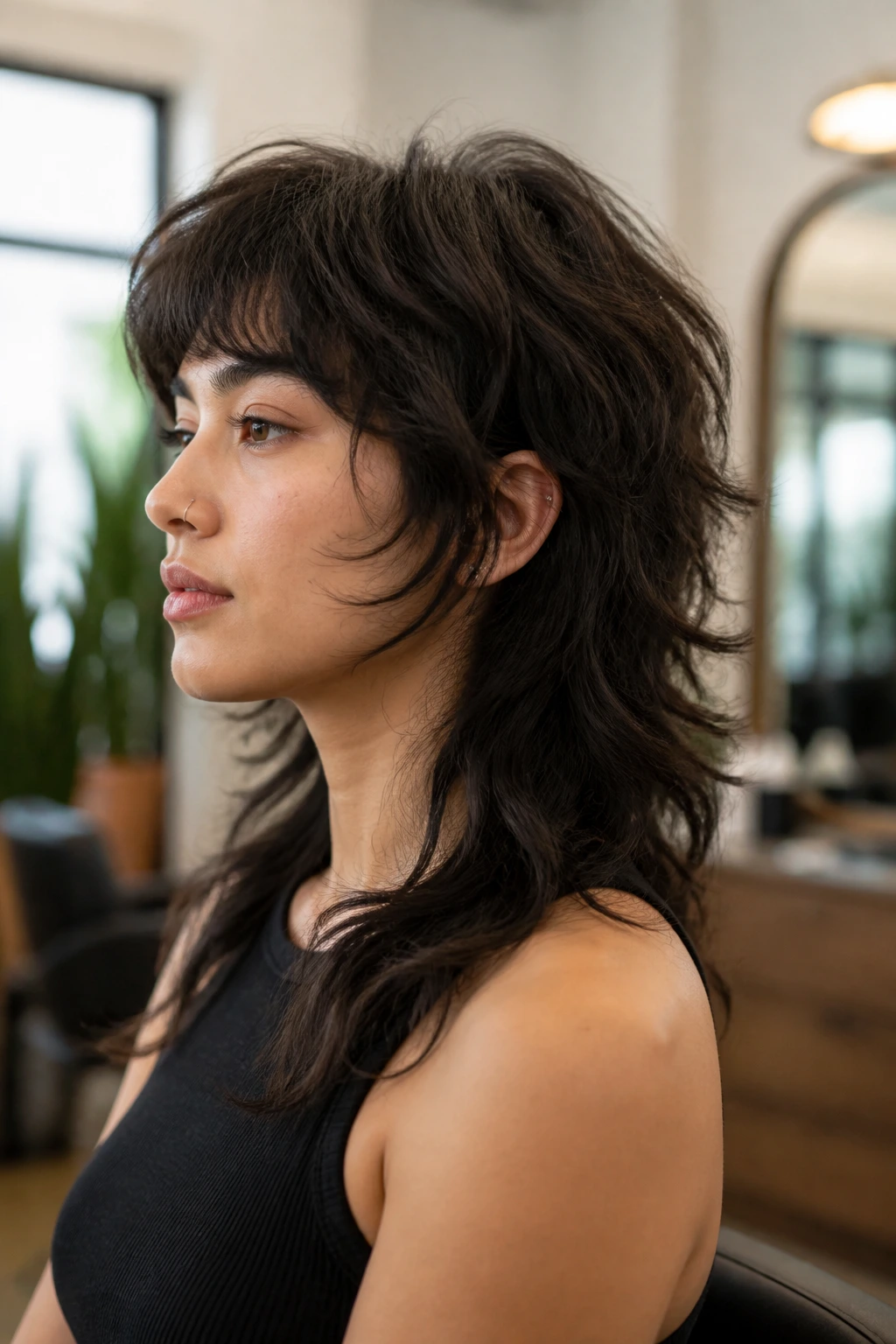
Bring photos, but pick photos of people with dense hair, not fine hair that was curled for the camera and sprayed within an inch of its life. A wolf cut behaves differently when there’s real density under it. Show at least two images: one for the overall length, one for the fringe or front pieces. That saves a lot of muddled talking.
Be plain about where your bulk lives. Say whether it sits at the crown, sides, or nape. Those are three different problems, and they do not need the same fix. If you have a cowlick or a stubborn part, mention it before the scissors come out.
Ask for internal layers, not random thinning. That phrase matters. Internal layers remove weight from the inside, while random thinning can leave the ends scratchy. Also ask whether the stylist plans to point-cut, slide-cut, or use texturizing shears. If they can’t explain why they’d use one method over another, keep asking.
Tools That Help the Layers Behave
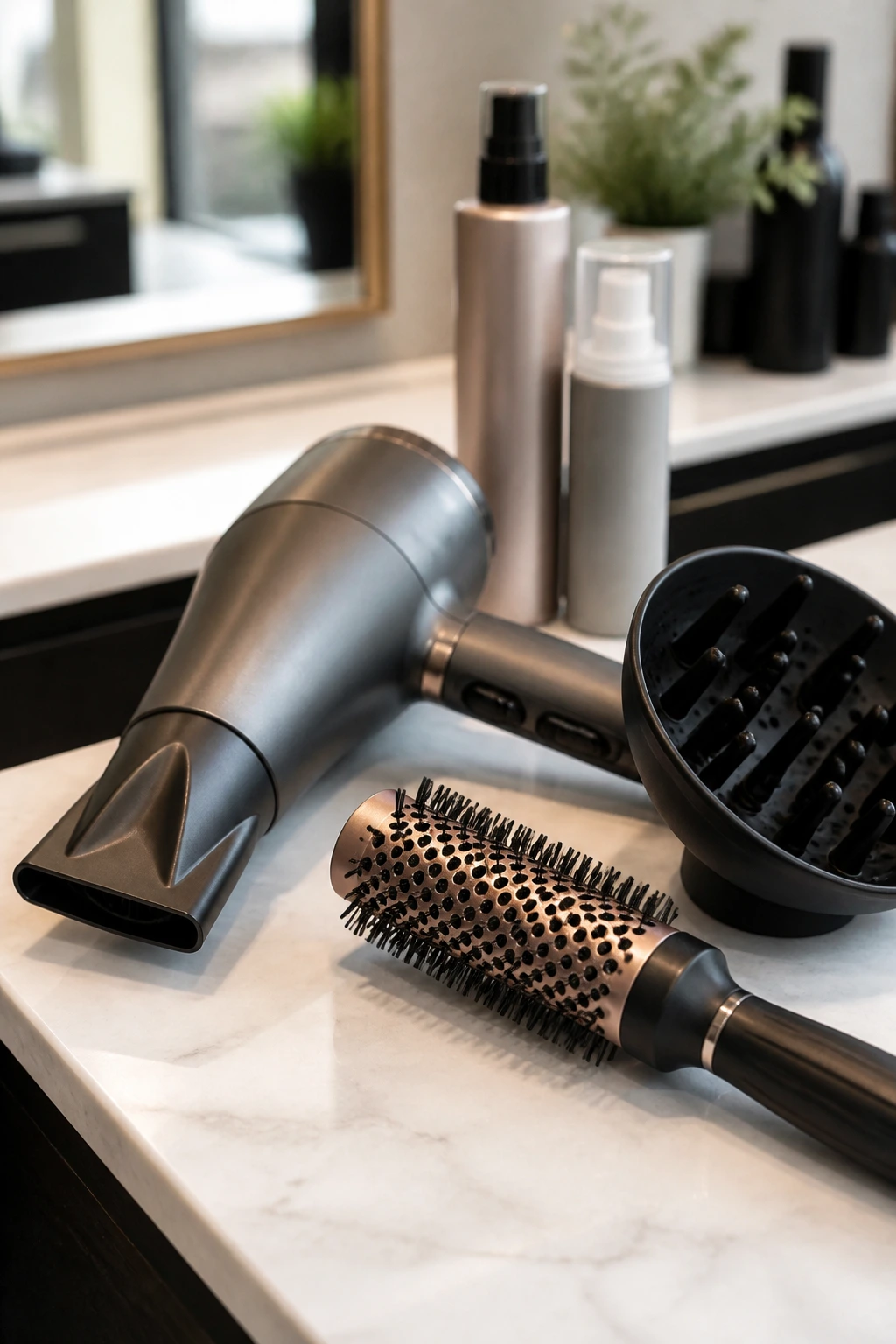
- Blow-dryer with a nozzle: Directs airflow so thick hair doesn’t blast outward like a fan.
- 1-inch to 1½-inch round brush: Useful for the fringe, crown lift, and a soft bend through the mids.
- Diffuser: Keeps wavy or curly thick hair from turning frizzy while drying.
- Heat protectant spray: Non-negotiable if you use hot tools, since thick hair often needs more heat exposure to bend.
- Texturizing spray: Adds grip to the choppy pieces and keeps them from falling flat.
- Light mousse or root foam: Gives the crown some lift without coating the whole head.
- Sectioning clips: Make blow-drying and styling less chaotic, especially on dense hair.
- Wide-tooth comb: Helps distribute product through thick hair without ripping through tangles.
- Hair-cutting shears: Only if you trim fringe or face pieces at home; kitchen scissors chew up the ends.
How to Style the Cut at Home

Start on damp hair. Thick hair takes longer to style when it’s already half dry and puffy, so work before that happens. Put mousse or root foam at the crown, then a small amount of leave-in through the mids and ends. Keep anything heavy away from the roots unless you want the shape to collapse.
Dry the crown first. Lift sections with your fingers or a round brush, then aim the nozzle at the root and pull the hair away from the scalp for a few seconds before letting it fall. That’s the part most people skip. The root shape is the haircut. If the roots go flat, the wolf loses its posture.
For a bendy finish, use a 1-inch iron or a round brush to curl only the middle and lower lengths away from the face, alternating direction so the ends don’t all turn into one uniform wave. Then break the pieces apart with your hands and finish with a little texture spray. If the hair looks too neat, you’ve overworked it.
Keeping the Shape Fresh Between Salon Visits

A thick-hair wolf cut usually holds up for a while, but the fringe and crown can drift first. Short versions need a trim every 6 to 8 weeks if you want the shape to stay sharp. Longer versions can go 10 to 12 weeks before they start looking grown out rather than designed. Fringe trims often need their own schedule, around every 3 to 4 weeks.
Wash day matters too. On day one, use enough product to support the shape but not so much that the hair sits heavy. On day two, dry shampoo at the roots can revive lift, especially around the crown and fringe. A quick bend through the front with a hot tool or a hot brush often brings the whole cut back to life in five minutes.
Night care helps more than people think. If your hair is wavy or curly, sleep on a satin pillowcase or pineapple the top loosely so the choppy layers don’t get crushed into a weird shape. If it’s straight and thick, clip the fringe or front pieces away from your face before bed if they tend to kink.
Mistakes That Flatten Thick Hair

Cutting the crown too short is the fastest way to make thick hair shoot upward like a mushroom. The top loses weight, the sides balloon, and suddenly the wolf cut looks more like a triangle with opinions. The fix is simple: keep the crown shorter, yes, but not so short that it has nowhere to lie.
Over-thinning the ends is another common mess. On dense hair, it can make the perimeter look fuzzy and tired, especially in humidity. Use point-cutting or soft texturizing instead of stripping out big chunks at the hemline.
Ignoring the fringe plan usually shows up around week two, when bangs start fighting the rest of the haircut. Decide whether you want curtain, heavy, side-parted, or almost none before the cut starts. The front sets the mood.
Using too much cream or oil at the roots kills the lift. Thick hair does not need help collapsing. Keep richer products from the scalp and save them for the mids and ends.
Skipping the styling step leaves the layers hidden. Wolf cuts on thick hair need a little bend, a little root lift, or a little texture spray. Not a full production. Just enough to show the haircut what it’s supposed to do.
Variations and Alternatives to Try
The Softer Shag Hybrid keeps the wolf shape but tones down the disconnect. It’s a good choice if you want thick hair to move without looking edgy or severe. Ask for blended layers and a softer perimeter.
The Curly Wolf works for coils and strong waves that need the haircut cut dry or nearly dry. The whole point is to respect shrinkage, so the layers don’t bounce up too high. This version usually looks best with a diffuser and a medium-hold curl cream.
The Office-Friendly Wolf leans polished instead of punk. The layers are still there, but the finish is smoother and the fringe is softer. It’s the one I’d suggest if you want the shape but need it to behave in a restrained setting.
The Longline Wolf keeps the length past the shoulders and relies on internal debulking rather than dramatic shortening. Thick hair can wear this version well because it keeps the ends full while lifting the crown. It’s the least likely to feel like a hair experiment.
The Grow-Out-Friendly Wolf is built to age well. The cut starts with enough blending that the layers stay readable as they lengthen, which makes it a smart choice if you don’t love frequent salon visits.
FAQ
Do choppy wolf cuts work on very thick hair?
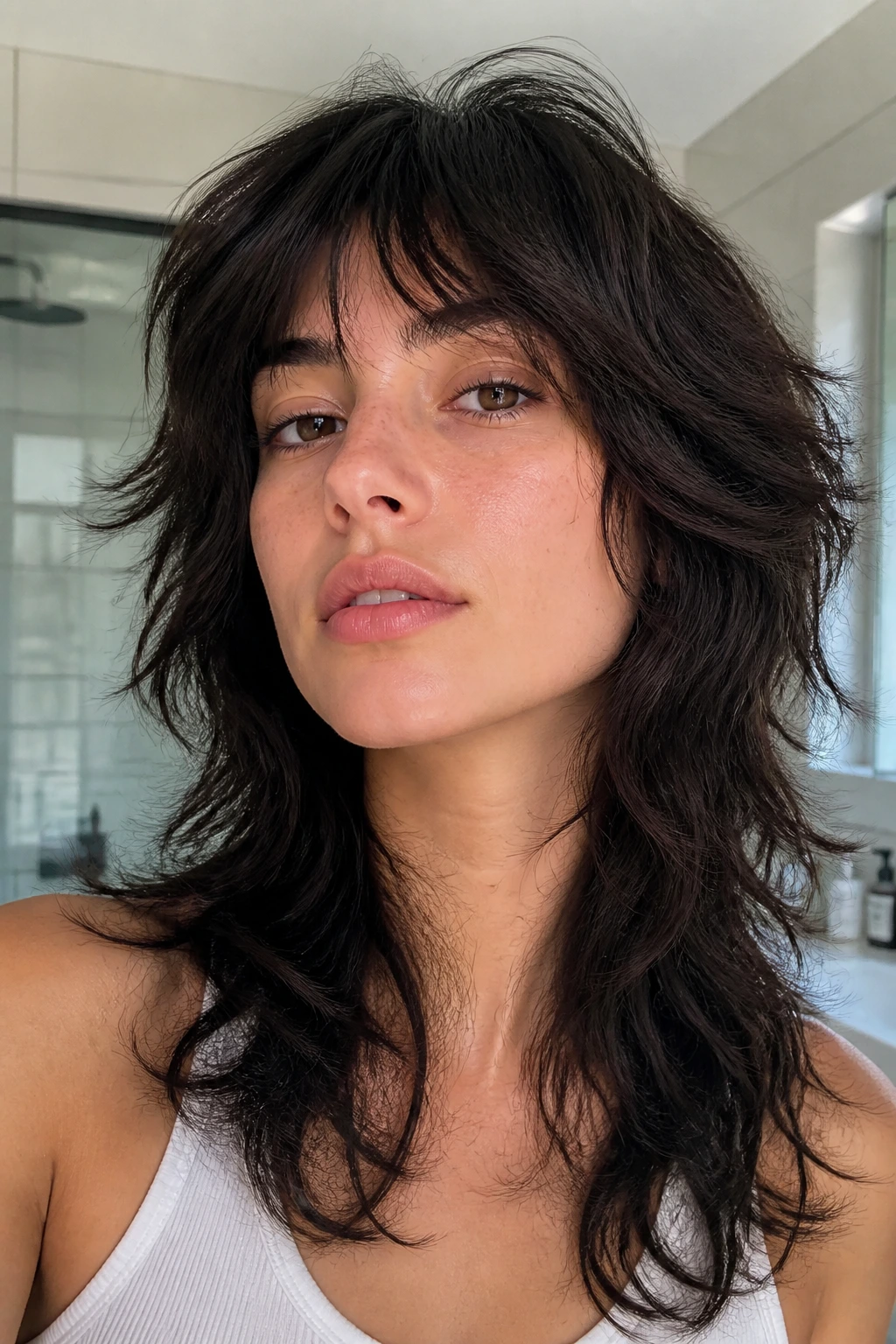
Yes, if the cut is planned around weight removal instead of random texture. Thick hair gives the wolf shape enough substance to hold crown lift and piecey ends, but the layers need to be placed so the outline doesn’t balloon.
Will a wolf cut make my hair look thinner?
It can, if the stylist over-thins the ends. Done well, though, it removes bulk from the inside while keeping the perimeter full enough to look dense and healthy. The difference is in the technique, not the name of the haircut.
How often should I trim a wolf cut on thick hair?
Shorter versions usually need a trim every 6 to 8 weeks. Longer wolf cuts can go 10 to 12 weeks, though the fringe may need a quick cleanup sooner if you wear bangs.
Can I wear this cut straight, or does it need waves?
You can wear it straight, but it needs some bend or separation to show the layers. A flat iron bend through the mids or a round-brush finish around the crown keeps the shape visible.
What if my thick hair puffs out at the sides?
That usually means the bulk wasn’t removed in the right place. Ask for internal layering around the side panels and a little more length through the perimeter so the cut falls down instead of out.
Is this a good choice for curly hair?
Yes, as long as it’s cut with shrinkage in mind. Curly thick hair usually does better when the stylist cuts it dry or nearly dry and keeps enough length at the perimeter to preserve the curl pattern.
What if the bangs are too short after the cut?
Don’t panic. Use a small round brush, a little root lift, and a side sweep while they grow. On thick hair, fringe tends to soften faster than people expect, but it still needs patience.
Can I ask for this cut if my hair is coarse and frizzy?
Yes, but I’d avoid aggressive razor work. Coarse, frizz-prone hair usually behaves better with scissor-based layering, softer point-cutting, and a finish that leans smooth rather than shredded.
The Cut That Still Moves on Day Two
The best wolf cuts for thick hair don’t fight density. They use it. That’s why the shape can look airy one day and a little rebellious the next without losing its backbone. When the crown, fringe, and perimeter all get the right amount of attention, thick hair stops reading as bulky and starts reading as designed.
If your hair has been sitting in one heavy block for too long, this is the kind of cut that gives it room to breathe without stripping out the good stuff. And that’s the part worth chasing: a shape that still has weight, still has texture, and still looks like it meant to be that way when you catch it in the mirror halfway through the day.
