



Fine hair gets punished by the wrong haircut. Leave too much blunt weight at the bottom and it hangs there like a wet ribbon. Go too choppy with the layers and the ends start to disappear, which is exactly why textured wolf cuts for fine hair need a careful hand, not a wild one.
The best versions don’t chase drama for its own sake. They build lift where fine strands go limp first, then keep enough density through the perimeter so the shape still looks full when the wind hits it, or when you skip wash day, or when your blow-dry gives up halfway through. That balance is the whole trick.
And yes, a wolf cut can work on fine hair. The myth that it only suits thick, shaggy hair hangs around because plenty of bad versions have been done badly. A smart wolf cut is less about stripping hair away and more about placing texture where it counts. The difference is obvious the second you see the side profile.
Why These Cuts Work on Fine Hair
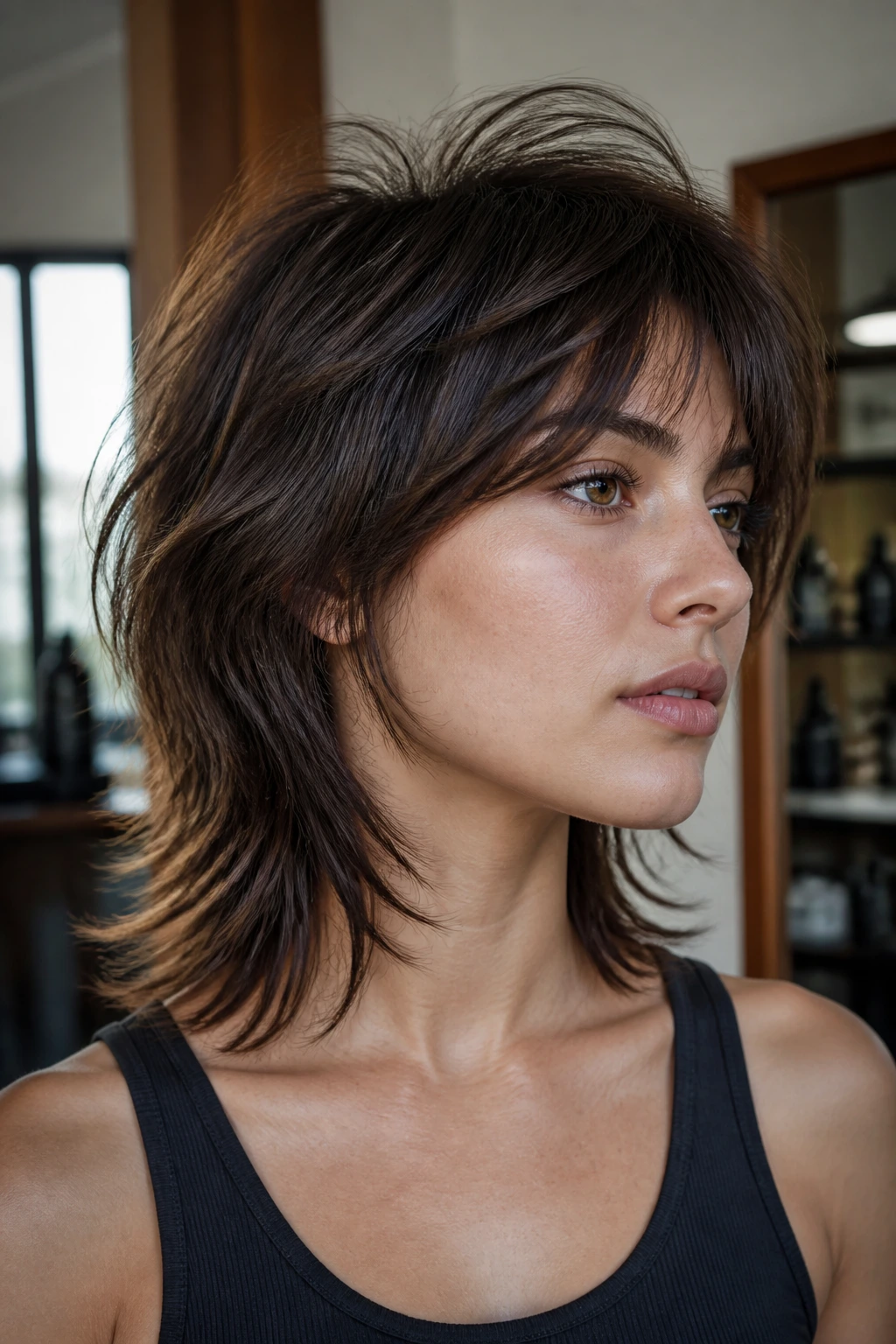
Built-in lift: Fine hair usually collapses at the scalp before it loses shape anywhere else, so these cuts lean into root height and keep the crown from lying flat against the head.
Less see-through ends: The better wolf cut variations keep a little density at the bottom edge, which matters because wispy ends are what make fine hair look sparse.
Texture without bulk: Instead of stacking weight through the middle, these cuts scatter movement in a controlled way. The hair moves, but it doesn’t look hacked apart.
Easy to style smaller sections: Fine hair often responds better to a quick mousse-and-dry routine than a long round-brush session, and these shapes are built to cooperate with that.
Room for personality: You can wear a wolf cut soft, edgy, short, long, polished, or messy. Fine hair doesn’t need to be pushed into one mood.
1. Airy Crown-Lift Wolf Cut
This is the version I’d put on someone whose roots collapse before they’ve even left the house. The top gets soft, staggered layers that create space at the crown, while the bottom line stays a little denser so the whole cut doesn’t look threadbare.
It works because the eye reads height first. Even if the ends are modest, the lifted crown gives the illusion of more hair. Ask for texture that starts high and tapers gently, not a heavy chop through the last inch.
2. Curtain Fringe Wolf Cut
Curtain bangs do a lot of heavy lifting on fine hair, and I mean that in the best way. They break up the forehead area, add motion around the eyes, and give the front of the cut a little more presence without swallowing the face.
The key is keeping the fringe soft enough to separate. If it’s cut too thick, it drags the whole front down. The sweet spot is a long, airy split that sits around the cheekbones and blends into the first face-framing layers.
3. Chin-Grazing Mini Wolf
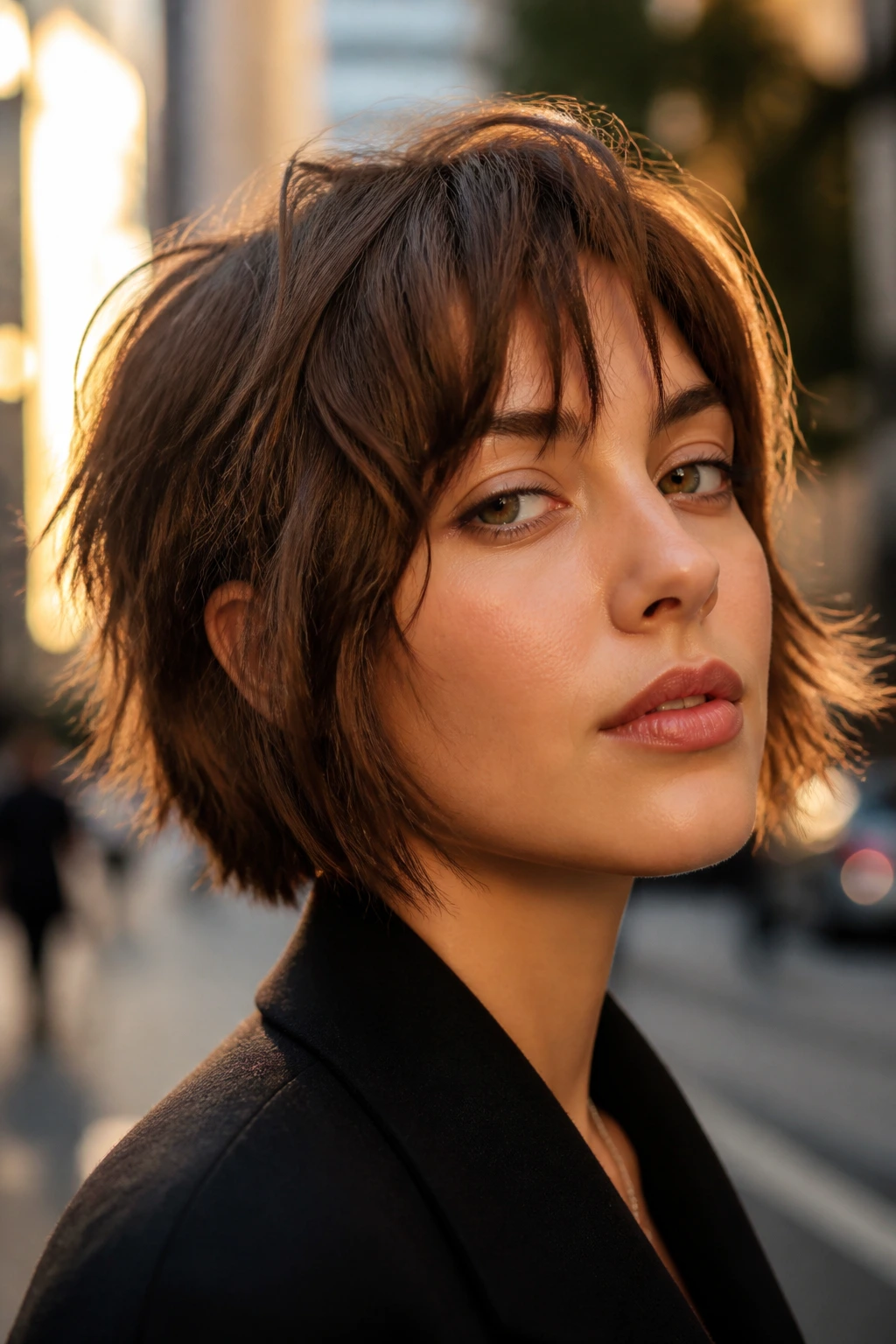
A shorter wolf cut can be a gift for fine hair that looks thinner the longer it gets. When the shape lands near the chin, the ends appear fuller because there’s less length for the hair to string out.
This one has attitude. It feels sharp around the jaw, but the texture keeps it from looking severe. It’s a good pick if you like movement but do not want to spend time coaxing long layers into behaving.
4. Collarbone-Length Wolf Cut
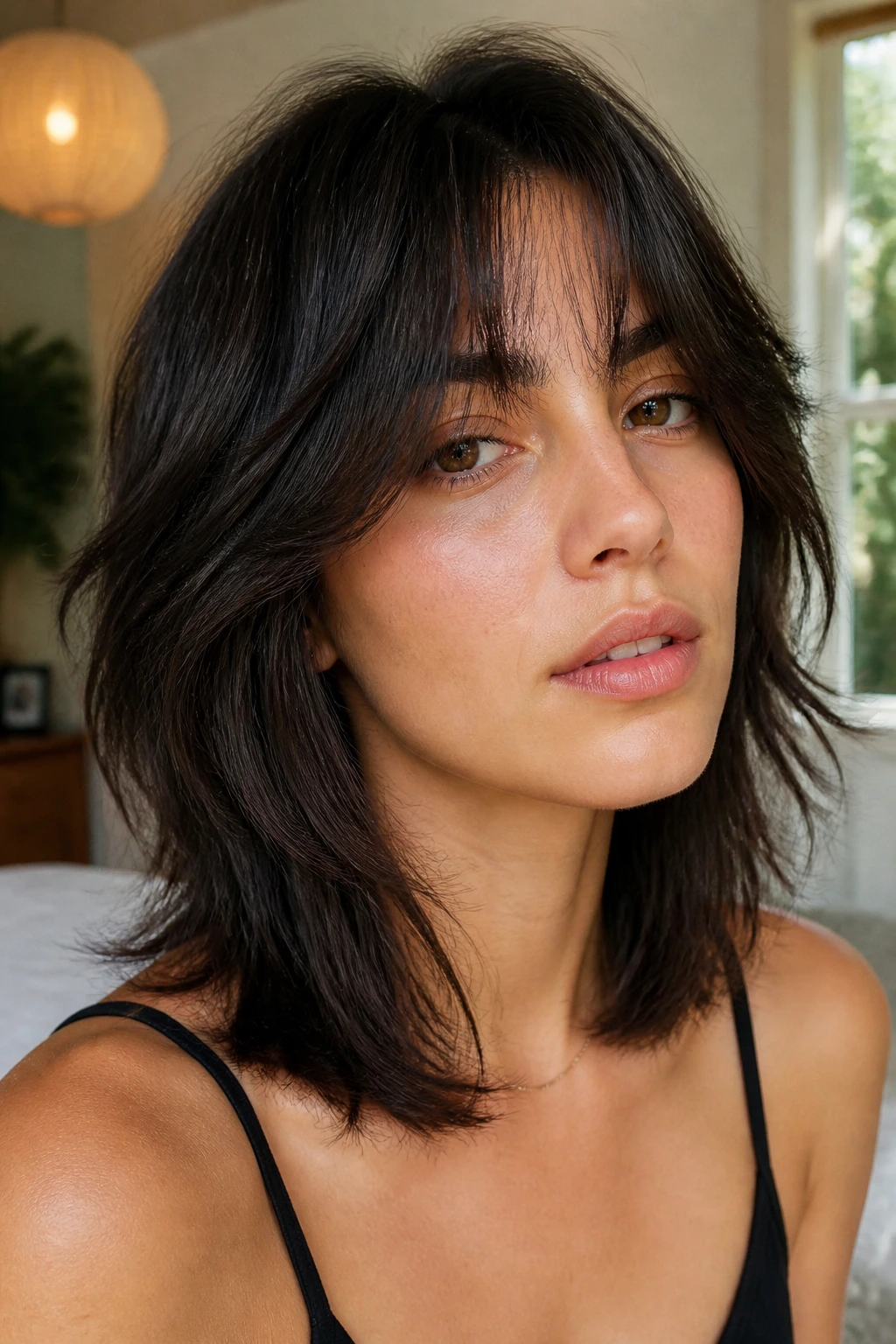
If you want a safer middle ground, this is the one. Collarbone length gives fine hair enough weight to stay smooth, but the layers around the face and crown keep it from sinking into a flat sheet.
That little bit of extra length matters. It lets you tuck it, curl it, clip it back, or rough-dry it and go. The shape is also forgiving if your hair grows fast and you hate sitting in the salon every few weeks.
5. Long Feathered Wolf Cut
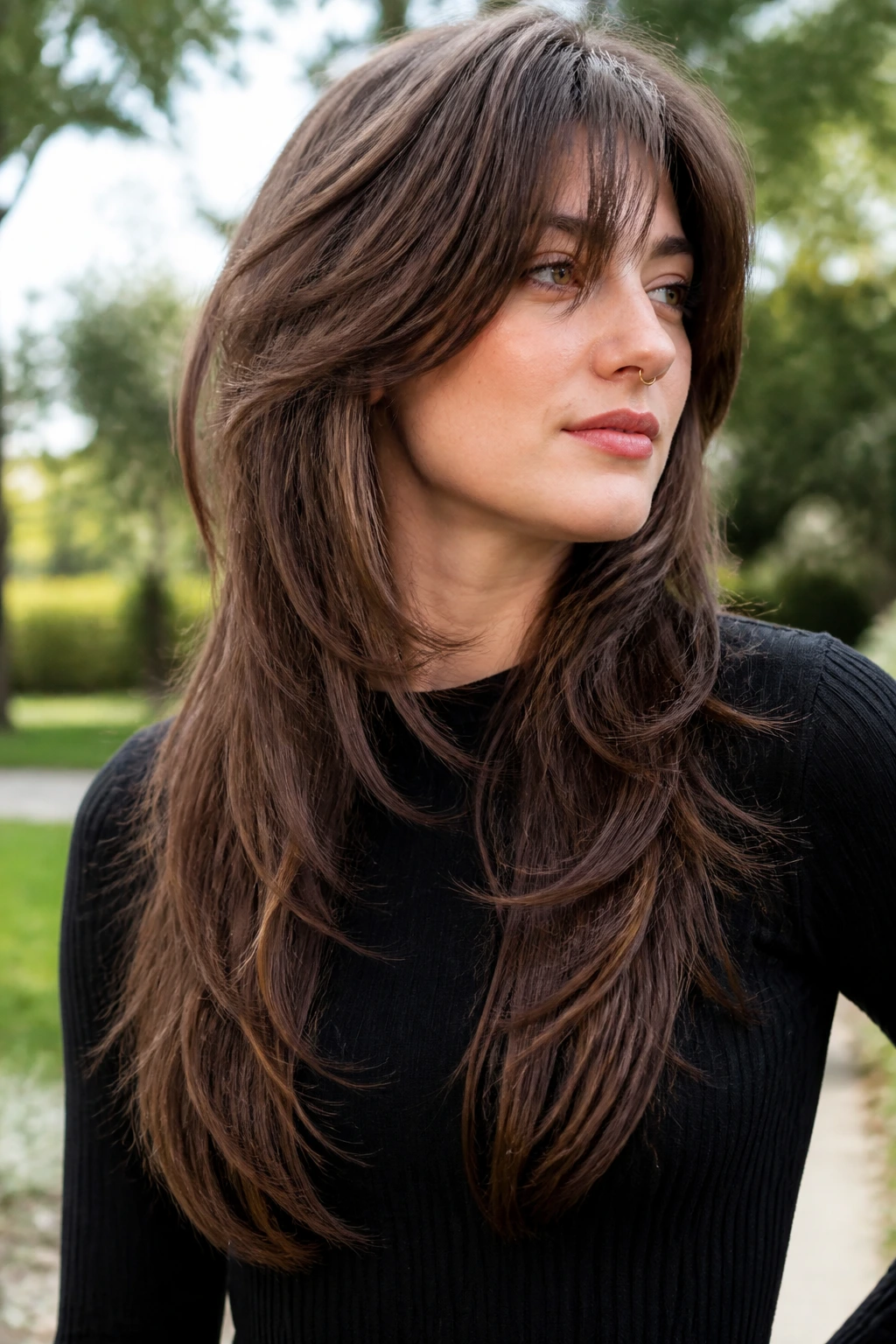
Long fine hair can look beautiful, but only if the layers don’t turn it into frayed string. A feathered wolf cut keeps the length while adding soft movement through the mid-lengths and front, which makes the hair swing instead of sit there.
I like this version when someone wants to keep ponytail length. The secret is restraint. The best feathering is barely obvious until the hair moves, and that’s what keeps the ends from looking too thin.
6. Razor-Textured Wolf Cut
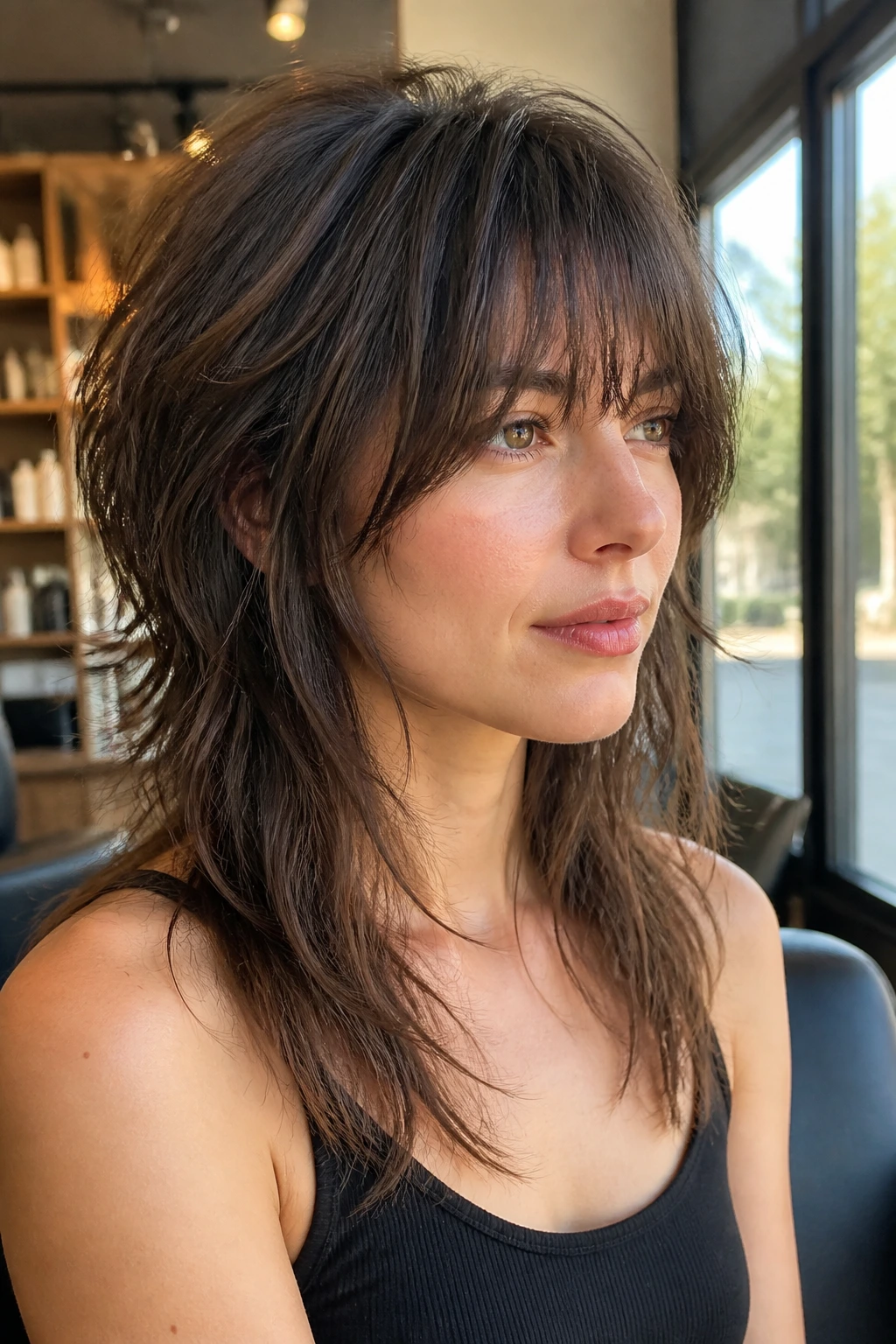
A razor can give fine hair a light, airy finish, but only when the stylist knows where to stop. Used well, it softens the ends and creates that slightly broken-up texture that makes a wolf cut feel modern instead of salon-stocked.
Used badly, it can chew up the perimeter. So this version is for hair that already has enough density to lose a little weight. If your ends are fragile, ask for scissors and point-cutting instead.
7. Soft Mullet Wolf

This is the wolf cut for someone who wants a little edge without stepping into full rock-show territory. The front stays softer, the back stays longer, and the crown gets just enough lift to keep the silhouette from collapsing.
Fine hair likes this shape because the separation between layers gives the illusion of more body. The trick is keeping the transition smooth; a harsh disconnect can make the back look sparse rather than cool.
8. Bottleneck Bang Wolf Cut
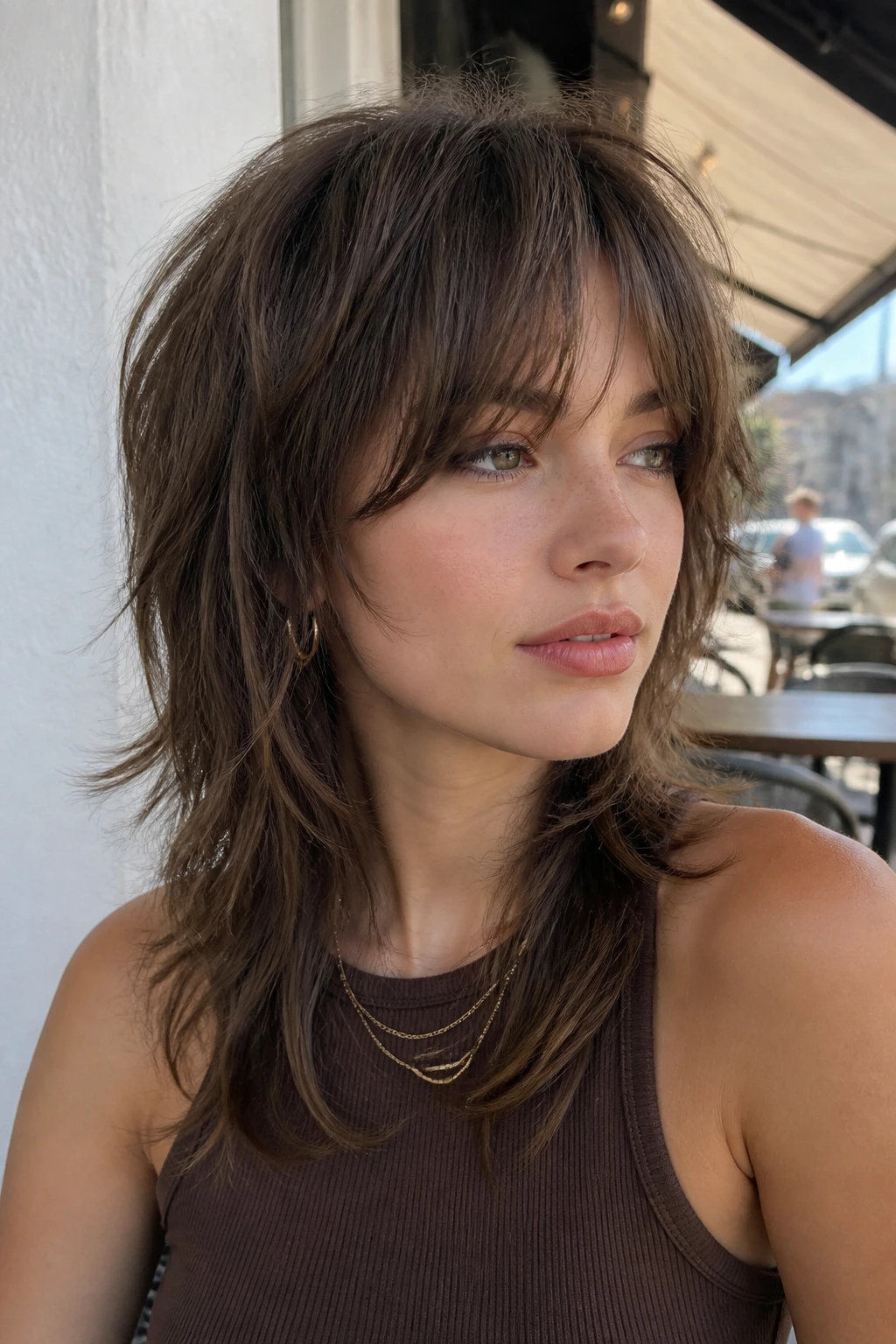
Bottleneck bangs taper in at the center and open wider toward the cheeks, which makes them a smart match for fine hair. They add shape at the front without requiring a thick fringe that would weigh everything down.
This cut flatters a lot of face shapes because it frames the eyes while leaving the forehead area soft. On fine hair, I prefer it slightly longer than a micro fringe, so it can split naturally instead of clinging to the skin.
9. Deep Side-Part Wolf Cut
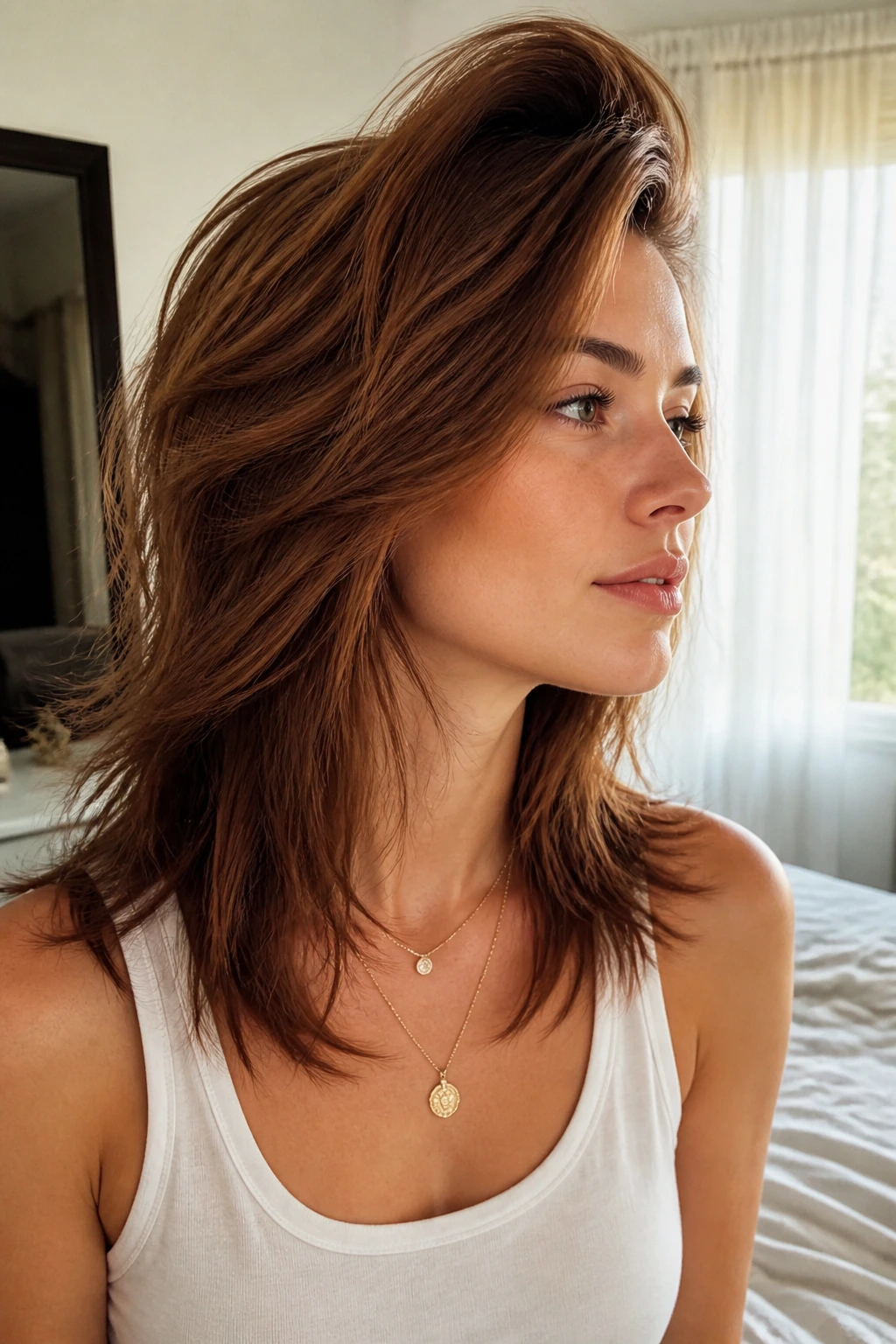
A side part can change the whole mood of fine hair in about ten seconds. It lifts the roots on one side, gives the cut a sweeping shape, and keeps the top from lying flat in the same place every day.
This version feels especially good if your hair naturally falls limp in the middle. A deep side part breaks that habit. It also works well with a little root spray at the part line, which gives the top a small but noticeable boost.
10. Perimeter-Holding Wolf Cut
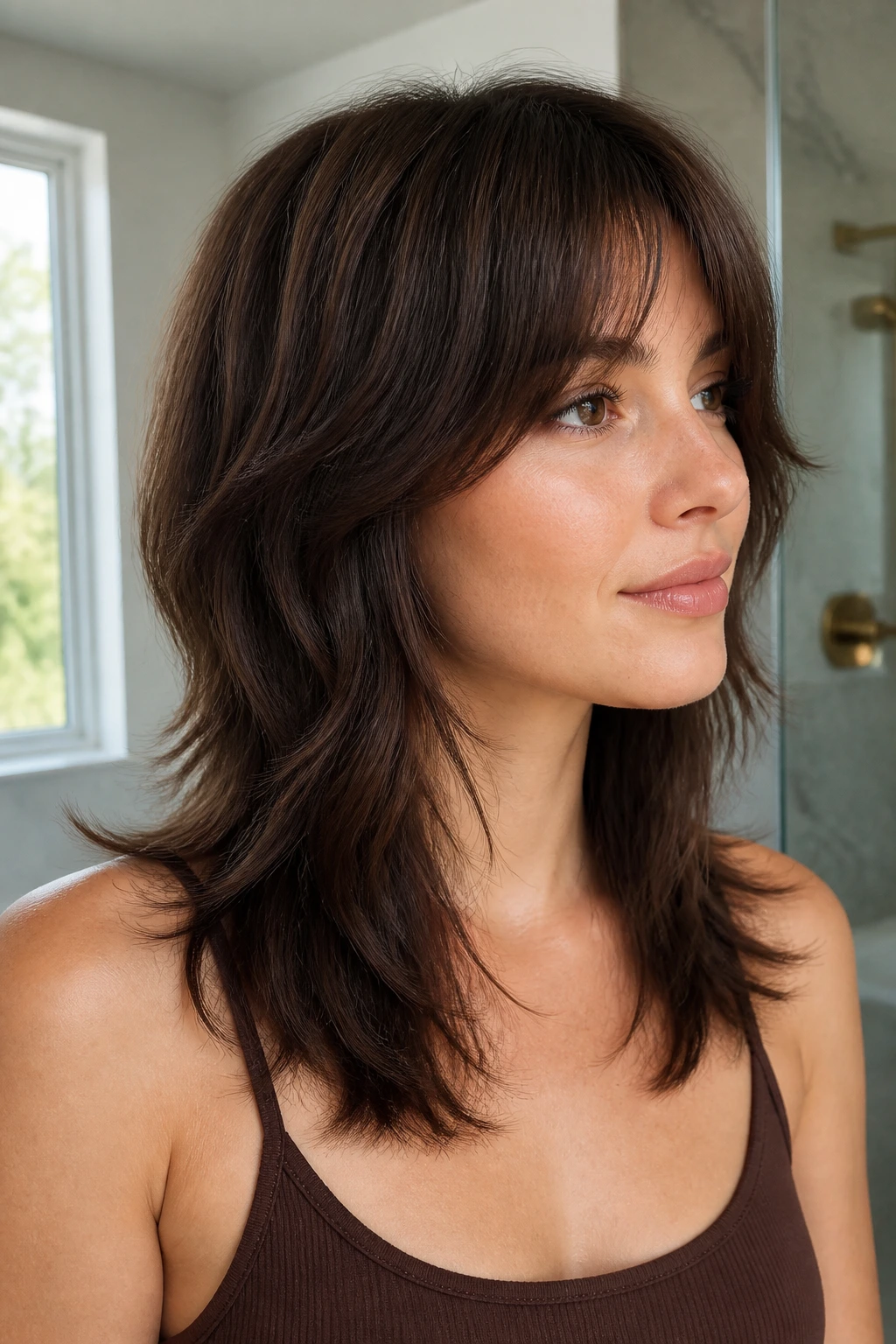
Some fine hair needs less layering, not more. This cut keeps the outer line fuller and uses texture mostly around the crown and face, which preserves density where the eye expects to see it.
I like this for people who are scared of looking “see-through” after a haircut. Fair enough. A perimeter-holding wolf cut gives you the shape and movement of the style without taking the ends apart too aggressively.
11. Tapered Nape Wolf Cut
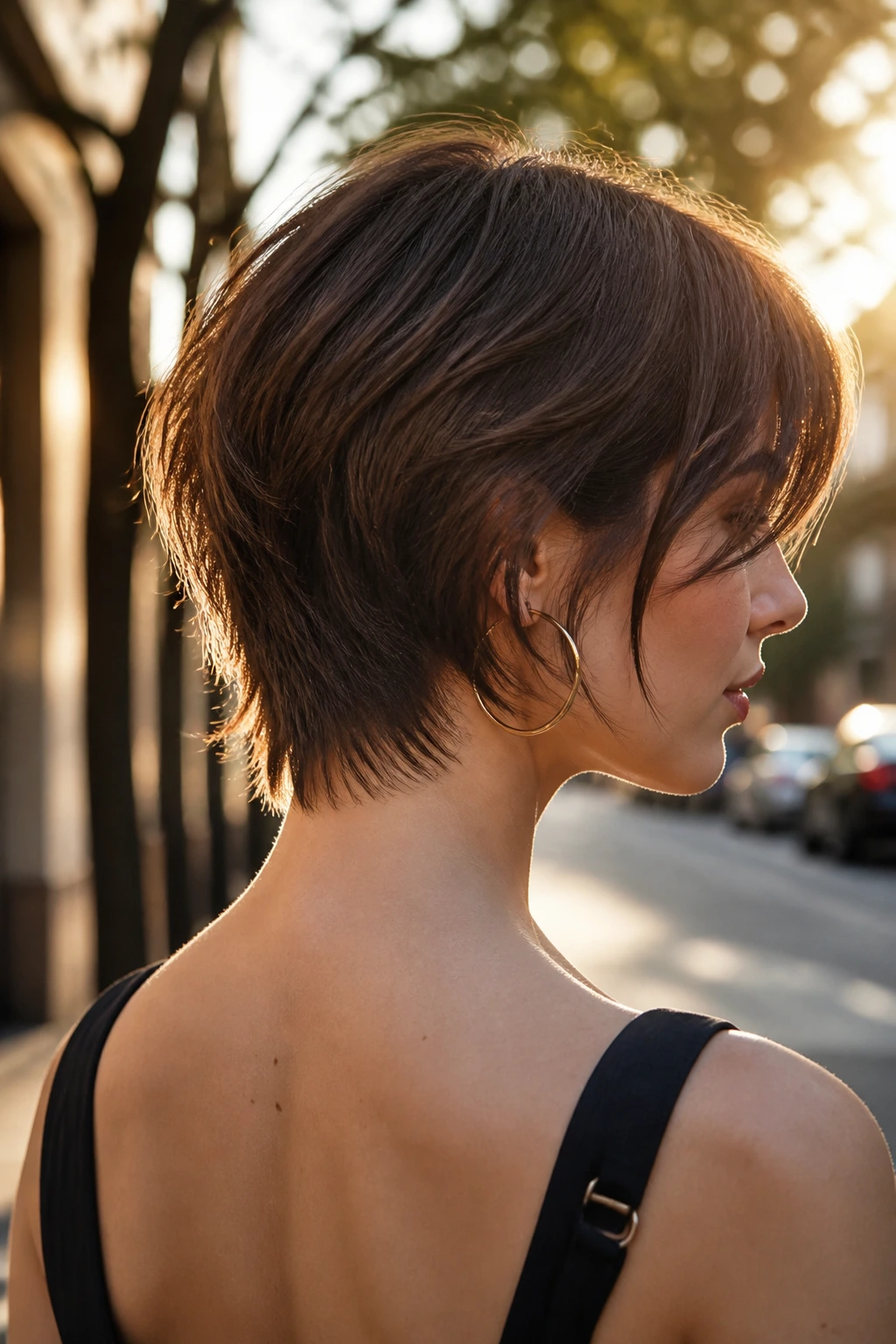
This version leans into a cleaner back shape. The nape gets a little shorter and tighter, while the front and crown stay soft and longer, which gives the whole cut a crisp side profile.
Fine hair benefits from that taper because it creates definition without relying on bulk. If your neck is one of your best features, this cut shows it off. It also grows out nicely, which is a small mercy for anyone who hates awkward grow-through phases.
12. Blow-Dried Volume Wolf
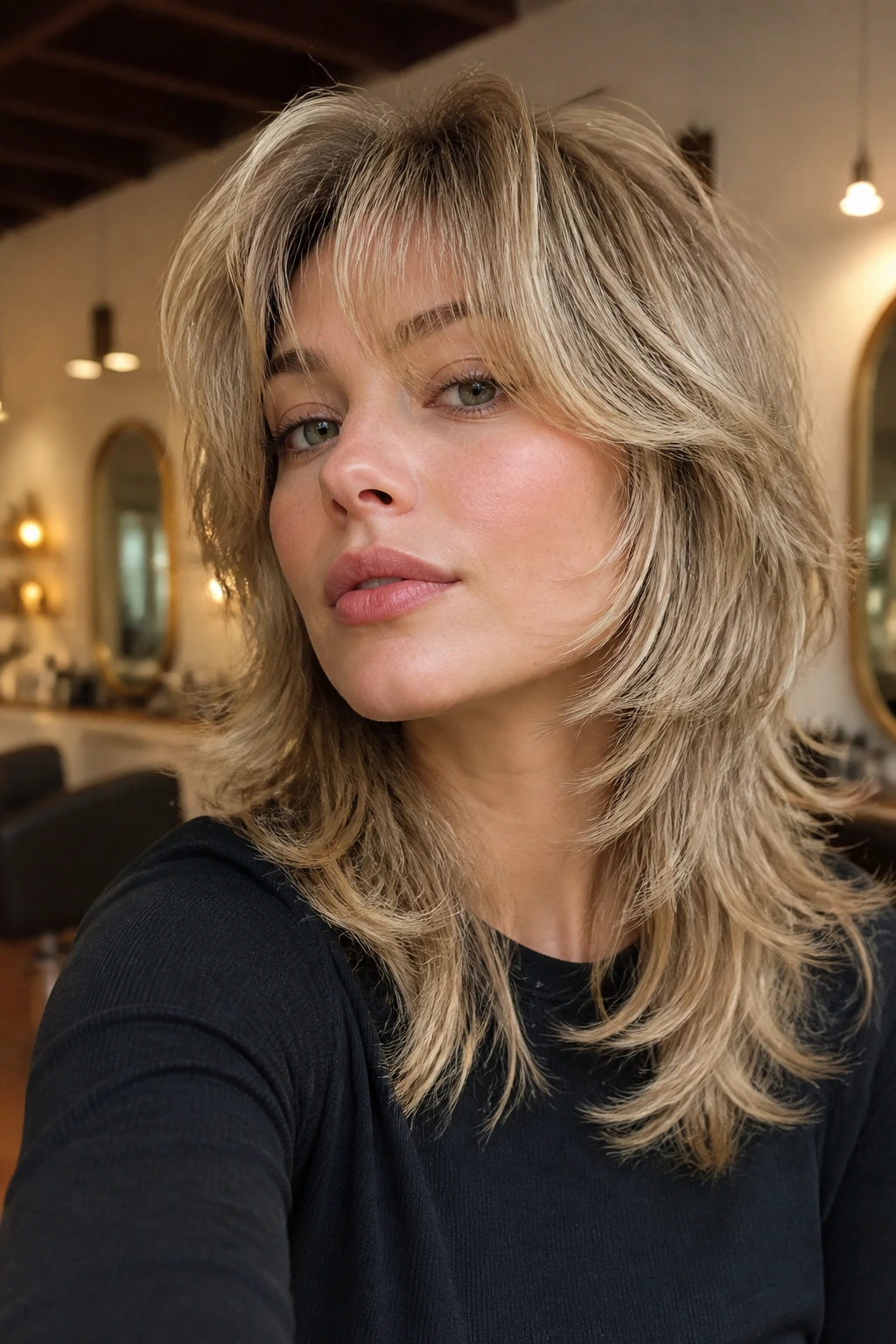
Some cuts are made to be air-dried. This one likes a round brush, a little tension, and a blast of heat at the roots. The layers are set up to flip and bend just enough to create a fuller outline.
That matters on fine hair because a good blow-dry can make a modest amount of hair look twice as substantial. Not fake. Just fuller, cleaner, and a little more deliberate. If you style your hair most mornings, this is a strong pick.
13. French Shag Wolf

This one sits in that sweet spot between relaxed and put-together. The layers are soft around the face, the bangs are usually a touch longer, and the texture feels less choppy than some harder wolf cuts.
Fine hair likes the French shag version because it doesn’t ask for too much density. It’s built on movement and shape, not on big, chunky layers. If you want a cut that looks good with a sweater, a blazer, or a messy clip, this is it.
14. Straight-Hair Wolf Cut
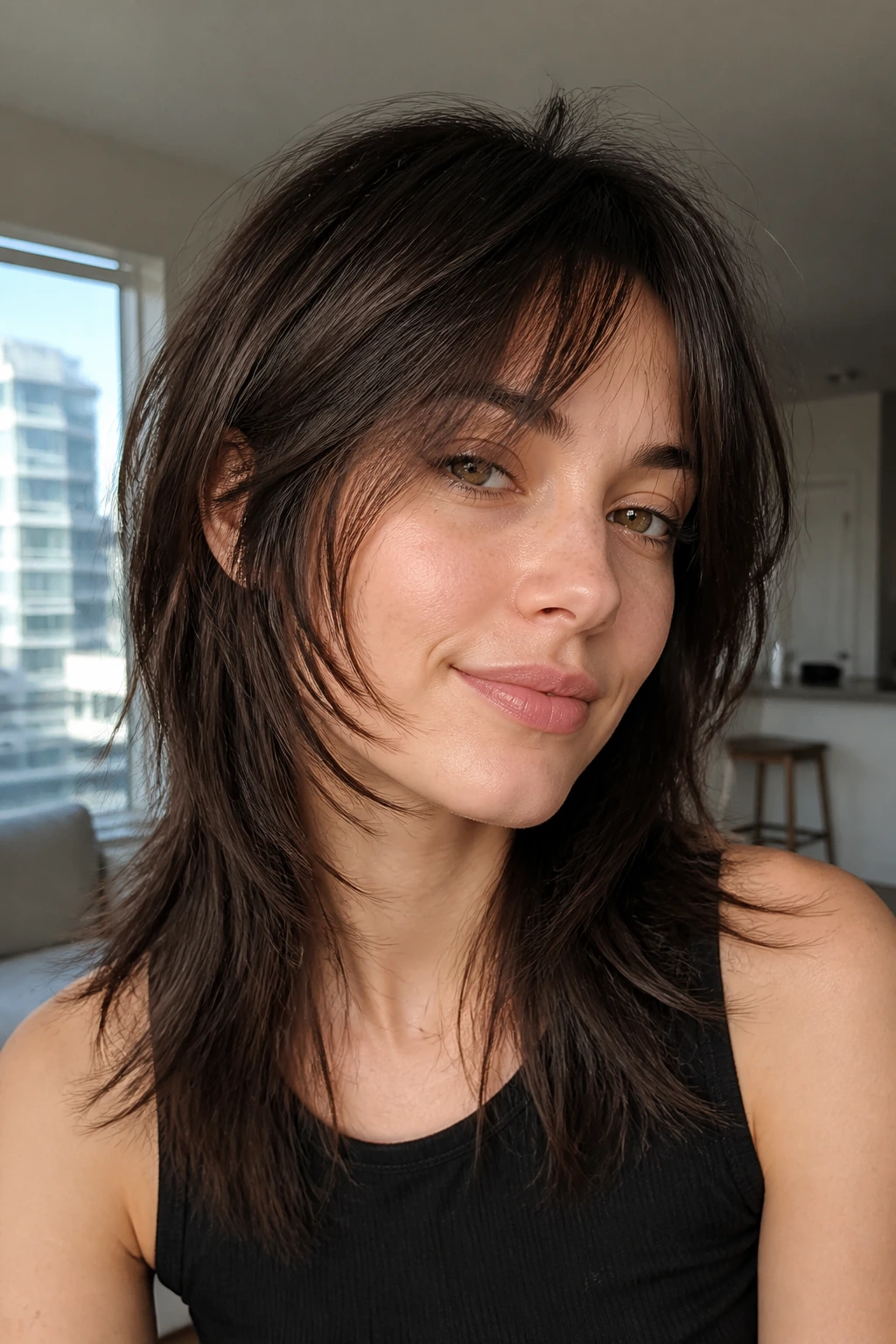
Straight fine hair can be the hardest type to texture well because every uneven snip shows up immediately. This version keeps the layers subtle and uses movement near the front and crown rather than hacking into the middle.
The best straight-hair wolf cuts look like they’ve got a breeze in them, even when they don’t. Ask for soft internal movement and a little face frame. Skip heavy thinning. That’s how you end up with ends that look tired instead of textured.
15. Curly-Fine Wolf Cut
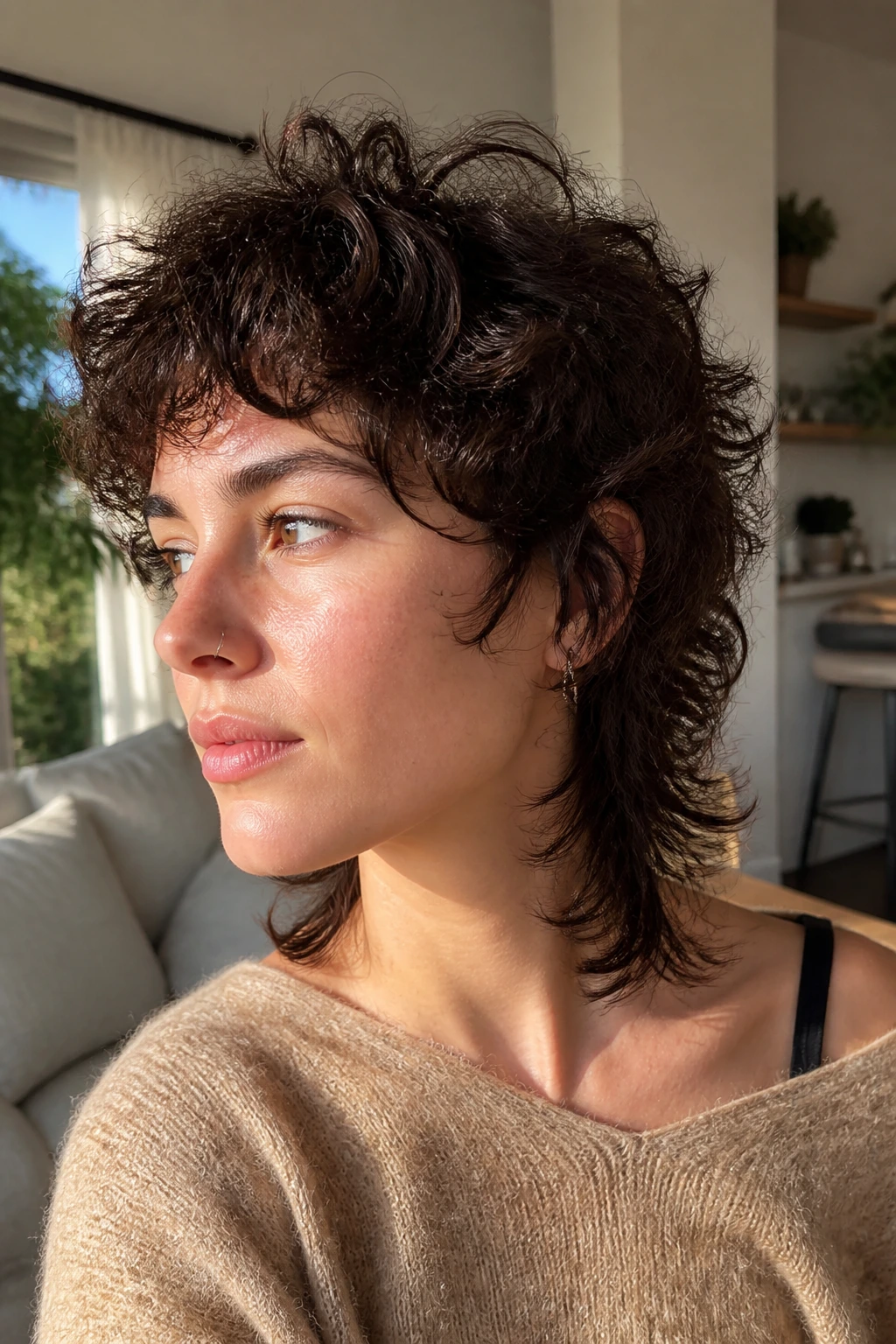
Fine curls are a different animal. They need enough shape to encourage bounce, but not so much thinning that the curls lose their spring and go fluffy at the wrong places.
A good curly-fine wolf cut is usually done dry or on hair with its natural pattern in place. That way the stylist can see where the volume lives. The result is a cut that keeps curl energy at the top while letting the sides and ends stay light.
16. Micro-Bang Wolf Cut

Micro bangs are not subtle. That’s the point. On fine hair, they can be a sharp, playful detail that makes the whole cut feel intentional, even if the rest of the hair stays wispy and light.
The risk is obvious: if the bangs are too sparse, they can look like a mistake. So this version works best when the fringe is cut with a clean line and the rest of the wolf cut is left soft enough to balance the severity.
17. Halo Face-Framing Wolf
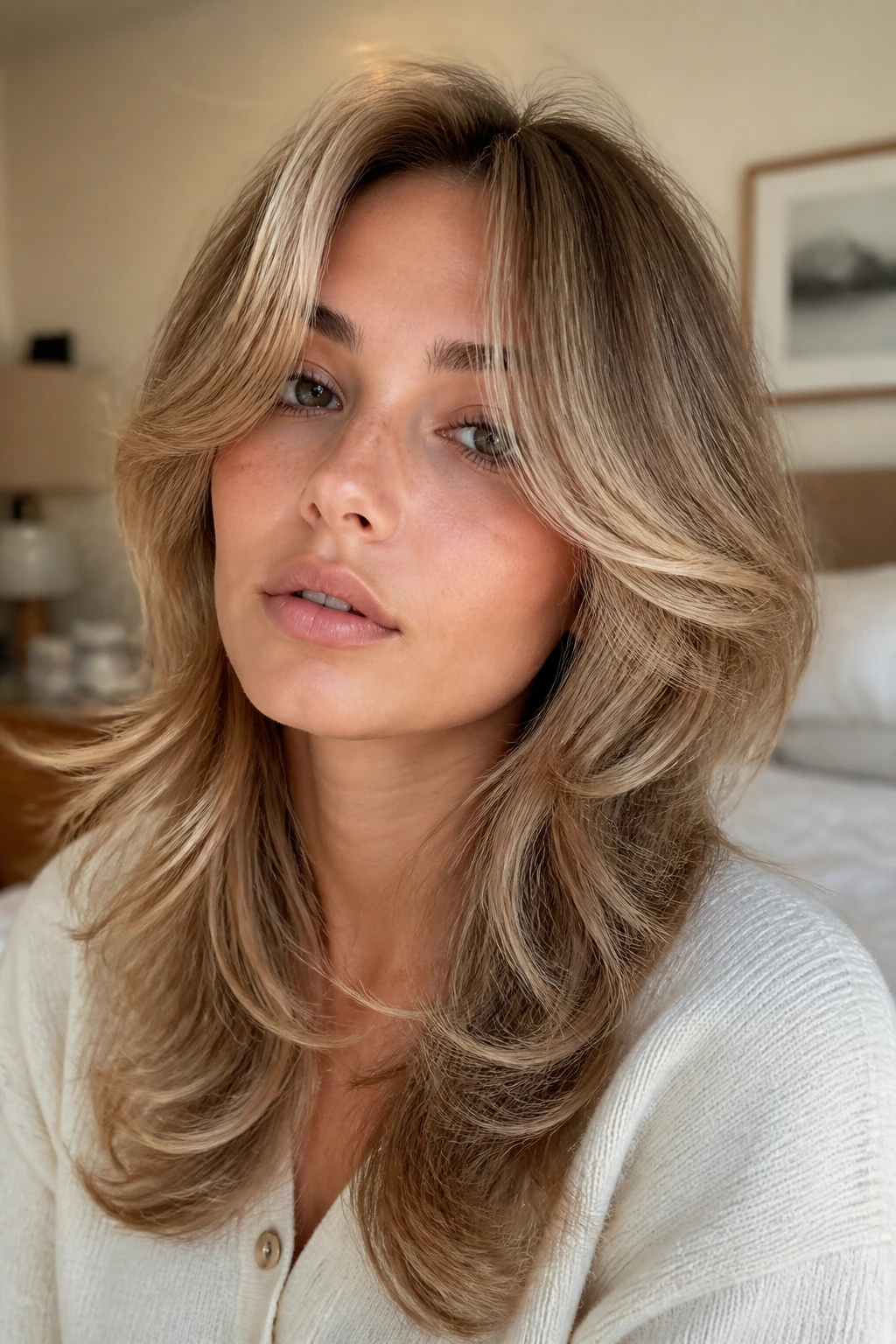
This cut builds a soft halo around the face with layers that curve in rather than explode outward. It’s a smart shape for fine hair because the movement is visible right where people look first.
The halo effect makes the hair seem fuller without needing a big, puffy finish. If you wear minimal makeup or glasses, this shape is especially nice because it gives the face structure without crowding it.
18. Invisible-Layer Wolf Cut

Invisible layers are one of my favorite tricks for fine hair. The cut keeps the outside line looking smooth, but the inside gets enough texture to create lift and bend.
That means you can have movement without announcing every layer to the room. It’s a good fit if you want the wolf cut effect but prefer a more polished finish. From a distance, the hair reads fuller. Up close, you notice the quiet texture.
19. Rounded Fringe Wolf Cut

A rounded fringe softens the front of the face and makes the cut feel less severe. On fine hair, that can be useful because too much sharpness at the ends sometimes makes the whole style look thin.
This version works well when the fringe curves into the cheekbones and the layers around it stay feather-light. It gives a gentle frame without forcing the rest of the cut to carry too much weight.
20. Shaggy Lob-Wolf
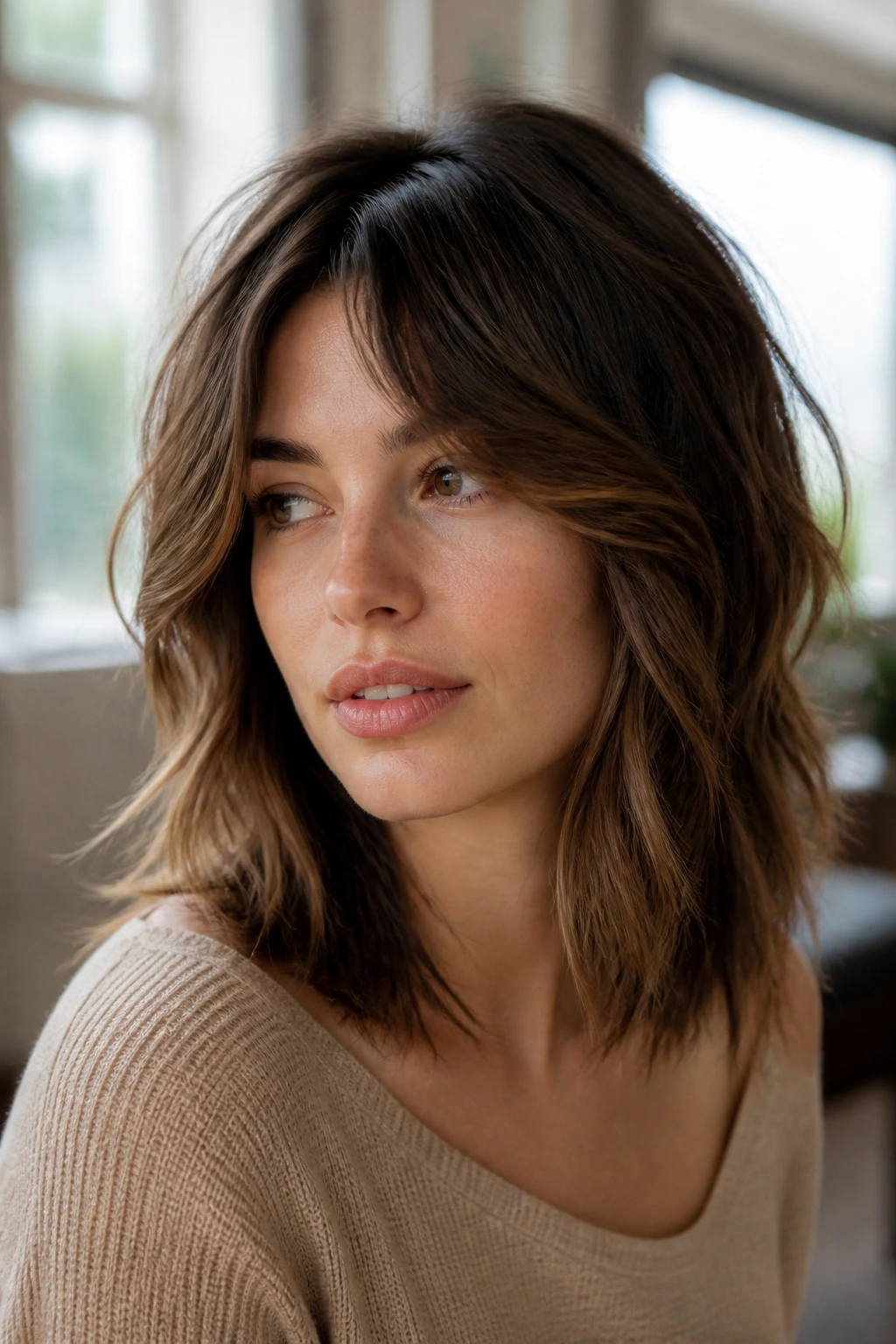
If you want the easiest version to wear, start here. A shaggy lob-wolf sits around the shoulders or just above them, which keeps enough density for fine hair to look healthy while still giving you movement.
It’s also one of the least fussy options. You can air-dry it, wave it, straighten it a bit, or let it do its own thing. The shape still reads as intentional because the layers are built into the lob, not layered on top like decoration.
21. Disconnected Wolf Cut
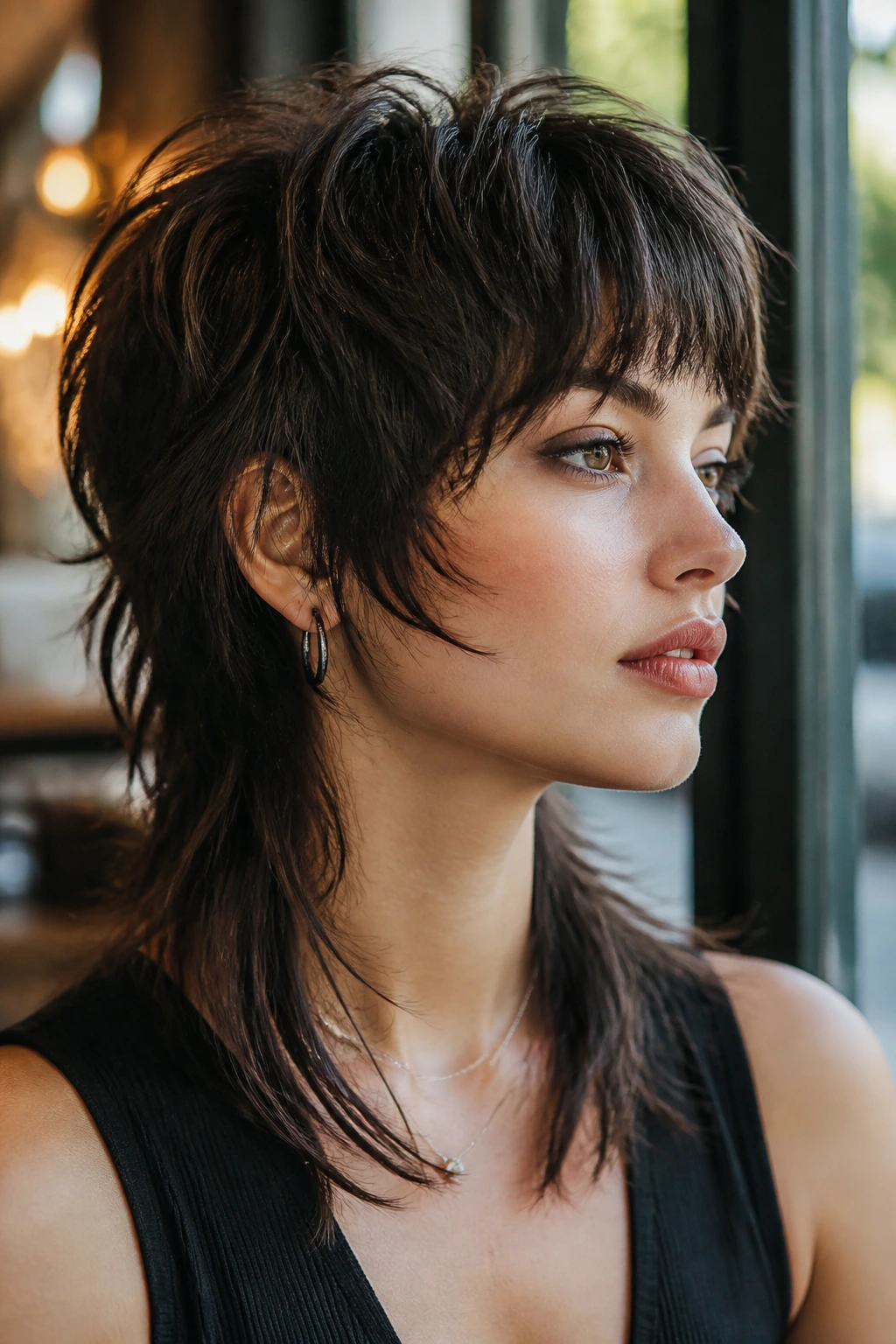
This is the bold one. The top and bottom are intentionally separated more than in a soft wolf cut, which creates a stronger silhouette and a more fashion-forward feel.
On fine hair, the disconnect can be useful if you need the crown to feel fuller but want to keep the perimeter light. The catch is that the cut has to be balanced carefully. Too much separation, and it starts looking patchy.
22. Air-Dry Wolf
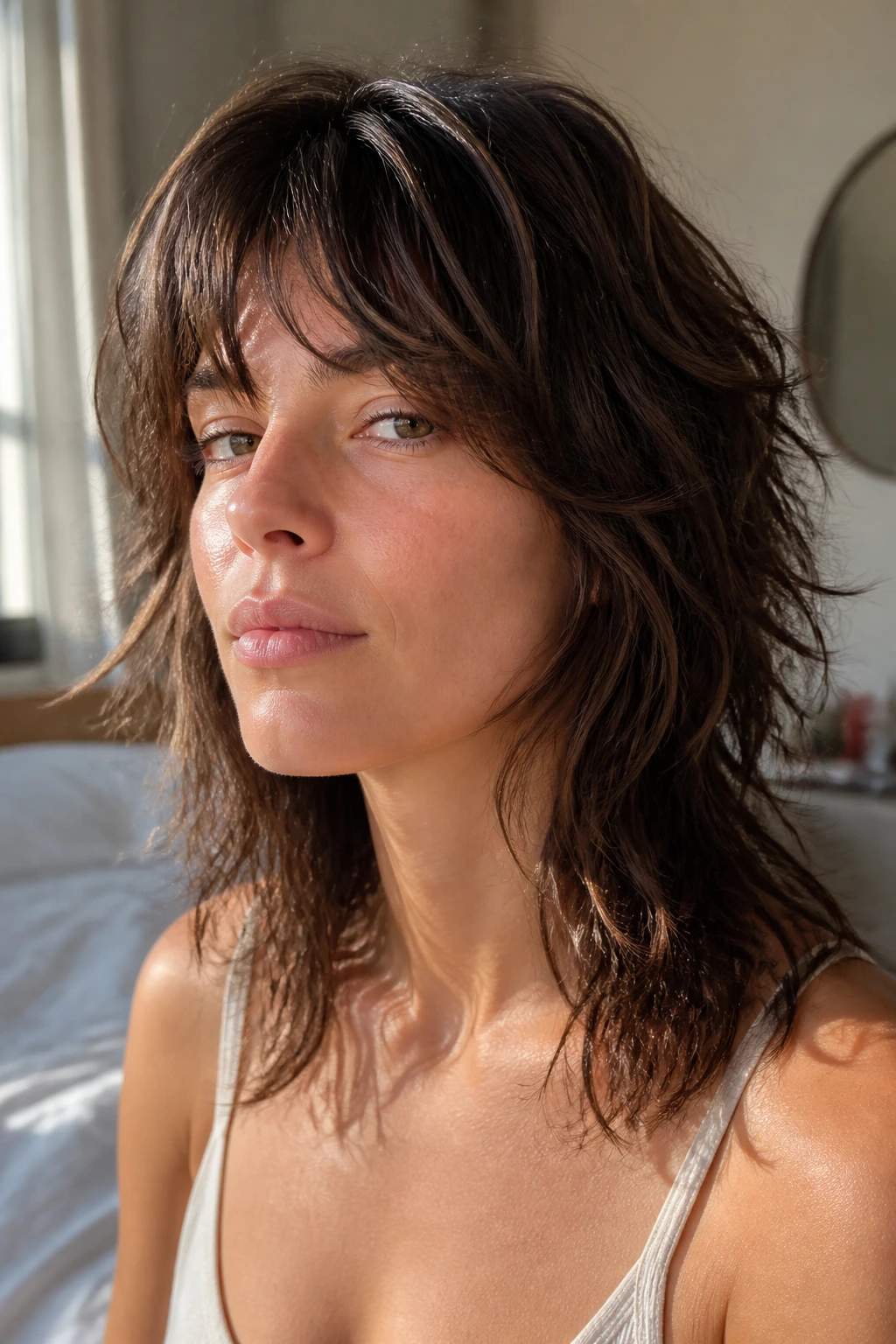
Some cuts look best under a dryer. This one is made to settle on its own. The layers are soft enough to dry into shape without too much friction, which matters when you don’t want to rough up fine hair every morning.
I’d ask for this if your routine is short and you’re not the type to stand in front of a mirror with a brush. A little mousse or cream, a quick scrunch, and the cut does the rest.
23. Side-Part Volume Wolf
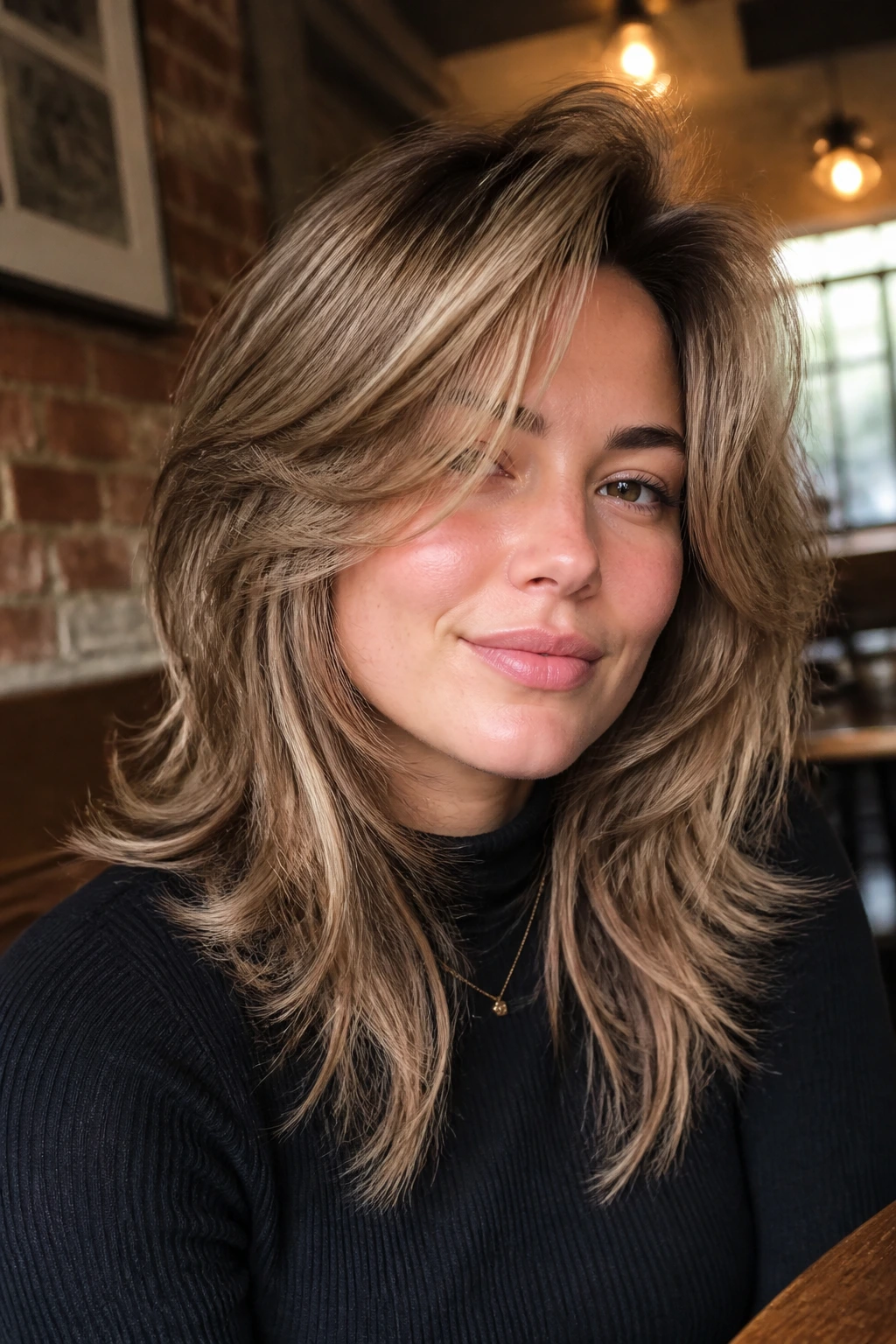
This is a root-lift cut disguised as a style choice. The side part pushes the hair up and over, which gives the top a fuller line without needing extra teasing or a pile of product.
Fine hair often responds well to asymmetry. It breaks the flatness. A side-part wolf cut can also soften a wider face because the sweep pulls the eye diagonally instead of straight down the center.
24. Retro Feathered Wolf
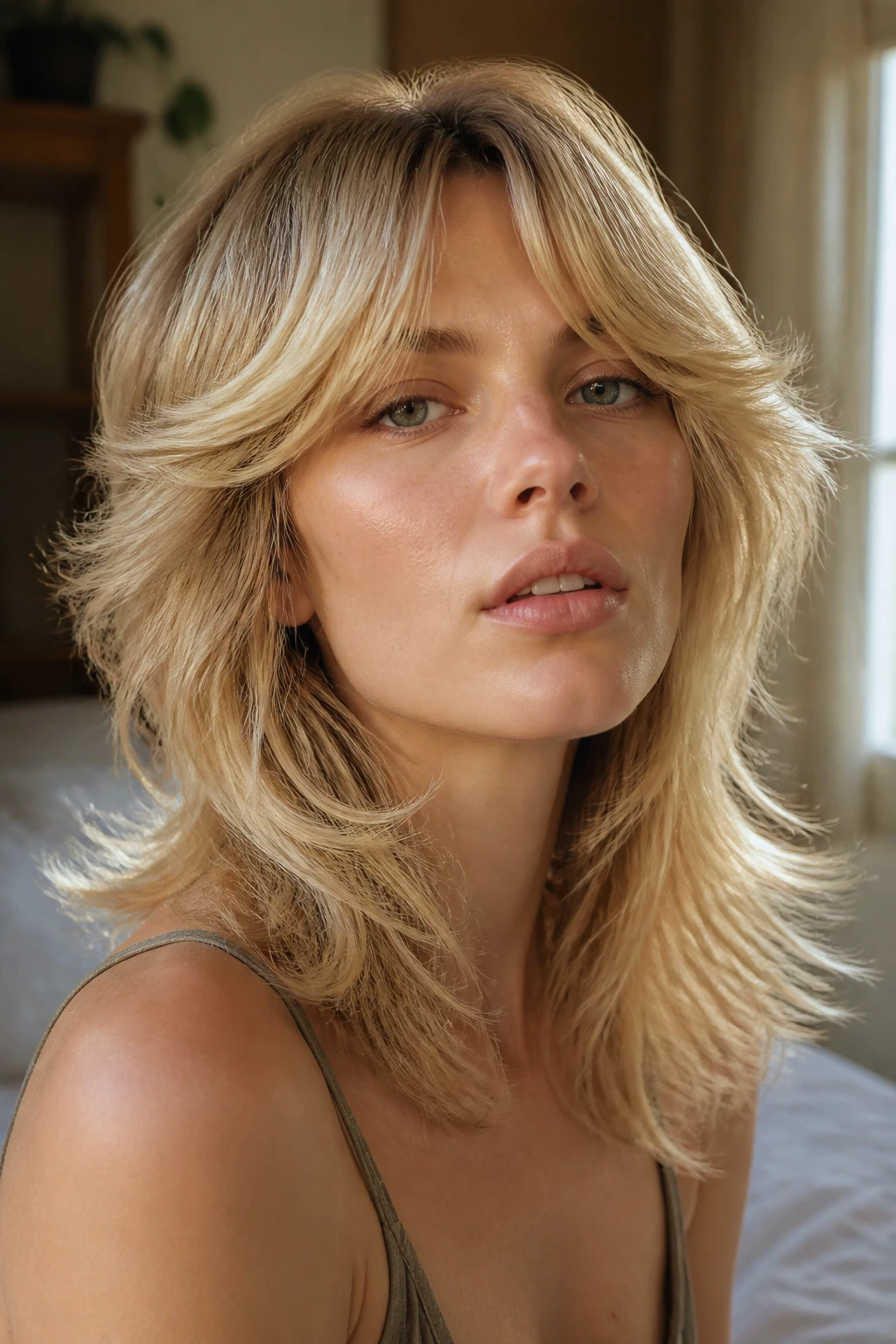
There’s a little ’70s energy in this one, and I mean that as a compliment. The hair is feathered away from the face and lightly flipped at the ends, which gives fine strands some movement without making them look skinny.
This version works best if you like a blowout finish. It has a bit of glamour, but not the hard, lacquered kind. Think soft volume, brushed-through ends, and a shape that still moves when you turn your head.
25. Soft-Shattered Wolf
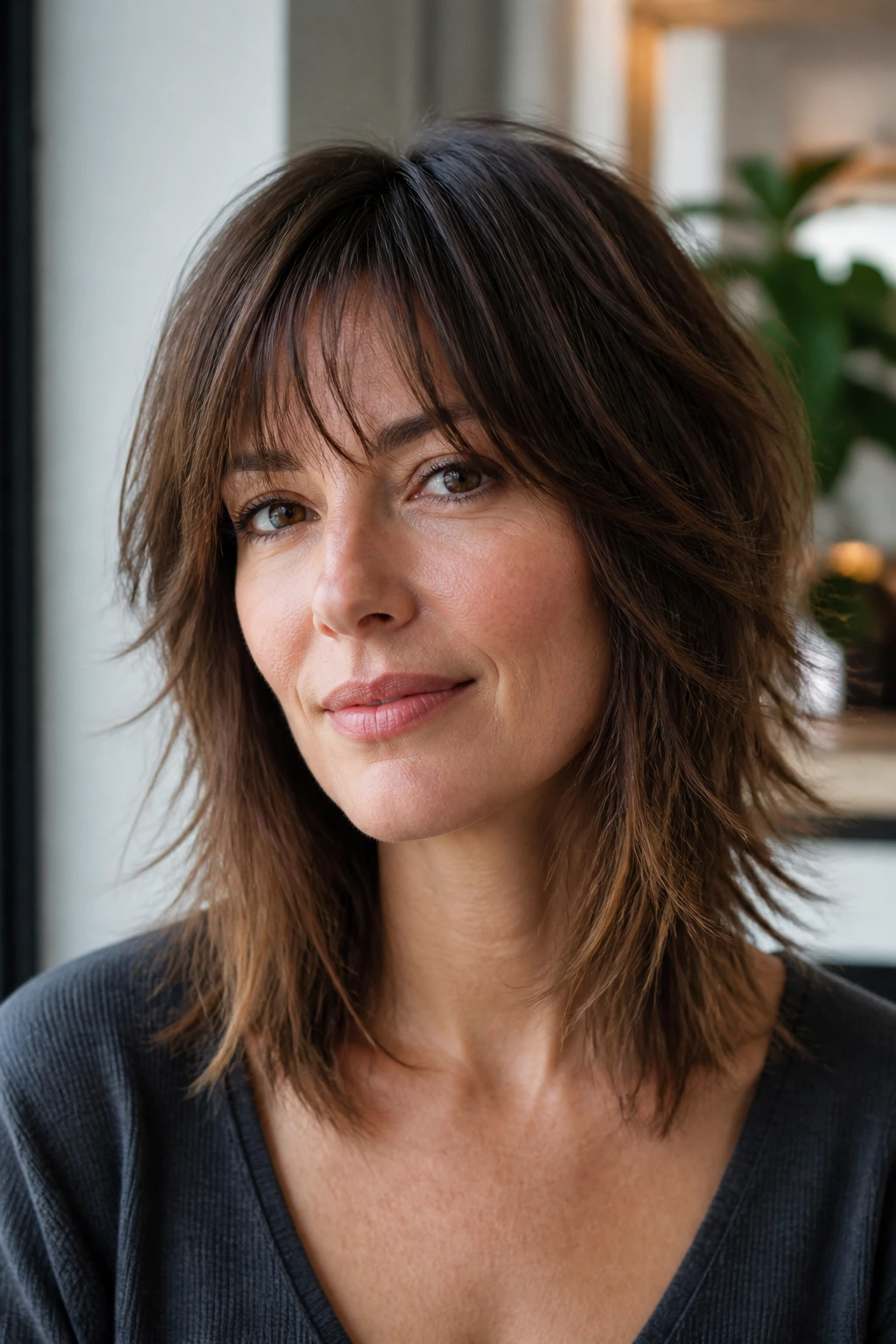
A shattered finish sounds aggressive, but on fine hair it can be used gently. The layers are broken up just enough to create texture, then softened so the ends still look healthy.
This is a good option when you want the wolf cut feel without looking too chopped. It’s especially useful for hair that bends well but doesn’t have a lot of natural thickness. The texture does the work.
26. Razor Mullet Wolf
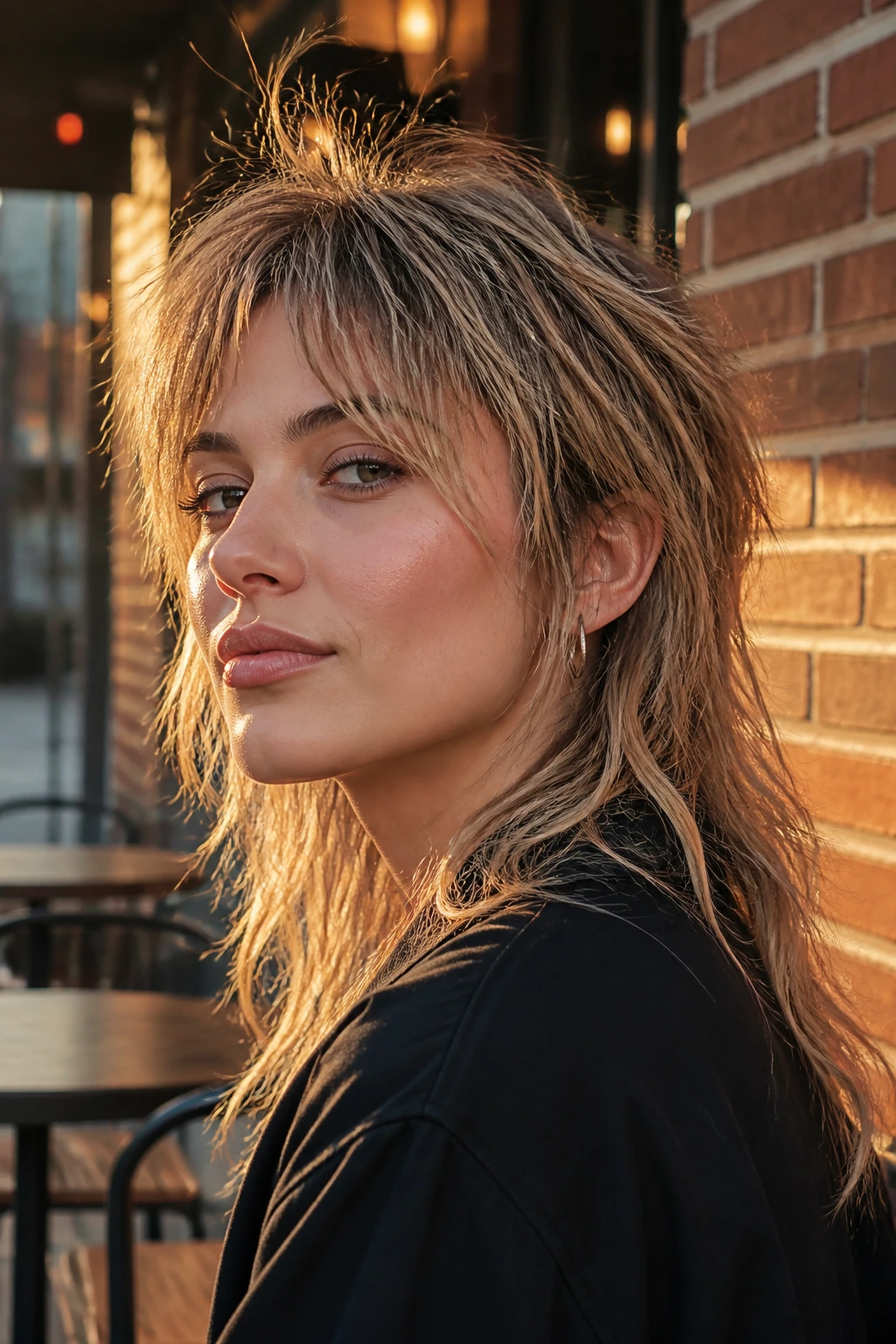
This is the bolder cousin in the family. The back is left longer, the front stays lighter, and the texture is sharpened with a more editorial edge. It’s not for someone who wants invisible layers and polite movement.
Fine hair can wear this surprisingly well if the stylist keeps the perimeter clean. The point is contrast, not damage. When the shape is right, it feels lean and cool instead of thin.
27. Butterfly-Wolf Blend
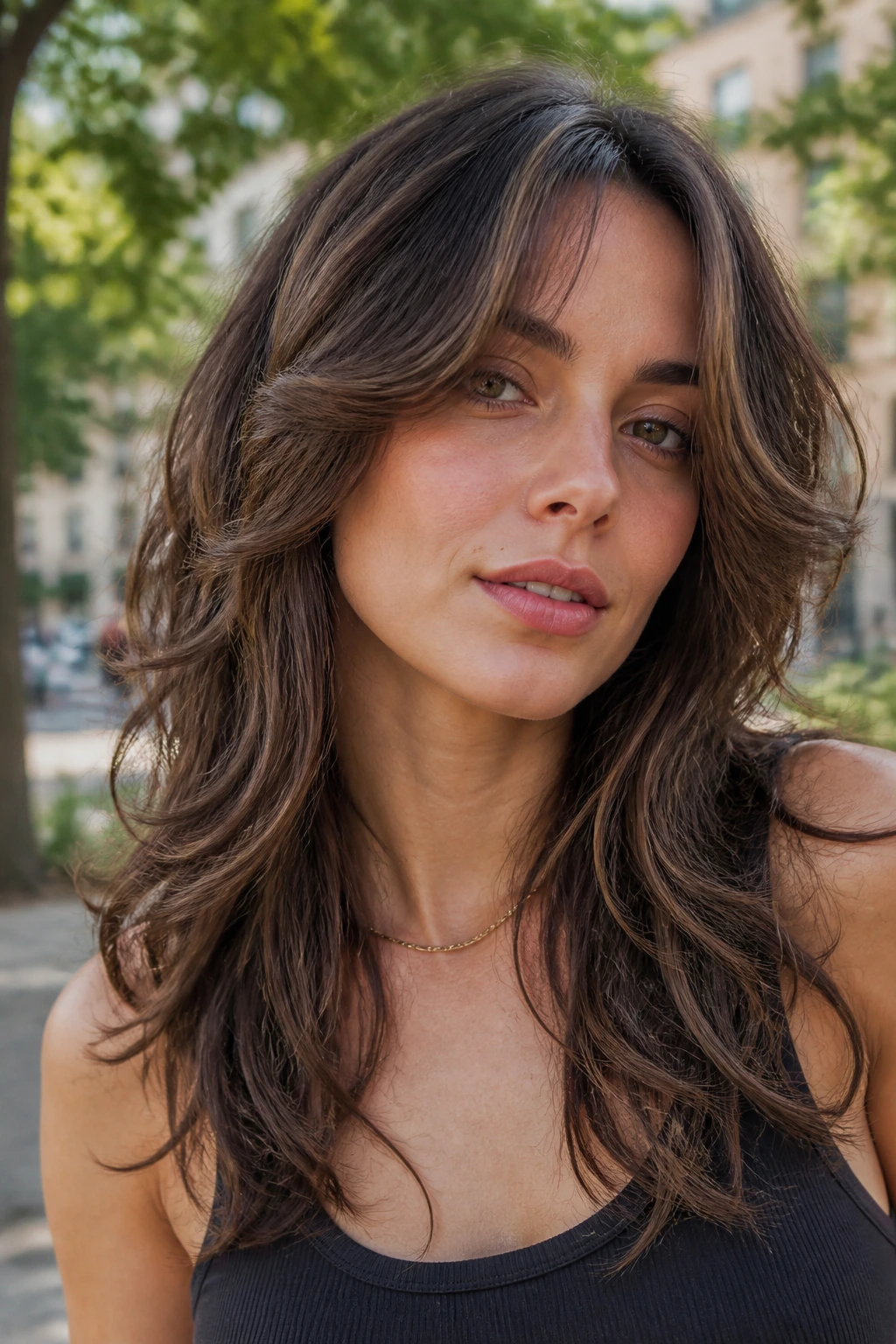
This hybrid borrows the face-framing lift of a butterfly cut and mixes it with the rougher texture of a wolf cut. The result is softer at the front and more playful through the mids.
That’s useful for fine hair because the face frame creates visible fullness where it matters most. If you want movement but don’t want the shorter crown layers that some wolf cuts use, this is a strong middle path.
28. Sleek Internal-Texture Wolf
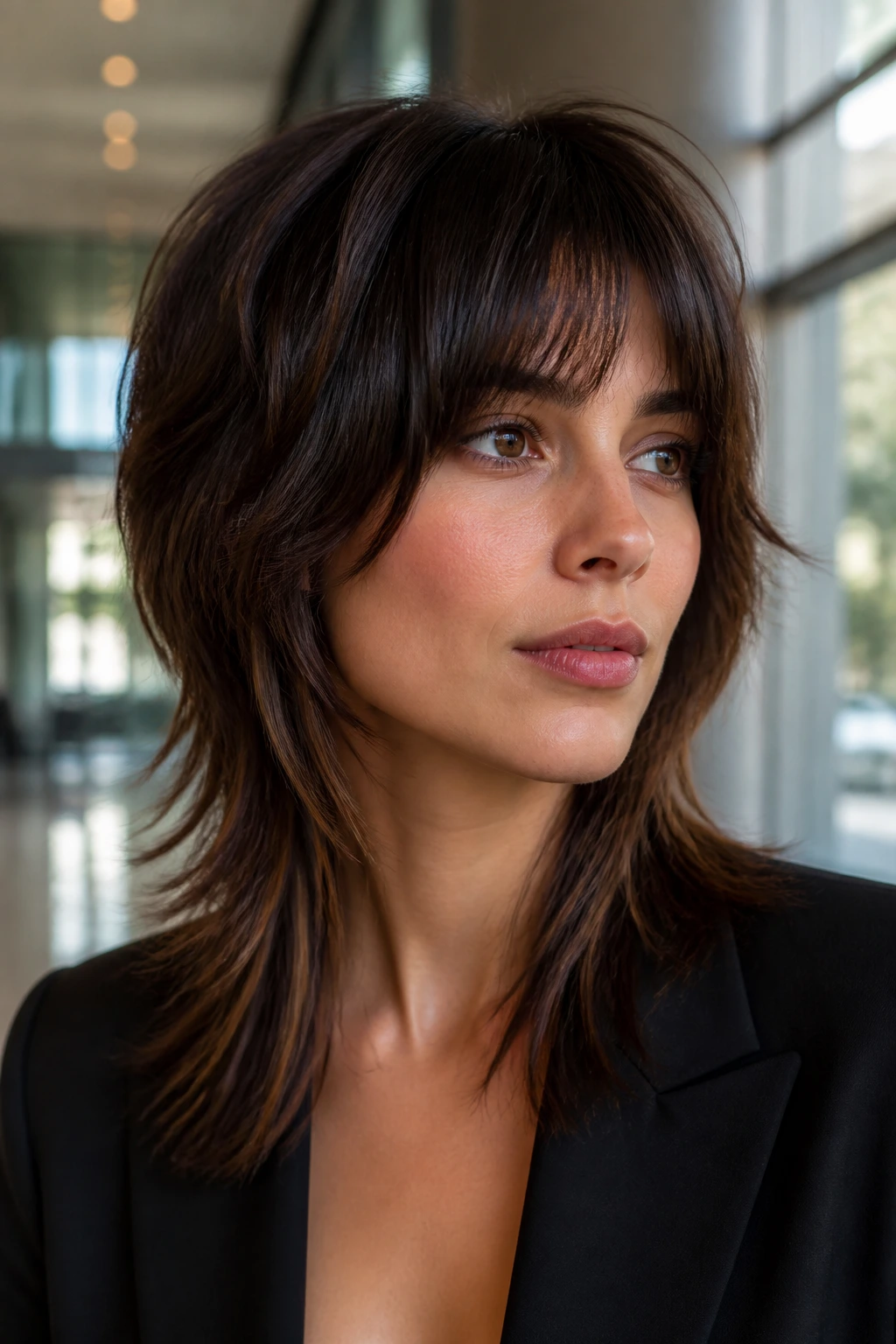
At first glance, this one looks tidy. Underneath, the layers are doing all the work. That contrast is exactly why it suits fine hair so well.
You get a cleaner outer line, which keeps the hair from looking frayed, but the interior has enough movement to stop it from lying flat. I like this for someone who wears tailored clothes or prefers a more controlled finish than a messy shag.
29. Full-Fringe Wolf Cut
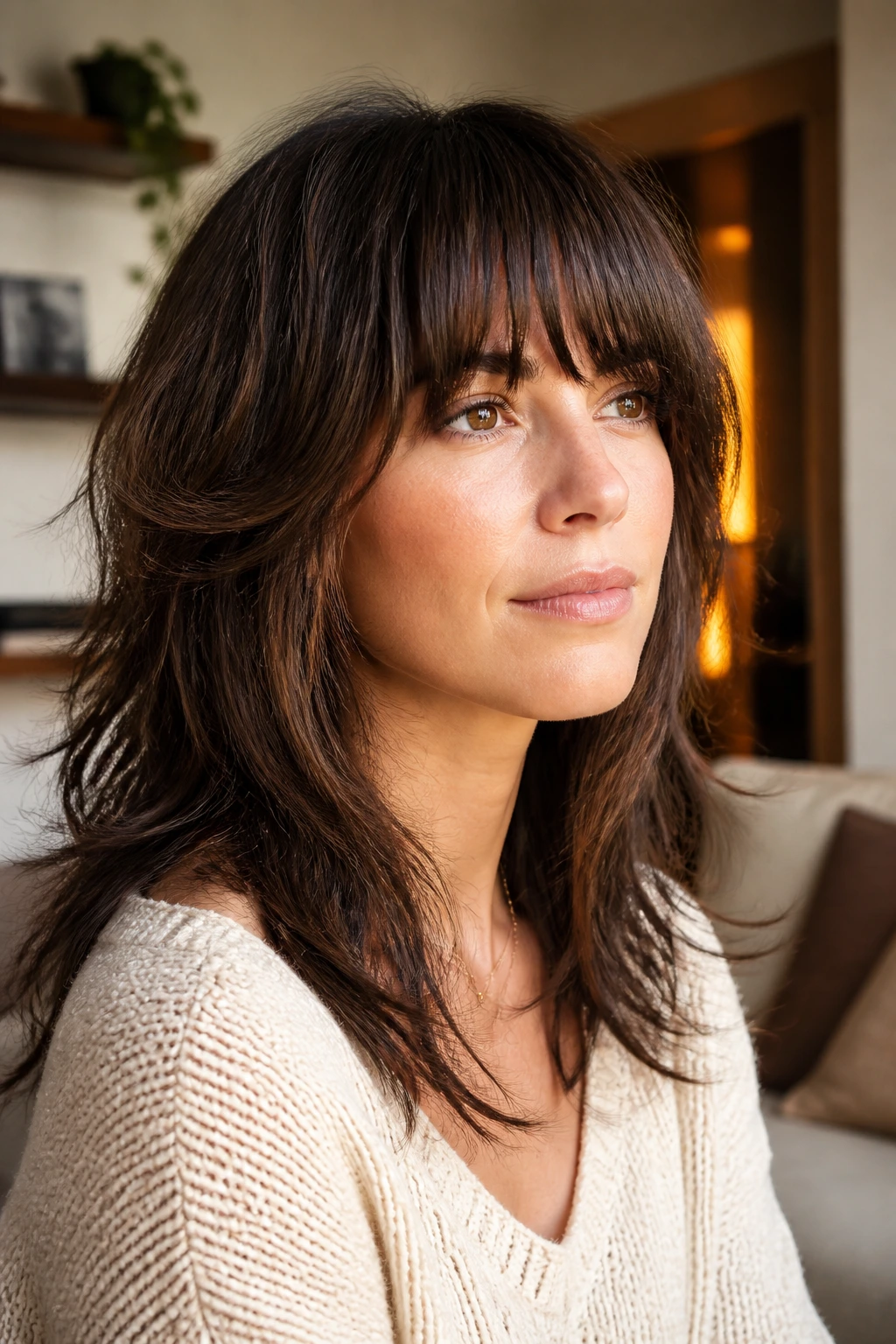
A fuller fringe can anchor a fine-hair wolf cut, especially if the rest of the style is kept airy. It gives the top a stronger visual block, which can make the hair read denser overall.
The danger is weight. If the fringe is too thick and the layers are too thin, the balance goes sideways fast. The better version stays soft at the edges, so the bangs frame the face instead of sitting like a cap.
30. Grow-Out Friendly Wolf Cut
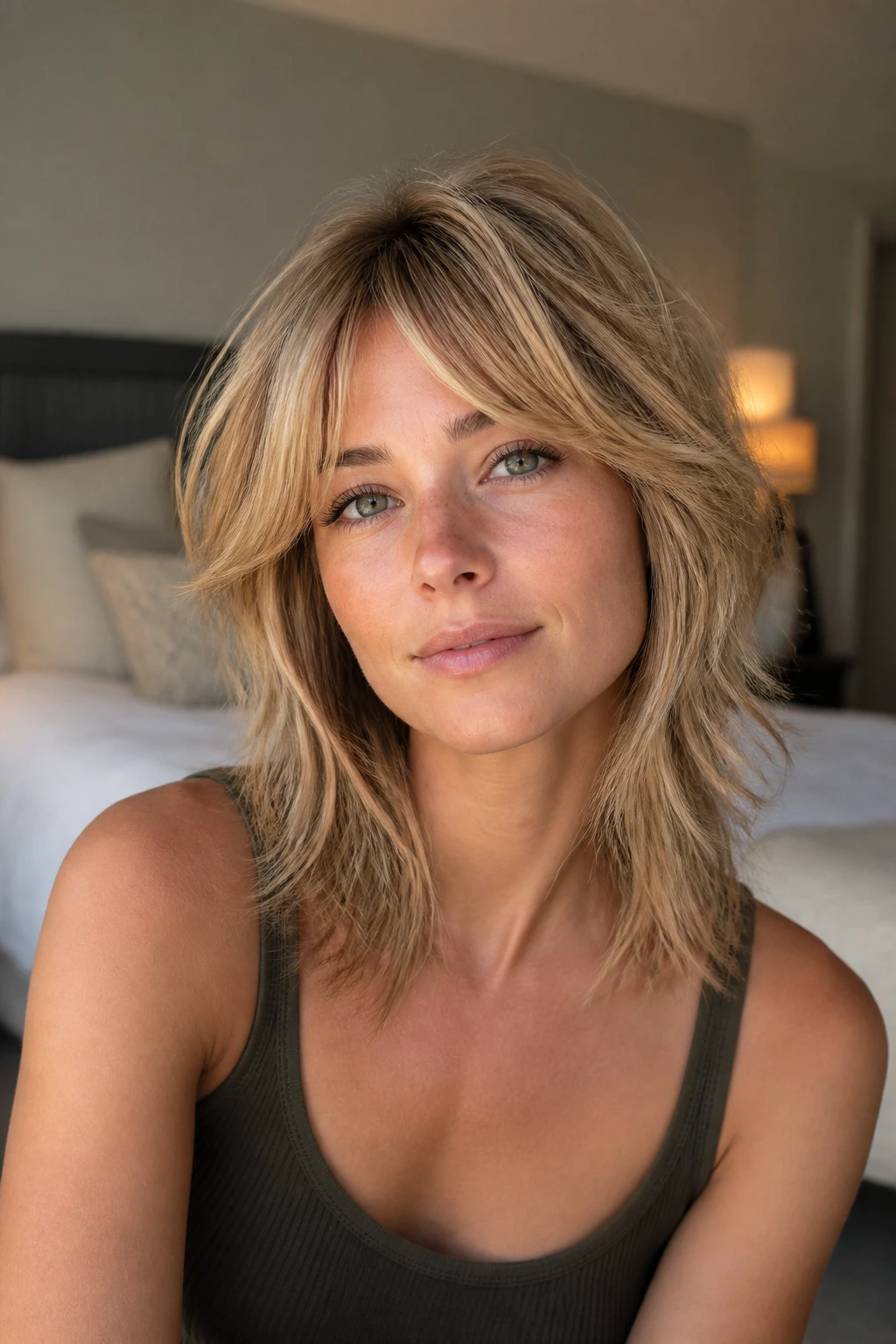
Some cuts look good for ten days and then collapse. This is not one of them. The grow-out friendly version keeps the shape long enough to survive a few weeks without the layers turning awkward.
For fine hair, that matters a lot. Short, choppy layers can lose their charm fast if they’re too aggressive. This cut keeps the crown lifted and the ends tidy, so the style ages in a calmer way.
31. Bixie-Wolf Hybrid
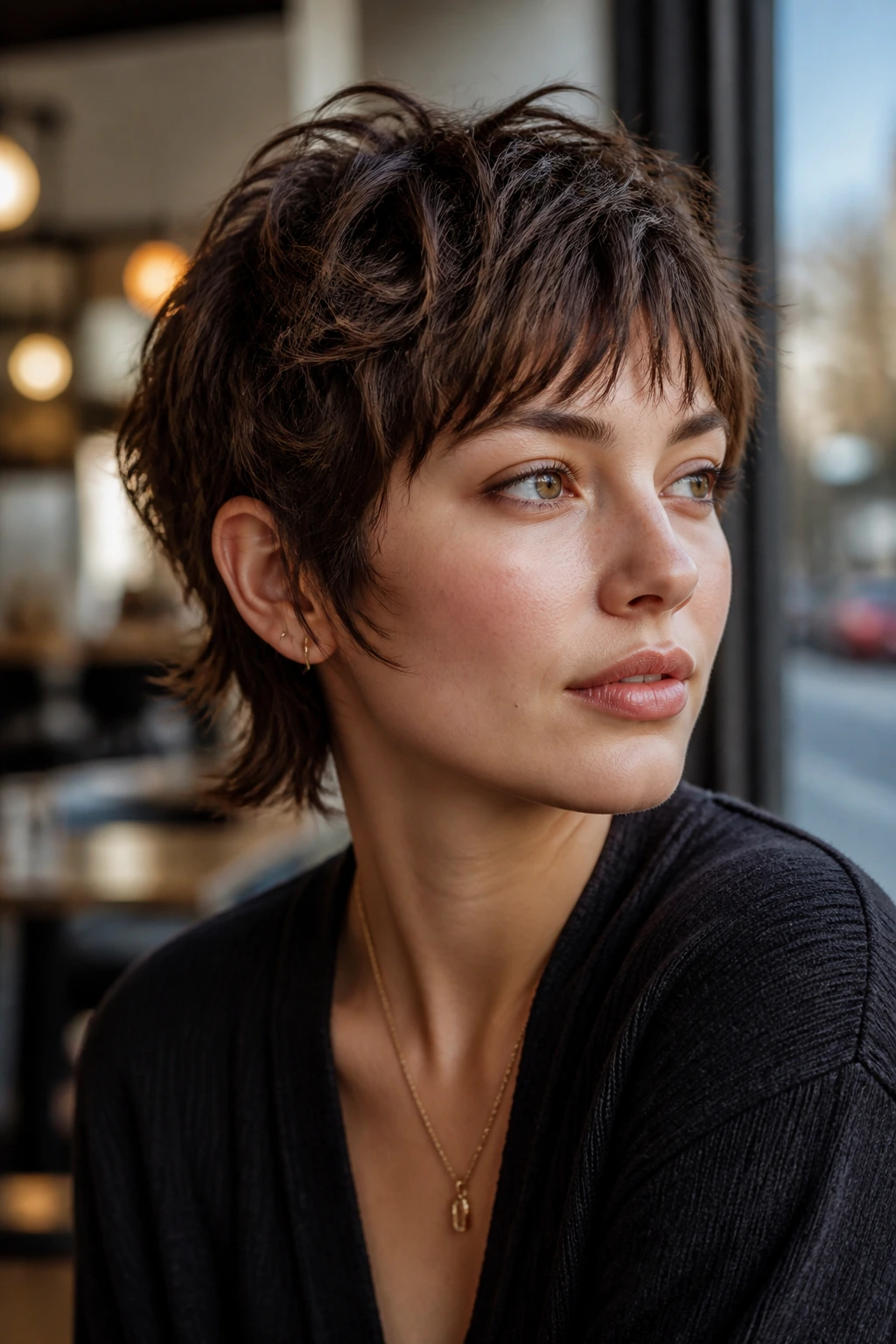
This is the shortest option on the list. It borrows the cropped energy of a bixie and adds wolf-cut texture through the top and sides, which gives fine hair a lot of shape with very little length.
It’s a good choice if your hair is so fine that longer lengths feel stringy. The cropped silhouette keeps the hair looking dense. And yes, it does need styling, but not as much as people think.
32. Root-Lift Wolf

Some cuts are about the finish. This one is about the scalp. The layers are placed to encourage lift right at the root area, which is where fine hair usually needs the most help.
If you’re constantly pushing your hair off your face because it lies too close to the head, this version fixes that better than a generic shag. A little mousse or root spray makes a visible difference here.
33. Low-Maintenance Wolf Cut

This is the version for people who want the shape without a complicated morning ritual. The layers are soft, the outline stays fairly clean, and the whole cut still looks good when it’s not freshly styled.
Fine hair often does better with a cut that behaves on its own. That’s what makes this one worth considering. It gives you texture, but it doesn’t force you into a new beauty routine just to keep up with it.
Why Textured Wolf Cuts for Fine Hair Hold Their Shape
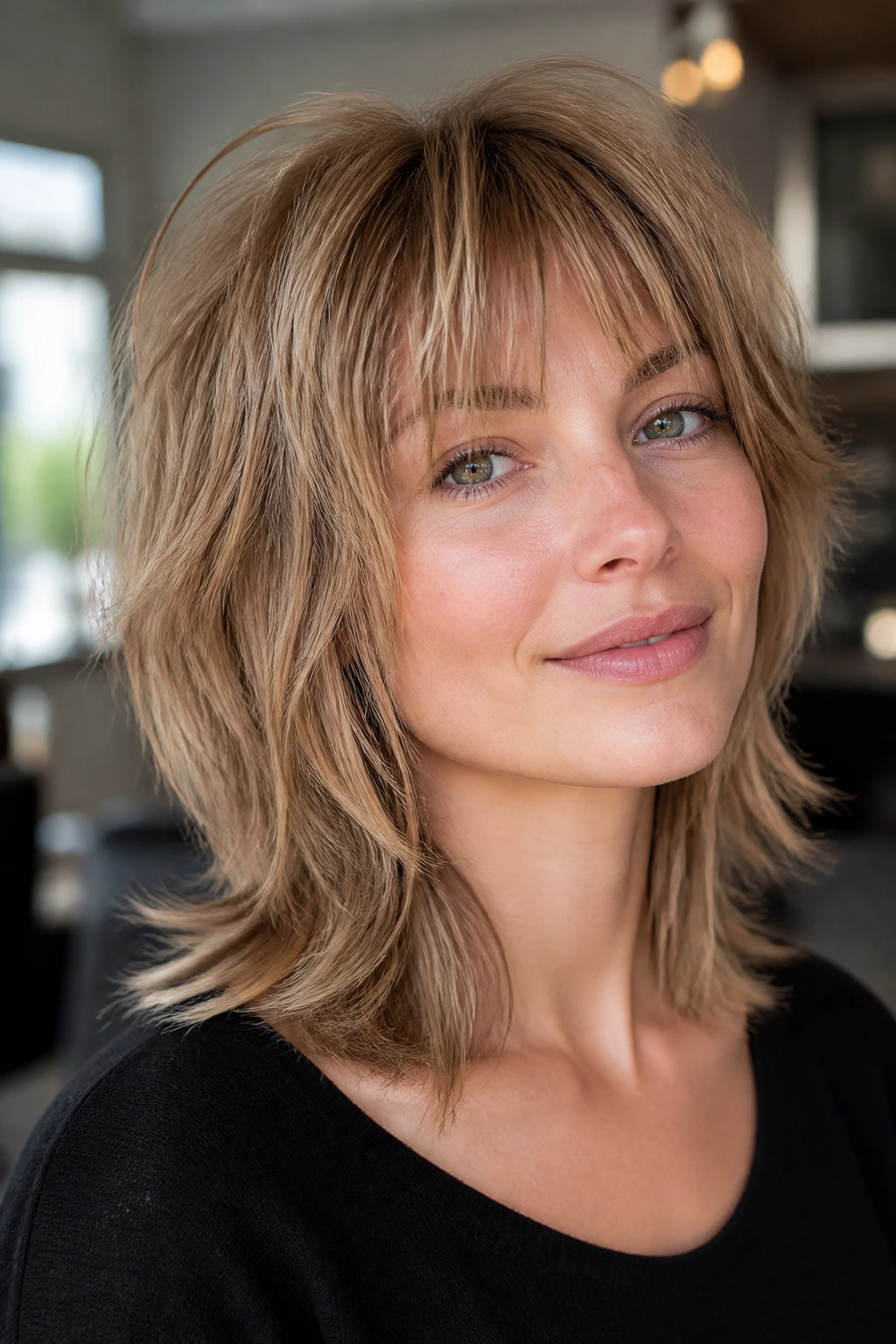
The reason these cuts work is not magic. It’s placement. Fine hair usually looks best when the stylist builds lift near the crown, keeps the front soft, and protects enough weight at the bottom so the ends don’t disappear into space.
A bad wolf cut on fine hair removes too much. You see it right away: the sides look thinner than the top, the ends go ragged, and the hair stops behaving like a style and starts behaving like a fringe on a broom. The good versions avoid that by treating density like a resource, not a problem.
Where the shape matters most
The crown, the cheekbones, and the perimeter do the real work. If those zones are handled carefully, the cut can look fuller even when the actual hair count is modest. That’s why a small change in layering can matter more than a dramatic length change.
Why texture beats blunt heaviness
Blunt hair can look thick, sure. But on fine strands, bluntness without movement often turns into a flat curtain. Texture gives the eye something to follow. It keeps the hair from lying in one dull line.
What to Ask for at the Salon Chair
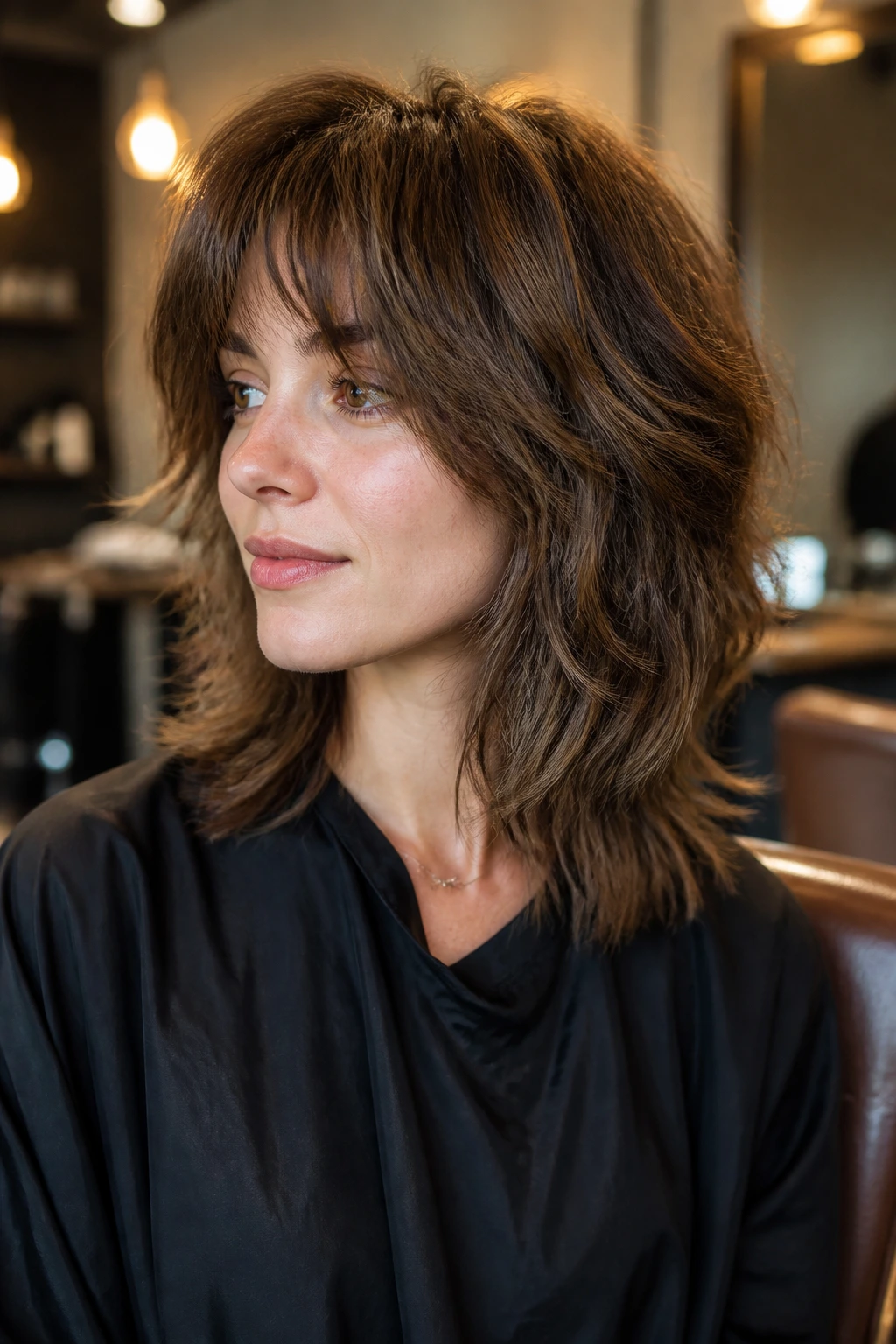
Don’t ask for “a wolf cut” and leave it there. That’s how people end up with something that looks cool in the mirror and odd two days later. Be specific.
Ask for soft crown layers, a fuller perimeter, and face-framing that blends into the rest of the cut. If you want bangs, say whether you want them split, rounded, bottlenecked, or wispy. If you don’t want bangs at all, say that early. A good stylist can build the texture into the side and top sections instead.
Say this if your hair is very fine
Tell the stylist you want movement without losing density at the ends. Those words matter. They know what they mean, and you’ll get a very different result than if you just ask for “more layers.”
Bring one photo, maybe two
One reference photo is enough. Two, if you’re showing the difference between the length you want and the texture you want. More than that turns the appointment into a collage, and collages are where bad haircuts are born.
The Styling Products That Give Fine Hair a Spine
Fine hair doesn’t need heavy cream and a giant squeeze of oil. It needs products that give the hair a little memory without dragging it down.
Lightweight mousse at the roots is one of the best bets. It helps the crown stay lifted after blow-drying or air-drying. Root spray adds a small but useful push at the part line. Dry shampoo is useful even on clean hair if your roots go flat by mid-afternoon; the grit gives the hair something to cling to.
A texturizing spray can help the layers separate once the hair is dry. Use a light hand. Too much and the cut looks dusty. Heat protectant matters if you’re using a dryer or iron, and on fine hair I’d keep the heat lower than you think you need. High heat does not equal better volume. Usually it just means brittle ends sooner.
Tools That Make the Cut Easier to Live With
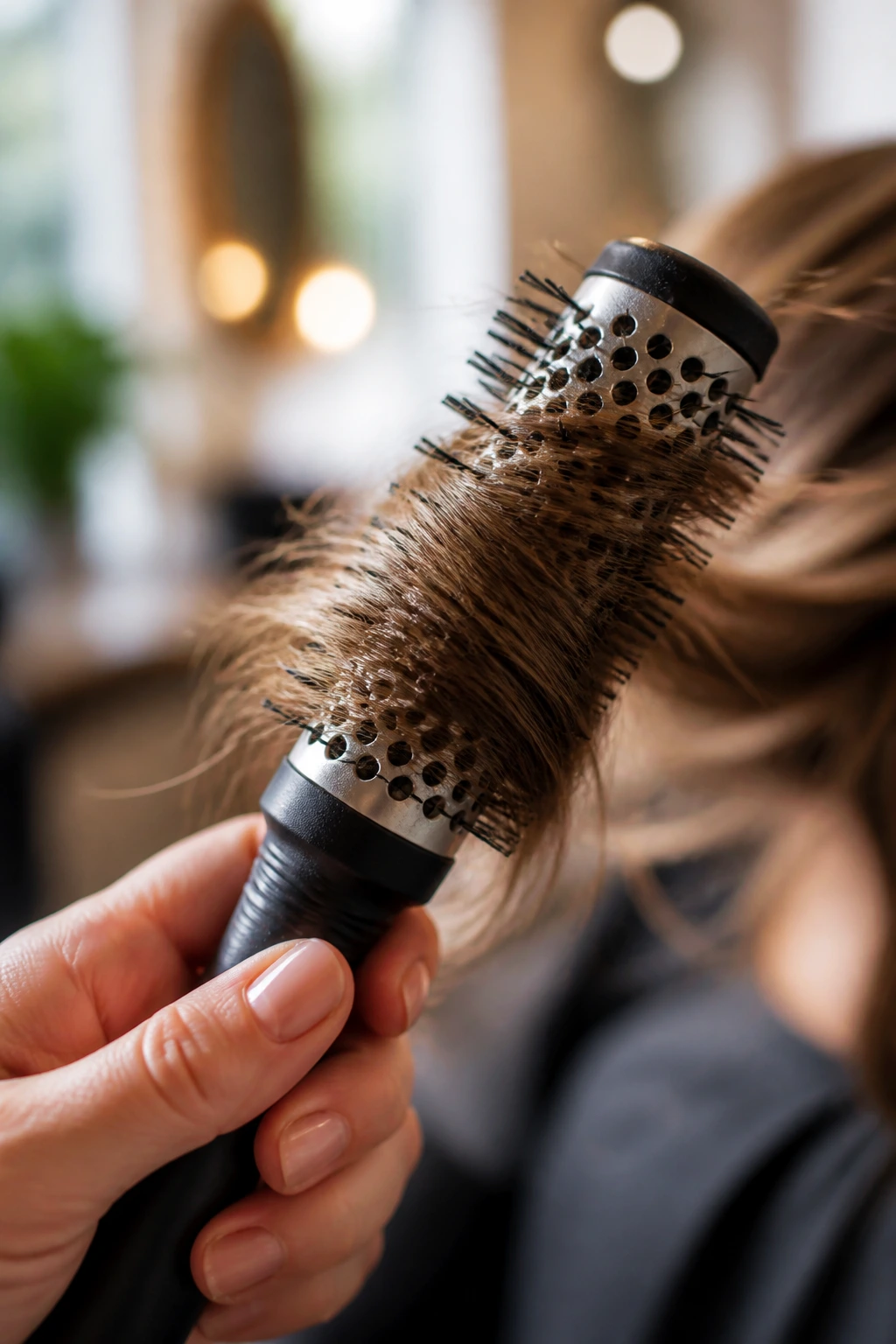
- Blow dryer with a concentrator nozzle: Directs air at the roots so you can lift the crown without blowing the hair everywhere.
- Small round brush: Helps bend the front pieces and keep curtain layers from sticking straight down.
- Vent brush: Good for fast drying when you want movement more than polish.
- Wide-tooth comb: Safer than a fine comb for detangling fine hair without yanking out fragile ends.
- Sectioning clips: Worth using even at home; they keep the top layers out of the way so you can shape the crown properly.
- Lightweight finishing spray: Adds hold without turning the cut stiff or crunchy.
- Diffuser: Helpful for wavy or curly fine hair, especially if you want the wolf texture to dry with less frizz.
How to Keep the Texture Looking Fresh
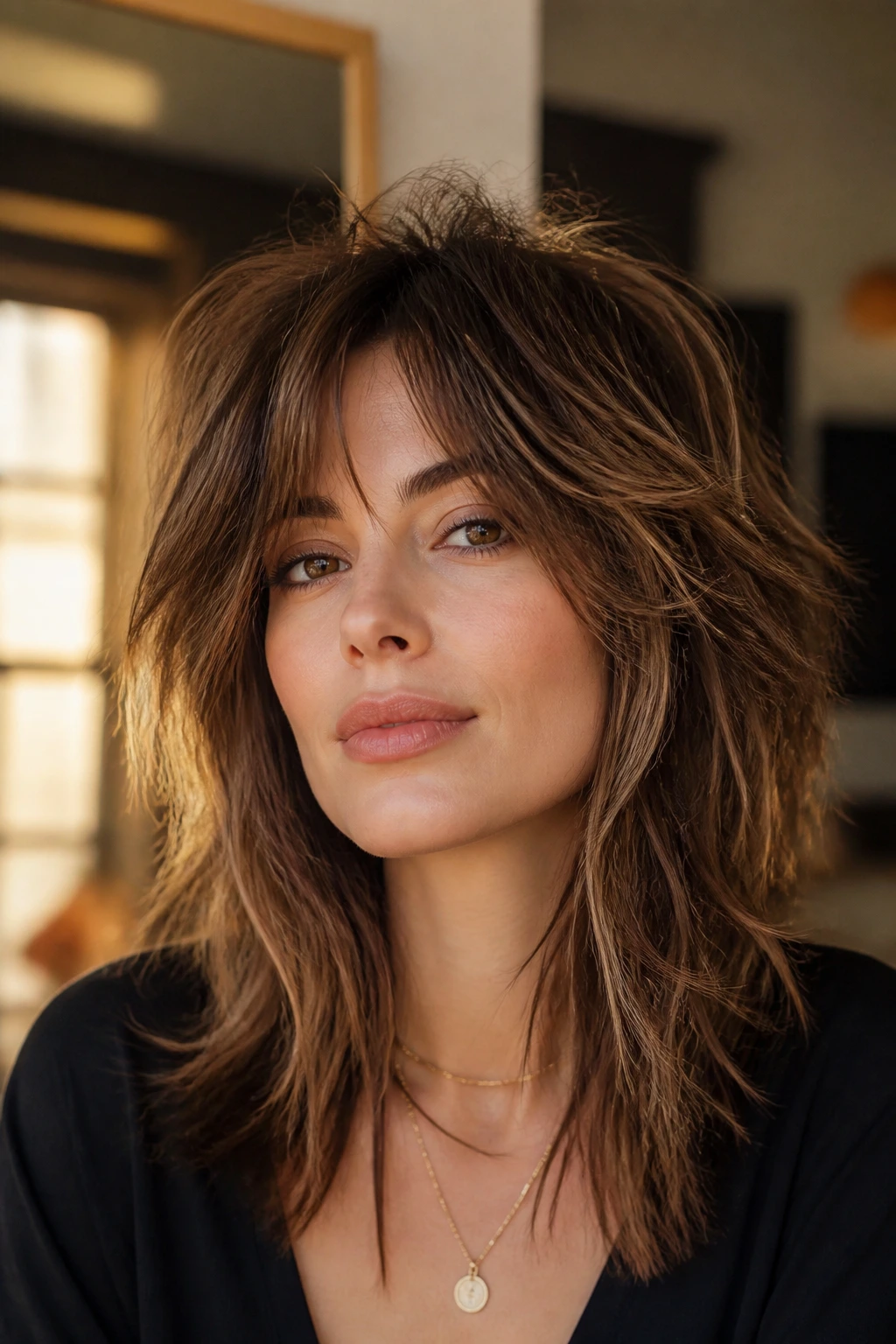
Root lift first. If the crown flattens, the whole cut loses its shape. Flip the hair the opposite way while it’s drying, then switch it back before it’s fully dry. That small trick gives the roots a little bend instead of a hard line.
Use less product than you think. Fine hair shows buildup fast. Start with a pea-sized amount of mousse or cream, work it through the roots and mid-lengths, and add more only if the hair actually needs it. Heavy hands make the cut collapse.
Refresh the front pieces. The face frame is usually what gives a wolf cut its personality, so if those sections go limp, mist them lightly, twist them around your fingers, and hit them with a quick blow-dry or curl. Takes two minutes. Looks like you tried.
Sleep smart. A loose topknot, a silk pillowcase, or even just lifting the hair off your neck helps preserve the shape. Fine hair loses volume fast when it gets smashed flat overnight.
Common Mistakes That Flatten Fine Hair
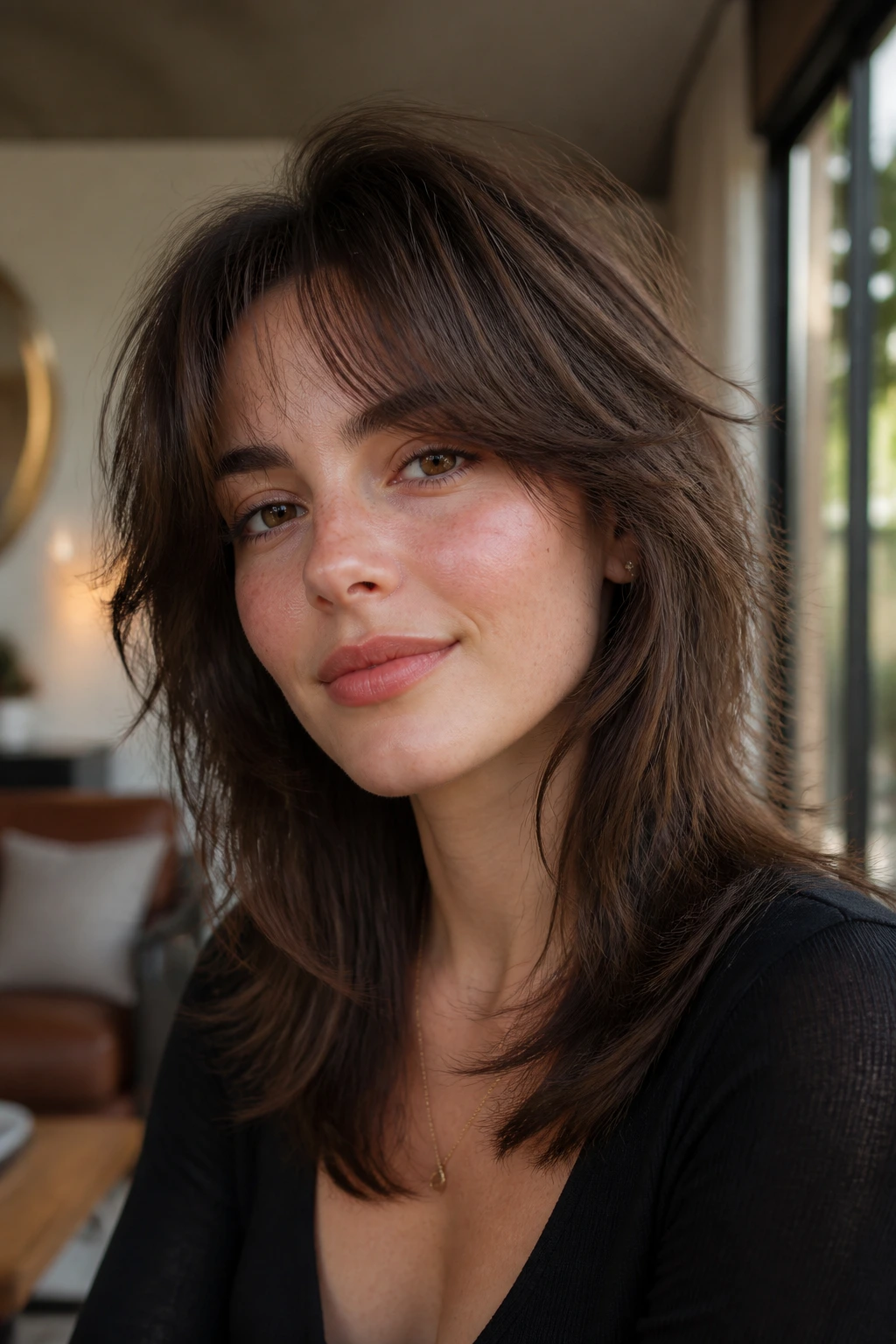
The biggest mistake is too much layering through the ends. It sounds like the stylist is giving you texture, but on fine hair it often leaves the perimeter too thin. You’ll notice it when the bottom looks fuzzy, see-through, or stringy in daylight.
Another one is using heavy oils and creams everywhere. Fine hair can’t carry that weight. The fix is simple: keep rich products away from the root area and reserve them for the last inch or two if the ends need smoothing.
A third problem is cutting the fringe too dense. Thick bangs can swallow the face and make the rest of the hair look lighter by comparison. Better to keep fringe soft and blend it into the side layers.
And then there’s skipping shaping trims. Wolf cuts depend on placement. When they grow too far out, the crown can sag and the front loses its frame. That doesn’t mean you need constant salon visits, but a little maintenance keeps the style from becoming accidental.
Variations and Alternatives to Try
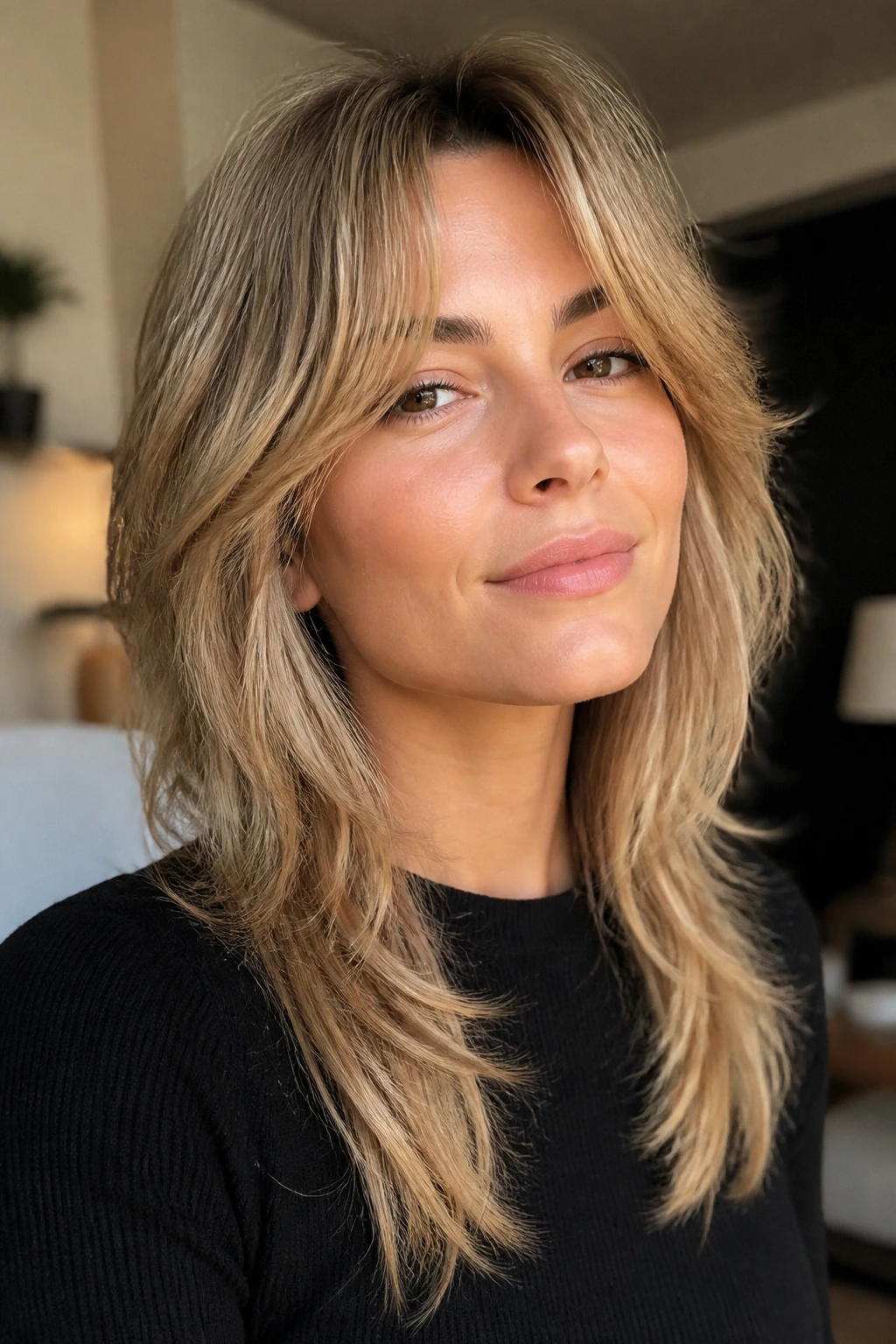
Soft Shag Switch: If the wolf cut feels too edgy, ask for a softer shag with longer layers and less disconnect. You’ll keep the movement but lose some of the sharper mullet energy.
No-Bang Version: Good for anyone who hates fringe touching the forehead. The face-framing stays long and open, so the cut still gets shape without a commitment across the brow.
Glass-Sleek Wolf: This version keeps the layers but styles the hair straighter and smoother. The texture lives underneath, which is nice if you want the shape to show more than the mess.
Curly Definition Blend: For wavy or curly fine hair, swap aggressive thinning for curl-by-curl shaping. The result is lighter, yes, but the pattern stays intact.
Long Grow-Out Cut: If you’re nervous about the wolf cut looking too trendy, keep the length longer and the crown layers softer. You’ll get movement now and an easier grow-out later.
Maintenance and Grow-Out Notes
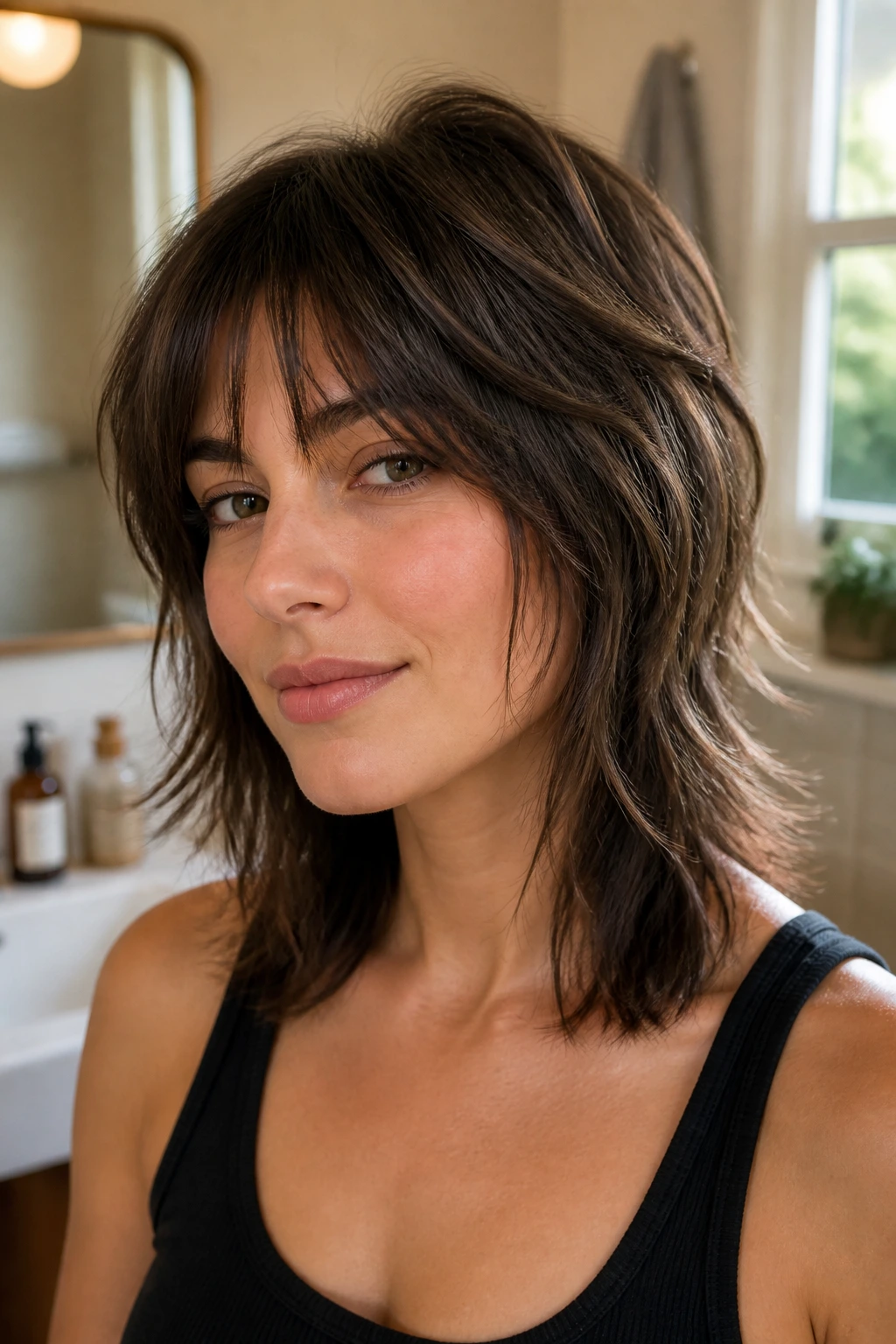
Fine hair usually needs trims every 6 to 8 weeks if you want the wolf shape to stay crisp. That doesn’t always mean a full cut. Sometimes it’s just a light dusting around the perimeter and a bit of reshaping through the fringe or crown.
If your hair grows fast at the bangs, get them checked sooner. Bangs are the first thing to lose their balance on fine hair, and once they’re too long, they can make the whole cut feel heavy.
Wash frequency depends on the scalp, not the haircut. But many fine-haired people find that a wolf cut looks best on day one through day three, especially if they use dry shampoo or a light root spray between washes. If the texture starts to vanish, you don’t need to redo the whole head. Focus on the crown, the face frame, and the ends nearest the perimeter.
For color-treated hair, keep heat lower and use fewer hot-tool passes. Fine strands already lose shape faster than thick ones. Add bleach damage on top of that and the layers can start looking rough long before the haircut itself grows out.
Frequently Asked Questions
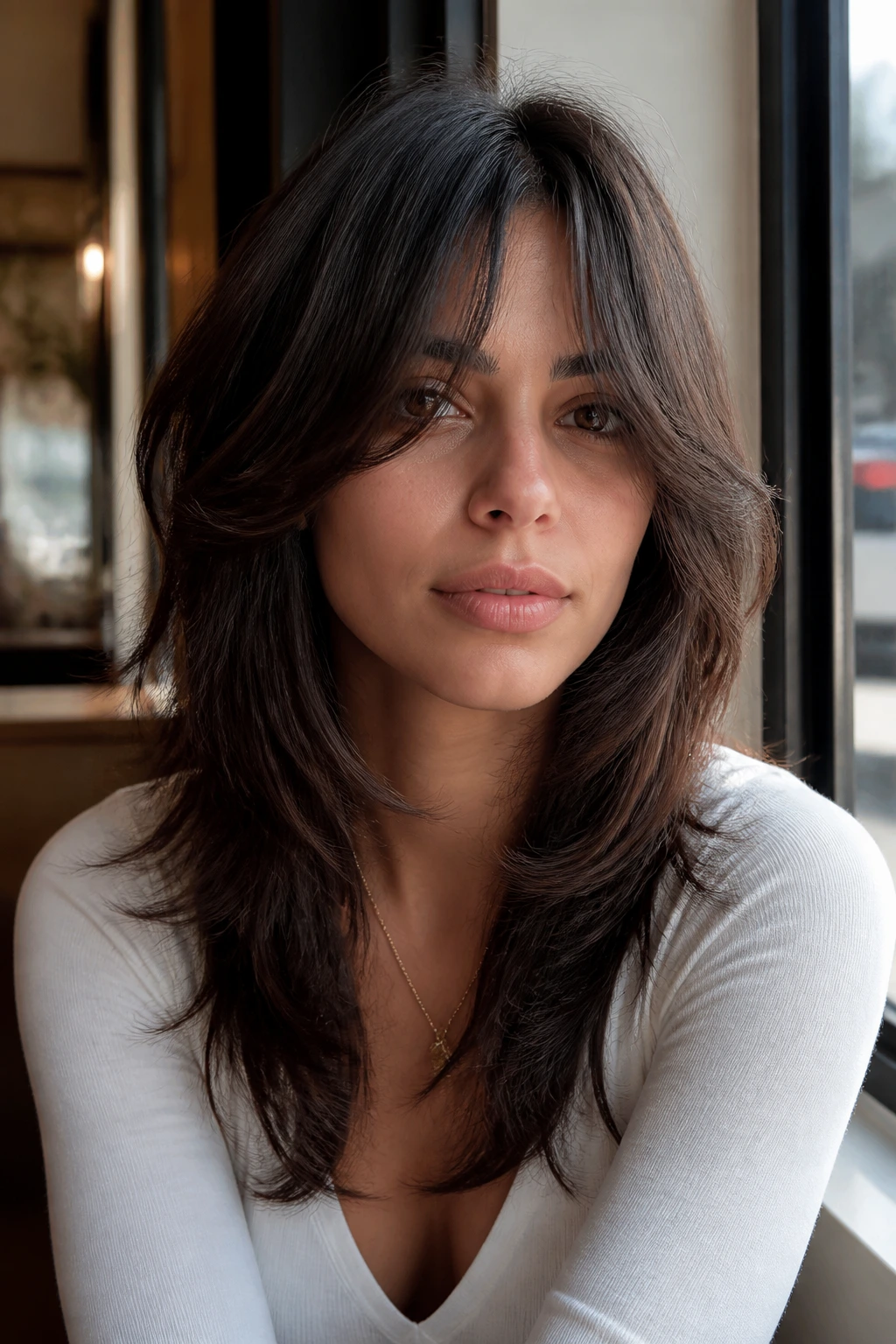
Can fine hair really pull off a wolf cut?
Yes, if the layering is controlled. Fine hair needs lift at the crown and enough weight at the bottom to keep the shape from going sparse, so the cut has to be tailored rather than aggressively thinned.
Will layers make my fine hair look thinner?
They can, if the stylist removes too much from the perimeter. The better approach is to keep the ends fuller and focus texture near the top and front where the hair needs movement most.
What length is best for a wolf cut on fine hair?
Shoulder length to collarbone length is the safest zone for many people, because it gives the hair enough mass to stay visible. Shorter cuts can work too, but they need a careful hand so the shape doesn’t look airy in the wrong places.
Do I need bangs with a wolf cut?
No. Bangs help some faces by adding structure at the front, but a strong face frame can do the same job. If you do want fringe, ask for something soft and easy to separate rather than a thick, heavy bang.
How do I style it without spending forever on it?
Work mousse into damp roots, rough-dry until about 80 percent dry, then lift the crown with your fingers or a small brush. Finish with a little texturizing spray through the ends if they need separation.
Is a wolf cut good for straight fine hair?
It can be, but straight hair needs subtle layering and good perimeter balance. Too much slicing makes the cut look skinny fast, so the texture has to be placed with restraint.
What if my hair gets flat by lunchtime?
Use a light root spray or dry shampoo at the crown, then flip the hair opposite your part for a minute and flip it back. That quick reset gives the top a small boost without needing a full restyle.
How do I grow out a wolf cut without a weird shape?
Keep the perimeter tidy and let the crown layers soften gradually. A grow-out friendly version starts with less contrast, so the haircut keeps its form as the layers lengthen.
A Shape That Stays Light
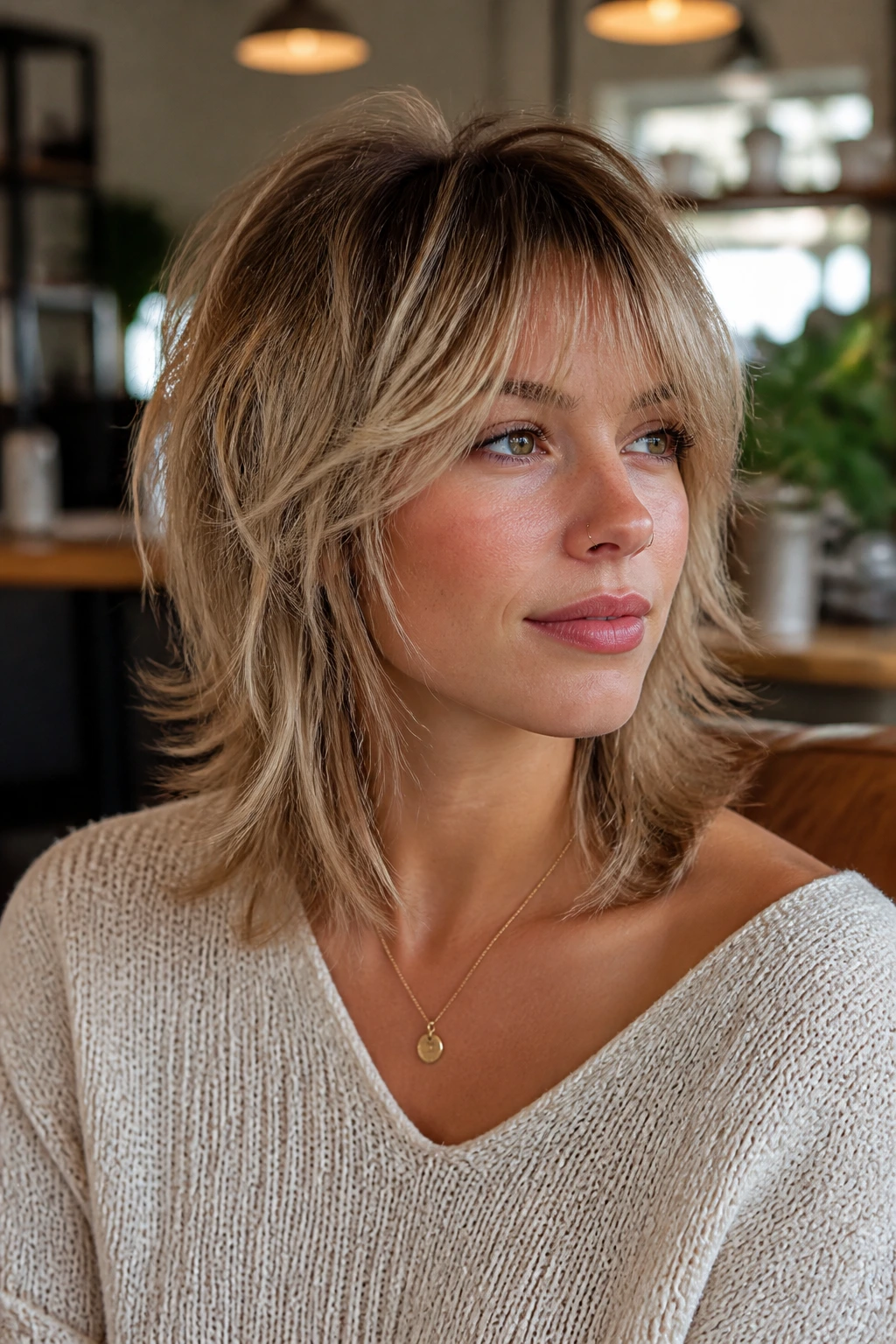
Fine hair does not need to be bullied into looking thicker. It needs the right outline, the right weight placement, and a little respect for the ends. That’s why these textured wolf cuts work when they’re tailored well: they lift what needs lifting and leave enough behind to keep the style looking alive.
The best part is how flexible the cut can be. You can wear it short and sharp, long and feathered, soft and face-framing, or cropped and a little rebellious. Fine hair gets more options than people think — as long as nobody gets carried away with the thinning shears.
If you bring one idea to the salon, make it this: texture should create shape, not erase hair. Get that right, and the wolf cut stops being a trend and starts behaving like one of the smartest cuts fine hair can wear.
