



A good ombre color has one job that a flat, single-tone shade can’t quite do on its own: it gives hair a little movement even when you haven’t styled it much. That matters even more in fall ombre ideas, where the best shades are usually the ones that feel rooted, warm, and slightly shadowed at the top, then soften into copper, caramel, mushroom brown, berry, or beige toward the ends. The result isn’t loud. It’s richer than that.
The thing people often miss is that ombre is not only about lightness. It’s about the shape of color. When the root stays deeper and the transition is blended across the mid-lengths, the whole cut reads more expensive, more dimensional, and less like one solid block of dye that grew out in a hurry. That’s why this technique survives haircut changes, scarf season, and the inevitable three-week stretch where you don’t feel like washing your hair every day.
Warm wardrobes help, too. Dark knits, leather jackets, wool coats, and matte lipstick all make dimensional color look more deliberate. A blunt one-tone brunette can disappear into those textures. A soft fade with cinnamon, toffee, rose, or amber keeps the hair from flattening out.
Why These Fall Ombre Ideas Work So Well
- Root Depth Saves the Grow-Out: A deeper root lets the style last longer between appointments, and that’s the difference between “grown out” and “intentionally blended.”
- Warmth Can Be Controlled: Copper, caramel, and gold don’t have to go pumpkin-orange; placed correctly, they stay soft and wearable.
- The Fade Adds Shape: On layers, waves, and curls, the color shift makes the haircut easier to read from across the room.
- You Can Adjust the Drama: The same ombre pattern can be subtle on a bob or bold on waist-length hair just by changing where the lightness starts.
- It Plays Nicely with Texture: Soft bends, loose curls, and diffused waves show off the transition better than stick-straight hair, but even straight hair gets a cleaner line of depth.
- Most of These Shades Age Gracefully: Mushroom brown, chestnut, bronze, and berry tones fade more softly than neon-bright fashion colors, which means fewer ugly surprise weeks in the mirror.
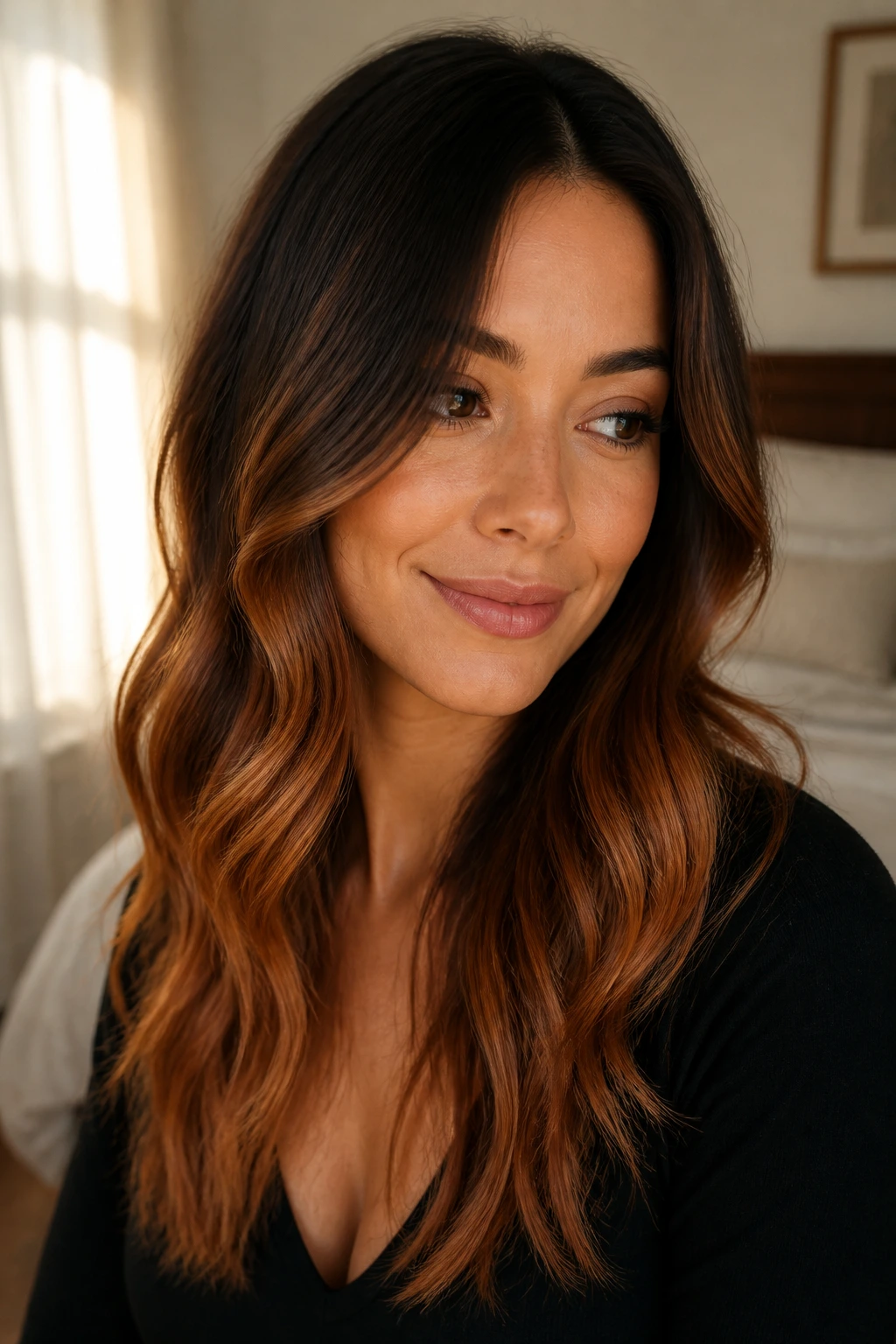
1. Cinnamon Root Melt
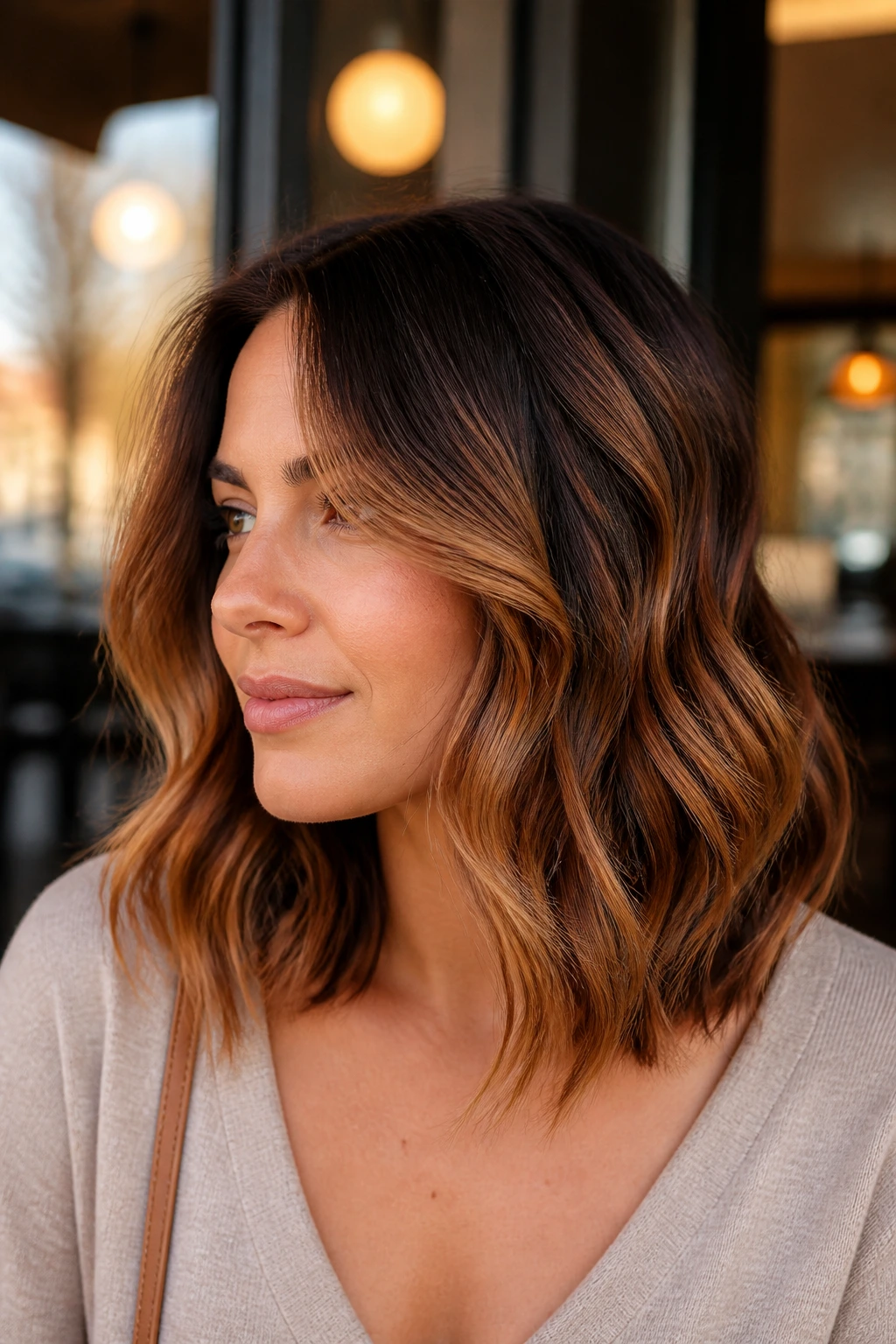
A cinnamon root melt is the safest place to start if you want warmth without crossing into brass. The root stays a deep brunette, then the color slides into cinnamon brown and ends in a muted copper that looks richest when the hair moves.
Why It Works
The trick is keeping the root shadow intact for at least the first 2 to 3 inches. That depth makes the warmer mids look richer, not streaky, and it stops the ends from stealing all the attention.
- Best on level 4 to 6 brunettes.
- Looks clean on layered cuts and soft waves.
- A gloss in the cinnamon family keeps the copper from turning loud.
Pro tip: Ask for the lightest piece of color around the face, not all over the perimeter. It frames the face without turning the whole head orange.
2. Pumpkin Spice Balayage
If you like copper but hate the way some copper reads like a traffic cone under indoor light, this is the smarter version. Pumpkin spice balayage keeps the base brown and threads in beige-copper ribbons that feel softer than a full copper lift.
The highlight placement matters more than the shade name here. A few painted pieces around the cheekbones, temple, and top layers give the hair a lifted look without turning every strand into a warm stripe.
What I like about this one is that it works on shoulder-length cuts that tend to go flat. The warmer ribbons sit where the light actually hits, so the style looks styled even when you’ve only rough-dried it.
3. Espresso-to-Toffee Ombre
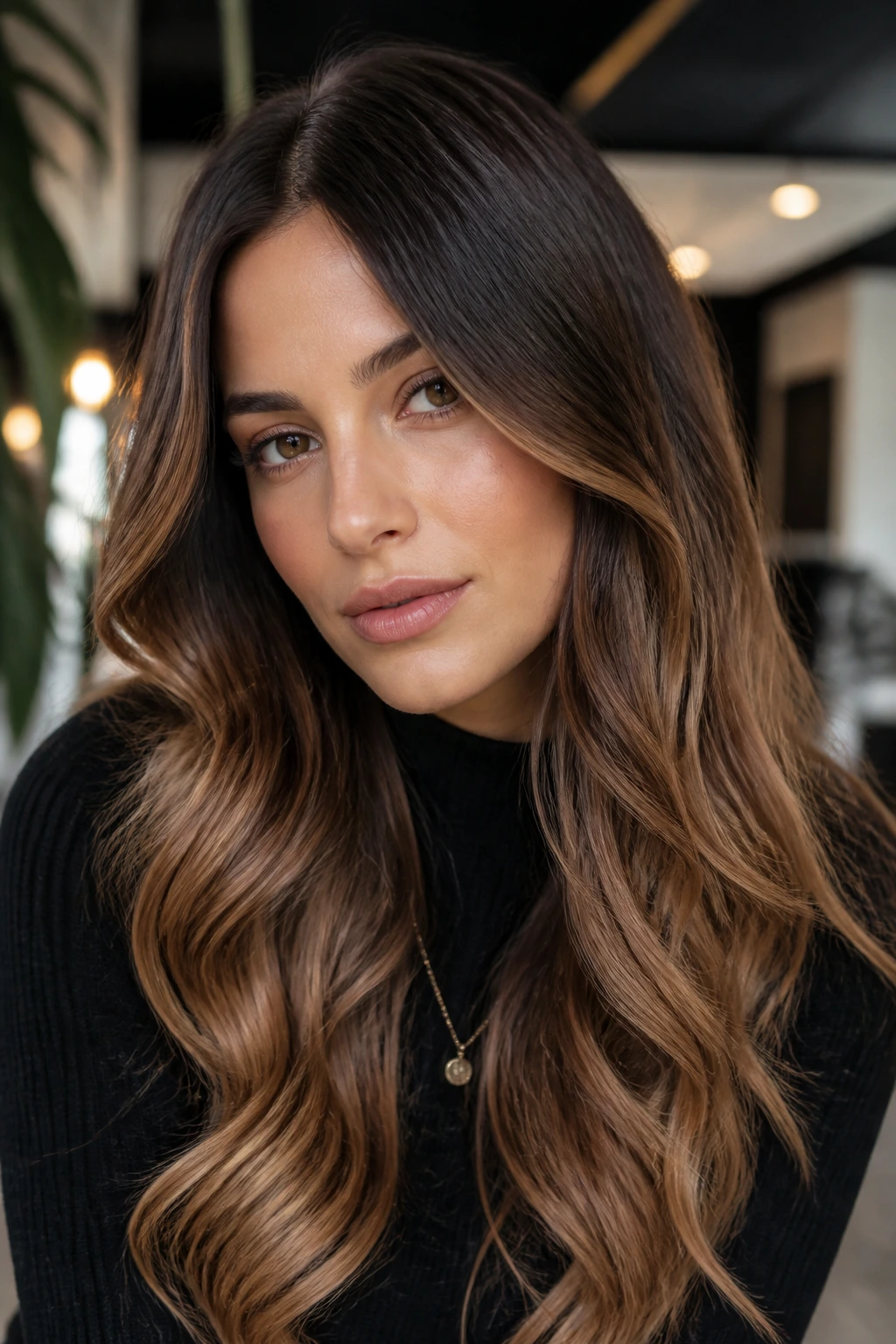
Why do dark brunettes so often feel stuck with color that looks nice for a week and then disappears into one flat shade? Because too many people lift the whole head too high. Espresso-to-toffee ombre solves that by keeping the root deep and letting the mids carry the change.
Best on
- Level 3 to 5 brunettes
- Long layers, lobs, and waves
- Hair that needs dimension more than brightness
The toffee end point should stay warm but not yellow. Think toasted sugar, not custard. If the fade starts around the collarbone on long hair, the contrast reads intentional instead of chunked.
How to use it: Style it with a loose bend from mid-length to ends. The smoother the wave, the cleaner the transition looks.
4. Copper Leaf Fade
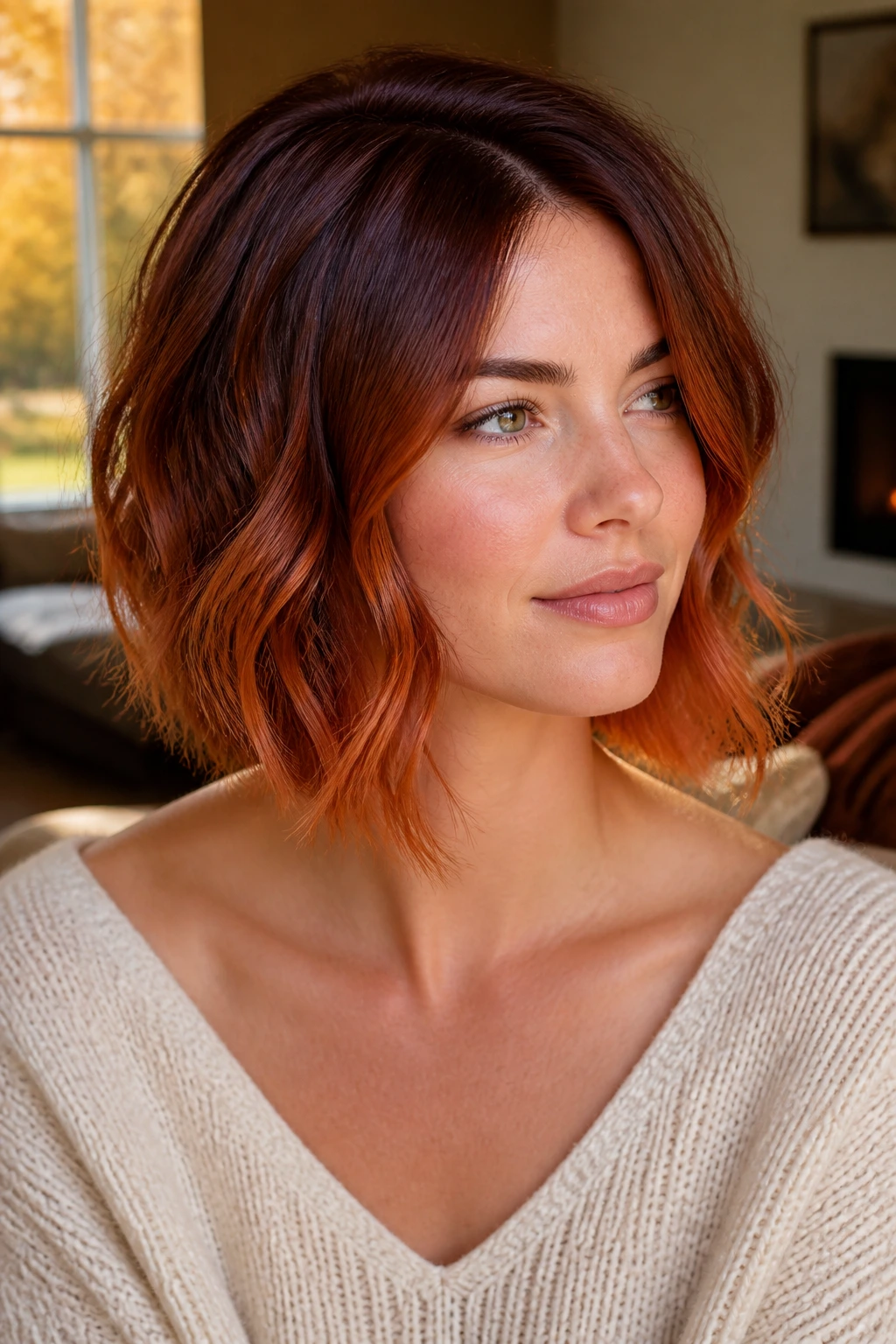
Copper leaf fade is the one I reach for when someone wants red, but not the kind that shouts from across a parking lot. The root stays auburn-brown, the mids turn rustier, and the ends carry a softened copper that looks like old maple leaves after they dry out a little.
That slightly muted finish is what keeps the look from turning costume-y. Bright copper can be fun, sure. This one feels wearable for actual life, which is a different thing entirely.
A blunt bob or lob makes this color stand out because the fade has nowhere to hide. On longer hair, the placement can be lower, with the richest copper sitting at the bottom third. Either way, it wants shine. A color-safe gloss or a light serum on the ends helps a lot.
5. Smoky Mushroom Brunette
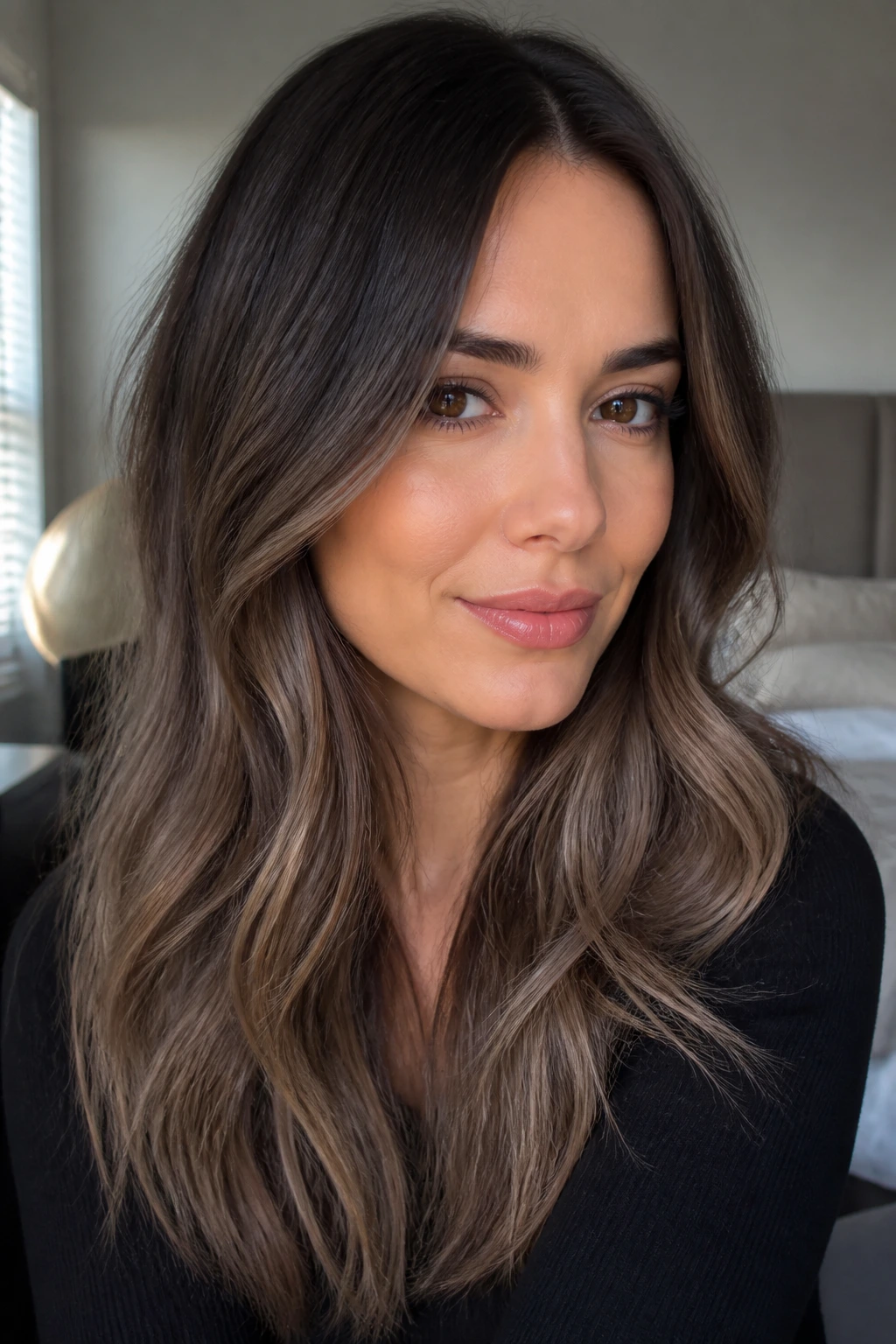
Smoky mushroom brunette is for the person who likes cool tones but does not want hair that looks flat or dusty. The base stays brown, but the fade softens into mushroom-beige and taupe rather than gold, so the whole thing reads muted, earthy, and expensive in a quiet way.
It’s one of the easiest ombre ideas to wear with neutral makeup and black clothes because the color doesn’t fight anything. The cooler mids and ends give brunette hair some relief from looking like a single sheet of brown.
This one loves glossing. If the toner turns too icy, it can look drained. If it leans too warm, it loses the whole point. Ask for a beige-brown finish with just enough ash to kill the brass, not enough to turn it gray.
6. Burgundy Cherry Shadow
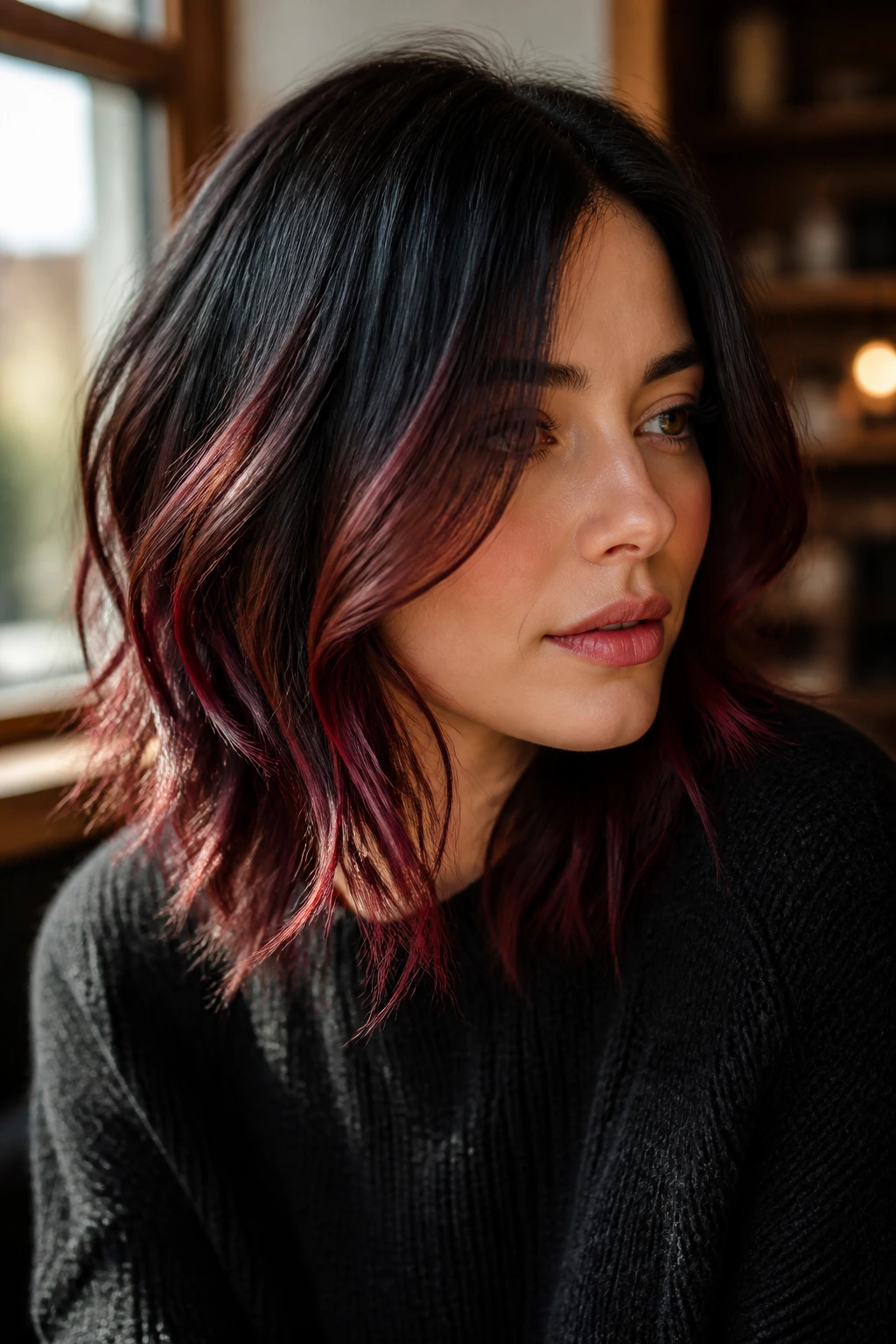
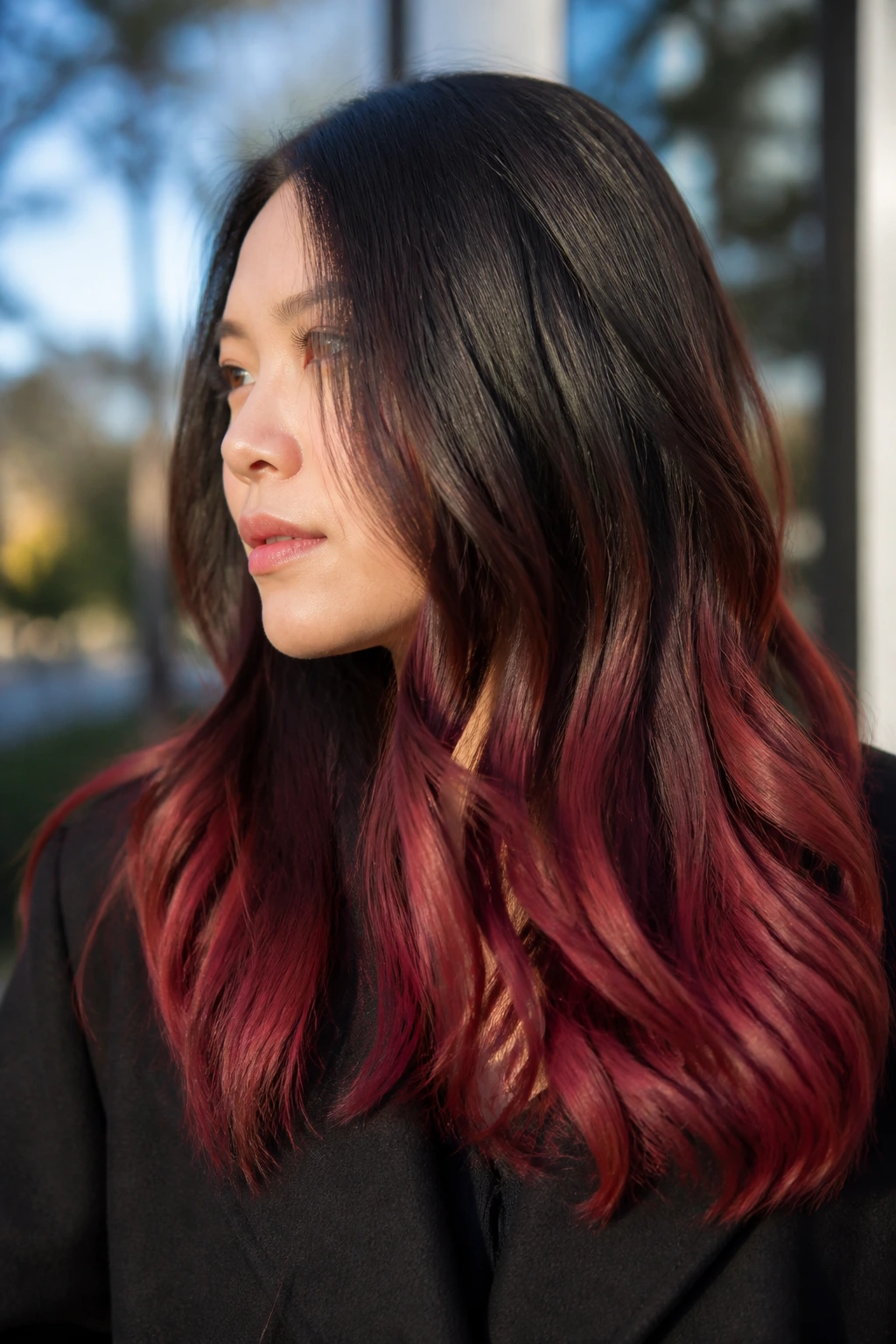
Burgundy cherry shadow is the moody cousin in the group. Instead of going bright or coppery, the color sinks into wine-red, cherry cola, and deep berry at the ends while the roots stay nearly black or very dark brown.
Unlike copper, this shade works best when the light hits it in slices, not all at once. That’s why it looks especially good on layered cuts or on hair with a little texture through the mid-lengths. You see flashes, not a block.
It’s also the easiest red family shade to wear if you’re nervous about fading into orange. Burgundy tones hold their shape better than true cherry red. Still, they need upkeep. A red-depositing conditioner once a week keeps the ends from washing out too fast.
7. Maple Cream Blonde
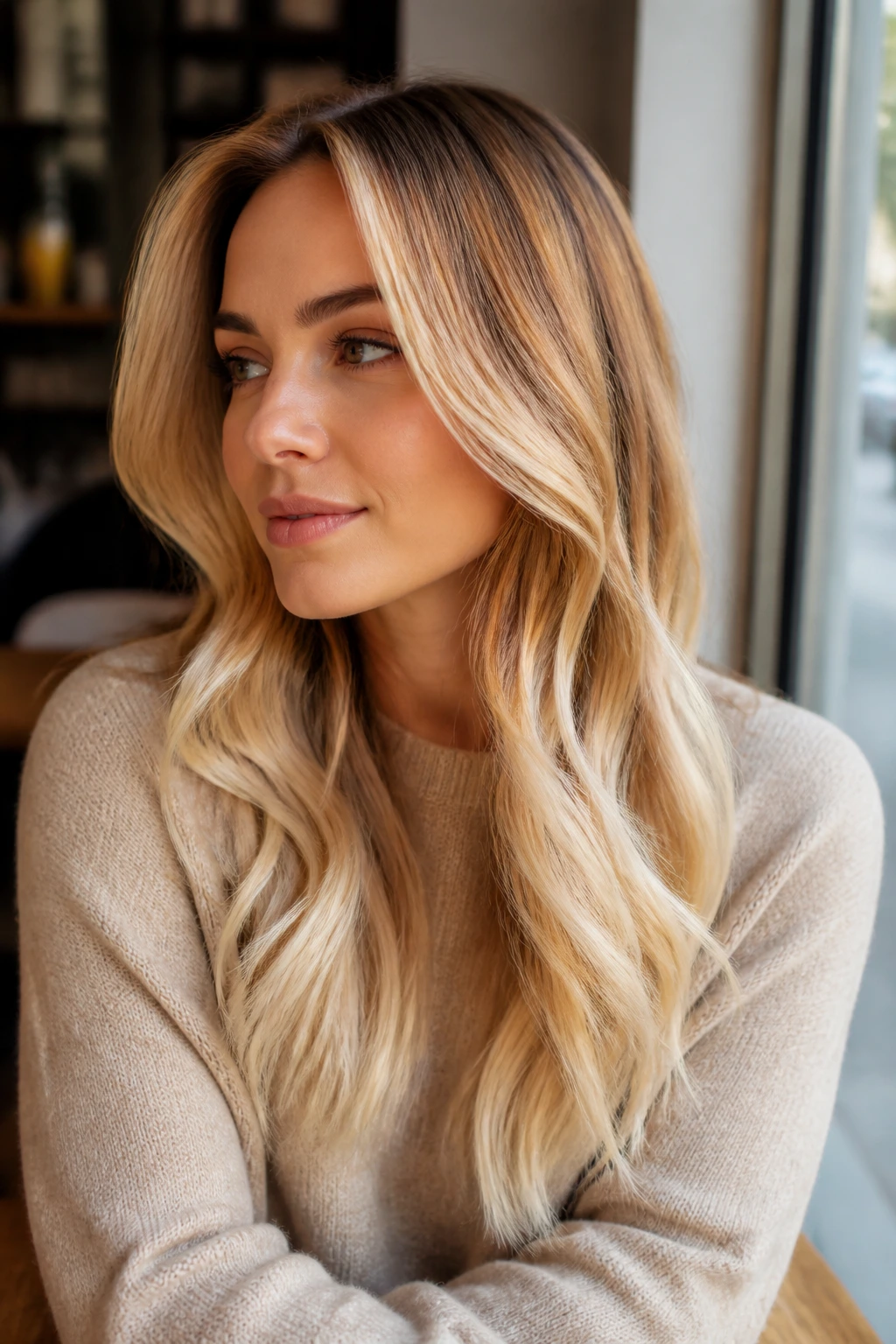
A blonde ombre does not have to look summer-bright to feel fresh. Maple cream blonde keeps the root a deep beige-blonde or soft light brown, then blends into maple-gold mids and creamy ends that look warmer than ash and less yellow than butter.
This is the one for people who want to stay blonde but need more depth around the crown. It’s especially useful on finer hair, where an all-over pale blonde can make the hair look thin. The darker root gives the illusion of density.
The trick is keeping the cream shade soft, not chalky. A pale blonde that goes too cool can make the face look tired. Maple cream lands in a better middle ground. It has warmth, but it doesn’t slide into banana territory.
8. Auburn Velvet Ends
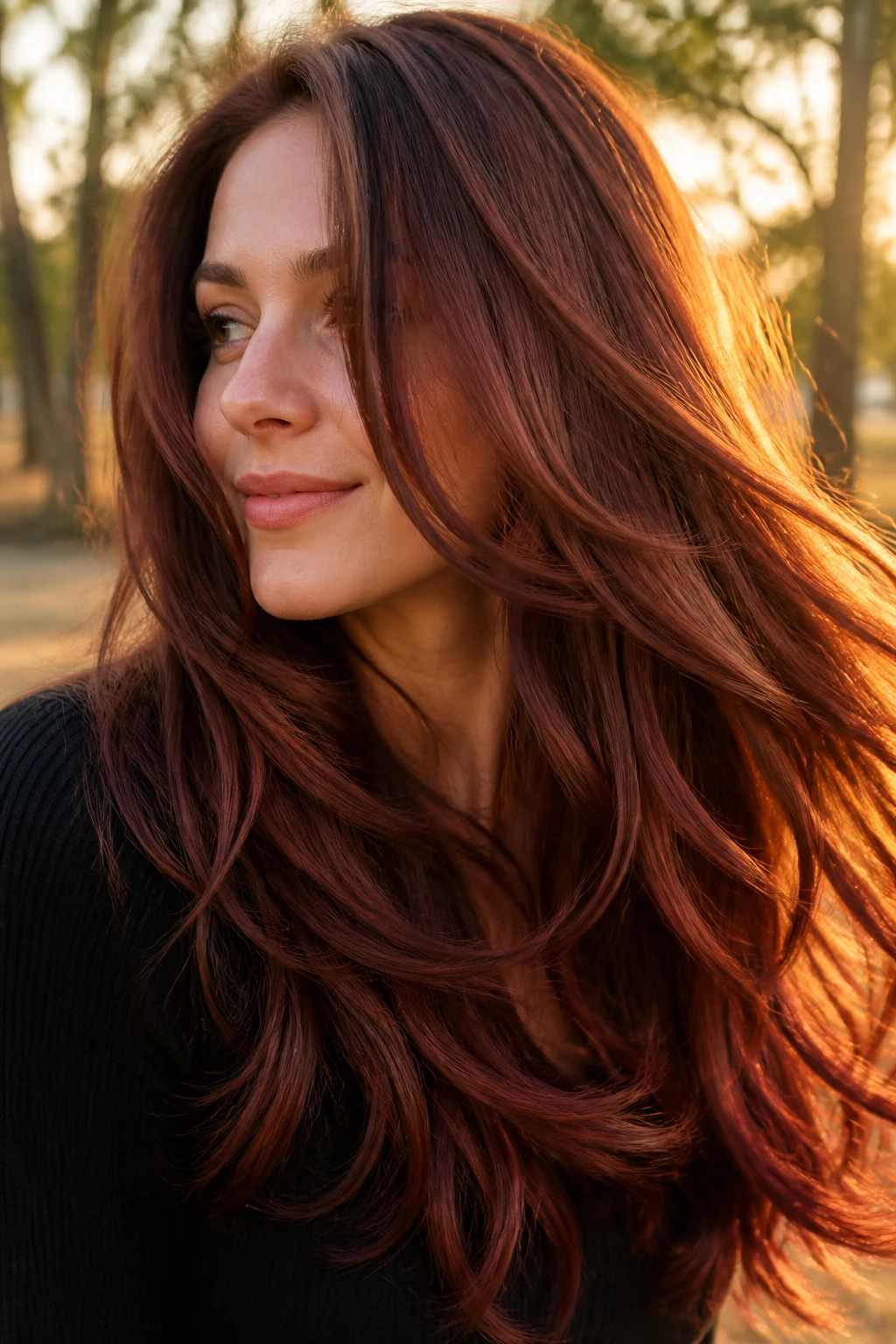
Auburn velvet ends have a plush, deep quality that works well on medium brown hair with a little natural red in it. The root stays chestnut, the mids carry a soft auburn, and the ends darken just enough to look rich rather than bright.
I like this one on long layers because the ends become visible in motion. Curled hair shows the auburn the best; straight hair keeps it more subtle. That’s useful if you want the color to feel like a surprise instead of a headline.
What to ask for
- A chestnut root shadow
- Auburn ribbons through the mids
- A slightly deeper auburn gloss on the bottom third
One-liner tip: If your hair already pulls warm, skip the bright copper and go for auburn instead. It ages better as it fades.
9. Caramel Ribbon Ombre
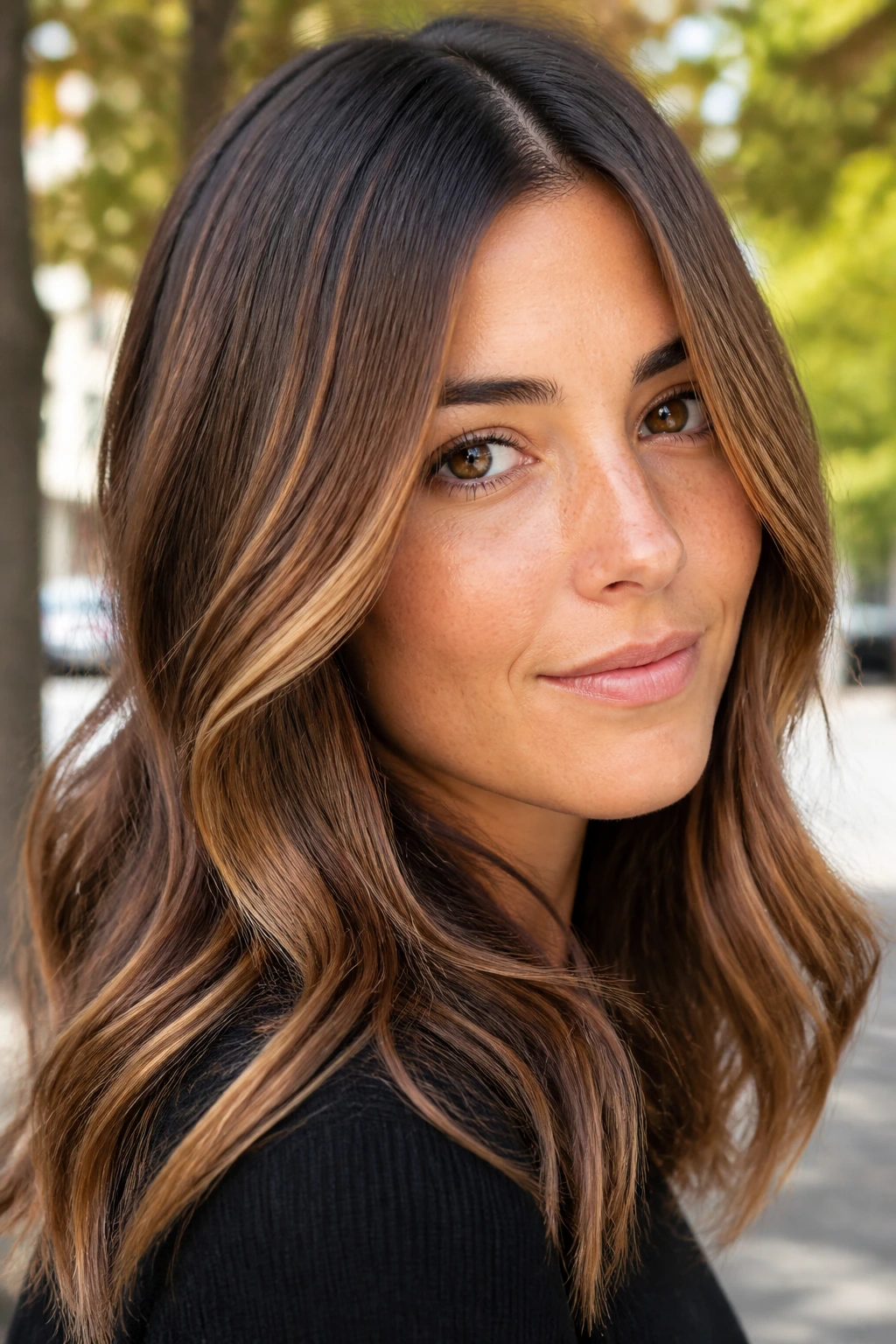
Caramel ribbon ombre is what I recommend when someone says they want dimension but keeps pointing to photos that are basically soft brunette with lighter threads. That’s the clue. The lightness should feel woven through the hair, not painted on top.
How to Ask for It
Tell your colorist you want the caramel to begin around the cheekbone on longer hair, lower on a bob. That keeps the root area dark enough to look clean while the mids do the visual work.
The best versions use thin, uneven ribbons rather than broad blocks. That breaks up the fade and keeps it from looking stripey once the hair is curled. If your hair is coarse, the ribbons can be a touch wider. If it’s fine, keep them narrow.
10. Chestnut Cocoa Dimension
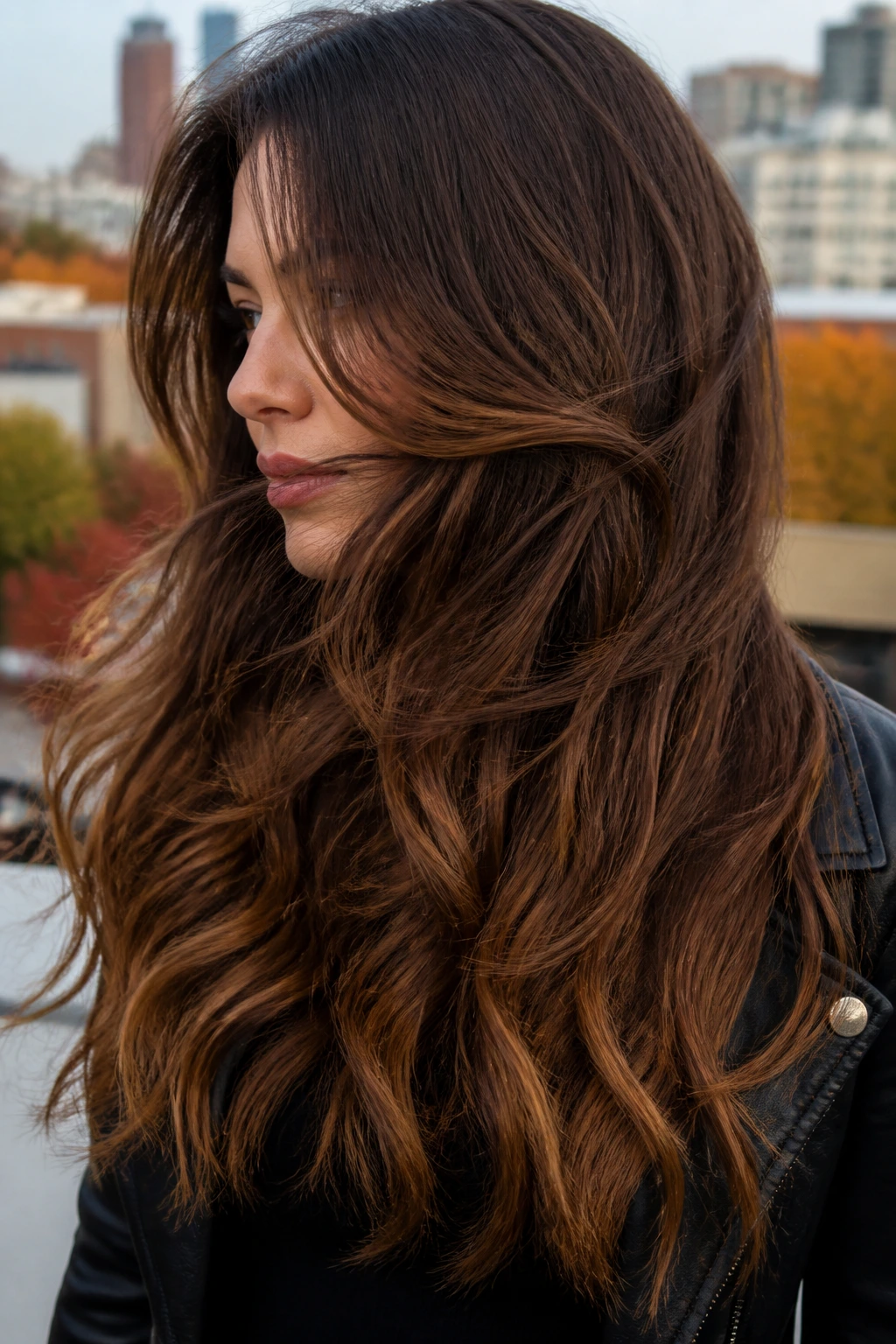
Chestnut cocoa dimension is the quietest shade on this list, and that’s exactly why it earns a place. The color changes are soft: chestnut at the root, cocoa through the mids, then a slightly lighter milk-chocolate finish at the ends.
It’s not an obvious ombre at first glance. You notice it when the hair moves or when a layer flips over and shows the darker base underneath. That makes it one of the best options for people who want depth without a big contrast jump.
This color is also kind to curls. Curls can swallow detail if the shade is too flat, but chestnut-to-cocoa gives the curl pattern enough difference to read. The result is more shape, less heaviness.
11. Honey Copper Veil
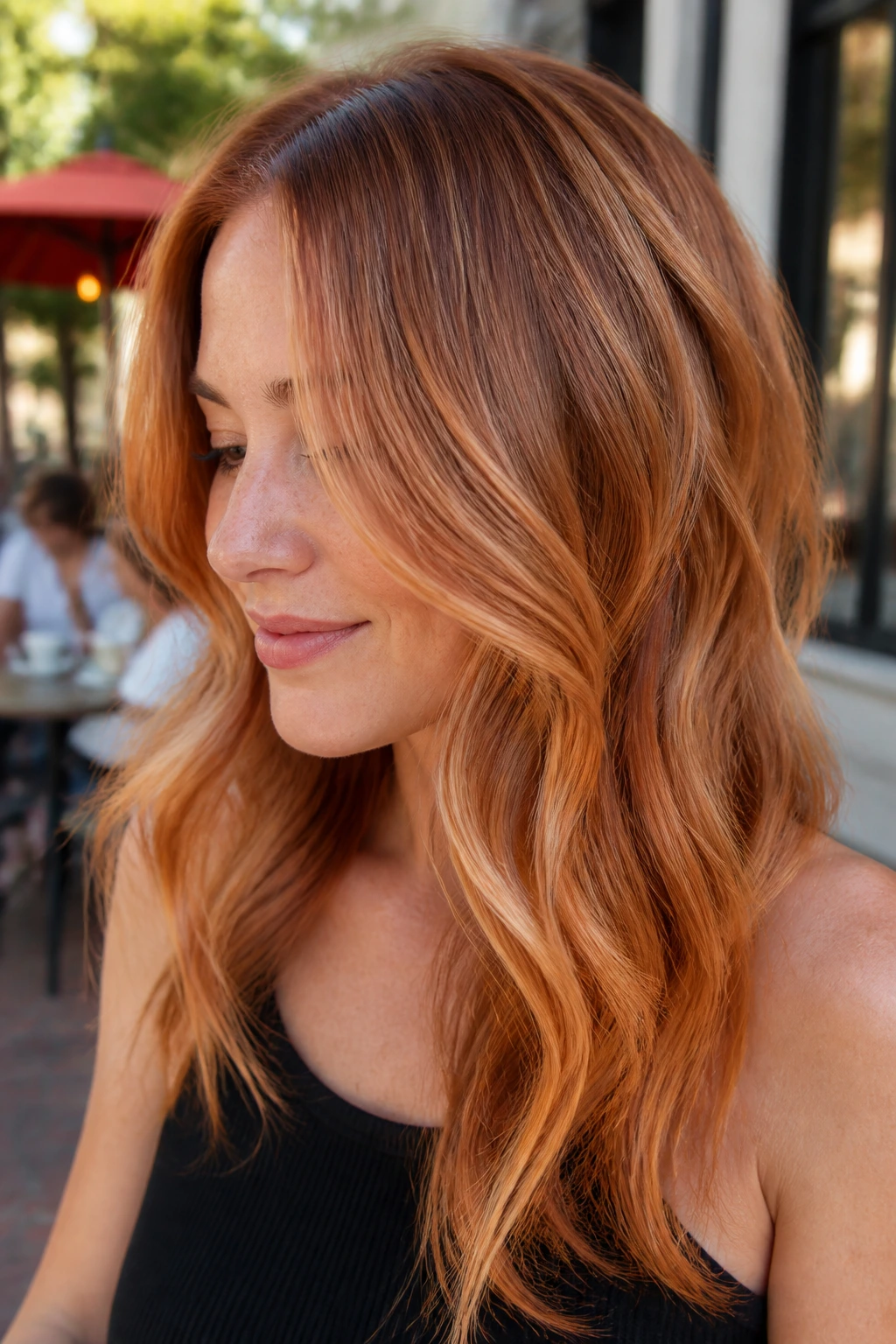
Honey copper veil sits between blonde and copper, which is exactly why it feels easy to wear on light brown or dark blonde bases. The root stays muted, the mids pick up honey, and the ends finish with a soft copper glaze that looks warm rather than orange.
Unlike a strong copper ombre, this version keeps the ends translucent. You should still be able to see the depth of the base through the lighter pieces. If the final result looks painted on top of the hair, it’s too opaque.
This is the version to choose if you want warmth but live in neutral makeup and simple clothes. It doesn’t overpower the face. It just makes the hair look healthier and a little brighter.
12. Mocha Rose Ombre
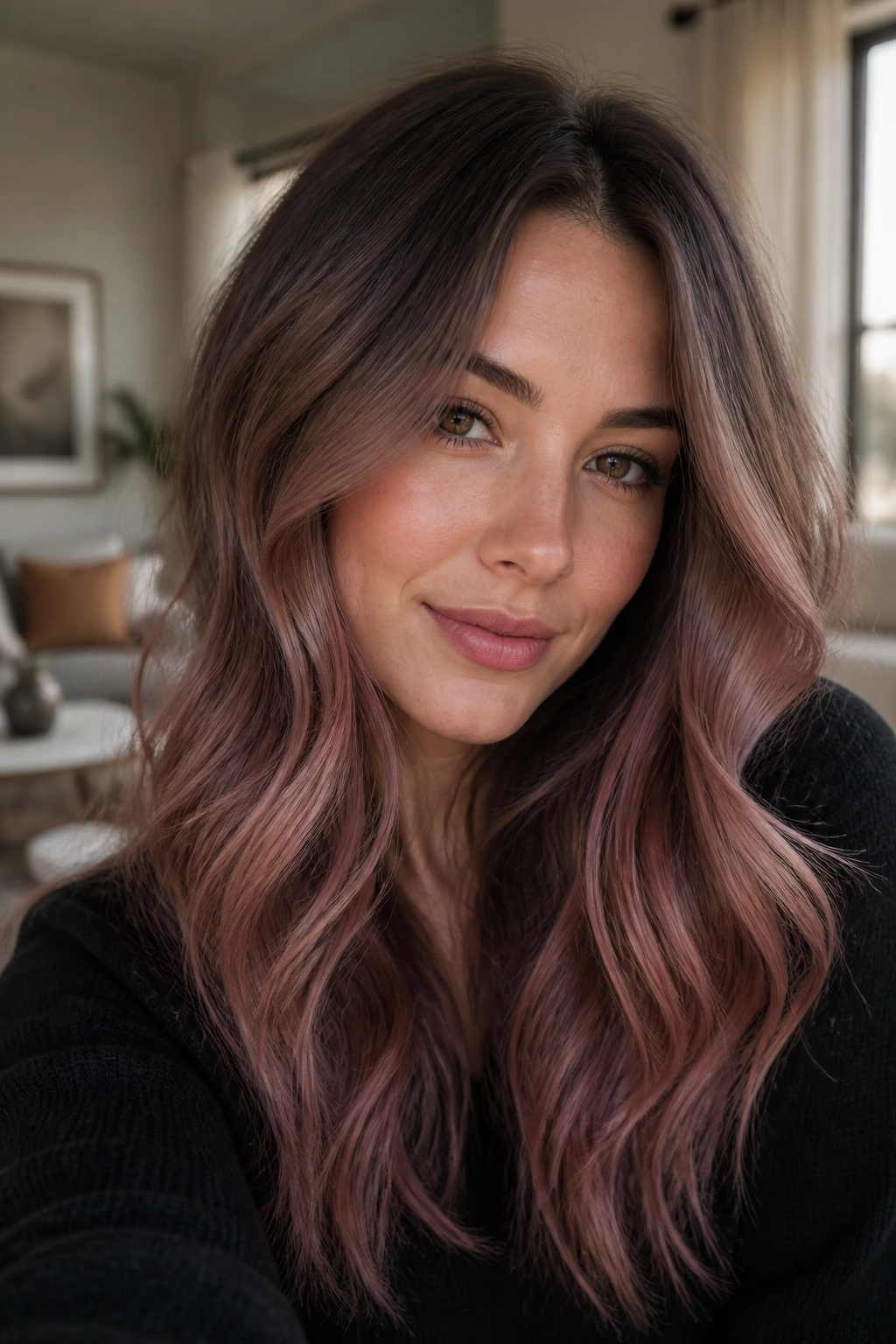
Mocha rose ombre works because rose tones need a dark anchor. Without that mocha base, pink-brown color can look juvenile or washed out. With it, the rose reads dusty, soft, and grown-up.
The fade should start with a cool mocha root, then drift into muted rose-brown mids and a deeper rose finish at the ends. It’s not bubblegum. It’s not magenta. Think dried petals in a coffee cup.
This shade is especially good if you wear a lot of black, cream, charcoal, or dark denim. Those colors don’t compete with the rose. They sharpen it.
13. Blackberry Merlot Dip-Dye
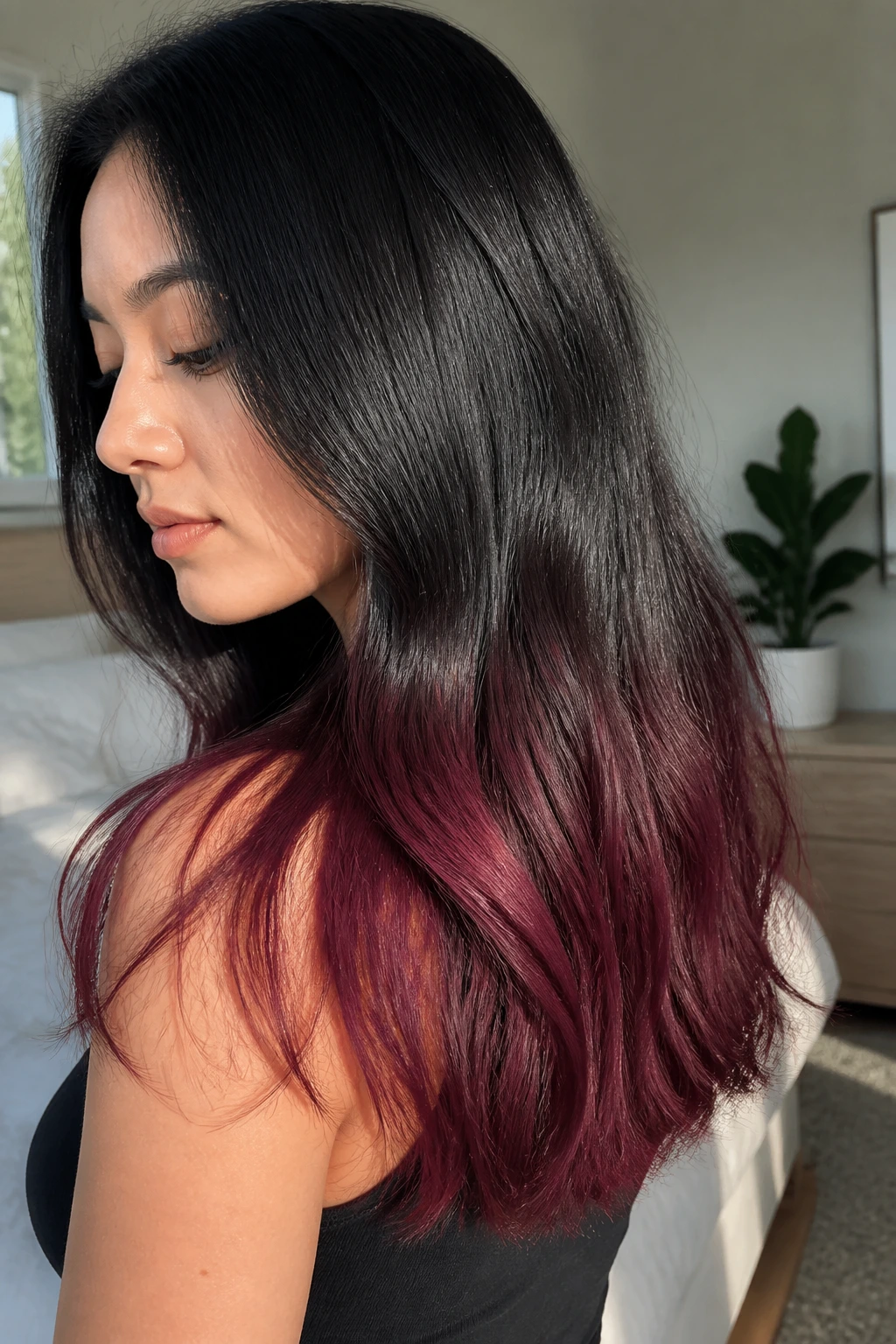
A dip-dye effect sounds bolder than it has to be. In this version, the top stays nearly black or espresso, then the lower half shifts into blackberry and merlot with a hard enough line to feel deliberate, but not so hard that it looks like a wig.
The reason this color works is contrast. The upper darkness makes the berry tones look richer, while the deep red-violet keeps the ends from reading flat purple. You get movement only where you want it.
Best on straight or softly waved hair. On very curly hair, the line can disappear too much unless the colorist places the transition slightly higher than they would on a straight cut.
14. Golden Beige Bronde
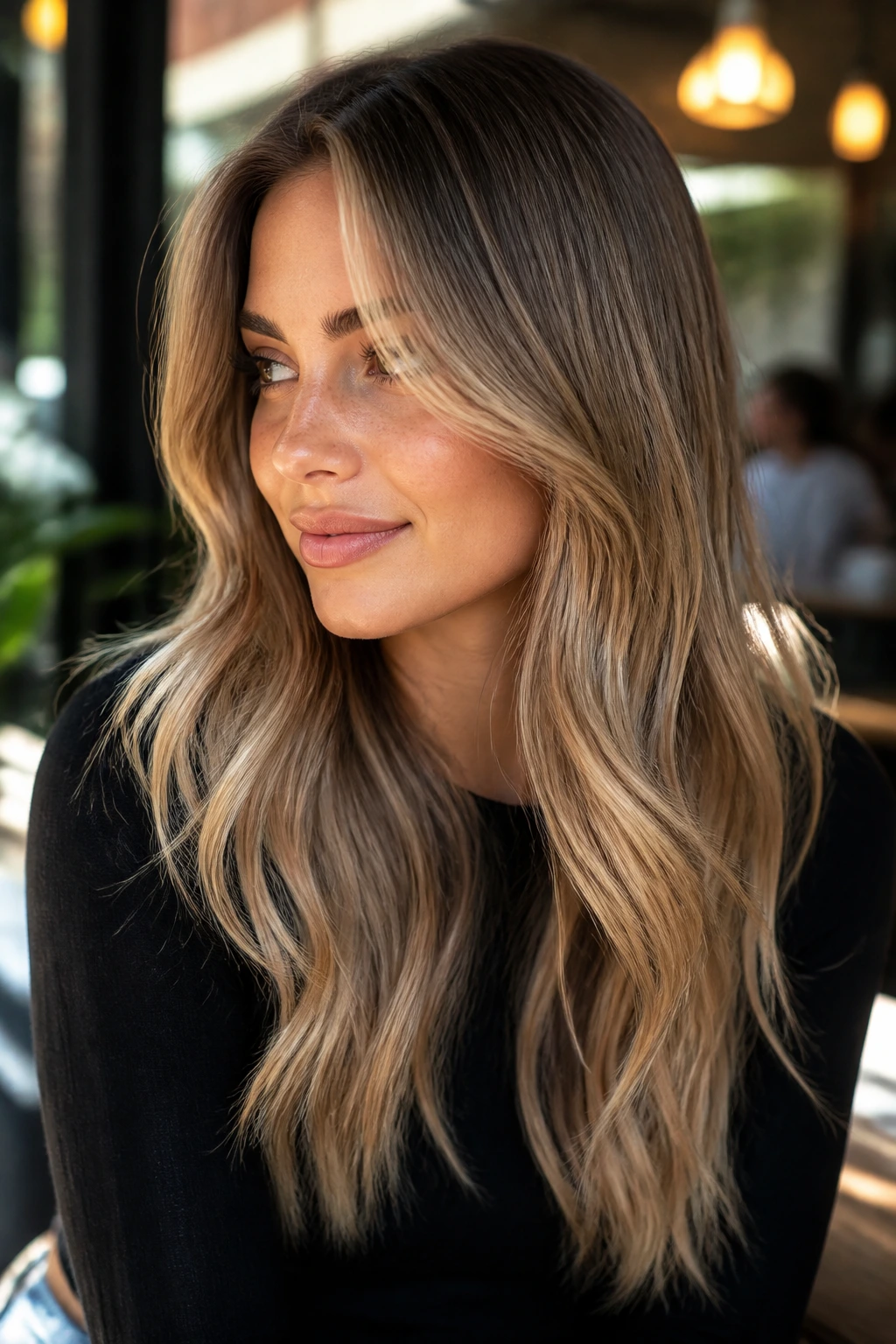
Bronde can look painfully generic when the light pieces are all the same tone. Golden beige bronde avoids that by keeping the root a shade or two deeper and placing the lightness in golden-beige bands that don’t scream blonde from the other side of the room.
That beige balance matters. Too much gold makes the hair brassy. Too much ash makes it lifeless. The middle lane is the one that usually holds up best between appointments.
This is a smart choice for someone growing out old highlights. The darker root and beige mids blur the line between old and new color, which makes the whole head look calmer.
15. Toasted Almond Smoke
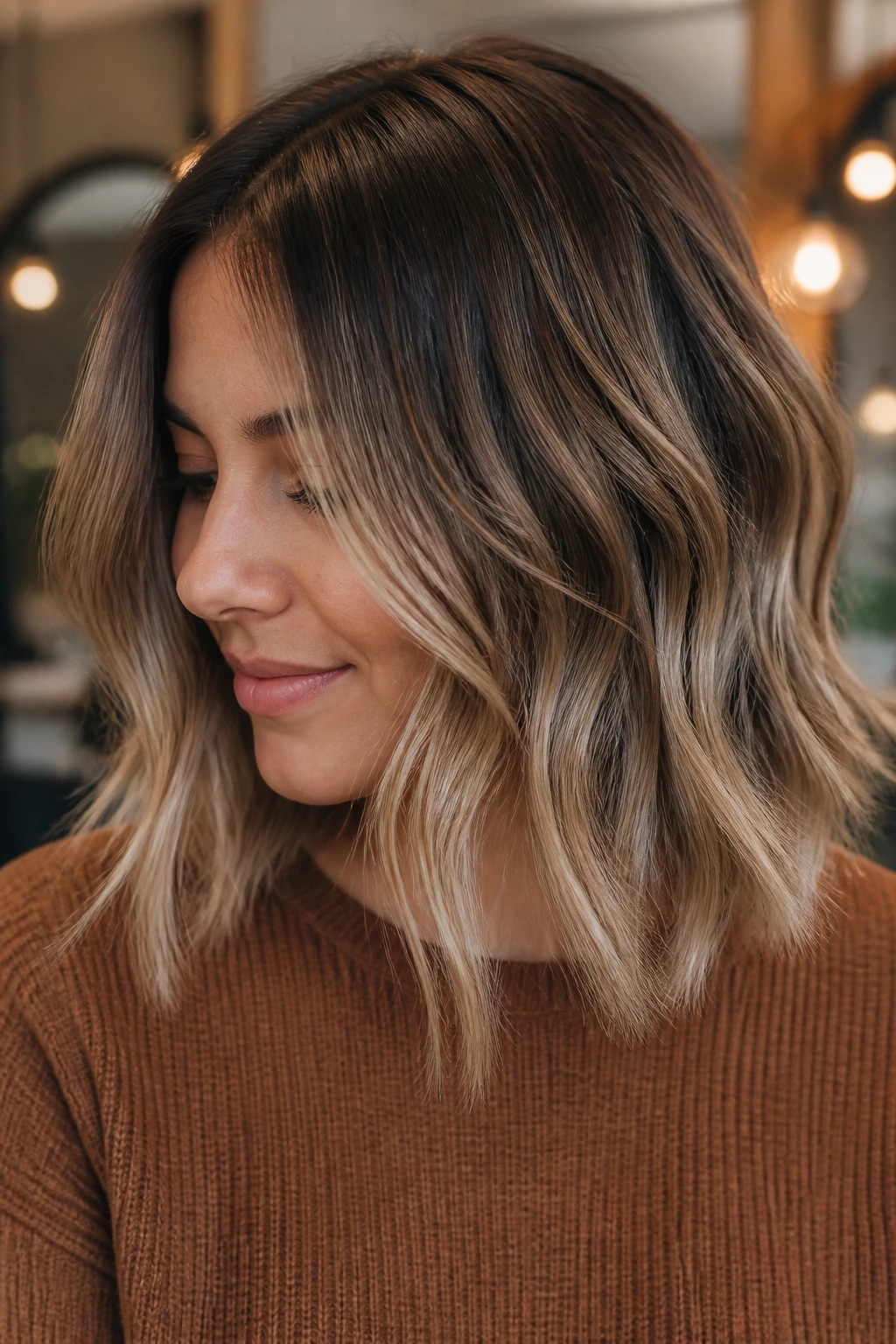
Toasted almond smoke is one of my favorites for fine hair because it gives softness without stripping out depth. The root stays an ash-brown or neutral brunette, then the mids melt into toasted almond and the ends finish with a smoky beige that keeps the whole look from getting too warm.
Fine hair often looks better with color that has a little haze to it. Not gray. Haze. The smoked finish makes the strands look more separated and less see-through.
A shoulder-length cut with a little texture at the ends is ideal here. The smoke effect gets lost on hair that is too blunt and too heavy. A few bends, a round brush, even a loose braid out overnight — all of that helps.
16. Rusted Rose Gold
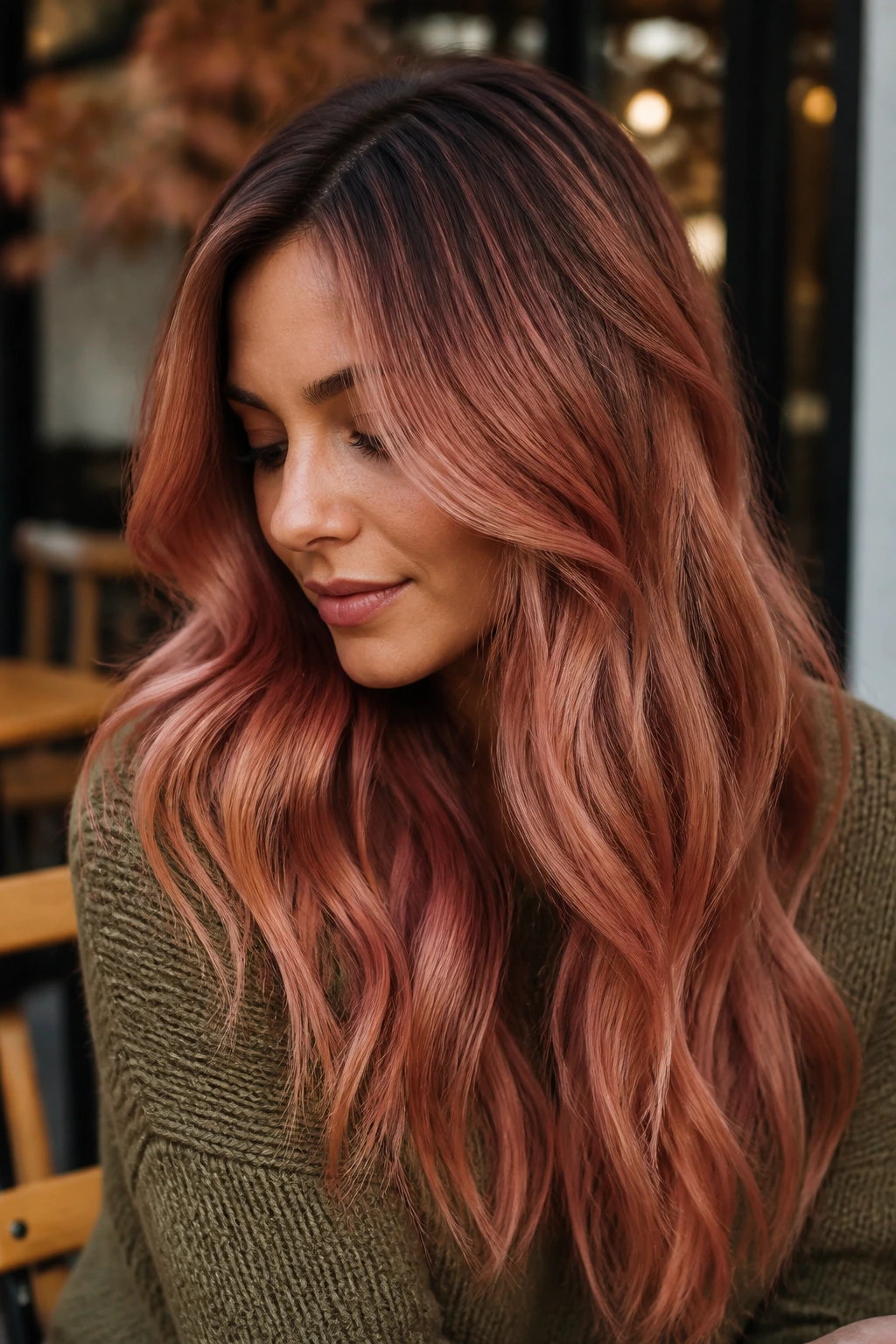
Rose gold gets boring fast when it’s too pink and too shiny. Rusted rose gold fixes that by dulling the finish slightly and moving the color toward copper, clay, and dusty pink rather than jewelry-store shine.
It’s a good match for medium brunettes who want something warmer than mushroom brown but less common than standard caramel. The root shadow keeps it grounded. The rust gives it attitude.
If you’re thinking about clothing, this color looks especially good with olive, cream, and dark brown. That’s not a technical rule. It just looks less sugary next to earthy fabrics.
17. Slate Brunette with Amber Tips
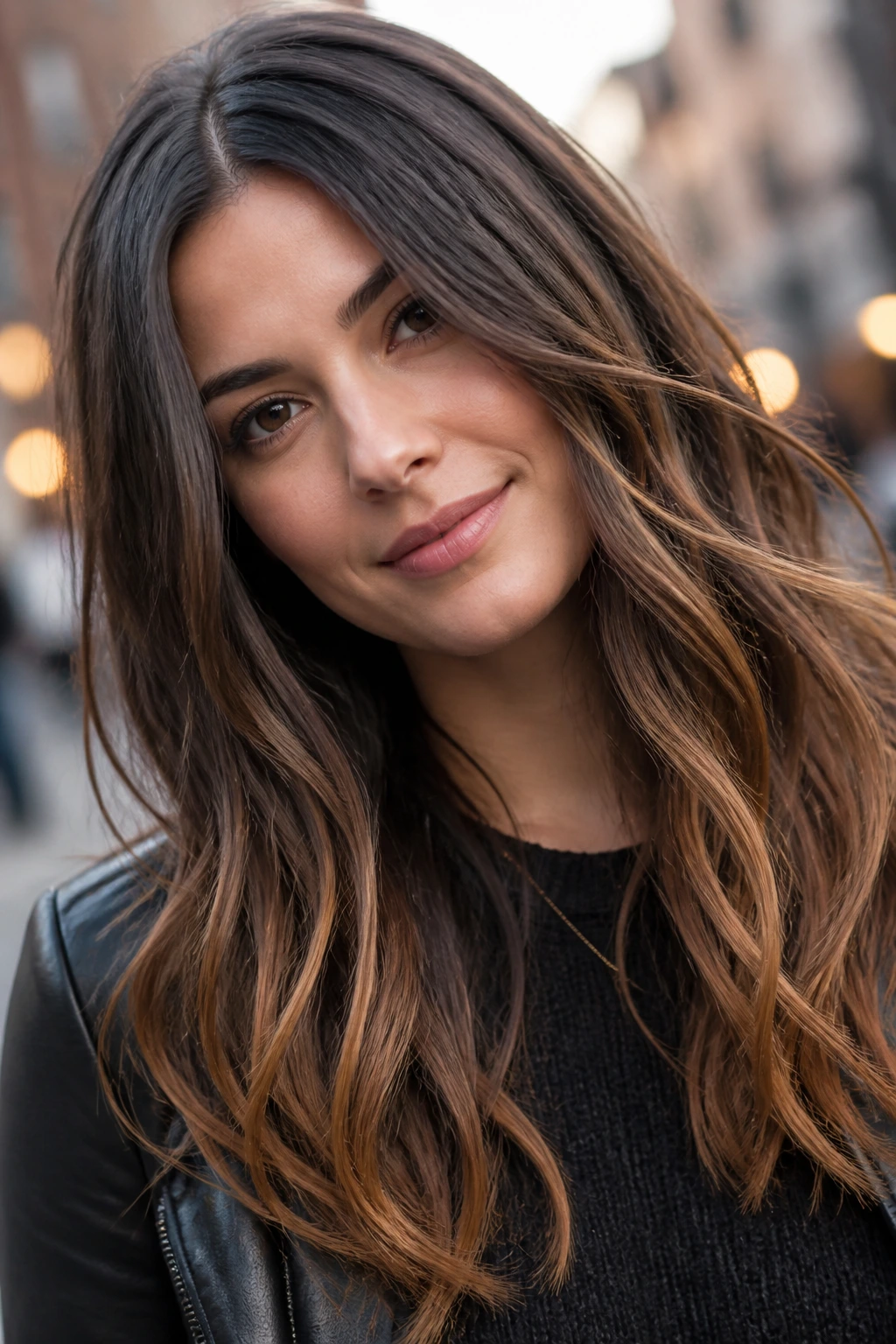
Slate brunette with amber tips is the color for someone who likes cool roots but needs a warmer edge to keep the hair from looking washed out. The slate brown base has an ash cast, then the ends shift into transparent amber, almost like tea held up to light.
That contrast matters because cool brunettes can go dull fast. Amber at the tips gives the cut a little spark. Not a lot. Enough.
This is one of the best fall ombre ideas for people with cooler skin tones who still want warmth somewhere in the hair. The amber keeps the face from going gray against the hair, which can happen when every tone is ash-heavy.
18. Spiced Chocolate and Cherry
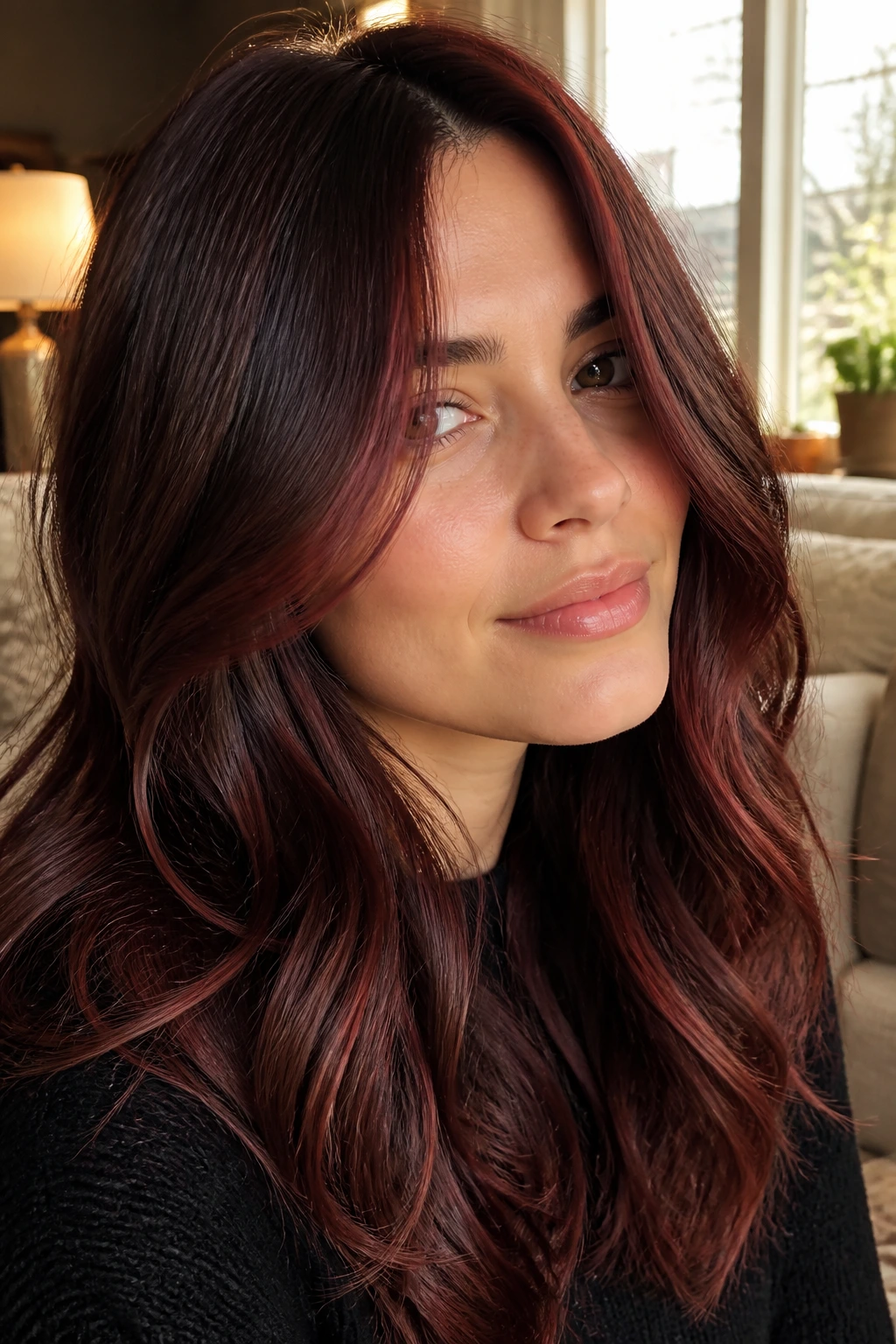
Spiced chocolate and cherry is what happens when you want red, but you want it to live inside brunette hair instead of sitting on top of it. The base stays chocolate brown, then cherry tones hide in the mids and ends, sometimes with a red face-frame panel for movement.
I like this one because it changes depending on the lighting. In soft indoor light, it can read almost brown. Outside, the cherry wakes up. That makes it fun without becoming high-maintenance fantasy color.
A gloss every 4 to 6 weeks keeps the cherry from going flat. Red tones fade fast. That’s just the deal. But because the chocolate base stays intact, the grow-out is still manageable.
19. Walnut to Butterscotch
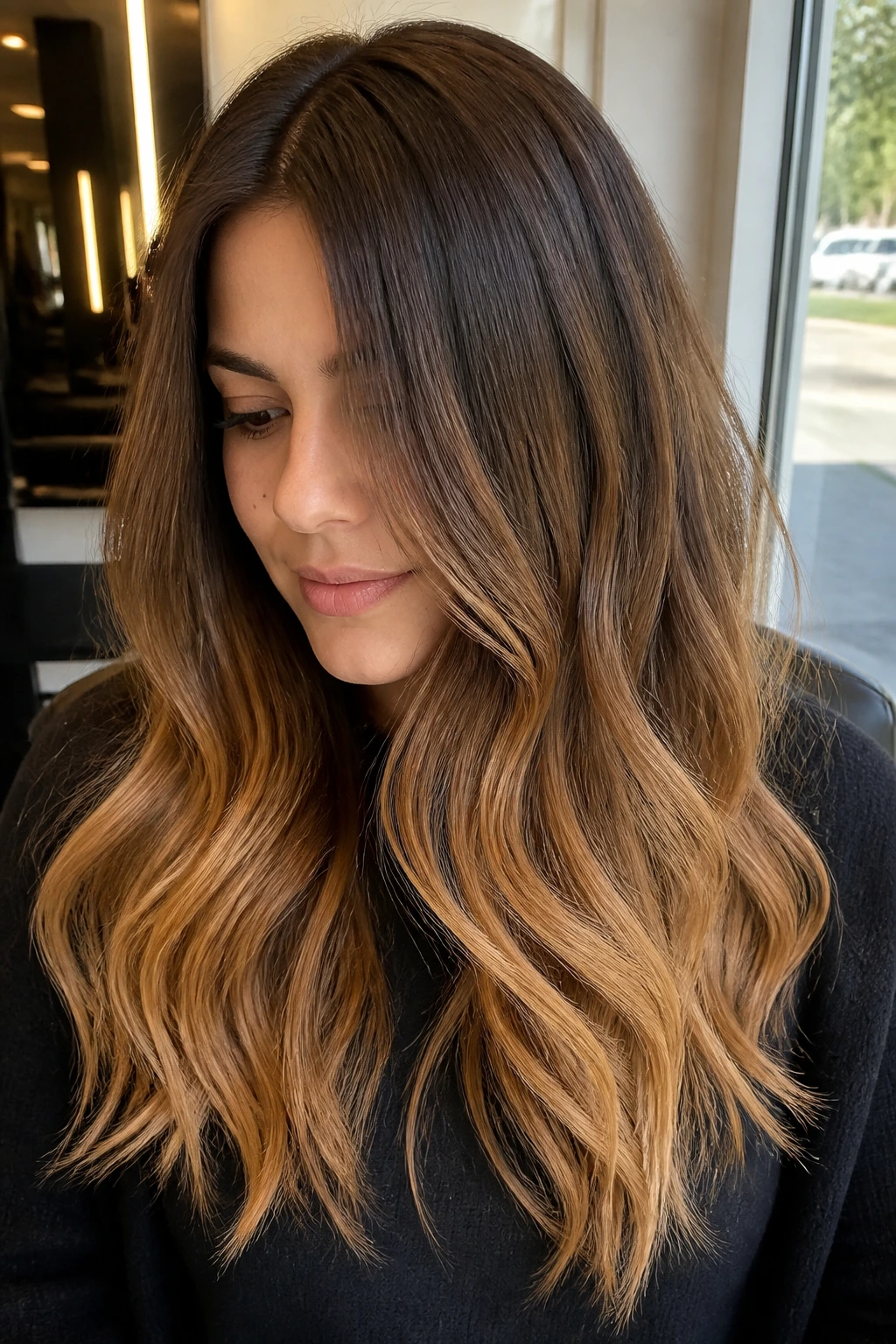
Why does walnut-to-butterscotch work when some warm blends look sticky or overcooked? Because the transition is wide enough to feel soft and the butterscotch isn’t pushed into yellow. The root stays walnut-brown, the mids move through chestnut, and the ends land in a warm butterscotch beige that still feels controlled.
Good for
- Mid-length cuts with layers
- People who want warmth without copper
- Hair that needs a little lift around the face
The color has to be spread out. Too much butterscotch on the bottom third and the whole thing turns dessert-like in a bad way. Keep the lighter pieces broken up, not packed together.
20. Peach Apricot Fade
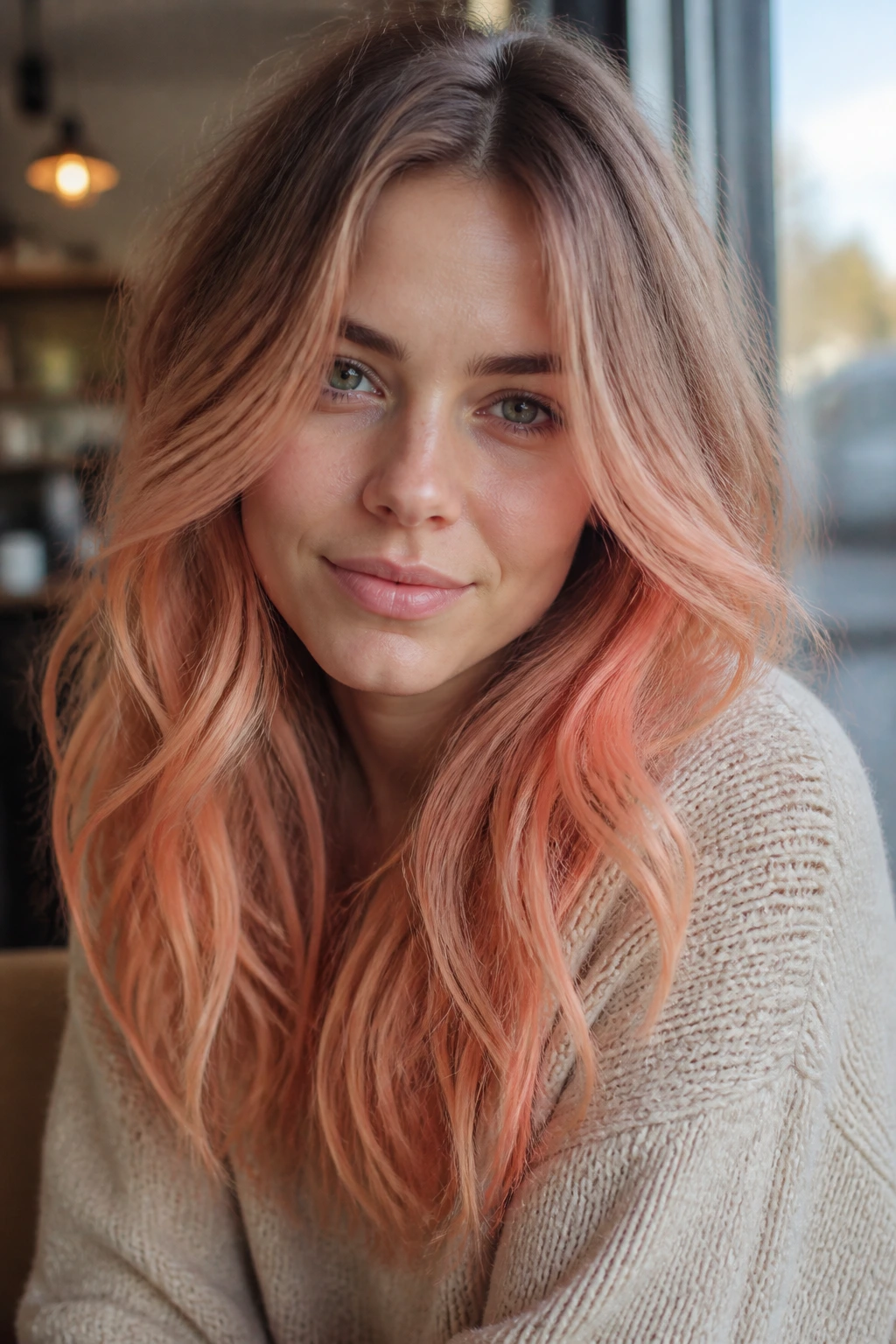
Peach apricot fade makes more sense on lighter brunettes and dark blondes than on deep brunettes, because the base needs enough lift for the apricot to stay visible. When it works, though, it looks soft, modern, and a little unexpected.
The root is usually a sandy brown or dark blonde. The mids warm up to peach. The ends finish in apricot, which should read like fruit skin, not neon coral. That distinction matters more than people think.
This is a good choice for someone who likes playful color but doesn’t want a full fashion shade. It still lives in the warm family. It just has a sweeter edge than copper.
21. Dark Chocolate with Tangerine Peek
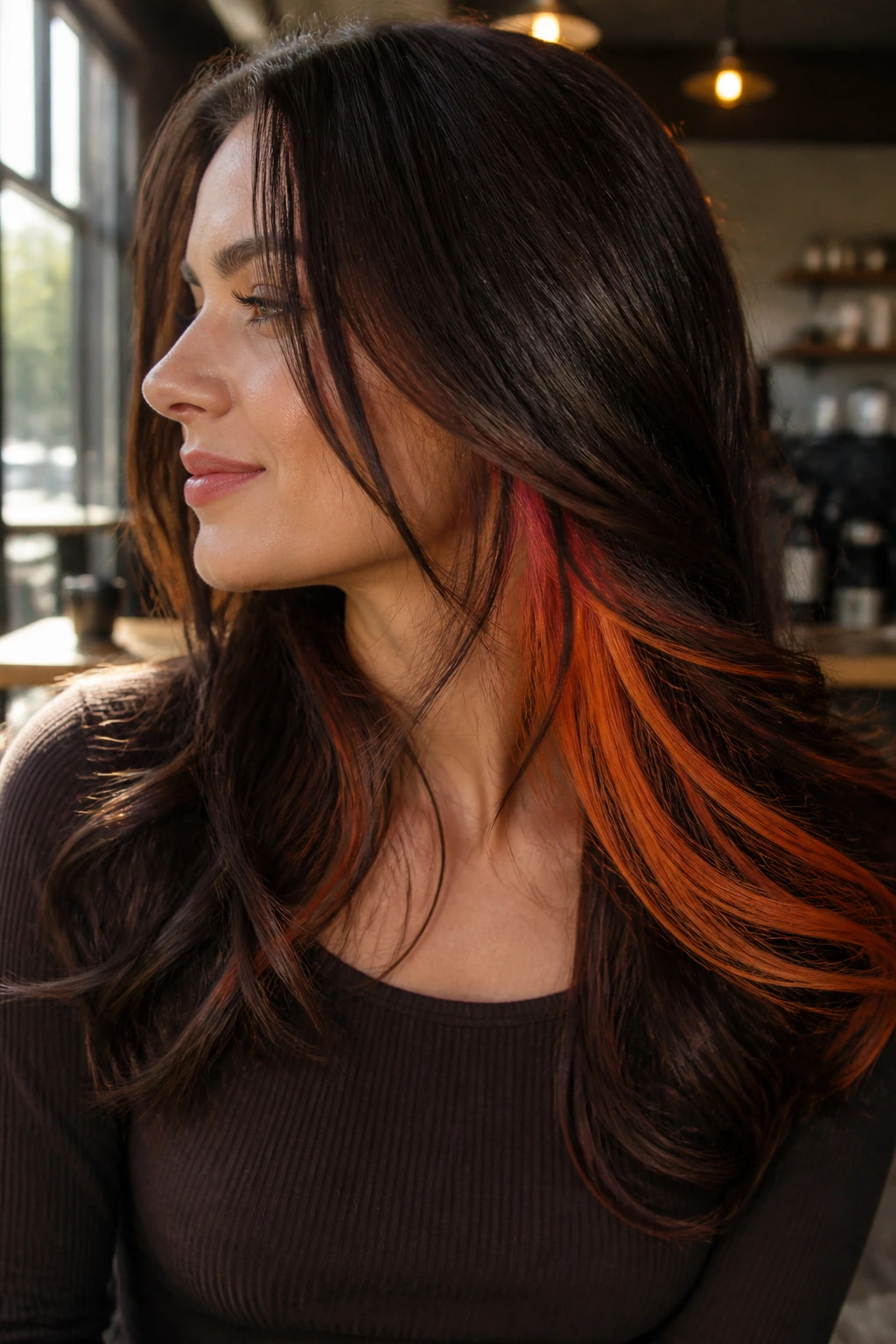
Dark chocolate with tangerine peek is for people who want one clever flash of color without committing the whole head. The tangerine usually hides in the underside layers or just at the last few inches of the ends, so it shows when the hair moves, not all the time.
That little burst works because the rest of the color is so restrained. Dark chocolate on top sets up the contrast and keeps the tangerine from looking childish. The whole thing feels sharper when the haircut has movement.
If you work in a setting where bright color needs to stay low-key, this is a smart compromise. The peekaboo placement lets you hide it when you want and show it when you don’t.
22. Fawn Beige with Sand Ends
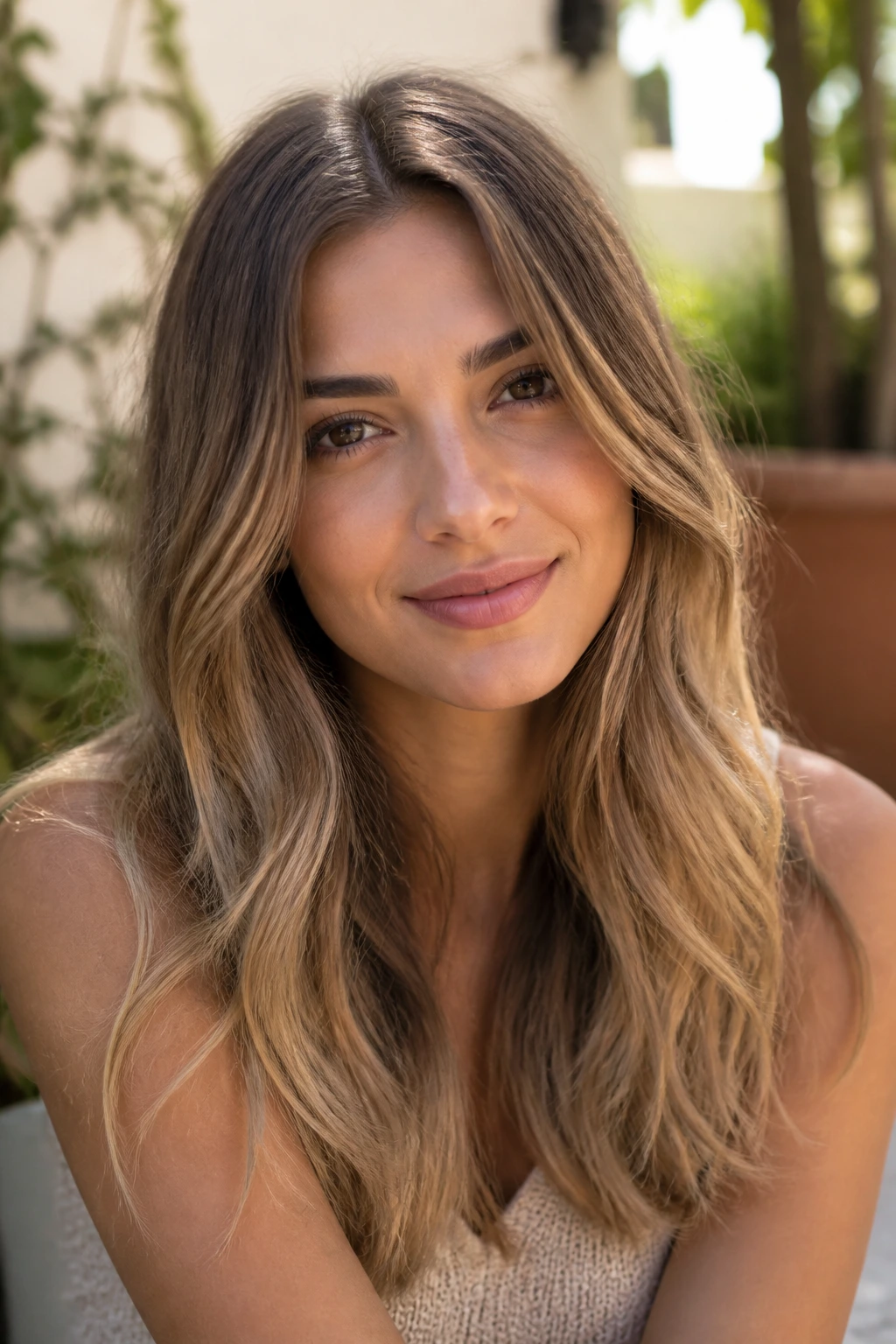
Fawn beige with sand ends is one of the softer blonde-brown ombre ideas, and it’s better than a lot of colder blondes because it doesn’t wipe out the face. The base stays a fawn brown, then the ends lighten into sand beige with no hard jump.
This color looks especially good on hair that’s naturally a level 6 or 7. You get lightness without losing all the depth around the crown. That depth is what keeps the hair from feeling overprocessed.
The finish should be matte-satin, not icy. Sand beige has a dry, natural look to it. If the toner goes too cool, the whole color loses its warmth and starts to look tired.
23. Cranberry Ember Ends
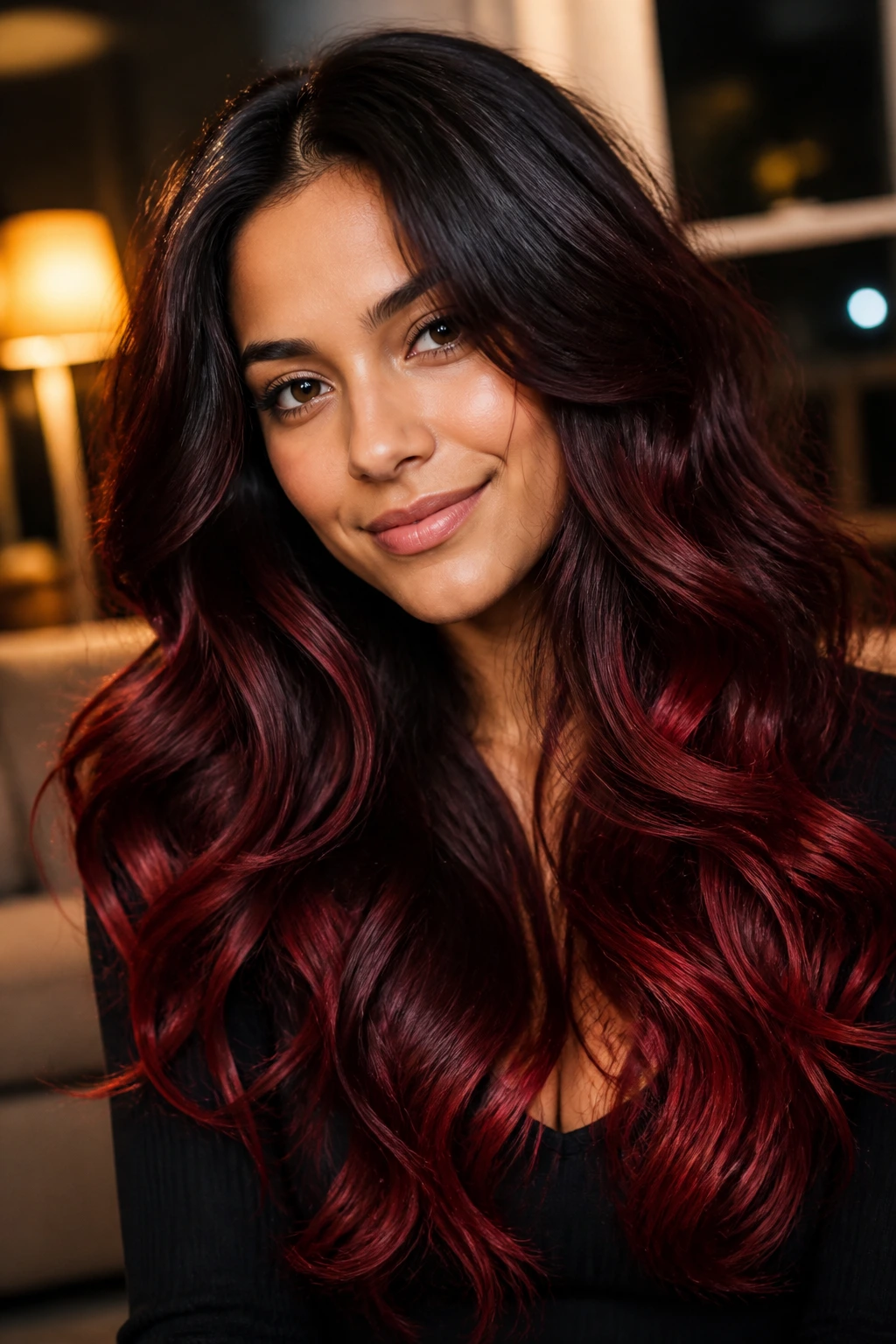
Cranberry ember ends bring the drama without needing a full red head of hair. The root stays deep brown, the mids pick up a cranberry tint, and the ends glow with ember-red warmth that looks strongest in motion.
This one works beautifully on longer curls, where the red can flick in and out of view. Straight hair keeps it sleeker and more graphic. Either way, the end color should feel like a finish, not a stain.
Red ombre needs care. A red-safe conditioner, cooler rinse water, and fewer hot tools all help. If you burn through the ends with a flat iron every day, the cranberry will fade in a blink.
24. Hazelnut Smokeshow
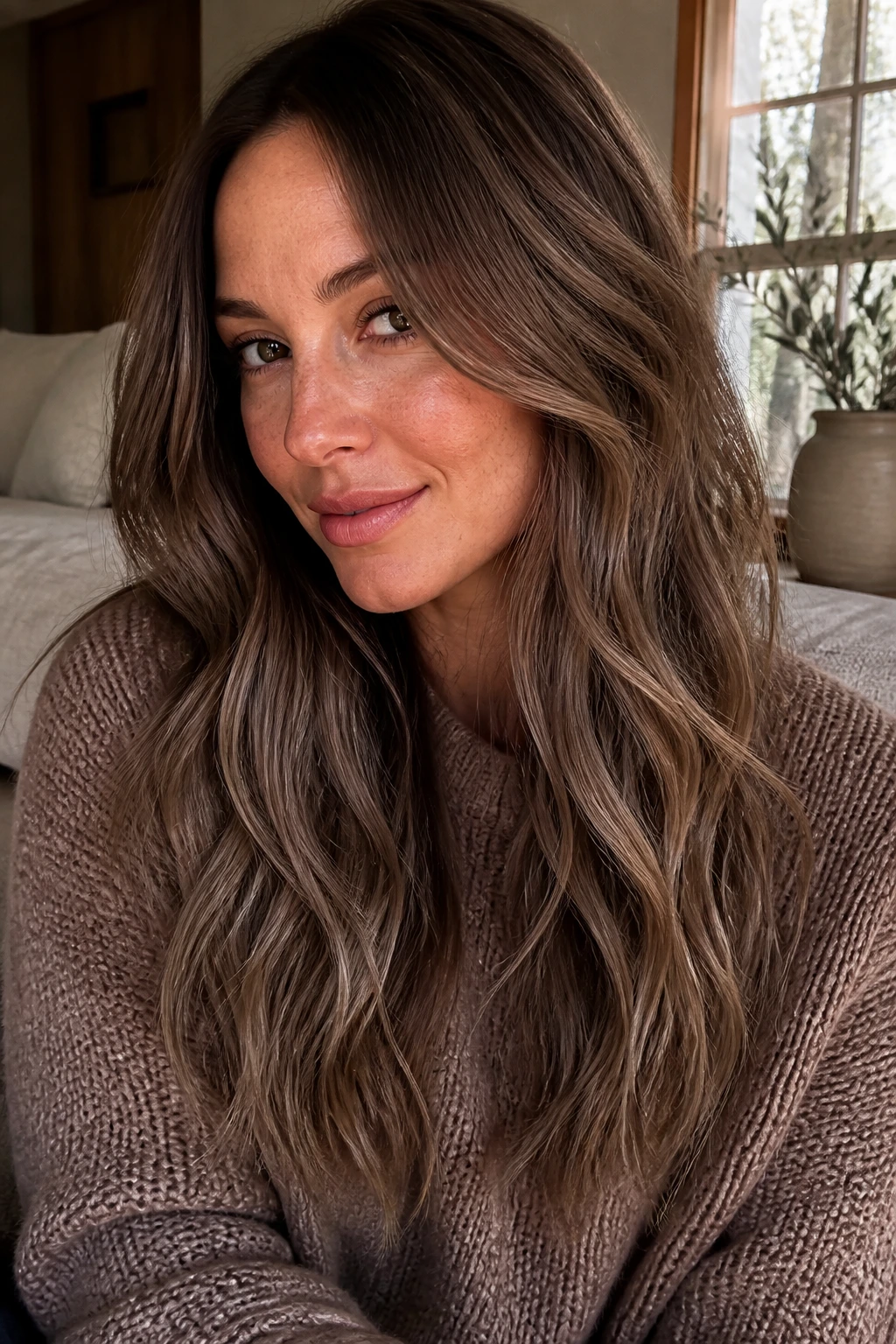
Hazelnut smokeshow is what I suggest when someone says, “I want warmth, but not gold.” The root is hazelnut brown, the mids soften into smoked taupe, and the ends stay muted enough to look glossy rather than bright.
The appeal here is restraint. The color shift is visible, but it doesn’t announce itself. That makes it easy to wear with makeup that changes from day to day. The hair stays calm while the rest of the look can move around it.
This shade also behaves well on hair that tends to frizz. Smoked tones hide uneven texture a little better than shiny gold tones do, especially in humid air.
25. Turmeric Gold Glow
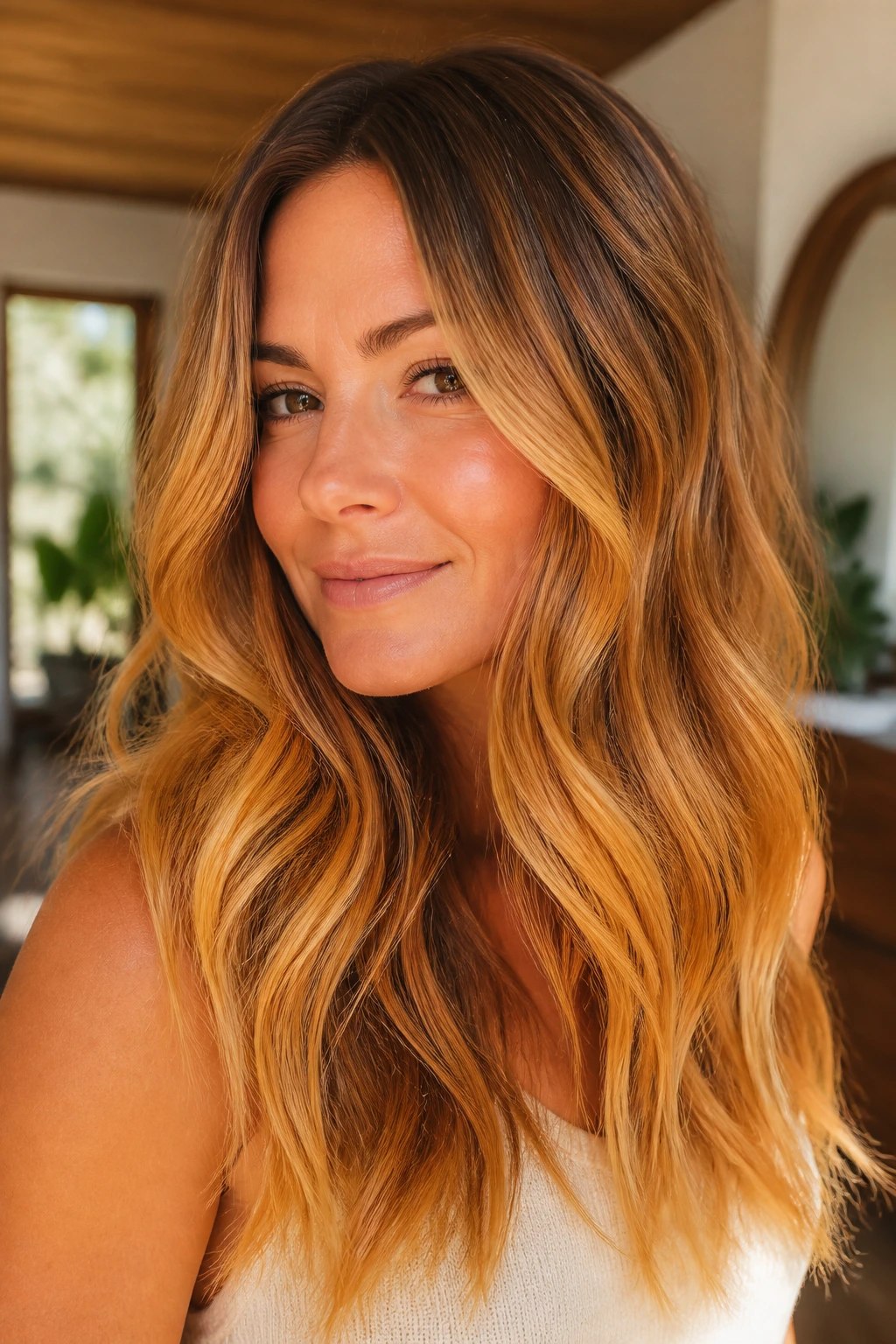
Turmeric gold glow sounds bolder than it has to be. Done well, it’s a deep blonde or light brown base with a warm gold fade that lands somewhere between amber, honey, and soft turmeric. The goal is glow, not yellow.
The root shadow matters here because it keeps the lighter ends from floating away from the rest of the hair. Without that anchor, gold can look patchy. With it, the whole style reads sunny, but grounded.
This one shines on layered cuts and loose waves. The movement shows off the color shift, and the warm finish brings a little life to cooler wardrobes.
Why Ombre and Warm Shades Keep Working Together
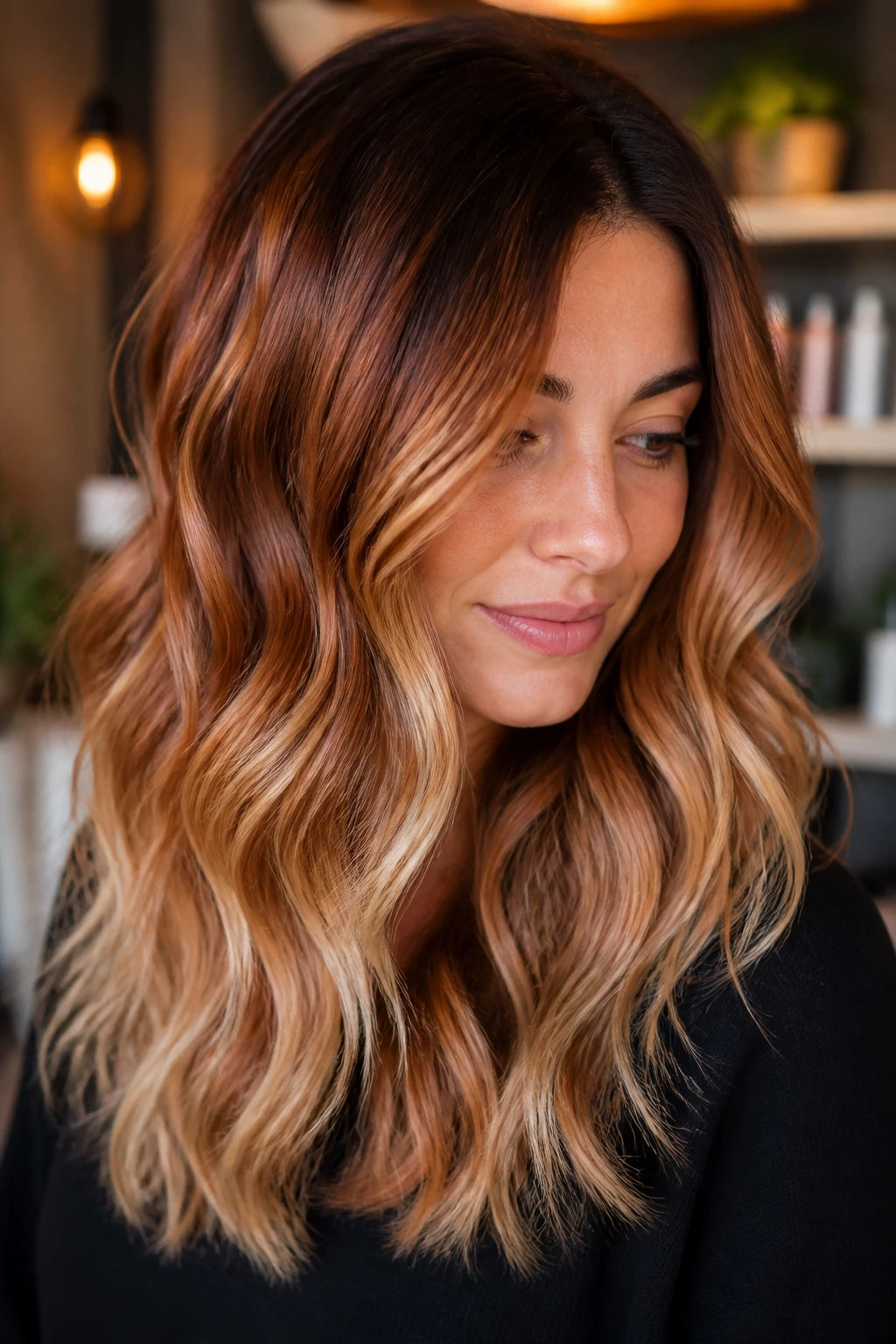
Ombre lasts because it respects how hair actually grows. Roots darken. Ends lighten. Mid-lengths catch the most wear. A color design that already expects those things will always age better than one that fights them.
Warm fall tones make the effect even easier to wear. Copper, caramel, beige, amber, berry, and muted gold each do a different job: some lift the face, some soften heavy cuts, and some keep dark hair from looking like one solid helmet. That’s why you can take the same ombre structure and make it feel very different just by changing the tone family.
I also think these shades work so well because they fit clothes with texture. Wool, denim, leather, brushed cotton — all of it looks sharper next to color that has a root shadow and a slow fade. Flat hair color can look fine on its own. Dimensional color looks planned.
Essential Tools for These Color Ideas
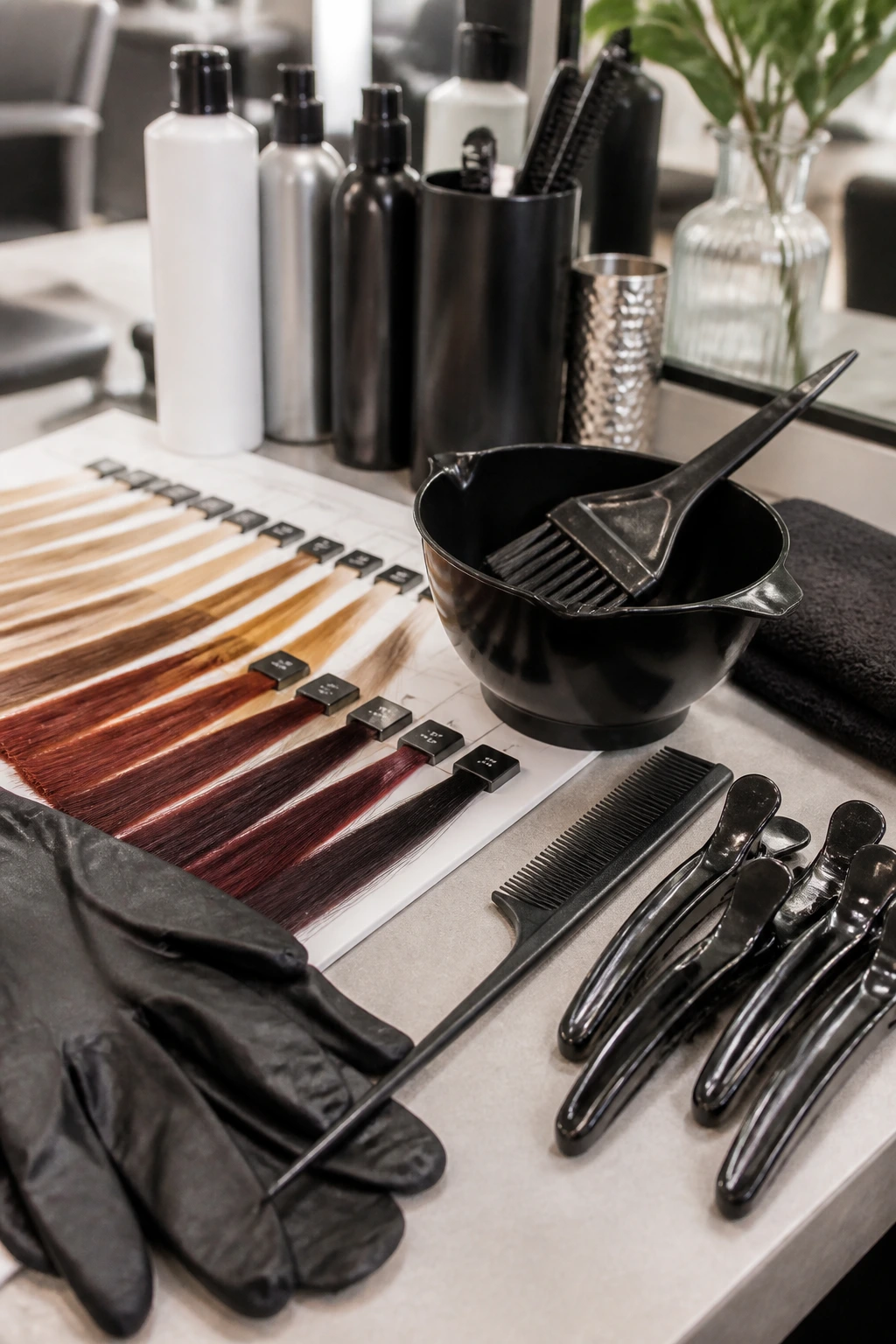
- Color swatches or phone reference photos: Bring at least 3 photos, and make sure they show hair at the same depth and texture as yours.
- Tint brush and bowl: Needed for glosses, toners, or at-home color masks; a small brush gives cleaner placement than fingers.
- Sectioning clips: Four to six sturdy clips keep the blend organized while you work.
- Fine-tooth tail comb: Useful for clean parting and for checking whether the fade is even.
- Gloves: Non-negotiable for any toner, gloss, or color-depositing conditioner.
- Color-safe shampoo and conditioner: Choose formulas that don’t strip the cuticle every wash.
- Deep-conditioning mask: Use weekly if you lighten the ends; it helps the fade stay smooth instead of dry and fuzzy.
- Heat protectant: Necessary if you straighten or curl often. Lightened ends need it.
- Purple or blue shampoo, used carefully: Helpful for blonde and beige blends, but easy to overdo on warm copper or caramel shades.
- Leave-in cream or serum: A small amount on the ends keeps ombre looking polished after styling.
How to Choose the Right Shade Before You Sit in the Chair
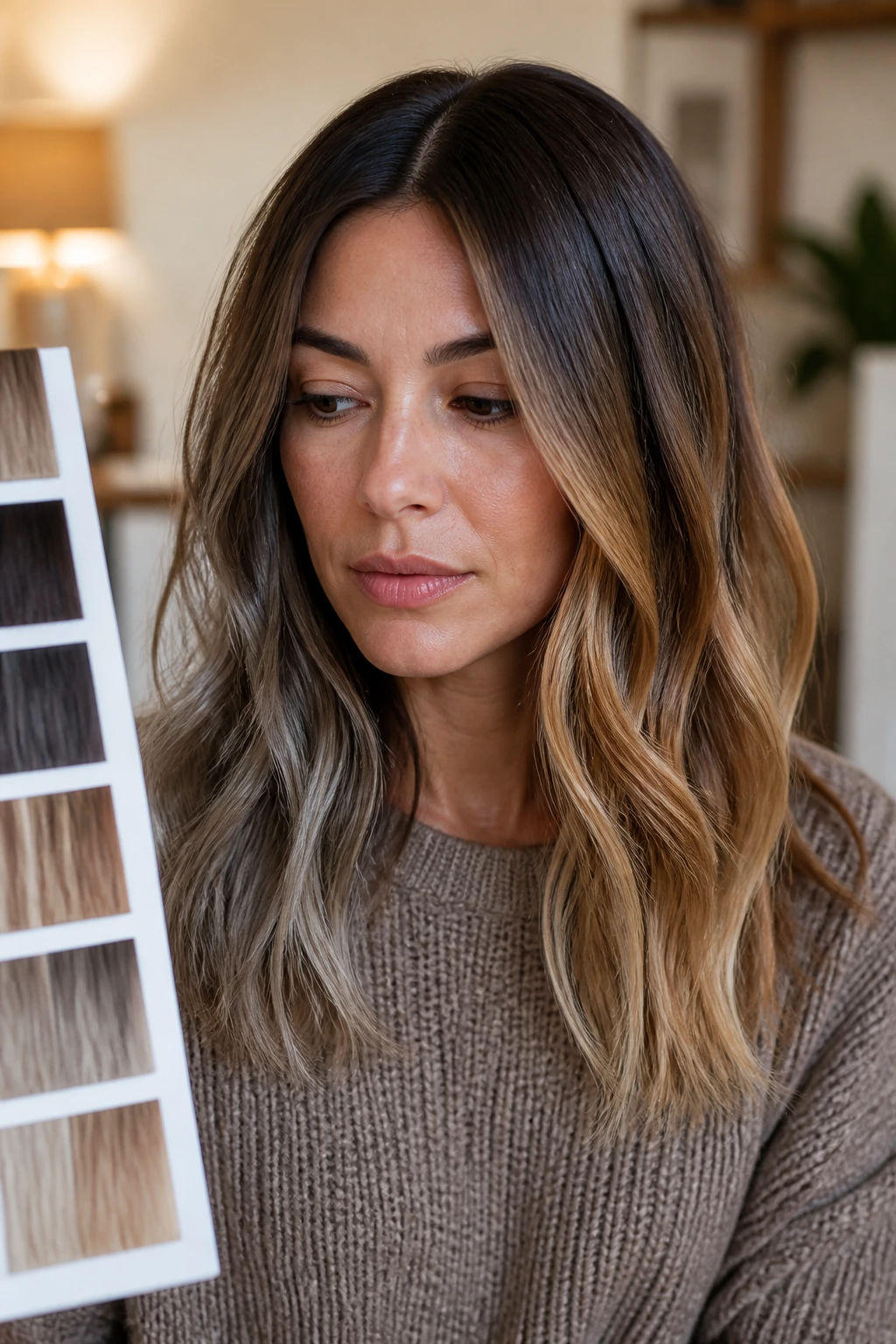
The first question isn’t “What color do I want?” It’s “How much contrast can my hair hold without looking choppy?” That depends on your base level, your haircut, and whether your ends have been lightened before. If the hair has old highlights, the new blend can usually sit more softly. If the ends are virgin dark brown, the lift may need more time and more patience.
Bring photos, but bring the right kind. A photo of a copper ombre on platinum blonde hair won’t help if your own base is level 4 and your ends are already porous. Pick pictures that match your starting point: dark brunette, medium brown, light brown, or blonde. Colorists look at that first.
Tone matters more than most people expect. Warm skin often likes copper, caramel, amber, and rose-brown. Cooler skin usually holds mushroom, beige, slate, berry, and smoked taupe better. Mixed skin tones can wear either side if the placement is right. Around the face, a little warmth goes a long way.
How to Wear These Colors So the Blend Shows Up
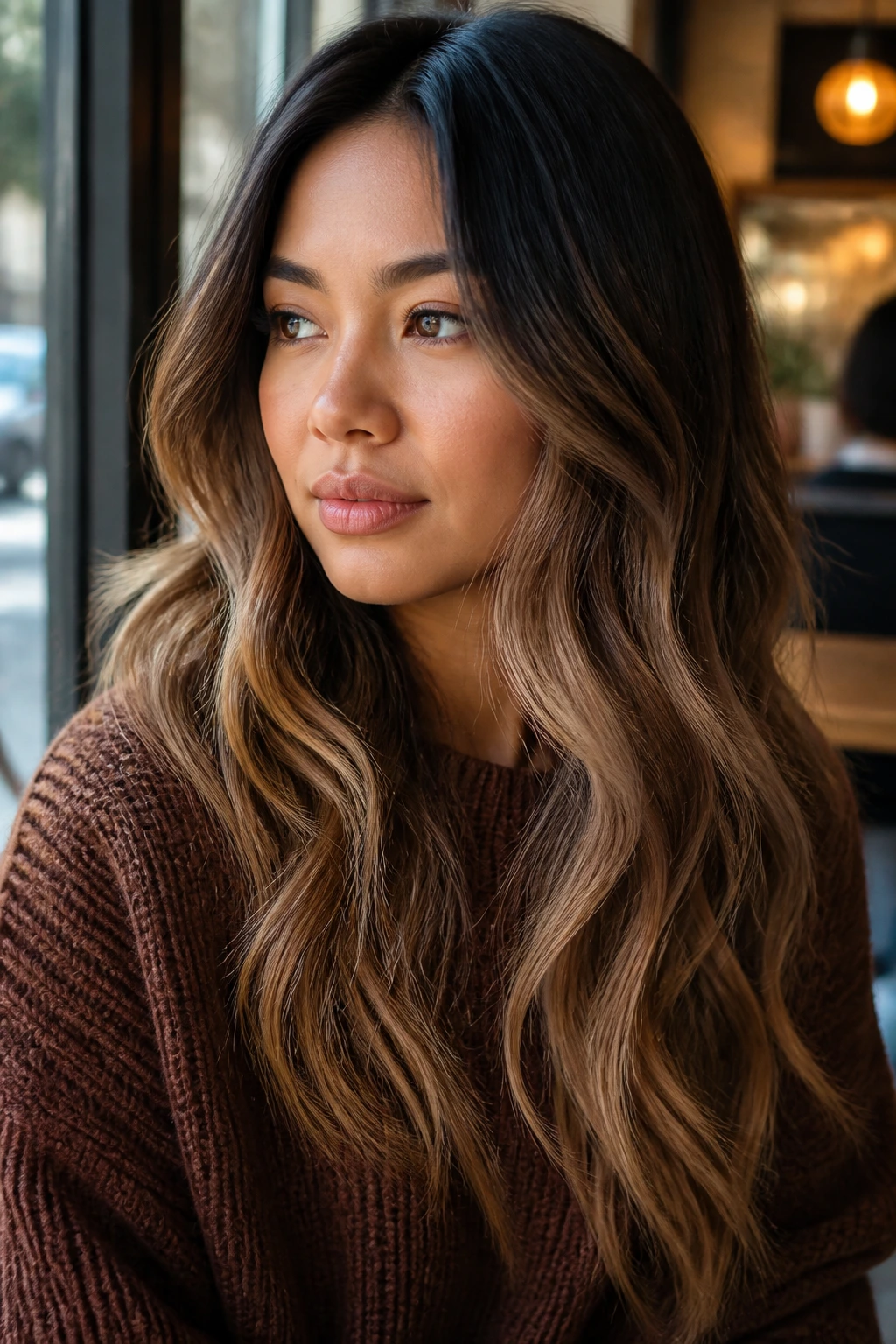
Presentation: Loose waves show the fade the best because the bends separate the darker root from the lighter ends. Straight hair looks sharper and more graphic, which is useful if you want the ombre to feel sleek instead of soft. A center part usually emphasizes symmetry; a soft side part puts more attention on one side of the face.
Accompaniments: Haircuts with layers, curtain bangs, and long bobs carry these colors especially well because there’s enough movement for the tone shifts to show. Heavy one-length cuts can still wear ombre, but the transition needs to start lower so the hair doesn’t look like it’s wearing a hard stripe.
Portions: Ask for subtle, medium, or high contrast rather than “a little.” That tells the colorist how wide the fade should be and how much lightness you can handle before the ends start taking over. Subtle ombre starts lower and blends softly. High-contrast ombre lets the ends do more of the talking.
Accessory Pairing: Big earrings, warm makeup, and darker necklines help these shades pop. Cream sweaters, camel coats, and black tees are especially good backdrops because they don’t fight the color. A high collar can hide too much of a low fade, so factor that into placement if you wear a lot of scarves or turtlenecks.
Extra Tone Boosters and Small Tweaks
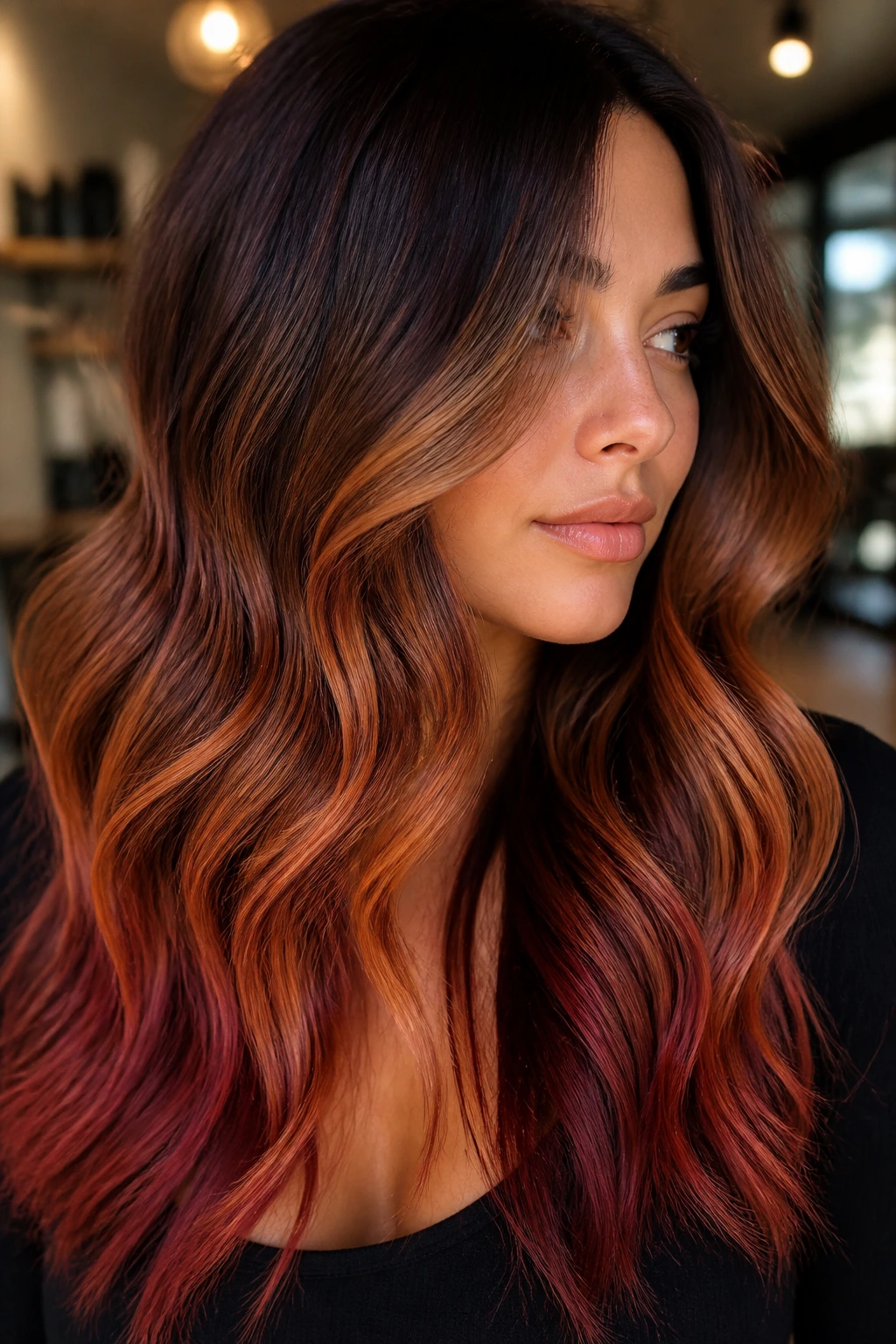
Tone Boost: A clear or tinted gloss every 4 to 6 weeks can keep caramel, copper, and berry shades from going dull. For blondes, a beige or pearl gloss softens yellow; for brunettes, a warm glaze restores shine without repainting the whole head.
Customization: If you want the look softer, ask for fewer painted pieces and more blur at the transition. If you want more edge, add a hidden panel under the top layer or place the lightest color around the face and ends only. Those two choices change the whole mood fast.
Finish: A lightweight serum on the last 2 to 3 inches of hair keeps the ends from looking fuzzy. Use too much and the color goes stringy. Use almost nothing and the faded part can look dry, especially after heat styling.
Make-It-Yours: For fine hair, keep contrast lower and the transition higher in the silhouette, not higher on the scalp. For curly hair, ask for a staggered fade so the curls don’t collapse the color into one line. For long hair, a slightly wider transition zone usually reads better than a tight, abrupt melt.
Common Mistakes That Flatten Ombre Color
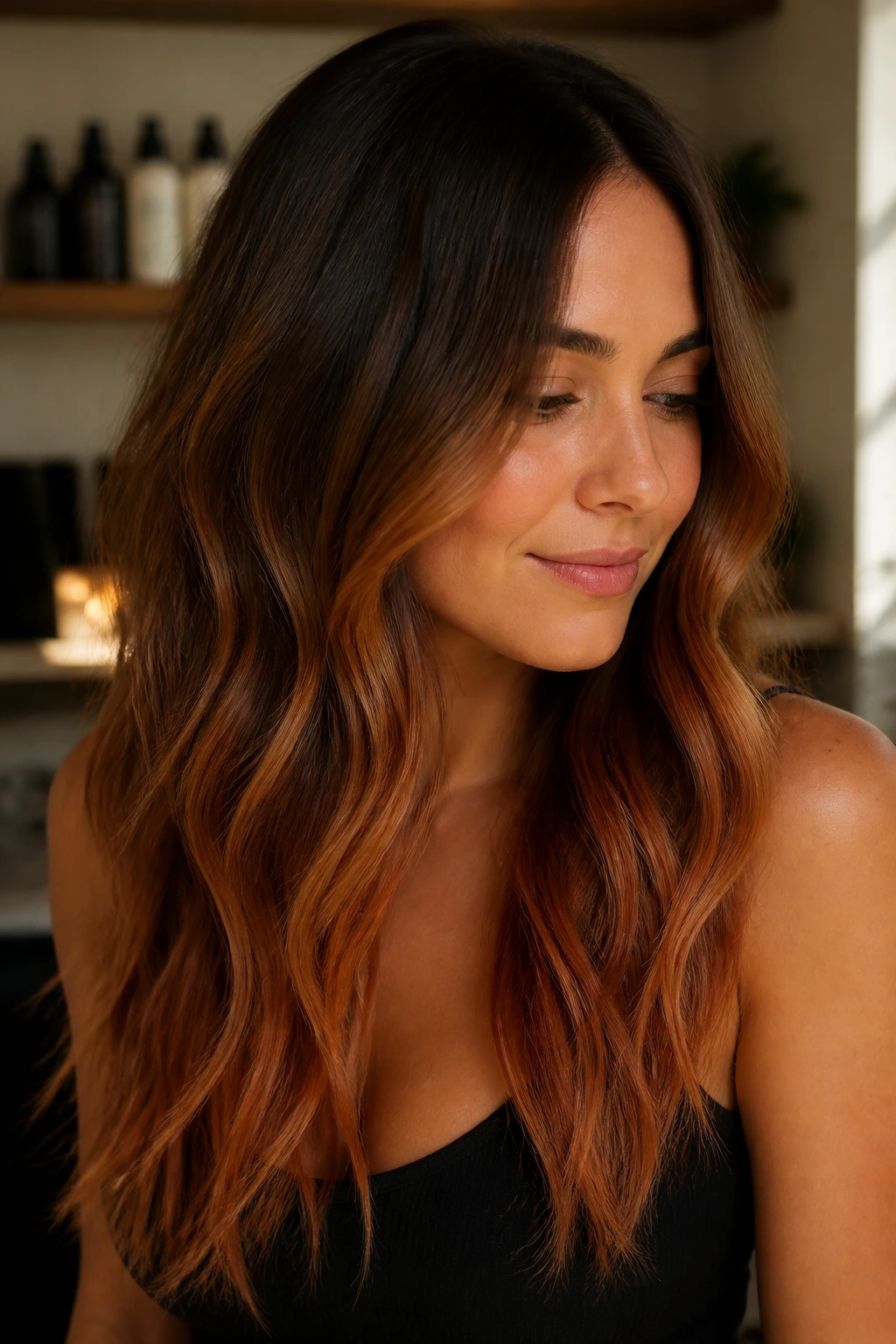
The first mistake is pushing the ends too light. That can look exciting in the bowl and awful on the head. If the bottom half goes more than two or three levels lighter than the root without enough blend, the hair starts to look striped instead of faded.
Another common problem is using the wrong toner for the warmth you actually wanted. Purple shampoo on copper, for instance, can mute the shade into a dusty brown that loses all of its life. Blue shampoo on caramel can do the same thing. Match the product to the tone family.
Placing the fade too high is a subtle disaster. If the lightness starts right at the crown, the style stops reading as ombre and starts reading as grown-out highlights. The shift needs room to breathe. On most cuts, that means starting lower than people think.
Skipping a haircut before the color can also backfire. Split ends and uneven layers make the fade look patchy no matter how good the dye job is. Clean ends help the gradient look smooth.
Lastly, people forget how much styling changes the color. A blunt blowout flattens the transition. A few bends, even a soft bend from a round brush or curling iron, gives the whole shade more shape. The color may be the main event, but the styling decides whether anyone notices.
Variations Worth Trying on Different Hair Types
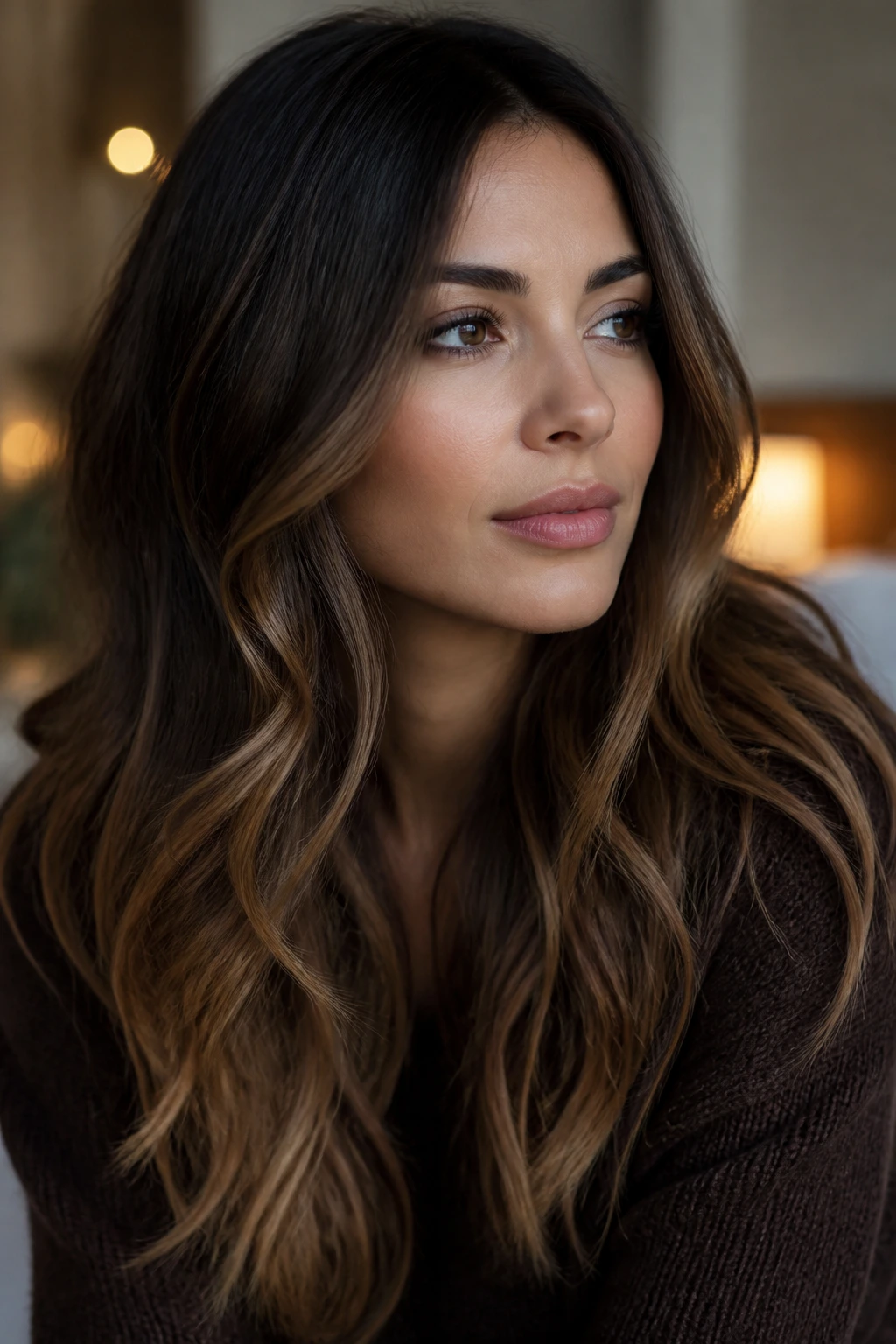
The Soft Brunette Edit: Keep the root shadow deep and use caramel, beige, or mushroom mids with only a whisper of lightness on the ends. This works well on fine or straight hair because it avoids harsh lines and keeps the hair looking thicker.
The Curly Copper Sweep: On curls, start the copper lower than you would on straight hair and let the ringlets carry the color upward visually. The bounce of the curl creates its own blend, so the actual placement can stay more relaxed.
The Bold Berry Break: If you want more drama, swap the caramel or beige ends for burgundy, merlot, or cranberry. That gives the same ombre structure a moodier finish without changing the grow-out pattern.
The Blonde-To-Bronze Shift: For lighter hair, keep the root shadow soft and let the fade move into bronze, honey, or beige rather than red. It’s cleaner, easier to maintain, and less likely to turn brassy.
The Hidden Panel Trick: Put the brightest tone underneath the top layers so the color flashes only when the hair moves. It’s a smart choice for work settings, and it makes the reveal feel deliberate instead of loud.
Keeping the Tone Fresh Between Appointments
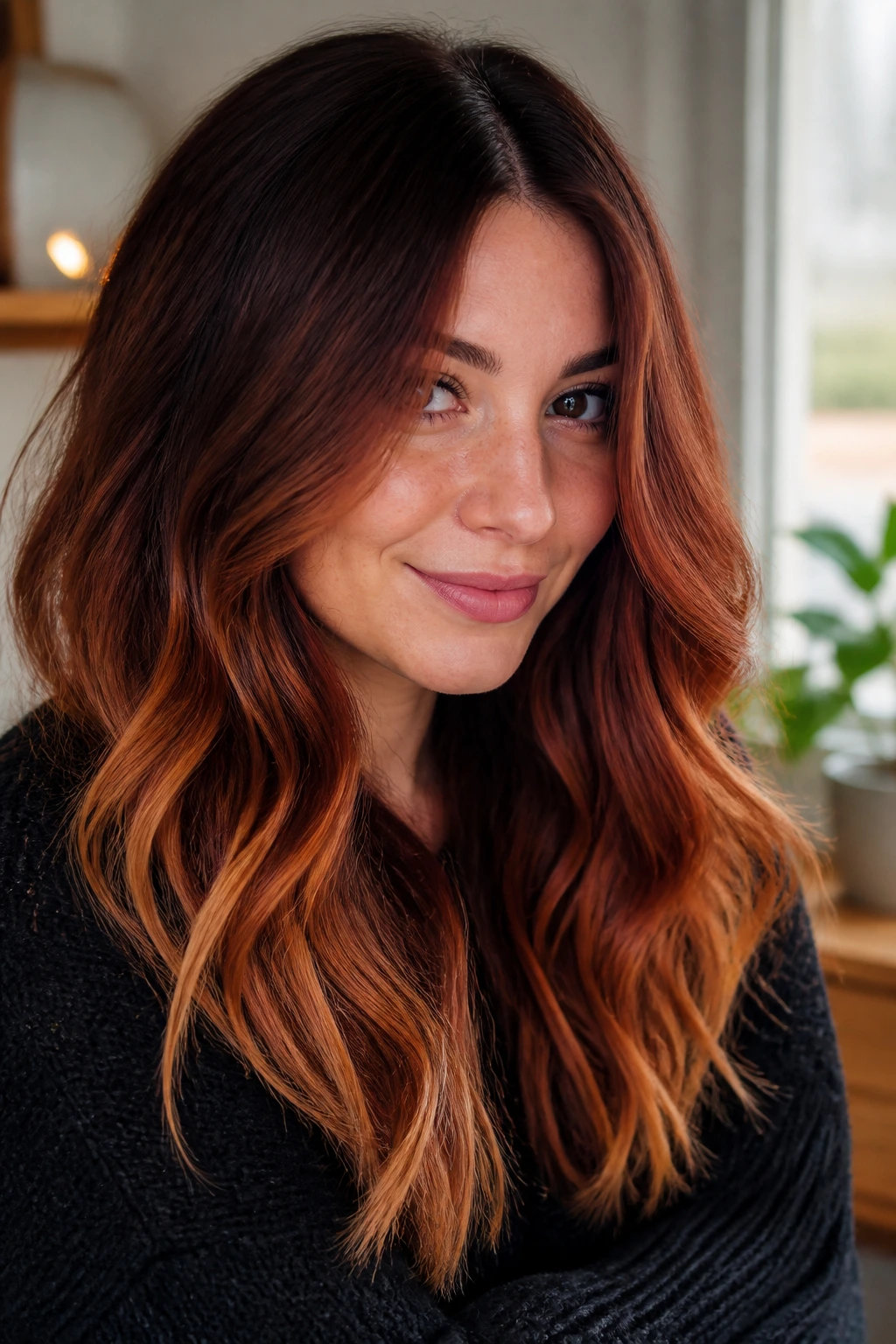
Most fall ombre shades hold up best when you stop trying to wash them into obedience. That sounds blunt, but it’s true. The more often you shampoo, the faster the ends lose their tone. Two to three washes per week is enough for many people if the scalp isn’t oily and the styling products are light.
A color-safe shampoo should be the default. Use a clarifying shampoo only when the hair feels coated or dull, and even then, keep it to every 2 to 4 weeks. If you lighten the hair, use a deep-conditioning mask once a week on the mids and ends. Let it sit for 5 to 10 minutes. Don’t pile it on the roots unless they’re dry too.
Glossing or toning depends on the shade family. Copper, berry, and rose tones usually want refreshment every 4 to 6 weeks. Beige blondes and mushroom brunettes can often stretch to 6 to 8 weeks. If the fade starts looking muddy before then, the problem is usually product buildup or an undertone mismatch, not the ombre itself.
Heat styling changes the schedule. If you flat iron or curl several times a week, use protectant every single time. Lightened ends burn fast. They also lose tone faster than untouched roots, which is why the bottom inch of the hair often tells on you first.
Frequently Asked Questions
Can ombre work on very dark hair without looking harsh?
Yes, but the fade should stay within a controlled range. On level 2 to 4 hair, chocolate, cinnamon, burgundy, smoked caramel, and amber usually look better than super-light blonde because the contrast stays readable without turning choppy.
How often does fall ombre need to be touched up?
Most people can go 8 to 12 weeks between root-related touch-ups if the fade is soft. Toners, glosses, or color-depositing masks usually come in sooner, often every 4 to 6 weeks, especially with copper, red, or beige tones.
Is ombre easier to maintain than traditional highlights?
Usually, yes. A deeper root gives you more forgiveness as hair grows, and the blend hides regrowth better than a tight highlight pattern. The tradeoff is that the ends still need moisture and tone care.
What if my ends turn brassy?
That usually means the warm pigment is overpowering the neutralizer. For blondes and beige brunettes, a blue or purple-based product may help, but copper and caramel shades need gentler correction or they’ll lose their warmth entirely. A gloss is often a safer fix than piling on shampoo.
Can curly hair wear ombre without looking patchy?
Absolutely, and curls often make the color look better because the movement shows the transition naturally. The key is to paint the fade with the curl pattern in mind, not against it, so the lighter pieces don’t bunch up in one stripe.
What should I tell my stylist if I want something subtle?
Say you want a soft root shadow, a slow transition, and a finish that reads more dimensional than high-contrast. If you have a photo, pick one where the lightest tone is only 1 to 2 levels lighter than your base, not 4 levels lighter.
Will ombre make thin hair look flatter?
It can if the contrast is too high or the ends are over-lightened. Keeping the root darker and the fade soft usually makes fine hair look fuller, because the shadow at the crown gives the cut more body.
Can I do a fall ombre at home?
You can, but the safest home version is a gloss or color-depositing treatment rather than a full bleach-and-tone project. If your hair is previously colored, lightened, or porous, a salon visit is usually the less expensive choice in the long run because it avoids correction work.
The Fade That Keeps Its Shape
The best ombre color is the one that still looks good after a week of real life: a couple of washes, a messy bun, a dry shampoo day, a change in outfit, maybe a little humidity. That’s where these fall ombre ideas earn their keep. The root depth does the heavy lifting. The mids keep the transition soft. The ends carry the personality.
Some people want copper, some want mushroom brown, some want berry, and some want a barely-there beige blend that only shows itself when the hair moves. Fine. The structure is the same. Only the tone changes. That’s why ombre keeps working when other color trends get tired: the shape is flexible enough to carry whatever mood you’re after.
Pick the version that fits your base, your haircut, and your patience for upkeep. Then keep the ends glossy and the transition believable. That’s the whole trick, and it’s a good one to keep.
