



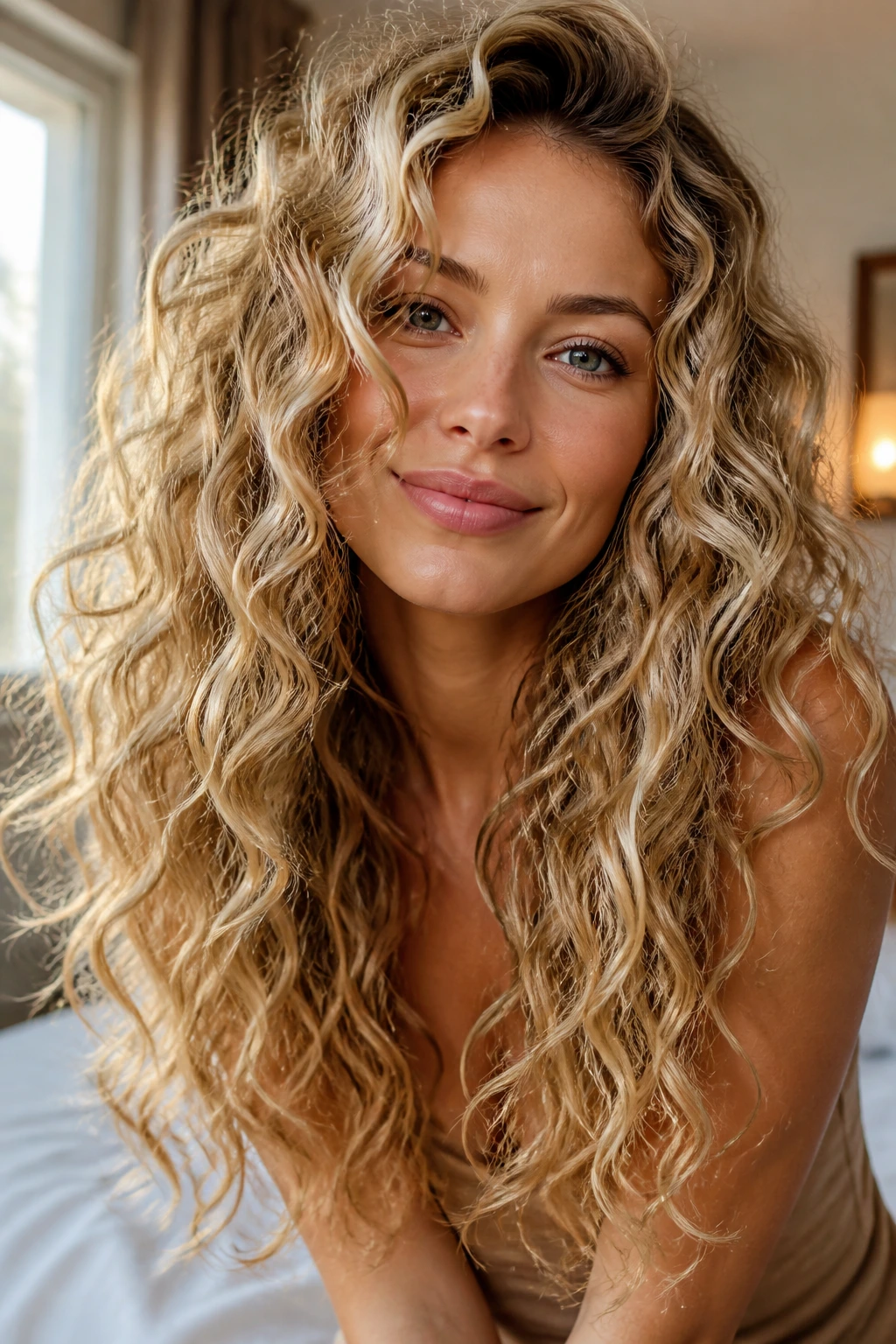
Long curls can carry blonde in a way straight hair rarely does. The bends catch a ribbon of light, hide it for a second, then flash it back when the hair swings. The best blonde hair looks for long curly hair don’t read like a stripe of paint; they read like sunlight threaded through movement.
That only happens when the placement makes sense for the curl pattern. Curly hair shrinks, opens, and stacks on itself in layers, so a highlight that looks timid in the bowl can turn loud once it dries. A toner that looks creamy on day one can fade to brass faster on porous ends. And a root that feels “too dark” on wet curls often ends up being the thing that keeps the whole head from looking flat.
The looks below are built around that reality. Some are warm and glossy, some lean cool and smoky, and a few go bolder with bright face-framing pieces or platinum ends. If you’ve ever watched a blonding job disappear once the curls dry, or turn streaky because the pieces were placed as if the hair were straight, this is the fix. The right blonde on long curls needs room, depth, and a little nerve.
Why This Collection Works on Long Curls
-
The curl pattern does half the work: Blonde ribbons break up naturally on bends and spirals, so a careful placement looks richer than the same color on a flat blowout.
-
Root depth keeps the shape alive: Leaving a darker root or shadow near the scalp stops the whole head from turning into one pale sheet, which is a common problem on long, dense curls.
-
There’s a shade for every level of upkeep: You can stay soft with babylights, or go brighter with a money piece and still keep the rest of the hair low-key.
-
Tone matters as much as lift: Honey, beige, champagne, ash, and pearl all tell a different story once they sit on curl texture.
-
Long length gives blonde room to breathe: There’s space for a gradient, a veil of light pieces, or a slow melt from brunette to blonde without the look getting chopped up.
-
You can brighten the face without frying the ends: That’s the beauty of long curly hair. A few strategic pieces can do a lot of talking.
1. Honey Ribbon Balayage
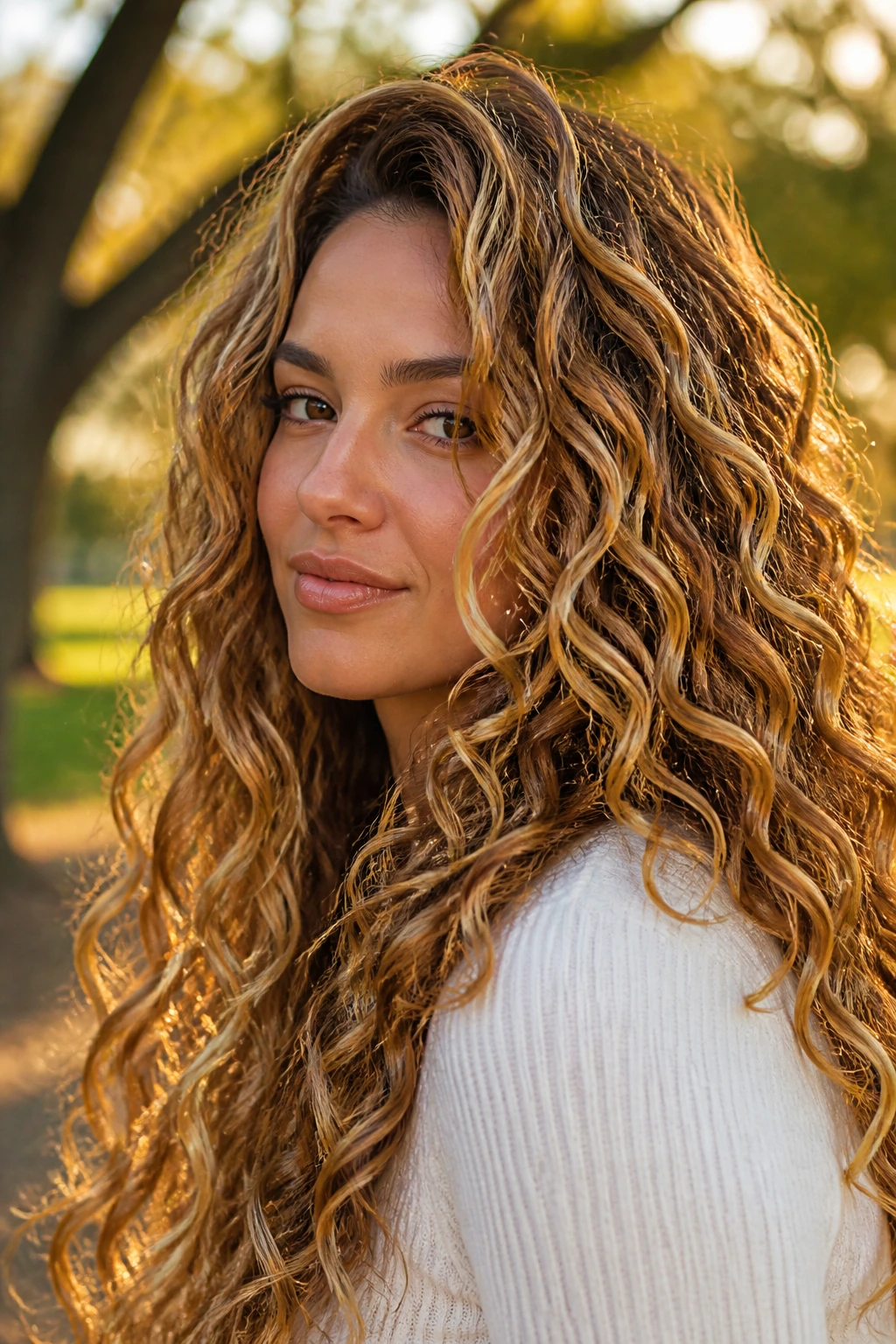
Honey ribbon balayage is the kind of blonde that looks like it belongs on curls, not just pasted onto them. The warmth lands between gold and amber, so the curls read glossy instead of brassy, and the ribbons show up best when the hair sways. It’s soft enough to live with, but it still gives long spirals that little flash that makes people look twice.
Why It Works
The trick here is contrast control. Keep the roots at a deeper brunette level and paint finer honey pieces through the top layer, face frame, and outer lengths. On curly hair, those ribbons separate as the curl clumps open, which makes the blonde look woven in rather than streaked on.
It’s a good match for medium to thick curls because the density gives the blonde room to spread out. If the hair is fine, the same look can go sparse fast, so I’d keep the pieces closer together and avoid over-lightening the ends.
A gloss every 6 to 8 weeks keeps the honey from drifting orange. That’s the entire game. Warm, not fried.
Best For
- Medium brown to dark brown bases
- Loose to medium curls
- People who want blonde that looks expensive without looking icy
Ask Your Colorist For
- Hand-painted ribbons on the top layer
- A deeper root with soft transition points
- A honey or golden-beige glaze, not a flat yellow toner
2. Beige Babylights Through the Lengths
Beige babylights are quiet in the best possible way. They don’t shout, they shimmer. On long curls, that soft beige tone makes the hair look fuller because the light pieces are tiny enough to disappear and reappear as the curls stack.
Why It Works
Babylights are extremely thin, so they behave more like texture than streaks. That matters on curls, where a big highlight can look blocky once the hair dries. Beige keeps the tone neutral enough to dodge the obvious yellow cast, but it isn’t so cool that it turns gray against warm skin.
This look is especially kind to finer curls. You keep the body, keep the density, and still get brightness through the lengths. A root shadow helps the highlights feel grounded, especially if your curls spring up a full inch or more after diffusing.
What to Ask For
- Very fine foiled highlights
- Beige toner with a soft root melt
- More brightness around the face and crown, not just the ends
My Take
If you hate looking “done,” this is one of the safest blondes on long curly hair. Subtle. Soft. Still alive in the sun.
3. Creamy Caramel Ombré
Creamy caramel ombré is made for long length. The dark root hangs on, the midlengths warm up, and the ends drift into a creamy caramel that looks like the curl pattern has been brushed with light. The transition matters here; if the gradient is too sharp, it can look like two different heads of hair arguing with each other.
Why It Works
Ombré needs space, and long curls give it that. A short cut can make the shift look abrupt, but long hair lets the color dissolve slowly from root to tip. The curls help, too. Their bends blur the line, which is exactly what you want.
I like this look for darker brunettes who want blonde but don’t want to spend every six weeks in the chair. Leave the roots rich, lift the ends a few levels, and finish with a caramel-beige gloss. The grow-out is forgiving, and the regrowth tends to blend instead of scream.
Good For
- Dark brown or chestnut bases
- Thick curl patterns
- Anyone who wants lower-maintenance blonde without going pale
A soft trim every 10 to 12 weeks keeps the ends from looking dry, which matters more here than most people admit. Blonde ends and curly ends can look frayed if you let them go too long.
4. Platinum Money Piece
A platinum money piece is the loudest look in this group, and that’s the point. A bright front panel on long curly hair throws light straight into the face, then breaks into little flashes as the curls move. It can look incredibly chic, but only if the rest of the hair has enough depth to keep it from turning harsh.
Why It Works
Curly hair softens contrast. That’s why a platinum money piece can work better on curls than on straight hair, where the line sometimes looks blunt. The curl pattern breaks the brightness up at the temples and cheekbone area, so the front pieces feel lively instead of helmet-like.
This look needs careful timing in the salon. If the hair is dark, porous, or already color-treated, the front pieces may need to be lifted in stages. Don’t rush that part. A clean platinum front is gorgeous; a fried, yellow one is just a warning sign.
Best If You Want
- High contrast around the face
- A bold change without blonding the whole head
- Something that still looks polished with a curly bun or half-up style
Keep in Mind
Platinum asks for more toner, more moisture, and more patience. If you’re not ready for purple shampoo, bond repair, and touch-ups, pick one of the softer blondes instead.
5. Buttery Foilyage Ends
Buttery foilyage is the sweet spot between hand-painted softness and the stronger lift you get from foils. The color lands brighter at the ends and stays creamy rather than stark. On long curls, that buttery finish can make the bottom half of the hair look sunlit without losing depth in the upper layers.
Why It Works
Foilyage matters because curls are not flat canvases. Dense curls can shield sections from lightener if the placement is too loose, and foils help push the lift where you actually want it. The painted edges keep the result from looking boxed in.
This is the kind of blonde I recommend when someone says they want “more blonde” but not a full head of blonde. It gives you the lift of traditional highlights with the softer melt of balayage. The curls do the rest. They separate the buttery pieces into moving ribbons instead of rigid streaks.
What To Ask For
- Foils through the mid-lengths and lower lengths
- Painted ends for softness
- A buttery beige toner with a slight gold note
6. Sandy Champagne Blonde
Sandy champagne blonde sits between warm and cool, which is why it works on so many long curly heads. It has that pale beige sparkle without sliding into yellow or silver. If you’ve ever hated the way “blonde” can look too loud on curls, this shade is the calmer version.
Why It Works
Champagne tones catch light in a soft, almost pearly way. On curls, that means the hair looks dimensional even when the light is low. The sandy part keeps it grounded; the champagne part keeps it from going muddy.
I like this shade on neutral and olive undertones because it doesn’t fight the skin. It also behaves well in long lengths where the blonde can be seen from several angles. A single flat tone would disappear into the shape. This one moves.
Useful Note
Ask for a gloss rather than a heavy toner if your hair lifts easily. Too much pigment can mute the champagne effect and leave the curls looking dusty.
7. Ash Root Shadow Blonde
Ash root shadow blonde is for anyone who wants coolness without losing dimension. The root stays smoky and deeper, then the lighter pieces drift into a cooler blonde through the lengths. It’s a smart look for curly hair because the shadow keeps the regrowth line from getting ugly.
Why It Works
Curly hair often exposes the root in little windows as it moves. A shadow root turns that into part of the design instead of a problem to hide. The ash tone also reins in orange and gold, which is useful if your base tends to pull warm.
The catch? Too much ash can make curls look flat, especially if the hair already lacks shine. I’d rather see a soft smoky root with beige mids than a heavy gray toner from scalp to ends. The best version still has warmth in the lightest pieces.
Best For
- Medium to dark bases that pull brass
- Olive or cool skin tones
- People who want a grown-out look that lasts
8. Golden Toffee Dimension
Golden toffee dimension is one of my favorites for thick, long curls because it uses both highlight and lowlight to create depth. The blonde pieces are warm, but they’re not alone. The darker toffee threads keep the curl pattern from ballooning into one bright mass.
Why It Works
Curls love contrast, but too much pale blonde can erase the shape. Adding toffee lowlights gives the eye somewhere to rest. The result looks richer, not darker.
This look works especially well when the hair is naturally dense and a little coarse. Coarse curls can take strong color placement without looking thin, and the mix of gold and toffee makes the whole head feel plush. It’s a practical blonde, which is not a bad thing at all.
Pro Detail
If you have a lot of volume, ask for lowlights underneath and through the interior. That hidden depth keeps the bright pieces from floating.
9. Icy Pearl Ends
Icy pearl ends are a sharper, cooler take on blonde. The tone lands between pale beige and soft white, with just enough pearly sheen to stop it from looking stark. On long curls, the icy pieces show up best at the ends because that’s where the hair naturally moves and opens.
Why It Works
The lower lengths of curly hair are the easiest place to showcase brightness. The curls loosen a little toward the ends, the light catches the bends, and the pearl tone gets a chance to sparkle. The key is keeping the hair in good shape. Rough ends ruin this look fast.
This is not the blonde I’d hand to someone who wants zero maintenance. It needs moisture, bond care, and a toner refresh before brass sneaks in. But if your curls are healthy and you like a cool finish, the effect is elegant without being stiff.
Watch For
If your hair is porous, pearl can go flat or hollow. A softer beige-pearl blend is safer than pure icy white.
10. Wheat Blonde Ribbon Lights
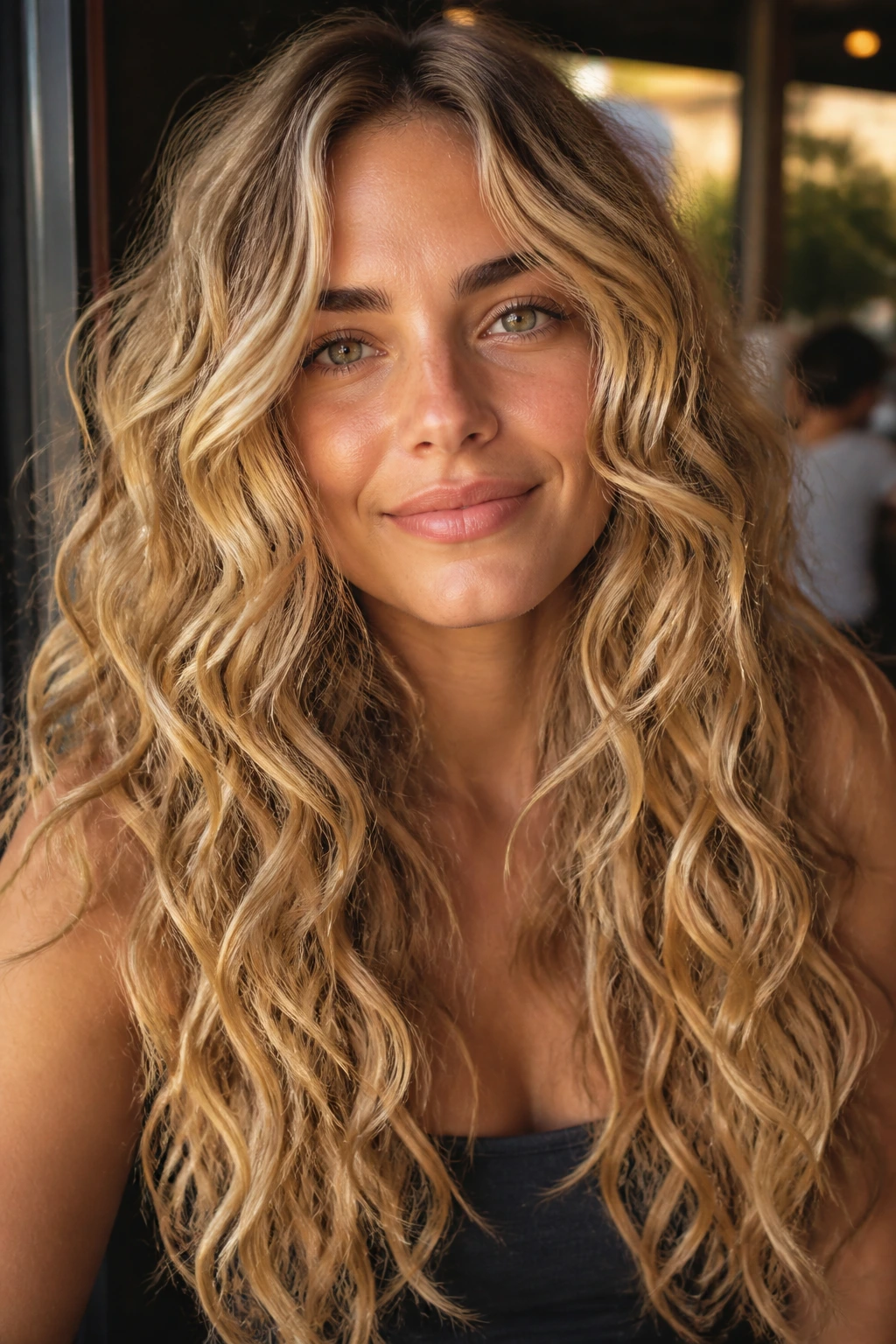
Wheat blonde looks like sunshine that spent a little time in a field and came back softer. It’s muted, beige-leaning, and a touch warm, which is exactly why it behaves so well on long curls. The color doesn’t fight the shape. It sits inside it.
Why It Works
Wheat tones are useful when you want brightness but hate obvious streaks. The color stays close to natural blonding, so it reads as believable rather than theatrical. On curls, that matters. A believable blonde often looks richer than a forced one.
I’d use this on medium bases, especially if the curls are large and loose. The bigger the curl, the more surface area shows, so a subtle ribbon can still read clearly. Tiny babylights aren’t the only soft option.
Quick Note
A beige gloss every few washes keeps wheat blonde from looking dull. Don’t overdo purple shampoo; this shade needs warmth to stay alive.
11. Strawberry Blonde Melt
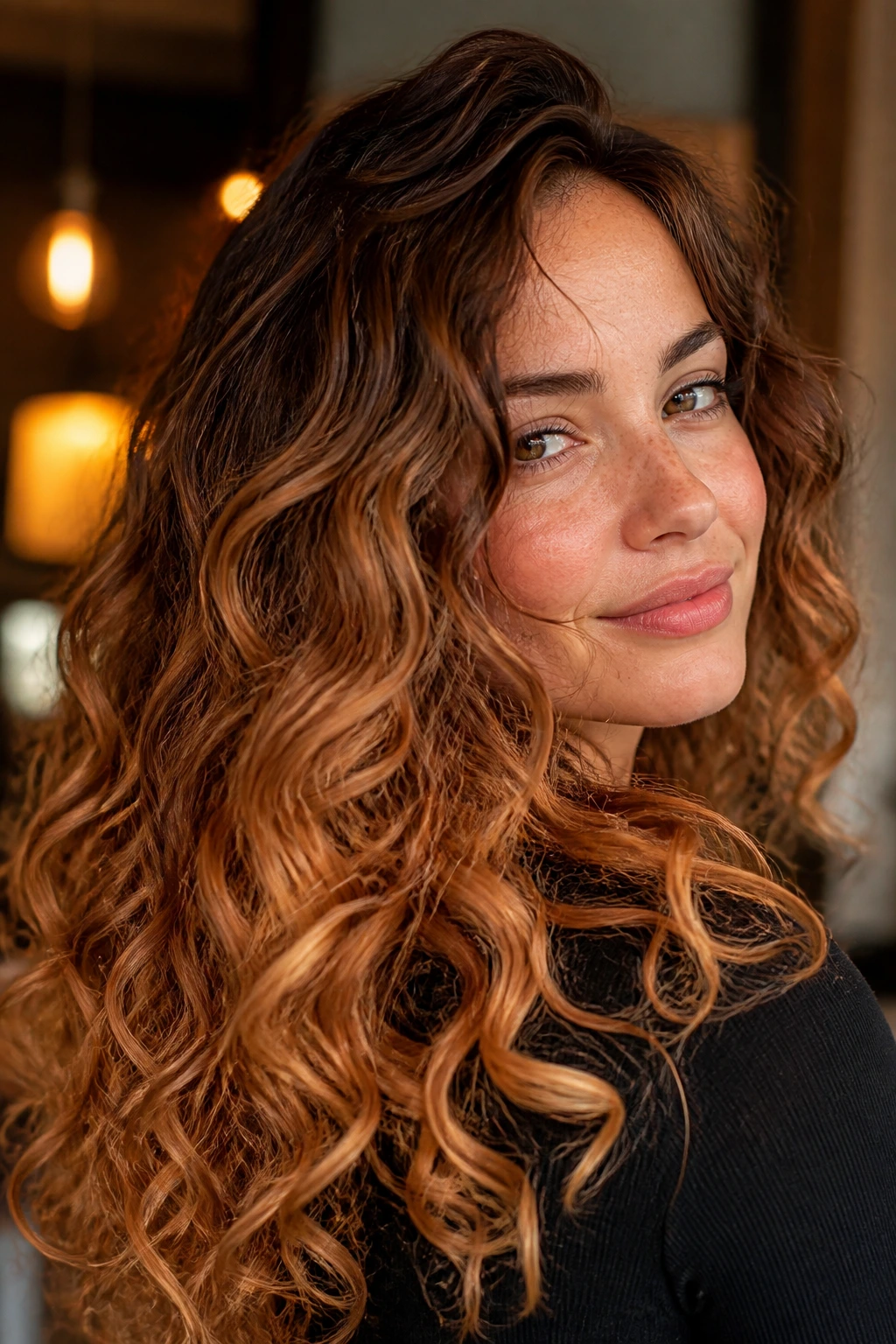
Strawberry blonde is technically not pure blonde, and that’s why it works. It gives you gold with a little rosy warmth, which can look incredibly flattering on long curls because the texture keeps the tone from reading flat or costume-like.
Why It Works
The red-gold note in strawberry blonde makes the hair feel alive. Curls love warmth when it’s handled gently. A soft melt from brunette roots into strawberry ends can look like the color grew out of the hair instead of being painted on top.
This is a smart choice for people who feel washed out by ash or beige blondes. It’s also a good bridge color if you’re moving from brunette toward lighter hair and don’t want to jump straight into icy territory. The transition is kinder on the eye and usually kinder to the hair, too.
Best For
- Warm and neutral undertones
- People who want blonde-adjacent color with personality
- Long curls that need a little glow
12. Chunky 90s Blonde Highlights
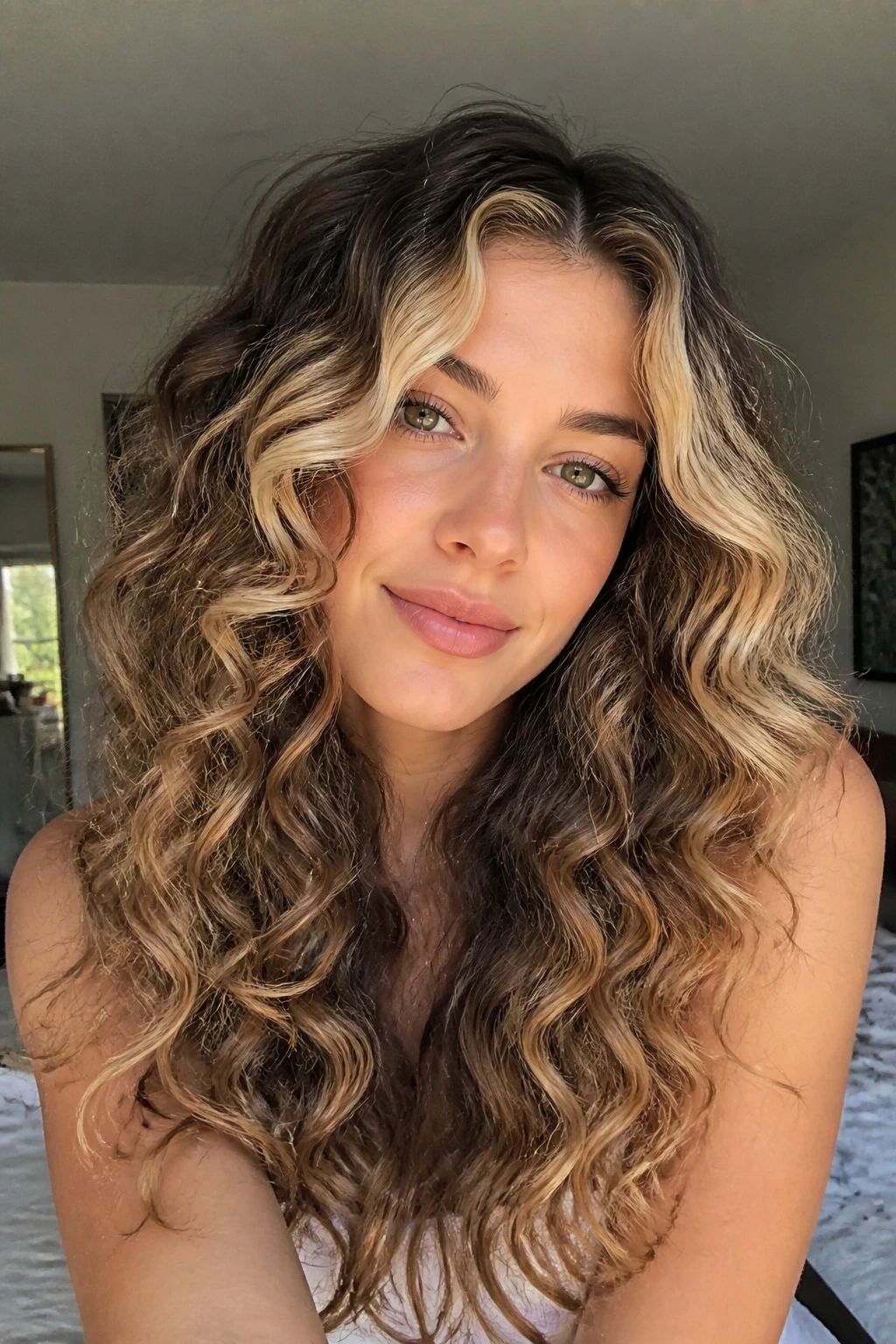
Chunky highlights are back because curls can make them look better than you’d expect. On long curly hair, the bigger panels break apart as the hair moves, so what could look harsh on straight lengths ends up feeling playful and textured here.
Why It Works
The old-school chunky stripe only works when there’s enough movement to soften it. Curls provide that movement automatically. The trick is to leave a darker root and use the bright pieces with purpose: around the face, over the top, and in a few visible panels through the lengths.
This look is for someone who wants obvious blonde. Not subtle. Not shy. If you like a visible contrast and you wear your curls big, the style has a lot of attitude without needing extra styling. On fine curls, though, I’d keep the pieces fewer and slightly softer so the hair doesn’t look sliced up.
Best On
- Thick, high-density curls
- People who like a stronger blonde statement
- Long cuts with layers that move
13. Butterscotch Balayage
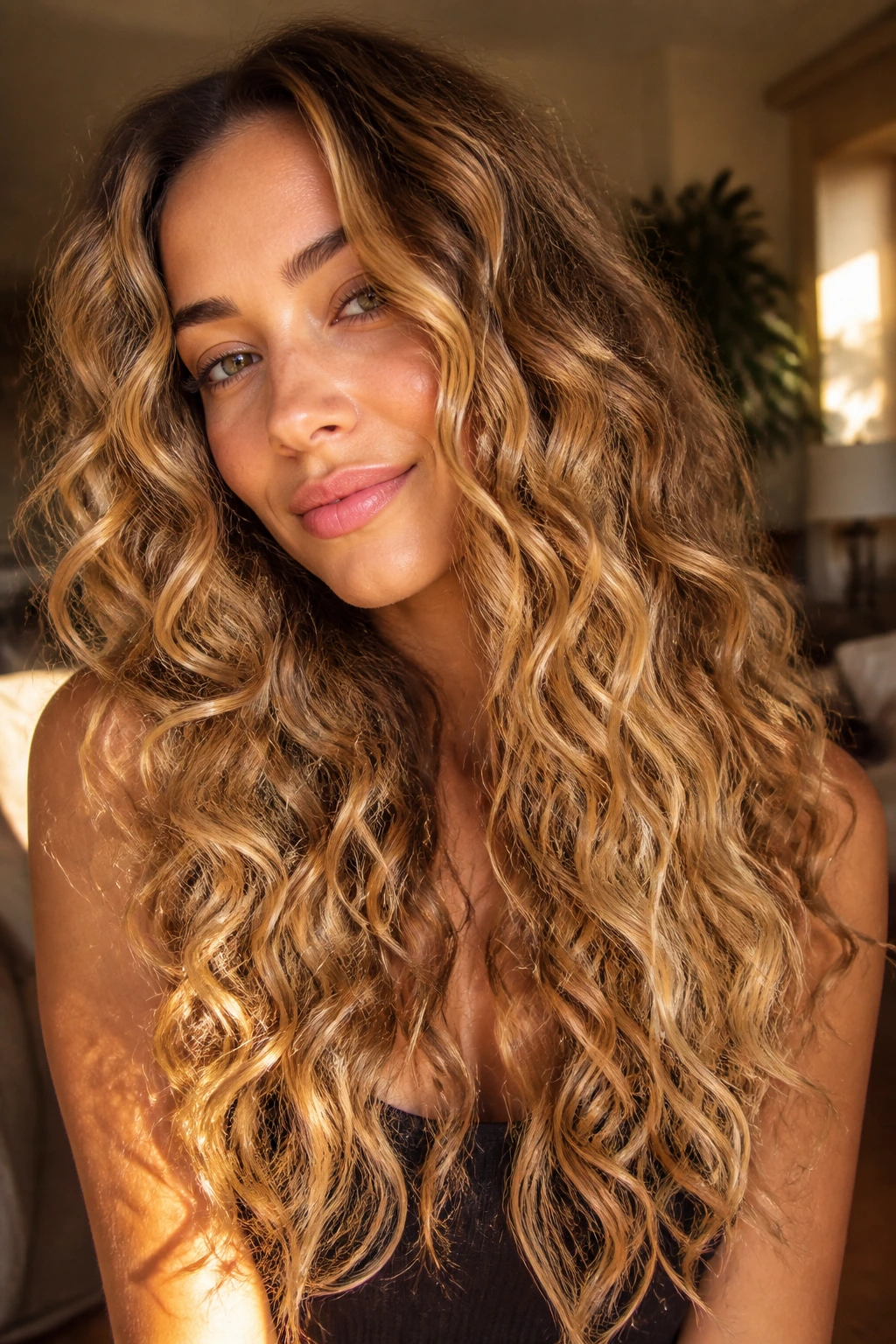
Butterscotch balayage sits on the warmer side of blonde, but it isn’t flat gold. It has depth, almost a caramel-to-cream feeling, and that makes it a strong choice for long curly hair that wants brightness without the pale-drama look.
Why It Works
Butterscotch is a forgiving tone. It flatters brown bases, hides a little brass, and lets the curls show off the difference between the outer halo and the inner layers. The hand-painted placement is what keeps it from looking overdone.
I usually think of this as a “wear it and forget it for a bit” blonde. The grow-out is softer than a foil-heavy look, and the color still reads rich even when the roots start showing. If your hair tends to puff in humidity, warmer tones like this can also look more natural than cool blondes, which sometimes go dull when the curl pattern expands.
14. Mushroom Blonde Ribbons
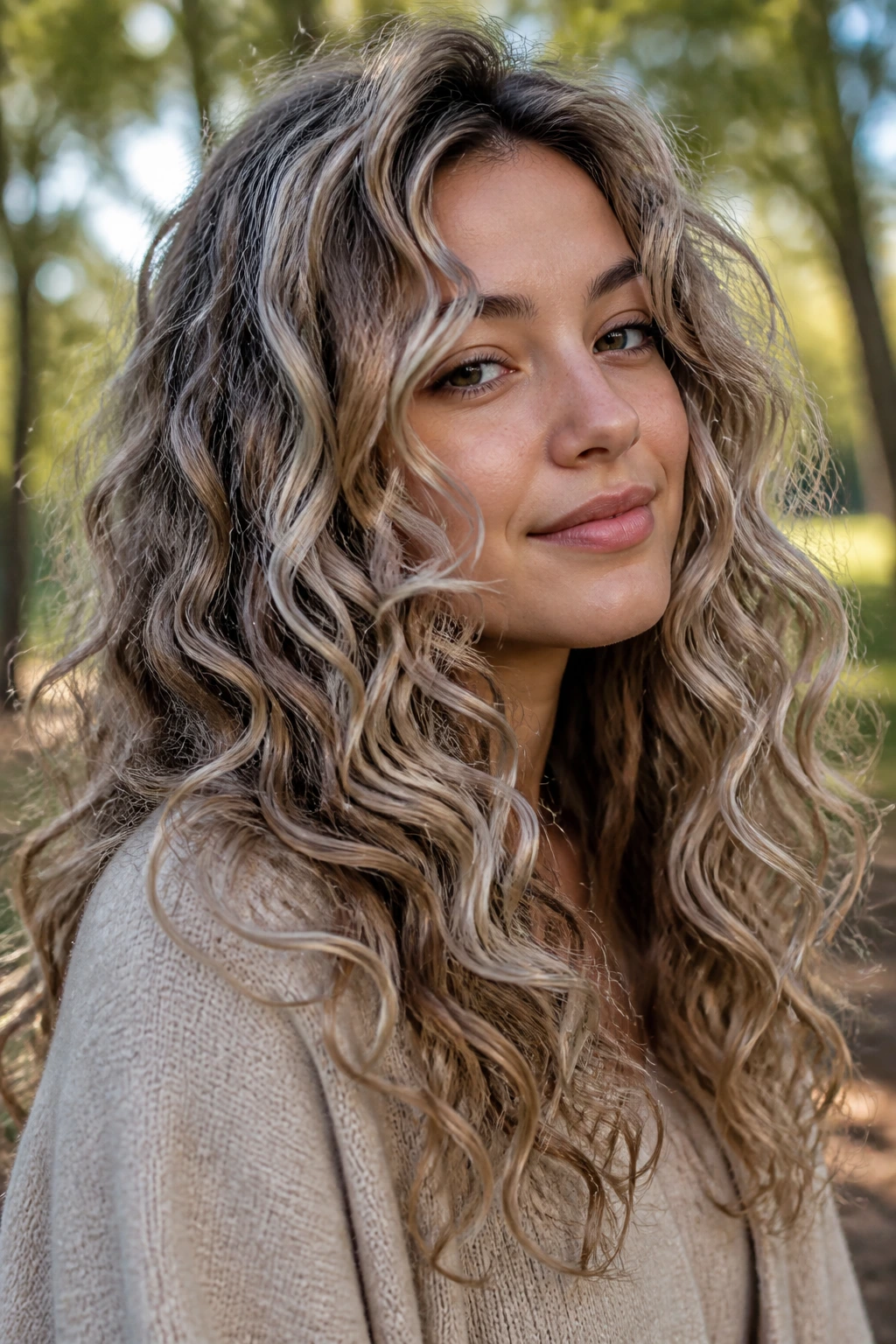
Mushroom blonde is the cool cousin in the blonde family. It has taupe, beige, and smoky notes all mixed together, which keeps the blonde from turning too sweet. On long curls, that muted tone looks modern because the texture breaks up the color before it can get too heavy.
Why It Works
This shade is good at hiding brass. Very good, if I’m being honest. The ashy edge keeps warm undertones from taking over, while the beige pieces keep the hair from looking dull or gray. On curly hair, that balance matters more than on straight hair because every bend changes how the tone reads.
It’s best for neutral and cool undertones, and it tends to look strongest when the curls are well defined. If the hair is frizzy or rough, mushroom blonde can slide into flat territory. That’s not the shade’s fault. It’s just a sign that the hair needs more moisture and maybe a softer toner.
Tip
Use a blue or violet shampoo sparingly. Too much and the blonde starts looking dusty instead of smoky.
15. Champagne Blonde Gloss
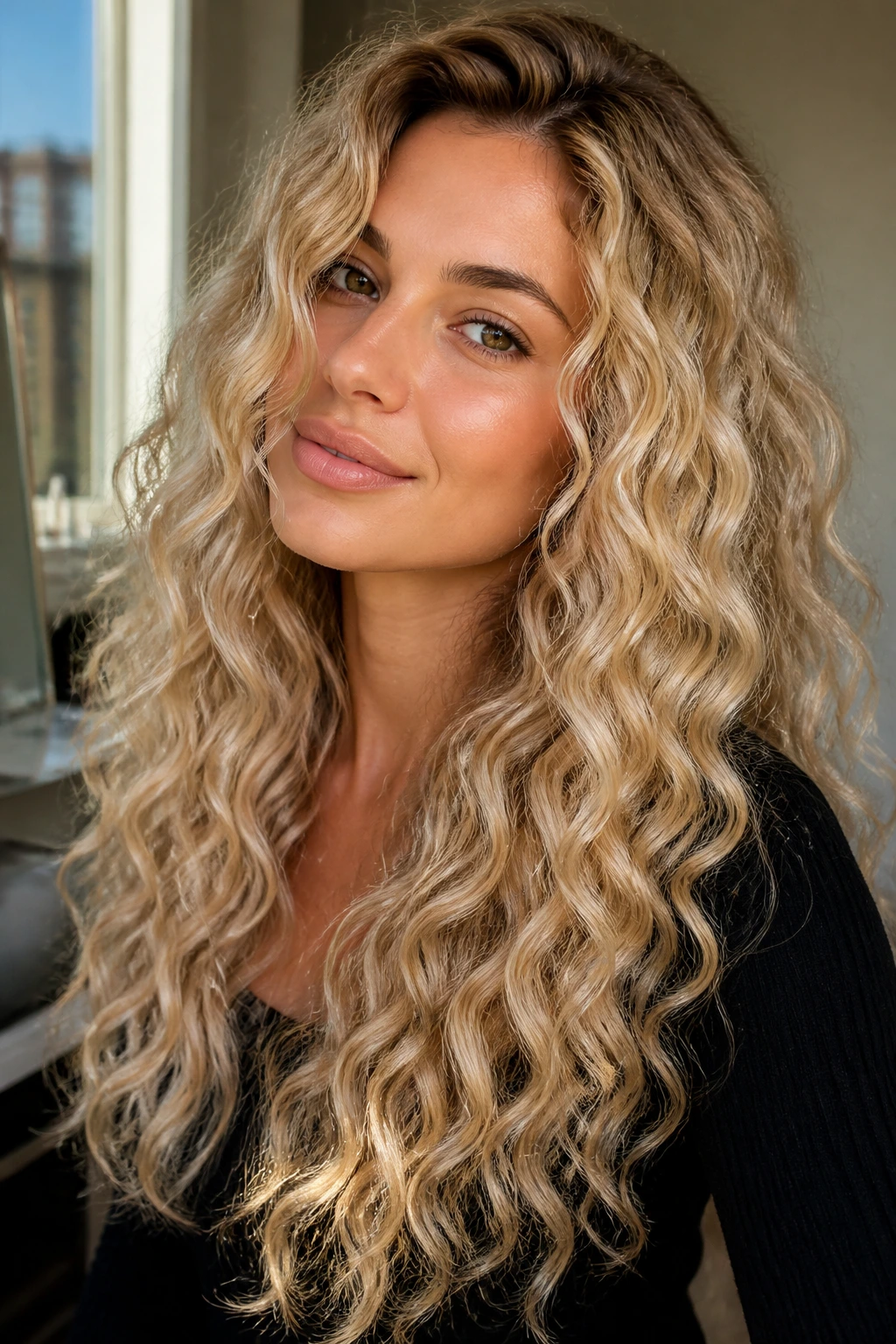
Champagne blonde gloss is a tonal look more than a dramatic lift job. It’s creamy, sparkling, and light-reflective, which makes it perfect for long curly hair that’s already been lifted or is naturally fairly light. The result is less “new color” and more “my hair is suddenly catching every bit of daylight in the room.”
Why It Works
Glosses shine on curls because curls already have texture. Add a champagne tone and you get a finish that changes with movement. It’s one of the best ways to make pre-lightened hair look expensive again when the bleach work is already in place but the tone has gone tired.
This look is also kinder to hair that can’t handle another round of lifting. Sometimes the smartest move is not more bleach. It’s a cleaner, softer finish on top of what already exists.
Best For
- Lighter brunettes and blondes
- Hair that’s already been lightened
- People who want tone, shine, and softness more than high contrast
16. Shadow-Root Platinum
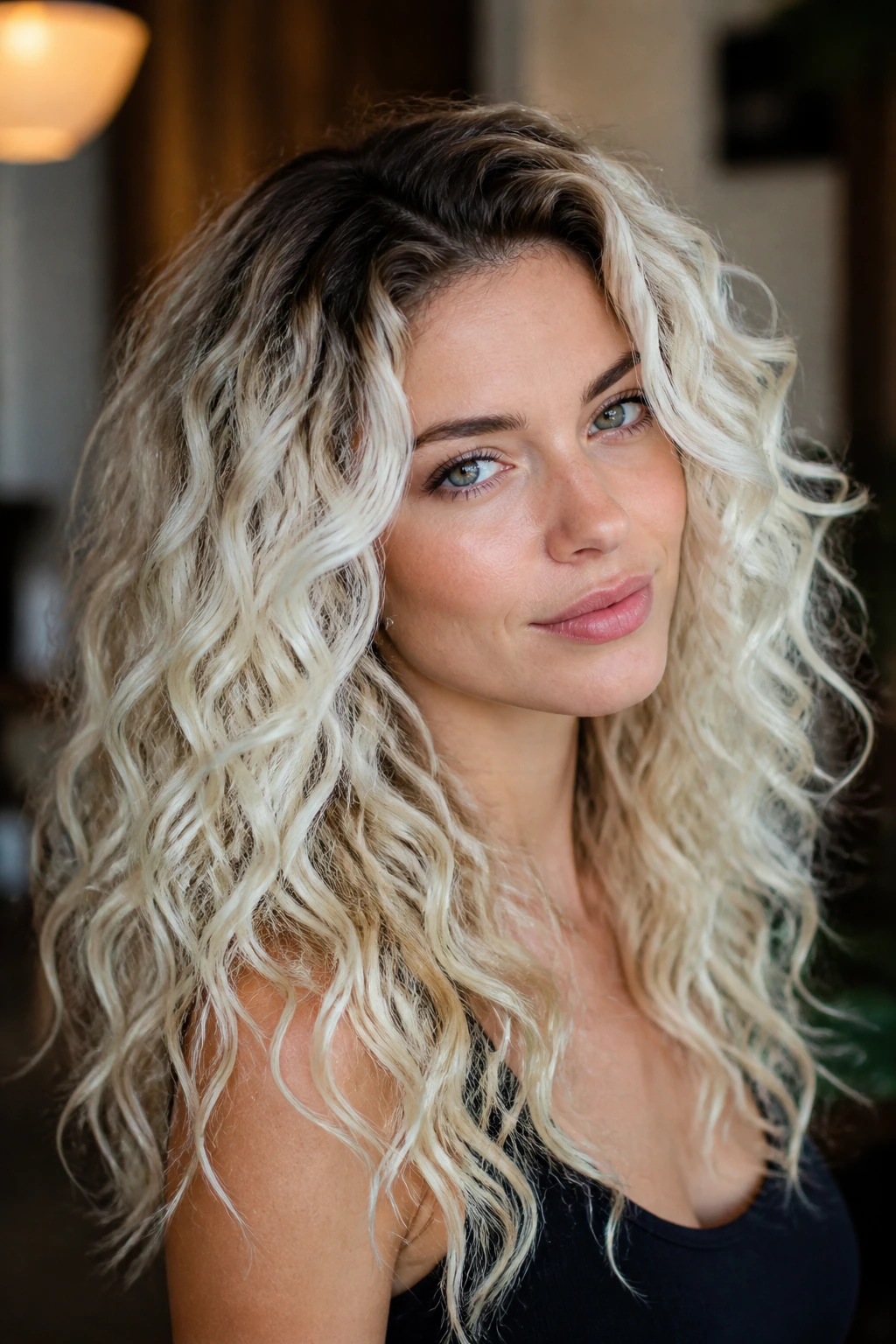
Shadow-root platinum is high impact, no question. The darker root gives the platinum somewhere to live, and long curls soften the overall effect just enough so it doesn’t become one giant sheet of white. The contrast is the whole point.
Why It Works
Platinum can look disconnected on curls if the root is too pale or the light pieces are too uniform. A shadow root anchors the style and gives the hair a sense of depth. The curls then scatter the platinum through the lengths in broken flashes, which is a better look than a solid block of white.
This is not the easiest blonde in the room. It wants bond repair, strong conditioning, and regular toner. If your curls are already dry or overprocessed, I’d be blunt: start softer. But if the hair is healthy and you like drama, this one has real presence.
Keep In Mind
The brighter the platinum, the more unforgiving the ends become. Dry ends show faster here than on warmer blondes.
17. Beach Glass Blonde
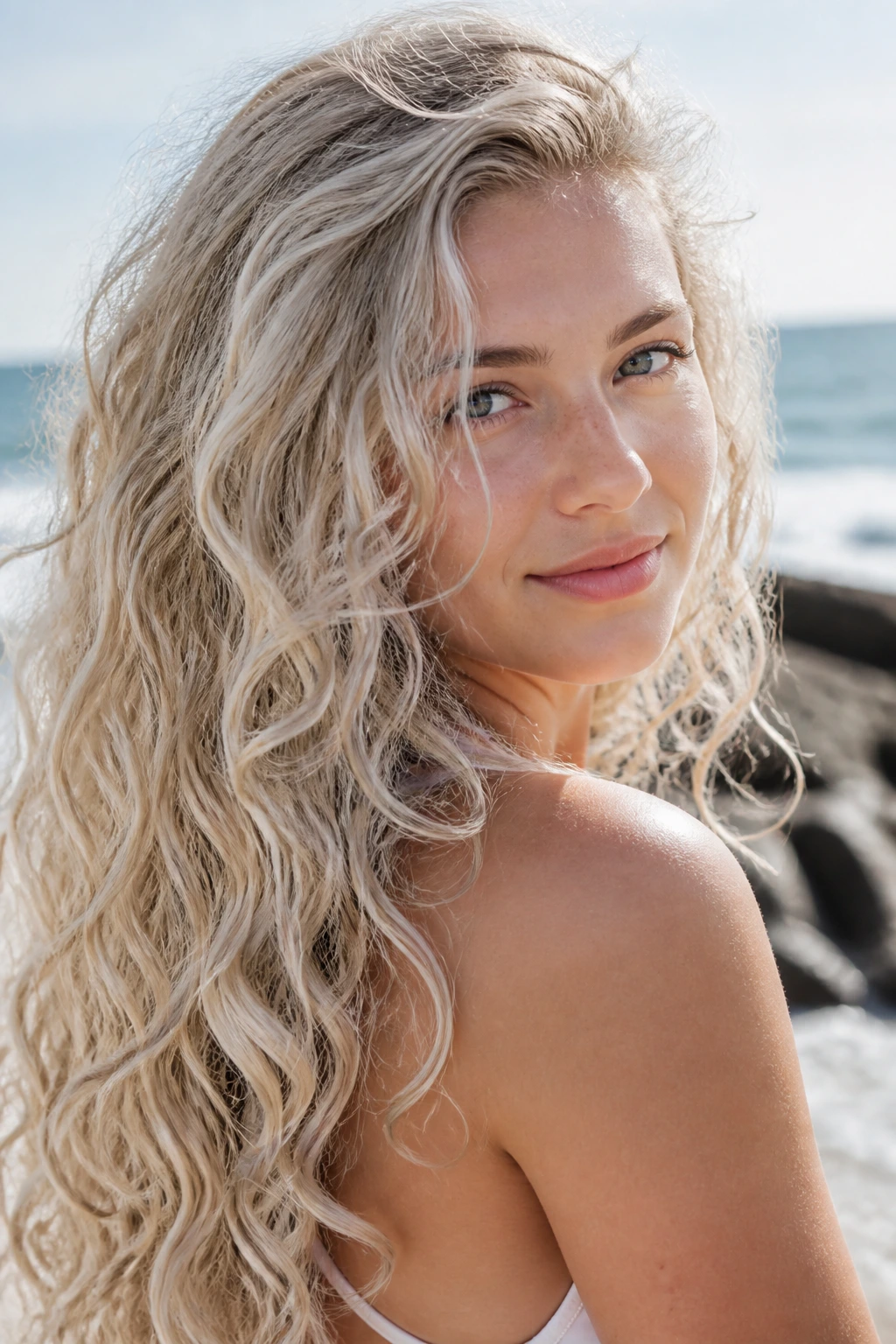
Beach glass blonde is soft, translucent, and slightly cool, like a pale stone picked up near the water. It sits between beige and pearl, which keeps it from going yellow while still feeling wearable on long curls.
Why It Works
This tone behaves well because it isn’t trying to be one thing. It has enough coolness to stay clean, enough beige to stay soft, and enough shine to work with curl texture. The pieces can be fine or medium in width; the important part is how they land around the curl clumps.
I like this look for people who want a blonde that feels airy rather than loud. The contrast is usually moderate, and the overall effect is less about drama and more about movement. That sounds modest. It isn’t. On the right curl pattern, it looks polished without looking hard.
18. Buttercream Halo Highlights
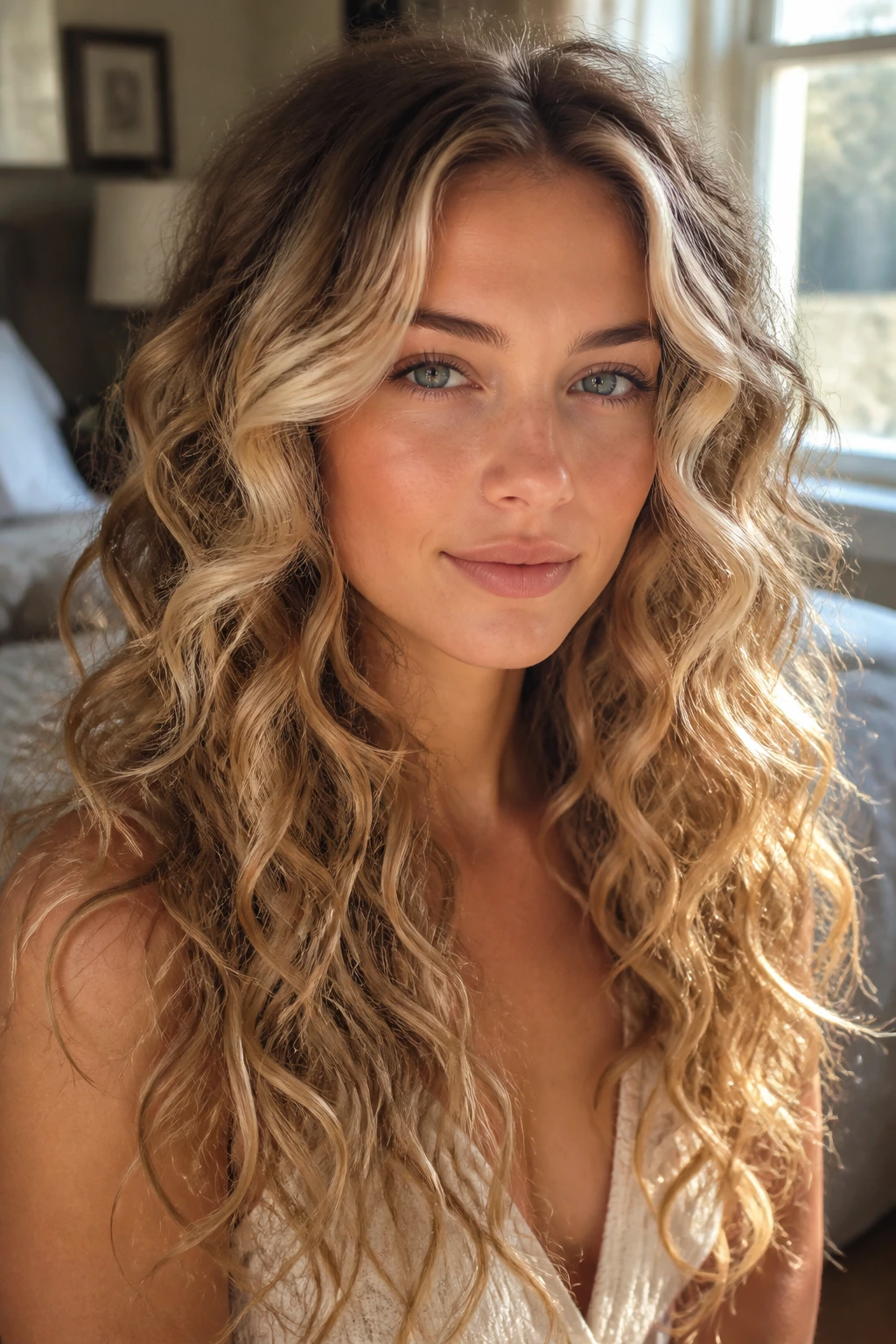
Buttercream halo highlights concentrate brightness where the eye naturally goes first: around the face, the top layer, and the crown. On long curly hair, that placement creates a halo of light that stays visible even when the lower lengths are tucked away or air-dried a little fuzzy.
Why It Works
A halo placement is smart because curls don’t show every strand evenly. The outer layer and the face frame do the heavy lifting visually. By brightening those zones, you get a strong result without committing to a full-head blonde job.
Buttercream is the right tone here because it’s soft, warm, and creamy rather than yellow. A cool toner would fight the vibe. A too-golden toner would look dated fast. This middle ground is the one that tends to age best on curls.
Best For
- Long curly cuts with layers
- People who wear half-up styles often
- Anyone wanting brightness without lightening every interior section
19. Ice-Soft Babylights
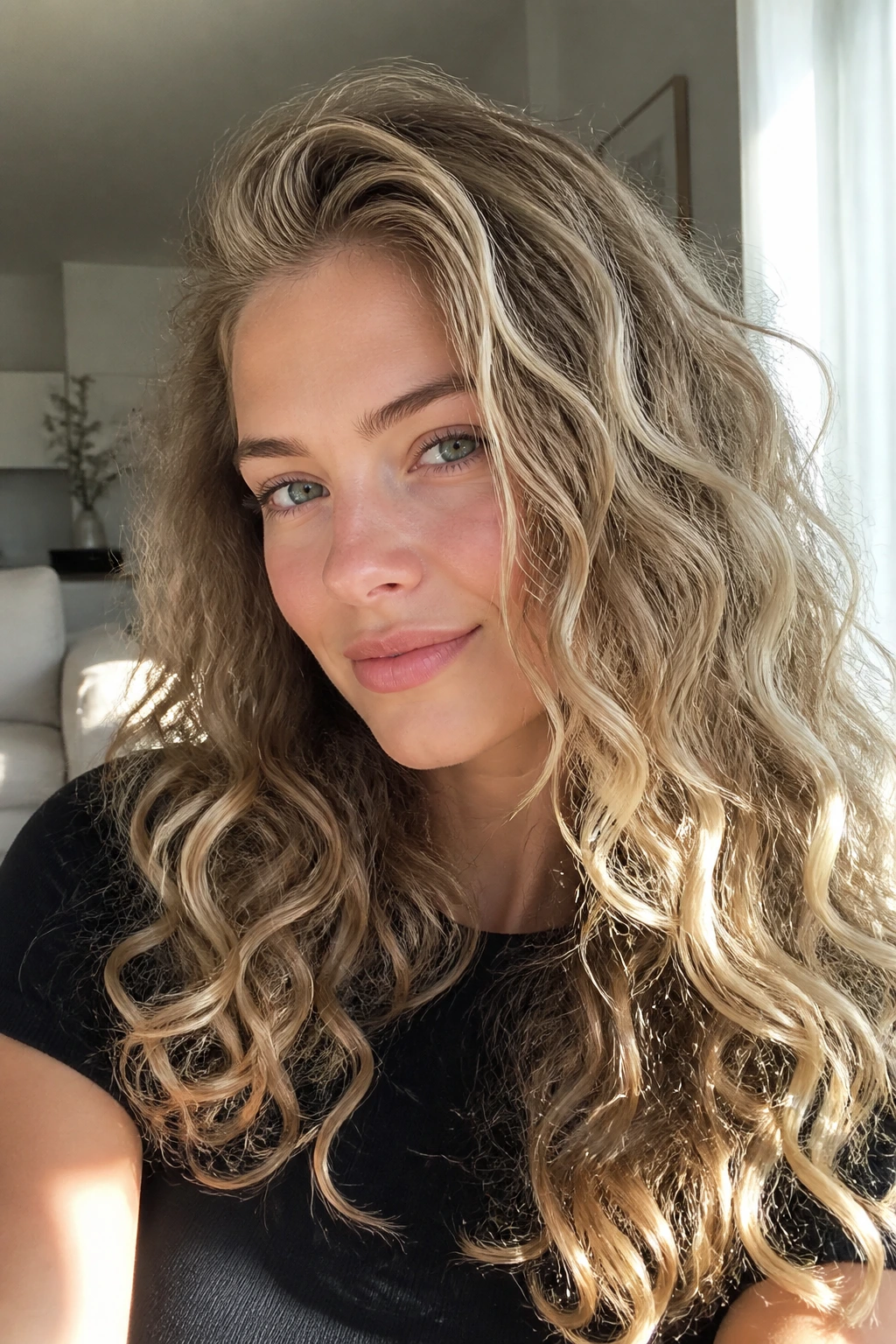
Ice-soft babylights are for people who want the faintest possible shift toward blonde. The strands are tiny, the tone is pale, and the overall effect is more glow than highlight. On long curls, that subtlety can look luxurious because the movement keeps revealing fresh little pieces of light.
Why It Works
When babylights get this fine, they stop looking like streaks and start acting like shimmer. The icy tone makes the hair appear brighter without needing chunky contrast. That said, the cuticle has to be in decent shape. If the hair is rough, ice tones can expose every dry bit.
This look works well on finer curls because it preserves the feeling of fullness. There’s no heavy block of light to slice the texture up. Just a lift in brightness that you notice when the curls catch the sun.
Practical Note
A gloss refresh matters more than a purple shampoo routine here. Too much purple can mute the sparkle.
20. Honey Blonde Bright Tips
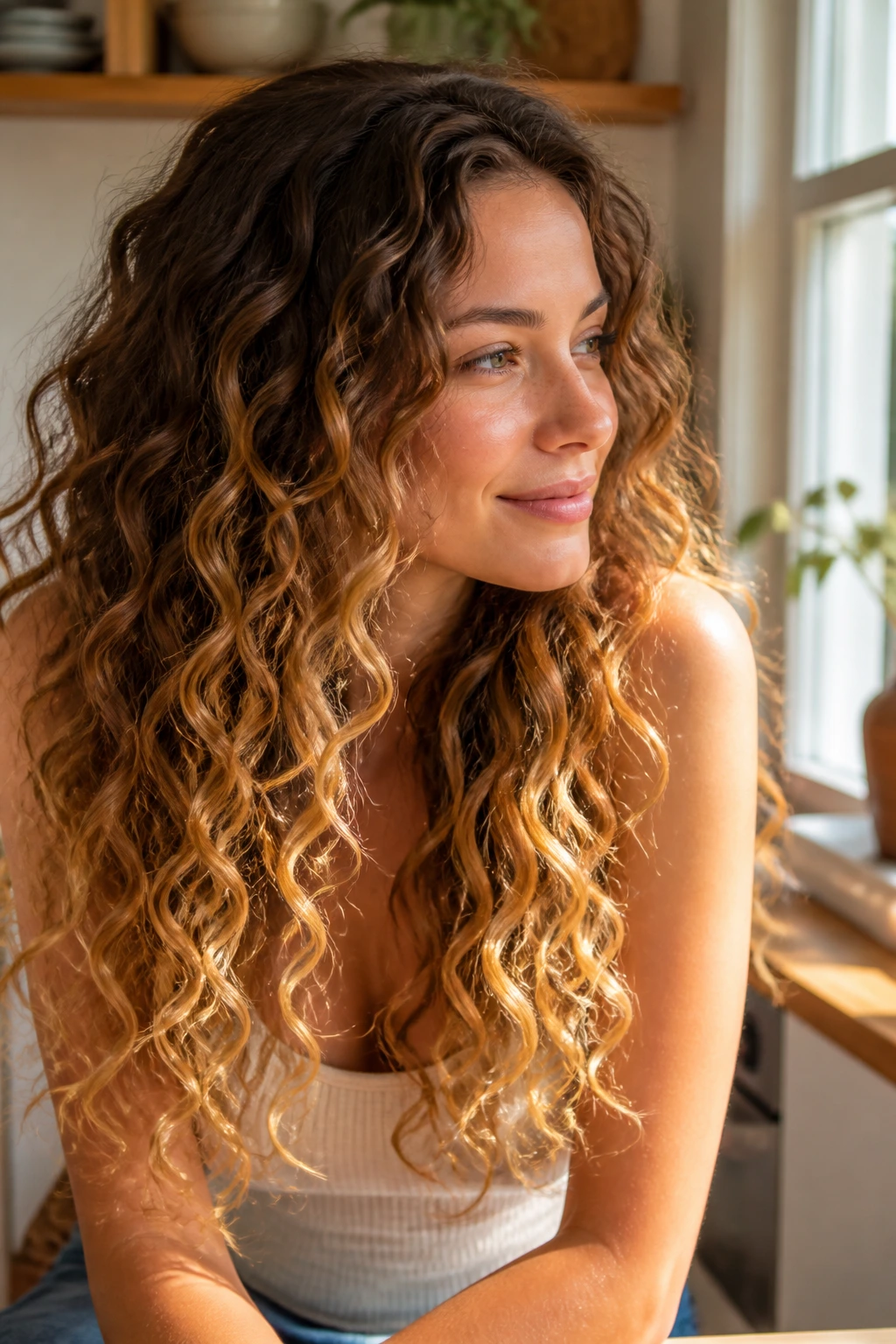
Bright tips are a smart move when you want blonde to show up at the ends of long curls, where the shape already opens and moves. Keeping the roots deeper and concentrating brightness toward the tips makes the curl pattern look longer and more animated.
Why It Works
The ends of curly hair naturally get more visual attention because they swing and separate. Brightening that zone means you get a lot of payoff without lightening the whole head. Honey is the right tone if you want the ends to look warm rather than pale.
This also grows out nicely. If you trim slowly, the bright tips keep changing shape in a good way. You’re not chasing a rigid line every few weeks. You’re letting the curl shape carry the color.
21. Cream Soda Blonde
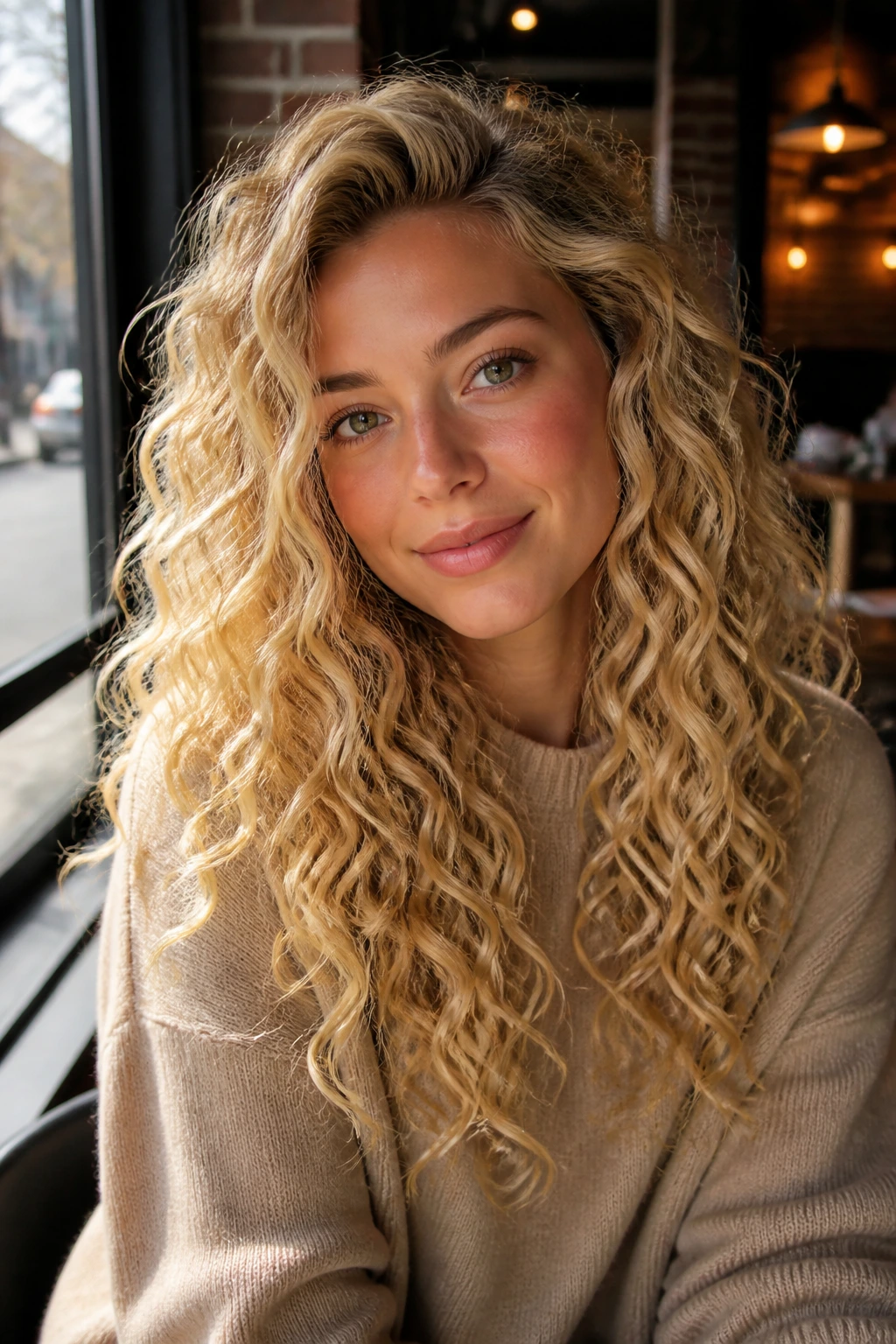
Cream soda blonde has that soft, almost fizzy beige warmth that lands somewhere between blonde and light caramel. It’s easy on the eyes, and on long curls it reads as glossy instead of severe.
Why It Works
The cream soda tone avoids the two traps that catch a lot of blondes: too yellow and too flat. It has enough beige to look clean, enough warmth to flatter the skin, and enough softness to work with a curly silhouette. I’d reach for this when someone wants to look lighter but not bleached.
It’s especially nice on layered long curls because the color catches on each tier differently. The result feels dimensional even though the tone itself is gentle. That’s a good trade.
22. Caramel Veil Blonde
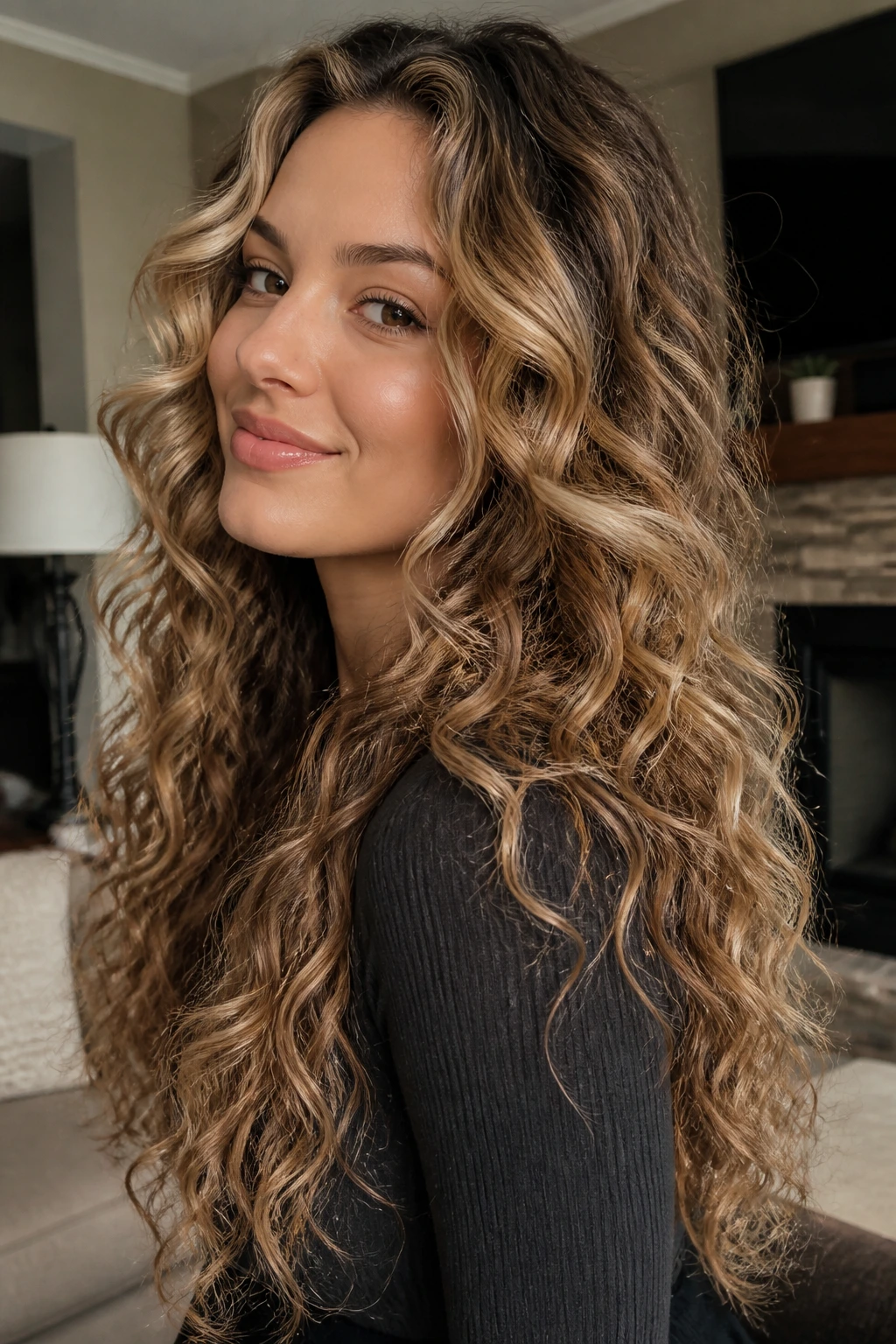
Caramel veil blonde is a low-commitment version of lighter color. Think of it as a sheer wash of caramel-blonde pieces over a deeper base, with the interior depth still visible underneath. It’s subtle, but not invisible.
Why It Works
The veil placement keeps the hair from looking over-lightened. On long curly hair, that’s useful because the curls already build visual interest. You don’t need to bleach the whole head to get movement.
I like this for first-time blonding. It gives enough change to feel fresh, but not so much that the hair becomes fragile in one sitting. The grow-out is soft, the upkeep is manageable, and the tone can lean warmer or more beige depending on your skin tone.
Best For
- Brunettes testing blonde
- People who want a softer transition
- Curls that are dry or color-sensitive
23. Beige Blonde Babylage
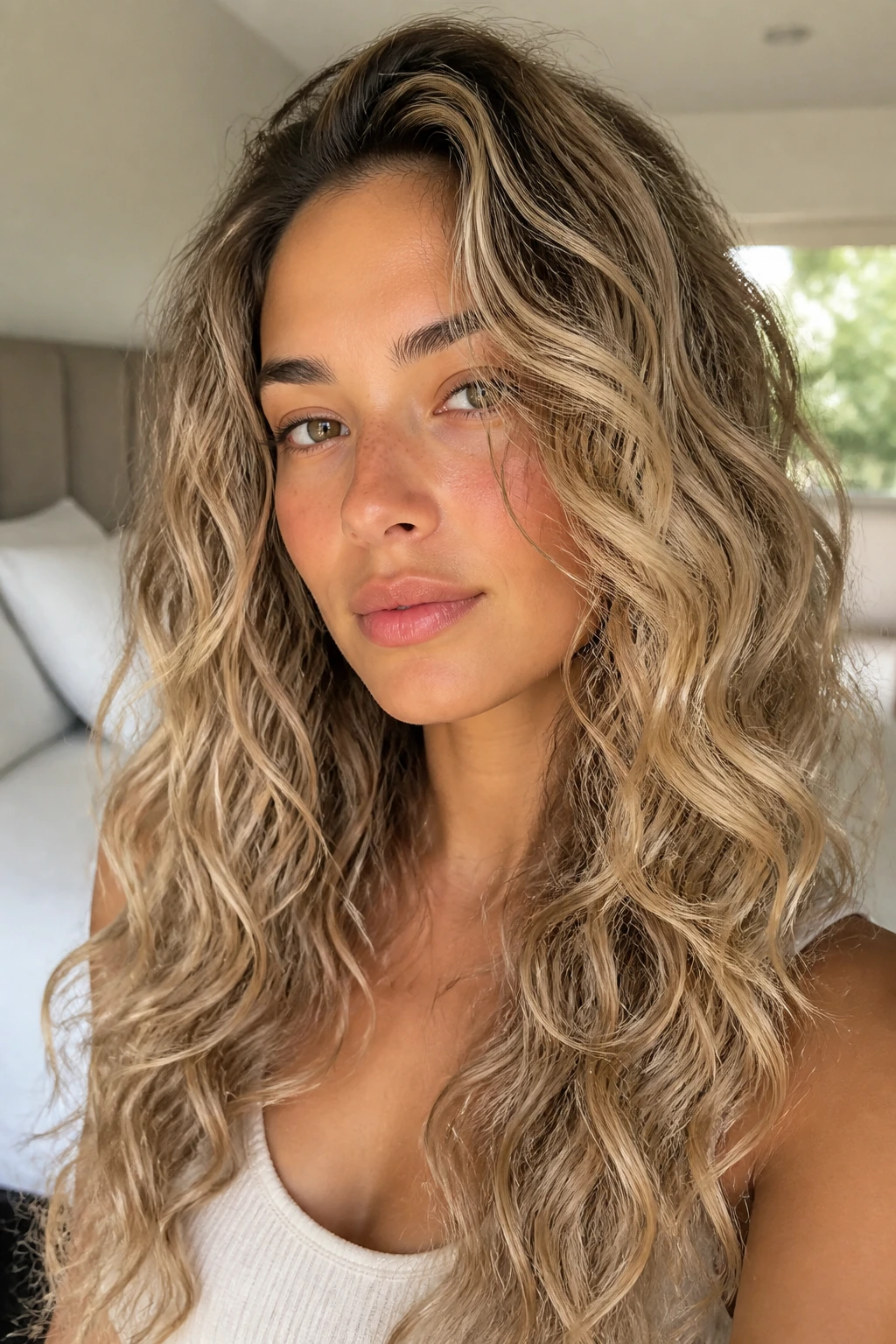
Beige blonde babylage combines babylights and balayage, and that combo makes a lot of sense on curls. The tiny highlights create a soft sparkle at the surface, while the painted pieces through the lengths give the hair that lived-in, scattered brightness you want when curls dry and separate.
Why It Works
This is one of the best “I want blonde, but I don’t want it to look salon-fresh every two weeks” options. The blonde doesn’t sit in one line. It shows up in little pockets, then disappears into the darker base, then comes back again. On curly hair, that reads as depth.
Beige keeps the whole thing wearable. If the blonde were whiter, the contrast could get loud fast. Beige softens the edges and makes the grow-out less obvious.
24. Smoky Beige Balayage
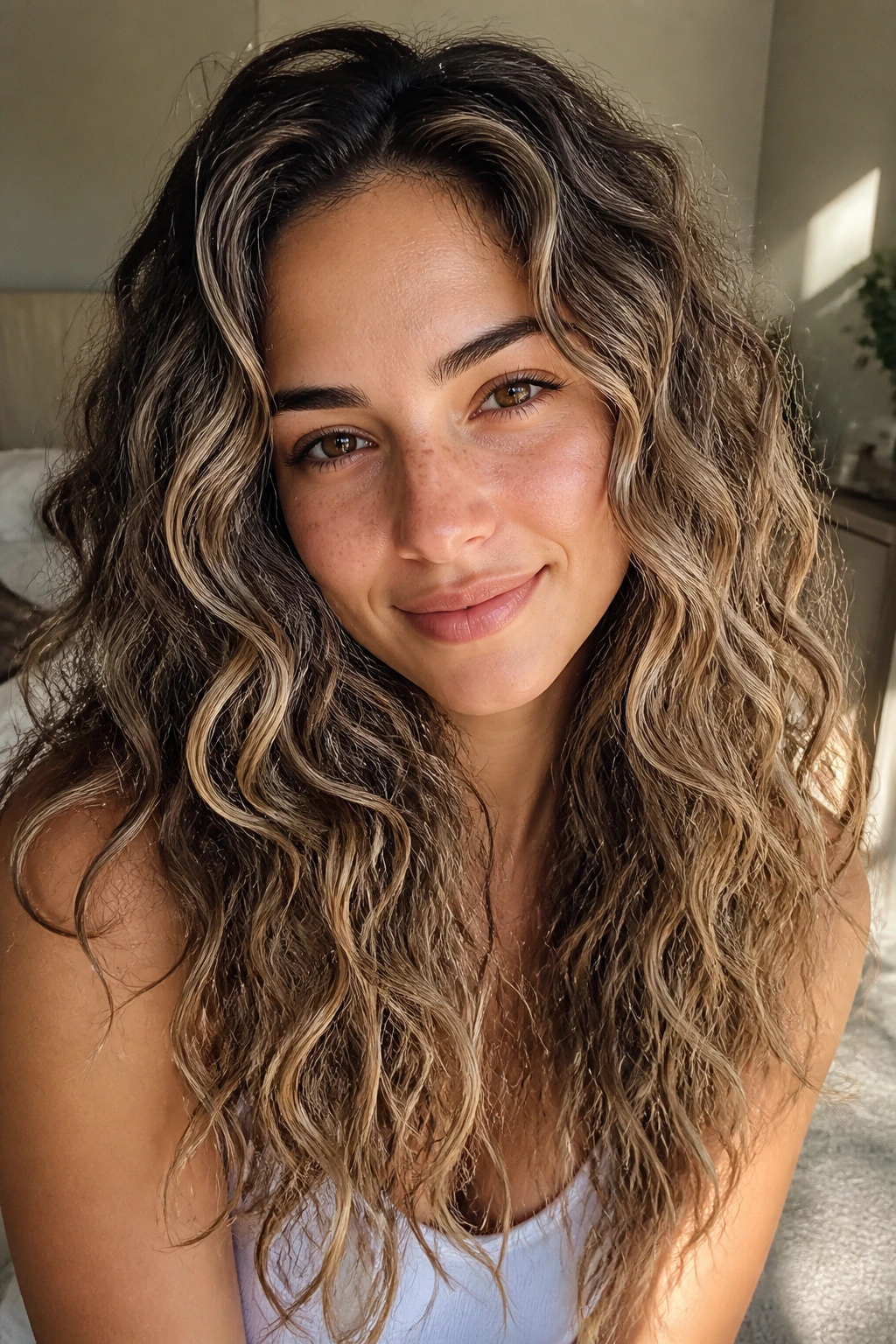
Smoky beige balayage is the cooler, quieter version of beige blonde. It has a muted finish that works especially well if your skin tone likes neutrals and your hair tends to pull warm at the first sign of lightening.
Why It Works
The smoky tone takes the edge off brass without making the blonde go flat. On curls, that matters because texture already gives you enough visual activity. You don’t need a bright, shiny yellow tone fighting for attention.
This is one of the better choices for medium to dark bases if you want a calmer result. The color sits close to the hair’s natural depth, then lifts enough to read blonde when the curls move. It’s restrained, but not boring.
Watch For
If your hair is very porous, smoky beige can grab too dark. A lighter beige glaze is safer than an aggressive cool toner.
25. Vanilla Latte Blonde
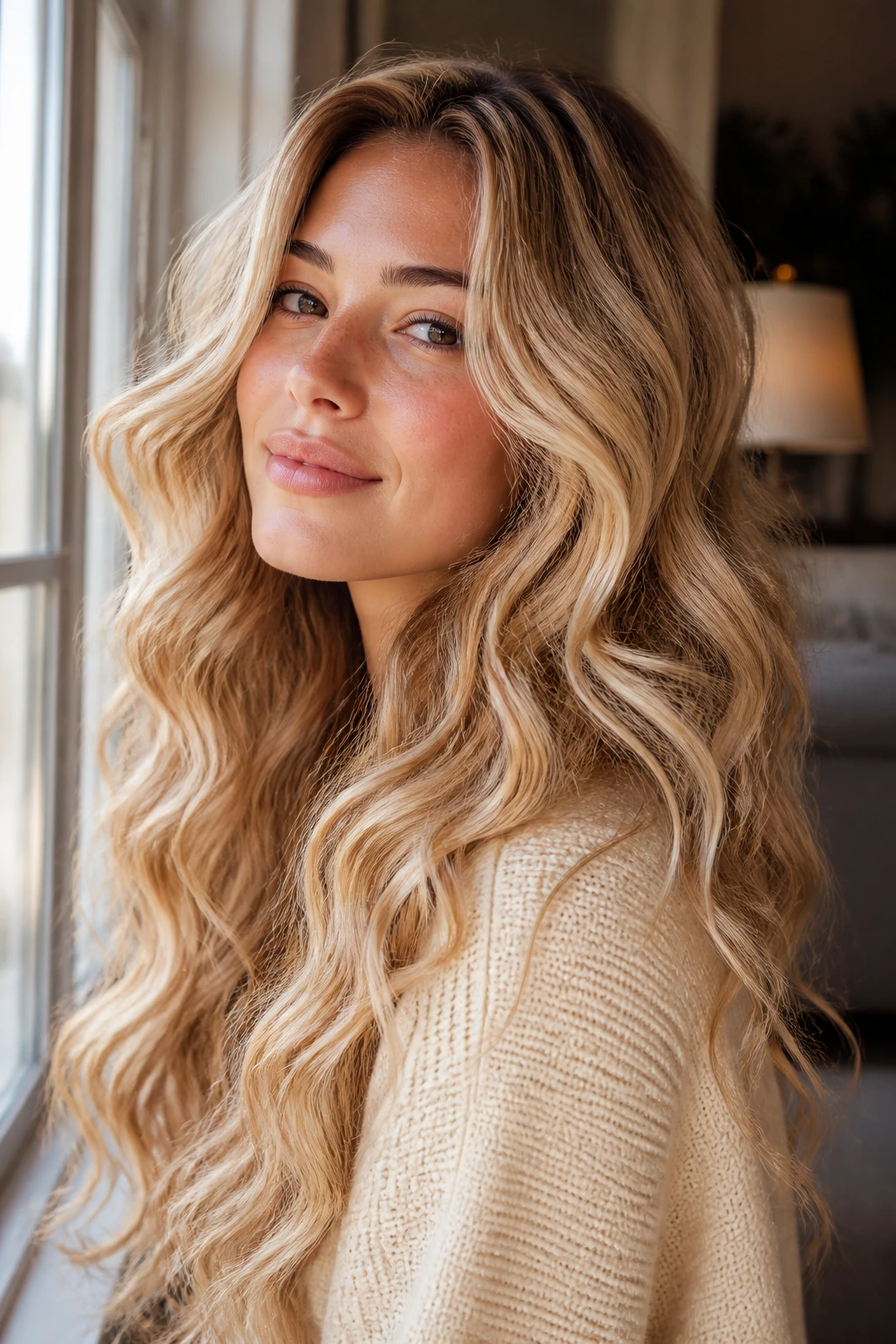
Vanilla latte blonde is soft, creamy, and a little warm, like the name suggests. It isn’t a pale white blonde. It’s the kind of blonde that looks good when the curls are loose, glossy, and moving around the shoulders.
Why It Works
This tone flatters because it keeps a whisper of warmth in the mix. That stops the hair from looking chalky, which can happen on long curls when the lift is too strong and the toner is too cool. The vanilla note keeps the color readable and soft.
I’d call this one of the most wearable blondes for someone who wants their curls to still look like curls, not like a dye job first and hair second. That’s a personal preference, sure, but it matters. Some blondes fight texture. This one doesn’t.
26. Sunflower Face Frame Blonde
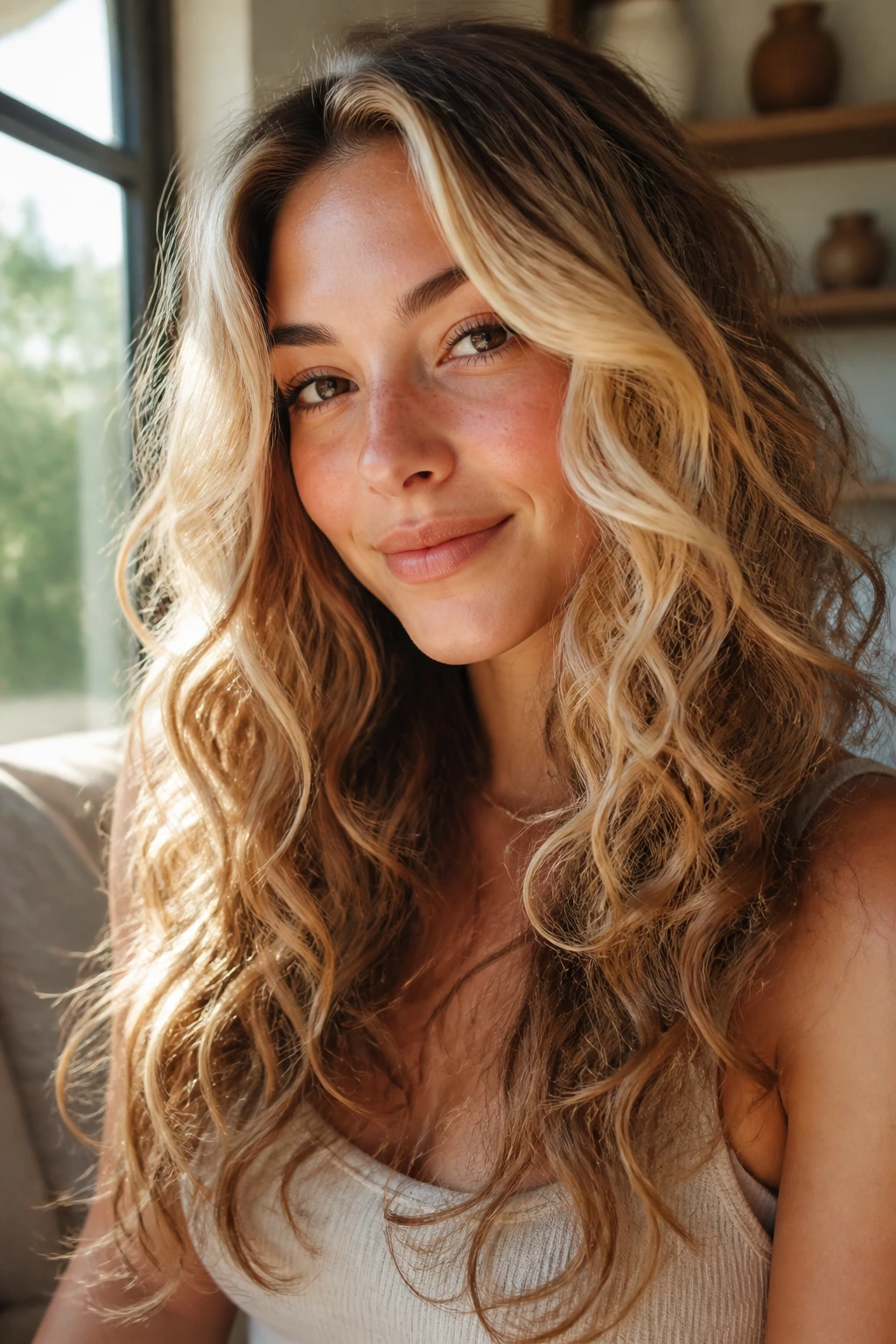
Sunflower face frame blonde puts the brightness exactly where people notice first: around the face. The tone is warm, golden, and cheerful without being neon, and it works especially well on long curls because the front sections move enough to show the color from several angles.
Why It Works
A face frame does a lot of work on curly hair. The front curls sit near the cheekbones and jaw, so a few lighter ribbons there can change the whole feel of the cut. Sunflower tones are warm enough to flatter golden skin and soft enough to avoid the stripy look.
This is a good choice if you want a partial blonde service. You get a noticeable change, less processing time, and less pressure on the rest of the hair. The back can stay deeper and healthier while the front does the brightening.
27. Opal Blonde Cascade
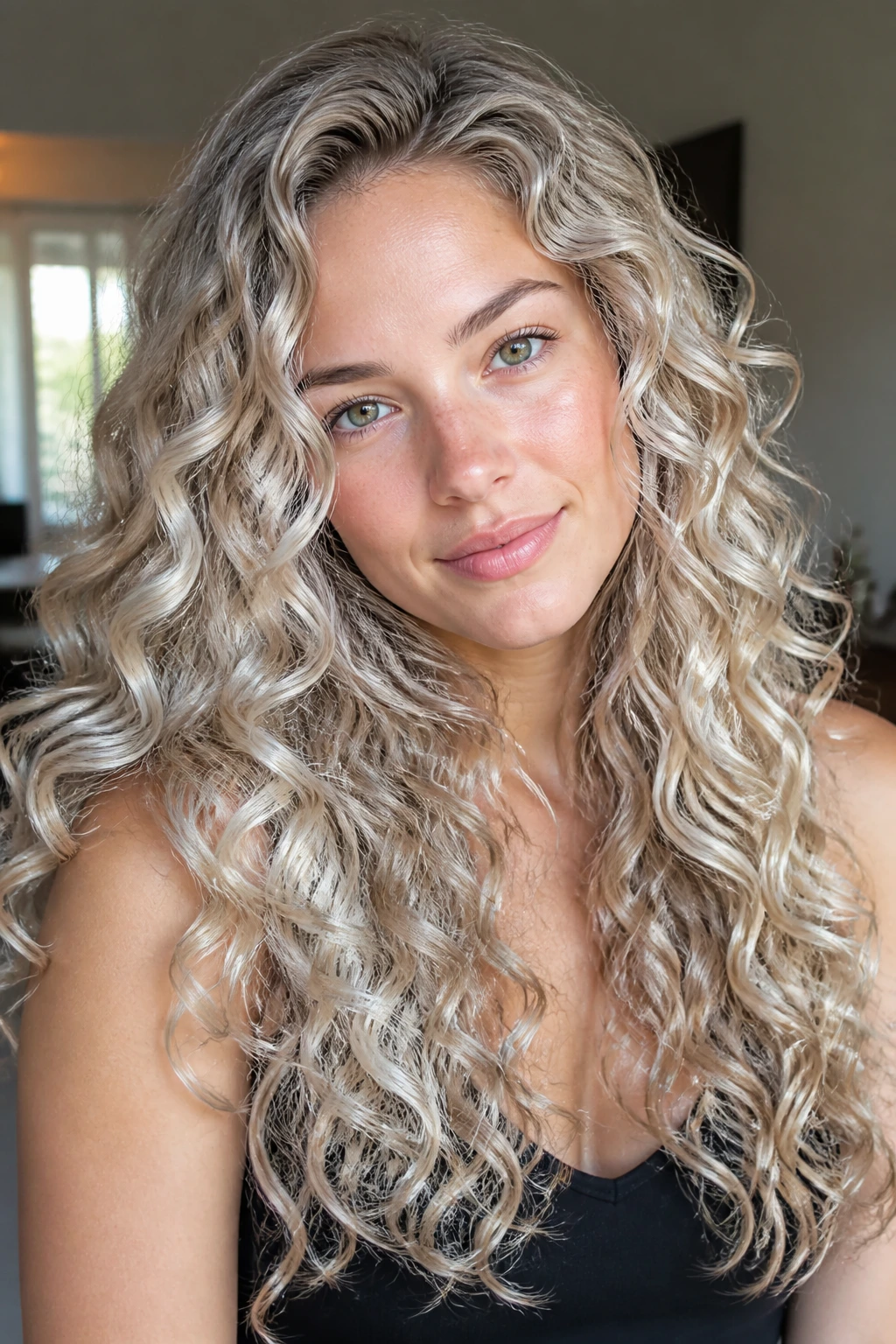
Opal blonde is the most color-shifty look in the bunch. It mixes pearl, beige, and a hint of icy reflect so the blonde changes as the light moves across the curls. On long curly hair, that variation looks almost liquid.
Why It Works
The cascade part matters because the color needs to travel down the length, not stop at the surface. Long curls give you that room. When the shade is layered correctly, the top pieces catch one kind of light, and the underneath pieces catch another. It can look subtle from afar and detailed up close.
This is a high-maintenance tone. I’d only choose it if the hair is already in good shape or if you’re willing to treat the ends like silk. It’s gorgeous when healthy. It’s unforgiving when not.
My Take
This is one of those blondes that looks best when you stop trying to force it to be bright everywhere. Let some pieces stay softer. The contrast does the work.
28. Almond Blonde Ombré
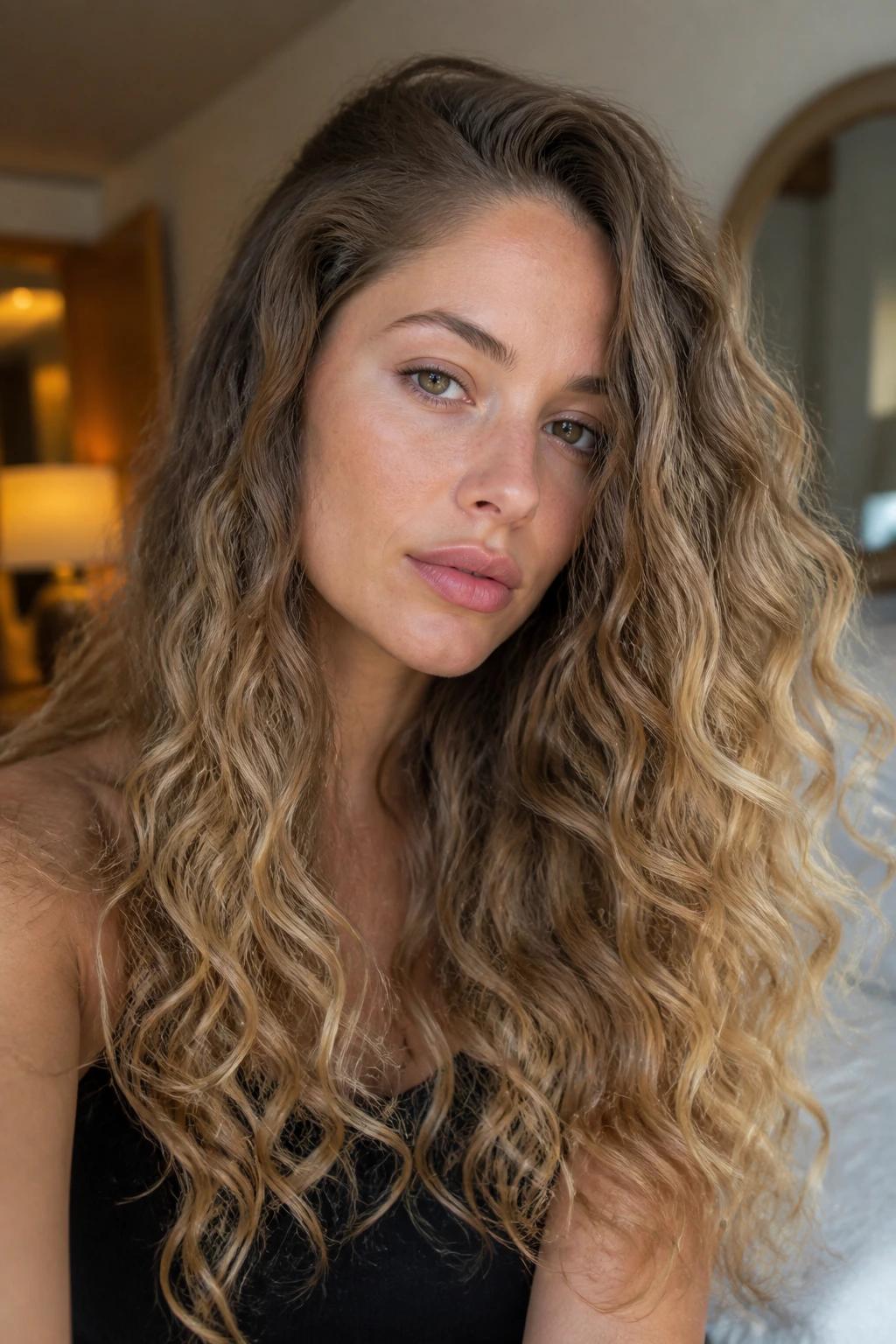
Almond blonde ombré is the practical closer. It starts deeper at the roots, eases through brunette-beige mids, and ends in a soft almond blonde that feels light without going chalky. On long curls, the gradient has enough space to make sense, which is why this look rarely feels as harsh as it sounds on paper.
Why It Works
Long hair gives ombré the length it needs to breathe. Curls blur the transition even more, so the dark-to-light shift doesn’t look like a hard line. Almond is the right tone if you want something between honey and beige, with a little nuttiness instead of pure gold.
It’s also easy to live with. The root stays richer, the ends still get the blonde effect, and touch-ups don’t need to happen on a tight schedule. If you want your color to age gracefully on real hair that gets washed, slept on, diffused, and lived in, this is a strong choice.
Why Blonde Placement Matters More Than the Shade
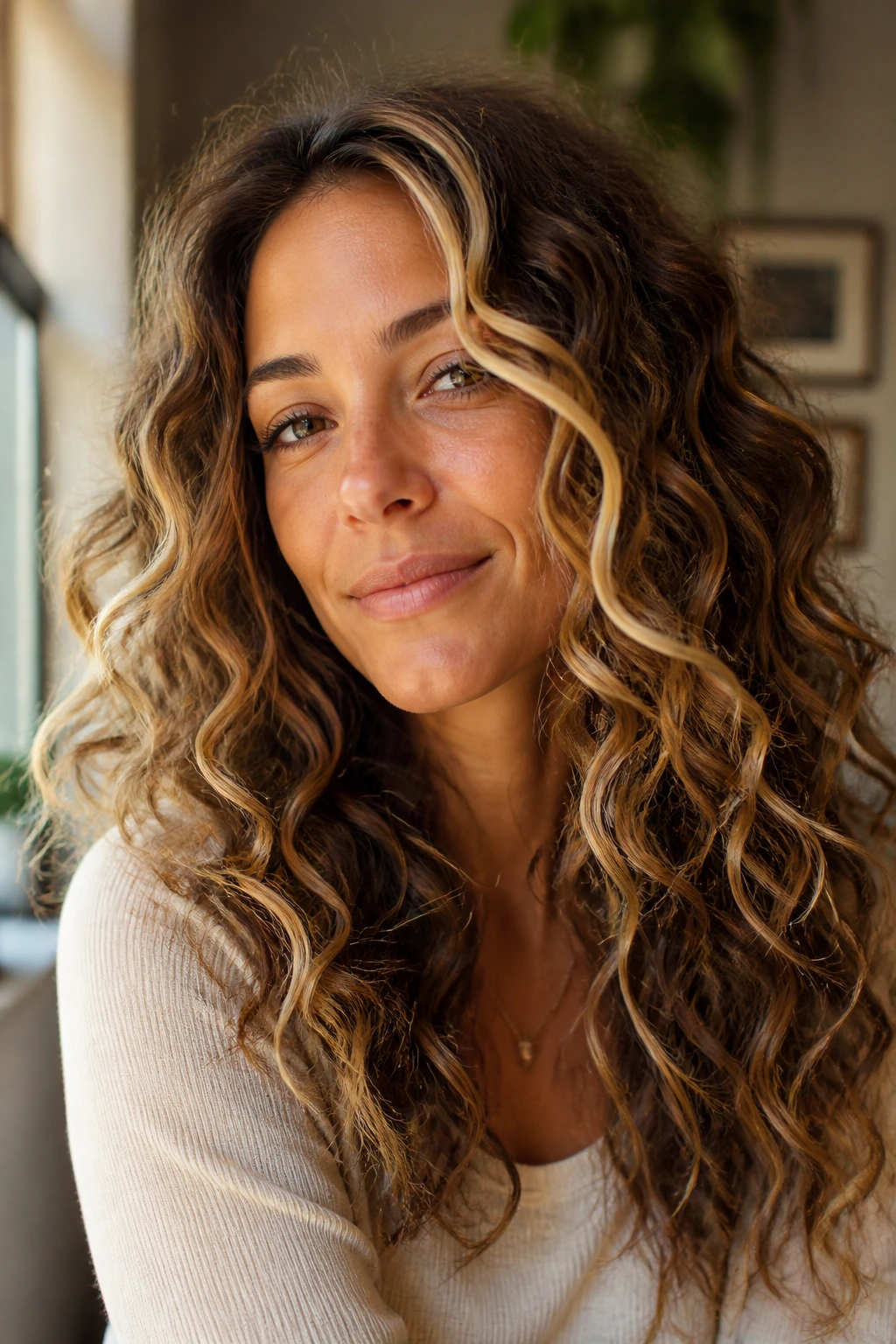
Curly hair is not one flat surface. That sounds obvious, but a lot of blonding work still gets planned as if every strand will lie in the same direction. It won’t. One curl opens, another tucks under, and the whole head changes shape depending on how dry it is, how it was styled, and whether you wore it in a pineapple the night before.
That’s why placement wins. A well-placed ribbon around the face can do more than a whole row of medium highlights hidden underneath. A root shadow can keep the top from looking bleached-out when the curls rise. A few brighter ends can give the lower half of the hair movement even if the rest stays deeper.
I’m also a fan of keeping some internal depth. Flat blonde on curls can look expensive for about ten minutes, then it starts to look washed out. A little darkness underneath gives the bright pieces somewhere to live. It’s the same reason a good layered cut works. The light needs something to play against.
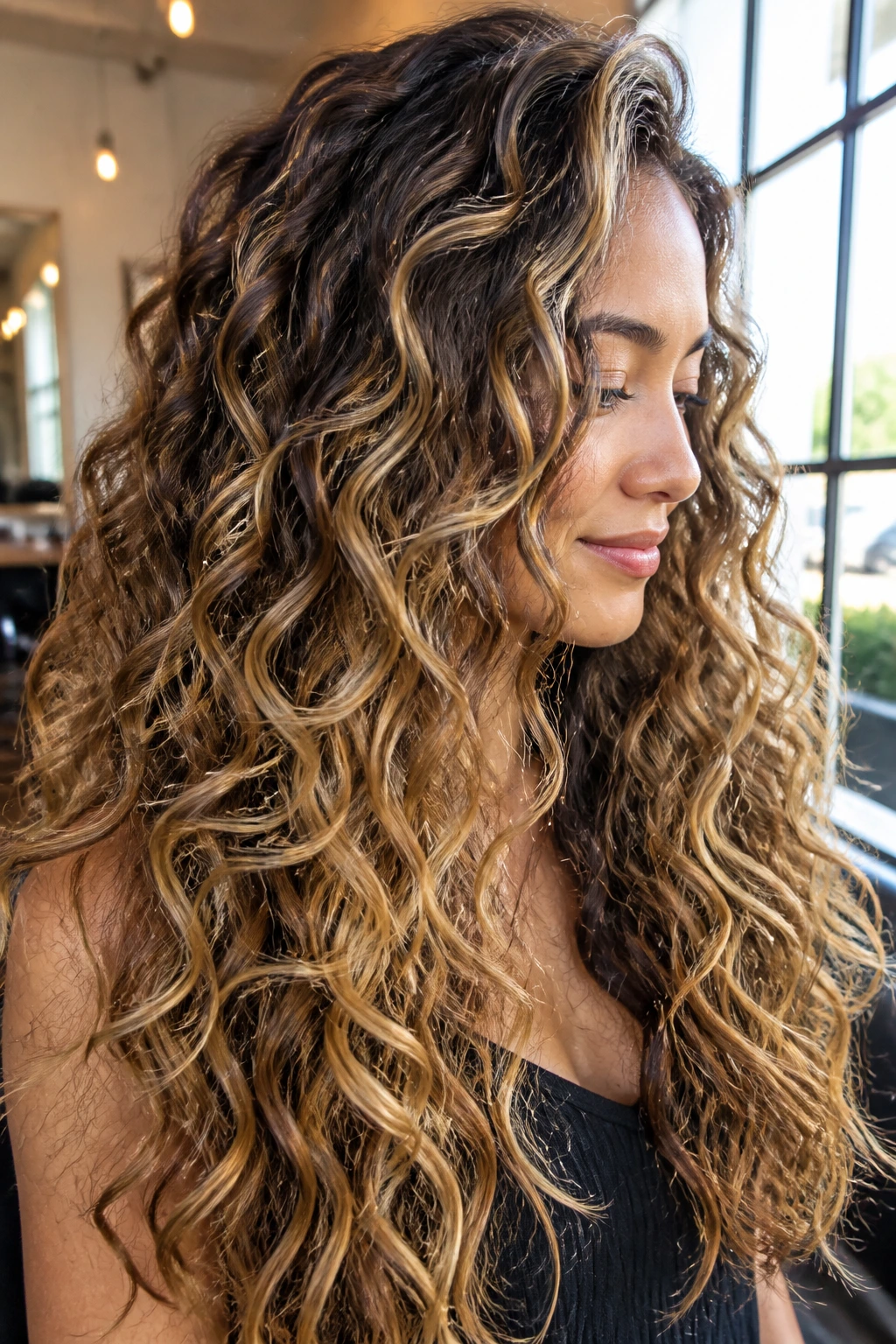
Essential Tools for Keeping Curly Blonde Hair Happy
-
Color-safe sulfate-free shampoo: Keeps toner from sliding out too fast and doesn’t strip the lighter pieces on every wash.
-
Deep-conditioning mask: Use it weekly if your hair is lightened, and twice a week if the ends feel rough or spongey.
-
Bond-building treatment: Helpful after any serious lift service; it supports the hair structure when bleach has made the curls thirsty.
-
Purple or blue shampoo: Purple helps yellow tones, blue helps orange tones. Don’t use either on every wash.
-
Microfiber towel or cotton T-shirt: Cuts down on friction while the curls set, which matters even more when the hair is lightened.
-
Wide-tooth comb: Best for detangling conditioner through wet curls without snapping bright, fragile ends.
-
Diffuser: Low to medium heat, low airflow. High heat will puff the cuticle and make blonde look dull.
-
Heat protectant: Use it before any blow-dry or hot-tool work, even if you “just” diffuse. Blonde hair remembers.
-
Silk or satin pillowcase: Reduces frizz and stops the ends from rubbing raw against cotton.
-
Color-depositing gloss or mask: Handy between appointments when the tone starts to go flat or too warm.
Smart Shade-Picking and Salon Notes
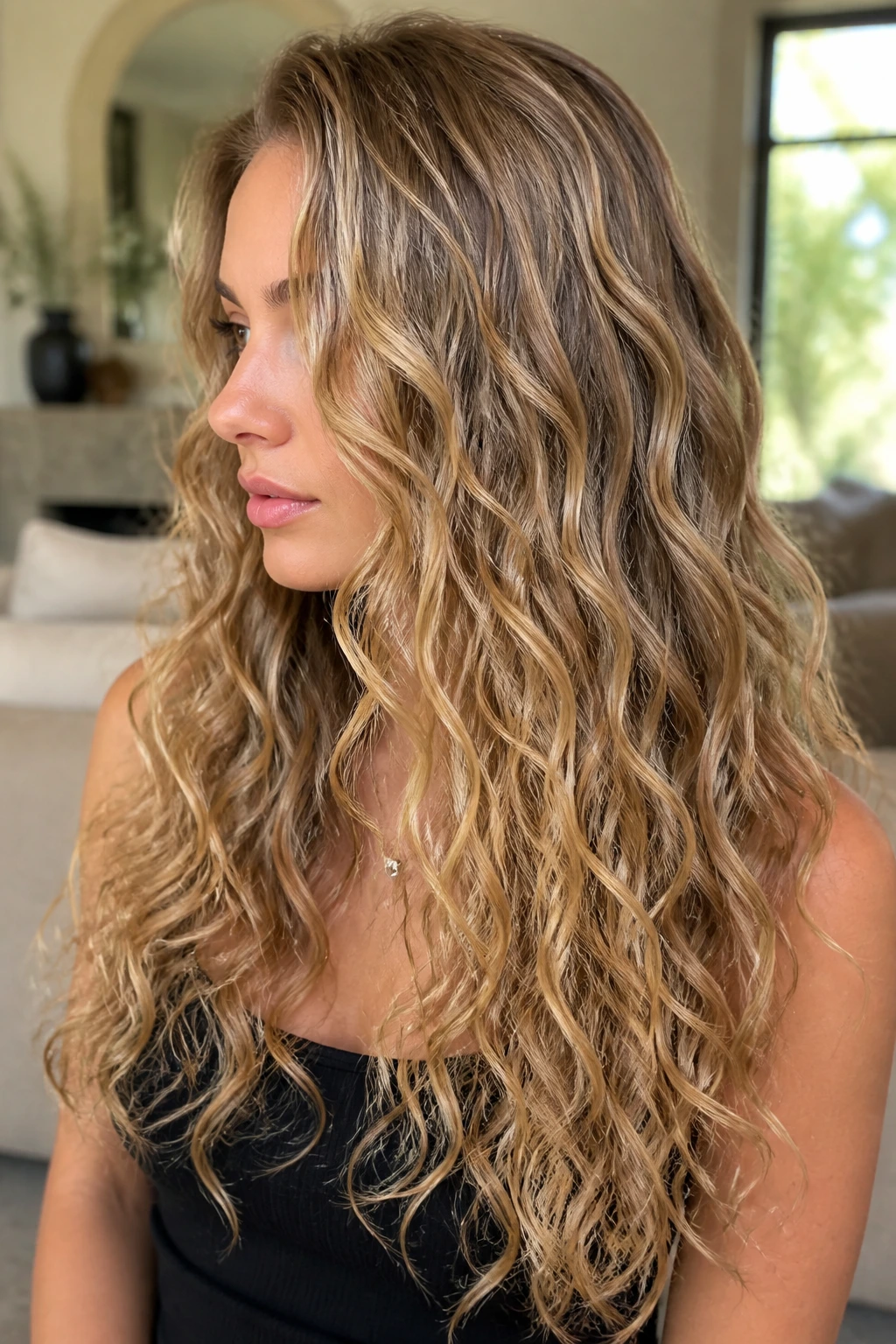
Bring photos, but bring the right photos. A straight-haired blonde on a model with a different curl pattern will not tell your colorist much. A picture of someone with similar curl size, density, and base color is far more useful because it shows how the blonde sits once the hair has real texture.
Tone is the part people overlook. Beige, honey, ash, champagne, pearl, and smoky beige all sit in different places on the warm-to-cool scale. If your skin runs warm or olive, a soft beige or honey often looks easier to wear. If your hair pulls orange fast, ash or smoky beige can keep the blonde cleaner. If you want something soft and friendly, champagne or cream soda tends to land well.
Ask about the lightness level too. Level 8 usually reads golden or beige. Level 9 gets lighter and cleaner. Level 10 is the pale territory that can look gorgeous but also unforgiving when the hair is dry. You do not need level 10 just because the word blonde sounds stronger. Sometimes level 8 with good placement looks far better on curls.
One more thing: tell the colorist how your hair shrinks when dry. That single detail changes placement. A piece that sits perfectly on stretched hair may disappear into the curl fold once it springs back. Good blonding on curls starts with that conversation, not with a swatch book.
How to Style These Looks in Real Life
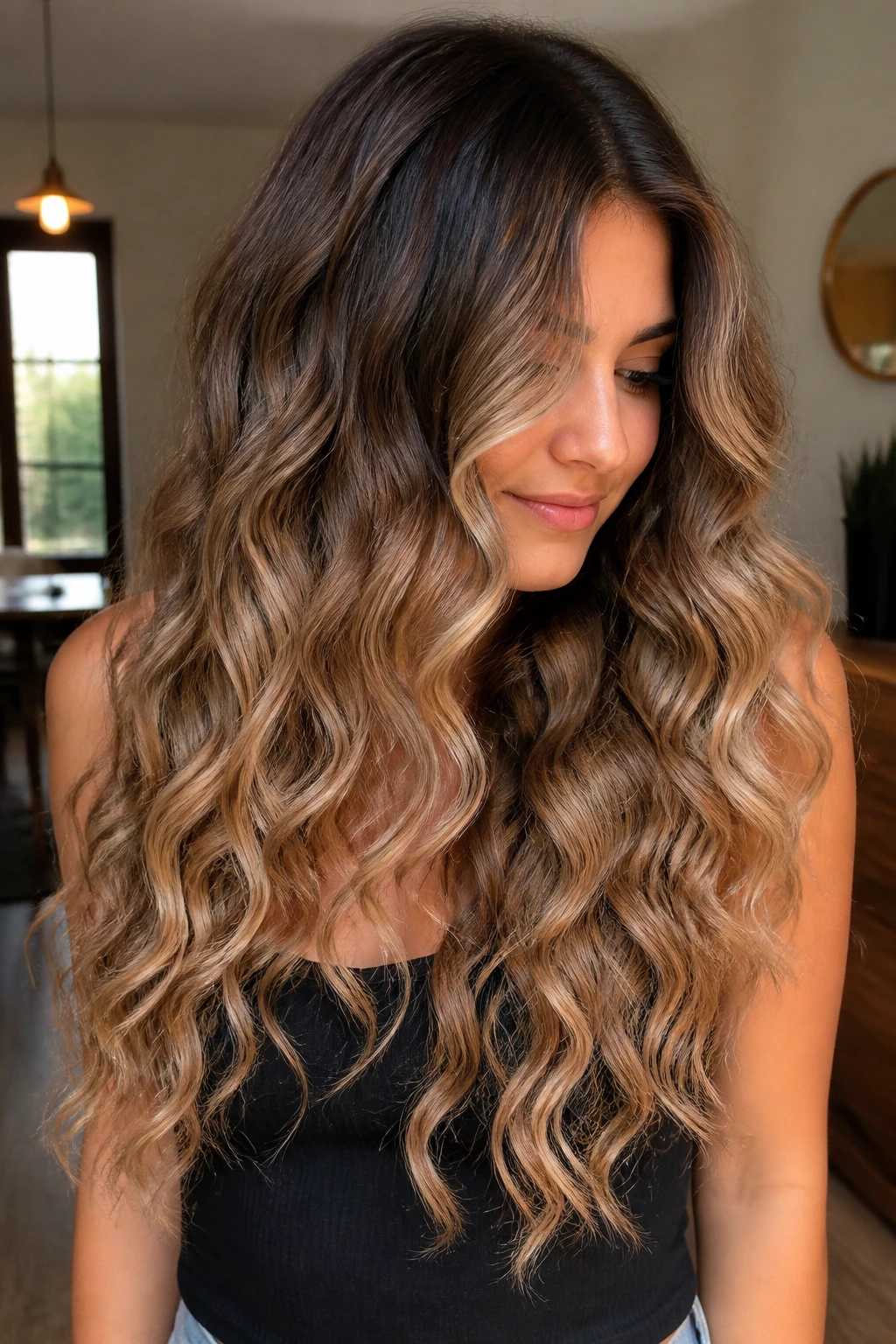
Presentation: Long curls show blonde best when the bright pieces live where the hair opens naturally — around the face, on the top layer, and through the lower lengths. If the brightest sections are all hidden underneath, the color can feel busy in the chair and dull at home.
Accompaniments: Layered cuts make most of these looks easier to wear. Curtain bangs flatter beige, champagne, and honey tones; a more dramatic face frame works with platinum, strawberry, and sunflower blonde; soft long layers help ombré and balayage move instead of sitting in a curtain.
Portions: Thick curls can carry more lightness because the density swallows some of the contrast. Fine curls usually need fewer, brighter pieces placed with restraint, or the hair can start looking see-through at the scalp. That’s not a moral failing. It’s just how light behaves.
Styling Finish: Air-drying shows off soft blends and subtle babylights. Diffusing with low heat brings out the sparkle in money pieces, halo highlights, and icy ends. If you want the blonde to read cleaner, smooth a pea-sized amount of serum over the outer layer only — not the roots, never the roots — so the curl pattern still has lift.
Extra Tone Tweaks and Personalization Ideas
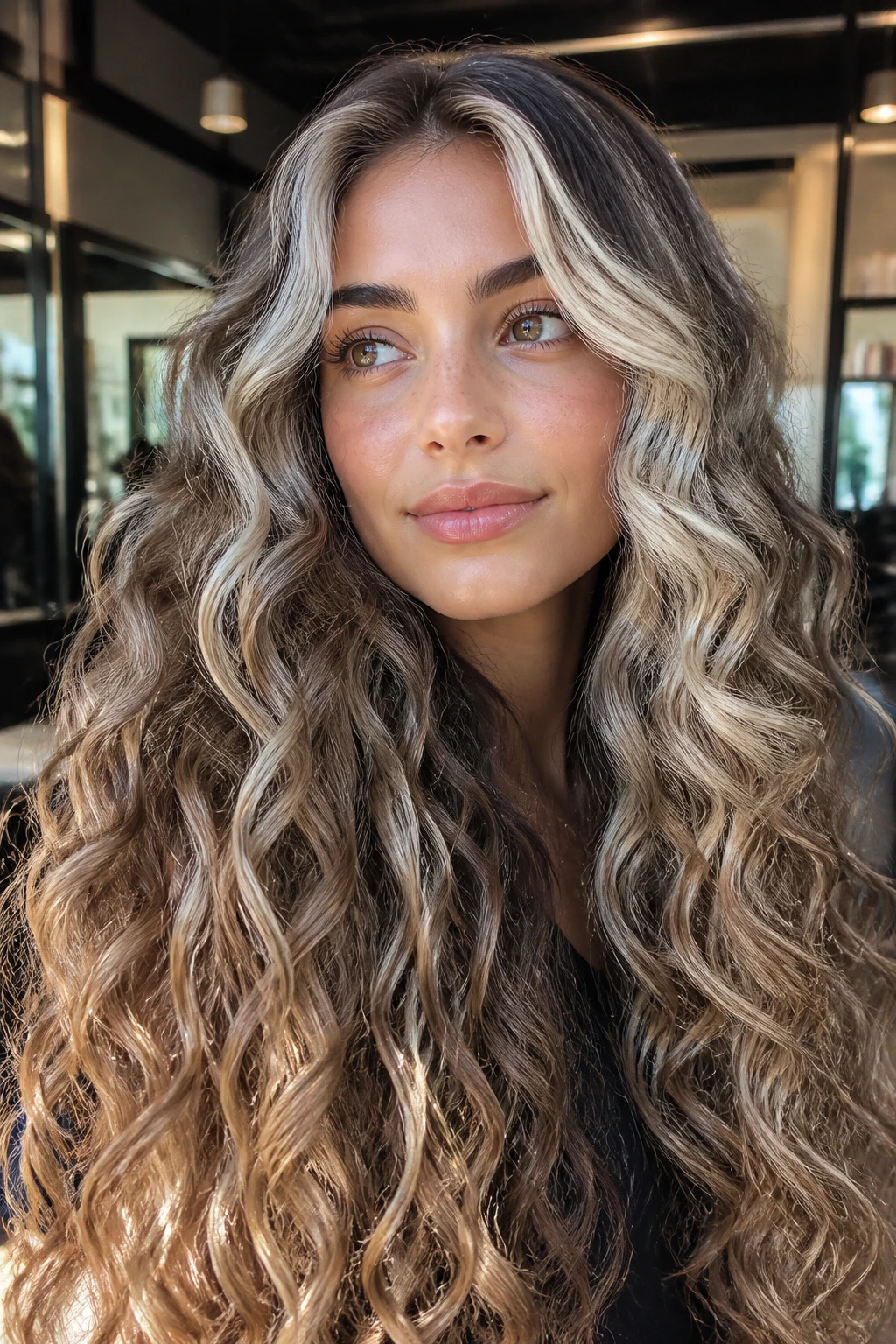
Brightness Boost: If the blonde feels too soft, ask for a gloss one level lighter on the face frame and crown only. That tiny change often does more than pushing the whole head brighter.
Dimension: Lowlights are underrated. A few deeper caramel or mocha pieces underneath keep beige and honey blondes from going airy in a bad way, especially on dense long curls.
Customization: Love warm blonde but worry about brass? Ask for gold-beige instead of yellow-gold. Want cool blonde without the gray cast? Ask for pearl-beige instead of a stark ash toner. The small wording change matters.
Make-It-Yours: For a low-maintenance routine, choose rooted balayage, ombré, or babylage. For a bolder face-framing look, go with a money piece, sunflower front, or platinum perimeter. For dry or fragile ends, keep the lift farther from the tips and let the toner do more of the visual work.
Maintenance Between Appointments
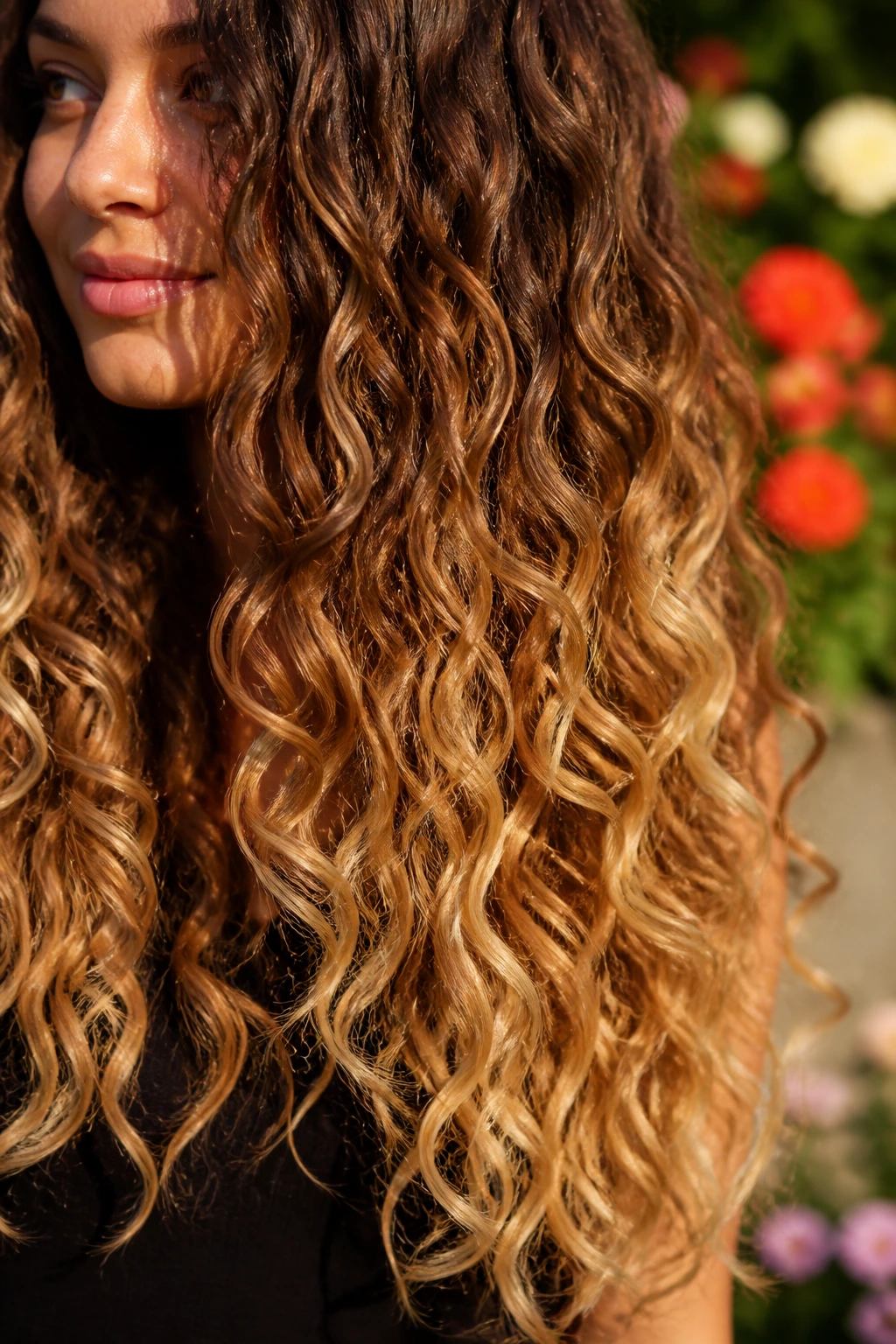
Fresh blonde on curls does not stay fresh on its own. A good routine matters more than a fancy color name, and I’d rather see someone choose a slightly softer shade they can keep looking good than chase platinum and then watch it fry out by week three.
Wash 2 to 3 times a week if you can. Curly blonde hair gets stripped fast, and every shampoo day is a chance to fade tone. On one of those washes, use a purple or blue shampoo if brass is showing up. If the blonde still looks clean, skip the pigment and use a plain color-safe cleanser instead. Overusing toning shampoo is one of the fastest ways to make blonde look chalky.
Deep-condition once a week, and twice if the hair is porous or very lightened. Bond-building treatments can slot in after bleach services or once weekly depending on the product. After any diffusing or hot-tool work, use a heat protectant and keep the temperature moderate. Curls do not need 450°F drama.
For salon upkeep, plan a toner or gloss refresh every 4 to 8 weeks depending on how light the blonde is. Root touch-ups can stretch 8 to 12 weeks for rooted balayage and ombré, but platinum money pieces and high-contrast looks usually need attention sooner. Trim the ends every 10 to 12 weeks so the lightest pieces don’t turn into frayed straw.
If you swim, wet the hair first and coat it with conditioner or a leave-in. Blonde ends pick up chlorine and hard-water mineral stains faster than darker hair. That one step saves a lot of regret.
Variations and Adaptations to Try
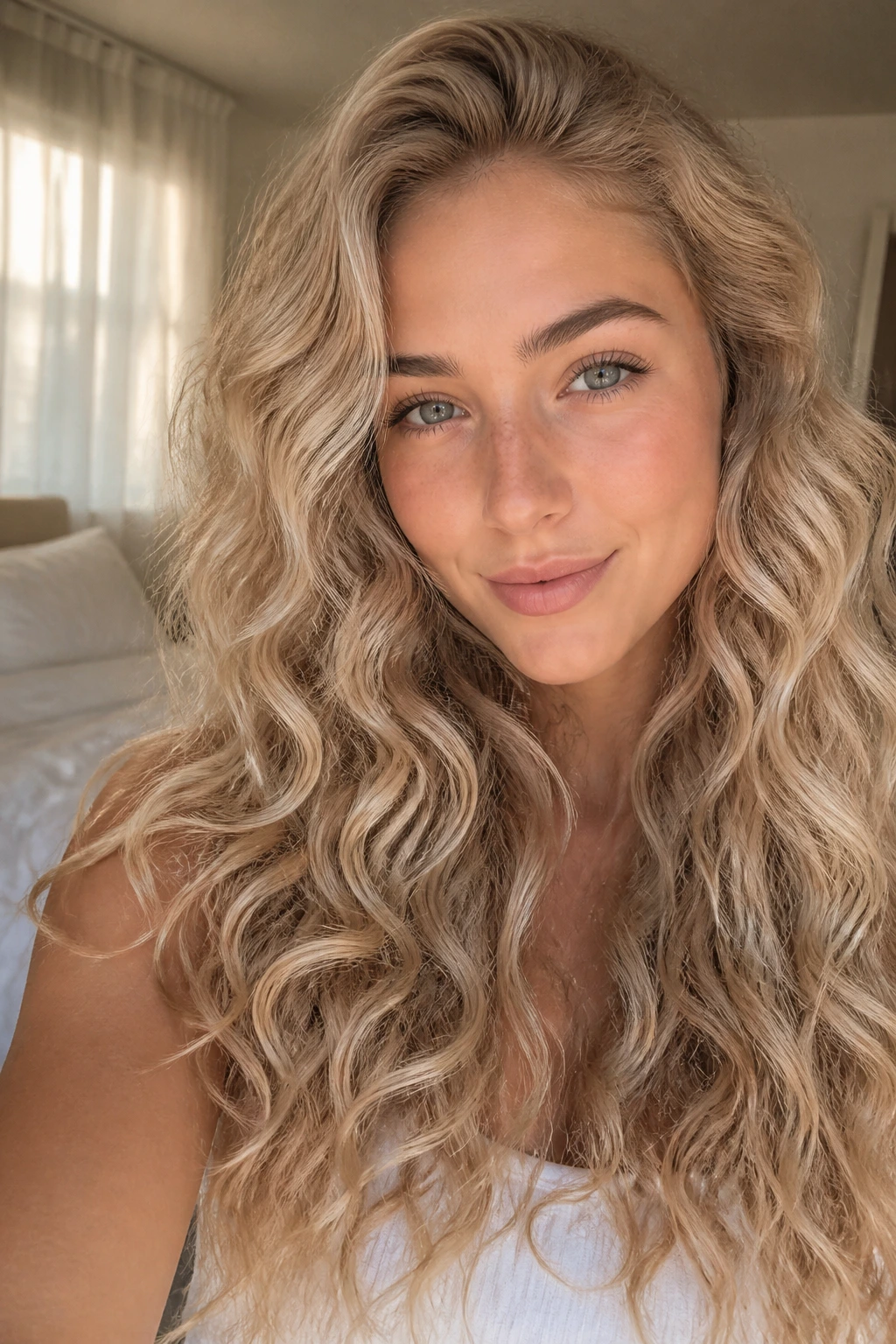
Low-Commitment Face Frame: Keep the rest of the hair mostly brunette and brighten only the front pieces and a few top-layer ribbons. It’s the easiest way to test blonde on long curls without committing to a full blonding routine.
Cool Smoke Blend: Swap honey and caramel tones for ash, smoky beige, and pearl. This works well if your skin likes cooler neutrals or if your hair pulls orange the second lightener touches it.
Warm Glow Blend: Ask for honey, toffee, cream soda, or butterscotch notes. This version flatters golden and olive undertones and tends to look softer in everyday light than an icy blonde.
High-Contrast Statement Blonde: Use brighter money pieces, lighter ends, and a deeper shadow root. It’s the loudest option, but curls soften the contrast enough that it still feels wearable.
Curly Halo Placement: Brighten the outer layer and perimeter, then keep the interior darker. Great for thick hair that needs dimension and for anyone who wears their curls down most of the time.
Soft Transition Ombré: Start dark at the root, ease into beige mids, and end with almond or caramel blonde. This is the easiest route if you want length to do the visual work and don’t want obvious regrowth every few weeks.
Common Mistakes to Avoid
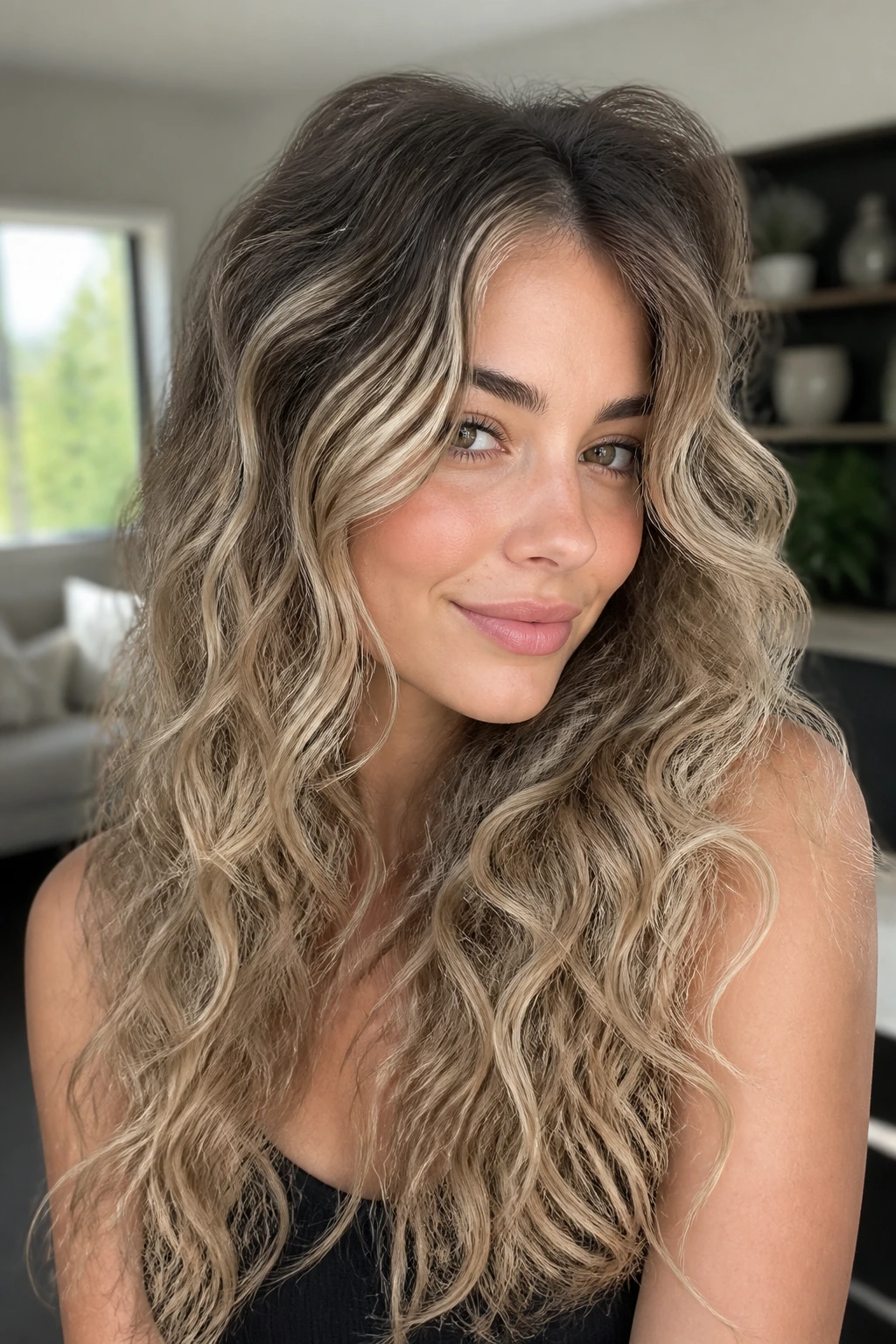
The first mistake is treating curly hair like straight hair. If highlights are painted as one neat pattern across the head, the result often looks stripy once the curls dry. Fix it by placing blonde around curl clumps, not straight sections, and by leaving some interior depth untouched.
The second mistake is going too light too fast. Platinum on dark, delicate, or previously colored curls can turn the ends rough in one appointment. Better to lift in stages and keep the hair glossy than to win the bright-blonde race and lose the curl pattern.
Another easy miss is overtoning. Curls that are already porous can grab purple or ash toner like a sponge, which leaves the blonde flat, dusty, or gray. If that happens, a quick gloss in a softer beige or champagne shade usually brings the life back.
People also overuse purple shampoo. It is a tool, not a daily lifestyle. Once a week is enough for many blondes; some need it even less. Too much pigment leaves the hair dull and scratchy.
And then there’s the classic error of forgetting shrinkage. A face frame that looks dramatic while wet may disappear once the hair springs up. Show your stylist how your curls dry in real life, not how they look stretched straight at the sink. That one detail changes everything.
Frequently Asked Questions About Blonde on Long Curly Hair
Can long curly hair really handle blonde without looking fried?
Yes, but only if the lightening is planned with the curl pattern in mind. Softer options like balayage, babylights, and rooted melts are usually kinder than trying to push the whole head to a pale level in one go.
What blonde shade is easiest to live with on curls?
Rooted honey balayage, caramel ombré, and beige babylage are usually the most forgiving. They grow out softly, the tone stays wearable, and you do not need to keep the whole head perfectly polished every week.
Is balayage better than highlights for curly hair?
For many curl patterns, yes. Balayage creates softer edges and lets the light pieces move with the hair, while foil highlights can look stripey if they’re too uniform. That said, foils still help when you need stronger lift or want a brighter blonde.
How often should I tone blonde curls?
Most curly blondes need a gloss or toner refresh every 4 to 8 weeks, depending on how light they are and how often they’re washed. Very pale blondes and platinum pieces need more frequent attention than beige or honey shades.
Will purple shampoo dry out my hair?
It can, if you use it too often. One wash a week is enough for many people, and some blondes only need it when brass starts showing. Follow it with a good mask so the curls don’t feel squeaky in a bad way.
Can I go blonde if my hair is dark brown or black?
Yes, but expect more than one appointment if you want the hair to stay healthy. Soft ombré, foilyage, and face-framing brightness are usually smarter starting points than chasing all-over platinum.
What if my blonde looks stripey after it dries?
That usually means the placement was too rigid or the pieces were too wide. A gloss, a few softer lowlights, and better curl-shaped placement at the next appointment can fix the effect.
How do I stop blonde from turning brassy?
Use a color-safe shampoo, limit sun and hard-water exposure when you can, and don’t overdo heat. Brass also shows up faster on porous ends, so regular conditioning and timely gloss appointments matter more than most people think.
Blonde That Grows Out Gracefully
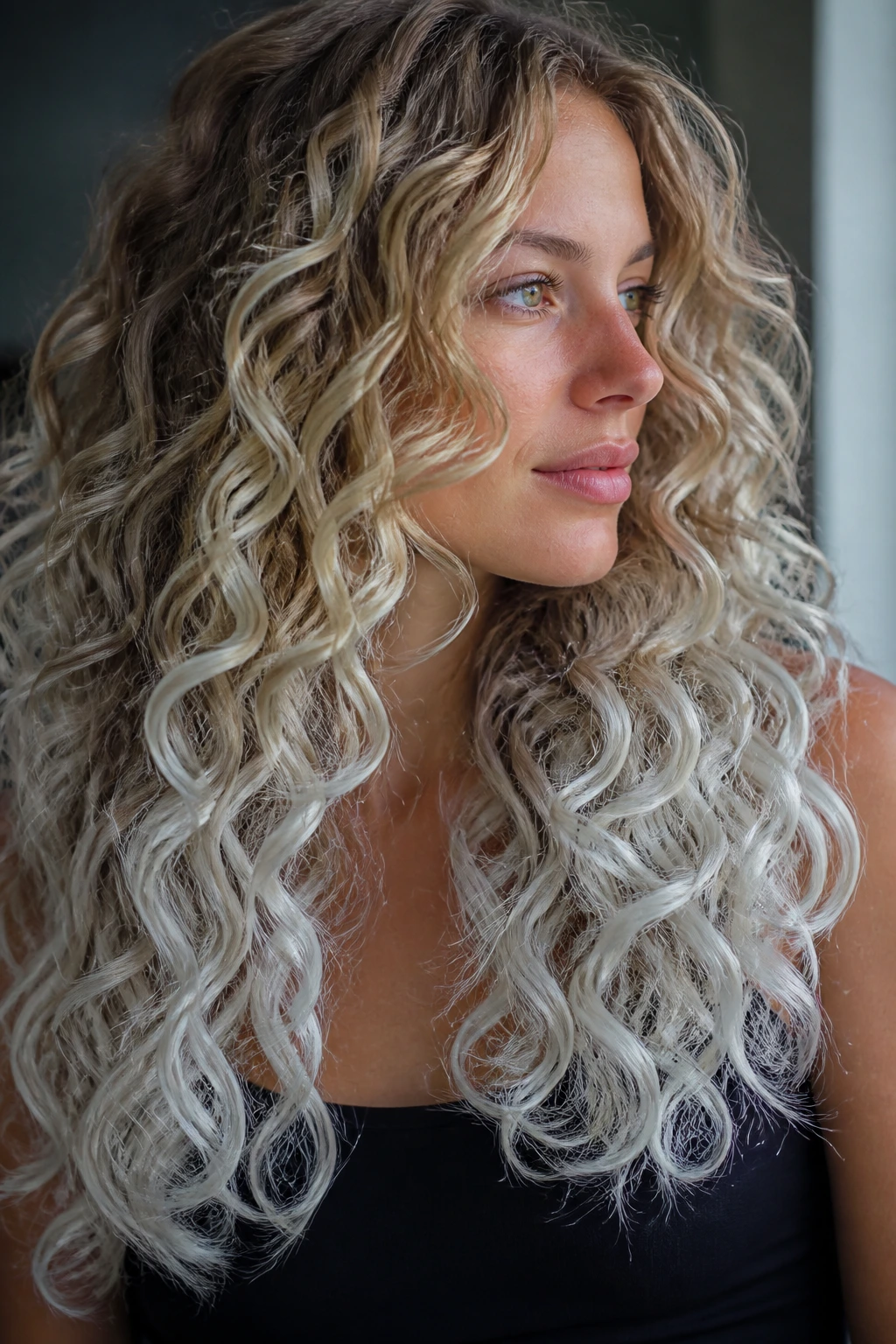
The best blonde on long curly hair does not fight the curl pattern. It works with it. That means leaving some depth at the root, placing brightness where the curls naturally open, and choosing a tone that still looks good when the hair has been air-dried, diffused, slept on, or pulled into a half-up knot.
If you want the easiest path, start with a rooted balayage, a soft babylage, or a warm ombré. If you want drama, the money piece and platinum looks are waiting, but they ask more from your care routine. Either way, the hair has to stay touchable. That’s the part most people miss.
Pick the blonde that matches your real life, not the one that only looks good in one photo. Long curls will do the rest.
