



The prettiest ombre ideas for a soft color fade are the ones that make people look twice, then realize they can’t spot the line. That’s the whole charm. You get depth at the roots, brightness where hair naturally catches light, and a finish that feels grown-in instead of stamped on.
Hard ombré can look stylish for about ten minutes. Then it starts to read like a deliberate block of color, and the edges tell on you. A soft fade behaves differently. The transition melts through the mid-lengths, the ends stay believable, and the color still makes sense when your hair’s in a ponytail, a braid, or shoved behind one ear while you’re half-distracted at a café counter.
The trick is restraint. Not every ombré needs platinum ends. Sometimes the best version is a two-level shift, a smoky toner, or a warm glaze that keeps the whole thing quiet. That’s where the interesting hair lives—the color that looks expensive because it doesn’t insist on being noticed all at once.
Why These Ombre Ideas Stay Soft Instead of Stripy
-
Low contrast wins here: Keeping the root and end shades within two to three levels of each other stops the fade from looking like two separate haircuts stitched together.
-
The blend starts below the cheekbones: A softer ombré usually begins lower than balayage highlights, so the eye sees movement instead of a harsh horizontal line.
-
Tone matters as much as lightness: Beige, mushroom, caramel, pearl, and smoke shades all read gentler than bright gold or icy white, even when the lift level is the same.
-
Grow-out is part of the look: These color stories are designed so the regrowth line stays blurred. That means fewer awkward weeks and fewer “I need a touch-up yesterday” moments.
-
Texture changes everything: Waves and curls scatter the transition, which makes a soft fade look even smoother. Straight hair shows the placement more honestly, which is useful when you want precision.
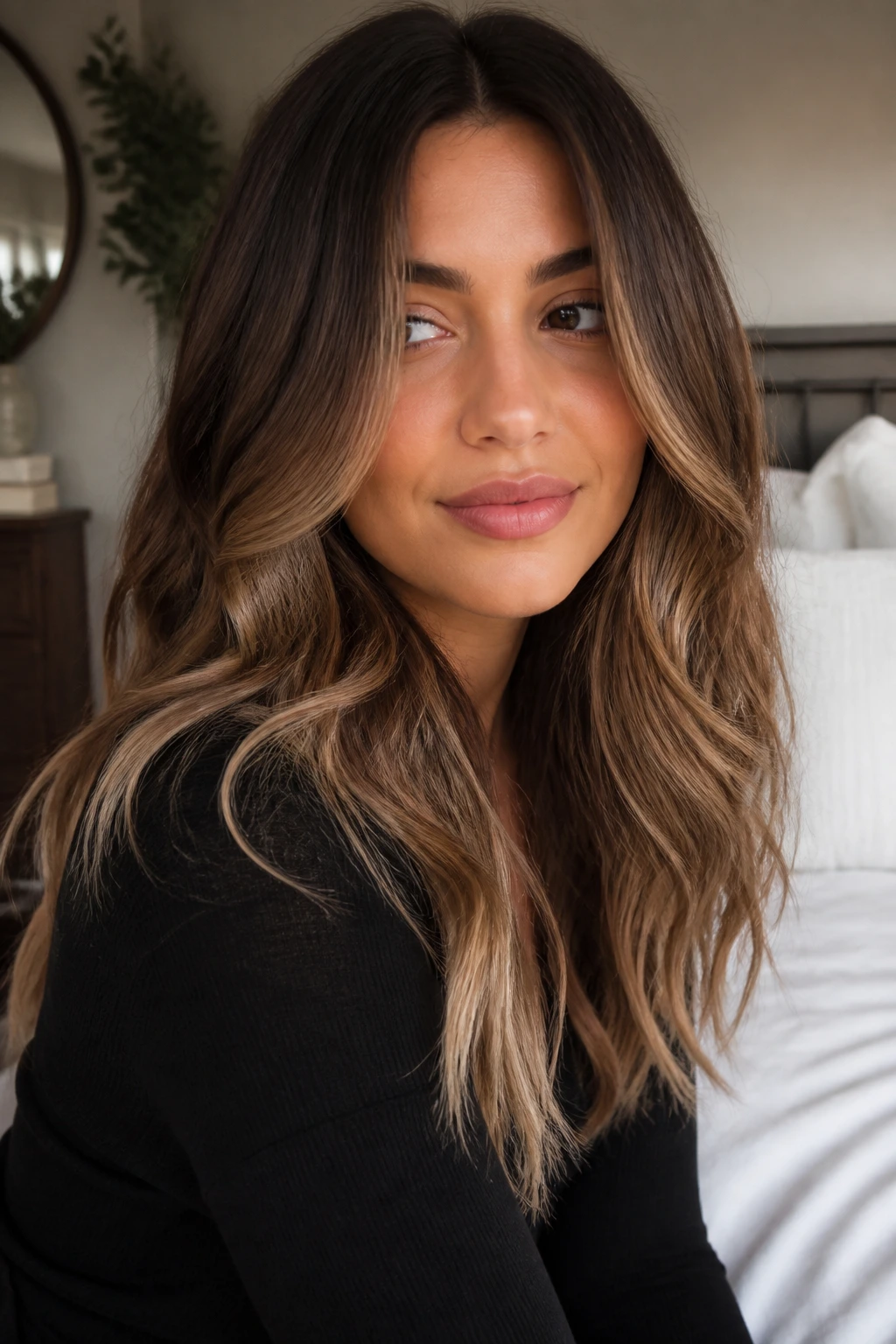
1. Espresso to Caramel Melt
This is the ombré I recommend when someone says they want “something subtle, but not boring.” The espresso root stays rich and cool, then the caramel appears through the mids like warmed sugar on the edge of a spoon. The ends should not jump to blond. Keep them around a level 7 or 8 so the fade still feels believable.
A good caramel melt looks especially nice on hair with a medium density because the color adds shape without making the ends look wispy. If your hair is fine, ask for the lightest placement only on the outer surface and around the front. That keeps the body in the haircut.
Why It Reads Soft
The root shadow and caramel end shade are close enough to feel connected. You still get dimension, but no one is counting foil lines. A loose wave makes the transition look even smoother.
2. Dark Chocolate to Beige Blonde Ribbon Fade
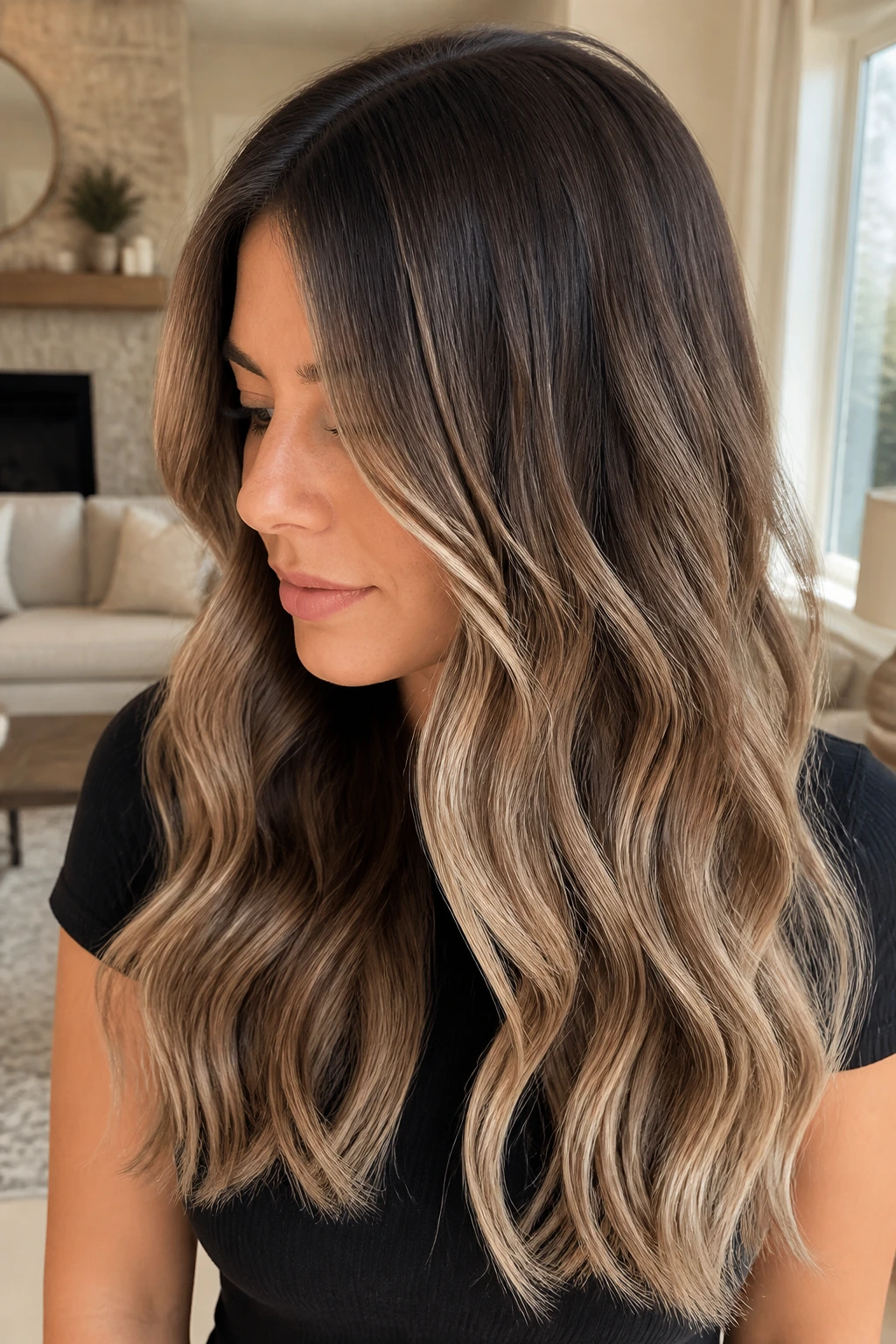
Can brunette hair go blonde without looking chunky? Yes—if the blonde is beige, not brassy, and the transition is stretched through the mid-lengths. That beige tone keeps the fade from turning harsh, which is exactly why this ombré works so well on shoulder-length cuts and long lobs.
What Makes It Look Polished
The best version has a dark chocolate root, a soft middle band of mocha, and ends that land in a muted beige blonde. Beige is the key word. Not gold. Not white. Beige bends the whole look toward softness, especially if your skin tone likes neutral shades.
- Ask for a root shadow that stays within one to two levels of your natural base.
- Keep the lightest ends around a level 8, not a level 10.
- Add waves or a bend at the ends so the ribbons show, not a blunt block.
3. Dark Chocolate to Honey Almond
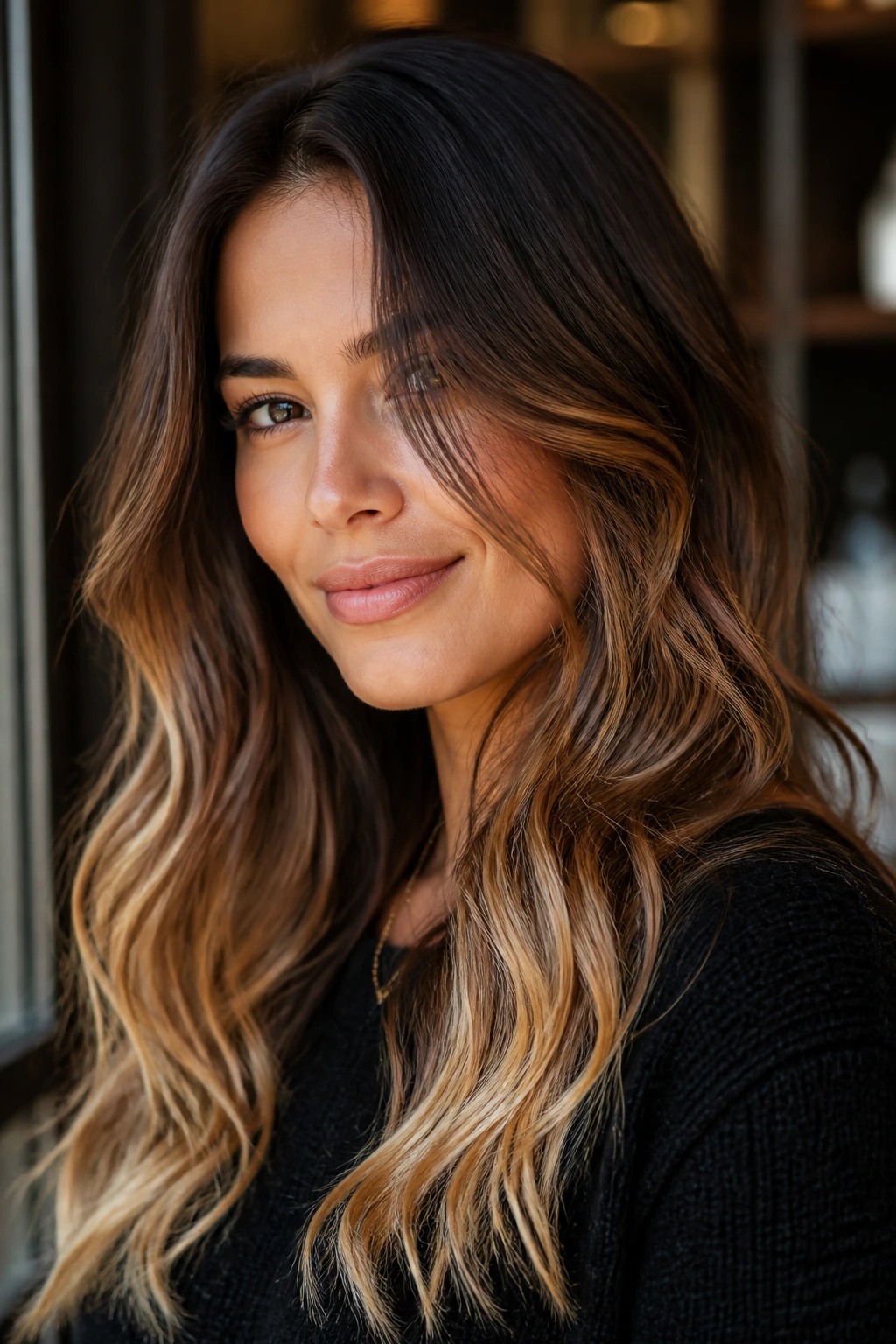
This is the warm fade for people who want glow without going full copper. The honey almond end color has enough gold to brighten the face, but it doesn’t swing into orange territory. On darker brown hair, that matters. A lot.
I like this one on layered hair because the lighter ends catch on the movement. If you wear it pin-straight, it still works, but the warmth really wakes up once the cut has shape. It also flatters hair that holds warmth naturally, which saves you from fighting your own pigment.
The best part? It grows out cleanly if the honey stays soft. Once the ends turn too yellow, the whole thing starts to look louder than it should. Keep the tone buttery, not neon.
4. Mushroom Brown to Pearl Blonde
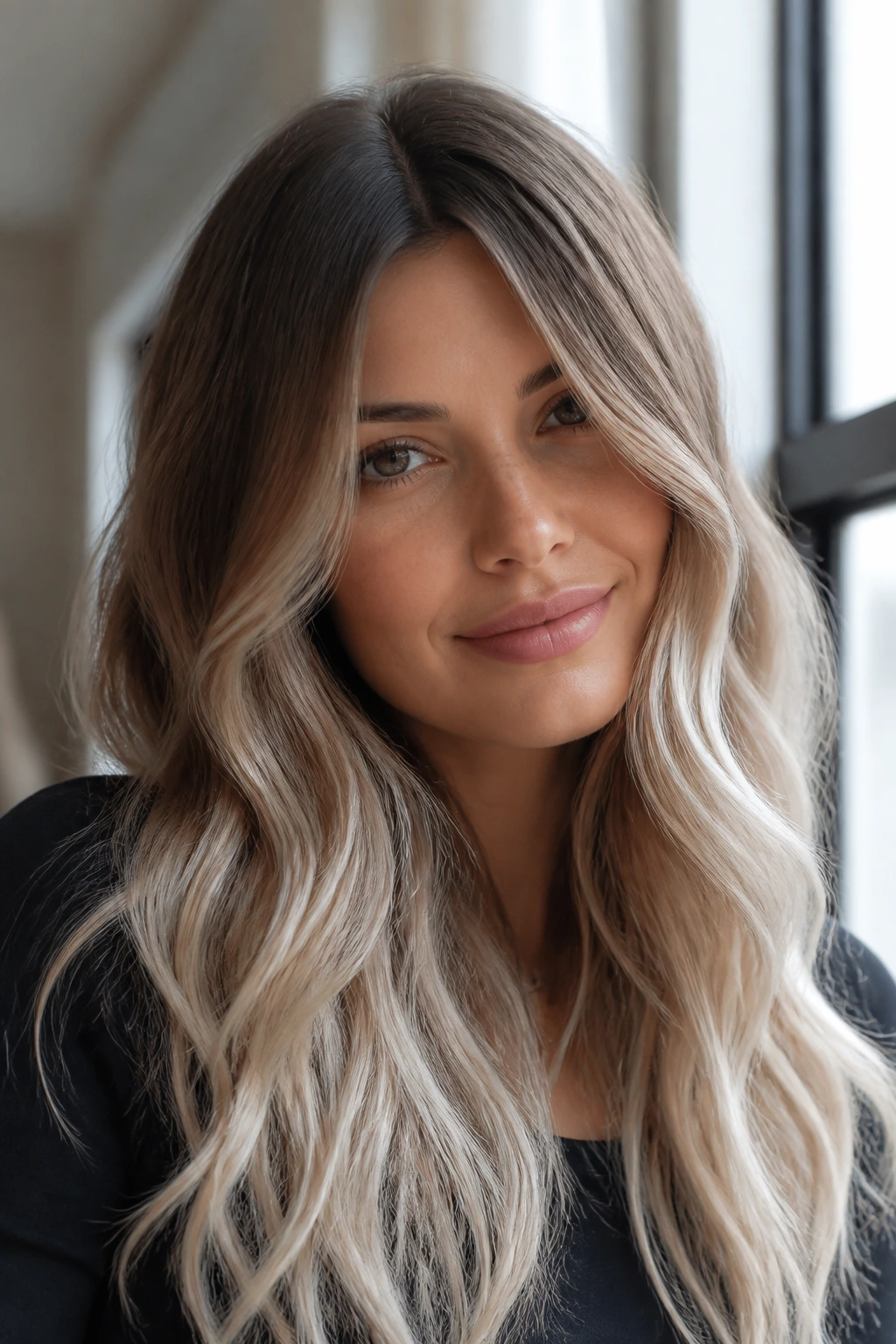
This is the cool-girl ombré that still feels calm. Mushroom brown has that smoky, taupe-heavy base that keeps everything grounded, and pearl blonde on the ends brings just enough light to lift the whole head without shouting. It is a quieter choice than ash blonde, and I think that’s the smarter move most of the time.
Pearl ends are tricky in a good way. They look pale, but they should not look chalky. The difference is softness in the toner—slightly creamy, slightly silvery, never flat. If your hair pulls yellow fast, this is the kind of fade that needs maintenance, but not panic.
Best For
- Cool or neutral undertones
- Wavy and straight textures
- People who like low-warmth blondes
- Lob and long-layer cuts
5. Chestnut to Copper Glaze
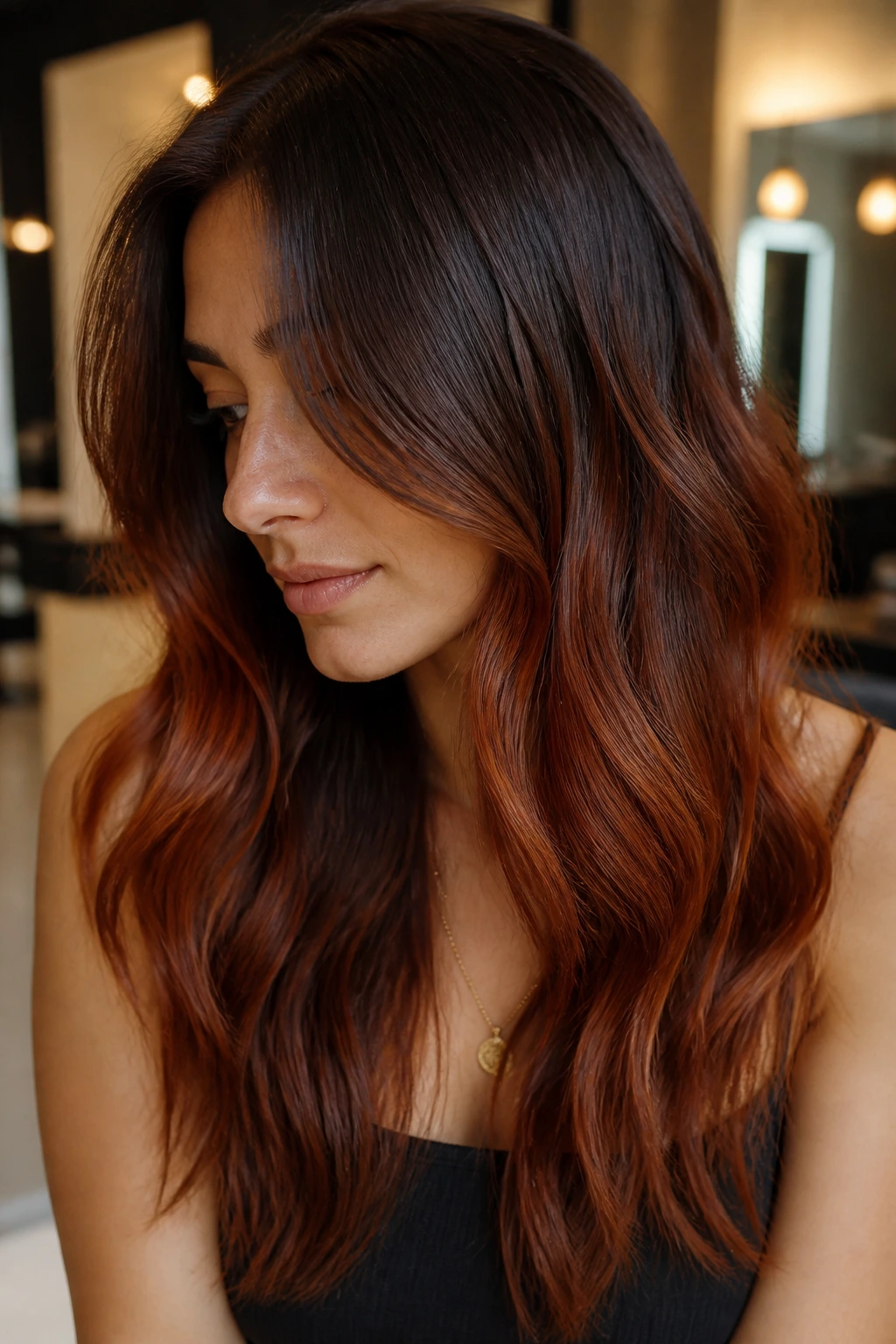
A chestnut base with a copper glaze is what happens when you want red, but you don’t want it to feel like a costume. The fade starts rich and brown, then the copper spreads through the lower half like a soft reflection rather than a hard dye job. It’s warm. It’s alive. It still behaves.
This is one of those shades that looks especially good indoors, where the copper catches the light in a softer way than a bright auburn would. The trick is to keep the copper translucent. Think glaze, not paint.
If you have naturally warm brown hair, this is one of the easiest ombré ideas to live with. The regrowth barely announces itself, and the fade looks intentional even when it gets a little blurred.
6. Black Cherry to Plum Smoke
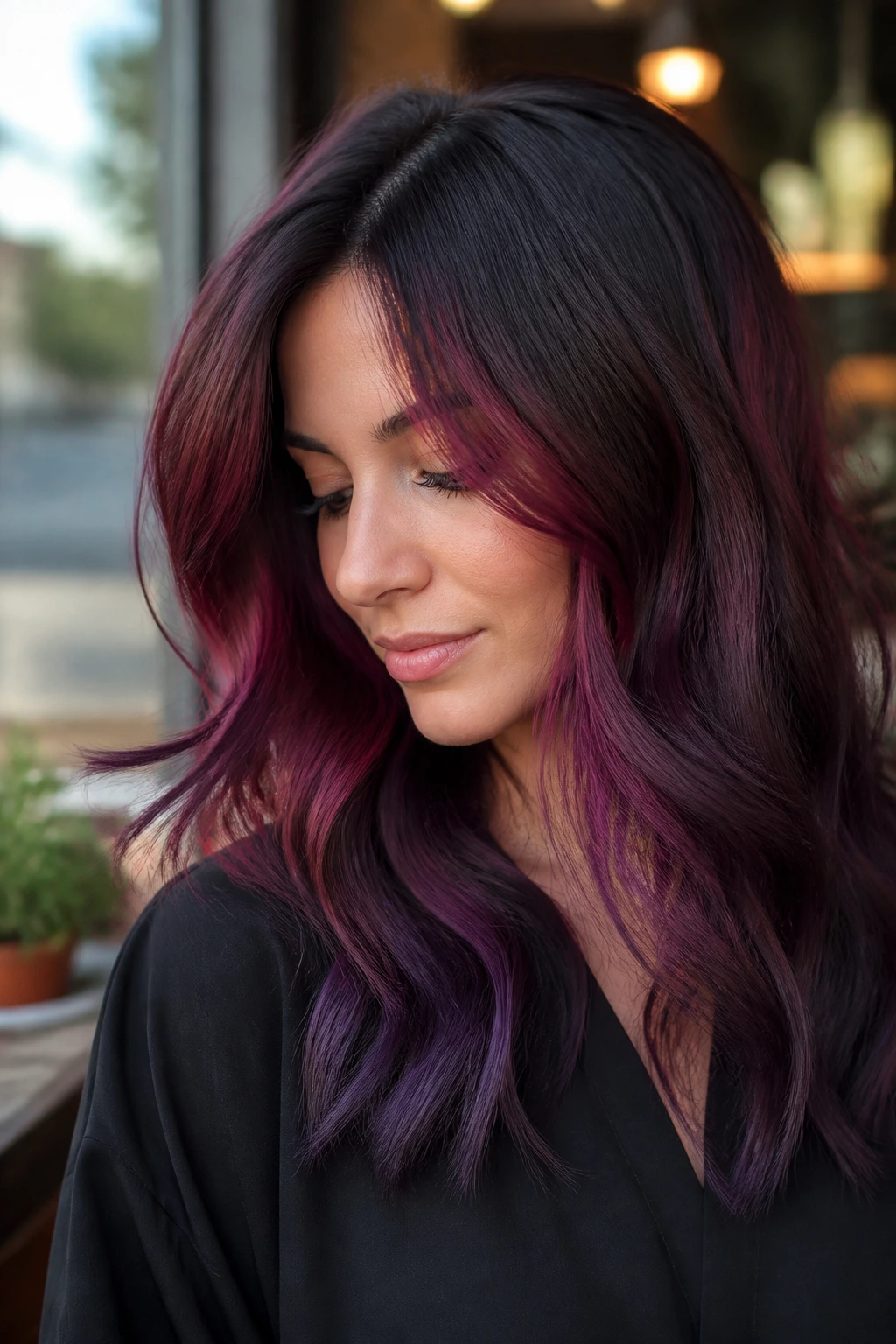
Black cherry can get loud fast. Plum smoke pulls it back into a more wearable place. The root stays dark and almost inky, then the plum appears low and moody through the lower lengths, with a smoky finish that keeps the red-violet from going flat.
This one is strong on hair that already has depth. Dark brunette and black hair both take to it nicely because the color shift does not need to be dramatic to be visible. You’ll see it most when the light moves across the hair, which is exactly how a soft ombré should behave.
A color-depositing mask in plum or berry tones helps keep the ends from fading too fast. That’s the boring maintenance part. Worth it, though.
7. Ash Brown to Smoke Blonde
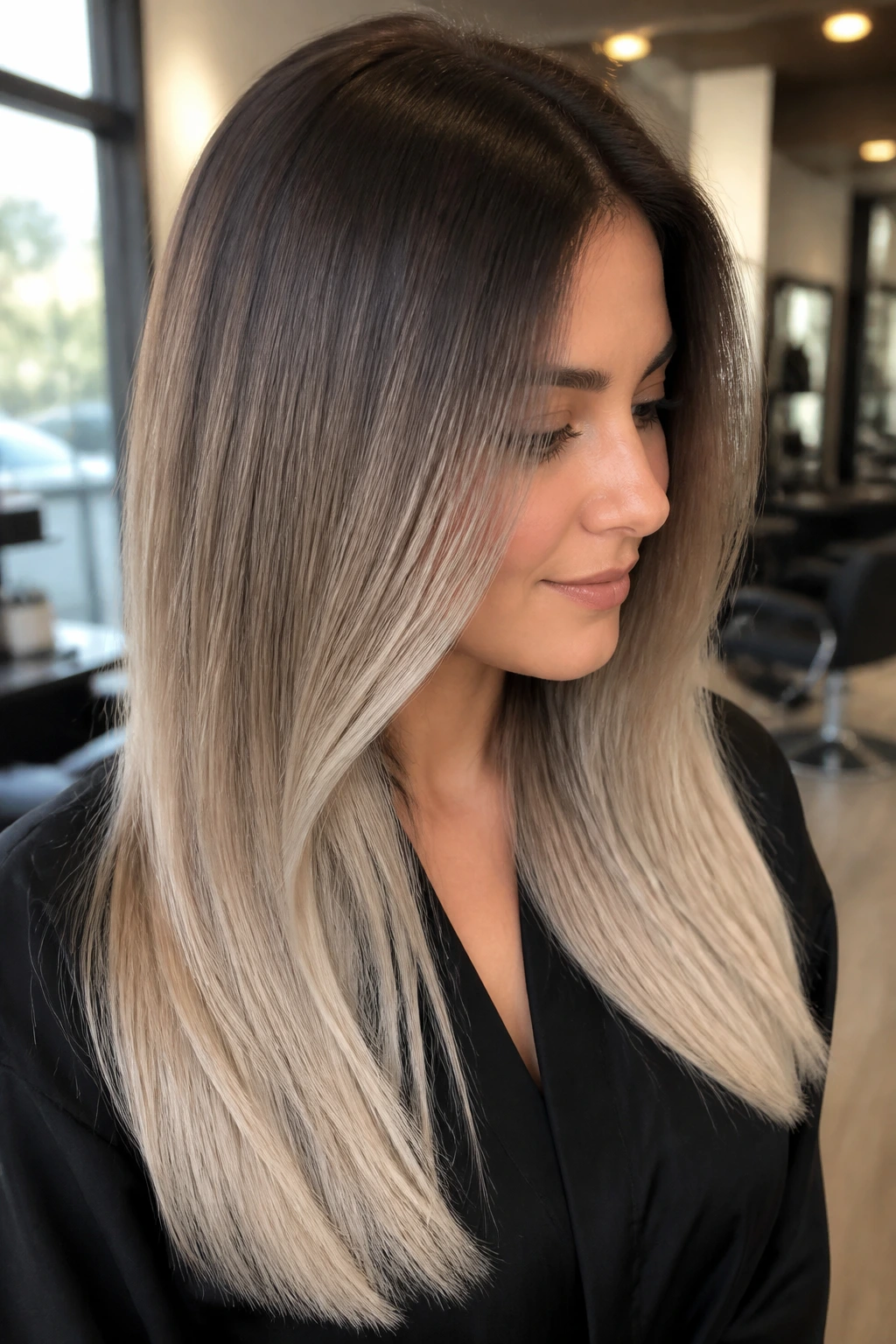
Why does this fade look so clean? Because ash brown and smoke blonde live in the same cool family, so the color shift feels calm instead of sharp. You still get brightness, but the ends don’t flash yellow the minute the toner fades.
What to Ask For
Ask for a smoky root melt that stretches at least 3 to 4 inches before it reaches the blonde. That space matters. Too short, and the fade looks abrupt. Too long, and you lose the ombré shape entirely.
A soft smoke blonde should sit just off-white, not icy enough to look frosted. It’s best on straight hair if you like seeing the exact gradient, and on wavy hair if you want the whole thing to feel more diffuse.
8. Mocha to Toffee Blonde
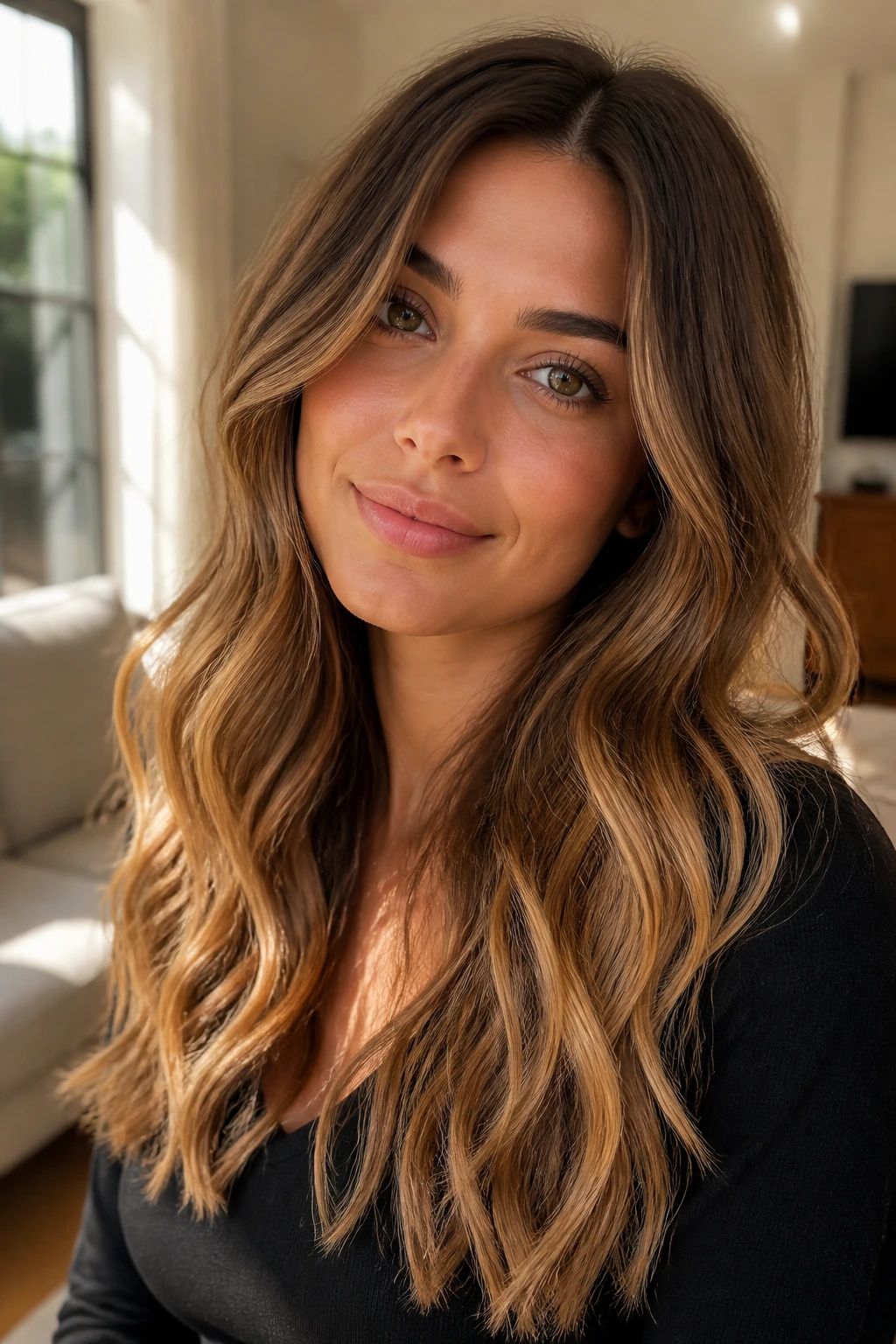
Mocha to toffee is a comfort-color ombré, and I mean that in the best way. The base is creamy and brown, the mids pick up warmth, and the ends land in a toffee blonde that looks like somebody melted sugar into the last few inches. Not sticky. Just warm.
This is one of the easiest soft fades to wear if you don’t want your hair to look cooler than your wardrobe. The warmth gives it a little softness around the face, which matters more than people think. A toffee finish flatters layered cuts because each piece catches a slightly different tone.
If you love glossed, shiny hair, this is your lane. Toffee reflects light in a way that makes the hair look fuller, especially on mid-density hair.
9. Cinnamon Brunette to Maple Ends
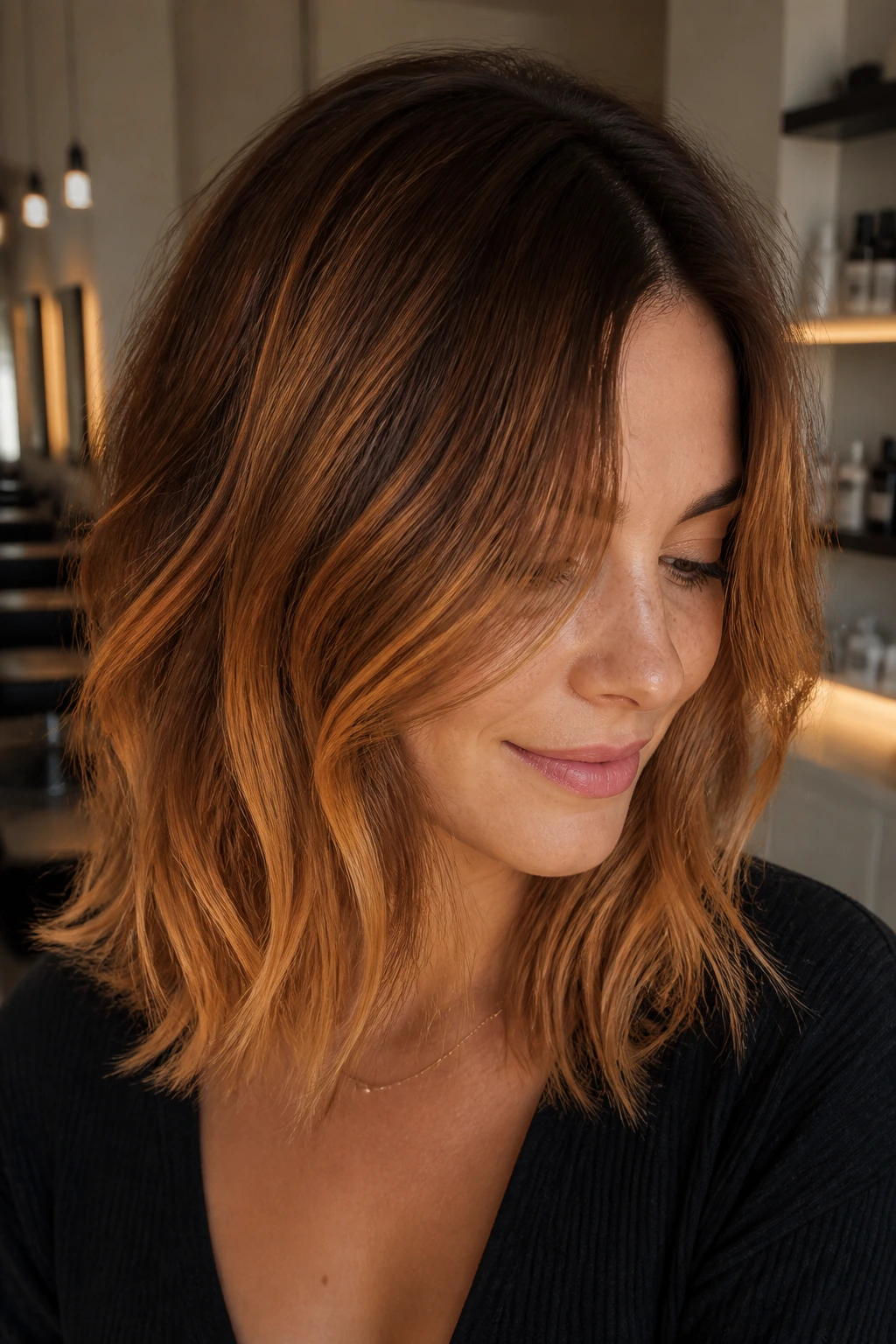
A cinnamon brunette fade is for the person who keeps saying they want “warmth, but not red-red.” That sentence comes up a lot in color appointments. This is the answer. Cinnamon sits in that spicy brown zone, and maple ends add a soft, amber sweetness that keeps the whole look from turning copper-heavy.
I like this on shoulder-length cuts with movement around the face. The color doesn’t need huge contrast to work. In fact, the more layered the hair, the better the end tones show up.
- The root should stay brunette with a red-brown cast, not a full auburn base.
- The maple ends should look glazed, not orange.
- If your hair is porous, ask for a slightly darker finish at the very tips. They’ll read lighter in a week anyway.
10. Auburn to Strawberry Blonde
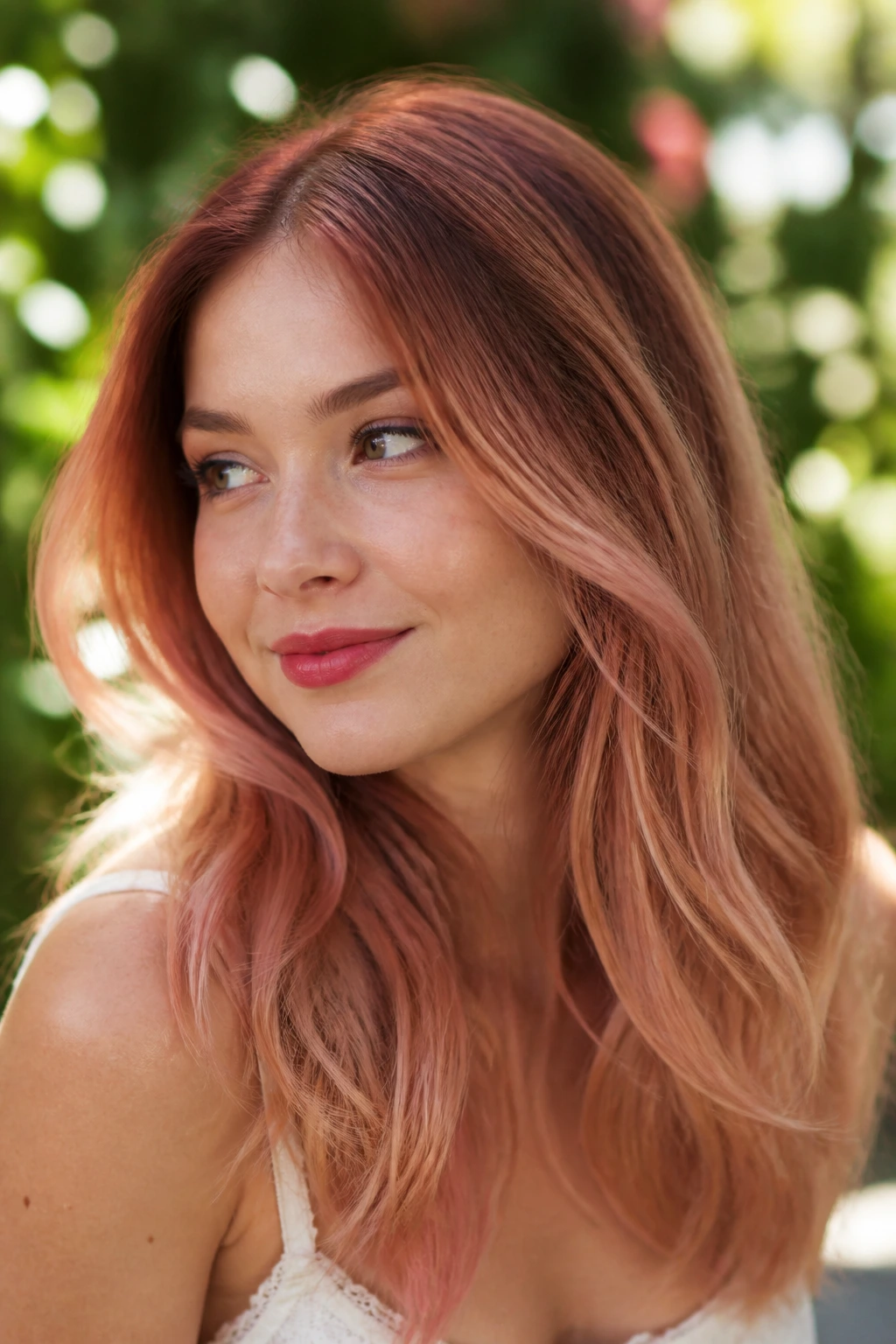
Auburn to strawberry blonde is one of those ombré ideas that sounds brighter than it usually looks in real life. And that’s the appeal. The auburn root gives you density and warmth, while the strawberry ends soften the red into something lighter, pinker, and easier to wear.
Why the Fade Works
The color family never leaves red. It just shifts the temperature. That means the transition feels connected from root to tip, even when the ends are noticeably lighter. On wavy hair, the strawberry shade can look almost rose-gold in motion. On straight hair, the line is cleaner and more defined.
If you want this look to stay soft, keep the strawberry shade diluted. Too much copper and it turns loud. Too little and it disappears.
11. Golden Brown to Peach Apricot
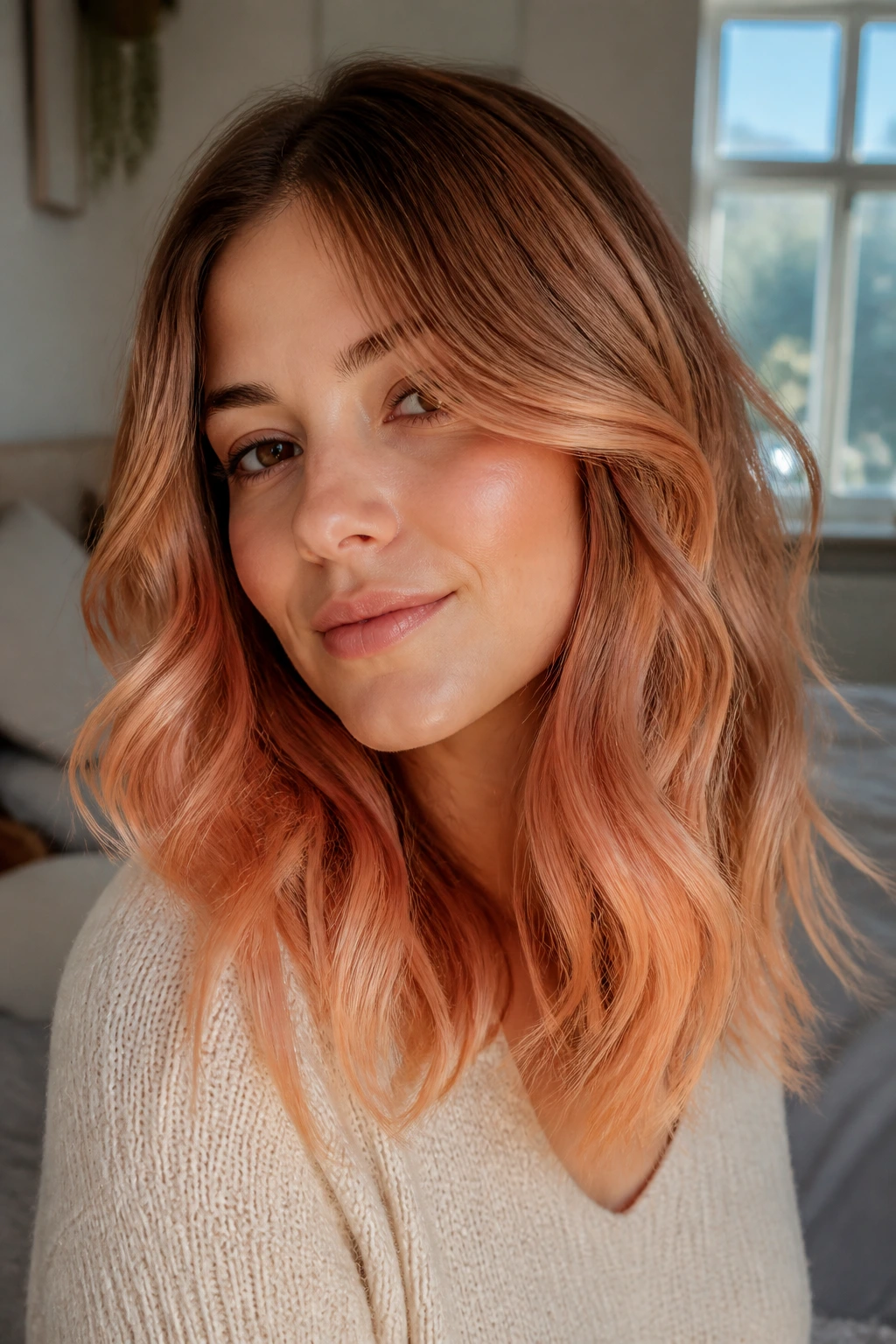
Peach apricot is one of the prettiest ways to warm up a golden brown base without making the hair look orange. The fade starts in a familiar brown-gold lane, then slips into a soft peach that reads fresh, not sugary. It’s a nice option if you want color that feels playful but not teenage-bright.
This one works best when the peach is filtered through beige. That little bit of beige keeps the tone from going candy-colored. I’d choose it for medium-length hair with loose texture, because the movement helps the peach show up in flashes instead of all at once.
If your skin tone loves warm blushes and soft corals, this ombré is worth a look. It has that same friendly warmth.
12. Bronde with Barely-There Ends
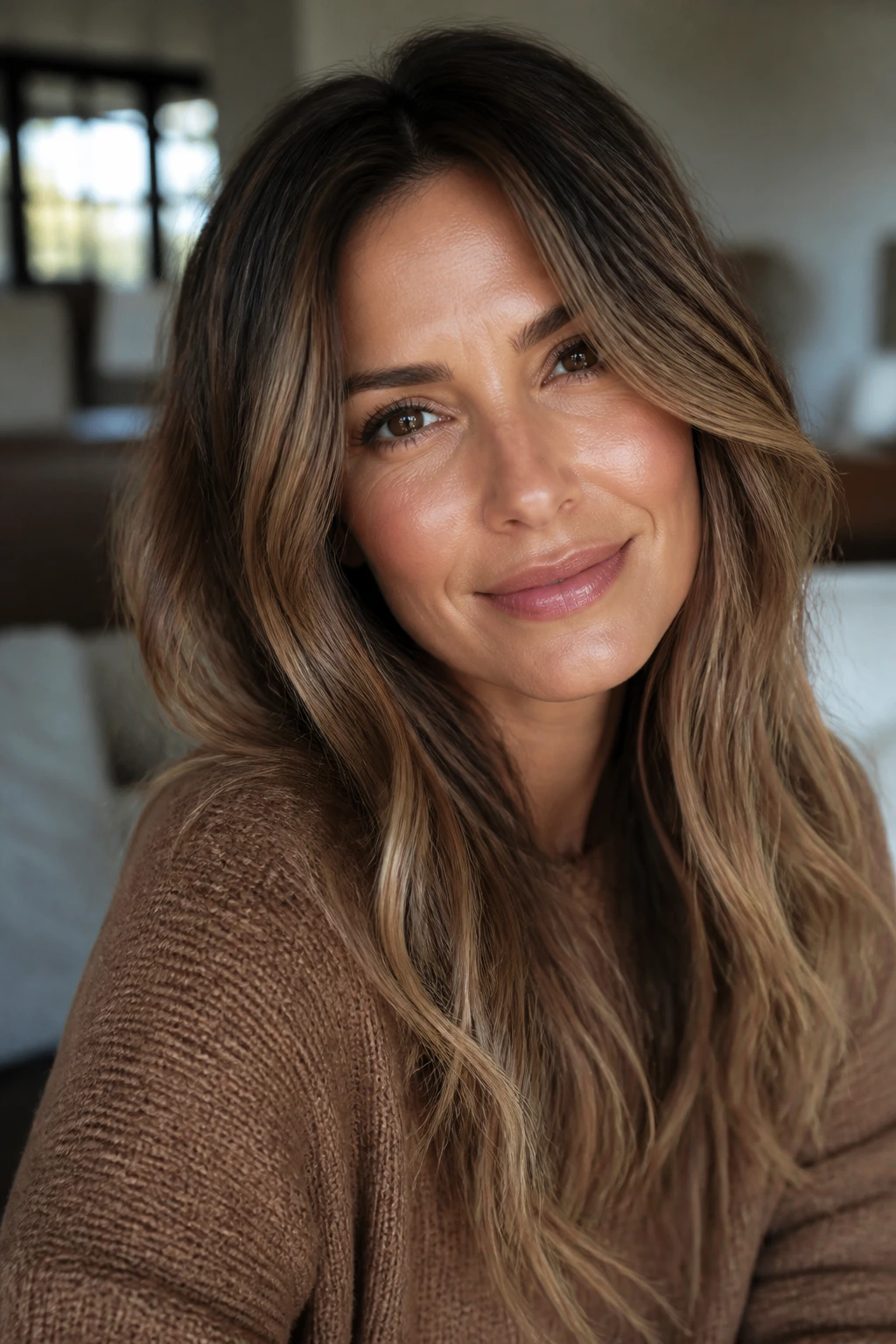
Some ombré ideas are about impact. This one is about restraint. Bronde with barely-there ends keeps the whole color story within a tiny range, so you get the illusion of lightness without a dramatic shift. The roots stay brunette, the mids turn beige-brown, and the ends are maybe one level lighter than that.
That tiny difference is why this fade looks expensive. It doesn’t announce itself. It settles in.
This is the one I’d hand to someone who works in a conservative setting, hates obvious regrowth, or just wants their hair to look a bit more lifted without crossing into “highlighted” territory. It’s also a smart pick for anyone whose hair gets brassy too easily. Less contrast means fewer fights with toner.
13. Midnight Brown to Burgundy Wine
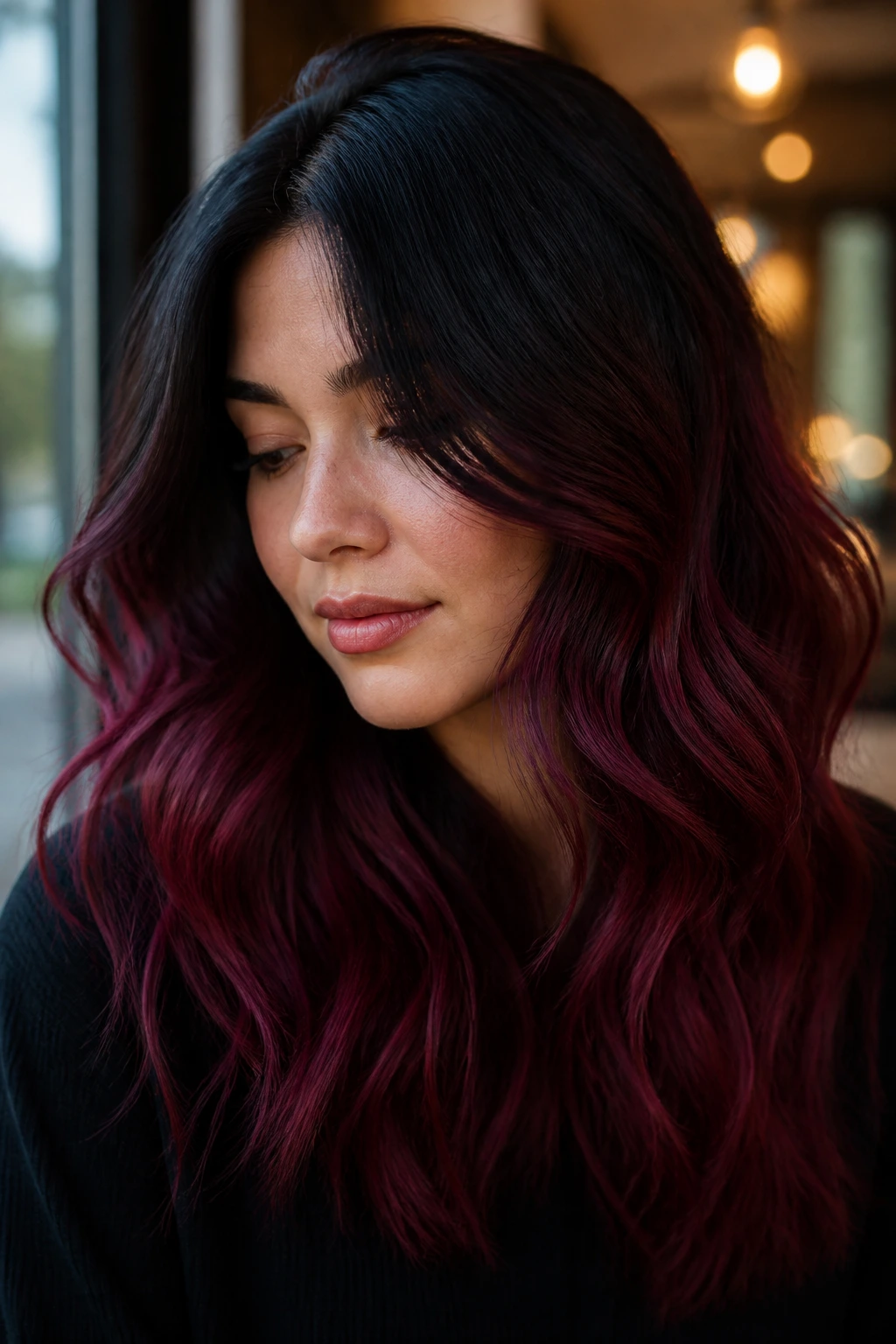
Midnight brown to burgundy wine is what I reach for when a client wants richness instead of brightness. The root sits deep and cool, almost black in low light, then the burgundy wine opens up through the lower lengths with a velvet finish. It looks elegant in motion and slightly mysterious when the hair is still.
The fade works because burgundy is still dark enough to belong to the base color. You’re not jumping into bright red. You’re just letting a wine tone bloom at the ends. That gives the hair dimension without the hard stop that makes some red ombrés look pasted on.
A tinted gloss helps this color more than a heavy permanent shift does. The fade stays softer, and the wine tone keeps its depth longer.
14. Soft Black to Blue-Black Sheen
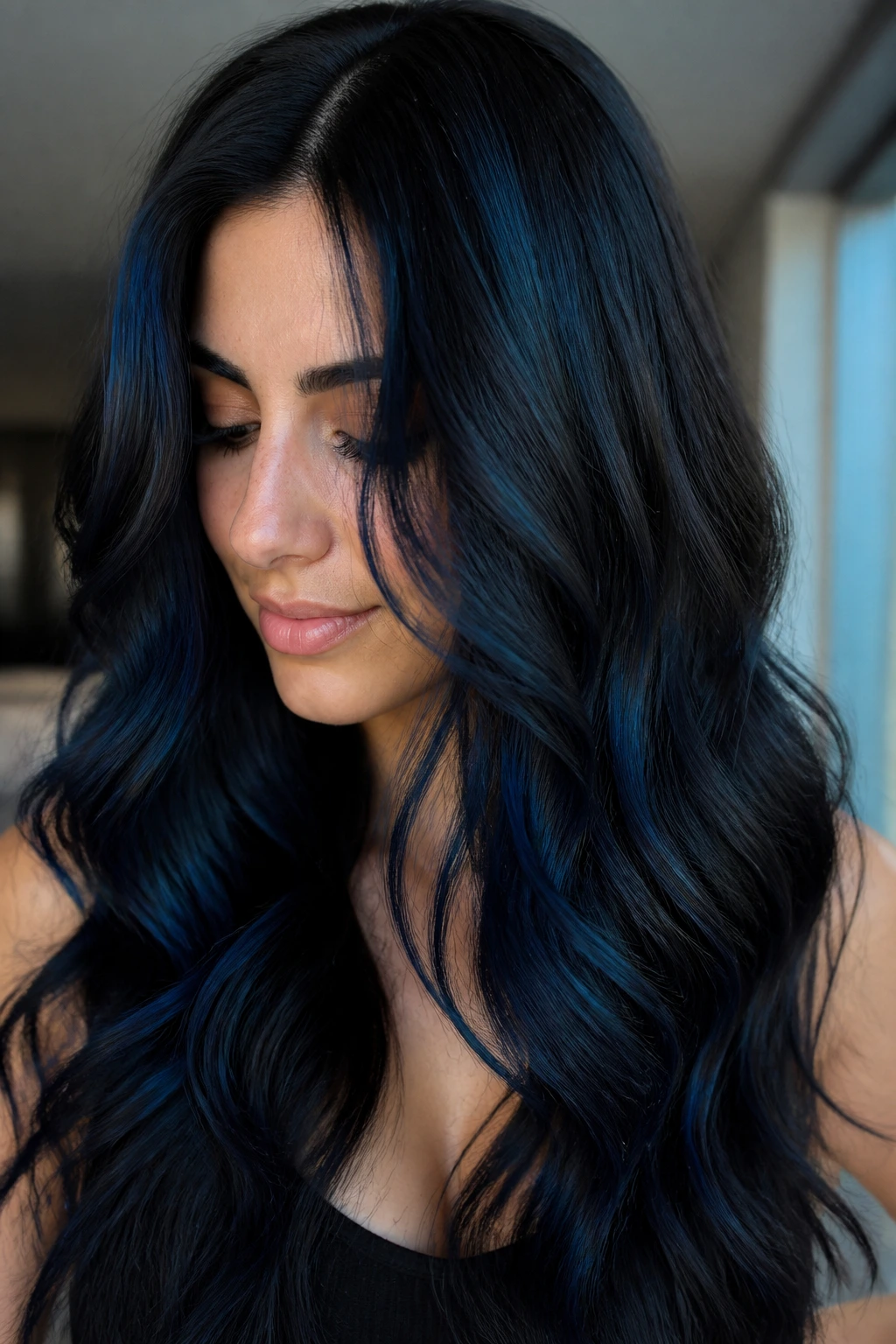
Blue-black can look severe if the whole head is dipped into it. As an ombré, though, it turns into sheen instead of paint. The soft black root keeps the hair grounded, and the blue-black at the ends only shows in certain light. That makes the color feel refined rather than theatrical.
I especially like this on straight or gently waved hair because the gloss shifts as the hair moves. On curls, it creates pockets of shine. Either way, the blue is there, but it whispers.
The key is not bleaching too far. You want a dark-to-darker fade, not a lightening process. A semi-permanent blue-black glaze over a soft black base is often enough to get the effect.
15. Dark Root to Silver Smoke
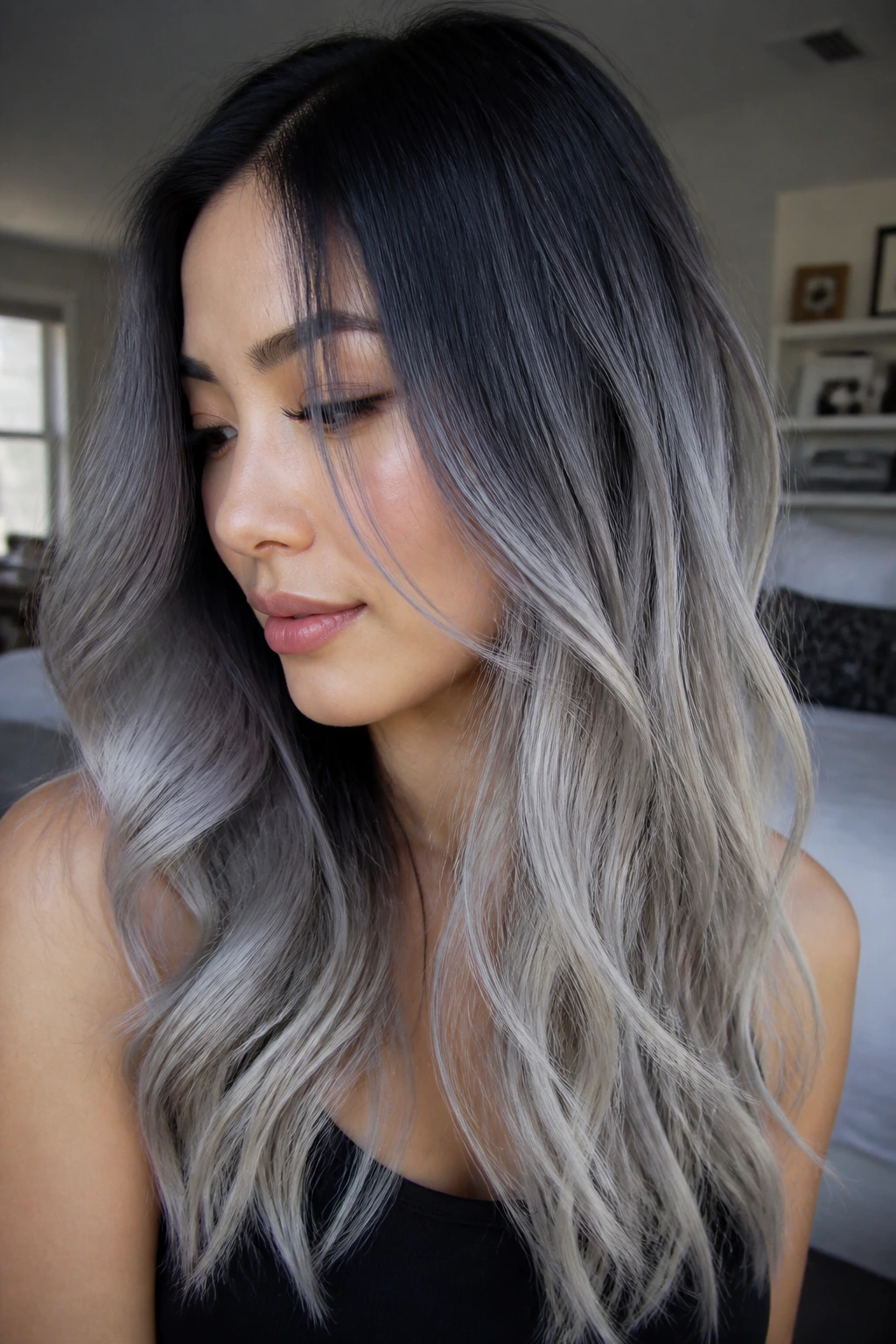
Silver smoke is not the same thing as stark platinum. It’s softer, cooler, and more wearable because it keeps a hint of haze in the color. Pair it with a dark root and the whole look becomes a long, elegant fade instead of a high-contrast stripe.
Why It Doesn’t Feel Harsh
The root shadow does a lot of work here. It lets the silver start lower, where the eye expects the transition. If the root is too crisp, silver can look like it was added separately. Smoky blending keeps that from happening.
- Best on hair that lifts cleanly to pale yellow
- Needs regular toning to stay silvery, not muddy
- Looks strongest on layered cuts with movement
- Can read more pewter than white, which is exactly the softer choice
16. Sandy Blonde to Cream Blonde
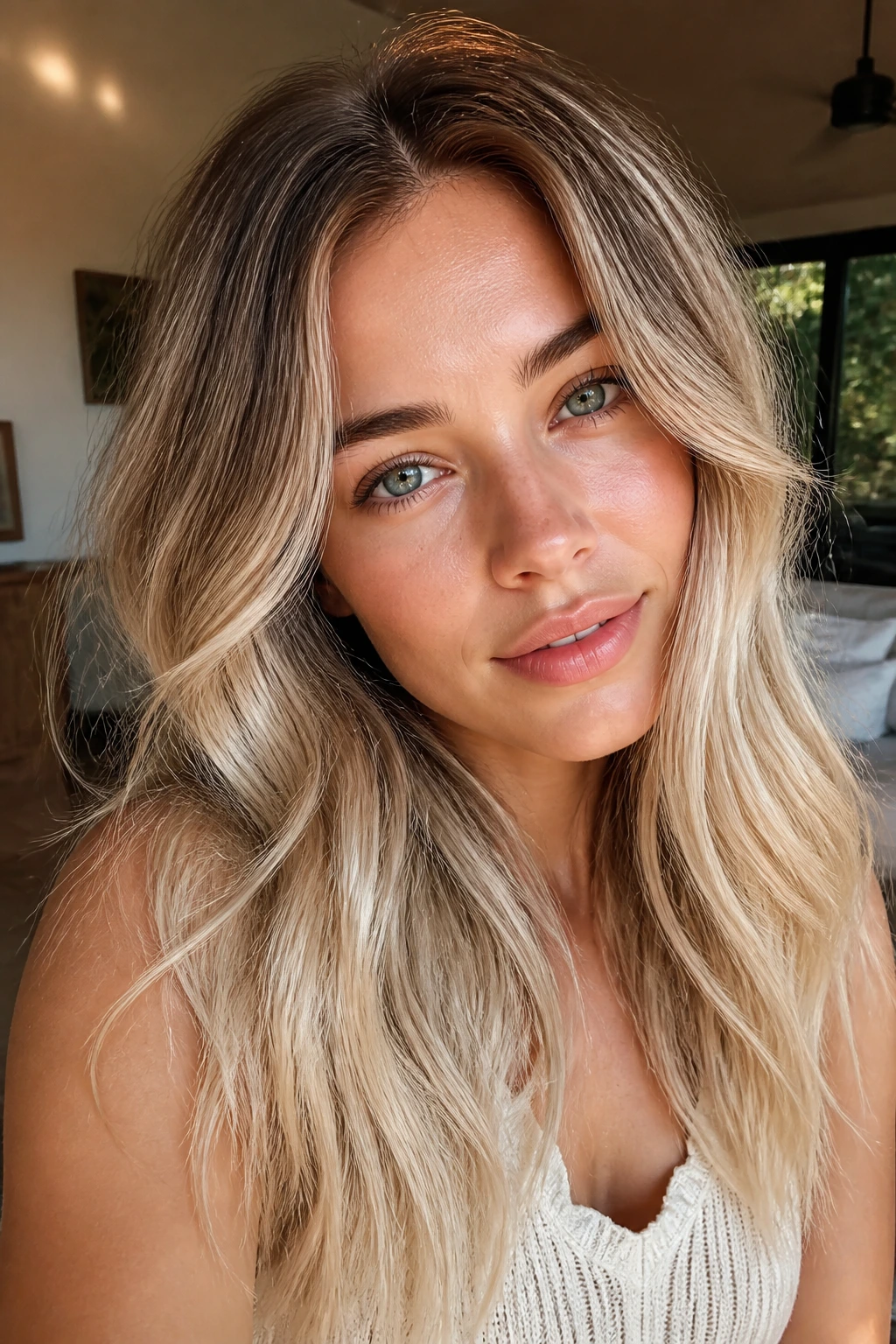
This is the blonde version of a quiet whisper. Sandy blonde at the top gives the hair warmth and body, then cream blonde through the ends makes it look brighter without swinging into icy territory. It’s a good fit if you like blonde hair but hate the way some bright blondes flatten the face.
The soft fade is the point. Sandy and cream are close enough to live together, but different enough to keep the hair from feeling one-note. A center part with loose bends usually shows the gradient best.
If your natural color is already light, this is one of the least disruptive ways to change your hair. It keeps the softness while still reading like a real color service, not just a gloss.
17. Beige Blonde to Soft Peach
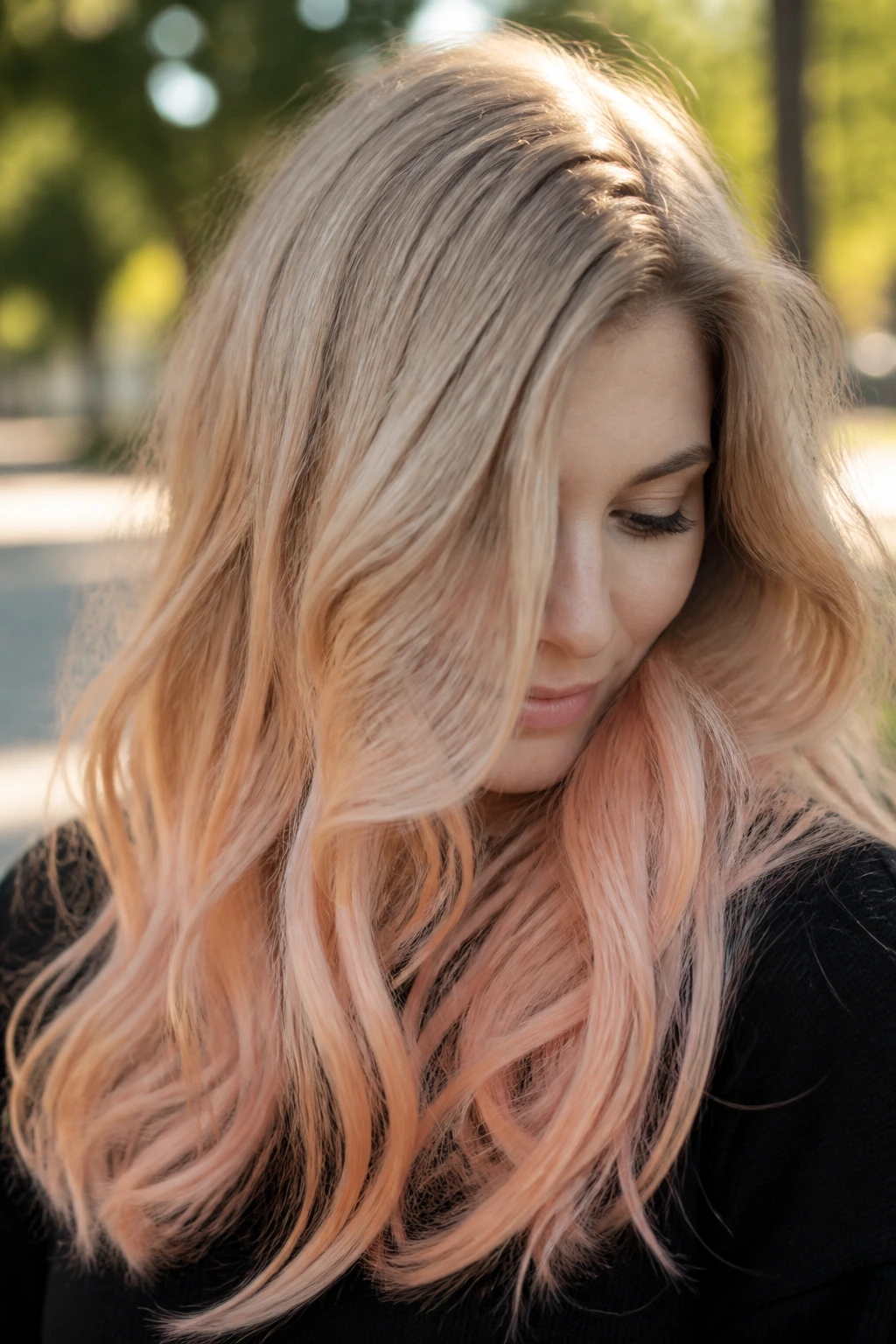
Can pastel ends look grown-up? Absolutely, if the base stays beige and the peach is diluted enough to read like a blush rather than a bubblegum tone. That balance is what keeps this ombré in the “soft fade” family instead of tipping into novelty color.
The beige blonde root zone keeps the face bright and neutral. Then the peach lowers the contrast by warming the ends instead of bleaching them brighter. I like this on hair that’s already pre-lightened or naturally light because the peach can sit on top like a light filter.
This is one of those styles that changes with the light. In daylight, the peach is obvious. Indoors, it turns creamier and softer.
18. Vanilla Blonde with Smudged Root
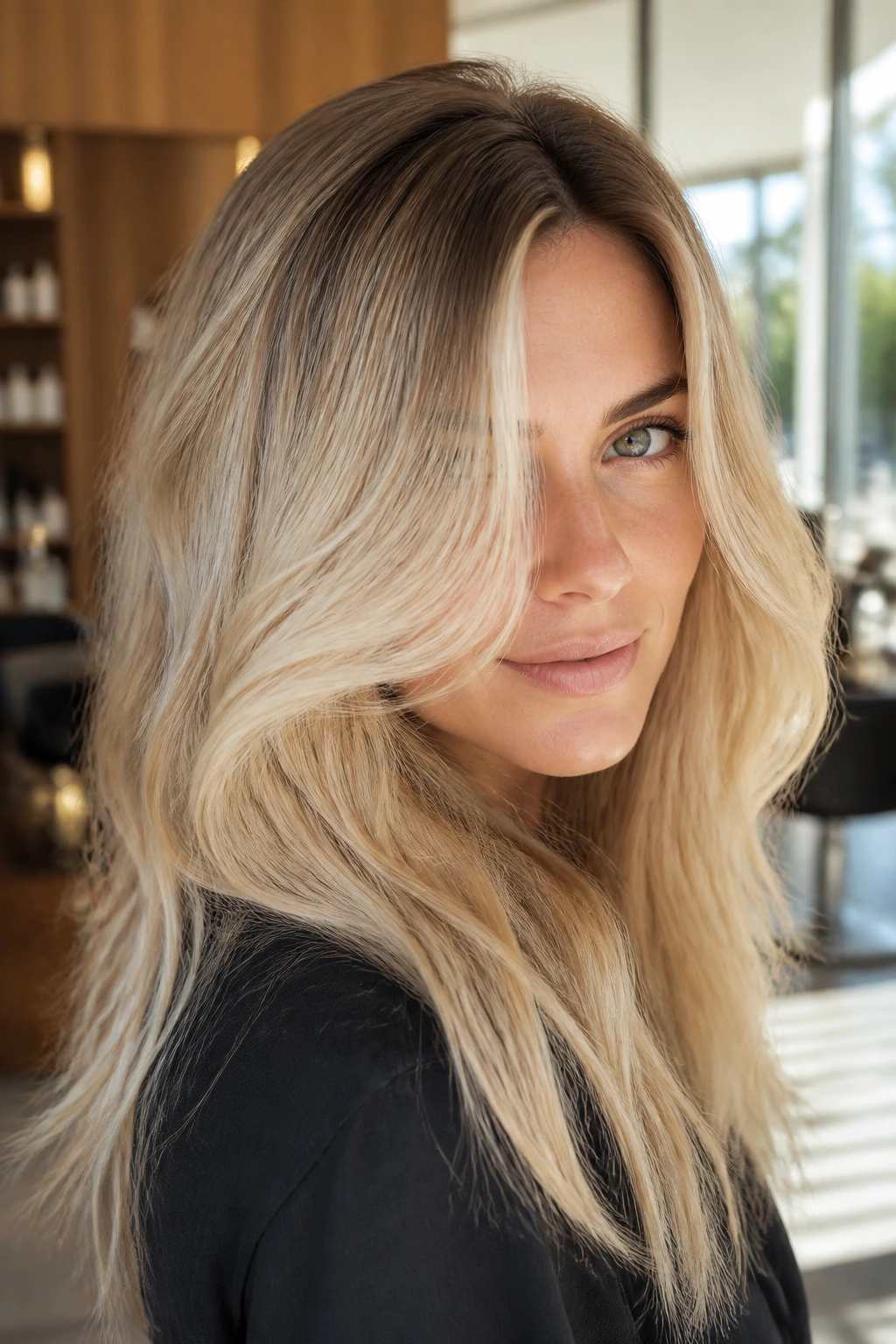
Vanilla blonde with a smudged root is the blunt instrument of soft ombré done right. The root smudge is what makes the whole thing work. Without it, vanilla blonde can feel too bright at the top and too flat at the bottom. With it, the color melts from dark to pale in a way that feels lived-in.
A smudged root also buys you time. That’s not a glamorous detail, but it matters. The grow-out stays gentler, and the line between regrowth and color doesn’t jump out as fast. If you’ve ever had a bright blonde that looked perfect for two weeks and annoying after that, you already know why this matters.
Keep the vanilla tone creamy rather than chalky. A tiny bit of gold makes the finish look healthy instead of dry.
19. Cool Brunette to Lilac Frost
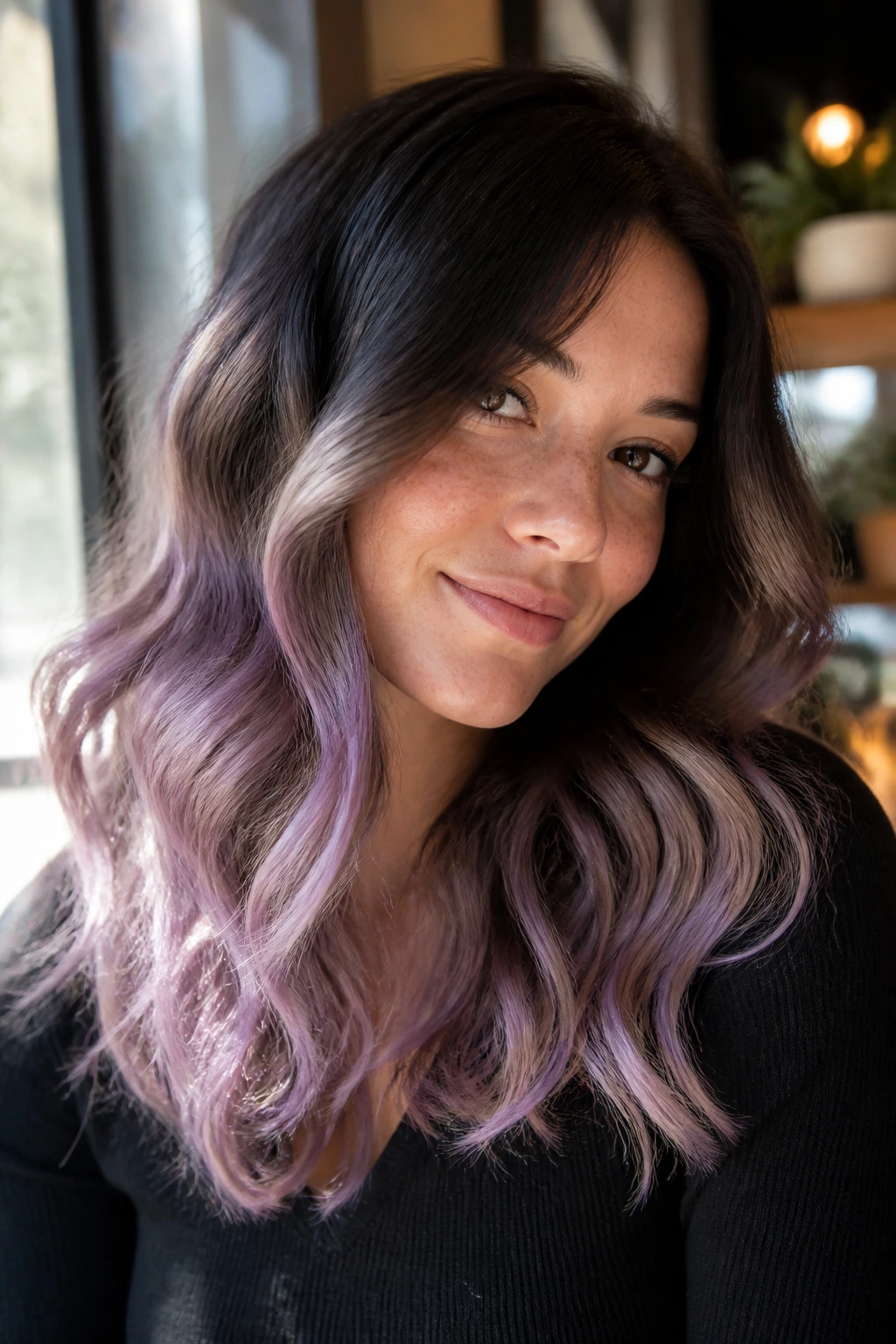
Lilac frost on brunette hair sounds bold, but the soft version is surprisingly wearable. The brunette base keeps the look grounded, and the lilac only appears on the lightest pieces at the bottom, where it turns into a frosty lavender haze instead of a full purple statement.
This is the kind of color that makes the ends feel like they’re catching light in a different way. Not louder. Just different. On textured hair, the lilac can disappear and reappear as the curls move, which is lovely if you like color that doesn’t stay still.
The cooler the brunette base, the easier this fade is to wear. If your hair naturally runs warm, a smoky neutralizer under the lilac helps keep it from turning pastel pink instead.
20. Brunette to Emerald-Tinted Ends
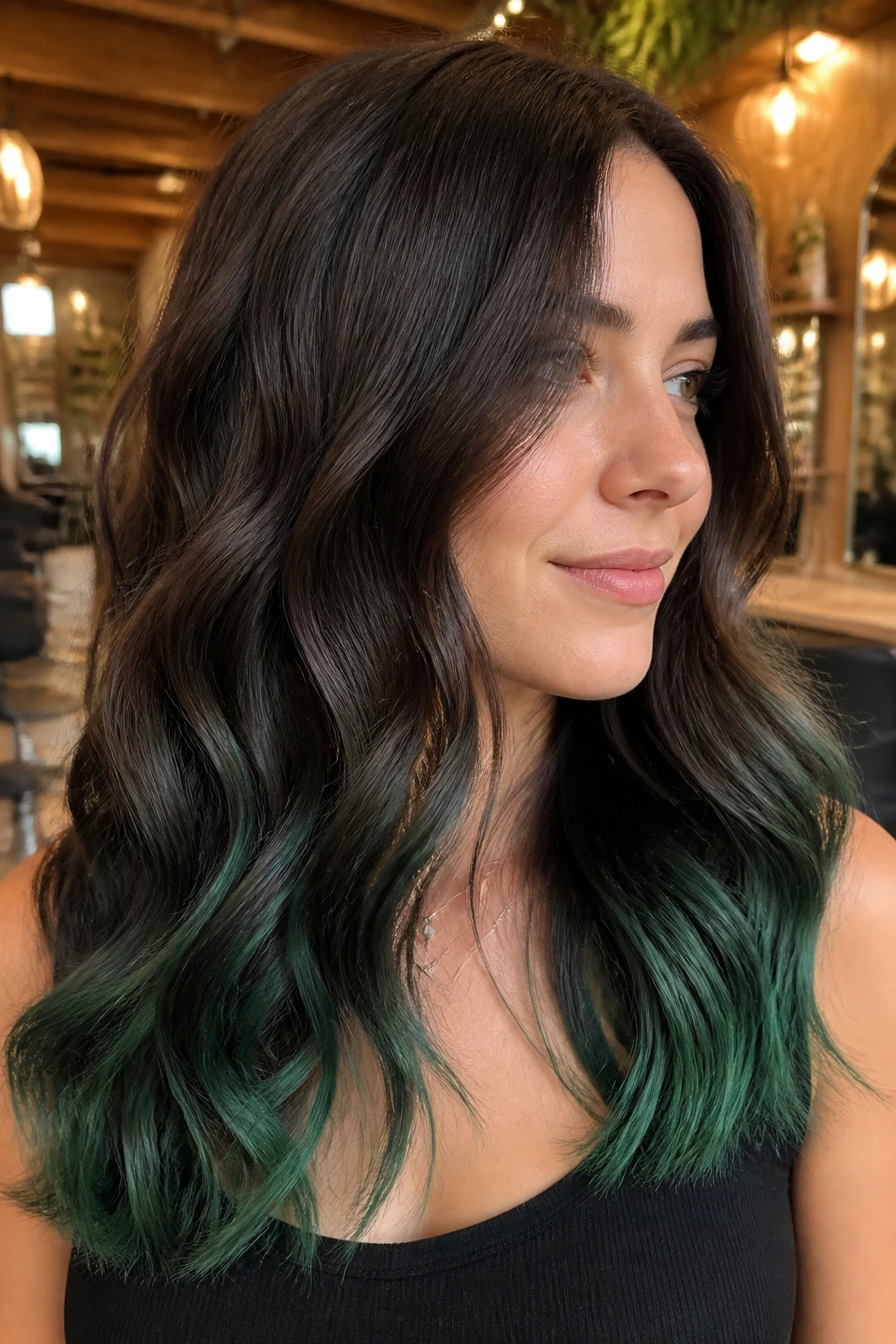
Emerald ends only work when they’re softened down. Full jewel-tone green can be sharp. Emerald-tinted ombré, though, sits in a deep forest lane that feels richer than flashy. On brunette hair, it looks almost like a shadow at first, then the green shows itself in the lower lengths.
That’s what makes this color so good for a soft fade. The contrast is color-based, not brightness-based. You are changing tone more than lightness, and that keeps the whole thing feeling smooth.
If you want a subtle fashion color, this is one of the better options. The base can stay dark, the ends stay deep, and the green still reads clearly enough to be intentional.
21. Cocoa to Mink and Mushroom Blend
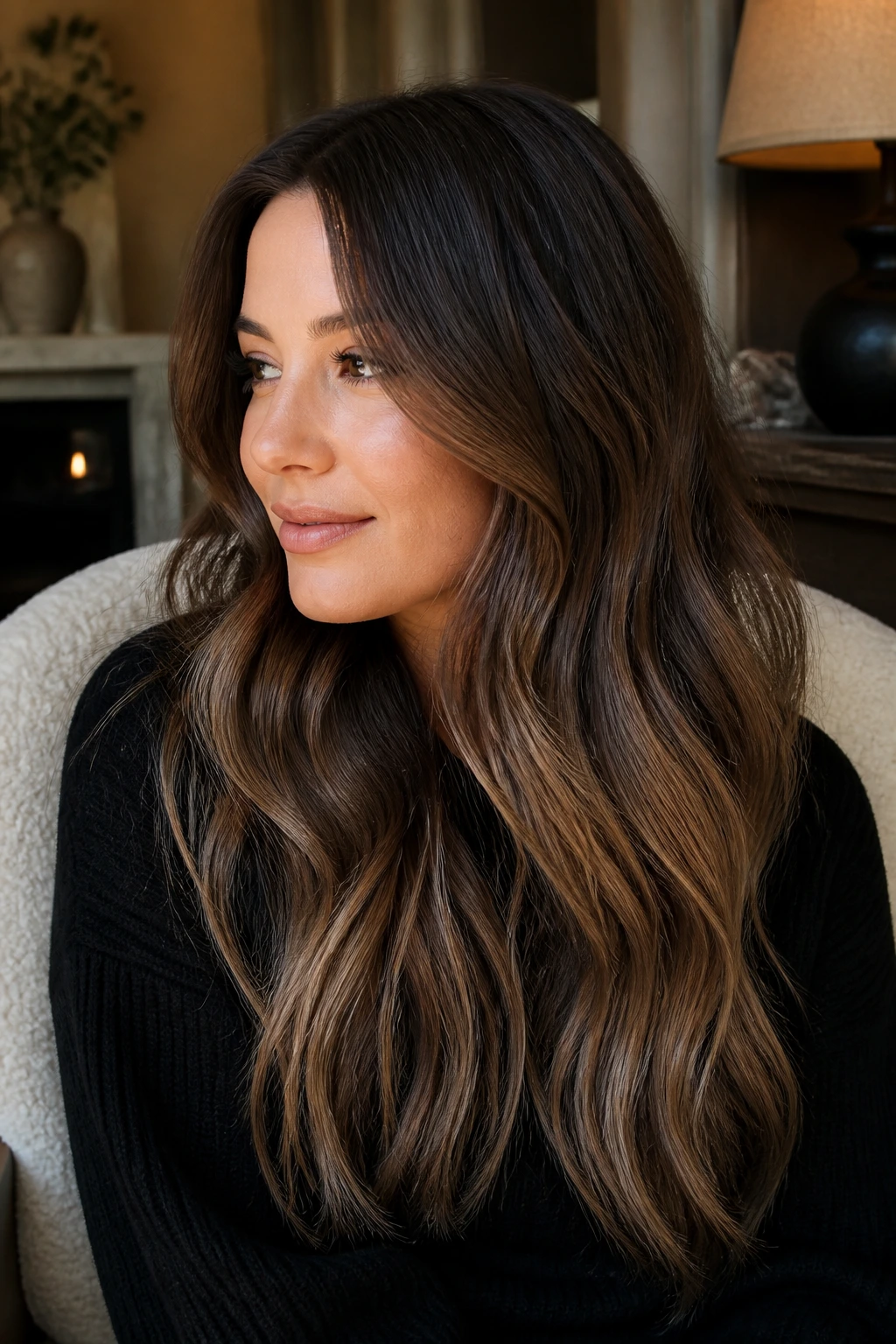
A single end shade can be too neat sometimes. A cocoa base with mink and mushroom through the ends gives you a blended, multi-tone fade that feels a little richer. The colors are all in the same muted family, but each one pulls the hair in a slightly different direction: cocoa for warmth, mink for depth, mushroom for coolness.
That mix is useful on thicker hair because it keeps the ends from looking like one flat curtain. It also works on naturally wavy or curly textures where the curl pattern breaks up the tones. You get movement without obvious highlights.
If you’re not sure whether you want warm or cool, this is the safest compromise. It doesn’t force a choice.
22. Chestnut to Rose Gold Dust
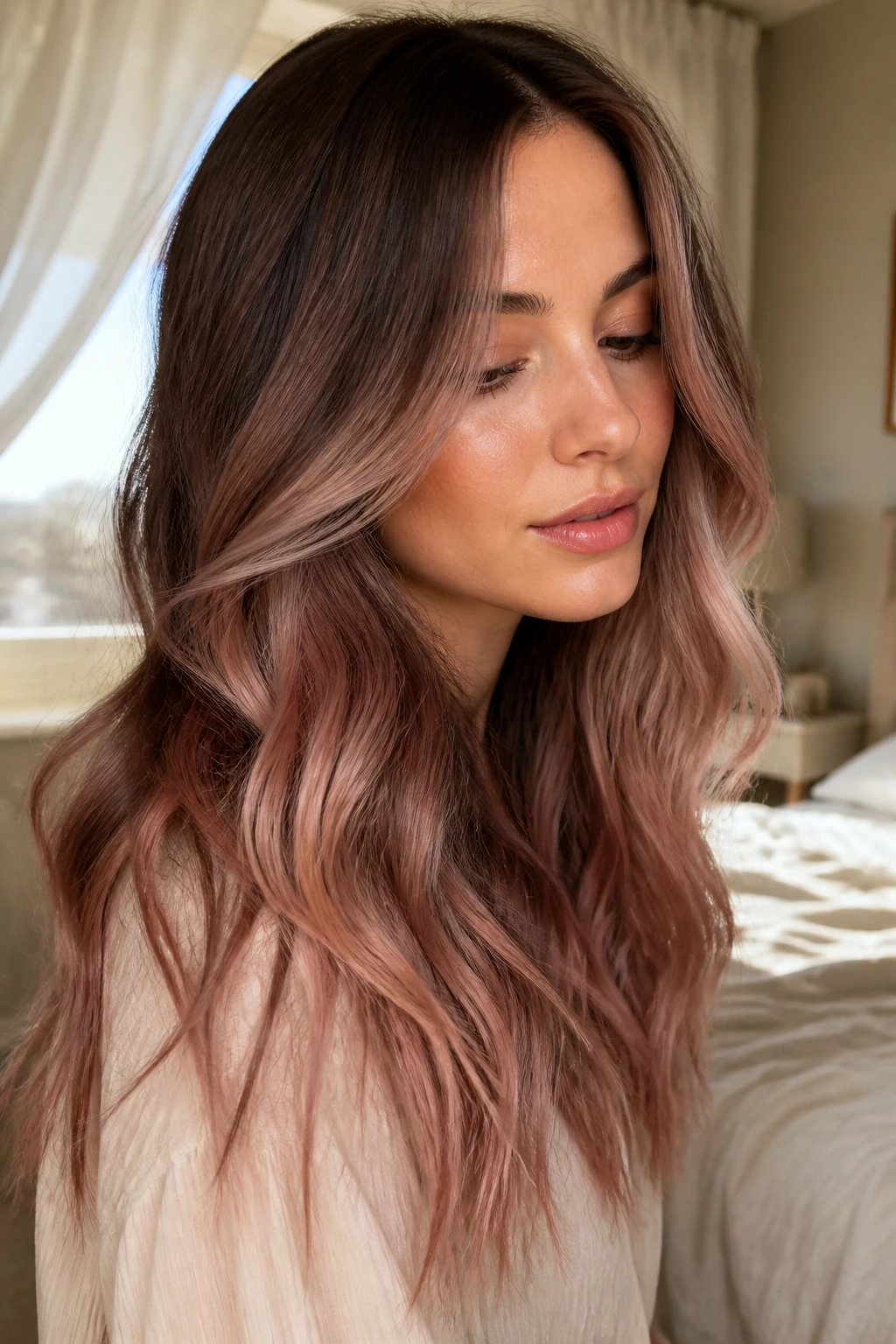
Rose gold can become precious-metal loud in a hurry. Dust it down, and it turns into a soft, flattering fade instead. Chestnut at the roots gives the hair a grounded brown-red base, and rose gold dust at the ends adds a faint metallic warmth that catches light without shouting for it.
This one flatters medium to light brown hair especially well. The rose tone doesn’t need to be saturated; in fact, the softer it is, the better it reads. Think of it as a tint over blonde, not a full pink dye.
A loose wave makes the rose-gold hints visible in the most flattering way. Straight hair shows more of the transition, but the waves give the color some breathing room.
23. Taupe Brown to Oyster Blonde
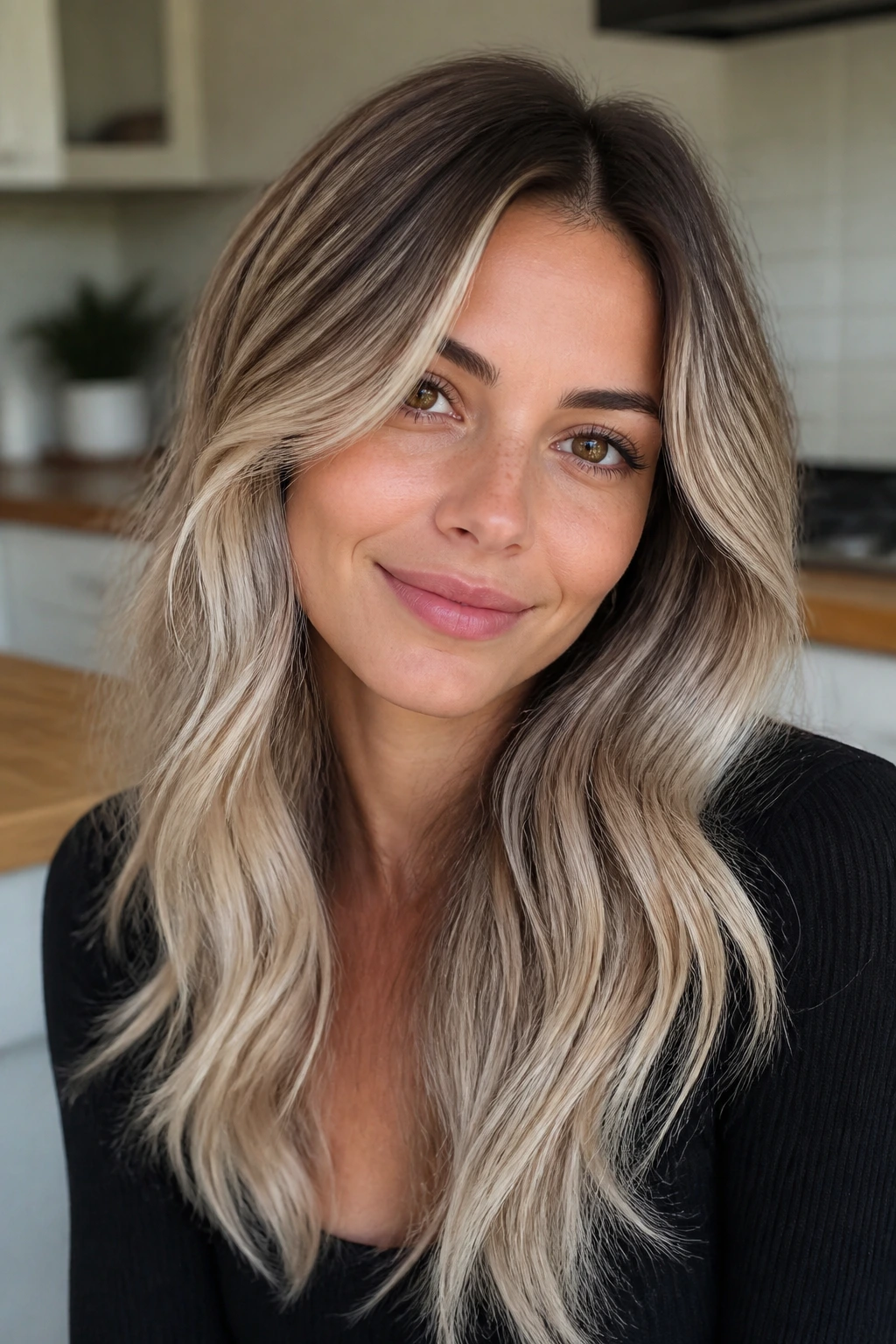
Taupe and oyster are the quietest blonde pair in the bunch, and I mean that as praise. Taupe brown keeps the root zone smoky and neutral, then oyster blonde opens the ends into a pale beige-silver finish that feels cool without becoming stark. The fade is delicate, not invisible.
It’s a strong choice if you like understated color that still looks like actual coloring work. The contrast is subtle enough to stay soft, but the shift is still there when you move the hair. That matters. An ombré should have a shape, not just a mood.
If your hair tends to pull yellow, oyster blonde is prettier than a flat white because it forgives a little warmth.
24. Dark Brunette to Champagne Beige
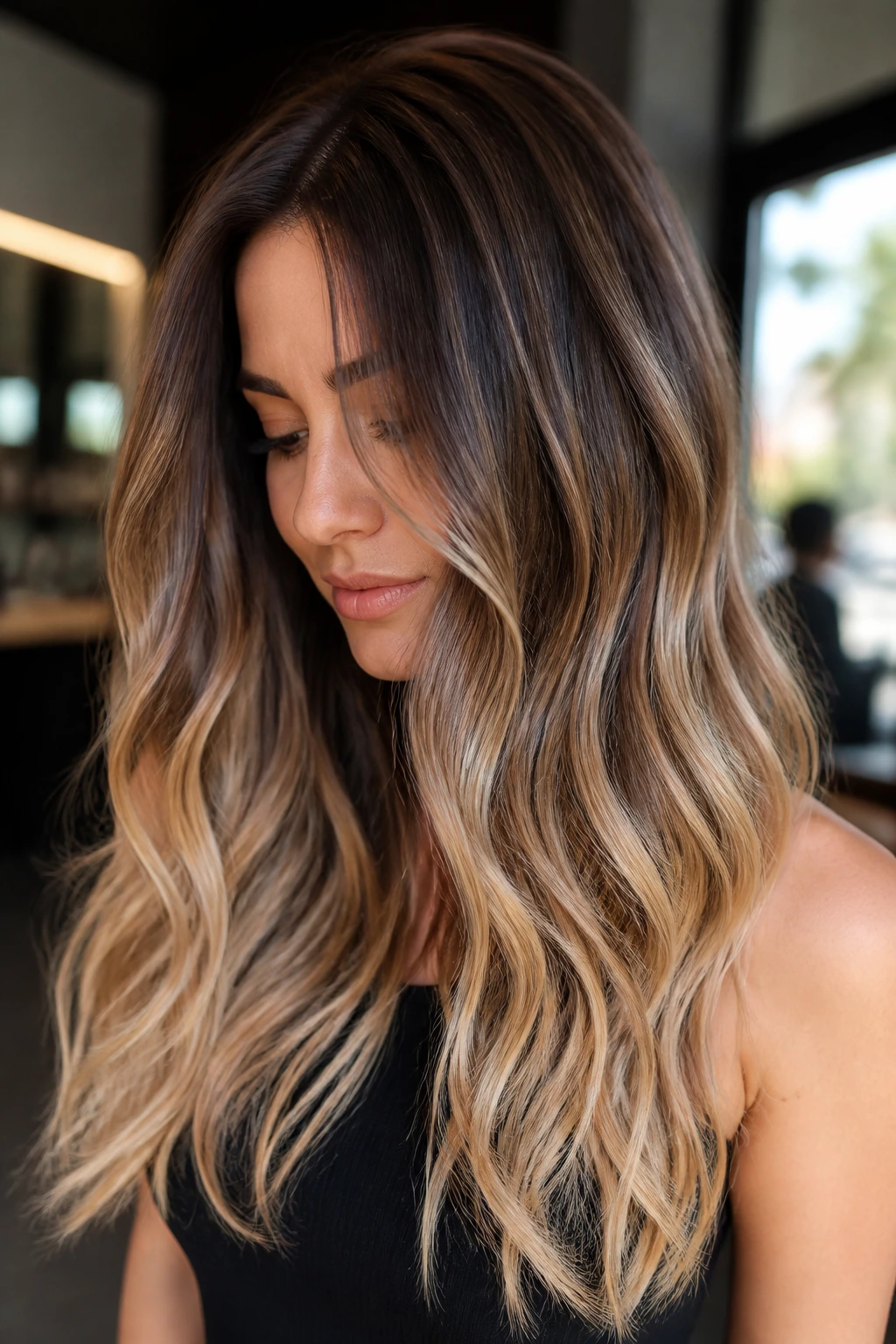
This is the polished brunette-to-blonde fade. Champagne beige gives you brightness at the ends, but the beige keeps the tone from going brassy or cold. It’s one of those shades that can sit between office-friendly and weekend-glam without changing anything else in the haircut.
A darker brunette root keeps the upper half solid, which helps the blonde feel brighter by contrast. The soft fade happens because champagne beige is more filtered than raw blonde. The result looks smooth from a few feet away and detailed when you get close.
I’d choose this one for long waves or layered blowouts. Straight and sleek works too, but the movement helps the champagne tone sparkle a little.
25. Honey Blonde to Vanilla Cream
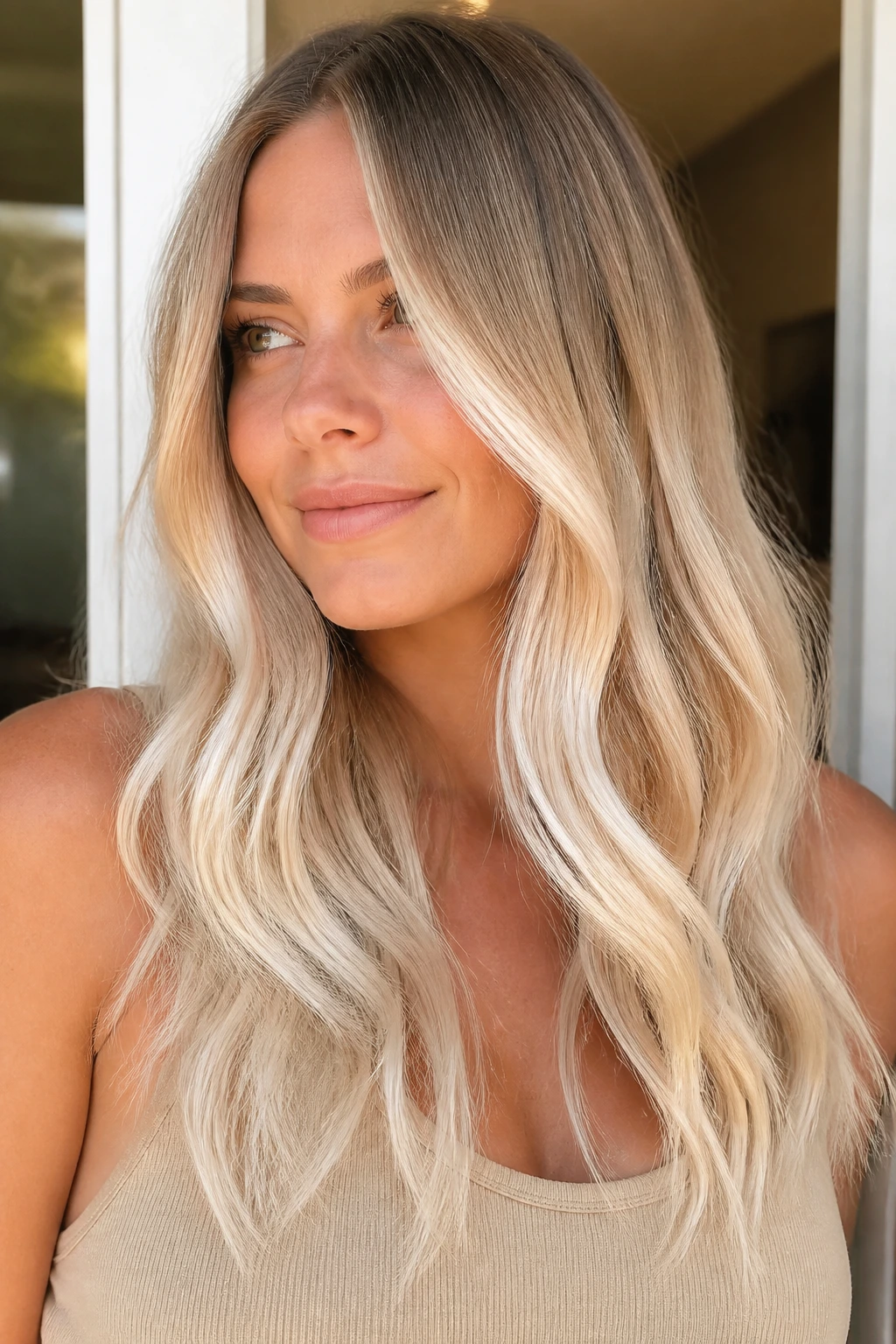
Honey blonde to vanilla cream is the sunnier end of the soft fade spectrum. The honey at the top gives warmth and body, and the vanilla cream through the ends lifts the hair without making it icy. If you want brighter hair but still want the grow-out to behave, this is a smart place to land.
The color transition should be gentle enough that the eye barely catches where honey ends and vanilla begins. That’s the job. Too much contrast and it stops feeling soft. Too little and the ends disappear.
This is especially nice on hair with some natural wave, because the cream ends skim across the surface and keep the whole style looking airy. It is cheerful without being sugary.
Why Soft Ombre Works So Well on Hair
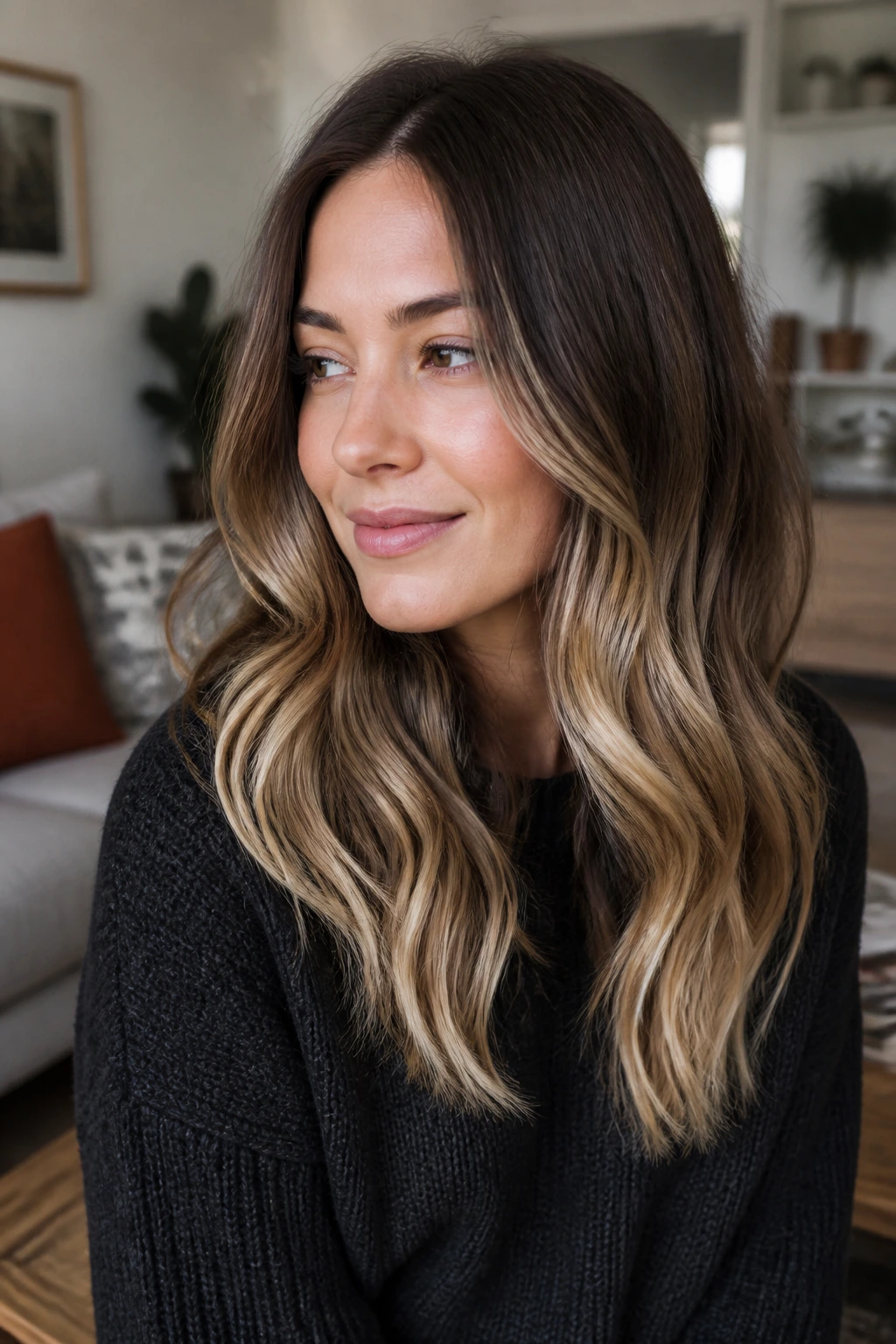
Soft ombré has a practical advantage that gets ignored in all the pretty photos: it doesn’t fight your haircut. When the fade is low-contrast, the color follows the shape of the hair instead of cutting across it. That matters on layered cuts, blunt lobs, long curls, and anything with face-framing pieces.
There’s also a reason the grow-out feels easier. The lower half of the hair is usually older, drier, and a little more porous than the roots. A soft fade uses that to its advantage. You can place the lightest or richest tones where the hair already wants to show movement, then keep the root zone close to natural. The regrowth line stays blurry. It just does.
And the best soft ombré ideas have one thing in common: they respect undertone. If the base is warm, the fade can be caramel, honey, maple, champagne, or peach. If the base is cool, mushroom, ash, pearl, smoke, and taupe make more sense. When those two pieces match, the color looks expensive without needing any dramatic tricks.
Tools That Make a Soft Fade Easier to Ask For and Maintain
-
Inspiration photos in natural light: Phone photos in daylight show tone more honestly than salon lighting or edited images.
-
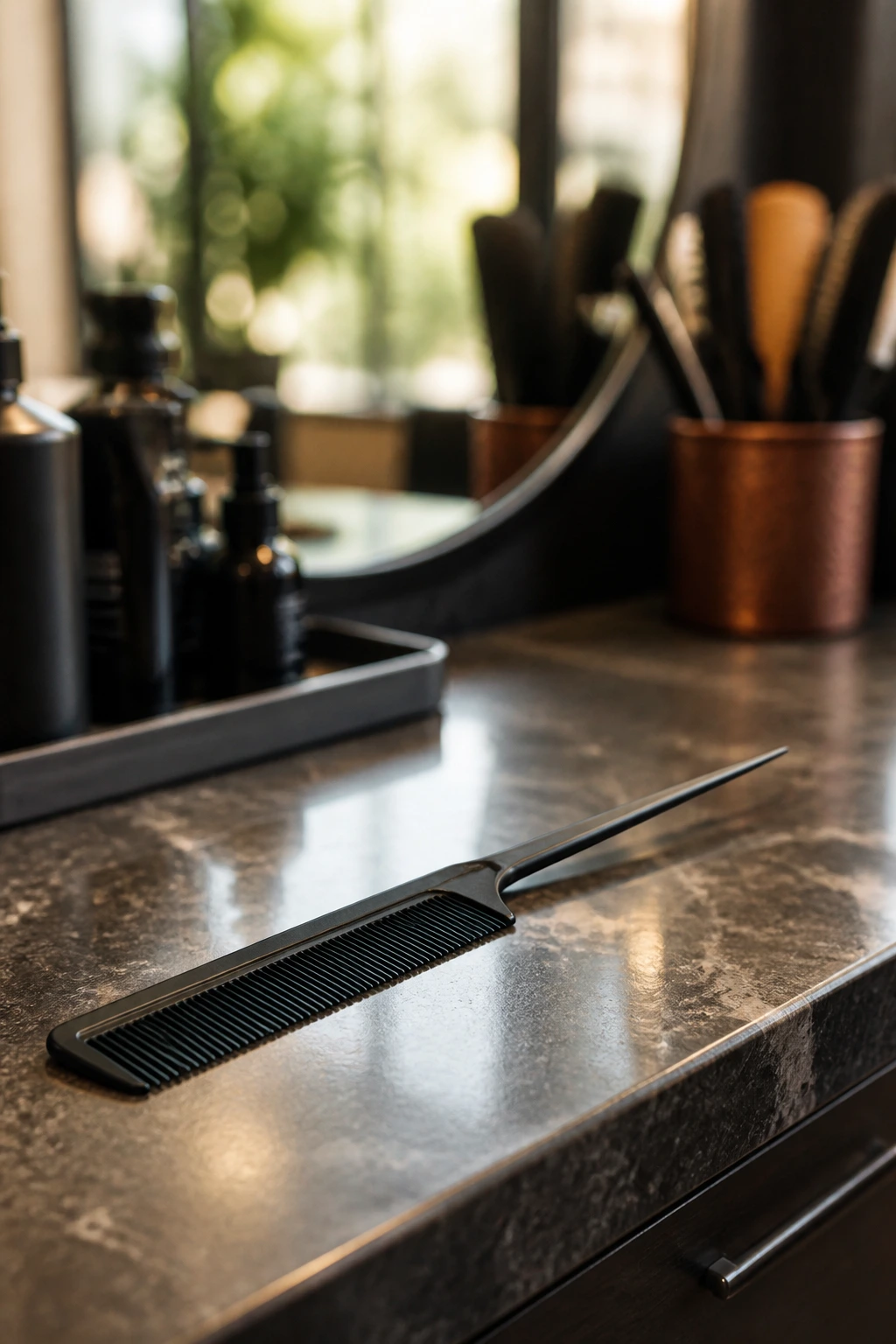
A tail comb: Useful for pointing out where you want the fade to start—usually below the cheekbones or around the lower third of the hair.
-
Sectioning clips: They help separate the top from the ends so the transition stays even and not patchy.
-
Tint brush and bowl: Handy if you’re doing a gloss or color-refresh service at home, though a salon colorist will already have these.
-
Foils or a balayage board: Not always needed, but they help control saturation when you want the ends lighter without pushing the color too high.
-
Color-safe shampoo and conditioner: Non-negotiable if you want the fade to stay soft instead of washed out in ten shampoo sessions.
-
Purple or blue shampoo: Purple is better for blonde and beige ends; blue is more useful for brown hair that likes to turn orange.
-
Heat protectant spray: Soft ombré looks best when the ends stay smooth, and hot tools can rough up toned hair fast.
-
Leave-in conditioner: Especially good for porous ends that need slip and shine after lightening.
Choosing the Right Shade Family for Your Base Color
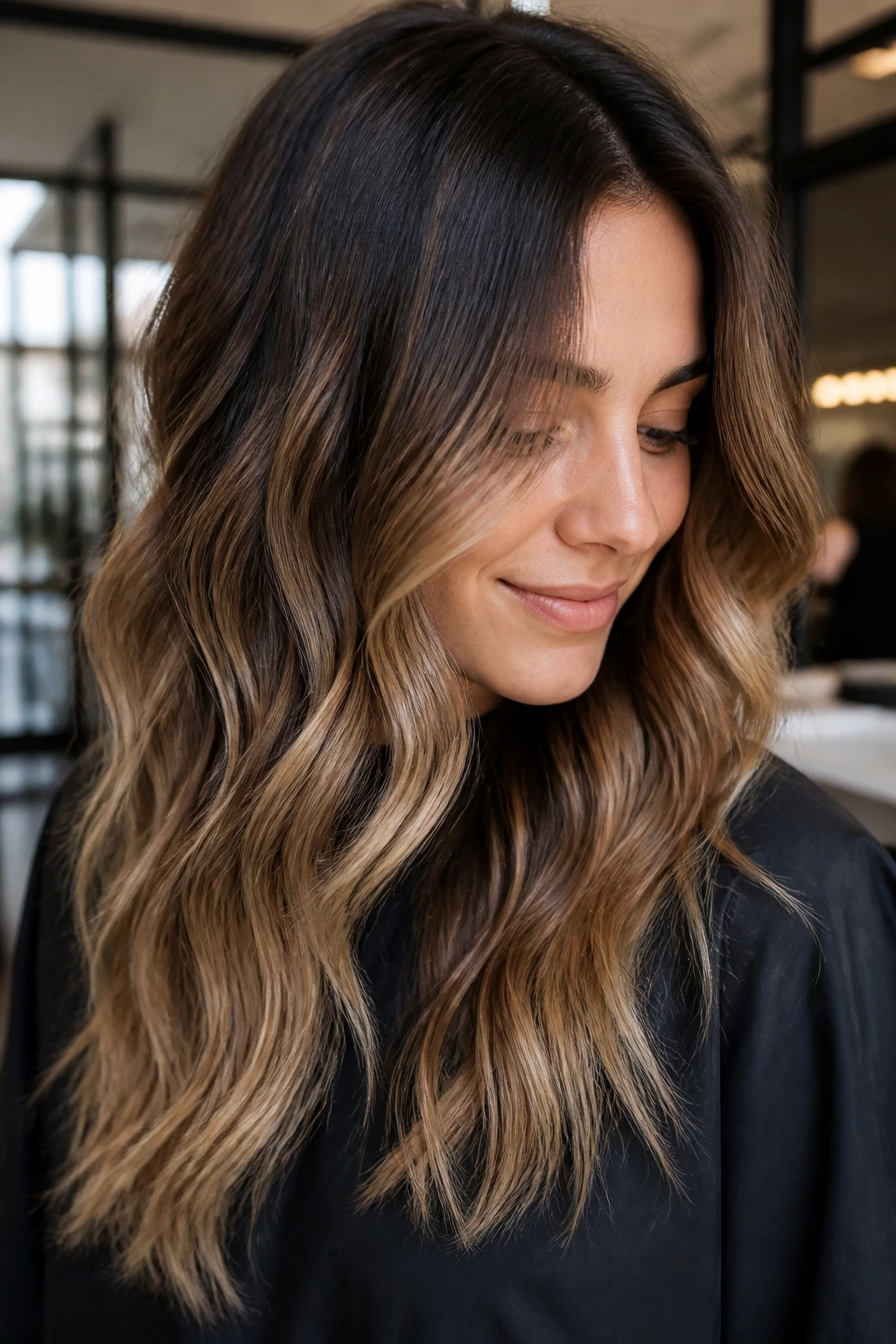
A soft fade works best when the end color looks like it belongs to the root color family, just one or two steps away. If your base is a level 3 or 4 brunette, caramel, toffee, honey almond, burgundy wine, and smoky beige are usually safer than bright blonde. They sit close enough to your natural depth that the transition feels natural, even when the color is clearly intentional.
If your base is around a level 5 or 6, you’ve got more room. That’s where mushroom blonde, champagne beige, taupe, pearl, and beige blonde start to make sense. These shades keep the ombré soft because the contrast stays moderate. You don’t need a giant leap to make the ends visible.
Very light bases are a different story. If your hair is already blonde, the soft fade may come from tone rather than lightness. Vanilla cream, oyster, peach, lilac frost, or silver smoke can shift the finish without forcing the ends to go much lighter. That’s usually the cleaner route. It keeps the hair from getting overprocessed just to create a dramatic idea that looked better on someone else’s head.
How to Wear Soft Ombre So the Blend Shows Up
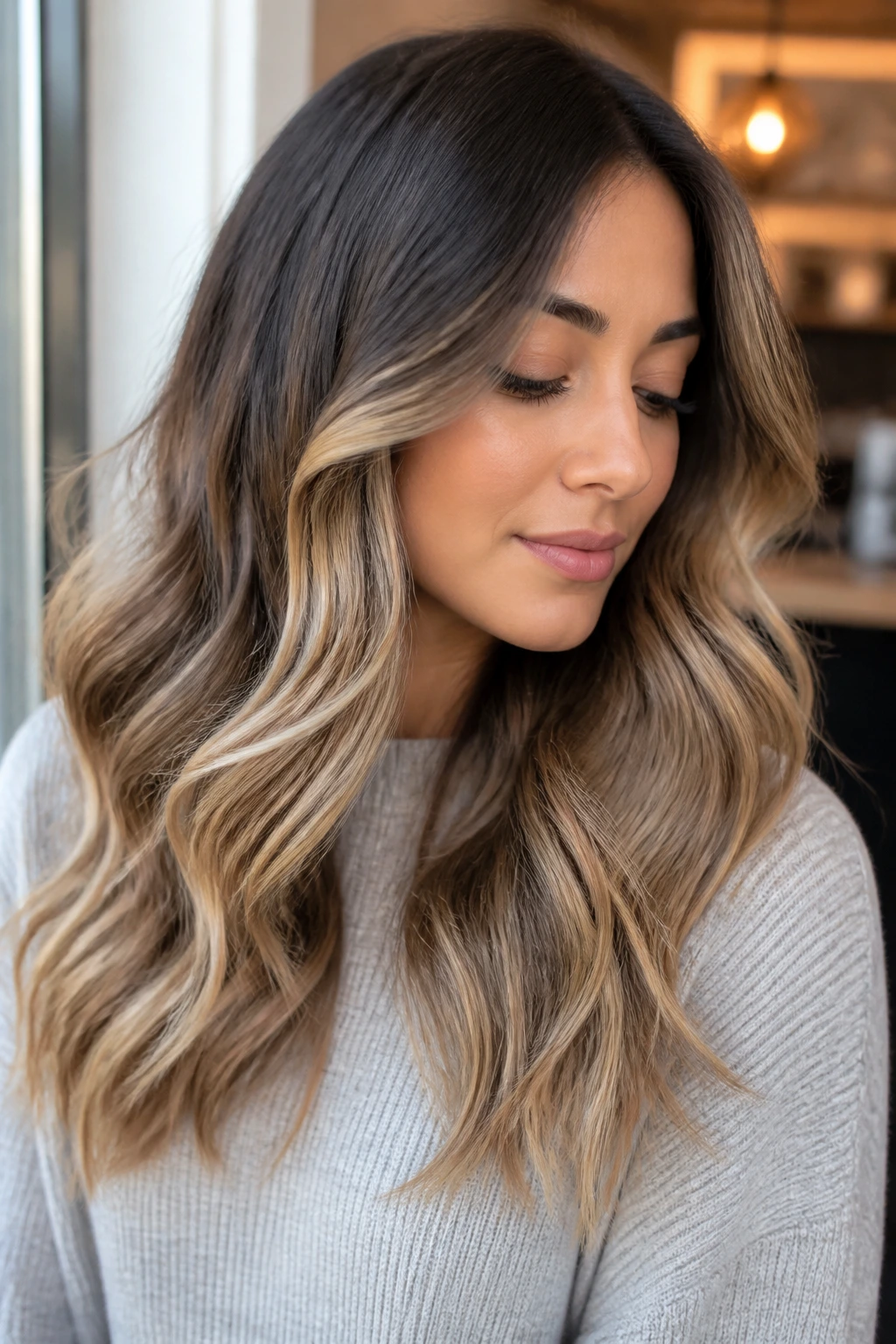
Loose Waves: A 1.25-inch curling iron or a large round brush brings out the melt between shades because the bends catch the transition at different points. You do not need tight curls. In fact, tight curls can hide the fade.
Straight and Sleek: This is the best way to show exact placement. Run a smoothing serum only through the mid-lengths and ends so the tone looks glossy, not greasy. A flat finish makes the ombré line easier to read.
Braids and Half-Ups: These styles are useful when you want the lower color to peek through without taking over. A loose braid shows off the shift in pieces, while a half-up knot leaves the ends visible.
Air-Dried Texture: On curly and wavy hair, the fade usually looks softer when you let the hair dry with a leave-in cream or mousse. The color breaks up naturally, and that fuzziness is your friend here.
Extra Gloss, Tone, and Shine Tricks
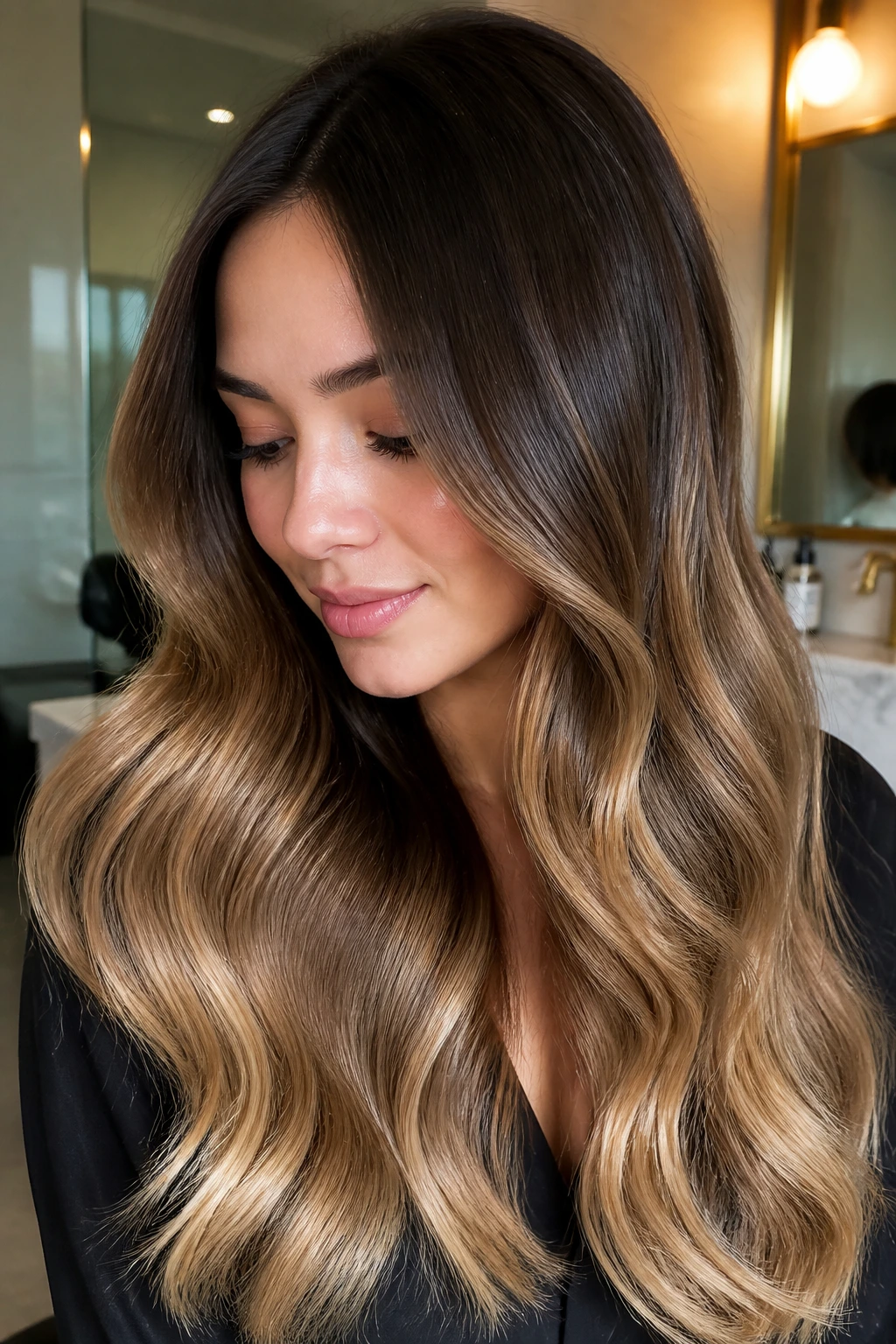
Color Boost: A clear or tinted gloss every 4 to 8 weeks keeps the ends from looking dry or chalky. For blondes, a beige or pearl glaze helps; for brunettes, a caramel, mushroom, or smoky gloss keeps warmth under control.
Customization: If you want more contrast, deepen the root shadow by half a level and keep the ends the same. If you want less contrast, stay within one level of your natural base and let the tone do the work. Small changes make a big visual difference.
Serving Suggestions: Think of face-framing pieces, a soft curtain bang, or a few light bends at the ends as the “finish.” They pull the eye to the blend without forcing the whole head to be bright.
Make-It-Yours: Fine hair usually looks fuller with lighter ends that stop before the very tips. Thick hair often benefits from a deeper root and a larger tone shift, because the extra density can swallow subtle color.
Common Mistakes That Make Ombre Look Harsh
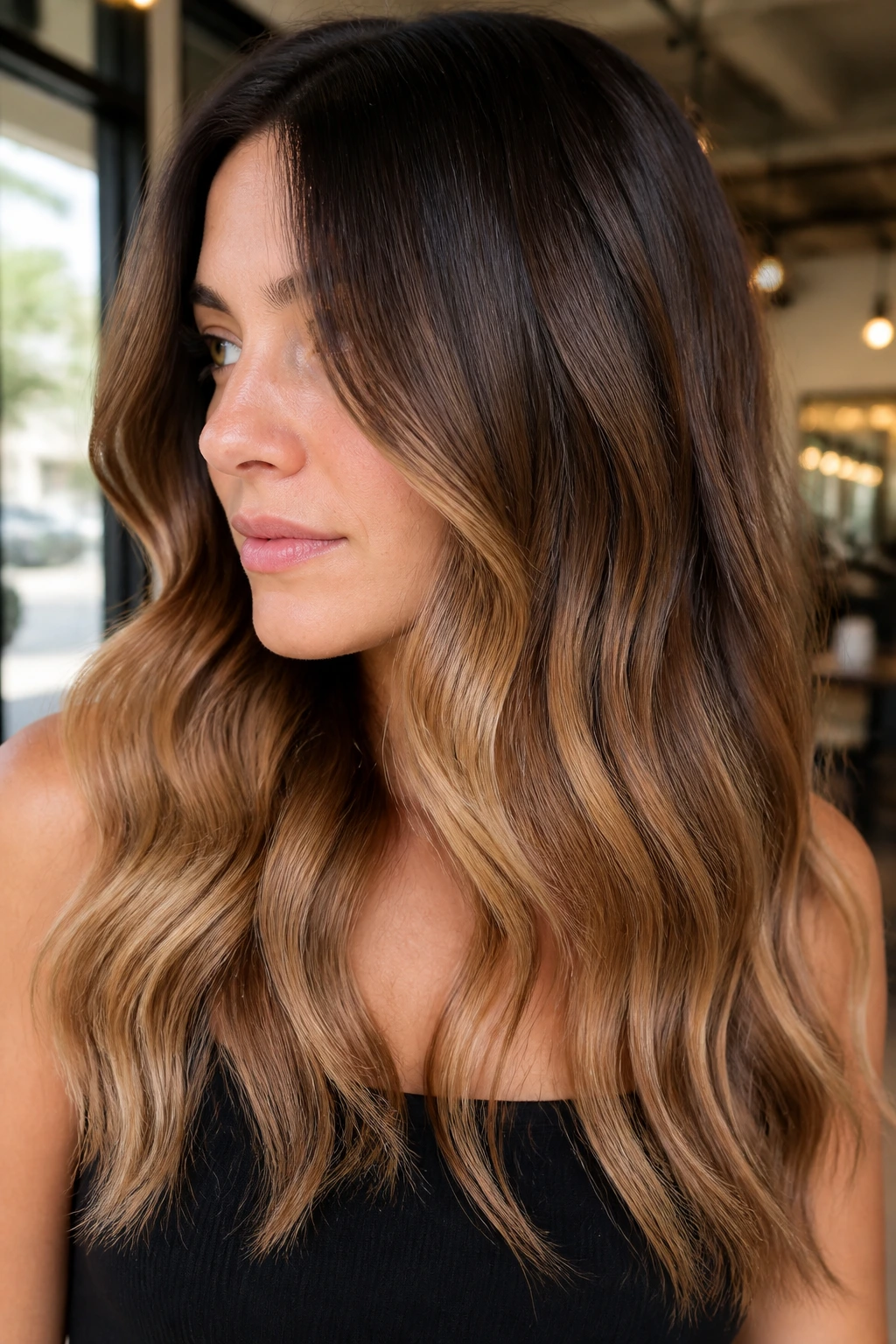
The biggest mistake is chasing too much contrast. If the roots are deep brunette and the ends jump straight to pale blonde, the fade stops being soft and starts looking split in two. The fix is simple: keep the shift within a believable range, or soften the middle with a glossed mid-tone.
Another problem is lifting the lightener too high. When the pale section starts at the temples or above, the whole look can read like grown-out highlights instead of ombré. Ask for the transition to begin lower, usually below the cheekbones, so the eye sees a gradient rather than a stripe.
Tone gets ignored more than it should. Yellow ends on brunette hair look brassy fast; muddy ash on warm hair can make the fade dull. Pick a toner that matches the base family, then keep it refreshed with the right shampoo.
And then there’s over-lightening damaged ends. Fine, porous hair grabs pigment fast, which sounds useful until it turns patchy or hollow. If the ends are fragile, it’s smarter to stop one step earlier and keep the fade soft through tone instead of force.
Keeping the Fade Fresh Between Salon Visits
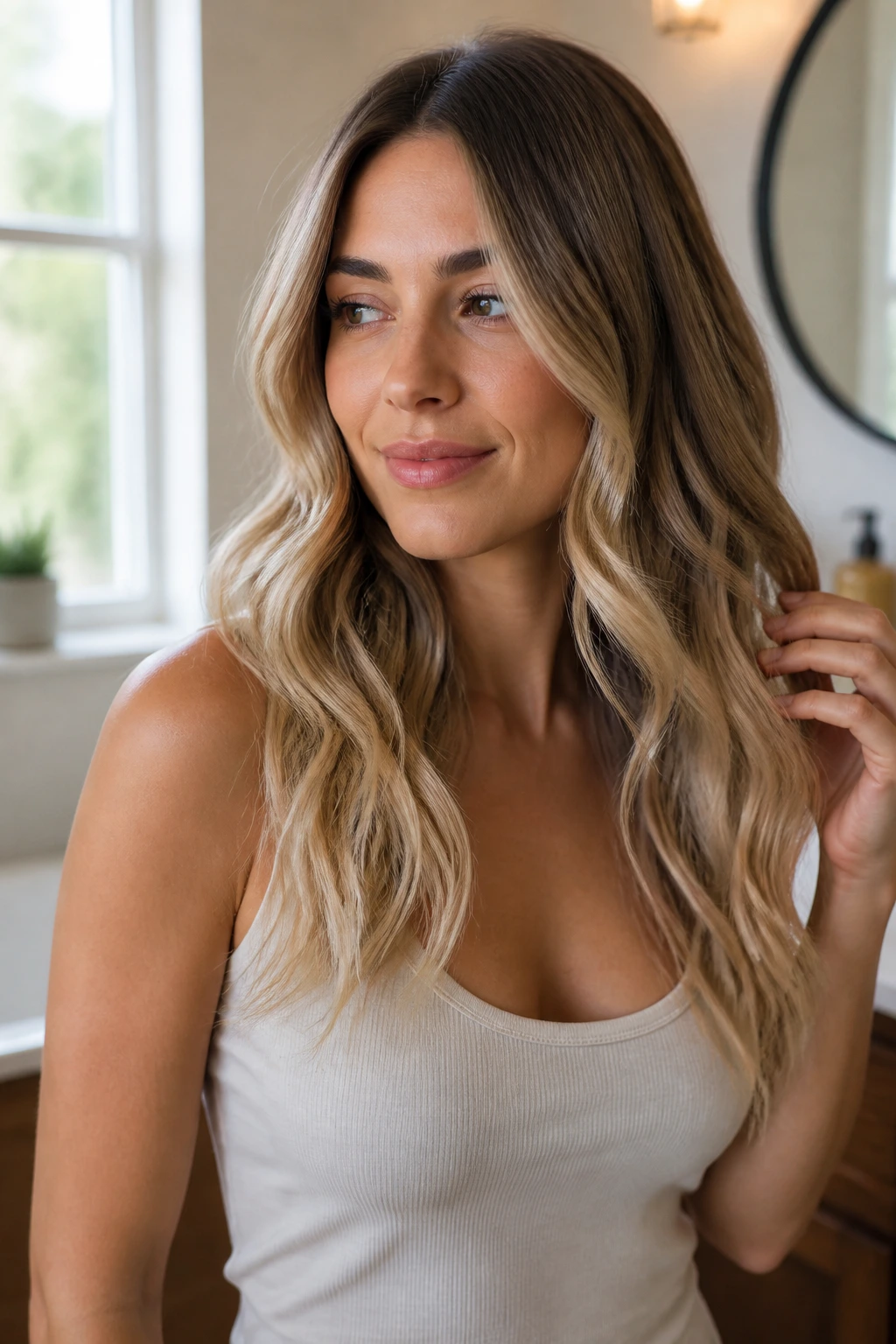
Soft ombré is forgiving, but it still needs a little care if you want the ends to stay clean. For most shades, a salon gloss or toner every 4 to 8 weeks keeps the color from drifting. Blondes often need more frequent toning than brunettes, especially if the hair turns yellow or sandy quickly.
Wash less than you think you need to. Two or three shampoo sessions a week is enough for most hair, and cooler water helps the cuticle stay smoother so the fade holds its tone. Use purple shampoo once a week for blonde or beige ends, and blue shampoo only when brunette ends start leaning orange. Overusing either one makes the hair dull.
Heat tools are another thing that wears color down fast. Always use heat protectant before blow-drying, curling, or flat-ironing. If your ends are dry, swap one styling session a week for an air-dry with leave-in cream. It gives the hair a break and keeps the soft fade looking like silk instead of straw.
Frequently Asked Questions
What is the difference between ombre and balayage?
Ombre is a gradient effect that usually moves from darker roots to lighter ends. Balayage is a placement technique where color is painted through the hair in sweeping pieces. Soft ombré often borrows balayage to make the transition look less blunt.
Can soft ombre work on short hair?
Yes, but the fade has to start carefully. On bobs or lobs, the color shift usually works best when the lightest shade begins around the jaw or just below the ears so the shape of the cut still shows.
Do you need bleach for ombre?
Not always. Dark brunettes often need some lightening if they want caramel, blonde, or peach ends, but deeper reds, burgundies, smoky browns, and blue-black fades can sometimes be done with glosses or demi-permanent color.
How often should toner be refreshed?
Blonde and silver-toned ombrés usually need toner every 4 to 6 weeks if you want the shade to stay crisp. Brunette fades can stretch longer, often 6 to 10 weeks, because they don’t show brass as fast.
What if my ends are already dry or damaged?
Keep the fade closer to your base color and avoid pushing the lightest shade too far. A caramel, mushroom, beige, or wine tone will look better than over-lightened ends that feel hollow or rough.
Can curly hair handle a soft ombre?
It can, and the curl pattern often makes the fade look even softer. The main thing is placement—lighter color should sit where the curls naturally fall, not just on the very tips where it can disappear.
Which shades are easiest to maintain?
Low-contrast brunette fades, beige blondes, mushroom tones, and caramel melts usually need the least fuss. They hide grow-out well and don’t turn brassy as quickly as bright blonde or pastel ends.
How do I keep the fade from looking stripey?
Ask for a blurred transition, not a hard line. The middle band should be toned and stretched enough that you can’t point to one obvious spot where the color changes.
A Fade That Grows Out Gracefully
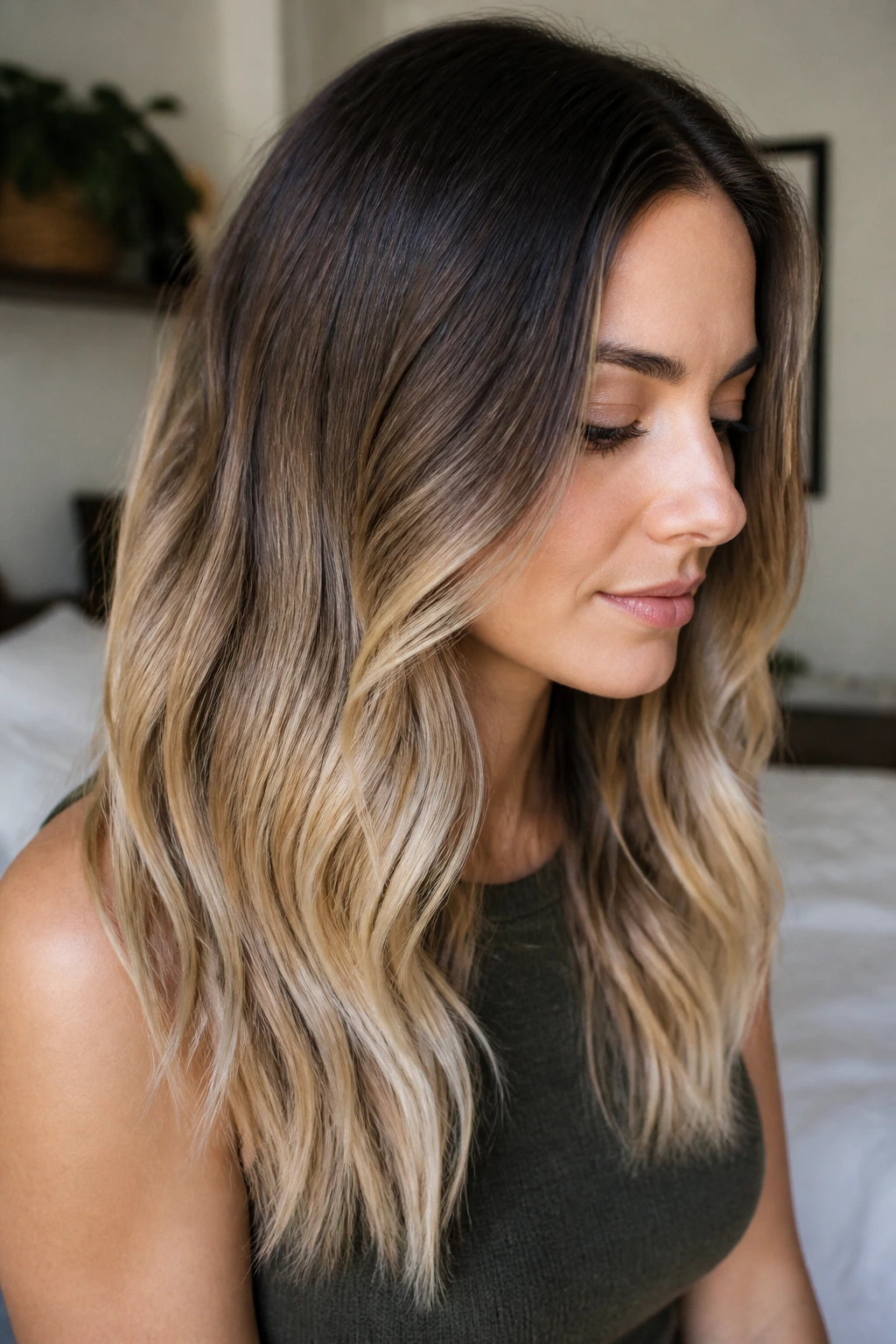
The nicest thing about a soft ombré is how little it asks for attention once it’s done right. The color has shape, but not a hard border. It moves with the haircut, softens as it grows, and keeps looking deliberate long after the first shampoo.
Bring photos, yes. But bring the right ones—daylight shots, a straight-hair version, maybe one on curls if that’s how you wear your own hair most days. That tiny bit of planning saves everyone from guesswork, and guesswork is where ombré starts to go stripey. A good fade should feel like it belongs on your head from the first day out of the chair.
