



Blonde hair looks for curly hair work best when the light follows the bend of the curl instead of sitting on top of it like a sticker. That’s the whole trick, really. Curls already create shadows and highlights on their own, so the best blonde placement works with that movement and gives you dimension that shifts every time you turn your head.
A flat blonde can make curls look wider, drier, and oddly static. A smarter blonde—whether it’s honey ribbons, champagne ends, or a rooted platinum frame—does the opposite. It brings out the shape you already have. Tight coils read differently from loose waves, and the same shade can look softer or sharper depending on where the brightness lands, how porous the hair is, and whether the colorist respects the curl pattern before touching a brush.
That’s why this topic deserves more than a quick scroll-and-save. The best blonde on curls is never just “blonde.” It’s placement, tone, depth, and timing working together, with enough contrast to show the curls off but enough shadow to keep them from looking stripped bare. The looks below cover soft and loud, cool and warm, low-maintenance and high-drama. A few are the kind you can wear for months without wincing at the grow-out line. Others are unapologetically bright, and that’s the point.
Why These Blonde Looks Keep Curls Looking Alive
-
Placement That Moves: Blonde painted through bends, not just the top layer, makes curls read fuller because the light hits from several angles instead of one flat strip.
-
Grow-Out That Makes Sense: Rooted blondes, ombrés, and money-piece placement soften the line between salon visits, which matters when curl shrinkage hides the color change one day and shows it the next.
-
Shade Range for Real Hair: From honey and buttercream to ash and pearl, these looks cover warm, cool, and neutral blondes so you can match the tone to your base instead of fighting it.
-
Curl Pattern Friendly: Loose waves, ringlets, corkscrews, and coils each need different placement. The styles here lean into that instead of pretending one highlight map fits everything.
-
Less Flatness, More Shape: Curly hair gets robbed fast when blonde is painted too evenly. These looks keep lowlights, root depth, or shadow pieces in play so the haircut still has structure.
-
Salon Language You Can Use: Terms like balayage, babylights, money piece, and root smudge are built into the looks below, so you can talk to a colorist without guessing at what to call the thing you want.
1. Honey Ribbon Balayage
Honey ribbon balayage is the kind of blonde that looks as if sunlight got trapped inside the curl pattern. The ribbons sit in wide, soft sweeps, usually a few levels lighter than the base, so the hair keeps its depth at the roots and brightness where the spiral opens.
Why It Works on Curls
The broader painted sections keep the color visible even when curls spring up. On tighter patterns, thin highlights can vanish under the outer layer; honey ribbons stay readable because they land on the curve, not just the surface.
Ask for: a warm level 8 to 9 honey tone with soft hand-painted ribbons and a subtle root shadow.
- Keep the roots deeper by one or two levels.
- Place brightness around the mid-lengths and face.
- Leave some untouched curls between the lighter pieces.
Best for: medium-to-tight curl patterns that need warmth without the full commitment of a pale blonde.
2. Buttercream Face Frame
Buttercream face-framing pieces do one thing very well: they wake up the front of the haircut. The shade sits in that creamy, pale-yellow zone that looks soft instead of icy, which keeps it from fighting a warm skin tone or a golden base.
The trick is width. Too thin, and the pieces disappear. Too chunky, and they start feeling like 2000s streaks in a bad way. Aim for two bright panels that are about 1 to 1.5 inches wide near the front, then let the rest of the blonde live more quietly through the curls.
This is one of those looks that gets better when the hair is cut with layers. The pieces bend around the face and catch light every time you tuck a curl behind your ear. Simple. Loud enough to matter. Not loud enough to take over.
3. Champagne Ombré
Champagne ombré is for people who want brightness without a hard line at the root. The color moves from a deeper base into a cool, sparkling blonde at the ends, with a tone that sits somewhere between beige and pale gold.
Why does it suit curly hair so well? Because curls naturally soften the fade. Even a pretty stark color transition looks gentler once the hair coils and the light breaks across the bends. The ends do most of the talking, while the roots stay calm and easy to live with.
What to Ask For
Request a low-to-mid contrast ombré with a champagne toner on the lighter sections. If your ends are porous, tell the colorist to keep the pale pieces just a touch darker at first; curly ends can go hollow-looking if they’re pushed too far.
It’s a smart pick if you like the idea of blonde but hate obvious grow-out. The whole shape stays airy, and the color doesn’t need constant touch-ups to make sense.
4. Beige Babylight Halo
Beige babylights are tiny, fine highlights woven through the upper layers and crown, and on curls they create a soft shimmer instead of a stripe. Beige is the quietest kind of blonde, which is exactly why this look works.
The halo effect shows up when the lighter pieces are concentrated around the top half of the head and the curls near the parting. You still get dimension underneath, but the eye goes first to the glints near the surface. It’s subtle enough that people often notice the shine before they notice the color.
This is a good match for someone who wants to brighten natural brunette curls without going full blonde. It also grows out in a way that doesn’t scream for attention. That matters more than people admit.
5. Golden Money Piece Curls
A golden money piece is not shy. The front curls are lifted a little brighter than the rest, then toned to a rich, warm gold so the face gets a clean frame without drifting into brass. On curly hair, that front light reads fast, even if the rest of the style stays deep.
The rest of the head should stay fairly dimensional. If the whole curl pattern is turned the same shade, the money piece loses its punch and starts looking accidental. Give the front a lane of its own, and the contrast does the work.
This is the look for someone who wants instant payoff. It’s especially strong if you wear a side part, because the brighter front curls fall right into view instead of disappearing behind the crown.
6. Sandy Curly Lob
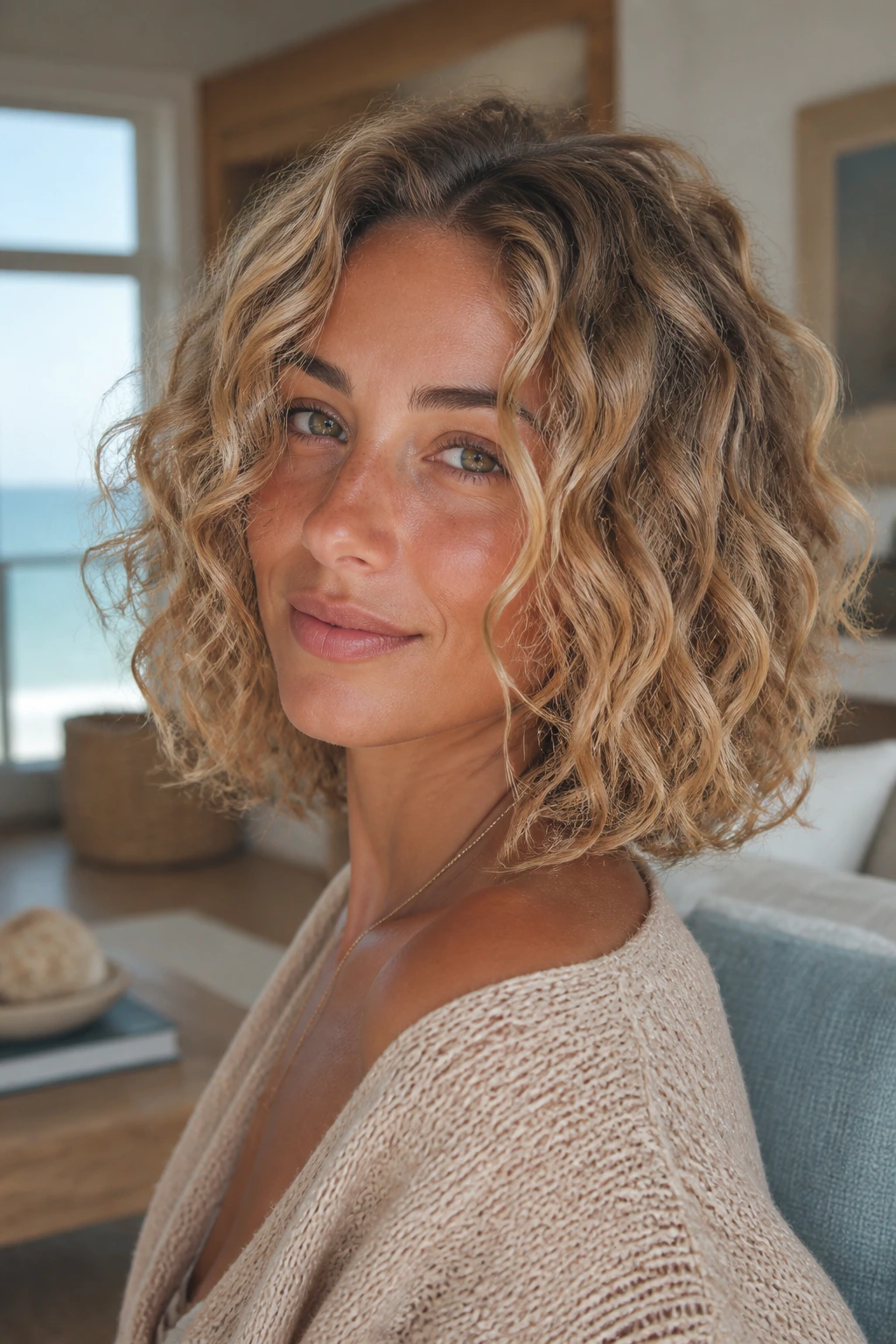
A sandy curly lob sits in that sweet spot between polished and unfussy. The cut is shoulder-grazing, the blonde is muted and beachy, and the effect is less “I had a full overhaul” and more “my hair spent a month in great light.”
The sandy tone works because it has enough beige to keep the blonde from looking harsh, but enough warmth to stop it from going flat. On a lob, those tones keep the shape clean around the shoulders, which is where curly hair often gets bulky.
Best on This Cut
This look loves loose curls and medium-density hair. If the layers are too heavy, the blonde can bunch up and look boxy. Keep the shape airy and let the lighter pieces land through the outer curve of each curl.
It’s low drama in the best sense. The color feels relaxed, but not dull.
7. Rooted Platinum Ribbons
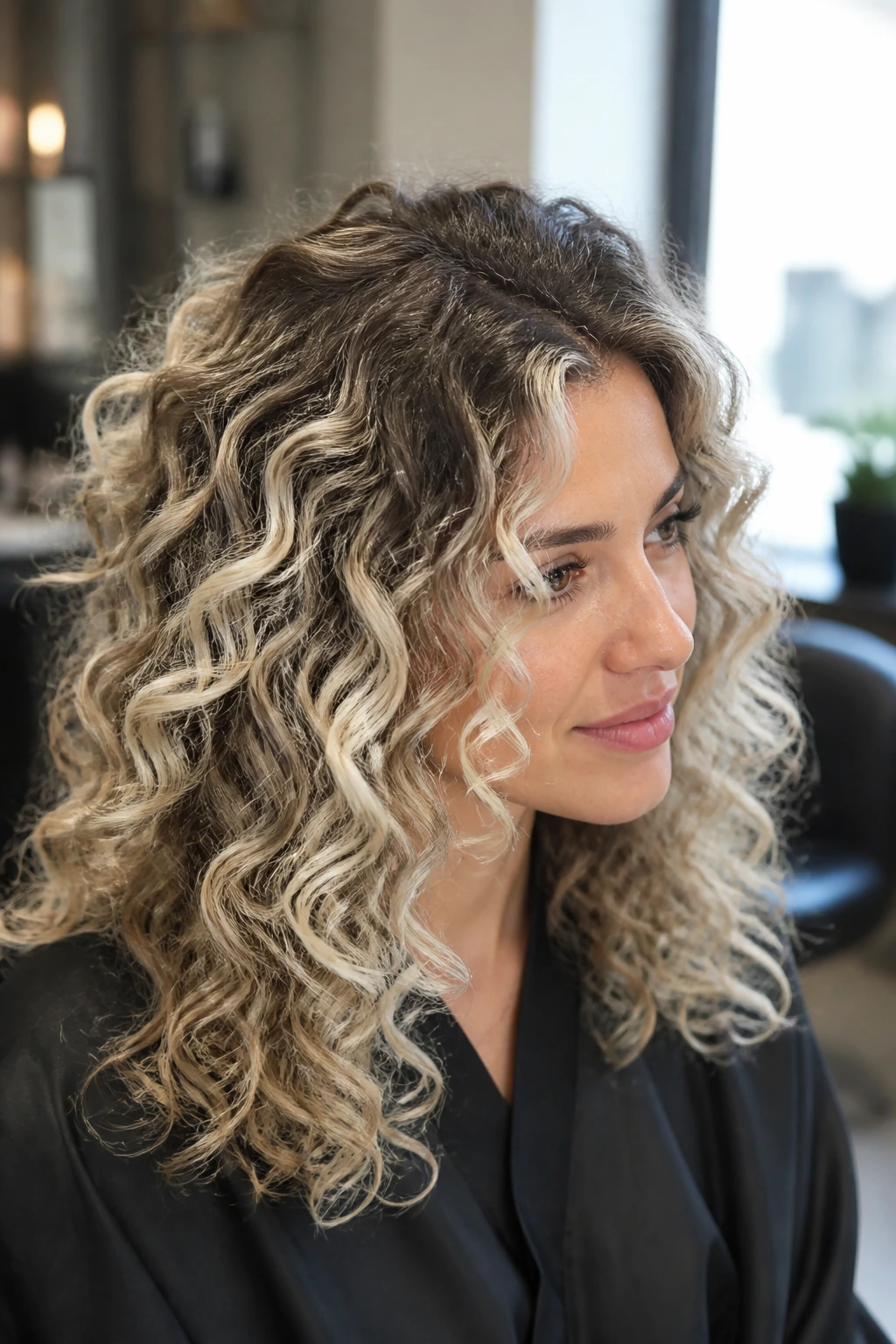
Rooted platinum ribbons are for the brave or the bored, maybe both. The roots stay darker—often a level 5 or 6—while the lighter pieces near the surface and ends reach a crisp platinum. The contrast is sharp, but the root shadow keeps it from looking like a helmet.
On curls, platinum needs breathing room. You do not want every coil pushed to the same pale yellow-white shade. Instead, think of the platinum as a series of bright threads running through the shape. The darker base gives the eye something to rest on, which is what keeps the whole thing from turning into static.
This look can be gorgeous on tighter curls if the colorist respects porosity and trims before going heavy with lightener. Platinum shows everything. Every rough end. Every uneven tone. Worth it if you want the impact, not worth it if your hair is already fragile.
8. Caramel-Threaded Blonde
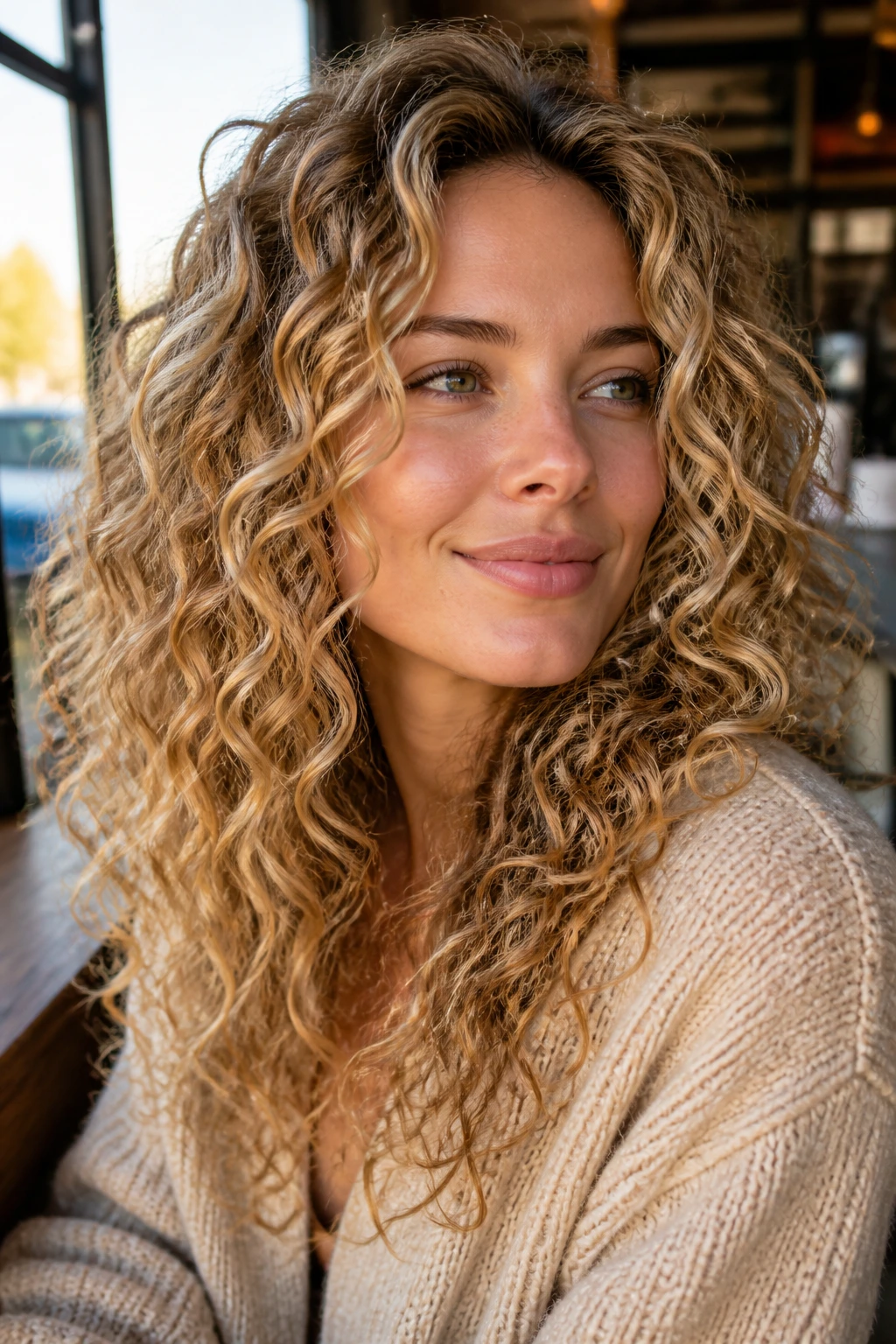
Caramel-threaded blonde uses blonde as the main event, then weaves in caramel lowlights so the curls don’t go pale and dry-looking. It’s one of the easiest ways to make blonde feel richer on darker curly hair.
The caramel strands warm the spaces between the lighter curls and keep the overall look from reading too one-note. That matters because curly hair loves contrast, and lowlights are often what make the highlights look brighter. No lowlight, no depth. It’s that plain.
I like this look on dense hair especially. The darker threads stop the blonde from looking puffy at the surface, which can happen when thick curls are lightened all over. The result is fuller, but not frothy.
9. Cream Soda Coil Melt
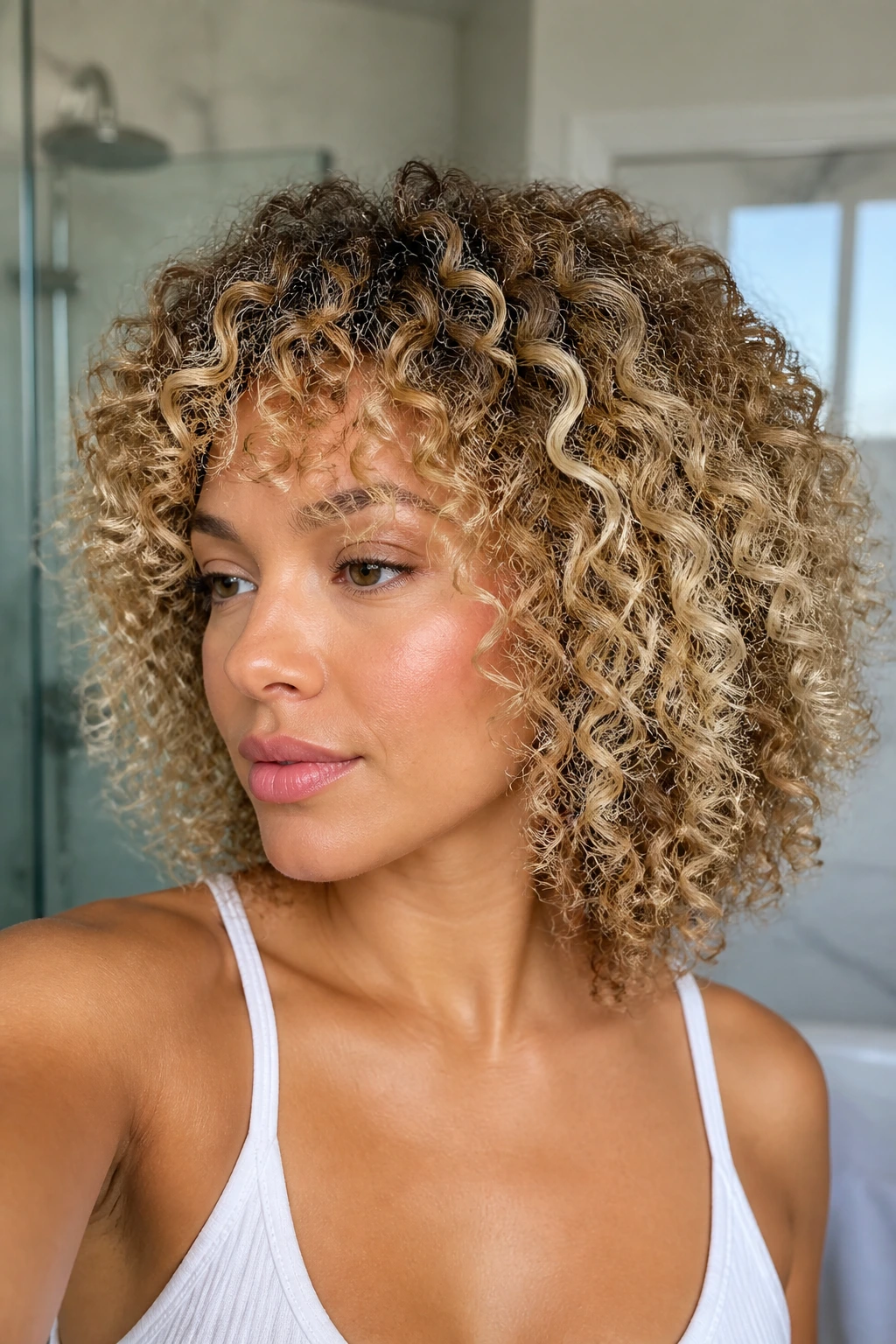
Cream soda coil melt sounds sweet, and the color lives up to the name. The roots stay soft and deeper, then the shade glides into a creamy blonde that’s not quite beige and not quite gold. On coiled textures, that melt is the whole point.
Why It Feels Different
A uniform blonde on coils can flatten the pattern fast. A melt keeps the color moving, so each bend gets a little different reflection. That stops the style from reading like a solid block and gives the coils a richer outline.
Best details to request: a soft root smudge, hand-painted lightness through the mid-lengths, and a creamy toner that avoids icy or buttery extremes.
If your hair tends to grab pigment in an uneven way, this is easier to maintain than a full-head blonde. The darker root also makes regrowth less annoying, which is never a bad thing when curly hair has its own opinion about salon schedules.
10. Beach Sand Foilayage
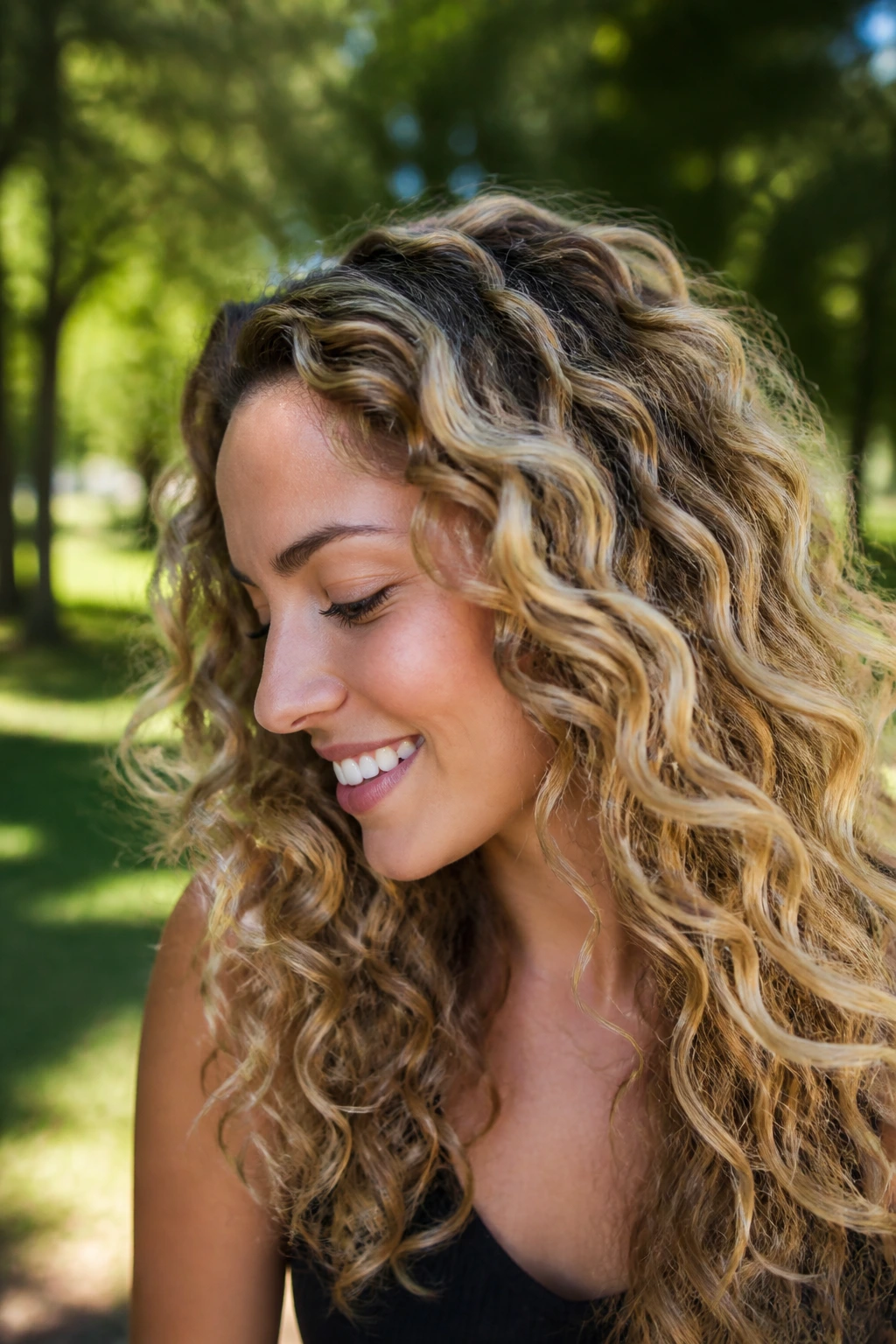
Foilayage is the sweet spot between balayage softness and foil brightness. For curly hair, that means you can get lighter pieces that still look lifted near the roots without losing the blur at the edges. Beach sand is a muted blonde, not a sun-bleached one.
This look works because foilayage gives the colorist more control around the crown and face, where curls can hide brightness. The beach sand tone keeps it wearable. If the lightening level is too yellow or too white, curls can look thirsty. Sandy blonde lands in the middle and keeps the texture looking touchable.
It’s a good choice if you want the blonde to show up in photos and in real life. Some styles only sparkle under salon lights. This one stays visible in daylight.
11. Golden Melt Mid-Lengths
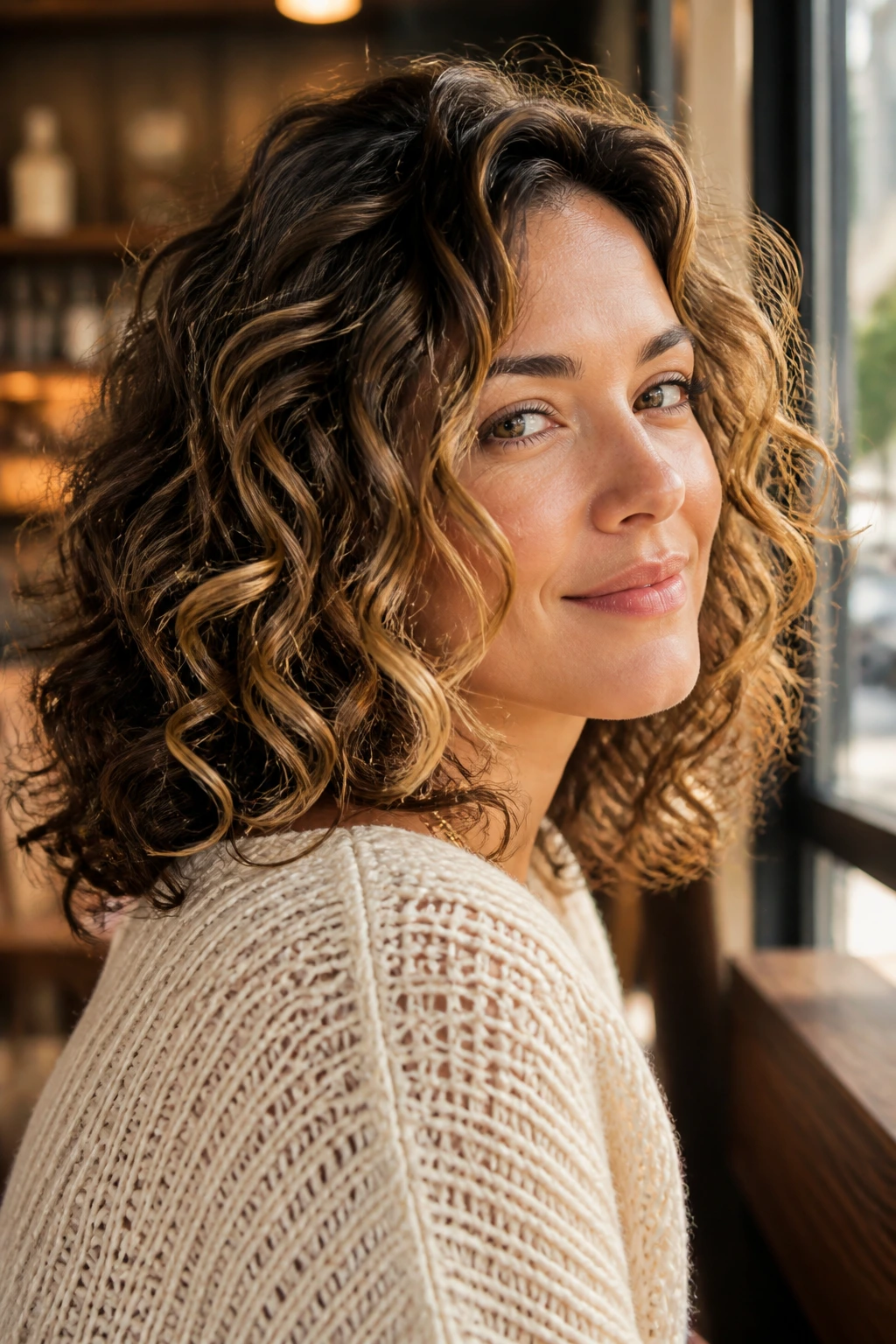
Golden melt mid-lengths place most of the brightness through the center of the curl pattern instead of the ends or the root line. That middle zone matters because it’s where curls catch the most movement when they bounce.
The golden tone brings warmth without crossing into orange. Think buttery, not coppery. On curls, that middle placement keeps the roots grounded and the ends from going too brittle-looking. You still get lift, but it feels built into the shape rather than taped on top.
A lot of people overlook mid-length brightness and go straight to the face frame or the ends. That’s a mistake if your hair has layers. Mid-length blonde can make the whole haircut read fuller, because it draws the eye through the body of the curl.
12. Vanilla Blonde Ringlets
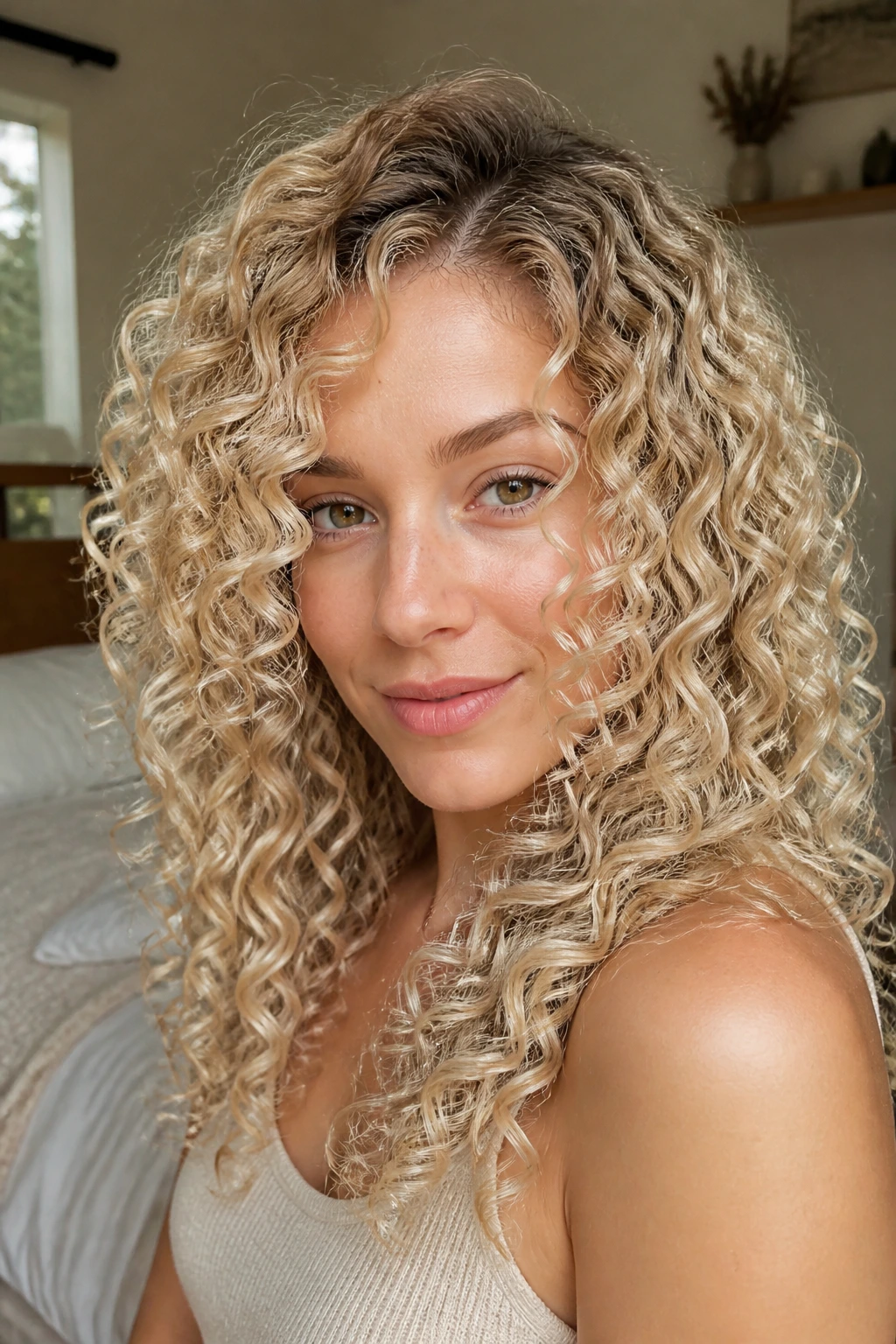
Vanilla blonde ringlets are clean, creamy, and a little glossy if the toner is handled well. The shade sits just pale enough to feel bright, but not so pale that it strips all warmth from the curl pattern.
What Makes It Work
Ringlets can handle more even brightness than tighter coils, but they still need dimension. Vanilla blonde gives you a soft, almost whipped-cream finish while letting the shadow between curls stay visible.
- Keep a darker root by one level.
- Ask for a neutral-beige toner instead of stark silver.
- Use slightly lighter pieces around the outer crown.
If the curls are medium porosity, this shade wears well. High-porosity hair can go flat quickly, so the toner needs to be watched closely. That’s where a good colorist earns the fee.
13. Mushroom Blonde Waves
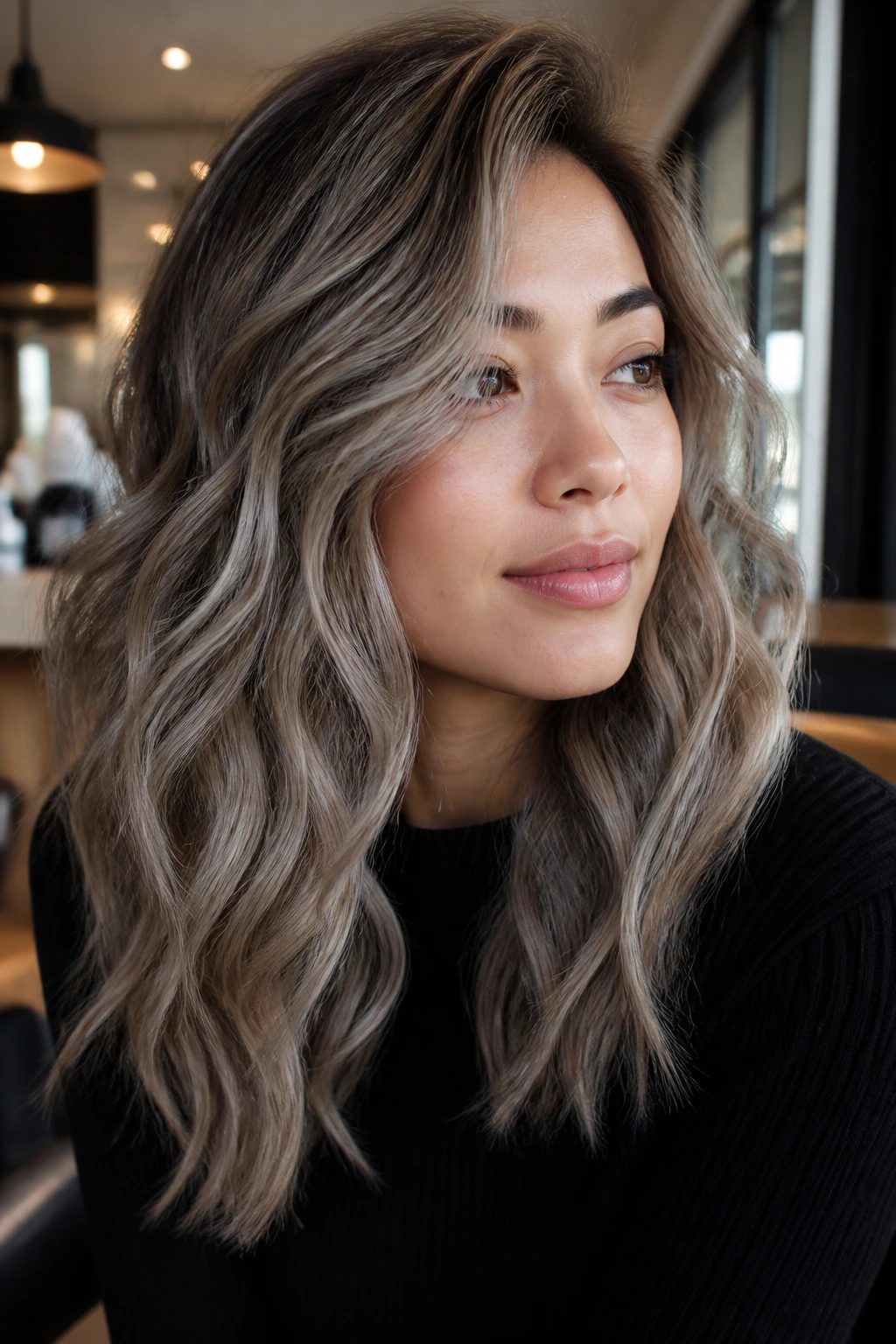
Mushroom blonde is cooler, smoky, and just a little earthy. On curly or wavy hair, the tone creates a soft gray-beige cast that looks modern without turning silver. It’s the blonde for people who don’t want warm gold anywhere near the finish.
The tone works especially well if your base is naturally cool brown or dark blonde. Curly hair adds enough movement that the ash notes don’t turn muddy, which can happen on straight hair if the shade is too flat. The bends keep it lively.
This is also a practical choice for people who hate brassy fade-out. Mushroom tones tend to age gracefully because the grow-out doesn’t swing wildly into yellow the way warmer blondes sometimes do.
14. Bronze-to-Blonde Dimension
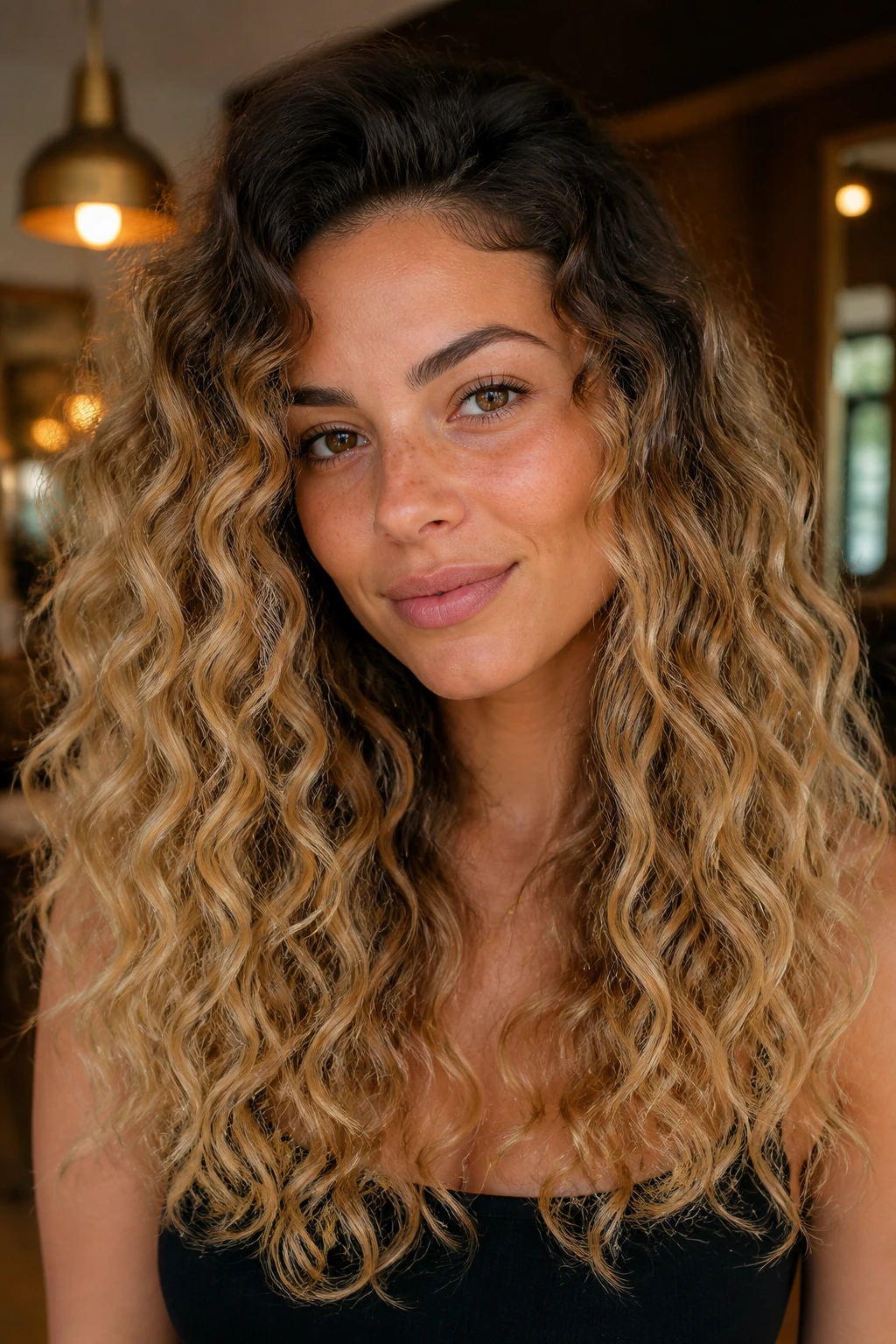
Bronze-to-blonde dimension is one of my favorite fixes for curls that need lightness but still look best with some darkness left in the mix. Bronze sits deeper and warmer at the root and mid-lengths, then the blonde pieces flare lighter through the top and ends.
The reason it works is simple: curls show contrast better than straight hair. Bronze lowlights make the blonde look brighter without forcing everything into a pale palette. The shape stays grounded, which matters when the cut has lots of layers or volume.
If your hair is dense, this look keeps the surface from looking too puffy. If it’s finer, the bronzy base keeps the lighter pieces from swallowing the overall shape. Either way, the color reads as intentional, not sprayed on.
15. Frosted Tip Coils
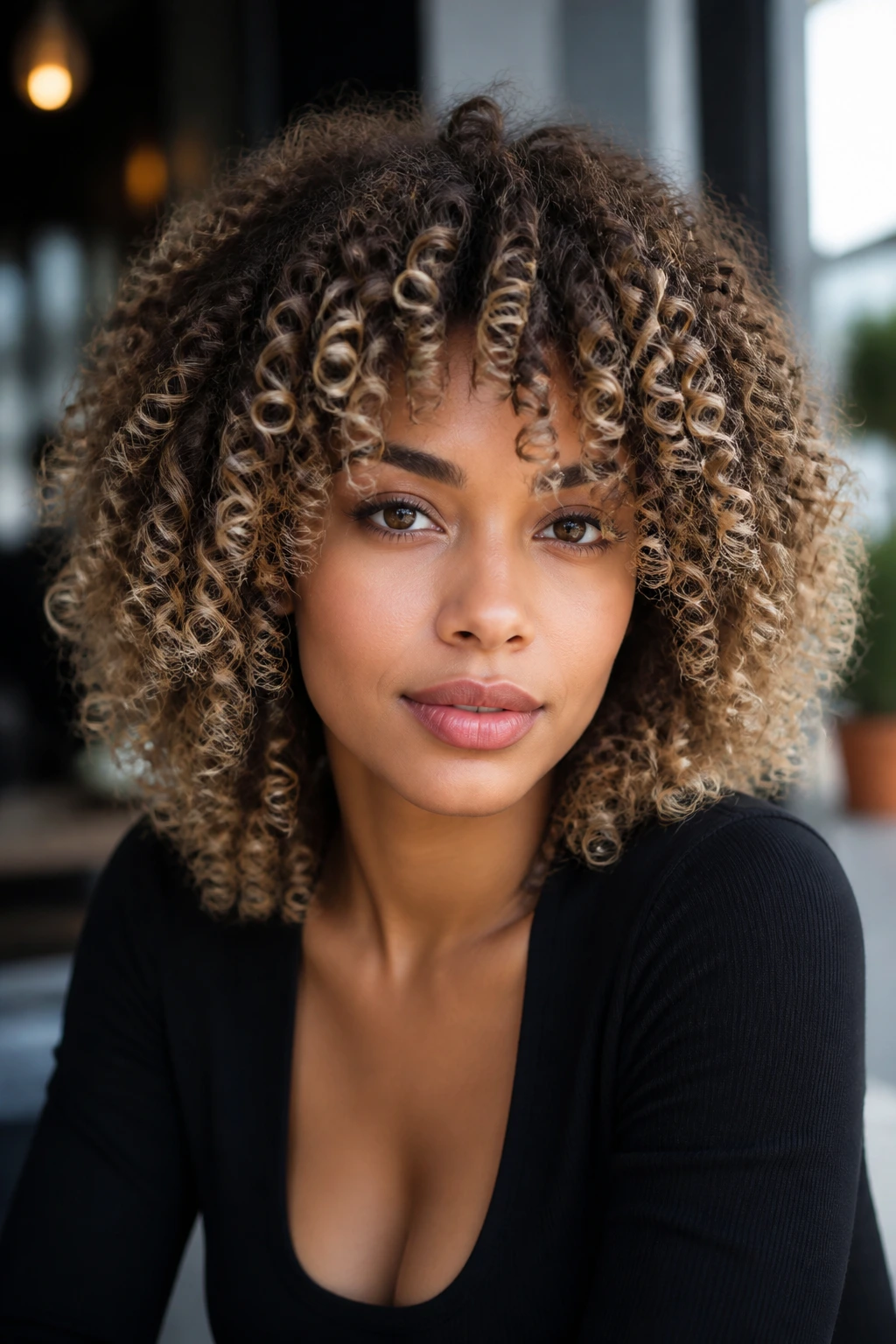
Frosted tip coils are edgy in a way that still respects the curl pattern. The brightness stays mostly on the ends, with the top and root area kept darker so the shape doesn’t vanish. It’s a sharper look than ombré, but not as harsh as all-over platinum.
The key is restraint. Too much lightener on the ends, and coils can start to look frayed or see-through. A controlled frosted edge gives you a flash of blonde every time the curls move, which is the payoff you want.
This style looks especially good when the cut has springy layers. The frosted ends sit on top of the curl mass like tiny bright commas. Strange metaphor, maybe, but it fits.
16. Pearl Blonde Curls
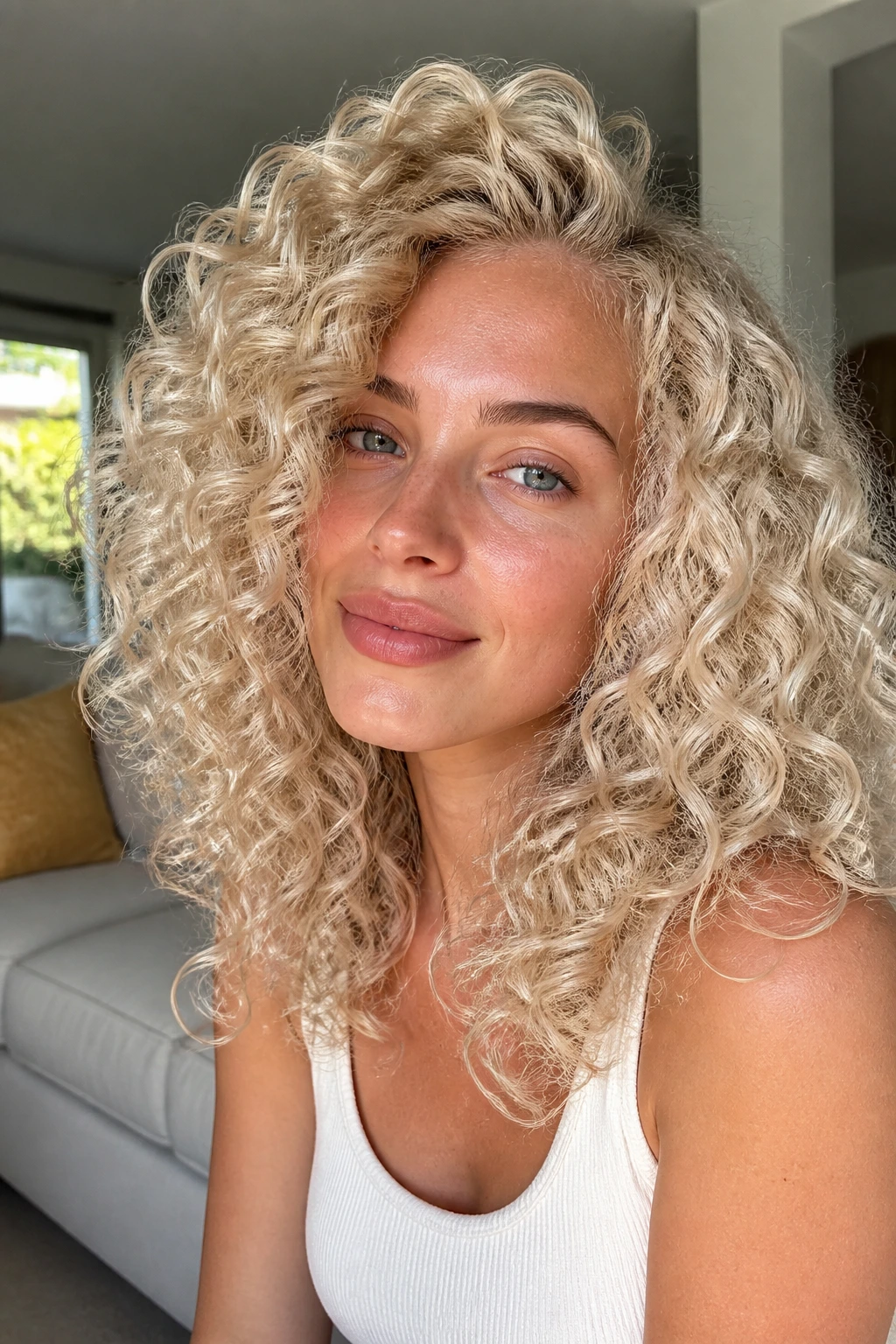
Pearl blonde is that soft, luminous blonde with a slight cool sheen, and on curls it can look expensive without trying too hard. The tone is pale, but not icy. It carries a faint opalescent feel that catches light differently from a flat beige blonde.
That matters because curls already create texture. Pearl blonde adds another layer of movement without fighting the pattern. The trick is to avoid overtoning into silver unless that is the point. Too much violet can make curly hair look chalky.
This look is strongest on healthy curls with decent shine. If the hair is rough, pearl tones can make damage more visible. On well-conditioned hair, though, it has a clean, polished finish that’s hard to beat.
17. Sunflower Blonde Halo
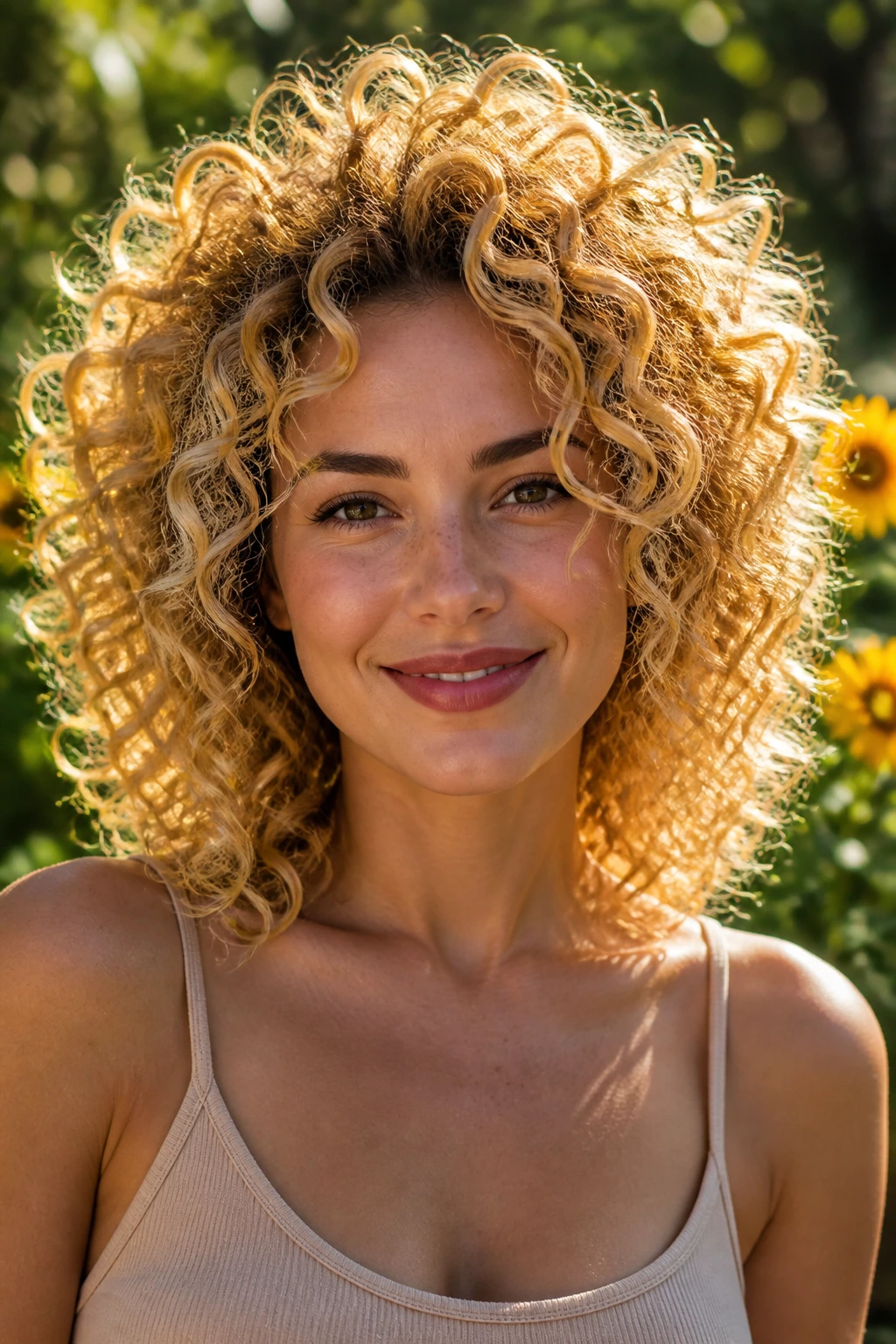
Sunflower blonde halo is brighter and warmer than a typical honey blonde. The light sits around the crown and outer layer, which gives the whole head a glowing frame when the curls lift away from the face.
The halo placement is what makes it special. You’re not painting every strand. You’re placing bright pieces where the curl cluster opens most visibly, so the color appears to float. That gives even shorter curls a lifted look.
I’d choose this one if you want people to notice the color from across the room. It’s cheerful, clear, and a little high-voltage. Not subtle. That’s the point.
18. Chestnut Lowlight Blonde
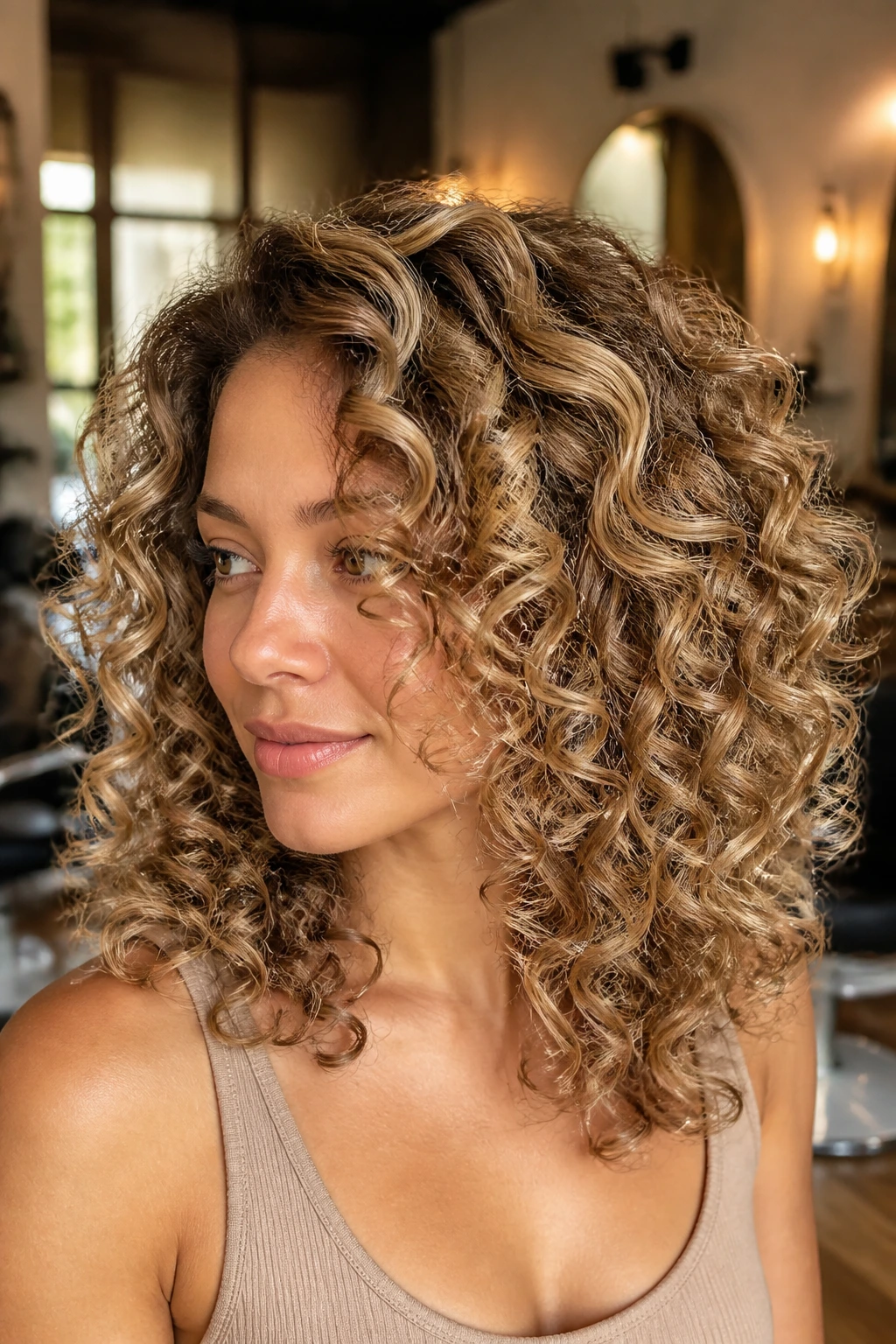
Chestnut lowlight blonde is the answer to the person who went too light and missed their depth. The blonde is there, but chestnut ribbons run underneath and through the curl mass, giving the hair some darker lanes to sit in.
On curly hair, those darker strands are not a compromise. They’re architecture. They stop the blonde from puffing outward and help the curl pattern look carved instead of fuzzy. That is especially useful on high-density hair.
This style also flatters people who like dimension but don’t want to keep lifting the base. The chestnut pieces make the blonde feel intentional and keep brassiness from taking over as the color fades.
19. Bronzed Honey Swirl
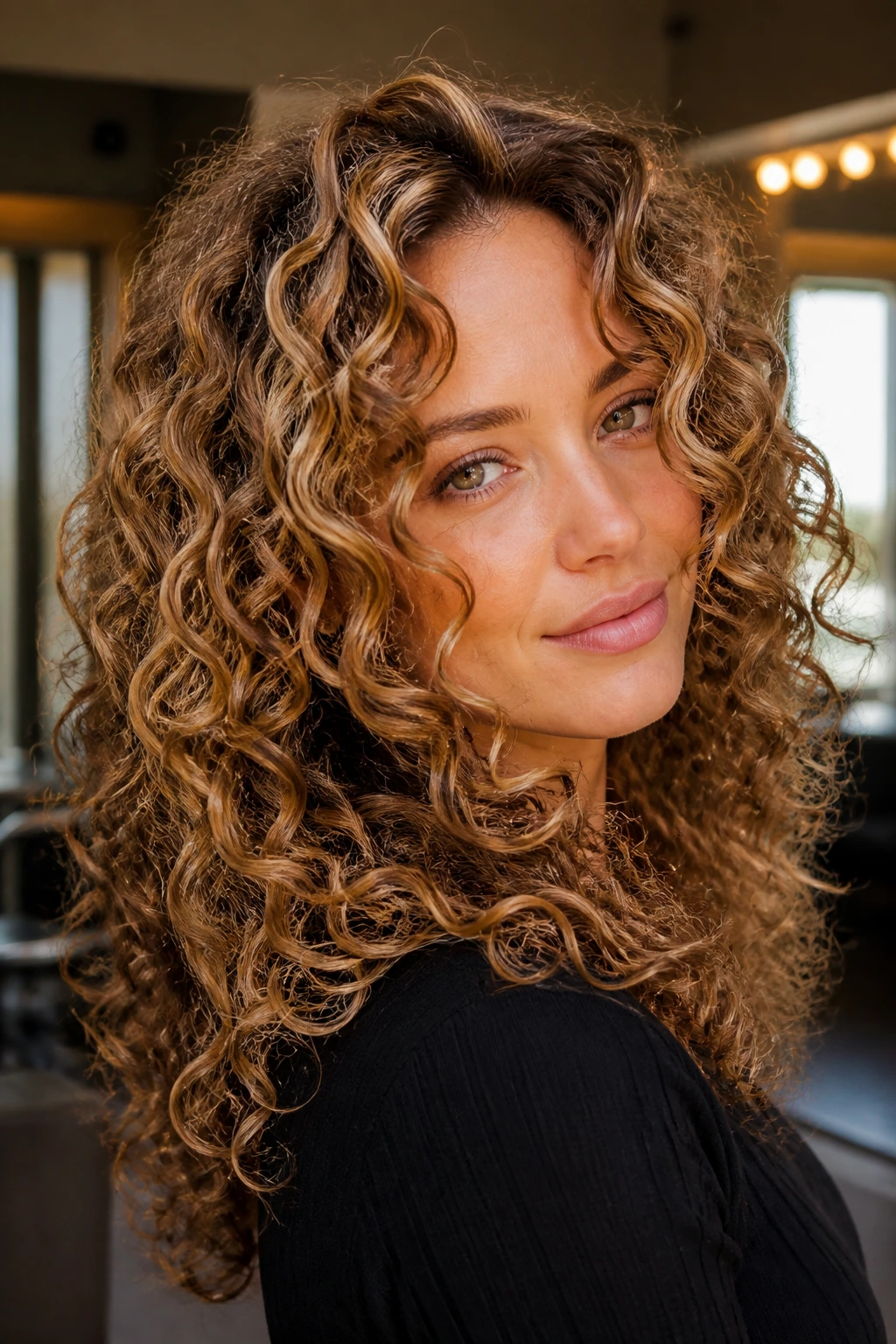
Bronzed honey swirl sits between rich brunette and warm blonde, which is why it flatters so many curl patterns. The honey softens the bronze, and the bronze keeps the honey from becoming too sweet or too yellow.
The swirl effect matters most on layered cuts. If the light pieces are painted in a spiral through the shape, the curls read fuller and more expensive-looking than a simple stripe job ever could. On curly hair, the pathway of the color is half the design.
This one is good if you want warmth without looking one shade away from orange. It has enough depth to stay grounded, and enough lightness to keep the style from getting heavy at the ends.
20. White Gold Pixie Curls
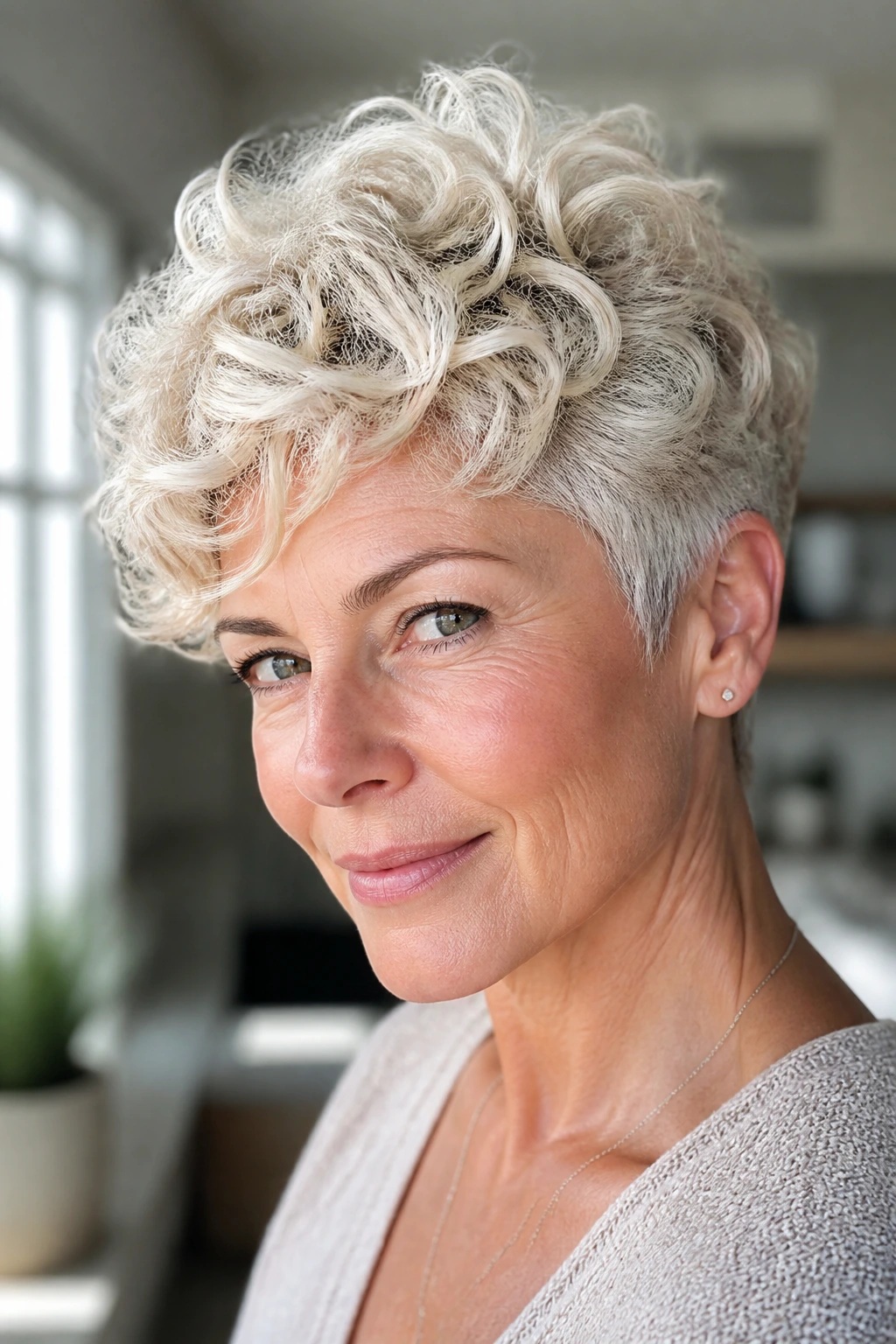
White gold pixie curls are small, bright, and a little defiant. On short hair, blonde can go wrong fast if it’s too flat or too streaky, but a white-gold tone gives the cut sharpness while still letting the curls breathe.
Short curls need contrast close to the scalp because there isn’t much length for the color to travel. That’s why this shade works. The brightness is visible right away, especially around the temple and crown, without needing long ribboned sections to carry it.
If you wear a pixie cut, keep the toner slightly warm rather than ice-cold. Pure silver on a short curly crop can look harsh. White gold keeps the shine and softens the edge.
21. Sandbar Balayage
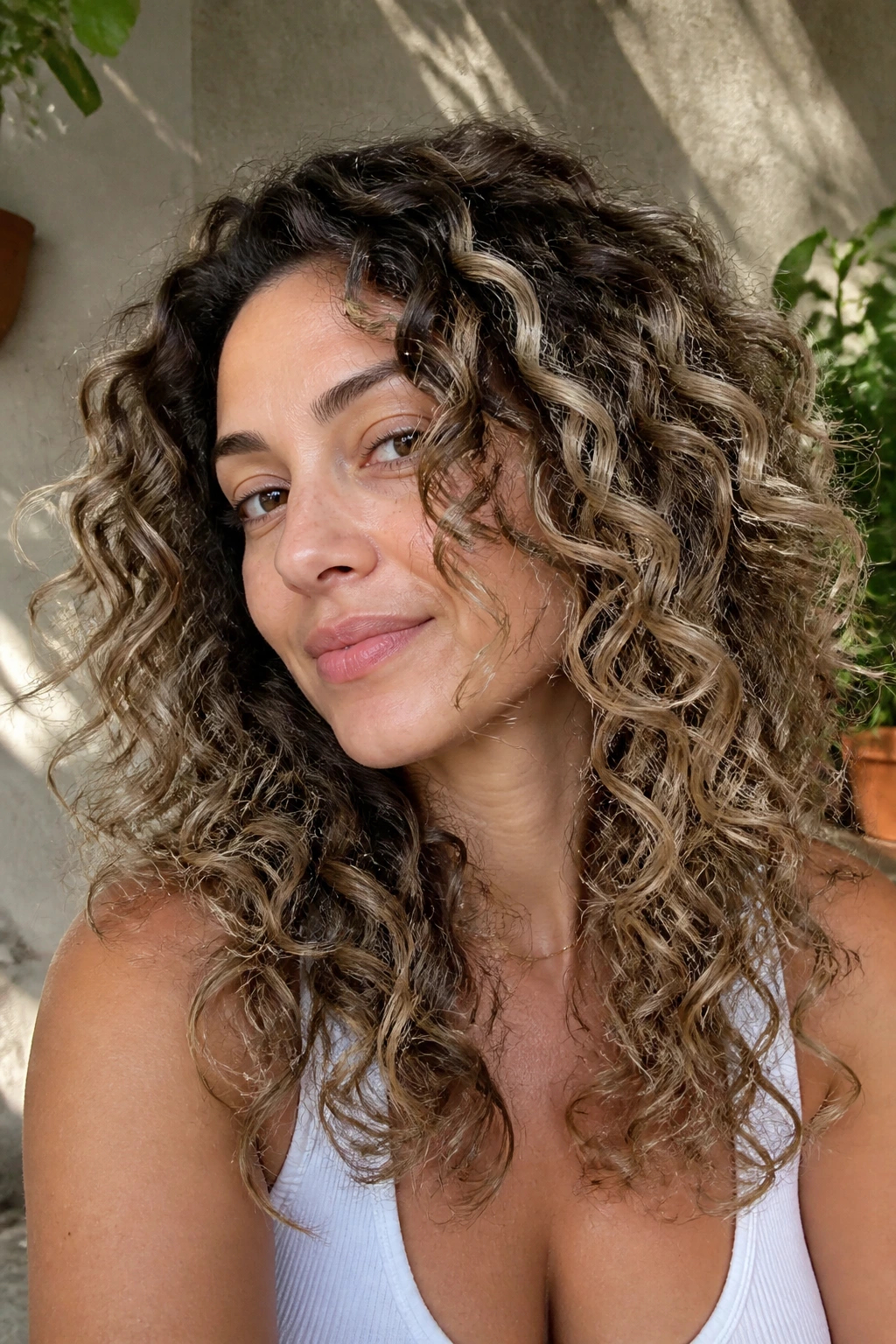
Sandbar balayage is the laid-back blonde that still has shape. It uses soft beige and pale tan tones, painted in irregular sweeps so the curls never look stamped. It’s beachy, but not in the overdone way people mean when they say “beachy.”
The real advantage here is movement. Sandbar balayage lands differently on every curl cluster, which is exactly what curly hair needs to avoid looking painted from one angle only. The darker base stays useful, too; it holds the shadow line that gives depth.
This is the kind of look that works with natural texture without asking for perfect styling. A good diffuser and a little leave-in conditioner are enough. The color does the rest.
22. Peachy Blonde Curly Shag
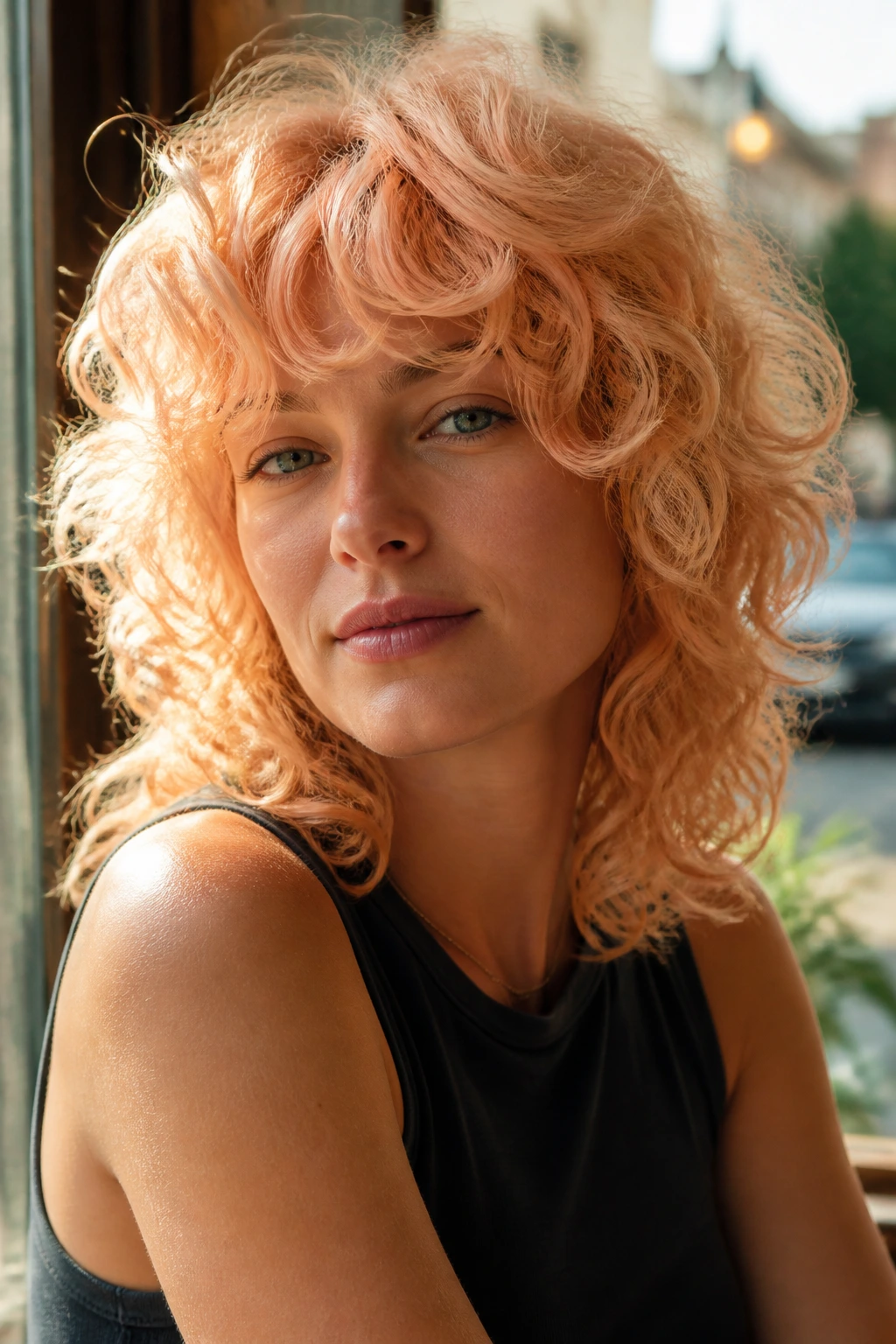
A peachy blonde curly shag is playful, warm, and just strange enough to feel fresh. The peach tint sits lightly over blonde, not as a neon color job, but as a soft warm filter that makes the hair glow rather than flash.
The shag cut is what gives the color room to move. Layers keep the curls lifted, and the peachy tone lands on the outer edges where it can show without overpowering the whole head. On a single-length cut, this could look sugary. On a shag, it feels lively.
If you like color that reads a little editorial, this is one to keep on your shortlist. It’s not the most conservative choice in the group, and honestly, that’s part of the charm.
23. Sunkissed Corkscrew Layers
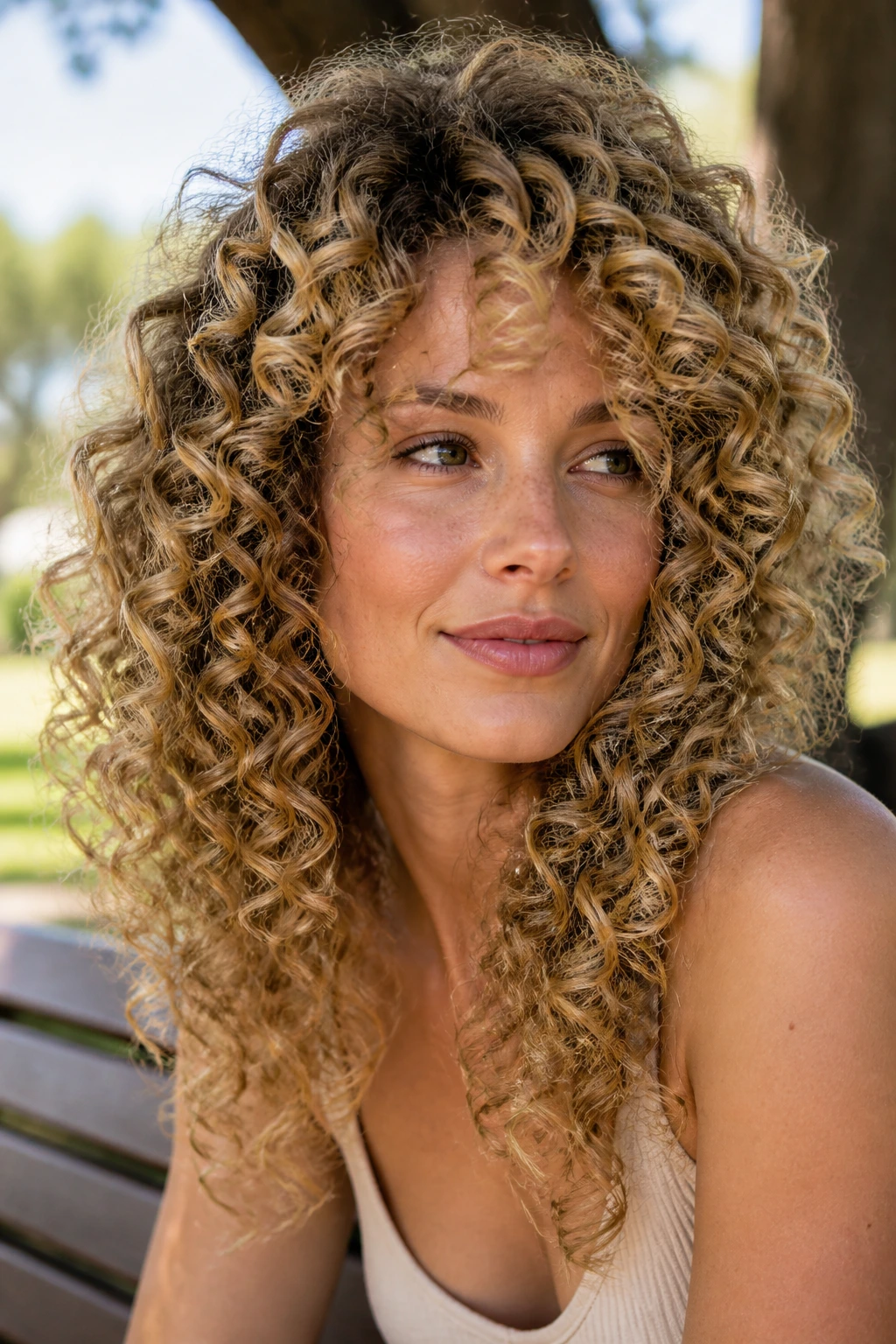
Sunkissed corkscrew layers use brightness sparingly and smartly. The lighter pieces sit in the upper layers and through the spirals that move the most, so the curl pattern stays defined and the color doesn’t get lost in the bulk.
Corkscrew curls often need a bit more lift near the surface because their twist hides lighter pieces deeper inside. If the placement is too low, nobody sees the blonde. If it’s too high and uniform, the style turns harsh. This look finds the middle.
It’s a good option if you want a natural-looking blonde effect on tighter texture. The result is less “highlighted” and more “sunlit from the inside.”
24. Smoky Beige Curly Bob
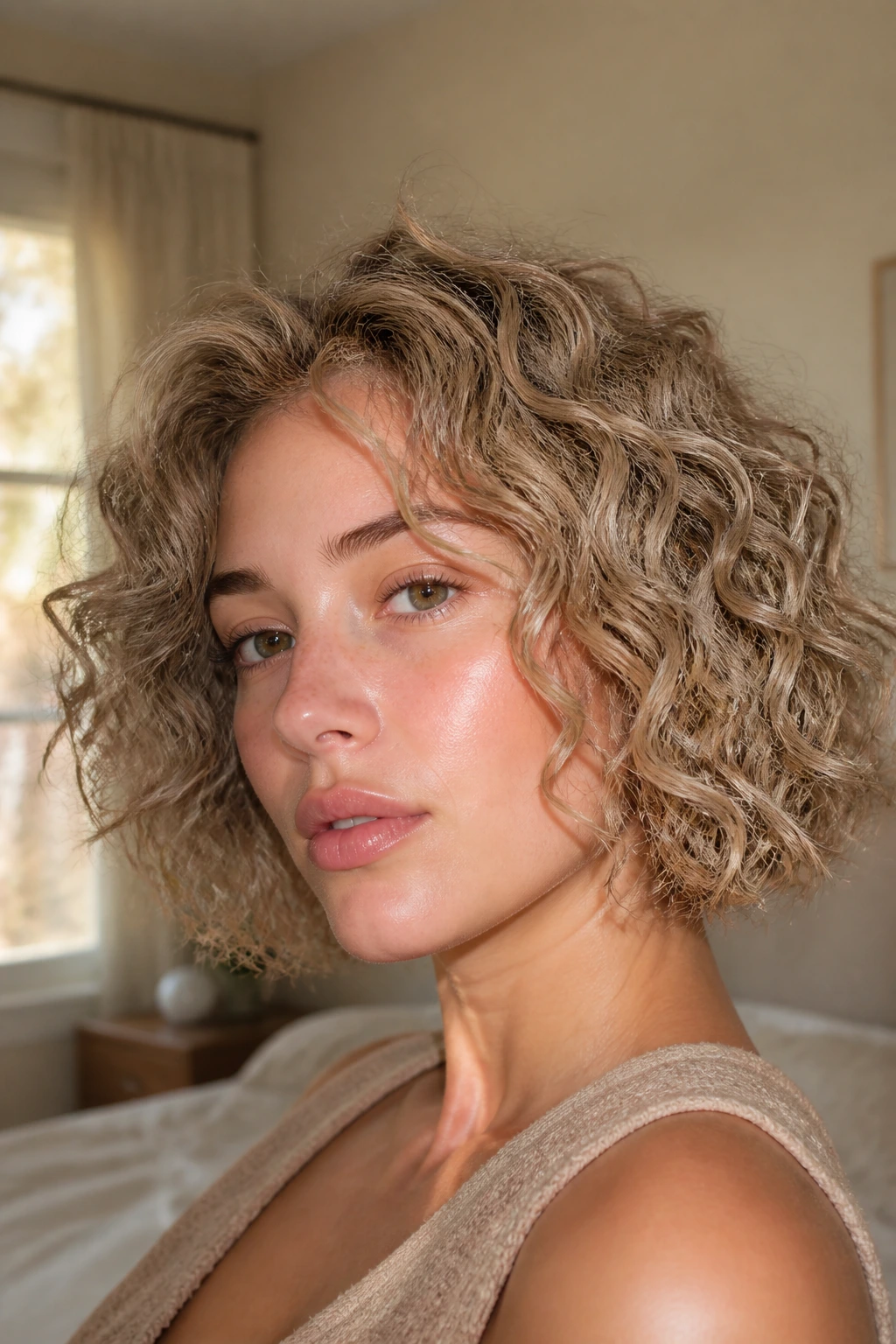
Smoky beige on a curly bob gives you something very specific: polish without stiffness. The tone is cooler than honey, softer than ash, and perfect for a cut that hits around the jaw or neck.
The bob shape needs the color to support the outline. A smoky beige blonde does that by adding lightness without stealing the silhouette from the haircut. You still see the body of the curls, but the tone gives the edges a blur that looks expensive in person.
This one is easier to maintain than brighter blondes because the smoky cast hides a bit of fade. If your curls puff when they dry, the cooler tone keeps the whole look from going too fluffy.
25. Golden Apricot Highlights
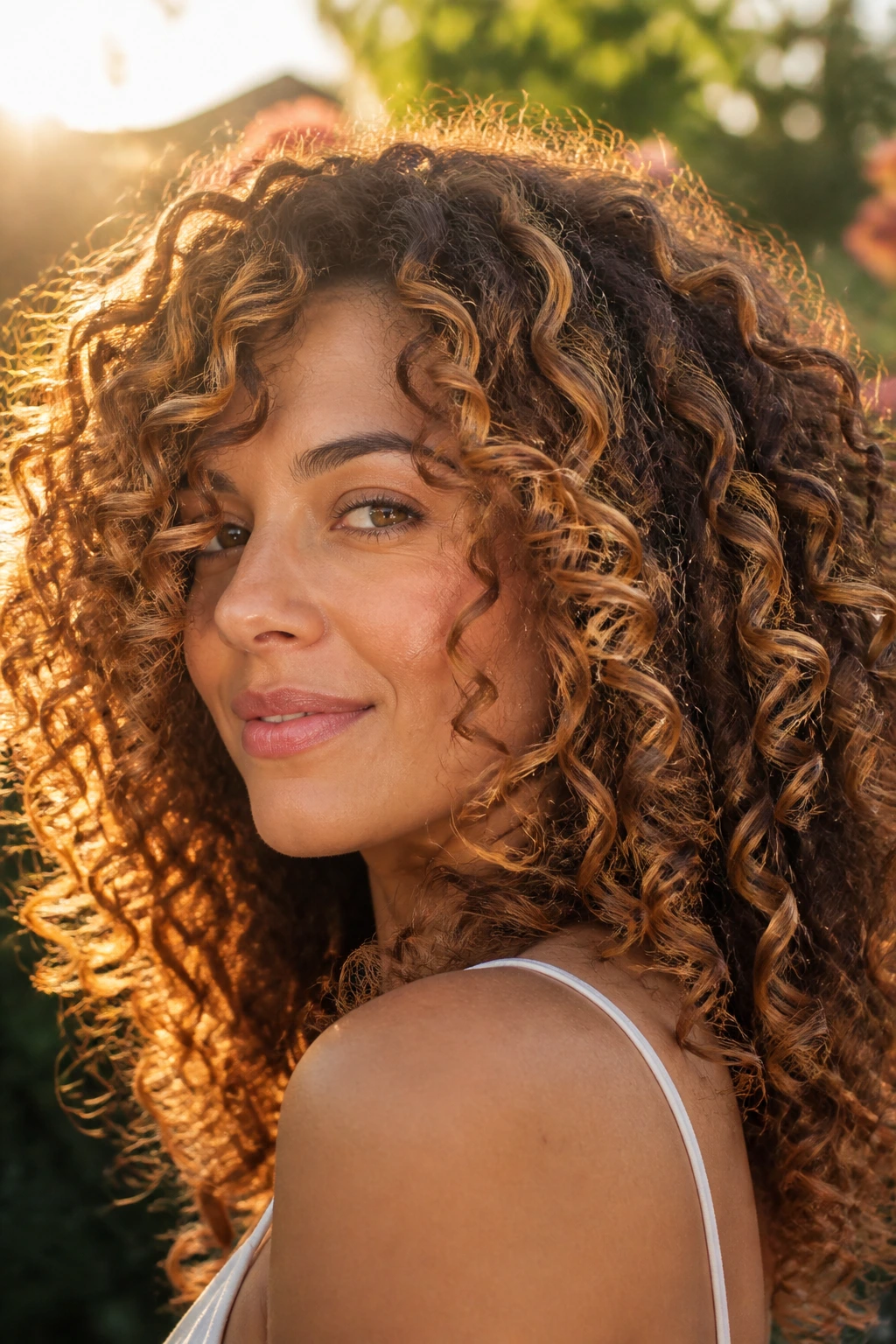
Golden apricot highlights are warmer and a touch more playful than standard honey. The apricot note keeps the blonde from going brassy, while the gold gives it that sunlit finish curly hair loves.
The reason this works is that apricot adds complexity. It’s not orange, and it’s not plain blonde. The shade sits right between, which makes it especially flattering on dark curly bases that need warmth but not heavy copper. The curl pattern carries the tone nicely because each spiral catches the color at a slightly different angle.
This look is a good bridge if you’re easing toward blonde from a brunette base. It gives brightness without demanding that every strand be pushed to the edge of pale.
26. Cool Mocha Blonde Blend
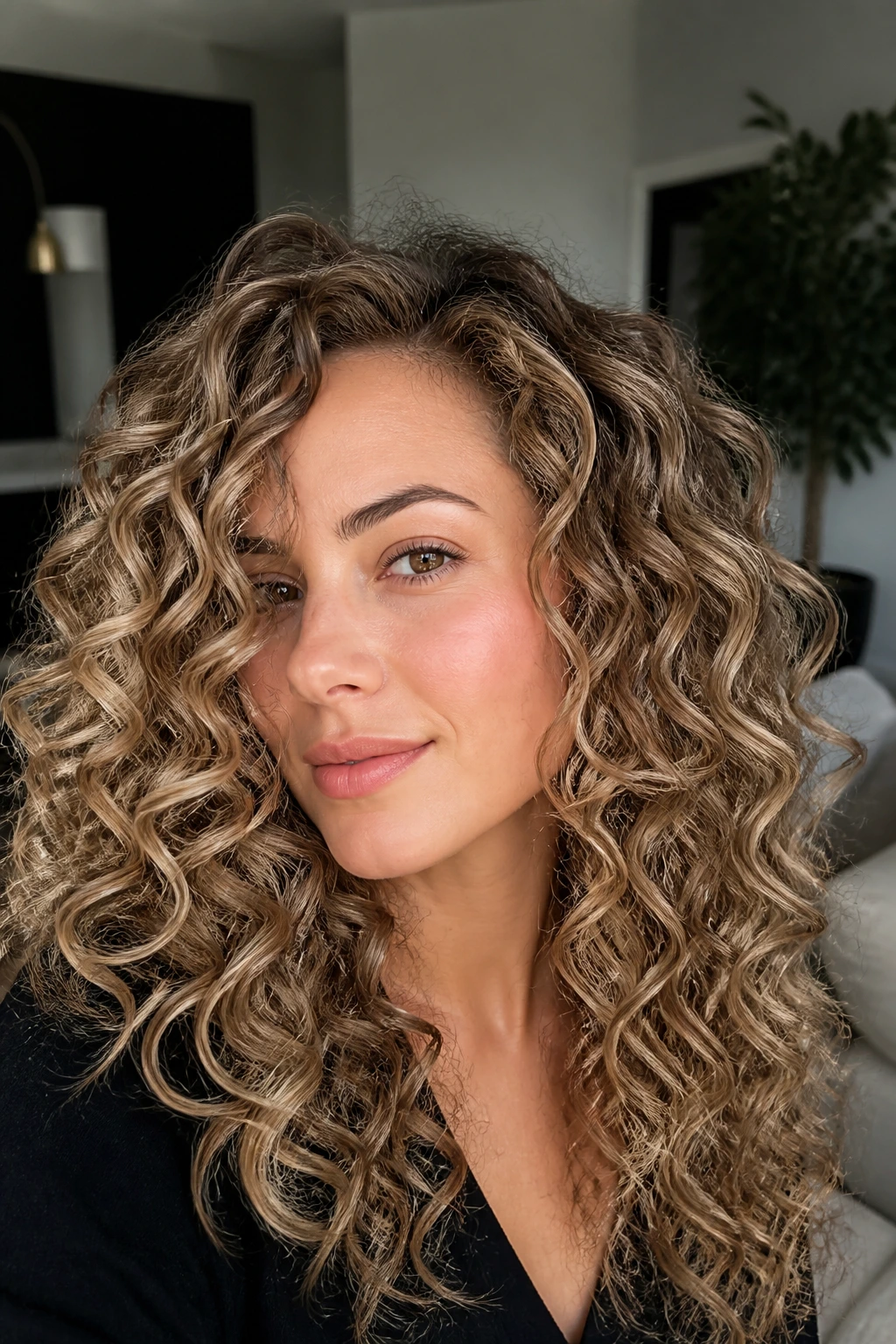
Cool mocha blonde blend is for the person who likes contrast but hates brass. The base stays mocha-toned and cool, while the blonde pieces are toned beige or ash so the overall look feels balanced.
This is one of the smarter picks for curly hair that sits in the medium-to-dark range. The darker mocha keeps the curls from looking frizzy at the surface, and the cool blonde pieces add movement where the hair bends. You can still see the pattern. That’s the win.
If your skin tends to read better in cool shades, this one is especially forgiving. It doesn’t veer into yellow the way some blondes do after a few washes, which saves you from the weekly toner panic.
27. Ribboned Platinum Afro Curls
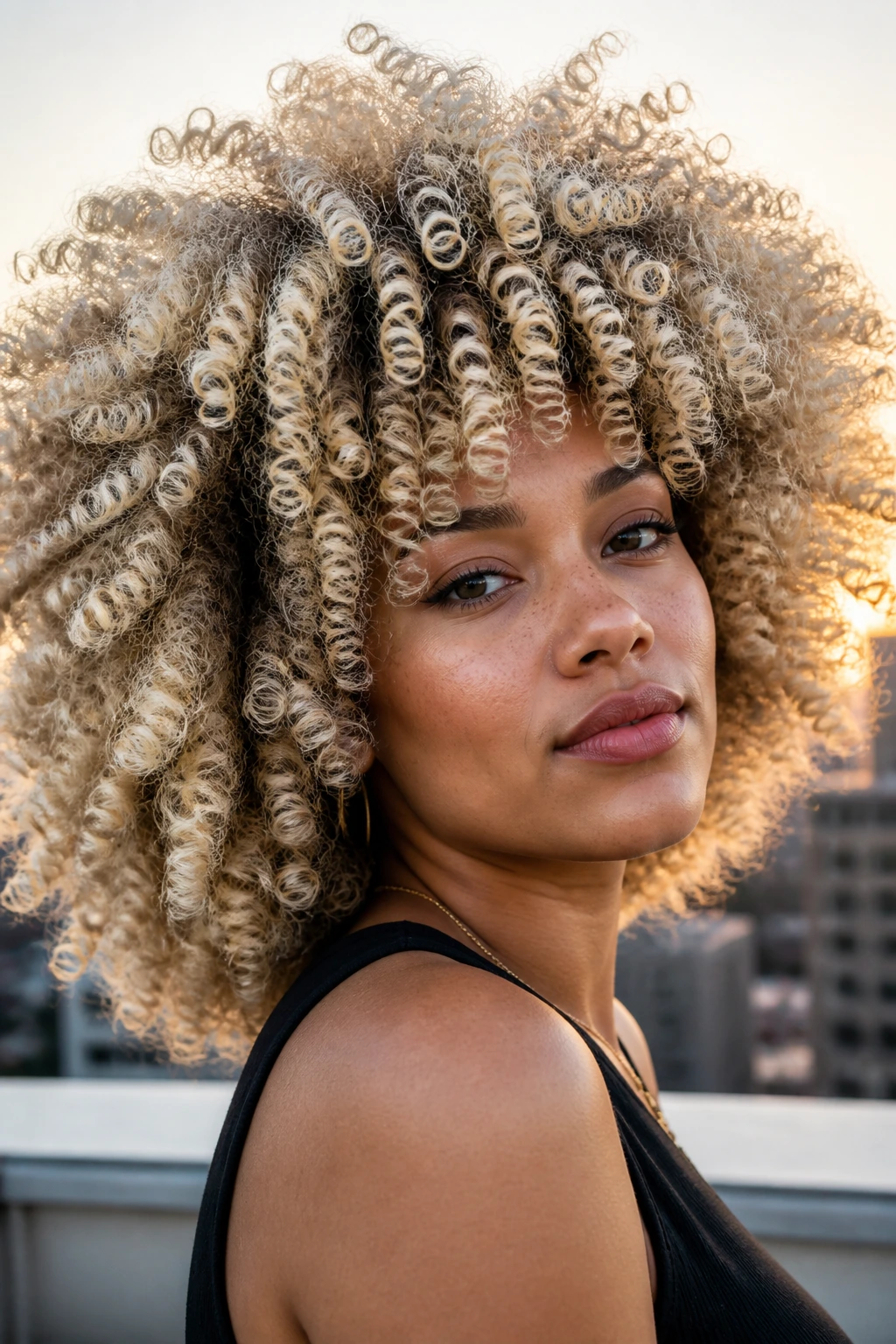
Ribboned platinum on afro curls is not a casual decision. It’s bold, graphic, and at its best when the colorist treats the curl shape like sculpture. Platinum should appear in ribbons, not in a uniform shell, so the coils keep their depth and spring.
The texture can handle high contrast beautifully when the light pieces are placed thoughtfully. A few platinum routes through the front, crown, and upper sides are enough to make the pattern pop. Too many, and the hair starts to lose its rhythm.
This look demands healthy hair and regular care. If the ends are dry or the curl is fragile, platinum will announce it immediately. But when it’s done well, it has a crisp, almost electric finish.
28. Creamy Beige Curly Crop
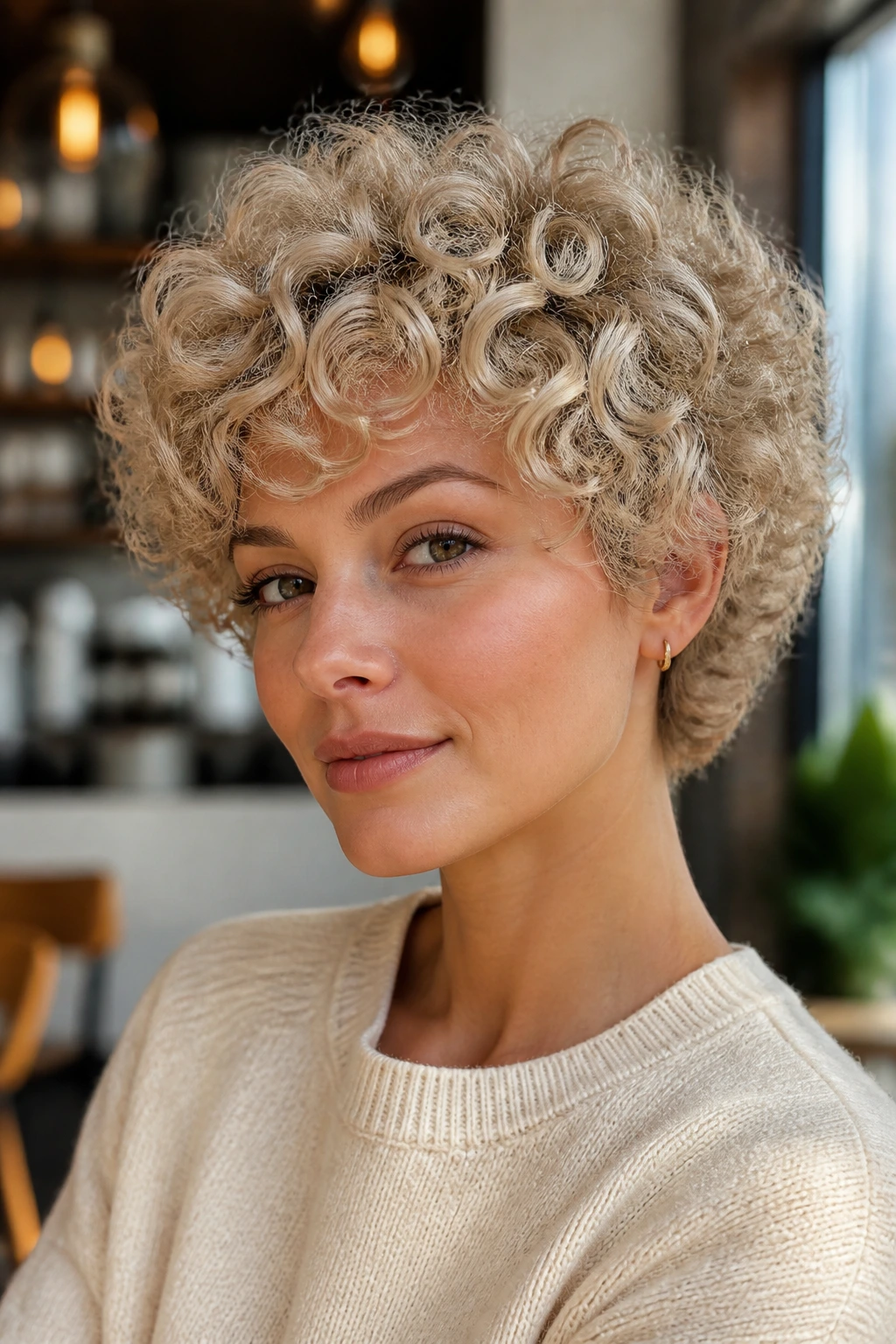
A creamy beige crop keeps the blonde soft and the cut sharp. Short curly hair can easily turn bulky if the color is too dark or too uniform, so creamy beige adds lift without making the style look stringy.
The shade works especially well on dense crops because it breaks up the mass of curls. The beige tone is neutral enough to avoid brass, and creamy enough to keep the hair looking polished under indoor light. That indoor-light test matters more than people think.
This is a low-drama, high-return look. It won’t scream for attention, but it makes the cut look deliberate, which is often what short curly hair needs most.
29. Vanilla Bean Curly Fringe
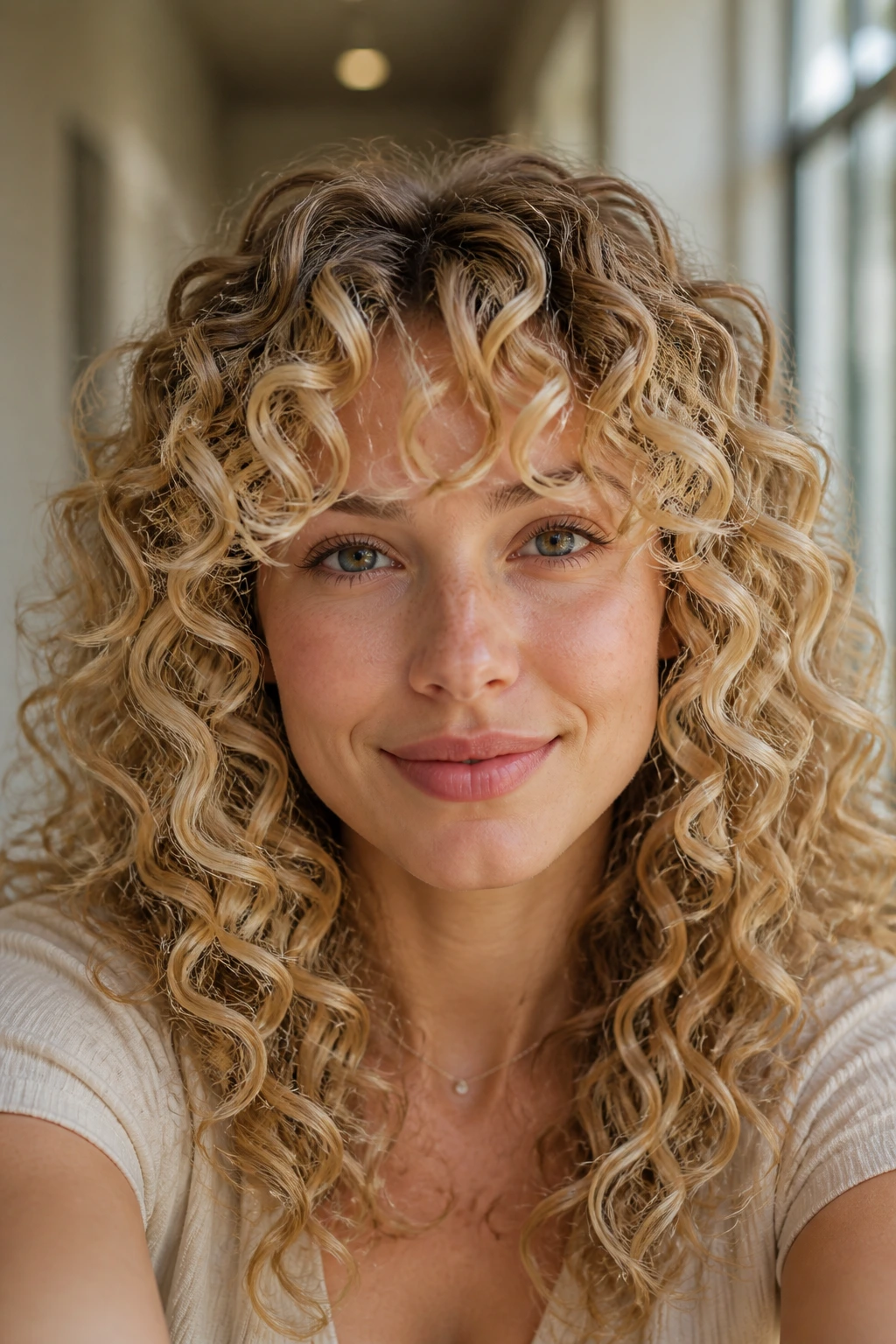
Vanilla bean highlights around a curly fringe can change the whole face. The front curls brighten first, then the lighter pieces move backward just enough to keep the fringe from looking like a separate curtain pasted on top.
Fringe and curls need careful placement because the hair shrinks differently when dry. Brightness that sits too low can disappear, while brightness that sits too high can look disconnected. Vanilla bean sits in that sweet creamy zone and keeps the fringe visible without going stark.
If you wear your curls forward, this is one of the most useful blonde placements in the group. It makes the eyes and cheekbones stand out without needing a full-head transformation.
30. Champagne Root Shadow
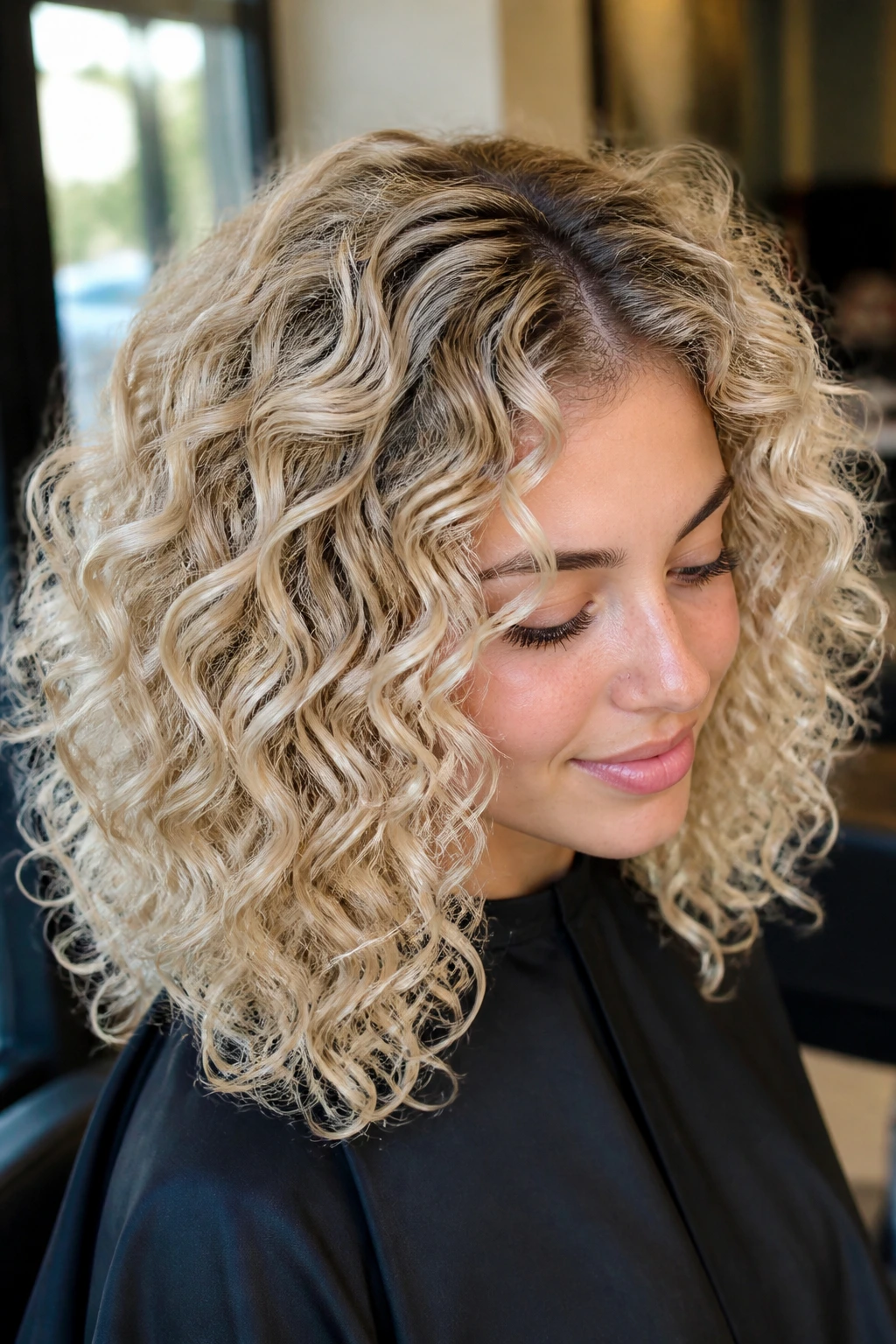
Champagne root shadow is the answer for anyone who wants pale blonde without the monthly panic attack. The roots stay deeper and softly shaded, then the champagne blonde opens through the mid-lengths and ends.
The root shadow does more than save you salon visits. It gives curly hair a place to rest visually. Without that depth, pale blonde on curls can look blown out, especially when the light hits from overhead.
This look is especially good on medium to loose textures because the shadow and the light both stay visible as the curls move. If you like the feeling of brightness but not the maintenance tax, this one’s hard to beat.
31. Lemon Custard Highlight Mist
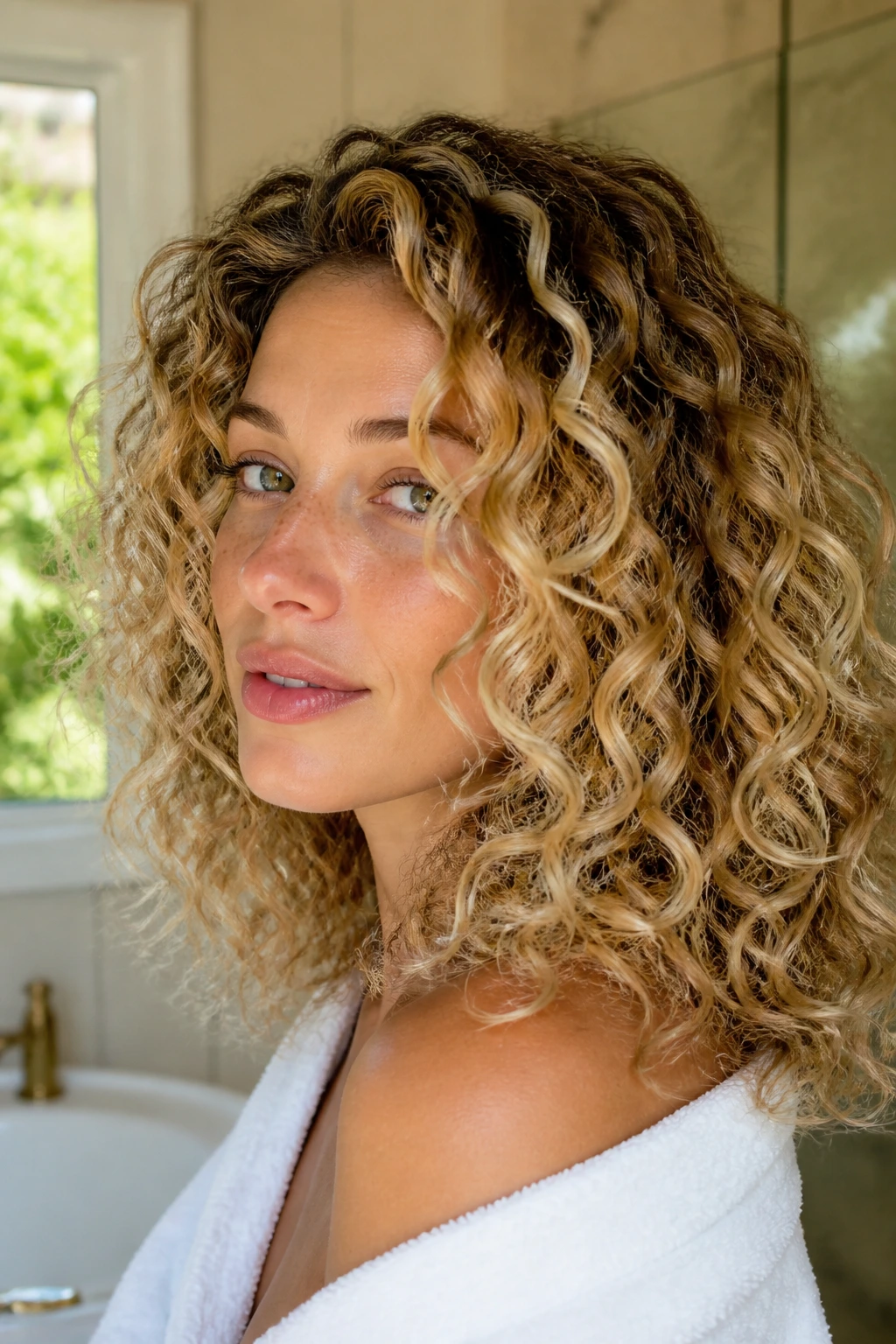
Lemon custard highlights are pale, warm, and delicate enough to look airy instead of yellow. The “mist” part matters; this is not a block of blonde. It’s a soft scattering of light through the curl pattern.
The shade works best when it’s placed in fine, diffused sections rather than thick stripes. That keeps the hair from looking streaked and helps the curls keep their shape. On curly hair, pale yellow-cream tones can look soft and luminous if they’re carefully toned. If they’re not, they can veer straight into brass.
This is a lovely choice for people who want a lighter blonde but still want the finish to feel gentle. It’s bright without turning sharp.
32. Sunlit Fringe Halo
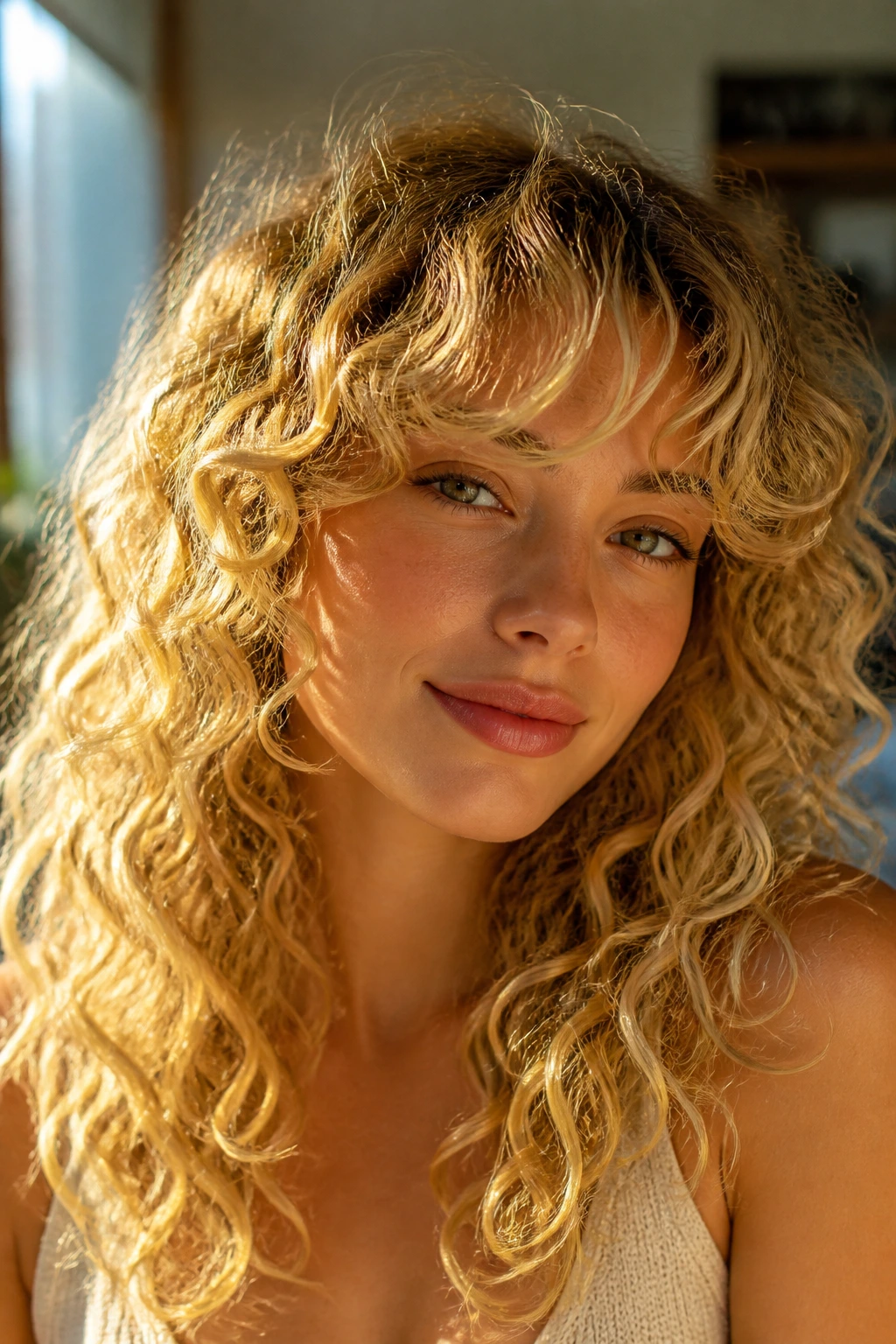
Sunlit fringe halo is the closing act because it does something very specific: it frames the face and crown with bright, warm pieces that look like natural sunlight found the haircut and stayed there. The halo is most visible around the fringe, temples, and top layer.
What to Ask Your Colorist
Ask for a warm blonde halo with lighter pieces concentrated at the front and top, then softened into the sides. Keep the root area a shade deeper so the curls don’t go flat near the scalp.
- Use a soft golden or beige toner.
- Leave interior depth underneath the halo.
- Focus brightness where the curls open most.
This look is especially good if you love styles that move a lot. Flip your part. Scrunch it. Tuck one side behind your ear. The halo changes every time.
Why Blonde Placement Matters More Than Blondness Itself
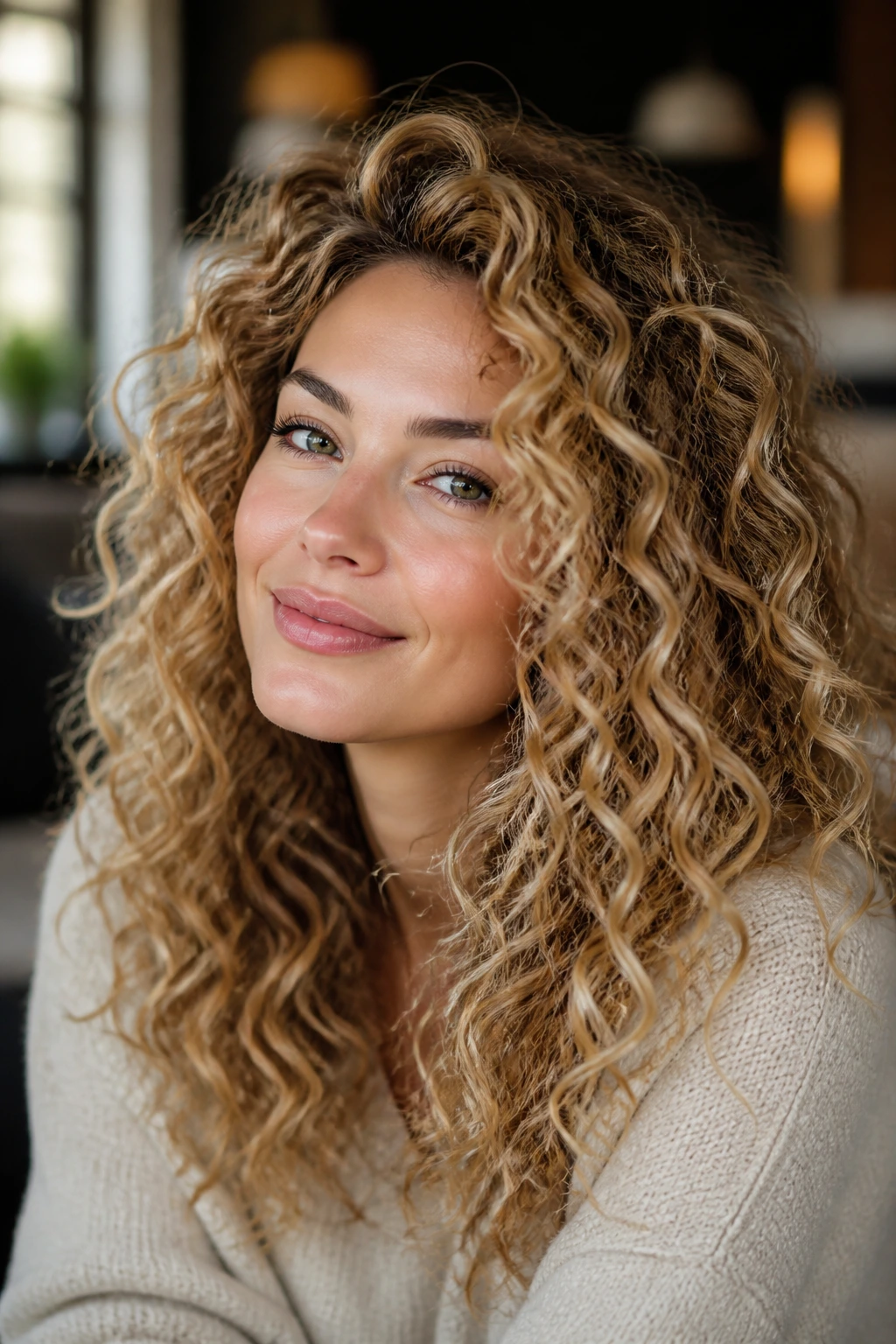
A lot of people think the question is whether curly hair can “handle” blonde. That’s the wrong question. Curly hair can handle a wide range of blonde looks if the placement respects the pattern and the tone respects the base.
The real issue is flatness. Curls need shadow under the light, or the shape goes soft in a bad way. That’s why foils, balayage, babylights, ribbons, and root shadows keep showing up in the best curly blonde work. They don’t just lighten the hair. They build a map for the eye.
And curl pattern changes everything. A loose wave can show a fine babylight. A tight coil may need a broader ribbon to read at all. Dense hair often needs lowlights to stop the blonde from turning fluffy, while finer curls sometimes need more depth at the root so the whole style doesn’t look see-through. The lighter the blonde, the more important that balance becomes.
The Tools That Make Curly Blonde Look Better Between Appointments
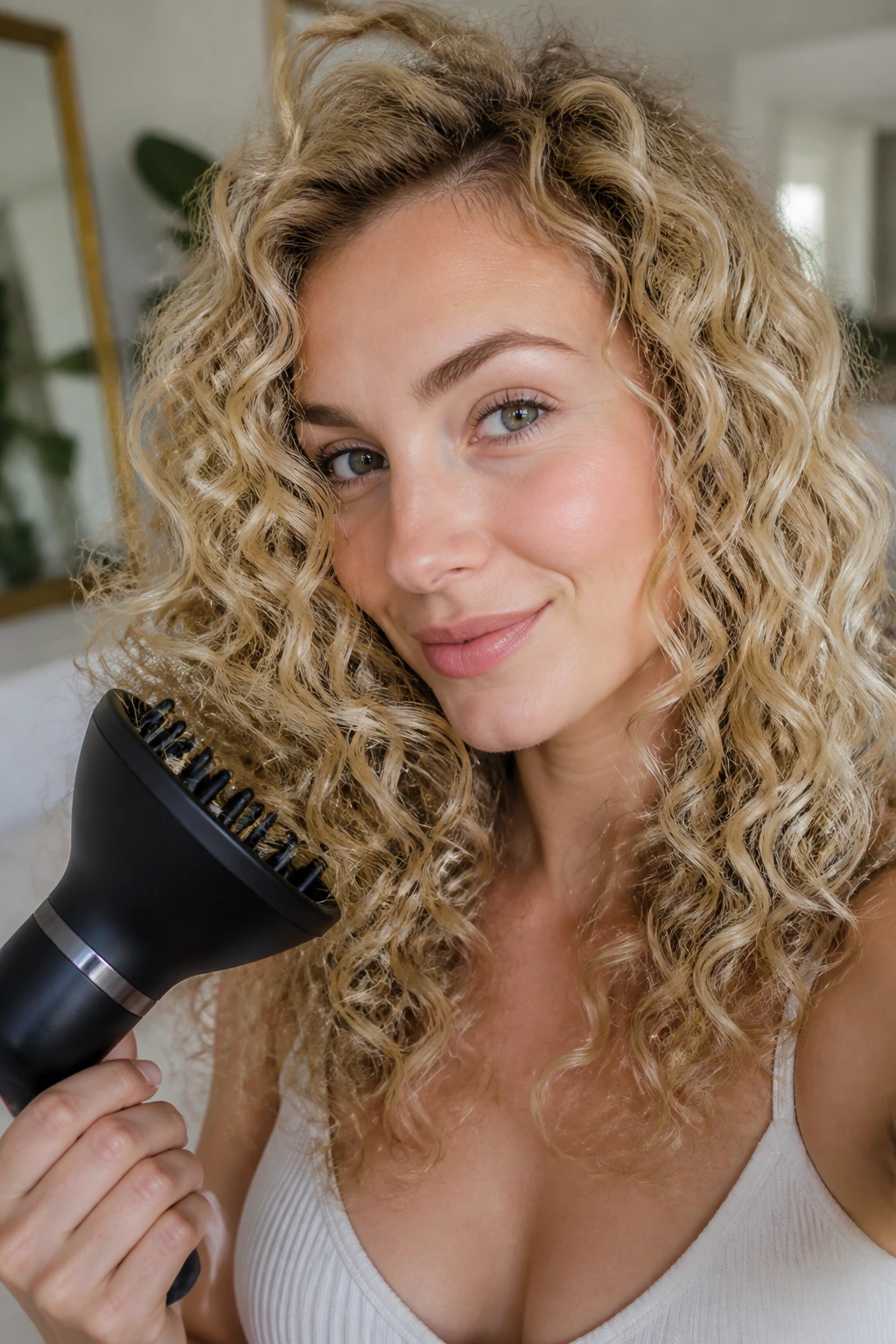
You don’t need a suitcase full of gadgets, but a few specific tools make a difference. Curly blonde shows every decision you make at home, for better or worse.
- Diffuser attachment: Keeps curl shape intact while drying and reduces the blast of direct heat that can rough up lightened ends.
- Wide-tooth comb: Detangles wet curls without dragging pigment-fried strands apart.
- Microfiber towel or cotton tee: Cuts down frizz while the curls set.
- Color-safe shampoo: Helps the blonde stay clean without stripping the toner out in one wash.
- Purple or blue shampoo: Useful for brass control, but only when the shade starts to shift—not as an every-wash habit.
- Leave-in conditioner: Helps the lighter pieces slide into place and keeps the curl from feeling crunchy.
- Heat protectant: Non-negotiable if you diffuse with heat or stretch curls with a blow dryer.
- Sectioning clips: Make touch-up styling and product application much easier on thick, dense curls.
- Satin bonnet or pillowcase: Reduces friction overnight, which matters more when the ends are lightened.
- Bond-building mask: Worth keeping on hand if your blonde was created with lightener rather than deposit-only color.
How to Choose the Right Blonde Tone and Placement
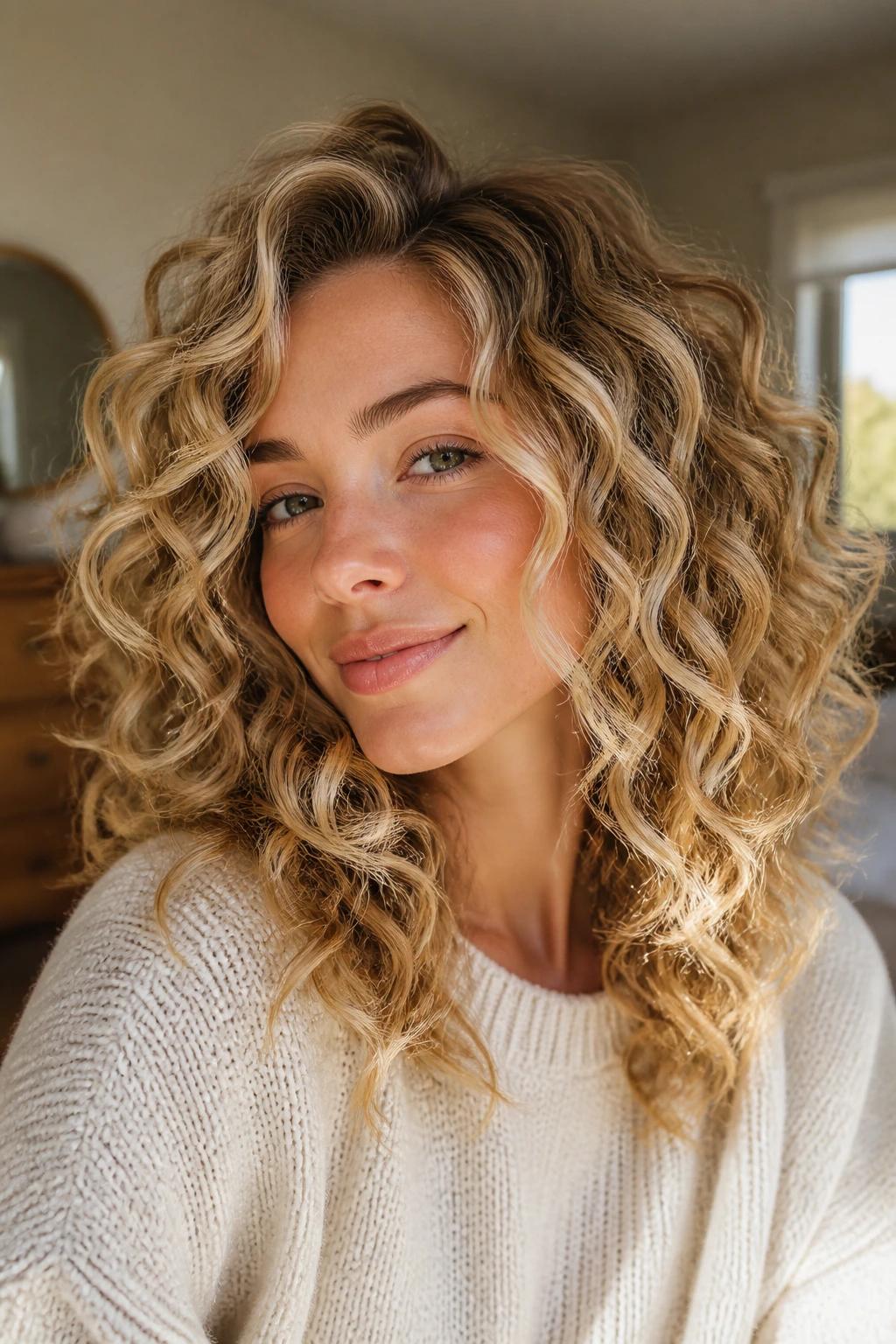
Picking the right blonde for curly hair starts with the base shade, not the inspo photo. If your natural color sits around level 4 or 5, a pale platinum dream is possible, but it usually takes more time, more sessions, and more caution than a honey or beige blonde. If you’re starting from a lighter base, you can play with champagne, pearl, or mushroom tones more easily.
Porosity matters too. Highly porous curls drink up toner, then spit it back out unevenly after a few washes. That’s why some blonde looks on curls need softer toning and more root depth than the photo suggests. Bring a stylist pictures of hair that has the same curl pattern and density as yours. That simple move saves a lot of disappointment.
Undertone is part of the story, but not the whole story. Warm honey or apricot shades flatter some faces beautifully; cooler ash and mushroom blondes look cleaner on others. If you’re unsure, ask for a neutral base with a bend toward warm or cool, not a full commitment to either side. That gives you room to adjust after the first gloss.
How to Style Curly Blonde So the Color Shows Up
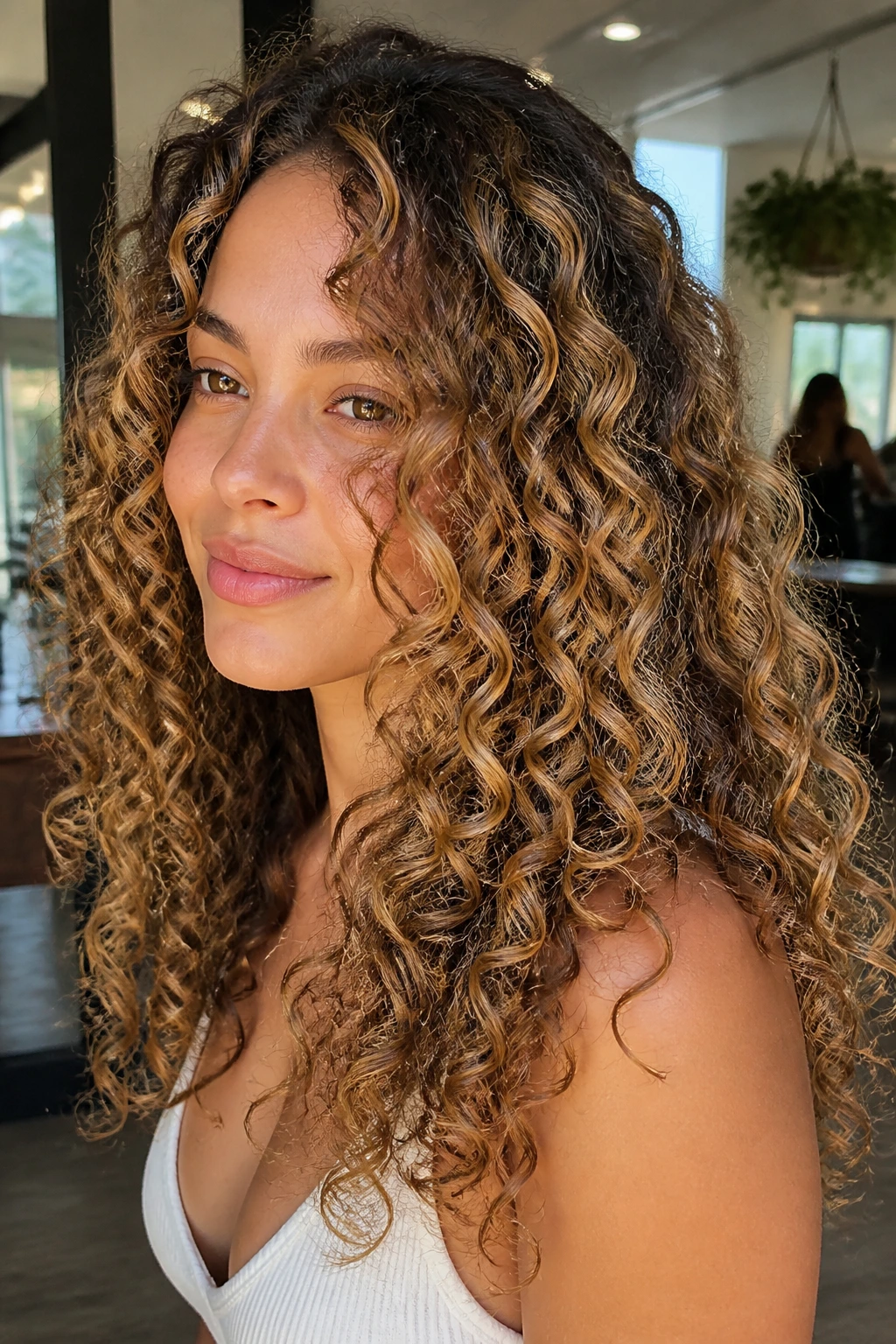
Blonde on curls disappears fast when the styling is too heavy. Thick creams, too much oil, or a crushed finish can mute the dimension you paid for. The better move is light layering: leave-in first, then a curl cream only where the hair needs slip, then a gel that holds the pattern without coating it in shine from root to tip.
Parting: A center part shows symmetry and lets face-framing blonde do the talking. A soft side part puts more light on one side, which helps money-piece styles and rooted blondes look fuller.
Drying: Diffuse on low heat and low speed, hovering at the start and then cupping the curls once they’re partially set. Don’t blast the hair until it feels dry at the scalp but soggy on the ends. That’s how frizz creeps in and the blonde gets fuzzy.
Finishing: Break the cast only when the hair is fully dry. A tiny bit of serum on the palms can help, but too much will dim the lighter pieces. If the blonde looks too pale under indoor light, a clean curl refresh with water and leave-in can bring the dimension back without adding more product.
Common Mistakes That Flatten Curly Blonde
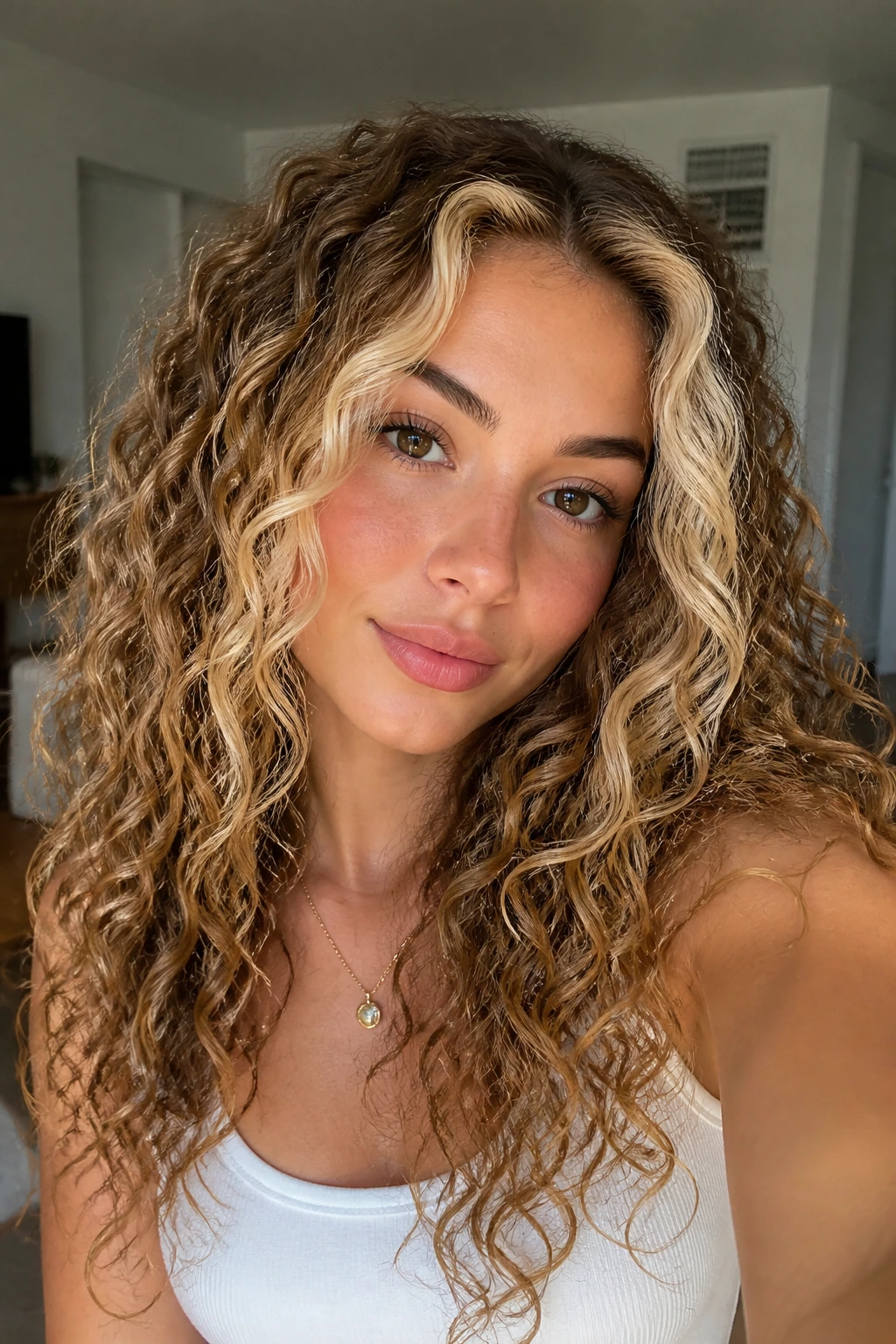
The most common mistake is painting the blonde too evenly. Curly hair does not need a uniform bright shell. It needs pockets of light and pockets of depth. When everything is lifted the same amount, the curl shape loses its shadows and starts looking puffy.
Another problem is overtoning. A violet or ash toner can look gorgeous for five minutes, then suddenly the curls start reading gray, flat, or chalky. That happens fast on porous hair. A better move is to tone a little softer and recheck after the hair settles.
Skipping lowlights is another one. People chase brightness and forget that blonde needs dark neighbors to feel bright. Without them, the hair can look washed out instead of dimensional.
And yes, purple shampoo can wreck the feel of curly blonde if it’s used like regular shampoo. Once a week, sometimes once every two weeks, is usually enough. More than that and the hair can start feeling rough and thirsty.
Finally, don’t ignore the ends. Curly ends are often the oldest, driest part of the head. If they’re pushed too pale, they can fray and split fast. Sometimes the smartest blonde is the one that stops a shade short.
Variations and Adaptations to Try
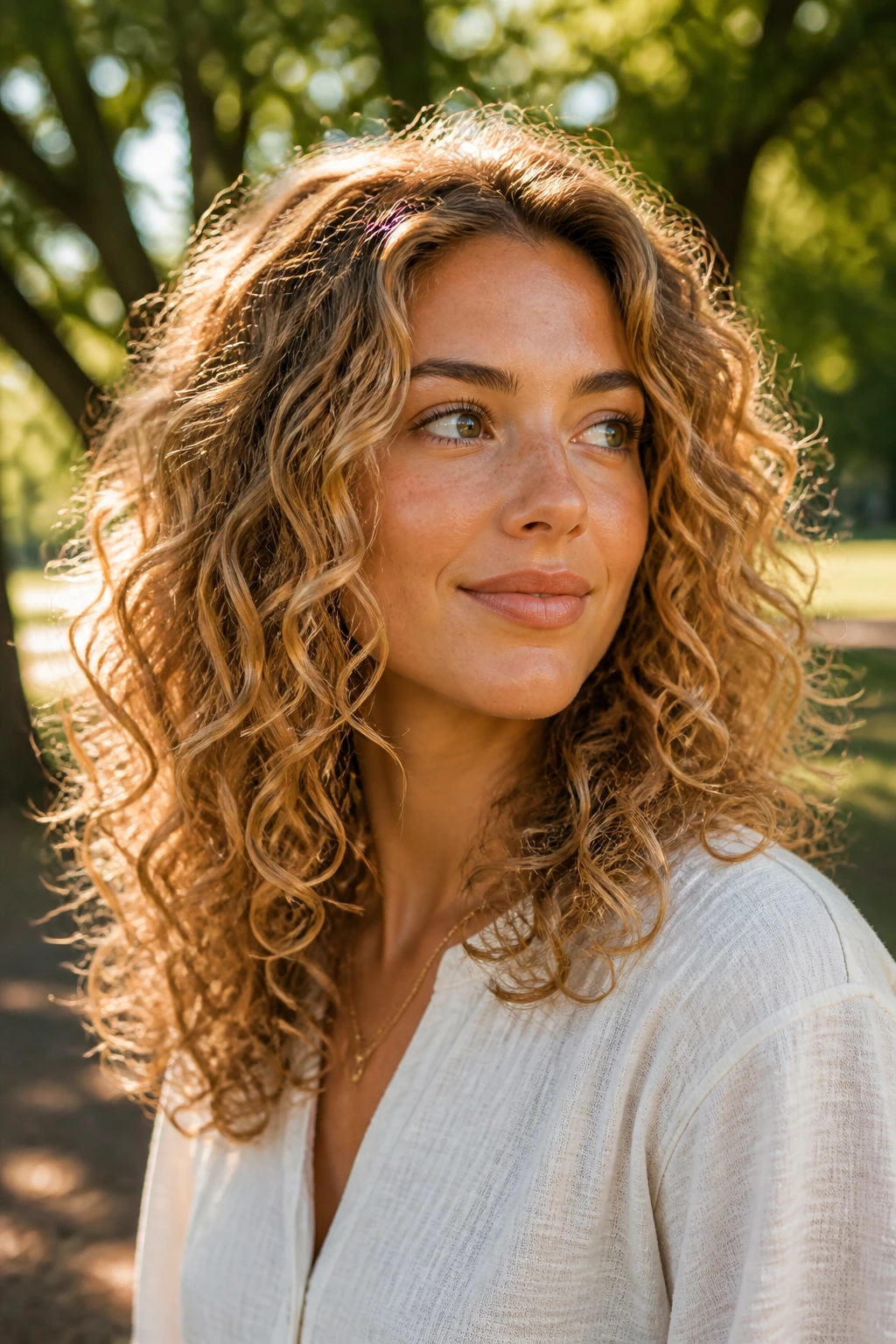
Warm Honey Shift: Take almost any look above and push the toner toward honey instead of beige or ash. This works well if your natural base is golden or if your skin tends to look flat against cool tones.
Cool Beige Turn: Swap buttery or golden blonde for beige, mushroom, or pearl. That cooler finish helps if your curls already pull warm or if you want the blonde to feel softer and less sunlit.
Low-Maintenance Root Shadow: Add a deeper root smudge to any balayage, foilayage, or money-piece style. The color will grow out with less contrast, and curly regrowth tends to look softer when the root is intentionally darker.
High-Contrast Frame: Concentrate the brightness in the front and crown, then keep the interior darker. This is a smart move if you want the blonde to show up immediately without having to lighten the entire head.
Coily Ribbon Placement: For tighter textures, widen the highlight pieces and space them farther apart. The coils need room for each bright ribbon to breathe, or the blonde can disappear into the shape.
Keeping Curly Blonde Bright Between Appointments
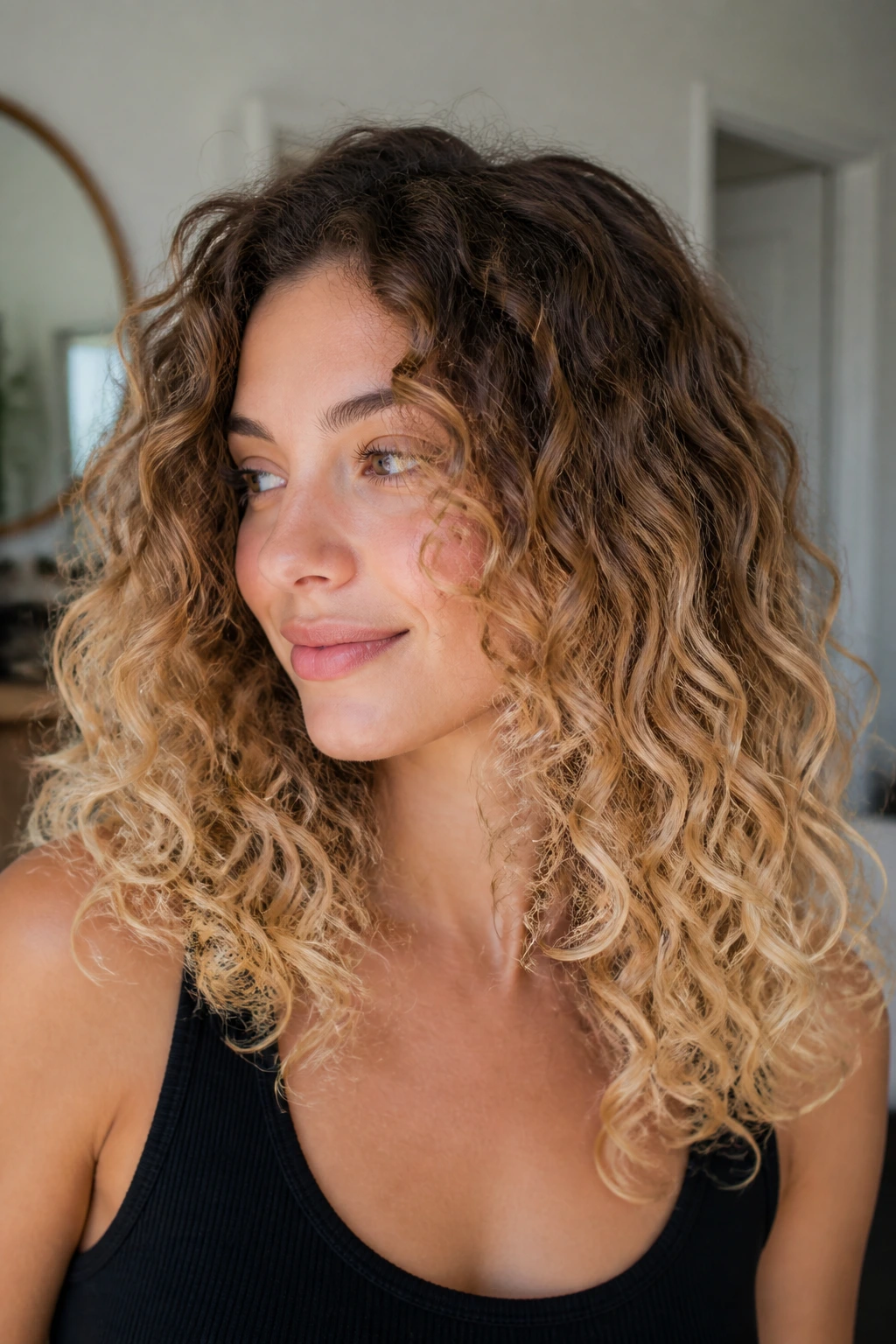
Curly blonde holds up best when you treat tone and moisture as a pair. A lightening service opens the cuticle a bit, which means the hair can lose both pigment and slip faster than untreated curls. Weekly deep conditioning helps, and a bond-building mask once a week for the first month after lightening is a solid habit if your hair was lifted with bleach.
Wash rhythm: Two to three washes a week is enough for most curly blondes. Use a sulfate-free shampoo unless your scalp needs something stronger, and keep the lather mostly at the roots so the lighter pieces don’t dry out.
Tone control: Use purple shampoo only when the blonde starts drifting yellow. For warmer looks, that might be every 10 to 14 days. For pearl, ash, or mushroom blondes, it can be a bit more frequent, but never so often that the curls start feeling squeaky.
Gloss schedule: A salon gloss or toner every 6 to 8 weeks keeps the color honest. If your blonde is warmer and softer, you may stretch that a little farther. Platinum, pearl, and icy looks usually need more frequent check-ins.
Heat rules: Diffuse on low heat and stop before the hair gets brittle. Lightened curls look their best when they still have some elasticity. If you hear sizzling, you’re already too hot.
Trim rhythm: Every 8 to 12 weeks keeps blonded ends from fraying into the shape. Curls hide some damage, but they do not erase it.
Frequently Asked Questions
Which blonde shade is easiest to maintain on curly hair?
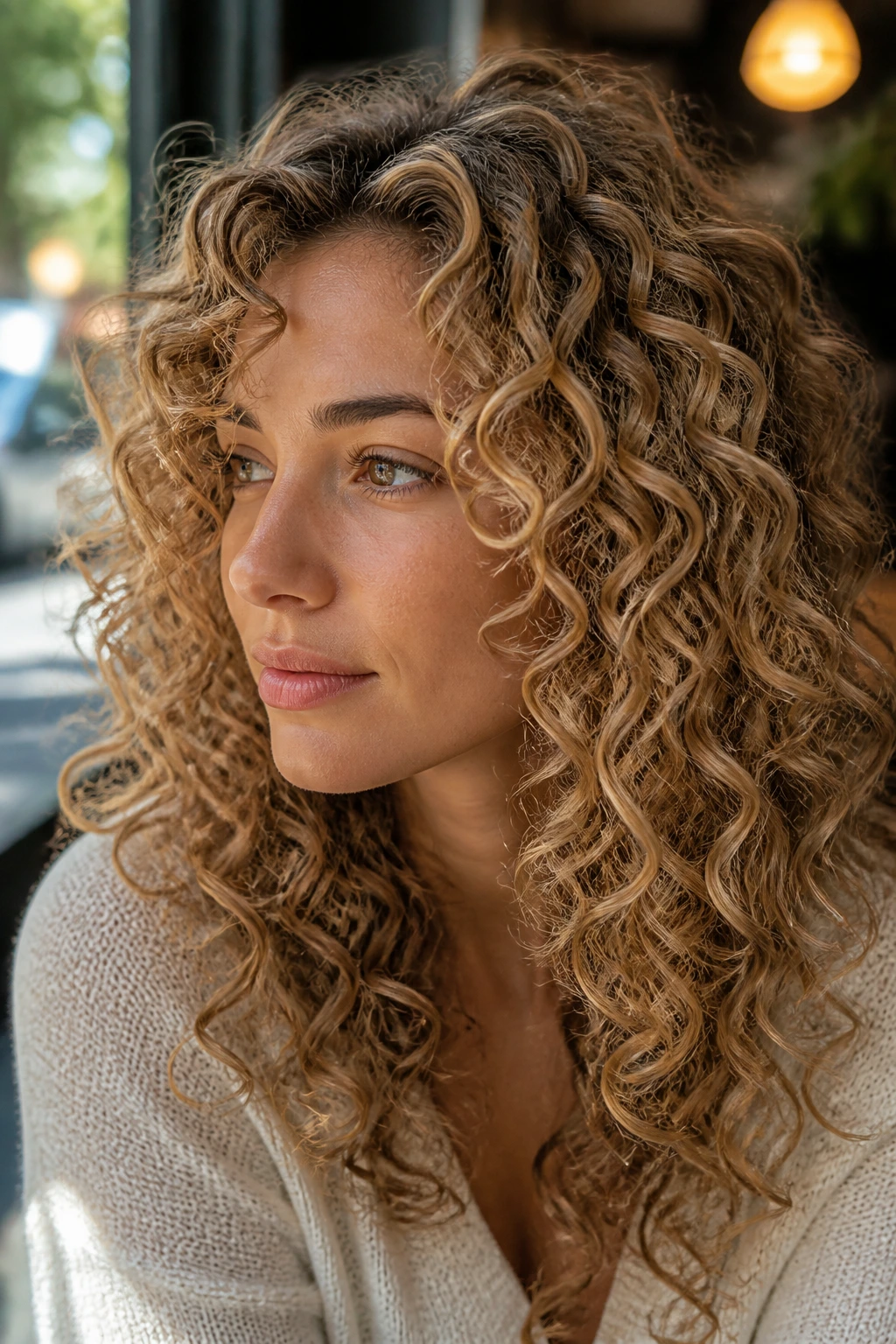
Rooted honey, beige balayage, and champagne ombré are the easiest to live with. They give you brightness without making the grow-out line obvious, and curly texture helps soften the transition even more.
Is balayage better than traditional highlights for curls?
Usually, yes. Balayage and foilayage let the colorist place brightness where the curl opens up instead of forcing a uniform stripe pattern. Traditional highlights can still work, but they need a lighter hand and more attention to curl shrinkage.
Can dark curly hair go blonde without losing its shape?
Yes, but it usually takes planning. Dark curls often do better with staged lightening, rooted dimensions, or partial blonde placement instead of a single all-over lift. That keeps the hair from getting brittle and helps the curl pattern stay springy.
How often should I tone blonde curls?
Toning every 6 to 8 weeks at the salon is common, with a gloss in between if needed. Home toning products should be used lightly and only when the blonde starts to look too yellow or dull.
Will purple shampoo dry out my curls?
It can, if you use it too often or leave it on too long. Most curly blondes do better with a short wash once every 1 to 2 weeks, followed by a rich conditioner or mask.
What if my ends are already porous before I go blonde?
Then the lighter pieces should probably stop a shade or two short of the palest blonde. Porous ends grab toner fast and can go dull, muddy, or translucent if pushed too far. A good colorist will protect the ends and keep the brightest work higher up.
Do these blonde looks work on coily hair?
Absolutely, but the placement needs to be wider and more deliberate. Coils often need brighter ribbons rather than tiny babylights so the color reads through the curl shape. Shadow and depth are still important; they keep the blonde from flattening the silhouette.
How do I ask for a low-maintenance blonde?
Say you want a rooted, blended look with soft grow-out and no hard line at the scalp. Mention whether you prefer warm, beige, or cool tones, and bring photos of curly hair that matches your texture. That last part matters more than people think.
What if the blonde looks stripey after the first wash?
That usually means the placement was too even or the toner settled unevenly. A gloss, a few lowlights, or a softer styling routine can break up the striping. Sometimes the fix is as simple as letting the curls fall into their natural pattern again after a wash day refresh.
The Blonde That Lets Curls Keep Their Shape
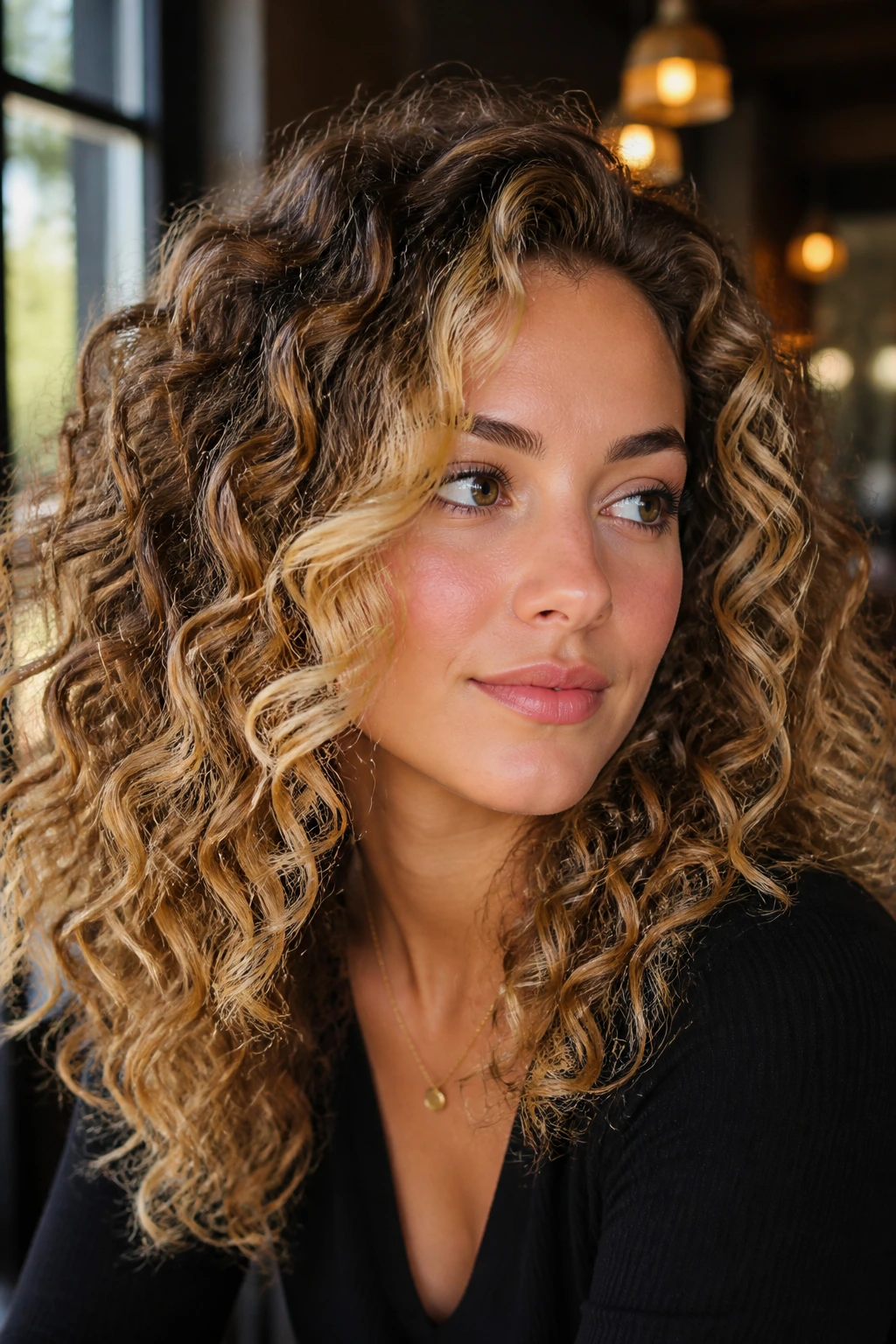
The best blonde on curly hair doesn’t erase the curl pattern. It frames it. That’s the part people miss when they chase a lighter shade without thinking about placement, depth, or the way the hair bends when it dries.
Pick the look that fits your curl size, your maintenance tolerance, and your base color—not just the one that looks brightest in a screenshot. When blonde follows the shape instead of fighting it, curls look fuller, softer, and far more interesting from every angle.
