



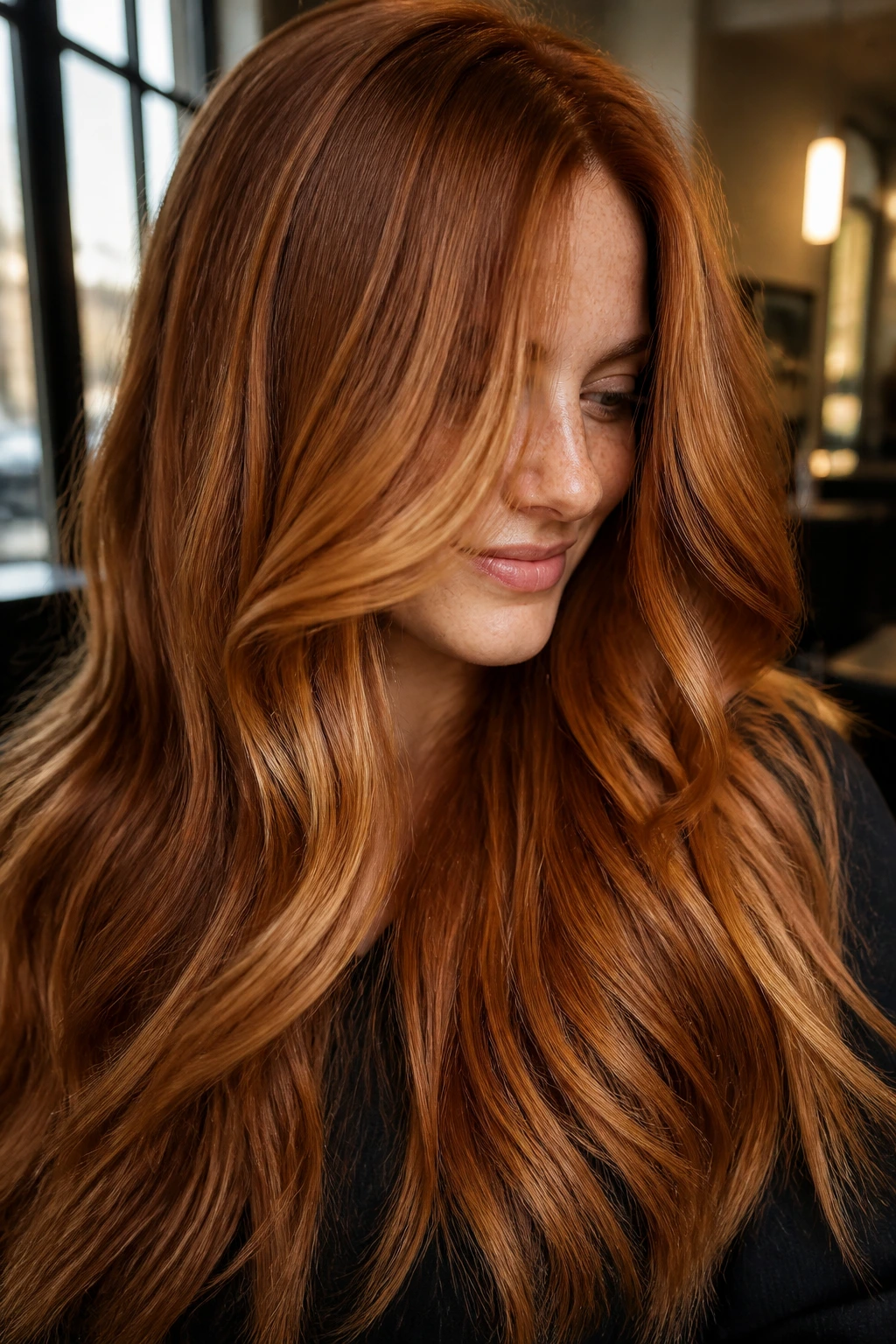
Copper doesn’t sit still on long hair. It moves, flashes, and shifts as the length swings, which is exactly why long ginger hair color ideas can look so rich when the placement is smart and the tone has room to breathe.
A flat red can feel like one note. Long hair gives you a whole chord. The crown can sit a touch deeper, the mids can glow in cinnamon or apricot, and the ends can catch a brighter copper when the light hits from the side. That’s the part people miss when they try to copy a red shade from a photo of a blunt bob. Length changes everything.
I like ginger best when it has a little tension in it—some warmth, some shadow, and a finish that looks good after it’s been tucked behind an ear, braided, or thrown into a loose wave. The shades below cover soft copper, smoky auburn, strawberry balayage, rust, rose gold, and a few bolder takes that only make sense because long hair can carry them without looking loud.
Why These Ginger Shades Earn Their Keep
-
Dimension matters: Long hair shows copper as ribbons, not a single block, so balayage, lowlights, and shadow roots do more work here than they would on a shorter cut.
-
Grow-out is part of the look: A root that sits one level deeper keeps the color soft at the scalp and buys you more time before the line of regrowth gets obvious.
-
Warmth can be tuned: Ginger does not have to mean bright orange. It can lean cinnamon, apricot, rust, rose, or bronze depending on the base and the gloss.
-
Texture changes the finish: Waves, braids, and layered blowouts each show off different parts of the shade, which is why long hair gives you more than one version of the same color.
-
Maintenance varies by tone: The deeper auburn and smoky copper looks can grow quietly, while pale strawberry and vivid copper usually need glosses a little more often.
1. Soft Copper Melt
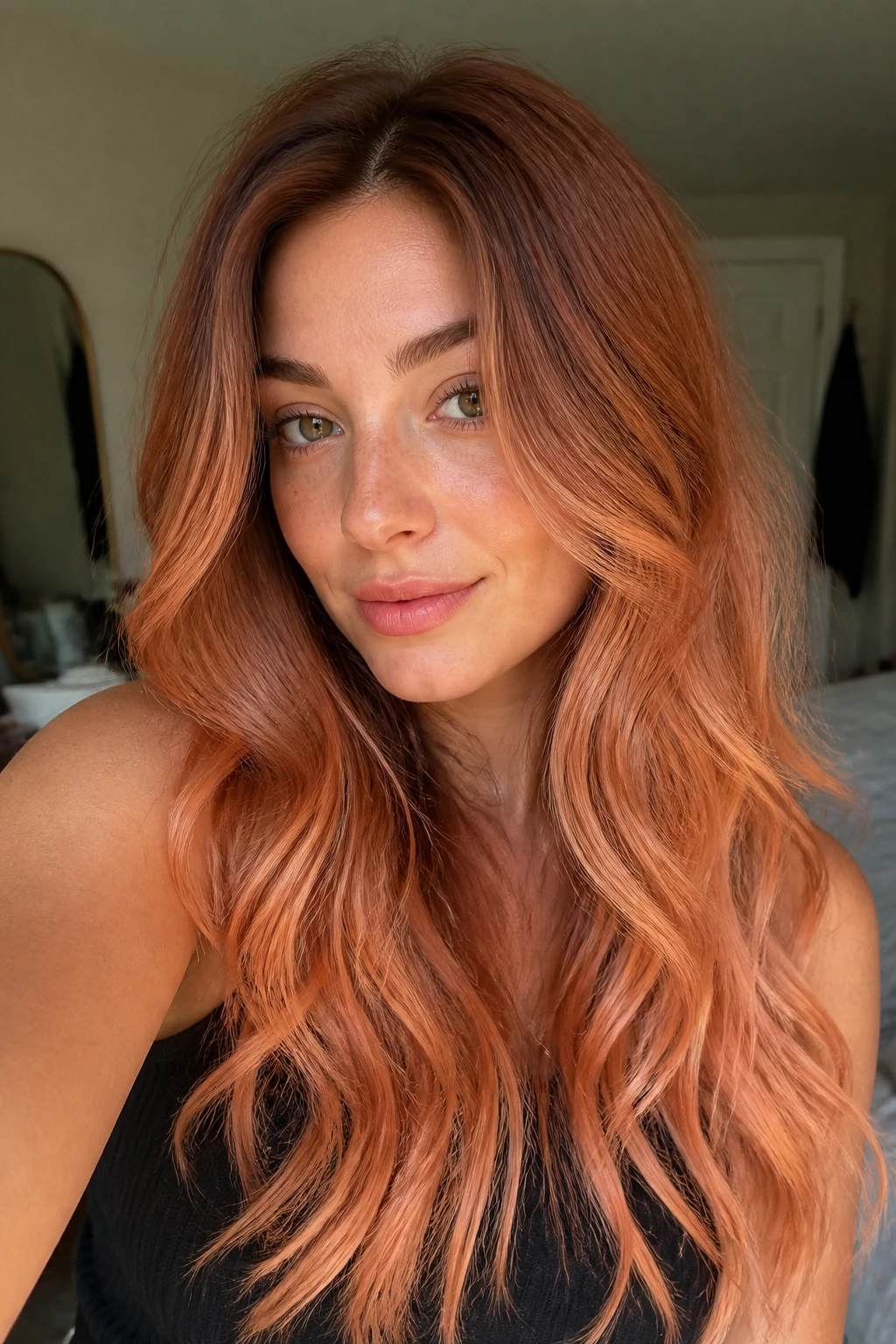
This is the ginger look I’d hand to someone who wants warmth without drama. On long hair, a soft copper melt reads like a slow fade from a deeper root into glowing mids and apricot-tinted ends, which keeps the whole thing from looking painted on.
What Makes It Work
A level 7 or 8 base gives the copper enough brightness to show, but the root stays one shade deeper so the grow-out line stays soft. That tiny difference matters more on long hair than people expect. Without it, the color can look like one big sheet of orange.
What to Ask For
- a demi-permanent copper glaze through the mids
- a root smudge one level deeper than the body
- slightly brighter face-framing pieces
- ends left translucent, not opaque
A loose wave is the best styling partner here. It breaks the color into ribbons, and that makes the copper feel richer, not heavier. If you want one ginger shade that plays nicely with ponytails, braids, and blowouts, this is the place to start.
2. Strawberry Ginger Balayage
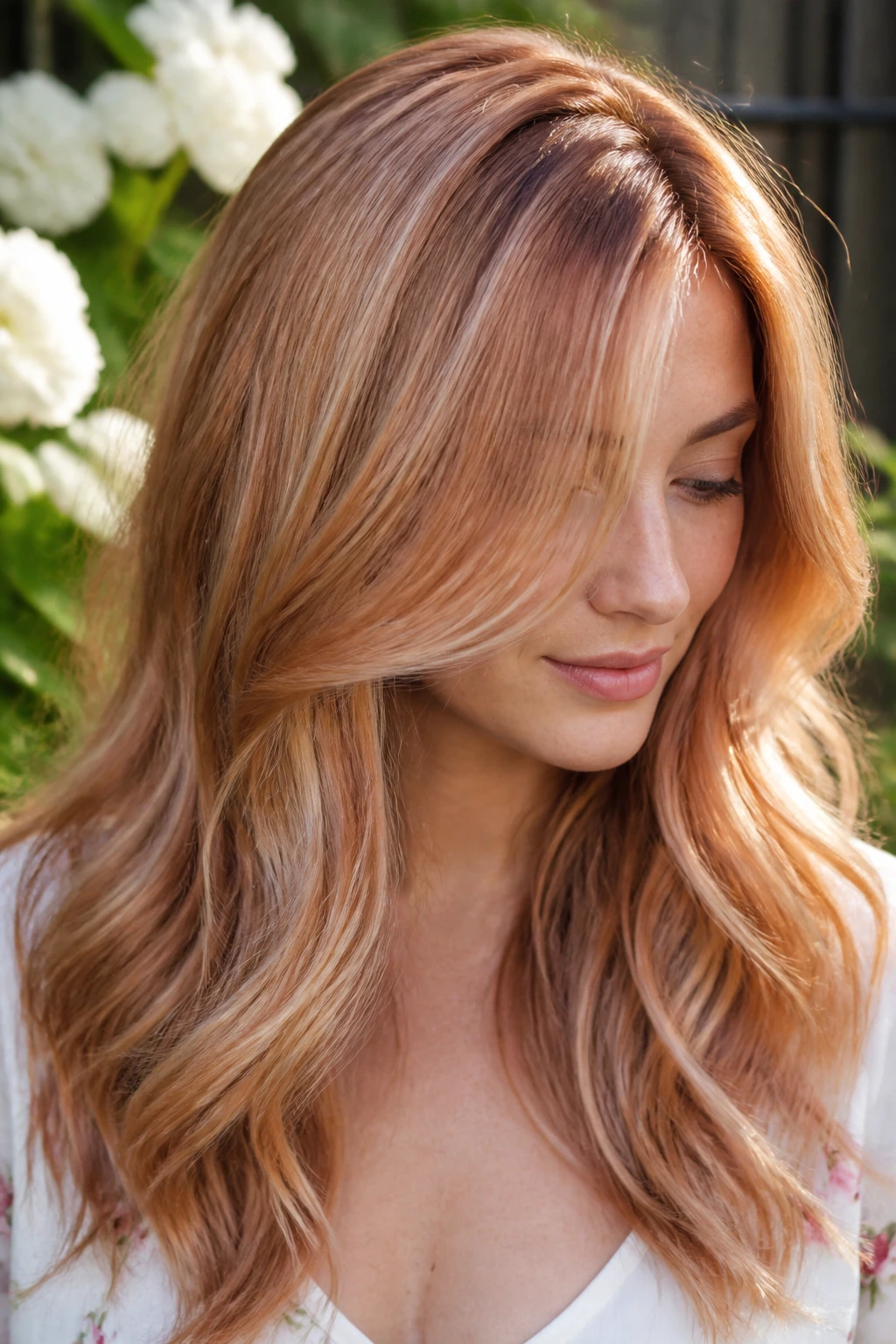
Do you want ginger that looks airy instead of dense? Strawberry ginger balayage has that pale red-gold shimmer that sits between copper and blonde, and long layers make it look even lighter because each bend catches a different strand of color.
How to Wear It
- best on level 8 blonde or light brown hair
- ask for fine balayage strokes through the top and sides
- keep the root a half-shade deeper for a cleaner grow-out
- finish with soft bends, not tight curls
The trick here is restraint. Too much strawberry pigment turns brassy; too little and it just looks beige. I like it most when the front pieces are a touch brighter than the back, because long hair needs a little focus near the face or the color can drift into the background.
3. Cowboy Copper Lengths
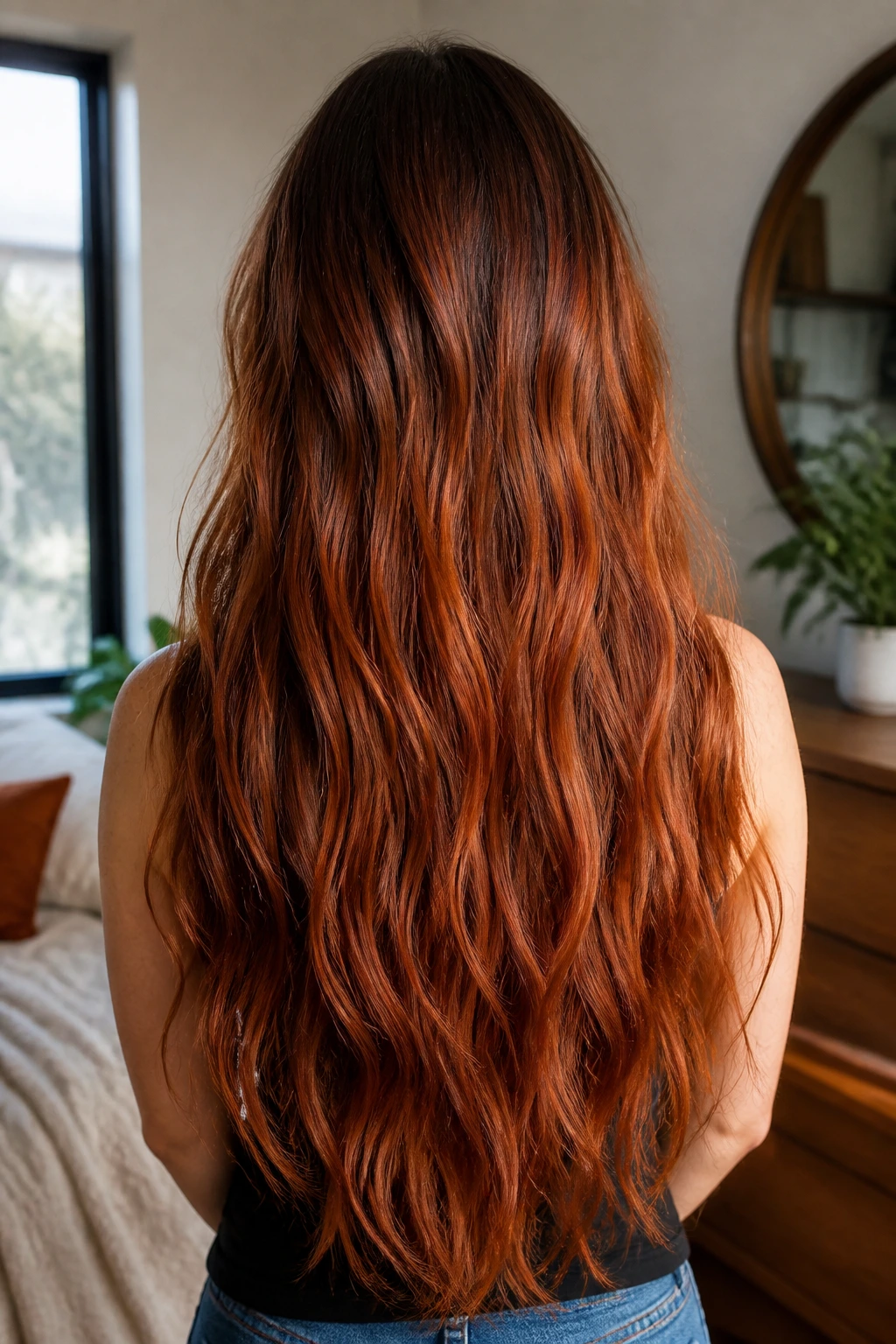
Think worn leather, fresh pennies, and a brown base that still has fire in it. Cowboy copper on long hair works because the color can move from a muted rust at the root to a brighter copper through the mids without the whole head needing to be lightened first.
A natural level 5 or 6 brunette base is a strong starting point for this look. You usually do not want a harsh lift all the way to blonde here; the richness lives in that brown-copper middle ground. Add a few lowlights under the crown and around the back of the head, and the whole style stops looking flat.
I like this shade on thick hair. It gives the surface shine, but the deeper pieces underneath keep the length from looking washed out in daylight.
4. Cinnamon Root Shadow
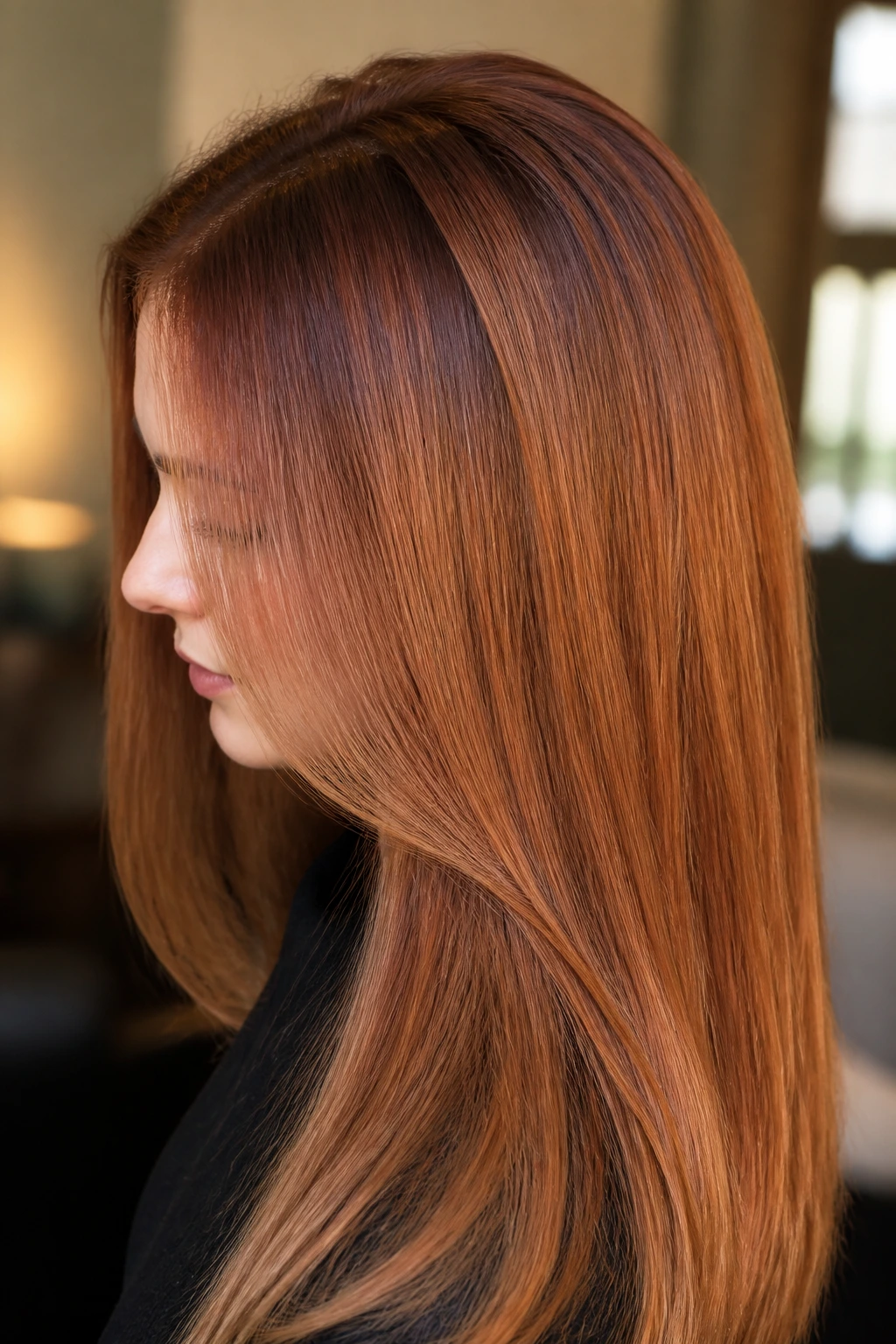
This is not the loudest ginger on the list, and that’s exactly the point. A cinnamon root shadow gives long hair a soft, smoked base that melts into copper-brown mids, so the color stays polished even when the roots start to grow.
The reason it works so well is simple: the darker root gives your eye a place to rest. On waist-length hair, that matters. Without a root shadow, the color can look like a hard curtain from scalp to ends. With one, the whole thing feels more expensive and less fussy.
I’d reach for this if you wear your hair straight a lot. The clean line of a blowout makes the cinnamon depth visible, and the red tones peek through when the hair moves. It’s a quiet shade, but not a boring one.
5. Apricot Copper Ends
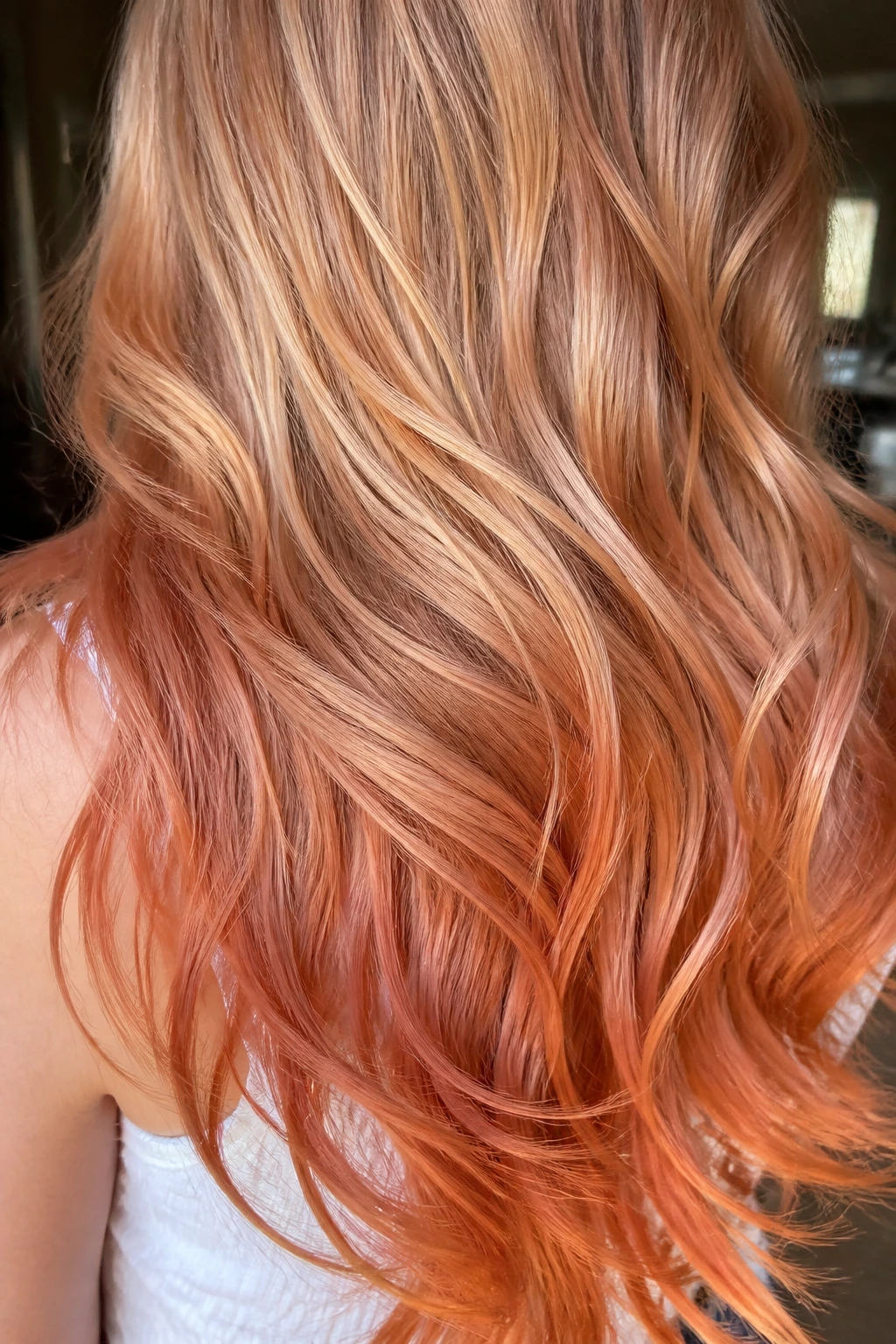
The ends look like dried apricot in late light. That’s the whole appeal here. Apricot copper works best when the mids stay beige-gold and the lower third gets the warmest lift, because long hair lets that change feel soft instead of abrupt.
Best For
- blonde or light brown hair that needs warmth
- layered cuts with movement at the ends
- people who want ginger without a strong red cast
- a gloss refresh every 4 to 6 weeks
The danger with apricot is overloading the ends until they go flat and opaque. Keep them sheer. If the hair is porous, a colorist will usually treat the ends more gently and put more of the brightness around the face, where the light does the most work.
6. Auburn Ribbon Highlights
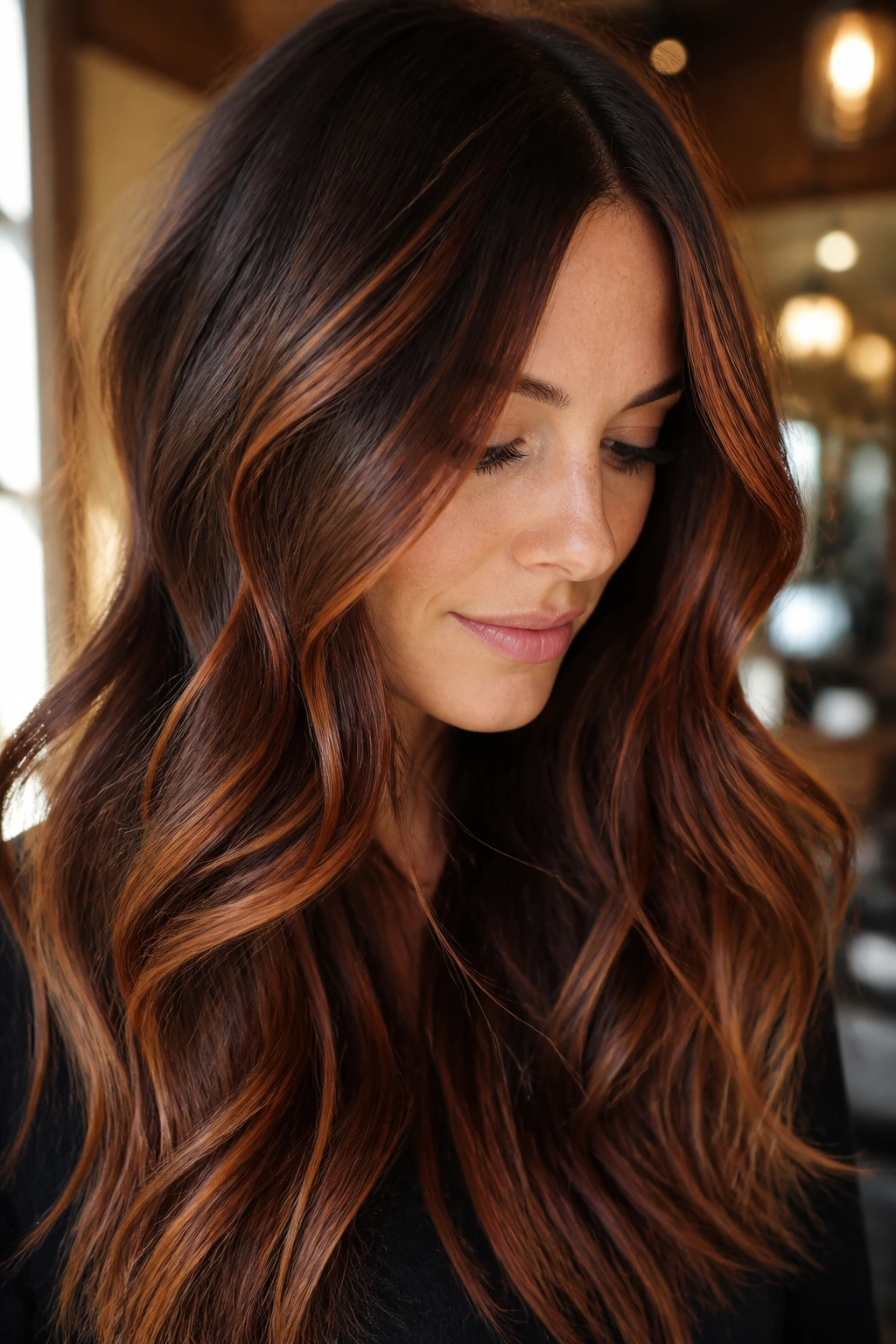
Ribbon highlights are how you make long hair do the talking. Instead of coloring the whole head one shade, auburn ribbons wind through a brunette base and show up in waves, braids, and half-up styles like little streaks of ember.
Why It Stands Out
Auburn highlights are a smart choice when you want ginger depth but not a full red transformation. The narrow placement keeps the color believable, especially on long hair where chunky stripes would look dated fast.
What to Ask For
- fine foils or painted ribbons through the mids
- a deeper auburn lowlight under the crown
- face-framing pieces no more than one level brighter
- a gloss that keeps the red warm, not burgundy
I love this one on layered cuts because each layer catches the auburn at a different angle. Straight hair shows the precision; waves show the movement. That’s a good trade.
7. Rusted Brunette Ginger
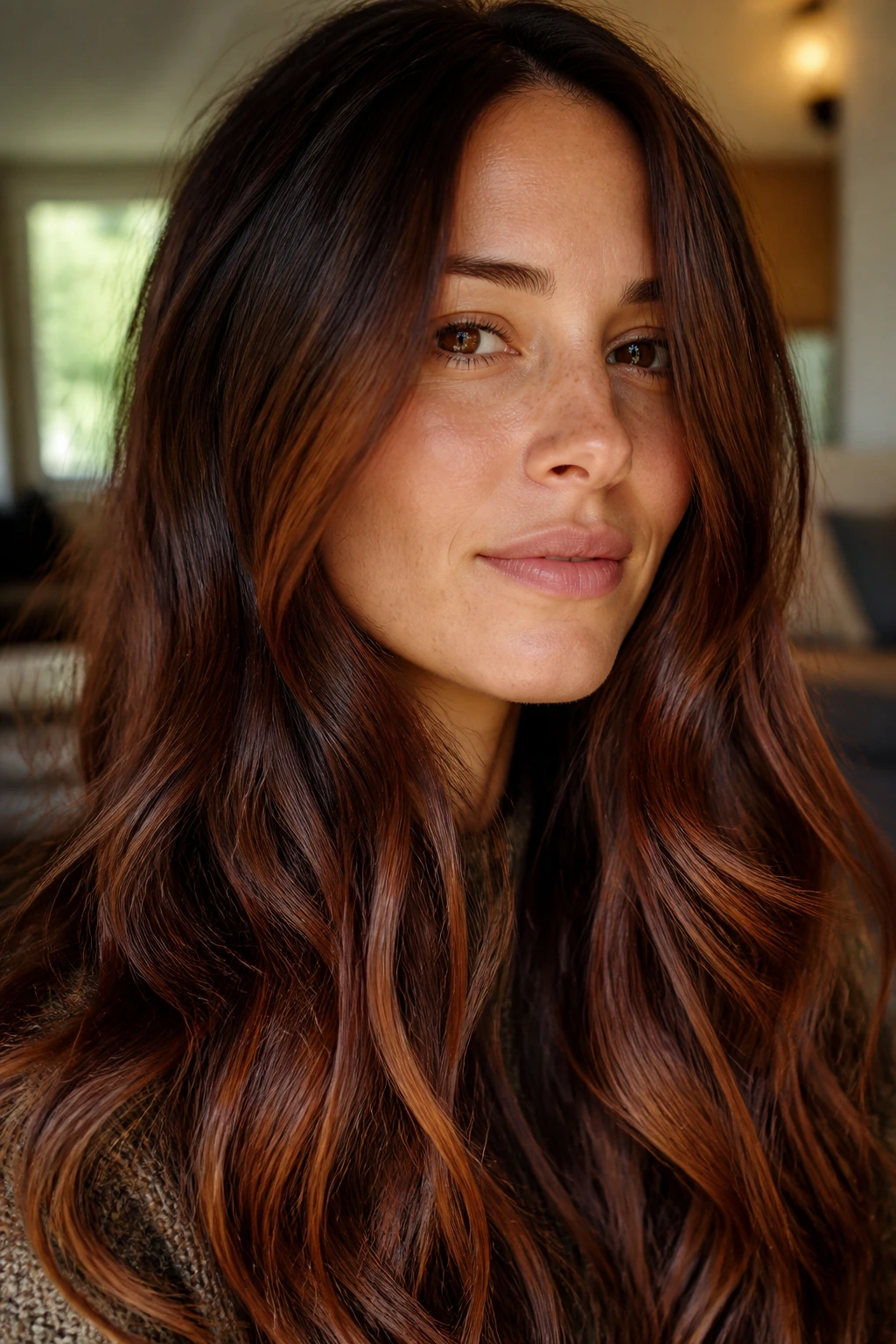
Can ginger stay wearable on dark brown hair? Yes, if you let it lean rusty instead of bright. Rusted brunette ginger keeps the base deep and adds a copper-brown sheen that shows up in sunlight and soft indoor light without screaming for attention.
This is one of the easiest long ginger looks to live with because it grows out like a brunette color with a warm edge. You can ask for a glaze, a few subtle painted pieces, or a low-commitment copper tint on the mids and ends. If your hair is already dark and you do not want a full pre-lighten service, this is the version that makes sense.
The best part is the finish. Rusty ginger looks even better when the hair has a bit of grit—second-day texture, a loose braid, or a soft bend from a round brush.
8. Sunset Ginger Ombré
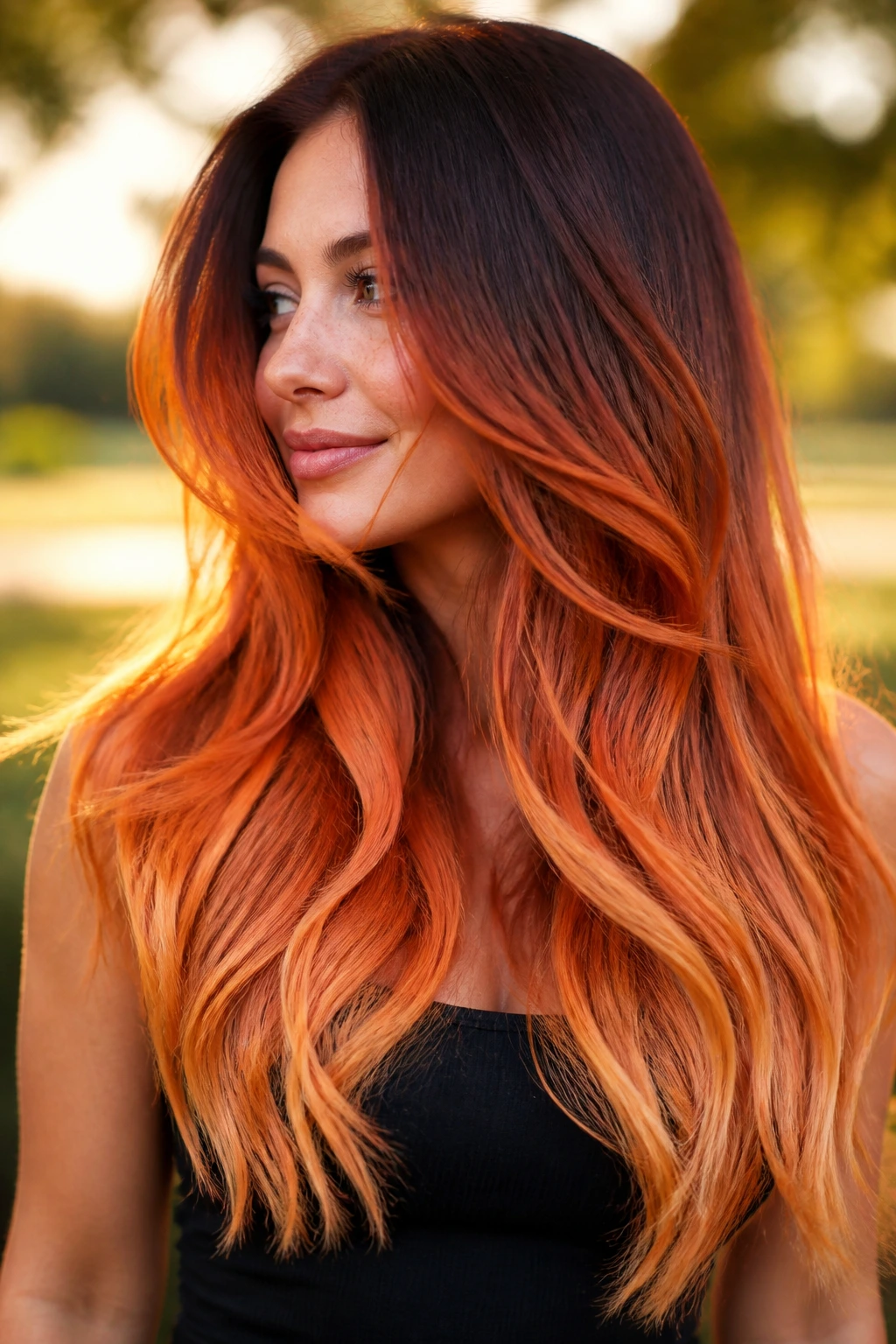
If your hair is thick and layered, this is the shade that gives you the most movement. Sunset ginger ombré starts with a deeper root, blooms into orange-copper through the mids, and ends in a bright amber flare that catches every turn of the length.
The Visual Trick
Long ombré hair can look muddy if the transition is too blunt. The fix is a gradual melt and a few brighter pieces around the front so the face doesn’t disappear into the darker root.
Best Styling Move
Loose waves, always. They turn the ombré into a real gradient instead of a hard fade. A straight finish can work too, but only if the blend is clean and the ends are kept glossy.
This one is dramatic in the best way. It gives you the movement people expect from copper, but with enough depth at the top that it doesn’t look like costume color.
9. Spiced Pumpkin Copper
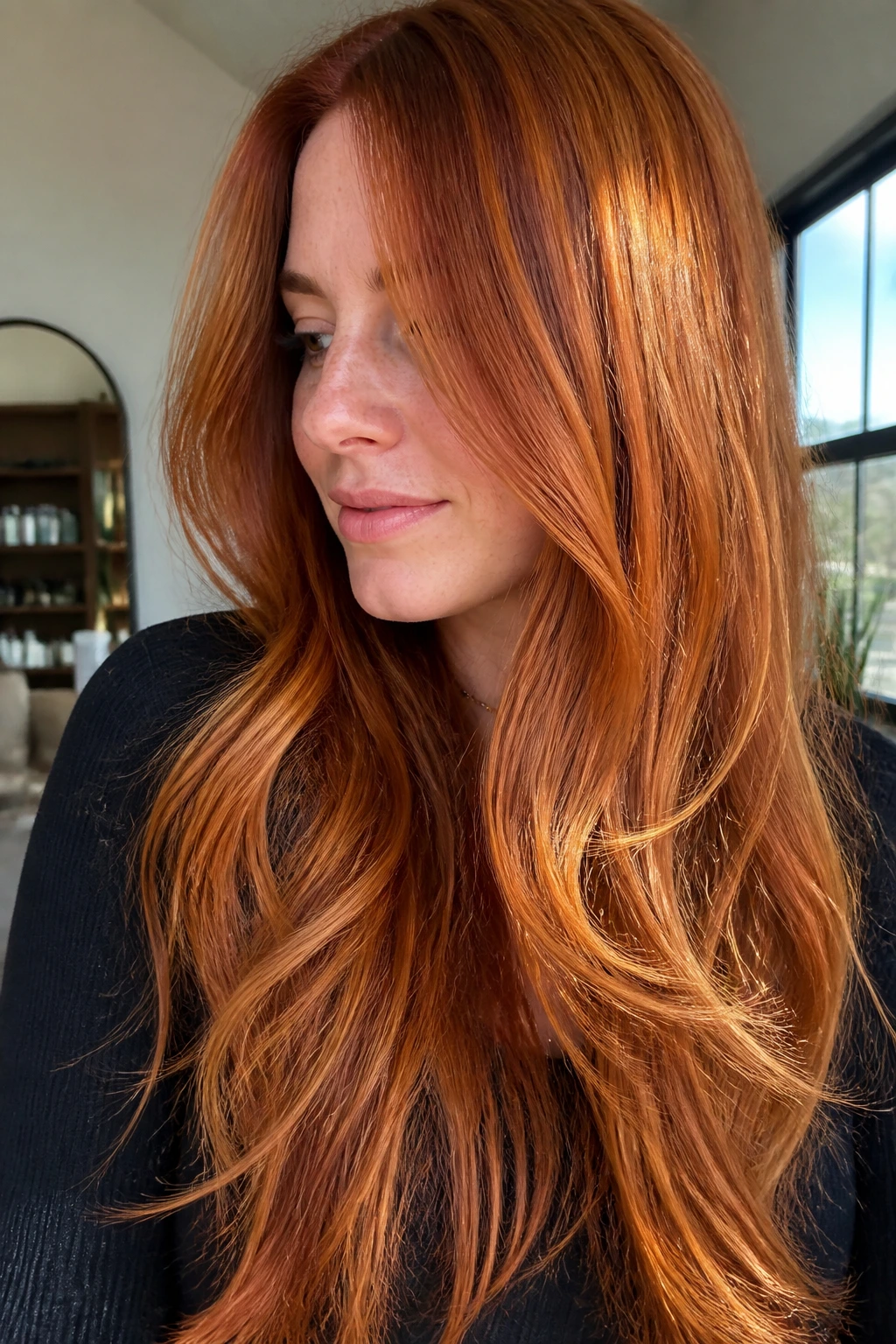
This shade sits between true copper and gold-red. Spiced pumpkin copper is warmer and rounder than a pure orange tone, which makes it easier to wear on long hair because the extra depth keeps the finish from looking thin.
What I like about this color is the way it changes. In bright light, the gold comes forward. In shade, the orange-brown base takes over and softens everything. That kind of shift is useful on long hair because the tone can stay interesting even when the style is simple.
It works especially well with long layers and a side part. Those two choices keep the warmth from pooling in one place and give the color more room to breathe.
10. Rose Gold Ginger Shine
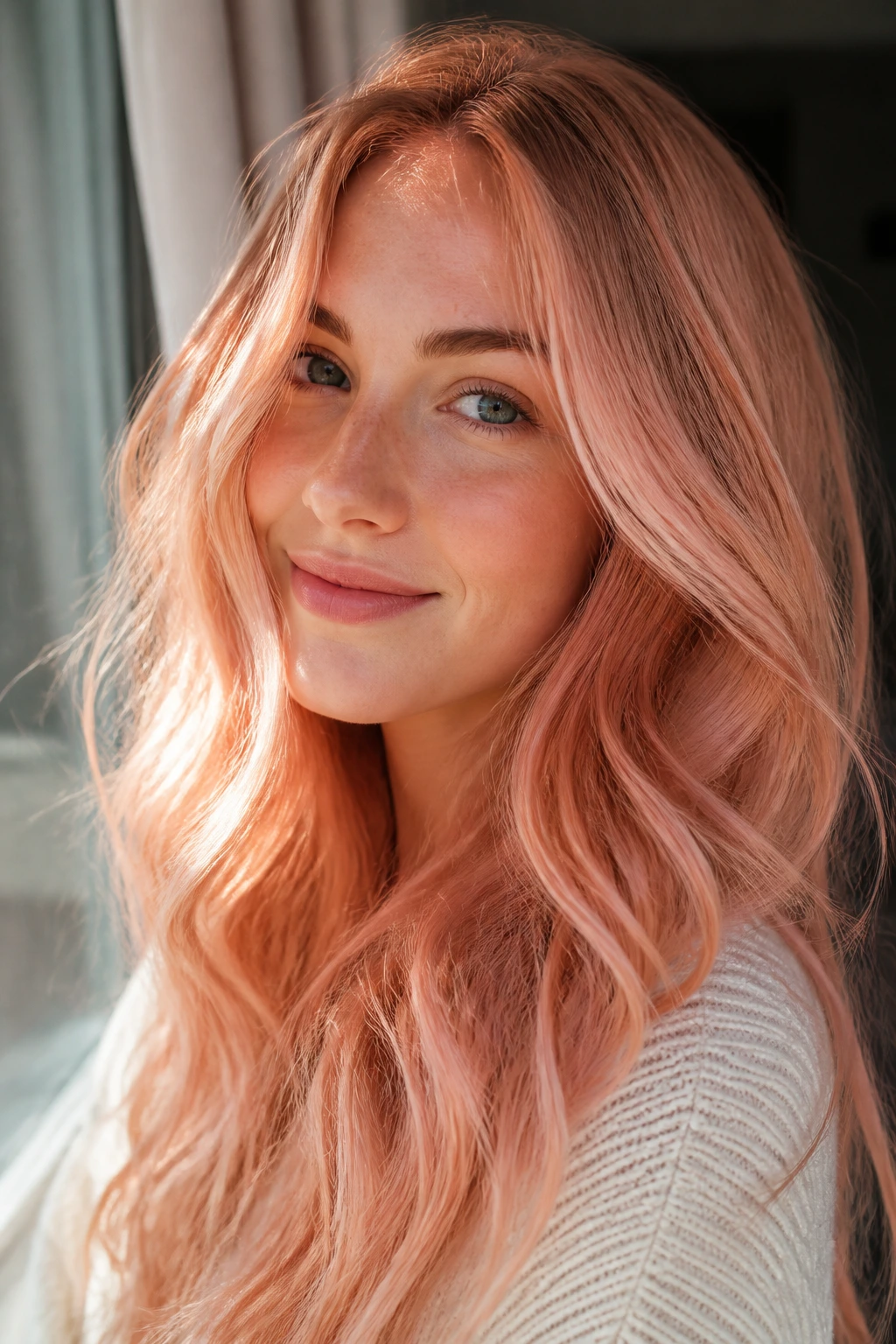
In daylight, this one flickers pink at the edges. Rose gold ginger is softer than a classic copper and more playful than a strawberry blonde, so long hair gets a delicate shine that still has enough warmth to read as ginger.
What Makes It Different
The rose note matters. Without it, the shade can slip too far into orange. With it, the color feels fresher and a little more modern, especially on sleek hair or loose waves.
Best For
- level 8 to 9 blonde bases
- fine hair that needs a lighter visual finish
- long hair worn often in half-ups or soft curls
- a translucent gloss, not a heavy permanent red
This is one of the few ginger shades that can look almost metallic in the sun. It’s pretty on its own, but it really wakes up when the hair moves.
11. Deep Marigold Copper
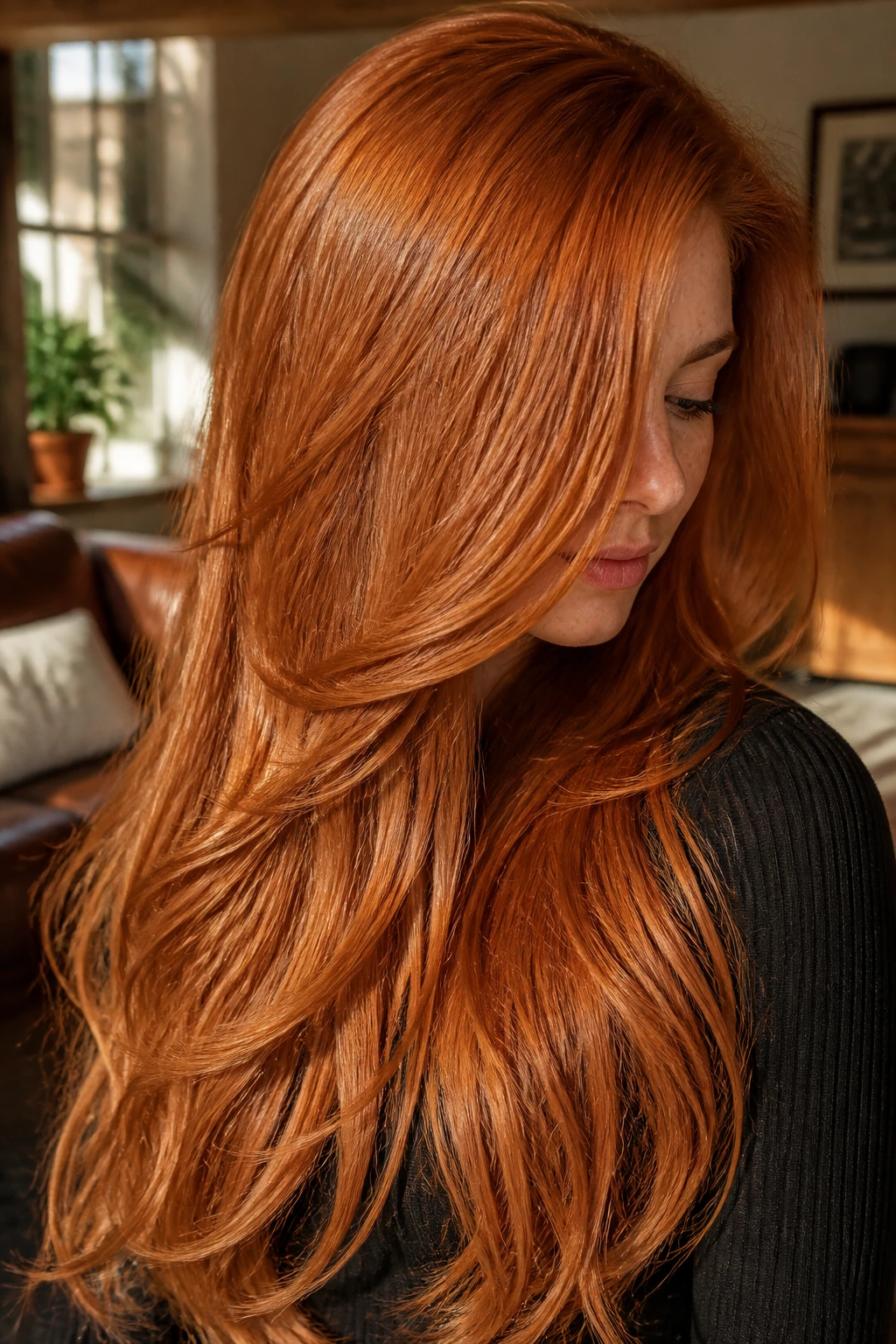
This is the boldest gold-leaning ginger on the list. Deep marigold copper sits bright but not neon, and that balance keeps it looking rich on long hair rather than toy-like.
A strong base for this shade is usually a level 7 or 8 lift with warm gold left in the hair instead of being stripped out. If the hair is too pale, marigold can read chalky. If it stays too dark, the gold gets buried. That narrow middle zone is where the color lives.
I like this one best on thick hair or blunt-cut ends because the shine has room to sit. A soft wave helps, but even a straight blowout can look sharp here if the gloss is fresh.
12. Maple Syrup Ginger
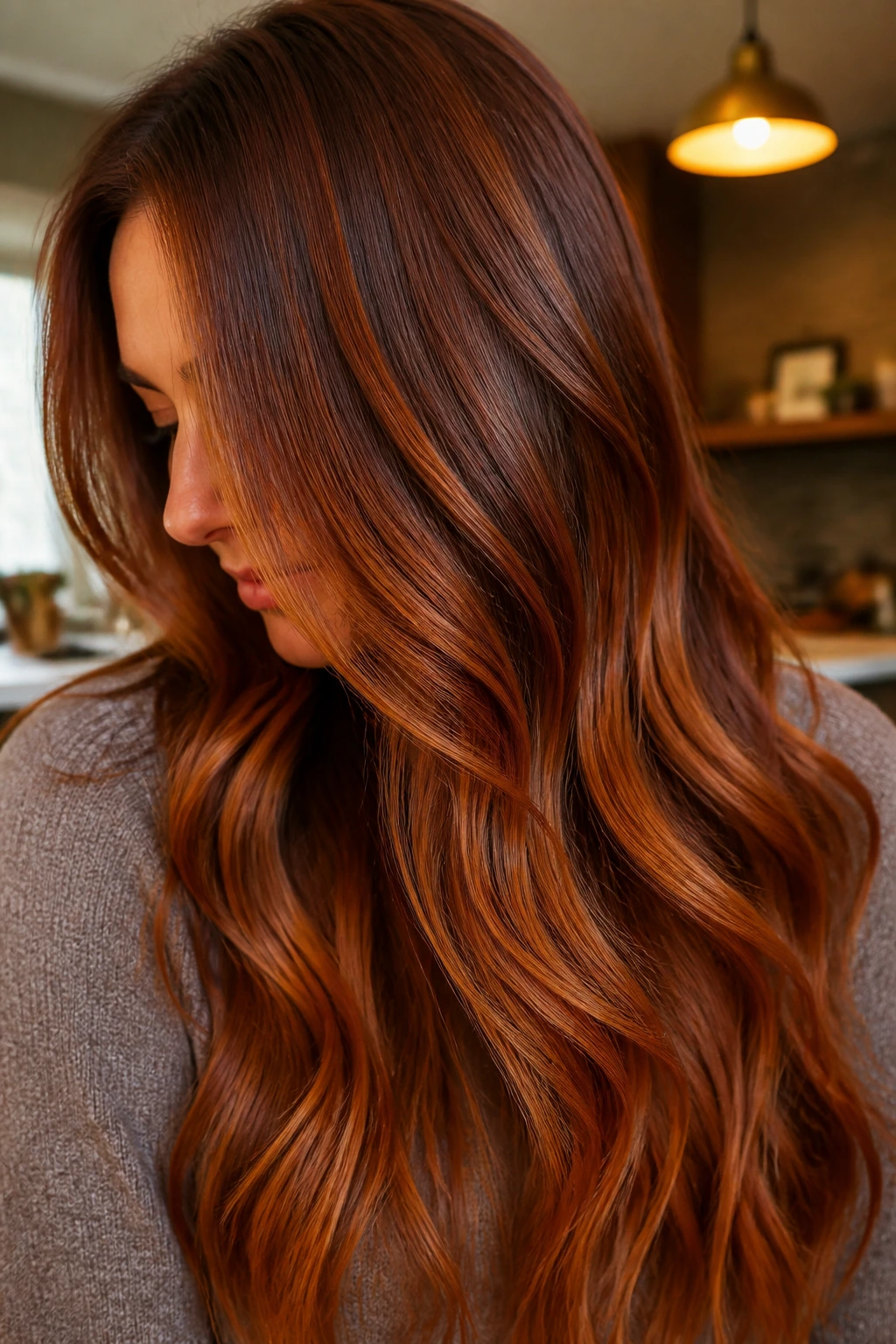
What if you want ginger, but soft enough for every day? Maple syrup ginger is the answer. It’s a brown-amber mix with a warm copper edge, and long hair gives it a luxurious, glossy look without forcing the color into bright red territory.
This shade is a gift for brunettes who want warmth without a hard lift. A glaze or demi-permanent formula often does the job, especially when the goal is a subtle shift rather than a full transformation. The ends can be one notch lighter, but the overall feel should stay smooth and shaded.
It’s one of the easiest long ginger shades to maintain because it reads as depth first and copper second. That means regrowth is less obvious, and the color tends to age with more grace than brighter reds.
13. Cherry Cola Ginger
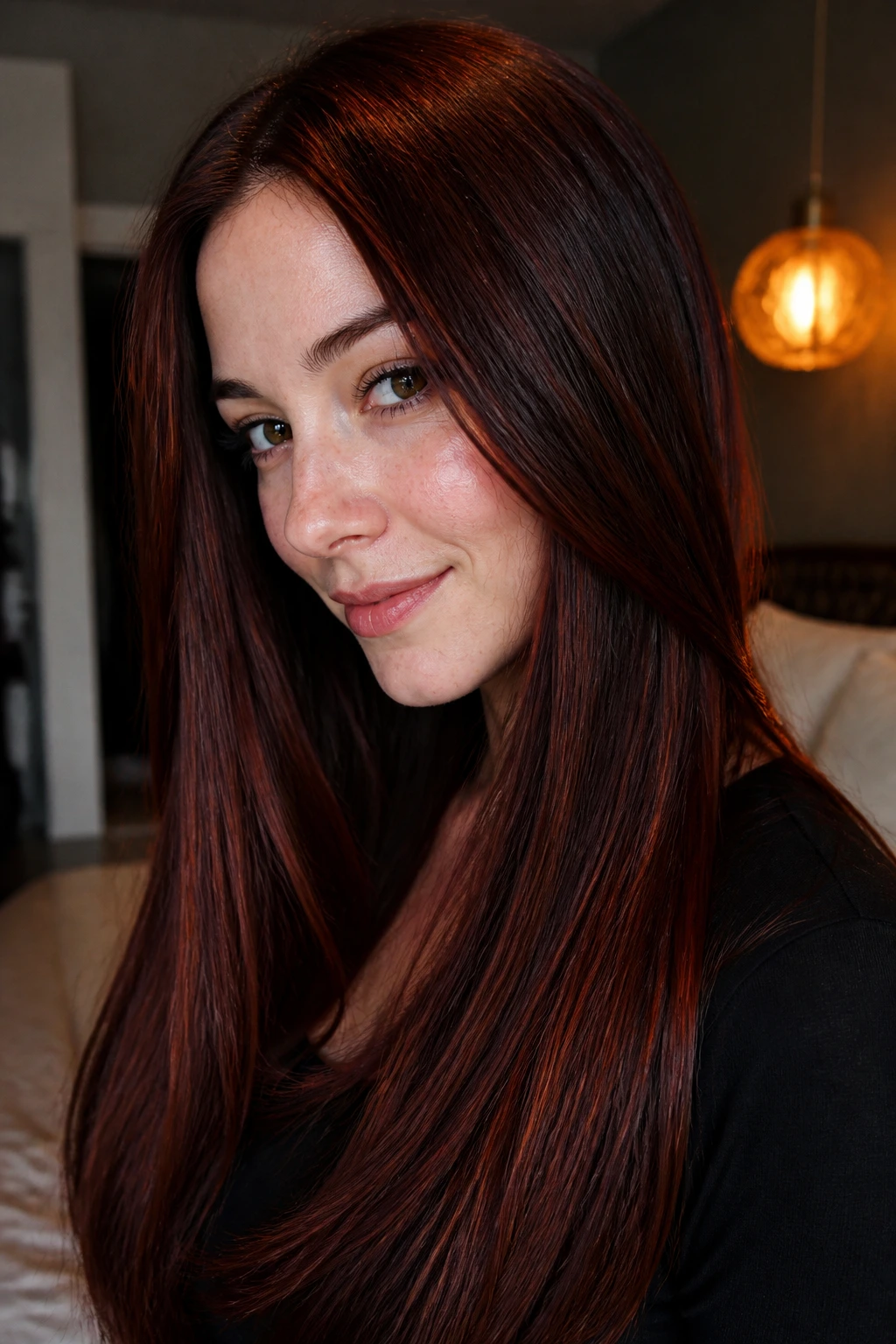
Under indoor light, this looks almost brunette. Cherry cola ginger hides a dark red-copper note inside a brown base, then flashes more copper when the sun or overhead light hits it. Long straight hair shows that switch especially well.
Why It Works
The darker base keeps the color grounded. Without that, cherry cola can veer too bright or too magenta. On long hair, the contrast between the deeper roots and the warmer mids gives the style a nice low-light glow.
What to Ask For
- a dark auburn or chestnut base
- thin copper-red slices through the mids
- brighter pieces around the face
- a glossy finish rather than a matte one
This is a good pick if you like red, but you do not want it shouting from across the room. It has depth, and depth is what keeps it wearable.
14. Peach Copper Face Frame
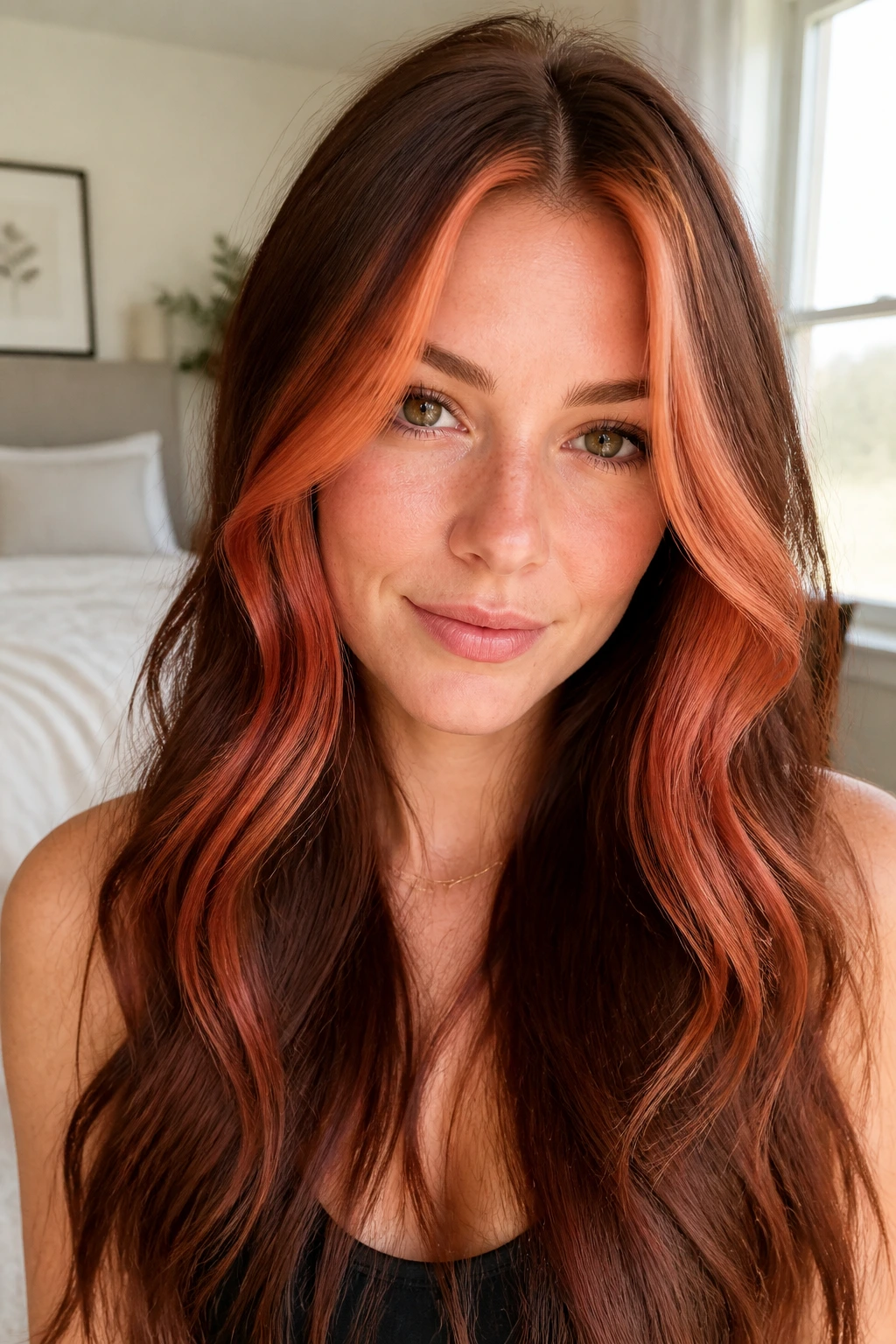
Not every ginger idea has to cover the whole head. Peach copper face frame color keeps the body of the hair soft and deeper, then puts the brightest warmth around the cheekbones and front layers where it actually gets seen.
Why It’s Smart
A bright face frame does two jobs at once. It lifts the complexion, and it lets you test ginger without committing to a full-head change. On long hair, that matters because the rest of the length can stay calmer and easier to maintain.
Best For
- long layers and curtain bangs
- brunettes who want a softer red entry point
- anyone who wears their hair half-up a lot
- low-maintenance grow-out
The front pieces should be bright enough to show in a braid or a bun, but not so light that they clash with the rest of the head. That narrow balance makes the whole look feel deliberate.
15. Saffron Ginger Glaze
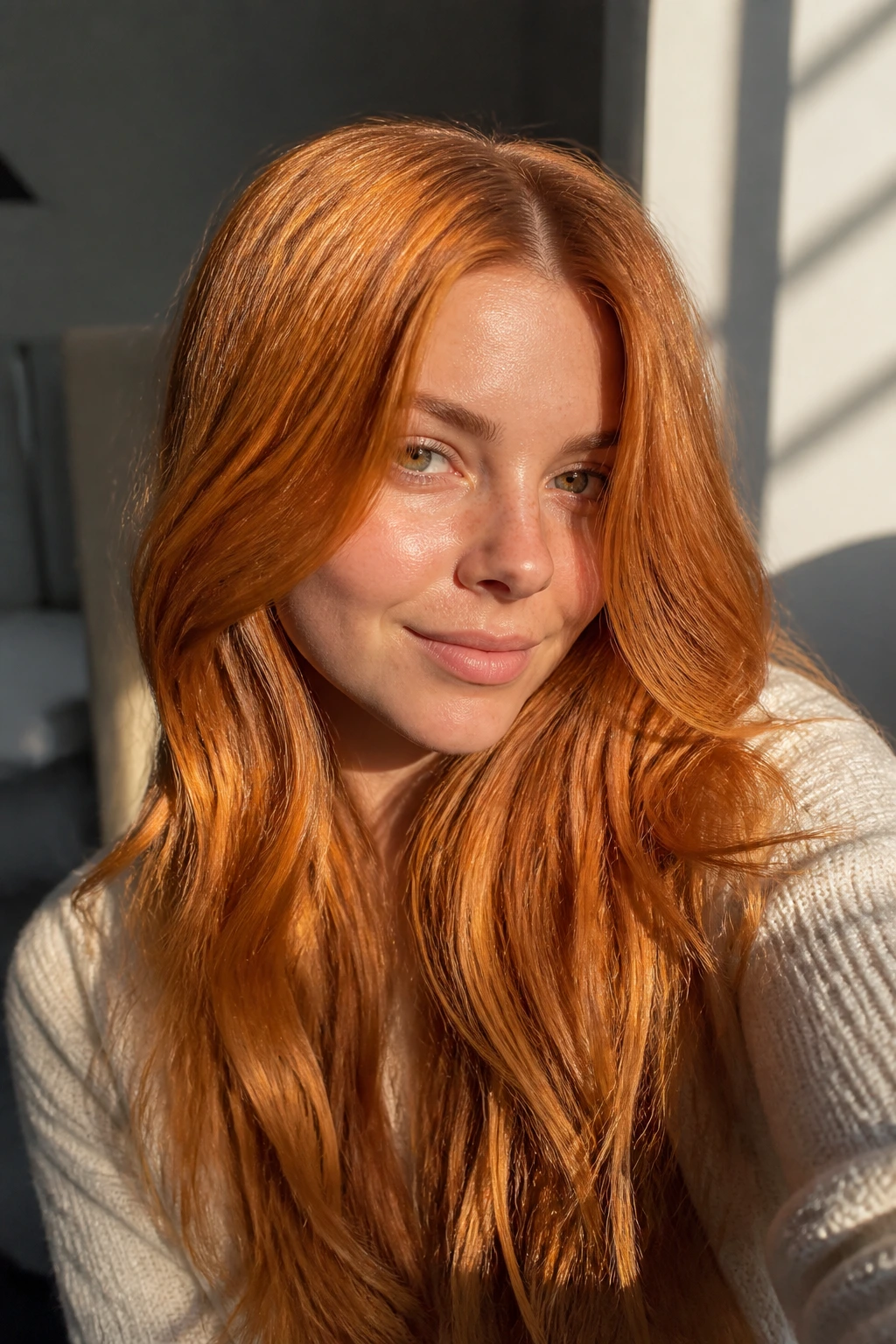
Saffron isn’t orange as much as it is sunlit. That’s why a saffron ginger glaze can be so pretty on long hair; it puts a golden warmth over the surface without burying the natural movement underneath.
This shade is especially good when the hair already has a light or lifted base and you want something warmer, not darker. A glaze keeps the hair looking shiny because it sits on top of the strand rather than forcing a heavy permanent shift. On long lengths, that usually reads cleaner than a full red dye job.
I’d choose this if the goal is glow. Not drama. Glow.
16. Bronze-to-Copper Transition
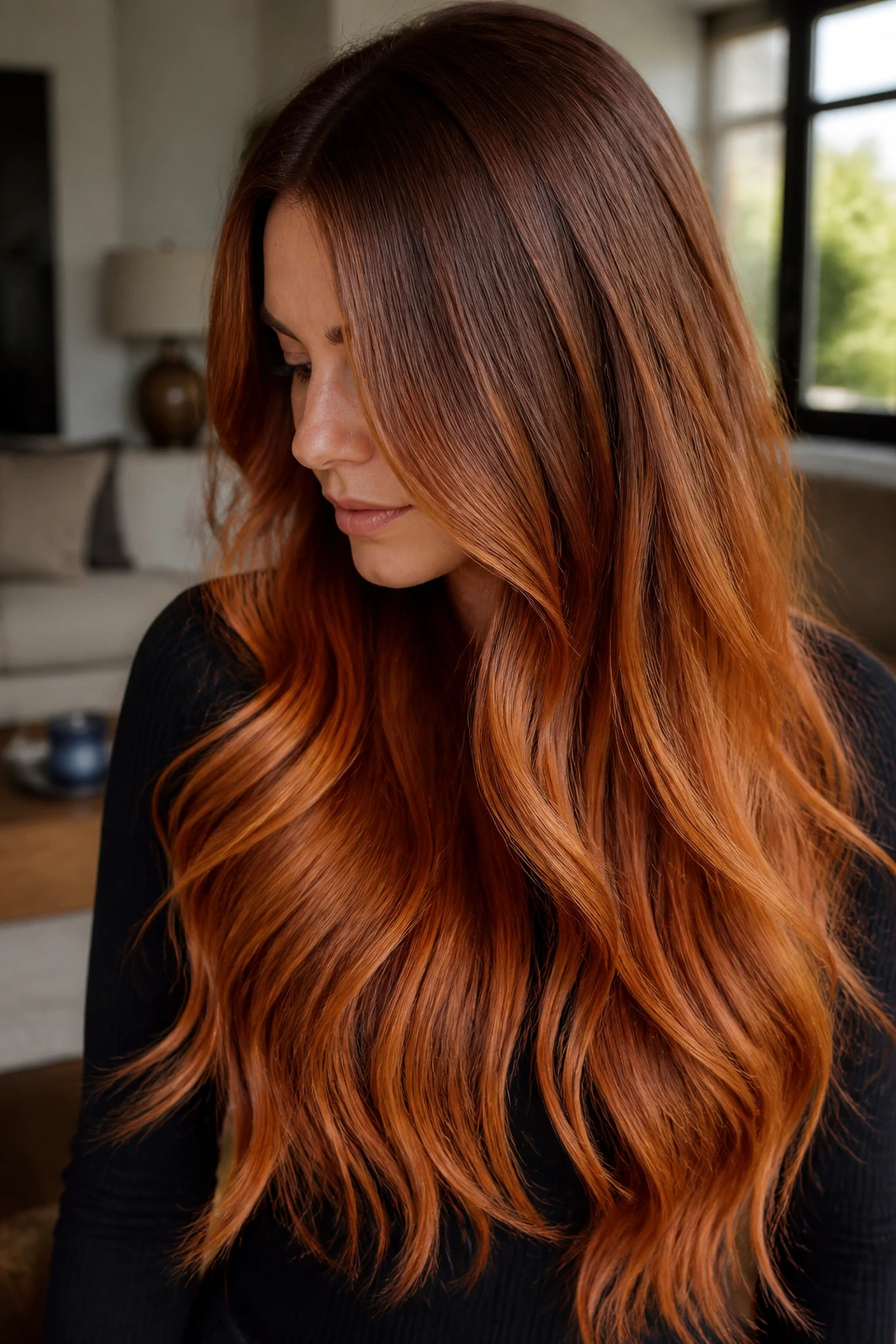
This is the least fussy way to wear ginger on very long hair. Bronze-to-copper transition color starts with a deeper, metallic brown at the top and moves into a warmer copper through the mids and ends, so the length has depth without needing harsh stripes.
A transition like this works best when the root stays close to the natural base. That keeps the upkeep sane. The copper only needs to brighten as it drops, which is why long layers and softly feathered ends help so much here.
Best For
- people who want dimension without obvious maintenance
- medium to thick long hair
- brunette bases that can handle a partial lift
- a blowout finish with movement through the ends
This is one of those shades that looks expensive because it behaves well. The color grows out softly, and the bronze root keeps the whole thing from feeling too hot.
17. Burnt Ember Layers
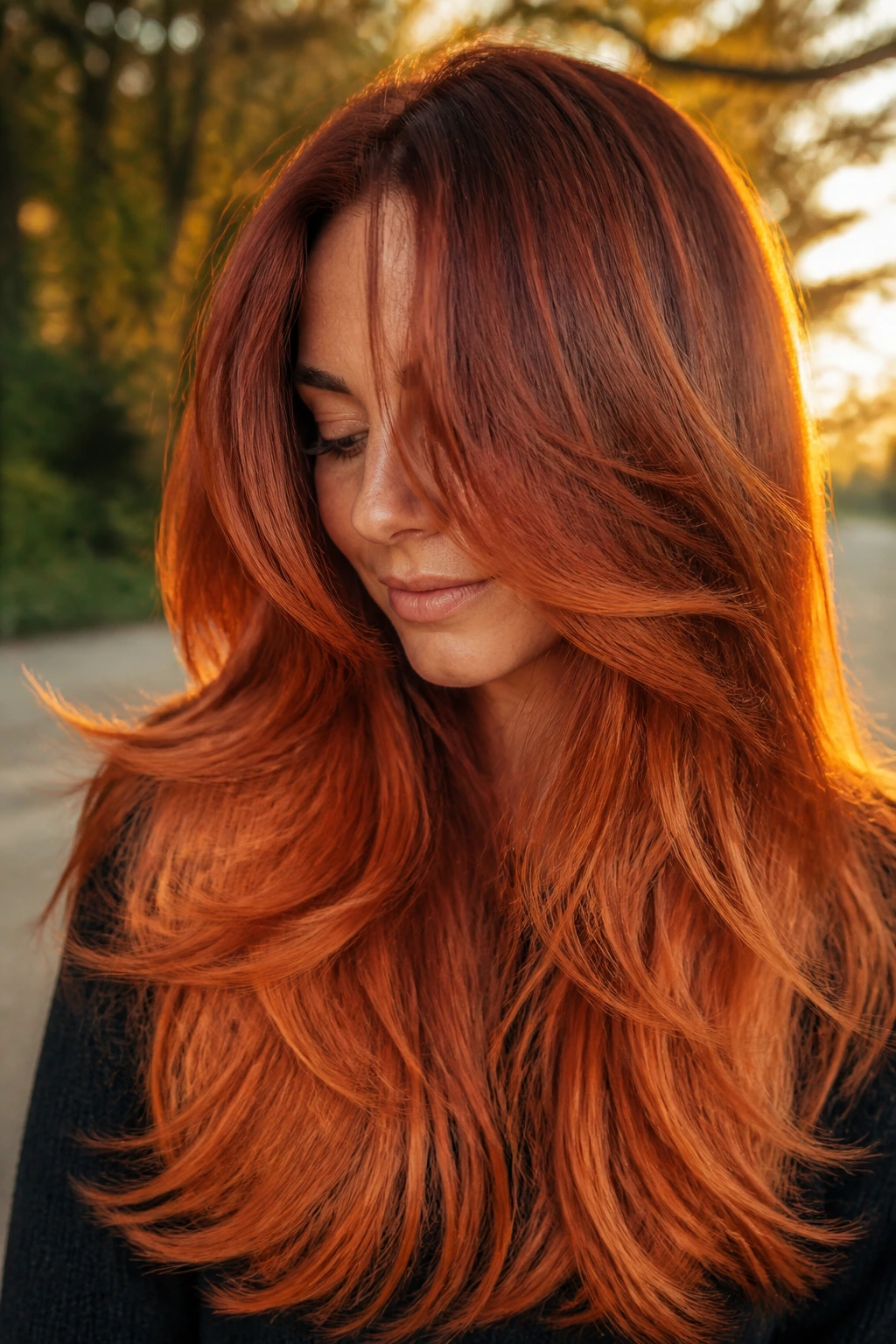
Why do some red shades look richer in layers than flat? Because a layered cut gives burnt ember color somewhere to land. The brighter pieces sit on the surface, the darker ones hide underneath, and the whole style shifts as you move.
This is a stronger, moodier ginger than the apricot or strawberry looks. It’s closer to firewood than fruit. Long layers help because each tier can hold a slightly different depth—deeper at the crown, brighter at the lower sections, and a little smokier around the perimeter.
I like burnt ember especially on hair with a lot of density. It gives the cut shape without relying on highlights alone.
18. Ginger Beer Gloss
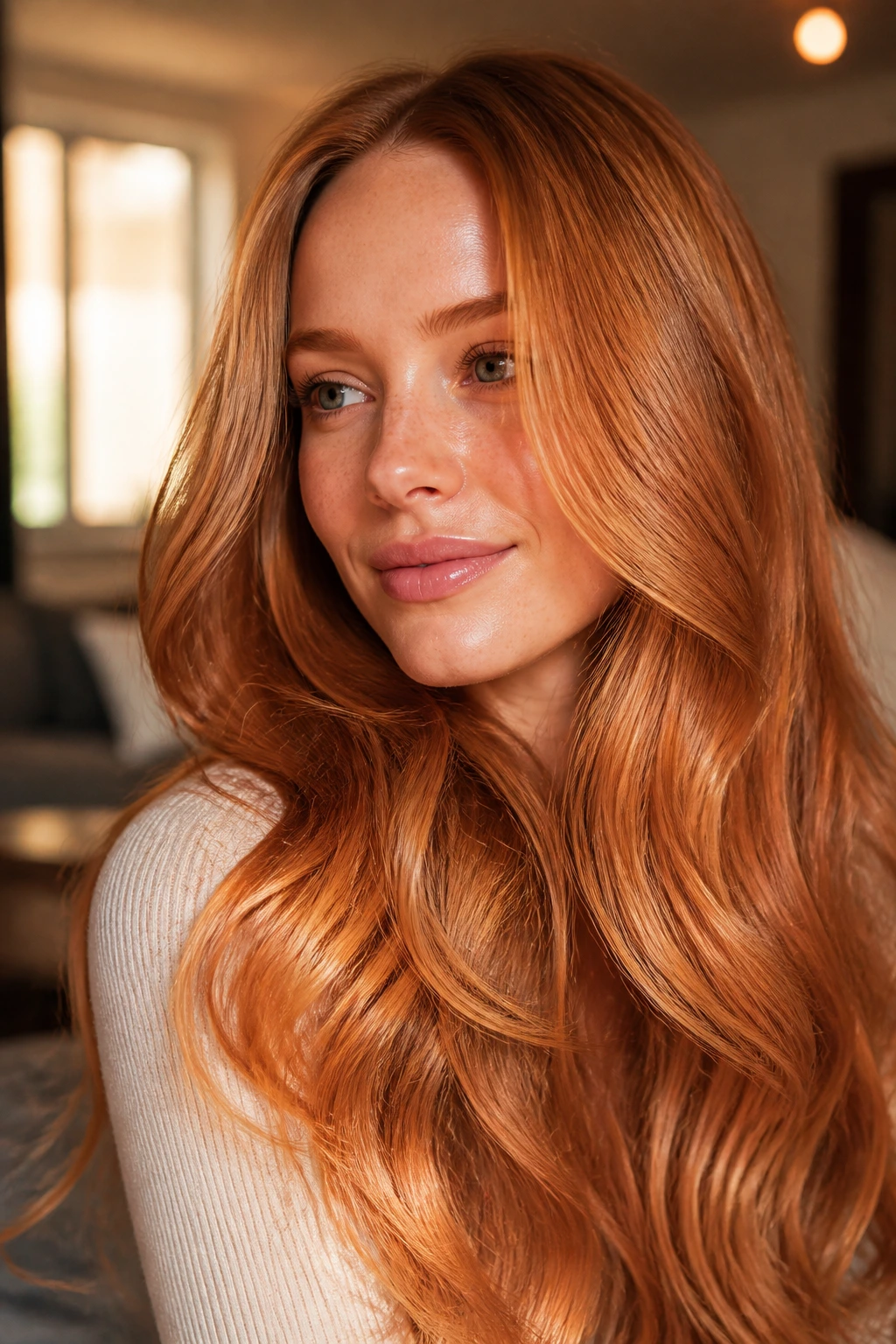
If you want shine more than drama, start here. Ginger beer gloss is a translucent copper wash with a fizzy gold edge, and on long hair it reads as polished warmth rather than a hard color change.
Best Uses
- reviving faded copper or auburn
- warming up blonde lengths that feel too beige
- giving natural redheads a cleaner finish
- adding gloss between larger color appointments
A gloss like this is one of my favorite maintenance moves because it can freshen the mids and ends without making the roots look louder than they are. It’s a smart choice for long hair that already has good shape and just needs the tone to wake back up.
Loose waves help, but the real win is the shine. This shade depends on reflection more than saturation.
19. Mulled Wine Copper
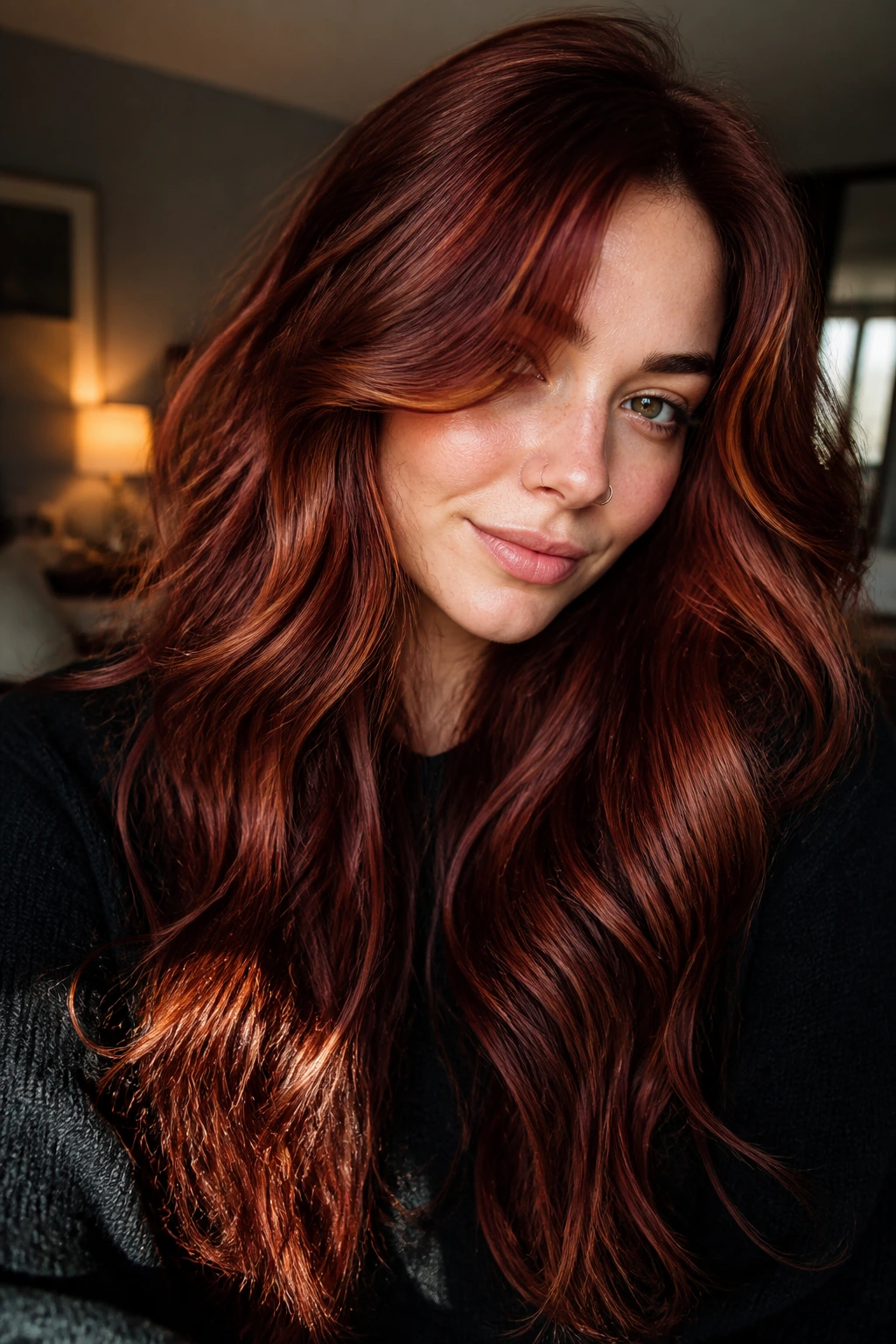
This is the dark, sultry side of ginger. Mulled wine copper pulls in burgundy, brown, and red-orange all at once, and long hair gives those tones room to stack up instead of collapsing into one flat note.
The beauty of this shade is what happens in low light. Indoors, it can sit close to brunette. In sun, the copper wakes up. That dual personality makes it a strong pick for people who want a red family color that still feels grounded.
I’d keep the ends healthy and the gloss fresh. Deep ginger shades lose their shine fast if the cut gets dry, and then the whole thing starts looking dull instead of rich.
20. Honey Ginger Balayage
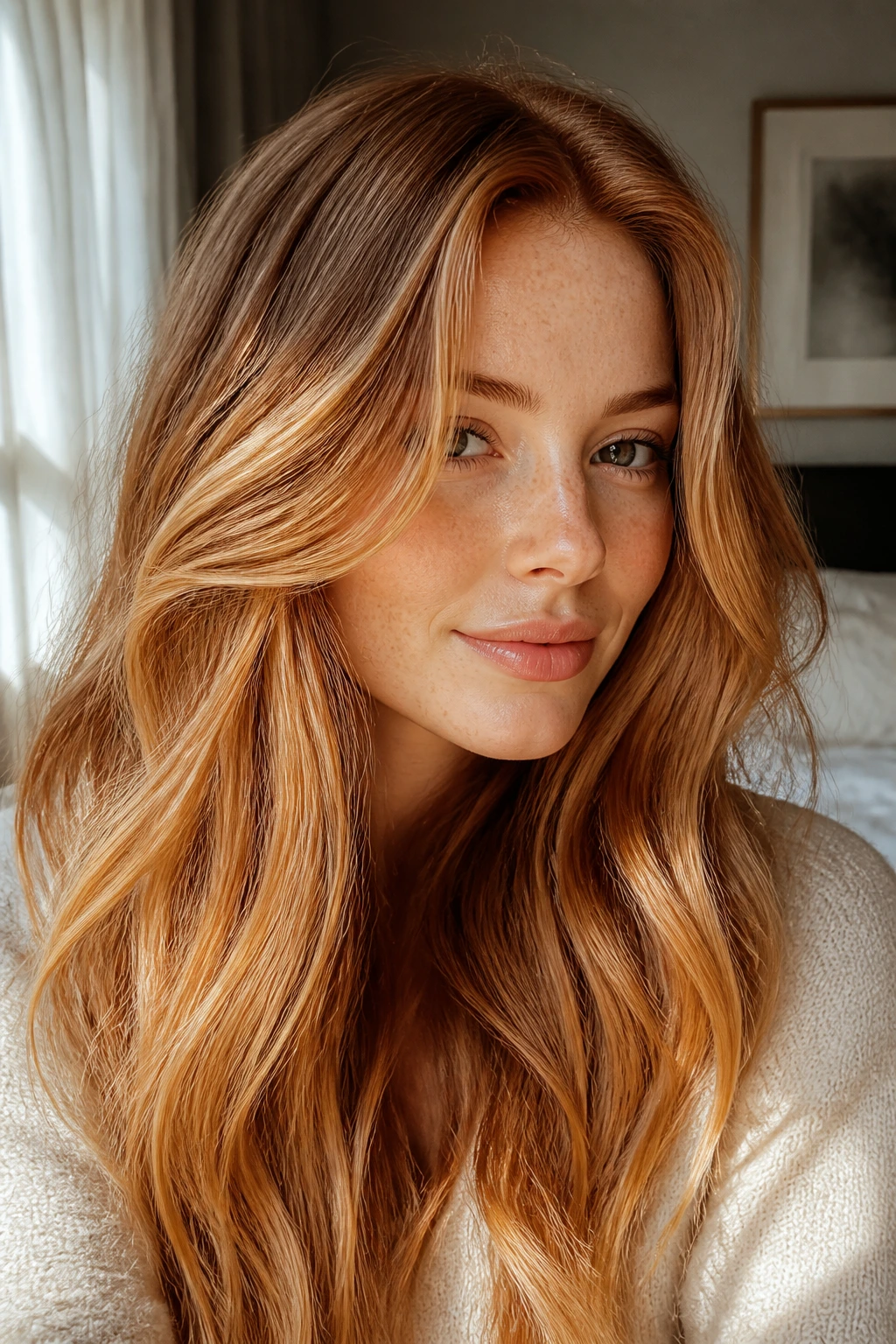
This one reads warm before it reads red. Honey ginger balayage mixes golden copper with a soft beige warmth, which makes it friendly on long hair that needs brightness but not a full red statement.
Where to Place the Lightness
- around the face and cheekbones
- through the top layers for sun-kissed movement
- at the ends if the base is already warm
- more softly under the crown so the color doesn’t look stripey
A balayage approach gives the hair that stretched, hand-painted feeling people like on long lengths. The result is less “dyed head” and more “the light just hit the right places.”
This shade is easy to style, too. A loose bend from a large iron or a round brush makes the honey tones pop without making the color feel too polished.
21. Copper Penny Shine
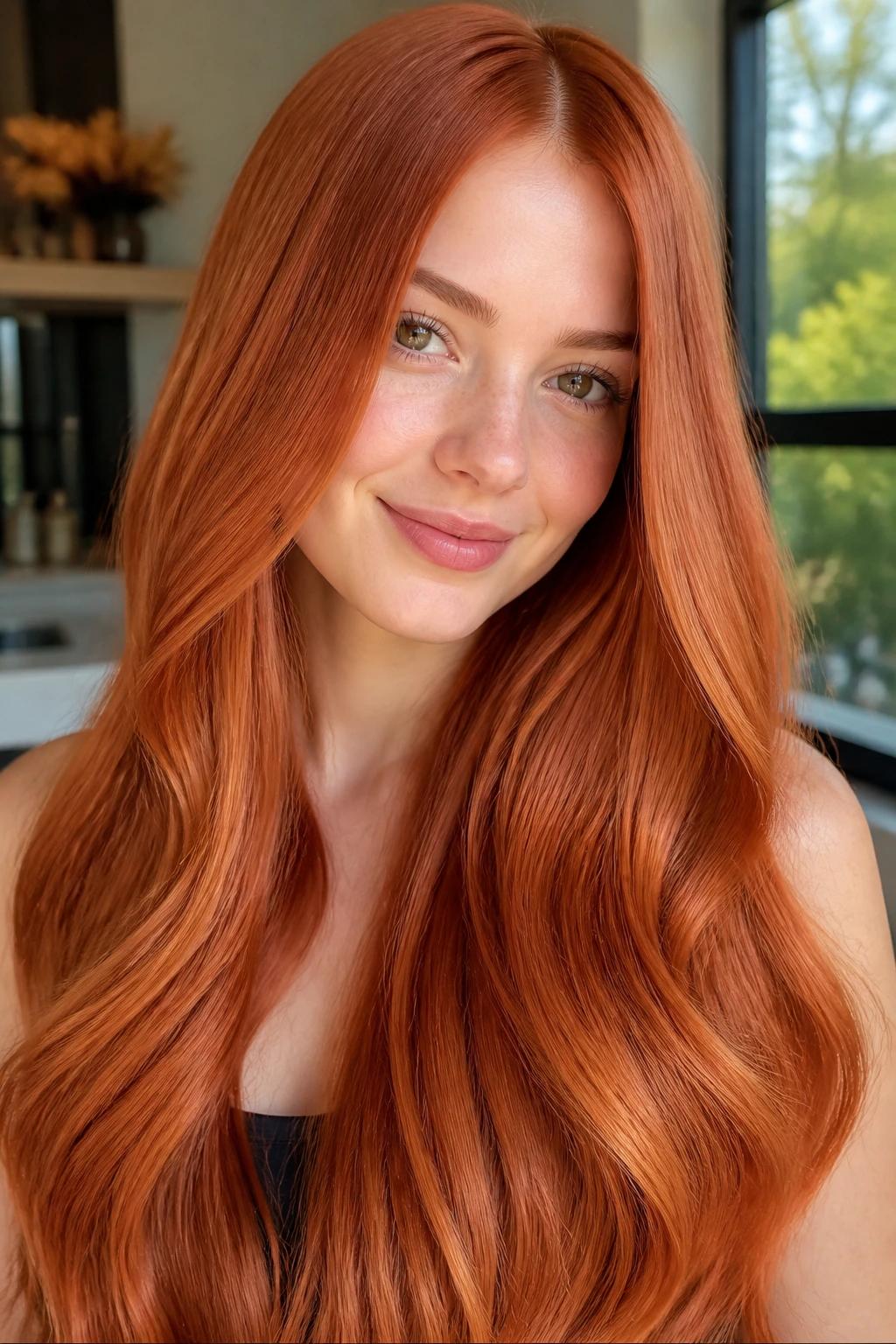
Nothing beats a clean, reflective penny copper when the cut has movement. This is a brighter, more uniform ginger that looks best when the hair is healthy, glossy, and not shredded at the ends.
Why It Stands Out
Unlike a smoky red, copper penny shine is about clarity. The color should look clean from root to tip, with just enough variation in the light to keep it from looking painted. Long hair can carry that because the surface area gives the shine room to show.
Keep in Mind
- best on strong, smooth hair
- looks sharp in straight styles and big waves
- benefits from regular glossing
- can look harsh if the ends are dry or over-processed
I’m picky about this one. If the cut is rough or the hair is thirsty, copper penny can go from bright to brassy fast. When it’s done well, though, it has a clean, mirrorlike finish that’s hard to ignore.
22. Terracotta Ginger Waves
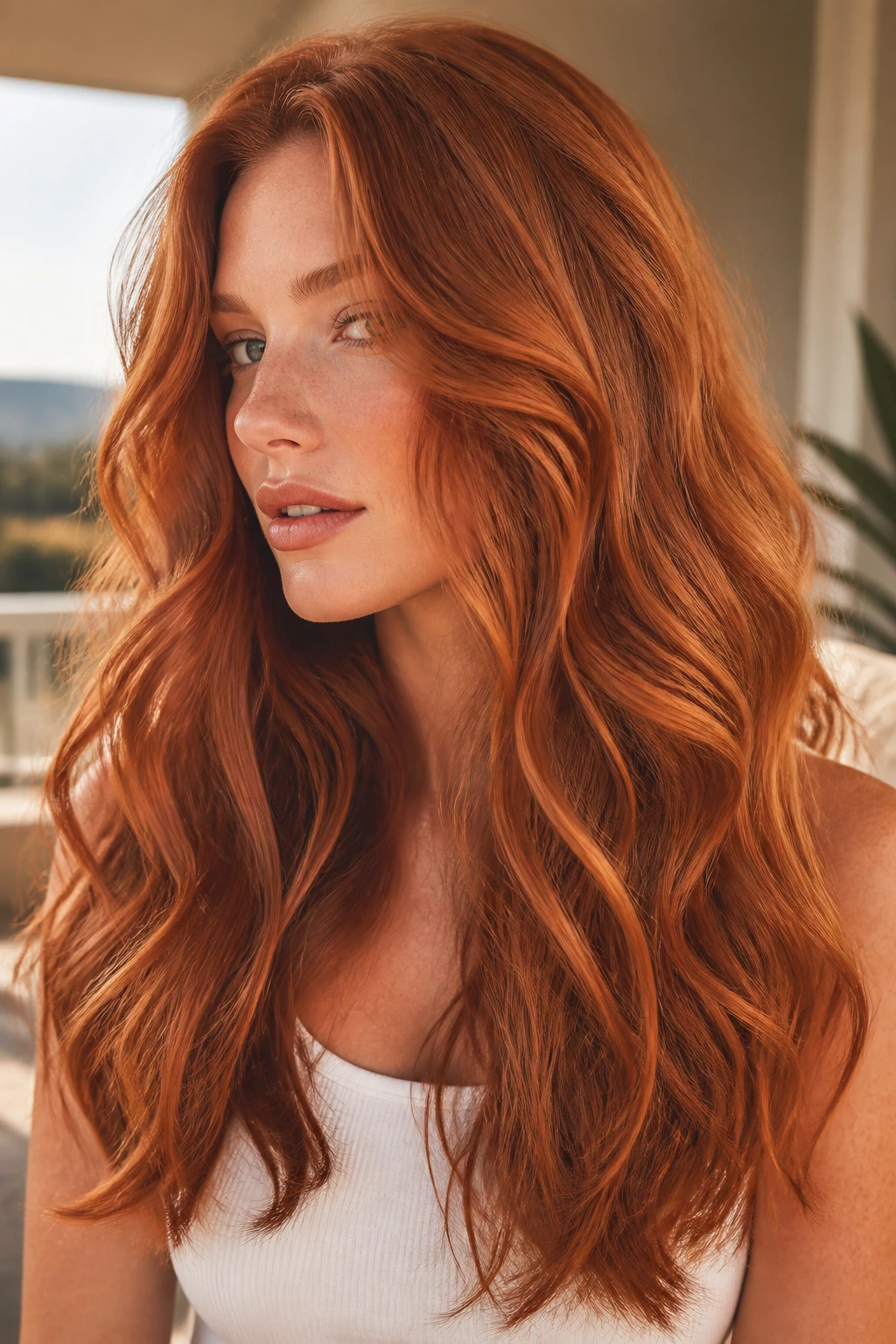
Want a red that feels earthy instead of bright? Terracotta ginger waves soften the orange with brown and clay tones, which makes the color feel grounded on long hair and easier to wear day after day.
The waves matter here. Terracotta can look too solid if the hair is pin-straight, but once the bend breaks it up, the shade starts to show its copper and rust pieces. It’s a good match for medium to thick hair and for anyone who wants warmth without a lot of pink or gold.
This is one of those shades that looks better the second day. A little texture gives the terracotta tone some grit, and that suits it.
23. Mahogany Ginger Lowlights
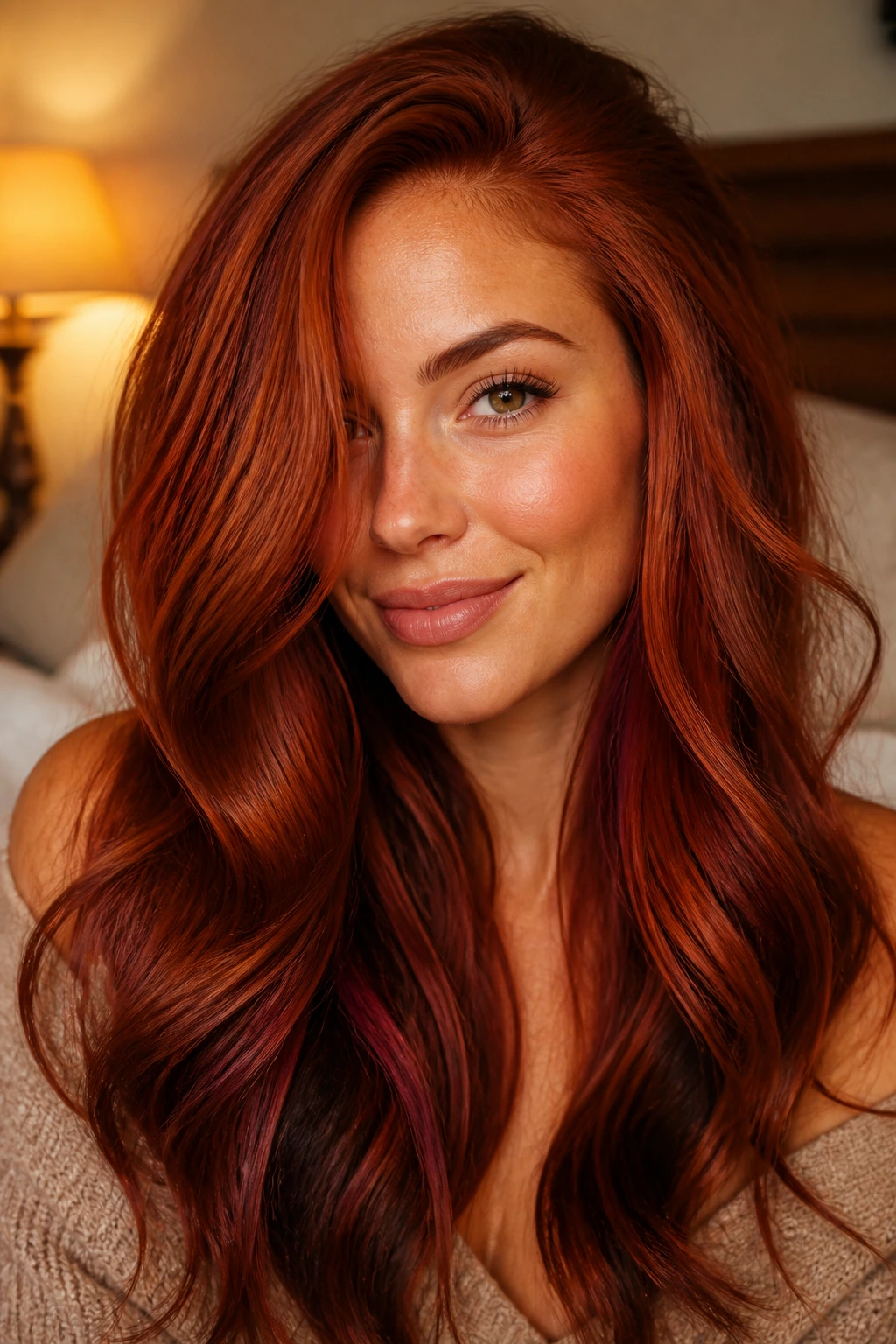
This is the shade I reach for when long hair needs depth at the ends. Mahogany ginger lowlights tuck darker red-brown pieces under a copper surface, which gives the length more body and keeps the lighter pieces from looking thin.
The Payoff
Lowlights are underrated on long hair because they stop the color from floating away. If every strand is bright, the ends can go wispy. Add depth underneath, and the whole shape looks fuller.
Where to Put Them
- under the crown
- around the nape
- through the interior layers
- beside brighter face-framing pieces
Mahogany lowlights are especially useful if your hair is already light and you want ginger without bleaching more. They create contrast without demanding a huge lift.
24. Flamingo Copper Pop
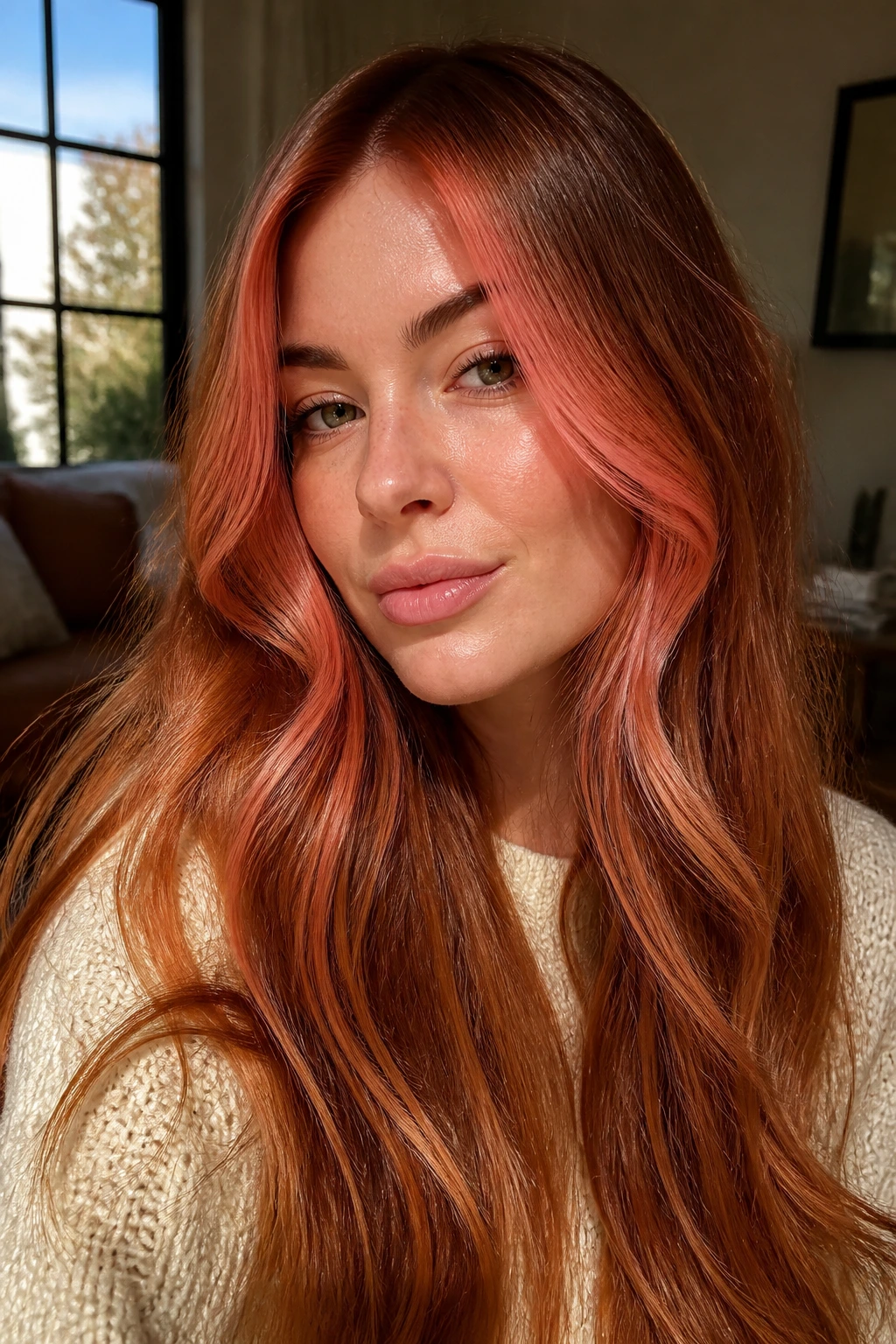
This one is not shy. Flamingo copper pop leans coral-pink at the bright points, and on long hair it works best as an accent, a money piece, or a partial color block rather than an all-over wash.
A little goes a long way. The more surface you cover with this tone, the more likely it is to tip from playful into costume. Keep the base deeper and let the brightest sections live around the face or through the top layers. That way the color still moves when the hair is down.
I like this most on smooth, shiny finishes. The coral note shows best when the light can catch it cleanly.
25. Smoke-Toned Ginger
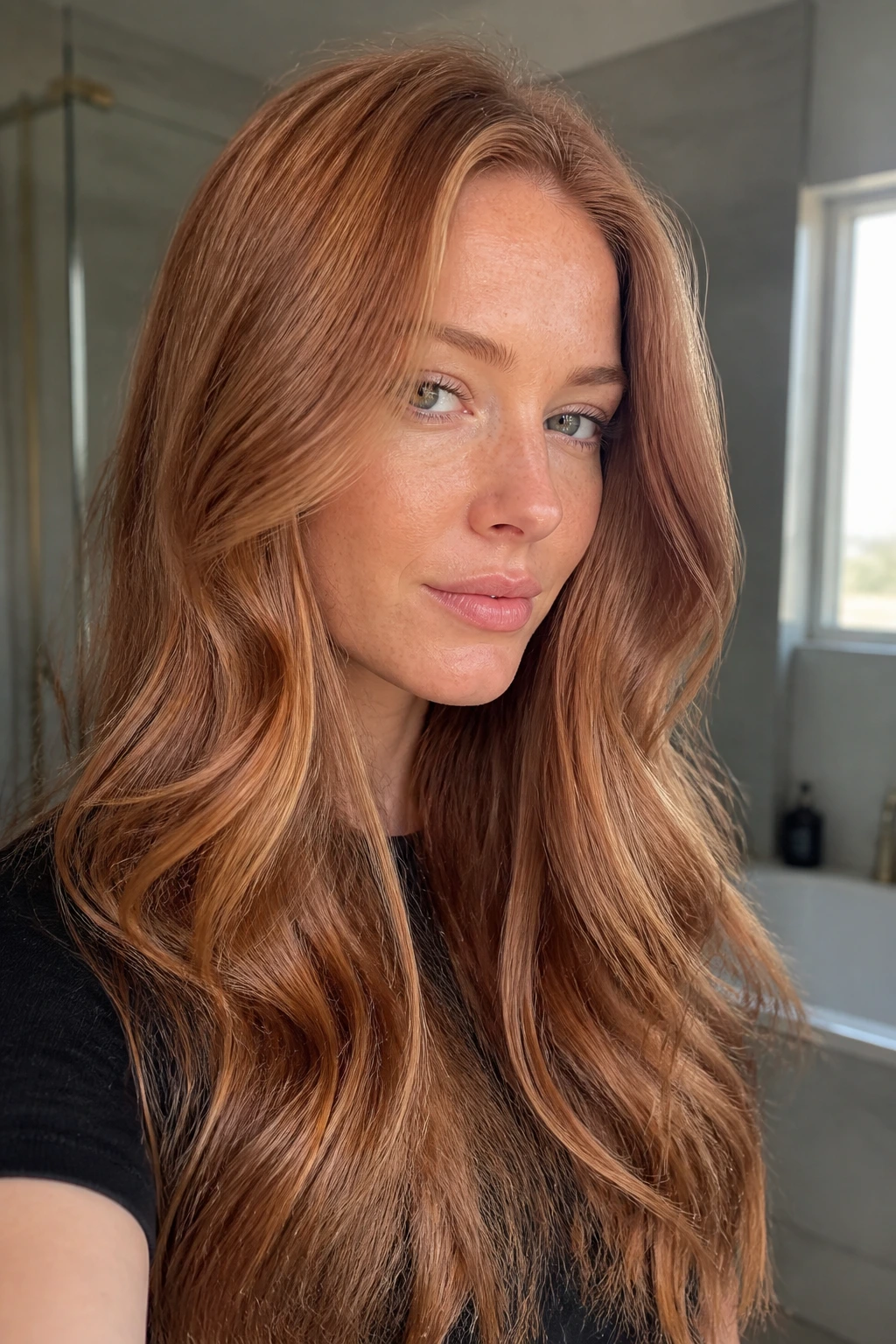
The first thing you notice is the softness. Smoke-toned ginger mutes the copper with beige and brown so the finish looks lived-in, not loud, and long hair keeps that smoke effect from disappearing into the strands.
Why It Stays Wearable
The smoke keeps the red from turning vivid and lets the color work like a warm neutral. That means the shade can look a little different in every setting—warmer near a window, deeper indoors, softer in a braid.
Best Styling Move
A loose wave or a softly brushed-out blowout. Anything too sleek can flatten the muted tones. If you want ginger but do not want people to clock it from across the room, this is the version that behaves.
Why Long Ginger Reads Better with Movement
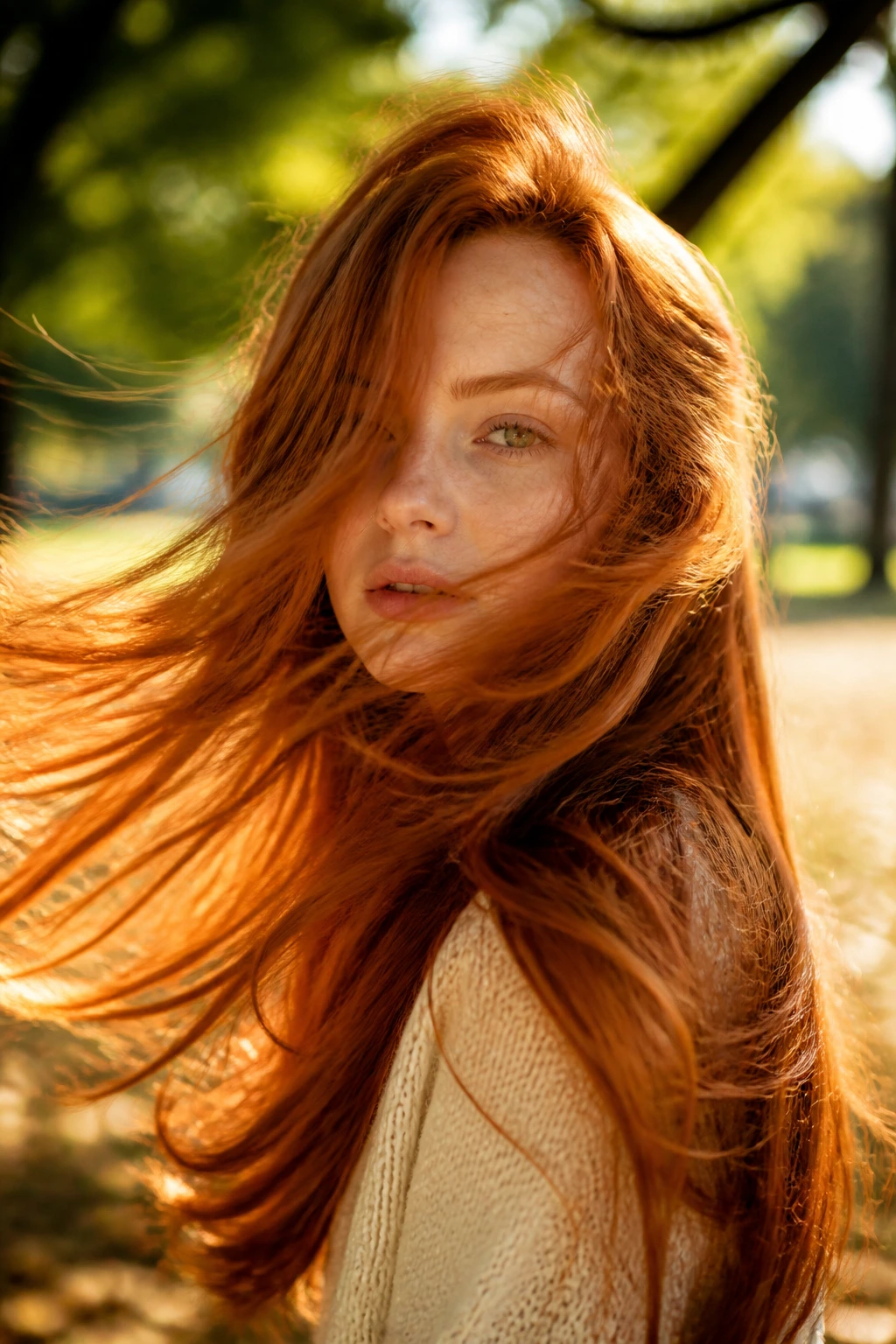
Long hair gives ginger room to breathe, and that’s the whole secret. A copper glaze on a bob can look strong in a single glance; the same shade on long layers can show three different moods in one walk across a room.
The reason is surface and depth. Long hair exposes more of the strand to light, which means the crown, mids, and ends do not all need to say the same thing. A deeper root shadow can anchor the color, while lighter ends or a brighter face frame keep the whole look from going heavy. I prefer that kind of tension. It looks more lived-in and less like a block of dye.
Porosity matters, too. The ends of long hair are usually older, drier, and more porous than the hair near the scalp, so they grab warmth faster and lose it faster. That is why copper can turn too bright at the bottom if the formula is pushed too hard. A good long ginger color respects that difference instead of fighting it.
Essential Tools and Products for Ginger Color and Care
- Color-safe shampoo: A gentle shampoo keeps copper and auburn from sliding out after two washes.
- Sulfate-free conditioner: Helps smooth the cuticle so the red tones stay glossy instead of dull.
- Color-depositing mask or conditioner: Useful for refreshing copper, strawberry, or auburn between salon visits.
- Heat protectant spray: Essential if you blow-dry or curl often; ginger looks much better when the ends stay smooth.
- Wide-tooth comb: Safer for long lengths than a small brush when the hair is wet.
- Sectioning clips: Handy for at-home styling, mask application, or seeing whether your color is even.
- Tint brush and bowl: Useful if you’re applying a gloss or color mask carefully around face-framing pieces.
- Microfiber towel: Cuts down on friction after washing, which helps porous ends hold their shine.
- Shower filter: Optional, but helpful if hard water makes copper tones look flat or muddy.
- Silk or satin pillowcase: Not glamorous, just useful. Less friction means less frizz on colored ends.
How to Choose the Right Long Ginger Shade for Your Base
The biggest mistake people make is picking the pretty photo instead of the right starting point. Long ginger hair can be soft, bright, smoky, or deep, but the formula has to fit the base you already have.
If Your Hair Is Brunette
A level 5 or 6 base usually likes rust, auburn, maple, or bronze-copper better than pale strawberry. You can still go lighter, but the hair usually needs a lift first, and that means the health of the ends matters a lot. If the mid-lengths are fragile, a glaze or partial highlight service is often smarter than full lightening.
If Your Hair Is Blonde
Level 7 to 9 blondes can wear apricot, rose gold, saffron, honey ginger, or strawberry balayage with less effort. The trick is keeping the tone warm enough to read ginger, not beige. If the blonde is too pale, copper can look thin, so a little depth at the root helps the color hold together.
If You’re a Natural Redhead
You usually do not need a total color change. A ginger gloss, deeper auburn lowlights, or a clear glaze with copper reflection can freshen the tone without making the hair look overworked. That’s often the best move on long hair anyway, because the length already gives you enough visual interest.
Bring reference photos shot in daylight, not just inside under warm bulbs. Copper changes fast under different light, and a good photo in the wrong lighting can send you in circles.
How to Style Long Ginger Hair So the Color Shows
Loose Waves
Waves are the easiest way to show ribboned copper, strawberry balayage, or auburn highlights. The bend breaks the color into pieces, so the hair reads richer and less one-note.
Straight Blowouts
A smooth blowout is the best friend of penny copper, cherry cola, and smoke-toned ginger. The shine becomes part of the color story, and the clean line at the ends makes the shade look intentional.
Braids and Half-Ups
Braids expose the contrast between the root, mids, and ends. That’s useful on long ginger hair because the eye can see more than one tone at once, especially with ribbon highlights or lowlights tucked underneath.
Curly and Coily Texture
Put brighter ginger on the outer curl pattern and around the face. If all the lightness sits only on the top layer, the rest can disappear when the curls shrink. A diffuser helps, but placement matters more.
Parting Matters
A center part gives symmetry and shows even color; a deep side part leans more dramatic and can make a copper face frame stand out harder. If your color is subtle, switch the part and watch what wakes up.
Extra Shine, Depth, and Dimension Tricks
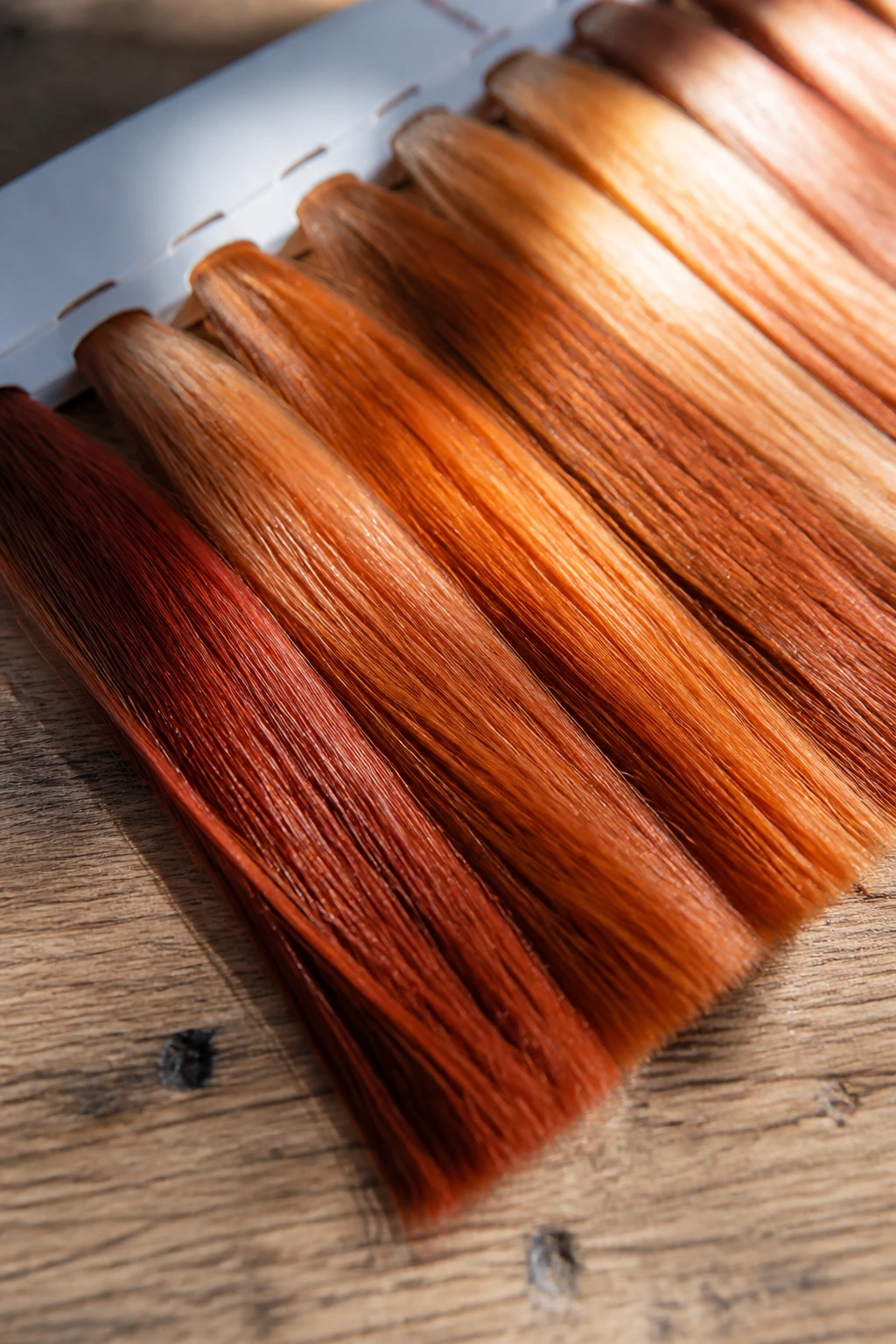
Gloss Enhancement: A clear or copper gloss every 4 to 6 weeks can bring a tired copper back to life without changing the whole color story. I like glosses because they refresh the mids and ends first, which is where long hair usually starts to look dull.
Customization: Add lowlights one shade deeper under the crown if your hair feels too airy. That small move gives long ginger color some weight and stops the ends from looking stringy.
Finishing Touches: A pea-sized amount of serum on the last 2 to 3 inches of hair can make a big difference. Use too much and the color looks greasy; use too little and the ends drink up light in a bad way.
Make-It-Yours: If you want lower maintenance, keep the root one or two levels deeper than the mids. If you want more drama, brighten only the face frame and the lower third. That gives you the red payoff without forcing a full-head commitment.
Common Mistakes That Flatten Ginger Hair
-
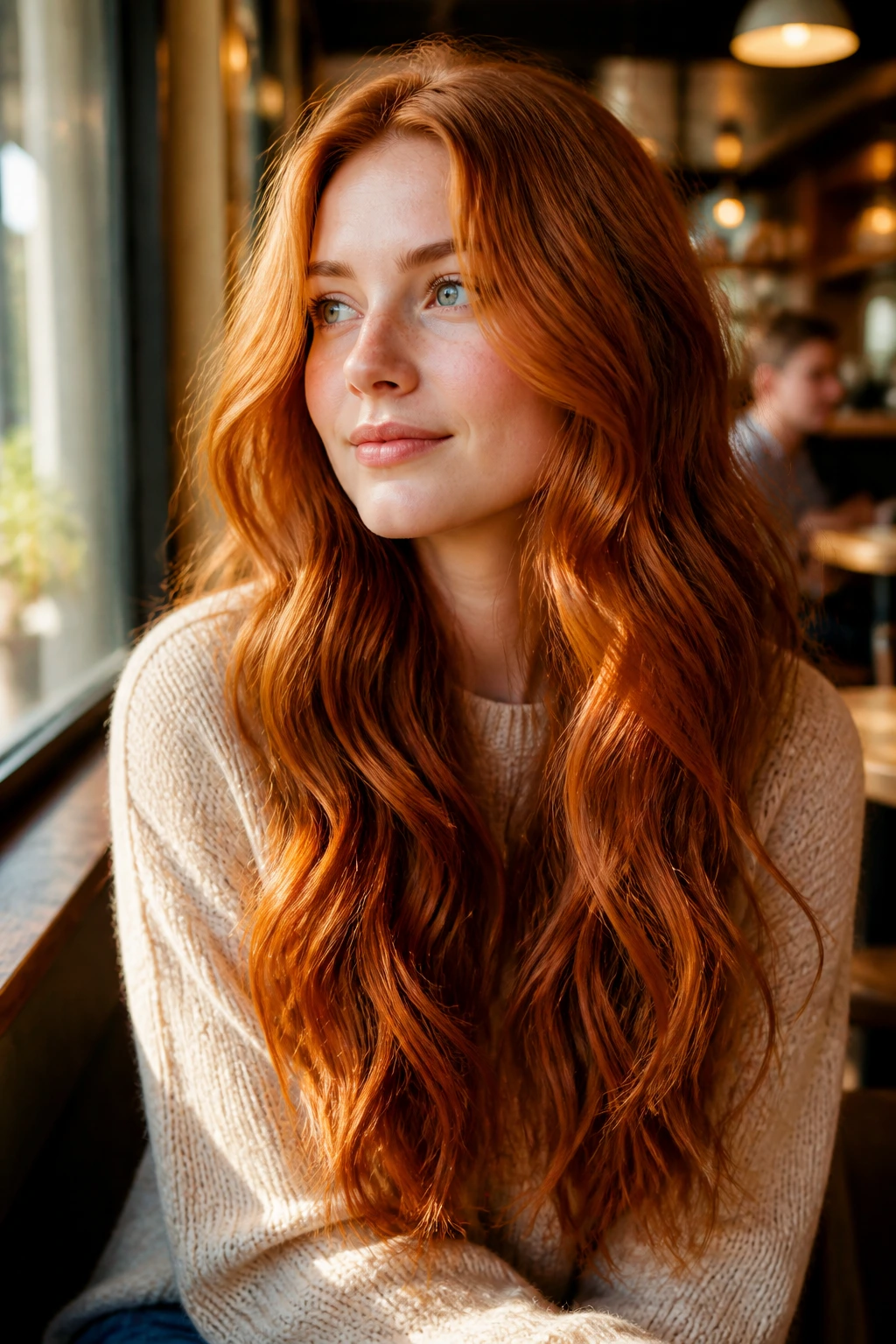
Pushing the ends too light: Porous ends grab copper fast and can turn neon or hollow. The fix is to keep the ends a little deeper or use a gentler gloss instead of permanent dye.
-
Using ash toner to calm warmth: Ash can knock ginger into a muddy brown-green zone. If the goal is copper, stick with beige, gold, or neutral warmth.
-
Ignoring the root depth: A root that matches the mids exactly can make long hair look like one flat curtain. A shadow root one level deeper gives the color shape and makes grow-out less obvious.
-
Washing too often: Copper and auburn fade faster when they’re shampooed every day. Two to three washes a week is easier on the tone, especially if you use lukewarm water.
-
Skipping trims: Split, see-through ends make even the best color look tired. A trim every 8 to 12 weeks keeps the length from fraying and the shade from looking thin.
-
Over-lightening dark bases: If the hair isn’t strong enough for a big lift, forcing it can leave the ends mushy and brassy. Sometimes a richer bronze-ginger glaze looks better than a full copper redo.
Variations and Adaptations to Try
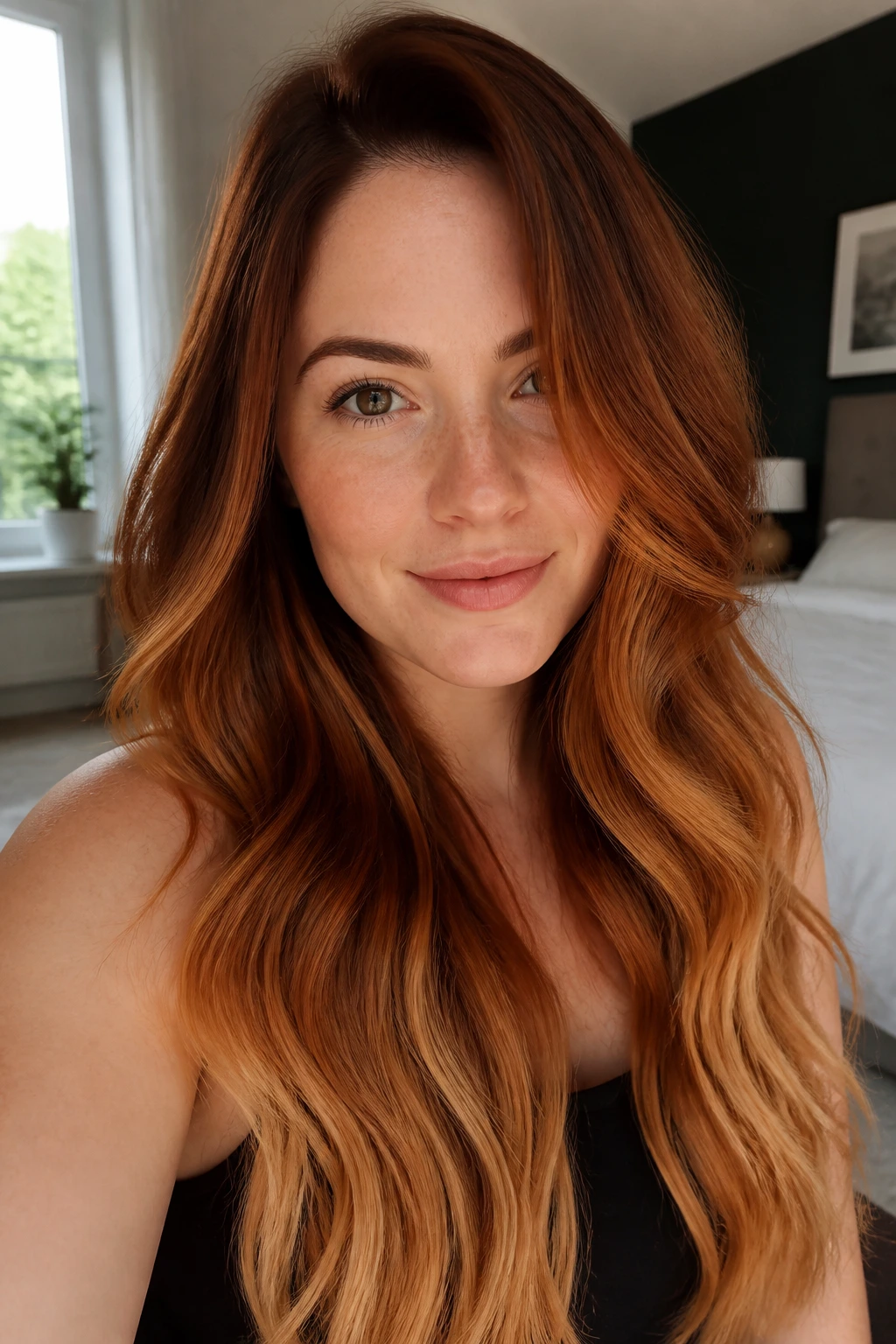
Brunette-Friendly Ginger: Keep the root close to your natural color and add rust or bronze copper through the mids. This version gives you warmth without a big bleach job, which is helpful if your hair is long and already dry on the ends.
Blonde Apricot Wash: Use a translucent apricot or saffron glaze over a light base. The result is soft, warm, and easy to refresh, especially if you like airy waves and smooth blowouts.
Curly Ember Halo: Place brighter ginger on the outer curl pattern and around the face, then keep the underlayers deeper. That stops curls from disappearing into one shade and gives the texture more shape.
Gray-Blending Auburn: Warm auburn lowlights can soften silver strands without trying to hide them. On long hair, that blend looks more natural than a solid red and grows out with less drama.
High-Impact Money Piece Copper: Brighten only the front sections and leave the rest of the hair deeper. It is a good compromise if you want a dramatic look in photos but not a dramatic upkeep schedule.
Keeping Ginger Bright Between Visits
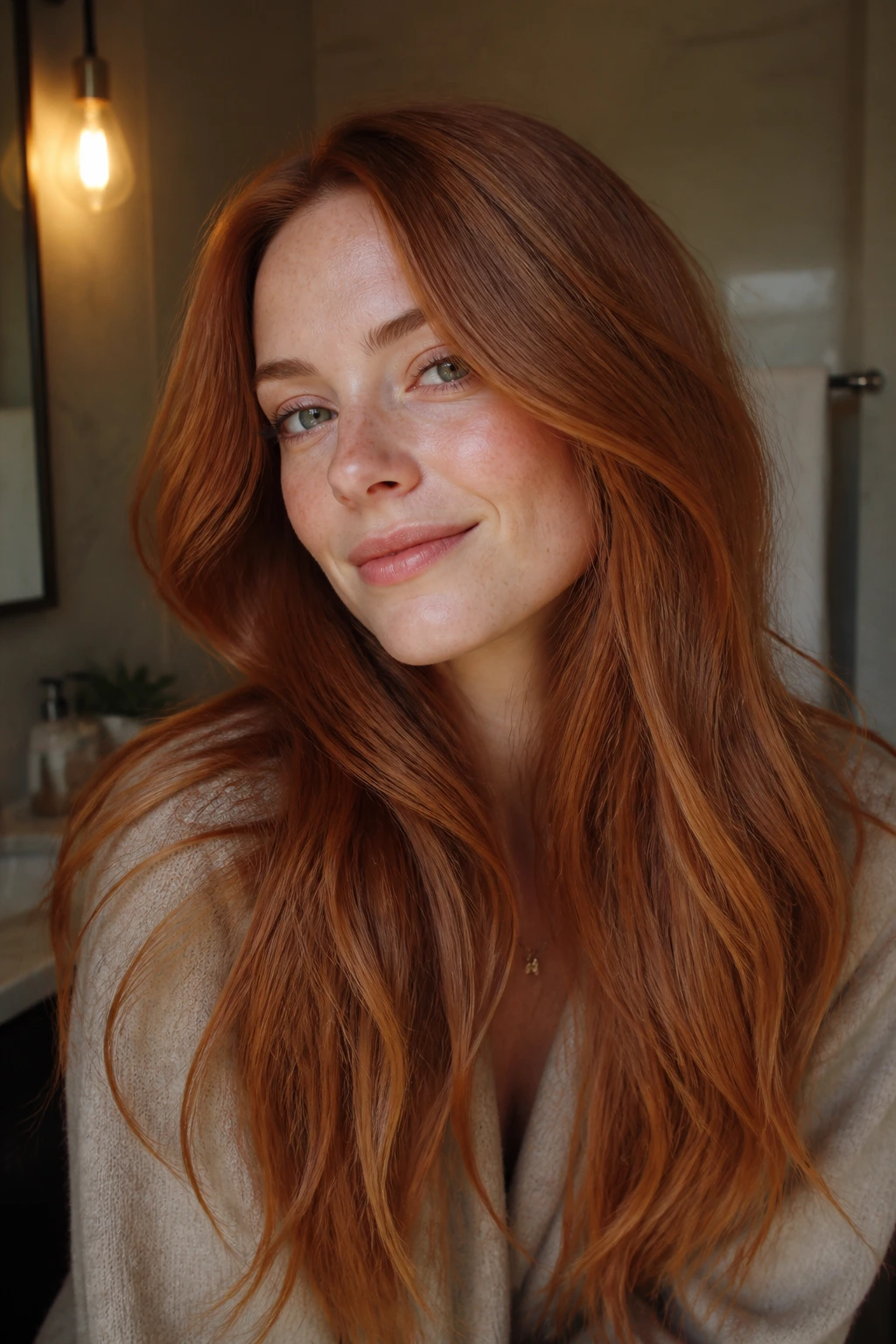
Ginger shades need a little more care than brunette shades, and long hair makes that obvious because the ends tell the truth first. If the mids are glossy and the last few inches are faded, the whole style can look older than it is.
Wash two to three times a week if you can. Use lukewarm water, not hot water, and keep the shampoo gentle. On brighter coppers or strawberry shades, a color-depositing conditioner every 1 to 2 weeks helps bring the tone back before it goes dull. For deeper auburn and cinnamon looks, you can usually stretch that out a bit longer.
Gloss refreshes matter. Bright copper often needs one every 4 to 6 weeks; deeper smoky ginger can go 6 to 8 weeks before it starts feeling thirsty. Trims every 8 to 12 weeks keep the ends from going wispy, and that matters more on long hair than people realize. If you use heat tools often, a protectant should go on every single time. No exceptions. Burned copper ends are not a vibe.
Swimming and sun both fade ginger faster than most people expect. Wet the hair with clean water before the pool, add leave-in or conditioner, and rinse right after. It sounds fussy. It works.
Frequently Asked Questions About Long Ginger Hair
Can dark brown hair go ginger without bleach?
Sometimes, but the result will usually stay in the auburn or rust family rather than becoming bright copper. If you want a visible red-orange shift on long dark hair, you usually need at least some lift or a very strong deposit over a warm base.
Which ginger shade is easiest to maintain on long hair?
The rooted shades are the easiest: cinnamon root shadow, bronze-to-copper transition, and rusted brunette ginger. They grow out softly and do not make every inch of regrowth obvious.
What’s the difference between copper, auburn, and strawberry ginger?
Copper is brighter and more orange-red. Auburn leans deeper and browner. Strawberry ginger sits lighter and airier, usually with more gold or blonde woven through it.
Will ginger hair color make long hair look thinner?
It can if the shade is too flat or if the ends are over-lightened. Adding lowlights, a shadow root, or a brighter face frame usually fixes that because the eye sees depth and thickness again.
How often should ginger hair be refreshed?
Bright coppers often need a gloss every 4 to 6 weeks. Deeper auburns can usually last a little longer, especially if you wash less often and stay off very hot water.
Can curly hair carry ginger well?
Absolutely. Curly texture can make ginger look even richer because the light catches different coils at different angles. Bright pieces around the face and surface curls usually work better than stuffing all the color underneath.
What if my ginger turns too orange?
Don’t panic and don’t pile on ash toner right away. First, try a softer copper or beige gloss to rebalance the tone. If the hair is porous, the problem may be saturation, not color direction.
Do I need layers for long ginger hair?
Not strictly, but layers help. They keep copper from looking like one heavy sheet and make balayage, ribbons, and lowlights easier to see. If your hair is very thick, even a few long face-framing layers can change the way the color moves.
A Shade That Keeps Changing in the Light
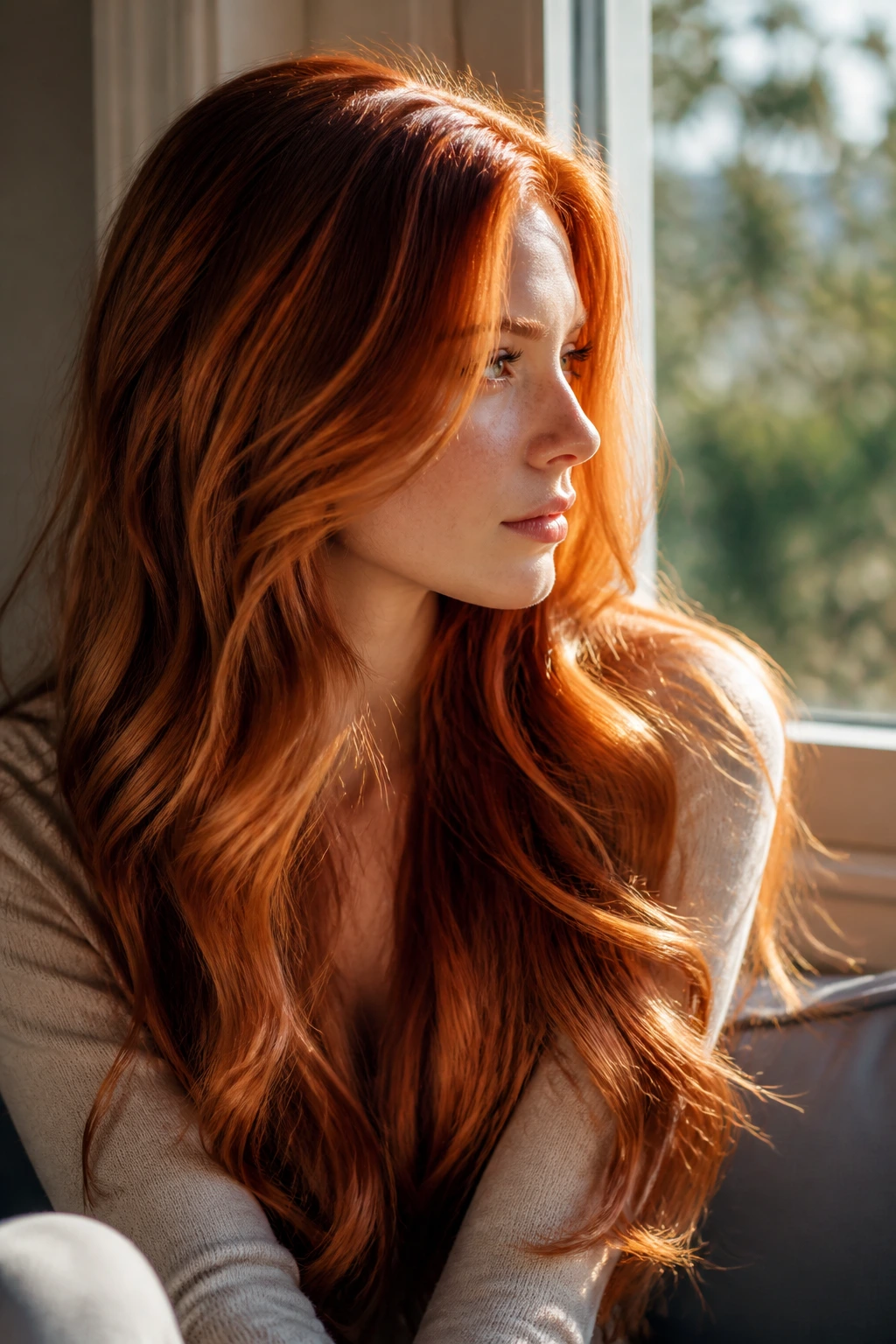
Long ginger hair works best when it has something to say from every angle. A clean copper penny, a smoky auburn melt, a strawberry balayage, or a muted terracotta wave all do the same basic job: they give the length depth, movement, and a little heat.
That’s why the best ginger looks are rarely the flattest ones. A good root shadow, a careful gloss, and the right amount of brightness at the ends do more than a single perfect dye formula ever will. Pick the version that matches your base and your maintenance habits, and let the length do the rest.
