



Long box braids have a funny habit: the more length you have, the less you can get away with doing nothing. A chest-grazing or waist-length set can look sleek on day one, then start to feel heavy, flat, or a little too familiar if you leave it hanging the same way all week. That’s where box braid styling ideas for long hair earn their keep. A simple shift in parting, a better elastic, or a clean tuck at the nape can change the whole mood of the style without asking you to redo the braids themselves.
And long braids give you options short sets can’t. You can swing them over one shoulder and let the ends do the talking. You can stack them into a high ponytail that actually has shape because the length keeps falling in a long line. You can pin them into a bun that reads polished instead of tiny. The trick is knowing which styles work with the weight of the hair and which ones fight it.
One thing I always tell people: a style that feels too tight at the hairline is not “snatched.” It’s just too tight. The American Academy of Dermatology has long warned that repeated tension can contribute to traction alopecia, and on long box braids that warning matters even more because the length adds pull of its own. The best styles here are the ones that hold, flatter your face, and let your scalp breathe a little.
Why These Styles Are Worth Your Time
-
They make long braids look intentional: A waist-length set can look expensive and clean with almost no extra work when the part, drape, or bun is chosen well.
-
They spread the weight out better: Long braids can tug hard at one spot, so styles that move the hairline back, split the load, or use a loose tuck are easier to wear.
-
They give you more than one mood: The same set can read neat, playful, formal, or edgy just by changing where the length sits.
-
They work with simple tools: Most of these looks only need snag-free elastics, a rat-tail comb, a few pins, and maybe a scarf or clip.
-
They help you stretch a set: When the roots are a little fuzzy and the ends still look decent, a good style can buy you a few extra days without making the hair look neglected.
-
They show off the braid pattern: Long hair is the perfect place to let a sharp middle part, triangle parts, cuffs, or beads do the visual work.
1. Sleek Center-Part Cascade
Long braids falling straight down the back have a clean, almost architectural look when the center part is sharp and the roots lie flat. This is the style I reach for when the braids are fresh and the parting still looks crisp, because the whole point is to let the length do the work without adding clutter.
Why it works
A middle part splits the weight evenly, which makes the style feel calmer on the scalp than a side-heavy sweep. It also keeps the braids from crowding one shoulder, so the ends move in a straight line and the set looks longer.
If your braids are darker at the root and lighter at the ends, this is one of the easiest ways to show off the color shift. Nothing else is competing with it.
Little details that matter
- Keep the part narrow and straight with the tip of a rat-tail comb.
- Smooth the roots with a light braid mousse, not heavy cream.
- Wrap a satin scarf around the hairline for 10 to 15 minutes after styling.
Best for: first-week braids, clean parts, and days when you want the set to look quiet but sharp.
2. Deep Side-Swept Braids
A deep side part changes the entire shape of long box braids. Instead of hanging like a curtain, the hair falls over one shoulder in a thick, glossy sheet that shows movement every time you turn your head.
You can keep this style simple or pin a small section behind one ear to open the face a little more. Either way, the asymmetry gives long braids some attitude without asking for extra braid manipulation.
The trick is not to overthink it. Make the part deep enough that the heavier side has room to drape, then let the rest fall naturally. If the hair keeps trying to split back to the middle, press the roots down with a scarf for a few minutes and it usually settles.
3. High Snatched Ponytail
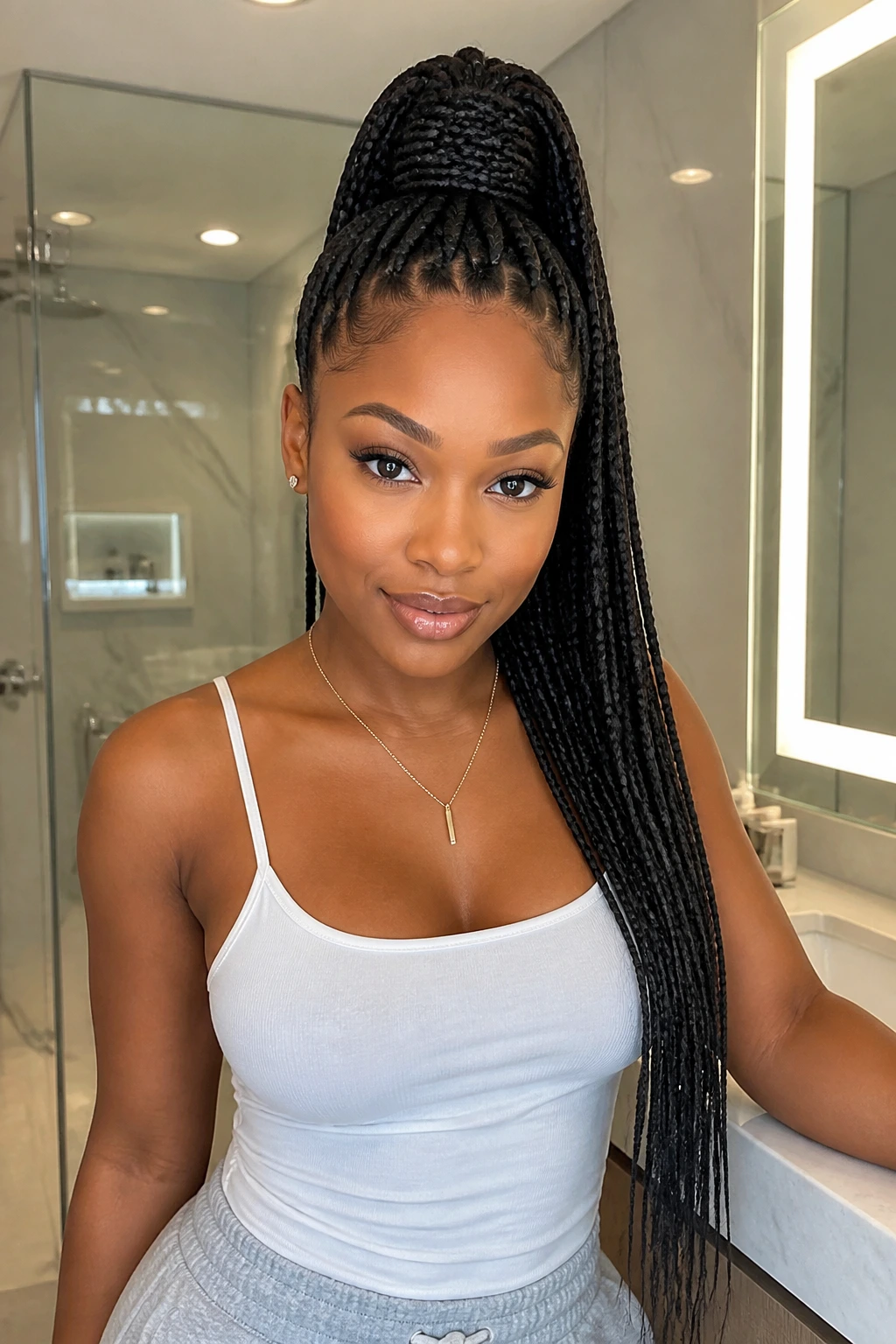
A high ponytail on long box braids is a full-body style. It lifts the face, clears the neck, and turns all that length into a straight, dramatic tail that swings when you move.
I like this one most when the braids are medium-weight, because very heavy jumbo braids can make the pony feel like a helmet if the base is too tight. Keep the pony at the crown or just behind it, and wrap one braid around the elastic so the base looks finished.
Best use
- Gym days when you still want shape.
- Nights out with hoops or a bold lip.
- Days when the braids keep falling into your eyes.
A high pony can look sharp, but it should never leave you with a headache by lunchtime. If the style hurts, lower it by an inch and loosen the base. That tiny adjustment makes a huge difference.
4. Half-Up Crown Lift
Half-up styles are a lifesaver on long braids because they take some of the weight off your face without hiding the length. Pull the top section back, smooth it into a small puff, knot, or pony, and let the rest cascade down your back.
This style is one of the easiest ways to make old braids look fresh. The lifted top section creates a cleaner line at the forehead, and the loose bottom half still shows off the length you paid for.
It also works well on second- or third-day braids when the roots have softened a bit. You don’t need perfect parts everywhere. You just need the front to behave.
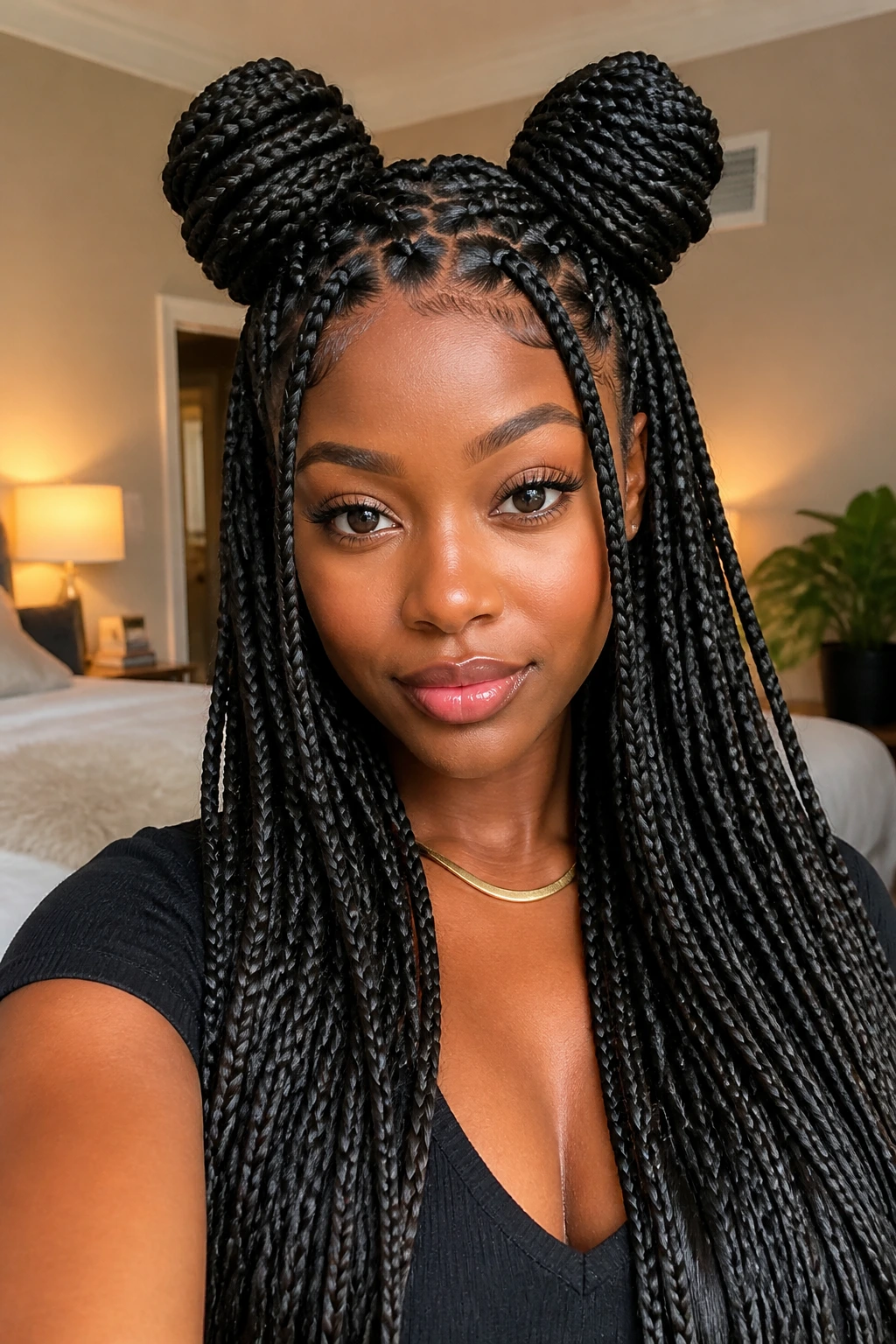
5. Double Space Buns with Loose Length
Space buns can read playful or polished depending on how neat the parting is and how much length you leave hanging. On long box braids, the buns themselves stay compact while the loose braids give the style some gravity, so it doesn’t feel juvenile.
I like this look with two balanced buns high on the head and the rest of the braids left down. It’s a good option when you want your neck clear but still want the ends visible.
A small warning
Don’t twist the buns so hard that the base starts to ache. Long braids already carry weight; the buns should anchor the style, not yank on your scalp. If the buns need help staying in place, add pins under the base instead of twisting tighter.
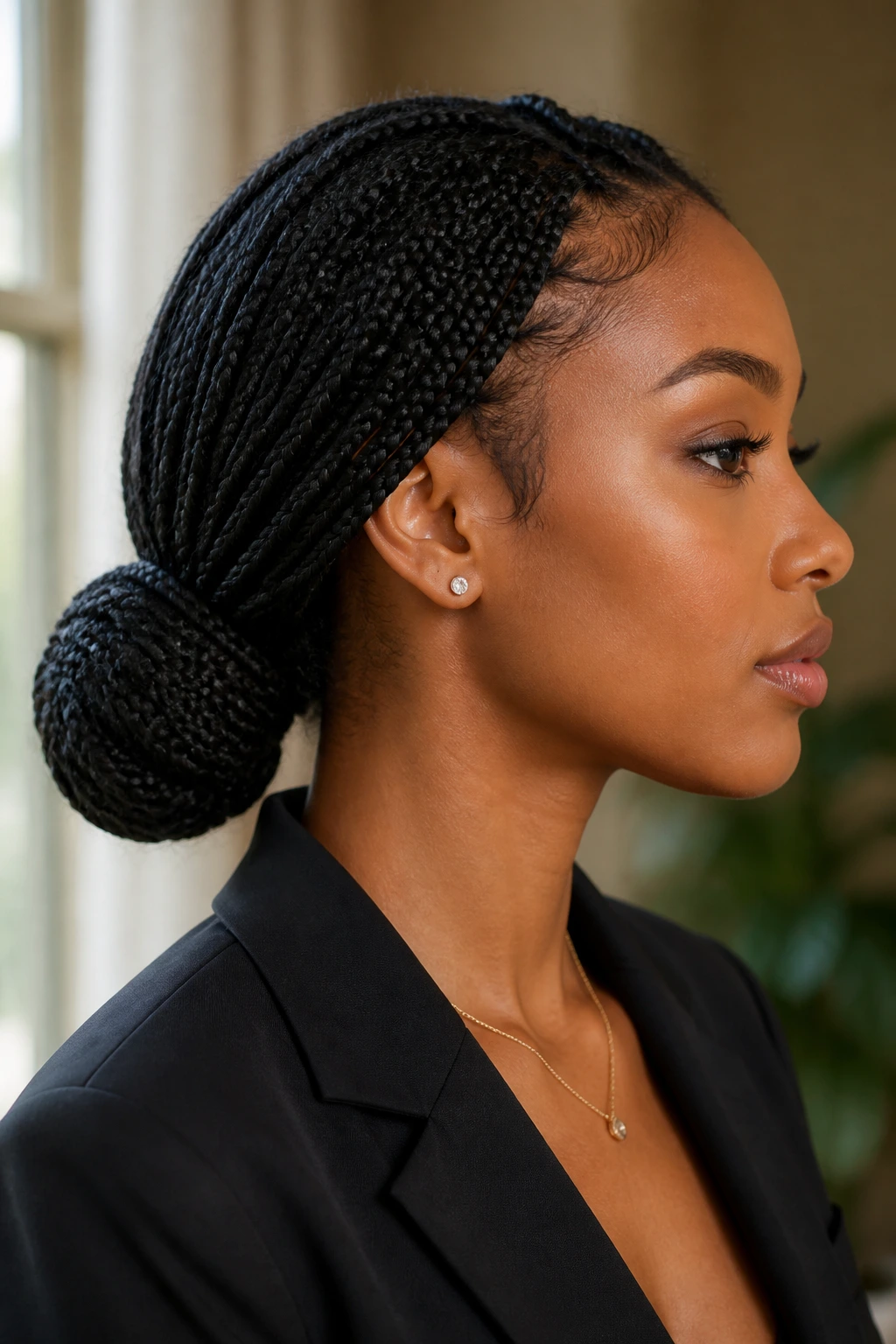
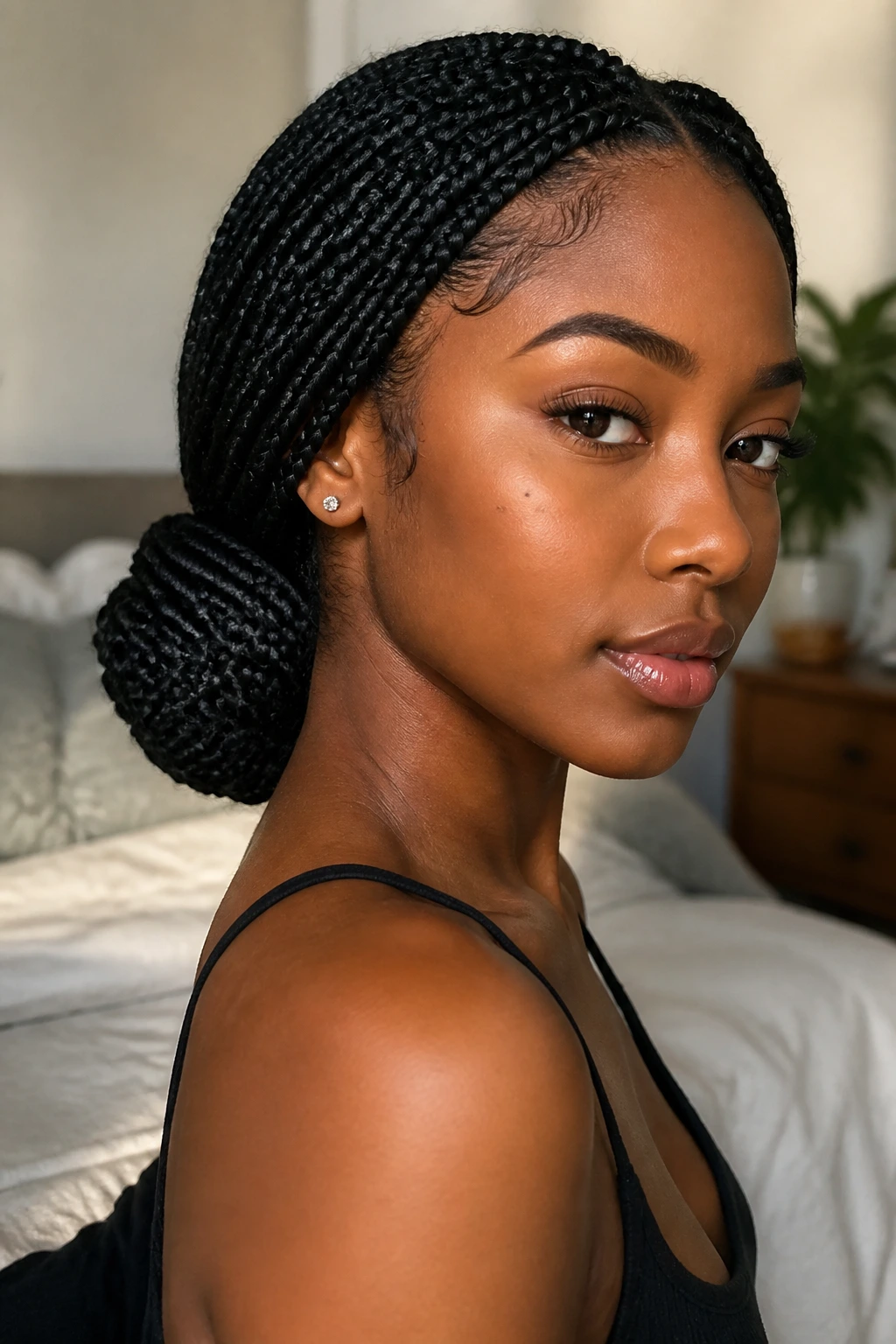
6. Low Wrapped Nape Bun
There’s something deeply tidy about a low bun at the nape. On long braids, it keeps the ends contained and puts the shape right where the neck meets the shoulders, which makes the whole style look deliberate.
This is my pick for dressier settings, interviews, dinners, or any day when you need your hair to stay put for hours. The length gets tucked, folded, or wrapped around the base, so the bun looks fuller than it would on shoulder-length braids.
If the ends are long enough, leave one braid out and wind it around the bun for a cleaner finish. It hides the elastic and gives the whole style a more finished edge.
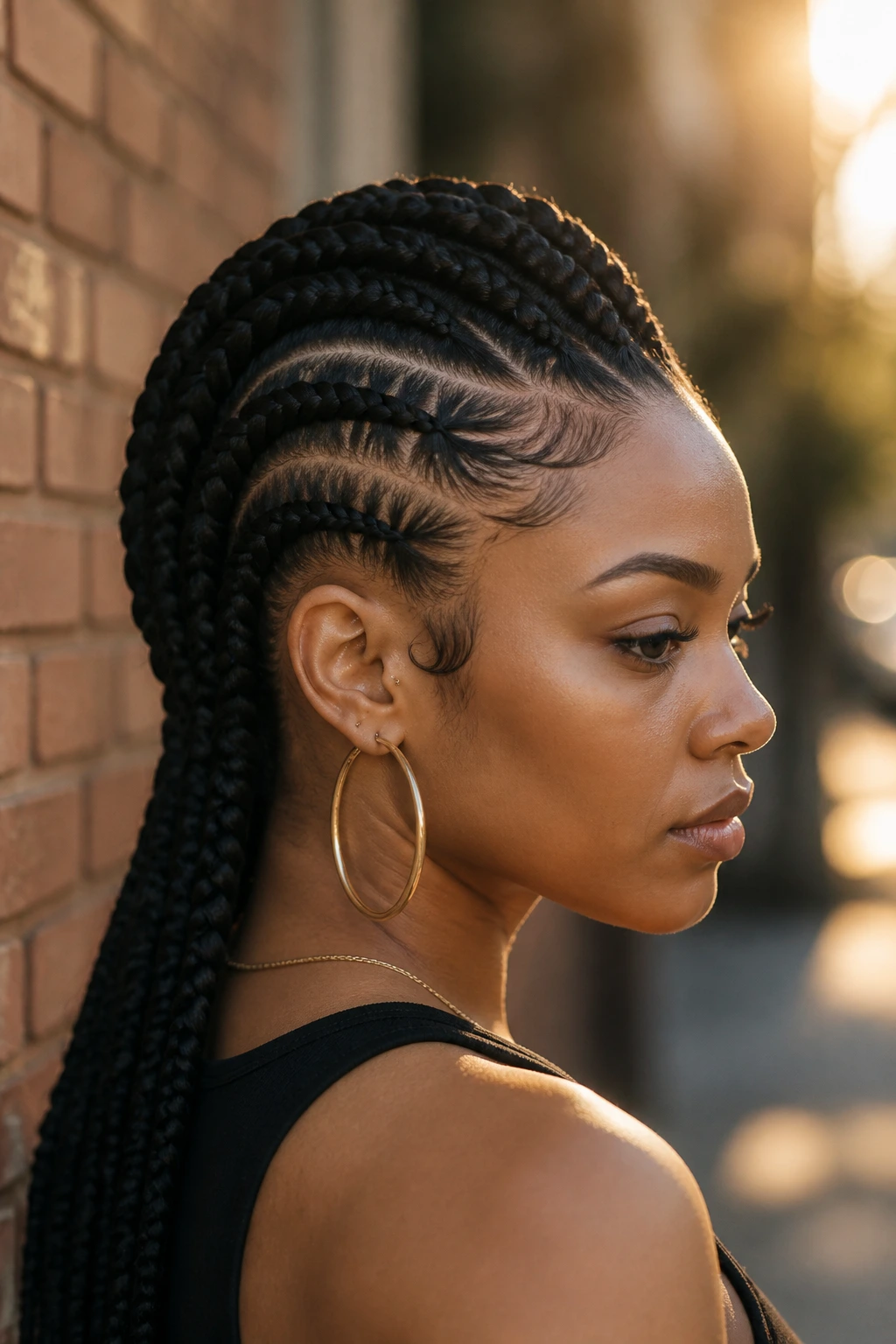
7. Braided Mohawk Ridge
If you want the length to look sharper and more sculpted, a braided mohawk ridge does the trick. Pin the sides down close to the scalp, then let the center section stand higher so the long braids fall in a bold strip down the middle.
This one has a little attitude, and that’s the point. It’s less about neat symmetry and more about using the length vertically instead of letting it spread across your shoulders.
What makes it different
- The sides feel lighter because they’re secured back.
- The center line creates height without requiring a lot of extra teasing.
- The long tail gives the style motion instead of making it stiff.
I’d wear this when I want long braids to look unmistakably styled, not just worn.
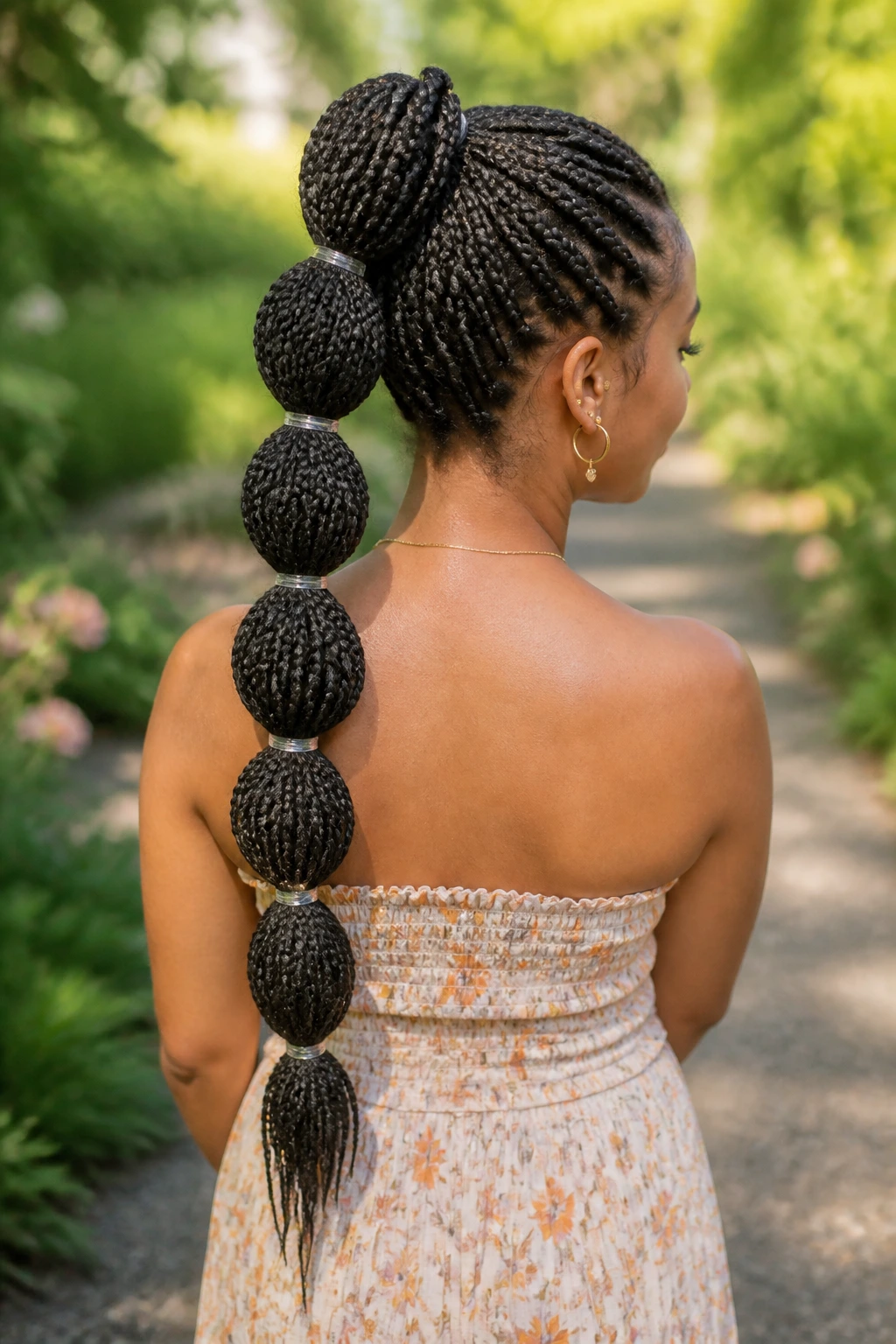
8. Bubble Ponytail Down the Back
A bubble ponytail turns long braids into a series of rounded sections, which is a clever way to break up all that length. Add small clear elastics every few inches, then gently pull each section outward so it looks full and spaced.
The bubbles keep the ponytail from feeling like one heavy rope. They also add rhythm, which is especially nice if your braids are all the same color and size and you want more shape.
This style works best when the elastics are spaced evenly and not too tight. If the sections pinch the braids, they’ll leave dents that take forever to smooth out.
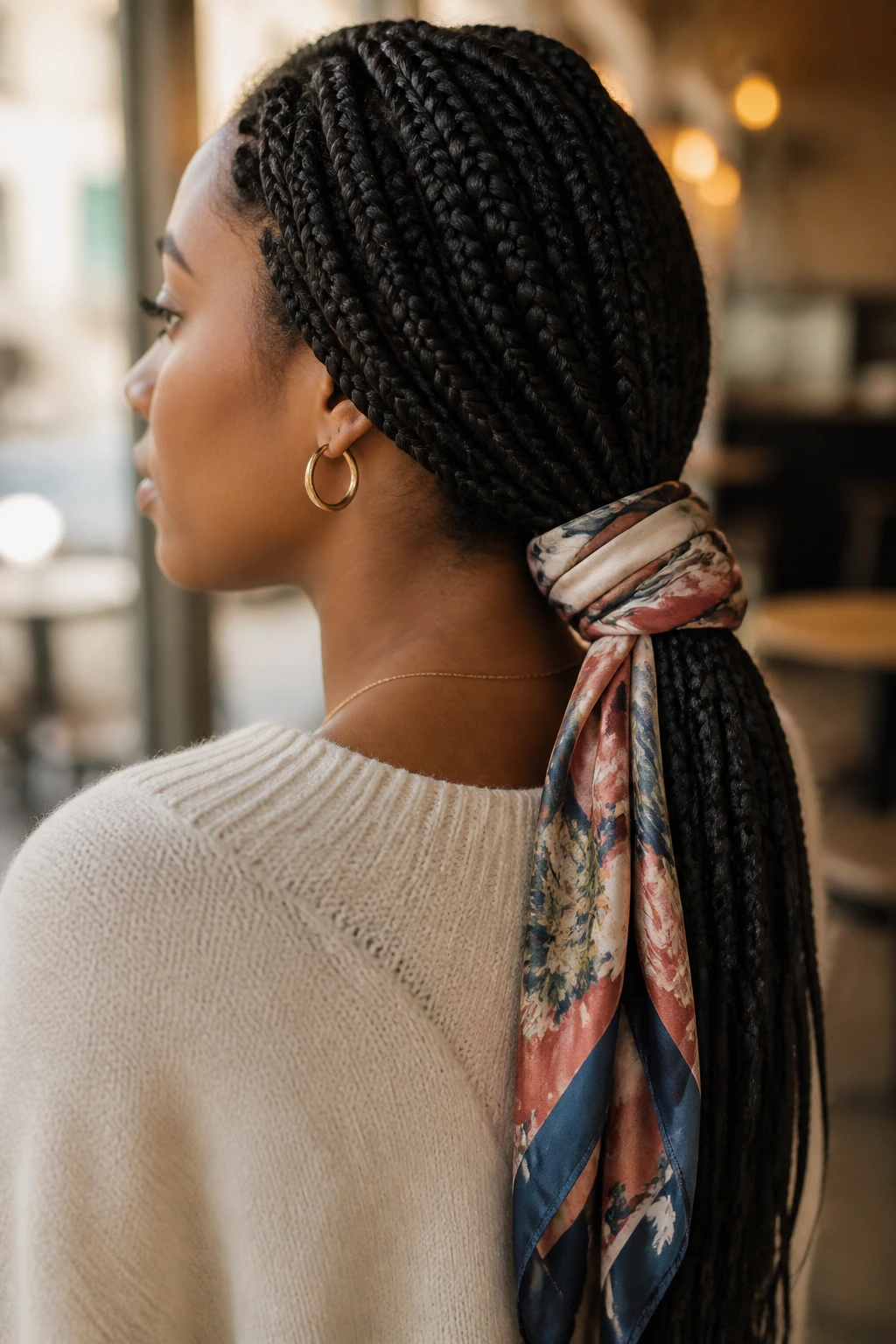
9. Scarf-Tied Low Ponytail
A scarf tied around the base of a low ponytail changes the whole feel of long braids. It gives you color, texture, and a softer line at the nape, and it keeps the elastic from looking harsh.
I like silk or satin scarves for this because they slide less and sit smoother against the braids. Tie it in a knot to one side or let the tails hang if you want the style to feel looser.
This is one of the easiest ways to rescue braids that are a few days old. The scarf becomes the focal point, and the rest of the style can stay plain.
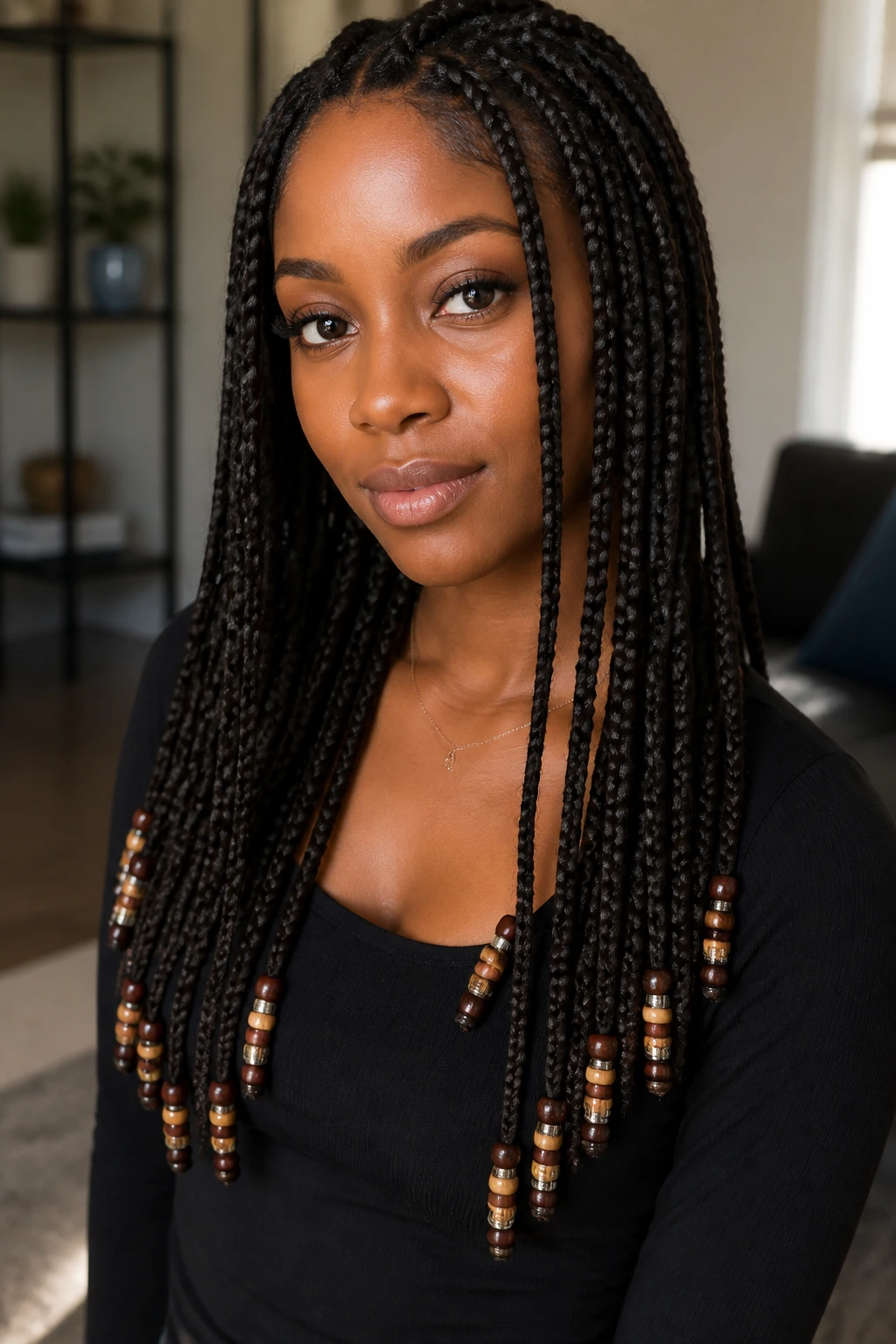
10. Beaded Ends Cascade
Beads at the ends of long braids can sound tiny and playful, but the look is more controlled than people expect. A few well-placed beads at the tips of several braids can pull attention downward and make the length feel even longer.
Use them selectively if your set is very full. Too many beads on extra-long braids can start to look heavy and annoy your shoulders after an hour or two.
Best way to wear it
- Put beads on the front braids only if you want subtle movement.
- Add them to the lower half if you want the ends to stay visible.
- Keep the bead size consistent so the set doesn’t feel messy.
The style works best when the rest of the braids are left down. The beads do the talking.
11. Triangle-Part Statement Set
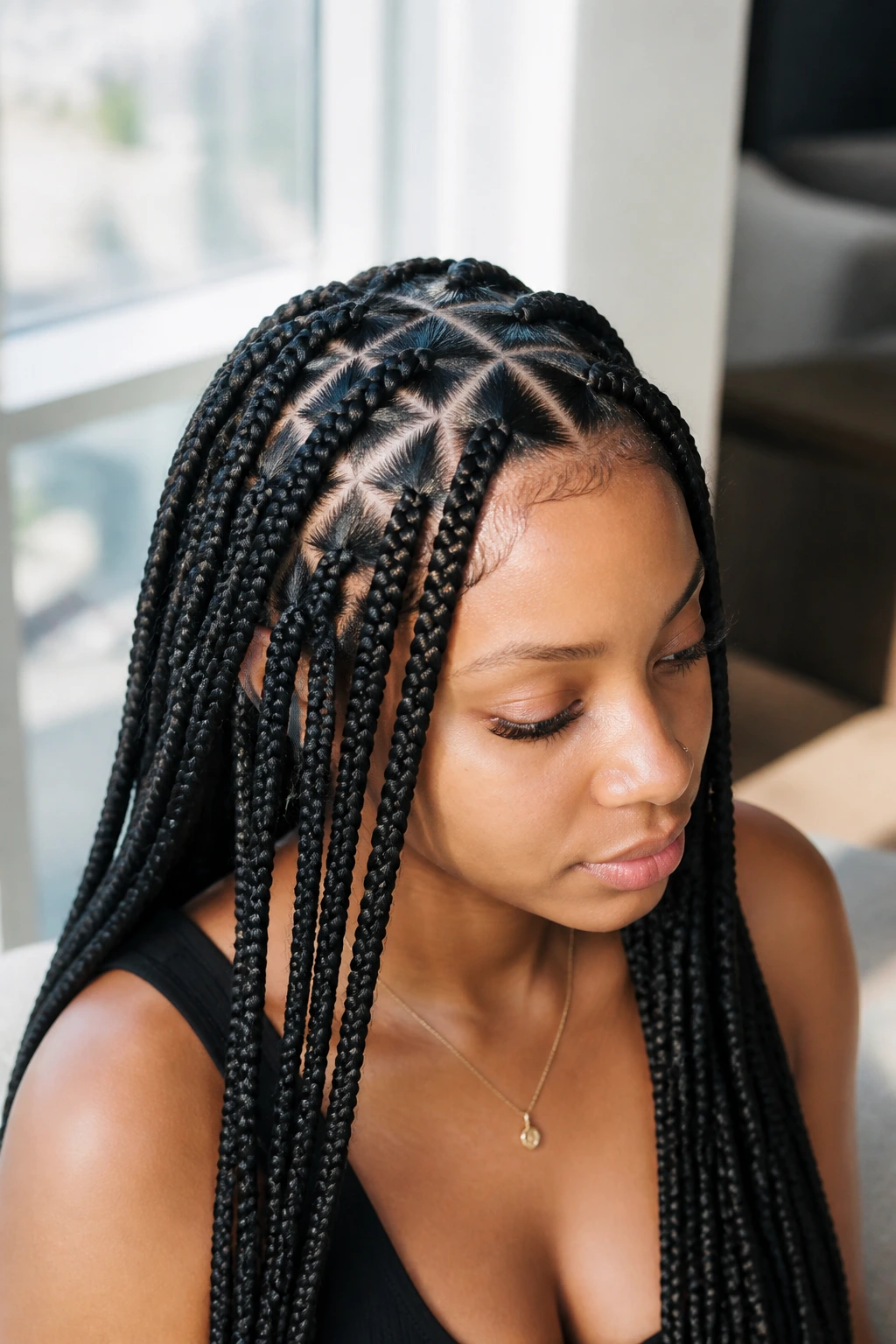
Sometimes the style is the parting pattern, not the shape of the braids themselves. Triangle parts make long box braids look sharper at the scalp, and that detail is especially visible when the hair is worn down.
This is a clean, geometric look that reads neat even when the lengths get a little older. The triangles are small enough to feel refined but visible enough to keep the style from disappearing into the background.
If you like structure, this is one of the better choices. It gives the top of the style a point of interest before the length even starts.
12. Zigzag-Part Grid
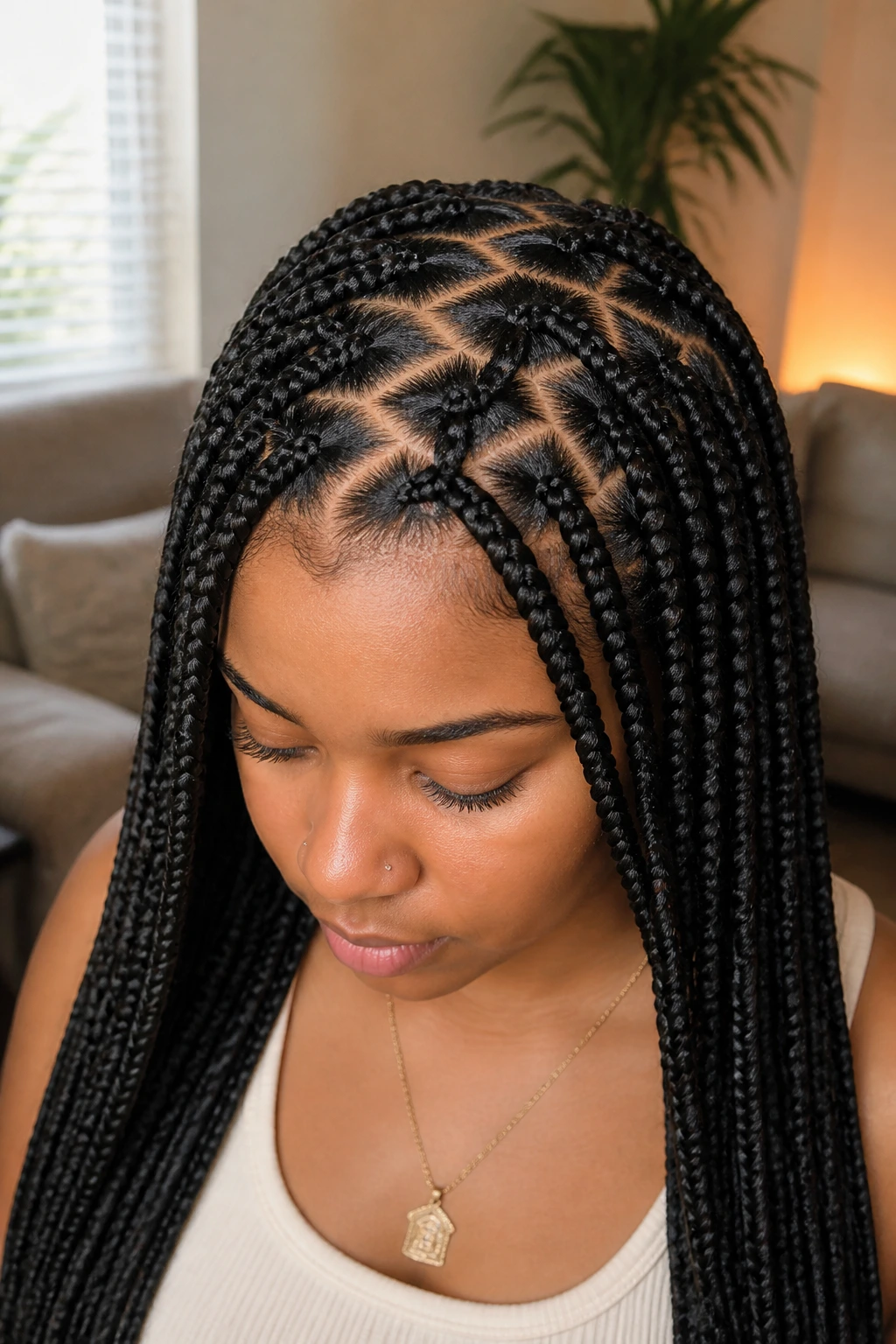
A zigzag part is a little less formal and a little more playful than triangles. The pattern moves across the scalp instead of sitting still, which makes the entire set feel more alive.
Long braids are a good match for this because the length balances out the busy roots. The eye gets a few seconds of detail at the scalp, then the braids fall into a clean vertical line.
No extra accessories are necessary here. If the parting is crisp, the style already has enough personality.
13. Claw-Clip French Twist
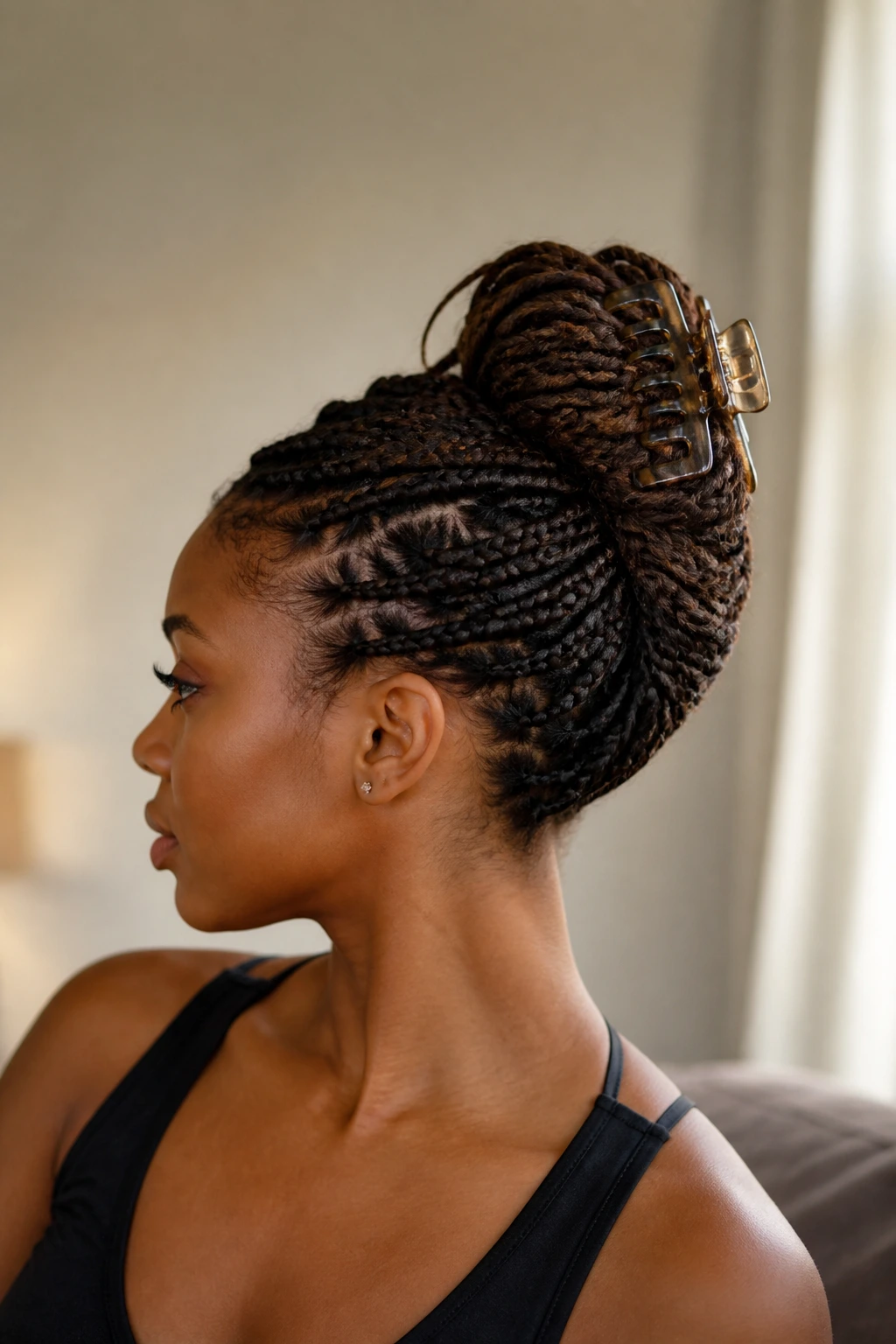
A claw clip twist is one of those styles that feels almost unfairly easy. Gather the braids, twist them upward, fold the length once, and clamp it in place so the ends either tuck under or spill out a little at the top.
The best part? It gets the hair off your neck fast. Long braids can be warm, especially when the weather is sticky, and a clip buys you breathing room without the tug of a tight elastic.
Use a big, sturdy clip with teeth that grip the braids instead of sliding off them. Small decorative clips tend to snap under the weight. Ask me how I know.
14. Crown Halo Braid
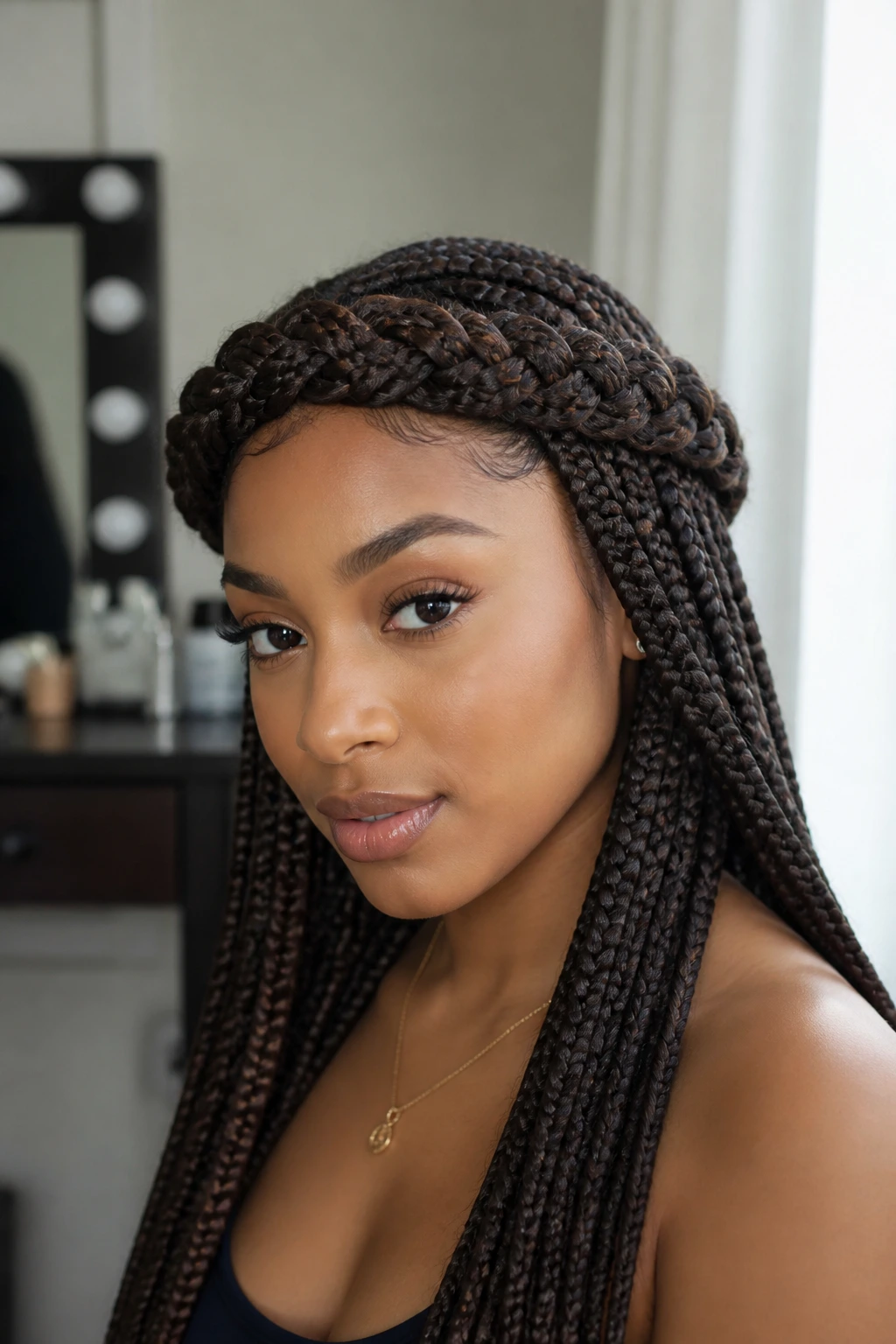
A halo braid made from long box braids has a soft, regal shape that sits close to the head and leaves the rest of the length free. Pull the front braids across the crown like a headband, pin them on the opposite side, and let the back hang.
This style works because it creates a clear frame around the face. It also keeps the roots at the hairline quiet, which is useful if your braids have started to loosen a bit near the edges.
I like this one for dinners, weddings, and dressy events where you want the braids to look polished without being forced into a tight bun. It has presence, but it doesn’t feel heavy.
15. Faux Bob Tucked Under
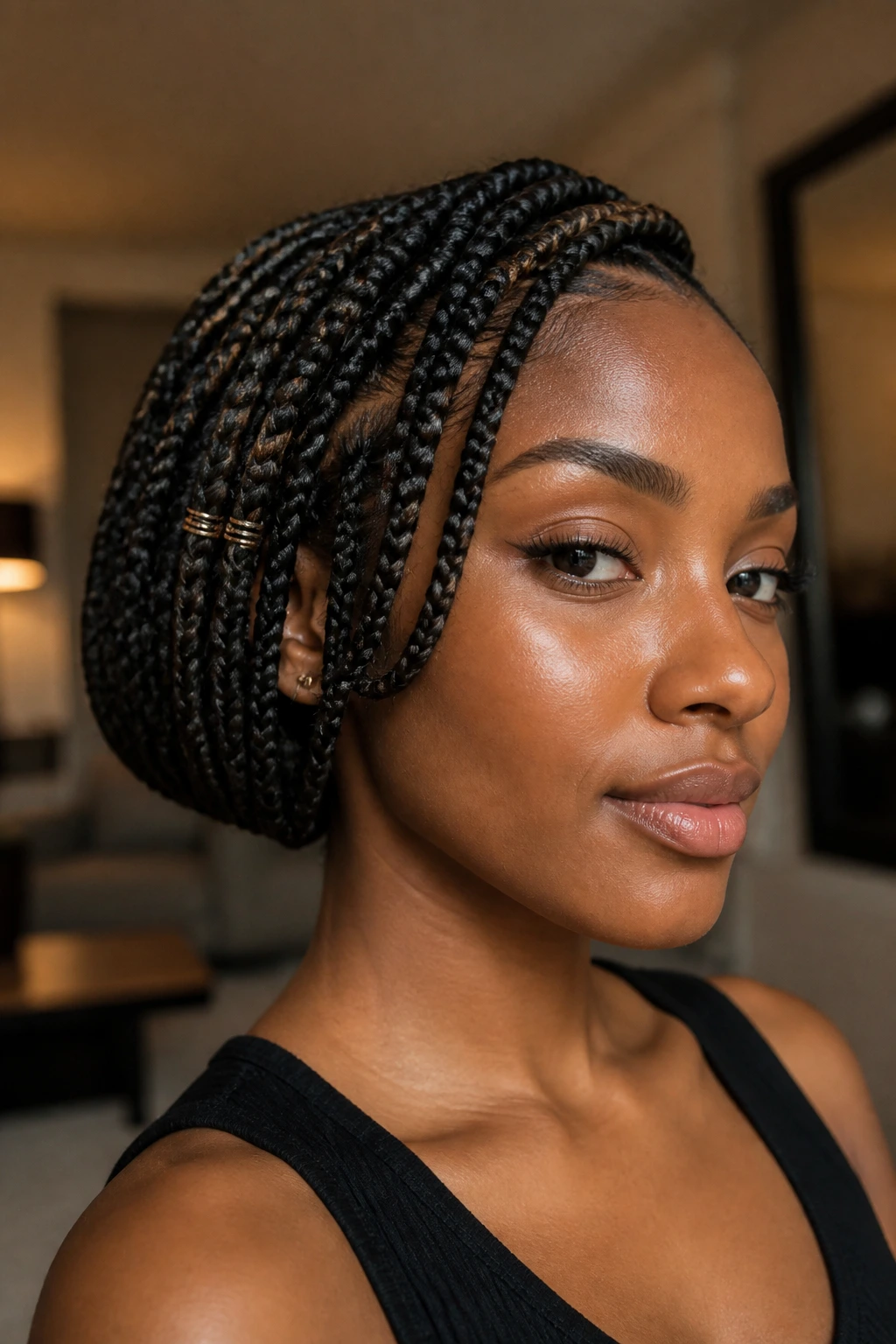
A faux bob on long braids is exactly what it sounds like: the length gets tucked and pinned so the hair reads shorter than it is. It’s one of the best tricks for a big change without taking the braids down.
The shape lands around the chin or jawline depending on how much you tuck. That makes your neck look longer, and it can be surprisingly nice if you’ve been wearing the same long silhouette for weeks.
Keep it neat by:
- Pinning the tucked sections close to the scalp, not in the middle of the loose length.
- Using U-pins or long bobby pins that can handle weight.
- Leaving one or two braids out at the front if you want softness around the face.
This one feels a little dramatic in the best way.
16. Side Bun with Face-Framing Braids
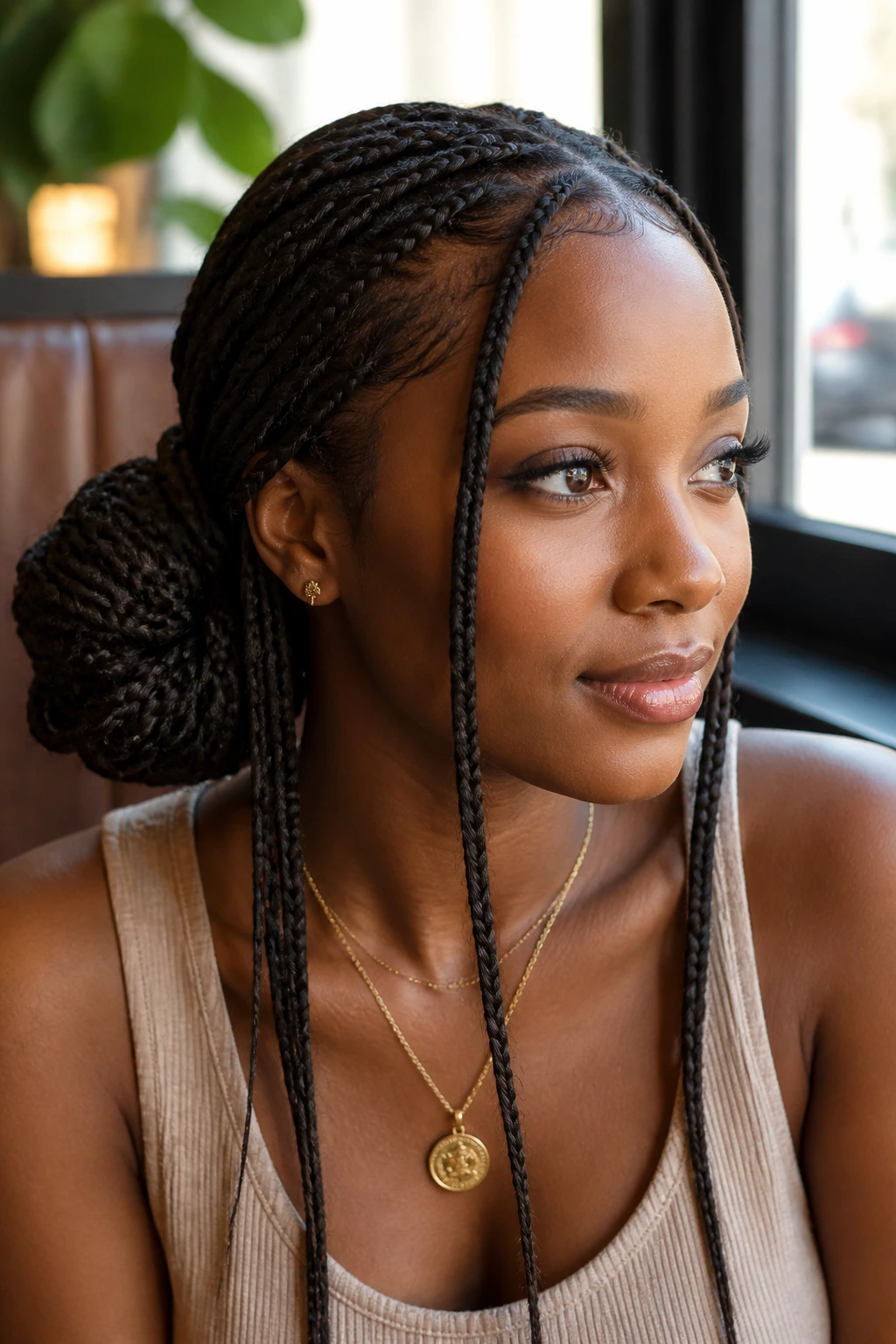
A side bun gives long box braids a softer shape than a centered bun, especially when you leave a few thin braids in front. The loose front pieces keep the style from looking too severe, while the bun sits low and balanced off to one side.
It’s a nice middle ground if a high ponytail feels too sporty and a full low bun feels too formal. You still get length at the sides, but the nape stays clear.
If your braids are very long, tuck the tail under twice instead of once so the bun doesn’t sag halfway through the day. That little extra fold holds better than trying to pin down one giant loop.
17. Twisted Half-Up Knot
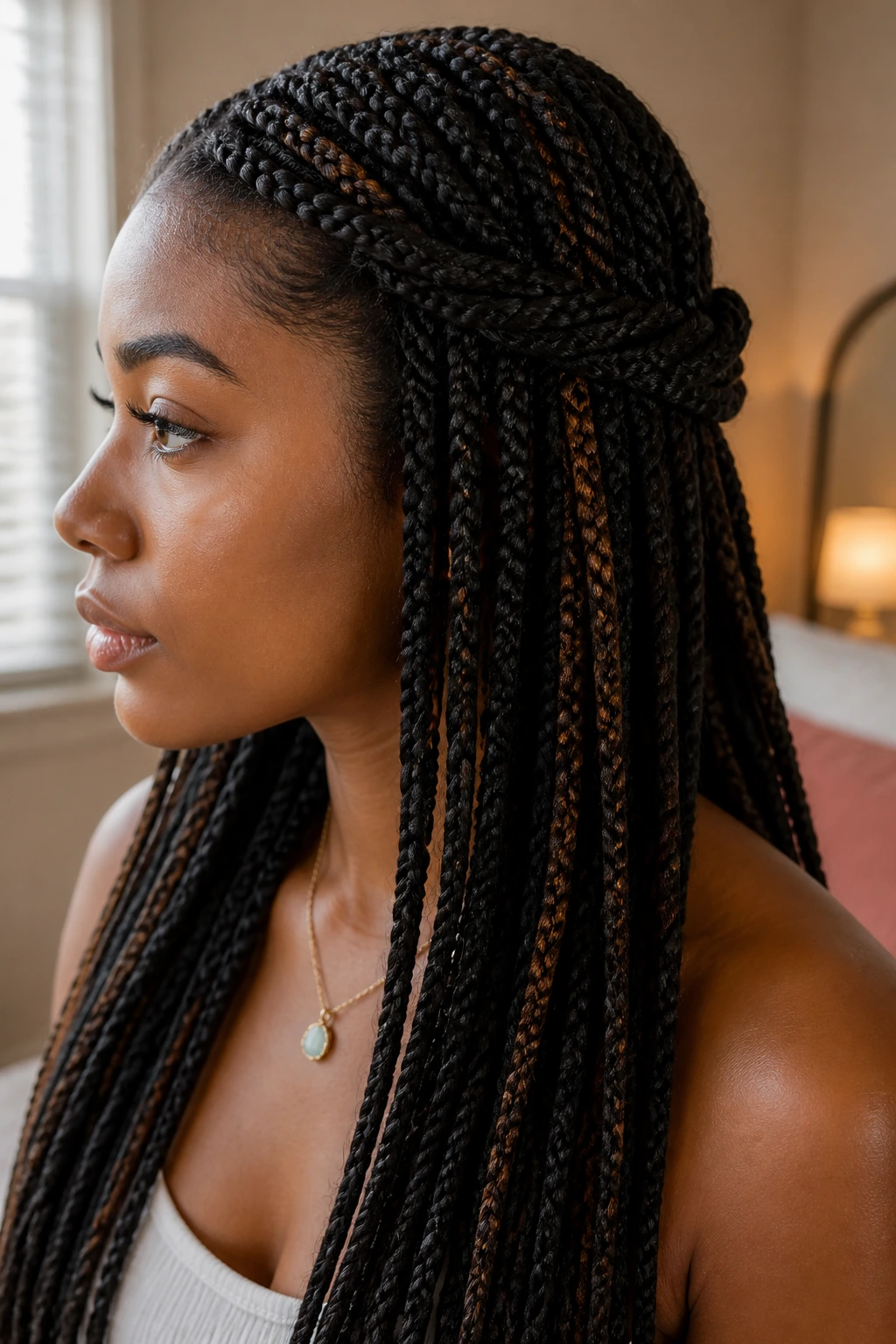
A twisted half-up knot gives long braids some lift without locking you into a full updo. Twist two sections back from the temples, tie or knot them together, then let the rest fall naturally.
I prefer this to a messy top knot when I want the front to stay smooth. The knot sits flatter and feels less top-heavy, which helps when the braids are thick.
It’s also a good fix for days when the front braids need a refresh but the lengths still look fine. You lift the root area, smooth the top, and let the rest stay loose.
18. Rope-Wrapped Ponytail
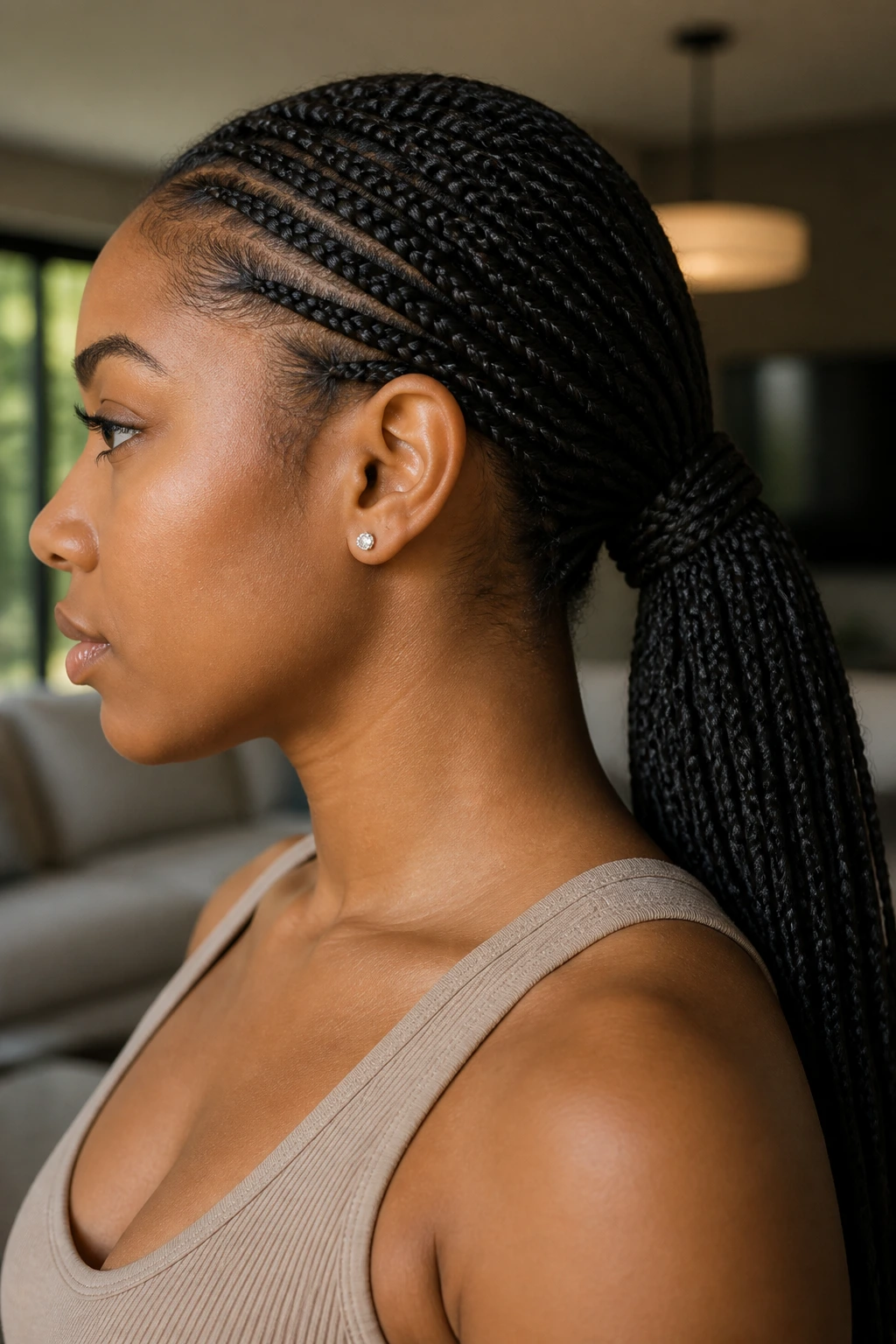
A rope-wrapped ponytail hides the elastic and makes the base look cleaner. Pull the braids into a low or mid ponytail, then use one braid to wrap around the band and tuck the end underneath.
That single wrap changes the finish in a way people notice, even if they can’t tell why. The base looks intentional instead of thrown together.
This style especially helps long braids because the length can sometimes make a plain ponytail look accidental. The wrap creates a visible anchor point, and the long tail can fall straight down the back or over one shoulder.
19. Cuffs and Thread Festival Look
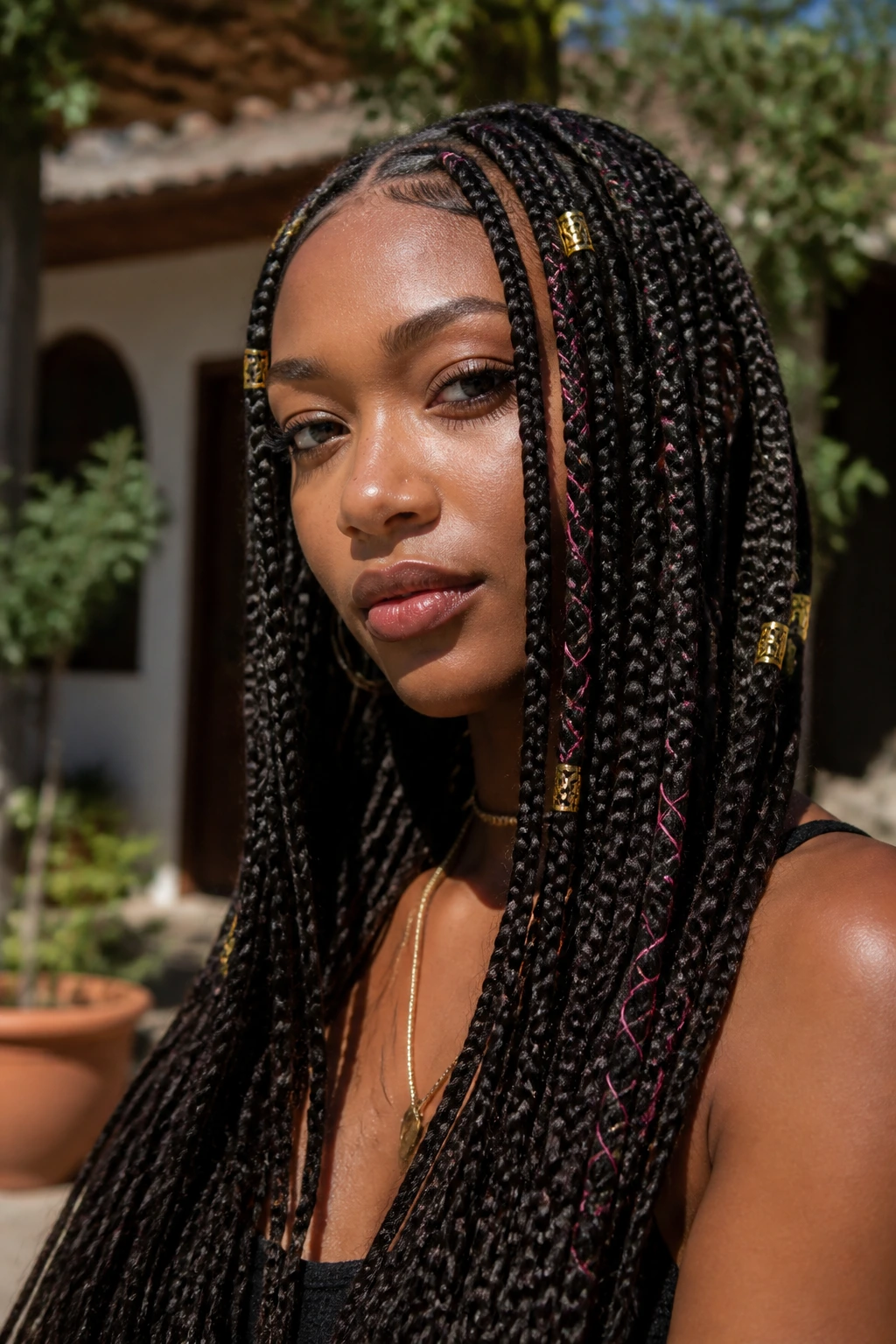
This is the style for anyone who wants the braids themselves to do the decorating. Add gold cuffs, colored thread, or a few wrapped sections along the length, and leave the braids down so every little detail gets seen.
The beauty of this approach is that it doesn’t need a new shape. Your styling effort goes into the surface of the braids, not the structure, which makes it a smart choice when the hair feels too heavy for a full updo.
Use fewer accessories than you think you need. Three or four well-placed cuffs often look sharper than a dozen scattered pieces that fight for attention.
20. Center-Part with Gold Cuffs
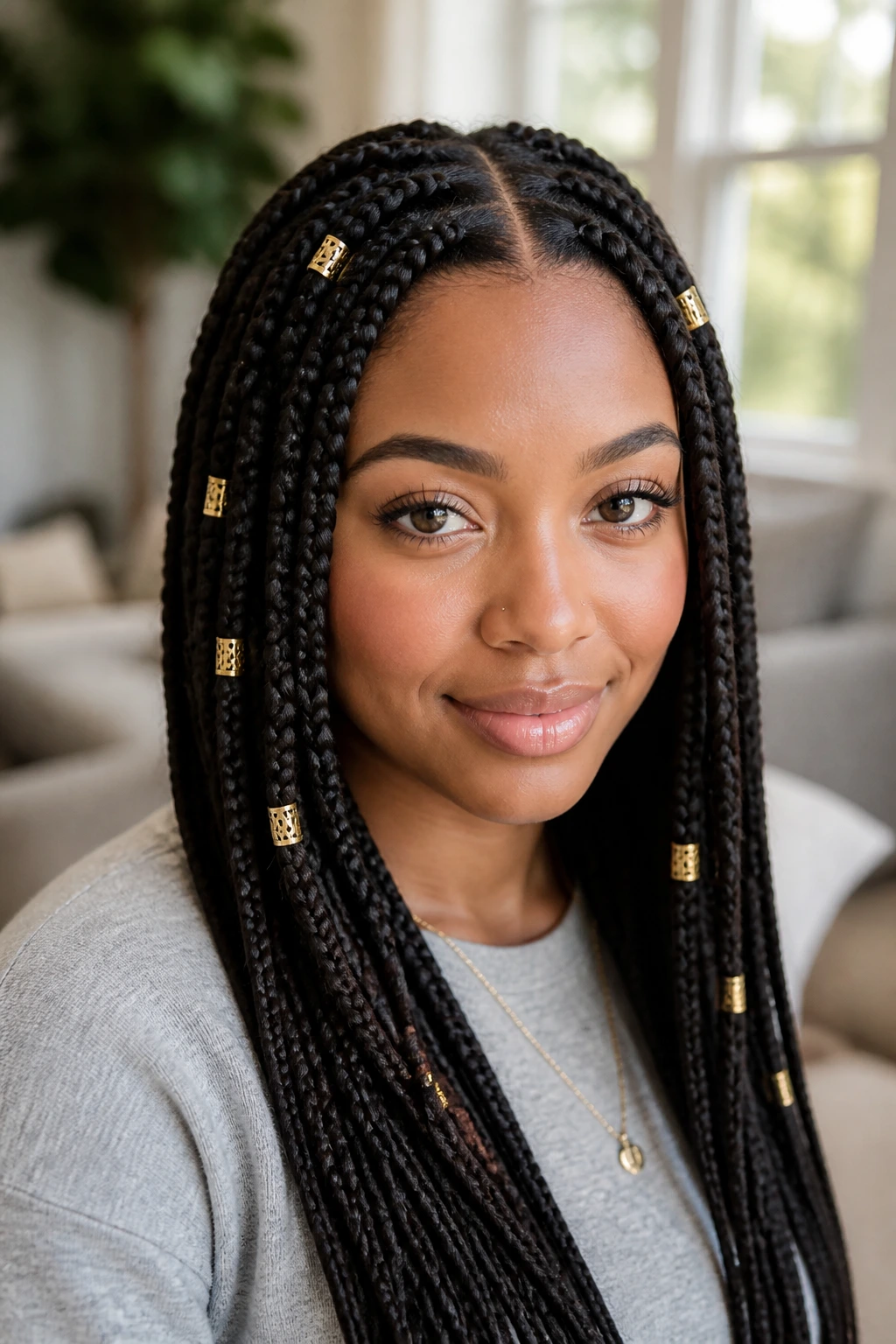
A clean middle part with spaced gold cuffs is one of the most reliable long-braid looks because it feels neat without being fussy. The part stays straight, the cuffs catch the eye, and the rest of the braids hang down in a clean line.
I like this style when the set is still fresh enough that the roots look tidy but not so fresh that you’re worried about moving too much hair around. It’s polished, simple, and easy to wear with almost anything.
The cuffs should be placed at different heights rather than stacked all at once. That small stagger keeps the style from looking too rigid.
21. Two Low Buns at the Nape
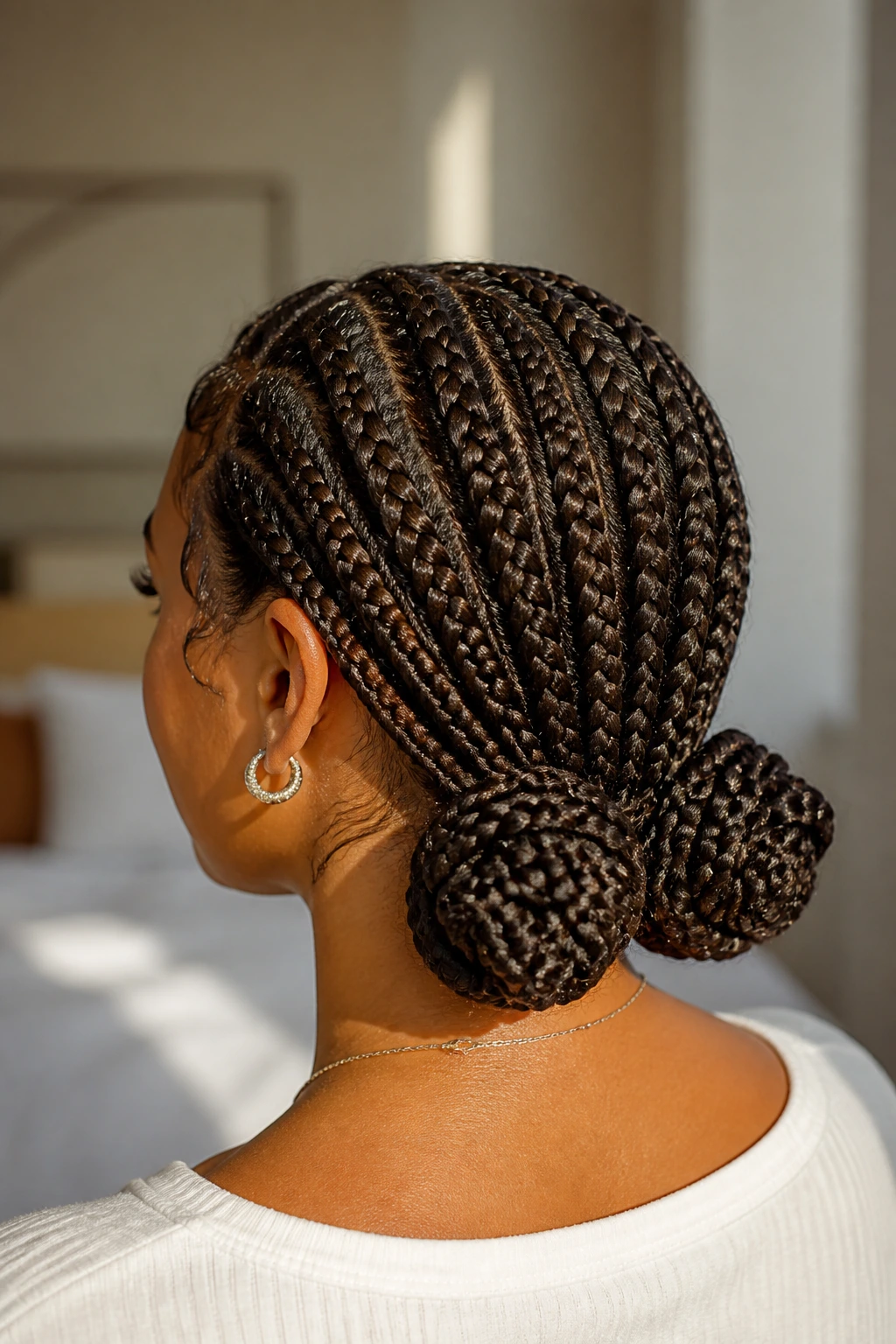
Two low buns are calmer than high double buns and easier on the scalp. Split the braids evenly, twist each side into a bun near the nape, and let the ends tuck in or peek out a little.
This works well when you want symmetry without height. The buns sit low enough to avoid a lot of weight on the crown, which matters if your long braids already feel heavy by midday.
If you have a lot of hair, pin the buns in stages instead of trying to force everything into the elastic at once. That keeps the shape neat and the tension manageable.
22. Flip-Over Volume Style
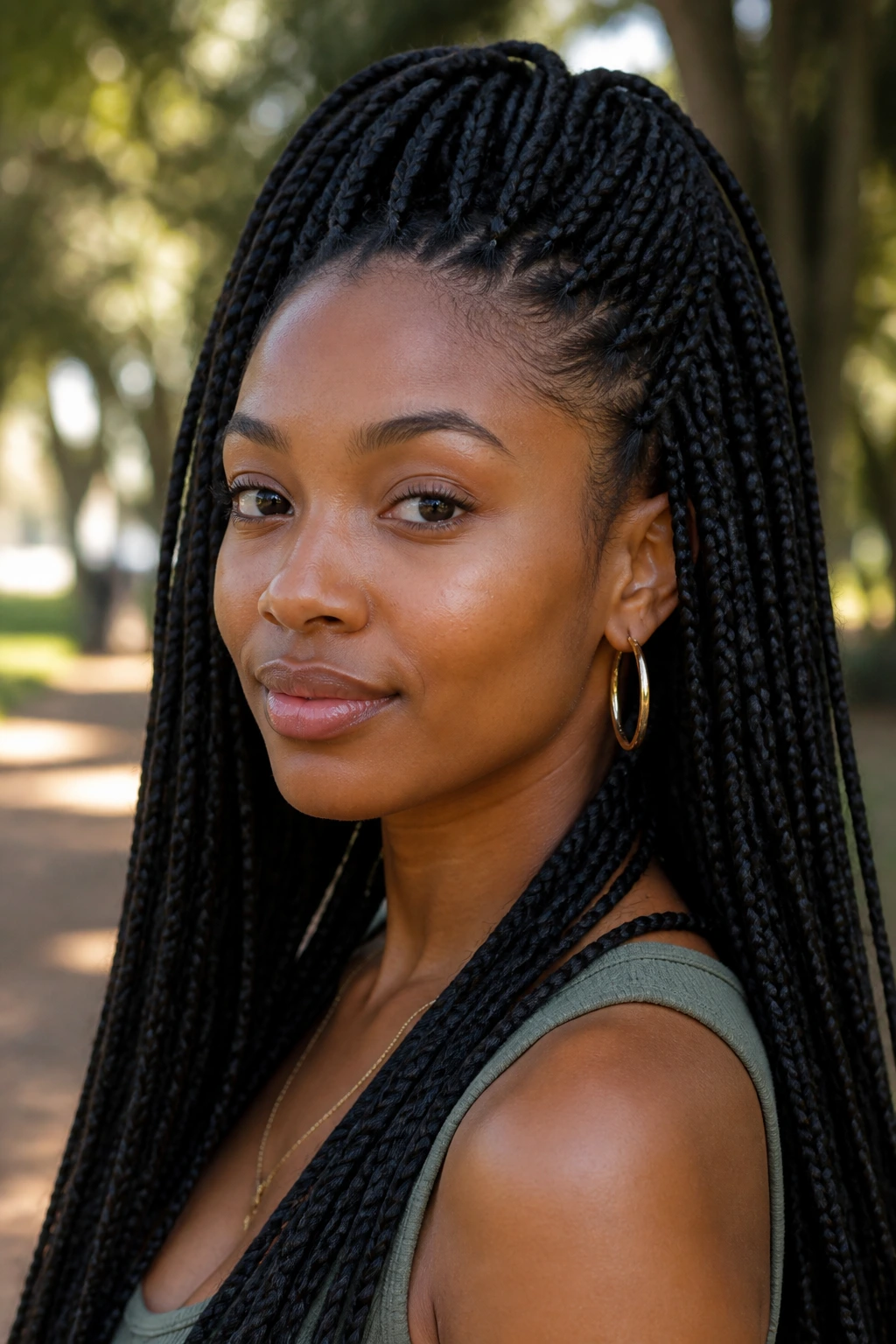
The flip-over style is gloriously simple: no hard part, no strict line, just braids pushed back and then over to create volume at the top. On long box braids, that soft lift can make the whole set feel fuller and more relaxed.
It’s a good choice when the roots are a little grown out and you don’t want the parting to be the first thing people notice. The hairline stays less rigid, and the braids fall with more movement.
This one feels casual, but not sloppy. That’s the sweet spot.
23. Heavy Fringe Braids
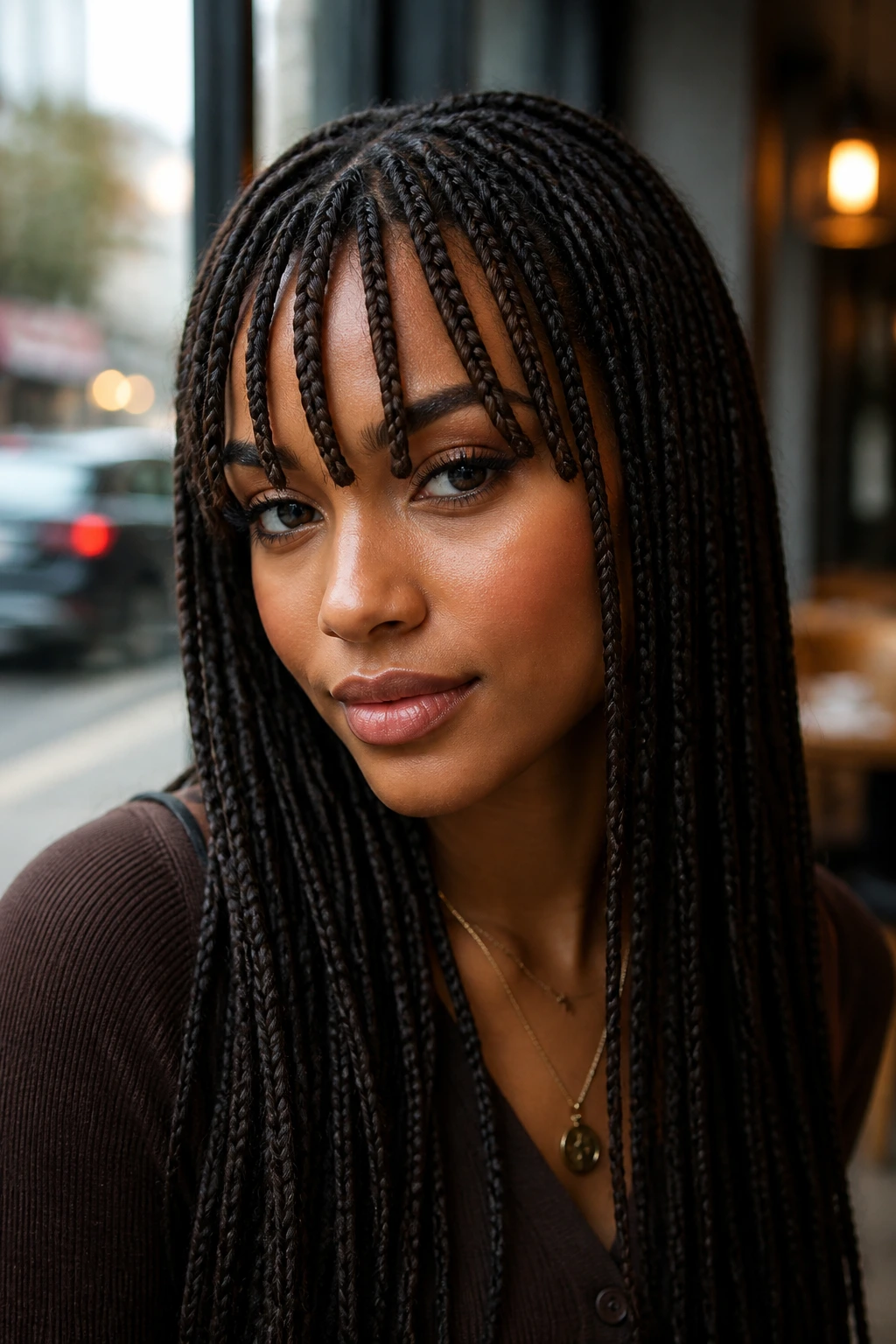
Pulling a few front braids forward creates a fringe effect without cutting anything. The braids fall around the forehead and cheekbones, which gives long lengths a softer face frame.
This is one of my favorite ways to change the mood of a set without touching the back at all. You get movement around the face, the rest stays down, and the style can look almost different enough to fool people who saw it yesterday.
Keep the fringe light. Too many front braids dragged forward can make the style feel crowded and block your eyes.
24. Low Loop Bun
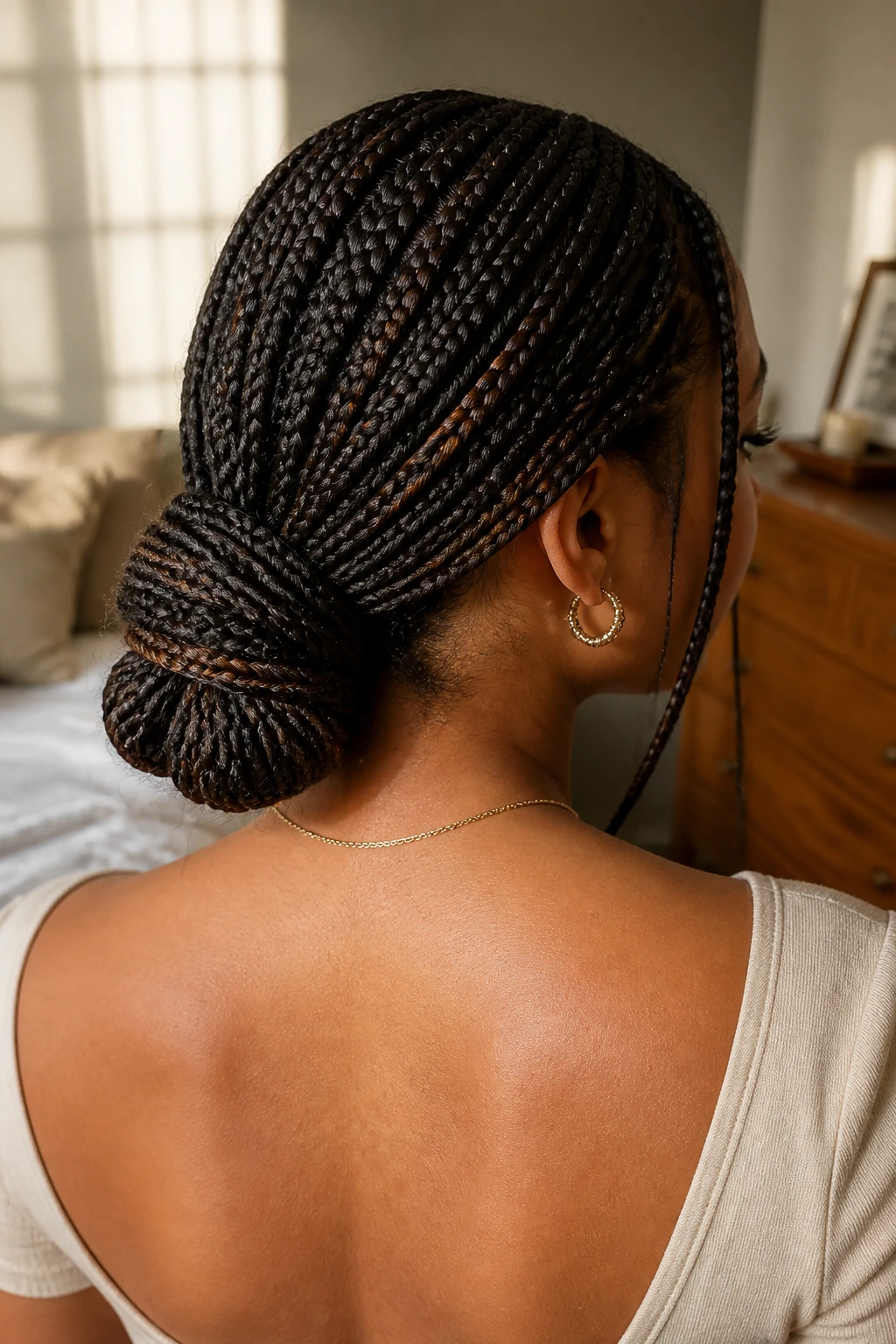
A low loop bun is what happens when you fold a ponytail over once and leave the ends looped instead of fully tucked. It’s neat, easy, and a little softer than a tight ballerina bun.
Long braids are a good match because the loop gives the ends somewhere to live without demanding perfect pinning. The style sits close to the neck and works especially well on days when you want the length controlled but not completely hidden.
It’s also one of the easier styles to refresh during the week. If the base gets loose, tighten the elastic and re-pin the loop. Done.
25. Wrapped-Base Pony with Long Tail
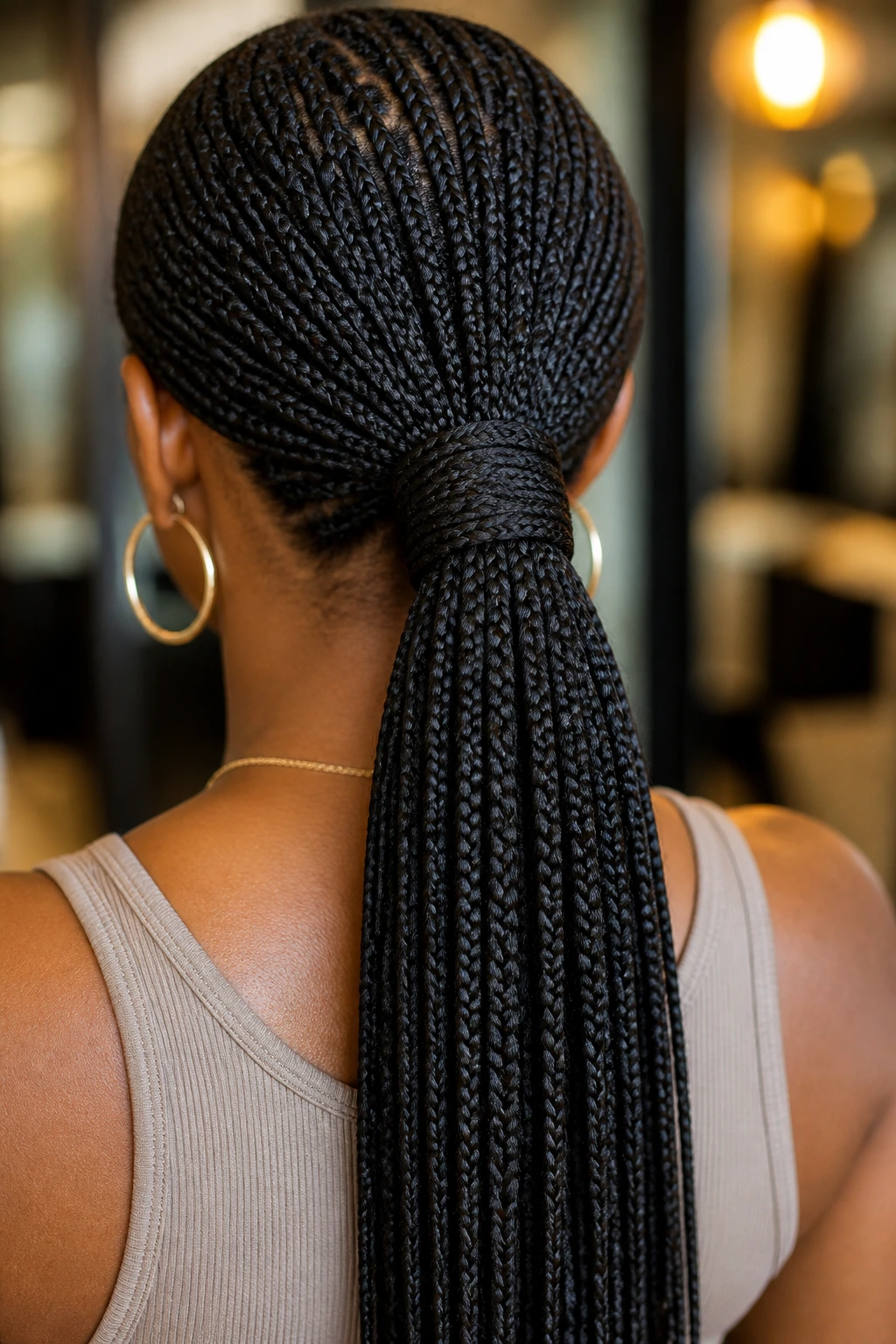
A wrapped-base ponytail is a cleaner, sharper cousin of the basic pony. After you secure the braids, wrap one braid around the base several times so the elastic disappears and the tail falls straight behind it.
This style is especially nice on long hair because the tail itself becomes the point of interest. The wrapped base keeps the silhouette tidy, and the hanging length looks even longer when it starts from a neat anchor.
If you want the pony to feel a little more elevated, position it mid-height rather than right on top of the head. That keeps it sleek without turning it into a high-tension style.
26. Curled-End Cascade
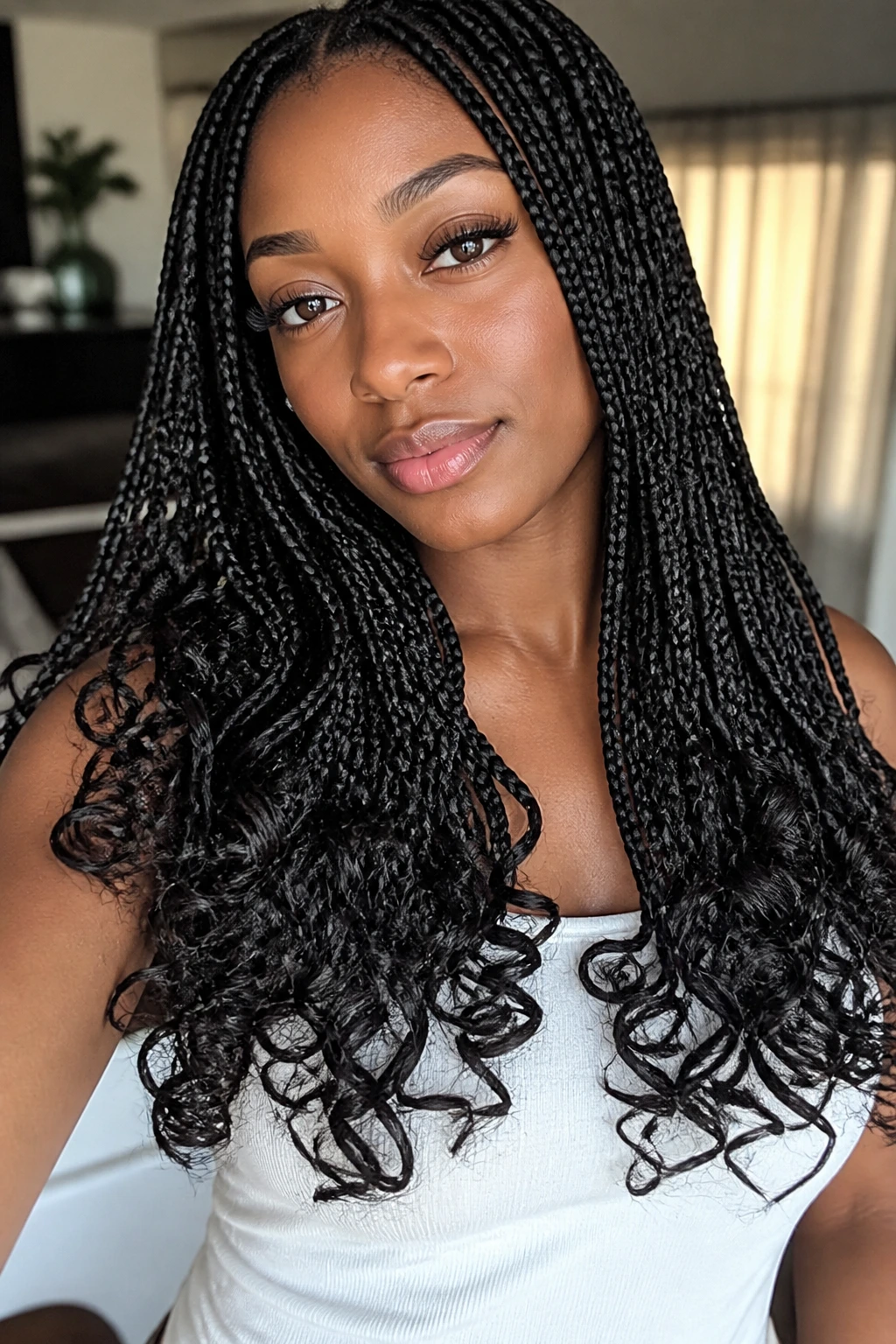
If your braids are heat-safe or your ends are made to be set with hot water, curled ends can soften the whole look. The straight line breaks into movement at the bottom, which makes long box braids feel less rigid.
I like this version when the style needs a little softness around the hemline. It’s a small detail, but on long braids the ends take up a lot of visual space, so a curl changes the whole mood.
A rod set or flexi rod at the ends works better than trying to force a curl with too much heat. Heat should be the last resort, not the first move.
27. Braided Headband with Loose Length
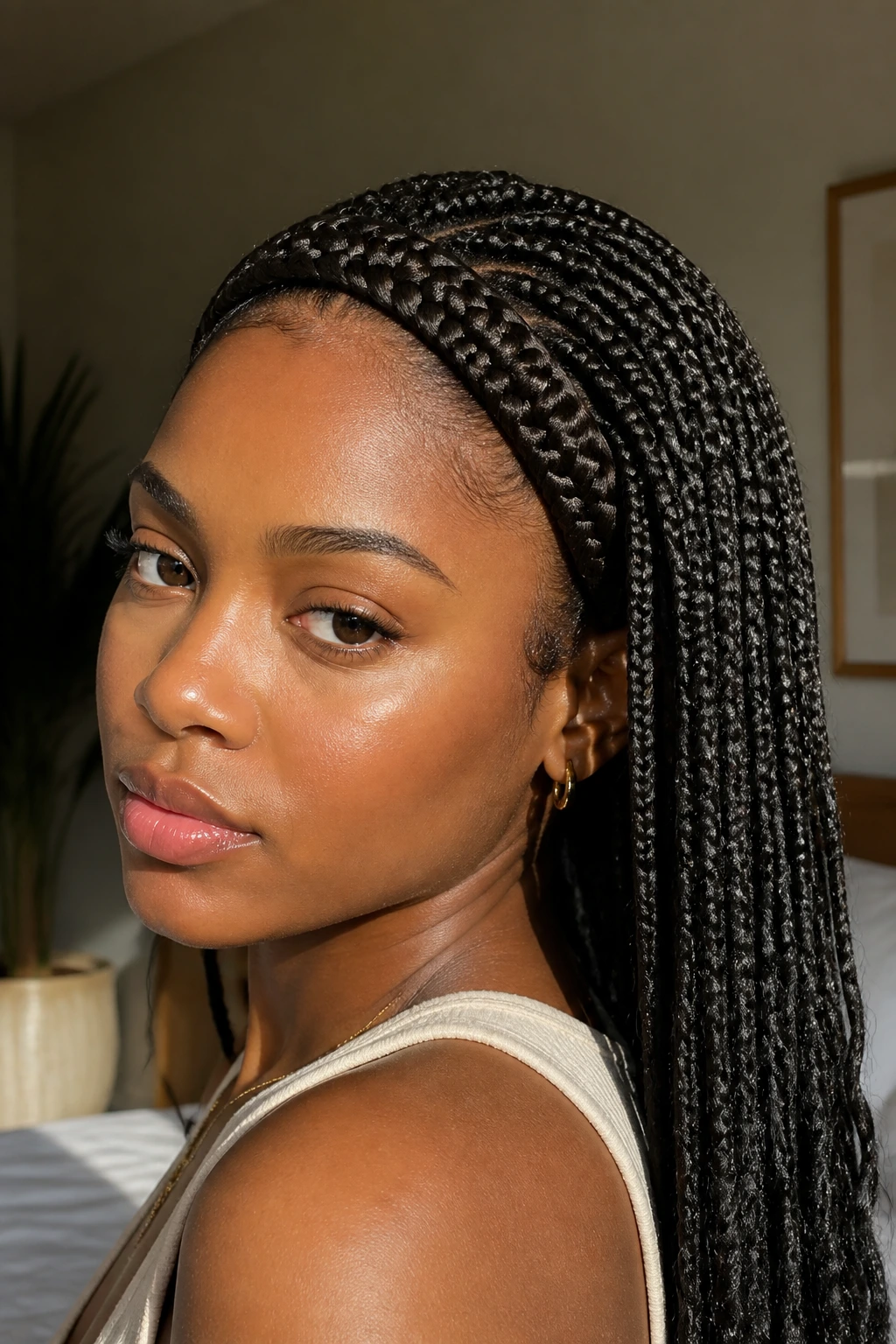
A braided headband is a clever way to keep the hairline open while leaving most of the length down. Pull one or two front braids across the forehead line, pin them behind the opposite ear, and let the back stay free.
It’s softer than a halo braid and easier to wear when you just want the front under control. The headband effect frames the face, and the loose length still gives you that long-braid sweep down the back.
This is the style I’d choose on a day when I don’t want my braids in my eyes but also don’t want to pile them up. Small move. Big difference.
Why Long Box Braids Work So Well When You Actually Style Them
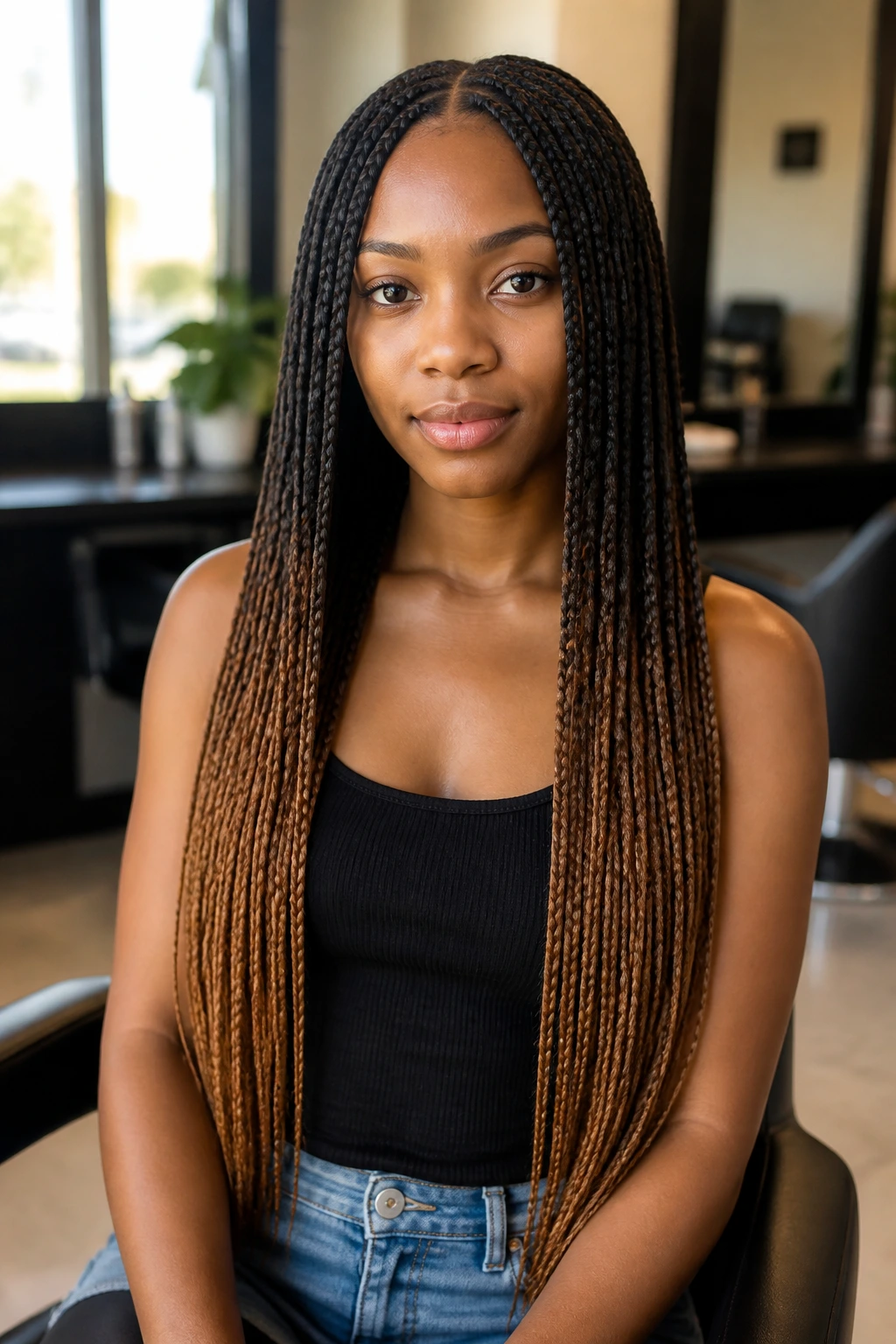
Long box braids are a little like a good coat with a strong shape. When you hang them straight and call it done, they’re fine. When you give them structure — a part, a twist, a clip, a tuck, a sweep — they start looking considered.
The length is what makes these box braid styling ideas for long hair worth the effort. Short braids can be cute, but long braids can change posture. A high pony lifts the face because the tail creates a vertical line. A low bun changes the silhouette at the neck. A side sweep turns a plain set into something with motion and weight.
They also hold accessories better than many shorter styles. Cuffs sit more cleanly on longer lengths. Beads have somewhere to rest. Scarves can wrap the base without swallowing the whole style. That extra real estate matters.
And then there’s the practical side. Long box braids can get warm, heavy, or a little repetitive if you wear them loose every single day. Styling them gives your scalp a break, redistributes tension, and buys you time before the set starts looking tired. I’m a fan of styles that work for the hair you have, not the hair you wish would behave differently.
The Small Toolkit That Makes These Styles Easier
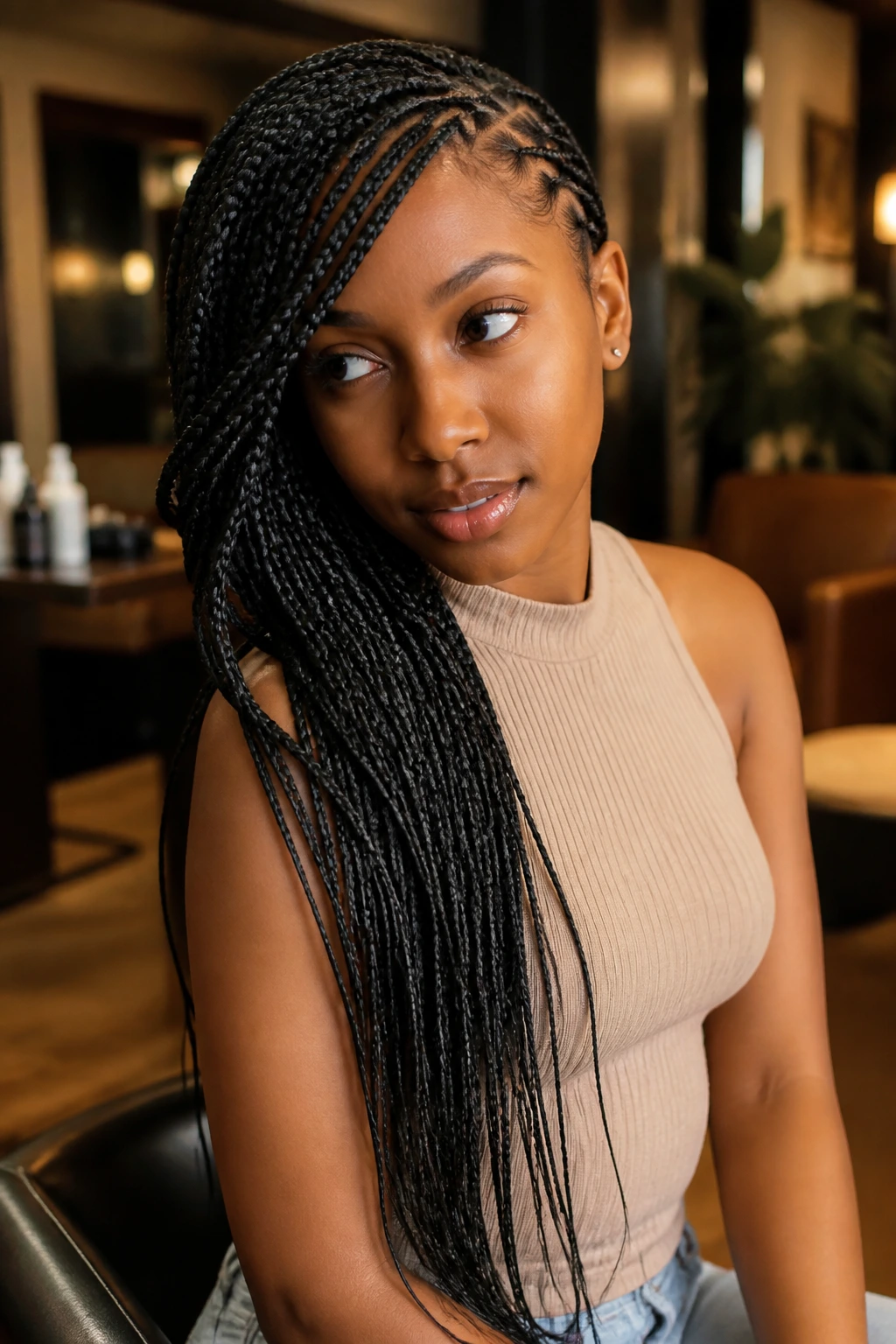
You do not need a drawer full of beauty gadgets to style long box braids well. A few useful tools will carry most of the load, and the right ones save you from the tiny disasters that make braids look sloppy by noon.
- Rat-tail comb: Use the pointed end to clean up parts and smooth front sections without digging into the scalp.
- Snag-free elastics: Choose the thick, seamless kind for ponytails and bubbles; thin bands snap fast on heavy braids.
- Long bobby pins and U-pins: These hold buns and twists better than short pins that pop loose under weight.
- Large claw clip: A strong clip with wide teeth handles long braids far better than a dainty accessory clip.
- Satin scarf or bonnet: Night care matters, and this keeps the braid surface from rubbing raw against a pillowcase.
- Braid mousse or light setting foam: A little on the roots helps flyaways settle without turning the set greasy.
- Edge brush: Handy for smoothing the hairline, but use it gently. Aggressive brushing around braids is a bad idea.
- Accessory hook or loop tool: Useful for threading cuffs, beads, or wraps without fraying the braid.
Choosing the Right Parts, Accessories, and Braid Weight
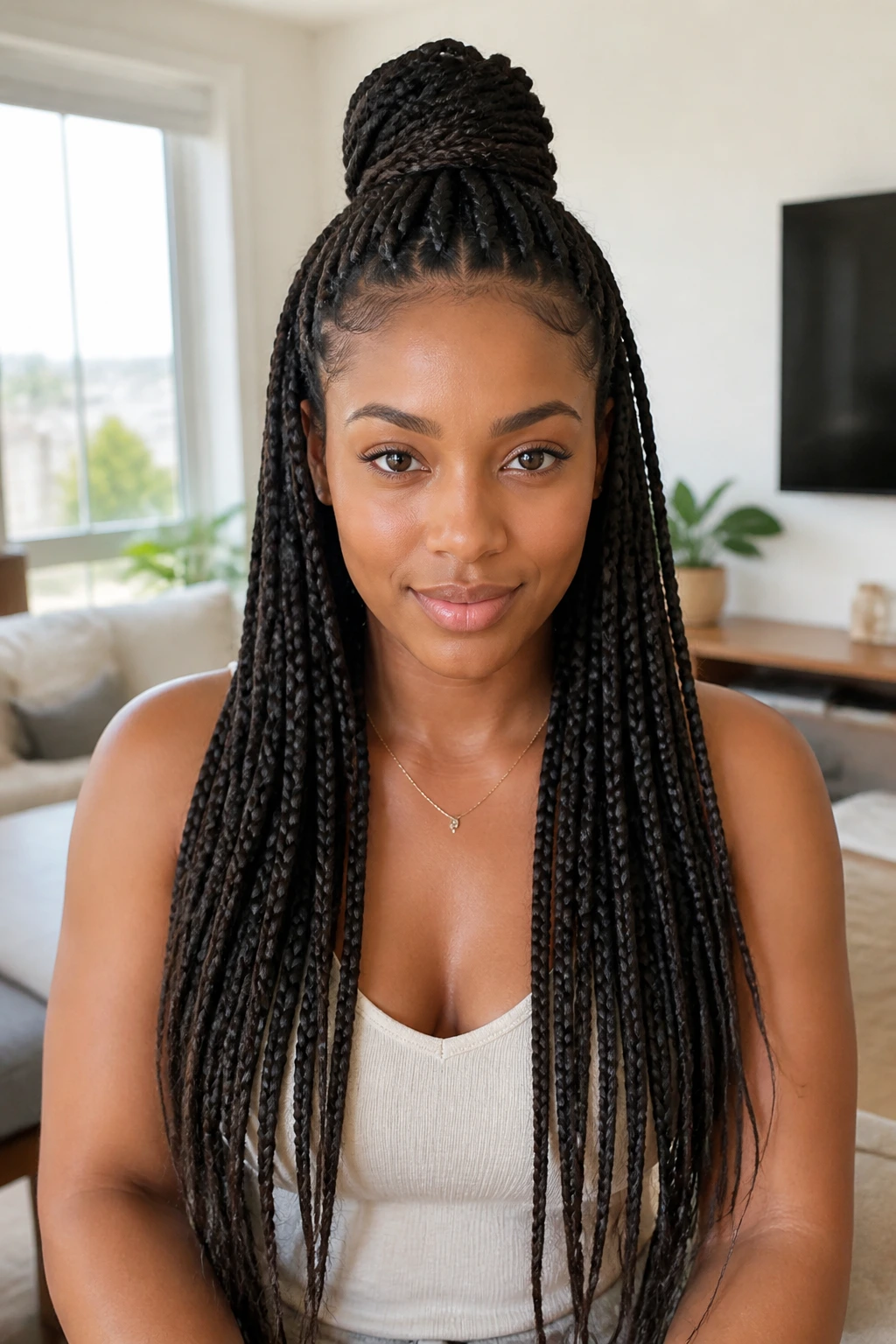
The smartest accessory choice is not the prettiest one on the shelf. It’s the one your braids can actually carry. If your set is extra long or very full, delicate clips and skinny elastics are going to lose the fight.
Go a little bigger than you think with ponytail holders and clips. A flimsy claw clip can slide off a heavy bunch of braids by lunch, while a wider one grips closer to the base and spreads the pressure. The same thing goes for beads and cuffs. Tight little cuffs look nice in theory, then snag every time you touch your hair.
Parting matters, too. Clean middle parts make long styles look sharper and more formal. Side parts soften the shape and make thick braids easier to throw over one shoulder. Triangle and zigzag parts are the choices I’d make when the braids themselves are simple and I want the scalp to add interest.
If your braids are on the heavier side, skip the styles that force the whole set upward for too long. A low bun, a side sweep, or a wrapped pony usually feels better than a high knot that drags on the crown.
How to Wear These Looks in Real Life
Everyday errands: Reach for the low loop bun, the side sweep, or the braided headband. They keep the braids controlled without making you wrestle with pins for ten minutes.
Work or school: The center-part cascade, gold-cuff set, scarf-tied pony, and low wrapped bun all read tidy without looking overdone. They also stay out of your face, which is the real luxury on a long day.
Events and nights out: High ponytails, bubble ponies, halo braids, and curled-end cascades give long braids a little more drama. If you’re wearing statement earrings, a side bun or side-swept style keeps the frame open.
Hot weather or active days: Claw-clip twists, two low buns, and a braided mohawk ridge are the practical ones. They pull weight away from the neck and keep the length from sticking to your back.
Extra Tips and Style Boosters
Flair Without Fuss: A single wrapped braid at the base of a ponytail or bun is enough to make the whole style feel cleaner. You do not need to cover every elastic you own.
Shine Control: Use a light braid sheen spray on the lengths, not a heavy oil at the roots. Too much product near the scalp turns dust into paste, and that’s a mess nobody asked for.
Quick Reset: If a style has gone flat, part the front cleanly again and adjust one detail — the base of the pony, the angle of the bun, or the amount of hair over one shoulder. Small shifts beat full restyling most days.
Make It Yours: Ribbons, cuffs, scarves, and thread wraps all change the mood without changing the whole style. If you love a cleaner look, keep the accessories to one spot. If you like more visual noise, scatter them with restraint instead of covering every braid.
Common Mistakes That Make Long Braids Look Tired or Hurt
Pulling the base too tight. If your scalp aches, the style is wrong, period. Long braids already carry weight, and tightening the roots to make a ponytail or bun “last longer” usually just creates tension and frizz later. Loosen the base and use pins or a better elastic.
Using tiny elastics for heavy hair. Small bands snap, dig in, or make the ponytail sag. Choose snag-free ties that are wide enough to share the load.
Overloading the scalp with product. A heavy mix of oil, cream, and edge control at the roots makes braids look greasy and can attract lint fast. Keep styling product light and place it where it actually helps.
Ignoring the hidden braids. Styles that look perfect from the front can collapse in back if the tucked sections aren’t pinned well. Always check the back in a mirror before you leave the house. The ugly surprise usually lives there.
Wearing the same high-tension look for days on end. A high pony or tight bun every day puts stress in the same place. Rotate your styles so the crown, nape, and hairline all get a break.
Letting accessory pieces get too heavy. Big beads and bulky cuffs can look fun at first, then start dragging the style down. If your neck feels the weight, trim the extras.
Variations and Adaptations to Try
The Low-Tension Version: Choose low buns, side sweeps, or a loose center-part cascade if your scalp is tender. This version keeps the roots calm and spreads the weight lower on the head.
The Accessory-Minimal Version: Skip beads, cuffs, and scarves and rely on parting and shape alone. A clean triangle part or a sharp wrapped pony can look stronger when the braids themselves do the styling work.
The Photo-Ready Version: High ponytails, bubble ponies, and curled ends add movement from the first angle. They’re especially good when you want the length to show in pictures instead of hiding in a bun.
The Office-Safe Version: Low wrapped buns, scarf-tied ponies, and half-up knots keep the hair controlled without looking stiff. These are the styles I’d trust on days when you need to look put together and still move around comfortably.
The Weekend-Playful Version: Space buns, heavy fringe braids, and thread wraps are the fun lane. They give you a little more personality while still keeping the protective style intact.
Refreshing, Washing, and Night Care
Long box braids stay cleaner-looking when you care for the roots and the sleep setup instead of chasing every fuzzy strand. At night, a satin bonnet or scarf is the easiest win. If the braids are very long, gather them loosely at the nape or let them rest in a low, soft pile before covering them so they don’t get crushed under your head.
For the scalp, light is better than saturated. A braid spray or a diluted cleanser in an applicator bottle can help between washes, especially around the parts. If you use mousse to smooth flyaways, let the hair dry fully before bed. Damp braids and a warm pillow are a bad combination.
Washing frequency depends on your scalp and products, but many people do well with a gentle cleanse every 1 to 2 weeks. Focus on the scalp first, then let the suds slide through the lengths instead of scrubbing the braids like laundry. Dry the roots thoroughly with a towel and, if needed, a cool or low dryer setting. Braids that stay damp near the scalp get unpleasant fast.
Most sets live best for about 4 to 6 weeks if the tension stays comfortable and the roots don’t get matted. A little fuzz is normal. Pain, bumps, or thinning at the hairline are not. That’s your cue to stop trying to stretch the style and start planning a takedown.
Frequently Asked Questions About Styling Long Box Braids
Which box braid style is easiest if I’m always in a hurry?
A low ponytail with a wrapped base or a claw-clip twist is the fastest option. Both take less than a minute once you know where the weight wants to sit, and they’re forgiving if one braid slips loose.
How do I keep a high ponytail from sliding down?
Use a strong snag-free elastic, gather the braids at the crown, and anchor the base with one or two pins underneath. If the pony still drops, the elastic is too small or the base is too heavy for that height.
Can I do these styles on jumbo box braids?
Yes, but the heavier the braid, the fewer times you want to put stress on the hairline. Jumbo braids usually do better in low buns, side sweeps, and half-up styles than in very high knots.
What if my edges are already delicate?
Stay away from tight high ponies, hard parts, and repeated tension on the front hairline. Choose looser styles that shift weight to the nape or the side, and if the style hurts, change it. Pain is a bad sign, not a styling challenge.
How do I keep long braids from looking puffy at the roots?
A light mousse at the base, a few minutes under a satin scarf, and less touching through the day usually help more than heavy creams. If the puffing is from new growth, a clean side part, center part, or half-up style can hide it better than trying to flatten every braid.
Are beads and cuffs safe on long braids?
They are, as long as you don’t overload the set. Use a handful of accessories instead of covering every braid, and avoid anything sharp or too tight that can snag when you rest your head or throw the braids over your shoulder.
How often should I change styles so my scalp can rest?
I’d rotate your look every day or two if the braids are heavy, and definitely move away from high-tension styles after a day of wear. Even swapping from a high pony to a low bun gives the same area of your scalp a break.
Can I wash the braids and still keep the style?
Yes, and you should if the scalp needs it. Use a gentle cleanser, dry the roots fully, then rebuild the style once the hair is dry so the shape doesn’t collapse or start smelling musty.
The Looks I’d Reach For First
If you’re standing in front of the mirror with a long set of box braids and no patience for overthinking, start with the styles that respect the weight first. A low wrapped bun, a side sweep, or a clean center-part cascade will usually look better than a style that fights the length and leaves your scalp sore by lunch.
After that, get a little bolder. Long braids can carry beads, cuffs, bubbles, scarves, and sculpted updos better than most people expect. The length gives you room to be neat, dramatic, lazy, or playful — sometimes all in the same week.
Pick one of these box braid styling ideas for long hair, try it for a day, and then adjust one detail. That’s how the good styles stick.
