



Braids with shaved sides and back have a very specific kind of presence: the top reads like a design, and the rest of the head acts like negative space. That contrast is the whole trick. A clean fade, a bare nape, or even a close undercut makes the braid pattern look sharper because your eye has somewhere to land.
I’ve always thought this look works best when people stop trying to cram too much into it. The shave is not decoration after the fact. It’s part of the style itself. Get the cut wrong and the braids can look top-heavy, crowded, or strangely disconnected. Get it right and the whole shape feels deliberate, from the parting to the neckline.
What makes these styles so satisfying is the range. Some are neat and quiet. Some are loud in the best way. Some lean soft with curls or twists, while others use hard angles, stitched parts, or a full braided mohawk to make the fade the star. If you want braids with shaved sides and back that actually feel fresh when you sit in the chair, the details below are where the good stuff lives.
Why These Braids Feel Sharper Than a Full-Head Style
-
The haircut does half the visual work: When the sides and back are shaved, even simple straight-back cornrows read as a finished design instead of a standard braid set.
-
The neck gets breathing room: A bare nape keeps heavy braids from piling up at the collar, which matters if you wear jackets, collared shirts, or sit with your hair against a seat all day.
-
Parting lines show up better: Zigzags, curves, hearts, and stitch patterns pop more when the surrounding hair is short or gone.
-
Accessories actually register: Beads, cuffs, thread, and color strips stand out more because they are not fighting a wall of hair behind them.
-
The style changes fast with a small edit: A low taper makes the whole look softer. A skin fade turns it sharper. The braids themselves can stay the same.
-
Grow-out is easier to read: You can tell when the sides need a touch-up before the whole style starts looking fuzzy.
The styles below lean in different directions—some are clean and architectural, some are playful, and a few are a little dramatic—but all of them depend on that contrast between braided top and shaved sides or back.
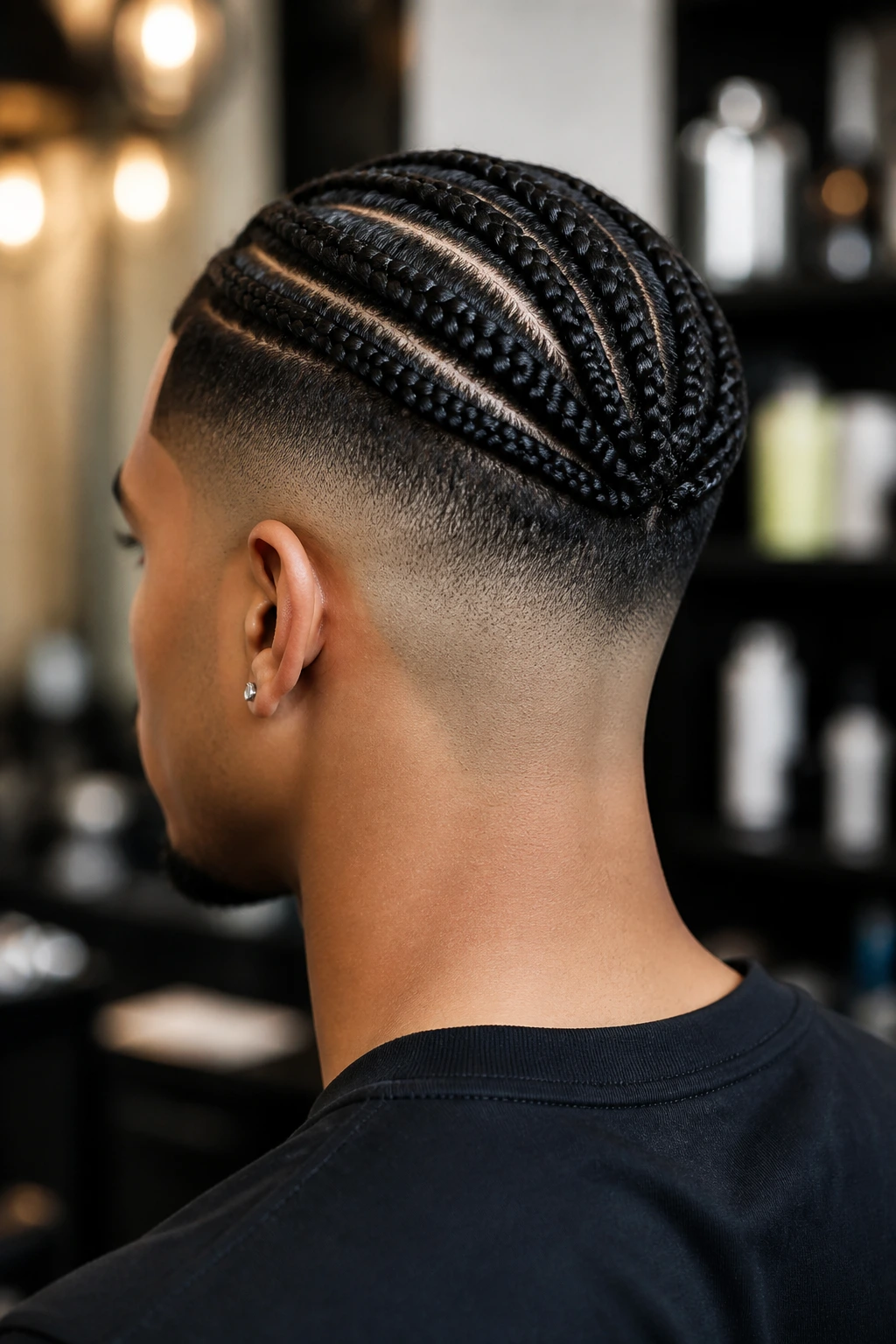
1. Straight-Back Feed-In Cornrows with a Low Fade
Straight-back feed-in cornrows are the reliable choice when you want the braid pattern to stay the focus. The rows move cleanly from hairline to crown, and the low fade keeps the sides from stealing attention. I like this version because it looks crisp without looking fussy. There’s no need for extra curves or accessories unless you want them.
A low fade matters here. If the sides are shaved too high, the cornrows can look like they’re floating. Leave just enough softness around the temples and the back so the braids have a base to sit on. This is the kind of style that looks especially good with a line-up that’s been cleaned with a steady hand—not sharp to the point of looking etched, just neat enough to frame the forehead.
2. Side-Swept Lemonade Braids over a Skin Fade
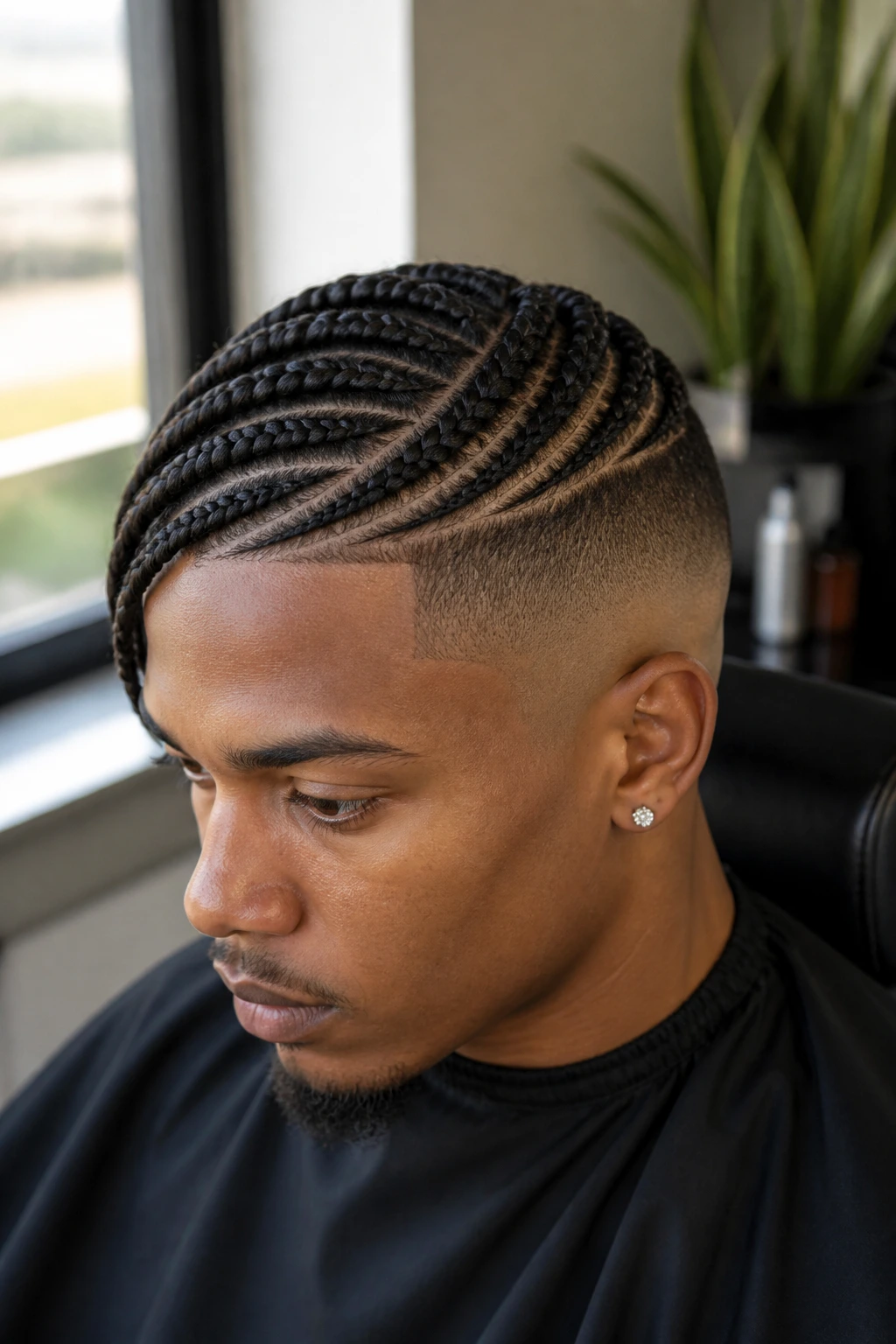
Side-swept lemonade braids bring movement to a haircut that is otherwise all edge. The diagonal flow is what sells it. Every braid angles across the head in the same direction, so the shaved side becomes part of the composition instead of background noise.
This is the one I’d pick if you want a little drama without piling on extra thickness. A skin fade makes the side sweep feel cleaner, but it also exposes every flaw in the parting, so the braid lines need to be even from the first row to the last. Keep the braid size medium if your hair is dense; jumbo sections can look heavy once they start crossing over the fade.
3. Stitch Braids into a High Ponytail
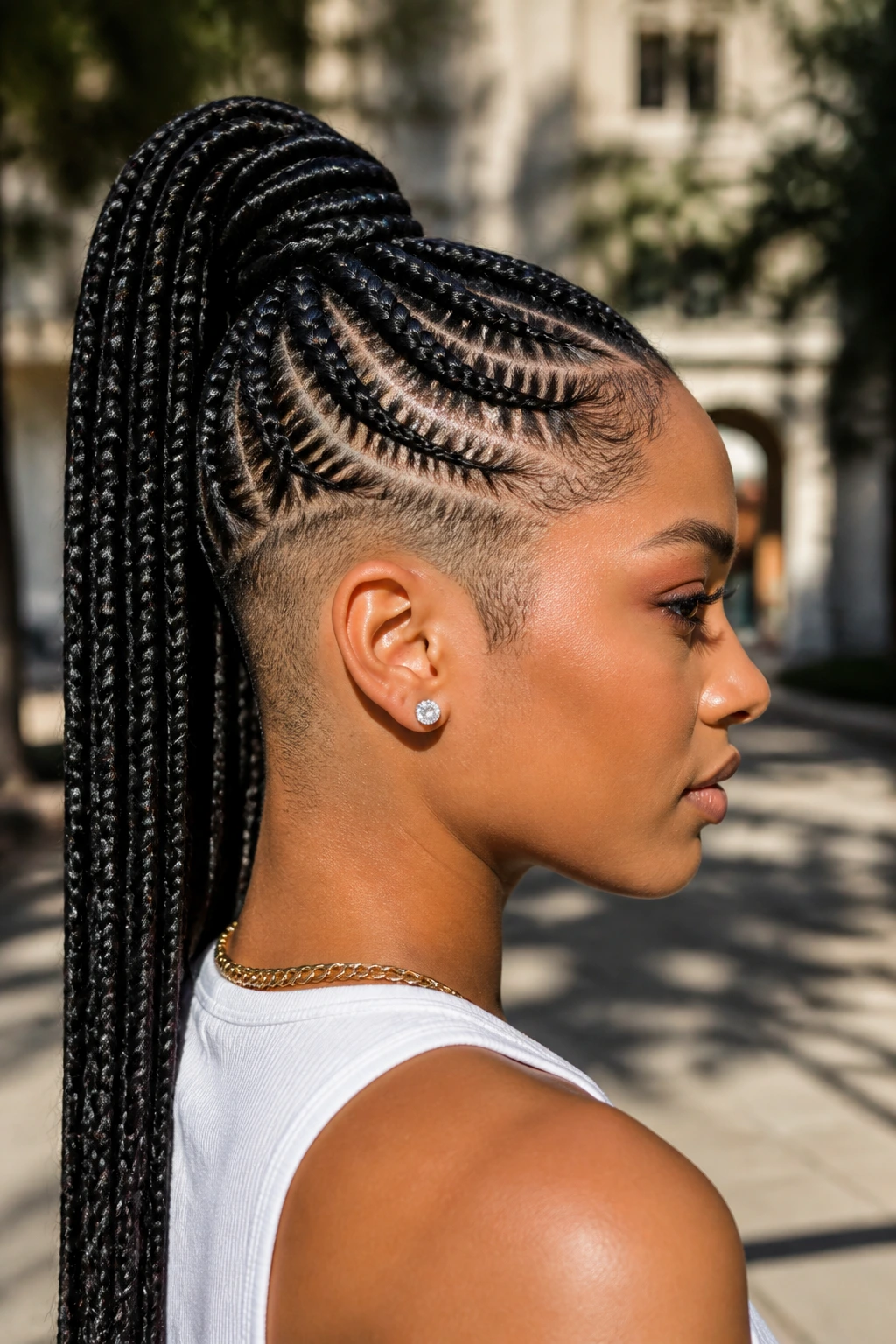
Stitch braids are all about those hard, segmented part lines. They look almost architectural, like tiny rails running backward along the scalp. When the shaved sides and back are clean, the high ponytail on top feels more intentional and less bulky.
This style is especially good if you like your hair off your neck and out of the way. The ponytail gives height, while the shaved base keeps the silhouette from spreading outward. If your braider uses too much tension, the stitched look can get crunchy at the root, so you want firm parting, not pain. Firm is fine. Throbbing is not.
4. Jumbo Tribal Braids with Beaded Ends
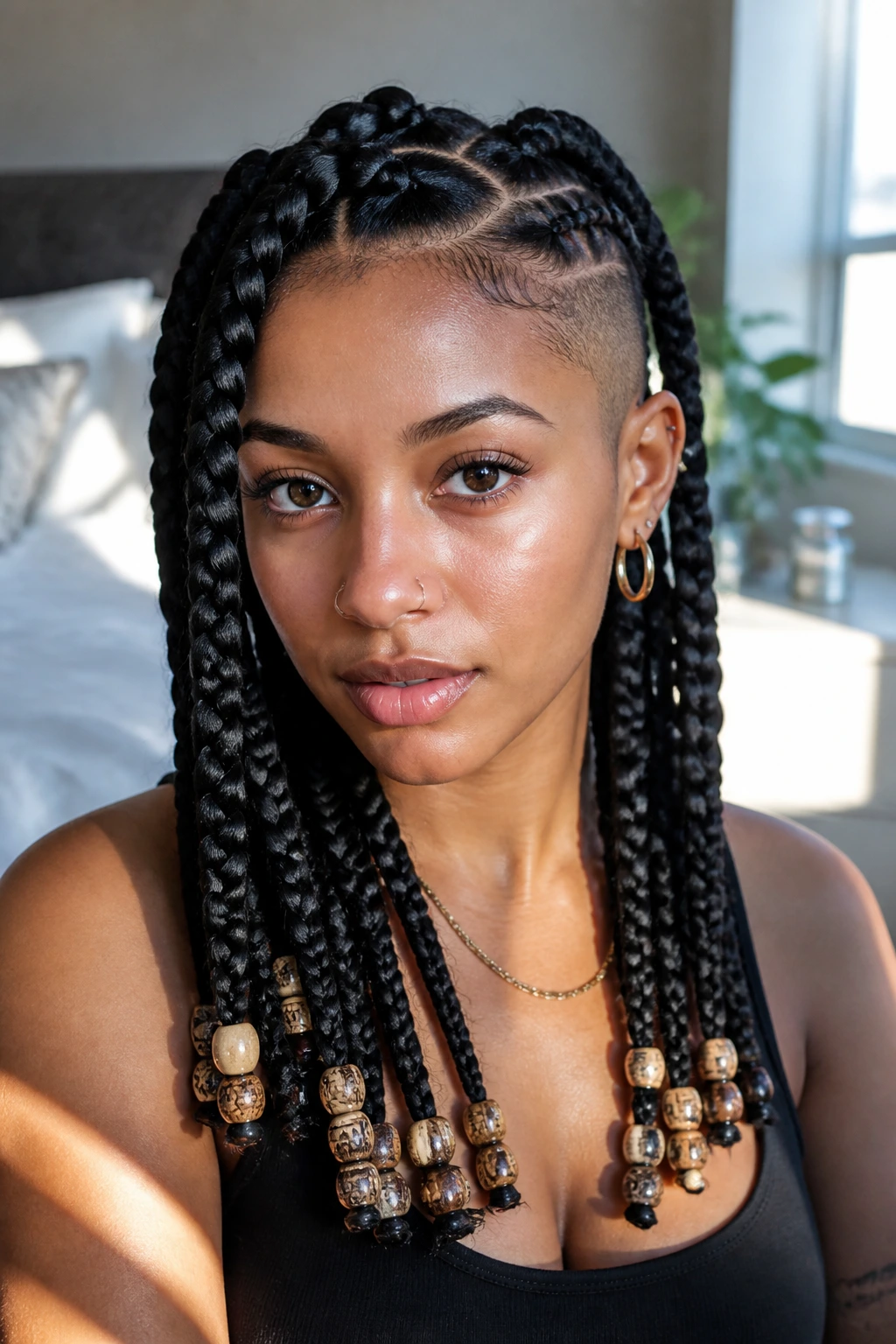
Jumbo tribal braids are built for someone who wants the hairstyle to be visible from across the room. The larger braid size gives you a strong shape, and the shaved sides keep it from feeling like too much hair all at once. Beads at the ends add weight and sound, which sounds small until you hear them click when you turn your head.
I like this style with a subtle taper instead of a hard skin fade. The reason is simple: jumbo braids already bring a lot of visual weight. A softer fade balances them better. Keep the bead count modest if your hair is fine or your braid length is long. Too many heavy ends can tug more than people expect.
5. Medium Knotless Braids with Shaved Sides
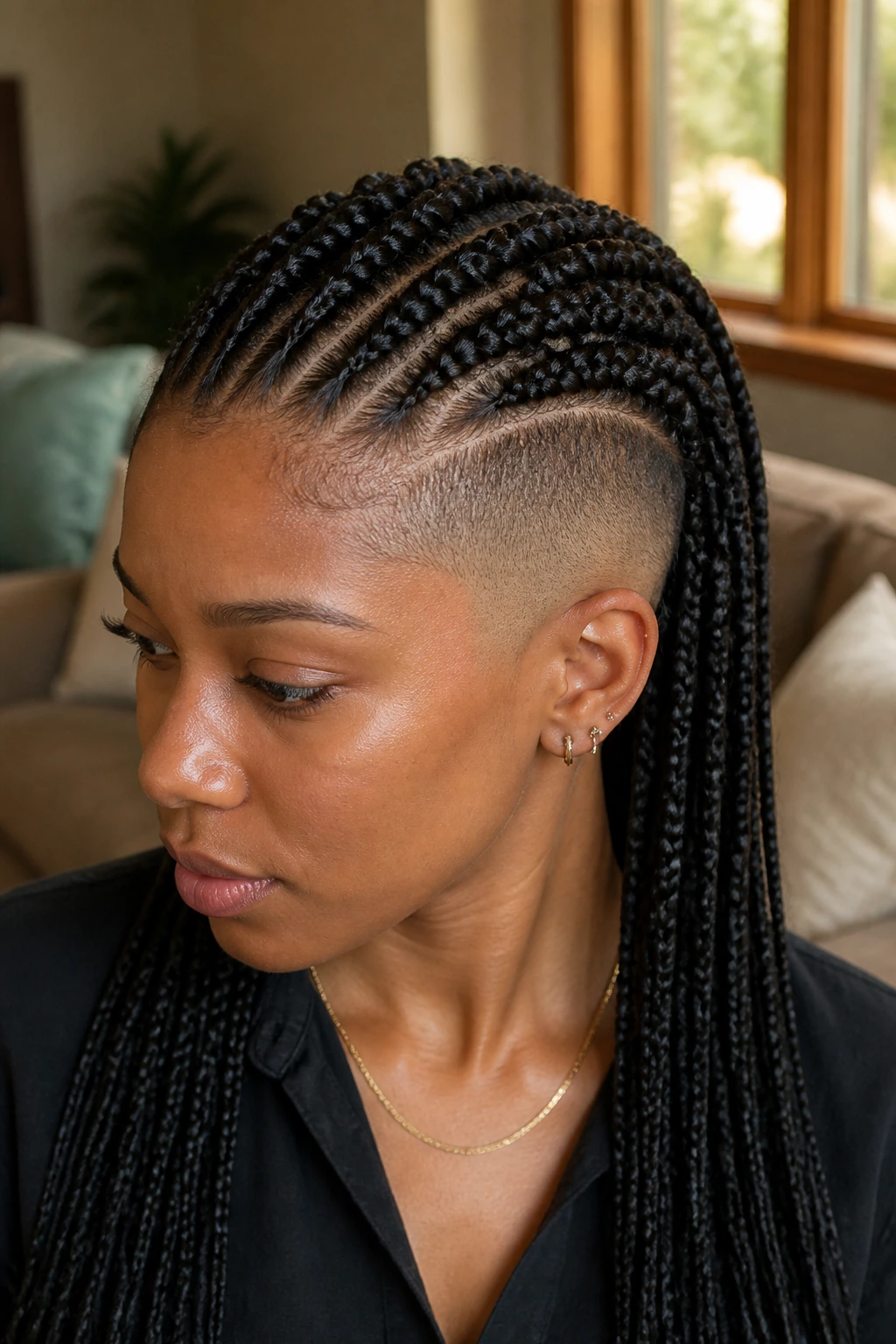
Medium knotless braids are the quiet overachiever of this whole collection. They start lighter at the root, so the scalp gets less of that tight knot feel right away. With shaved sides, the top section looks cleaner and the transition from braid to fade reads smoother.
This is one of the best choices if you want a style that can go a little longer between visits. The knotless start sits flatter, and the shaved sides reduce bulk, so the whole head feels less crowded. I’d choose this if you like movement and want the braids to swing a little instead of sitting stiff. It’s a softer look, but not a weak one.
6. Goddess Braids with Curly Ends and a Tapered Nape
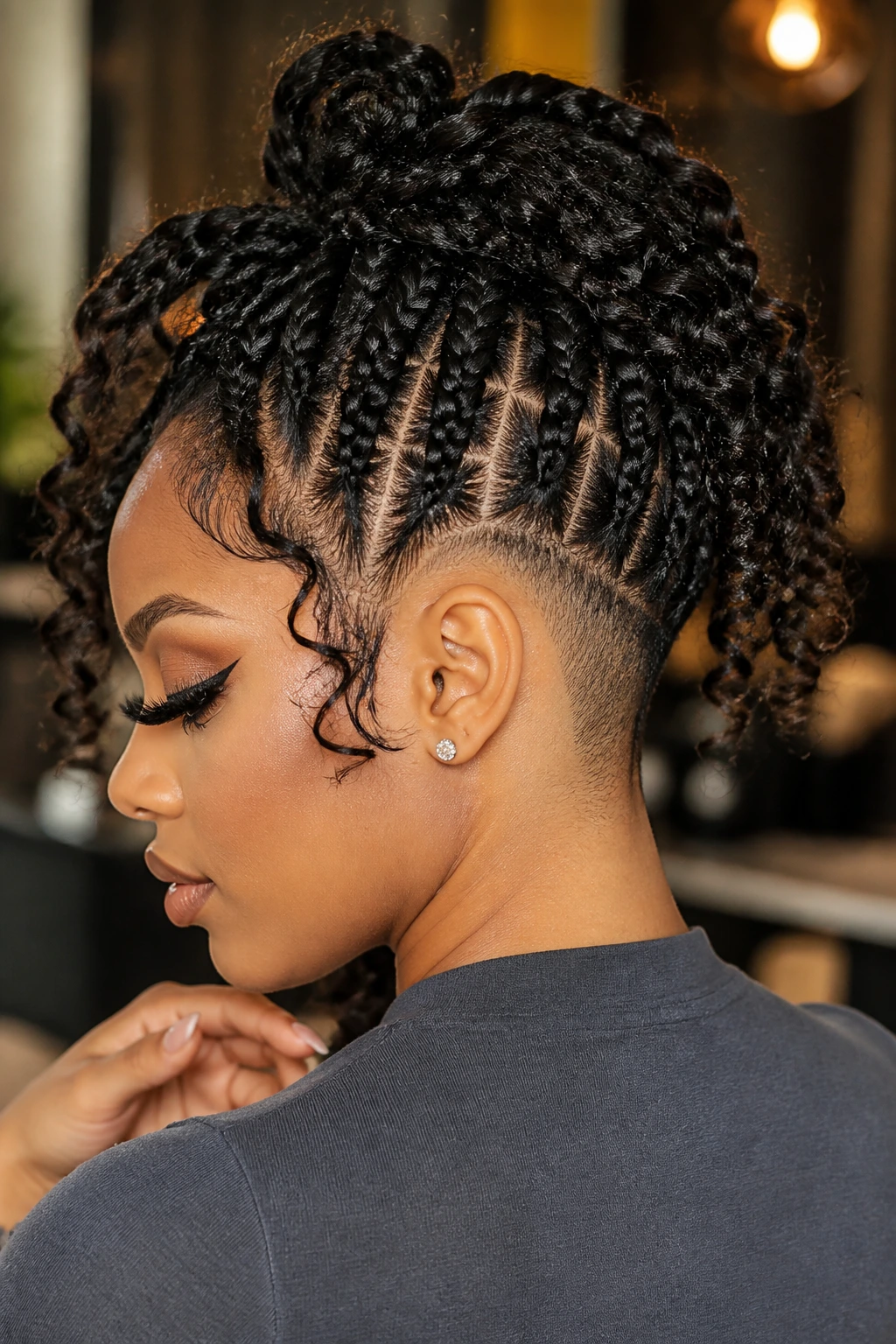
Goddess braids soften the whole idea of shaved sides and back. The braids themselves are thick and sculpted, but the curly ends bring a loose finish that keeps the style from feeling severe. A tapered nape works best here because it keeps the lower back neat without making the cut look too bare.
The curls are the piece that changes everything. They break up the straight line of the braid and keep the style from looking boxy. If you want this to stay pretty instead of frizzy, mist the ends lightly and scrunch them with a little mousse instead of soaking them. Wet curls fall flat fast.
7. Braided Mohawk with Carved Side Lines
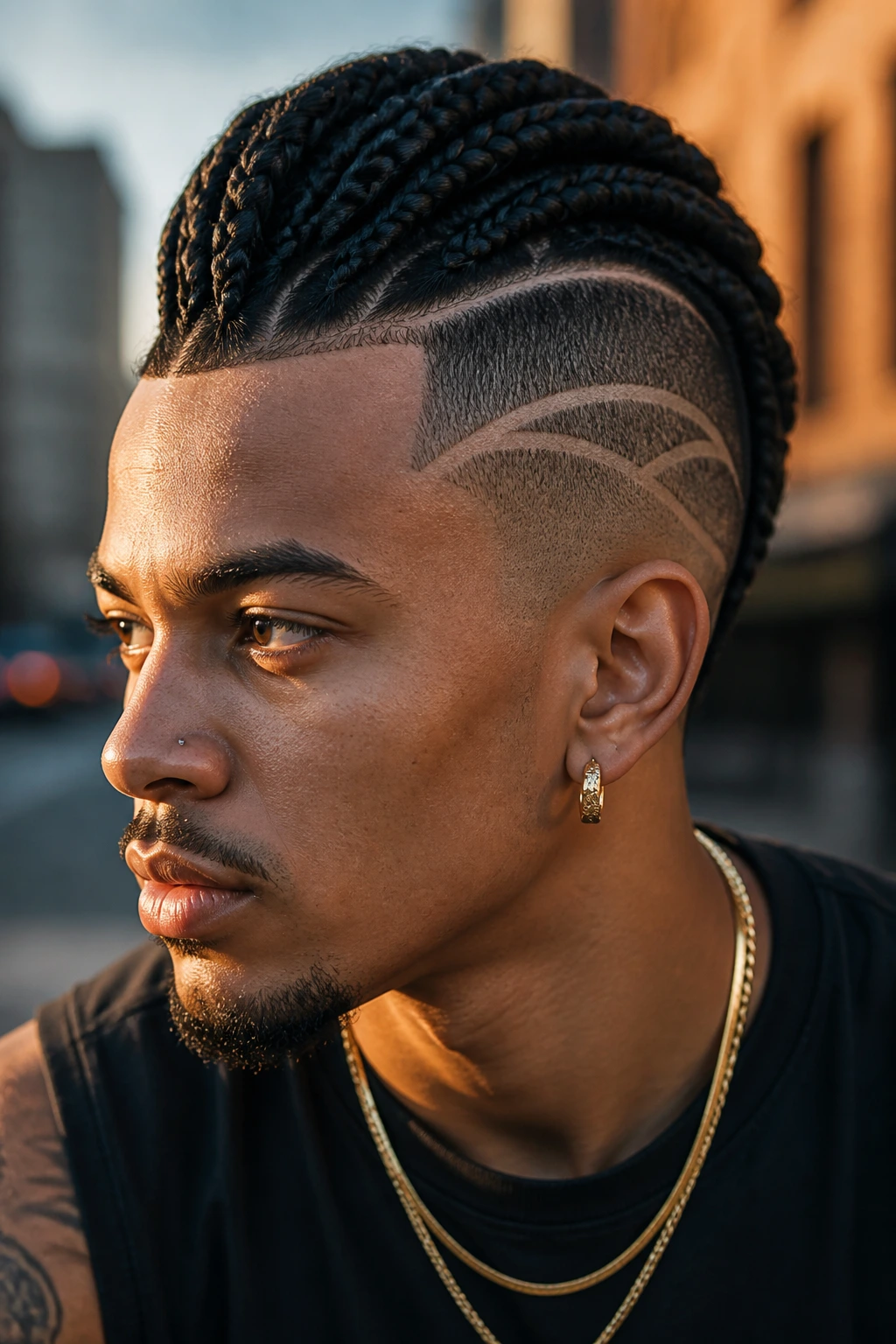
A braided mohawk is for someone who wants the haircut to look like it has a clear center ridge. The shaved sides make the braid strip stand taller, and carved side lines add a graphic punch that regular cornrows just do not have. This style has attitude, plain and simple.
What makes it work is the separation. The top braid section should feel like it has its own lane, not like it is fighting the fade on either side. Keep the braids stacked neatly down the center and ask for the side lines to be clean enough to show from a few feet away. If the line work fades too quickly, the whole mohawk loses its shape.
8. Criss-Cross Cornrows into a Top Knot
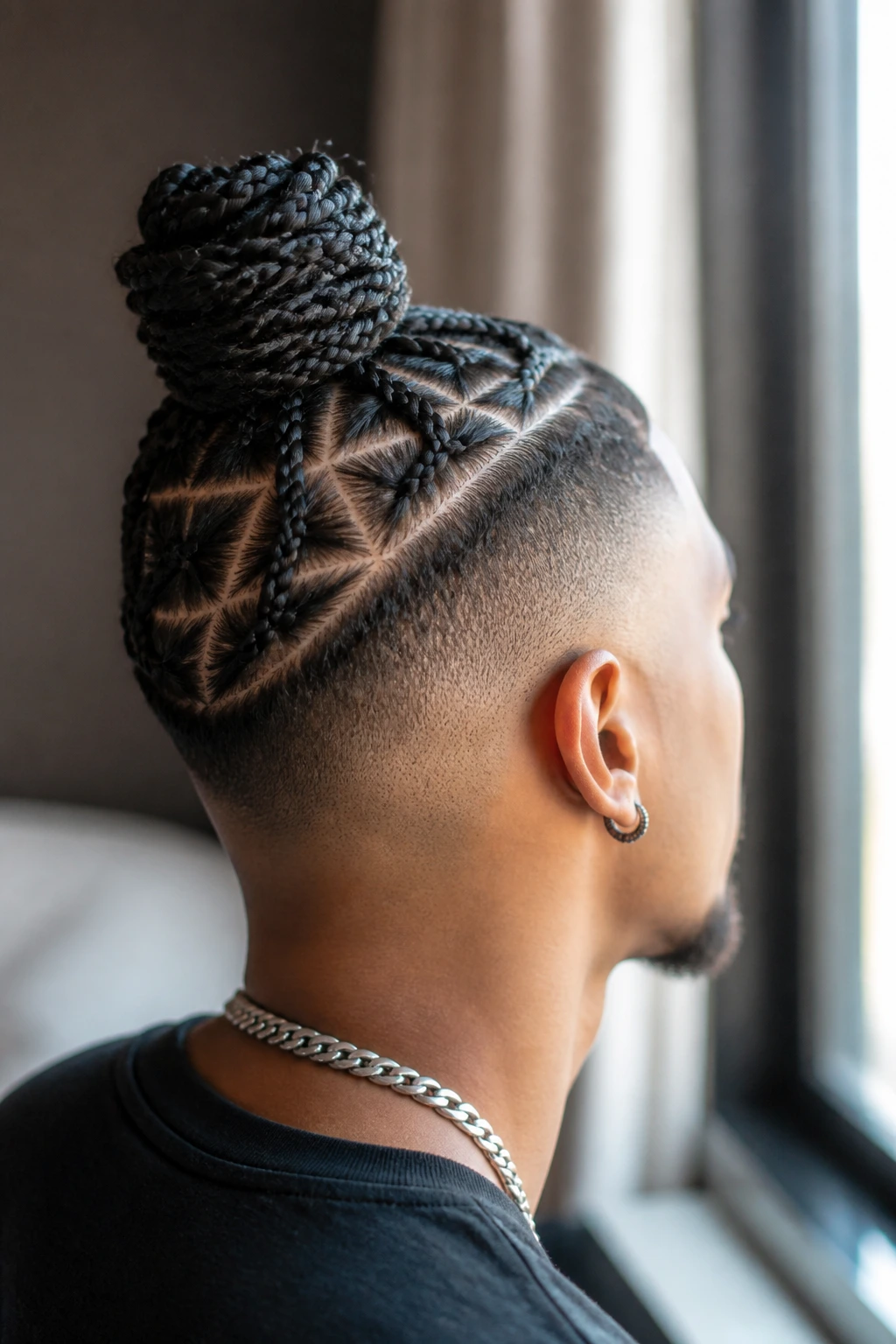
Criss-cross cornrows give you the best kind of visual busy-ness. The parts overlap and cross over one another before gathering into a top knot, which keeps the style interesting even before you notice the shaved back. Once the hair is pulled up, the bare nape leaves the knot looking tidy instead of bulky.
This is a strong option if you have thick hair and want it controlled. The crossing pattern helps distribute volume, and the knot keeps the ends secured up high. You’ll want a braider who is steady with sectioning, because the style falls apart fast if the lines drift even a little. Clean crossings make the whole thing feel expensive, even when it isn’t.
9. Fulani Braids with a Clean Undercut
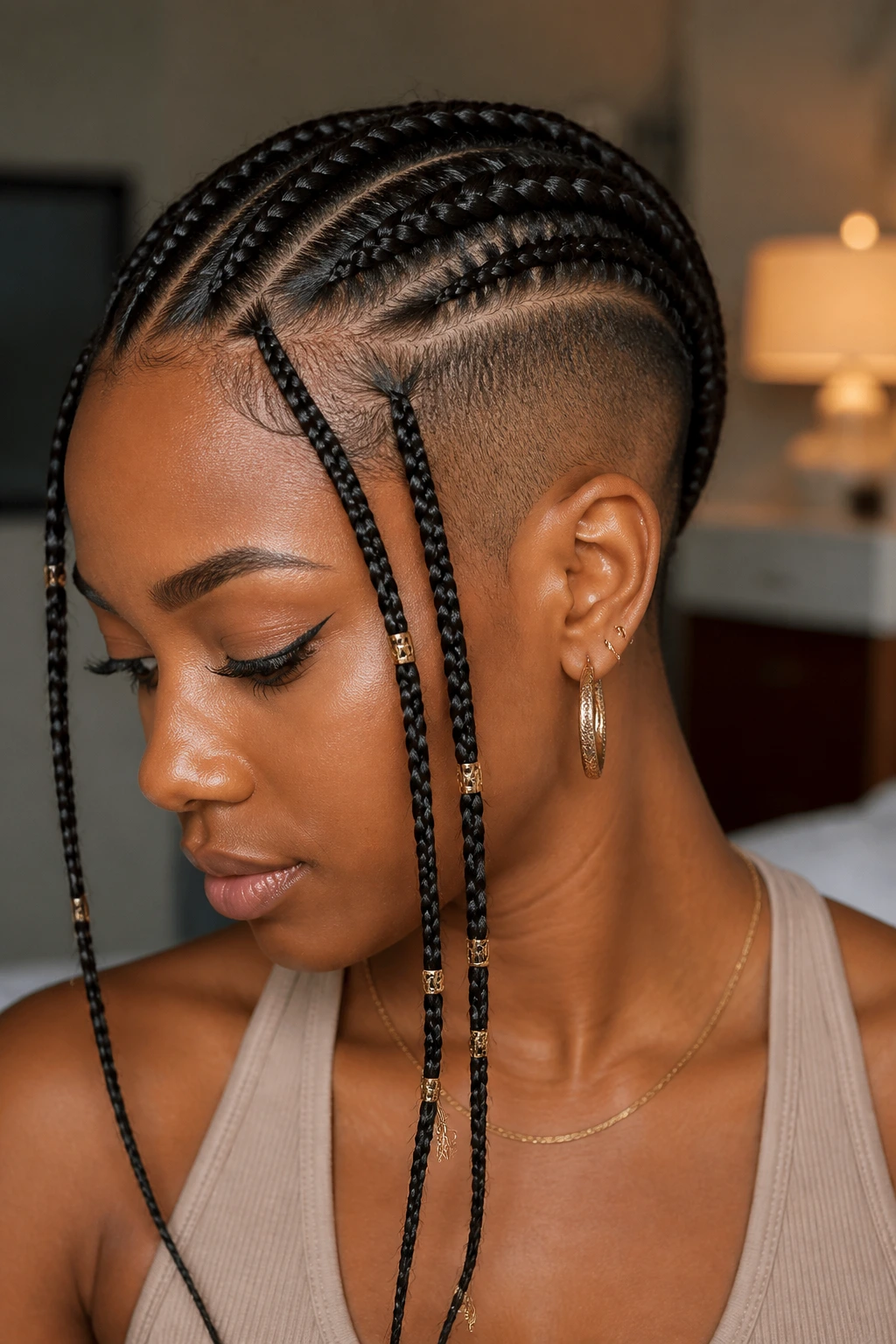
Fulani-inspired braids already have a lot going on—center parts, side cornrows, sometimes beads or cuffs, sometimes a single braid hanging forward near the face. Add a clean undercut and the whole style suddenly breathes. The shaved sides stop the design from feeling crowded.
This one is especially good if you want the braid pattern to frame the face. The center braid draws the eye forward, while the undercut keeps the sides from competing with the decorative pieces. If you wear earrings or a nose ring, this style sets them off nicely. It’s one of those looks where the haircut and the jewelry should talk to each other a little.
10. Two Long Feed-Ins with an Asymmetrical Side Fade
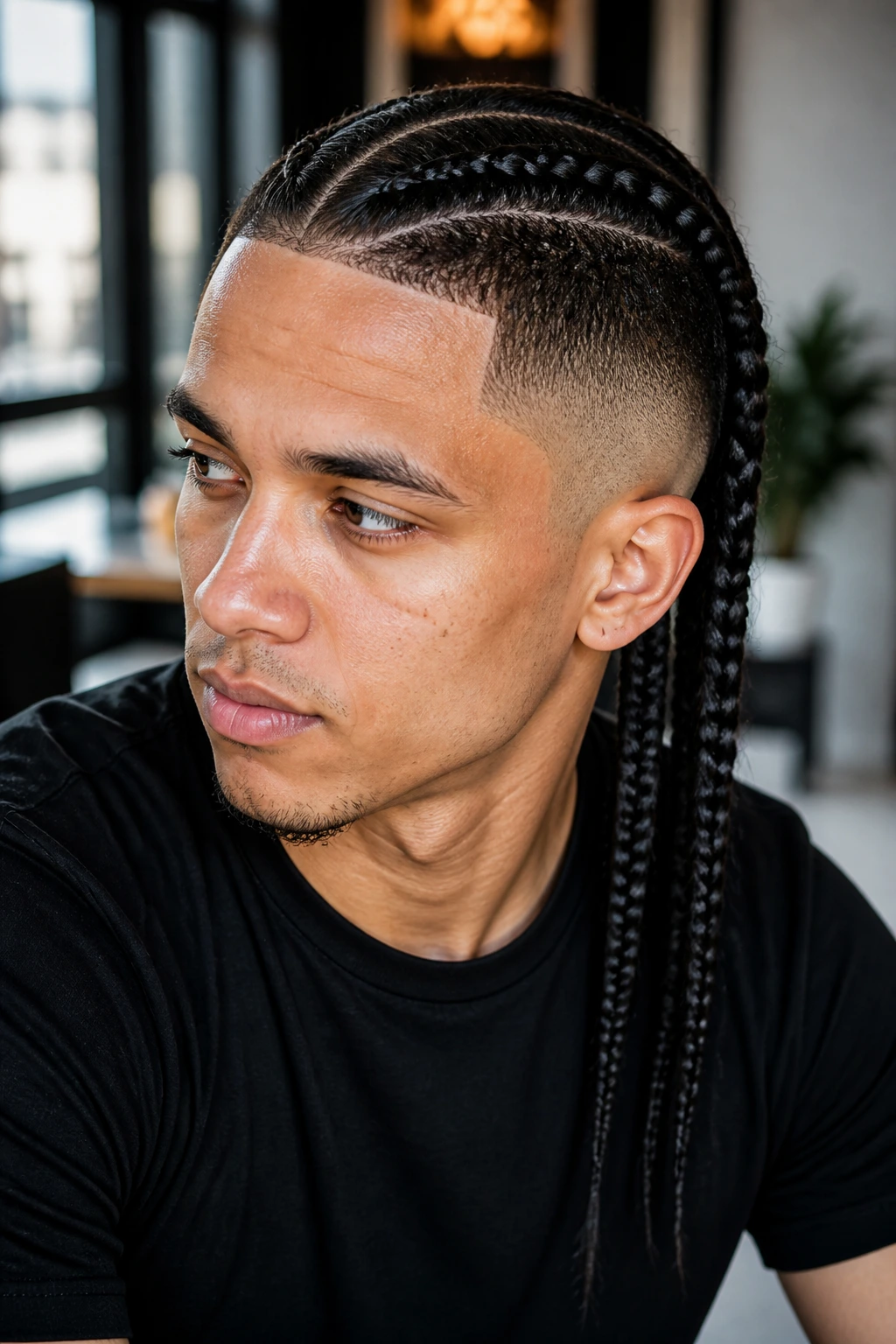
Two long feed-ins can look almost minimalist compared with fuller styles, and that’s why they work. The asymmetrical side fade gives the braids a sharp base on one side and a softer fall on the other. The effect is clean, not plain.
This is a good call if you like a sleek profile and do not want a heavy braid count. Long feed-ins pull the eye downward, so the shaved side helps keep the whole thing from feeling flat. If you’re adding extensions, match the braid hair closely to your natural tone unless you want the contrast to be the point. A mismatch here can look accidental fast.
11. Box Braids with a Tight Nape Fade
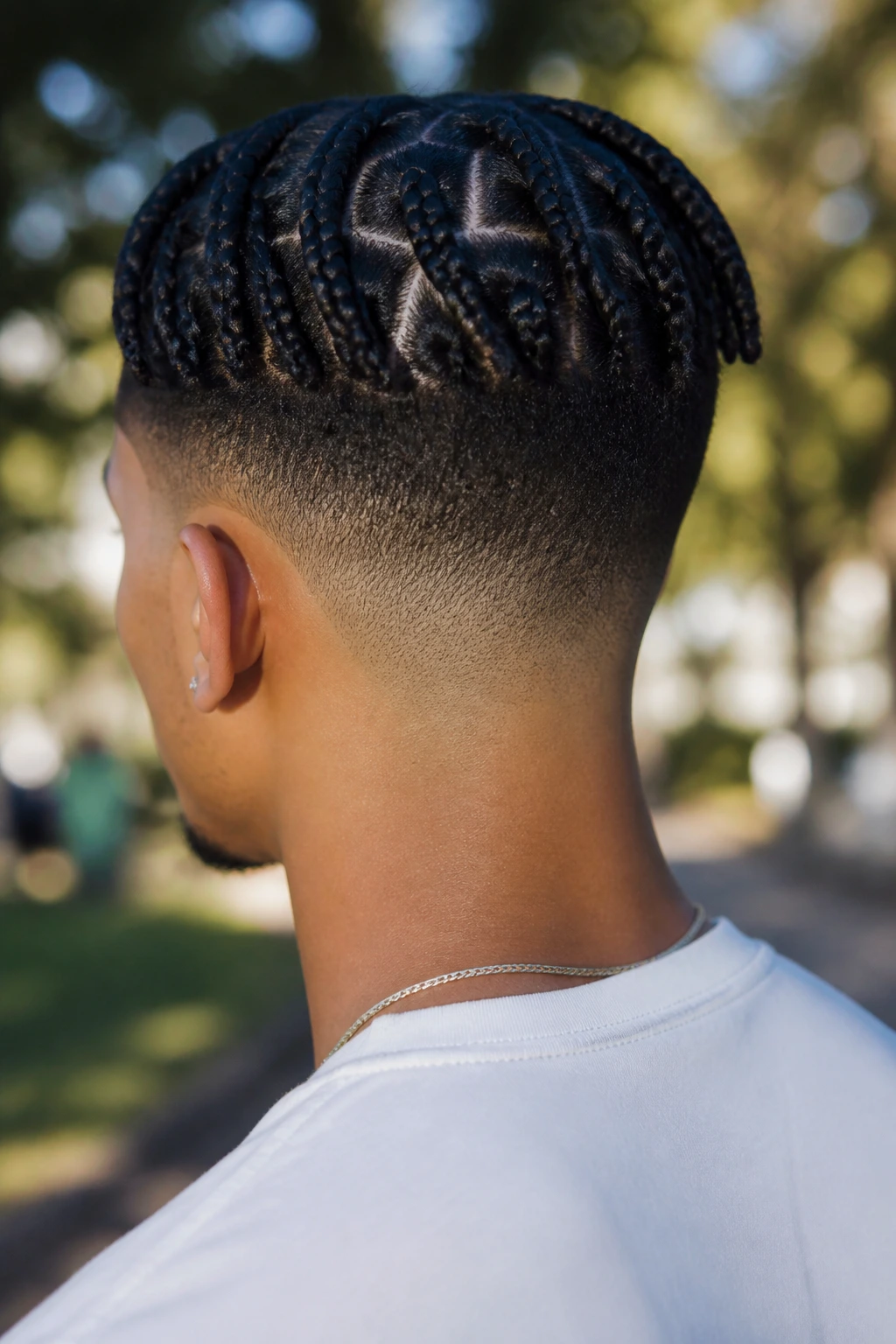
Box braids with shaved sides and back can go too bulky if the cut is too high. A tight nape fade fixes that. It gives you the classic square-part braid shape on top while carving out enough open space below to keep the silhouette lean.
I prefer this with medium-sized boxes, not jumbo. Medium braids sit better over the shaved base and let you wear the style longer without it feeling heavy at the temples. If your hairline is sensitive, ask for less tension on the first row and make sure the braids are not pulling backward from the edge. Box braids can last, but only if the foundation is comfortable.
12. Heart-Part Cornrows with a Sleek Line-Up
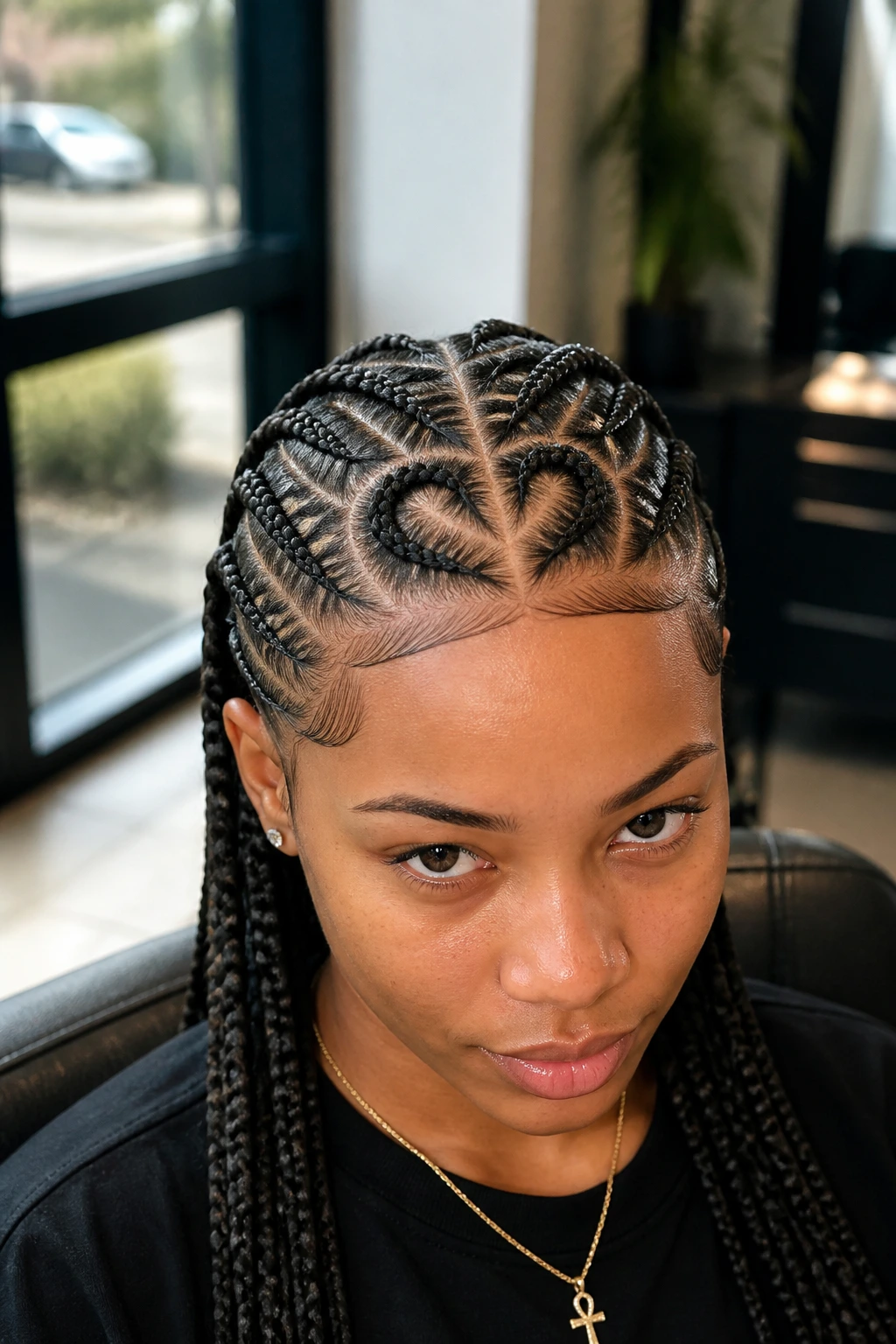
Heart parts are a little playful, and that is part of the appeal. They turn the scalp into part of the design. With shaved sides and back, the heart shapes are easier to see because there is less visual clutter around them. A sleek line-up finishes the look so it does not drift into cute in a messy way.
This style works best when the parting is crisp enough to hold its shape for days. If the hearts are lopsided, the style reads as rushed. That matters more here than with a plain straight-back braid set. The whole point is that the parting itself becomes decoration, so the braider needs patience.
13. Zigzag Cornrows with a Bare Back
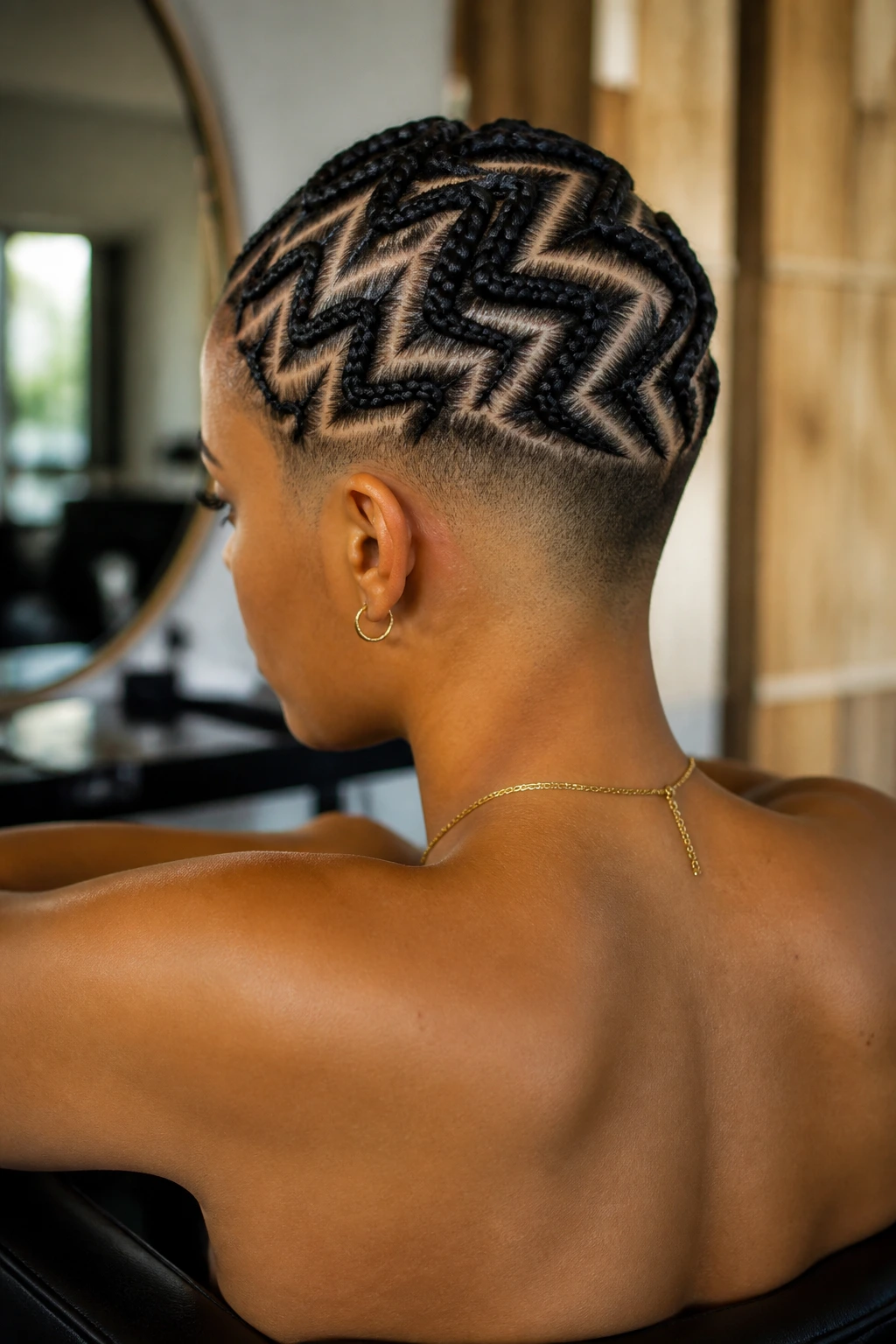
Zigzag cornrows are pure geometry. They have a playful edge, and the shaved back helps the zigzag pattern stay visible instead of getting swallowed by length. If you want something that looks custom from the first glance, this is a good one.
The best part is how little else it needs. No beads required. No big accessories required. The part lines do the work. Keep the row size even and ask for the back to be shaved clean rather than faded too softly, because the contrast is what makes the zigzag pop. This is one of those styles that looks much better with a sharp comb hand than with lots of product.
14. Curved Braids that Sweep Around the Fade
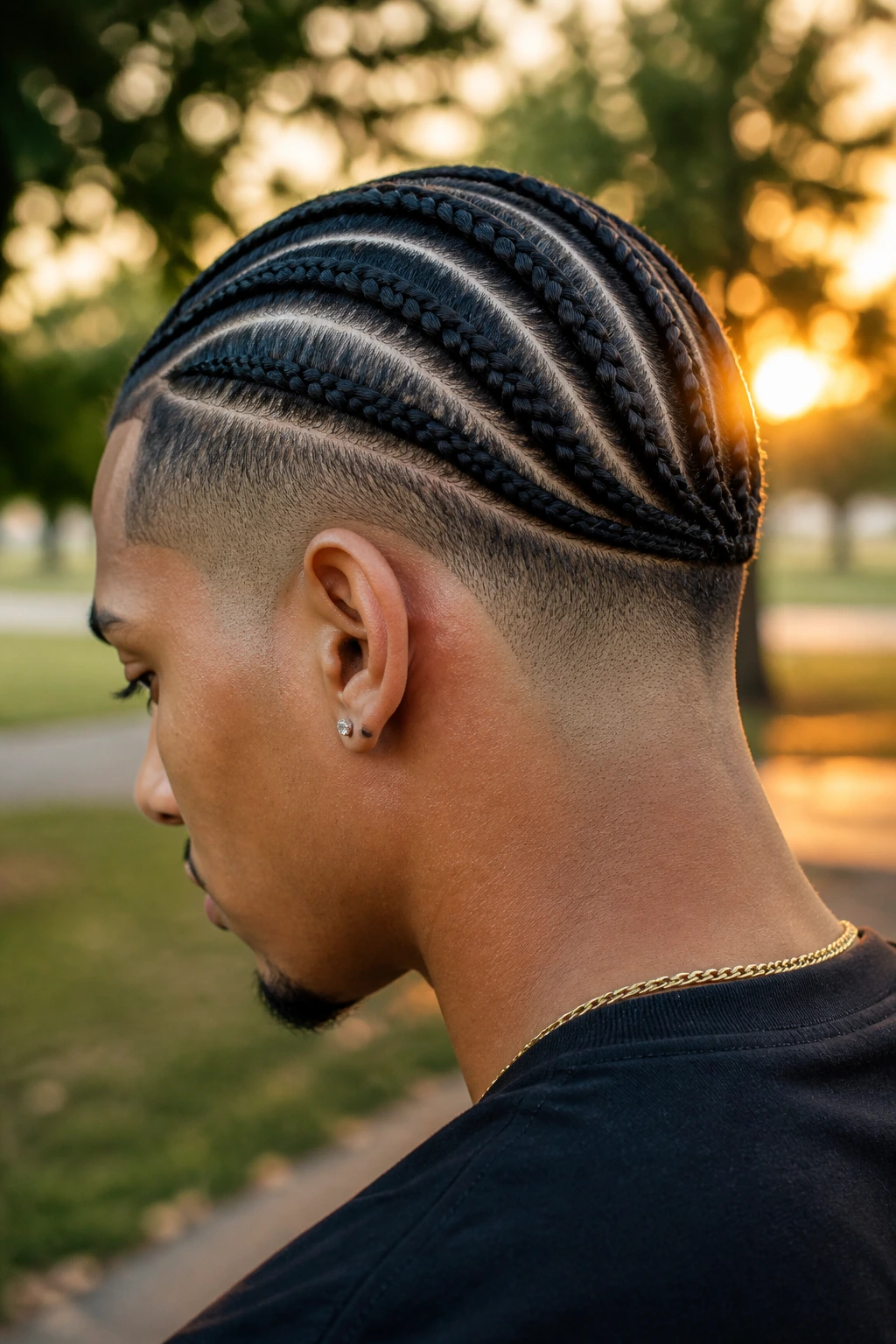
Curved braids are softer in motion than straight-back rows, and I think that softness can be a relief when the sides are shaved tight. The lines wrap around the head instead of running straight down it, which gives the haircut a kind of movement that feels deliberate rather than random.
This style is especially nice if you want the fade to stay visible without looking severe. The curve pulls the eye around the head and then drops into the open nape. It’s a smart choice for someone who wants design without the harshness of a mohawk. If your braider has a steady hand, the curvature can make even simple braids look custom-built.
15. Micro Braids on a Shaved Nape
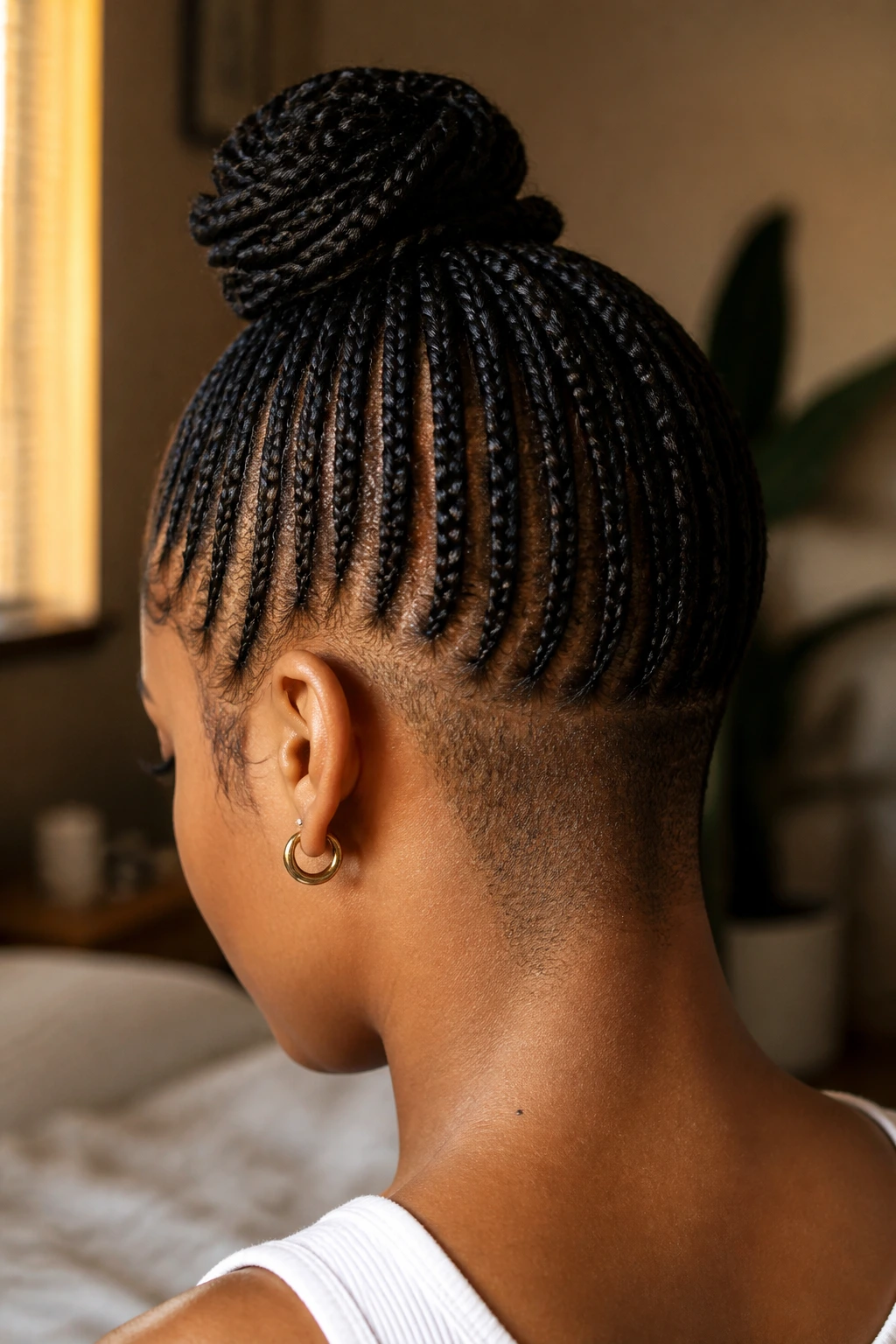
Micro braids are not the quickest style in the room. They take time. They also reward patience with a very fine, detailed finish that looks almost woven. The shaved nape keeps the weight from turning into a curtain of hair, which is a relief if you like the tiny-braid look but hate neck bulk.
This style is best when you want long wear and a light feel. The smaller the braid, the more you need to think about detangling before installation and keeping the scalp clean after. I would not choose micro braids if your schedule does not allow for careful maintenance. They look delicate, and they are. That’s the point.
16. Rope Twists over an Undercut
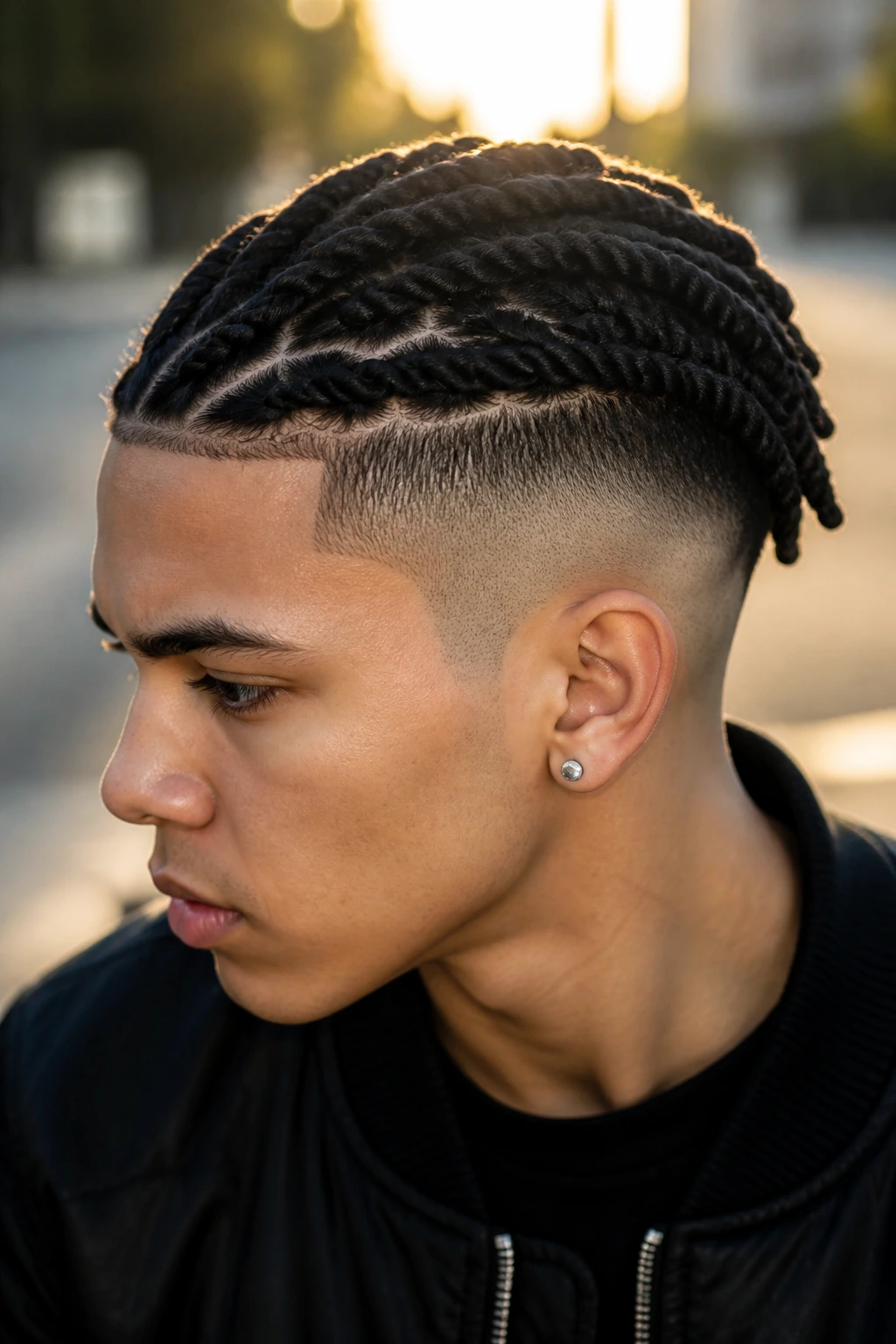
Rope twists bring a softer texture than braids, which can be useful if your hair does not love very tight plaits. Over an undercut, the twist pattern stands out because the sides are clean and the style has room to move. The result feels less rigid than cornrows or stitch braids.
This is one of the better options for thick, coily hair that likes a bit of stretch without a hard braid line. The twists can be dressed up with cuffs or left plain. If you want a style that still looks neat when it gets a little older, rope twists are forgiving in a way that sharper braid sets are not.
17. Braided Crown with Open Sides
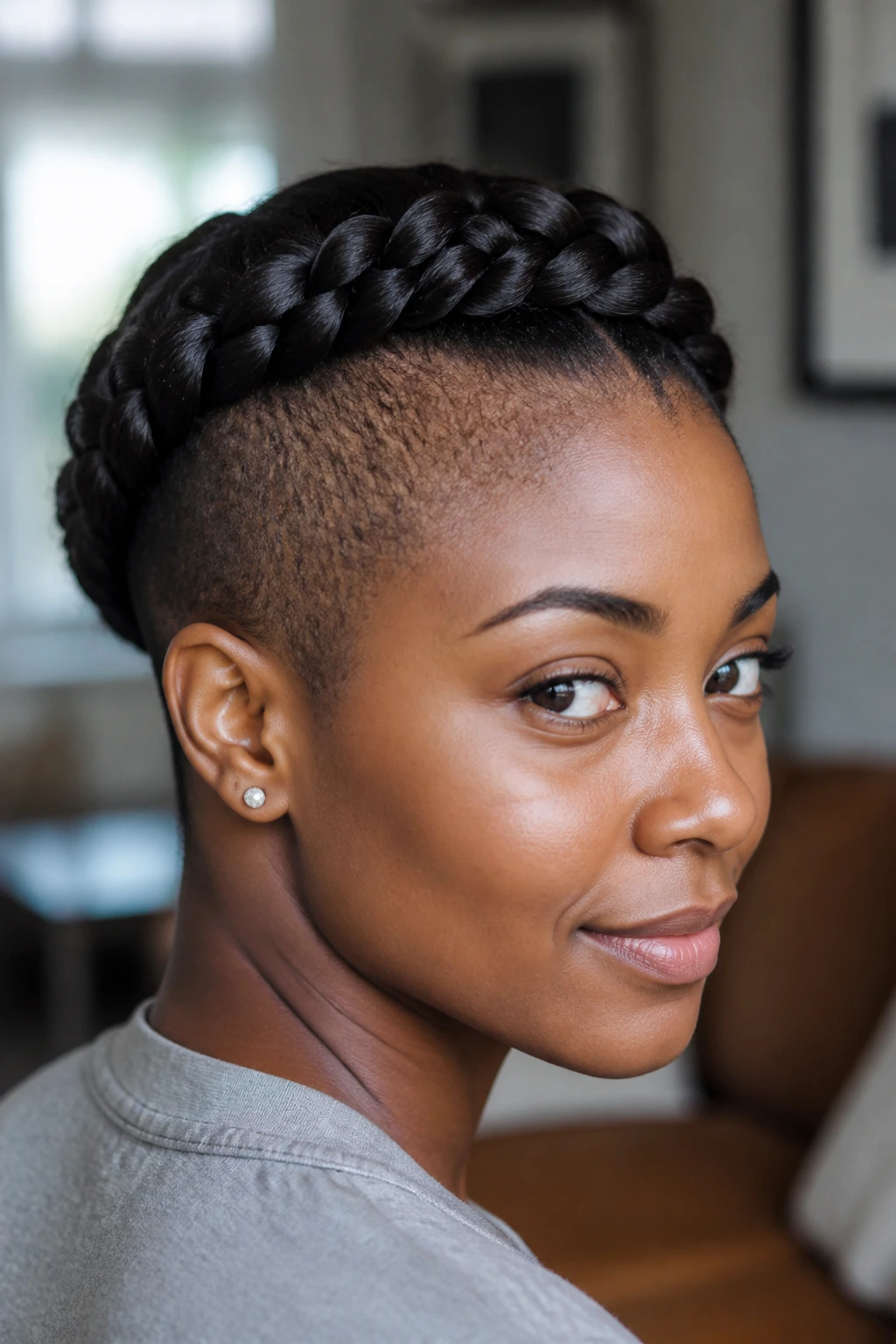
A braided crown changes the entire mood. Instead of rows going backward, the braids circle around the head like a frame. With open sides, the crown floats a little more, and that makes the bare sections feel intentional instead of empty.
This style is one I’d point to if you want something elegant without a lot of extra length. It works nicely when you want your face and ears visible, especially with hoops or a strong brow line. The crown shape needs clean sectioning. If the braid path drifts, it stops feeling regal and starts looking unfinished.
18. Braid-Into-Bun Updo with a Bare Back
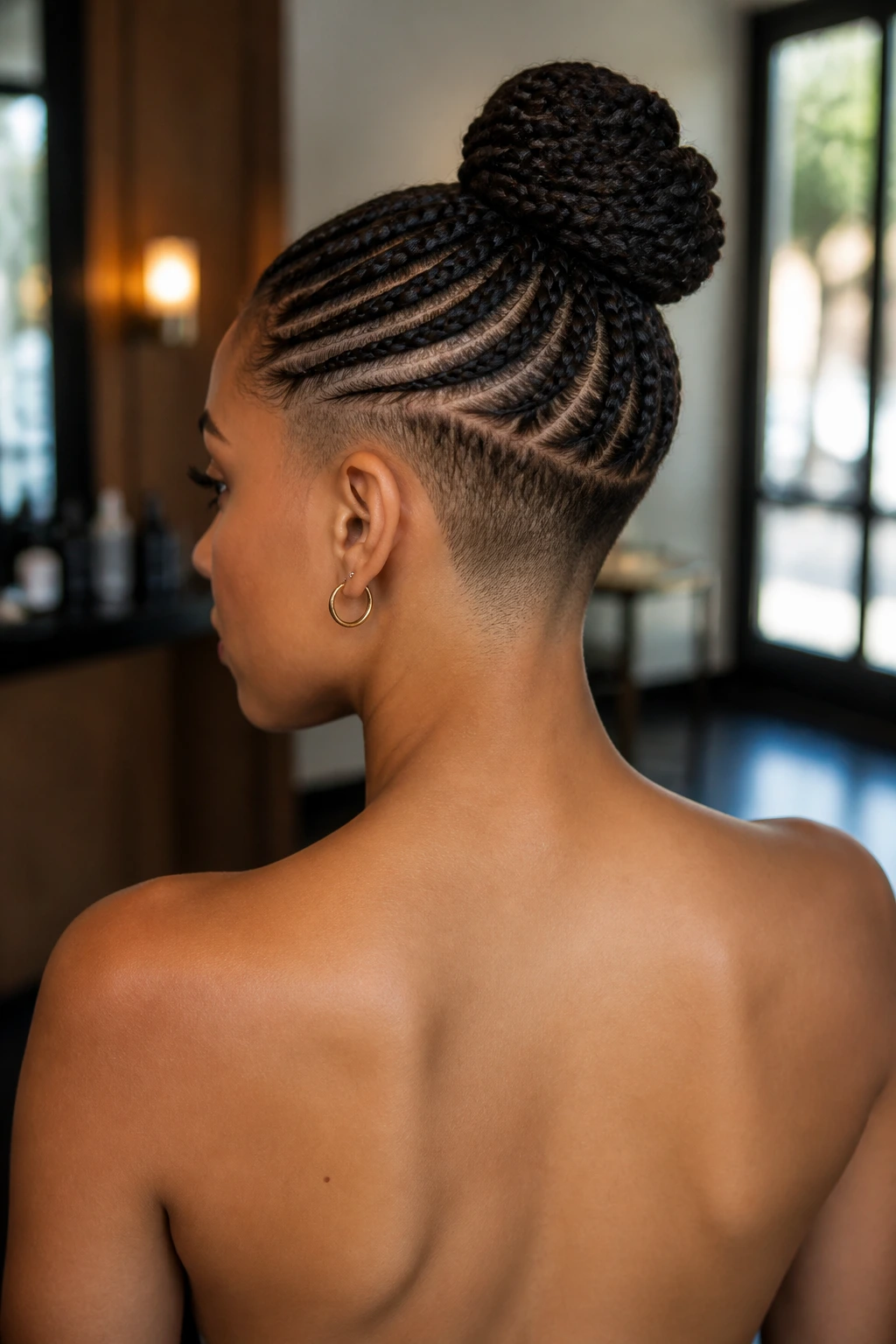
A braid-into-bun style is practical in the best sense. It keeps the braids gathered high or low, depending on how you want to wear them, while the bare back gives the bun space to sit without looking like a stack of rope. There’s less bulk, so the whole silhouette stays tidy.
This is the kind of look that works for people who do not want hair in their neck but still want a braid style with dimension. The bun can be slick or a little loose; both work. I like this most when the braids are medium size and the bun is wrapped close enough to the head that it does not wobble around.
19. Side Braids with a Low Drop Fade
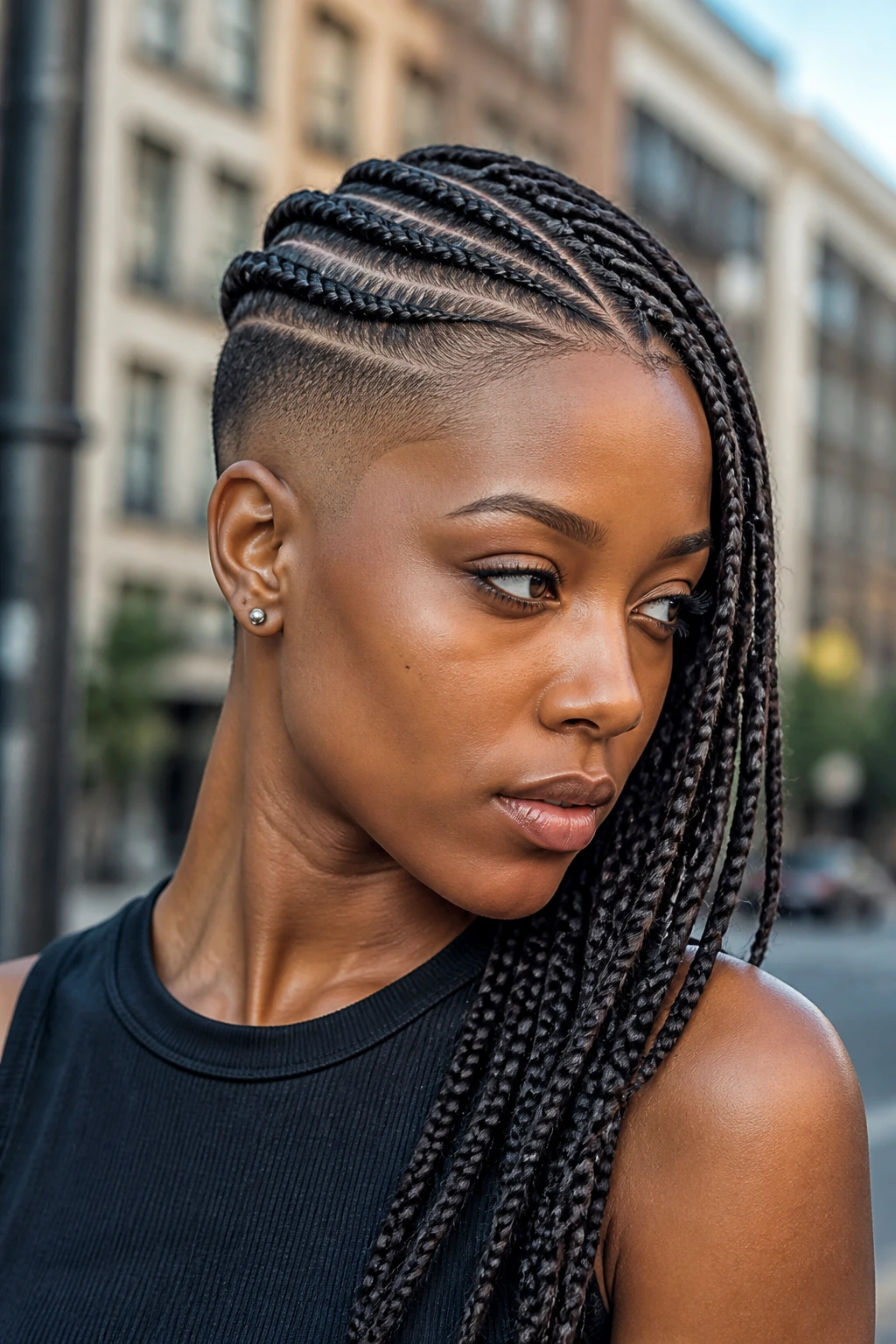
Side braids are a nice fix when you want the hairstyle to lean to one side instead of sitting evenly across the head. The low drop fade keeps the back neat while the braids fall toward one shoulder. The whole thing has a clean profile and a little asymmetry, which keeps it from feeling stiff.
This look is especially good if you like showing off earrings or a necklace because the braid fall opens up the other side of the face. Keep the parting clear at the temple and do not overload it with tiny add-ons. The braid direction is already doing a lot of work, and it doesn’t need help from a dozen clips.
20. Braids with Cuff Rings and Part Designs
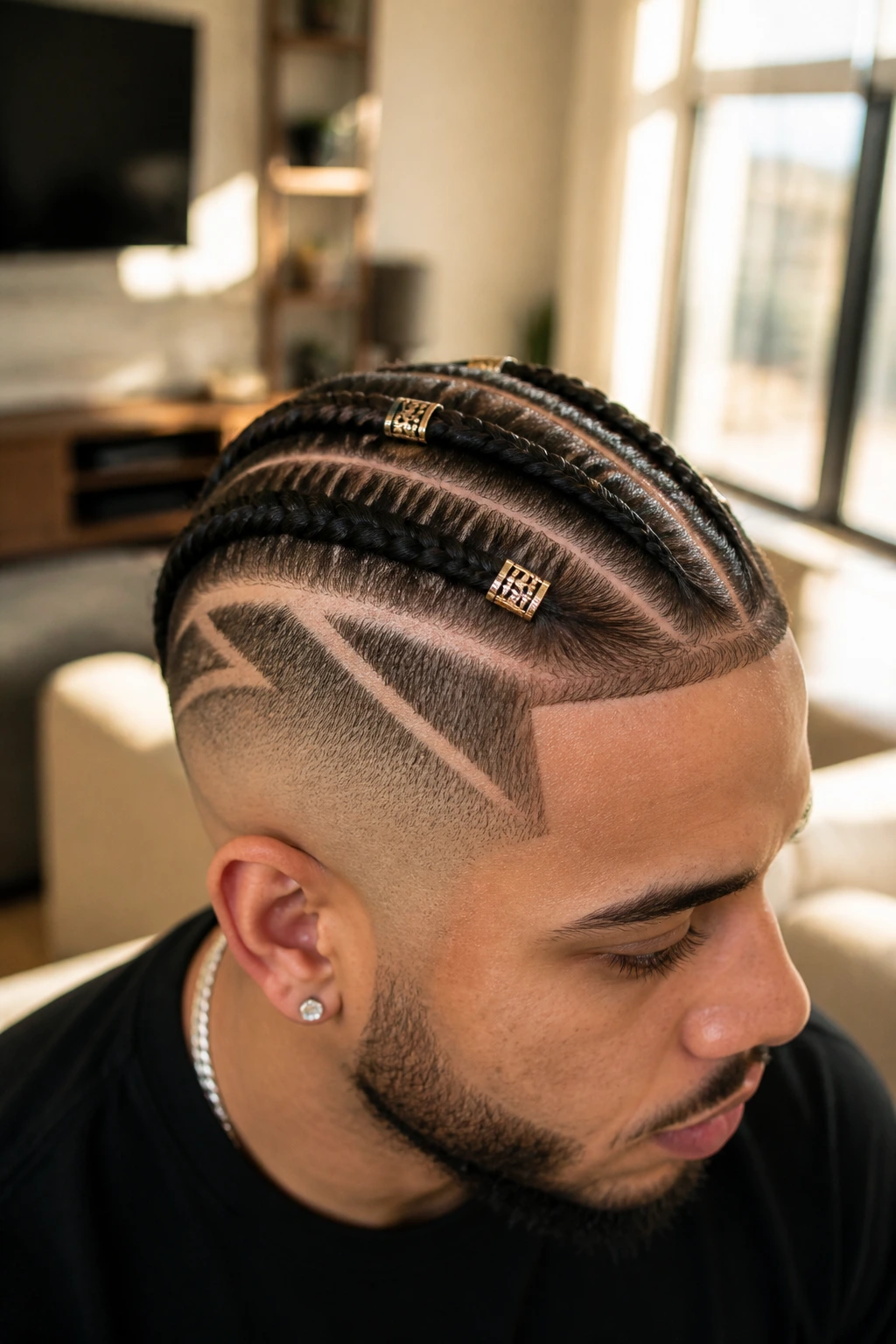
Cuff rings make braids with shaved sides and back feel more finished. The metal catches your eye because the shaved sections give it space to stand out. Add part designs—squares, lines, little curves—and the whole style moves from basic to custom pretty quickly.
This is a style for someone who likes detail up close. From far away, it reads as clean. Up close, the parting and the cuffs tell the fuller story. I’d keep the cuffs concentrated in one or two braids rather than scattering them everywhere. Too many small shiny pieces can make the top look busy and the shaved sections start to feel like an afterthought.
21. Triangle-Part Box Braids
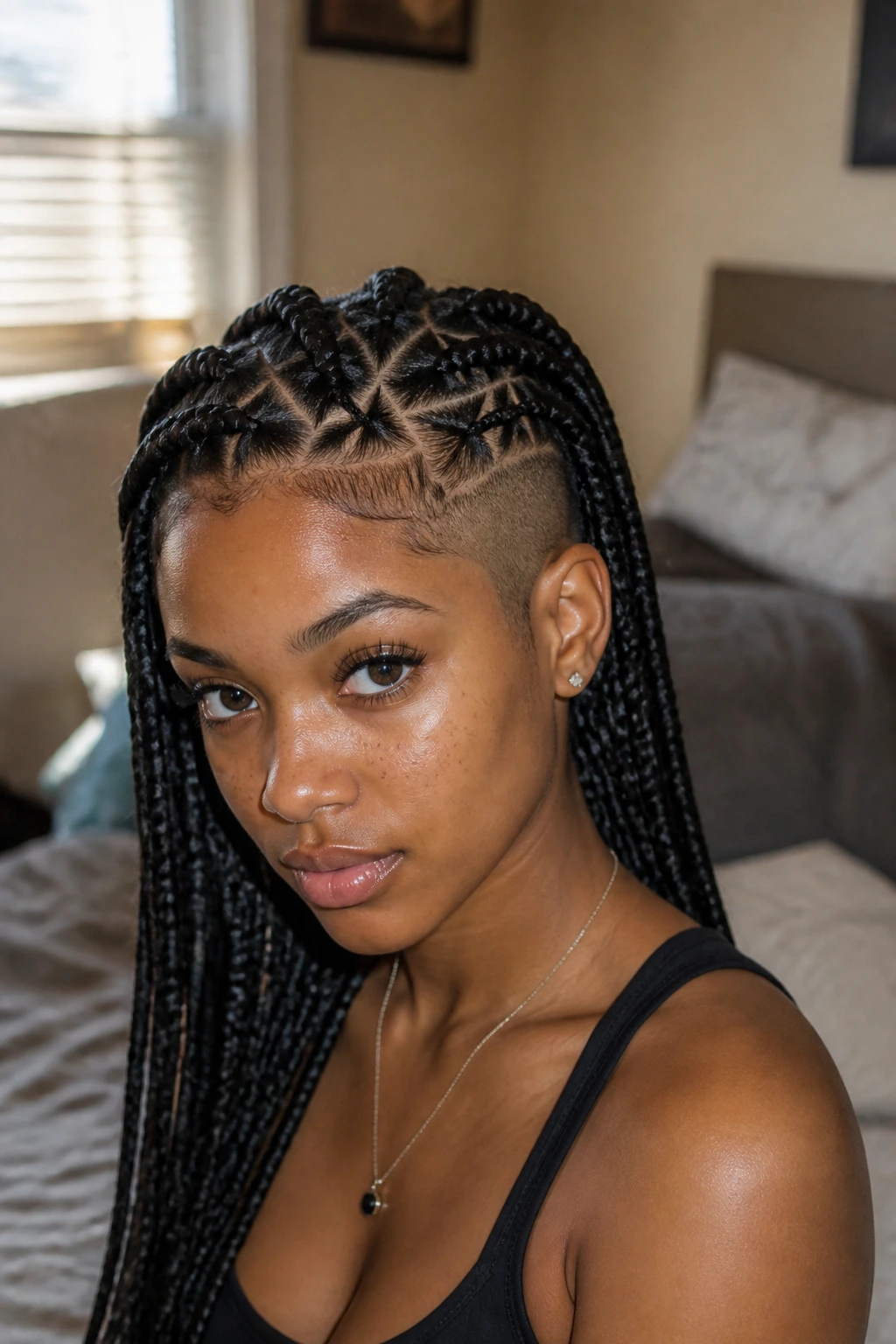
Triangle parts change the whole mood of box braids. The geometric sections look sharper than squares and, against shaved sides, they read almost like little tiles laid across the scalp. That extra shape gives the style more texture before the braid even starts.
I like triangle-part box braids when the haircut underneath is neat enough to handle them. The shaved sides keep the overall bulk down, which matters because triangle sections can already feel visually active. This is a good choice if you want box braids but do not want them to look ordinary. The parting is the headline here.
22. Feed-In Ponytail with a Shaved Nape
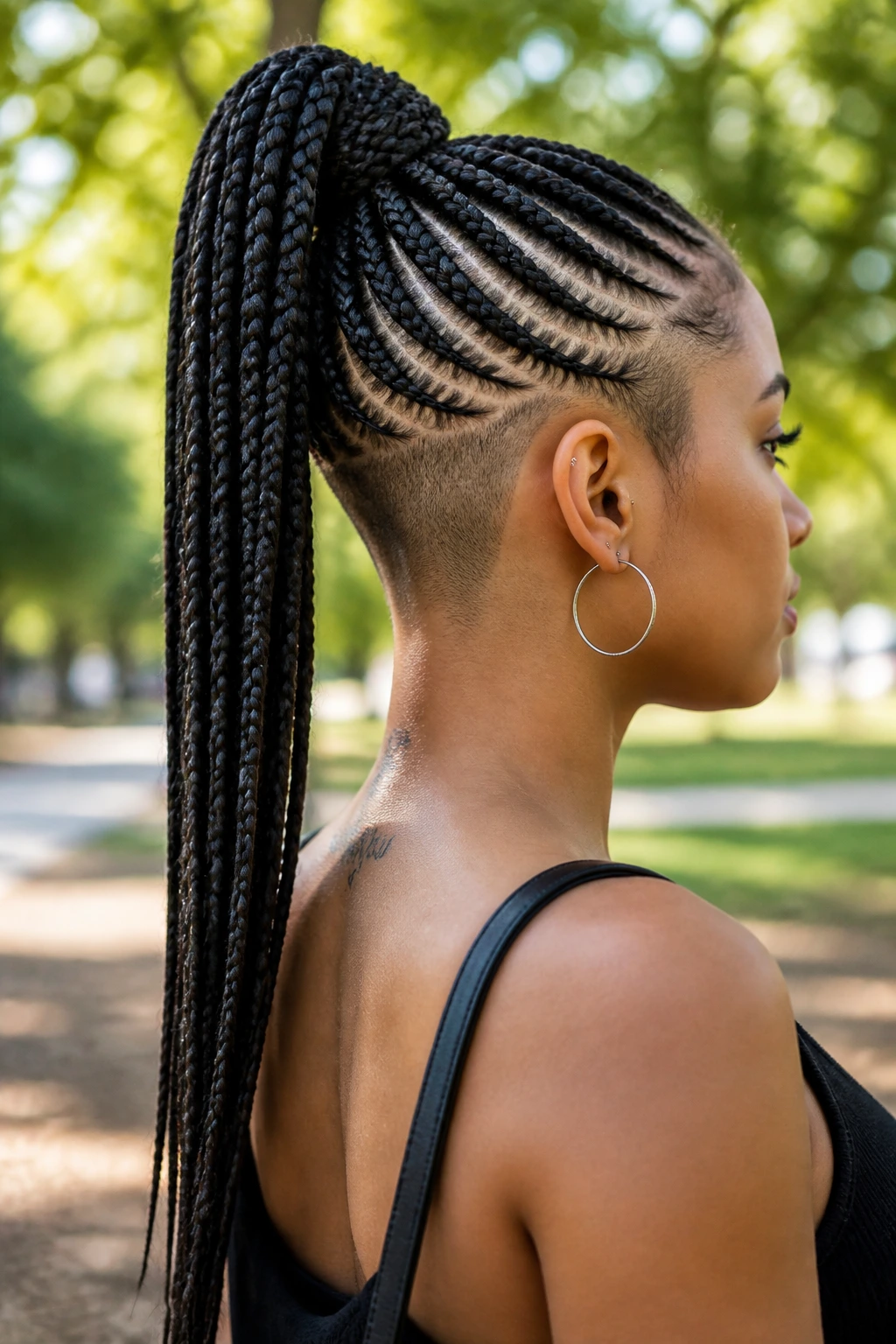
A feed-in ponytail is all about the lift. The braids get gradually built into a ponytail that sits high and clean, while the shaved nape keeps the back open and easy to manage. The whole look feels athletic, polished, and a little dramatic in profile.
This style works best when the ponytail base is secure but not strangling the scalp. You want a firm anchor, not a headache. If your hair is shorter, feed-ins help create that longer pony shape without making the root bulky. If your hair is already long, the style looks even cleaner because the extensions can blend instead of competing.
23. Braided Bob with a Tapered Fade
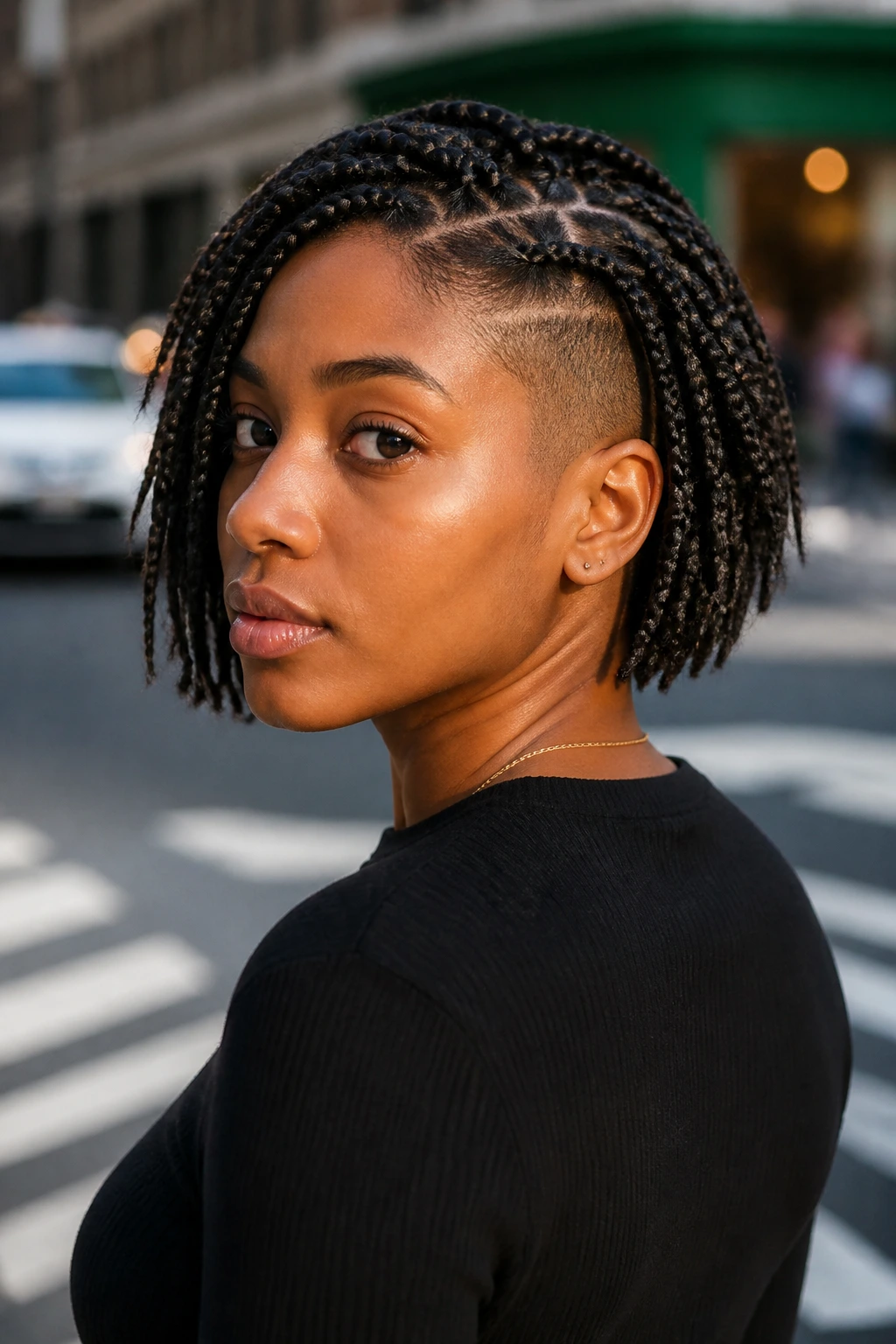
Braided bobs are underrated. They keep the length around the chin or shoulders, which makes the style lighter and easier to move in. With a tapered fade, the back and sides stay neat while the bob shape does the visual work.
This is a good option if long braids usually feel like too much for you. The shorter length can swing around the face and still show off the fade at the back. I especially like it with a deep side part or a small curved parting line. It takes a familiar braid style and trims away the excess. Nice and direct.
24. Faux Locs with Shaved Sides
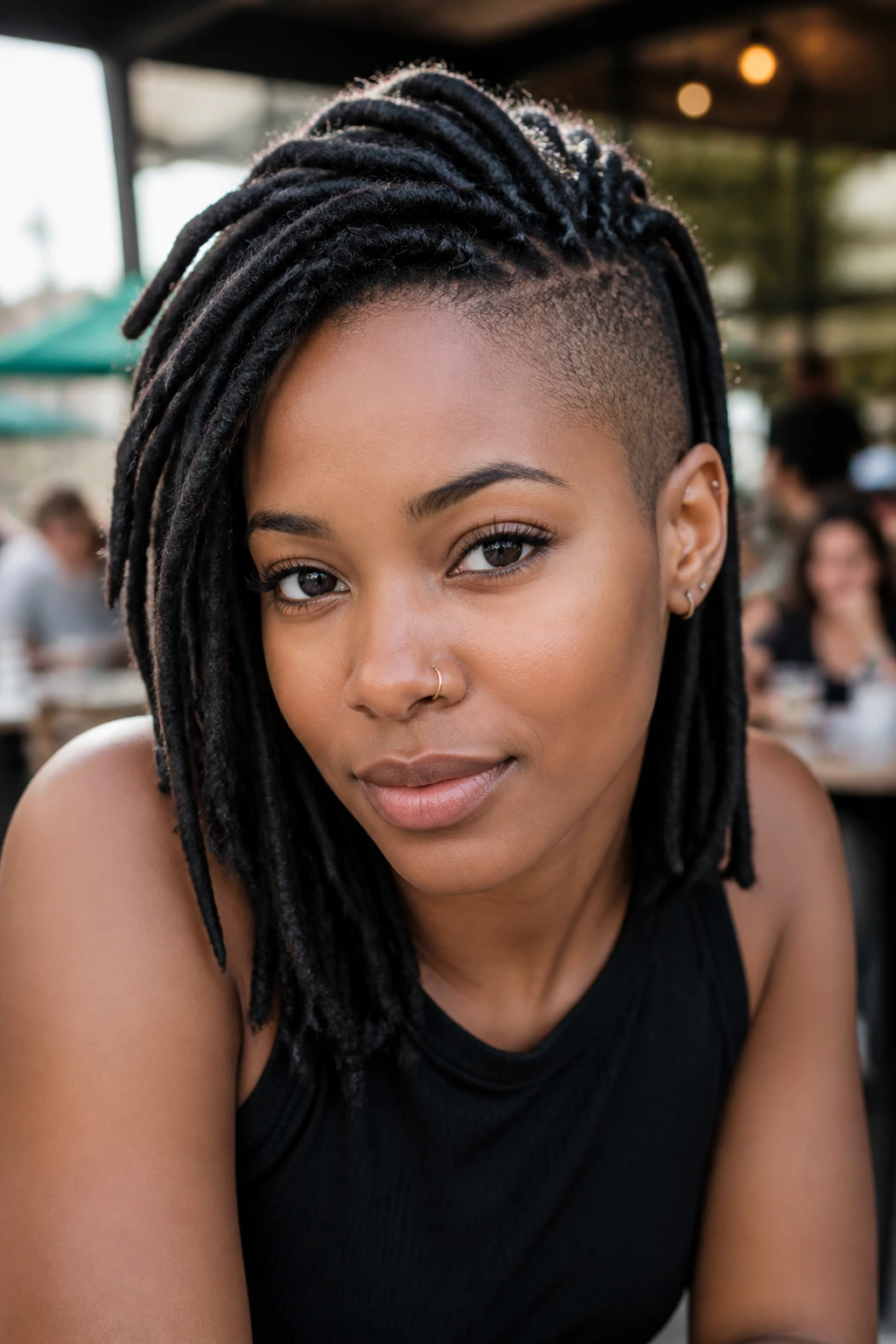
Faux locs change the texture game. Instead of a smooth braid finish, you get that wrapped, ropey look that feels heavier and more textural. Shaved sides keep the locs from turning into a wall of hair, which is useful because faux locs can already carry a lot of visual weight.
This style looks best when the locs are not too thick at the roots. The base needs to sit flat enough that the shaved sides still matter. If you want a style that feels boho but still structured, this is one of the strongest picks in the lineup. I’d avoid excessive jewelry here unless the locs are medium or small. Too much hardware can tug.
25. Dutch Braids into a Low Bun
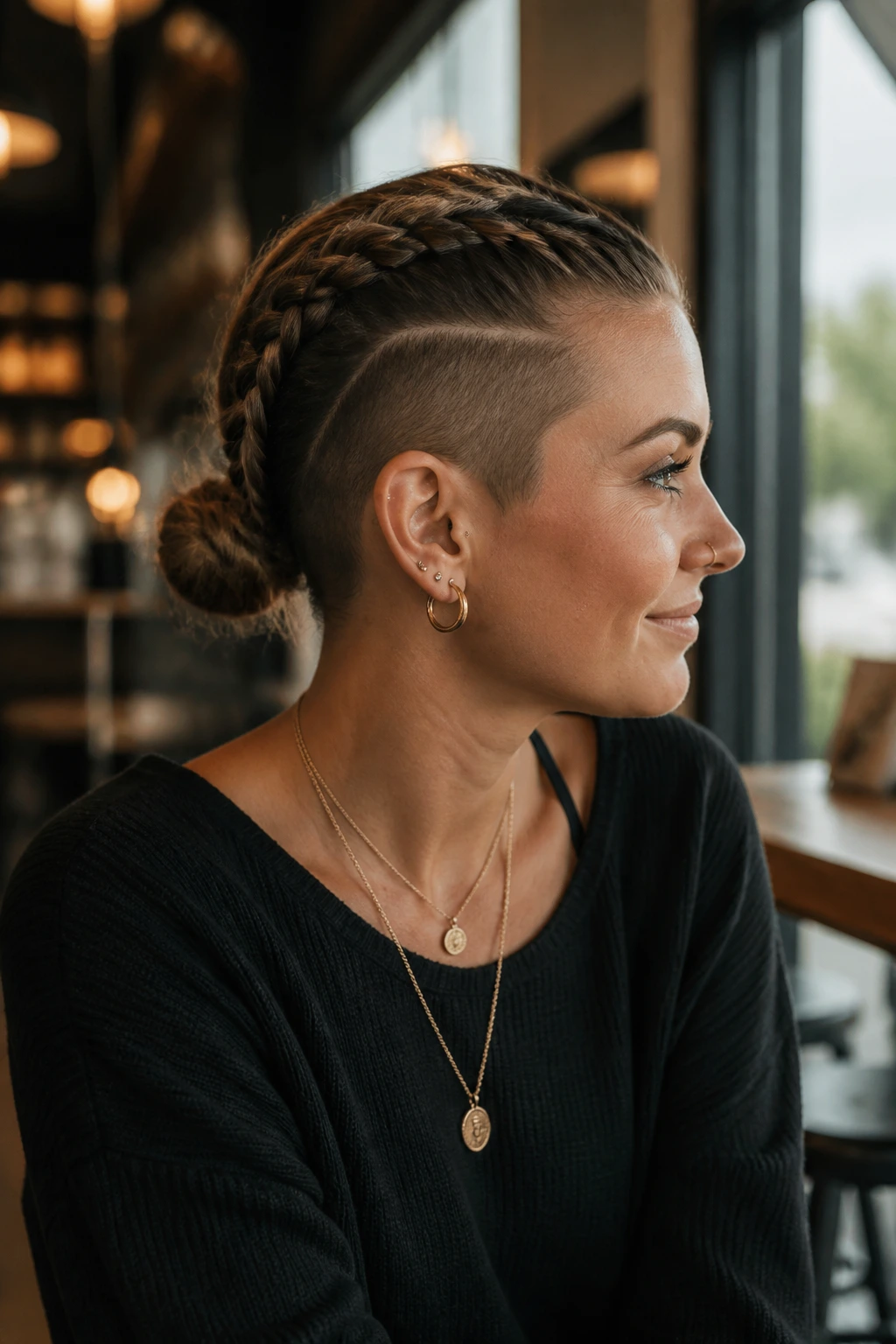
Dutch braids raise off the scalp a little more than cornrows do, so they bring more texture to the top. Pull them into a low bun and the shaved sides give the style room to breathe. The bun stays compact, and the braid ridges stay visible.
This is a clean choice for days when you want the hair up but not bare. It reads polished without trying too hard. The low bun works best when the braids are fed in evenly so the gathered shape doesn’t lean to one side. If your back is shaved close, the bun looks even tidier because the neck area stays uncluttered.
26. Diagonal Cornrows with a Carved Part
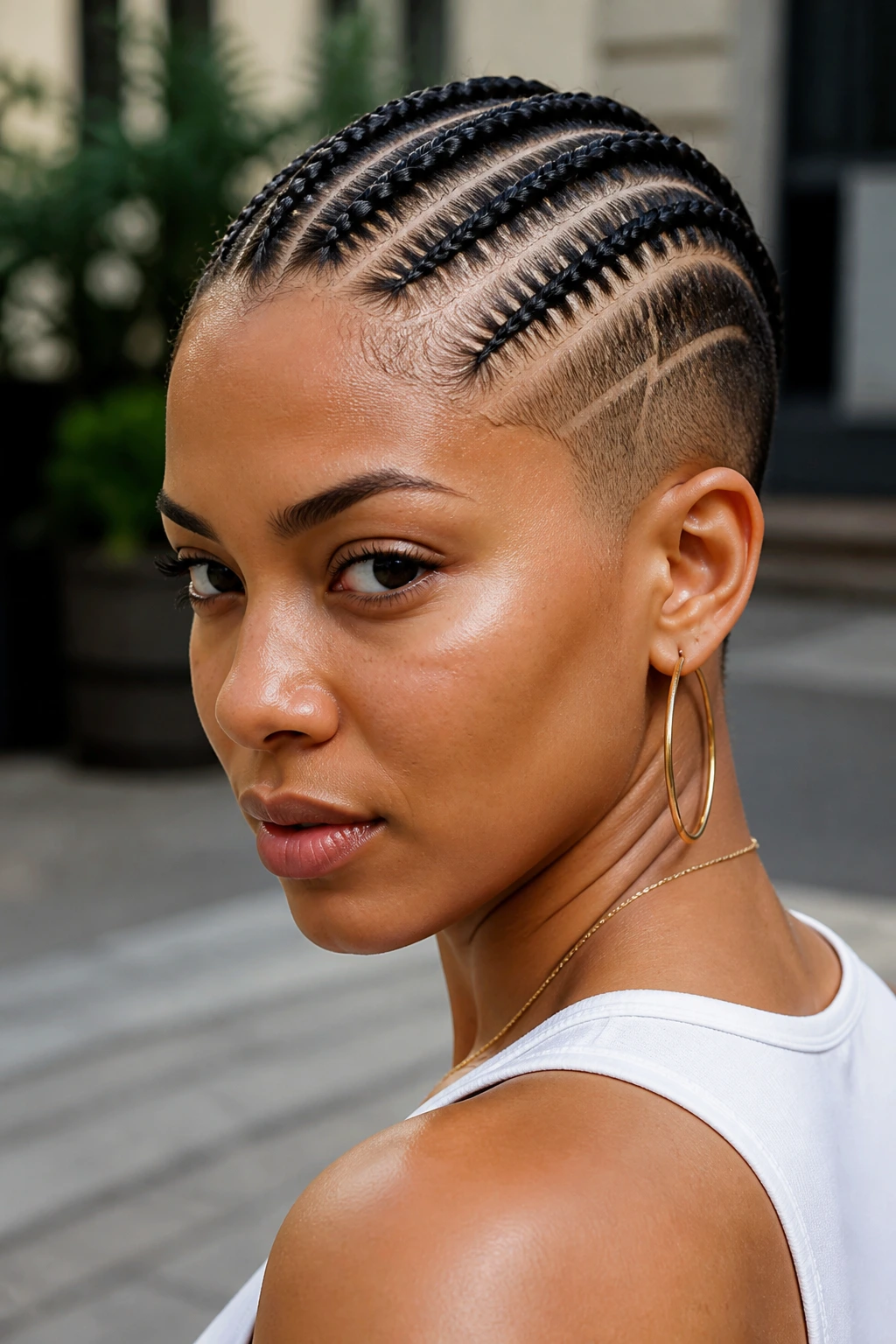
Diagonal cornrows are a small shift that makes a big difference. Instead of moving straight back, the lines run on an angle, which can soften a strong jaw or sharpen a round face depending on the direction. Carved part lines help the style feel custom.
I’d call this one quietly smart. It doesn’t need beads or color to stand out. The angle does the talking. If your fade is already precise, the diagonal movement gives the whole head a sense of motion without turning it into a high-drama style. This is the braid equivalent of a sharp jacket that fits well. Nothing extra, and that’s the point.
27. Half-Up Braids and a Shaved Back
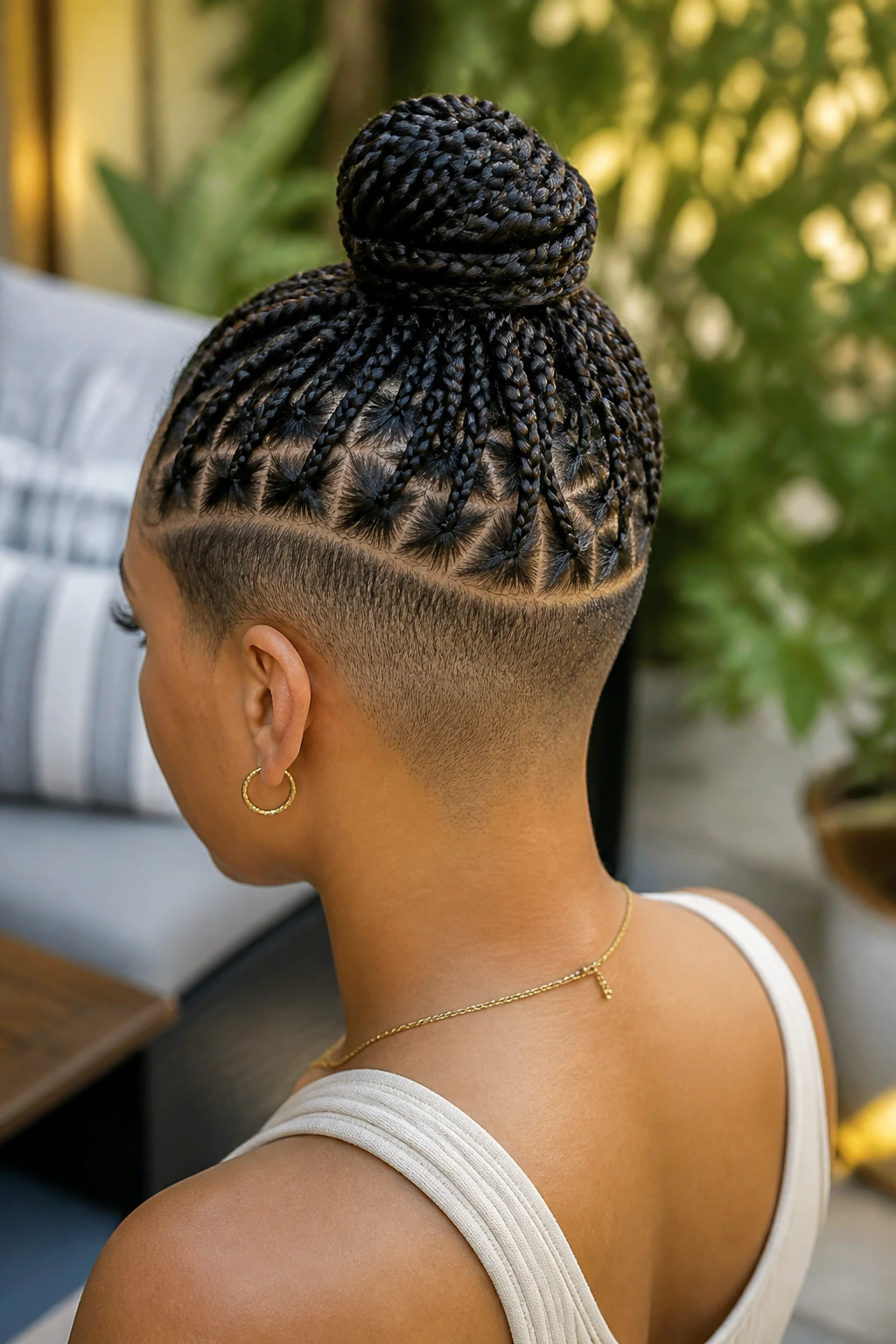
Half-up braids are a nice compromise when you want some length down and some control up top. With a shaved back, the lower half stays open and neat, so the style doesn’t end up looking heavy. It’s a casual shape, but not a lazy one.
This works well if you like changing the look during the day. Wear it tight and clean in the morning, loosen the top a little later, or let a few ends fall forward. The shaved back keeps the silhouette from turning puffy. I would choose medium braids here rather than jumbo, because the half-up shape can get bulky fast if the sections are too large.
28. Color-Blocked Braids with a Clean Fade
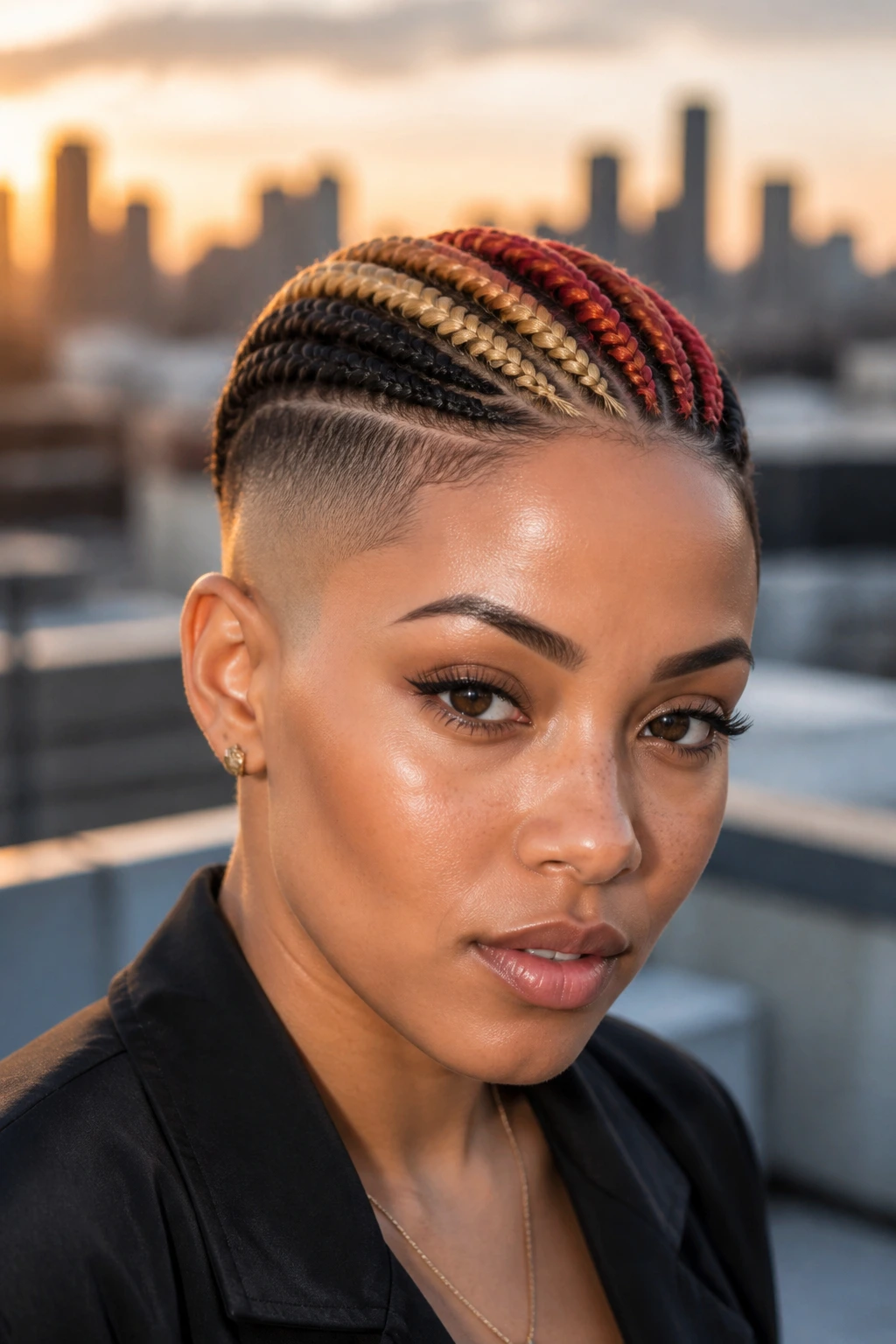
Color-blocked braids make the braid pattern look more graphic. Two tones—say a natural brown and a blonde strip, or black with copper—create a strong contrast, and the clean fade helps keep the style from feeling overloaded. The shaved sides give the color room to show.
This is where I’d be a little opinionated: if you are going bold with color, keep the fade crisp. Otherwise the style can slip from striking into messy. Color-blocked braids are best when the color placement is deliberate, not random. A few chunky color sections are enough. You do not need every braid to shout.
29. Waist-Length Braids with a Temple Fade
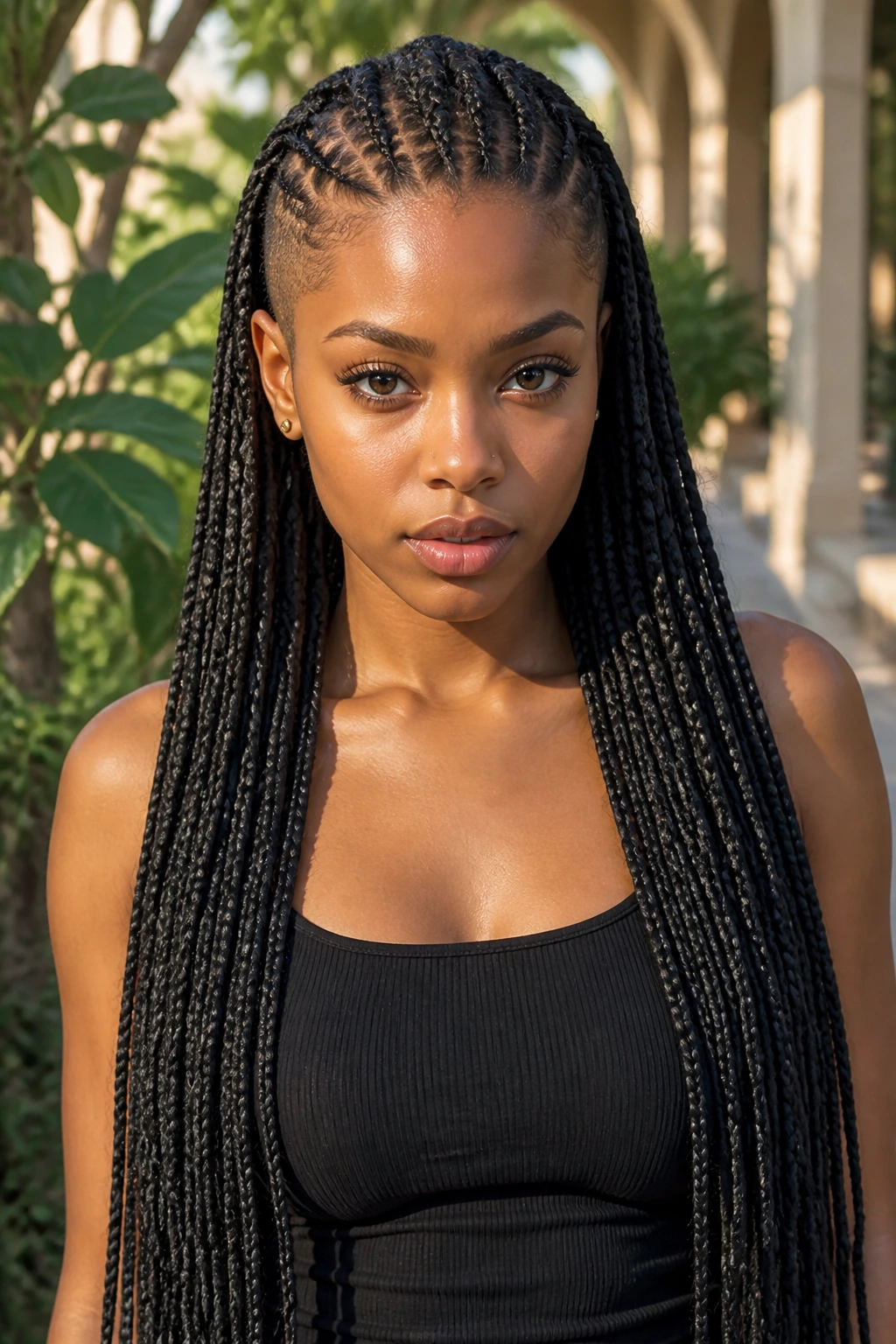
Waist-length braids bring weight, movement, and a little drama all at once. The temple fade trims down the sides so the long length doesn’t swallow your face. It’s a good balance between full coverage and visible structure.
This style is not subtle, and that’s fine. Long braids on shaved sides or back can be beautiful when the base cut is clean enough to support them. The long ends swing, the temples stay open, and the whole look feels anchored instead of floating. If you choose this, think about your neck and shoulders too. Long braids need a comfortable finish if you’re wearing them for more than a few hours at a stretch.
30. Side-Panel Braids and a Nape Fade
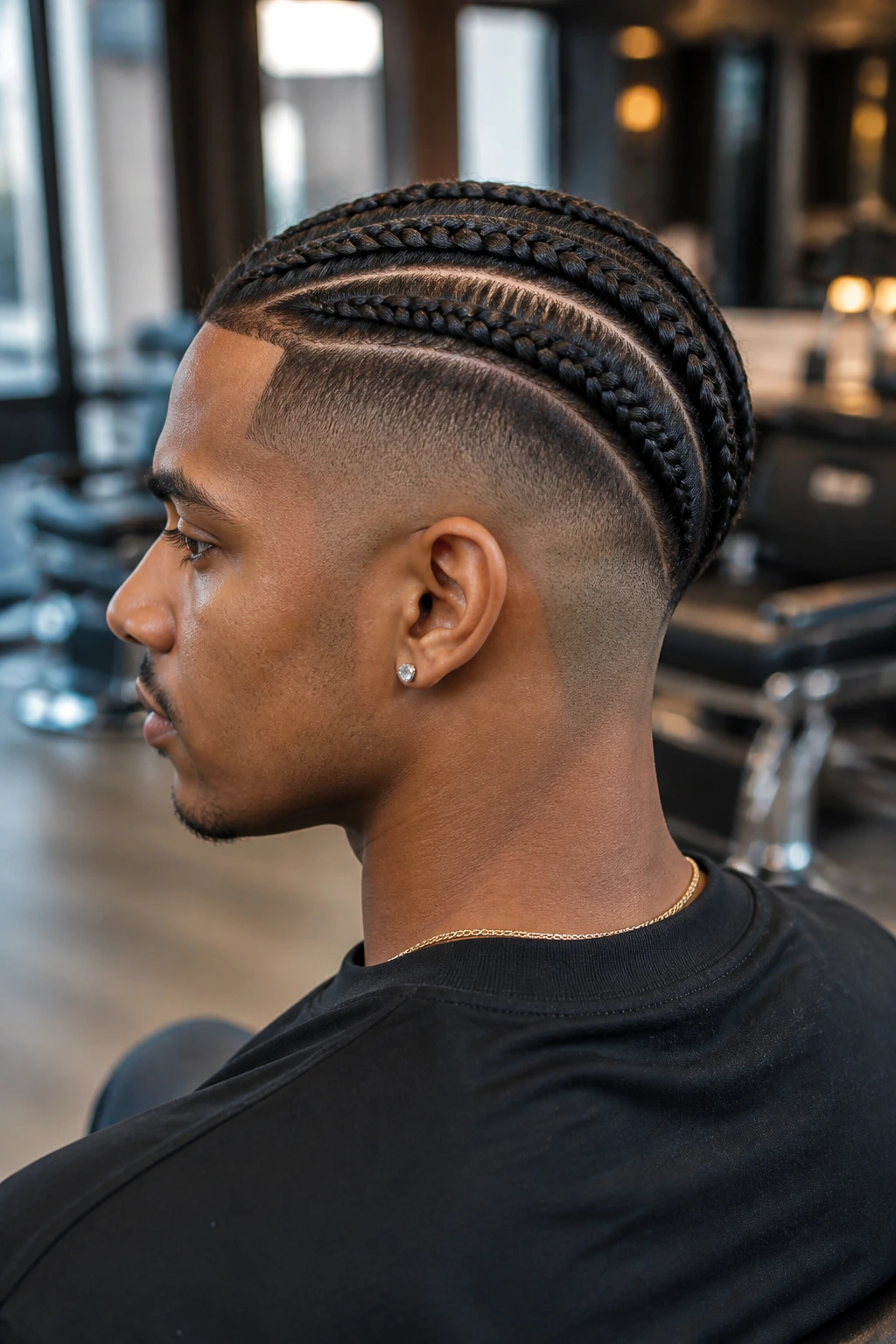
Side-panel braids work like a spotlight. Most of the braid structure sits in one panel of the head, while the other areas stay open or faded out. The nape fade keeps the back crisp so the style doesn’t drag downward.
This is a smart pick when you want something asymmetrical but not wild. The open space does a lot of visual work, especially if the braid panel is neatly sectioned and slightly curved. I like this for people who want to wear braids with shaved sides and back without committing to a full mohawk shape. It has attitude, but it doesn’t walk into the room shouting.
31. Braided Pigtails with a Sharp Undercut
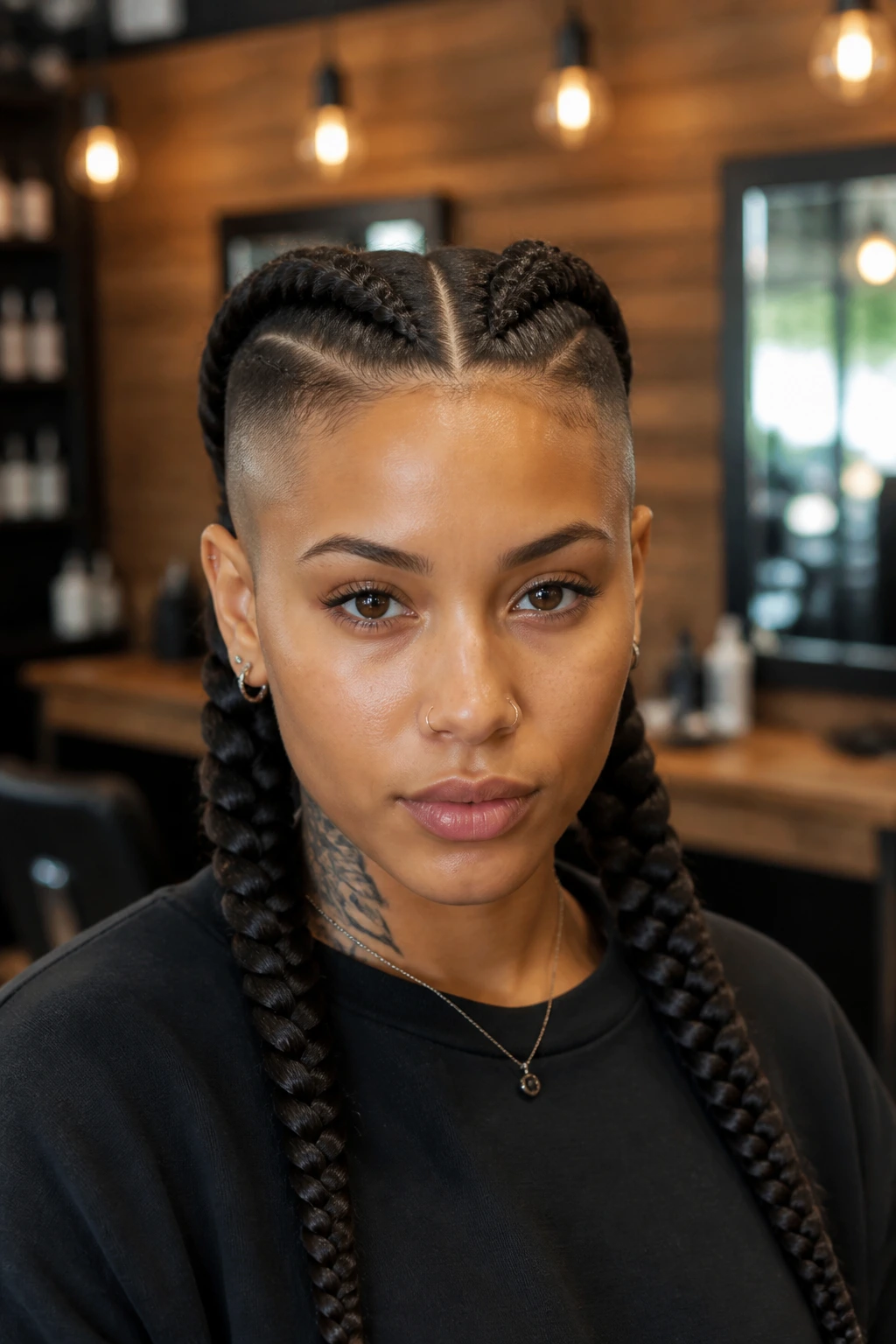
Braided pigtails can be playful, but a sharp undercut keeps them from looking juvenile. The braids split into two balanced sections, and the shaved base brings a tougher edge to the whole thing. It’s a good example of contrast doing what contrast does best.
This style works if you want symmetry and a clear shape. Keep the pigtails even in thickness and drop them at the same point on either side. If one side hangs heavier, the undercut will make the imbalance more obvious. Add small cuffs or thread if you want to lean fun; leave them plain if you want the haircut to do the talking.
32. Asymmetrical Braids with One Shaved Side
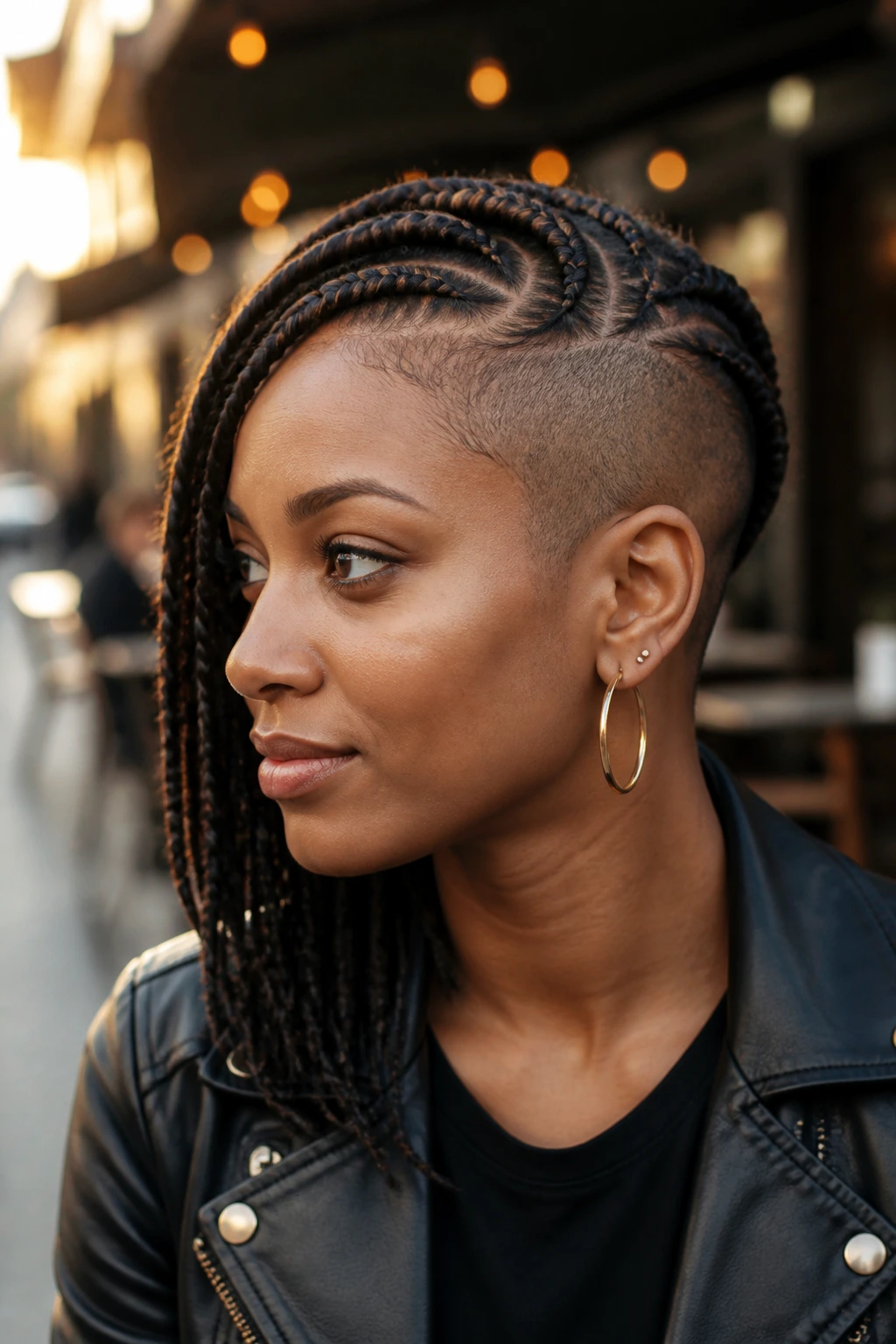
One shaved side changes the entire conversation. The style becomes about imbalance, and if you do it well, that imbalance feels deliberate rather than sloppy. The braids can sweep across the head, rest over the shoulder, or stay tightly routed in one direction while the shaved side stays visible.
This is one of the strongest options if you want to show off earrings, an ear cuff, or even a side facial piercing. The open side becomes part of the frame. It’s not for someone who wants a low-profile haircut, though. The whole point is that one side stays visible. Keep the braid pattern sleek and the shaved area freshly lined if you want the contrast to land.
33. Curly-End Feed-Ins with a Buzzed Back
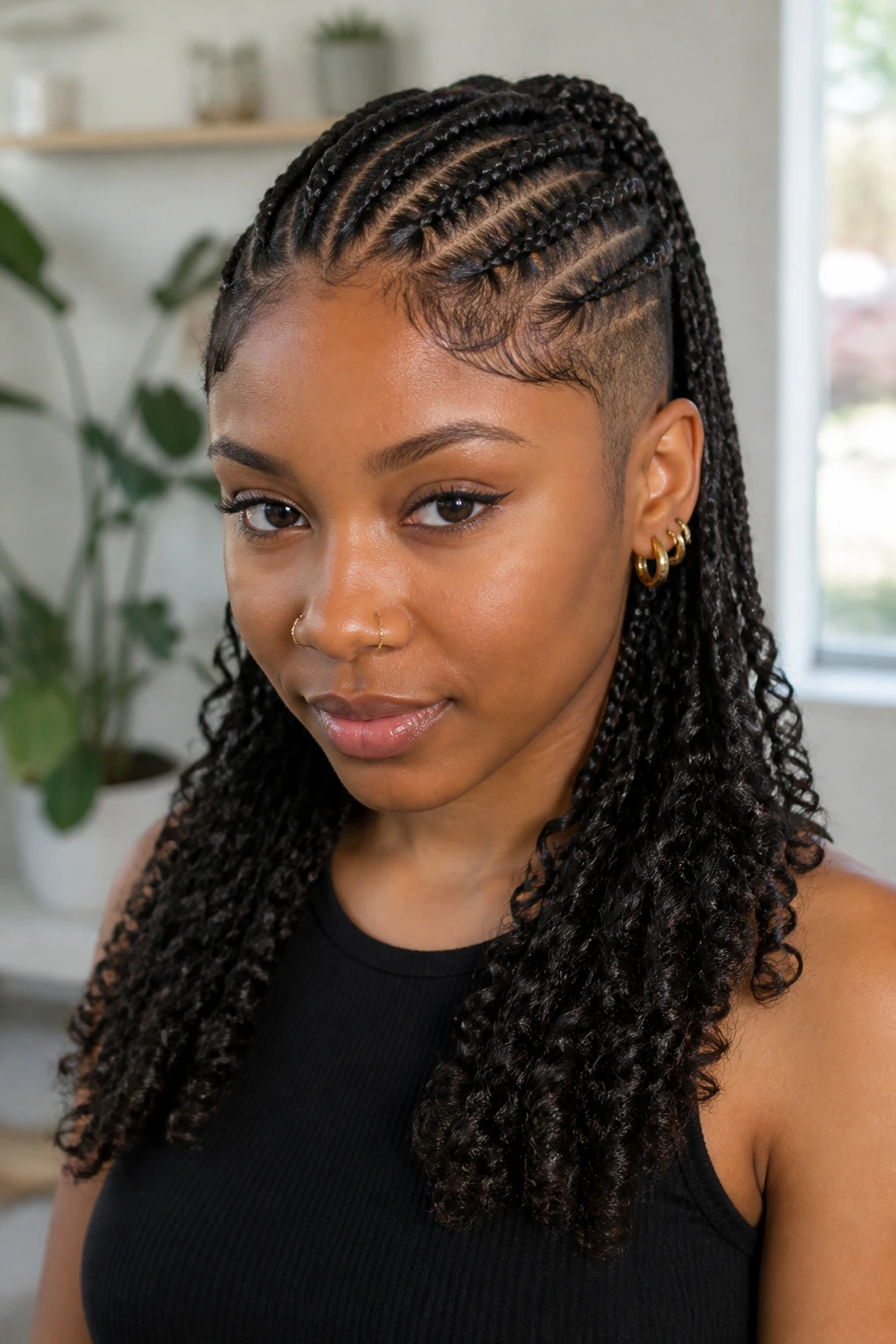
Curly-end feed-ins are a softer twist on a neat braid style. The feed-ins stay smooth at the root, then open into defined curls at the ends. The buzzed back makes those curls feel lighter because the neck area stays clean and uncluttered.
I like this look when you want movement near the shoulders but don’t want the full weight of long braids. The curls bring a little bounce, and the shaved back makes the whole shape feel airy. Keep the curls refreshed with a light mist and a small amount of mousse. If they get dry and frizzy, the style starts looking older than it is.
34. Rope-Braid Ponytail with Shaved Sides
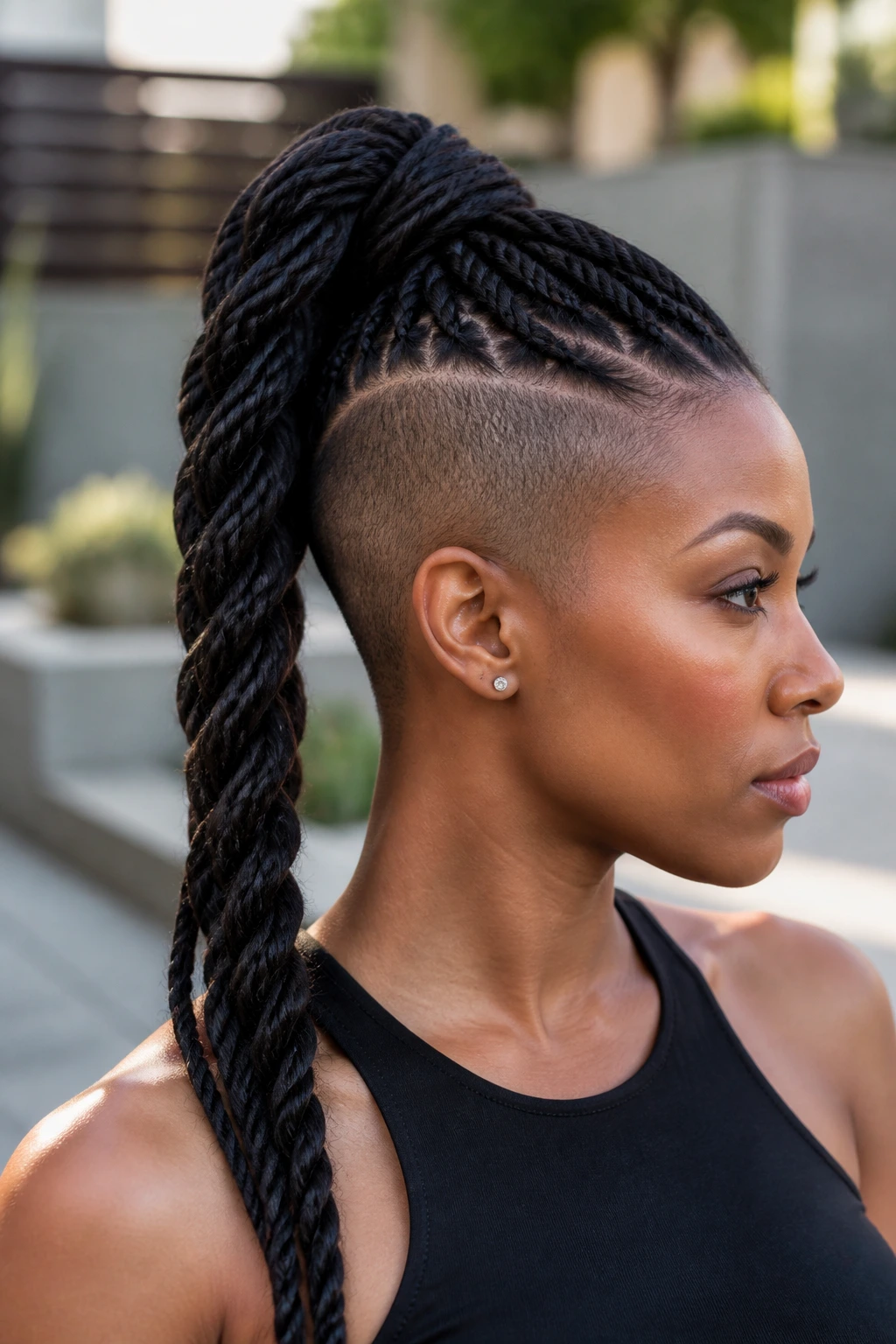
A rope-braid ponytail has a thicker, spun look that feels different from a standard three-strand braid. With shaved sides, the ponytail becomes the focal point. It sits high, it sits clean, and it moves in a way that catches the eye without much effort.
This is a good style if you want volume without a million individual braids. The rope texture also makes the ponytail look denser than it actually is, which can be useful if your hair is fine. Keep the base secure and the sides tight enough to be sleek, but not so tight that the scalp feels pulled backward. That line matters.
35. Starburst Braids from the Crown
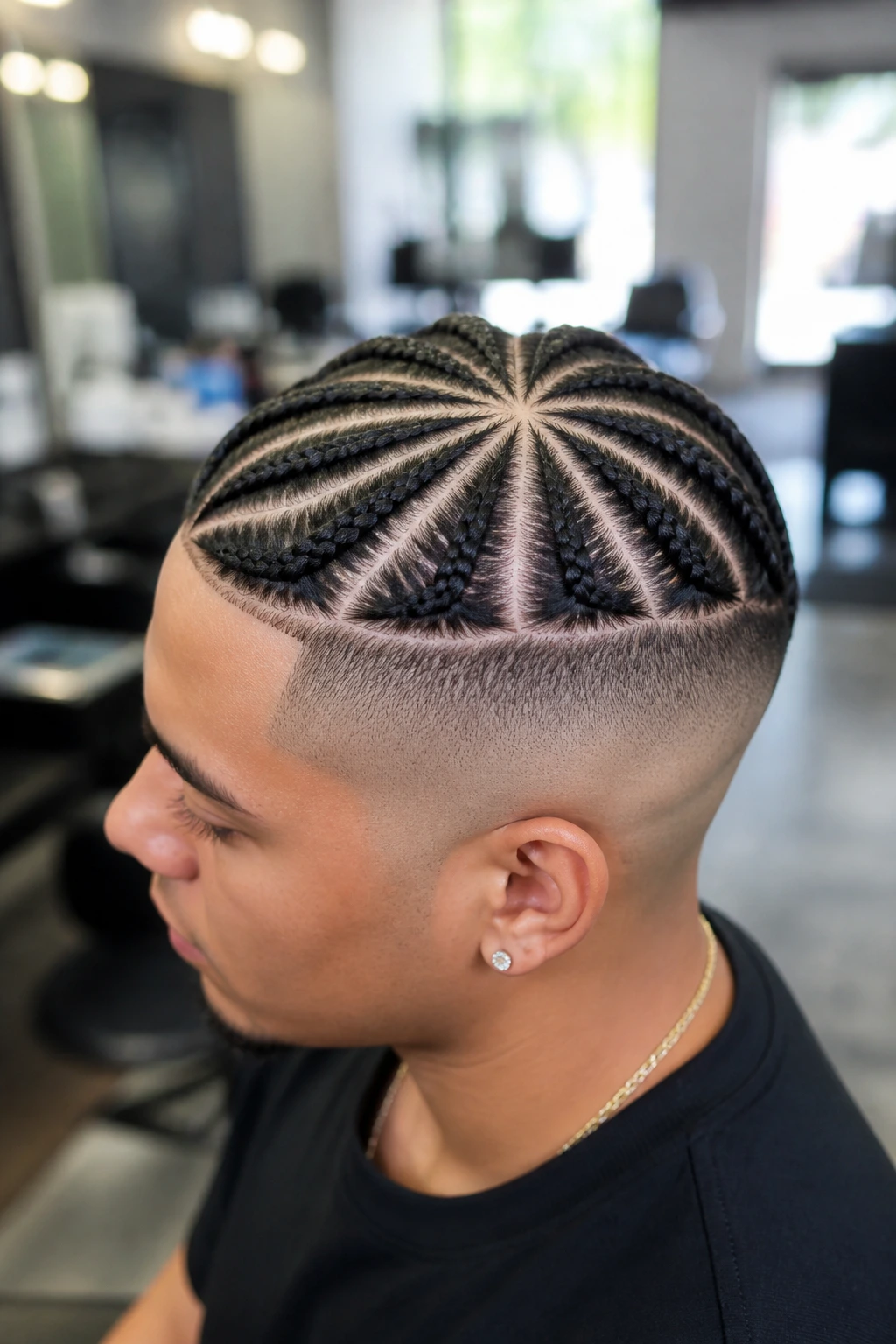
Starburst braids radiate from the crown like spokes. It is one of the more detailed patterns in the whole group, and the shaved sides and back make the geometry easy to see. If you enjoy part design as much as the braids themselves, this style has a lot to offer.
The crown placement gives the eye a center point, then the braids move outward in different directions. That only works when the spacing is even. If one section is larger than the others, the pattern loses its balance. It’s a detailed style, no doubt, but the payoff is real: the head shape itself becomes part of the design.
36. Ladder-Part Braids with a Nape Fade
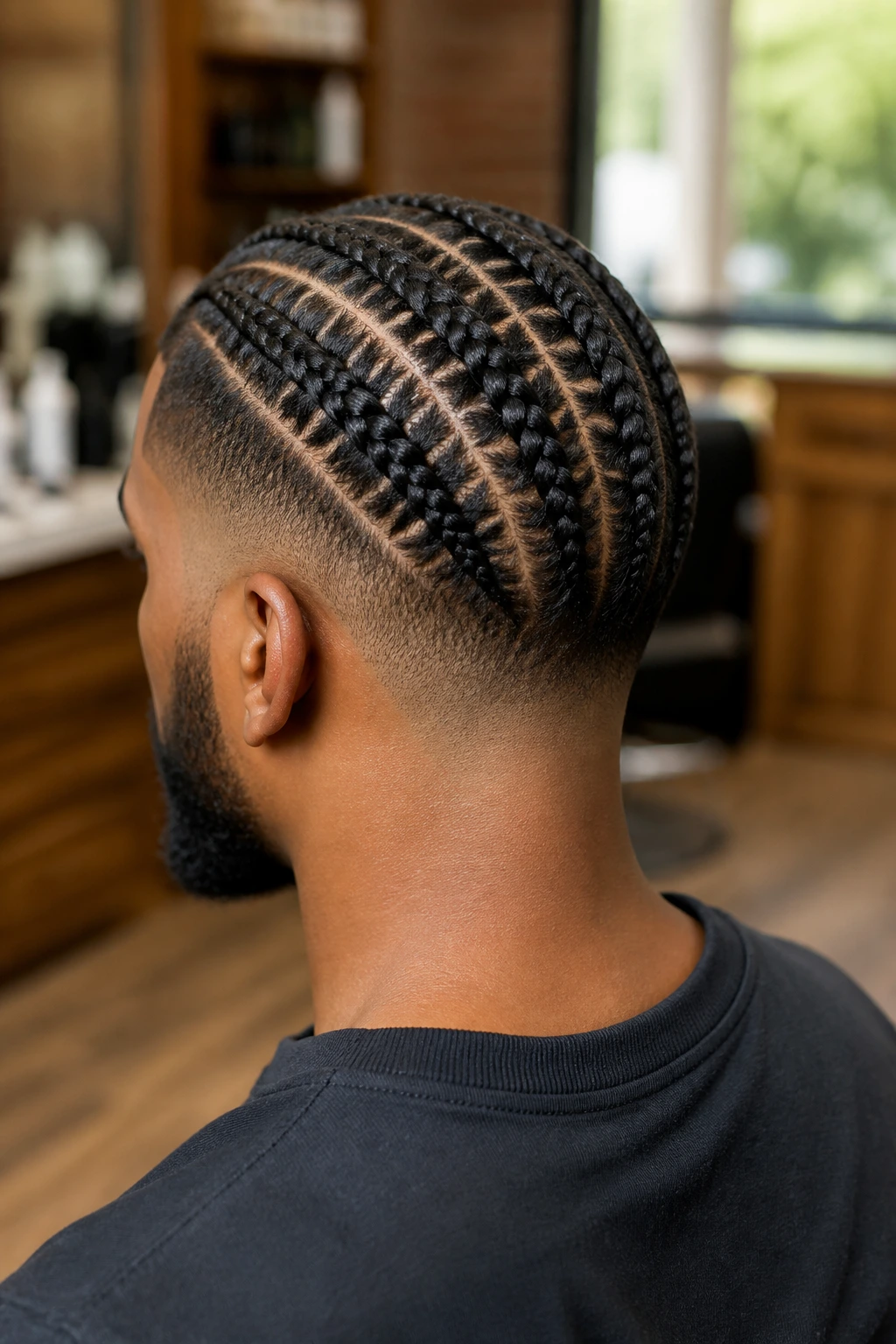
Ladder parts run parallel and evenly spaced, which makes the scalp design look almost like a woven surface. The nape fade keeps the back area from fighting that pattern. Together, they create a style that feels neat, measured, and a little formal.
This is the one for somebody who likes precision. Not flashy precision. Just clean lines that stay where they’re put. The parted sections need to be the same width from front to back or the ladder effect collapses. If your braider likes sharp, straight geometry, this is the kind of style they’ll enjoy doing.
37. Sleek Edge Braids with a Finished Fade
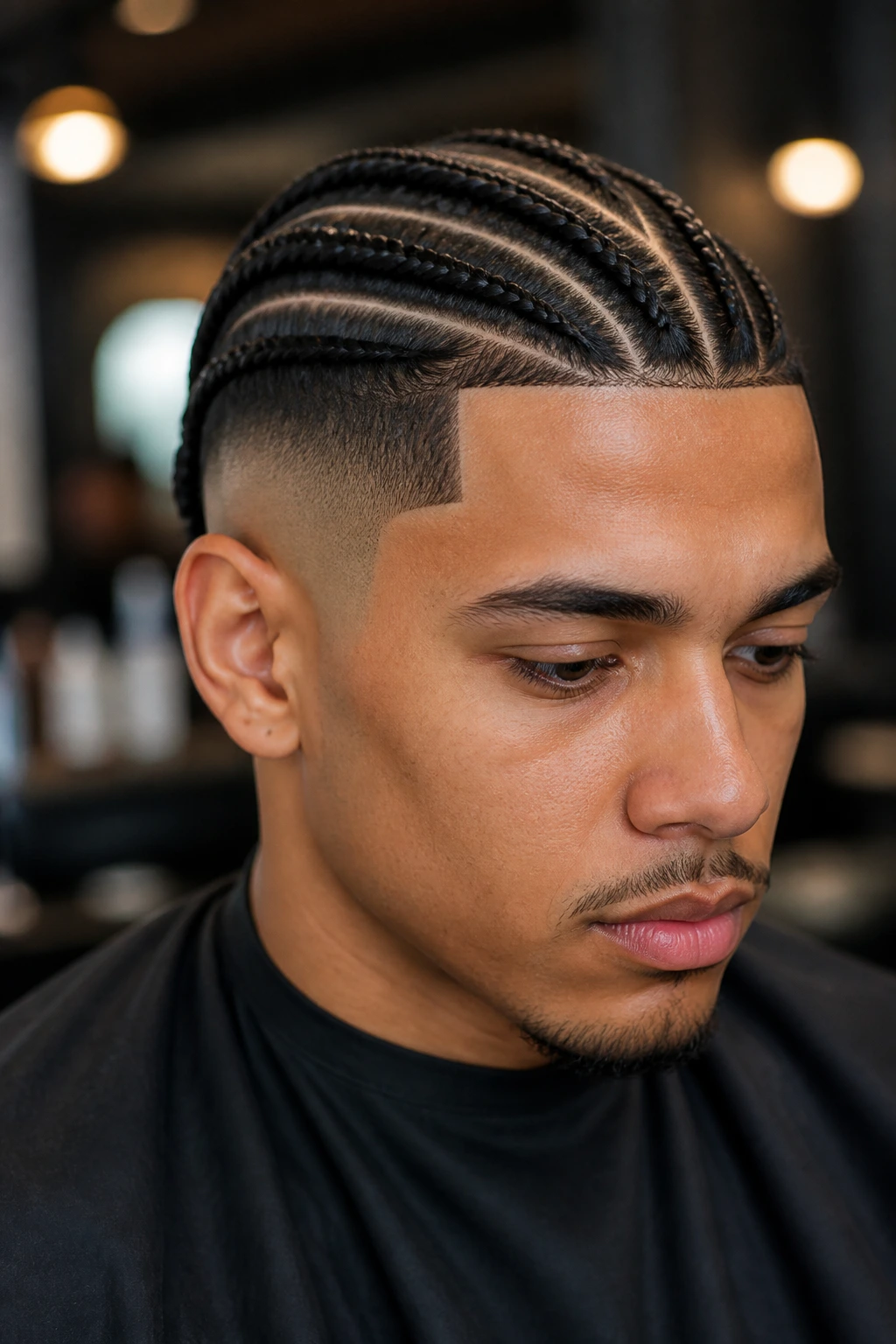
Sleek edge braids are about polish. The edges are laid, the parts are tight, and the fade gives the whole style a finished frame. This is not the most dramatic option on the list, but it can be one of the prettiest when everything is clean.
I like this look when you want the braids to hold up in both casual and more dressed-up settings. A finished fade keeps the sides from puffing out, and the sleek edge work gives the hairline a softer entrance. Use edge control sparingly. Too much product can flake and make the style look older than it is. A light hand is better here.
38. Short Braids with a Clean Shaved Underlay
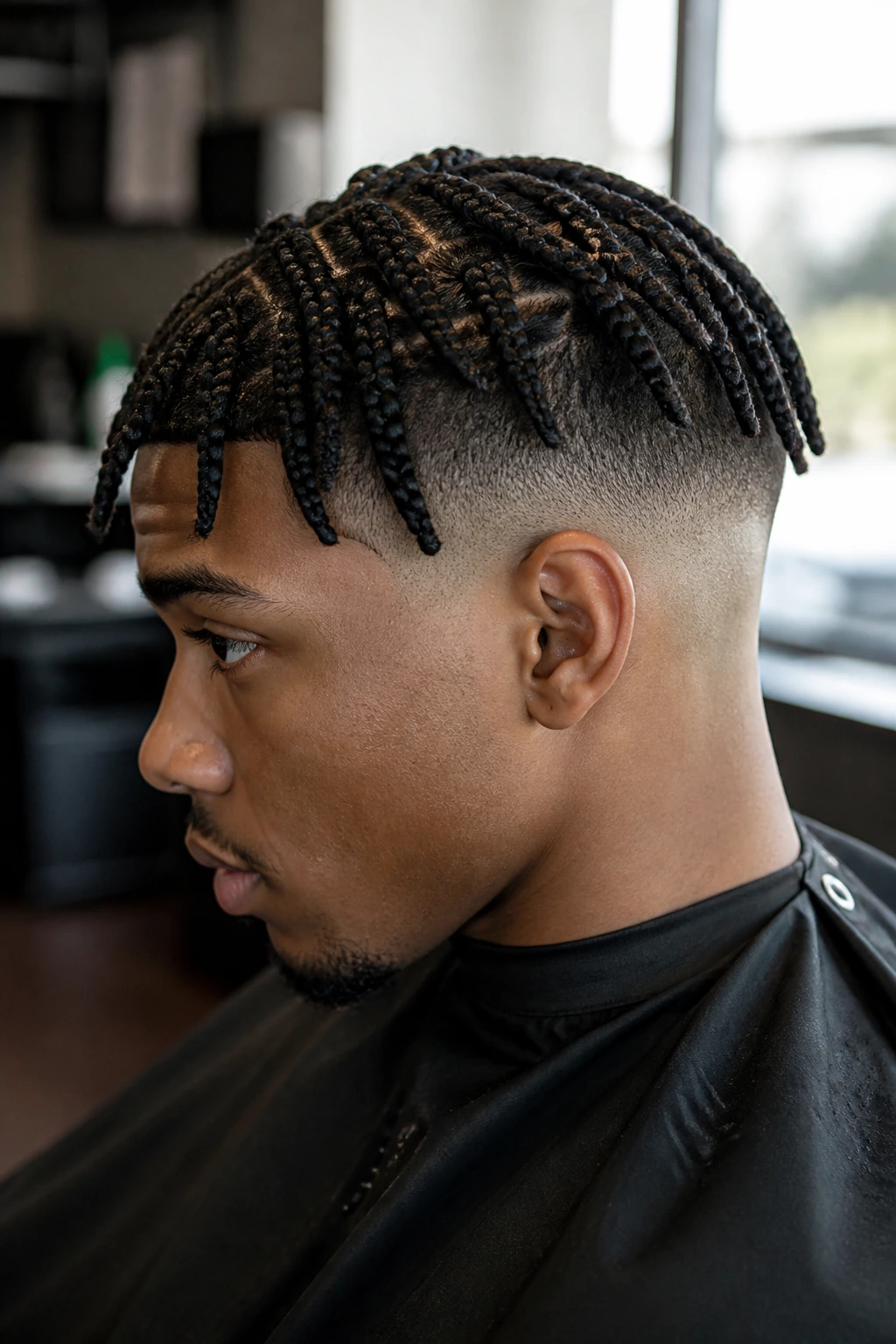
Short braids with a shaved underlay are a nice ending point because they prove you do not need length to make this look work. The braids stay cropped and manageable, while the shaved base keeps the style crisp and low-bulk. It’s easy to wear, easy to sleep in, and easy to keep neat.
This is one of the best options for active routines or for anyone who wants a braid style without the weight of longer extensions. The short length lets the fade stay visible from every angle, which I think is the main reason people keep coming back to it. Clean, practical, and still sharp. Hard to argue with that.
Why the Shaved Cut Changes the Whole Shape
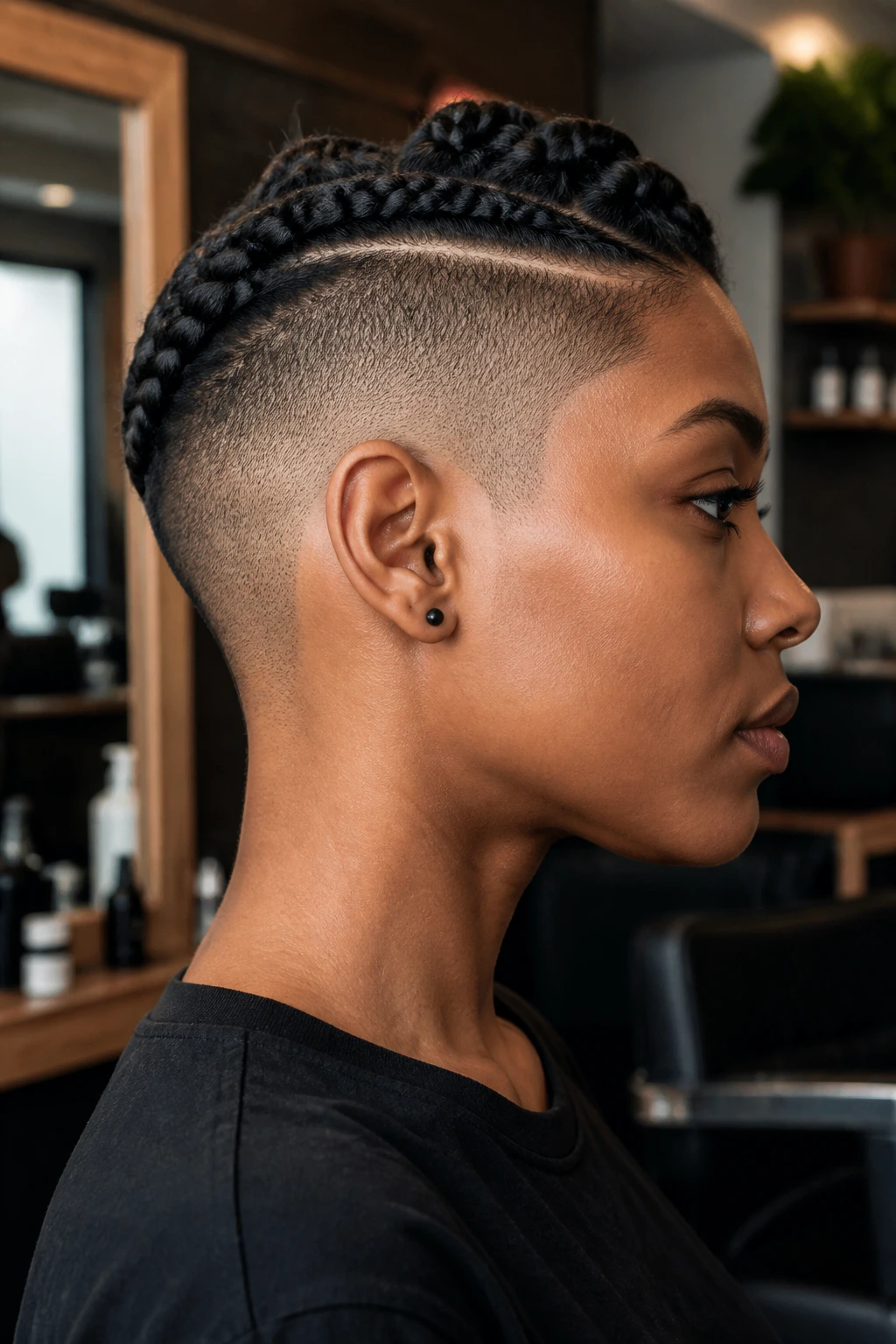
The real magic in braids with shaved sides and back is not the braid pattern alone. It’s the outline. When the sides are cut down, the eye stops wandering into excess hair and starts reading the braid lines as shapes. That is why a straight-back set can look so different on a bare nape than it does on a full head of hair.
There’s also a practical side to it. Less hair on the sides means less bulk against the ears, less heat collecting at the neck, and less chance that thick braids will mushroom outward where you don’t want them. A lot of people think the shaved sections are there just to look edgy. Sometimes they are. But just as often, they solve a weight problem.
The one thing I would warn against is treating the cut like an afterthought. A fade that is too high can make the braids look disconnected. A nape that is left uneven can throw off even the prettiest parting pattern. The cut and the braid style should be planned together, almost like one appointment, even if two different hands are doing the work.
What to Ask for Before the Braids Start
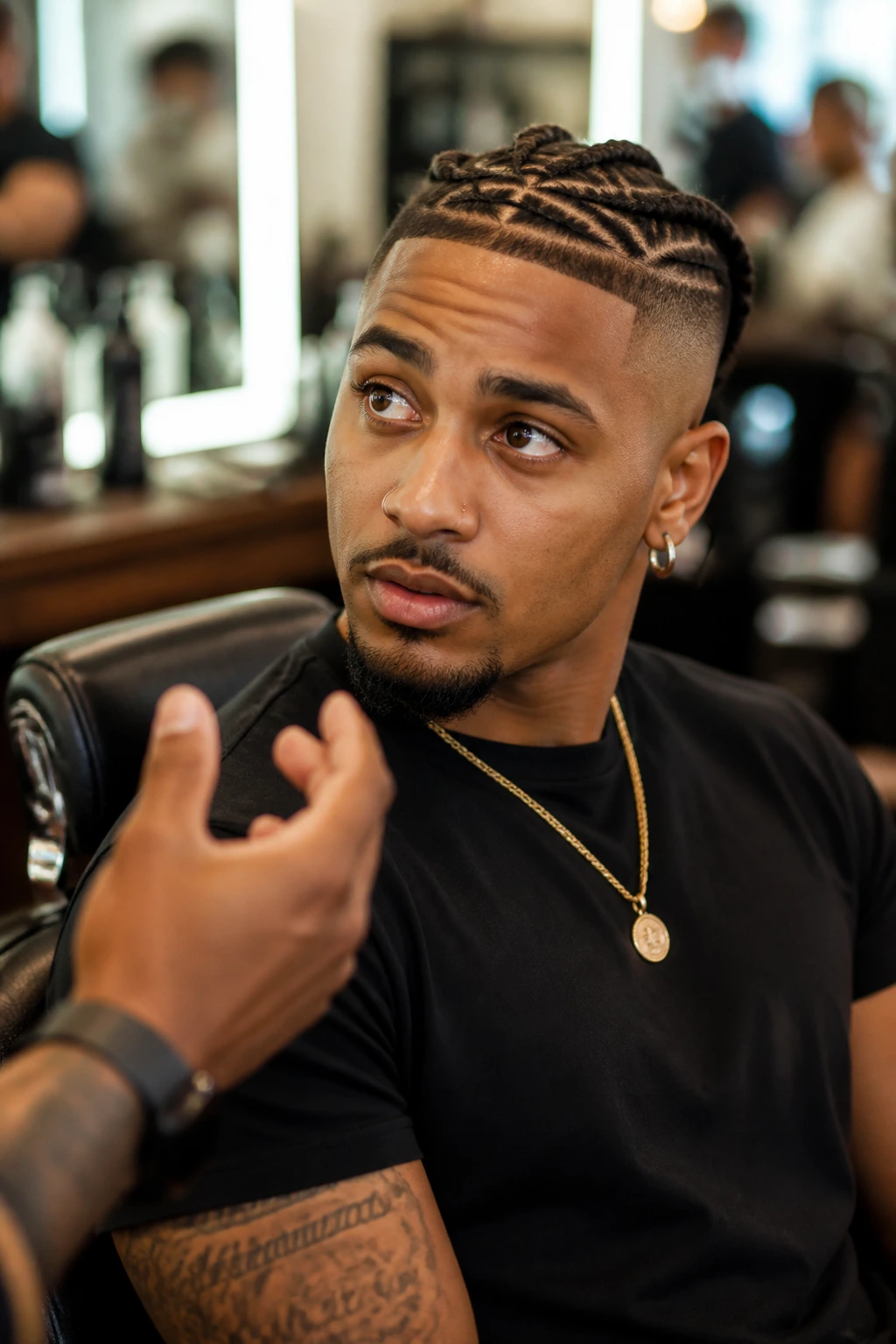
A good braid style with shaved sides and back usually starts before anyone picks up a comb. The barber or stylist needs to know how high you want the fade, how much hair you want left at the temples, and how exposed you want the back to feel. Say that out loud. Don’t assume the other person is reading your mind.
- Fade height: Low, mid, skin, or taper—this changes the whole mood.
- Side width: Leave more hair at the sides if you want a softer frame.
- Nape finish: Clean shave, soft taper, or carved detail.
- Part visibility: Ask how much of the part pattern you want to show.
- Length on top: Long enough for feed-ins, short enough for stitch braids, or somewhere in between.
If you’re using extensions, bring the hair you plan to wear or at least know the color and texture you want. Pre-stretched synthetic braiding hair lays flatter and saves time, while a shinier synthetic can make the braid set look newer than you might want. That little decision changes the final look more than people expect.
Tools That Keep the Parts Clean
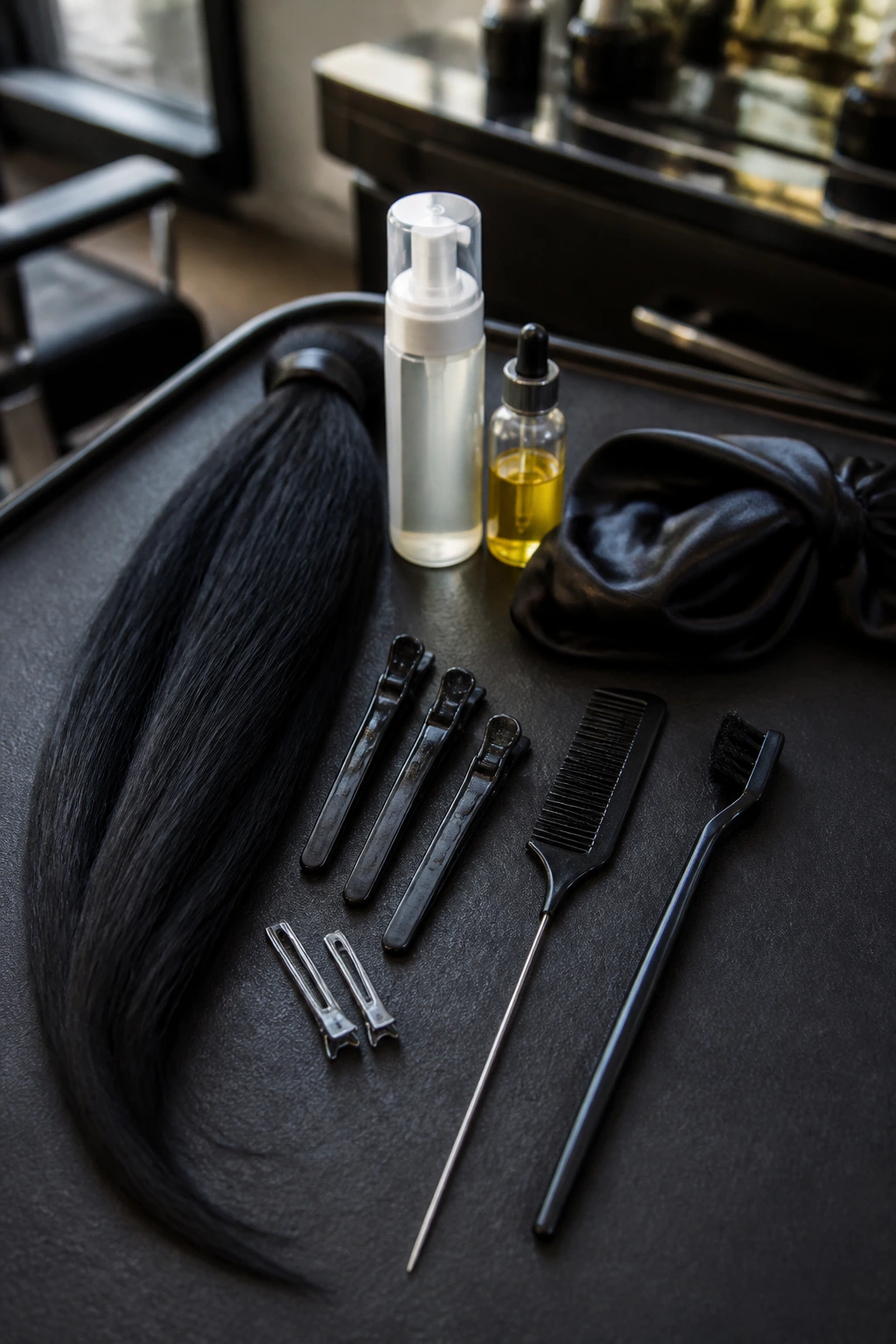
You do not need a drawer full of gadgets, but you do need the right few things.
- Rat-tail comb: The tail is what gives you the clean part lines.
- Sectioning clips: They keep loose hair out of the way while the top is being divided.
- Pre-stretched braiding hair: Better for feed-ins, knotless braids, and styles that need flatter roots.
- Light braid mousse: Helps smooth the surface without making the scalp greasy.
- Edge brush: Useful for laying baby hairs lightly, not flooding the forehead with product.
- Satin scarf or bonnet: Keeps the shaved areas from rubbing and keeps the braid roots neater overnight.
- Small hair oil or scalp applicator: A little goes a long way, especially along the part lines.
If you’re doing the style at home, a handheld mirror matters more than people think. You need to see the back of the head, not guess at it. Guessing is how nape fades get missed and how part lines drift.
How to Wear the Look Without Overdoing It
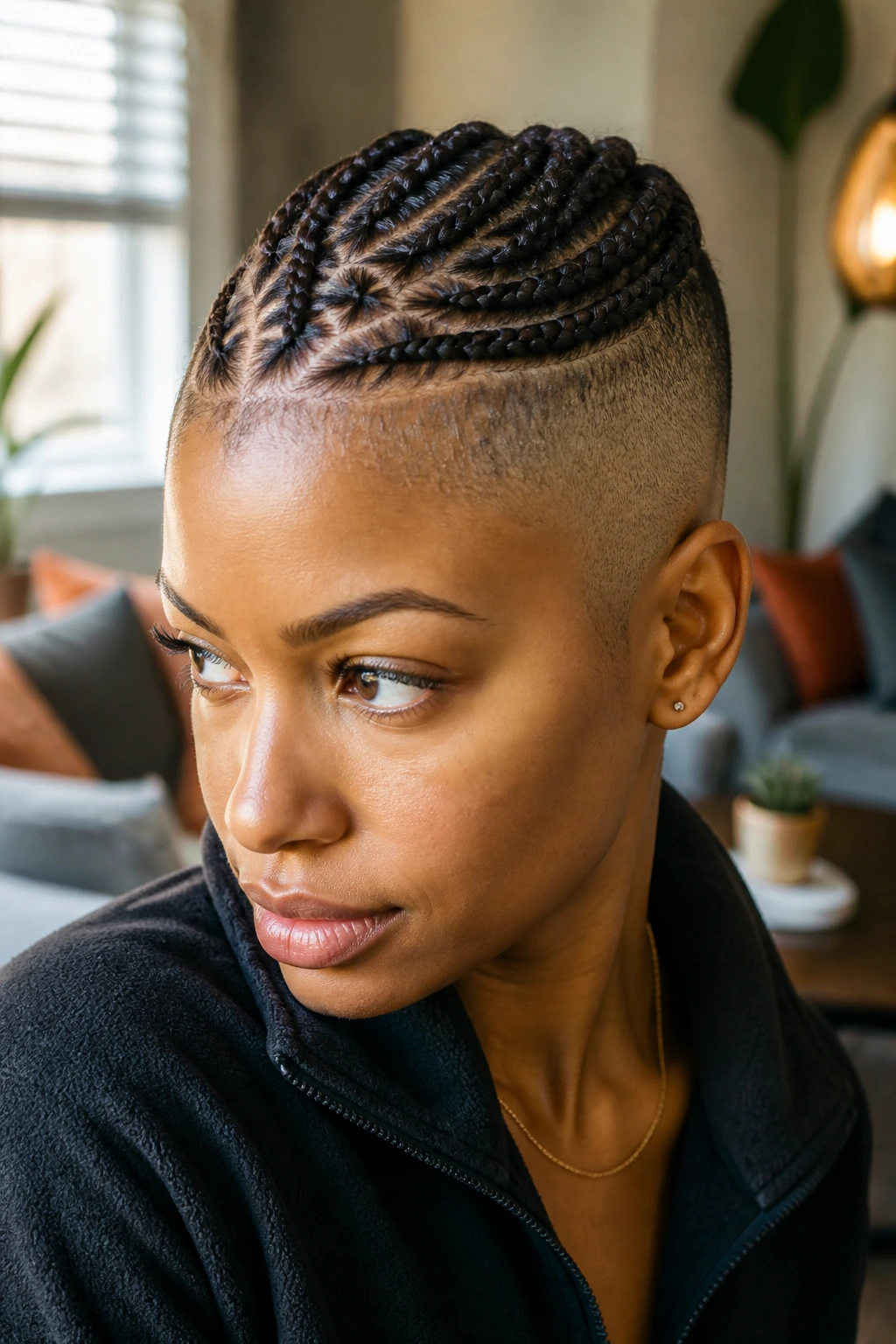
Presentation: Keep the line-up crisp and the braids clean so the haircut reads on purpose. If the style is already busy—say, criss-cross parts or starburst braids—skip heavy accessories and let the shape do the work.
Accents: Cuffs, beads, thread, and a single hair ring can change the mood fast. Use one accent lane instead of scattering five different extras across the head. The shaved sides and back already give you contrast; you do not need to pile on more contrast just because it’s available.
Proportion: Bigger braids suit a stronger fade and a more open nape. Smaller braids make softer tapers look neat instead of severe. That balance is the part people miss when they choose a style from a photo and forget their own head shape.
Where it works: This whole family of styles can read polished, sporty, dressy, or casual depending on braid size and finish. A slick ponytail leans athletic. A crown braid feels more formal. A braided bob with a clean fade can go either way, which is why I keep coming back to that shape.
Maintenance, Retouching, and Night Care
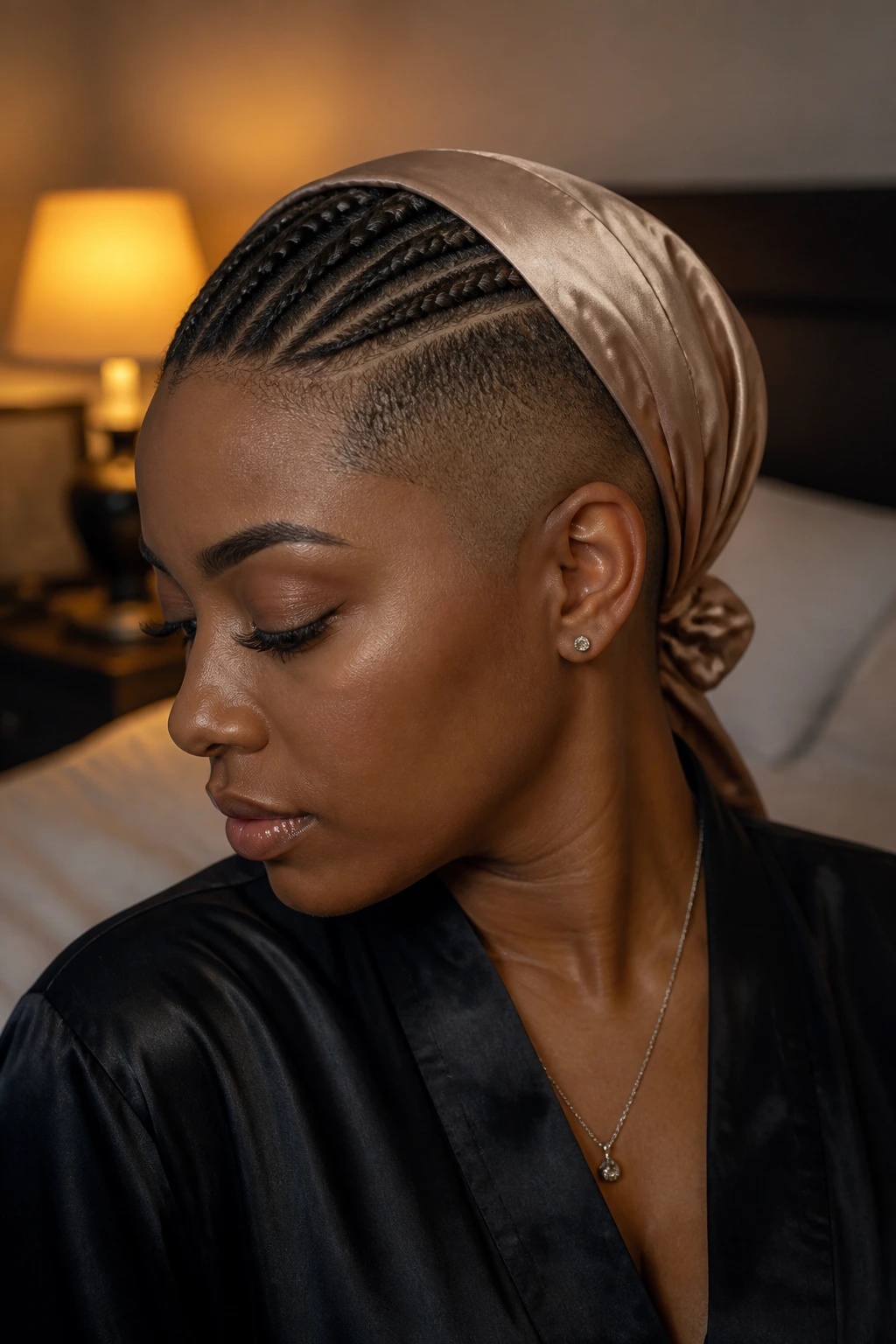
The style will stay sharp longer if you treat the shaved sections and the braids as separate jobs. The shaved sides and back need the haircut refreshed more often than the braids need to be fully redone. In practice, that means a line-up or fade touch-up every 2 to 3 weeks if the hair grows fast. If the fade goes fuzzy, the whole style loses its edge even when the braids themselves are still neat.
Wash the scalp every 1 to 2 weeks, depending on sweat, product buildup, and how much oil you use. A diluted shampoo or a braid cleanser works better than flooding the head with heavy product. Dry the roots fully. Damp braid roots are where smells and buildup start, and that is not the kind of surprise anyone wants.
At night, wrap the braids with a satin scarf or wear a bonnet that fits over the shaved sections too. If the scarf only covers the top and leaves the sides rubbing on the pillow, the fade starts looking rough faster than it should. If the style has curls or loose ends, gather them gently before you sleep so they do not tangle into one knot at the back of the neck.
For a longer wear time, plan on removing most braided styles between 4 and 8 weeks, depending on the type, thickness, and how fast your hair grows. Micro braids and very small feed-ins tend to ask for more patience and more careful detangling when they come out. Jumbo styles usually show wear sooner at the root. The braid pattern might still look fine, but the scalp tells the truth.
Common Mistakes That Make the Style Fall Flat
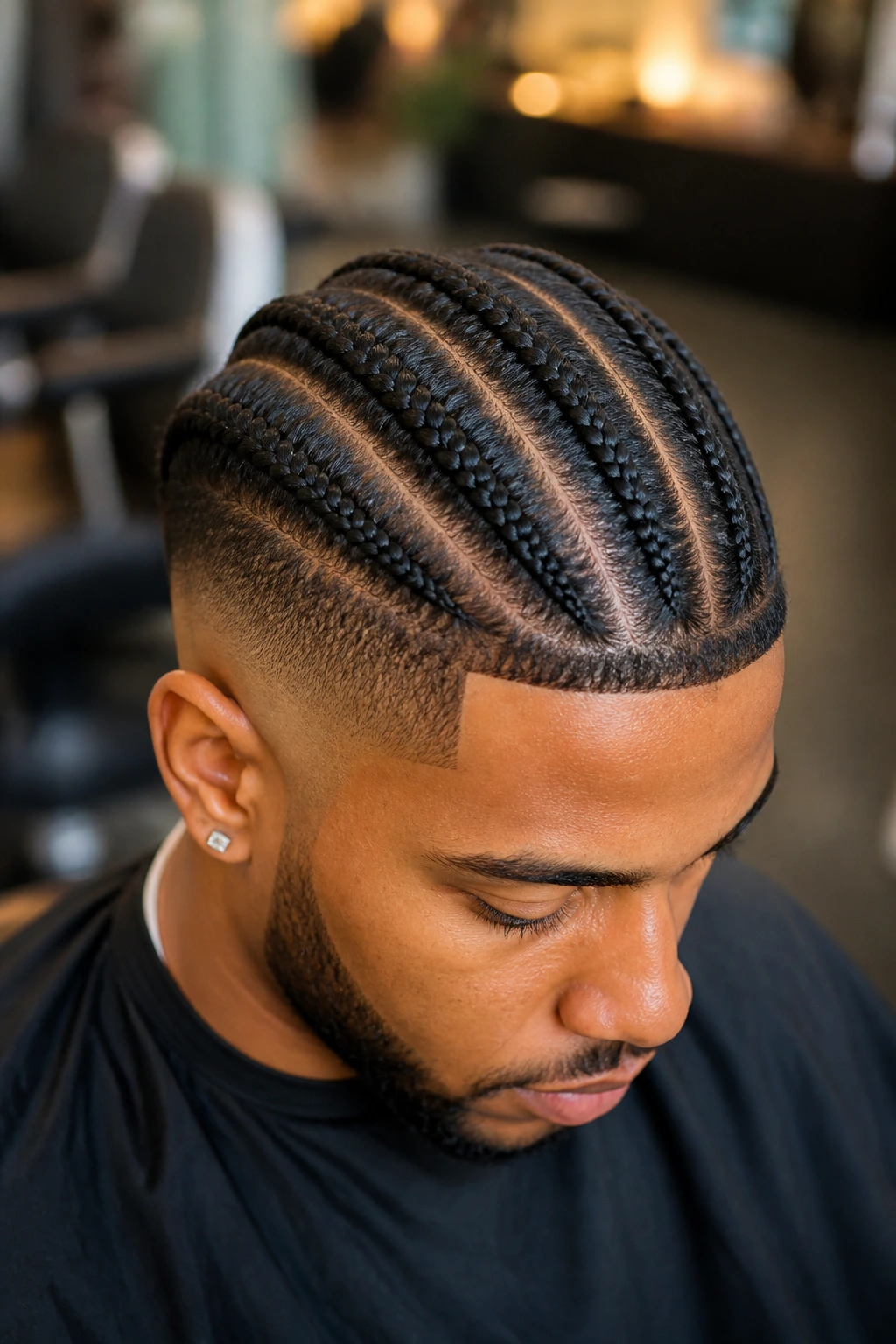
The biggest mistake is choosing a fade that is too high for the braid style. A high skin fade can look strong with a mohawk or side-swept lemonade braids, but it can make simple cornrows look like they’re hovering. The fix is simple: match the height of the cut to the amount of braid volume on top.
Another problem is tension. Tight is not the same thing as neat. If the roots hurt, if the scalp throbs, or if you see little bumps along the hairline, the style is too tight. Ask for less pull on the first row and avoid braids that are anchored so hard they drag the edges backward. That’s not protective. It’s damage with a good part line.
Overloading with product is another one. Heavy gel and thick edge control can leave white flakes, sticky roots, and a dull finish on shaved areas. A light mousse, a small amount of edge control, and a clean scarf at night usually do more than a jar of goop ever will.
And then there’s grow-out neglect. The fade grows in fast. If you leave it alone too long, the style gets fuzzy around the ears and the nape before the braids themselves are ready to come out. A quick touch-up keeps the contrast alive.
Variations and Adaptations to Try
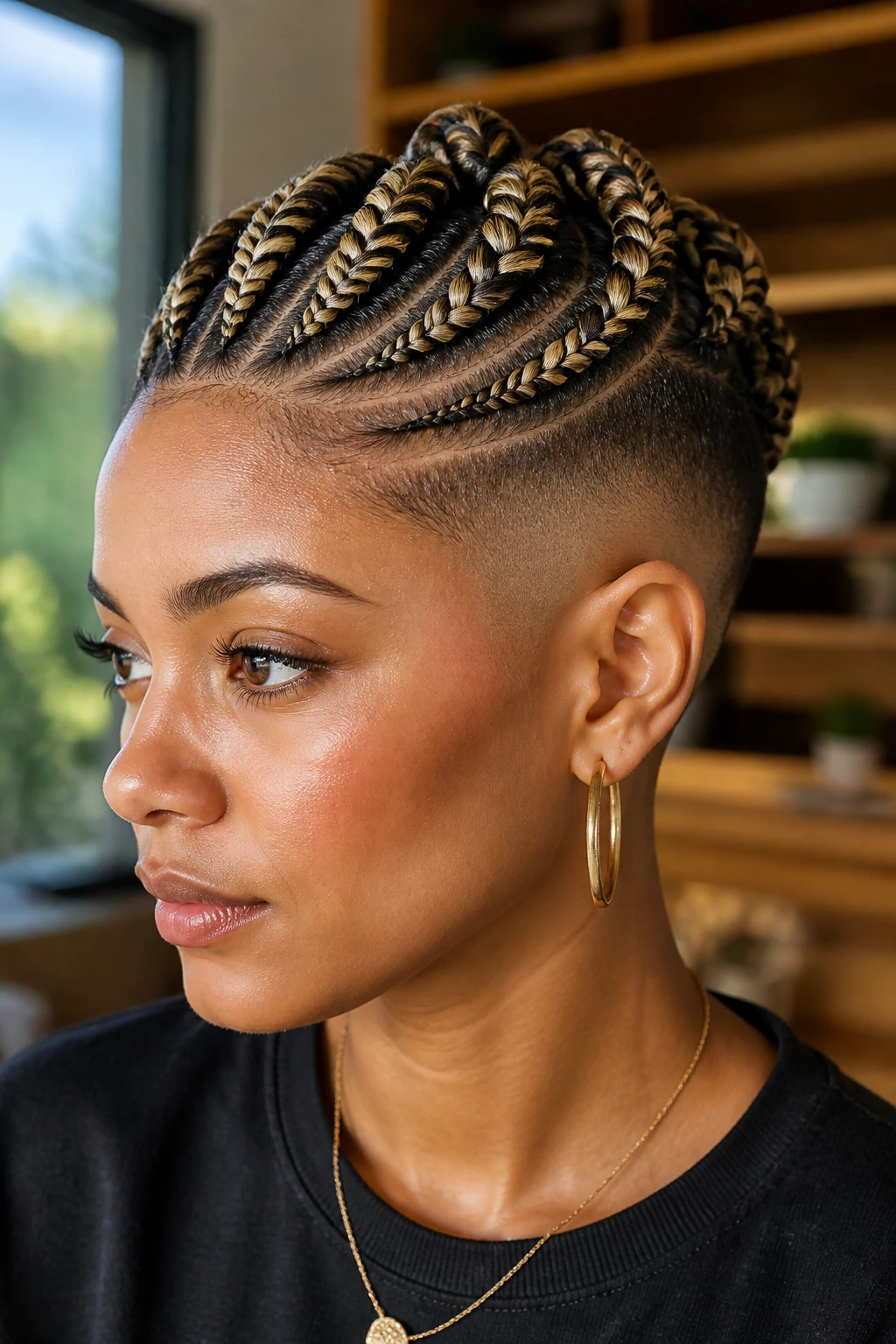
Soft Taper Version: If a skin fade feels too hard, ask for a low taper around the ears and nape. The braids still pop, but the look keeps a softer outline.
Color-Pop Version: Add blonde, copper, burgundy, or two-tone extension hair to make the braid pattern stand out more. Color looks strongest when the fade is clean, because the bare sections frame the shade instead of competing with it.
Low-Commitment Version: Choose medium feed-ins, side braids, or a braided bob if you want less time in the chair and less weight on the head. These versions are easier to wear and easier to remove.
Loc-Inspired Version: Swap some braid sets for faux locs or starter loc sections if you want more texture. The shaved sides keep the heavier finish from feeling bulky.
Accessory-Heavy Version: Add beads, cuffs, rings, and thread, but keep the base pattern simple. The shaved sides and back will make every piece of hardware more visible, so you can get away with less hair detail on top.
Frequently Asked Questions
How much hair do you need on top for braids with shaved sides and back?
You usually need enough top length to hold the braid pattern cleanly—often around 3 to 4 inches for cornrows or stitch braids, and more if you want feed-ins or a high ponytail. Shorter hair can still work, but the style choices get narrower and the parts need to be very precise.
Do shaved sides and back make braids easier to maintain?
They can, mostly because there is less bulk to detangle and less hair sitting against the neck. But the tradeoff is that the exposed areas show grow-out quickly, so the fade needs regular touch-ups if you want the style to stay crisp.
What fade works best with braids?
A low or mid fade is usually the safest place to start. Skin fades look sharp with bold styles like mohawks, side-swept lemonade braids, or asymmetrical braids, but they can feel too severe if the braid pattern is soft or minimal.
Are these styles protective?
They can be protective if the braids are not installed too tightly and the scalp stays clean. A style stops being protective the moment it pulls at the hairline, skips care for weeks, or gets left in long enough that buildup and matting take over.
Can fine hair handle shaved-side braid styles?
Yes, but the braid size and tension matter. Fine hair usually does better with medium sections, knotless starts, or lighter styles instead of jumbo braids or heavy accessories that pull at the roots.
How often should the shaved sides and back be retouched?
Most people need a touch-up every 2 to 3 weeks if they want the shape to stay sharp. If your hair grows fast or the fade is a major part of the style, you may want to tighten it sooner.
What if the braids feel tight after a few hours?
That is a sign to speak up early. Mild firmness at the root is normal; pain, throbbing, bumps, or a headache are not. If the tension does not ease quickly, the braid should be loosened or redone before it starts stressing the hairline.
Can you mix braids and twists in the same style?
Absolutely. In fact, braid-and-twist combinations look especially good with shaved sides and back because the texture contrast has room to show. Just keep the pattern simple if you’re using both, or the design can start to look crowded.
Keeping the Shape Crisp Between Visits
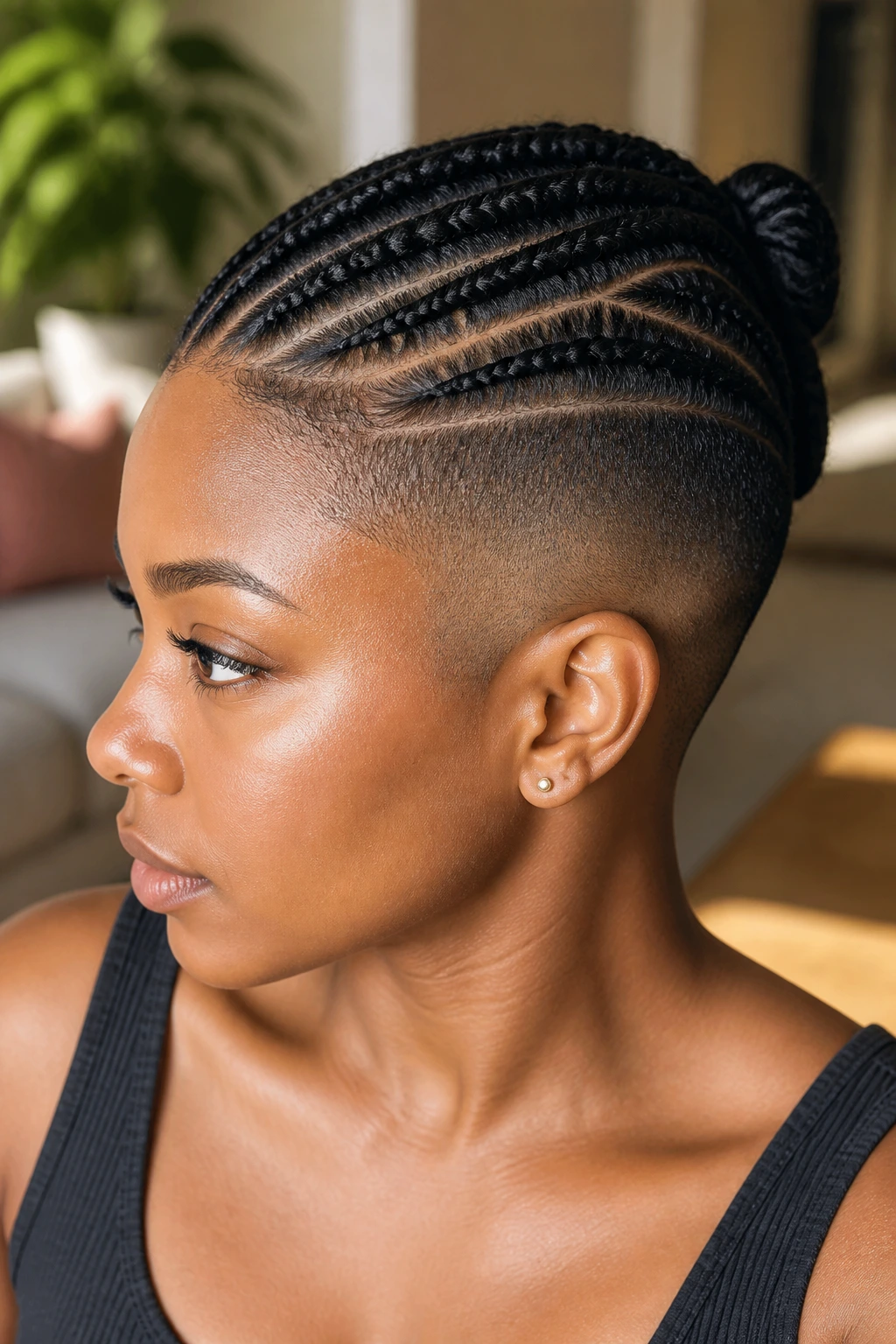
The best braids with shaved sides and back are the ones that still look intentional after the first few days of living in them. That means the fade, the nape, the parts, and the braid finish all need a little attention—not a lot, just enough to keep the shape clear. A quick line-up, a light scalp clean, and a nightly wrap do more than most people think.
What I like about this whole collection is that it lets you choose how hard or soft you want the look to hit. You can go geometric, playful, minimal, or dramatic without changing the basic formula. Keep the cut clean, keep the tension honest, and the style will do the rest.
