



Jumbo box braid hairstyles for Black women have a way of looking finished even when the rest of life is not. The parting is clean, the braid lines are bold, and the shape does a lot of the visual work for you. Done well, they can read soft, sharp, playful, polished, or all four in the same week. Done too tight, though, and they punish the hairline fast. That’s the part too many people gloss over.
I’ve always liked jumbo box braids because they do not hide their structure. You can see the grid at the scalp. You can see the weight of the braid itself. You can see when the parting is crisp, and you can also see when someone got lazy and rushed the front rows. That honesty is part of the appeal. A neat set of jumbo braids can carry an outfit without needing much else.
The range is what makes them worth studying. One install can become a high ponytail, a low bun, a one-shoulder sweep, or a scarf-wrapped look on a day when you want to keep the style moving but not start from scratch. The trick is choosing the right shape, the right length, and the right amount of tension. Get those three things right, and the style does half your styling for you.
Why This Collection Is Worth Your Chair Time
-
Less daily handling: Once jumbo box braids are installed cleanly, a satin scarf at night and a light refresh in the morning can carry them for days without a full restyle.
-
Big visual payoff: The size of the braids makes triangle parts, curved parts, cuffs, beads, and color shifts easier to see from across the room.
-
Faster install than tiny braids: Fewer sections usually mean less time in the chair and less tugging at the scalp, which matters more than most people admit.
-
Easy to switch up: The same set can live in a center part, a ponytail, a bun, or a side sweep without a complete redo.
-
Works across lengths: Shoulder-grazing, mid-back, and waist-length sets each change the mood in a different way, so you can match the style to your schedule.
-
Plays well with accessories: A few cuffs or beads can do real work here because jumbo braids leave enough surface area for the details to show.
What Makes Jumbo Box Braids Feel Different From Smaller Braids
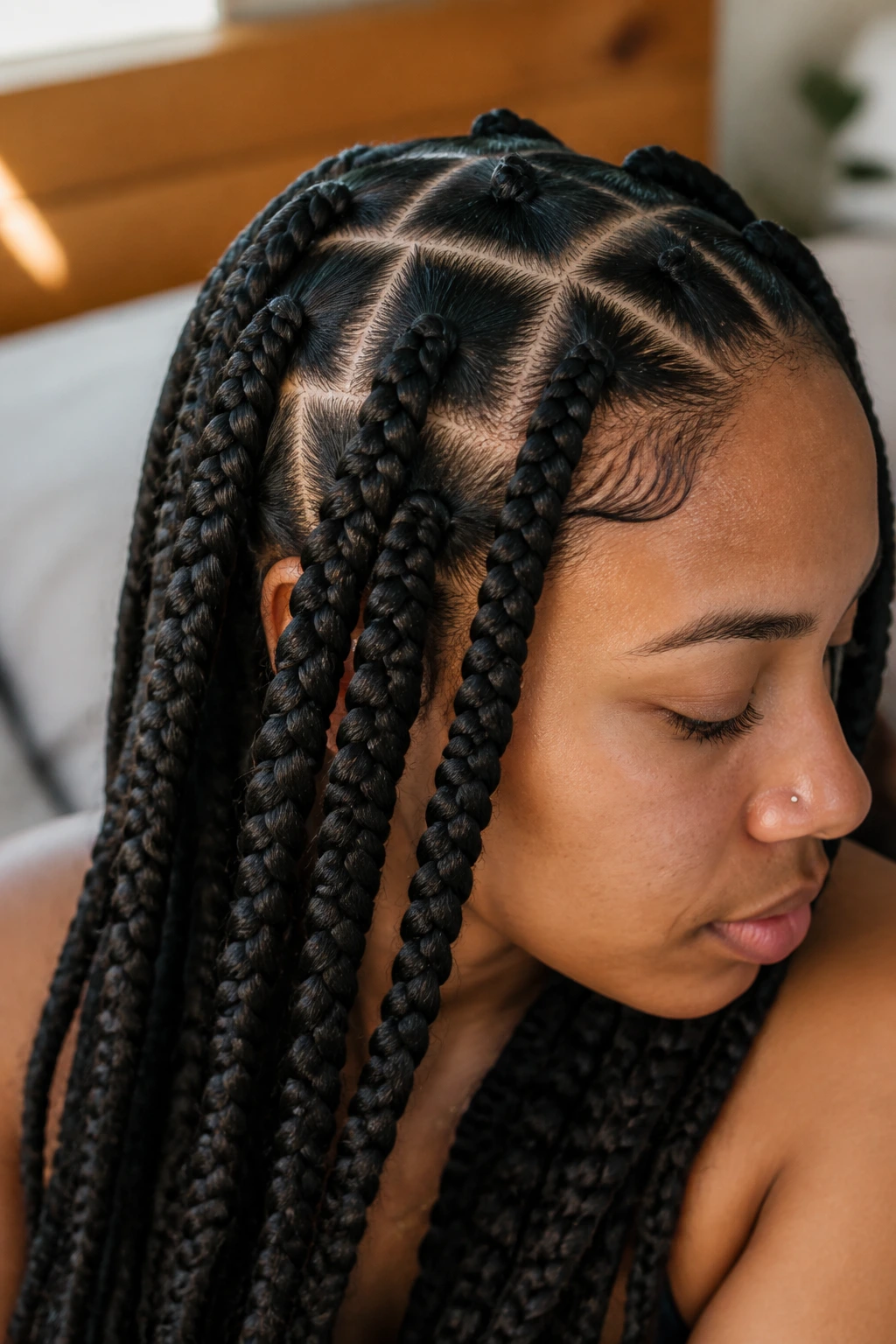
Jumbo braids are not just “bigger braids.” They behave differently on the scalp, in the mirror, and after the first few days of wear. The fewer the sections, the more important each part becomes. A slightly crooked square on a small braid set can hide in the crowd. On jumbo braids, everybody sees it. That’s not a flaw. It’s a warning label and a gift at the same time.
There’s also the weight question. Bigger braids mean fewer individual pieces, but each braid carries more hair, more extension bulk, and more movement. The American Academy of Dermatology has long warned that braids pulled too tight can lead to traction alopecia, and jumbo braids make that especially obvious because the pull concentrates at the hairline and the nape. If the roots sting on day one, the style is already wrong.
The upside is huge, though. Jumbo box braids give you shape fast. They frame the face, show off earrings, and make color or parting patterns matter more. I like them when the goal is clarity. No fluff. No hiding. Just a style that knows exactly what it is.
The weight tradeoff is the whole game
If you want a long set, ask for the front rows to stay a touch looser than the rest and keep the braid size consistent from temple to crown. If you want a lighter feel, shoulder length or a layered cut will usually sit better than waist-length ends. That’s not fashion advice. That’s neck comfort.
How to Choose the Right Jumbo Box Braid Look for Your Face and Routine
The first question is not “Which one looks prettiest?” It’s “Which one will still feel good on day five?” That sounds less glamorous than a mood board, but it saves regret. If you wear glasses, headphones, or hooded jackets, shoulder-grazing and side-swept sets usually behave better than extra-long braids. If you want your earrings to show, choose something that clears the jawline and keeps the weight off the front.
Face shape matters less than people think, but it still nudges the result. A center part creates a long vertical line. A deep side part softens sharp features. A high ponytail opens the face and pushes the eye upward. Triangle parts and curved parts add design at the scalp, which is useful when the actual braid shape is kept simple.
And then there’s your real routine, the one nobody puts on a salon consultation card. If you work out often, live in heat, or hate anything touching your neck, a bob, shoulder length, or a high updo is the smart pick. If you want one set to carry you through dinners, weddings, and lazy weekends, longer braids with flexible styling options usually earn their keep.
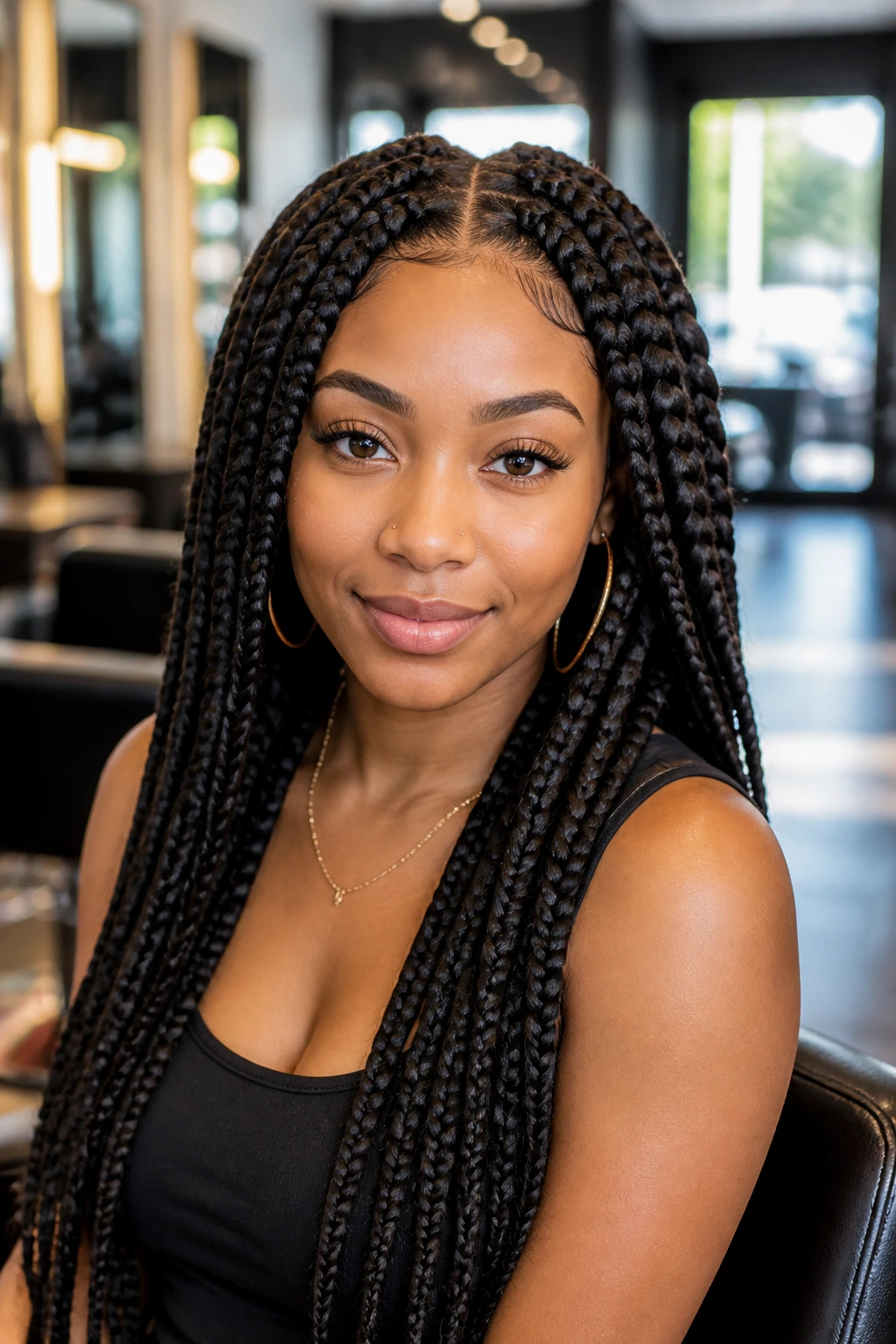
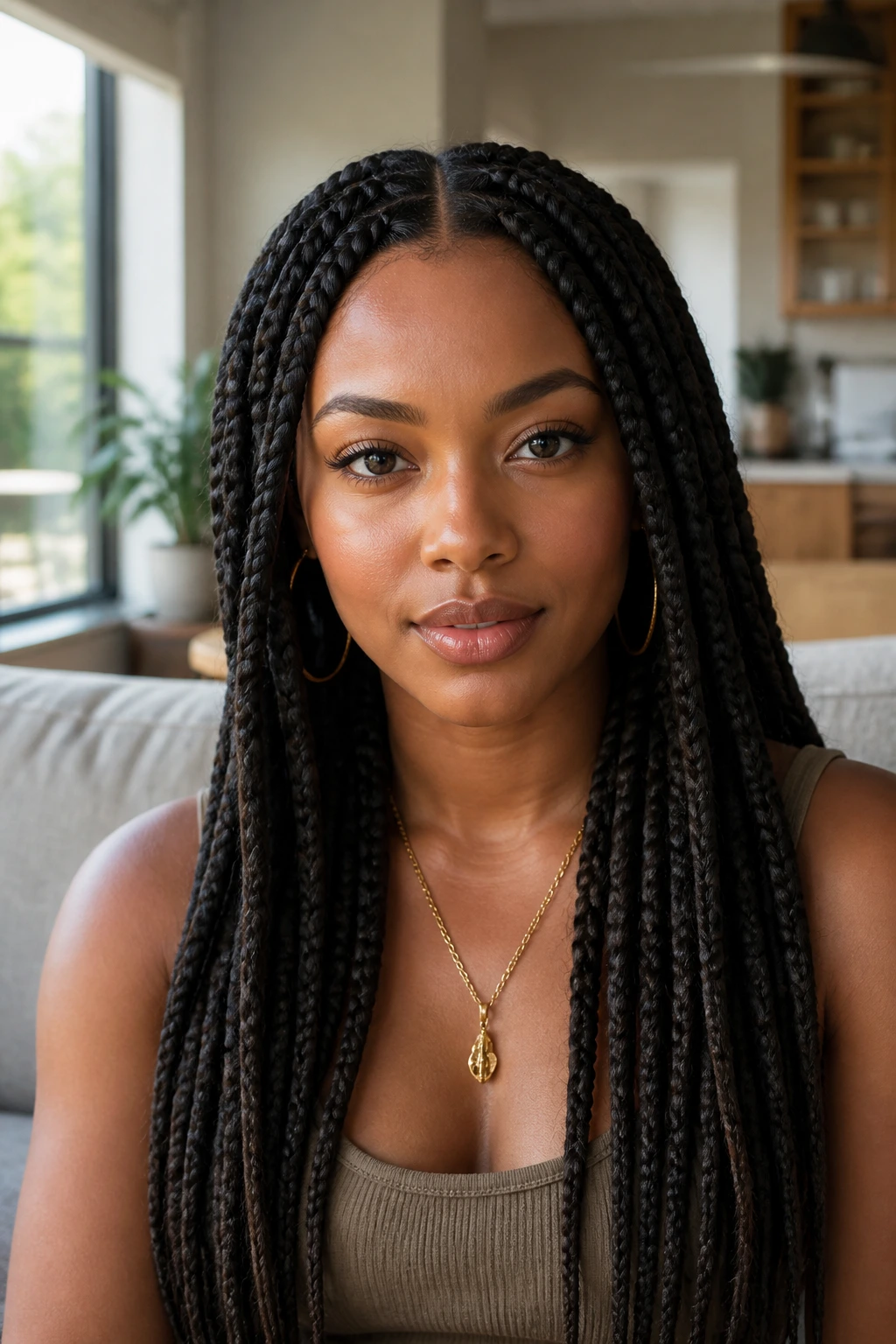
1. Waist-Length Center-Part Jumbo Box Braids
This is the classic for a reason. A clean center part and long, straight-hanging braids give the whole head a strong vertical line, and that line does a lot of quiet work for the face and neck. It’s the version I’d call the “clear statement” set: nothing noisy, nothing fussy, just shape.
The style looks best when the part is sharp from the front hairline to the crown and the braid bodies hang evenly on both sides. If your face feels rounder, the center part stretches the shape without trying too hard. Ask your braider to keep the front rows neat but not tight, because the front line is where jumbo braids either look expensive or feel painful.
2. Side-Swept Jumbo Box Braids
Want the same braid size with less symmetry? Go side-swept. A deep side part sends most of the length over one shoulder and gives the whole set a softer edge, which is useful if a center part feels a little too strict on you. It also shows off earrings better than people expect.
I like this style on days when you want movement without touching the whole install. Tuck the lighter side behind the ear, let the heavier side drape forward, and let one or two cuffs sit near the collarbone. That tiny bit of asymmetry changes the whole mood.
3. Shoulder-Grazing Jumbo Box Braids
Shoulder length is the practical sweet spot that too many people skip. The braids still have enough length to swing, but they do not drag across seat backs, jacket collars, or the edge of a purse strap every time you move. That matters more than photos give it credit for.
This cut also keeps the neck line open, which makes it easier to wear chunky earrings, crewneck tees, and blazers without the hair swallowing everything. I prefer shoulder-grazing jumbo braids for commuting, travel, and weeks when I know I’ll be putting my hair up and down a dozen times. They stay useful.
4. High Ponytail Jumbo Box Braids
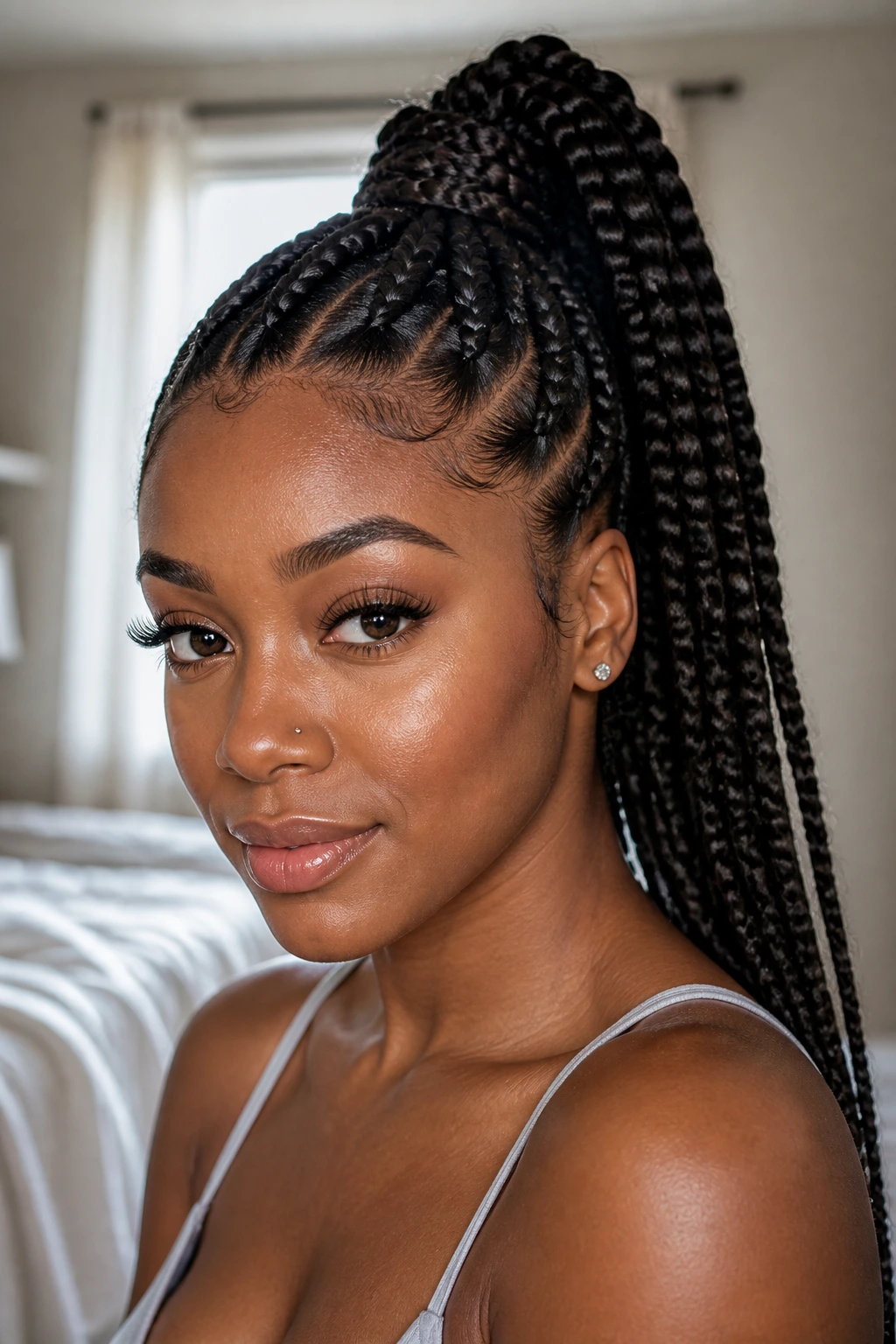
A high ponytail changes the posture of the whole style. It lifts the face, clears the shoulders, and makes the braids feel lighter because the weight sits higher instead of dragging at the back. The catch is tension. The base has to be secure, not strangled.
For the cleanest finish, gather the braids into a high ponytail and wrap one braid around the elastic so the tie disappears. Leave the crown smooth but not flattened into submission. If the scalp is sore by evening, the ponytail was too ambitious. That base should feel snug, not punitive.
5. Half-Up, Half-Down Jumbo Box Braids
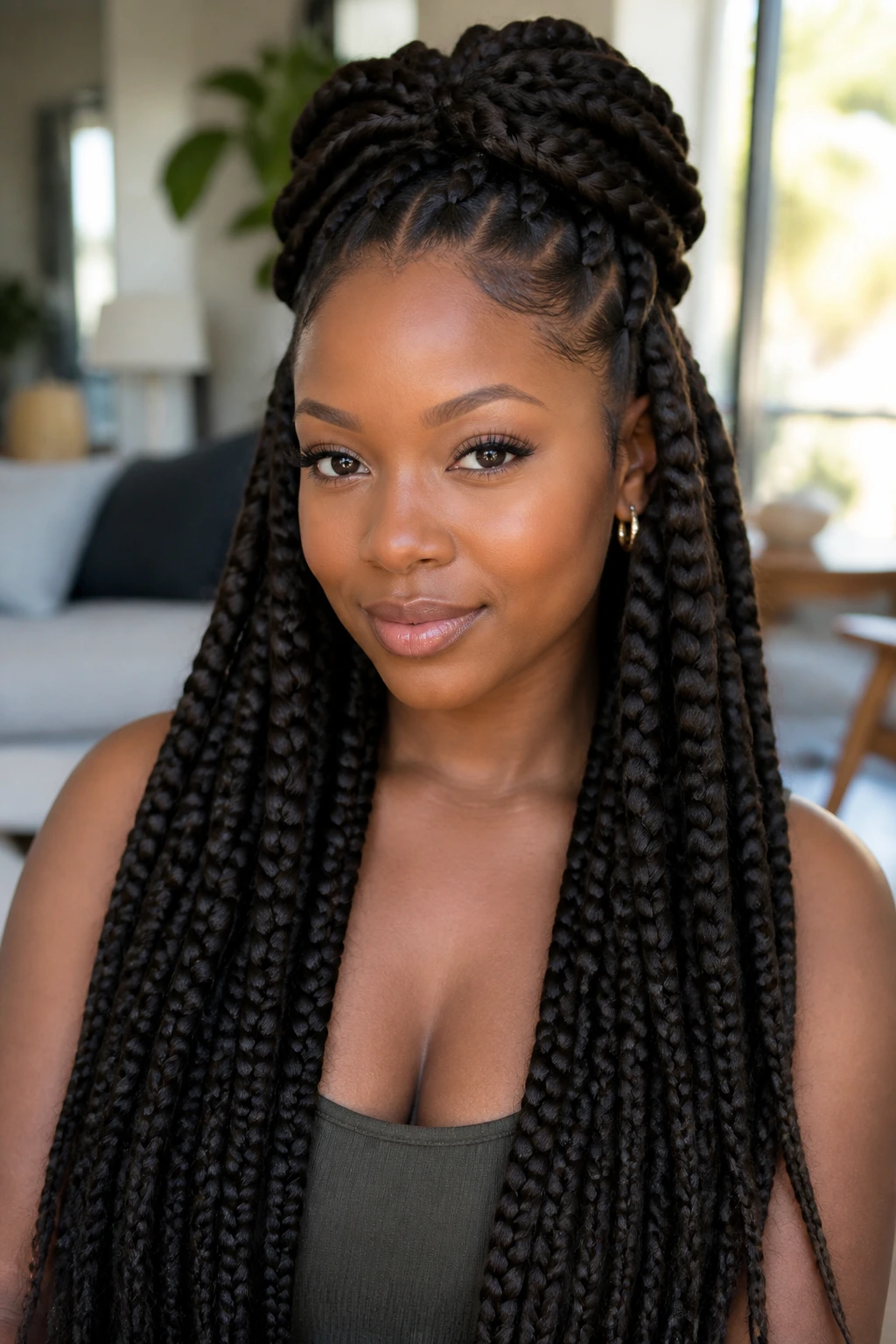
Half-up, half-down is the style I reach for when I want the face open but I still want the length to do its thing. It gives you that small lift at the crown while the rest of the braids fall freely, which means earrings, makeup, and neckline all get a chance to show up.
Why it stays useful
The top section can be twisted into a bun, tied into a ponytail, or clipped back with a big barrette. The lower section keeps the movement. If you’re deciding between “too much hair in my face” and “I still want some drama,” this lands right in the middle without looking indecisive.
6. Triangle-Part Jumbo Box Braids
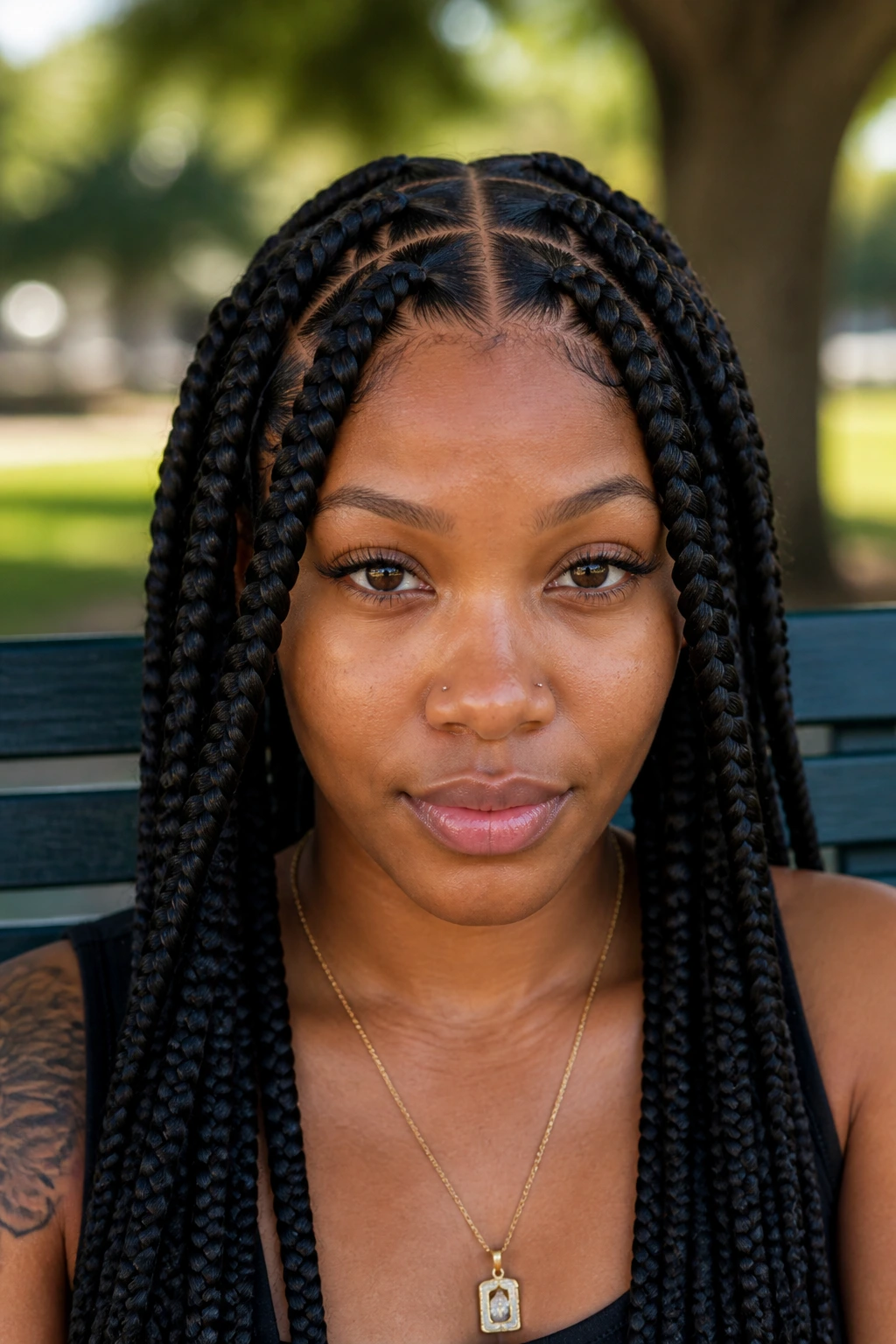
Triangle parts are for the person who wants the scalp pattern to matter as much as the braids themselves. A big triangle grid brings geometry to the front, and on jumbo braids the shape reads cleanly instead of getting lost. Square parts are classic. Triangle parts are a little sharper, a little more intentional.
This style works especially well with plain black or dark brown braiding hair because the parting does the visual heavy lifting. Keep the triangles even and big enough to match the braid size. Tiny triangle parts on jumbo braids can look crowded fast, and crowded is not the same thing as detailed.
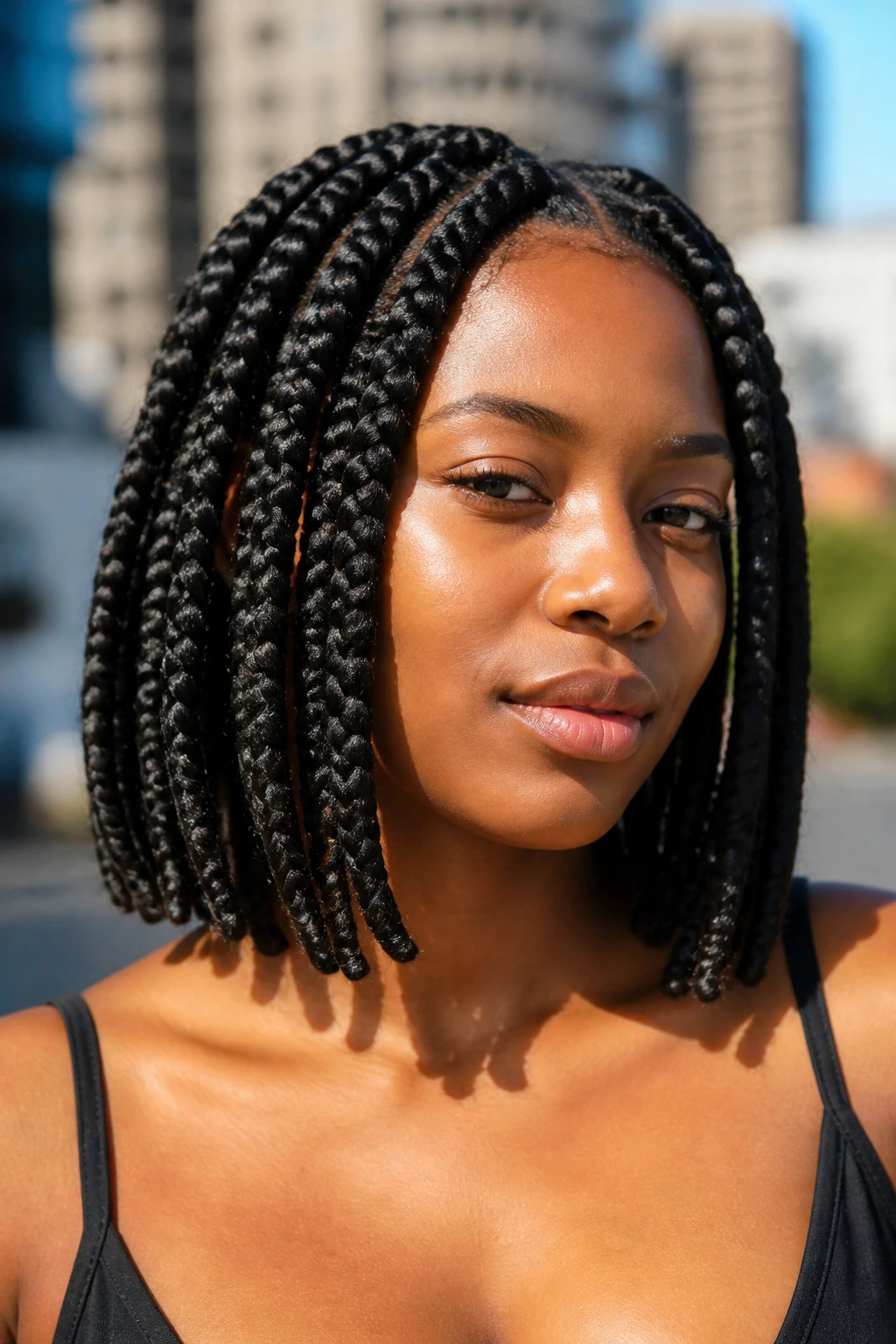
7. Chin-Length Jumbo Box Braid Bob
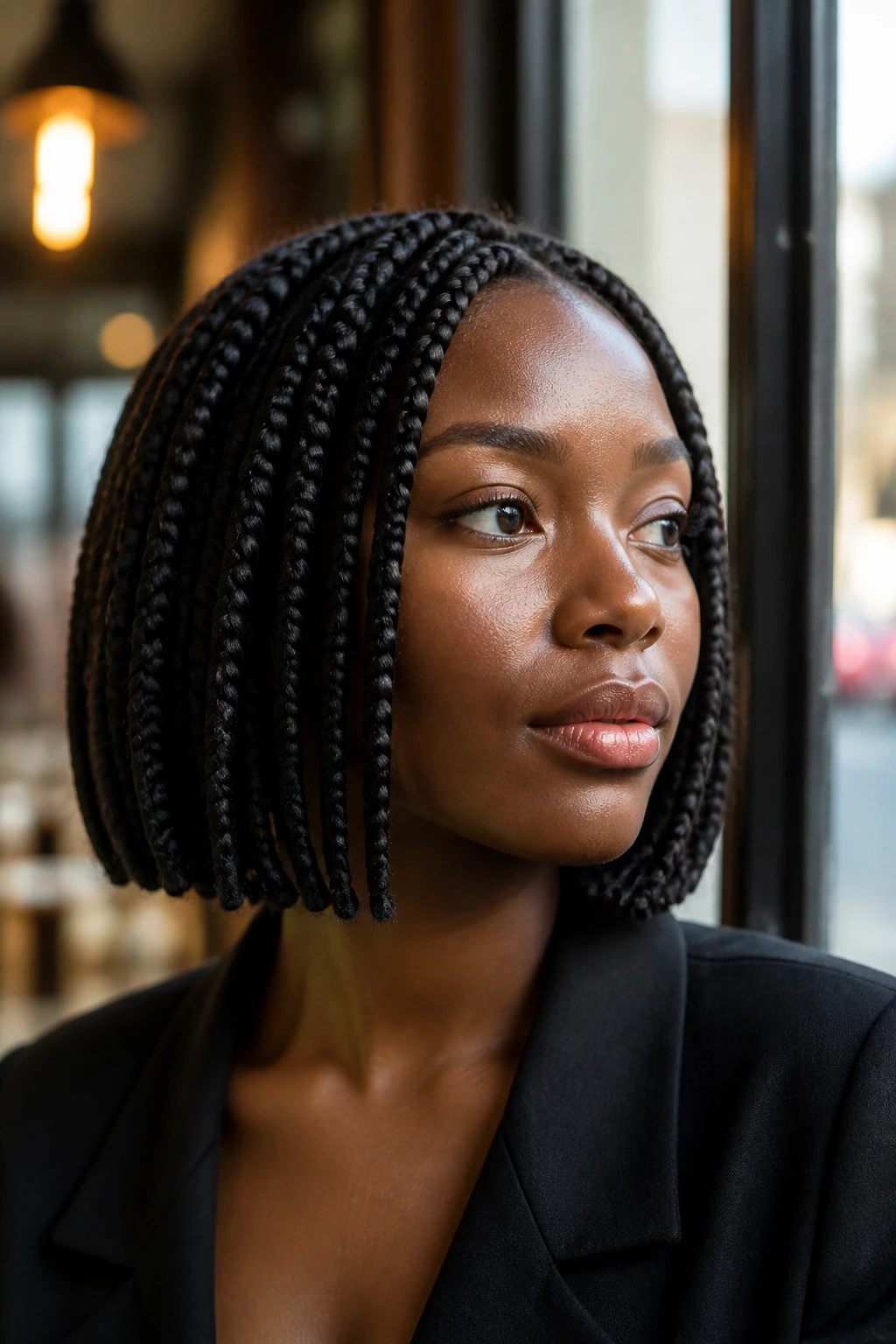
Short jumbo braids have a different energy entirely. A chin-length bob sits crisp around the jaw, keeps the neck free, and feels lighter the second you shake your head. It’s tidy, but not boring. And unlike long sets, it does not drag the eye downward.
I like this version when the hair itself should not be the whole outfit. It’s good for collared shirts, structured jackets, and weather that makes long braids feel like work. Because the ends sit closer to the face, make sure the braid tips are sealed well and the cuts are even. Short braids show sloppy trimming faster than long ones do.
8. Braided Bangs and Face-Framing Pieces
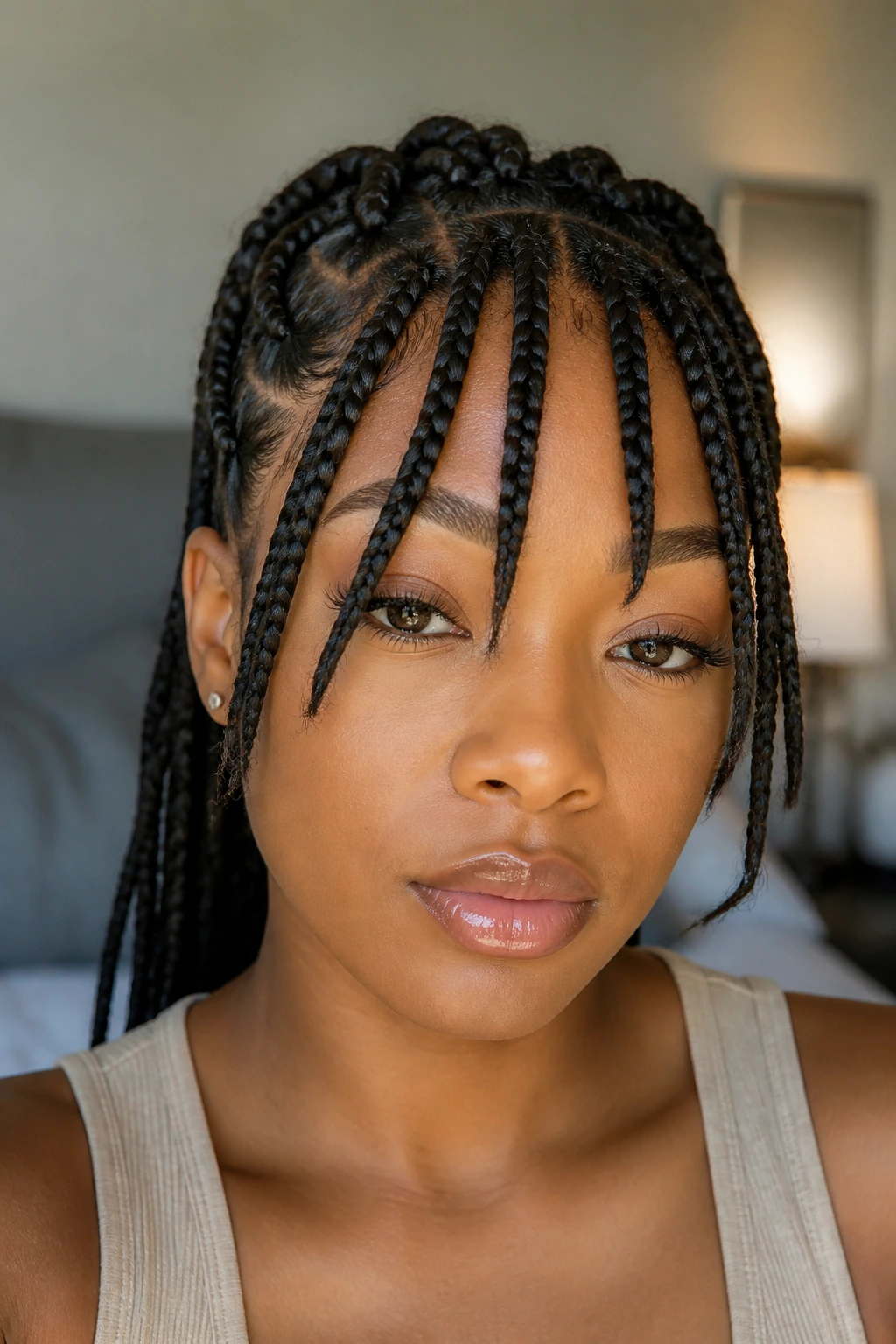
These are not bangs in the haircut sense. They’re front braids moved forward and angled to soften the forehead and cheekbones. The effect is subtle at first, then surprisingly useful once you realize how much weight it takes off the center of the face.
Keep the rest of the braids pulled back or draped behind the shoulders so the front pieces stay readable. This look is good if you want coverage without hiding your whole face. It also works well on days when you’re not in the mood for a tight center part but still want the style to feel structured.
9. Gold-Cuff Jumbo Box Braids
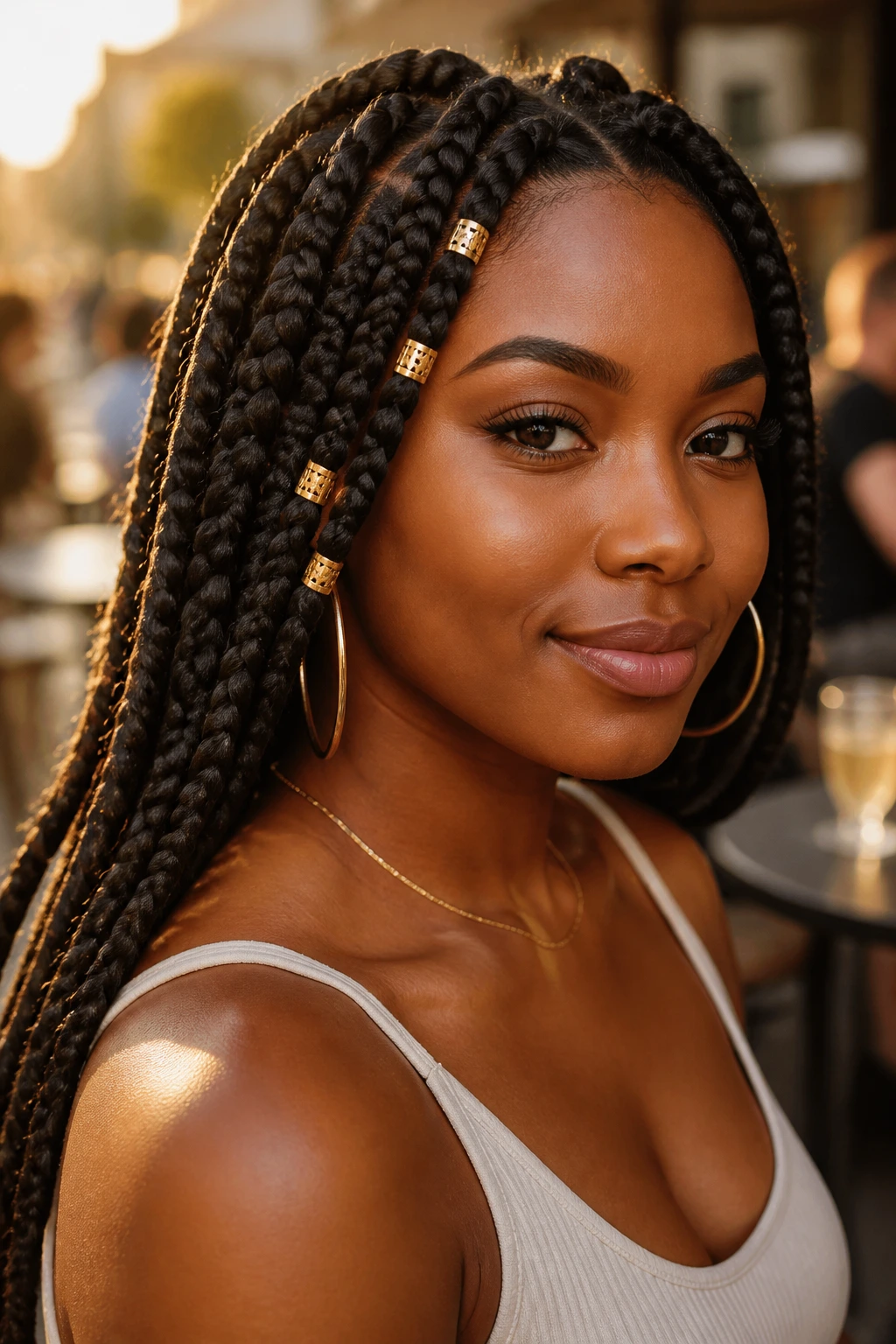
Gold cuffs are the fastest way to make a plain set feel finished. One or two well-placed cuffs near the front or around the mid-length of a few braids can catch the light in a way that looks deliberate, not crowded. The key word there is a few.
Do not line every braid with metal unless you want the head to look busy. I prefer cuffs on the front third of the style, where they show without adding weight to the ends. With jumbo braids, the accessories should underline the shape, not shout over it.
10. Beaded-End Jumbo Box Braids
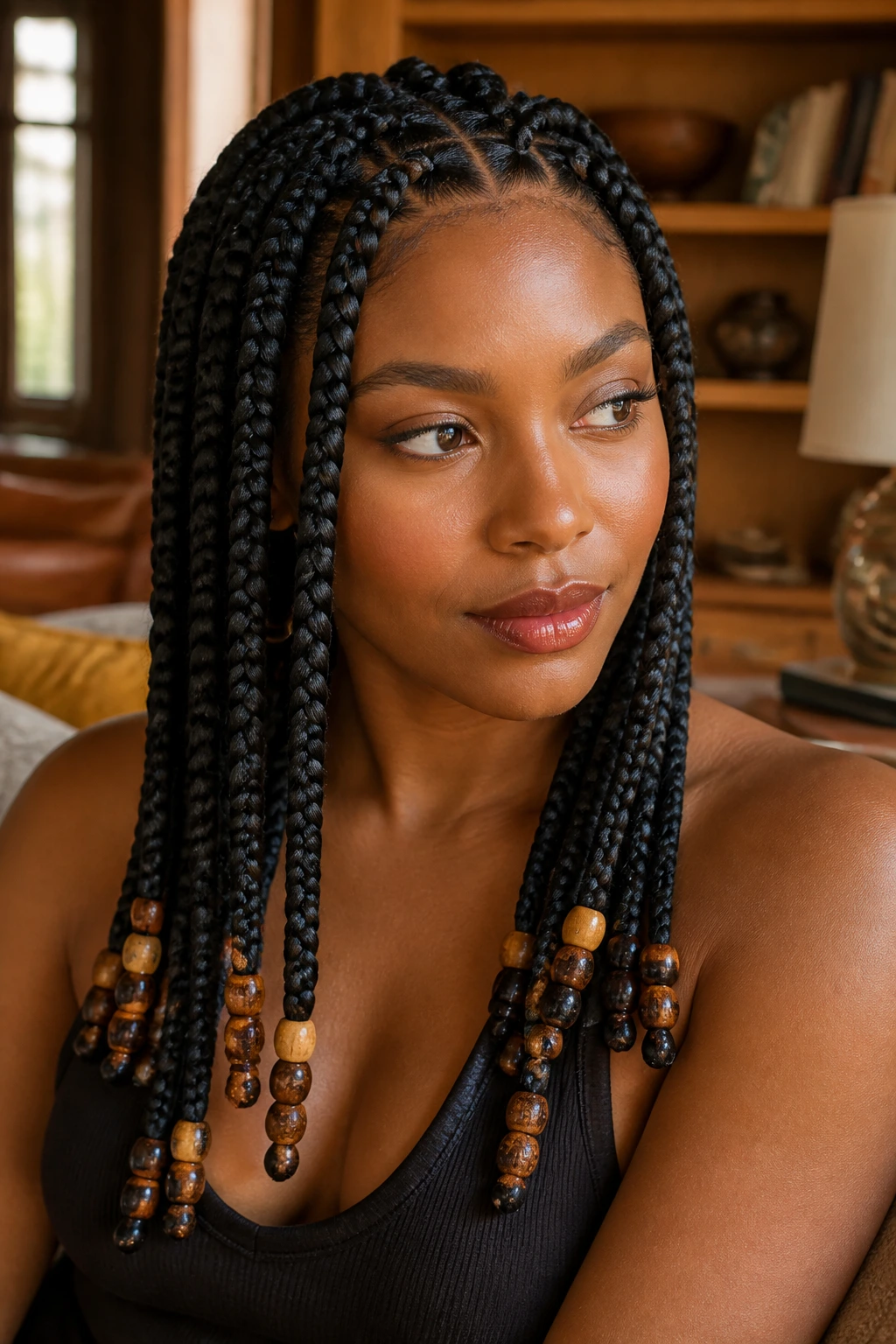
Beads change how a braid moves. You hear them before you see them, and that little click gives the whole style a different rhythm. Wooden beads feel softer and lighter. Clear or acrylic beads look sharper but can get heavy if you stack too many.
The cleanest version uses beads on a handful of braids, usually near the ends rather than up at the roots. That keeps the weight where it belongs. If the beads start pulling the ends sideways or thumping your shoulders too much, you’ve crossed from accent into annoyance.
11. Low-Bun Jumbo Box Braids
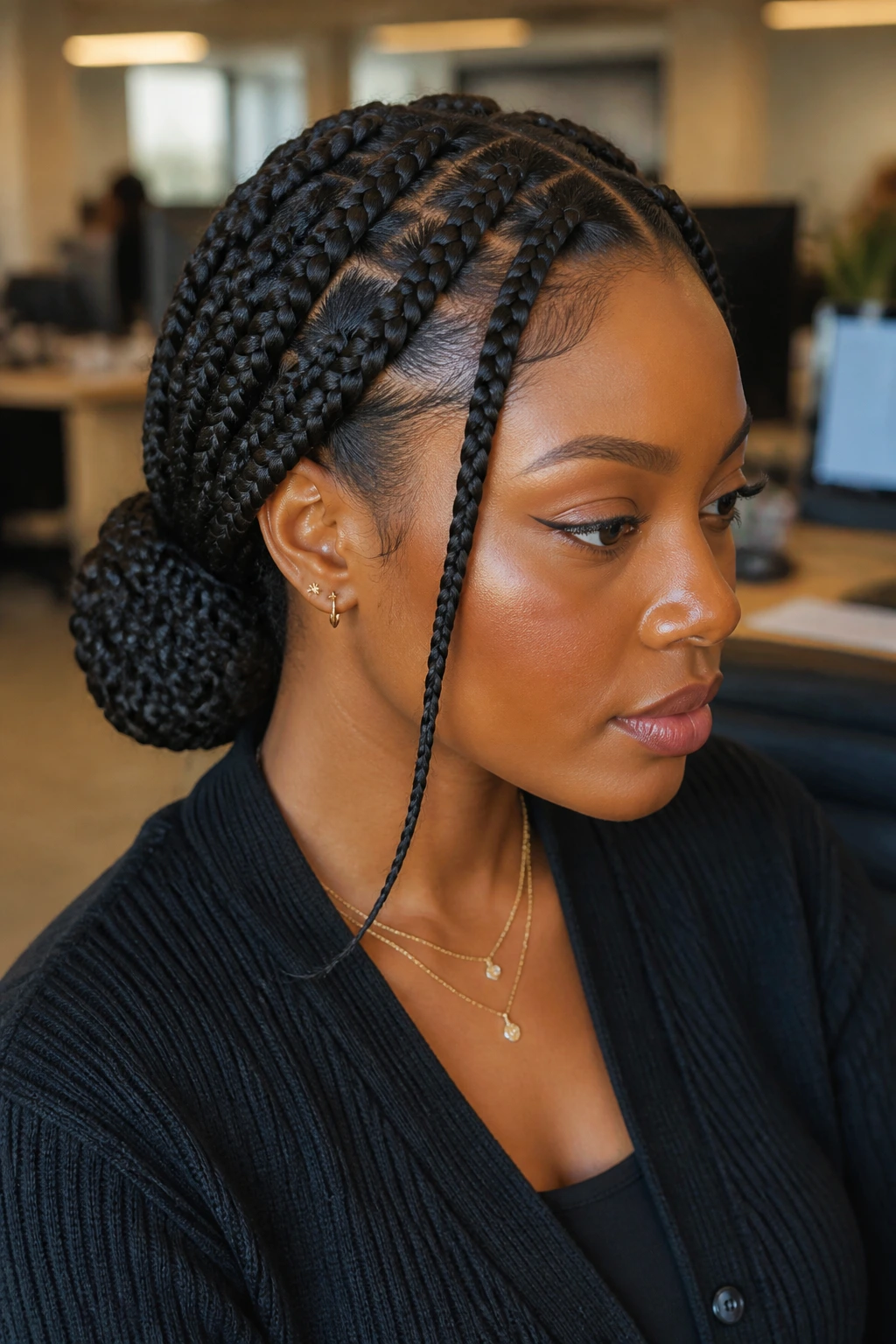
A low bun turns jumbo braids from casual to composed in a second. Gather the length at the nape, twist the braids into a compact coil, and pin or tuck the ends so the shape sits close to the head. It’s the sort of style that looks better the more intentional the parting is.
This is one of my favorites for work, dinners, and formal outfits with a closed neckline. It keeps the weight low and off the shoulders, which feels nice after a long day. Use sturdy pins or a strong elastic; flimsy bands will not hold a full head of jumbo braids for long.
12. Space-Bun Jumbo Box Braids
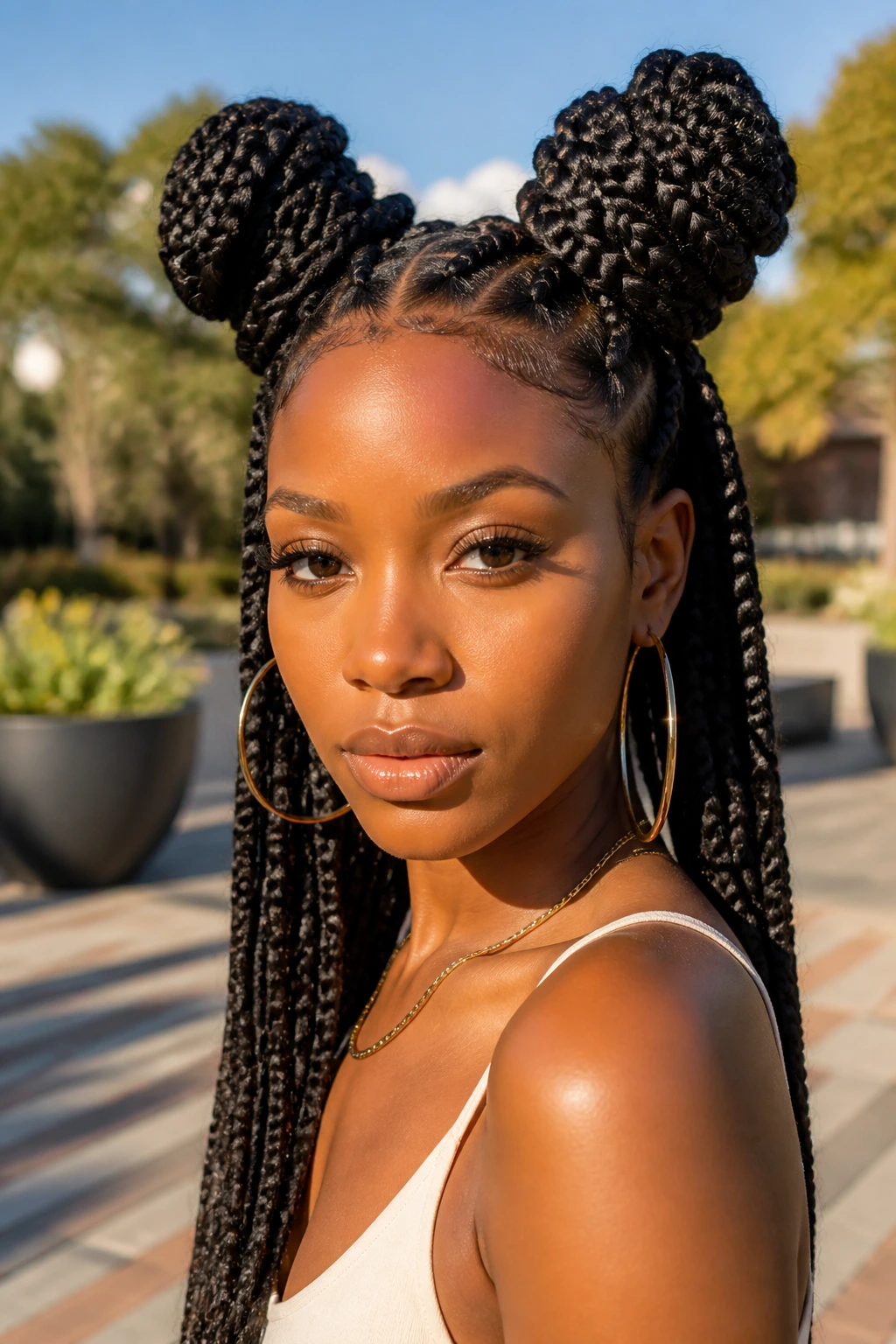
Two buns can look playful or polished depending on how tight the parting is. With jumbo braids, I prefer buns that sit slightly high and slightly loose, not cartoonish and not too tiny. The shape should feel balanced, like it belongs on an adult who knows exactly what she is doing.
If your braids are mid-back length, this style sits especially well because the buns have enough material to look full without getting bulky. Keep the front rows neat and the buns even. If one side balloons more than the other, the whole look tilts from chic to accidental very fast.
13. Halo-Crown Jumbo Box Braids
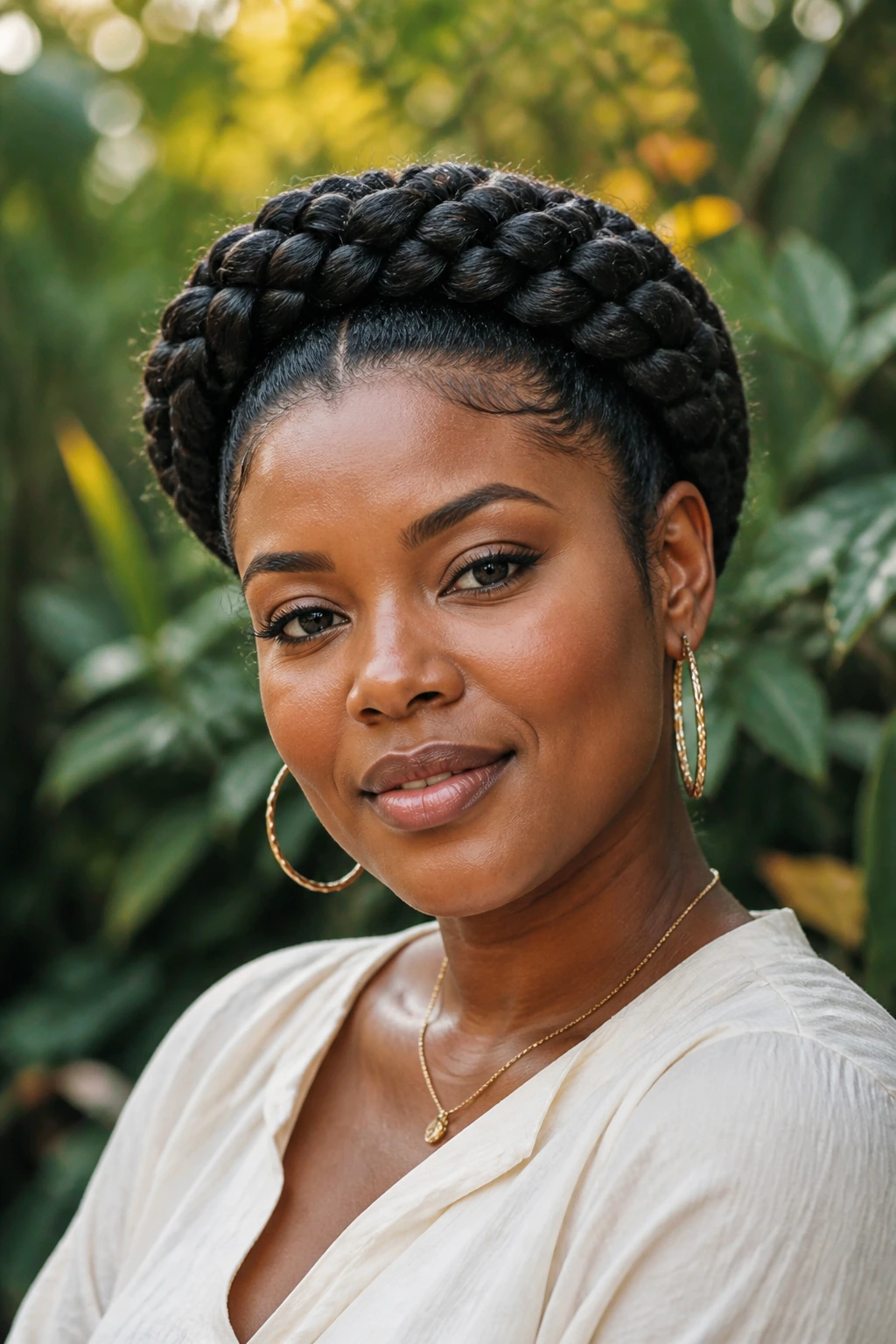
A halo crown wraps the braids around the head like a built-in headband, and that alone changes the feeling of the style. The face opens up. The ears show. The neckline looks longer. It’s a good choice when you want to wear your hair up but still want the braids visible from the front.
This style can lean romantic or severe, depending on how tight the wrap sits. I like a crown that sits just above the forehead line, not smashed flat against it. Leave the braid bodies smooth and let the crown do the talking.
14. Curved-Part Jumbo Box Braids
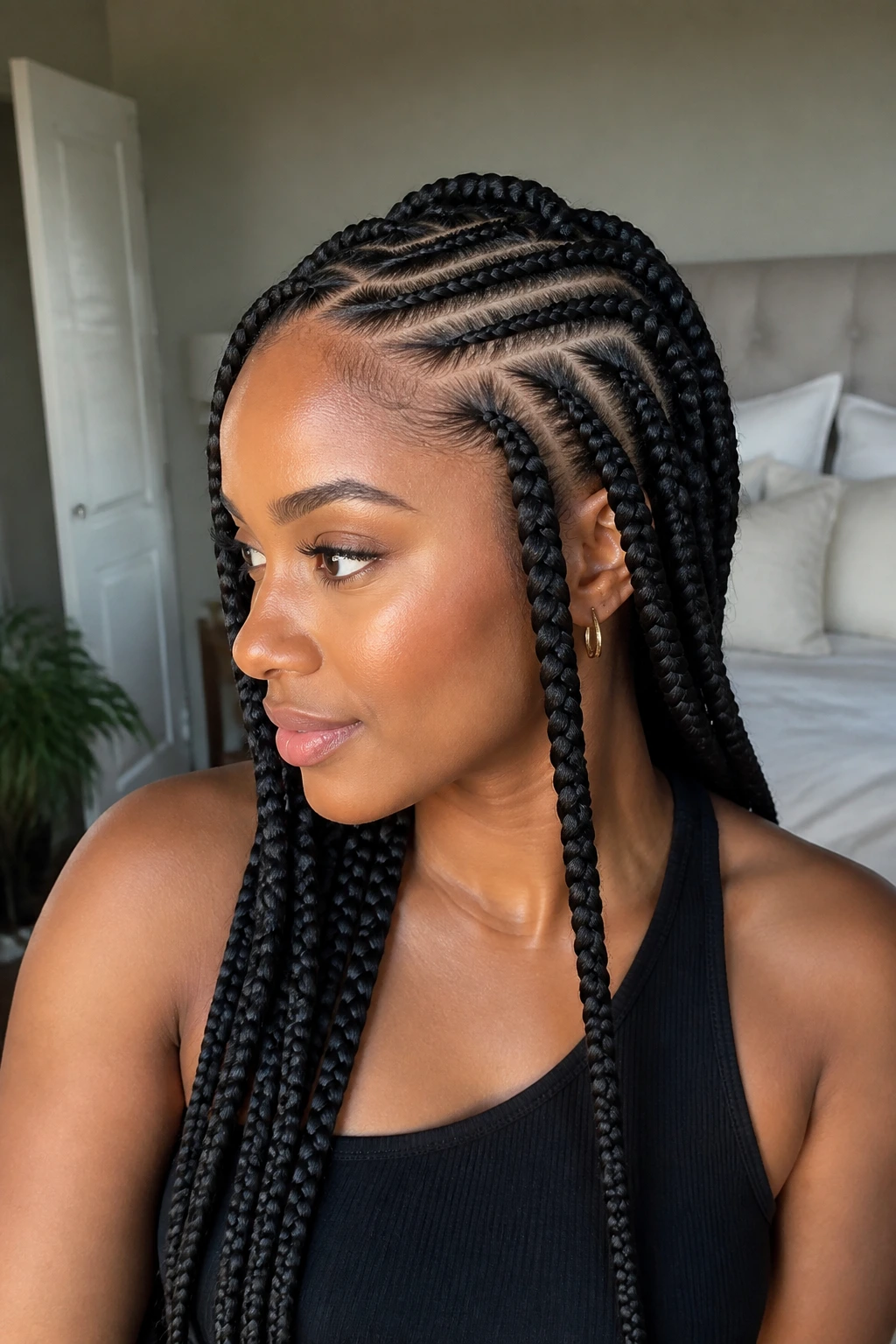
Curved parts are for anyone bored with straight grids. The parting swerves gently across the scalp, which adds motion before the braids even start moving. It’s subtle, but in a good way. The scalp pattern becomes part of the design instead of just a map under the style.
Keep the braids themselves clean and simple if the parting is already doing the decorative work. Curved parts look best when they’re consistent from front to back. If one curve is sharp and the next one is lazy, the whole install starts looking uneven instead of artistic.
15. Zigzag-Part Jumbo Box Braids
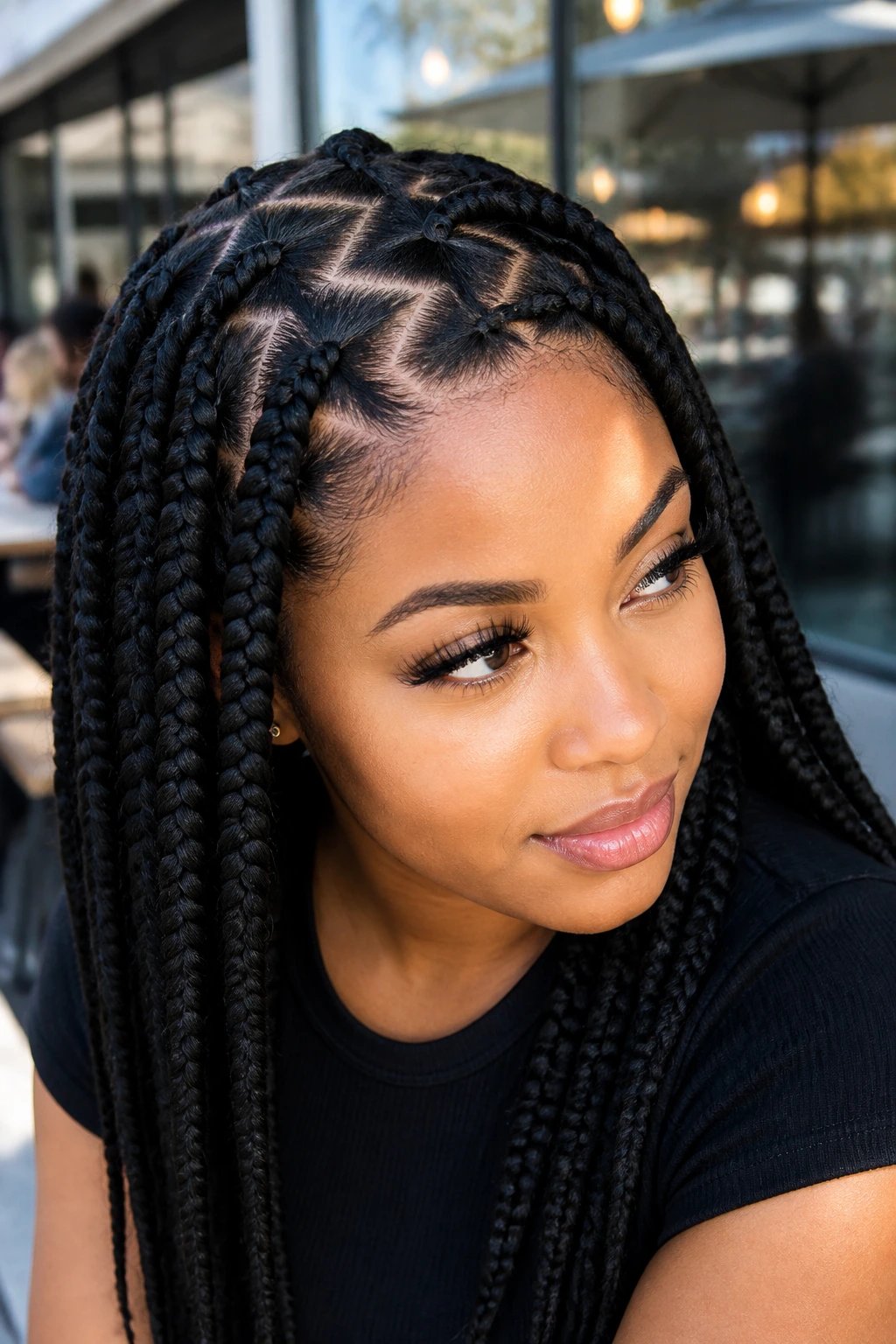
Zigzags are louder. That’s the point. A zigzag part is a quick way to turn a simple set of jumbo braids into something that feels sharper and more playful without changing the braid size at all.
The pattern works best when the lines are crisp and the braids stay plain. I would not add too many accessories here unless you want the head to feel crowded. Let the parting do the work. A clean zigzag across a fresh scalp can carry the whole install by itself.
16. Ombré Jumbo Box Braids
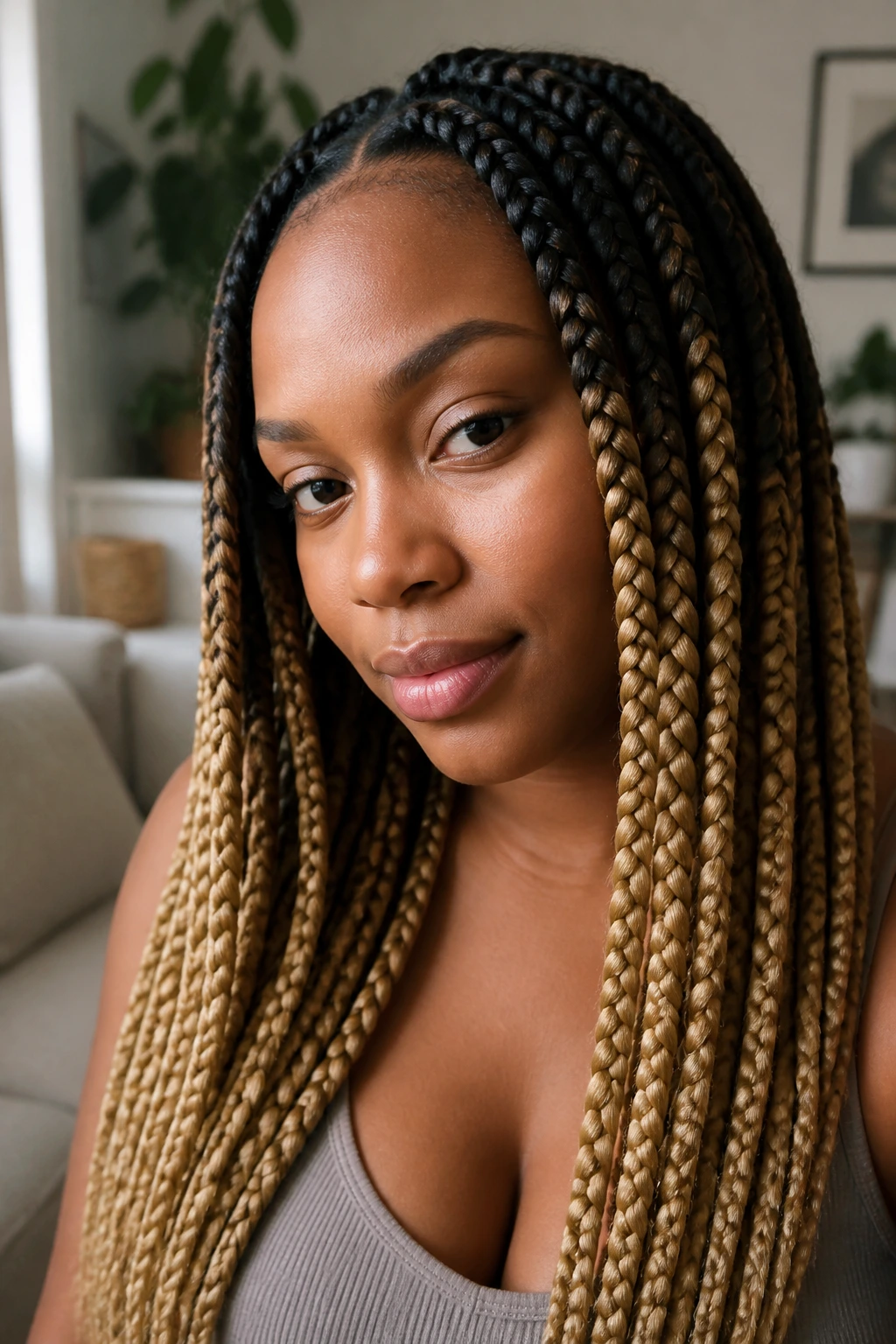
Ombré gives jumbo braids depth without forcing you into a full bright color install. Dark roots fading into lighter ends make the braid body easier to read, especially when the braids are long and heavy. The color shift draws the eye down the length in a clean line.
This is a good option if you want dimension but still want the style to stay wearable in everyday life. Keep the transition gradual and place the lightest pieces where they’ll show as the braids move. Harsh color jumps can make big braids look stripey instead of blended.
17. Honey-Blonde Face-Frame Jumbo Box Braids
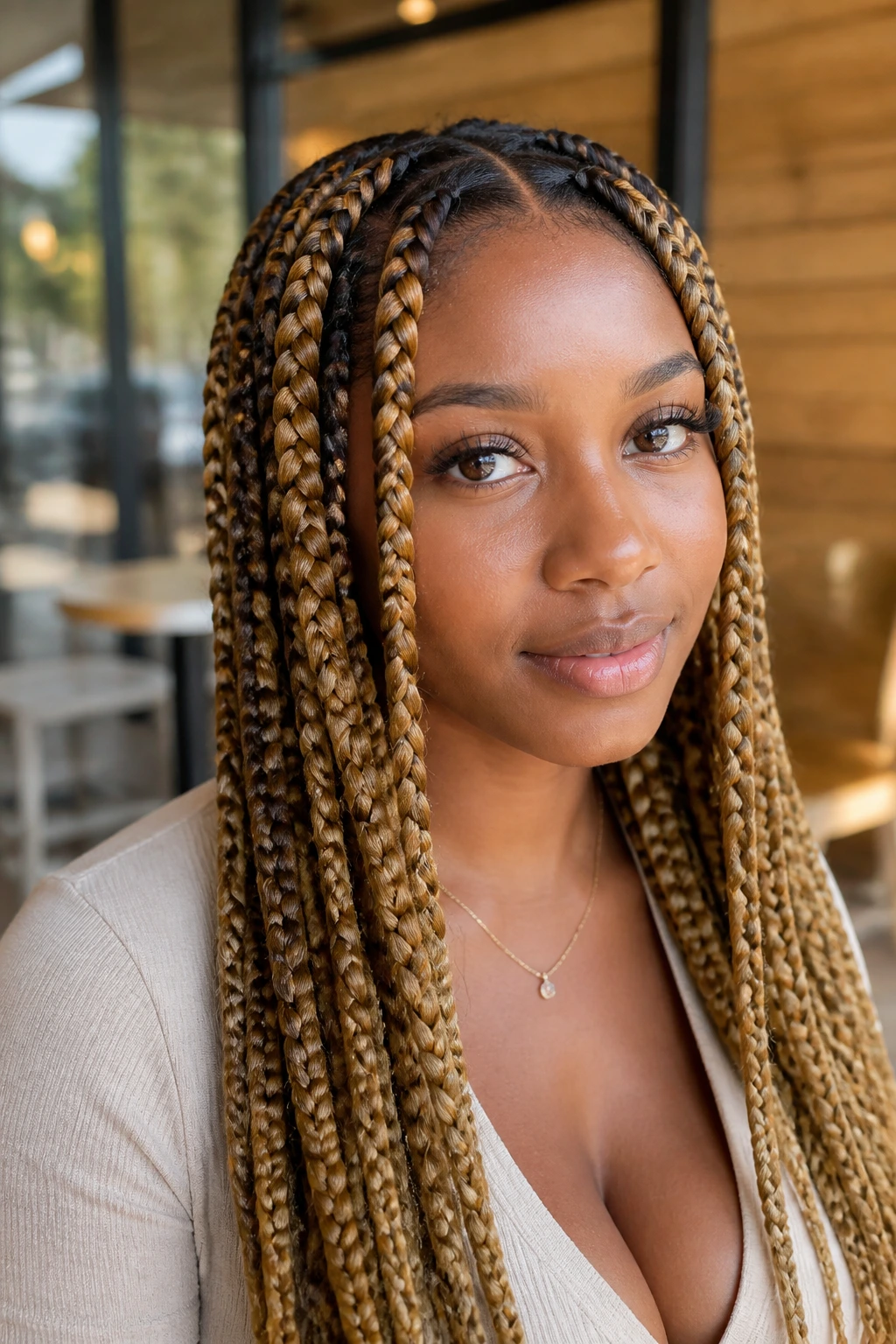
A few honey-blonde braids around the face change the whole mood of the set. You get brightness near the skin without turning the entire head light, which is useful if you want contrast but not a full-color commitment. It’s one of the easiest ways to make jumbo braids feel warmer.
I like this on darker base colors because the contrast is clean and flattering. Keep the brighter pieces at the temples and front rows, then let the back stay deeper. That pulls attention where you want it and keeps the style from looking flat.
18. Burgundy and Copper Jumbo Box Braids
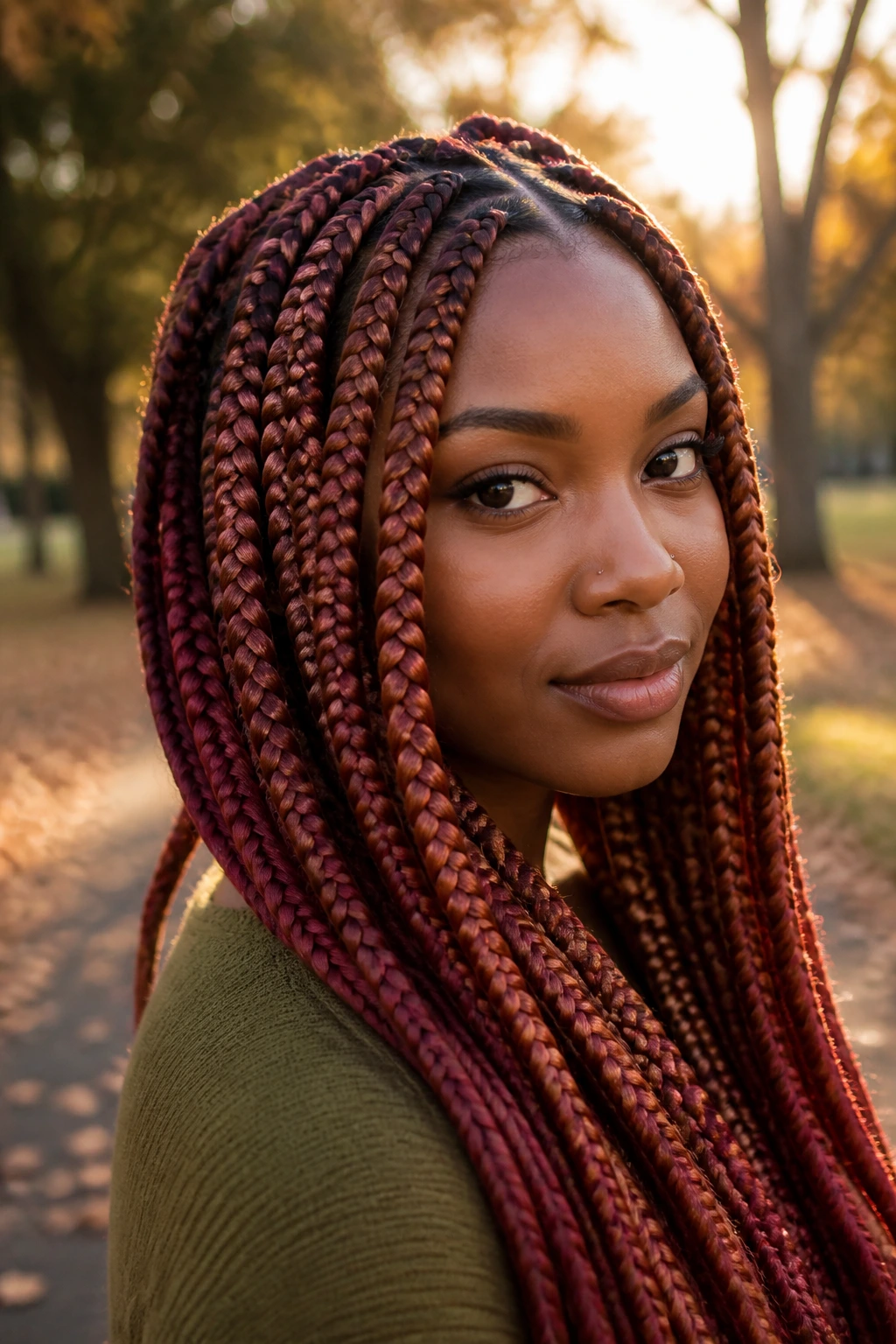
These warmer shades read beautifully on jumbo braids because the color has room to repeat. Burgundy gives depth. Copper gives shine. Together they can make the style look rich without needing extra decoration.
The best part is how they change in different light. Indoors, they can read dark and polished. Outside, the red and orange tones wake up. If you’re going bold, long braids are a better canvas than a short bob because the color has more length to travel.
19. Layered Mixed-Length Jumbo Box Braids
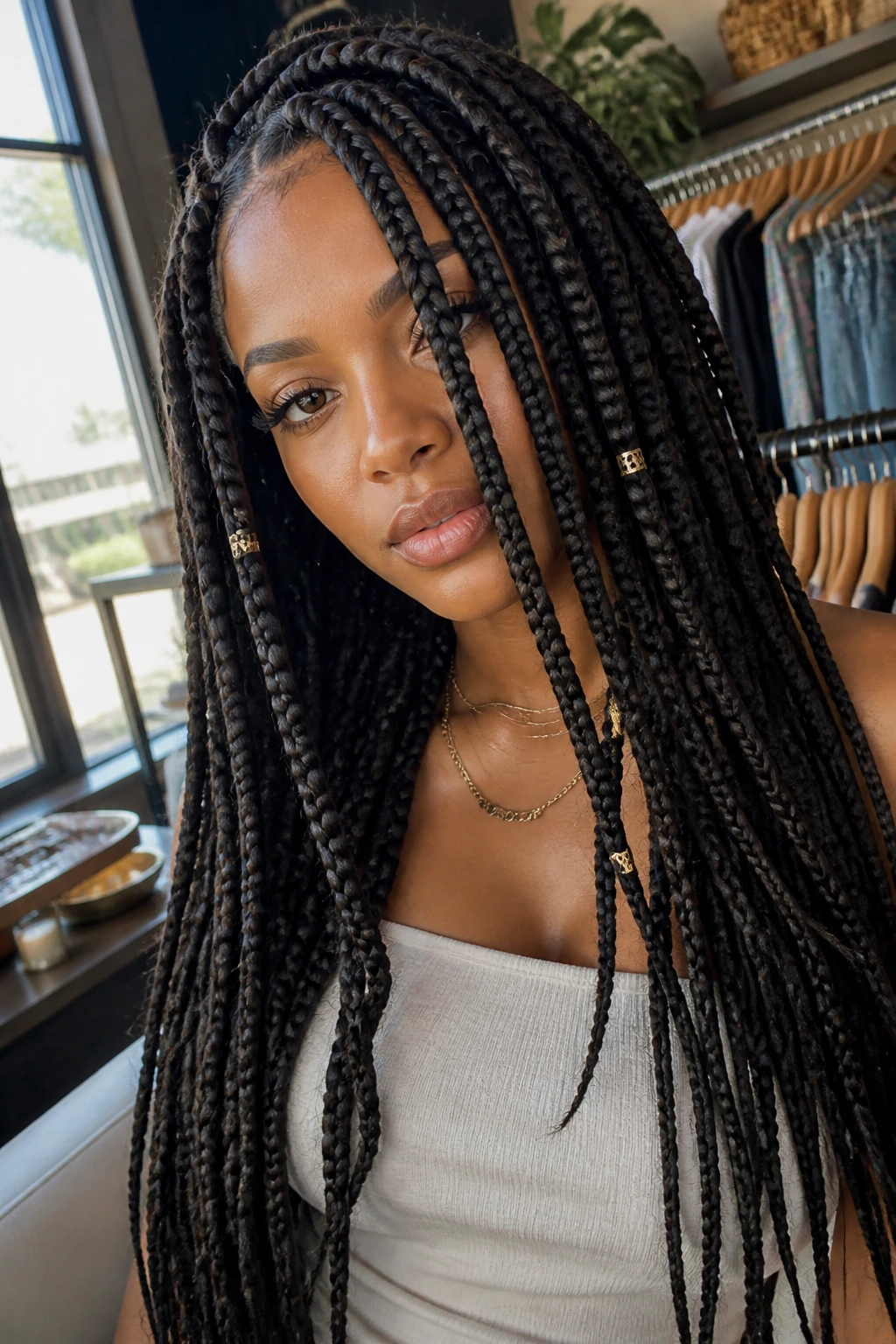
Layering the lengths keeps jumbo braids from forming one blunt curtain. A little variation in the front pieces, the middle, and the back adds movement that you feel when you walk. It’s a simple trick, but it changes how the style falls on the body.
This works especially well if you don’t want a straight horizontal line at the hem. Ask for a slightly shorter front or side layer if you want the braids to frame the face instead of swallowing it. The style still reads full, just less blocky.
20. Curled-End Jumbo Box Braids
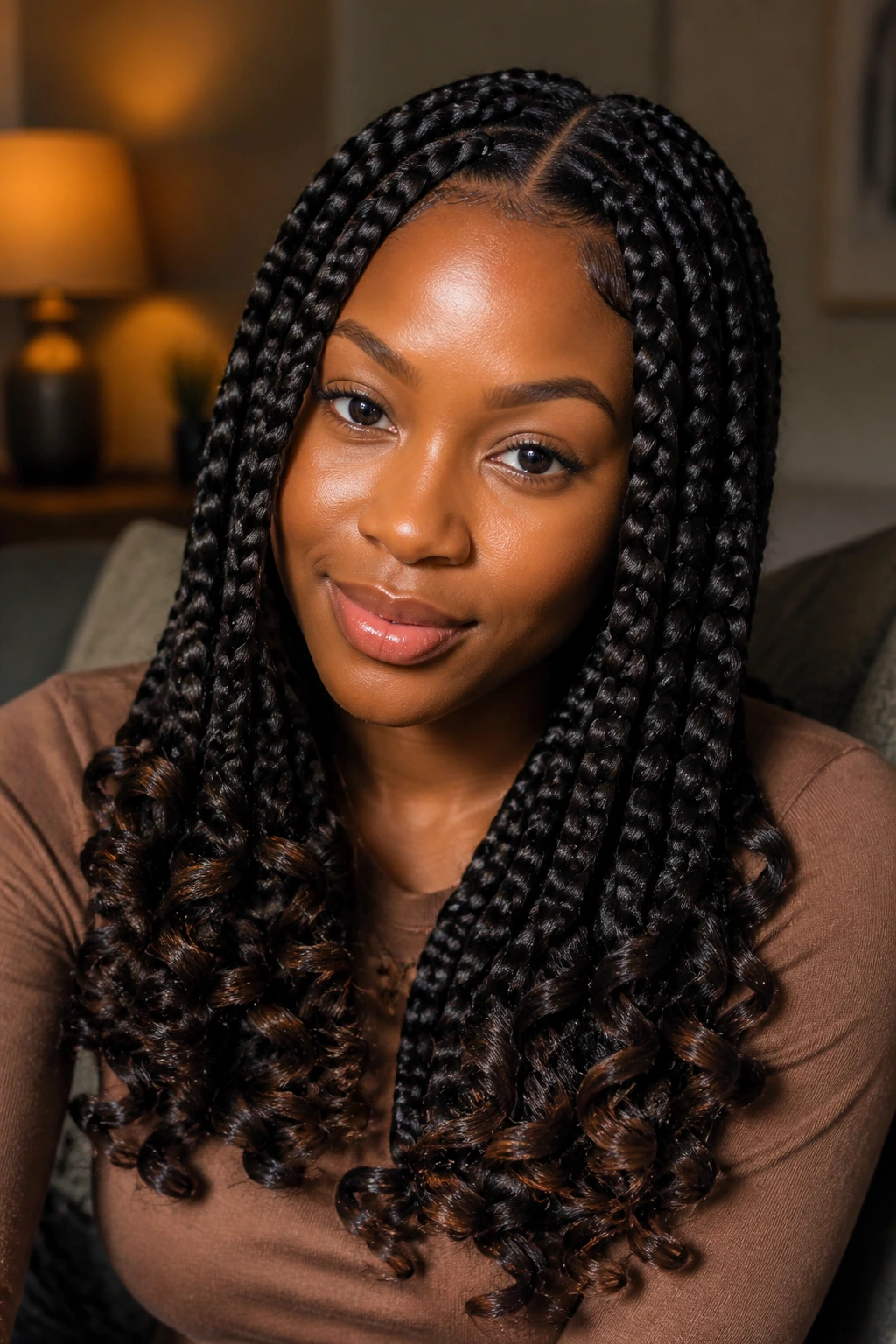
Curled ends soften the weight of jumbo braids in a way that plain straight ends never quite do. A flexi rod set or a gentle hot-water curl at the tips makes the finish feel lighter and a little more dressed up. The movement is the point.
I prefer this on medium to long braids because the curl has space to show. If the braids are too short, the curl can eat the length. Keep the curl only at the ends unless you want a more formal, highly styled finish.
21. Scarf-Wrapped Jumbo Box Braids
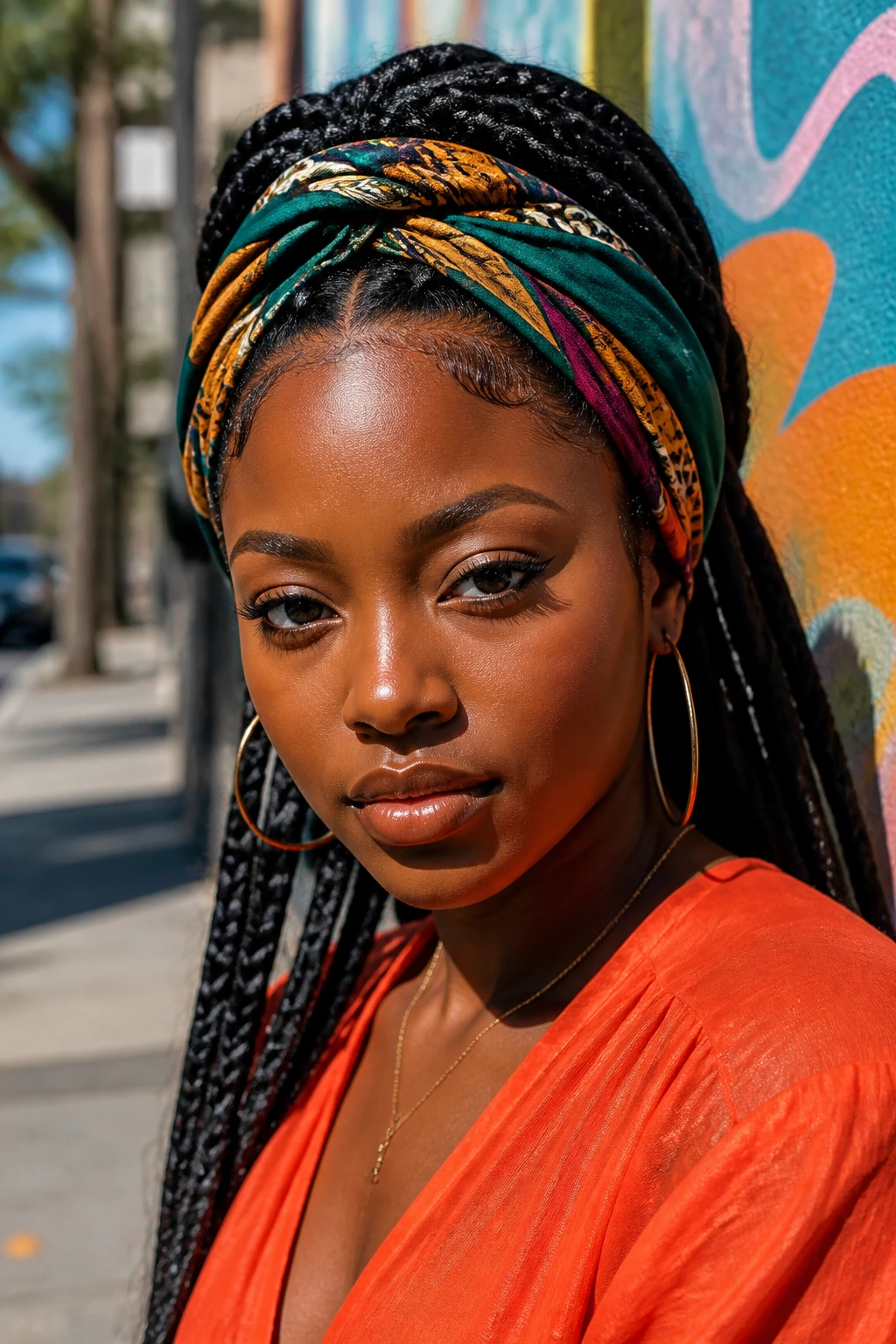
A scarf wrap is the rescue move for the days when the roots need a break or the whole style just feels too open. A silk or satin scarf tied around the hairline or over the crown changes the shape without taking the braids out of play. It is also one of the easiest ways to make a style feel intentional with almost no effort.
Use a smooth scarf under a decorative one if your scalp is tender. That keeps the friction down. I like this look when the outfit already has color or pattern, because the scarf can echo the clothes instead of fighting them.
22. Sleek Side-Part Jumbo Box Braids
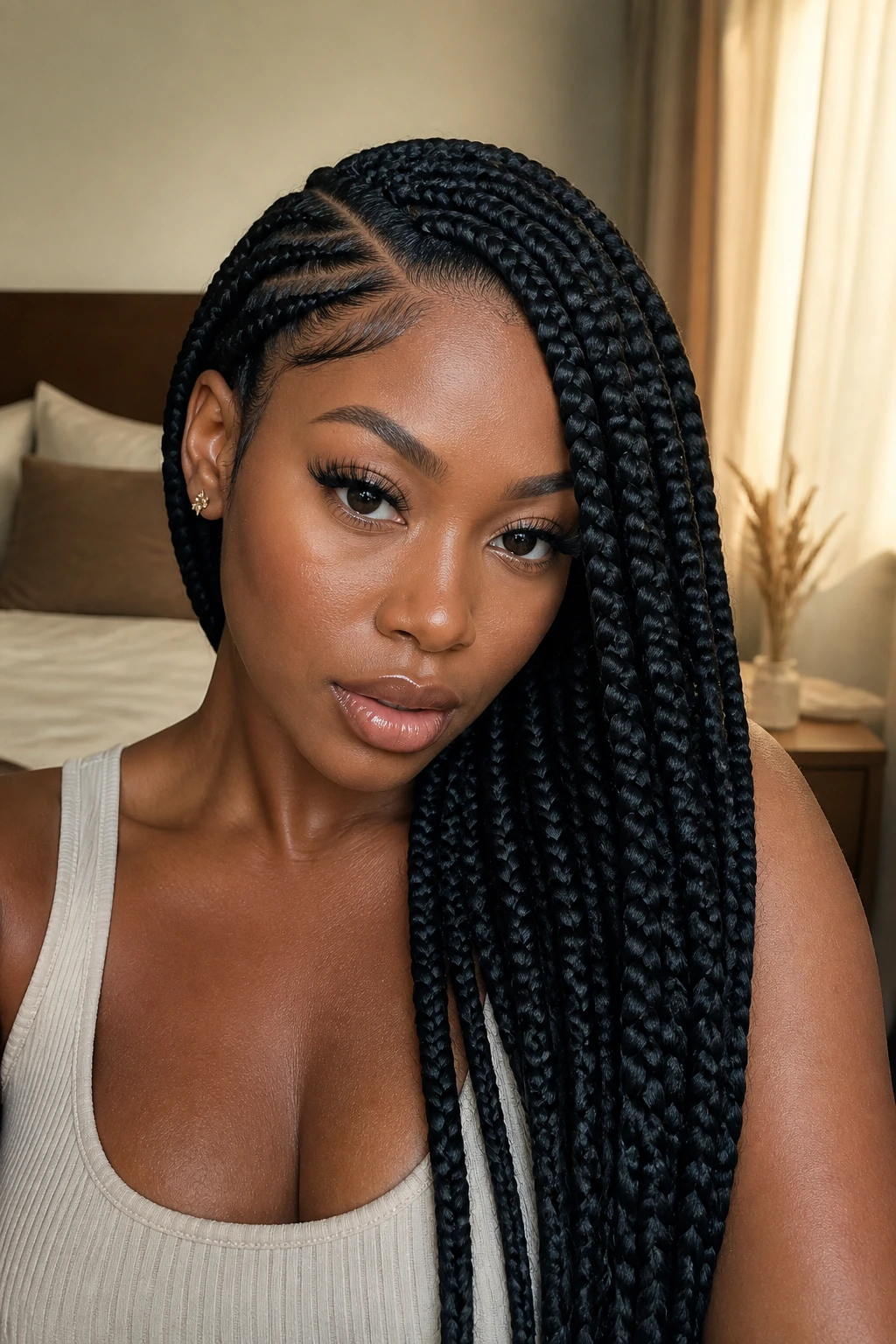
A deep side part gives jumbo braids motion before the braids even move. One side falls heavier, the other opens the face, and the whole look gains a little drama without needing a different braid pattern. It’s polished, but not stiff.
This is one of the best ways to show off earrings, cheekbones, and a good collarbone line. Tuck the lighter side behind the ear and let the main side drape forward. If the part is clean and the front rows lie flat, the style looks expensive for no good reason other than geometry.
23. Feed-In Front Jumbo Box Braids
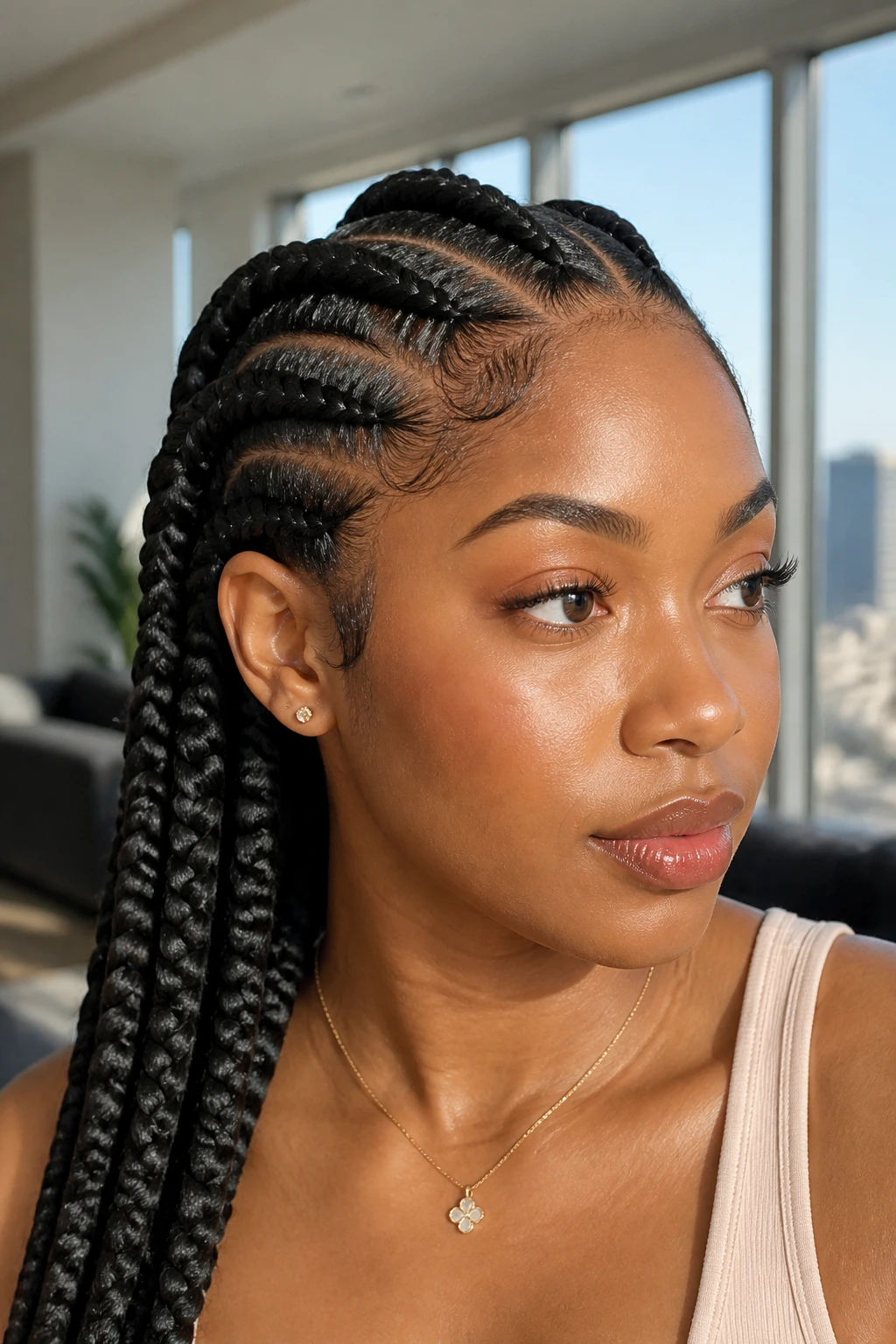
Feed-in rows at the front buy you a cleaner hairline. The braids start smaller near the temples and settle into the fuller jumbo size as they move back, which keeps the front from looking bulky or boxy. That little taper makes a big difference.
This is a smart choice if your hairline is tender or if you know the front rows usually pull first. It also helps the style lay flatter when you tuck the braids behind the ears. I’d ask for this if you like jumbo braids but hate the feeling of too much thickness right at the edges.
24. Low-Tucked Chignon Jumbo Box Braids
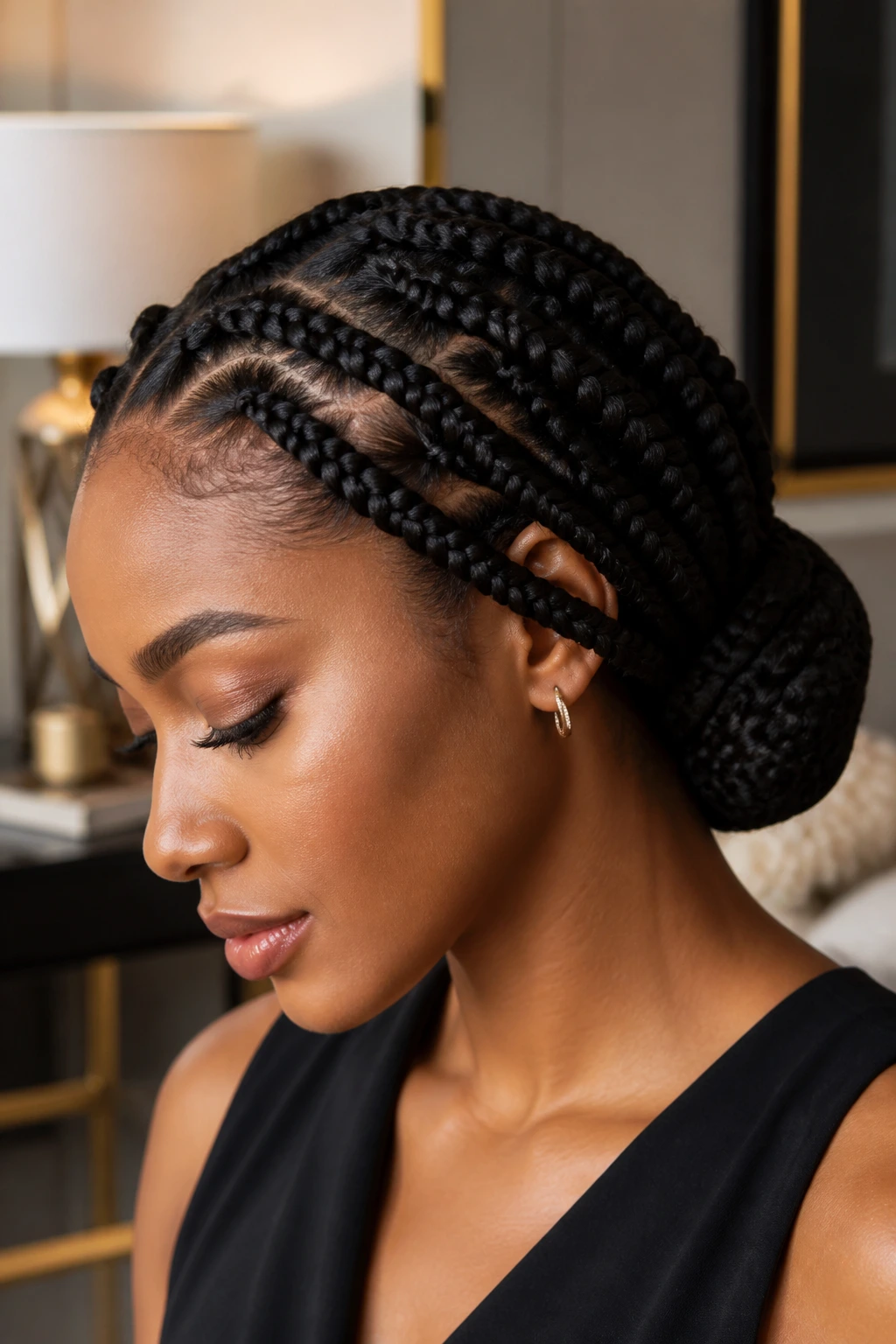
Think of this as a bun that folds under itself. A low-tucked chignon keeps the ends hidden and the outline smooth, which makes the style feel more formal than a loose bun. It is neat without feeling severe.
This works well for weddings, interviews, or any day when you want the hair to look finished before anyone even sees the outfit. The trick is to keep the tuck secure without flattening the braid bodies too much. A good chignon still has shape; it just sits lower and quieter.
25. Double-Ponytail Jumbo Box Braids
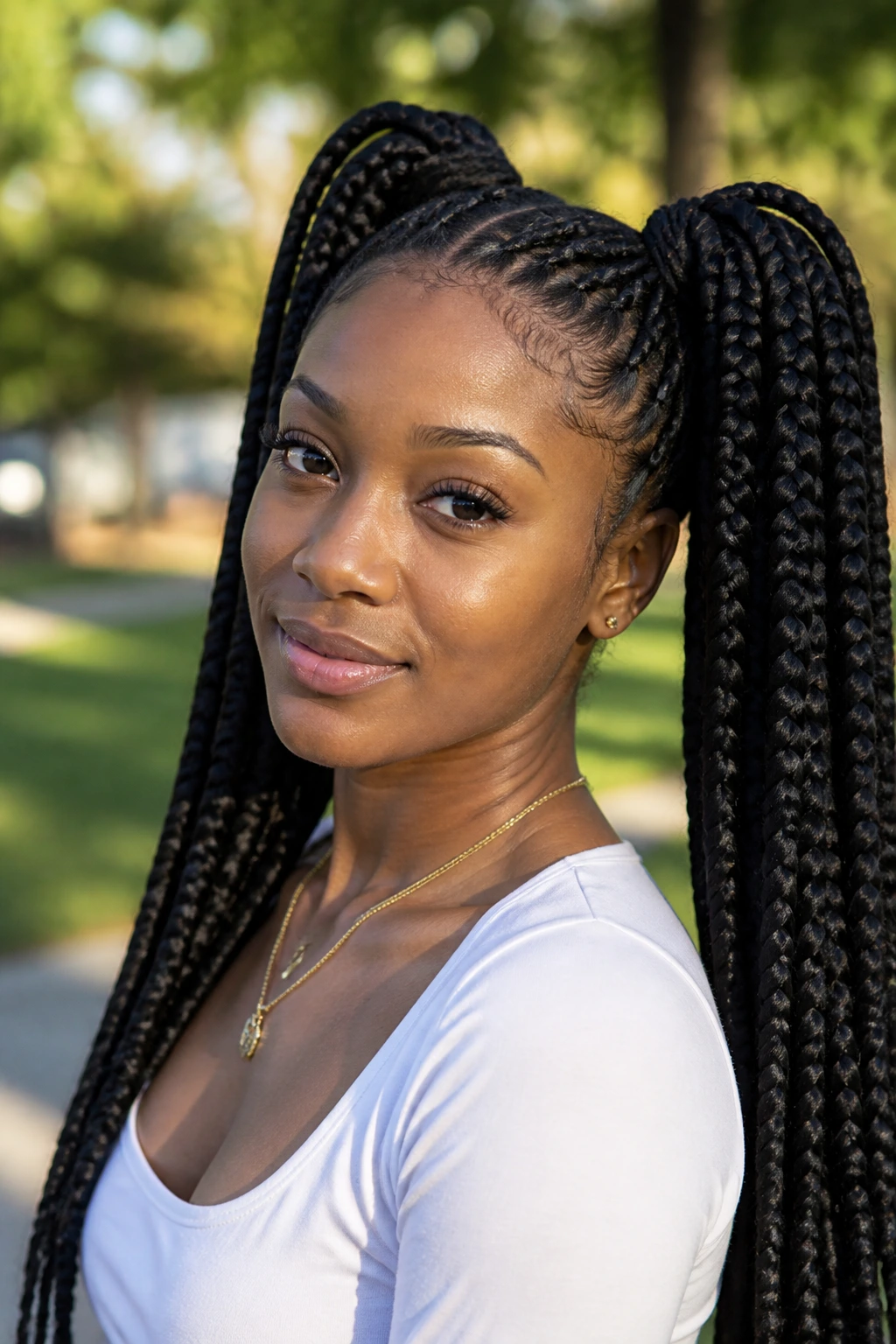
Two ponytails distribute the weight better than one giant high ponytail. That alone makes the style useful for active days. It also gives you a cleaner split in the middle, which can look very deliberate when the parts are straight and the bands are hidden well.
You can wear them high and playful or low and smooth, depending on your outfit. I prefer the lower version when the braids are long because it keeps the silhouette balanced instead of making the head look top-heavy. If one ponytail sags, tighten both sides evenly rather than overcorrecting one side.
26. Shell-Accented Jumbo Box Braids
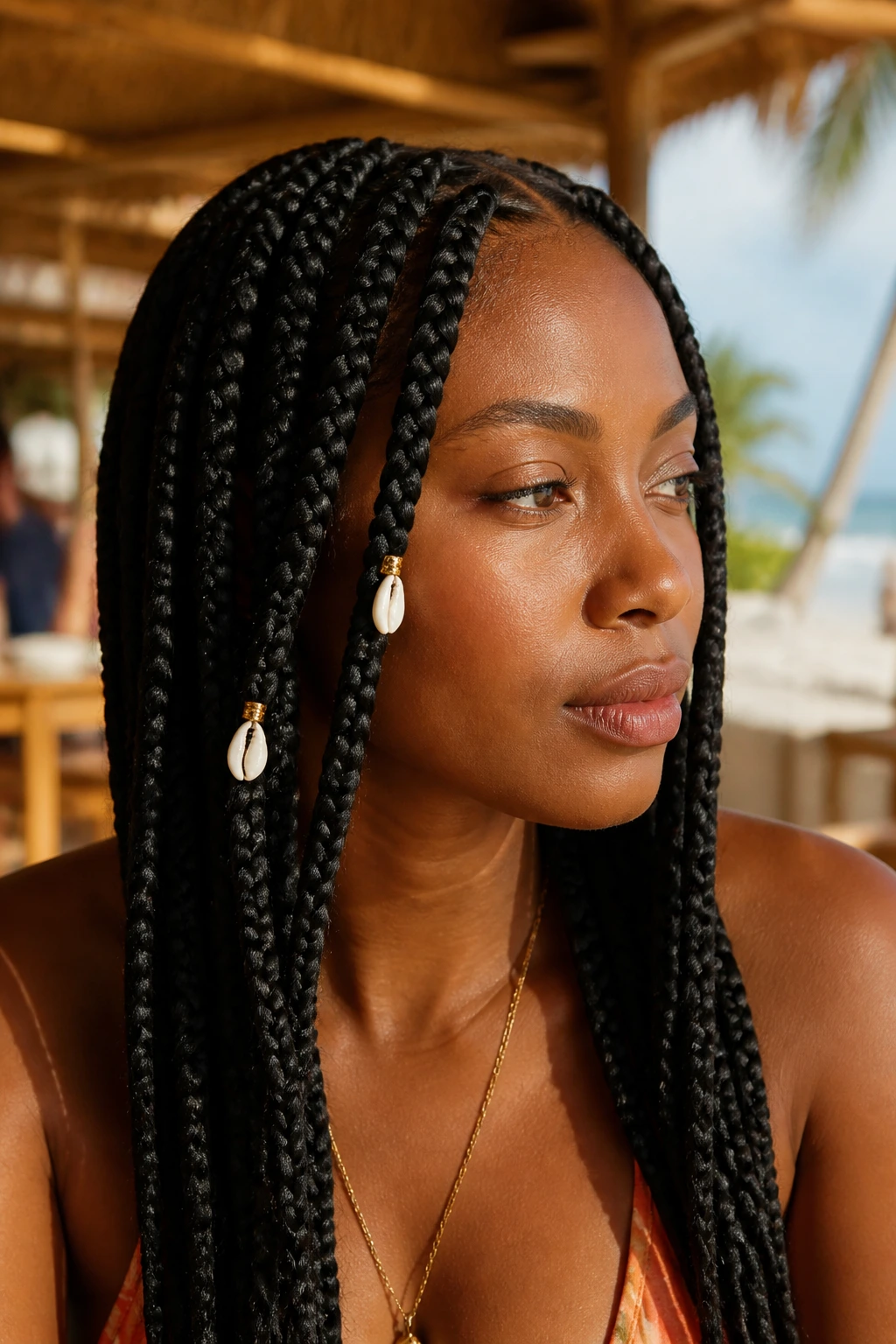
Cowrie shells and small shell accents bring texture and history into the style. They are not just decoration; they shift the mood of the whole set. Used sparingly, they make jumbo braids feel personal and rooted without becoming costume-y.
Place them on a few select braids near the ends or around the front third of the style. That keeps the weight down and lets the pieces show. Too many shells can start clacking against each other in a way that becomes annoying by the second day. A few well-placed ones are enough.
27. Yarn-Wrapped Jumbo Box Braids
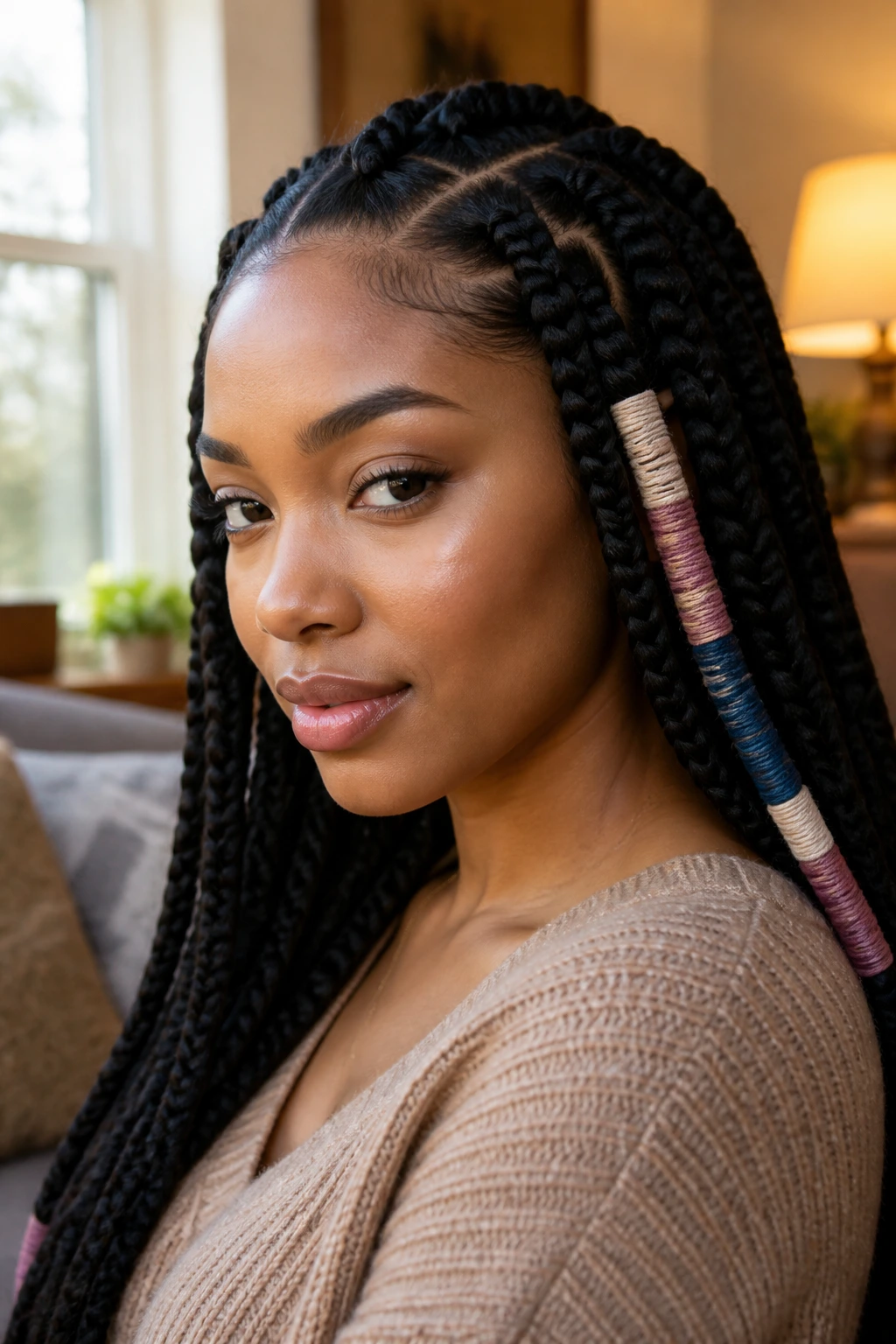
Yarn wraps are a smart way to add color without dye. They let you bring in red, cream, gold, green, or any other tone in controlled bands around a few braids. The texture is different from beads and cuffs, which makes the look feel softer.
Keep the wraps smooth and not too tight, especially near the roots. I like this on one or two face-framing braids or on the lower lengths, where the color can show without competing with the whole head. If you wrap every braid, the style can start to feel busy fast.
28. Tapered-Shape Jumbo Box Braids
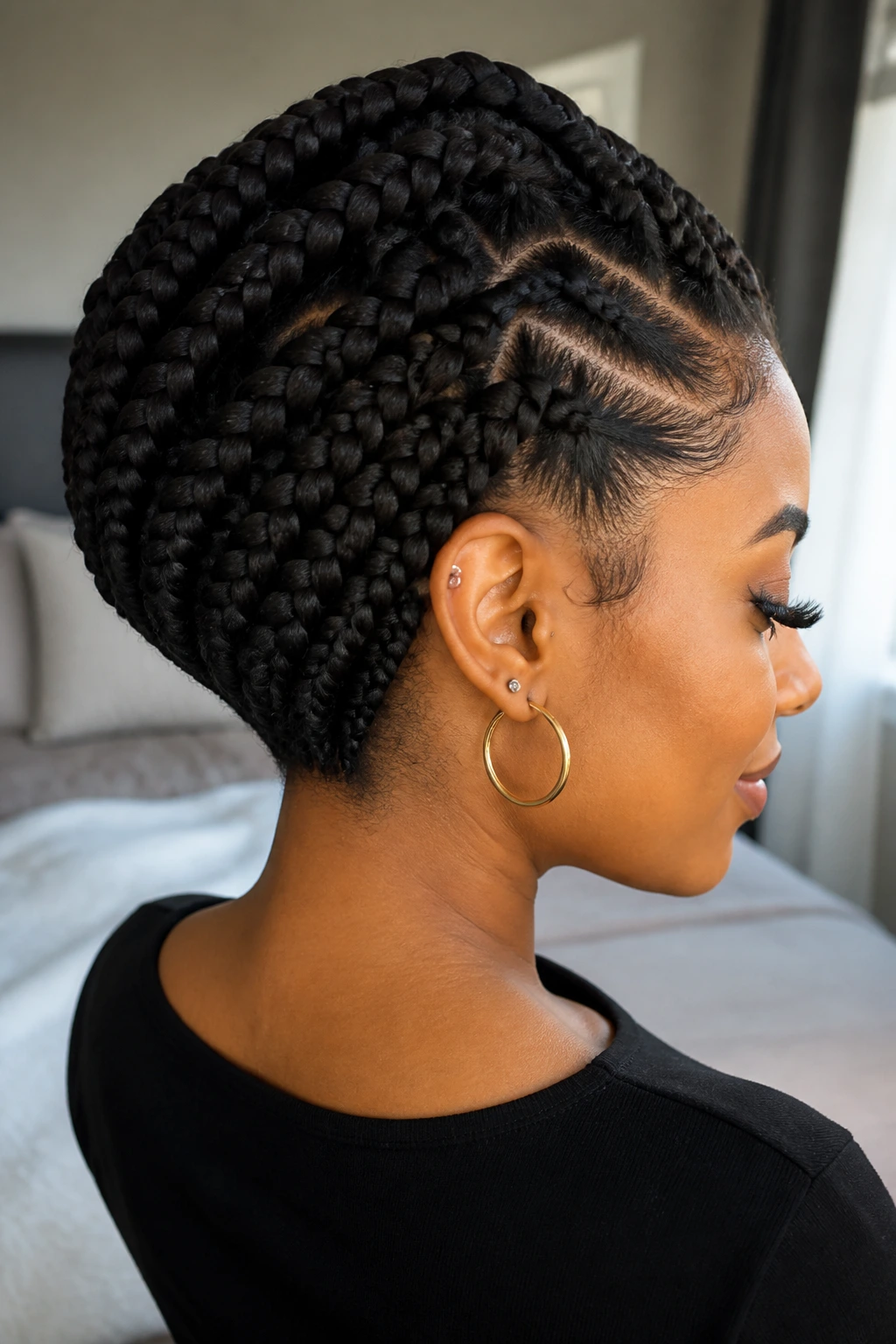
A tapered set narrows near the nape or around the edges and keeps more visual fullness where you want it. The result feels lighter and less blocky than a blunt curtain of length. It also gives the neck a little breathing room.
This shape works especially well if you want volume at the crown but less bulk at the shoulders. Ask for the outline to slim gradually instead of dropping off in one hard line. That soft taper is what keeps the style from looking heavy in photos and in person.
29. Faux-Undercut Jumbo Box Braids
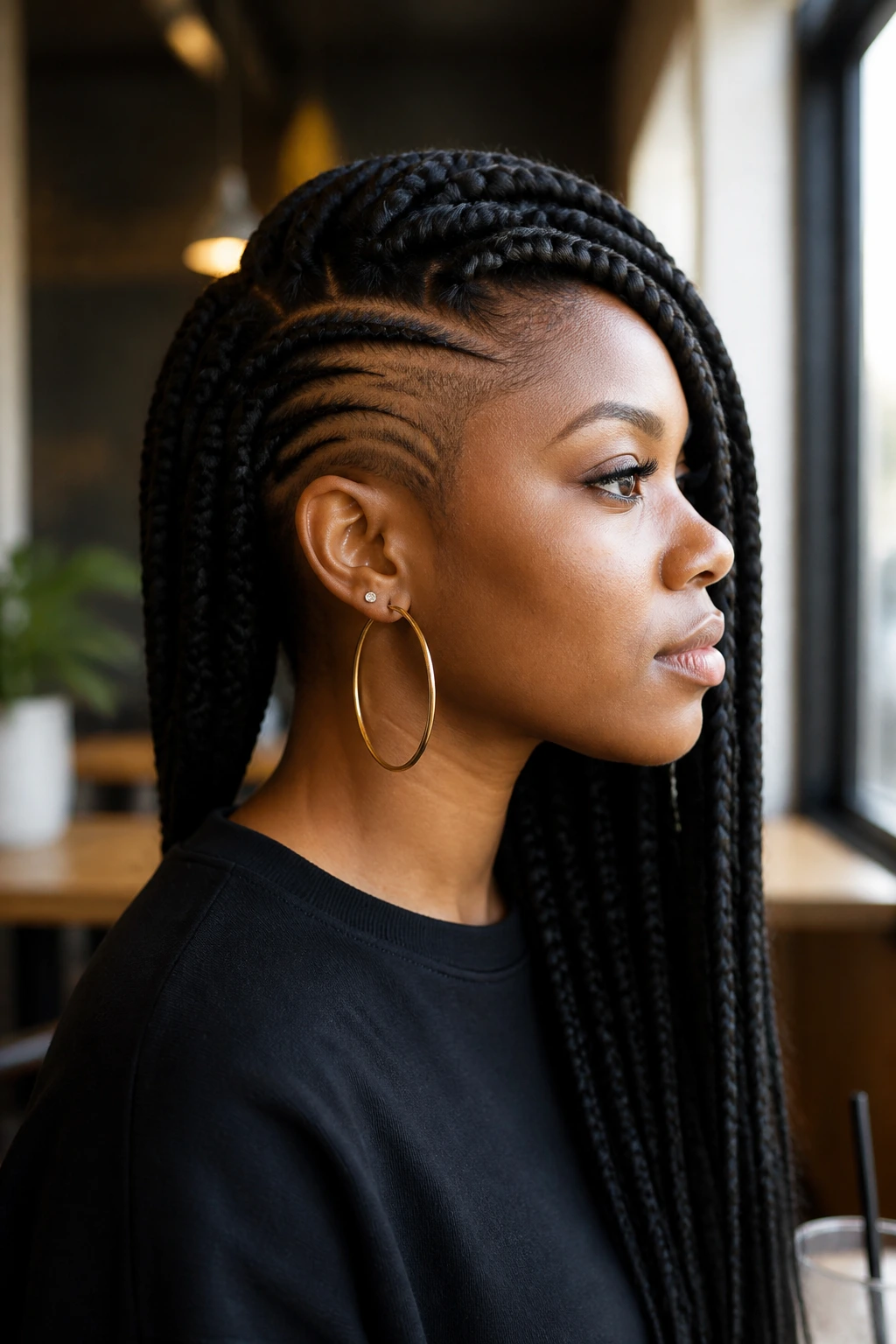
A faux undercut gives you the edge of a shaved side without touching the clippers. One side is braided closer to the head, tucked tighter, or pinned flatter, which creates the illusion of an undercut from certain angles. It is sharp and a little cheeky.
This style works best when the contrast between the sides is obvious. Keep one side sleek and compact, then let the other side carry the volume. If you like dramatic earrings or a strong neckline, this set gives you both without committing to the real thing.
30. Braided Crown-Band Jumbo Box Braids
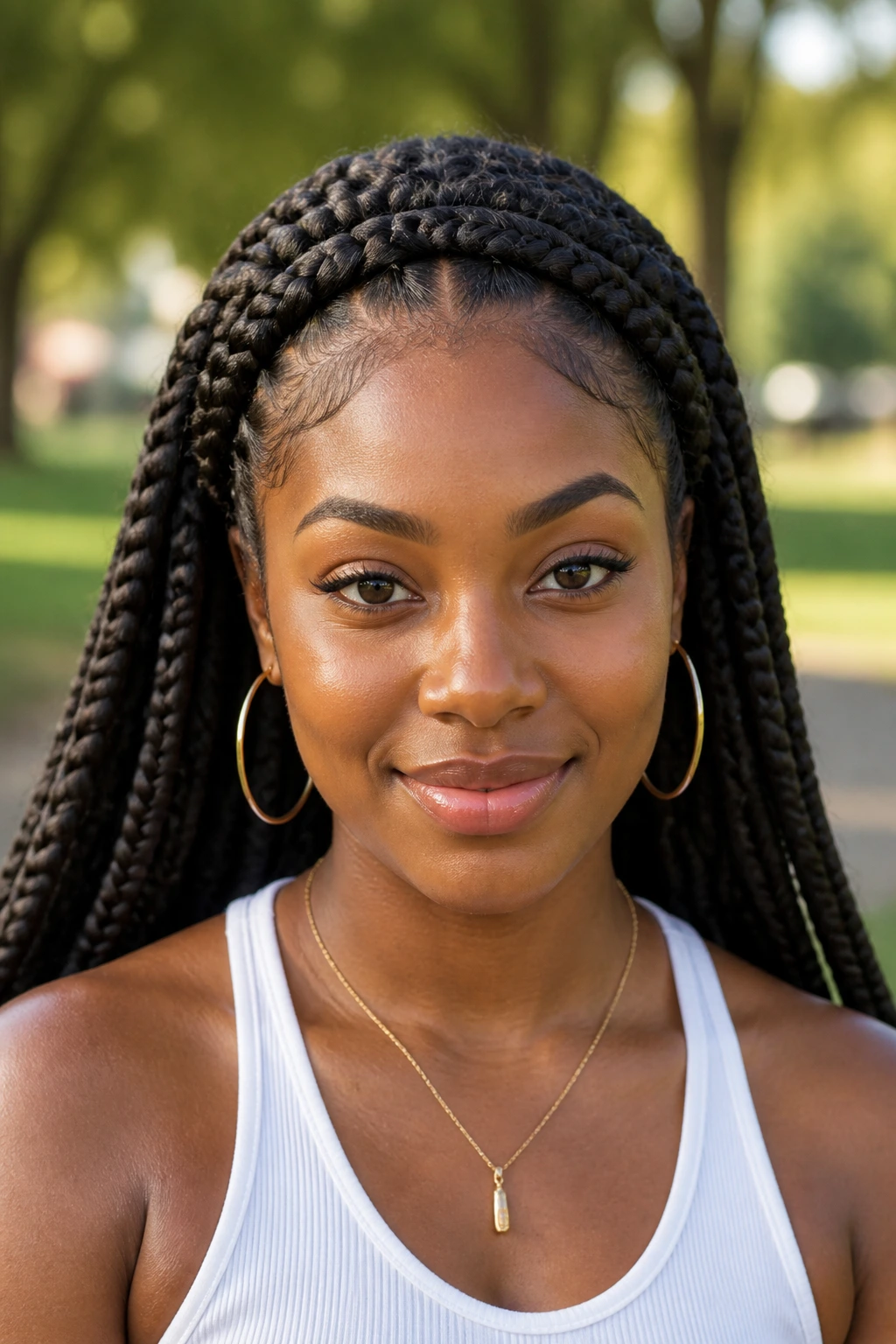
A crown band is basically a headband made from your own braids, and I love how practical that is. It clears the forehead, frames the face, and still leaves the length down behind it. You get structure without losing motion.
This is a solid choice for days when you want the front off your face but do not want a full updo. It also works well under hats and with big earrings because the front shape stays controlled. Keep the band smooth and close to the hairline so it reads clean instead of puffy.
31. Top-Knot Jumbo Box Braids
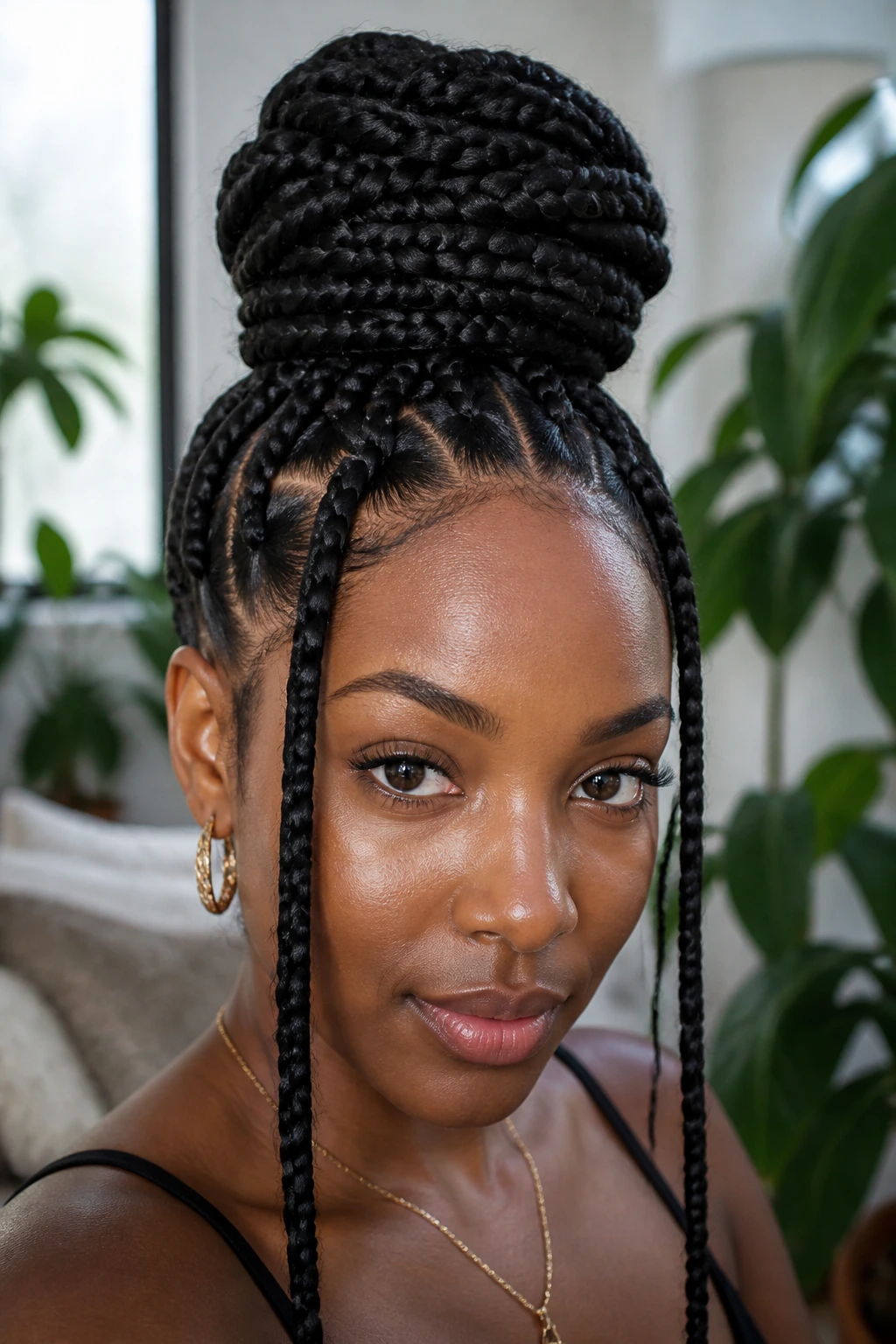
A top knot lifts all the weight off the shoulders and puts the whole style in one high shape. That can feel like a relief after wearing the braids down for a while. It also creates a strong silhouette above the face, which is useful when the outfit needs height.
The knot has to be anchored carefully because jumbo braids are heavier than they look. I like wrapping the length into a compact coil and pinning it close to the crown rather than letting it dangle loose. If the knot tilts backward, the base is not secure enough.
32. One-Shoulder Flip Jumbo Box Braids
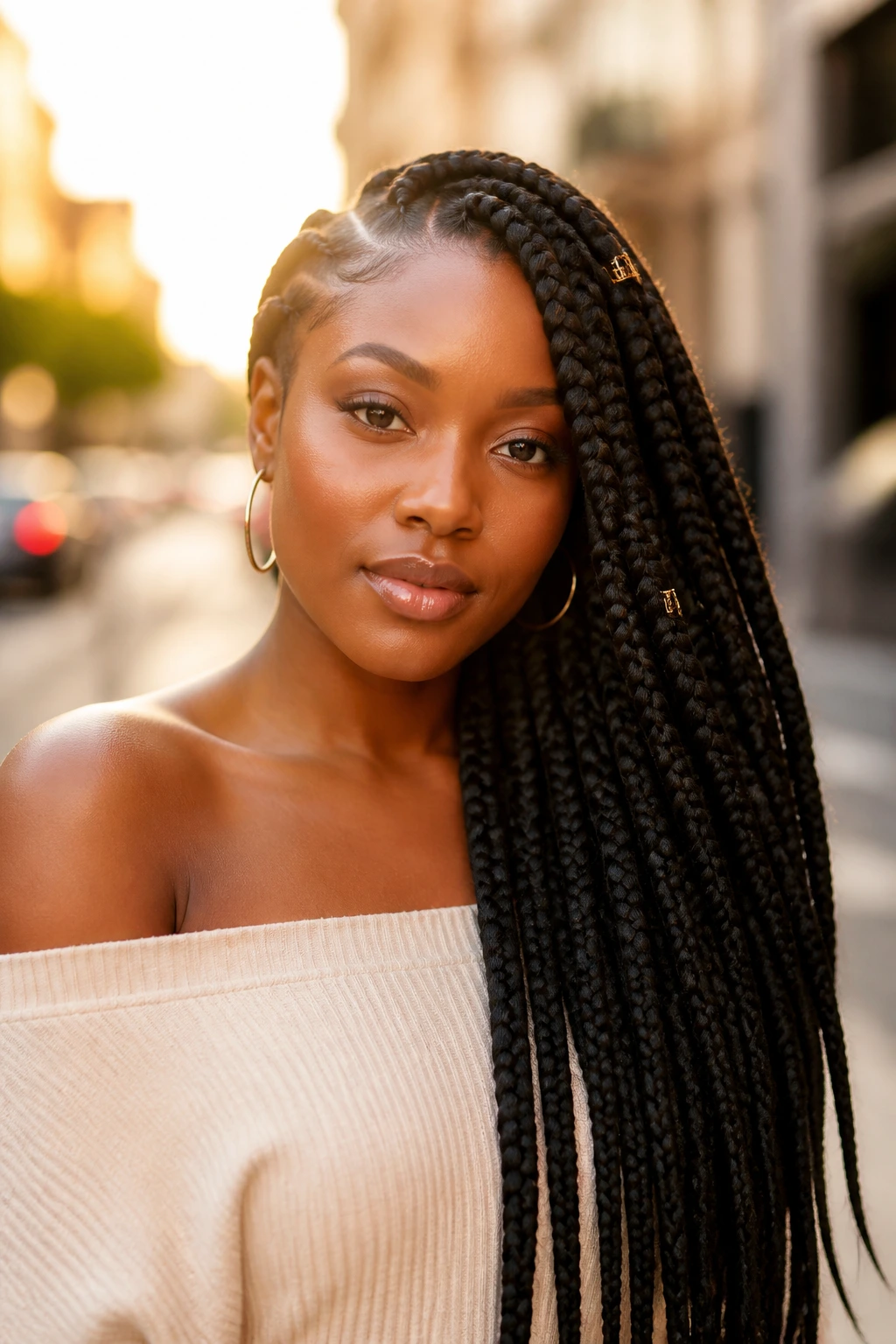
Everything about this look leans to one side. The braids are swept over one shoulder, the neck stays open on the other side, and the whole style gets a little fashion-week energy without needing a special event. It’s a simple shift that reads big.
This works especially well with off-shoulder tops, dresses with one strap, or a statement earring on the exposed side. I’d rotate the shoulder you wear it on if the set is long, just to avoid constant pressure on one side of your neck. Small comfort thing. Big difference.
33. Middle-Part Jumbo Box Braids with Thick Face Pieces
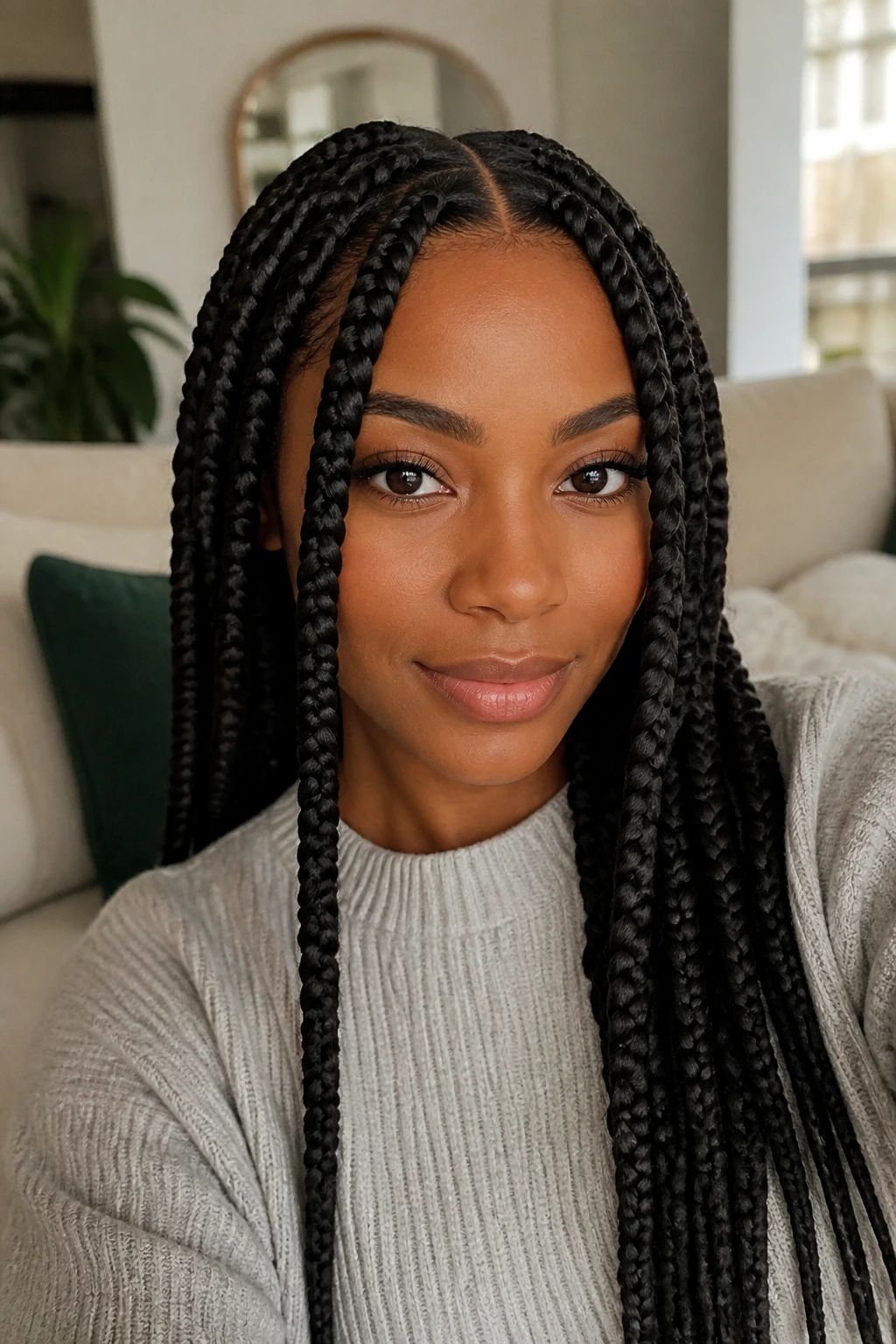
A center part can feel very clean, but thicker face pieces keep it from looking severe. Two larger braids near the front soften the line and give the face a frame without turning the style into actual bangs. It’s a good compromise.
This shape is especially useful if you like symmetry but still want some softness around the cheeks. Keep the front pieces a touch longer or slightly fuller than the rest. That’s what makes the face frame visible instead of just “more braid.”
34. Color-Band Jumbo Box Braids with Rubber Accents
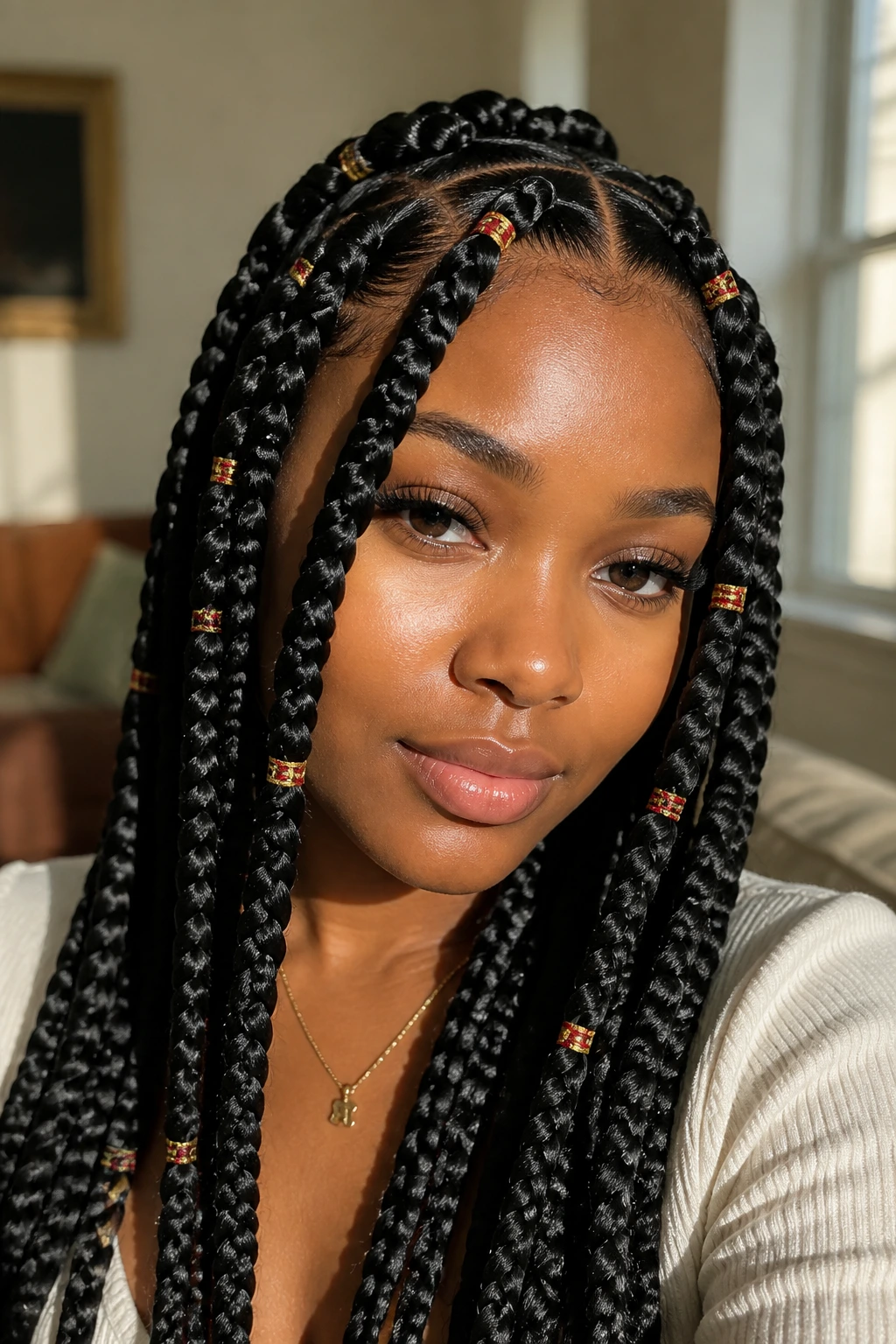
Tiny rubber bands at the roots or in small color sections can add a playful edge without changing the whole install. The trick is to keep the accents small and disciplined. One tiny red or gold band can read crisp; a dozen scattered bands can look messy.
This is a good option if you want a little personality but do not want beads, shells, or metal hardware. Use them on a few front braids or as a neat signal at the ends. The style should still feel like a braid set first, accessory moment second.
35. Low Bubble-Ponytail Jumbo Box Braids
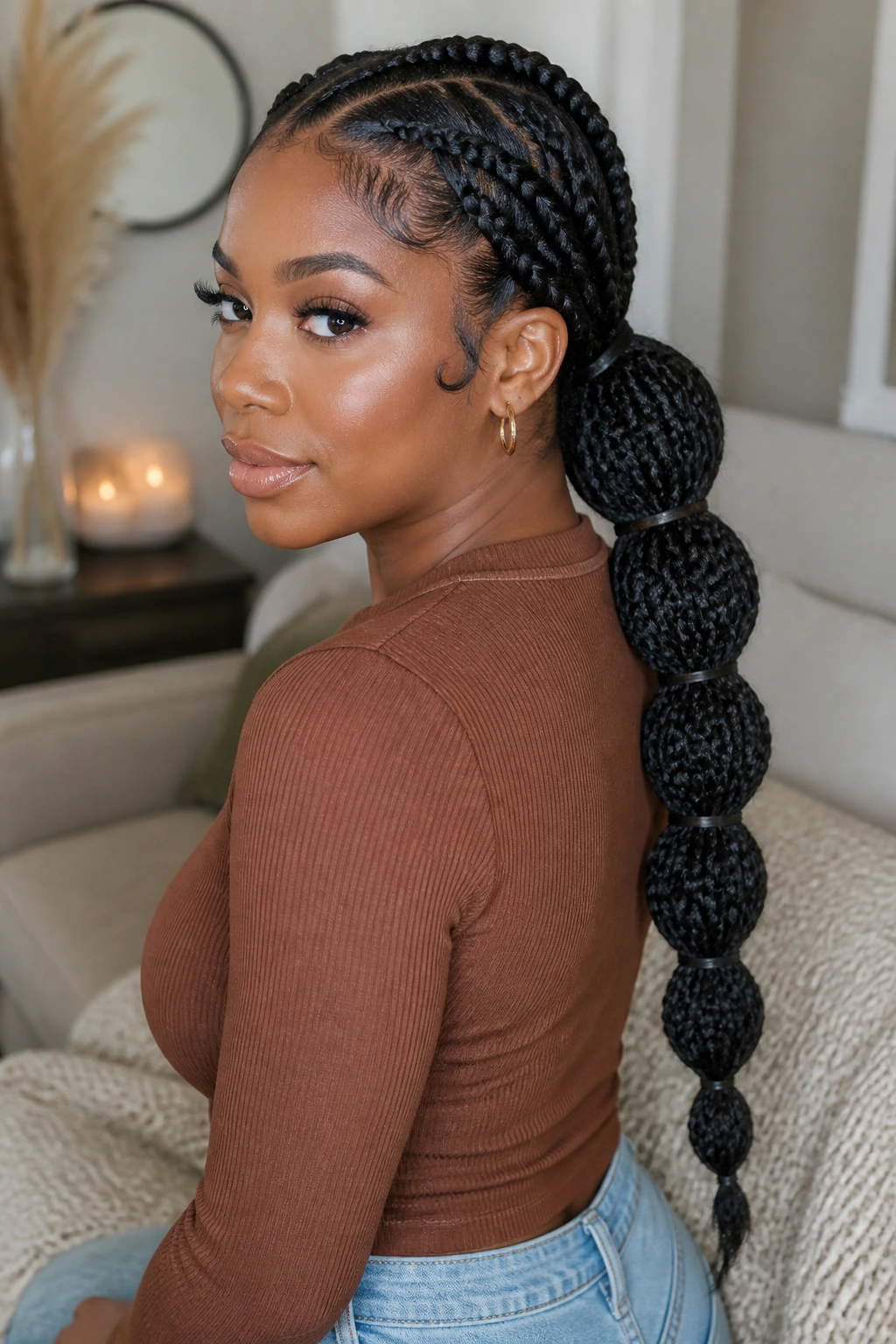
A bubble ponytail breaks one long line into neat sections, which keeps the length from feeling endless. Use soft ties or bands every few inches down the tail, then gently puff each section so it forms a rounded “bubble.” It’s a small move that adds a lot of shape.
I like this more with medium to long braids because the bubbles need space to separate. Keep the base low if you want the style to feel calmer, or lift it slightly if you want more energy. Either way, the sections should be even. Crooked bubbles are surprisingly distracting.
36. Braided Mohawk Jumbo Box Braids
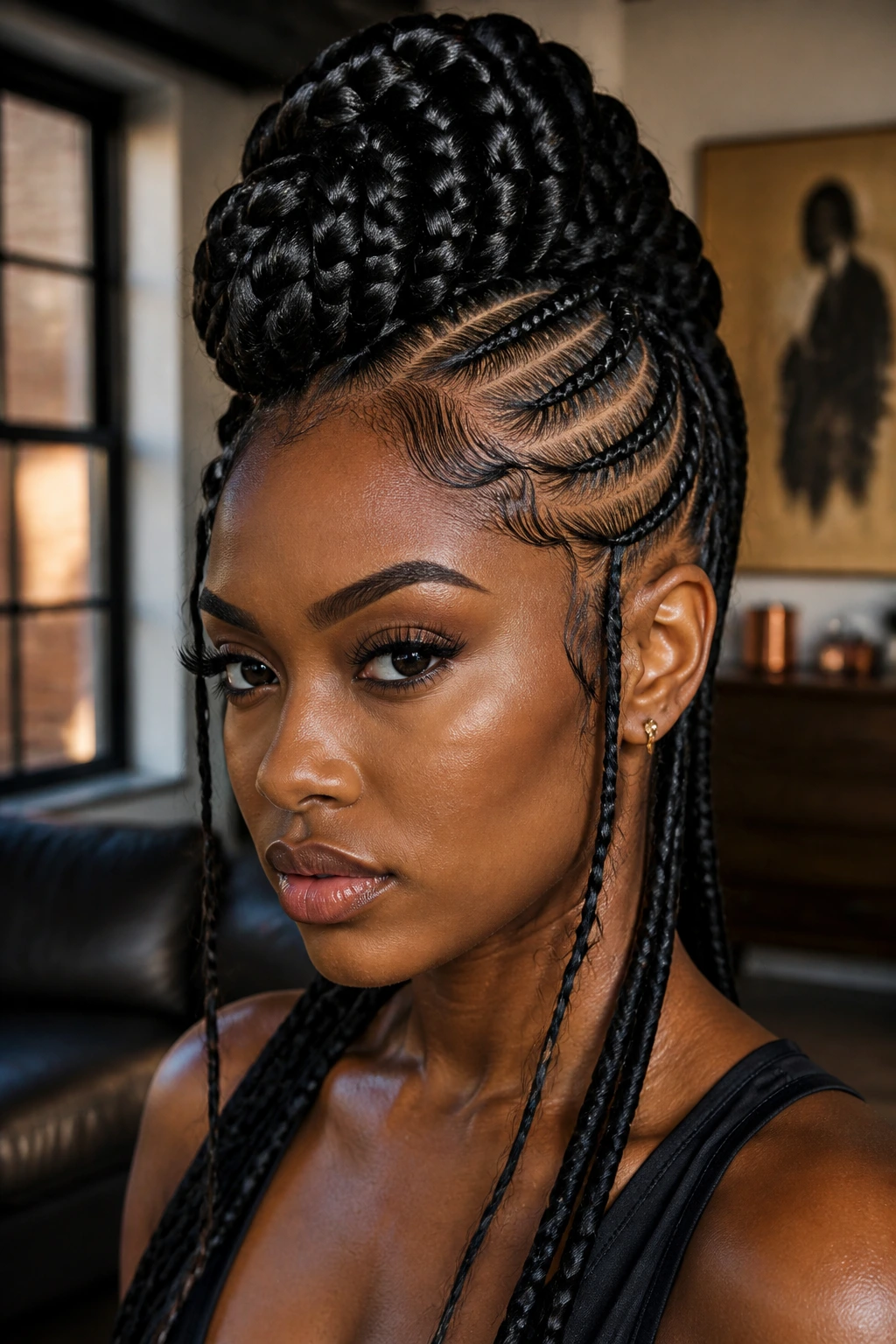
A braided mohawk keeps the volume centered and the sides sleek. That strong vertical ridge changes the whole profile, and it works especially well if you like a sharper, more graphic shape. It’s one of the more assertive ways to wear jumbo box braids.
The sides need to be laid close to the head, whether they’re pinned, braided, or tucked back. The center should hold the fullness. If you want the look to feel less hard, leave a few front pieces loose near the temples. That tiny softness changes the balance.
37. Wrapped-End Jumbo Box Braids with Cuffs and Rings
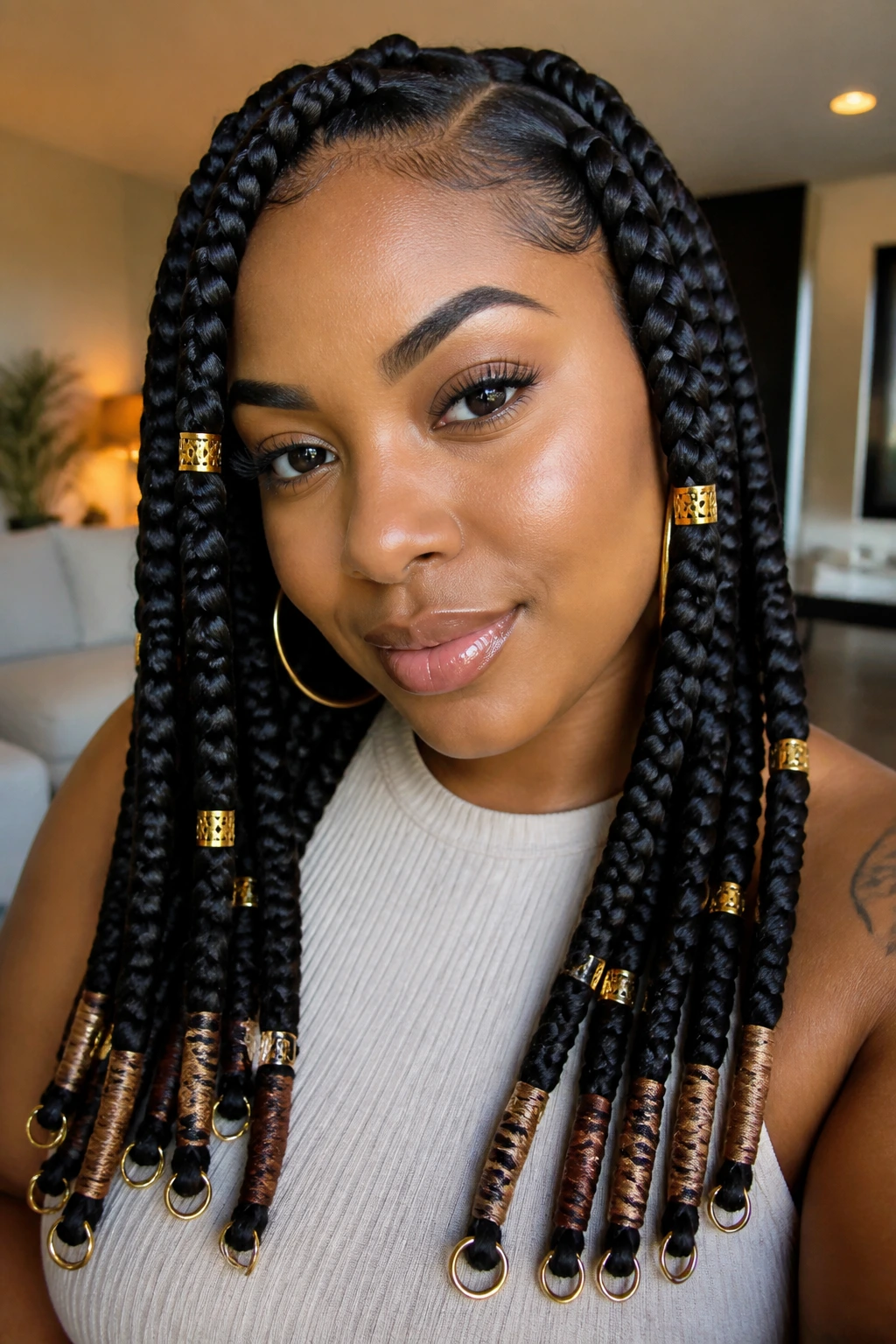
This is the version for people who like details at the ends. A few wraps, a few cuffs, a ring or two, and the whole set goes from plain to finished. The accessories should live low, near the ends, so they do not pull at the scalp.
I like this on longer braids because the space between the shoulder and the tips gives the hardware room to show. Keep the metal count modest and repeat the same finish once or twice so it feels coordinated. Too many different pieces can make the ends look cluttered instead of styled.
38. Deep Side-Bun Jumbo Box Braids
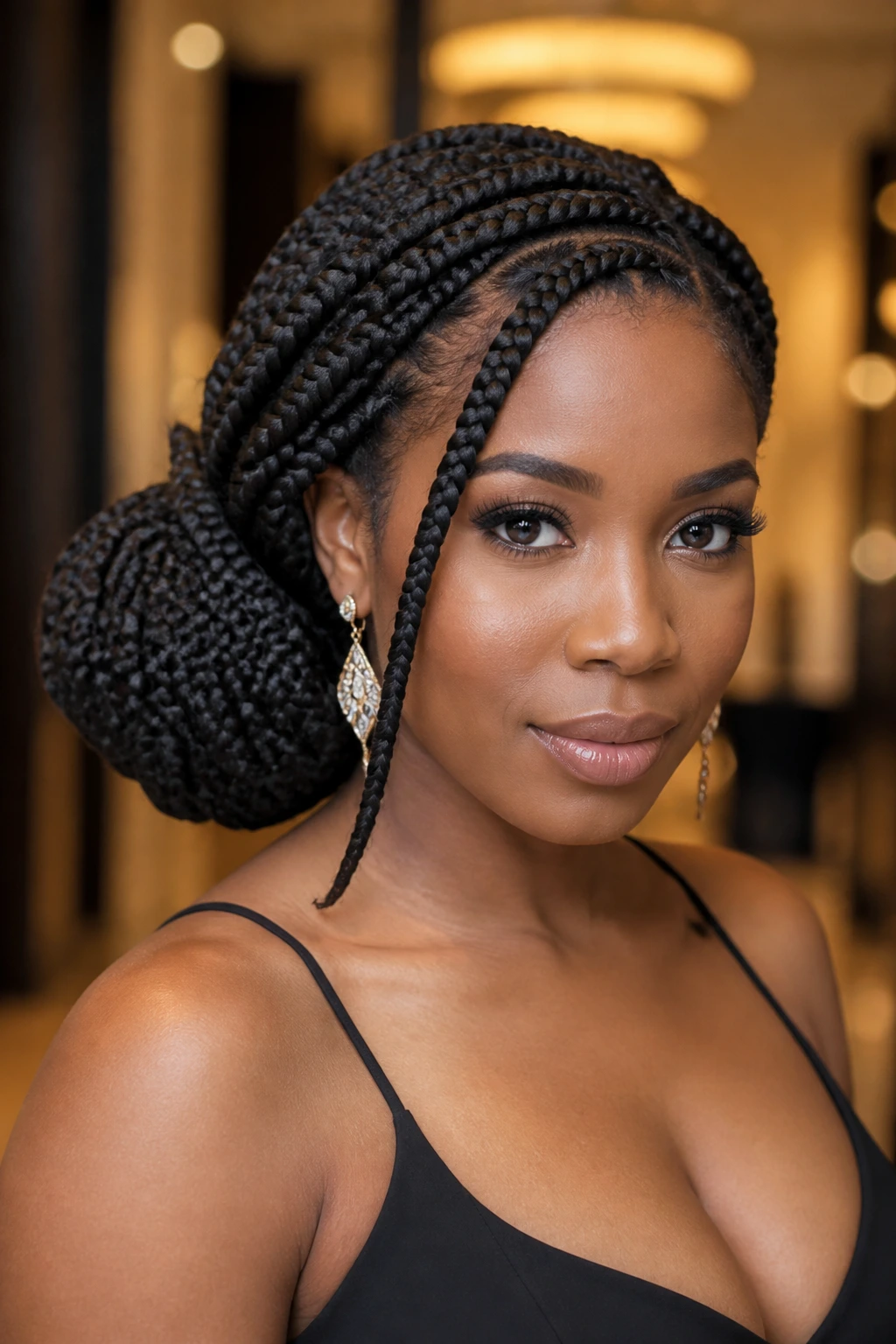
A deep side bun sits lower and farther off-center than a standard low bun, and that small shift makes it feel sculpted. It’s elegant without being stiff, and it gives the face a soft diagonal line. The look works beautifully when you want the braids off the neck but still want some shape on the side.
This is one of the best braid styles for events where you’ll be turning your head a lot or sitting for photos. Keep the bun secure and smooth, then let one or two braids tuck naturally around the base. The result should feel intentional, not overworked.
The Cleanest Way to Wear Jumbo Box Braids Without Fighting the Style
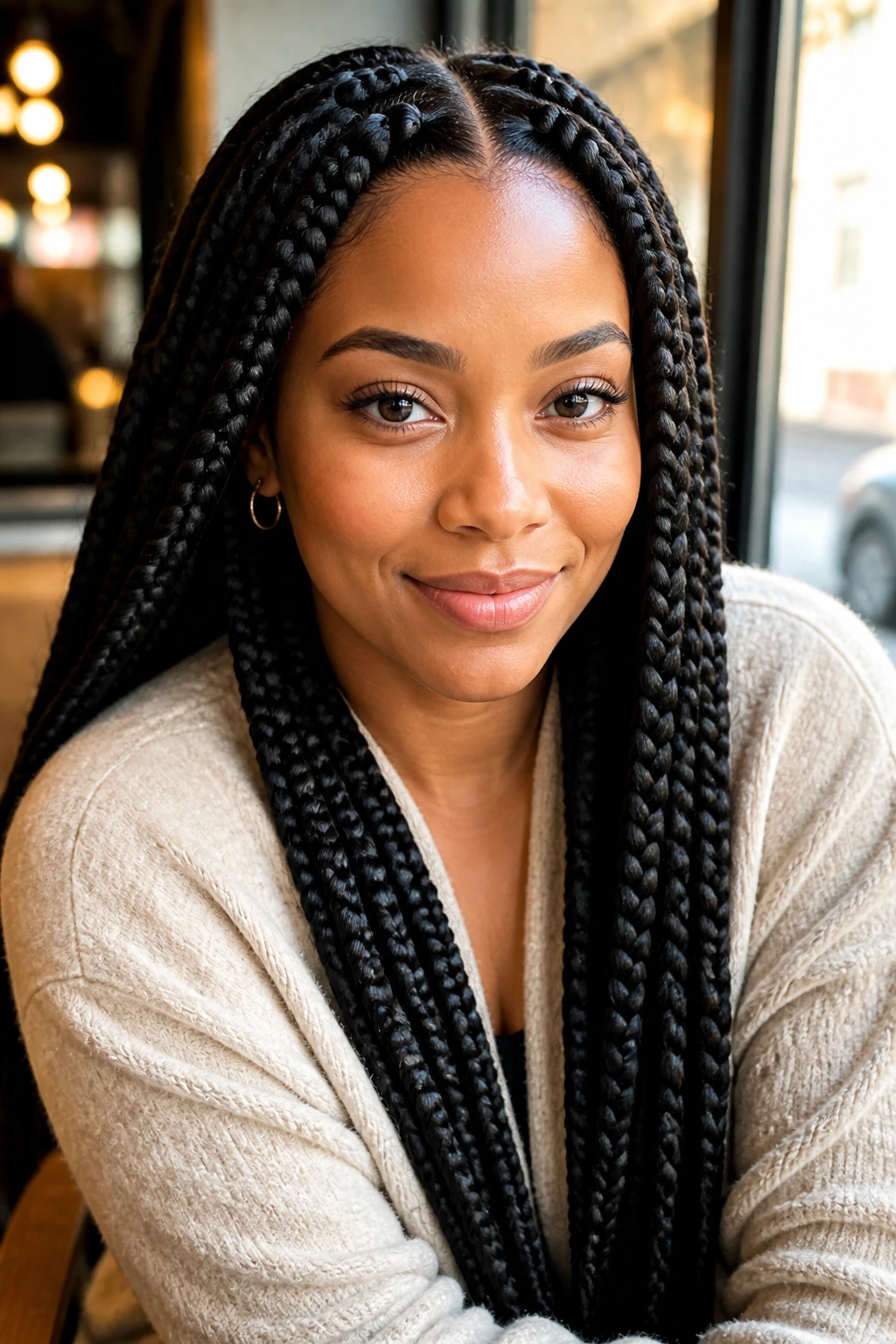
The best jumbo box braid looks are not the most complicated ones. They’re the ones that fit your neck, your week, and the amount of attention you actually want to give your hair. A center part can feel precise. A side sweep can feel soft. A ponytail can save your shoulders. The style changes a lot with a small adjustment, and that’s the part I never get tired of.
What matters most is the finish at the scalp and the shape at the ends. If those two zones are working, the style reads clean even with very little added to it. If they are not, cuffs and beads will not rescue it. That’s the honest version. Get the base right, and everything else can be taste.
How to Pick a Style That Actually Fits Your Week
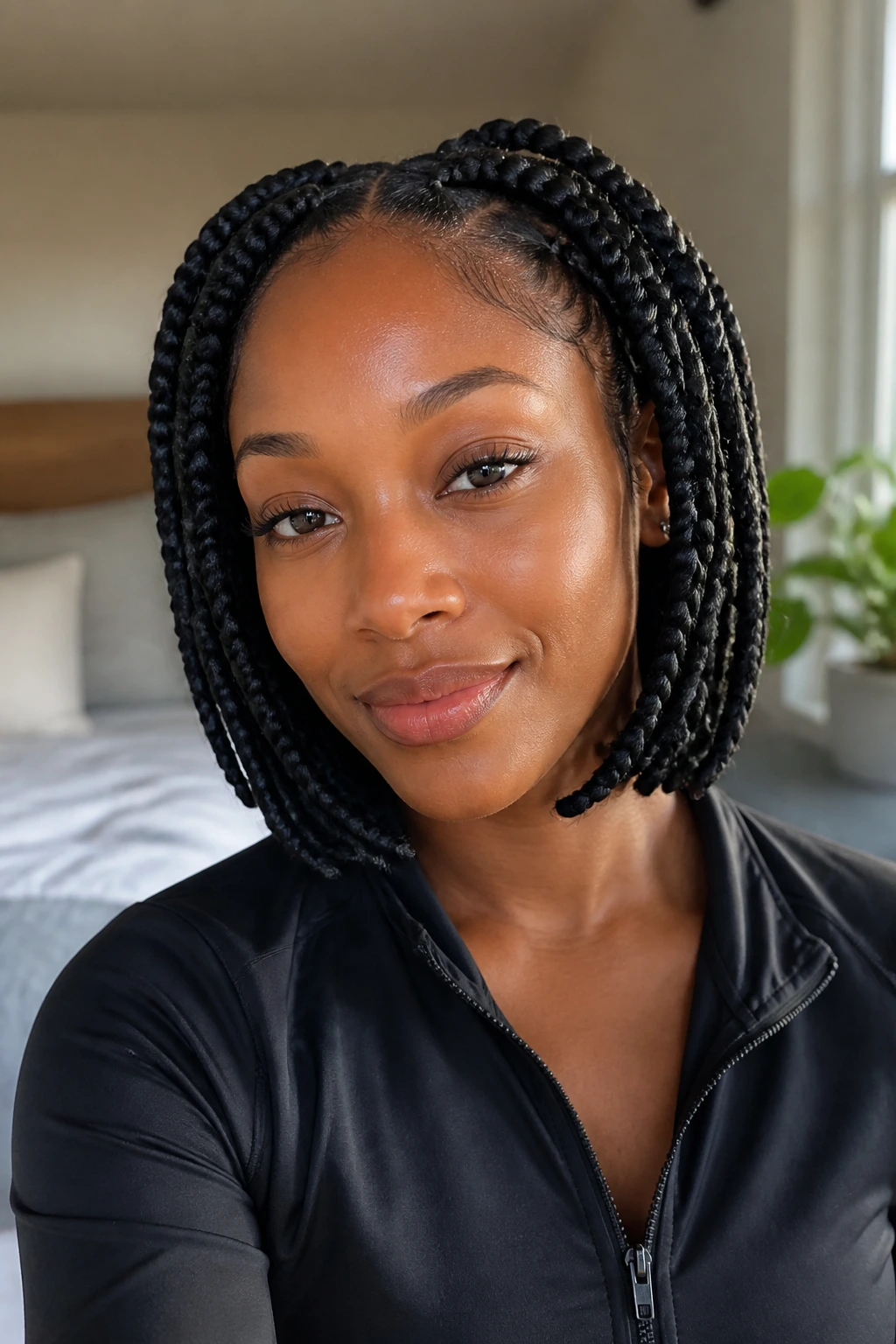
If your life includes workouts, long commutes, or a lot of coat collars, pick a style that stays off the neck: shoulder length, a bob, a low bun, or a high ponytail. If you want something that looks dressed up fast, go for a center part, a side part, or a low-tucked chignon. If you like changing the vibe every few days, half-up, half-down and scarf wraps give you the most room to play.
The braid size itself matters too. Jumbo braids look best when the parting and the braid size match. Too many tiny parts make the head look crowded; too few giant sections can make the style feel sparse. I prefer a clean, visible grid and enough fullness in each braid to keep the shape strong without turning the roots into a brick.
A final note, because it bears repeating: if the front rows ache, the style is too tight. The point of jumbo braids is less daily handling, not daily pain.
Essential Equipment for These Looks
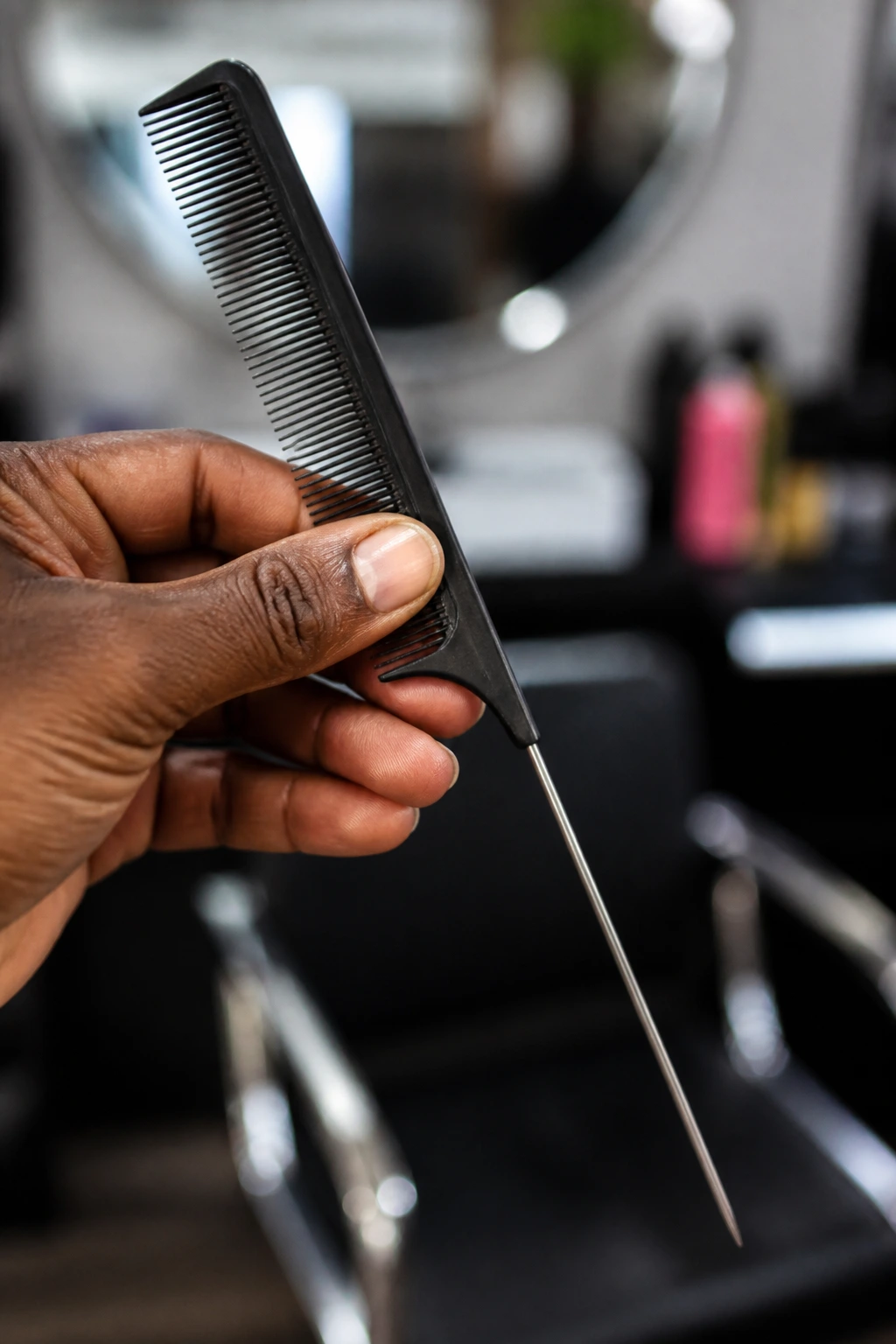
-
Rat-tail comb: The pointed end gives you the clean parting lines that jumbo braids depend on.
-
Sectioning clips: These keep the rest of the hair out of the way while you work one row at a time.
-
Braiding hair: Pre-stretched synthetic braiding hair usually lays flatter and saves time during installation.
-
Scissors: Useful for trimming stray extension ends or cleaning up a wrap that went crooked.
-
Edge brush: Helps smooth the hairline without dumping product all over the scalp.
-
Braid mousse: A light foam or mousse helps tame flyaways and settle the finished style.
-
Scalp spray or light braid spray: Better than thick grease when you need a little relief between washes.
-
Satin scarf or bonnet: Keeps the roots from puffing up overnight and reduces friction on the braids.
-
Hair elastics: Strong, snag-free bands are useful for ponytails, buns, and bubble styles.
-
Flexi rods or perm rods: Handy if you want curled ends or a softer finish at the tips.
-
U-pins or hairpins: Better than tiny decorative pins when you need real hold for buns and tucked styles.
-
Spray bottle with water or diluted leave-in: Good for refreshing the scalp lightly without soaking the whole install.
Smart Hair Shopping and Install Prep
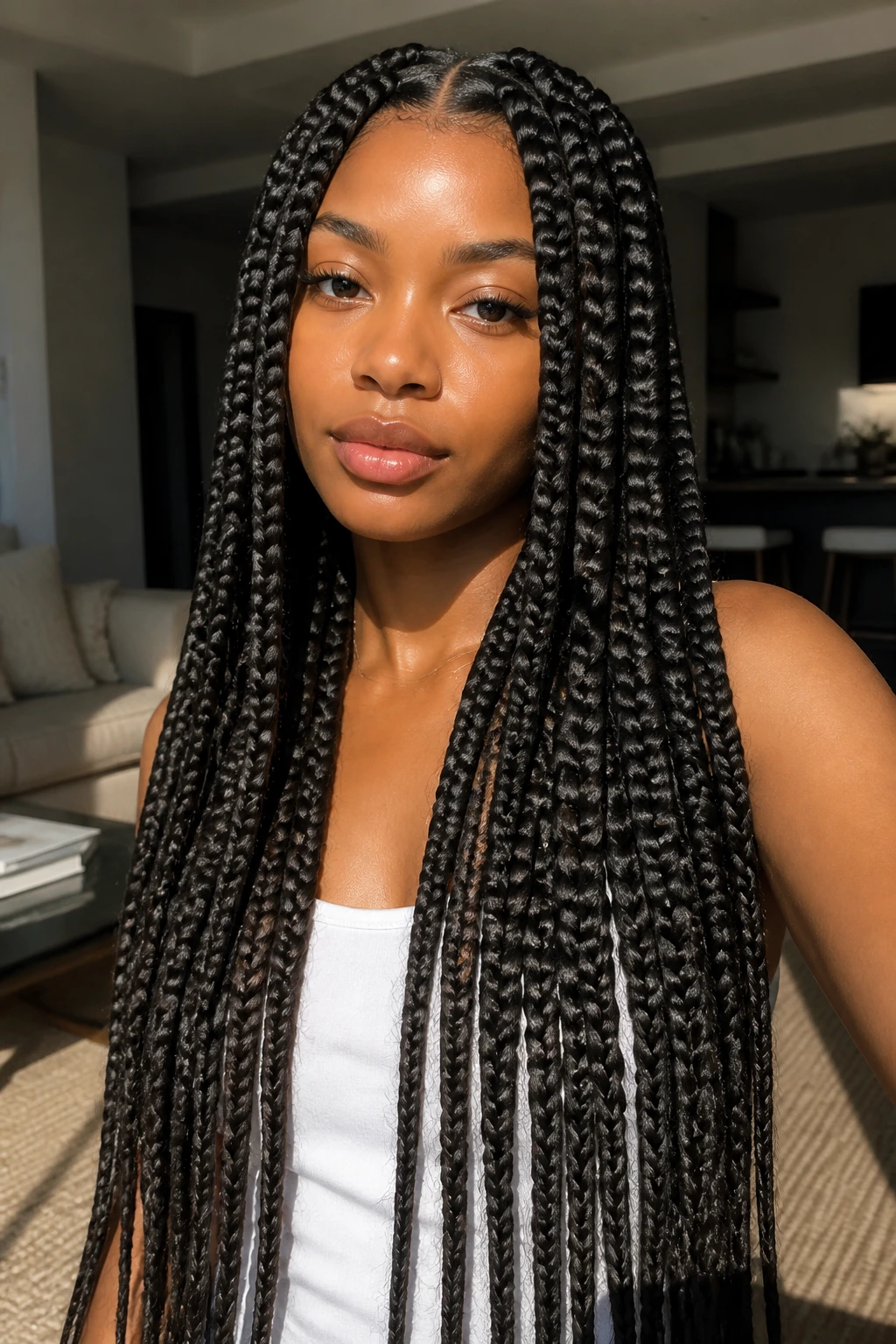
The hair you buy changes the entire experience. Pre-stretched braiding hair is usually the easiest starting point because it lies flatter at the ends and cuts down on the bulky, blunt finish some pack hair has out of the bag. If you want a softer look, choose a texture that isn’t too glossy. Shiny synthetic hair can look sharp in a bad way under indoor lighting.
Length is worth thinking about before you buy, not after. If you want a bob, buy a little longer than you think you need, because the sealed ends and the braid fold make the style sit shorter once it’s installed. If you want a ponytail or a bun, buy enough hair to avoid thin patches at the back. Sparse jumbo braids are more obvious than sparse small braids.
Color matters too. Full-head burgundy, copper, blonde, or ombré looks beautiful when the braid has enough length to show the blend. If you only want a small shift, put brighter pieces around the face and keep the back darker. That gives you contrast without committing to a whole head of light hair.
If your scalp is sensitive, give the extension hair a quick rinse and let it dry fully before the appointment. Some braiding hair has a finish that feels stiff or itchy the first day, and a little prep can make the install much easier to wear.
How to Wear These Styles With Clothes, Earrings, and Makeup
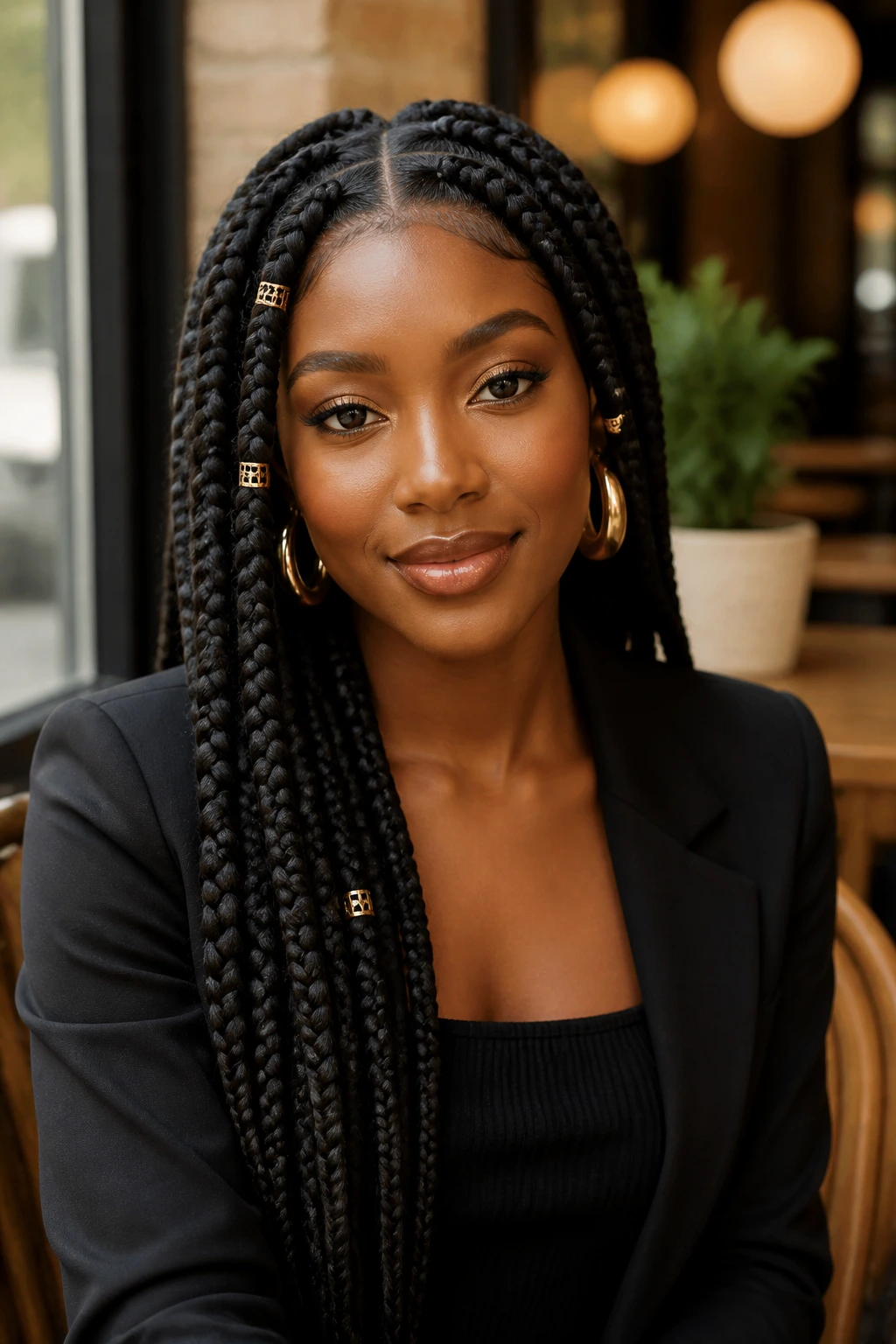
Silhouette: Center parts and long lengths stretch the face and neck; side parts and updos soften or sharpen the shape depending on where the hair lands. If your outfit already has a strong neckline, a ponytail or bun keeps the whole look from fighting itself.
Outfits: Jumbo box braids look especially good with collared shirts, off-shoulder tops, hoop earrings, structured jackets, and dresses with a clean neckline. The braids are already bringing texture, so you do not need busy clothes trying to compete.
Accessories: Cuffs, shells, and beads work best when they repeat with restraint. If the braids are colored or curled, keep the accessories quieter. If the braids are plain black or brown, one or two accents can do more than a whole handful of metal ever will.
Makeup and neck balance: Long braids tend to pull the eye down, so a strong brow, a defined lip, or a brighter earring can rebalance the face. Shorter braids leave more room for bold makeup and bigger earrings because the hair itself is not swallowing the frame.
Styling Tricks That Change the Whole Mood
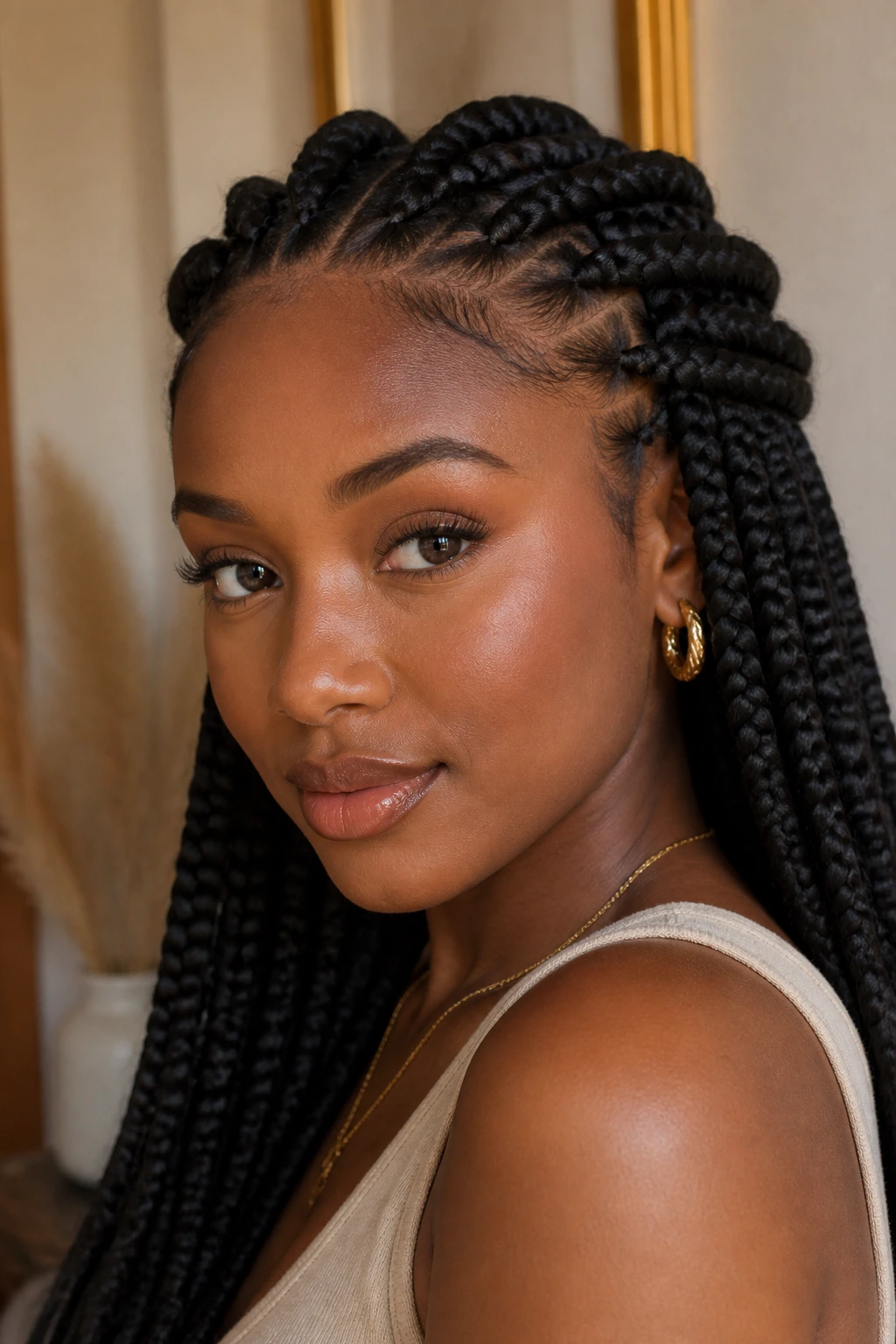
Shape Boost: Ask for the front rows to sit slightly farther back from the temples if you want a softer hairline. That small shift keeps the style from looking boxy.
Accessory Control: Place cuffs and shells low on the braid, not near the root. The lower they sit, the better they move, and the less they tug.
Color Placement: If you want lighter hair without a full blonde set, put the lightest pieces at the front and leave the back darker. The face gets the brightness, and the install stays easier to live in.
Night Routine: Wrap the edges with a satin scarf, then tuck the rest into a bonnet if the braids are long. One layer protects the line; two layers protect the length.
Frizz Fix: A small amount of mousse on the braid bodies, followed by a light wrap for 10 to 15 minutes, usually does more than another round of product. Heavy grease tends to dull the hair and leave buildup.
Common Mistakes That Make Jumbo Braids Look or Feel Wrong
-
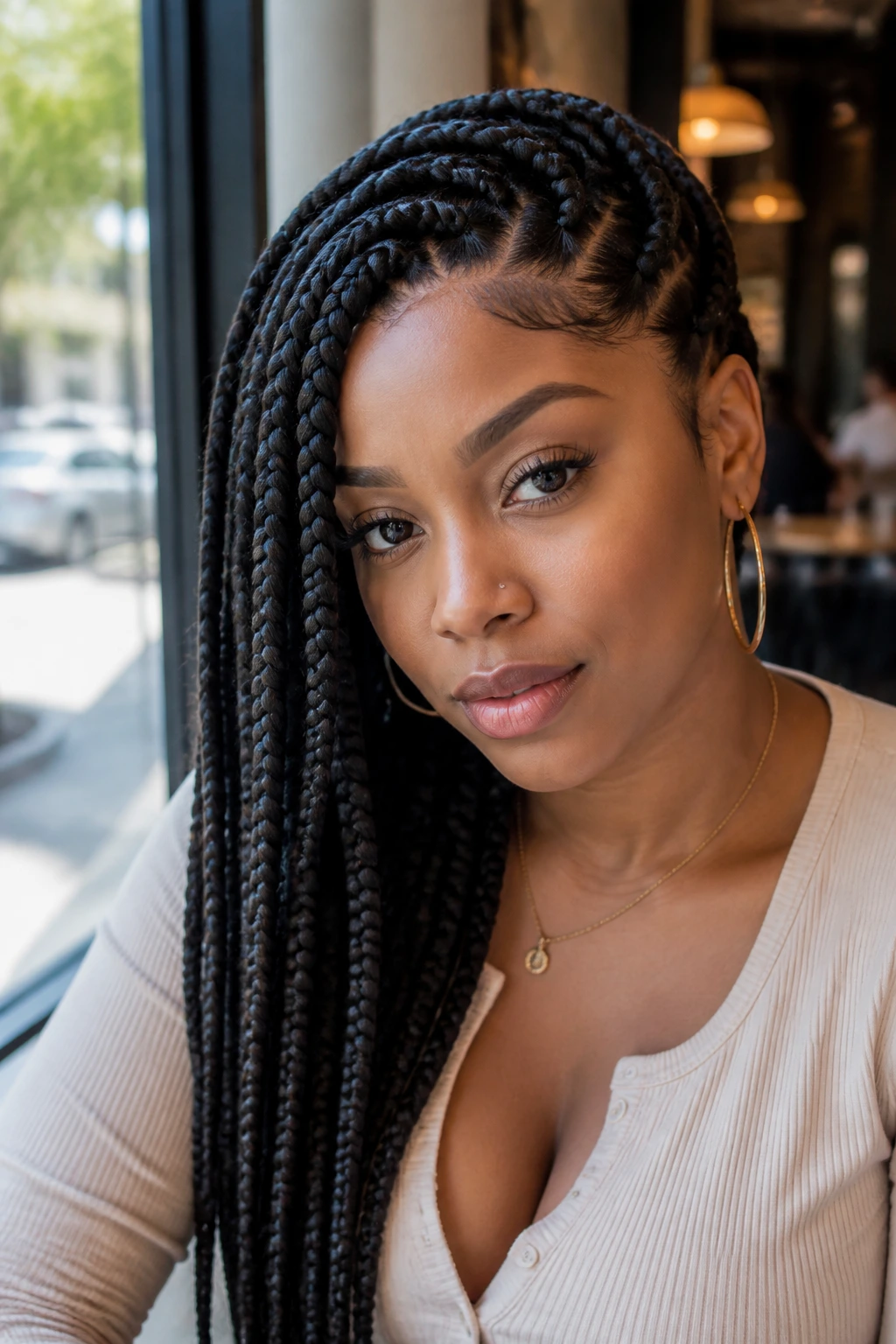
Tight front rows: If the scalp burns, throbs, or bumps up at the temples, the install is too tight. Ask for more slack at the hairline and be willing to stop the style before it turns into a problem.
-
Too much weight at the ends: Heavy beads, stacked cuffs, or overlong charms can pull on the braid and drag the style down. Keep hardware low and light.
-
Skipping scalp cleansing: A dry, flaky scalp is not always a “more oil” problem. Often it needs a gentle wash, careful rinsing, and a full dry instead of another coating of product.
-
Leaving the style in too long: Jumbo box braids usually show new growth faster than smaller braids because the parts are bigger. Once the roots start matting or the edges feel tired, it’s time to take them down.
-
Crowding the braid with too many extras: Color bands, shells, beads, cuffs, and wraps can all live together, but not all at once. If every section gets a different decoration, the style starts looking cluttered instead of styled.
The American Academy of Dermatology’s warning about traction is worth keeping in mind here. If the braid pulls enough to make you wince, that is not a sign to “get used to it.” That is your head telling you to fix the install.
Variations and Adaptations to Try
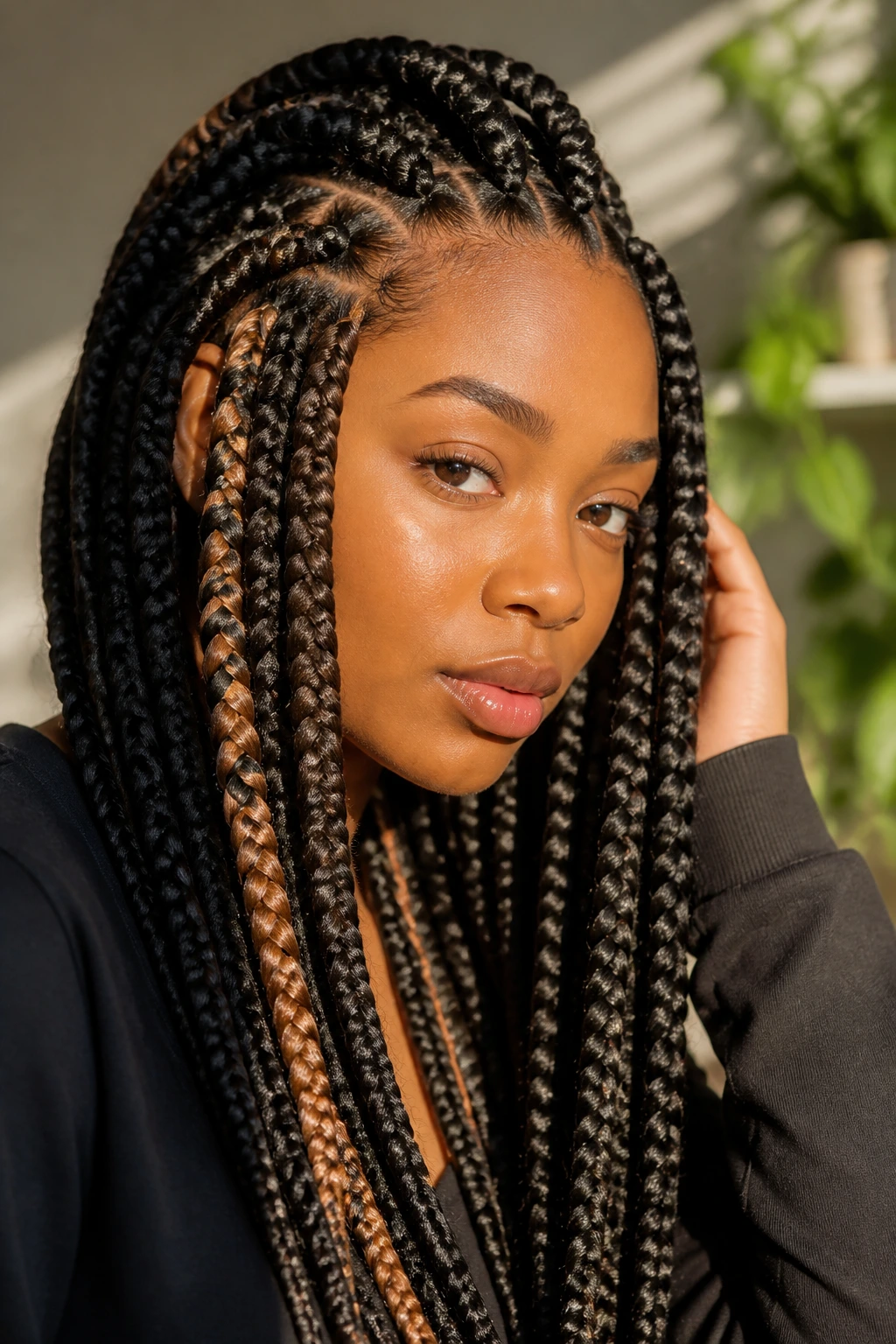
Low-Tension Version: Ask for a slightly softer start at the front rows, especially around the temples and nape. This works well if your hairline is sensitive or you plan to keep the style for several weeks.
Office-Sleek Version: Choose a center part, shoulder or mid-back length, and minimal accessories. The clean lines make the style look polished without feeling dressed up to the teeth.
Vacation-Ready Version: Add a scarf wrap, curled ends, or a low bun option so you can change the shape fast. This helps when you want a style that can survive humidity, photos, and long days.
Color-Forward Version: Use ombré, honey-blonde face-framing pieces, or burgundy ends to add contrast. You get a stronger visual result without changing the base structure of the style.
Short-Wear Version: Pick a bob, shoulder-grazing cut, or layered mixed-length set if you know you will not want to keep braids in for very long. Shorter sets usually feel lighter and are easier to refresh.
Natural-Hair Version: If you don’t want extension hair, you can still borrow the parting and shaping ideas with your own stretched hair. The look changes, but the structure still works.
Keeping Jumbo Box Braids Fresh Between Wash Days
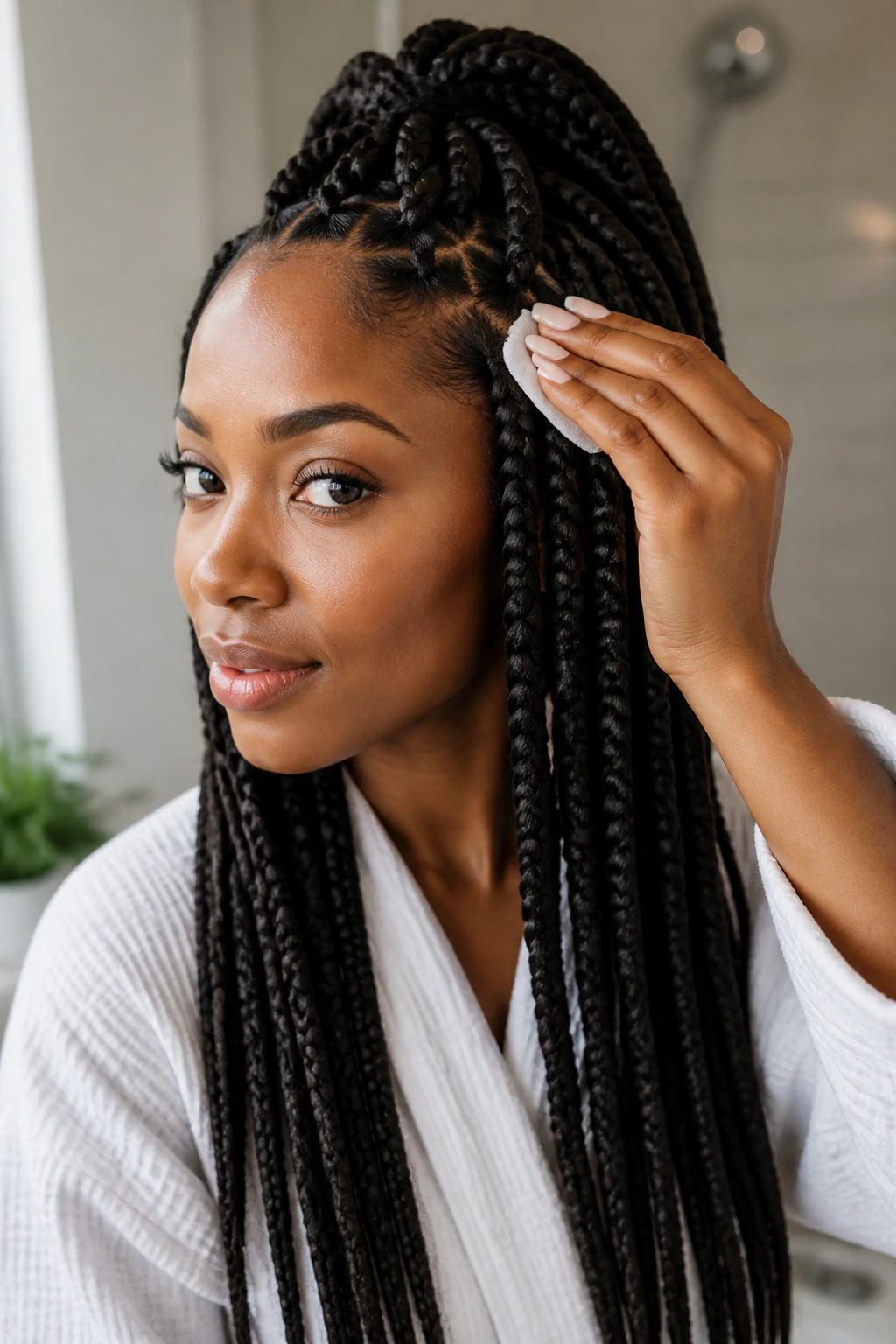
A good rhythm is to treat the scalp, not just the braids. Every 7 to 14 days, depending on sweat, product use, and how your scalp behaves, cleanse the roots with a diluted shampoo or a nozzle applicator and massage gently with the pads of your fingers. Rinse thoroughly. Then squeeze out the water with a microfiber towel instead of roughing up the braid bodies.
For daily upkeep, keep the routine light. A water-based braid spray or a small amount of scalp tonic usually works better than thick pomades and heavy oils. Those products can sit on the scalp and collect lint fast, which is how a neat set starts looking tired early.
At night, the bonnet matters. So does the scarf. If the front rows puff up, wrap the hairline down for 10 to 15 minutes in the morning with a satin scarf and let the shape settle before you leave the house. Jumbo braids often hold their shape well, but the front still needs a little discipline.
Most jumbo sets look their best for about 4 to 6 weeks if you want crisp parts and a fresh line, and can stretch to around 8 weeks only if the install was loose enough and the scalp stays calm. If you get burning, headaches, bumps, or a smell that does not wash out, take them down early. Hair should not need to suffer for the silhouette.
Frequently Asked Questions
How long do jumbo box braids usually last?
A neat install usually holds best for about 4 to 6 weeks before the parts start looking soft and the new growth changes the shape. You can stretch them longer if the scalp stays calm, but once the roots mat or the hairline feels tired, it’s time to take them out.
Do jumbo box braids hurt more than smaller braids?
They can, because each braid carries more hair and more weight. The pain usually shows up at the front rows and nape first. If the style hurts on day one, the tension is too high, and that should be fixed immediately.
Can I wash jumbo box braids without ruining them?
Yes. Use diluted shampoo at the scalp, not rough scrubbing all over the braid bodies. Rinse well, squeeze out the water, and dry thoroughly so the style does not stay damp at the roots.
What’s better for jumbo braids: square parts or triangle parts?
Square parts feel classic and orderly. Triangle parts look sharper and a little more graphic. If you want the parting to be a feature, triangle or curved lines usually stand out more.
Can I do jumbo box braids at home?
You can, but the parting has to be clean and the tension has to stay controlled. The hardest part for most people is not the braid itself; it’s the grid, the evenness, and the front rows. A helper makes the back of the head much easier.
How do I keep frizz down?
A light mousse, a satin scarf, and a calm hand with products usually work better than piling on grease. Too much product makes the braids look dull and can collect lint. Less is usually more here.
Are jumbo box braids okay for relaxed, natural, or stretched hair?
Yes, as long as the hair is prepped for tension and the install is not too tight. Stretched natural hair often gives the cleanest braid base, but relaxed hair and other textures can work too if the hairline is respected.
What should I do if the braids start slipping or feeling loose at the roots?
Don’t keep tugging them tighter every day. If only a few braids loosen, they may need to be redone. If the whole set shifts, the install may have been too loose at the start, and a refresh or take-down is better than living with messy roots.
Braids That Hold Their Shape
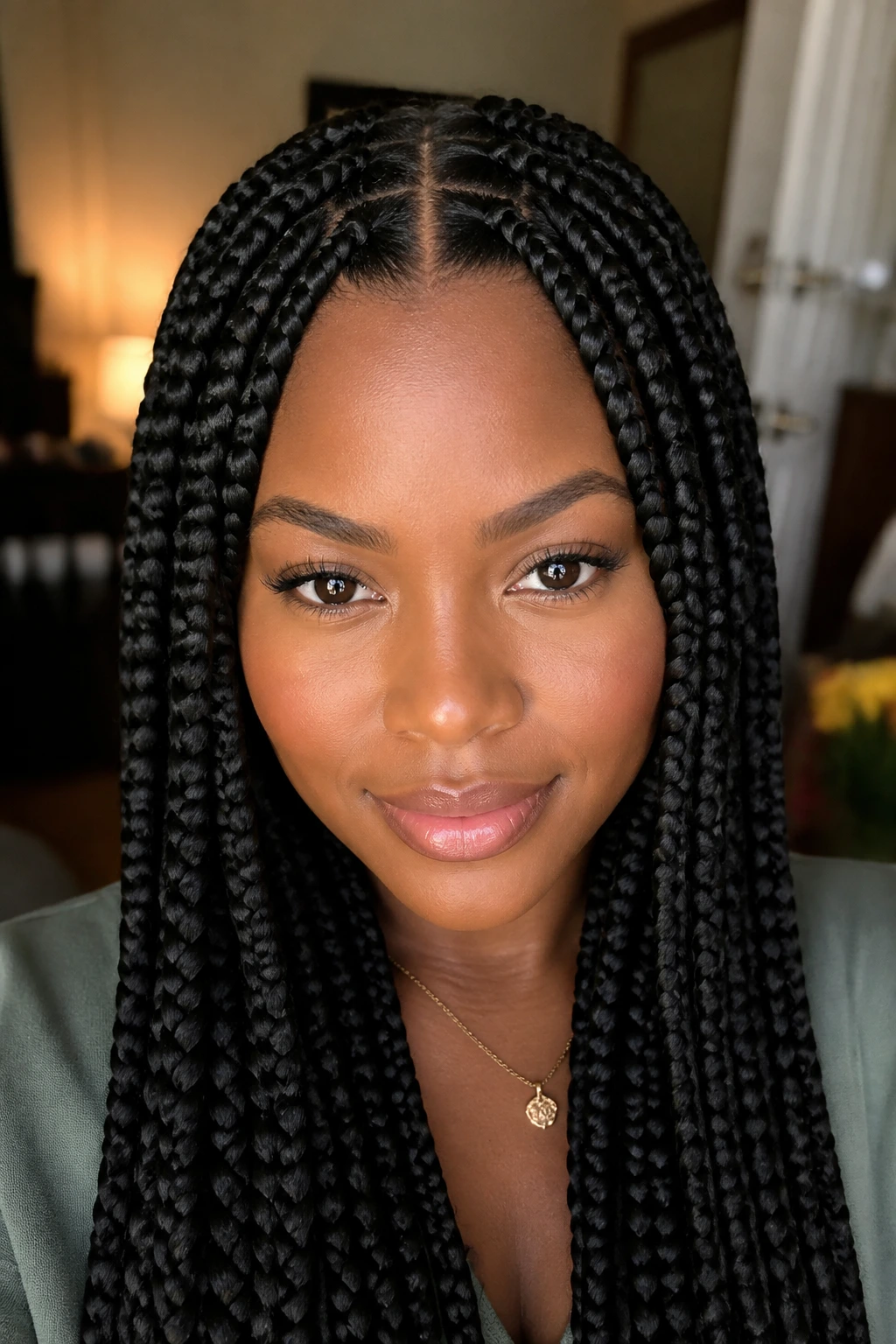
The best jumbo box braids are not the ones with the most accessories or the longest length. They’re the ones that sit well on the head, respect the hairline, and give you enough styling room to live in them without constant fuss. A center part can look crisp. A side sweep can feel softer. A bun can save your shoulders. The style has range, and that’s why it keeps coming back.
If you’re choosing one set to wear for a while, start with the shape, then decide how much weight, color, and detail you actually want. That order matters. A good install should feel like a finish, not a chore you carry around all day.
