



A formal updo has a funny habit of looking simple from across the room and maddeningly fussy in the bathroom mirror. The best formal updo hairstyles are rarely the ones packed with tricks; they’re the ones with a clean silhouette, a strong anchor, and just enough texture so the style still looks intentional after hugs, photos, and a long evening of turning your head toward whoever is talking.
That’s why a good updo isn’t really about making every strand obey. It’s about placing the weight where it belongs. Some styles need a low, quiet knot that stays close to the nape. Others want a polished twist, a braid that acts like a built-in brace, or a sculpted bun that feels sharp enough for black-tie without looking stiff. Hair length matters. So does density. A style that sits beautifully on thick hair can collapse on fine hair if you don’t build a base first, and a sleek finish that looks clean on straight hair can turn slippery on freshly washed curls.
The formal updo hairstyles below cover the whole range: elegant bridal shapes, red-carpet buns, braided looks that grip well, softer styles with face-framing pieces, and a few vintage pieces that bring real character. Pick the silhouette that fits your neckline, your hair texture, and the kind of night you’re actually having. That choice does half the work.
Why These Formal Updo Hairstyles Hold Their Shape So Well
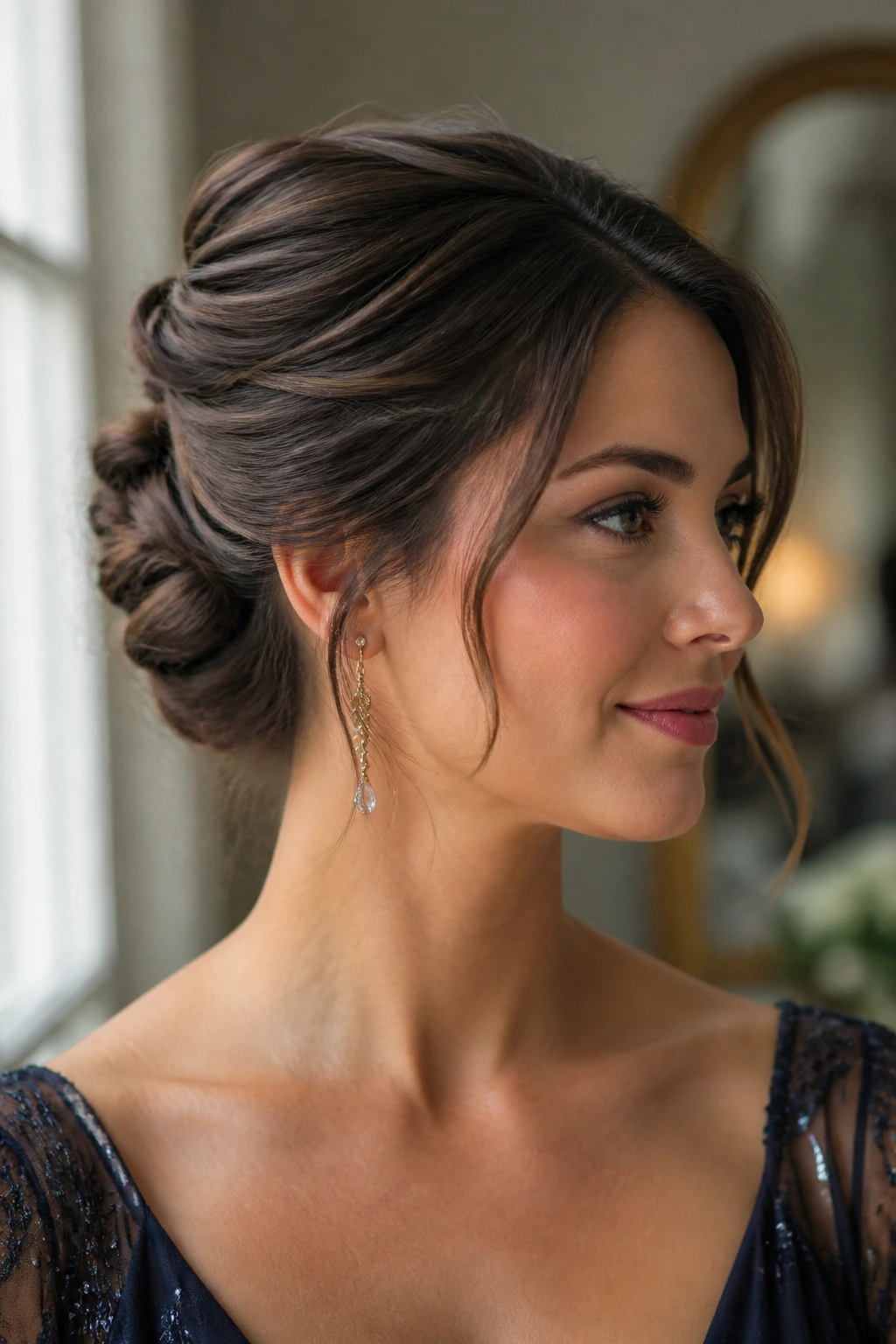
- Clean anchor points: Each style starts with a secure base, so the shape doesn’t sag when pins start shifting.
- Dress-neckline friendly: Low, high, side-swept, and braided options let you match the updo to strapless, halter, one-shoulder, or high-neck outfits.
- Hair-texture flexibility: Some of these formal updo hairstyles lean sleek; others work better with second-day texture, curls, or a little grit from dry shampoo.
- Photo-friendly silhouette: Good formal styling reads clearly from the front, the profile, and the back. That matters more than most people admit.
- Accessory ready: Pearls, combs, pins, and veils sit better on a shape with structure than on a loose pile of curls.
- Real-life wear: These looks are built to survive movement, heat, and that moment when you lean back in a chair and forget you’re wearing a hairstyle with pins in it.
1. Sleek Low Chignon
A sleek low chignon is the workhorse of formal hair. It sits at the nape, keeps the profile neat, and gives you that smooth, deliberate line that never looks accidental. The shape is modest from the front and elegant from the side, which is why it keeps showing up at weddings, galas, and any event where the outfit is already doing plenty.
Why It Feels So Finished
The magic is in the restraint. You’re not chasing height, and you’re not chasing texture for its own sake. You’re creating one clean sweep back from a side or center part, then folding the length into a compact knot that lies flat enough to look polished but not so tight that it feels severe.
It works especially well if your dress has beading, a strong neckline, or an open back. The bun stays out of the way and lets the rest of the outfit breathe. On fine hair, a little padding under the chignon can keep it from looking skimpy. On thicker hair, the key is to keep the wrap smooth and pin the base before you start tucking.
Watch for this: the bun should look deliberate from every angle, not like a hurried knot hidden at the nape.
Quick Shape Notes
- A deep side part softens the face.
- A center part makes the style read sharper and more modern.
- A wrapped strand over the elastic hides the rough edge.
- Two crossed bobby pins hold better than one straight pin.
Best move: mist the finished chignon with hairspray from 10 inches away, then press the flyaways down with the back of your hand.
2. French Twist
The French twist has been around long enough to earn its reputation, and honestly, it deserves it. This is one of those formal updo hairstyles that looks like it took a stylist, even when you build it at home with a tail comb, a handful of pins, and a bit of nerve. It’s narrow, vertical, and surprisingly clean once the shell is set.
What makes it feel formal is the line. The hair is swept back, rolled upward, and tucked into itself so the whole shape rises from the nape in a neat column. That vertical lift gives the style a dressed-up edge that a low bun doesn’t always have. It’s especially good with satin, crepe, or a structured neckline because the twist adds a little architectural tension without stealing the show.
If your hair is silky, prep with dry shampoo or a texturizing spray before you start. If it’s layered, leave the shortest pieces out of the main roll at first and pin them in as you build. The French twist punishes sloppy sectioning.
And no, it does not need to be rigid. A slightly softer twist with a few tucked-in bends reads more expensive than a shellacked one that looks like it could survive a wind tunnel.
3. Braided Crown Bun
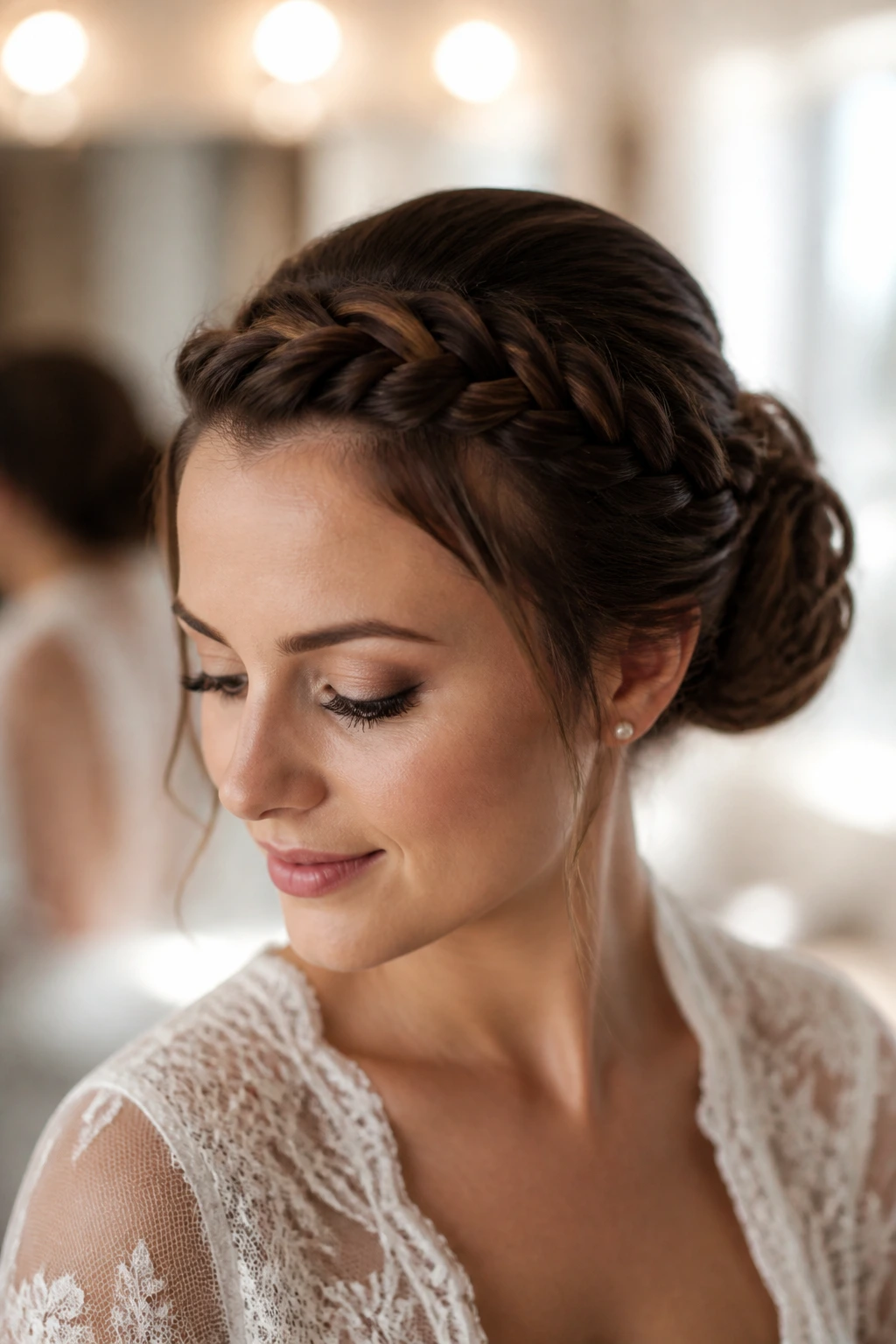
Why does this style keep showing up in bridal mood boards? Because a braid around the crown gives you structure before the bun even starts. The braid acts like a frame, and the bun at the back feels anchored instead of pasted on.
Where the Braid Should Sit
The braid should live close enough to the hairline to read clearly, but not so low that it looks like a regular plait pulled back for errands. I like it a finger or two above the brows on the sides, then tightened just enough to skim the crown. Too tight and it starts to look flat. Too loose and the shape loses definition in photos.
A Dutch braid gives this style a little more depth because the braid stands up from the head. A French braid feels softer and more blended. Both work. If the bun is meant for a formal event, I lean Dutch most of the time because the shadow line under the braid gives the whole style a better outline.
This one is friendly to layers, which is part of its appeal. Loose bits near the nape can be tucked into the bun and pinned where no one can see them. The braid also gives you a better grip point for earrings and a veil, if that’s part of the plan.
- Start with a light mist of texture spray.
- Braid on dry hair, not slippery freshly washed hair.
- Keep the bun compact so the braid stays the star.
- Finish with a few pearl pins if you want a softer edge.
4. Polished Ballet Bun
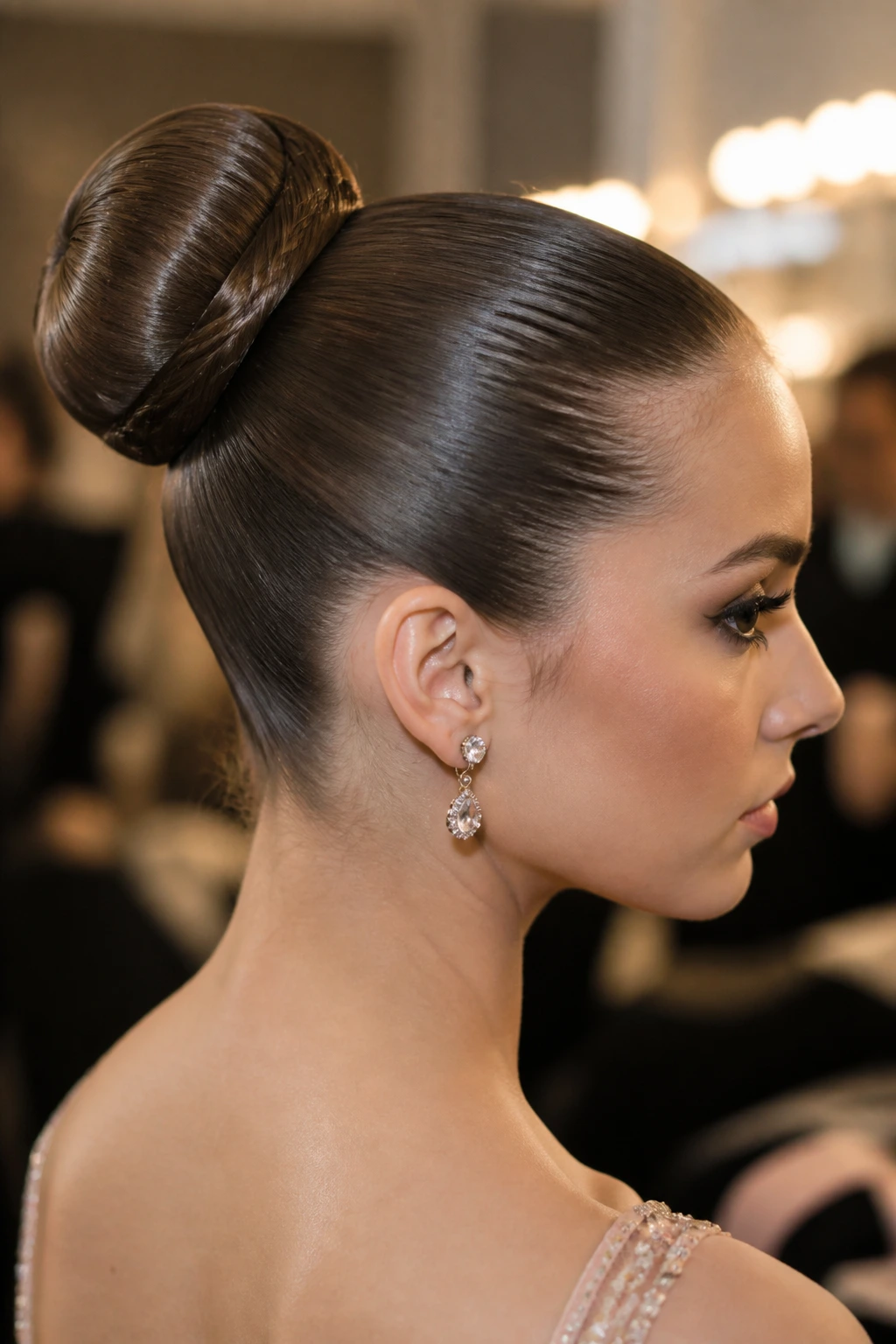
The polished ballet bun is severe in the best way. It sits high, round, and centered, with a smooth surface that looks like it was measured with a ruler. Done well, it feels crisp rather than childish, which is the difference between a recital bun and a formal bun worth wearing to a black-tie event.
This style works when you want clean lines and strong posture from your hair. It clears the neck completely, shows off earrings, and pairs well with dresses that already have drama at the shoulders or chest. If your outfit has a lot of detail, this bun gives the eye a place to rest.
The trick is to build the base carefully. If your hair is thick, splitting it into two ponytails before wrapping can keep the bun from bulging at one side. If your hair is fine, a hair donut or a bit of padding helps the bun stay full instead of looking like a tight coin at the crown.
A polished ballet bun can look harsh if the hair is pulled too tightly around the hairline. Leave the tension firm, not painful. You want clean, not strained.
5. Knotted Low Bun
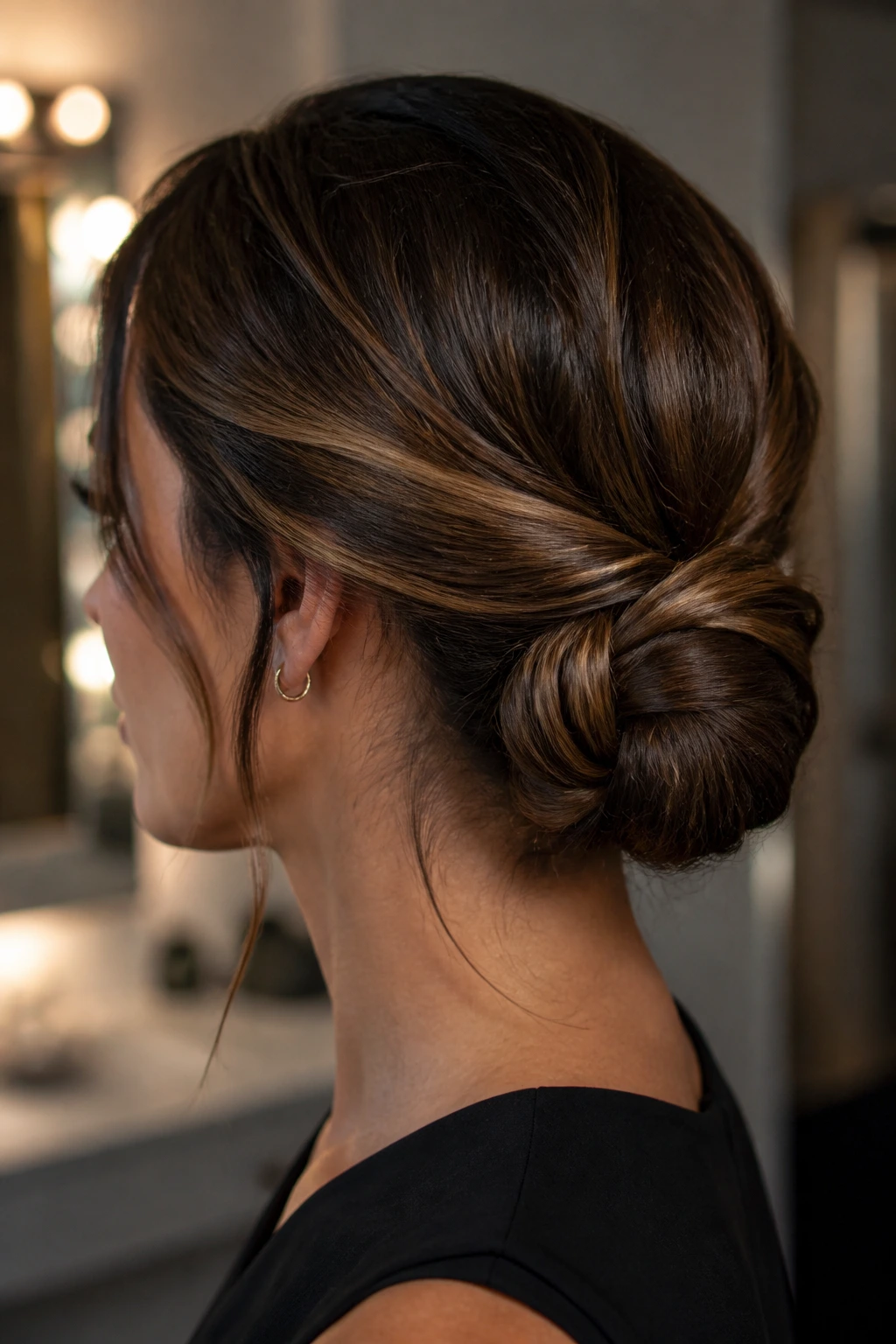
A knotted low bun has more shape than a plain coil and more softness than a fully slick chignon. It feels like the kind of formal updo that doesn’t beg for attention, then quietly gets it anyway because the texture is a little more interesting than expected.
The structure is usually built from two or three sections folded over each other and pinned into a low knot at the nape. That gives the style a sculptural look without making it obvious that every inch has been engineered. It’s especially good if you want to keep a bit of movement in the hair while still looking dressed up.
I like this one on second-day hair. The slight grip helps the knots stay put, and you don’t have to drown the roots in product to get the shape to hold. If you have layers, don’t fight them too hard. Use them to create a little bend in the knot, then pin the ends where they disappear into the base.
This is a quietly strong style. No fluff. No loose bulk. Just a low knot with enough texture to keep it from feeling flat.
6. Gibson Tuck
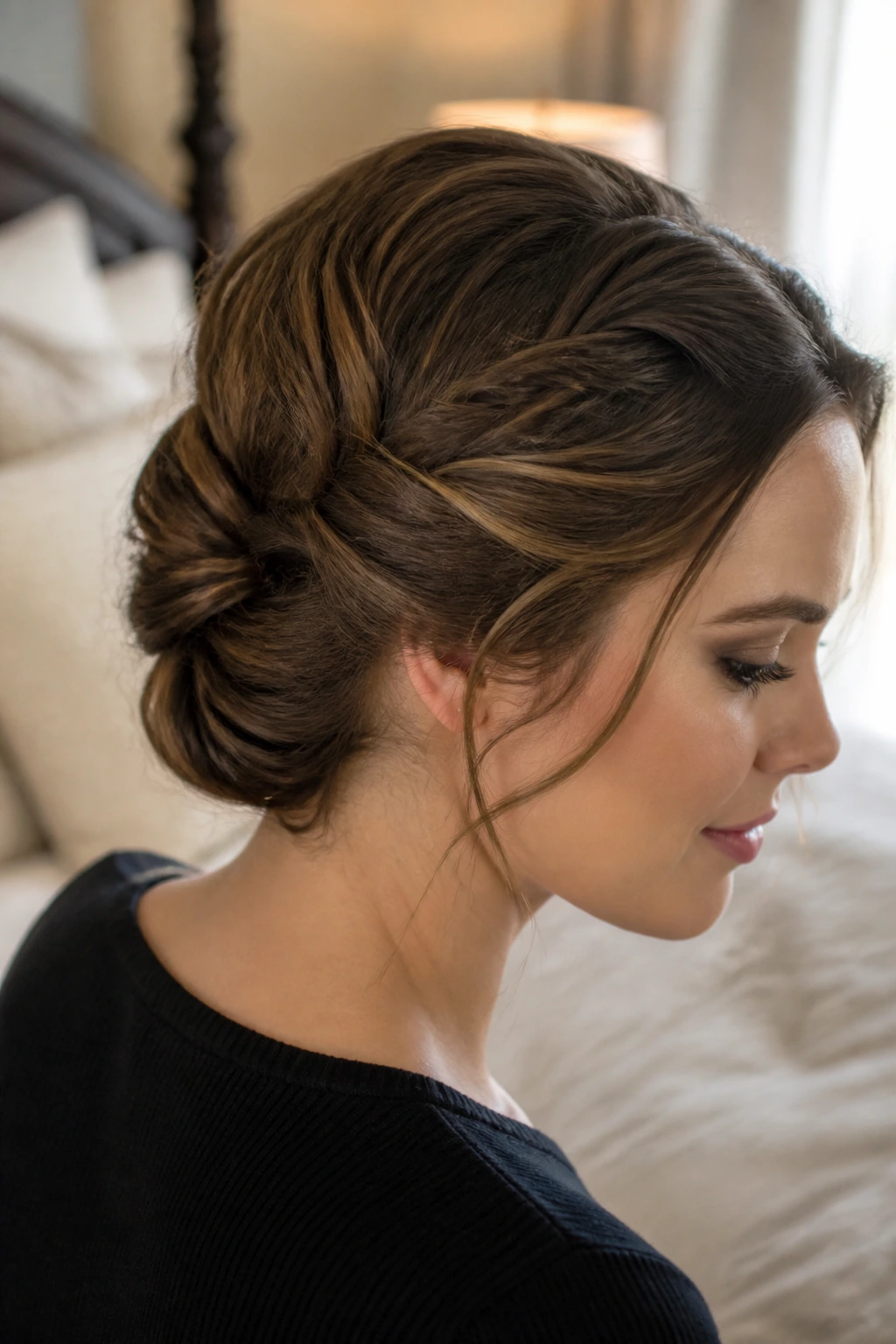
The Gibson tuck is one of those styles that feels softer than a French twist and more relaxed than a strict bun. Hair is rolled or tucked upward into itself, usually over the base of a low ponytail or a headband, so the finished shape sits like a neat fold at the back of the head.
Compared with a French twist, the Gibson tuck carries less vertical drama. That makes it a little gentler on rounder face shapes and nicer with dresses that need an elegant but not severe finish. It’s also a quiet lifesaver if your hair is shoulder length and not quite long enough for some of the more elaborate formal updo hairstyles on this list.
What I like most is the way it handles texture. Slight waves make the tuck look fuller. Straight hair stays smooth. Even layered hair can work if you prep the ends so they slide inside the roll instead of poking out of it.
If you want a style that feels vintage without reading costume-y, this is a good place to start. It has old-fashioned bones, but it doesn’t look fussy.
7. Rolled Chignon
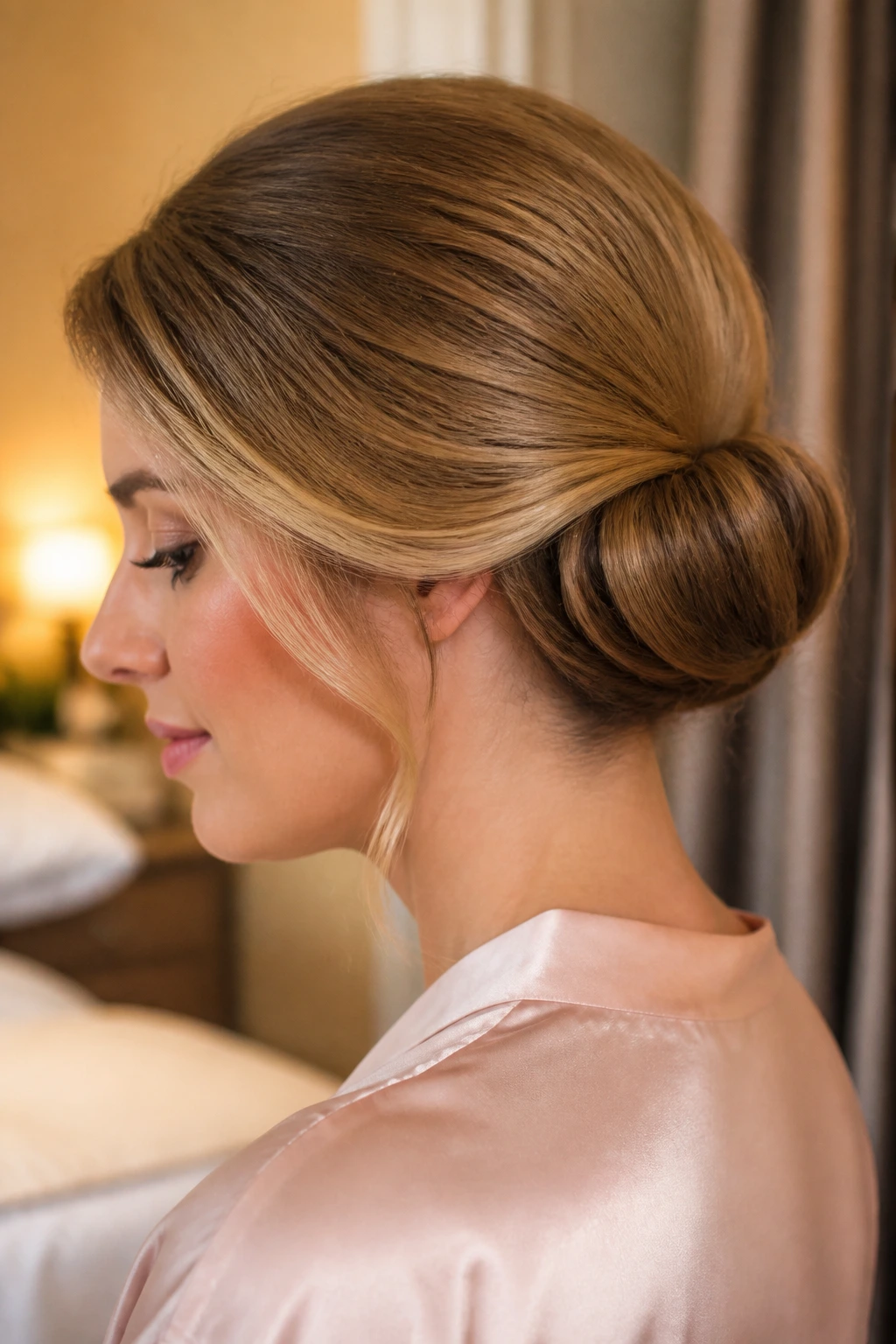
A rolled chignon has that smooth, shell-like curve that looks expensive in person. The surface can be sleek or softly brushed out, but the shape itself is the point: hair rolls inward and settles into a low, tucked form that feels tailored and calm.
How the Roll Creates Shape
The roll gives the style a visible direction. Your eye follows the hair as it bends toward the center, which is why this looks more refined than a simple twisted bun. It’s also a smart option if you want volume at the back without building height at the crown.
I usually like this style with a side part and a little soft wave at the front. That contrast keeps the roll from feeling too stiff. If the hair is very fine, a small cushion or a little teasing at the base adds body. If the hair is thick, keep the roll narrow so it doesn’t turn into a bulky ridge.
A rolled chignon plays well with satin dresses and vintage jewelry. It also behaves better than a fluffy bun in humid rooms, because the shape is controlled rather than airy.
Small detail, big payoff: hide the ends under the roll instead of tucking them straight down. The curve stays cleaner that way.
8. Rope-Twist Bun
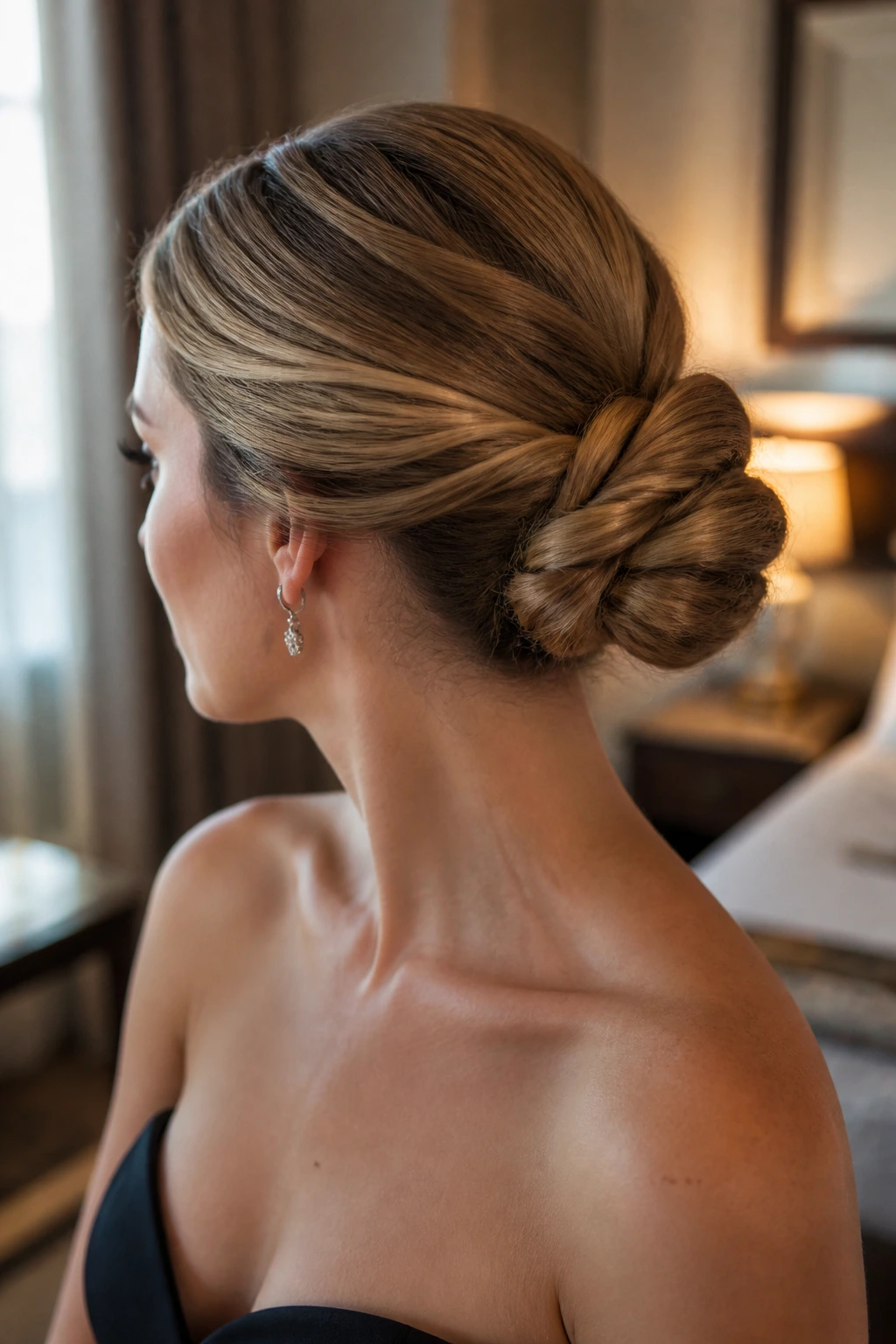
A rope-twist bun has a slightly more modern edge than a braid-based updo, and that’s why I keep coming back to it. Two sections are twisted in the same direction, then wrapped against each other in the opposite direction. Done correctly, the pattern looks neat and almost woven, but not fussy.
The biggest advantage is grip. Rope twists hold on to slippery hair better than a smooth section does, which makes this a strong option for very straight hair or hair that’s been freshly smoothed. The twist pattern also adds visible detail without needing a lot of extra accessories.
You can keep the bun low and understated, or set it a little higher and more sculpted. I prefer the low version for formal events because it feels quieter and doesn’t compete with earrings. If the dress has an open back, though, a centered mid-height bun can be lovely.
Don’t skip this: twist each strand firmly before combining them. Loose twisting looks puffy in the wrong way and falls apart faster.
9. Side-Swept Updo
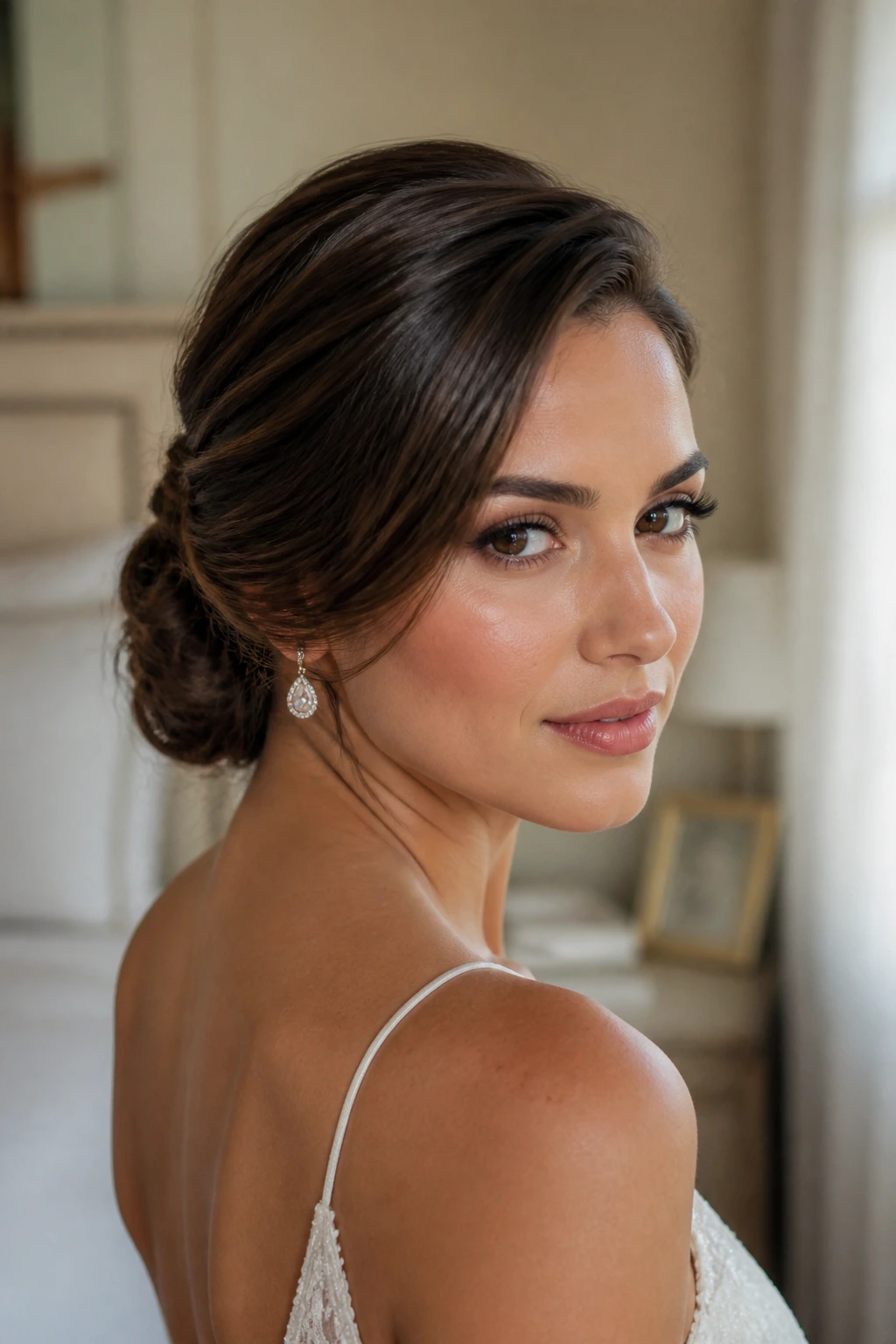
Ever notice how one-shoulder dresses and side-swept updos seem to understand each other? The hairstyle moves the eye in the same direction as the garment, which makes the whole look feel balanced instead of crowded.
This style gathers the hair to one side at the nape or just behind one ear, where it can be pinned into a knot, a twist, or a compact low bun. A little lift at the crown keeps the head shape elegant, and the side emphasis gives the style room to show off a statement earring on the opposite side.
It’s a good choice when you want asymmetry but not drama. The silhouette feels deliberate. The shape is formal. Yet it leaves enough softness that you don’t end up looking over-styled. That’s a useful line to walk.
For finer hair, a side-swept updo often works better than trying to build a huge center bun, because the visual weight is spread out. For thick hair, it lets you pin sections in a way that keeps the style from ballooning at the back.
10. Halo Braid Updo
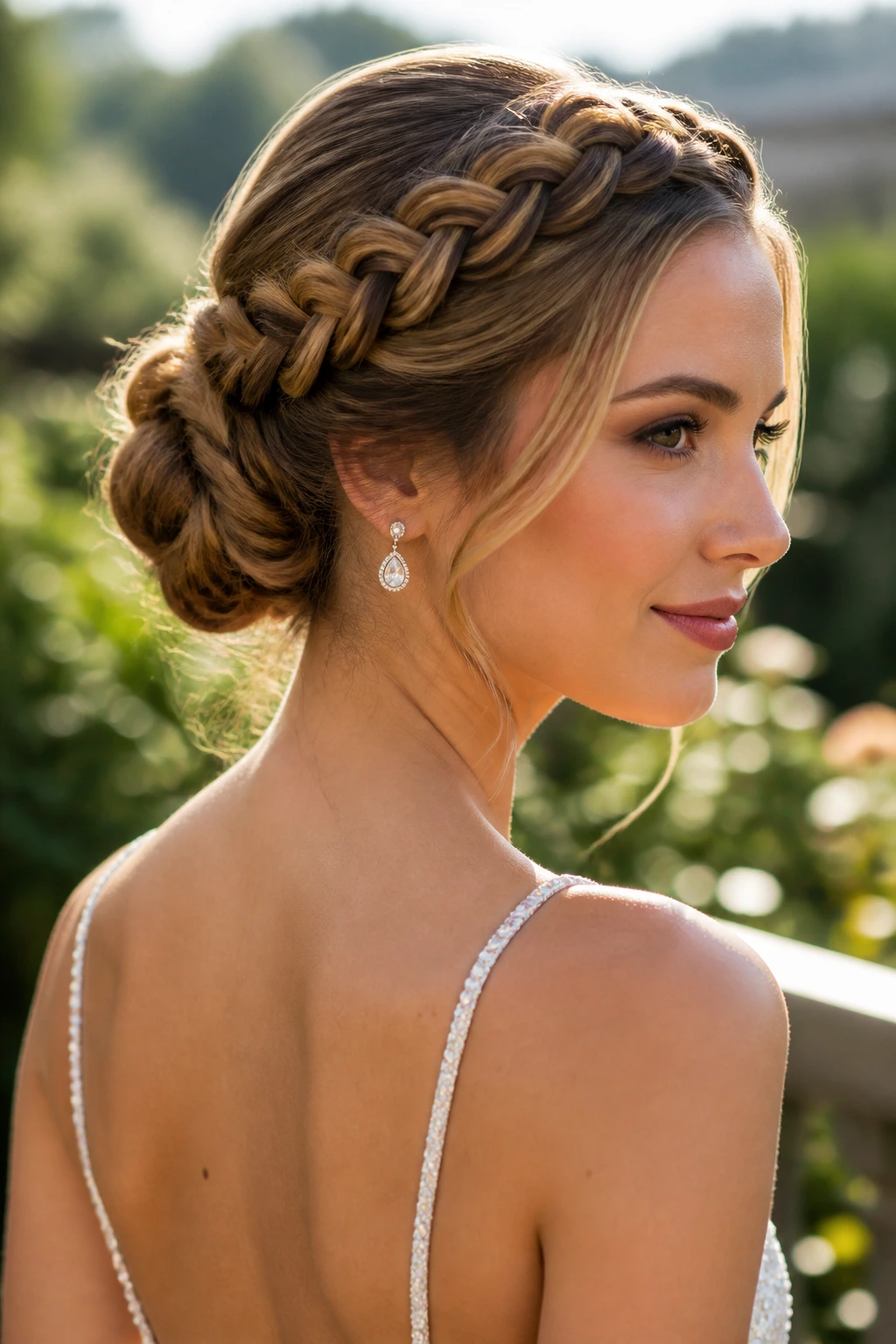
A halo braid updo gives you a full crown of detail before the back even enters the conversation. The braid wraps around the head like a frame, and the remaining length can be tucked into a bun, coil, or a low pinned nest. It has a soft, romantic feel, but the structure keeps it formal.
This is one of the better formal updo hairstyles for hair that wants to slip out of plain pins. The braid creates a built-in anchor, which is a big help if the hair is layered or medium in density. The shape also photographs well from behind, which matters more than people think when the back of the dress is doing something interesting.
A halo braid can feel too sweet if it’s over-softened, so I like a braid with a little definition in the edges. A Dutch halo gives that. If your hair is very curly, braid carefully and leave the texture visible; trying to press every curl flat usually makes the style look tired by the end of the night.
Tiny flowers or pearl pins can sit in the braid, but keep the decoration sparse. The braid already has presence.
11. Pinned-Curl Updo
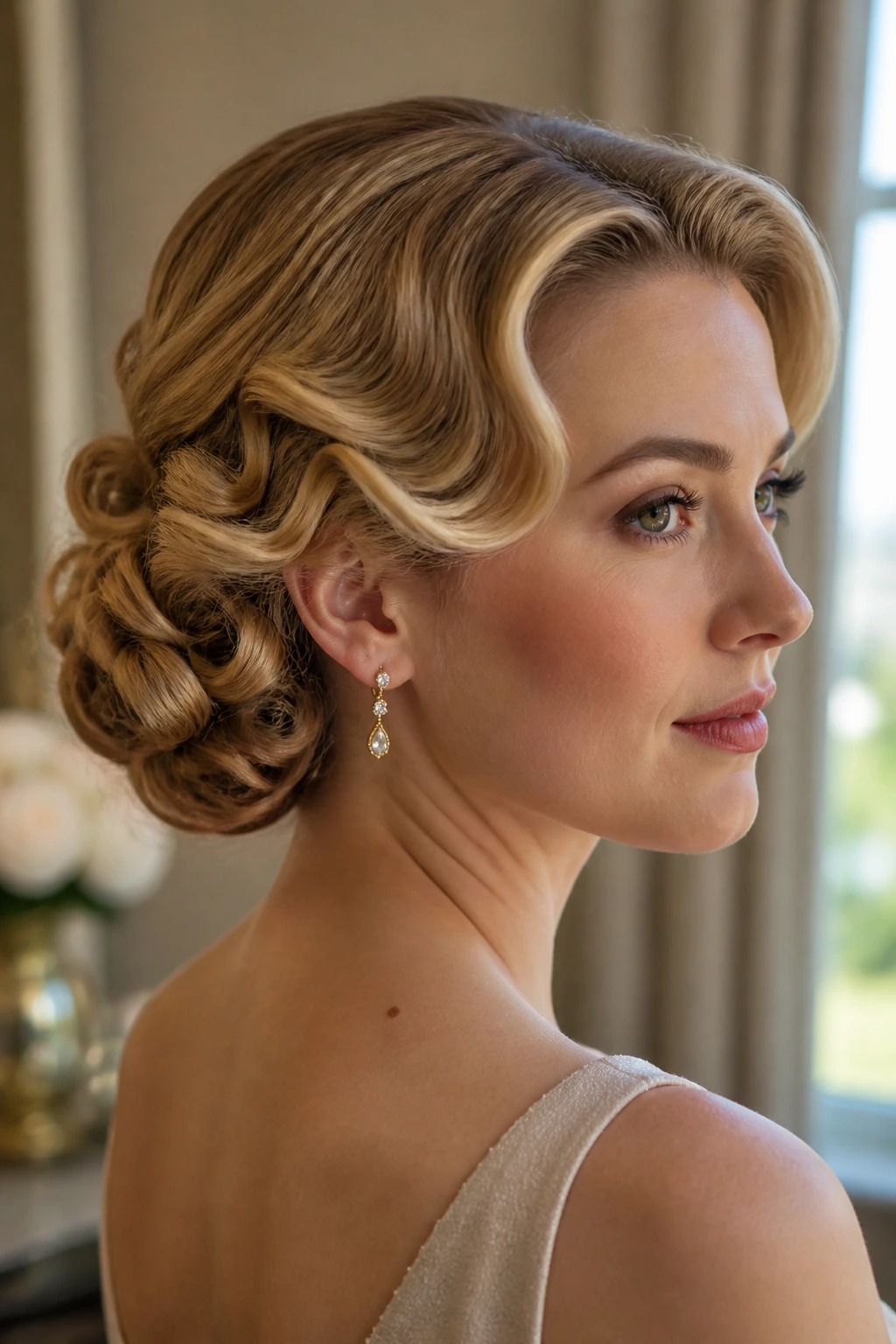
Pinned curls are not fast. That is the price. What you get in return is one of the most elegant formal looks you can build on medium-length hair, because each curl is placed on purpose and the finished shape has a soft, vintage rhythm.
Start by curling sections about 1 inch wide with a medium-barrel iron. Let each curl cool in your hand, then pin it flat while it sets. That cooling step matters. Warm curls stretch and droop; cooled curls keep their shape. Once the set is ready, the curls can be arranged into a low cluster, a side sweep, or a compact back-roll.
This style is excellent when you want texture without losing polish. It’s also a smart fix for layered hair, because the curls give the shorter pieces enough body to be pinned in without disappearing. If you want the look to feel formal rather than bridal-soft, brush only the surface lightly. Leave some curl definition intact.
Pinned curls have a little old Hollywood in them. That’s not a bad thing.
12. Wrapped Pony Bun
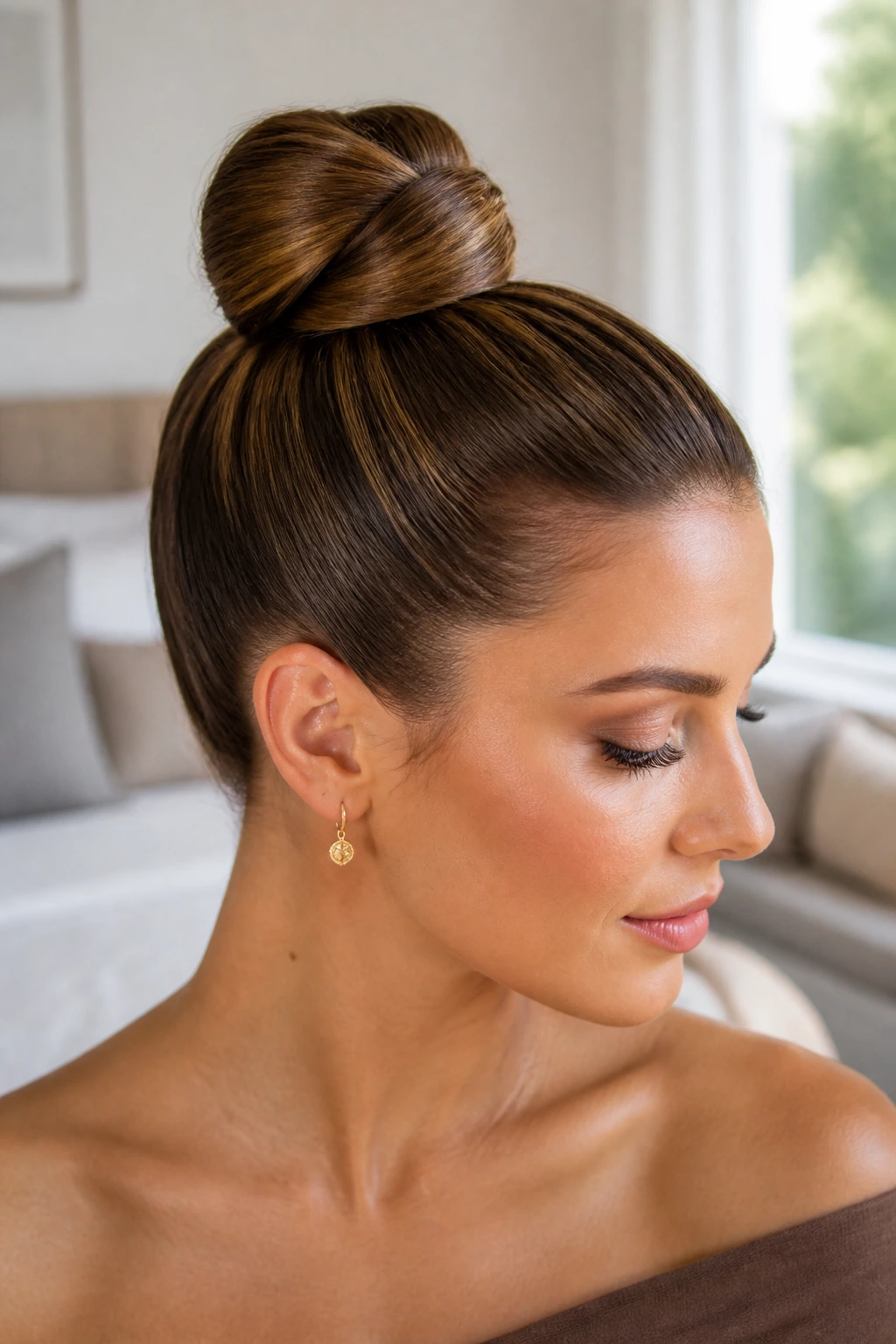
A wrapped pony bun sits between a ponytail and a full bun, and that middle ground is useful. You get the lift of a pony, but the wrapped finish hides the elastic and turns the shape into something more deliberate.
The hairstyle usually starts with a sleek ponytail at the crown or mid-back of the head. The length is then wrapped into a coil or looped into a bun and pinned firmly around the base. The result reads cleaner than a loose ponytail and less heavy than a giant bun.
This is a smart choice for thick hair because the ponytail gives you a strong anchor before the wrap begins. It also works well if you want some height without going full ballet bun. A high wrapped version feels sharper. A mid-height one feels softer and a little more modern.
If you’re wearing a sleek neckline, this style gives you clean lines without stripping all movement from the hair. If you’re wearing a dress with texture or ruffles, it keeps the silhouette controlled.
13. Dutch Braid Into Bun
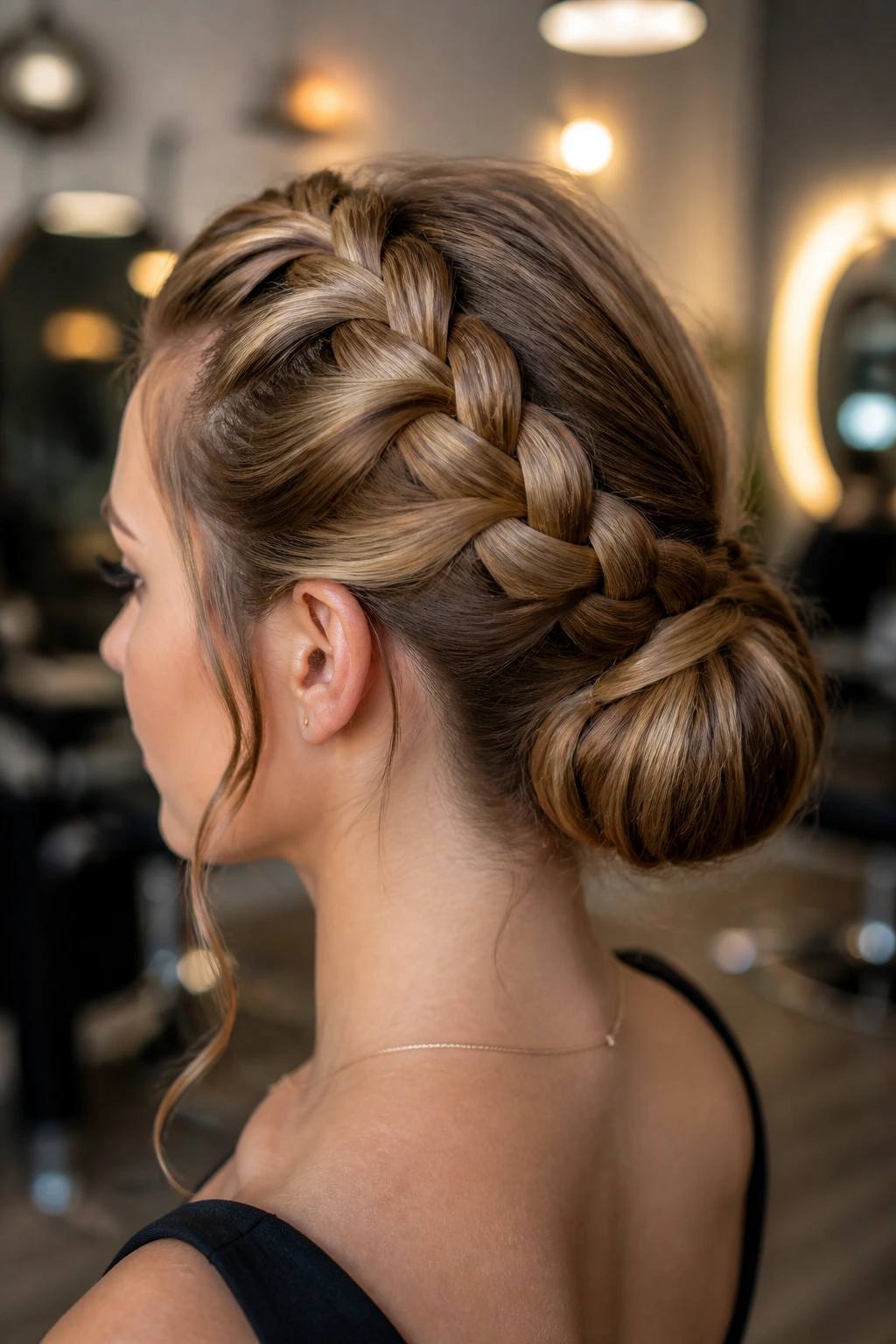
A Dutch braid into bun is one of the safest formal choices when you need a style that will not budge. The braid starts at the crown or hairline, runs down the back, and then feeds into a bun at the nape or slightly above it. It’s secure, tidy, and not shy about showing the work.
The braid itself brings depth because it sits on top of the hair rather than blending into it. That raised structure gives the style more dimension than a flat braid. The bun at the end keeps the whole thing grounded, so the look feels balanced instead of overbuilt.
This is a good option for long layers or hair that sheds pins easily. The braid helps hold everything together before you even start pinning. If you have a lot of hair, keep the bun narrow and slightly tucked so the braid remains the main feature. If your hair is thinner, a little tugging at the braid edges can make the style look fuller without turning it messy.
A clean Dutch braid into bun is one of those styles that looks harder than it is. I’m not complaining.
14. Asymmetrical Low Bun
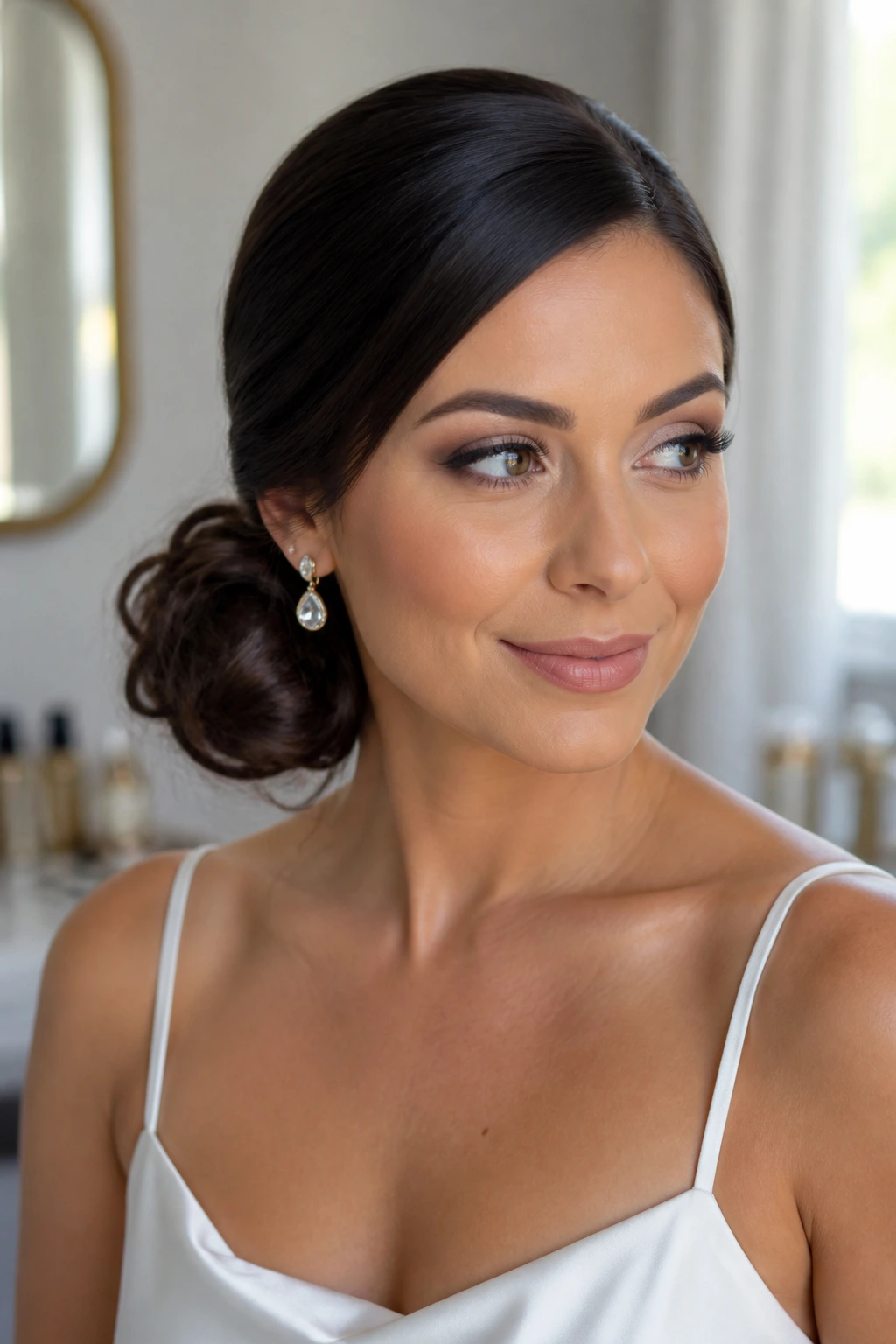
An asymmetrical low bun is for the person who likes a formal look with a little angle to it. The bun sits off-center, often near one ear or slightly to the right or left of the nape, and the rest of the hair is swept in a way that makes the imbalance feel intentional rather than random.
The trick is keeping the rest of the head controlled. If the bun is off to one side, the opposite side should usually stay smoother and tighter so the shape doesn’t feel lopsided in a bad way. A deep side part helps. A few face-framing pieces can soften the profile, but too many will muddy the line.
This style is especially useful with asymmetrical dresses or bold earrings because it echoes that visual shift instead of fighting it. It also gives you a way to make a formal updo feel a little less traditional without losing polish.
I like this one for people who want the back of the head to do something a bit more interesting than “centered bun, end of story.” Fair enough.
15. Vintage Victory Roll Updo
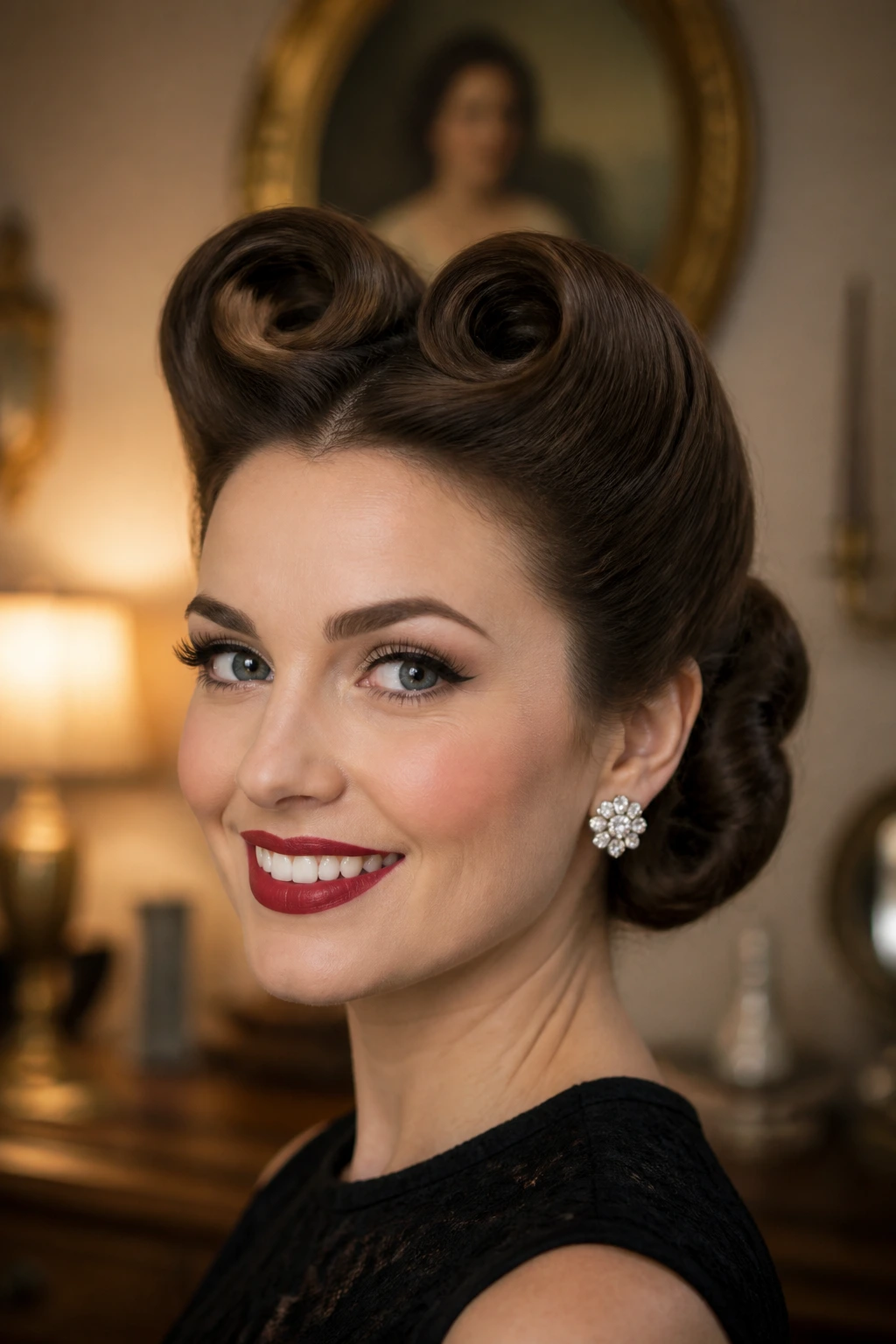
Victory rolls bring a specific kind of energy. Polished. Structured. A little bit dramatic in a good way. When they’re built into an updo, usually with the rolls at the front and the rest of the hair pinned into a low shape, the style becomes one of the strongest formal looks on this list.
The front sections are rolled away from the face and pinned so the curve is visible from the side. The remaining hair can become a bun, a tuck, or a pinned curl arrangement. The whole look depends on clean sectioning and enough hold to keep the rolls from flattening out. This is not the style for a rushed five-minute mirror check.
It pairs beautifully with retro-inspired dresses, but it can also be a sharp contrast against a minimalist gown. That tension can be lovely. A red lip helps, but the hairstyle doesn’t require costume styling if the rolls are kept tight and the finish is smooth.
If you have medium to long hair and don’t mind a bit of pin work, this style rewards patience.
16. Twisted Halo Bun
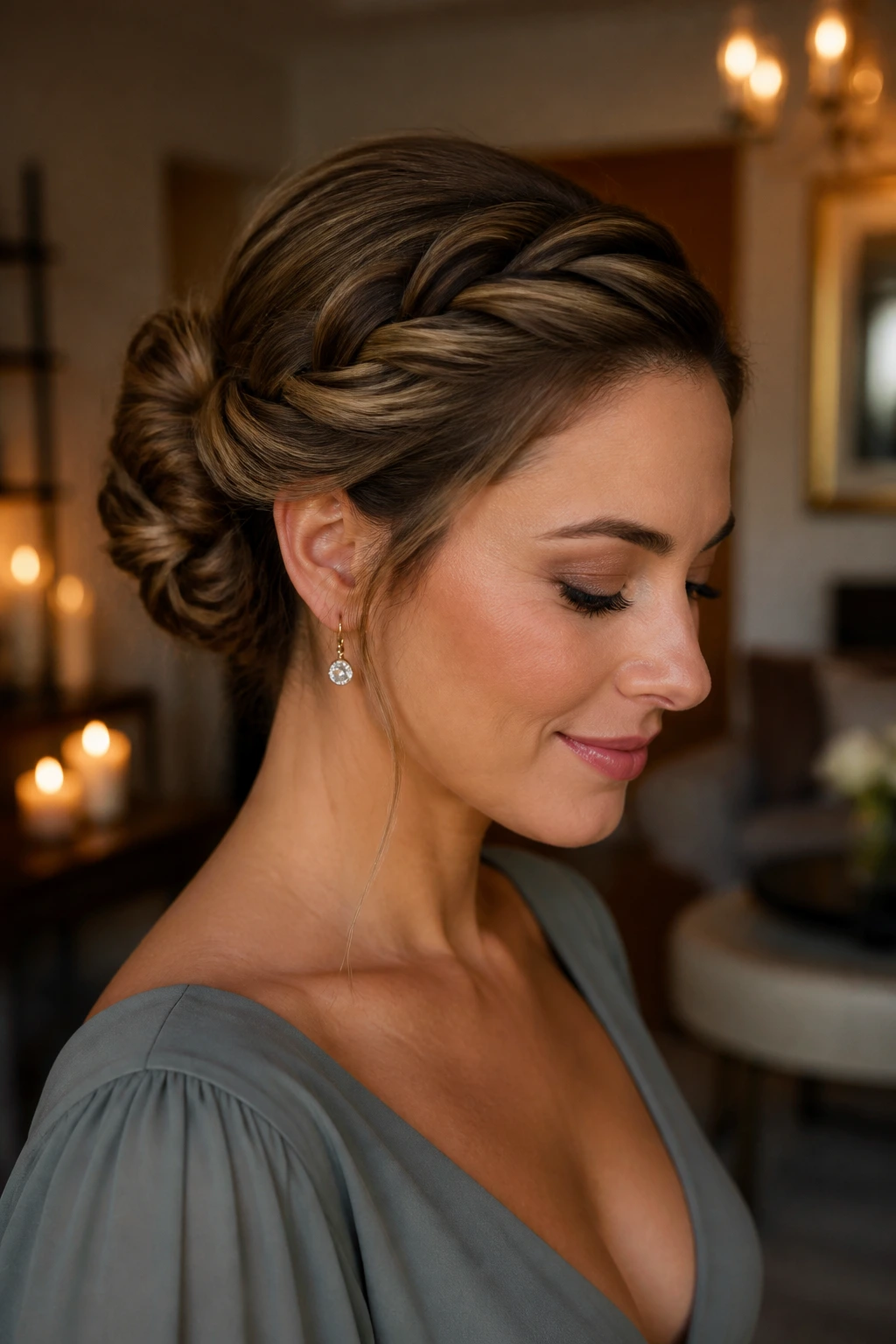
A twisted halo bun gives you the softness of a halo braid without the extra time braid work demands. Hair is twisted from both sides of the head, usually starting at the temples, then pinned together or wrapped into a low bun at the back. It feels romantic, but the twist pattern keeps it formal enough for evening events.
Twists are kinder to layered hair than braids can be. They let short pieces blend more naturally and create a softer edge around the face. That makes this style a strong choice for wavy hair or curlier textures that don’t want to be flattened into a strict braid.
The best version keeps the twists close to the head for the first few inches, then opens slightly as they approach the back. That tiny change prevents the style from looking too tight. If you want it to feel more formal, smooth the crown with a little cream before twisting. If you want it softer, leave a few tendrils near the ears.
It’s one of those styles that looks gentle until you notice how well it holds.
17. Woven Bun with Hairpiece
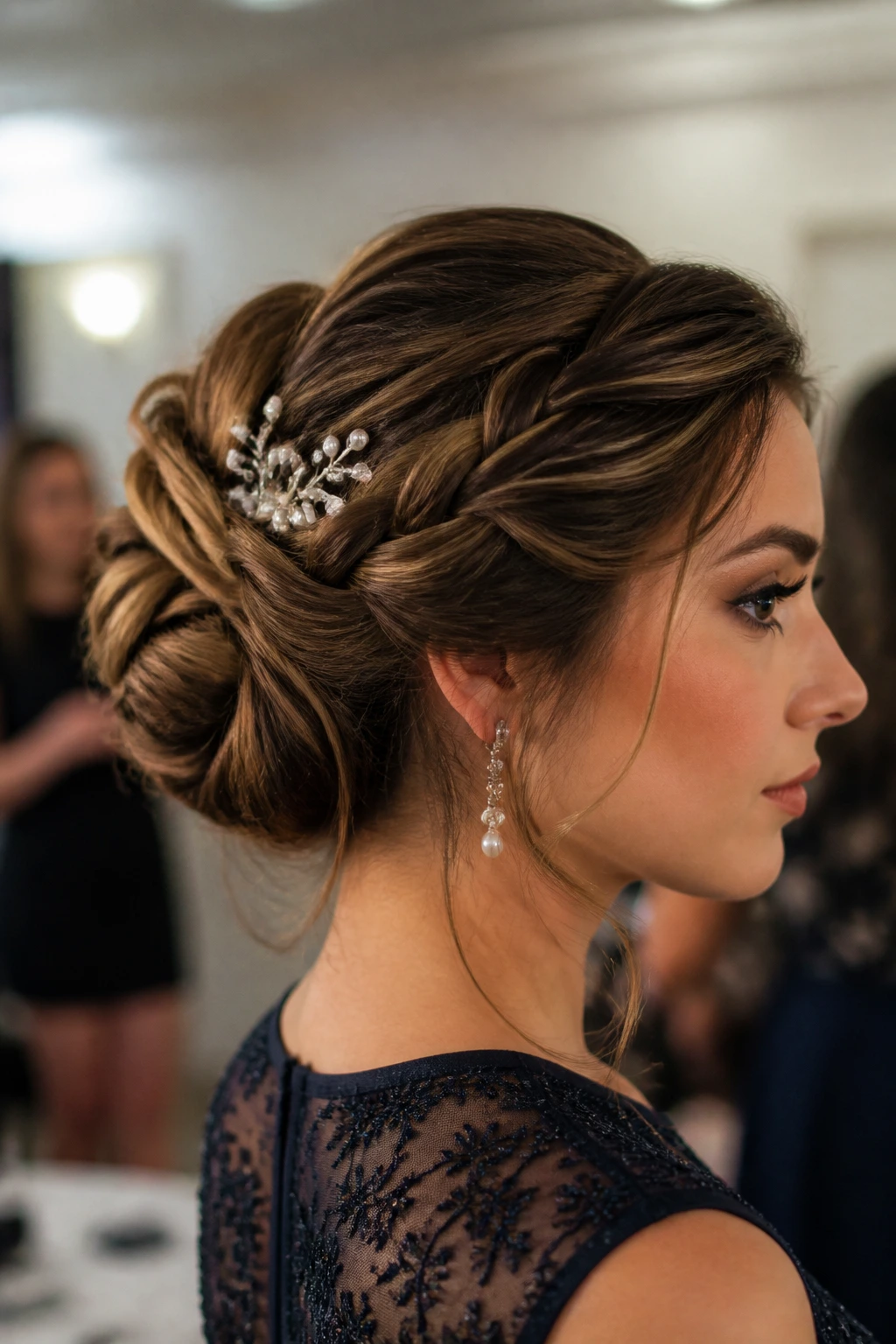
A woven bun with a hairpiece is where ornament and structure meet. The bun itself can be low, medium, or tucked to the side, but the woven surface — a braid, a rope twist, or overlapping sections — gives the style texture before the accessory goes in. Then a comb, a row of pearl pins, or a crystal barrette finishes the job.
The important part is not overloading the bun. One strong piece is usually better than four small ones fighting for attention. If the hairpiece is detailed, let it sit where the bun naturally curves. That keeps the accessory from looking jammed in as an afterthought.
This is one of the easiest ways to turn a clean formal updo into a bridal or gala-ready look without rebuilding the whole style. A pearl comb reads softer. A crystal pin reads sharper. A gold vine piece warms up dark hair nicely. Pick one direction and commit.
The bun should still look like a hairstyle first and jewelry second.
18. Textured Formal Updo
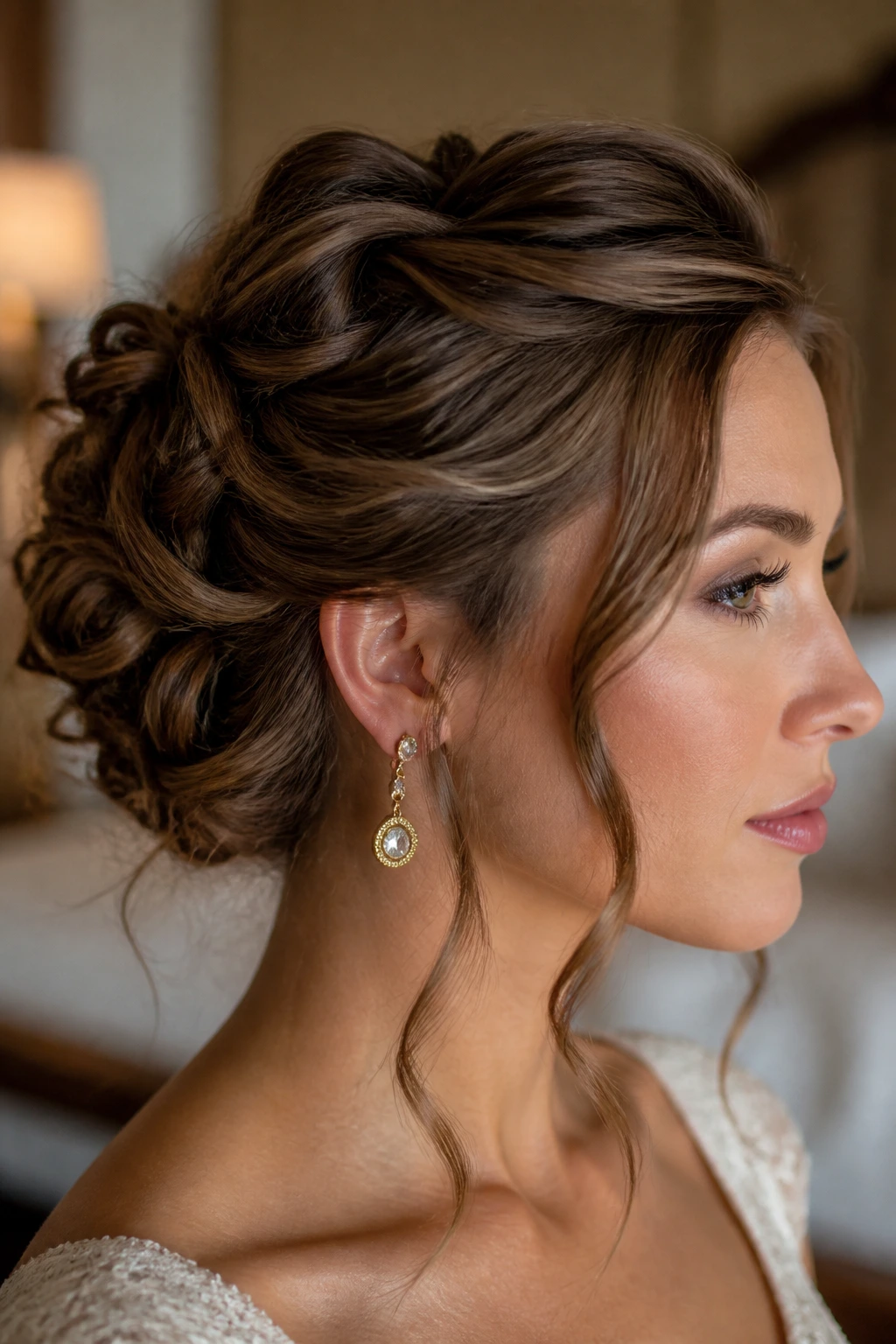
If your hair never wants to go sleek, stop punishing it. A textured formal updo can look just as dressed up as a polished chignon, sometimes more so, because the shape has movement and depth instead of a stiff shell.
This style works especially well on wavy, curly, or coily hair. The hair is usually prepped with curl cream or light mousse, then gathered and pinned in sections so the natural texture becomes part of the silhouette. You’re not hiding the texture. You’re arranging it. That difference matters.
A textured updo needs a strong outline, though. Loose texture without shape just turns into a cloud. Keep one clear anchor point — low, side, or mid-back — then build the volume around it. A few intentional face-framing pieces can soften the result, but don’t let the front get too loose or the style loses its formal edge.
This is the style I’d point people toward when they keep trying to force a sleek look that won’t hold. Work with the hair you’ve got. Life gets easier.
19. High Sculpted Bun
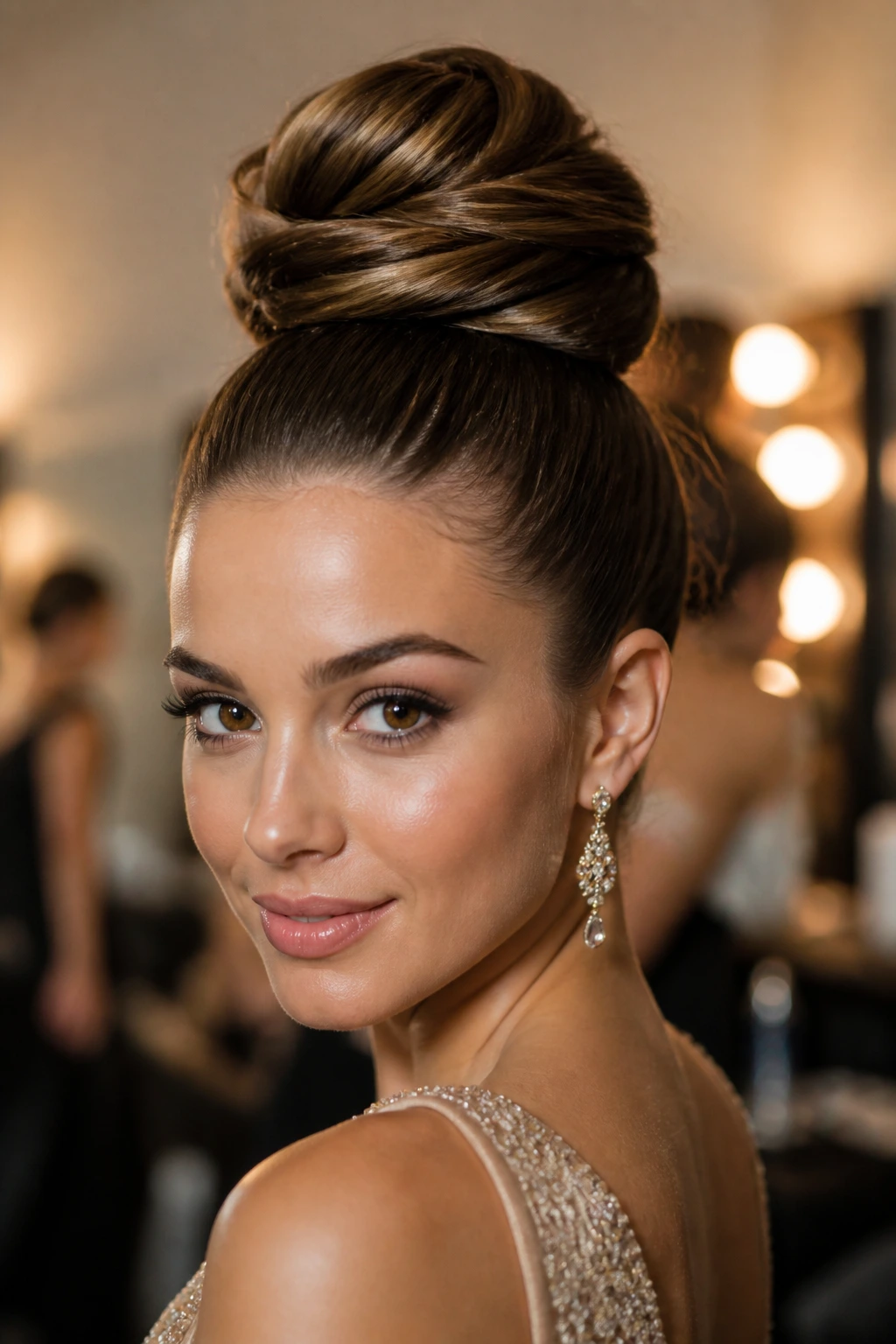
A high sculpted bun is a more dramatic cousin of the ballet bun. It sits at the crown or just above it, but unlike a plain bun, the shape is rounded, controlled, and built with clear intention. Think less “quick knot” and more “carefully shaped volume.”
This style is strong with strapless gowns, high necklines, and dresses that need a little vertical lift. It also gives the face a nice open frame, which can be useful if you want your makeup and earrings to get some attention. The bun can be wrapped smooth, braided first, or padded for extra body.
What keeps it formal is the balance of height and polish. Too much looseness and it starts reading like a topknot. Too much bulk and it can feel heavy. The sweet spot is a bun that looks rounded from the side and tidy from the front, with the base pinned so well it doesn’t shift when you turn your head.
I like this one for people who want a little drama without a lot of decoration. The shape does the talking.
20. Soft Romance Updo
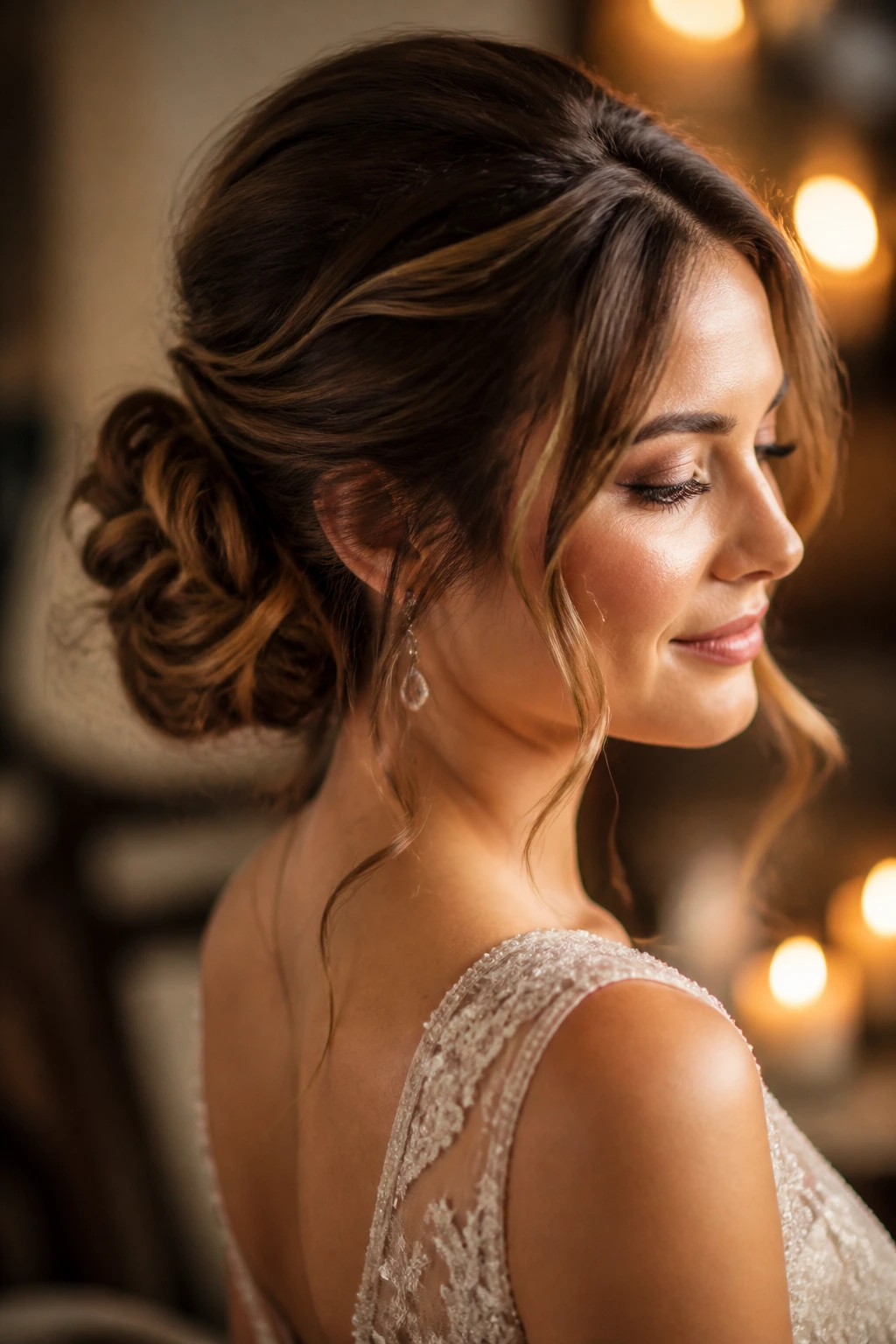
A soft romance updo is the easiest way to keep a formal look from feeling overworked. The shape is controlled, but the finish stays airy: a low pinned bun, a twist, or a tucked coil with a few gentle pieces left around the face and temples. It’s formal, yes. But it doesn’t sit there barking instructions at the rest of your outfit.
This style tends to suit dresses with lace, chiffon, beading, or softer necklines because it doesn’t fight those fabrics. A little bend at the front helps. If you curl the face-framing pieces with a 1-inch iron and brush them out once they cool, the result feels polished instead of ringleted.
What I appreciate most is the range. You can make this look more romantic with pearl pins or a floral comb, or more restrained by keeping the front smooth and the bun compact. The core stays the same. It’s a formal updo that leaves some room for air around the face.
And that can be the nicest thing about hair on a long night.
What Makes a Formal Updo Keep Its Shape Through the Night
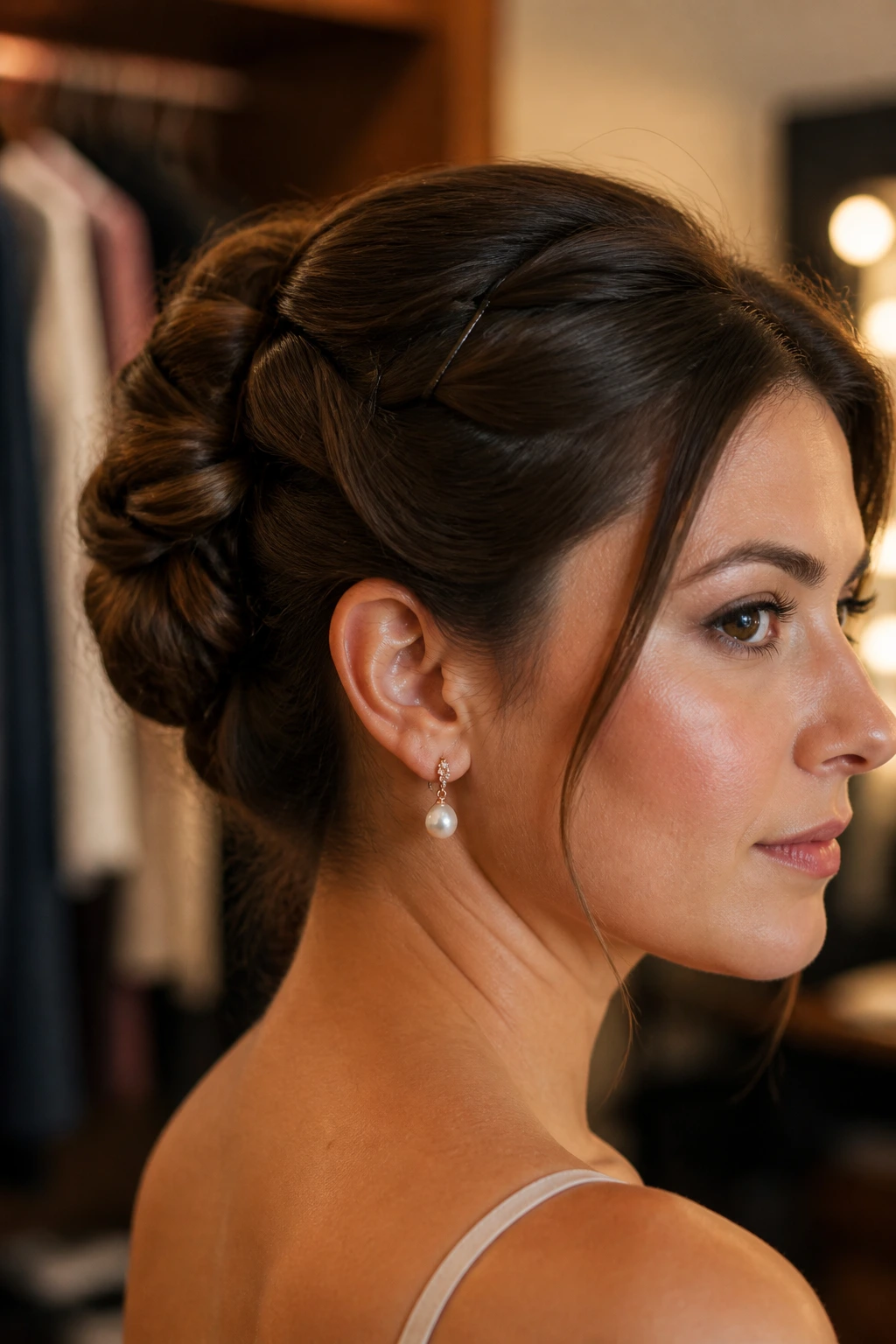
A formal updo lasts when the base is anchored before the pretty part starts. That sounds boring. It isn’t. If the foundation slips, every soft curl and every decorative pin has to work twice as hard just to stay where you put it.
The best hold usually comes from a slightly gritty prep, not from drowning the hair in product. Day-old hair, a little dry shampoo at the roots, and a light mist of texturizing spray can make pins grip instead of skate. Fine hair often needs more of that grit. Thick hair usually needs more sectioning and more pins, not necessarily more spray.
The other thing that helps is directional pinning. Pins should go into the shape, not just through it. Cross them when you can. Hide the ends. Use the weight of the hair against itself. Once you start thinking that way, formal updo hairstyles stop feeling mysterious and start behaving like well-built little structures.
Essential Tools for These Hairstyles
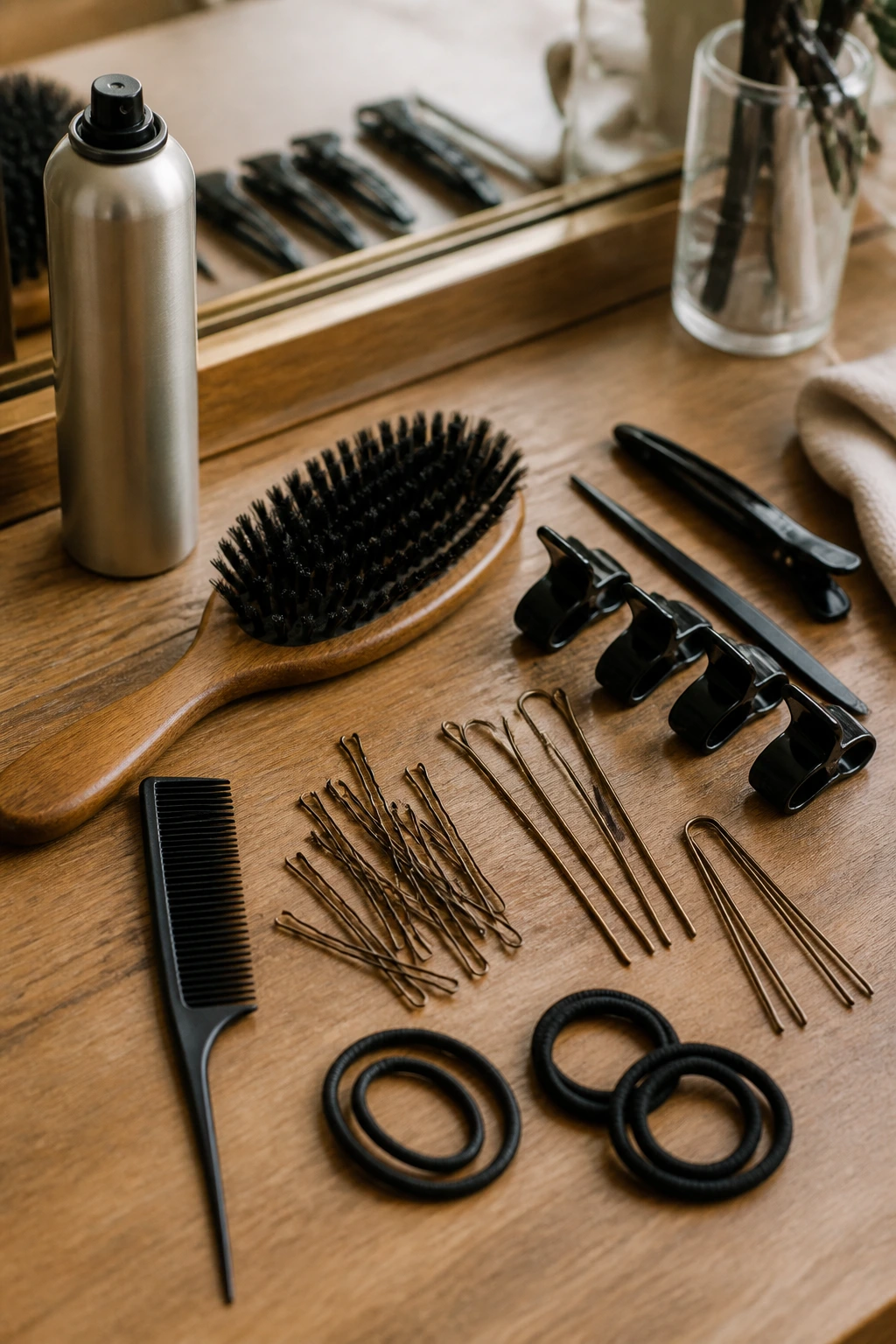
- Tail comb: For crisp parts, clean sections, and smooth crown lines.
- Boar-bristle brush: Best for flattening the surface before you pin.
- Sectioning clips: Keep the front pieces out of the way while you build the back.
- Bobby pins in hair-matched shades: The backbone of almost every formal style.
- U-pins: Useful for buns and twists when you want less visible hardware.
- Clear elastics: Good for temporary pony bases and braid anchors.
- Texturizing spray: Adds grip to sleek or freshly washed hair.
- Strong-hold hairspray: Keeps flyaways under control once the shape is set.
- Curling iron or wand: A 1-inch barrel handles most face-framing bends and pin curls.
- Hair donut or padding: Handy for buns that need volume or symmetry.
- Duckbill clips: Great for pin curls, rolls, and section control.
- Hand mirror: Helps you check the back without guessing.
- Silk scarf or bonnet: Useful if you need to preserve the style overnight.
Smart Product and Shopping Tips
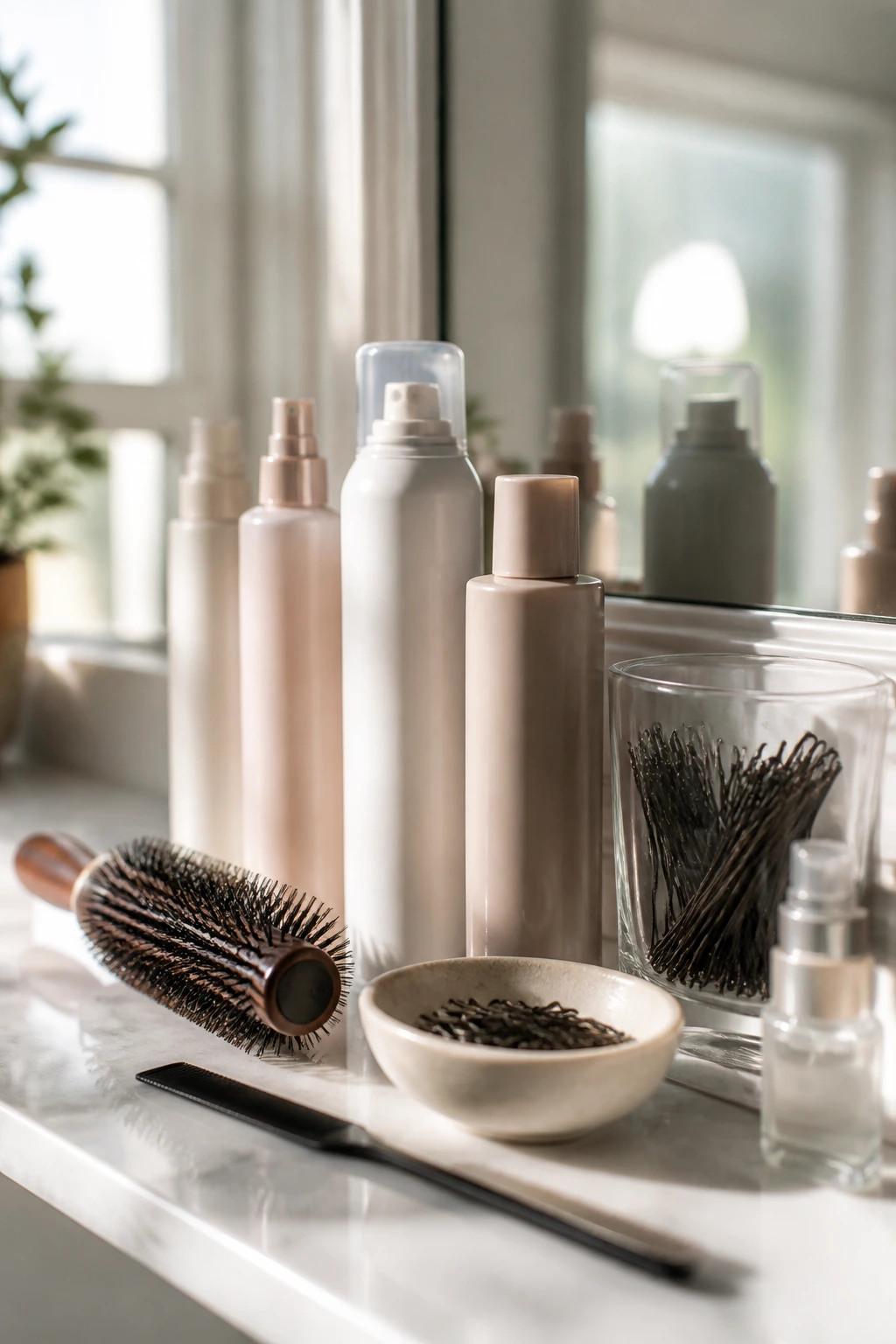
Buy pins the way people buy shoelaces: by color, length, and function, not by the fanciest packaging. For dark hair, black or brown pins disappear faster. For blonde or silver hair, blond or bronze pins often blend better than cheap shiny ones. If your hair is thick or coarse, longer bobby pins and U-pins are worth the extra cost because short ones pop out halfway through the night.
Product choice matters, too. A light texturizing spray gives fine hair more hold without making it crunchy. A stronger, more humid-weather hairspray helps if the event is outdoors or in a warm room. I’d keep heavy oils away from the roots unless the style is meant to be very sleek; on slippery hair, oil can turn a perfect twist into a slide.
If you’re buying accessories, look at the size against the bun or twist you actually plan to wear. A giant crystal comb on a tiny chignon swallows the hairstyle. One small pearl pin cluster on a low bun often looks better than a pile of decorations. And if you’re using extensions, match the texture, not just the color. Straight extensions in wavy hair can fight the whole shape.
How to Choose the Right Formal Updo for Your Dress and Hair Texture
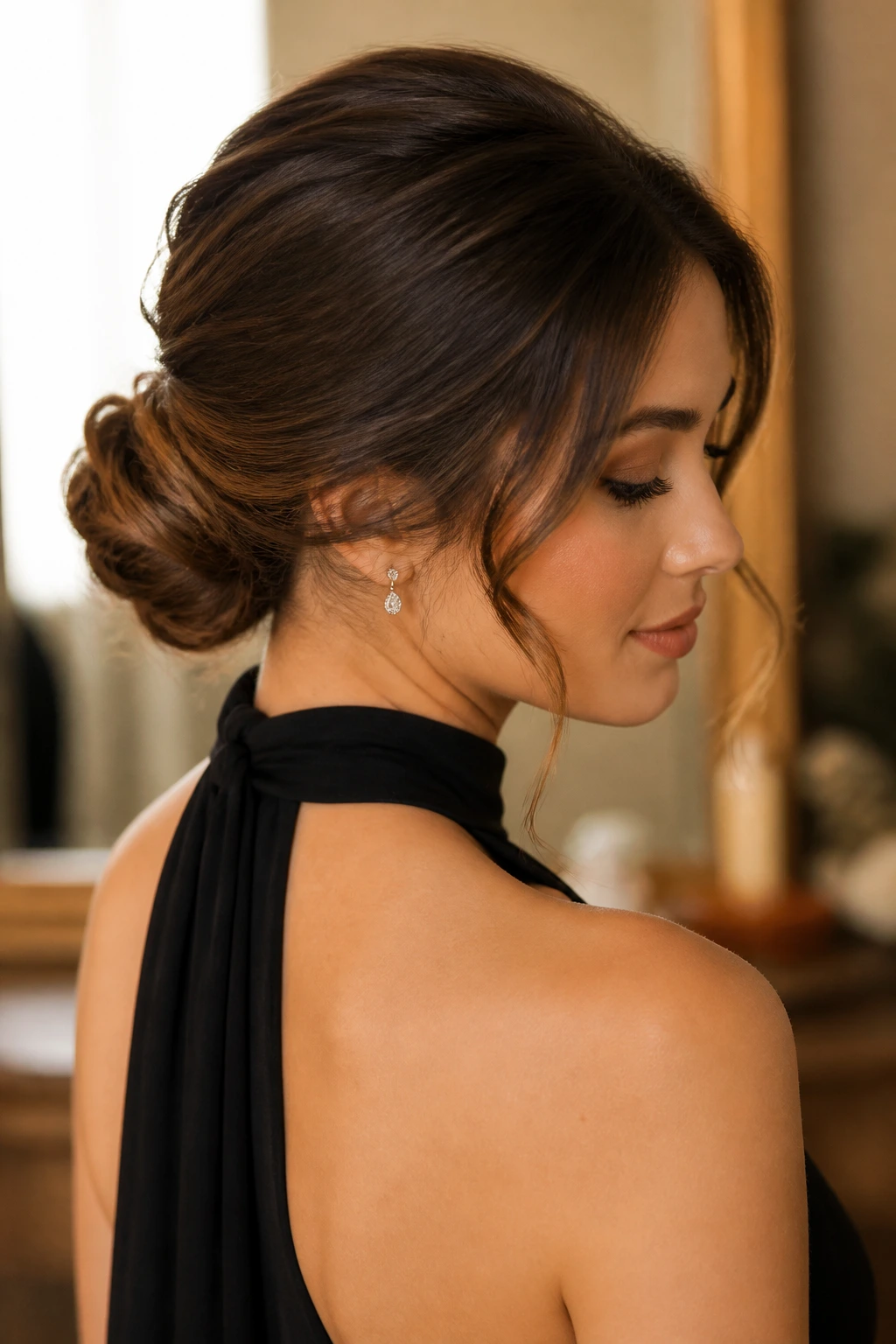
A high neckline wants a different response than a bare shoulder. That’s where a lot of people get tripped up. The hairstyle and the outfit should talk to each other, not compete like they’re both trying to be the main event.
Necklines and Shape
High necks usually look best with lower buns, French twists, or side-swept styles. They keep the top half of the silhouette clean. Strapless or sweetheart necklines can handle more height at the crown, which is where a polished ballet bun or sculpted top knot starts to make sense. One-shoulder dresses almost always benefit from asymmetry — a side-swept bun, a tucked twist, or a low knot set off-center.
Texture and Length
Fine, straight hair usually needs grip, padding, or a braid-based structure. Thick hair needs cleaner sectioning and more secure anchors. Curly and coily textures often look better when the updo respects the natural bend instead of forcing everything into a glassy finish. Mid-length hair can do more than people think if you use a Gibson tuck, a rolled chignon, or a pinned-curl base.
Face and Balance
Rounder faces often like a little vertical lift or a side part. Angular faces can soften nicely with curved twists or face-framing pieces. If a style makes your jaw look wider or your forehead look crowded, it’s probably the wrong silhouette, no matter how pretty it looked on the hanger photo.
Practical Tips for Making the Style Last
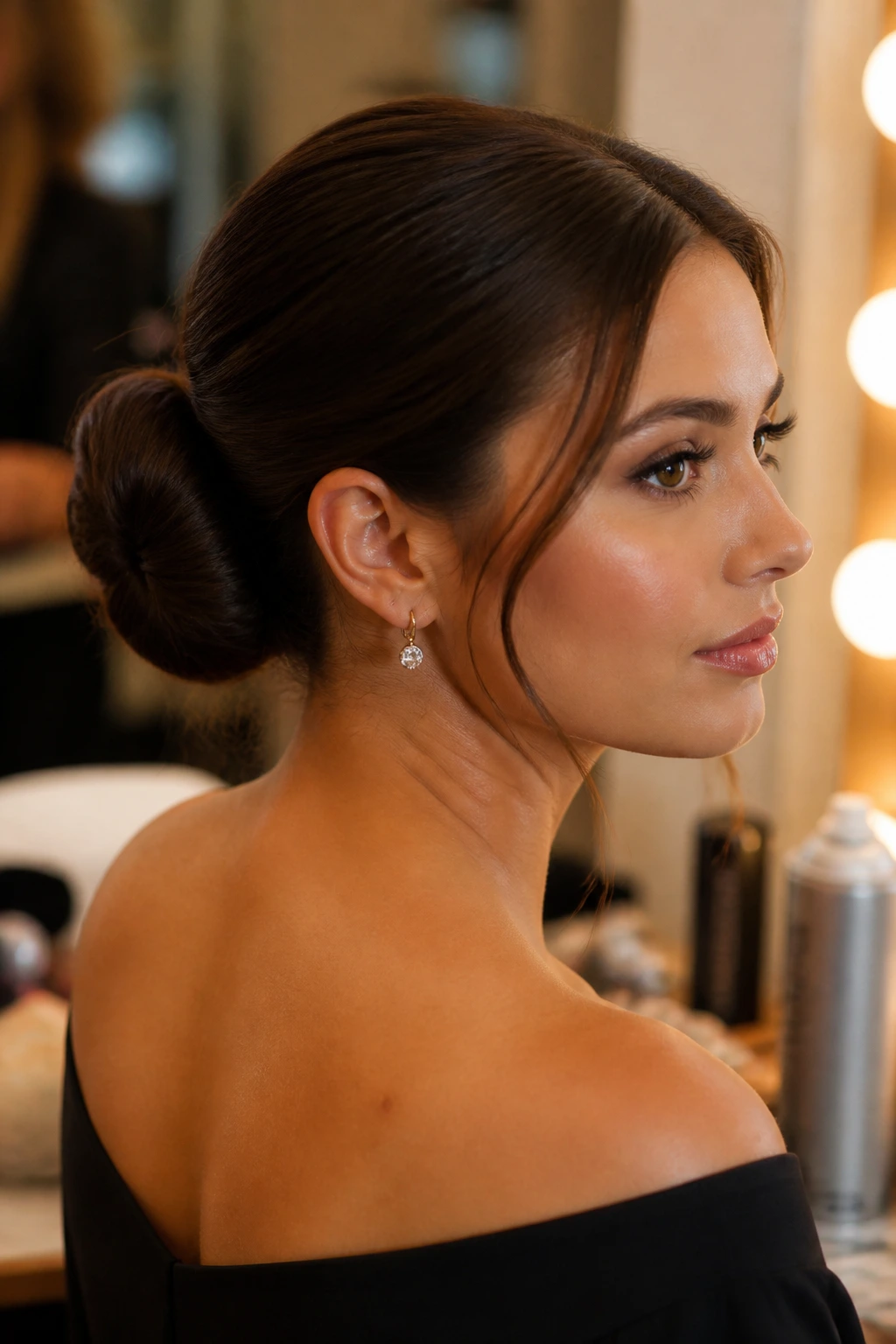
Prep in layers: Start with dry shampoo or texture spray at the roots, then add smoothing cream only where the surface needs it. Too much product in one place makes pins slide. Too little and the style won’t hold the shape you build.
Pin with purpose: Put the first pins in at the base. Always. A lot of people decorate before anchoring, and that’s backward. The foundation should feel secure before the polish goes on.
Test the movement: Turn your head, lean slightly, and tug gently at the base before you leave the mirror. If a section shifts now, it will shift more later. Fix it while you still have time.
Pack a touch-up kit: A few pins, a travel hairspray, and a tiny comb can rescue an evening. That little pouch takes almost no room and saves a lot of annoyance.
Don’t over-spray the front: The crown and nape need hold. The face-framing pieces need flexibility. If the front is frozen, the style starts to look stiff by hour two.
Common Mistakes That Flatten Formal Updo Hairstyles
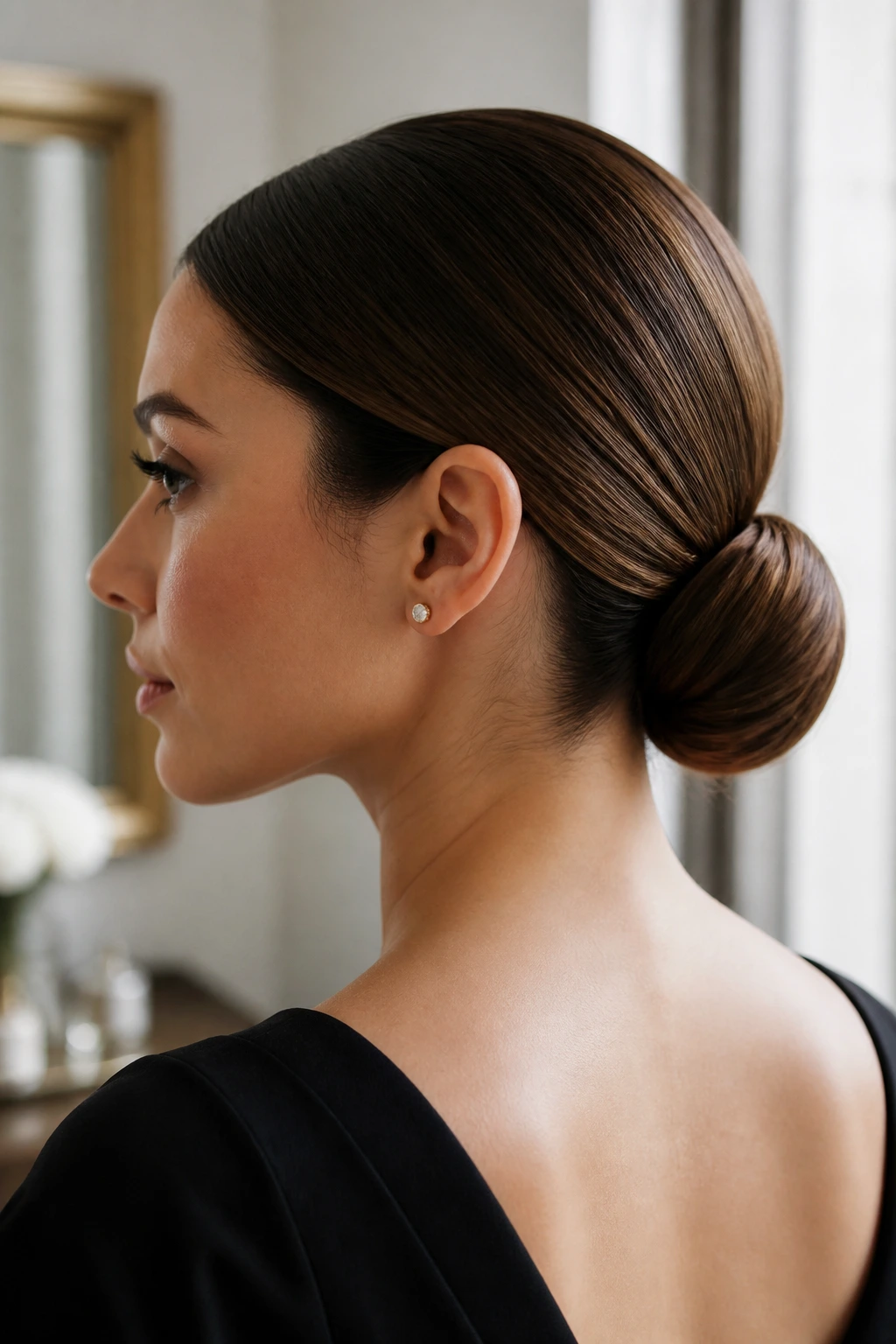
The first mistake is starting with hair that’s too slippery. Freshly washed hair can be a nightmare if it’s fine or straight, because every pin feels like it’s being tested on ice. The fix is simple: add texture at the roots, or wait a day.
Another problem is building the decorative part before the base is secure. You’ll see this when the bun looks pretty in the mirror and then drops a half-inch before the photo session ends. Anchor the pony, twist, or braid first. Then shape the visible part.
A third mistake is loading the style with accessories too early. Heavy pins or combs should go in after the shape is set, not before. Otherwise they pull on the sections you’re still trying to balance.
And then there’s over-loosening. A few soft pieces can be lovely. Too many loose pieces around the face make the style look unfinished and can collapse the formality fast.
Variations and Alternatives to Try
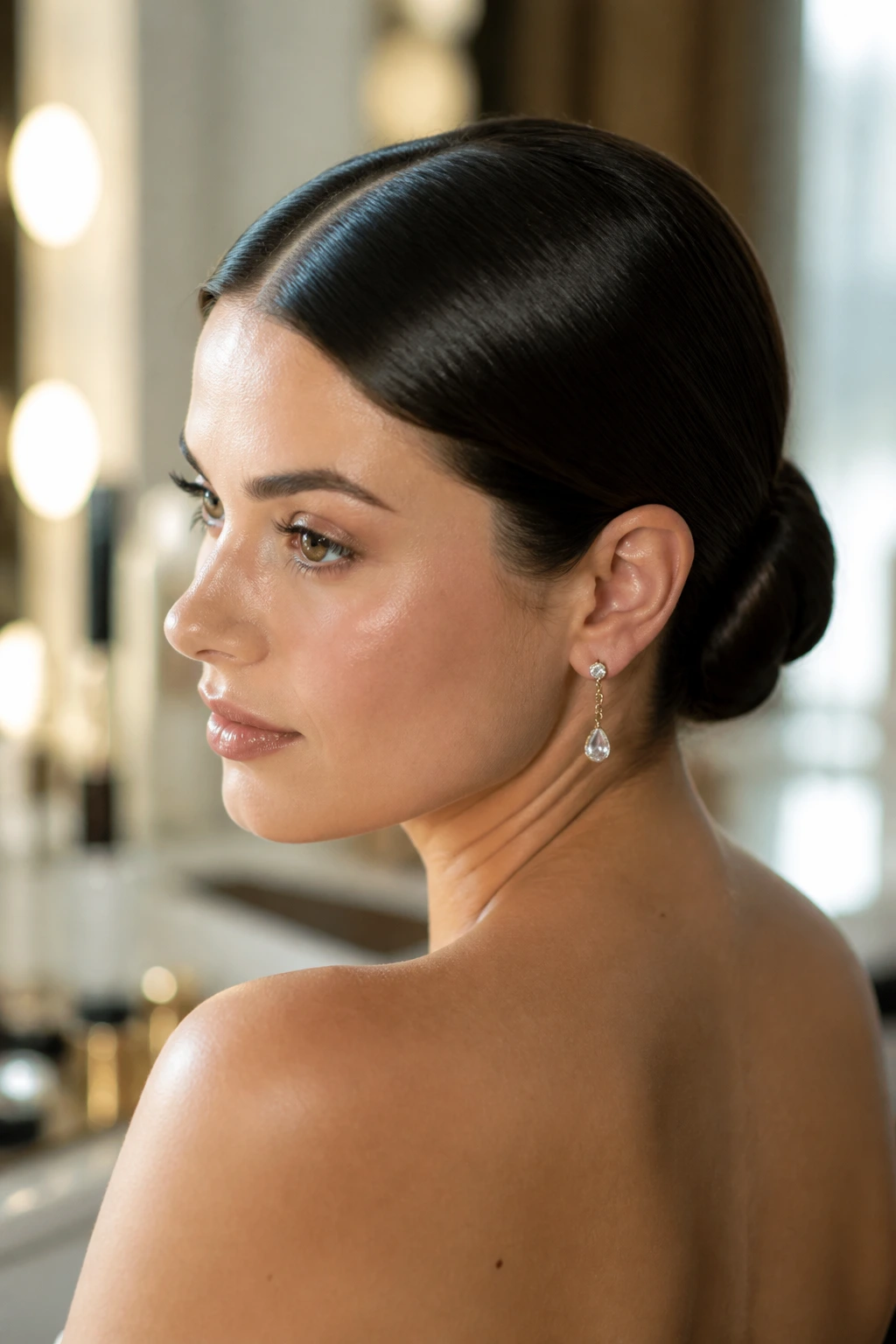
Glass-Sleek Edit: Smooth everything into a crisp low chignon or high bun with a center part and a little shine spray on the surface. This version works when the dress is structured and the jewelry is minimal.
Soft Cloud Finish: Keep the same base shape, but loosen the crown slightly and leave a couple of curved pieces around the cheeks. It suits romantic dresses, softer makeup, and hair that already has a wave.
Braided Statement Version: Swap a plain twist for a Dutch braid, halo braid, or braid wrap. This is the variation I reach for when the hairstyle needs to survive a long event without losing detail.
Vintage Roll Version: Add victory rolls, a Gibson tuck, or a rolled front section. It pairs well with red lips, satin fabrics, and dresses that already nod toward old-school glamour.
Texture-First Version: Work with curls or waves instead of flattening them. This keeps the shape formal while making the style feel less stiff on hair that resists sleek looks.
Keeping the Style Fresh After the Mirror Check
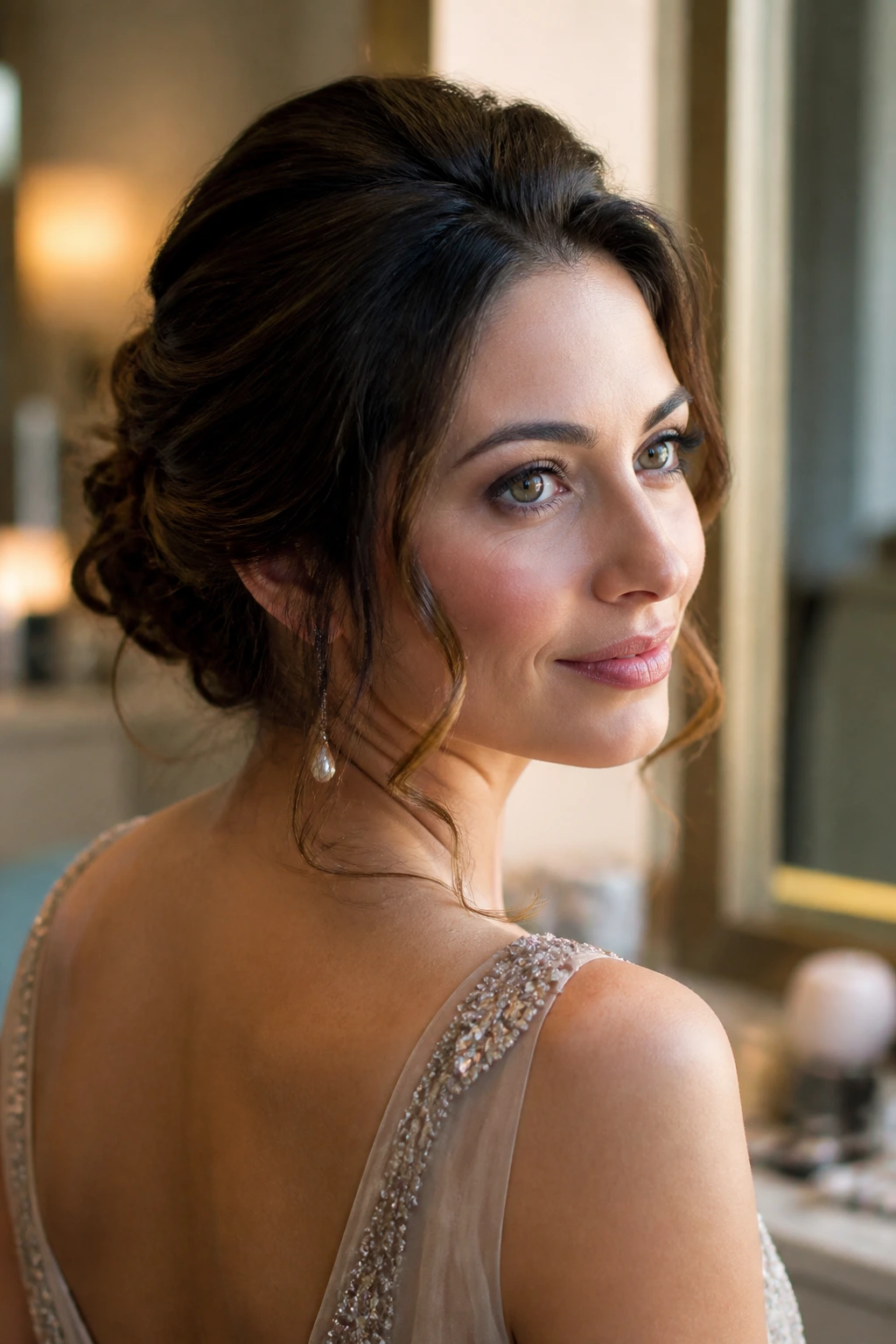
Formal hair is usually built to last several hours, not forever. If you know you’ll be wearing the style through dinner, dancing, and photographs, plan for a quick touch-up window about halfway through the event. That’s where a couple of extra pins and a travel hairspray earn their keep.
If you need to preserve the style overnight, don’t mash it flat against a pillow. A silk scarf or bonnet helps, and a loose, careful pin removal before bed keeps you from tearing the set apart. The next day, you can often rescue a chignon or twist by loosening the pins, misting the roots, and rebuilding the outer shell rather than starting from scratch.
If your hair is especially heavy, expect the style to relax a little. That’s not failure. That’s physics.
Frequently Asked Questions
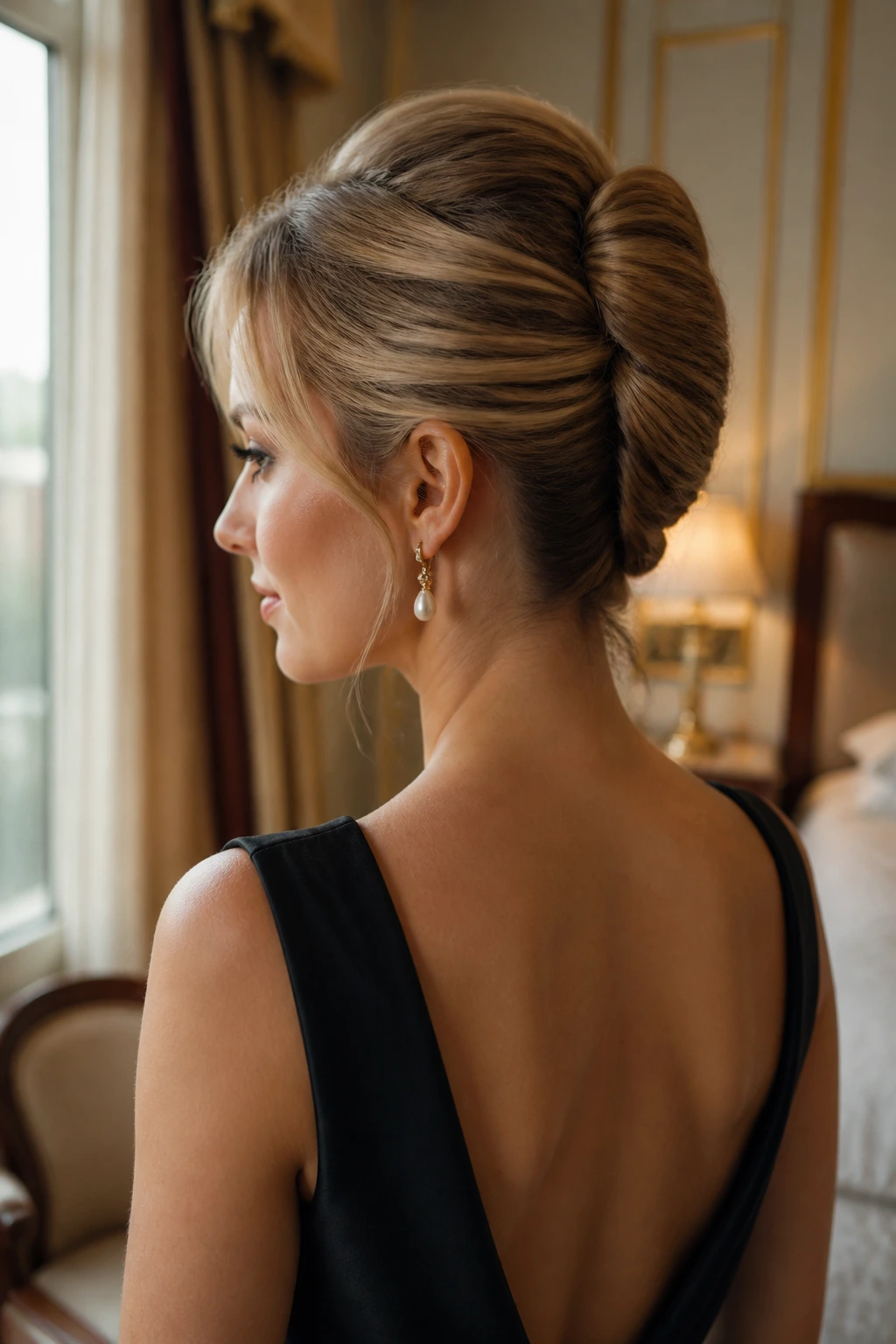
Can I do formal updo hairstyles on short or shoulder-length hair?
Yes, but you’ll want styles like the Gibson tuck, a rolled chignon, or a pinned-curl updo that can borrow shape from padding or small hidden anchors. Clip-in pieces can help, but choose ones with the same texture as your hair or the finished look will fight itself.
What hair is easiest to style into a formal updo?
Day-old hair with a bit of texture usually behaves best. Very silky freshly washed hair can slip, and very dry hair can fray at the edges. If your hair is somewhere in the middle, you’re already halfway there.
Do I need a lot of hairspray?
Not always. You need enough to hold the finished silhouette, not so much that the style gets helmet-like. A light build-up during styling, then a final mist from a distance, usually works better than one heavy blast at the end.
Which formal updo works best for thick hair?
A braid-based style, a French twist, or a low knotted bun usually handles thick hair well because the structure can hold the weight. Try to keep the silhouette compact, though, or the style can feel oversized by the time you’ve added pins and accessories.
What if my hair is too fine for a bun?
Use padding, a donut, or a little teasing at the crown, then build a smaller bun instead of trying to fake big volume everywhere. Fine hair often looks best when the shape is controlled and the surface is smooth enough to keep the style from looking sparse.
How do I keep pins from showing?
Match them to your hair color, insert them into the shape instead of across the top layer, and hide the open end under a section of hair. If a pin keeps flashing in the mirror, it’s usually sitting too close to the surface.
Can I wear a formal updo with natural curls or coils?
Absolutely. In many cases, the texture looks richer when you work with it instead of against it. A textured formal updo, a twisted halo bun, or a pinned arrangement of curls often looks more elegant than a style forced into a slick finish.
How far ahead can I do the hairstyle?
A lot of these styles hold well for several hours if they’re pinned and sprayed properly. If you’re doing it the day before, keep the shape looser than you think and preserve it with a scarf or bonnet so you’re not rebuilding from zero.
The Styles That Stay Put
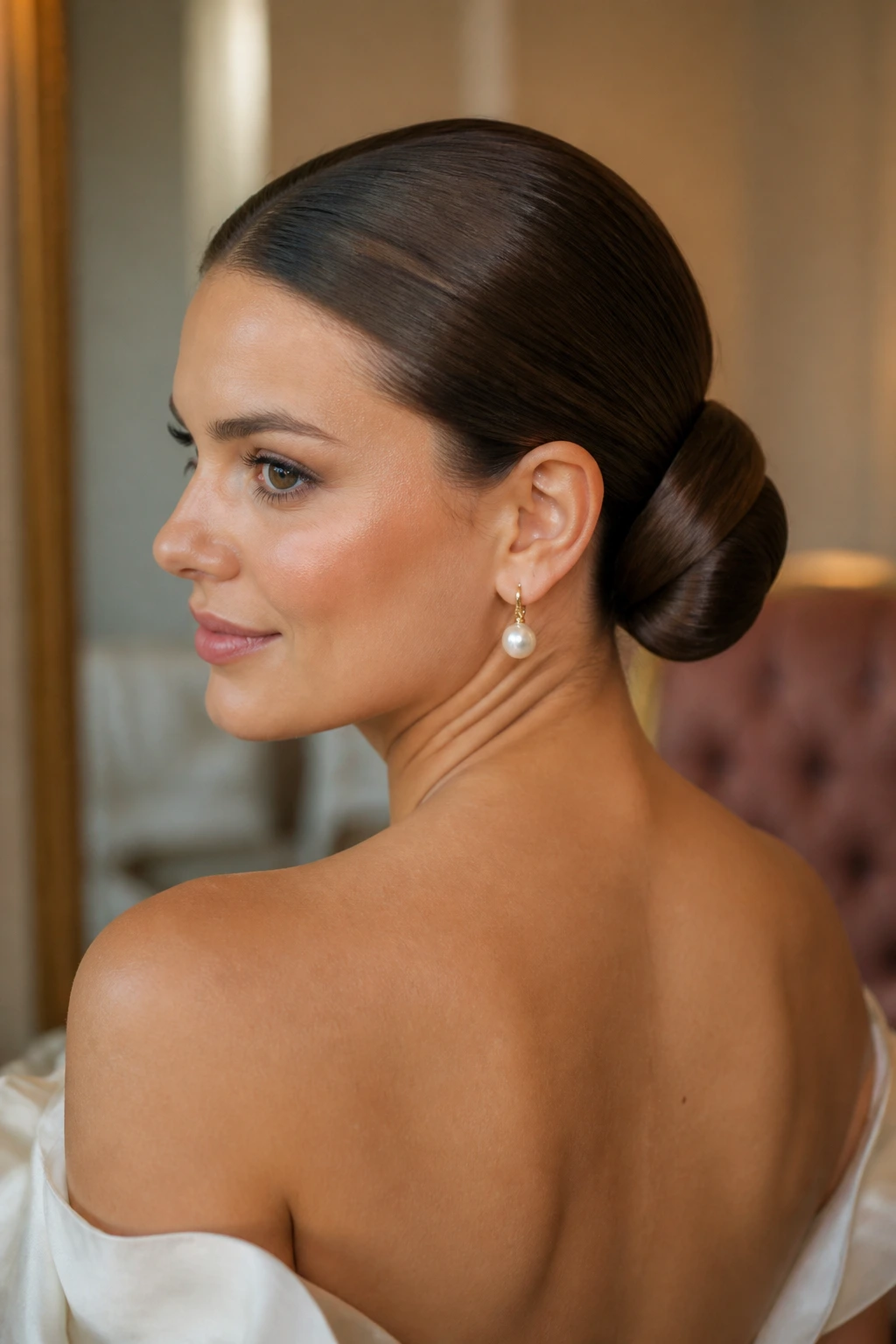
The best formal updo hairstyles are the ones that match your hair, your dress, and your tolerance for pins. That sounds basic, but it saves people from a lot of frustration. A sleek chignon can look perfect and stay modest. A braided crown can carry a veil without sagging. A sculpted bun can add drama without turning the whole head into a helmet.
What I like most about this group is the range. There’s a style here for fine hair that needs grip, for thick hair that needs discipline, for curls that want room to breathe, and for anyone who wants the back of the head to look as polished as the front of the dress. That’s the real test. Not whether the style is pretty in a selfie. Whether it still looks like itself after a long night.
Pick one silhouette, test it with the neckline and earrings you’re actually wearing, and pin it with a little more care than you think it needs. The shape will repay you.
