



Curly hairstyles for little girls work best when you stop trying to flatten the hair into obedience and start giving it a shape that makes sense for curls. Tight pulling, rough brushing, and heavy hands usually buy you maybe an hour of neatness. Then the crown puffs, the edges lift, and somebody is tugging at a hair tie by lunch.
The styles that last are usually the ones that respect the curl pattern instead of fighting it. A good puff, a smart braid, a soft twist, a clean part, a satin scrunchie — those little choices matter more than people think. And yes, the hair can be cute and practical at the same time. It just needs the right tension, the right products, and a little patience on the front end so the rest of the day doesn’t turn into a hair rescue mission.
I like curly styles for kids that still look good after a playground run, a nap, a hoodie, and a snack break. That’s the real test. Not how they look in the mirror right after the final clip goes in. And because every curl has its own little opinions, the best styles below cover loose curls, tight coils, short hair, longer hair, and the days when you want something sweet without spending half the morning in battle.
Why These Looks Work So Well on Curly Hair
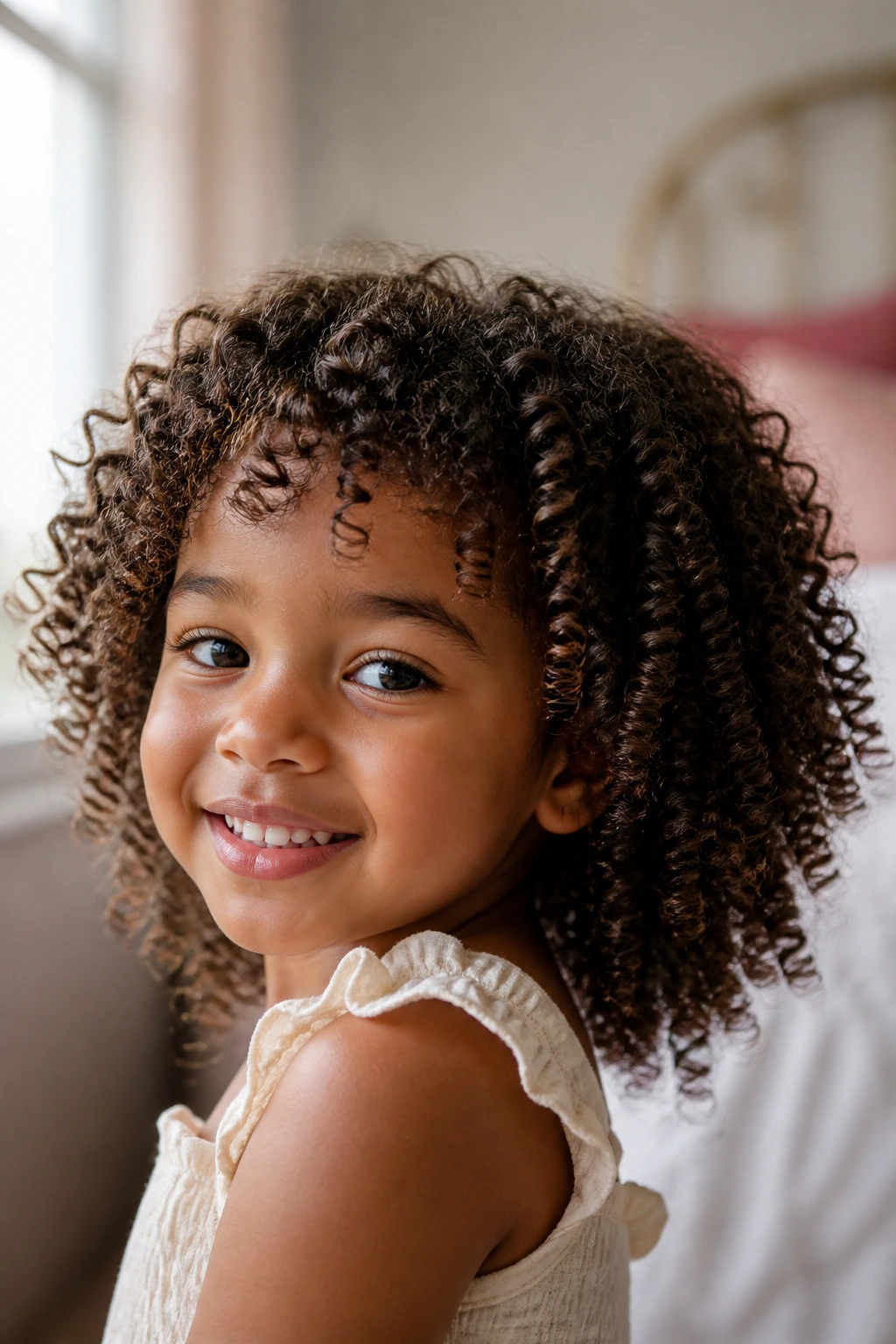
- They start with shape, not force: Curly hair stays happier when the style follows its natural bend instead of stretching it into a straight-line plan.
- They use soft hold: Satin scrunchies, covered elastics, and gentle clips keep styles in place without leaving dents or sore spots at the hairline.
- They give you room for shrinkage: Curls bounce up as they dry, so a style that looks a touch loose at first usually sits better by the time you’re out the door.
- They cut down on touch-ups: A clean part, a twist, or a puff anchor often does more work than a full head of over-combed hair.
- They stay kid-friendly: The best curly hairstyles for little girls do not need heat, tight edges, or a complicated finish to look put together.
1. High Puff with a Soft Side Part
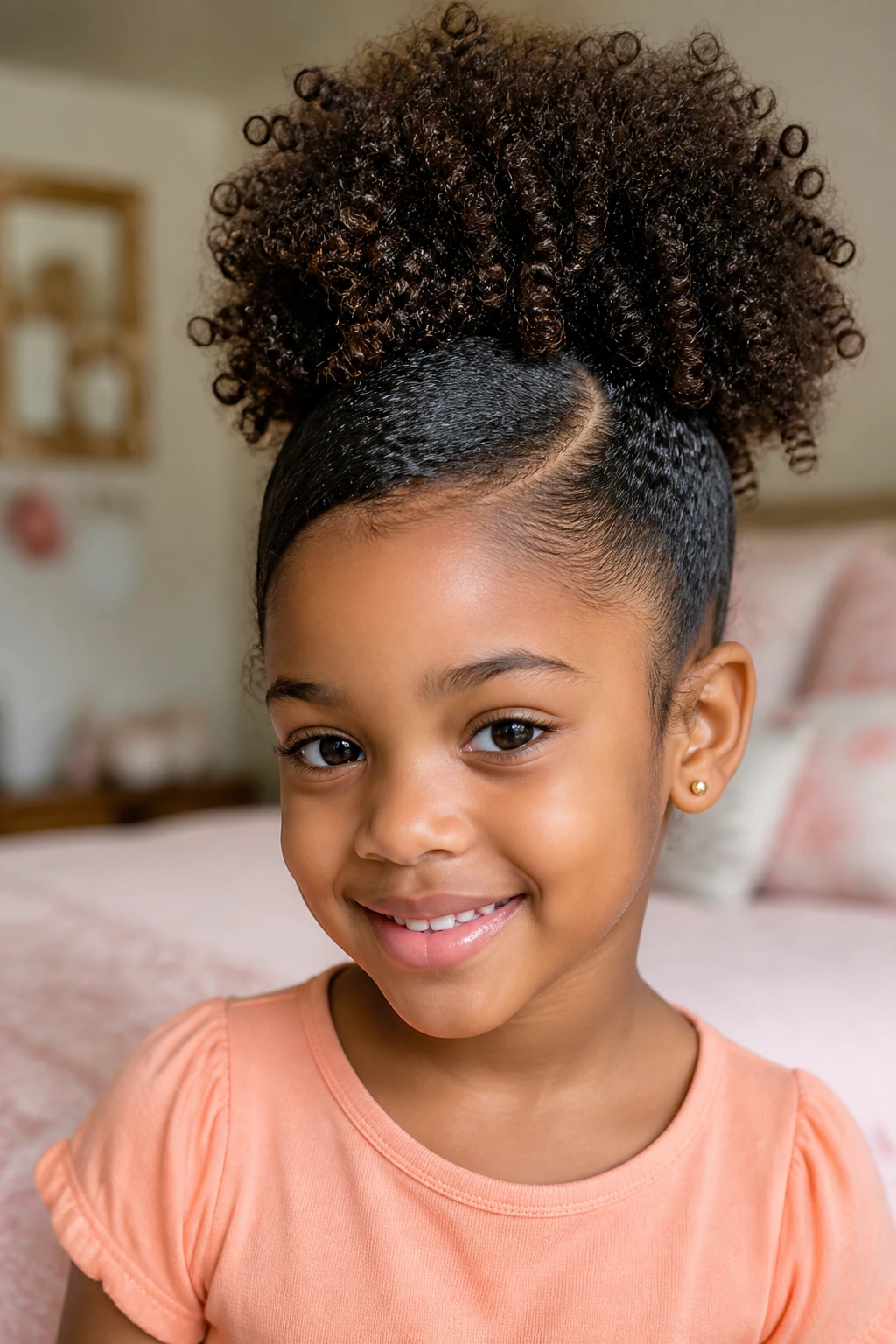
A high puff is the shortcut I reach for when the hair is dense, springy, and not interested in pretending to be anything else. The side part gives it a little direction, and the puff does the rest. It looks neat without looking stiff, which is a rare and useful thing.
Why it works
This style lets the curls gather at the crown, where the hair naturally wants to lift anyway. Use a little leave-in conditioner first, then smooth the sides with a soft brush and a satin scrunchie. If the puff is too tight, the hairline will tell on you by the end of the day.
Best on
- Medium to long curls
- Hair with good volume at the roots
- Days when you need one style that can survive school and the car ride home
Quick tip: leave a few curls loose near the temples if you want the style to feel softer around the face.
2. Half-Up Space Buns
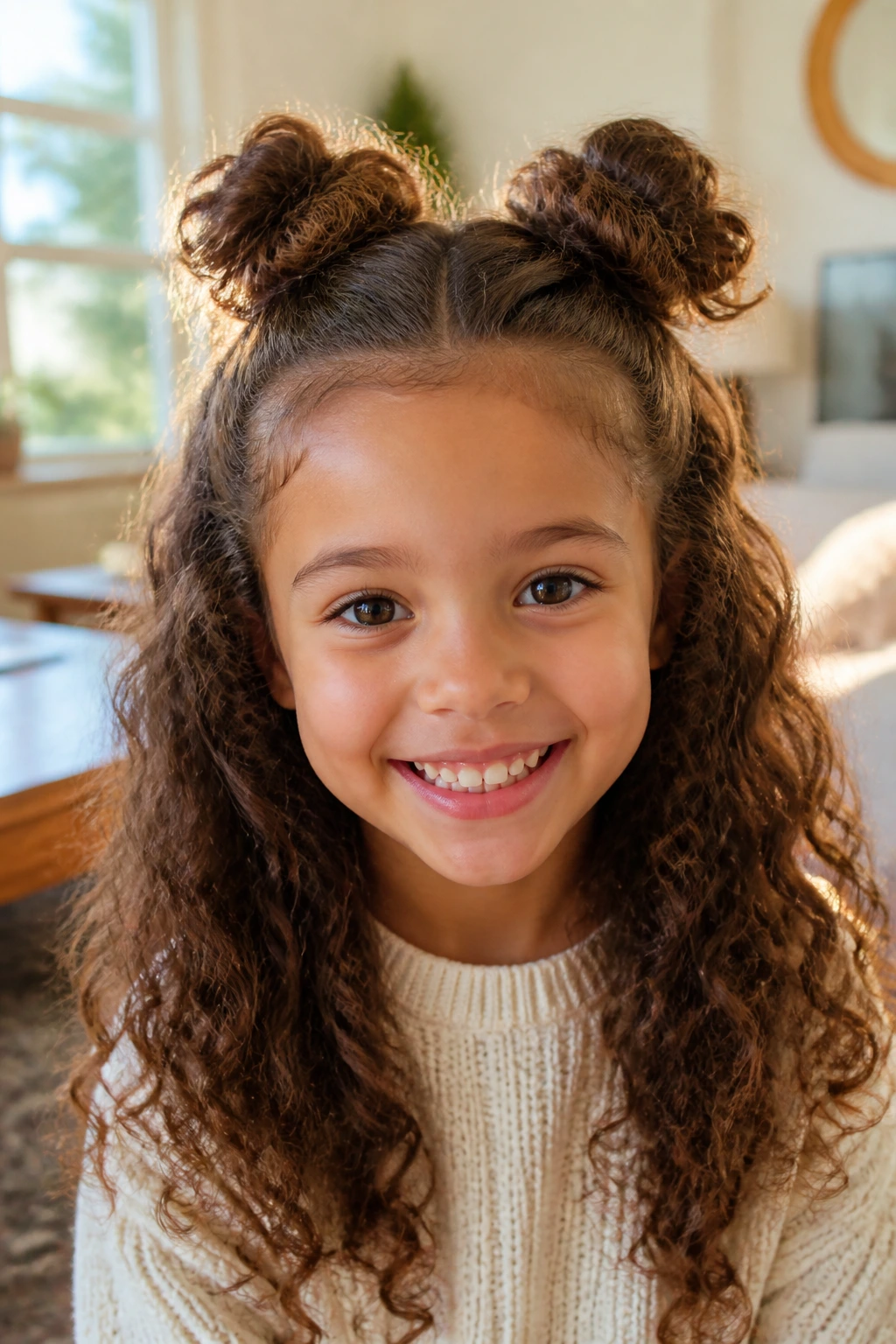
Space buns on curly hair are part practical, part playful, and the trick is keeping them loose enough that the curl pattern still shows. Pull the top half into two little buns, then let the bottom half stay free and springy. It gives the hair movement instead of boxing it in.
That split also helps if the child hates having all her hair lifted at once. The bottom curls stay out of the way, the buns add shape up top, and the whole style looks more intentional than a plain half ponytail.
Best for: shoulder-length curls, thick hair, and little girls who like a bit of fun in their hairstyle.
Watch for: buns that are pulled so tight they sit like little rocks. Soft and round is the goal.
3. Crown Twist and Curly Cascade
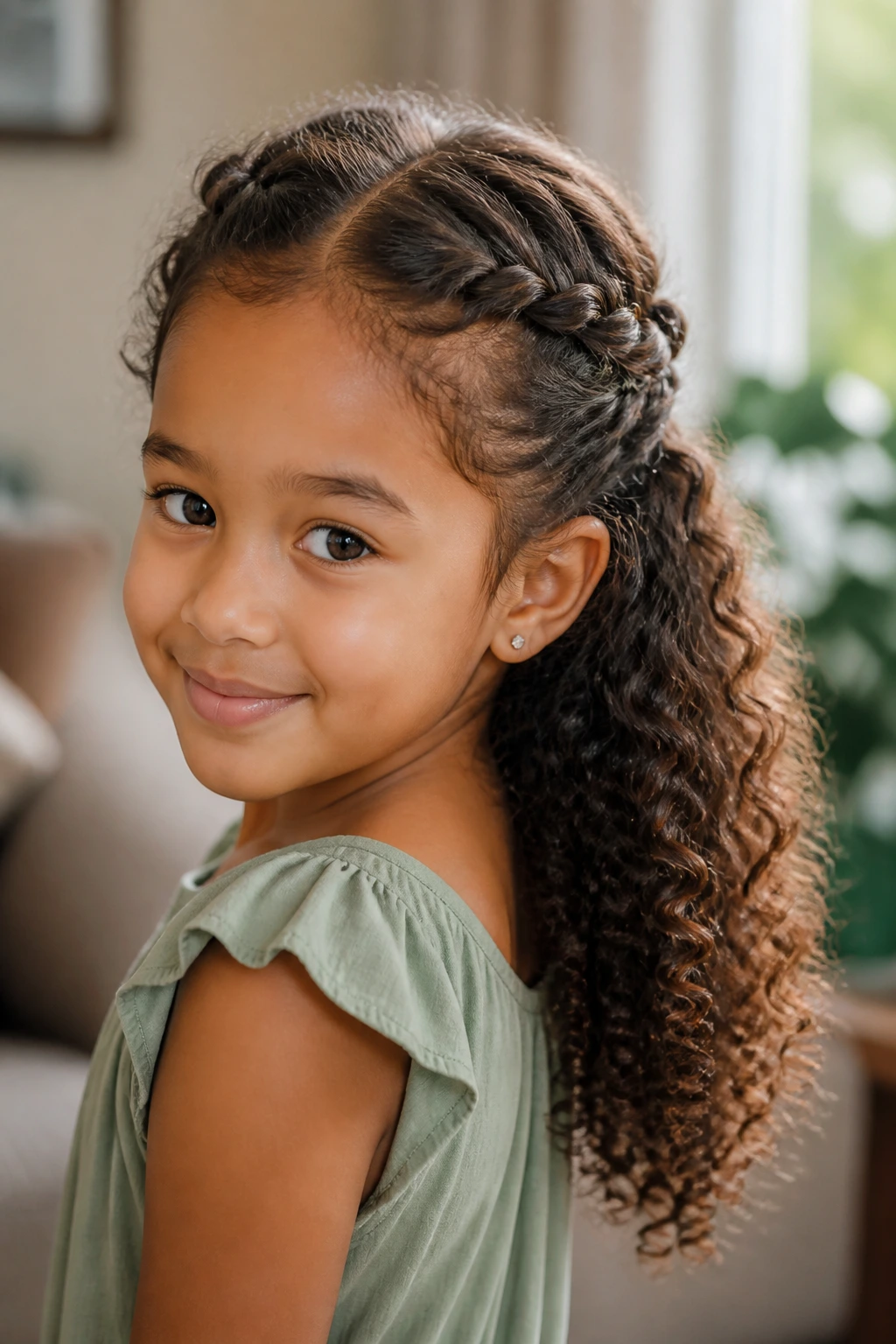
Why does this one work so well? Because it keeps the front sections controlled while letting the back curls do the pretty, bouncy part. You twist both front sides back toward the crown, pin them, and leave the rest loose.
The result looks polished from the front and easy from the back. That combination matters. Kids move. Hair shifts. A style that already has built-in texture and flow tends to survive that movement better than a rigid updo.
How to wear it
Use two small bobby pins or mini clips to anchor the twists just behind the ears. Then separate the back curls with your fingers instead of a brush. Brushing them out after styling can make the ends frizz faster than you’d expect.
4. Two Braids into Pigtail Curls
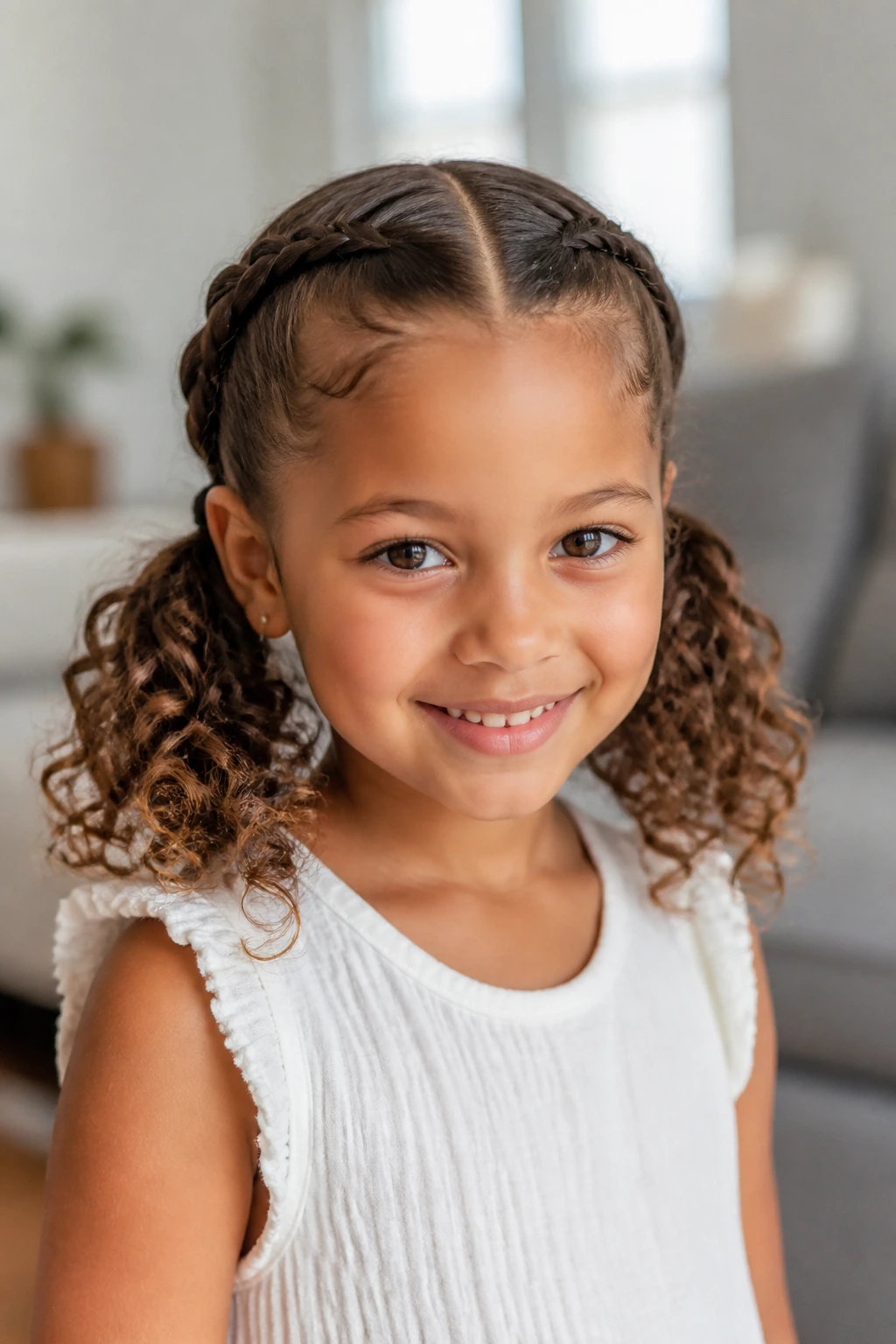
This is the style I’d choose when you want order without losing the soft curl finish. Braid from the front or temples back toward the ears, then leave the ends curly in two pigtails. It has structure at the top and freedom at the bottom.
The braids keep shorter front pieces from falling in the face, which is half the struggle on busy mornings. The curly ends keep it from looking too serious. It’s one of those styles that reads as tidy even when the curls are doing their own thing.
Good for: active kids, school days, and hair that tangles fast around the face.
5. Low Puff with a Headband Tuck
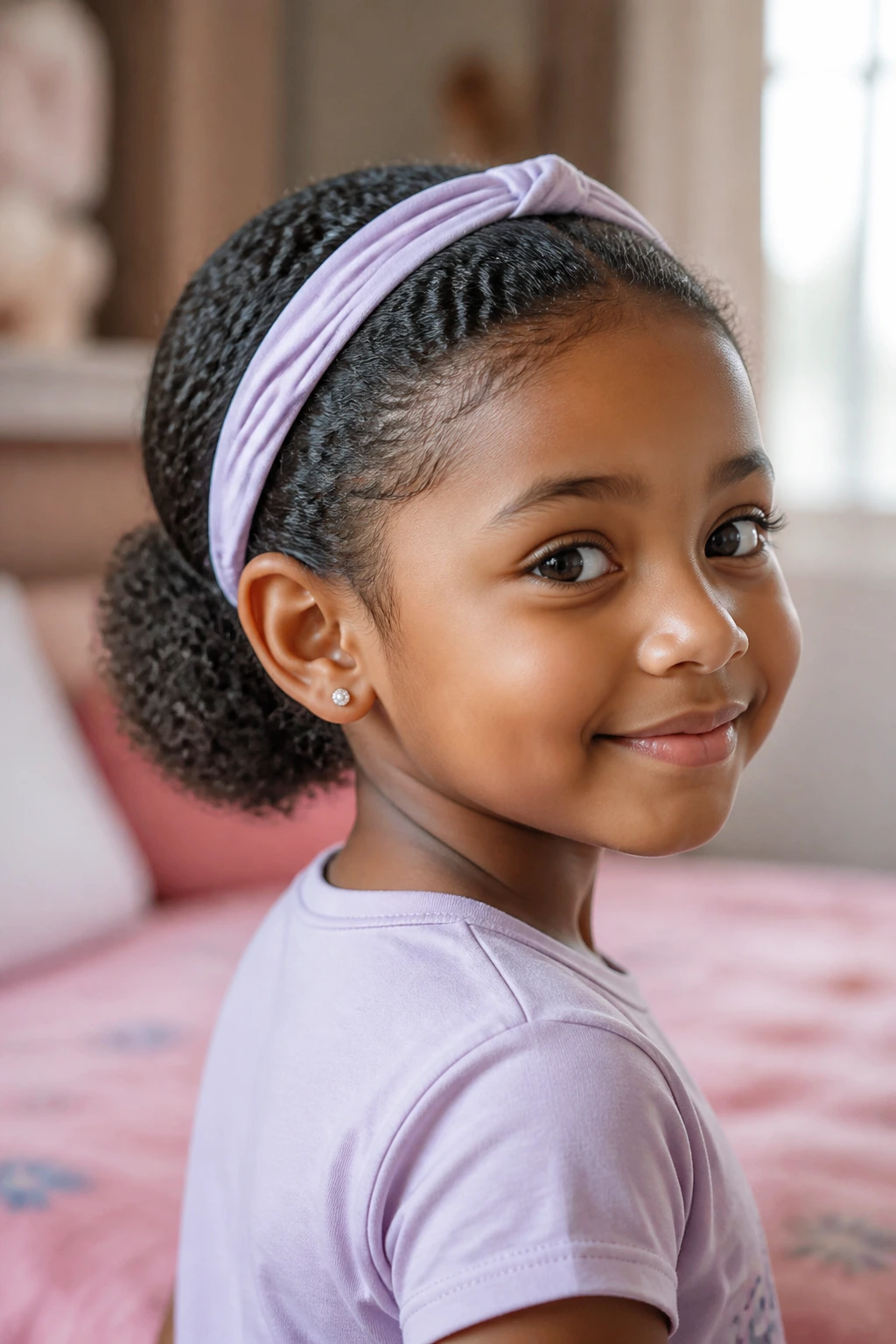
A low puff is gentler than the high version, and the headband tuck makes it feel finished without adding weight. The curls sit at the nape, where the style can rest instead of standing up and fighting the day.
I like this one for kids who are sensitive about hair pulling. The base can be loose, the headband does the visual work, and the hair still looks styled rather than just gathered. If the headband has a satin lining, even better. Cotton can snag the front pieces and make them puff out.
Small detail that helps: tuck the headband just behind the ears, not right on top of them. That tiny shift makes the whole thing more comfortable.
6. Curly Bob with Mini Clips
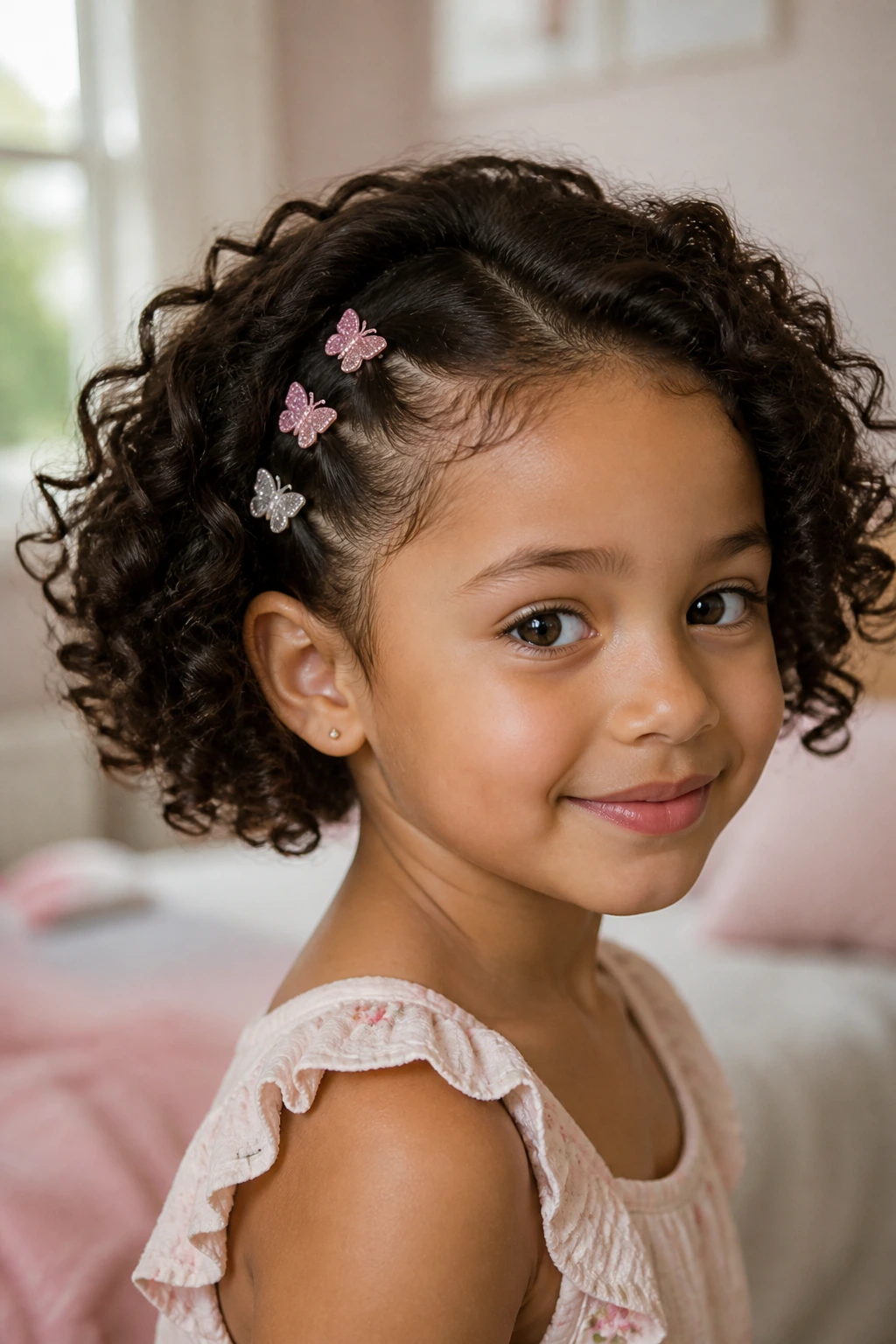
Short curls can be tricky because they don’t always have the length for big buns or long braids, but that’s not a problem. A curly bob with a few mini clips near one side or across the front turns the shape into the style.
The point here is not to hide the haircut. It’s to frame it. Use clips with smooth backs so they don’t catch on tight ringlets, and place them where the hair naturally parts. Three tiny clips are usually better than one oversized barrette that keeps slipping.
What to remember
- Clip over a moisturized section, not dry, fuzzy curls.
- Keep the front light.
- Let the bob keep its round shape.
7. Side-Swept Pinned Curls
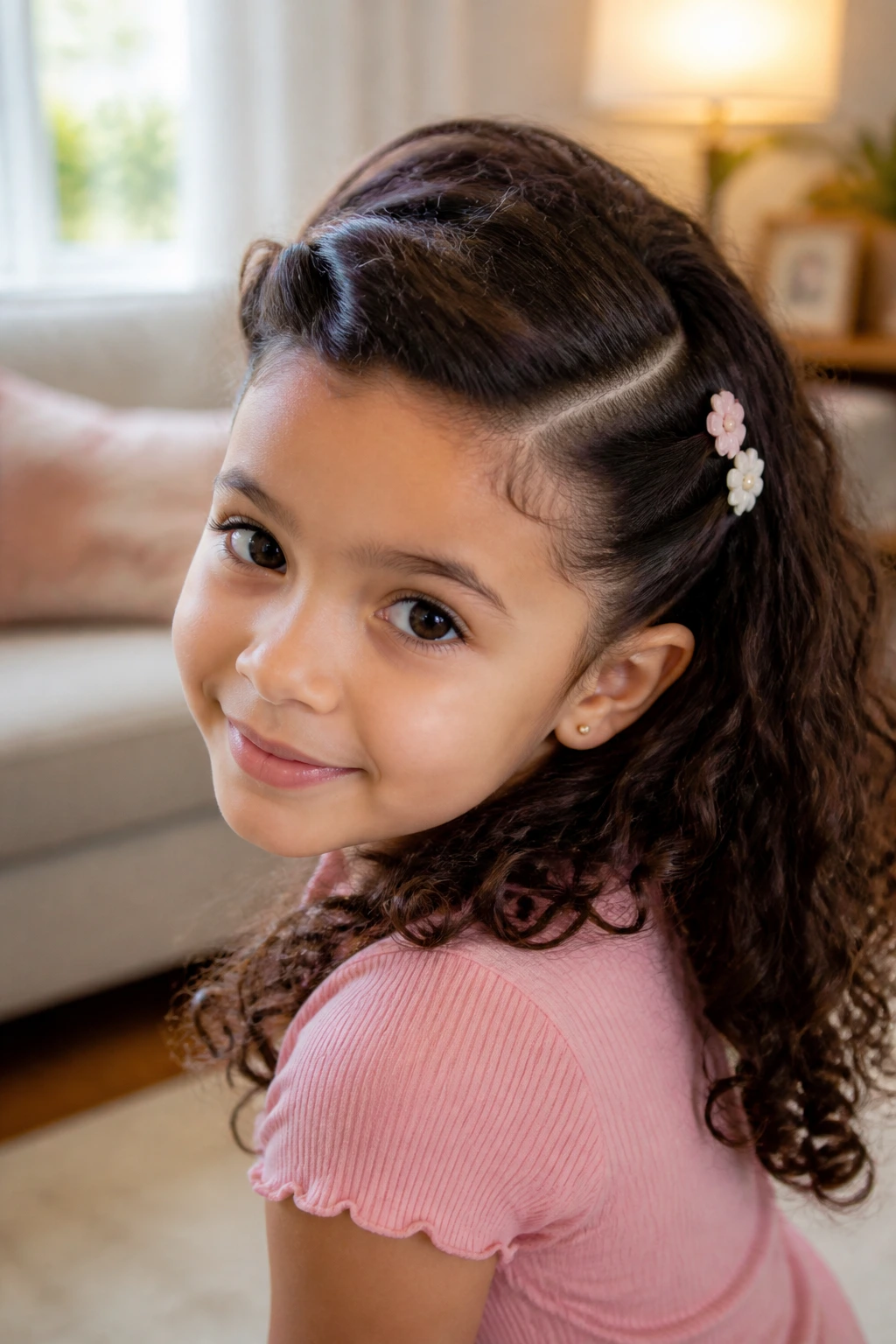
This one is all about a clean sweep from one side to the other. Gather the front section, sweep it across the forehead, and pin it to the opposite side with two small barrettes. The back stays loose.
It’s a nice answer for girls who hate hair in their eyes but don’t want a full-up style. The curls on the free side keep the look soft, and the pinned side gives you a little structure. It also works well when one side of the hair tends to fall flatter than the other.
Pro move: use one decorative clip and one hidden bobby pin underneath it. The style holds better than it looks.
8. Pineapple Ponytail
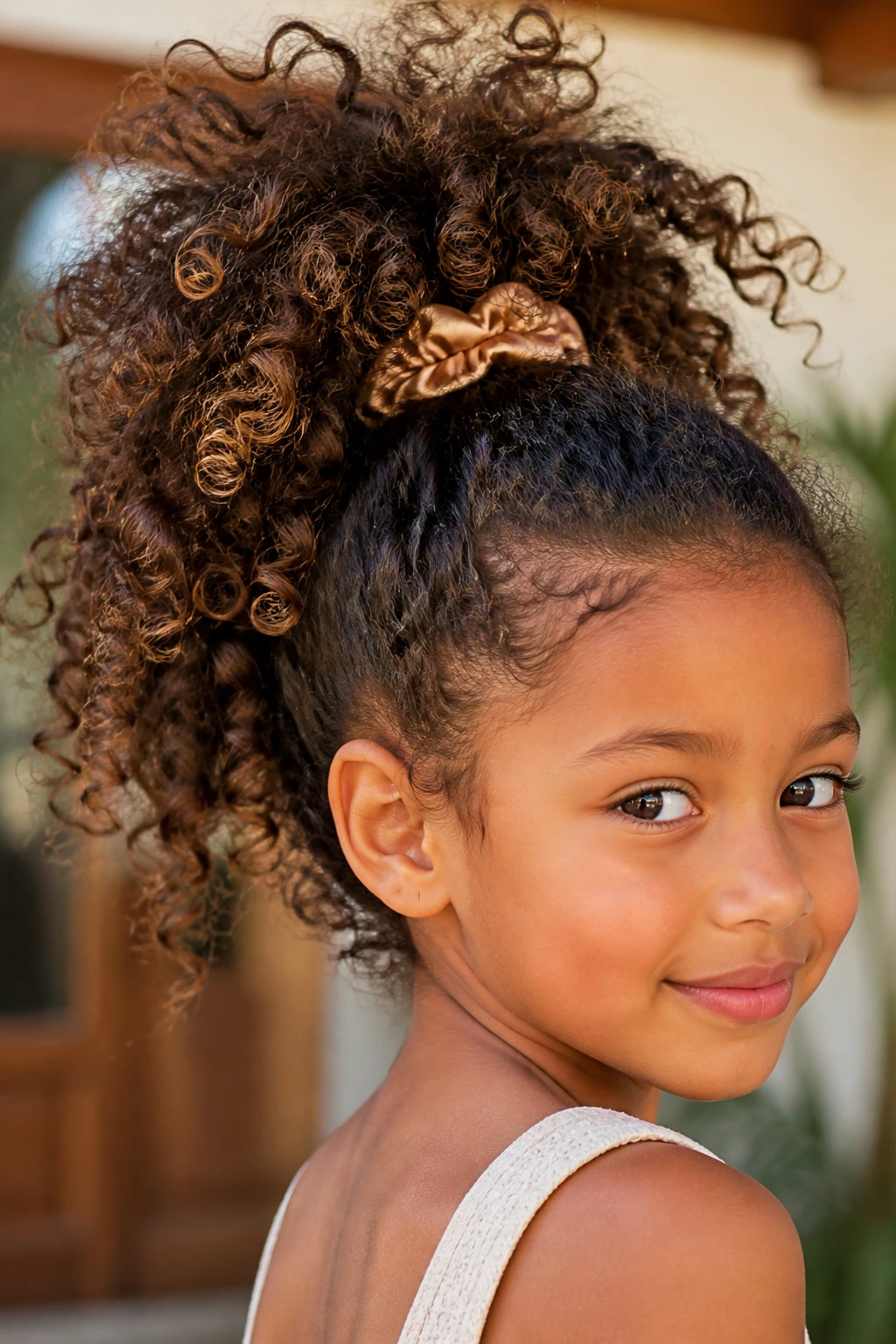
A pineapple ponytail is basically a high, loose pony that lets the curls spill upward and outward instead of being pressed flat. On little girls, it can look sweet and a little cheeky in the best way.
The key is not over-smoothing the hair before you gather it. If you erase all the texture, you lose the whole point. Use your hands, not a brush, and stop once the hair is secure enough to stay. A satin scrunchie keeps the base kinder to the scalp than a thin elastic does.
Best for
- Day-old curls that need a refresh
- Tighter coil patterns
- Warm days when a full neck of hair feels like too much
9. Flat-Twist Mohawk
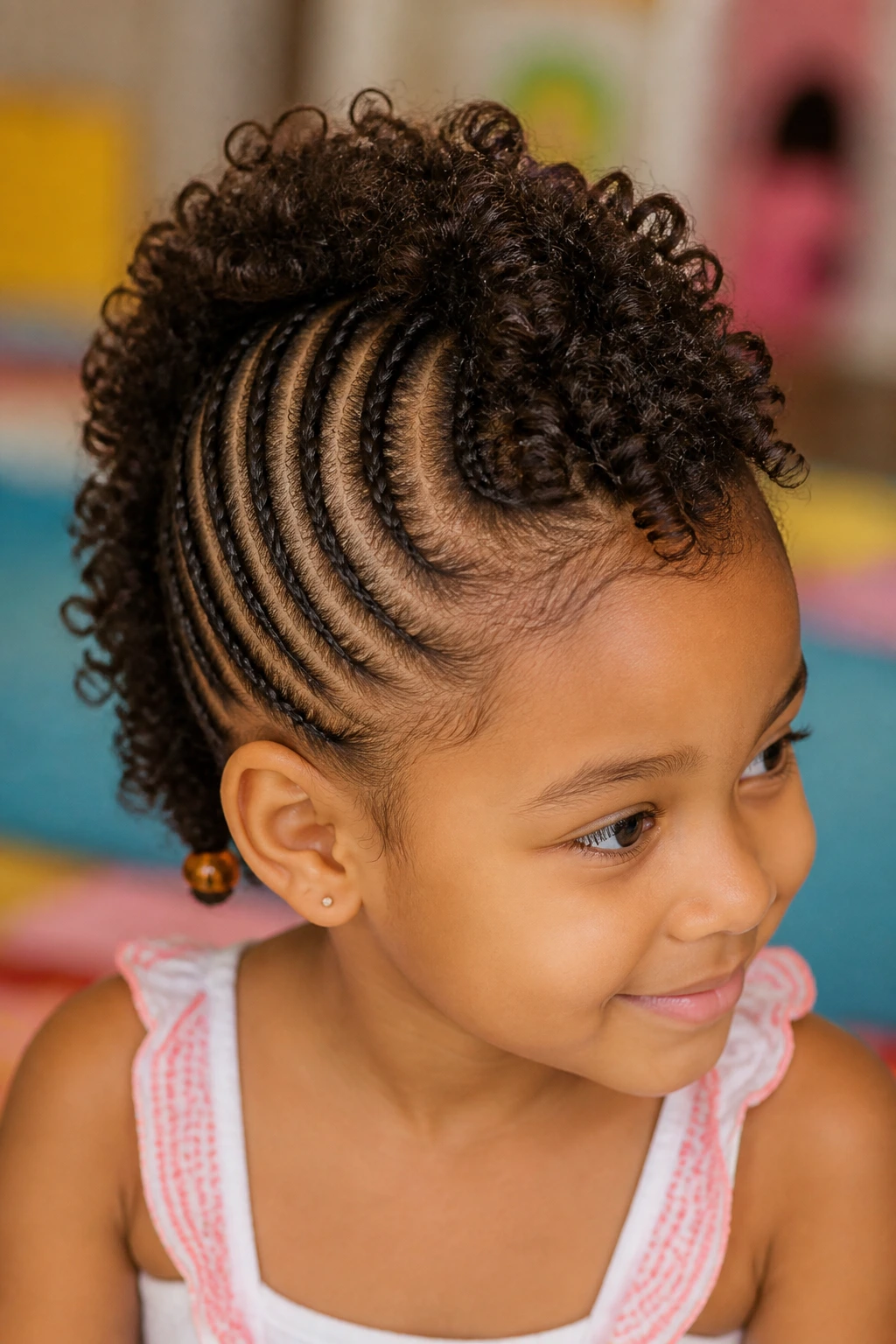
This style has more edge, but on a little girl it reads more playful than punk. Flat-twist both sides toward the middle, then leave a strip of curls running down the center. The contrast between the sleek sides and the loose middle is what makes it interesting.
It’s also useful on hair that frizzes up at the temples first. By smoothing the sides down into twists, you keep the front neat longer. The center curls can be picked out a little or left tight, depending on how much shape you want.
A tiny bead or two near the back can finish it off. Don’t overdo the accessories. This one already has enough going on.
10. Ribbon-Tied Puffs
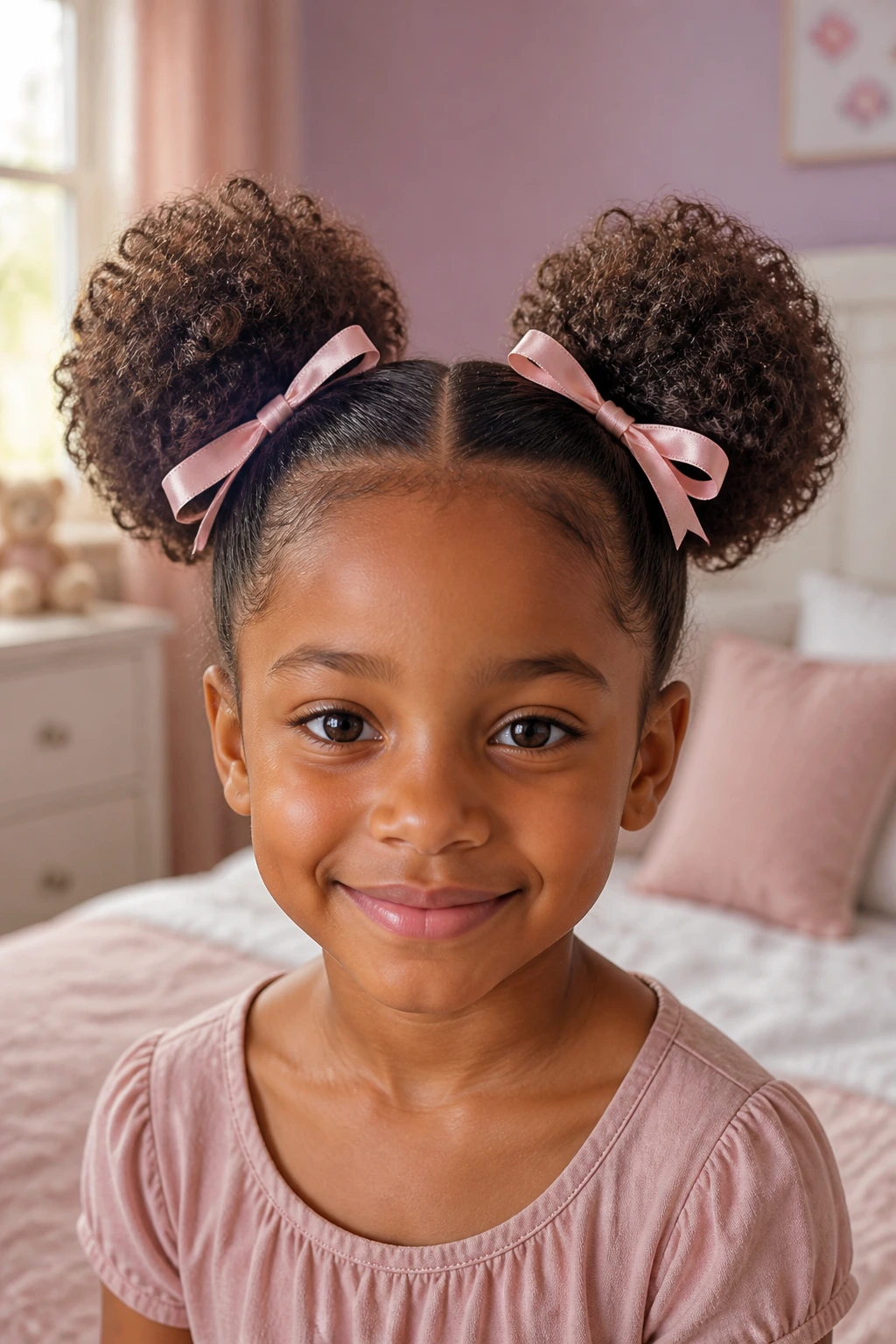
Two puffs tied with ribbon look sweet without needing a lot of work. Make two sections, smooth them into puffballs, and tie each base with ribbon instead of relying only on elastics. The ribbon softens the shape and gives the style a more dressed-up feel.
What I like here is the flexibility. You can use wide grosgrain ribbon for a neater finish or a narrow satin ribbon for something lighter. Keep the bows at a size that matches the child’s head. Giant bows can swallow the style and start feeling costume-like.
Best moment for this style: birthdays, family photos, or any day when you want the hair to feel a little extra without getting fussy.
11. Heart-Part Puffs
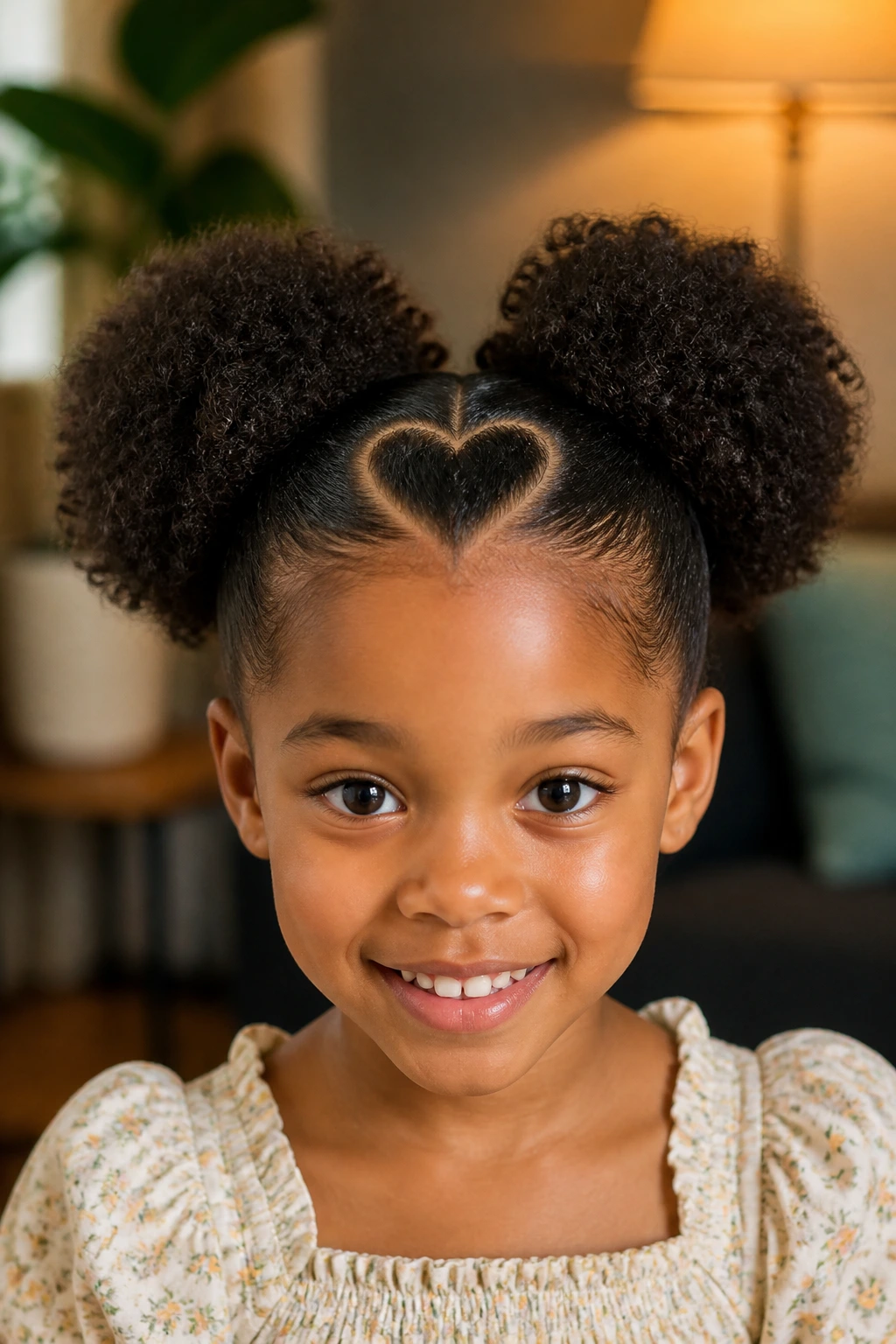
A heart-shaped part sounds dramatic, but it’s really just a clever way to turn two ordinary puffs into something memorable. The part does the decorating before you even touch a bow. That’s the whole trick.
Use a rat-tail comb to trace the heart slowly, one side at a time. If the sectioning isn’t perfect, don’t panic. A slightly imperfect heart still reads as a heart once the hair is gathered. Tight symmetry matters less than a clean outline.
Why kids like it
It feels special. And children clock that immediately. A simple shape in the part can make the style feel custom without adding another clip, braid, or accessory.
12. Curly Bun with a Bow
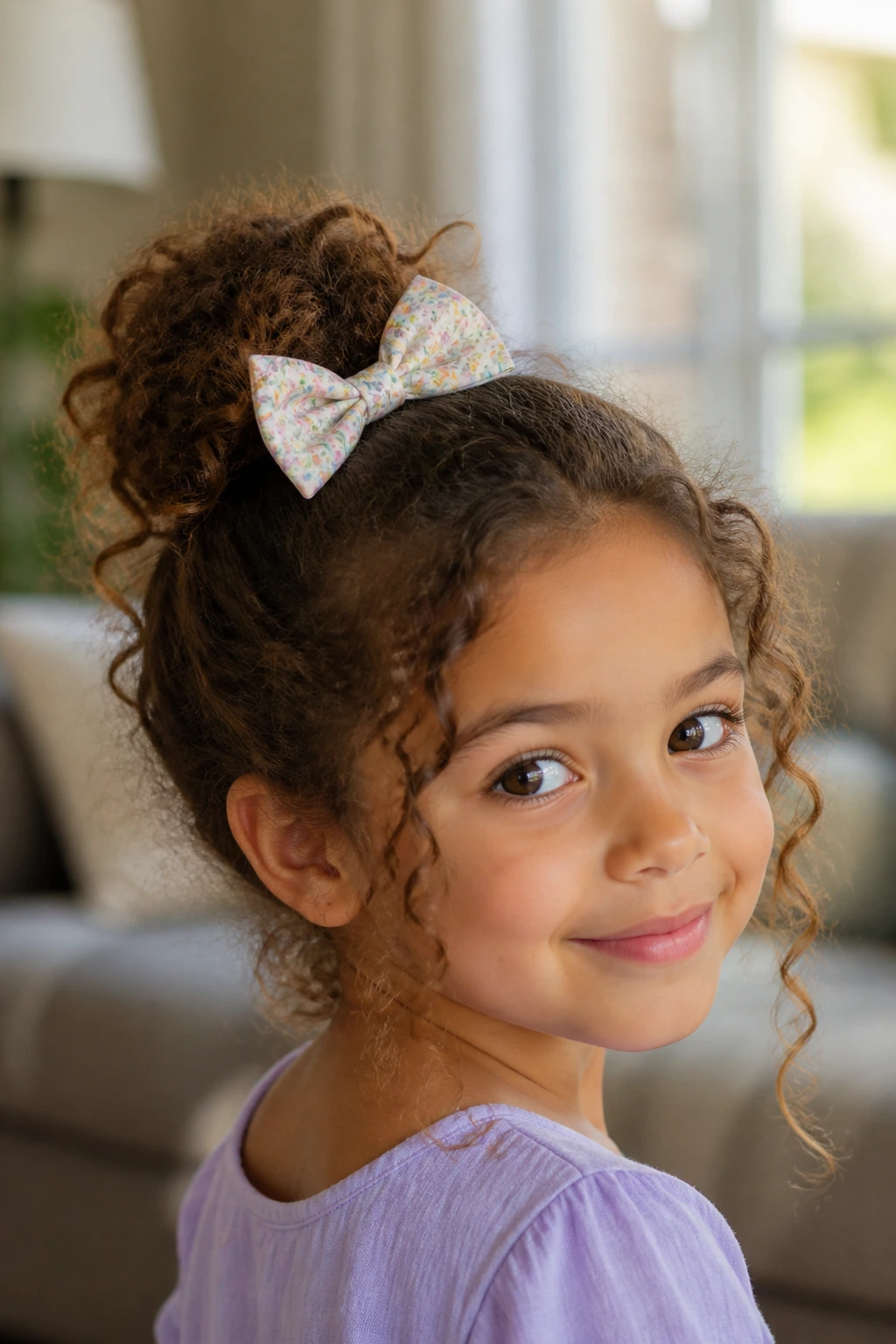
A curly bun is one of those styles that can look neat or charming depending on where you place it. At the back of the head, it feels classic. Higher up, it gets a little more playful. Either way, the bow finishes the look without making it heavy.
I prefer a loose bun over a tight twist for kids. Tight buns flatten curls and can be uncomfortable after a few hours. A looser gather lets a few ends peek out, which looks better on curly hair anyway. Let the texture show. That’s the part people actually notice.
Try this: choose a bow in a color already present in the outfit so the hairstyle feels connected instead of random.
13. Waterfall Braid and Loose Curls
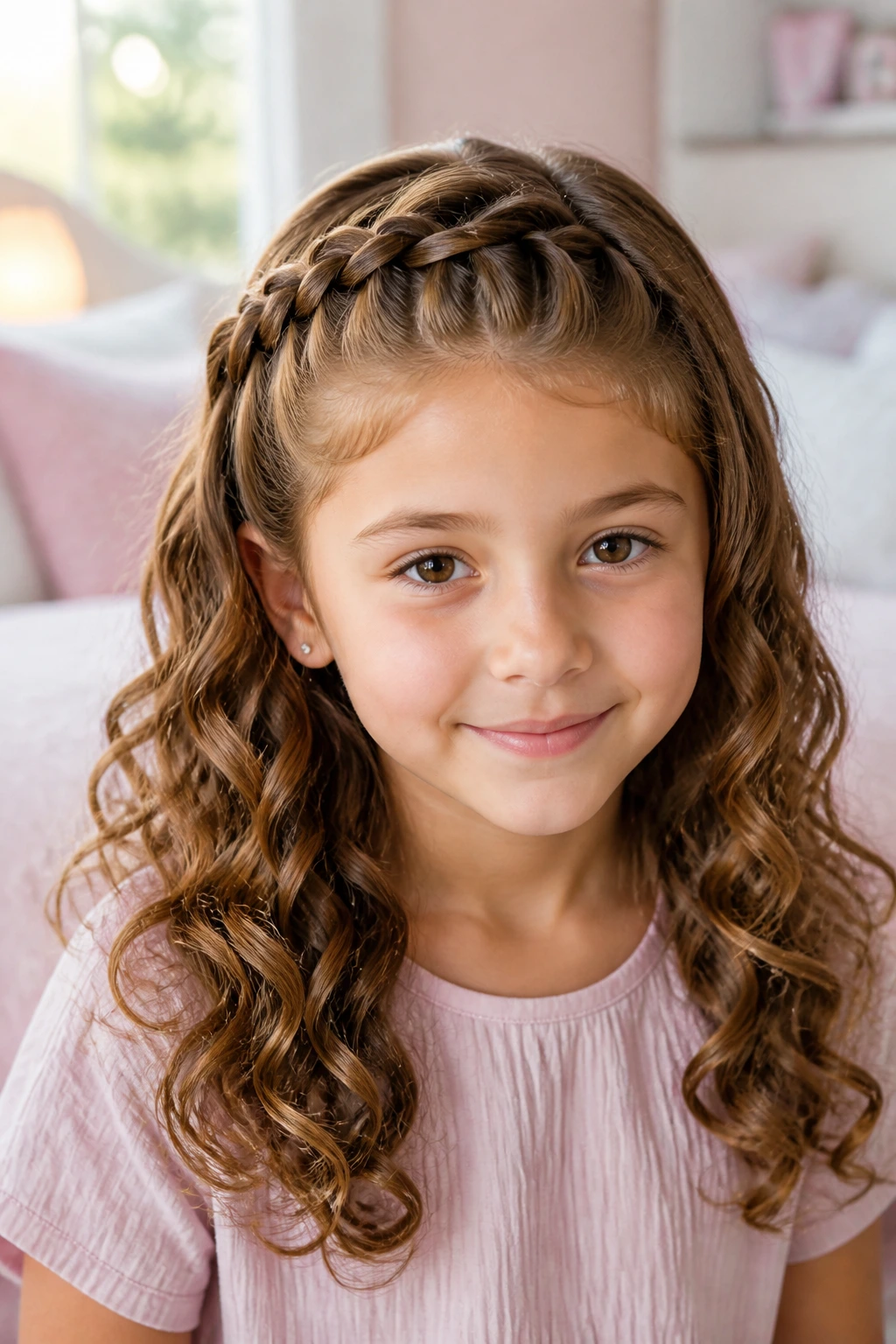
This is the style that looks harder than it is. A waterfall braid runs across the top section, and the rest of the curls hang loose underneath it. The braid acts like a frame, almost like a headband made of hair.
It works especially well when the curls are long enough to show movement. Each dropped section of the braid leaves a little opening, which lets the curly texture underneath stay visible. If the child has a looser pattern, you may want to define the curls first with a bit of cream so the ends don’t blur together.
There’s a nice balance here: structure above, freedom below. That’s why it keeps showing up in family photos.
14. Four-Section Puff Style
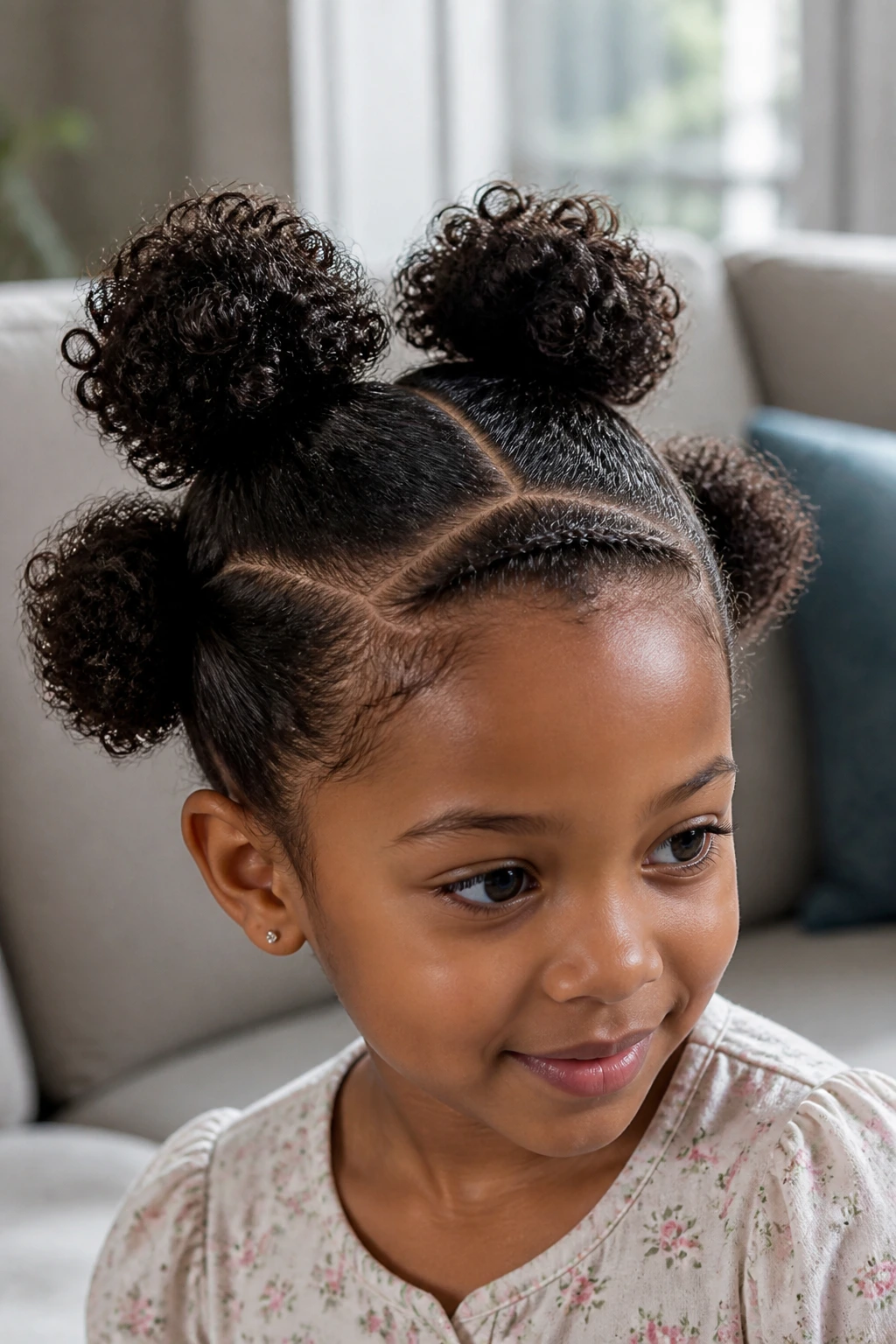
Four small puffs can be calmer than two big ones, especially on thicker hair. The style breaks the head into manageable sections, and each puff gets its own little spot to sit. That makes the whole shape feel balanced.
It’s a good option when a child’s curls are dense and a single ponytail turns into a battle. Smaller sections mean less pulling at once. And because each puff is smaller, the style can look neat even if the curls are doing their usual springy thing by noon.
Best for
- Dense curls and coils
- Children who dislike one large ponytail
- Days when you want easy sectioning and quick cleanup
15. Two-Strand Twist Ponytail
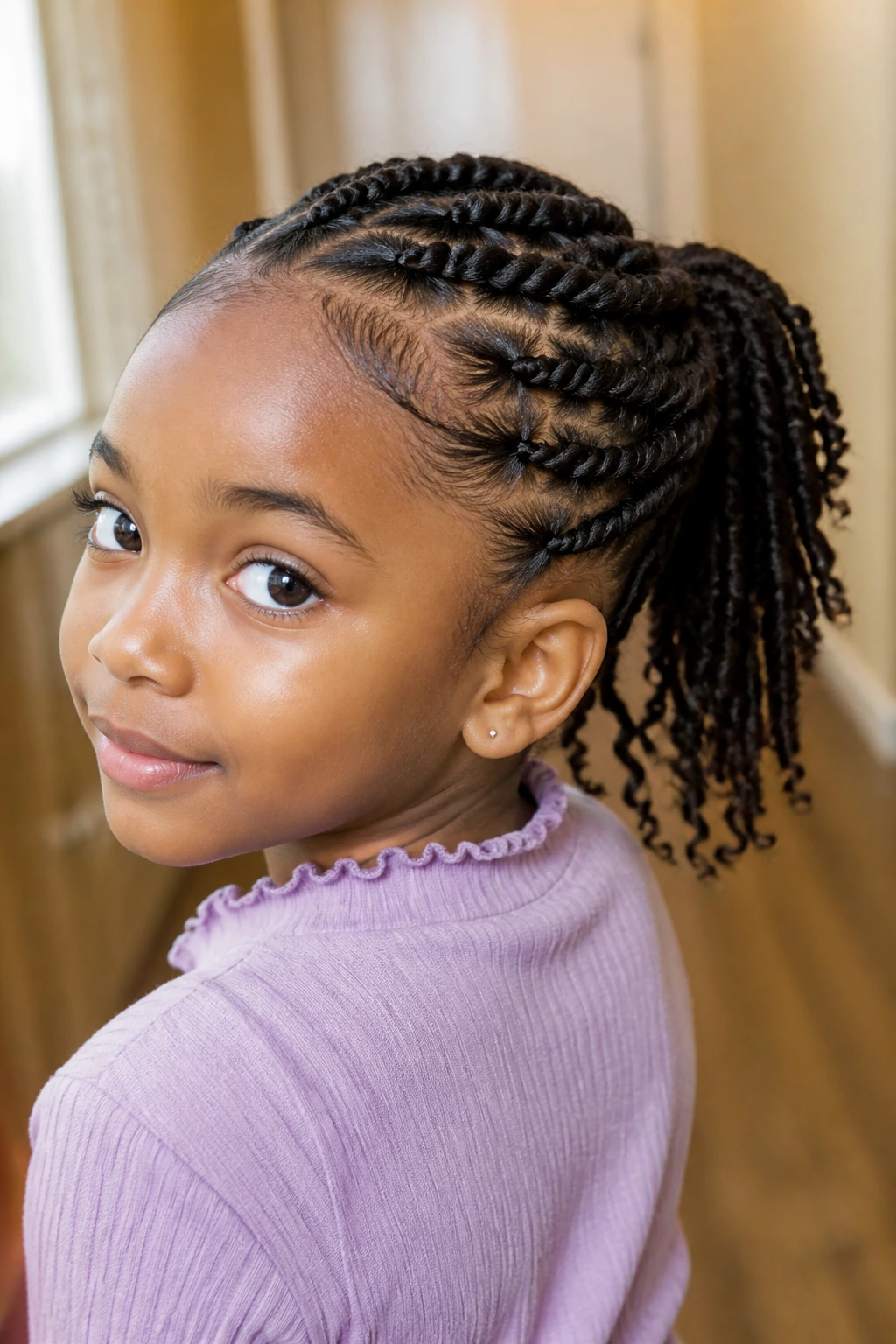
Two-strand twists give you a cleaner line than loose hair and a softer look than braids. Pull the front or side sections into twists, then gather everything into a ponytail at the back. The twists lead the eye, and the ponytail finishes the style without making it too stiff.
This is one of my favorite hybrid looks because it works when you want control near the hairline but still want the curl pattern to show at the ends. It’s also easier to refresh than a style with a lot of pins. A mist bottle and a dab of leave-in can bring the twists back to life fast.
Use this when: the hair is on day two or three and needs a reset, not a full wash.
16. Zigzag Part with Defined Coils
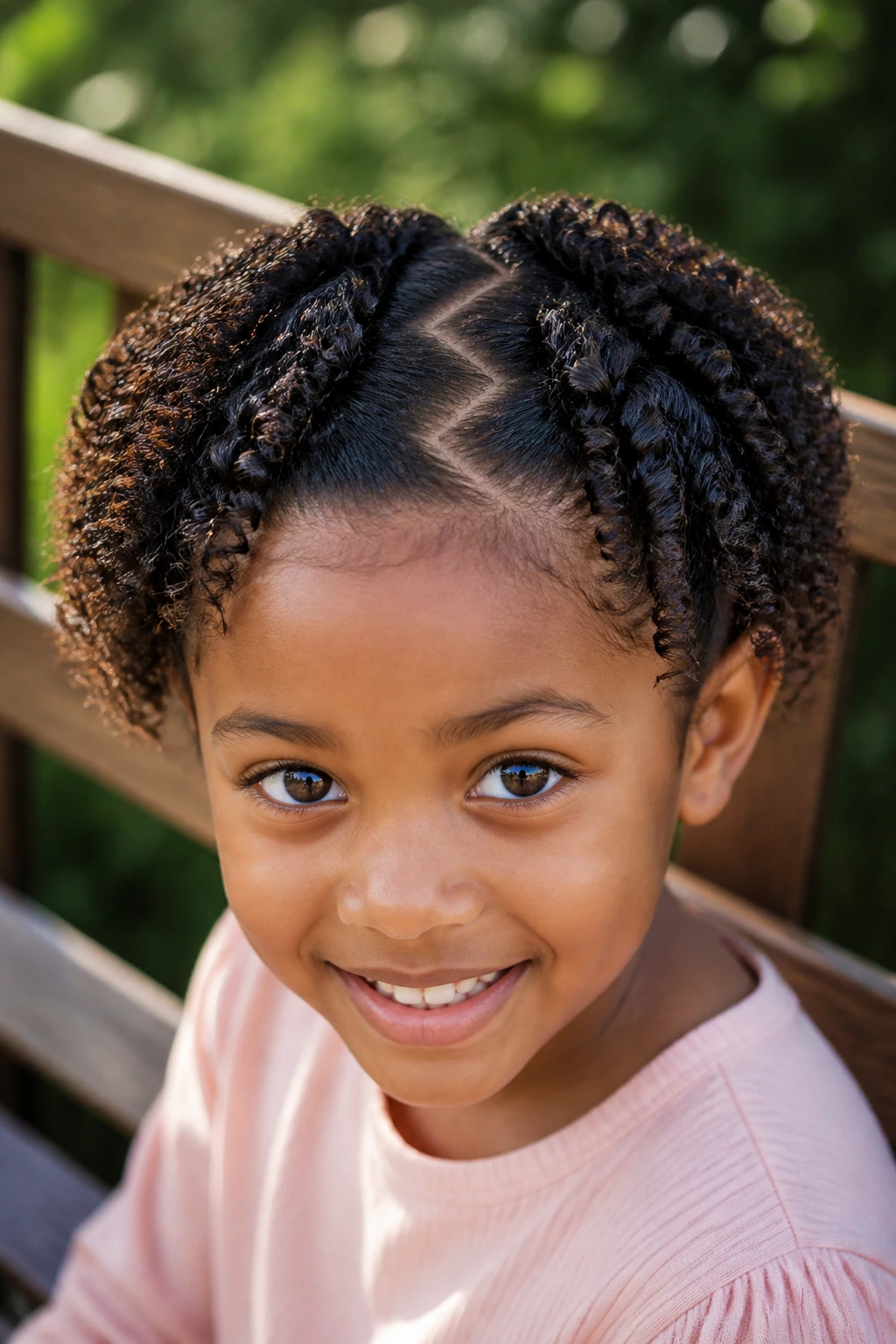
A zigzag part does a surprising amount of work. The shape turns a simple style into something that feels deliberate, and it helps break up a flat-looking crown. Once the part is set, the coils do not need much else.
This style is especially nice when the hair is short to medium length and the curls are well defined. The part gives the eye somewhere to go. You can add puffs, ponytails, or two braids after the part is in place, but even on its own, it already feels styled.
No need to make the zigzag tiny. A clean, medium-size pattern is easier to maintain and much faster to redraw when you refresh the hair.
17. Bantu Knot Crown
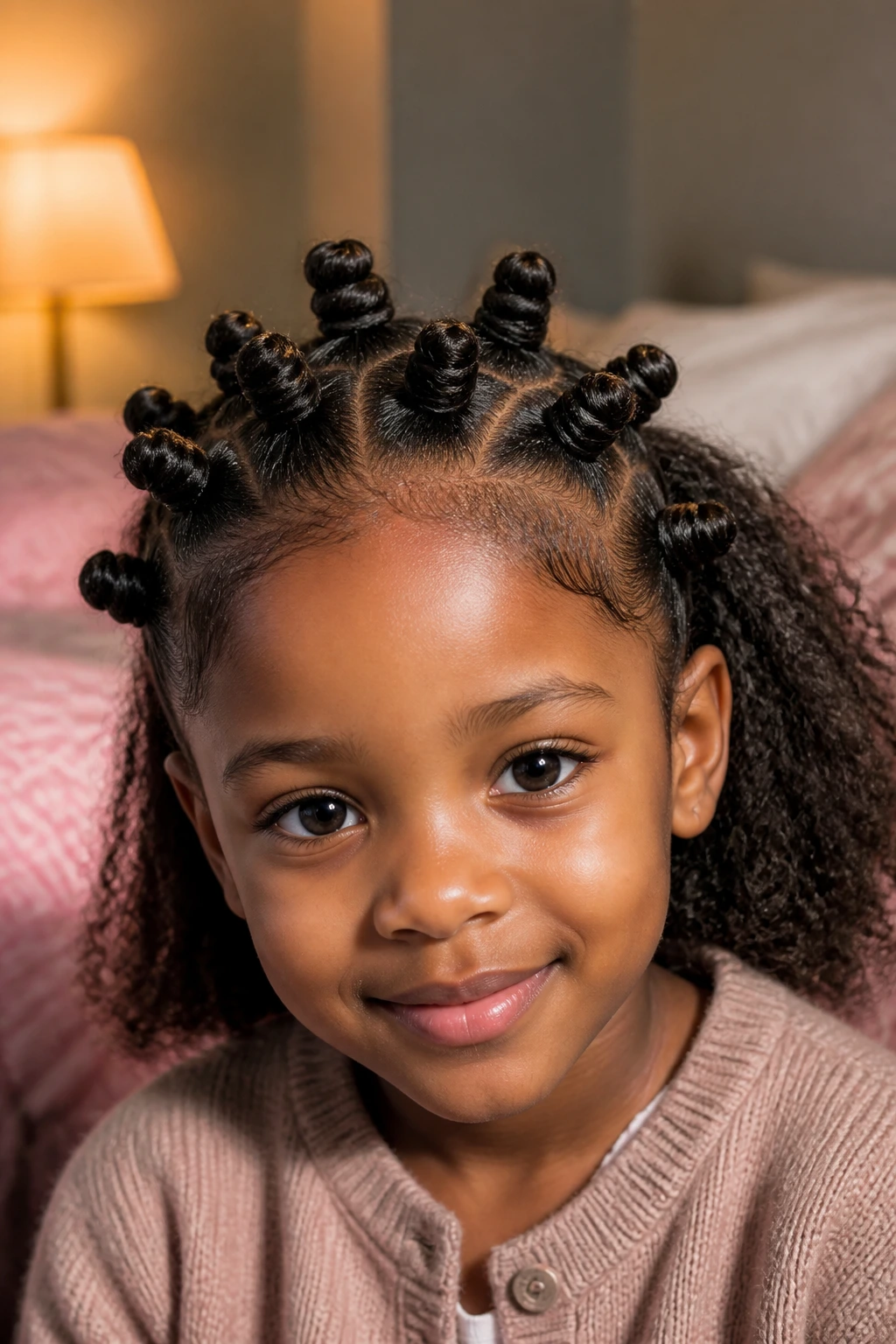
Bantu knots around the front or crown make a little girl’s hair look sculpted without heat or heavy manipulation. The back can stay loose, or you can knot the whole head if you want a fully protected style.
I like this look for textured hair because each knot gives a tiny bit of shape and stretch. It also lasts well if the child is gentle with it overnight. If the knots are small, you get more definition. If they’re larger, they’re faster to do. Both work. Just don’t crank them too tight at the base.
Small warning: knot styles should never leave a sore scalp. If the hairline is tense, start over with looser sections.
18. Curly Afro with Flower Clips
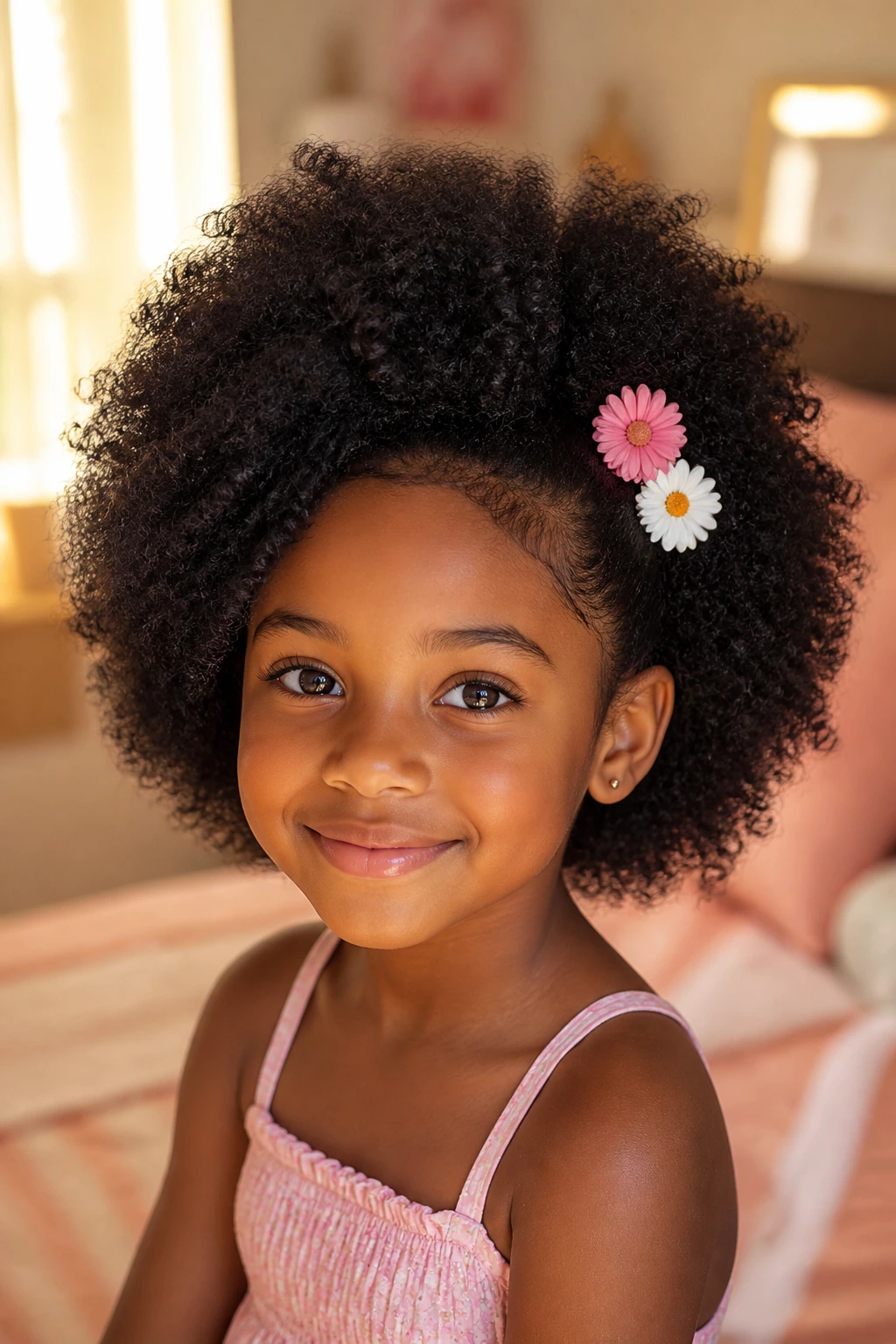
Sometimes the best style is barely a style at all. A shaped curly afro with a few flower clips says, “We already have enough going on here.” And that’s the point.
This works when the hair has good volume and the curls are happy to live in their own lane. Shape with your fingers, separate the front a little, and place one or two clips where they’ll actually be seen. Flower clips near the temple or just above one ear are often enough. Too many clips start fighting the hair instead of decorating it.
The main move here is respect. Let the curls be the feature.
19. Cornrow Front with Free Back Curls
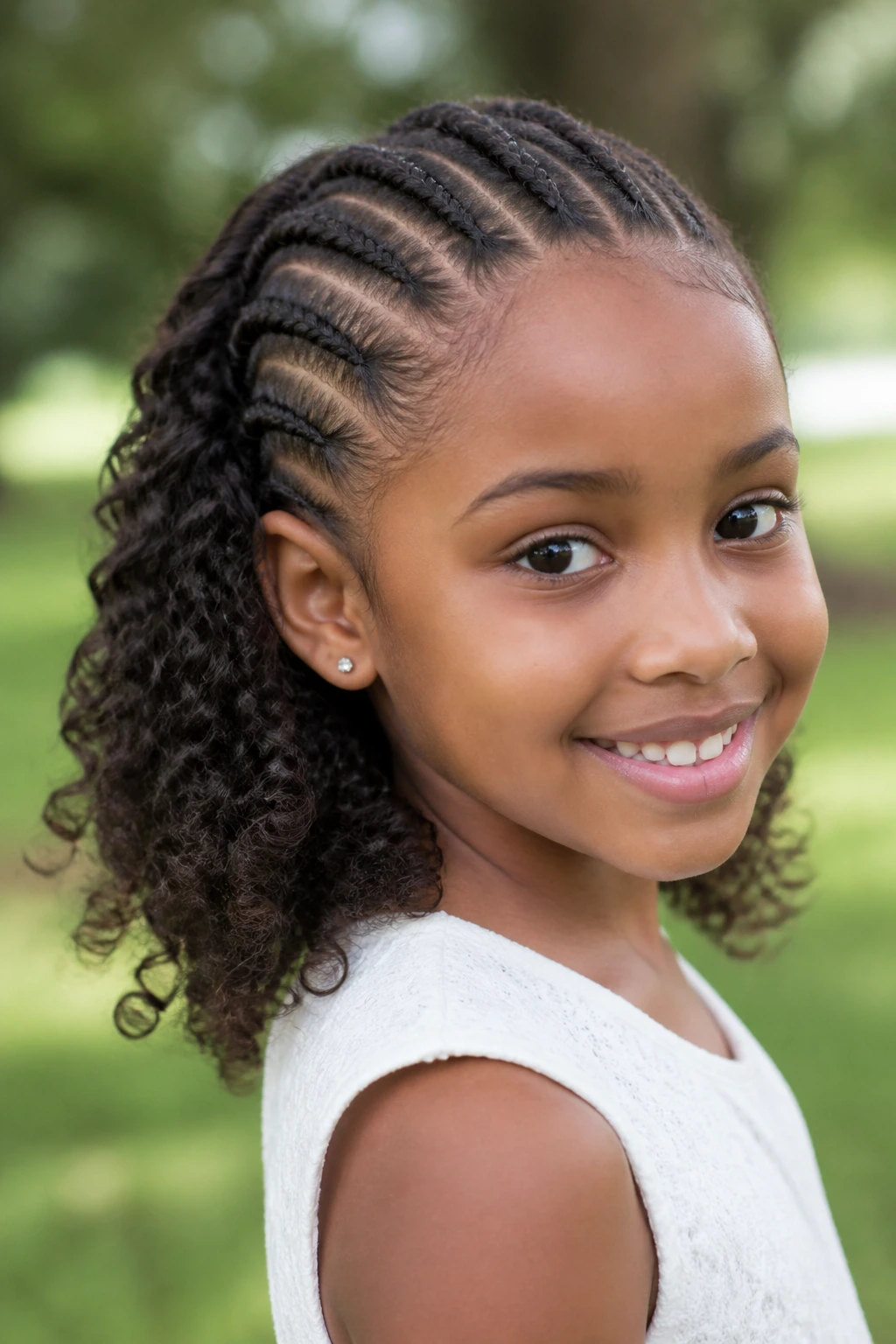
What makes this style smart is the division of labor. The front cornrows keep the face clear and stay neat longer, while the back curls get to stay loose and visible. That’s a useful mix when the child wants hair off her forehead but still wants movement.
Use the cornrows as a frame, not a cage. Two or three neat rows are enough. The back can be left natural, picked out, or lightly defined with cream depending on texture. If the child is tender-headed, keep the cornrows slightly wider and fewer. Tiny, tight rows look tidy for a minute and then start causing problems.
Best for: school days, outdoor play, and families who like a protective front with a softer finish.
20. Top Knot with Face-Framing Tendrils
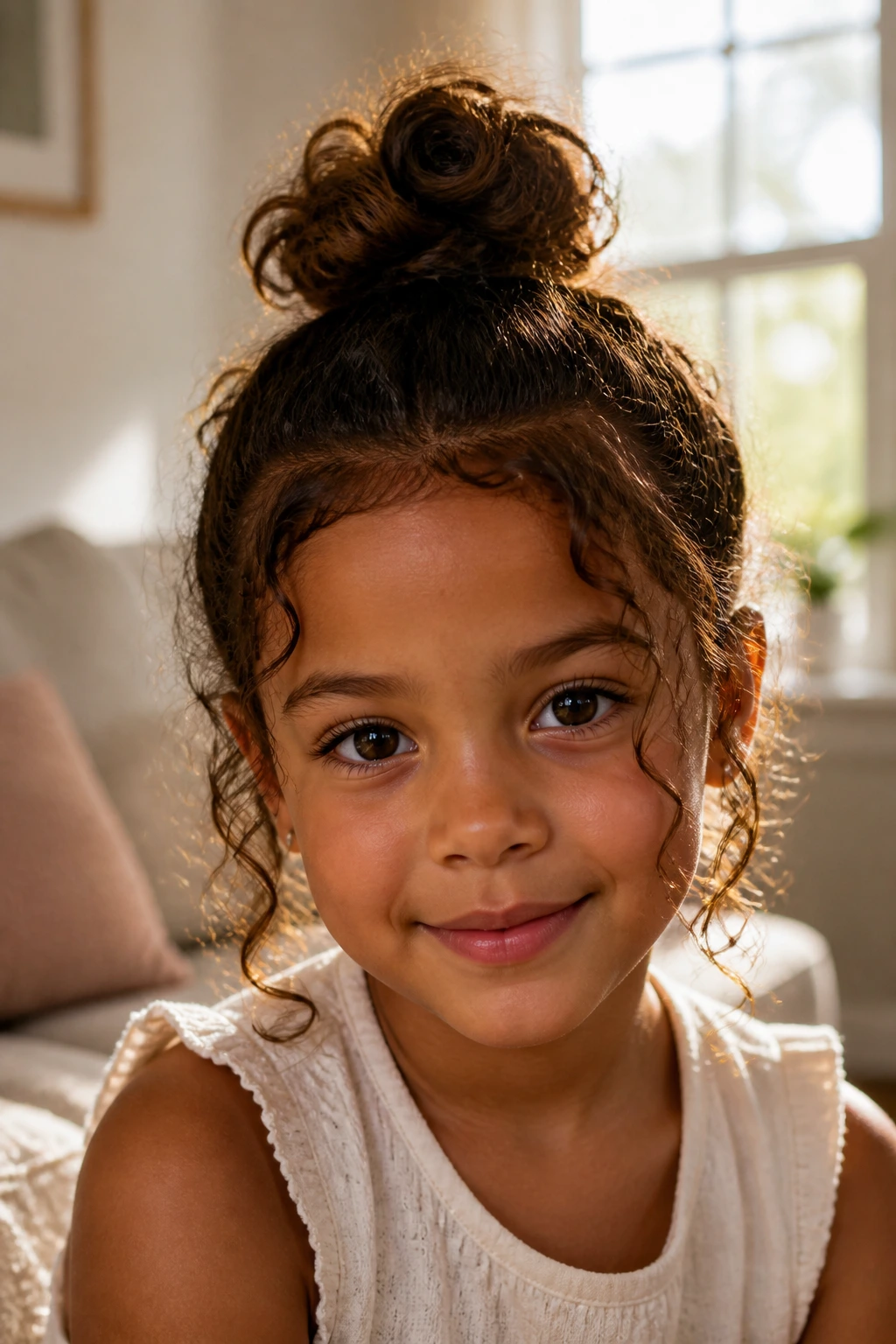
A top knot on curly hair should never be so sleek that it loses the hair’s personality. Leave a couple of tendrils at the front and around the temples, and the whole thing softens right away.
The knot itself can be loose and rounded, not pinned into a hard little ball. That matters. A hard knot often looks fine in the mirror and terrible after a nap. The tendrils keep the style from feeling severe, which is especially nice on younger kids. A small amount of leave-in on the front pieces helps them curl instead of frizzing.
This is one of those styles that works with almost any outfit. Plain tee, party dress, uniform. It behaves.
21. Bubble Ponytail on Curls
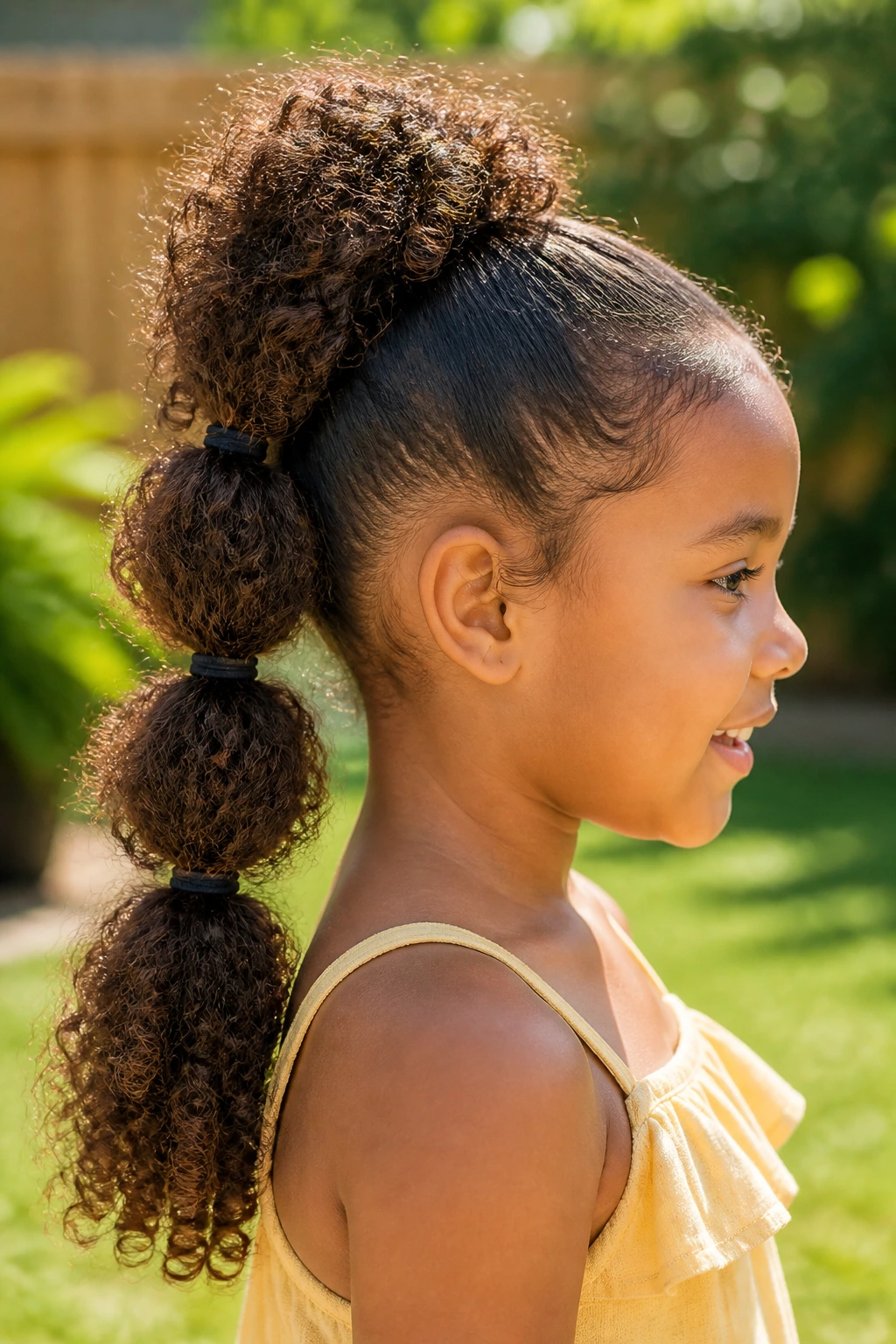
A bubble ponytail is just a ponytail sectioned with soft elastics down the length, but on curly hair it gets extra texture. Each “bubble” sits a little different because the curls puff between the ties. That irregular shape is part of the charm.
Use covered elastics if you can, and leave enough space between each one so the curls can round out. Too close together and the bubbles turn cramped. Too far apart and the style loses its shape. You want enough room for each section to breathe.
Practical note: this style looks best when the ponytail itself has some body. Flat roots make the whole thing sag.
22. Braided Halo and Open Curls
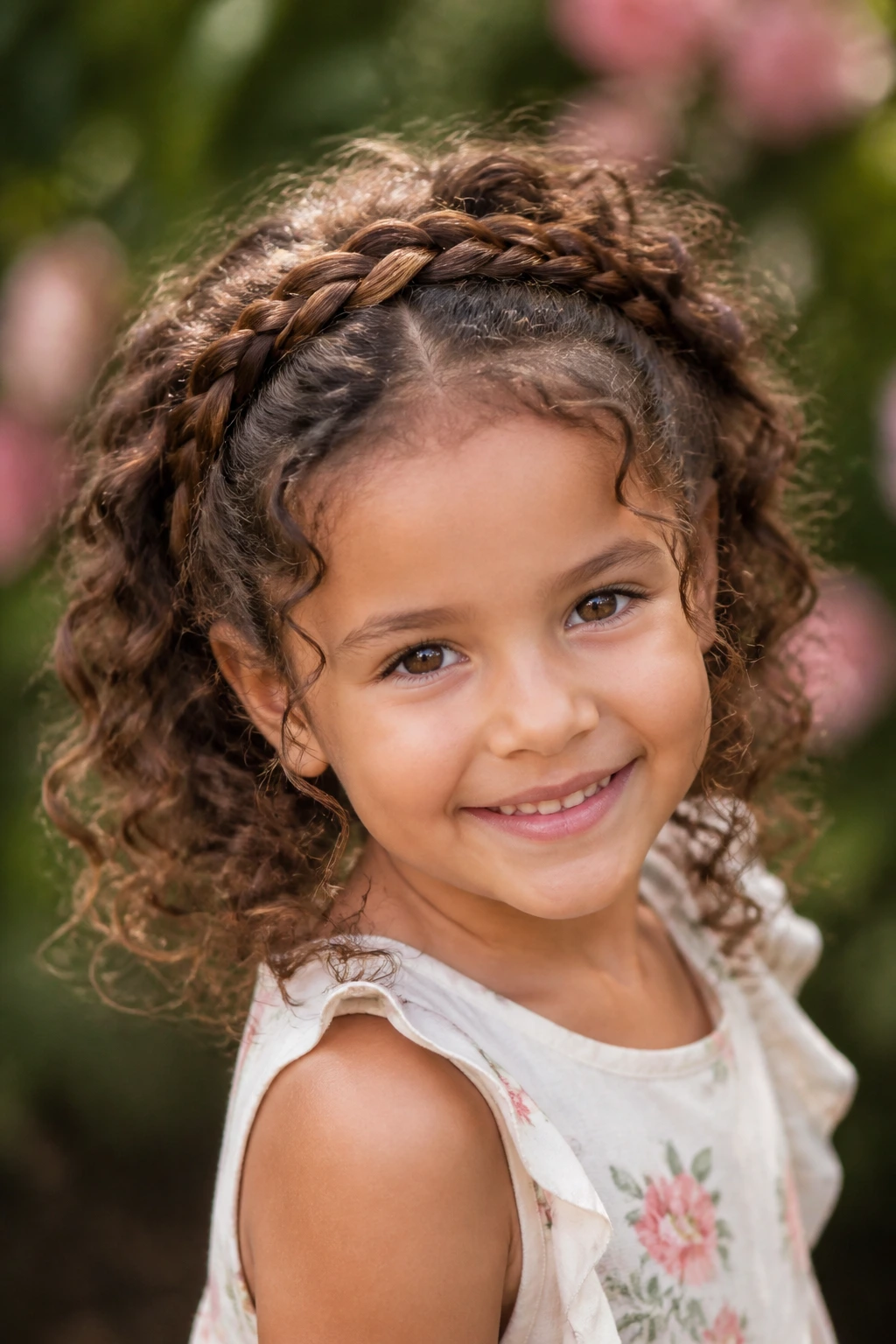
A halo braid around the head gives you that wrapped, finished look without hiding the curls at all. The braid circles the hairline like a frame, and the rest of the hair falls free in the center or back.
This is one of the prettiest ways to keep shorter front pieces under control. It also works when the hair is a bit uneven in length, because the braid disguises a lot. Pin the braid flat and secure it behind the ears so it doesn’t peel away during the day.
A loose halo looks better than a tight one on children. Tight braids can pull the skin and make the whole style feel more formal than it needs to be.
23. Puffball Pigtails
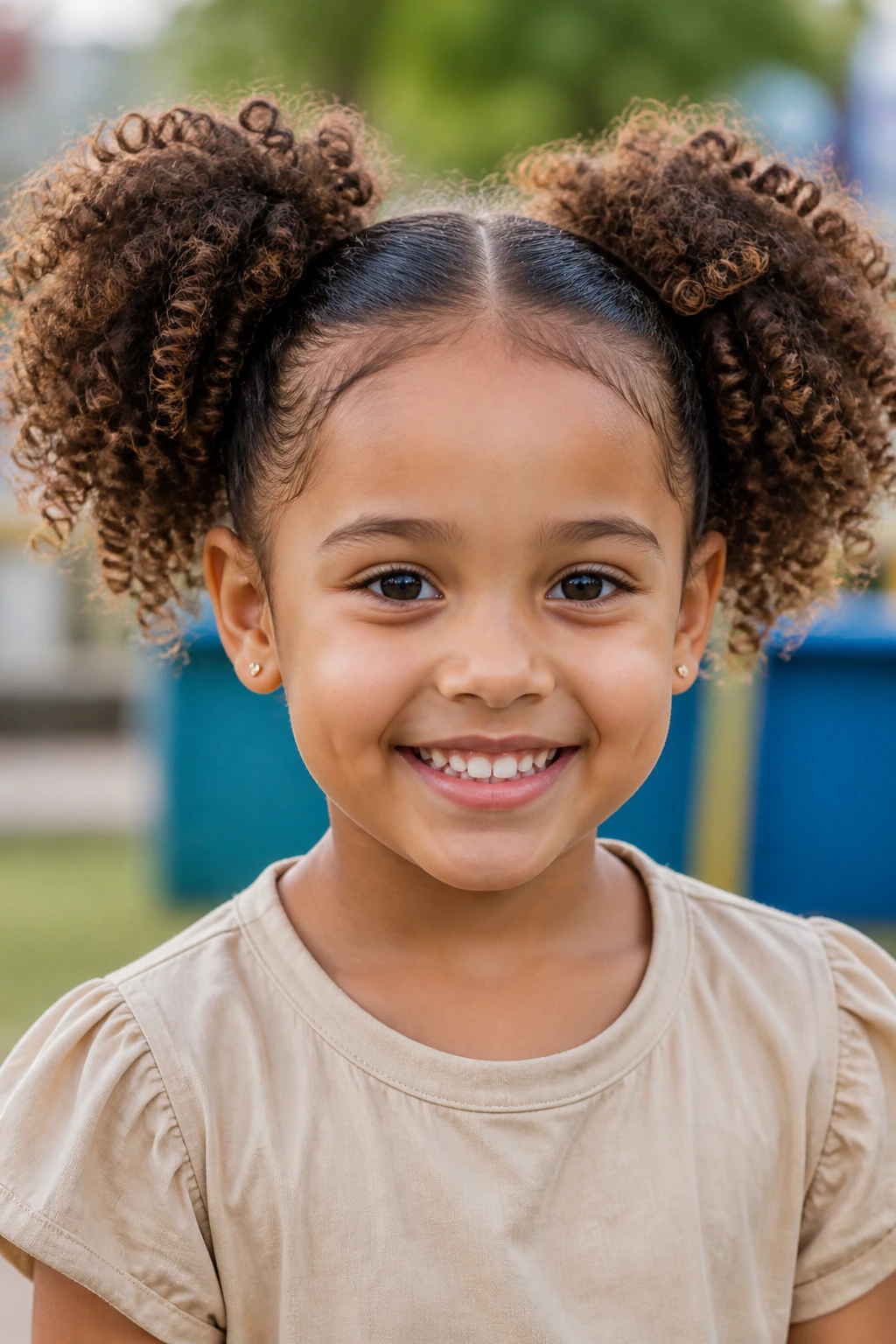
Puffball pigtails are basically the cousin of the classic ponytail, but smaller, rounder, and better suited to curls. Two puffballs keep the style light and easy to reset, which is a gift on mornings when nobody has time for a full styling marathon.
The shape is what makes them cute. Gather each side high or low, then fluff the curls with your fingers so each puff gets some volume. If one side always looks bigger, that’s normal. Use the bigger side’s fullness to balance the head shape instead of trying to force perfect symmetry.
They’re quick. They hold. And they look cheerful without much effort.
24. Tapered Twist-Out with Beads
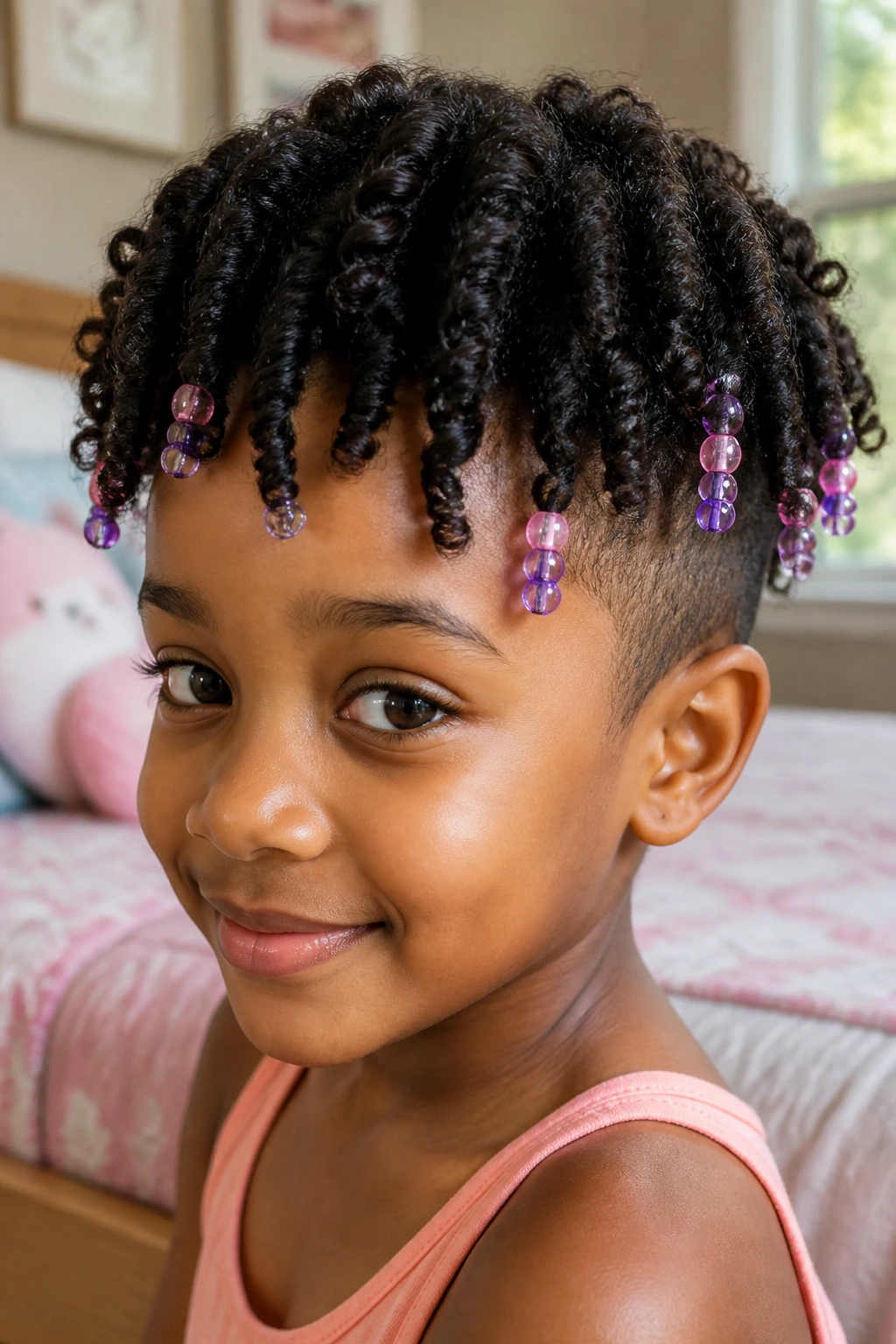
A twist-out on a tapered cut gives the curls a defined pattern on top and clean edges around the sides. Add a few beads at the ends if the hair is long enough, and the style gets a little sparkle without needing a full head of accessories.
The best twist-out starts with small, even sections and a product that gives hold without turning sticky. Once the twists are dry, separate them gently and stop before the curl pattern frizzes apart. That line between defined and fuzzy can be thin, so go slowly.
Beads work best when they’re used as a punctuation mark, not a covering. One or two on the ends is enough.
25. Faux Hawk with Flat Twists
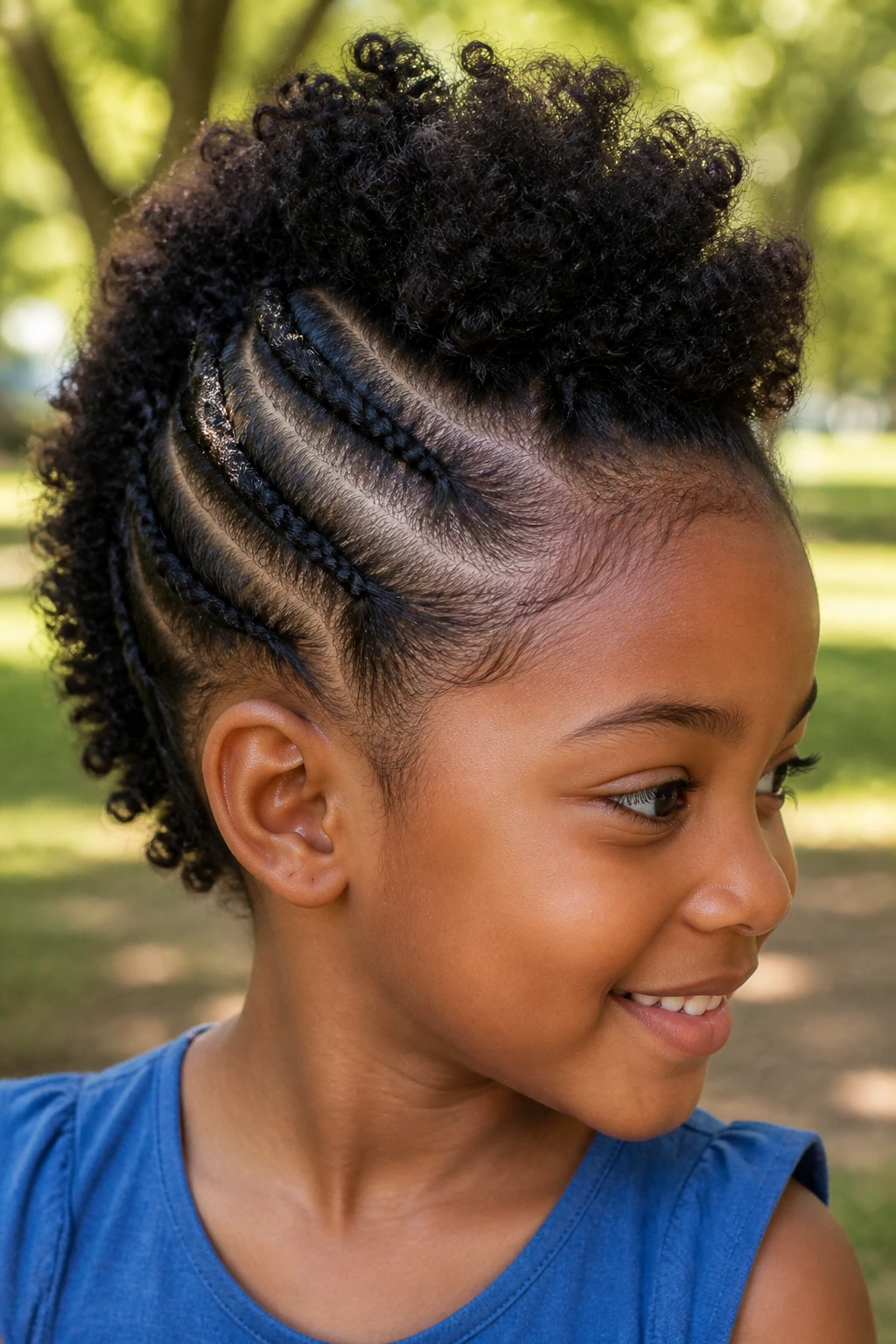
This one has attitude, but in a kid-friendly way. Flat-twist the sides upward, then leave the center fuller so the curls rise like a soft mohawk. It’s bold without being stiff, which is why it photographs well and still feels wearable.
The shape depends on contrast. Sleek sides. Full center. That’s the whole point. If you blur the difference too much, the style loses its punch. Use a little gel or cream on the sides, and keep the middle fluffy and curly.
I like this for kids who want something a little different. It’s a style that says there’s a personality in the room.
26. Scarf-Wrapped Puff
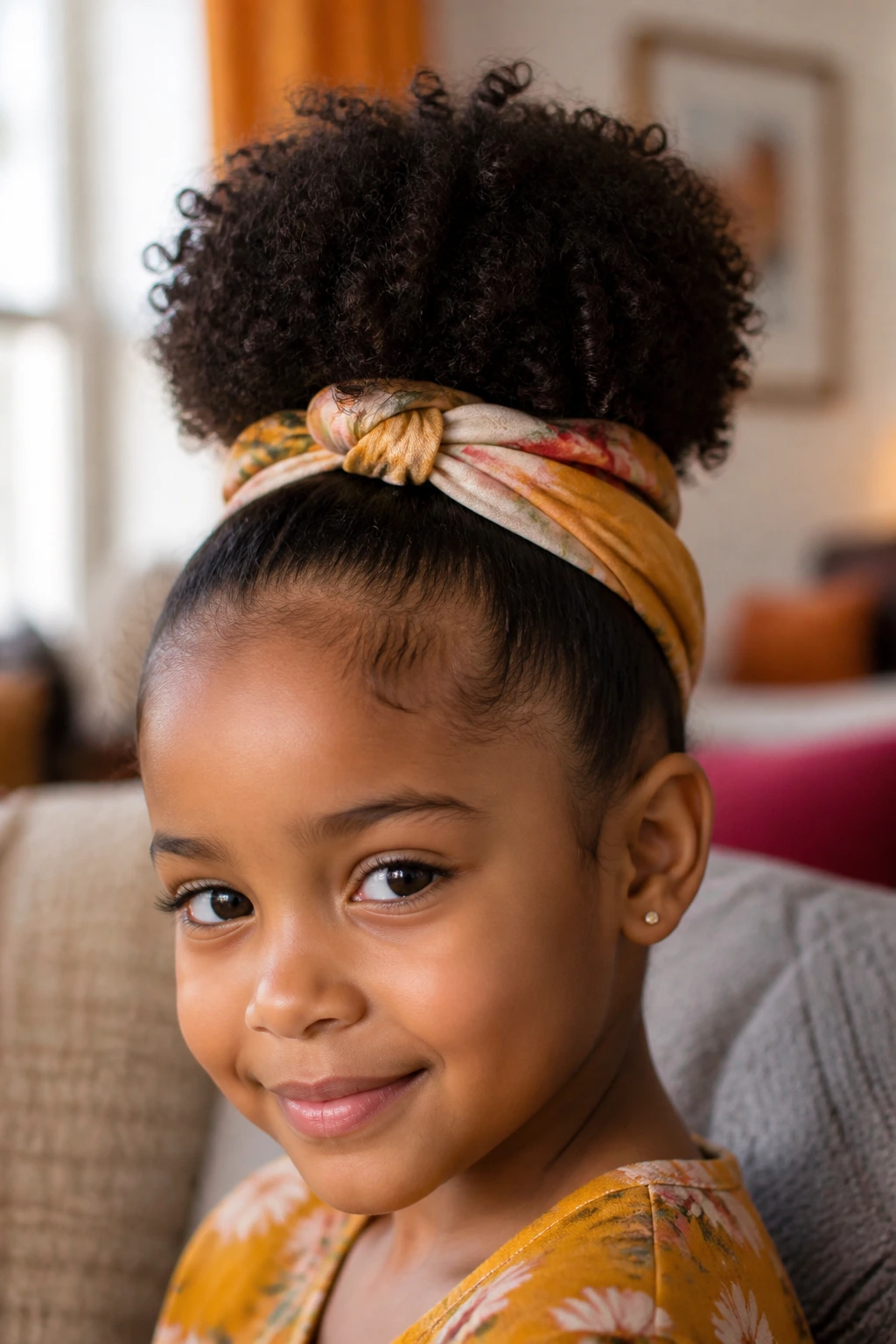
A scarf-wrapped puff solves two problems at once: it secures the puff base and adds color right where people are looking. Wrap a soft scarf around the puff’s base, tie it off neatly, and let the curls sit above or behind it.
This style is useful when the hair needs a little extra hold. It also keeps the puff from leaning or sliding through the day. Choose a scarf that isn’t slippery if the puff tends to droop. Cotton blends stay put better than silky fabric, though silk is nicer against the hair if you’re only using a light wrap.
Tip: let the scarf be the accent and keep the rest of the outfit simple. Otherwise the look can start shouting in too many directions.
27. Side Cornrows into Curly Ponytail
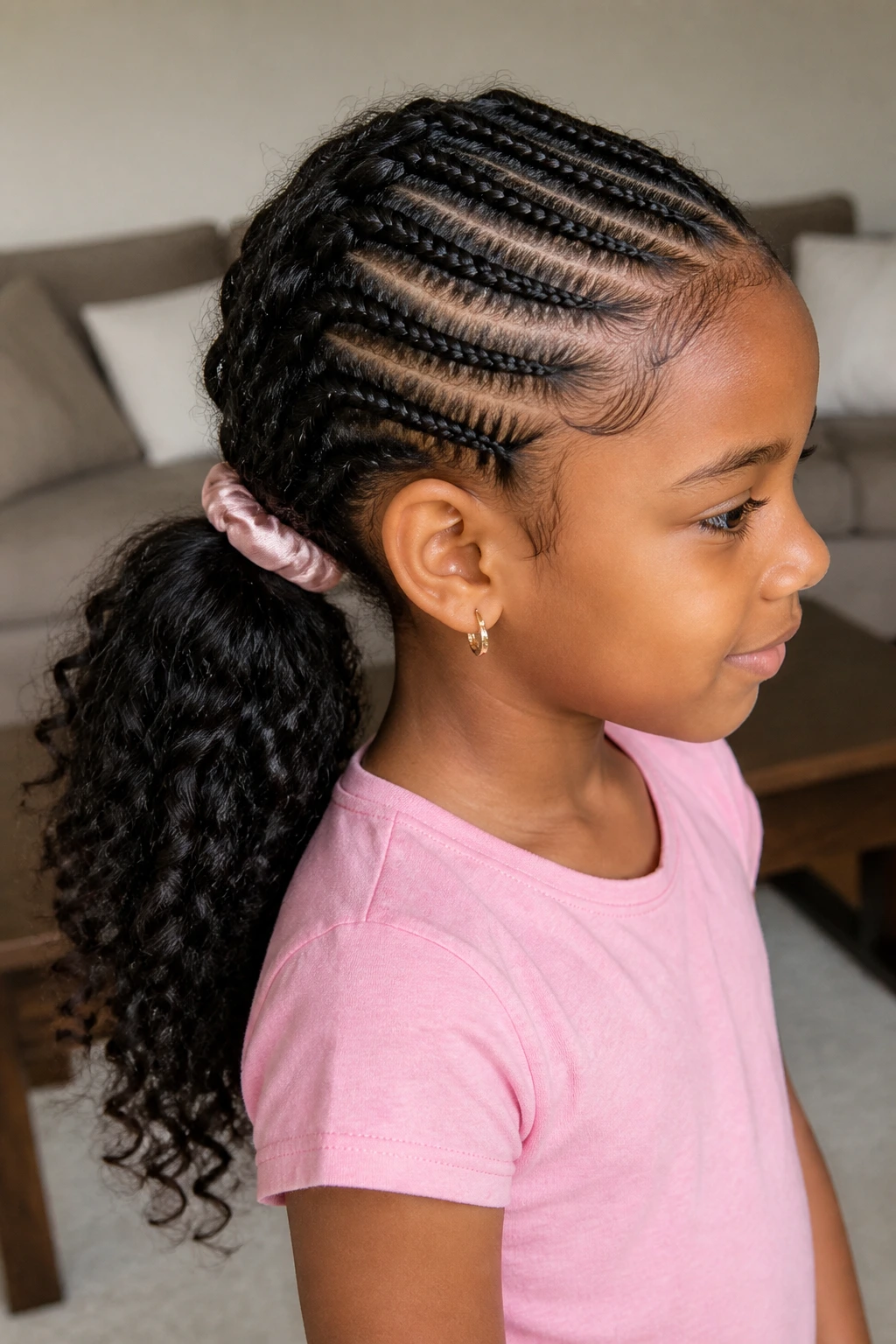
This is a strong finish for the list because it combines neat detail with curl freedom. Cornrow one side or both sides toward the back, then gather the loose length into a curly ponytail. The contrast makes the style look polished even when it’s actually pretty practical.
It works well for kids who need hair off the face but still want volume at the back. The cornrows hold the front in place, and the ponytail keeps the curly texture visible. Add a satin scrunchie or a covered elastic at the base so the ponytail doesn’t get bent or snagged.
This one holds up. That’s the real appeal. It can survive a school day and still look like somebody cared.
What Makes Curly Styles Hold Up Without Looking Stiff
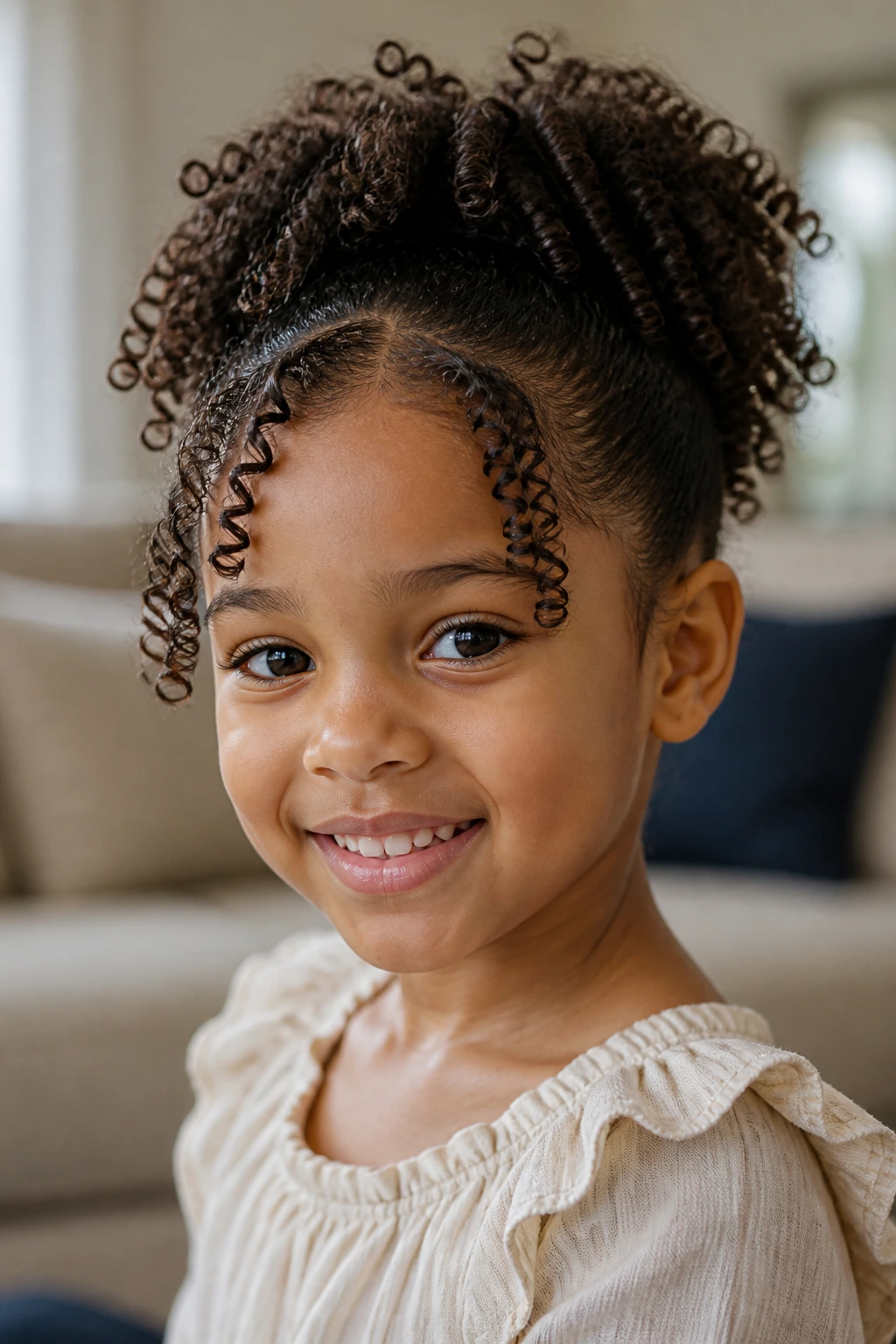
Curly hair tends to look best when the style works with the curl’s natural spring instead of trying to flatten it into submission. The big mistake is assuming neat means tight. It usually doesn’t. Neat means the sections are clean, the base is secure, and the hair still has room to move once it dries.
Moisture helps, but only in the right amount. Too little and the hair frizzes. Too much and it goes limp, especially around puffs and ponytails. I like to mist with water, smooth in a little leave-in, and stop before the hair feels wet enough to drip. That gives the curls enough slip to part cleanly without turning the whole head into a damp cloud.
Tension matters even more than shine. The American Academy of Dermatology has long warned against hairstyles that pull on the scalp, and that advice matters here. If a child keeps touching the front of her hair, or if you see little bumps or redness along the line, the style is too tight. Loosen it. Redo it. Hair that hurts does not stay cute for long.
And yes, accessories count. A covered elastic, a satin scrunchie, a smooth clip, a ribbon that doesn’t snag — those are the quiet details that make a style survive recess and still look decent by pickup.
Essential Tools for These Styles
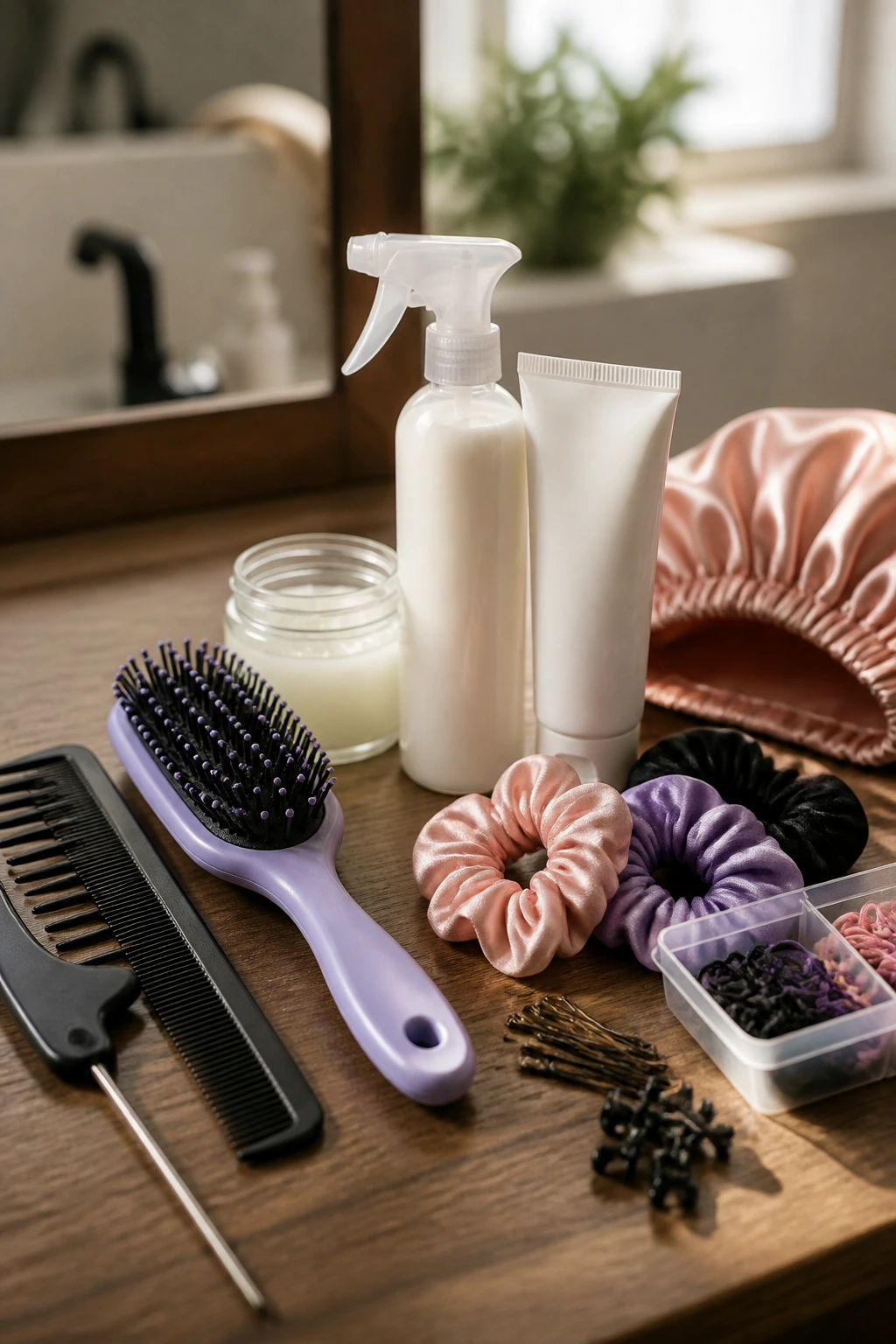
- Wide-tooth comb: Best for detangling after you’ve added water or leave-in; it moves through curls without tearing them apart.
- Rat-tail comb: Useful for clean parts, zigzags, hearts, and sectioning that needs a neat line.
- Detangling brush: Pick one with flexible bristles so it bends with the curl instead of scraping across it.
- Spray bottle: A fine mist helps refresh curls and soften sections before styling; you want damp, not soaked.
- Leave-in conditioner: Keeps the hair soft enough to part and helps styles settle without snagging.
- Curl cream or light gel: Use it for definition and hold, but keep the amount small so the hair doesn’t turn sticky or stiff.
- Satin scrunchies: Gentler than thin elastics and better for puffs, ponies, and buns.
- Covered elastics: Good for smaller sections and braid ends; the cover reduces snagging.
- Bobby pins and mini clips: Handy for twists, braids, and side-swept styles; smooth-backs are kinder to curls.
- Satin bonnet or pillowcase: Helps preserve the style overnight and cuts down on friction.
- Sectioning clips: They keep the rest of the hair out of the way while you work one section at a time.
- Small decorative accessories: Bows, ribbons, beads, and flower clips can finish a style fast when the base is already neat.
Smart Product Picks and Accessory Choices
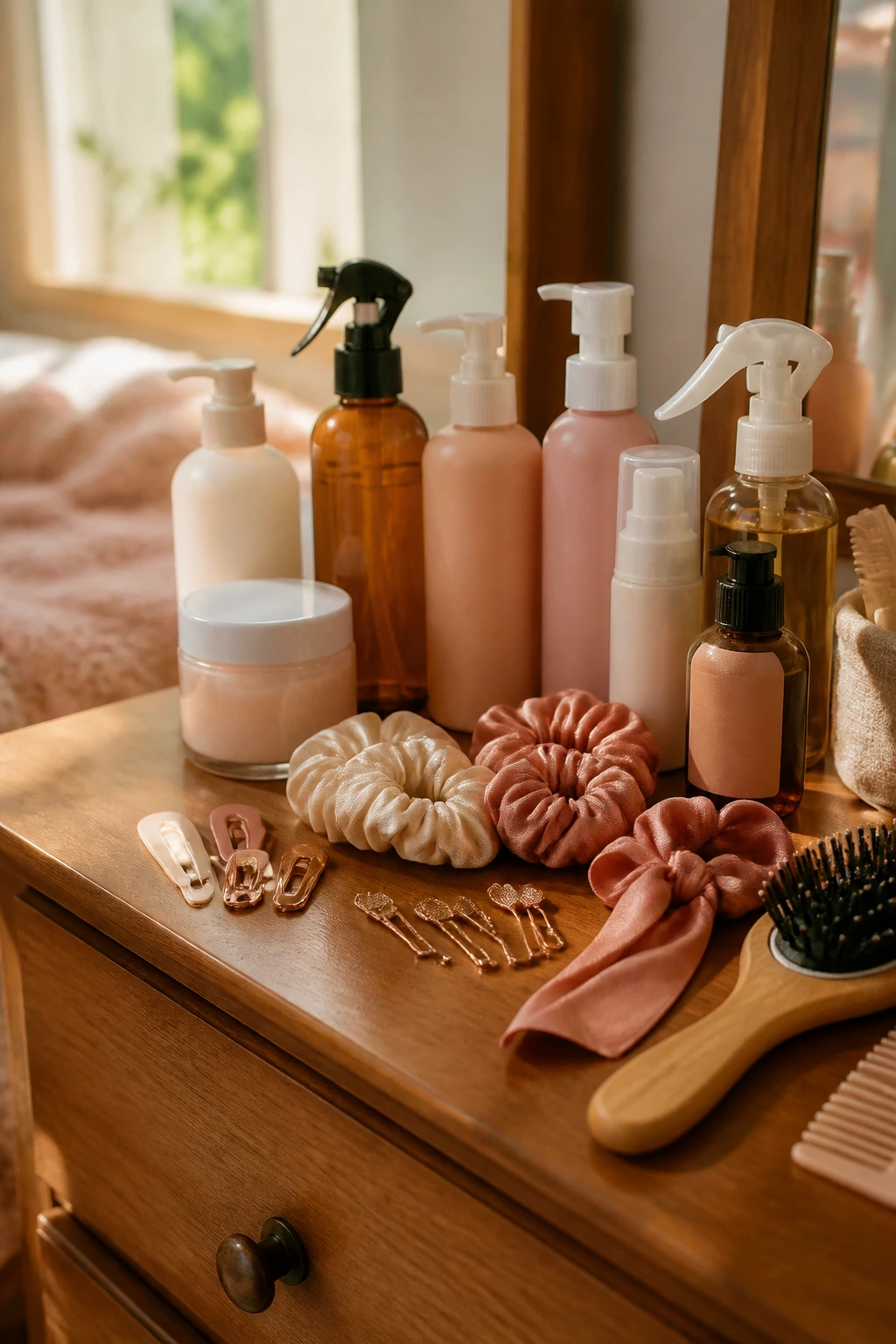
The right product does not need to be fancy. It needs to suit the child’s hair density, curl pattern, and tolerance for handling. Fine curls usually do better with a light leave-in and a foam or mousse. Dense coils often need a cream plus a small amount of gel so the sections stay defined long enough to set. Heavy butters can be too much on some little heads; they weigh the hair down and leave the roots greasy before lunch.
Fragrance is another thing I pay attention to. Some kids are fine with scented products. Others get itchy fast. A mild formula is the safer bet if the scalp is sensitive. And if the hair has been freshly washed, a little leave-in and a tiny amount of stylers goes farther than people expect. You do not need to frost the whole head.
Accessories matter just as much as product. Satin scrunchies are kinder than skinny elastics. Metal clips should have smooth backs. Beads should be light enough that they do not drag on the ends. Ribbon bows are lovely, but they should be attached in a way that doesn’t create a new tug point right at the scalp.
One more thing. Buy fewer things, but better versions of the basics. A good rat-tail comb, a decent spray bottle, and one or two soft hair ties will do more for curly hairstyles for little girls than a drawer full of gadgets that snag on the first use.
How to Wear These Styles Without Fighting the Outfit
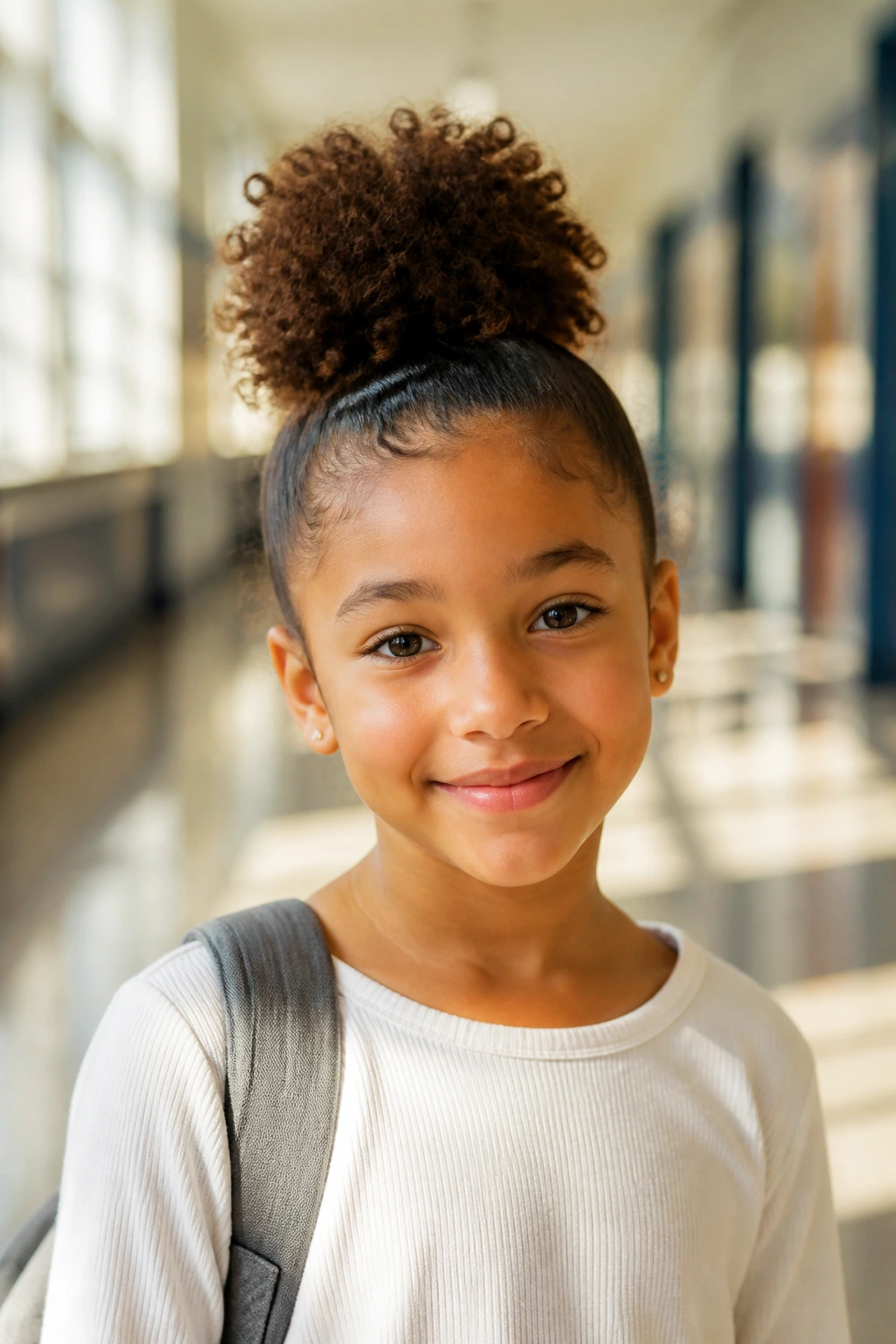
School Mornings: Choose styles with one strong anchor point — a puff, a braid, a ponytail, or a twist — and keep the rest simple. A front detail plus free curls is usually enough. Too many accessories can turn into a morning argument.
Dress-Up Days: Add one standout piece. A ribbon, a bow, a flower clip, or a scarf at the base of the style does more than scattering tiny extras all over the head. One focal point looks cleaner and lasts longer.
Playground Proof: Keep the front controlled. Braids, twists, side-swept clips, and headbands help the style survive running, climbing, and the occasional hood pulled over the top.
Comfort Check: If a child keeps rubbing the back of her head or touching the temples after the style is finished, something is off. Fix the tension before leaving the house. Tight hair is not a sign of a strong style; it’s usually just a sign of a rushed one.
Outfit Pairing: Simple clothes often make the hairstyle look better. A plain tee, a sweatshirt, or a dress with a clean neckline gives curls space to show. Competing prints and oversized bows can make the whole thing feel crowded.
Extra Tricks for Softer Shine and Less Frizz
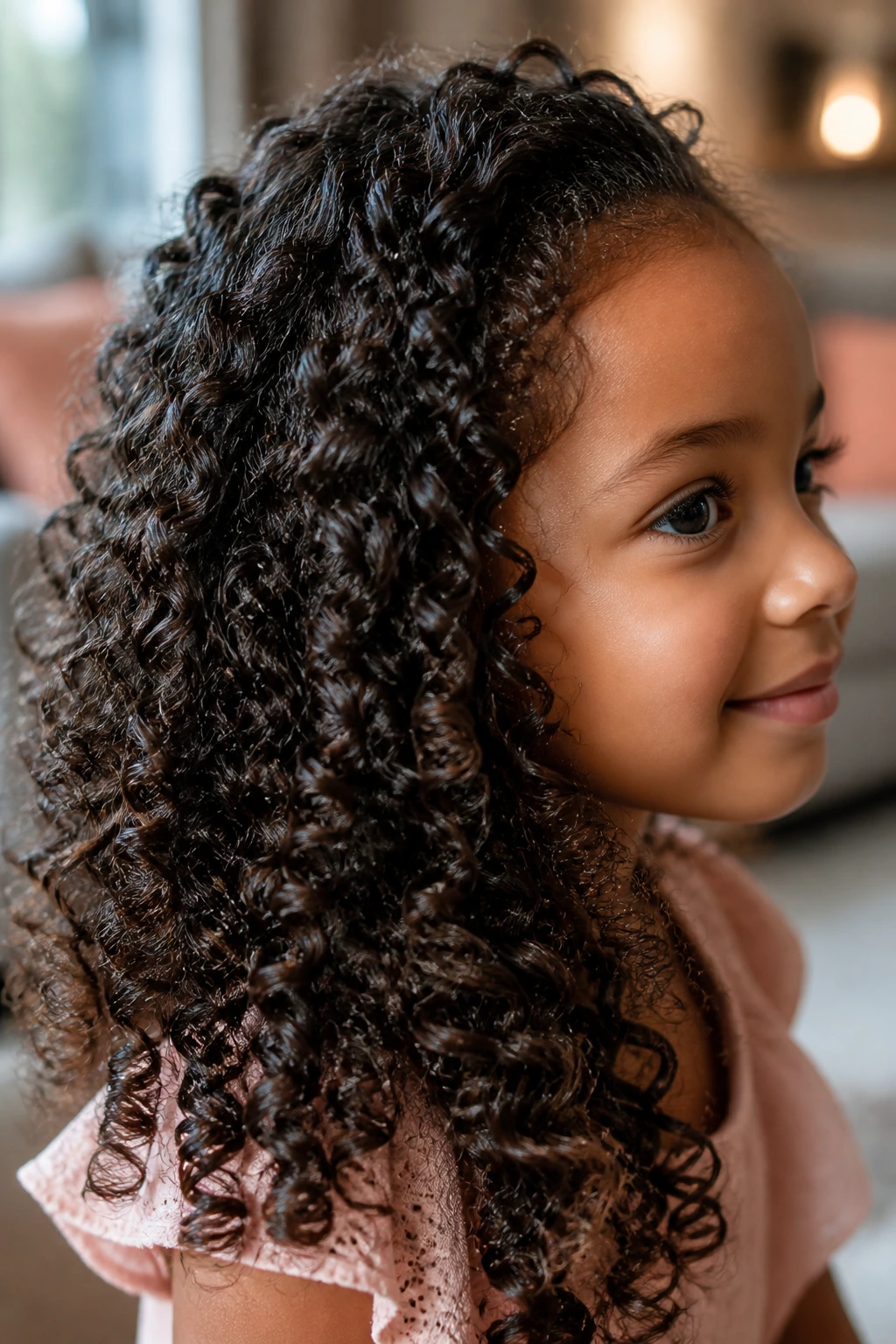
Moisture First: A light mist of water before styling helps curls clump and keeps the sectioning clean. If the hair is very dry, smooth a pea-sized amount of leave-in between your palms before touching the curls.
Hold Without Crunch: A tiny touch of gel at the hairline or on the ends can keep wisps in place, but don’t coat the whole head. Kids’ styles look better when they still move.
Accessory Trick: Put the bow, clip, or ribbon where the eye naturally lands — at the puff base, near the temple, or over a braid anchor. That one placement does more than three random extras.
Parting Shortcut: If the hair gets fuzzy fast, part it while it’s damp, not dry. Dry curls fight the comb and make lines look jagged.
Make-It-Yours: Swap the finish depending on the child’s tolerance. If she hates clips, use ribbon. If she hates ribbon, use soft elastics. If she hates both, a clean part and a puff may be enough. No style needs to be overbuilt.
Nighttime Care, Refreshes, and How Long Each Style Lasts
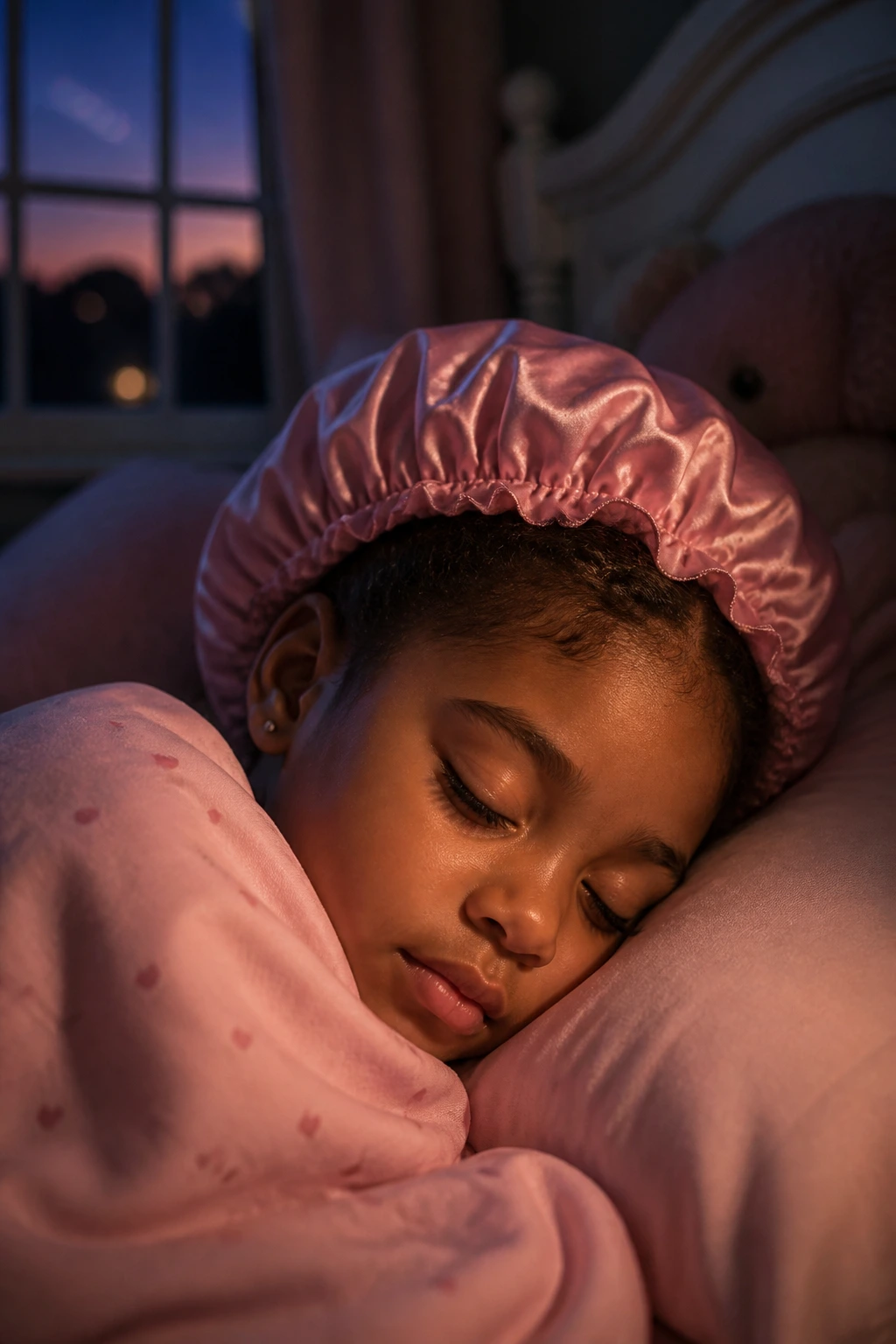
Loose curls, puffs, and ponytails usually look best for one to two days before they need a real refresh. Braids, twists, cornrows, and styles with a protective front can last three to five days if the scalp stays comfortable. Bantu knots and twist-outs can stretch longer when the child sleeps on satin and you separate them gently in the morning.
At bedtime, a satin bonnet is the simplest fix. If the child will not keep one on, a satin pillowcase is the next best thing. Cotton pillowcases rub the cuticle and flatten the style faster than people expect. For puffs and ponytails, a loose pineapple or soft top-knot can preserve the shape overnight without squashing the base.
In the morning, refresh with a fine mist of water and a small amount of leave-in on the frizziest sections. Don’t soak the hair. That often restarts the whole styling process instead of fixing it. If you used braids or twists the day before, smooth your fingers over the parts and reclip the front if needed.
Watch the scalp. That matters more than people think. If a style starts to itch, pinch, or leave dents at the hairline, take it down. No hairstyle is worth keeping past the point where it feels like a complaint.
Variations and Adaptations to Try
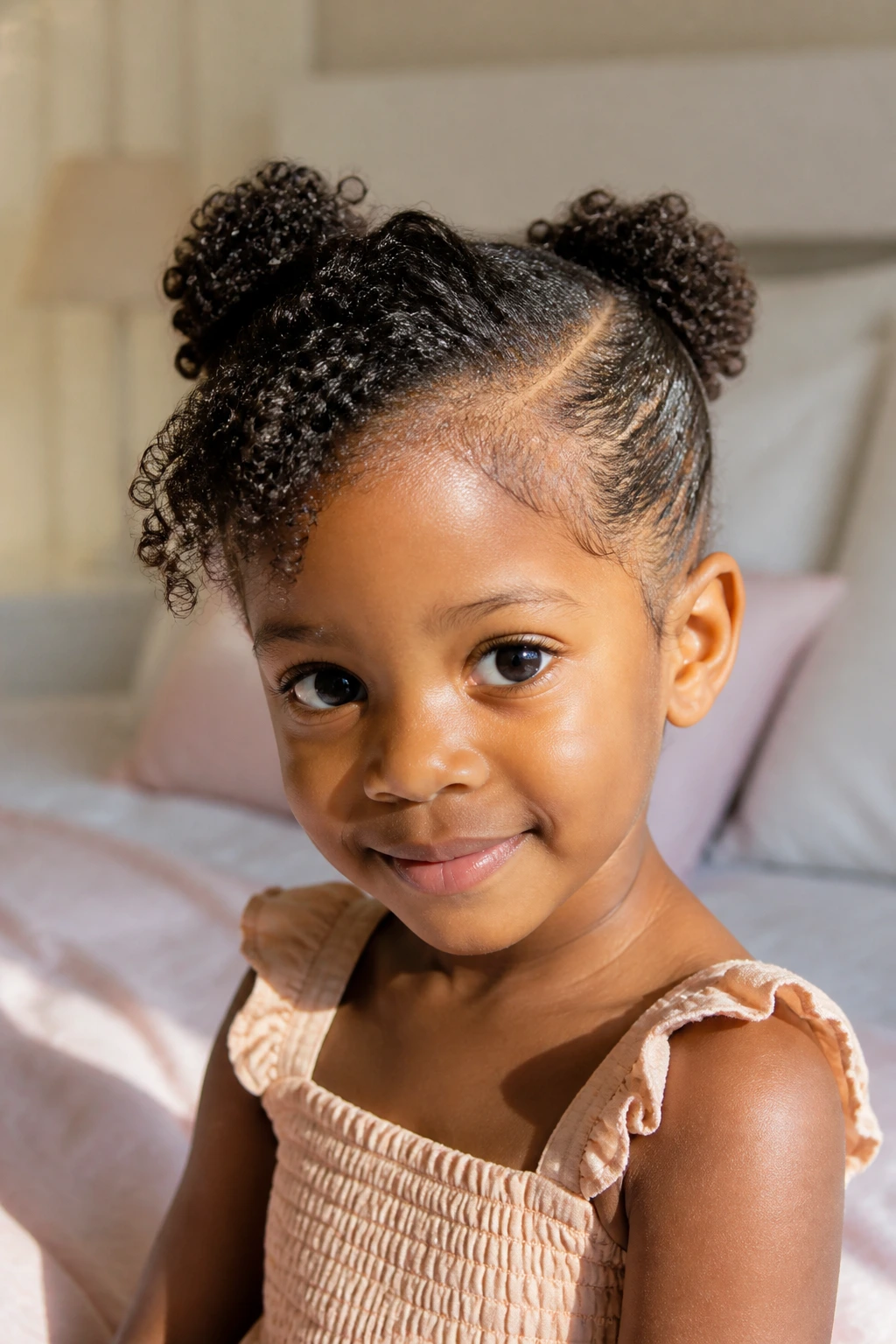
Short-Crop Version: Use clips, mini puffs, small twists, and side parts instead of big ponytails. Short curls look best when the style works with the haircut’s shape instead of trying to stretch it into something longer.
Long-Length Version: Add bubble sections, bigger braids, or a twisted crown so the length doesn’t just hang there. Long hair needs structure or it can look flat at the crown and too heavy at the ends.
Sensitive-Scalp Version: Skip tight braids and start with loose puffs, soft headbands, or two-section styles with almost no tension. Keep the parting broad and avoid repeated pulling at the same spot.
No-Accessory Version: A clean part, a well-shaped puff, or a defined twist can stand on its own. This is the version for children who do not like things in their hair.
Picture-Day Version: Add one polished element — a bow, a halo braid, a neat puff, or a soft curl frame around the face. The goal is one strong focal point, not a crowded head.
Recess-Proof Version: Cornrow the front, braid the sides, or secure the base with a covered elastic. Styles that start with a firm anchor tend to survive movement better than loose, decorative ones.
Common Mistakes That Make Curly Styles Fall Apart
- Styling bone-dry curls: Dry hair frizzes when you try to part or smooth it. Mist the hair first so the sections stay together and the comb glides instead of scraping.
- Pulling the hair too tight: If the style leaves red marks, hurts at the temples, or makes the child complain before you leave the house, it’s too tight. Loosen it and use a softer tie.
- Using too much product: Heavy cream or sticky gel can make curls limp or greasy. Start small. You can always add a touch more, but you cannot pull excess out once it’s in there.
- Skipping the base prep: A messy part or tangled roots make every style harder to finish. Detangle in small sections, then style. That extra five minutes saves you from redoing the whole head.
- Leaving styles in too long: Even a good puff gets fuzzy, and braids eventually start to tangle at the roots. If the scalp looks cramped or the hair is matting at the nape, it’s time to take it down.
- Choosing accessories that snag: Rough elastics and sharp clips can break delicate ends. Covered ties and smooth backs are worth the small extra effort.
Questions Parents Ask All the Time
How do I keep curly hairstyles from puffing up by lunch?
Start with damp, moisturized hair and a soft hold product, then secure the base with a satin scrunchie or covered elastic. A style that starts neat at the roots usually lasts longer than one built on brushing the whole head flat.
What if my child has mixed curl patterns?
Treat each section differently. Tighter areas may need more cream and less stretching, while looser sections may only need a light mist and a soft clip. Mixed patterns are normal, and the style looks better when you stop pretending the whole head behaves the same way.
Can these styles work on short curly hair?
Yes. Use mini puffs, side parts, clips, crown twists, and small braids instead of styles that need length. Short curls often look best when the haircut shape is the star.
How long can a protective style stay in?
For little girls, keep it short enough to protect the hair and long enough to avoid daily strain. Many braid or twist styles can last several days, but if the scalp is sore or the roots start matting, take the style down sooner.
What’s the best morning refresh?
A light spray of water, a dab of leave-in on the frizziest spots, and a quick reshape with your fingers. Brushing dry curls in the morning usually makes them larger, not neater.
Are beads okay for younger kids?
They can be, if they’re light and comfortable. Keep them off bedtime styles unless the child tolerates them well, and make sure they do not pull on the ends or tug the roots.
What if my daughter hates sitting still for hair?
Split the job into smaller sections and choose styles with fewer parts. A simple puff, side-swept curls, or a quick braid-and-puff combo is a lot easier than trying to build a complicated look all at once.
Should I stretch the curls with heat first?
Usually, no. Heat is not needed for these styles, and it adds another layer of damage risk. If you want a little stretch, try braiding, twisting, or banding instead.
Soft Curls That Still Look Pulled Together
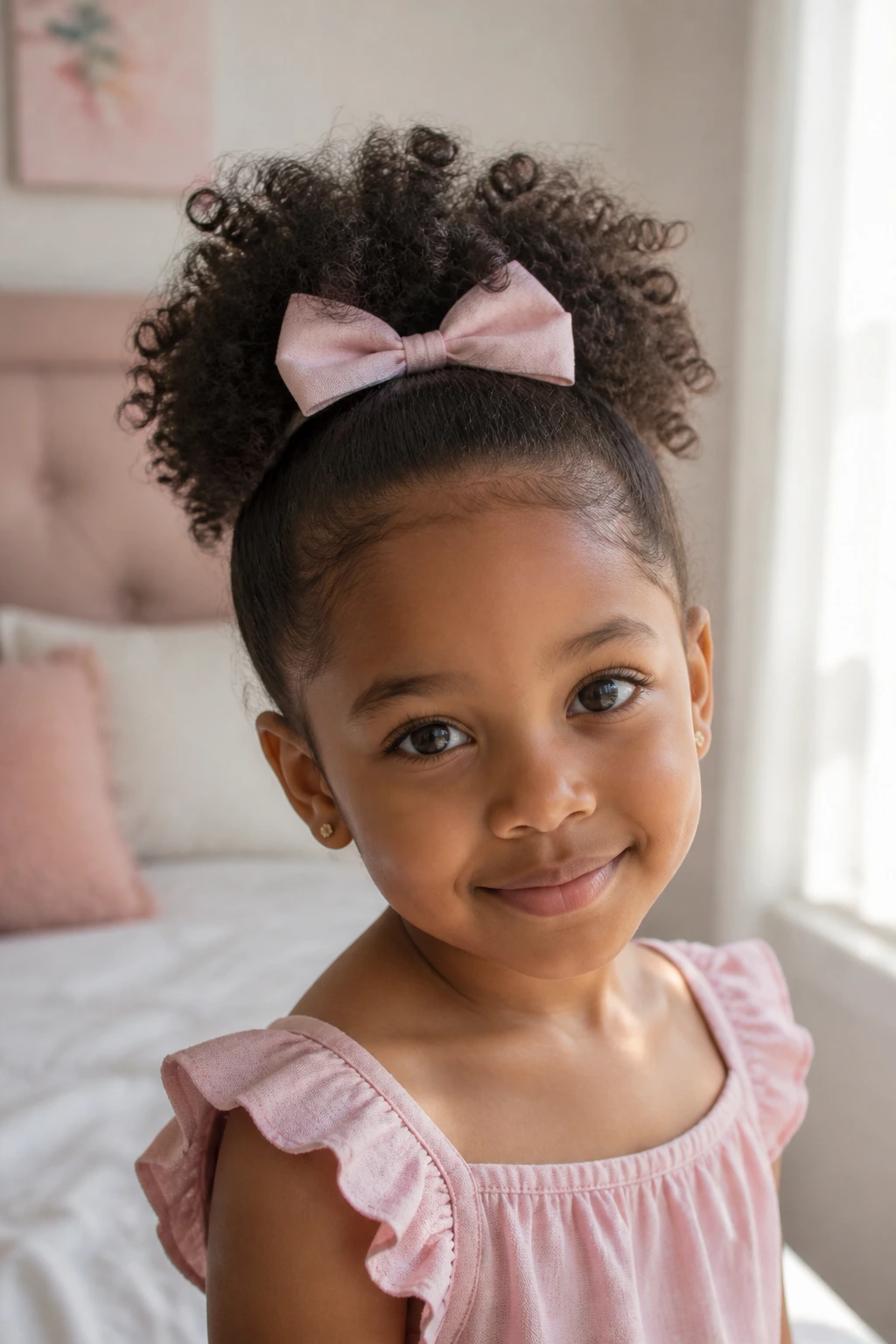
Curly hair on little girls does not need to be beaten into shape to look nice. It needs a clean base, a gentle hand, and a style that matches the child’s real life instead of a fantasy version of it. That’s why puffs, twists, braids, ribbons, and soft clips keep showing up again and again. They work because they leave room for curls to be curls.
Start with the style that fits the day, the texture, and the amount of patience on the table. Some mornings call for a high puff and a satin scrunchie. Other days want a braid, a bow, and nothing else. The good news is that once you stop chasing stiffness, the hair usually gets easier to live with.
And if the first try is a little lopsided? Fine. Little girls rarely care about perfect symmetry half as much as they care about comfort and not being yanked by the scalp. That’s the part worth getting right.
