



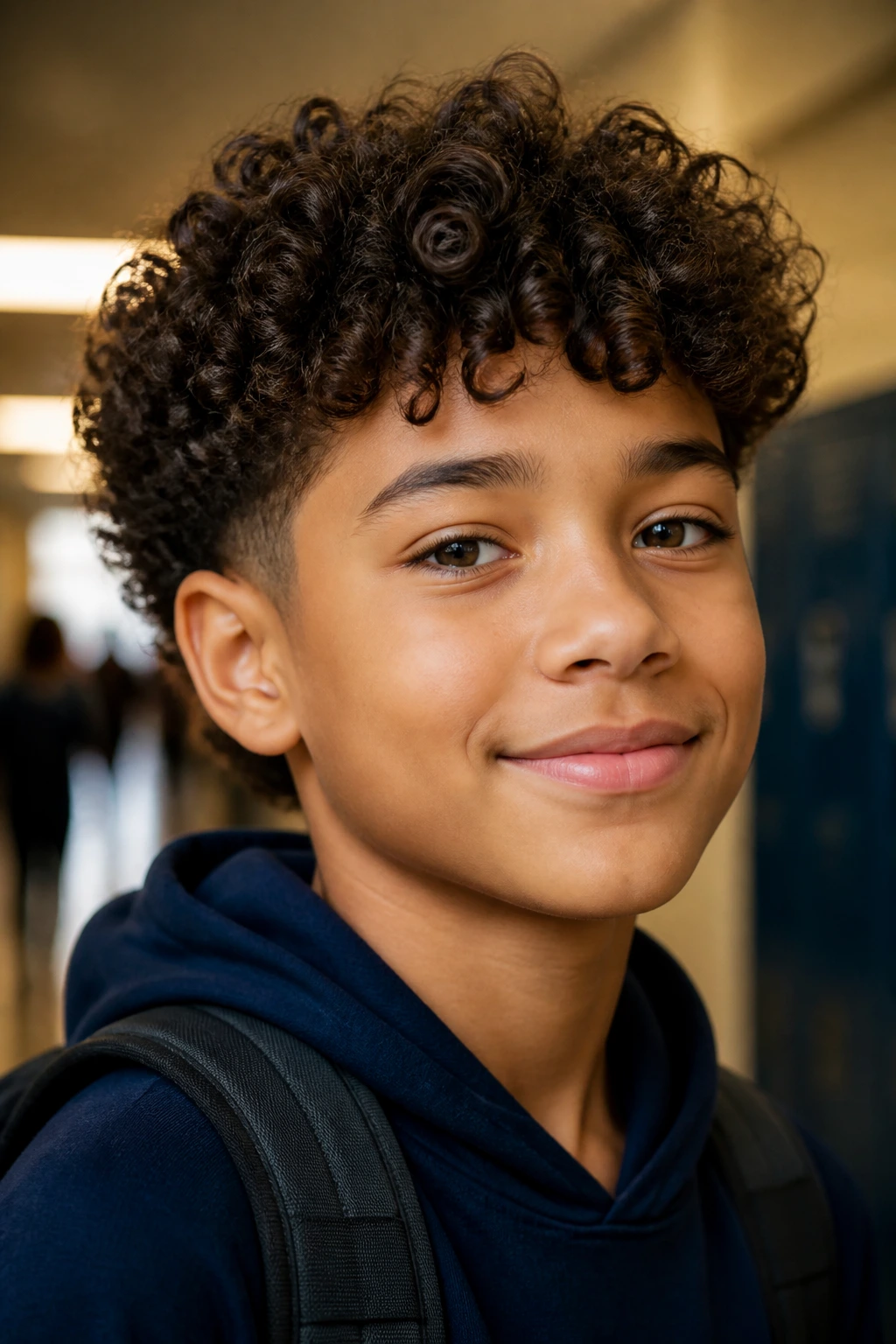
Curls on a school morning can go from tidy to wild in one bus ride. A good cut gives the hair enough room to spring up without turning into a helmet of fluff by third period. The best curly hairstyles for schoolboys do two things at once: they respect the curl pattern and they stay calm around the ears, neck, and forehead.
That balance matters more than people think. Cut curls too short while they’re wet and the result can look fine for two days, then shrink into a line of tiny springs. Leave them too long, and the shape disappears under backpack straps, sweat, and a restless hand that keeps pushing hair out of the eyes.
The styles below are built for real school life: quick comb-outs, low-drama mornings, and barbers who know that curls need a little extra length to behave. Some are short and neat, some leave room for coils and ringlets, and a few only make sense if the school dress code gives you some breathing room.
Why This Collection Is Different
-
Built for shrinkage: Every style leaves enough top length to survive the bounce curls get when they dry, which is the part straight-haired cuts never have to think about.
-
Low-fuss mornings: Most of these looks can be revived with water and a small amount of leave-in, not a full wash, blow-dry, and prayer.
-
School-friendly edges: Tapers, rounded shapes, and soft fades keep the haircut looking tidy even when the top gets a little bigger by lunch.
-
Works across curl types: Loose waves, springy ringlets, and tight coils each need a slightly different shape, and the list makes those differences plain.
-
Barber-chair clarity: You’ll see where a dry cut helps, where clippers make sense, and where a scissor cut keeps the curl pattern from turning into a puffball.
1. The Clean Taper Fade With Free Curls
A clean taper fade is the easiest way to make curls look controlled without squeezing the life out of them. Keep about 1½ to 3 inches on top, taper the sideburns and nape low, and let the curls sit loose where they actually want to sit. That gives you shape first and decoration second. Good order.
Ask the barber to keep the fade soft around the ears so it still looks decent when it grows out. A #2 or #3 on the sides, blended down at the neckline, works for most schoolboys because it stays neat after a week of running, sweating, and sleeping on one side of the head.
2. The Low Taper With a Curly Top
Want a cut that grows out softly instead of screaming for a trim? A low taper does that better than most fades because the blend sits lower, right around the ears and neckline, where the eye expects hair to thicken anyway. Leave the top at 2 to 4 inches so the curls can keep their spring.
I like this one for younger boys who need a haircut that still looks presentable on Friday, not just on the day they leave the chair. It’s tidy without looking severe, and it doesn’t create that sharp “fresh fade, messy top” contrast that shows up fast with curly hair.
3. The Curly Fringe That Skims the Brows
When the curls sit just above the eyebrows, the whole haircut feels lighter. A fringe that skims the brows works best when the barber cuts the front dry or nearly dry, because wet curls can shrink up by half an inch or more and end up too short.
Keep the sides softly tapered and ask for the fringe to land just above the eyes when dry. This is one of the better curly hairstyles for schoolboys with looser curls or soft ringlets, because it frames the face without needing much product or a lot of mirror time.
4. The Short Crop With Tidy Texture
This is the “I need to get out the door in five minutes” haircut. Leave only 1 to 2 inches on top, use point-cutting or light scissor texture, and keep the sides short but not shaved flat. The result is a crop that still shows curl pattern without asking for a brush, a diffuser, or a full styling routine.
It works especially well on boys whose curls puff up the second they’re touched. The shorter length gives the hair less room to stand in every direction, and that means fewer battles before school. A small dab of leave-in is enough; anything heavier tends to sit on top and make the crop look greasy by noon.
5. The Temple Fade With Rounded Volume
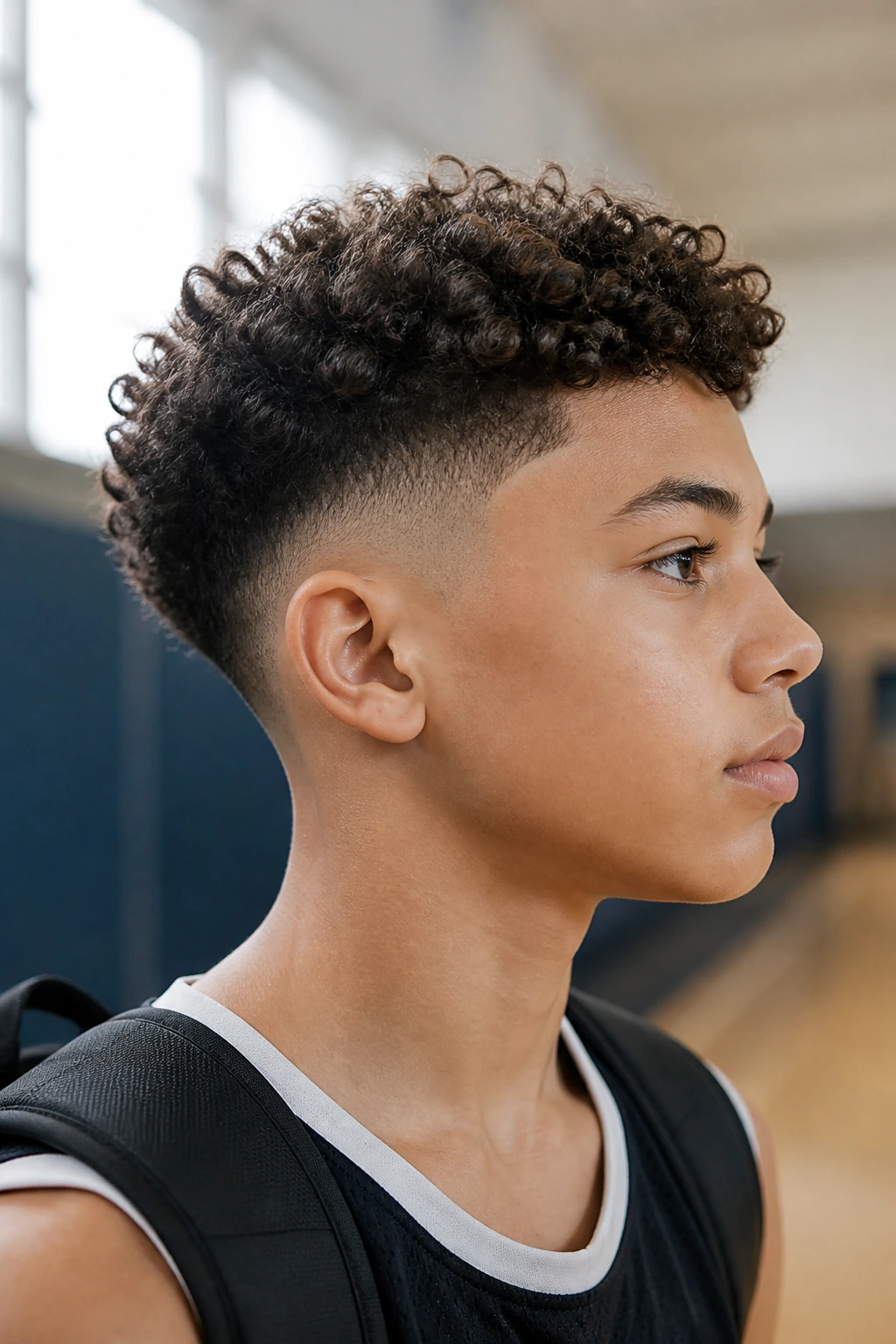
The temple fade is a smart choice when you want the edges clean but don’t want to take too much hair off the crown. Fade the temples and leave the top rounded, almost like the hair is following the shape of the head instead of fighting it. That shape is flattering on tighter curl patterns because it keeps the fullness in the right place.
It’s also a good cut for active boys. The curl stays up where it belongs, the sides stay tidy around the ear, and the overall shape survives recess, gym class, and the long, hot bus ride home. A quick finger shape in the morning is enough.
6. The Curly High Top
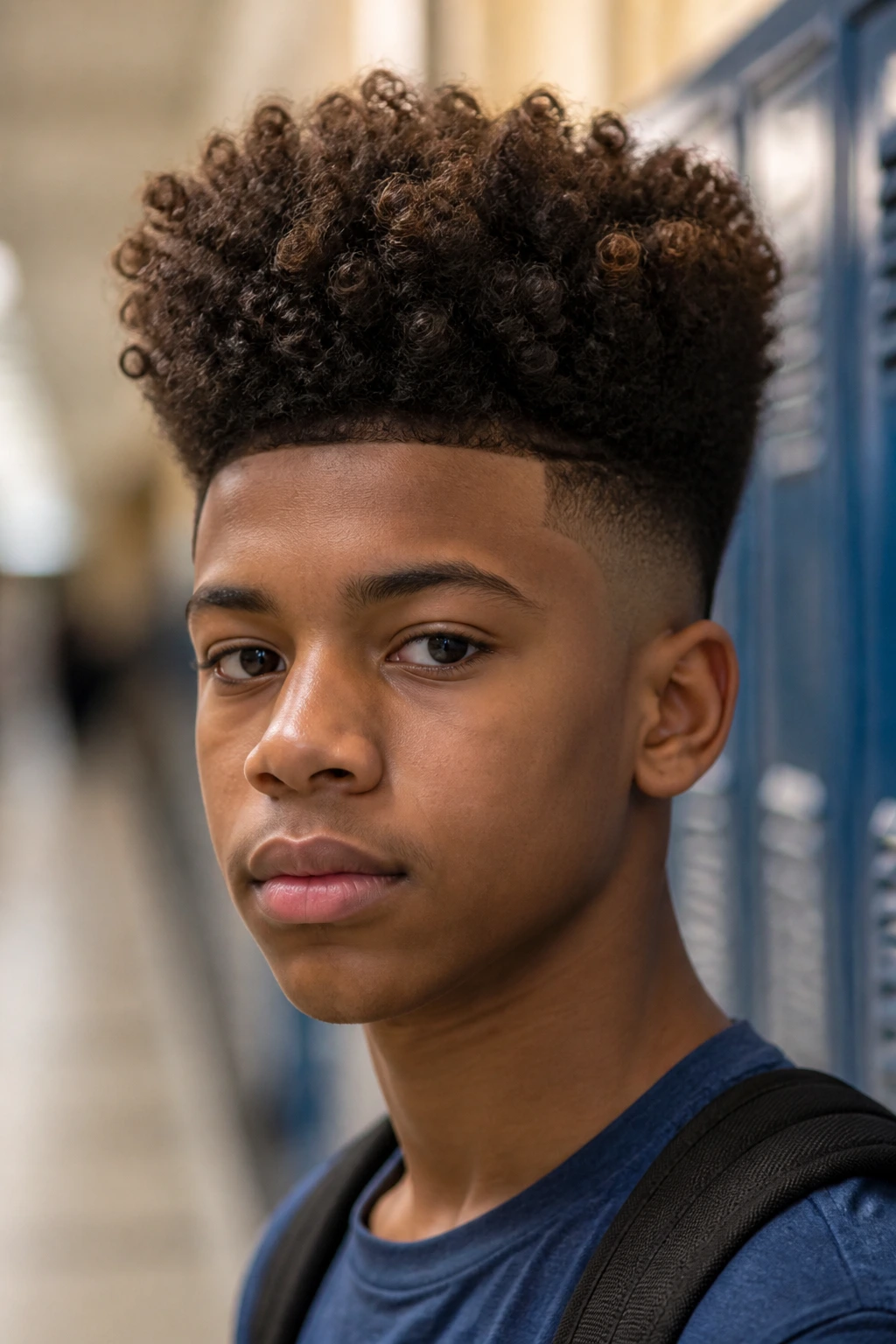
A curly high top has presence, and it works best when the top is left long enough to stand with its own structure—usually 2½ to 4 inches, depending on curl tightness. The sides need to stay tight, but not so bare that the whole haircut starts looking top-heavy. Balance matters here.
This is the kind of cut that rewards shape-ups. Keep the top trimmed into a clean silhouette every 3 to 4 weeks, or it can start leaning instead of standing. A pick can lift the crown in the morning, but the real work is in the cut itself. That part never changes.
7. The Side Part That Keeps the Curls in Line

A side part on curly hair sounds simple, but the trick is letting the part follow the hair’s natural direction instead of forcing a cartoon straight line into it. A soft part with a tapered side and a little more length on top makes curls sit flatter and look more deliberate.
Use a light curl cream or mousse while the hair is damp, then comb the top once and stop. Over-combing is what ruins this style. The part should look like it belongs there, not like it was carved into the scalp with a ruler.
8. The Drop Fade With a Soft Curl Crown
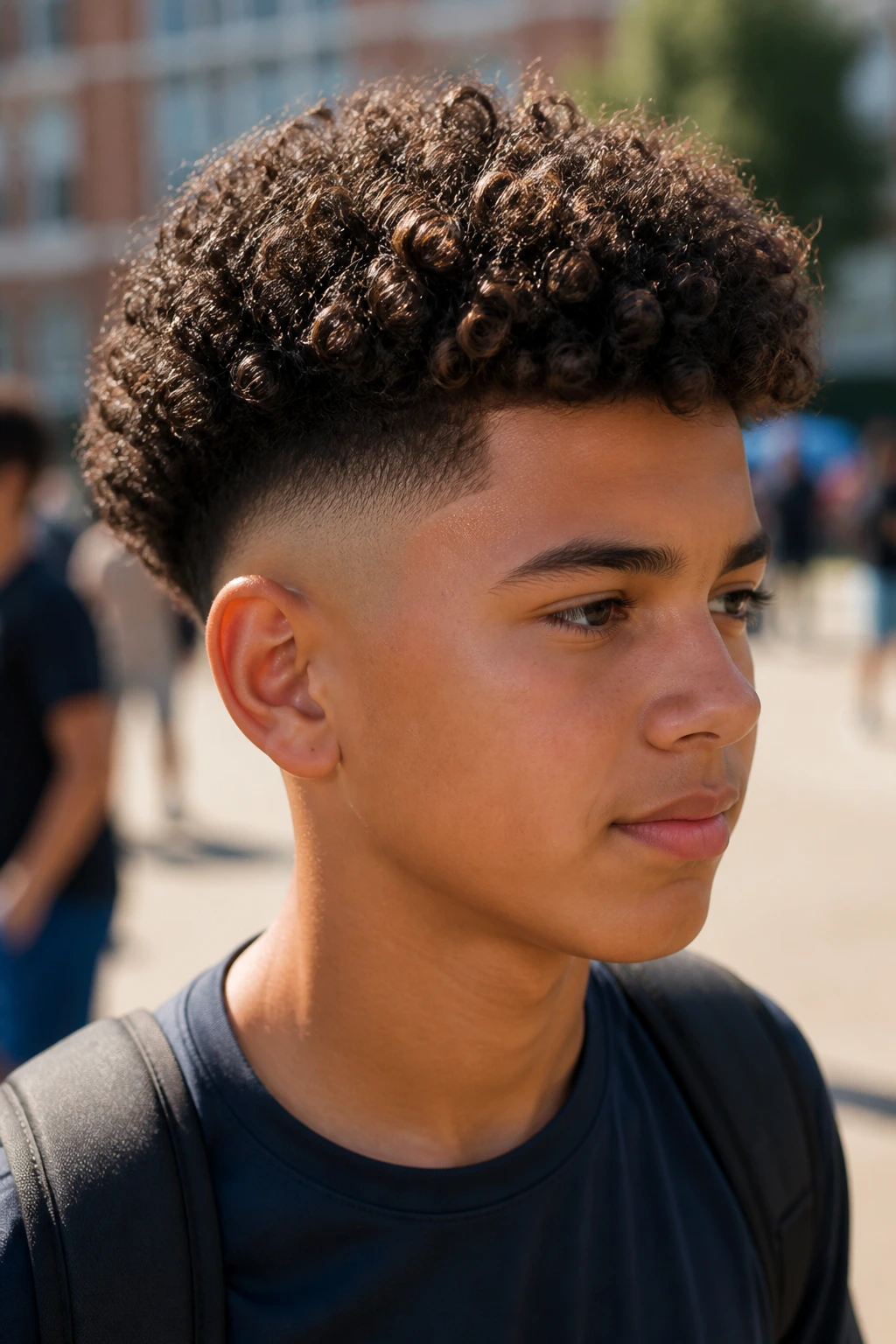
The drop fade curves lower behind the ears, which makes the top feel fuller without turning the shape into a block. Leave the crown round and let the curls sit a little higher in the middle. That shape flatters boys whose head is wider at the top or whose curls naturally bunch at the crown.
It’s a clean look, but not a stiff one. The fade drops, the top rises, and the whole haircut looks built rather than hacked out. If the school is strict about flashy cuts, keep the fade soft and let the curls do the talking.
9. The Curly Caesar With Short Bangs
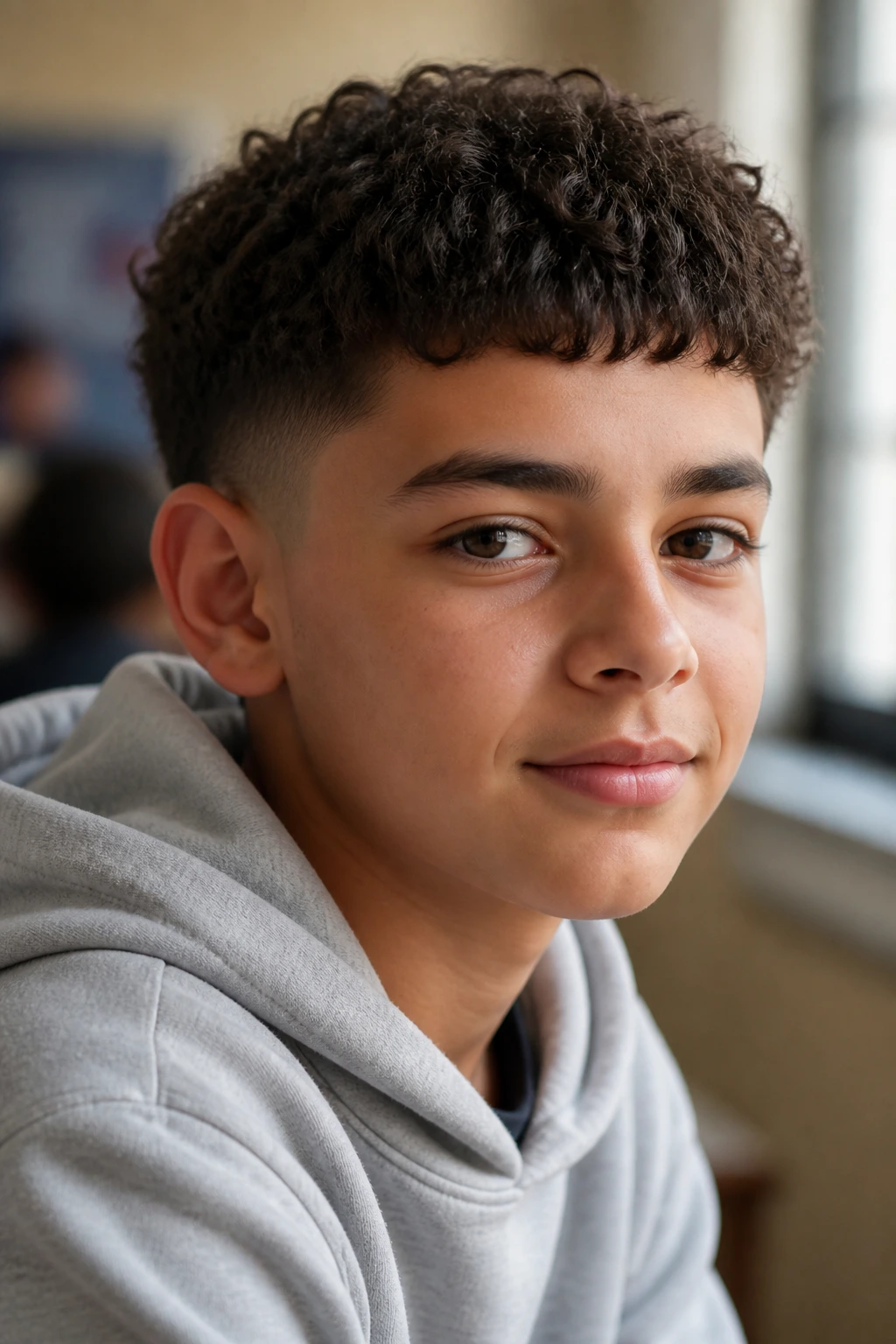
A curly Caesar works when you want the hair to stay out of the eyes without flattening the front into a helmet. The fringe is cut short and even, usually around 1 to 1½ inches, while the sides stay tight and the top stays low enough to behave.
This cut is especially good for younger boys who hate styling products. A mist of water, a quick rake with the fingers, and the front falls into place. That’s the whole routine. If the curls are coarse, ask the barber to leave a touch more length at the hairline so the fringe doesn’t spring up too high after the first wash.
10. The Afro Taper That Follows the Head Shape
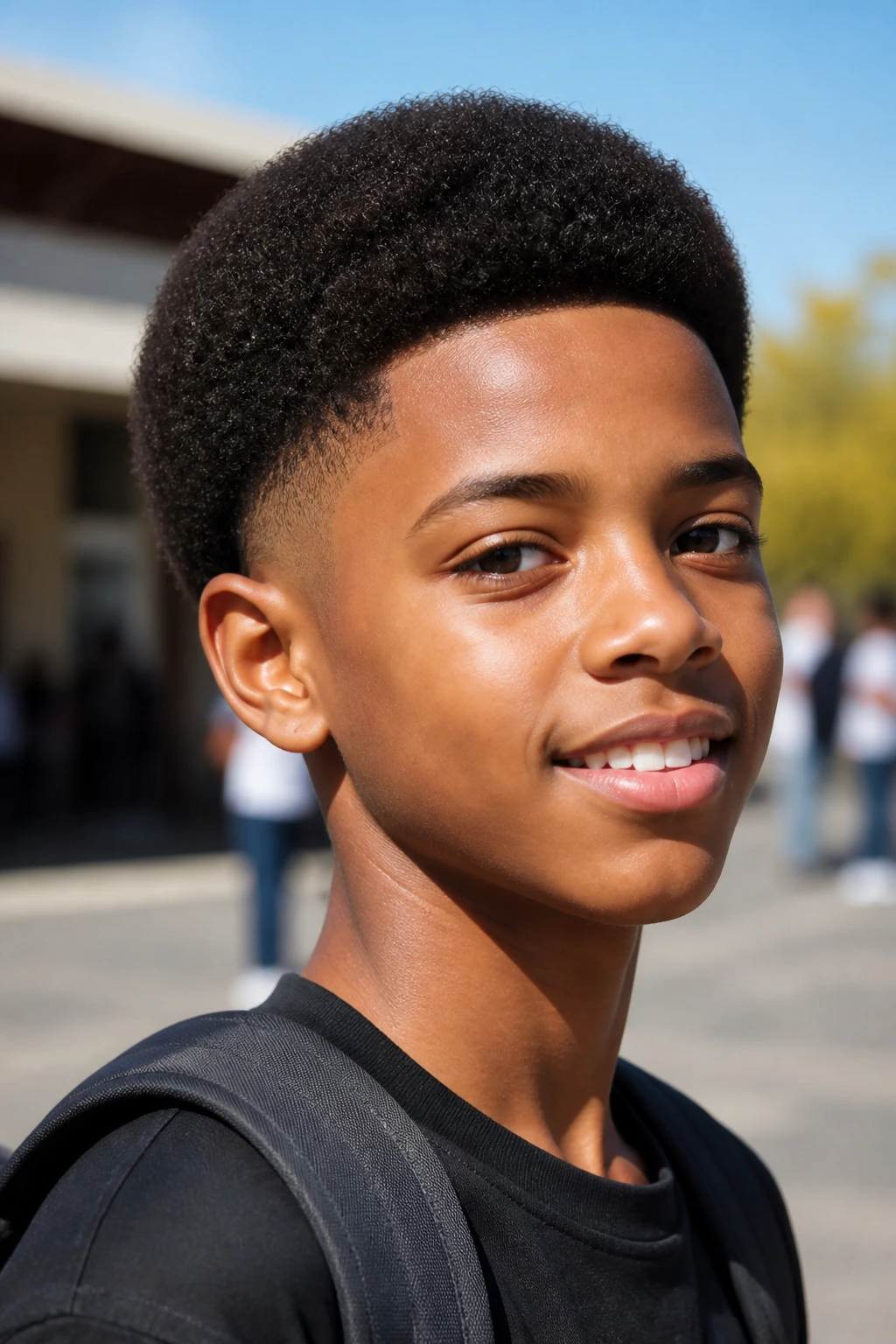
This is one of the cleanest looks in the room when it’s done right. The taper sits around the ears and neckline while the afro shape stays rounded and true to the head. It works because the cut respects the natural volume instead of trying to chop it into something smaller than it is.
Keep the outline soft and even, not boxy. A rounded afro taper can look polished in school photos and still survive an ordinary week with minimal fuss. Shape-ups every 2 to 3 weeks help, but the haircut still looks good a little grown out, which is the real test.
11. The Sponge-Coiled Top With Sharp Edges
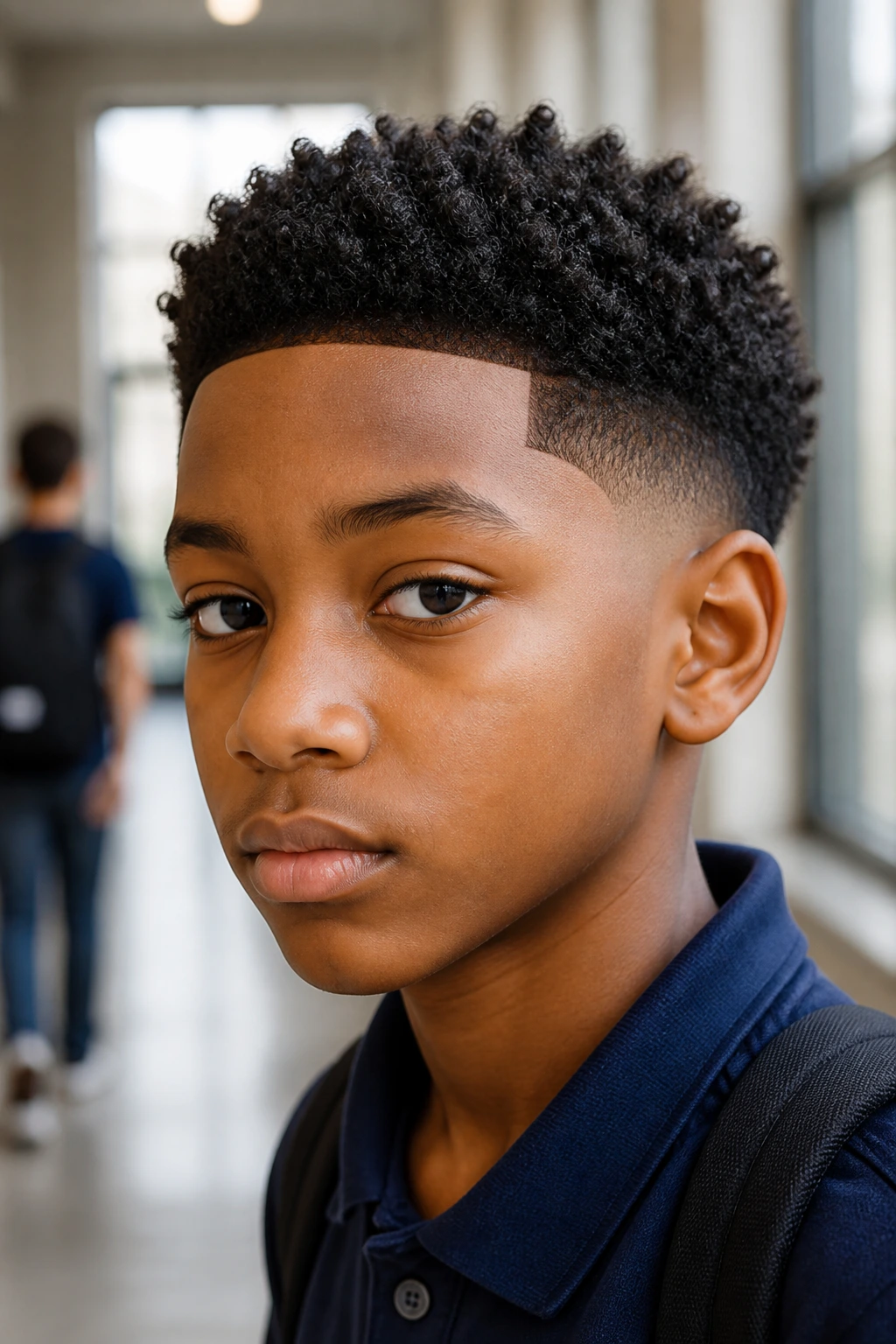
Short coils respond well to a sponge, but only when the haircut underneath has enough structure. Keep the top short, usually around 1 to 2 inches, and use the sponge for 30 to 60 seconds after a light leave-in. Too much sponging and the hair can look fuzzy instead of defined.
The edges matter here. A neat line at the forehead and a tidy neckline keep the style school-ready, even if the top has a bit of personality. If the school is strict, skip the hard line and keep the finish soft. The coils will still read clean.
12. The Burst Fade Curly Mohawk
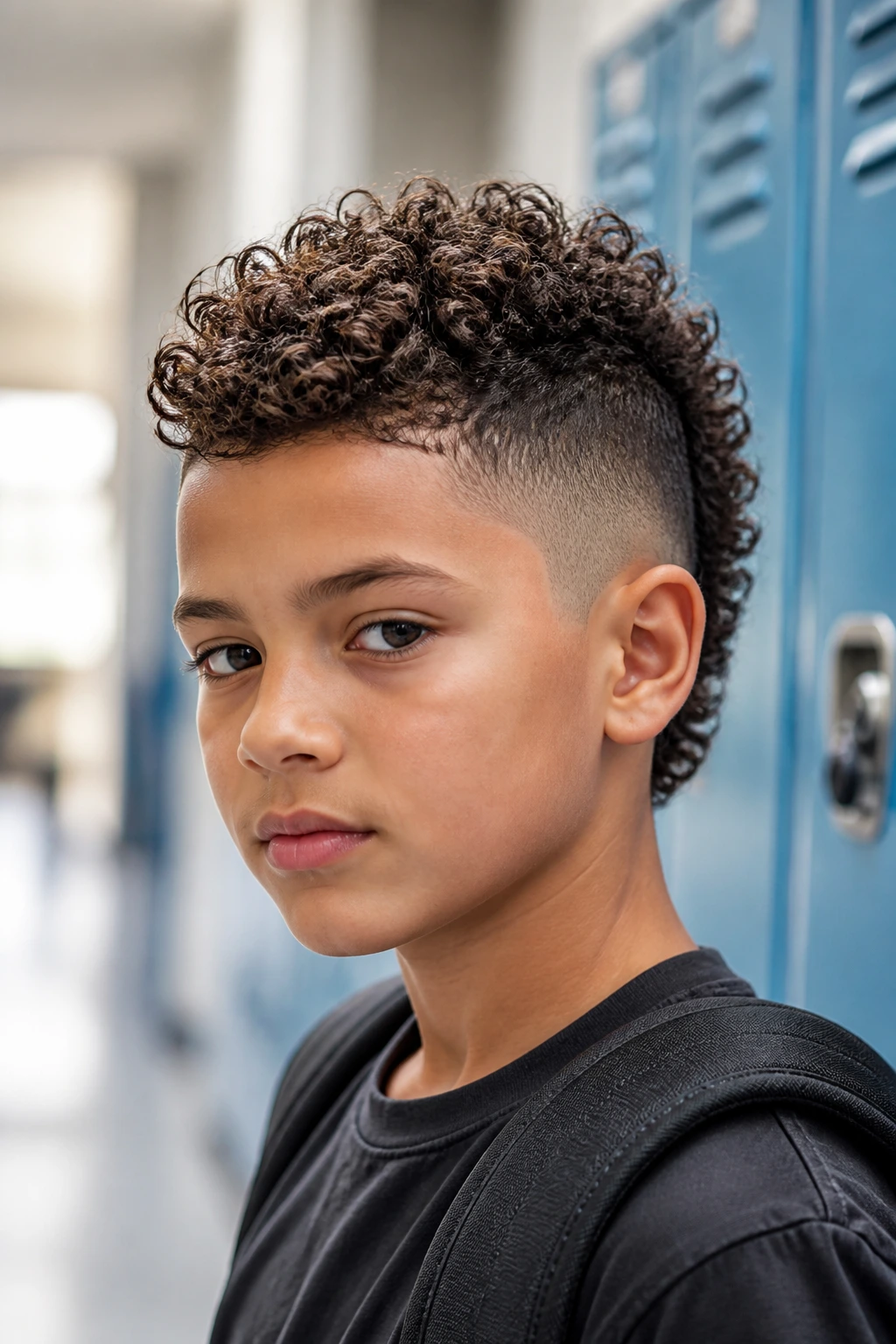
A burst fade mohawk has energy. The fade curves around the ear and leaves a central strip of curls running from the forehead to the crown, which creates a strong shape without needing a lot of length everywhere else. It’s one of the more expressive curly hairstyles for schoolboys, and that’s exactly why some schools will love it and some will not.
If the dress code allows it, keep the center strip about 2 to 4 inches long and let the sides stay tight enough that the shape is obvious. It’s a haircut that looks best when the curls have some spring, not when they’re crushed flat by a heavy cream.
13. The Shaggy Medium-Length Curl Cut

A layered shag on curls can look effortless, but only if the layers are real. Leave enough length—often 3 to 5 inches on top and through the sides—to let the curl clumps separate instead of ballooning outward. The goal is movement, not volume for volume’s sake.
This cut is for boys who don’t want a hard line or a sharp fade. It has a softer, more natural finish, and it usually works best with a small amount of leave-in conditioner and finger shaping. A scissor trim every 6 to 8 weeks keeps the ends from turning into triangles.
14. The Brush-Forward Curly Mop
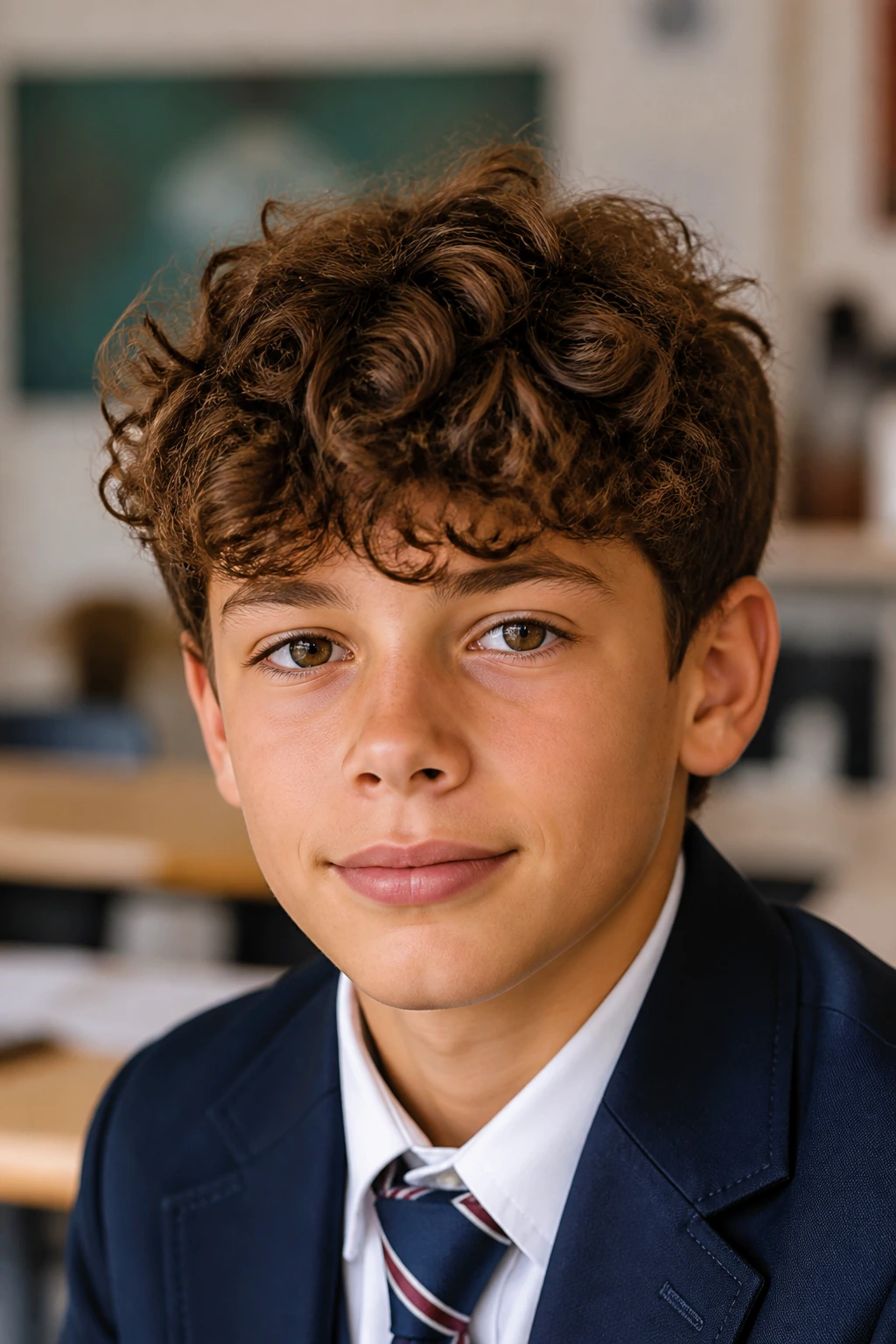
Brush-forward curls have a nice school feel when the hair is loose enough to fall toward the forehead but short enough to stay out of the eyes. Keep the top medium length and use a gentle forward sweep, not a heavy comb-over. The hair should look guided, not glued.
This style can hide a cowlick better than most. It’s also forgiving on mornings when the curls are dry and a little weird. A mist bottle and a few finger scrunches usually bring it back. If the ends are frizzy, a pea-sized bit of curl cream solves more than a brush ever will.
15. The Curly Undercut With Extra Height

An undercut makes the contrast obvious: short sides, long top, no apology. On curly hair, that means the top has to be left long enough to create shape on its own, usually 3 to 5 inches, or the whole thing just sits there looking unfinished. The disconnect is the point.
I’m honest about this one. It looks sharp, but it grows out fast and can start to look uneven if the top is thick and the sides are left alone for too long. Best for older schoolboys or teens who like a more defined style and don’t mind regular barber visits.
16. The Frohawk for Longer Curls
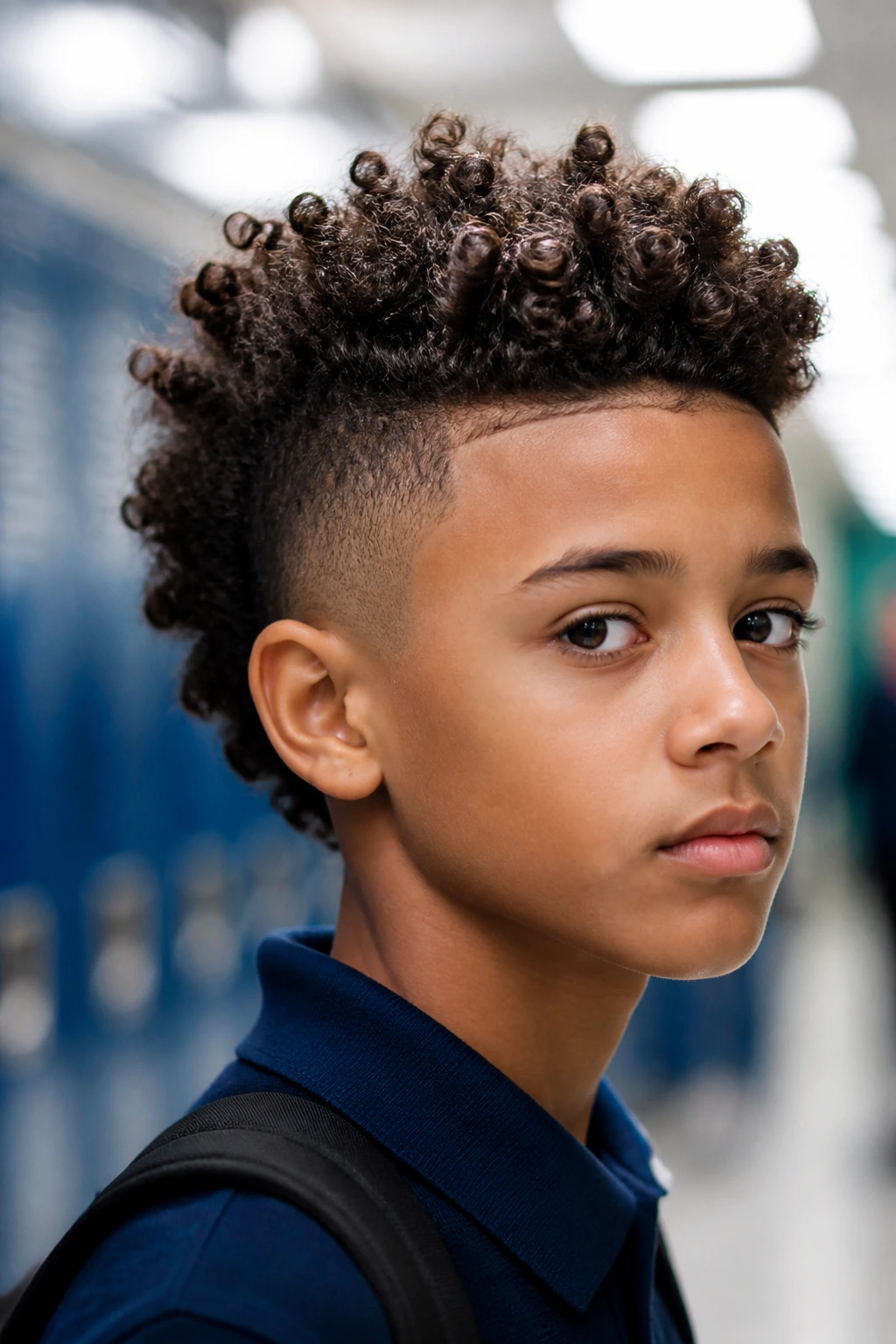
A frohawk is the friendlier cousin of the mohawk. Keep the hair longer down the middle, taper the sides, and let the curls form a raised lane from front to back. It gives longer curls somewhere to live without forcing them into a full puff.
This cut is strong for boys who are growing their hair out but still need it to stay school-appropriate. The sides stay controlled, the middle gets to show off length, and the shape still looks intentional when it loosens up later in the week.
17. The Rounded Afro With a Light Shape-Up
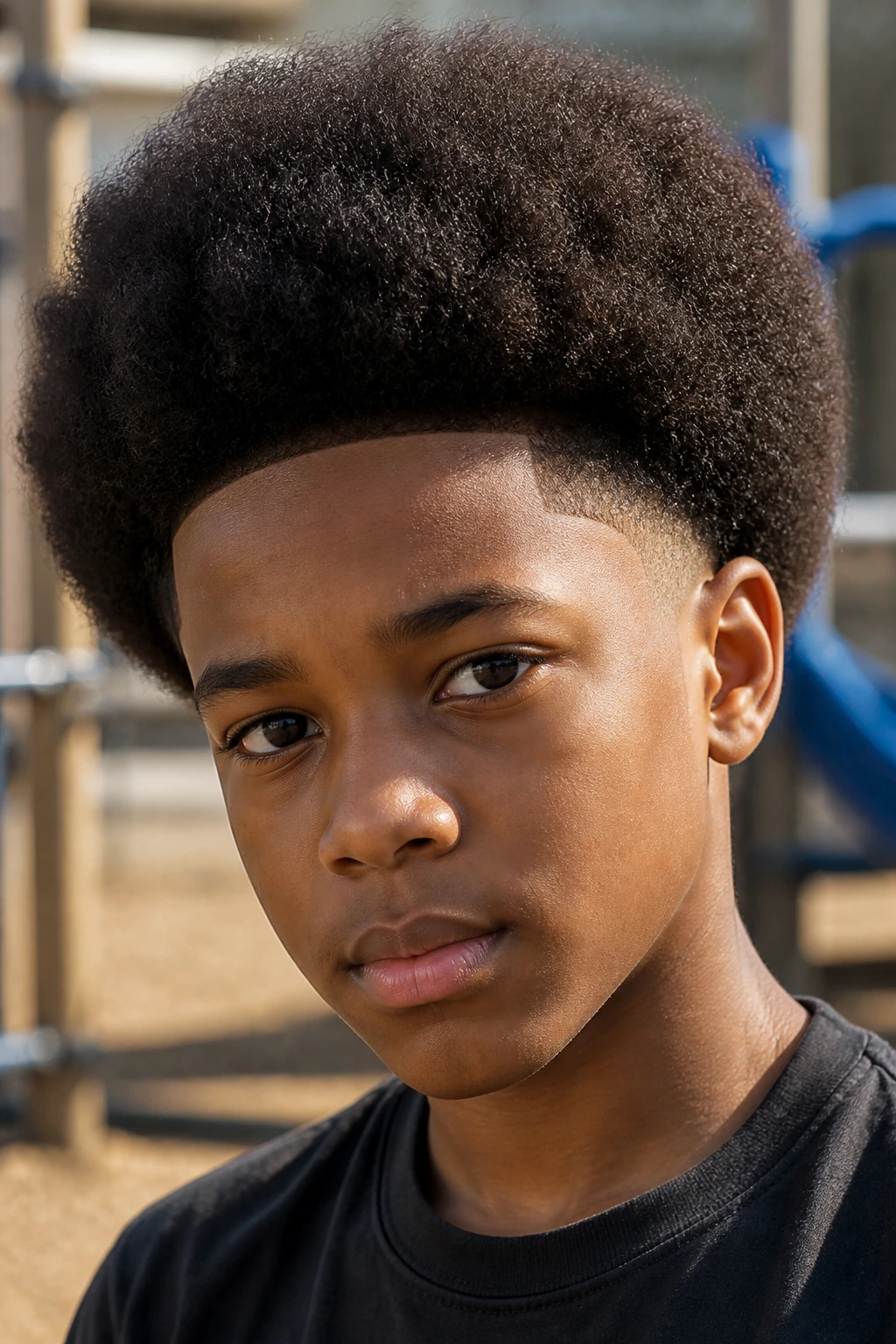
Some curls look best when they’re allowed to be exactly what they are. A rounded afro with a light shape-up keeps the perimeter clean while leaving the bulk where the curls want to live. The shape should follow the head, with no sharp corners and no boxy crown.
A light edge-up at the forehead and neckline keeps it polished without overworking the natural texture. This is a low-drama style for boys with coils who want fullness and aren’t interested in fighting shrinkage every morning. Good haircut. Less fuss.
18. The Hard Part With Controlled Curls
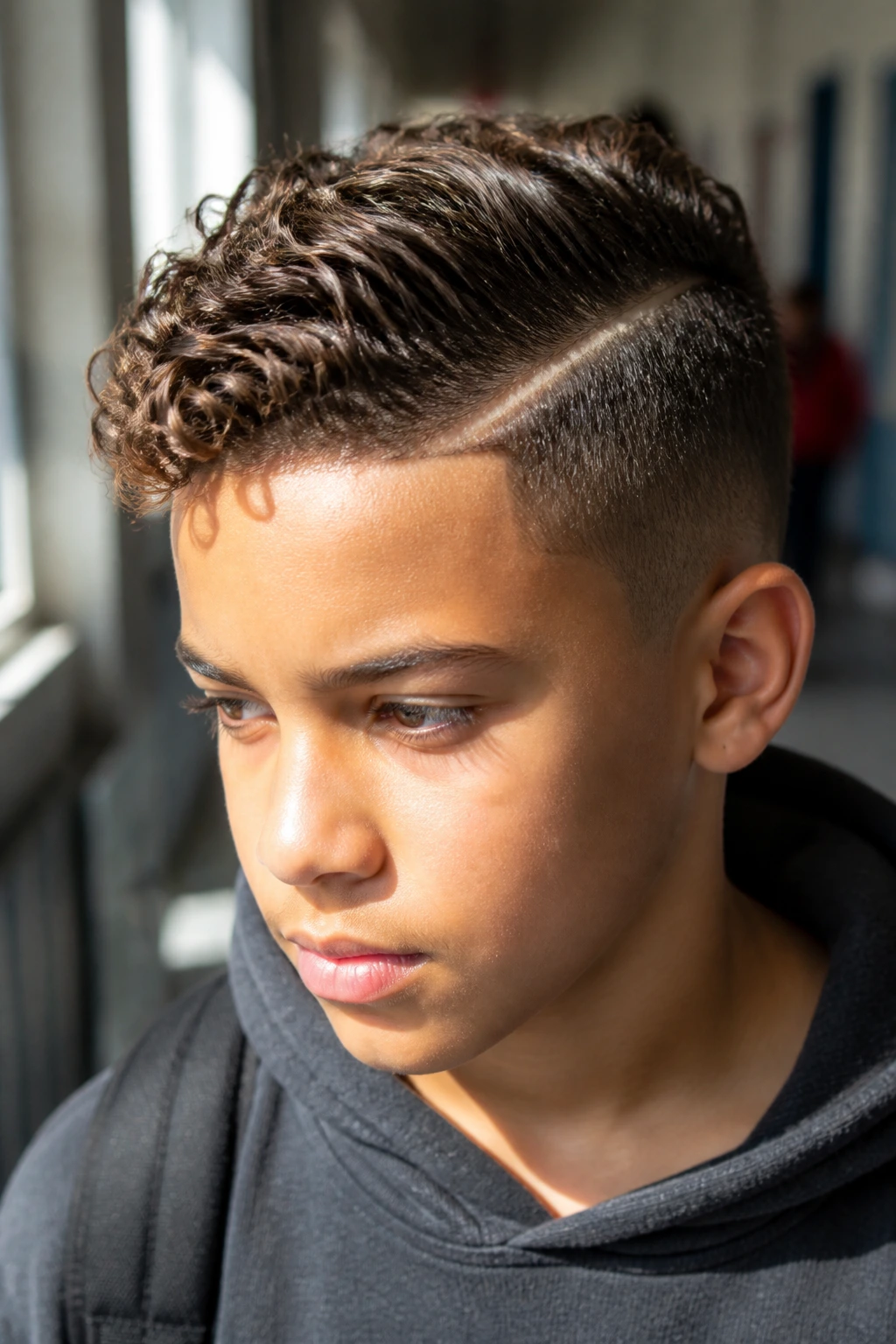
A hard part can help curls stay organized, but it’s a sharper look than most school cuts. The part is etched with a clipper, and the top is brushed or finger-shaped to one side so the haircut reads cleanly from across a classroom.
Use this one only if the school allows visible lines. It needs regular upkeep because the part softens as it grows, and the whole style loses its crispness quickly. For the right kid, though, it’s a neat way to make curly hair look more deliberate without removing much length.
19. The School-Ready Mini Twists
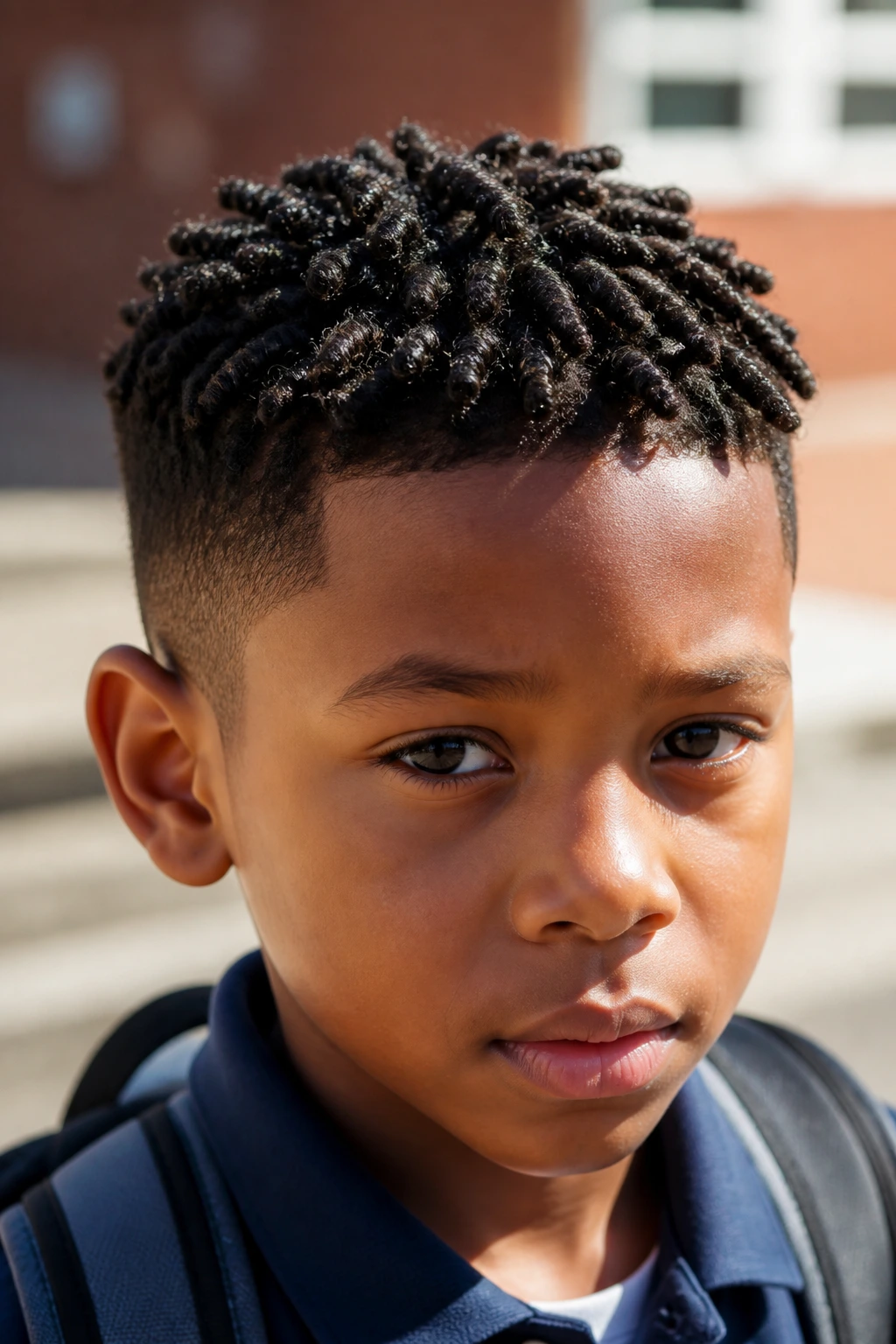
Mini twists are one of the easiest ways to keep coils neat for longer stretches. Leave enough length for small two-strand twists—usually at least 1 to 2 inches—then keep the sides tapered or trimmed close so the shape doesn’t spread outward.
They’re practical because they buy time. A twist style can last 2 to 4 weeks with a little care, and it holds up well through school, sports, and sleeping. Keep the scalp lightly moisturized, not greasy. Heavy oil just sits there and collects lint.
20. The Curly Quiff That Stays Neat
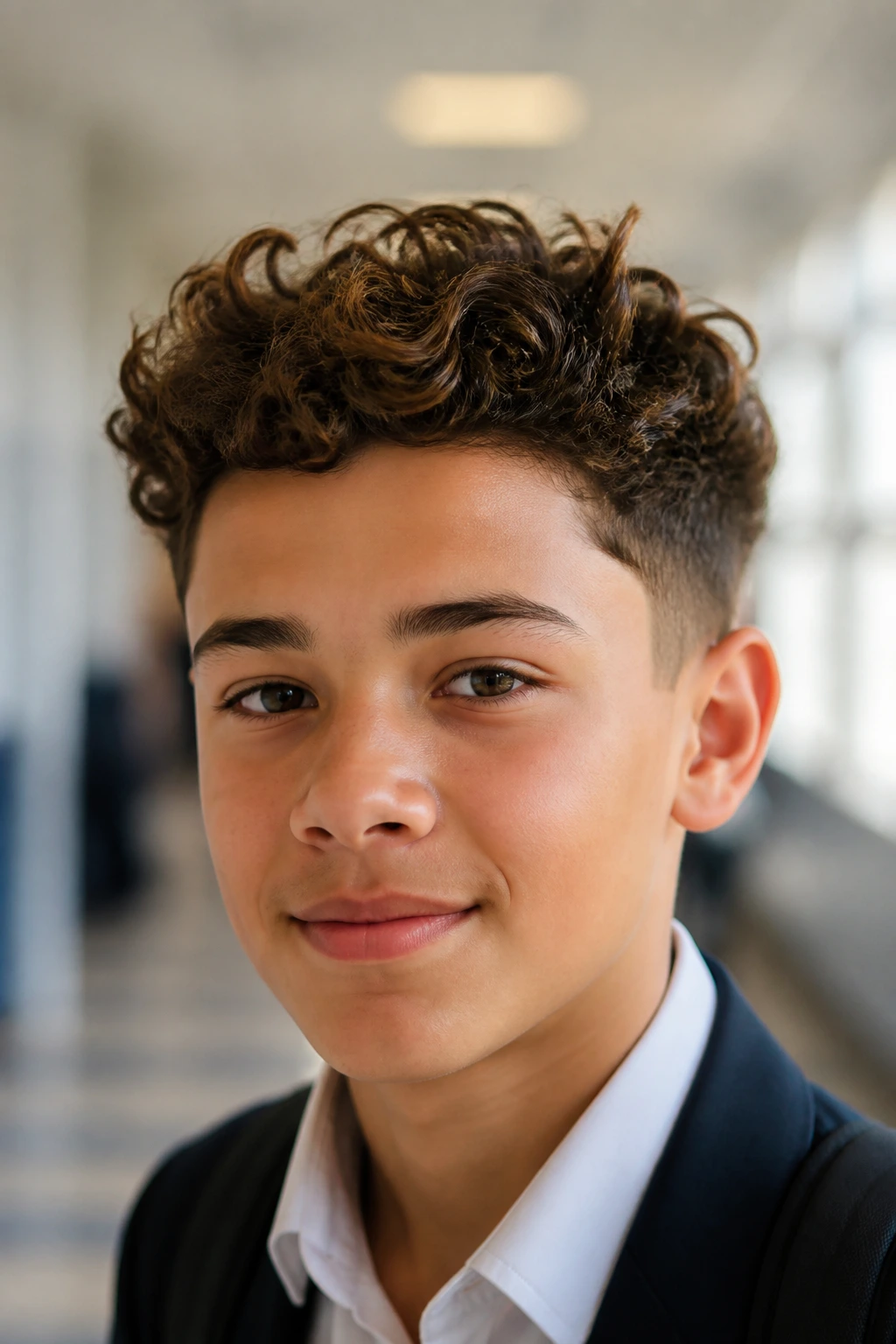
A curly quiff lifts the front up and back, which makes the face look open and tidy at the same time. Leave enough length in the front—often 2 to 3 inches—and keep the sides tighter so the volume stays focused at the top, not all around the head.
A light mousse works better here than thick gel. The quiff needs air between the curls, or it turns into a stiff lump. If the hair dries too fast before styling, a quick mist is enough to bring back enough slip for the front to sit right.
21. The French Crop With Wavy Fringe
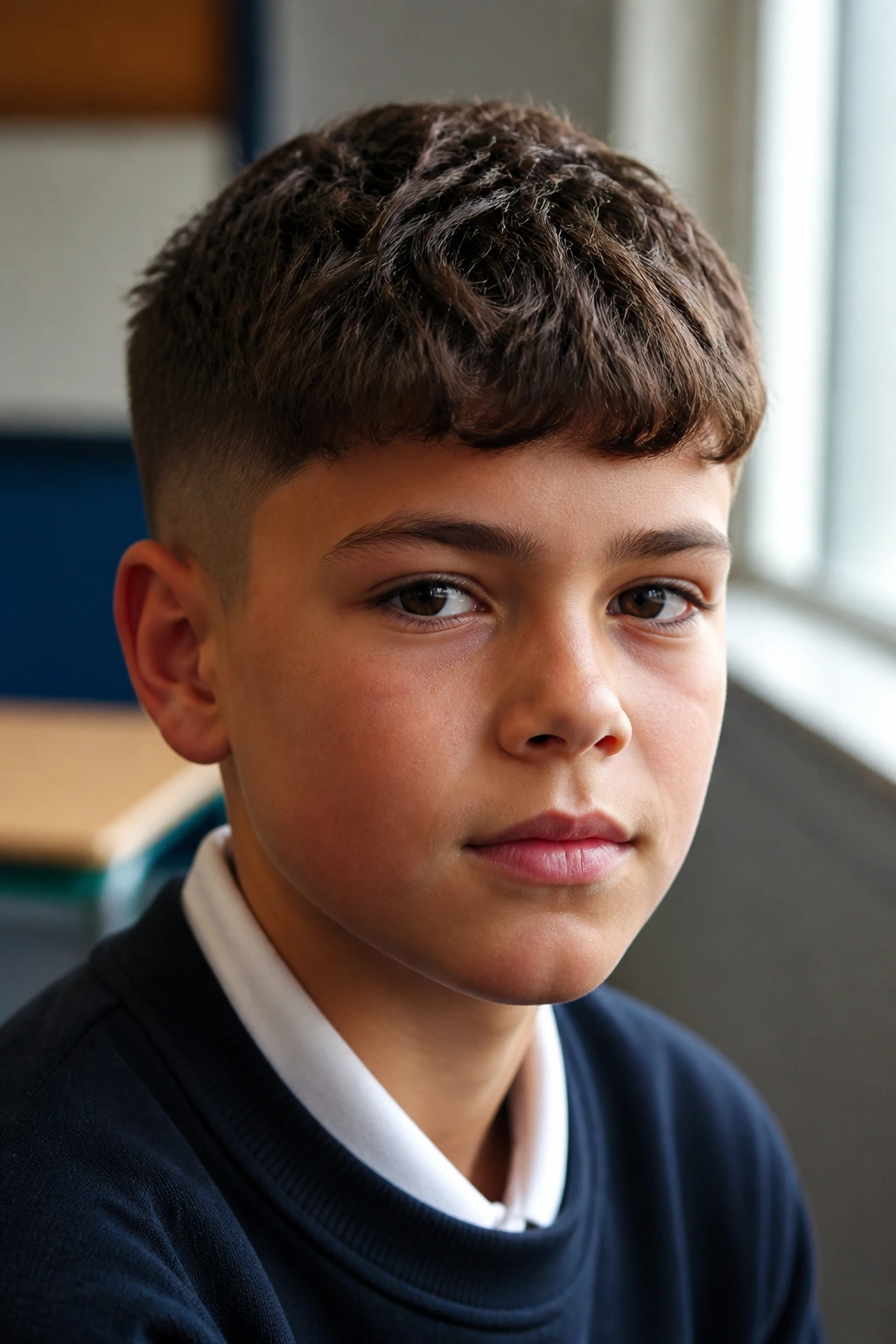
This cut is small on effort and big on control. The French crop keeps the top short, pushes the fringe forward, and leaves the edges clean so the style doesn’t depend on a lot of morning work. On wavy or loose curly hair, it looks tidy without becoming flat.
It’s a strong choice for schoolboys who play sports because the hair stays close to the head. Ask the barber to soften the fringe if the curls are springy; a blunt line can sit too high once the hair dries. A little texture keeps it from feeling too stiff.
22. The All-Scissor Layered Cut
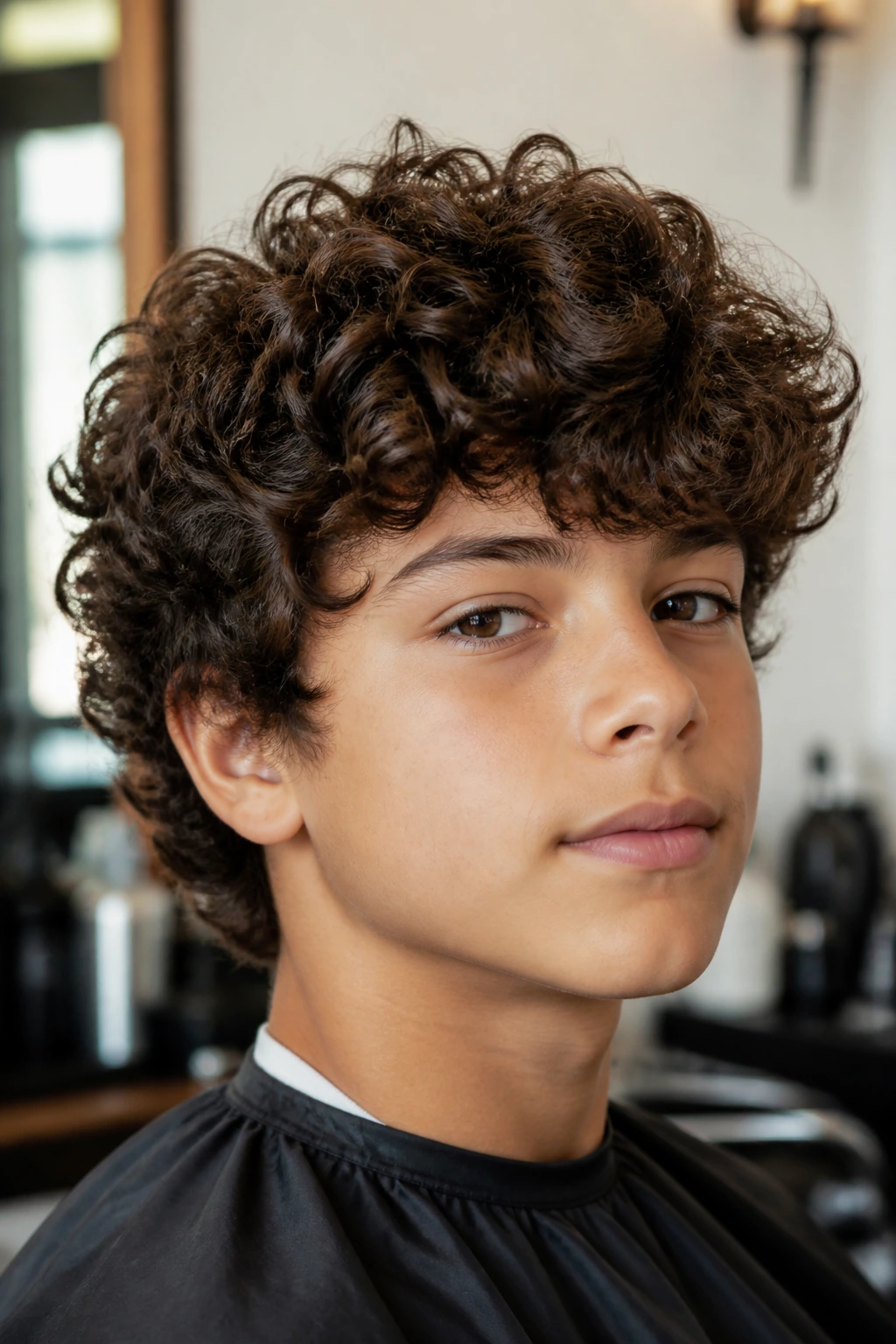
No clippers. That’s the selling point. An all-scissor layered cut keeps the curl pattern soft and avoids the hard jump you sometimes get between clippered sides and a curly top. The layers remove bulk, which is useful when the hair grows thick around the temples and crown.
This is a smart option for boys with a sensitive scalp or families who want a quieter, more natural shape. It also grows out in a gentler way than a hard fade. The tradeoff is that it needs a barber who actually understands curly hair, not one who tries to cut it like straight hair with springs attached.
23. The Tapered Top With Finger Coils
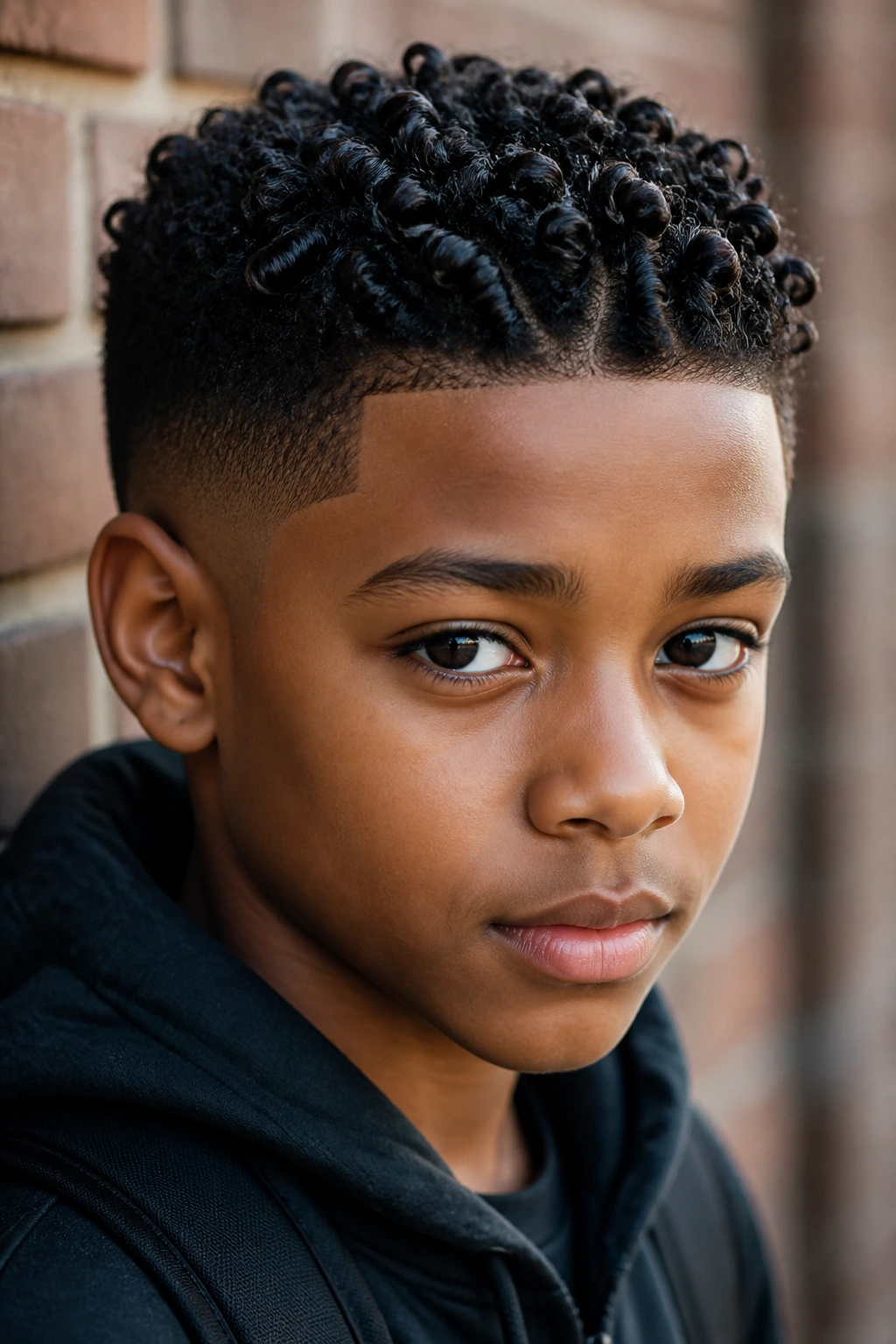
Finger coils create neat definition without needing a full twist style. Keep the top short enough to coil easily—about 1 to 2 inches for many textures—then taper the sides so the whole style stays contained and school-friendly.
It’s a good bridge style for boys who want something more polished than loose curls but not as tight as mini twists. A small amount of curl cream helps each coil hold its shape. If the coils start separating too much by midday, the hair probably needs a little less product, not more.
24. The Curly Bowl Cut Revival
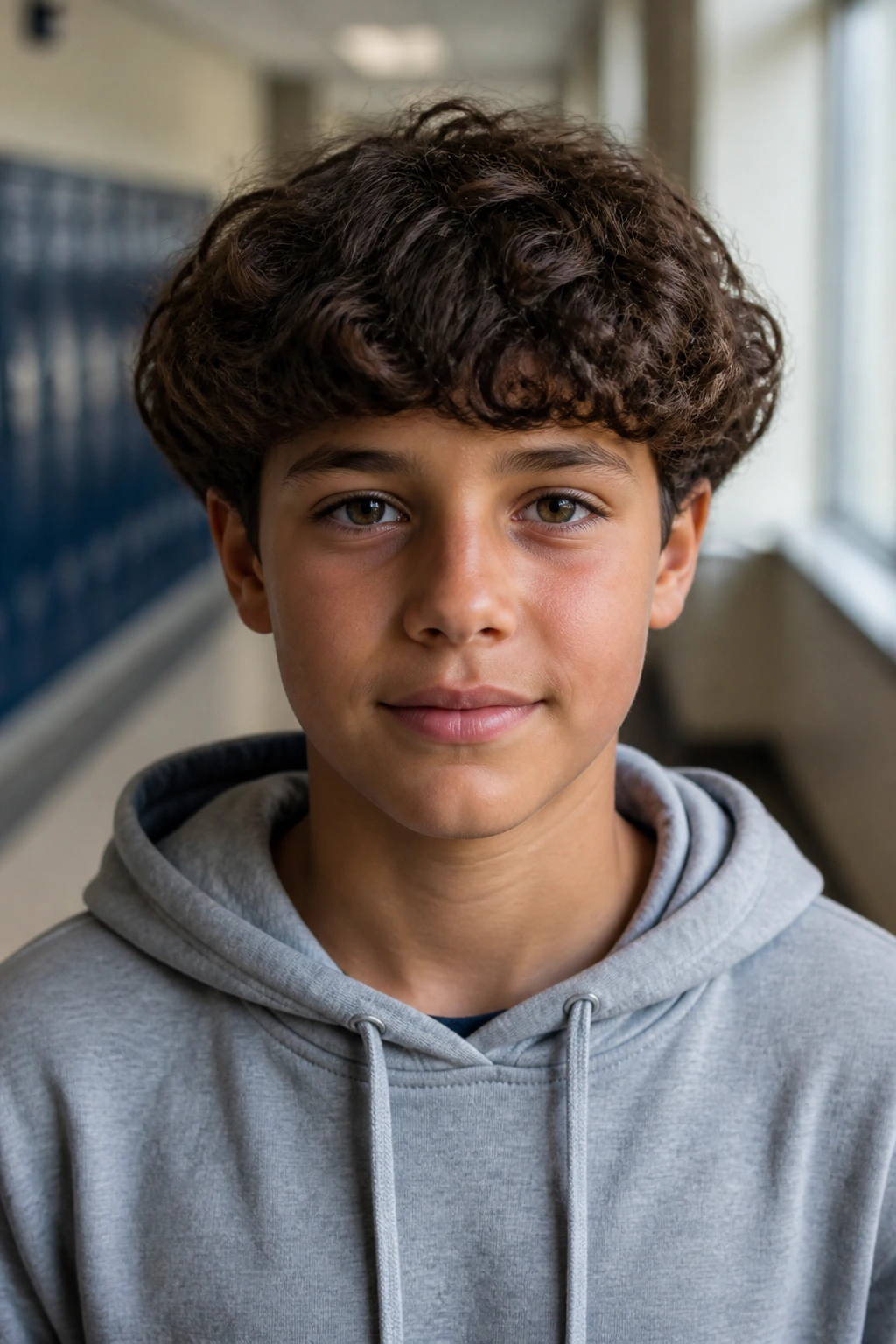
A modern bowl cut on curly hair only works if the edges are softened. The old-school hard bowl line is too stiff for curls, but a rounded version that follows the head can look clean and a little playful. Keep the fringe even and the sides blended, not chopped.
This one is more niche, and I like it for loose curls or waves better than tight coils. It has a neat silhouette, which schools tend to tolerate, but it still carries enough personality to avoid looking generic. The secret is the softness around the perimeter.
25. The Long Top With a Low Skin Fade
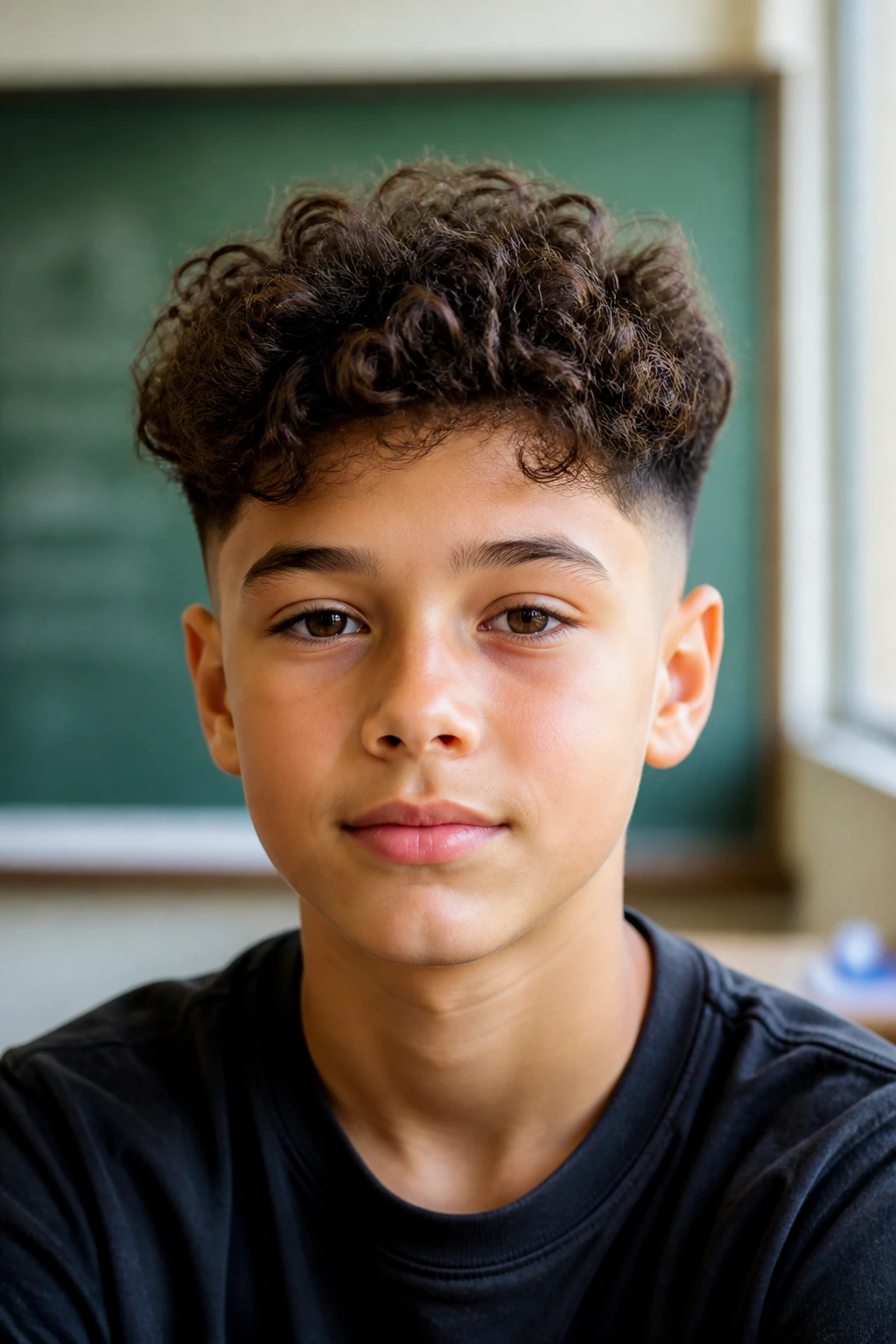
A long top and a low skin fade create a strong contrast, so the top has to be intentional. Leave 4 to 6 inches on top if the curls are tight enough to shrink, and keep the fade low so the haircut doesn’t jump from skin to bulk too suddenly.
It’s a bolder schoolboy cut, plain and simple. Works best for older kids who like a little drama in the shape and don’t mind spending a minute with a diffuser or finger styling. If the hair is dense, ask for layers so the top doesn’t turn into a dome.
26. The Messy Top With a Clean Neckline

This is the haircut for boys who touch their hair all day. Leave the top medium length and natural, but keep the neckline and sideburns clean so the style still reads tidy when the curls loosen up. It’s the contrast that makes it work.
There’s no need to over-style this one. A mist of water and a quick finger rake are usually enough. The clean neckline keeps the whole thing from drifting into “forgot to comb it” territory, which is useful when the top is intentionally loose.
27. The Two-Block Curly Cut
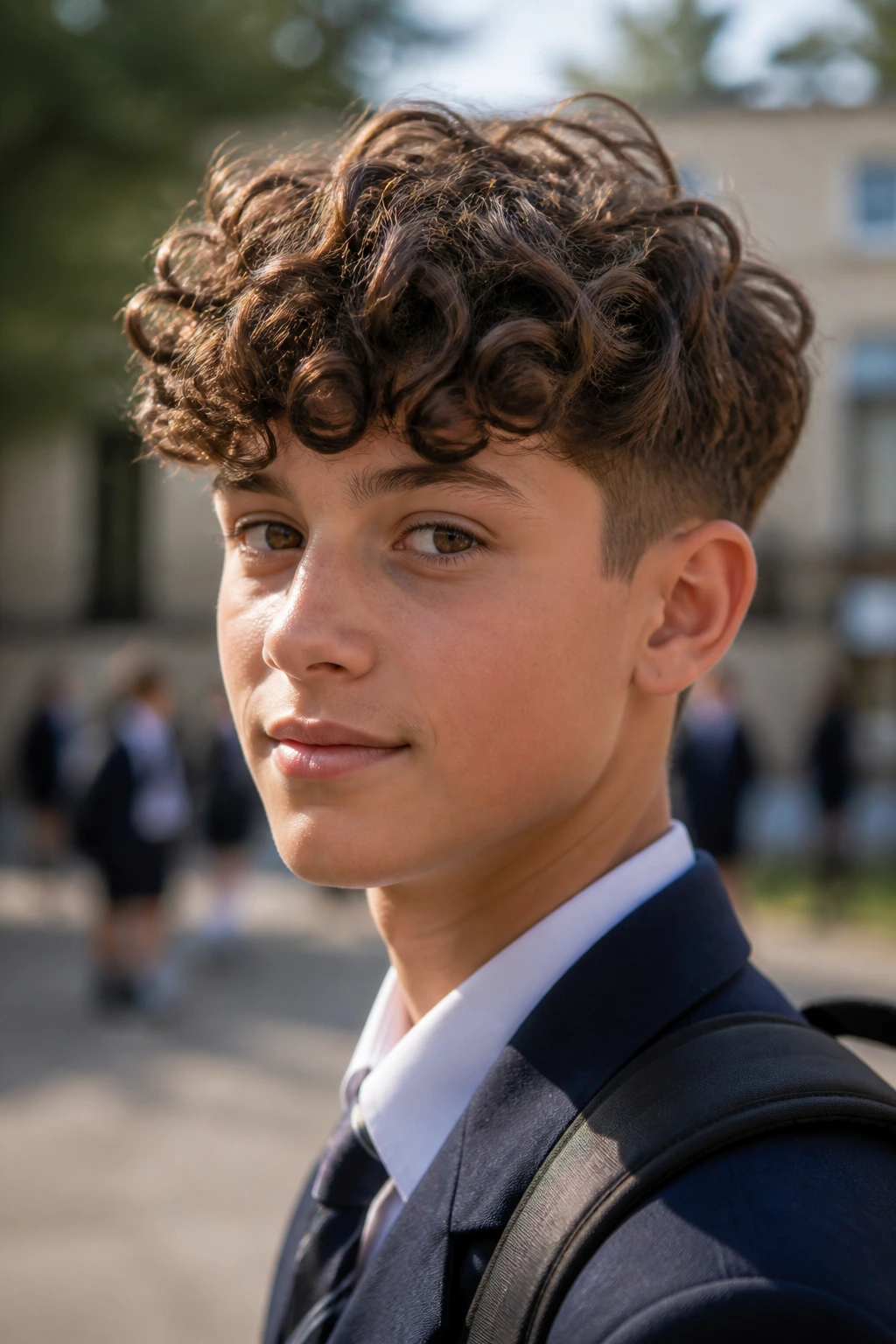
The two-block cut separates the longer top from the shorter sides and back, but on curls it needs a softer hand than a sharp undercut. Leave the top long and airy, keep the lower section trimmed closer, and let the transition feel smooth instead of chopped.
It’s a good style for schoolboys who want movement and a little shape at the same time. The top can be pushed forward, parted, or brushed to the side depending on how the curls sit that day. It’s flexible, which matters when the same haircut has to survive weekdays and weekends.
28. The Natural Ringlet Trim
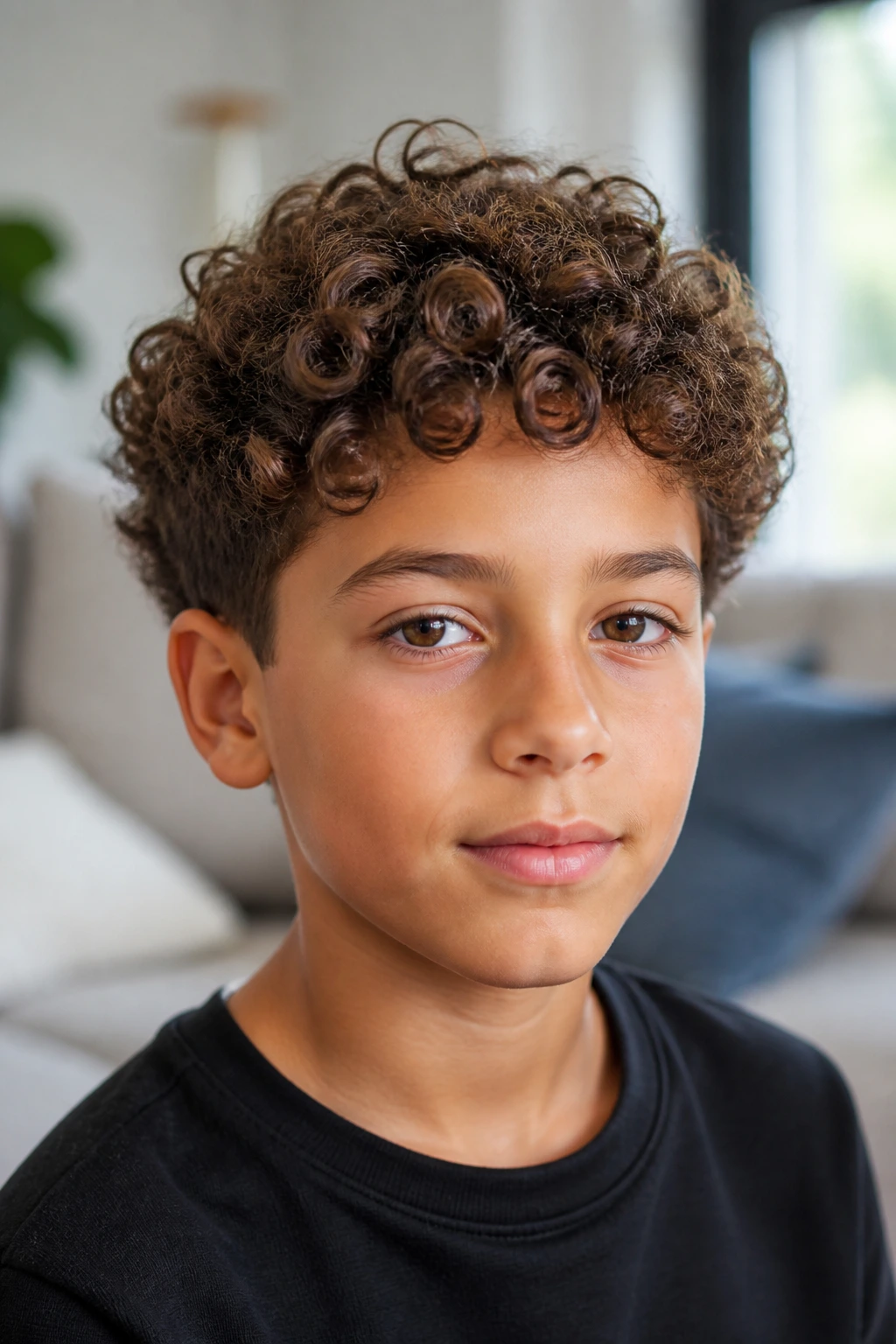
Ringlets don’t need to be bullied. A natural ringlet trim keeps enough length for the curls to hang properly, then cleans the outline so the shape looks finished. Scissor work is better than aggressive clipping here because ringlets lose their bounce when they’re cut too blunt.
This cut shines when the curls are hydrated and the top is left a touch longer than you first think. Ringlets spring up after drying, and that shrinkage is part of the charm. Ask for a trim that preserves the curl shape rather than trying to flatten it down.
29. The Curly Bun With Tapered Sides
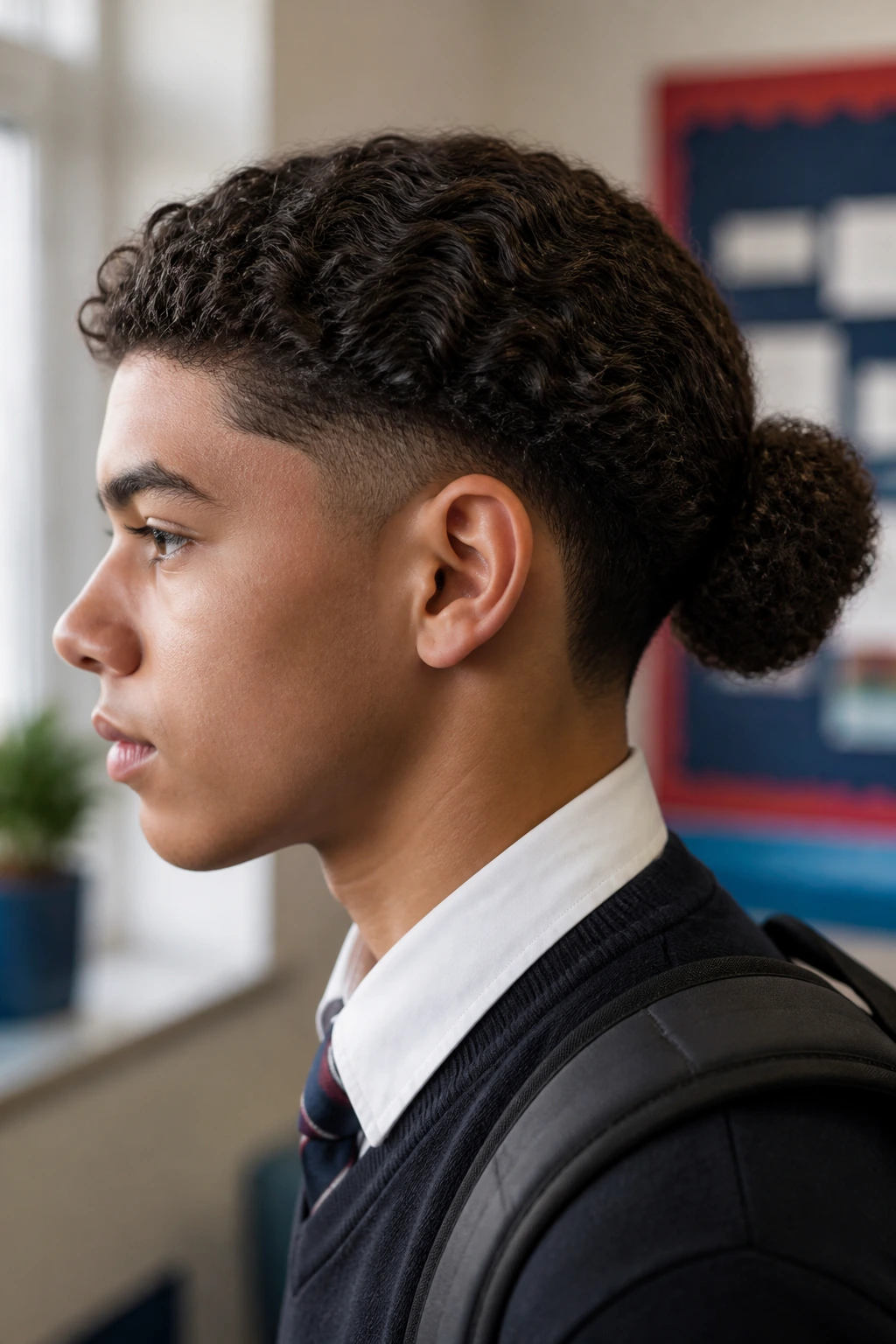
For longer hair, this is one of the most practical school styles around. The curls can be pulled into a low or mid bun, while the sides and neckline stay tapered so the haircut still looks tidy when the bun comes down. It’s useful on sports days and in hot weather.
The key is not pulling the bun so tight that the hairline gets angry. Leave a little slack, smooth the sides with your fingers, and keep the taper clean every few weeks. If the hair is thick, a satin pillowcase helps a lot. Tangled curls hate rough cotton.
30. The Flat-Top-Style Curl Shape
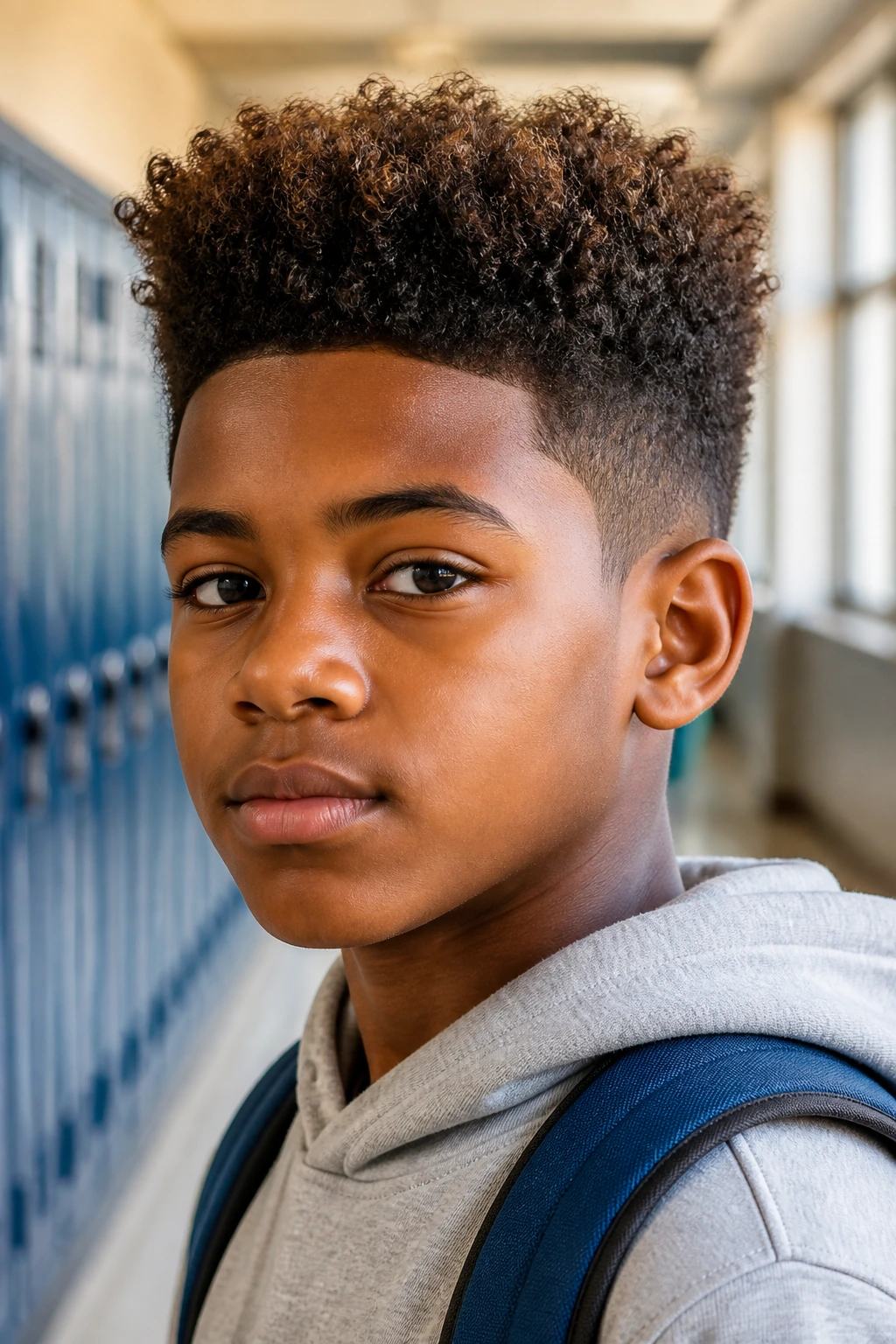
A flat-top-style cut on curly hair needs careful shaping, because curls want to round off if nobody guides them. The top is cut into a controlled, boxier shape, while the sides stay tighter so the silhouette feels bold but not messy.
It works best on tighter coils that can hold a firm outline. A pick can lift the top, but the barber has to create the actual shape. If the school is strict, a softened version with rounded corners is safer. Sharp edges grow out fast and show the week on the haircut.
31. The Drop-Taper Afro Fade
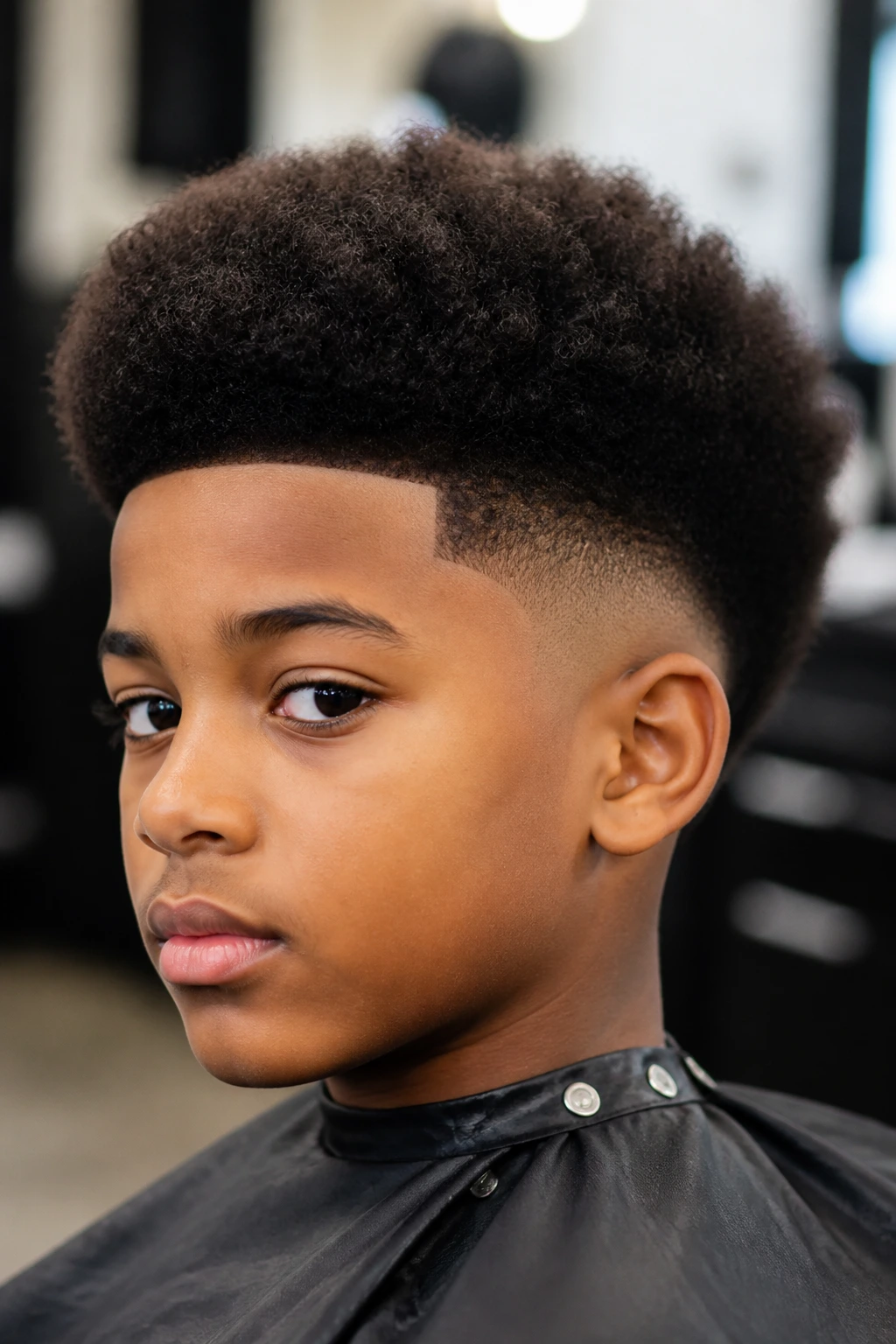
The drop-taper afro fade mixes softness and structure better than people expect. The fade dips a little behind the ear, the taper stays low, and the top keeps its rounded afro shape. That keeps the haircut full without making the sides look bulky.
This one is especially good when the hair grows unevenly. The drop shape helps the back and sides blend into the crown instead of fighting it. A quick shape-up every 2 to 3 weeks keeps the silhouette readable, and that matters more than chasing a perfect line every single time.
32. The Easy Grow-Out Cut for Between Trims
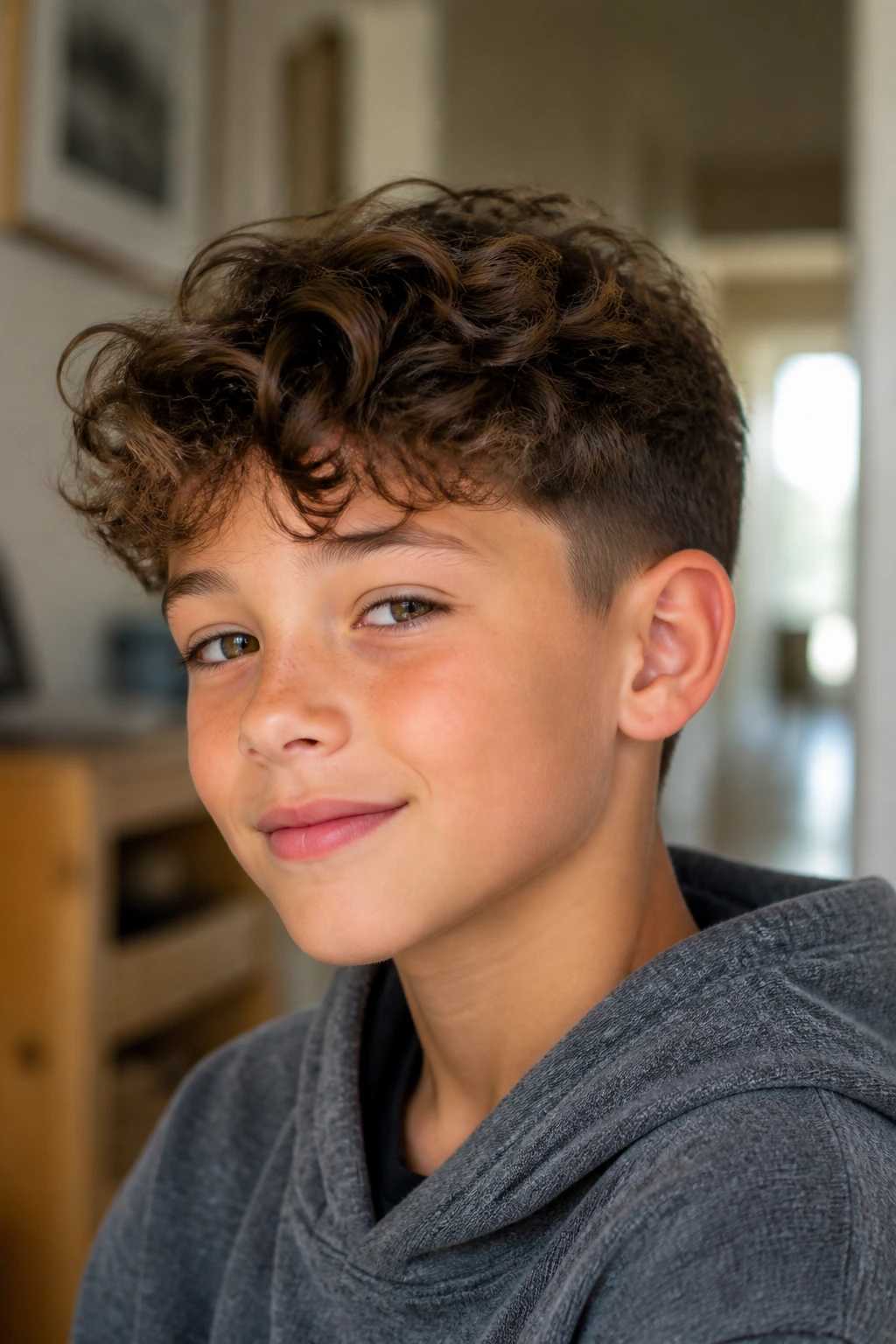
Sometimes the smartest schoolboy haircut is the one that still looks decent when you’ve ignored it longer than you meant to. A grow-out friendly cut keeps soft layers on top, a gentle taper around the sides, and enough length to survive 6 to 8 weeks without turning into a lost cause.
It’s the least glamorous option on the list, and I mean that kindly. It gives you shape, movement, and a forgiving outline, which is what most families actually need when the calendar gets busy. If a cut can survive homework, gym class, and a forgotten barber appointment, it earns its place.
Why These Cuts Hold Up From First Bell to Last Period
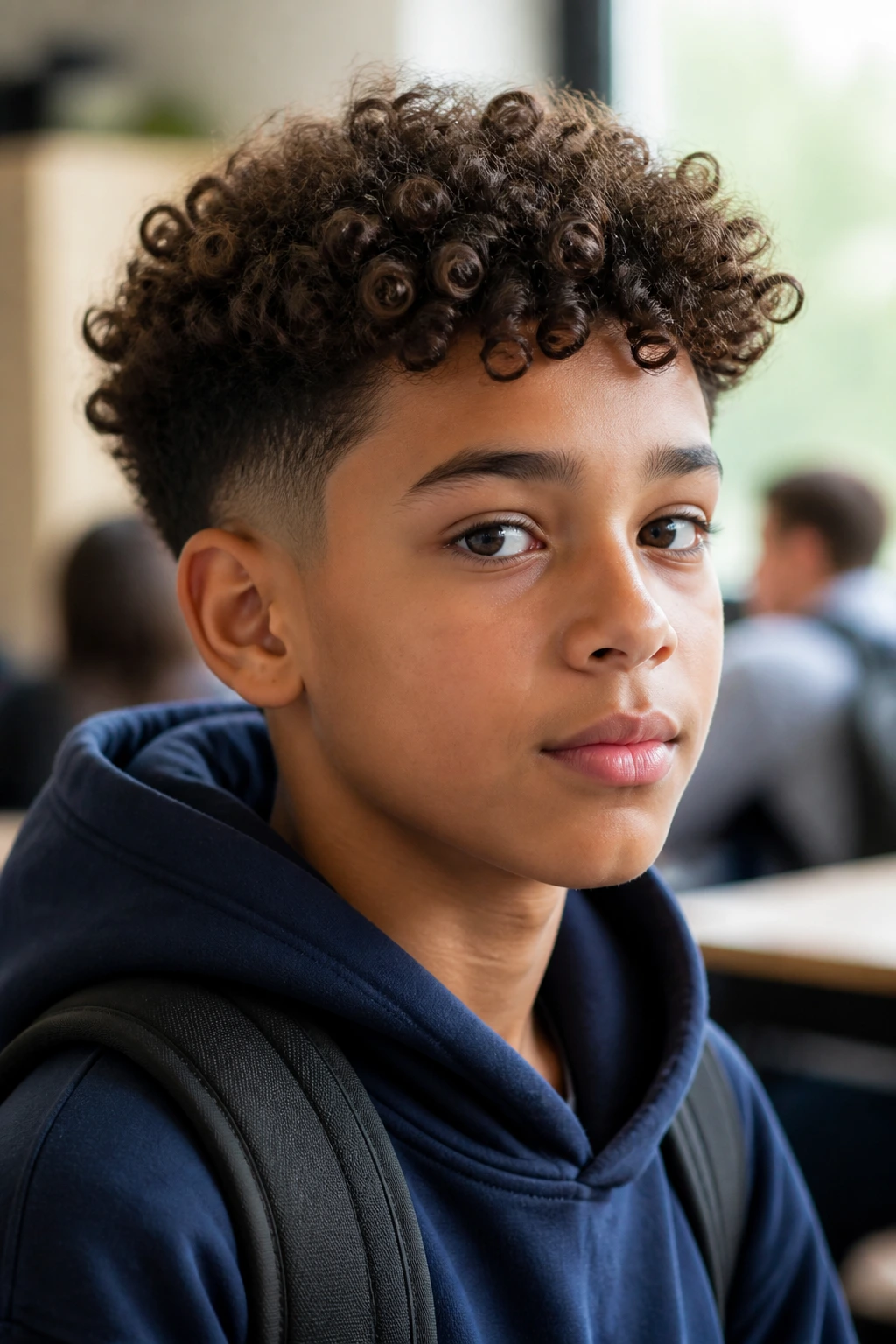
School hair gets tested, not admired. It sits under backpack straps, gets flattened by hoodie hoods, picks up sweat after recess, and gets shoved back by hands that never quite stay off the fringe. A good curly cut has to survive all of that and still look like someone meant it.
The secret is shape. A taper, drop fade, or rounded outline grows out more softly than a hard edge, so the haircut doesn’t scream for attention the moment the hair gets a little longer. That matters with curls because curls do not grow in a neat, straight line. They spring, bend, and shrink in their own direction.
Why shrinkage changes the plan
Curly hair almost always looks longer when it’s wet than when it’s dry. Sometimes the difference is mild, and sometimes it’s a full inch or more, especially on tighter coils. That’s why good barbers leave extra room on top and avoid cutting curls to the exact wet length unless they know the pattern well.
Why tapers beat harsh lines for school
A soft taper around the ears and neckline grows out in a forgiving way. Hard lines and skin fades can look crisp for a few days, then show regrowth fast. For schoolboys, that often means the difference between a haircut that lasts three weeks and one that starts looking tired after ten days.
Why the forehead gets all the attention
The front is where teachers and parents notice shape first. If the fringe sits in the eyes, the haircut reads messy even when the rest is fine. Keep the front either short enough to stay out of the way or long enough to sit intentionally across the brow. Halfway lengths are the ones that cause trouble.
Choosing Curly Hairstyles for Schoolboys by Curl Type
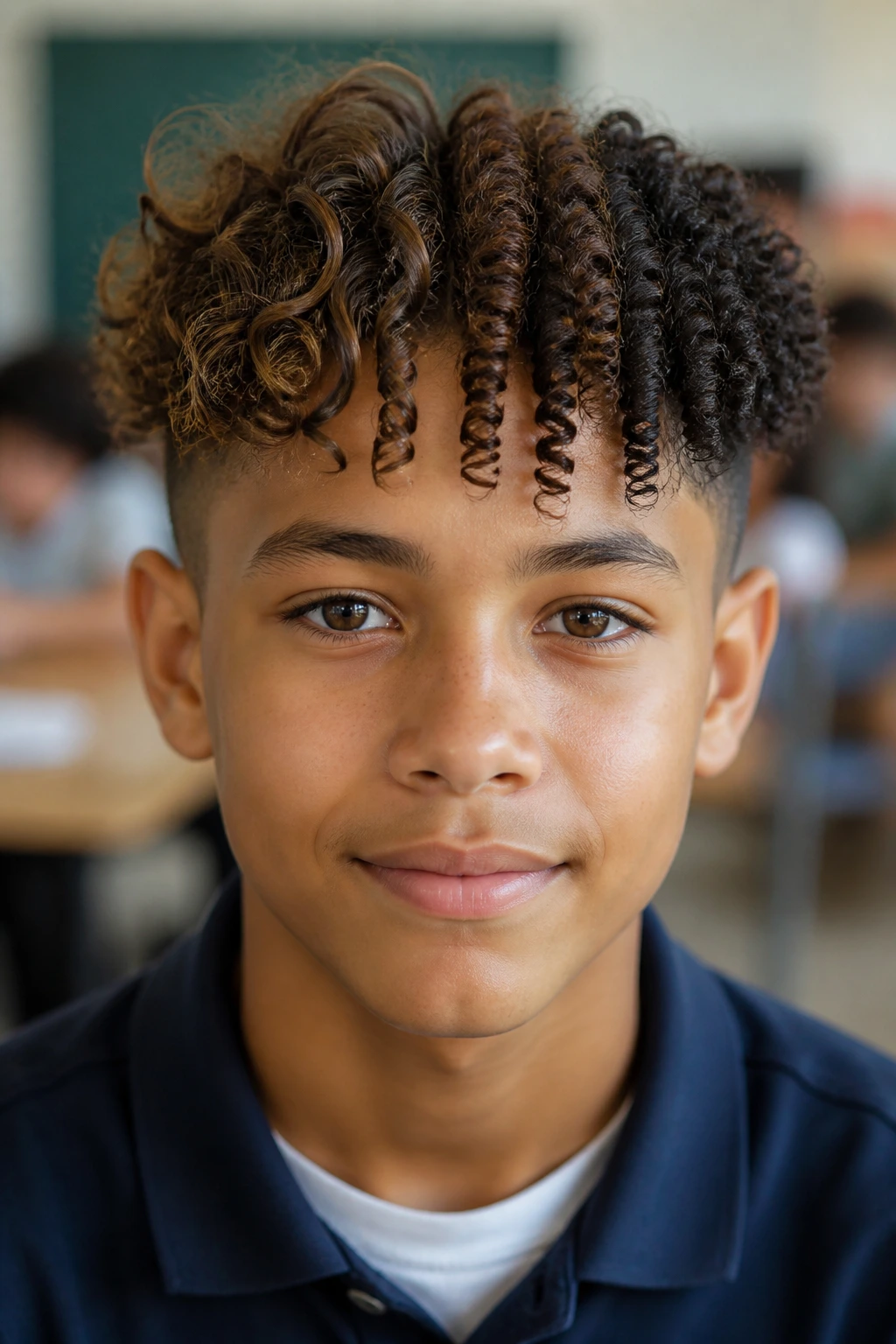
Loose waves, springy ringlets, and tight coils do not want the same cut. They can live in the same school hallway, sure. But they behave differently in the barber chair, and that changes everything.
Loose waves and soft curls
Loose curls usually do well with side parts, French crops, curly fringes, and brush-forward cuts. These styles lean on direction more than height. A light cream or mousse keeps the hair from puffing out, and the cut itself doesn’t need to be very long—often 1½ to 3 inches on top is enough.
Ringlets and medium curls
Ringlets like room. Taper fades, rounded afros, shaggy layered cuts, and natural ringlet trims keep the shape readable without squeezing the curl pattern flat. Too much product can weigh the curl down and make it clump in odd places, so start small. A dime-sized amount is often enough for the whole front.
Tight coils and dense texture
Tight coils shine in high tops, sponge-coiled styles, mini twists, afro tapers, and rounded shape-ups. The cut should respect the density instead of trying to erase it. A barber who understands coil shrinkage will leave more length than a straight-haired eye expects.
Longer curls and grow-out stages
Longer curls behave best when the haircut has layers, not just length. A bun with tapered sides, a two-block cut, or a long top with a low fade gives the hair somewhere to go. If the length is growing out unevenly, that’s the time to trim shape, not chase every loose strand.
Essential Tools for These Hairstyles
-
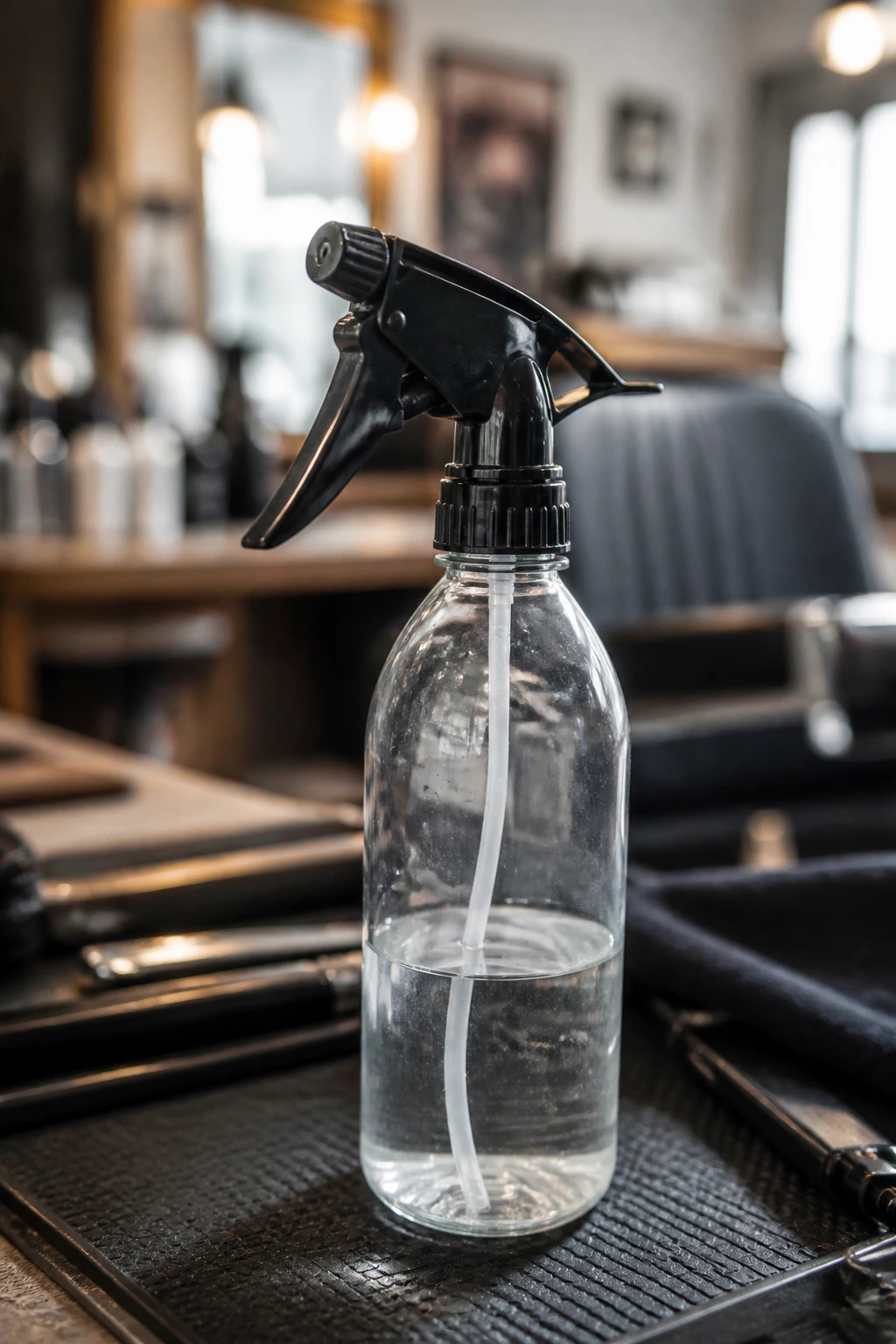
Spray bottle: A light mist wakes curls up without soaking the shirt collar or making the top look limp.
-
Leave-in conditioner: Use a small amount on damp hair to keep curls from drying into a rough, frizzy patch.
-
Curl cream or light mousse: Cream gives softer definition; mousse helps finer curls keep lift without feeling heavy.
-
Wide-tooth comb: Best for detangling wet curls before styling, especially on medium and longer cuts.
-
Soft-bristle brush: Useful for laying down flyaways on short curls without breaking up the curl pattern.
-
Curl sponge or twist sponge: Handy for tighter coils and sponge-coiled styles, but don’t overuse it or the hair can look fuzzy.
-
Microfiber towel or cotton T-shirt: Better than rough bath towels, which can rough up the cuticle and puff the curls.
-
Satin pillowcase or bonnet: Helps curls keep shape overnight and cuts down on frizz by morning.
-
Small trimmer or barber touch-up tool: Optional, but useful for neckline cleanup if the family knows how to use it safely.
Smart Barber and Product Tips for Curly Hairstyles for Schoolboys
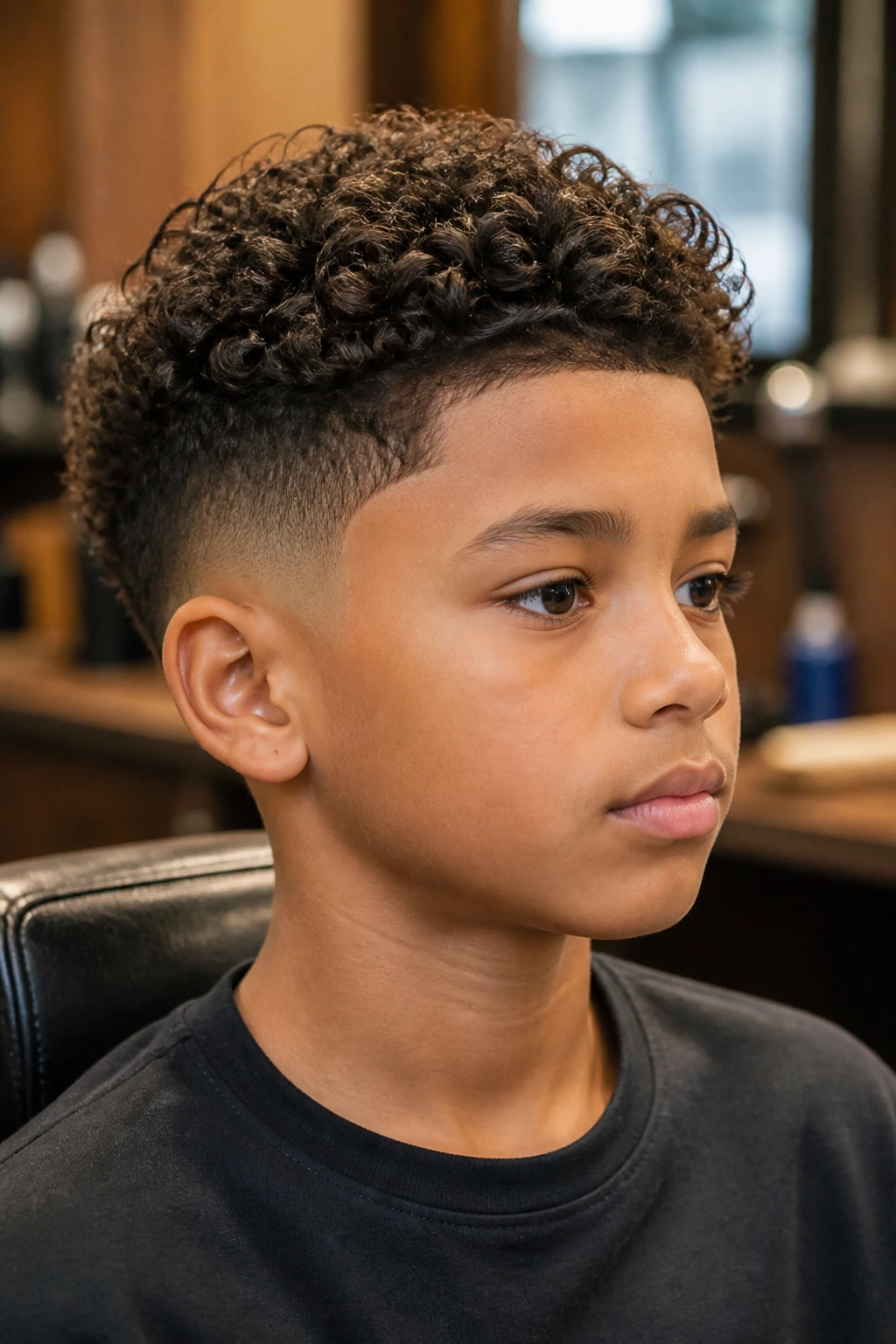
The biggest mistake people make is treating curly hair like straight hair with extra personality. It isn’t. The barber should look at shrinkage, density, and curl direction before deciding how much to remove. If the barber knows curls, they’ll often cut the top a bit longer than the photo suggests and shape the sides with more restraint.
Bring a photo or two, but bring the right ones. One shot from the front and one from the side tells more truth than a single glamour photo shot with perfect lighting. And if the photo shows a style on straight or wavy hair, tell the barber you want the shape, not the texture.
For products, keep the rule simple: fine curls usually like mousse, drier curls like cream, and thicker coils often need a lighter leave-in plus a touch of definition product. Heavy pomades and greasy butters can flatten the top and trap lint in school. The goal is clean curls, not shiny helmet hair.
How to Style Them Before the Bell
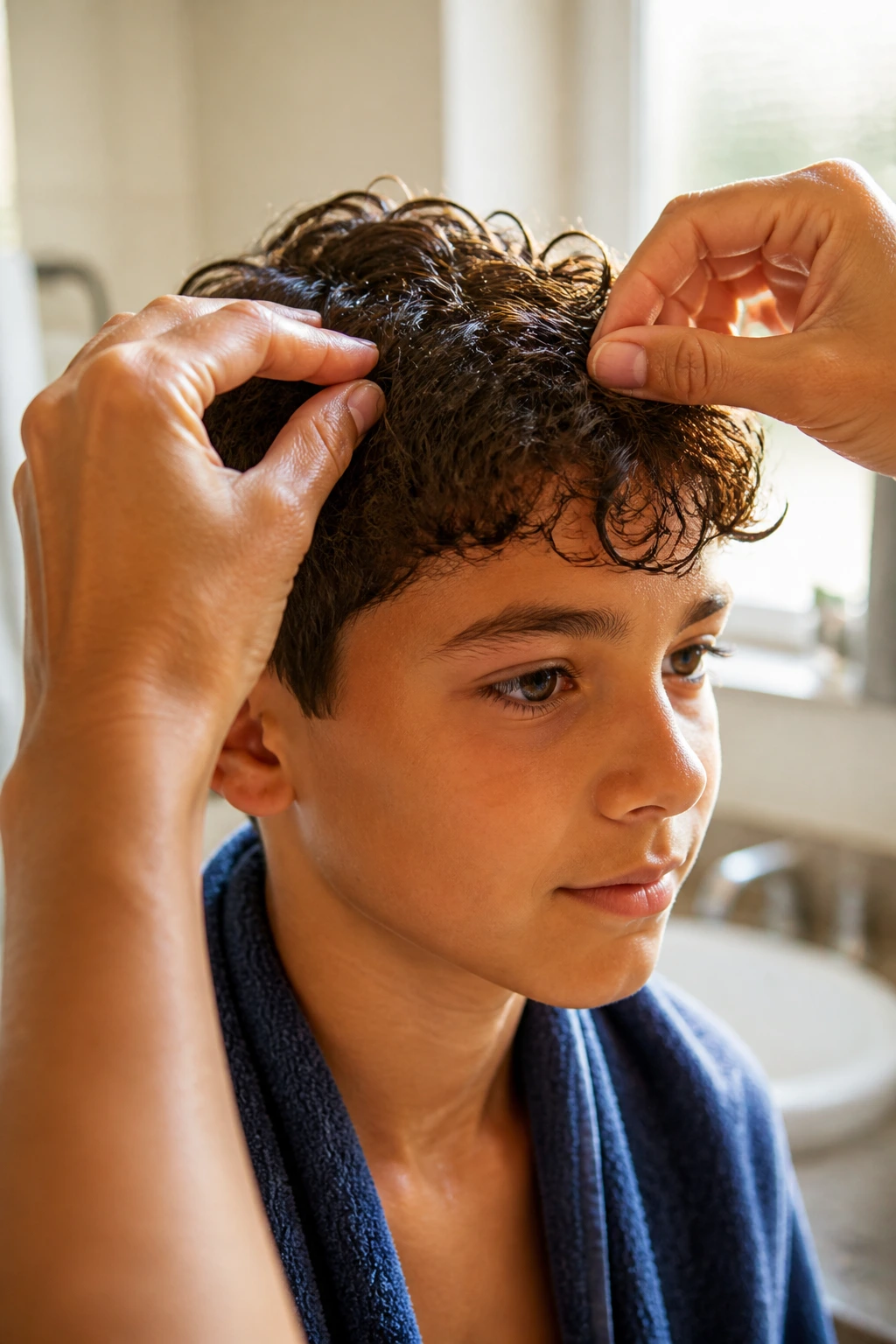
Mist, don’t soak. Four to six sprays from a bottle is enough for most short and medium curls. If the hair gets dripping wet, it takes too long to settle and the shirt collar gets damp. That’s a bad trade before first period.
Use one product first. A pea-sized amount for short curls, a dime-sized amount for medium curls, and a little more only if the hair is longer or very dry. Work it through with your fingers, not a brush, unless you’re laying down a side part or a brushed-forward style.
Shape the front before touching anything else. Fringe, quiff, or front curls should be set first, because that’s the area most people keep fussing with. Once the front is sitting right, stop there. Extra handwork usually turns into frizz.
Dry with intention. Air-dry for a few minutes if there’s time, or use a diffuser on low heat for 2 to 4 minutes. High heat can wreck definition fast. If there’s no time at all, a quick towel press and a finger shape will still beat a rushed brush job.
Common Mistakes That Make School Hair Look Messy Fast
-
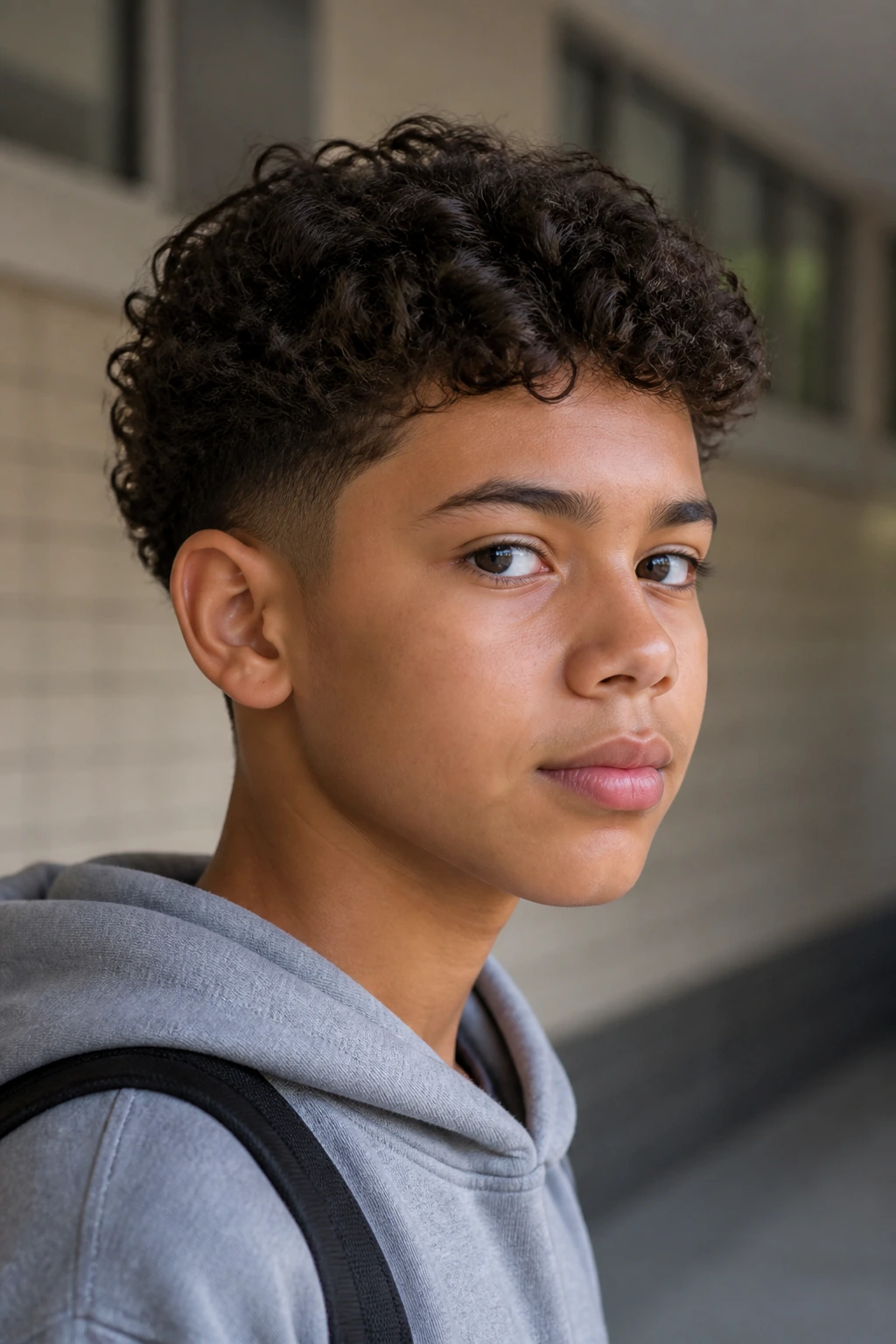
Cutting curls too short when wet: Wet curls lie. Once they dry, they bounce up and can end up much shorter than expected. The fix is simple: leave extra length on top, especially with tight coils.
-
Using too much heavy product: If the roots look greasy and the curls hang instead of spring, the product is doing too much. Start with less and add only where the hair actually frizzes.
-
Brushing dry curls: This is how you get a puffed triangle instead of a defined shape. Mist first, then use fingers or a wide-tooth comb.
-
Ignoring the neckline: A great top with a fuzzy neck still looks sloppy by Thursday. A quick cleanup every couple of weeks keeps the cut looking intentional.
-
Going too sharp on school-friendly cuts: A hard part, skin fade, or crisp line-up can look fresh on day one and obviously grown out by day eight. Softer finishes last longer and read cleaner in a classroom.
Variations and Adaptations to Try
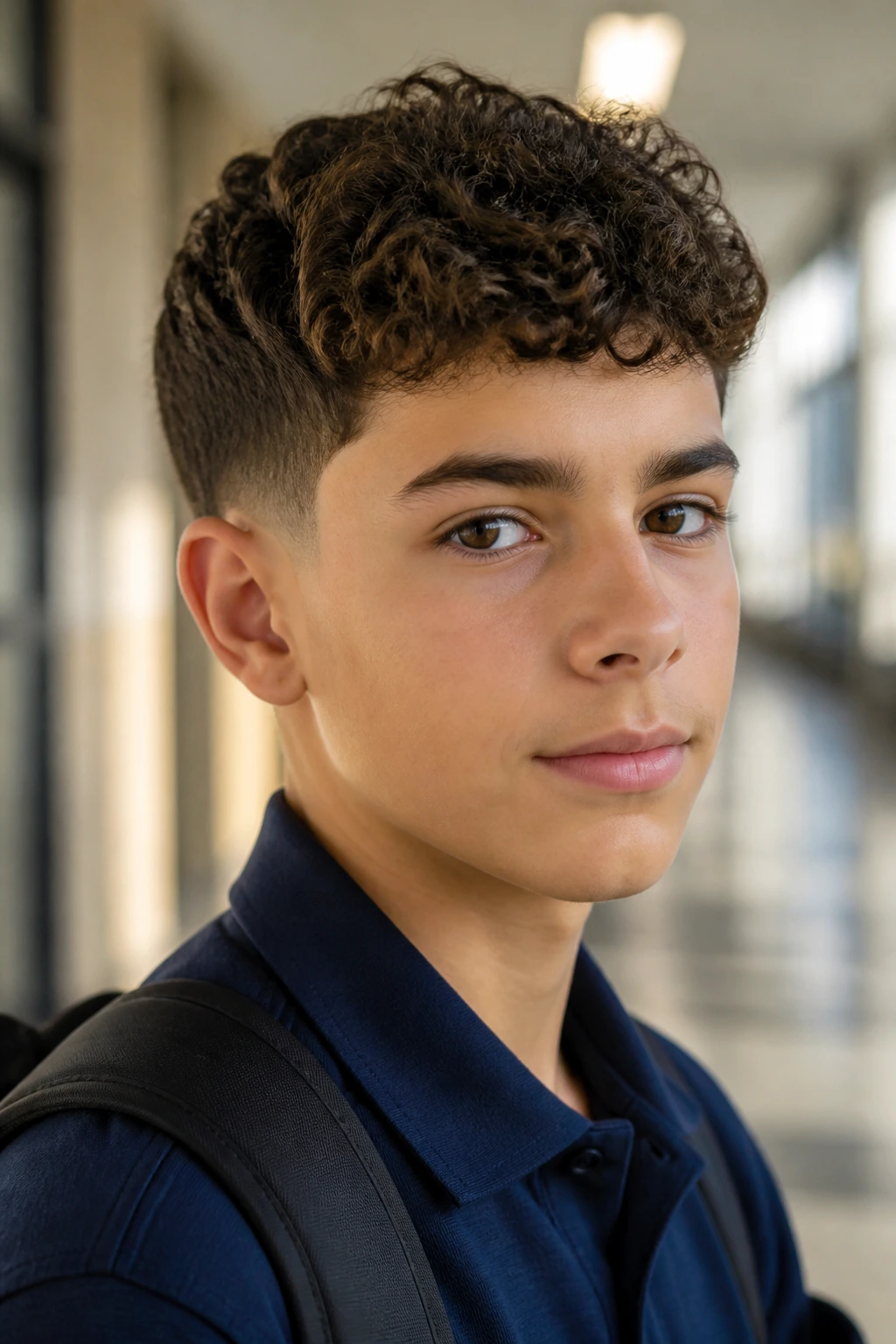
The Strict-Dress-Code Version: Keep the top modest, soften the fade, and skip hard parts or sharp line-ups. A low taper, short crop, or curly Caesar usually lands well here because it stays neat without drawing attention.
The Sports-Practice Version: Shorter sides, a controlled top, and a product that won’t melt into sweat are the goal. Mousse or a light leave-in beats heavy cream, and a short taper survives helmets and headbands better than a tall shape.
The Low-Product Morning Version: Pick a cut that behaves with water alone—think curly fringe, short crop, or messy top with a clean neckline. The haircut should do the work, not the product.
The Sensitive-Scalp Version: Ask for an all-scissor cut or a soft taper with no clipper work near the ears. That avoids the ticklish, buzzy feeling that makes some kids dread the barber chair.
The Grow-Out Version: If trims are going to be infrequent, choose layers and rounded edges. A shape that can stretch a little without collapsing saves a lot of frustration later.
Keeping the Cut Fresh Between Barber Visits
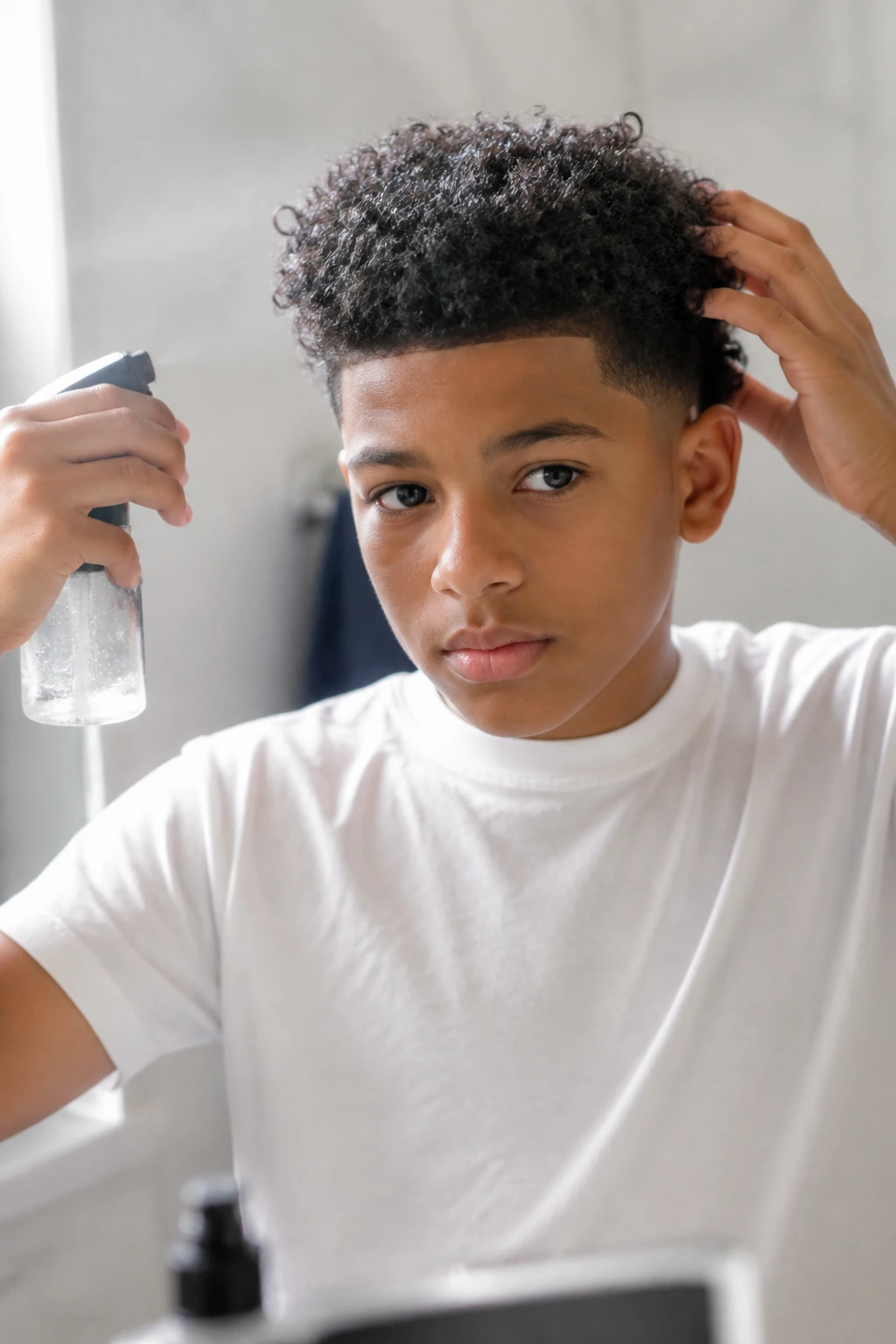
Curly hair can look fine from one week to the next and then go fuzzy in a single afternoon. That doesn’t mean the haircut failed. It means curls need a small amount of upkeep to keep the shape readable.
For taper and fade styles, a touch-up every 3 to 4 weeks usually keeps the sides and neckline in line. Scissor-heavy cuts can often go 6 to 8 weeks before they need real shaping. Mini twists and coil styles often need a refresh in the 2- to 4-week range, depending on how active the child is and how fast the roots loosen.
Night care matters more than most people admit. A satin pillowcase cuts down on friction, and a bonnet or loose wrap helps longer curls keep their shape. If the hair gets sweaty from sports, rinse it lightly or at least re-wet it the next morning instead of piling more product on top of yesterday’s buildup.
Frequently Asked Questions
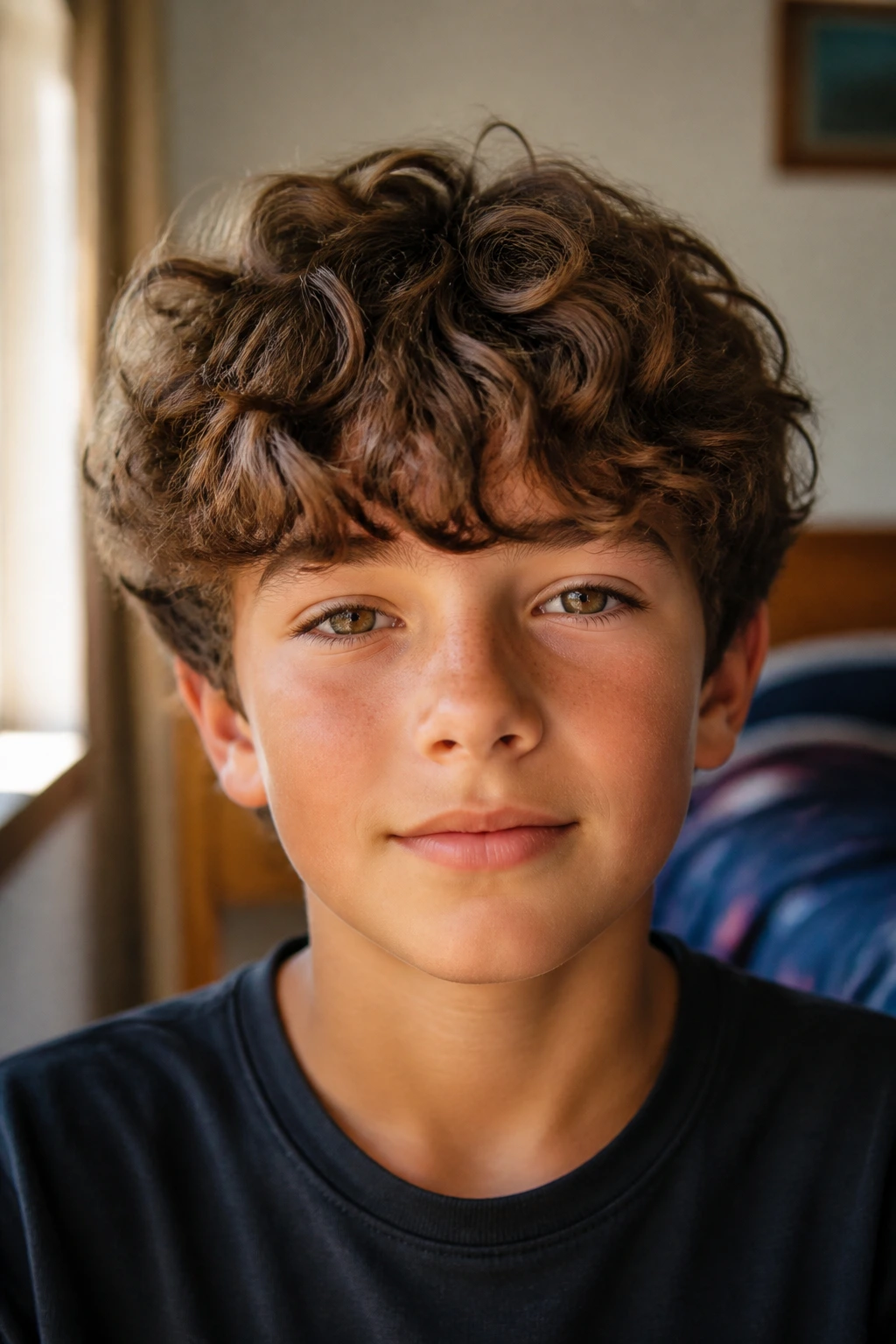
What curly haircut is easiest for school mornings?
A short crop, low taper, or curly Caesar is usually the easiest because it doesn’t need much styling. A quick mist and a small amount of leave-in are enough for most mornings.
Should curly hair be cut wet or dry?
Dry cutting is often better for curls because it shows the true length and shape. Wet cuts can work, but only if the barber knows how much the hair will shrink once it dries.
How short should the sides be for a schoolboy with curls?
That depends on the school and the curl pattern. A #2 or #3 guard with a soft taper is a safe place to start for most school-friendly cuts, while tighter styles or stronger fades can work if the dress code allows them.
What product is best for a schoolboy’s curls?
Light leave-in conditioner, curl cream, or mousse usually works best. Heavy gels and greasy pomades can make curls collapse or look dirty by midday.
How do you stop curls from puffing up by lunch?
Start with a cut that leaves enough length on top and uses a soft taper on the sides. Then use a small amount of product on damp hair and avoid brushing the curls dry.
Can curly hair work with a strict dress code?
Yes. Low tapers, short crops, curly Caesars, and rounded afro shapes usually stay neat without looking flashy. The key is keeping the outline clean and avoiding hard lines that grow out fast.
How often should a schoolboy with curls get a trim?
Most curl cuts need some kind of shape refresh every 4 to 6 weeks. Tapers and fades usually need touch-ups sooner, while scissor cuts and layered shapes can stretch longer.
What if the haircut looks too short after it dries?
That usually means the barber cut the curls too close while they were wet. The fix is to leave more length next time, especially on the front and crown, because curls can shrink a surprising amount once they dry.
One Last Mirror Check
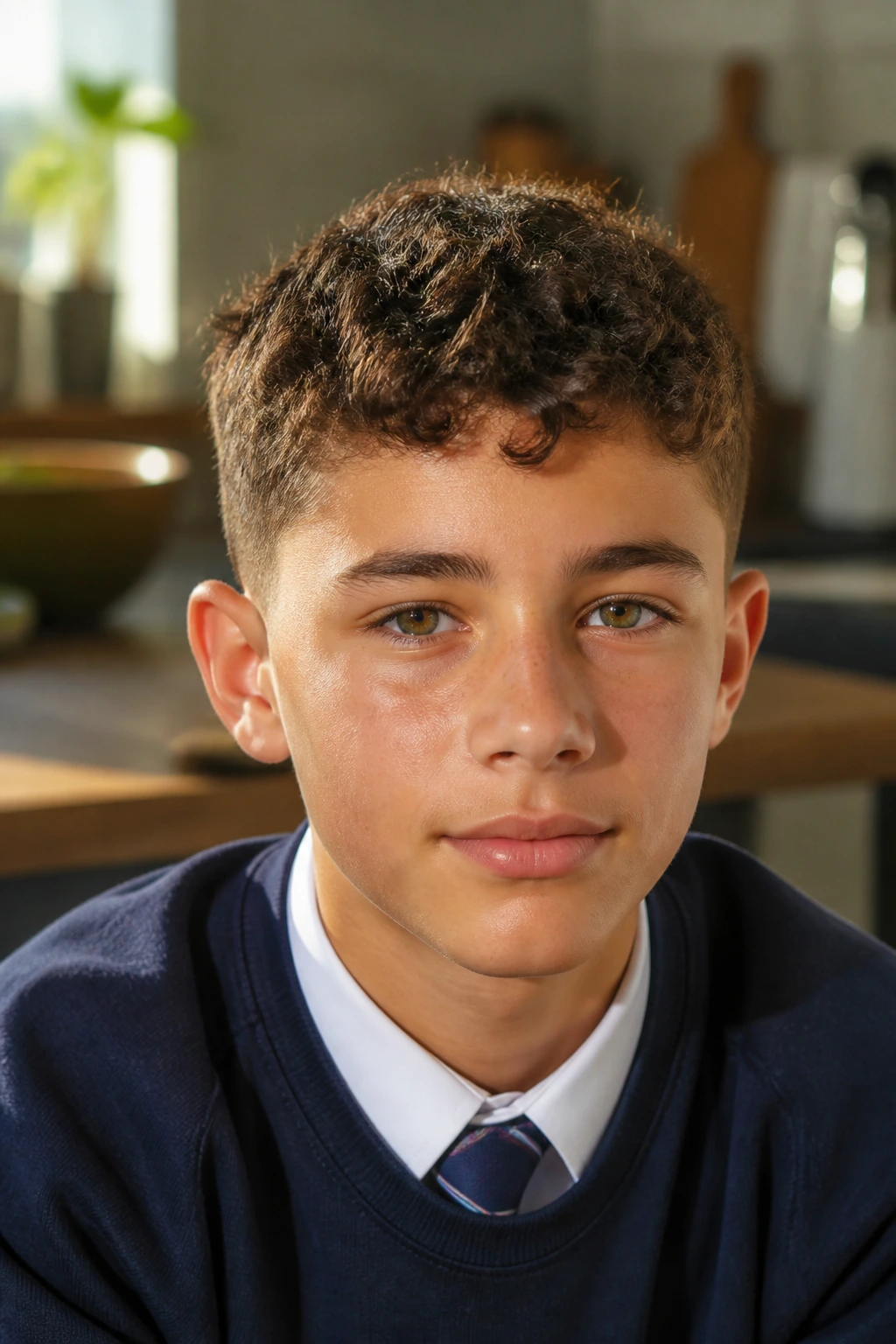
A good school cut should still look decent when a backpack strap rubs the side and when the hair dries halfway through the day. That is the whole game. Pick the shape that fits the curl pattern, the school rules, and the amount of maintenance a real week allows, not the one that only looks good in the barber chair.
The best curly hairstyles for schoolboys don’t fight the hair. They give it shape, let it breathe, and keep the edges from wandering off by Thursday. Find the version that matches the curl, the schedule, and the kid who has to wear it, and mornings get a little calmer from there.
