



Toddler boy curly haircuts live or die by one thing: whether the barber respects shrinkage. Curly hair can lose a quarter to half of its visible length when it dries, and on a squirmy little kid that difference is the line between “neat and soft” and “why does one side look chopped off?” Curls do not sit still the way straight hair does. They spring, clump, puff, relax, and then spring again the second your child runs outside or buries his face in a blanket.
The best cuts do not fight that. They give the curl pattern a shape to fall into, which is why a good toddler cut often looks better on day four than it did in the barber chair. I’m partial to shapes that grow out cleanly, keep the ears comfortable, and don’t demand twenty minutes of styling before breakfast. A toddler is not a mannequin. The haircut has to survive naps, playground time, and that glorious habit kids have of rubbing the back of their heads on everything.
These 32 toddler boy curly haircuts lean into that reality. Some are tidy and close. Some leave a soft cloud of curls on top. A few bring in fades and tapers, because yes, those can work on curly kids when they’re done with restraint. The thread running through all of them is simple: keep the curl pattern intact, give the silhouette a real shape, and avoid any cut that looks sharp only for the ten minutes after the cape comes off.
Why These 32 Curly Cuts Work So Well on Toddler Hair
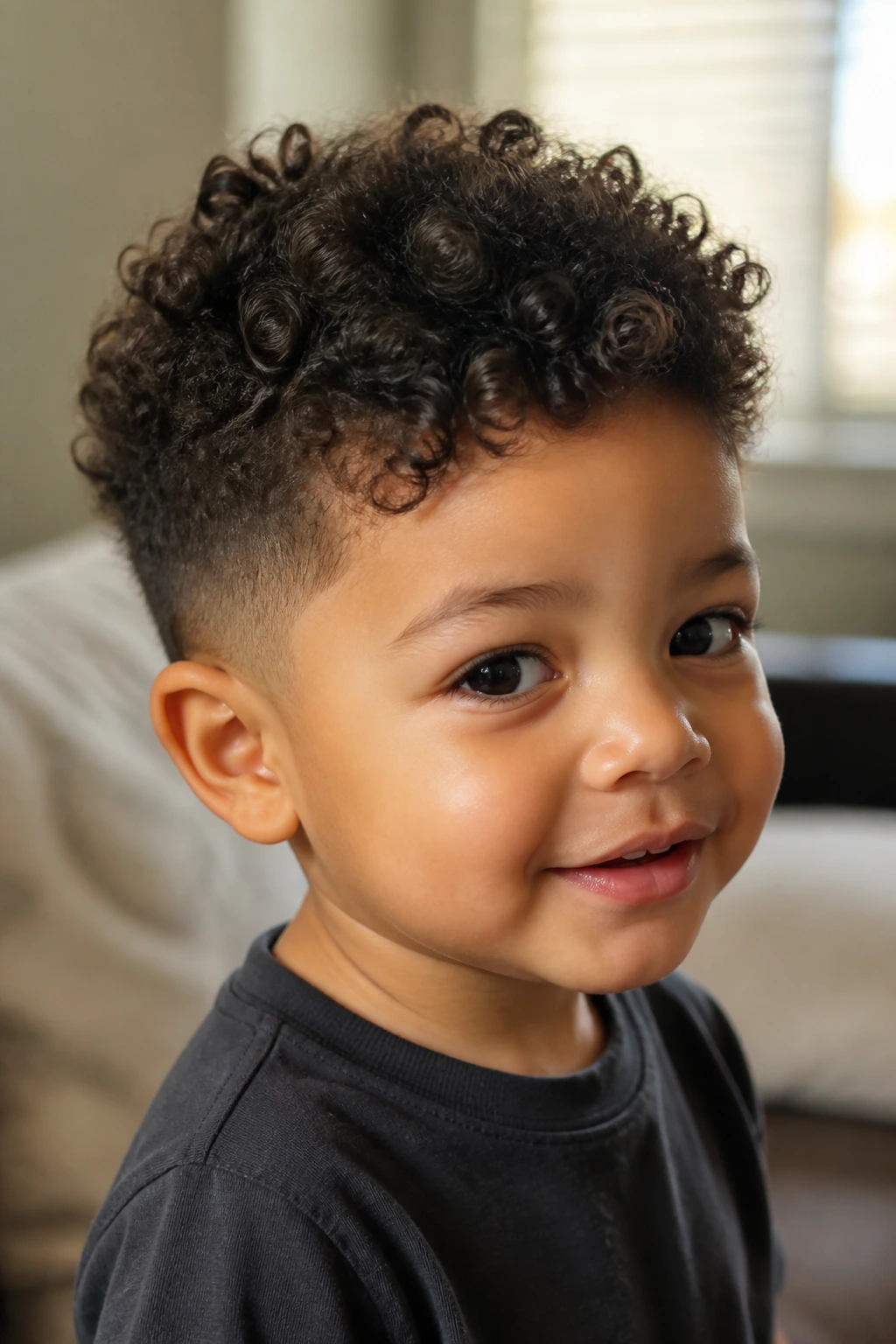
-
Shrinkage-safe shapes: These cuts leave enough length for curls to bounce back after drying, so you do not end up with a top that looks two inches shorter than it did in the chair.
-
Comfort around the ears and neck: A soft taper or scissor-finished edge keeps itchy hair from poking the skin, which matters more on toddlers than most people admit.
-
Easy grow-out: The best toddler cuts do not collapse into a messy shelf after three weeks. They soften gradually, which buys you time between trims.
-
Works with different curl types: Loose waves, springy ringlets, and tighter coils all need a slightly different outline, and the styles below cover that range.
-
Low-drama mornings: Most of these looks can be refreshed with water, fingers, and a pea-sized amount of leave-in. That’s the whole point.
-
Barber-friendly language: You can explain these cuts with simple directions — top length, side taper, neckline, fringe — without turning the appointment into a strategy session.
1. Rounded Afro With a Soft Outline
A rounded afro is the most honest haircut for dense toddler curls. It lets the hair keep its own spring while giving the outline enough shape that it looks intentional, not fuzzy.
Ask for a soft rounded perimeter, a light clean-up around the ears, and a gentle neckline. I’d leave the crown alone unless it’s puffing out in a strange way. This style looks especially good when the curls are tight enough to create a plush, even cloud. It also grows out in a kind way, which is more than I can say for a lot of sharper toddler cuts.
2. Low Taper Curls
Low tapers are the tidy solution when you want the sides calm but refuse to flatten the top. The taper starts low at the sideburns and nape, so the curl pattern stays the star of the show.
This cut works when the hair is thick at the temples and you need a clean edge without shaving the whole side down. Ask for scissors or a soft clipper taper, not a high fade. The difference matters. A low taper grows out with less awkward bulk, and it keeps the hairline looking neat between visits.
3. Curly Mop With Eyebrow Fringe
What makes this work? A little extra length and a barber who does not panic at shrinkage.
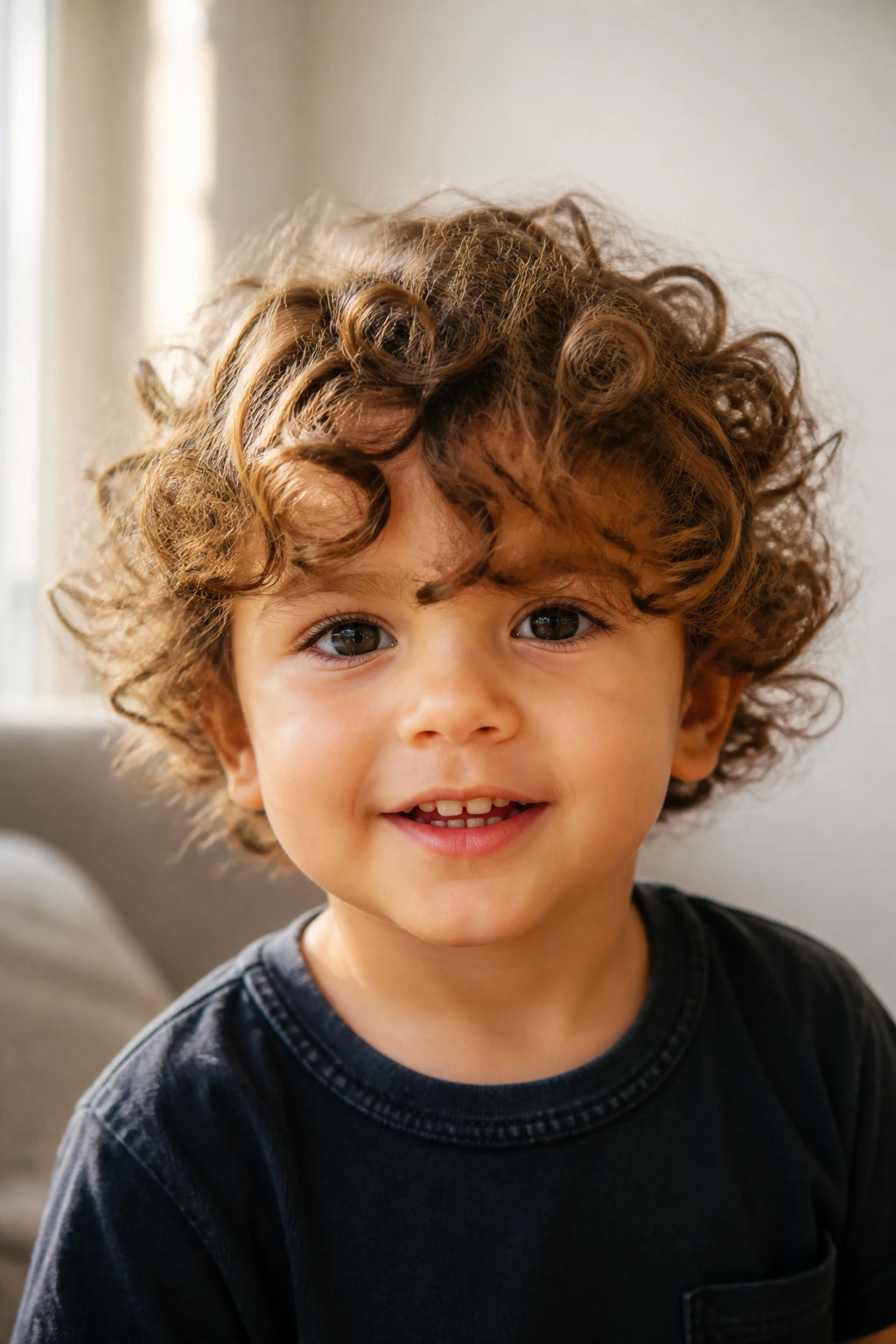
The curly mop is the cut I reach for when a toddler has loose ringlets or springy waves that want to fall forward. Keep the fringe long enough to land near the eyebrows when dry, not when wet. Wet curls lie to you. They always do. A soft, face-skimming front gives the style a sweet shape without forcing the hair flat, and the rest of the cut can stay airy and touchable.
4. Scissor-Only Curly Crop
This is the calm, no-drama cut for a kid who hates clippers near the ears. A scissor-only crop keeps the outline soft and removes length in small, controlled bites.
It’s especially nice for fine curls that get puffy when they’re overcut with guards. Tell the barber you want texture preserved, not thinned out. Scissors let the shape stay gentle, and the cut usually grows out more naturally than a super-short clipper style. If your child has a sensitive scalp, this is one of the kinder choices on the list.
5. Curly Shag for Little Ringlets
A toddler shag sounds fancier than it is. Really, it just means layers that let the curls move instead of stacking into a block.
The trick is keeping the ends soft so the cut doesn’t turn into a triangle. Ask for short-to-medium layers around the sides and a little extra length in the back. That gives ringlets room to spring without sitting heavy at the bottom. I like this one on kids whose curls are loose enough to fall in little corkscrews, because the layers make the pattern show instead of hiding it.
6. Mini Curly Mohawk
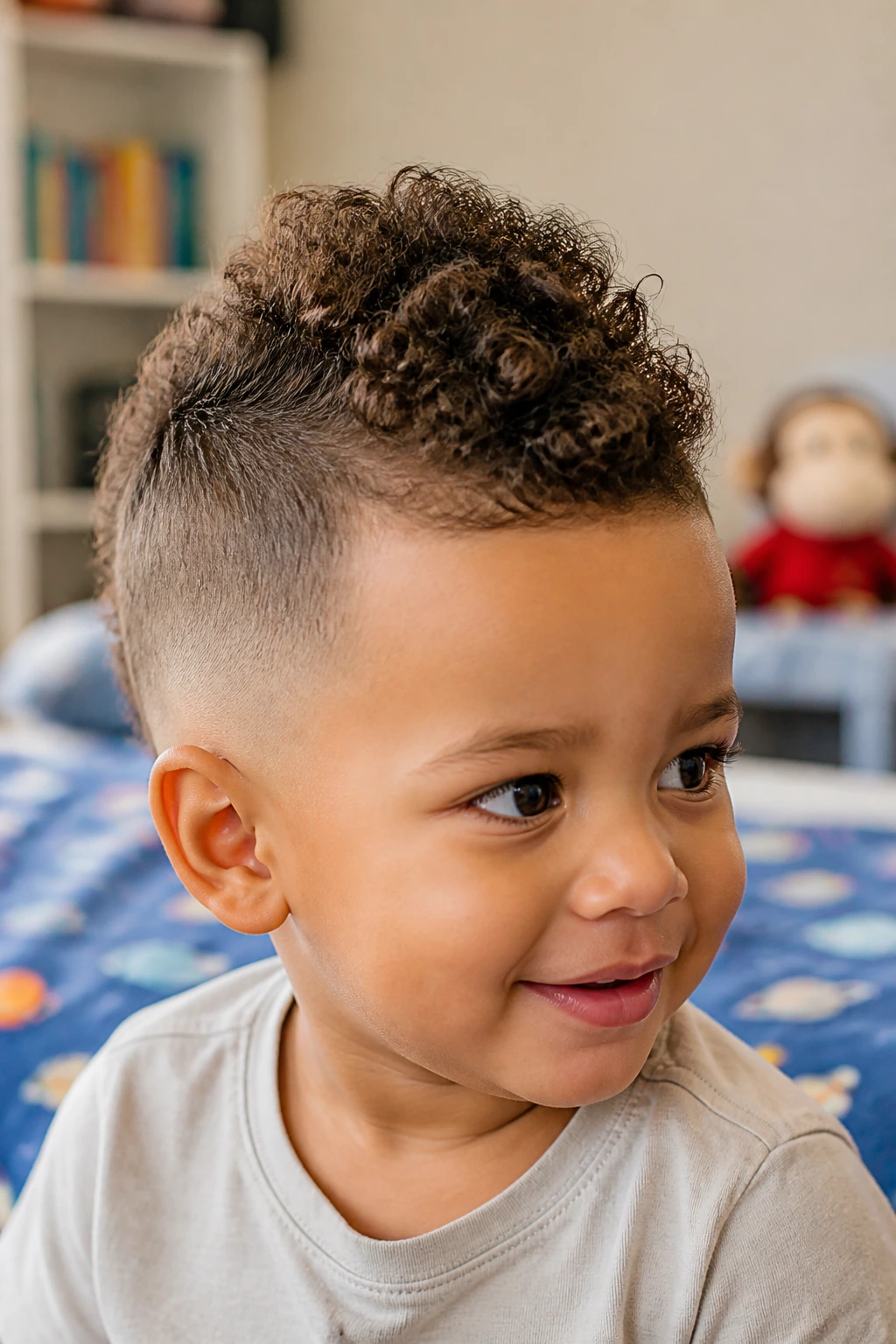
A mini mohawk is playful without being extreme when the sides stay low and the center strip stays rounded. Think of it as a soft ridge of curls, not a punk-rock spike.
Keep the top strip about 2 to 3 inches longer than the sides, then taper gently around the ears. The mohawk shape gives thick curls a place to sit, which stops them from spreading wide. It also suits active toddlers because the top can be scrunched into shape in about thirty seconds. Not bad. Not bad at all.
7. Side Part and Loose Curls
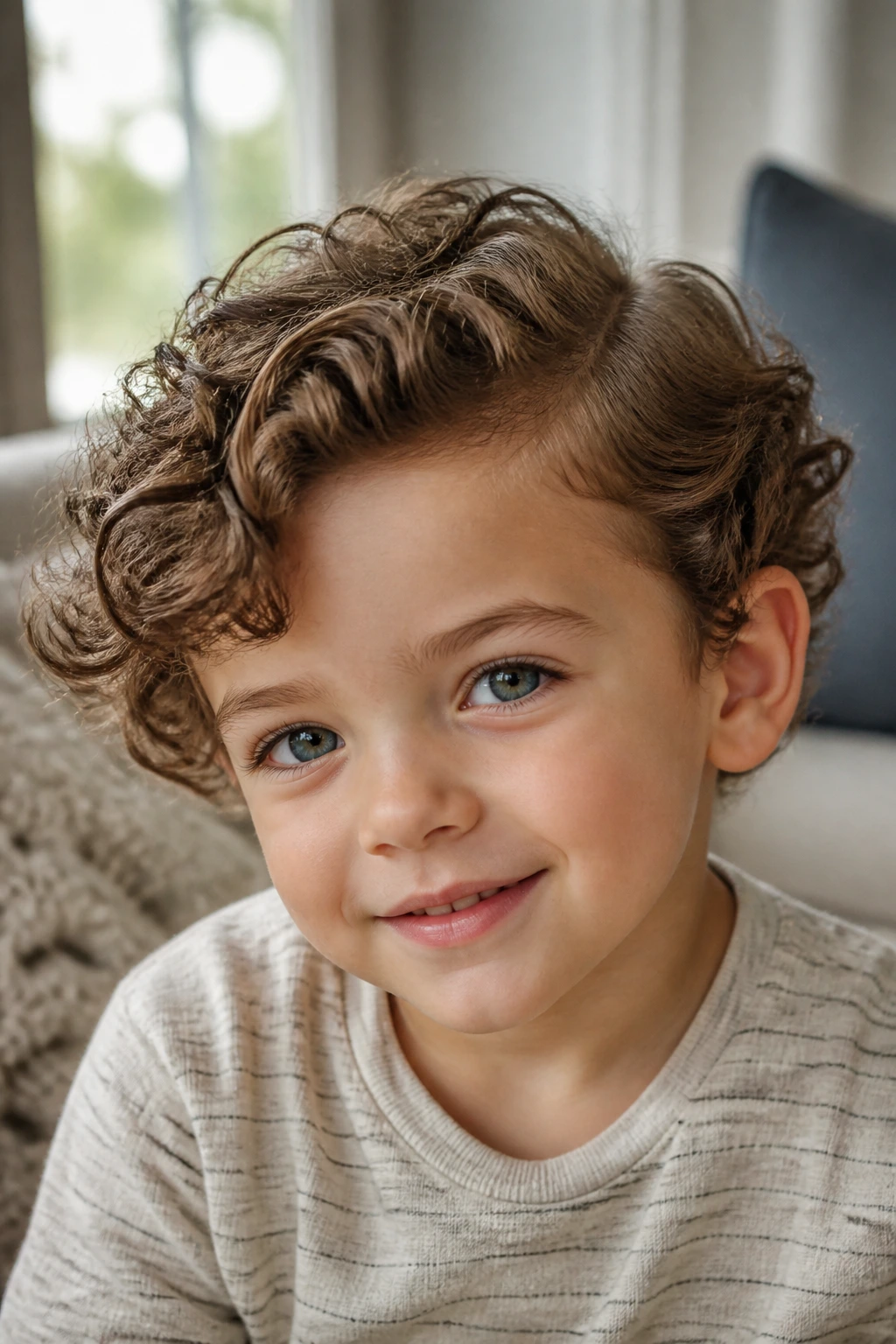
A side part on curly toddler hair works best when it looks discovered, not drawn. If the hair wants to fall a certain way, follow that. Don’t force a razor-straight part where the curl pattern clearly disagrees.
Why It Stays Pretty Soft
A loose side part keeps the curls from falling straight into the eyes while still preserving movement. Ask the barber to leave enough weight on top for the part to hold without gel. A light tapper around the temple helps the silhouette stay clean, and the shape usually looks sharp enough for photos without reading as overstyled.
8. Temple Fade and Ringlets
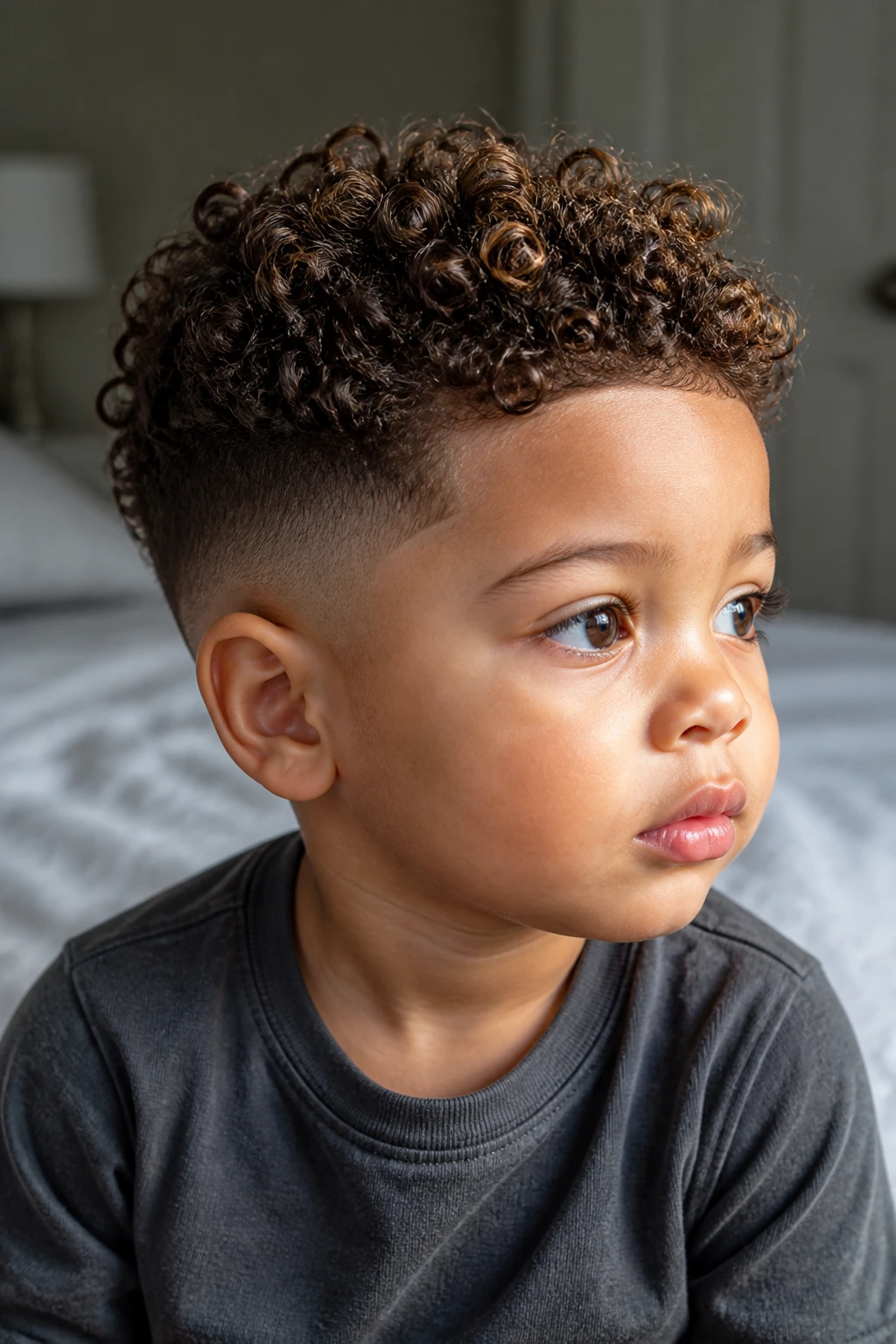
A temple fade gives ringlets a clean frame near the face, and that contrast can be sharp in the best way.
The fade should stay low and soft so the top still looks like hair, not a cap sitting on a shaved base. Keep the curls on top long enough to spring up after washing, usually at least 2 inches. The temple area is where this cut earns its keep: neat edges there make the whole style feel controlled, even when the back is doing its own curly thing.
9. Curly Caesar
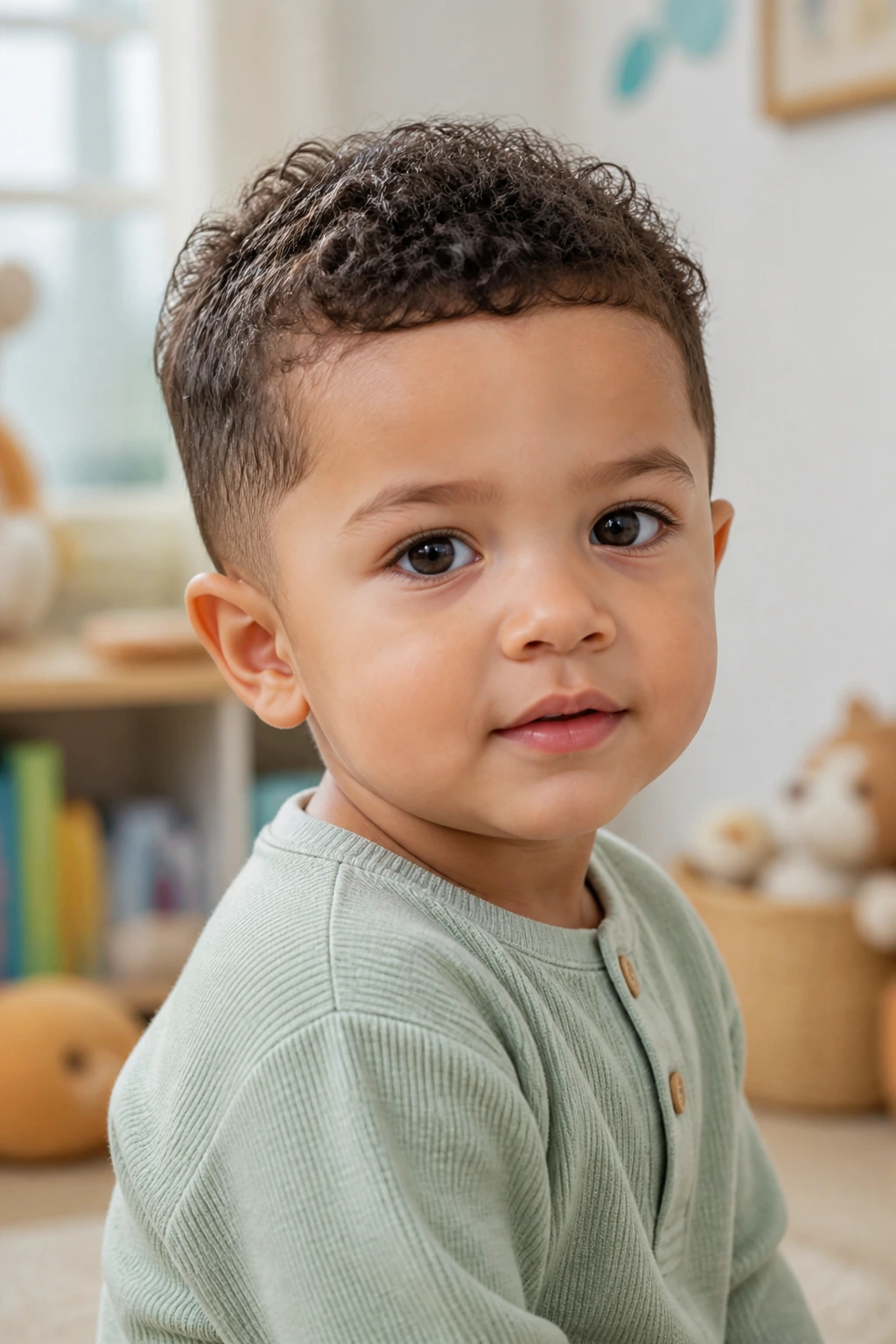
Does a Caesar work on curls? Absolutely, if you leave enough front length to respect the shrinkage.
The Caesar is short, compact, and easy to manage. The front fringe is cut straight across or slightly rounded, and the rest of the top stays short enough to sit close to the head. On toddler curls, that means the barber should cut with the dry shape in mind, not the wet one. This is a strong choice for kids whose hair grows fast and refuses to stay brushed forward for long.
10. Longer Crown, Tapered Sides
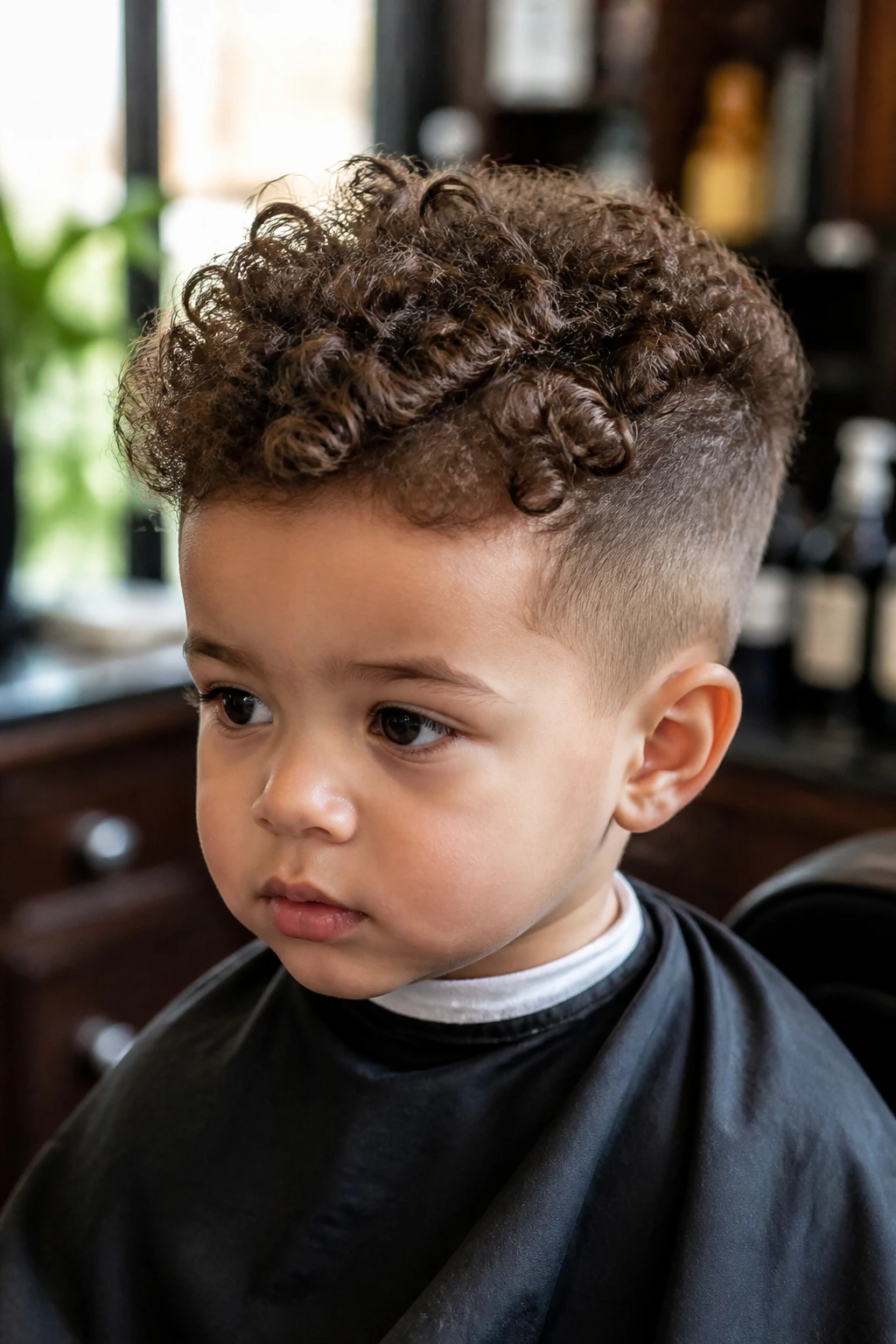
This is the haircut I’d pick when the crown curls puff up more than the rest. Keeping the top longer lets the swirl sit naturally, while tapered sides stop the whole head from turning into a triangle.
What to Tell the Barber
- Keep extra length at the crown, around 2½ to 4 inches depending on curl tightness.
- Taper the sides softly, especially around the ears.
- Leave the top textured so the curls can fall instead of stand straight up.
It’s a practical shape. The top does the curly work, and the sides keep it from looking heavy.
11. Baby Frohawk
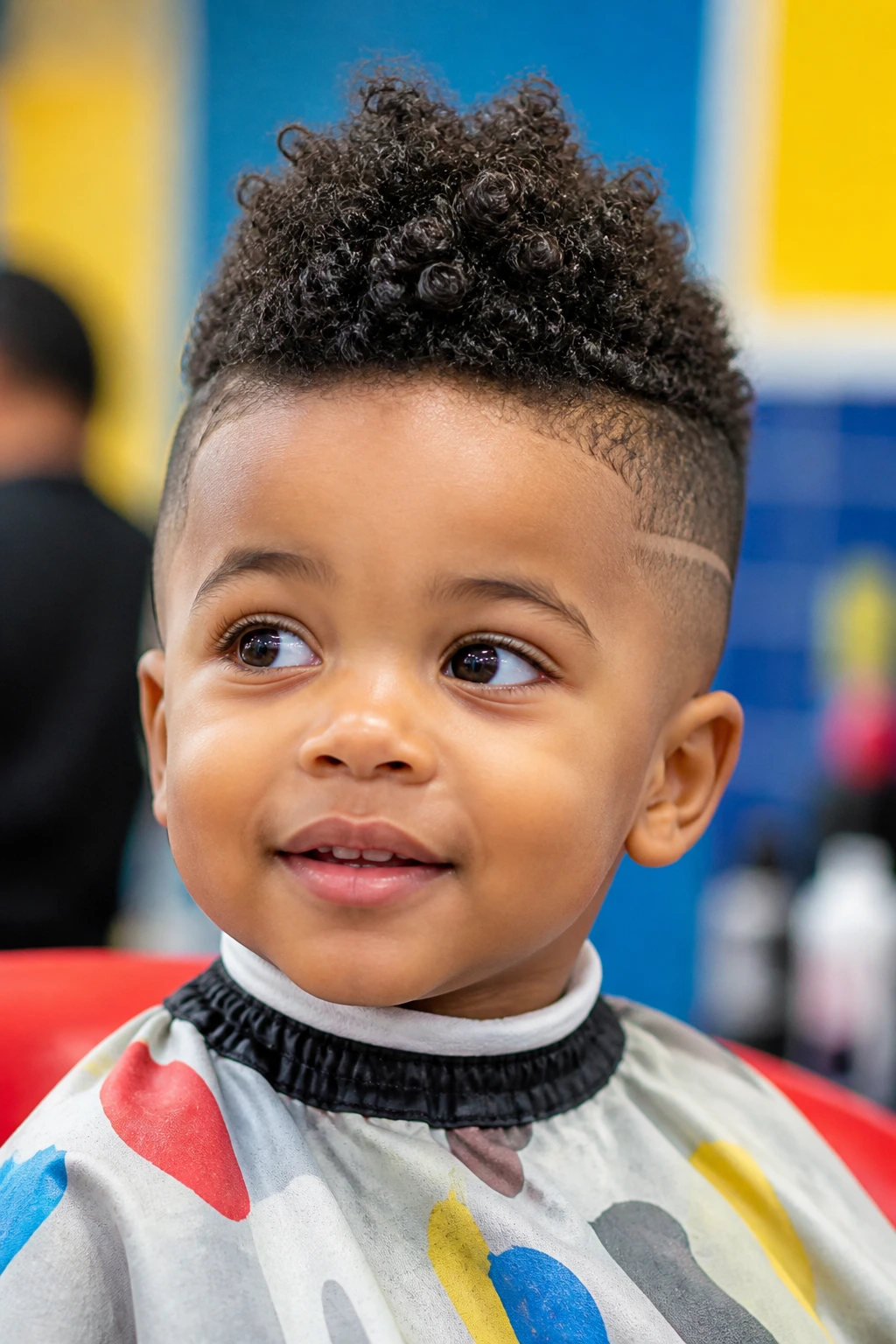
A baby frohawk is a softer cousin of the mini mohawk, and it usually reads more playful than edgy. The center is fuller, the sides are shorter, and the whole shape feels rounded instead of sharp.
I like this one for thick coils that need a home in the middle of the head. The sides can be cleaned up with clippers or scissors, but the top should stay plush enough to keep the shape soft. If the barber leaves the crown a little higher than the front, the haircut gets a nice lift without looking stiff.
12. French Crop for Loose Curls
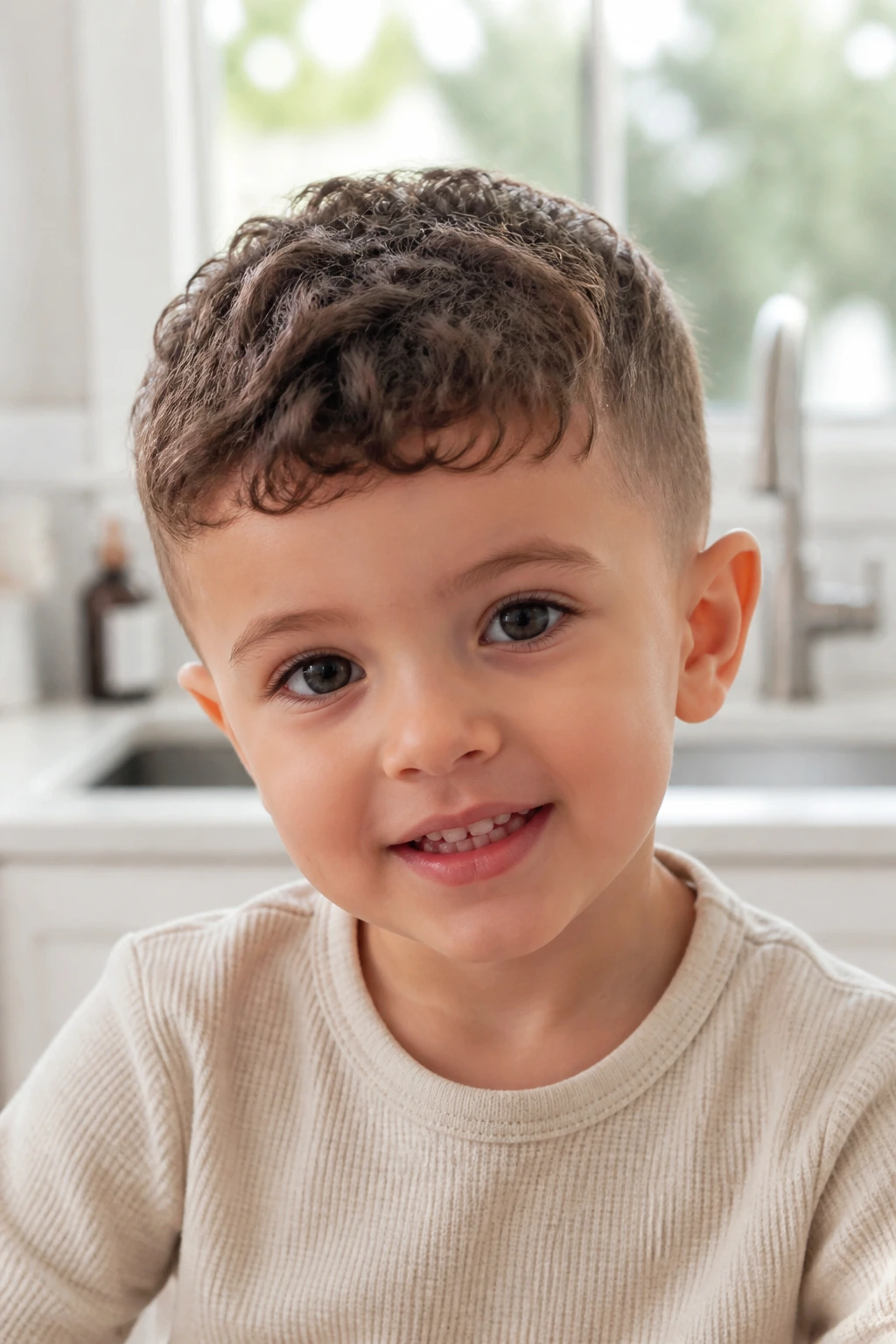
The French crop works when the curls are loose enough to lie forward without fighting every minute. The top stays short, the fringe stays textured, and the sides stay neat.
This cut is handy for toddlers with fine curls because it does not ask for much styling. A little water and a quick finger rake usually do it. Ask for point cutting at the fringe so the front doesn’t sit in one blunt line. That tiny bit of texture makes the difference between “cut with a bowl” and “cut on purpose.”
13. Curly Undercut
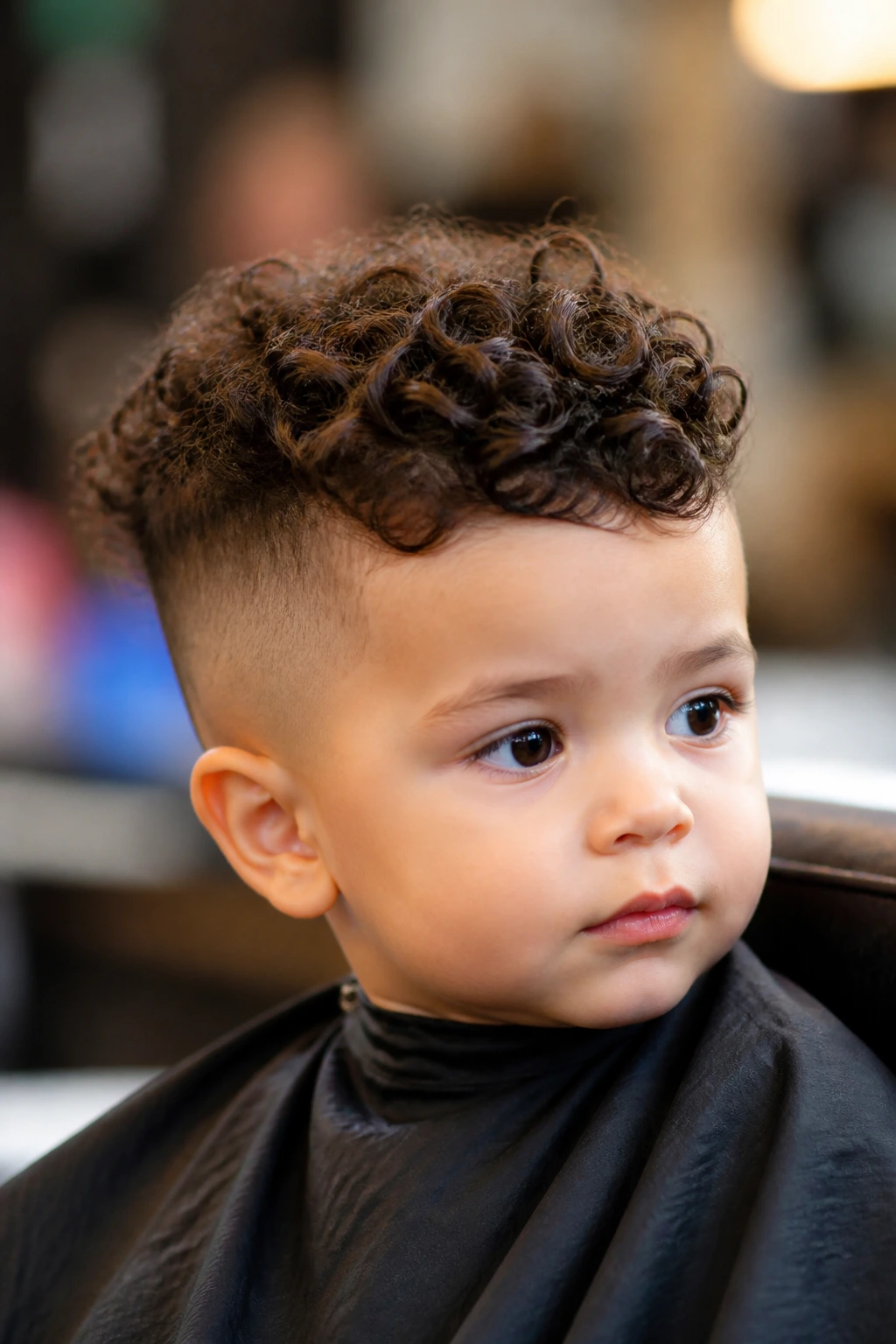
A curly undercut is bold, and I’d only choose it when the top has enough density to carry the contrast. Short or shaved sides can make the curls up top look bigger, which is the whole point.
Best For and Watch Outs
- Best for: thick curls that need air around the sides.
- Ask for: a clean disconnect, but not a razor-close sides job unless you’re ready for fast grow-out.
- Watch out for: a top that’s too short. The undercut needs length to look intentional.
This one grows out fast, so it works better if you don’t mind regular touch-ups.
14. Drop Fade With Volume
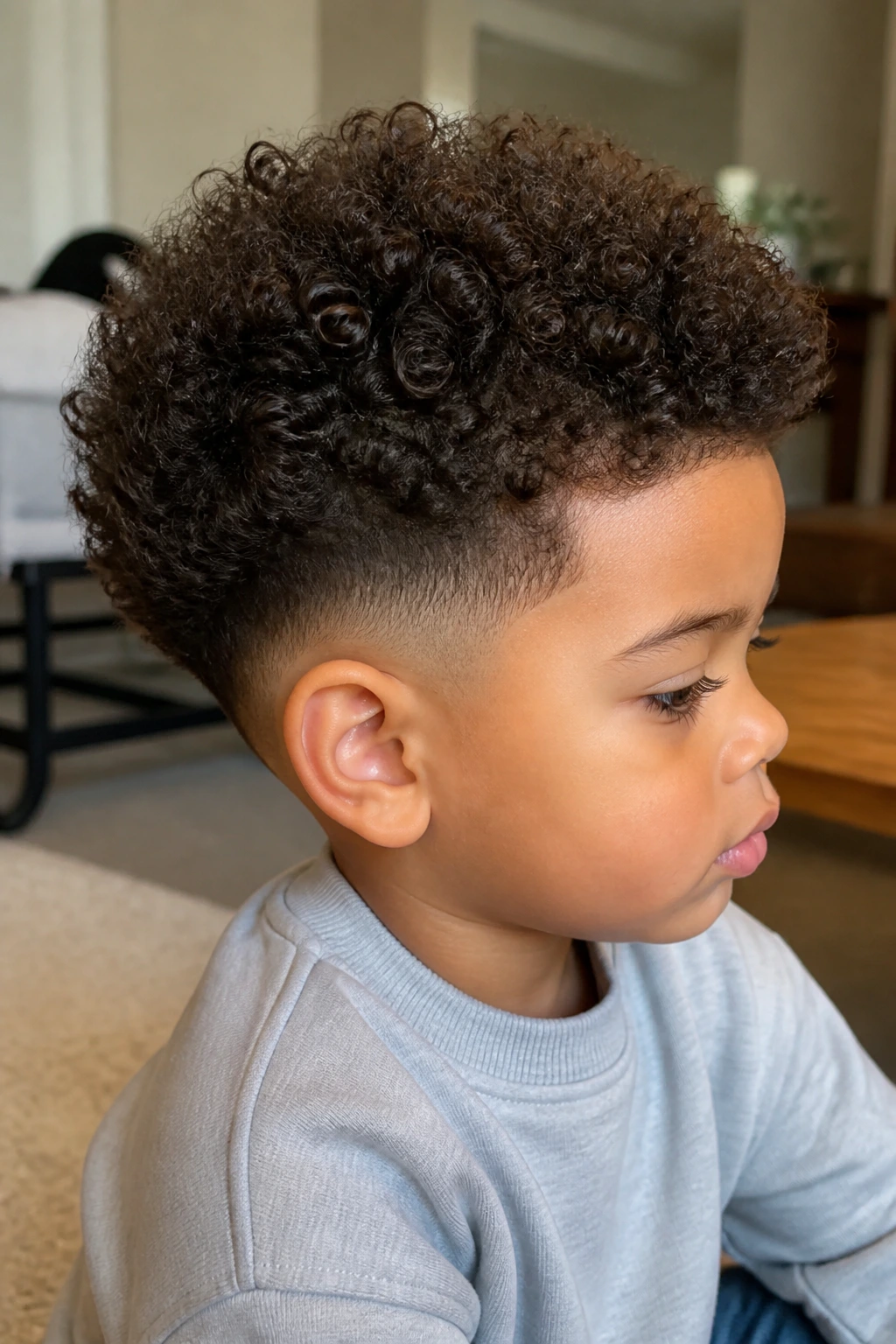
A drop fade curves lower behind the ear, which is exactly why it looks softer on little heads than a straight, hard fade line.
The top should stay full and rounded. The fade drops behind the ear and hugs the shape of the head, which helps the curls keep the spotlight. It’s a smart cut for toddlers with a wider face shape or a lot of volume at the sides, because the outline looks balanced instead of boxy. Clean. Calm. Done.
15. Sponge-Defined Coils
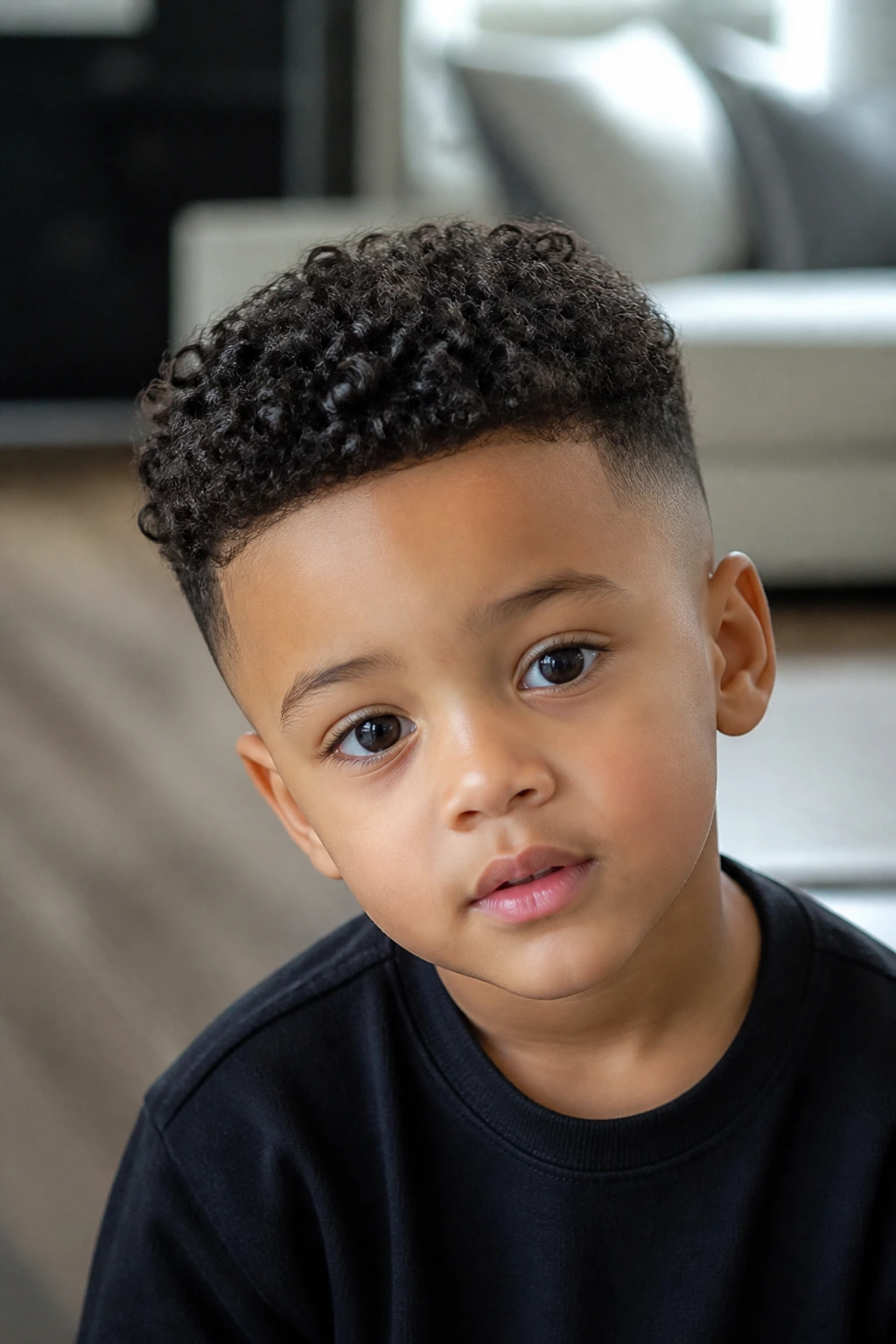
If your child has tight coils, this cut is about definition rather than length. A small curl sponge or gentle finger-coiling routine can help the top read neat instead of fuzzy.
The haircut itself should stay short enough to keep the silhouette close, but not so short that the curl pattern disappears. Around 1 to 1½ inches on top is often enough for the coils to show. Use a light leave-in, then twist or sponge only for a few seconds at a time. No need to turn it into a project.
16. Layered Mid-Length Curls
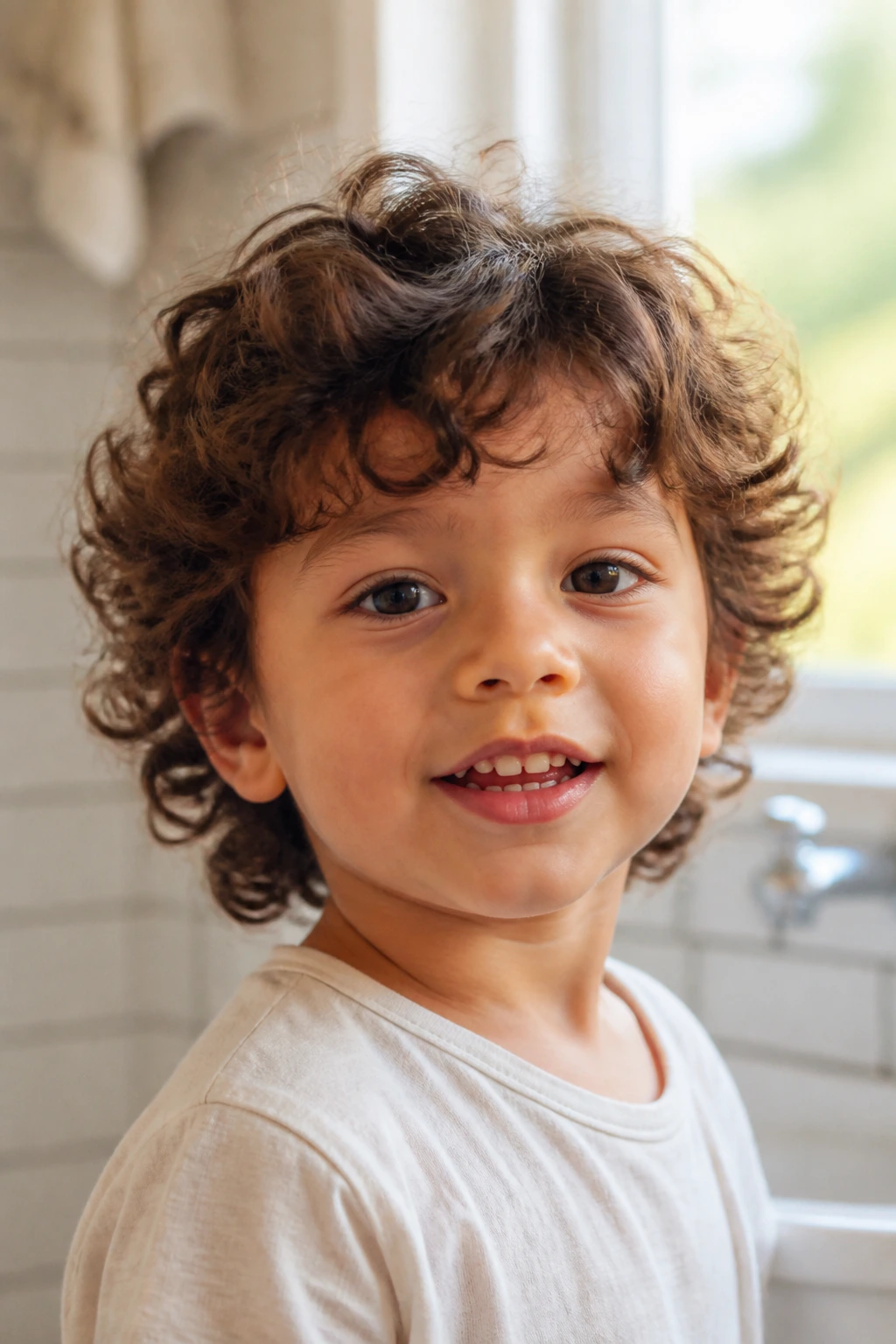
Mid-length curls are lovely when they’re layered instead of cut into a block. Layers remove bulk, help the curls fall differently, and stop the hair from flaring outward at the bottom.
This cut suits toddlers whose curls touch the ears and neck but still have enough bounce to move. Ask for soft layering with the ends point-cut, not thinned aggressively. Point cutting means the barber snips into the ends at an angle so the line stays soft. It’s one of those small details that changes everything.
17. Clean Neckline, Natural Top
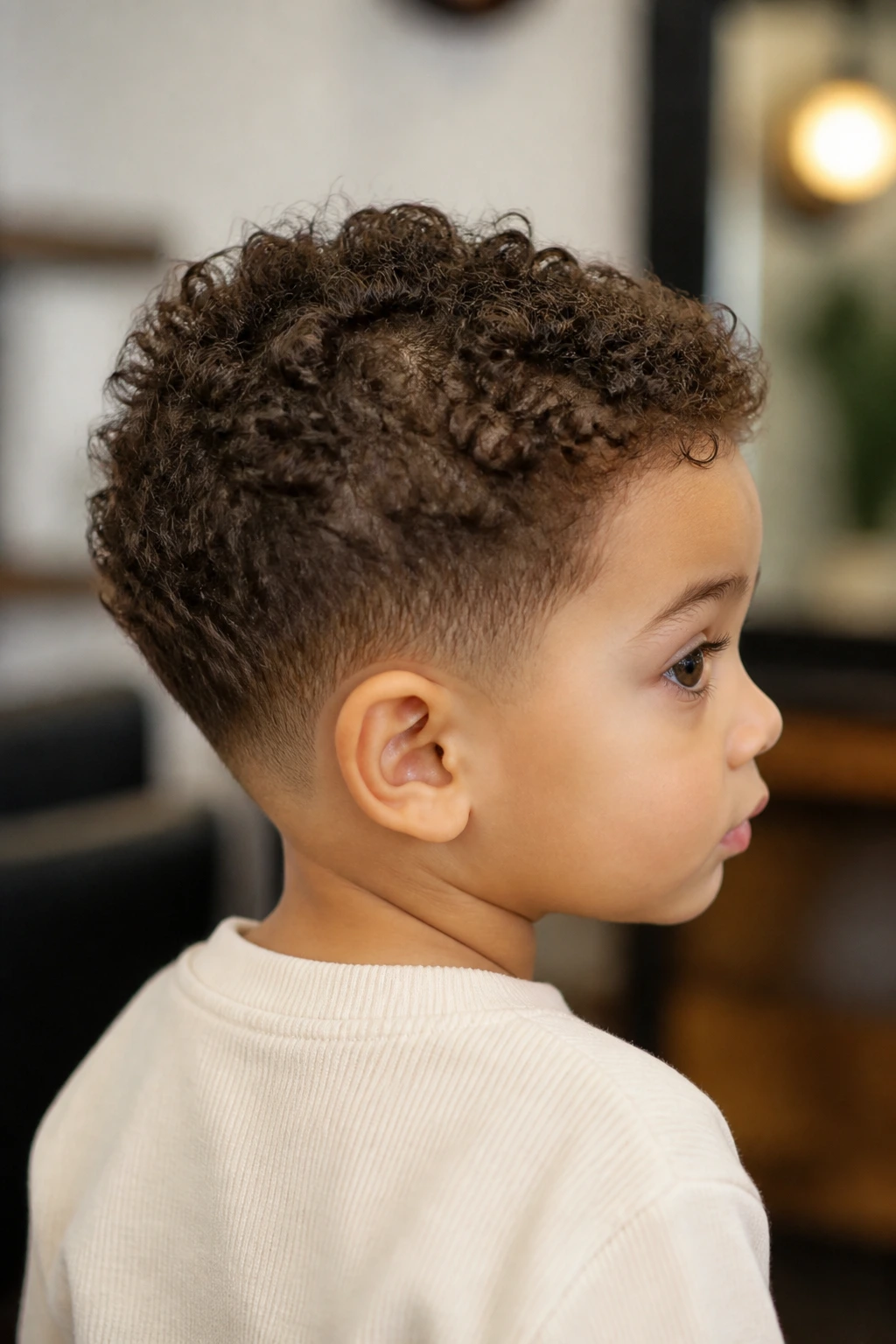
A clean neckline with a natural top is the least fussy route when you want the hair to look cared for without looking styled. The back and nape stay neat, and the top keeps its full curl pattern.
This is the haircut I’d choose for a busy family who wants a tidy result but does not want to babysit the style every morning. The barber should clean the nape and around the ears, then leave the top mostly alone except for shaping. It works because it respects the part of curly hair that actually matters — the shape up top.
18. Curly Bowl Cut
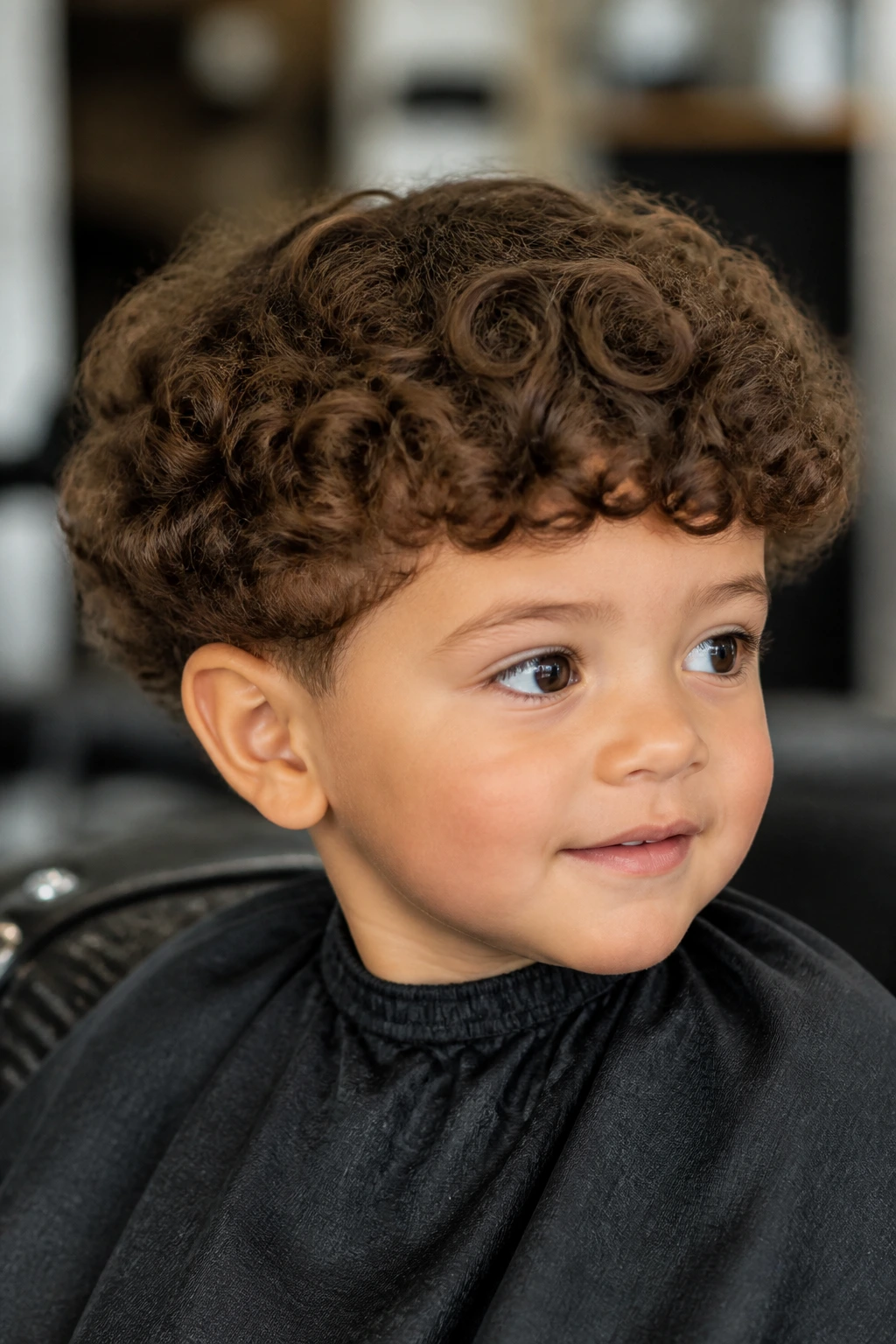
A modern bowl cut on curly hair is not the flat, mushroomy thing people picture. Done right, it’s rounded, soft, and a little playful.
The secret is leaving enough length for the curls to bend and framing the shape so it follows the head, not a ruler line. Ask for a rounded perimeter and a lighter fringe. I would skip this cut on very fine curls that go frizzy at the ends, but on denser hair it can look surprisingly neat. And yes, it grows out better than people think.
19. Curtain Curls
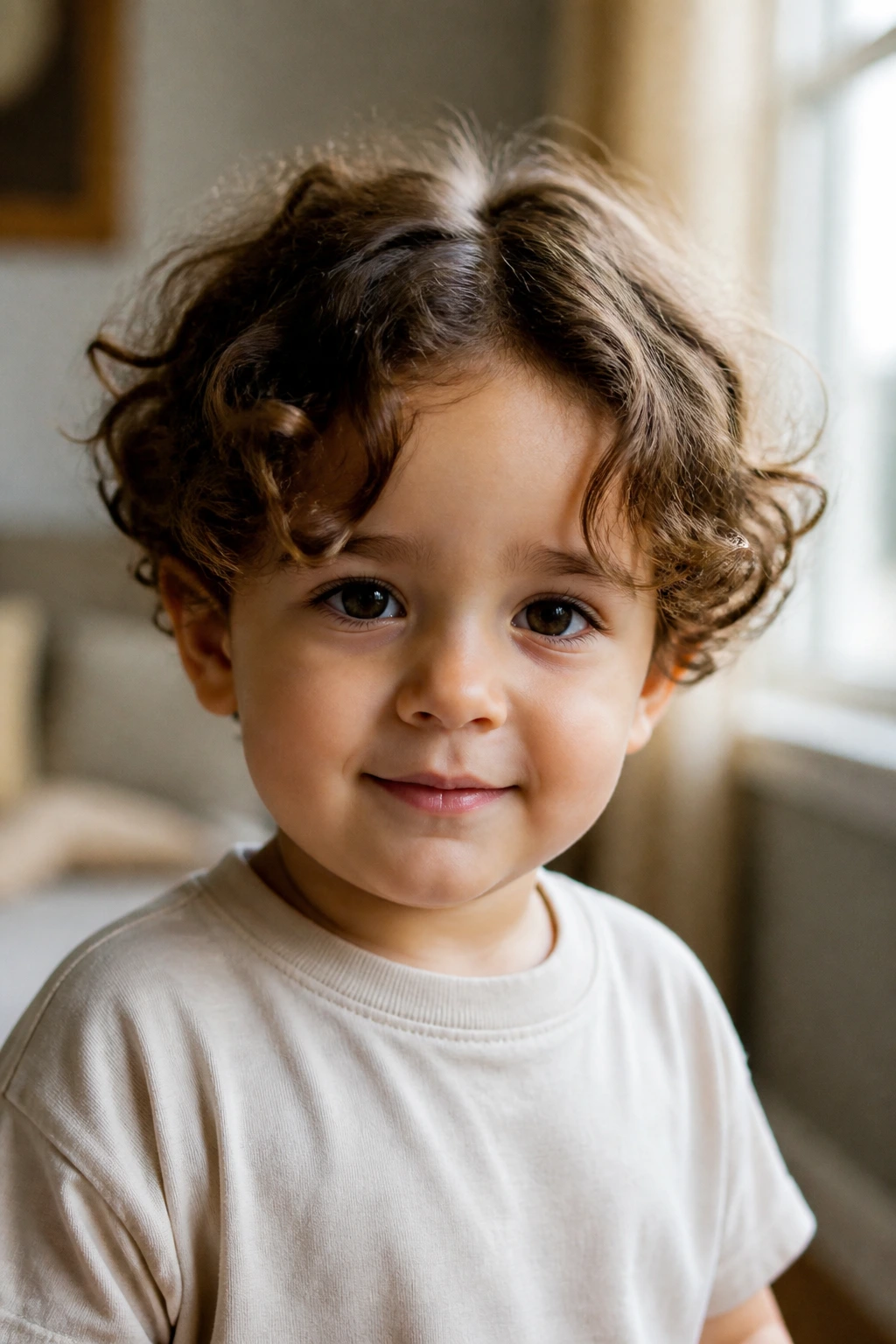
Curtain curls are for toddlers whose hair naturally falls in the middle or wants to split on its own. The front is longer, the part is soft, and the curls frame the face instead of sitting in a hard line.
How It Feels in Real Life
- The front keeps enough length to drape.
- The sides stay lighter so the shape doesn’t puff wide.
- The cut looks best when the curls are finger-separated, not brushed flat.
This style has a sweet, almost old-school charm. It is also easier to manage than a sharp fringe, because the front can grow a little without wrecking the shape.
20. Mini Pompadour Curls
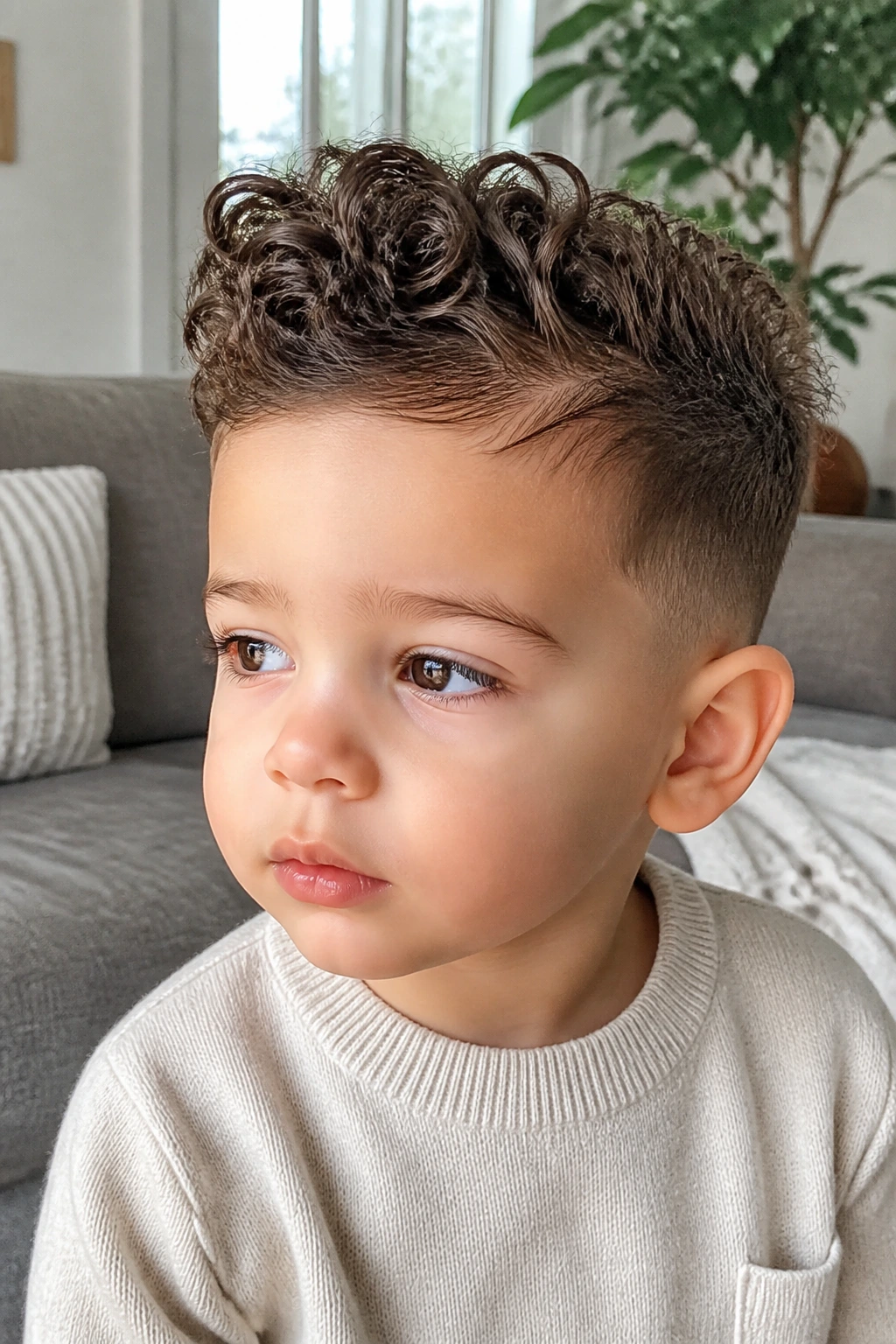
A mini pompadour on a toddler sounds more dramatic than it is. It simply means the front lifts a bit, while the sides stay neat and the curls keep their texture.
Use a tiny amount of leave-in and lift the front with your fingers while the hair is damp. Don’t slick it back. That kills the curl pattern and makes the style look stiff. This cut works when a child’s hairline has enough density to hold a little height, and it can be a nice way to keep curls off the forehead without shaving everything short.
21. Textured Buzz With Curl Left
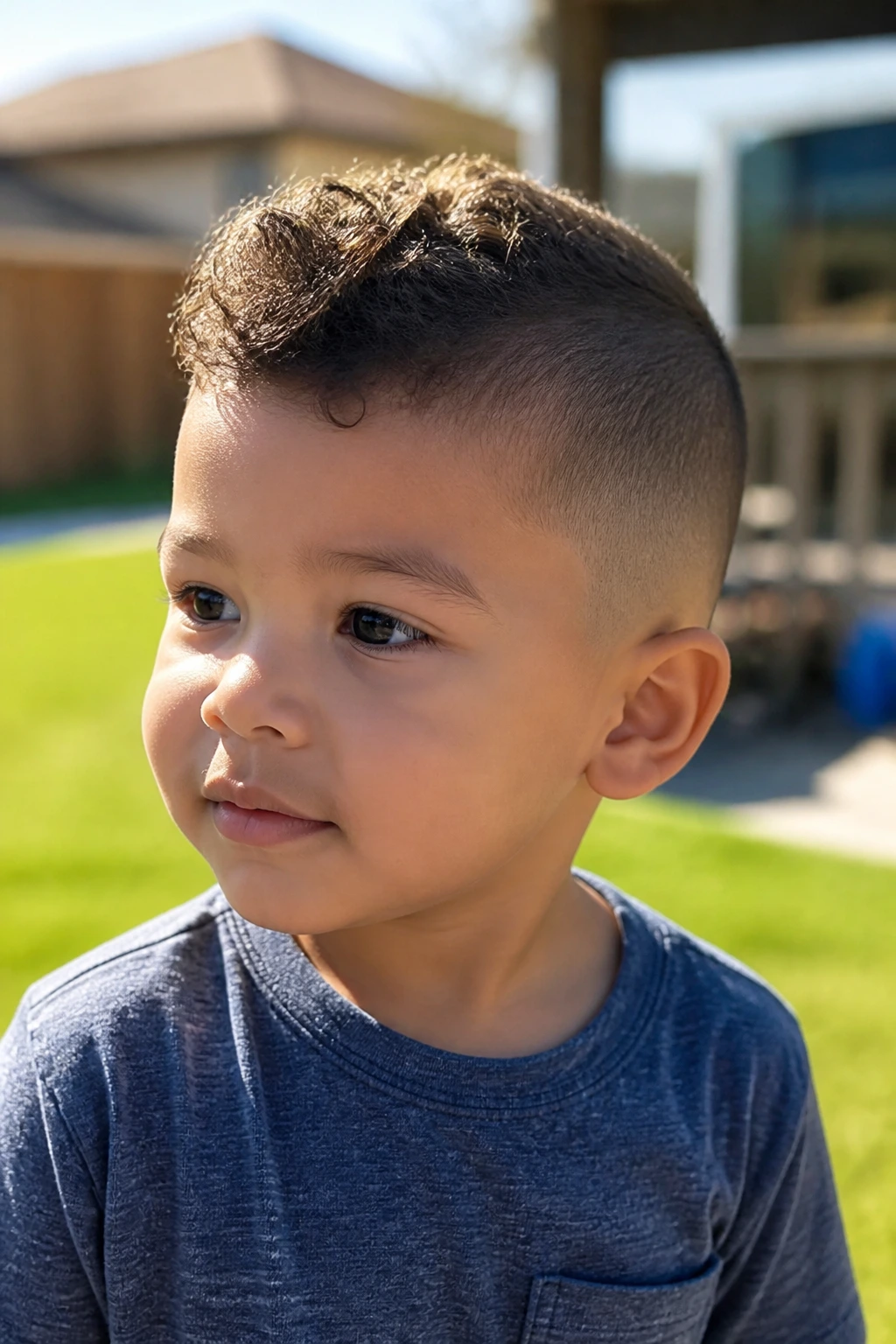
A textured buzz is the shortest style here, and it’s the one I’d pick for the kid who will not tolerate much grooming.
The catch is that a true buzz on curly hair can erase the pattern entirely, so leave a little curl length — enough to show texture, not so much that the sides puff into fuzz. A low guard with a soft scissor finish on top keeps it from looking harsh. This is the practical cut. No fuss. No daily styling battle.
22. Comb Over With Curly Lift
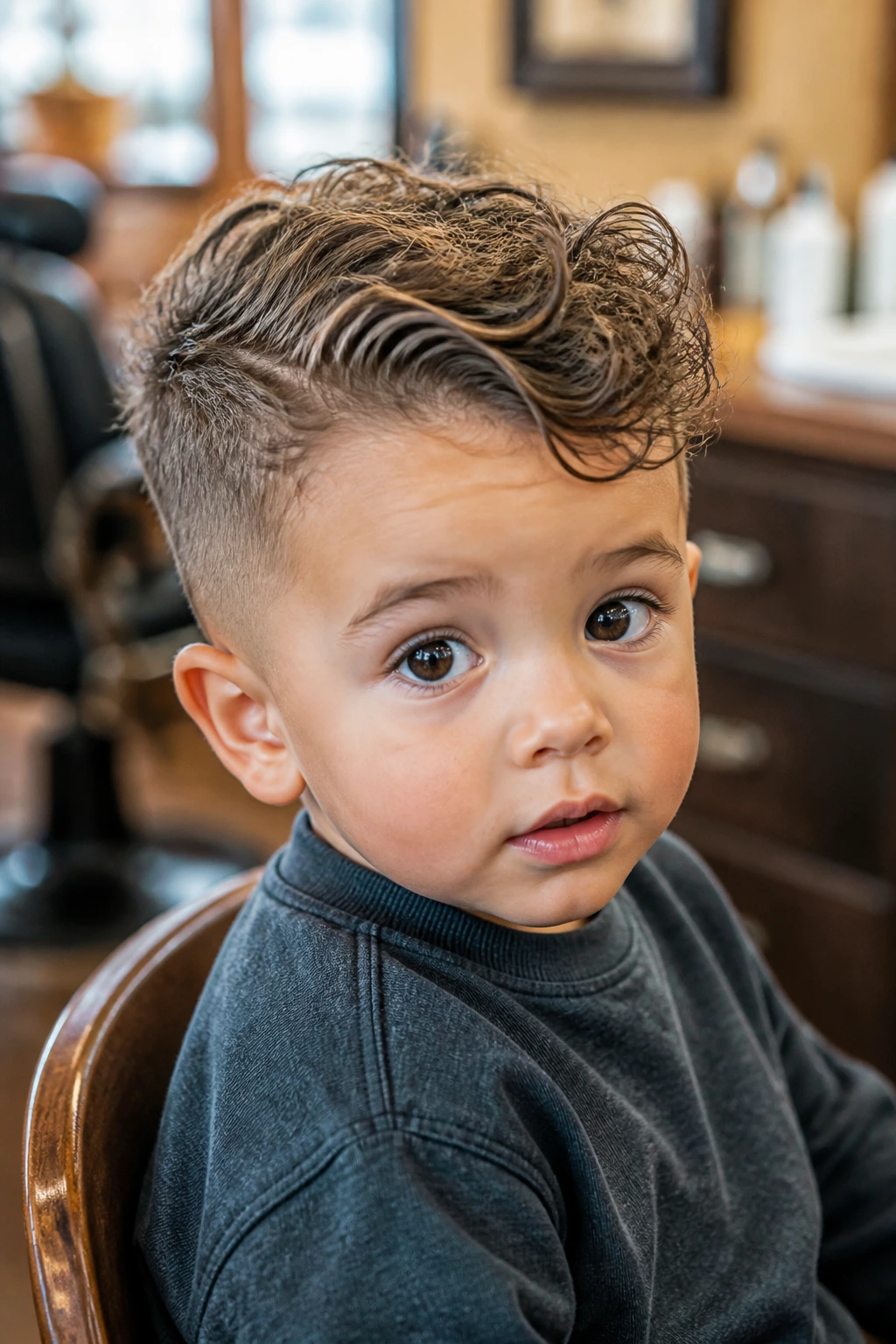
A curly comb over only works if you treat it as a soft sweep, not a sleek office haircut. The top needs enough length to move to one side, and the curls should stay loose.
What Makes It Different
The side sweep gives the haircut direction, which helps hair that naturally falls forward over the eyes. Keep the part loose and the top textured. If you flatten the curls with too much product, the whole thing gets weird fast. A light cream, a finger part, and a gentle comb-over is enough.
23. Ears-Out Scissor Cut
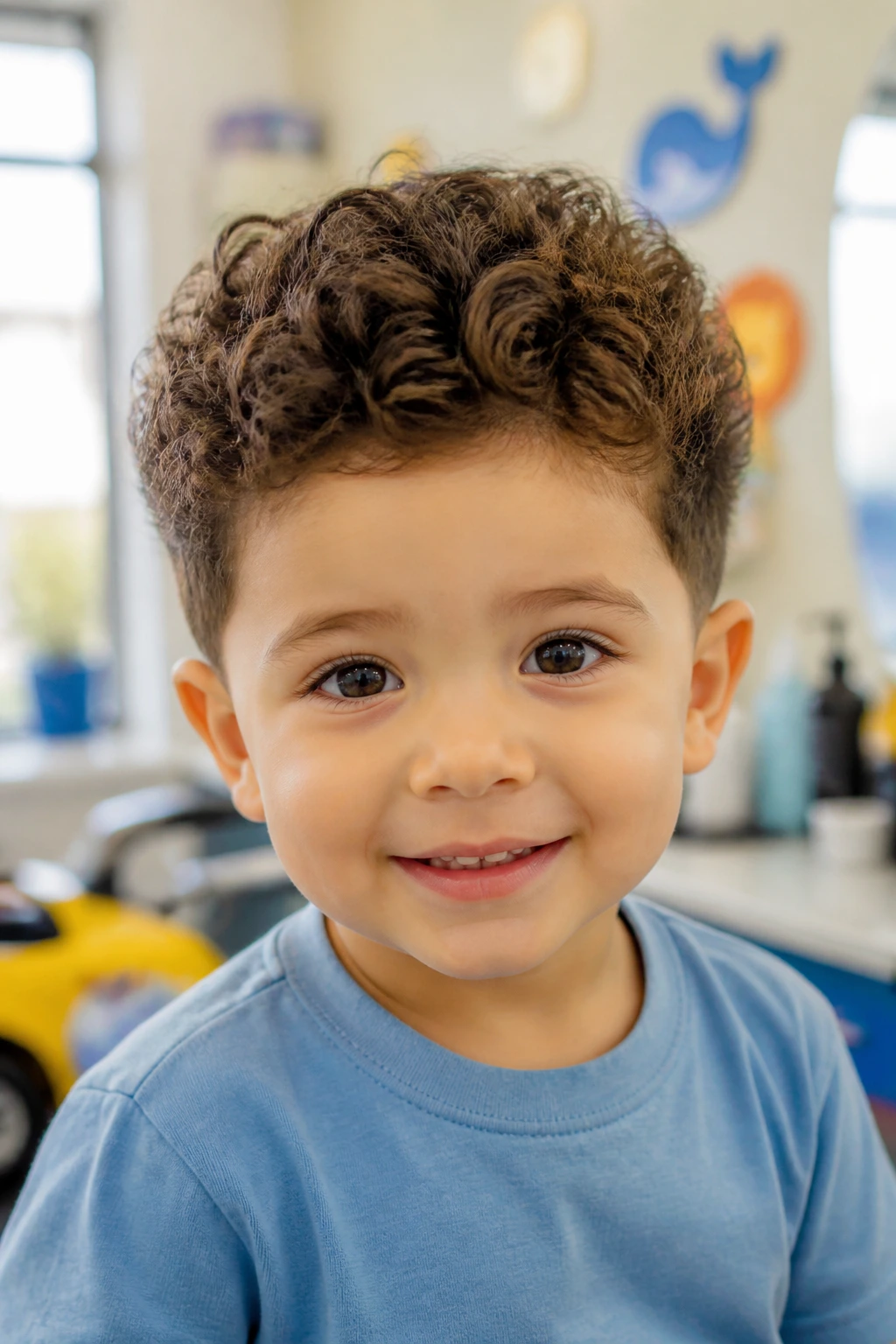
This one is simple, and sometimes simple wins. The ears stay visible, the curls sit above them, and the edges get a careful scissor trim instead of a heavy clipper pass.
That matters for toddlers who hate hair tickling the ears but don’t need a super-short cut. Ask for a soft arc over each ear and a rounded top. The result feels clean without turning the child into a different kid, which is a line I do not like crossing with toddler hair. Keep the personality. Remove the pokey bits.
24. Grow-Out Shape-Up
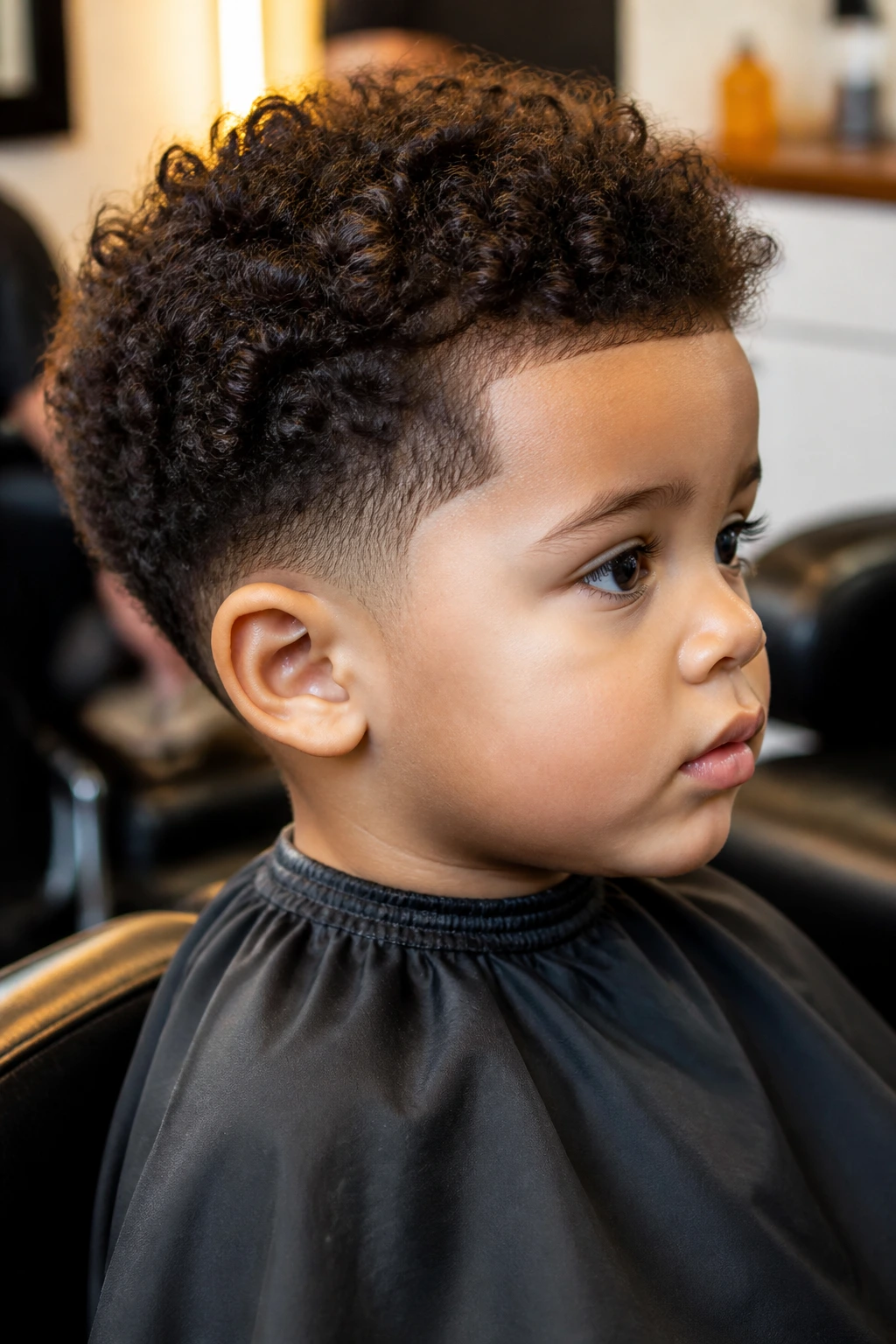
A grow-out shape-up is the haircut you ask for when the last trim got a little too eager or the curls are in that awkward middle stage. The goal is to clean the outline without shortening the whole head.
The barber should tighten the nape, lightly tidy the temples, and leave the bulk where it’s helping the shape. This is a smart transitional cut, especially if you’re growing the hair longer but can’t stand the fuzzy edges. It buys you another few weeks without pretending the haircut is something it isn’t.
25. Short Crop With Full Crown
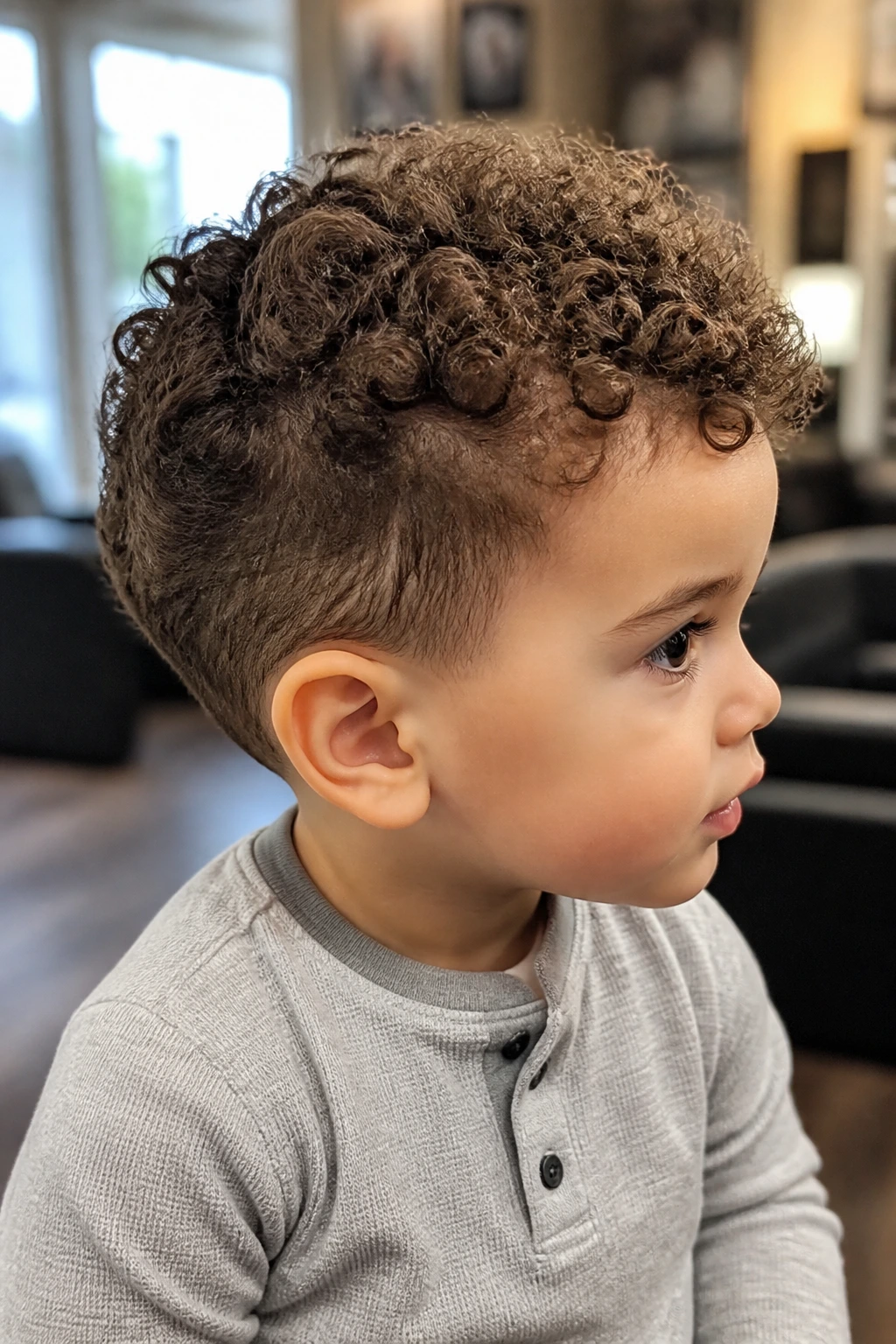
A short crop with a full crown is one of my favorite everyday options because it keeps the back and sides neat while the top still feels like curly hair.
Quick Notes
- Keep the crown slightly longer than the front so the curl pattern can sit naturally.
- Use scissors on top if the curls are soft and springy.
- Ask for a rounded outline at the back so the shape doesn’t feel blocky.
This is a good compromise cut. It is short enough for a child who moves nonstop, but it still leaves room for the curls to show.
26. Play-Ready Mop Top
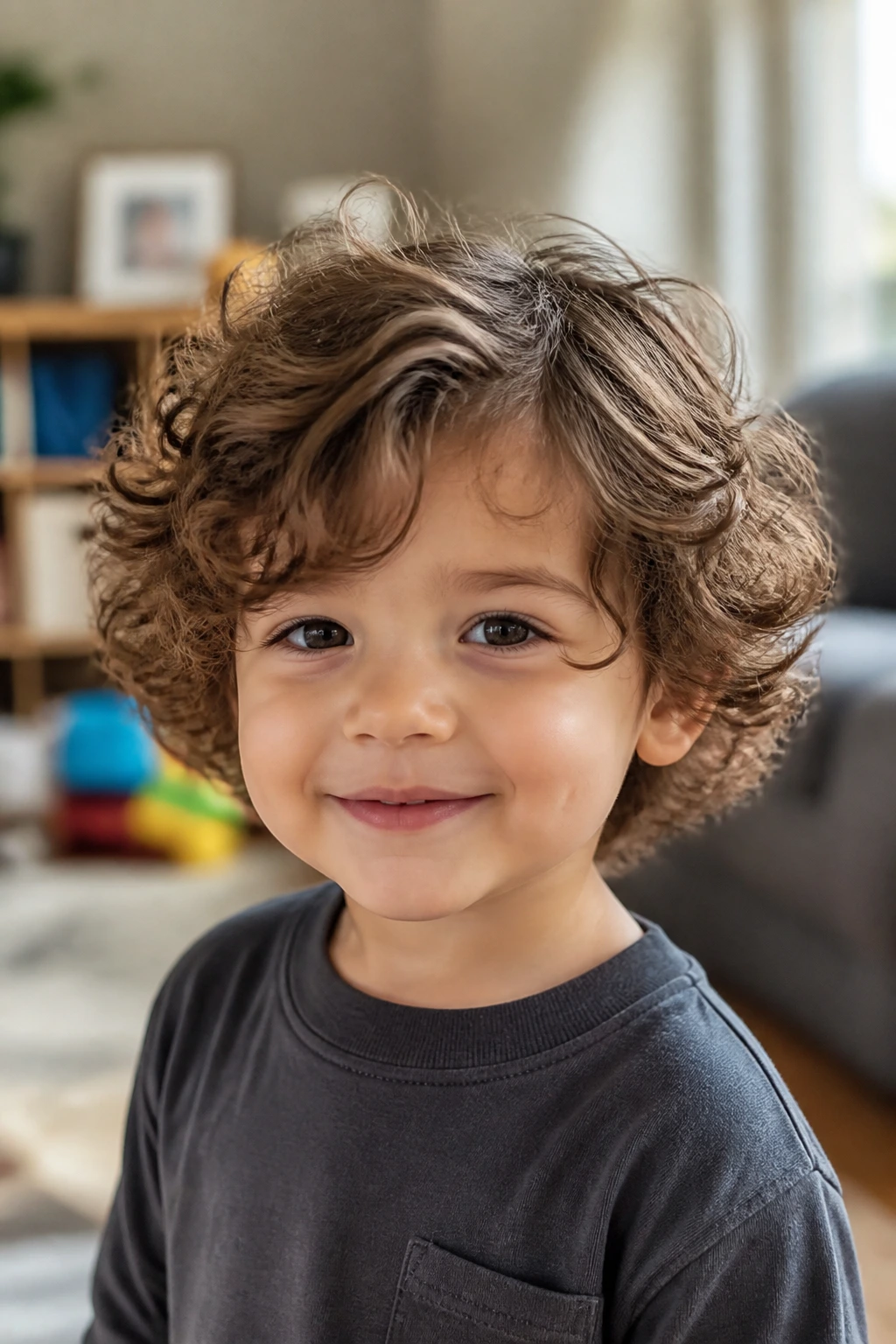
A play-ready mop top is exactly what it sounds like: relaxed, soft, and built for motion. It looks best when the curls fall in loose pieces instead of being overcontrolled.
The hair should be left longer in front and at the sides, then shaped so it doesn’t dip into the eyes all day. I like this style on toddlers with medium curls that fluff nicely after a rinse. It can look a little sleepy in the best way. Not polished. Just sweet and believable.
27. Classic Curly Keep-Shape Cut
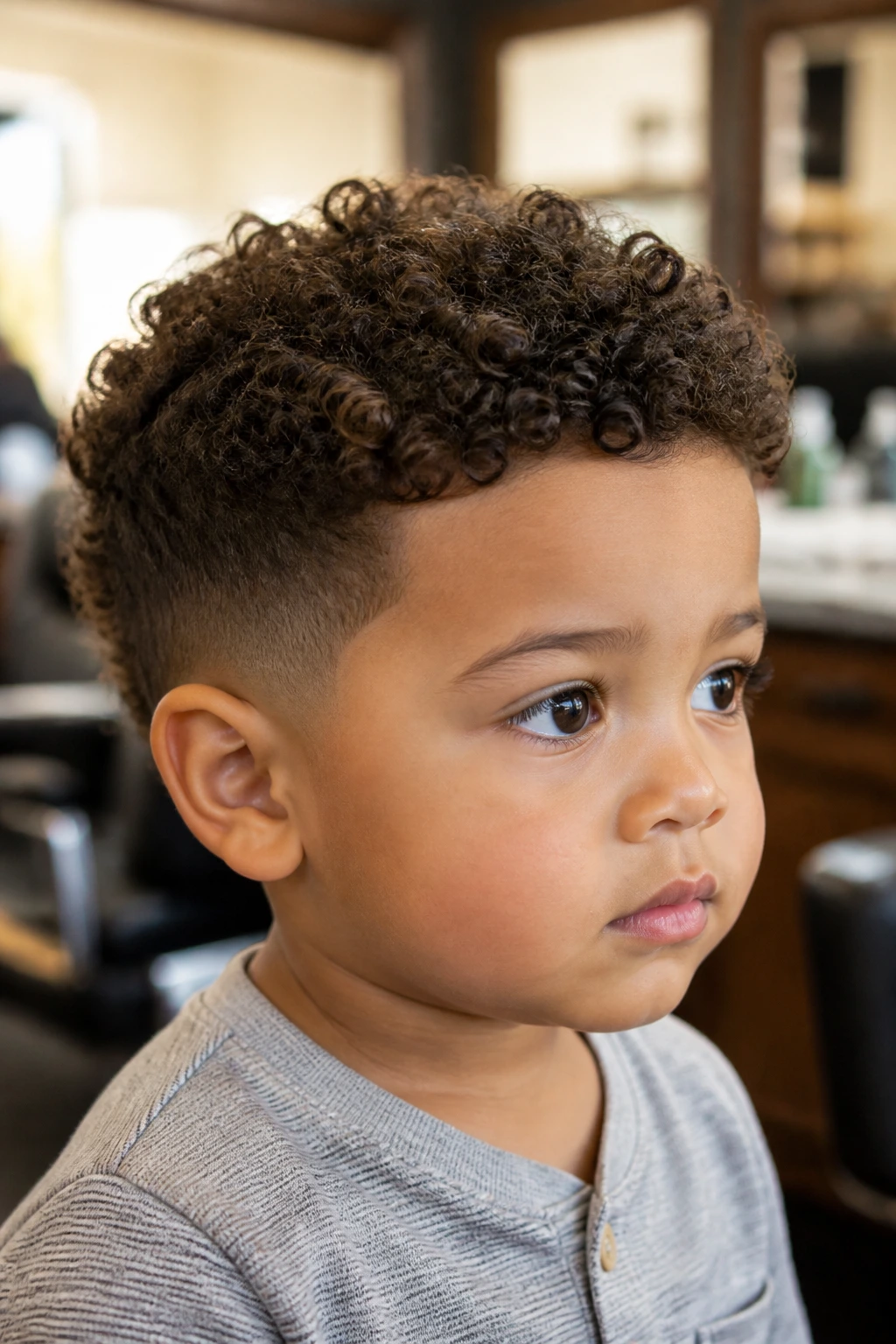
This is the everyday cut I’d recommend when nobody wants a dramatic haircut and everybody wants a decent grow-out. The top keeps its curl, the sides stay tidy, and the silhouette stays balanced.
The barber should trim the ends enough to remove stragglers but not chop into the curl mass. That’s the whole trick. You want a shape that looks like the hair belongs there, not a style trying to win a prize. It suits most curl patterns as long as the curls have some spring.
28. High Top Mini Curls
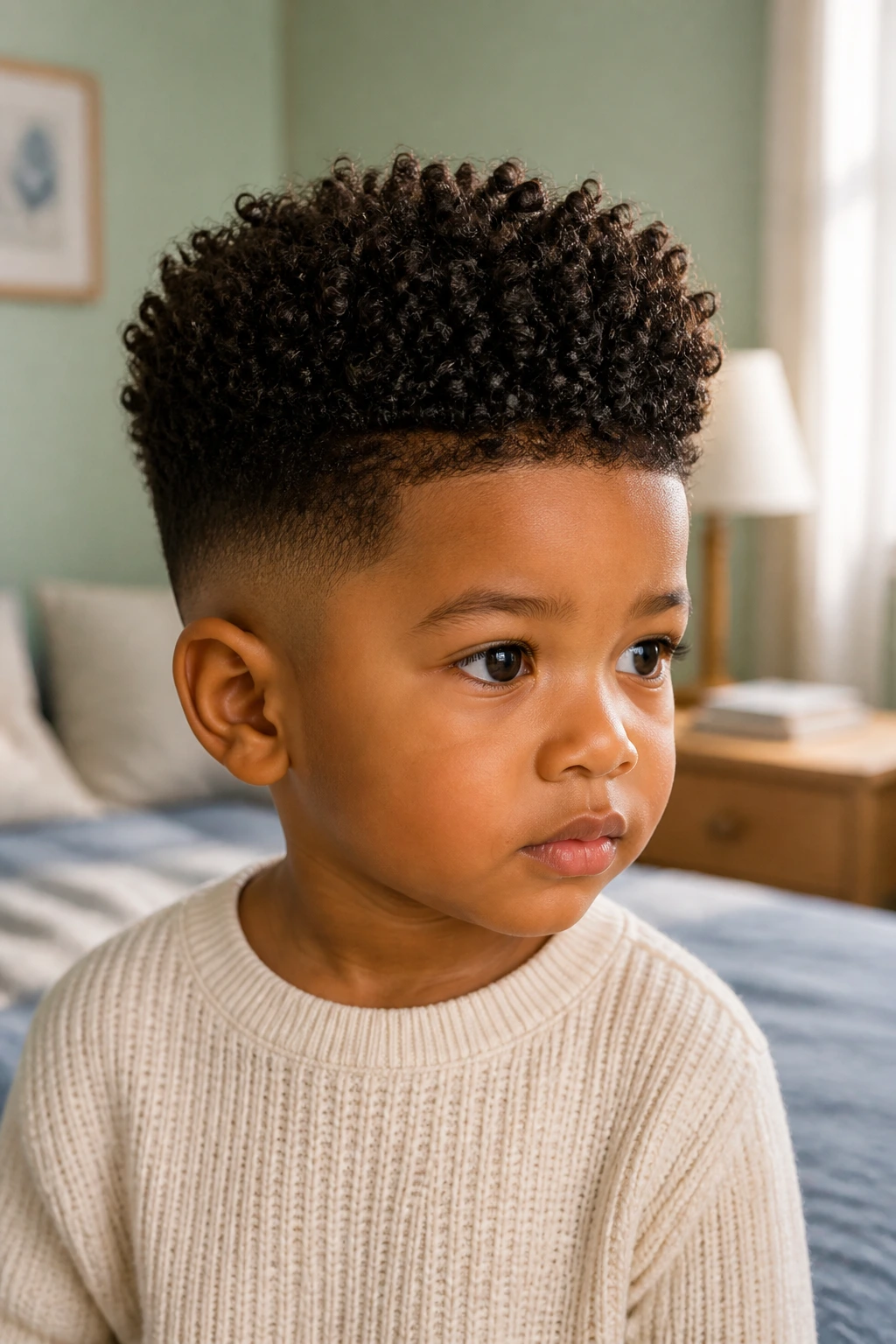
A high-top shape makes sense for dense coils because it uses height on purpose instead of letting the hair explode sideways.
Keep the sides shorter and the top rounded upward, but don’t make it boxy unless that’s the look you want. A curved outline reads softer on toddlers. This cut is a good fit when the hair grows fast and has a strong crown, because the height gives the curls a place to live. It can be a little more maintenance than a taper, but it’s worth it when the hair is full.
29. Disconnected Top With Soft Line-Up
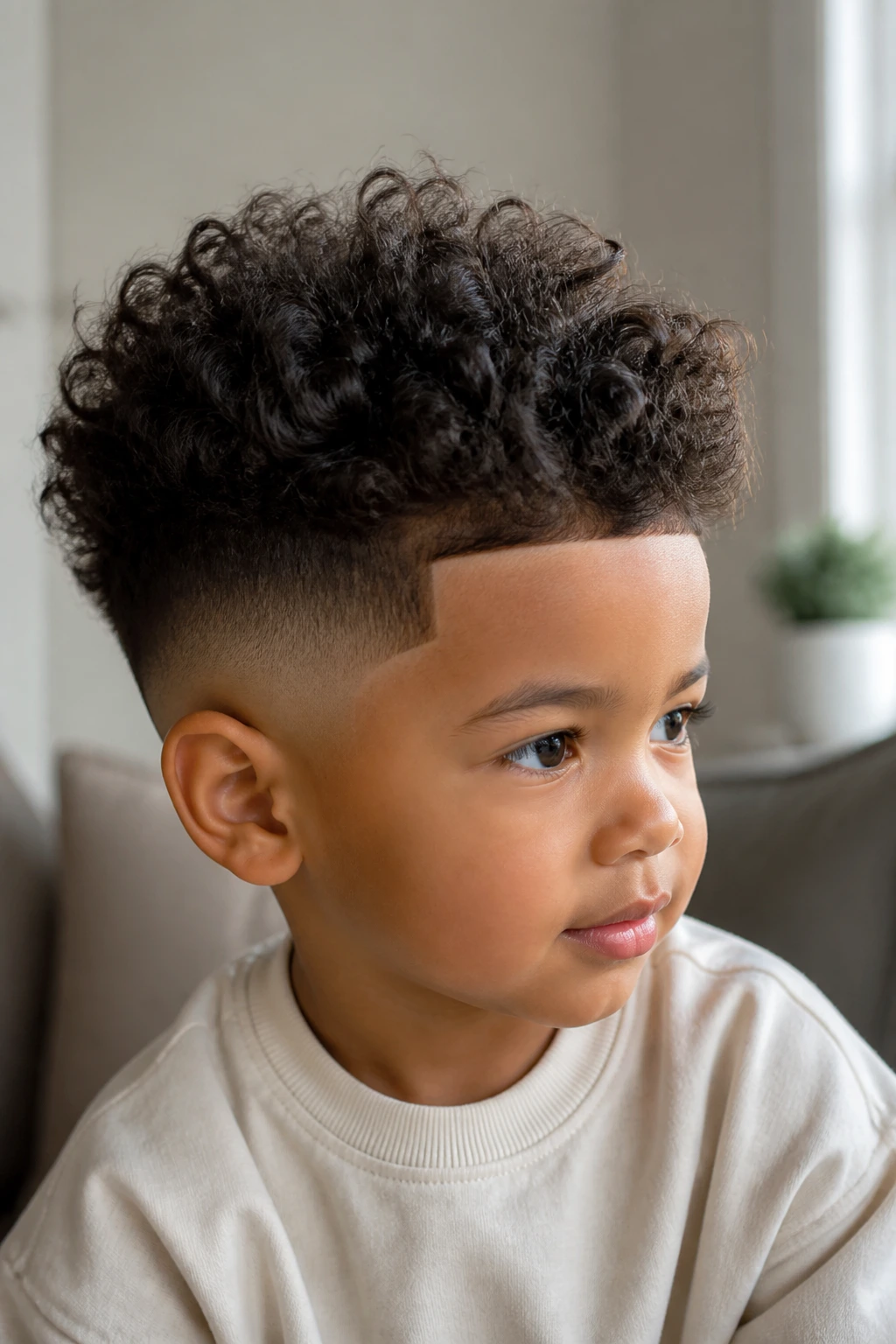
A disconnected top gives curls a crisp contrast, but on toddlers I prefer the line-up soft, not razor-sharp. Hard corners grow out in a hurry and can look too severe on little faces.
The top stays long and curly, while the sides drop away more abruptly. This works best when the curl pattern on top is dense enough to hold shape. Keep the front line rounded or gently squared, not etched. The result can look polished without feeling adult-y, which is a narrow lane but a useful one.
30. Twisted Top Curls
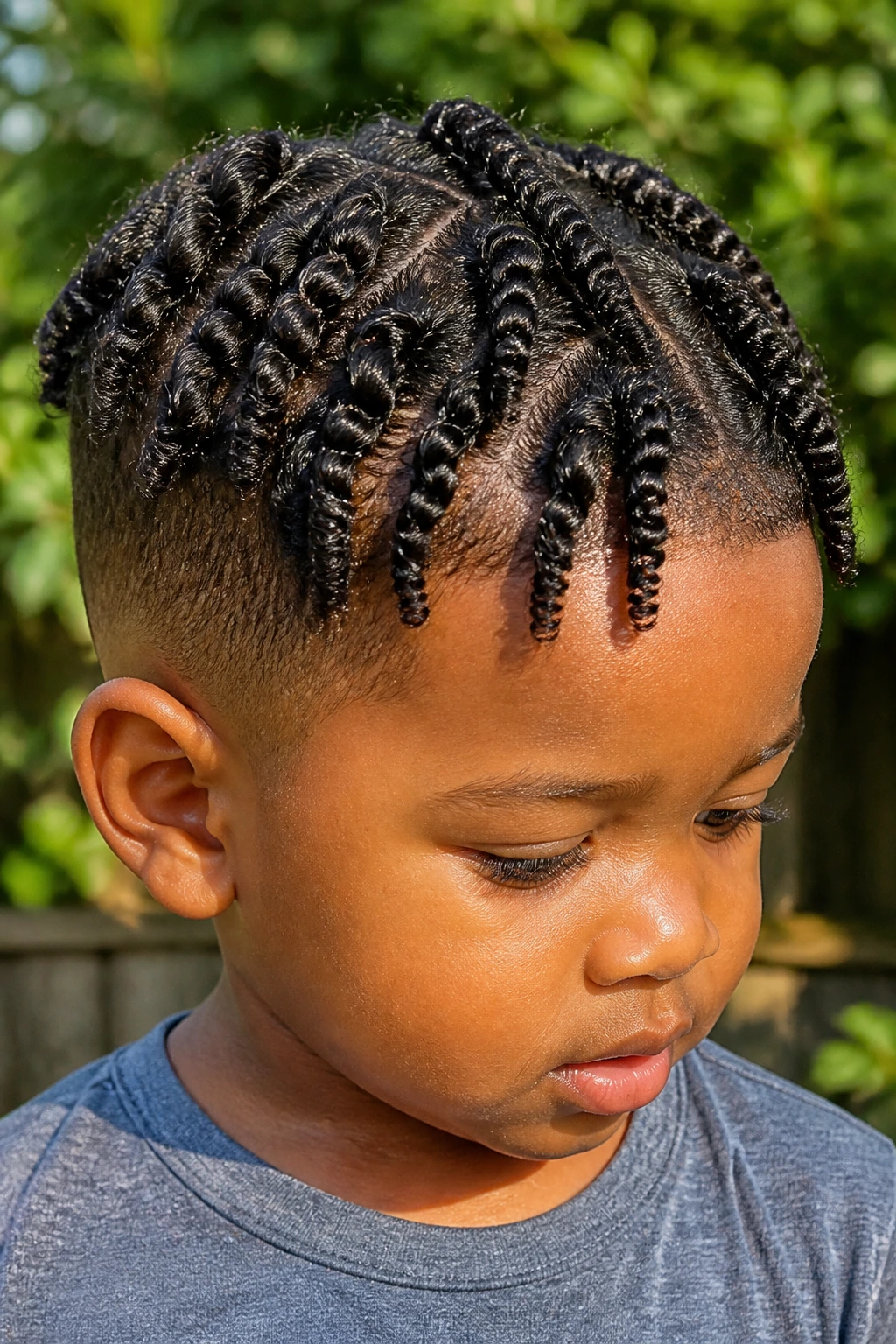
Twisted top curls are a nice option if you want a little definition without relying on a full styling routine. Small two-strand twists or finger twists on top can help curls set in a predictable shape.
The haircut underneath should stay neat and short enough around the sides to keep the top from looking unbalanced. This style is especially useful when the curls are tight and a bit unruly at the crown. Twist them while damp, let them dry, and then separate gently with fingers. Do not pick them apart early. That turns definition into fluff.
31. Bedhead Crop With Finger Styling
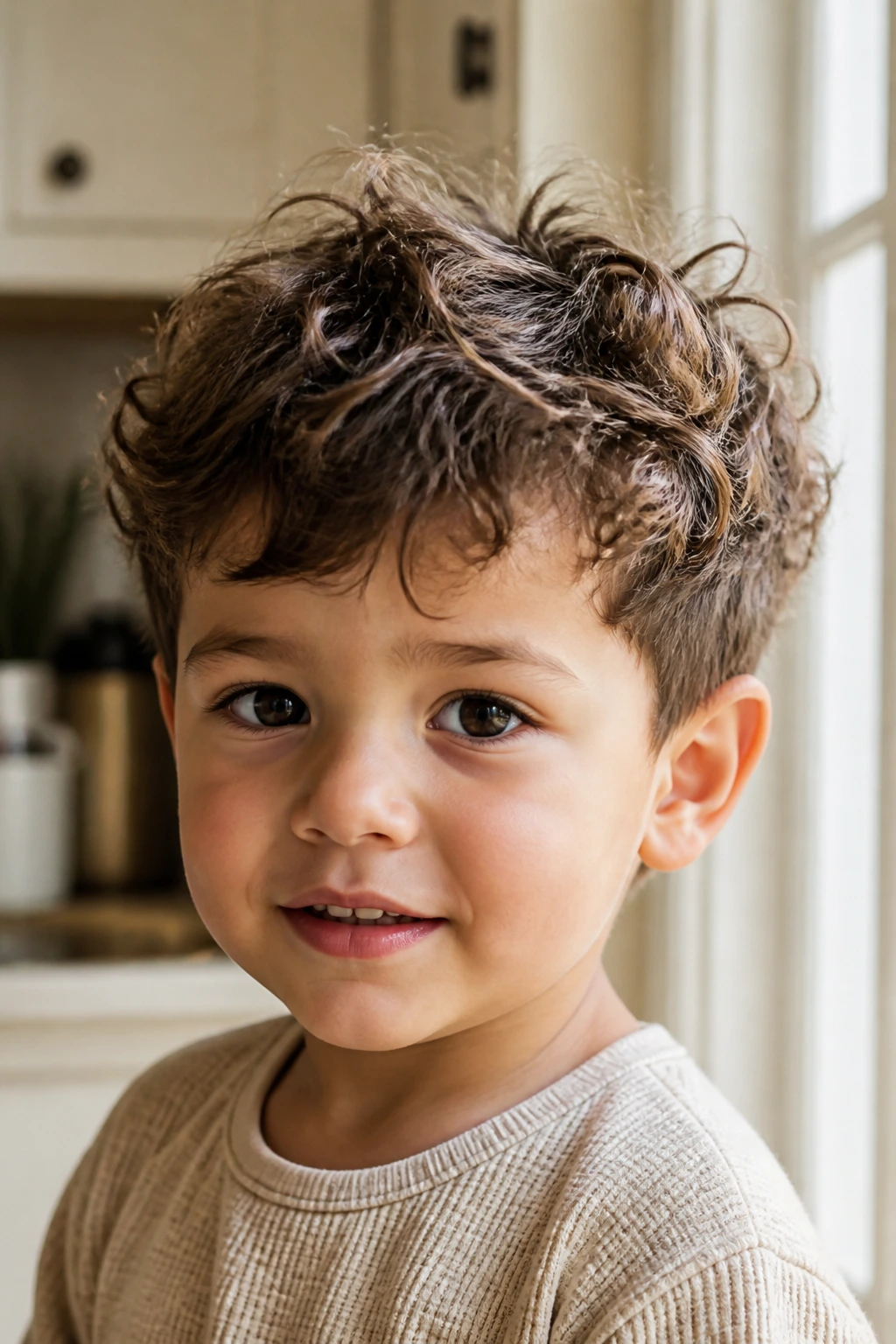
A bedhead crop is the haircut for parents who want hair that still looks like hair when nobody has time to do much. It is soft, messy, and forgiving in the morning.
The cut should keep enough length on top to scrunch with wet hands, and the sides can stay clean but not severe. I like this one because it looks good even when the curls are a bit wild. That matters. A lot. The best toddler haircut is the one that still makes sense after a nap, after the car seat, and after a full day of being a child.
32. Soft Ringlet Frame Cut
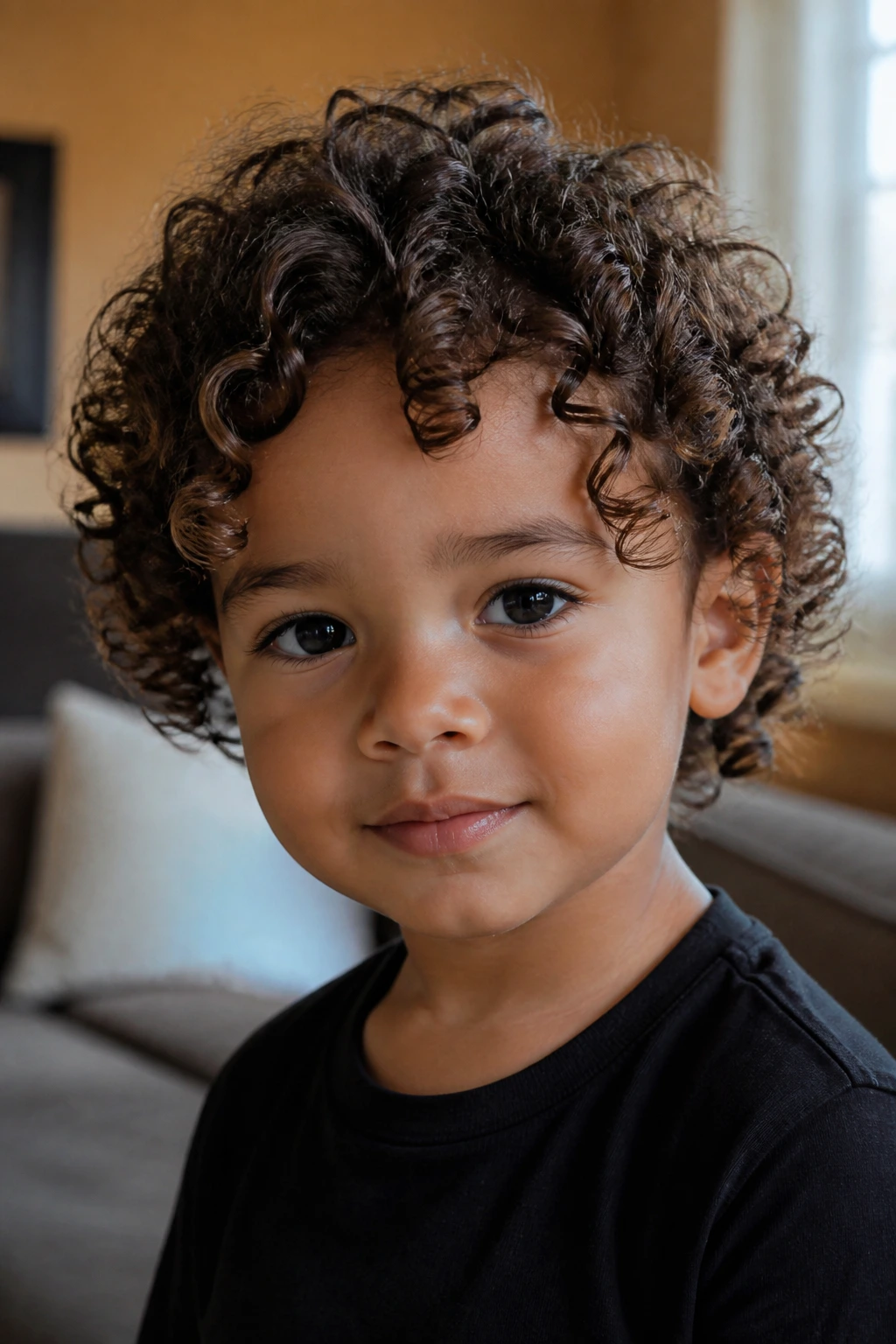
A soft ringlet frame cut puts the curls where you actually want to see them: around the forehead, temples, and cheeks. The face gets a gentle frame, and the rest of the head stays controlled.
This one works best when the front is left a touch longer than the sides so the curl pattern can curl inward rather than spring out. Ask for soft edges, not blunt bangs. The ringlets should look like they’re landing on purpose. If your toddler has bright eyes and springy hair, this is one of those cuts that makes the whole face come alive.
Why Curly Toddler Hair Needs Shape, Not Force
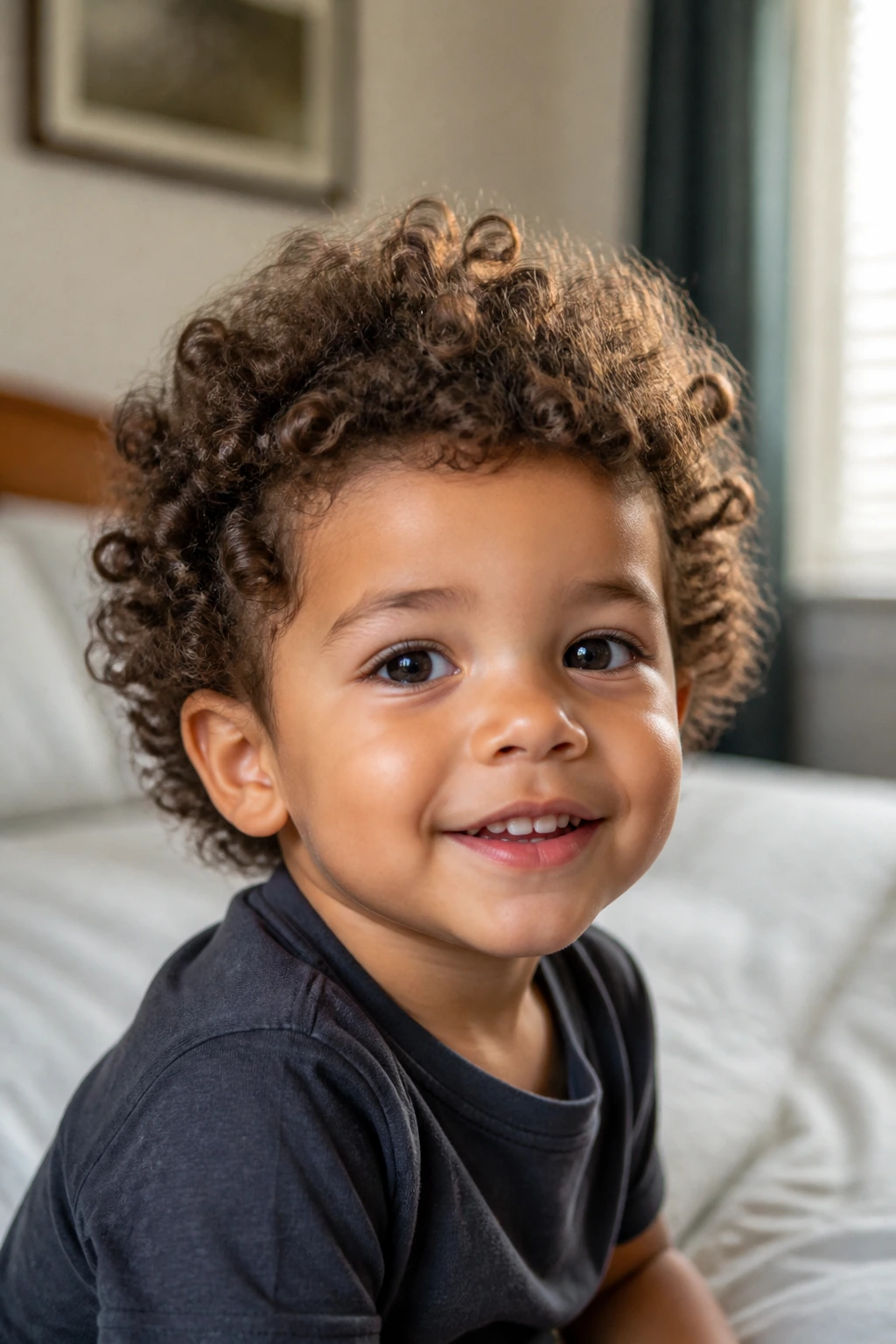
Curly toddler hair is not difficult because it is “unmanageable.” That word gets thrown around too loosely. It is difficult only if you treat it like straight hair with a little attitude. Curls have memory. They shrink in their own direction, and they usually settle into a pattern that makes sense if you leave them enough room.
The shape matters more than the exact length. A toddler with 2½ inches of loose curls may look longer-haired than a child with 4 inches of tight coils, because the curl pattern changes the visual length once it dries. That’s why the best cuts are planned around the dry silhouette, not the wet one. If a barber cuts the crown too short, the top can rise into a puff. If the sides are taken too high, the head can look wide instead of rounded.
One other thing people miss: curls around the ears and neckline itch faster than straight hair. A soft taper or a careful scissor cleanup can make a huge difference in comfort, even if the haircut itself is almost invisible. You feel that difference at bedtime. You also feel it in the car seat when your child stops pawing at the back of his neck.
How to Ask for Toddler Boy Curly Haircuts at the Barber Chair
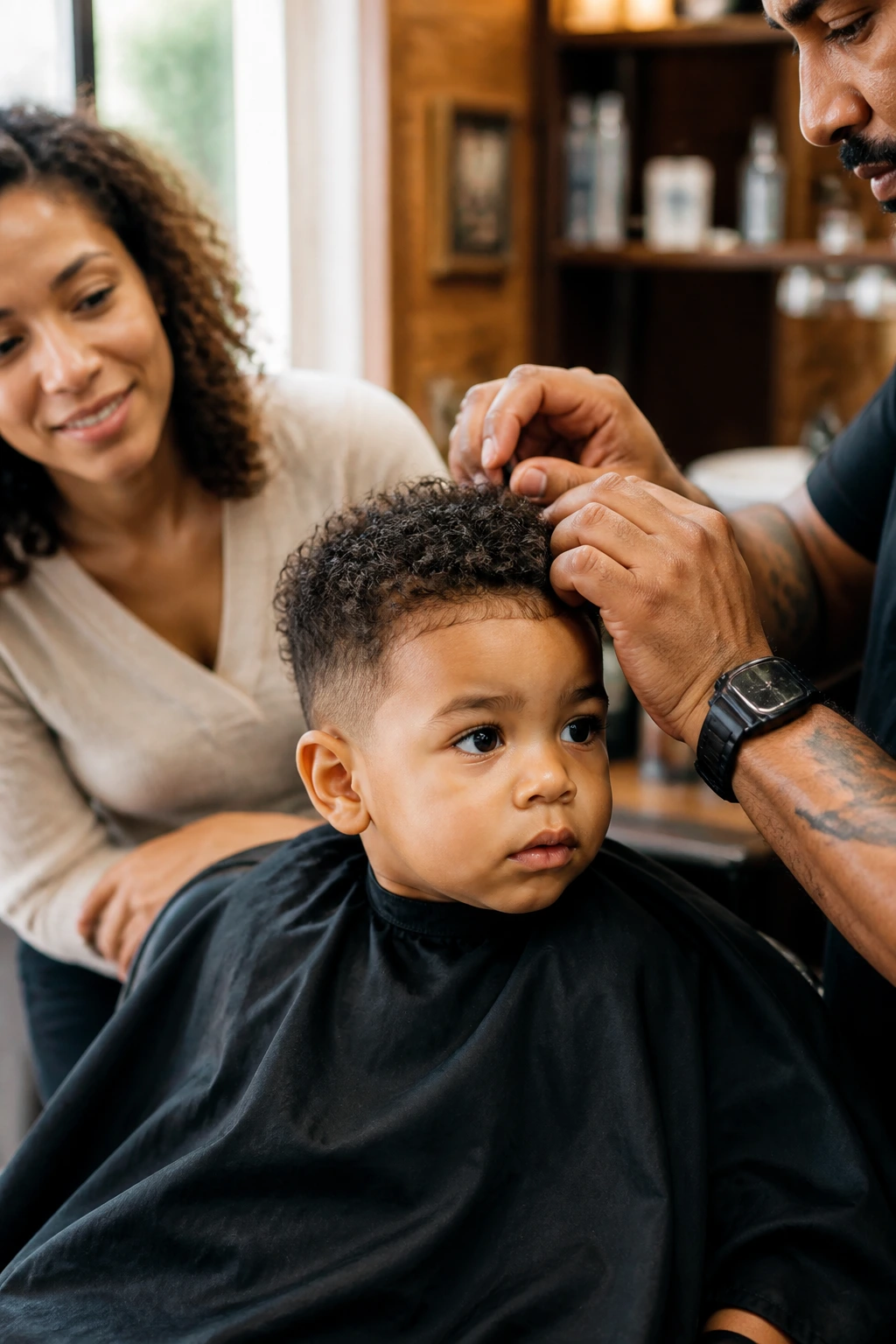
The easiest way to get a good result is to speak in shape, not in buzzwords. Bring a photo if you can, but bring one that matches the curl type. A tight-coil style on a child with loose waves is only useful if you’re asking for the outline, not the texture.
Use landmarks. Say where you want the front to sit when dry, whether that means above the eyebrows, at the brow line, or brushing the ears. Tell the barber if you want the sides clippered, softly tapered, or left with scissors. If the top is the part you care about, say it plainly: “Please leave length at the crown,” or “Don’t thin the top.” That saves everyone time.
A few phrases help more than a stack of adjectives:
- “Cut it with the curls in mind, not wet and stretched.”
- “Keep the top long enough to spring back.”
- “Soft around the ears and neck, please.”
- “If possible, avoid thinning shears on the crown.”
If your child does not sit well, ask for a haircut that can be done in phases. A quick neckline and sides cleanup first, top second, is sometimes the difference between a decent haircut and a wrestling match.
The Tools That Make Curly Hair Easier on Busy Mornings
-
Spray bottle: A fine mist revives curls without soaking the whole head, which is perfect when you only need to fix the front.
-
Wide-tooth comb: Use it on damp hair to separate tangles without ripping apart the curl clumps.
-
Detangling brush with flexible bristles: Good for thicker curls that need a little more help than fingers can give.
-
Leave-in conditioner: Choose a light one for fine curls and a creamier one for dense coils; a pea-sized amount is usually enough.
-
Curl cream or light mousse: Helps keep the top together if your child’s hair frizzes out after drying.
-
Soft towel or cotton T-shirt: Better than rough terry cloth, which can rough up the cuticle and puff the hair.
-
Barber cape or small towel at home: Keeps hair off the neck during cleanups and makes the little grooming jobs less annoying.
-
Satin pillowcase or bonnet: If your child will tolerate it, this keeps the top from flattening overnight. If not, the pillowcase alone still helps.
Smart Product Picks for Soft, Defined Curls
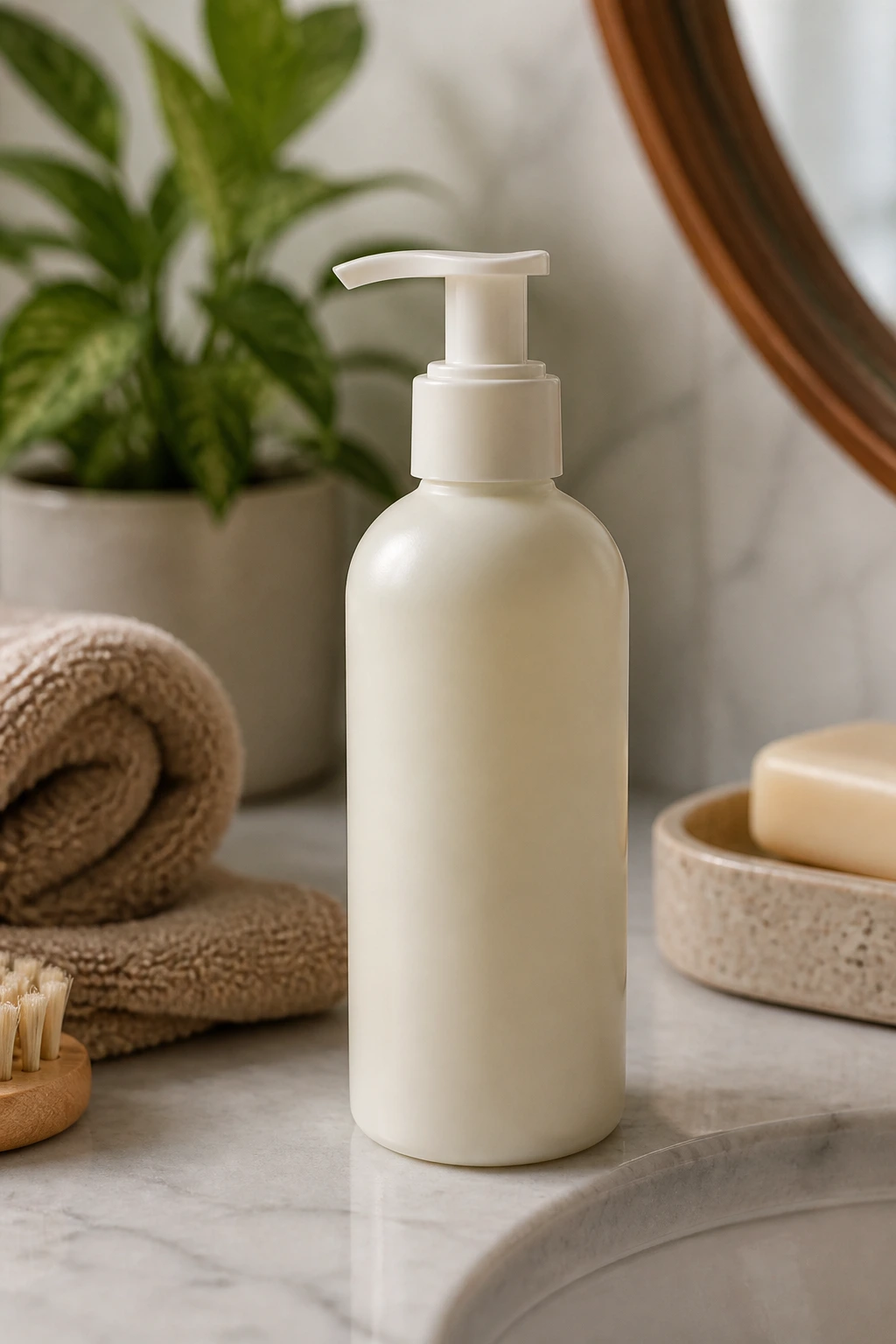
Product choice matters more than most people think, but it does not need to be complicated. A toddler’s hair usually wants less, not more. The wrong cream can make curls limp, greasy, or sticky at the crown, and nobody wants that.
For fine curls or loose waves, choose a water-based leave-in and stop there unless the hair starts to frizz. For denser curls or coils, a cream with good slip helps the hair separate without snags. I like products that rinse clean on the hands and don’t leave a waxy film. If your fingers feel sticky after applying it, that’s usually a warning sign.
A few product rules save trouble fast:
- Gentle shampoo: 1 or 2 washes a week is enough for most toddlers unless they are in the dirt every day.
- Light leave-in: Use a dime-sized amount first. You can always add more.
- Avoid heavy pomades: They flatten the curl pattern and can make the scalp feel grimy.
- Skip adult gels with lots of alcohol: They can make the hair stiff or flaky.
- Choose fragrance carefully: Sensitive skin and strong scent do not mix well.
If the hair is changing shape from one wash day to the next, the product may be too heavy. Trim the routine before you blame the haircut.
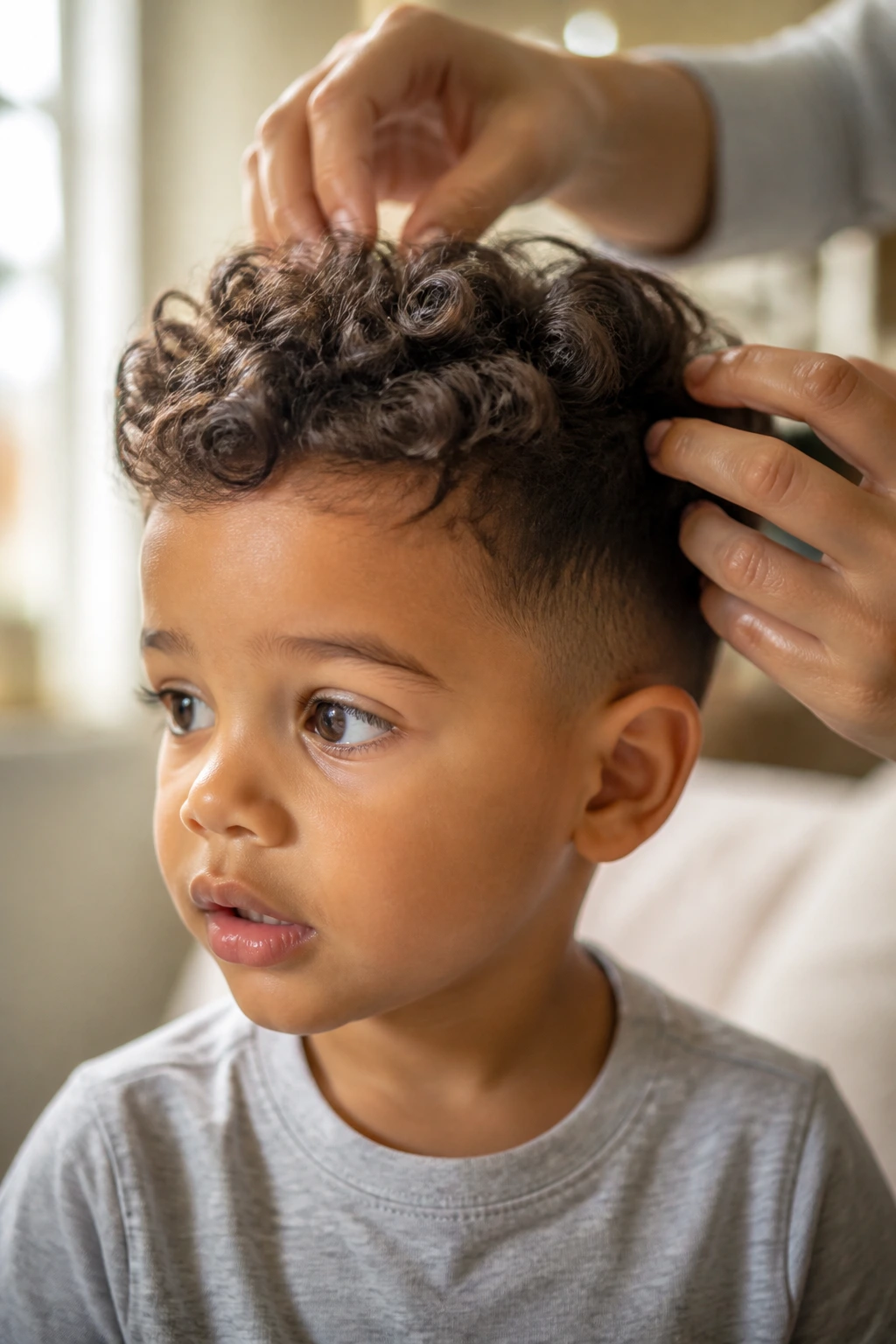
How to Style the Cut in Five Minutes
-
Mist the hair lightly with water. You want damp, not dripping. A few sprays are enough to wake up the curl pattern.
-
Detangle with fingers or a wide-tooth comb. Start at the ends and work upward so you do not pull the curls apart at the root.
-
Work in a small amount of leave-in conditioner. Spread it through the mid-lengths and ends first, then smooth what’s left over the top.
-
Shape the curls to match the cut. Scrunch the top for volume, sweep the front to one side for a part, or let the fringe fall naturally if that’s the style.
-
Stop touching it. Seriously. Curls settle better if you let them dry for 5 to 10 minutes before fussing with the shape again.
If the hair is extra springy, a quick second mist after dry-down can reset the front without restarting the whole morning.
Keeping the Shape Between Trims
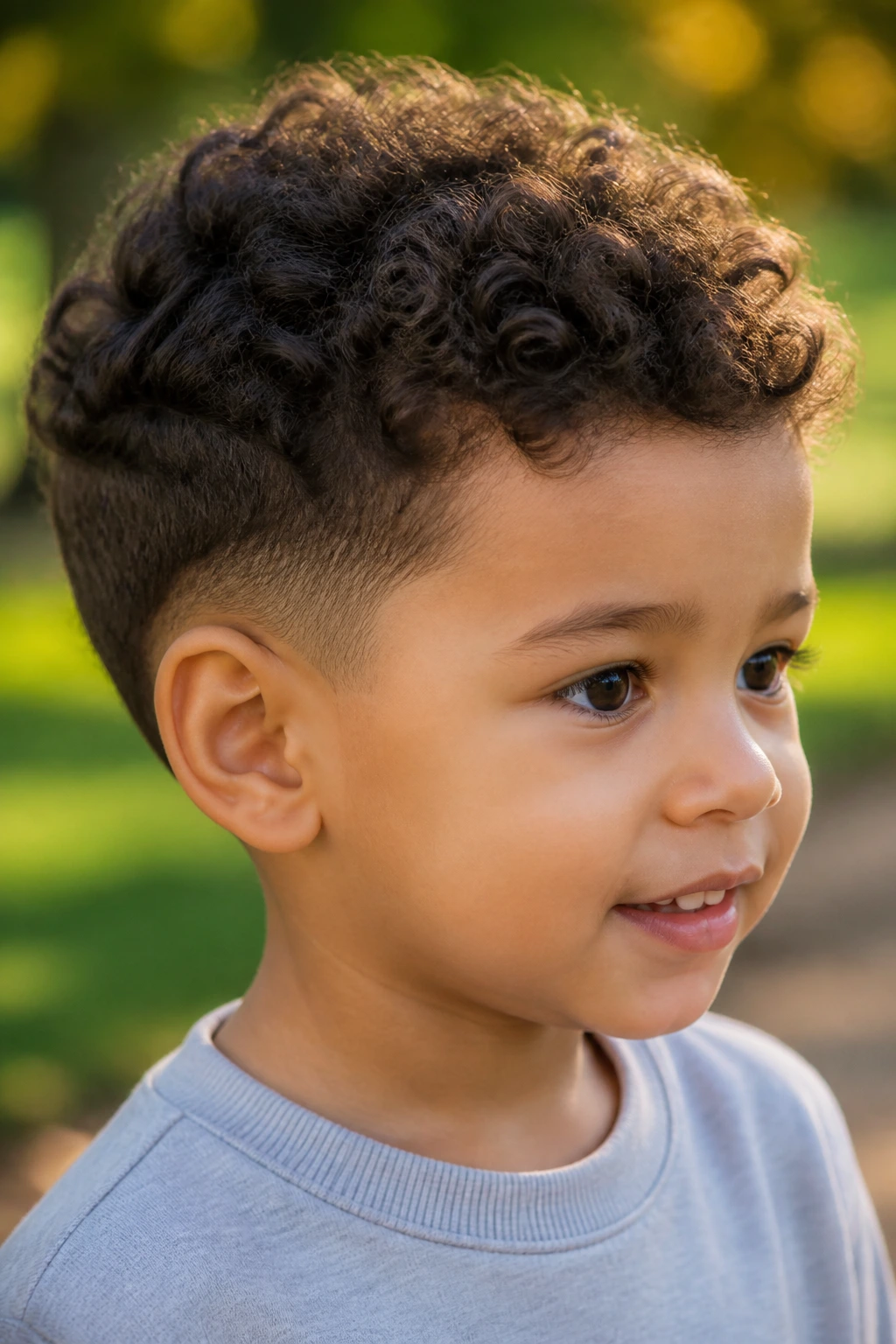
Curly toddler cuts usually look best when they’re trimmed on a shorter cycle than straight hair. For low tapers and fades, 3 to 5 weeks keeps the outline crisp. For scissor-only cuts and rounded shapes, 5 to 8 weeks is more realistic. If you’re growing it out, you may be able to stretch a little longer, but the neckline and ears will start telling on you before the top does.
Wash day also matters. Daily shampoo is usually too much for curly toddler hair; it strips the natural oils and makes the curls puff up. A gentle cleanse once or twice a week is enough for most kids. Between washes, water in a spray bottle and a tiny bit of leave-in are usually better than starting from scratch.
At night, a satin pillowcase does more than people expect. It cuts down on friction, which means fewer flattened curls and less morning frizz. If your child won’t keep a bonnet on, fine. Use the pillowcase and call it good. The whole point is to make upkeep easier, not create another battle.
Additional Tips and Style Boosters
-
Texture Boost: On mornings when the curls look flat, mist them lightly and scrunch from the ends up. Water usually brings the pattern back faster than more product.
-
Shape Boost: If the top starts to lean forward, tilt the head to the side and finger-lift the crown while it dries. That keeps the haircut from collapsing into one heavy section.
-
Comfort Fix: Ask for soft edges around the ears and a gentle neckline cleanup. Tiny bits of hair there can cause more complaints than the haircut itself.
-
Photo-Day Move: Smooth only the front and leave the rest alone. Overworking the whole head tends to make toddler curls look puffy, not polished.
-
Make-It-Yours: A tiny side part, a little twist at the front, or a rounded top can make the same base cut feel different without changing the whole haircut.
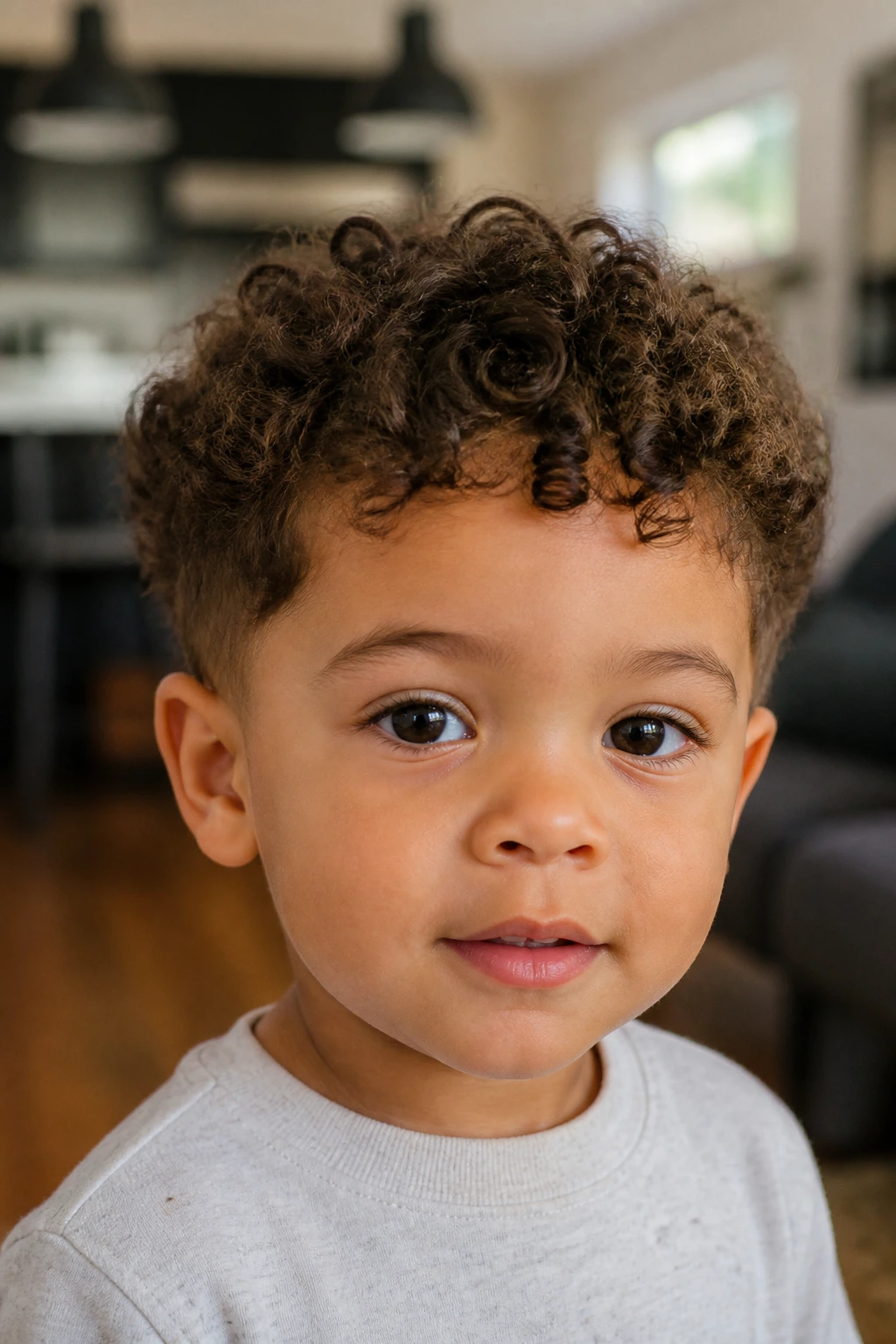
Common Mistakes That Make Curly Toddler Hair Look Choppy
-
Cutting curls as if they were straight: The hair looks fine when wet, then springs up and reveals a too-short crown. The fix is to leave extra length and check the dry shape before taking off more.
-
Thinning the top too aggressively: Texturizing shears can leave curls frizzy and wispy, especially at the crown. Use scissor shaping or point cutting instead.
-
Taking the sides too high: A high fade can make the head look wide and the top look disconnected. A low taper or soft blend usually grows out better.
-
Using too much product: If the curls look oily or feel crunchy, cut the amount in half. Toddler hair needs just enough help to clump, not enough to feel coated.
-
Skipping neckline upkeep: When the nape gets fuzzy, the whole haircut reads messy even if the top is fine. A quick cleanup every couple of weeks keeps the style looking cared for.
-
Brushing dry curls hard: That turns curl clumps into frizz fast. Work with damp hair and fingers first.
Variations and Adaptations to Try
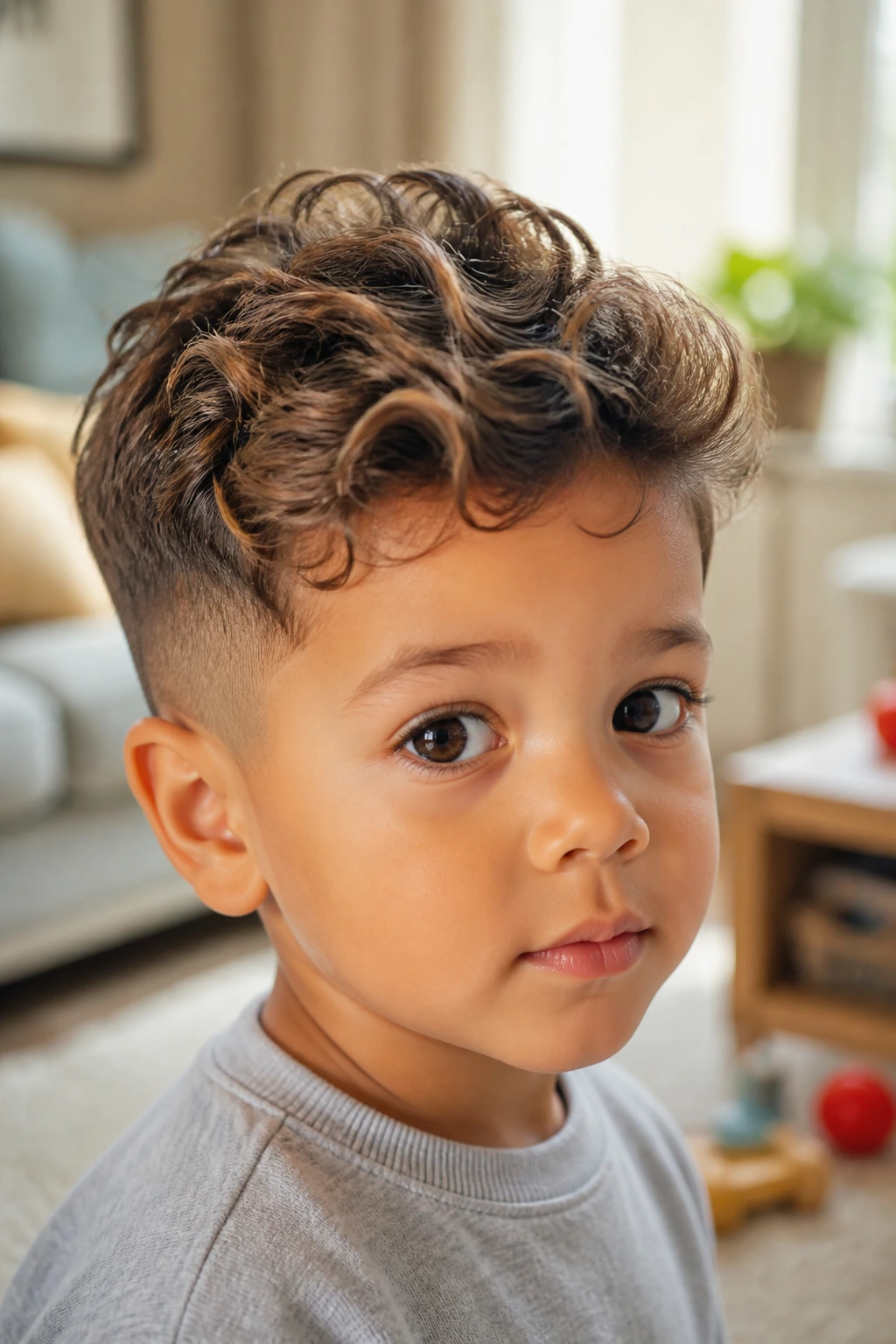
-
Loose-Wave Version: Keep the top longer and use a light cream or mousse instead of a heavy conditioner. This version works best when the hair falls rather than springs.
-
Tight-Coil Version: Preserve more length on top and shape the sides softly. Tight coils shrink more, so a little extra length keeps the style from looking cropped too close.
-
Sensitive-Scalp Version: Choose scissor work around the ears and neck, and keep clippers off the skin as much as possible. The cut may look softer, but it will usually be more comfortable for a child who flinches at buzzing.
-
Fast-Morning Version: Go with a low taper, rounded crop, or short curly Caesar. These cuts need the least daily styling and still look intentional after a quick water mist.
-
Grow-Out Version: Ask the barber to tidy the outline without touching the bulk on top. This keeps the haircut in shape while you stretch the time between full trims.
Frequently Asked Questions
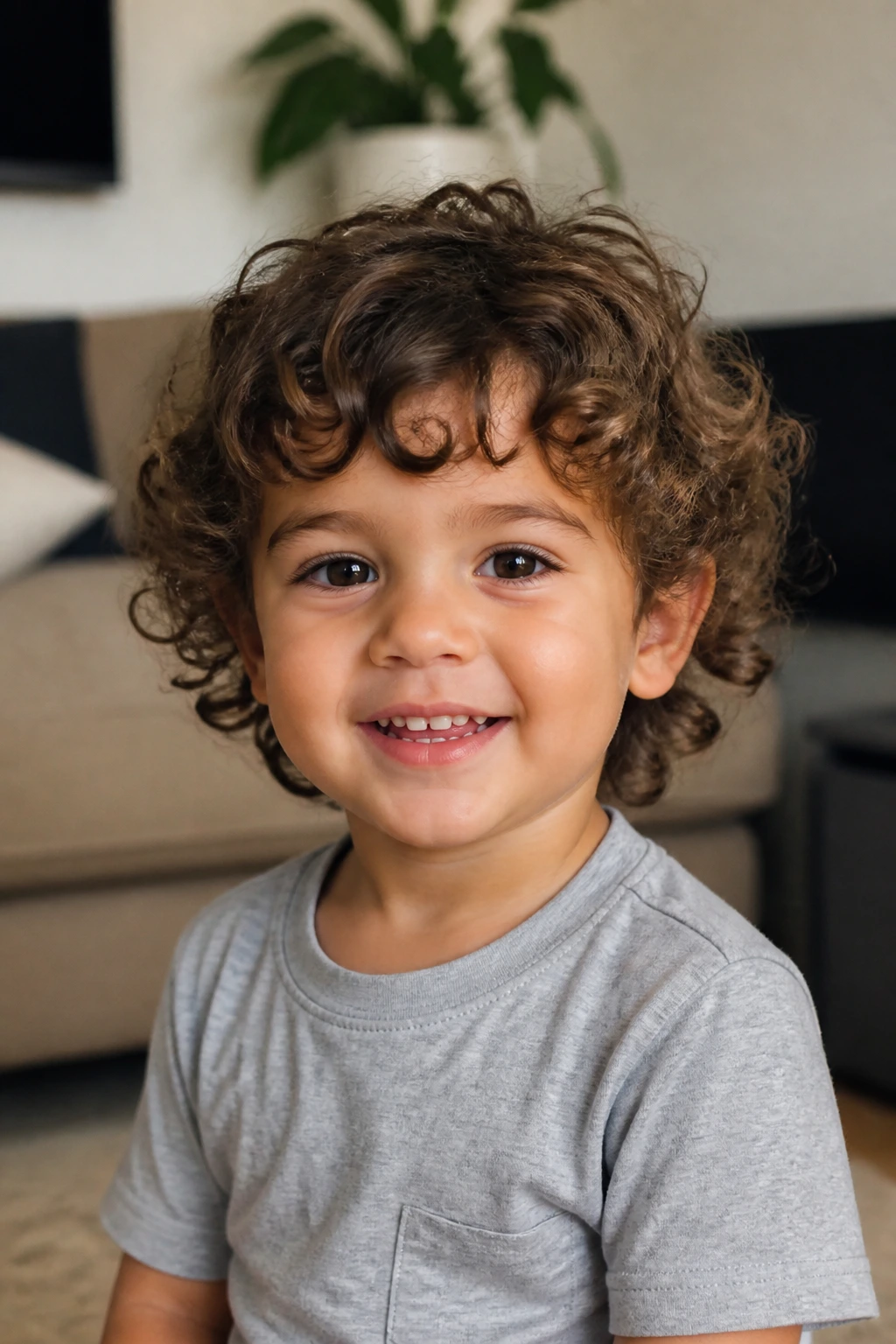
Should toddler boy curly haircuts be cut wet or dry?
Dry or mostly dry is usually better if the barber knows curls. Wet hair stretches, so the cut can end up shorter than expected once it dries. If the hair has to be cut damp, the barber should leave extra length and check the shape again after the curls settle.
How often should a toddler with curly hair get a trim?
Most curly toddler cuts need a trim every 4 to 8 weeks, depending on the shape. Fades and tapers need touch-ups sooner; scissor-only shapes can stretch longer if the neckline still looks neat.
What is the easiest curly haircut to maintain?
A low taper with a rounded top or a soft crop is usually the least fussy. Those cuts keep the ears and neckline tidy while leaving the curls enough room to do their thing with minimal styling.
Can curly toddler hair handle a fade?
Yes, but keep it soft and low if you want the haircut to grow out well. High or skin-close fades can look clean for a week and then turn awkward fast on fast-growing toddler hair.
What if my child hates the clipper noise?
Ask for a scissor-heavy cut and keep the session short. Some barbers will do the most sensitive parts first — neckline, ears, fringe — while the child is still calm. A quick appointment beats a long one every time.
How do I stop the curls from puffing up after the cut?
Leave more length on top than you think you need, and use a light leave-in on damp hair. Puffiness usually comes from cutting too short or overhandling the curls once they dry.
Can I use adult curl products on a toddler?
You can, but many adult products are heavier than a toddler’s hair needs. Start with a gentle, fragrance-light leave-in or curl cream and keep the amount tiny. If it feels sticky on your hands, it’s probably too much.
What should I bring to the barber?
Bring a photo of a similar curl type, plus a clear idea of how short you want the top, sides, and fringe. A picture helps, but the best part is the verbal direction: keep the top long enough to spring back, and keep the edges soft.
The Curls Keep Their Shape
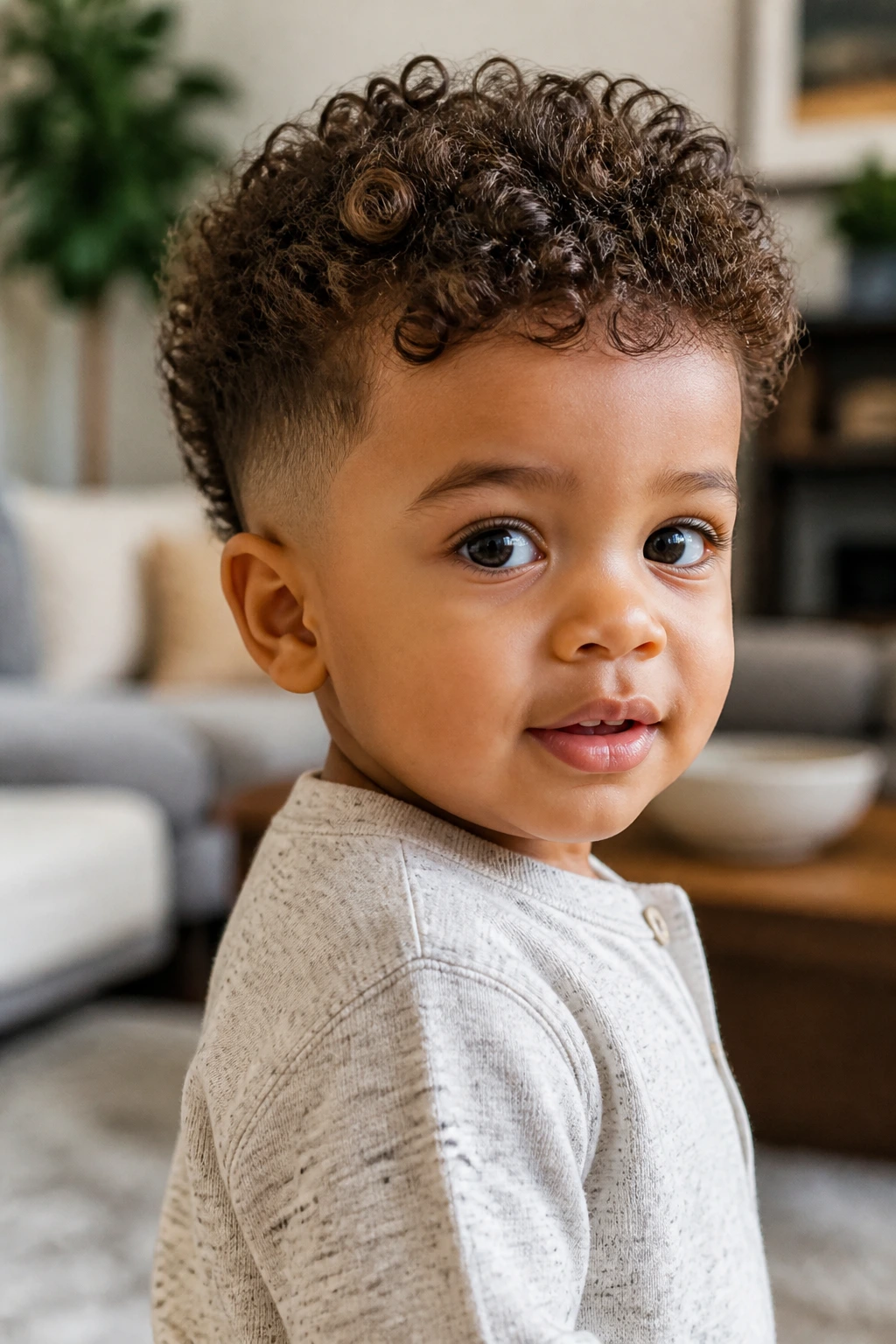
Good toddler boy curly haircuts do one simple thing well: they make the curl pattern look cared for without flattening it into obedience. That is the balance worth chasing. Not perfect symmetry. Not a haircut that survives only in the barber mirror. A cut that still makes sense after a nap, after the car seat, after the hundredth time your child rubs his hands through his hair.
If you keep shrinkage in mind, ask for softer edges, and choose a shape that grows out with grace, the haircut does the hard part for you. The rest is just a little water, a little patience, and a barber who understands that curls have their own opinion.
