



A good short haircut on a little girl has a very small job description: stay neat, move when she runs, and not turn into a helmet by lunchtime. That sounds simple until you’ve dealt with a cowlick at the temple, a crown that puffs up after a nap, or bangs that separate into six weird directions the second the car seat belt rubs them.
That’s where shag haircuts for little girls and short hair earn their keep. They work with the hair instead of insisting it behave like a magazine cutout. The layers soften the outline, the fringe can hide a forehead swirl, and the choppy ends keep short hair from looking boxy. Done well, a shag looks playful on purpose. Done badly, it looks like someone took scissors to the ends and hoped for the best. There’s a big difference.
The sweet spot is shape. Not drama. Not over-thinning. Shape. A little girl’s shag should feel light, swing when she turns her head, and still look like a haircut after a nap, a park run, and one rough brush with a sweatshirt hood. The best versions are the ones that respect the child’s texture, the family’s morning routine, and the fact that nobody wants to stand in the bathroom fighting a round brush at 7:15 a.m.
Why These Shag Haircuts Work So Well on Short Hair

Soft layers keep short hair from looking stiff. A blunt bob can be lovely, but it has a hard edge. A shag breaks that line up, so the haircut moves even when the hair is only chin length or shorter.
The shape forgives growth. Short cuts can go awkward fast once they grow out a little. Shag layers blur that stage. A half-inch of growth changes the look, but it does not wreck it.
Cowlicks get less bossy. If a child has a stubborn swirl at the crown or a temple that flips out, a shag lets the stylist place the shorter and longer pieces around it instead of trying to flatten it down with a heavy perimeter.
It works on more than one texture. Straight hair gets movement. Wavy hair gets a lived-in bend. Curly hair gets a rounder outline and less triangle shape. That flexibility is the real reason parents keep coming back to it.
The cut doesn’t need a big styling routine. A mist bottle, a dab of light product, and a quick finger-tousle are usually enough. For a child who hates sitting still, that matters more than anything else.
It feels like a kid’s haircut, not a mini adult haircut. That sounds subtle, but it’s the whole point. The best short shag on a little girl looks fun, not forced.
How to Ask for the Right Cut Without Getting a Surprise
The words you use at the salon matter. A lot. “Shag” can mean soft and feathery to one stylist and jagged and edgy to another, and those are not the same haircut on a seven-year-old.
Bring a photo, but bring two if you can. One should show the silhouette you want; the other should show what you do not want. Maybe you like the face-framing pieces but hate super-short bangs. Maybe you want texture without a choppy crown. Say that out loud.
Ask for the shape, not just the trend
A better request sounds like this: “I want short layers around the crown, softer pieces at the cheeks, and a fringe that can be pushed to the side if needed.” That gives the stylist room to work while keeping the cut child-friendly.
If your child has curls or strong waves, ask whether the cut should be done damp or dry. Curly hair shrinks, and that shrinkage can turn an innocent-looking fringe into a tiny shelf if someone cuts it too high. That mistake is common, and it’s annoying to grow out.
One more thing: be honest about styling. If you are not going to diffuse, blow-dry, or use a round brush, say so. A shag can be cut for air-drying, and that version is often the smartest choice for busy households.
Brushes, Clips, and Light Products That Help the Cut Behave

You do not need a drawer full of styling gear for a child’s shag. You need a few things that make detangling faster and the layers sit where they should.
- Wide-tooth comb: Best for wet detangling on wavy or curly hair; it pulls less than a fine brush.
- Detangling brush: Good for smoothing out the fringe and the outer layers on straight or lightly wavy hair.
- Mist bottle: A few sprays tame bedhead without soaking the whole head.
- Microfiber towel or soft T-shirt: Reduces frizz when hair is air-dried after washing.
- Light leave-in spray or detangler: Helps short layers slide apart instead of puffing together.
- Small clips: Useful for pinning the bangs to one side while they dry or for keeping face-framing pieces out of the eyes.
- Child-safe styling cream or mousse: A pea-sized amount is often enough; more than that can make short hair look greasy fast.
Skip heavy oils unless the hair is very dry and thick. On short cuts, those products can make the ends stick together and flatten the whole point of the shag.
1. Soft Feathered Shag
This is the easygoing version of the whole idea. The hair sits around chin length or slightly above, with gentle layers that feather outward instead of flipping hard at the ends. It gives straight or softly wavy hair movement without looking overworked, which is exactly why it suits little girls who want to keep their hair short but not severe.
The face-framing pieces matter here. Keep them soft around the cheekbone and a little longer toward the front so the haircut grows out in a friendly way. If the fringe is included, it should sit just at or below eyebrow level when dry.
Why it works: The feathering takes weight out of the lower edge, so the cut doesn’t puff into a square. It also hides small uneven spots when a child’s hair sticks out after sleeping on it.
Best for: Fine to medium hair, straight textures, and children who want a light, swingy shape.
A little leave-in spray and a quick tuck behind the ears are usually enough. That is the charm of it. It looks styled without asking for much.
2. Curly Shag with Eyebrow-Skimming Bangs
Curly hair and short shags get along better than many people expect, but the cut has to respect the curl pattern. The top should be left long enough to bounce, while the layers underneath remove bulk so the head shape stays round instead of triangular. The bangs should land at or just below the eyebrows when dry, because curls always spring up more than you think they will.
The best curly shag is cut with restraint. Not every curl needs to be sliced to pieces. A few strategic layers around the crown and sides are enough to create shape and keep the style from becoming one big puffball.
What to watch for
If the fringe is cut too short, it can sit too high after it dries. That’s the classic curly-hair regret. Ask the stylist to leave extra length and check the shape once the hair is fully dry.
A dab of curl cream, scrunched in from the ends upward, can help the pieces clump in a nice way. Then let it air-dry or diffuse on low. High heat and aggressive brushing are the enemies here.
3. Chin-Length Shag with Tapered Ends
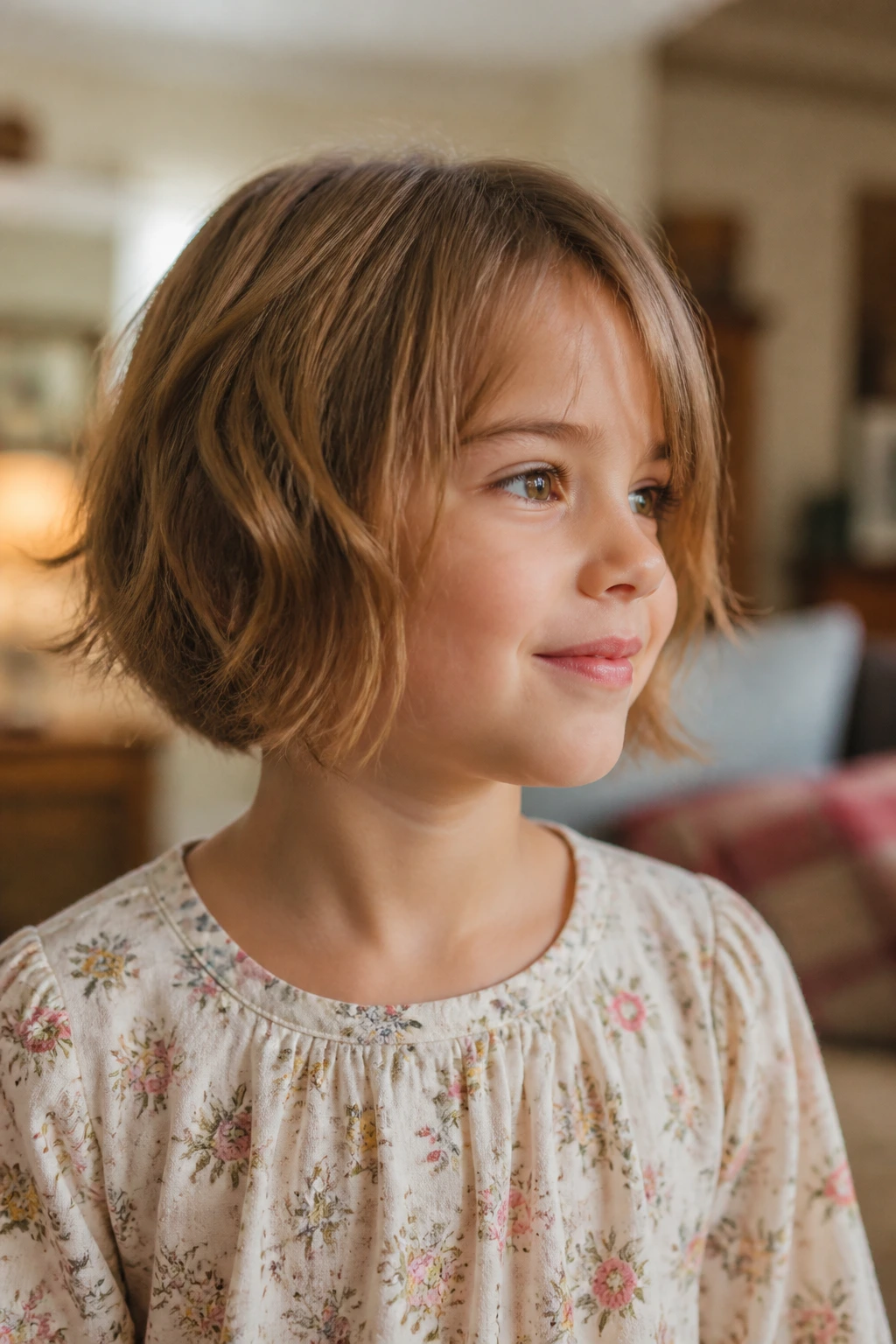
This cut sits between a bob and a shag, and that middle ground is often where families land after a few shorter styles. The line at the chin keeps the haircut neat, while the tapered ends stop it from feeling heavy. It’s a good option for children who like short hair but still want enough length to tuck behind an ear or clip back.
The tapering is what makes it different from a regular bob. Instead of one blunt shelf, the ends are lightly textured so the hair falls in soft points. That little bit of movement makes a big difference when the child’s hair is thick or tends to swell in humidity.
Best for: Straight to wavy hair, especially if the child’s hair grows fast and needs a cut that looks okay for six weeks instead of three.
Pair it with a side part if the crown has a strong cowlick. A tiny shift in parting can settle the top more than another layer ever could.
4. Layered Pixie Shag
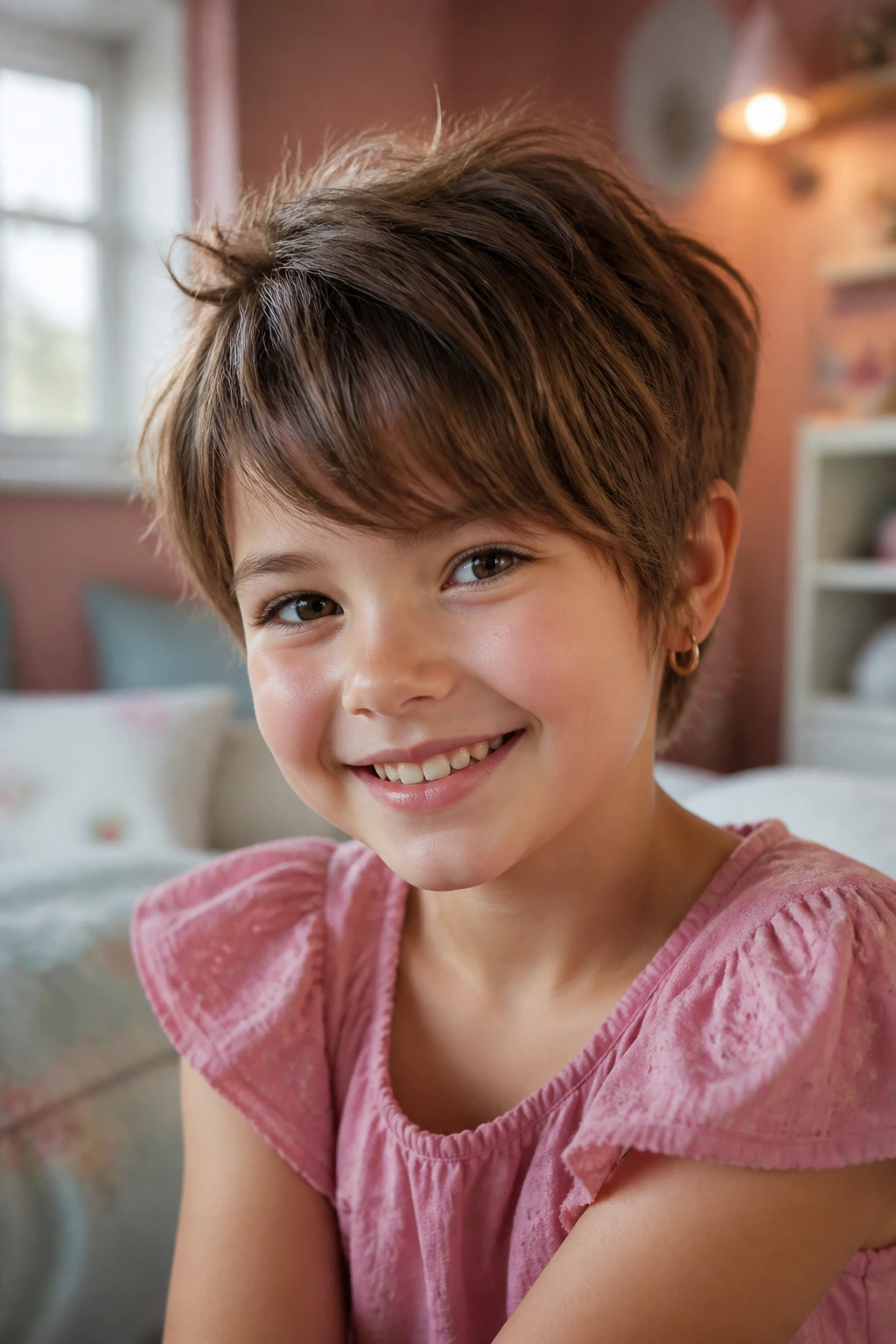
This one is for the child who wants hair off the neck, off the ears, and mostly out of the way. A pixie shag keeps the sides and nape short, then leaves more length on top so the haircut still has texture and personality. It’s sporty, low-fuss, and a little cheeky.
The crown is where the shape lives. If that area is left too short, the haircut can turn into a plain crop. Longer top layers let you brush the hair forward, sweep it sideways, or let it fall naturally in a soft, fuzzy way.
Why families like it
- It dries fast.
- It stays cooler in warm weather.
- It does not bunch up under hats and helmets as much as longer cuts do.
That said, it is not the easiest shape for a child who hates frequent trims. A pixie shag needs regular clean-up around the ears and neck to keep it from losing definition. It is cute with confidence. It is less cute once it grows into a shaggy blur.
5. Rounded Mushroom Shag
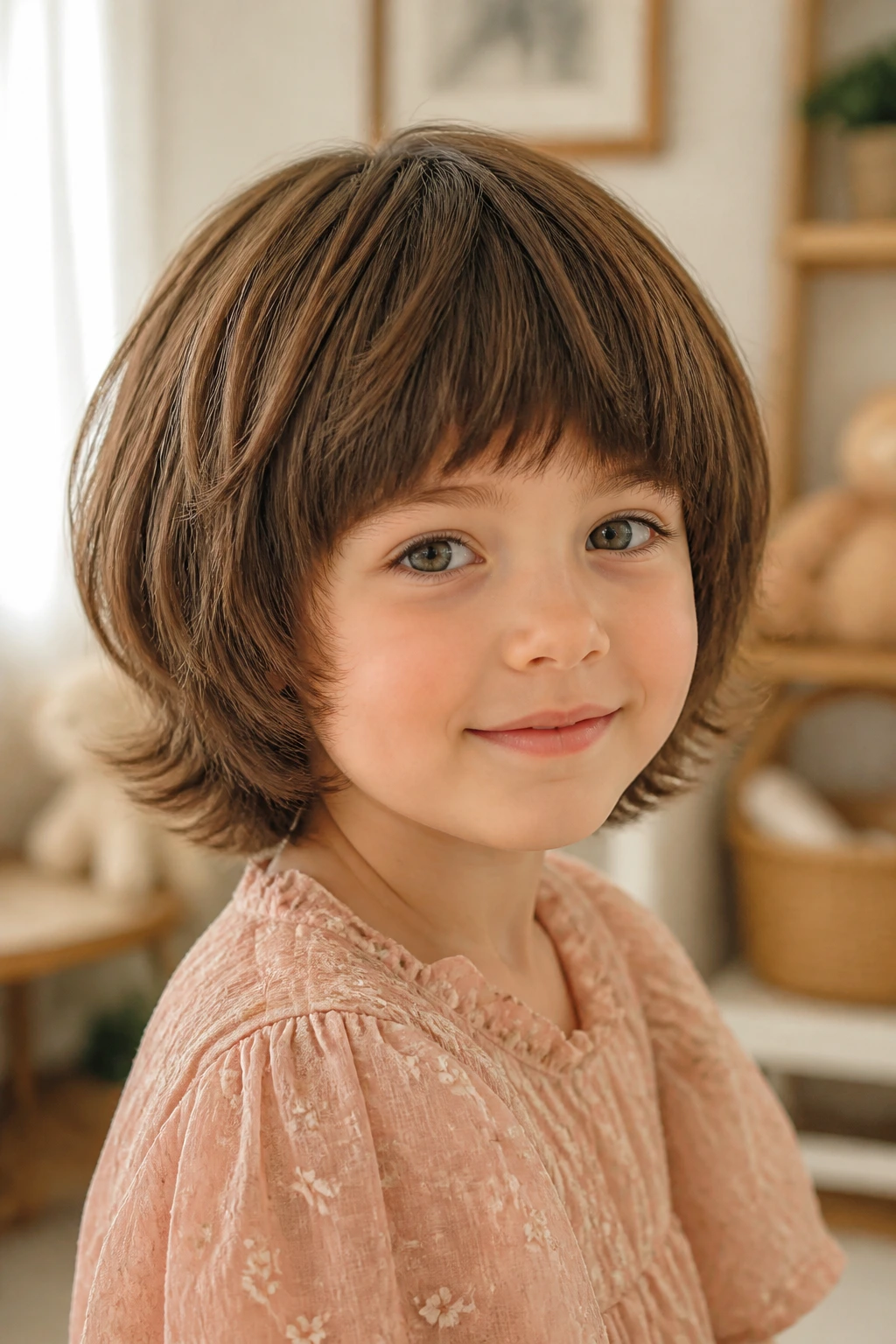
A rounded mushroom shag has a soft dome shape with broken-up layers instead of a hard bowl line. The silhouette is gentle and slightly vintage, but the texture keeps it from looking old-fashioned. On a little girl, it reads as sweet and a little whimsical, especially when the ends move instead of sitting flat.
This style works best when the stylist leaves enough fullness through the top and rounds the sides in a careful way. The shag part comes from the texture at the perimeter, where the ends are point-cut so the shape breathes.
It’s especially useful for thick straight hair. Thick hair can get heavy fast, and this cut removes weight without making the head look sparse. That balance is harder than it sounds. Too much thinning and the haircut gets wispy. Too little and it turns into a helmet.
A side clip, a headband, or a tiny barrette can change the mood in seconds. The shape is the point; the accessories are just the fun part.
6. Micro-Shag with Side Sweep

Shorter than a bob, softer than a crop, and very good at handling tiny cowlicks. The micro-shag with a side sweep keeps the sides close while leaving enough length on top for a brushed-over fringe. It’s a smart choice when the child wants short hair but the family still wants something that looks intentional, not cropped flat.
The side sweep is doing a lot of work here. It gives the haircut direction. Without it, the top can stick up or split apart in odd places. With it, the cut feels polished in a loose, kid-friendly way.
Works well for: Fine hair, straight hair, and children who dislike bangs falling in their eyes.
Use a tiny amount of styling cream, then comb the top diagonally across the forehead while the hair is damp. A clip can hold the direction for ten minutes while the child gets dressed. That’s often enough.
7. Bob-Length Shag with Piecey Fringe
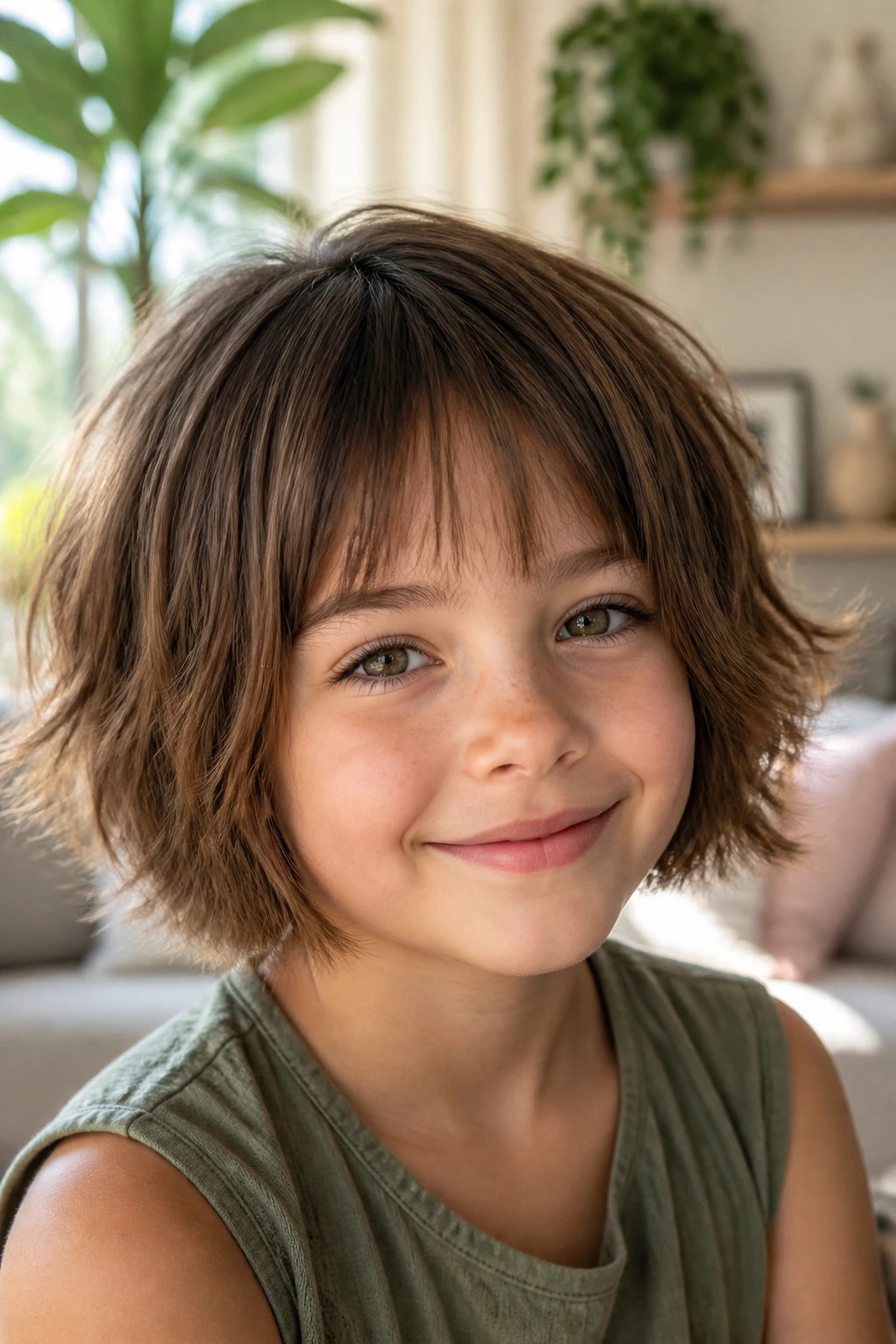
This is the version that looks familiar at first glance and more interesting the second time you look. The length sits around the jaw or just below it, but the fringe and layers are broken into small pieces so the haircut doesn’t feel heavy. Piecey bangs can be pushed apart with fingers, which makes them useful for kids who don’t want a solid curtain across the forehead.
The trick is not to over-layer the ends. You want movement, not holes. A clean outline with texture through the interior usually looks better than a choppy perimeter that thins out too much.
A good match if…
- your child has a round face and benefits from a little vertical line,
- her hair falls flat at the roots,
- you want a cut that can be tucked behind the ears for school pictures.
It’s a flexible cut. That flexibility is why stylists keep recommending it, and they’re not wrong.
8. Tousled Bixie Shag
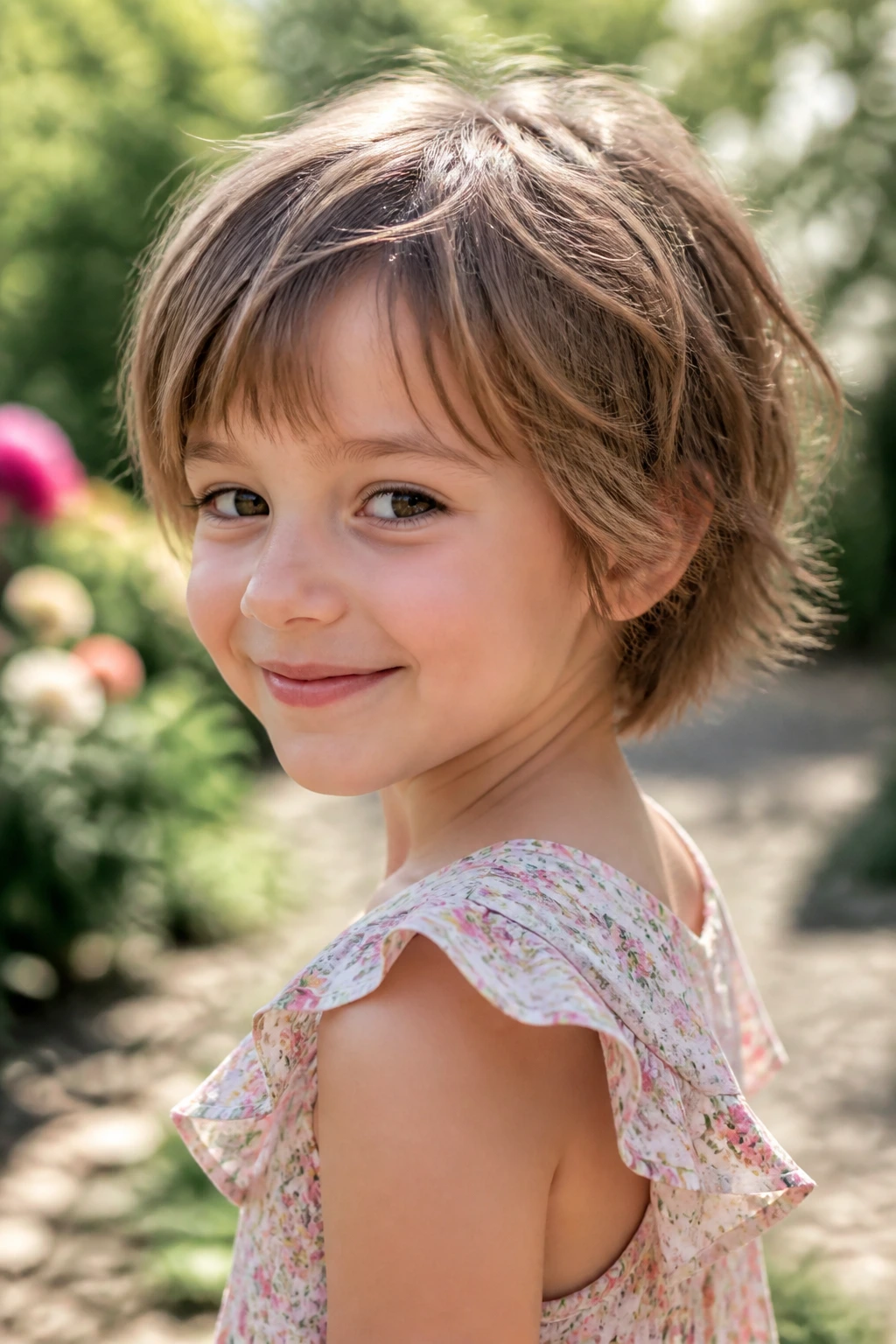
A bixie is the in-between cut that lives halfway between a bob and a pixie, and the shag version leans into texture on top. It’s short at the back, longer at the crown, and soft around the sides. On a child, the result is playful and feather-light.
This style is good for active kids because it stays out of the neck while still leaving enough hair to style in different directions. You can tuck it, sweep it, or let it fall forward a little. That small amount of choice matters when a child has opinions about her hair but not the patience for a lot of grooming.
If the hair is thick, ask the stylist to remove bulk inside the shape, not just at the ends. That keeps the outline clean. If the hair is fine, keep the layering gentle so the cut does not look see-through.
No, it is not a tiny adult fashion cut. At its best, it looks like a cheerful, easygoing child’s haircut with a bit of edge.
9. Long-Crown Shag with Tapered Sides

Here’s the practical version for children who need hair out of the face but still want a little length at the top. The crown stays longer, the sides are tapered, and the nape is cleaned up so the shape doesn’t balloon out. It’s especially nice for hair that tends to lie flat on the sides and stand up at the crown.
The longer top gives you room to part the hair differently from day to day. Middle part one morning, side sweep the next. That flexibility can make a cut feel newer than it really is.
The sides should be tapered softly, not shaved or clipped too close unless that is the family’s actual preference. A little softness around the ears keeps the style kid-friendly and avoids the stark look some shorter cuts get.
This one has a nice side effect: it grows out slowly in appearance. The shape changes, yes, but it doesn’t crash.
10. Rounded Halo Shag
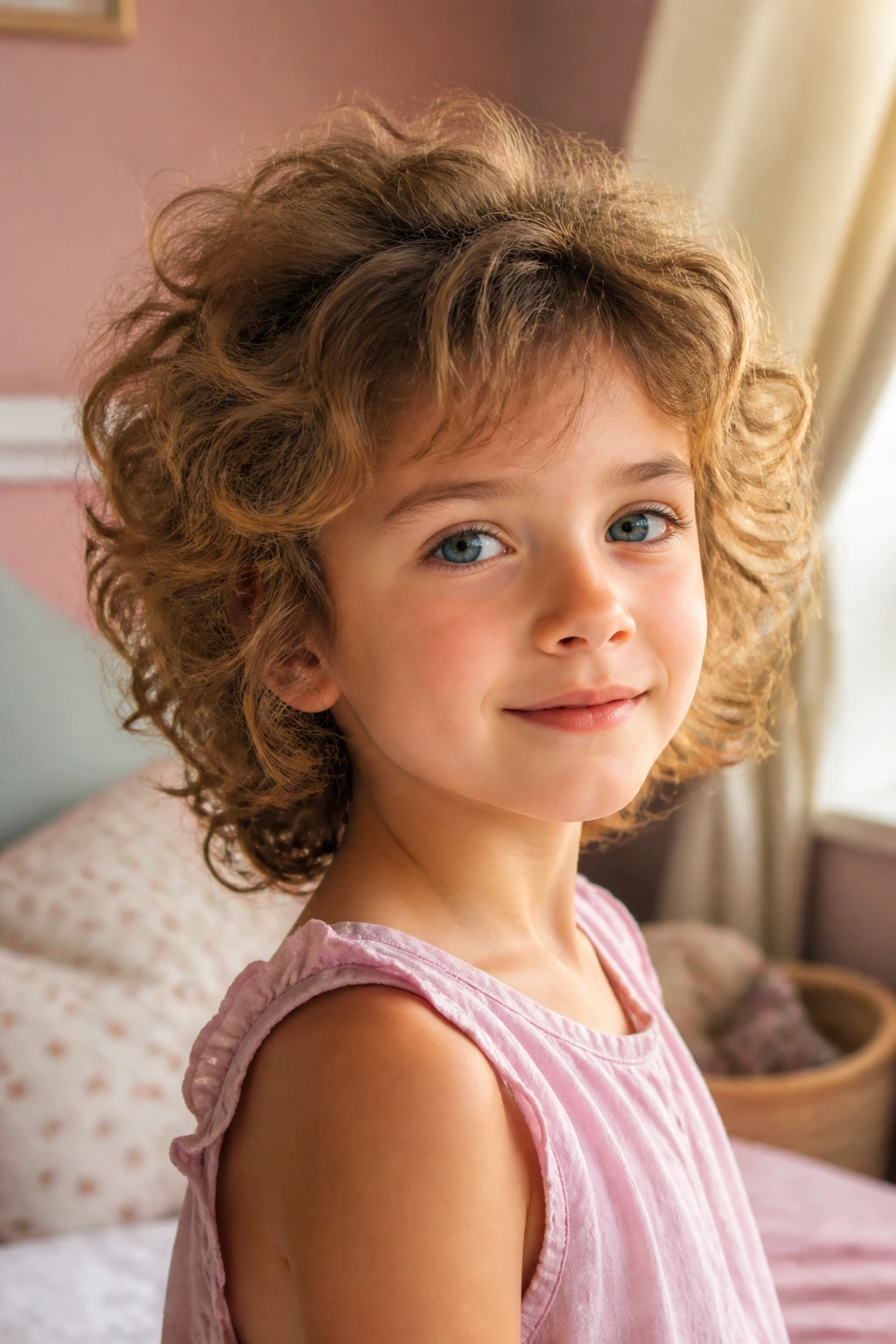
Think of this as a soft frame all the way around the head. The layers build a rounded silhouette, which is especially pretty on curly or wavy hair because the movement happens everywhere, not only at the ends. The halo effect comes from keeping the shape lifted around the crown and open through the sides.
This cut is a favorite for children whose hair has a natural bend. It helps the curls or waves sit in a neat cloud instead of collapsing into a flat cap at the top and frizz at the bottom. That unevenness is the usual problem. The halo shag answers it.
Styling note
A diffuser on low heat can help if you want the roundness to show. But air-drying works too, as long as the hair is scrunched lightly and left alone while it dries.
If the child’s hair is very thick, ask for interior weight removal. Otherwise the halo can become too dense near the temples. That’s fixable. It just has to be planned at the cut, not after.
11. Mini Wolf Cut
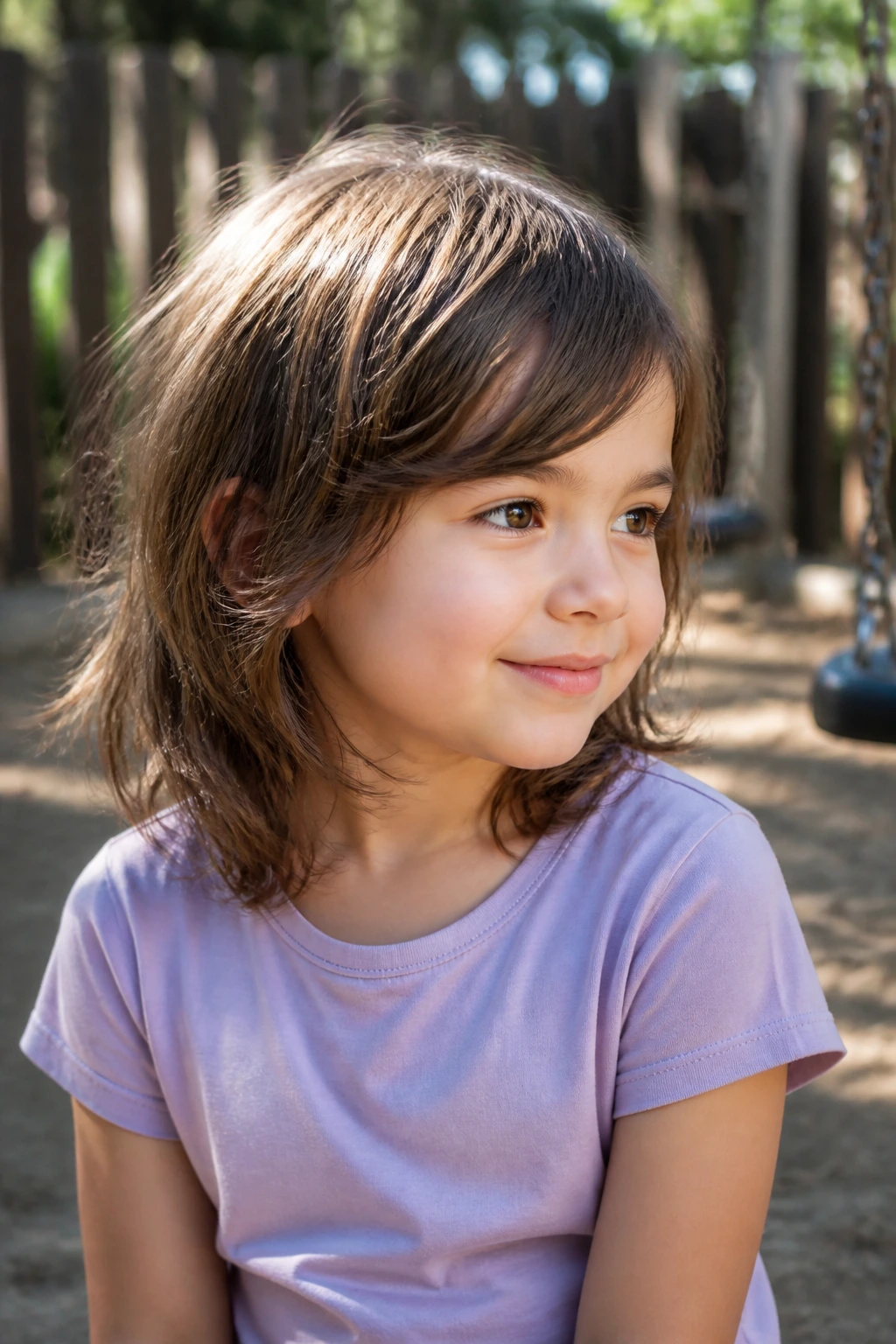
Some parents hear “wolf cut” and picture something too edgy for a preschool classroom. Fair. The mini version is gentler. It keeps the signature mix of shorter crown layers and longer bottom pieces, but the difference between those lengths is smaller and the overall look is much softer.
On short hair, this cut creates movement fast. The top has lift, the lower layers have swing, and the fringe can be brushed across the forehead or split into two small pieces. It’s a good choice for kids who like hair with personality and do not mind a little texture.
The key is restraint. Ask for a softened wolf-inspired shag, not aggressive separation. The child should look like she can run around the playground without the haircut trying to steal the show.
It’s a fun cut. Also a tricky one if overdone. One strong styling product is enough; too much mousse or texturizer can make the layers feel crunchy.
12. Airy Curtain Bang Shag

Curtain bangs on a child’s short shag can be lovely when they’re kept light and not too long. The fringe parts in the middle and falls to the sides, blending into the face-framing layers instead of sitting as one block. That gives short hair a softer front and a little movement around the eyes and cheeks.
The trick is length. Curtain bangs that are too short lose their sweep. Leave enough hair so they can split naturally and tuck behind the ears if the child wants them out of the way.
This shape is useful if a child likes changing how she wears her hair. With a middle part, it looks relaxed. With a slight side part, it looks a touch neater. It’s one cut, but it gives you more than one mood.
A tiny round brush or even fingers and a wet comb can help the bangs bend outward while they dry. Keep it light. The goal is bend, not curl.
13. Chin-Curl Shag
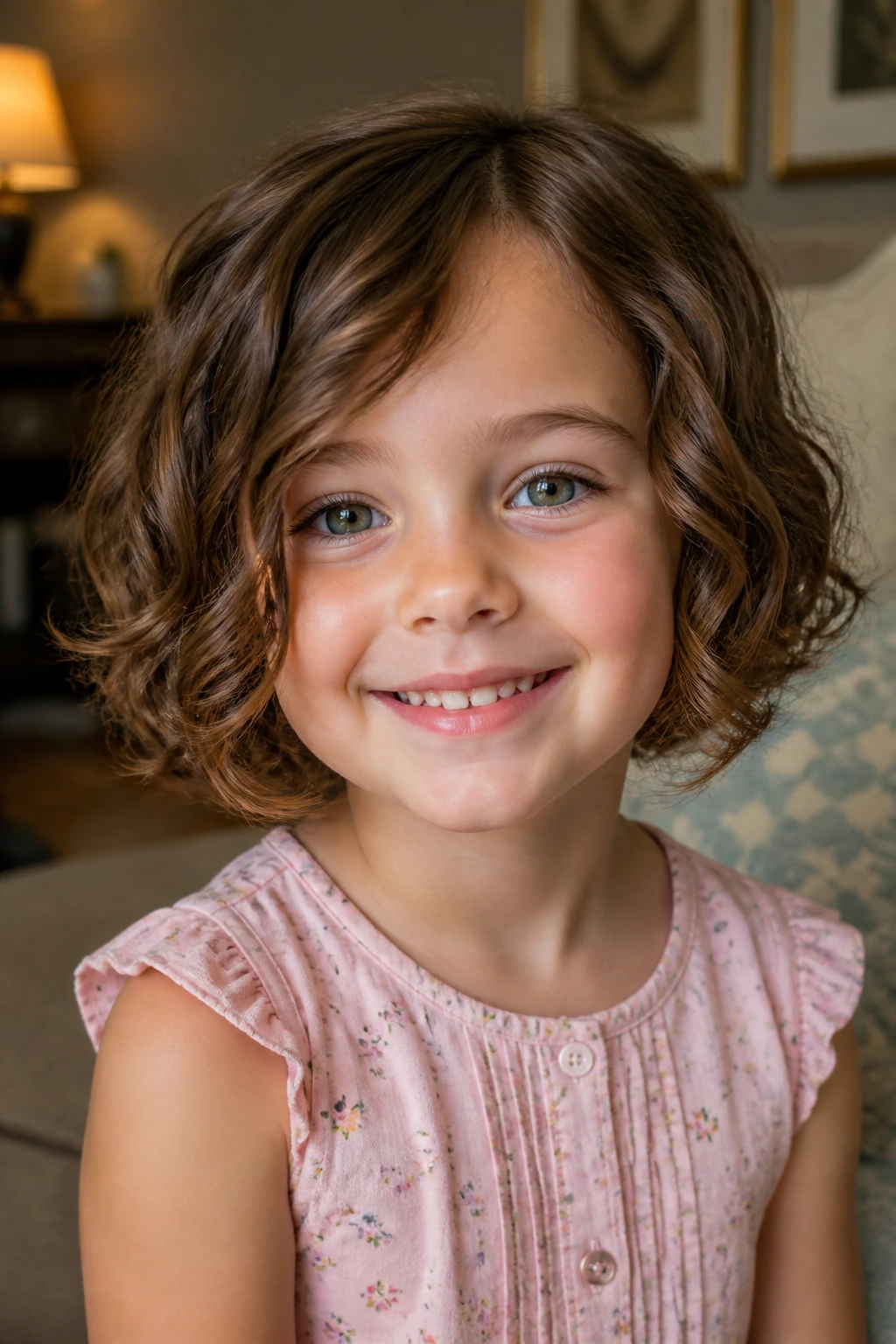
This one is for curls that like to spring outward right at the jawline. The cut uses that bounce on purpose, leaving enough length for the curl to sit neatly around the face while the layers underneath reduce bulk. The result is shaped, not wide.
That distinction matters. Curly hair at short length can grow outward instead of down, and if the layers are placed badly, the silhouette gets triangular fast. A chin-curl shag keeps the volume in the right places and avoids the mushroom effect at the cheeks.
Use a leave-in that is light enough not to weigh the curls down. A dense cream can flatten the shape and make the ends hang. That’s not what you want here.
This cut is a nice match for children who like to wear clips or headbands because the front stays soft but not too crowded. It gives the accessories a place to sit without fighting the hairline.
14. De-Bulked Shag for Thick Hair
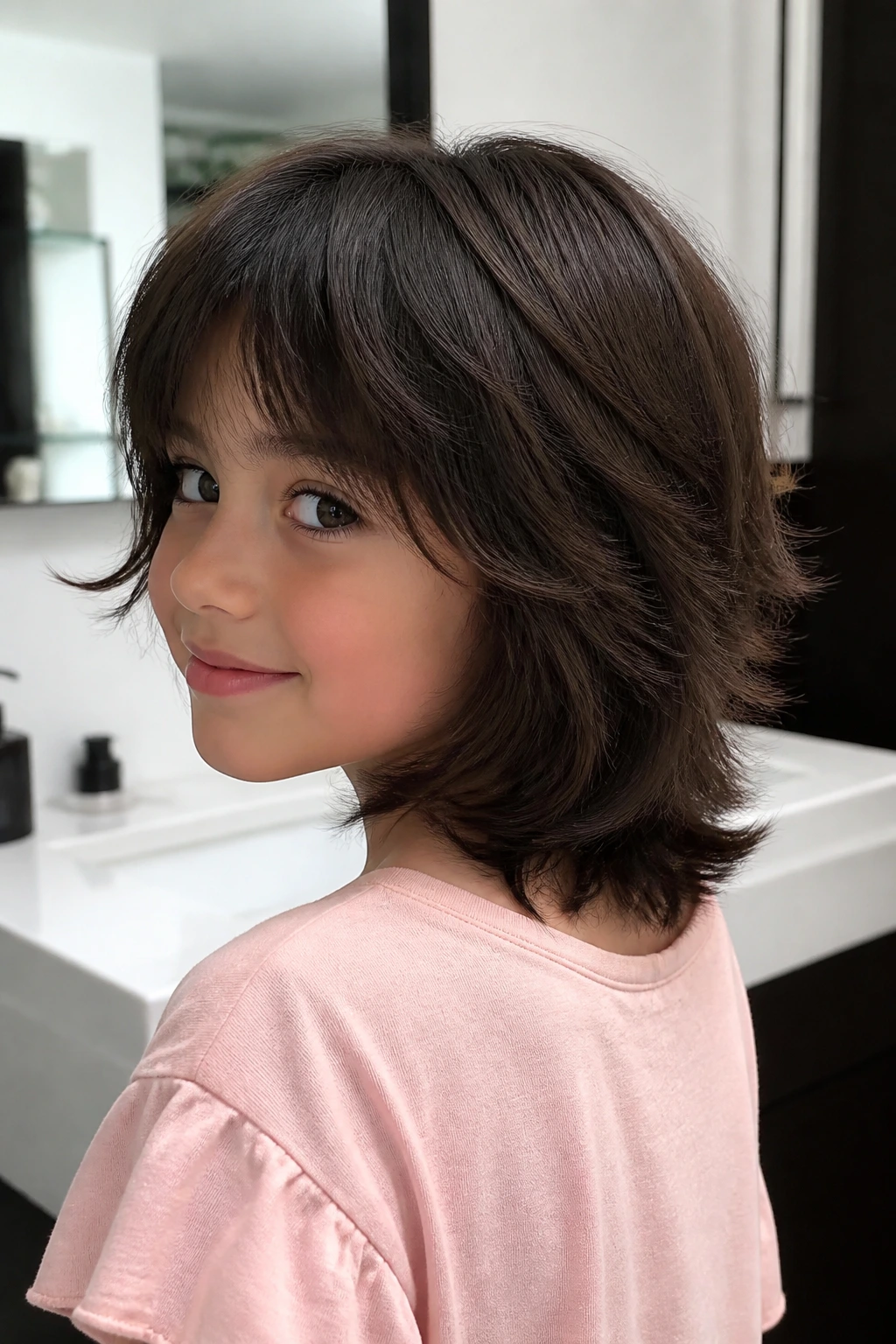
Thick hair needs a different hand. If the cut is just layered randomly, the result can still feel heavy. A de-bulked shag removes weight from the interior and leaves a shape that sits closer to the head without losing movement.
The stylist should think in sections: crown, sides, and nape. Bulk often hides under the top layer, especially at the back of the head, so the haircut needs more than surface trimming. Point cutting helps. So does careful removal of weight beneath the visible layer.
Best for: dense straight hair, thick waves, and kids whose hair expands the second it dries.
It’s worth saying plainly: do not thin thick hair with a razor-happy approach unless the stylist knows exactly how the hair behaves. Over-thinning can create frizz and little fuzzy ends that stick out everywhere. Controlled weight removal is kinder and cleaner.
15. Soft-Interior Shag for Fine Hair
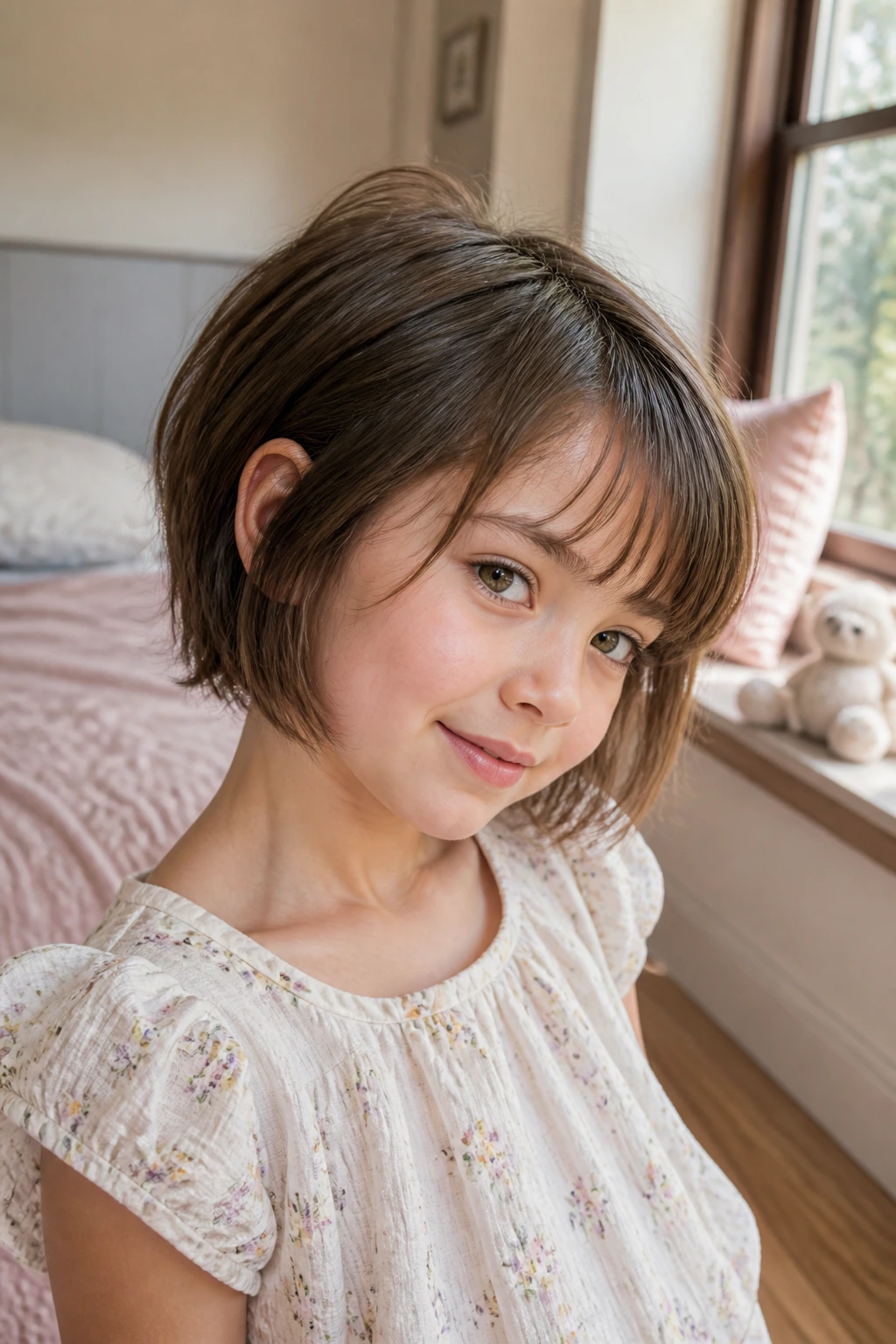
Fine hair needs a lighter touch. Too many layers can strip away the very fullness you’re trying to keep. A soft-interior shag uses subtle layering inside the shape so the perimeter still looks full while the cut gets enough movement to avoid lying flat against the head.
The exterior line should stay clean. That gives the illusion of thickness. Then the inner layers lift just enough to stop the hair from clinging to the scalp.
Best when you want
- a short cut that does not look wispy,
- a style that air-dries with some bend,
- a fringe that can be tucked or swept aside.
A light volumizing spray at the roots can help, but keep it modest. Fine hair gets greasy or sticky faster than people expect, especially on a child who touches her hair all day.
The real win here is shape, not volume for volume’s sake. Those are not the same thing.
16. Tapered Nape Shag
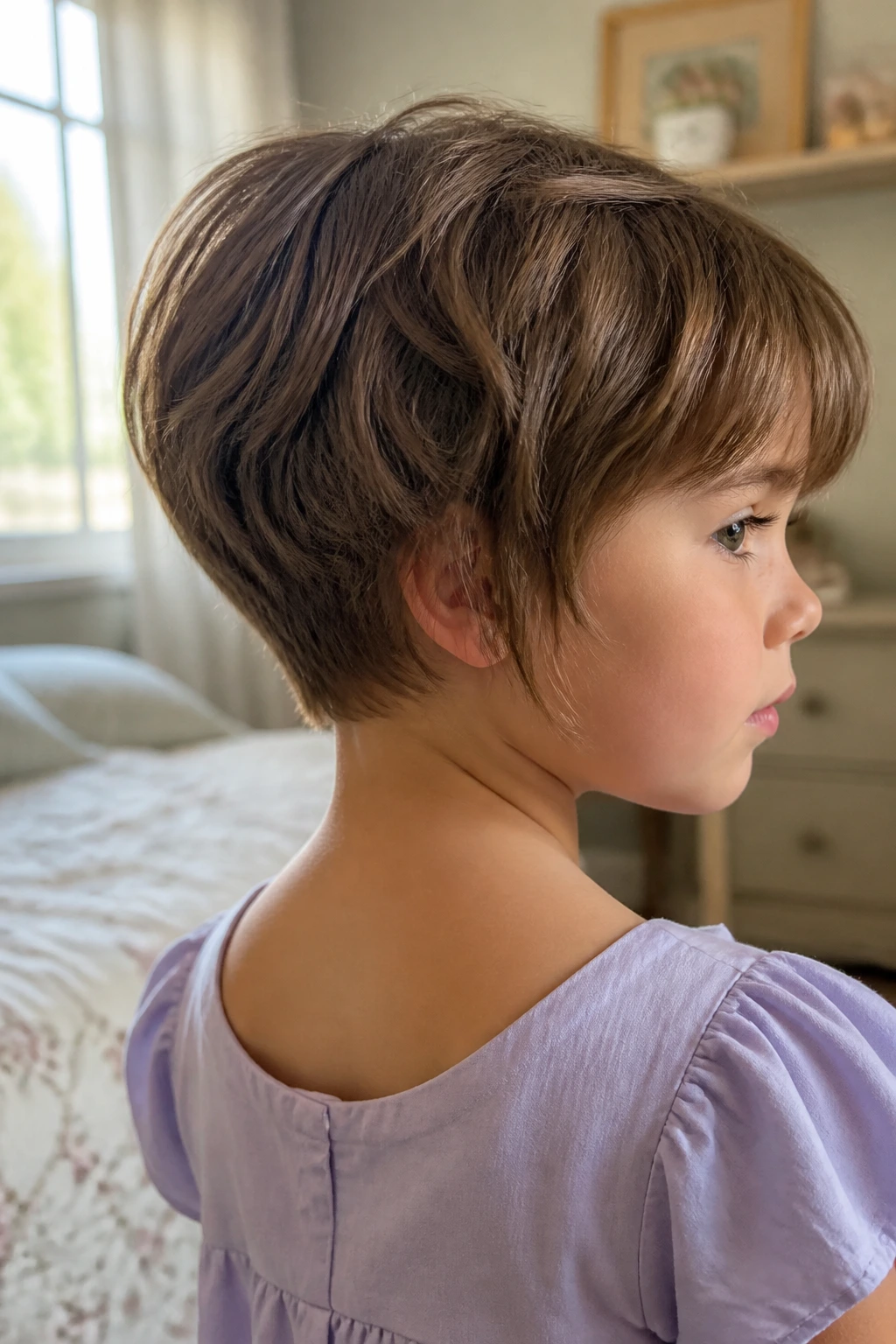
The nape is the part parents notice first when a short haircut starts growing out. A tapered nape shag keeps that area neat, which means the back of the haircut still looks clean after a few weeks. The top and sides can stay a little longer and looser, giving the whole cut its shaggy personality.
This is a practical choice for kids who wear backpacks, sit in car seats, or spend all day with hair brushing against collars. Shorter napes stay tidier. They also feel cooler, which some kids care about a lot more than adults think they will.
The taper should be soft, not severe. You want the haircut to fade gently into the neckline, not chop off abruptly. A sharp nape can look harsh on a child’s face. Soft is better.
It’s one of those small details that changes the whole feel of the haircut. Parents notice it when it grows out. The child notices it when the collar stops scratching.
17. Playful Asymmetrical Shag
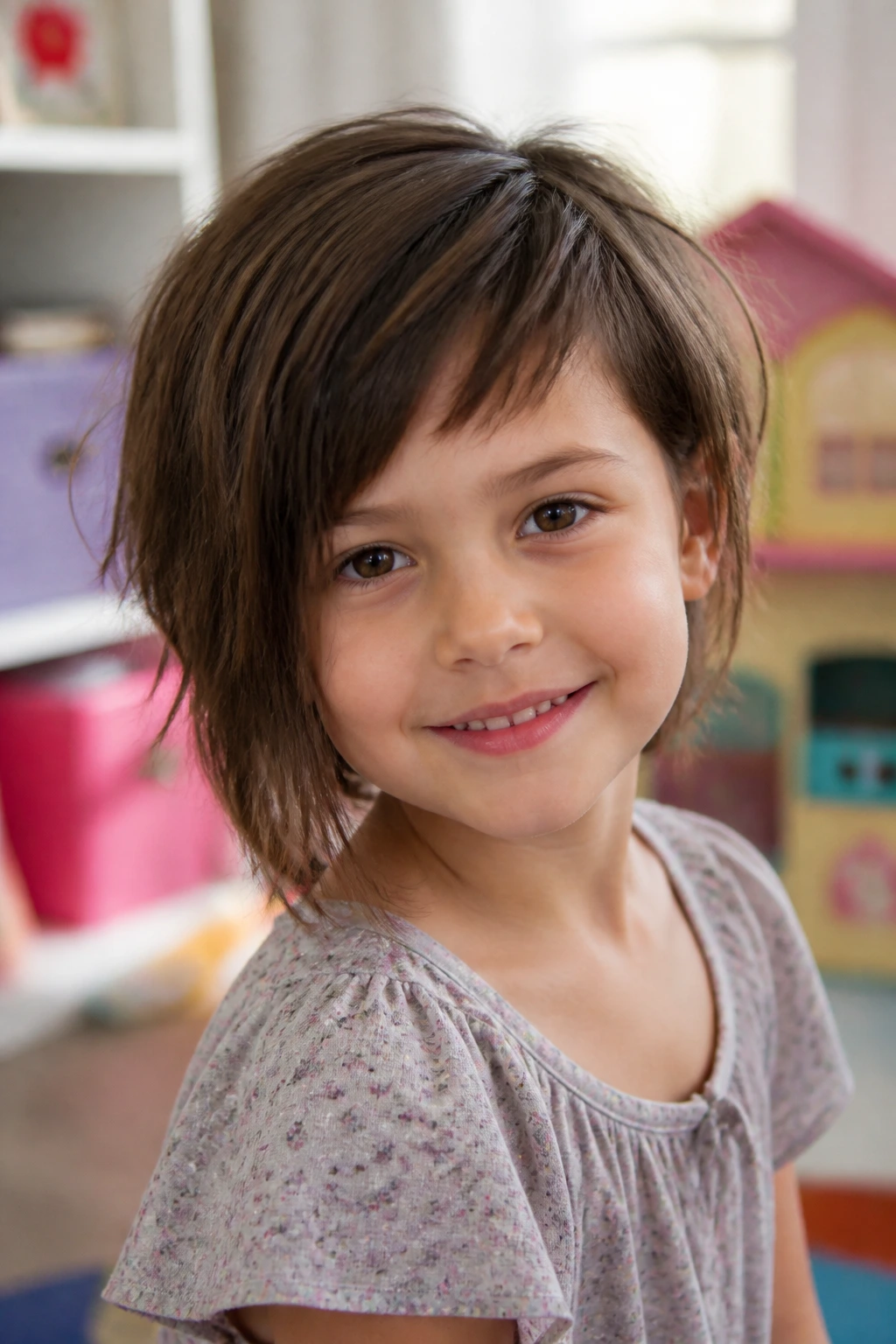
A little unevenness can be a feature, not a mistake. In an asymmetrical shag, one side sits slightly longer or the fringe is angled so the haircut has a playful tilt. Done gently, it looks creative without reading as extreme.
This style is a nice fit for children who like hair that feels a little different but still easy to live with. The asymmetry gives a sense of movement even when the hair is still. That’s the whole point.
It also helps with parts that refuse to stay where you want them. If one side wants to flip out and the other lies flatter, an asymmetrical cut can make that difference look deliberate.
Keep the contrast mild. One inch can be enough. Two inches can start to look more dramatic than most little kids want. Subtle is the smart lane here.
18. Grow-Out Friendly Shag
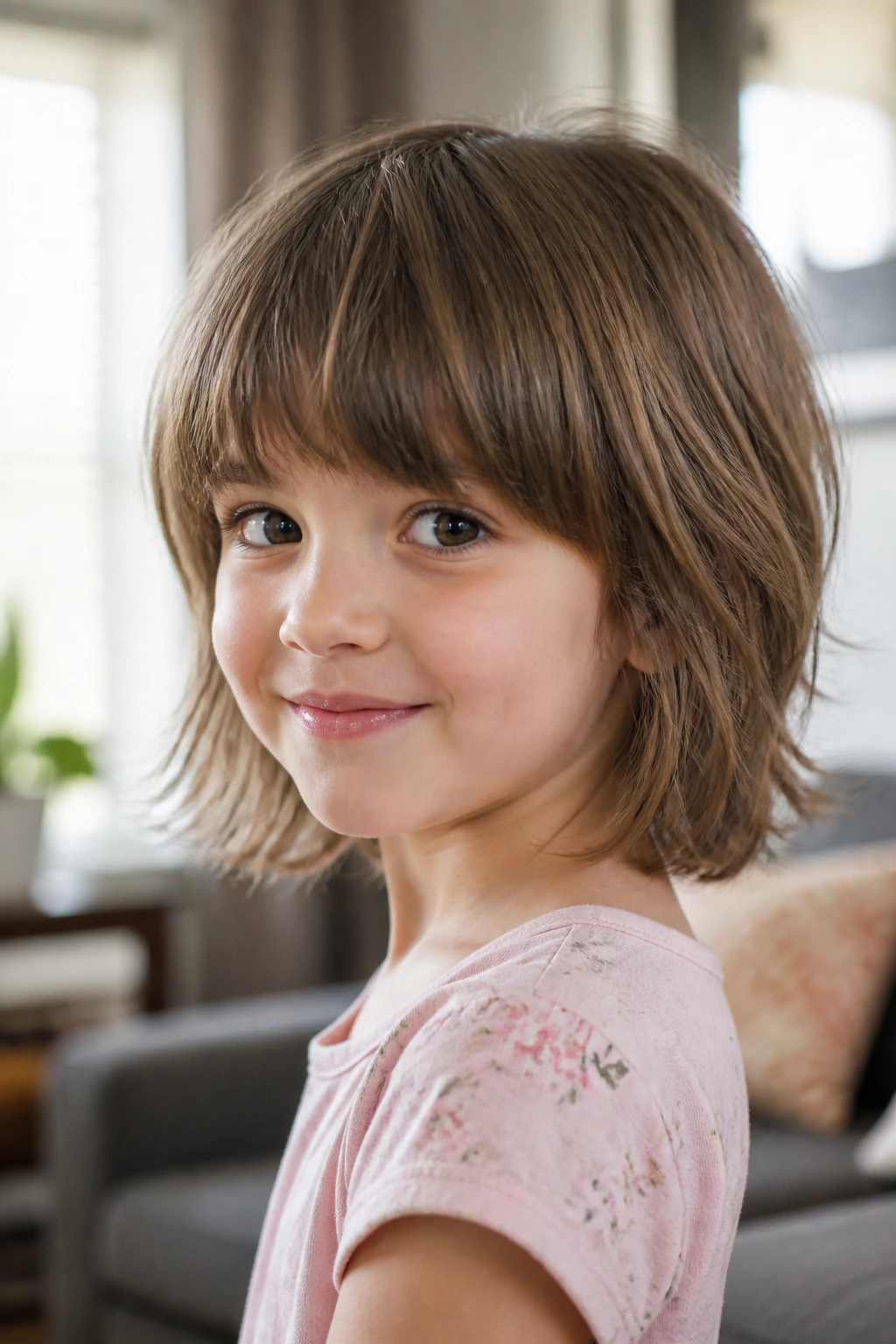
This is the cut for parents who know they won’t get back to the salon every four weeks and do not want the haircut to punish them for it. A grow-out friendly shag keeps the layers soft, the fringe flexible, and the overall shape rounded enough to survive several weeks of change.
The best version has no hard line that suddenly looks wrong once the hair grows. Instead, the layers blend into one another, which means the cut shifts gradually. That makes school mornings easier and also helps if your child is in a “please don’t touch my bangs” phase.
Why it lasts longer
- The bangs can be swept sideways.
- The sides stay soft around the ears.
- The nape does not need to be razor neat to look good.
This is the cut I’d suggest to families trying short hair for the first time. It gives the child the feeling of a real style without trapping the family in constant upkeep.
How to Style a Short Shag on Busy Mornings
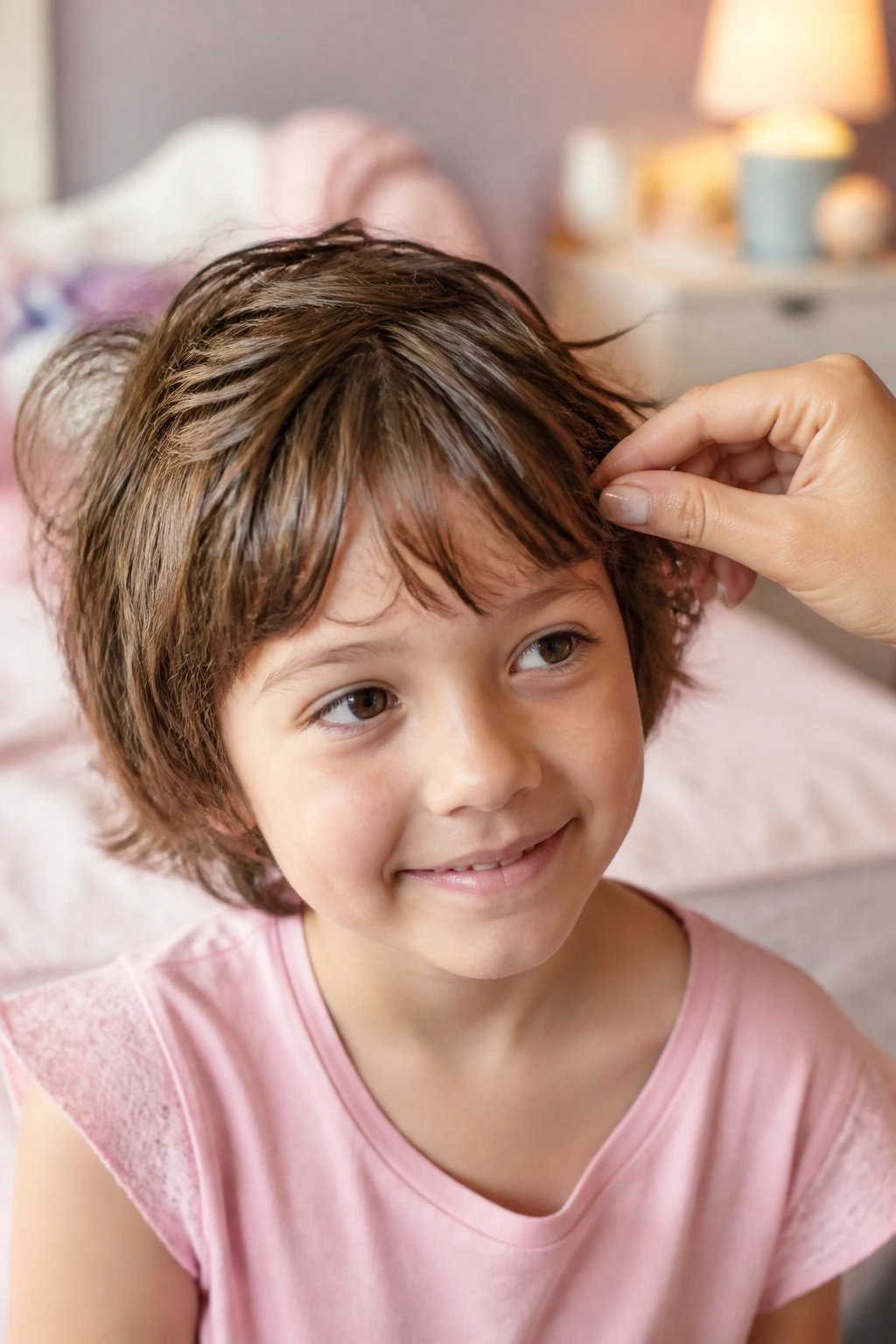
Most mornings, you do not need a full styling routine. You need enough structure that the haircut looks deliberate before the backpack zipper gets pulled and the shoe is missing.
Start with a light mist of water on the front and crown. Damp, not soaked. If the hair is curly or wavy, add a pea-sized amount of leave-in or curl cream and scrunch it upward with your hands. Straight hair usually needs less product and more direction, so a small dab of lightweight styling cream on the fingertips is enough.
If the fringe falls into the eyes, comb it to one side while it dries. If the crown sticks up, press it down with your palm for a few seconds after misting. That little bit of pressure helps the shape settle.
A quick rule: use the least product that gives you the shape you want. Short hair shows buildup fast. Two extra squirts of spray can be the difference between “piecey” and “helmet.”
How to Keep the Cut Soft Between Salon Visits
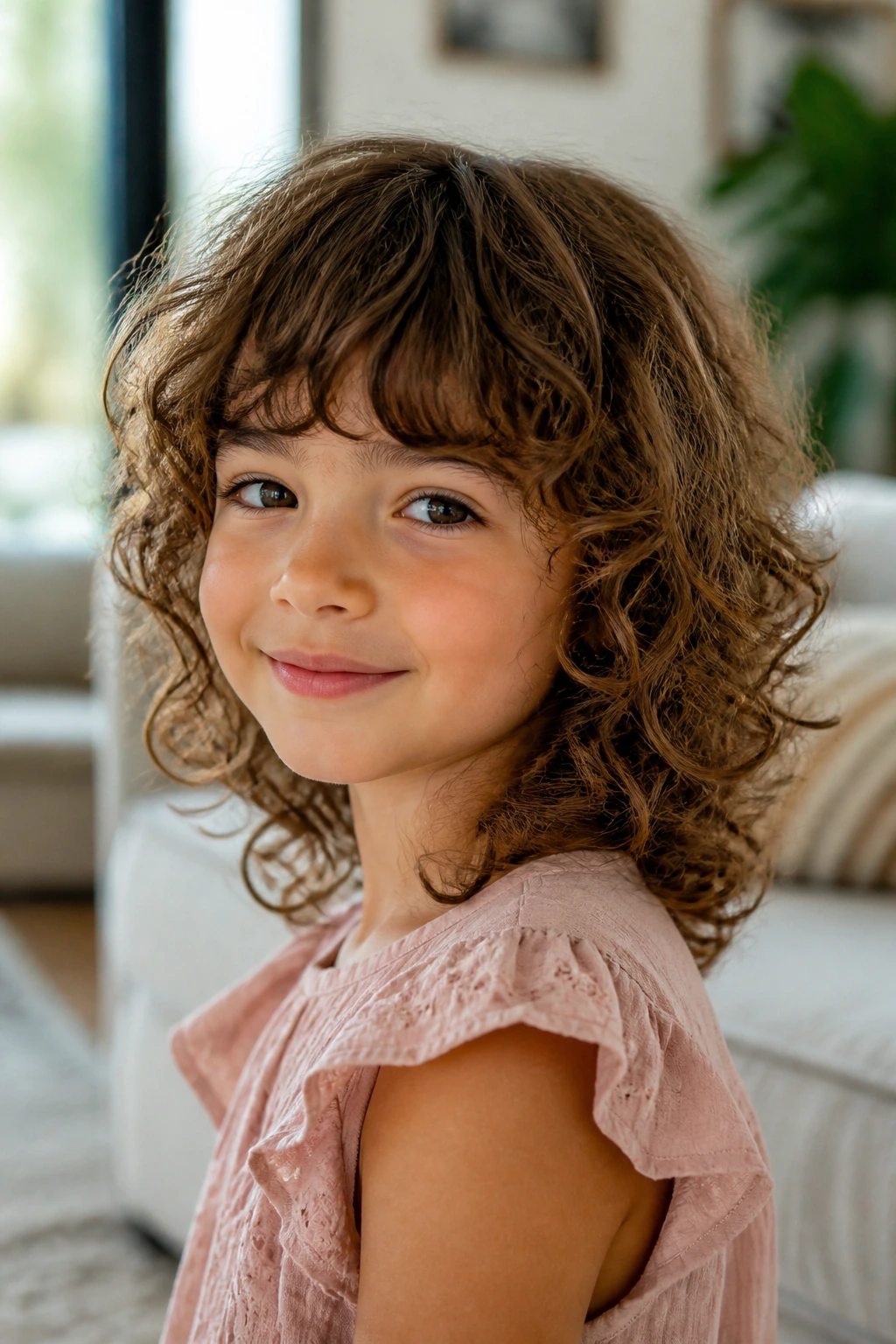
Short shag haircuts look best when the edges stay light and the fringe doesn’t get too long. For most children, a trim every 5 to 8 weeks keeps the shape in place. Faster-growing hair or very short pixie shag styles may need a tidy-up a little sooner.
The home part is simple. Wash as needed, not on a strict schedule. If the hair starts looking greasy at the roots or the bangs separate in strings, that’s when a gentle shampoo day makes sense. Use a conditioner mostly on the ends, not all over the crown.
At bedtime, a satin pillowcase or a loose braid can help reduce the morning puff. For very short styles, a soft sleep cap is optional, but some families like it because it keeps curls from flattening oddly.
If one side starts flipping out before the other, do not panic and do not cut it yourself in a rush. That’s how tiny uneven spots happen. Water, fingers, and a clean trim appointment solve more than scissors in the bathroom mirror ever will.
Common Mistakes That Flatten the Layers
Cutting the fringe too short. This is the one parents notice first. Short bangs can look cute on day one and then ride up after the hair dries. Leave extra length and check the shape dry, especially with waves or curls.
Over-thinning fine hair. The haircut stops looking full and starts looking patchy. If the hair is soft or sparse, keep the layers gentle and preserve the perimeter.
Using heavy cream on short hair. One too-hydrating product can make the top lie flat and make the ends stick together. On a shag, that erases the movement you paid for.
Ignoring the child’s cowlicks. A great shag can still fight the wrong growth pattern if the part and layers are placed badly. Show the stylist where the hair splits on its own.
Trying to make the cut too symmetrical. That sounds tidy, but short shag shapes usually look better when they have a little lived-in irregularity. Perfectly even layers can make the haircut feel stiff.
Variations and Adaptations to Try

The Gentle First-Haircut Shag: Keep the layers soft, the fringe long, and the nape only lightly shaped. This is the safest version for a child who is nervous about losing length.
The Water-Play Shag: Shorter around the face, easy to air-dry, and built to handle a splashy afternoon. Add a light detangler and skip heavy styling products.
The Clip-and-Go Shag: Leave enough fringe and face-framing pieces to hold clips, barrettes, or headbands. It’s a nice option if the child likes changing accessories more than changing the cut itself.
The Curly Cloud Shag: Focus on rounded layers and longer bangs that can curl without shrinking too far up. This version needs a hand that respects curl pattern rather than forcing a shape.
The Low-Maintenance School Shag: Keep the length consistent around the jaw, soften the ends, and avoid extreme contrast between layers. It holds up well when mornings are rushed and trims are spaced out.
Frequently Asked Questions
Is a shag haircut good for fine hair on a little girl?
Yes, if the layering stays soft. Fine hair needs movement without losing too much density, so a gentle shag with a clean outline usually works better than a heavily thinned cut.
What if my child has curls and hates bangs in her face?
Ask for longer fringe pieces that can be swept to the side or split in the middle. Curly bangs shrink, so starting long gives you room to adjust without emergency fixes.
How often should a short shag be trimmed?
Every 5 to 8 weeks is a practical range for most short shag shapes. Very short pixie shags may need tidying sooner if the nape or ears start looking fuzzy.
Can I style this kind of haircut without heat tools?
Absolutely. A mist bottle, fingers, and a little leave-in product are often enough. Heat can help if you want more polish, but it is not required for a good-looking shag.
What should I ask the stylist if my child has a strong cowlick?
Show exactly where the hair swirls and ask how the layers should be placed around it. A good stylist will work with the cowlick, not try to flatten it into obedience.
Will a shag make short hair look thinner?
It can, if the haircut is over-layered. That is why fine hair needs soft interior shaping and a fuller outline. The goal is movement, not see-through ends.
Is this a good first short haircut?
Yes, especially if you choose a softer version with longer fringe and a round shape. It gives the child short hair without making the cut feel harsh or too grown-up.
What if the haircut looks too choppy after the first wash?
That usually means the layers were cut too aggressively or the product is too heavy. Try lighter styling and a careful comb-through; if the shape still feels off, a salon touch-up is the real fix.
Soft Shape, Easy Mornings
The nicest thing about a good little-girl shag on short hair is that it stops fighting the child’s natural texture. It does not need perfect brushing. It does not need a pile of products. It just needs the right shape, the right length, and a stylist who knows when to stop cutting.
That’s why these cuts last in real life. They move when kids move. They grow out without looking abandoned. And on a day when everyone is already late, that soft, messy, on-purpose shape can save a surprising amount of time.
Choose the version that fits the child in front of you, not the photo on your phone, and the haircut will do the rest.
