



Short curls can be glorious and maddening at the same time. One morning they spring into neat coils with almost no effort. The next, they lie flat on one side, puff up near the crown, and develop a stubborn little cowlick right where you need a clean part.
That’s exactly why curly hairstyles for little girls and short hair deserve more respect than they usually get. Short curls are not a limitation. They’re a different shape language. If you stop trying to force them into long-hair styles with tiny braids and too many elastics, the hair starts cooperating in a much better way.
I’ve always liked short curly hair best when it looks intentional, not overworked. A clean part, a few well-placed clips, a soft puff, a twist that sits where the head naturally curves — those details do more than a pile of accessories ever could. And if the curls are still in that in-between stage where they’re too short for a ponytail but too long to leave alone, the right style can save the whole morning.
Why These Styles Work So Well on Short Curls
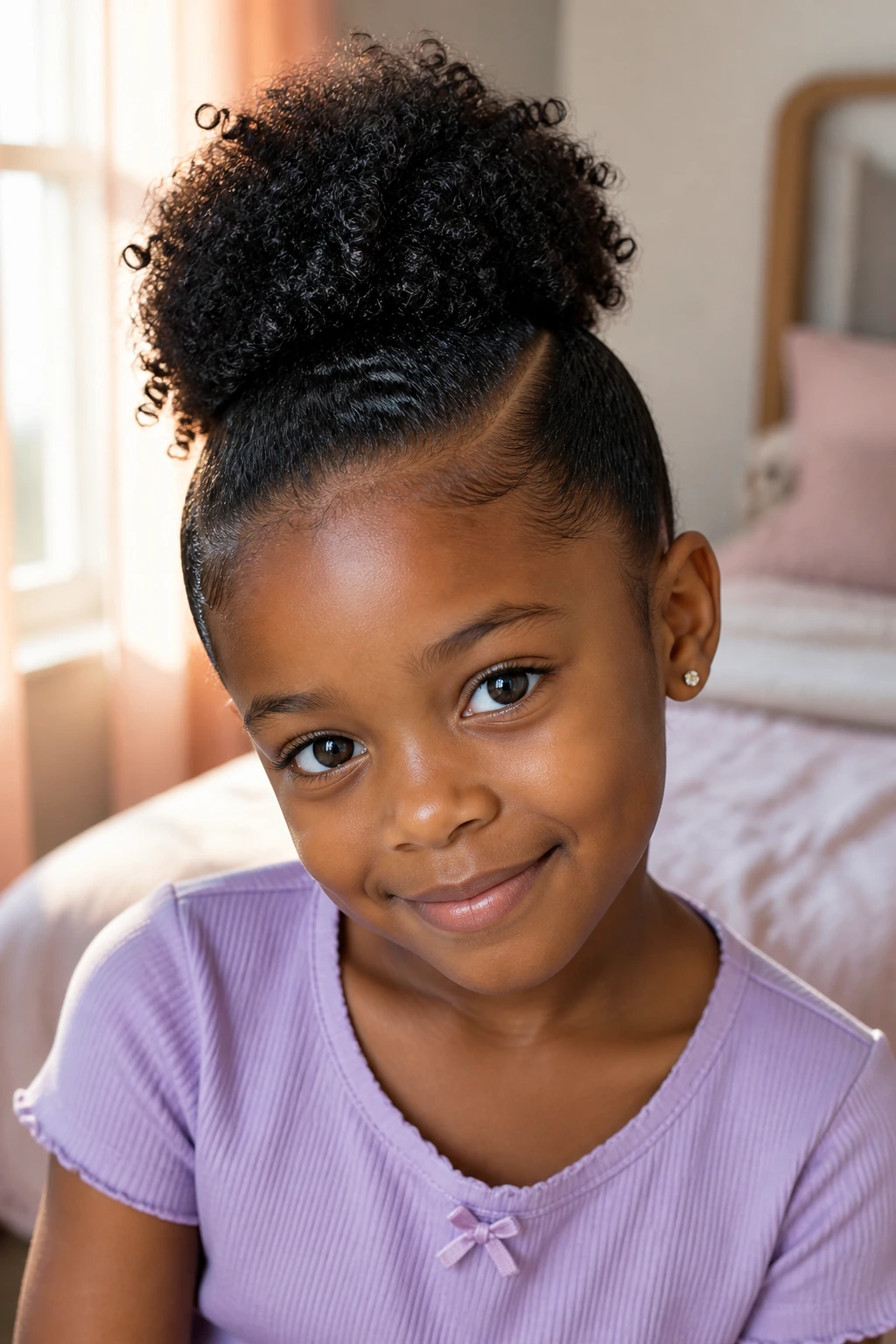
- Short length helps styles stay put: There’s less hair weight pulling the shape down, so puffs, twists, and mini buns usually hold their lines longer.
- Shrinkage becomes useful instead of annoying: Tight coils can create volume at the crown and sides without needing heat or stretching.
- Small sections look polished fast: A clean side part or two-section style can make a short cut look finished in ten minutes, not thirty.
- Accessories do more of the work: On short hair, one satin bow, snap clip, or headband can change the whole silhouette.
- Scalp comfort matters more here: These styles rely on gentle tension, which is a gift if your child gets fussy about tight ponytails.
1. High Puff with a Clean Side Part
A high puff is the first style I reach for when short curls need shape without drama. The side part keeps it from looking like you simply gathered everything and hoped for the best. On a little girl, that little line makes the style feel deliberate, almost tailored.
Why it works: Short curls often have enough length at the crown to gather into a small puff even when the nape and sides are too short for a ponytail. A side part also gives the eye a place to land, which makes the style look neat even if the curls themselves are soft and fluffy. Use a light gel on the part and the front edge, then leave the puff itself loose so it doesn’t turn into a hard little ball.
Quick way to do it: Mist the hair lightly with water, smooth the part with a rat-tail comb, then gather the top section with a snag-free elastic. Don’t pull it so tight that the front flattens. That ruins the shape.
A satin bow at the base helps, but a clip works too. If the curls are finer, keep the puff smaller and let the sides stay soft.
2. Two Mini Puffs Tied with Satin Bows
Two puffs have a cheerful, old-school charm that never feels tired. On short hair, they sit high and round, and the bows keep the look from collapsing into baby-hair chaos by lunchtime.
What makes it different: Instead of forcing one large ponytail, you split the hair straight down the middle and build two small puffs from the top and midsections. That keeps tension low and works even when the back hair is too short to join in fully. The result looks balanced from the front and surprisingly tidy from the side.
If your child has tight coils, finger-comb first and leave a little texture at the roots. If the curls are loose, a touch of curl cream helps the puffs hold their shape without becoming crunchy. I like a pair of satin ribbons here because they don’t snag, and they sit flatter than big fabric bows.
This style is also one of the easiest to refresh. A quick mist, a little smoothing at the part, and the puffs usually bounce back.
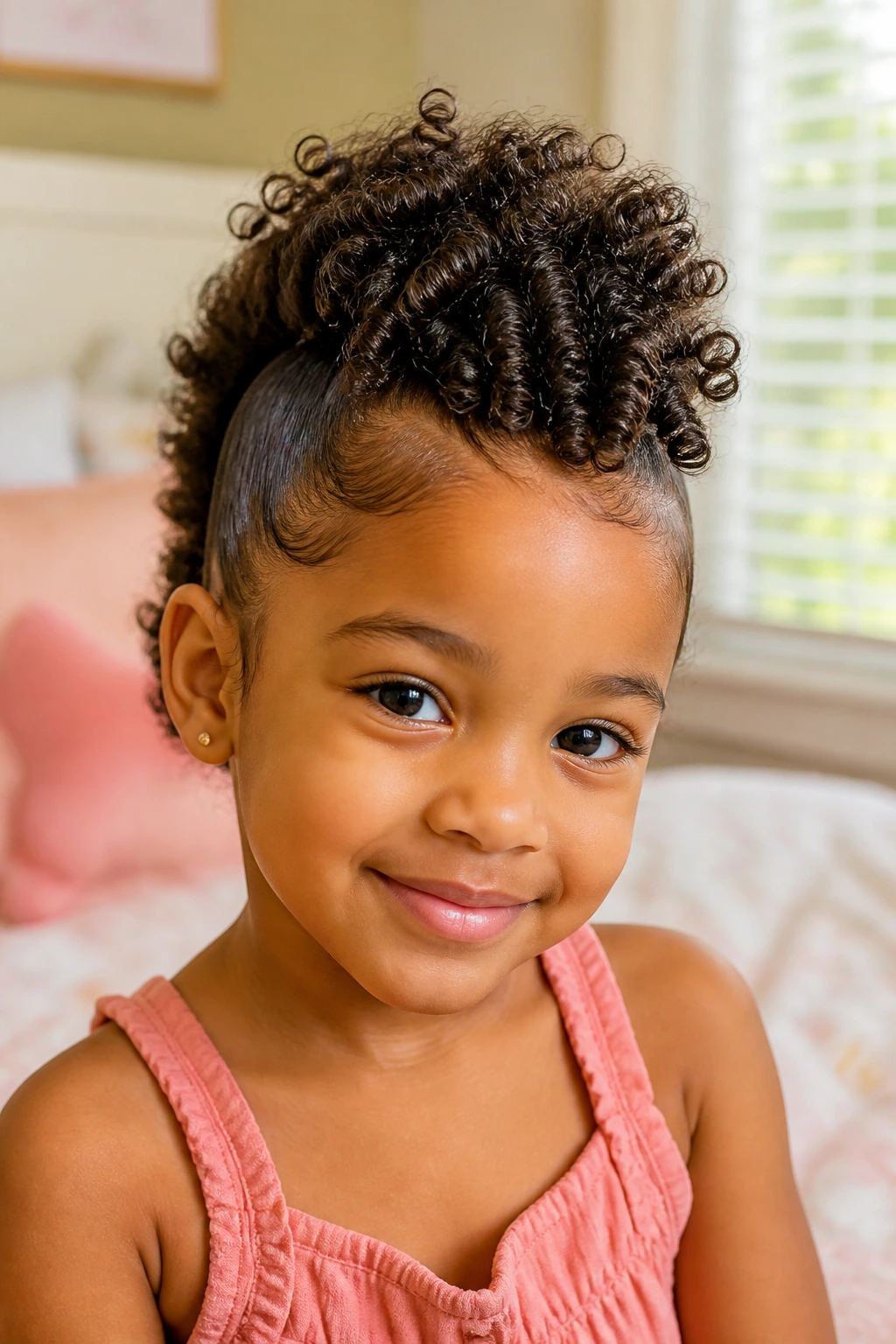
3. Curly Frohawk with Soft Sides
A frohawk on a little girl sounds louder than it is. Done gently, it’s one of the sweetest short-curly styles around. The center ridge gives height, while the sides stay controlled and soft.
Why it works on short hair: Short curls often have more volume than length, and this style uses that volume instead of fighting it. You create a narrow center section from forehead to nape, then pin, band, or twist the sides close to the head. The middle can be left free, puffed, or lightly gathered into a few mini sections.
If the child likes feeling hair off the face, this is a strong choice. It also holds up well on active days because the sides are secured and the center is compact. Just keep the tension gentle near the temples. Those spots get irritated fast.
A frohawk looks especially good with a little curl definition on the top section. A pea-sized amount of styling gel and a soft brush are enough. No need to turn it into a helmet.
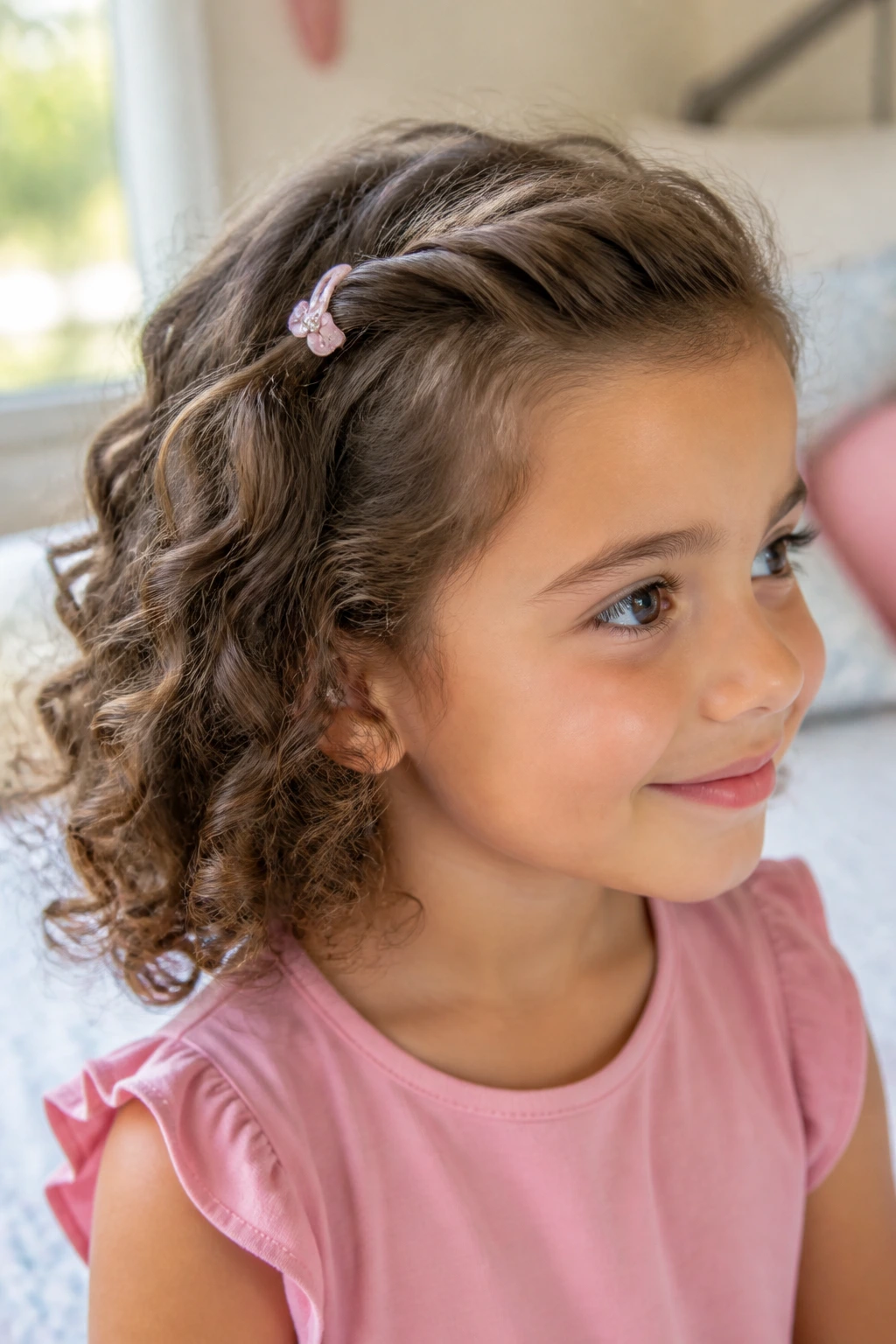
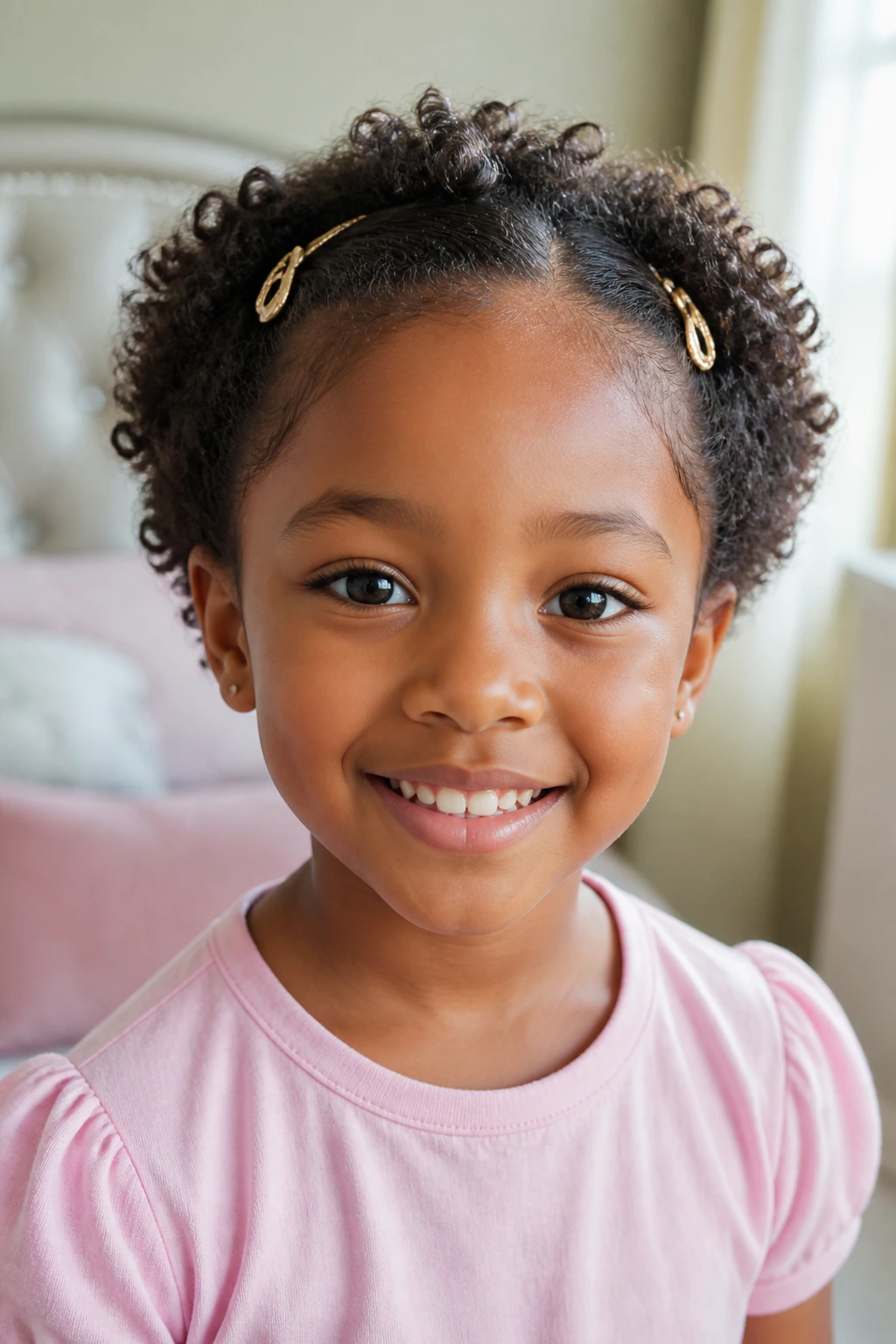
4. Side-Swept Twist and Clip
Sometimes the best curly hairstyle is the one that takes ten minutes and still looks like you thought about it. A side-swept twist does exactly that. It’s neat, calm, and good for short cuts that need a little order around the face.
The appeal here is control without stiffness. You take a front section, twist it across the hairline, and pin it on the side with a flat clip or snap barrette. The rest of the curls can stay loose, which keeps the style soft and age-appropriate instead of overly formal.
This works especially well when the front pieces are a little shorter than the rest. Those curls tend to puff out or fall into the eyes, and the twist gives them a job. If the hair is thick, use two smaller twists rather than one bulky one. It sits flatter and holds better.
A side-swept twist is one of those styles that looks nicest when the part is clean and the twist is not too tight. Loose, neat, and slightly imperfect. That’s the sweet spot.
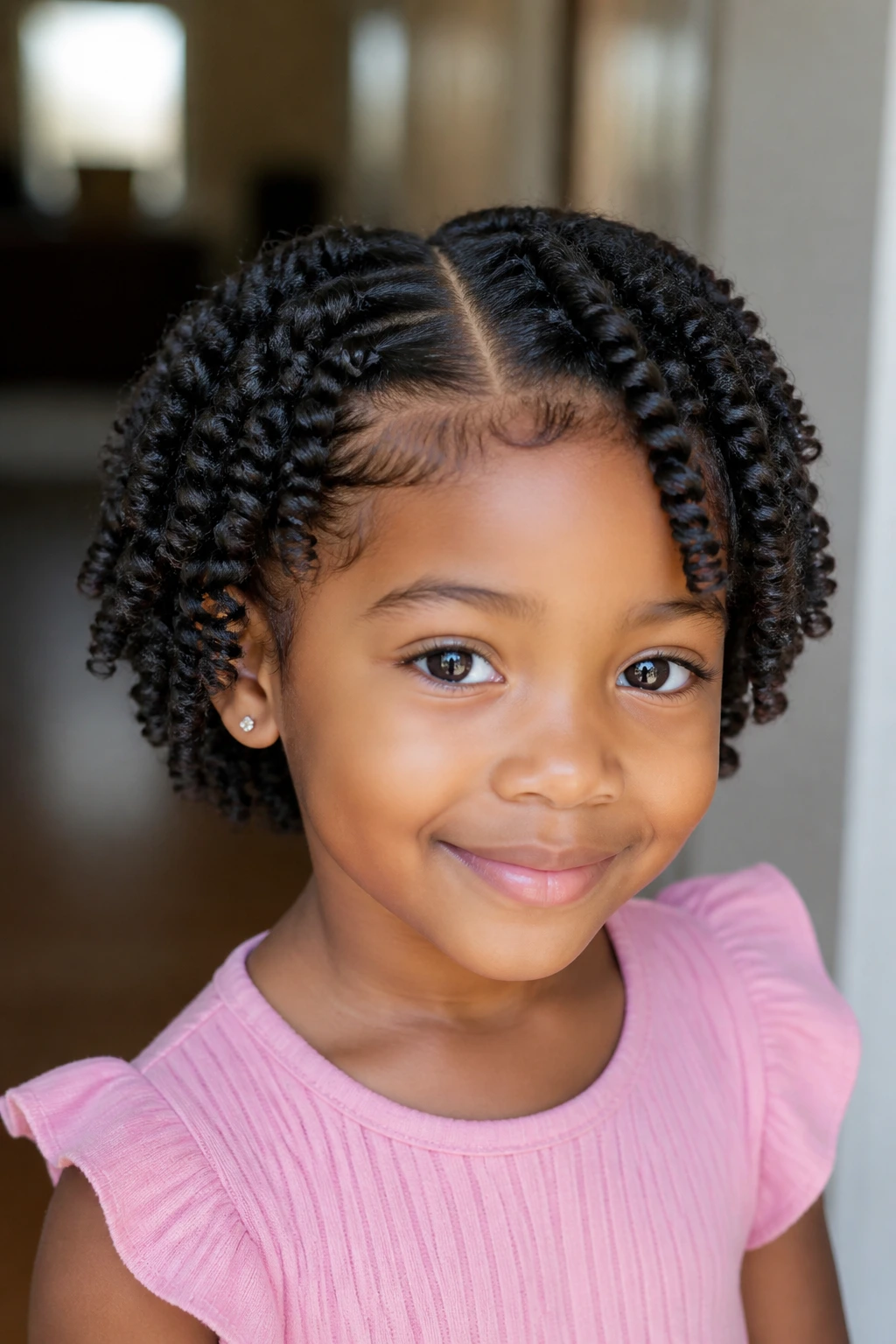
5. Finger Coils with a Crisp Front Part
Finger coils are more labor than a puff, no question. But on short curly hair, they can look almost sculptural when the hair is just above the ears or grazing the jawline.
Why they’re worth the extra time: Coils give short curls a defined pattern, which is helpful if the hair has mixed textures or a fuzzy top layer. A crisp front part keeps the style from looking too busy. It gives the eye a line to follow, and the coils themselves do the rest.
Work in small sections, about the width of a pencil or a drinking straw, and twirl each piece around your finger until it springs back in a neat spiral. If the hair is dry before you finish, mist it again. Dry hair fights back. Damp hair cooperates.
Finger coils are not the fastest style on this list, but they’re one of the prettiest for picture day or any moment when you want the curls to look organized without using heat.
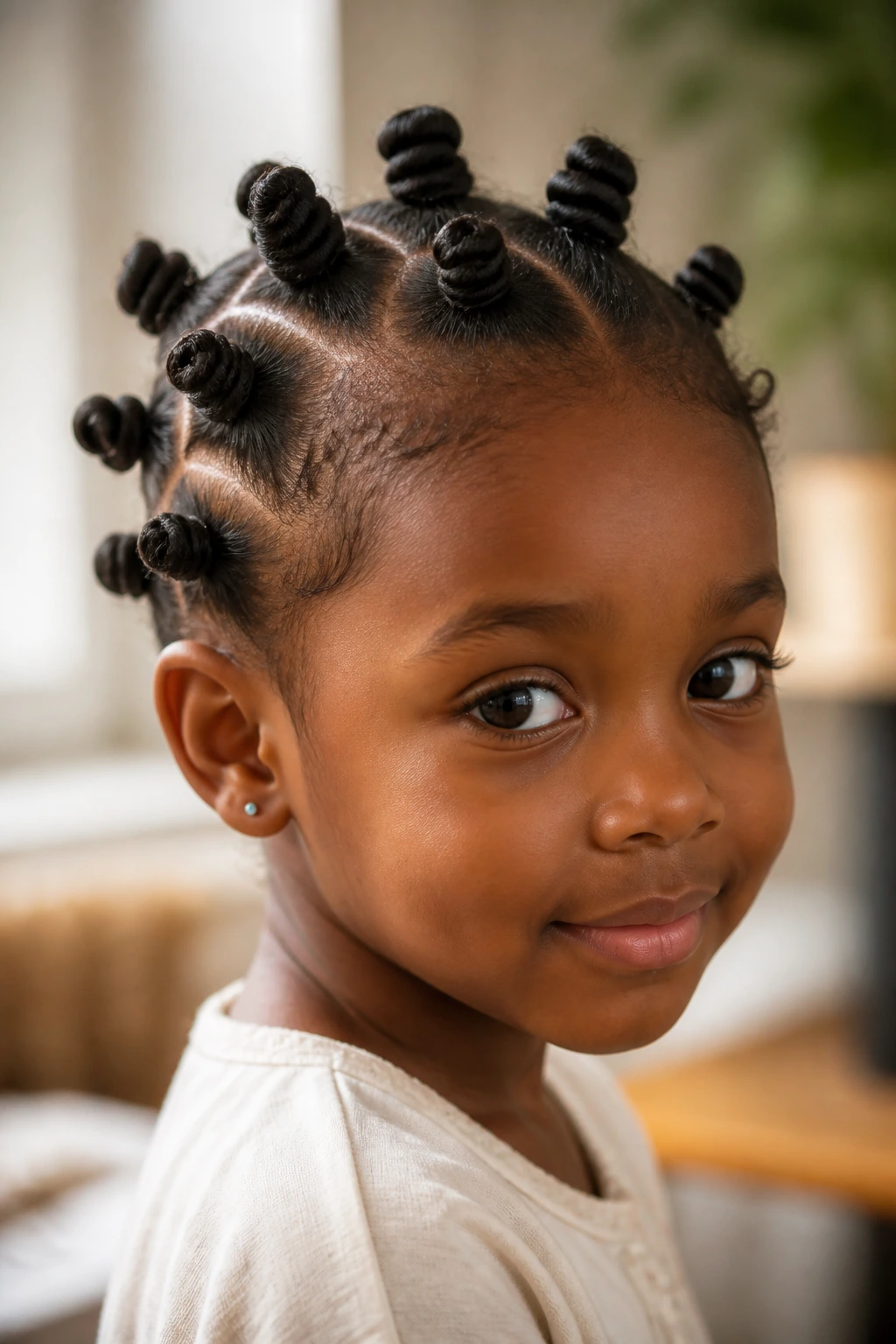
6. Bantu Knots Across the Crown
Bantu knots on a little girl’s short hair can look playful, structured, and a little bit fancy all at once. They also solve the problem of hair that’s too short for a ponytail but long enough to twist.
How this style helps short curls: Each knot uses a small section, so even chin-length hair can be divided neatly across the scalp. The knots keep the ends tucked away, which means less frizz and fewer sore complaints from tiny fingers pulling at loose strands. That matters more than it sounds like it does.
I like this style when the goal is to keep hair contained for a day or two and then release it for a soft curl pattern. It’s a two-for-one setup. The knots can stay in place, then come down into a textured twist-out later.
Use small elastics only if the hair is slippery. If the hair has enough texture, twist and wrap without bands. That feels gentler and looks cleaner at the scalp.
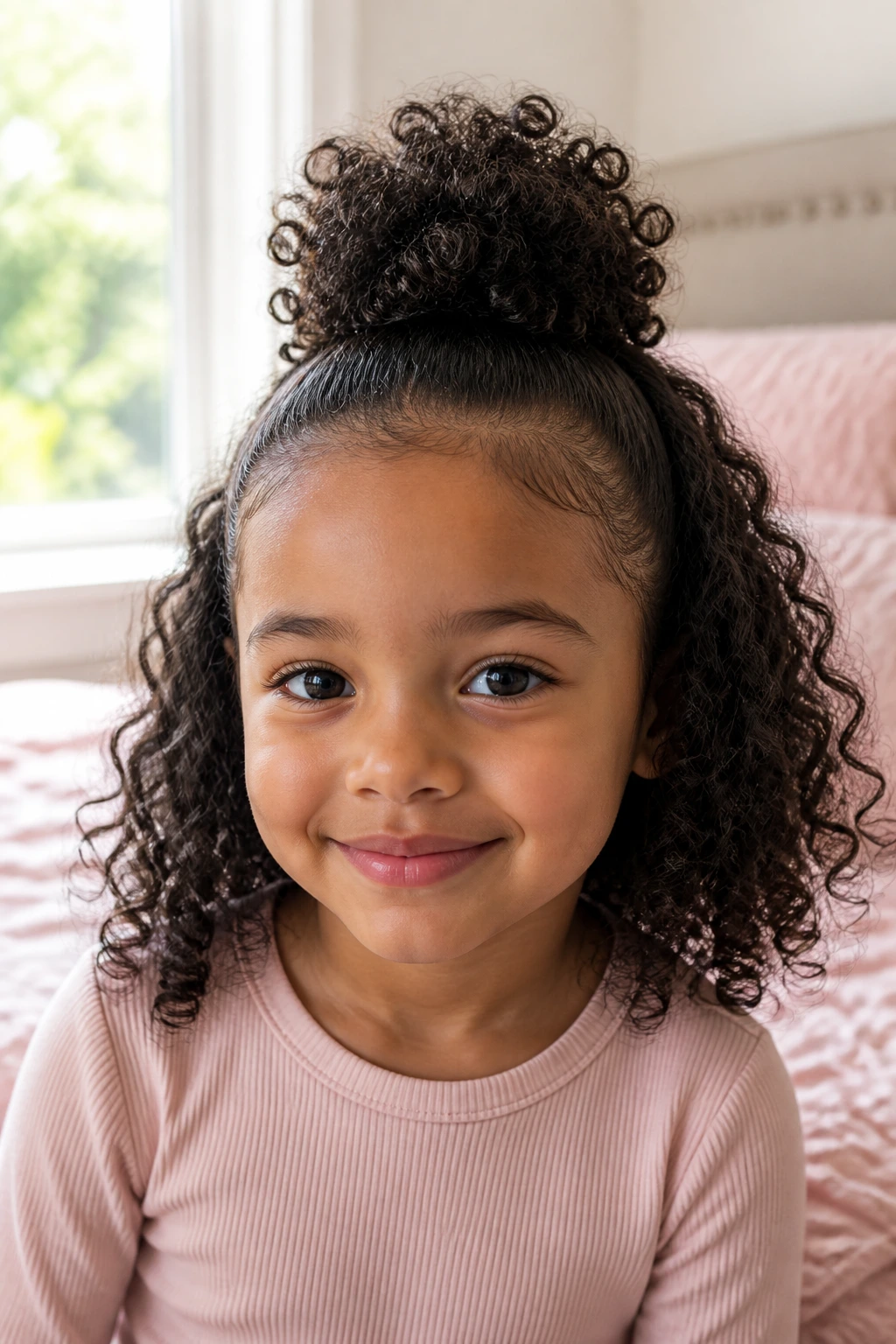
7. Half-Up Puff with Loose Ends
This is the style for days when the curls are too pretty to hide and too unruly to leave entirely alone. A half-up puff pulls the top into shape while the lower curls hang free.
What it gives you: Height at the crown, movement at the ends, and a style that looks a little more polished than a full puff. On short hair, the top section can be quite small, which is fine. The trick is keeping the part clean and the top puff centered.
If the ends are uneven — and with short hair, they often are — this style makes that look intentional. The lower curls can shrink up differently without ruining the whole shape. A tiny clip near the back can anchor the top section if the hair is extra soft.
This one works beautifully when the curls are freshly moisturized but not dripping. Too wet, and the puff slips. Too dry, and the front fuzzes up before you even finish the second shoe.
8. Flat-Twist Crown with an Open Back
A flat-twist crown looks more complicated than it really is. The braid-like twist runs along the hairline, circling the head, while the back stays loose and curly. That contrast is what makes it so nice on short hair.
Why it works: The front and sides are the parts that usually need the most control. A flat twist keeps them tucked away, and the open back lets the curls keep their volume. For short cuts, that balance is useful because it doesn’t demand length you may not have.
This is a good style when you want something neat for a family event but don’t want the hair pulled back tightly all day. The crown sits close to the scalp, and the lower curls soften the look.
A single flower clip where the twist ends meet can make it feel finished. Skip the heavy metal barrettes here; they slide more than they should on fine hair.
9. Tapered Pick-Out with Barrettes
If the haircut has a little shape already — shorter at the sides, fuller on top — a pick-out style can look fantastic. The curls are loosened gently with a wide-tooth comb or pick, then pinned with a few barrettes where needed.
The main idea is volume, not fluff. You want the curls separated enough to show their pattern, not teased into a cloud. On short hair, that careful pick-out gives the cut presence. It makes the style look full without needing any added sections or knots.
Barrettes help control the front pieces and keep the shape from falling into the face. I like placing them just above the temples, not right at the hairline. That leaves the style looking soft instead of over-pinned.
If the hair is dry, use your hands first. A pick can snag if you go in too fast. Slow is better here. Much better.
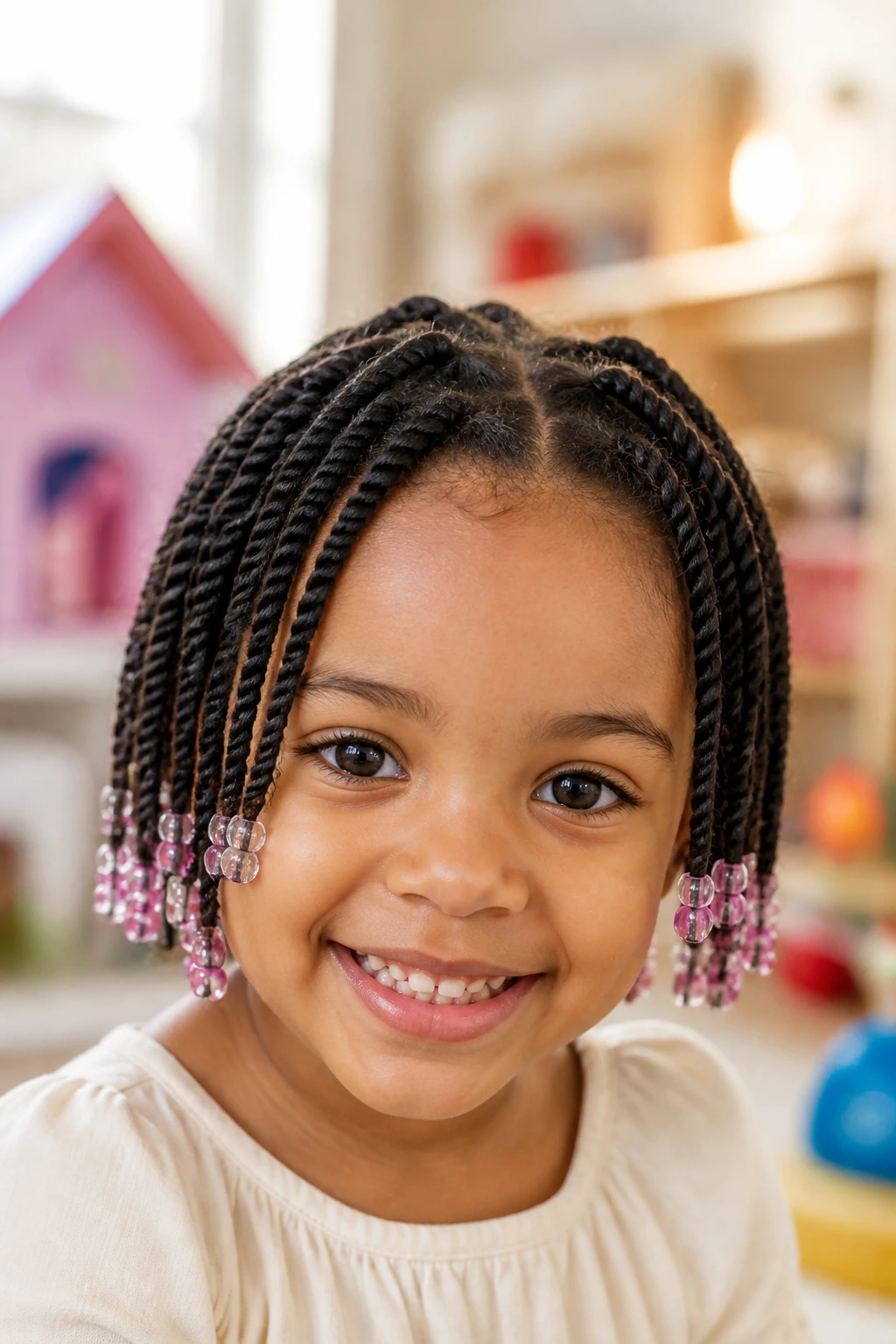
10. Mini Twists with Bead Ends
Mini twists are a strong choice when you want a protective style that still looks sweet on a little girl. On short hair, they’re small enough to fit the length without bunching up at the ends.
What makes them practical: Twists reduce daily combing, which helps if the child has tender detangling days or a scalp that gets cranky fast. Add bead ends only if the hair can support the weight comfortably. A couple of small beads per twist are enough; you do not need to load them up.
The best part is how neat they look when the sections are clean. Use a rat-tail comb to make the parting lines straight, then twist with a little leave-in and a light cream. If the hair is very short, keep the twists tiny and stop before the ends start to fray.
Beads add sound and movement, which some kids love and some can’t stand. If the clacking drives them crazy, skip them. The twists still look polished on their own.
11. Tiny Pineapple Puff
A pineapple puff on short hair is basically a high, playful gather that leaves the curls sitting upward and out of the way. On a child, it can look like a little curly crown. It’s one of my favorites for days when the hair needs to stay off the neck.
Why it’s different from a standard puff: The pineapple sits higher and looser. That keeps the curls springy instead of flattened. On short hair, you may only be gathering the upper half, and that’s fine. The lower curls can stay soft and open.
This style is especially useful if the hair has been stretched or twisted overnight and needs a daytime shape that still feels relaxed. A satin scrunchie is safer than a tight elastic. It slips less and pulls less.
If you’re working with very short sides, smooth them with a little leave-in and leave them alone. Trying to force every curl into the puff usually makes the whole thing look strained.
12. Space Buns on a Curly Bob
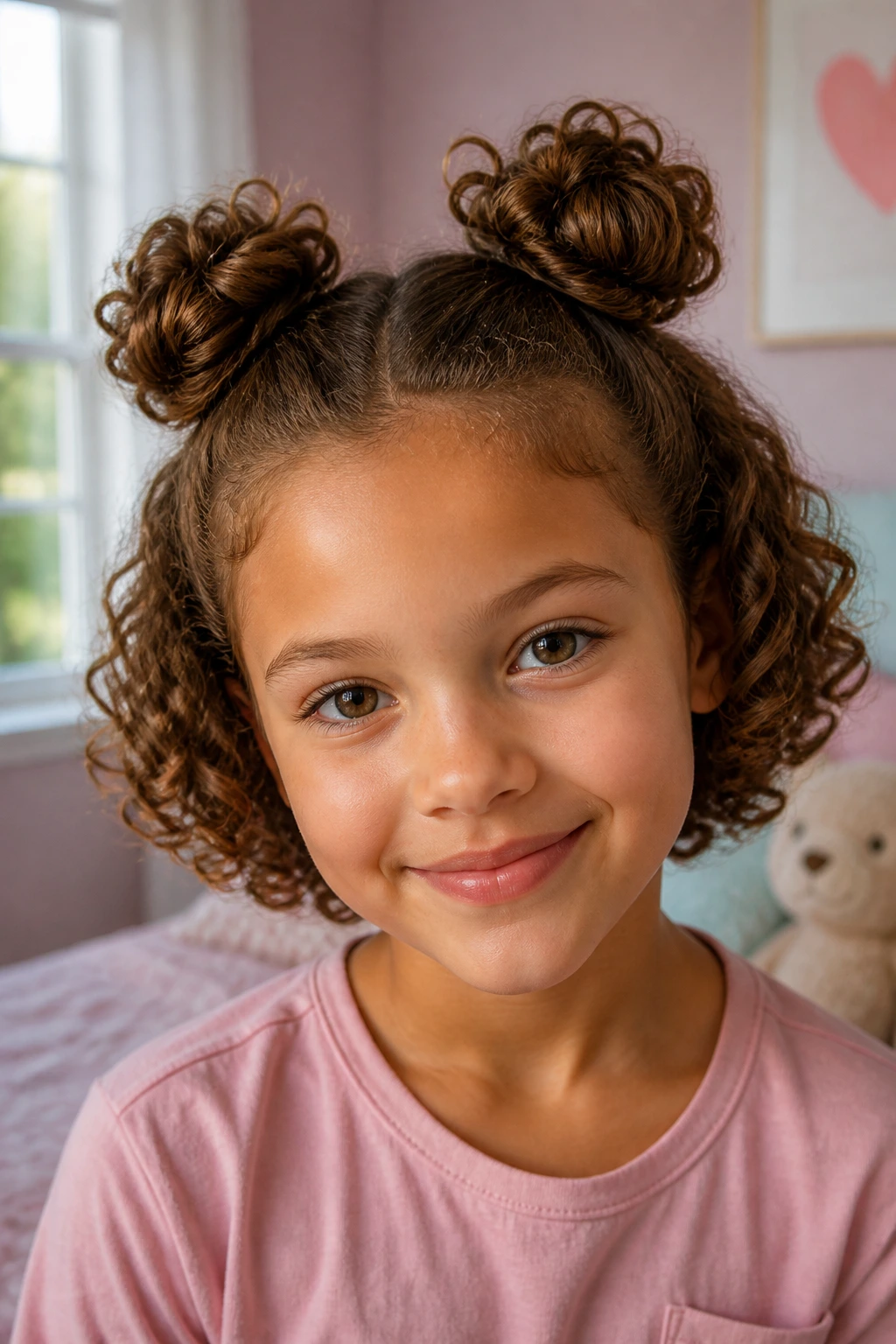
Space buns have a lively, slightly mischievous feel that kids often love. On a curly bob, they sit high enough to be cute but small enough to look age-appropriate rather than costume-like.
How to keep them from getting bulky: Split the hair into two top sections, twist each one loosely, and wrap them into small buns. Short curls naturally add texture, so the buns don’t need to be oversized. In fact, smaller is better here. Big buns on short hair usually unravel before lunch.
The rest of the hair can stay curly and free at the bottom, which gives the style some movement. A middle part makes it symmetrical, but a soft off-center part can feel less stiff if the child prefers that.
Use two small elastics and a couple of flat clips if the hair is slippery. The buns should sit securely, not tightly. There’s a difference, and the scalp knows it.
13. Headband Tuck and Tame
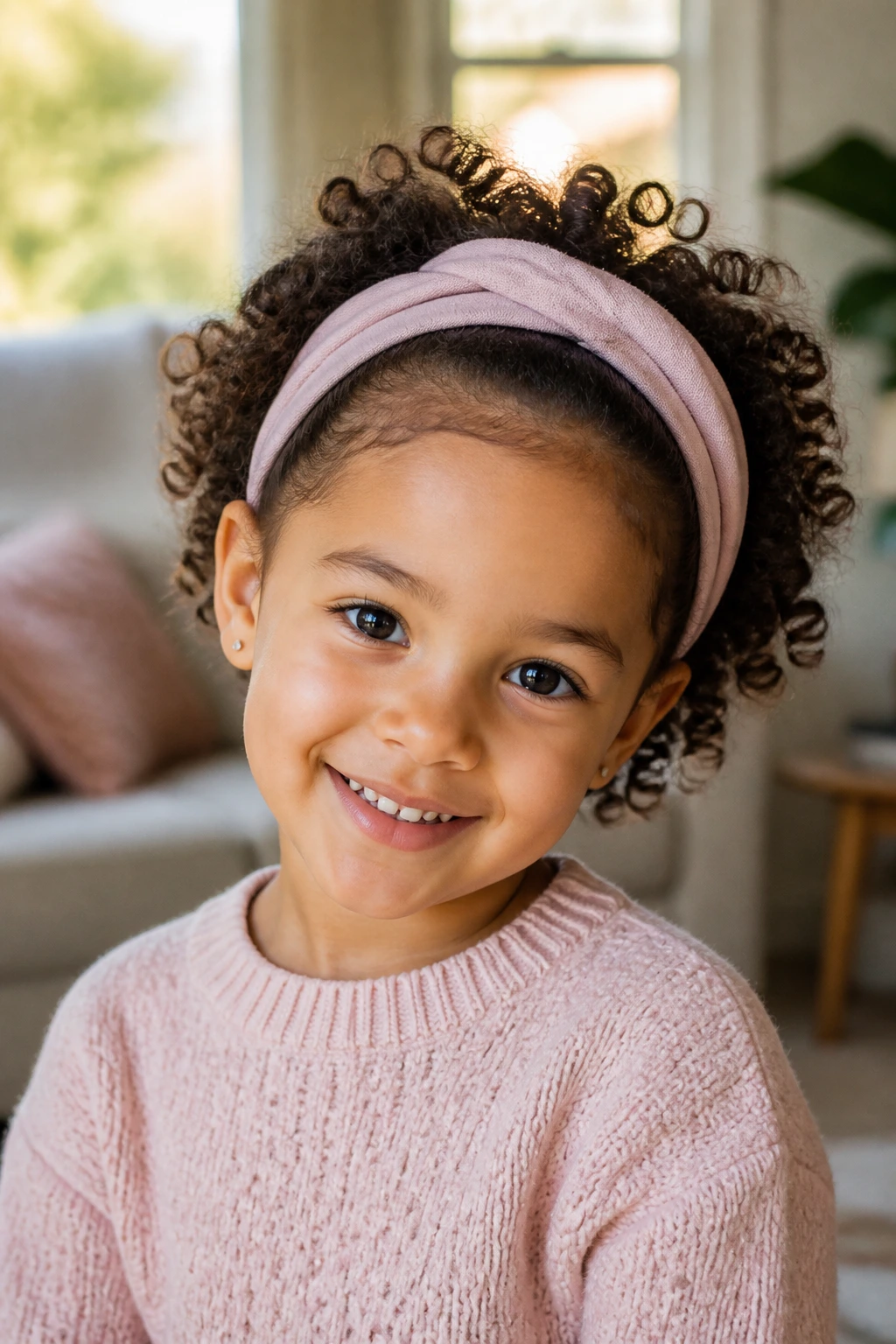
This is the emergency style. The one you reach for when the curls are already half-done, the clock is mean, and a little face-framing control is all you can ask for.
What it does well: A soft headband tucks the front hair back, smooths flyaways, and gives short curls an instant outline. It’s especially useful on days when the hair is clean but not cooperating enough for a full style. The rest of the curls stay visible, so you still get texture.
Choose a stretchy, lined headband that doesn’t dig behind the ears. If the band is too narrow, it can press into the head and give up after fifteen minutes. Wider bands tend to sit better on short hair because they catch more of the front section.
You can let the curls puff naturally behind the band or gather the back into a tiny low puff. Both work. The style’s charm is that it looks calm even when the hair underneath isn’t perfectly behaved.
14. Waterfall Puffs in Three Sections
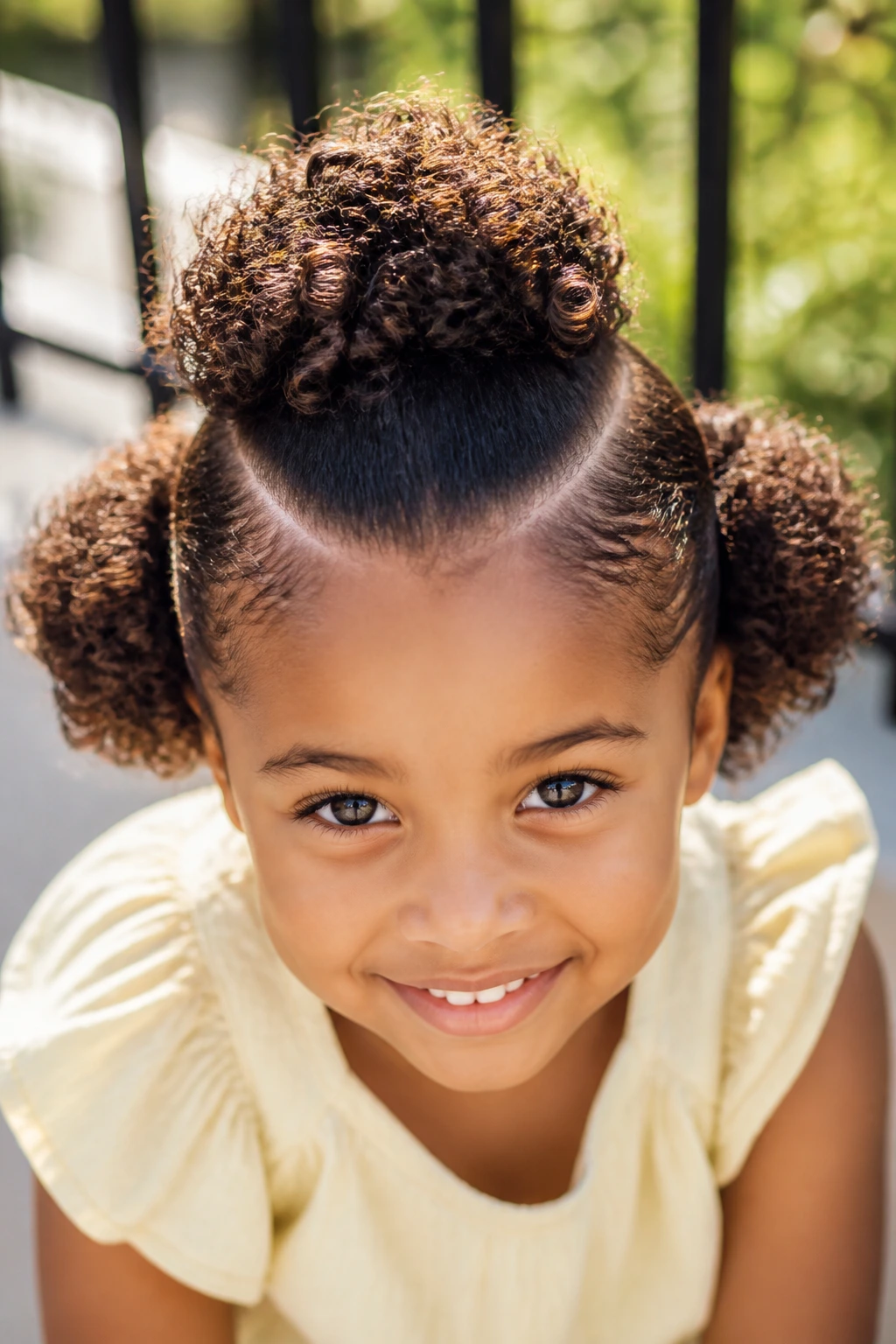
Three-section waterfall puffs are one of those styles that sounds complicated until you actually do it. You divide the hair into a top section and two lower sections, then build a small puff or twist in each zone.
Why it suits short hair: Short curls often need structure broken into pieces. A single ponytail can look thin or awkward, but three small puffs create rhythm across the head. The eye reads the style as intentional because the sections are balanced.
This style is especially good when the hair has different lengths in different places. The top can be gathered more tightly, while the lower sections stay looser and softer. It works well with a clean middle part or two side parts, depending on how much symmetry you want.
A few pearl clips at the section lines look nice, but don’t overdo the accessories. The shape should do most of the talking.
15. Slicked-Back Curly Pony Puff
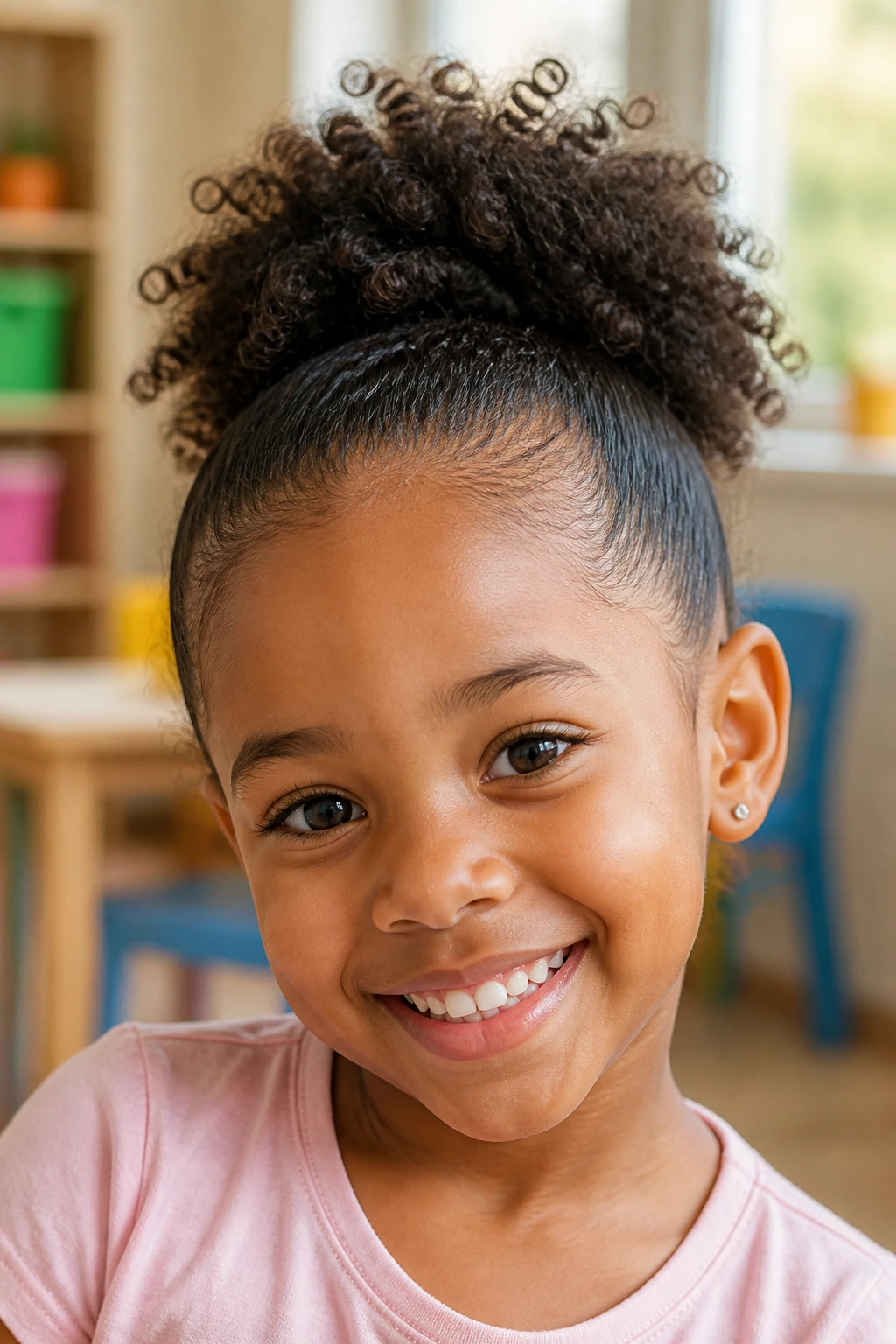
Slicked-back styles on children need a gentle hand. No one wants a tight, shiny pull that makes the forehead look stretched. Done softly, though, a slicked-back pony puff can look neat and still let the curls keep their personality.
The key is control at the front, freedom at the back. Smooth the hairline with a light gel or cream, then gather the puff at the crown or upper back of the head. On short hair, the puff may be small. That’s fine. The front is where the polish lives.
I’d use this style for warmer days, dance class, or any time a child wants the hair out of the face. A satin scrunchie keeps the tension kinder than a stiff elastic. If the puff collapses, it usually means the hair was too dry or the front wasn’t smoothed well enough before gathering.
A little edge control can help, but keep it light. Too much product makes short hair look greasy fast.
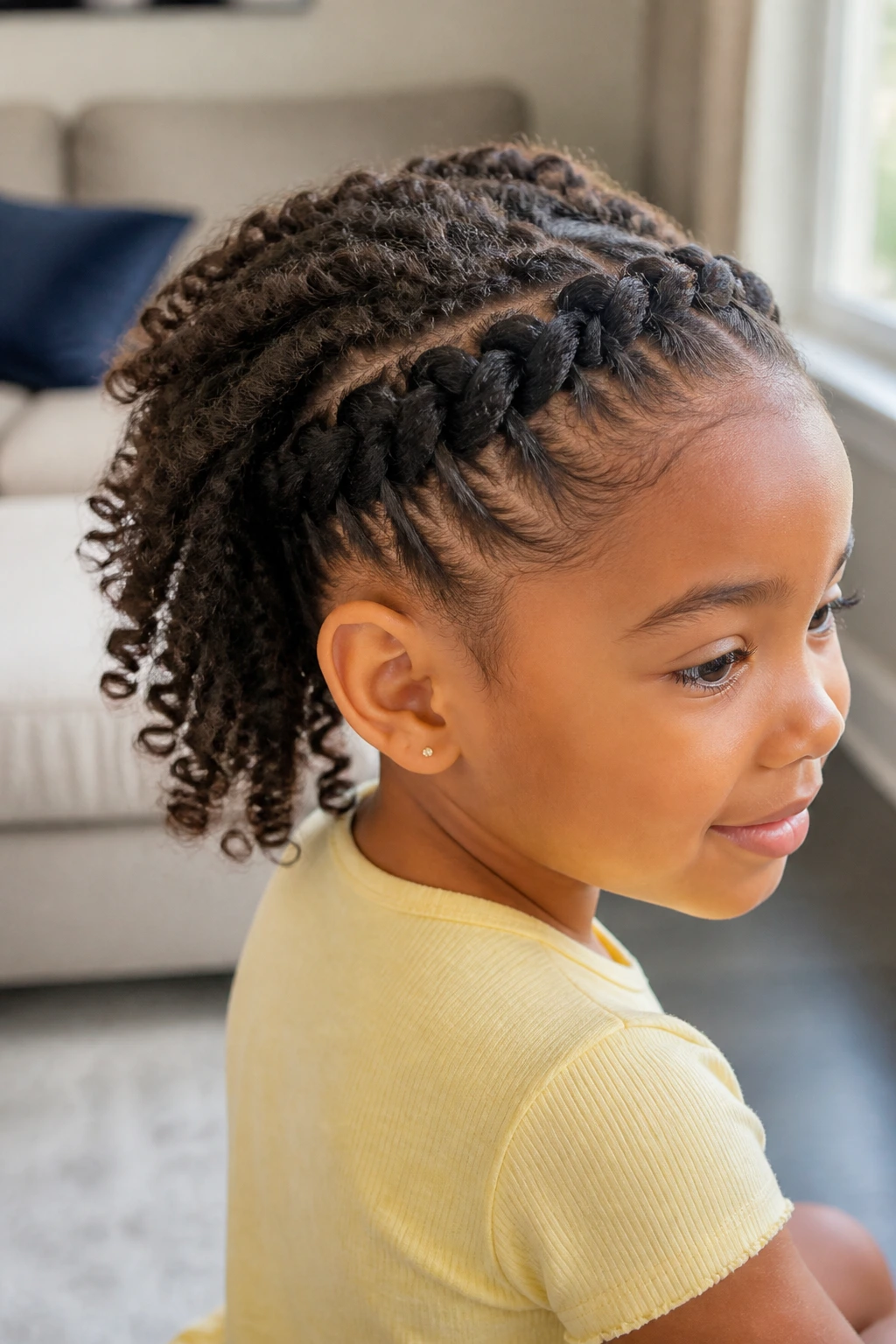
16. Side Cornrows into Free Curls
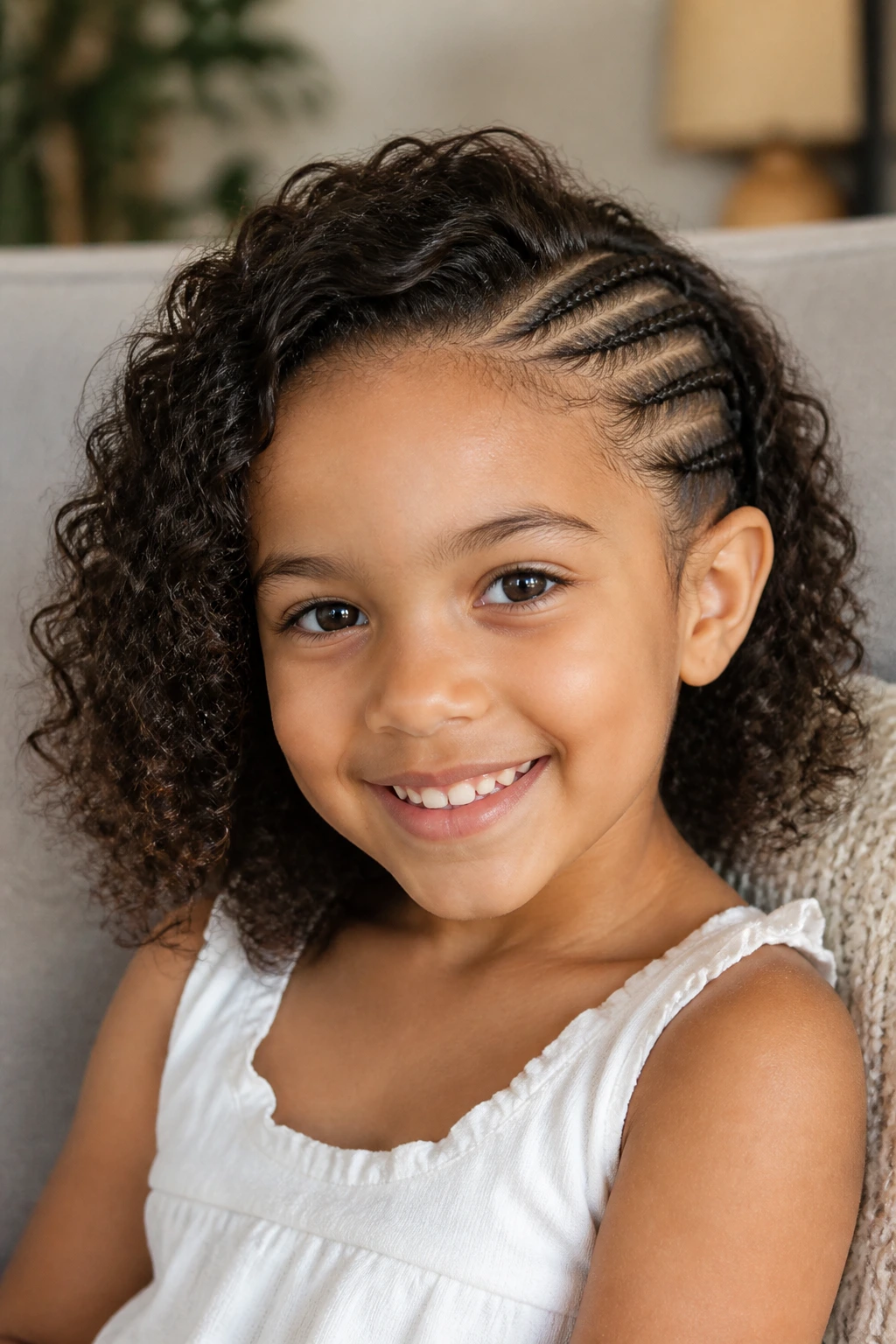
A couple of small cornrows on the side can anchor short hair beautifully. They keep the front controlled while the remaining curls stay loose and lively.
Why this style earns its keep: Cornrows hold shorter pieces that would otherwise stick out, especially around the temples and hairline. On a little girl, the look can be sweet and practical at once. The free curls on the other side keep the style from feeling too rigid.
This is a good option when one side of the cut is shorter than the other or when the front layers keep falling into the eyes. The braided side handles the problem cleanly, and the loose side gives the style softness.
If the braids feel too tight during installation, they’re too tight. Stop and reset. Children are terrible at pretending they’re comfortable, which is actually a gift. Listen the first time.
17. Defined Wash-and-Go Bob with Clips
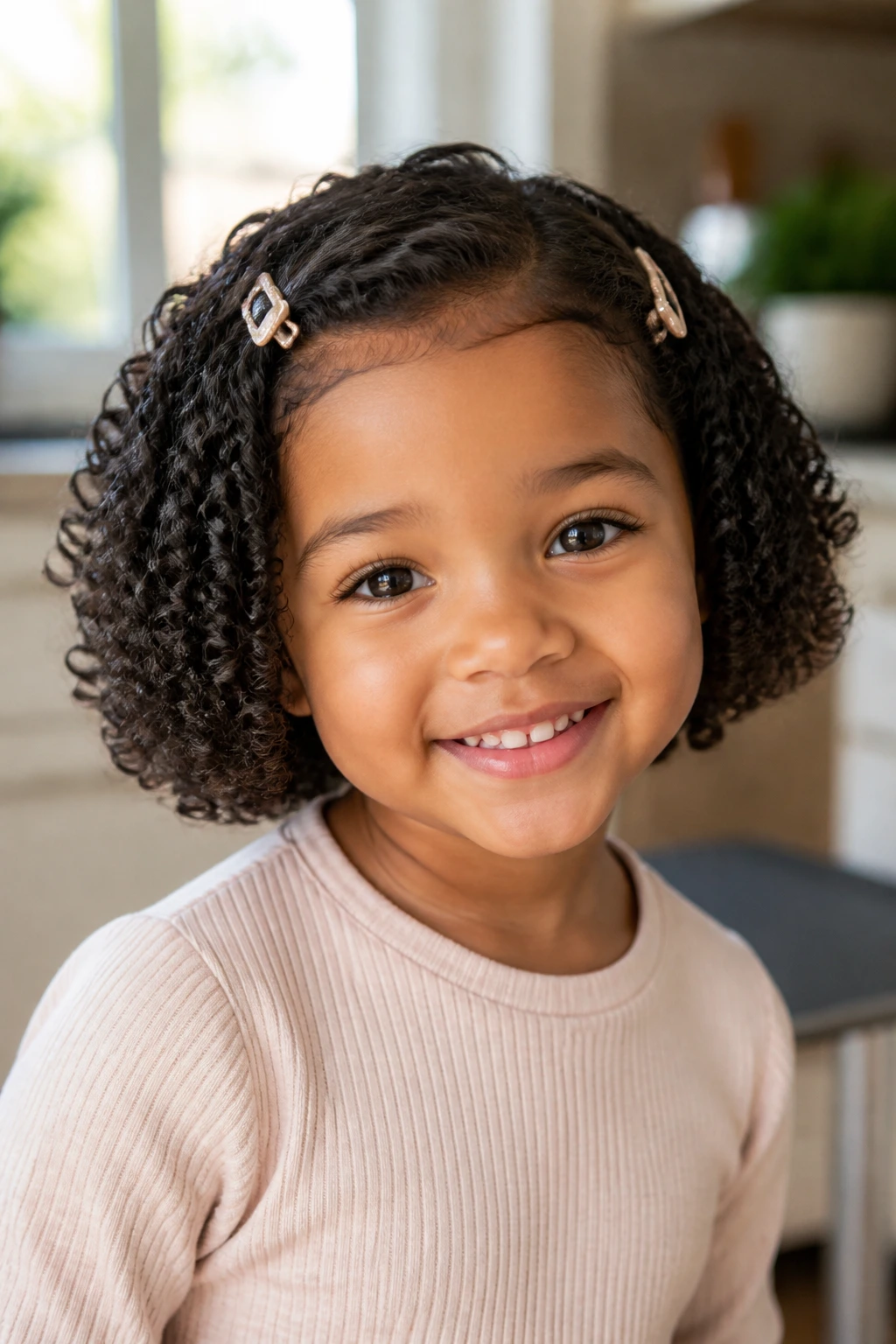
A wash-and-go bob is not “doing nothing.” It’s a real style, and on short curly hair, it can be the best-looking option in the whole lineup when the curl pattern is good.
What makes it work: You define the curls with leave-in and a lightweight gel, then let the hair dry into its natural bob shape. A couple of clips near the temples or one side keeps the front from falling flat. The beauty here is in the curl pattern itself, not in added structure.
This style is best when you have enough time for the hair to dry without touching it. Touching wet curls is how you get frizz, and frizz on a bob shows up fast. Once dry, separate only the chunks that naturally fall apart. Don’t pick at every coil.
If the curl pattern is uneven, that’s okay. Short hair often grows in layers, and a slightly uneven bob can look lively rather than messy. The clips give it a finished edge.
Why Short Curls Are Easier to Style Than They Look
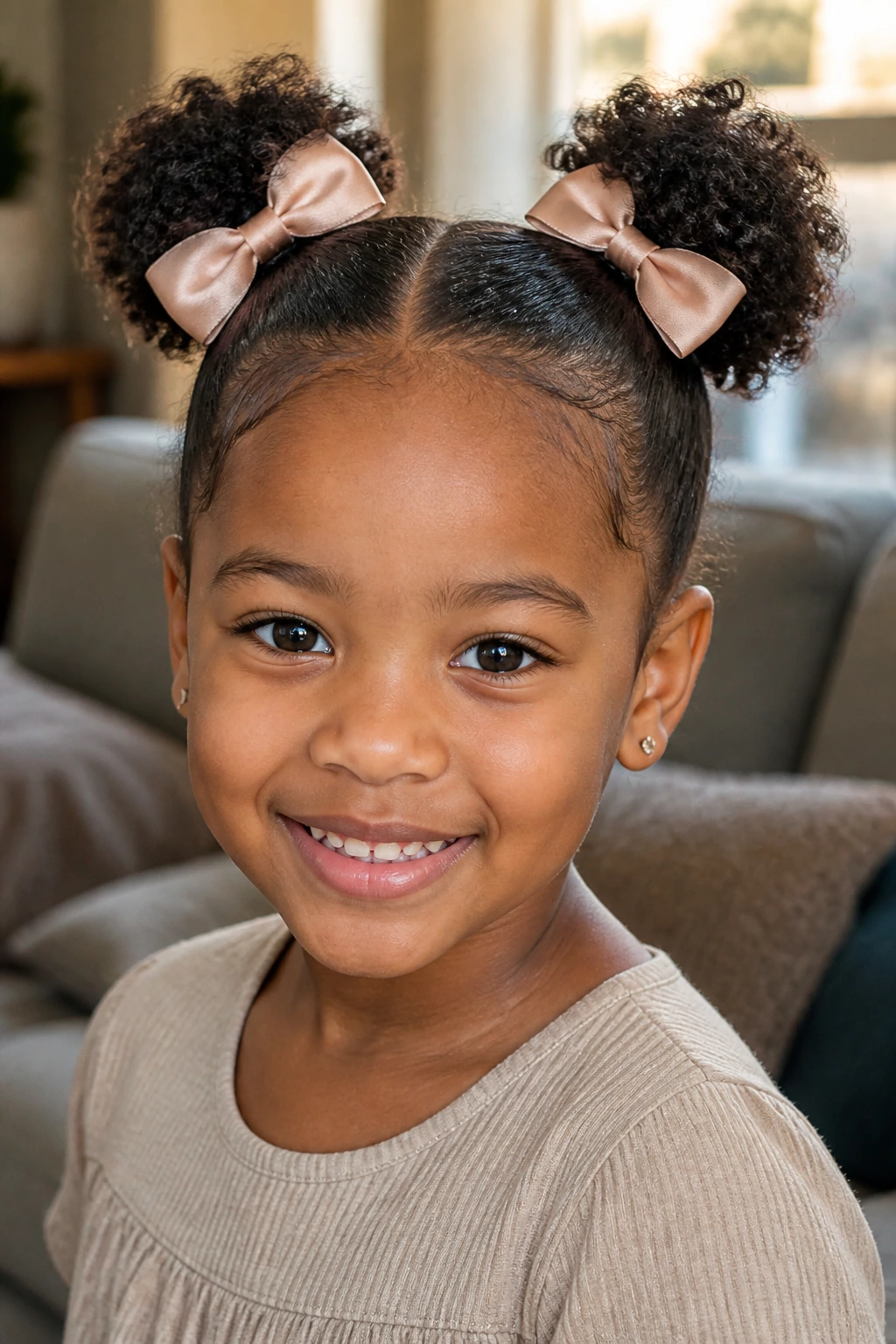
Short curly hair gets underestimated because people expect a ponytail to be the answer to everything. It isn’t. And honestly, that’s the problem. Once you stop trying to make short curls behave like long straight hair, the styling options open up fast.
The biggest advantage is shape. Short curls have built-in lift at the roots, which means you can create puffs, crowns, and little half-up styles without dragging the whole head down. The style sits where the head naturally curves. That’s why a simple side part or a few clips can look cleaner on a short cut than a complicated braid ever could.
Shrinkage is useful here too. It gives the hair body, and body is what makes short styles look full instead of sparse. The trick is learning where to smooth and where to leave alone. Front edges? Neat. Crown? Soft. Ends? Usually better untouched unless they’re sticking out in a bad way.
One more thing. Short curls recover faster. If a style goes sideways, you can mist it, finger-comb it, and try again without starting a giant detangling project from scratch. That alone is worth something on a busy morning.
Essential Tools for Styling Little Girls’ Curly Hair
- Spray bottle with plain water: A fine mist softens the curls without soaking them, which makes parting and smoothing easier.
- Leave-in conditioner: Use a lightweight formula so the hair stays soft without getting slippery or weighed down.
- Rat-tail comb: Clean parts matter on short hair, and this tool gives you the control for side parts, center parts, and section lines.
- Wide-tooth comb or curl pick: Good for lifting and separating curls without ripping through the pattern.
- Small snag-free elastics: Black or clear elastics work for puffs, mini sections, and twist ends; keep them tiny and gentle.
- Flat clips and snap barrettes: These help hold back short front pieces without creating bulky bumps near the scalp.
- Satin scrunchies and bows: Better than rough elastic, especially for soft curls that break or frizz easily.
- Soft bristle brush or edge brush: Useful for smoothing the hairline before a puff or pony puff.
- Satin bonnet or scarf: Nighttime protection keeps the style from puffing up before morning.
- Detangling conditioner: A rinse-out conditioner with slip makes combing less of a wrestling match, which matters more than most people admit.
Smart Product Shopping for Soft, Defined Curls
Pick products with a light hand. That sounds obvious, but a lot of curly hair routines go wrong because the cream is too thick or the gel is too sticky. On short hair, heavy product shows up fast. It can flatten the roots, make the curls clump weirdly, and leave a dull film around the hairline.
A good leave-in should soften the curls in one pass of your fingers, not leave them coated. If it feels greasy on your palms, it will probably be too much for a child’s short cut. For gel, look for something alcohol-free and flexible. You want hold, not crunch that flakes onto the shirt collar by noon.
If the curls are dry or fine, a small amount of lightweight mousse can work better than cream. It adds shape without making the hair limp. For thicker coils, a richer cream can be useful, but use less than you think. A dime-sized amount is often enough for a small head.
Satin accessories are worth buying once and keeping around. They reduce friction overnight, which means less morning water misting and fewer flattened spots at the temples. Cheap polyester headbands and rough elastics are usually not worth the trouble.
How to Choose the Right Style for the Day
Fastest morning fix: The headband tuck, side-swept twist, and high puff take the least time and usually work even if the curls are only half-cooperative.
Best for a sensitive scalp: Loose mini puffs, flat-twist crowns, and wash-and-go bobs keep tension low near the edges and behind the ears.
Best for picture day: Finger coils, bantu knots, and waterfall puffs give the most shape and the clearest lines on camera. The hair looks styled, not just gathered.
Best for play and movement: Slicked-back pony puffs, frohawks, and mini twists stay in place better when there’s climbing, running, or a playground involved.
Best when the cut is growing out unevenly: Tapered pick-outs, half-up puffs, and side cornrows into curls hide patchy spots and make uneven lengths look deliberate.
Best if the child likes accessories: Two mini puffs, space buns, and waterfall puffs give you obvious places for bows, beads, or clips without crowding the whole head.
Additional Tips and Style Boosters
Moisture Layering: Start with water, then a light leave-in, then a small bit of cream or gel if needed. Skipping straight to product usually just coats dry hair and leaves the curls looking tired by afternoon.
Parting Trick: Make the part while the hair is damp, not dry. Short curls tend to spring back and blur the line if you wait too long. A clean part on damp hair saves a lot of touching later.
Hold Without Crunch: If you want a puff or twist to stay put without feeling hard, smooth the outer layer with gel and leave the inner section softer. The style lasts longer and still moves.
Clip Strategy: Put clips where the hair naturally wants to fall apart — usually at the temples, the crown, or the ends of a side sweep. Clips used for decoration only tend to slide.
Make-It-Yours: If the child likes color, use ribbons or satin bows instead of tiny rubber bands. If she hates things near her ears, push the style higher and leave the sides free. If the hair is very short, scale down the style instead of trying to force extra sections. Small can be charming. Small can be enough.
Common Mistakes That Flatten Short Curls
Tightening the front too much: This is the mistake that makes short styles look strained. The hairline gets shiny and pulled, the child starts fidgeting, and the style loses its softness. Keep tension light and stop pulling once the section is secure.
Using too much product: A quarter-sized blob of cream on a child’s short curls is usually too much. The hair turns greasy, the parts get slippery, and clips stop holding. Start tiny and add more only if the curls still feel dry.
Choosing accessories that are too heavy: Large bows, chunky clips, and thick elastics can drag down short sections. You end up with one side falling out or a puff that leans awkwardly. Light accessories sit better and last longer.
Skipping the part line: Short curls can look fuzzy even when they’re clean, and a sloppy part makes that worse. Take the extra minute to make the line straight or deliberately curved. It changes the whole feel of the style.
Styling dry curls without misting first: Dry curls resist combing and break apart when you try to shape them. A few sprays of water soften the strand enough to work with. Not dripping. Just damp.
Forgetting bedtime care: A beautiful style in the morning can collapse into a halo of frizz after one rough pillowcase. Satin helps. Every time.
Variations and Adaptations to Try
The Fine-Curl Edit: Use mousse instead of heavy cream, keep the sections larger, and favor styles like the headband tuck or side-swept twist. Fine hair tends to look fuller when it isn’t overloaded.
The Thick-Coil Version: Divide the hair into more sections and choose styles that show off shape, like mini twists, bantu knots, or a frohawk. Thick coils need more control, but they also hold structure beautifully.
The Sensory-Gentle Version: Skip tight puffs and cornrows. Go for loose half-up styles, satin headbands, or a soft wash-and-go with clips. If your child hates tugging, comfort beats fancy.
The Grown-Out Cut Fix: Use side cornrows, waterfall puffs, and twisted crowns to hide uneven lengths while the haircut settles into its next stage. These styles keep the front neat without exposing every irregular layer.
The No-Bead Version: If beads are too noisy or distracting, use satin bows, flat clips, or tiny barrettes instead. The style still feels finished, and the child is less likely to pull everything out by lunch.
Nighttime Care and Between-Wash Refresh
Short curly styles last longer when the nighttime routine is simple and repeatable. A satin bonnet is the easiest route, especially for puffs, twists, and wash-and-go shapes. If a bonnet won’t stay on, a satin pillowcase still helps. The hair slips instead of rubbing, and that makes a difference by morning.
For puffs and pony styles, you can sometimes preserve the shape by loosely wrapping the base with a soft satin scarf. Don’t crank it down. You’re protecting the style, not starting a bandage. If the style was built with twists or knots, a loose bonnet is usually enough.
Morning refreshes should be small. A light mist of water, a fingertip’s worth of leave-in on the frizzy spots, and a quick smooth with clean hands often fixes most of the mess. If a puff has collapsed, lift it gently at the base rather than trying to rebuild the whole thing from scratch.
Wash days can be spaced according to the child’s hair and activity level, but the style itself should tell you when it’s ready to come down. If the scalp looks flaky, the edges are frizzy, or the accessory marks won’t smooth out after a mist, it’s time to start fresh.
Frequently Asked Questions
How short can hair be for these styles?
Pretty short, honestly. If the hair has enough length to gather a small puff, twist a front section, or hold a clip, you have options. Even very short curls can wear parts, headbands, and defined wash-and-go styles well.
What if my child hates having her hair pulled back?
Go for styles with low tension: headband tucks, loose side twists, wash-and-go bobs, and soft mini puffs. The style should feel secure, not tight. If she keeps touching her hairline, the style is probably pulling too much.
Can these work on 4C curls and coils?
Yes, and some of them work especially well. Mini twists, bantu knots, frohawks, and puffs tend to hold shape beautifully on tighter coil patterns. You may need more moisture and smaller sections, but the styles are very doable.
Do I need gel for every style?
No. Gel helps with parts, edges, and clean-looking puffs, but it is not mandatory. On some children, a little leave-in and water is enough, especially for softer styles like the headband tuck or a loose half-up puff.
How do I keep short styles from looking messy by lunchtime?
Start with a damp base, make cleaner parts, and choose accessories that match the hair’s thickness. A style usually falls apart when the sections are too big, the products are too heavy, or the elastic is slipping. A quick midday mist can help, but the shape has to be right first.
What’s the easiest style to do before school?
A side-swept twist with a clip, a high puff, or a headband tuck. Those three usually take the least time and still look finished when the child is moving around all day.
Can I use regular hair ties?
You can, but soft snag-free elastics or satin scrunchies are kinder on short curls. Regular ties tend to snag ends and leave a harder crease, especially on hair that’s already dry at the tips.
How do I stop parts from looking crooked?
Make the part on damp hair, use the tip of a rat-tail comb, and keep your hand steady by anchoring your elbow on a counter or table. If it still looks crooked, loosen it slightly on purpose. A perfectly straight part is nice; a balanced one matters more.
Soft Shapes and Happy Curls
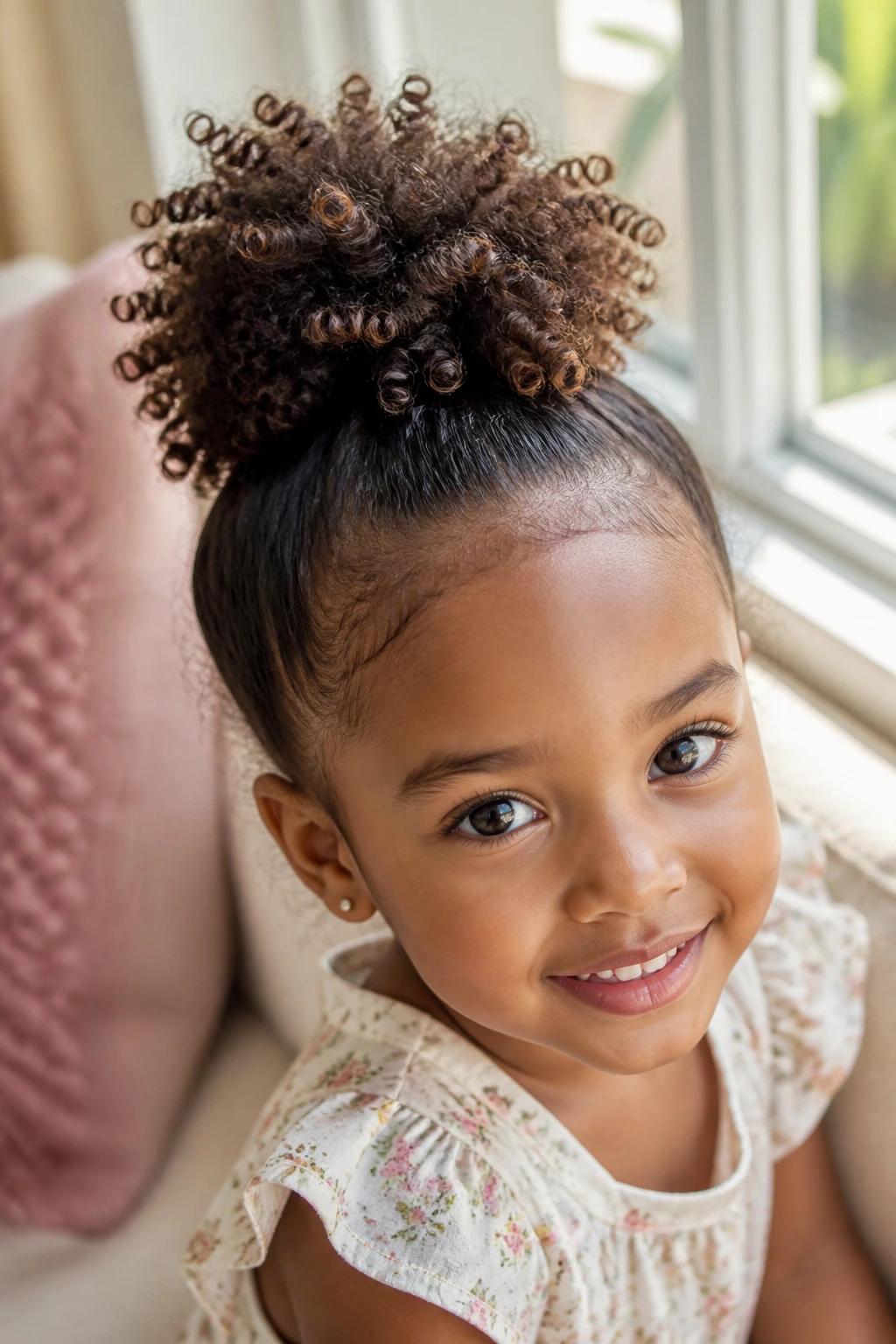
Short curly hair on little girls does not need to look forced to look finished. The best styles let the curls keep their own shape while giving the front, crown, or sides enough structure to behave for a few hours.
And that’s really the point. A good style should help the child forget about her hair once she’s out the door. No tugging. No constant fixing. Just curls that sit where they should, with enough softness left in them to still feel like hers.
