



Short hair can go blunt fast. One day the cut looks crisp and sharp, and the next it starts to feel boxed in, as if the shape ran out of room. That’s where curtain bangs for short hair earn their keep. They break up the front line, add movement around the eyes and cheekbones, and stop a bob, pixie-bob, or crop from feeling like a helmet.
The sweet spot is the split. Too short and the fringe turns fussy. Too heavy and it swallows the face. The best short hair curtain bangs skim the cheekbone, tuck toward the jaw, and leave just enough forehead visible to keep the whole cut breathing. On straight hair, that can read polished and clean. On wavy or curly hair, it can look softer, looser, and a little more lived-in.
I’ve always thought fringe shapes matter more on short cuts than on long ones. Long hair can absorb a bad bang choice. Short hair can’t. A curtain fringe has to work with the perimeter, the texture, and the way your hair falls when it loses heat and starts to cool. That’s the whole game, really. Get the length and opening right, and the rest of the style behaves.
Why These 27 Curtain Bang Looks Work on Short Hair
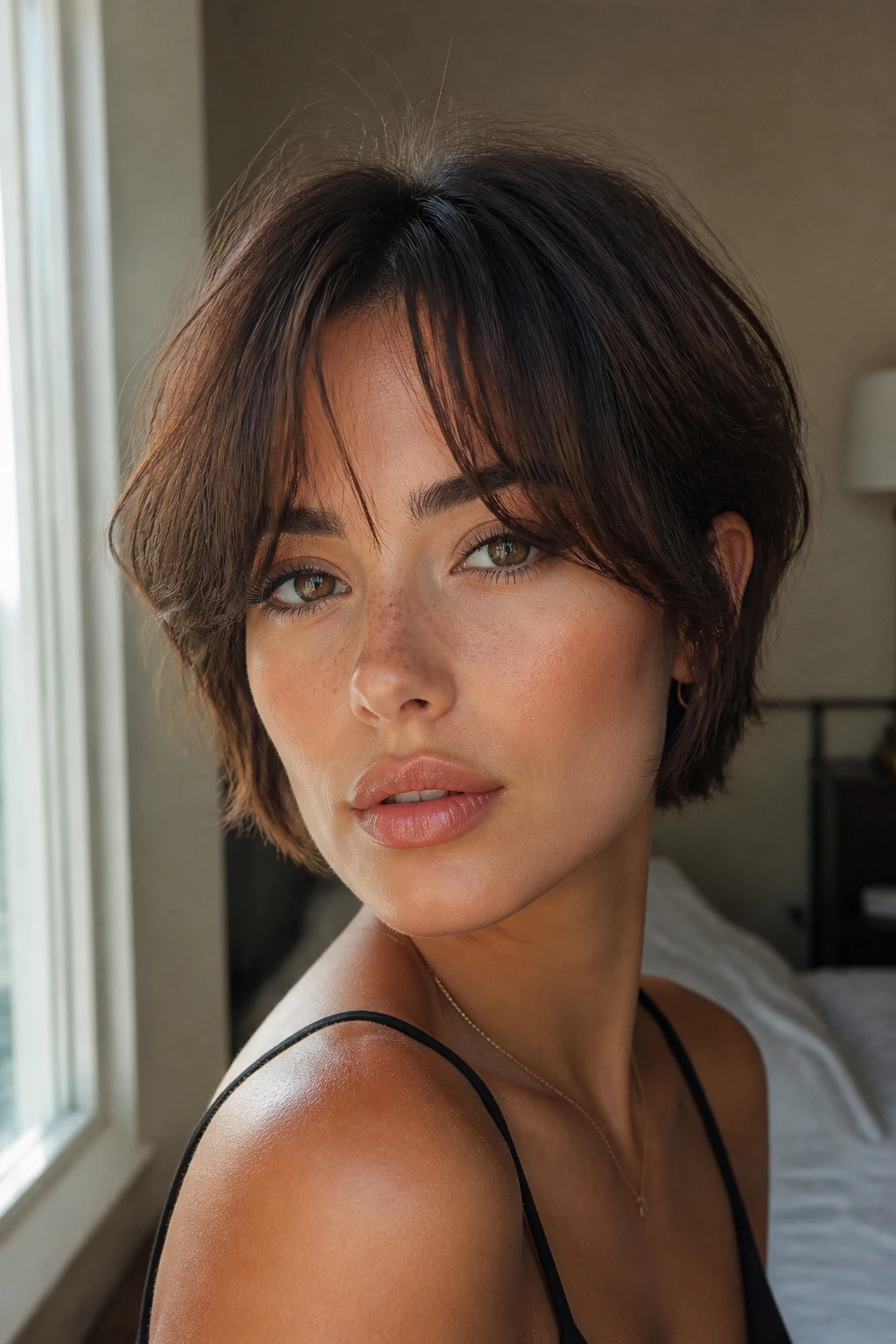
-
They soften hard lines: A short cut with a strong outline can look severe; a split fringe loosens that edge without hiding the haircut itself.
-
They play well with texture: Whether your hair bends, flips, coils, or lies flat, curtain bangs can be cut to follow that pattern instead of fighting it.
-
They make short cuts feel intentional: A bob or crop with a fringe that opens at the right point looks styled even on a messy morning.
-
They frame the face without a full fringe commitment: You get forehead coverage near the center, but the sides stay light and mobile.
-
They grow out with less drama: When the cut lands at cheekbone or lip length, the shape can slide into face-framing layers instead of turning into an awkward shelf.
-
They’re easy to adjust at home: A round brush, a dryer, and five minutes can shift the whole mood from sleek to airy to piecey.
1. Chin-Grazing French Bob With Soft Curtain Bangs
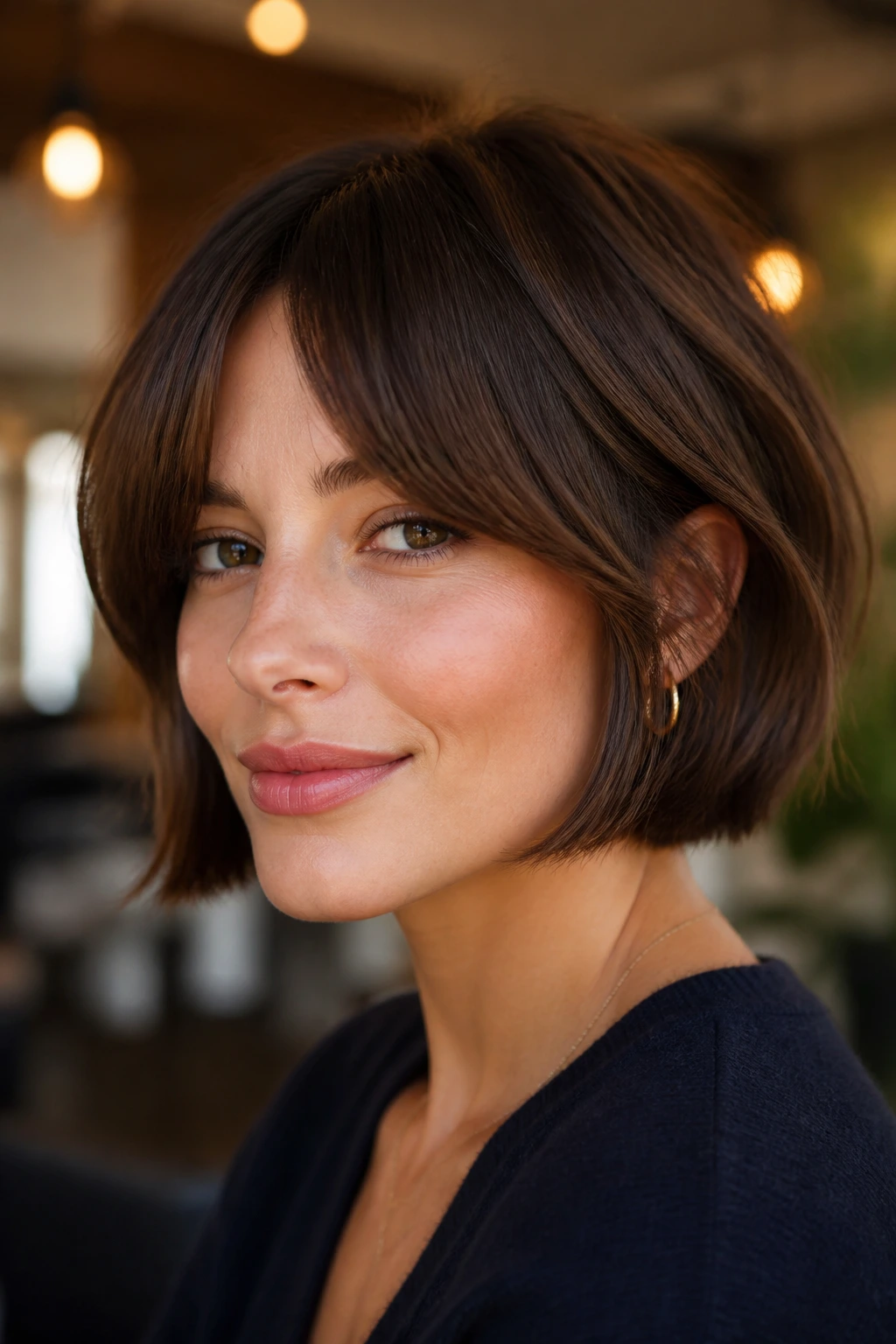
This is the one I reach for when short hair needs a little romance. The bob sits at the chin, the ends are blunt but not rigid, and the curtain bangs open gently at the center before curving toward the cheekbones. It has that neat, slightly undone French-bob feel, only the fringe takes the edge off so the cut doesn’t read stern.
The key is keeping the shortest point of the bang long enough to move. On most people, that means somewhere between the brow and upper cheekbone, then letting the outer pieces brush the jaw. If the fringe gets chopped too high, the whole shape loses the soft slide that makes it work.
Why It Works
The chin length gives the bangs a place to land. That matters. Short fringe on a short bob can look chopped up if both lines stop too high, but a chin-grazing base gives the eye a clean vertical path. The face gets framed, not fenced in.
Best for
- Straight to slightly wavy hair
- Oval and heart-shaped faces
- Anyone who likes a tidy outline with a soft front
Styling note: Tuck the outer corners under with a 1-inch round brush so they bend toward the jaw, not straight out.
2. Layered Pixie-Bob With Micro Curtain Pieces
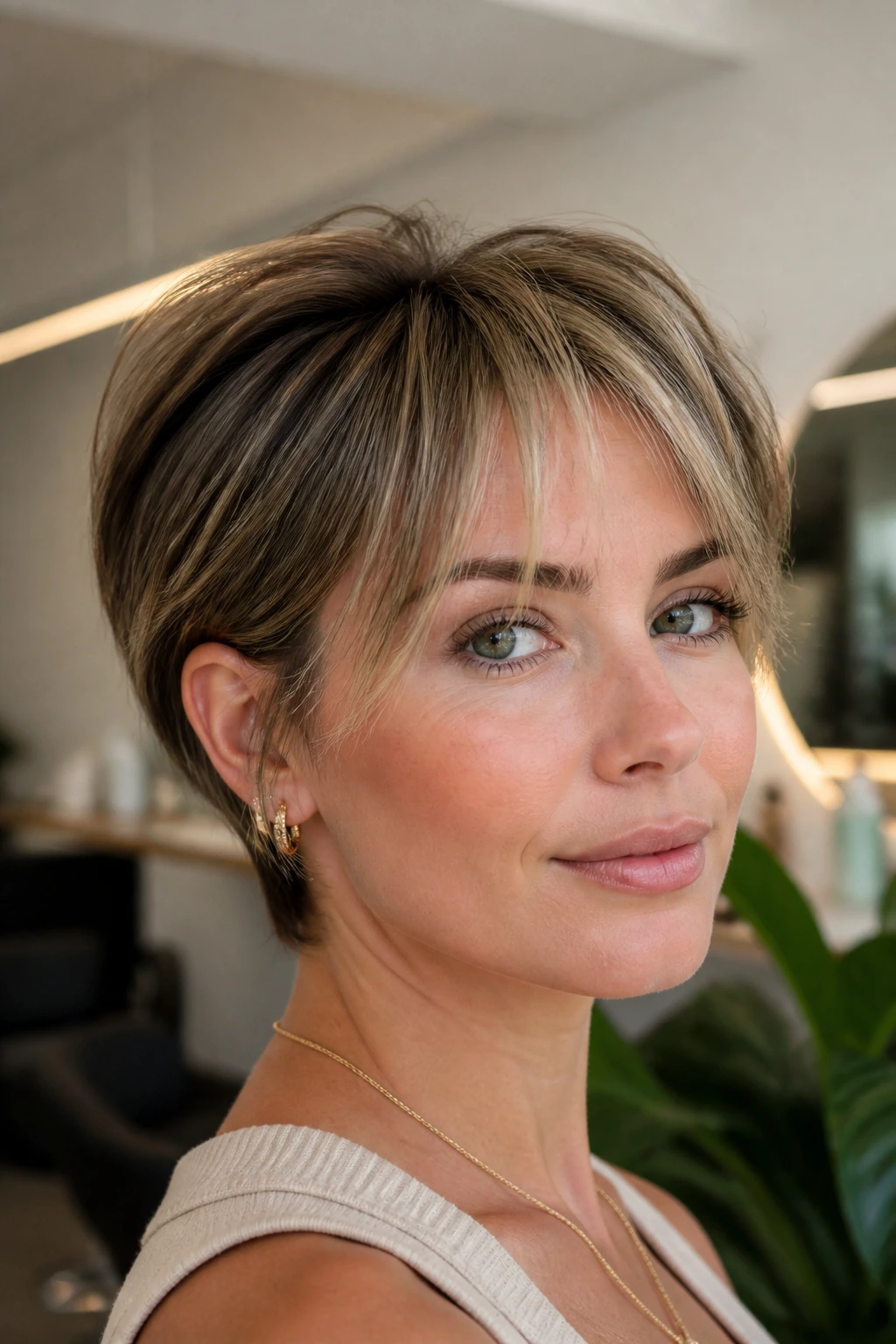
This cut lives between a pixie and a bob, and the fringe follows that same middle ground. The curtain pieces are shorter, lighter, and feathered so they don’t hang like a heavy veil. You still get that center split, but it opens fast and stays airy around the eyes.
It’s a smart pick if your hair is fine and you want movement without too much length in front. The trick is keeping the side pieces soft at the temples. If they get dense, the cut starts to feel triangular. Thin them with restraint, not aggression.
What Makes It Different
The fringe doesn’t dominate the haircut. It behaves more like a face frame that happened to split at the center. That’s the beauty of it. You get the curtain-bang shape without committing to a lot of forehead coverage or daily round-brush drama.
Quick reality check
- Best with lightweight styling cream
- Works well with a tousled finish
- Needs a trim before the bangs drop into the eyes
3. Wavy Bob With Cheekbone-Skimming Part
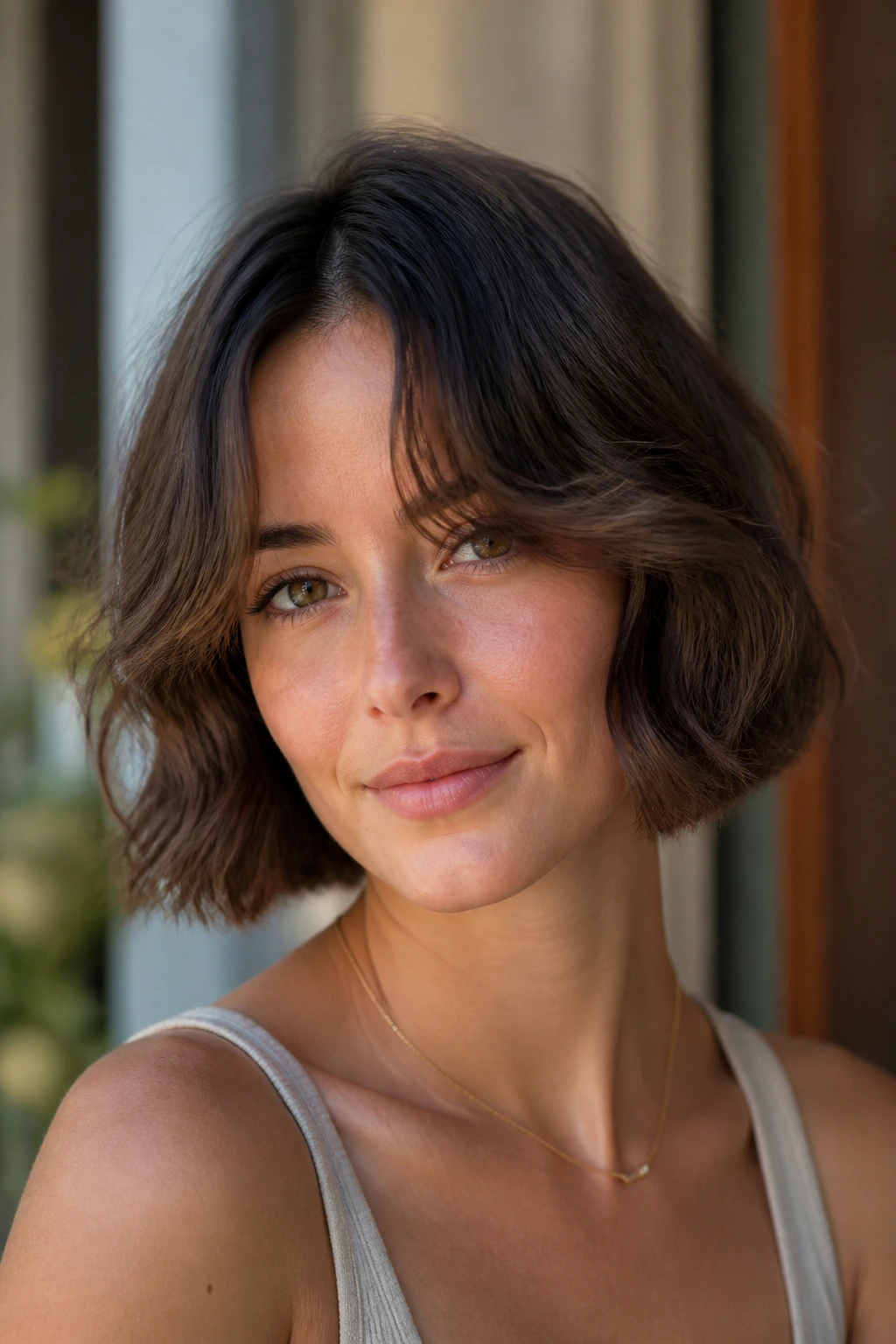
Waves and curtain bangs are old friends, and on short hair they make a particularly good pair. The bob stops around the mouth or jaw, while the bangs open at the bridge of the nose and fall into the cheekbones. On a wavy texture, that split doesn’t need to be ruler-straight. A slightly uneven opening often looks better.
The move here is to let the wave pattern stay visible. Don’t flatten it into obedience. A rough-dried bend around the front pieces gives the fringe that soft drape people always want but rarely explain well. It’s movement, not perfection.
A good wavy bob with curtain bangs should look like it was allowed to breathe for ten minutes after styling. Not sloppy. Just not overcontrolled.
4. Blunt Bob With Long, Center-Opening Fringe
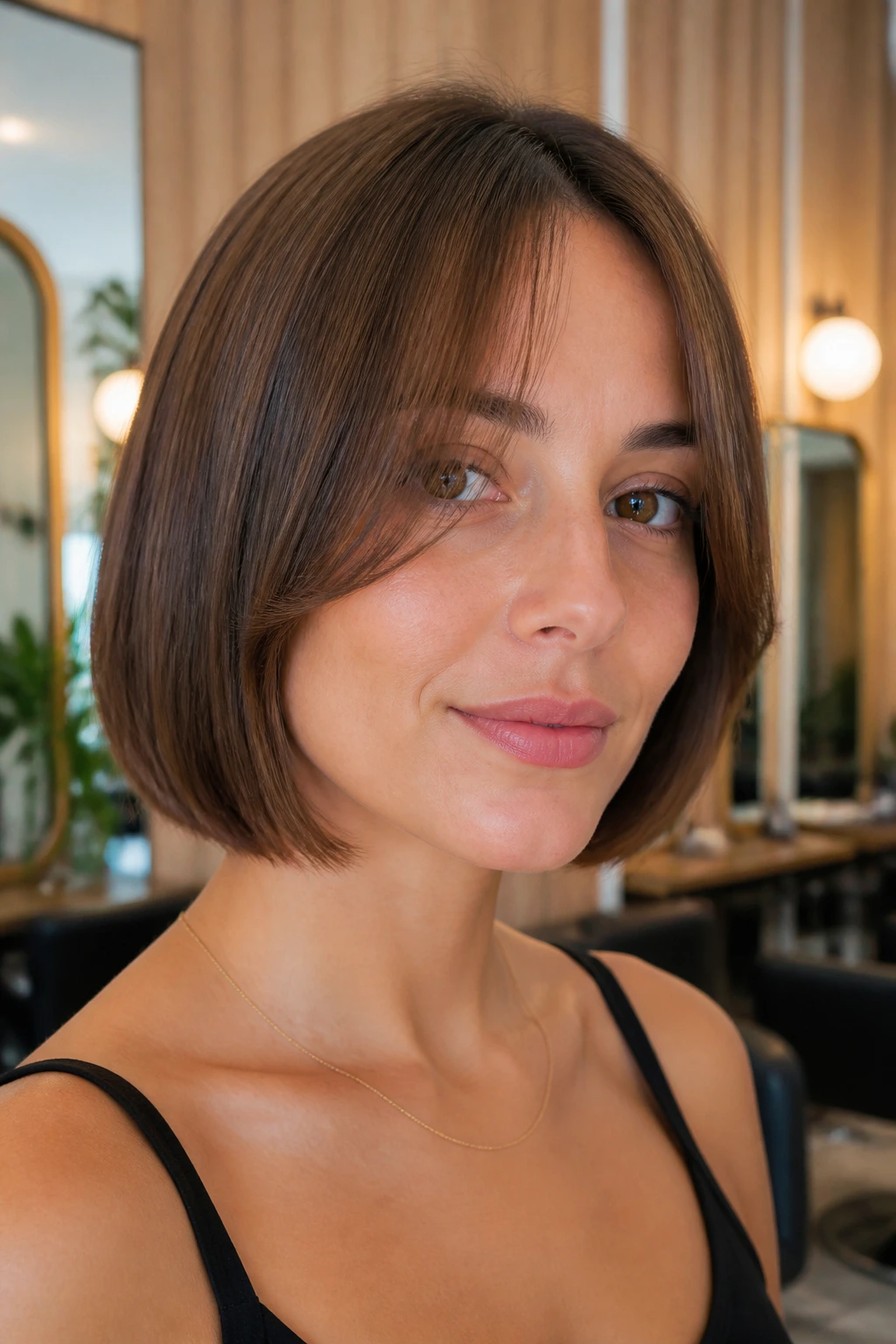
A blunt bob can look severe in a hurry. Add curtain bangs and the whole cut changes temperature. The bottom line stays clean and straight, while the fringe opens at the center and curls away from the face just enough to soften the outline.
This is one of my favorites for thick hair. Thick strands hold the blunt edge well, and the bangs help keep the shape from feeling like one solid block. Ask for the front pieces to stay longer than you think. A curtain bang that lands around the cheekbone or upper lip has room to sweep; one that stops too high tends to stick out and fight the bob.
Best move: flat-iron just the ends of the fringe with a tiny bend toward the face, then let them cool before touching them again.
5. Curly Crop With Airy Curtain Bangs
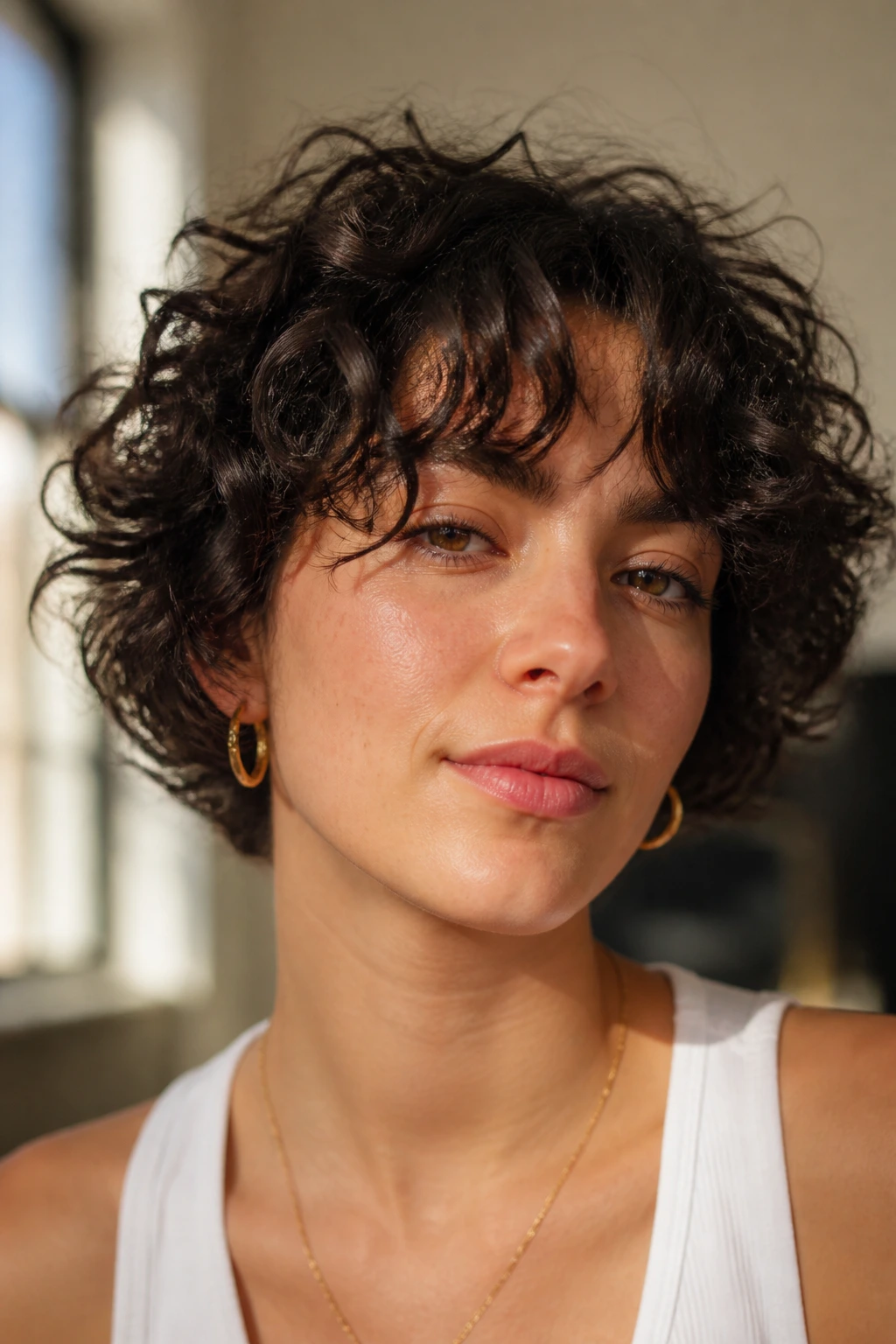
Curly hair does not need to be forced into a fake center split. It needs room. On a curly crop, curtain bangs work best when they’re cut longer, shaped dry, and left soft enough to spring away from the forehead in a natural arc. The result is less “bangs pasted to the face” and more “curl frame that opens in the middle.”
The shortest point usually needs to sit lower than you expect, because curls rebound. That’s the part many people miss. If you cut curly fringe like straight fringe, you’ll end up with a bounce that feels too short by the time it dries.
How to wear it
- Diffuse on low heat
- Scrunch a small amount of curl cream into the front pieces
- Separate only after fully dry, or the curl clumps will frizz out
The whole shape gets better when it’s cut with the curl pattern in mind instead of against it.
6. Bixie With Feathered Face Frame
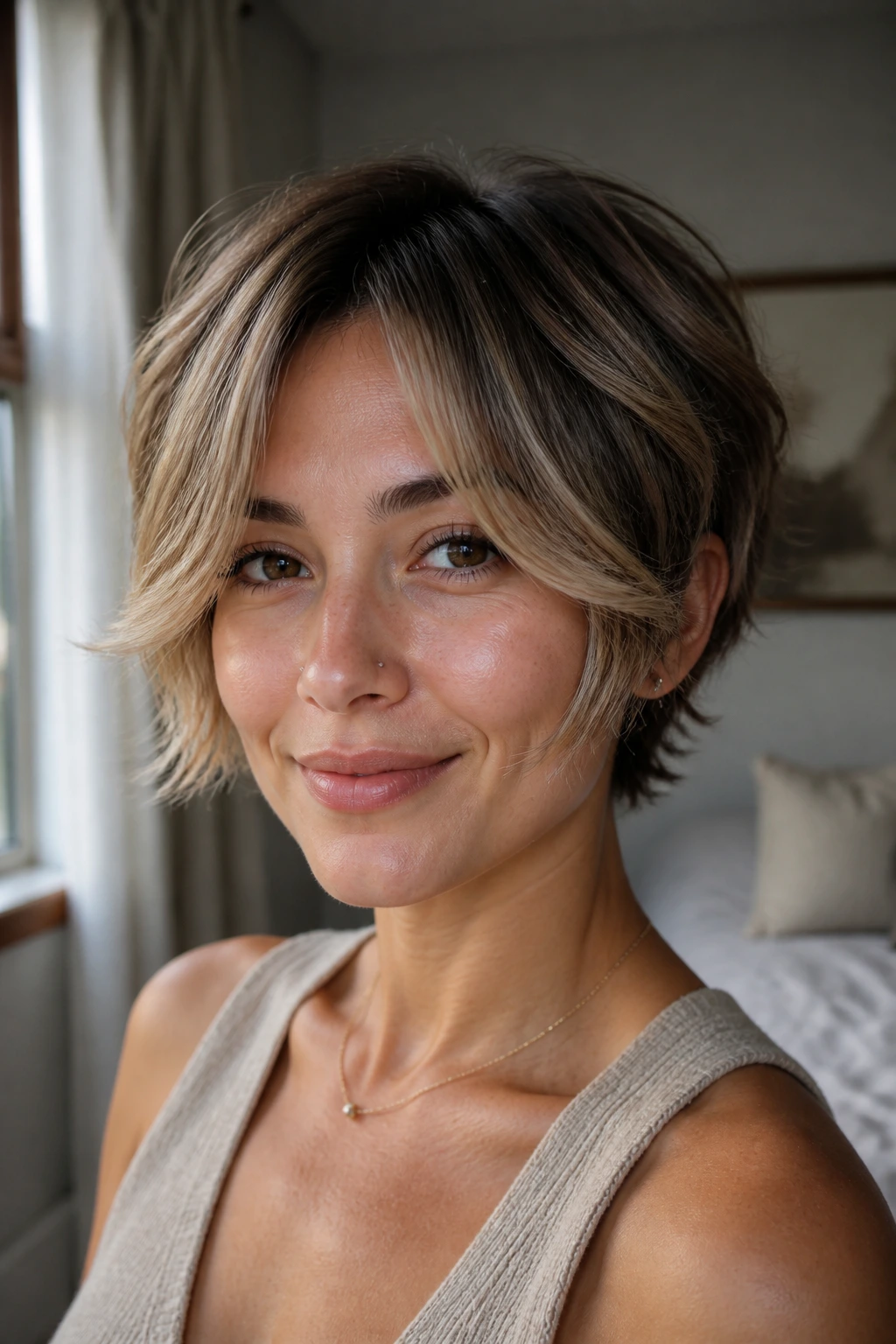
A bixie already has energy. It’s short, layered, and a little playful, so the curtain fringe should match that mood rather than fight it. The front pieces are usually choppy and feathered, with enough length to brush the cheekbone but not so much that they collapse into the eyes.
This style works when you want short hair that moves around your face instead of sitting in a fixed shape. I like it most when the layers around the crown stay light, because the fringe and crown need to talk to each other. If the top is too heavy, the bang area loses lift.
The result feels youthful without tipping into childish. That distinction matters.
7. Asymmetrical Bob With Draped Bangs
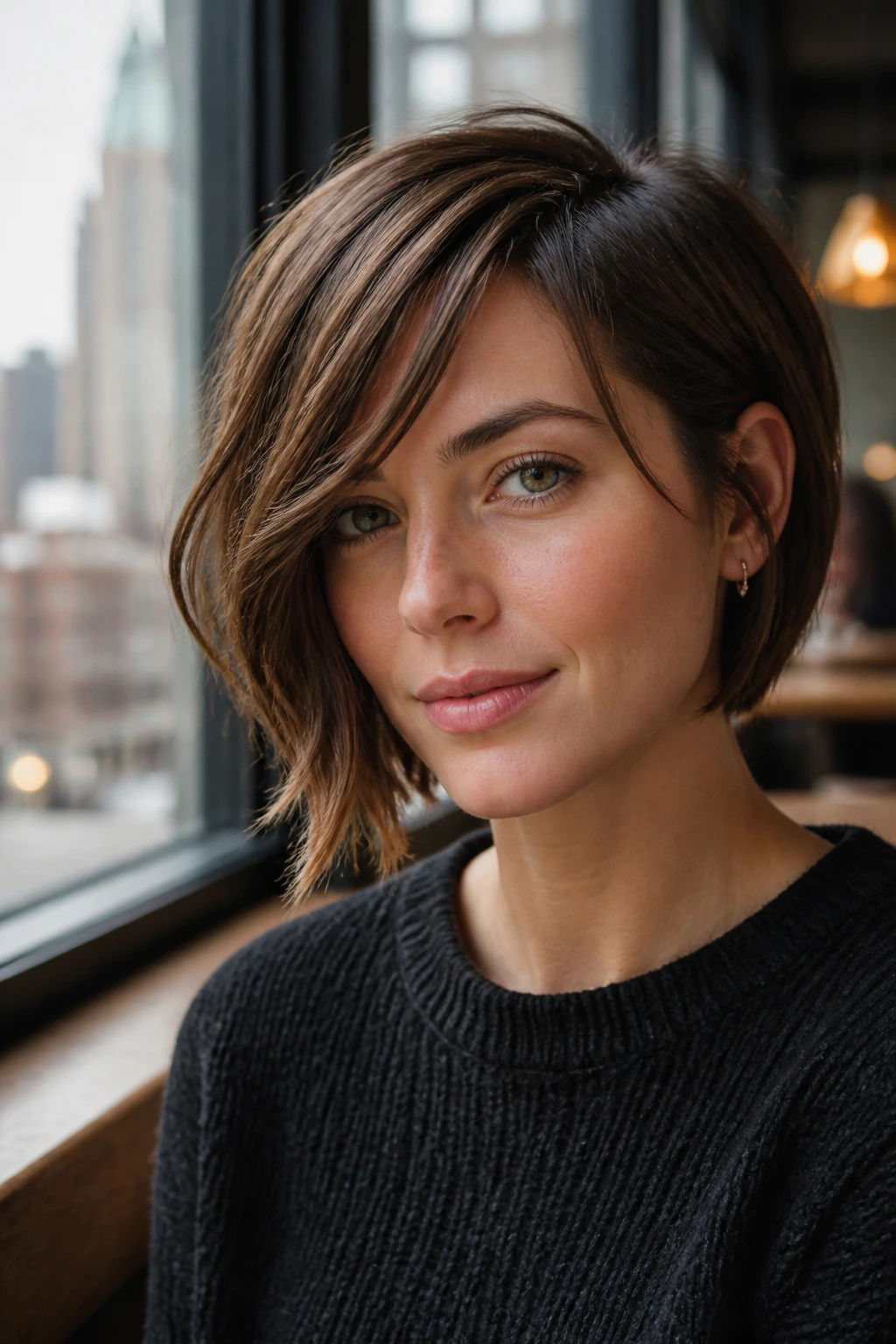
Can curtain bangs work with an off-balance bob? Absolutely. In fact, the asymmetry gives the fringe something to play against. One side of the bob sits a little longer, and the curtain bang follows that line by drifting farther to one side before falling back into the split.
This is one of those styles that looks especially good when the part is not perfectly centered. A slight off-center split keeps the front from feeling stiff. It also helps if your hair naturally falls to one side, because then the bangs work with gravity instead of trying to win against it.
Why I like it
It feels deliberate. Not precious. The bob has attitude, the fringe has softness, and the combination keeps the cut from reading too symmetrical or too neat.
8. Shaggy Lob With Long Curtain Bangs

If you like layers you can see, this one’s hard to beat. The lob sits just above or at the collarbone, and the curtain bangs are left long enough to blend into the top layers. There’s a lot of motion here, so the fringe needs to stay piecey rather than solid.
The best version looks almost accidental in the front and very considered in the shape. That means the bangs should split cleanly at the center, then feather into the sides instead of making one blunt triangle across the forehead. On wavy hair, that movement comes naturally. On straighter hair, a little bend from a round brush or flat iron does the trick.
It’s the least fussy of the group, which is exactly why so many people end up living in it.
9. Sleek Angled Bob With Piecey Fringe
A sharply angled bob can feel too geometric on its own. Curtain bangs soften that geometry without erasing it. The front is longer than the back, the perimeter slides forward, and the fringe breaks into narrow, piecey sections that keep the line from becoming too hard.
This style loves shine. A light smoothing cream on the mids, a heat protectant on the fringe, and a flat iron bend through the outer pieces are usually enough. Don’t overdo the product. Sleek short hair with curtain bangs goes limp fast if you load the front with oil.
The look works best when: the fringe stays narrow and the bob edge stays sharp. You want contrast, not mush.
10. Micro-Bob With Narrow Curtain Bangs
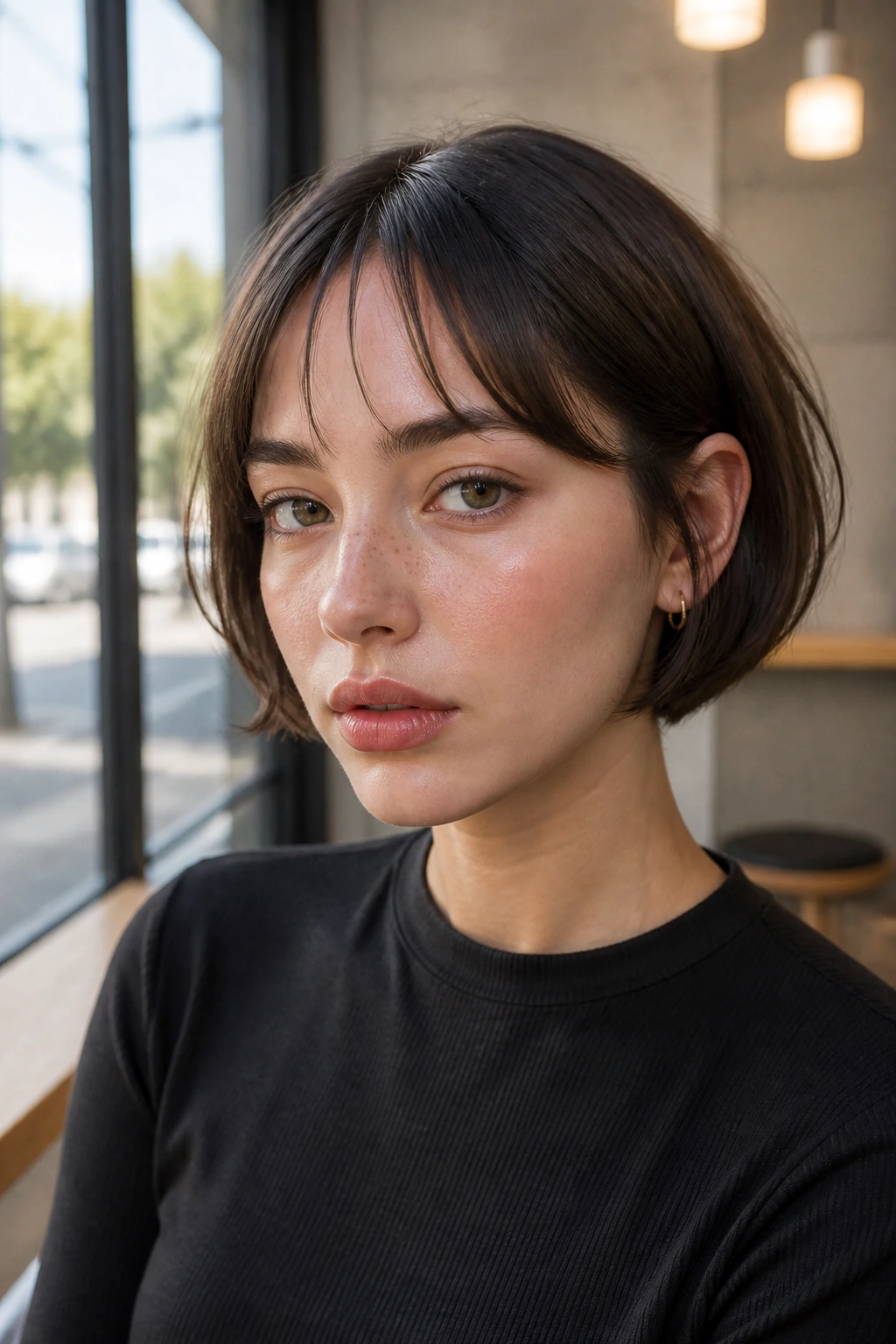
A micro-bob is short enough to show the jaw and neck, so the bang shape has to stay tiny and tidy. The curtain fringe here is narrower than usual, opening just enough to soften the center without taking over the face. It’s a clean, high-contrast look.
This is not the place for very wide curtain bangs. Too much width makes the haircut feel heavy for its size. Keep the split tight, the side pieces light, and the lengths controlled around the temples. The charm is in the precision.
If you like short hair that looks crisp from the front and easy from the side, this one deserves a look.
11. Side-Parted Curtain Bangs on a Short Crop
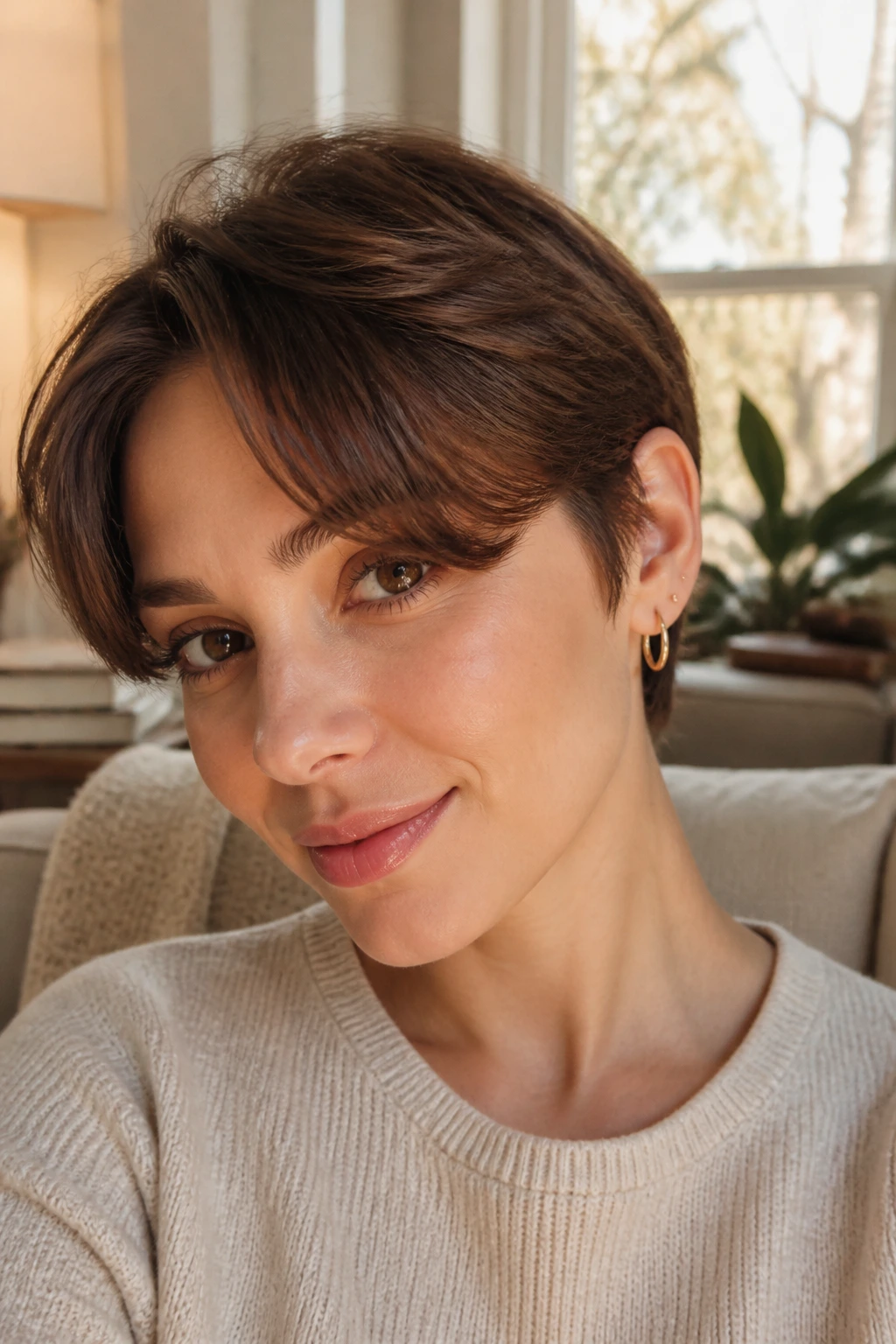
Who says curtain bangs have to split dead center? A side-parted version can be even better on short hair, especially if your hair has a stubborn cowlick or a habit of falling to one side. The opening stays soft, but the part leans off-center so the fringe follows your natural direction.
That little shift changes the whole mood. It gives the crop more swing and keeps the front from collapsing into a flat curtain. The longer side can skim the cheekbone, while the shorter side still frames the brow. I like this on clients who want the softness of a curtain bang without the symmetry that sometimes comes with it.
It’s a practical choice. No drama. Less fight in the morning.
12. Collarbone Lob With Heavy Curtain Bangs
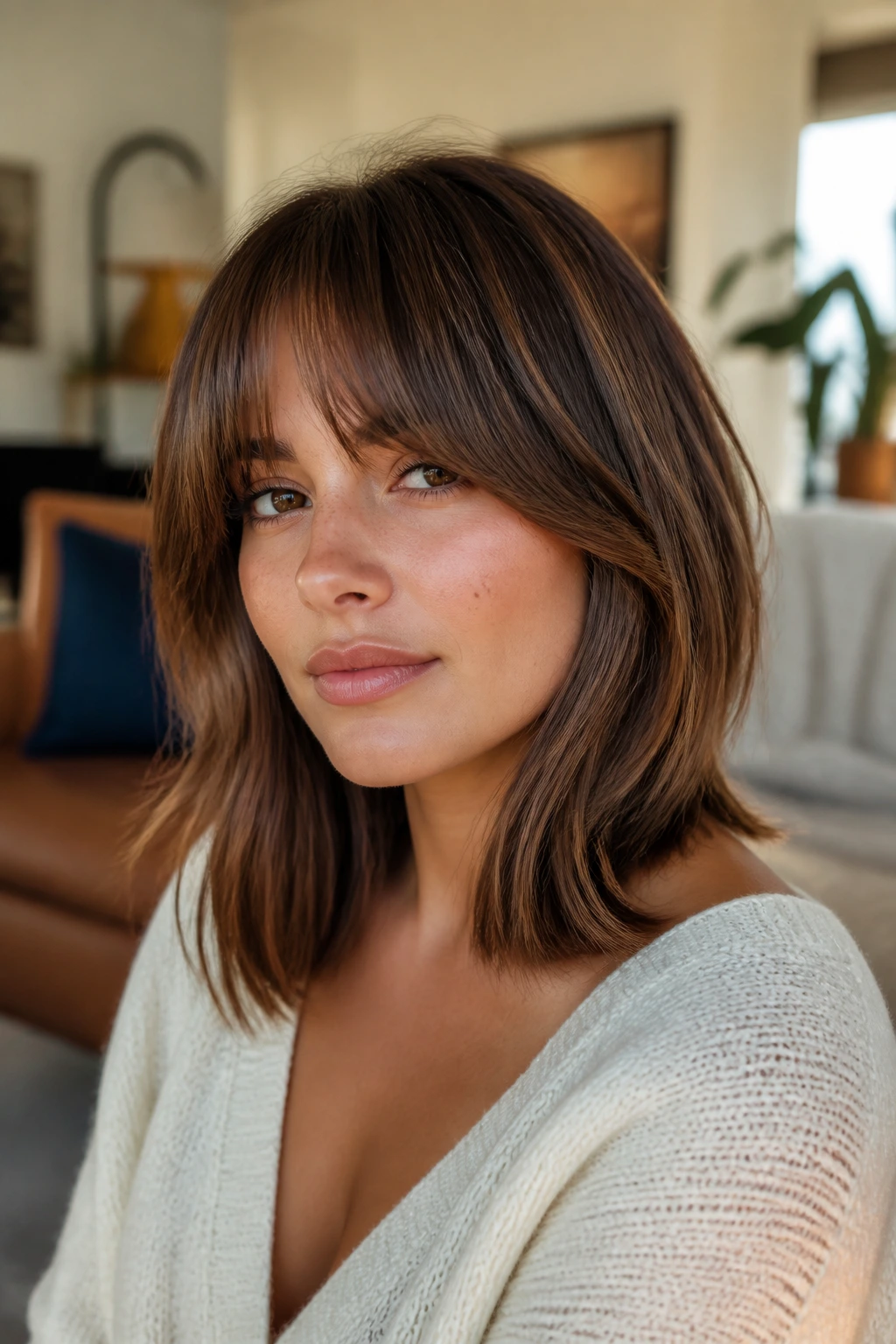
Not every short haircut has to stop at the jaw. A collarbone lob sits in that useful in-between zone where curtain bangs can go fuller and heavier without overwhelming the face. The bang itself can be denser at the center, then peel away toward the cheekbones in a deep, rounded split.
Why it stands out
The extra length gives the bangs a place to fold into the rest of the cut. That means you can wear the fringe with more weight and still keep the outline soft. It’s especially good for thicker hair that needs structure.
Styling cue
Use a large round brush or a blow-dryer brush to lift the roots at the center, then roll the outer pieces away from the face so the split stays open instead of puffing straight out.
13. Rounded Bob With Feathered Fringe
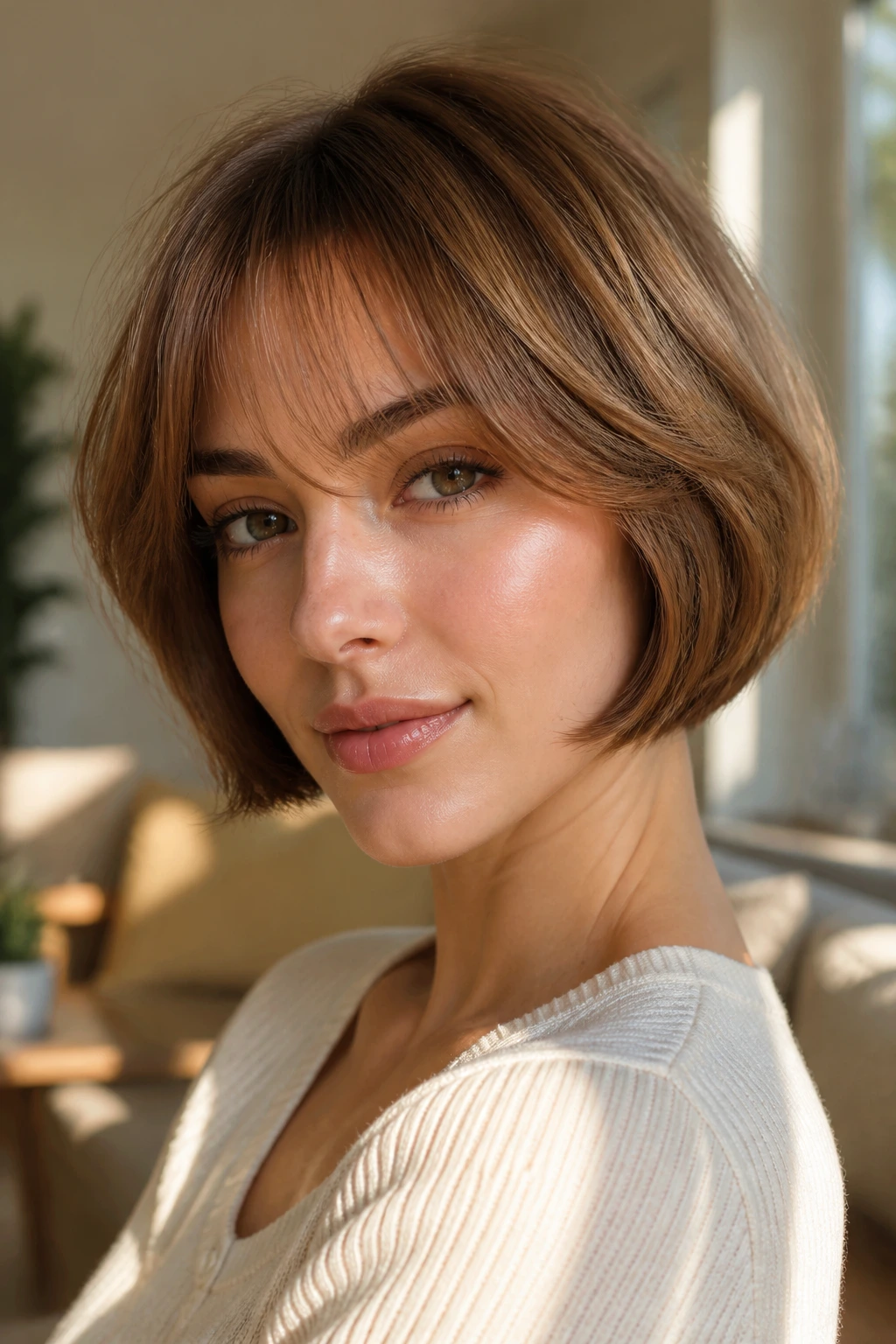
A rounded bob already has a curved shape through the sides and back, so the fringe should echo that bend instead of fighting it. Curtain bangs cut with a feathered edge do that nicely. The front opens at the center, but the outer pieces sweep in a gentle arc that mirrors the silhouette of the bob.
This style is especially flattering when you want softness around the temples and cheekbones. The curve pulls the eye inward. No hard corners. No awkward shelf.
A small caution: if the fringe gets too full, the rounded bob can become bulbous. Keep the density light at the ends and preserve some transparency at the split.
14. Tousled Pixie With Mini Curtain Bangs
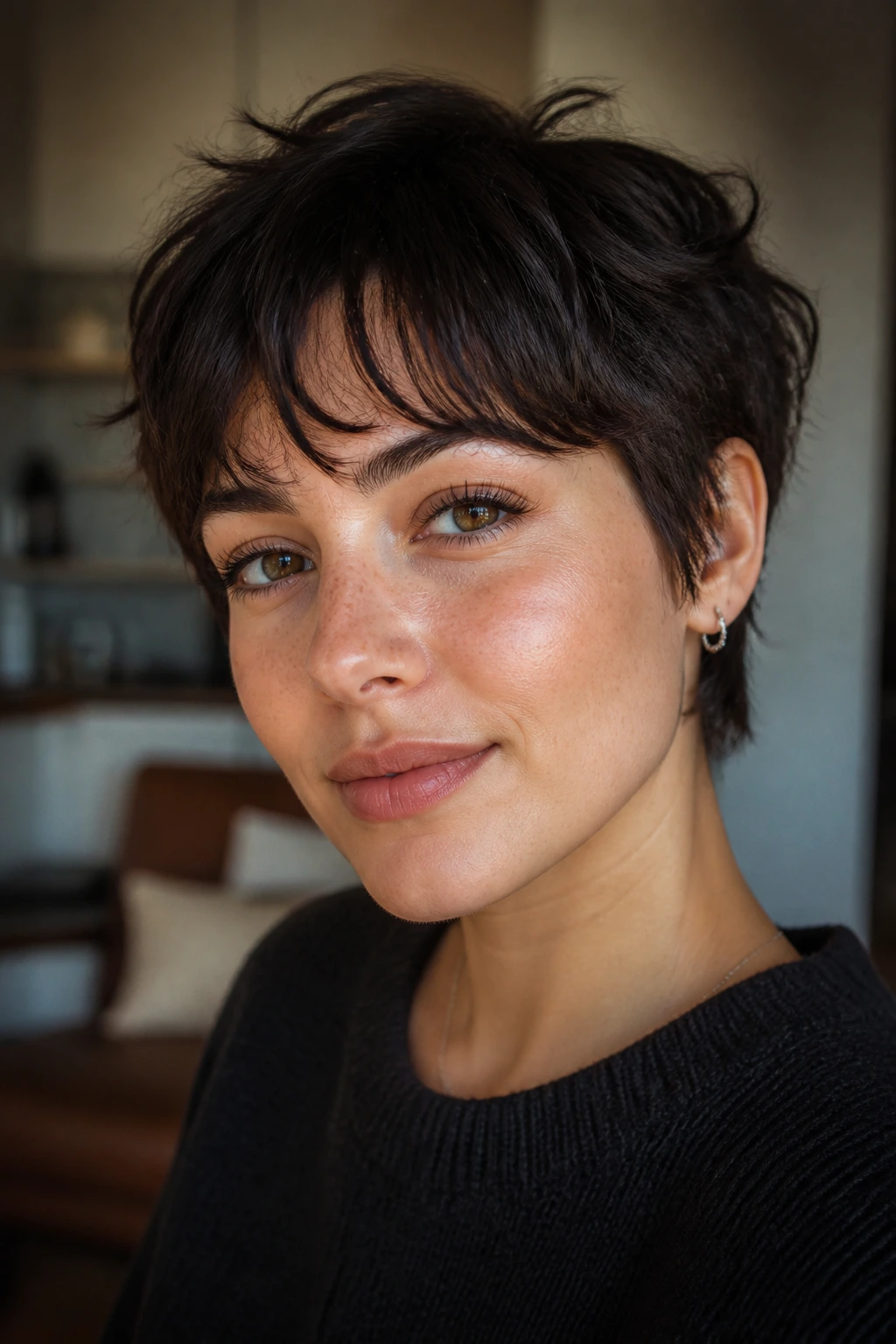
This is the playful one. The cut is short, the texture is messy on purpose, and the curtain bangs are barely long enough to split and move. Think of them as mini front pieces that help the pixie read softer, not as a full bang shape.
It’s a good fit for people who don’t want to spend a lot of time styling. A little matte paste at the roots, a quick pinch with the fingers, and you’re done. The fringe doesn’t need to be perfect. In fact, it looks better when it isn’t.
The whole style relies on piece separation, so stay away from heavy creams. They’ll flatten the front and erase the airy effect.
15. Chin-Length Curly Cut With Open Fringe
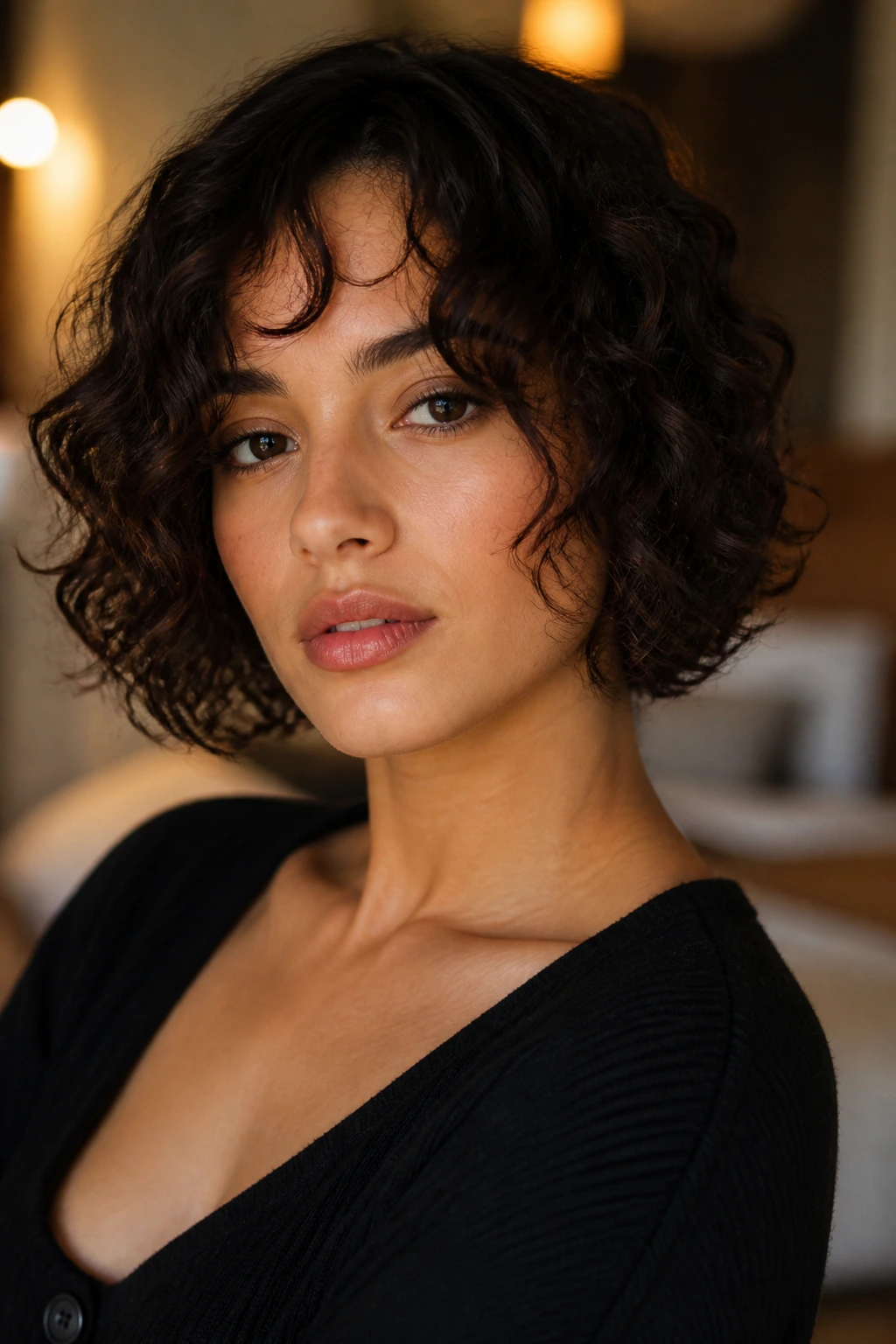
Curly short hair can wear curtain bangs in a way straight hair can’t quite copy. The front pieces open naturally because each curl creates its own little drape. On a chin-length cut, that gives you a halo effect around the face without a heavy wall of bangs.
The big mistake here is cutting the fringe too short and expecting the curls to fall later. They won’t fall; they’ll bounce. Leave room for shrinkage and let the curls settle where they want. The best version has spring at the cheekbone and a bit of lift at the forehead.
A little curl gel at the roots and a diffuser set on low heat usually give the cleanest result.
16. A-Line Bob With Soft Split Bangs
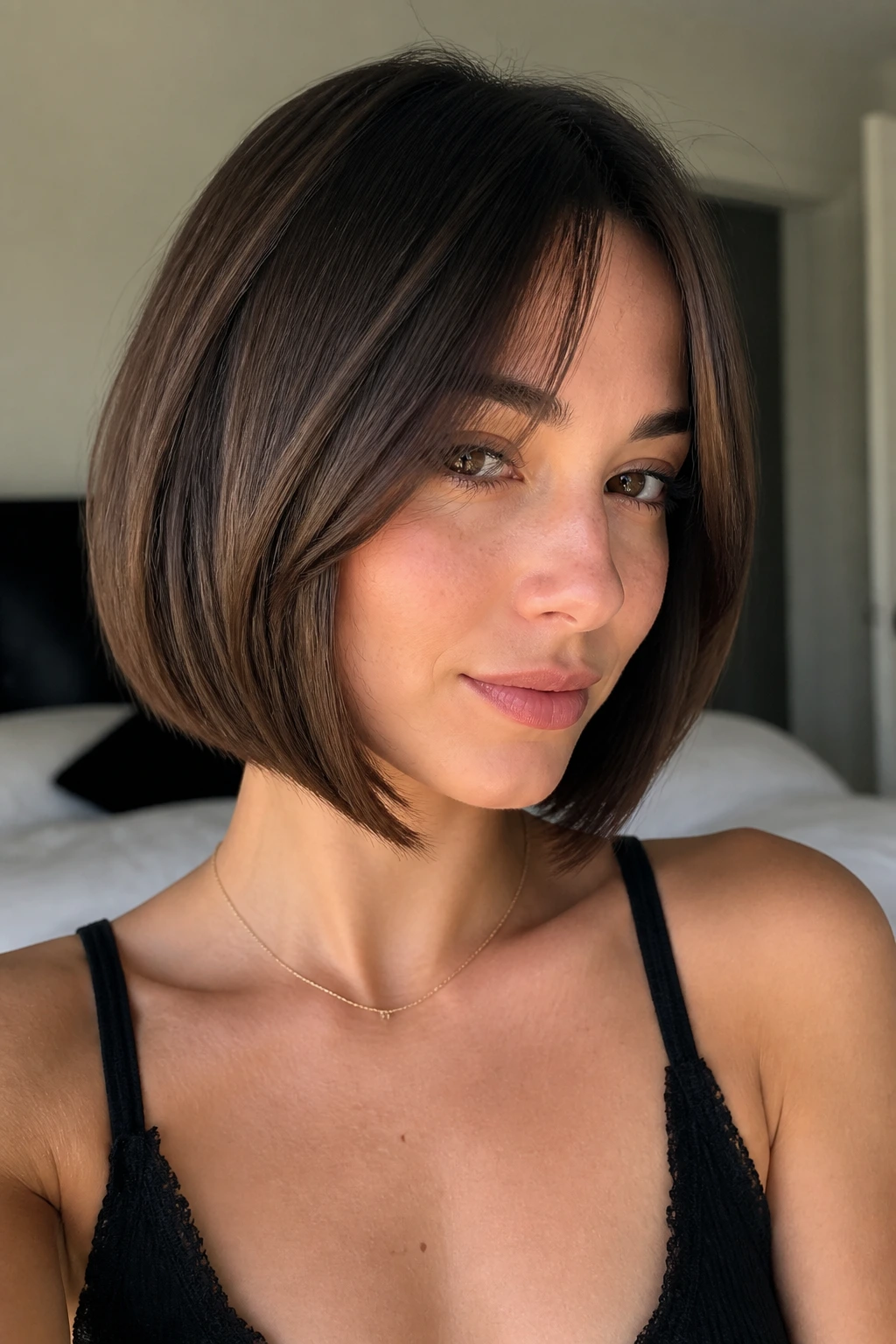
An A-line bob is longer in front and shorter in back, which makes it a natural partner for curtain bangs. The forward angle of the cut and the center opening of the fringe echo each other. That shared direction makes the haircut look cohesive without feeling fussy.
The front pieces of the bang should be long enough to connect visually with the longer front of the bob. If they stop too high, the shape breaks in a weird place and the angle feels abrupt. Keep the line soft. That’s the whole point.
This is a strong choice if you like structure but do not want the haircut to look severe.
17. Italian Bob With Full Face Frame
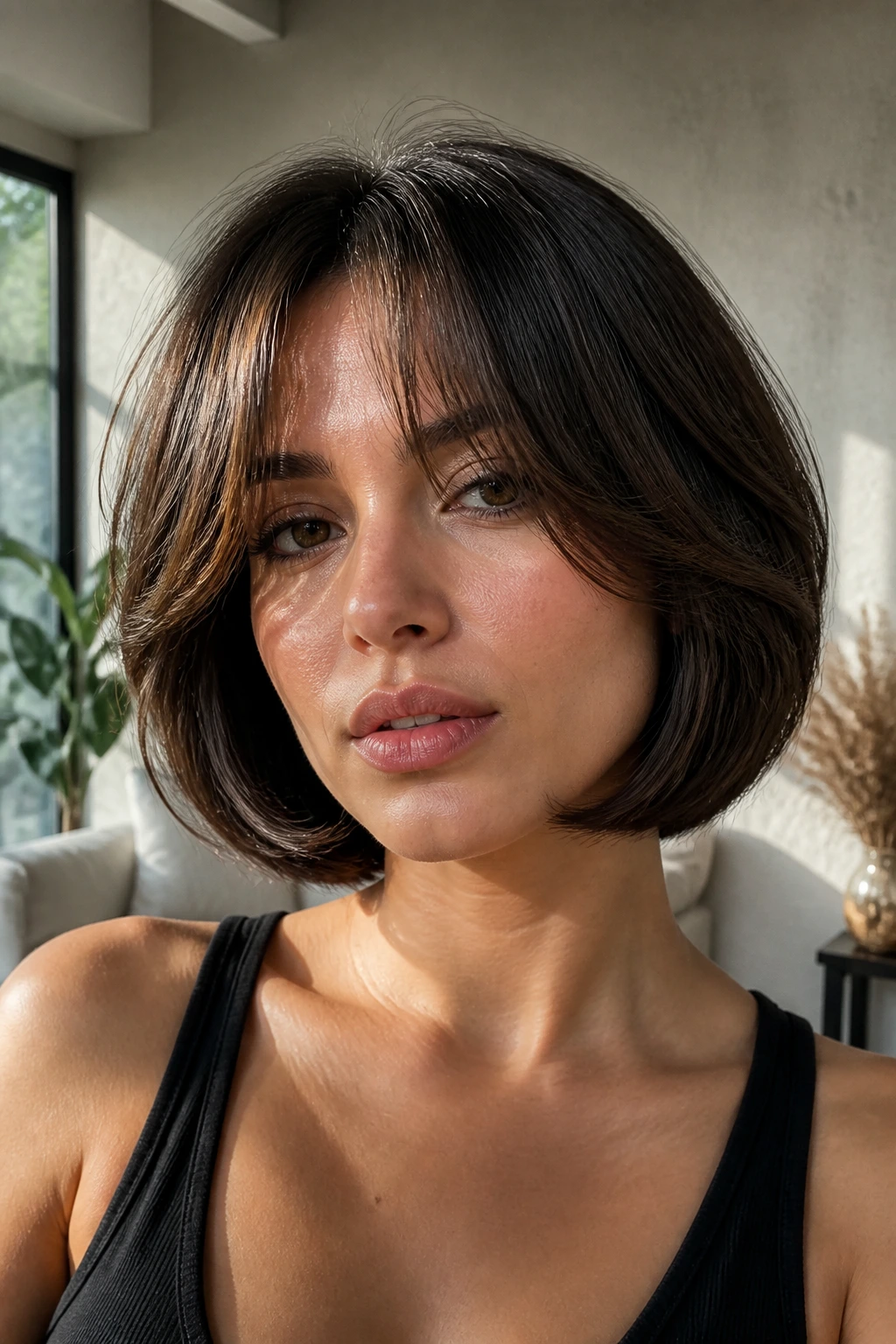
The Italian bob has a bit more body through the sides, and the curtain bangs should match that rich shape. The fringe can be fuller than the wispy versions, with enough weight to create a soft frame around the eyes and cheeks. The split still needs to open, but it can do so in a more dramatic arc.
This style looks best when the hair is blown smooth but not flat. A brush with some tension, a little root lift, and a soft bend at the ends keep it from feeling too severe. If your hair is dense, this is a good place to show it off instead of thinning it into nothing.
The effect is polished. A little old-school, in the best way.
18. Choppy Shag Bob With Air-Dried Bangs
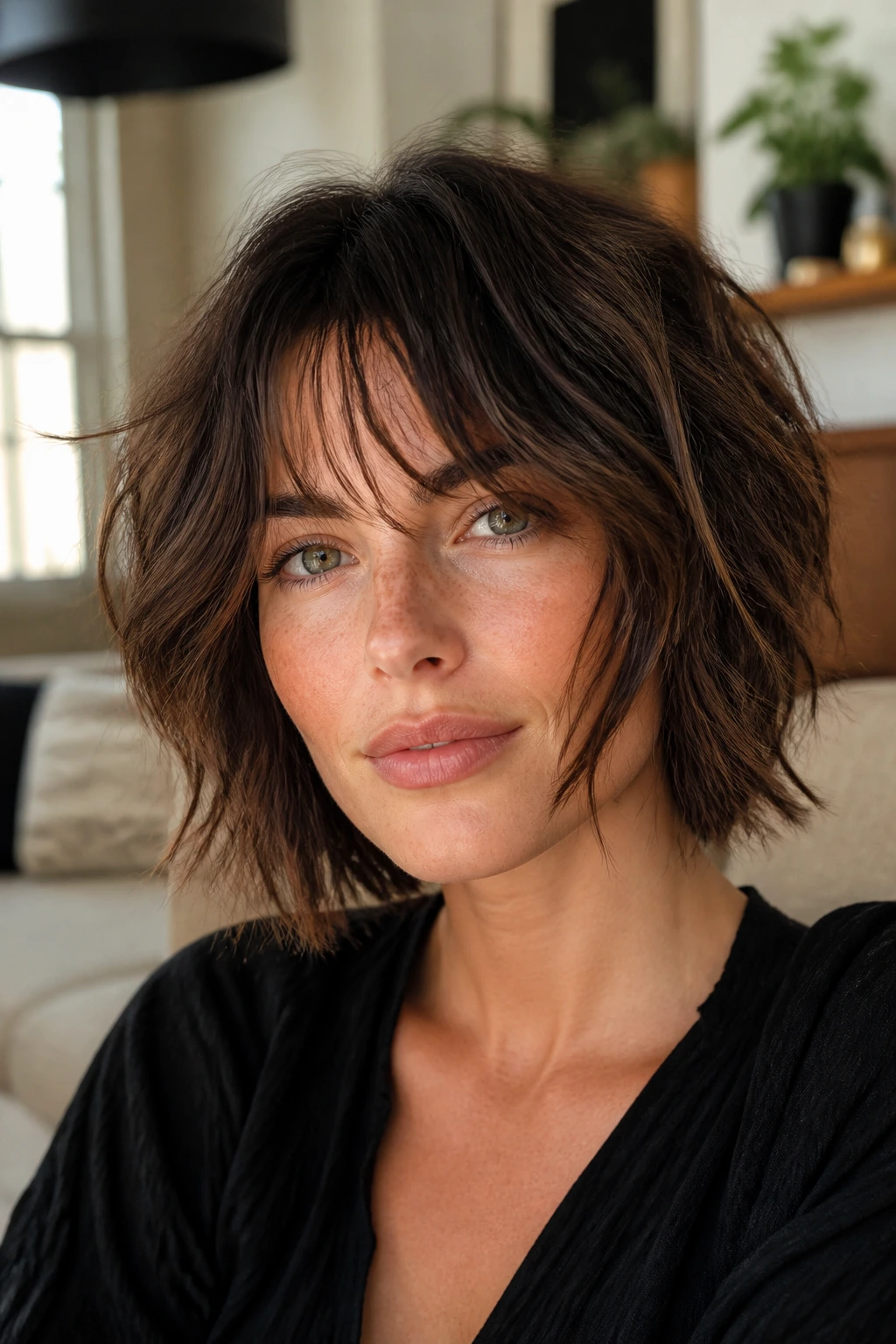
This cut is for people who like texture that does not apologize. The shag bob brings layers, the curtain bangs stay rough around the edges, and the whole thing gets better the less you fuss with it. Air-drying works here because the irregularity is part of the appeal.
A quick note: the bangs still need intention. Air-dried does not mean neglected. Twist the front pieces once or twice while they’re damp, separate them with your fingers, and let them settle naturally. That keeps the split from turning into a blob.
The messy finish is the point, but the shape still needs a backbone.
19. Sleek Short Hair With Blended Fringe
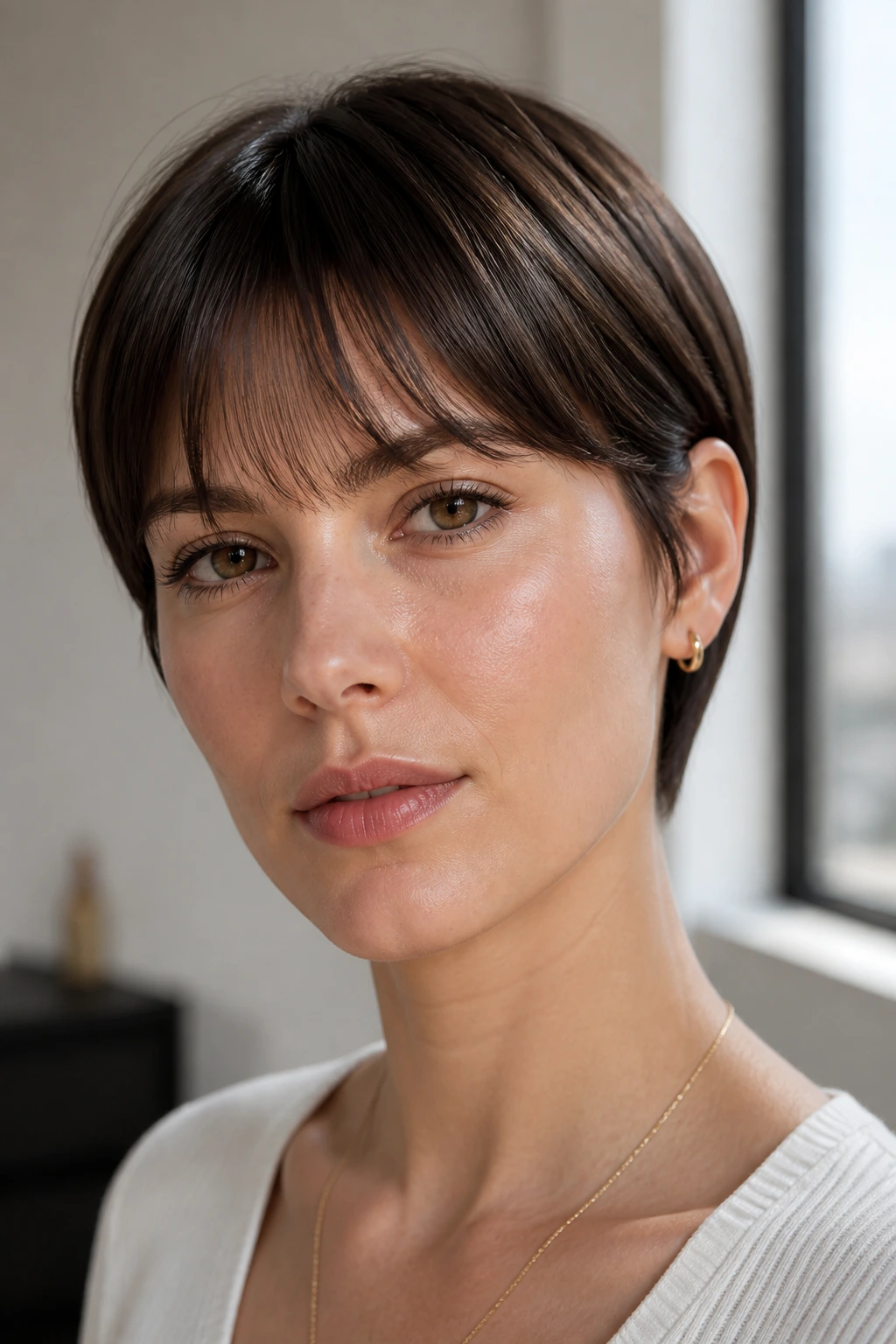
Sometimes the best curtain bang is the one you can barely spot as a separate section. On sleek short hair, the fringe blends into the front layers so smoothly that the split feels built into the haircut itself. It’s subtle. That’s the appeal.
This works especially well if you want short hair that reads clean in daylight and polished in a strong room light. The front pieces should move away from the face just enough to create a visible opening, but not so much that the fringe becomes a dramatic curtain. It’s more of a whisper.
If your hair is straight and fine, this may be the most wearable version in the entire list.
20. Graduated Bob With Cheekbone-Kissing Curtain Bangs
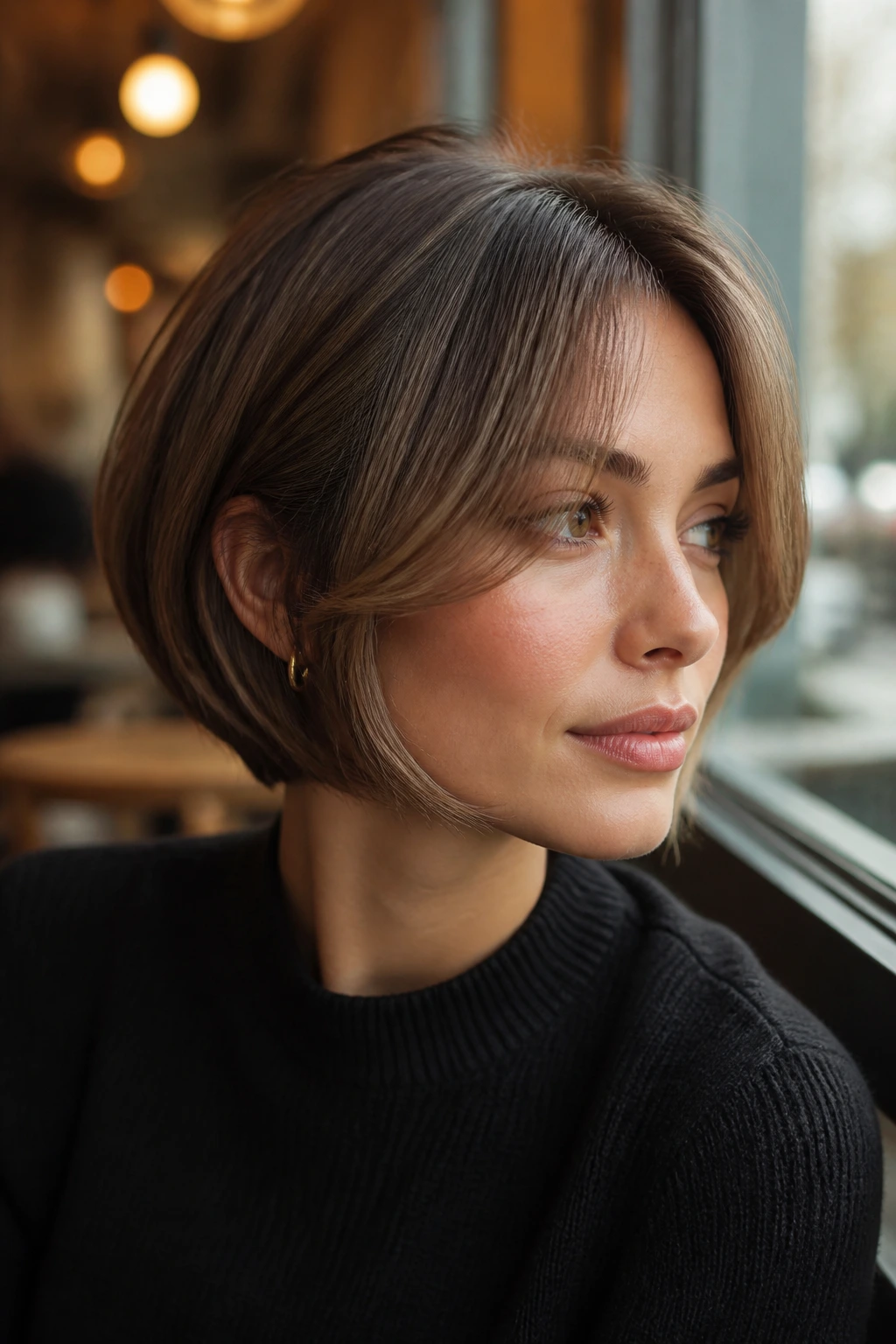
A graduated bob stacks shorter at the back and longer near the front, so the curtain bangs can mirror that shape by starting close to the cheekbone and sweeping out. The front frame should almost touch the cheek before drifting away. That near-contact is what gives the cut its polish.
I like this on thicker hair because the stacked back removes bulk while the bangs keep the front from feeling heavy. The balance is good. The haircut feels tailored without going rigid.
One small thing matters here: the bangs should not be trimmed so short that they float above the cheekbone. Let them kiss the face. That’s where the shape comes alive.
21. Curved-Under Bob With Soft Sweep
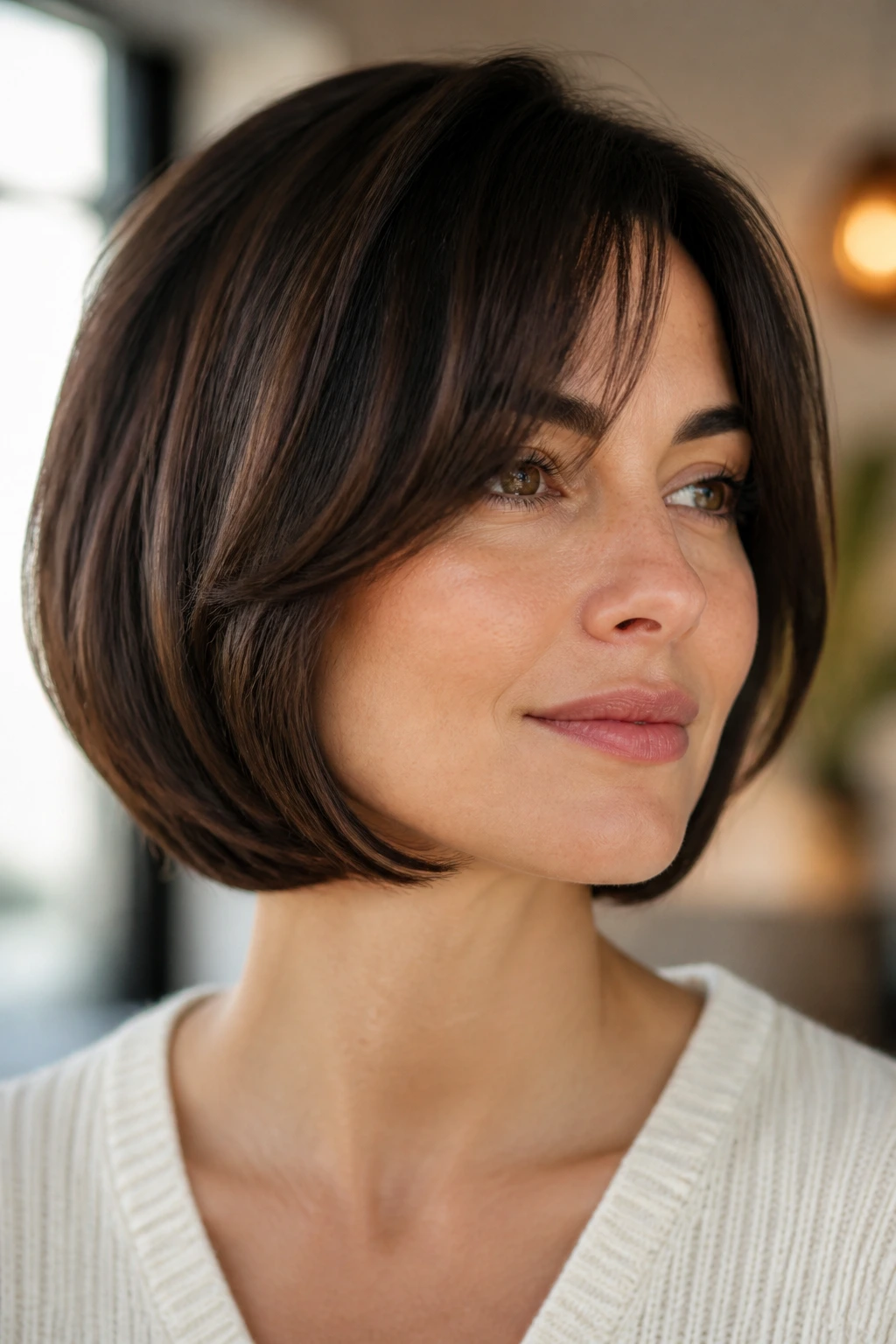
A curved-under bob has ends that tuck inward, which makes it a natural match for curtain bangs that also sweep inward at the outer corners. The whole haircut bends toward the face in a controlled way. It’s neat, but not stiff.
This shape is especially useful if your hair likes to kick out at the ends. The inward curve gives it a job. The bangs should follow the same line with a soft center opening and a rounded fall toward the jaw.
The result looks balanced from every angle. Front, side, and three-quarter view all make sense. That’s rarer than people think.
22. Messy Wolf Cut With Short Curtain Bangs
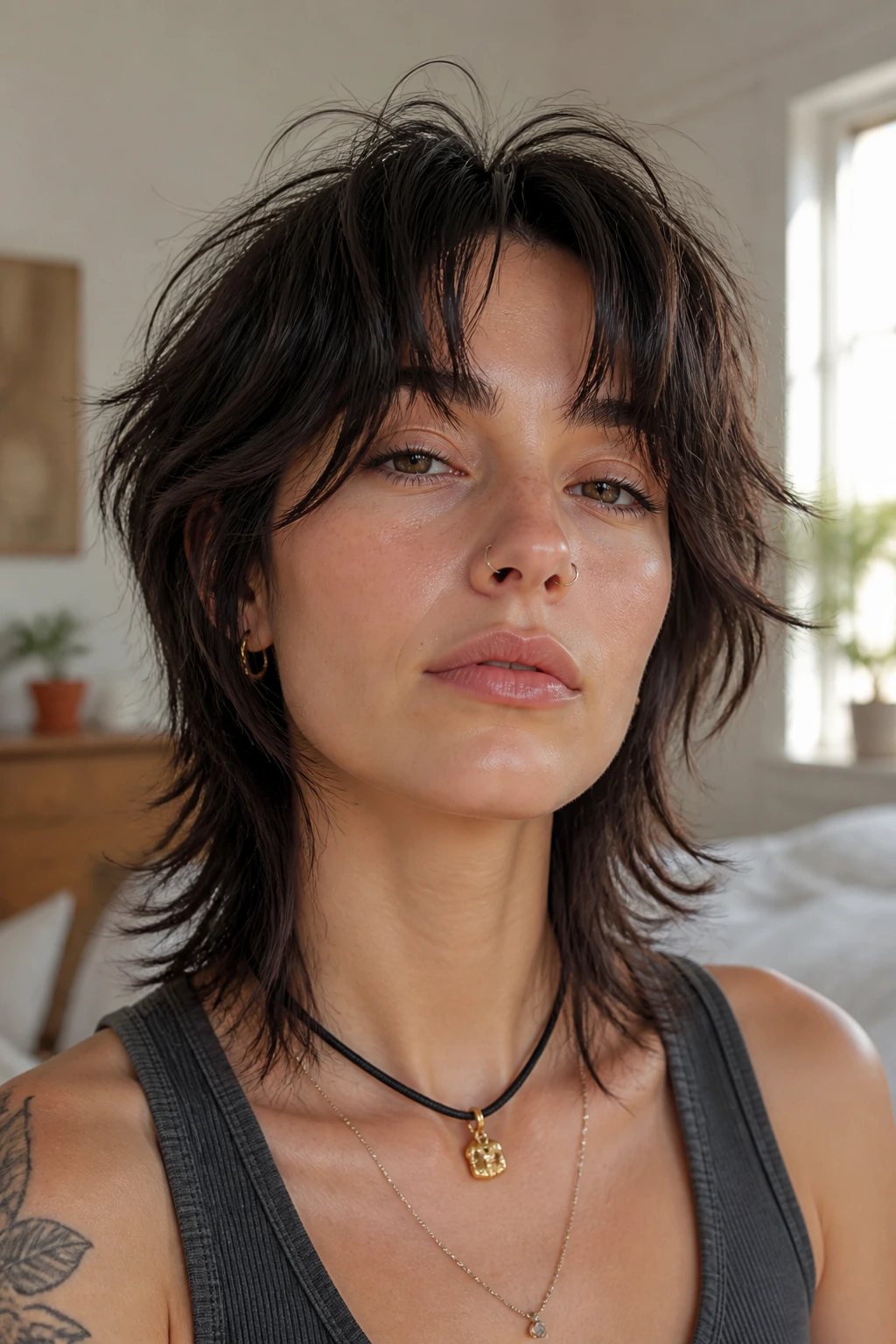
The wolf cut has attitude baked into it. On short hair, the layered shape gets even sharper, and the curtain bangs should stay short enough to blend into the top without losing the split. The front pieces are deliberately choppy, a little wild, and not perfectly matched.
That unevenness is part of the charm, but the bang line still needs structure. The center opening should be visible. The sides should taper into the layers instead of stopping in a blunt line. If the fringe gets too uniform, the cut loses its edge.
Best worn with texture spray, a rough blow-dry, and a willingness to let things look slightly broken on purpose.
23. Tapered Natural Curls With Fringe Halo
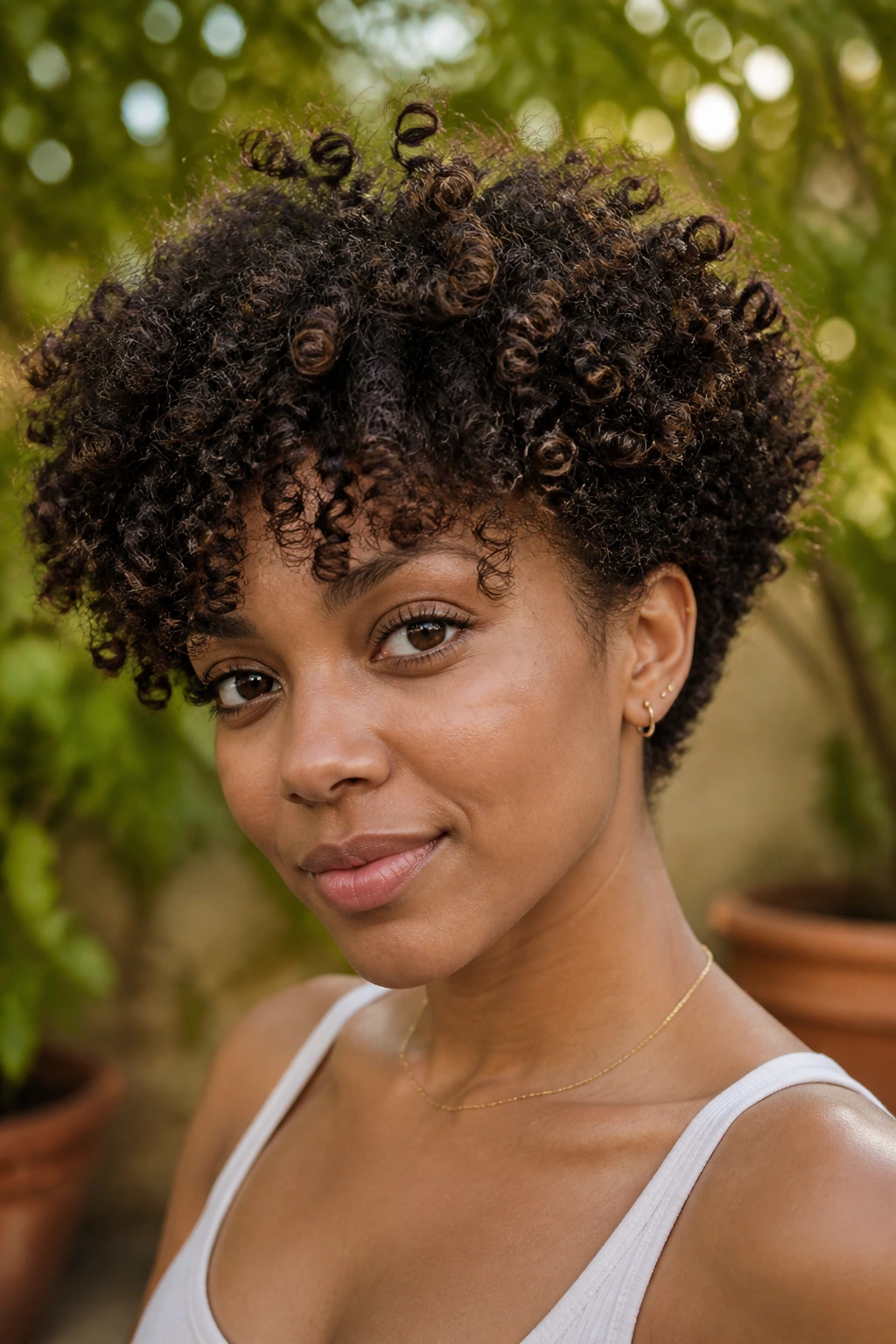
Natural curls can make a curtain-bang shape look almost halo-like when the taper is handled well. The sides stay fuller near the temples and more open around the forehead, so the fringe frames the face instead of clinging to it. The taper keeps the silhouette clean.
The biggest win here is movement. The curls should spring, lift, and separate a little. Not frizz. Separate. That distinction is worth protecting with a good leave-in and a soft diffuser setup.
If your curls shrink a lot, ask for the fringe longer than you think you need. Then check it dry. Always dry. Wet-cut optimism leads to baby bangs faster than anything else.
24. Razor-Cut Bob With Floaty Curtain Bangs
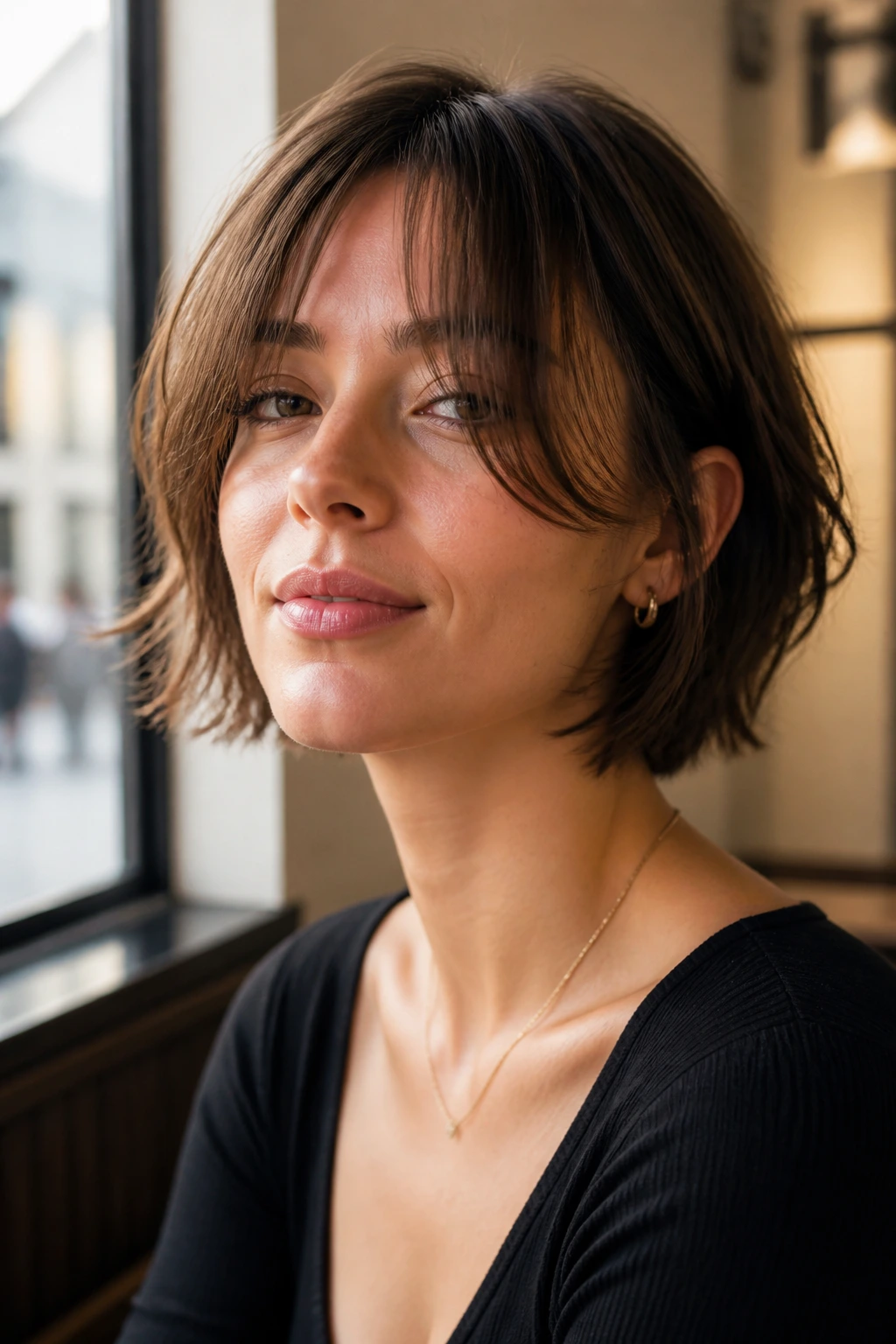
Razor-cut ends create a soft, light edge that suits curtain bangs well on short hair. The fringe can feel floaty, almost airy, because the razor removes some weight from the line. That makes the split easier to move and less likely to sit like a hard shelf.
This cut works best if your hair is medium to fine and you want a little swing without bulk. A dab of lightweight cream through the ends and a quick bend with a round brush are enough. Too much styling product will erase the whole point.
The effect is breezy, but not flimsy. There’s a difference.
25. Sleeker Pixie With Longer Front Pieces
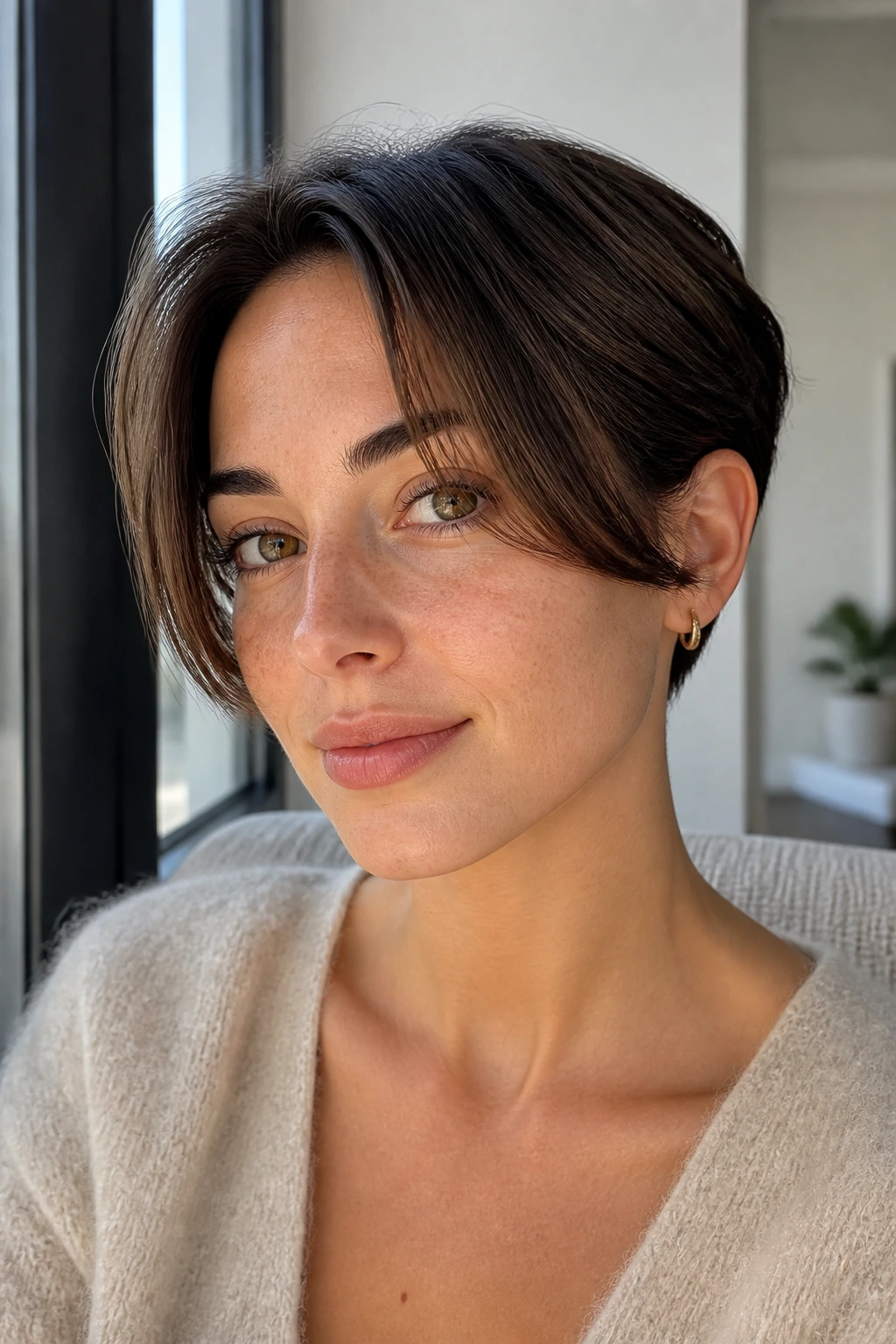
This is the refined version of a pixie with curtain bangs. The sides stay snug, the top has a bit of length, and the front pieces are left long enough to split and fall toward the temples. It’s minimal, but the fringe gives it softness.
The trick is keeping the front pieces long enough to move when you push them apart. If they’re too short, they stand up like little sticks. If they’re too long, they swallow the cropped shape. The middle ground is where the style lives.
It’s especially good for people who want short hair but don’t want the face to feel fully exposed.
26. Bubble Bob With Rounded Curtain Bangs
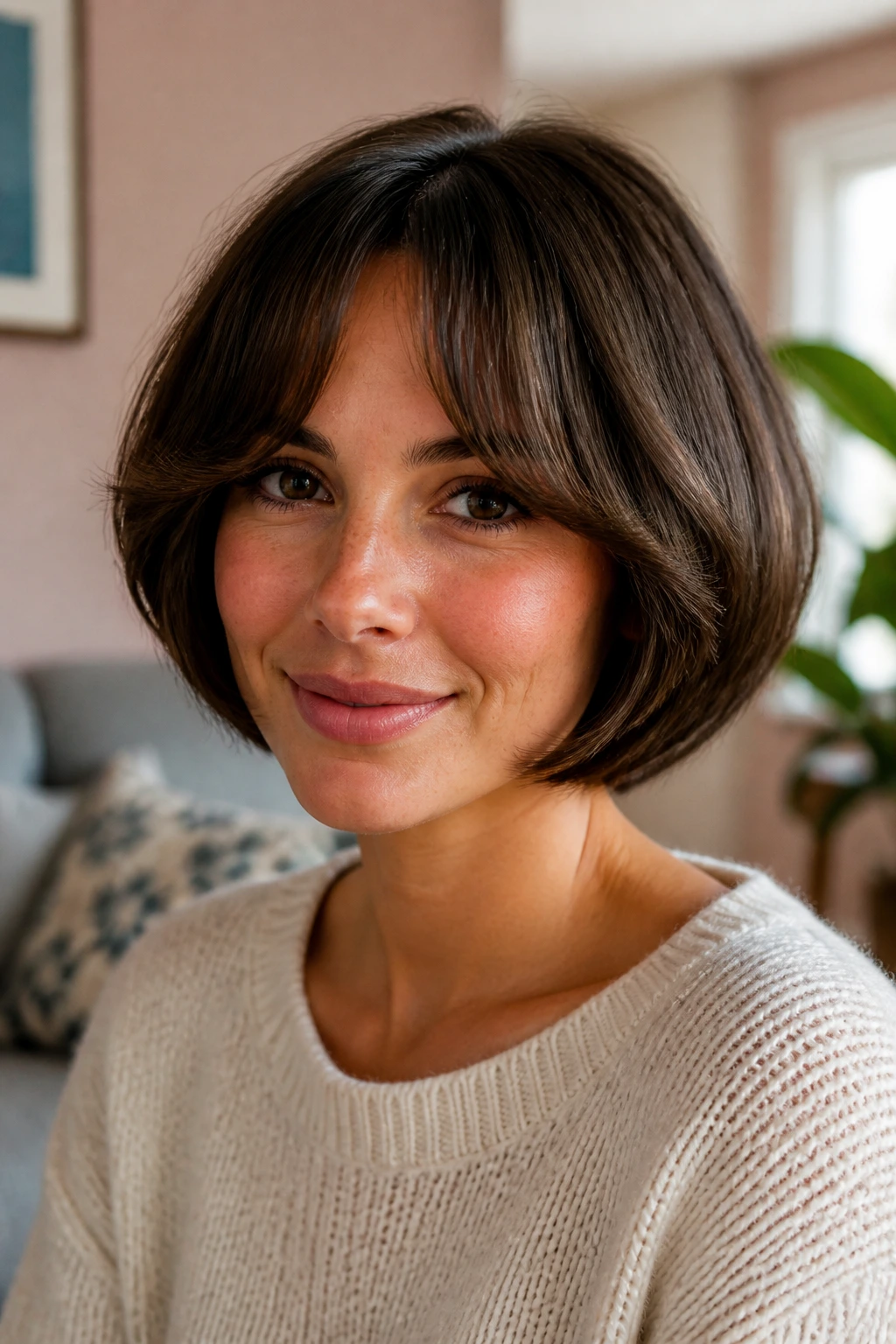
A bubble bob has fullness through the body and ends that curve inward, almost like a round shell. The curtain bangs should echo that rounded shape with a soft center split and side pieces that fall in a smooth arc. The whole haircut ends up looking plush.
This style likes volume. Root lift at the crown, a round brush through the bangs, and a gentle bend at the ends are enough to keep the shape intact. Don’t flatten it. The bubble effect depends on fullness.
It’s a good pick if you want a short cut that feels cushioned rather than sharp.
27. Pin-Straight Short Cut With Minimal Curtain Parting
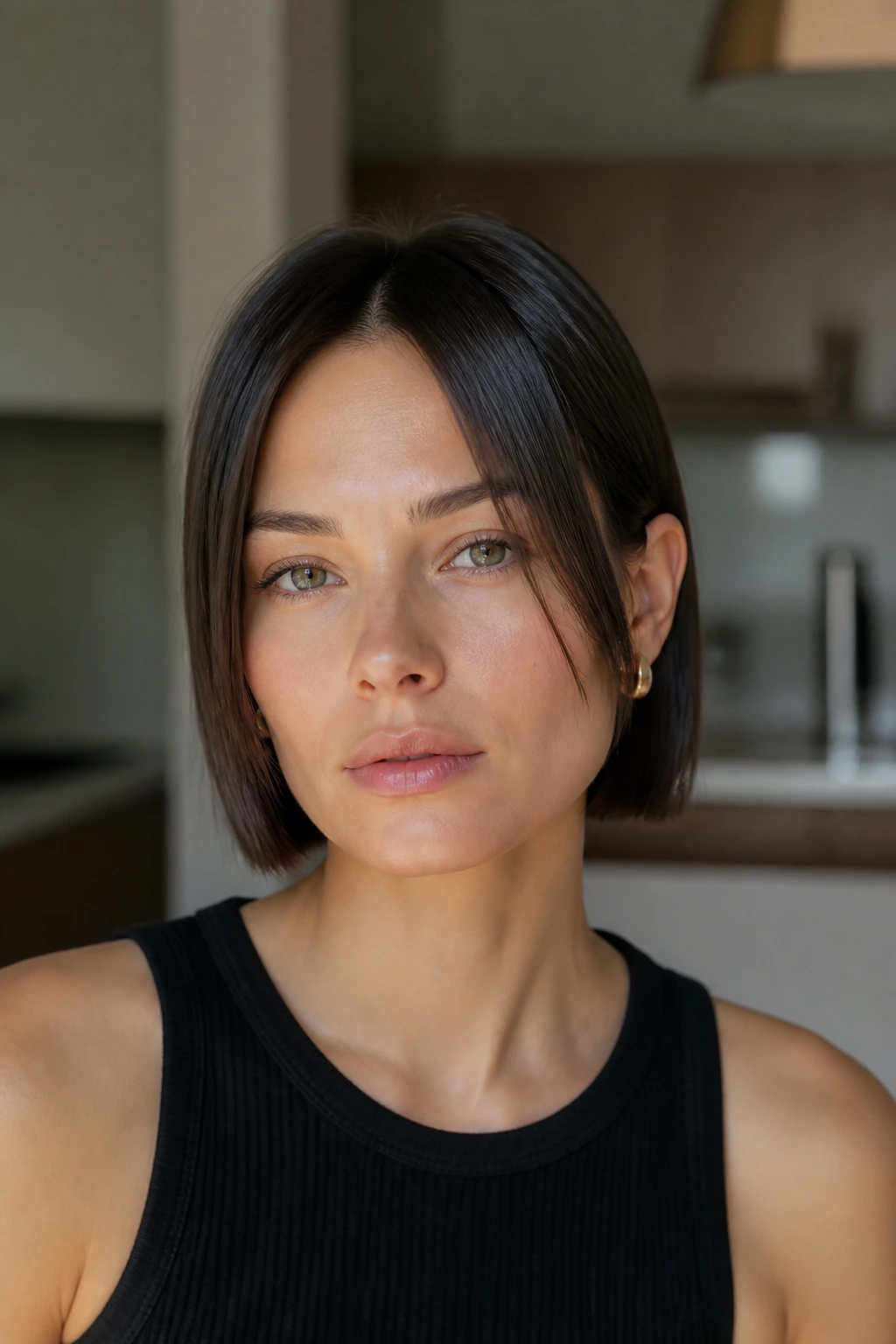
Straight hair can be fussy in a different way. It shows every line. That’s why a minimal curtain parting works so well here. The split is narrow, the front pieces are long enough to soften the forehead, and the rest of the cut stays sleek and clean.
This is not a loud fringe. It’s a quiet one. The opening at the center is small, the outer corners barely graze the cheeks, and the effect is more whisper than curtain. On pin-straight hair, that restraint keeps the style from looking stringy.
If your hair refuses to hold much bend, lean into the simplicity. A precise part, a flat-iron touch at the ends, and a tiny bit of shine serum can carry the whole look.
What Makes Short Hair Curtain Bangs Feel Balanced
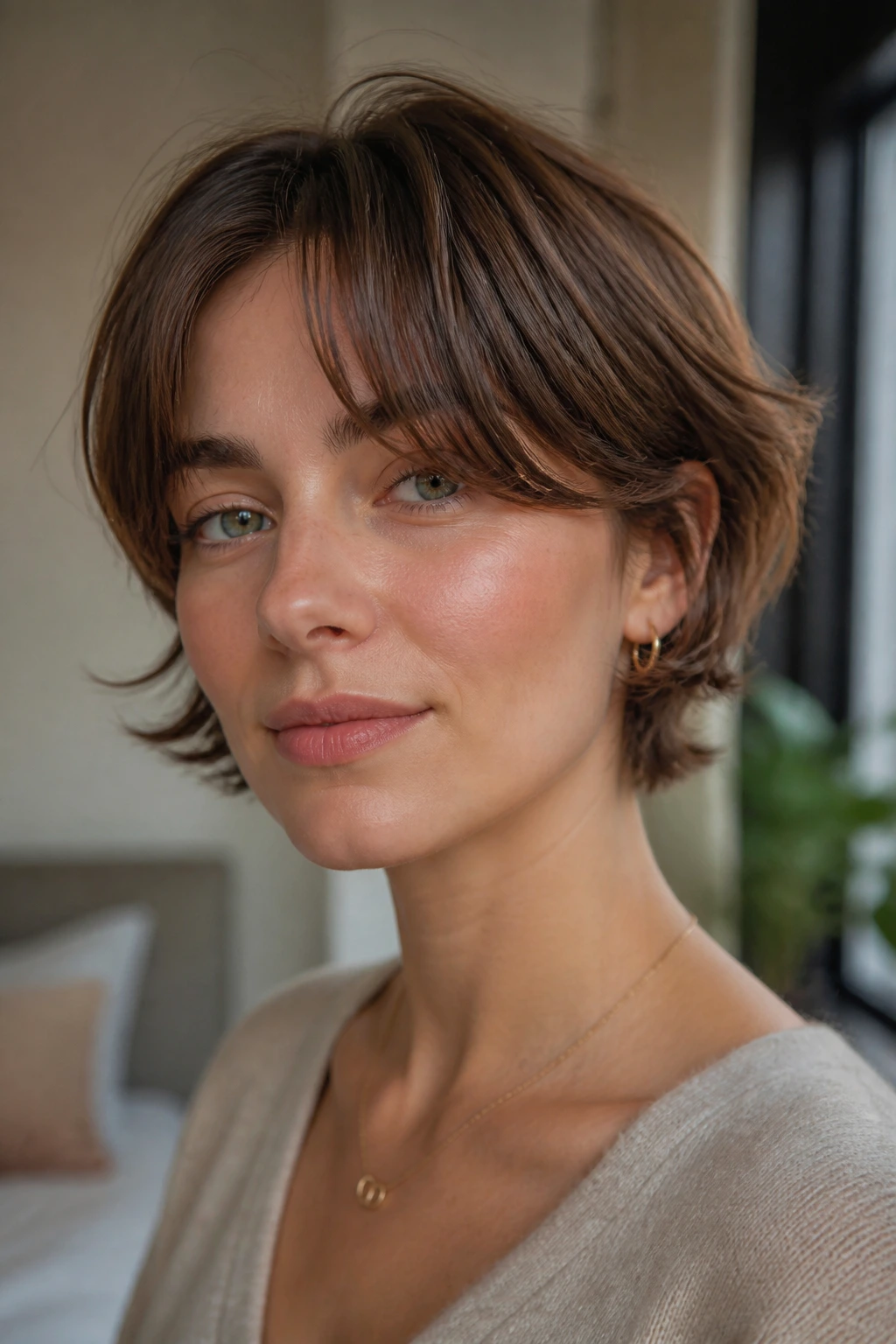
The best short hair curtain bangs do one thing very well: they keep the forehead framed without chopping up the rest of the cut. That balance comes from length, width, and density working together. If the fringe opens too wide, the style can feel thin. If it opens too narrowly, it can look heavy. If the shortest pieces sit too high, the line loses that easy drape people want from a curtain bang in the first place.
The face frame matters just as much as the fringe itself. On short hair, the outer corners should usually connect to the cheekbone, jawline, or the top of the neck depending on the cut. That connection keeps the style from looking like a random add-on. It should feel built in. Not pasted on.
Texture changes the math, too. Straight hair needs bend and lift. Wavy hair needs controlled roughness. Curly hair needs enough length to spring. Fine hair likes narrow, light bangs. Thick hair usually needs internal removal so the front does not puff into a wall.
How to Ask for Curtain Bangs on Short Hair
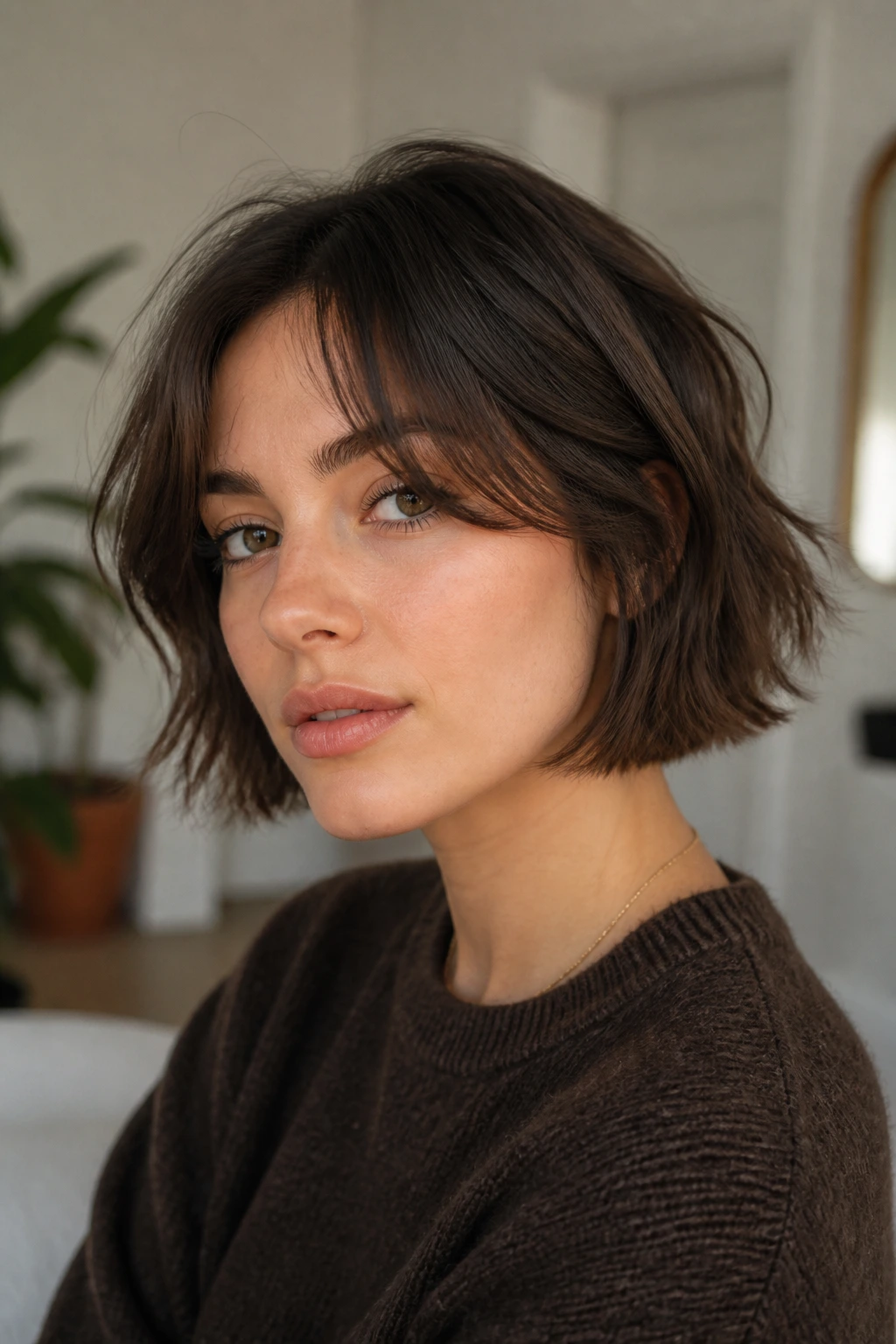
If you’re going to the salon, bring photos with the same haircut length, not just the same fringe. That part gets ignored all the time. A curtain bang on a chin-length bob behaves differently from one on a pixie-bob, and your stylist needs to see the whole shape, not just the front.
Say where you want the shortest point to land. Brow? Cheekbone? Upper lip? Those are different cuts. Then say where the outer pieces should fall. Jaw? Chin? Blend into the layers? That detail matters more than people think.
Tell your stylist these specifics
- Your usual parting
- Whether your hair is worn straight, wavy, curly, or blown out
- How much forehead coverage you want
- Whether your cowlick pushes the front apart
- How often you’re willing to style it in the morning
Dry hair helps here. If your hair shrinks, flips, or swells, the cut should be judged in its natural state, not while it’s wet and polite.
Styling Moves That Keep the Fringe Soft
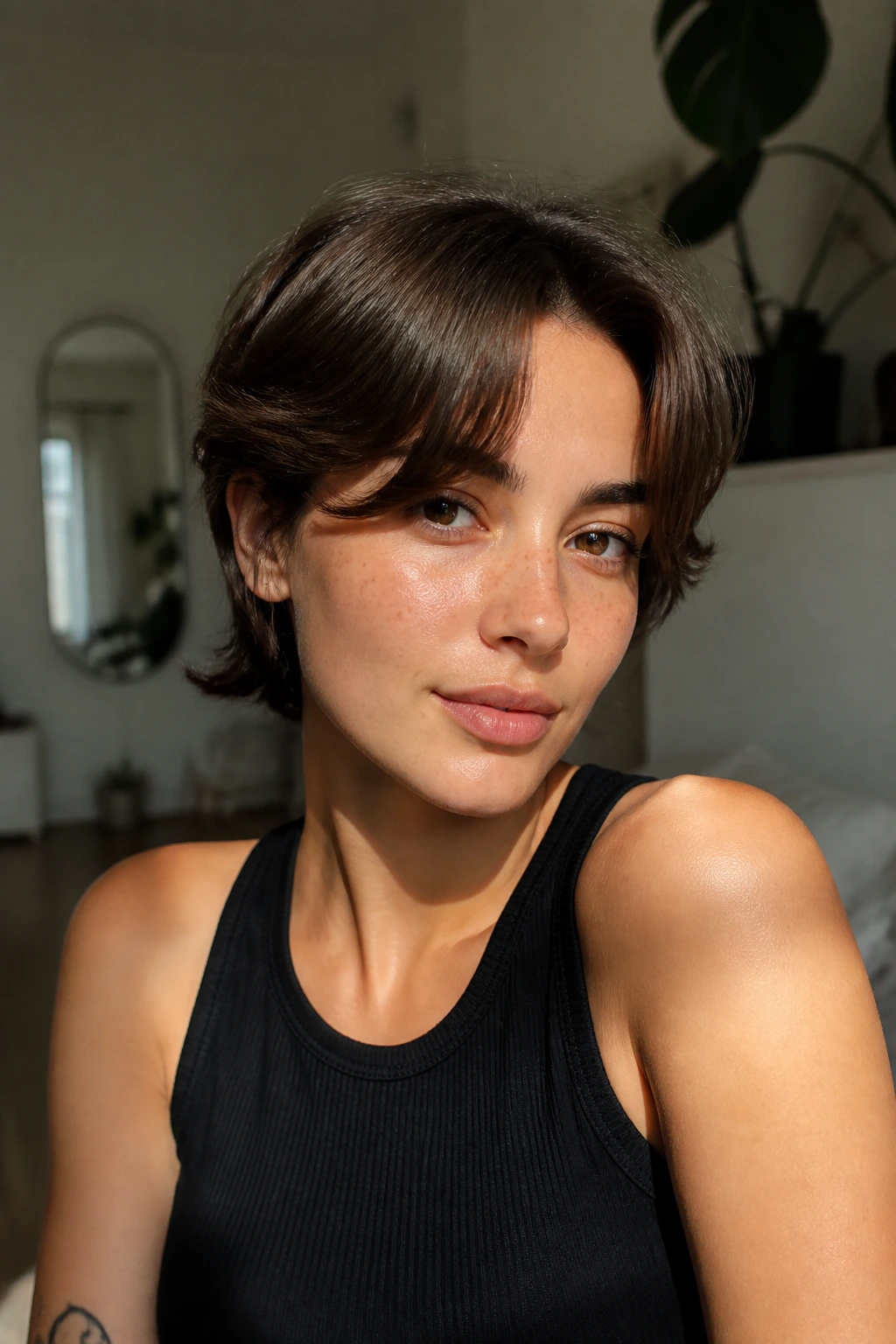
Curtain bangs on short hair look best when they’re given shape, then left alone. That sounds simple, but a lot of people keep touching them and making them collapse. The goal is a soft bend, not a rigid curl.
Root lift: Blow-dry the front with the nozzle pointed down at first, then lift the roots with a round brush or fingers. A little volume at the base keeps the center split open.
Drying direction: Push each side away from the face while the hair is warm, then let it cool in that position. Hair remembers the cooling shape more than the hot one.
Bend, not curl: Use a 1-inch or 1.25-inch round brush, or a small flat iron, to create a slight inward arc through the outer pieces. Hard curls at the ends look dated fast on short hair.
Finish: Use a pea-sized amount of light cream or serum only on the mids and ends. If the front gets shiny and separated in a chunky way, you used too much.
A round brush is helpful, sure, but fingers and heat can do most of the work if the cut is already right.
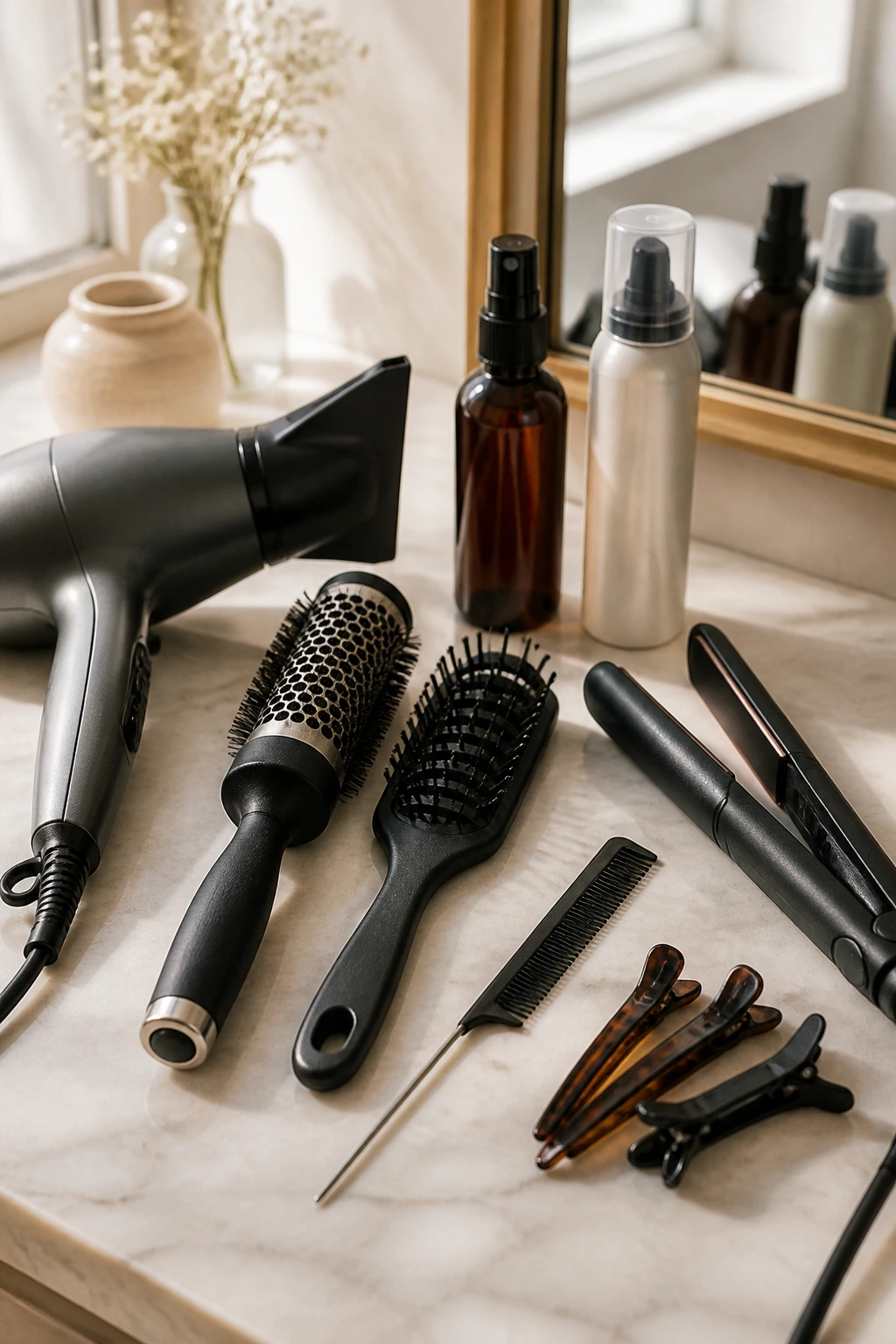
Essential Tools for Styling These Cuts
-
Blow dryer with a nozzle attachment: The nozzle directs airflow and stops the fringe from blowing in every direction at once.
-
1-inch round brush: Good for short bangs because it gives bend without creating giant loops.
-
Vent brush or small paddle brush: Useful if your hair is fine, fast-drying, or prone to falling flat.
-
Heat protectant spray: Especially important on the fringe, where repeated touch-ups happen first.
-
Lightweight mousse or root spray: Helps lift the front pieces without making them sticky.
-
Small flat iron: Handy for a quick bend on the outer corners when you do not want to fully blow-dry.
-
Tail comb: Good for making a clean center part and separating the curtain pieces evenly.
-
Duckbill clips or small clips: Useful for setting the bangs while they cool, which helps the shape last longer.
-
Dry shampoo: Works on day two when the fringe starts to sit close to the forehead.
How to Choose the Right Curtain Bang Length
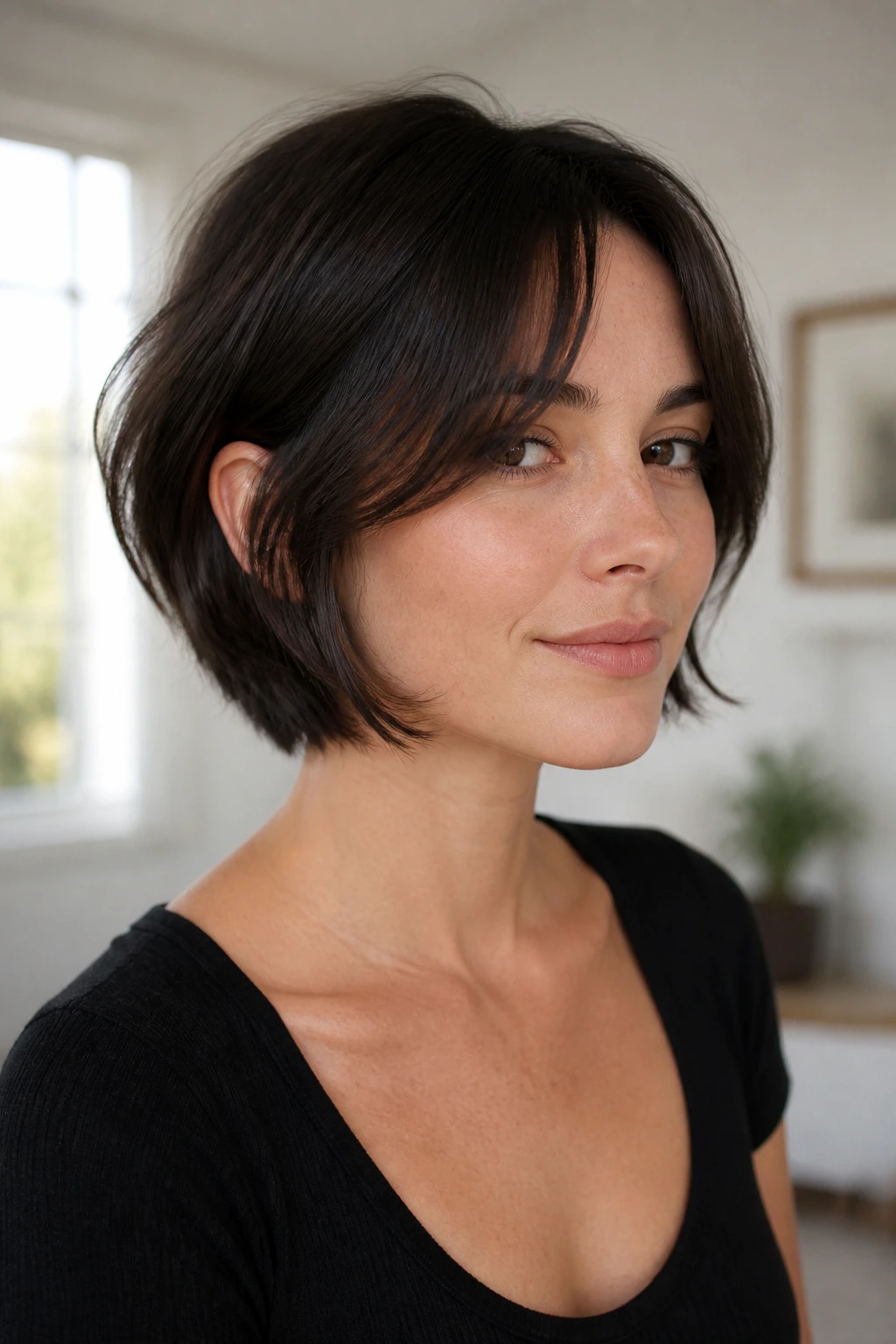
Length changes everything. A curtain bang that hits the brow behaves one way; a curtain bang that lands at the cheekbone behaves another. On short hair, I usually prefer the longer range because it gives the cut room to move and grow into itself. The face looks softer, and the shape feels less abrupt.
If your hair is wavy or curly, leave extra length for shrinkage. If it’s straight and fine, you can go a little shorter, but still leave enough room for a bend. The outer corners should usually be long enough to blend into the front layers of the cut. That connection is what makes the style look expensive rather than chopped.
A good rule: if the bang is the first thing you notice and the haircut disappears, it’s too much. If the haircut looks good but the fringe does nothing, it’s too little. You want the two parts talking to each other.
Common Mistakes That Flatten the Fringe
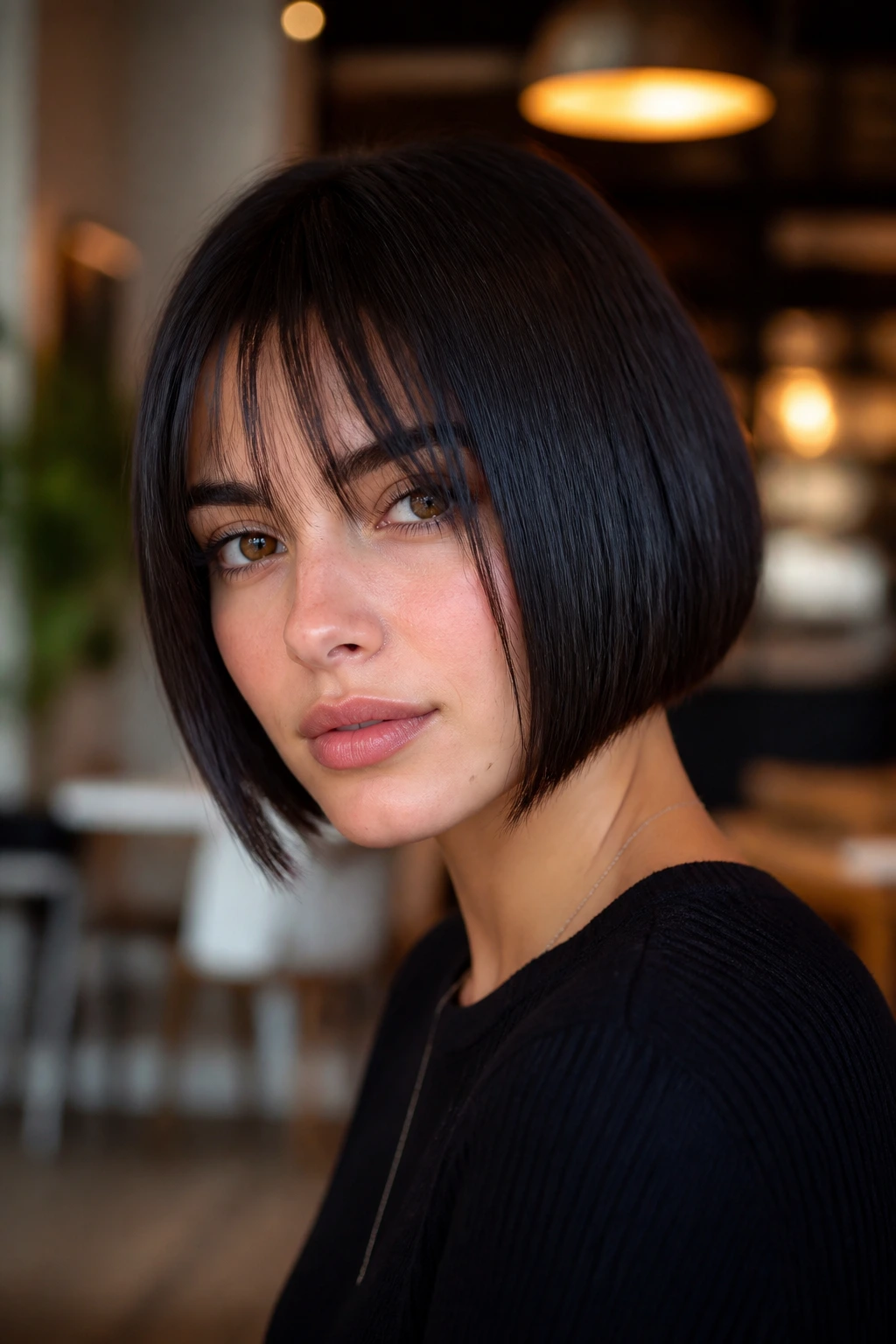
The first mistake is cutting the bangs too short. Short hair already exposes a lot of face; a bang that sits too high can make the front feel jumpy and unfinished. The fix is boring but correct: leave more length at first. You can always trim upward. You cannot add hair back.
Another one is making the part too wide. A split that opens across half the forehead starts to look sparse, not soft. Keep the opening narrow enough that the fringe still behaves like a frame. If the hair keeps separating, try a little root spray and direct the dryer toward the center first.
Heavy product causes trouble fast. Cream, oil, and serum belong on the ends in tiny amounts. When the front looks stringy or greasy by noon, that’s usually the reason.
Cowlicks deserve respect. If the front hair naturally pushes to one side, work with that bend. Cutting straight across a stubborn swirl only creates daily arguments.
Variations and Alternatives to Try Instead of Curtain Bangs
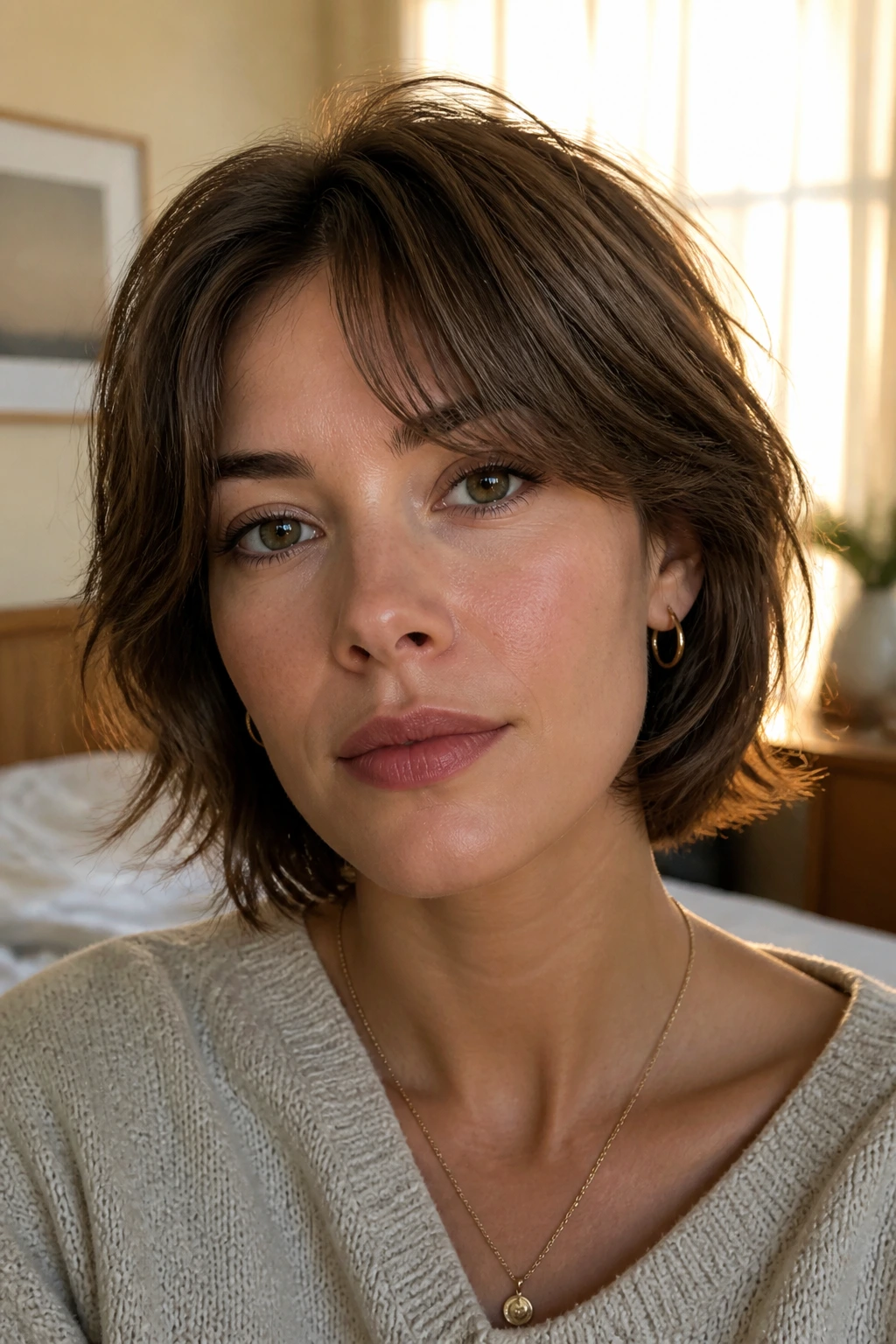
The Bottleneck Sweep: Narrow in the center, then fuller through the outer corners. It looks like curtain bangs with a tighter opening and works well if you want more forehead coverage without a thick fringe.
The Side-Frame Drift: Starts off-center and falls into one eye line before curving back. It’s a good choice when your hair naturally parts to one side or when a true center split feels too formal.
The Soft Face Layer: Not a bang, exactly. Just front layers cut to skim the cheekbones and jaw. If you want the softness of curtain bangs without any forehead commitment, this is the easy exit.
The Wispy Micro Fringe: Shorter, lighter, and more delicate. It suits very short hair when you want a bang shape that lifts instead of draping.
The Curly Halo: For curls that don’t want a clean split, this leaves the front pieces long enough to part loosely and frame the face in a rounder shape.
Keeping Short Hair Curtain Bangs in Shape Between Trims
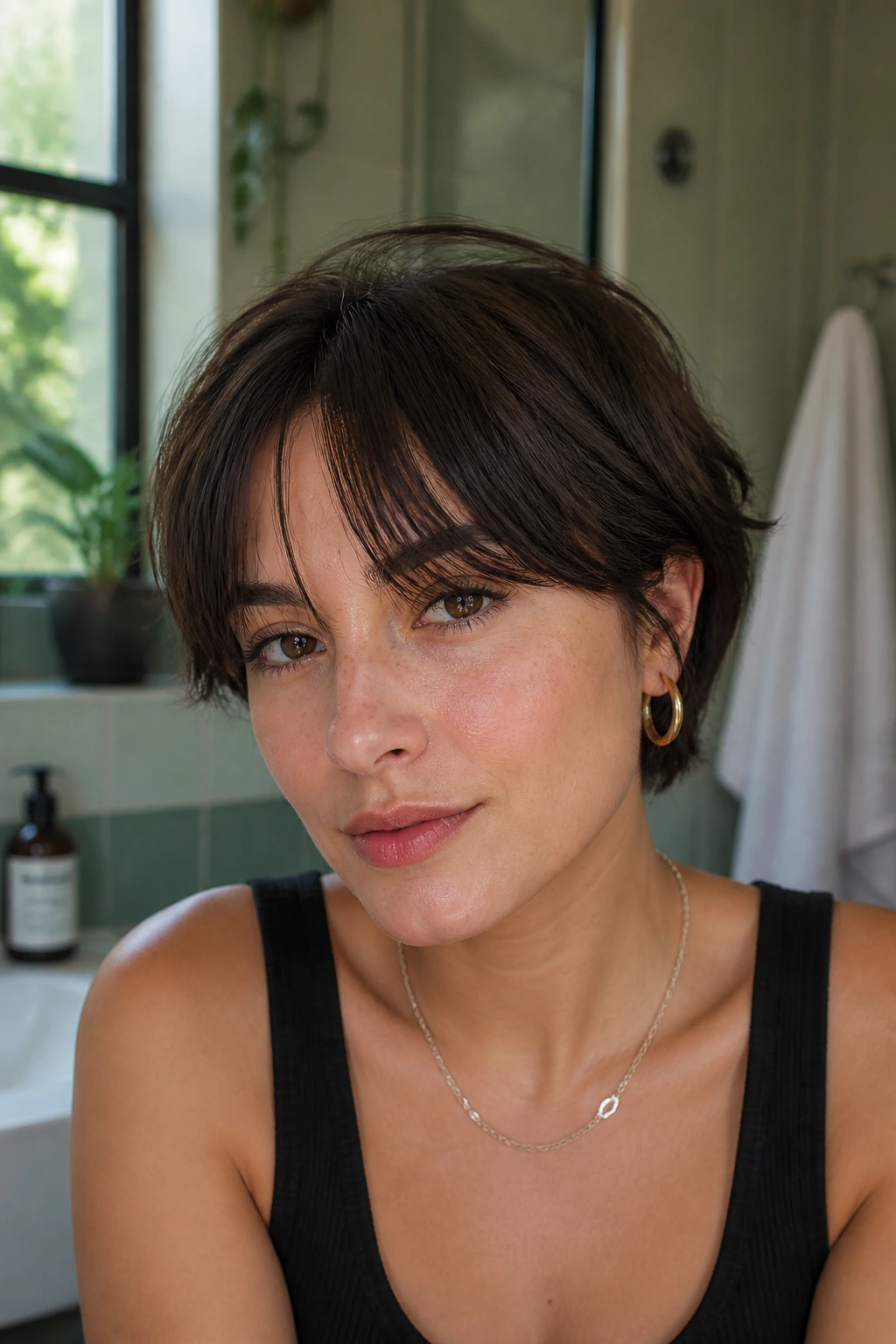
The fringe usually needs attention before the rest of the cut does. That’s normal. Most curtain bangs on short hair need a light trim every 4 to 6 weeks if you want the opening to stay clean. The bob, pixie-bob, or crop around them can stretch a little longer, depending on how fast your hair grows and how precise the perimeter is.
Day to day, dry shampoo is useful on the roots of the fringe and around the crown. Use a small amount, let it sit for a minute, then brush it through. If the bangs start sticking to the forehead, a quick blast of cool air after re-drying can bring them back to life.
Sleep can flatten them, too. If your fringe bends awkwardly overnight, mist it lightly in the morning and reshape just the front pieces. You do not need to restyle the whole head every time. Usually the front half dozen strands are the only ones causing trouble.
Questions People Ask Before They Cut the Fringe
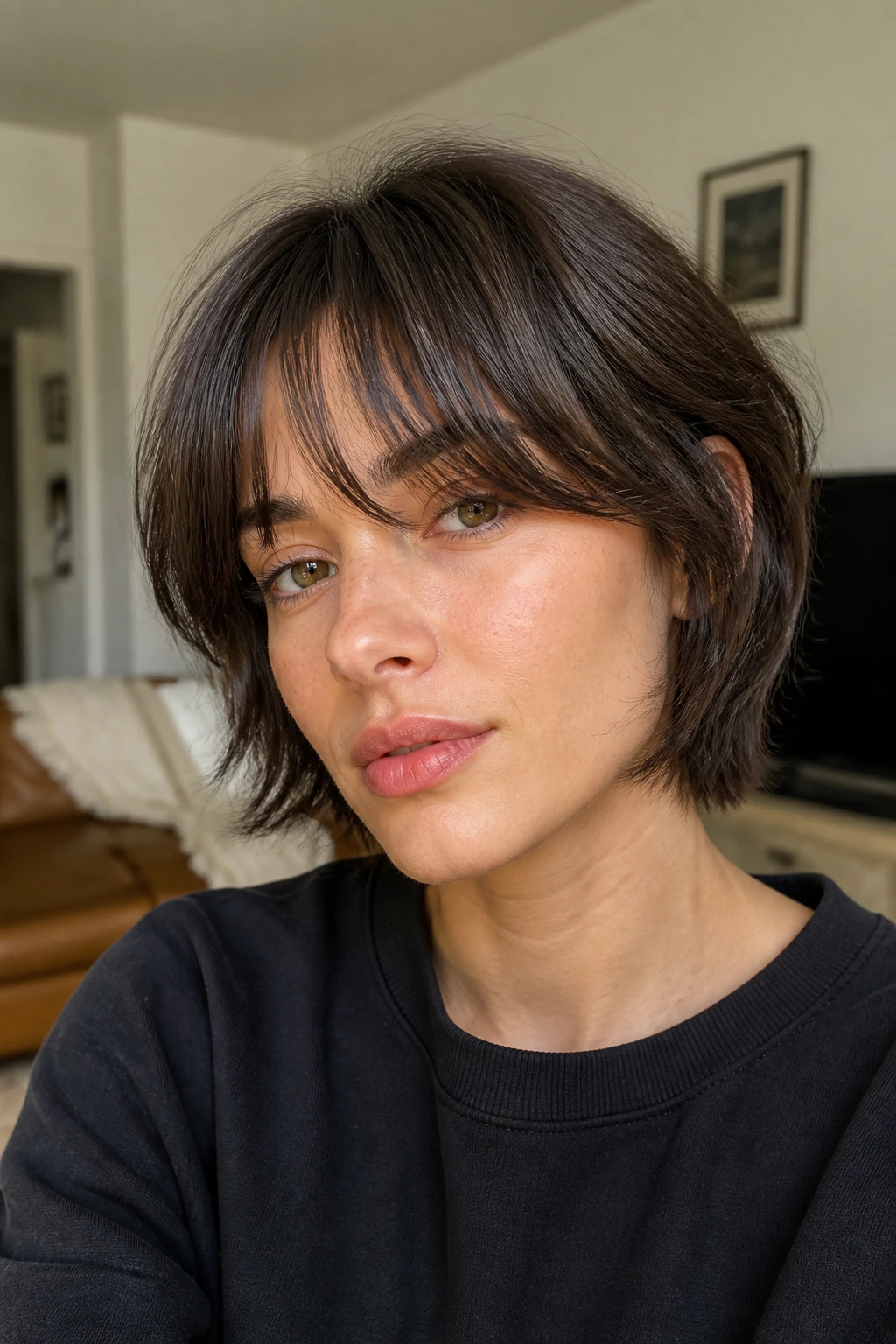
Do curtain bangs work on very short hair?
Yes, but the length has to be chosen carefully. On a pixie or micro-bob, the front pieces usually need to stay longer than people expect so they can split instead of sticking up.
What face shapes do they suit best?
They’re flexible, which is the point. Oval, heart, round, and square faces can all wear them if the bang length and opening are adjusted to the haircut.
Can curly hair wear curtain bangs without looking puffy?
It can, and often beautifully. The cut needs to be done with shrinkage in mind, and the front should be left long enough for the curl to settle naturally.
Why do my curtain bangs keep falling flat?
Usually the root is too heavy or the bangs were dried straight down instead of away from the face. A small lift at the base and cooling the hair in the split position helps more than extra product.
Can I style them without a round brush?
Yes. A small flat iron can create a soft bend, and fingers can do a lot if the haircut is already shaped well. The brush just gives more control.
How do I stop them from splitting too wide?
Keep the center section narrower at the roots and use a touch of root spray or mousse. A wide split often means the front was cut too sparse or trained too aggressively apart.
Should I trim them myself?
Only if you’re comfortable with tiny, careful changes. Short fringe is unforgiving, and a quarter inch can change the whole balance. When in doubt, leave it to a stylist.
The Fringe That Keeps Short Hair Moving

Short hair with curtain bangs works because it gives shape without stealing the show. The cut still looks short. That’s the point. The fringe just softens the edges, adds some lift near the face, and keeps the style from collapsing into one blunt block.
What makes these looks hold up is not some magic product or salon-only trick. It’s the fit between fringe length, part width, haircut shape, and texture. Get those pieces aligned, and even a very simple crop can look carefully built.
A good curtain bang on short hair should move when you turn your head. It should open a little wider when you push it back, then fall into place again without much fuss. That quiet bit of motion is what keeps the whole cut from feeling static.
