



A one-side shaved hairstyle on Black hair changes the whole mood of a cut in one move. You keep the texture, the softness, the shrinkage, the puff, the coils — and then you cut a clean line into one side so the shape has somewhere to land. That contrast is the whole point. It turns volume into structure.
The styles in this lineup work because Black hair does not need to be forced into symmetry to look polished. A fro with one temple clipped low, a twist-out with an undercut, a braid style swept over a shaved side — all of them lean into natural texture instead of fighting it. And that matters. A lot of shaved-side looks look harsh on paper; on Black hair, with the right balance of length and edge, they can look sharp, intentional, and surprisingly soft at the same time.
There’s a practical side too. One side shaved hairstyles for Black hair can take pressure off the silhouette, keep braids from feeling heavy, and make short hair feel styled instead of “in between.” The trick is getting the placement right. Too much shaved away, and the top starts looking top-heavy. Too little, and the cut loses its edge. The good versions know exactly where to stop.
Why These Styles Work So Well on Black Hair
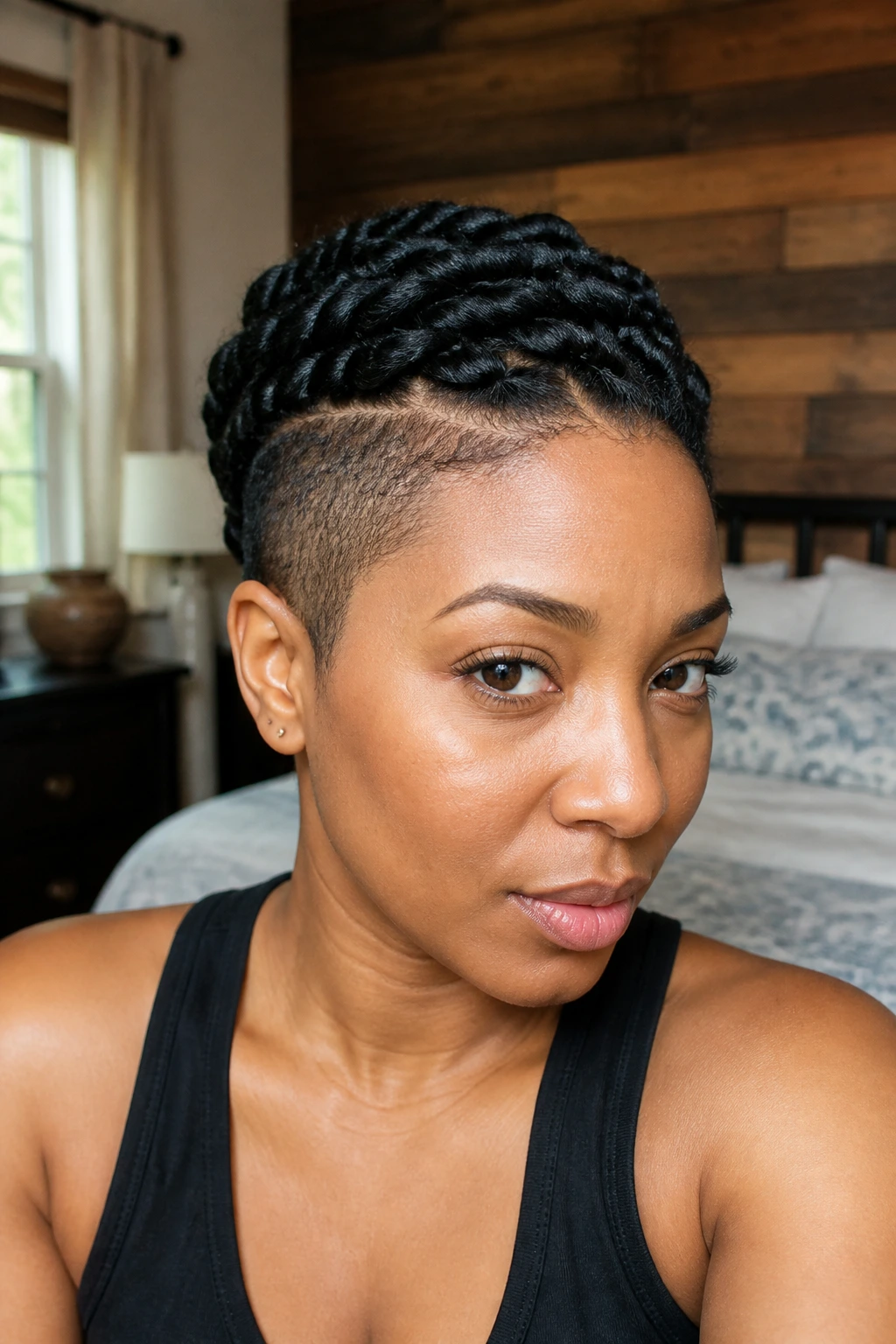
- Texture does half the work: Coils, curls, twists, and braids already create shape, so the shaved side doesn’t have to do everything by itself.
- The contrast is the styling: You don’t need a lot of extra product or ornament when one side is clean and the other side has full texture.
- Grow-out is part of the look: A good fade, taper, or temple shave still looks deliberate as it grows, which makes upkeep less annoying than a blunt cut with no shape.
- There’s room to change your mind: You can wear the same side shave with a wash-and-go, locs, braids, twists, or a blowout and get a different mood every time.
- The profile matters: From the side, these cuts show off cheekbones, earrings, jawline, and neckline in a way a full, even shape often doesn’t.
- Barber detail is everything: A half-inch difference in where the shave starts can change whether the style looks balanced or lopsided.
1. Soft Curly Fro with a Temple Shave
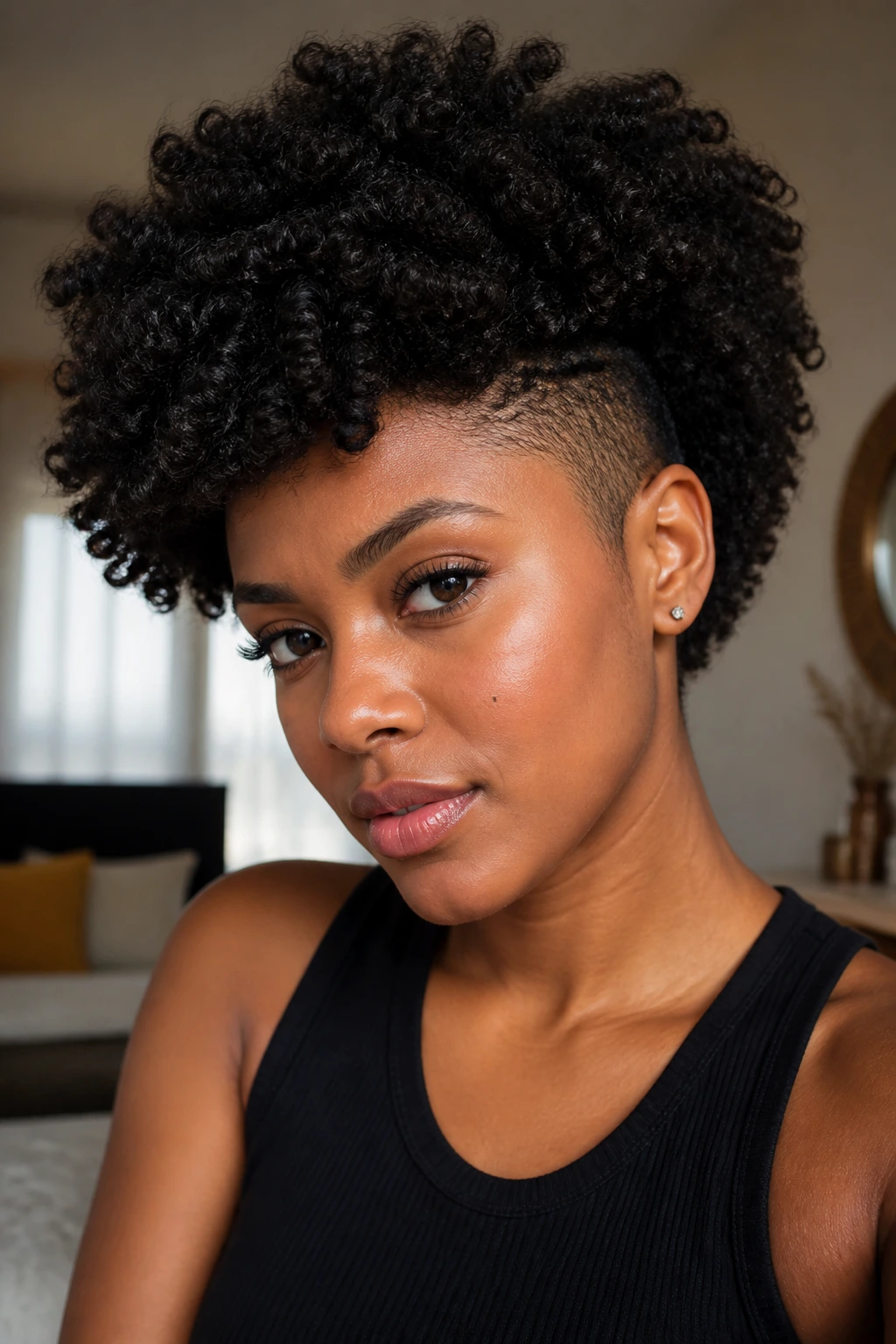
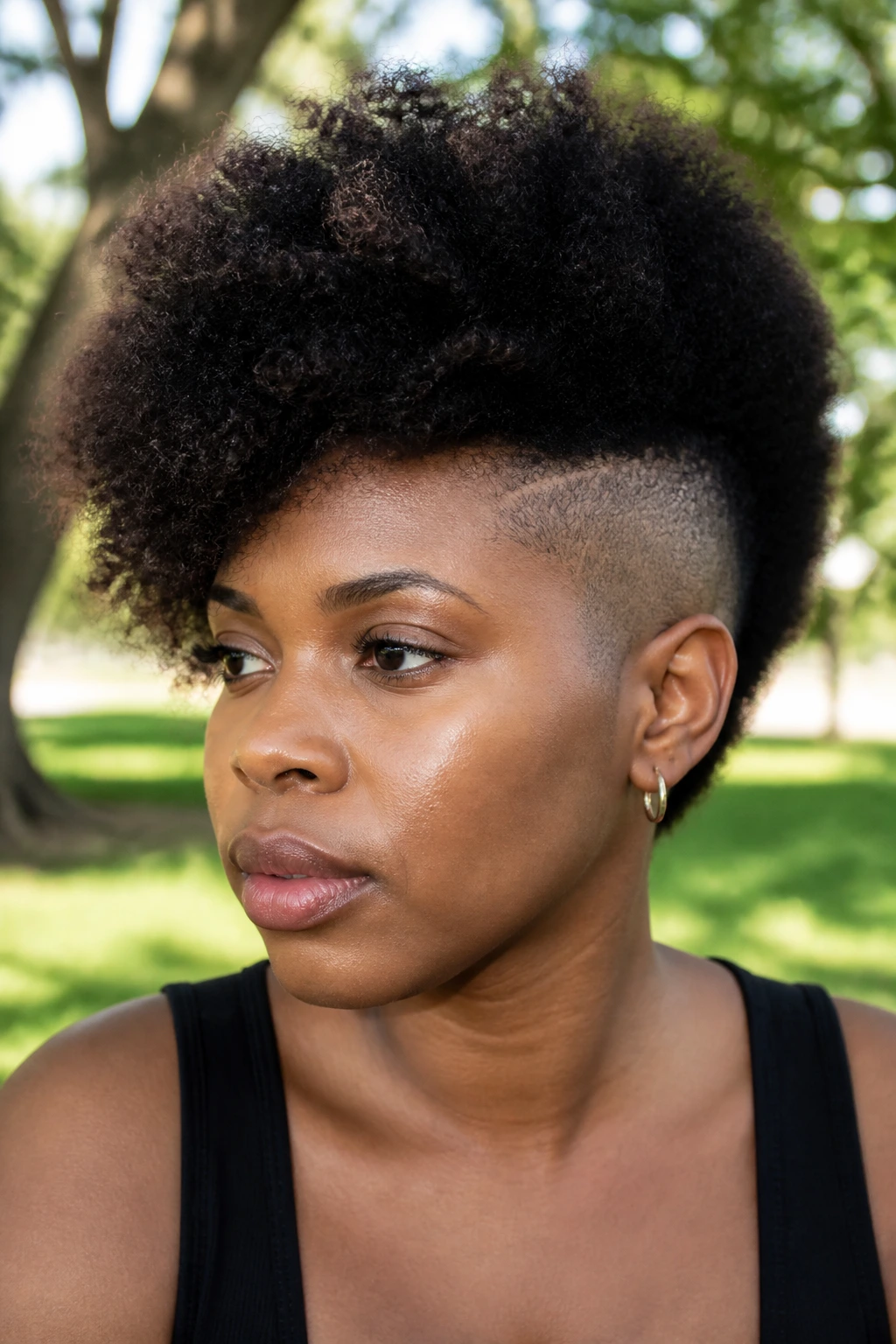
The soft curly fro is one of those styles that looks easy only after someone has shaped it properly. One temple shaved down makes the fro read cleaner at the edge of the face, so the curls can stay round and full without swallowing your profile. It is especially good if your hair blooms wide when dry and you want one side to stay tidy instead of puffing out by the ear.
Why It Works
The shape lives on contrast. Keep the curls on top and the fuller side at about 4 to 6 inches stretched, then clip the temple down low — skin-close or with a very short guard — so the eye moves across the face instead of stopping at one bulky side. That tiny reset in balance makes the whole cut look more intentional.
A light curl cream and a pick are enough here. You want the top fluffy, not crunchy, and the shaved side should stay clean with a quick line-up every couple of weeks.
2. High Puff with One Shaved Side
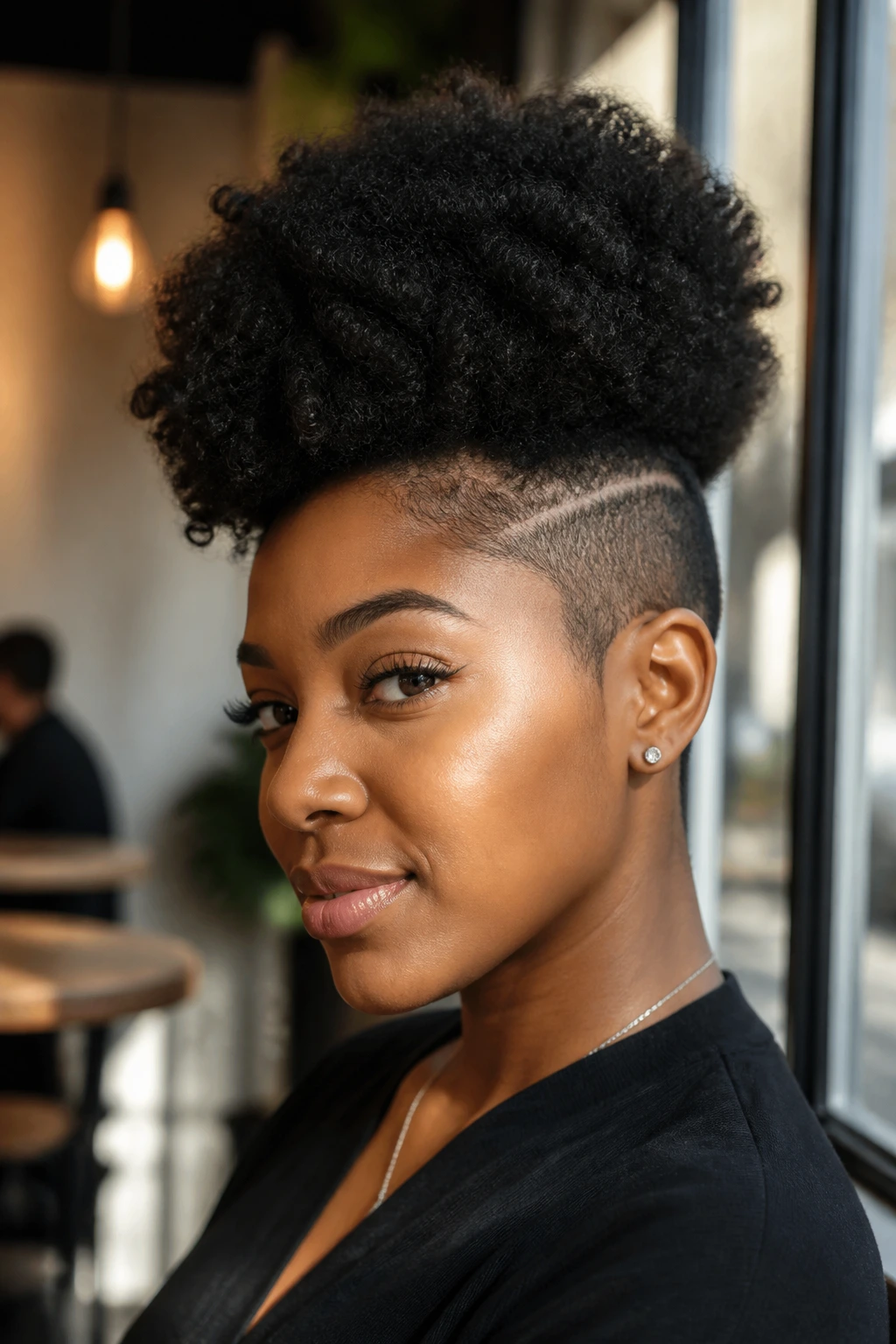
A high puff with one side shaved has a little attitude without asking for a lot of styling time. Pull the puff high enough that it sits above the shaved panel, and the whole look gets lift fast. It works best when the puff itself is dense and rounded, because the clipped side gives the top room to breathe.
The key is placement. If the puff sits too low, it fights the shave and the shape looks heavy. If it sits too high, the style can feel disconnected. Middle of the crown is usually the sweet spot, with the puff anchored by a strong elastic and the edges brushed flat around the hairline.
A satin scarf for ten minutes after styling helps the base settle. That matters more than people think.
3. Tapered TWA with a Sharp Side Panel
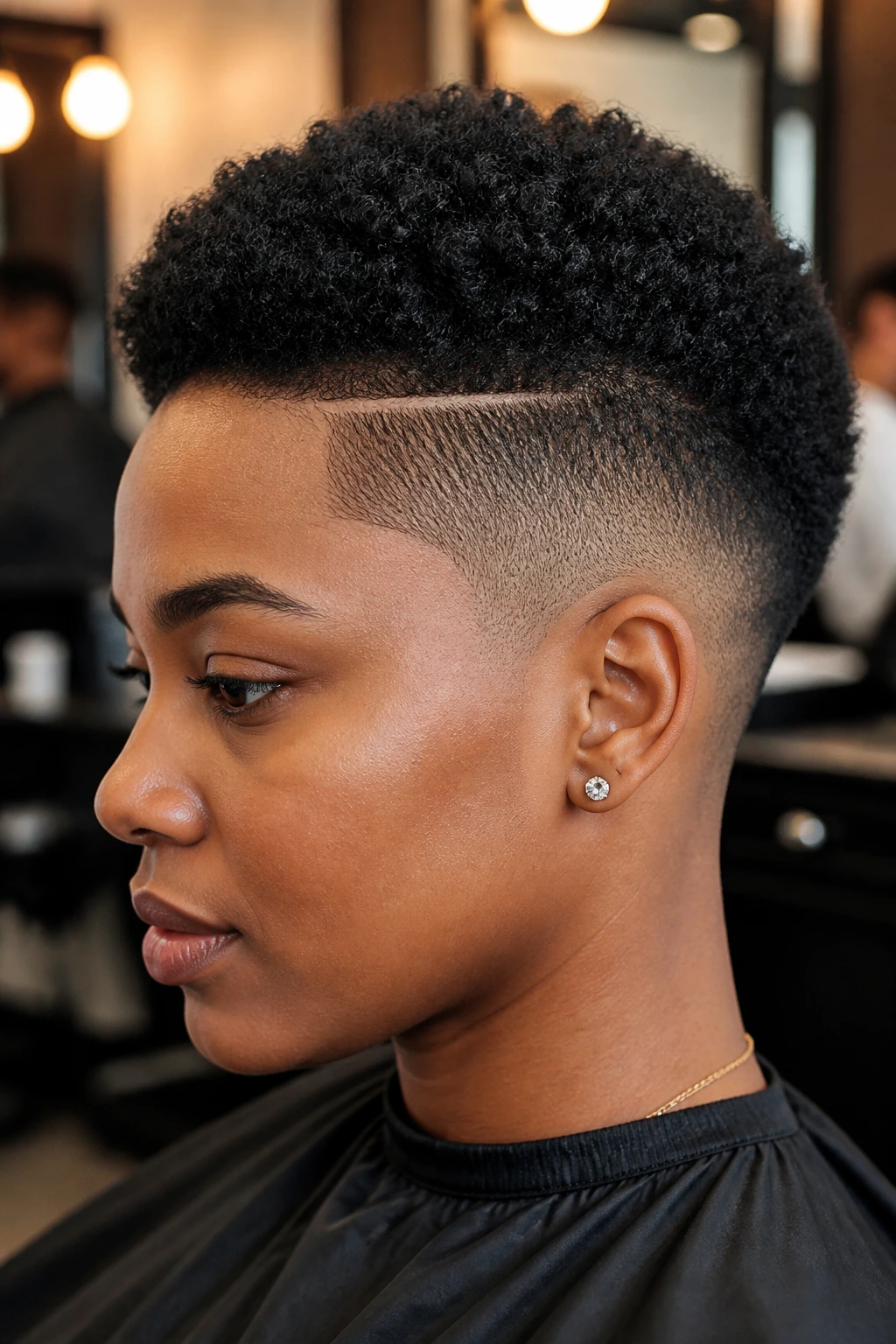
A tapered TWA with a shaved side panel is short, direct, and better than most people expect. The clean side makes the tiny curls on top look deliberate instead of unfinished, and that is the real difference between a crop that feels accidental and one that looks styled. If your hair is short enough that shrinking is a daily reality, this cut uses that shrinkage instead of pretending it is a problem.
What to ask for
Ask for a soft taper in the back, a neat fade around the ear, and a side panel that stays clearly shorter than the top. If you want the line to feel modern, keep the side panel smooth and let the top keep a little texture.
A curl sponge can help the top if your coils are tightly coiled, but don’t overwork it. Two minutes is plenty.
4. Side-Part Twist-Out with an Undercut
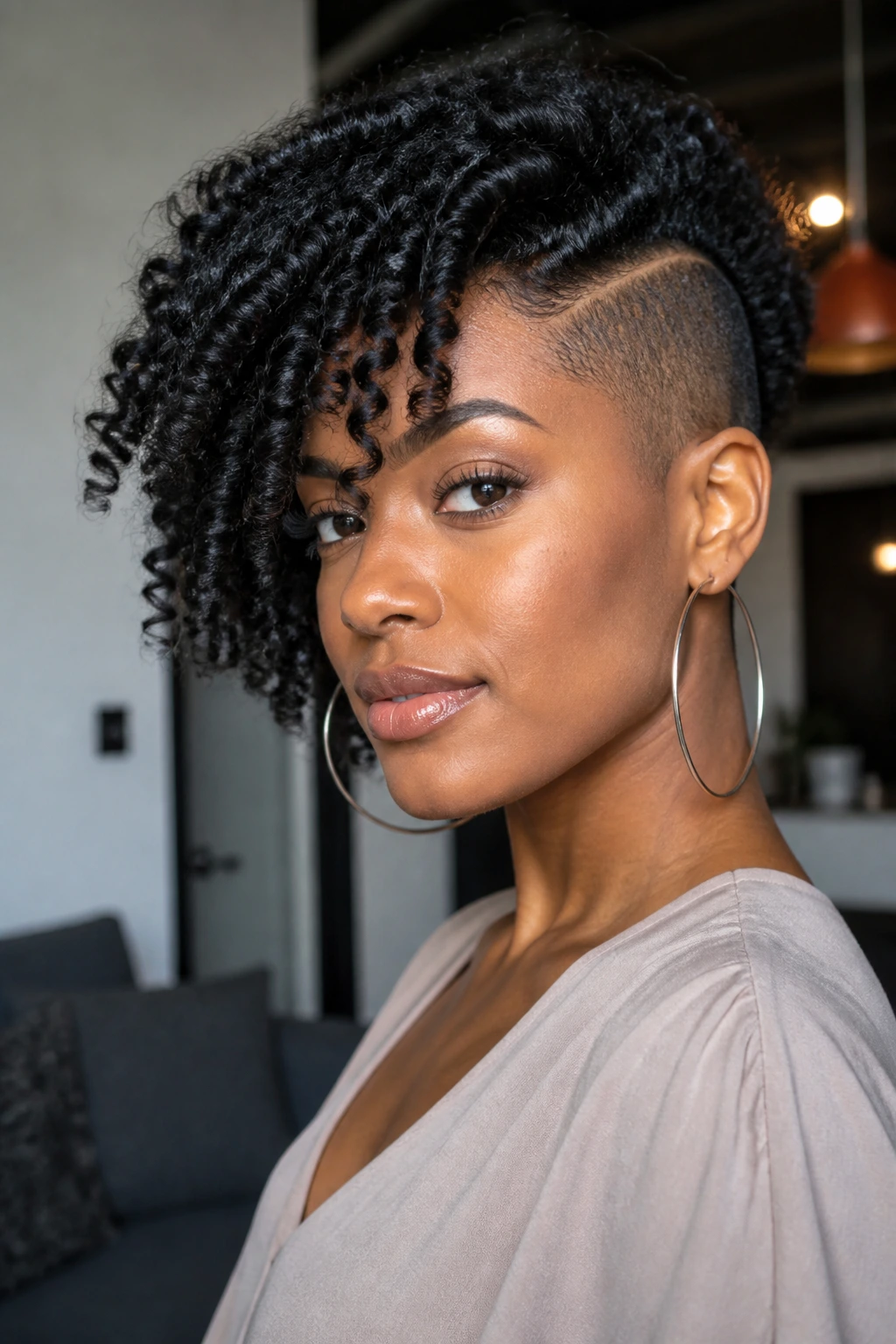
A twist-out with one side shaved is the kind of style that looks expensive because it has movement in the right places. The twists add body, the side part gives direction, and the undercut stops the whole shape from becoming too wide. If your hair gets big fast after untwisting, this is one of the smartest ways to keep control without flattening it.
Why It Reads So Clean
The undercut removes bulk where the hair would normally puff out near the temple and ear. That leaves the twist-out free to fan across the top and opposite side without looking crowded. I like this look best when the twists are medium-sized — not tiny, not jumbo — because the curl pattern has room to show once you separate them.
Use oil on your fingertips when fluffing. Dry hands create frizz in the wrong spots.
5. Defined Finger Coils with a Low Fade
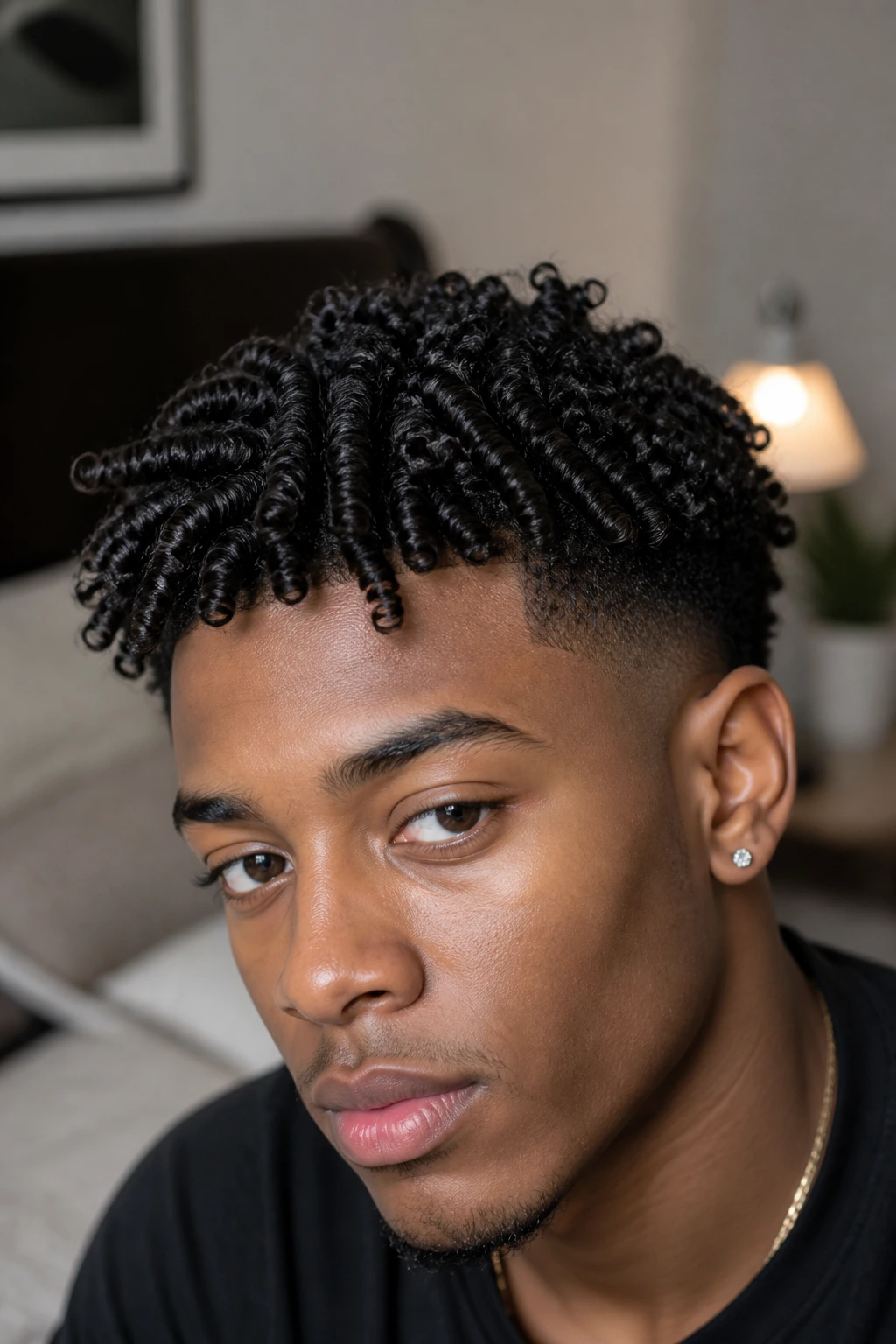
Finger coils with a low fade have a polished, tight finish that works beautifully on short natural hair. The coils stay neat and springy, and the fade gives the style some breathing room around the sides. Without that low fade, coils can look boxed in. With it, the shape feels much cleaner.
The trick is section size. Smaller coils hold better on short hair and last longer before they fray. A light setting gel on damp hair helps the coil keep its spiral, and a diffuser on low heat can speed things up if you do not want to air-dry all afternoon.
If your hair is 2 to 4 inches long, this style has a lot of upside. Shorter than that, it can still work, but the coils will be tighter and more delicate.
6. Flat-Twist Crown with a Hidden Shave
A flat-twist crown with a hidden side shave is for people who want edge without shouting about it. From the front, the twists can look soft and tidy. From the side, the shaved panel gives the style a sneaky little reveal that makes the whole thing more interesting.
The crown pattern matters here. Start the twists on the fuller side and direct them across the head so they lead the eye toward the shave. If the pattern is too loose, the look loses its shape. If it is too tight, the style starts feeling stiff.
This one is also kind to mornings. If the twists are set well, a satin bonnet and a few spritzes of water can keep the crown neat for days.
7. Feed-In Cornrows with a Shaved Temple
Feed-in cornrows and a shaved temple make a strong pair because both sides of the head get a job. The cornrows carry the design, while the temple shave clears space so the braid pattern can be seen instead of buried under hairline bulk. That sounds small. It isn’t. It changes everything about how the style reads from the front and side.
You can go straight-back, curved, or braided into a side sweep. I’m partial to curved rows because they soften the edge of the shave and make the head shape look fuller. Keep the braids snug but not painful. If the scalp feels hot the same day, they’re too tight.
A little scalp oil between rows helps, but don’t soak the braid base. Too much product just attracts lint.
8. Braided Mohawk with Clean Sides
A braided mohawk with shaved sides has a clear silhouette even from across a room. The center section can be braided straight back, stacked, or left in thicker plaits, while the sides stay close enough to show the contrast. It’s a style with a clear front, clear profile, and zero confusion about where the shape begins.
This works especially well if you want height without committing to a full updo. The mohawk strip gives length and drama, and the shaved sides keep the style from feeling bulky. If your head is narrow, ask for the braids to sit slightly wider across the crown. If it’s broader, keep the center section tighter so the shape doesn’t spread too far.
Accessories help here. A few cuffs or thread wraps are enough. Don’t overload it.
9. Jumbo Box Braids Swept Over One Side
Jumbo box braids and a one-side shave are a smart match because the shaved side takes weight off the look. Heavy braids can drag a style down if they are left to hang evenly on both sides. Sweep them over the fuller side, and the cut suddenly feels lighter, cleaner, and easier to move in.
The braid size matters. Six to ten jumbo braids usually give enough presence without making the style feel dense at the temples. If your hair is finer, go a little smaller so the parts stay neat and the roots don’t pull.
I’d skip tiny decorative beads near the shaved side. They compete with the shape. A few on the ends is enough.
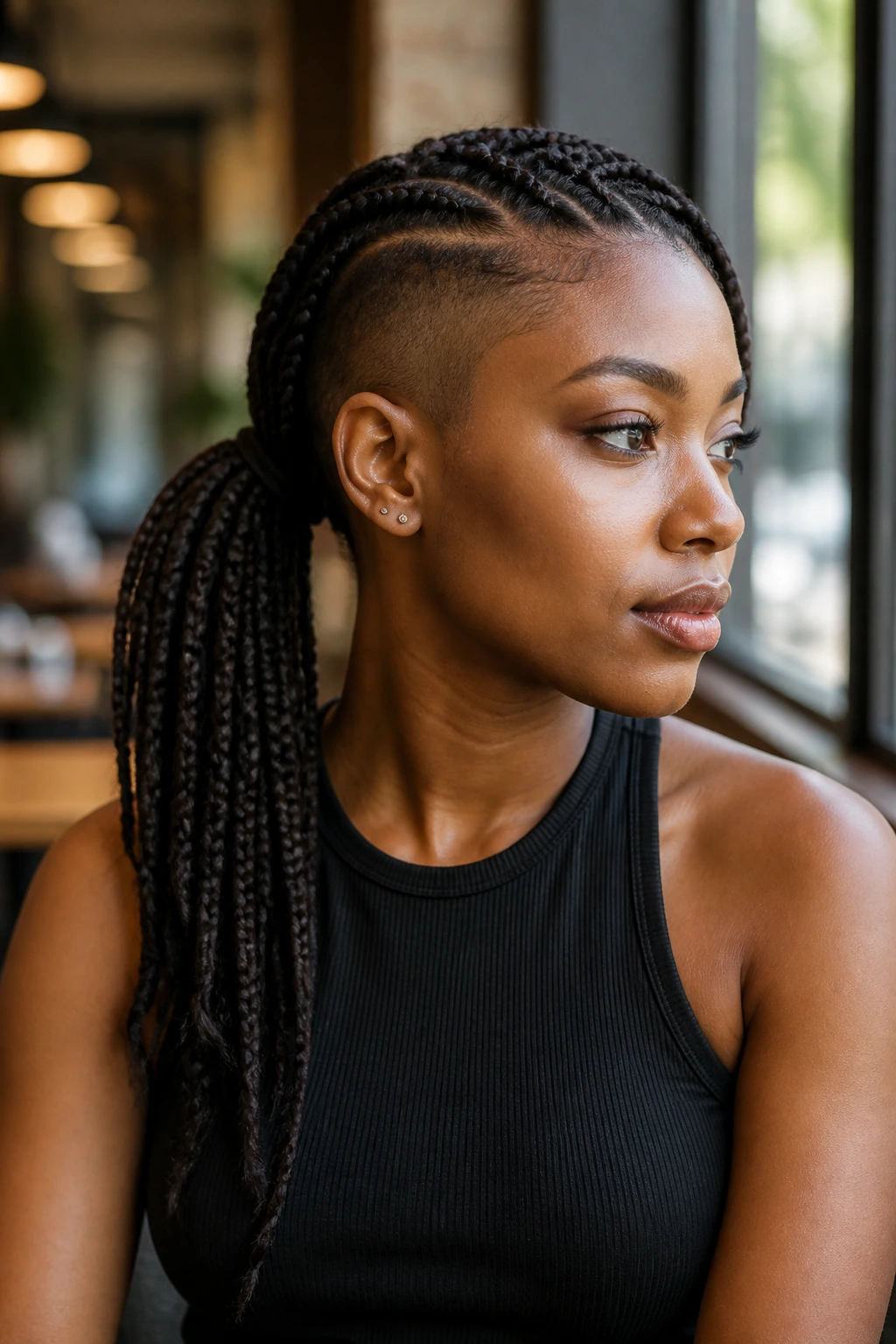
10. Knotless Braids into a Side Ponytail
Knotless braids already have a smoother root, so pairing them with a side shave gives the whole style a softer finish than traditional braids. Pull them into a side ponytail and the shaved panel becomes part of the design instead of a separate detail. That’s the good part. The style looks connected.
It works best when the ponytail sits just below the crown or behind the ear. Too high, and the shaved side gets lost. Too low, and the style can feel flat. Let a few braids fall forward near the cheek if you want movement.
The real advantage here is comfort. Knotless braids reduce root tension, and the side shave keeps the overall style from feeling too heavy at the scalp.
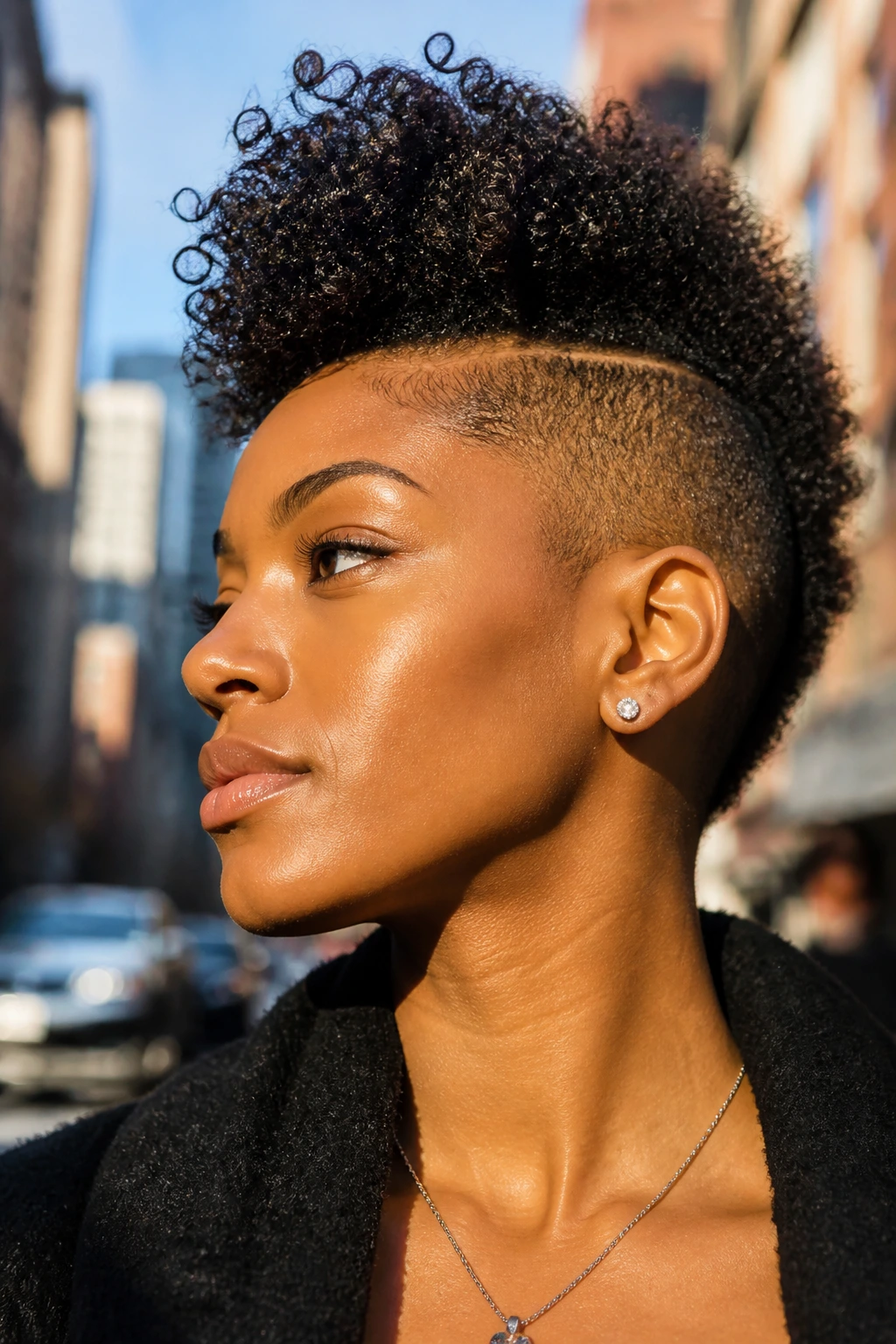
11. Curly Faux Hawk with a Close Cut Side
A curly faux hawk is one of the easiest ways to make natural texture look a little bolder. The sides are clipped close, the center strip stays full, and the curls do the rest. It has height. It has shape. And it doesn’t need much more than mousse, gel at the edges, and a bit of patience while drying.
How to style it
Brush the sides down first, then lift the center with your fingers or a wide-tooth comb. If the curls are already defined, leave them alone as much as possible. Overmanipulating the strip is how the style turns fuzzy before lunch.
This one is good for medium-length hair that can be directed upward without a lot of heat. If the top is too short, the hawk gets swallowed. If it’s too long, you’ll need pins or a puff base to keep it standing.
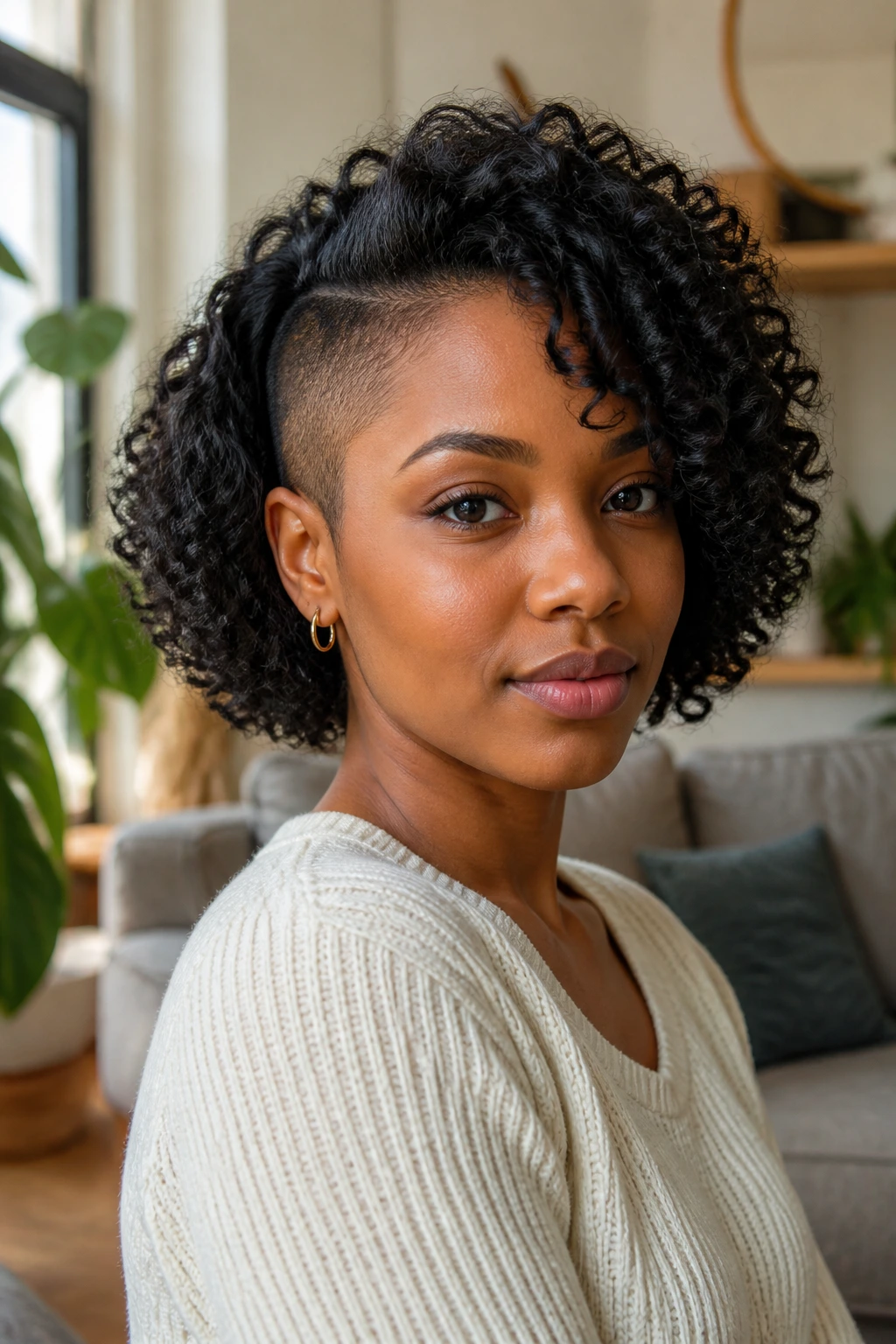
12. Rounded Curly Bob with One Shaved Side
A rounded curly bob with one side shaved feels softer than a lot of side-cut styles, which is why it works so well on people who want edge without a hard look. The bob gives you a chin- or collarbone-length frame, and the shaved side keeps the profile from puffing out too wide. It’s a neat fix for dense curls that want to spread.
The best version is usually slightly asymmetrical, with the fuller side falling just a bit longer and heavier. That way the shaved side reads as purposefully dramatic rather than missing hair. A small layer through the top keeps the curls from stacking like a triangle.
If your curl pattern is loose, use a foam or curl mousse. Tight curls usually need a cream and a little more stretching at the roots.
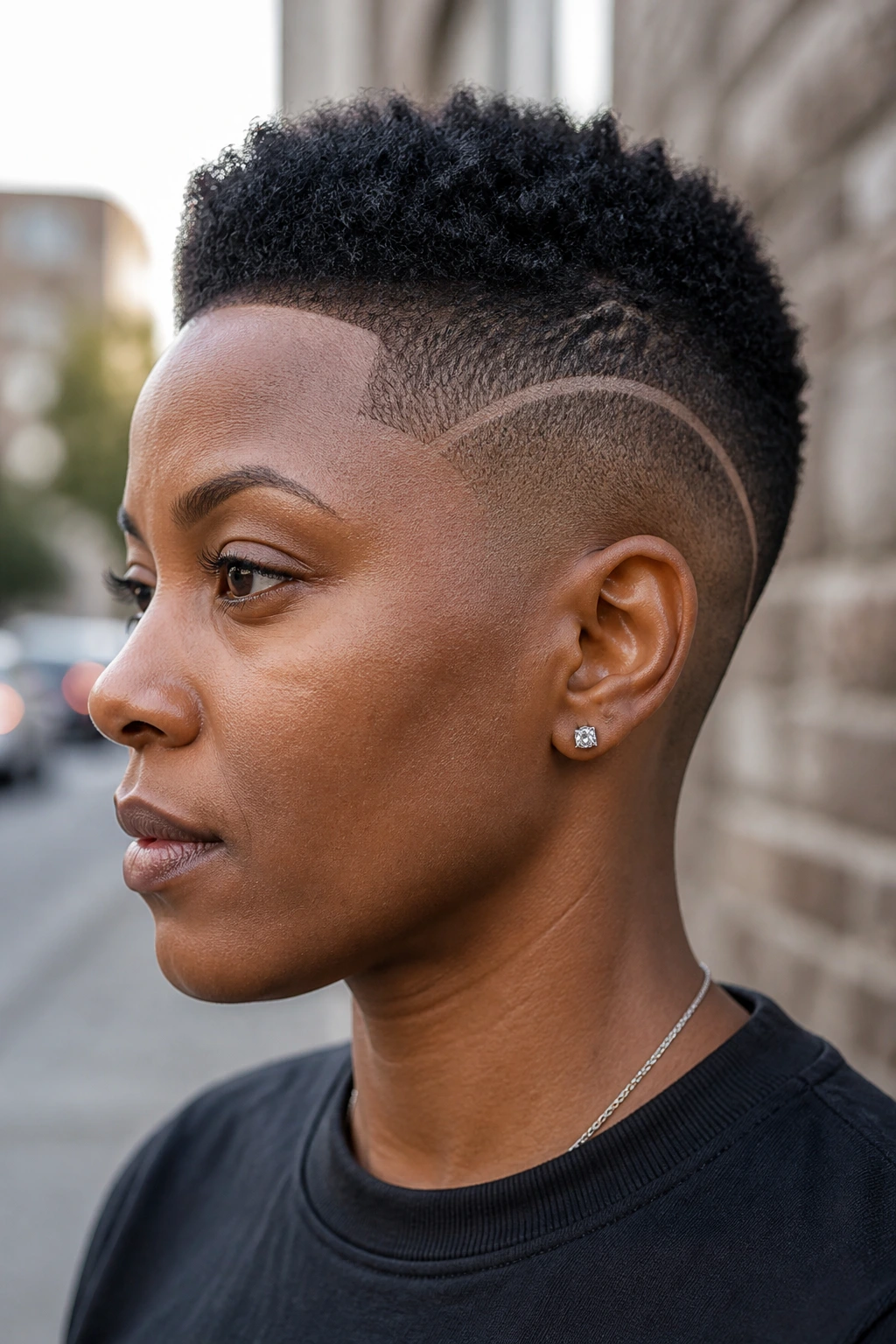
13. Short Tapered Cut with a Carved Line
A short tapered cut with a carved line is one of the most understated ways to wear a side shave. The taper keeps the cut neat around the nape and ears, and the line gives it a graphic edge. Nothing about it is fussy. That’s the appeal.
This style is strongest when the line follows the natural fall of the hair or curves slightly with the head shape. Straight lines are fine too, but a curved carve can soften a square jaw or sharpen a rounder face more gently. Ask for the design to stay close to the fade so it doesn’t wander.
It’s a low-product look. A dab of cream for sheen, a brush to keep the top in place, and that’s enough.
14. Asymmetrical Afro with a Low Side Fade
An asymmetrical afro with a low side fade has a lot of personality because it keeps the volume where you want it and removes it where you don’t. The shaved side lets the afro rise without looking like a sphere. That sounds small too. It isn’t. Shape is the whole story with this one.
I like this version when one side is deliberately fuller and the fade starts low enough to preserve softness near the temple. If the fade climbs too high, the cut loses the rounded afro feel and turns into something harsher. Keep the top stretched out with a pick and some leave-in so the shape stays open.
Add earrings if you want, but you do not need them. The cut already has presence.
15. Bantu Knots with a Shaved Side
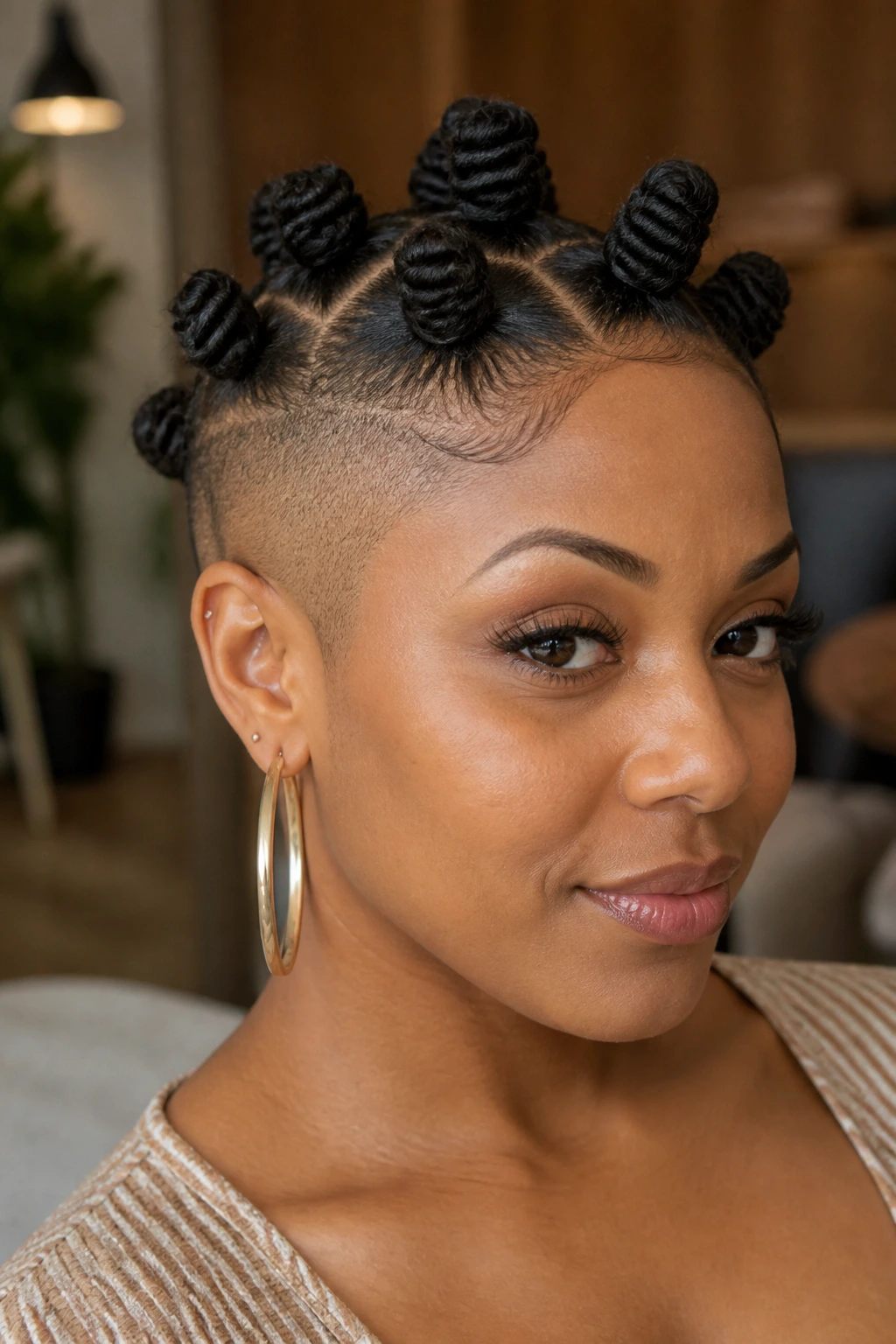
Bantu knots and a shaved side give you two textures at once: sculpted knots up top and a clean, bare panel beside them. It looks especially good when the knots are arranged in a diagonal or curved pattern that leads the eye toward the shave. Straight rows work too, but the curve feels more alive.
This style is also useful if you want a two-in-one look. Wear the knots for a day or two, then unravel them for a curly knot-out. The shaved side keeps the second version from becoming too wide.
Don’t knot hair that is soaking wet. Slightly damp or stretched hair is easier to shape and dries cleaner.
16. Loc Bob with a Temple Shave
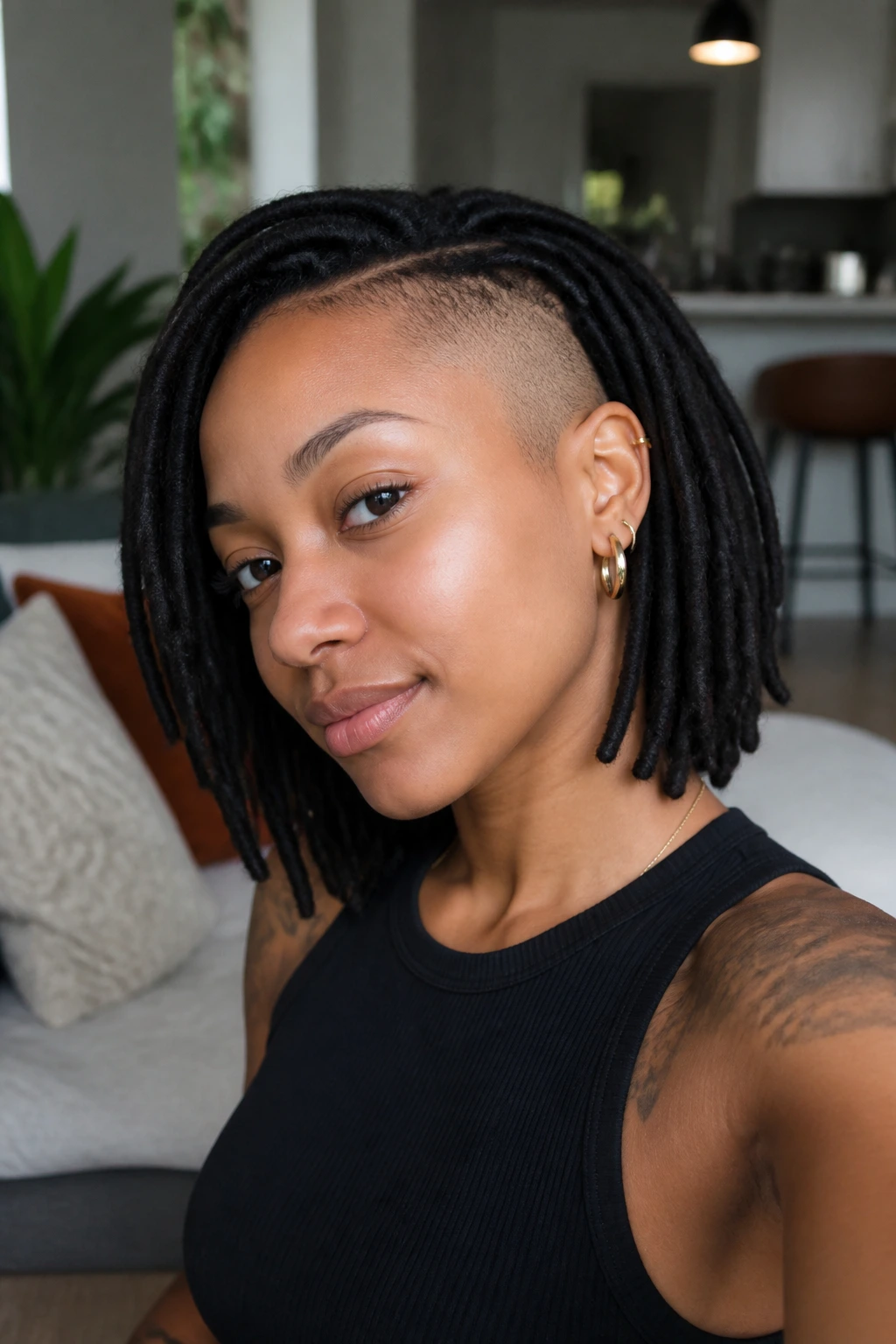
A loc bob with a temple shave has movement and structure at the same time, which is a harder balance than people think. The locs sit around the jaw or collarbone, and the temple shave makes the silhouette lighter so the locs don’t overwhelm the face. If your locs are dense, this style can take a lot of visual weight off the sides.
Keep the shaved section clean with regular touch-ups. Locs are a long-term style, but the side shave needs to stay crisp or the contrast disappears. I’d also keep the locs moisturized sparingly — enough to avoid dryness, not so much that buildup gets into the roots.
A side part or swept fringe makes the whole style feel more finished. Center parts can look too even against the shave.
17. Goddess Loc Bun with One Side Undercut
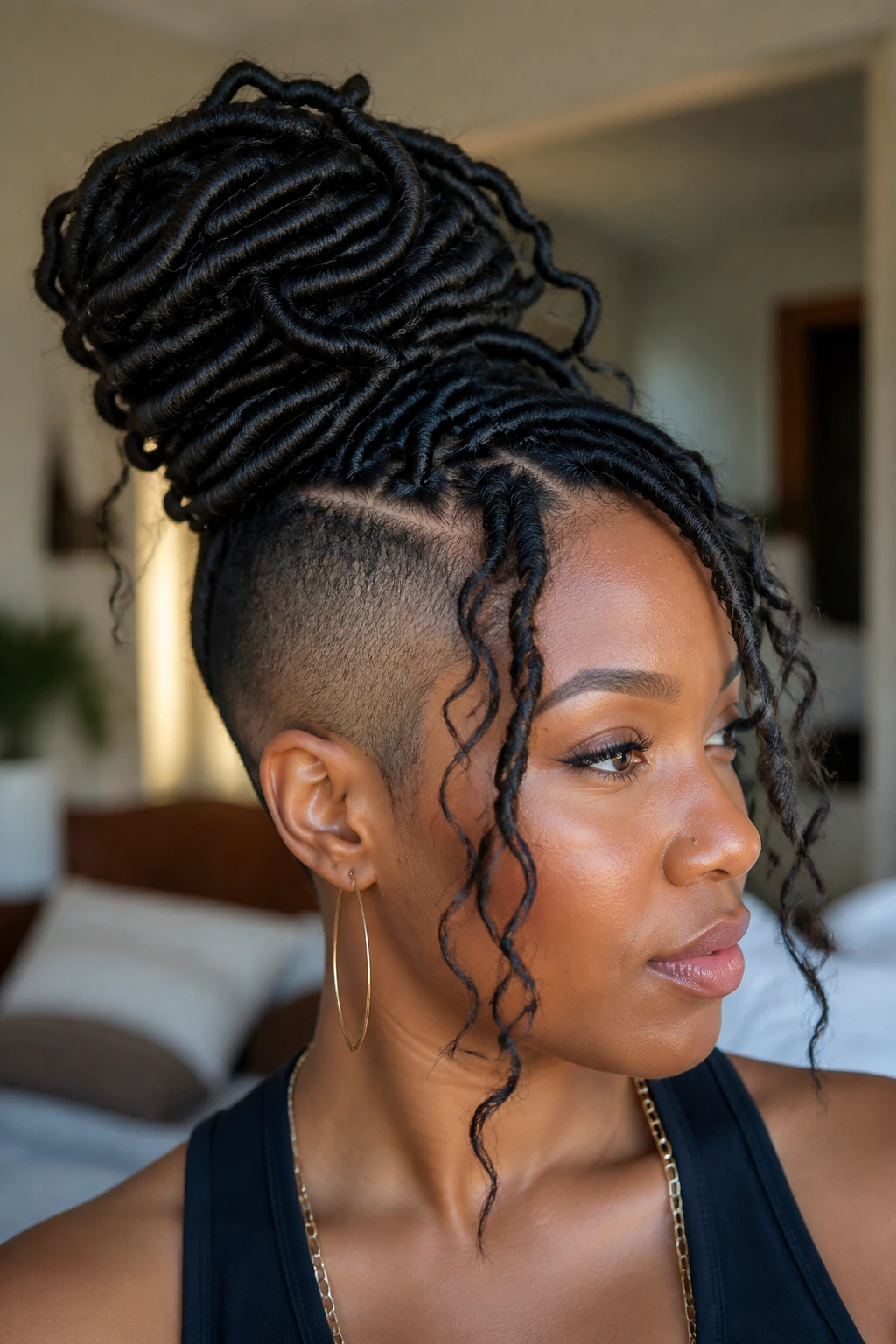
A goddess loc bun with one side undercut is a good choice when you want the sculpted effect of a bun but do not want the sides to feel heavy. Sweep the locs up and over, let a few curled strands fall loose, and the undercut does the quiet work underneath. The bun sits better. The neck feels less crowded.
What makes this look work is balance. Keep the bun slightly off-center if the undercut is large, so the shape doesn’t drift too far to one side. If the undercut is small, you can place the bun higher and let the loose pieces frame the face.
This style can read formal, but it doesn’t have to. A few soft tendrils keep it from getting too stiff.
18. Feed-In Ponytail with a Side Shave
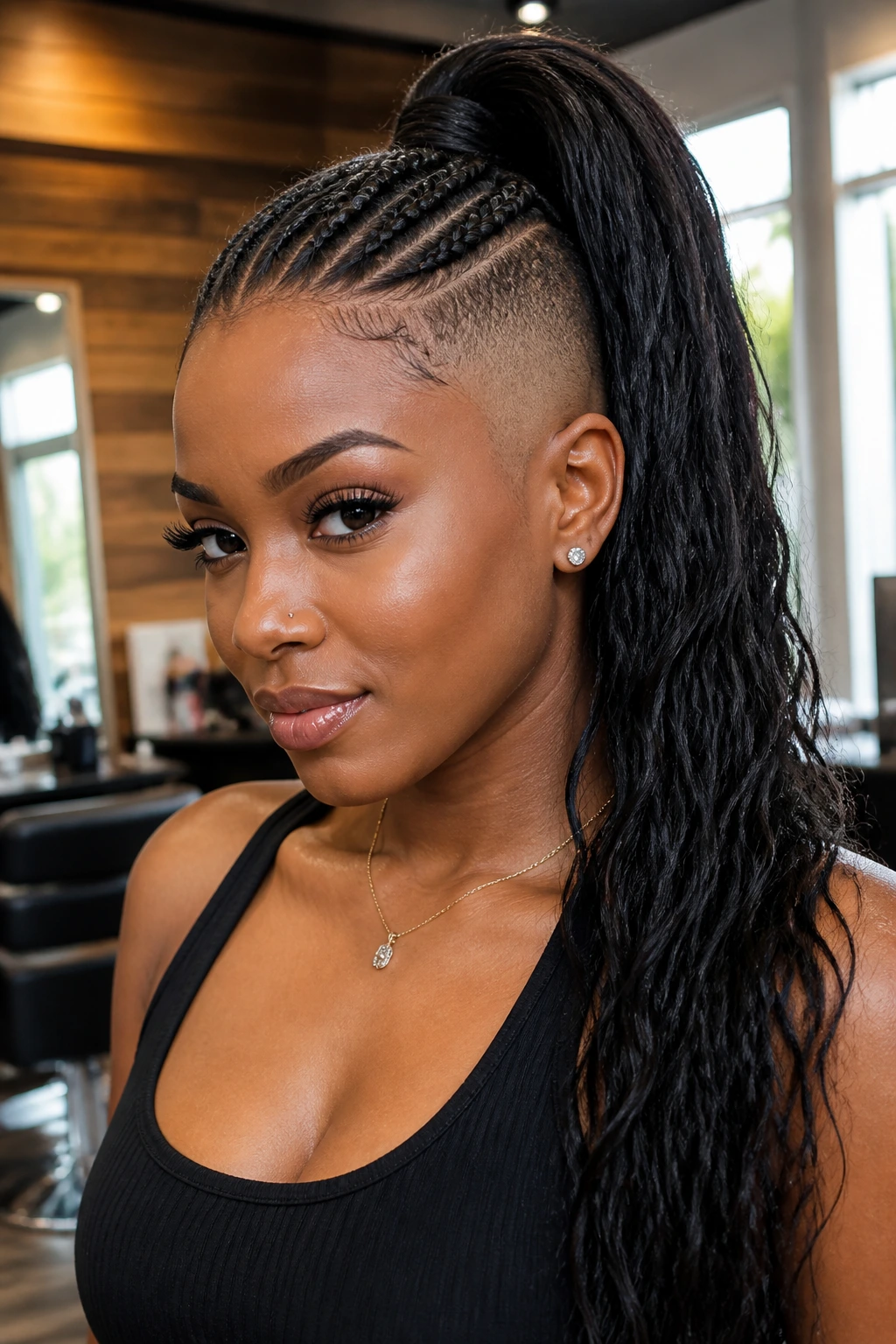
A feed-in ponytail with a side shave has a strong, lifted profile because the braids pull attention upward while the shaved side clears away the bulk underneath. It can sit high and sleek or low and wrapped, depending on how dramatic you want the finish. Either way, the side shave keeps the ponytail from feeling crowded at the roots.
I’d choose this look when the scalp wants a little relief but you still want a style with movement. The braid lines should be neat at the front and even through the crown. If the parts wobble, the whole style shows it.
Hair wrap or braid the base of the ponytail for a cleaner finish. Loose elastic alone looks unfinished here.
19. Wash-and-Go with a Hidden Undercut
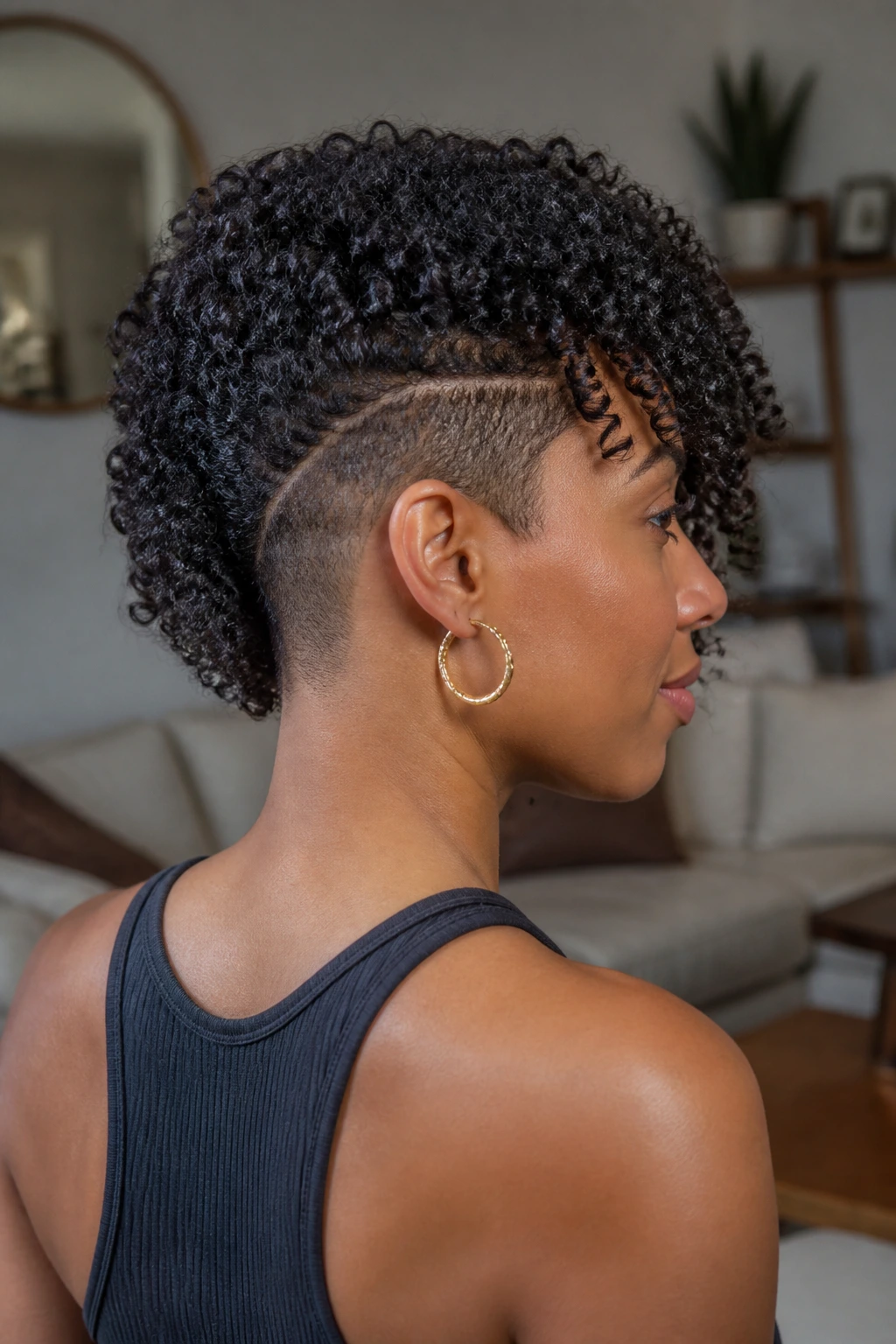
A wash-and-go with a hidden undercut is for the days when you want your curls to do the speaking, but you still want that side-shave edge under the surface. The undercut sits beneath the visible curls, so the style feels fuller from the front and more interesting once the hair shifts or tucks behind the ear.
The curl pattern needs definition for this to work. Use a leave-in, then a gel that holds without flaking, and keep your hands out of the hair until it dries. If the top frizzes before it sets, the hidden undercut becomes less of a reveal and more of a maintenance job.
This is one of the easiest styles to change up. Wear it loose one day, pin one side back the next, and let the shaved panel show through.
20. Sleek Low Puff with a Shaved Side
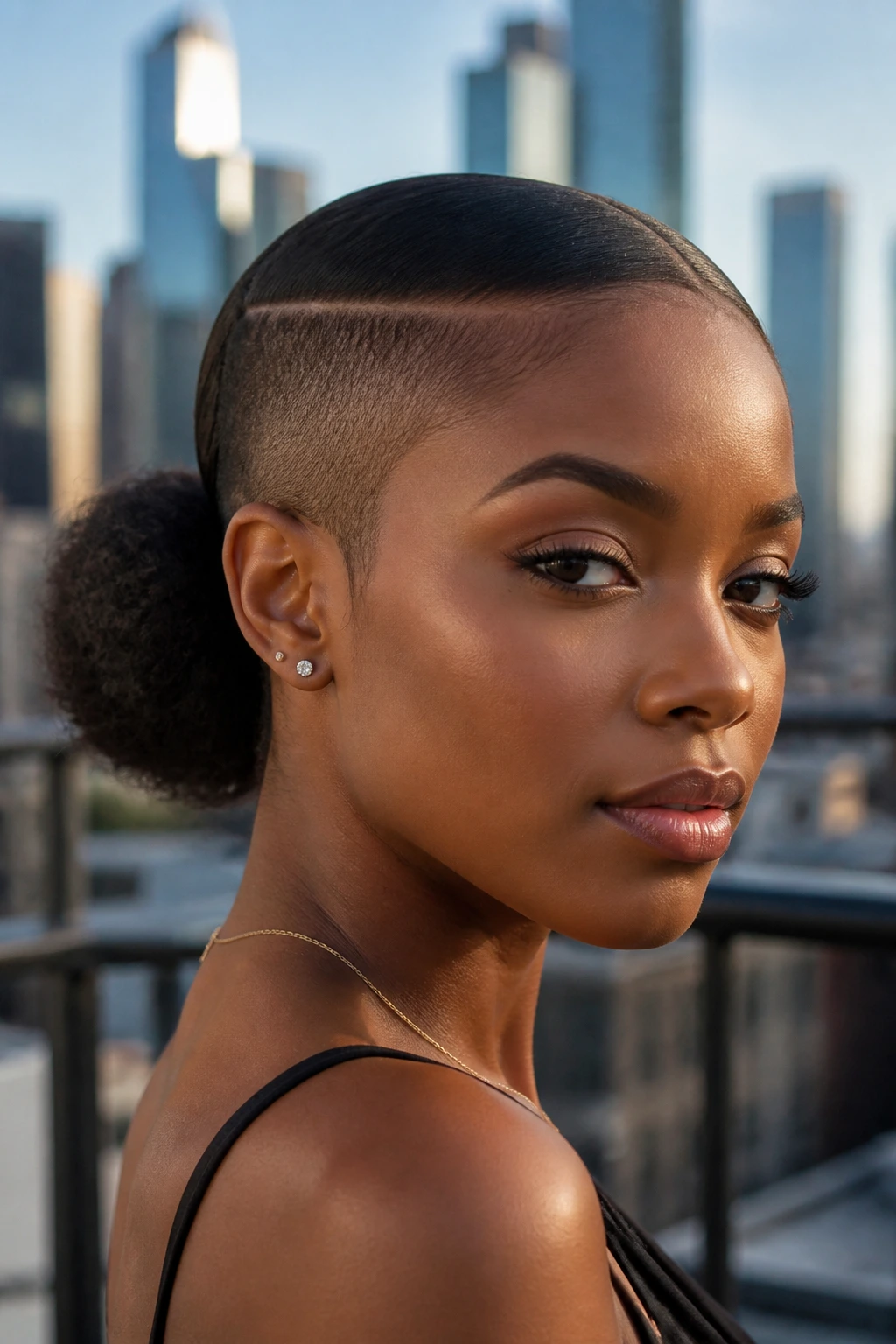
A sleek low puff with a shaved side gives you smoothness at the front and softness at the back. Brush the hair down, smooth the sides, and gather the puff low enough that the shaved panel stays visible. If the puff sits too high, you lose the contrast. If it sits too low, the style can look sleepy. The middle lane works best.
Use gel lightly. Heavy gel can harden the hairline and make the puff look stiff instead of neat. A touch of cream under the brush keeps the surface smoother, and a satin scarf for a few minutes helps lock it in.
This style is useful on stretched hair, but it can also work on freshly washed curls if the puff itself has enough body.
21. Textured Pixie Cut with a Side Fade
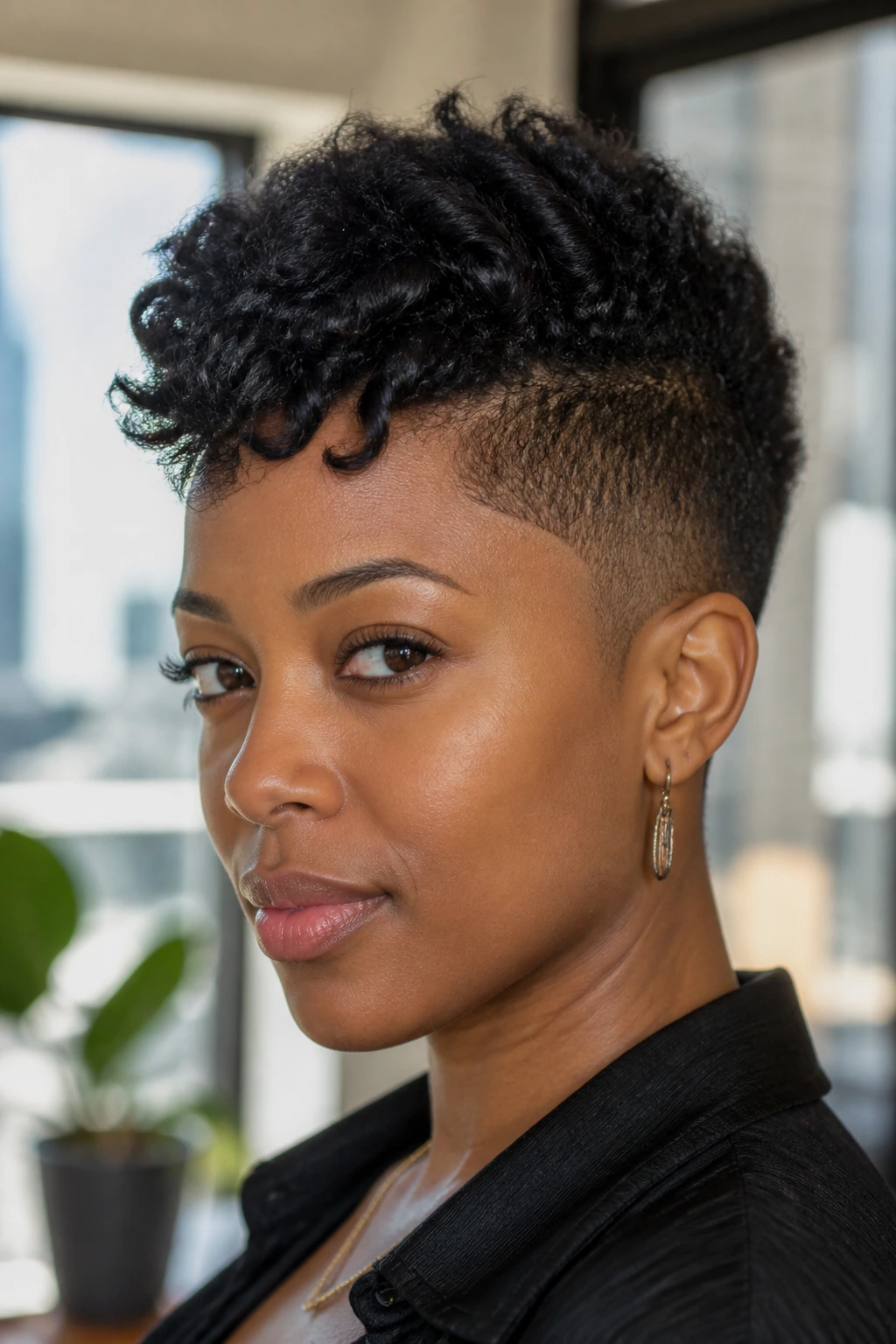
A textured pixie cut with a side fade is short enough to feel easy, but not so short that it loses shape. The top stays a little longer and piecey, while the fade hugs the side and back. That contrast keeps the cut from looking flat, which is a problem with a lot of cropped styles on dense curls.
The best version has a little movement through the crown. Too much product weighs it down. Too little and the curls separate in a fuzzy, dry way. A pea-sized amount of styling cream is usually enough, followed by finger shaping.
This cut is especially good if you want fast mornings. Five minutes, maybe seven. That’s the charm.
22. Halo Braid with One Shaved Side
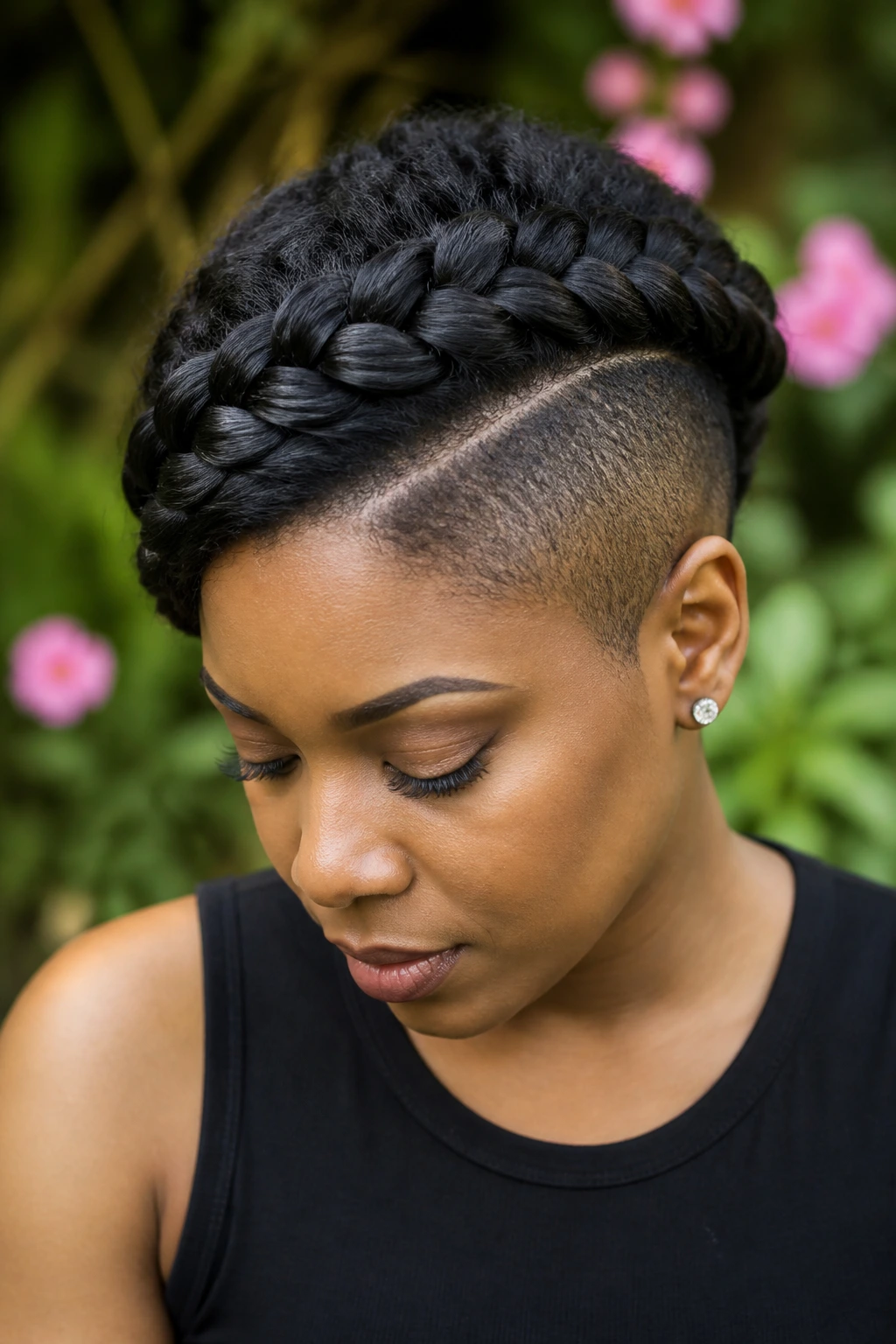
A halo braid with one shaved side has a quiet drama to it. The braid wraps around the head like a crown, while the shaved side keeps the style from looking too sweet or too formal. That little edge keeps it grounded. Without it, a halo braid can tip into costume territory fast.
This version works best when the braid sits slightly higher on the fuller side and crosses the crown at a clean angle. If you’ve got long enough hair, great. If not, feed in extensions or build the braid with added hair so the thickness stays even.
The part near the shave should be sharp. A fuzzy part weakens the whole look.
23. Two-Strand Twists with a Clean Side Panel
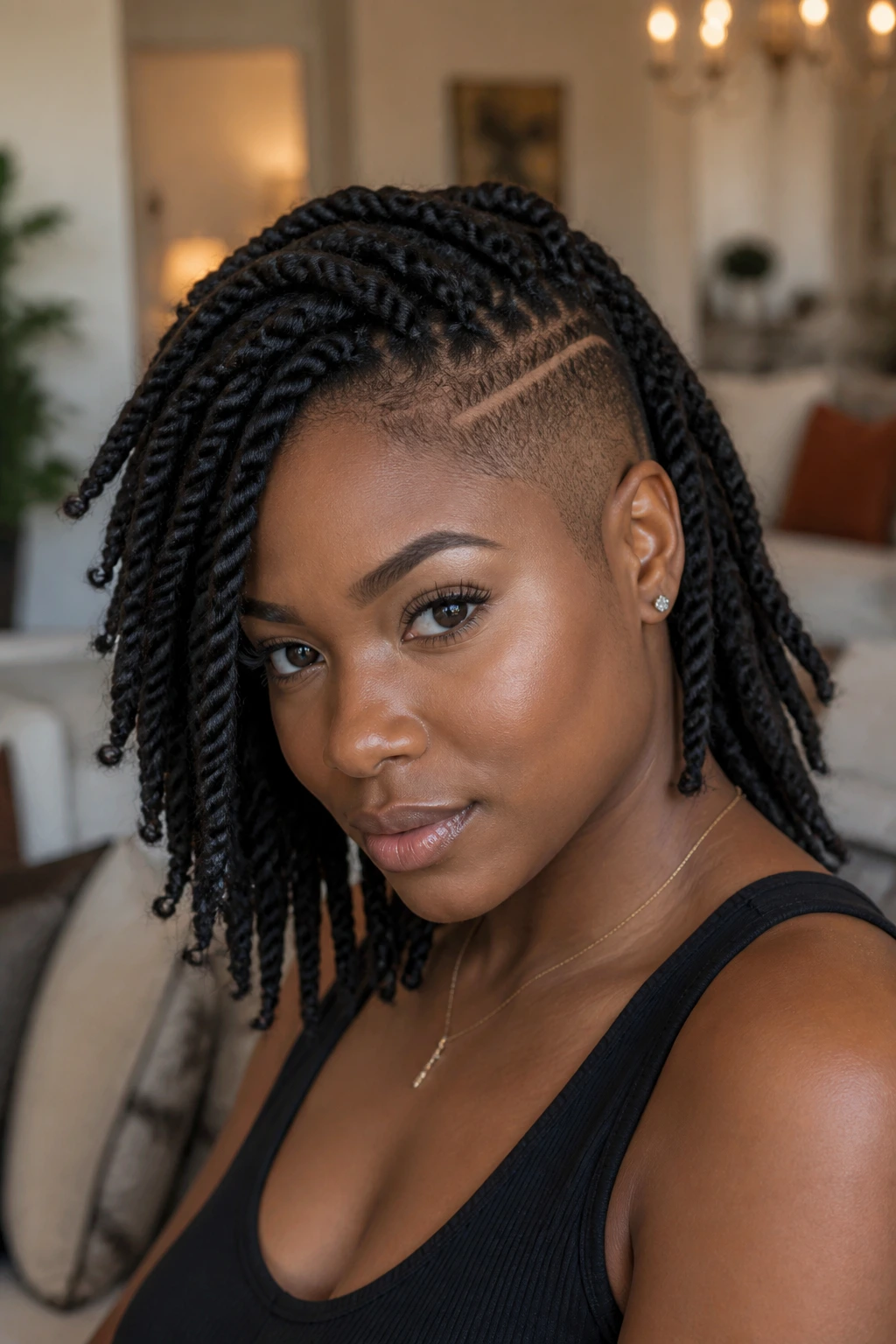
Two-strand twists with a shaved side are one of the most flexible looks here because the twists can be worn loose, pinned, or unraveled later into a twist-out. The clean side panel keeps the style from ballooning too much at the temple, and that makes the twists look more polished from the front.
Twist size changes the mood. Medium twists feel balanced and easy to wear for days. Tiny twists give more swing, but they also take longer to install. If your hair tangles easily, medium is the safer call because it’s less likely to snag at the root.
A little twist cream goes a long way. Too much and the roots stay damp for too long, which is how twists start smelling stale.
24. Blowout Side Sweep with a Temple Shave
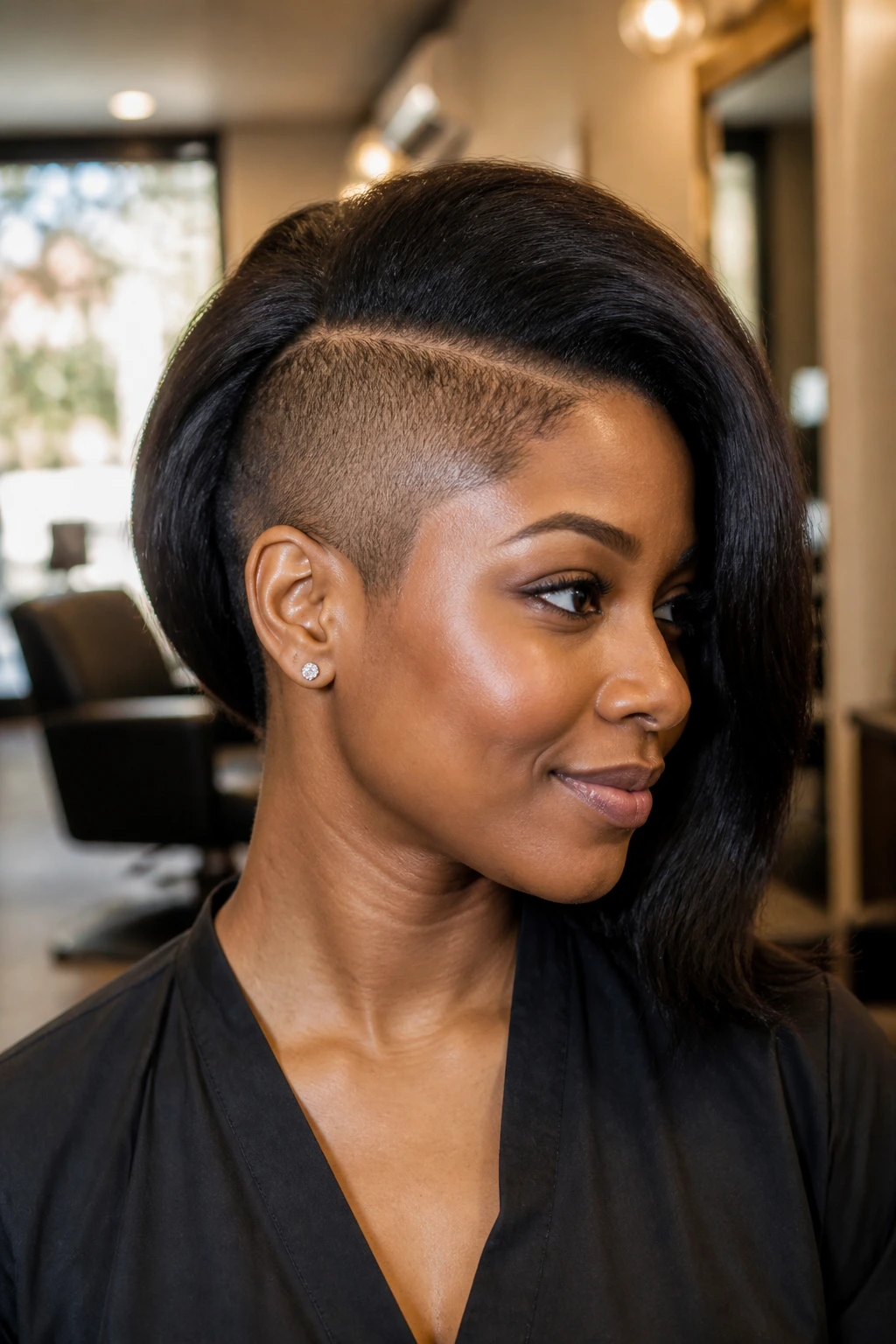
A blowout side sweep with a temple shave gives you stretch, length, and a sharp edge all at once. The hair is blown out enough to show its true length, then swept across the head so the shaved temple becomes part of the shape instead of an afterthought. It’s a strong look when you want your hair to move but not collapse into shrinkage immediately.
Heat protectant matters here. Use it before the blow-dry, then keep the airflow moving so you do not scorch the ends. If your hair is very dense, the comb attachment can help stretch it enough to make the side sweep stay put.
Humidity will pull this style back toward its natural texture. That’s fine. The shaved side still keeps the silhouette clean when the top starts shrinking.
25. Crochet Curl Bob with a Side Undercut
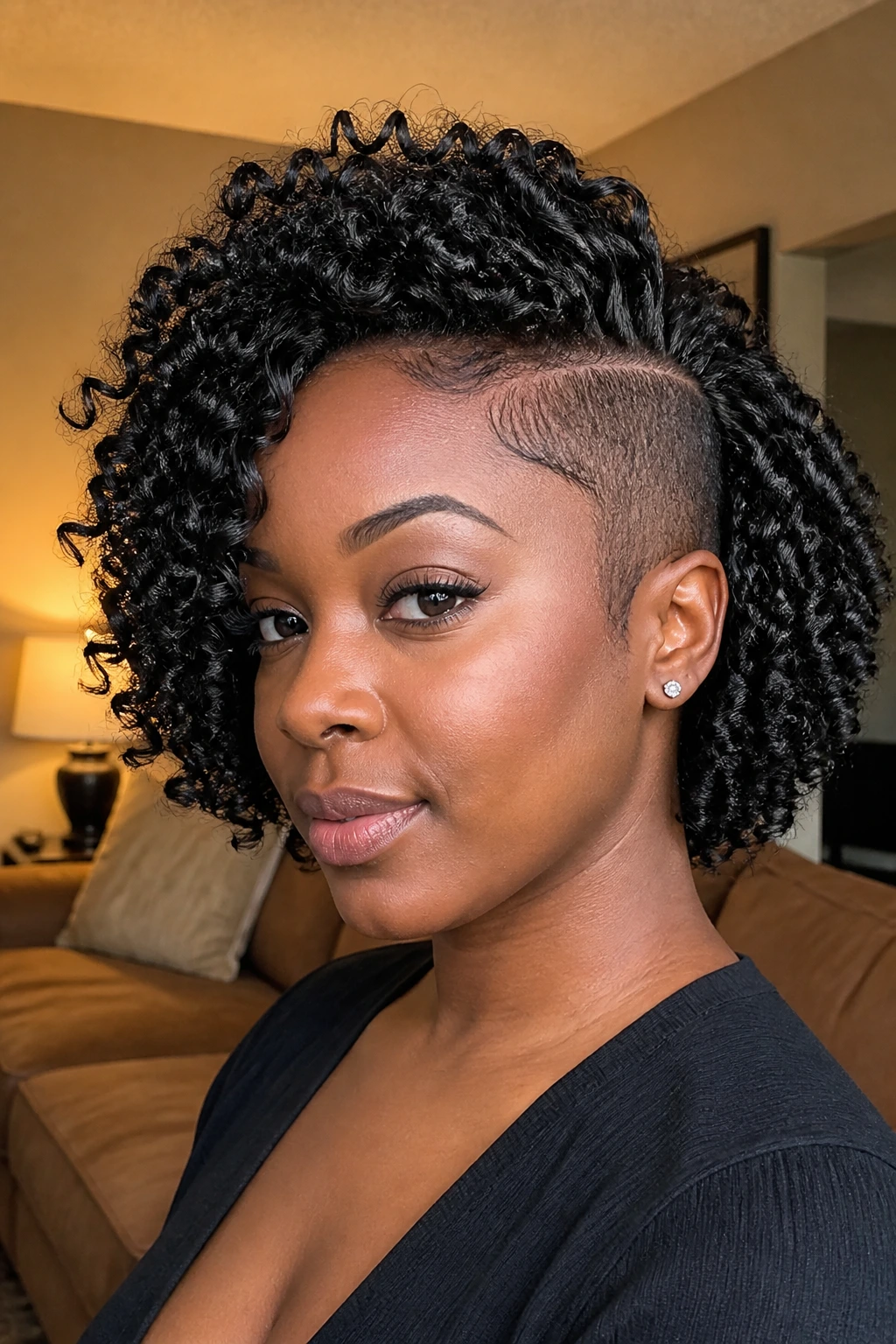
A crochet curl bob with a side undercut gives you fullness fast, and the shaved side keeps the finished style from feeling bulky. Crochet curls can get heavy in the wrong shape. A side undercut fixes that by removing the extra thickness where it would otherwise pile up at the temple.
Pick curl patterns that match your texture or at least look believable next to it. Tight corkscrews, soft ringlets, and springy coils each land differently. The bob length also matters; chin to shoulder is usually the sweet spot because it keeps the style from dragging.
The undercut should stay neat under the install. If it grows out unevenly, the crochet hair starts sitting awkwardly.
26. Tapered Mohawk with Sponge-Defined Coils
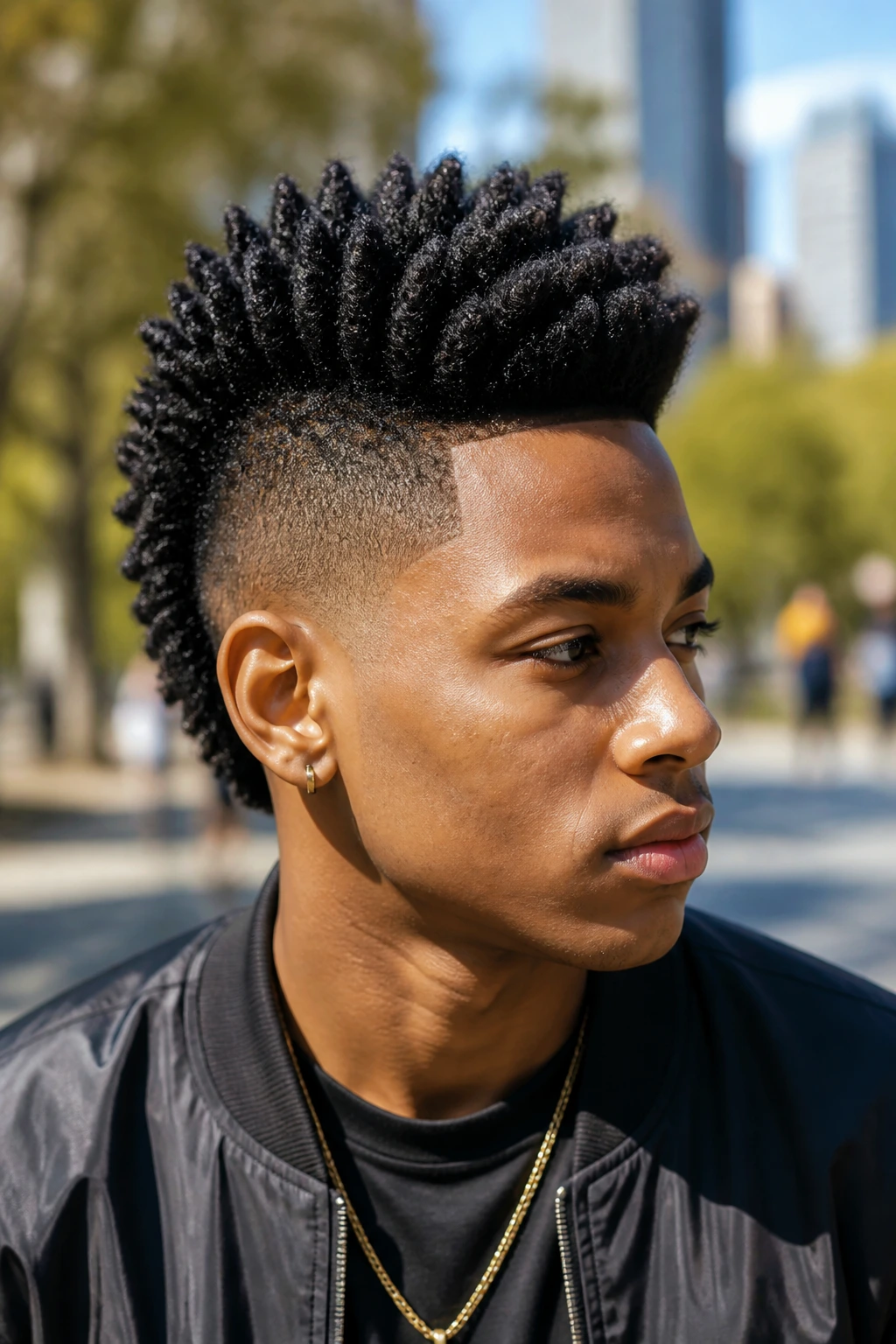
A tapered mohawk with sponge-defined coils is a short style that still has real shape. The center section rises, the sides taper down, and the shaved areas create a runway for the eye to follow. It’s sharp without trying too hard.
Use the sponge on damp hair in small circles, not in long, impatient swipes. That keeps the coils tight instead of frayed. If the top is between 1.5 and 4 inches, the texture will usually hold the mohawk shape on its own. Shorter than that, you may need a little more product or a small lift at the root.
This style is a good fit when you want something athletic-looking and clean. It has energy.
27. Geometric TWA with a Shaved Design Panel
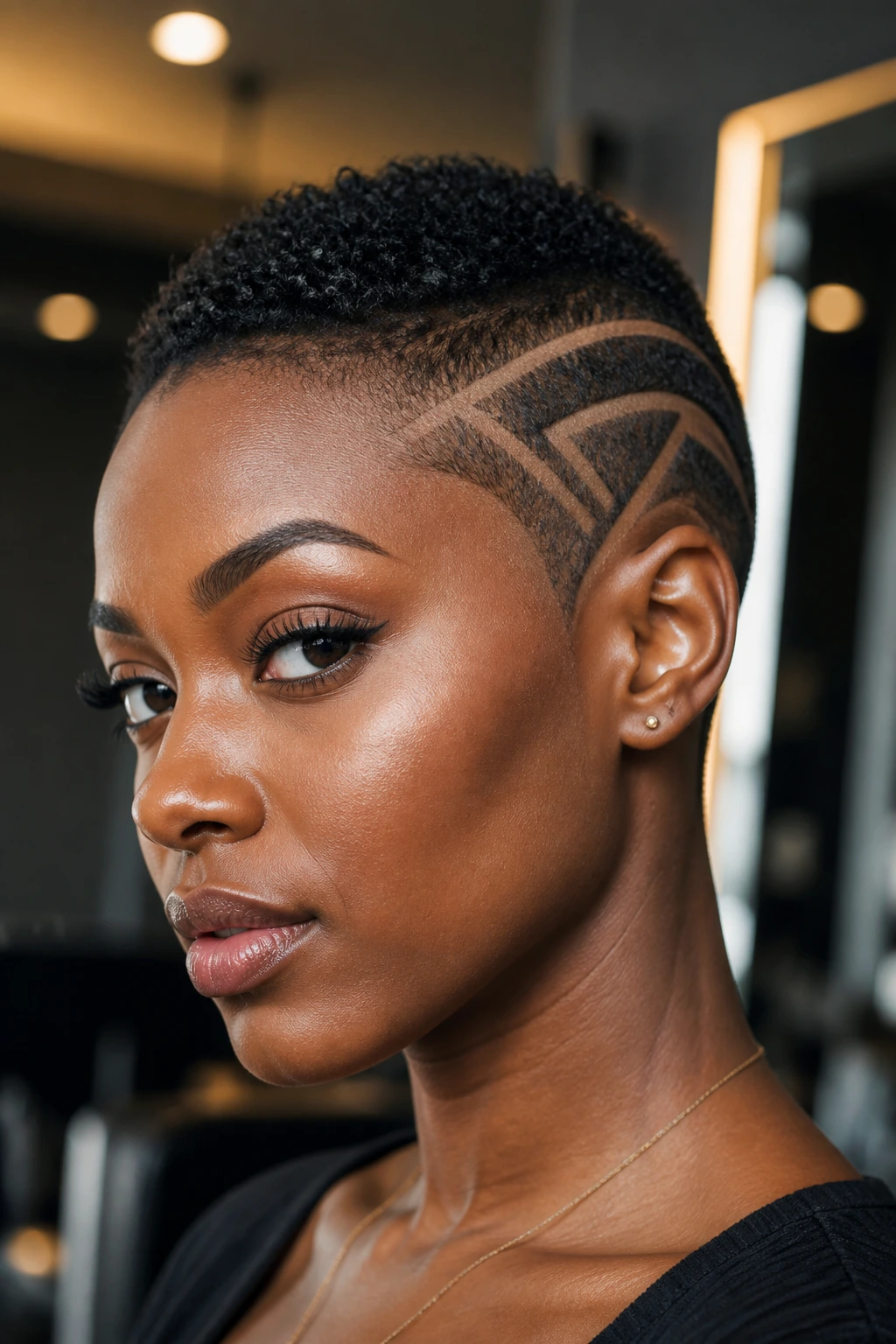
A geometric TWA with a shaved design panel is the boldest version of the side-shave idea in the group. The design panel can be a clean line, a triangle, a curve, or a small pattern cut into the side. The tiny length up top keeps the shape neat, and the shaved design turns the side into a feature instead of empty space.
The haircut needs precision. Ask for the design to be carved after the fade is finished, not before. That way the lines stay crisp and the shape underneath stays even. If you want a less dramatic version, keep the design subtle and let the curl texture on top do more of the talking.
This is the cut that gets mistaken for high maintenance. It isn’t, really. It just needs clean lines.
28. Shoulder-Length Passion Twists with One Side Shaved
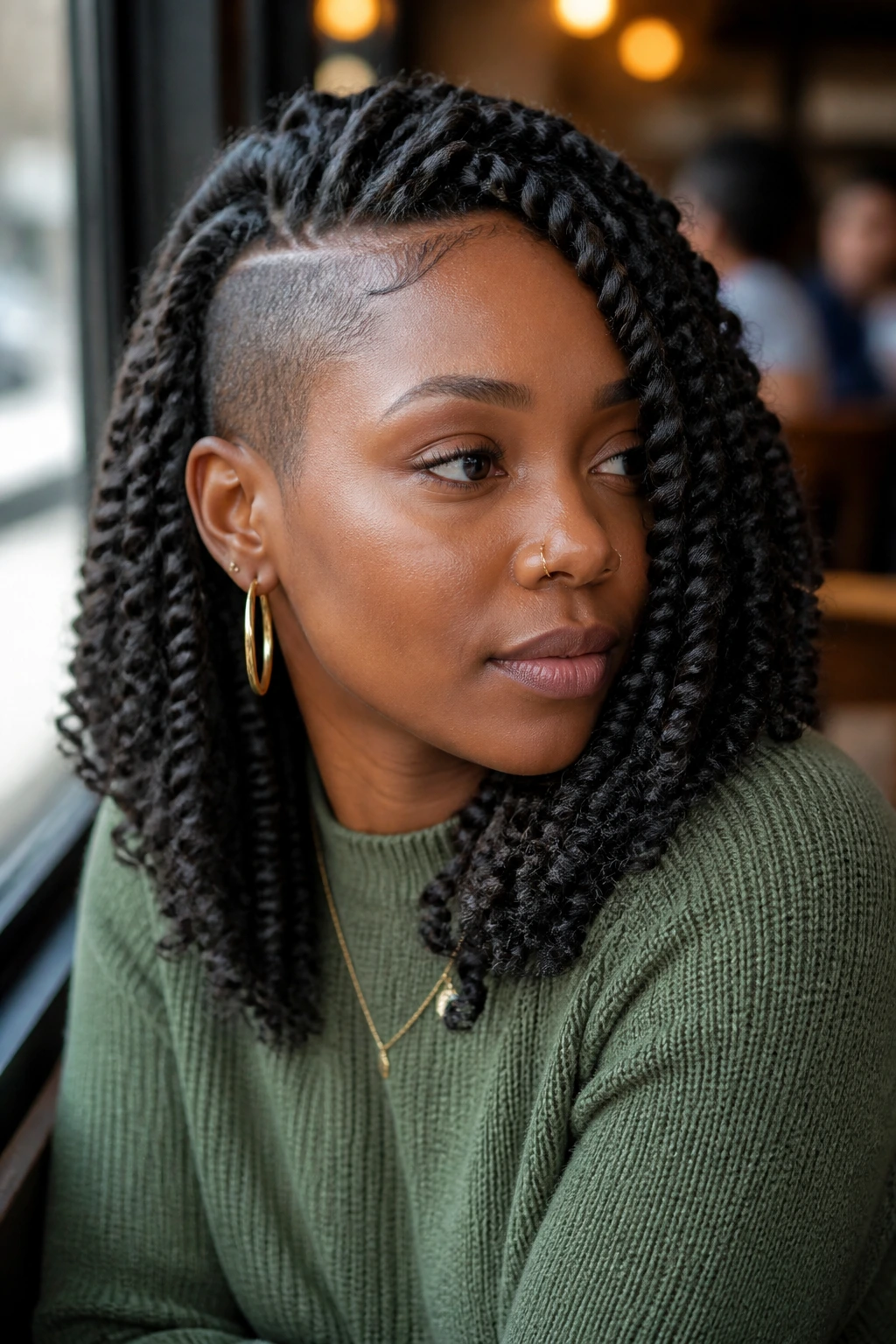
Shoulder-length passion twists with one side shaved give you softness, movement, and a little asymmetry that makes the whole style feel intentional. The twists swing over the fuller side, while the shaved panel keeps the roots from looking crowded. That matters with longer protective styles, because weight can drag a shape down fast.
Choose medium twists if you want the style to move easily. Too thick, and the length starts feeling heavy. Too thin, and the look can lose some of that rope-like texture that makes passion twists so good in the first place.
A side sweep at the front helps the shaved area show. Leave the twists to fall wherever they want, and the contrast often disappears.
Why the Shape Reads So Strong on Black Hair
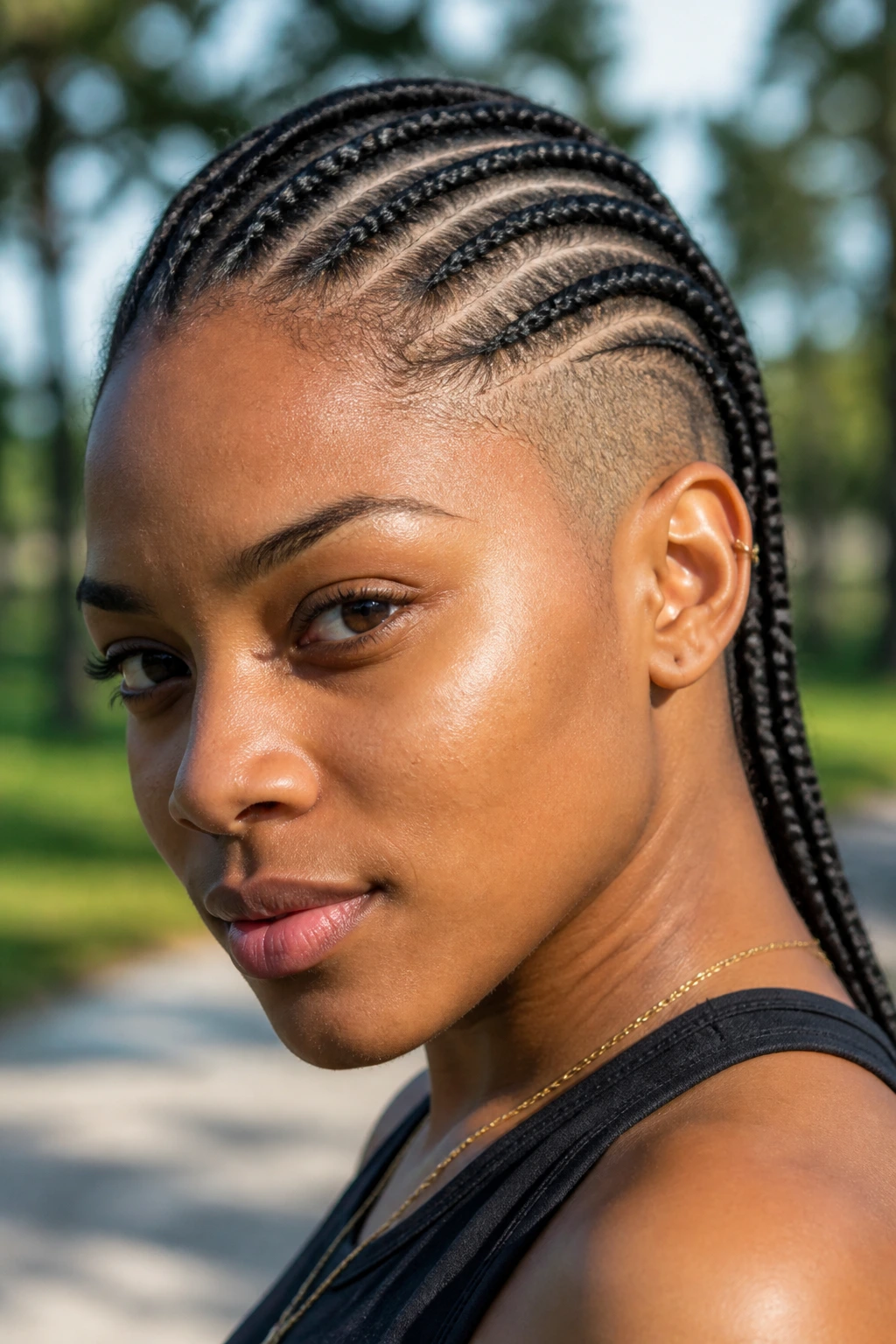
Black hair gives these styles more range than straight, flat textures usually do. Coils stand up. Curls bend light differently. Braids create literal lines in the hair. So when one side gets clipped down, the contrast doesn’t just happen in the cut — it happens in the texture itself.
That is why a side shave can look soft on one person and sharp on another without changing the basic idea. A dense 4C fro uses the shave to tame width. A looser wash-and-go uses it to carve out a side profile. Braids use it to break up weight. Locs use it to remove heaviness near the temple. Same principle. Different job.
The best versions respect the hair that’s left alone. They don’t overcut the top to “match” the shave. They let the top be big if big is the point, or short if short is the point, and they place the shave where the shape needs relief. That’s the move.
How to Ask for the Right Guard Length and Parting
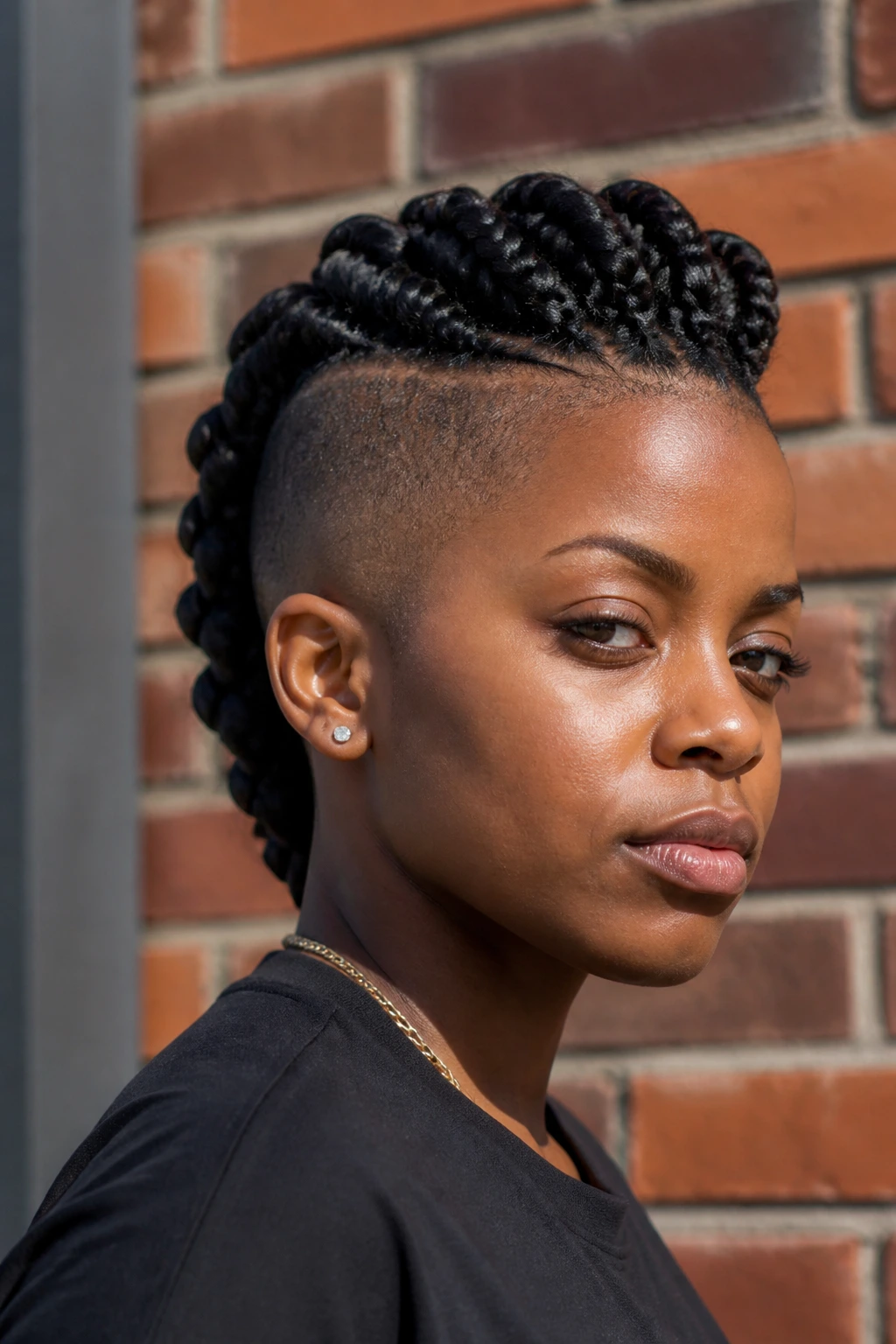
The biggest mistake people make with a one-side shave is treating it like a vague idea instead of a haircut with measurements. Bring a photo, yes, but also talk in concrete terms. Say whether you want the side shaved to skin, a half guard, or a low taper. If you don’t know those guard sizes, say what you want to see: scalp, shadow, or short fuzz.
The details that matter
A shave that starts just above the ear gives a softer look. A shave that climbs to the temple feels stronger and more graphic. If you want the style to grow out gently, ask for a taper rather than a hard disconnect. If you want contrast you can see from the front, the shaved section needs to show when your hair is tucked back.
The part line matters just as much. A deep side part can make the shaved side feel deliberate. A center-ish part can muddy the shape unless the hairstyle itself is built for symmetry.
Essential Tools for These Looks
- Rat-tail comb: Clean parts and sharp sectioning start here, especially for braids, twists, and side parts.
- Wide-tooth comb: Best for detangling curls and stretching the top without ripping through it.
- Edge brush: Keeps baby hairs and hairline details neat without dumping too much gel on the skin.
- Curl cream or leave-in: Helps twist-outs, wash-and-gos, and puffs hold shape with less frizz.
- Styling gel or foam mousse: Use gel for hold and mousse for softer sets, especially on coils and curls.
- Satin scarf or bonnet: Keeps the top from flattening overnight and protects the shaved side from friction.
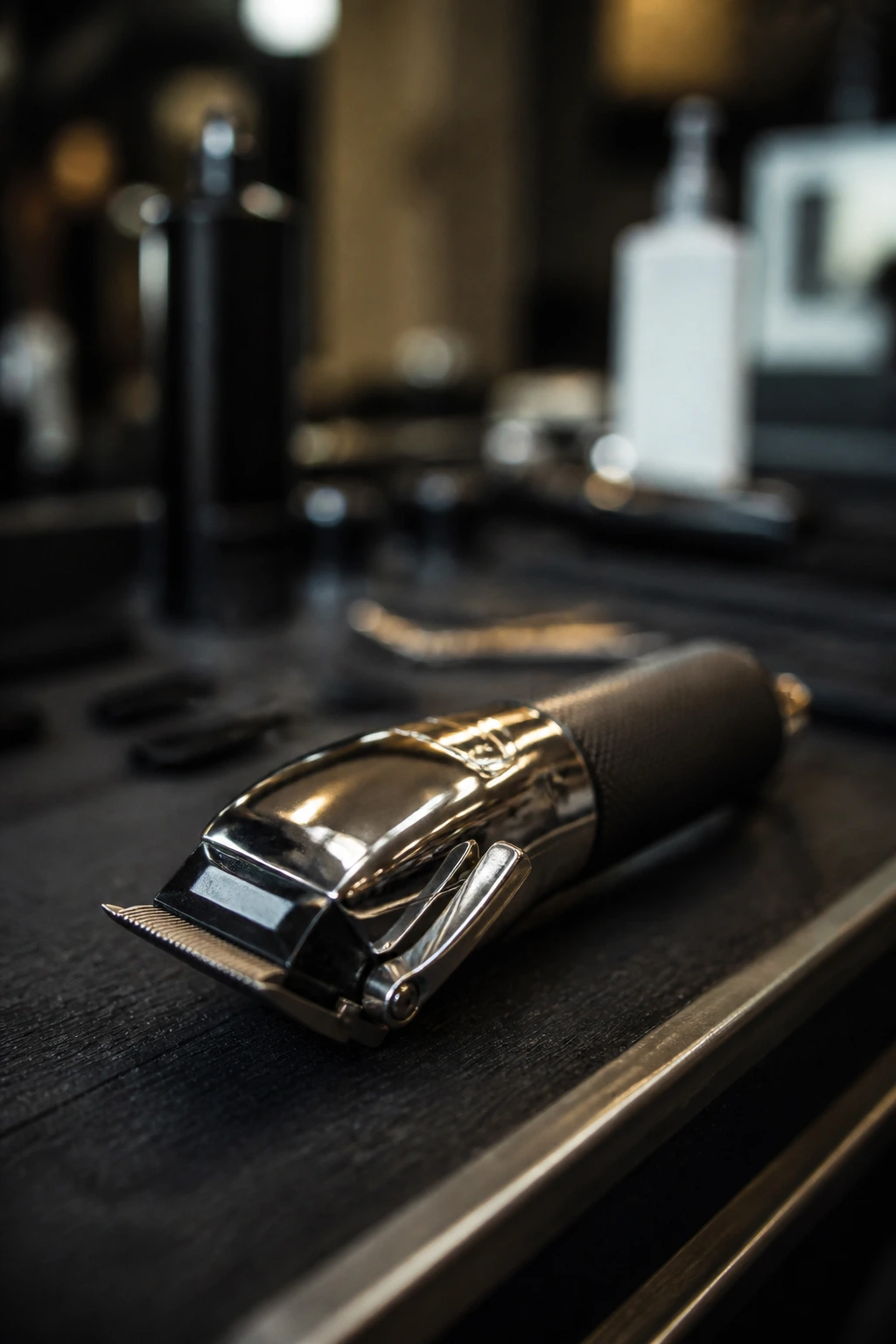
- Barber trimmer or clipper: Handy for touch-ups between appointments if you know what you’re doing.
- Hair clips: Useful for sectioning braids, twists, or puff styles so you’re not fighting loose hair.
- Spray bottle with water: A mist revives curls and twists without soaking them.
- Pick: Best for lifting the crown on fro, puff, and mohawk styles without breaking curl clumps apart.
- Diffuser attachment: Helps curly and coily styles dry with shape instead of collapsing flat.
- Light scalp oil: Good for the shaved side and parted areas, but keep it light so it doesn’t clog the scalp.
Smart Styling Moves That Keep the Cut Looking Fresh
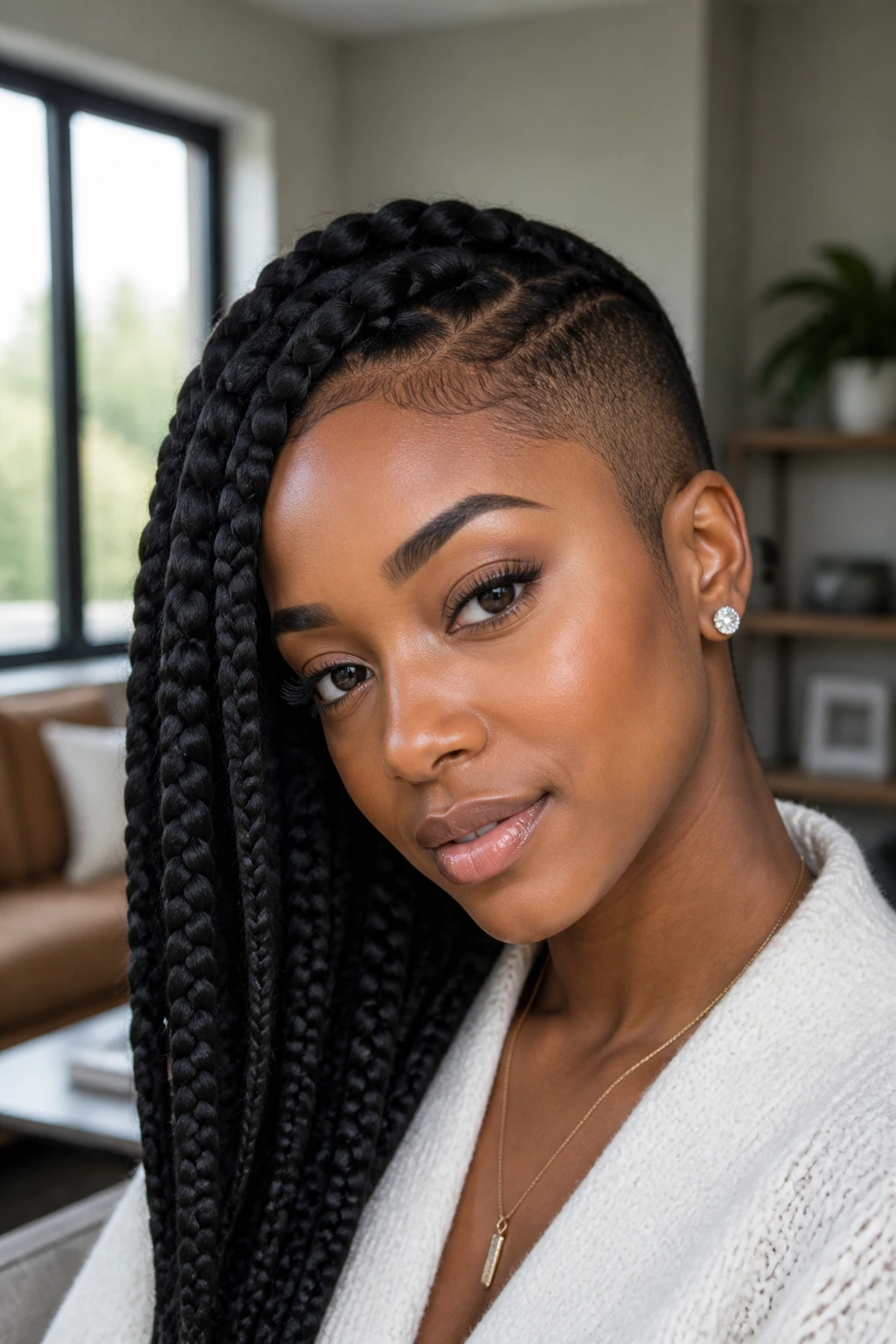
Part Placement: Put the part where the style needs balance, not where it is easiest to draw. If the shave is on the left, a part that starts high on the right often keeps the shape cleaner than a low part that slips toward the ear.
Product Balance: Heavy creams belong on the textured section, not the shaved side. The side that’s clipped short only needs scalp care and a little moisture; the top needs the styling product that defines the texture.
Shape Memory: Re-smooth the top with a satin scarf for 10 to 15 minutes in the morning if the style starts to puff in the wrong direction. That quick reset does more than another layer of product.
Fade Maintenance: If the style uses a skin fade or low guard, clean it up every 1 to 3 weeks. If it’s a softer taper or hidden undercut, you can usually stretch that a bit longer.
Work With Shrinkage: Don’t fight the natural shrink on the fuller side. If the curls or coils tighten up, that’s part of the silhouette. The shave is there to control the edge, not erase the texture.
Common Mistakes That Flatten the Look
- Shaving too wide at the start: If the shaved panel eats too far into the crown, the top can look stranded and heavy. Keep the clipper line closer to the temple unless you really want a dramatic undercut.
- Making the top too flat: A side shave needs lift or texture somewhere else. If you slick everything down, the style loses the contrast that makes it work in the first place.
- Overloading the hairline with product: Thick gel at the edges can leave the front sticky and flaky. Use less than you think, brush it in, and stop before it beads up.
- Ignoring the grow-out phase: A clean shave turns fuzzy faster than most people expect. If you wait too long between trims, the side starts looking accidental instead of intentional.
- Braiding too tight near the shave: Tension around a shaved side can pull harder than it should because there’s less hair to distribute the load. If the scalp feels sore after styling, the braids or twists need to be loosened.
- Choosing the wrong fullness for your density: Thin hair and a huge fro can look top-heavy. Thick hair and a tiny shave can look crowded. Match the size of the textured section to what your hair naturally does.
Ways to Change the Look Without Starting Over
Temple-Only Edge: Keep the shave tiny and visible only when the hair is tucked behind the ear. This version is good if you want a subtle shift, not a full statement.
Deep Side Sweep: Move the part far to one side and let the volume fall across the face. You get drama without changing the cut itself.
Patterned Panel: Add a line, curve, or geometric carve in the shaved section. It works best on short crops and tapered styles where the design can stay visible for more than a day.
Braided Accent Side: Braid just the fuller side or braid along the edge of the shaved panel. That keeps the style protective while still showing the contrast.
Soft Grow-Out Transition: If you’re tired of the hard disconnect, ask the barber to blend the shave upward into a low taper. You’ll keep the shape but lose some of the sharpness.
Keeping the Shaved Side Sharp Between Visits
A shaved side does not stay clean on its own. Hair grows. Fast. That’s the deal. Skin-close cuts usually need a touch-up every 1 to 2 weeks if you want the line to stay crisp. Low tapers can stretch a little longer, often 2 to 3 weeks, before the side starts looking fuzzy.
Night care is simple but non-negotiable. Put a satin bonnet or scarf over the full style so the textured side doesn’t get crushed while the shaved side gets rubbed raw against cotton. If your scalp gets dry, use a tiny amount of light oil or scalp mist on the clipped side, then stop. Too much product creates buildup, and buildup on a short cut looks dusty fast.
If you wear braids, locs, or twists over the shave, keep an eye on the roots where the hair meets the clipped section. That’s where the style starts to blur first. A quick trim there does more than a full redo would.
Frequently Asked Questions
How short should the shaved side be?
That depends on how bold you want the contrast. A skin shave is sharp and obvious, a half guard leaves a little shadow, and a low taper gives you a softer grow-out.
Can I wear a one-side shaved style if my hair is short?
Yes. In fact, short coils, TWAs, and tapered cuts make the shave easier to see. You just need enough texture on top to create a shape worth contrasting.
Do these styles work with braids or locs?
They work especially well with braids and locs because the added length makes the side shave feel balanced. The main thing is not to overload the scalp with too much tension near the clipped side.
What if my face is round or square?
Use the hair to redirect the eye. A higher puff, side sweep, or asymmetrical top can lengthen the shape, while a lower bob or rounded fro softens strong angles. The shave itself is just one part of the picture.
How often do I need to trim the side?
Skin-close sides usually need attention every 1 to 2 weeks. Softer fades and undercuts can wait longer, depending on how fast your hair grows and how clean you want the contrast to look.
Can I switch the shaved side later?
You can, but the grow-out can be awkward for a while. If you think you may want to switch sides, ask for a softer taper instead of a hard disconnect so the transition is easier.
Will this style work on thick hair?
Yes, and thick hair often makes the style better because the volume on top has something to play against. The trick is not to leave too much bulk everywhere at once. You want shape, not a halo that spreads wide on both sides.
What if the shaved area gets itchy or bumpy?
That usually means the skin is irritated from a close clip or razor work. Keep the area clean, avoid heavy product on the scalp, and ask for a clipper finish instead of a razor next time if you’re prone to bumps.
Keeping the Edge Clean
A one-side shave is not a gimmick. On Black hair, it’s a shape tool. It can make a fro feel sculpted, give braids a place to breathe, and turn short curls into something that looks finished instead of random. That’s why it keeps showing up across so many different textures and lengths.
The best version is the one that fits your daily routine. If you like movement, choose curls or twists. If you want less fuss, go short and tapered. If you want pure contrast, braids or locs over a clean shave will give you that sharp side profile every time.
And if you’re stuck between two versions, choose the one that still looks good after a sleep scarf, a little humidity, and a morning where you do not have time to wrestle your hair into place. That’s the real test.
