



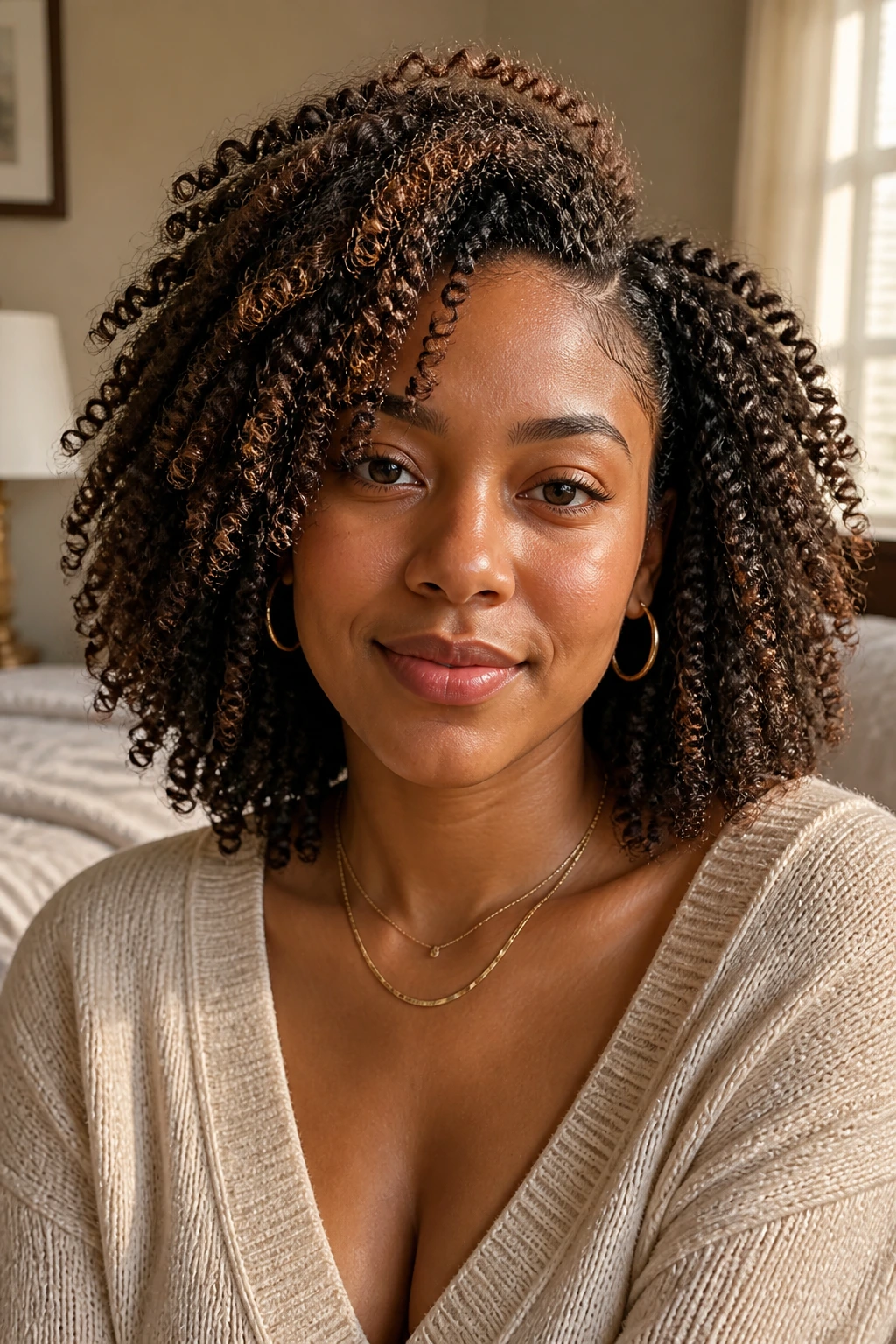
Medium-length natural hair sits in a useful little pocket: enough length to twist, tuck, puff, braid, and pin, but not so much that every shape gets dragged down by its own weight. That’s why natural hairstyles for medium length hair can look so polished with fewer pins and less drama than people expect. The hair has room to move, but it still keeps a clean outline.
There’s also a sweet spot with shrinkage. On shoulder-skimming coils, a style can look full and controlled at the same time, which is harder to pull off when hair is very short or very long. A twist-out lands with actual bounce. A puff still has lift. A bun doesn’t have to fight a mountain of length.
What matters most is choosing shapes that work with your density, your curl pattern, and the way your hair falls when it’s freshly moisturized versus day three. Some looks below are low-effort. Some take a little more hand work. All of them are practical on this length, which is the whole point.
Why These Looks Work So Well on Medium-Length Hair
-
The shape holds better: Shoulder-length coils have enough body to look full, but not so much weight that a puff collapses by noon.
-
The styling options stay open: You can wear the hair loose, gathered, braided, twisted, pinned, or wrapped without needing long extensions every time.
-
The prep time stays sane: Most of these looks need a spray bottle, a styling cream or gel, and a few pins — not a full salon setup.
-
The styles age well: Medium-length curls usually keep a good outline on day two or three, especially if you sleep in a satin bonnet or scarf.
-
The finish looks intentional: A clean part, a tucked end, or a lifted crown goes a long way here. You do not need a complicated style to make the hair look done.
1. The Defined Twist-Out That Holds Its Shape
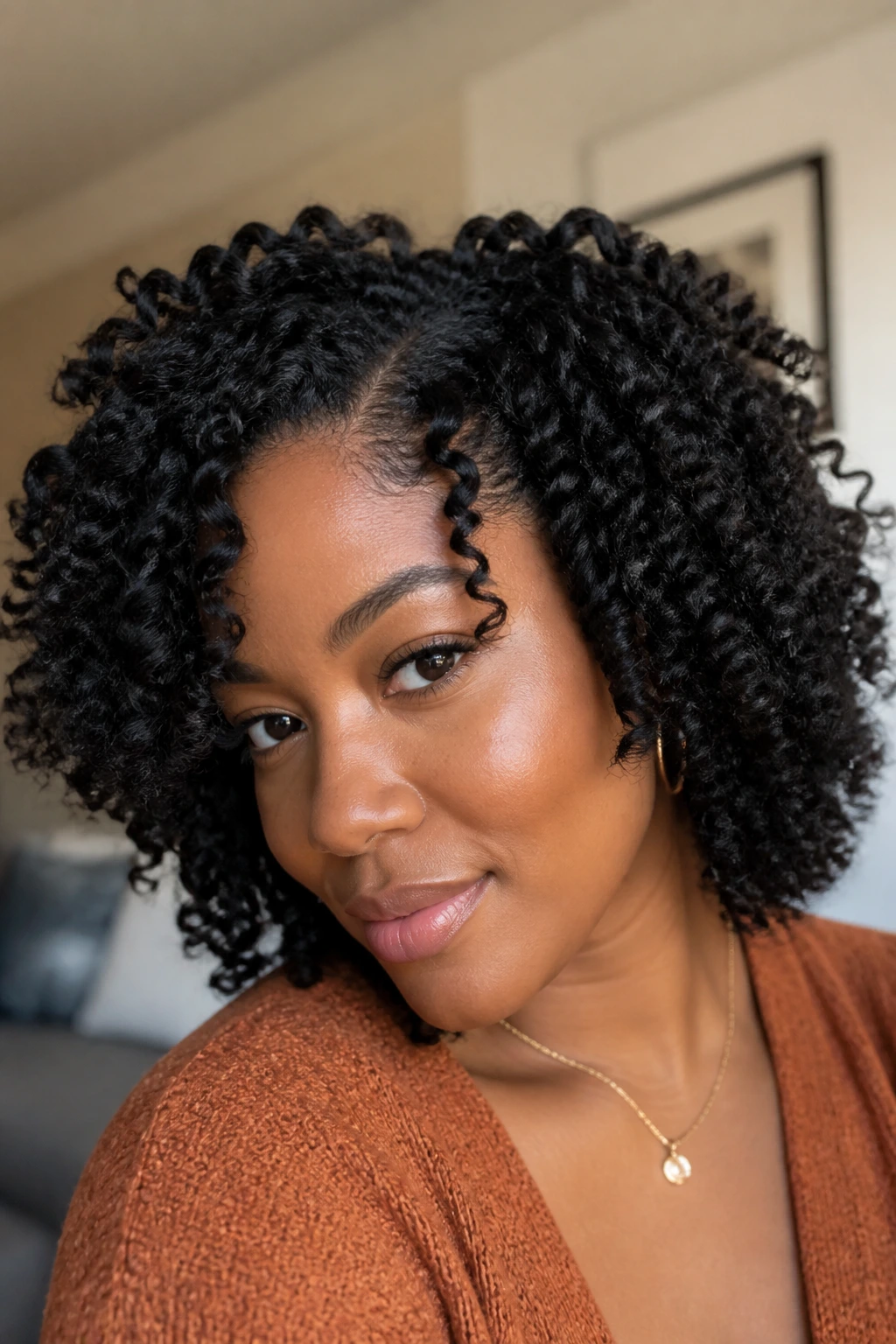
A twist-out on medium-length hair has one advantage that longer hair often loses: the curl pattern can still spring up without dragging the whole style flat. Two-strand twists on damp hair set a soft spiral, and the ends usually land in a neat little bend instead of stretching into stringy pieces.
Use a creamy leave-in plus a small amount of styling foam or mousse, especially near the ends. Let the twists dry all the way through — not almost dry, not “I think so” dry — then separate with oiled fingertips. Too much separation makes the shape frizz out fast. Keep the roots lifted and let the rest stay chunky if you want the style to last.
2. A Braid-Out With Softer, Rope-Like Waves
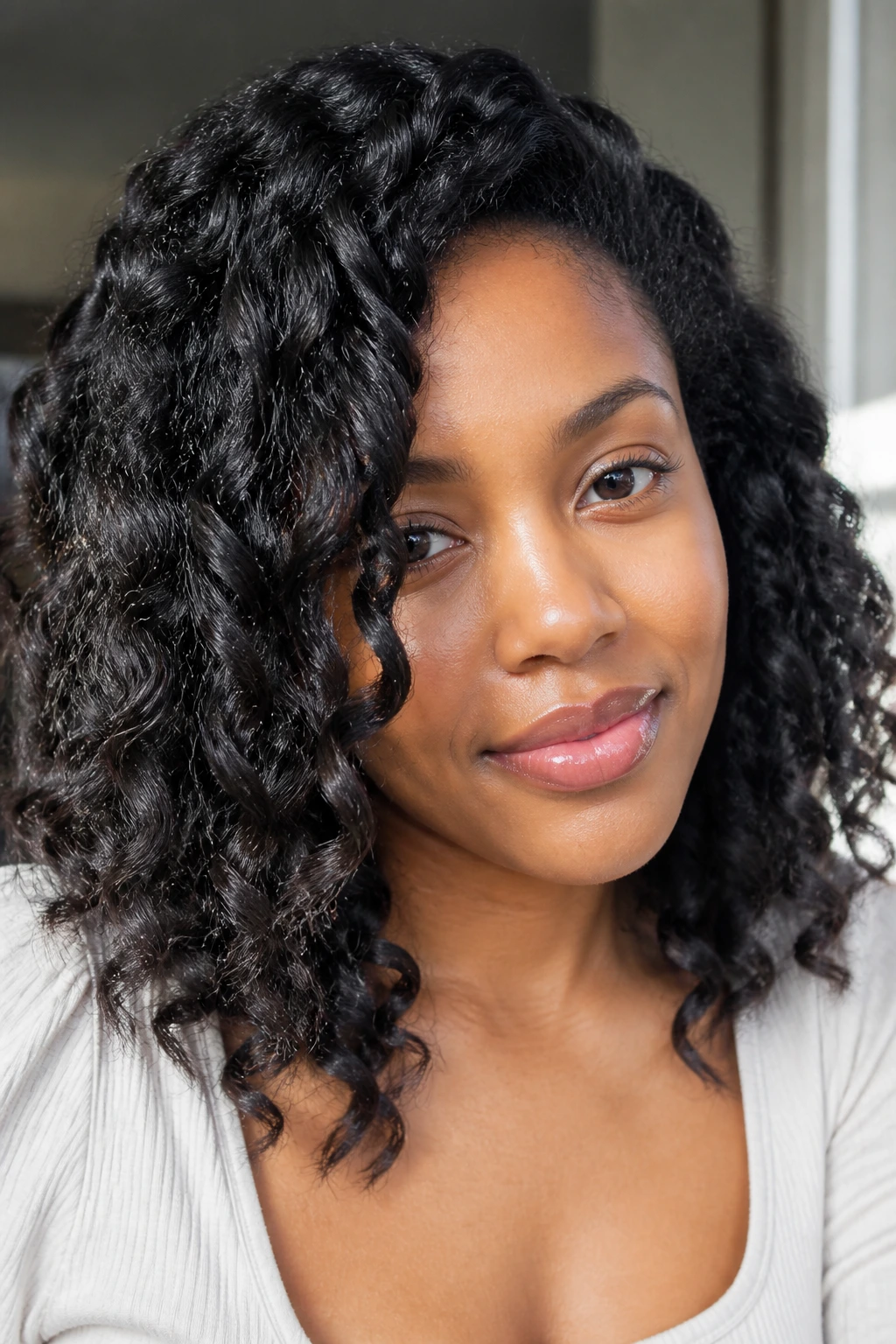
A braid-out gives you a looser pattern than a twist-out, and on medium-length hair that usually reads as movement instead of fuzz. The braid itself leaves a flatter, more elongated wave, which is handy if your curls are dense and you want the shape to sit closer to the head.
I like braid-outs when the hair has a little stretch already. Blow-dried on cool, banded overnight, or braided on stretched hair gives a cleaner finish than braiding hair that’s soaking wet. Unravel only when the braids feel fully dry from root to tip; if the middle is damp, the pattern collapses and the ends puff out in the wrong way.
3. Wash-and-Go Curls With a Clean Center Part
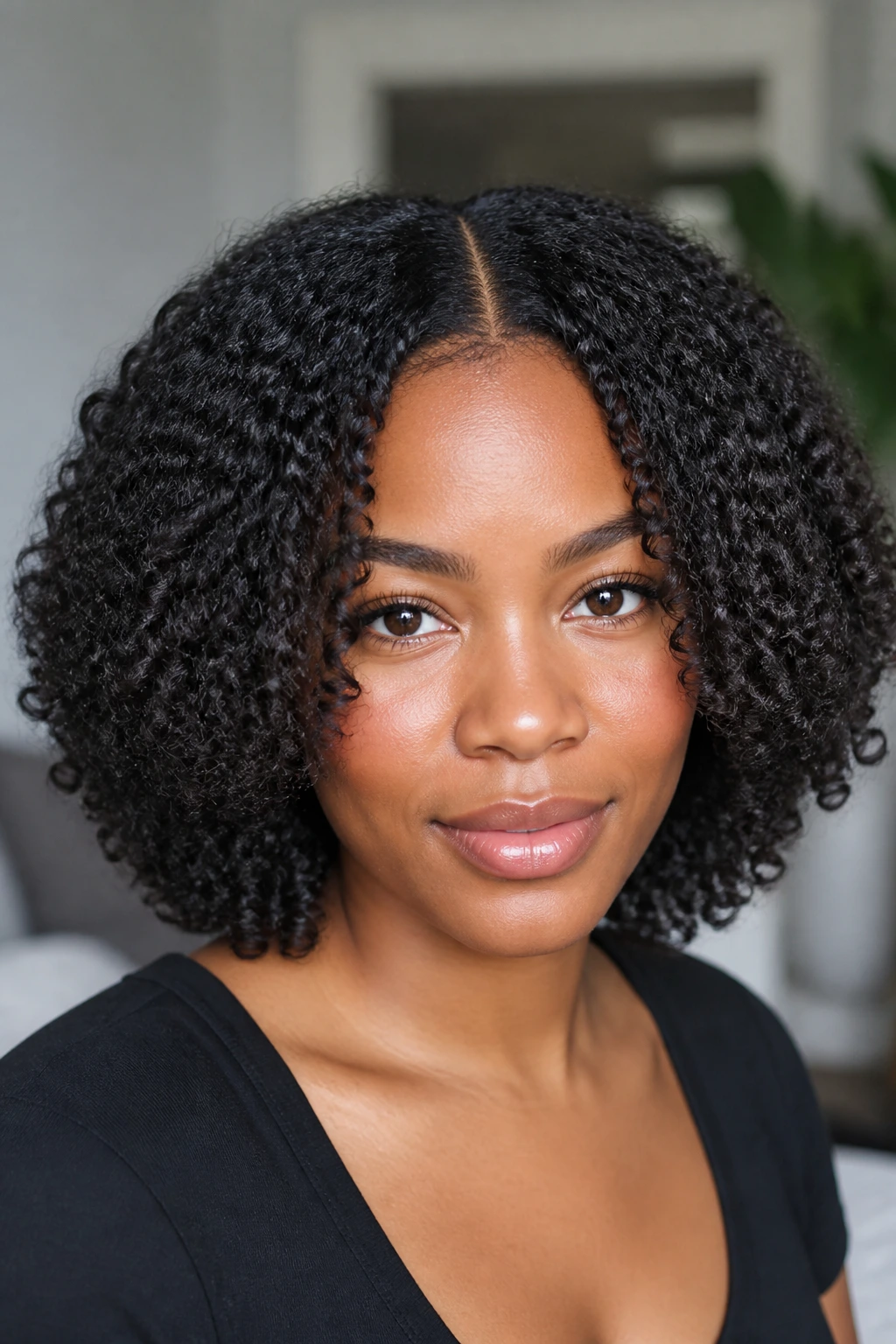
Need the style that shows off your actual curl pattern? This is it. A wash-and-go on medium-length hair has enough density to look full without falling into one heavy curtain, and that gives the curls a nice, rounded frame around the face.
The trick is sectioning. Apply leave-in, then gel or a strong curl custard in small parts, smoothing each section until it clumps together instead of frizzing apart. A Denman brush or a wet brush can help, but don’t overwork the hair — once the curls start to ribbon, stop touching them. Diffuse on low heat if you want more lift, or let it air-dry for a softer outline.
4. The High Puff That Lifts at the Crown
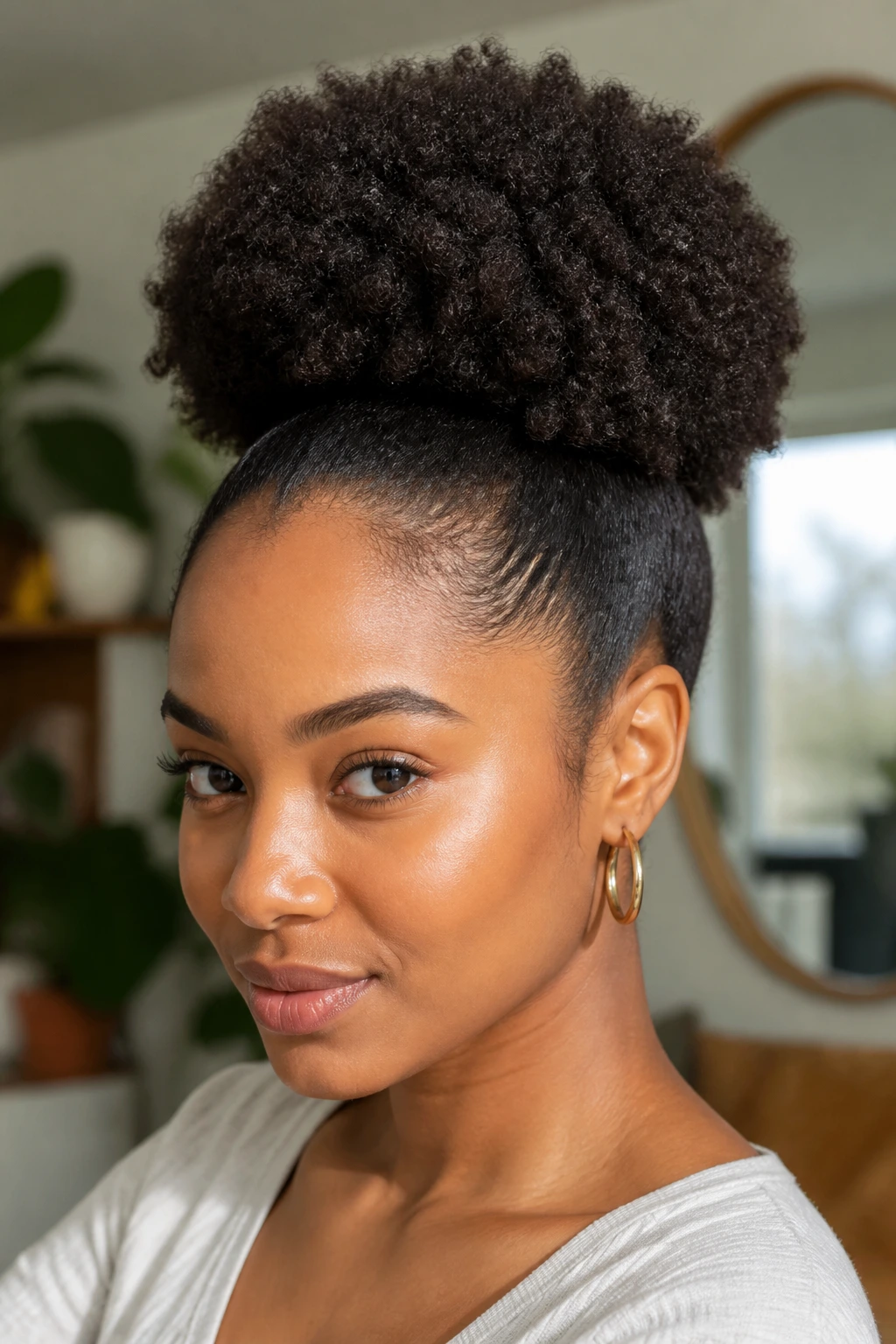
A high puff works because medium-length hair can gather up without looking stretched thin. The shape lands right where you want it: full at the top, clean around the sides, and big enough to make the face look open. No apology required.
Use a wide puff cuff or a stretchy band that doesn’t cut into the roots. Smooth the perimeter with gel and a soft brush, but leave the puff itself alone. If your hair is thick, tilt the puff slightly forward so it sits like a rounded cloud instead of a tight ball. That tiny angle makes a bigger difference than people think.
5. Half-Up, Half-Down With Curly Ends Left Out
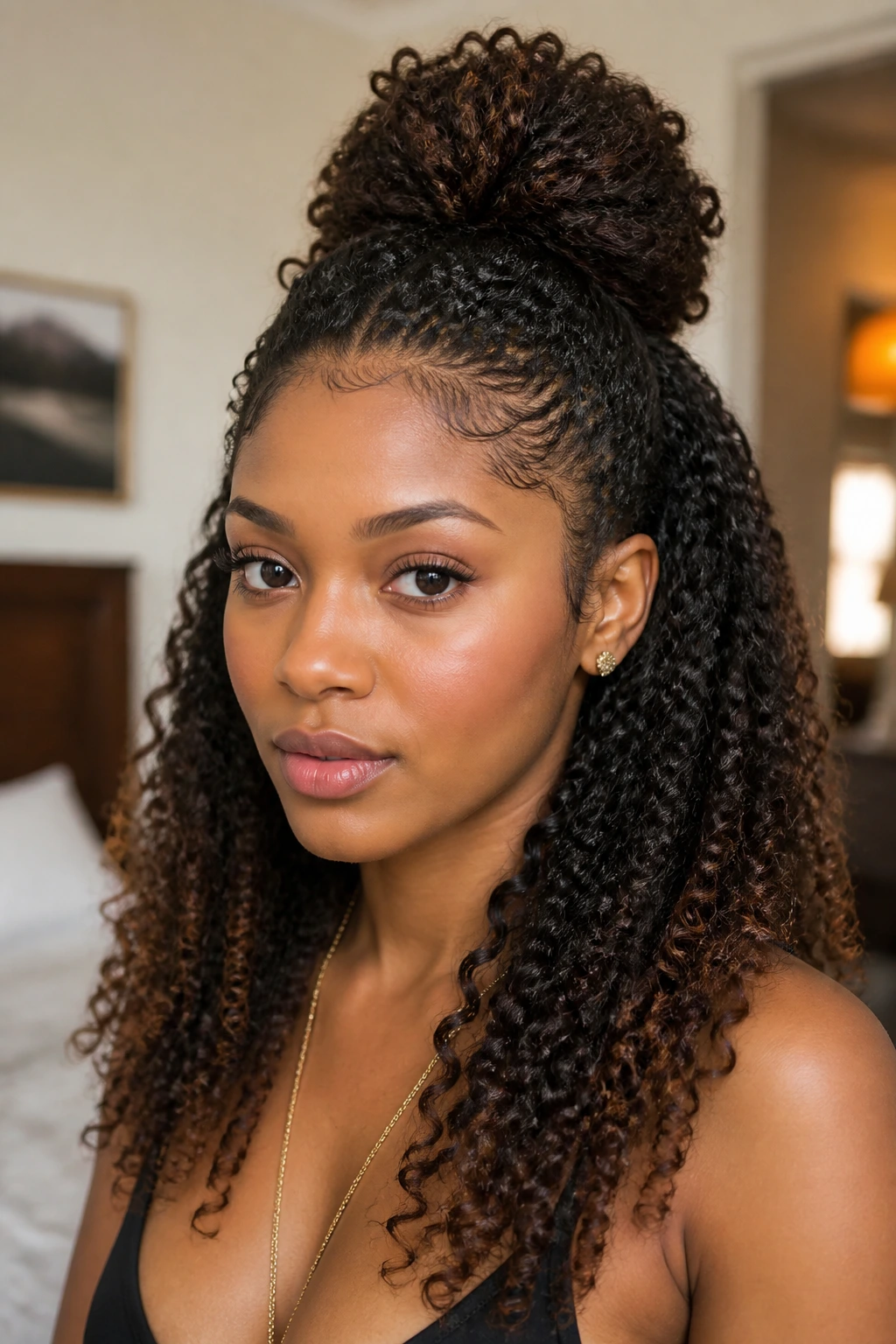
Half-up, half-down styles look especially good on medium-length hair because the top section can be controlled while the bottom section still has enough length to show texture. You get two shapes in one: lifted at the crown, loose around the shoulders.
This style is a good fix for second-day hair that has decent curl but messy roots. Pull the top half into a puff, small bun, or clipped knot, then let the bottom fall free. If the curls at the back are frizzy, mist them lightly and scrunch with a little foam. Keep the top section clean and the lower section soft. That contrast is what makes it work.
6. Flat Twists Swept Into a Low Bun
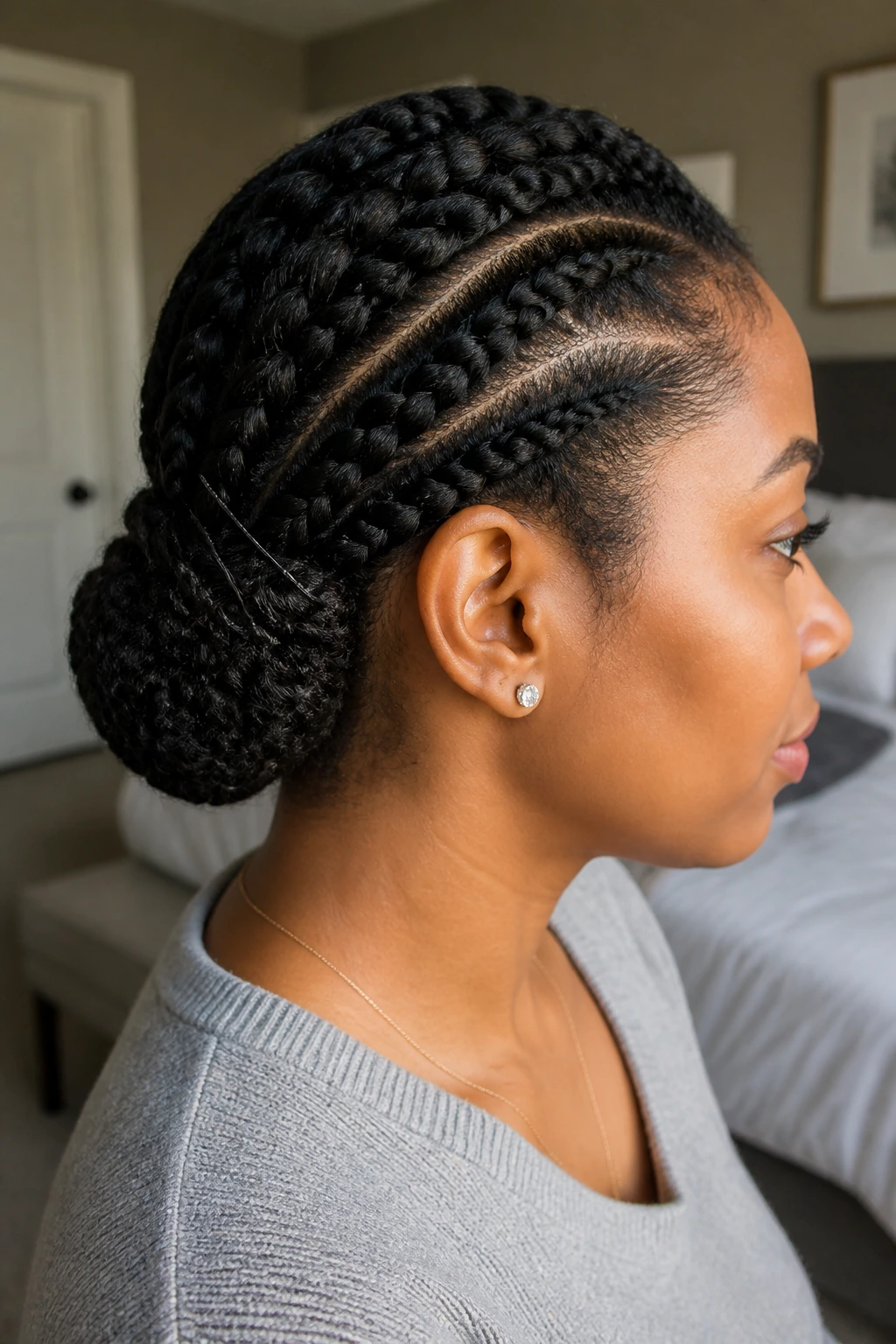
Flat twists give you structure without the tension of tight cornrows, and a low bun keeps the whole thing tidy. On medium-length hair, this style sits close to the scalp, which helps it last longer and keeps the ends tucked away from daily friction.
Part the hair into a few clean sections, flat twist toward the nape, then gather the loose ends into a small bun. Bobby pins are your friend here — use more than you think, and cross them so the bun doesn’t slide. This is one of those styles that looks better after it settles for an hour.
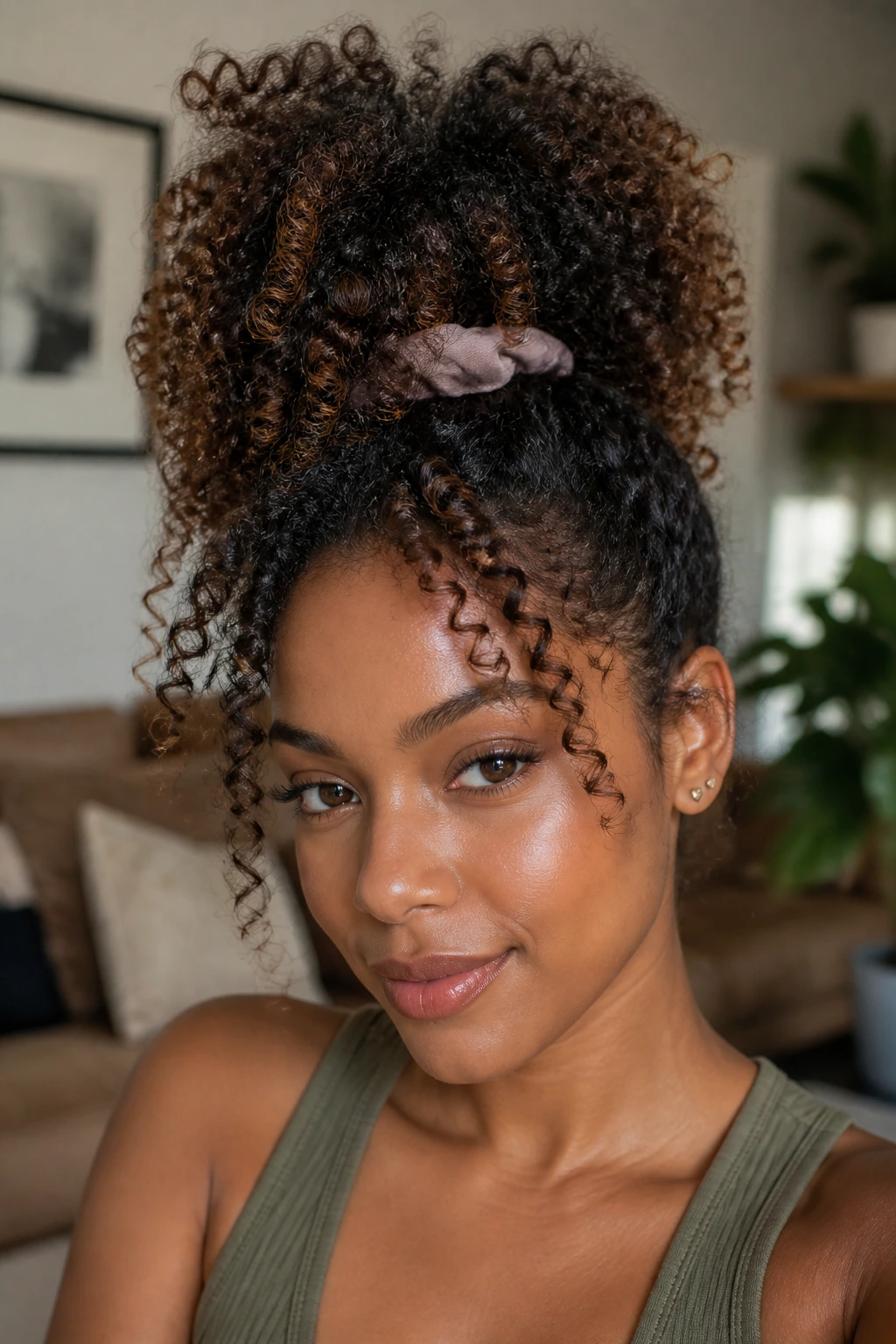
7. The Pineapple Updo for Day-Old Volume
The pineapple is the move when your curls already have shape and you do not want to start over. Pile the hair loosely at the crown, secure it with a soft scrunchie, and let the ends spill out in one loose cluster. It’s part style, part rescue operation.
On medium-length hair, the pineapple sits high without becoming awkwardly tall. That matters. The look stays playful instead of lopsided. If the front is flattened from sleeping, fluff the roots with your fingers and mist the hairline very lightly. Do not soak it. You want height, not collapse.
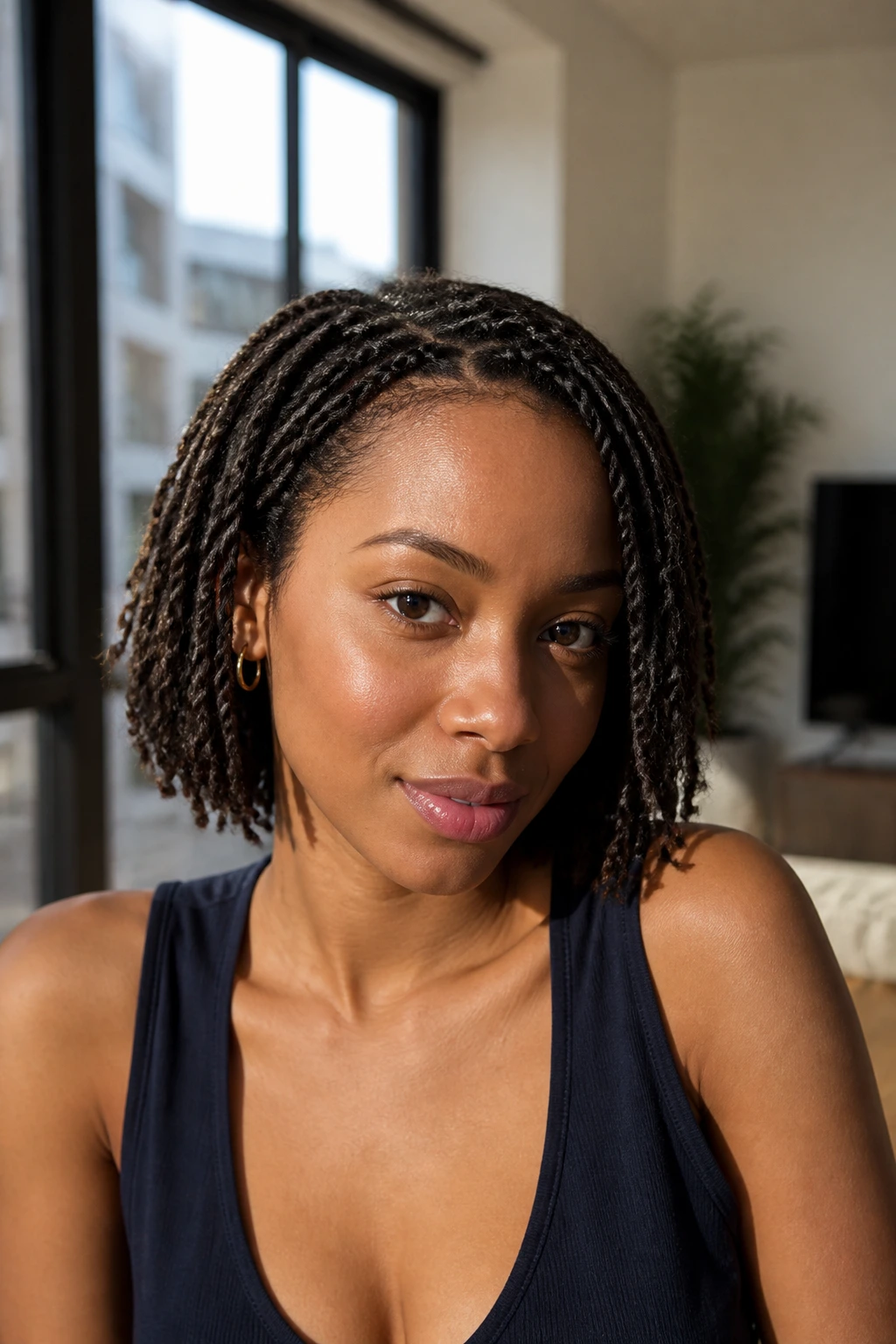
8. Mini Twists Styled Like a Loose Bob
Mini twists give medium-length hair a neat, swingy shape that falls somewhere between a protective style and a dressed-up bob. They’re smaller than chunky twists, so they move more cleanly and tangle less at the ends, which is useful if your hair frizzes as soon as the wind shows up.
Start with well-moisturized sections and enough slip to keep the parts smooth. A rat-tail comb helps here, because crooked parting shows more on shorter lengths. Wear the twists loose, pin a few back, or tuck them behind the ears. They can last for weeks, but they look especially sharp in the first few days when the parts are crisp.
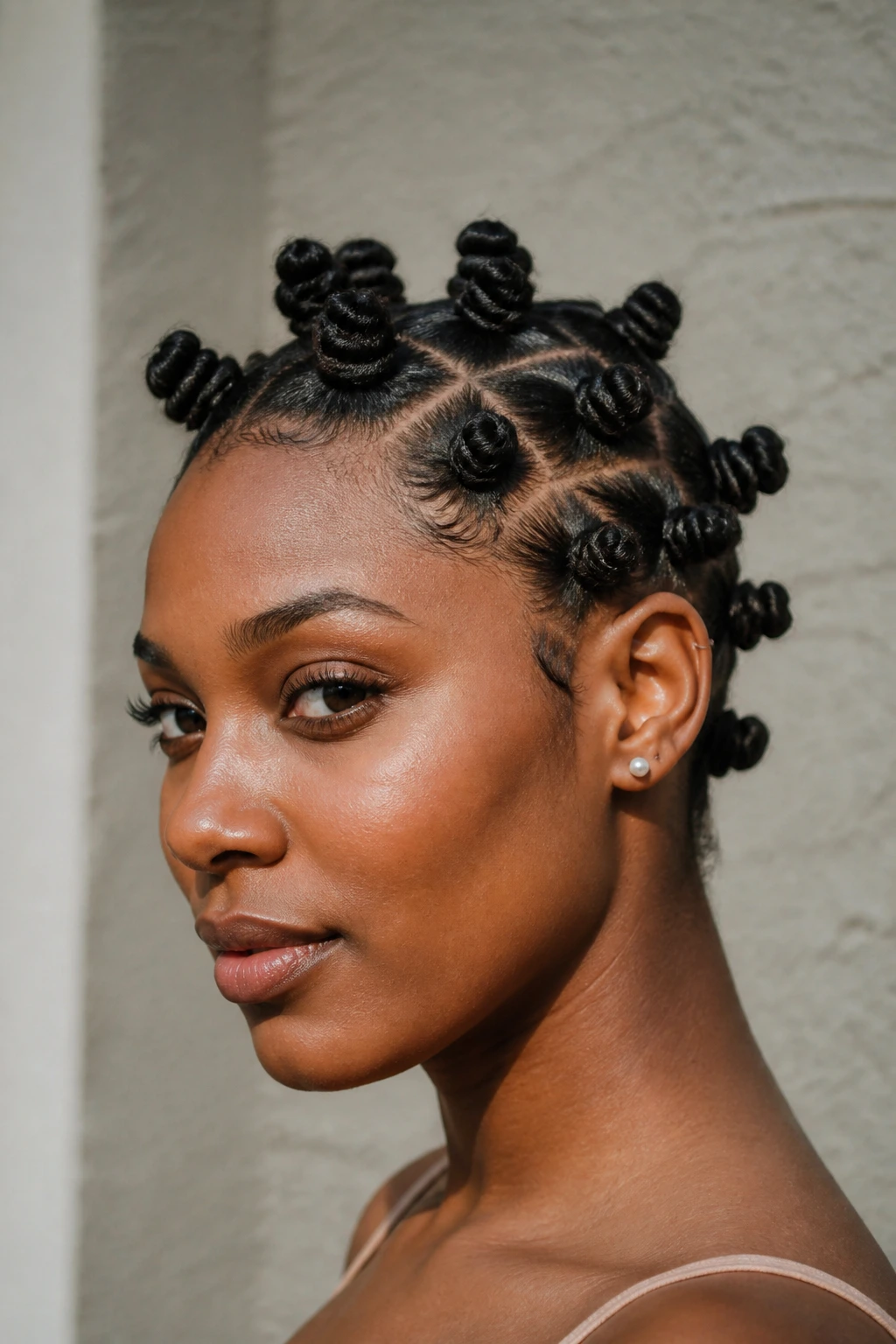
9. Bantu Knots That Double as a Set
Bantu knots are one of those styles that do two jobs at once, and medium-length hair makes them easier to manage than very long hair. The knots stay compact, and the scalp pattern looks clean instead of bulky. If you unravel them later, you get a knot-out with a springy curl pattern.
Use small sections, twist each one firmly, then wrap it into a knot close to the scalp. A little gel at the base helps the knot stay neat. If you plan to wear the knots as the final style, make the sections uniform. If you want the knot-out, dry them completely before you touch them. Damp knots lead to frizz and a flattened root.
10. Finger Coils for Tiny, Springy Definition
Finger coils are the style for days when you want the curls to look deliberate, not just “done enough.” On medium-length hair, the coils keep their shape because there isn’t a huge amount of length pulling them loose. The finished look is neat, compact, and almost sculpted.
Work on small sections with a cream or custard that gives slip. Twist each section around your finger from root to tip, then leave it alone. Seriously — leave it alone. The coils take time to set, and poking them before they dry is the fastest way to wreck the pattern. They’re especially good for a clean, polished finish when you don’t want a lot of volume.
11. Side-Part Puff With Extra Height Up Top
A deep side part changes the whole silhouette of a puff. Instead of the shape sitting straight back, the hair lifts toward one side and gives you a little asymmetry, which makes medium-length hair look more styled without more work.
Smooth the flatter side with edge brush pressure only where needed, not across the whole head. Then gather the puff just off-center. That small shift helps if your face shape likes height on one side or if you simply want the style to feel less predictable. The best part? It takes the same band and gel you’d use for a regular puff.
12. Headband Tuck Style for a Fast Clean Finish
A headband tuck can rescue hair that’s stretched but not quite cooperative. Slide the headband on, tuck the ends under from back to front, and pin any stubborn pieces where they try to escape. Medium-length hair usually folds neatly here because the ends are short enough to hide without building a giant knot.
This style has a surprisingly clean finish if you keep the front smooth and the tuck loose. Too much tension makes the headband look obvious in a bad way. A wide fabric headband works better than a thin elastic one, and a satin-lined version is even kinder if your hairline is sensitive. It’s the sort of style that looks casual in the right way.
13. Pinned-Back Sides With Full Curls Down the Middle
This look keeps the face open without hiding the texture in the middle. Clip or pin both sides back, then let the center section fall freely. On medium-length hair, that center curtain lands right around the jaw and shoulders, which gives the style a nice frame.
If the sides puff out, use two bobby pins per side in an X shape so they actually hold. You can leave the middle as a wash-and-go, a twist-out, or a rod set. The style is simple, but it benefits from clean parting and a deliberate shape. If one side looks flatter than the other, that’s normal. Hair is rarely symmetrical, and trying to force it usually makes things worse.
14. A Frohawk With Stretched Sides
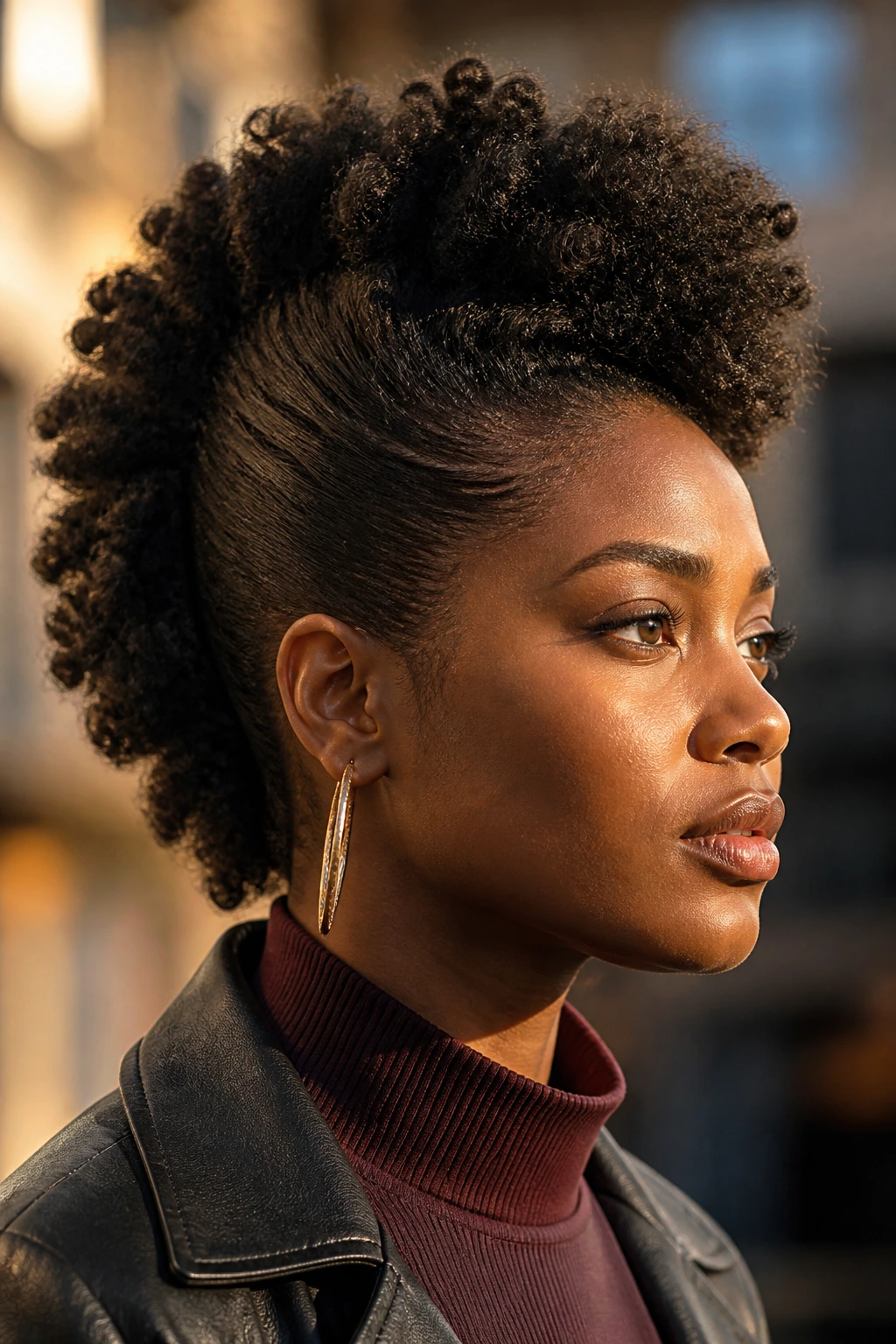
The frohawk is for when you want shape with attitude. Pull the sides up or back and leave the center ridge full, textured, and high. Medium-length hair gives you enough volume for the mohawk shape without needing a pile of extensions or a half-hour of pinning.
Stretch the sides first if your hair shrinks aggressively. A quick banding session or a low-heat blow-dry on cool can help the style sit where you want it. Then fluff the center with your fingers. The key here is contrast: tight at the edges, airy in the middle. That difference gives the style its line.
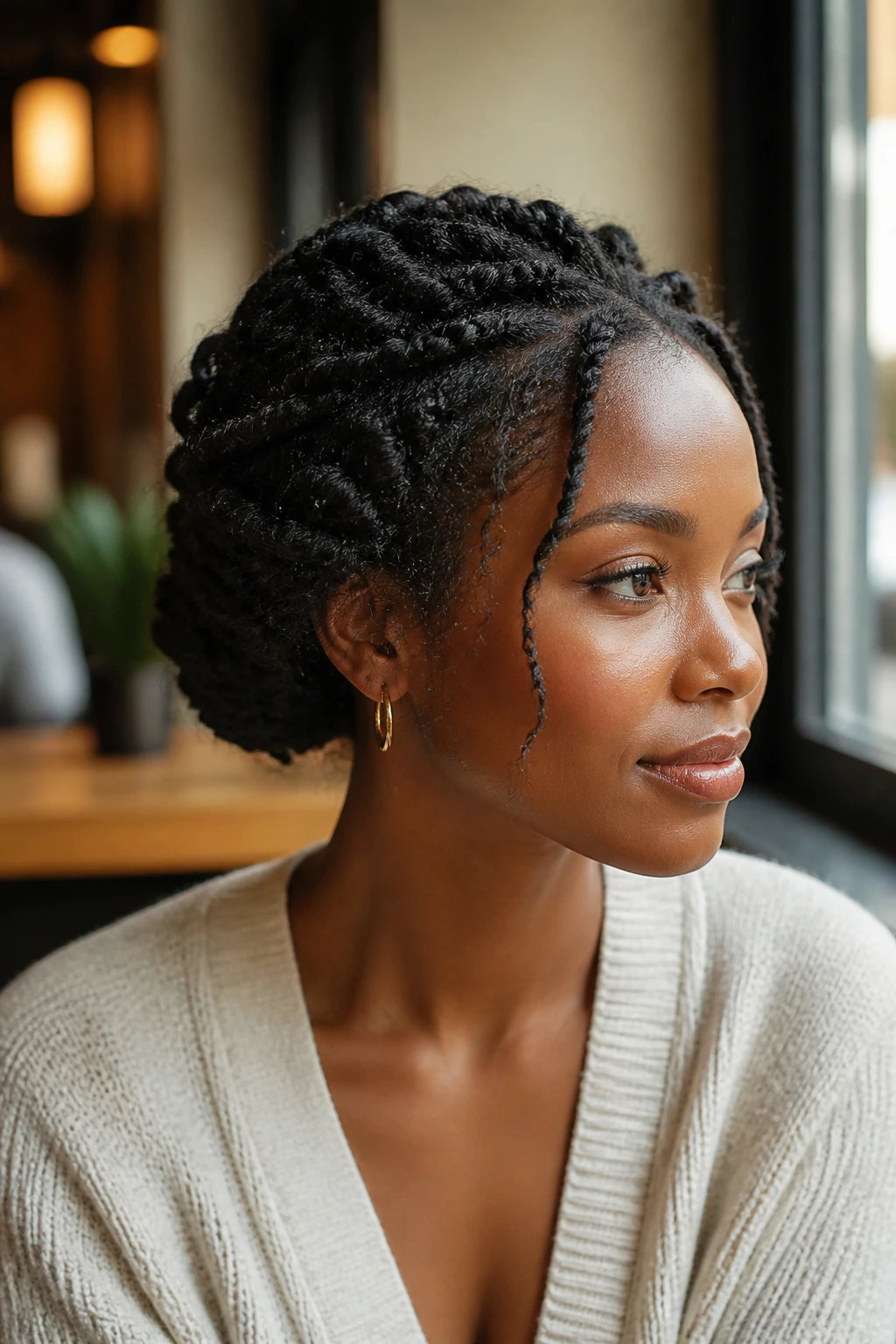
15. Two-Strand Twist Updo With a Soft Crown
A two-strand twist updo is a good answer when you want your hair off your neck but still want texture showing. Twist the hair into medium sections, then wrap and pin the lengths into a low crown or bun shape. On medium-length hair, the twists are long enough to build shape but not so long that they need a whole engineering plan.
Use a cream that keeps the twists soft, not crunchy. If the twists are too stiff, the updo looks stiff too. A few face-framing pieces can soften the outline, especially if the style is for an event or dinner out. It’s neat without looking severe, which is a nice balance to have.
16. Chunky Twists Worn Loose and Swingy
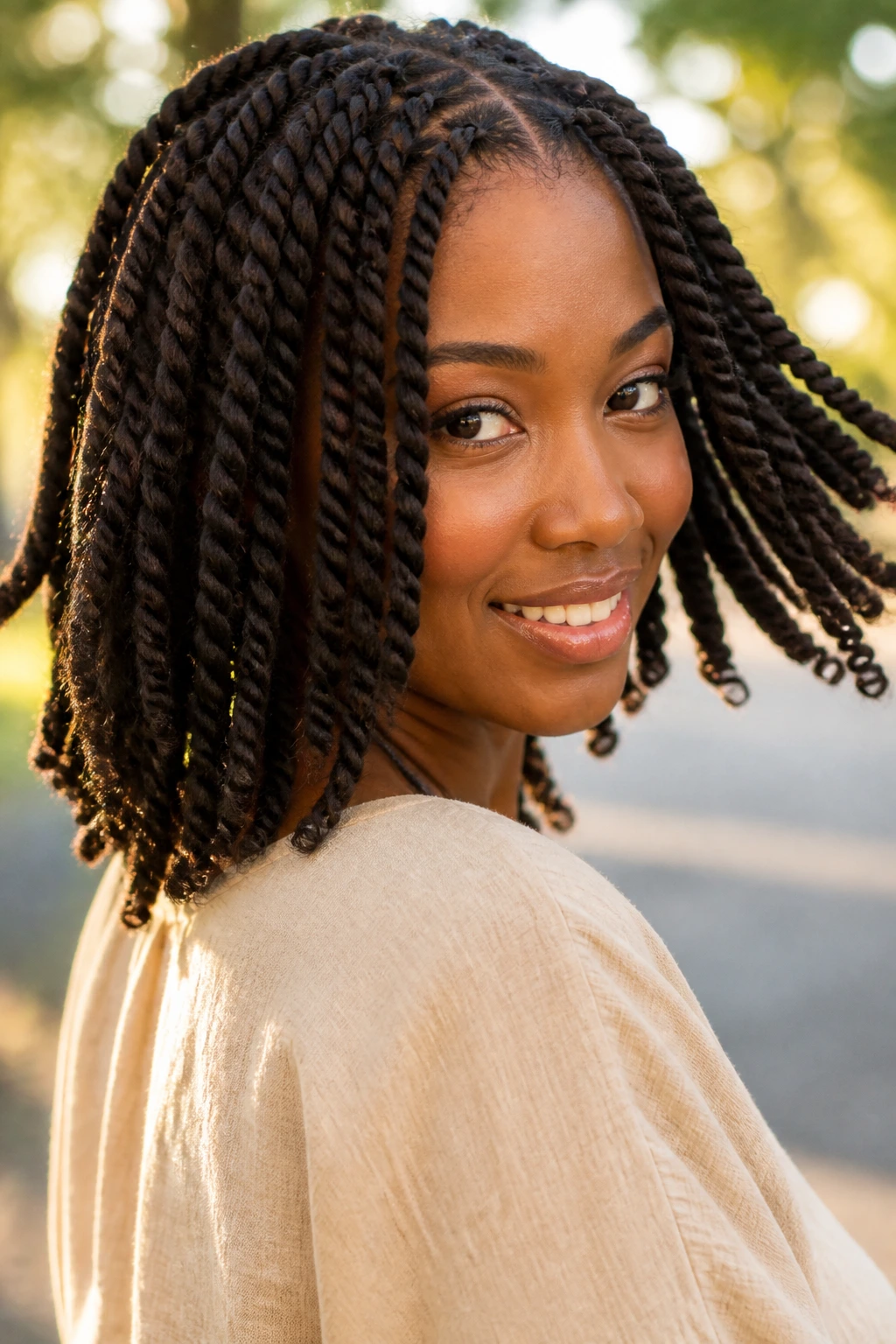
Chunky twists are one of my favorite medium-length styles because they show texture fast. Fewer, thicker twists mean less installation time and less tension on the scalp. Once they’re in, they hang with a chunky, rope-like finish that looks intentional right away.
They work best if your hair has some stretch. When the twists are done on very shrunken hair, they can shrink up so much that the shape disappears. Leave the ends sealed and use enough product to keep the twists from unraveling at the bottom. You get a soft, swingy shape that feels easier than tiny twists but still neat enough for a full week.
17. A Crown Braid That Wraps the Hairline
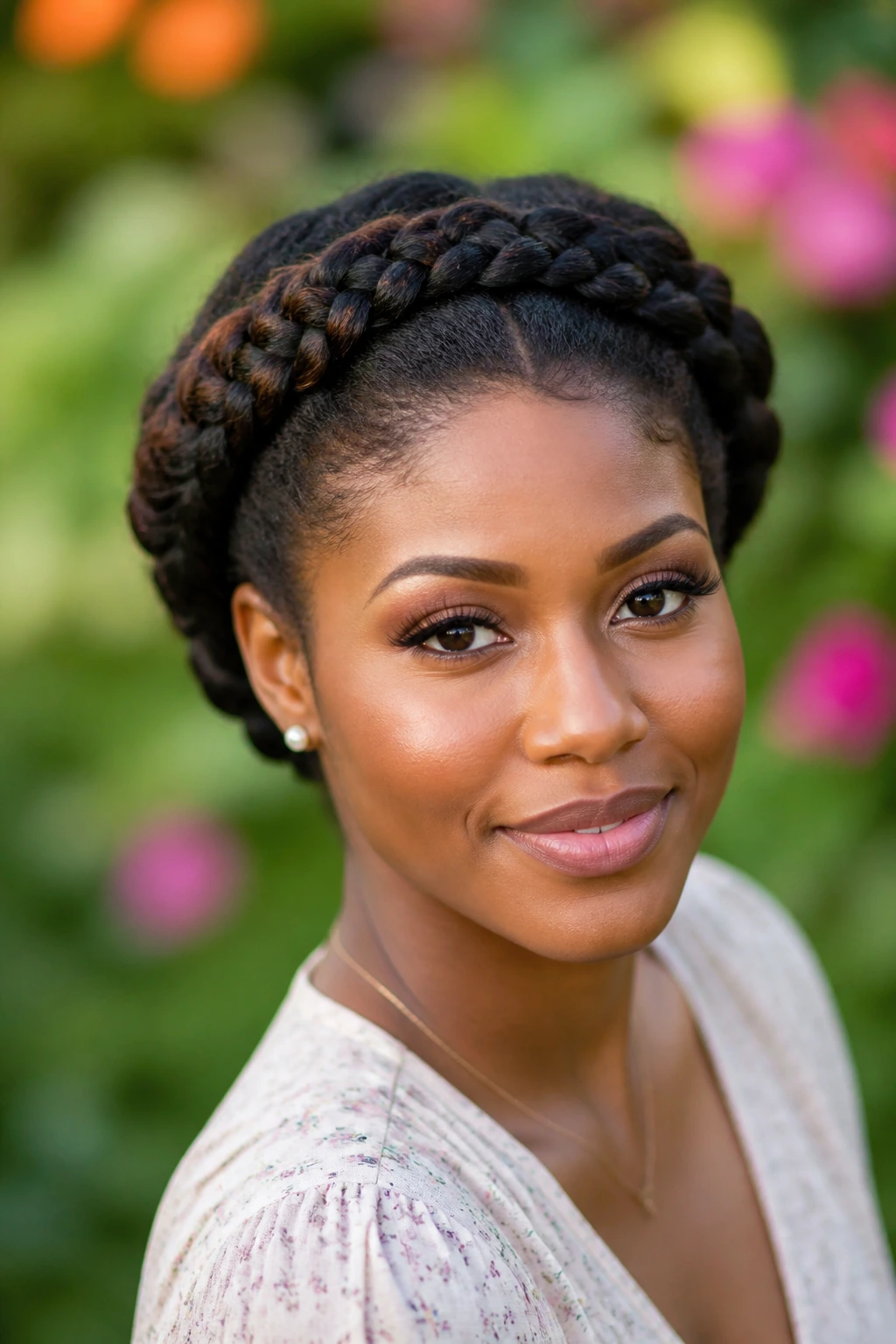
A crown braid gives medium-length hair a full perimeter shape without relying on a lot of length in the back. The braid wraps the hairline like a frame, and the middle can stay loose, tucked, or pinned. It’s one of those styles that looks more elaborate than it is.
Keep the braid close to the scalp and even in thickness, or the halo shape starts to wobble. Medium-length hair is long enough to wrap cleanly, which is why this style works better here than on very short hair. Add a few cuffs or a small decorative pin if you want, but don’t over-decorate it. The braid itself is the point.
18. Low Braided Bun With Clean Parts
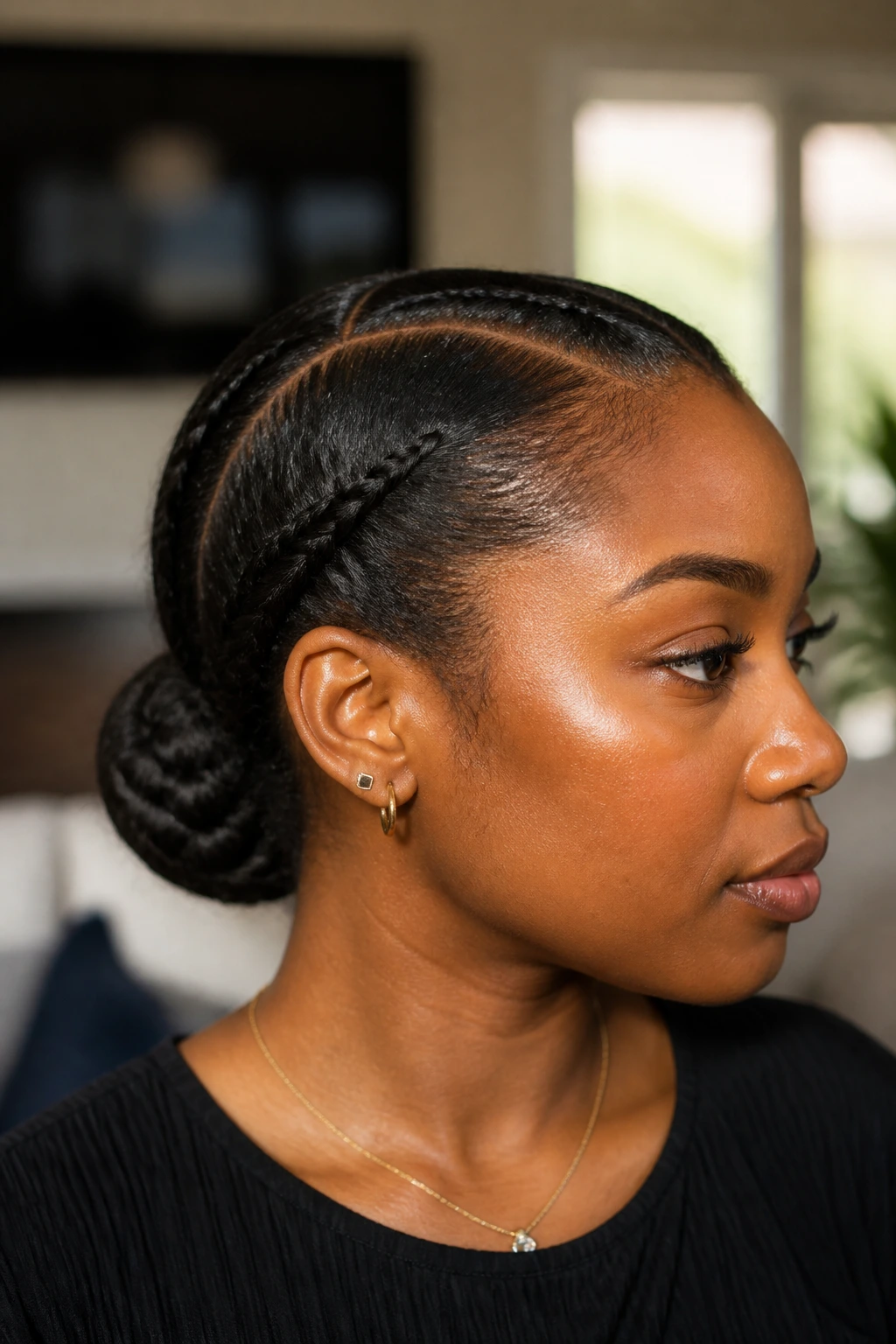
A low braided bun is neat, low tension, and far more practical than it sounds. The braid gives the bun structure, and the bun keeps the ends tucked away where friction can’t get at them. On medium-length hair, the shape stays compact and doesn’t balloon out the way a long bun can.
This works best on stretched hair with clear parting. If the roots are messy, the whole style looks rushed. Smooth the hair back, braid or twist the main section, wrap it low, and pin it close to the nape. That placement gives the style a clean finish without pulling hard on the front.
19. Side-Swept Curls on a Deep Part
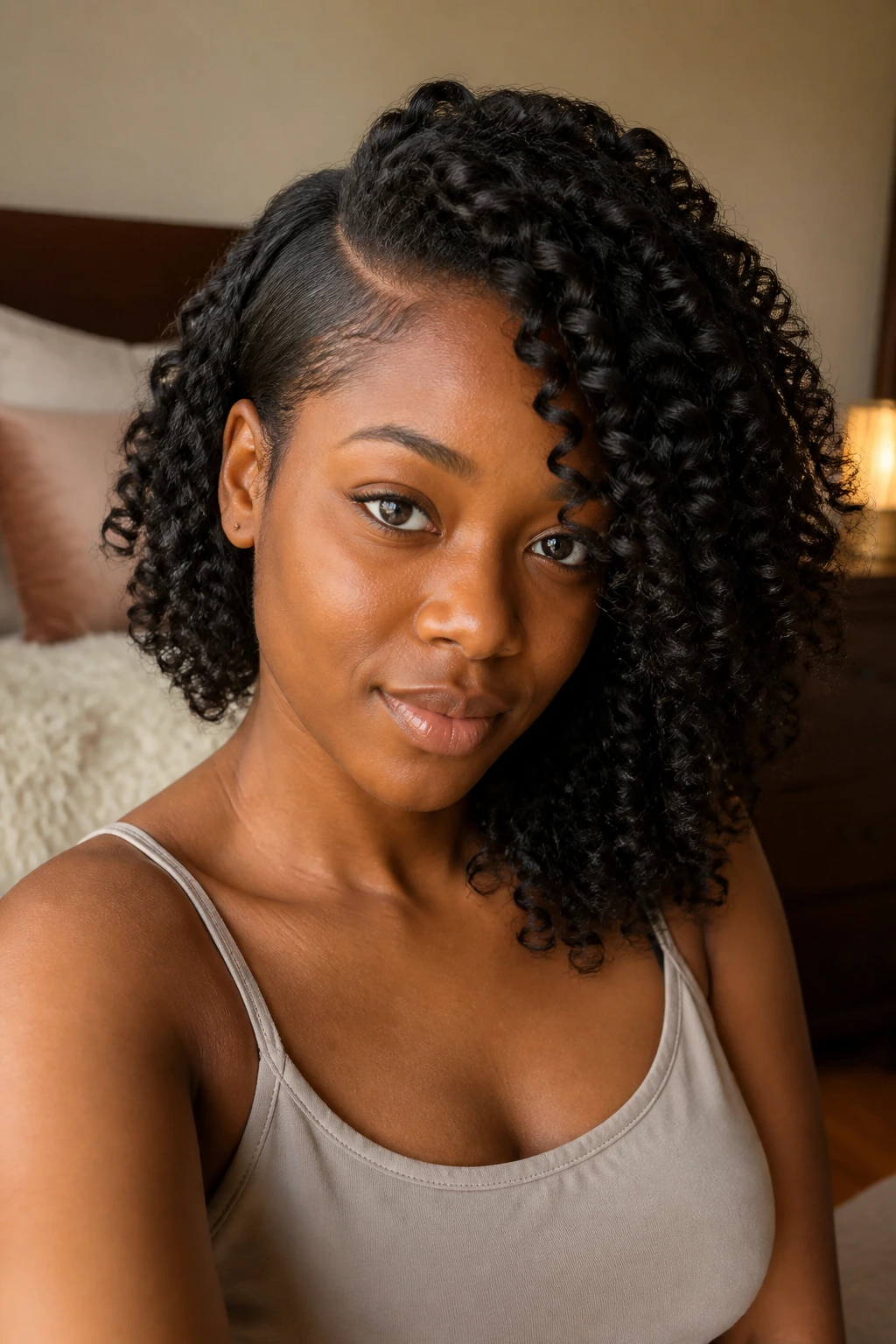
A deep side part changes the mood of curls immediately. Instead of hair falling evenly on both sides, one side opens the face and the other side builds volume near the cheekbone. On medium-length hair, that side sweep feels soft and dramatic at the same time.
This is a good look for a wash-and-go, a rod set, or a twist-out that has settled overnight. Pin the smaller side back if you need extra control, then let the fuller side sit over one shoulder. The whole style depends on the part being clean. A crooked part throws off the balance fast, so take the extra thirty seconds to get it right.
20. Space Buns on Stretched Natural Hair
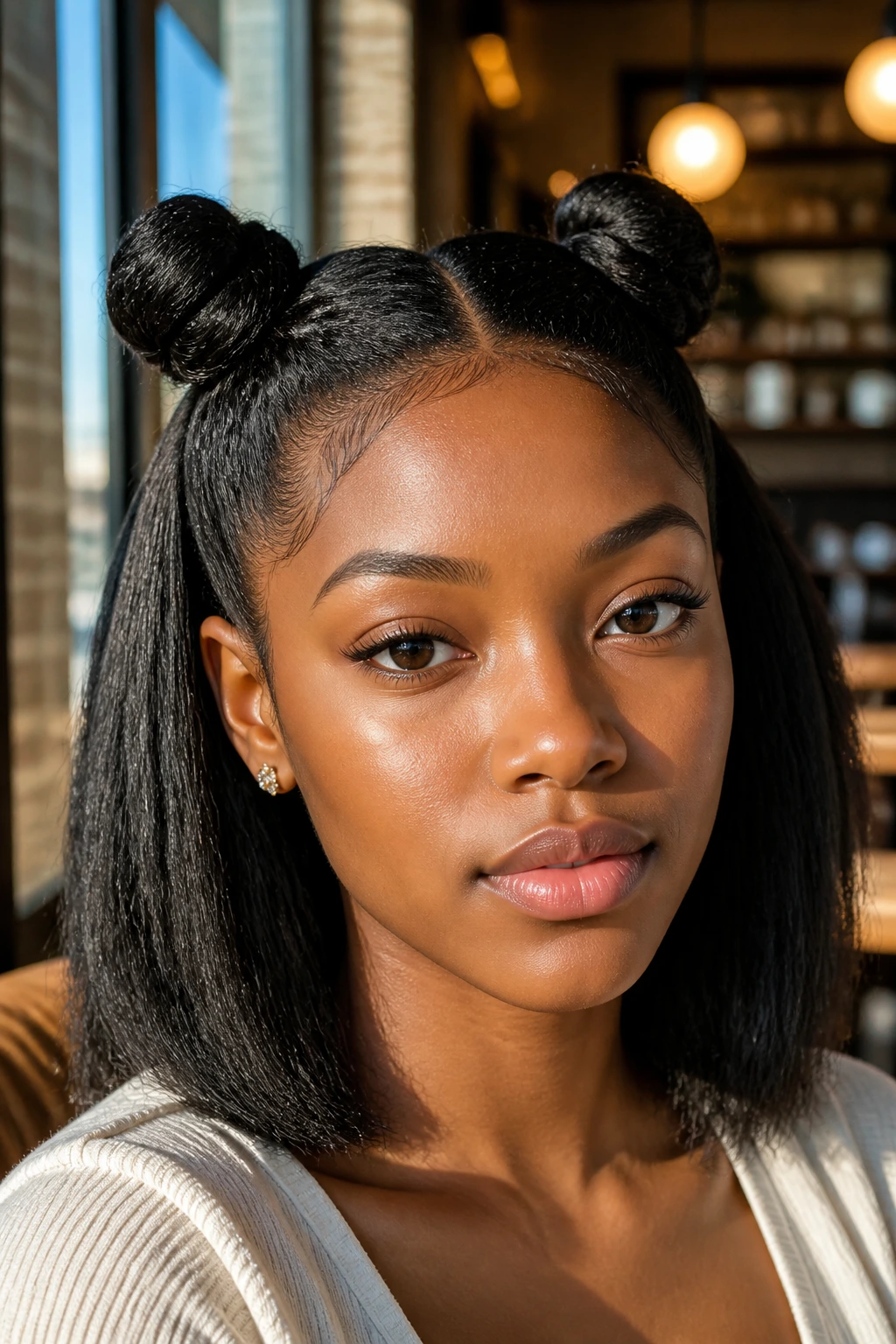
Space buns are one of the few styles that can feel playful without looking childish, and medium-length hair makes the buns sit in the right size range. You can keep them small and close to the head, or let them sit rounder for more volume.
Start with hair that has some stretch so the buns don’t end up lumpy. Split the hair down the middle, twist or smooth each side into a bun, and leave the ends tucked or lightly curled. If the front needs polish, smooth only the hairline. Too much gel across the whole head makes the style look stiff instead of lively.
21. Rolled Faux Hawk With Tucked Sides
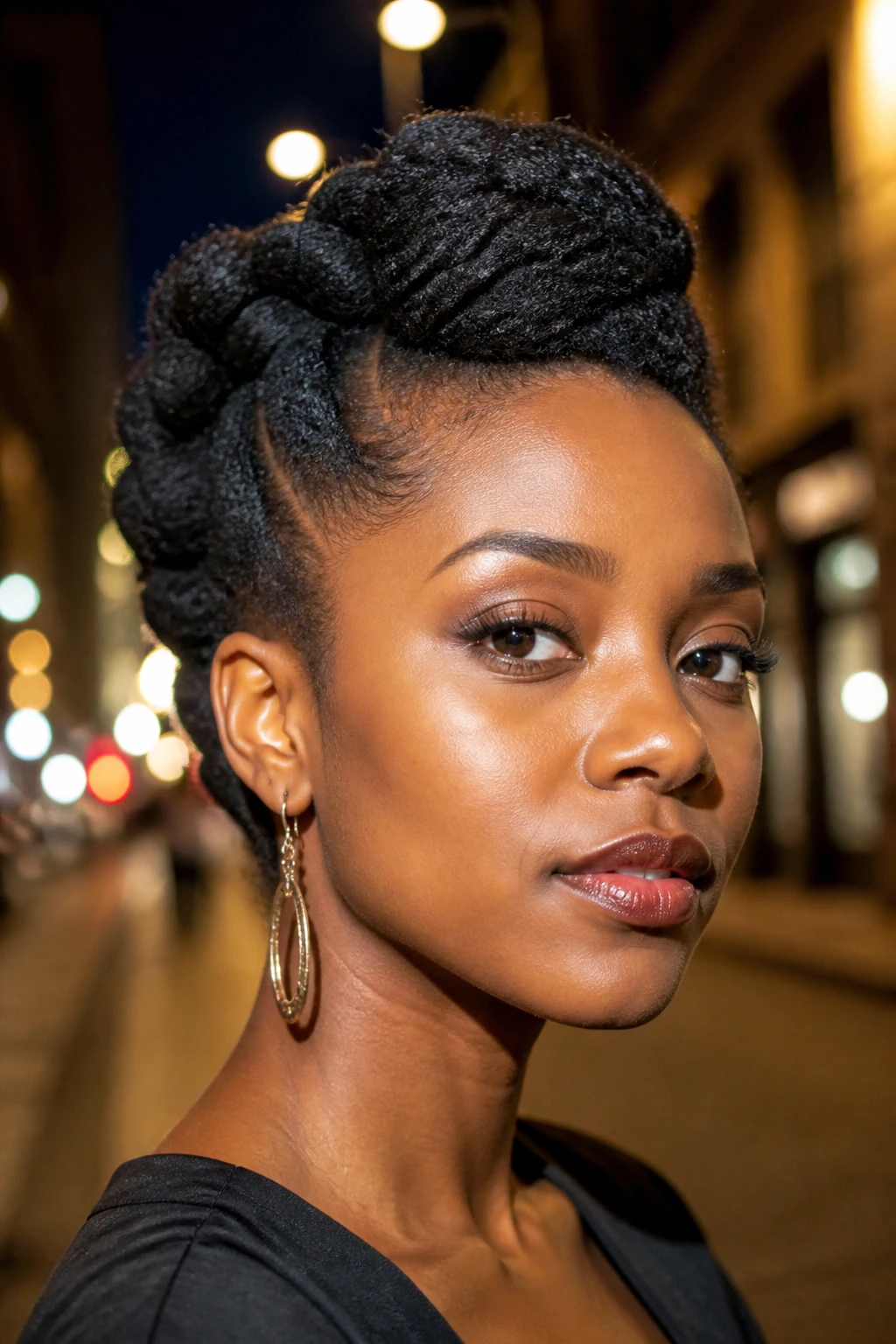
A rolled faux hawk gives you shape without the commitment of a full mohawk-style install. Roll the sides inward toward the center, pin them in place, then build height through the middle section. Medium-length hair is ideal here because the sides can actually stay tucked instead of fighting the clip.
This one looks best when the twists or rolls are a little soft, not tightly pressed flat. You want the center ridge to stand up and move. If your hair is thick, use more pins than you think you need. If it’s fine, keep the rolls smaller so the style doesn’t feel bulky. It’s a good one for a night out when you want structure and texture in the same look.
22. Tuck-and-Pin Updo With Soft Ends
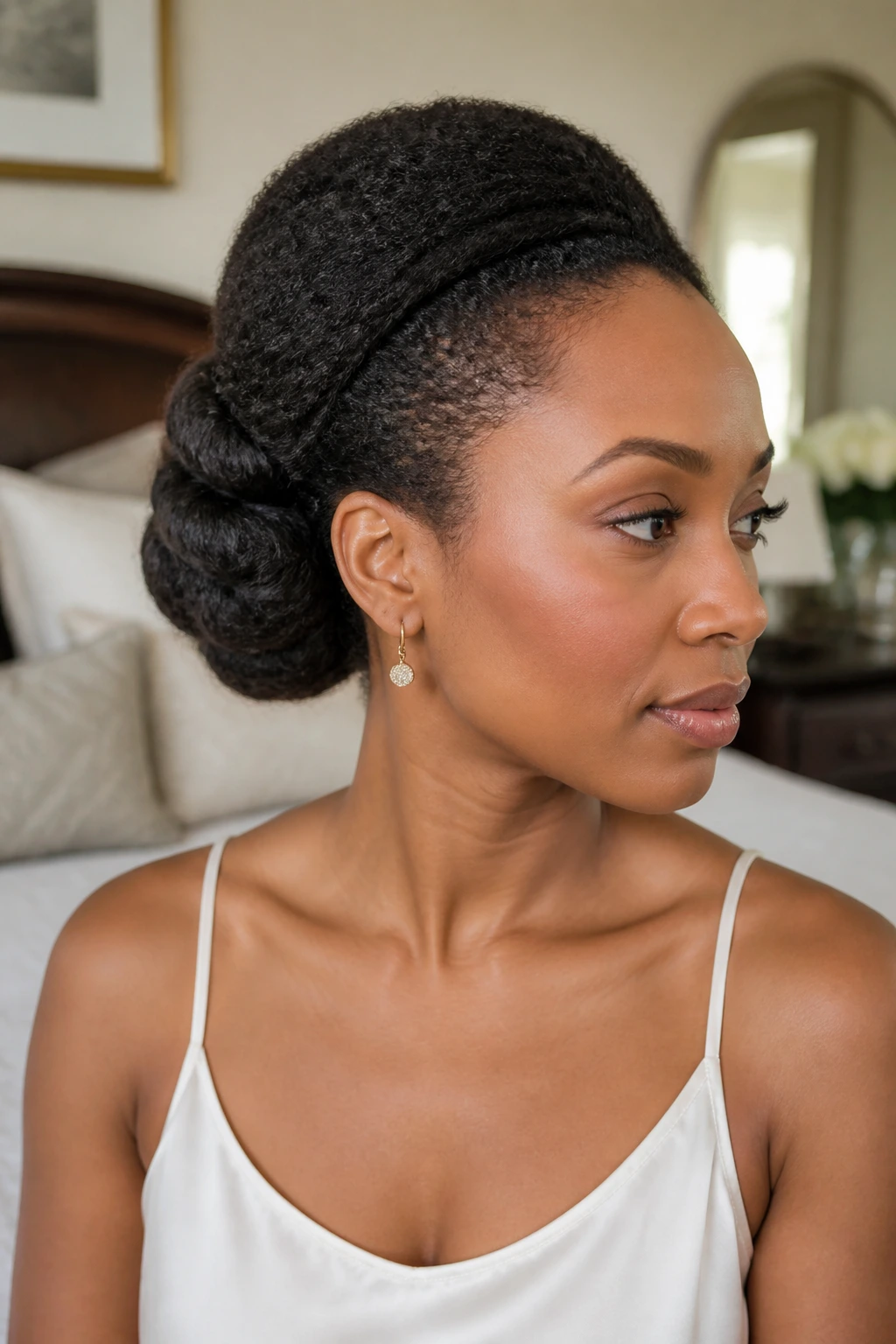
A tuck-and-pin style is the quiet workhorse of medium-length natural hair. You gather the hair, fold the ends under, and pin everything into a low roll or soft chignon. Because the hair isn’t too long, the tuck usually sits cleanly without needing a mountain of hidden pins.
The style reads elegant without trying too hard. That’s part of the appeal. Keep the front smooth, but let a little texture show near the bun so it doesn’t look too slicked down. A shine mist on the surface can help, though you do not need much. Overdoing the product makes the tuck slip.
23. Fulani-Inspired Braids for Medium-Length Hair
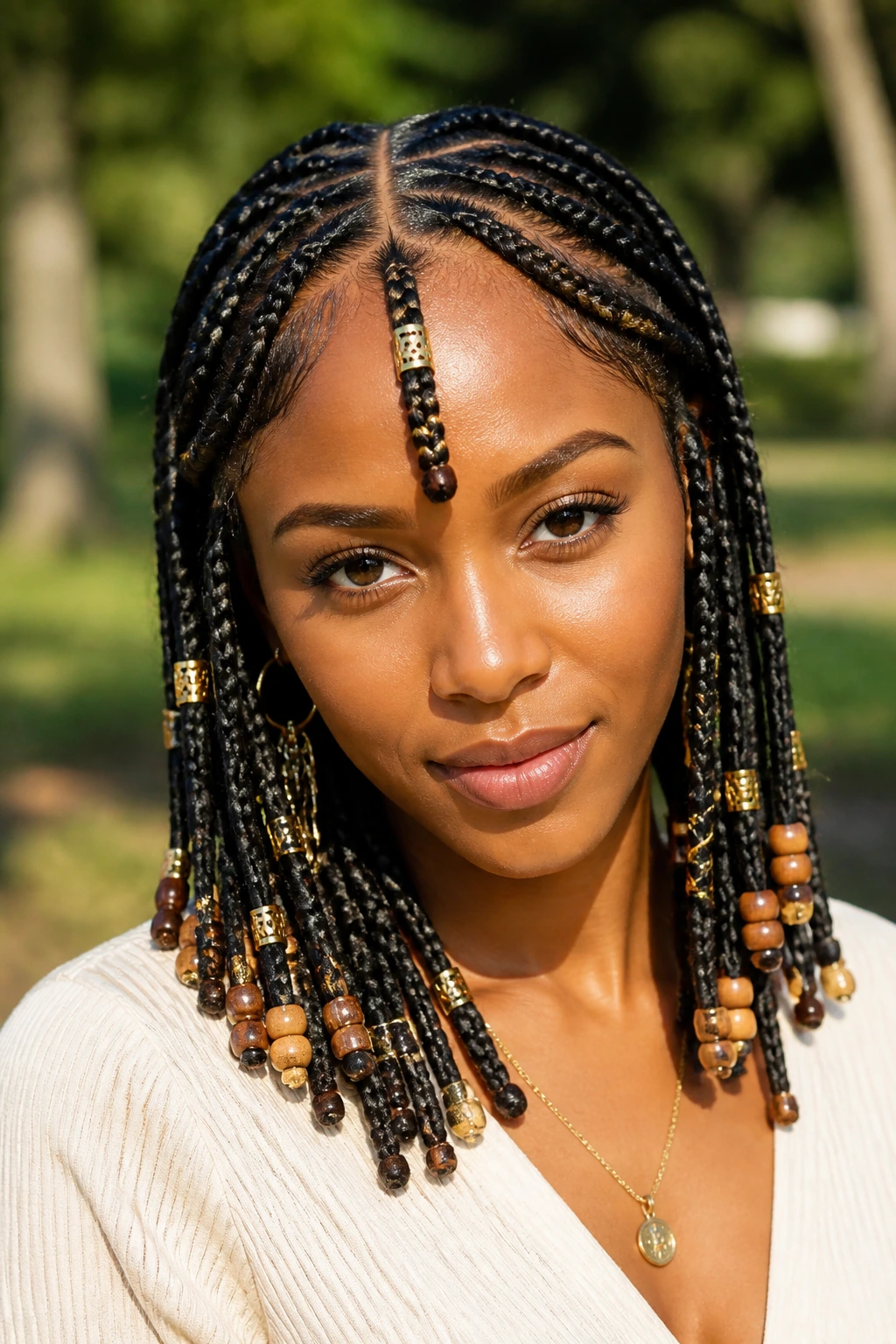
Fulani-inspired braids work beautifully on medium-length hair because the braid pattern itself becomes the focal point. You can do a center braid, side braids, or feed-in braids with cuffs and beads, then keep the lengths neat and controlled. The look lands somewhere between protective styling and ornament.
If your hair is dense, small-to-medium braids keep the style from looking heavy. If it’s finer, fewer braids with clean parting tend to sit better. Beads and cuffs should feel balanced, not piled on. A little goes a long way here. The braid pattern should still be the star.
24. Cornrows in Front, Loose Curls in Back
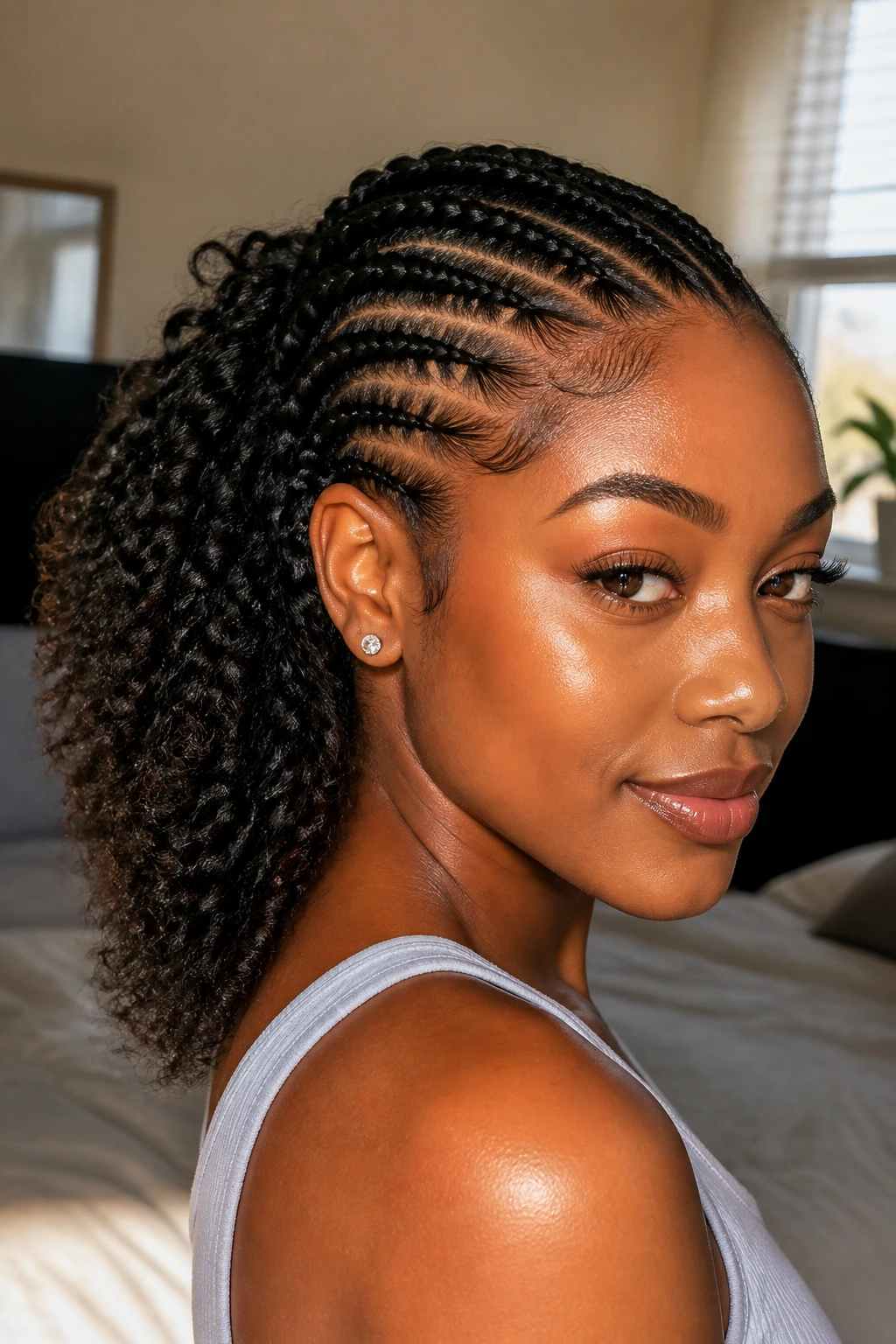
This hybrid style solves a real problem: you want the front out of your face, but you still want to show off texture. Cornrows or flat braids in the front keep everything controlled, while the back stays curly, coily, or rod-set soft.
Medium-length hair makes the contrast clear without turning the back section into a heavy curtain. Use gel or foam on the front so the rows stay neat, then let the back have more movement. It’s a smart style for busy days because the front stays put even when the rest of the hair gets a little lived-in.
25. Flexi Rod Set With Spiral Ends
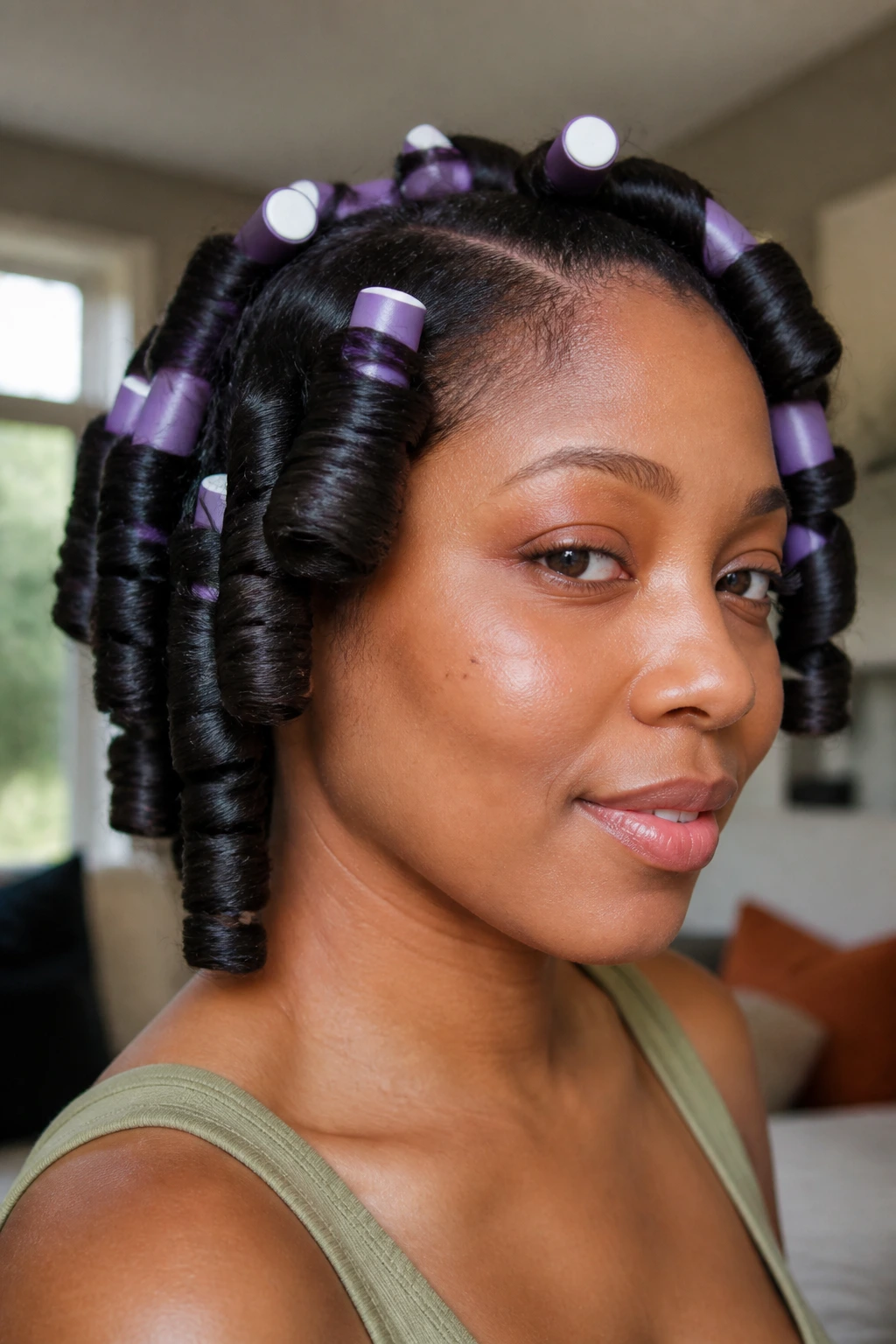
Flexi rods give medium-length hair a springy spiral that sits somewhere between defined curls and polished waves. The curl size changes with the rod size, so you can decide whether you want tight spirals or bigger bounce. Medium length is a good match because the curl has room to form without getting weighed down.
Set the hair in small sections, roll it smoothly to the ends, and keep the rod placement consistent. The main mistake is taking the rods out too soon. Don’t do it. Let the hair dry completely, then separate only enough to open the curls. If you want more volume, fluff the roots, not the curl pattern.
26. Perm Rod Set With Tight, Uniform Curls
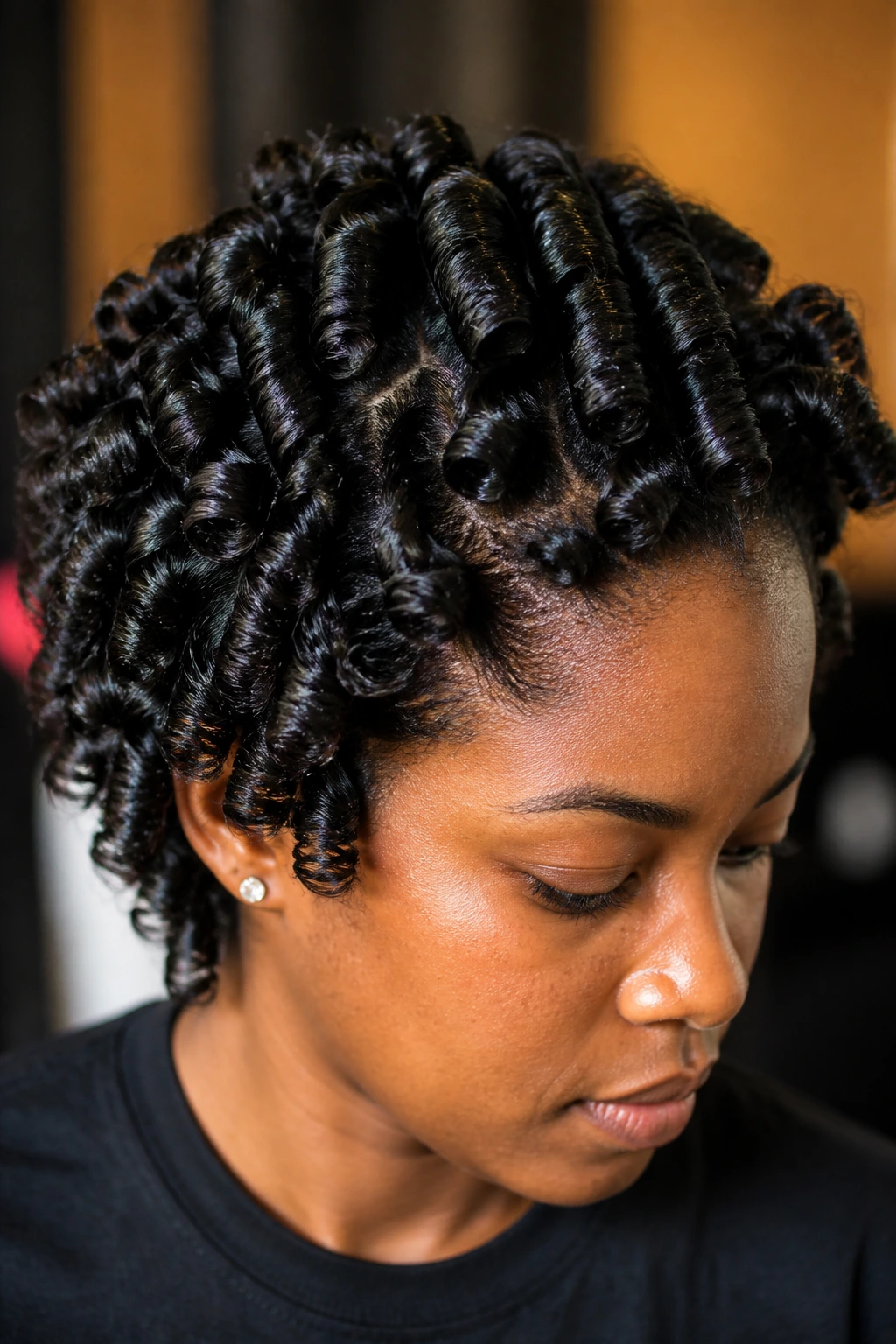
Perm rods give a more uniform curl than flexi rods, and that uniformity looks especially clean on medium-length hair. The curls hold a rounder shape, which is useful if you want a neat finish with plenty of bounce.
Apply setting lotion or mousse section by section, then roll each piece smoothly from end to root. The ends need to be wrapped carefully or they’ll stick out and ruin the line. Once the hair is dry, separate the curls lightly and stop touching them. Too much separation makes the set lose the round shape that makes it work.
27. Roll, Tuck, and Pin for a Polished Updo
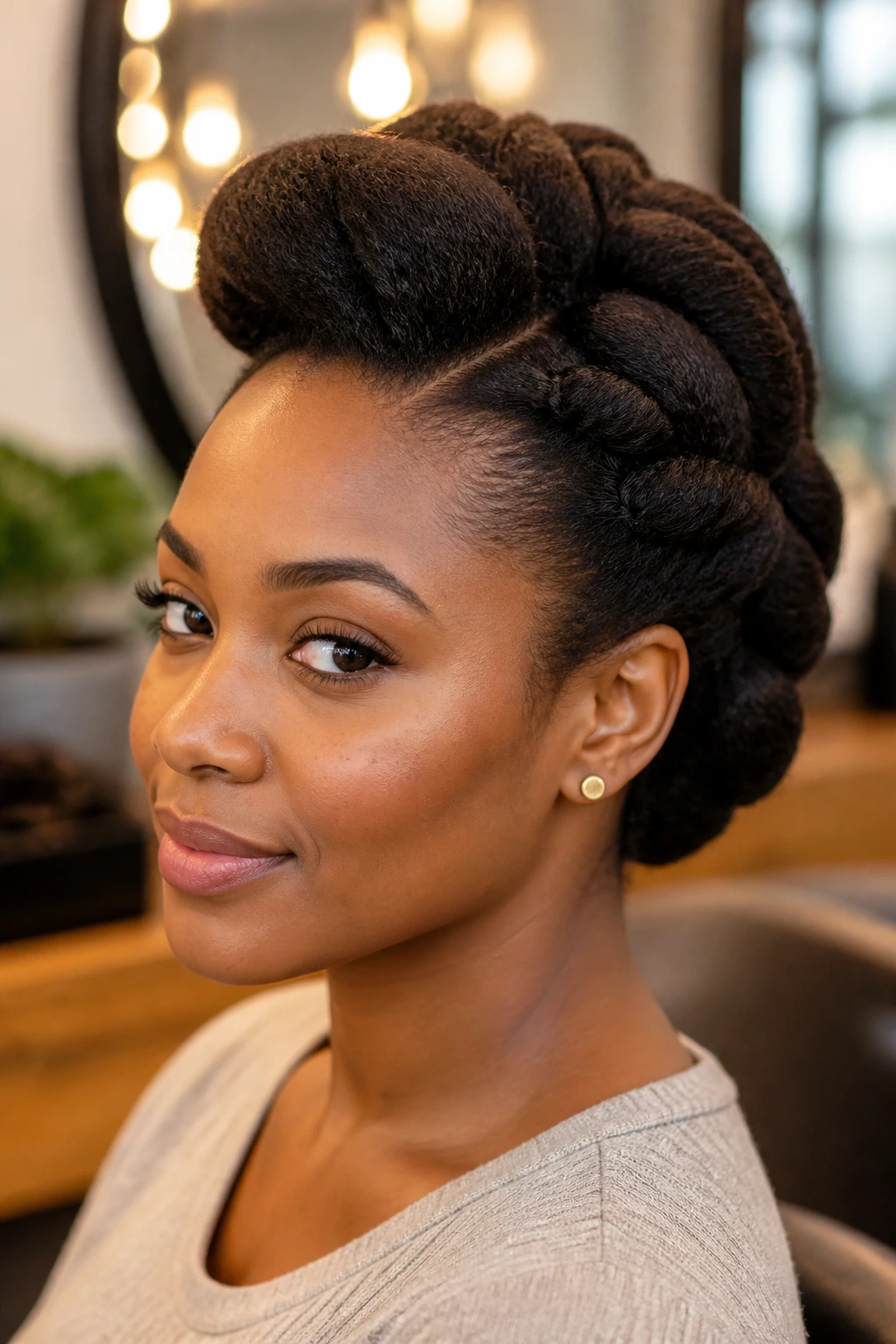
This is the style I’d pick when I want the hair to look dressed up without being stiff. Roll a section inward, tuck the ends under, pin it tight enough to stay but loose enough to keep some softness, then repeat across the head. Medium-length hair is a gift here because the ends tuck neatly without a struggle.
The result sits between a formal updo and a soft sculpted style. If the hair is stretched first, the rolls lie flatter and the pins disappear more easily. A small side part can keep the shape from looking too blocky. It’s a quiet style, but not a boring one.
28. A Rounded Afro With a Clean Shape
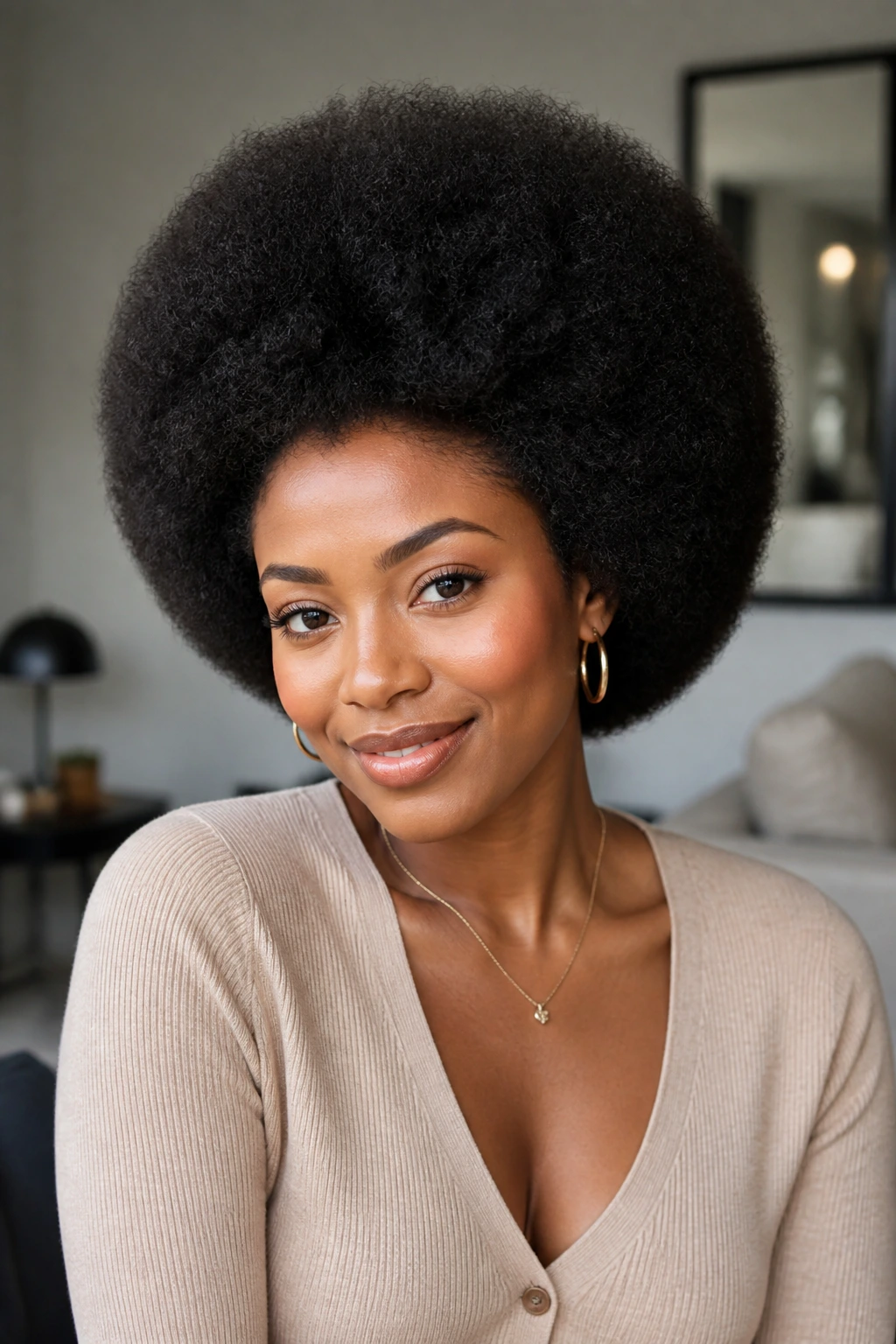
A rounded afro on medium-length hair has a real silhouette, not just volume for volume’s sake. Use a pick at the roots and your hands on the outer layer to build a balanced, rounded shape. The goal is a soft halo, not a wild cloud in one direction.
Medium length gives you enough density to shape the afro without it drooping. If the front sits too low, lift the roots at the crown only. If the sides puff too far out, shape them with your hands while the hair is still a little damp. A clean shape-up around the edges, if you like that look, changes everything. Sharp or soft, the outline matters.
29. Scarf Puff With a Bold Wrap
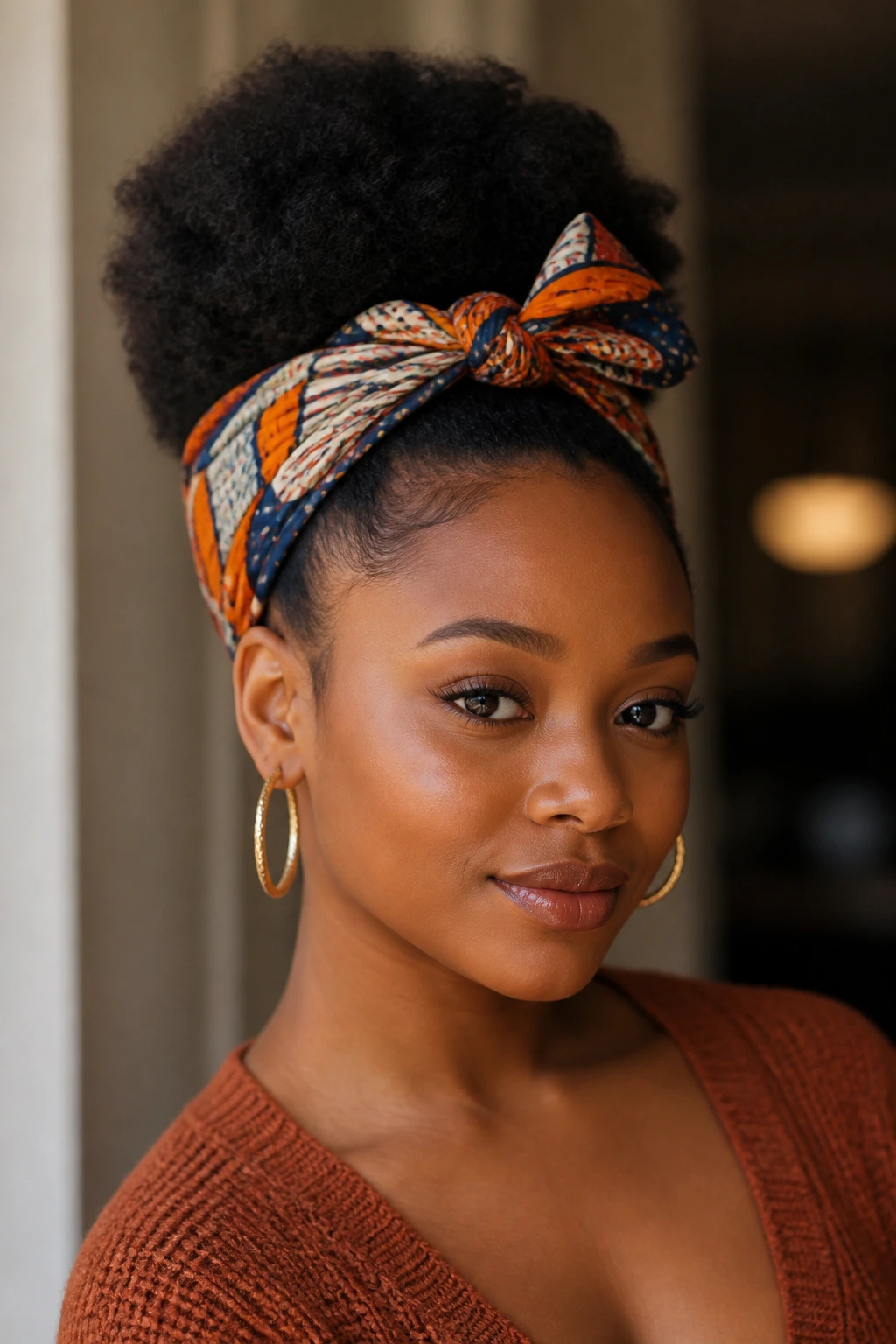
A scarf puff is the fastest way to turn a basic puff into a real look. Tie a printed scarf around the hairline or around the puff itself, and suddenly the style has a focal point. Medium-length hair works well because the puff stays full while the scarf adds shape.
Keep the scarf tied firmly enough to stay, but not so tight that it digs into the edges. A satin scarf is better if you care about friction, while a cotton print gives more visual pop. I like this style when the hair is good but not fully cooperative. The scarf covers the exact part that’s being annoying. Smart, not fussy.
30. Halo Flat Twists Around the Hairline
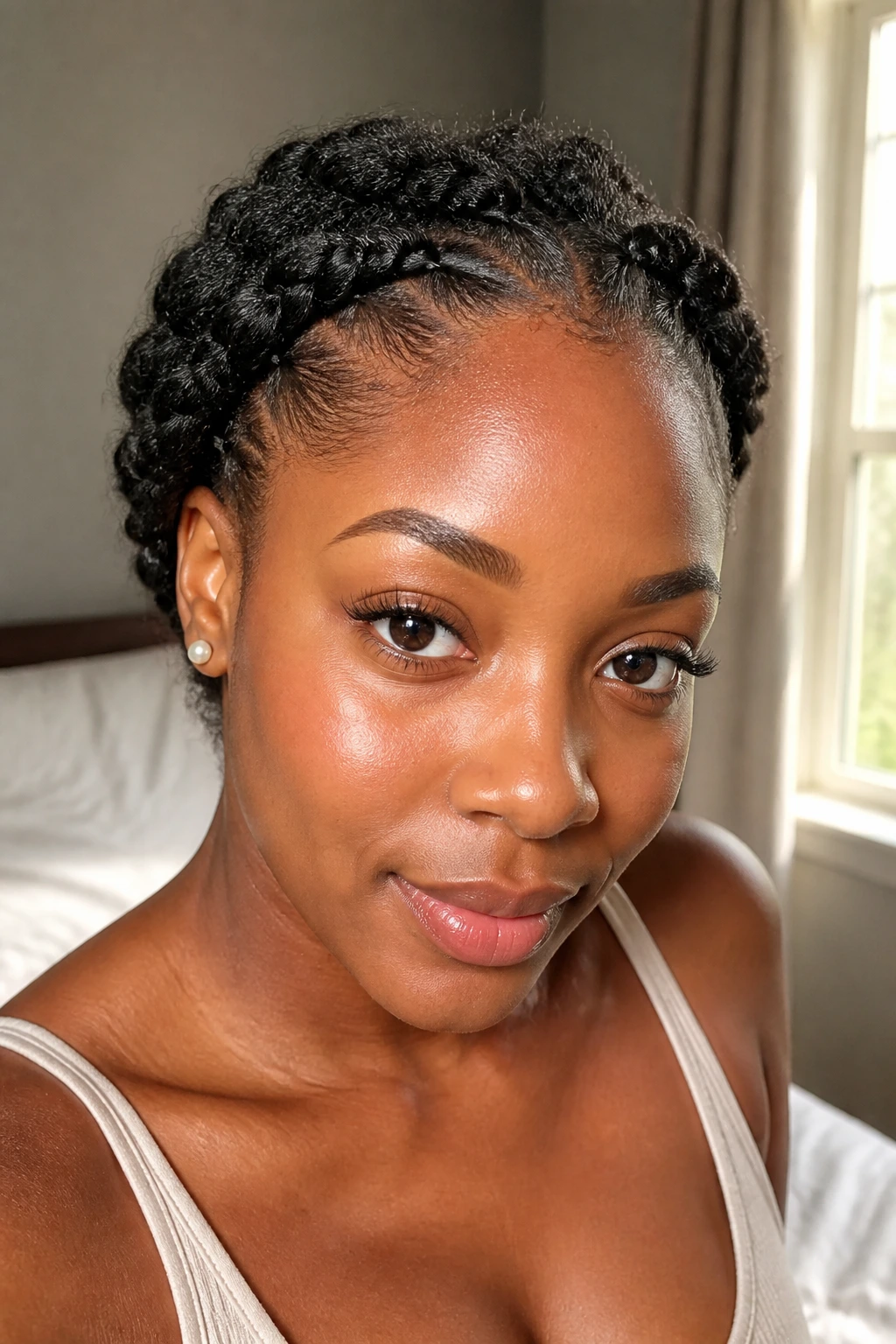
Halo flat twists give you the clean perimeter of a braided crown with a little more softness. The twists circle the hairline, and the center can stay loose, tucked, or gathered. On medium-length hair, the halo sits close enough to look tidy without swallowing the face.
This works well when you want a protective shape that still looks light. Keep the twists even and close to the scalp so the crown line is smooth. A tiny bit of shine product on the finished twists can keep the flyaways down, but avoid piling on grease. The style should look neat, not glossy in a heavy way.
31. Side Flat Twists Feeding Into a Puff
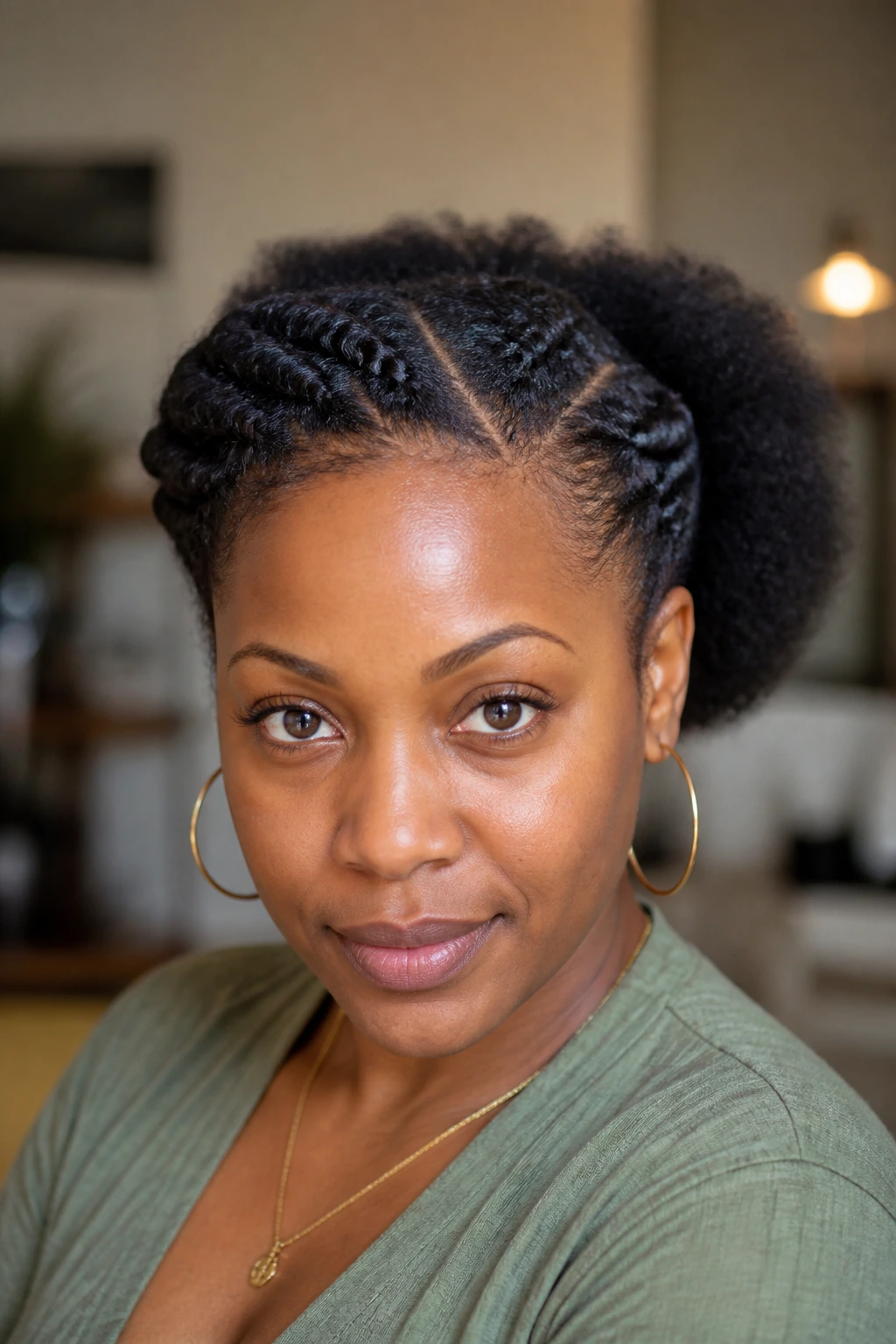
This is a good middle ground between a puff and a braided style. Flat twist one or both sides back toward the puff, then leave the back full. The twists create direction; the puff gives you volume. Medium-length hair handles that split really well.
The diagonal line from the twists into the puff gives the style shape without a lot of extra work. It also keeps hair off the face, which is the practical part people usually care about after the first hour. If your puff tends to sag, tighten the band slightly higher on the crown and let the twists do the visual lifting.
32. Claw-Clip Updo for a Fast Finish
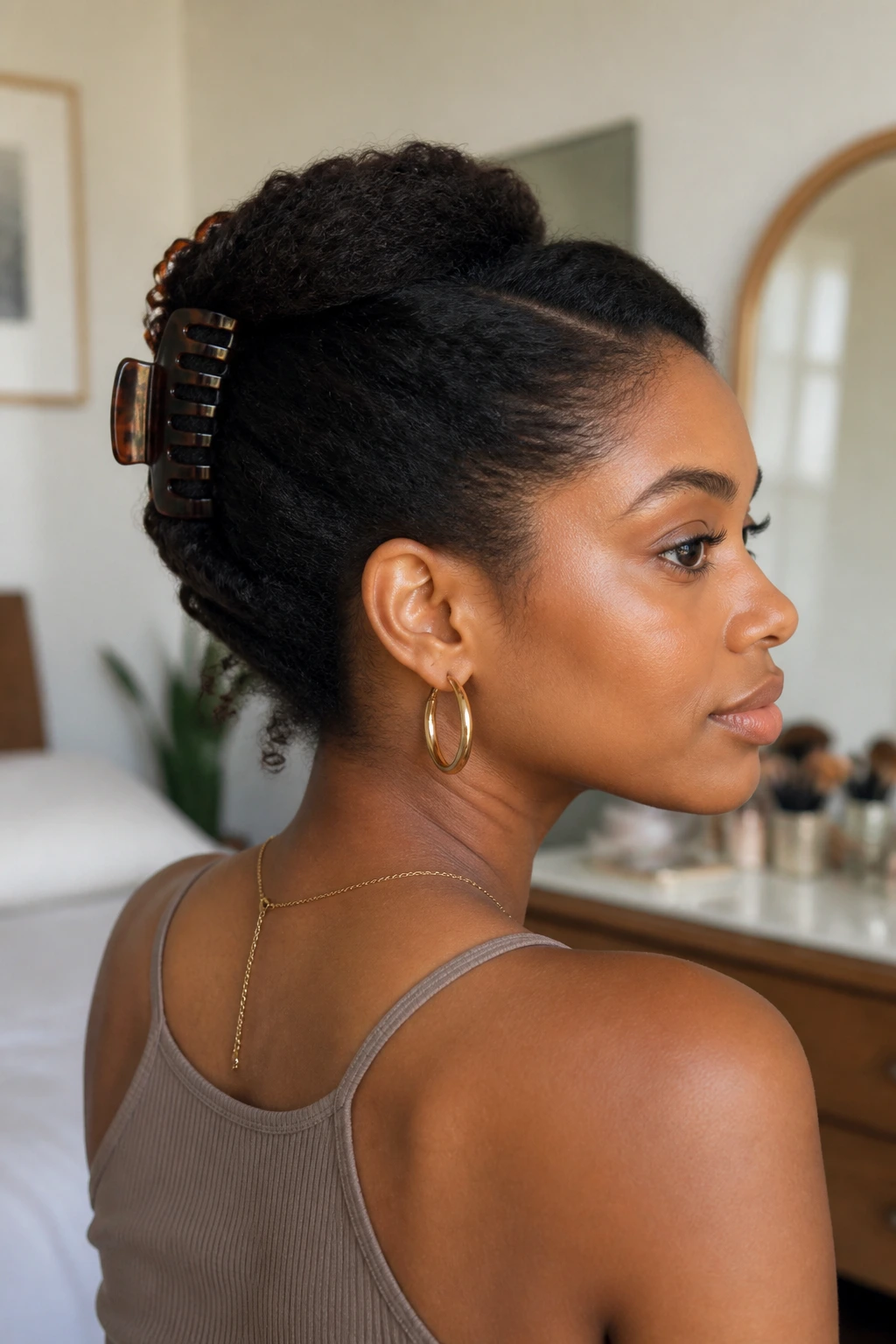
A claw-clip updo is one of the few styles that actually benefits from medium length more than long length. Long hair can be too much for the clip. Medium-length hair folds up neatly, holds the clip well, and keeps the shape compact.
Twist the hair upward, tuck the ends in, and clip it where the fold feels secure. If the hair is freshly moisturized and too soft, the clip may slide, so a little stretch helps. Choose a clip with strong teeth, not the flimsy kind that pops open when you turn your head. Fast does not have to look sloppy.
33. Twist-and-Clip Crown for the Easiest Morning
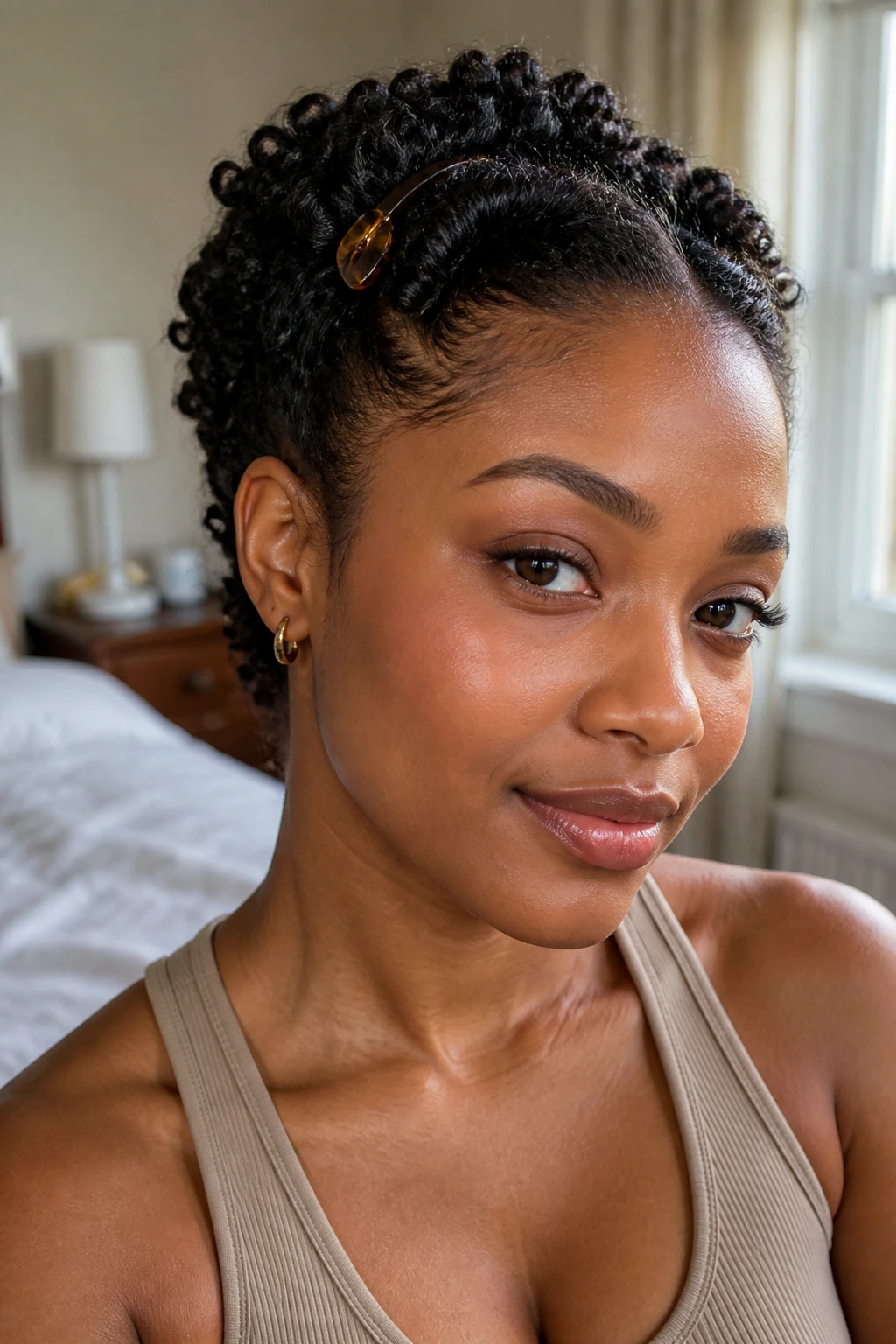
This is the style for the morning when your hair needs to behave and your patience is low. Twist a front or side section, wrap it along the crown, and pin or clip it into place. Medium-length hair makes the whole thing sit close and neat instead of sprawling out.
The beauty of this look is that it doesn’t ask for perfection. One good twist, one solid clip, and a little smoothing at the roots can turn sleepy hair into something clean enough for work, errands, or a last-minute plan. If you’ve got five minutes and a mirror, this one is hard to beat.
Why Medium-Length Natural Hair Gives You More Shape Control
Medium-length coils are easier to shape than people think because they sit in that balance point between stretch and lift. Very short hair can limit what you can pin or tuck. Very long hair can pull a style down before it has a chance to breathe. This length gives you enough body for volume and enough manageability for clean parting.
That balance matters for natural hair, where shrinkage can turn a style into something completely different once it dries. On medium-length hair, shrinkage can work in your favor. A puff looks rounder. A twist-out looks fuller. A braid-out lands with a soft bend instead of a heavy curtain.
You also get a little forgiveness. If a part is slightly crooked, the hair usually hides it. If a twist is not perfect, the style still reads clearly. That is why medium-length natural hair can handle both simple looks and more detailed ones without needing a full overhaul every time.
Essential Tools for These Styles
-
Spray bottle: Use it to re-wet sections lightly; do not soak the whole head unless you’re resetting a set.
-
Leave-in conditioner: Helps with slip and keeps the hair from feeling rough while you part or twist.
-
Curl cream or styling milk: Good for twist-outs, braid-outs, and chunky twists when you want softness more than hold.
-
Gel or edge control: Best for puffs, buns, and clean parting; choose one with enough hold to set without flaking.
-
Mousse or styling foam: Useful for wash-and-gos, rod sets, and twist-outs that need a lighter finish.
-
Rat-tail comb: Helps with clean parts and sectioning. Crooked parts show fast on medium-length hair.
-
Wide-tooth comb or detangling brush: Use on damp hair for smoothing and detangling without snapping ends.
-
Bobby pins and U-pins: These save updos, tucks, and rolled styles. Buy more than you think you need.
-
Satin scarf or bonnet: Keeps styles smoother overnight and cuts down on friction at the hairline.
-
Claw clips and strong elastics: Handy for quick updos and puffs, especially when you want the style to hold without tight bands.
Smart Product Shopping for Hold, Slip, and Shine
The biggest mistake people make when shopping for natural hair products is buying by hype instead of by finish. A style that needs hold — a puff, bun, flat twist, or cornrow front — wants a product that sets and stays put. A twist-out or braid-out wants slip first, then hold. Those are not the same thing, and mixing them up is why so many styles fall apart before lunch.
For clean hold, look for gels that dry with a firm cast instead of staying tacky. A cast sounds technical, but it’s just the slight shell that forms as the gel dries. That shell keeps curls clumped and edges smooth. For softer styles, a cream or mousse with lighter hold works better. Heavy butters can be useful on very dry hair, but they can also drag down medium-length curls and make wash-and-gos limp.
If your hair frizzes in humid air, keep an eye on how much water-greedy product you use. Some humectants pull moisture from the air, which can be a blessing or a mess depending on the weather and your hair’s behavior. On the other hand, if your hair feels hard and dry after styling, the product is probably too strong or too drying. You want hold, not cardboard.
Accessories matter too. Satin scrunchies, wide bands, and sturdy clips save the style by reducing tension. Cheap elastics that snag the hair are not worth it. Neither are tiny clips that pop open the second you turn your head.
How to Wear These Looks From Errands to an Event
Presentation: Keep one part of the style clean and let the texture do the rest. A puff, twist-out, or rod set already has presence; it does not need ten extra decorations. If you want a more dressed-up finish, smooth the hairline and leave the curls or twists fuller through the crown.
Accompaniments: Small hoops, bold studs, satin scarves, and a clean neckline pair well with these shapes. If the hairstyle already has a lot of volume, keep the accessories simple. If the style is compact — a bun, tuck, or twist crown — a bigger earring or patterned scarf gives it a little more life.
Proportions: Medium-length hair can balance volume on top or around the face, but not every style needs to be huge. A rounded afro wants a different shape than a low bun. Pull the hair where the style naturally wants to sit instead of forcing a silhouette from a magazine photo.
Occasion Pairing: The high puff, side-part puff, and scarf puff lean casual but can look sharp with a structured outfit. The low bun, tuck-and-pin style, and halo twists fit dressier settings without much fuss. If you’re in doubt, go with the style that keeps your hairline comfortable. That’s the part that starts complaining first.
Small Changes That Improve Shape, Shine, and Hold
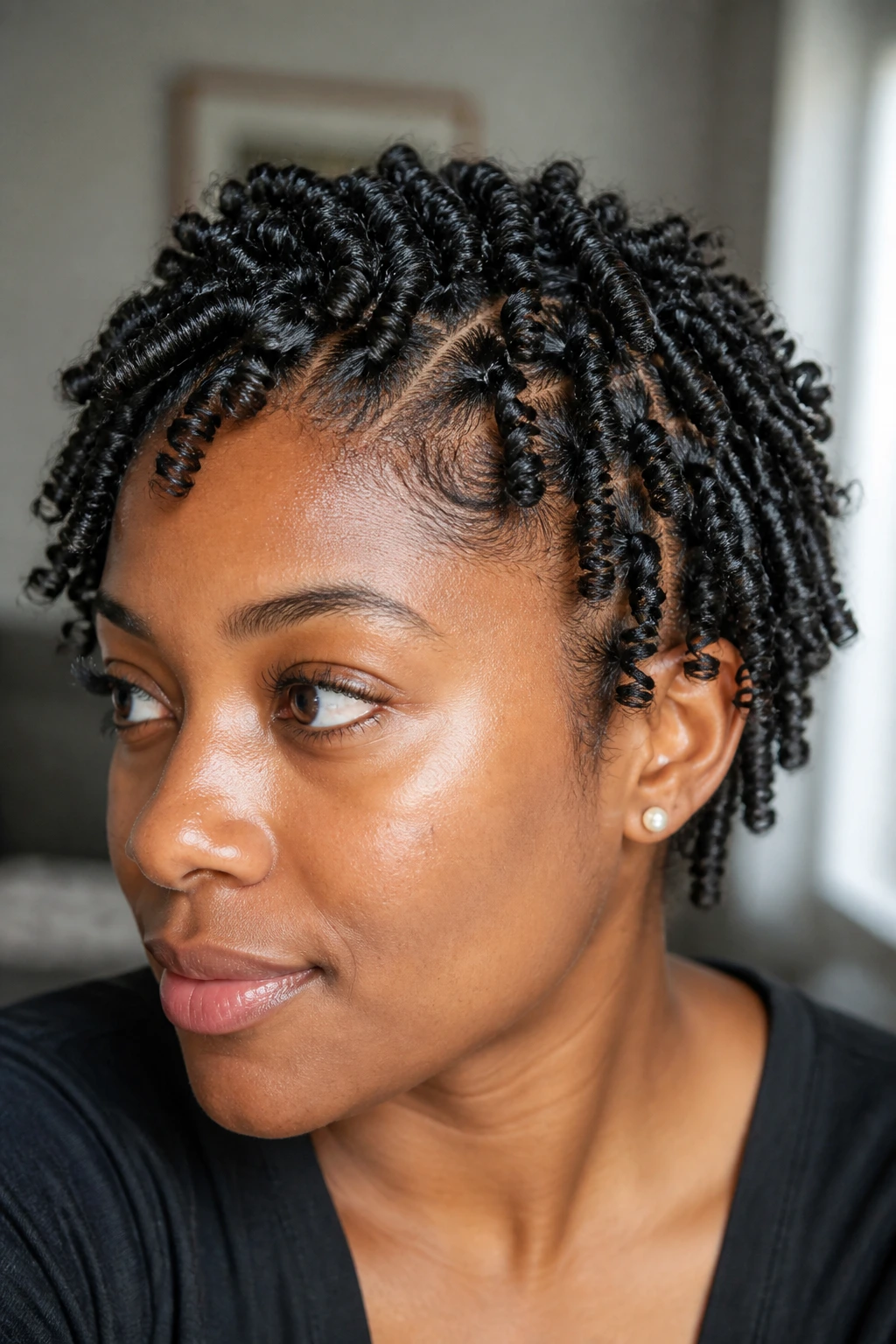
Root Lift: Lift the roots before you call a style finished. A twist-out, wash-and-go, or rounded afro looks better when the crown has air in it. Use a pick at the roots only, not through the ends.
Edge Care: Smooth the hairline with a light hand. Heavy edge control can make the style stiff and flaky. A little product, a soft brush, and one clean pass usually beat layers of slicked-down paste.
Refresh: Mist the outer layer, then scrunch or reshape with your fingers. You do not need to rewash a style that has only lost surface bounce. A teaspoon of water and a dab of leave-in can wake up the front without wrecking the shape.
Finish: Put a little shine on the surface, not the whole head. Oils are fine in tiny amounts, but too much oil turns definition into glare and can make your style slip apart faster.
Mistakes That Flatten the Crown or Tug the Hairline
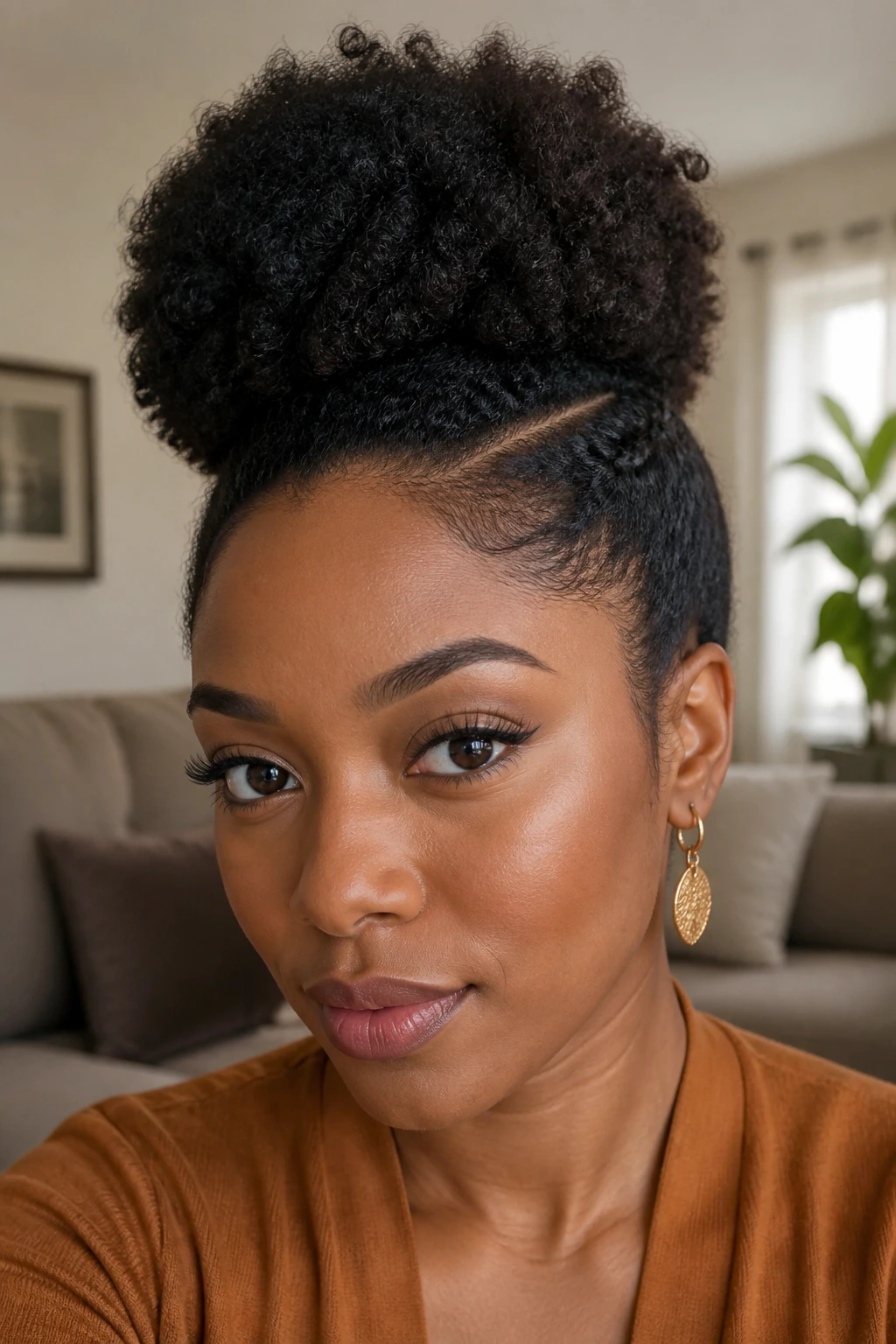
The first mistake is using too much product on medium-length hair because you’re afraid the style won’t last. Heavy creams, thick butters, and extra gel can make curls droop and puffs sag. Start light. Add more only where the hair actually needs it.
Another common one is styling hair that is either too wet or too dry. Wet hair stretches, loses shape, and can take forever to set. Bone-dry hair grabs and frizzes while you part it. Aim for damp, pliable hair unless the style specifically calls for stretched hair.
Tightness is the next trap. A puff band that bites into the roots or a braid that pulls at the temple can make the style look neat for an hour and feel miserable after that. If the front aches, it is too tight. Simple. Loosen it and move on.
People also unravel twist-outs, braid-outs, and rod sets too early. The hair may feel dry on the outside while the center is still soft. Give it time. If the set collapses the second you separate it, dryness was the problem.
Variations and Adaptations for Different Curl Patterns and Schedules
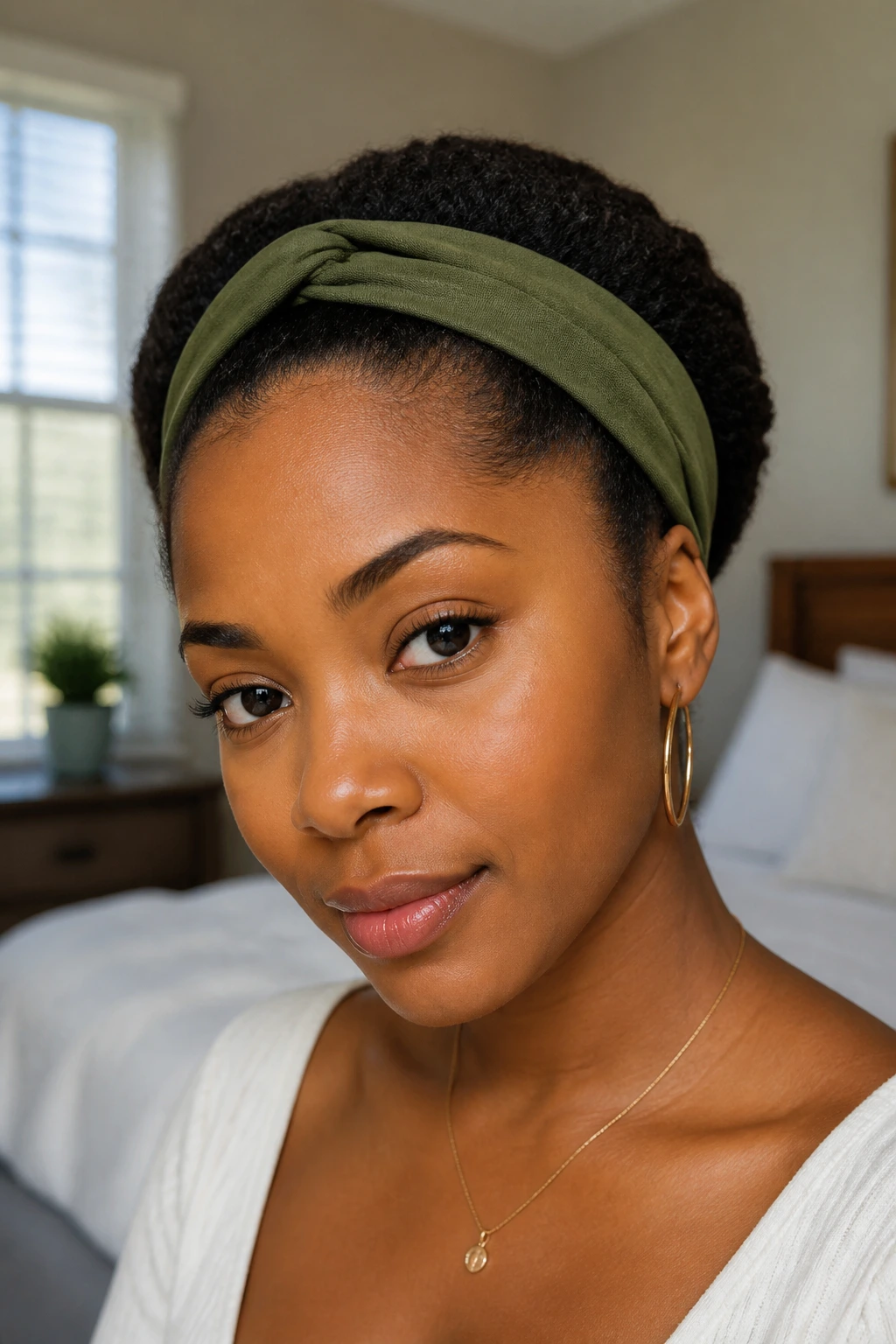
Low-Tension Version: If your hairline gets sore easily, choose styles that use pins instead of tight elastics. Flat twists, tuck-and-pin updos, and crown braids usually feel easier on the scalp than repeated puff styles.
Humidity-Shield Version: On days when the air turns your hair fuzzy in minutes, lean on stronger hold and smaller sections. Twist-outs and wash-and-gos last longer when the set is neat from the start and the product dries fully before you touch it.
Fine-Hair Friendly Version: If your strands are finer, fewer sections and lighter products keep the style from looking stringy or weighed down. A high puff, side-part curls, or a simple twist-and-clip crown usually holds better than oversized buns.
Dense-Coil Version: Thick hair needs more sectioning and more patience, not more force. Chunky twists, flat twists, frohawks, and low braided buns handle density well because they build shape without stacking too much hair in one place.
Quick-Exit Version: If you need a style in under ten minutes, work with what is already there. Pineapple updos, claw-clip buns, scarf puffs, and headband tucks save time because they reshape the hair instead of starting from scratch.
Night Care, Refreshing, and How Long Each Style Lasts
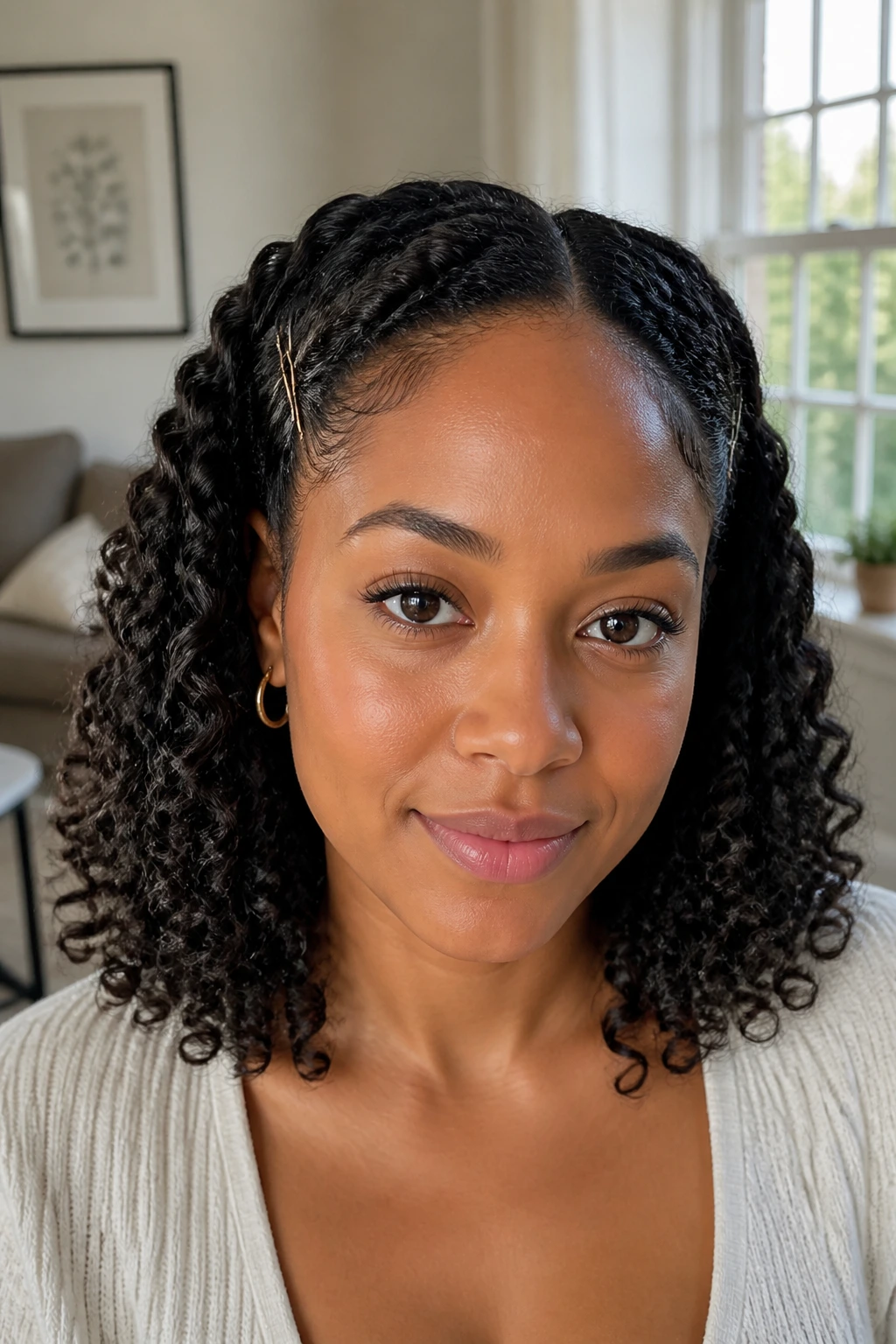
Twist-outs and braid-outs usually wear best for three to five days when you sleep in a satin bonnet or pineapple the hair loosely. The first day is often the neatest. Day two is where the shape settles in a good way. By day four, you may need to fluff the roots and smooth the front again.
Wash-and-gos can last about four to seven days if the gel cast is solid and the curls are left alone at night. A satin bonnet helps, but a silk pillowcase alone usually isn’t enough if your curls are loose. In the morning, a tiny mist of water and a finger reshape can bring the front back to life.
Puffs, buns, clips, and tuck styles usually have a shorter wear window — one to three days before the roots start to feel tired. That does not mean they’re failed styles. It just means the hairline and band area need a reset sooner. Mini twists, chunky twists, and braids can last one to three weeks if you keep the scalp clean and moisturized without piling on grease.
The rule I trust most is simple: preserve the shape at night, then refresh only what needs help. Don’t redo the whole head when one front section is the issue.
Frequently Asked Questions
Which natural hairstyle lasts the longest on medium-length hair?
Mini twists, chunky twists, and braided styles usually last the longest because they keep the hair contained and reduce daily handling. If you want a style that still looks good after several days, these beat a loose wash-and-go almost every time.
What’s the easiest style if I only have a few minutes?
A high puff, headband tuck, claw-clip updo, or scarf puff is the fastest path. These styles work with the hair you already have and only ask you to smooth, gather, and secure. No full reset needed.
Can these styles work on 4C hair?
Yes, and a lot of them look especially good on 4C hair because the density gives shape. The main adjustment is using enough stretch and slip so the parts stay clean and the ends don’t get fuzzy too fast.
Should I style my hair damp or stretched?
It depends on the look. Twist-outs, braid-outs, wash-and-gos, and rod sets usually start on damp hair. Puffs, buns, frohawks, and tucked styles often sit cleaner when the hair has some stretch first.
How do I stop my puff from pulling at my edges?
Use a soft, wide band and place it higher or lower instead of tighter. If the puff feels secure only when it’s painful, the band is too small or the section is too tight. A little gel at the perimeter is fine; a strained hairline is not.
Why does my twist-out look good the first day and fuzzy the next?
That usually means the hair was separated too much, set too loosely, or dried without enough hold. Try smaller twists, a bit more foam at the ends, and less finger-fluffing after you take them down.
Can I do these looks on stretched hair from a blow-dry?
Absolutely. In fact, several of them — buns, braids, twist crowns, rod sets, and low updos — hold more cleanly on stretched hair. Just keep the heat low and don’t stretch so much that the texture loses all its grip.
What style should I pick if I hate spending time on my hair in the morning?
Mini twists, braids, a claw-clip updo, or a scarf puff are the easiest to live with. They don’t need daily rebuilding. You set them once, then refresh the parts that start to puff out.
Where to Start First
If you only try three looks, start with the ones that match how your hair already behaves. A twist-out gives you movement with minimal fuss. A high puff clears the face and keeps the shape simple. A mini twist set buys you time later in the week, which is often the real reason people love protective styles.
Medium-length hair gives you enough room to play without turning styling into a full-day job. That’s the good part. Use the length you have, not the length you wish you had, and the styles start to make sense fast.
Pick one shape, keep the tension gentle, and let the texture do its job. The rest is mostly parting, patience, and a satin bonnet.
