



Straight hair has a way of telling the truth about color. Every brown tone sits out in the open, which means a flat brunette can look muddy by noon and a well-placed brunette can look glossy before you’ve even touched a flat iron. If you’re hunting for brunette hair color ideas for straight hair, the real trick is not choosing brown. It’s choosing which brown, and where the depth should sit so the hair doesn’t read as one solid block.
That clean, smooth surface is also why straight hair is such a good canvas. Light runs down the length in a neat line, so chestnut ribbons, ash-brown roots, caramel face frames, and espresso glosses show up with almost no visual clutter. A blunt bob makes the color look even sharper. A center part can make the whole thing feel deliberate. And if the tone is wrong? You see it fast.
These 25 brunette looks lean on placement, tone, and shine — not gimmicks. Some are low-maintenance, some need a gloss to stay crisp, and a few are for people who like a little drama with their coffee-colored hair. The common thread is simple: on straight hair, even tiny changes in brown read clearly, which is exactly why this category has so much range.
Why This Collection Is Worth Your Time
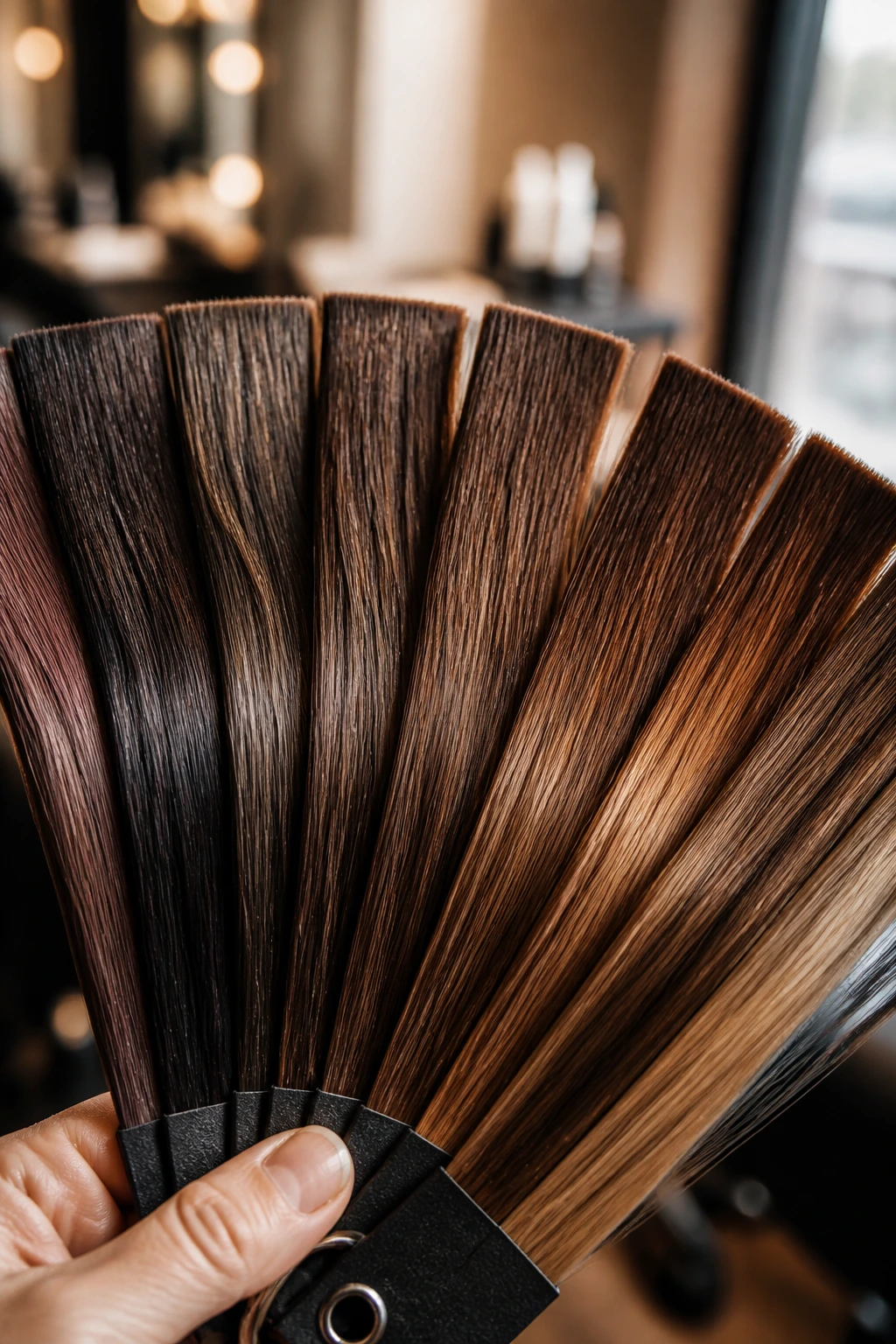
- Straight hair shows tone cleanly: A smooth surface makes subtle brunette shifts easier to see, so you get more payoff from fine highlights, root smudges, and glosses.
- You can go soft or sharp: A level 3 espresso looks crisp and polished, while a level 6 bronde or chestnut melt feels warmer and lighter without losing the brunette base.
- Low-commitment options are built in: Root shadows, money pieces, and soft ombré placement let you stretch salon visits without looking grown-out in a messy way.
- Flat iron fans get extra shine: Straight styling exaggerates reflective color, which means a good brunette formula looks cleaner and more expensive than it would in looser texture.
- There’s room for warmth or coolness: Ash, mushroom, mocha, caramel, auburn, mahogany, and rose-brown all live in the same family, but they give very different results on the face.
1. Espresso Gloss
Espresso gloss is the no-nonsense brunette. It sits in that rich level 2 to 3 range where the hair looks almost black in shade, then flashes deep brown when light hits the mid-lengths. On straight hair, that shift is the whole point. You get a polished, inky finish that looks sharp with blunt ends and a center part, and it rarely needs extra highlight work to feel finished.
What makes it work is the shine. A single-process espresso tone can look flat if the cut is shaggy or the finish is dry, but on straight hair the reflective surface does half the job for you. Ask for a neutral-to-cool base with a clear gloss on top if your hair tends to look dull after coloring. That topcoat matters more than people think.
A good version of espresso brunettes should not swallow the features. If your brows are soft or your skin is very fair, ask your colorist to leave a whisper of dimension around the hairline so the color doesn’t look like a helmet. Tiny differences. Big payoff.
2. Milk Chocolate Brunette
Milk chocolate is the shade I reach for when someone wants brown hair, not brown hair dye. It sits in the middle lane — warm enough to look soft, neutral enough to avoid that orange-copper drift that can happen when brunette formulas fade on straight hair. In daylight, it reads as creamy and smooth rather than heavy.
Why It Reads So Soft on Straight Hair
Straight strands show off this shade’s quiet movement. A few lighter ribbons through the top layers are enough; you do not need chunky pieces to get dimension. If your hair is fine, this shade can make it look thicker because the tonal contrast stays gentle instead of broken up into sharp streaks.
Ask for a level 5 or 6 brown with beige warmth and a gloss that leans neutral, not gold. If your natural color is dark blonde, this is one of the easiest brunette transitions because grow-out looks softer. It’s also one of the few browns that looks good with both a sleek blowout and a dead-straight finish.
- Best with medium-thick hair
- Looks clean on shoulder-length cuts
- Usually needs a refresh every 6 to 8 weeks
Tip: If your hair tends to pull red, skip any formula that leans too coppery. It will drift warmer after a few washes.
3. Mushroom Brunette
Mushroom brunette has a cool, smoky cast that some people avoid for fear it’ll look gray. That’s the mistake. On straight hair, the taupe-brown base can look expensive and modern, especially if you like muted makeup, silver jewelry, or darker brows. The tone sits somewhere between ash brown and soft beige, which keeps it from feeling too severe.
This color works because straight hair doesn’t blur the cool undertones. You see the smoke in it. You see the brown in it. That’s why mushroom brunette often looks better on poker-straight lengths than on curls, where the undertone can disappear into the texture. A blunt lob makes it even better.
Ask your colorist for a brown with a green-violet or blue-violet counterbalance if your hair fights warmth hard. If you’re trying it at home, use a cool brown glaze instead of a warm chocolate dye. Warm brown plus straight hair plus no toner usually equals brass sooner than you wanted.
4. Chestnut with Soft Ribbons
Chestnut brunette is the warm cousin that still knows how to behave. It has a brown base with a little red-gold flicker, but the best version isn’t loud. It’s controlled. On straight hair, that warmth shows up as thin ribbons that move along the length instead of splashing across the whole head.
Picture a smooth chestnut base with a few caramelized threads near the face and a clean, darker root. That setup keeps the color from looking one-note while still letting the ends stay rich. If you wear your hair long and straight, this is one of the easiest ways to keep it from looking like a single brown curtain.
I especially like chestnut on medium-length cuts because the color has enough space to breathe without needing heavy contrast. Ask for ribbon highlights, not thick slices. Straight hair doesn’t need much to show dimension, and too much can start to look stripey fast.
5. Cocoa Balayage Through the Mid-Lengths
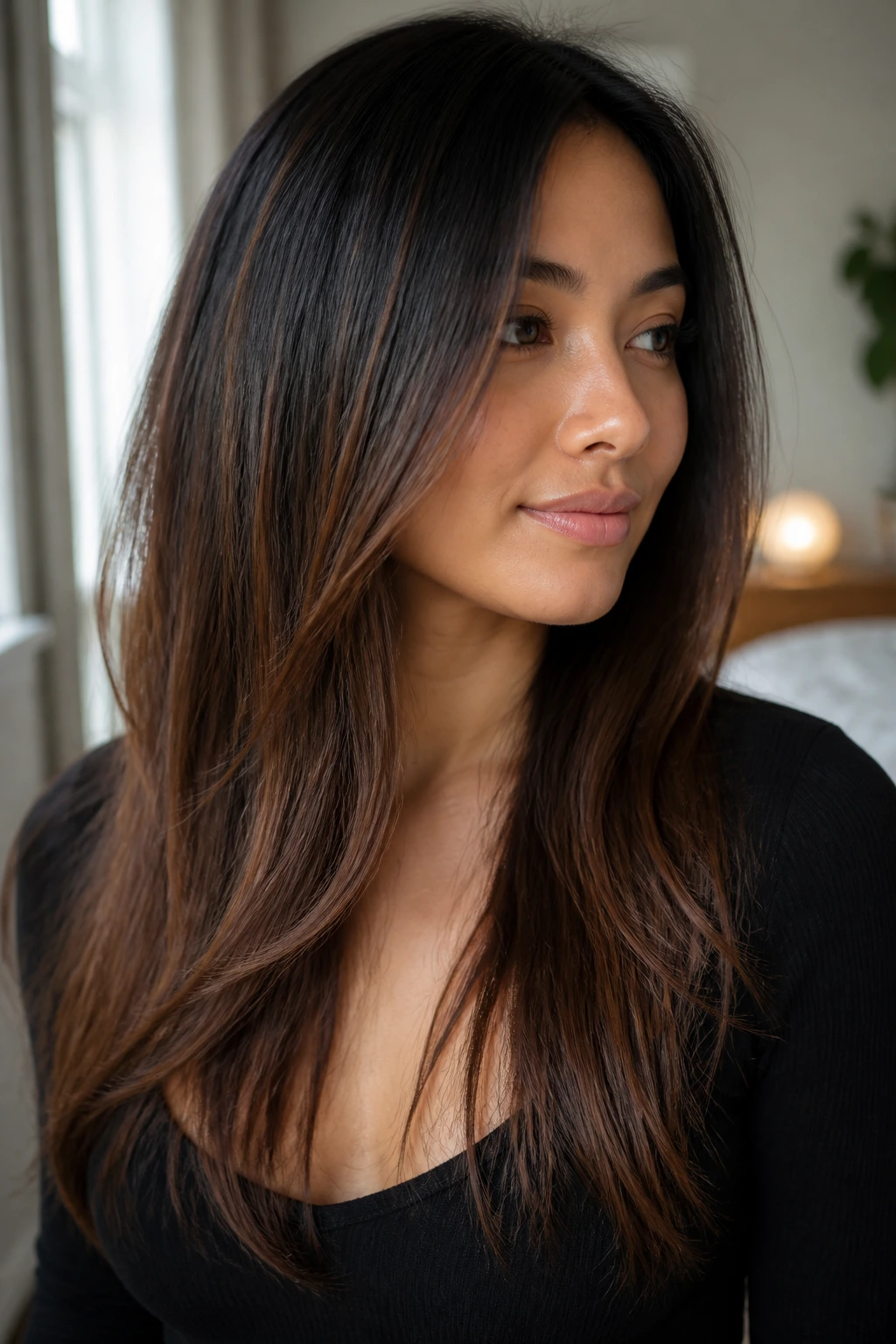
Cocoa balayage is for people who want movement without obvious highlight lines. The base stays darker, then the mid-lengths and ends get a softer cocoa shift — not blonde, not caramel, just a lighter brown that reads as dimension rather than contrast. On straight hair, the placement matters more than the shade name on the bottle.
The cleanest version starts a little below the cheekbones and gets softer as it goes down. That keeps the root area grounded and lets the hair fall in a smooth gradient. If your cut is one-length and straight, cocoa balayage can stop the style from looking blocky. It’s one of the few brunette ideas that benefits from being almost invisible up close.
Ask for micro-weaves or very fine hand-painted ribbons if your hair is naturally straight and fine. Chunky balayage can look harsh when there’s no wave pattern to break it up. The goal here is a quiet shift in tone that you notice most when light hits the ends.
6. Hazelnut Money Piece
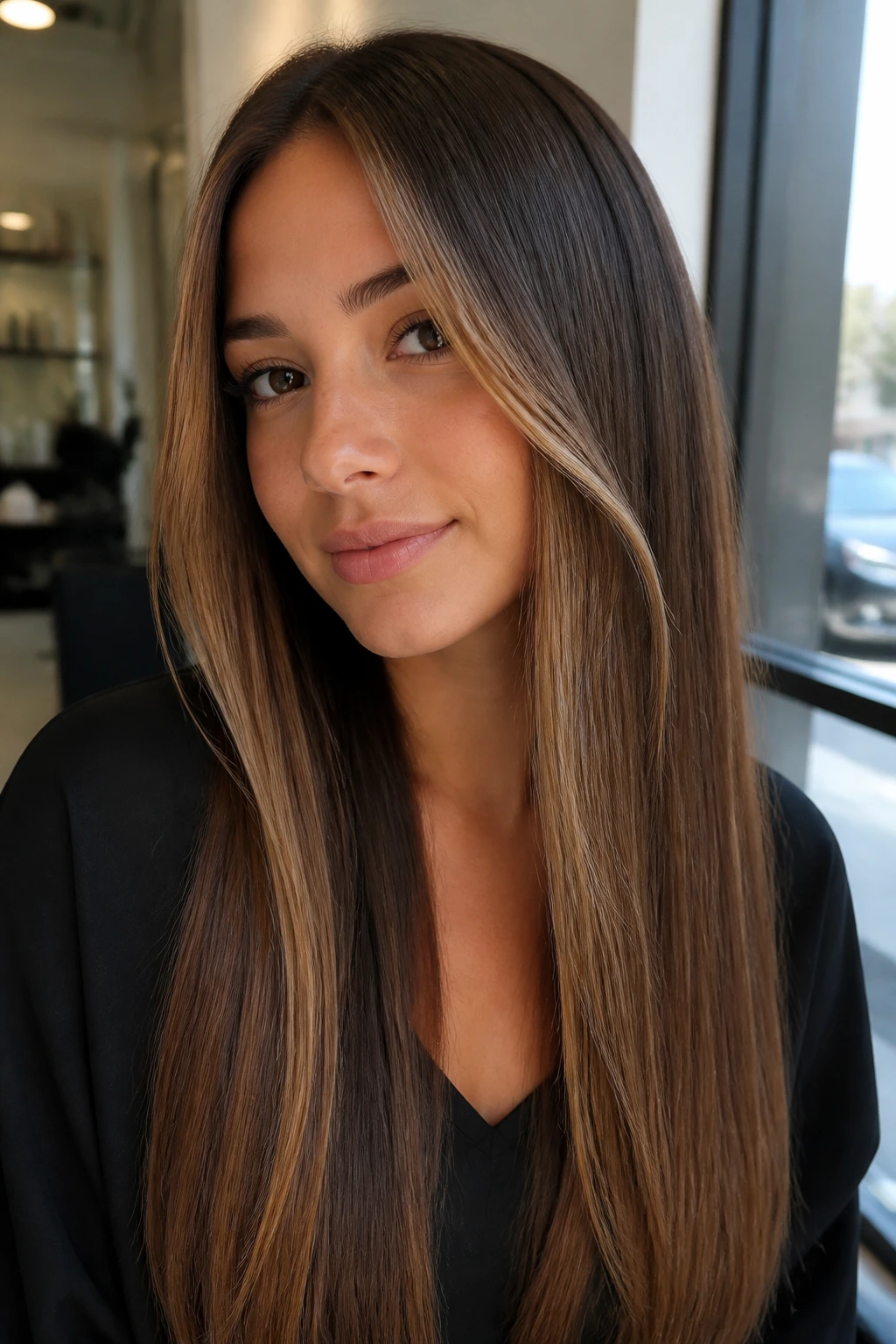
Hazelnut money pieces are the fastest way to wake up straight brunette hair without committing to a full lightening job. A warm hazelnut frame around the face — usually 1/2 inch to 1 inch wide on each side, depending on density — can change the whole read of the cut. It catches light right where people look first.
This idea works especially well with straight hair because the face frame sits flat and clean. No curl pattern is hiding it. No texture is swallowing the contrast. You get a crisp brightening effect near the cheeks and temples, then the rest of the hair can stay deeper and richer. That contrast looks best when the money piece is not too blonde. Hazelnut keeps it in the brunette family.
If your hair is dark brown, ask for the face frame to lift only 2 to 3 levels. That’s enough to show difference without turning orange on the grow-out line. A good money piece should look intentional even when pulled behind the ears.
7. Mocha Root Melt
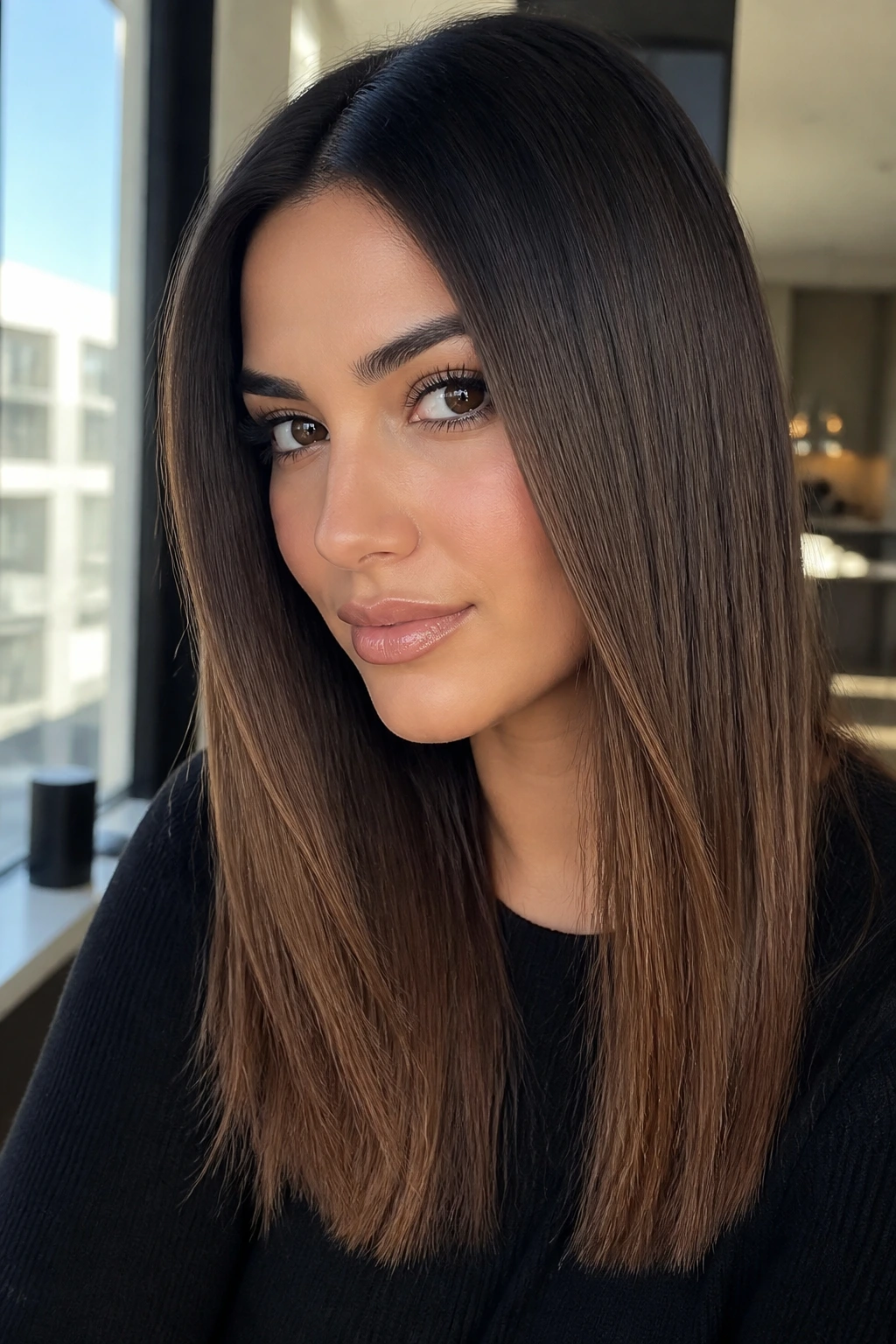
Mocha root melt is one of those shades that looks more expensive than it sounds. The root stays deep — think cool mocha or dark coffee — and the color softens into a slightly lighter brown through the mid-lengths. On straight hair, the gradient reads clearly, which is why this look feels so polished on a sleek blowout or a flat-ironed finish.
The advantage is obvious the minute your roots grow in. You don’t get a hard line at the part. You get a gradual blend that looks deliberate for weeks. That makes it one of the smarter brunette choices if you like keeping salon appointments spaced out. It also works well on layered straight hair because the darker root gives the layers more visual depth.
Ask for a shadow root that’s only one to two levels deeper than the mids. Too much contrast and the melt stops being soft. Too little and the whole thing looks like one color trying to pretend it isn’t. The sweet spot is narrow, and worth it.
8. Toffee Brown Ends
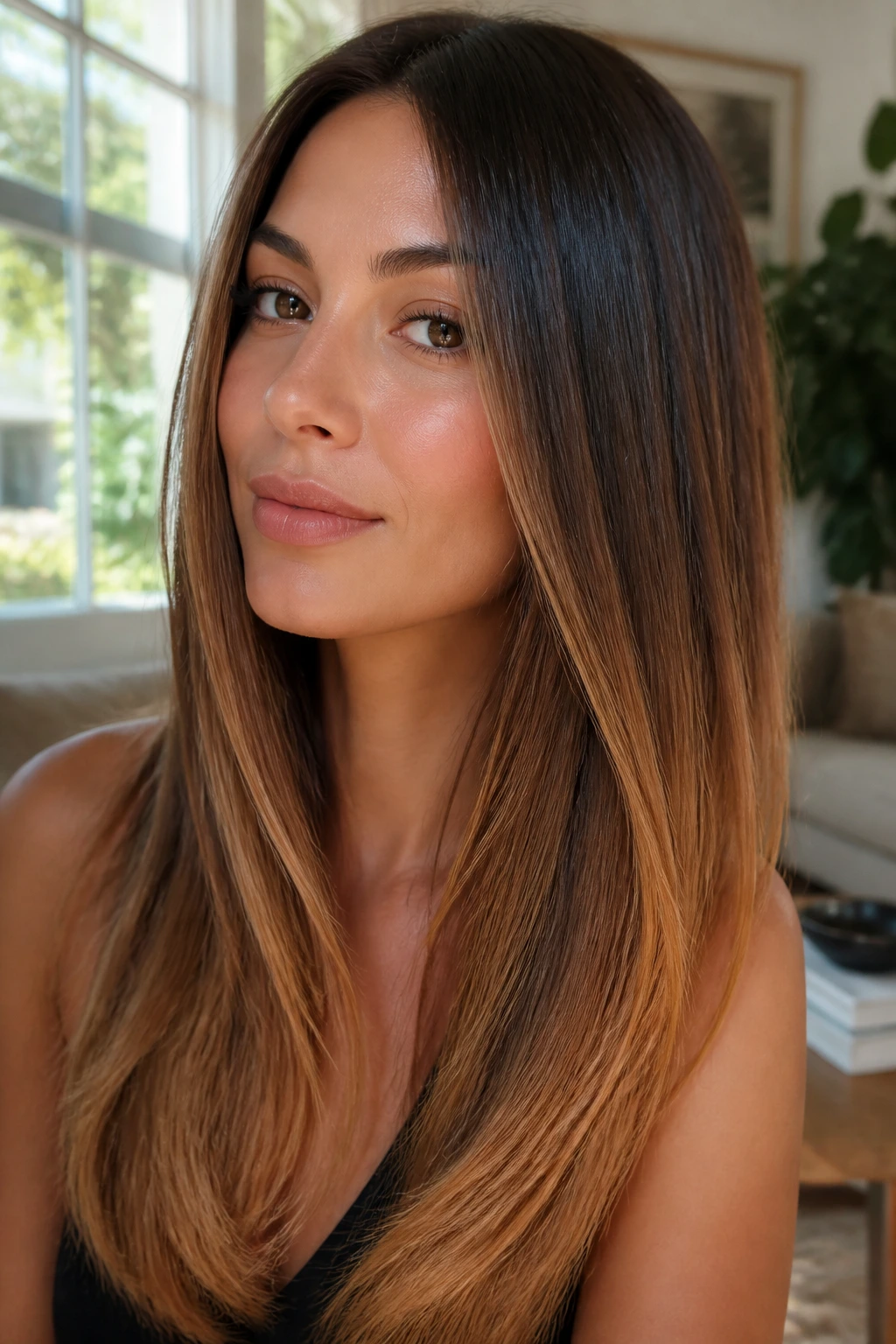
Toffee brown ends turn straight hair into a soft gradient that still feels brown, not blonde. The roots can stay medium brunette, while the ends lighten into a warm, syrupy toffee shade. The effect is especially good if your hair is long and straight, because the color shift has room to stretch without looking abrupt.
The question I hear most is whether toffee ends work on darker brunettes. Yes — if the lightening is controlled. You want a few levels of lift, not a pale caramel blur. That slight lift gives the hair a sun-warmed finish without ripping it out of brunette territory. On straight hair, that cleaner transition looks better than a heavy ombré because the line of the cut stays visible.
If you wear a center part, keep the lightness concentrated a bit lower so the part itself doesn’t look choppy. If your ends are dry, add glossing more often. Toffee color and brittle tips are a bad pairing. The shade is warm; the finish needs to be smooth.
9. Ash Brunette With Smoky Depth
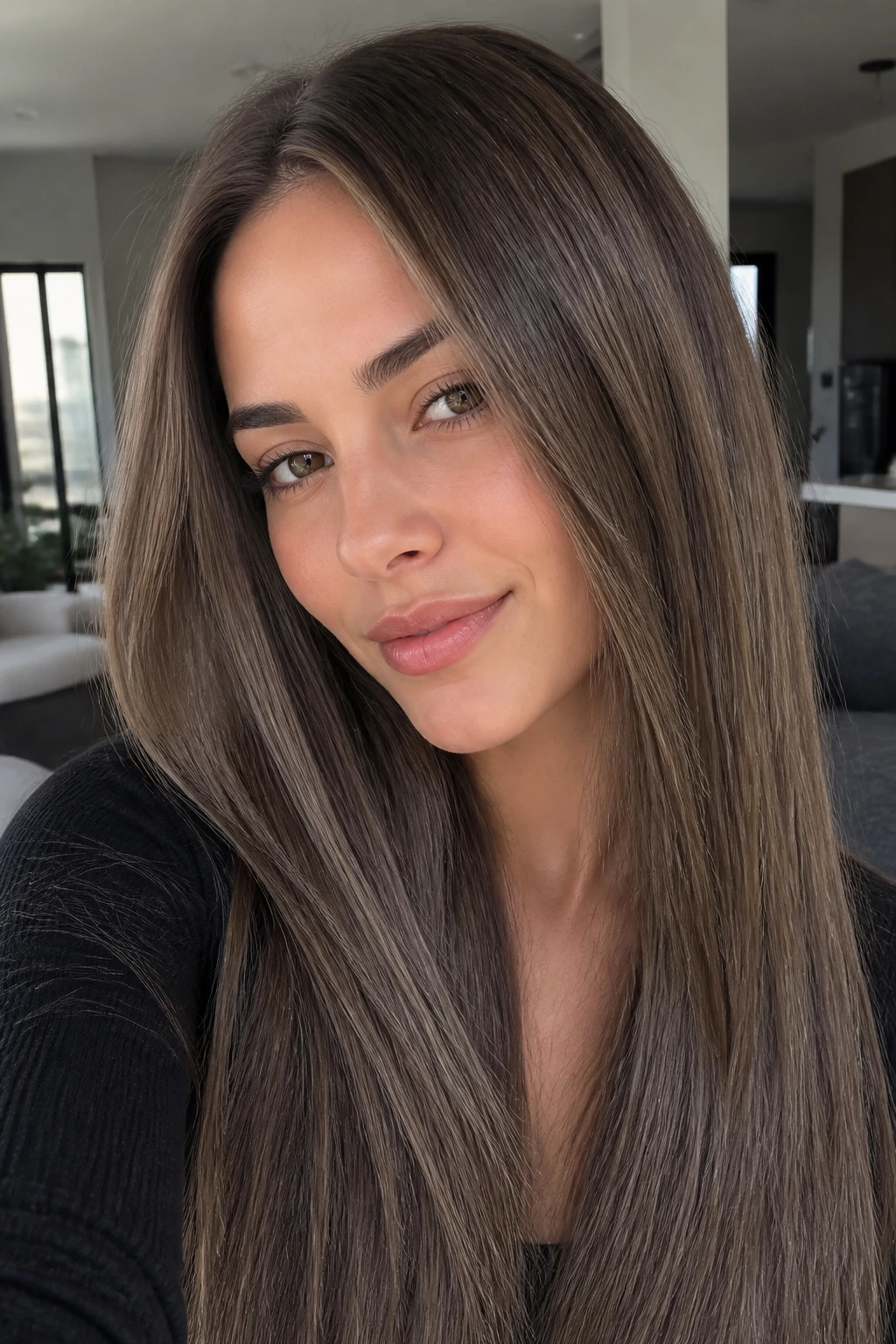
Ash brunette is the shade for anyone who hates orange. It’s cool, grounded, and a little smoky, with a brown base that leans toward blue or green undertones rather than gold. On straight hair, that coolness reads cleanly, which is why the color can look almost architectural on a sharp lob or long straight lengths.
The best version of ash brunette doesn’t look flat. It looks deliberate. Ask for low-contrast dimension in the mids if you want it to keep moving in daylight, because too much all-over ash can sink into the hair and make the cut look heavy. A subtle gloss keeps the tone crisp between appointments.
This is one of the most useful shades if your natural hair pulls red fast. The cool base helps fight warmth every time you wash. It also pairs well with strong brows, cool-toned makeup, and silver or gunmetal accessories. Tiny choices, yes. They matter more than people admit.
10. Auburn Brunette
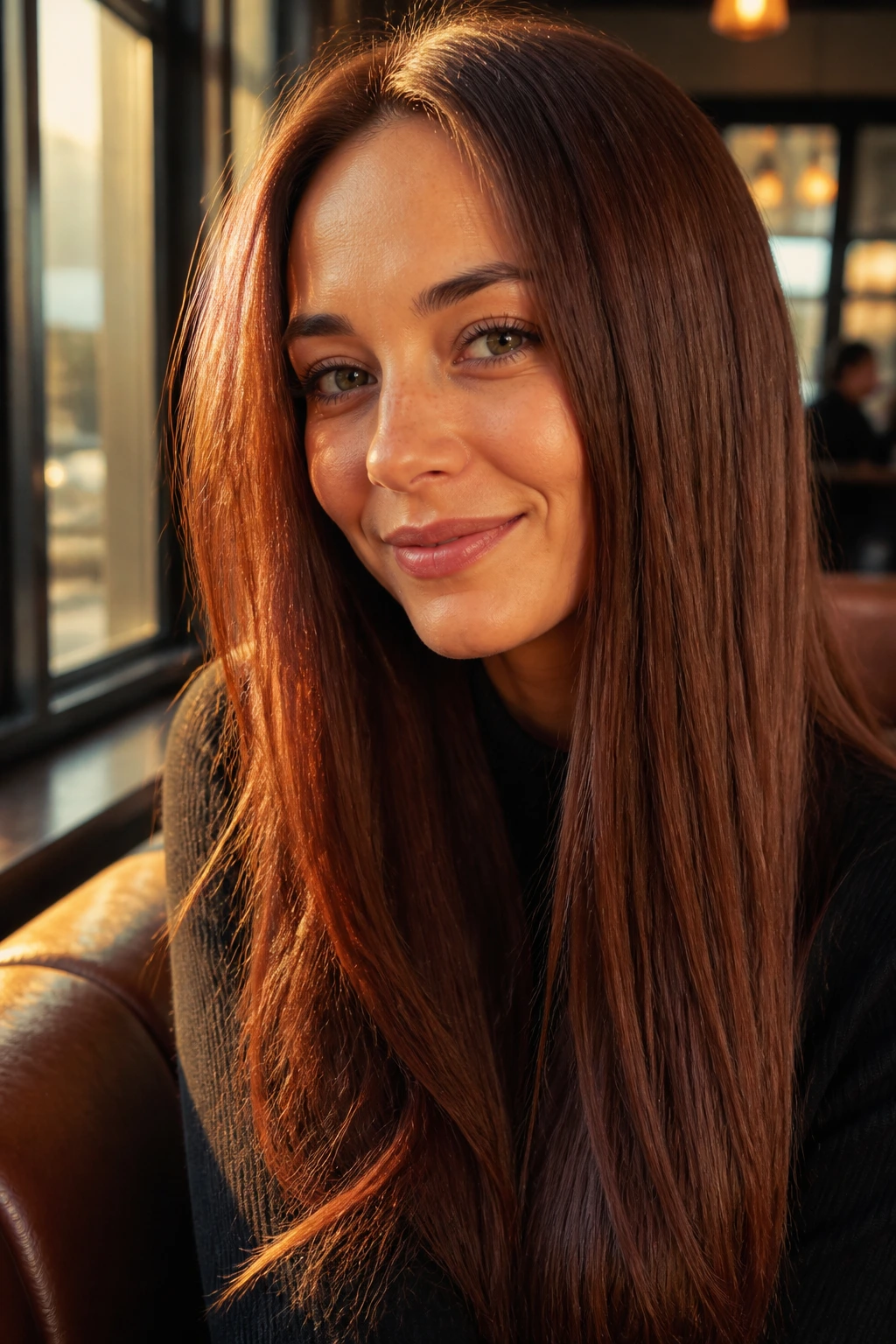
Auburn brunette has a red-brown energy that straight hair wears with a little more edge than curls do. The color usually sits in the medium to deep range, but the red undertone gives it warmth and movement. On straight hair, that tone shows up as a smooth copper-brown sheen instead of a bouncy, fiery halo.
I like auburn best when it’s kept controlled. Too much red and the hair can look like it’s trying too hard under indoor lighting. A restrained auburn, though, can make skin look brighter and give dark eyes more contrast. The trick is to keep the brown base solid and let the red live in the undertone, not on the surface.
Ask for a brown-red gloss rather than a vivid red dye if you want something wearable. Straight hair makes every tonal shift visible, so there’s no need to go loud to get impact. A little red goes a long way here.
11. Rose Brown
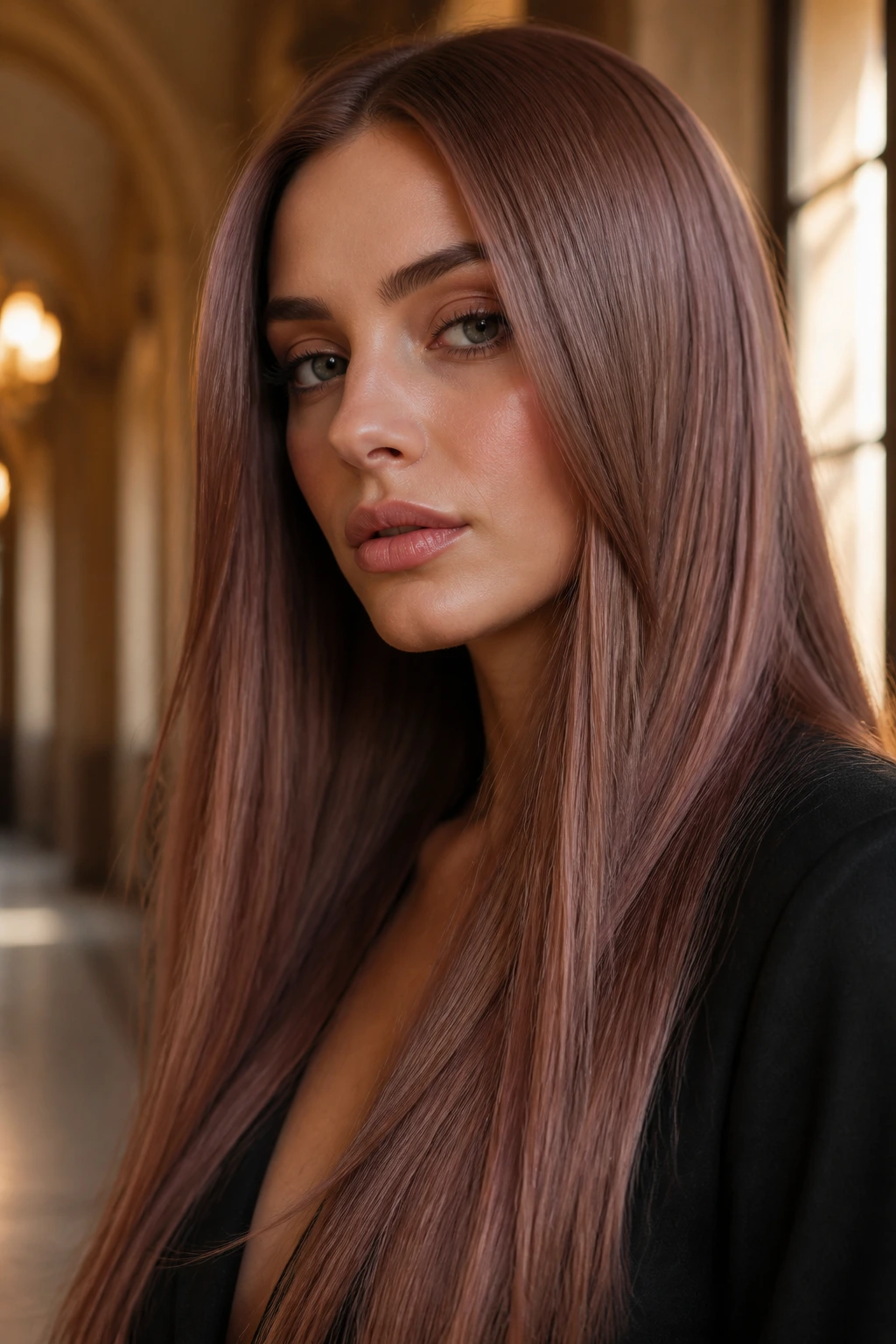
Rose brown is the prettiest kind of compromise: brown at the base, dusty pink in the undertone. It works because the pink is muted. Loud rose gold can slide into costume territory fast, especially on straight hair where the finish is so crisp. Rose brown stays softer and more grown-up.
This shade looks especially good when the hair is long and pin-straight, almost like a satin ribbon. The undertone glows when light hits it, but it doesn’t shout. That makes it a good choice if you want something unusual without losing the brunette identity. It also grows out more gently than a bright fashion color, which is a relief.
If your base is dark, you’ll need to lift first to let the rose show. If your base is already medium brown, a tinted glaze may be enough. Either way, keep the finish glossy. Dull rose brown looks muddy, and muddy is the one thing this color cannot afford.
12. Walnut Brunette
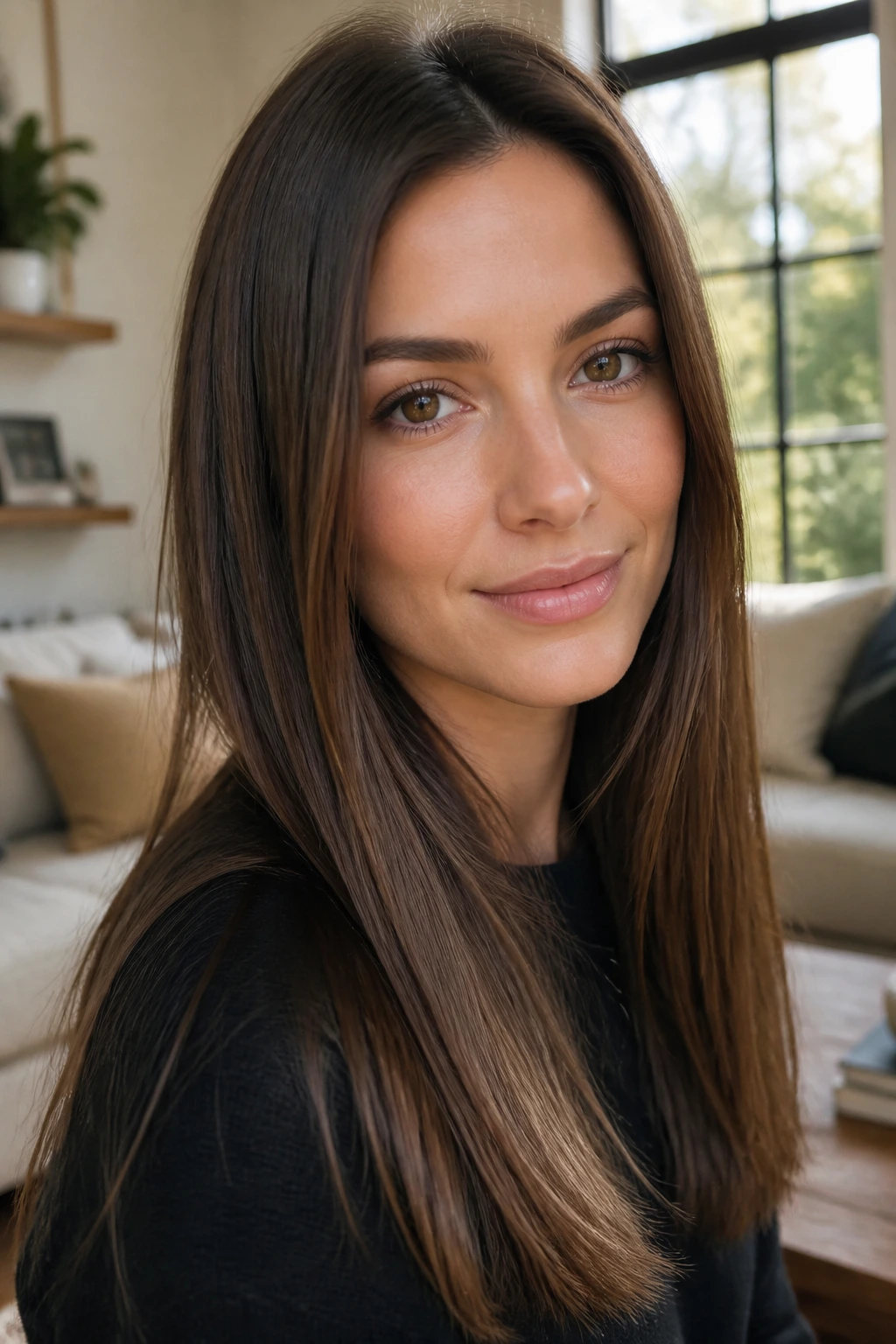
Walnut brunette is the shade I recommend when someone says, “I want brown, but I still want it to look alive.” It sits in the medium-dark lane with a neutral base and just enough warmth to keep it from going flat. On straight hair, walnut looks clean and balanced, which is a fancy way of saying it does a lot of work without looking dramatic.
Why It Works on Straight Hair
The hairline, part, and ends all stay readable. That matters. Straight hair exposes color placement, so walnut’s soft depth keeps the outline of the cut looking crisp without turning the whole style heavy. If you’ve got a blunt bob or long straight layers, this is one of the easiest browns to wear.
Ask for a neutral brown with a touch of golden brown in the mids if you want movement, or keep it cooler if your skin runs rosy. The shade plays well with both. It’s a little boring in the best possible way, which is often what people actually want once they’ve lived through one too-bright brunette experiment.
13. Golden Brown
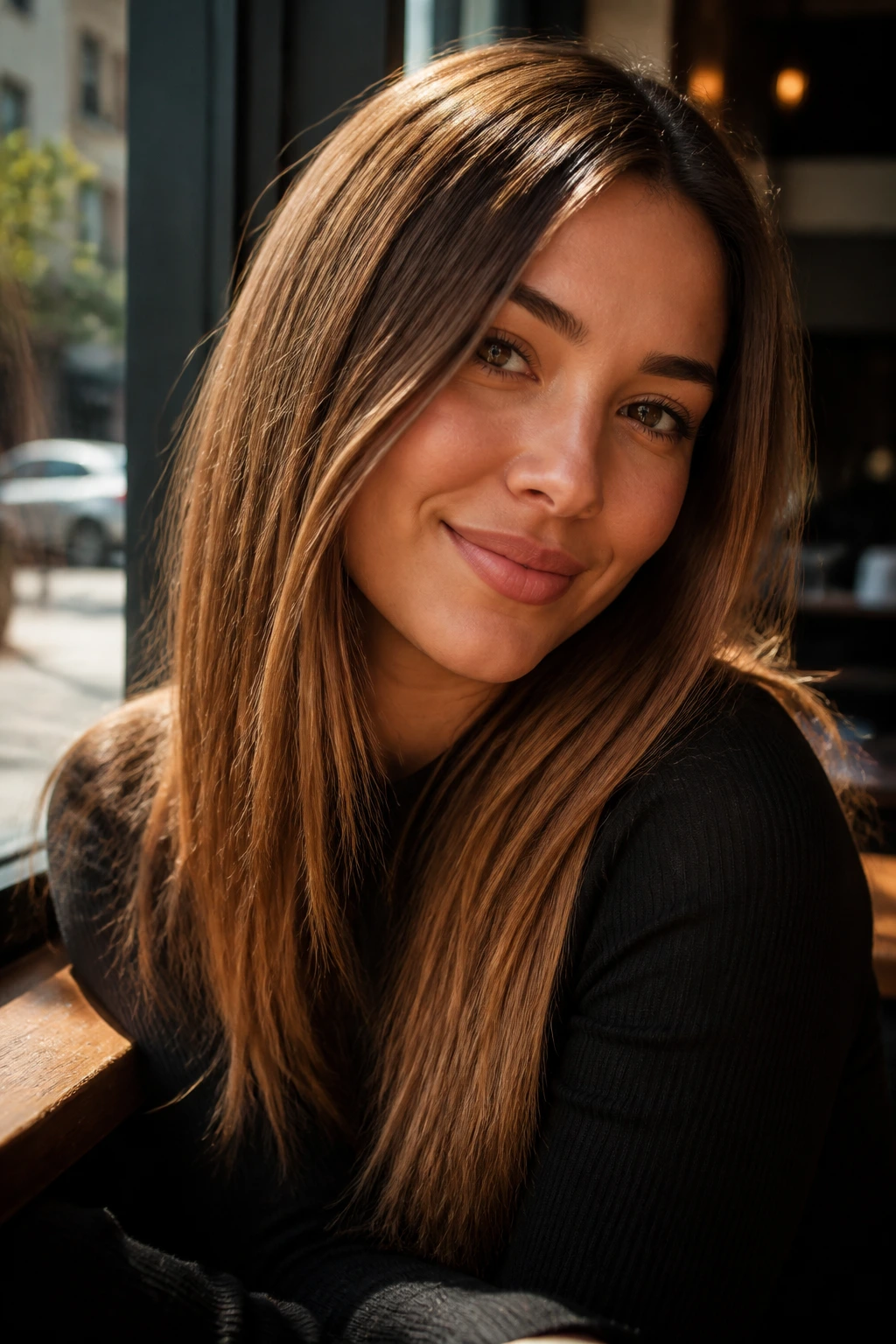
Golden brown is what happens when brunette gets a little sunlight in it. The base stays brown, but the undertone shifts warmer so the whole head looks brighter without crossing into blonde. On straight hair, the warm reflect is easy to see, especially on the top layers and around the face.
This color loves clean, reflective styling. A smooth blow-dry or flat iron finish makes the gold pieces glow. If your hair is very dark, you’ll need some lift to get the warmth to show; if it’s naturally medium brown, a gloss or subtle highlight can be enough. The look can go brassy if the tone gets too orange, so the best version stays honey-brown rather than pumpkin-brown.
Golden brown is flattering on people who wear warm makeup — peach blush, bronze eyeshadow, terracotta lipstick. Those tones don’t fight the hair. They lean into it. And on straight hair, that combination looks quietly finished without needing much else.
14. Bronde Brunette
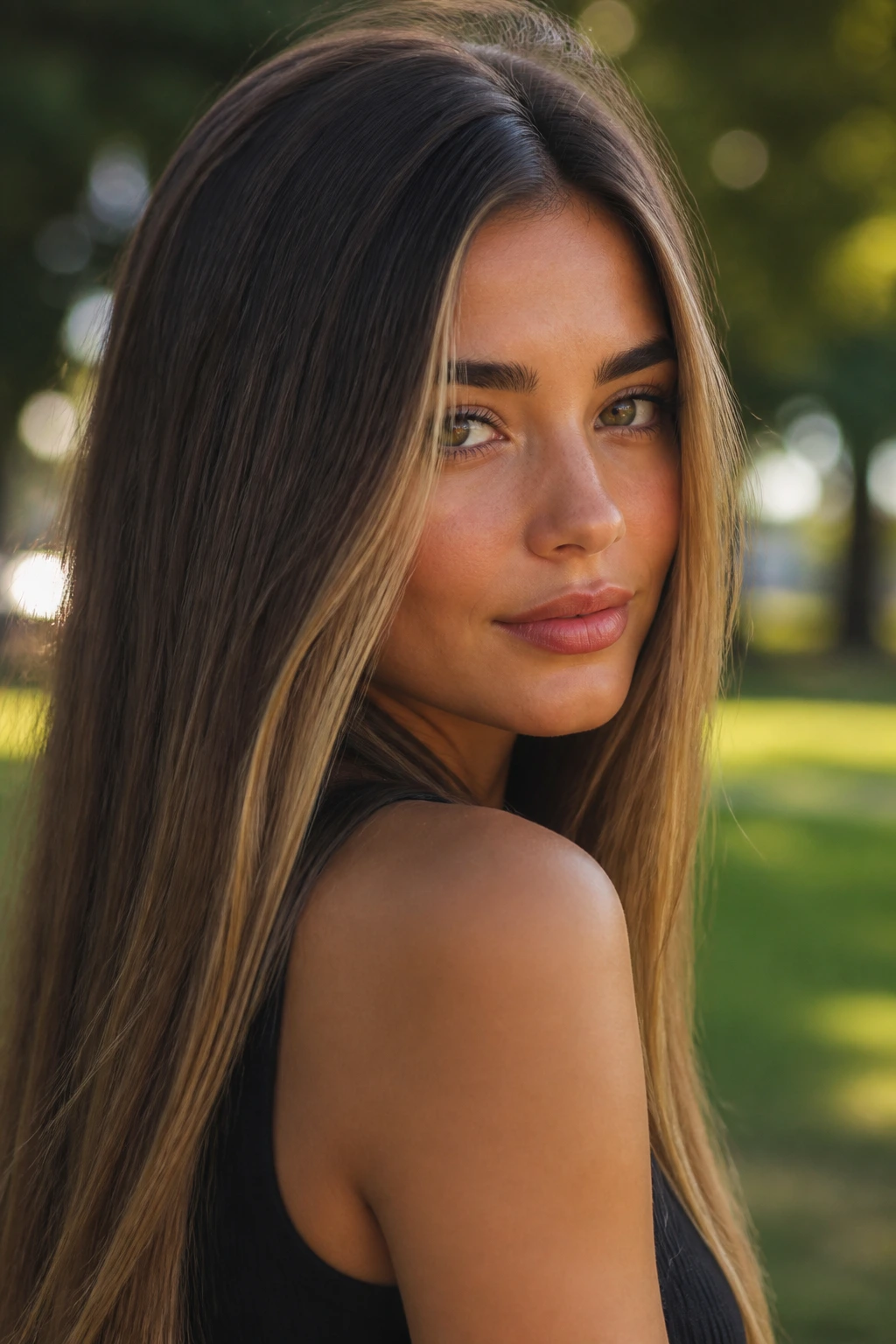
Bronde is the shade people ask for when they want to stay brunette but flirt with blonde. On straight hair, the trick is keeping the blonde lean soft and strategic, not chunky or striped. You want a brunette base with fine, light ribbons that lift the whole look without erasing the brown.
I prefer bronde on long straight hair because the layers of tone have space to stretch. On a blunt cut, it can look a bit too obvious if the highlights are thick. Thin baby lights or micro-balayage are the better path. They give the hair a sun-kissed feel that still reads polished.
If your hair is naturally dark, bronde takes more upkeep than classic brunette. That’s the trade. But if you want movement and brightness around the face, this is one of the best ways to get there without fully crossing over into blonde territory.
15. Dark Cherry Brunette
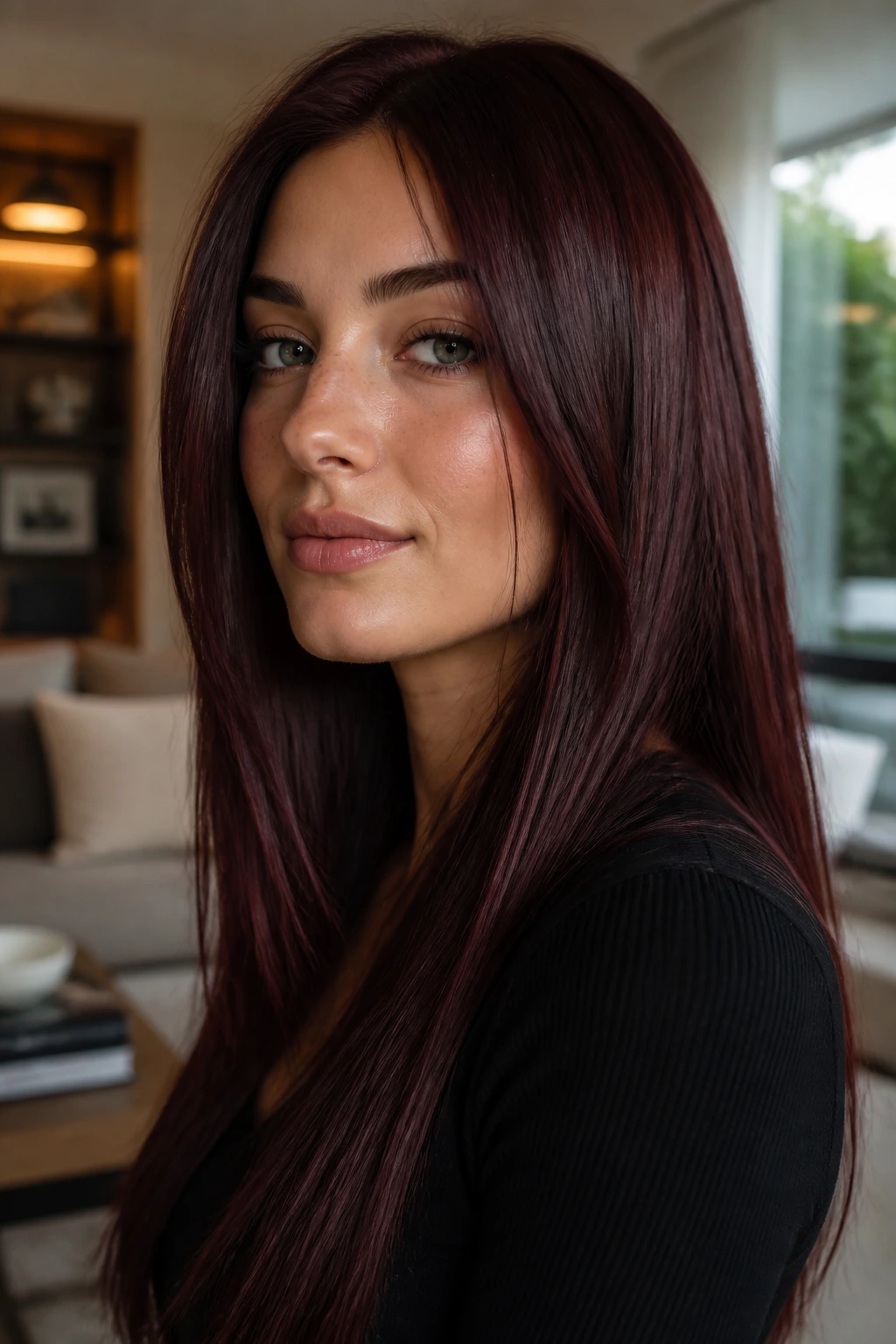
Dark cherry brunette is moody in the nicest way. The base is a deep brown, then a cherry or wine-toned undertone shows through when the light hits it. On straight hair, the color sits like polished glass — smooth, rich, and a little dramatic without looking costume-like.
The reason this shade stands out on straight textures is simple: there’s nowhere for the color to hide. You see the red-brown shift clearly along the lengths, especially if the hair is cut in one clean line. That makes it a smart choice for blunt bangs, long lobs, and sleek mid-length styles.
Ask for a deep brunette with burgundy or cherry reflect, not a full red dye. The brown base keeps the look wearable. The red underneath gives it that almost-black depth indoors, then a wine glow outside. It’s one of the more specific brunette ideas here, and that specificity is the charm.
16. Cinnamon Brunette
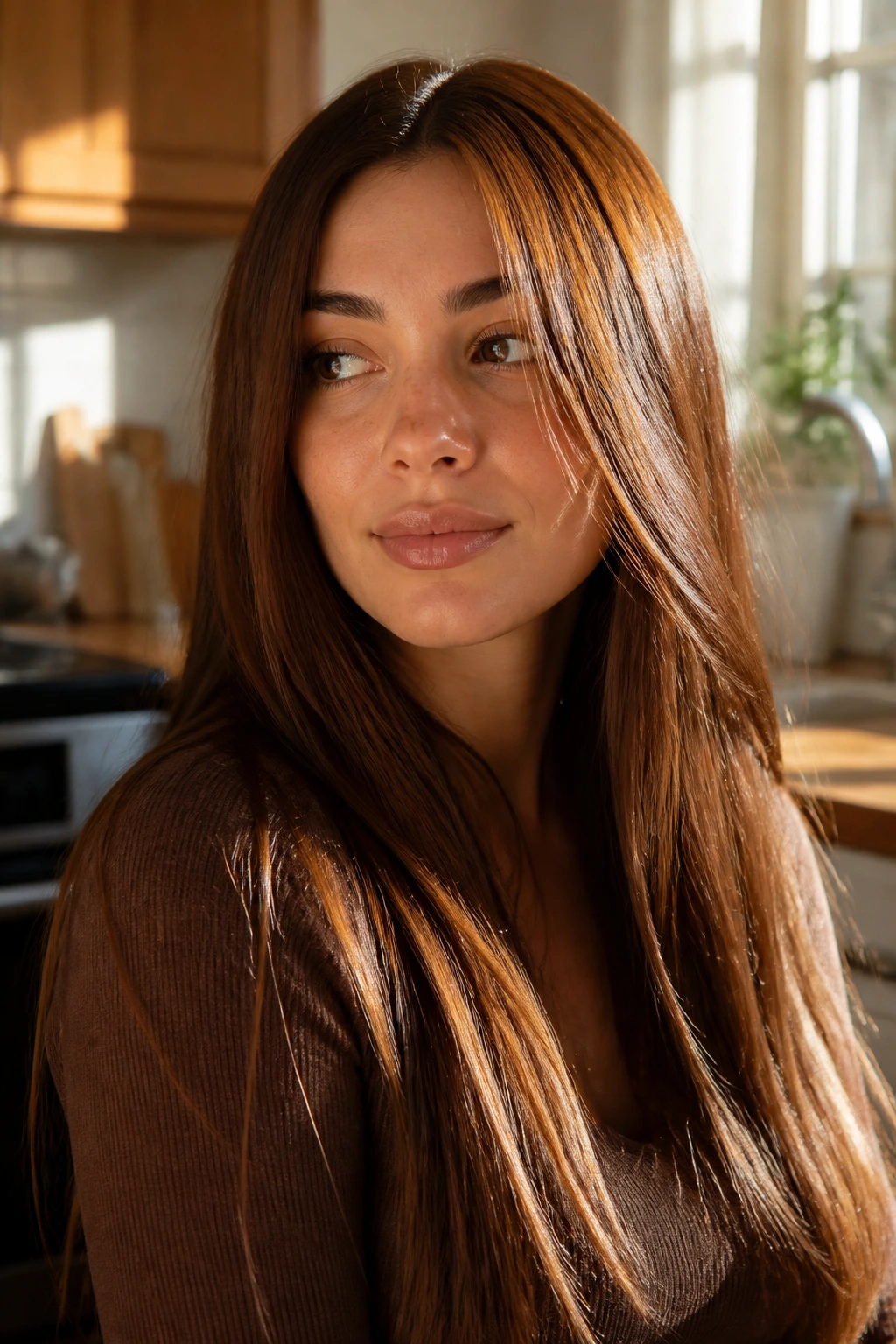
Cinnamon brunette sits warmer than chestnut and softer than copper. It has that toasted-spice feel that can make straight hair look richer without tipping into orange if the formula is handled well. You get a brown base with a warm red-gold thread running through it.
What to Watch For
Straight hair makes warmth easy to spot, which is why cinnamon brunette needs a careful hand. If the color is too light or too copper, it can look harsh on the ends. Keep the depth in the root and mids, then let the warmth live mostly through the surface and face frame.
This shade is lovely on medium skin tones, but it can work on fair and deep skin too if the undertone is adjusted. I’d ask for a brunette with cinnamon reflect, not a full copper. That little distinction saves you from a color that can start looking loud under fluorescent light.
Pro tip: Use a blue shampoo only if the warmth gets too orange. Purple shampoo won’t help much here because this isn’t a blonde problem.
17. Beige Brunette
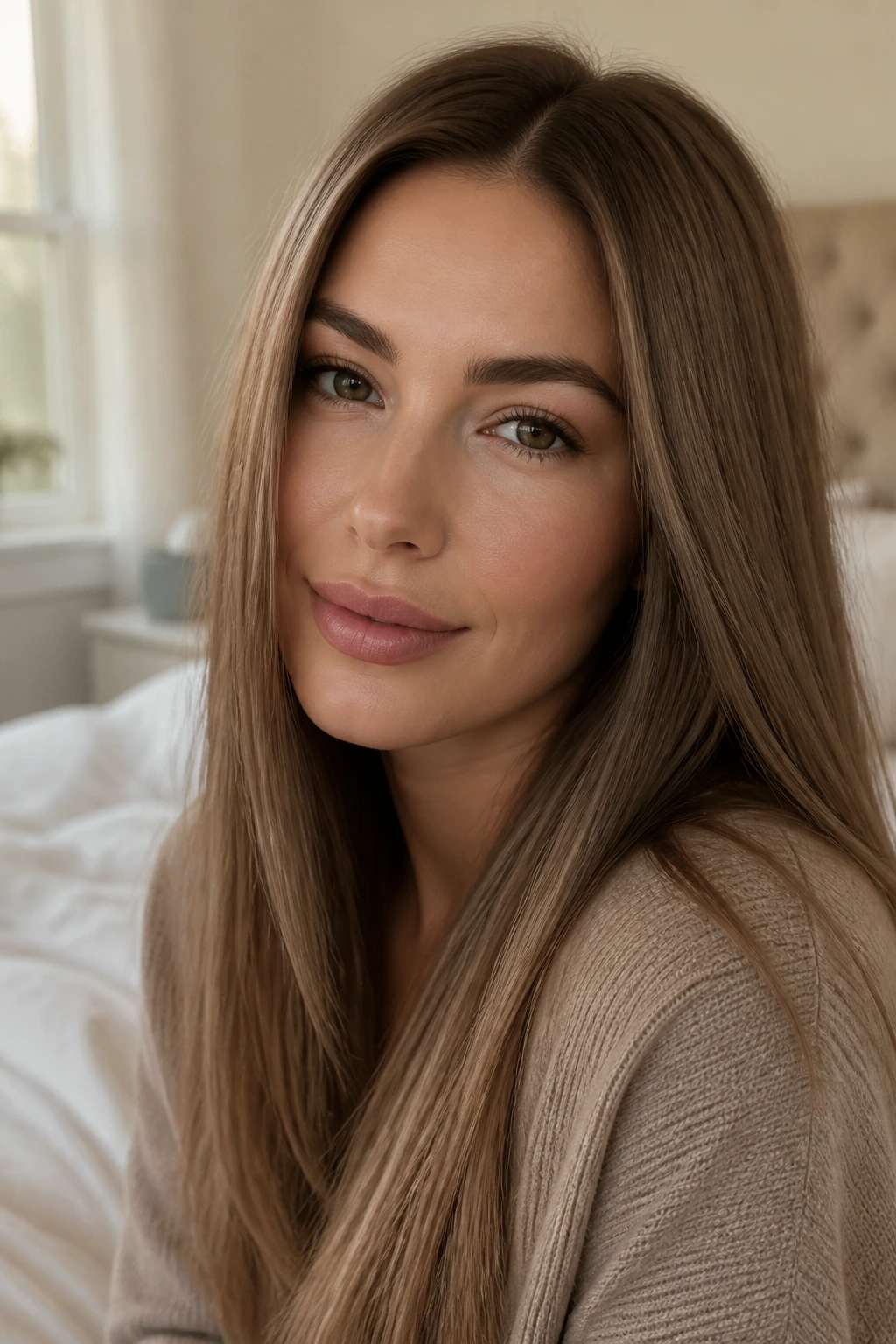
Beige brunette is one of the quietest brunettes on the list, and I mean that as a compliment. It has enough warmth to avoid the flat, grayish look some ash browns can develop, but it stays neutral enough to look soft and expensive. On straight hair, that neutrality is what gives the color its smooth finish.
A beige brunette formula works especially well if your cut is simple. A long one-length style, a shoulder-length lob, or blunt bangs can all benefit from the soft tonal shift. The color doesn’t fight the shape. It supports it. That’s more useful than people expect.
This shade also behaves well as it grows out. Because it sits between cool and warm, it doesn’t scream when roots appear. If you’re the kind of person who wants a brunette that doesn’t demand constant correcting, beige brown is worth a hard look.
18. Sable Brunette
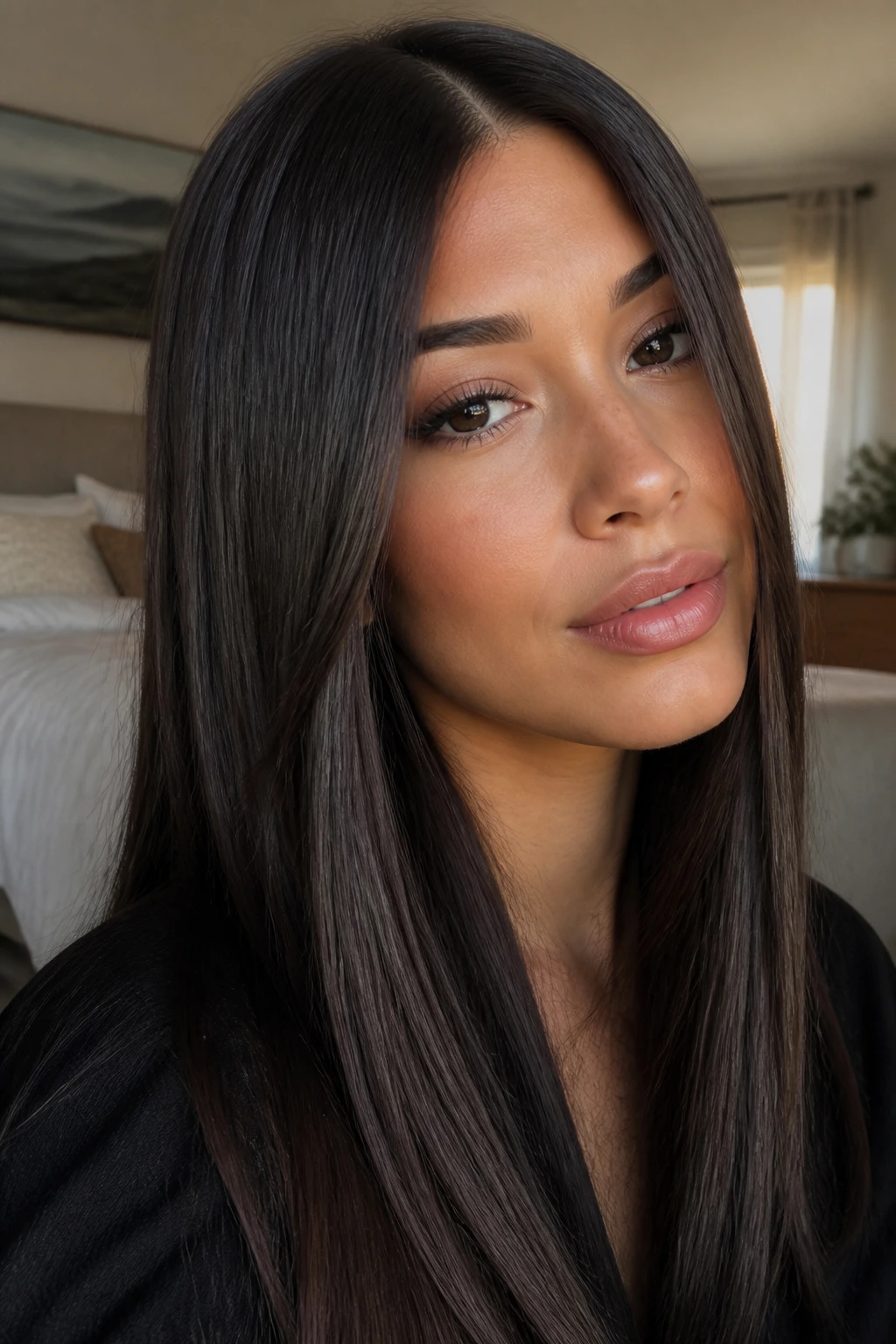
Sable brunette is darker and cooler than walnut, but softer than espresso. Think rich brown with a slight smoke to it, like polished wood in low light. On straight hair, the tone can look sleek rather than heavy, especially if the ends are kept tidy and the cut has a clean edge.
Is it too dark for straight hair? Not if you keep some movement in the finish. Sable needs shine. It also benefits from a small amount of dimension around the face or crown if your hair is naturally thick, because a deep, all-over tone can make a lot of hair feel dense in a way that hides the cut.
This is one of the best choices for people who like a dark brunette that still shows depth. It’s not the loudest shade in the room. It doesn’t need to be. Its job is to look smooth and expensive, and it does that well.
19. Maple Brown
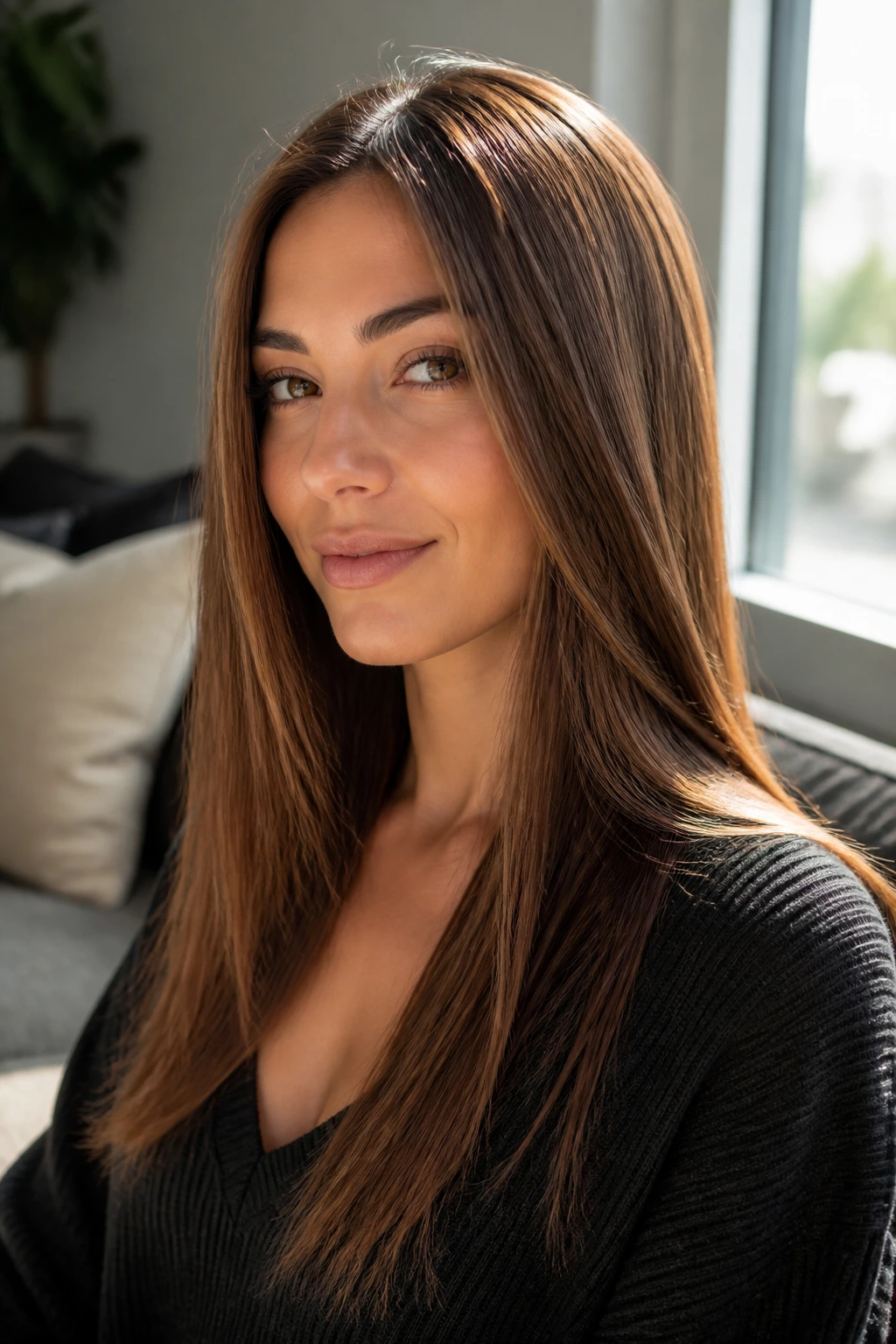
Maple brown has a caramelized, amber warmth that feels a little more lifted than chestnut. On straight hair, the shade can read almost syrupy in sunlight, but it stays brown enough to keep the brunette identity intact. It’s a smart pick if you want warmth without full-on gold.
The best maple brown formulas usually use a medium brown base with a warm glaze over the top. That keeps the color dimensional instead of brassy. Straight hair can make warm browns look extra reflective, so your colorist should keep the undertone controlled and the roots slightly deeper than the mids.
I like this shade with collarbone-length cuts because it lets the light move across the surface. On very long hair, the warmth can be gorgeous too, but you’ll want to keep the ends healthy. Dry ends make maple brown look tired fast, and this color deserves better than that.
20. Smoky Mocha
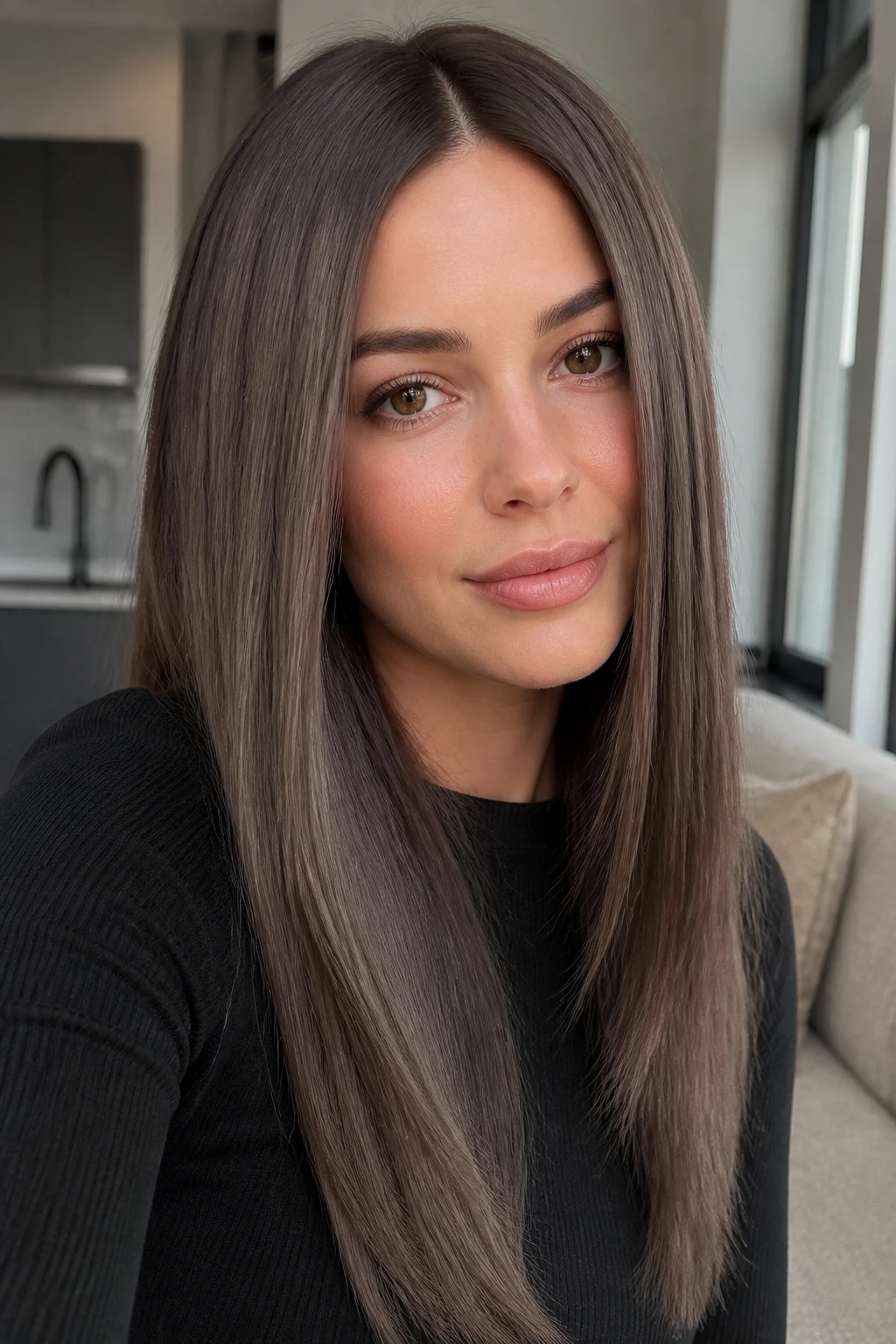
Smoky mocha is the brunette that says you know exactly what you want. It sits between deep espresso and cool milk chocolate, with a soft gray-brown cast that keeps it from drifting warm. On straight hair, the result is sleek and modern — not shiny in a sugary way, but polished in a clean, almost mineral way.
The reason I like this shade so much on straight hair is that it makes the cut look intentional. A center part, a blunt bob, or a long one-length cut all gain structure from smoky mocha because the tone itself has structure. Too much warmth would soften that outline. This does the opposite.
Ask for a cool brunette base with a matte-leaning gloss if your hair tends to pick up orange. If your skin is warm, you may still wear it well if you leave a little beige dimension near the face. One shade does not have to carry the entire look alone.
21. Caramel Veil
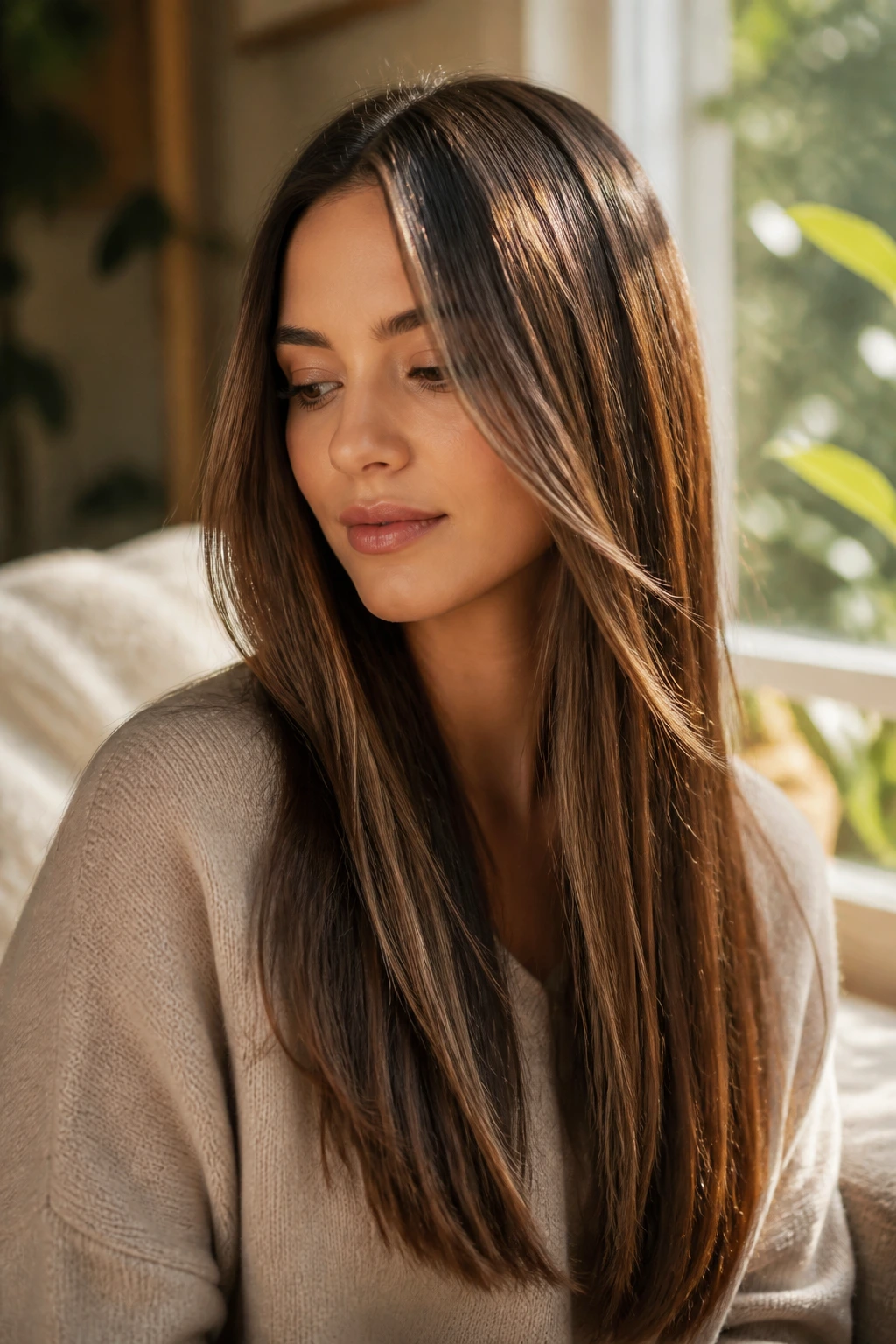
Caramel veil is what happens when you want lightness, but only enough to feel the change when you catch yourself in a mirror. The base stays brunette, and the caramel stays thin and airy — a veil, not a blanket. On straight hair, that restraint matters because every highlight line shows, and you don’t want the whole head to look chopped up.
This works best with fine to medium hair. Thick straight hair can carry more lightness, but it still needs delicate placement if the goal is softness. Ask for subtle hand-painted pieces over the top layers and around the face rather than chunky streaks through the ends. The result should look like light brushing across the surface.
It’s a good pick if you want the brunette to stay dominant. The caramel is there to wake it up, not take over. On straight hair, that limited contrast is what keeps the color expensive-looking instead of obvious.
22. Mahogany Brunette
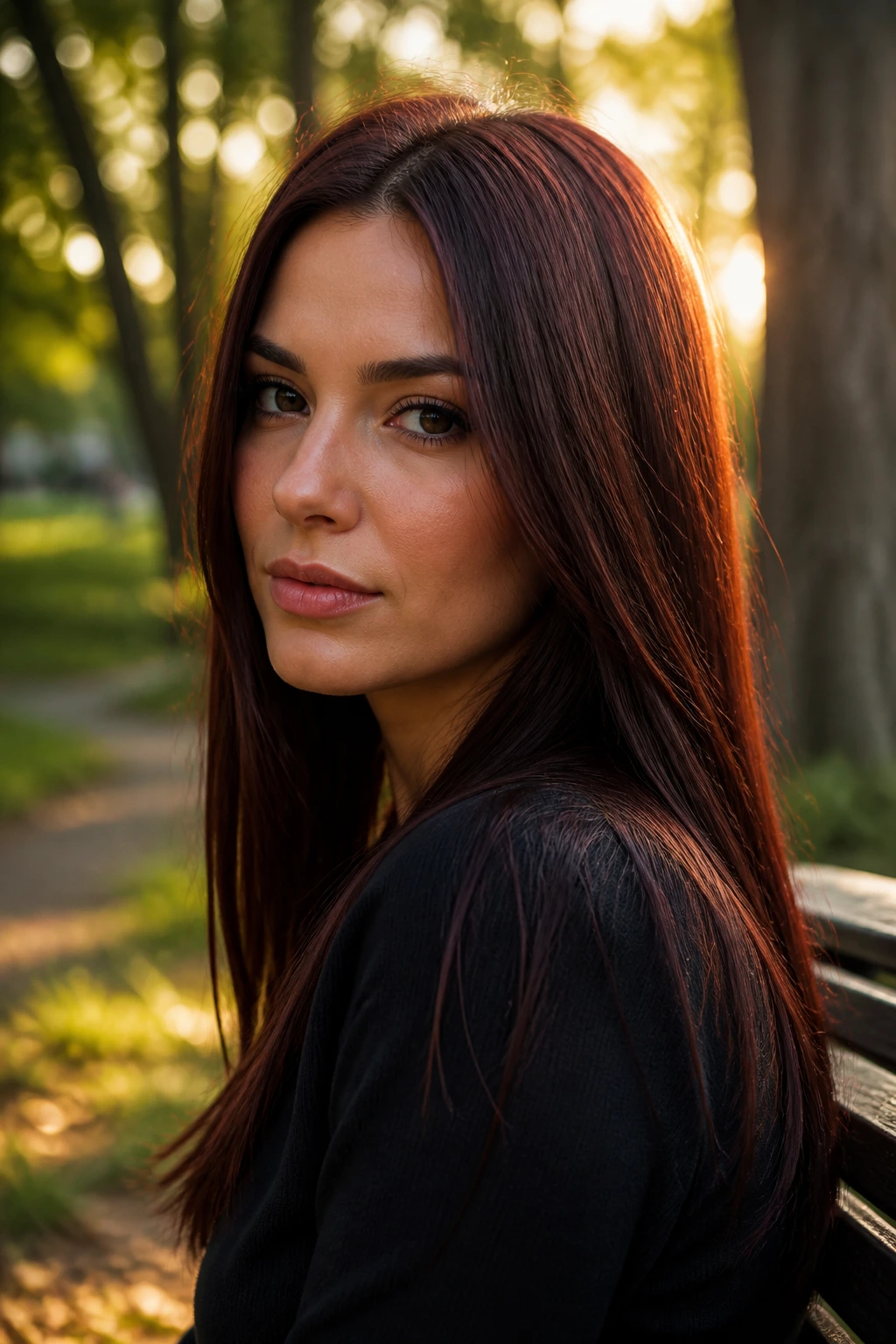
Mahogany brunette is richer and deeper than auburn, with a red-brown profile that can lean almost plum in the right light. Straight hair makes that depth visible right away. It has a satin-like finish when the color is fresh, and a solid one-length cut can make the shade feel very deliberate.
Compared with auburn, mahogany reads darker and more formal. Compared with cherry brunette, it’s less wine and more wood. That difference sounds small on paper. On hair, it changes the whole mood. If you like warm lipstick, gold hoops, or a sharp black wardrobe, mahogany gives you a nice contrast without screaming for attention.
The safest way to wear it is with a brown base and a red-violet gloss. That keeps the color rich rather than bright. Straight hair benefits from that kind of control because it shows the undertone cleanly. No mystery. No blur. Just a deep brown-red that does its job.
23. Iced Latte Brunette
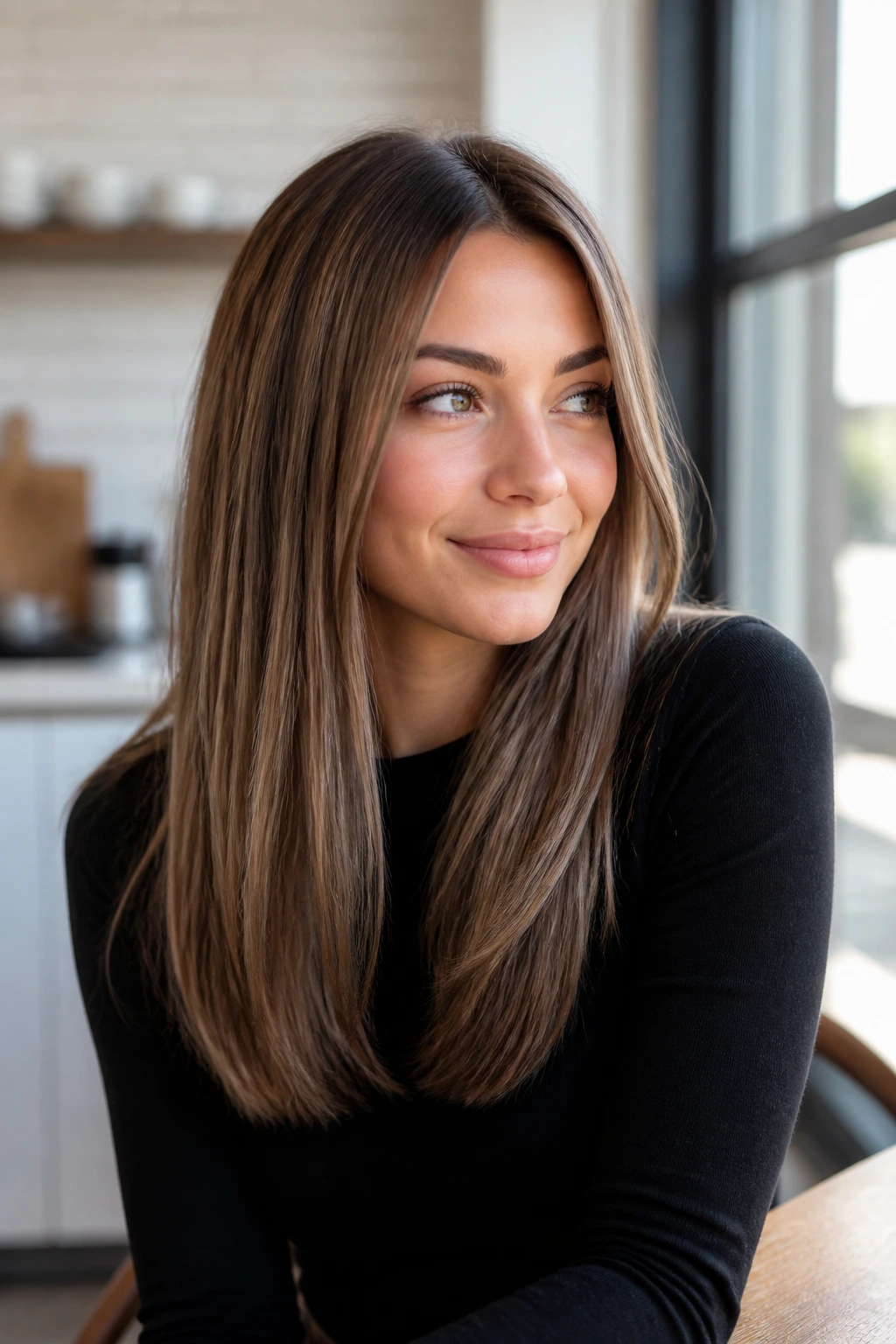
Iced latte brunette is for people who want brown hair with a cool, airy finish. It sits lighter than mocha and cooler than golden brown, which gives it that chilled coffee feel. On straight hair, the color reads crisp and modern because the lightness is held in check instead of pushed too far toward blonde.
The danger here is over-lightening. If you take this shade too pale, it can lose its brunette identity and start looking dusty or washed out. Keep the base within the brown family and use beige or cool-beige ribbons to lift it. That keeps the look soft and wearable.
This shade is especially nice on straight hair with a glassy finish. The clean surface reflects the cool undertones, so the whole color reads polished rather than frosty. If your natural hair is medium brown and you want a small but visible change, this is a very sensible place to land.
24. Coffee Bean Brunette
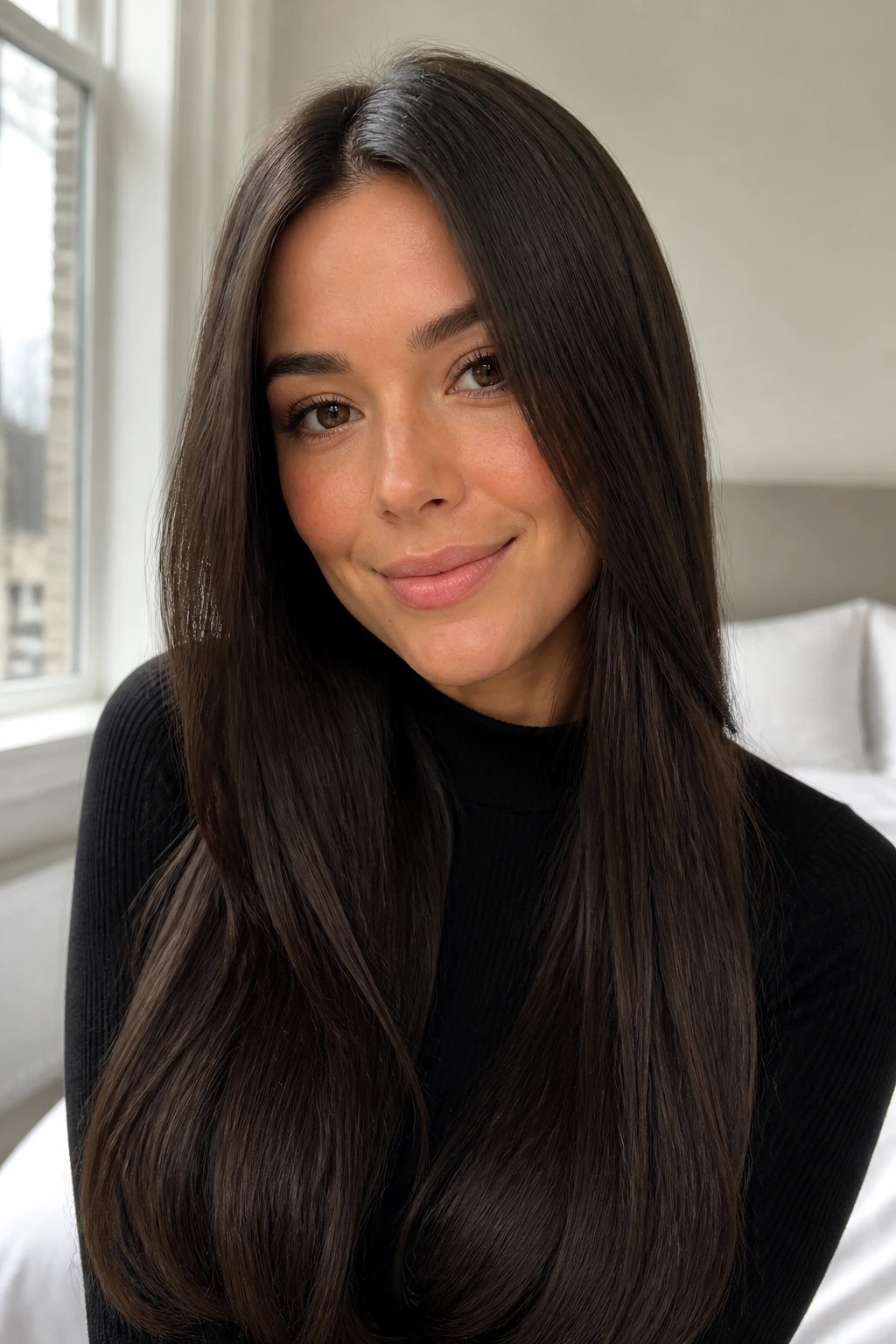
Coffee bean brunette is the deepest, most neutral-brown option that still feels brown instead of black. It’s rich, grounded, and easy to wear if you like low contrast. On straight hair, the color can look sleek and almost mirror-like when the cut is sharp and the finish is smooth.
What makes it different from espresso is the neutrality. Espresso usually leans darker and slightly more severe; coffee bean brown softens that edge just a touch. That makes it a good match for straight hair that needs depth but not harshness. If your skin is very pale or your brows are not especially dark, this version can be easier to live with than a full black-brown.
Ask for a neutral level 3 or 4 brown with no obvious red reflect. If you want dimension, keep it very subtle — think a few hair-thin pieces through the crown, not visible stripes. The beauty of this shade is that it looks expensive from a distance and tidy up close.
25. Soft Ombré Brunette
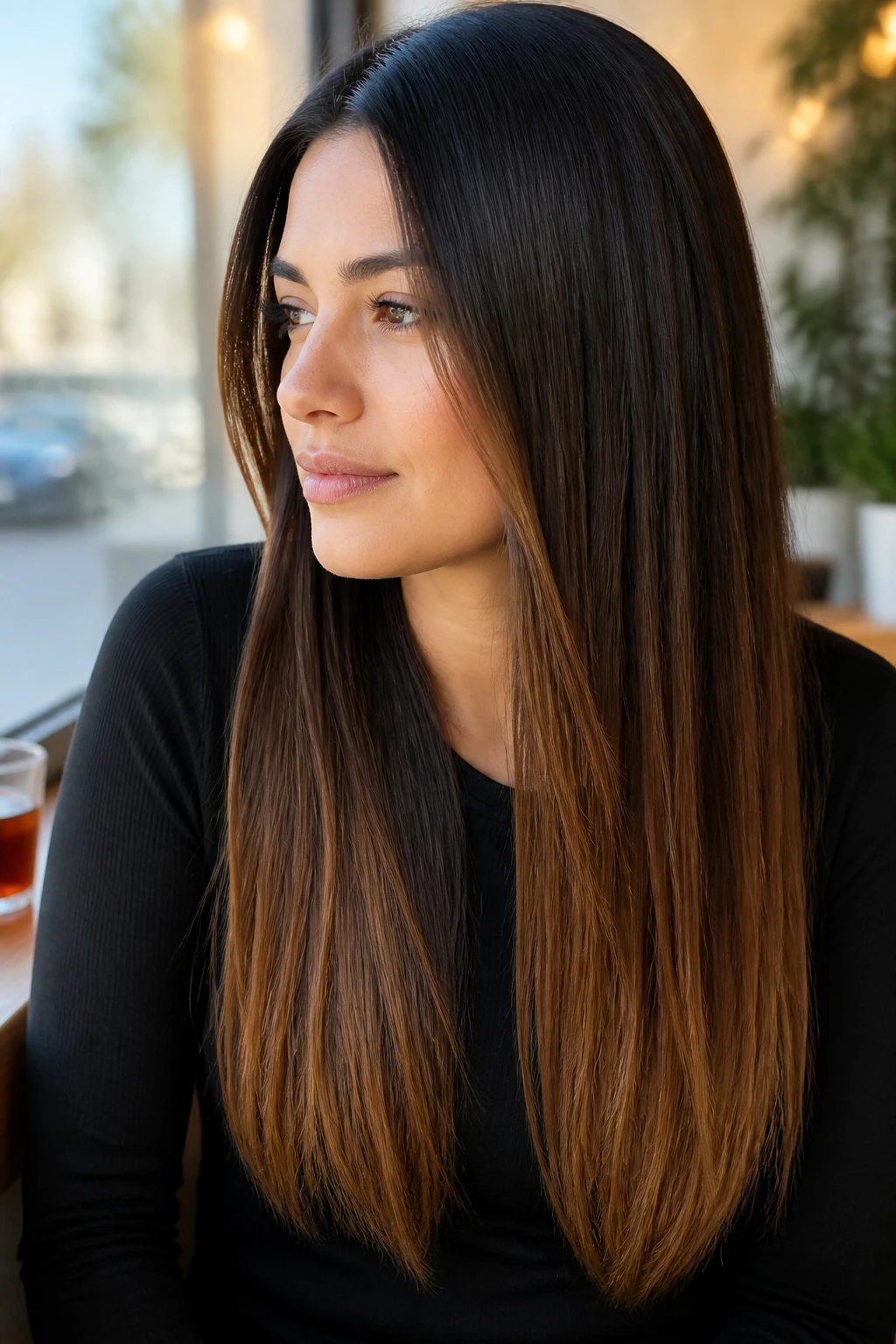
Soft ombré brunette is the wraparound answer for anyone who wants a noticeable brunette change without a hard line of demarcation. The root stays deeper, the mids soften, and the ends carry a lighter brown that fades gently instead of shouting. On straight hair, ombré can look especially clean because the transition is visible from root to tip.
The key here is softness. A blunt ombré line on straight hair can look dated fast. A gradual fade, though, adds movement to long lengths and keeps the color from reading as one flat curtain. That makes it a strong option if your hair is long, naturally straight, or both.
I like this when someone wants brunette hair color ideas for straight hair but also wants room to grow it out. It buys you time. It gives the hair a little lift at the ends. And because the transition is gentle, it still works with a sleek blowout, a tucked-behind-the-ear style, or a dead-straight finish.
Why Straight Hair Changes the Brunette Equation
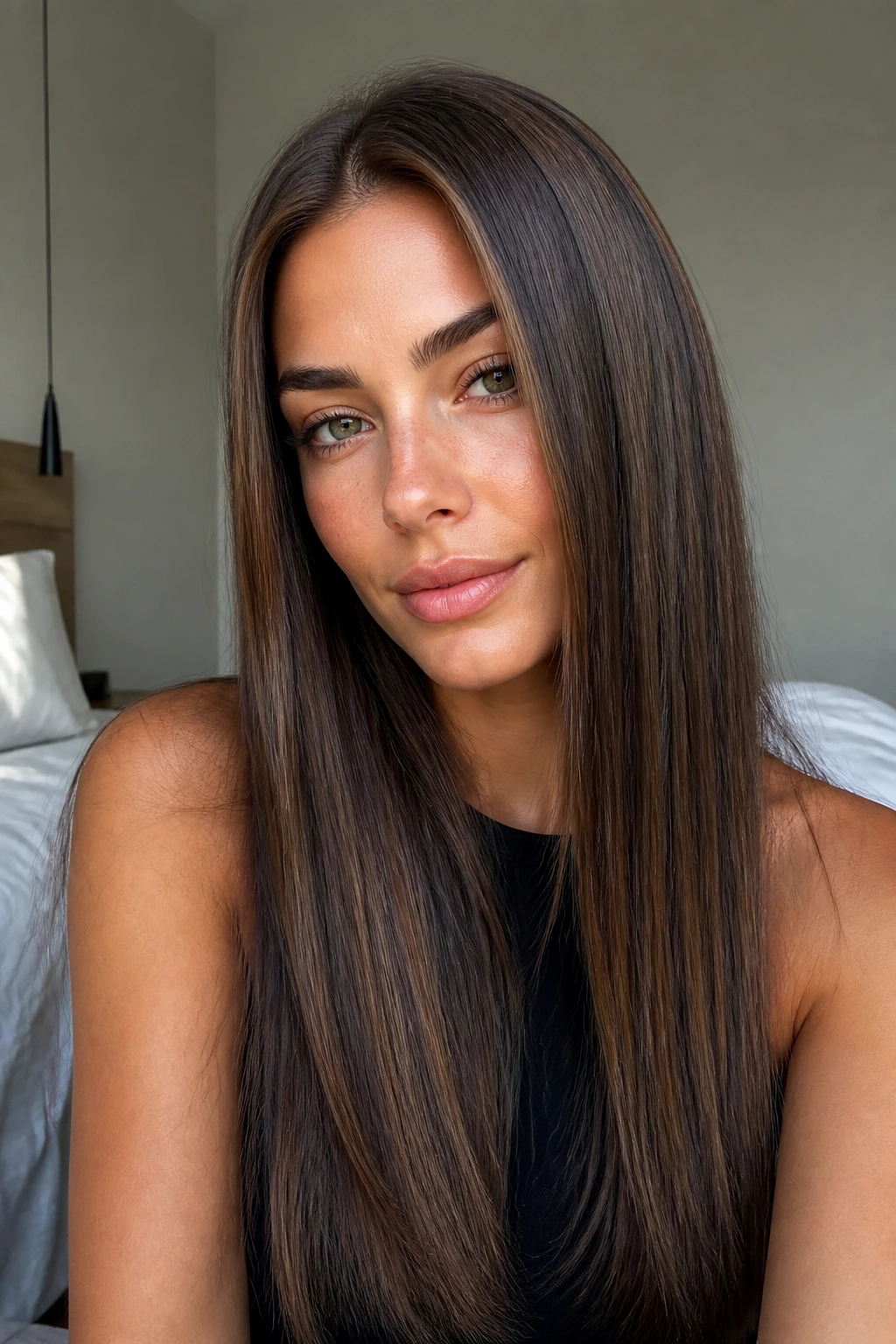
Straight hair exposes everything. That sounds harsh because it is. A great brunette shade looks cleaner on straight strands, but a sloppy blend shows its seams, and there’s nowhere for curls to hide the mistake. That’s the trade, and also the advantage. If you like precision, straight hair is your best friend.
The cut matters more than people expect. A blunt bob makes espresso and coffee bean tones look sharp. A long layered cut gives chestnut, caramel veil, and cocoa balayage more room to move. Even the part line changes the whole read. A center part can make a brunette look more graphic, while a deep side part softens the contrast and gives warm browns a little more romance.
Heat styling matters too. A flat iron can make the color look gorgeous, but only if the hair is protected first. Dry ends and burnt mid-lengths ruin even the nicest brunette. Use a heat protectant every time you smooth the hair, keep the temperature as low as you can get away with, and don’t chase that glassy finish on already fragile ends. Brown hair shows damage in a different way than blonde, but it shows it.
Tools and Products Worth Having on Hand
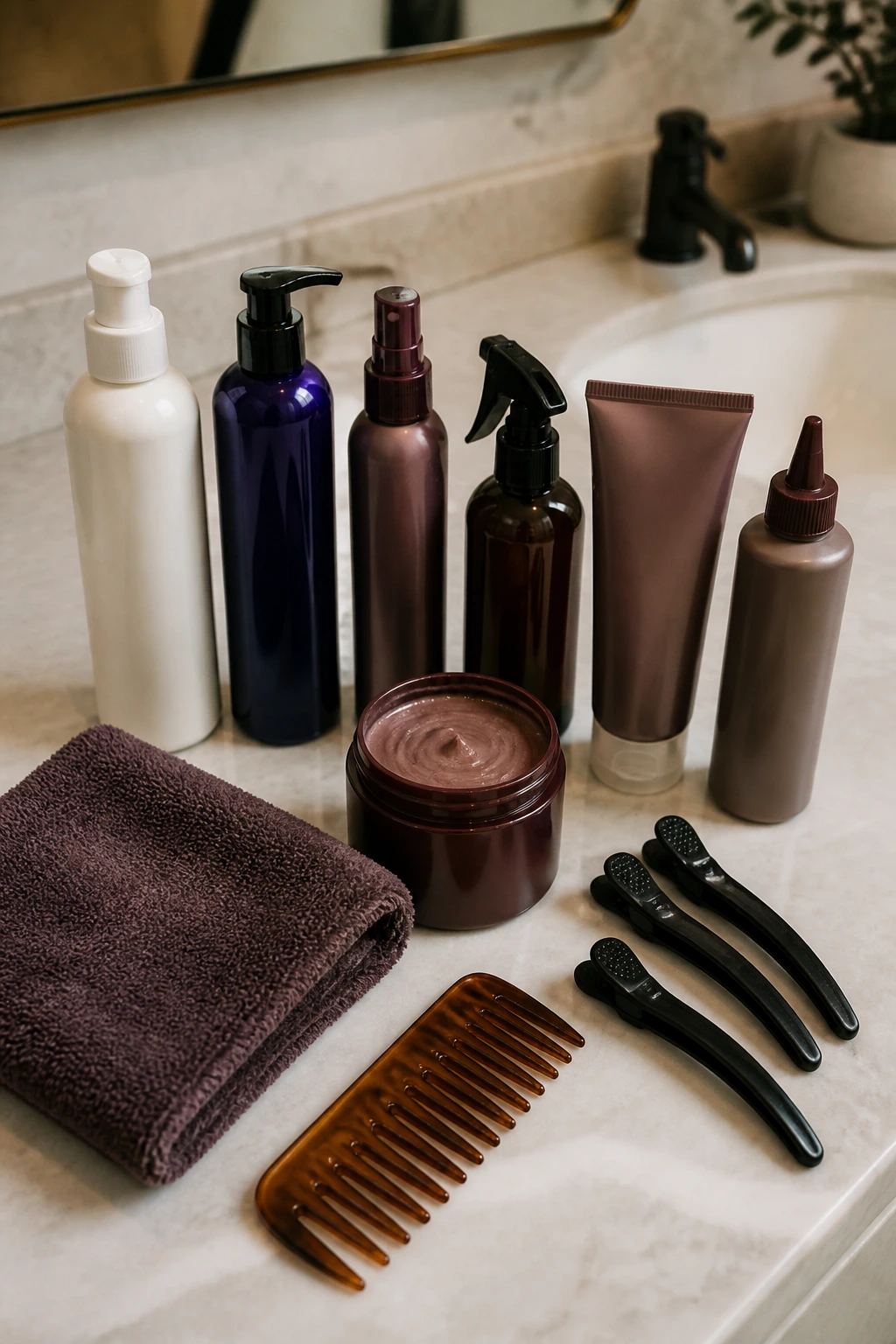
- Color swatches or saved photos: Bring 3 to 5 clear photos that show the shade in daylight and indoor light. One blurry salon selfie is not enough.
- Color-safe shampoo: A sulfate-free shampoo helps keep brunette tones from fading out fast and turning dull between washes.
- Blue shampoo: Useful for brown hair that pulls orange or copper; use it sparingly so the color doesn’t go muddy.
- Gloss or clear glaze: Great for keeping espresso, mocha, and chocolate shades shiny without changing the base too much.
- Heat protectant spray: Straight hair almost always gets heat-styled, and that means the protectant is non-negotiable if you want the tone to stay smooth.
- Wide-tooth comb: Helps distribute conditioner or gloss evenly without snapping fragile ends.
- Sectioning clips: Useful during at-home glossing or when you’re blow-drying in clean sections for a sleeker finish.
- Microfiber towel: Cuts down on rough friction after washing, which matters more than people think for glossy brunette color.
- Root touch-up powder or spray: Handy for in-between appointment days if you wear a deep brunette with a crisp part.
- Tinted mask or color-depositing conditioner: A smart option for keeping warm brunettes from fading to a flat brown after a few shampoos.
How to Choose the Right Brunette Tone for Your Cut and Skin
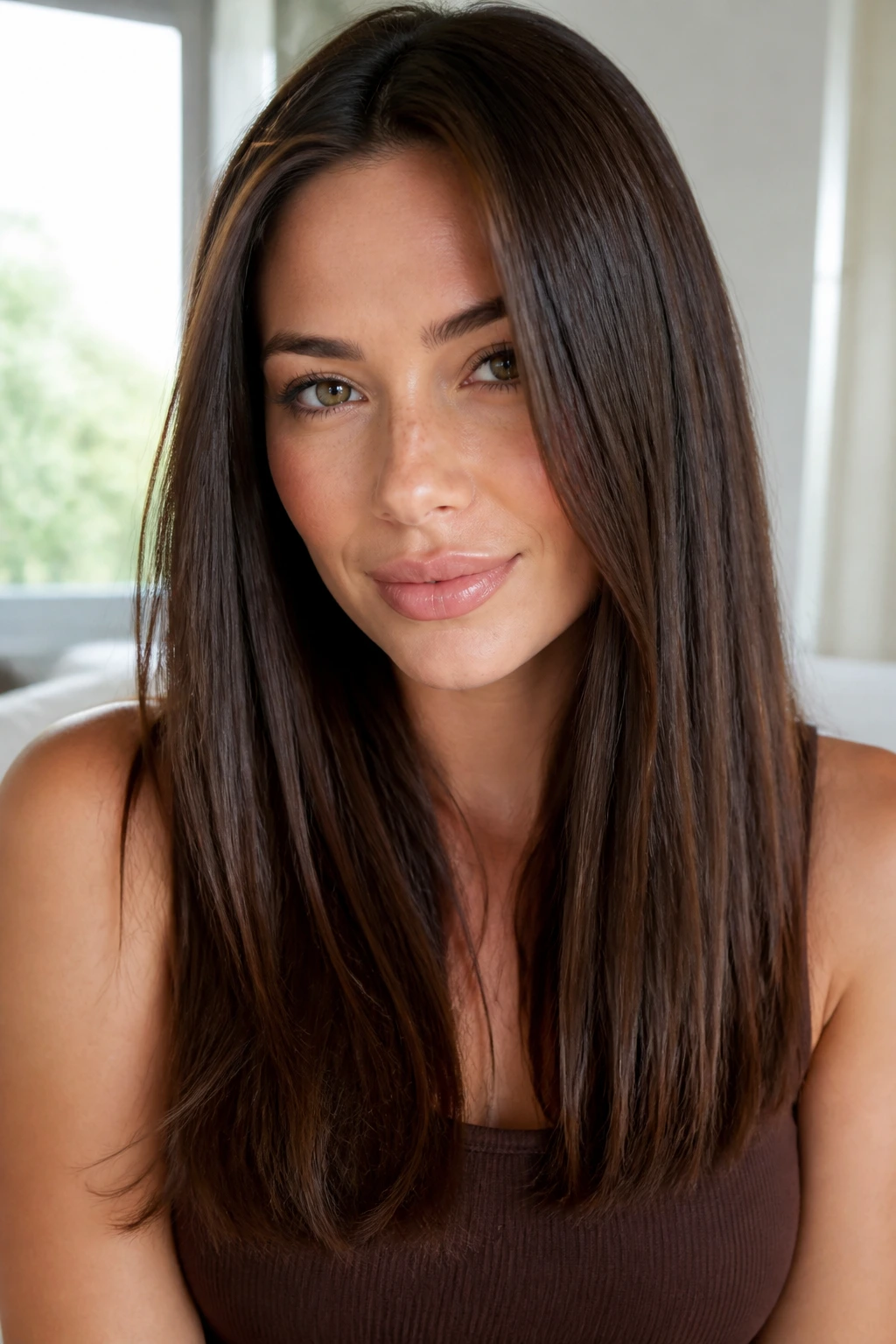
Straight hair does not hide color mistakes, so the safest choice is the one that fits both your undertone and your haircut. If your skin runs cool, ash brunette, mushroom, smoky mocha, and coffee bean shades usually sit better because they don’t fight the face. If your skin leans warm, chestnut, golden brown, cinnamon, and mahogany tend to look more natural. Neutral skin can wear almost all of them, which is rude but useful.
The haircut matters just as much. Long one-length hair can carry darker shades because the line is clean and the color has room to breathe. A blunt bob often looks best with shine-heavy browns like espresso, walnut, or sable because the shape needs crispness. Layered straight hair usually needs dimension — think balayage, money pieces, or soft ombré — so the cut doesn’t collapse into one flat sheet.
Brows and makeup are part of the equation too. Dark brows can handle deeper brunettes. Softer brows often need a little face-framing lightness so the hair doesn’t overtake everything. If you wear minimal makeup, a warm or neutral brown usually feels easier than a very cool, smoky tone. Nothing dramatic there. Just honest balance.
How to Wear These Shades on Straight Hair
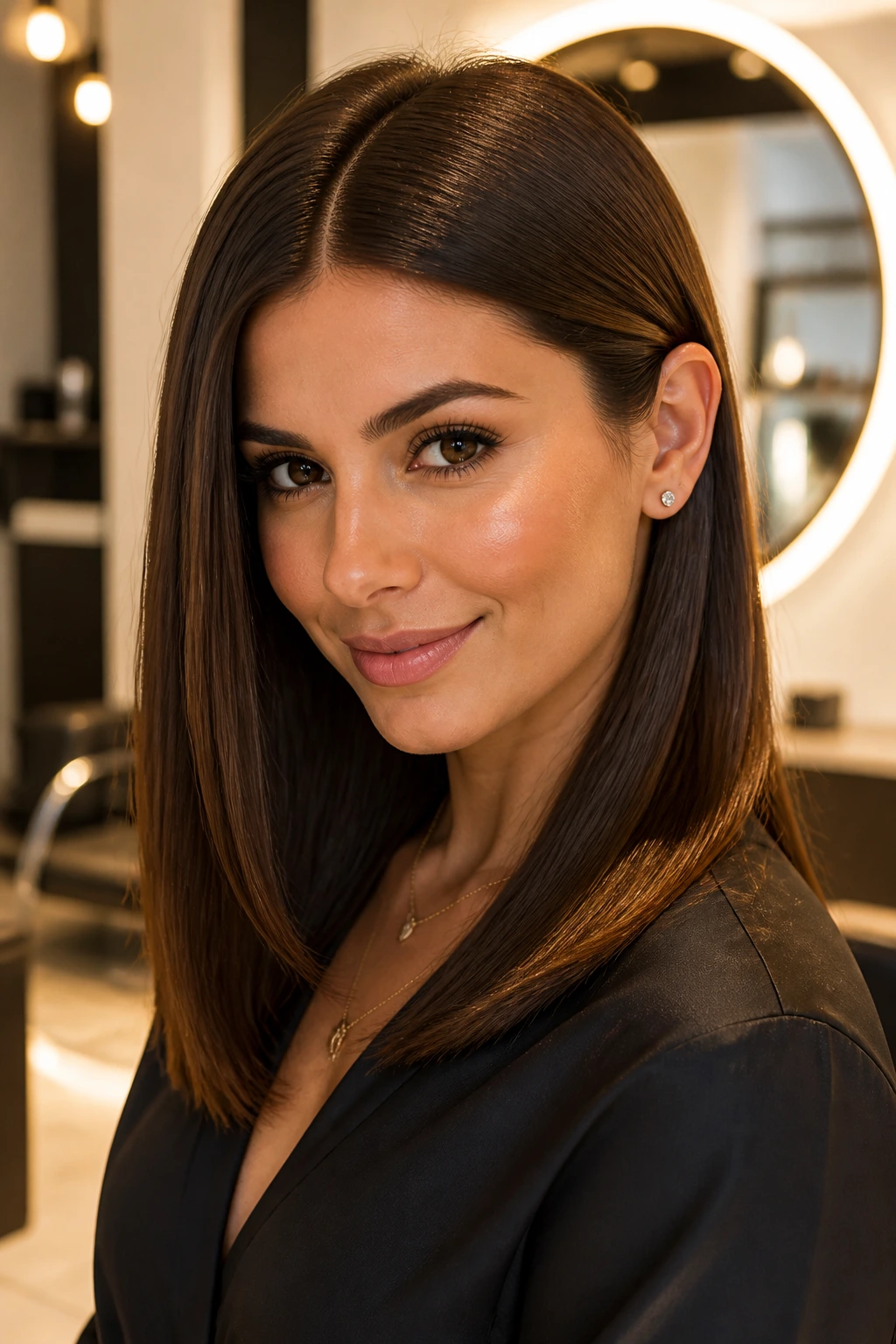
Center part: This is the cleanest way to show off tonal shifts like mocha root melt, mushroom brunette, and soft ombré. The part gives the color a straight line to work against, which makes the blend more visible.
Blunt ends: A straight, sharp hemline makes espresso, coffee bean, and sable shades look intentional. The cut and the color feed each other. Soft layers can work, but the blunt edge gives the richest brunettes more backbone.
Tucked-behind-the-ear styling: This is where hazelnut money pieces and caramel veil highlights show their best side. One side gets a little face-lightening and the tuck reveals it without requiring a full volume blowout.
Loose bend, not curls: If you want movement without losing the sleek feeling, add one or two soft bends with a flat iron through the mids. That works well for chestnut, cocoa balayage, and toffee ends. You get a little texture, but the color still reads clearly.
Extra Shine and Dimension Tricks
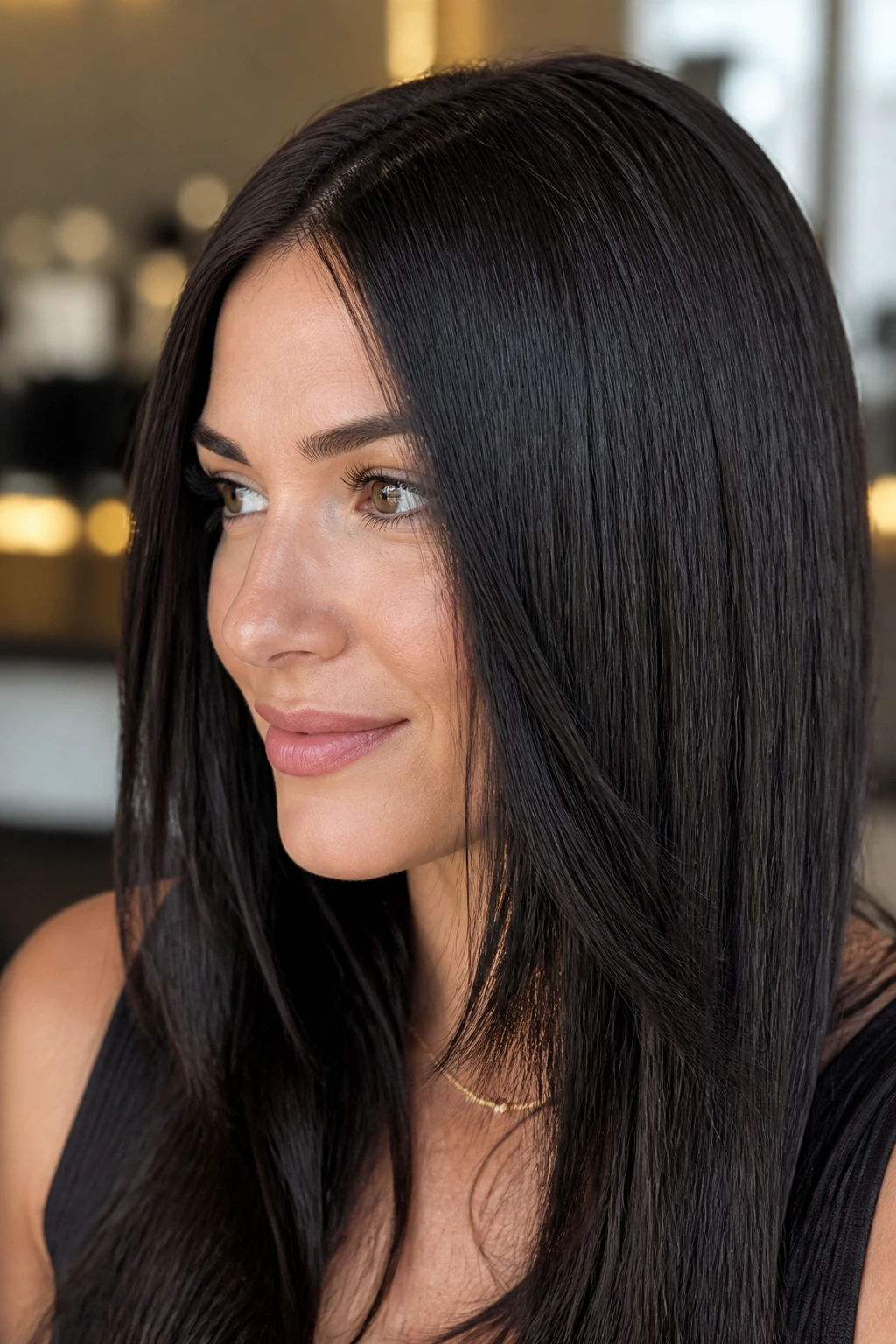
Gloss refresh: A clear or tinted gloss every 4 to 6 weeks keeps brunette tones from going matte and tired. On straight hair, a gloss matters more than a cut in some cases because the finish is what people notice first.
Color placement: Keep the brightest pieces near the face, crown, or top layer if you want dimension to show without the hair looking streaky. Straight hair is unforgiving about chunky placement, so thin ribbons almost always beat thick ones.
Heat control: If you use a flat iron, stay in the lower heat range that still gives you the result you want. Repeated high heat burns out warmth and shine fast. It also makes the ends look frayed, which is the enemy of every brunette on this list.
Texture tricks: A tiny amount of shine serum on the mids and ends — not the roots — can make chocolate, mocha, and espresso shades look richer. Use too much and the hair gets greasy. Use too little and the sheen disappears by lunch. You know the line when you see it.
Maintenance, Re-Glossing, and Grow-Out Care
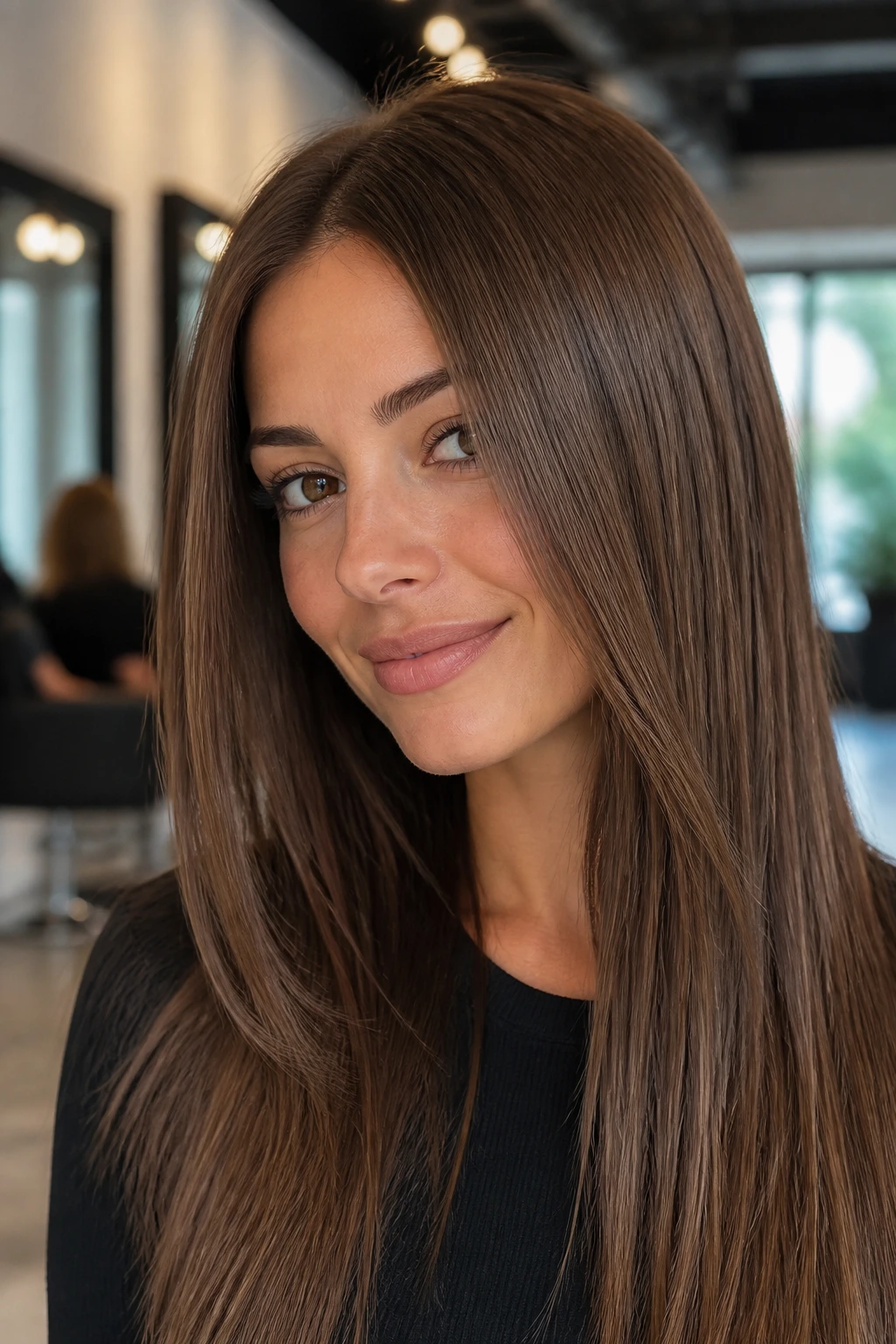
Brunette color on straight hair usually looks its best in the first few weeks after a gloss or toner, when the tone is crisp and the surface still reflects light evenly. After that, washing frequency becomes the main variable. If you shampoo daily, warm browns and red-browns fade faster. If you can stretch to two or three washes a week, the color tends to stay cleaner longer.
Plan on a gloss or toner refresh every 4 to 8 weeks, depending on how cool, warm, or light the shade is. Espresso, coffee bean, and walnut often hold a little longer because the base is deeper. Auburn, mahogany, cinnamon, and rose brown need more attention because the red undertones fade more quickly and can leave the color looking brown-but-dull instead of rich.
Root touch-ups depend on the technique. A solid all-over brunette may need a touch-up every 6 to 8 weeks if you like a tidy part line. Root melt, ombré, and balayage can stretch farther because the grow-out is built into the look. Dry shampoo helps on the in-between days, especially if your hair is straight and fine, because it keeps the root area from looking oily and flat.
Heat protection is part of maintenance, not a styling extra. A brunette that gets fried loses tone faster and starts to look dull at the ends. If you flat iron often, use a protectant every time and give the hair a break when you can. Straight hair shows polish fast, but it also shows damage fast. Fair trade.
Variations and Adaptations to Try
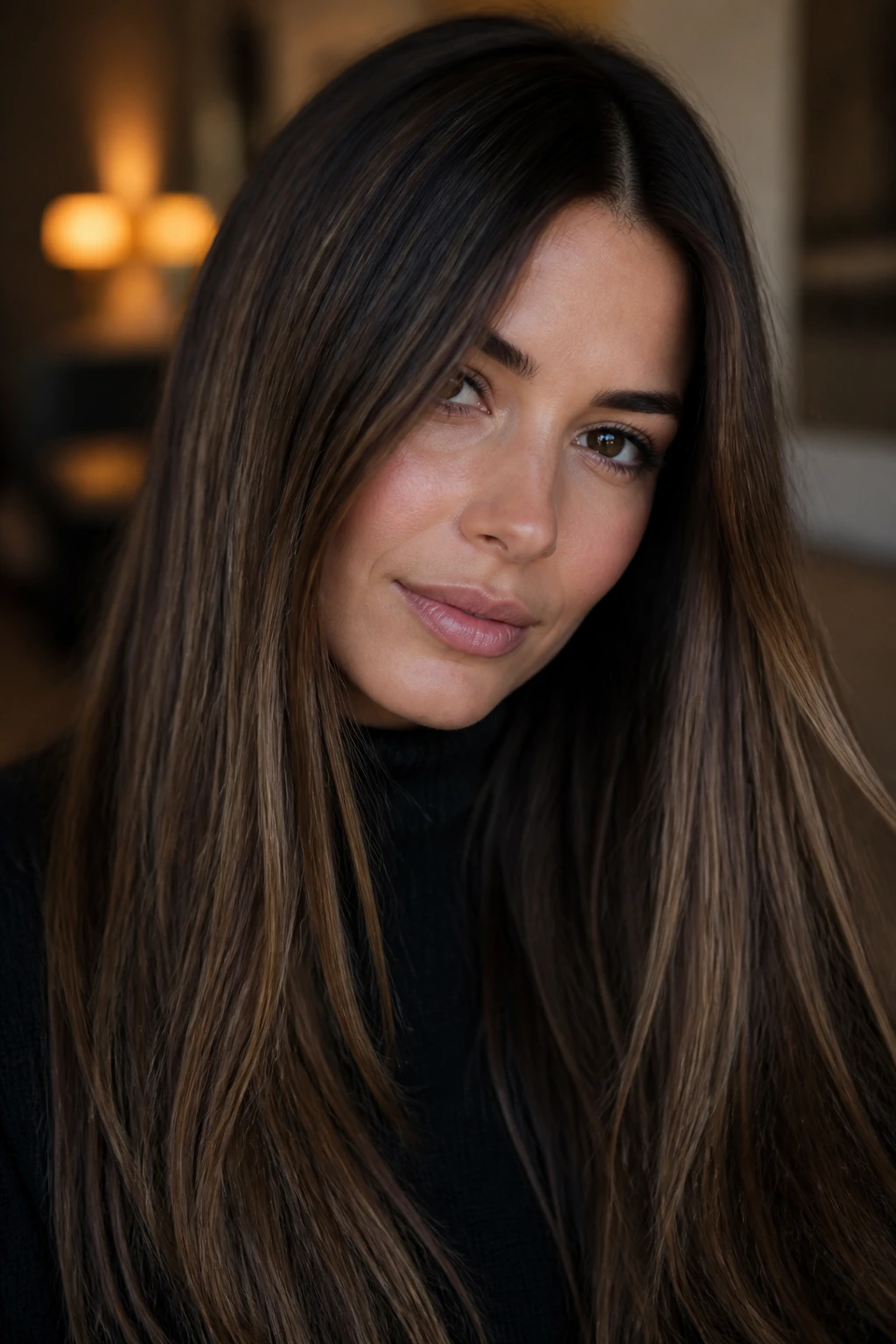
Soft Root Shadow Brunette: Keep the root half a shade deeper than the mids so the grow-out line stays soft. This works well if you want a brunette that can skip a salon visit or two without looking patchy.
Gray-Blending Brunette: Add neutral lowlights and a cool brown gloss to help blend scattered grays into the overall brunette tone. On straight hair, this looks cleaner than heavy coverage because the color shift stays subtle.
Warm Face-Frame Brunette: Leave the base darker and add hazelnut or caramel around the front only. It’s a small change, but on straight hair it can wake up the whole cut.
High-Contrast Espresso Brunette: Go very dark at the base and keep the ends a touch lighter for dimension. This version looks striking on blunt cuts and sharper face shapes.
Red-Brown Brunette: Push the undertone toward auburn or mahogany if you like warmth and shine. It’s a stronger look than beige or ash, and it usually needs more gloss upkeep.
Bronde Brunette: If you want lighter ribbons without losing the brunette base, ask for thin baby lights through the top layers. Keep them fine. Straight hair punishes chunky highlights.
Common Mistakes to Avoid
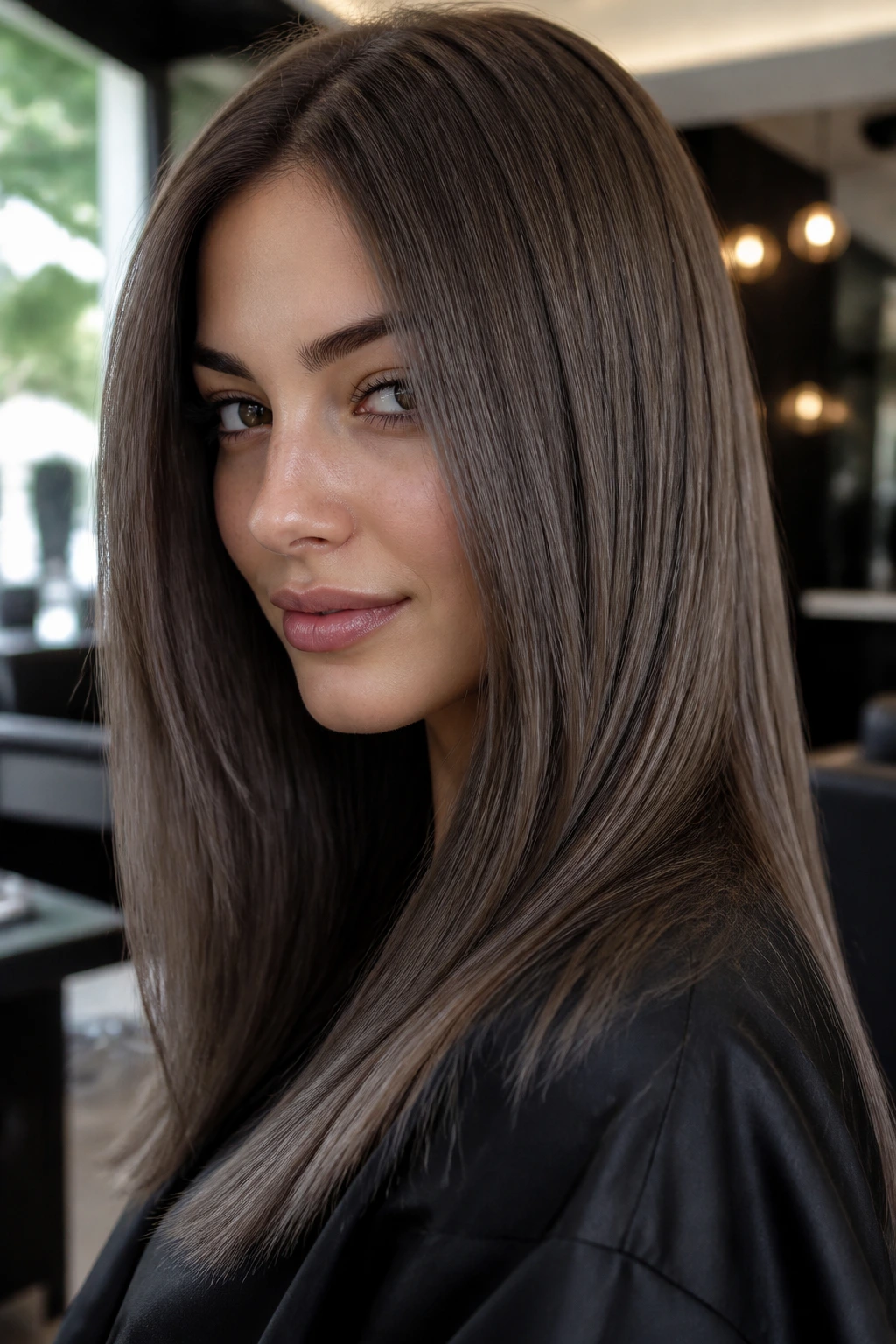
One mistake is choosing a shade that’s too dark for the cut. A very deep brunette on straight, one-length hair can look heavy if the ends are thick and the shine is low. The fix is simple: keep the base rich, but leave a whisper of dimension around the face or crown.
Another is going too warm without toning. Straight hair exposes brass faster than most textures, and a warm brunette can tip orange after a few washes if the formula is sloppy. If your hair tends to grab warmth, ask for a cool counterbalance or plan on using blue shampoo lightly.
Chunky highlights are a third problem. On curls, they can disappear into movement. On straight hair, they can look like zebra stripes. If you want dimension, go finer. Micro-weaves, baby lights, and hand-painted ribbons look cleaner and grow out better.
The last one I see a lot is ignoring the finish. Brunette color without shine can look flat, even if the tone itself is nice. Use a gloss, keep ends trimmed, and don’t fry the hair with a flat iron set too hot. A brown shade lives or dies on surface polish.
Frequently Asked Questions
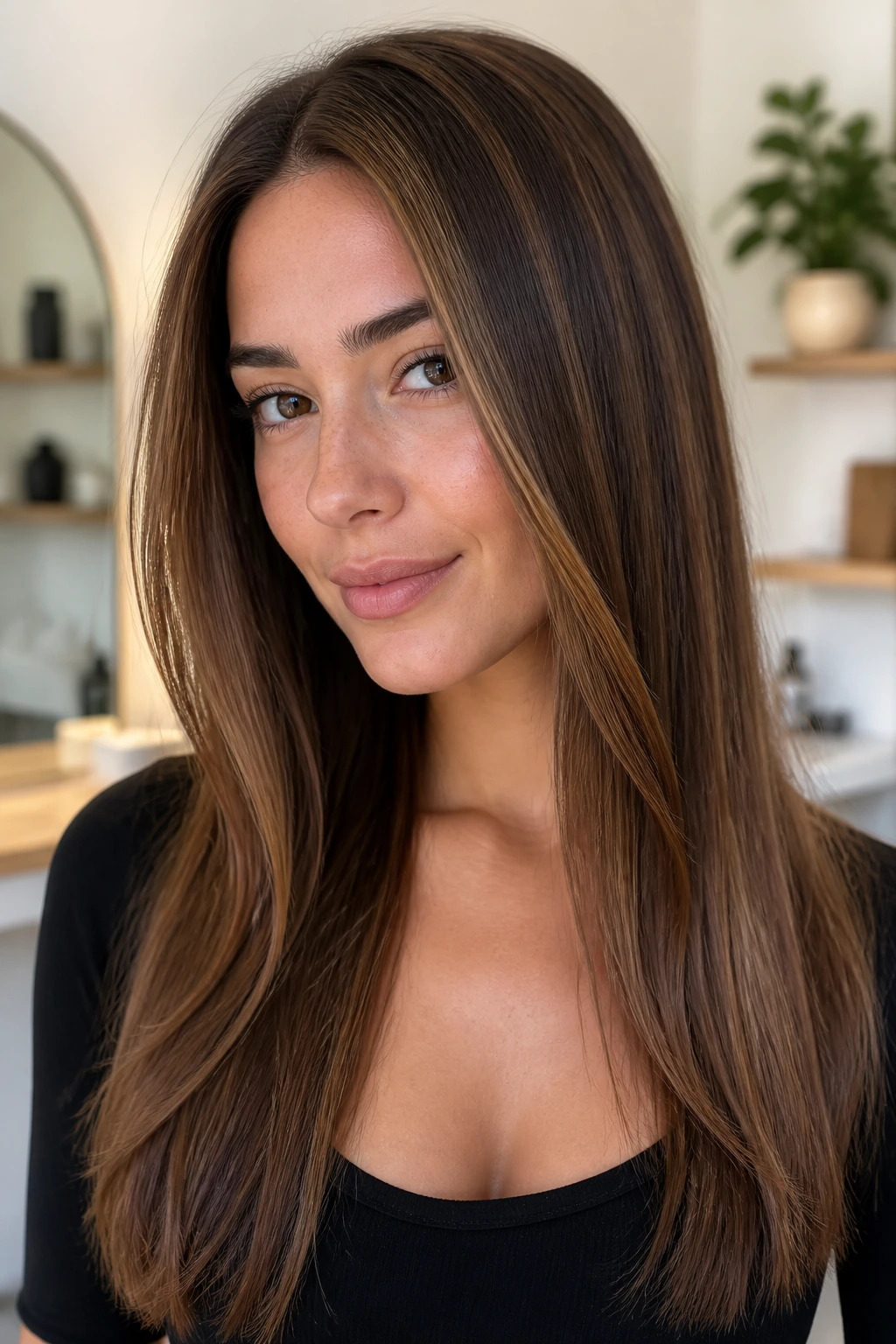
Which brunette shade looks the most natural on straight hair?
Milk chocolate, walnut, and beige brunette usually look the most natural because they stay in the middle of the brown range without sharp contrast. They mimic the way real hair tends to vary in light and shadow.
What brunette color is easiest to maintain?
Espresso gloss, walnut brunette, and coffee bean brunette tend to be the easiest because they don’t rely on high-contrast highlights. If the grow-out is soft and the root stays close to your natural color, upkeep is simpler.
Can straight hair handle balayage without looking streaky?
Yes, but the placement has to be fine. Straight hair shows chunky lightening fast, so micro-balayage or very soft hand-painted ribbons usually look cleaner than wide panels.
How do I keep brunette hair from turning orange?
Use a color-safe shampoo, avoid high heat when styling, and ask for a cool or neutral toner if your hair pulls warm. Blue shampoo can help if the orange tone shows up after a few washes.
Is a money piece too harsh on straight hair?
Not if it’s kept narrow and blended. A hazelnut or caramel face frame around 1/2 inch to 1 inch wide can brighten the face without looking stripey.
What if my hair is very fine?
Fine straight hair usually looks best with lighter dimension placed sparingly through the top layers. Too much darkness can make it look thinner, while too much highlight can make it look stringy.
Can I go brunette without losing shine?
Yes, but the finish matters. Glosses, healthy ends, and heat protection make a bigger difference on straight hair than people expect. Brown hair looks richest when the surface is smooth.
Should I choose warm or cool brunette if I’m unsure?
Neutral usually wins. It gives you room to move warmer or cooler later, and it’s less likely to clash with your brows or makeup if you’re still figuring out your lane.
The Brunette Shades That Hold Their Shape
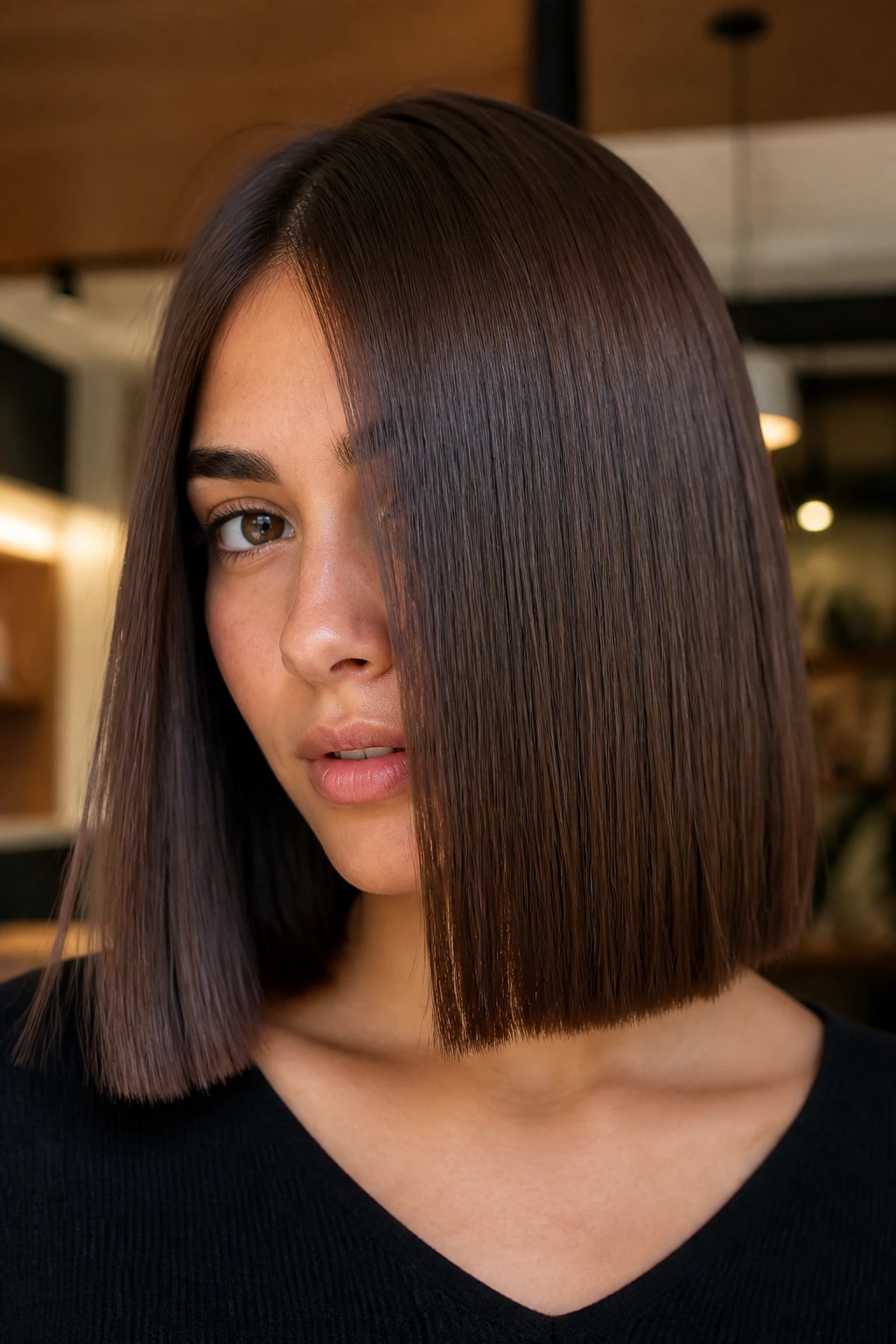
Straight hair can be unforgiving, which is exactly why these brunette ideas work so well when they’re done right. The clean surface shows off every shift in tone, every shiny root melt, every soft ribbon of caramel or ash. There’s nowhere to hide, and that’s the fun of it.
Pick the shade that fits your cut, your upkeep tolerance, and the kind of brown you actually want to see in the mirror. Not the one that sounds trendy. The one that makes the ends look crisp, the part line look tidy, and the whole head feel intentional without trying too hard.
